
Domson catalogue guide: which supplier brands to use for Polish bread, enriched doughs and confectionery
The buyer's companion to the Polish baking articles: a practical map from each classic Polish product — chleb żytni (rye bread), chałka, babka, pączki, makowiec, sernik, mazurek and piernik — to the exact Domson catalogue categories, brands and products that make it. It explains how Polish bakers actually buy (by flour 'typ' number and by rye sourdough), lays out the supplier landscape (Polish mills, yeast and sourdough houses, Polish fats and dairy, and confectionery fillings), and gives spec-anchored buying facts and four production formulas drawn directly from first-party supplier datasheets (Zeelandia Berliner doughnut improver, Zeelandia Kołodziej rye mix, Zeelandia Kajmak, AKO/Prospona poppy fillings, Kruszwica margarine and a Zeelandia sugar fondant). Every regional attribution is cited to Polish-language sources.
Domson catalogue guide: which supplier brands to use for Polish bread, enriched doughs and confectionery
This is the shopping companion to the Polish baking articles in the Academy. The other B1 dossiers teach the craft — how to manage a rye sourdough, how to build a rye loaf, how to make pączki, makowiec, sernik, mazurek and piernik. This article answers the next question a working bakery asks: which products in the Domson catalogue do I actually put in the basket?
Use the master map below first: every classic Polish bake, the ingredient categories it needs, and the example catalogue products that serve it. Below this article are the full mapping table, five comparison tables, four spec-sourced formulas and a buying-and-troubleshooting fault table.
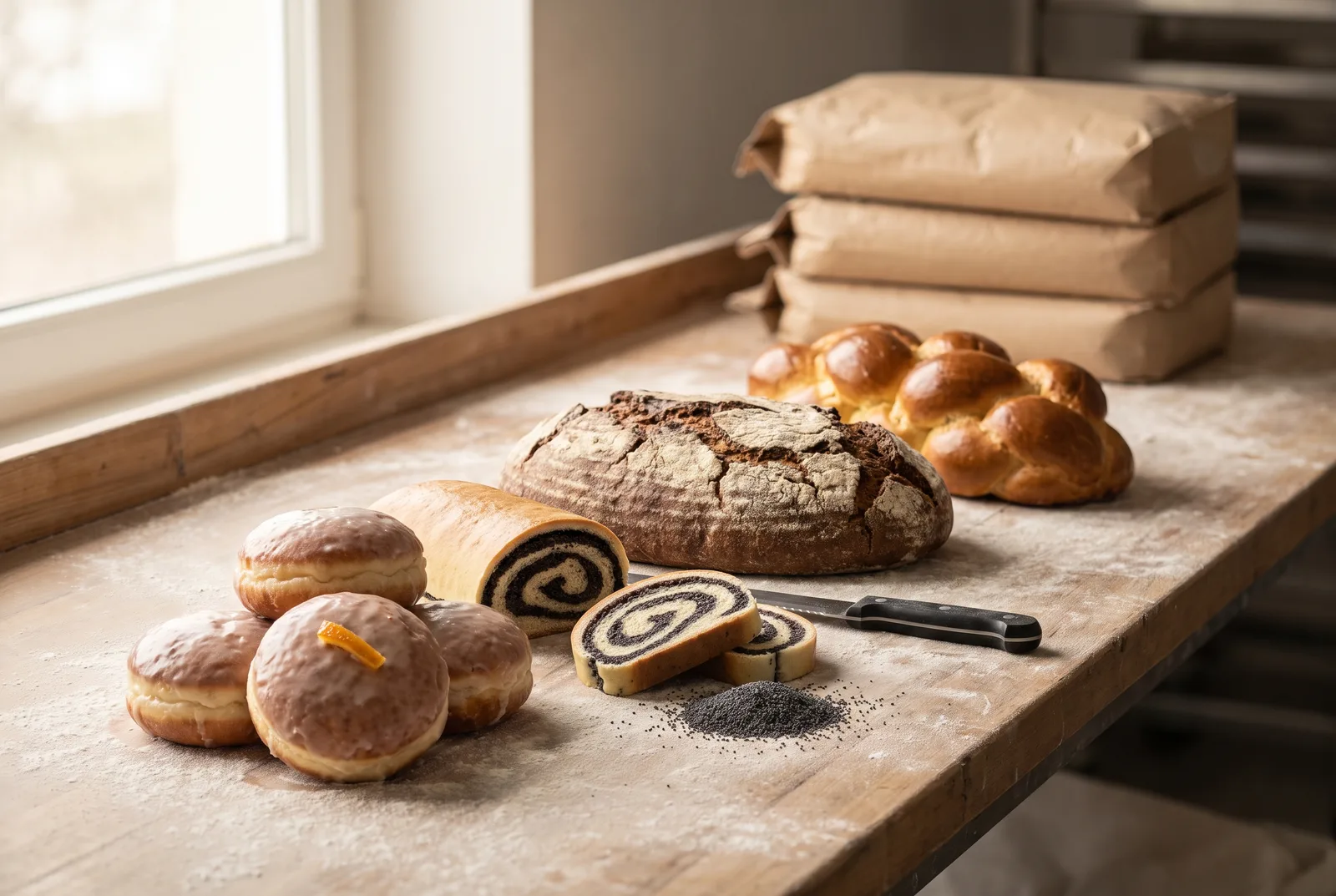
A floured Polish bakery bench laid out by product family: a dark rye loaf, a glossy braided chałka, sugar-glazed pączki with a sliver of candied orange peel, and sliced makowiec showing its dark poppy-seed spiral, with plain unbranded kraft paper sacks softly blurred behind
How Polish bakers buy (and why it differs from the UK)
Two habits shape every Polish purchase, and both are baked into how the catalogue is organised:
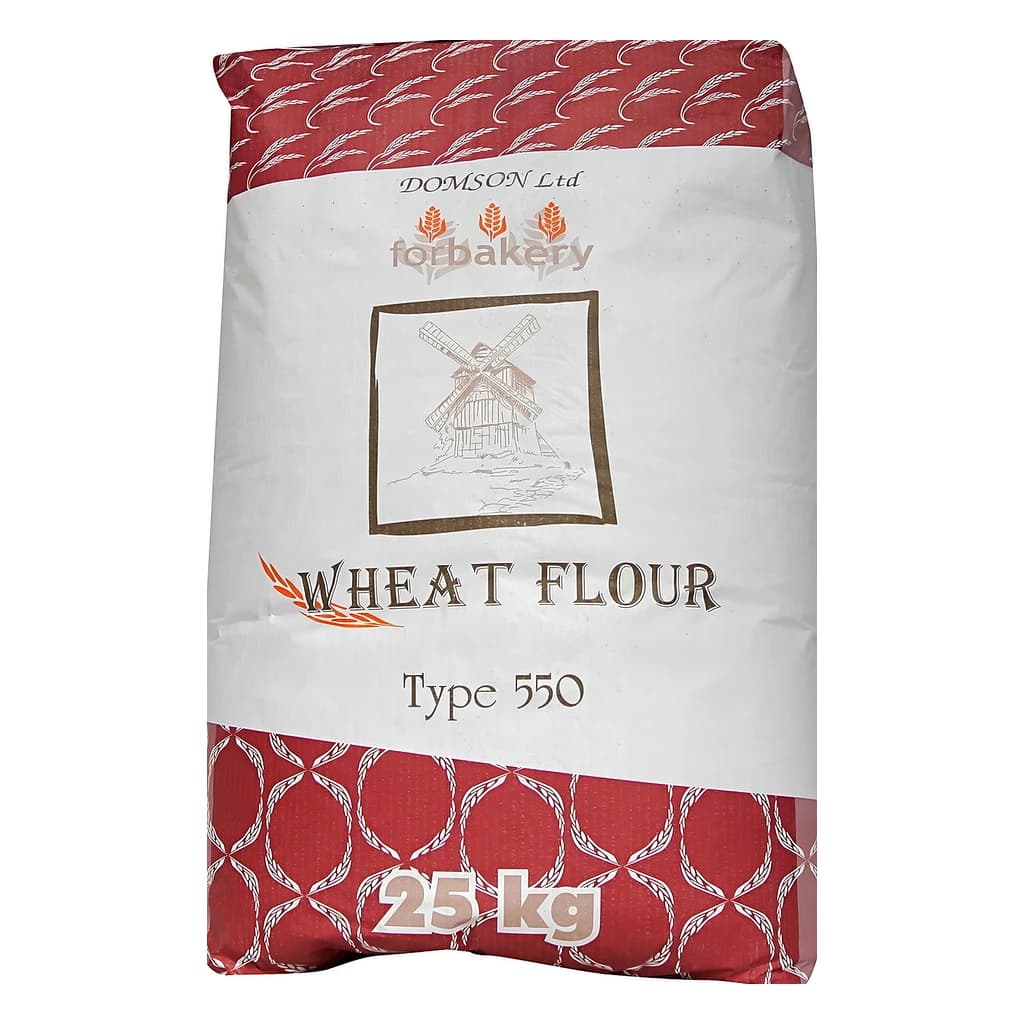
- Flour is chosen by its "typ" (type) number, not a marketing name. The number is the flour's mineral (ash) content × 1000 — so rye typ 720 is ≈ 0.72% ash and wheat typ 550 is ≈ 0.55% ash; a higher number means more bran, a darker flour and more minerals. A Polish baker who wants chałka asks for mąka pszenna typ 550, full stop. The catalogue carries the full Polish ladder — see the flour table below and the deeper treatment in A1-flour-classification-systems.
- Rye and mixed bread is built on sourdough (zakwas), not yeast alone. Rye flour's high pentosan content and active amylases mean the crumb has to be acidified to set properly. That is why "rye sourdough" is its own catalogue category and is the central buying decision for any rye loaf (see A2-ready-use-sourdough-industrial and A5-sourdough-technology).
The supplier landscape
Domson's range for Polish baking splits into five practical groups (see the figure below):
- Polish mills — GoodMills Polska, Komplexmłyn and Gdańskie Młyny supply the Polish "typ" flours; Domson Poland also retails Polish-type flours and baking staples.
- Yeast & sourdough — Lesaffre and Lallemand for yeast; Uldo, IREKS, Backaldrin, Zeelandia and Lesaffre for liquid/dry/concentrated rye and wheat sourdoughs.
- Polish fats — Kruszwica and Bielmar for confectionery margarines; Polmlek for butter.
- Polish dairy — Polmlek, OSM Bieruń, Mlekpol and Włoszczowa for the curd cheese (twaróg) that sernik depends on.
- Confectionery fillings & finishing — Zeelandia, Komplet, Prospona, AKO, Helios, Agart, Martin Braun and Vortumnus for poppy, kajmak, fruit fillings, glazes and fondant.
A useful rule of thumb: for the grain identity of Polish bread, buy Polish (mills + Polish sourdough houses); for functional systems (improvers, doughnut concentrates, fondants) the international houses present in Poland — Zeelandia, IREKS, Backaldrin, Puratos — are equally at home in a Polish bakery.
1. Bread: rye and mixed loaves
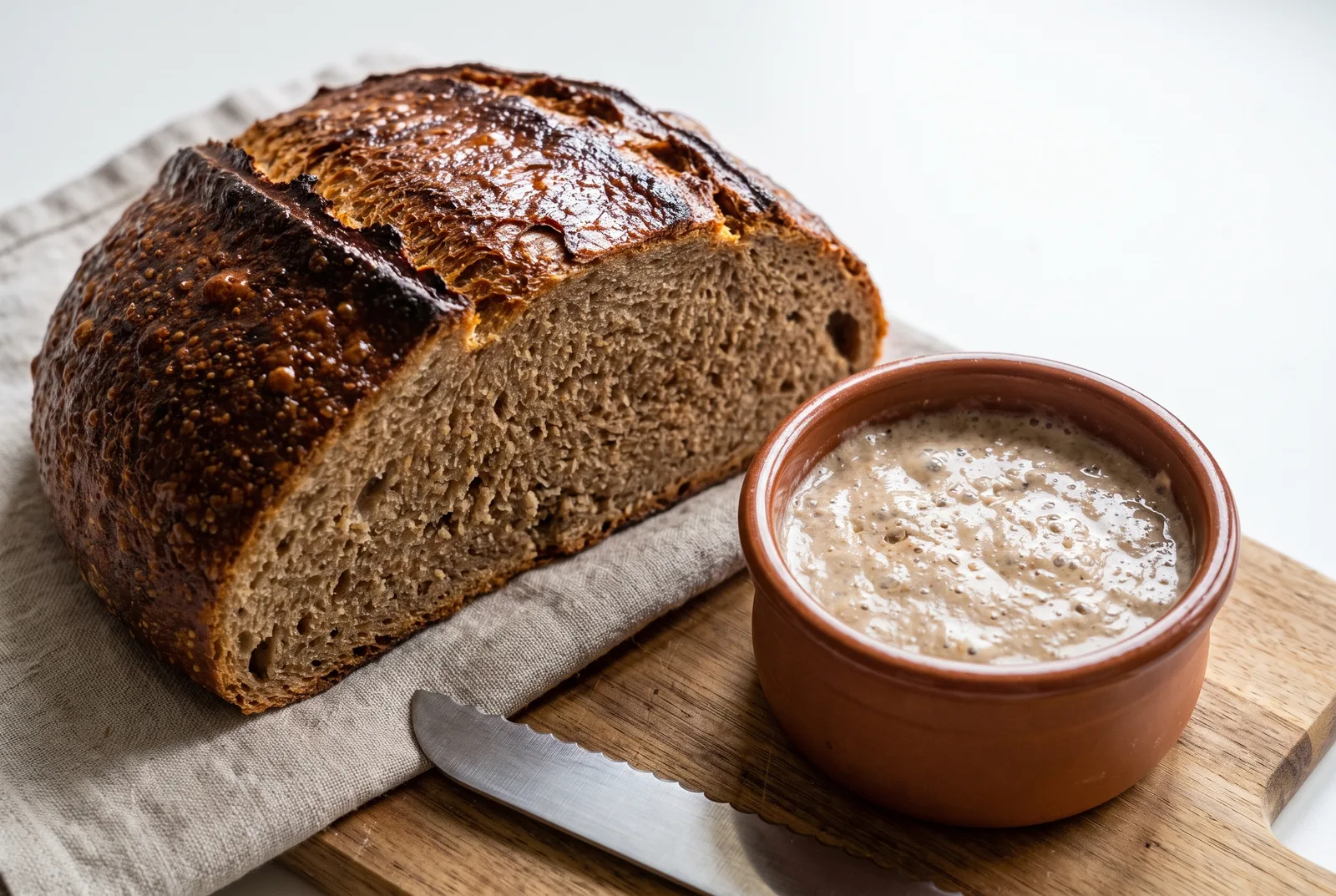 Sliced Polish rye sourdough bread with a bowl of rye starter (zakwas)
Traditional Polish everyday bread is predominantly rye (chleb żytni) and wheat-rye blends (chleb mieszany) raised on a rye sourdough; as a broad historical generalisation, rye-dominant loaves are associated with eastern and south-eastern Poland, while wheat-rye blends are more typical of the centre and west. (Several regional loaves carry heritage status — the obwarzanek krakowski is an EU Protected Geographical Indication, and chleb prądnicki and the kaszubski chleb żytni na ziemniakach — Kashubian rye-on-potato bread — are on the national List of Traditional Products; see B1-bread-landscape.)
Buy in this order:
- Flour (by typ): rye T720 (GoodMills, Komplexmłyn) for light-to-medium rye and mixed loaves; T1150 and wholemeal T2000 (GoodMills) for darker and razowy rye; wheat T750/T850 for the wheat fraction of a mixed loaf. See A1-alternative-grain-flours.
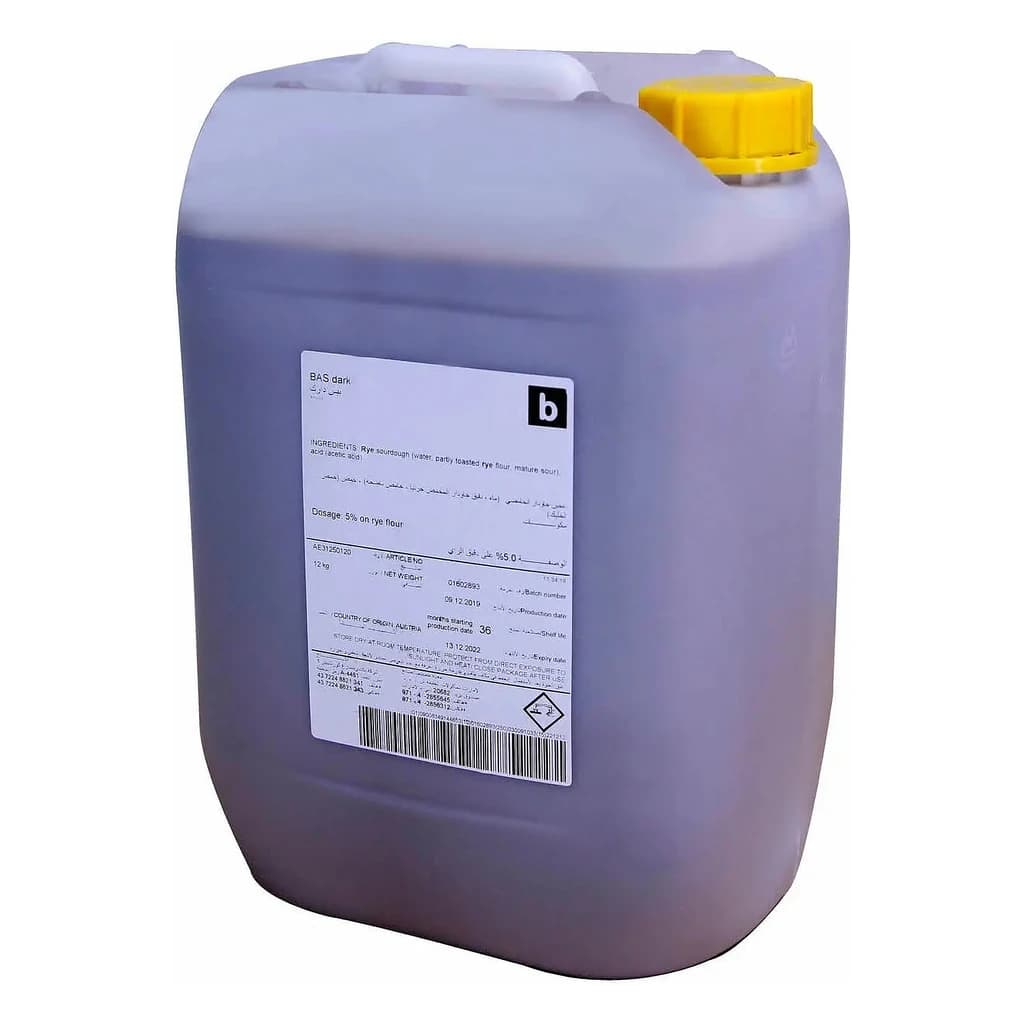
- Rye sourdough (zakwas): pick by form — dry concentrate (Sauer Dark Rye Sourdough Concentrate, Uldo; Sourdough Dry, Zeelandia), liquid (IREKS Natural Liquid Rye Sour; Backaldrin BAS Dark Liquid Rye Sourdough) or devitalised flavour culture (Lesaffre Rye Sourdough AS ECOL). If you maintain your own starter, these are flavour/insurance boosters; see B1-zakwas-sourdough.
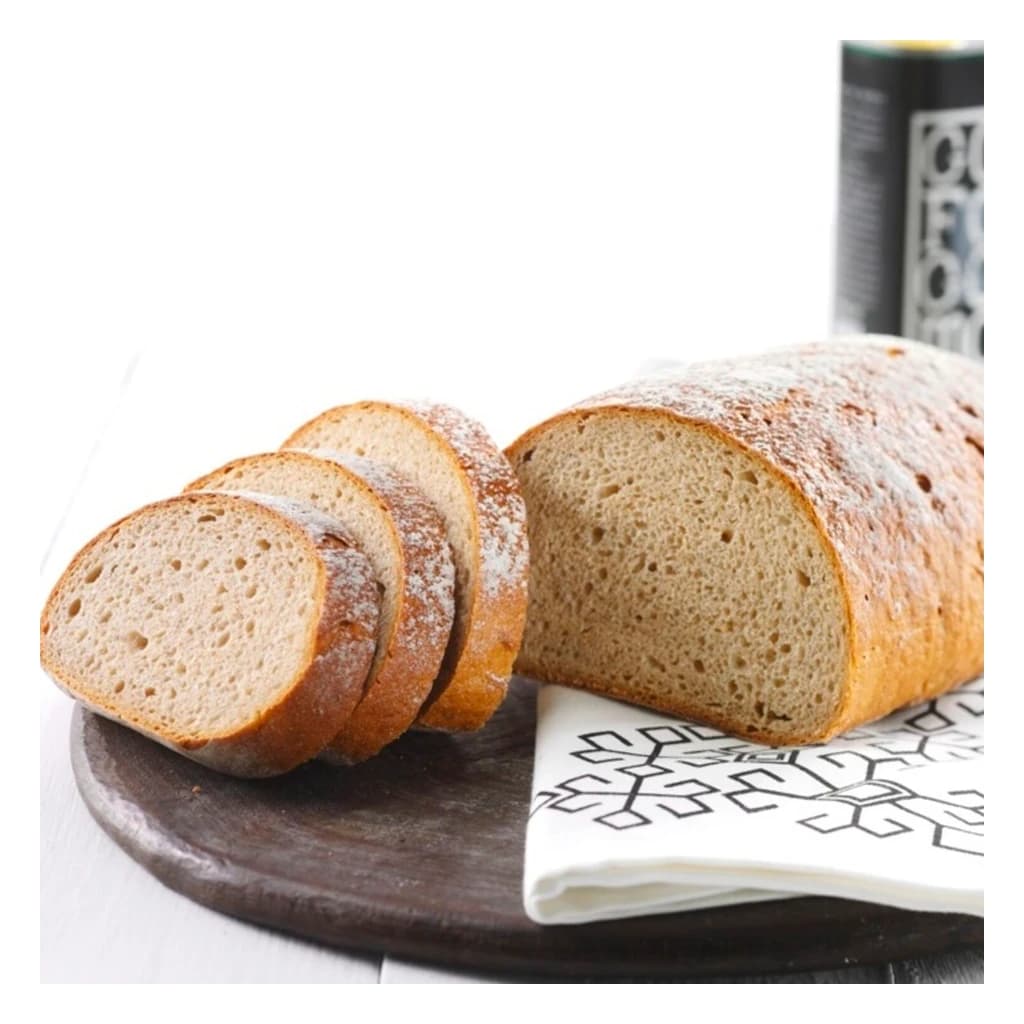
- Improver (optional): a rye-specific improver such as Rye Stabil (Zeelandia) for crumb stability, or a clean-label all-rounder like Optimax Free (Zeelandia). See A3-improver-selection-guide.
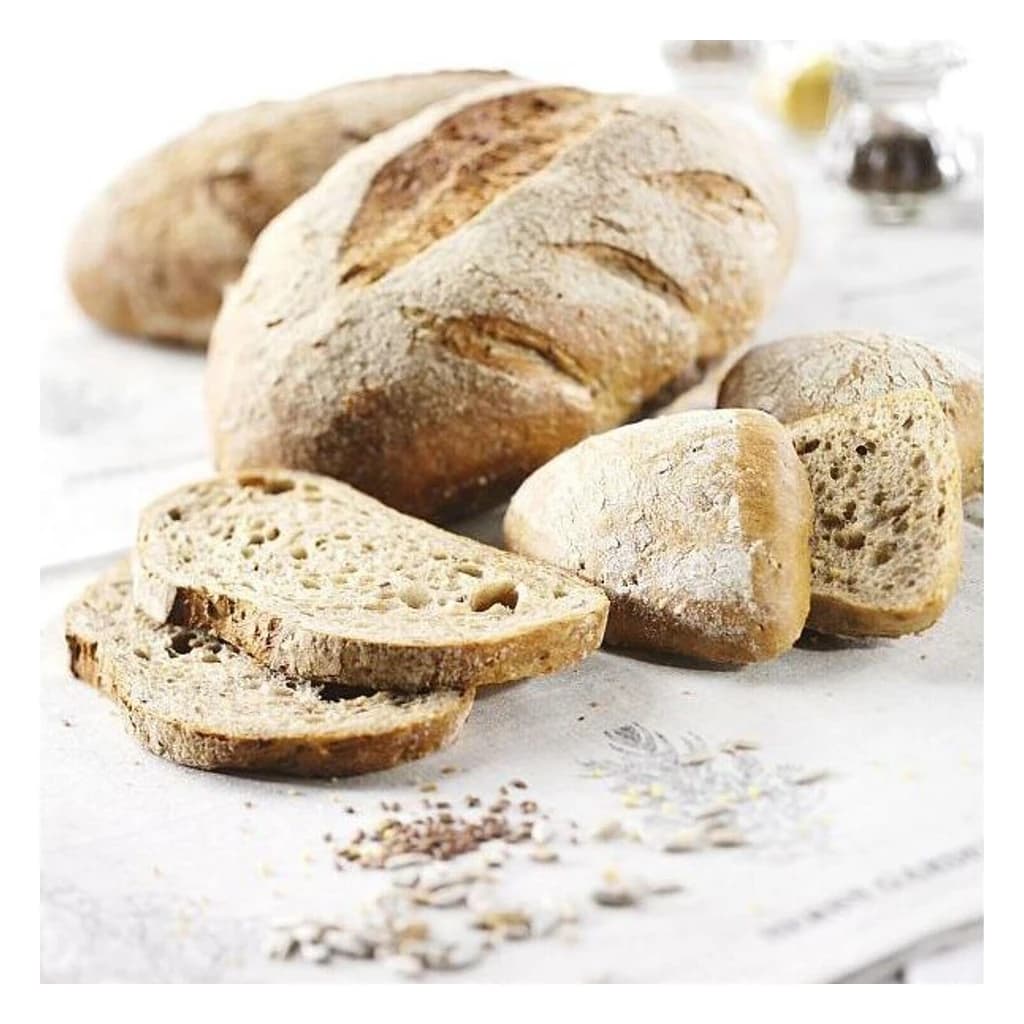
- Complete mix (fast route):Kołodziej Classic Rye Bread Mix and Hearty Rye Bread Mix (Zeelandia), or Komplet Żytniak CL (clean label). The Kołodziej formula is given in full in the formula card below — note the 3-hour cold soak at 18-20°C, dough temperature 26°C, and the bake at 250°C falling to 230°C with steam for the first 3 minutes, ~55 minutes total.
- Yeast:Fresh Yeast Benevia (Lesaffre) or Fresh Yeast Traditional (Lallemand).
A close, slightly moist crumb is correct for rye — it is not a fault. If a loaf is genuinely gummy and sticky, the dough is under-acidified: raise the sourdough dose or add a rye improver (see the fault table below).
2. Enriched yeast doughs: chałka, babka, drożdżówki
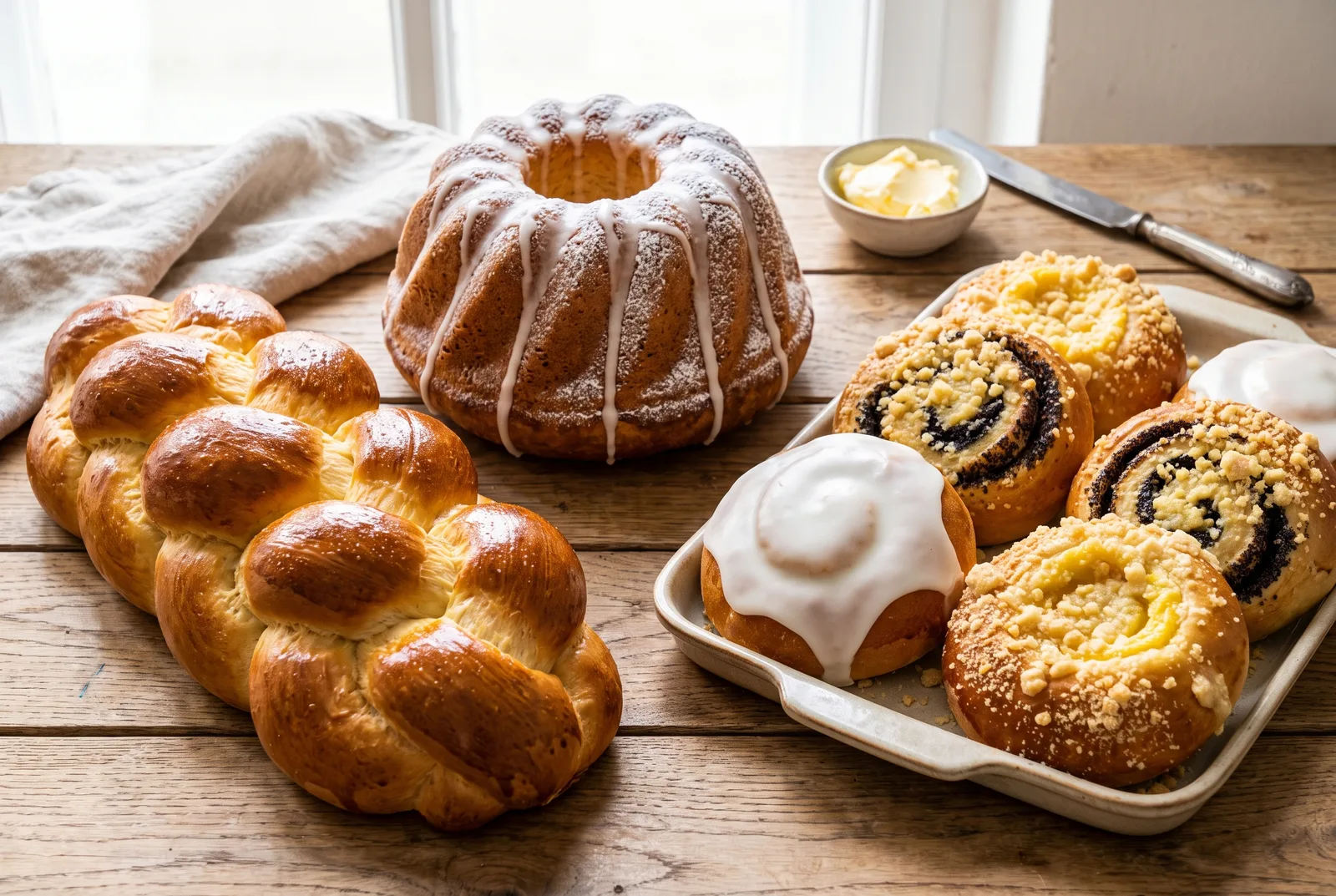 Chałka, babka drożdżowa and drożdżówki — Polish enriched yeast bakes
Polish enriched baking (ciasto drożdżowe) is built on wheat flour typ 500/550, enriched with egg yolks, butter and milk plus sugar. Chałka is a braided (pleciona) enriched loaf — in its classic form egg-washed to a glossy crust, and a Polish expression of the challah tradition. It is recognised as a traditional product on the national list (e.g. Wólecka chałka pleciona, which is finished with sweet crumble (kruszonka) rather than egg glaze, illustrating how the form varies by region). Babka drożdżowa is baked in a tall fluted (chimney) ring, often with raisins and a sugar glaze (lukier). Drożdżówki are the everyday sweet buns, filled with curd, poppy or fruit.
Buy in this order:
- Flour: wheat T500/T550 (Domson, Komplexmłyn, Gdańskie Młyny); finer T450/T500 where a very tender crumb is wanted. See A1-wheat-flour-types-by-application.
- Yeast: because enriched doughs are high in sugar and fat, yeast performance matters — use fresh yeast (Lesaffre/Lallemand) and, for the sweetest doughs, an osmotolerant yeast; see A2-osmotolerant-yeast-enriched-doughs.
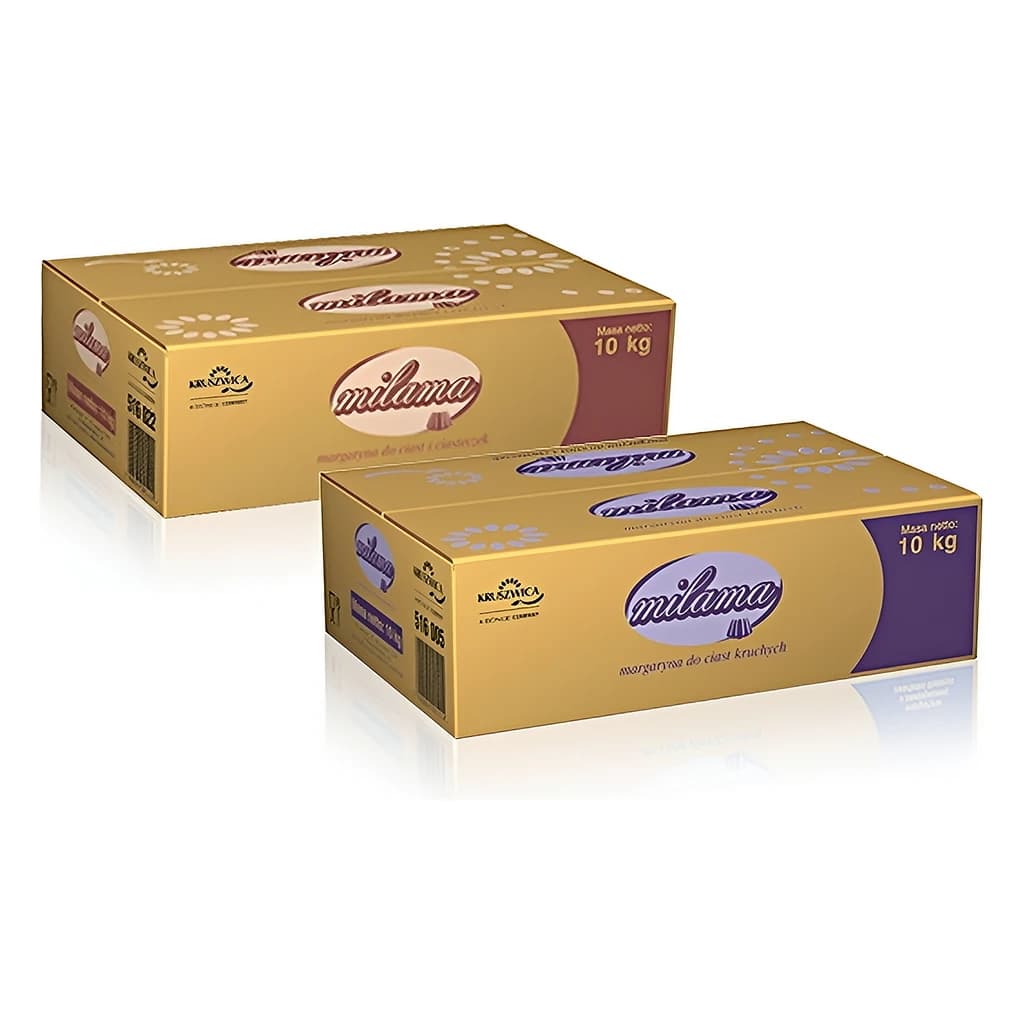
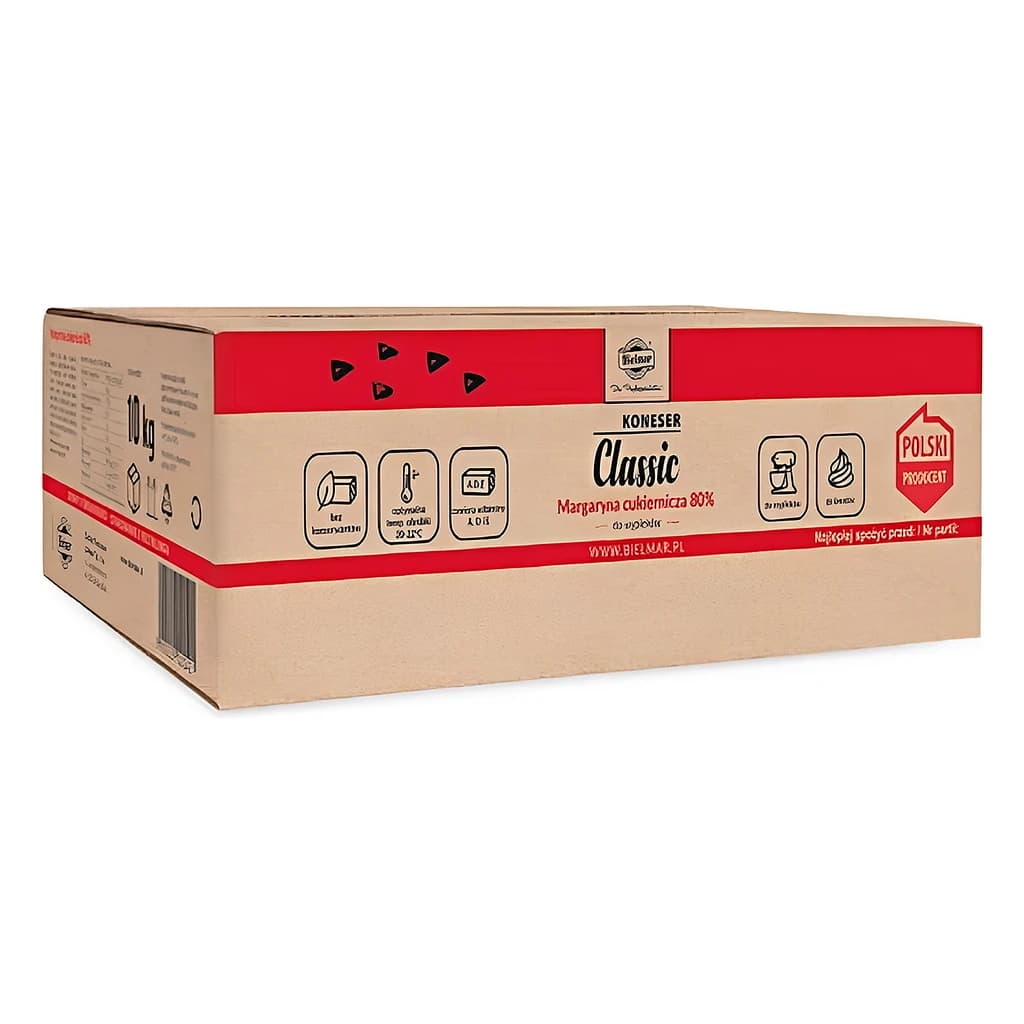
- Fat: a cake/cookie margarine such as Milama (Kruszwica) or Koneser (Bielmar) for volume and cost, or Unsalted Butter 82% (Polmlek) for premium flavour. The Milama spec (SPBLN 03/09) gives the numbers a confectioner cares about — 80% fat, trans <2%, solid-fat content 20-25% at 20°C and ≤5% at 35°C (so it melts cleanly on the palate); store at 4-15°C. Note: that spec is dated 2009 — confirm trans-fat compliance against a current post-April-2021 spec (EU Reg. 2019/649) before customer-facing use. See A4-fat-types-and-selection.
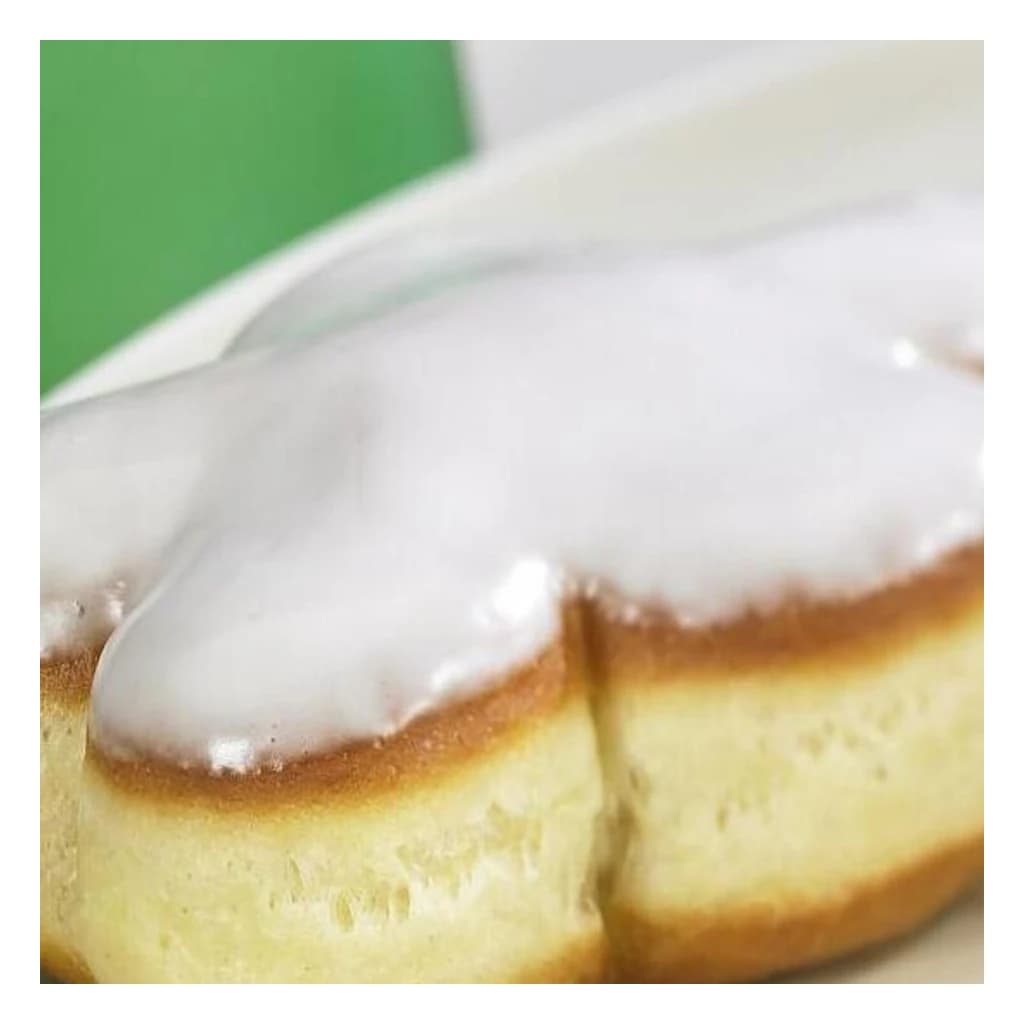
- Fillings & finish: poppy, curd and fruit fillings (below) inside; a sugar fondant (Zeelandia) or Bun Glaze RTU (Bakels) on top — warm fondant to 40-45°C before glazing (the Zeelandia Fondant Ready spec permits up to 48°C, but 40-45°C is the public application optimum and preserves gloss; see A6-glazes-finishes).
For complete enriched formulas in baker's percentage, see A8-enriched-dough-formulas.
3. Confectionery and festive baking
This is where Polish identity is strongest, and where the right filling or mass decides authenticity.
Pączki (filled doughnuts)
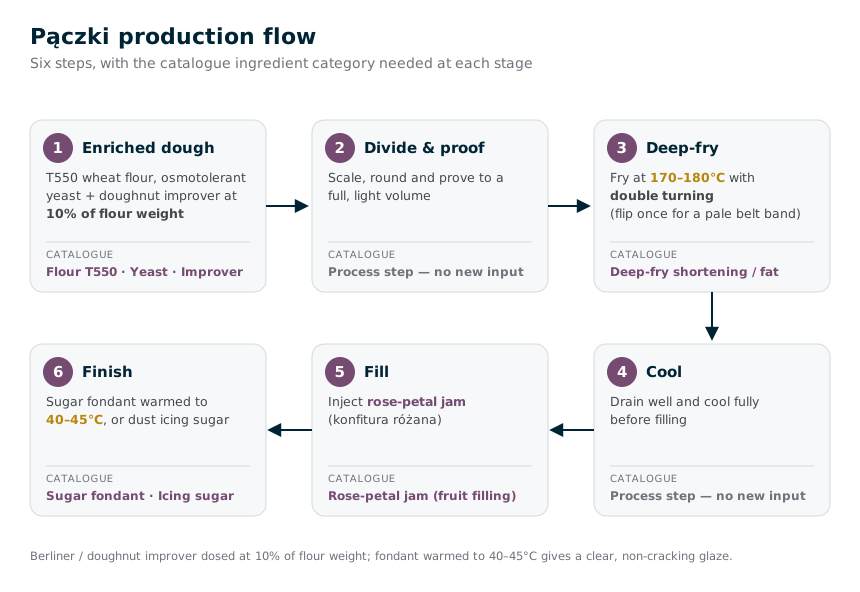 Step-by-step pączki production and frying diagram with catalogue ingredients labelled at each stage
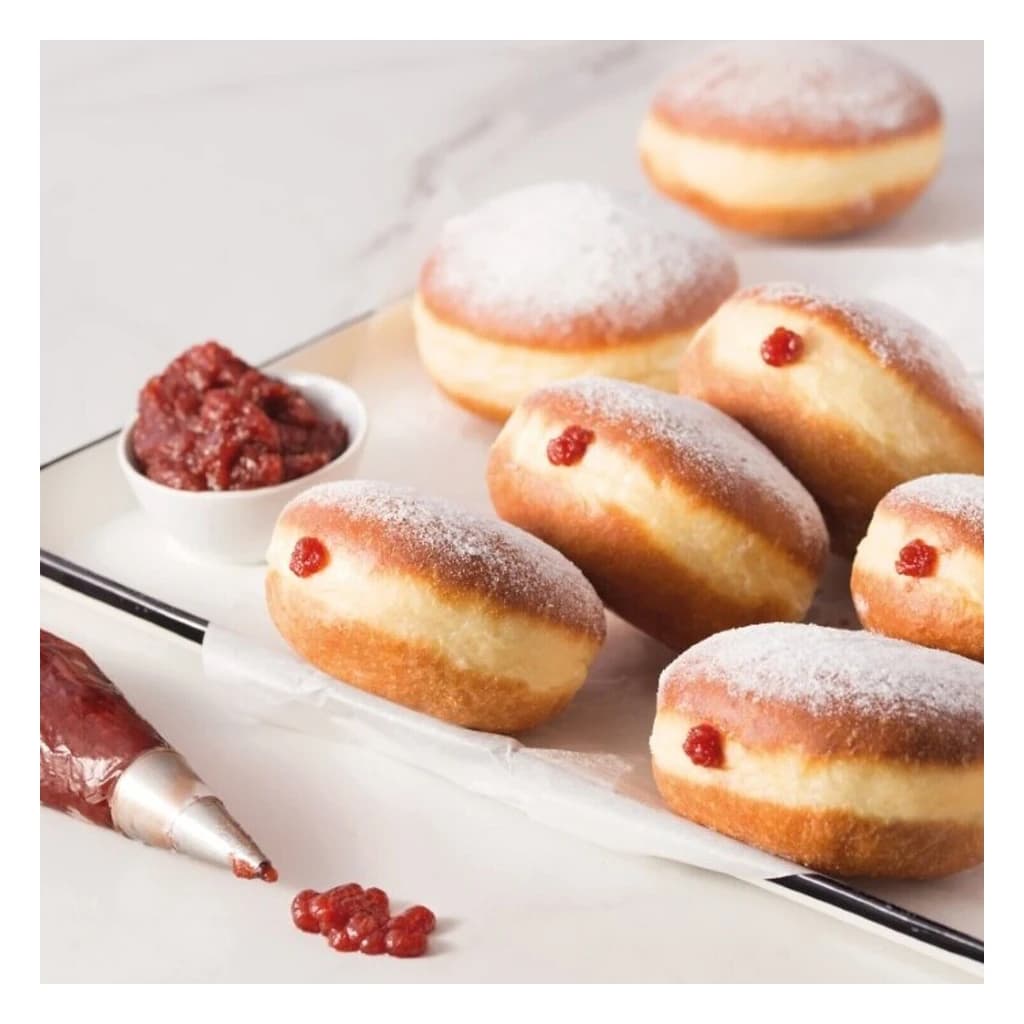
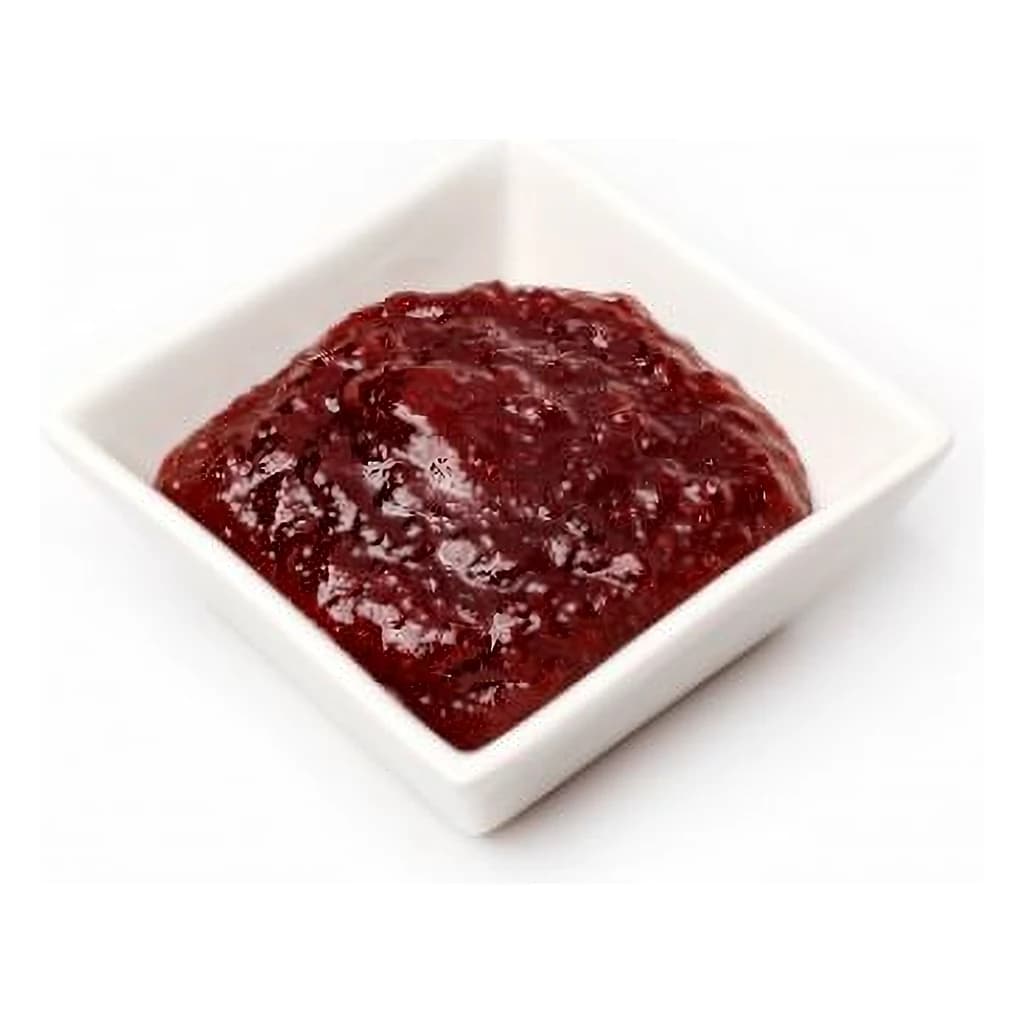
Pączki are an enriched T550 dough, traditionally deep-fried in lard (smalec) for the classic flavour and crisp crust; modern bakeries commonly use refined vegetable or palm-based frying fats (e.g. Palm Frying Oil, Master Martini). Fry at 170-180°C — too cool and they soak up oil, too hot and the centres stay raw. The classic filling is rose-petal jam (konfitura/marmolada z płatków róży) — Rose Petal Filling with Sugar (Prospona) — with plum butter (powidła) and other jams also traditional. See A4-frying-fats-and-oils.
The fastest reliable route is a doughnut system: Berliner 10% Doughnut Improver Free (Zeelandia, clean label), IREKS Global Yeast Doughnut Concentrate, or Backaldrin Doughnut & Yeast Dough Concentrate. The Berliner formula is given in full in the formula card below: dosed at 10% of flour, dough temperature 26-28°C, fried at 180°C for ~7 minutes with double turning. The pale equatorial "biała obwódka" (white belt) is the visual proof of correct frying with turning. Finish with sugar fondant (Zeelandia, warmed 40-45°C) or icing sugar.
Makowiec (poppy-seed roll)
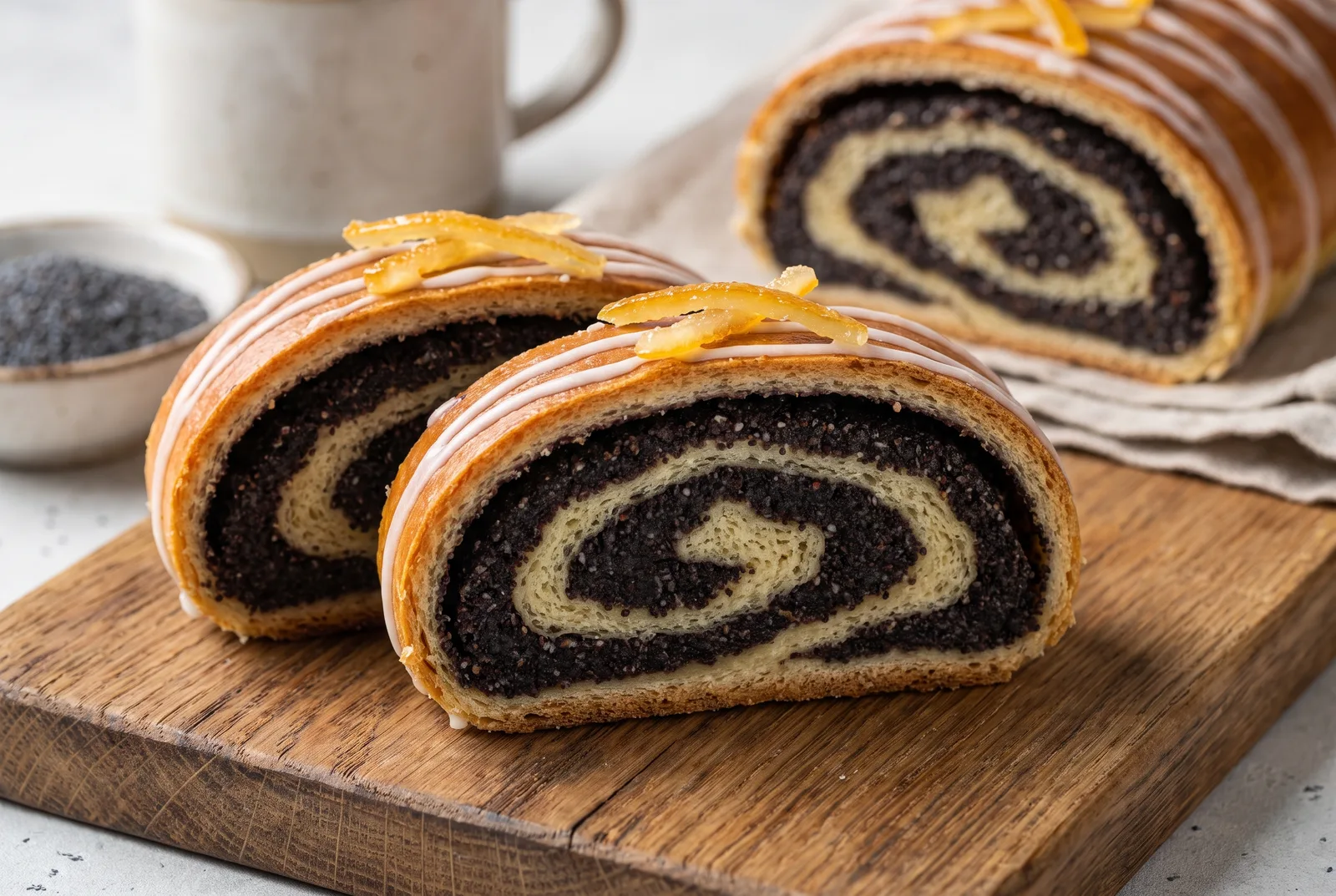 Sliced makowiec showing the poppy-seed filling spiral
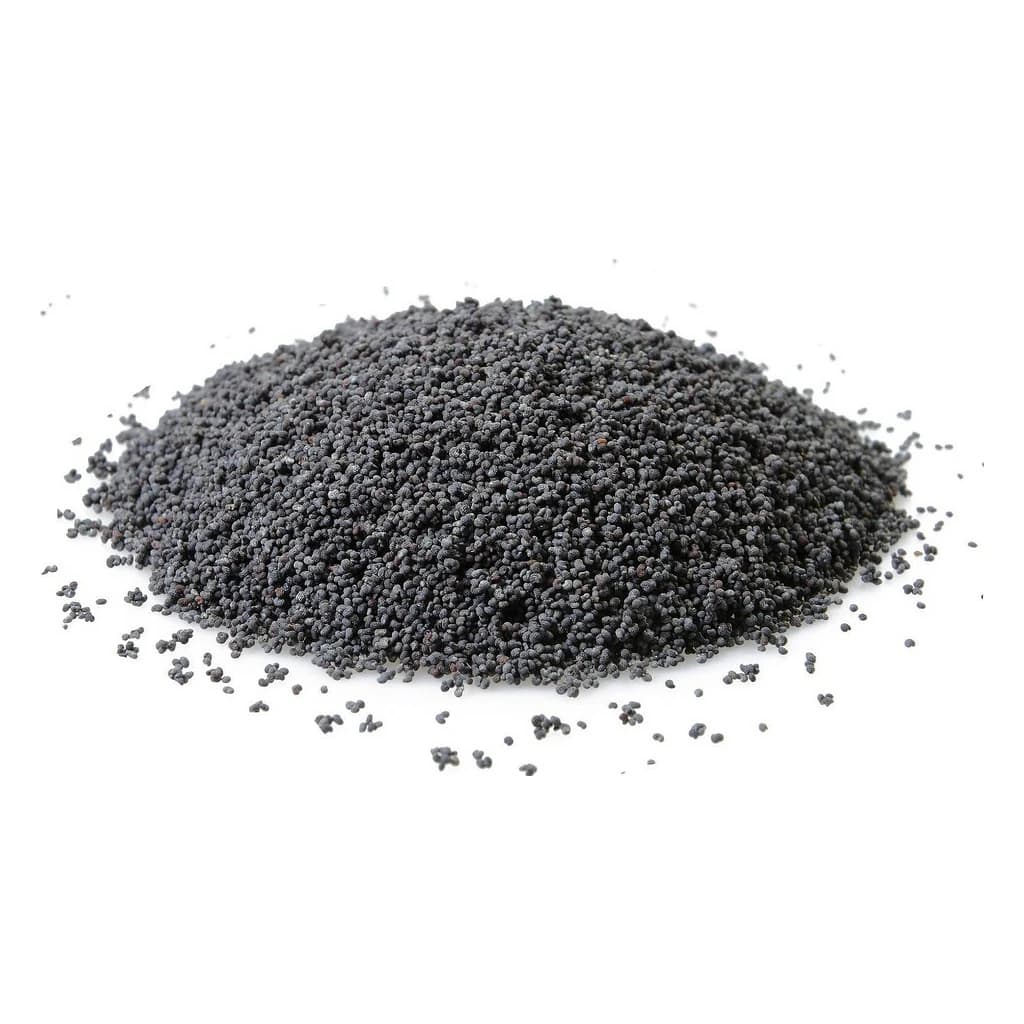
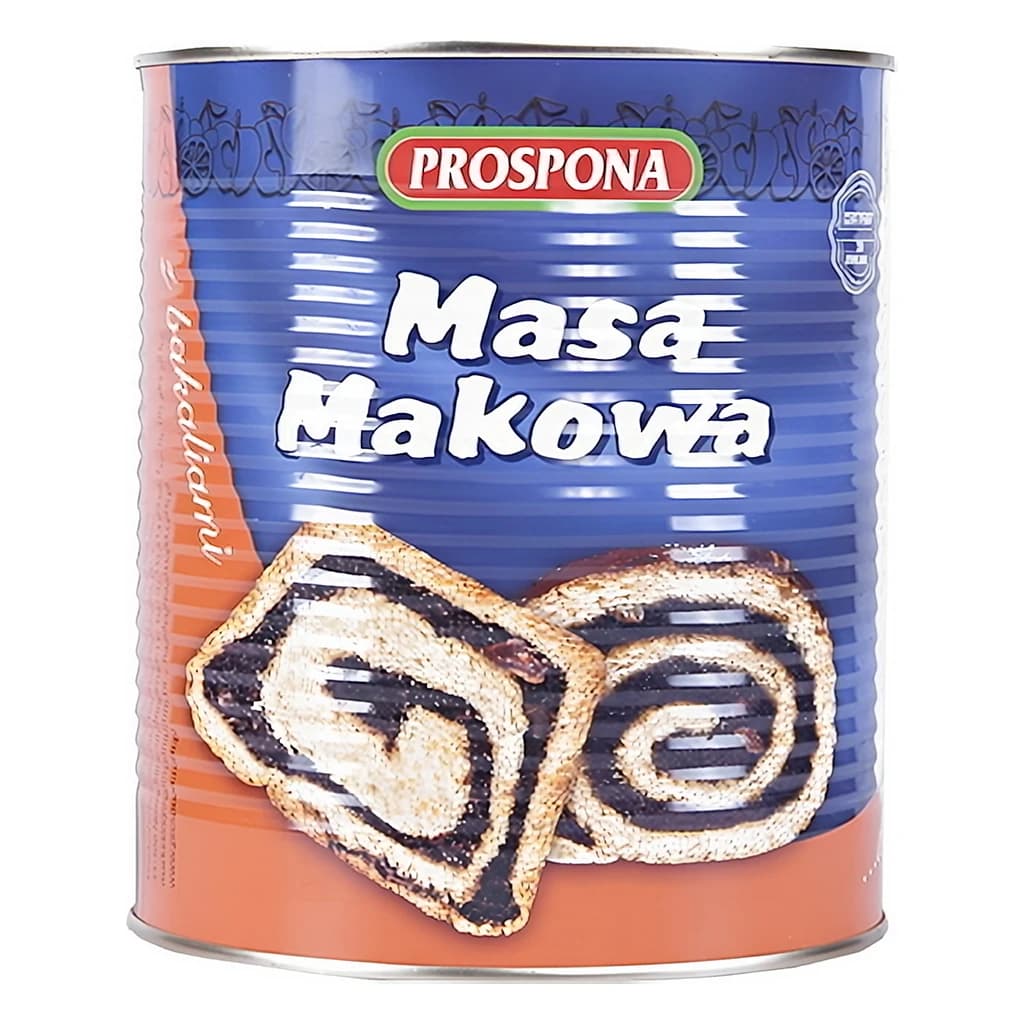
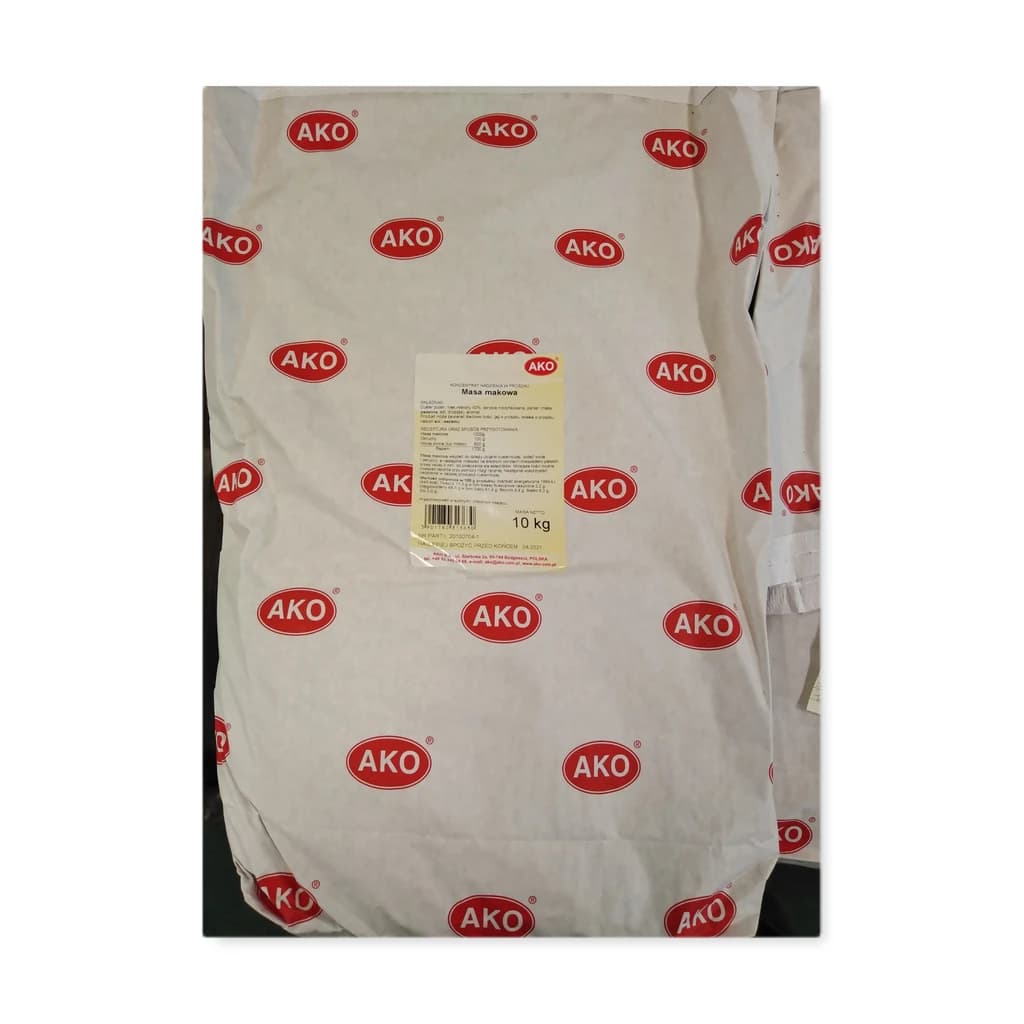
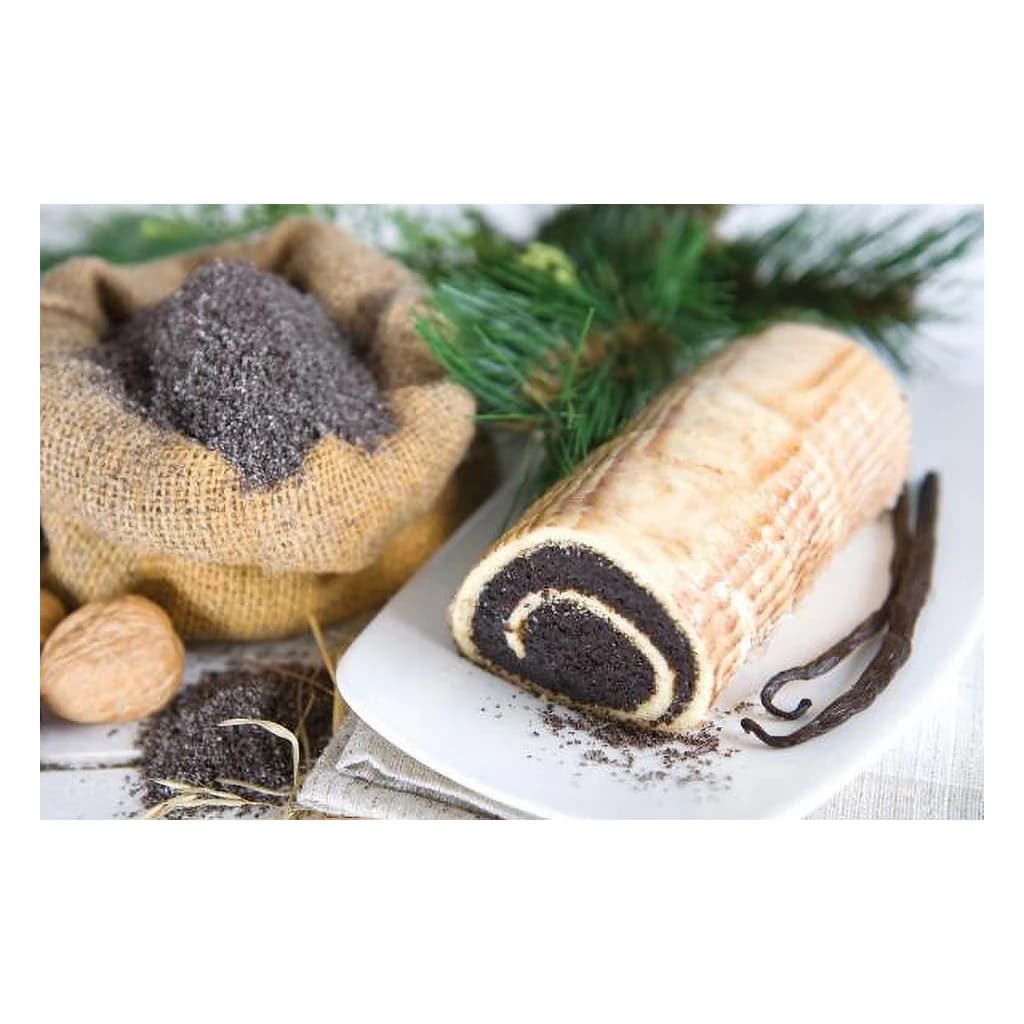
Makowiec is a thin enriched dough rolled tightly around sweetened ground poppy (masa makowa). Read the poppy percentage when you buy — it is the single biggest value/richness signal: AKO Poppy Seed Dry Filling is a 40% ground-poppy powdered concentrate (rehydrate 1000 g + 100 g crumbs + 600 g water; see the formula card below), while Prospona poppy filling with dried fruits is 21% poppy at ≥38°Bx. Ready pastes from Helios and Komplet, and whole Blue Poppy Seeds (Agart) for bakers who cook their own mass, complete the range. See B1-makowiec-and-poppy-seed-fills.
Sernik (baked cheesecake)
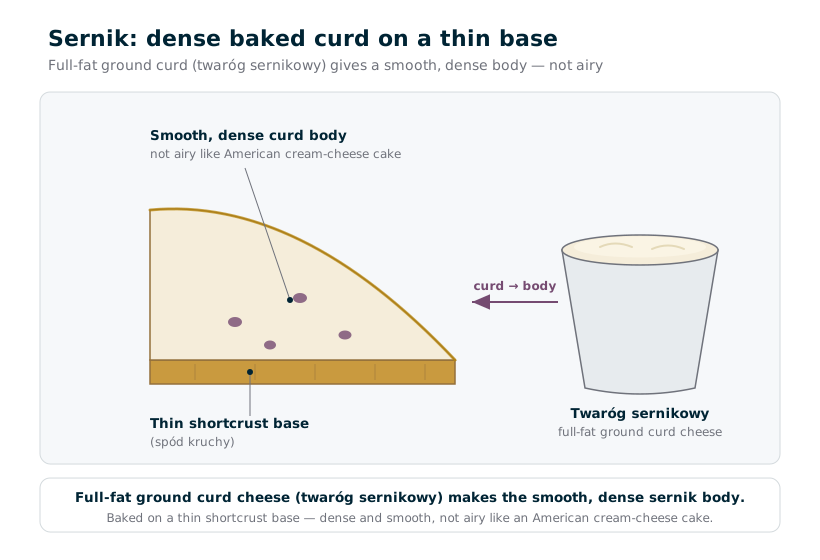 Slice of baked Polish cheesecake (sernik) next to ground curd cheese
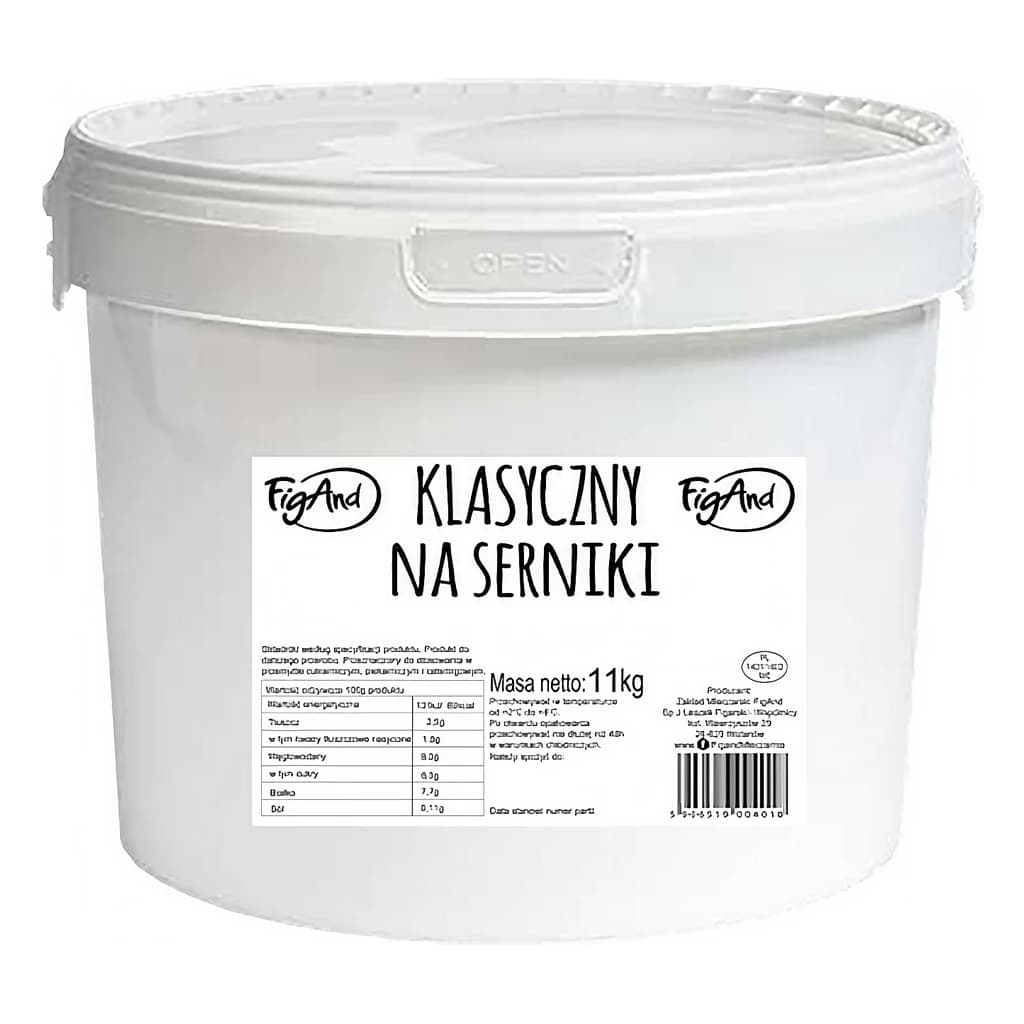
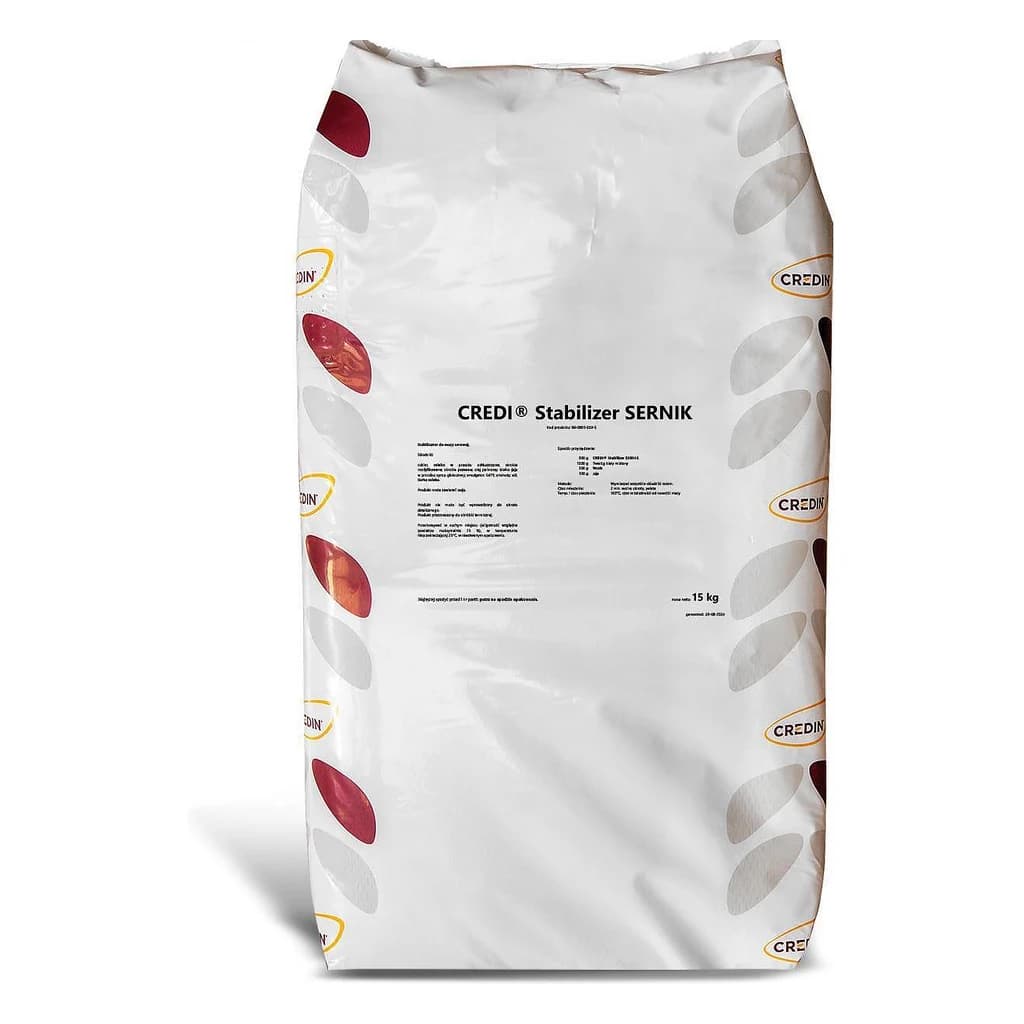
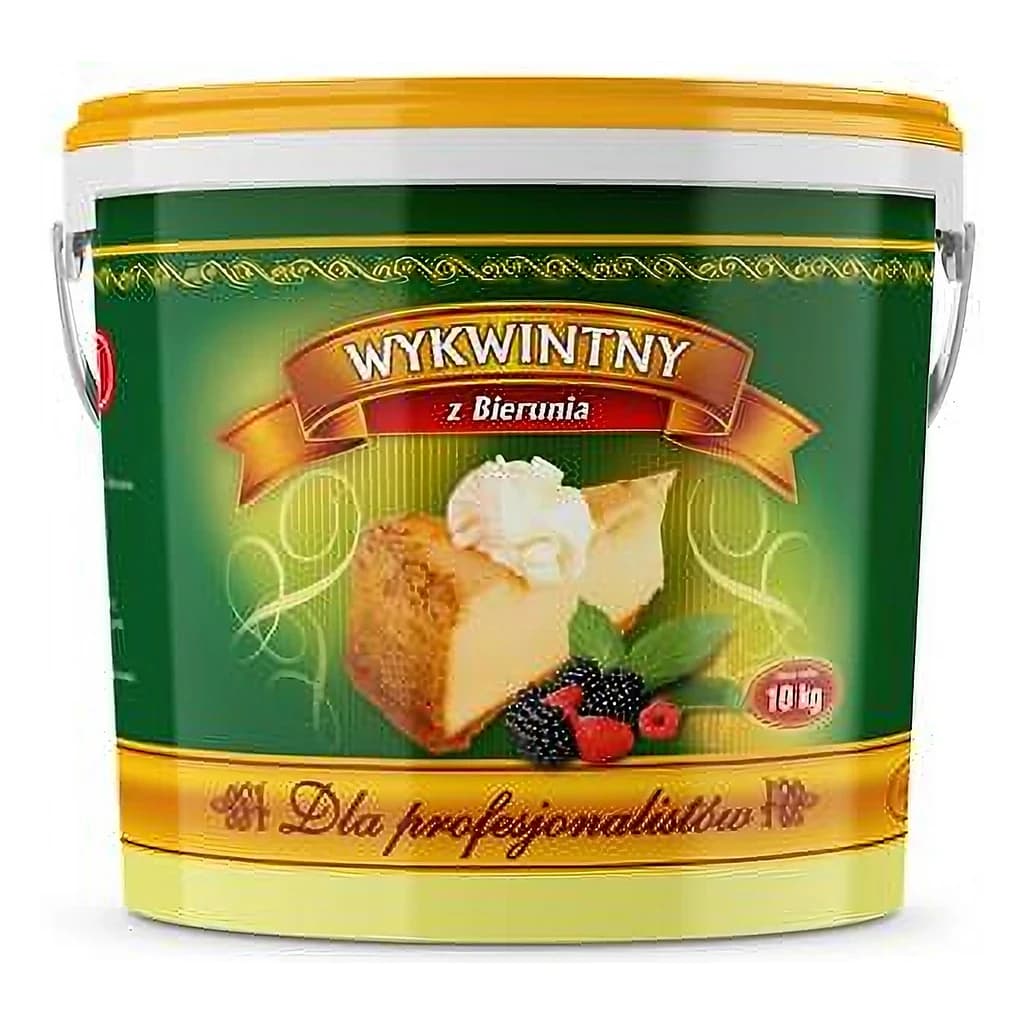
Sernik lives or dies on the curd cheese (twaróg). The tradition is full-fat twaróg, ground two or three times (twaróg trzykrotnie mielony) to a smooth body — professional bakeries buy ready ground bucket curd (twaróg wiaderkowy), checking it is dense (does not run off a spoon) and noting any added stabilisers. Cheesecake curd is typically 10-18% fat: Polmlek Cheesecake Curd 14%, Figand Cheesecake Curd Mix 15%, OSM Bieruń and Włoszczowa curd. For consistency add Credin Cheesecake Stabiliser, or take the all-in-one route with Komplet Gourmet Cheesecake Mix. See B1-sernik-polish-cheesecake.
Mazurek (Easter shortcrust)
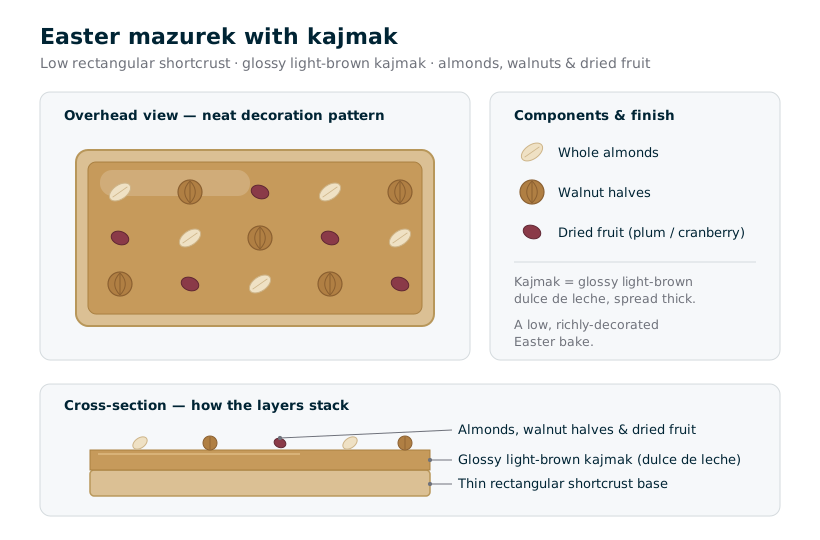 Easter mazurek with kajmak topping and nut decoration
Mazurek is a low shortcrust (kruche) base finished after baking with sweet masses and a generous decoration of nuts and dried fruit. The most classic version is topped with kajmak (masa krówkowa) — a dulce de leche. Zeelandia Kajmak is ready to use: 69-72% solids, pH 5.2-6.2 (the pH 5.2 lower bound is more acidic than typical confectionery dulce de leche; confirm on the current TP00931 spec and verify the trans-fat and allergen declarations before customer-facing use), 6-month sealed shelf life, milk the only declared allergen; Gostyń Kajmak and Classic Kajmak (Agart) are alternatives. Spread kajmak onto a fully baked, fully cooled base, or it weeps and the base goes soggy (see the fault table). The base ratio is the standard Polish 3-2-1 shortcrust (formula card below); for variations see A8-enriched-dough-formulas and B1-mazurek-and-short-pastry.
Piernik and miodownik (gingerbread, honey cake)
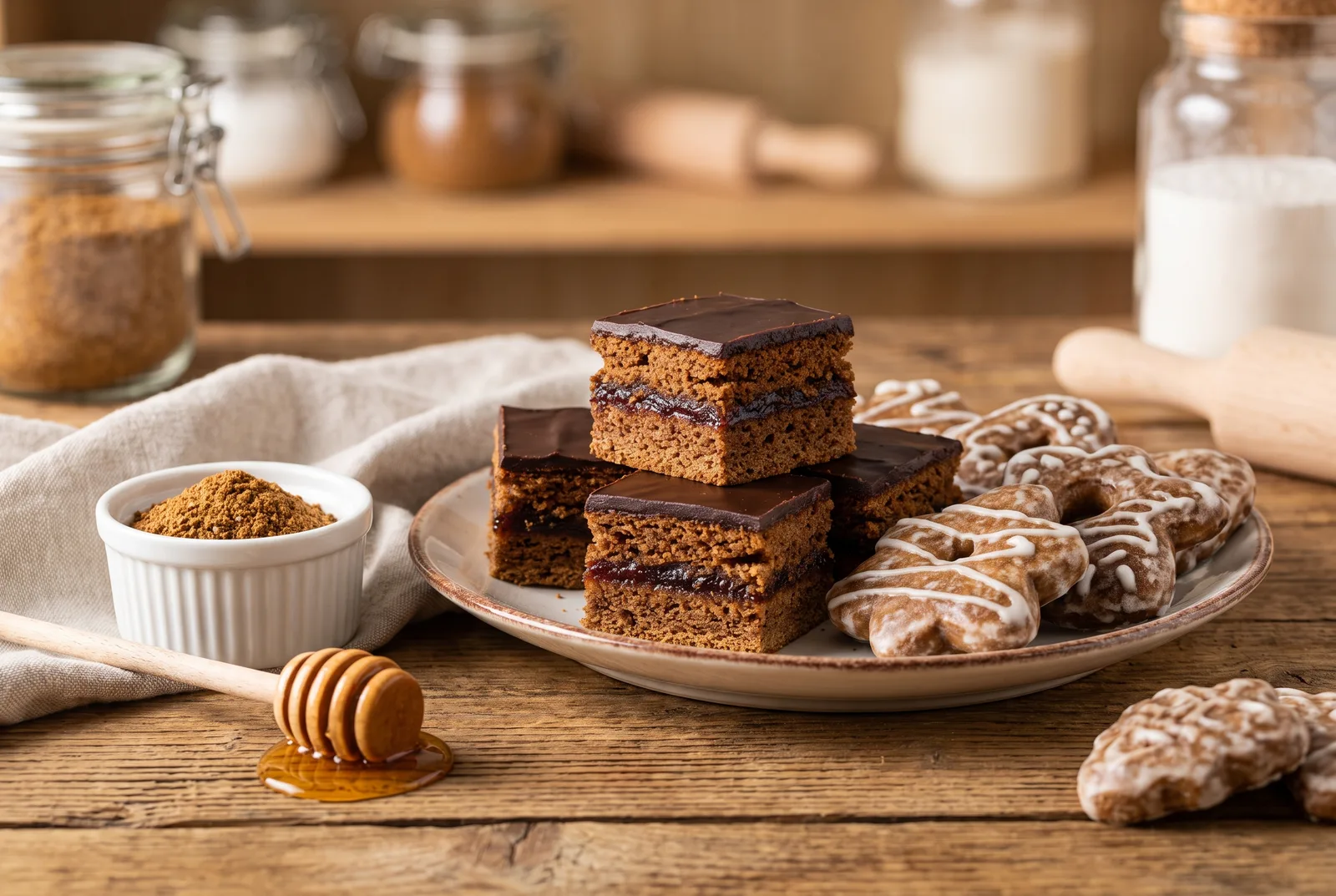 Polish honey-spice gingerbread (piernik) with spice and honey
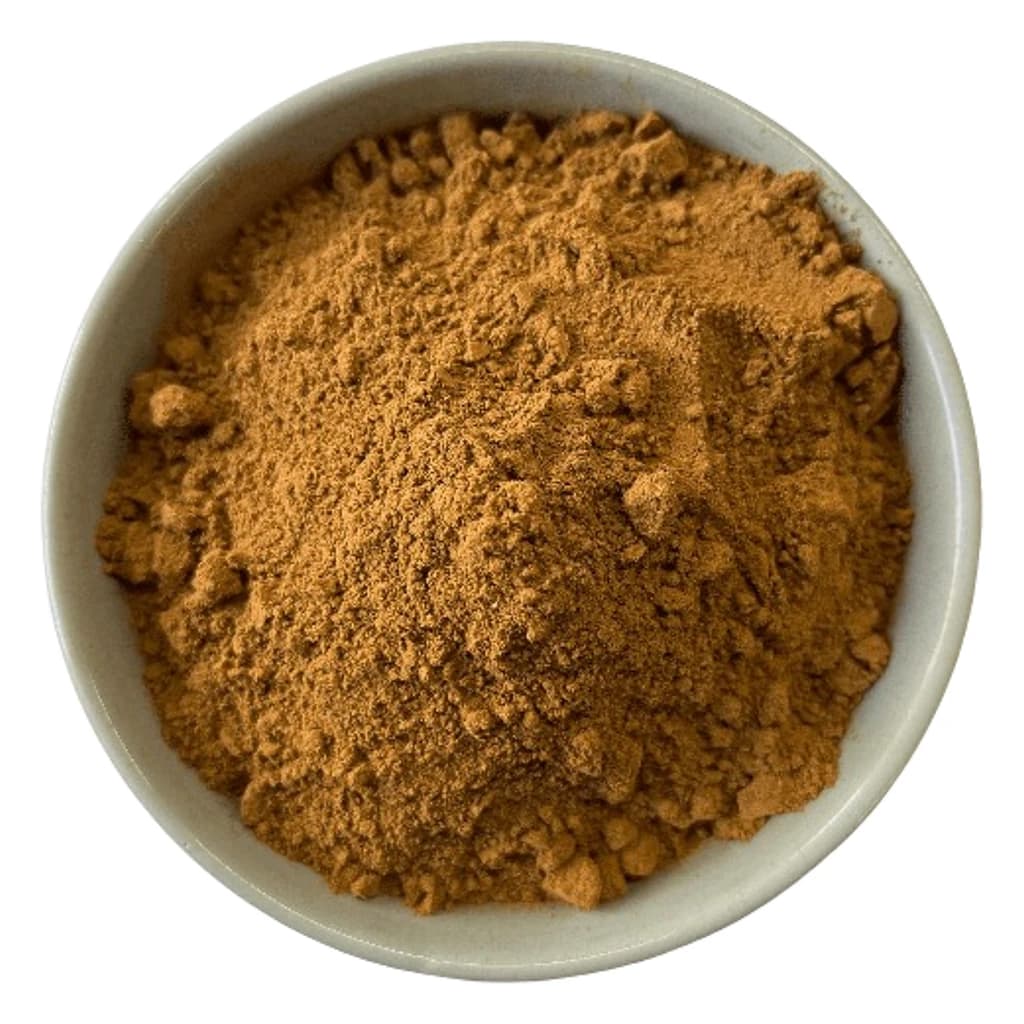
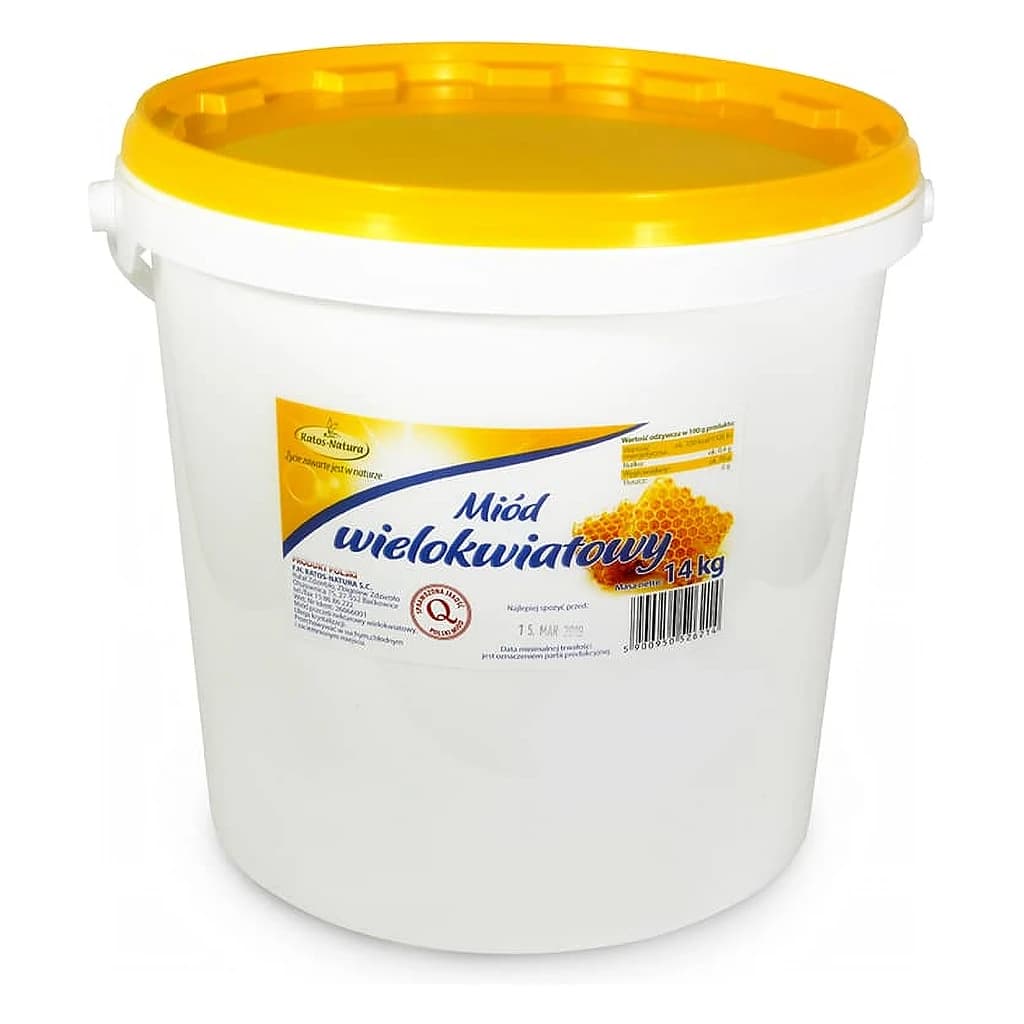
Piernik — most famously associated with Toruń, Poland's historic gingerbread city — is built on honey and a spice blend (cinnamon, cloves and related spices); traditional craft production typically rests or matures the dough before baking. Note that the Polish national traditional products list also includes piernik staropolski z Powiśla, a distinct variety whose recipe traces to Galicia (brought to the Powiśle region after WWII) — gov.pl heritage entries therefore document piernik's national traditional status broadly, not solely the Toruń type. See B1-piernik-gingerbread. The catalogue lets you build it from scratch — Multifloral Honey (Ratos Natura), Mixed Spice Euro Blend (Rolmex), Cinnamon Ground (PGD), rye/wheat flour and Plum Filling Śliwidło (Martin Braun) for the layers — or take the mix route: Zeelandia Gingerbread Cake Mix (Ciasto Korzenne; 1000 g + 250 g oil + 450 g water, bake 180°C 50-60 min) and Lesaffre Gingerbread Mix. For the soft honey-cake (miodownik) layers, Zeelandia Honey Cake Mix (Ciasto Miodowe; 1000 g + 500 g oil + 500 g eggs, bake 180°C 40-50 min) — note its honey content is only 0.2%, so add catalogue honey if you want a stronger honey note.
Supporting confectionery staples
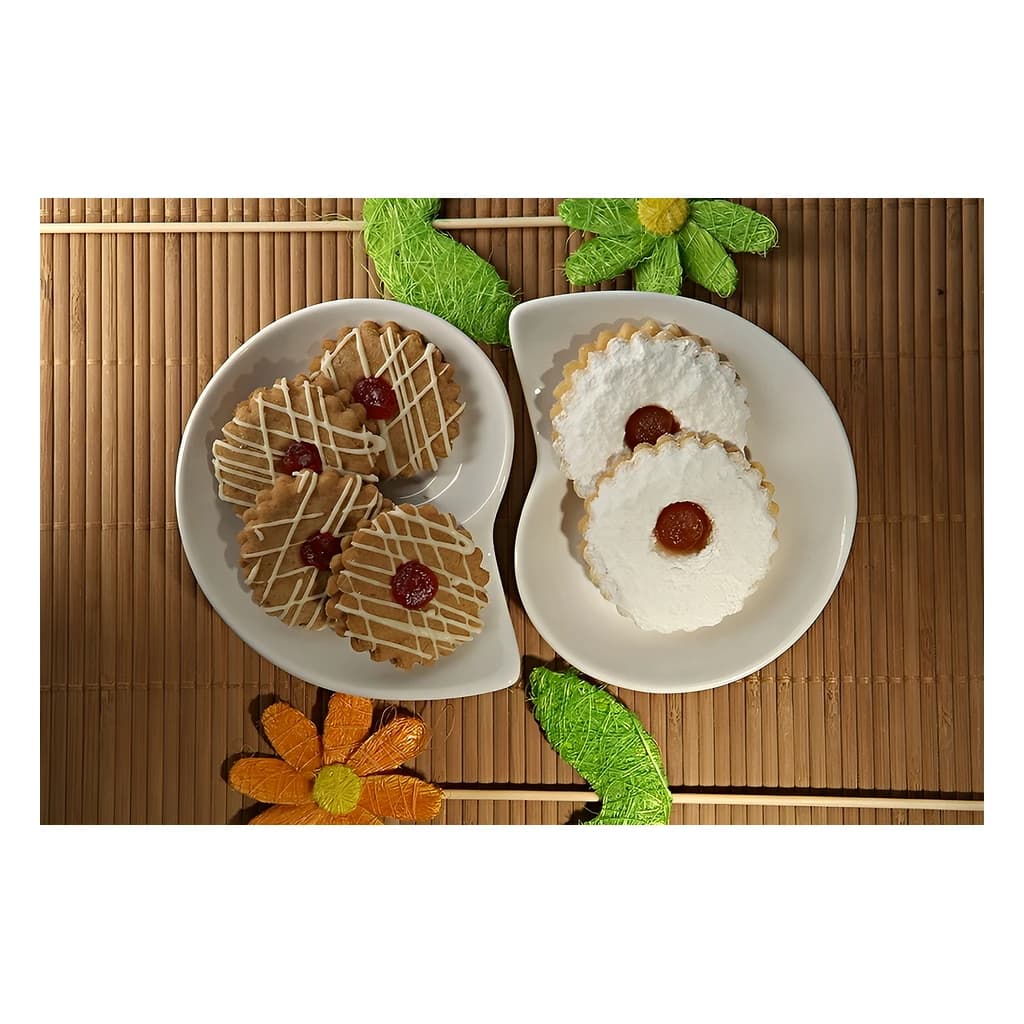
Custard and cream centres: Komplet Karpatka Custard Cream Mix (for the classic karpatka), Emix Vanilla Custard Powder. Fruit fillings: Raspberry Seedless Jam (Vortumnus). Leavening for non-yeasted bakes: Baking Powder (Domson). Two example product shots below — the kajmak bucket and the rye-flour sack — show how these arrive in the catalogue.
Food-safety and allergen note
Every enriched, fried and dairy formula here carries gluten and usually egg, milk and/or soy. Specific flags drawn from the spec sheets: Zeelandia Berliner 10 Free contains wheat, milk, soy, egg and rye and may contain barley/oat/sesame; the gingerbread mix contains wheat, rye, egg and milk and may contain barley/oat/soya/sesame; the AKO poppy concentrate contains wheat and may carry traces of gluten cereals, soya, sesame and egg; Zeelandia Kajmak contains milk. When deep-frying pączki, fry to a safe internal temperature, monitor oil quality and manage acrylamide (EU Reg. 2017/2158). Keep fresh yeast, butter, curd cheese, kajmak and dairy fillings refrigerated and within their stated shelf lives. Confirm every allergen statement against the live supplier spec attached to each product before showing it to customers.
Poppy seed — opium alkaloid compliance: EU Regulation 2021/2142 (applicable from 1 July 2022) sets maximum levels for opium alkaloids (sum of morphine + 0.2 × codeine) of 1.5 mg/kg in bakery products containing poppy seeds and 20 mg/kg in whole or ground poppy seeds placed on the market for final consumers. Any bakery producing makowiec, poppy babka or other poppy-seed products must source poppy seeds and poppy fillings (including AKO concentrate and Prospona paste) only from suppliers who provide batch alkaloid test certificates confirming compliance; bakers bear responsibility for ensuring their finished bakery goods meet the 1.5 mg/kg limit. Poppy seed is not among the EU 14 major allergens under Regulation 1169/2011 but can cause IgE-mediated hypersensitivity in sensitive individuals.
Milama margarine — trans-fat spec currency: the Kruszwica Milama spec on file (SPBLN 03/09) is dated 2009, twelve years before EU Regulation 2019/649 (effective 1 April 2021) imposed a hard limit of <2 g per 100 g of fat for industrial trans-fatty acids in food. The 2009 spec states "trans <2%" which equals the current EU maximum. Obtain and review a post-April-2021 Milama spec before making any customer-facing trans-fat claim.
A note on the catalogue spec data
While building this guide, nine first-party supplier spec sheets were read and cited directly. Three curd-cheese
products, however, had mismatched spec PDFs at read time (their attached files were a release-oil sheet and
two UK flour sheets, not curd-cheese datasheets). The curd-cheese fat figures here therefore come from the
product descriptions and Polish reference sources, not from those PDFs, and should be re-verified once the
correct datasheets are attached. This is logged in verification.notes and is worth an operator fix.
How to use this with the catalogue
- Find your product in the master map table below.
- Open the linked B1 article for the method and this guide for the shopping list.
- Add the example products, then refine by reading the spec — the flour typ, the poppy %, the curd fat %, the margarine fat/SFC, and the allergen panel are the numbers that separate a good buy from a wrong one.
Figures
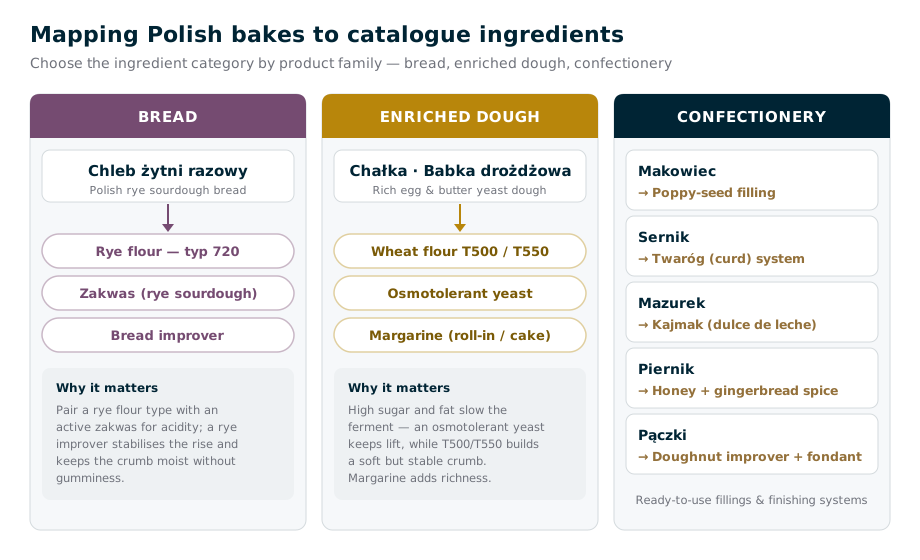 Diagram mapping Polish baked goods to the Domson catalogue ingredient categories that make them
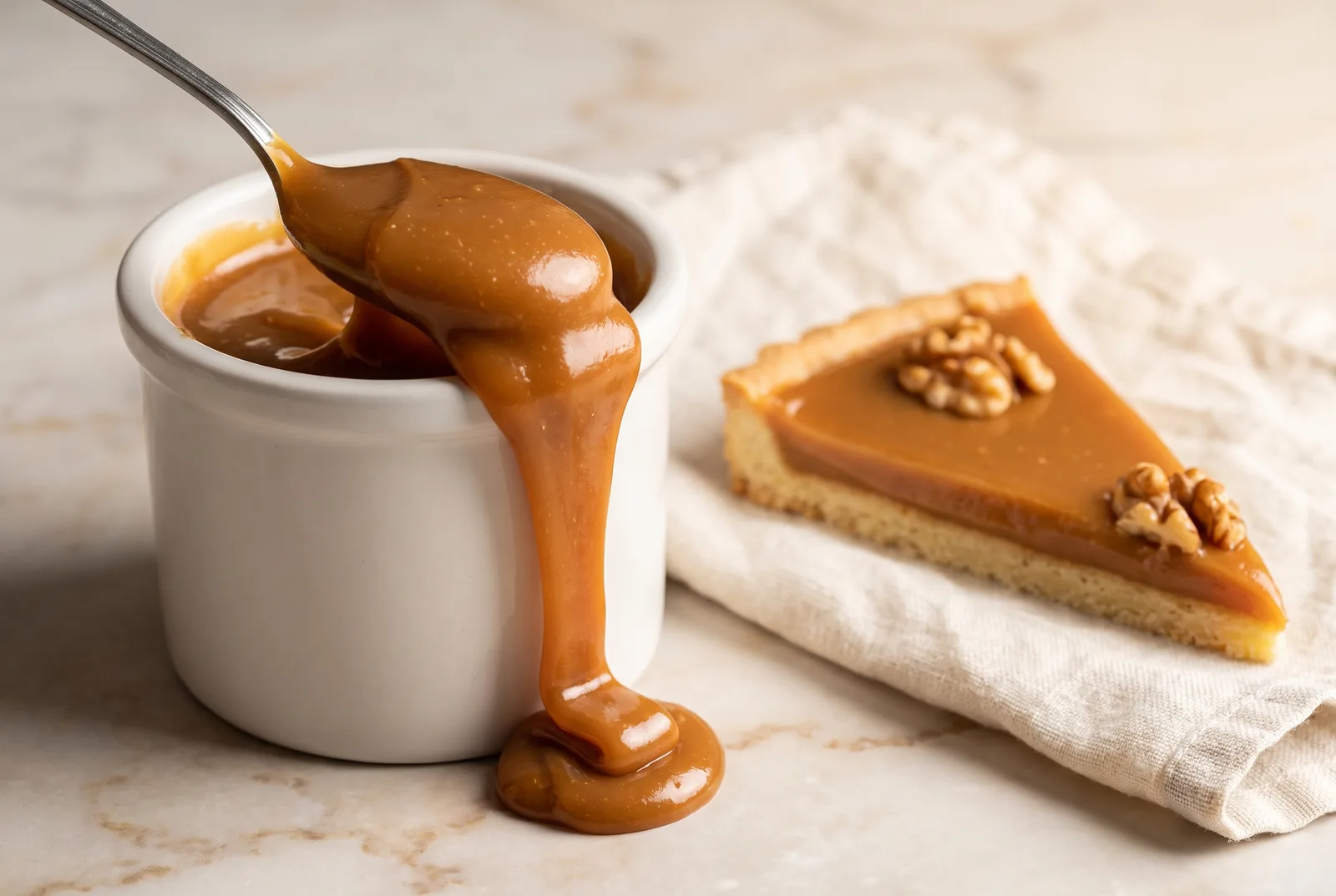 A spoon lifting thick amber kajmak from a plain white crock with a heavy ribbon of the milk caramel falling back into it, beside a slice of mazurek tart topped with a smooth kajmak layer and walnut halves on warm marble
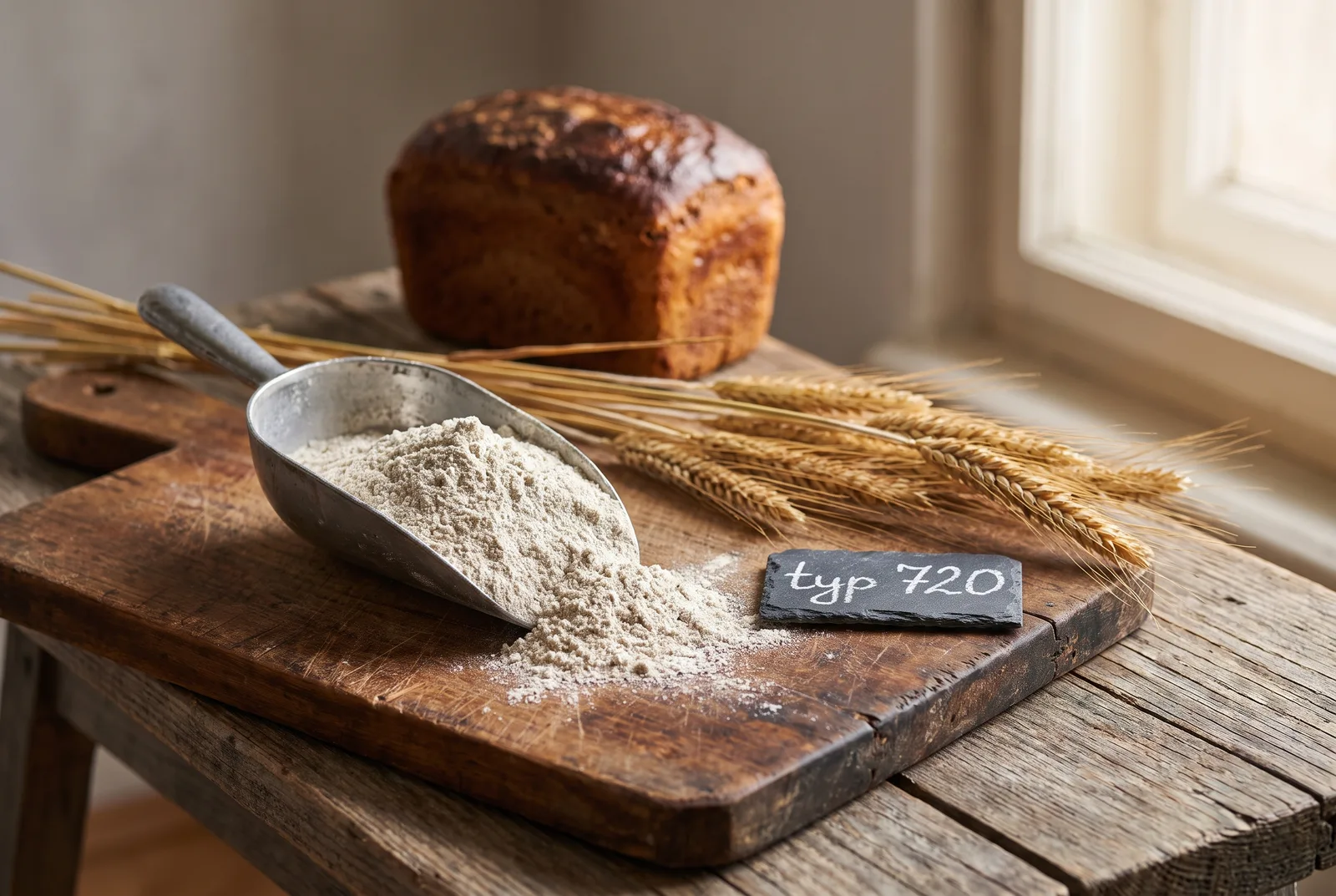 A metal scoop of grey-cream Polish rye flour typ 720 spilling onto a dark wooden board with whole rye ears beside it, a handwritten slate label reading typ 720, and a small dark rye loaf softly blurred behind
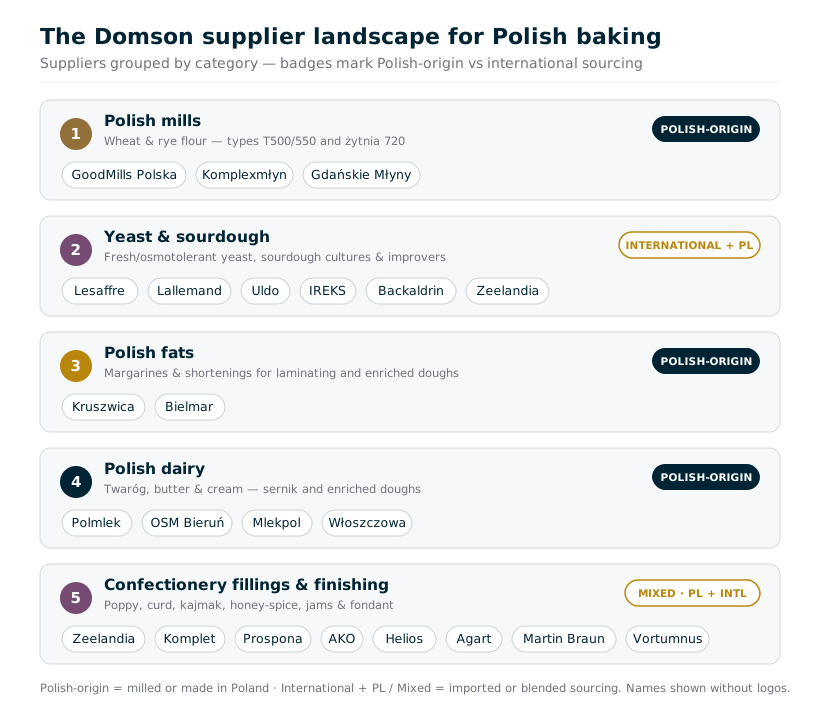 Infographic grouping Domson suppliers by category for Polish baking
Pączki with Berliner 10 Free doughnut improver (supplier recipe in baker's %)
Taken directly from the Zeelandia Berliner 10 Free spec sheet (a clean-label doughnut improver dosed at 10% of flour). Added sugar is low (1.5%) because sweetness comes from the filling and the fondant/sugar finish.
| Ingredient | Baker's % | Weight |
|---|---|---|
| Wheat flour type 550 | 100% | 10 kg |
| Berliner 10 Free improver | 10% | 1.0 kg |
| Fresh yeast | 7% | 0.7 kg |
| Oil | 12.5% | 1.25 kg |
| Water | 28% | 2.8 kg |
| Salt | 1.5% | 0.15 kg |
| Sugar | 1.5% | 0.15 kg |
| Eggs | 25% | 2.5 kg |
| Total | 185.5% |
- Mix 4 min slow + 6 min fast; dough temperature 26-28°C; first proof 15 min; divide into 1.8 kg pieces; rest ~10 min; divide each into 30 with rounding; final proof ~35 min in the chamber + ~20 min outside; deep-fry at 180°C for ~7 min with double turning. Cool, fill with rose-petal jam, finish with sugar fondant (warmed 40-45°C; the Zeelandia spec permits up to 48°C, but 40-45°C is the public application optimum and preserves gloss) or icing sugar.
Worked example
10 kg T550 + 1.0 kg improver + 0.7 kg fresh yeast + 1.25 kg oil + 2.8 kg water + 0.15 kg salt + 0.15 kg sugar + 2.5 kg eggs.
Yield: ~16.5 kg dough → ~300 pieces at ~55 g (from a 1.8 kg dough piece divided into 30)
7% fresh yeast ≈ ~2.3% instant. The 170-180°C frying window is critical: too cool = greasy, too hot = raw centres. The pale 'białej obwódki' (white belt) around the equator is the visual sign of correct frying with turning. FOOD-SAFETY/ALLERGEN: fry to a safe internal temperature, monitor oil quality and acrylamide (EU 2017/2158); allergens wheat/milk/soy/egg/rye, may contain barley/oat/sesame — confirm on the live spec.
Seeded rye bread from Kołodziej Klasyczny 50% mix (supplier recipe)
Straight from the Zeelandia Kołodziej Klasyczny spec. It is a 50% mix — use it one-for-one with rye flour. Note the cold soak: hydrate the mix 3 hours ahead to swell the broken rye, oats and seeds.
| Ingredient | Baker's % | Weight |
|---|---|---|
| Kołodziej Klasyczny mix | 50% | 25 kg |
| Rye flour type 720 | 50% | 25 kg |
| Yeast | 3% | 1.5 kg |
| Water | ~70% | ~35 L |
| Dekormix (seed décor) | 12% | 6 kg |
| Total | ~135% (incl. décor seeds) |
- Combine 25 kg mix with 25 L cool water (18-20°C) 3 hours before doughing. Add remaining ingredients; mix ~10 min slow; dough temperature 26°C; first proof ~15 min; divide into 470 g pieces; mould; decorate with Dekormix; pan up; final proof ~45 min; bake 250°C falling to 230°C, steam for the first 3 min, ~55 min total.
Worked example
25 kg Kołodziej Klasyczny + 25 kg rye flour type 720 + 1.5 kg yeast + ~35 L water + 6 kg Dekormix (seed décor).
Yield: ~85 kg dough → ~180 loaves at 470 g
Hydration is high and the crumb is meant to be close and moist — that is correct for rye, not a fault. For pure/darker rye loaves add a separate rye sourdough (Uldo/IREKS/Zeelandia) and consider Rye Stabil improver. Cross-link: see B1-rye-bread-production and B1-zakwas-sourdough.
Poppy-seed filling from AKO concentrate (reconstitution ratio)
From the AKO spec: a 40%-poppy powdered concentrate that rehydrates into a smooth, pudding-textured makowiec filling. Finished filling is ~23-24% poppy seed.
| Ingredient | Baker's % | Weight |
|---|---|---|
| AKO poppy concentrate (40% poppy) | 100% | 1000 g |
| Crumbs | 10% | 100 g |
| Water | 60% | 600 g |
| Total | 170% finished filling |
- Pour the concentrate into a bowl, add water and crumbs, mix ~3 minutes to a smooth spreadable mass; use to spread thin on rolled enriched dough and roll up tightly. For a richer, traditional character, enrich with butter, honey, candied orange peel and raisins, or step up to a higher-poppy ready paste (Prospona / Helios).
Worked example
1000 g AKO Poppy Seed Filling concentrate + 100 g crumbs + 600 g water → mix ~3 min.
Yield: ~1.7 kg ready filling per 1 kg concentrate
Read the poppy percentage when buying: 40% (AKO concentrate) vs 21% (Prospona fruited filling) is a big difference in richness and value. ALLERGEN: contains wheat; may contain traces of gluten cereals, soya, sesame, egg — confirm on the live spec. REGULATORY SAFETY: EU Regulation 2021/2142 (from 1 July 2022) limits opium alkaloids in bakery products containing poppy seeds to 1.5 mg/kg (sum of morphine + 0.2 × codeine); source poppy products only from suppliers providing alkaloid test certificates confirming compliance.
Mazurek: shortcrust base + kajmak topping (assembly with catalogue products)
Mazurek is an assembly job, which is why catalogue buying matters more than a long recipe: blind-bake a thin shortcrust, cool it, then spread ready kajmak and decorate. The base ratio is the standard Polish kruche/3-2-1 shortcrust; see A8-cake-and-pastry-formulas for variations.
| Ingredient | Baker's % | Weight |
|---|---|---|
| Wheat flour T450/T500 | 100% | 500 g |
| Cold butter or cake margarine | 66% | 330 g |
| Icing sugar | 33% | 165 g |
| Egg yolk | ~12% | 2-3 yolks |
| Kajmak (ready) | topping | to cover |
| Nuts / dried fruit | decoration | to taste |
| Total | ~200% base dough + topping |
- Rub fat into flour + sugar, bind with yolk, chill, roll thin, dock and blind-bake fully until pale gold; cool completely; spread ready kajmak (do not apply over a warm base or it slides); decorate with almonds, walnuts and dried fruit; optionally drizzle chocolate.
Worked example
Classic kruche (3-2-1) base: 100% flour, ~66% cold butter or cake margarine, ~33% icing sugar, bound with egg yolk; topped after baking with ready kajmak and nuts.
Yield: one 30 × 40 cm low mazurek
The base ratio is a standard shortcrust (cross-checked craft norm), so percentages are typical not exact — confidence medium. Apply kajmak to a fully cooled, fully baked base or it weeps/soaks. Kajmak allergen: milk; refrigerate opened product.
The fast index: for each classic Polish product, the ingredient categories you buy and example catalogue products/brands. Cross-references the dedicated B1 articles for full method.
| Polish product | Core ingredients to buy | Example catalogue products (brand) | See article |
|---|---|---|---|
| Chleb żytni / mieszany (rye & mixed bread) | Rye flour T720-T2000 · rye sourdough (zakwas) · rye improver · yeast | Rye Flour T720 (GoodMills/Komplexmłyn); Sauer Dark Rye Sourdough Concentrate (Uldo); IREKS Natural Liquid Rye Sour; Kołodziej Classic Rye Bread Mix (Zeelandia); Rye Stabil Improver (Zeelandia) | B1-rye-bread-production, B1-zakwas-sourdough |
| Chałka / babka drożdżowa / drożdżówki (enriched yeast) | Wheat flour T500/T550 · osmotolerant/fresh yeast · cake margarine or butter · fruit/poppy/curd fillings · fondant glaze | Domson Wheat Flour T550; Fresh Yeast Benevia (Lesaffre); Milama Cake Margarine (Kruszwica); Unsalted Butter 82% (Polmlek); Zeelandia Fondant | B1-enriched-yeast-doughs |
| Pączki (filled doughnuts) | Wheat flour T550 · doughnut improver/concentrate · frying fat · rose/plum jam · fondant or icing sugar | Berliner 10% Doughnut Improver Free (Zeelandia); IREKS Global Yeast Doughnut Concentrate; Palm Frying Oil (Master Martini); Rose Petal Filling (Prospona); Zeelandia Fondant | B1-paczki-and-deep-fried-pastry |
| Makowiec (poppy-seed roll) | Wheat flour T550 · poppy-seed filling (masa makowa) · yeast · icing | Poppy Seed Dry Filling (AKO); Poppy Seed Paste (Prospona); Helios Excellent Poppy Seed Filling; Blue Poppy Seeds (Agart) | B1-makowiec-and-poppy-seed-fills |
| Sernik (baked cheesecake) | Full-fat ground curd (twaróg sernikowy) · cheesecake stabiliser · eggs · custard/vanilla | Cheesecake Curd Cheese 14% (Polmlek); Cheesecake Curd Mix 15% (Figand); Credin Cheesecake Stabiliser; Komplet Gourmet Cheesecake Mix | B1-sernik-polish-cheesecake |
| Mazurek (Easter shortcrust) | Wheat flour · butter/margarine · kajmak (masa krówkowa) · nuts & dried fruit · chocolate | Kajmak Milky Confectionery Mass (Zeelandia); Gostyń Kajmak; Classic Kajmak (Agart) | B1-mazurek-and-short-pastry |
| Piernik / miodownik (gingerbread, honey cake) | Honey · gingerbread spice blend · rye/wheat flour · plum jam layers | Zeelandia Gingerbread Cake Mix; Lesaffre Gingerbread Mix; Multifloral Honey (Ratos Natura); Mixed Spice Euro Blend (Rolmex); Plum Filling Śliwidło (Martin Braun) | B1-piernik-gingerbread |
| Obwarzanek / scalded-dough products | Wheat flour T550 · yeast · (scald step, no special filling) | Domson/Komplexmłyn Wheat Flour T550; Fresh Yeast (Lesaffre/Lallemand) | B1-obwarzanek-and-scalded-doughs |
Polish bakers select flour by 'typ' (type) number = ash content × 1000. Higher number = more bran, darker, more minerals.
| Type | Grain | Approx. ash | Typical Polish use | Catalogue examples (brand) |
|---|---|---|---|---|
| 450-500 | Wheat | ~0.45-0.50% | Cakes, mazurek shortcrust, fine pastry | Wheat Flour T450 (Komplexmłyn); Domson White Flour T500 |
| 550 | Wheat | ~0.55% | Bread, pączki, chałka, makowiec, drożdżówki | Domson Wheat Flour T550; Komplexmłyn / Gdańskie Młyny T550 |
| 750 | Wheat | ~0.75% | Stronger everyday bread, mixed loaves | Domson Bread Flour T750 |
| 850 | Wheat | ~0.85% | Rustic wheat & mixed breads | Wheat Flour T850 (Komplexmłyn) |
| 1850 (graham) | Wheat | ~1.85% | Graham / wholemeal wheat bread | Graham Wheat Flour T1850 (GoodMills) |
| 720 | Rye | ~0.72% | Light-to-medium rye & mixed bread | Rye Flour T720 (GoodMills, Komplexmłyn) |
| 1150 | Rye | ~1.15% | Darker rye bread | Rye Flour T1150 (GoodMills) |
| 2000 | Rye | ~2.0% | Wholemeal/razowy rye bread | Wholemeal Rye Flour T2000 (GoodMills) |
Rye dough needs acidification, not just yeast. Choose a ready sourdough by form (liquid/dry/concentrate) and by whether you want a complete bread mix.
| Product (brand) | Form | Use |
|---|---|---|
| Sauer Dark Rye Sourdough Concentrate (Uldo) | Dry concentrate | Acidity + flavour for dark rye |
| IREKS Natural Liquid Rye Sour | Liquid | Ready acidification, consistent dosing |
| Backaldrin BAS Dark Liquid Rye Sourdough | Liquid | Dark rye flavour & acidity |
| Lesaffre Rye Sourdough AS ECOL | Devitalised | Flavour-led, no live culture management |
| Sourdough Dry (Zeelandia) | Dry powder | Flexible dosing into any rye/mixed dough |
| Kołodziej Classic Rye Bread Mix (Zeelandia) | Complete 50% mix | Seeded rye loaf with one bag + rye flour |
| Komplet Żytniak CL Rye Bread Mix | Complete mix (clean label) | Clean-label rye bread |
Signature Polish fillings, with the spec figure a buyer should read (poppy % or fat %).
| Filling / mass | Catalogue product (brand) | Key spec to read | Used in |
|---|---|---|---|
| Poppy filling (masa makowa) | Poppy Seed Dry Filling (AKO) | 40% ground poppy seed (concentrate) | Makowiec, poppy babka |
| Poppy filling with fruit | Poppy Seed Paste / filling (Prospona) | 21% poppy, ≥38°Bx | Makowiec, strucla |
| Kajmak (masa krówkowa) | Kajmak Milky Confectionery Mass (Zeelandia) | 69-72% solids, pH 5.2-6.2 | Mazurek, layer cakes |
| Curd for sernik (twaróg) | Cheesecake Curd 14% (Polmlek); 15% mix (Figand) | 10-18% fat, dense, ground | Sernik |
| Rose-petal jam (konfitura różana) | Rose Petal Filling with Sugar (Prospona) | Rose petals + sugar | Pączki |
| Plum butter (powidła) | Plum Filling Śliwidło (Martin Braun) | High-fruit plum | Piernik layers, pączki, pierogi |
| Honey & spice (piernik) | Gingerbread Cake Mix (Zeelandia); Honey (Ratos Natura); Mixed Spice (Rolmex) | Honey content; spice blend | Piernik, miodownik |
Match the fat to the job: cake/cookie margarine for enriched and shortcrust, butter for premium flavour, dedicated frying fat for pączki.
| Product (brand) | Type | Fat | Use |
|---|---|---|---|
| Milama Cake & Cookie Margarine (Kruszwica) | Confectionery margarine | 80% | Babka, mazurek/kruche, sponge |
| Koneser Cake Margarine (Bielmar) | Confectionery margarine | 80% | Enriched doughs, cakes |
| Unsalted Butter 82% (Polmlek) | Butter | 82% | Premium chałka, babka, kruche |
| Palm Frying Oil (Master Martini) | Frying fat | 100% | Deep-frying pączki & faworki |
| Symptom | Likely cause | Catalogue / process fix |
|---|---|---|
| Rye loaf gummy, sticky crumb | Under-acidified rye; too little/weak sourdough | Increase rye sourdough dose (Uldo/IREKS/Zeelandia); add Rye Stabil improver; respect cold soak |
| Pączki greasy, oil-soaked | Fat too cool or dough over-proofed | Hold 170-180°C; control final proof; doughnut improver improves oil resistance |
| Pączki with no pale 'white belt' | No turning during fry; dough too lean/under-proofed | Turn during frying (double turning); use Berliner/IREKS doughnut system |
| Sernik cracks or weeps | Curd too wet; over-baked; no stabiliser | Use dense full-fat ground twaróg; add cheesecake stabiliser (Credin); bake gently, cool slowly |
| Makowiec filling leaks / roll splits | Filling too wet or roll too tight | Reconstitute filling firmer; use ready paste; don't over-tighten the roll |
| Mazurek base soggy under kajmak | Base under-baked or kajmak applied to a warm base | Blind-bake fully; cool base completely; apply kajmak at room temp |
| Babka / chałka pale and dense | Weak flour, under-proof, or yeast struggling in sweet dough | Use T500/T550; use osmotolerant/fresh yeast for high-sugar doughs (Lesaffre/Lallemand) |
| Piernik hard and dry | Over-baked; no rest/maturation | Respect 180°C / 50-60 min; rest the dough; layer with plum jam to soften |
Buy the ingredients
Catalogue products and brands referenced in this article.
Wheat Flour Type 450 25 kg
Wheat Flour Type G 550 25 kg

Rye Flour Type 720 20 kg
Blue Poppy Seeds 25 kg
Poppy Seed Paste
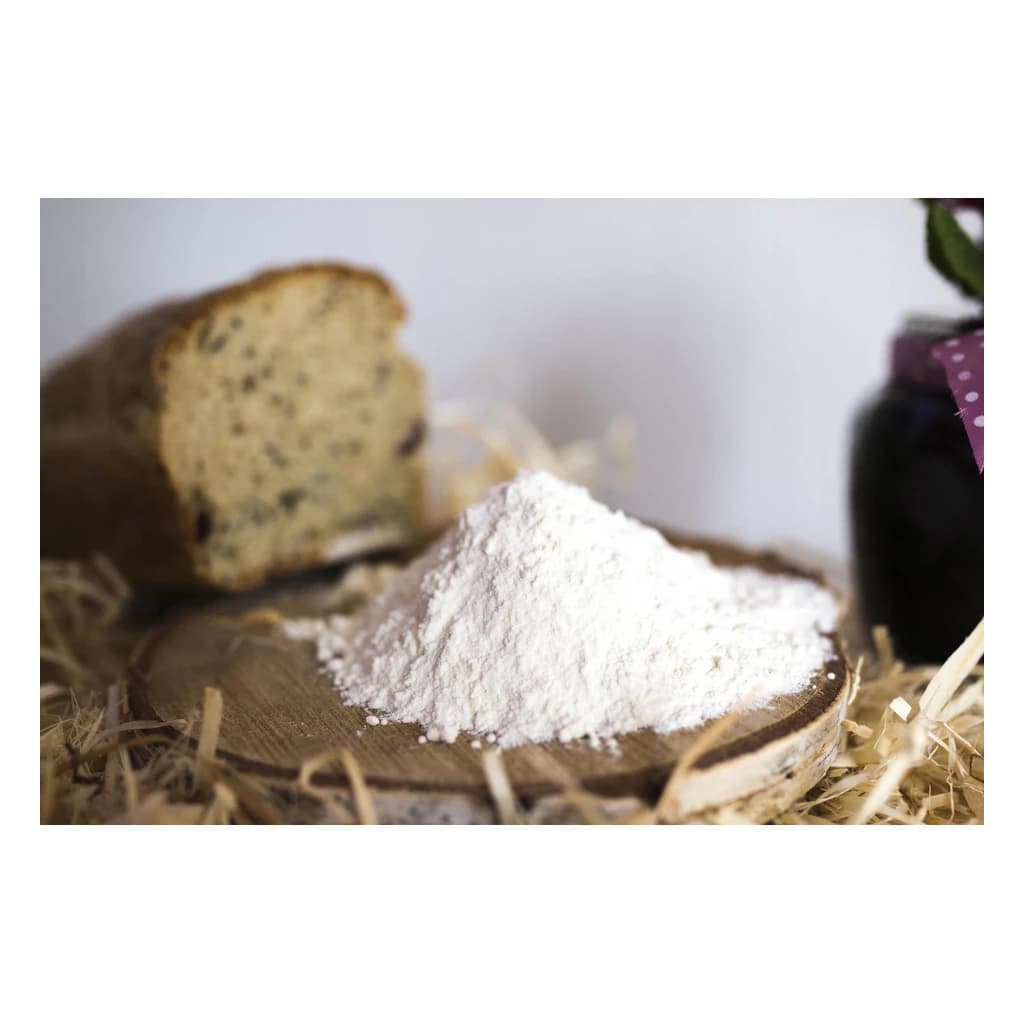
Wheat Flour Type 850 25 kg
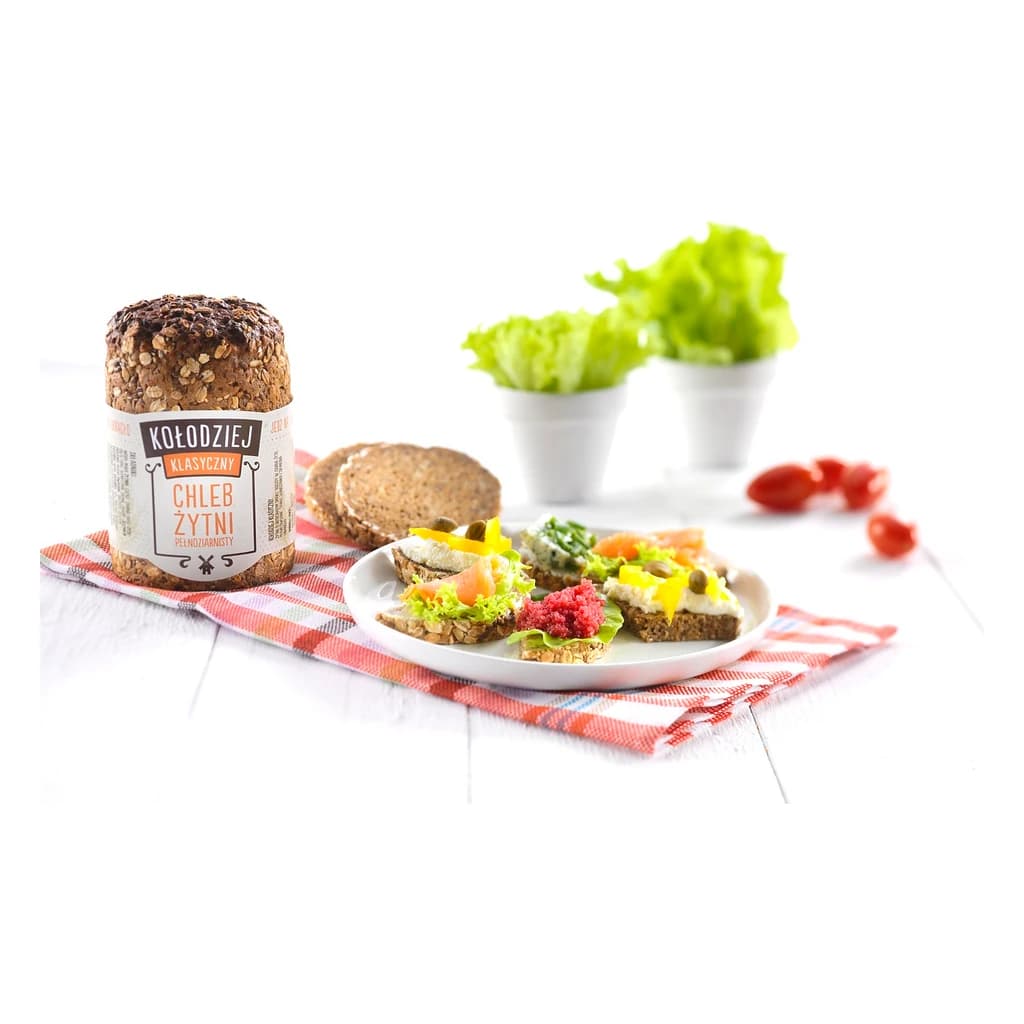
Kołodziej Classic Wholegrain Rye Bread Mix 25 kg
Superkwas Dry Sourdough 25 kg
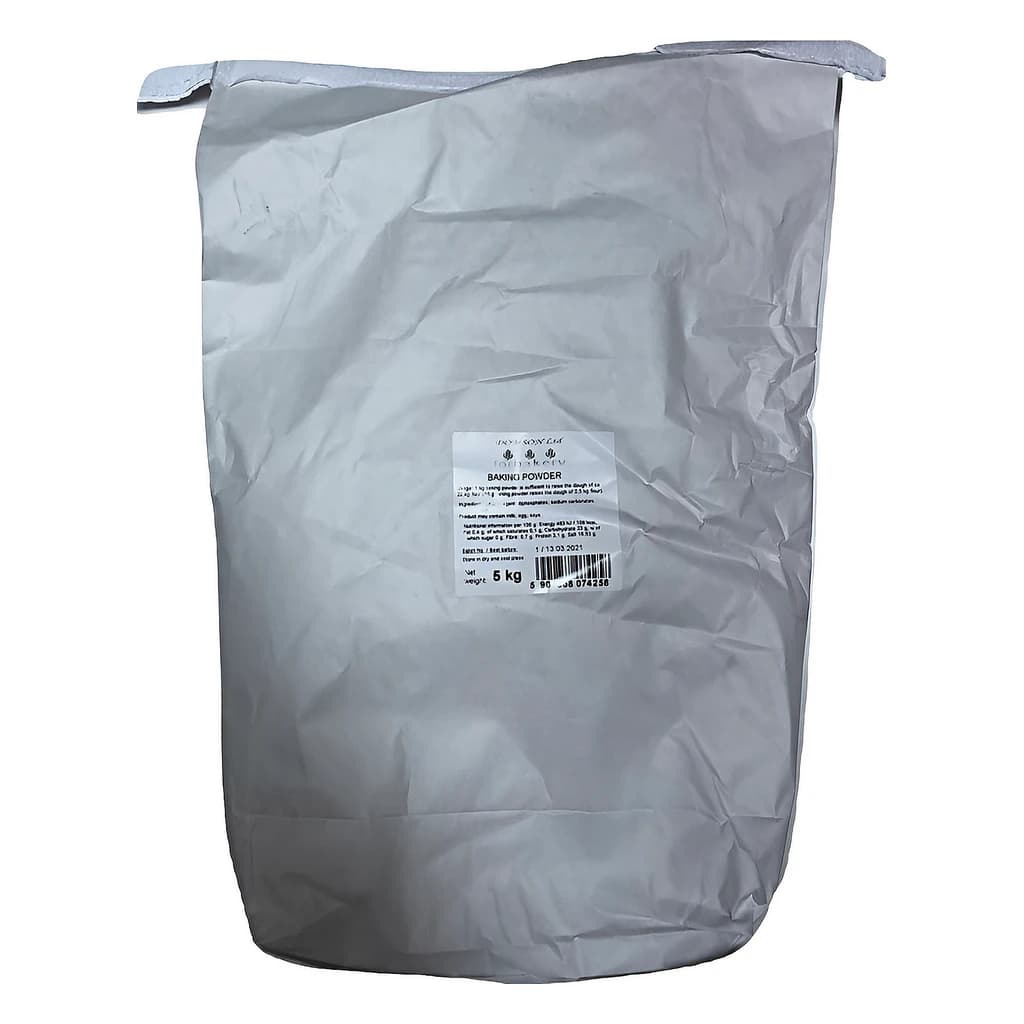
Baking Powder 5 kg
Cinnamon Ground
Domson Bread Flour Type 750 25 kg

Kajmak Milky Confectionery Mass 12 kg
Komplexmłyn Wheat Flour Type 550 25 kg
Domson White Flour Type 500 25 kg
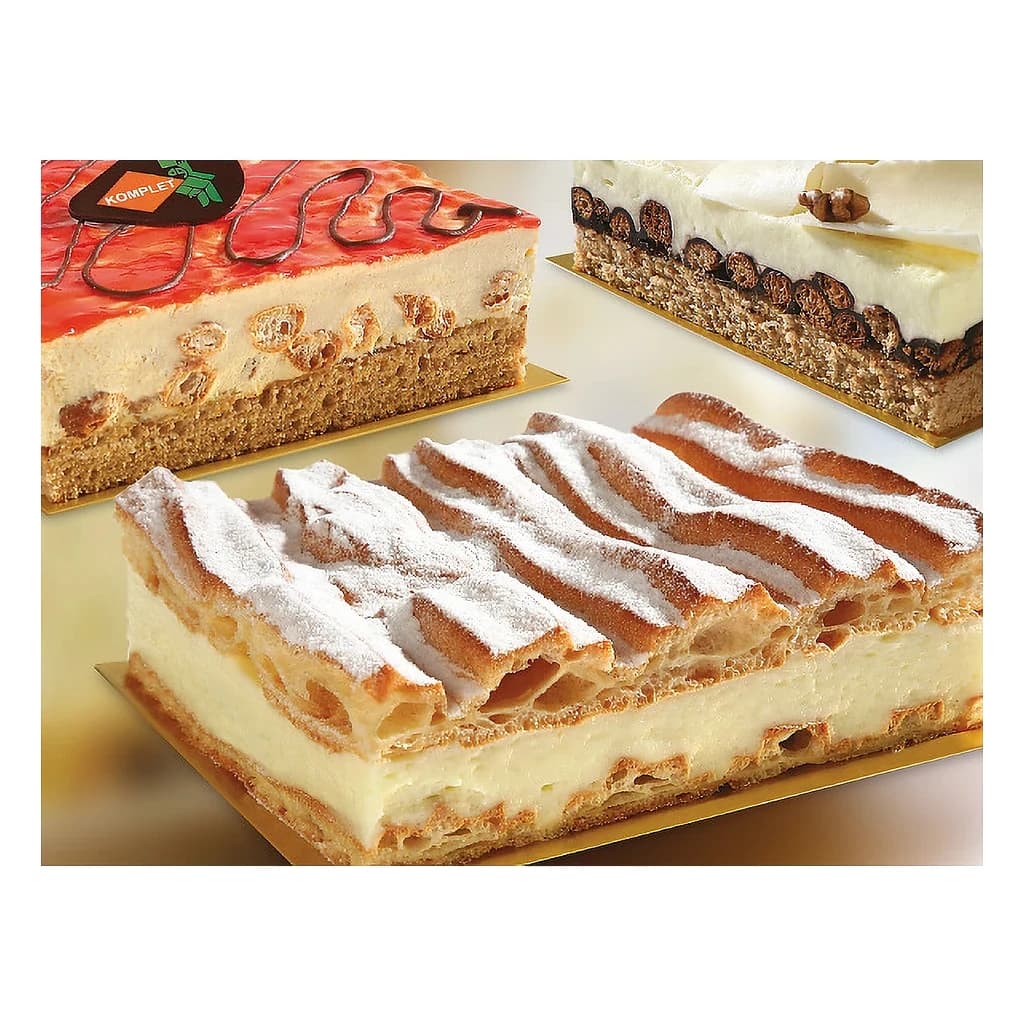
Komplet Karpatka Custard Cream Mix 10 kg

Emix Vanilla Custard Powder 6 kg (6 × 1 kg)
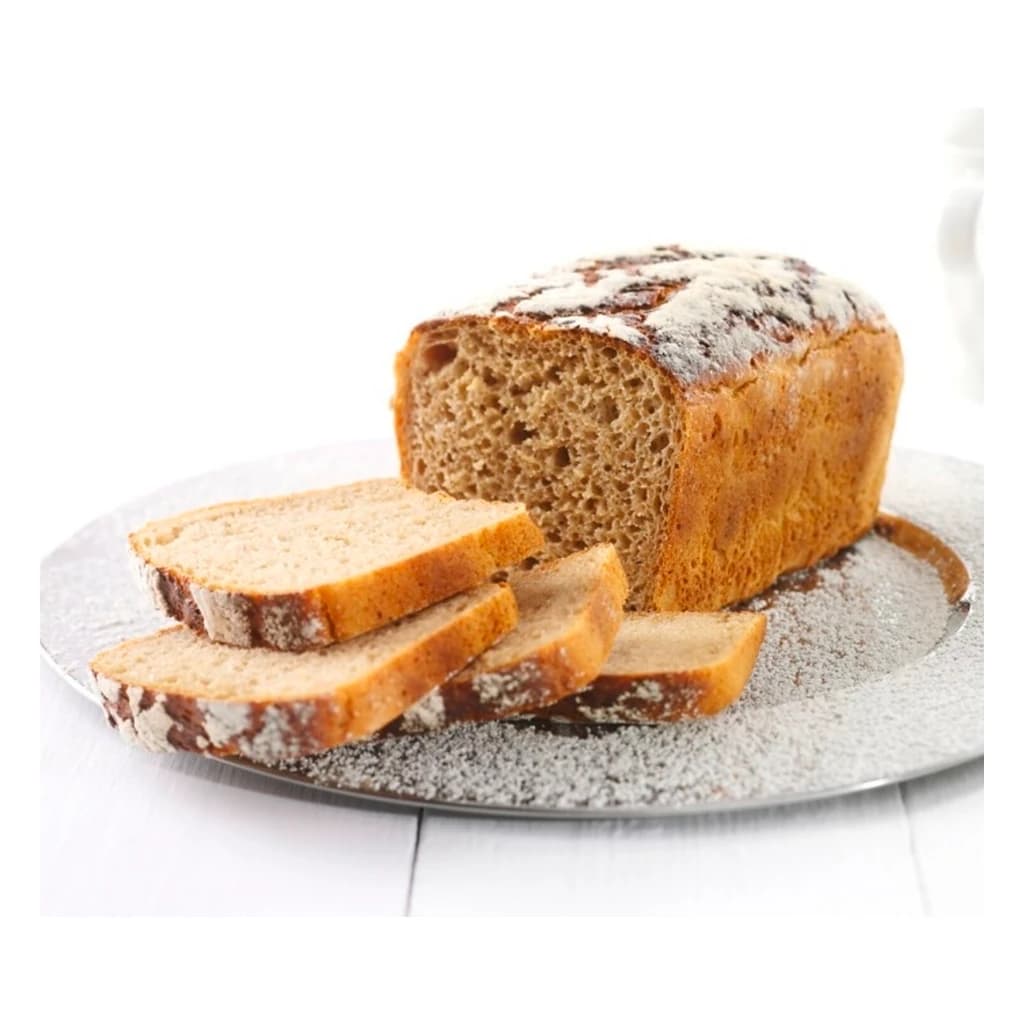
Optimax Free Bread Improver 20 kg
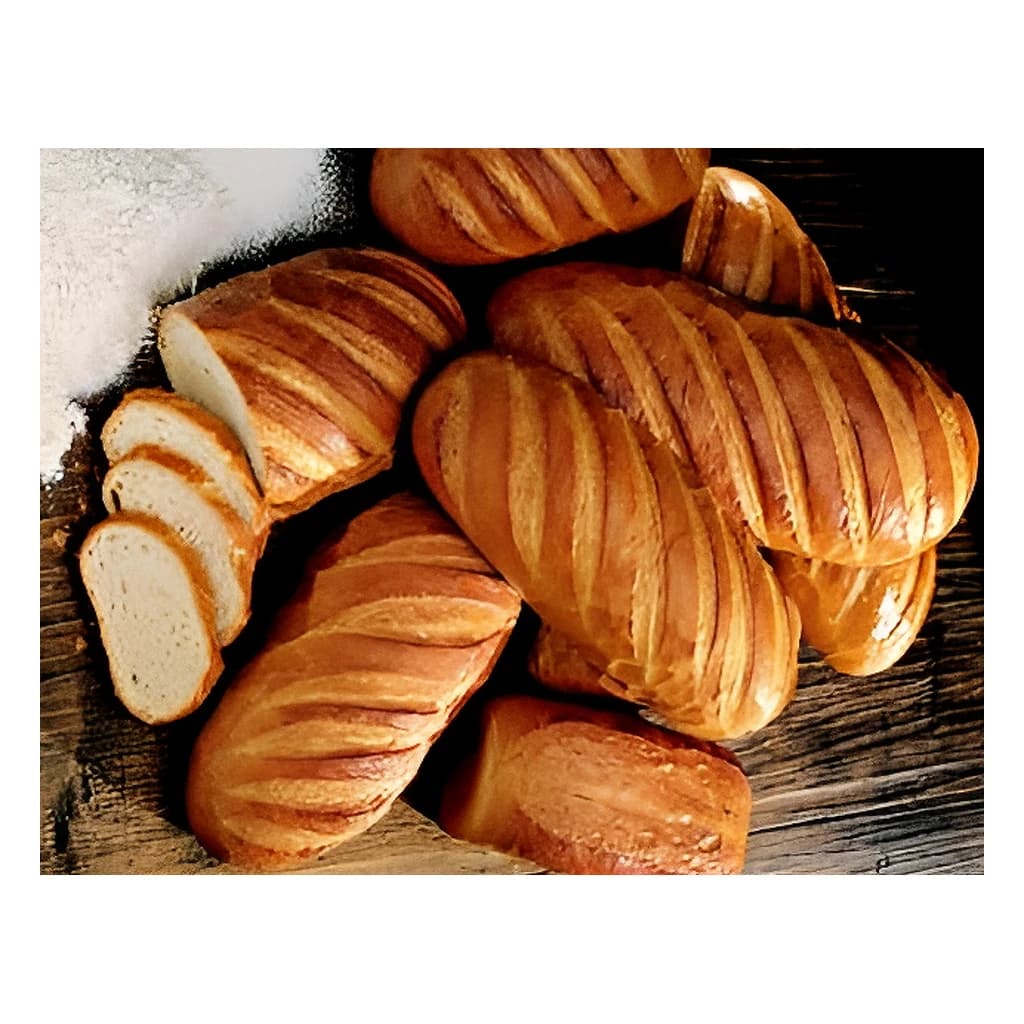
Sauer Dark Rye Sourdough Concentrate 25 kg
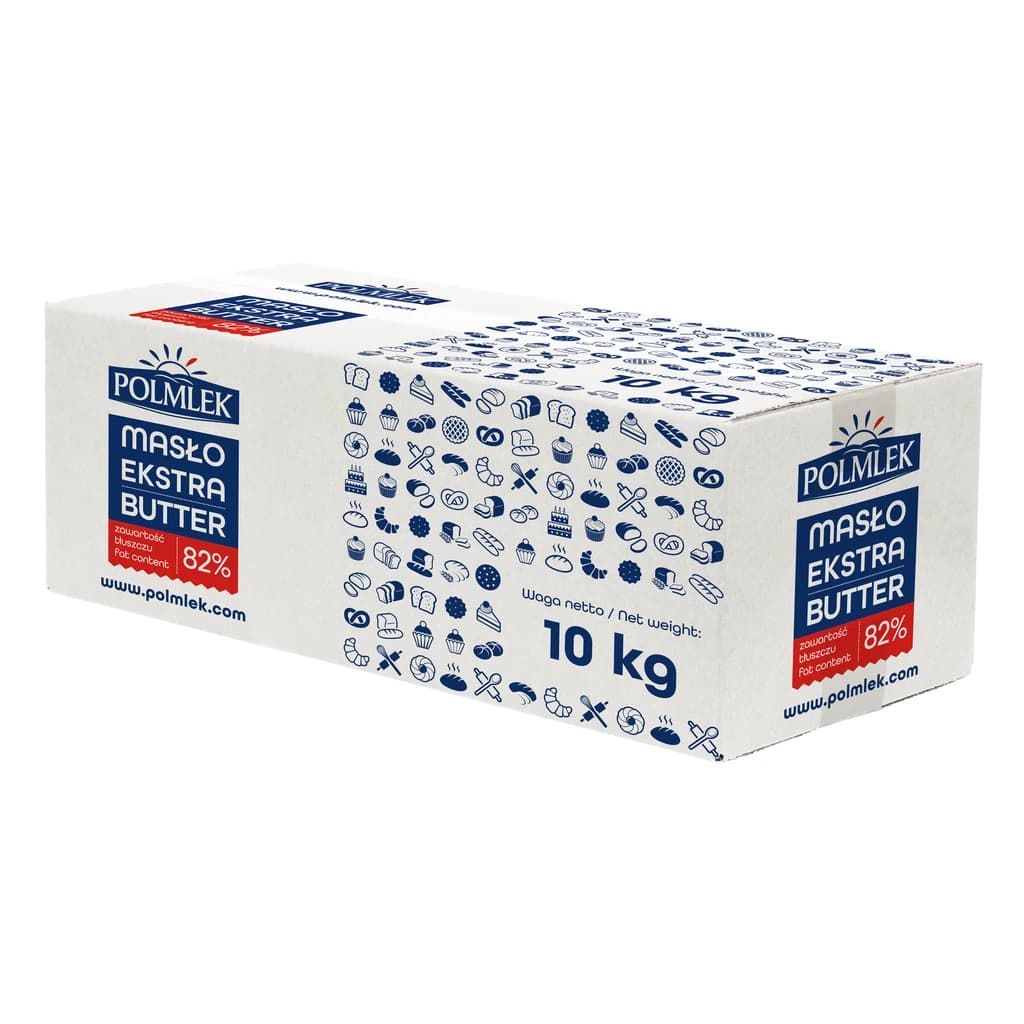
Unsalted Butter 82% 10 kg
Milama Cake & Cookie Margarine 10 kg
Raspberry Seedless Jam 6 kg
Berliner 10% Doughnut Improver Free 25 kg

Rye Flour Type 720 25 kg
Backaldrin BAS Dark Liquid Rye Sourdough 12 kg
Zeelandia Fondant Premium (14 kg)
Rye Stabil Improver 25 kg
Mixed Spice Euro Blend
Koneser Cake Margarine 80% 10 kg

Cheesecake Curd Cheese Polmlek 14% 10 kg
Multifloral Honey 14 kg

Zeelandia Honey Cake Mix 25 kg
Poppy Seed Dry Filling 10 kg
Zeelandia Hearty Rye Bread Mix 25 kg
Rose Petal Filling with Sugar 4 kg

Fresh Yeast Benevia 10 kg
Cheesecake Curd Cheese Mix 15% Fat 11 kg
Credin Cheesecake Stabiliser 15 kg
Cheesecake Curd Cheese Wykwintny 10 kg

Gostyń Kajmak Milk Caramel Filling 5 kg

Classic Kajmak 12 kg
Helios Excellent Poppy Seed Filling 10 kg

Komplet Poppy Seed Filling 10 kg
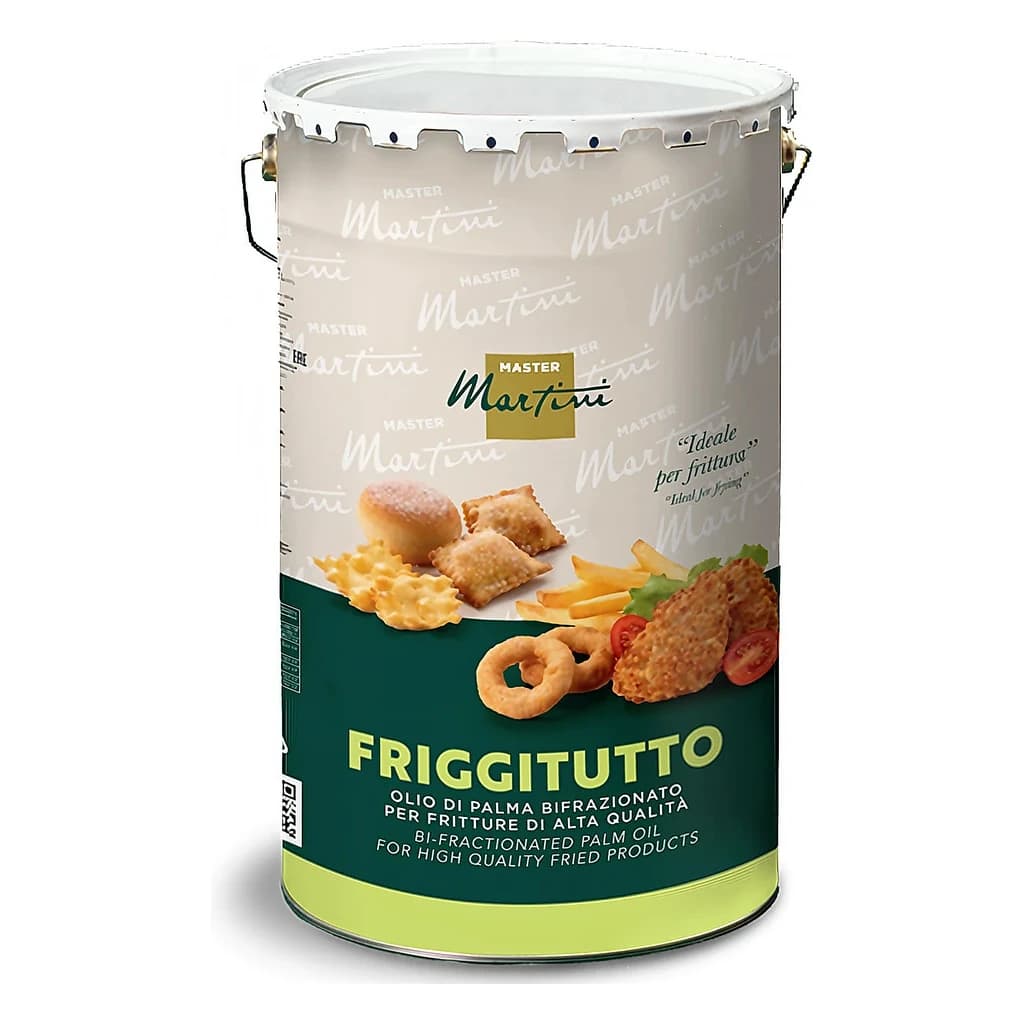
Palm Frying Oil 25 L (22.7 kg)
Helios Water Fondant 15 kg

Lesaffre Rye Sourdough AS ECOL 11 kg
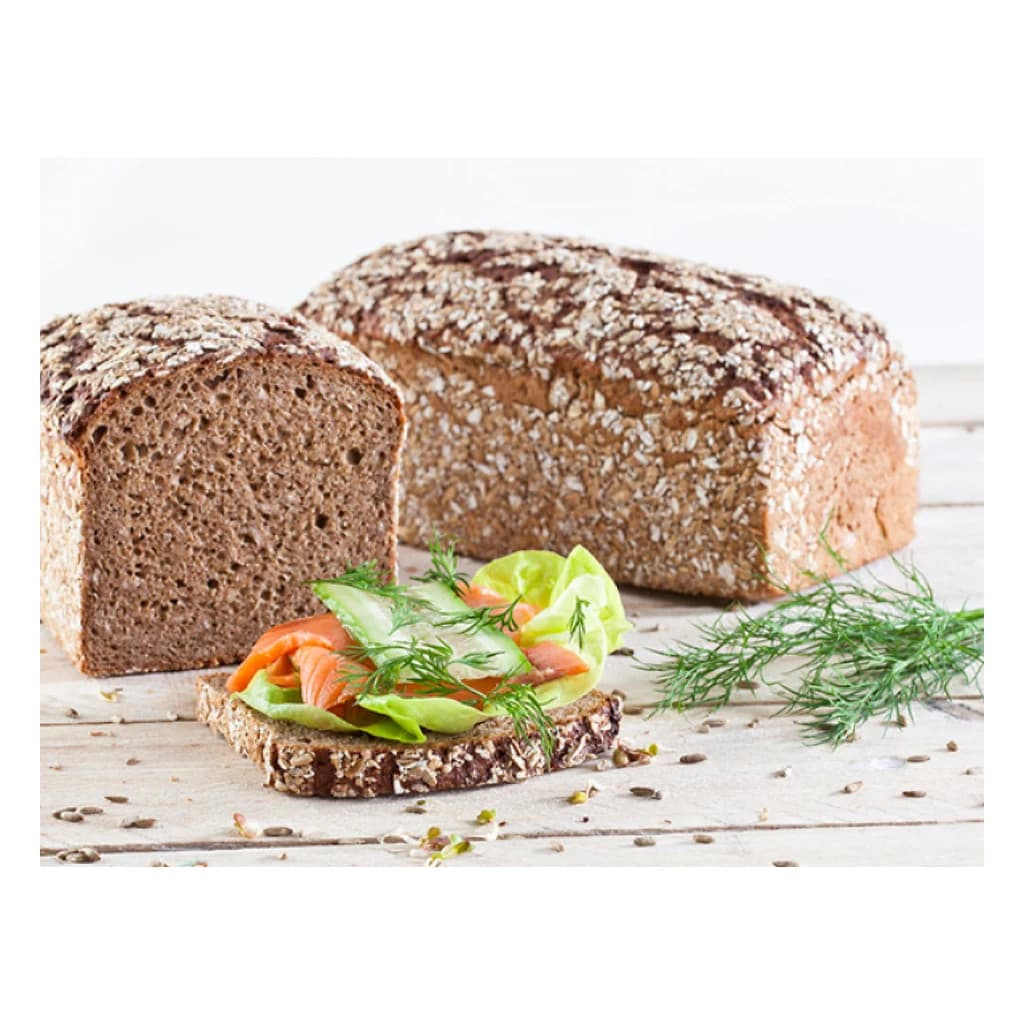
Komplet Żytniak CL Rye Bread Mix 10 kg
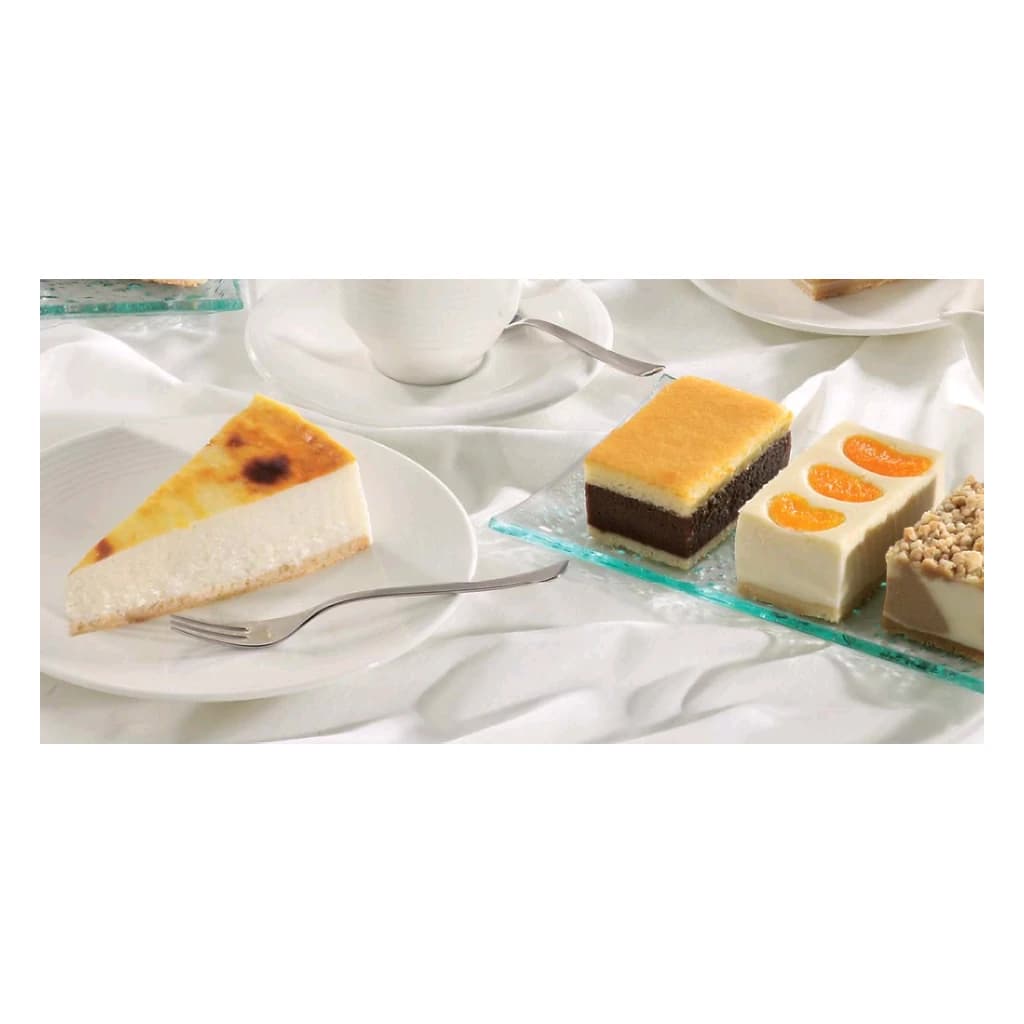
Komplet Gourmet Cheesecake Mix RSPO SG 10 kg
Włoszczowa Creamy Quark 4% Fat 11 kg
Lesaffre Gingerbread Mix 25 kg
Wholemeal Rye Flour Type 2000 40 kg