Zakwas: managing a Polish rye sourdough starter from first ferment to daily production
A practical, native-sourced guide to the rye zakwas (sourdough) at the heart of Polish baking: why rye must be soured rather than merely leavened, how to raise a starter from scratch in about 5 days, how to feed and store it, how the classic five-phase process (zaczatek - przedkwas - polkwas - kwas pelny - ciasto) and its shorter variants work, the microbiology and acidification behind it, how to read and fix faults, and how to choose between a live sour and the ready rye sour preparations in the Domson catalogue. Includes first-party flour and sourdough spec data and supplier application formulas.
Zakwas: managing a Polish rye sourdough starter from first ferment to daily production
If there is one technique that defines Polish bread, it is the rye zakwas (sourdough). Polish bakeries are built around rye, and rye cannot be baked well on yeast alone - it has to be soured. This dossier is the practical manual for that sour: starting it, feeding it, running it through the traditional multi-stage process or its modern shortcuts, diagnosing what goes wrong, and deciding when to back it up with a ready preparation. For the universal science behind it, read it alongside A5-sourdough-technology, A2-rye-sourdough-multi-stage and A2-sourdough-cultures-science; for where these loaves sit on the map, see B1-bread-landscape and B1-rye-bread-production.
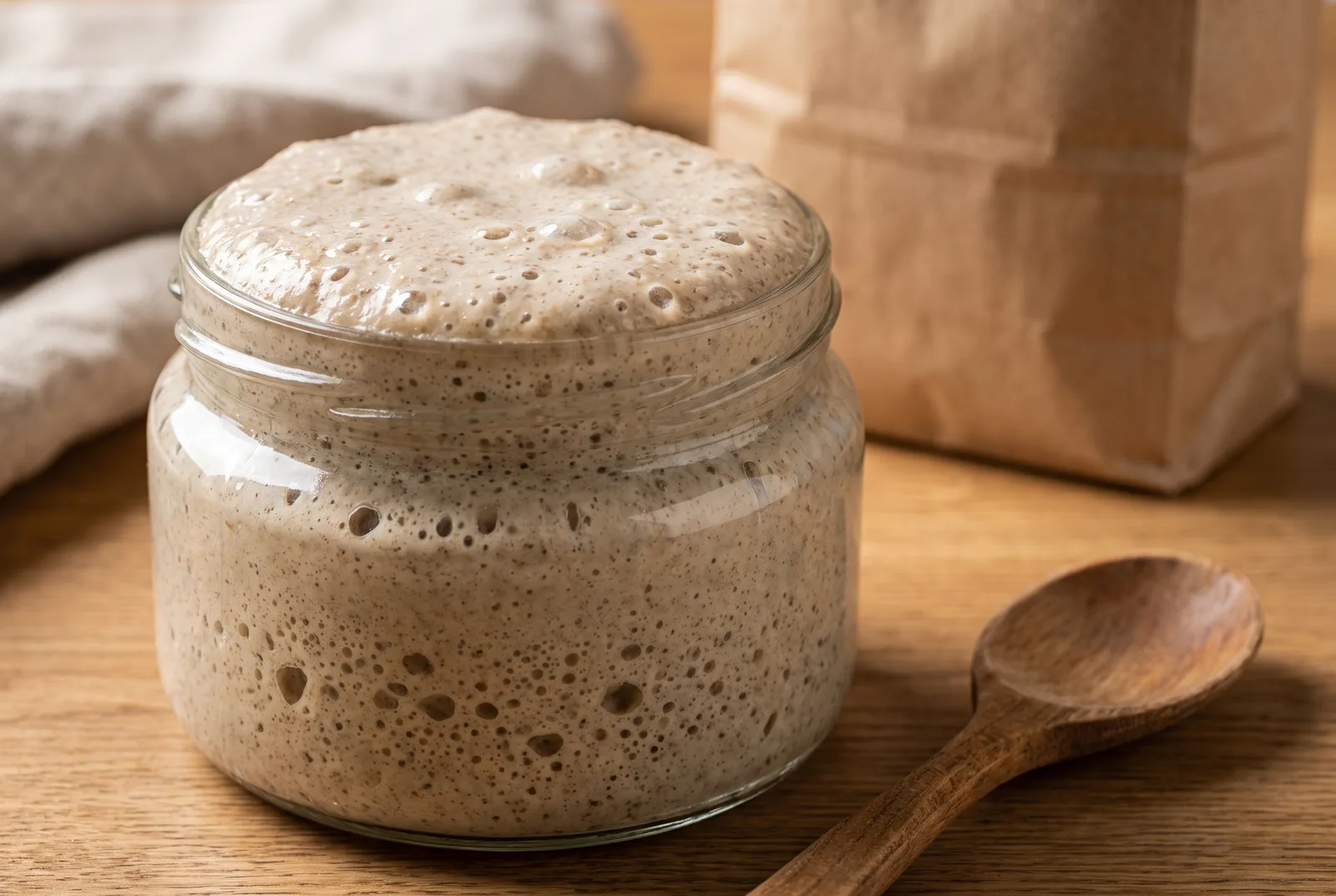
Active Polish rye sourdough starter (zakwas) bubbling in a glass jar
1. Why rye must be soured, not just leavened
Wheat dough holds gas in a visco-elastic gluten network. Rye does not work that way. Rye flour has little, weak gluten; in rye dough the carbon dioxide is trapped by a viscous matrix of swollen, gum-like pentosans (śluzy, "slimes"), starch and protein rather than by gluten. Those pentosans - roughly 1-4% of the flour depending on type - swell powerfully when wetted.
That is the whole reason for the sour. Rye dough must be acidified so that part of the pentosans hydrolyse and the matrix becomes one that can hold gas and set into a proper crumb. In an unacidified rye dough the excess slime swells so strongly that it blocks the starch and protein from swelling correctly, and you get a wet, gummy, faulty loaf. Acidity also restrains the flour's α-amylase, which matters because rye typically runs hot on amylase activity (a low falling number) - left unchecked, α-amylase over-degrades the starch and the crumb collapses. The GoodMills rye spec sheets confirm the raw material is on the active edge: falling number is specified only as > 90 s (see A1-key-quality-parameters for what that means).
In short: sourdough in rye baking is a structural and enzymatic tool first, and a flavour tool second. The flavour, keeping quality and that unmistakable tang are the bonus.
2. Building a zakwas from scratch (about 5 days)
A rye starter is nothing but rye flour and water, colonised by the wild lactic acid bacteria and yeast that live on the grain. Build it like this:
- Flour: use type 720 or higher, ideally wholemeal type 2000 (razowa) - higher-extraction rye carries more of the bran-borne microflora. (Polish type number = ash content: type 720 ≈ 0.72% ash, type 2000 ≈ 2.0%; this is exactly the GoodMills ladder - type 720 ash < 0.78%, type 2000 ash < 2.0%. See A1-flour-classification-systems.)
- Water: filtered, or boiled and cooled, to avoid chlorine that can knock back the microbes.
- Ratio:1:1 flour to water by weight.
- Temperature: hold at ~24-26 C. The workable window is 20-26 C; above ~28 C spoilage organisms take over and the jar turns putrid, while below ~18 C everything slows and the build can take 7-8 days.
Day 1: mix, say, 50 g rye flour + 50 g water to a thick batter, cover loosely (never airtight), and leave it warm. Days 2-5: each day discard part and refresh with equal flour and water. By day 5 it is typically domed, bubbly and pleasantly sour (allow up to 7 days in slower or cooler conditions). That roughly five-day window is the same one Polish cooks quote when they make a żur (rye-soup) starter - it is the same culture (see Section 7).
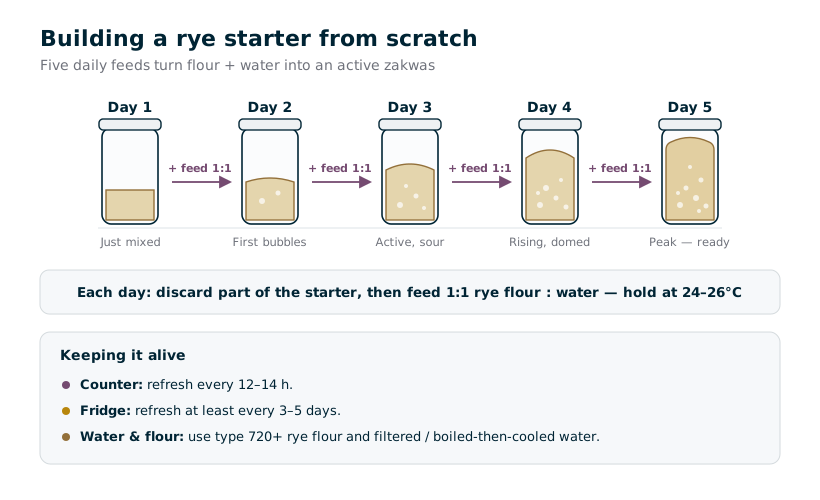 Timeline showing five daily feeds to build a rye sourdough starter from flour and water
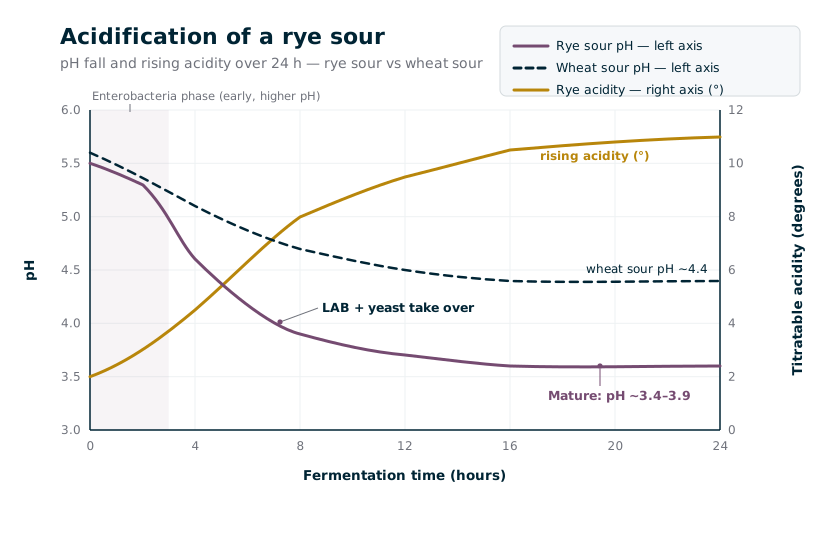 Graph of rye sourdough pH falling over time compared with wheat sourdough
3. What is actually happening: microbiology and acidification
A spontaneous rye sour goes through a succession. The first acidification is led by Enterobacteriaceae, which produce hydrogen, CO2 and small amounts of lactic, acetic, formic and succinic acid. As the pH falls, these Gram-negative bacteria give way to the Gram-positive lactic acid bacteria (LAB) and wild yeast that do the real souring and leavening.
The LAB most commonly found in Polish rye sourdough include the facultative heterofermentative Lactiplantibacillus plantarum (which produces predominantly lactic acid on hexoses under typical bakery conditions) and the obligate heterofermentative Levilactobacillus brevis. Fructilactobacillus sanfranciscensis (formerly Lactobacillus sanfranciscensis) is cited in Polish bakery starter-culture literature but was not isolated as a dominant species in spontaneous Polish wholemeal rye sourdoughs in the PLOS ONE study. A Polish study selecting wholemeal-rye starter cultures also isolated Weissella, Pediococcus pentosaceus and Leuconostoc. The practical distinction that matters at the bench:
- Lactic-dominant conditions (Lactiplantibacillus plantarum and similar LAB): produce mostly lactic acid, giving a milder flavour; these conditions are associated with warmer temperatures around 26-31 C.
- Acetic-lactic conditions (Levilactobacillus brevis and obligate heterofermentative LAB): also produce acetic acid, ethanol and CO2 - sharper aroma, more gas - and dominate at cooler temperatures around 22-26 C.
These temperature bands describe the lactic:acetic acid balance — a practical steering mechanism — rather than strict bacterial growth-rate optima. In short: warmer and faster favours mild lactic; cooler and slower favours sharp acetic. A controlled wholemeal rye sour matures to roughly pH 3.4-3.9; rye bread made on sourdough only reaches a crumb acidity of about 6-10 degrees (stopień kwasowości), whereas a yeast-leavened dough stays below ~3. (Polish acidity is reported as stopień kwasowości = mL of 0.1 N NaOH per 100 g, not as pH.)
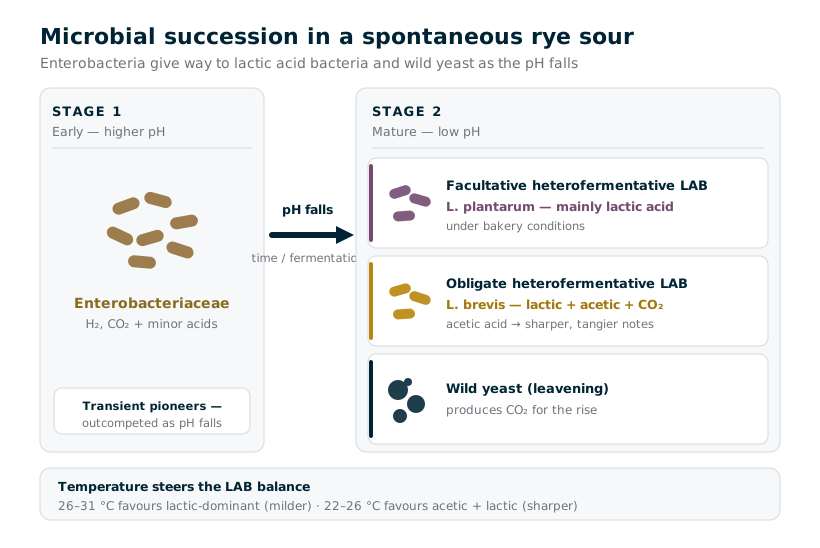 Diagram of microbial succession in rye sourdough from enterobacteria to lactic acid bacteria and yeast
4. The classic five-phase process and its shortcuts
Polish bakery technology codifies the rye sour into a five-phase method (metoda pięciofazowa). Each phase is refreshed with flour and water to a target wydajność (yield) and run at its own temperature - and yield is not hydration: it is the mass of the half-product per 100 parts flour, so 200% ≈ equal flour and water.
| Phase | Yield | Temp | Time |
|---|---|---|---|
| zaczątek / zakwas (seed) | 200-400% | warm | hours-1 day |
| przedkwas (first sour) | min 200% | 24-26 C | 5-9 h |
| półkwas (half-sour) | ~165% | 26-28 C | ~6 h |
| kwas pełny (full sour) | 190-200% | 28-30 C | ~3 h |
| ciasto (final dough) | to formula | 30-32 C | ~0.5 h |
The zaczątek is the microbial reservoir, built from rye flour and water 1:1 with no salt; in a working bakery it is simply a piece of the previous mature kwas carried forward. Salt goes only into the final dough, at 1.5-1.9 kg per 100 kg flour - never into the sour, where it would suppress fermentation.
Most bakeries shorten this. A four-phase method drops the seed step (przedkwas → półkwas → kwas → ciasto, ~16-18 h); a three-phase method runs półkwas → kwas → ciasto. A common and very practical variant is the żur: a loose, long-fermenting form of the półkwas at ~300-400% yield for 18-24 h at 24-26 C. The żur reaches its acidity slowly, is very stable on the bench, and is the right tool for lightly soured mixed (wheat-rye) loaves, whereas the full five-phase method is for dark all-rye breads. For mixed dough, the rye kwas is typically run at ~220% yield, 3-4 h at 28-30 C, while a wheat rozczyn (sponge) sits at ~180% yield, 24-27 C. The multi-stage logic is the universal subject of A2-rye-sourdough-multi-stage; here it is in its Polish dress.
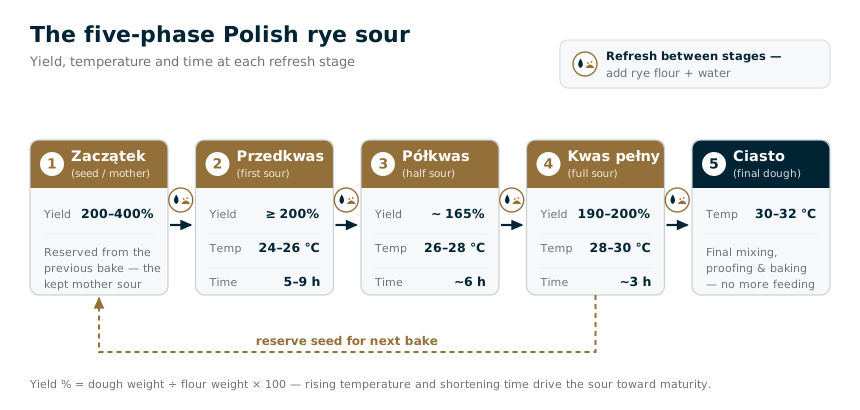 Diagram of the five-phase Polish rye sourdough process with parameters for each stage
A practical three-stage working template (judge by aroma, dome and acidity, not the clock) and the full from-scratch build are both given as formula cards below.
5. Feeding, storing and reviving the seed
Between bakes you keep the seed alive:
- Refresh (dokarmianie) = adding fresh flour and water, 1:1 by weight, roughly equal to the weight of seed you keep.
- On the counter: refresh about every 12-14 h.
- In the fridge: refresh at least every 3-5 days; bring it out and give it a feed or two before a bake to wake it up.
- Longer breaks (the traditional way): preserve a mature kwas short-term by covering it with water and chilling, or longer-term by kneading it with flour into a very stiff dough kept under a layer of flour (a zacierka / kruszonka).
The fresh yeast many bakeries add to the final rye/mixed dough for lift is Saccharomyces cerevisiae (e.g. Lesaffre Benevia, dry matter > 29%), stored at 1-10 C, optimum 4 C - keep it cold and separate from the sour.
6. Live sour vs ready preparations: the commercial reality
Running a five-phase sour needs space, time and skill, so the trade has developed alternatives - the subject of A2-ready-use-sourdough-industrial. They fall into three groups:
- Starter cultures - selected live microbes you inoculate into your own sour (active cells, short shelf life).
- Stabilised ready sours - liquid (preserved by pasteurisation or salt) or dry (freeze-, spray-, fluid-bed- or drum-dried to < ~5% moisture).
- "Dry acids" (suche zakwasy) - blends of organic acids (lactic, citric, acetic, ascorbic) plus structuring salts and enzymes, dosed at 1-4%. They speed and standardise production but eliminate true lactic fermentation and the characteristic flavour, extended shelf life and bread acidity that live fermentation delivers.
The Domson catalogue covers the full ladder, and the first-party spec sheets give hard numbers (see the comparison table below):
- IREKS Natural Liquid Rye Sour - a genuinely fermented liquid concentrate (rye flour, water, starter culture), pH 2.8-3.4, dosed 1-7%, stored at 15-20 C.
- ULDO Dark Sauer (W/43), made in Wrocław - a rye paste, pH 2.5-4.5, total acidity 140-150°, dosed 2-8%; note its ingredients include added citric, lactic and acetic acid plus barley malt, so it is an acidified concentrate, not a purely fermented sour. The barley malt ingredient is a cereal-containing-gluten allergen (EU Regulation 1169/2011 Annex II); any bread made with this product must carry a barley/gluten allergen declaration.
- Zeelandia Bioferm Dark - a liquid sour for rye/mixed/wholegrain bread; contains whey (a milk allergen) alongside rye.
- Zeelandia Superkwas - a dry wheat-rye sour improver dosed at ~1.3%.
Two supplier application formulas are reproduced as formula cards below: the Superkwas mixed loaf (70 kg wheat T850 / 30 kg rye T720, dough 26-28 C, bake 230-250 C with steam) and the Bioferm Dark dark-rye method (soak 2-3 h, dough 29-31 C, bake 250→200 C). A sound approach for many bakeries is hybrid: run a real żur or three-stage sour for character, and use a measured dose of a ready sour to lock in consistency and acidification on busy days. For the brand-by-brand buying guide see B1-supplier-brands-for-polish-baking.
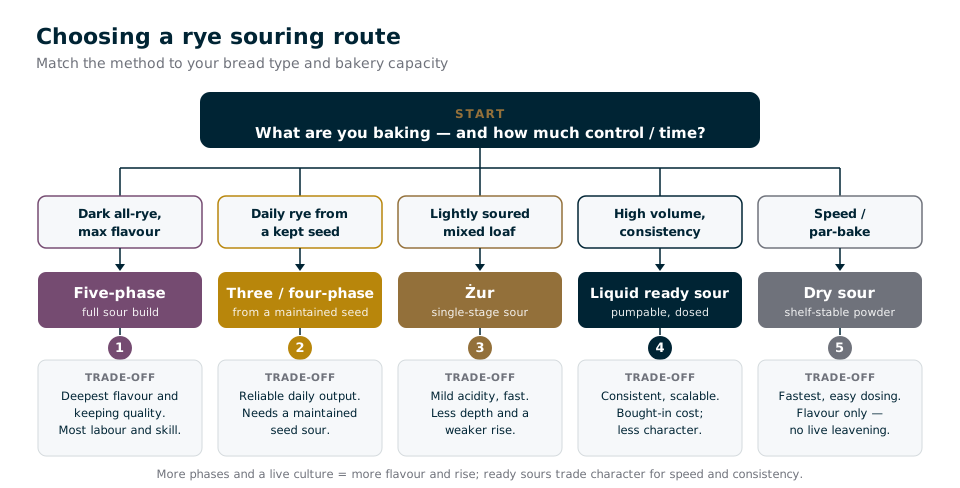 Decision tree to choose a rye souring method by bread type and bakery capacity
A note on flour: build and feed on GoodMills or Komplexmłyn rye (types 720 through wholemeal 2000); a little dark fermented rye malt (Malmon) deepens colour and flavour in the final loaf (see A3-malt-and-malt-extracts and A1-alternative-grain-flours).
7. The culture beyond the loaf
The rye zakwas is bigger than bread. The same lactic fermentation of rye flour and water is the base of żur / żurek (soured rye soup) - distinguished from barszcz biały, which is made on a wheat sour. Żur is documented as a Polish Lenten dish from the 15th century; the rye sour is both the technical and the cultural backbone of the Polish table.
It also underpins the country's traditional rye breads listed on Poland's national traditional products list (Krajowa Lista Produktów Tradycyjnych) - the Kraków-region chleb prądnicki (whose traditional aroma is described as characteristic of bread made on rye sourdough) and the Kashubian kaszubski chleb żytni na ziemniakach (a lightly sour rye-and-potato bread), both rooted in the tradition of Polish rye-sourdough baking. (These are national heritage registrations, not EU PDO or PGI designations.) The wider regional map is the subject of B1-bread-landscape and B1-rye-bread-production.
8. Faults and fixes
Full diagnostics are in the fault table below. The headlines:
- No life after 3-4 days → too cold, chlorinated water, or flour too white. Warm to 24-26 C, use filtered/boiled water, switch to type 2000, allow 7-8 days.
- Putrid smell → too warm (> 28 C); rebuild at 20-26 C and refresh more often.
- Mould or pink/orange film → discard the whole batch (do not scrape) and rebuild clean.
- Grey liquid on top (hooch) → hungry starter; stir in or pour off and feed more often.
- Dense, gummy crumb → under-acidified rye (pentosans not controlled) or high amylase; build a longer/more mature sour or back it up with a ready rye sour.
- Too sharp, low volume → over-soured / too acetic; warm and shorten the sour toward 28-30 C to favour lactic over acetic, and cut the sour fraction.
For volume, crust and crumb defects of the finished bread, cross-reference A5-bread-faults-causes-remedies.
9. Food safety and allergens (flagged for review)
- Allergen - gluten: rye flour, rye sour and the bread are cereals-containing-gluten and are not suitable for gluten-sensitive consumers. Rye flour spec sheets also flag possible botanical cross-contamination (soy, mustard, lupin) and a high risk of cross-contamination on lines that also handle ascorbic acid (ascorbic acid is not itself an allergen; this is a processing-line cross-contamination note from the manufacturer).
- Allergen - others in ready sours: IREKS Natural rye sour declares rye with possible traces of wheat, spelt, barley and oats; Zeelandia liquid dark sour contains whey (milk). Always read the current spec sheet of the exact product.
- Spoilage / safety upside: adequate acidification is a genuine safety control. A live rye sour extends shelf life and suppresses mould and rope (choroba ziemniaczana), which is caused primarily by Bacillus subtilis and related spore-forming spoilage bacteria. Selected rye-sour LAB also show antagonistic activity against Bacillus cereus (a food-borne pathogen and a distinct concern from rope disease) and other spore-formers. Under-soured summer rye/mixed loaves are the classic rope risk; keep the acidity up.
Buy the ingredients (Domson catalogue)
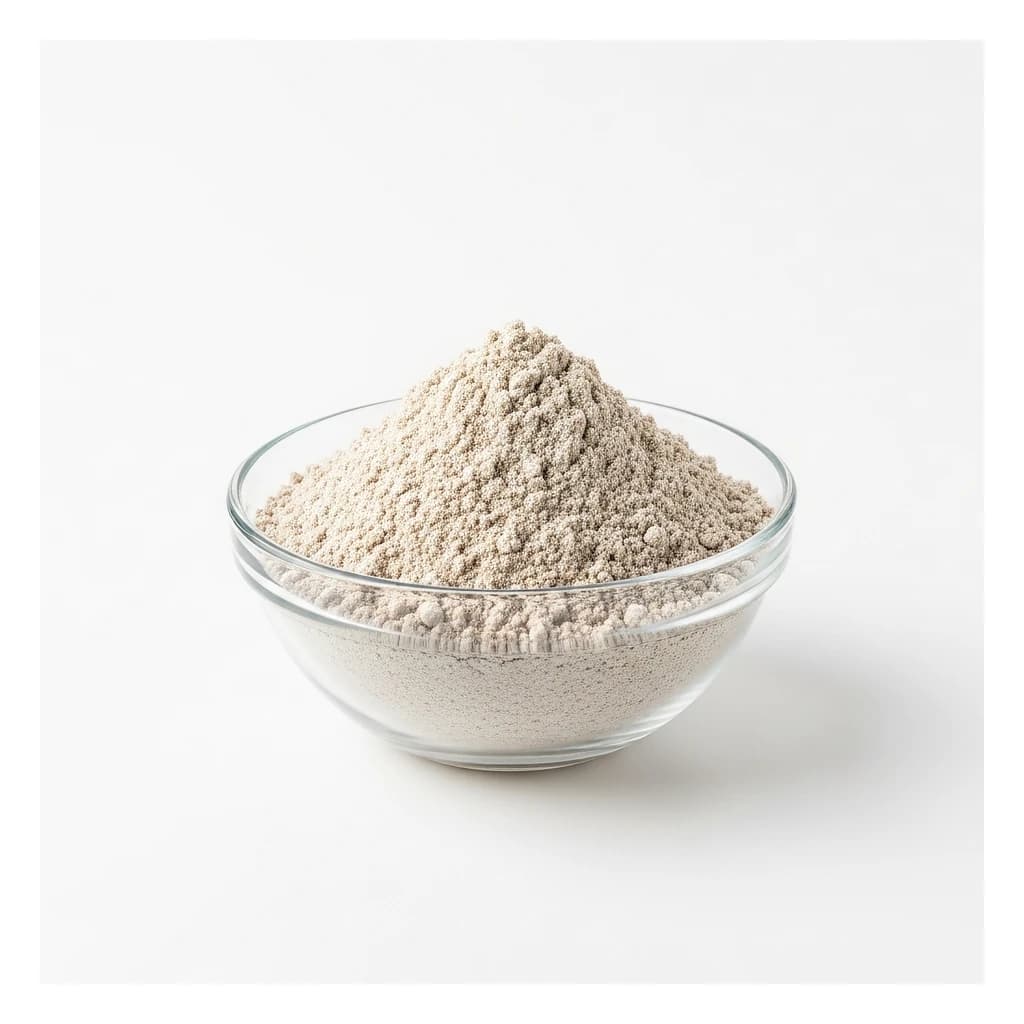
- Rye flour for building and baking: GoodMills Polska rye type 720 / 997 / 1150 / 1400 / wholemeal 2000; Komplexmłyn type 720.
- Ready rye sours & starters:IREKS Natural Liquid Rye Sour, ULDO Dark Sauer, Zeelandia Bioferm Dark & Superkwas, Lesaffre Rye Sourdough AS ECOL / Saf-Levain LV1 / Livendo LV-2, Backaldrin BAS Dark Liquid Rye Sourdough, Böcker Reinzucht pure starter.
- Colour & flavour:Dark Fermented Rye Malt (Malmon).
- Yeast for the final dough:Lesaffre Fresh Yeast Benevia.
See the products at the end of this article for the full catalogue list.
Figures
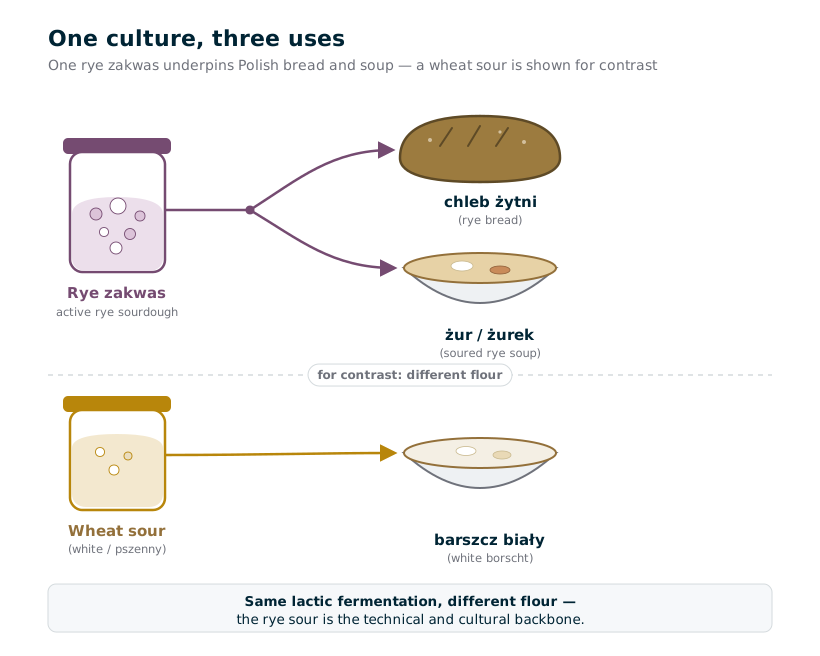 Diagram showing rye sourdough used for bread and zur soup, versus wheat sour for barszcz bialy
Building a rye zakwas from scratch (5-day spontaneous build)
From-scratch spontaneous starter using only rye flour and water, daily refresh at room temperature. Use higher-extraction rye (type 2000/razowa) and filtered or boiled-and-cooled water to avoid chlorine. Below ~18 C expect 7-8 days; above ~28 C risk of spoilage.
| Ingredient | Baker's % | Weight |
|---|---|---|
| Wholemeal rye flour type 2000 (per feed) | 100 | 50 g |
| Water 20-30 C (per feed) | 100 | 50 g |
- Day 1: mix 50 g rye flour + 50 g water to a thick batter, cover loosely (not airtight), hold at ~24-26 C. Days 2-5: each day discard part and refresh with 50 g flour + 50 g water. By day 4-5 it should be bubbly, domed and pleasantly sour. Keep on the counter with a 12-14 h refresh, or refrigerate and refresh at least every 3-5 days.
Yield: ~200 g active mother
Shortened three-stage rye sour (polkwas to kwas to ciasto) - working template
Practical short rye process expressed against the flour fermented in the sour. Yields (wydajnosc) and temperatures follow the Polish technology references; treat times as guides and judge by aroma, dome and acidity. Salt goes only into the final dough.
| Ingredient | Baker's % | Weight |
|---|---|---|
| Rye flour (total, type 720-2000) | 100 | 100 % |
| of which fermented through the sour | 40 | 40 % of flour |
| Water (total, to ~75-90% hydration by flour strength) | 80 | 80 % |
| Salt (final dough only) | 1.8 | 1.8 % (1.5-1.9 kg/100 kg) |
| Mature seed (zaczatek) carried over | 5 | 5 % of sour flour |
- Build the polkwas from the seed at ~165% yield, ~6 h at 26-28 C. Refresh up to a kwas pelny at ~190-200% yield, ~3 h at 28-30 C, until target acidity. Mix the final dough at 30-32 C with the remaining flour, water and salt; reserve a piece of mature kwas as the next seed. Final proof and bake hot with steam.
Mixed wheat-rye bread with Zeelandia Superkwas (first-party application formula)
Supplier application recipe from the Superkwas spec sheet - a dry sour improver used where a live multi-stage sour is not run. Baker's percentages are on total flour (100 kg).
| Ingredient | Baker's % | Weight |
|---|---|---|
| Wheat flour type 850 | 70 | 70 kg |
| Rye flour type 720 | 30 | 30 kg |
| Salt | 1.8 | 1.8 kg |
| Zeelandia Superkwas (dry sour) | 1.3 | 1.3 kg |
| Yeast | 3.5 | 3.5 kg |
| Water | 68 | 68 litres |
- Mix all ingredients 6 min slow + 4 min fast. Dough temperature 26-28 C. First proof ~20 min, divide and shape, final proof ~45 min. Bake at 230-250 C with steam; time by loaf weight.
Dark rye/mixed bread with Zeelandia Bioferm Dark liquid sour (first-party method)
Supplier application method from the Bioferm Dark spec sheet - a liquid sour used to back up or replace a live sour. Contains whey (milk allergen).
| Ingredient | Baker's % | Weight |
|---|---|---|
| Wholemeal rye flour type 2000 | 80 | 80 kg |
| Wheat / lighter flour | 20 | 20 kg |
| Zeelandia Bioferm Dark (liquid sour) | 3.5 | 3.5 kg |
| Salt | 2 | 2 kg |
| Yeast | 3 | 3 kg |
| Water | 80 | 80 litres |
- Soak the wholemeal rye and the liquid sour in ~70% of the water for 2-3 h. Add the rest and mix 8 min slow + 1 min fast. Dough temperature 29-31 C; rest 15-20 min; scale (e.g. 0.7 kg) into tins; final fermentation ~50 min. Bake 250 C falling to 200 C (deck) ~60 min. IMPORTANT: this formula card is indicative only — the current Zeelandia Bioferm Dark spec sheet also includes a dough improver (Optimax, approx. 1.0 kg / 1% on flour) not listed here, and specifies salt at 2.2 kg (vs 2.0 kg shown above). Always obtain and follow the current supplier spec sheet for the complete and authoritative formulation.
Phase-by-phase parameters for the traditional multi-stage rye sour as taught in Polish bakery technology. wydajnosc (yield) = mass of half-product per 100 parts flour (200% = roughly 1:1 flour:water); it is not baker's hydration. Salt is added only in the final dough.
| Phase (PL) | Phase (EN) | Yield (wydajnosc) | Temperature | Time | Microbial emphasis | Source |
|---|---|---|---|---|---|---|
| zaczatek / zakwas | seed / mother | 200-400% | room/warm | hours to ~1 day | saturation with LAB + yeast | Trade references |
| przedkwas | first sour | min 200% | 24-26 C | 5-9 h | yeast multiplication | Trade references |
| polkwas | half-sour | ~165% | 26-28 C | ~6 h | lactic acid bacteria | Trade references |
| kwas pelny | full sour | 190-200% | 28-30 C | ~3 h | yeast + acid balance | Trade references |
| ciasto | final dough | to formula | 30-32 C | ~0.5 h | leavening + handling | Trade reference |
Choosing between full multi-stage, short, zur and ready-sour routes.
| Method | Phases | Total time (approx) | Best for | Trade-off | Source |
|---|---|---|---|---|---|
| Five-phase classic | zaczatek to przedkwas to polkwas to kwas to ciasto | 22-24 h | Dark all-rye breads, deep flavour | Labour and space intensive | Trade references |
| Four-phase | przedkwas to polkwas to kwas to ciasto | 16-18 h | Daily rye production from a kept seed | Still needs a managed seed | Trade reference |
| Three-phase | polkwas to kwas to ciasto | shorter | Smaller bakeries, simpler control | Less depth than five-phase | Trade reference |
| zur (loose polkwas) | long single loose sour to ciasto | 18-24 h | Lightly soured mixed wheat-rye loaves; also zur soup | Slow acidity build | Trade references |
| Liquid ready sour | soak to ciasto | ~3 h dough | Consistent rye/mixed bread at volume | Buys flavour; less craft control | Supplier spec sheets |
| Dry sour / dry acid | direct into dough | direct | Speed, standardisation, par-bake | No live lactic fermentation | Spec sheet + trade reference |
First-party GoodMills Polska spec data. Polish type number equals the ash content (type 720 ~0.72%, type 2000 ~2.0%). Higher type = darker, more mineral- and microflora-rich, better for raising and feeding a sour.
| Flour | Protein /100 g | Ash (max) | Falling number | Dietary fibre /100 g | Typical role |
|---|---|---|---|---|---|
| Rye type 720 (jasna/pytlowa) | 6.5 g | <0.78% | >90 s | 5.8 g | Light rye; sour feeding; mixed bread |
| Rye type 997 | 7.3 g | <1.20% | >90 s | 6.7 g | Mid rye; everyday rye loaves |
| Wholemeal rye type 2000 (razowa) | 8.4 g | <2.0% | >90 s | 14.4 g | Building/refreshing the zakwas; dark rye |
Source: Supplier spec sheet.
First-party spec data for ready sourdough/acidifier products. Acidity figures are product-as-supplied on the supplier's own method, NOT the acidity of the finished bread. Many Polish bakeries use these to back up or replace a live multi-stage sour.
| Product | Format | pH (product) | Acidity (product) | Dosage on flour | Notes |
|---|---|---|---|---|---|
| IREKS Natural Liquid Rye Sour | Liquid concentrate | 2.8-3.4 | 190-210 deg (mfr method) | 1-7% | Rye flour, water, starter culture; live-fermented; store 15-20 C |
| Zeelandia Bioferm Dark | Liquid | see spec | n/a | soak method | Whey + rye; for rye/mixed/wholegrain; milk allergen |
| ULDO Dark Sauer (W/43) | Paste | 2.5-4.5 | 140-150 deg | 2-8% | Acidified (added citric/lactic/acetic acid) + barley malt; made in Wroclaw |
| Zeelandia Superkwas | Dry powder | n/a (dry) | n/a (dry) | ~1.3% | Wheat-rye sour improver (acids E330/E270/E327 + enzyme) |
Source: Supplier spec sheet.
The microbial succession and the dominant lactic acid bacteria of rye sourdough, from native and peer-reviewed sources.
| Organism / group | Role | Active temperature | Source |
|---|---|---|---|
| Enterobacteriaceae | Initiate spontaneous acidification (H2, CO2, minor acids); fade as pH drops | early phase | Trade reference |
| Facultative heterofermentative LAB (Lactiplantibacillus plantarum) - produces predominantly lactic acid on hexoses in bakery conditions | Mainly lactic acid under typical conditions; milder taste | ~26-31 C (lactic-dominant conditions) | Trade references |
| Obligate heterofermentative LAB (Levilactobacillus brevis) - note: Fructilactobacillus sanfranciscensis cited in Polish starter-culture literature but not confirmed as dominant in spontaneous Polish rye sourdough | Lactic + acetic acid + CO2 + ethanol; sharper aroma, more gas | ~22-26 C (acetic-lactic conditions) | Trade references |
| Other LAB found in rye (Weissella, Pediococcus, Leuconostoc) | Co-fermenters in spontaneous/wholemeal sours | varies | Trade reference |
| Wild yeast (Saccharomyces / Candida-type) | Leavening (CO2) and aroma | warm phases | Trade reference |
| Symptom | Likely cause | Remedy | Source |
|---|---|---|---|
| No rise / no bubbles after 3-4 days | Too cold (<18 C); chlorinated water killed microflora; flour too low-extraction | Move to 24-26 C; use filtered/boiled-cooled water; switch to type 2000 rye; give it 7-8 days | Trade references |
| Smells putrid/rotten rather than sour | Over-warm (>28 C) so spoilage organisms dominated | Discard and rebuild at 20-26 C; refresh more often | Trade reference |
| Pink/orange or fuzzy mould on surface | Contamination; left too long without refresh | Discard the whole batch (do not scrape); rebuild clean | Trade reference |
| Grey liquid (hooch) on top | Hungry starter - over-fermented/under-fed | Stir in or pour off, then refresh; feed more often or refrigerate between bakes | Trade reference |
| Bread dense, sticky, gummy crumb | Under-acidified rye: pentosans/slime not controlled; or high amylase (low falling number) | Build more sour / longer sour to lower pH; use more mature kwas; back up with a ready rye sour | Trade references |
| Bread too sour / sharp, low volume | Over-soured (too much acetic acid); cool, slow heterofermentative profile dominated | Warm the sour toward 28-30 C and shorten it to favour lactic over acetic; reduce sour fraction | Trade references |
| Rope / sticky stringy crumb in storage (choroba ziemniaczana) | Bacillus spoilage, common in summer rye/mixed loaves | Ensure adequate acidification (live sour or ready sour); LAB antagonise spore-formers | Trade references |
Buy the ingredients
Catalogue products and brands referenced in this article.

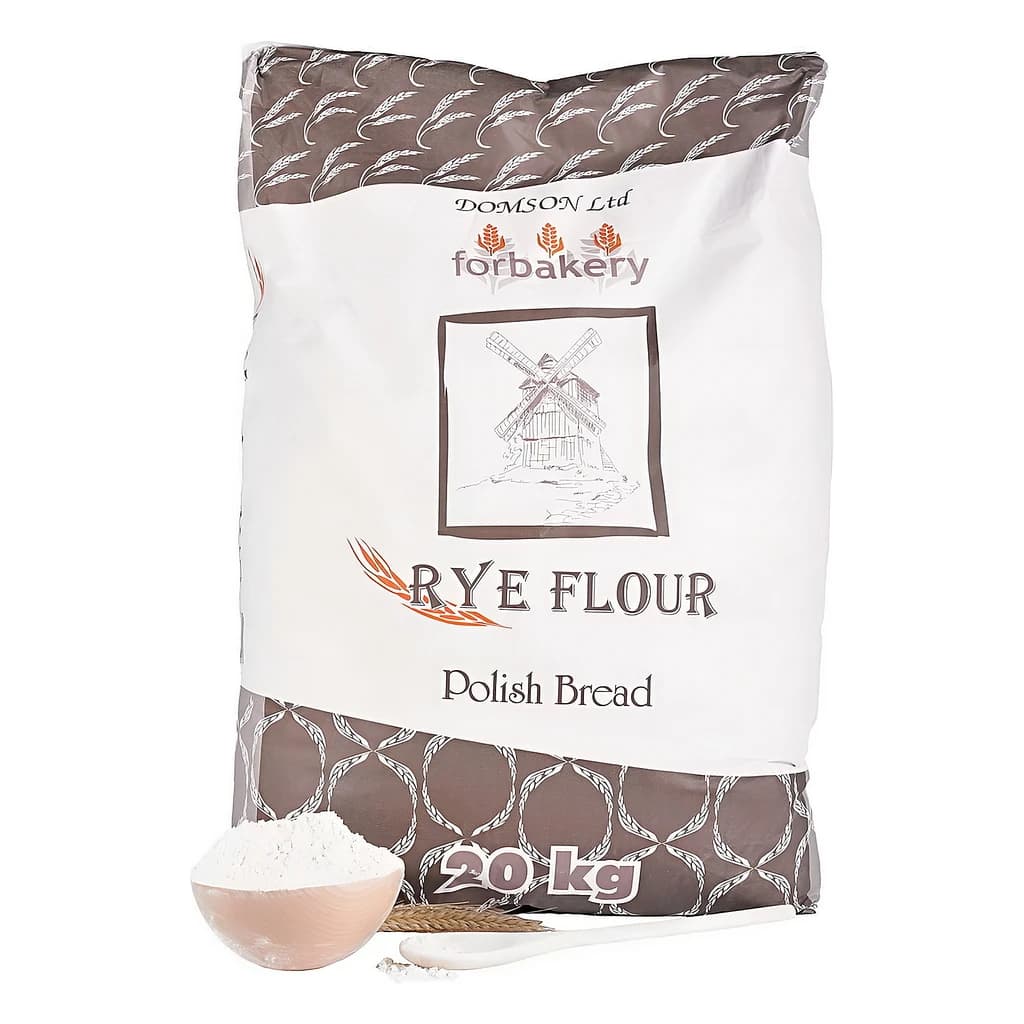
Rye Flour Type 720 20 kg
Superkwas Dry Sourdough 25 kg
Sauer Dark Rye Sourdough Concentrate 25 kg
Rye Flour Type 720 25 kg
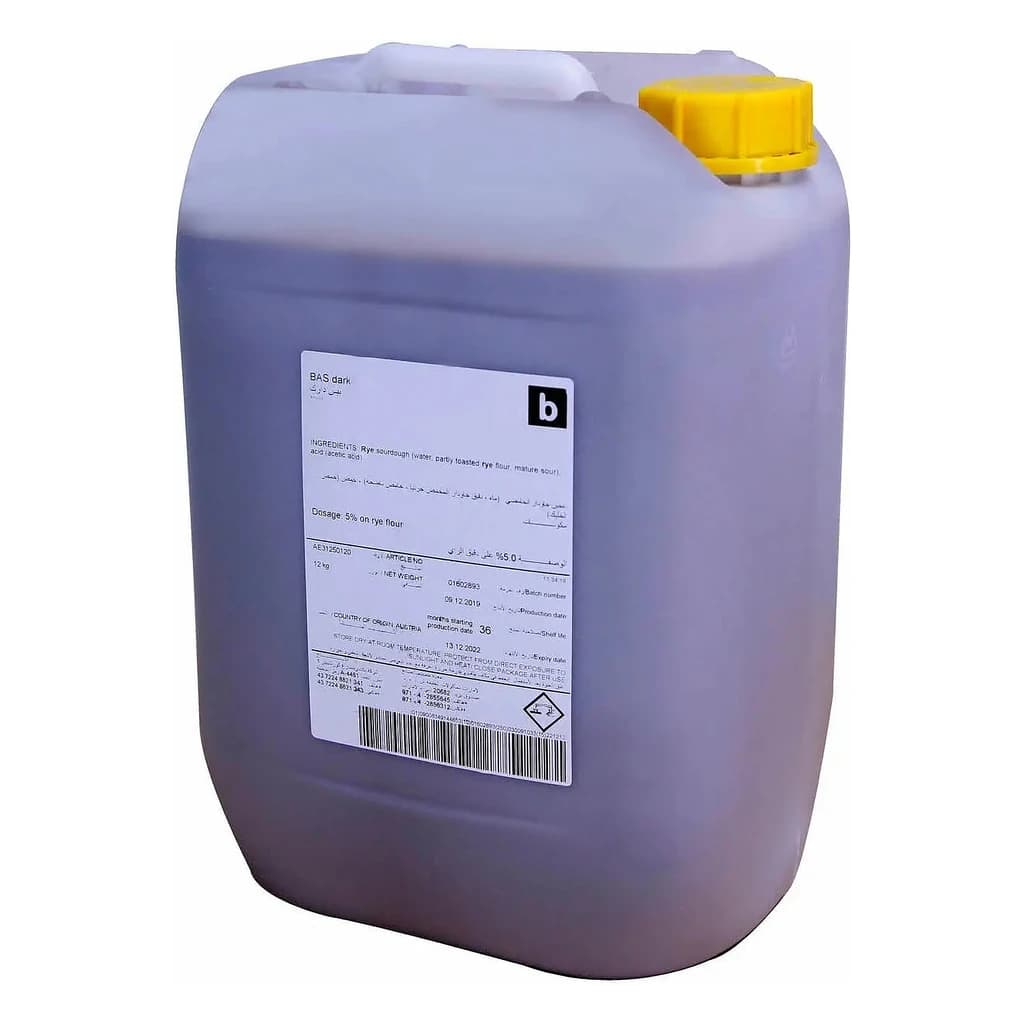
Backaldrin BAS Dark Liquid Rye Sourdough 12 kg

Fresh Yeast Benevia 10 kg
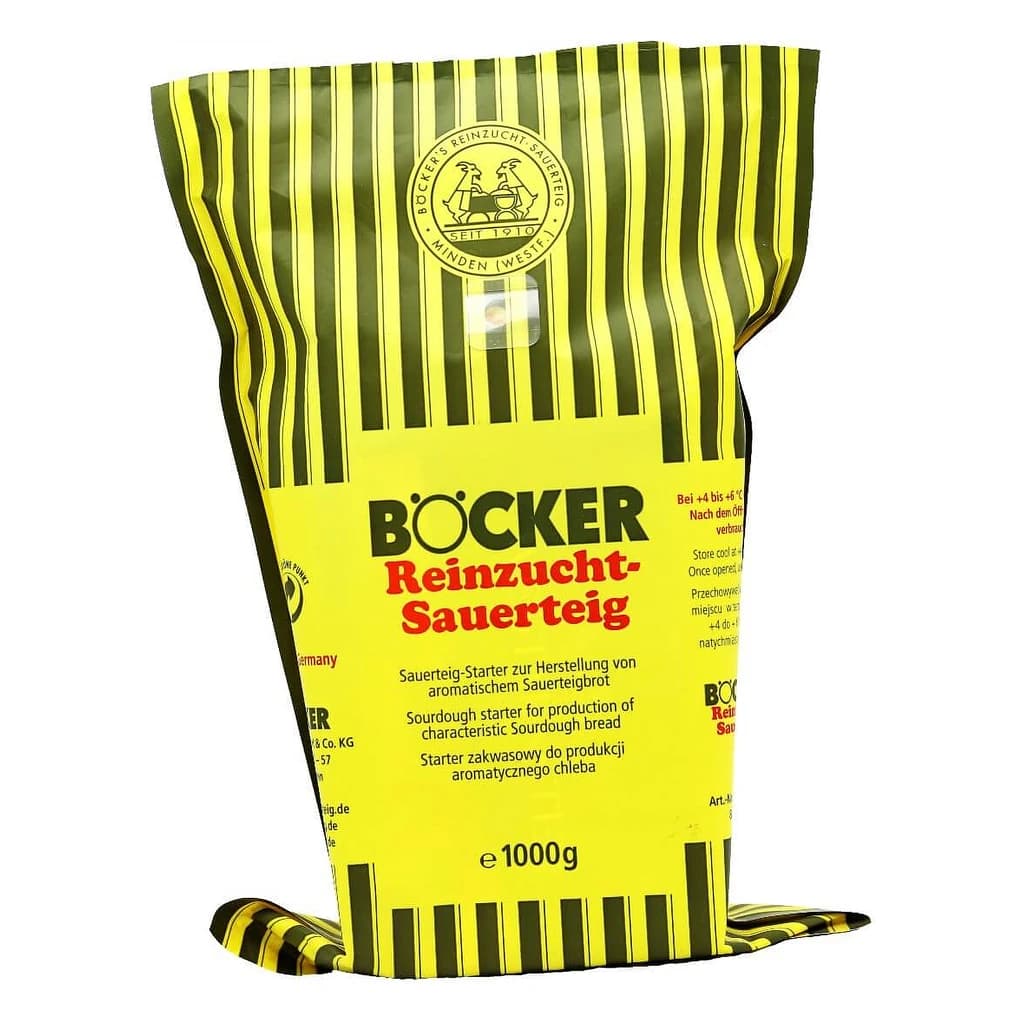
Böcker Reinzucht-Sauerteig Pure Sourdough Starter 1 kg
Dark Fermented Rye Malt 25 kg

Lesaffre Rye Sourdough AS ECOL 11 kg
Lesaffre Saf-Levain LV1 Sourdough Starter (S)
Lesaffre Livendo Starter LV-2 Sourdough Culture
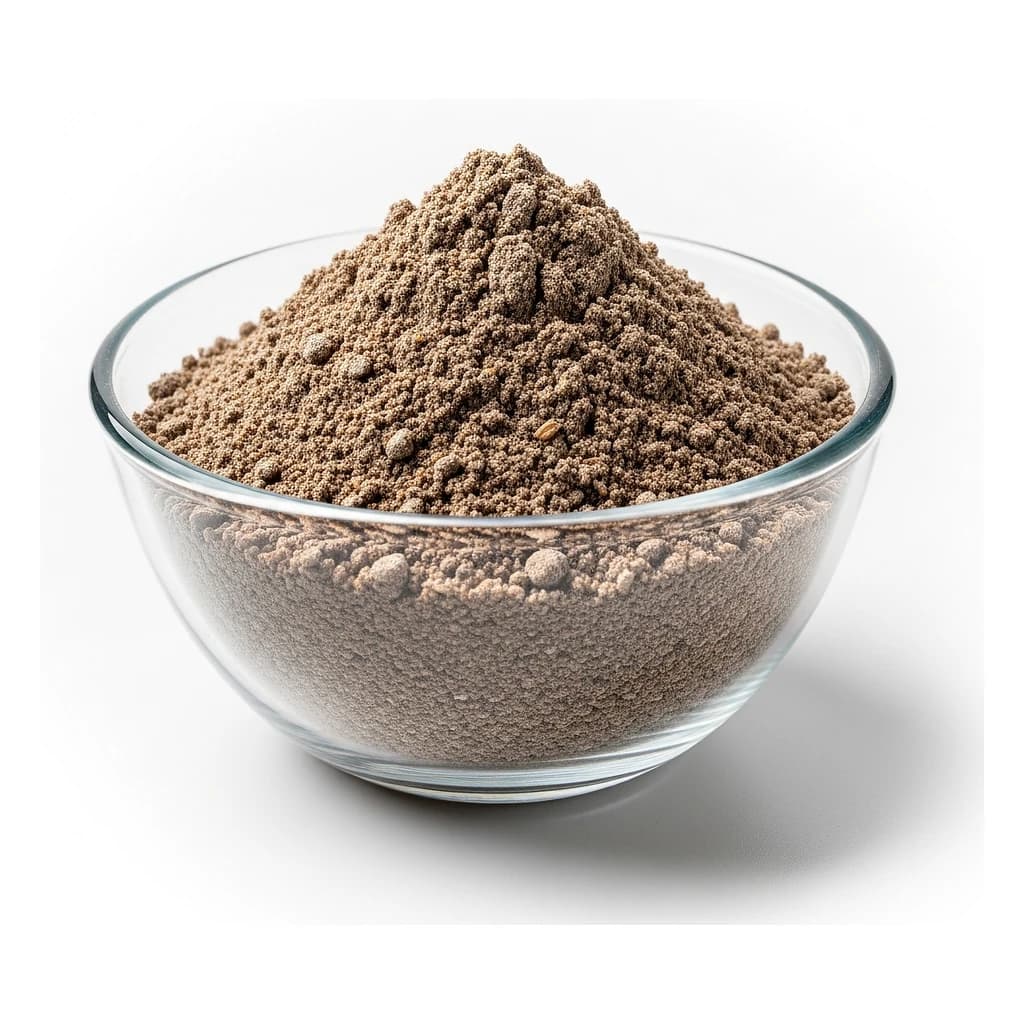
Wholemeal Rye Flour Type 2000 40 kg
IREKS Natural Liquid Rye Sour 12.5 kg
Zeelandia Bioferm Dark Liquid Sourdough 19 kg
Rye Flour Type 1400 25 kg
Rye Flour Type 997 25 kg