
Polish
12 articles · 70 diagrams · avg 11 min read
Articles in this section
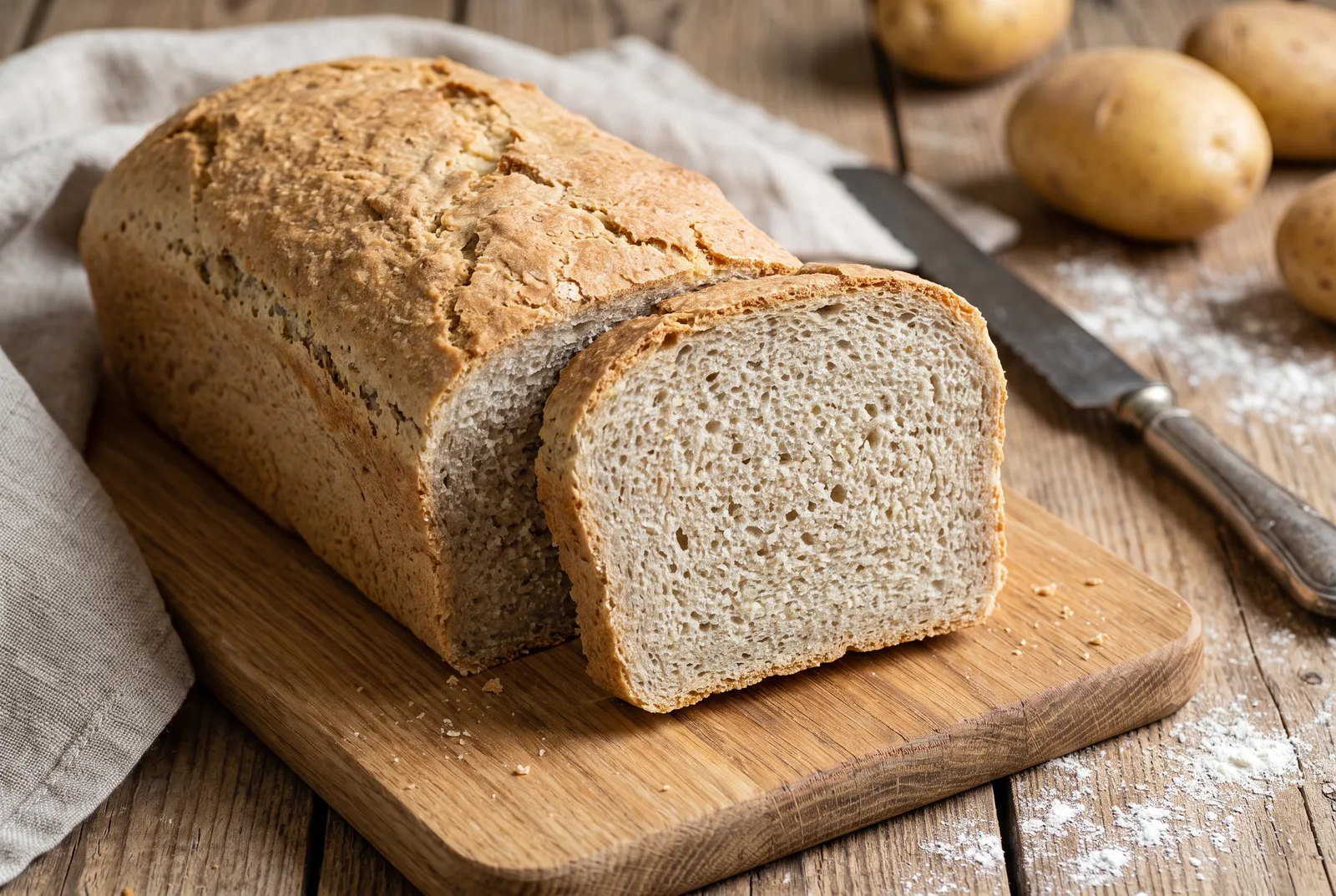
Poland's bread map: regional loaves from Prądnik rye to Kashubian potato bread
A practical orientation to Polish bread for professional bakers: the four working families (pure rye, rye-led mixed, wheat-led mixed, pure wheat) sorted by the wheat:rye ratio and the leaven, the Polish flour 'typ' numbering decoded against first-party mill spec sheets (the number is ash % x1000), and a regional map of the country's signature loaves — the huge pure-rye sourdough chleb prądnicki of Kraków (rye T720 + T2000, EU PGI 2011), the scalded ring obwarzanek krakowski (EU PGI 2010), the tin-baked kaszubski chleb żytni na ziemniakach (rye + potato), plus the everyday chleb baltonowski and the PGI pastries cebularz lubelski and rogal świętomarciński. It explains why rye is a different baking system from wheat (pentosans and acid, not gluten), gives illustrative formulas and fault-finders, and maps every family to ready-to-buy Domson flours, sourdoughs, yeasts and mixes (GoodMills Polska, Domson, Komplexmłyn, Zeelandia Kołodziej, Uldo Dark Sauer, Lesaffre, Lallemand). Numeric flour, sourdough and PGI specifications are drawn first from supplier datasheets and Polish government traditional-product and PGI registers, then cross-checked. Cross-links the Pillar A craft articles a Polish baker leans on.
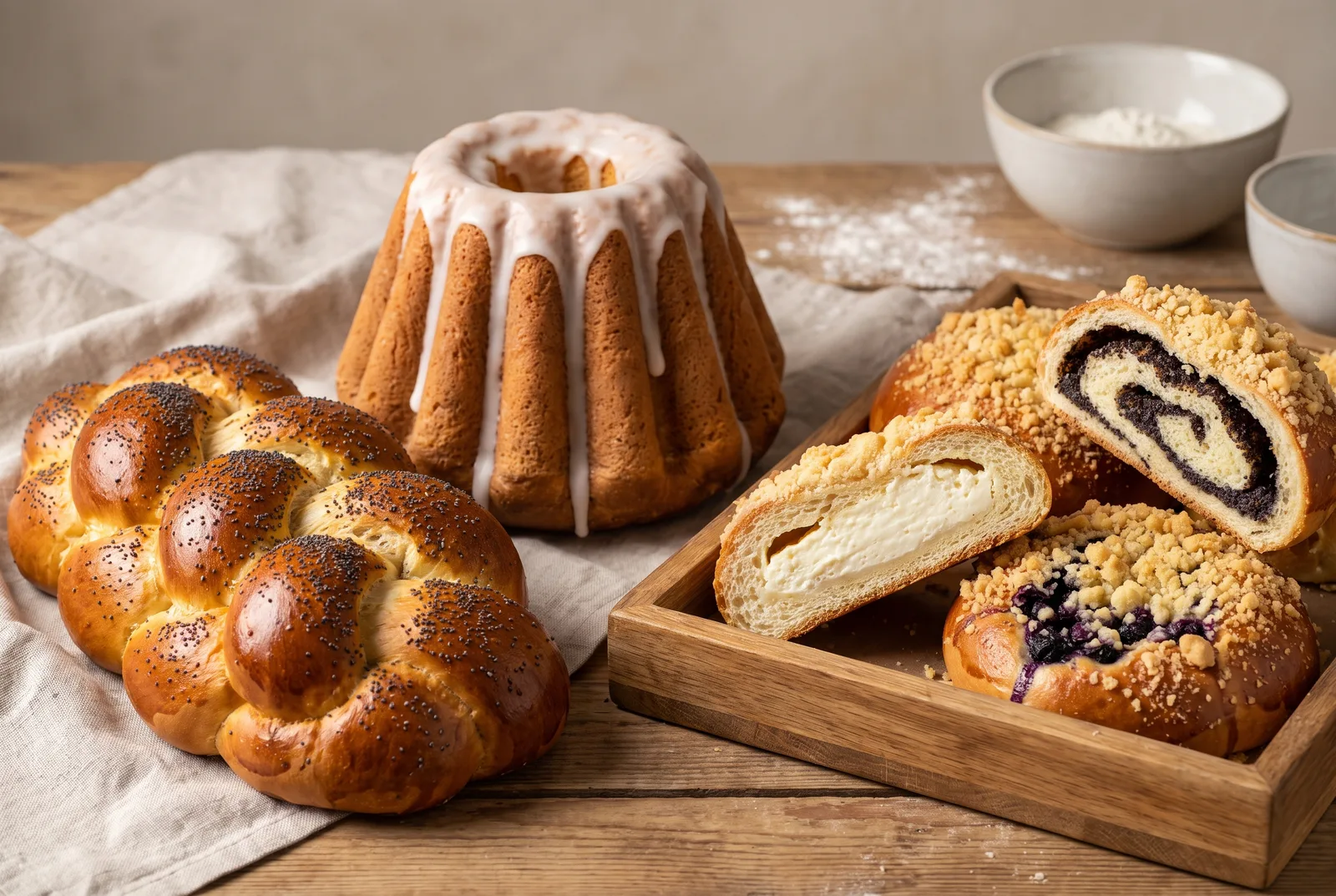
Drożdżowe tradition: babka, chałka and drożdżówki — enriched yeast dough formula and process
The drożdżowe (enriched yeast) bench is the sweet heart of every Polish bakery. This dossier covers the three pillars — babka drożdżowa (festive yeast cake), chałka (sweet braided bread) and drożdżówki (filled sweet buns, including the iconic jagodzianka) — with their authentic history, regional roots and production. It teaches the classic Polish two-stage rozczyn (sponge) method, the osmotic "sugar wall" that decides which yeast to use, representative formulas in baker's percentage, the signature kruszonka (streusel) and lukier (icing) finishes, and a faults-and-fixes table. Every numeric and process figure is built on native Polish sources and twelve first-party Domson supplier spec sheets (Komplexmłyn T450/T500 flour, Lesaffre Benevia fresh yeast, Polmlek 82% butter, Kruszwica Milama margarine, Emix vanillin sugar, Helios poppy-seed filling, PGD candied orange peel, Zeelandia custard and kajmak, and Ireks brioche mix and soft-roll improver), cross-linked to the Pillar A craft articles and to the catalogue items a Polish baker buys.
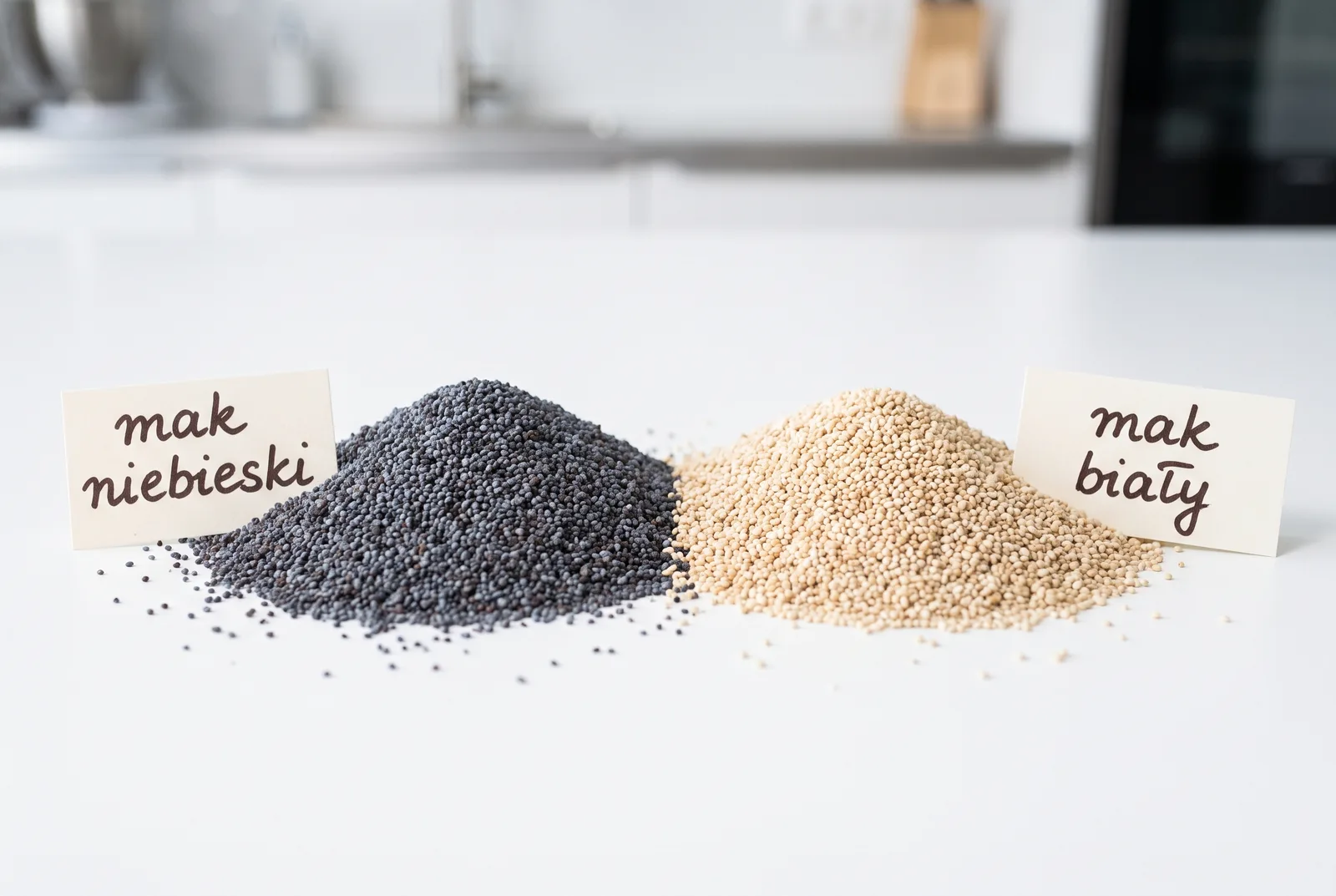
Makowiec and poppy-seed fillings: processing, sweetening and the roll vs. strudel format
The working baker's guide to makowiec (poppy-seed roll) and the masa makowa (poppy filling) behind it. It decodes the three formats a Polish customer recognises — the rolled strucla / makowiec zawijany (the festive default), the thin-stretched strudel and the slab makownik / placek — and shows that "roll vs. strudel" is really a choice of dough and how much filling it can carry. It walks the craft that fails most bakers: processing the seed (scald/parzenie or simmer, drain, then grind 2-3 times through a maszynka or a makutra), sweetening and enriching the mass (sugar vs. honey, walnuts, almonds, raisins, candied peel, whipped whites), and the roll-up itself (snug-not-tight, full proof, egg-wash, bake ~180 C). Numbers come first from ten first-party supplier spec sheets — raw blue/white seed (Global Grains, Floramex), a 40% dry concentrate (AKO), ready cooked fillings (Prospona x3, Helios, HELCOM) and a cooked white-poppy-and-walnut filling (Zeelandia) — cross-checked against Polish-language recipe, academic (mamz.pl almanachs, zpe.gov.pl) and cultural sources and the gov.pl traditional-products register (makowiec lubartowski and the regional strucle). A full food-safety section covers opium alkaloids and EU Regulation 2023/915 (which consolidated and superseded Reg 2021/2142, with unchanged limits), and how the traditional scalding/simmering step is the primary evidenced mitigation for alkaloid reduction before baking. Cross-links the Pillar A craft a Polish baker leans on and maps every component to ready-to-buy Domson products and brands.
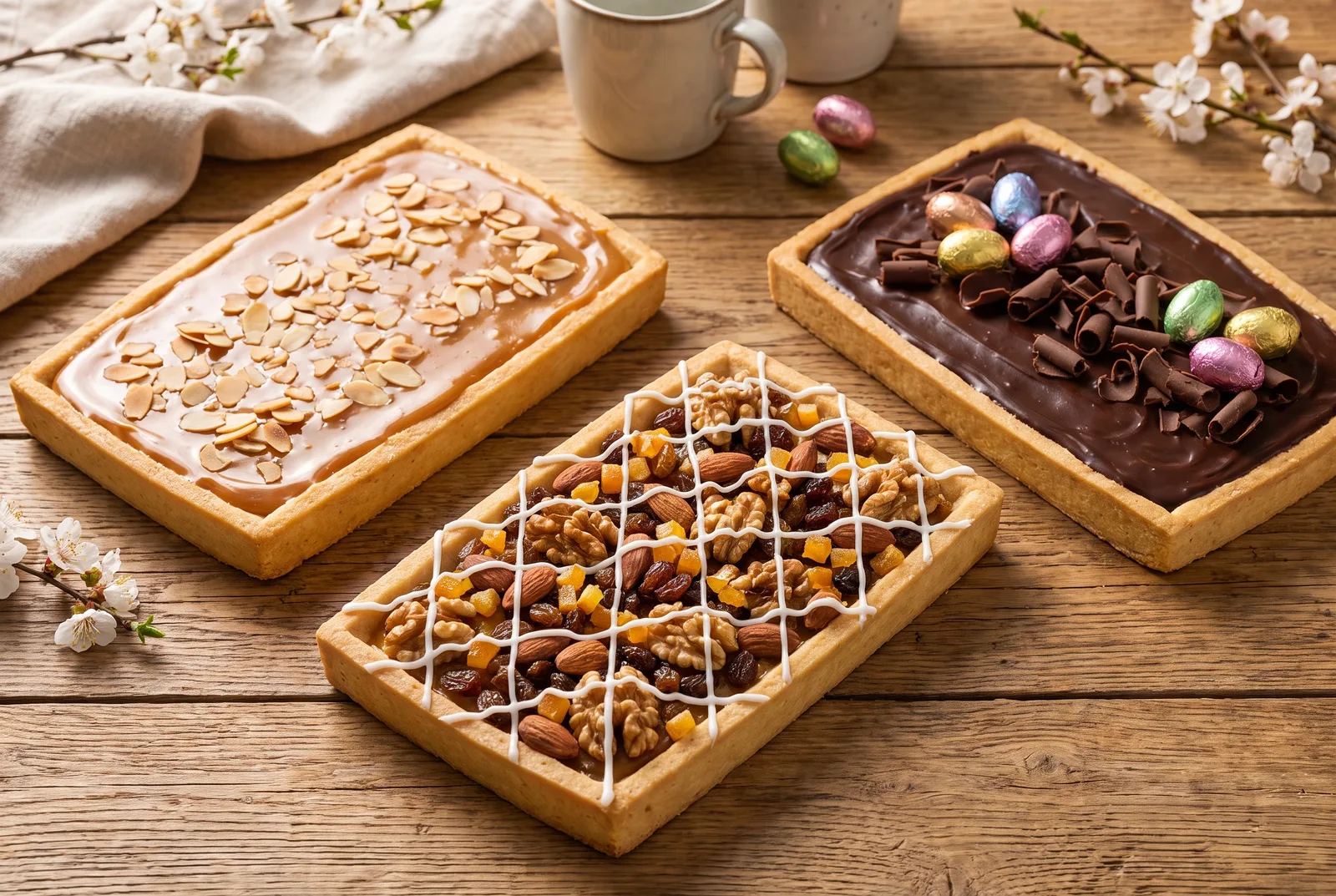
Mazurek: Easter shortcrust base, kajmak caramel topping and confectionery decoration
Mazurek (the flat, richly decorated Polish Easter cake) is a confectioner's set-piece built on three skills: a short, crisp shortcrust base (kruche ciasto), a rich topping — most famously kajmak (Polish dulce de leche) — and the decoration that makes it a centrepiece. This dossier gives the authentic background (the name traces to Mazowsze/Mazovia; the cake itself descends from oriental almond confectionery that reached Poland's noble manors by the 17th century), the load-bearing craft (the 3:2:1 flour:fat:sugar shortcrust rule, three routes to the kajmak layer including the can-boiling explosion hazard, and royal-icing/bakalie decoration), five baker's-percentage formula cards, fault tables, and the Domson catalogue products a Polish baker buys to make it — anchored to seven first-party supplier spec sheets (Zeelandia kajmak, Type 450 flour, Polmlek 82% butter, baking powder, Martin Braun plum filling, ground almonds and cake margarine).
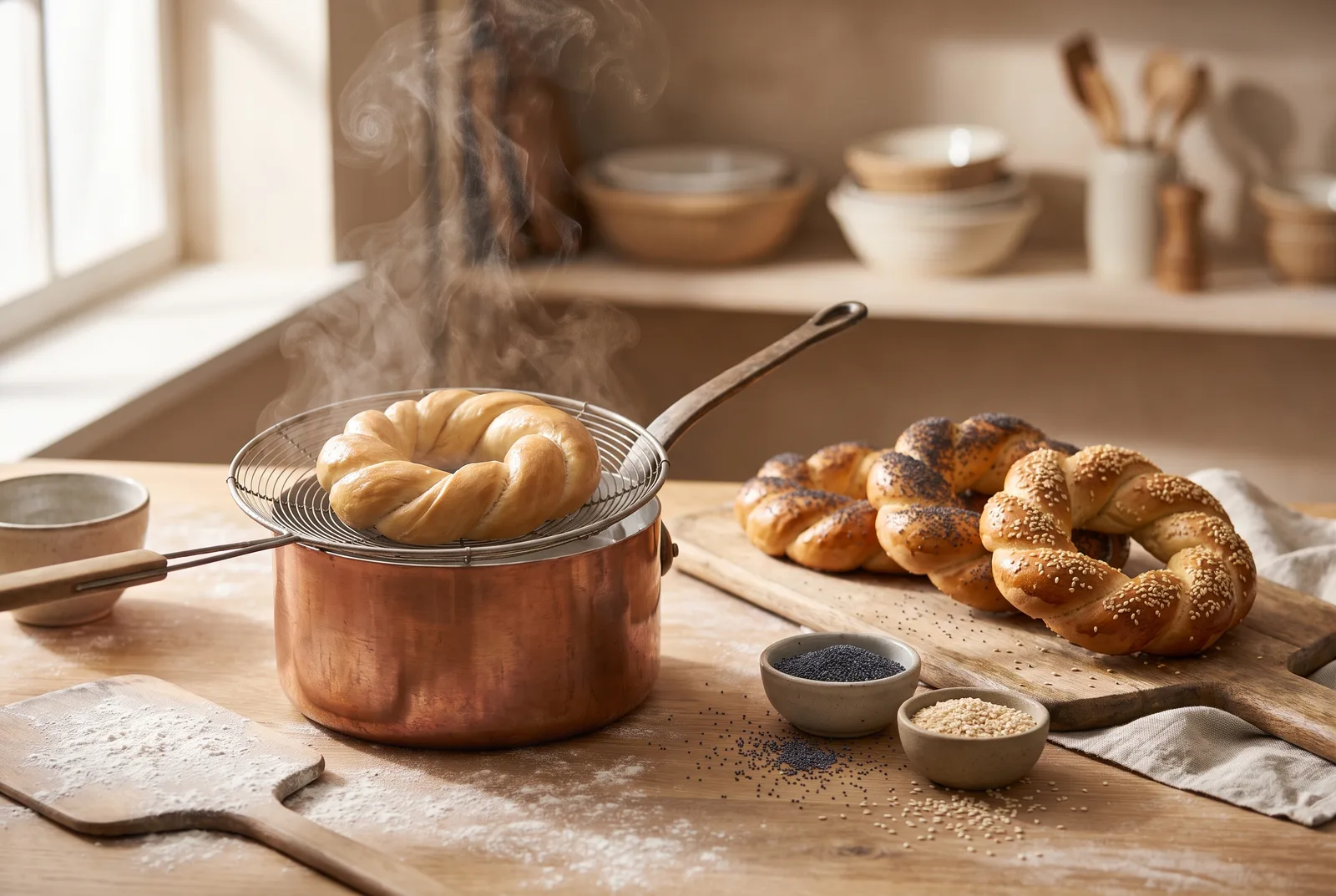
Obwarzanek krakowski and scalded-dough products: the boil-before-bake technique
A practical, authentic guide to Poland's boil-before-bake (obwarzanie) ring family — the technique that defines obwarzanek krakowski (the braided Kraków ring, EU-protected as a PGI/ChOG since 2010), the bajgiel z Kazimierza (the Kraków Jewish bagel, ancestor of the New York bagel) and the precel (pretzel). It explains what the short hot-water scald actually does — gelatinising the surface starch so the baked crust is glossy and crisp while the crumb stays soft and tight — and gives the authentic numbers: dough of wheat flour (up to 30% rye), a scald at minimum 65°C for about 10 seconds, rings 12–17 cm across and 80–120 g, hand-twisted from 2–3 strands (wałeczki). It compares plain, sweetened and alkaline (soda/lye) baths, flags the two safety topics that matter (food-grade lye handling for pretzels; opium-alkaloid and sesame/gluten allergen control for toppings), and maps every ingredient to ready-to-buy Domson catalogue products. First-party supplier spec sheets (Komplexmłyn, GoodMills Polska, Lesaffre, Global Grains, IREKS, The Salt Company) supply the numeric specs; native Polish sources (IJHARS/Gov.pl, the City of Kraków, the EU register and the Living Obwarzanek Museum) supply the history and method.
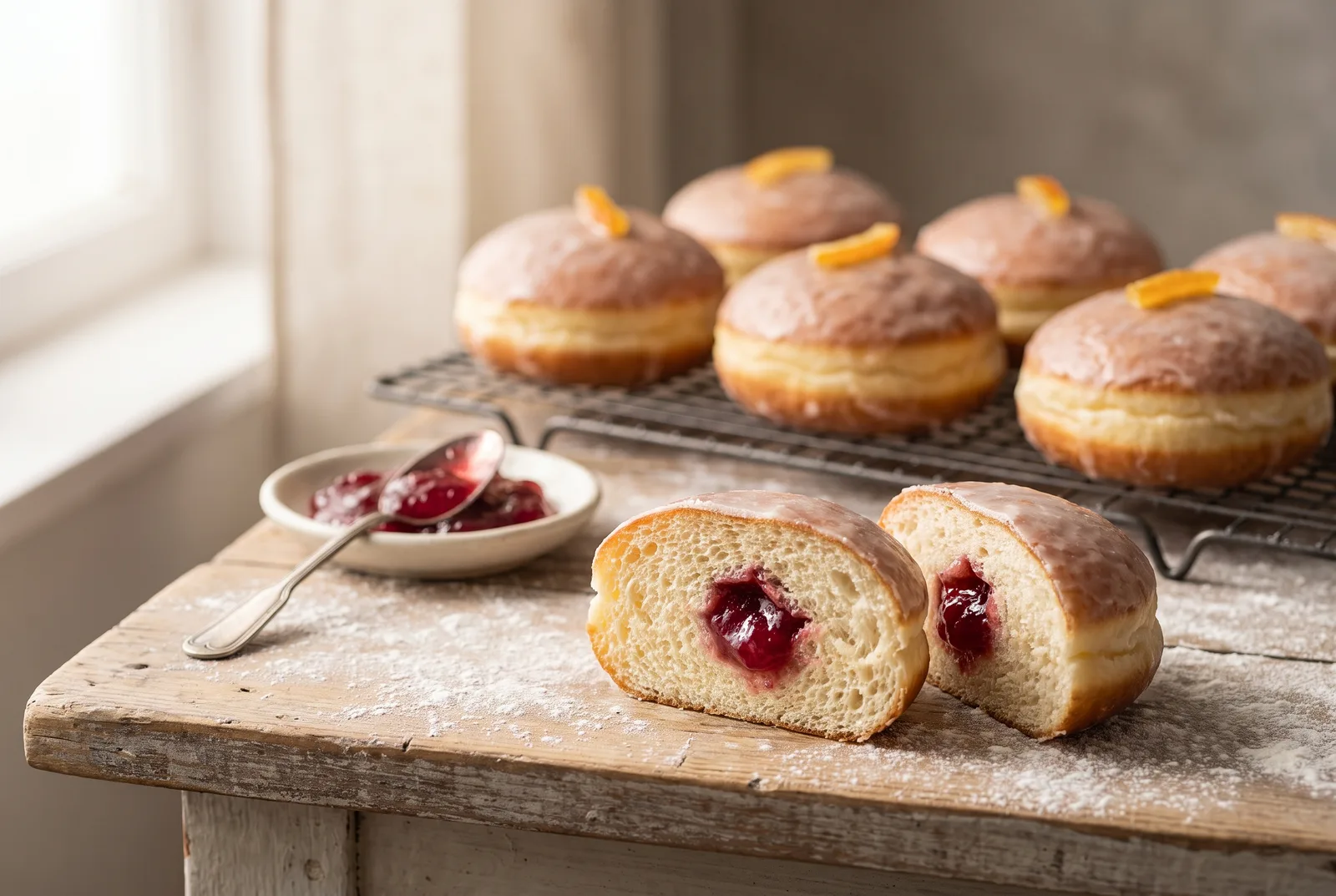
Pączki and faworki: dough chemistry, frying temperature control and finishing for Polish doughnuts
A working bakery guide to Poland's two great Carnival fried pastries — pączki (filled enriched-dough doughnuts) and faworki/chrust (crisp ribbon pastries) — written for professional production. It covers the enriched yeast dough (medium-strong T550 flour, generous or osmotolerant yeast, egg yolk, butter and the traditional spoon of spirit), the scalded-dough (parzone) method for a softer, longer-fresh crumb, and the one thing that separates a great pączek from a greasy one: frying-fat temperature control at 175-180 °C and the pale ring (jasna obwódka / rant) that proves correct proofing and frying. It then covers professional frying-fat selection (solid palm fat vs liquid oils, smoke point, oxidative stability, the total-polar-compound discard limit), the heritage fillings (rose-petal jam, plum powidła, advocaat, custard), and finishing (lukier glaze, icing sugar, candied orange peel). Numbers come first from first-party supplier datasheets and are cross-checked against Polish baking authorities and EU food law, then mapped to ready-to-buy Domson catalogue products. Authentic Polish names are kept (with diacritics) and glossed in English.
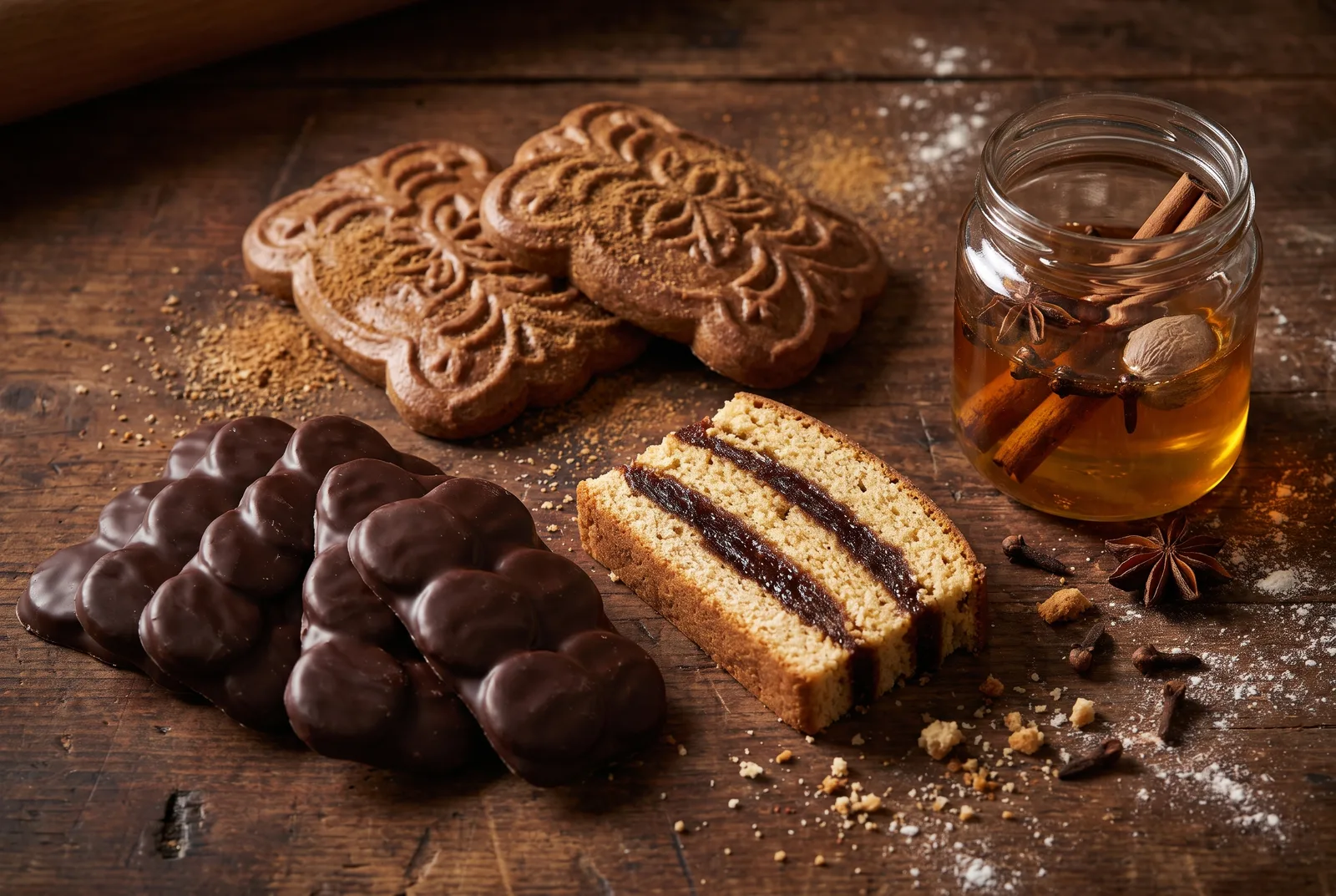
Piernik: Toruń gingerbread tradition, spice blends, honey chemistry and maturation protocols
Piernik is Poland's honey-and-spice gingerbread, and Toruń is its capital. This dossier gives a working baker the authentic picture: the history (first written record around 1380, the baker Mikołaj Czan, the katarzynki linked by folk tradition to St Catherine's feast on 25 November, the carved pearwood moulds and the Kopernik factory's centuries of maturation), the spice blend (przyprawa piernikowa) that defines the flavour, the honey chemistry that gives piernik its deep colour and weeks-long softness, the two dough methods (raw vs scalded) and — above all — lezakowanie, the cold maturation that runs from weeks to a full year. It ties each technique to the Domson catalogue a Polish baker actually orders (Ratos Natura honey, first-party Rolmex/Floramex przyprawa piernikowa, ACOR cinnamon, Sleaford ginger, KST nutmeg, Rolmex aniseed, Bowika/Emix bicarbonate, Martin Braun bake-stable plum filling, Helios compound chocolate glaze) and to the Pillar A craft concepts behind it (see A2-chemical-leaveners-baking-powder, A1-alternative-grain-flours, A5-baking-oven-science, A5-shelf-life-and-staling, A6-chocolate-selection-couverture and A7-icings-and-buttercreams). Built on twelve first-party supplier spec sheets cross-checked against Polish-language cultural, trade and academic sources (the Toruń Gingerbread Museum, the gov.pl traditional-products register, Money.pl on the Kopernik factory, and industrial confectionery-technology references).
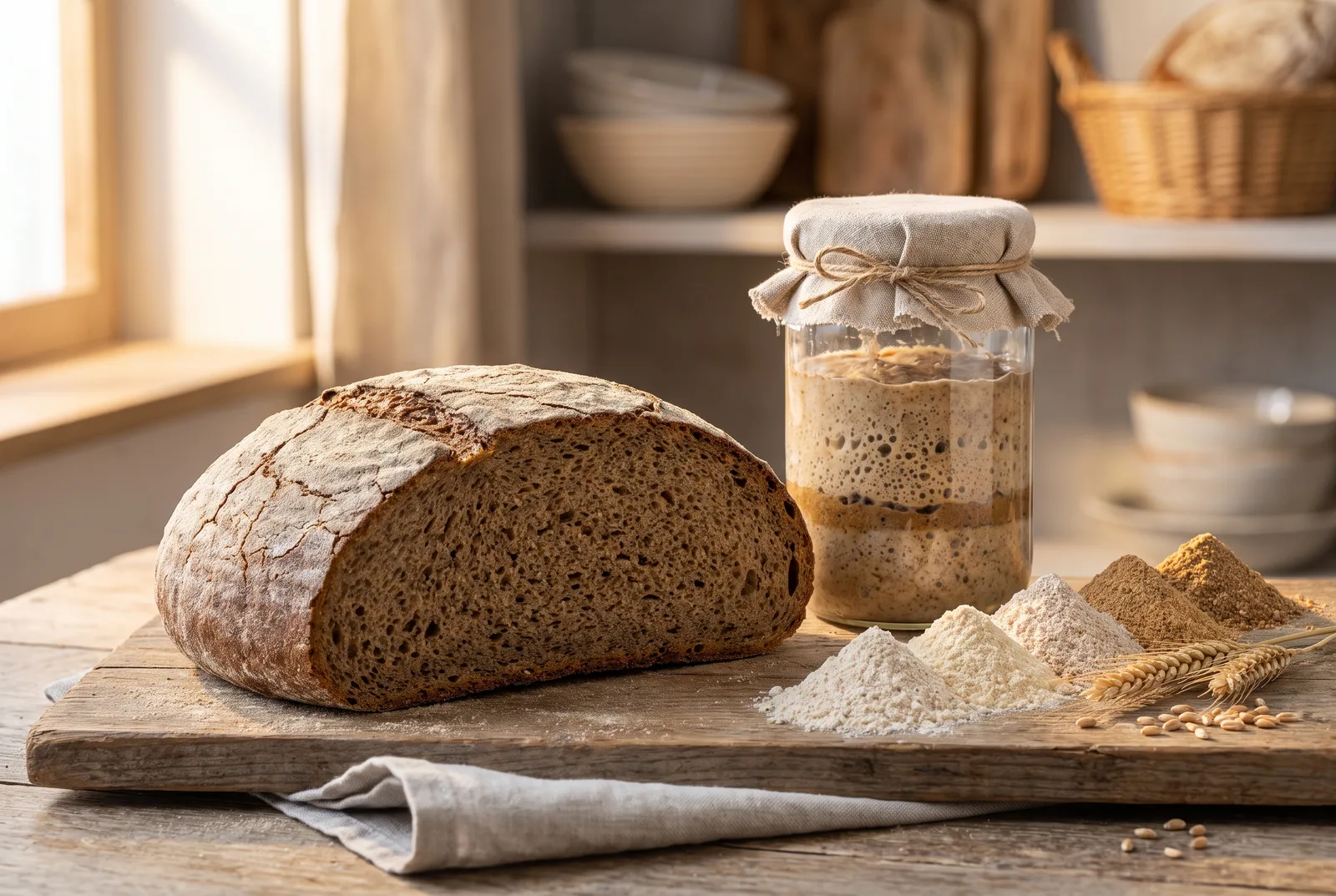
Production deep-dive: Polish rye and mixed-rye loaves — flour types, dough structure and baking parameters
A working baker's guide to producing authentic Polish rye (żytni) and mixed rye-wheat (mieszany) bread: choosing the right rye flour type, why rye must be soured rather than kneaded, how to run a multi-phase zakwas, and the dough and baking parameters behind loaves from chleb razowy to chleb baltonowski — wired to the Domson catalogue.
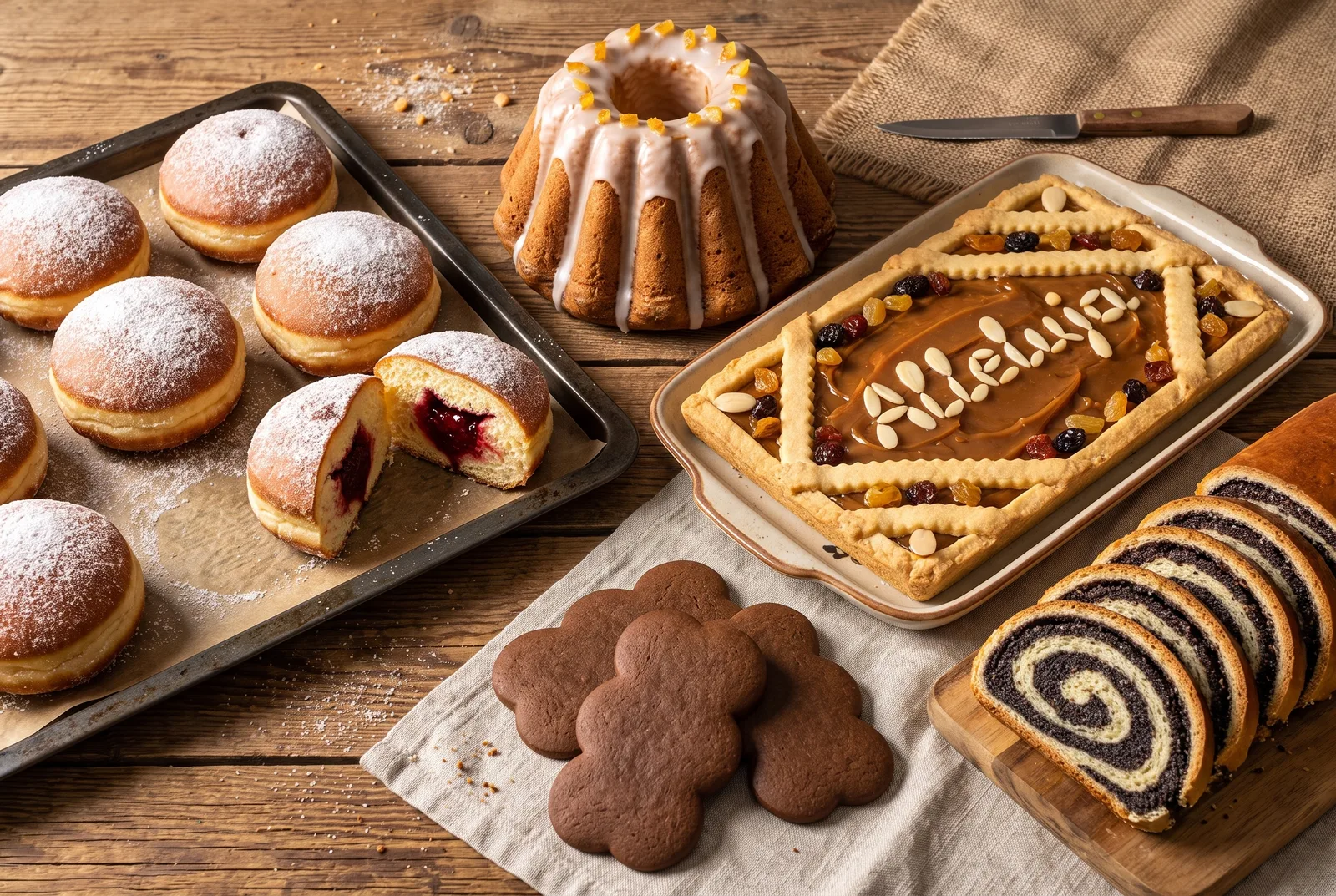
Calendar of Polish festive baking: Fat Thursday pączki, Easter mazurek & babka, Christmas makowiec
A working baker's calendar of the Polish festive year — what the trade expects on the bench for Tłusty Czwartek (Fat Thursday), Wielkanoc (Easter) and Boże Narodzenie (Christmas), and how to produce it authentically. It walks the three peak seasons in order: the deep-fried pączki and faworki of Fat Thursday; the Easter triad of yeast babka, shortcrust mazurek and baked sernik; and the Christmas makowiec, piernik and keks. Each product is tied to its cultural meaning (why rose-petal jam, why poppy seed, why six joined circles), to the craft concepts in Pillar A (osmotolerant yeast, frying fats, shortcrust, fillings), and to the specific Domson supplier brands a Polish baker actually orders. Built on twelve first-party supplier spec sheets (Zeelandia Berliner mix, kajmak, honey-cake mix and white-poppy-walnut filling; Lesaffre Benevia yeast; AKO and Floramex poppy; Martin Braun plum filling; Vortumnus rose marmalade and candied peel; Chelmer ground almonds; ACOR cinnamon) cross-checked against Polish-language cultural, trade and academic sources (gov.pl traditional-products register, Mistrz Branży, the Toruń Gingerbread Museum, NCK, and the mamz.pl vocational almanachs).
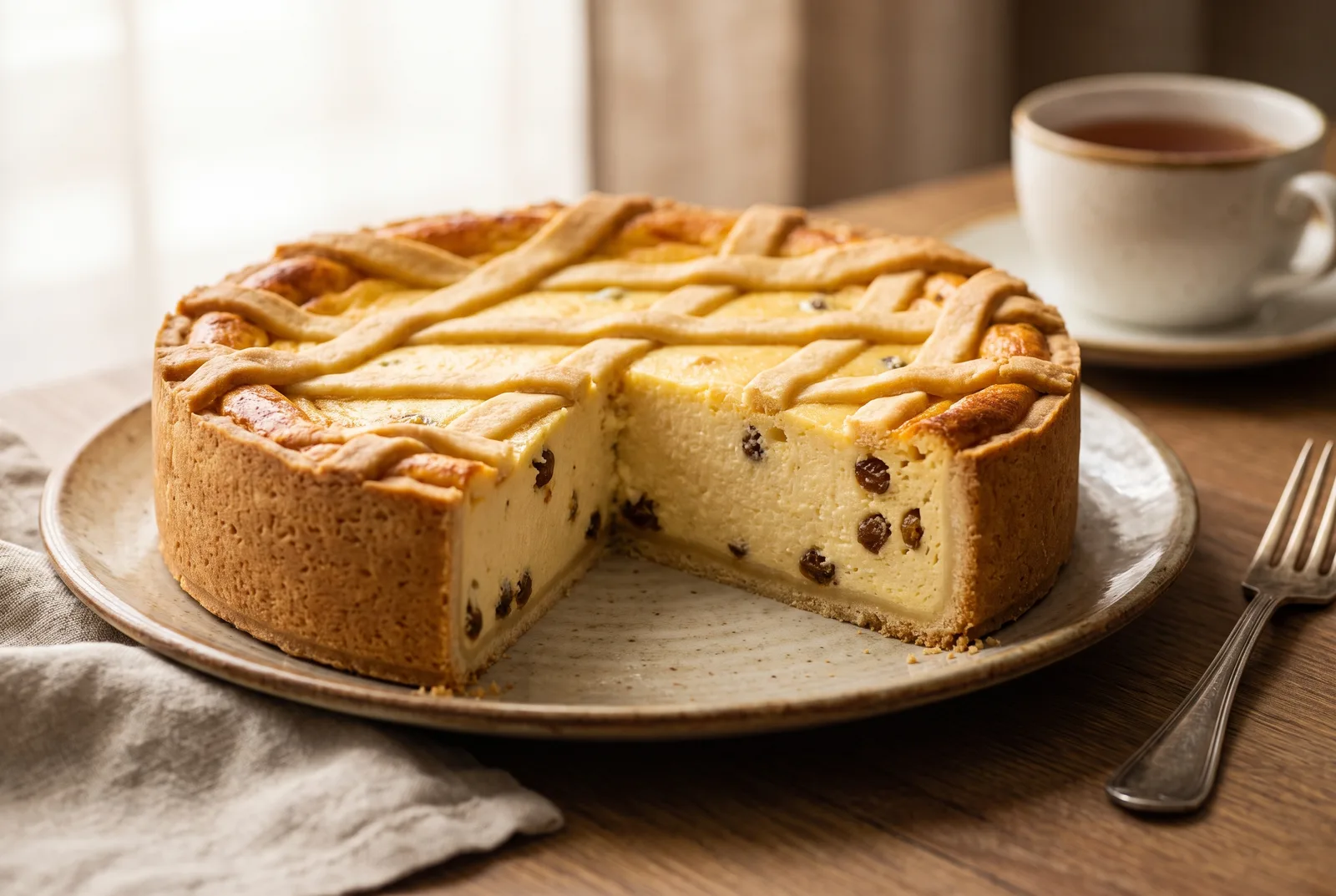
Sernik: choosing twaróg for baked Polish cheesecake and controlling texture across formats
A working guide for professional bakers to Poland's national cake, the sernik. It starts where the result is decided — the cheese: how twaróg is graded by fat (PN-91/A-86300 dry-matter grades and the modern as-sold scale), how its form (klinkowy, mielony, homogenizowany, ready bucket "twaróg sernikowy") and grind change the crumb, and the three sourcing routes a bakery actually chooses between (grind raw twaróg, buy ready ground curd, or use a thermostable ready filling). It then covers the regional varieties (krakowski with its kratka, the base-less wiedeński, the Kashubian potato cheesecake, the heritage-registered sernik królewski), the stabilising role of starch/budyń, and the handful of bake-and-cool rules that stop cracking, sinking and weeping. Built on three first-party supplier spec sheets (OSM Bieruń, Zeelandia) cross-linked to native Polish dairy and baking authorities and the Ministry of Agriculture's traditional-products register.
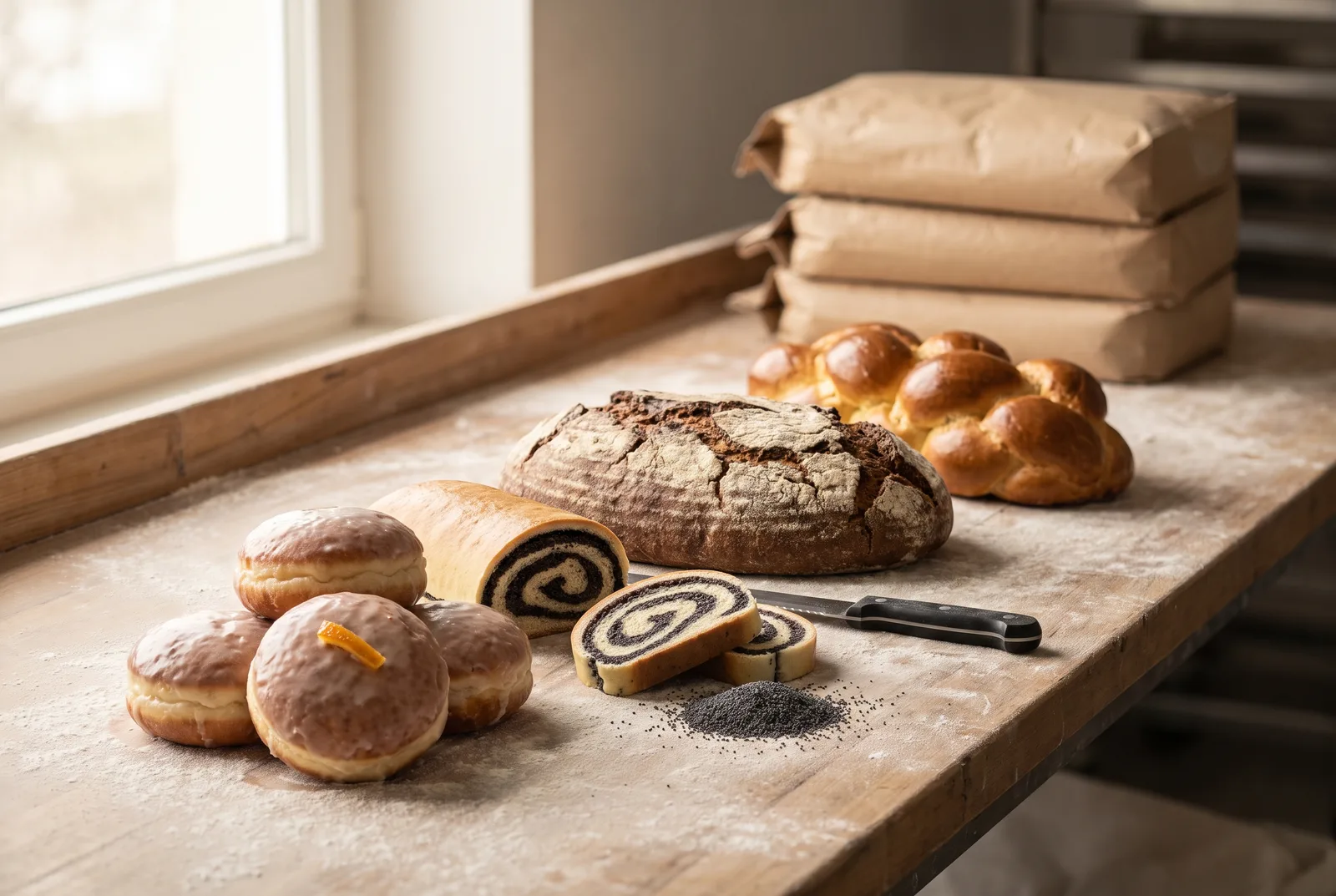
Domson catalogue guide: which supplier brands to use for Polish bread, enriched doughs and confectionery
The buyer's companion to the Polish baking articles: a practical map from each classic Polish product — chleb żytni (rye bread), chałka, babka, pączki, makowiec, sernik, mazurek and piernik — to the exact Domson catalogue categories, brands and products that make it. It explains how Polish bakers actually buy (by flour 'typ' number and by rye sourdough), lays out the supplier landscape (Polish mills, yeast and sourdough houses, Polish fats and dairy, and confectionery fillings), and gives spec-anchored buying facts and four production formulas drawn directly from first-party supplier datasheets (Zeelandia Berliner doughnut improver, Zeelandia Kołodziej rye mix, Zeelandia Kajmak, AKO/Prospona poppy fillings, Kruszwica margarine and a Zeelandia sugar fondant). Every regional attribution is cited to Polish-language sources.
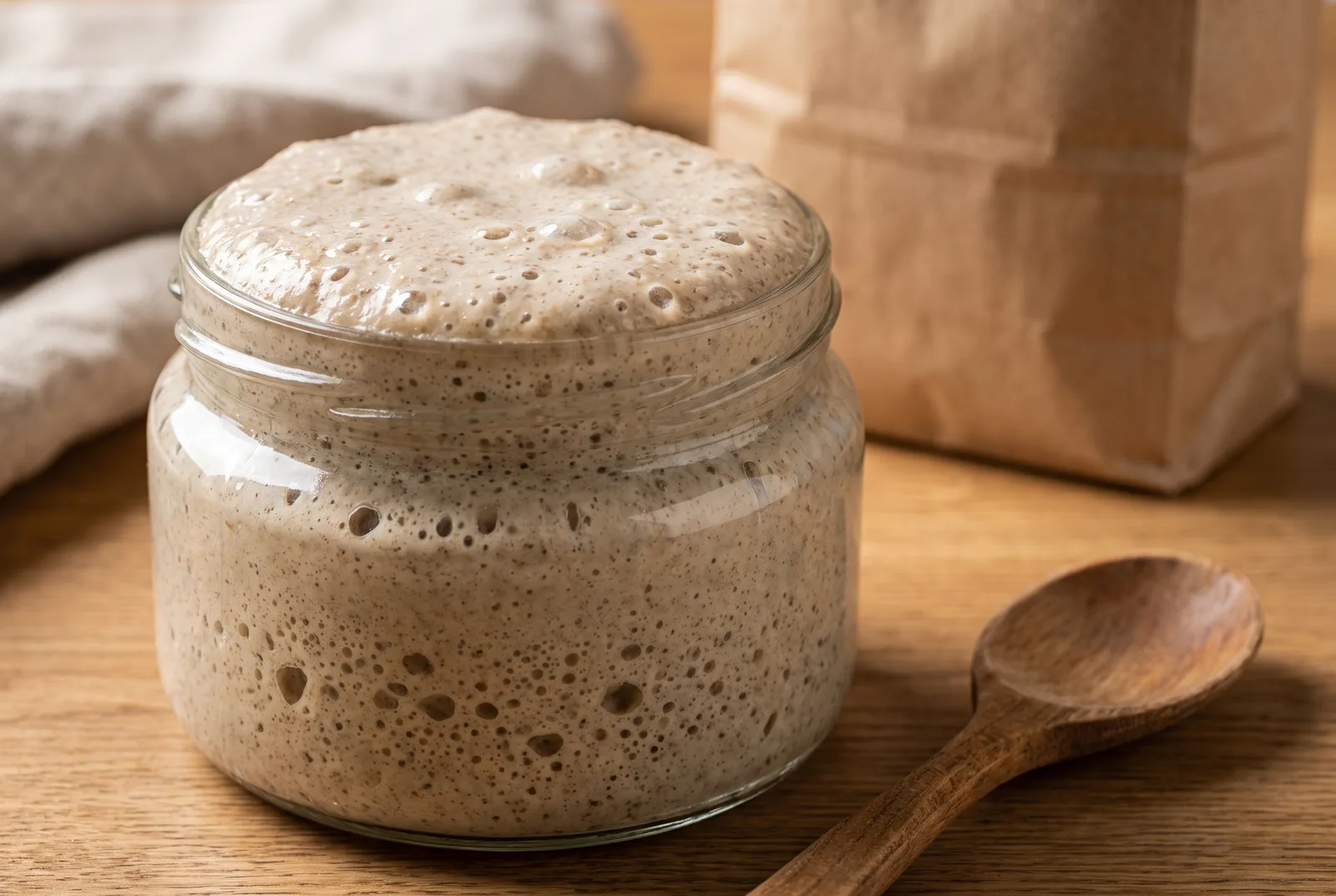
Zakwas: managing a Polish rye sourdough starter from first ferment to daily production
A practical, native-sourced guide to the rye zakwas (sourdough) at the heart of Polish baking: why rye must be soured rather than merely leavened, how to raise a starter from scratch in about 5 days, how to feed and store it, how the classic five-phase process (zaczatek - przedkwas - polkwas - kwas pelny - ciasto) and its shorter variants work, the microbiology and acidification behind it, how to read and fix faults, and how to choose between a live sour and the ready rye sour preparations in the Domson catalogue. Includes first-party flour and sourdough spec data and supplier application formulas.