
Choosing and dosing the right improver: a troubleshooting guide for bread, rolls, frozen dough and par-bake
A practical decision guide for professional bakers who already know what a bread improver is and need to select, dose and adjust the right one for their specific product. Covers every major application from white tin bread and crusty rolls through soft rolls, burger buns, toast bread, rye and wheat-rye breads, frozen dough and par-bake. Built on first-party spec sheets for thirteen products in the Domson catalogue — Zeelandia Gamma GP, Puratos S500 Sense SG, Puratos Tigris SG 2%, IREKS Voltex, IREKS Soft Roll 7, IREKS Toast & Buns, IREKS Softy, Zeelandia Optimax Free, Zeelandia Rye Stabil Free, Zeelandia Quick 96, Puratos Pronto, Beneo BeneoPro VWG 75 and Cereform Breadsoy — plus the IREKS Compendium, BAKERpedia and Bakels technical literature. Includes a fault-finder table with twelve production symptoms, comparison dosage tables, and five ready-to-use formula cards.
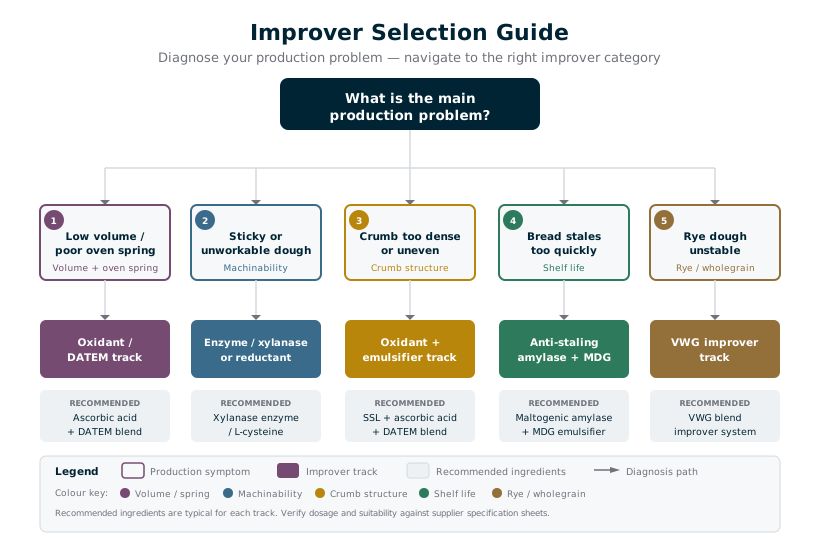 Flowchart diagram showing how to diagnose a bread production problem and select the correct improver category
1. How to use this guide
This article assumes you already know what a bread improver is and how its functional ingredients (oxidants, emulsifiers, enzymes, vital wheat gluten) work. If you need that foundation first, read the companion article A3 — What is a bread improver and why does every commercial bakery use one?
This guide answers a single practical question: given your specific product, your current fault (or the fault you are trying to prevent), and the improvers available in the Domson catalogue — which one do you choose and how do you dose it?
The article is organised around two entry points:
- Application selector (Section 3): you know what product you are making — go straight to the relevant subsection for first-choice product recommendation and dosage.
- Fault finder (Section 5): you have a production problem and need to know which ingredient change is most likely to fix it.
Every dosage figure in this guide is either stated directly on a supplier spec sheet or calculated from the application recipe on that spec sheet (marked with † in tables). Where only one source exists, the confidence level is noted. Allergen information is abbreviated — always check the full spec sheet before production use.
2. Before you adjust the improver: rule out the obvious
Improver formulation is only one variable. Before changing the improver or its dosage, confirm the following:
Dough temperature. Fermentation speed doubles approximately every 5°C rise in dough temperature. A dough at 30°C compared to one at 25°C will over-prove in roughly half the time. Measure dough temperature, not just room temperature.
Flour batch variability. Protein content, wet gluten quality and falling number can vary significantly between deliveries even from the same mill. If results changed suddenly after a new delivery, test the flour before adjusting the improver.
Yeast activity. Stale compressed yeast or incorrectly stored dry yeast produces less CO₂, which mimics the symptoms of a gluten-strength fault. Test yeast activity before blaming the improver.
Water quality and absorption. Chlorinated water inhibits yeast activity; very hard water strengthens gluten; very soft water weakens it. Measure water and flour for every batch.
Once you have ruled out these process variables, proceed to the improver assessment.
3. Application selector — what to use for each product type
3.1 White tin bread and standard bloomer loaves
What the dough needs: Controlled gluten strengthening for consistent oven spring. Sufficient gas retention for good volume. Reliable proof tolerance to handle minor variation in proof cabinet timing. Neutral flavour profile.
First-choice product: Zeelandia Gamma GP 12.5 kg
Gamma GP is an enzyme-only, emulsifier-free improver that contains just wheat flour, rapeseed oil, ascorbic acid (E300) and an enzyme. It has no declared emulsifiers, making it the simplest clean-label option in the catalogue. Dosage for white tin bread is 0.5–0.75% on flour weight — the lower end for strong flours; the upper end for flours with lower protein or higher falling number.
For white bloomers, increase the dosage to 1% to support the additional gas retention needed in a free-standing loaf.
When Gamma GP is not enough: If the flour is very variable, proof tolerance is poor, or you need a longer acceptable proof window, upgrade to an emulsifier-containing product. The DATEM (E472e) in Puratos S500 Sense SG or Puratos Tigris SG 2% widens the proof window because DATEM stabilises the film around each gas bubble against mechanical disturbance and moderate over-proof.
Puratos S500 Sense SG also contains fermented rye flour (50–60% of the product) which contributes a mild sourdough character without requiring a separate sourdough addition.
IREKS Voltex (1–2% dosage) provides both DATEM (E472e) and SSL (E481) — the combined oxidant + dual-emulsifier system delivers stronger gluten, better proof tolerance and some anti-staling benefit from the SSL. It contains both wheat and soya — check allergen implications for your production.
See also: A3 — Ascorbic Acid, Oxidants and Reductants for a detailed explanation of how E300 strengthens gluten in the dough.
3.2 Crusty rolls and baguette-style products
What the dough needs: Maximum gluten strength for high oven spring and good ear development. Open, irregular crumb structure. Crisp, blistered crust.
Key dosage: Zeelandia Gamma GP at 2% (or IREKS Voltex at 1–2%).
Crusty rolls need higher improver input than tin bread because the dough must support its own structure without a tin for the full bake. The higher ascorbic acid level (from a higher dosage of Gamma GP, or from Voltex's E300 component) provides the tighter gluten network needed to resist gas loss during the critical first minutes of baking.
Critically: avoid MDG (E471) for crusty bread. MDG complexes with starch chains and softens the crumb — directly at odds with the hard, chewy crumb texture required by crusty rolls. The IREKS Soft Roll 7 (which contains E471) is wrong for this application.
3.3 Soft rolls and enriched dinner rolls
What the dough needs: Extended crumb softness (anti-staling for multi-day shelf life), fine even crumb, mild sweetness, good volume, and high machinability on roll dividers and moulders.
First-choice product: IREKS Soft Roll 7 25 kg at 7% on flour.
Soft Roll 7 is a compound improver — it is not just an improver in the technical sense but a compound ingredient that replaces several separate additions. At 7% on flour it supplies:
- Emulsifiers SSL E481, MDG E471 and DATEM E472e for crumb softness, anti-staling and gluten strength
- Dextrose and sugar as fermentable sugars for yeast activity, crust browning and flavour
- Salt (partially — reduce your separate salt addition when using this product)
- Whey powder (from milk) for tenderness and milk-brown crust colour
Allergen note: Soft Roll 7 contains wheat, soya AND milk derivatives (whey powder). This is declared on the spec sheet. Products made with it must carry a milk allergen declaration unless reformulation is possible.
Dairy-free alternative: IREKS Softy (Crumb Softener) at 1.5% on flour provides SSL E481 + E300 + enzyme without the milk solids or soya-dominant base of Soft Roll 7, and contains wheat as its primary carrier. Traces of eggs, soya and milk cannot be excluded (cross-contamination risk) — check the full spec sheet.
For clean-label soft rolls without declared emulsifiers, Zeelandia Gamma GP at 1.5% provides ascorbic acid and enzyme support, but will not match the crumb softness of SSL-containing products without adding a separate MDG source.
See also: A3 — Emulsifiers in Bread for a full explanation of how SSL and MDG reduce staling.
3.4 Burger buns and hot-dog rolls
What the dough needs: Very fine, uniform crumb for structural integrity when filled and compressed. Extended softness for multi-day shelf life. Good volume. Mild sweetness. Consistent machinability on high-volume lines.
First-choice product: IREKS Toast & Buns (Super Toast) 25 kg at 2% on flour.
Toast & Buns uses SSL E481 as its primary emulsifier — SSL is dual-function (dough strengthener + anti-staling) which simultaneously supports gluten structure during proof and extends softness after baking. The soya flour base provides additional enzyme-active material for gas retention.
Toast & Buns contains wheat AND soya — check allergen implications.
For a dairy-enriched bun requiring additional sweetness and milk flavour, IREKS Soft Roll 7 at 7% is the better choice, providing sugar, salt, dextrose and whey powder as part of the improver dose.
3.5 Toast bread (sliced sandwich loaf)
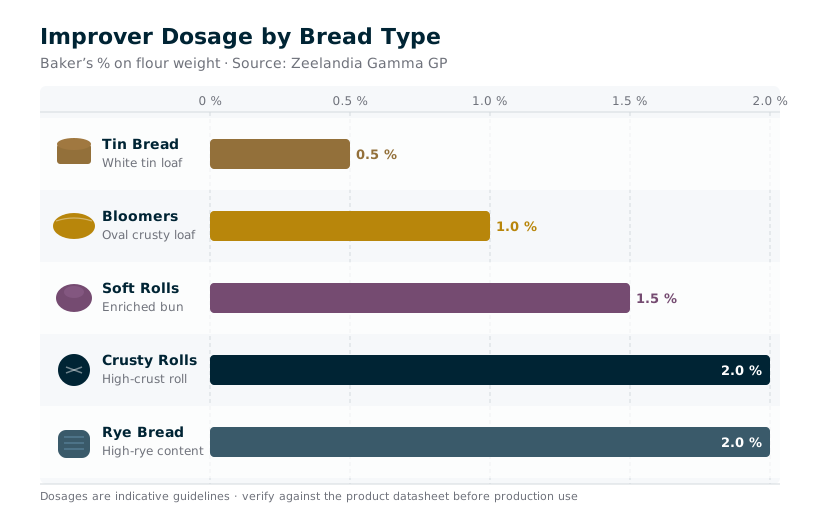 Infographic showing bread improver dosage percentages for different bread types from 0.5% for tin bread up to 2% for crusty rolls
What the dough needs: The finest, most uniform crumb possible — irregular holes cause slicer tears and uneven jam distribution. Extended softness for packaged multi-day shelf life. Maximum machinability on high-speed lines.
First-choice product: IREKS Toast & Buns (Super Toast) at 2%.
The SSL content is particularly important for toast bread because it complexes with amylose chains during baking, forming a stable inclusion complex that resists retrogradation for significantly longer than untreated starch. For commercial sliced bread with a target shelf life of 3–5 days, this anti-staling function is the most commercially critical performance parameter.
Strong flour is essential. A consistently strong bread flour (protein 13–14%) is the most important input for sliceable toast bread. An improver supplements gluten strength — it cannot compensate for a fundamentally weak flour.
3.6 Rye and wheat-rye breads
Rye flour contains very little gluten (gliadin and glutenin are present but do not form the same viscoelastic network as wheat gluten). High-rye doughs behave more like a paste than a viscoelastic dough, and collapse without structural support. The improver approach for rye bread is therefore fundamentally different from wheat bread: instead of strengthening existing gluten, the goal is to import structural protein from the improver itself.
Both Zeelandia rye-specific improvers use vital wheat gluten as their dominant base ingredient — the carrier IS the functional ingredient.
Wheat-rye mixed bread (approximately 30–50% rye flour)
First-choice product: Zeelandia Rye Stabil Free 25 kg
Rye Stabil Free contains 78% wheat gluten and 20% pregelatinized wheat flour, with ascorbic acid and enzymes but no emulsifiers. Based on the application recipe in the spec sheet — 0.2 kg Rye Stabil Free per 3.0 kg wheat flour T850 + 4.2 kg rye flour T720 — the calculated dosage is approximately 2.78% on total flour weight.
The pregelatinized wheat flour (a starch that has been heat-treated to improve water binding) improves dough consistency and helps maintain structure during the long bake required by rye bread.
More rye-dominant bread (rye flour dominant, wheat flour minor)
First-choice product: Zeelandia Optimax Free 20 kg
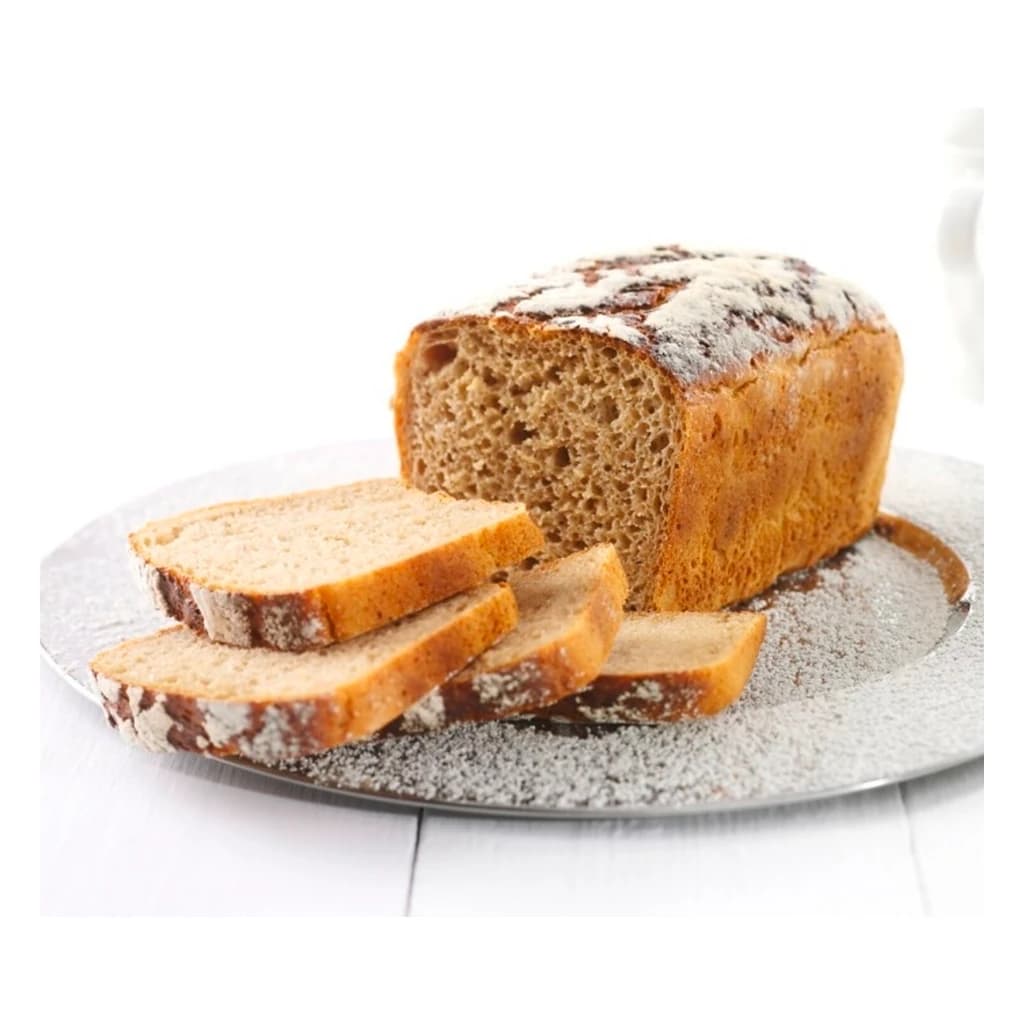
Optimax Free contains 50% wheat gluten and 39% rye flour, with ascorbic acid and enzymes. Based on the application recipe — 0.1 kg Optimax Free per 1.0 kg wheat flour + 5.0 kg rye flour — the calculated dosage is approximately 1.67% on total flour weight.
The rye flour in the Optimax Free carrier means the product itself contributes to the rye character of the finished bread. The application recipe includes 6.4 kg of rye sourdough alongside the 6.0 kg of flour — the sourdough is a separate ingredient that provides acidification and flavour; the Optimax Free is the structural improver.
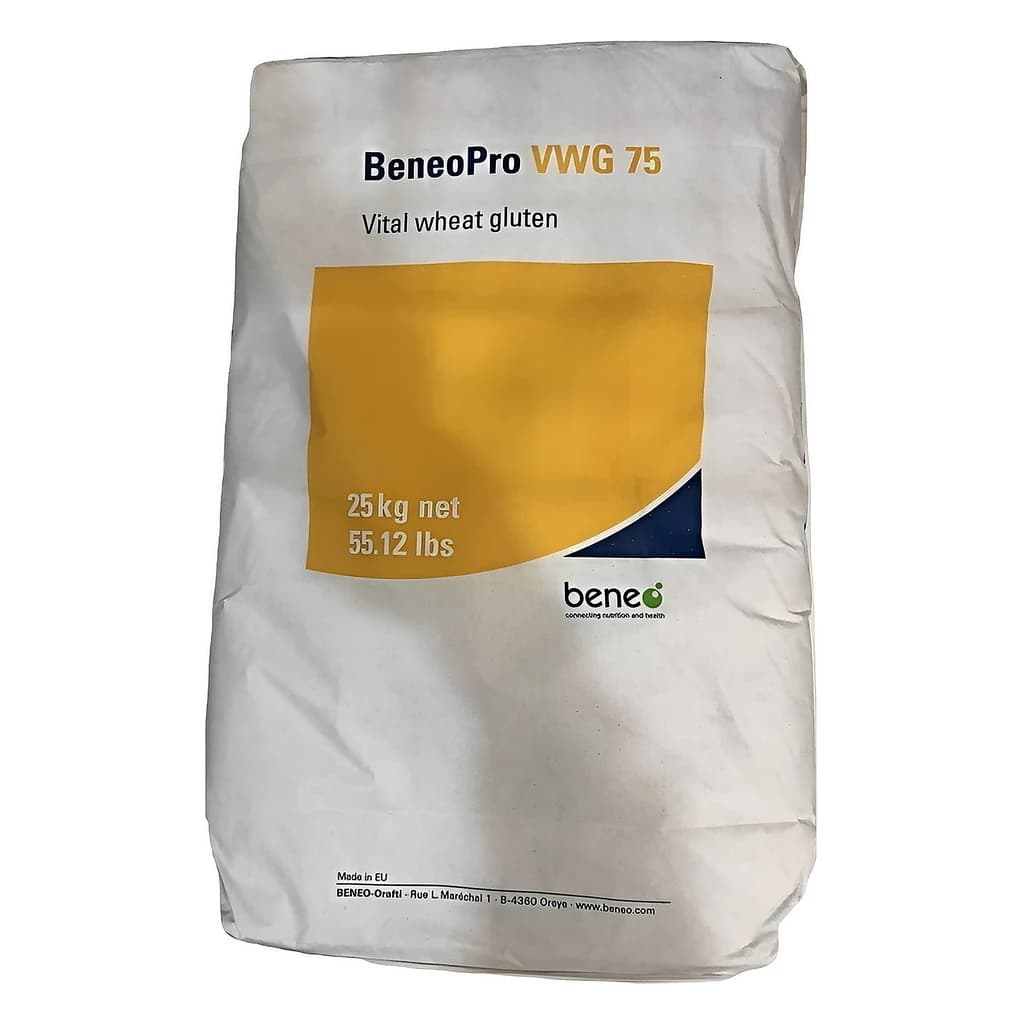
Vital wheat gluten as a direct addition: For very high-rye formulas or when additional structural reinforcement is needed, Beneo BeneoPro VWG 75 can be added directly to the dough alongside a rye bread improver. Its protein content is minimum 75% (N×5.7) and its water binding capacity is approximately 140–170 g water per 100 g VWG — significantly more water-absorbing than the wheat gluten pre-dispersed inside Rye Stabil Free or Optimax Free. Adjust dough hydration upward when adding neat VWG.
See also: A3 — Vital Wheat Gluten and A3 — Malt and Malt Extracts for the role of malt in rye bread crust colour and flavour.
3.7 Frozen dough (pre-shaped, unbaked)
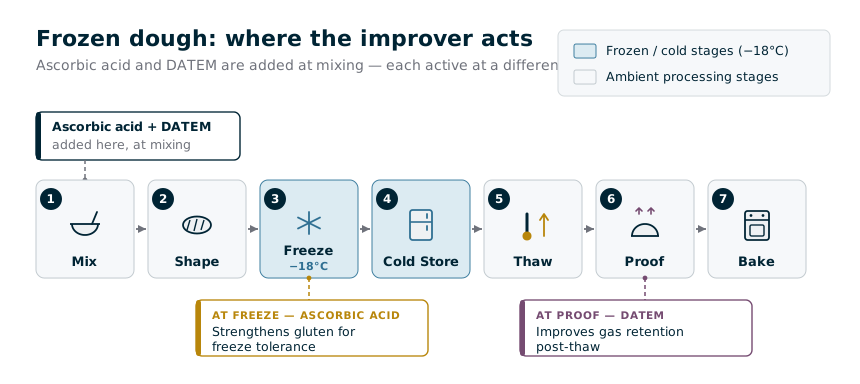 Process flow diagram for frozen dough showing the roles of the bread improver at each production stage
Frozen dough places additional demands on both gluten structure and gas cell integrity. During freezing at −18°C, ice crystals grow within the dough structure. The expanding crystals physically damage the gluten network and puncture gas cell walls — the same gluten film that the improver was designed to strengthen.
Key principle: the improver for frozen dough must protect gluten integrity through the entire freeze-thaw cycle, not just through mixing and proofing.
Product recommendation: IREKS Voltex (1–2%) or Puratos S500 Sense SG, both containing DATEM (E472e).
DATEM builds a thicker, more cohesive gluten film around gas cells that is more resistant to mechanical damage from ice crystal pressure. Emulsifier-only systems (no DATEM) — including the enzyme-only Zeelandia Gamma GP — are generally less suited to frozen dough applications.
Additional adjustments for frozen dough:
- Increase the ascorbic acid input (via a higher dosage or a product with higher E300 content such as Puratos Tigris SG at 2%) to maximise gluten network strength before freezing.
- Reduce initial yeast percentage — yeast cells are damaged by freezing, and excess unfrozen yeast causes unwanted fermentation during the freeze phase. Standard frozen dough practice reduces yeast by 25–50% vs the equivalent non-frozen formula.
- Ensure the dough is fully developed (reached target temperature, correct mixing) before freezing — an under-mixed dough has not yet formed the gluten network the improver targets.
Important: The products listed above are general-purpose improvers tested by their manufacturers for a wide range of applications. For production-critical frozen dough operations, request a supplier-specific frozen dough technical data sheet and conduct a production trial before scaling up.
3.8 Par-baked products
Par-baking (baking to approximately 75–80% completion, then chilling or freezing for finish-baking later) creates an additional staling cycle. The par-baked crumb begins to retrograde during storage; the finish bake briefly re-gelatinises the starch, but the crumb then re-retrograes again after the second bake, often faster than a conventionally baked loaf.
Key functional requirement: a well-chosen anti-staling enzyme (maltogenic amylase specifically) is more important for par-baked products than for any other application. Maltogenic amylase modifies amylopectin branching in a way that permanently reduces its tendency to re-crystallise, giving longer residual softness after both the par-bake and the finish bake.
Product recommendation: Puratos S500 Sense SG or IREKS Voltex, both of which declare enzymes in their formulations. For the specific enzyme profile (and whether maltogenic amylase is included), request the full technical data sheet from the supplier — the quality certificates available to us do not disclose individual enzyme types.
Where anti-staling is the primary target, dedicated crumb softener products — IREKS Crumb Softener (Softy) at 1.5%, or Cereform Stafresh SG Crumb Softener — combine SSL E481 with enzymes for extended post-bake softness.
3.9 Sponge cake and aerated confectionery batters
Emulsifier pastes operate on a fundamentally different principle from powder bread improvers. They are designed to mechanically aerate liquid batters rather than to strengthen gluten in a yeast-leavened dough.
Zeelandia Quick 96 Emulsifier Paste (10 kg bucket) is used in sponge cake, roulade and babka batters. Its emulsifier blend — E471 (mono- and diglycerides), E475 (polyglycerol esters) and E570 (fatty acids, from palm oil) — creates a fine foam of uniform gas cells in the batter during whipping. Dosage: a legal maximum of 1.8% on total recipe weight (spec sheet states this is the legal maximum — verify against current national legislation before use). For sponge cake batters, the spec sheet gives a working dosage of 20–45 g per 1000 g egg (approximately 2.0–4.5% on the egg + water weight).
Puratos Pronto Dough Conditioner (10 kg bucket) is a gel emulsifier paste containing E471 (MDG) and E475 (polyglycerol esters) in a sorbitol/propylene glycol carrier, designed for sponge, roulade and babka. Dosage 0.5–3% on total batter weight. Puratos Pronto declares no allergens — neither as ingredients nor as cross-contamination risk.
These products are not interchangeable with powder bread improvers. Do not use Quick 96 or Pronto in bread dough, and do not use powder bread improvers in place of emulsifier paste in cake batters.
4. Dosage: how to calculate, verify and adjust
Infographic showing bread improver dosage percentages for different bread types from 0.5% for tin bread up to 2% for crusty rolls
4.1 Baker's percentage — the only correct way to dose an improver
All improver dosages in this guide are expressed as baker's percentage — that is, as a percentage of the total flour weight in the formula, not the total dough weight or batch weight. This is non-negotiable for consistency across batch sizes.
If your formula contains 50 kg flour and the improver dosage is 1%, you need 500 g of improver — regardless of how much water, yeast or salt is in the formula.
Dosage reference by product (from spec sheets):
| Product | Application | Dosage (% on flour) |
|---|---|---|
| Zeelandia Gamma GP | White tin bread | 0.5–0.75% |
| Zeelandia Gamma GP | White bloomers | 1% |
| Zeelandia Gamma GP | White soft rolls | 1.5% |
| Zeelandia Gamma GP | White crusty rolls / wholemeal | 2% |
| Puratos Tigris SG 2% | General yeast-raised goods | 2% |
| IREKS Voltex | Multi-purpose bread and rolls | 1–2% |
| IREKS Soft Roll 7 | Soft rolls (all-in compound) | 7% |
| IREKS Toast & Buns | Toast bread, burger buns | 2% |
| IREKS Softy (Crumb Softener) | Soft baked goods | 1.5% |
| Zeelandia Optimax Free | Mixed rye bread | ~1.67%† |
| Zeelandia Rye Stabil Free | Wheat-rye bread | ~2.78%† |
†Calculated from the application recipe in the spec sheet, not explicitly stated as a dosage.
4.2 The effect of ascorbic acid concentration
The ascorbic acid level in the finished bread dough depends on two variables: the ascorbic acid content of the improver AND the improver dosage on flour.
For example, the Puratos S500 Sense SG contains approximately 0.67% ascorbic acid by weight (±10%, confirmed every batch). If used at 1% on flour, this delivers:
0.01 (improver fraction) × 0.0067 (ascorbic acid fraction) = 67 ppm ascorbic acid in the dough.
The Puratos Tigris SG 2% contains approximately 1% ascorbic acid by weight (±10%). At its stated dosage of 2% on flour, this delivers:
0.02 × 0.01 = 200 ppm ascorbic acid — at the upper end of the typical range.
The typical working range for ascorbic acid in bread dough is 20–200 ppm (BAKERpedia). Note: the 200 ppm figure is the US FDA maximum (21 CFR 184.1033). Under EU Regulation (EC) No 1333/2008 Annex II, E300 in bread category 07.1 is permitted at quantum satis — no fixed numeric cap applies in EU or UK law. The UK Bread and Flour Regulations 1998 (SI 1998/141) historically set a 200 ppm treatment limit for flour improver use; its status post-Brexit requires legal verification before publishing dosage guidance in a UK context. Food safety: all regulatory limits must be verified against current national legislation before customer-facing use.
If you suspect under-oxidation (poor volume, weak oven spring) check that the improver has been stored correctly — ascorbic acid degrades at high temperature and humidity. A product stored above 25°C or in humid conditions will have lost activity before its nominal shelf life expires.
4.3 Vital wheat gluten as a supplementary addition
When adding Beneo BeneoPro VWG 75 directly to the dough (as opposed to relying on the gluten already dispersed inside Rye Stabil Free or Optimax Free), account for its very high water binding capacity — approximately 140–170 g of water per 100 g of VWG.
A practical rule: for each 1% of VWG added on flour, increase water by approximately 1.5% on flour (this figure is single-source). Always verify by measuring dough consistency in your specific formula. VWG dosage for most yeast-raised applications is in the range of 1–4% on flour; high-fibre or rye-supplemented breads may use up to 12% (BAKERpedia, single source).
4.4 Symptoms of overdosing and underdosing
Too little improver (underdosing):
- Insufficient volume / poor oven spring
- Dough collapses easily during proof
- Short, crumbly crumb structure
- Pale crust (if the enzyme component includes amylase)
Too much improver (overdosing):
- Excessive bloom / crumb tear at the top of the loaf
- Very tight, dense crumb — the gluten network is too rigid to expand smoothly
- Dough is very stiff and hard to mould
- In extreme cases, bitter or metallic off-taste if ascorbic acid is very high
5. Fault finder — twelve production problems and their improver solutions
The table below identifies twelve common production faults, their likely improver-related causes, and the specific adjustment to try.
Before adjusting the improver: see Section 2 — rule out process variables first.
5.1 Low volume / poor oven spring
Most likely causes: insufficient ascorbic acid (under-dosing or degraded product); no DATEM to widen proof tolerance; weak flour not compensated.
Adjustment: switch to a DATEM-containing product (Puratos Tigris SG 2%, Puratos S500 Sense SG, or IREKS Voltex) or increase dosage of the current product. If the flour consistently under-performs, add Beneo BeneoPro VWG 75 at 1–2% on flour.
5.2 Excessive bloom / crumb tear
Most likely cause: over-oxidation; the gluten is too rigid. This is also a common symptom of over-mixing combined with high ascorbic acid.
Adjustment: reduce improver dosage; switch to a lower-E300 product; consider adding a small amount of reducing agent to relax the network. Bakels Relax Dough Relaxer 25 kg and GB Plange Extensine W 20 kg (L-cysteine based) are available in the catalogue.
See also: A3 — Ascorbic Acid, Oxidants and Reductants for detailed guidance on oxidant-reductant balance.
5.3 Dense, uneven crumb with large holes
Most likely cause: uneven gas bubble stabilisation — individual large holes form where gas was not sufficiently constrained; surrounding crumb dense where gas escaped.
Adjustment: add or upgrade to a DATEM-containing product. DATEM stabilises the film around each gas bubble more uniformly than ascorbic acid alone. Ensure the improver is fully dispersed in the flour before adding water.
5.4 Sticky dough or dough tears on moulder
Most likely cause: excess protease enzyme activity (often from enzyme-active soya flour or from a very high enzyme improver); too little oxidant; too much water; dough temperature too high.
Adjustment: if Cereform Breadsoy or another enzyme-active soya flour is in the formula, check its dosage. If the improver is enzyme-heavy, reduce dosage. Consider a lower-enzyme product (Zeelandia Gamma GP's enzyme level is minimal). Increase ascorbic acid slightly. Check and reduce dough temperature.
5.5 Dough snaps back during sheeting or forming
Cause: excessively tight gluten; high-protein flour combined with high oxidant input.
Adjustment: add a reductant. Bakels Relax Dough Relaxer or GB Plange Extensine W work by cleaving disulphide bonds to relax the network. Increase resting time between intermediate and final moulding. Reduce ascorbic acid level.
5.6 Poor proof tolerance — wide spread in finished volume across the same batch
Cause: no emulsifier to widen the proof window; the dough is operating on a narrow knife-edge of acceptable proof, so pieces that sit in the prover slightly longer over-proof while pieces that come out slightly early under-proof.
Adjustment: switch from an enzyme-only product to a DATEM-containing product. DATEM widens the acceptable proof window by reinforcing gas bubble integrity across a broader range of proof states.
5.7 Rapid staling — crumb hard within 24 hours
Cause: no anti-staling enzyme; no MDG (E471) in the formula; high-starch-damage flour; product not sealed after cooling.
Adjustment: upgrade to a product that contains SSL E481 (anti-staling via starch complexation) or an anti-staling enzyme (maltogenic amylase). IREKS Toast & Buns, IREKS Crumb Softener (Softy) and Cereform Stafresh SG Crumb Softener are all relevant. Ensure bread is fully cooled before sealing — trapping steam accelerates crumb softening but the bread then stales faster once opened.
5.8 Rye bread collapses during or after baking
Cause: insufficient structural support for the high-rye dough; rye sourdough pH too high (insufficient acidity reduces the firming effect of starch gelatinisation).
Adjustment: increase VWG-based rye improver dosage; consider adding additional Beneo BeneoPro VWG 75; check the sourdough pH (target 3.8–4.2 for strong rye character and structural stability).
5.9 Frozen dough fails to proof after thaw
Cause: ice crystal damage to gluten network; yeast viability loss during freezing; insufficient oxidant to maintain gluten coherence after thaw.
Adjustment: switch to an emulsifier-containing product (DATEM). Increase ascorbic acid input. Reduce initial yeast percentage. Confirm the dough was at correct temperature and fully developed before freezing.
5.10 Pale crust despite adequate bake time and oven temperature
Cause: low fermentable sugar in the dough; insufficient amylase activity; very high falling number flour (low natural amylase).
Adjustment: check falling number — if above 350 seconds, the flour has almost no natural amylase and will need supplementation. Add a diastatic malt product: Malt Extract Medium, IREKS Somex Liquid Malt Extract, Edme Dextramalt or Dark Malt Flour. Add fermentable sugar (dextrose).
See also: A3 — Malt and Malt Extracts for a full guide to malt selection and dosage.
5.11 Sponge cake batter collapses after mixing
Cause: insufficient emulsifier aeration; emulsifier paste too cold (viscosity too high to disperse); over-mixing once aeration is achieved.
Adjustment: ensure Quick 96 or Pronto is at room temperature (below 25°C — these are pastes, not powders, and cold paste will not disperse properly). Mix at medium speed until the target specific gravity is reached; do not continue mixing after this point.
5.12 Foam batter loses volume during bake (sponge sink)
Cause: batter specific gravity too low (over-aerated); oven temperature too low; insufficient starch to set the foam structure before the gas expands to the point of collapse.
Adjustment: check specific gravity of the batter with a cup and scale — target specific gravity for sponge batters is typically 0.45–0.55 g/ml (verify with your recipe developer). Reduce mixing time or reduce paste dosage slightly. Ensure oven has reached temperature before loading.
6. Special requirements — clean label, halal, kosher and vegan
6.1 Clean label (no E-number emulsifiers on the finished product label)
Enzyme-based improvers do not appear on the finished product label in the EU and UK because enzymes used as processing aids are exempt from labelling when they are not present as active substances in the finished product.
Clean-label products in the catalogue include:
- Zeelandia Gamma GP — wheat flour, rapeseed oil, E300, enzyme. Only E300 appears on the label.
- Zeelandia Optimax Free — wheat gluten, rye flour, potato starch, E300, enzyme. Only E300 appears.
- Zeelandia Rye Stabil Free — wheat gluten, pregelatinized wheat flour, wheat flour, E300, enzyme. Only E300 appears.
- Bakels Quantum Clean Label Improver 0.5% and Ibis Clean Label Bread Improver — also available in the catalogue; spec sheets were not available for this research run.
For maximum clean-label status (no E300 visible), enzyme-only improvers without ascorbic acid exist (often called "zero-additive" or "non-additive" improvers); consult Zeelandia, Bakels or AB Enzymes for current availability.
See also: A3 — Clean Label Improvers for a dedicated guide to emulsifier-free and E-number-free formulation strategies.
6.2 Halal compliance
Halal concerns in bread improvers relate primarily to three potential sources of non-compliant material: L-cysteine (E920) (may be derived from animal hair or feathers), SSL/CSL (lactate source — may be synthetic or milk-derived; milk source is halal but lactate fermentation source must be verified), and emulsifiers from palm or animal fat.
In the products spec-checked for this article:
- Puratos S500 Sense SG: "Suitable for Muslims / Halal: Yes — Not certified"
- Puratos Tigris SG 2%: "Will be added to certificate"
- Beneo BeneoPro VWG 75: Halal certificate available on request
- Cereform Breadsoy: Halal certified (Halal Food Authority)
- IREKS Voltex, Soft Roll 7, Toast & Buns, Softy: IREKS products produced in conformity with HACCP; halal status not stated in quality certificates — contact IREKS directly.
Food safety: halal compliance information from spec sheets is abridged. Always obtain the current halal certificate from the supplier before making halal claims to customers.
6.3 Kosher compliance
- Puratos S500 Sense SG: Kosher certified
- Puratos S500 SG 12.5 kg (Kosher): same product range, separate Kosher-certified SKU
- Beneo BeneoPro VWG 75: Kosher certificate available on request
- Cereform Breadsoy: Kosher certified (London Beth Din)
6.4 Vegan compliance
The primary vegan concern in bread improvers is whey powder or lactose from milk. The IREKS Soft Roll 7 explicitly contains whey powder (from milk) and is therefore NOT vegan.
Products that are vegan (or free from animal-derived ingredients) based on their spec sheets include:
- Puratos S500 Sense SG: "Suitable for Vegans: Yes"
- Puratos Tigris SG 2%: "Suitable for Vegans: Yes"
- Zeelandia Gamma GP: No animal ingredients declared; free from milk, eggs, meat
- Zeelandia Rye Stabil Free: No animal ingredients declared
- Beneo BeneoPro VWG 75: "Suitable for vegetarians and vegan"
- Cereform Breadsoy: "Suitable for Vegans: Yes"
Food safety: vegan status requires confirmation with supplier for any production batch, as ingredient sourcing can change.
7. Format guide — powder, paste and liquid
7.1 Powder improvers
Powder improvers are the standard format for bread production. They are:
- Measured by weight on a digital scale — very precise
- Dispersed into the flour before adding water to ensure even distribution
- Shelf-stable at ambient temperature (typically 9–12 months in sealed packaging)
- Suitable for pre-weighing into batches at the start of shift
All IREKS and Zeelandia bread improvers in the catalogue are powders.
Handling note: powder improvers are hygroscopic — they absorb moisture from the air. Open bags must be resealed immediately. Never tip the full contents of a partially used bag into a flour sack — the damp improver near the opening will contaminate the rest.
7.2 Paste emulsifiers (Quick 96, Pronto)
Paste emulsifiers are used in confectionery batters. They must be:
- At room temperature before use — cold paste does not disperse
- Stored below 25°C, frost-free
- Added early in the mixing process with the other fats and liquids
- Not used in bread dough — they are formulated for batter, not gluten-network systems
7.3 Liquid malt extracts and sourdough concentrates
Liquid products (malt extracts, liquid sourdough concentrates) are dosed by weight (not volume) for precision. They tend to be very viscous — use a scale and dispense directly into the mixing bowl. They do not substitute for powder improvers; they are complementary additions for flavour, colour and enzymatic activity.
See A3 — Malt and Malt Extracts for malt dosage guidance.
8. Storage and handling — all improver products
The table below summarises storage requirements from spec sheets. These are minimum requirements — exceeding them degrades the product before its nominal best-before date.
| Product | Max temperature | Max humidity | Shelf life |
|---|---|---|---|
| Zeelandia Gamma GP | Below 25°C | Dry | 12 months |
| Puratos S500 Sense SG | Below 25°C | Below 50% RH | 9 months |
| Puratos Tigris SG 2% | Below 25°C | Below 50% RH | 9 months |
| IREKS Voltex | Dry and cool | Unspecified | 12 months |
| IREKS Soft Roll 7 | Dry and cool | Unspecified | 9 months |
| IREKS Toast & Buns | Dry and cool | Unspecified | 12 months |
| IREKS Softy | Dry and cool | Unspecified | 12 months |
| Zeelandia Optimax Free | Below 25°C | Below 75% RH | 180 days |
| Zeelandia Rye Stabil Free | Below 25°C | Below 75% RH | 270 days |
| Beneo BeneoPro VWG 75 | Below 20°C | Below 60% RH | 36 months |
| Cereform Breadsoy | 10–25°C | Dry | 270 days |
| Zeelandia Quick 96 | Frost-free, below 25°C | Unspecified | 9 months |
| Puratos Pronto | Below 25°C | Below 65% RH | 9 months |
Opened packaging: once a bag of powder improver is opened, reseal it after each use. Powder improvers are hygroscopic and will begin to cake in the bag if left open in a bakery with steam and humidity. A caked improver may still perform adequately if the caking is physical only (not microbial), but clumps will not disperse evenly in the flour — weigh out each portion, break up any clumps, and sieve if necessary.
Do not store near strong-smelling ingredients. Malt extracts, vinegars and flavourings can taint powder improvers stored in the same room if the packaging is not airtight.
9. Coverage notes and recommended follow-up
What is solid in this article
- Dosage figures for eight products are directly stated in supplier spec sheets and can be cited with high confidence.
- Functional mechanisms for DATEM, SSL and MDG are cross-checked across two independent reference sources (IREKS Compendium + BAKERpedia) and are reliable.
- All application recipes in formula cards are reproduced exactly from first-party spec sheets.
- VWG protein (min 75%), water binding (140–170 g/100g) and shelf life (36 months) are confirmed from the BeneoPro VWG 75 spec sheet.
What needs follow-up before final publication
-
Dosage figures for Optimax Free and Rye Stabil Free are calculated from application recipes, not from explicit dosage statements. Request confirmed dosage ranges from Zeelandia.
-
VWG dosage range (2–12%) is BAKERpedia only (single source). Verify against Beneo's technical documentation or a second reference source.
-
Ascorbic acid regulatory limit in EU/UK (Regulation 1333/2008 Annex II) must be checked against the current consolidated text before any dosage guidance is published. The US FDA 200 ppm maximum cited from BAKERpedia (single source) should not be assumed to apply in EU/UK contexts.
-
Halal and kosher certificates for IREKS products are not available in our spec documents. Contact IREKS GmbH directly.
-
Quick 96 "legal maximum" of 1.8% — the spec sheet labels this a "legal requirement". Verify which specific EU/UK regulation applies to this emulsifier combination in the relevant food category.
-
Allergen declarations throughout are abridged from spec sheets and must be independently verified before use in customer-facing materials.
-
Frozen dough and par-bake sections rely on general improver literature (IREKS Compendium, Bakels) rather than product-specific frozen dough spec sheets. For production use, request supplier-specific frozen dough technical data sheets.
-
Products with spec sheets not read in this research run (Bakels Quantum Clean Label 0.5%, Ibis Clean Label, Cereform Stasoft, Cereform Stafresh SG, Bakels Relax, GB Plange Extensine W) should be researched in a follow-up to add their dosage and allergen data to the fault table.
Figures
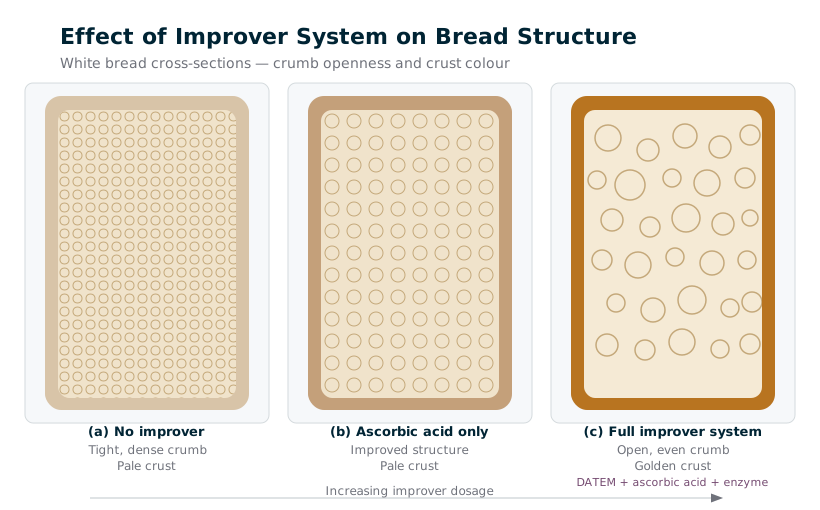 Three cross-sections of white bread loaves showing the effect of increasing improver use: no improver, oxidant only, full improver system
White tin bread with Zeelandia Gamma GP
| Ingredient | Baker's % | Weight |
|---|---|---|
| Wheat flour (bread flour, protein 12–13%) | 100 | |
| Water — Adjust ±3% for flour absorption | 62 | |
| Fresh yeast — Or 0.5% instant dry yeast | 1.5 | |
| Salt | 2 | |
| Zeelandia Gamma GP — Mid-range of 0.5–0.75% spec range | 0.65 |
- Mix all ingredients to full gluten development. First proof 30–45 minutes. Divide, round, intermediate proof 10 minutes. Mould, tin, final proof 50–60 minutes at 36°C / 80% RH. Bake at 220°C with steam, 30 minutes.
Yield: Approx. 2.0 kg dough per 1 kg flour
Example formula based on Gamma GP dosage guidance from spec sheet. All other ingredient levels are industry-typical; adjust to your flour's water absorption.
Soft rolls with IREKS Soft Roll 7
| Ingredient | Baker's % | Weight |
|---|---|---|
| Wheat flour (all-purpose or soft bread flour, protein 11–12%) | 100 | |
| Water — Soft Roll 7 contains salt — adjust hydration | 55 | |
| Fresh yeast — Higher yeast for enriched dough | 3 | |
| Fat (butter or margarine) | 5 | |
| IREKS Soft Roll 7 — Includes dextrose, salt, milk solids — reduce separate salt addition | 7 |
- Mix to soft, extensible dough. Proof 20 minutes. Scale at 60–70 g. Round. Intermediate proof 10 minutes. Shape. Final proof 45–55 minutes at 36°C / 80% RH. Bake at 200°C, 15–18 minutes, until golden.
Yield: Approx. 1.65 kg dough per 100 g flour (7% improver + water + fat)
Soft Roll 7 is a compound improver that includes dextrose, salt and milk solids. Adjust salt and sugar additions accordingly to avoid over-salting or over-sweetening. Dosage and formula confirmed by IREKS spec sheet.
Wheat-rye bread with Zeelandia Rye Stabil Free
| Ingredient | Baker's % | Weight |
|---|---|---|
| Wheat flour type 850 — 3.0 kg in the spec recipe | 41.7 | |
| Rye flour type 720 — 4.2 kg in the spec recipe | 58.3 | |
| Rye sourdough (liquid) — 4.6 kg — separate from improver; provides pH and flavour | 63.9 | |
| Salt — 0.22 kg | 3.1 | |
| Fresh yeast — 0.2 kg | 2.8 | |
| Zeelandia Rye Stabil Free — 0.2 kg — 2.78% on total flour weight | 2.8 | |
| Water — ~5.8 kg — adjust for dough yield | 80.6 |
- Mix all ingredients 7 minutes slow + 3 minutes fast. Dough temperature 27–29°C. Intermediate proof 15–20 minutes. Divide at 0.8 kg. Round, extend, place on boards or in baskets. Final proof ~45 minutes. Bake at 250°C declining to 230°C with steam first 5 minutes; remove steam after 5 minutes. Baking time ~40 minutes.
Yield: Based on application recipe from spec sheet (0.2 kg Rye Stabil Free per 7.2 kg total flour)
Recipe reproduced from Zeelandia Rye Stabil Free spec sheet. Rye sourdough is a separate ingredient (not the improver). Rye Stabil Free is the structural improver — the rye sourdough provides acidification and flavour.
Mixed rye bread with Zeelandia Optimax Free
| Ingredient | Baker's % | Weight |
|---|---|---|
| Wheat flour type 850 — 1.0 kg in spec recipe | 16.7 | |
| Rye flour type 720 — 5.0 kg in spec recipe | 83.3 | |
| Rye sourdough (liquid) — 6.4 kg — provides structure, flavour, and pH | 106.7 | |
| Salt — 0.23 kg | 3.8 | |
| Fresh yeast — 0.25 kg | 4.2 | |
| Zeelandia Optimax Free — 0.1 kg — ~1.67% on total flour weight | 1.7 | |
| Water (approx.) — 5.6 kg — adjust for dough yield | 93.3 |
- Mix all ingredients 8 minutes slow + 2 minutes fast. Dough temperature ~28°C. First proof ~15 minutes. Divide into 0.58 kg pieces. Place directly into baking forms. Final proof ~50 minutes. Bake at 250°C declining to 230°C with steam first 5 minutes; baking time ~45 minutes.
Yield: Based on application recipe from spec sheet (0.1 kg Optimax Free per 6 kg total flour)
Recipe reproduced from Zeelandia Optimax Free spec sheet. This formula uses rye sourdough — separate purchase. Optimax Free is the structural improver; the rye sourdough and flour provide the rest.
Toast bread with IREKS Toast & Buns (Super Toast)
| Ingredient | Baker's % | Weight |
|---|---|---|
| Wheat flour (strong bread flour, protein 13–14%) — Strong flour is important for even crumb | 100 | |
| Water | 63 | |
| Fresh yeast | 2 | |
| Salt | 2 | |
| Fat (margarine or shortening) — Improves sliceability | 2 | |
| IREKS Toast & Buns (Super Toast) — Spec-sheet stated dosage | 2 |
- Mix to full gluten development. Bulk proof 30 minutes. Divide at 750 g (for standard 800 g tin loaf). Shape, mould tight. Pan. Final proof 50–60 minutes at 38°C / 80% RH. Bake at 210°C with steam, 30–35 minutes. Core temperature should reach 96°C. Cool completely before slicing.
Yield: Approx. 1.68 kg dough per 1 kg flour (at 68% hydration + 2% improver)
Dosage and product positioning confirmed by spec sheet. Super Toast uses SSL (E481) for crumb anti-staling. Fine, sliceable crumb is the primary quality parameter for toast bread.
Recommended first-choice catalogue products by bread type, with dosage ranges taken directly from supplier spec sheets where stated, or calculated from the application recipes in spec sheets (marked with †). For products where no dosage is stated in the spec sheet, a range from the brand's published guidance is used (marked with ‡). Always verify the current product data sheet before production use.
| Bread / product type | Key functional need | First-choice catalogue product | Dosage on flour | Alternative | Notes |
|---|---|---|---|---|---|
| White tin bread | Gluten strengthening, volume, crust colour | Zeelandia Gamma GP 12.5 kg | 0.5–0.75% | Puratos S500 Sense SG 12.5 kg; IREKS Voltex 25 kg (1–2%) | Gamma GP is an enzyme-only / ascorbic acid formula — clean-label, no declared emulsifier. Voltex adds DATEM and SSL for stronger gluten and better proof tolerance. S500 Sense adds a fermented rye flour sourdough note for flavour. |
| White bloomers and large free-standing loaves | Oven spring, gas retention, bloom control | Zeelandia Gamma GP 12.5 kg | 1% | Puratos S500 Sense SG; Puratos Tigris SG 2% | Bloomers need better oven spring than tin bread — a slightly higher Gamma GP dosage or an DATEM-containing product (Tigris SG at 2%) improves gas retention and bloom. |
| White crusty rolls (Kaiser, baguette-style, cob) | Strong gluten, crisp crust, open crumb | Zeelandia Gamma GP 12.5 kg | 2% | IREKS Voltex 25 kg (1–2%); Puratos Tigris SG 2% | Crusty rolls require robust gluten structure and high oven spring. Gamma GP at 2% or IREKS Voltex (with DATEM + SSL) are both appropriate. Avoid anti-staling emulsifiers (MDG/E471) — they soften the crumb which conflicts with the crusty character. |
| Soft rolls (dinner rolls, milk rolls) | Crumb softness, anti-staling, mild flavour, dough machinability | IREKS Soft Roll 7 25 kg | 7% (all-in: includes sugar, salt, dextrose and dairy) | IREKS Softy (Crumb Softener) 25 kg at 1.5%; Zeelandia Gamma GP at 1.5% | Soft Roll 7 is a high-dosage compound improver that also provides fermentable sugars (dextrose), salt and milk solids — reducing separate ingredient additions. For a leaner formulation, IREKS Softy (1.5%) supplies SSL + E300 + enzyme without the sugar/dairy package. Gamma GP at 1.5% can be used as a clean-label option but requires separate sweetener and dairy. |
| Burger buns and hot-dog rolls | Soft crumb, good volume, even crumb structure, extended softness | IREKS Toast & Buns 25 kg (Super Toast) | 2% | IREKS Soft Roll 7 at 7%; IREKS Softy at 1.5% | Toast & Buns (Super Toast) uses SSL + E300 + enzyme system and is designed for high-volume burger bun and enriched bun production. Where a dairy-enriched formula is needed, Soft Roll 7 provides the full package at 7%. |
| Toast bread (sliced sandwich loaf) | Very fine, even crumb; extended softness; machinability on slicers | IREKS Toast & Buns 25 kg (Super Toast) | 2% | Puratos S500 Sense SG; IREKS Voltex at 1–2% | Toast bread demands exceptional crumb uniformity for slicing. SSL (E481) in the Toast & Buns formula complexes with starch to resist retrogradation and maintains crumb integrity during high-speed slicing. Anti-staling is critical for packaged toast with a multi-day shelf life. |
| Wholemeal and high-fibre bread | Gluten strengthening to compensate for bran particles cutting gluten strands | Zeelandia Gamma GP 12.5 kg at 2% + Beneo BeneoPro VWG 75 addition | Gamma GP 2%; VWG 1–5% on flour (single-source dosage range) | IREKS Voltex at 2%; Zeelandia Rye Stabil Free at ~2.8% if rye is present | Bran particles physically interrupt the gluten network, reducing volume. Increasing improver dosage to 2% and adding VWG compensates. VWG also increases water absorption — adjust hydration when adding VWG. BAKERpedia gives 1–4% as the typical range for yeast-raised doughs, with up to 12% possible in high-fibre formulas (single source). |
| Wheat-rye mixed bread (30–50% rye flour) | Structural stability of low-gluten rye dough; gas retention | Zeelandia Rye Stabil Free 25 kg | ~2.78% on flour (calculated from application recipe†) | Zeelandia Optimax Free 20 kg at ~1.67% (more rye-dominant formula) | Rye Stabil Free is based on vital wheat gluten (78%) — the carrier IS a functional ingredient, reinforcing the weak gluten of rye-wheat blends. Use Rye Stabil for formulas where wheat dominates (3:4.2 wheat:rye ratio from recipe). Optimax Free suits more rye-dominant formulas (1:5 wheat:rye from recipe). |
| Rye bread (>70% rye flour) | Structural stability, preventing collapse of virtually gluten-free rye dough | Zeelandia Optimax Free 20 kg | ~1.67% on flour (calculated from application recipe†) | Zeelandia Rye Stabil Free with additional rye sourdough | High-rye dough behaves more like a paste than an elastic dough. Optimax Free (50% wheat gluten + 39% rye flour) provides structural backbone. Rye sourdough is typically used alongside the improver for flavour and pH management — the Optimax Free recipe includes 6.4 kg rye sourdough alongside 6 kg flour. |
| Frozen dough (pre-shaped, unbaked) | Freeze-thaw gas retention, gluten integrity post-freeze, reliable proof after thaw | IREKS Voltex 25 kg or Puratos S500 Sense SG 12.5 kg | 1–2% (Voltex); unlisted (S500 Sense — all-purpose use) | Dedicated frozen dough improver (consult supplier) | Standard improvers with DATEM (E472e) provide better freeze-thaw stability than enzyme-only products, because DATEM stabilises gluten film around gas cells against mechanical damage during ice crystal formation. Increase ascorbic acid to the upper end of normal use. Yeast level is typically reduced in frozen dough formulas. For best results consult a supplier-specific frozen dough formulation sheet. |
| Par-baked products (finish-baked after chilling or freezing) | Anti-staling between par-bake and finish bake; structural integrity of par-baked crumb | Puratos S500 Sense SG 12.5 kg; IREKS Voltex 25 kg | As per bread type (S500 Sense: all-purpose; Voltex: 1–2%) | Products with declared maltogenic amylase — consult Bakels or specialist supplier | Par-baking introduces a second heat cycle that accelerates staling in the finished product. An anti-staling enzyme (maltogenic amylase) in the improver is the most important functional component. IREKS Voltex declares enzymes (type undisclosed in quality certificate); Puratos S500 Sense also contains enzymes. Confirm enzyme profile with supplier for par-bake certification. |
| Cake and sponge batter (non-bread) | Batter aeration, emulsion stability, fine crumb, volume | Zeelandia Quick 96 Emulsifier Paste 10 kg | Max 1.8% on total recipe weight (legal maximum per spec sheet); 2.0–4.5% on egg + water for sponge | Puratos Pronto Dough Conditioner 10 kg (0.5–3% on batter) | Quick 96 and Pronto are emulsifier PASTES for confectionery, not powder bread improvers. They are included here because bakeries producing both bread and cake commonly manage both product types. Quick 96 contains E471/E475/E570 from palm oil; Pronto contains E471/E475 from palm. Note: Quick 96 has a legal maximum addition of 1.8% on total recipe weight (spec sheet). Verify this legal limit against current national legislation. |
Data extracted directly from first-party supplier spec sheets. Dosage figures are manufacturer-stated unless marked †. Allergen declarations are headlines only — full allergen matrices are in each product's spec sheet and must be verified before customer-facing use.
| Product | Brand | Pack | Stated dosage (% on flour) | Format | Key E-numbers / functional components | Primary application | Shelf life | Key allergen |
|---|---|---|---|---|---|---|---|---|
| Zeelandia Gamma GP Bread Improver | Zeelandia | 12.5 kg | 0.5–0.75% (tin); 1% (bloomers); 1.5% (soft rolls); 2% (crusty/wholemeal) | Powder | E300 (ascorbic acid), enzyme [WHEAT]; NO emulsifier | General purpose — all bread types; clean-label (enzyme-only) | 12 months | Contains wheat |
| Puratos S500 Sense SG Bread Improver | Puratos | 12.5 kg | All-purpose (dosage not stated in spec — contact supplier) | Powder | DATEM E472e (10–20%), E300 ascorbic acid (<1%), enzymes (<1%), E516 calcium sulphate (<5%) | All-purpose bread; contains fermented rye flour for sourdough character | 9 months | Contains gluten (wheat); vegan; Kosher certified |
| Puratos S500 SG Bread Improver (Kosher) | Puratos | 12.5 kg | All-purpose (dosage not stated) | Powder | DATEM E472e, E300, enzymes (formulation confirmed Kosher — separate spec) | All-purpose bread; Kosher-certified for Jewish dietary law compliance | 9 months | Contains gluten (wheat); Kosher certified |
| Puratos Tigris SG 2% Bread Improver | Puratos | 16 kg | 2% | Powder | DATEM E472e (10–20%), E300 (<5%), enzymes (<1%) | Yeast-raised bakery goods; general bread and rolls | 9 months | Contains gluten (wheat); vegan; halal suitability to be confirmed |
| IREKS Voltex Multipurpose Bread Improver | IREKS | 25 kg | 1–2% | Powder | DATEM E472e, SSL E481, E300 ascorbic acid, enzymes; calcium carbonate E170 | Multi-purpose — bread, rolls, toast; suitable for frozen dough | 12 months | Contains wheat AND soya |
| IREKS Soft Roll 7 Bread Improver | IREKS | 25 kg | 7% | Powder (compound — also provides sugar, salt, dairy) | SSL E481, MDG E471, DATEM E472e, E300, enzymes | Soft rolls; high-dosage all-in formula including fermentable sugar, salt and milk solids | 9 months | Contains wheat, soya AND milk (lactose/whey) |
| IREKS Toast & Buns Bread Improver | IREKS | 25 kg | 2% | Powder | SSL E481, E300 ascorbic acid, enzymes; E170 calcium carbonate | Toast bread, burger buns, hot-dog rolls | 12 months | Contains wheat AND soya |
| IREKS Crumb Softener (Softy) | IREKS | 25 kg | 1.5% | Powder | SSL E481, E300 ascorbic acid, enzymes; E170i calcium carbonate | Soft baked goods with extended softness focus; crumb anti-staling | 12 months | Contains wheat; traces: eggs, soya, milk, sesame, lupin |
| Zeelandia Optimax Free Bread Improver | Zeelandia | 20 kg | ~1.67% on flour (calculated from application recipe†) | Powder | E300 ascorbic acid (<1%), enzyme (<1%); NO emulsifier | Mixed and rye bread; emulsifier-free / clean-label | 180 days (6 months) | Contains wheat AND rye |
| Zeelandia Rye Stabil Free Bread Improver | Zeelandia | 25 kg | ~2.78% on flour (calculated from application recipe†) | Powder | E300 ascorbic acid (1%), enzymes (<1%); carrier is wheat gluten 78%; NO emulsifier | Rye-wheat and rye bread; high-gluten carrier strengthens rye dough structure | 270 days (9 months) | Contains wheat |
| Beneo BeneoPro VWG 75 Vital Wheat Gluten | Beneo (Südzucker Group) | 25 kg | 1–4% typical (most yeast-raised bread); up to 12% in high-fibre bread (single source) | Powder (pure ingredient, not an improver blend) | No additives — single ingredient: vital wheat gluten | Protein fortification; high-fibre and wholemeal bread; rye bread structural support; frozen dough; high-speed lines | 36 months | Contains wheat gluten ONLY; Kosher and Halal certified |
| Cereform Breadsoy Enzyme-Active Soya Flour | Cereform (AB Mauri) | 25 kg | According to application (no single dosage stated in spec) | Powder (single ingredient — enzyme-active full-fat soya flour) | No additives — single ingredient: soya flour (enzyme-active) | Dough processing aid; gas retention; crumb whitening; added to improver blends or direct to dough | 270 days | Contains soya; gluten not in recipe; Kosher and Halal certified |
| Zeelandia Quick 96 Emulsifier Paste | Zeelandia | 10 kg bucket | Max 1.8% on total recipe; 1.5–5% on eggs (for cake batter) | Paste | MDG E471, polyglycerol esters E475, E570 (fatty acids) — all from palm oil | Sponge cake, roulade, babka and other aerated confectionery batters; NOT for bread | 9 months | No declared allergens; cross-contamination risk: soya, milk |
| Puratos Pronto Dough Conditioner | Puratos | 10 kg bucket | 0.5–3% on total dough/batter weight | Paste (gel) | MDG E471, polyglycerol esters E475; sorbitol syrup carrier E420ii; propylene glycol E1520 | Confectionery — sponge, roulade, babka; dough conditioning for enriched doughs | 9 months | No allergens declared |
Common bread production faults, their likely improver-related causes, and the recommended adjustment. Not every fault is caused by the improver — process, flour and yeast issues are equally common. Resolve obvious process variables (dough temperature, proof time, oven temperature) before adjusting the improver.
| Symptom | Likely improver-related cause | Recommended adjustment | Catalogue product(s) to consider |
|---|---|---|---|
| Low volume / insufficient oven spring | Insufficient gluten strengthening; too little oxidant or DATEM; weak flour not compensated | Increase ascorbic acid (via higher improver dosage or switching to a product with higher E300 content); add DATEM-containing improver if using enzyme-only product; consider adding VWG | Puratos Tigris SG 2% (DATEM + E300); IREKS Voltex (DATEM + SSL + E300); Beneo BeneoPro VWG 75 |
| Excessive volume / blowout / crumb tear | Over-oxidation; too much ascorbic acid or DATEM; gluten network too rigid to expand smoothly | Reduce improver dosage; switch to lower-oxidant product; consider adding a small amount of reducing agent (L-cysteine or inactive yeast) to relax gluten | Zeelandia Gamma GP at lower dosage; Bakels Relax Dough Relaxer; GB Plange Extensine W |
| Dense, uneven crumb with large holes | Uneven gas distribution; poor emulsifier coverage of gas bubbles; inconsistent mixing | Add DATEM-containing improver to stabilise gas bubble film; check mixing time and dough temperature; ensure improver is well dispersed before adding water | Puratos S500 Sense SG; IREKS Voltex; Puratos Tigris SG 2% |
| Sticky dough, poor machinability — dough tears on moulder | Excessive enzyme activity (protease over-relaxing gluten); too little oxidant; too much water | Reduce enzyme-active ingredient (check if soya flour or enzyme level is too high); increase ascorbic acid; verify water absorption; check dough temperature | Zeelandia Gamma GP (low enzyme) or IREKS Voltex; reduce Breadsoy dosage if in formula |
| Dough snaps back when sheeting / sheeting tears | Excessively tight gluten; too much oxidant; high-protein flour not corrected | Reduce ascorbic acid input; add a reducing agent to relax disulphide bonds; increase intermediate proof time | Bakels Relax Dough Relaxer 25 kg; GB Plange Extensine W 20 kg (L-cysteine based) |
| Poor proof tolerance — large variation between pieces | Insufficient emulsifier to widen the proof window; inconsistent dough temperature | Use DATEM-containing improver which broadens the acceptable proof window; tighten dough temperature control | IREKS Voltex; Puratos S500 Sense SG; Puratos Tigris SG 2% |
| Bread stales rapidly — crumb hardens within 24 hours | No or insufficient anti-staling enzyme (maltogenic amylase); no MDG in formula; high starch damage in flour | Switch to or add a product with anti-staling amylase declared; add MDG (E471) source; reduce flour starch damage if possible | IREKS Soft Roll 7 (MDG E471 + enzymes); IREKS Crumb Softener / Softy at 1.5%; Cereform Stafresh SG Crumb Softener |
| Rye bread collapses during baking | Insufficient structural support for high-rye dough; too little wheat gluten equivalent; rye sourdough pH too high (insufficient acidity) | Increase VWG-based rye improver dosage; add vital wheat gluten; ensure rye sourdough is at correct pH (target 3.8–4.2) | Zeelandia Rye Stabil Free; Zeelandia Optimax Free; Beneo BeneoPro VWG 75 |
| Frozen dough fails to proof adequately after thaw | Ice crystal damage to gluten film; yeast viability loss in freezing; insufficient oxidant to re-build gluten network during post-thaw mixing | Use DATEM-containing improver for freeze-thaw stability; increase ascorbic acid level; reduce initial yeast percentage; ensure dough is fully developed before freezing | IREKS Voltex (DATEM + SSL); Puratos S500 Sense SG (DATEM + enzymes) |
| Pale crust colour despite adequate bake time | Low sugar content; insufficient diastatic malt / amylase activity; high-falling-number flour with low natural amylase | Add diastatic malt extract or malt flour to supply amylase; ensure improver enzyme system includes amylase; add fermentable sugar (dextrose) to formula | Malt Extract Medium 25 kg; Dark Malt Flour 25 kg; Edme Dextramalt Dried Malt Extract 25 kg; IREKS Somex Liquid Malt Extract 15 kg |
| Cake batter collapses after mixing — sponge too dense | Insufficient emulsifier aeration in batter; poor gas retention during bake | Add or increase emulsifier paste; ensure correct mixing speed and time; paste must be at room temperature for correct viscosity | Zeelandia Quick 96 Emulsifier Paste (up to 1.8% on recipe); Puratos Pronto Dough Conditioner (0.5–3% on batter) |
- Moisture:
- 14.4% typical
- pH:
- Not stated
- Shelf life:
- 12 months
- Storage:
- Below 25°C, dry
- Protein:
- 8.7 g/100g
- Fat:
- 4.1 g/100g
- Moisture:
- Not stated
- pH:
- Not stated
- Shelf life:
- 9 months
- Storage:
- <25°C, <50% RH
- Protein:
- 8.5 g/100g
- Fat:
- 9.0 g/100g (7.2 g saturated)
- Ascorbic acid titration:
- 0.67% ±10% (every batch)
- Moisture:
- Not stated
- pH:
- Not stated
- Shelf life:
- 9 months
- Storage:
- <25°C, <50% RH
- Protein:
- 5.2 g/100g
- Fat:
- 9.7 g/100g
- Ascorbic acid titration:
- 1% ±10% (every batch)
- Moisture:
- 4.3–5.9%
- pH:
- 5.4–6.6
- Shelf life:
- 12 months
- Storage:
- Dry and cool
- Protein:
- 12.2–18.2%
- Fat:
- 24.0–29.0%
- Ash:
- 24.7–37.0%
- Moisture:
- 4.7–6.4%
- pH:
- 5.0–6.2
- Shelf life:
- 9 months
- Storage:
- Dry and cool
- Protein:
- 4.3–6.5%
- Fat:
- 9.0–12.0%
- Starch:
- 13.5–18.3%
- Moisture:
- 4.1–5.6%
- pH:
- 5.8–7.0
- Shelf life:
- 12 months
- Storage:
- Dry and cool
- Protein:
- 19.3–28.9%
- Fat:
- 30.5–37.0%
- Fibre:
- 6.5–8.9%
- Moisture:
- 7.3–9.8%
- pH:
- 5.8–7.0
- Shelf life:
- 12 months
- Storage:
- Dry and cool
- Protein:
- 6.8–10.2%
- Fat:
- 15.5–20.0%
- Starch:
- 37.1–50.1%
- Moisture:
- <16.5%
- pH:
- Not stated
- Shelf life:
- 180 days
- Storage:
- <25°C, <75% RH
- Protein:
- 40.7 g/100g
- Fat:
- 3.8 g/100g
- Note:
- High protein reflects wheat gluten base (50% wheat gluten by weight)
- Moisture:
- <16.5%
- pH:
- Not stated
- Shelf life:
- 270 days
- Storage:
- <25°C, <75% RH
- Protein:
- 60.8 g/100g
- Fat:
- 5.0 g/100g
- Note:
- Very high protein reflects wheat gluten base (78% wheat gluten by weight)
- Moisture:
- max 8 g/100g
- pH:
- Not stated
- Shelf life:
- 36 months
- Storage:
- <20°C, <60% RH
- Protein:
- min 75% (N×5.7) / min 82% (N×6.25)
- Fat:
- max 2 g/100g
- Ash:
- max 1 g/100g
- Water binding:
- approx. 140–170 g water per 100 g VWG
Buy the ingredients
Catalogue products and brands referenced in this article.
Zeelandia Quick 96 Emulsifier Paste 10 kg
Optimax Free Bread Improver 20 kg
Beneo BeneoPro VWG 75 Vital Wheat Gluten 25 kg
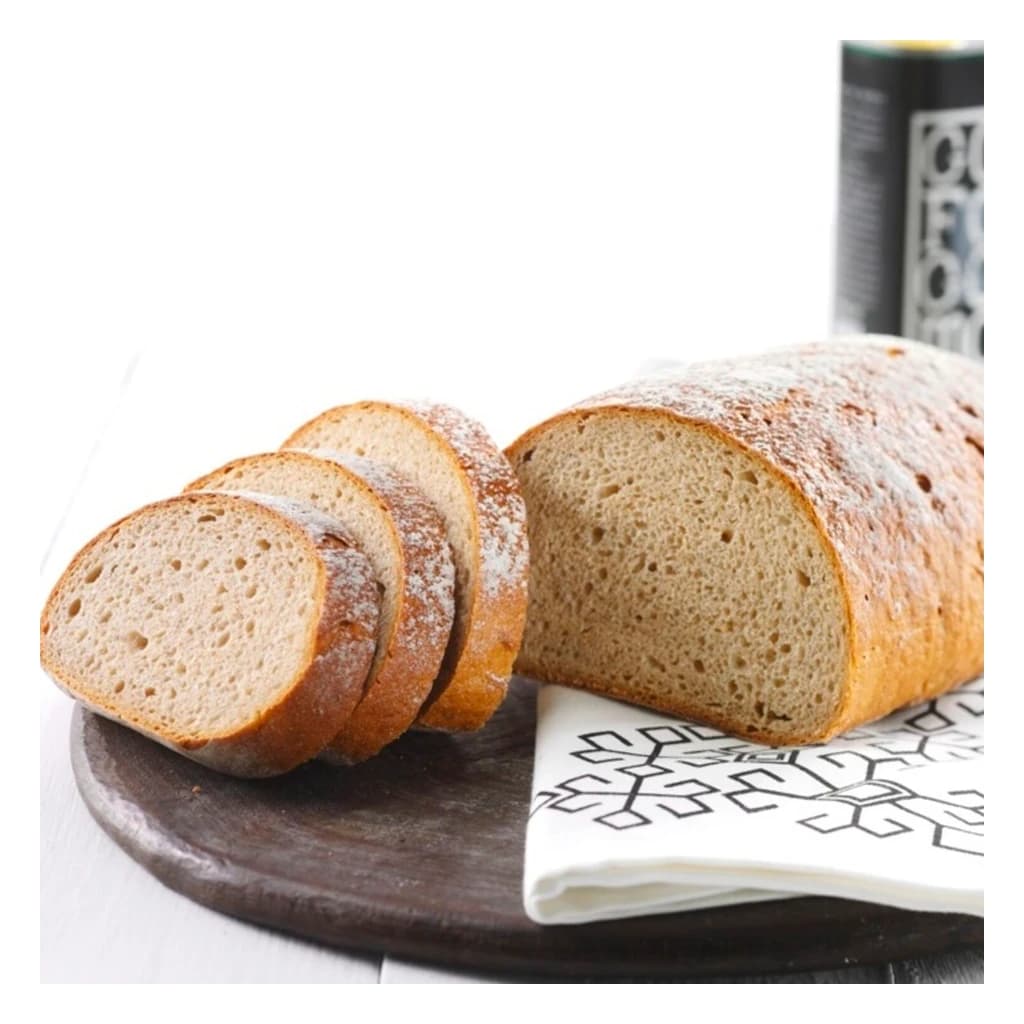
Rye Stabil Improver 25 kg
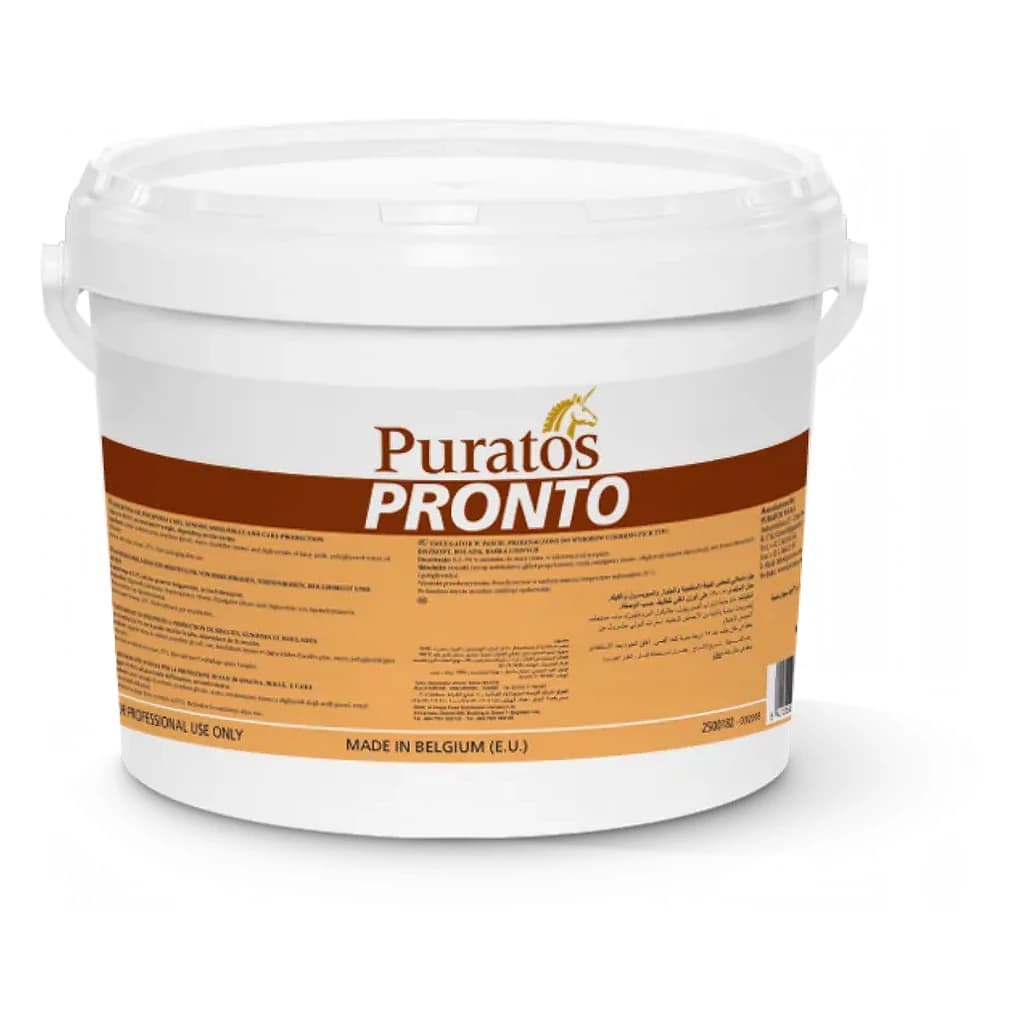
Puratos Pronto Dough Conditioner 10 kg
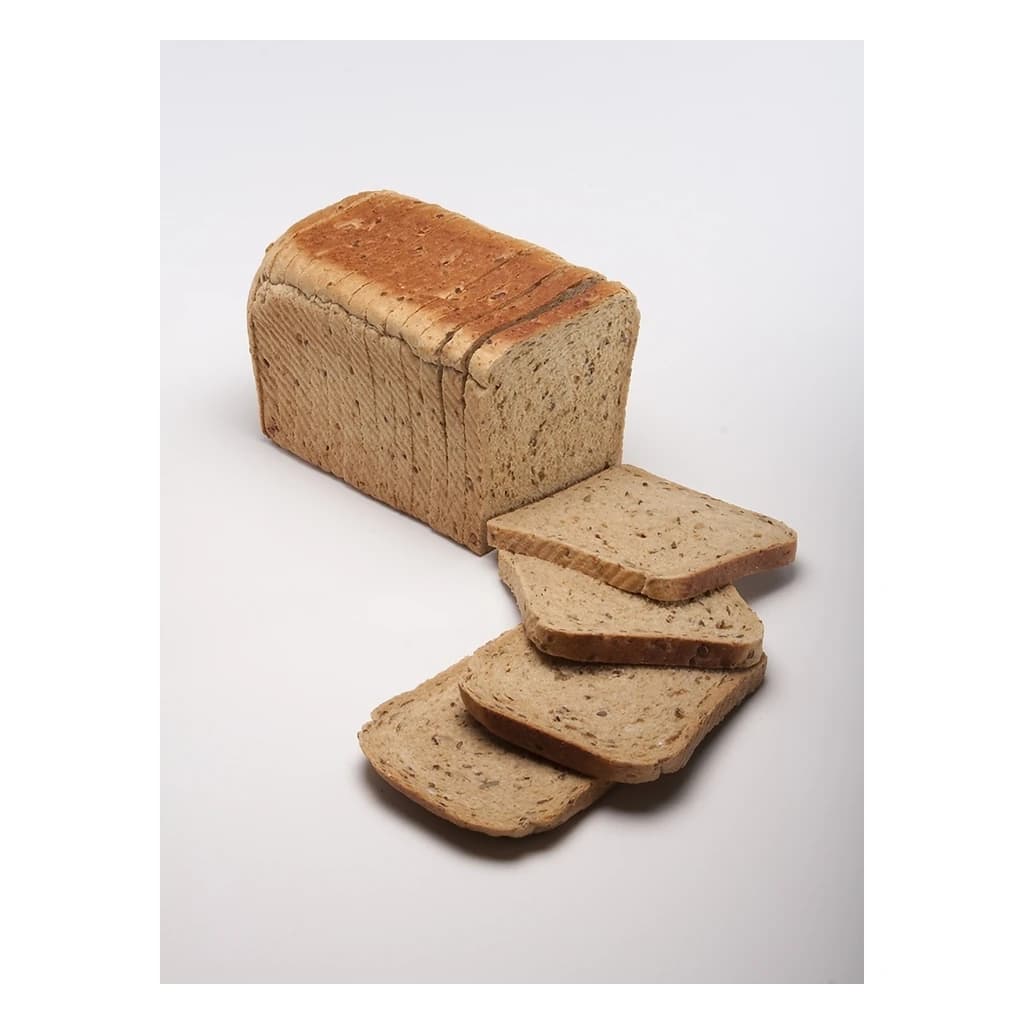
Cereform Stasoft Bread Improver 16 kg
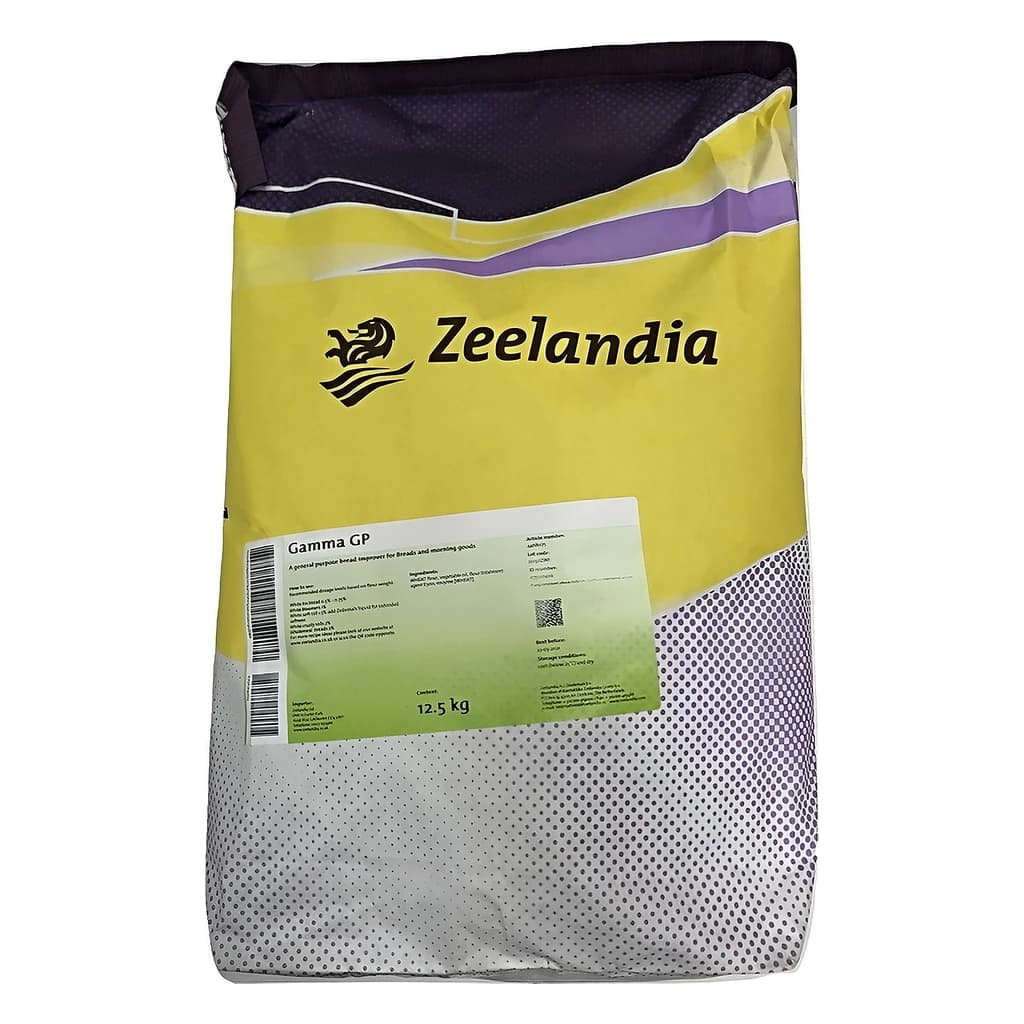
Zeelandia Gamma GP Bread Improver 12.5 kg
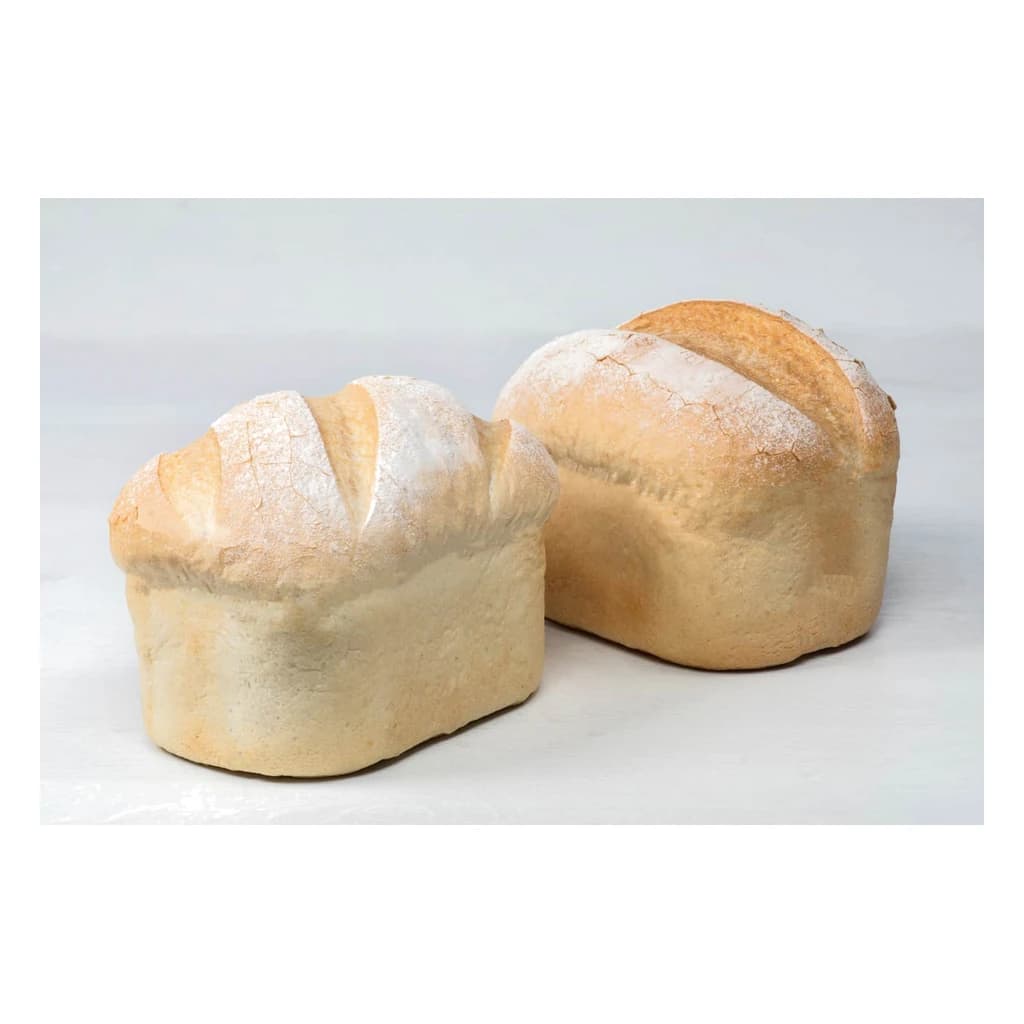
Bakels Quantum Clean Label Improver 0.5% 15 kg

Ibis Clean Label Bread Improver 12.5 kg
Puratos Tigris Ultra SG Bread Improver 25 kg
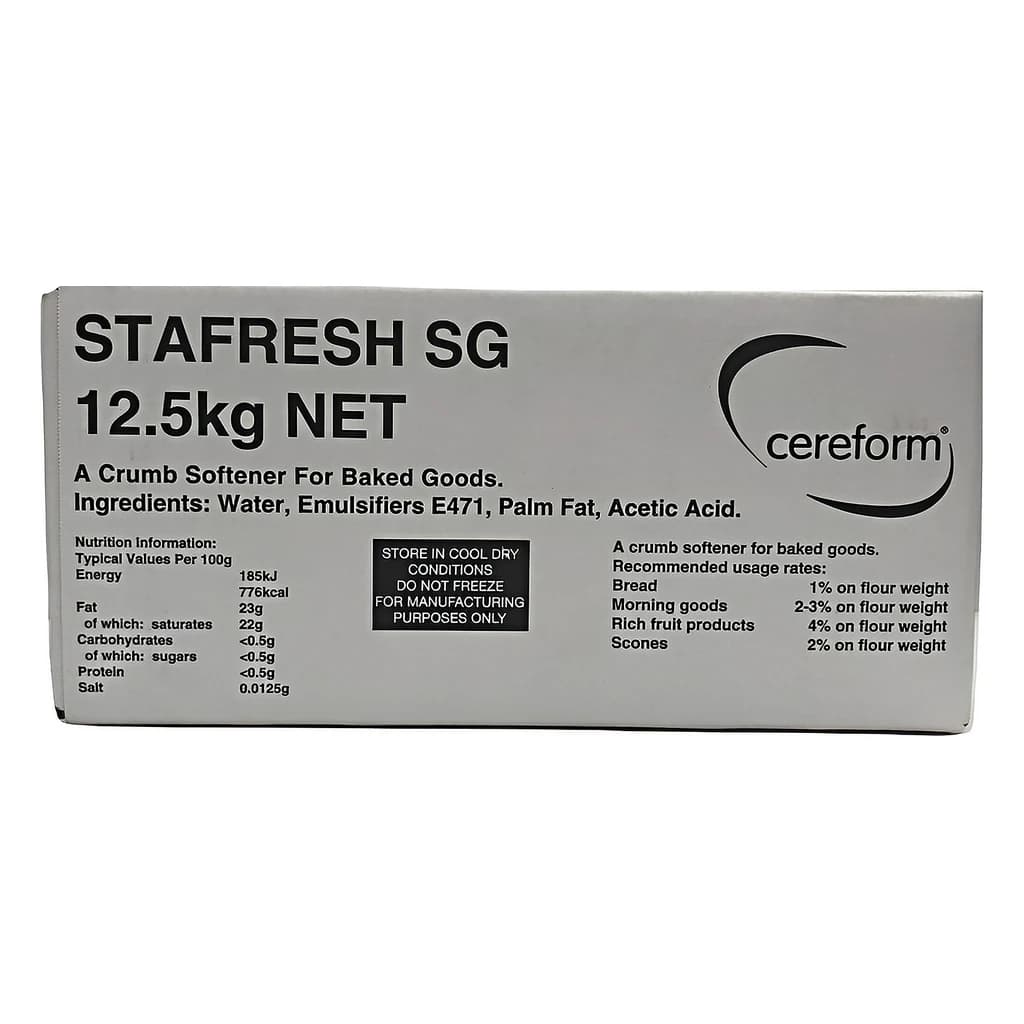
Cereform Stafresh SG Crumb Softener 12.5 kg
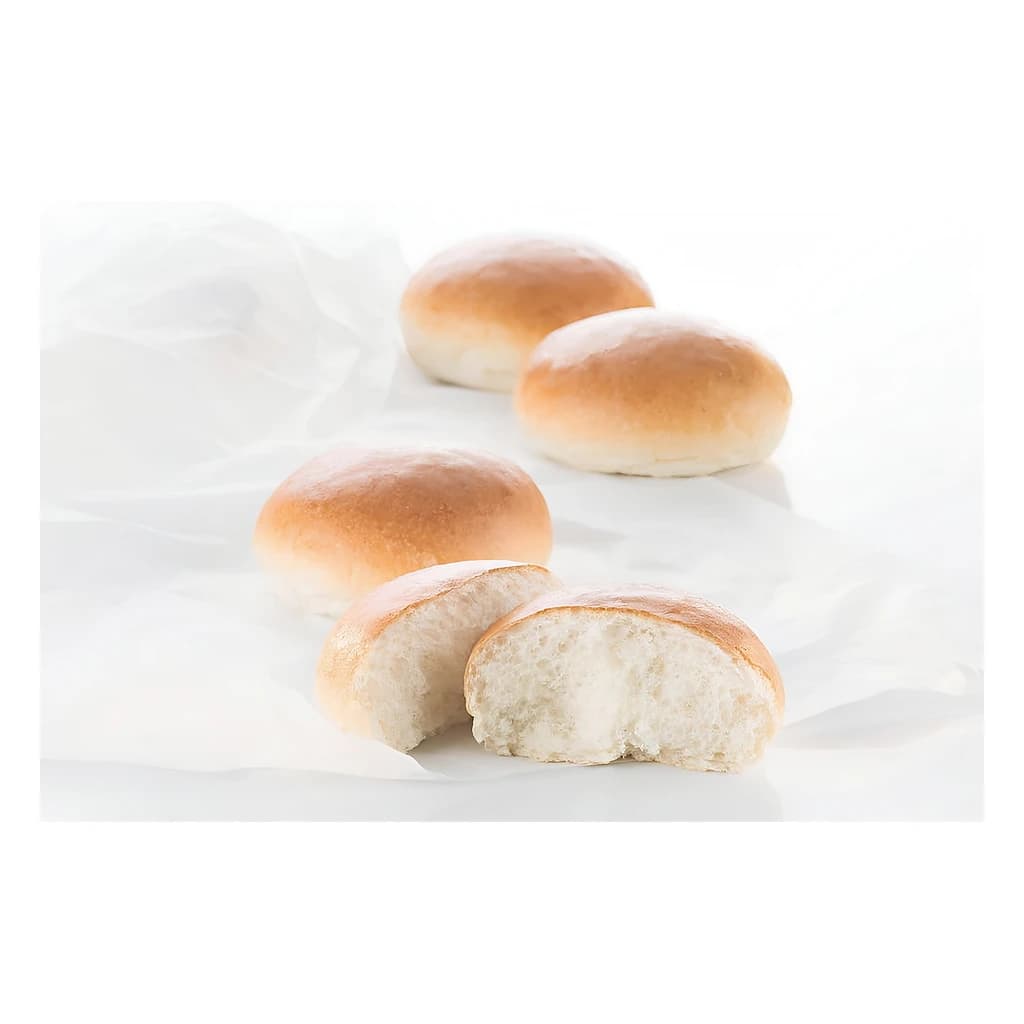
IREKS Soft Roll 7 Bread Improver 25 kg
IREKS Voltex Multipurpose Bread Improver 25 kg
Puratos Tigris SG 2% Bread Improver 16 kg
IREKS Crumb Softener 25 kg
Puratos S500 Sense SG Bread Improver 12.5 kg

Wholemeal Spelt Flour 25 kg
Cereform Breadsoy Enzyme-Active Full-Fat Soya Flour 25 kg

Puratos S500 SG Bread Improver 12.5 kg (Kosher)
IREKS Toast & Buns Bread Improver 25 kg

Puratos Tigris Gold Bread Improver 15 kg