Poland's bread map: regional loaves from Prądnik rye to Kashubian potato bread
A practical orientation to Polish bread for professional bakers: the four working families (pure rye, rye-led mixed, wheat-led mixed, pure wheat) sorted by the wheat:rye ratio and the leaven, the Polish flour 'typ' numbering decoded against first-party mill spec sheets (the number is ash % x1000), and a regional map of the country's signature loaves — the huge pure-rye sourdough chleb prądnicki of Kraków (rye T720 + T2000, EU PGI 2011), the scalded ring obwarzanek krakowski (EU PGI 2010), the tin-baked kaszubski chleb żytni na ziemniakach (rye + potato), plus the everyday chleb baltonowski and the PGI pastries cebularz lubelski and rogal świętomarciński. It explains why rye is a different baking system from wheat (pentosans and acid, not gluten), gives illustrative formulas and fault-finders, and maps every family to ready-to-buy Domson flours, sourdoughs, yeasts and mixes (GoodMills Polska, Domson, Komplexmłyn, Zeelandia Kołodziej, Uldo Dark Sauer, Lesaffre, Lallemand). Numeric flour, sourdough and PGI specifications are drawn first from supplier datasheets and Polish government traditional-product and PGI registers, then cross-checked. Cross-links the Pillar A craft articles a Polish baker leans on.
Poland's bread map: regional loaves from Prądnik rye to Kashubian potato bread
Polish bread is not one thing. It runs from the airy white wheat roll on a Kraków breakfast table to a 14-kilogram pure-rye sourdough loaf that keeps for two weeks. For a Polish customer base, getting this right is the difference between "bread" and "nasz chleb" — our bread. This article is the map: how to sort any Polish loaf into one of four working families, how to read the Polish flour typ (type) number that every recipe assumes you understand, and where the great regional loaves sit on the country's bread map (see img-b1bl-01). The deeper production technique lives in the sibling articles — see B1-zakwas-sourdough, B1-rye-bread-production and B1-obwarzanek-and-scalded-doughs — but this is where you start.
The four families: ratio and leaven decide everything
Almost every Polish loaf is built from wheat flour, rye flour, or a blend of the two, leavened by yeast, by rye sourdough (zakwas), or by both. Those two variables — the wheat:rye ratio and the leaven — define four working families (see img-b1bl-05 and the table below):
- Pure rye (chleb żytni). Rye flour, rye sourdough, no yeast. Dense, moist, dark, tangy, long-keeping. This is the soul of eastern and south-eastern Polish baking and the family of the great chleb prądnicki.
- Mixed, rye-led (chleb żytnio-pszenny). A rye-majority blend softened with some wheat and a touch of yeast on top of the sourdough.
- Mixed, wheat-led (chleb pszenno-żytni). Wheat-majority, lightened further, with rye and dried/liquid sourdough for flavour and keeping. The everyday chleb baltonowski lives here, and the mixed family is among the most widely sold types in Polish bakeries.
- Pure wheat (chleb pszenny). White, airy, golden, short-keeping — rolls, baguettes, kaiser rolls, the obwarzanek and the enriched chałka (see B1-enriched-yeast-doughs).
A fifth label cuts across all of these: razowy and graham describe a milling method — coarse, single-pass whole-grain milling (germ, endosperm and bran together) — not a cereal, so you can have a wholemeal-rye razowy or a wholemeal-wheat graham.
Reading the Polish flour 'typ' number
Polish formulas name flour by a typ number — T450, T550, T720, T2000. The rule is simple and worth committing to memory: the type number is the flour's mineral (ash) content multiplied by 1000. T450 is about 0.45 % ash; T2000 is about 2.0 %. Higher number means more bran, darker colour, more flavour, higher enzyme activity and more water absorption (see img-b1bl-02 and the table below). This is the Polish branch of the wider system explained in A1-flour-classification-systems.
The mill spec sheets confirm the rule precisely. GoodMills Polska rye T720 lists total ash < 0.78 %, falling number > 90 s, 6.5 g protein and 7.4 g fibre per 100 g; its wholemeal rye T2000 lists ash < 2.0 %, 8.4 g protein and 14.4 g fibre per 100 g. On the wheat side, the fortified wheat T550 runs 0.51–0.58 % ash with wet gluten 28–32 % (protein 11.5–12.5 %), gluten index 75–99 and falling number ≥ 220 s, while the graham wheat T1850 sits at ash < 2.0 %, falling number > 180 s, 12.3 g protein and 12.3 g fibre per 100 g. Notice the low falling number on rye (> 90 s versus ≥ 220 s on the wheat): rye is naturally high in alpha-amylase, which is exactly why it needs acid — more on that below.
Spec-sheet note: the Domson/GoodMills T550 is a fortified flour (calcium carbonate 235–390 mg, iron ≥ 1.65 mg, vitamin B1 ≥ 0.24 mg and niacin ≥ 1.60 mg per 100 g) — useful where UK-style fortification is required. Fortification and allergen figures are single-source and should be verified before use.
Rye is a different system, not low-gluten wheat
The single most important thing for a wheat-trained baker arriving at Polish bread: rye does not work like wheat (see img-b1bl-03 and the table below). Rye has little usable gluten; its crumb is held together by pentosans (arabinoxylans) and gelatinised starch, not a gas-retaining gluten web. And because rye carries high natural amylase, the gelatinised starch will be degraded into a gummy crumb unless the dough is acidified — which is why pure-rye and high-rye loaves are leavened with sourdough rather than yeast alone. The practical consequences: mix rye briefly (there is no gluten to develop), handle it wet and sticky, bake high-rye loaves in tins, and lean on a vigorous zakwas (see B1-zakwas-sourdough and A2-rye-sourdough-multi-stage). The acidity is also what gives rye its keeping quality — chleb prądnicki stays fresh for around two weeks. The full production walkthrough is in B1-rye-bread-production; the rye-formula percentages are in A8-rye-and-wholegrain-formulas.
The regional map
Poland's loaves track its geography (see img-b1bl-01 and the table below). The broad pattern: rye dominates the East and South-East (the cool, the Lublin and Podlasie rye-sourdough country), while wheat-rye blends are the everyday loaf across the central and western regions.
Chleb prądnicki — Kraków's giant rye
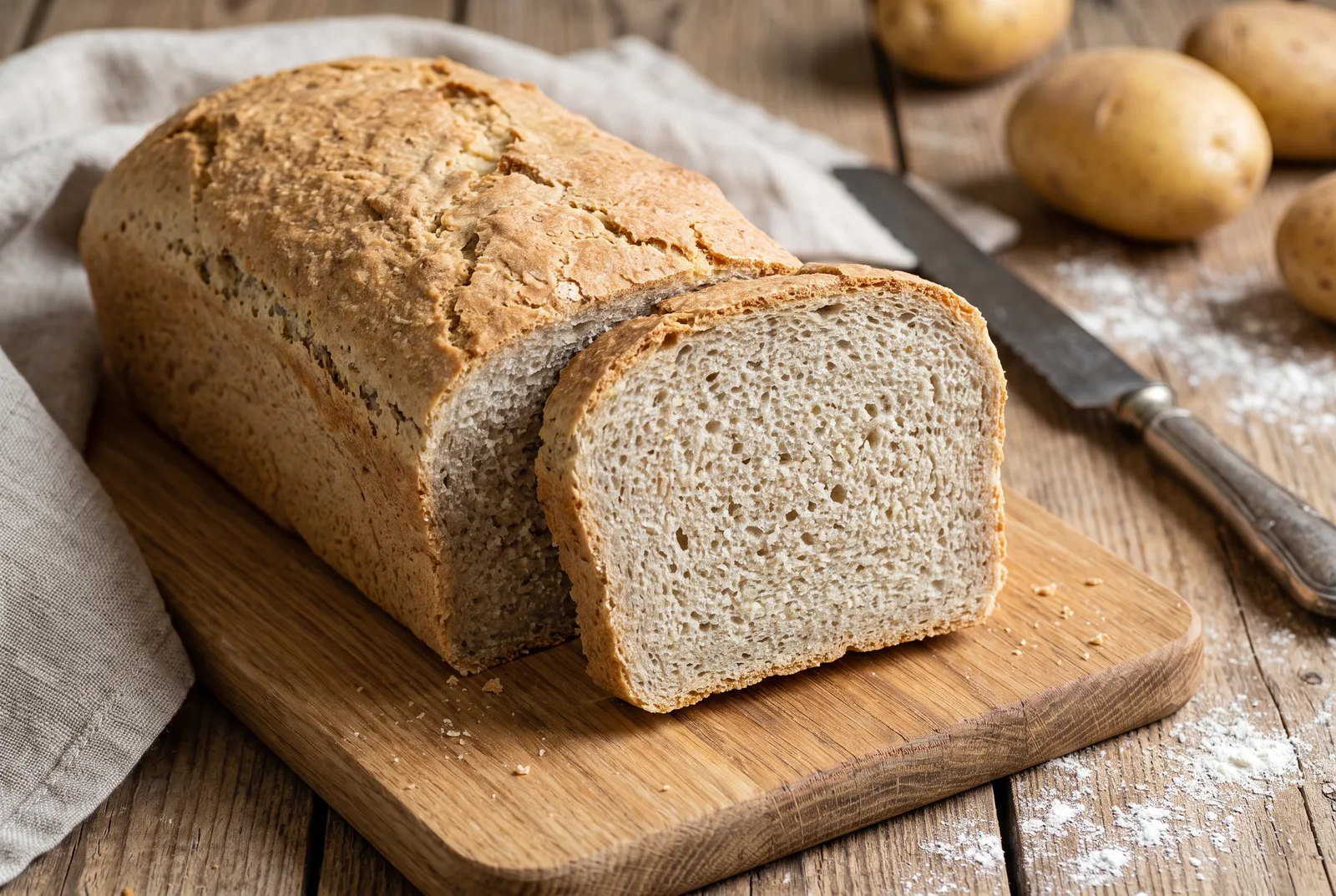
The flagship. Chleb prądnicki is a heavy pure-rye sourdough loaf from Prądnik, the villages on the Prądnik stream (Prądnik Czerwony and Prądnik Biały) that are now districts of Kraków and once held many water mills. It is baked exclusively from rye flour type 720 and type 2000, natural rye sourdough and water — no baker's yeast. The loaves are enormous: 4–14 kg (about 4.5 kg for everyday loaves, up to 14 kg for occasions), with a brown-to-dark-brown crust roughly 6 mm thick under a thin coat of rye bran, and they keep fresh for around two weeks thanks to long dough maturation and sourdough acidity (see img-b1bl-06, img-b1bl-10). The history is documented: bakers from Prądnik appear in the records from the 14th century, and the tradition is dated to 1421, when Bishop Wojciech Jastrzębiec granted land on Prądnik Biały to his cook in return for supplying bread to the bishops' table. It was entered on Poland's traditional-products list in 2005 and holds EU Protected Geographical Indication (PGI / ChOG) status since 2011.
This is the cleanest possible catalogue match: rye T720 + wholemeal rye T2000 are both stocked (GoodMills Polska, Komplexmłyn), and the leaven is a rye sourdough such as Uldo Dark Sauer, IREKS Natural Liquid Rye Sour or a Böcker pure starter. An illustrative teaching formula is in the formula card below — but note the certified production formula is the protected secret of registered Prądnik bakeries.
Obwarzanek krakowski — the scalded ring
Kraków's street-cart icon. The obwarzanek krakowski is a braided ring of wheat dough (up to 30 % rye is permitted), plus fat, sugar, yeast and salt, formed by twisting two or three finger-thick strands into a ring. Its name comes from its defining step, obwarzanie — the rings are scalded in near-boiling water (at least 90 °C) for 10–30 seconds before topping and baking, which gelatinises the surface starch and gives the glossy, chewy crust (see img-b1bl-04, img-b1bl-07, img-b1bl-08 and the formula card below; the starch-gelatinisation principle is covered in A5-baking-oven-science and B1-obwarzanek-and-scalded-doughs). Per the PGI specification it is 12–17 cm across, with a braid 2–4 cm thick, weighing 80–120 g, and finished with salt, poppy seed, sesame or czarnuszka (nigella). The earliest record dates to 1394, on the table of Queen Jadwiga, and production was tightly guild-controlled for centuries. It carries EU PGI status since 2010 (Commission Regulation (EU) No 977/2010). Build it on fortified strong wheat T550 and fresh yeast.
Kaszubski chleb żytni na ziemniakach — the potato rye of Kashubia
From the Baltic North. The kaszubski chleb żytni na ziemniakach (Kashubian rye bread with potatoes) is a story written by the land: Kashubian soil is poor, weak and sandy and the climate harsh, with long winters and late springs, so rye and potatoes — not wheat — fed the region. It is a rectangular tin-baked loaf, about 25 cm long by 12 cm wide, weighing roughly 1 kg, made primarily from rye flour with added boiled potatoes and a rye sourdough, giving a moist, firm-elastic, light-grey crumb and a pleasantly sour taste (see img-b1bl-09). It was entered on the traditional-products list in 2006. To build it from the catalogue, pair rye T720 with potato flakes (Wimpex, Stolon) or potato starch and a rye zakwas.
The everyday and the festive
The loaf most Poles eat daily is the mixed loaf. One well-known recipe for chleb baltonowski calls for wheat flour T750, rye flour T720, dried natural rye sourdough and salt — light, mild, crisp-crusted, the canonical wheat-led blend. The chleb kujawski of the Kujawy region is described as a delicate, slightly moist wheat-rye loaf traditionally baked large; this description is based on a single non-specialist source and should be verified against a primary regional or government record before use in product copy. And two more EU-protected baked goods round out the map: the cebularz lubelski of Lublin — a soft wheat flatcake topped with onion and poppy seed, PGI since 2014 (Commission Implementing Regulation (EU) No 844/2014) — and the rogal świętomarciński (St Martin's croissant) of Poznań, a rich white-poppy filled pastry, PGI since 2008. The largely historical kukiełka — a light, spongy white wheat bread glazed with egg yolk and nigella, once sold near Kraków's St Mary's church — is worth knowing as part of the heritage.
A note on the scald. The obwarzanie of obwarzanek is the surface version of a principle used throughout Polish dark baking: scalding (parzenie/zaparzanie) — pouring boiling water onto a portion of rye flour to gelatinise its starch — to add moisture retention, natural sweetness and shelf life to staropolski dark rye loaves. See B1-obwarzanek-and-scalded-doughs.
Health and label notes
Rye's reputation as a fibre-rich bread grain is well-founded: wholemeal rye T2000 provides 14.4 g dietary fibre per 100 g of flour and standard rye T720 provides 7.4 g, substantially more than refined white wheat flour. Graham wheat T1850 also delivers 12.3 g fibre per 100 g. The calorie advantage of rye over white wheat in a finished loaf depends on the specific blend and hydration; avoid attributing specific percentages without a matched bread-to-bread comparison. This is a category where allergens and food safety are load-bearing, not a footnote.
Gluten. Polish rye and wheat flours are declared gluten-cereal allergens under EU Regulation 1169/2011 Annex II item 1, and the mill sheets add that ascorbic-acid cross-contamination risk is high and that the flour is not intended for gluten-sensitive consumers.
Stacked allergens in ready mixes. Zeelandia Kołodziej Klasyczny contains the gluten cereals rye, wheat, oat and barley plus soya, and may contain eggs, milk and sesame. The Domson/GoodMills fortified wheat T550 spec notes that some batches may contain soya, lupin and mustard — both lupin (Annex II item 14) and mustard (item 10) are mandatory declared allergens; finished-product labels must include them if the flour is used. The Uldo Dark Sauer spec likewise carries a may contain lupin cross-contamination warning; any bread produced with it should carry a lupin declaration.
Toppings.Sesame (used on obwarzanek and rogal) is a mandatory declared allergen under Annex II item 11. Poppy seed (used on obwarzanek, cebularz and rogal) is subject to Commission Regulation (EU) 2023/1441, which sets a maximum for the sum of morphine and codeine in poppy seeds at ≤ 20 mg/kg; request a current supplier CoA. Rogal świętomarciński traditionally contains white poppy and almonds — tree nuts (almonds) are a mandatory EU Annex II item 8 declaration for any product based on or derived from the rogal recipe.
Field-toxin limits. The rye T720 spec caps ergot alkaloids ≤ 500 µg/kg, aflatoxin B1 ≤ 2 µg/kg and deoxynivalenol (DON) ≤ 750 µg/kg. Note: Commission Regulation (EU) 2024/1022 (effective 1 July 2024) may have lowered the maximum DON level for rye flour to ≤ 600 µg/kg — the supplier spec sheet version on file may pre-date this change. Request an updated GoodMills spec sheet and verify DON compliance before use.
All nutrition, allergen and food-safety figures here are first-party datasheet data and should be independently verified before use.
Buy it: from family to catalogue
The whole map maps back to the order sheet (see the table below):
- Pure-rye / prądnicki: Rye T720 + Wholemeal Rye T2000 (GoodMills Polska, Komplexmłyn) leavened with a rye sourdough — Uldo Dark Sauer (paste, dosed 2–8 %, pH 2.5–4.5), IREKS Natural Liquid Rye Sour, Backaldrin BAS Dark, or a Böcker Reinzucht-Sauerteig pure starter; shortcut with Zeelandia Hearty Rye or Komplet Żytniak CL.
- Mixed rye-led: Rye T720 + Wheat T750, rye sourdough + fresh yeast (Lesaffre Benevia, Lallemand Traditional); or the fastest authentic route — Zeelandia Kołodziej Klasyczny, whose own application recipe (25 kg mix + 25 kg rye T720 + 1.5 kg yeast + ~35 L water + 6 kg Dekormix, baked 250 → 230 °C with steam) is in the formula card below.
- Mixed wheat-led / baltonowski: Wheat T750 + a little Rye T720 + dried rye sourdough (Zeelandia Sourdough Dry) and yeast; Zeelandia Jagielloński mix.
- Obwarzanek / rolls / chałka: fortified Wheat T550 (Domson, GoodMills, Gdańskie Młyny) + fresh yeast.
- Graham / razowy: Graham Wheat T1850 or Wholemeal Rye T2000; Eco Trade Dynowski 83 % blend; the Zeelandia Rye Stabil improver helps tame high-rye doughs.
- Kashubian potato rye: Rye T720 + Potato Flakes (Wimpex, Stolon) or Bronisław Potato Starch + rye sourdough.
And for the finished article, the Oskroba range on the platform — Rye bread 100 %, Wholemeal Graham bread, Pumpkin Rye bread — shows the living tradition on the shelf. The dedicated catalogue walkthrough is B1-supplier-brands-for-polish-baking.
The full comparison tables, formula cards (chleb prądnicki, Kołodziej rye, obwarzanek) and fault-finders are below.
Figures
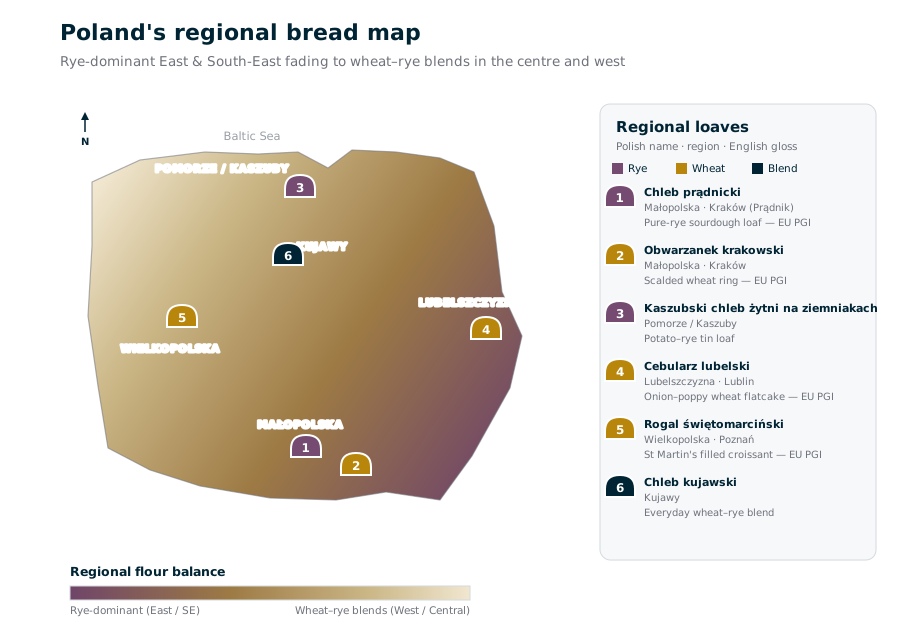 Illustrated map of Poland marking regional breads, shaded from rye-dominant eastern regions to wheat-rye blends in the west
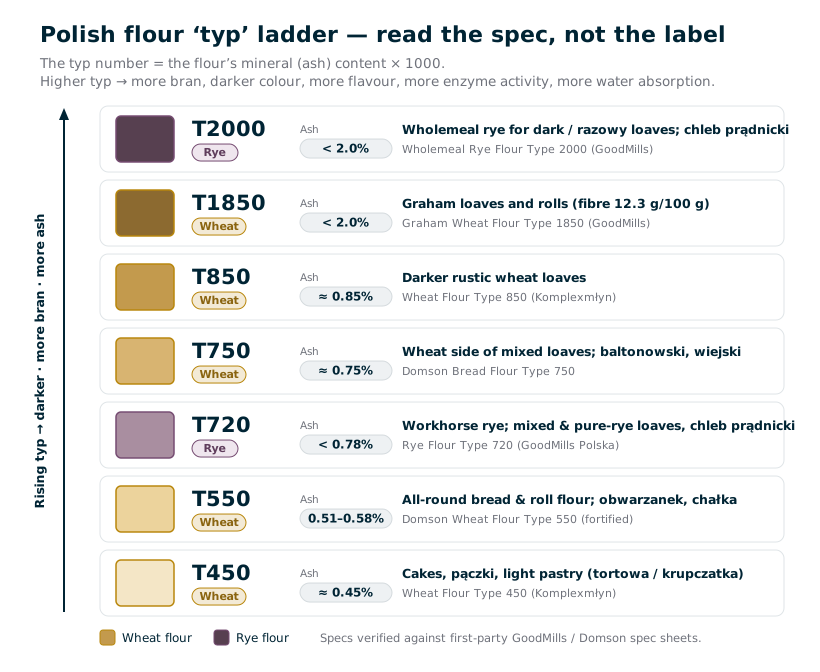 Ladder diagram of Polish flour type numbers from 450 to 2000 showing rising ash content and darker colour
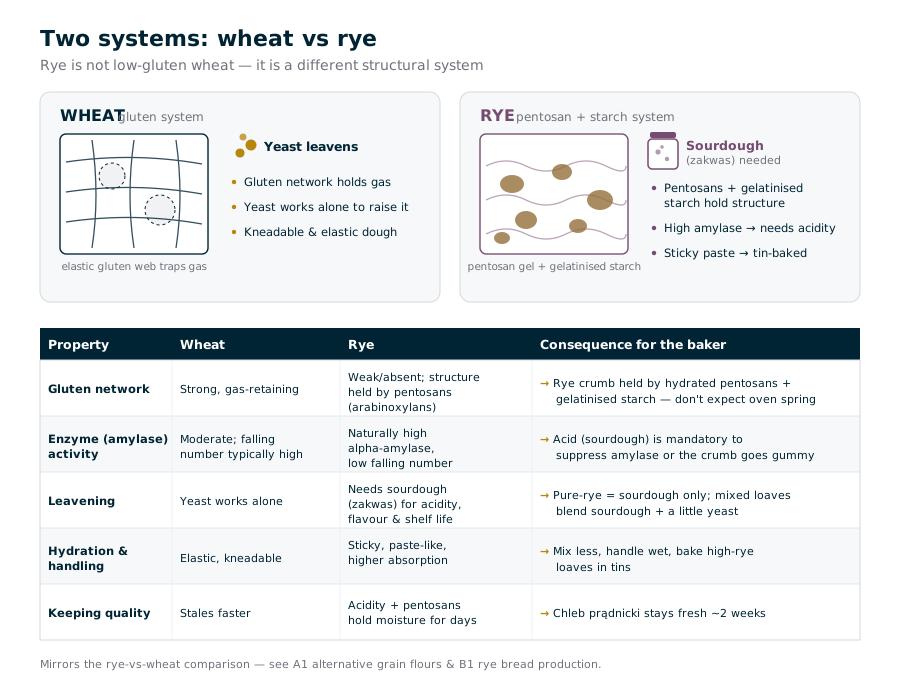 Comparison diagram of wheat gluten structure versus rye pentosan-and-starch structure and what each means for the baker
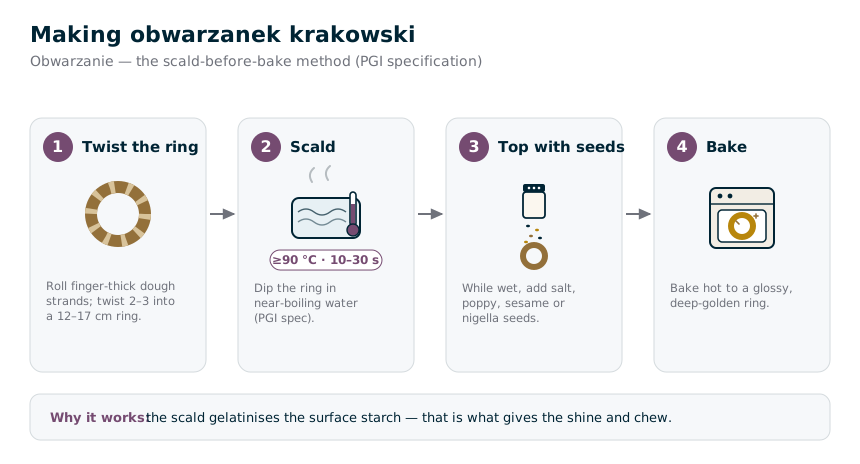 Four-step guide to making obwarzanek: twist the ring, scald in near-boiling water (≥90°C), top with seeds, bake until glossy
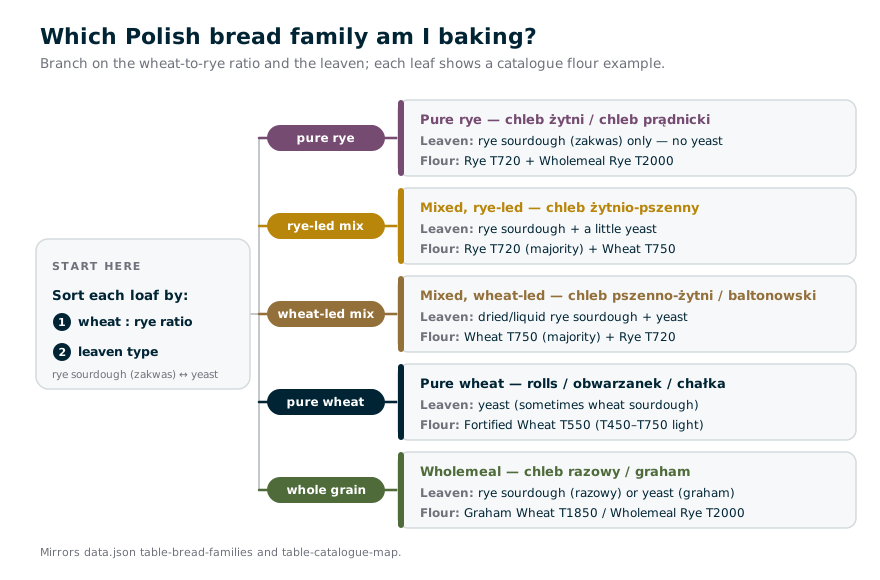 Decision flowchart sorting Polish breads into pure rye, mixed, pure wheat and wholemeal families by flour ratio and leaven
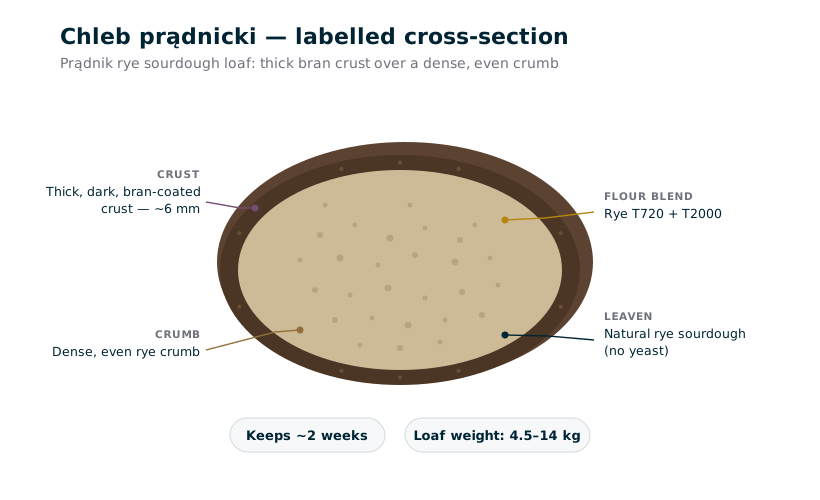 Labelled cross-section illustration of a Prądnik rye loaf showing its thick bran crust and dense crumb
Chleb prądnicki — pure rye sourdough loaf (illustrative, baker's %)
| Ingredient | Baker's % | Weight |
|---|---|---|
| Rye flour T720 | 70% | |
| Wholemeal rye flour T2000 | 30% | |
| Mature rye sourdough (built on part of the above flour) | 40–50% of flour pre-fermented | |
| Water | 75–85% | |
| Salt | 1.8–2.0% | |
| Rye bran (for coating the crust) | to finish |
- Build the rye sourdough in stages (see B1-zakwas-sourdough). Mix to a sticky paste-dough; short mix only. Bulk ferment, shape large oval/round loaves, coat the top in rye bran. Final proof, then bake long and hot with steam; the thick loaf and acidity give the ~2-week shelf life.
Yield: Traditional 4.5 kg loaf (scale up to 14 kg for showpiece bakes)
Indicative formula reconstructed from the PGI/traditional-product description (rye T720 + T2000, natural sourdough, water, salt — no yeast). The exact production formula is the protected secret of registered Prądnik bakeries; treat percentages as a teaching baseline, not the certified recipe. See B1-rye-bread-production and B1-zakwas-sourdough.
Mixed rye seed loaf from Zeelandia Kołodziej Klasyczny (supplier recipe)
| Ingredient | Baker's % | Weight |
|---|---|---|
| Kołodziej Klasyczny 50% rye mix | 25 kg | |
| Rye flour type 720 | 25 kg | |
| Fresh yeast | 1.5 kg | |
| Water (approx.) | 35 L | |
| Dekormix (seed decoration) | 6 kg |
- Combine 25 kg of the mix with 25 L cool water (18–20 °C) and rest 3 hours. Add the remaining ingredients; mix ~10 min low speed to a dough temperature of 26 °C. First proof ~15 min. Divide into 470 g pieces, mould, decorate with Dekormix, place in tins. Final proof ~45 min. Bake at 250 °C falling to 230 °C, with steam for the first 3 minutes; total ~55 min.
Yield: Approx. 470 g pieces from a ~57 kg dough batch
This is the manufacturer's own application recipe — the fastest authentic route to a Polish-style seeded rye loaf. Allergen-heavy: contains rye/wheat/oat/barley gluten + soy; may contain eggs, milk, sesame.
Obwarzanek krakowski — scalded wheat ring (PGI parameters)
| Ingredient | Baker's % | Weight |
|---|---|---|
| Wheat flour T550 (up to 30% rye T720 permitted) | 100% | |
| Water | ~45–50% | |
| Fat | small | |
| Sugar | small | |
| Yeast | small | |
| Salt | ~1.5% | |
| Topping: salt / poppy / sesame / nigella | to finish |
- Make a firm wheat dough; roll finger-thick strands, twist 2–3 together and join into a ring 12–17 cm across (braid 2–4 cm). Scald briefly in near-boiling water (≥90 °C) for 10–30 s per the PGI specification, lift, top with seeds, and bake hot until deep golden and glossy.
Yield: Rings of 80–120 g
The defining step is obwarzanie — scalding the shaped rings in near-boiling water (≥90 °C, 10–30 s) before baking, as specified in the PGI (Commission Regulation (EU) No 977/2010). This gelatinises the surface starch for the glossy, chewy crust. See A5-baking-oven-science and B1-obwarzanek-and-scalded-doughs.
Every Polish loaf sits in one of four families defined by the wheat:rye ratio and the leaven. This is the orientation map for the whole article — pick the family first, then the regional variant.
| Family | Polish name | Typical flour | Leaven | Character | Sources |
|---|---|---|---|---|---|
| Pure rye | chleb żytni | Rye T720 + wholemeal rye T2000 | Rye sourdough (zakwas) only | Dense, moist, dark, long-keeping, tangy; East/South-East Poland | Trade reference, GoodMills spec sheet |
| Mixed (rye-led) | chleb żytnio-pszenny | Rye T720 majority + wheat T750 | Rye sourdough + a little yeast | Softer than pure rye, still tangy; the everyday Polish loaf | Trade reference |
| Mixed (wheat-led) | chleb pszenno-żytni | Wheat T750 majority + rye T720 | Dried/liquid rye sourdough + yeast | Light, mild, crisp crust; e.g. chleb baltonowski | Trade reference |
| Pure wheat | chleb pszenny | Wheat T550–T750 (or T450 light) | Yeast (sometimes wheat sourdough) | White, airy, golden, short-keeping; rolls, baguettes, kaiser | Trade reference, GoodMills spec sheet |
| Wholemeal / razowy | chleb razowy / graham | Graham/wholemeal T1850–T2000 (rye or wheat) | Sourdough (rye) or yeast (graham) | Coarse single-pass whole-grain milling; high fibre, hearty | Trade reference, GoodMills spec sheet |
The Polish 'typ' number is the flour's mineral (ash) content x1000. Higher number = more bran = darker, more flavour, more enzyme activity, more water absorption. Verified against first-party GoodMills/Domson spec sheets.
| Typ | Cereal | Ash (spec) | Protein / falling number | Use in Polish baking | Catalogue example | Sources |
|---|---|---|---|---|---|---|
| 450 | Wheat | ≈0.45% | low | Cakes, pączki, light pastry (tortowa/krupczatka territory) | Wheat Flour Type 450 (Komplexmłyn) | Trade reference |
| 550 | Wheat | 0.51–0.58% | wet gluten 28–32% / protein 11.5–12.5%, gluten index 75–99, FN ≥220 s | All-round bread & roll flour; obwarzanek, chałka, kaiser rolls | Domson Wheat Flour Type 550 (fortified) | GoodMills spec sheet |
| 720 | Rye | <0.78% | FN >90 s, protein 6.5 g/100g | The workhorse rye for mixed and pure-rye loaves; chleb prądnicki | Rye Flour Type 720 (GoodMills Polska) | GoodMills spec sheet |
| 750 | Wheat | ≈0.75% | strong bread flour | Wheat side of mixed loaves; baltonowski, wiejski | Domson Bread Flour Type 750 | Trade reference |
| 850 | Wheat | ≈0.85% | medium-strong | Darker rustic wheat loaves | Wheat Flour Type 850 (Komplexmłyn) | Trade reference |
| 1850 | Wheat | <2.0% | FN >180 s, protein 12.3 g/100g, fibre 12.3 g/100g | Graham loaves and rolls | Graham Wheat Flour Type 1850 (GoodMills) | GoodMills spec sheet |
| 2000 | Rye | <2.0% | FN >90 s, protein 8.4 g/100g, fibre 14.4 g/100g | Wholemeal rye for dark/razowy loaves; chleb prądnicki | Wholemeal Rye Flour Type 2000 (GoodMills) | GoodMills spec sheet |
Named regional loaves and pastries with their region, defining technique and protected status. Authentic Polish names preserved with diacritics.
| Bread | Region | Cereal / method | Distinctive feature | Protected status | Sources |
|---|---|---|---|---|---|
| Chleb prądnicki | Małopolska (Prądnik, now a district of Kraków) | Pure rye T720 + T2000, natural sourdough, no yeast | Huge 4–14 kg loaves, thin rye-bran crust ~6 mm, fresh ~2 weeks | EU PGI (ChOG) 2011; LPT 2005 | Gov.pl traditional products list, Trade reference |
| Kaszubski chleb żytni na ziemniakach | Kaszuby / Pomorze (Pomorskie) | Rye flour + boiled potatoes, rye sourdough, tin-baked | Rectangular ~25x12 cm, ~1 kg, moist, light-grey crumb, slightly sour | LPT 2006 | Gov.pl traditional products list |
| Obwarzanek krakowski | Małopolska (Kraków) | Wheat (up to 30% rye), yeast; scalded then baked | Braided ring 12–17 cm, 80–120 g; obwarzanie ≥90 °C, 10–30 s; salt/poppy/sesame/nigella | EU PGI (ChOG) 2010 (Reg 977/2010) | IJHARS (Gov.pl), Trade reference |
| Chleb baltonowski | Central Poland (interwar Warsaw origin) | Wheat T750 + rye T720 + dried rye sourdough + salt | Light, mild, crisp crust — the canonical mixed loaf | — | Trade reference |
| Chleb kujawski | Kujawy | Wheat-rye blend | Delicate, slightly moist, baked in large loaves | — | Trade reference |
| Cebularz lubelski | Lubelszczyzna (Lublin) | Wheat flatcake topped with onion + poppy seed | Soft wheat disc, savoury onion topping | EU PGI 2014 (Reg 844/2014) | EU Official Journal (PGI registration), Trade reference |
| Rogal świętomarciński | Wielkopolska (Poznań) | Laminated yeast dough, white-poppy/almond filling | St Martin's croissant (11 Nov); rich festive pastry | EU PGI 2008 | Trade reference |
| Kukiełka | Małopolska (Kraków / Liszki) | White wheat, egg-yolk glaze + nigella | Light, spongy ceremonial wheat bread (largely historical) | — | Trade reference |
The single most important thing a wheat-trained baker must internalise to bake Polish bread: rye is not low-gluten wheat, it is a different system. See A1-alternative-grain-flours and B1-rye-bread-production for the deep dive.
| Property | Wheat | Rye | Consequence for the baker |
|---|---|---|---|
| Gluten network | Strong, gas-retaining | Weak/absent; structure held by pentosans (arabinoxylans) | Rye crumb is held by hydrated pentosans + gelatinised starch, not gluten — don't expect oven spring |
| Enzyme (amylase) activity | Moderate; falling number typically high | Naturally high alpha-amylase, low falling number | Acid (sourdough) is mandatory to suppress amylase or the crumb goes gummy |
| Leavening | Yeast works alone | Needs sourdough (zakwas) for acidity, flavour and shelf life | Pure-rye loaves use sourdough only; mixed loaves blend sourdough + a little yeast |
| Hydration & handling | Elastic, kneadable | Sticky, paste-like, higher water absorption | Mix less, handle wet, bake in tins for high-rye loaves |
| Keeping quality | Stales faster | Acidity + pentosans hold moisture for days | Chleb prądnicki stays fresh ~2 weeks |
Source: Trade reference.
Maps each bread family to ready-to-buy Domson flours, sourdoughs, yeasts and mixes a Polish baker would actually order.
| You are baking | Flour | Leaven | Shortcut mix / improver | Sources |
|---|---|---|---|---|
| Chleb prądnicki / pure rye | Rye T720 + Wholemeal Rye T2000 (GoodMills/Komplexmłyn) | Rye sourdough: Uldo Dark Sauer, IREKS Natural Liquid Rye Sour, Böcker Reinzucht-Sauerteig | Zeelandia Hearty Rye / Komplet Żytniak CL | GoodMills spec sheet, ULDO spec sheet |
| Mixed rye-led loaf | Rye T720 + Wheat T750 | Rye sourdough + Fresh Yeast (Lesaffre Benevia / Lallemand) | Zeelandia Kołodziej Klasyczny (50% rye seed mix) | Zeelandia spec sheet, GoodMills spec sheet |
| Mixed wheat-led / baltonowski | Wheat T750 + a little Rye T720 | Dried rye sourdough (Zeelandia Sourdough Dry) + yeast | Zeelandia Jagielloński bread mix | Trade reference |
| Obwarzanek / chałka / rolls | Fortified Wheat T550 (Domson) | Fresh yeast | — | GoodMills spec sheet, IJHARS (Gov.pl) |
| Graham / razowy | Graham Wheat T1850 / Wholemeal Rye T2000 | Yeast (graham) or rye sourdough (razowy) | Eco Trade Dynowski 83% blend | GoodMills spec sheet |
| Kashubian potato rye | Rye T720 + Potato Flakes (Wimpex/Stolon) / potato starch | Rye sourdough | — | Gov.pl traditional products list |
| Fault | Likely cause | Remedy | Sources |
|---|---|---|---|
| Gummy, sticky crumb | Insufficient acidification — rye amylase degraded the gelatinised starch | Use a properly soured zakwas (target a low pH); add a rye sourdough paste at dose; don't rush fermentation | Trade reference, ULDO spec sheet |
| Flat, dense loaf with no lift | Treated rye like wheat — over-mixed expecting gluten; weak sourdough | Short mix only; rely on a vigorous sourdough; bake high-rye in tins | Trade reference |
| Cracked crust / poor bran coating (prądnicki style) | Surface too dry before bake; bran applied to a dry skin | Coat damp surface with rye bran; bake with steam to set crust then dry out | Gov.pl traditional products list |
| Sour but bland flavour | Acidity present but fermentation too short for aroma | Longer/multi-stage zakwas; blend T720 with wholemeal T2000 for depth | Trade reference, GoodMills spec sheet |
| Loaf stales within 2 days | Too little rye / acidity / hydration | Increase rye proportion and hydration; mature the dough longer (prądnicki keeps ~2 weeks) | Trade reference |
| Fault | Likely cause | Remedy | Sources |
|---|---|---|---|
| Dull, matte crust (no shine) | Scald water too cool or scald skipped | Scald in near-boiling water (≥90 °C) for 10–30 s before topping and baking | IJHARS (Gov.pl) |
| Rings lose shape / untwist in the water | Strands under-rested or join too weak; scald too long | Rest dough, seal the join firmly, keep scald short (10–30 s) | IJHARS (Gov.pl), Trade reference |
| Seeds fall off | Topped after surface dried | Top immediately after scalding while the skin is wet/tacky | IJHARS (Gov.pl) |
| Tough, bready (not chewy) | Too much rye or over-proof; weak wheat | Stay within the up-to-30% rye limit; use strong wheat T550 | IJHARS (Gov.pl), GoodMills spec sheet |
- Ash:
- <0.78%
- Falling number:
- >90 s
- Moisture:
- <15.0%
- Protein g 100g:
- 6.5
- Fibre g 100g:
- 7.4
- Energy kcal 100g:
- 334
- Shelf life:
- 4 months
- Allergen:
- gluten cereals
- Ash:
- <2.0%
- Falling number:
- >90 s
- Protein g 100g:
- 8.4
- Fibre g 100g:
- 14.4
- Energy kcal 100g:
- 320
- Allergen:
- gluten cereals
- Ash:
- 0.51–0.58%
- Wet gluten:
- 28–32%
- Protein:
- 11.5–12.5%
- Gluten index:
- 75–99
- Falling number:
- ≥220 s
- Fortification:
- Ca carbonate 235–390 mg, iron ≥1.65 mg, B1 ≥0.24 mg, niacin ≥1.60 mg per 100 g
- Shelf life:
- 5 months
- Ash:
- <2.0%
- Falling number:
- >180 s
- Protein g 100g:
- 12.3
- Fibre g 100g:
- 12.3
- Energy kcal 100g:
- 326
- Dosage:
- 2–8%
- pH:
- 2.5–4.5
- Total acidity deg:
- 140–150
- Ash:
- 1.0–5.0%
- Shelf life:
- 9 months
- Allergen:
- gluten; may contain milk/sesame/soya/lupin/egg
- Diameter cm:
- 12–17
- Braid cm:
- 2–4
- Weight g:
- 80–120
- Scald:
- near-boiling water (≥90 °C), 10–30 s (Commission Regulation (EU) No 977/2010)
- Flour:
- wheat, up to 30% rye
- Flour:
- rye T720 + T2000
- Leaven:
- natural rye sourdough only
- Weight kg:
- 4–14 (everyday 4.5)
- Crust mm:
- ~6
- Shelf life:
- ~2 weeks
- Pgi:
- 2011
Buy the ingredients
Catalogue products and brands referenced in this article.
Wheat Flour Type 450 25 kg
Wheat Flour Type G 550 25 kg

Rye Flour Type 720 20 kg
Wheat Flour Type 850 25 kg
Potato Flakes 25 kg
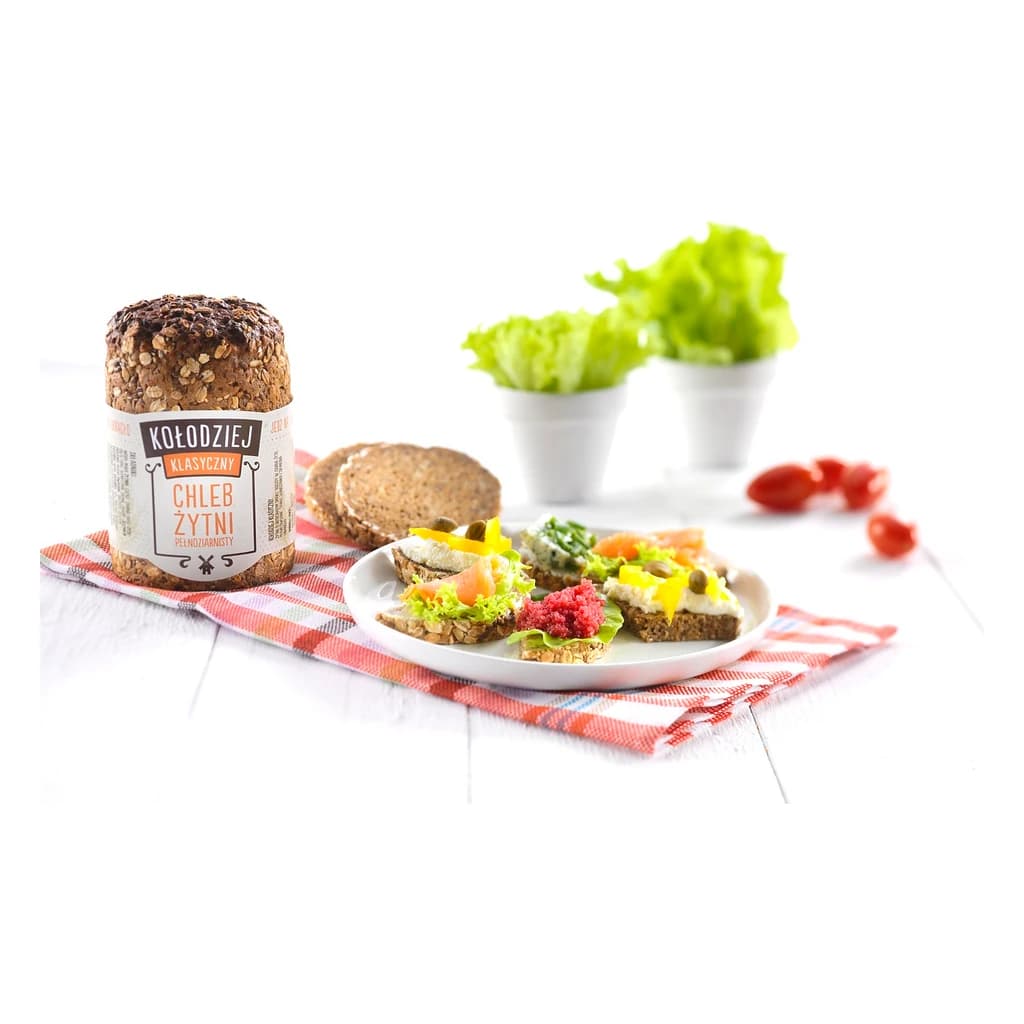
Kołodziej Classic Wholegrain Rye Bread Mix 25 kg
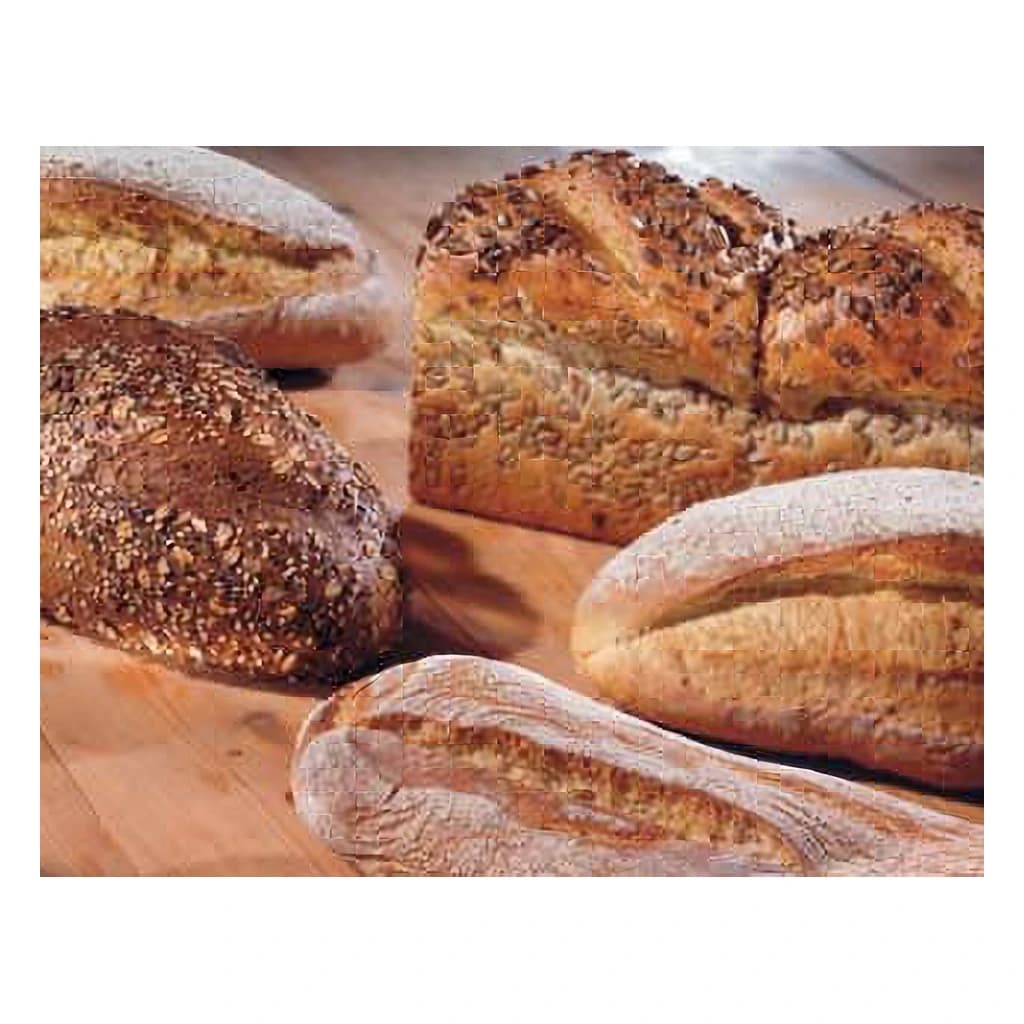
Superkwas Dry Sourdough 25 kg

Eco Trade Dynowski 83% Flour Blend 25 kg
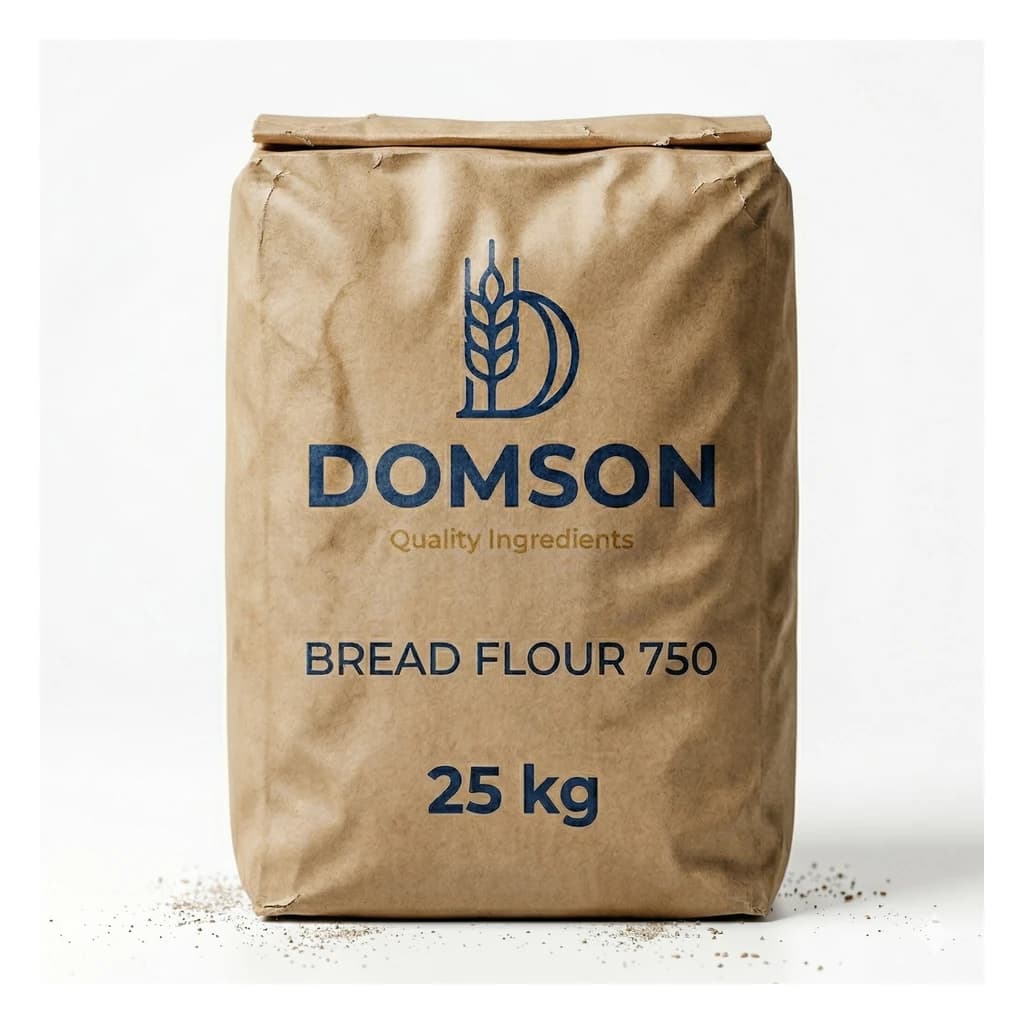
Domson Bread Flour Type 750 25 kg
Komplexmłyn Wheat Flour Type 550 25 kg
Sauer Dark Rye Sourdough Concentrate 25 kg
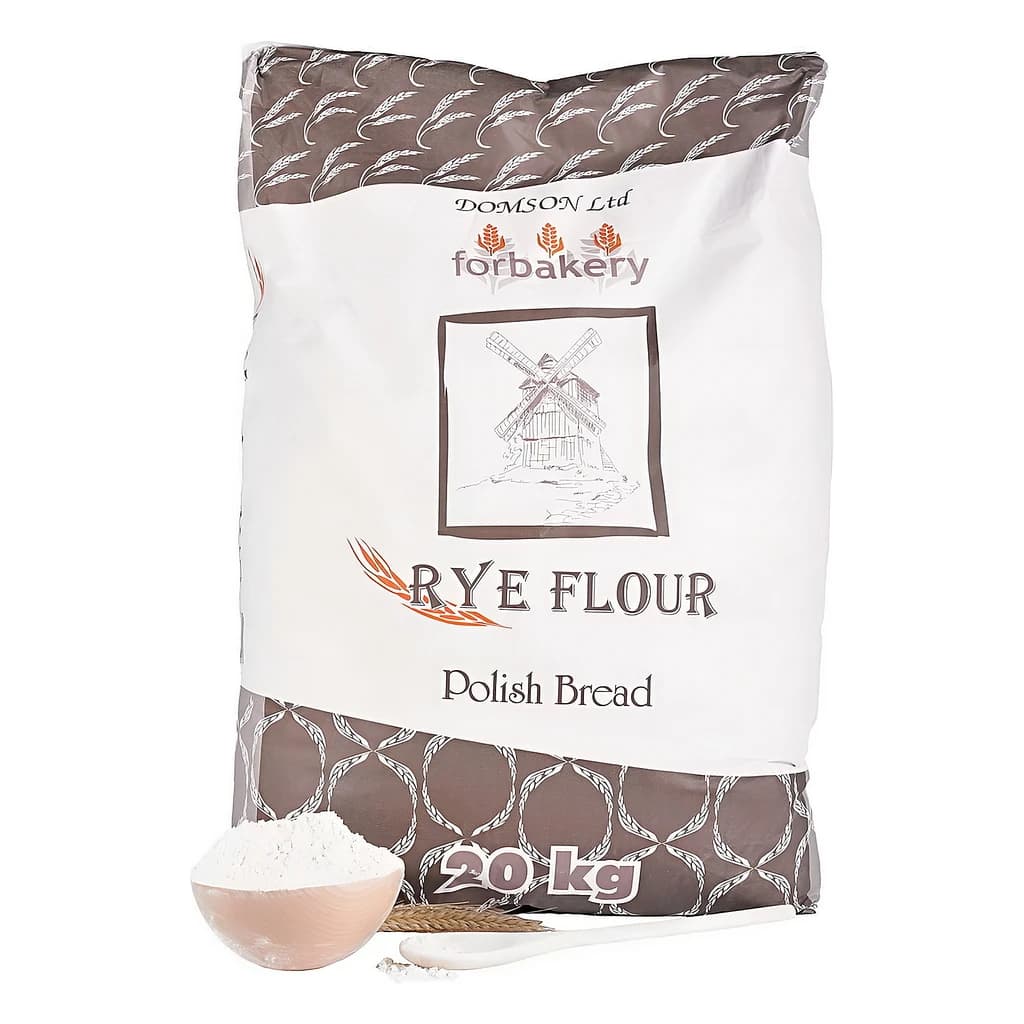
Rye Flour Type 720 25 kg
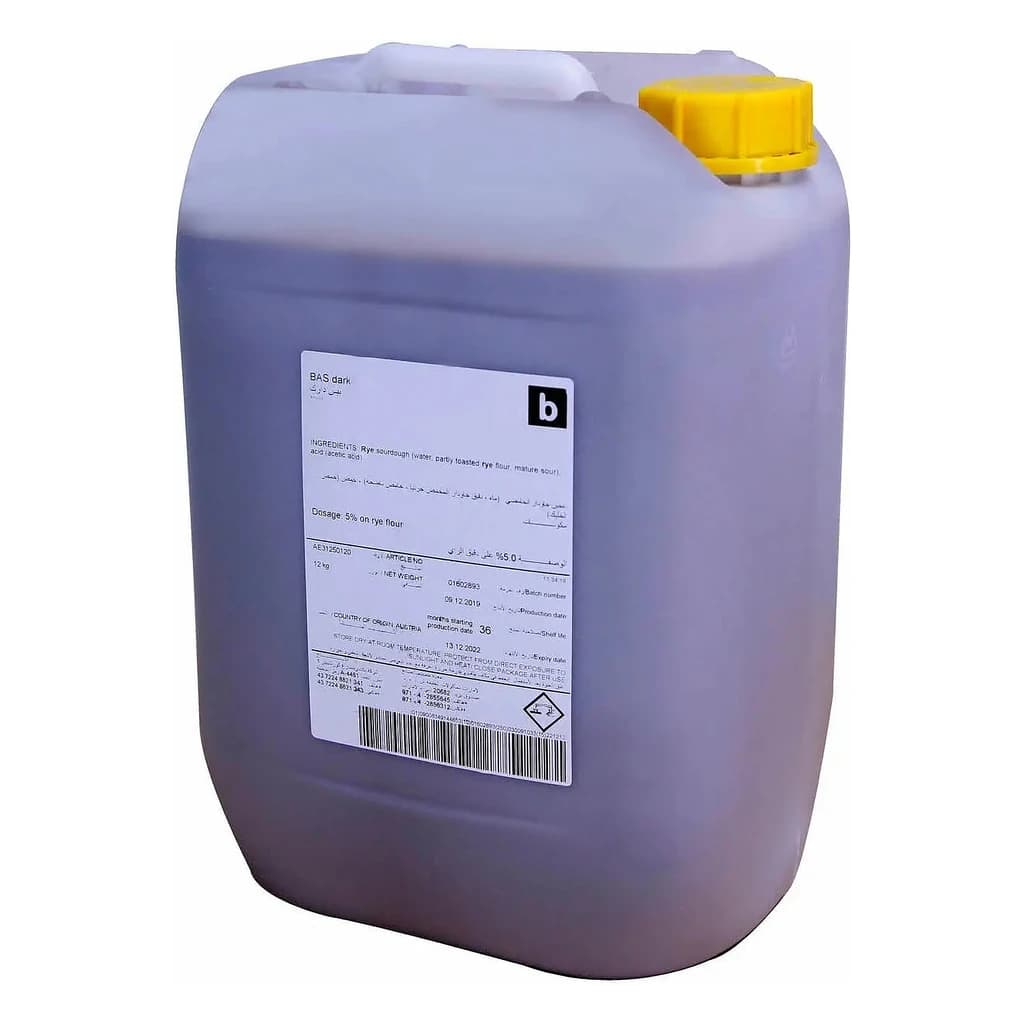
Backaldrin BAS Dark Liquid Rye Sourdough 12 kg
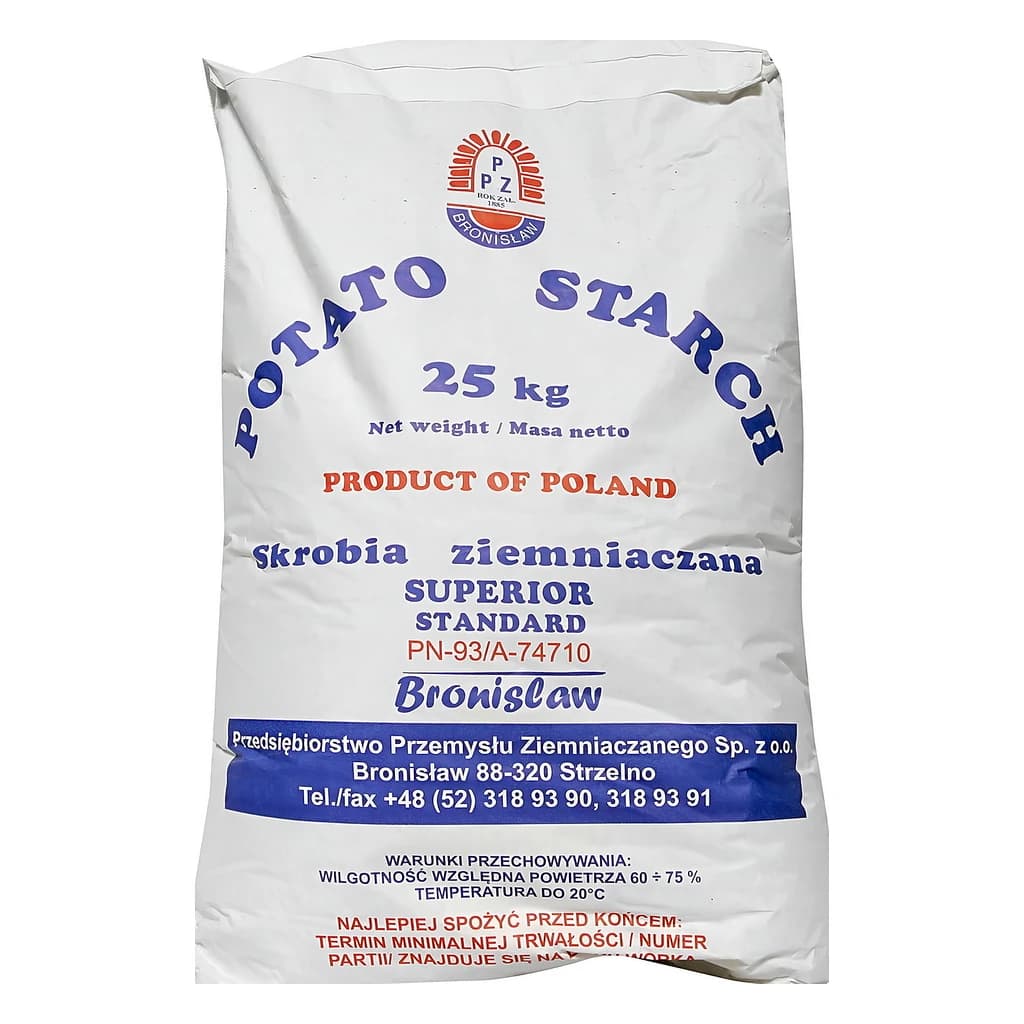
Bronisław Potato Starch 25 kg
Rye Stabil Improver 25 kg
Zeelandia Jagielloński Bread Mix 25 kg
Zeelandia Hearty Rye Bread Mix 25 kg
Potato Flakes 20 kg

Fresh Yeast Benevia 10 kg
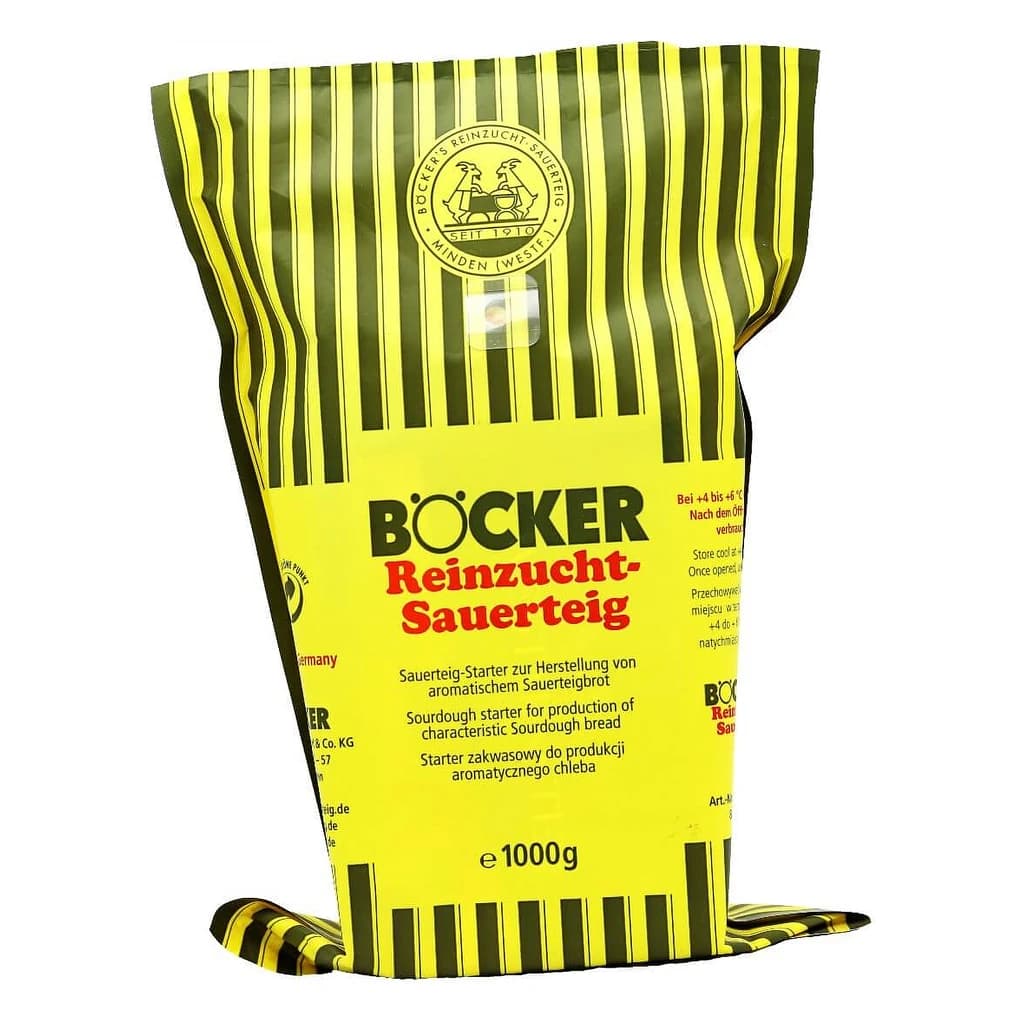
Böcker Reinzucht-Sauerteig Pure Sourdough Starter 1 kg

Lesaffre Rye Sourdough AS ECOL 11 kg
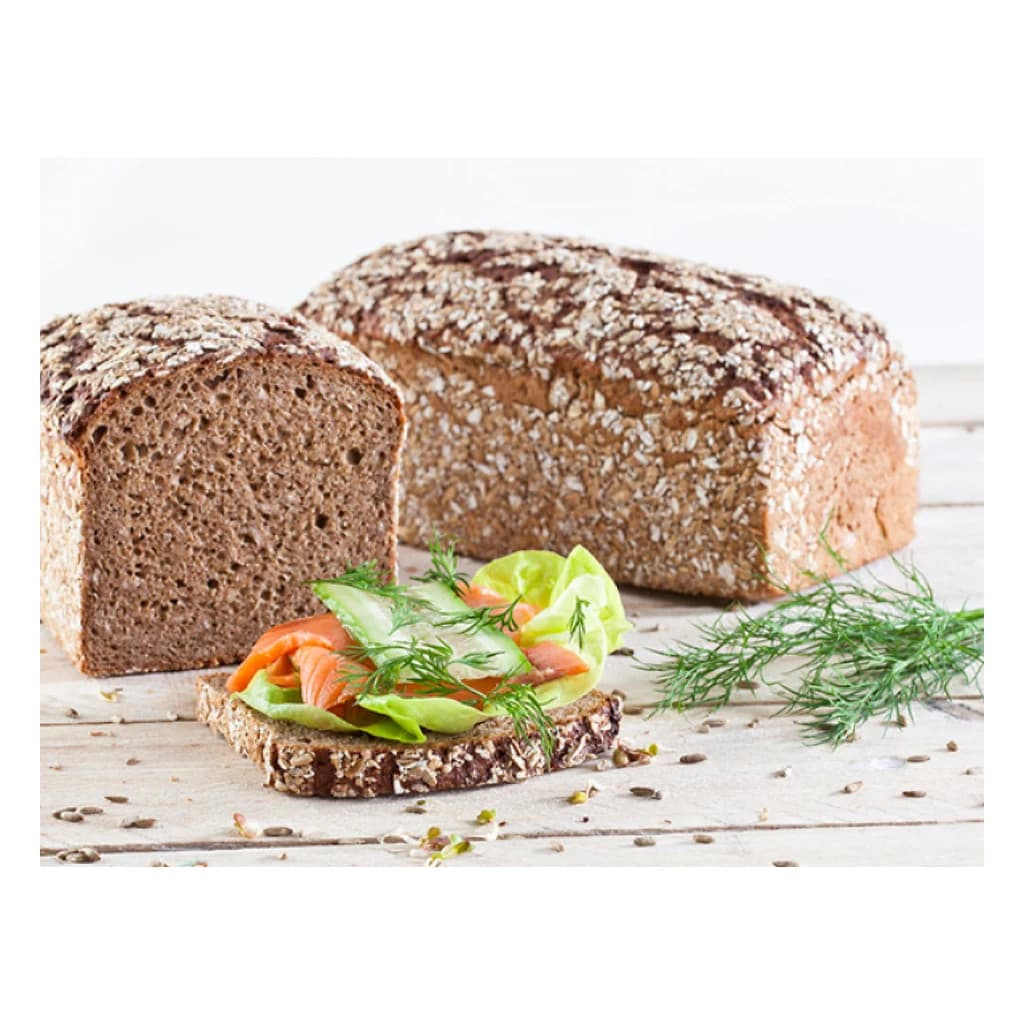
Komplet Żytniak CL Rye Bread Mix 10 kg
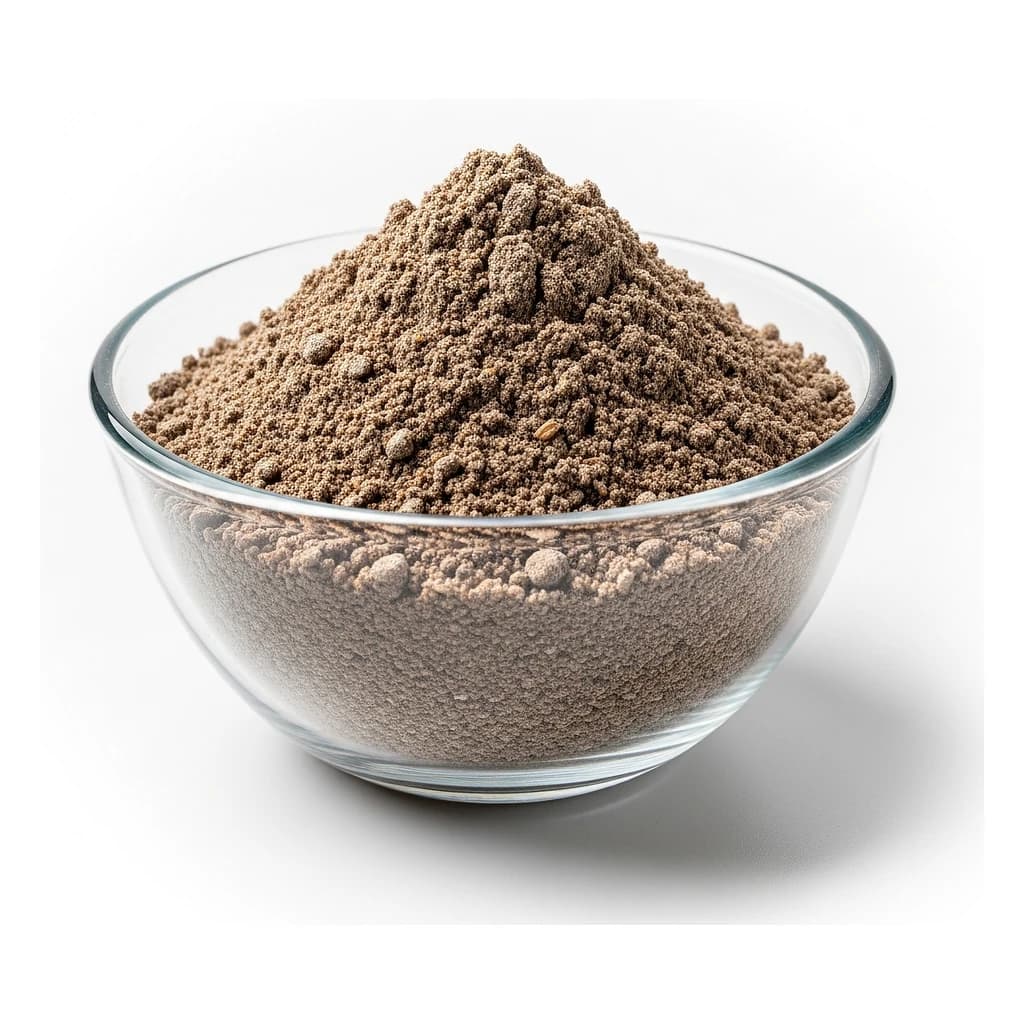
Wholemeal Rye Flour Type 2000 40 kg
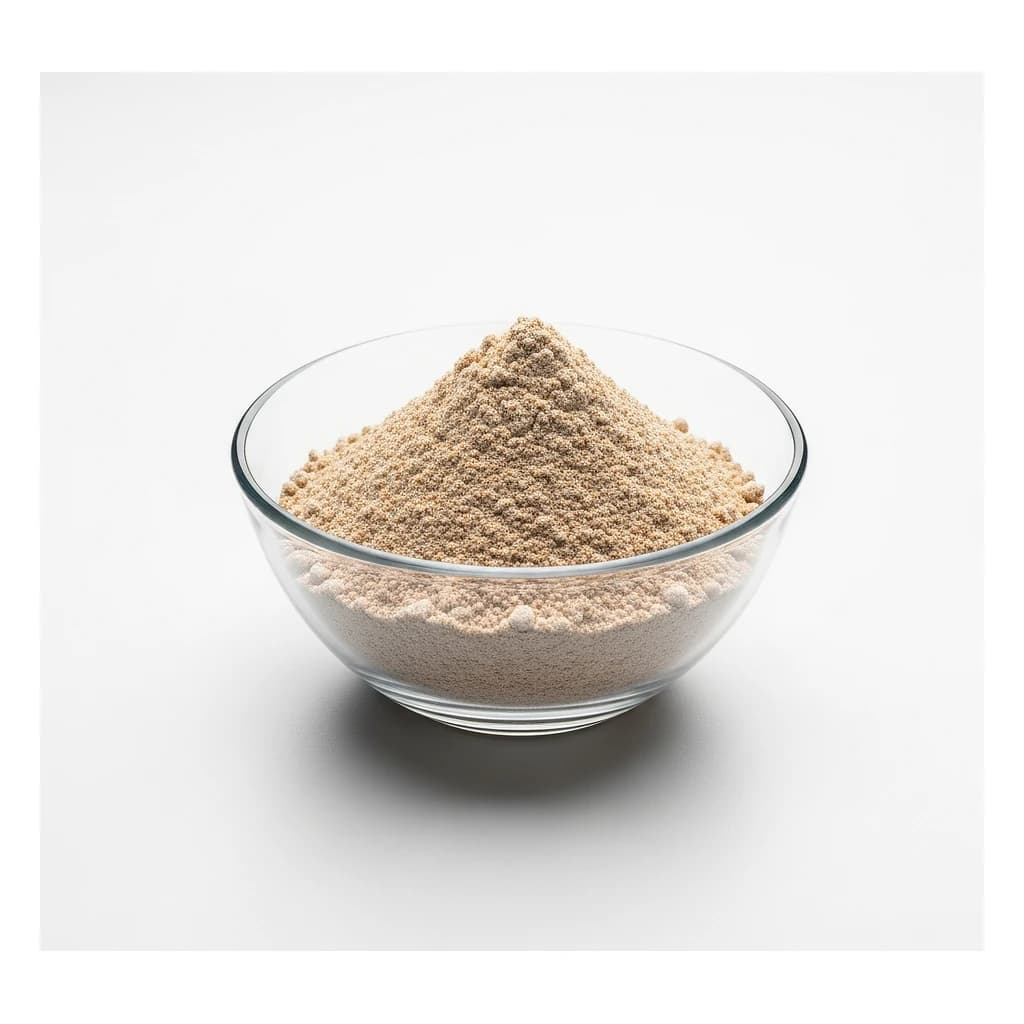
Graham Wheat Flour Type 1850 40 kg
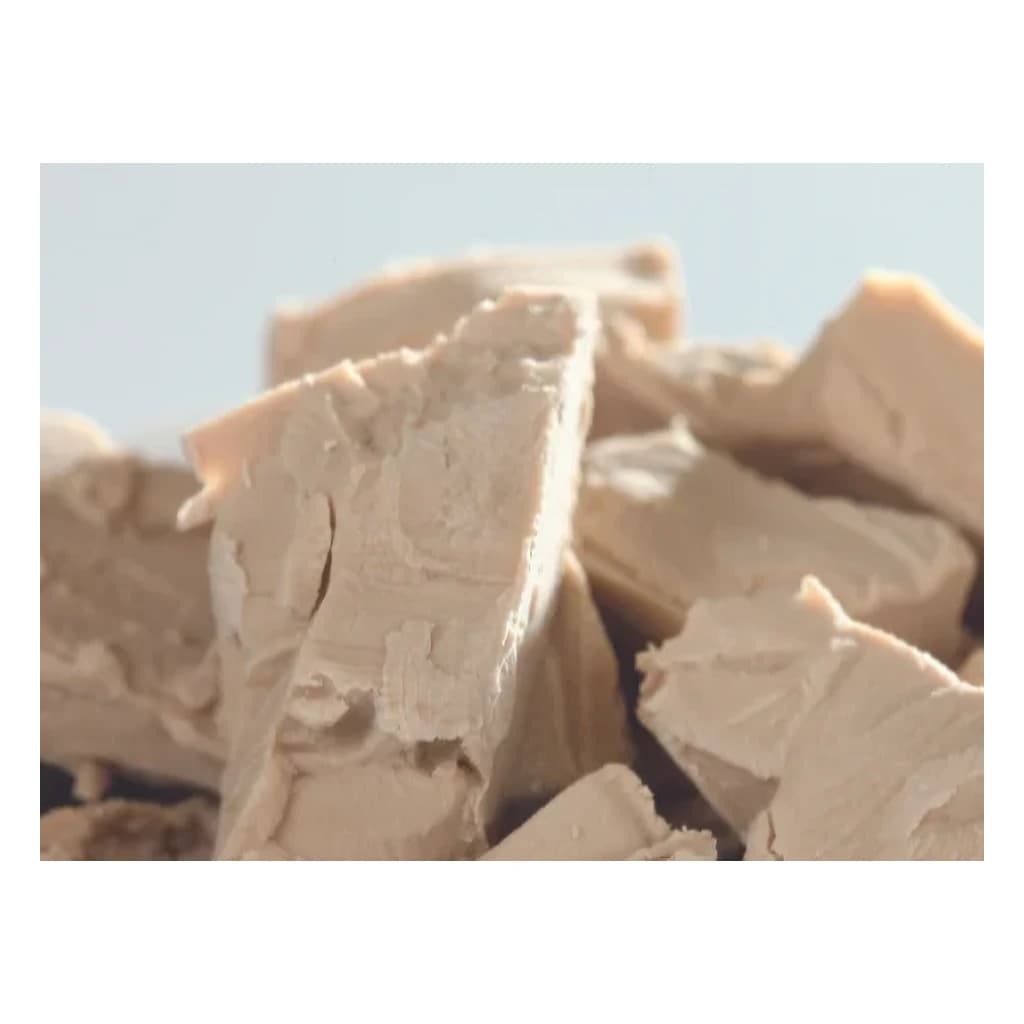
Fresh Yeast Traditional 12 kg
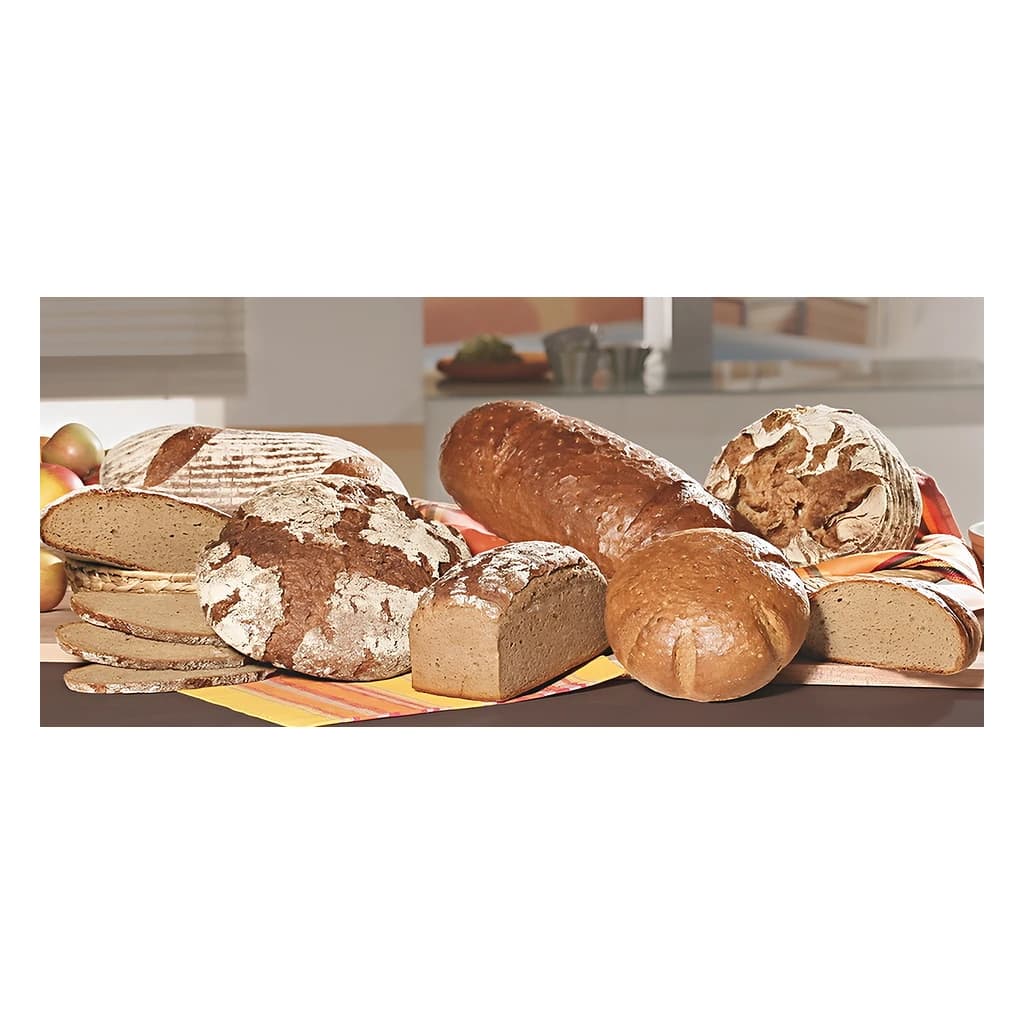
IREKS Natural Liquid Rye Sour 12.5 kg
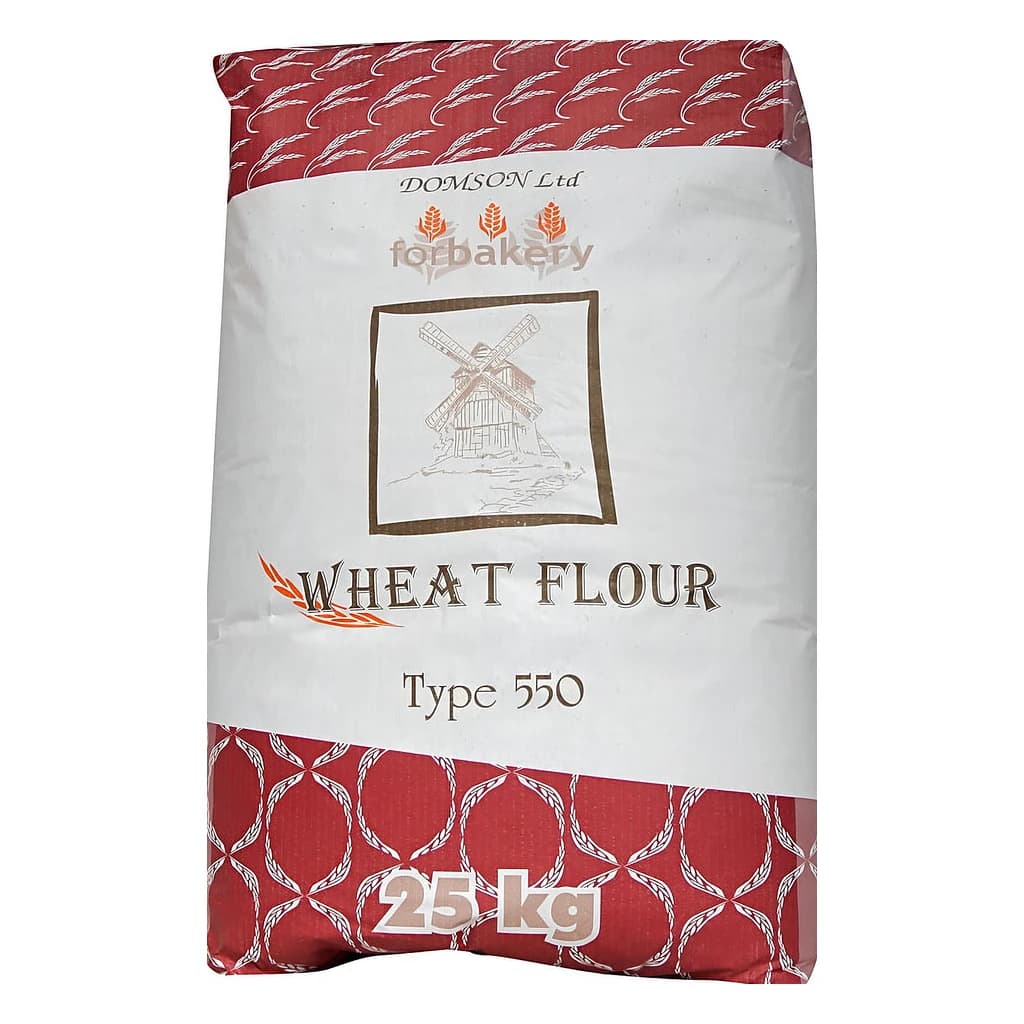
Gdańskie Młyny Wheat Flour Type 550 25 kg
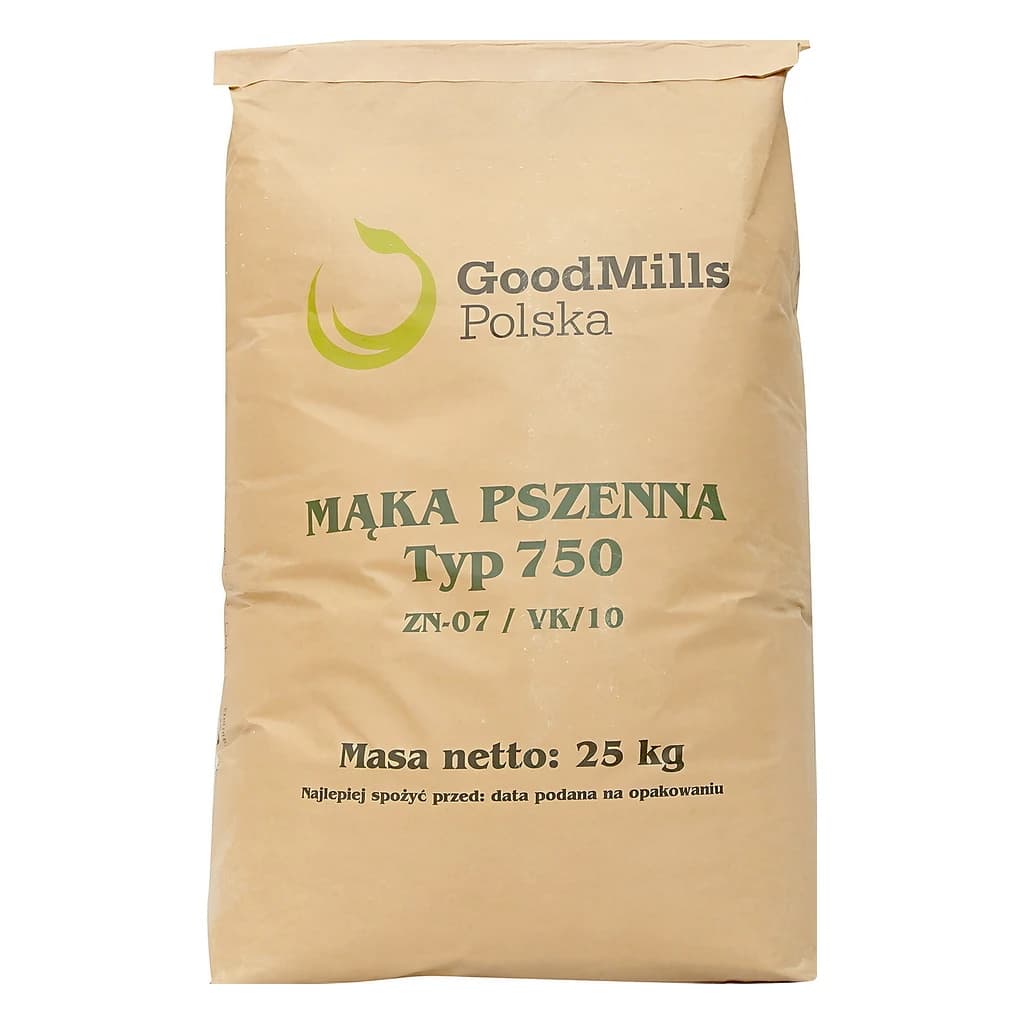
Wheat Flour Type 750 25 kg