
Pączki and faworki: dough chemistry, frying temperature control and finishing for Polish doughnuts
A working bakery guide to Poland's two great Carnival fried pastries — pączki (filled enriched-dough doughnuts) and faworki/chrust (crisp ribbon pastries) — written for professional production. It covers the enriched yeast dough (medium-strong T550 flour, generous or osmotolerant yeast, egg yolk, butter and the traditional spoon of spirit), the scalded-dough (parzone) method for a softer, longer-fresh crumb, and the one thing that separates a great pączek from a greasy one: frying-fat temperature control at 175-180 °C and the pale ring (jasna obwódka / rant) that proves correct proofing and frying. It then covers professional frying-fat selection (solid palm fat vs liquid oils, smoke point, oxidative stability, the total-polar-compound discard limit), the heritage fillings (rose-petal jam, plum powidła, advocaat, custard), and finishing (lukier glaze, icing sugar, candied orange peel). Numbers come first from first-party supplier datasheets and are cross-checked against Polish baking authorities and EU food law, then mapped to ready-to-buy Domson catalogue products. Authentic Polish names are kept (with diacritics) and glossed in English.
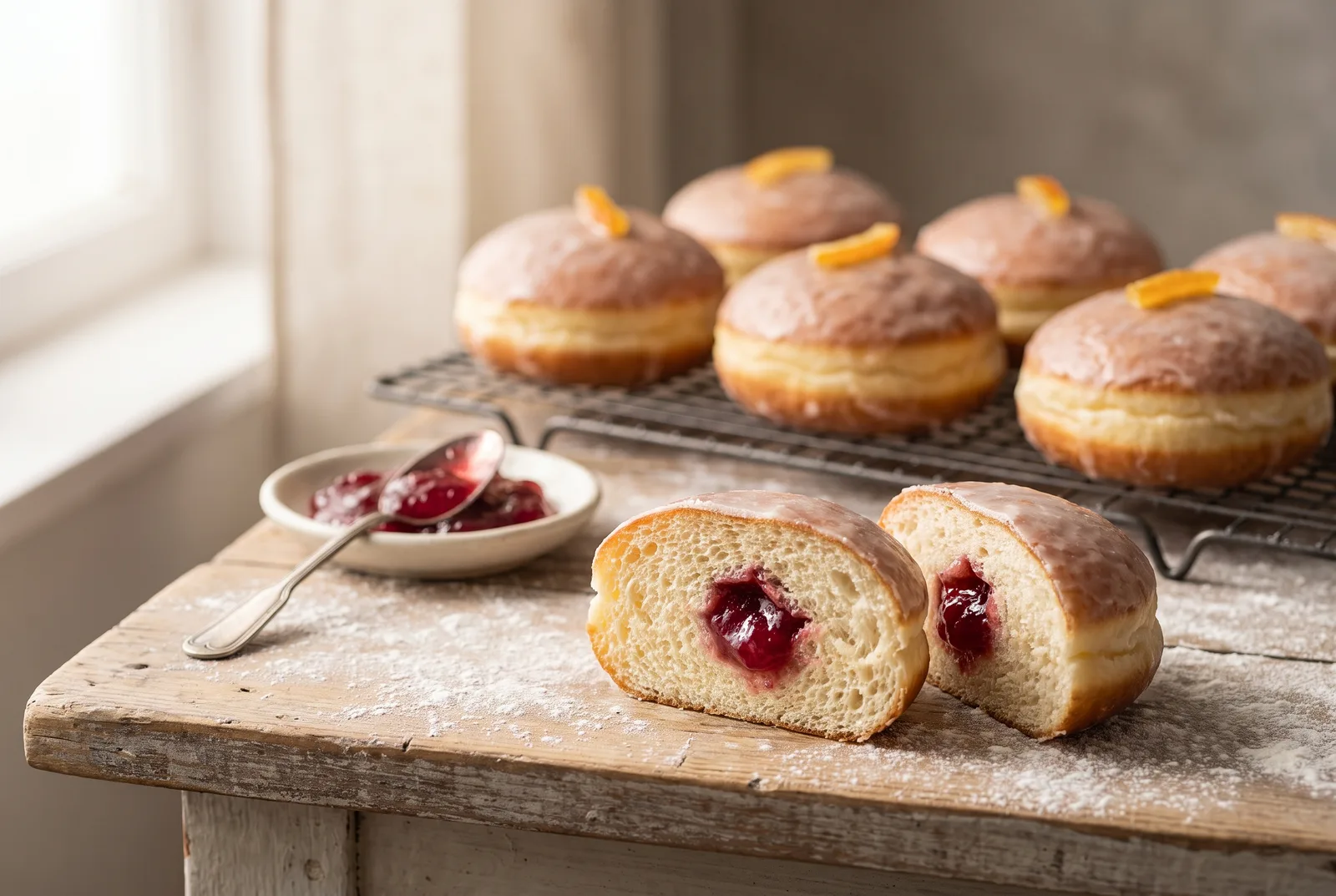
Pączki and faworki: dough chemistry, frying temperature control and finishing for Polish doughnuts
For Polish bakeries, two fried pastries define the run-up to Lent: the pączek (plural pączki) — a round, filled, deep-fried enriched-dough doughnut — and faworki (also called chrust or chruściki) — crisp, blistered ribbon pastries dusted with icing sugar. Both peak on Tłusty Czwartek ("Fat Thursday", the last Thursday of Carnival before Ash Wednesday), the single biggest doughnut day of the Polish year. This dossier treats them as a production pair: same fryer, same temperature discipline, very different doughs.
This is a national (Pillar B) topic, so it leans on the universal craft concepts covered elsewhere in the Academy. The two that matter most here are frying fats (see A4-frying-fats-and-oils) and enriched-dough leavening (see A2-osmotolerant-yeast-enriched-doughs); the formulas connect to A8-enriched-dough-formulas, the fillings to A6-pastry-creams-fillings, and the finishes to A7-glazes-mirror-and-fruit and A7-icings-and-buttercreams. Within Pillar B it sits next to B1-enriched-yeast-doughs (babka, chałka, drożdżówki) and the festive-calendar overview in B1-seasonal-festive-baking.
The figure below shows the full pączki production flow.
A little authentic history (and the right regional names)
Pączki are old, but they were not always sweet. Before yeast dough became common — around the turn of the 17th/18th century — Polish pączki were made from bread dough and stuffed with słonina (pork fat/bacon); they were savoury and washed down with vodka, eaten during the Carnival feasting that preceded Lenten fasting. The sweet, jam-filled doughnut we know today is a later development, drawing on Arab/Mediterranean and Western European pastry traditions. The custom of eating pączki specifically on Tłusty Czwartek spread in Poland around the turn of the 16th/17th century.
The scale today is remarkable: on Fat Thursday the average Pole eats about 2.5 pączki, and Poles together eat on the order of ~100 million in a single day. The most storied pączki house is A. Blikle on ul. Nowy Świat 33 in Warsaw, run by the Blikle family for generations.
Get the names right, because your customers will:
- Pączek / pączki — the standard Polish word.
- Krepel / kreple — Silesia (Śląsk), borrowed from the German Krapfen; historic local names include bliny and babałuchy.
- Pampuch / pampuchy — Wielkopolska and elsewhere.
- Oponka / oponki — a ring doughnut, often made with twaróg (curd cheese).
- Faworki — central Poland and Warsaw; from the French faveur, "a narrow silk ribbon", which describes the bow shape exactly.
- Chrust / chruściki / chrustki — the older Polish term, kept in Silesia and the south.
The figure below shows a regional-name map. (Detailed comparison in the table below.)
Part 1 — Pączki: the dough
It is an enriched yeast dough
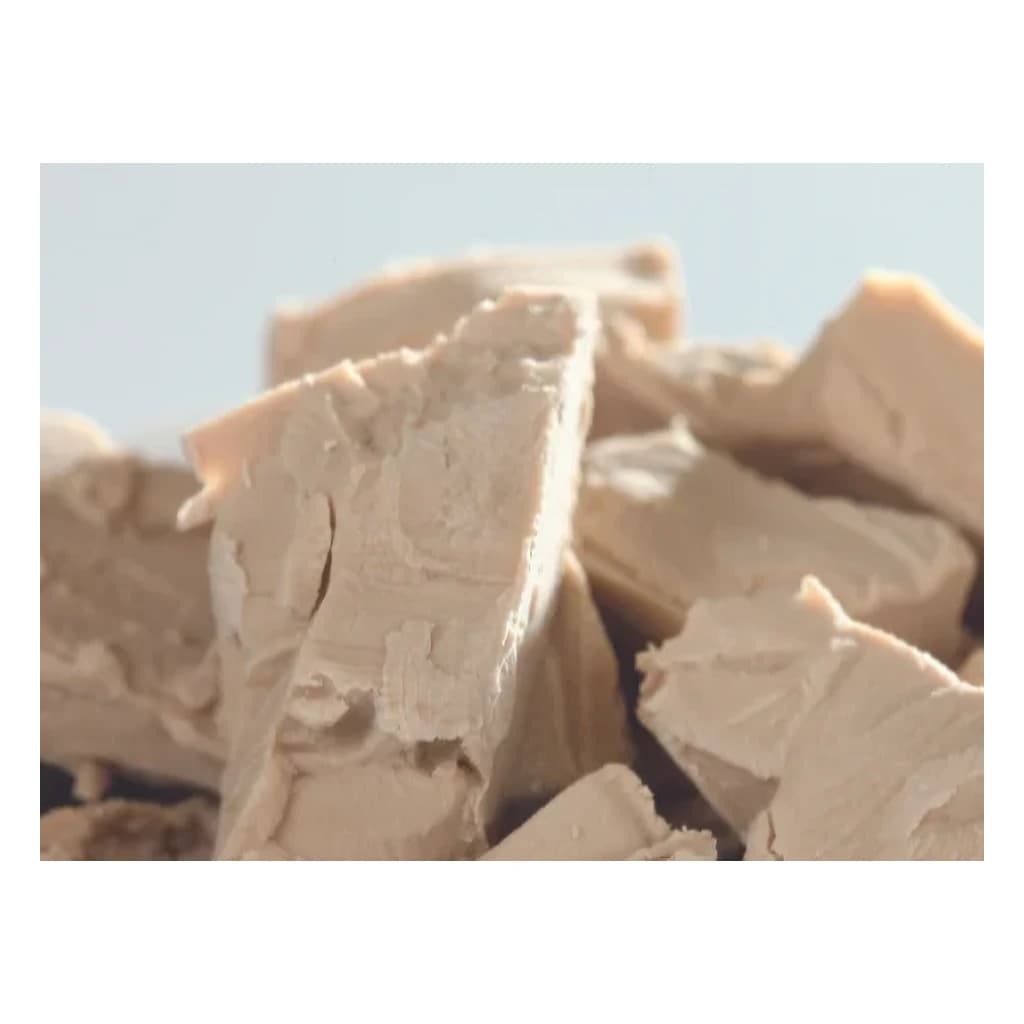
A pączek is fundamentally an enriched yeast dough (rich in egg yolk, sugar, butter and milk) that happens to be fried rather than baked. The enrichment is exactly what makes it tricky: sugar and fat osmotically stress the yeast and slow gas production, so the dough needs either a generous dose of yeast or an osmotolerant yeast built for high-sugar doughs (see A2-osmotolerant-yeast-enriched-doughs and A2-yeast-types-comparison). A standard Polish home formula uses around 10 % fresh yeast on flour (50 g yeast to 500 g flour); a craft or industrial bakery would typically dial this back with osmotolerant yeast or a doughnut concentrate.
Flour. Aim for a medium-strong wheat flour — enough gluten to trap gas and hold the round shape, not so strong the crumb turns chewy. The Polish workhorse is Type 550 (roughly the French T55). Domson's own Wheat Flour Type 550 datasheet gives the target profile precisely: ash 0.51-0.58 % (dry matter), wet gluten 28-32 % (or protein 11.5-12.5 %), gluten index 75-99, falling number ≥220 s and moisture max 15 %. That gluten index in the high-70s-to-90s range is the sweet spot — strong, elastic gluten without excess. (Note the flour is fortified with calcium carbonate, iron, thiamin and niacin, and some batches carry ascorbic acid (E300) and enzymes as processing aids; allergen: gluten, with possible traces of soy, lupin and mustard.) For very white, light pączki some bakers use Type 500 ("mąka luksusowa"); add a portion of strong flour only if large filled pieces need extra structure. (See the table below.)
The classic straight-dough formula
Converted to baker's percentage (full card below):
| Ingredient | Baker's % | Example |
|---|---|---|
| Wheat flour T550 | 100 % | 500 g |
| Milk (warm) | 50 % | 250 ml |
| Fresh yeast | 10 % | 50 g |
| Sugar (+ vanilla sugar) | 12 % | 60 g |
| Whole egg + 4 yolks | 24 % | 122 g |
| Soft butter | 10 % | 50 g |
| Spirit / vodka | 3 % | 1 tbsp |
| Salt | 1 % | pinch |
Method in brief: disperse the yeast in warm milk, combine with the other ingredients, knead ~15 minutes to a smooth, elastic dough that pulls cleanly from the bowl; bulk-ferment 1-1.5 h; roll and cut at about 6.5 cm; final proof ~30 minutes until light and aerated; then fry. The four egg yolks are not optional decoration — yolk lecithin enriches and tenderises the crumb and helps the colour.
The spoon of spirit (spirytus)
Almost every traditional recipe adds about one tablespoon of rectified spirit (spirytus) or vodka per ~500 g flour. The craft rationale is that the alcohol helps set the egg/flour protein faster at the surface during frying and so reduces fat absorption, giving a less greasy doughnut. Treat the protein-setting explanation as traditional practice rather than settled science; what is well attested across sources is the outcome — less oil pickup — and the same trick is used in faworki. (The spirit is a kitchen-sourced ingredient, not a catalogue line.)
The scalded-dough (parzone) method for softer, longer-fresh pączki
A widely used professional upgrade is ciasto parzone / zaparzane — scalded dough. A portion of the flour (for example 320 g of a 960 g total) is scalded with boiling milk (e.g. 500 ml), cooked briefly to a smooth paste and cooled before the rest of the ingredients go in. Gelatinising that starch lets the dough bind more water, which gives a more tender crumb that stays fresh noticeably longer — the same yudane/tangzhong principle used in soft enriched breads. The trade-off is a wetter, richer, slower dough (this version also carries far more yolk and sugar). The full card is below; fry this one at 175 °C. Proof it well but not over — over-proofed pieces collapse and lose the pale ring.
Part 2 — Frying temperature control and the pale ring
This is the section that decides whether your pączki are light and dry or heavy and greasy.
The 175-180 °C window
Fry pączki in fat held at roughly 175-180 °C, about 2 minutes per side until golden:
- Too cool (below ~165 °C): the dough fries too slowly, soaks up fat, and comes out heavy and greasy.
- Too hot (above ~180 °C): the surface browns or burns before the centre cooks, leaving a raw, doughy core.
A reliable thermometer (or a thermostatically controlled fryer) is non-negotiable in production, and the fat temperature must be allowed to recover between batches — overloading the fryer drops the temperature and spikes oil pickup. The browning itself is the Maillard reaction plus caramelisation at the crust, the same crust chemistry described in A5-baking-oven-science, just driven by hot fat instead of oven air.
The pale ring (jasna obwódka / rant) — and why it is a good sign
A correctly fried pączek shows a pale band around its equator — the jasna obwódka or rant. It is the strip of dough that never touched the hot fat: a well-proofed, aerated pączek floats, so only about one-third of its height is submerged at any time. Fry one side, flip, fry the other third, and the middle band — which stayed above the oil line throughout — keeps its pale colour. The figure below shows this pale ring.
The ring is a quality marker, not just decoration. It only appears when three things are right at once:
- The dough was kneaded enough to be light and full of gas.
- It was proofed enough to float (under-proofed dough sinks and fries all over → no ring).
- The fat was at the correct temperature (~175-180 °C) and the pieces were not pushed under.
If your pączki come out with no ring, look first at proofing and fat temperature. (Do not credit the ring to the spirit — that is a separate effect on fat uptake.)
Part 3 — Choosing and managing the frying fat (the B2B part)
Frying fat is a consumable that degrades all day; choosing the right one and knowing when to discard it is core production economics and food safety. This builds directly on A4-frying-fats-and-oils and A4-fat-types-and-selection.
Solid frying fat vs liquid oil
Polish professional production has long favoured a stable, near-neutral fat that survives hours at frying heat. The two ends of the spectrum, both stocked at Domson:
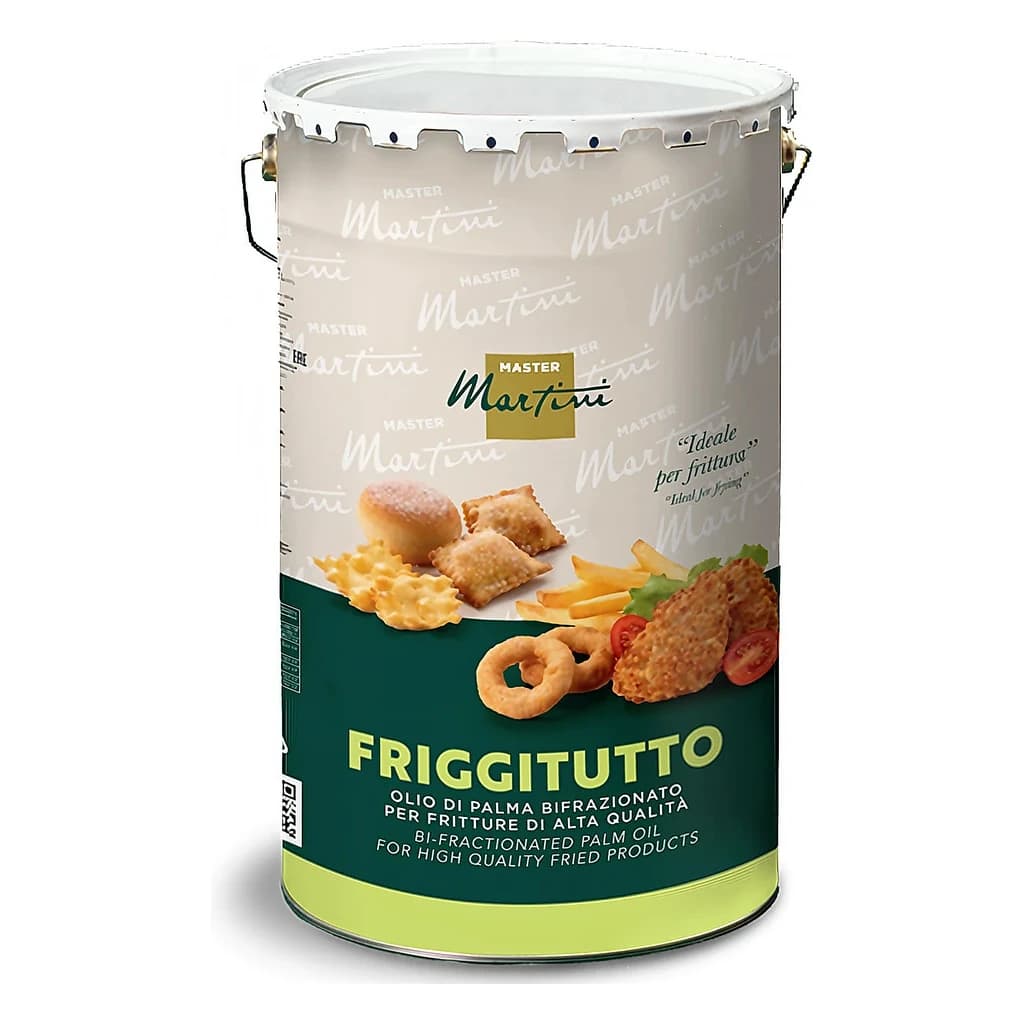
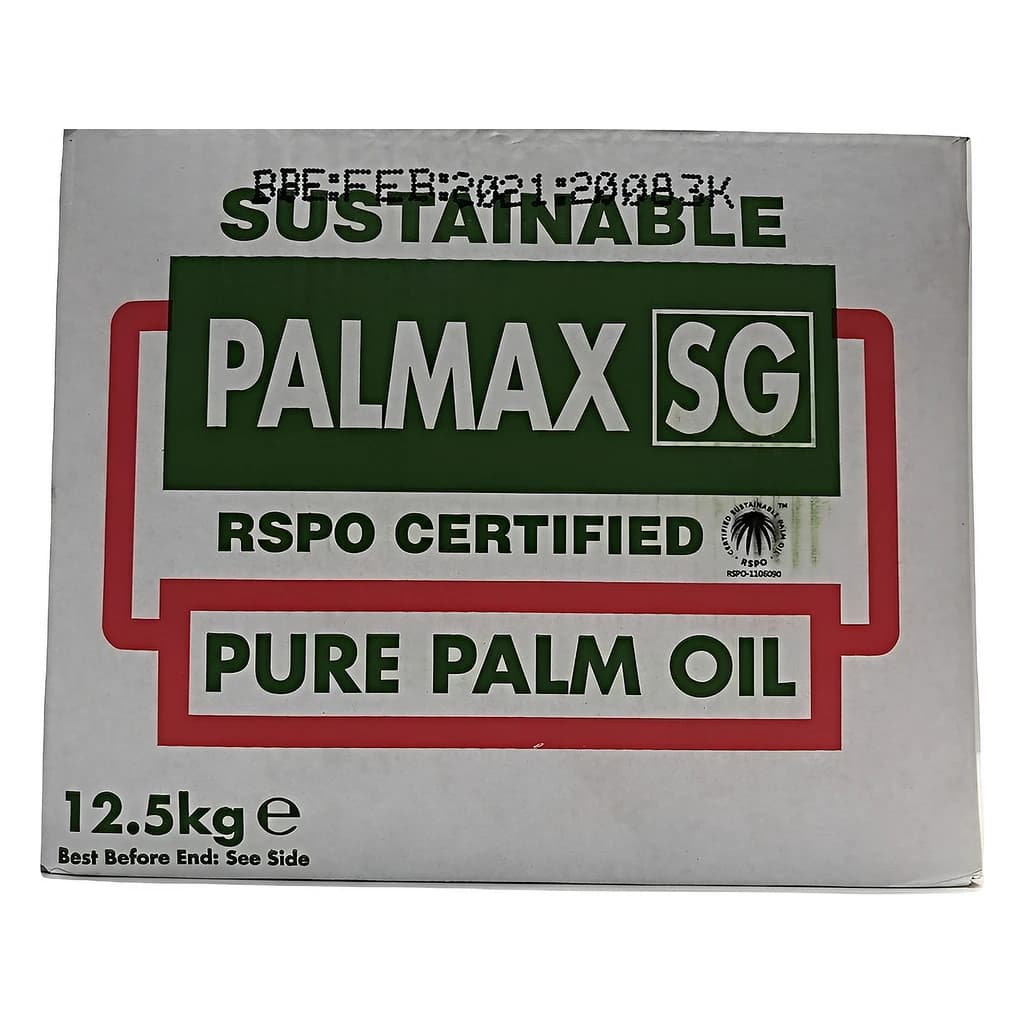
- Refined palm frying fat (e.g. KTC Palmax SG, Master Martini Palm Frying Oil) — a solid white fat with a low iodine value of 45-60 (high saturation = high oxidative stability) and melting point 34-42 °C. Per 100 g it is ~99.9 g fat (saturates 45.3 g, mono 41.6 g, poly 8.3 g, trans 1.0 g), with tight incoming-quality limits (free fatty acids ≤0.2 %, peroxide value ≤2.0 meq O₂/kg). It is free from all 14 EU allergens and is vegan/halal/kosher — useful for mixed clienteles. The KTC sheet is RSPO-certified sustainable palm (a point worth checking against your own sustainability stance — see A4-sustainable-palm-free-fats). Note: the 1.0 g/100 g trans fat is within the EU 2 g/100 g limit for industrially produced trans fatty acids (iTFA) set by Commission Regulation (EU) 2019/649; confirm with the supplier that TFA arise from natural palm-oil geometry rather than partial hydrogenation.
- Refined sunflower oil (e.g. Olympic Oils Sunflower Oil) — liquid, with a high smoke point but ~60 % polyunsaturates (per 100 g: saturates 11 g, mono 28 g, poly 60 g), so it oxidises faster under sustained heat. Incoming limits are FFA ≤0.1 %, peroxide value ≤1.0. Good for shorter runs and a lighter mouthfeel.
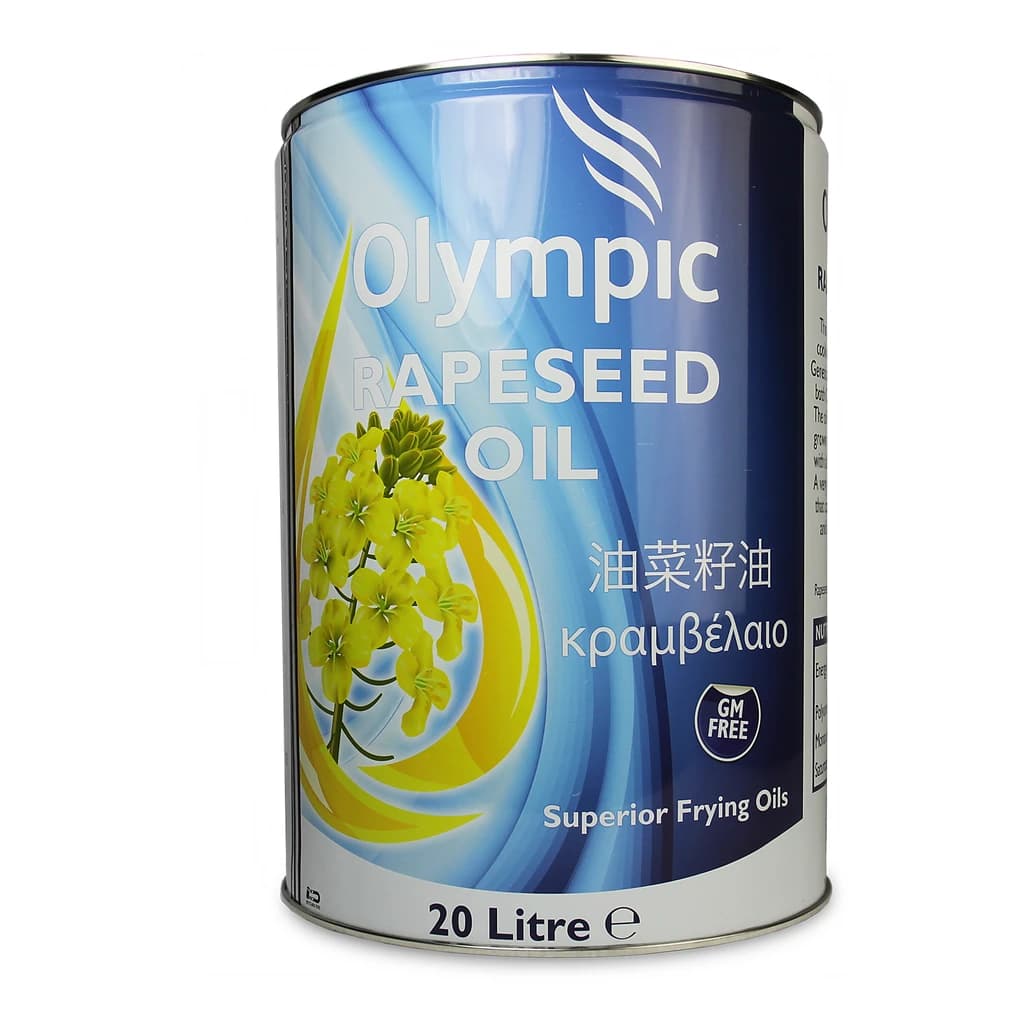
- Refined rapeseed (canola) oil (e.g. Olympic Oils Rapeseed Oil) — neutral, high-monounsaturate, mid-stability; the common all-round choice for craft and home frying.
- Lard (smalec) — the traditional fat for authentic Old-Polish flavour; lower smoke point (~188 °C), best for small batches.
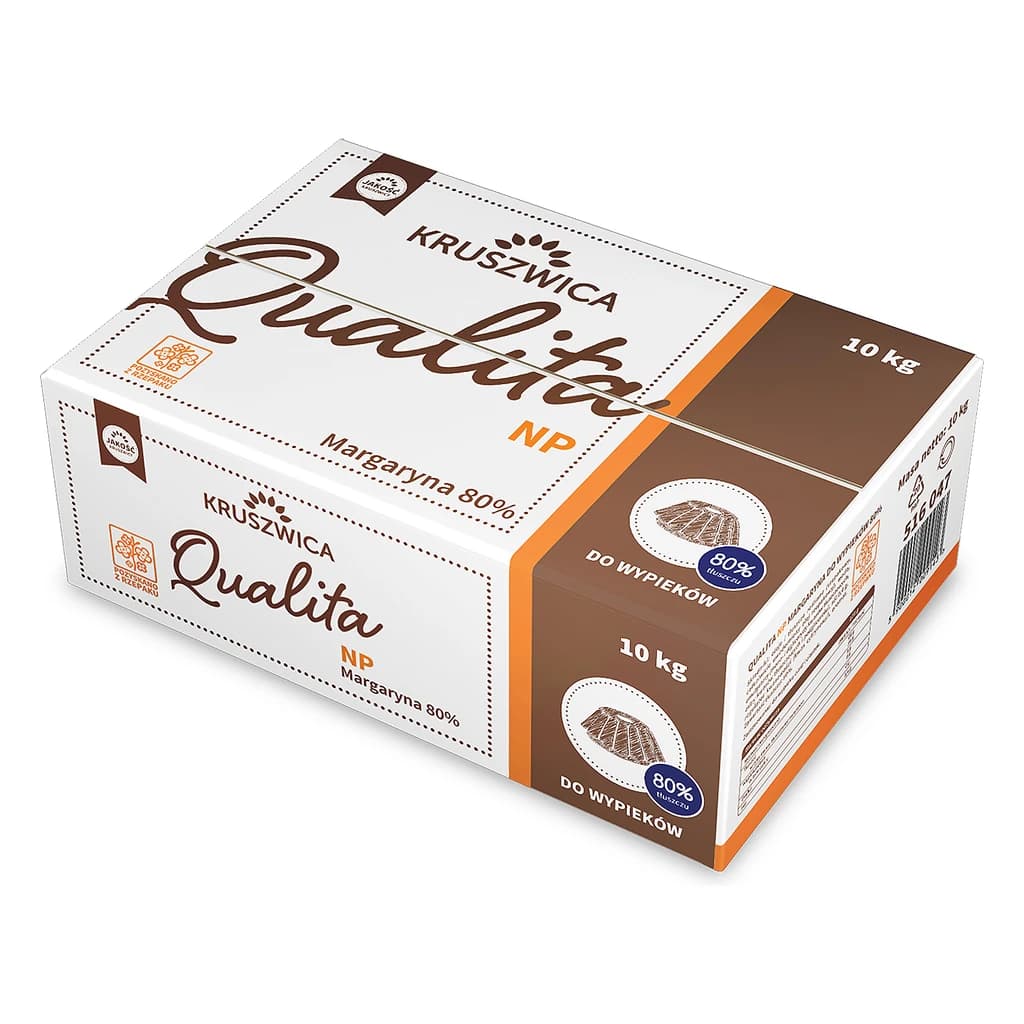
- Palm-free frying margarine/shortening (e.g. Kruszwica Qualita NP Palm-Free Margarine) for bakeries avoiding palm.
Indicative smoke points (they vary widely by source and refining grade, so treat as ranges): palm ~225-235 °C (industry/manufacturer data), sunflower 227-232 °C, rapeseed ~204-246 °C, soybean ~232 °C, lard ~188 °C. See the figure and table below.
When to throw the fat away
Frying fat degrades by oxidation, hydrolysis and polymerisation, producing total polar compounds (TPC) that darken the fat, make it foam and viscous, and worsen flavour and frying performance. Several European countries set a maximum of 24-27 % TPC for commercially used frying fats (Poland commonly applies a 25 % limit); beyond it, discard the fat. A polar-compound meter is the practical bench test.
Why palm pays off on long runs: refined palm fat has very low polyunsaturation (~8 % PUFA, iodine value 45-60), which makes it far more resistant to oxidative degradation at sustained frying temperatures than conventional sunflower oil (~60 % PUFA). Peer-reviewed frying research confirms that palm fat shows significantly slower polar-compound build-up than high-PUFA sunflower oil over many hours at ~175 °C — well suited to the sustained Tłusty-Czwartek frying load. Practical fat management: filter regularly to remove crumb and sugar debris (which carbonise and darken the fat), skim, and top up with fresh fat to keep the bath fresh. (Faults in the fault table below.)
A food-safety note: acrylamide
Frying starchy dough above 120 °C forms acrylamide. Holding the fat at the recommended ~175-180 °C and avoiding over-browning keeps it down; this is exactly why the "dark outside" fault matters beyond appearance. Acrylamide is flagged in the EU framework and on the Olympic Oils datasheet — treat it as a standing control point, not an afterthought.
Part 4 — Fillings (nadzienia)
Fill after frying and cooling. Pączki are fried unfilled, then injected through the side with a long doughnut nozzle (e.g. Polmarkus Stainless Doughnut Filling Tip). This is partly quality — a fried-then-filled pączek keeps a clean crumb — and partly safety: jam injected before frying can boil, burst the doughnut and cause dangerous fat spitting. This is pictured below.
The fillings, from heritage to modern (full table below):
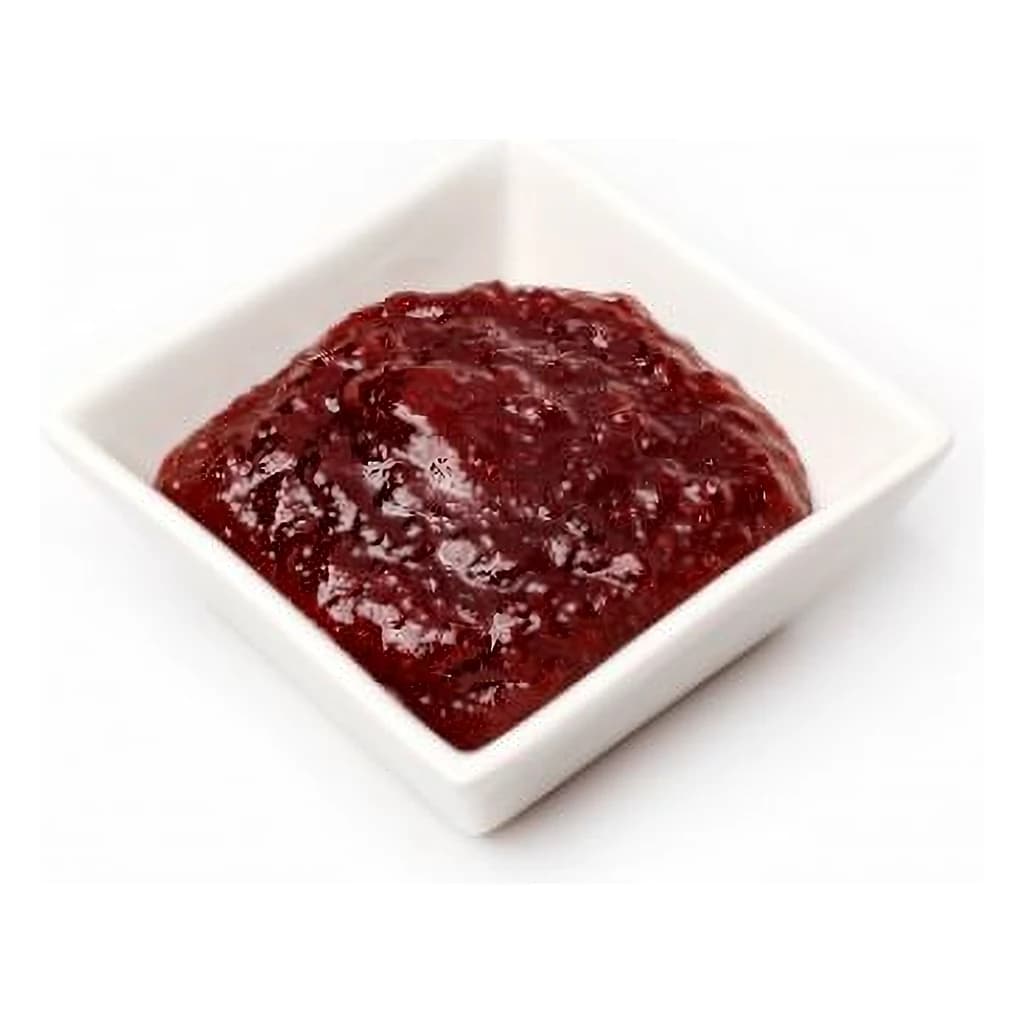
- Rose-petal jam — konfitura / marmolada różana. This is the traditional Tłusty-Czwartek filling and the classic Blikle pączek. Domson stocks Prospona Rose Petal Filling with Sugar, a genuinely authentic Polish product: sugar 49 %, rose petals 25 %, glucose-fructose syrup and modified starch, Brix ≥70 %, acidity ≥1 % as citric, 288 kcal/100 g, and — usefully — no declared allergens (EU 1169/2011). A rose-hip alternative is GIL Rose Hip Confectionery Jam.
- Plum jam — powidła / śliwidło. Dark, sweet-sour, deeply traditional. Martin Braun's "Śliwidło" is 50 % plum (QUID), bake-stable, Brix 35 ±2, pH 3.5, gelled with modified starch plus gellan and xanthan gum; allergens soy and milk by cross-contamination only. (Bake-stability is irrelevant when you fill after frying, but it makes the product robust and shelf-stable.)
- Multifruit / raspberry — marmolada wieloowocowa / malinowa. Everyday choices: Vortumnus Multifruit Thick Jam, Vortumnus Raspberry Seedless Jam.
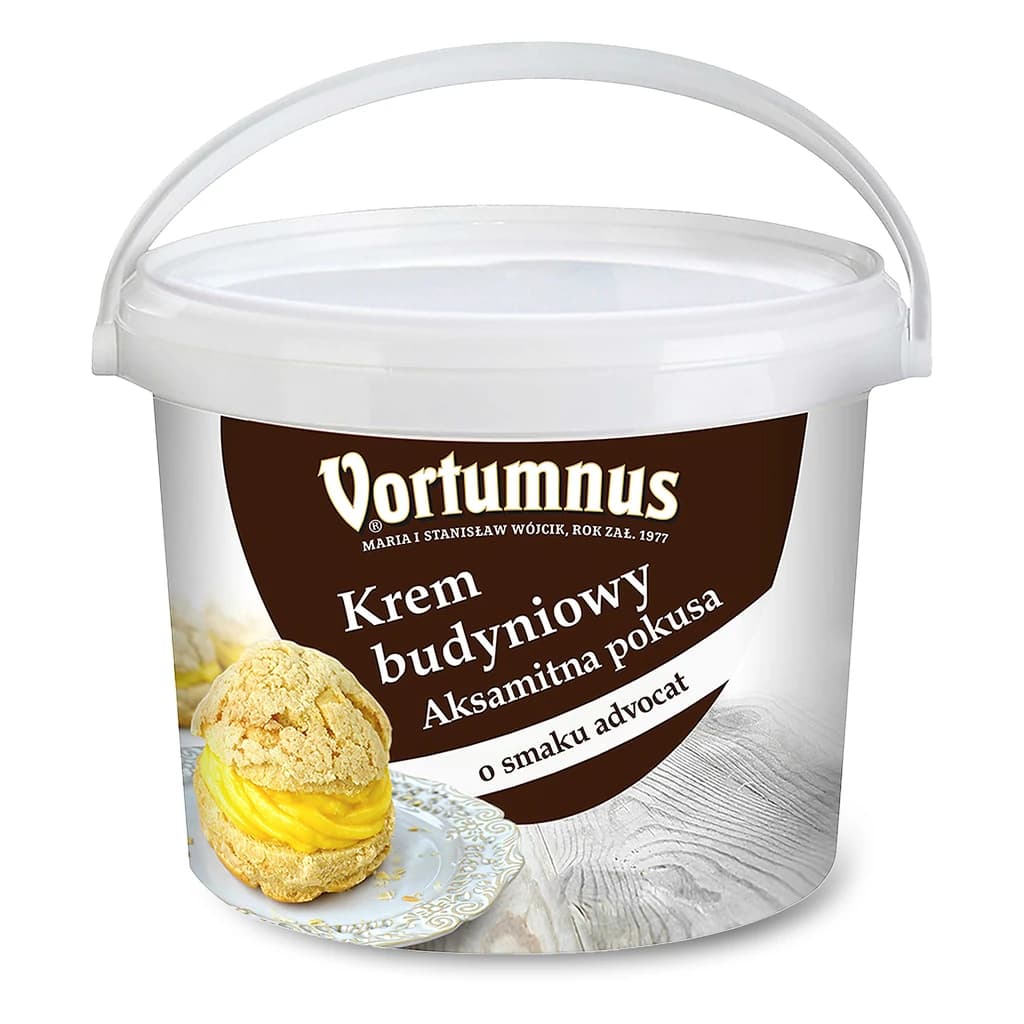
- Advocaat — adwokat. The egg-liqueur-flavoured yellow cream, very popular for filled pączki: Vortumnus Advocaat Pudding Cream (thermostable, extract ≥55 %, pH 4-5) or Figand Cremix Advocaat. ⚠️ The Vortumnus advocaat is coloured with tartrazine (E102) and sunset yellow (E110), which carry the EU warning "may have an adverse effect on activity and attention in children" — declare it. Also verify with the supplier whether this product contains egg; authentic advocaat is egg-based, and if eggs are present they are an EU Annex II allergen requiring bold declaration in the final product.
- Custard — krem budyniowy. Vanilla custard creams (Zeelandia, Emix), connecting to A6-pastry-creams-fillings.
Part 5 — Finishing
Three classic finishes (pictured below):
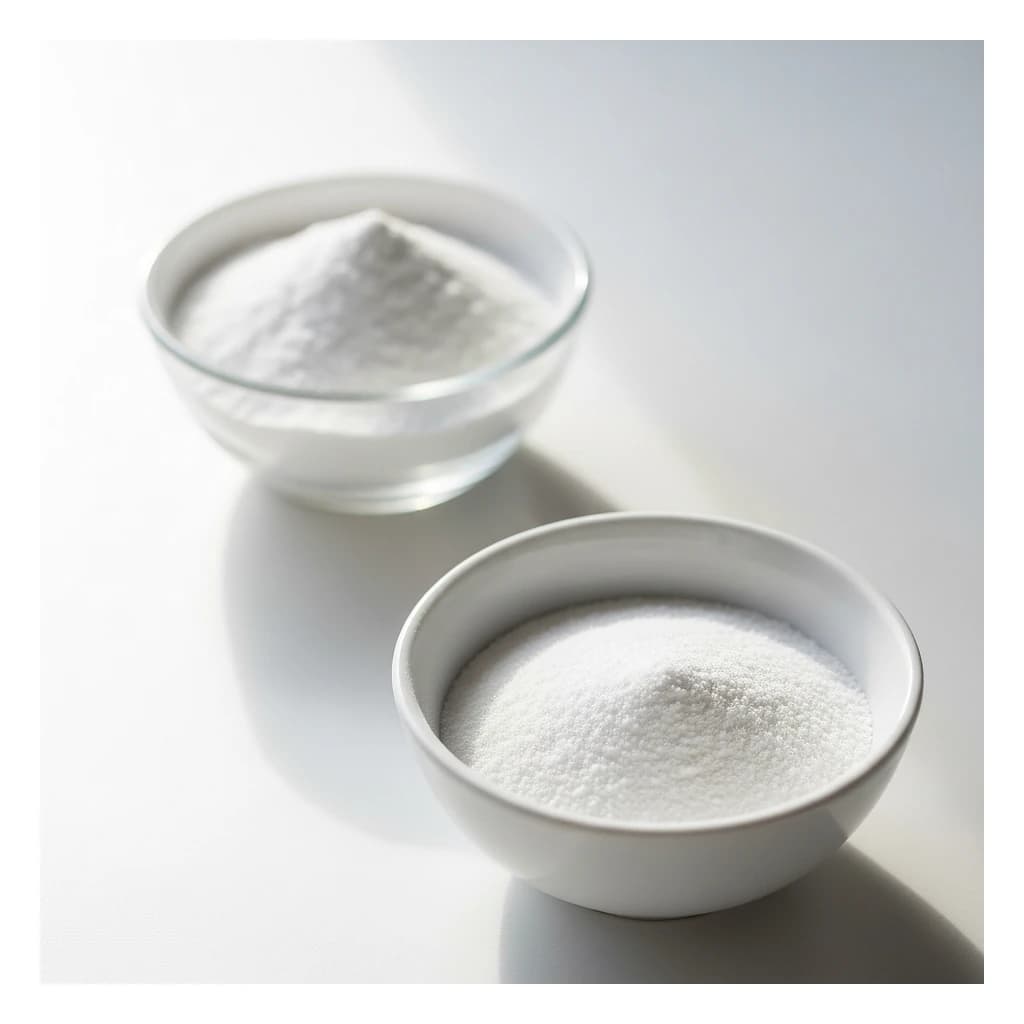
- Icing sugar — cukier puder. The simplest finish; also the only finish for faworki. Use a fine, anti-caked confectioner's sugar such as Kent Foods Icing Sugar CP (~99.2 % sugar, tricalcium phosphate E341(iii) anti-caking agent, mean particle aperture 19-26 µm) or Icing Sugar 10 kg. Dust once the doughnuts have drained and cooled slightly, or it dissolves and weeps.
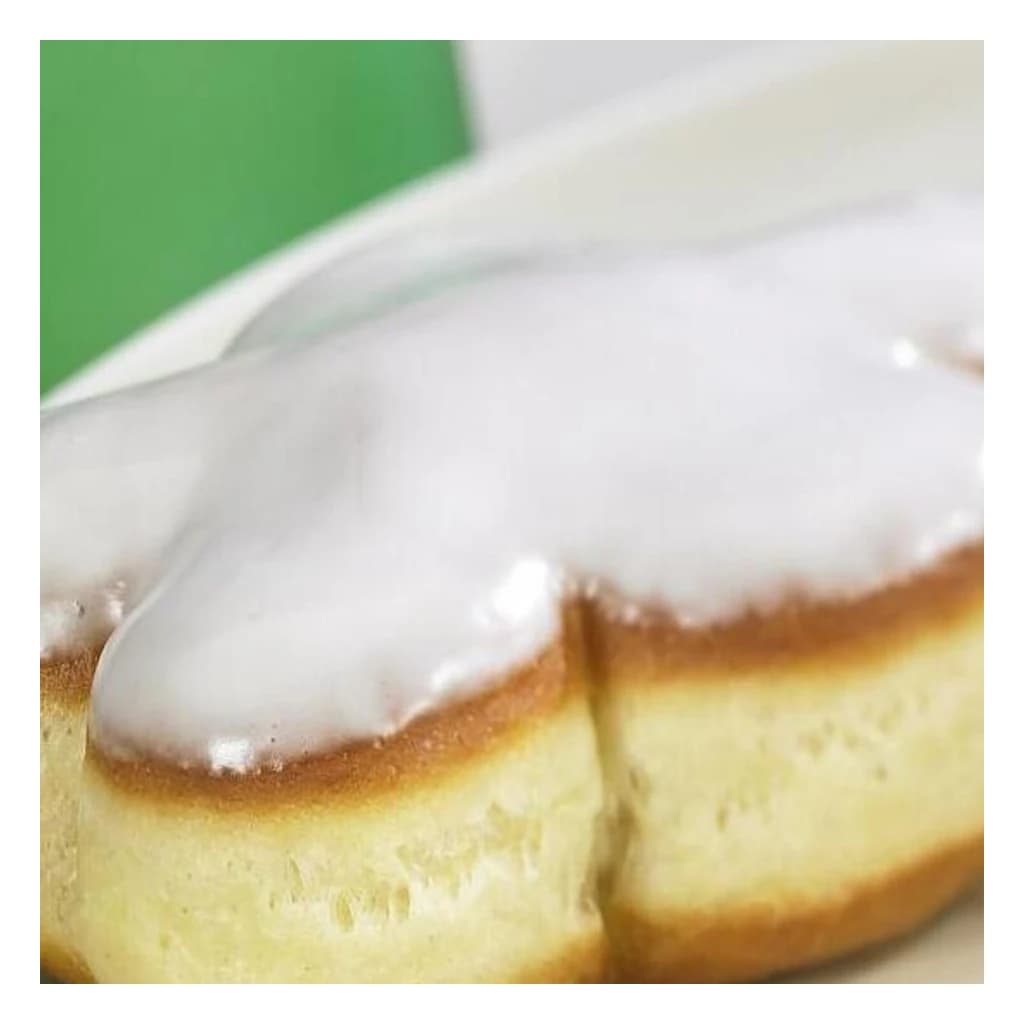
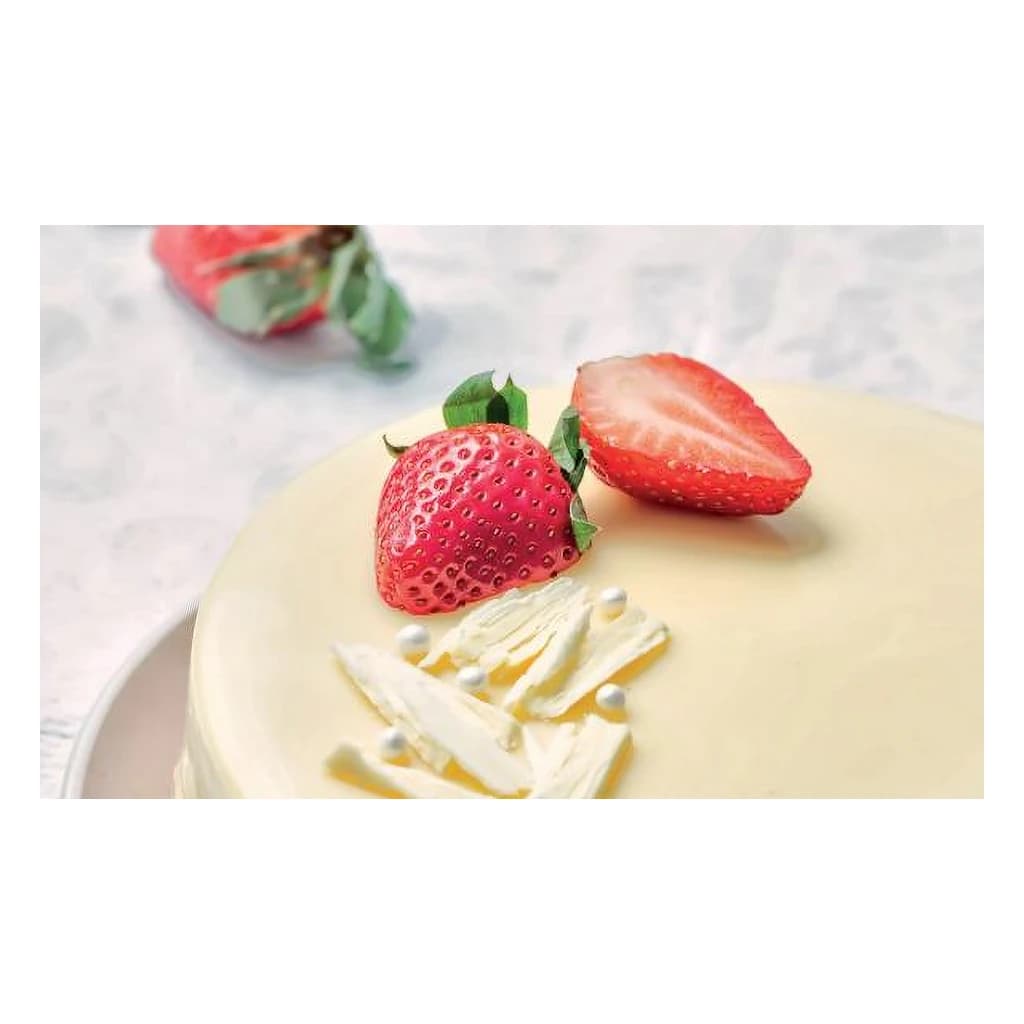
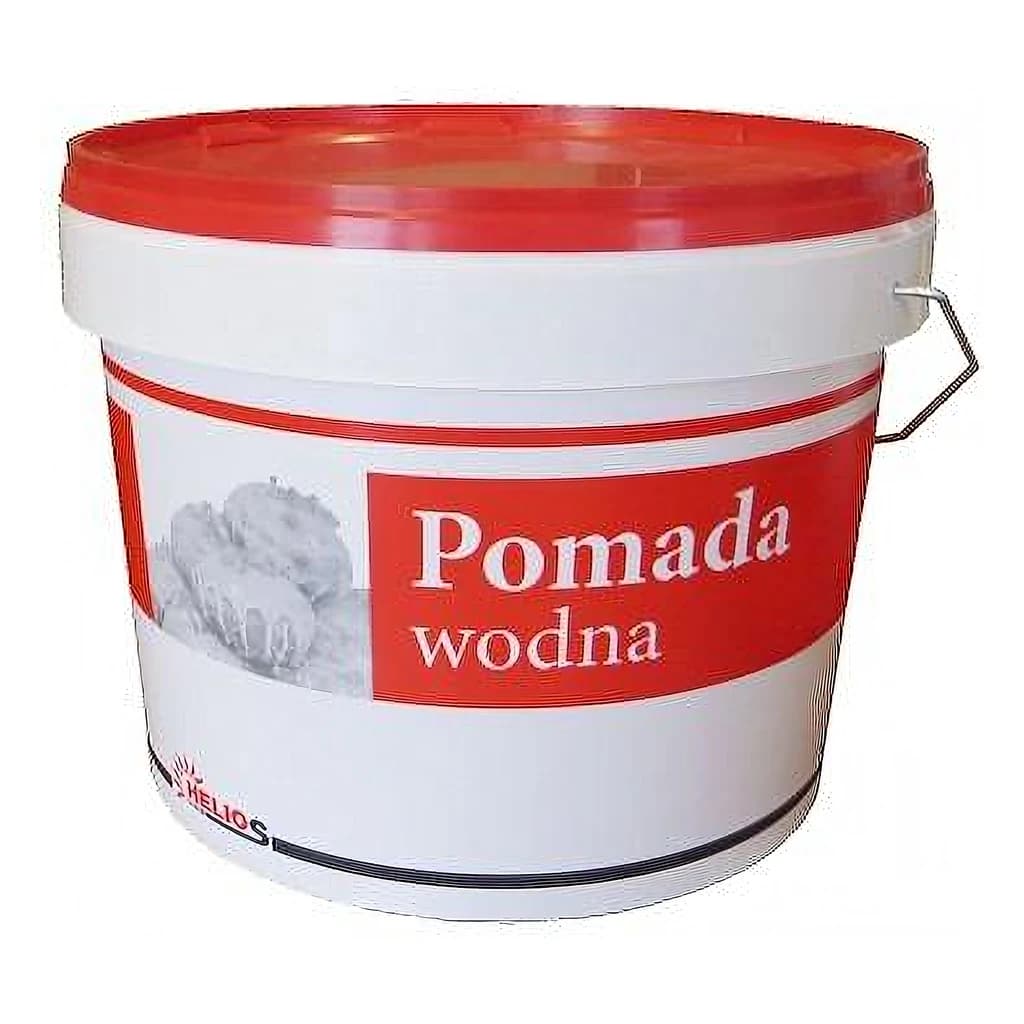
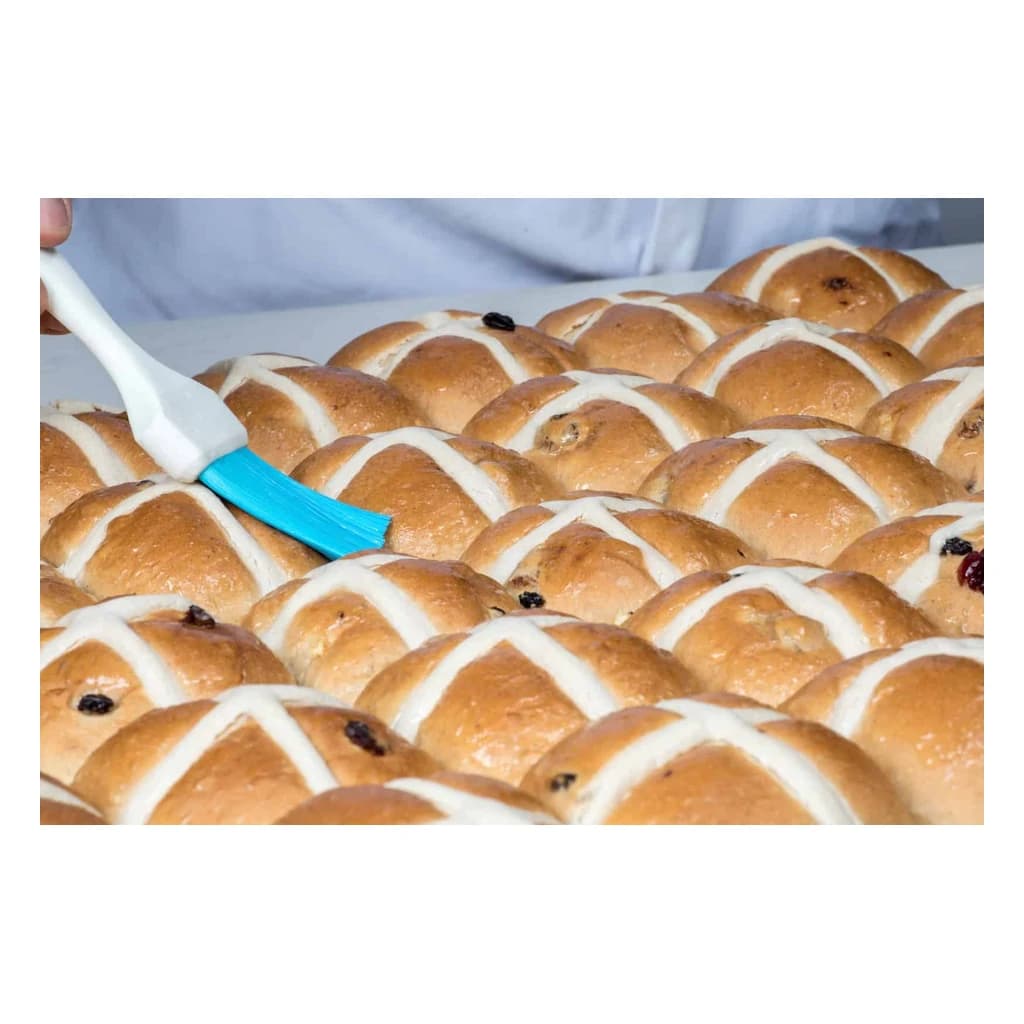
- Glaze — lukier / pomada. Either a simple lemon-juice-and-icing-sugar glaze or a ready fondant/poured glaze for a glossy, set finish: Helios Water Fondant, Zeelandia Fondant Premium, Bakels Bun Glaze RTU, or the white coating Helios White Glaze (sugar + non-hydrogenated palm fat + whey + lactose + emulsifier E322 lecithin; melt the supplied strips to coat). These connect to A7-glazes-mirror-and-fruit and the flat doughnut icings in A7-icings-and-buttercreams. (Allergen note: Helios White Glaze contains milk as an intentional ingredient — whey powder and lactose — which must be highlighted in bold per EU 1169/2011; the spec also lists "may contain nuts/peanuts" — verify specific nut species with the current supplier allergen sheet, as EU law requires each nut to be named.)
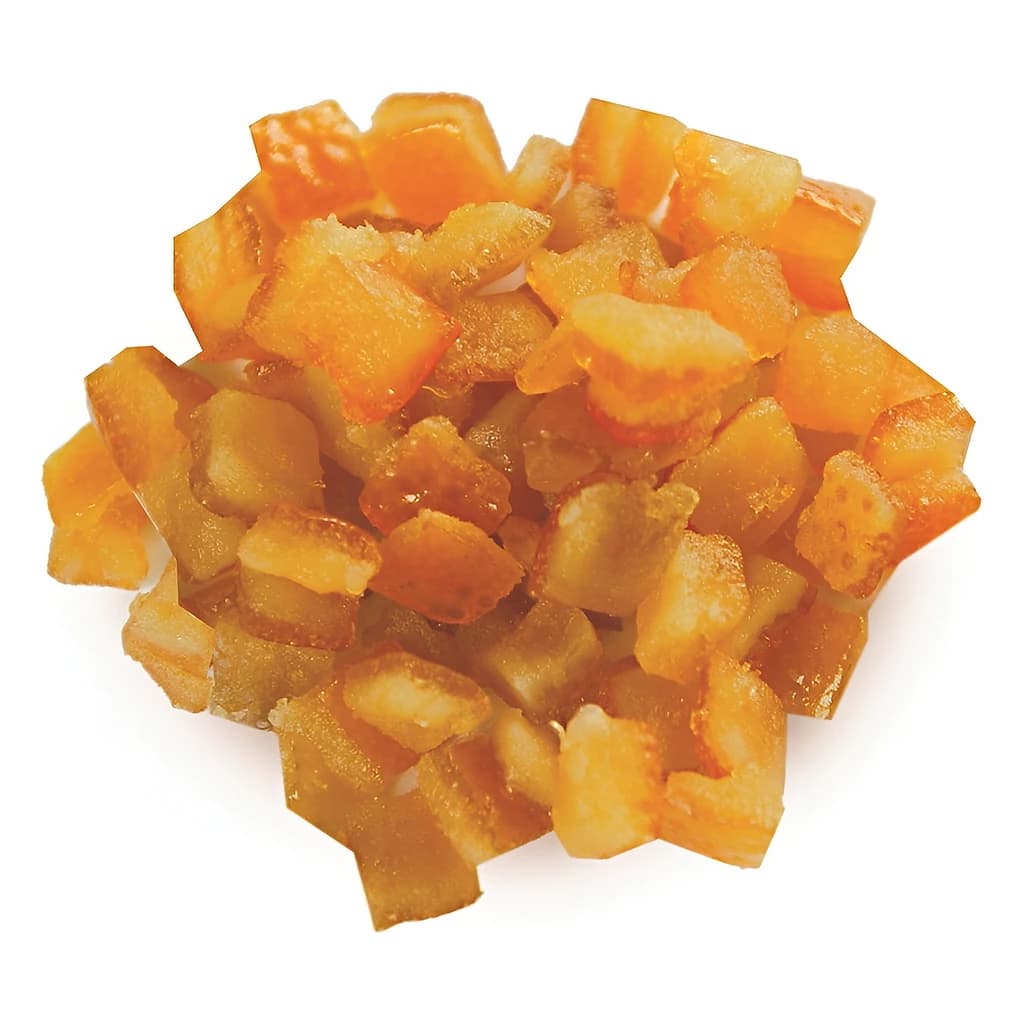
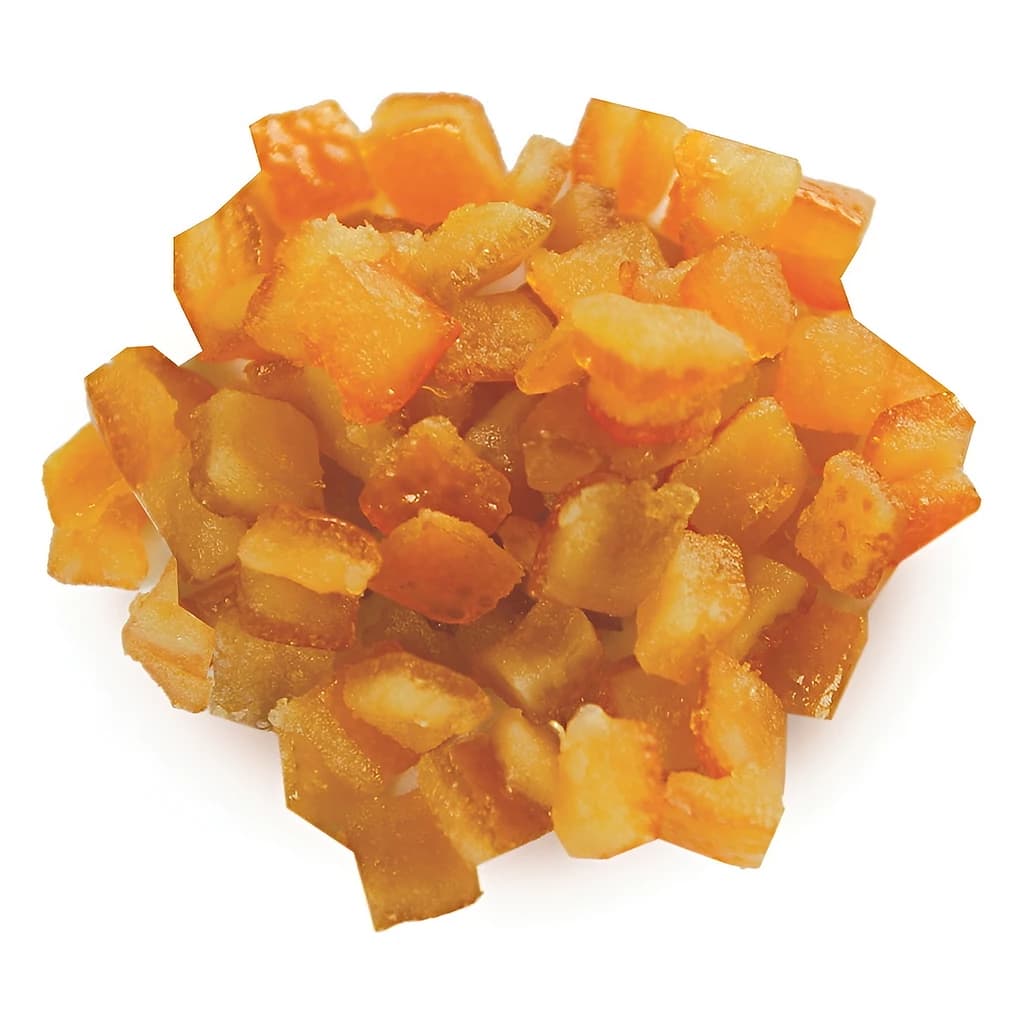
- Candied orange peel — skórka pomarańczowa. A sliver of candied orange peel on top is the traditional signal that a pączek is rose-filled. Stock PGD Candied Orange Rind or Agrobakal Candied Orange Rind Ambrosia.
Part 6 — Faworki / chrust: the crisp ribbon pastry
Faworki are the other half of Carnival — and a completely different dough: short, lean and unleavened (no yeast). The full card is below; in baker's percentage:
| Ingredient | Baker's % | Example |
|---|---|---|
| Wheat flour | 100 % | 300 g |
| Egg yolks (4) | 24 % | 72 g |
| Thick soured cream | 42 % | ~125 g |
| Spirit (or 6 % vinegar) | 5 % | 1 tbsp |
| Sugar | ~0.7 % | ½ tsp |
| Salt | 1 % | ½ tsp |
Two things make faworki crisp and blistered rather than hard:
- The acid + alcohol. The spirit (or vinegar) and the soured cream weaken the gluten slightly and, like in pączki, the alcohol flashes off fast in the fryer — creating steam blisters and limiting fat uptake.
- The beating — "zbijanie". The firm dough is beaten with a rolling pin for about 10-15 minutes, repeatedly flattened, folded and beaten again. This works air in and develops a smooth, elastic dough that, once rolled very thin, fries up light, crisp and full of bubbles.
Shape (pictured below): roll the dough paper-thin, cut into strips (~3-4 cm × 10-12 cm), make a lengthwise slit in each, and pull one end through to form the signature bow ("kokardka"). Fry at about 180 °C for only a few seconds per side until pale gold and crisp — they colour fast, so do not walk away. Drain and dust generously with icing sugar. (Faults in the fault table below.)
A note on the name geography: faworki is the central-Poland/Warsaw word; in Silesia and the south you will hear chrust, chruściki or chrustki for the same pastry. Get this right for your regional customers.
Part 7 — Food safety and allergens
Label check required. Every allergen, additive, nutrition and frying-fat-degradation statement below should be checked against the current EU 1169/2011 label requirements before sale.
- Allergens. Pączki and faworki contain gluten (wheat) and egg, usually milk, and — via doughnut concentrates and some fillings — soy. The IREKS doughnut concentrate declares wheat/gluten, soy and milk. Glazes and creams can add milk and azo colours (tartrazine E102, sunset yellow E110) which carry the children's-attention warning. The GoodMills/Domson T550 flour declares possible traces of lupin and mustard — both EU Annex II allergens that must appear as 'may contain' on the finished-product label. If you use candied orange peel as a topping, verify whether the supplier's peel has been treated with sulphites (E220-E228); sulphites at >10 mg/kg SO₂ in the finished product are a mandatory Annex II allergen and must be declared. Build the final allergen statement from your actual recipe and the current supplier allergen declarations.
- Additives to declare. Doughnut concentrate emulsifiers/reducing agents (E471, E481/SSL, E300 ascorbic acid, E920 L-cysteine), filling preservatives (potassium sorbate), colours (E102/E110 in advocaat; sulphite ammonia caramel in plum filling), and anti-caking agent E341(iii) in icing sugar.
- Frying-fat safety. Discard fat at the 24-27 % TPC limit (PL ~25 %); control acrylamide by holding 175-180 °C and avoiding over-browning.
- Filling handling. Inject after frying and cooling (boil/burst/spitting hazard otherwise); store opened fillings cold and within shelf life (e.g. Martin Braun plum filling: refrigerate 0-4 °C, use within 48 h of opening).
Buy the ingredients (Domson catalogue map)
- Frying fat/oil: KTC Palmax SG palm fat · Master Martini Palm Frying Oil · Olympic Oils Sunflower & Rapeseed · Kruszwica palm-free frying margarine.
- Flour (T550/T500): Domson / GoodMills / Komplexmłyn / Gdańskie Młyny Type 550 · Komplexmłyn Type 500 · Domson Strong (blend in for structure).
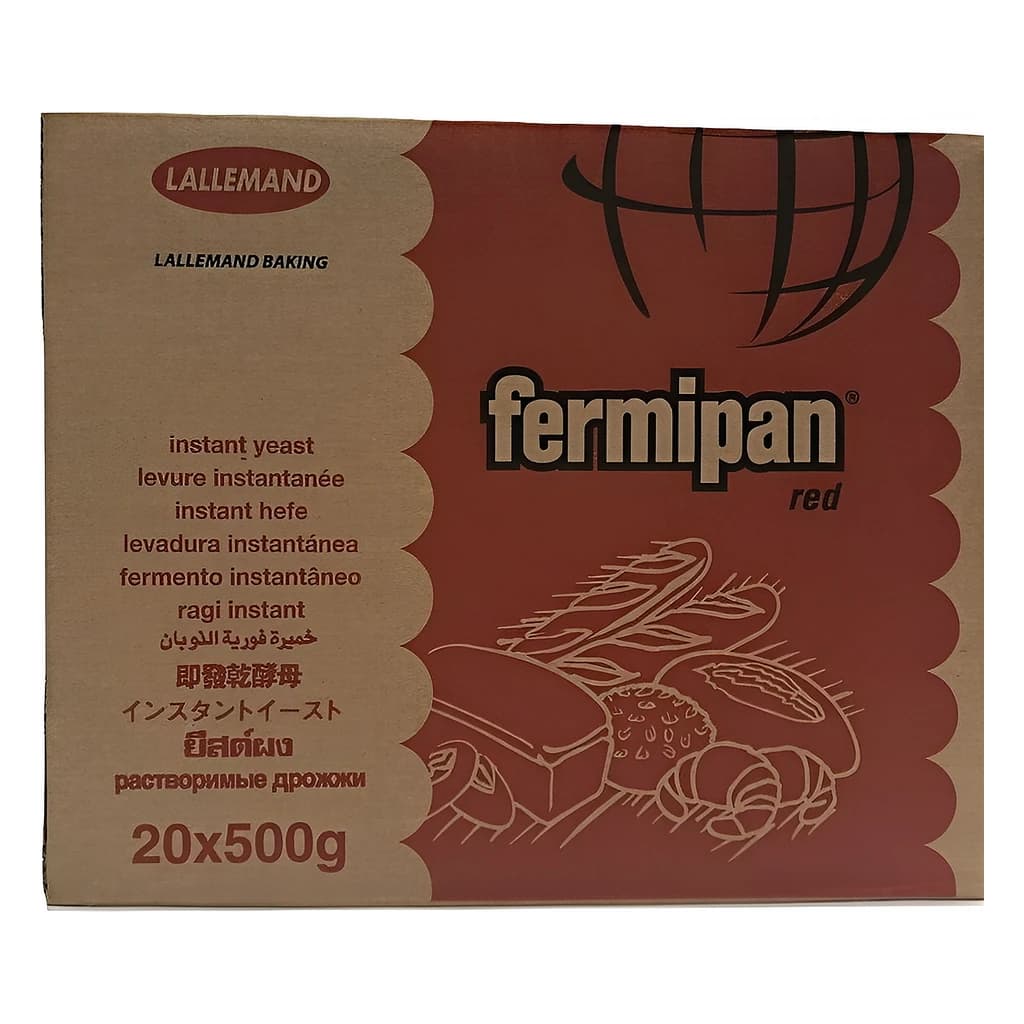
- Yeast & doughnut systems: Lesaffre Benevia, Lallemand fresh & Fermipan Red dried · IREKS Global Yeast Doughnut Concentrate · Backaldrin Doughnut & Yeast Dough Concentrate.
- Fillings: Prospona Rose Petal (heritage) · GIL Rose Hip · Martin Braun Śliwidło plum · Vortumnus Multifruit / Raspberry / Advocaat · Figand Cremix Advocaat · Vortumnus/Zeelandia custard.
- Finishing: Helios White Glaze & Water Fondant · Zeelandia Fondant Premium · Bakels Bun Glaze · Kent Foods Icing Sugar · candied orange peel (PGD, Agrobakal).
- Tools: Polmarkus Stainless Doughnut Filling Tip.
Coverage note
Solid: the frying-temperature window and the pale-ring (jasna obwódka) mechanism are cross-confirmed across multiple independent Polish authorities; the frying-fat numbers, flour profile, filling specs and finishing specs come from first-party supplier datasheets; the history, regional names and consumption scale (~100 million pieces, 2.5 per person on Fat Thursday) are corroborated across KUKBUK and naTemat.
Thinner / single-source: the "spirit sets protein faster" mechanism is traditional craft lore (the outcome — reduced fat uptake — is well attested); smoke points vary by source and are given as indicative ranges (palm figure is from industry/manufacturer data); the IREKS "50 % addition level" is taken from the datasheet but exact dosing should be confirmed with the supplier's technical sheet for your method. All nine supplier spec-sheet claims (fat, flour, concentrate, fillings, glaze, icing sugar) rest on first-party datasheets consistent with industry norms but not independently lab-verified.
Removed in finalization (adversarial verdict — refuted): the specific palm-vs-sunflower TPC time-series comparison (6 h/81 h/90 h figures) could not be verified in either cited PMC article and the numerical framing was internally contradictory; replaced with a qualitative stability statement citing the peer-reviewed research direction.
Follow-up runs: re-fetch the Mistrz Branży frying-fats article (HTTP 403 on automated fetch) and the Państwowe Muzeum Etnograficzne pączki page (TLS cert error) for direct professional and ethnographic quotes; read the Olympic Oils Rapeseed and Backaldrin doughnut-concentrate spec sheets to add their numbers; verify candied-orange-peel sulphite content with PGD and Agrobakal supplier allergen sheets; and capture owned/permissioned hero photography to replace the general-web reference images.
Figures
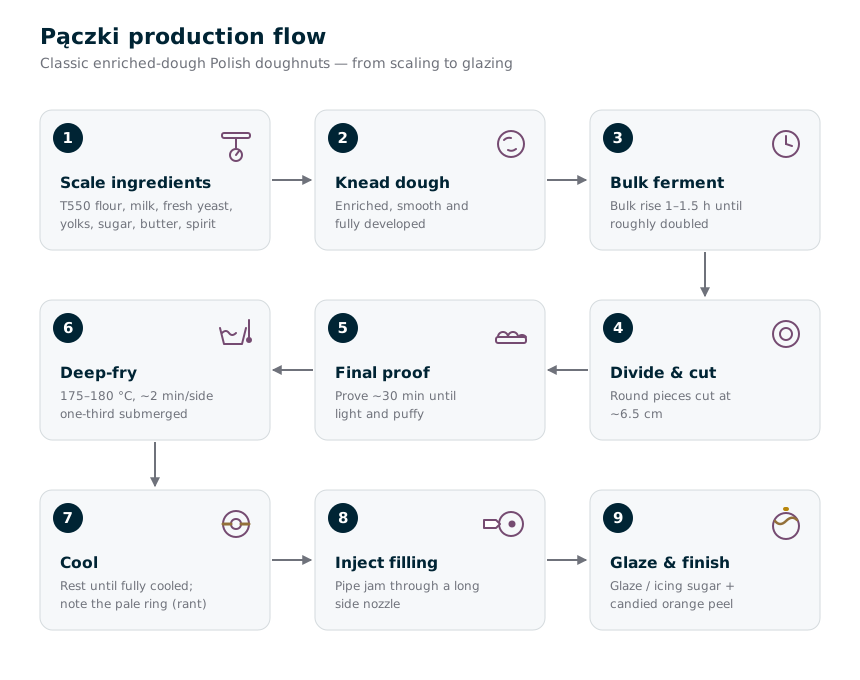 Nine-step flow diagram of making Polish pączki from enriched dough through deep-frying at 175-180 degrees to filling and glazing
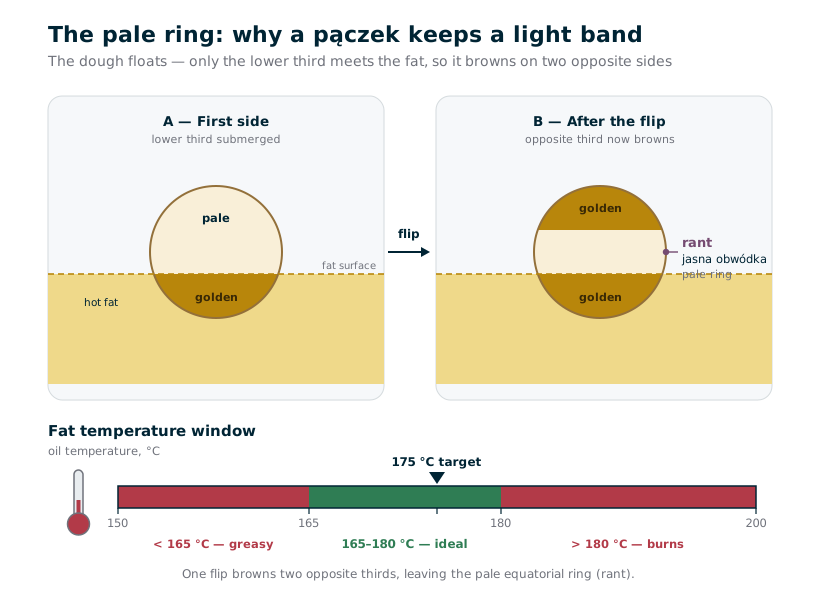 Diagram showing how the pale ring on a pączek forms because the doughnut floats and only a third is submerged in the frying fat on each side
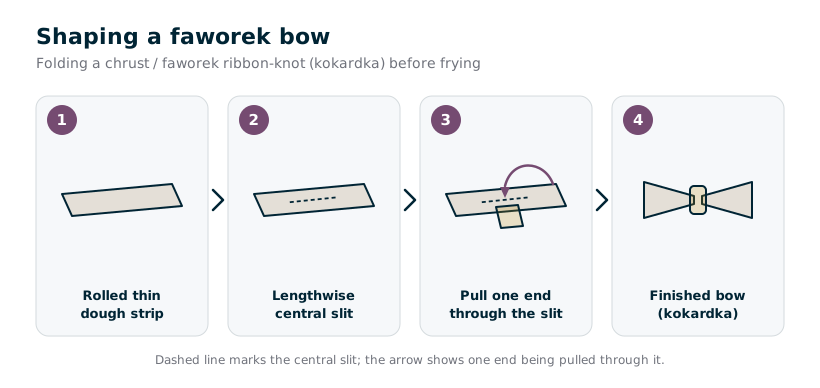 Four-step diagram of folding a faworek ribbon: strip, central slit, pull one end through, finished bow shape
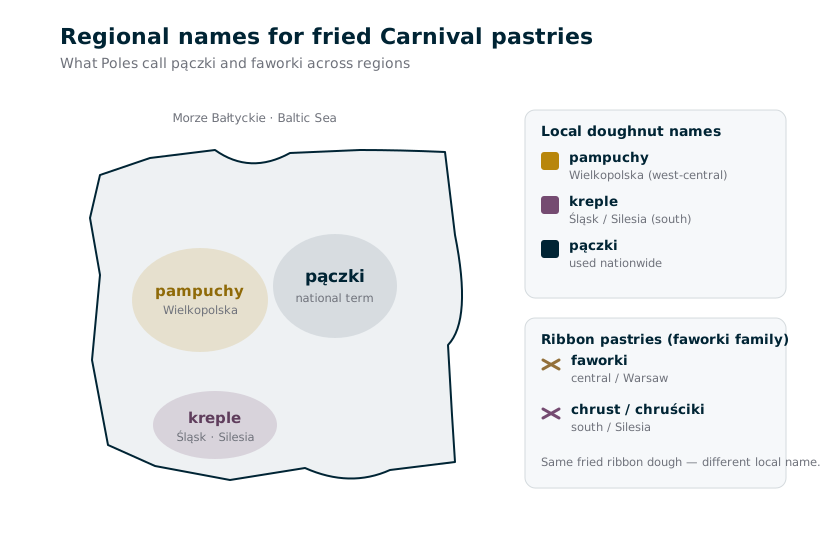 Map of Poland showing regional names for doughnuts and ribbon pastries: kreple in Silesia, pampuchy in Wielkopolska, faworki versus chrust
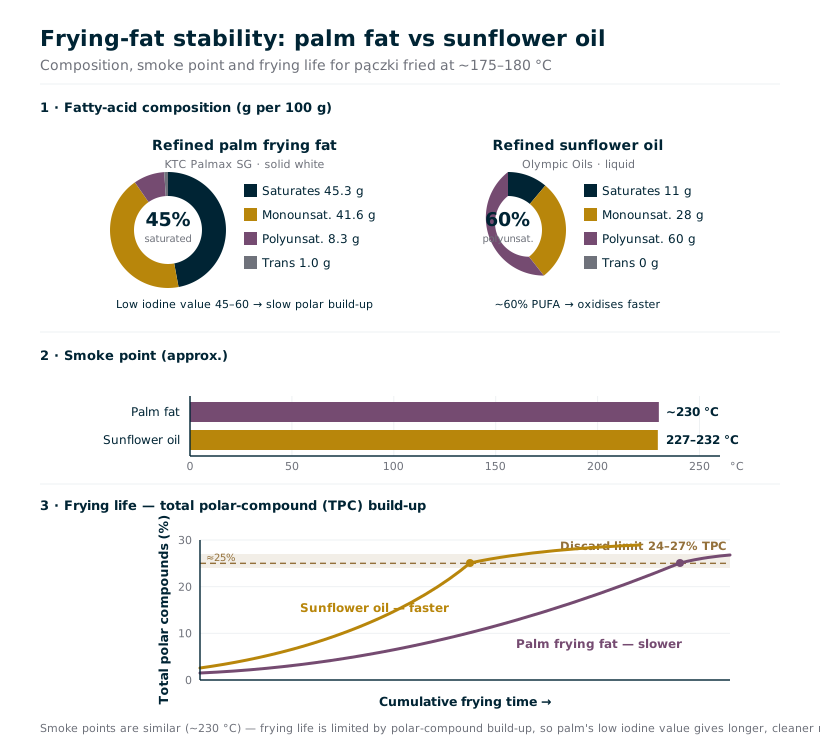 Chart comparing palm frying fat and sunflower oil by fatty-acid composition, smoke point and frying stability with a total-polar-compound discard limit
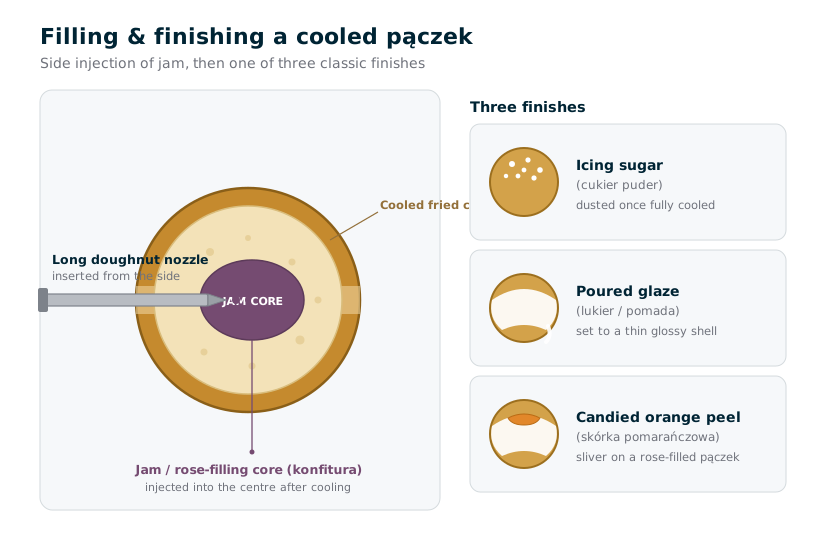 Cutaway diagram of injecting filling into a cooled pączek and three finishes: icing sugar, poured glaze and candied orange peel
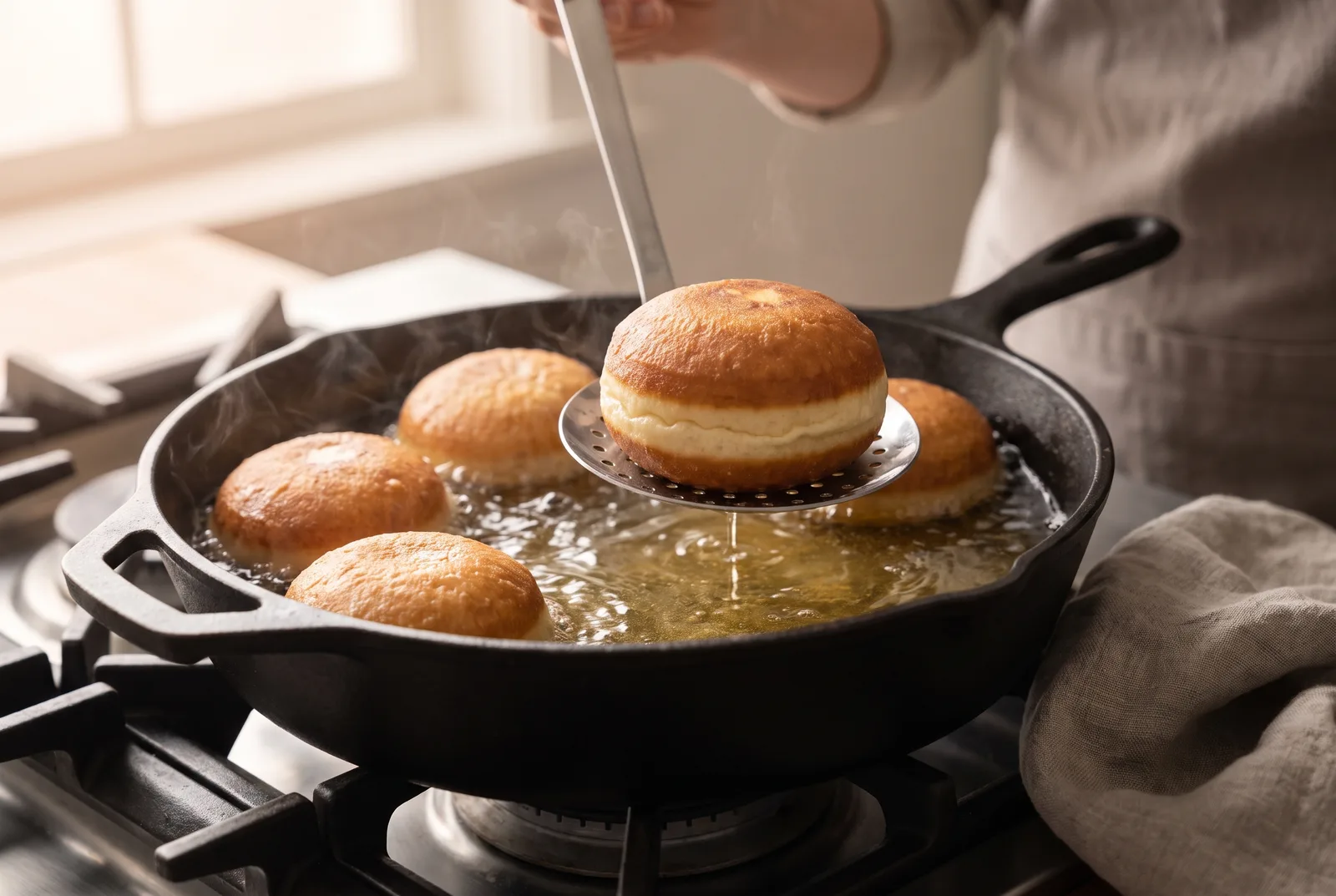 Pączki floating mid-fry in clean golden fat in a dark fryer pan, one being turned with a stainless slotted spoon to reveal the pale equator band forming between its golden fried surfaces
Classic Tłusty-Czwartek pączki (straight enriched dough)
| Ingredient | Baker's % | Weight |
|---|---|---|
| Wheat flour T550 | 100 | 500 g |
| Milk (warm) | 50 | 250 g |
| Fresh yeast | 10 | 50 g |
| Sugar (+ vanilla sugar) | 12 | 60 g |
| Whole egg + egg yolks | 24 | 122 g |
| Soft butter | 10 | 50 g |
| Spirit / vodka | 3 | 15 g |
| Salt | 1 | 5 g |
- Disperse yeast in warm milk; combine with flour, sugar, salt, beaten egg + yolks and soft butter; add the spirit.
- Knead ~15 min to a smooth, elastic dough that pulls cleanly from the bowl/hands.
- Bulk-ferment 1-1.5 h until well risen.
- Roll, cut at ~6.5 cm, place on floured cloth; final proof ~30 min until light and aerated.
- Fry at 180 °C, ~2 min per side, dough one-third submerged so a pale ring (rant) forms.
- Cool; inject filling; finish with glaze/icing sugar.
Yield: ~20 pieces (cut at ~6.5 cm)
Adapted to baker's % from a standard Polish home recipe (Kwestia Smaku). Egg figured as 1 whole egg + 4 yolks.
Scalded-dough pączki (ciasto parzone / zaparzane)
| Ingredient | Baker's % | Weight |
|---|---|---|
| Wheat flour (total) | 100 | 960 g |
| of which scalded with boiling milk | 33 | 320 g |
| Milk (500 ml boiling for scald + 250 ml) | 78 | 750 g |
| Egg yolks (14) + whole eggs (2) | 37 | 352 g |
| Sugar | 24 | 227 g |
| Fresh yeast | 4 | 40 g |
| Butter | 10 | 100 g |
| Spirit / vodka / rum | 1.5 | 15 g |
| Citrus zest | 0 | 0 g |
- Scald 320 g flour with 500 ml boiling milk; mix to a smooth paste and cool to lukewarm.
- Add remaining milk, yeast, yolks + eggs, sugar, zest; work in remaining flour; finally beat in soft butter and spirit.
- Bulk-ferment ~1.5 h to double.
- Shape; final proof ~35 min — well risen but NOT over-proofed.
- Fry at 175 °C until golden both sides.
- Cool, fill and finish.
Yield: ~28-30 pieces
Adapted from Moje Wypieki. Part of the flour is scalded with boiling milk (yudane/tangzhong principle) so gelatinised starch binds more water → softer crumb that stays fresh longer. Total flour 960 g (320 g scalded + 640 g).
Faworki / chrust (crisp ribbon pastry — no yeast)
| Ingredient | Baker's % | Weight |
|---|---|---|
| Wheat flour | 100 | 300 g |
| Egg yolks (4) | 24 | 72 g |
| Thick soured cream | 42 | 125 g |
| Spirit (or 6 % vinegar) | 5 | 15 g |
| Sugar | 0.7 | 2 g |
| Salt | 1 | 3 g |
- Combine yolks, sugar, salt, soured cream and spirit; work in flour to a firm dough.
- Beat the dough with a rolling pin ('zbijanie') ~10-15 min, folding repeatedly, until smooth, elastic and blistered.
- Rest, then roll VERY thin; cut into strips ~3-4 cm × 10-12 cm; slit each lengthways and pull one end through to form a bow.
- Fry at ~180 °C a few seconds per side until pale gold and crisp.
- Drain; dust generously with icing sugar.
Yield: ~1 large batch
Adapted from AniaGotuje / Domowe Wypieki. A short, lean, beaten dough — NOT leavened. The acid + alcohol and the beating ('zbijanie') give crispness and blisters.
| Fat / oil | State at 20 °C | Smoke point (approx.) | Stability driver | Best for | Catalogue example |
|---|---|---|---|---|---|
| Refined palm frying fat (e.g. Palmax SG) | Solid white | ~230 °C | Low iodine value 45-60 (high saturation); slow polar-compound build-up | Long production runs; clean release; firm set on the doughnut | KTC Palmax SG Palm Oil; Master Martini Palm Frying Oil |
| Refined sunflower oil | Liquid | 227-232 °C | High smoke point but ~60 % polyunsaturated → oxidises faster | Shorter runs; lighter mouthfeel; where liquid handling is preferred | Olympic Oils Sunflower Oil |
| Refined rapeseed (canola) oil | Liquid | ~204-246 °C | High monounsaturate, neutral flavour; mid stability | All-round home/craft frying; neutral taste | Olympic Oils Rapeseed Oil; Ajax Rapeseed Oil |
| Lard (smalec) | Solid | ~188 °C | Traditional; lower smoke point, rich flavour | Authentic Old-Polish faworki/pączki flavour; small batches | (catalogue: animal fats / sourced locally) |
| Palm-free frying margarine/shortening | Solid | varies | Formulated blend; sustainability positioning | Bakeries avoiding palm | Kruszwica Qualita NP Palm-Free Margarine |
Professional doughnut frying favours a stable, near-neutral fat that survives hours at ~175-180 °C. Smoke points are indicative ranges (vary by refining/source). Discard fat at the regulatory total-polar-compound (TPC) limit.
| Filling | Polish name | Character | Key spec (datasheet) | Catalogue example |
|---|---|---|---|---|
| Rose-petal jam | konfitura / marmolada różana | The heritage Tłusty-Czwartek filling; floral, jammy | Sugar 49 % / rose petals 25 %; Brix ≥70 %; 288 kcal/100 g | Prospona Rose Petal Filling with Sugar |
| Plum jam | powidła / śliwidło | Dark, sweet-sour, traditional | Plum 50 %; Brix 35 ±2; pH 3.5; bake-stable | Martin Braun Śliwidło Plum Filling |
| Multifruit / raspberry jam | marmolada wieloowocowa / malinowa | Everyday bakery filling | high-fruit thick jams | Vortumnus Multifruit Thick Jam; Raspberry Seedless Jam |
| Advocaat cream | adwokat | Egg-liqueur-flavoured custard, yellow | Extract ≥55 %; pH 4-5; colours E102/E110 (children's warning) | Vortumnus Advocaat Pudding Cream; Figand Cremix Advocaat |
| Custard / pastry cream | krem budyniowy | Vanilla custard | ready custards / mixes | Zeelandia / Emix vanilla custard creams |
Inject after frying and cooling. The rose-petal jam is the traditional/heritage filling; the rest are common modern choices.
| Item | Name(s) | Where / origin |
|---|---|---|
| Filled round doughnut | pączek (pl. pączki) | Standard Polish |
| Filled round doughnut | krepel / kreple | Silesia (Śląsk); from German Krapfen. Also historic bliny, babałuchy |
| Filled round doughnut | pampuch / pampuchy | Wielkopolska and other regions |
| Ring doughnut (often with twaróg) | oponka / oponki | Various regions |
| Crisp ribbon pastry | faworki | Central Poland / Warsaw; from French 'faveur' = silk ribbon |
| Crisp ribbon pastry | chrust / chruściki / chrustki | Older Polish term; kept in Silesia and the south |
Names a Polish customer will recognise; spellings with diacritics.
| Flour | Ash / type | Protein | Notes | Catalogue example |
|---|---|---|---|---|
| Wheat Type 550 | 0.51-0.58 % (T550) | 11.5-12.5 %; gluten index 75-99 | Standard pączki flour; balanced strength and extensibility | Domson / GoodMills Wheat Flour Type 550; Komplexmłyn T550; Gdańskie Młyny T550 |
| Wheat Type 500 'luksusowa' | ~0.50 % (T500) | ~11-12 % | Fine, white; very light crumb | Komplexmłyn Domson White Flour Type 500 |
| Strong wheat flour | higher protein | >13 % | Use a portion when extra structure is needed for large/filled pieces | Domson White Strong Wheat Flour |
Aim for a medium-strong wheat flour: enough gluten to hold gas and shape, not so strong it goes tough. Polish T550 (≈French T55) is the workhorse.
| Product | Format | Use | Catalogue example |
|---|---|---|---|
| Fresh (pressed) yeast | Block | ~10 % on flour in classic home pączki; craft standard | Lesaffre Fresh Yeast Benevia; Lallemand Fresh Yeast |
| Instant dried yeast | Granules | ≈ one-quarter of fresh by weight (14 g ≈ 50 g fresh) | Lallemand Fermipan Red; Pakmaya |
| Doughnut concentrate | Powder, 50 % addition | All-in-one: flour, dextrose, emulsifiers (E471/E481), L-cysteine, ascorbic acid — fast, consistent crumb and controlled oil uptake | IREKS Global Yeast Donut Concentrate; Backaldrin Doughnut & Yeast Dough Concentrate |
High sugar + fat osmotically stress yeast; dose generously or use osmotolerant/dedicated doughnut systems.
| Fault | Likely cause | Fix |
|---|---|---|
| Greasy, heavy, oil-soaked | Fat too cool (<165 °C); under-proofed; too much sugar slowing structure | Hold 175-180 °C; proof fully; add a spoon of spirit; recover oil temp between batches |
| Dark outside, raw inside | Fat too hot (>180-185 °C); pieces too thick | Lower temperature; thinner/standard pieces; fry ~2 min/side |
| No pale ring (rant) | Under-proofed (dough sinks); wrong temperature; pieces fully submerged | Proof until light; keep one-third submersion; correct temperature |
| Burst / leaking in fryer | Filled before frying; over-proofed; surface tears | Fry unfilled; inject after cooling; handle gently |
| Dense, tough crumb | Flour too strong / over-kneaded; insufficient fat or yolk | Use T550; balance enrichment; try scalded-dough method for tenderness |
| Stales fast / dry next day | Lean formula; low water binding | Use scalded (parzone) dough; adequate fat; correct dough hydration |
| Fault | Likely cause | Fix |
|---|---|---|
| Hard / not crisp, no blisters | Dough not beaten enough; rolled too thick | Beat ('zbijanie') 10-15 min; roll paper-thin |
| Greasy, oil-soaked | Fat too cool; rolled too thick; no acid/alcohol | Fry at ~180 °C; thin sheets; include spirit or vinegar |
| Bubbling/excess spitting | Wet dough surface; cream too wet | Drier dough; pat surface; control cream quantity |
| Bitter / burnt taste | Fat too hot or degraded | Lower to ~180 °C; replace tired fat; check TPC |
| Icing sugar dissolves/weeps | Dusted while hot/greasy | Drain and cool slightly, then dust |
| Symptom | Cause | Action |
|---|---|---|
| Dark, viscous, foaming fat; off odour | Oxidation/polymerisation; high total polar compounds | Discard at the regulatory TPC limit (24-27 %; PL ~25 %); test with a polar-compound meter |
| Rapid darkening of product | Fat too old / too much fine debris (crumb, sugar) carbonising | Filter regularly; skim debris; top up with fresh fat |
| Inconsistent colour batch to batch | Temperature recovery too slow; overloading the fryer | Right fat-to-product ratio; let temperature recover; thermostat/probe check |
| High oil pickup across the day | Falling temperature; degraded fat absorbs more | Maintain 175-180 °C; refresh fat; correct proofing |
- State:
- solid white aerated fat
- Melting point C:
- 34-42
- Iodine value gI2 100g:
- 45-60
- Free fatty acids pct as oleic max:
- 0.2
- Peroxide value meqO2 kg max:
- 2
- Fat per 100g g:
- 99.9
- Saturates g:
- 45.3
- Monounsaturated g:
- 41.6
- Polyunsaturated g:
- 8.3
- Trans g:
- 1
- Allergens:
- free from all 14 EU allergens; vegan, halal, kosher
- Shelf life months:
- 11
- State:
- liquid
- Fat per 100g g:
- 100
- Saturates g:
- 11
- Monounsaturated g:
- 28
- Polyunsaturated g:
- 60
- Trans g:
- 0
- Free fatty acids pct as oleic max:
- 0.1
- Peroxide value meq kg max:
- 1
- Allergens:
- none; suitable vegan/coeliac
- Note:
- acrylamide guidance applies (frying >120 °C)
- Ash pct dm:
- 0.51-0.58
- Wet gluten pct:
- 28-32
- Protein pct:
- 11.5-12.5
- Gluten index:
- 75-99
- Falling number s min:
- 220
- Moisture pct max:
- 15
- Fortification:
- CaCO3 235-390 mg/100 g; iron >=1.65; thiamin >=0.24; niacin >=1.60 mg/100 g
- Allergens:
- gluten; possible traces soy/lupin/mustard
- Shelf life months:
- 5
- Addition level pct:
- 50
- Key additives:
- E471, E481 (SSL), E450, E500, E412, E466, E300 (ascorbic), E920 (L-cysteine)
- Energy kcal 100g:
- 382
- Fat g:
- 10.4
- Saturates g:
- 6
- Carbohydrate g:
- 63.7
- Sugars g:
- 12.1
- Protein g:
- 7.2
- Salt g:
- 4.4
- pH:
- 5.9-7.3
- Allergens:
- wheat/gluten, soy, milk
- Shelf life months:
- 9
- Sugar pct:
- 49
- Rose petal pct:
- 25
- Brix min pct:
- 70
- Acidity min pct as citric:
- 1
- Energy kcal 100g:
- 288
- Carbohydrate g:
- 71
- Sugars g:
- 63
- Allergens:
- absent (EU 1169/2011)
- Shelf life months:
- 6
- Plum pct QUID:
- 50
- Brix Bx:
- 35 (+/-2)
- pH:
- 3.5 (+/-0.2)
- Energy kcal 100g:
- 132
- Gelling:
- modified starch, gellan gum, xanthan gum
- Allergens:
- soy + milk by cross-contamination only
- Pack kg:
- 12
- Shelf life days:
- 210
Buy the ingredients
Catalogue products and brands referenced in this article.
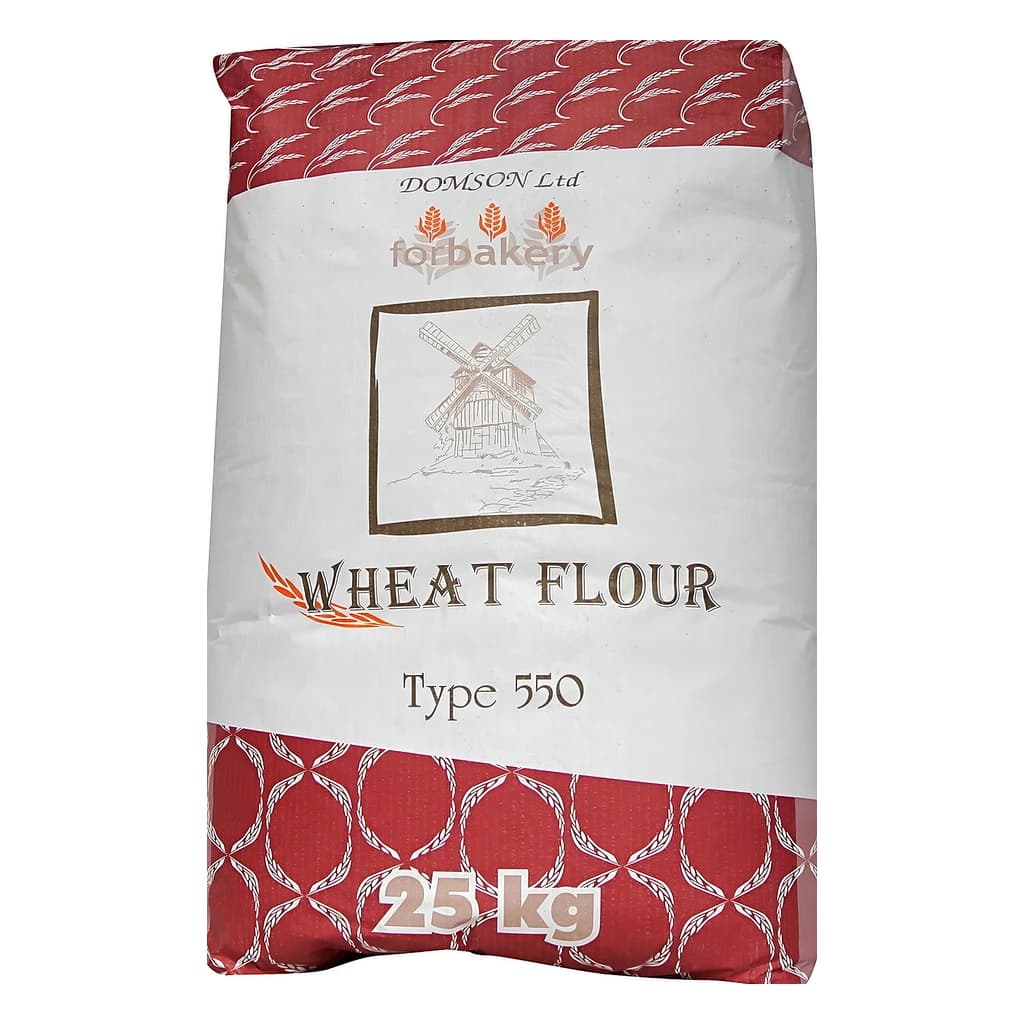
Wheat Flour Type G 550 25 kg
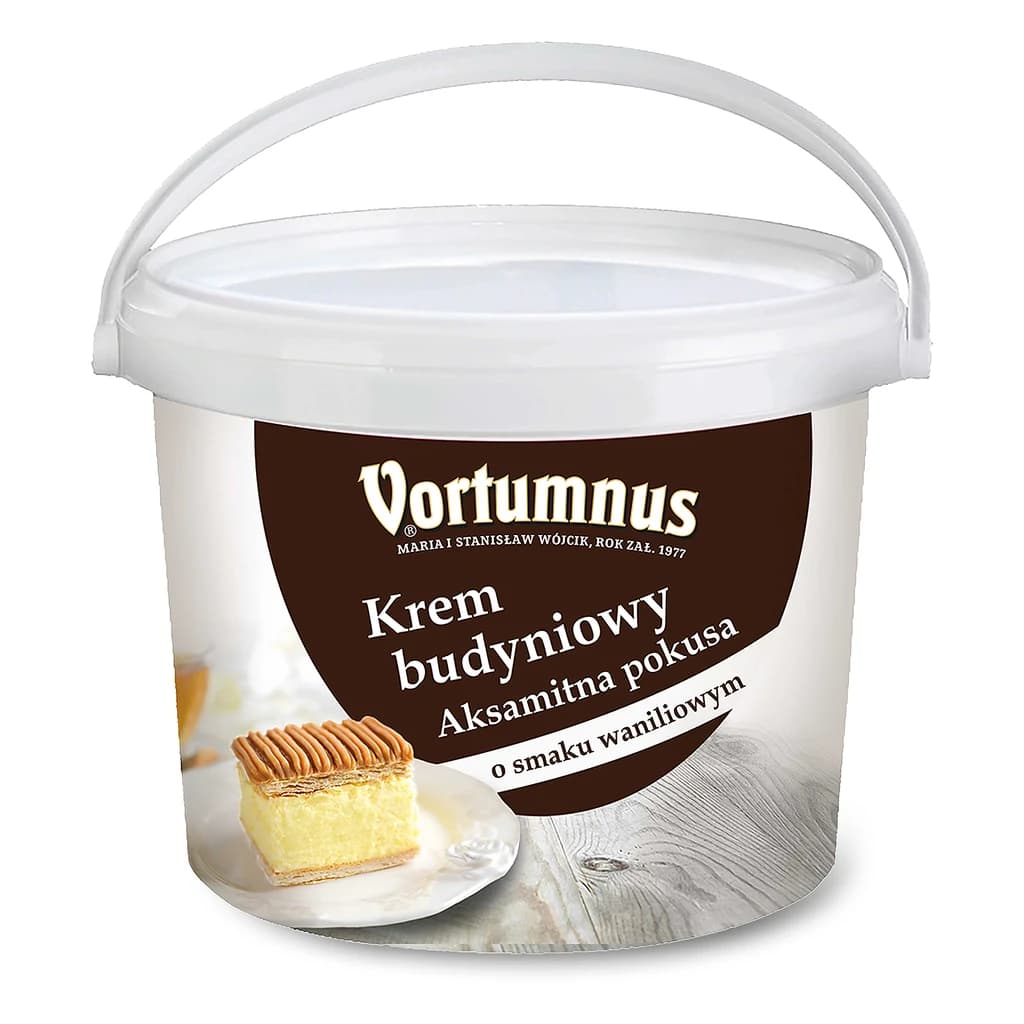
Custard Cream Filling – Vortumnus 13 kg
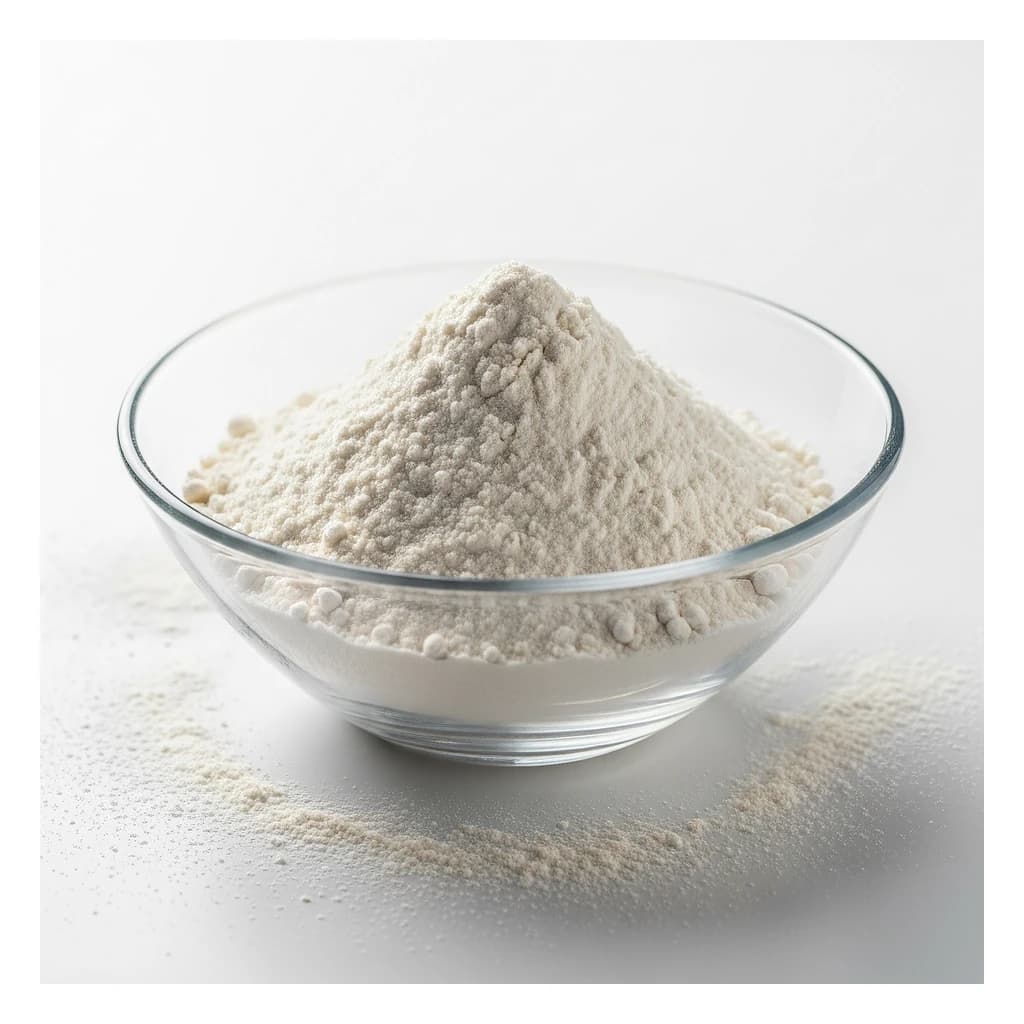
Komplexmłyn Wheat Flour Type 550 25 kg
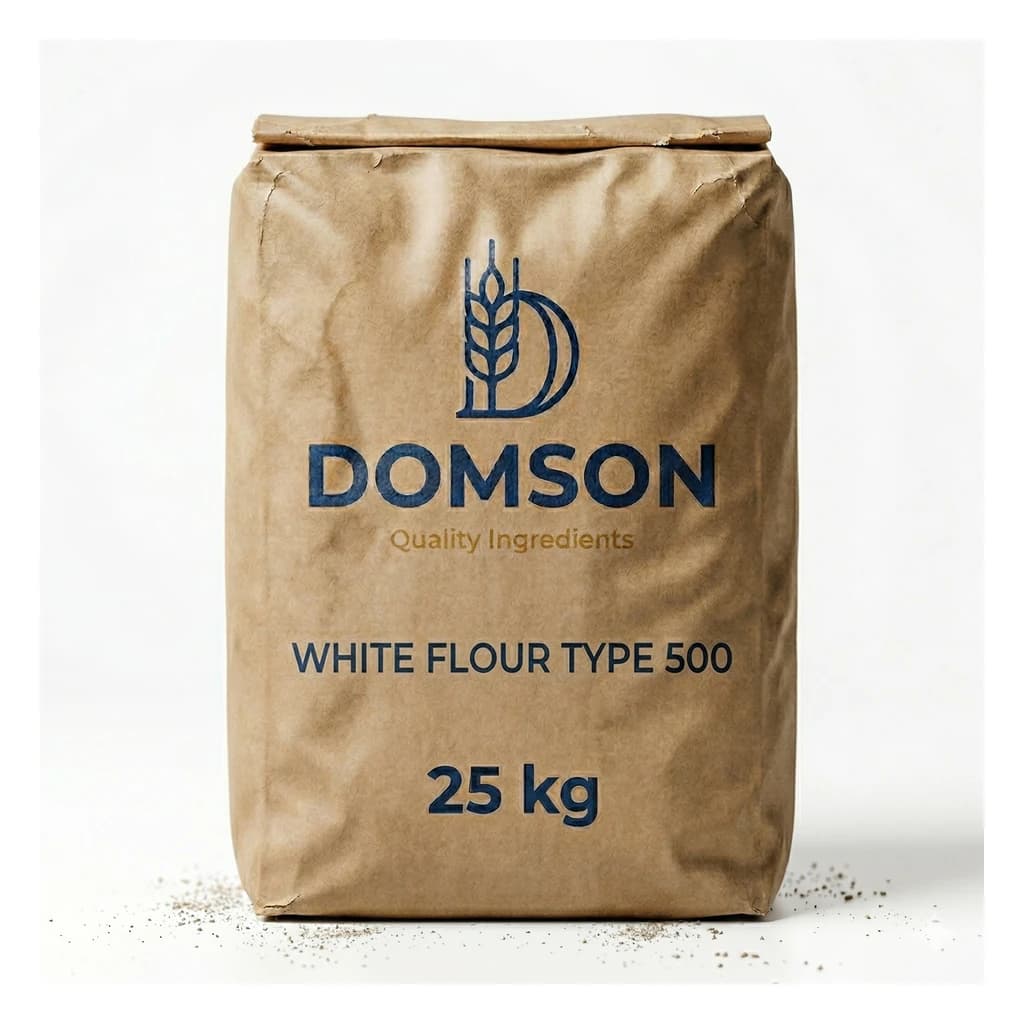
Domson White Flour Type 500 25 kg

Stainless Doughnut Filling Tip 10 mm
Advocaat Pudding Cream 13 kg
Raspberry Seedless Jam 6 kg

Multifruit Thick Jam 13 kg
Zeelandia Fondant Premium (14 kg)
Candied Orange Rind Ambrosia 10 kg

Rose Confectionery Marmalade (GIL)
Rose Petal Filling with Sugar 4 kg

Fresh Yeast Benevia 10 kg

Cremix Advocaat Flavoured Filling 13 kg
Icing Sugar 10 kg
Helios White Glaze 10 kg
Palm Frying Oil 25 L (22.7 kg)
Qualita NP Palm-Free Margarine 80% 10 kg
Helios Water Fondant 15 kg
Bun Glaze RTU 12 kg
Fresh Yeast Traditional 12 kg
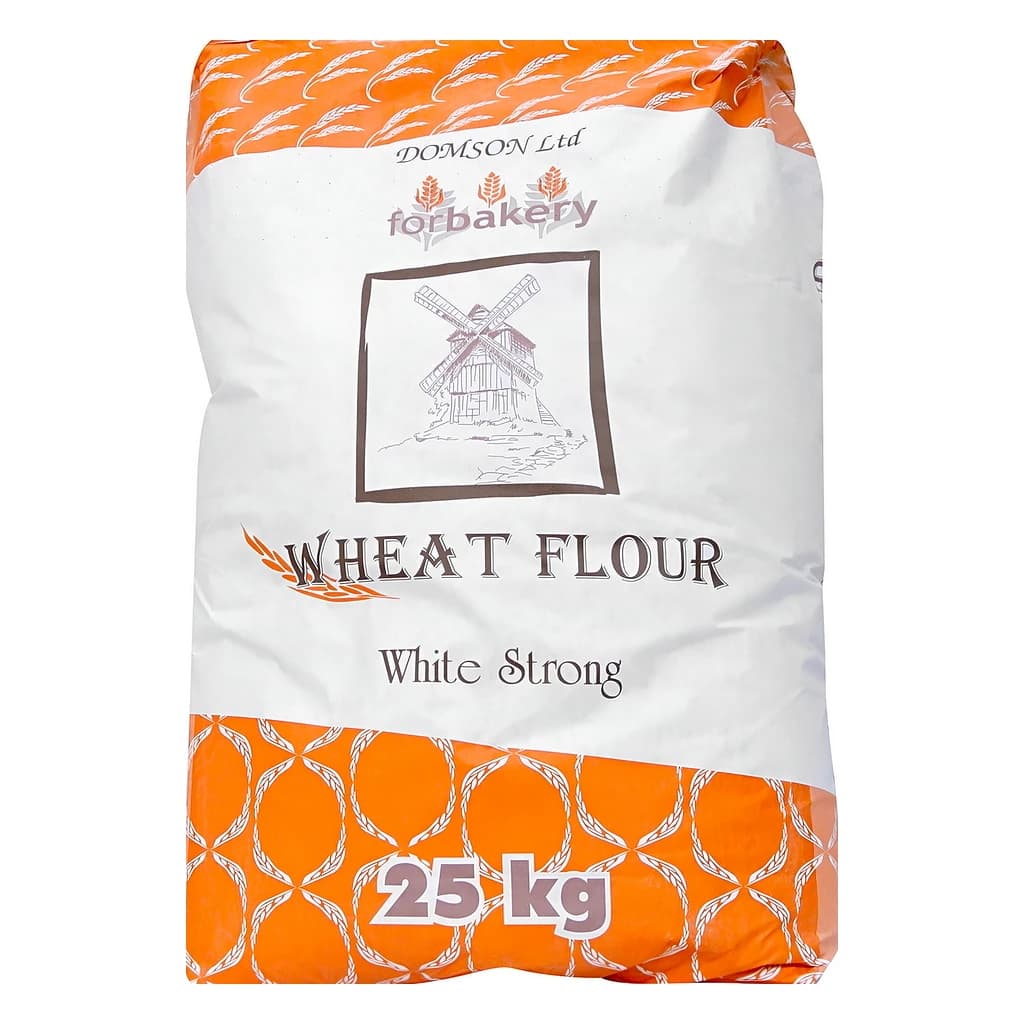
Domson White Strong Wheat Flour 25 kg
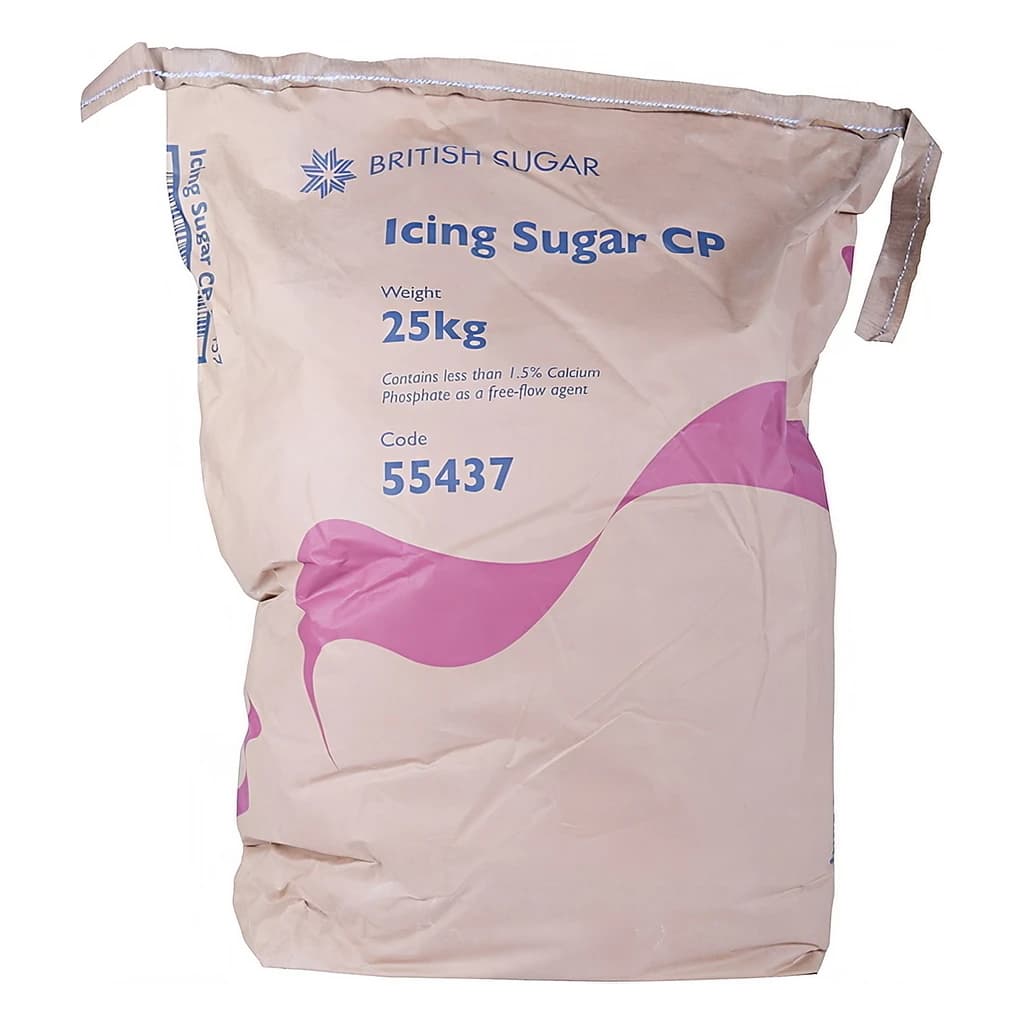
Icing Sugar CP 25 kg
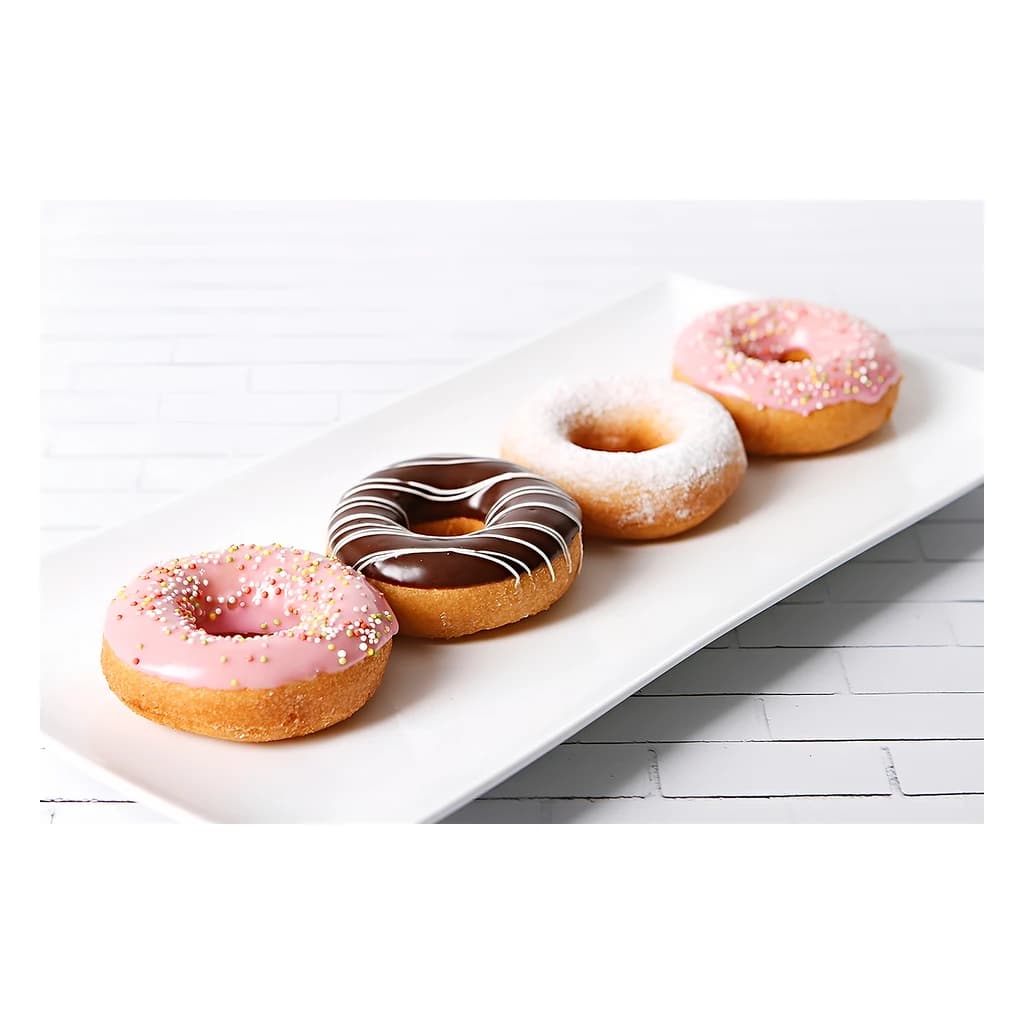
Ireks Global Yeast Doughnut Concentrate 25 kg
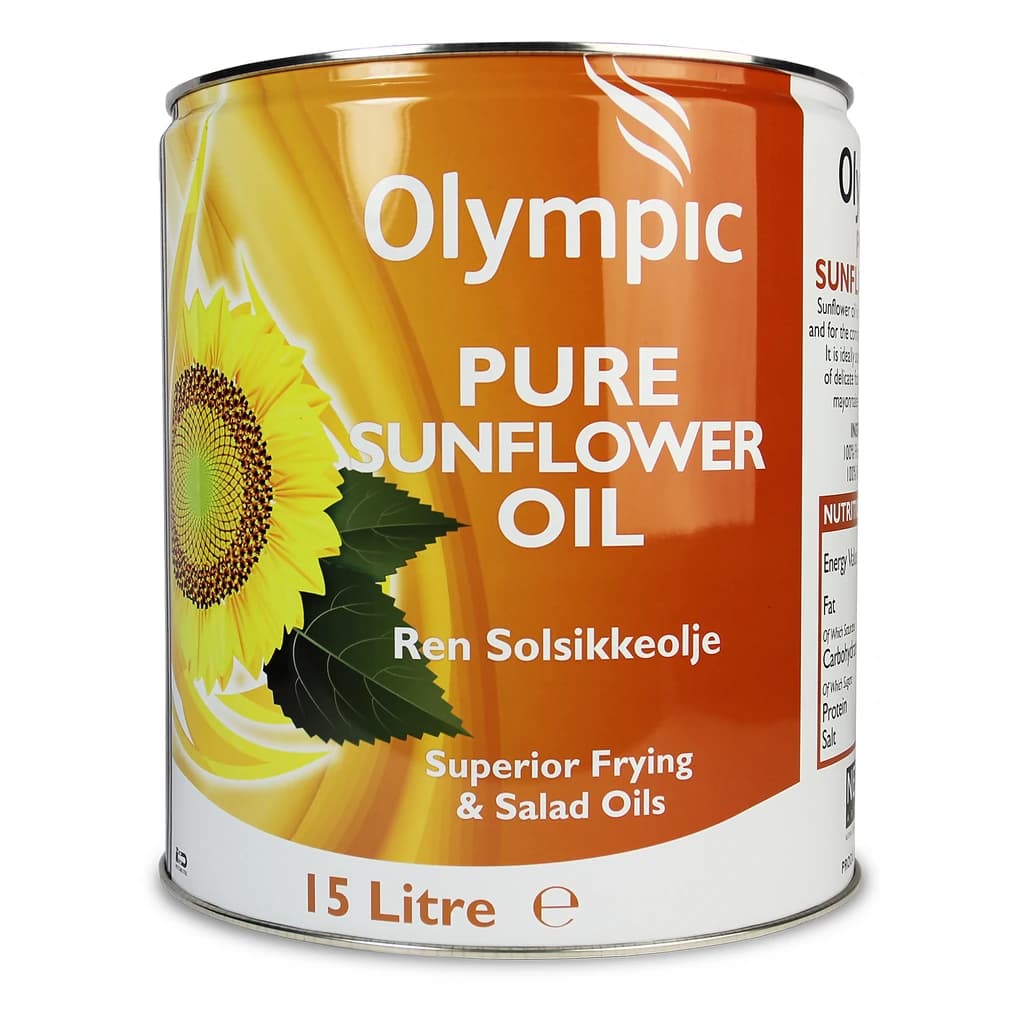
Sunflower Oil 15 L
Palmax SG Sustainable Palm Oil 12.5 kg
Rapeseed Oil 20 L
Dried Yeast Fermipan Red 10 kg

Backaldrin Doughnut & Yeast Dough Concentrate 25 kg

Gdańskie Młyny Wheat Flour Type 550 25 kg
Candied Orange Rind (4 × 4)