Ready-to-Use Sourdough Preparations: Devitalized, Liquid & Powdered Forms for Industrial Bakeries
A practical field guide to the full range of commercial sourdough preparations available to industrial and high-volume craft bakeries: Type II liquid concentrates, Type III dried/devitalized powders, paste-form acid concentrates, and active sourdough components. Covers the science of classification, how to read pH and TTA values, dosage tables derived directly from supplier spec sheets (Zeelandia, Puratos, ULDO, AB Mauri/Aromaferm, Backaldrin, Böcker, Lesaffre), fault diagnosis, and complete catalogue mapping. Every numeric claim cited to a source.
What Are Ready-to-Use Sourdough Preparations?
Sourdough in a traditional bakery is a living culture — flour, water, wild yeast, and lactic acid bacteria (LAB) that must be fed, monitored, and refreshed daily. For industrial and high-volume craft bakeries, that continuous process is impractical. Ready-to-use sourdough preparations solve this: they deliver the flavour, acidification, and dough-conditioning benefits of sourdough in formats that can sit on a shelf, be dosed by weight or pump, and be incorporated in a single mixing step.
This article covers every commercially available category — liquid concentrates, dried powders, paste-form acid concentrates, and active sourdough components — with practical dosage guidance, quality-control parameters, and a full comparison of the products available through the Domson catalogue.
The Four-Type Classification
The industry classifies sourdoughs into four types based on production method and microbial status. Understanding which type a product belongs to is the fastest way to predict how it behaves in a formula.
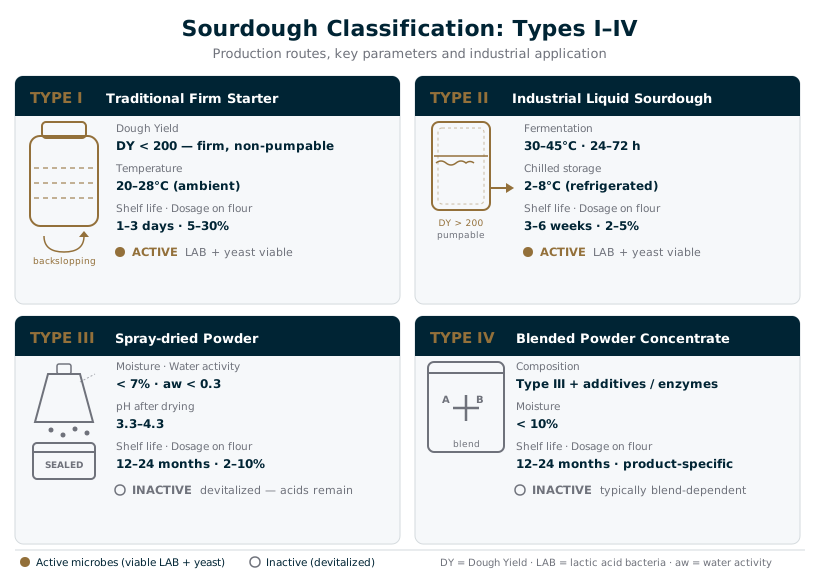 Diagram comparing Type I traditional, Type II liquid, Type III dried and Type IV blended sourdough production routes with key parameters
See Comparison Table 1 below for a full parameter comparison. The key practical distinctions are:
Type I — Traditional firm starter. Firm dough (Dough Yield below 200), fermented at ambient temperature below 30°C, refreshed daily by backslopping. Contains active wild LAB and yeast. High labour and skill requirement. Not covered in this article — see the companion article A2-sourdough-cultures-science.
Type II — Industrial liquid sourdough. Liquid (DY above 200), fermented at elevated temperatures (above 30°C) for 24-72 hours in a single stage. Pumpable for continuous dosing systems. Microbes may be active or recently deactivated depending on whether acid preservation was applied. Chilled active versions store up to one week; acid-preserved concentrates store 9-36 months.
Type III — Dried / devitalized sourdough. A Type II sourdough subjected to spray- or drum-drying. Micro-organisms are killed in the process. Used primarily as a flavouring and aroma agent — it imparts the organic acids and volatile compounds produced during fermentation, but provides NO leavening. Baker's yeast must still be added separately. This is the most widely used category at industrial scale because of ambient storage, long shelf life, and simple metered dosing.
Type IV — Mixed / blended. Blended preparations combining dried sourdough with malt extracts, organic acids, enzyme preparations, or other improver components. Often the most "turnkey" option for producing consistent results with minimal know-how.
Reading the Quality Parameters: pH and TTA
Every sourdough concentrate has two key analytical parameters on its spec sheet. Understanding them lets you select the right product and diagnose problems.
pH governs enzyme activity in the dough. Amylase (which breaks down starch into fermentable sugars) has optimal activity at pH 5.4-5.8. Sourdough acidification drives the dough's pH down toward this range or below, which becomes progressively more critical as rye content rises — rye amylase continues working even into the early bake, and insufficient acidification leads to sticky, gummy crumb. The concentrate itself will have a very low pH (e.g. Zeelandia Bioferm Dark: pH 2.4-2.8; ULDO Dark Sauer: pH 2.5-4.5 ) but this is the concentrated value. The finished dough pH depends on dosage and buffering capacity of the flour.
TTA (Total Titratable Acidity) is the industry's flavour metric. It is measured by titrating 10 g of sourdough with 0.1 M sodium hydroxide to pH 8.5, and the result expressed as ml of NaOH consumed (or in "Sauer degrees" or "SH degrees" in central European practice — these units are used interchangeably in older specifications). As the baking saying goes: "The pH value bakes and the TTA tastes."
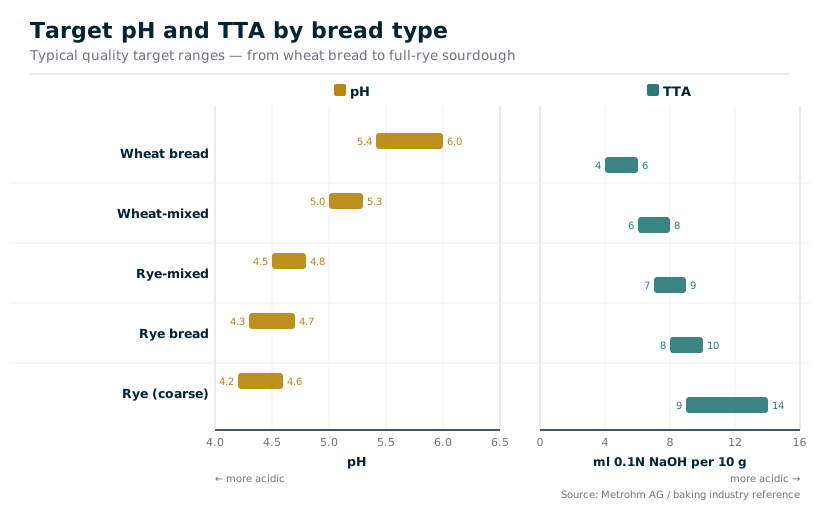 Bar chart of target pH and TTA acidity ranges for five bread types from wheat through full rye
See Comparison Table 3 below for the full target ranges by bread type. Rye bread needs both a low pH (4.3-4.7) and a high TTA (8-10) in the finished dough to be structurally stable and to taste correctly sour.
The lactic:acetic ratio is a third quality dimension not always printed on spec sheets. Sourdough flavour is shaped by the balance of lactic acid (softer, yogurt-like sourness) and acetic acid (sharper, vinegar-like bite). A ratio that is too heavily weighted toward acetic acid produces an unpleasantly harsh flavour; ratios published in the literature vary widely — from roughly 6:1 in drier-dough ferments to 15:1 in wetter ones — depending on hydration, temperature, and LAB strain. Higher water content during fermentation generally favours lactic acid formation. Dried concentrates "lock in" the ratio at the point of drying; liquid concentrates may continue shifting slightly during storage. (Note: published ratio targets vary widely across studies; contact the concentrate supplier for the lactic:acetic profile of a specific product.)
Product Categories in Depth
1. Liquid Sourdough Concentrates (Type II, Preserved)
These are fully fermented, acid-preserved liquid sourdoughs. They are not active — the micro-organisms are deactivated by a combination of low pH and sometimes heat treatment or added preservative acids — but they carry the full biochemical profile of a fermented sourdough including organic acids, flavour volatiles, and enzymes. Because they are pumpable, they integrate well into automated dosing systems.
Zeelandia Bioferm Dark (Ciemny), 19 kg
One of the most analytically characterised products in the catalogue: pH 2.4-2.8 and TTA 250-260 SH degrees confirm an intensely acidified, dark rye concentrate. Ingredients include liquid whey, rye flour, acidity regulators E270 (lactic acid) and E260 (acetic acid), rye bran, barley malt flour, roasted barley, and roasted rye. The high TTA and dark malt character make this the right choice for heavy rye breads (60% rye and above). Allergen flag: this product contains milk (liquid whey) as the first listed ingredient — not suitable for dairy-free, vegan, or milk-allergic baking without explicit label declaration.
Dosage scales with rye content:
| Rye flour % | Wheat flour % | Bioferm Dark dosage |
|---|---|---|
| 50% | 50% | 2.5% |
| 70% | 30% | 3.2% |
| 80% | 20% | 3.5% |
| 100% | 0% | 4.0% |
(Source: Zeelandia spec sheet )
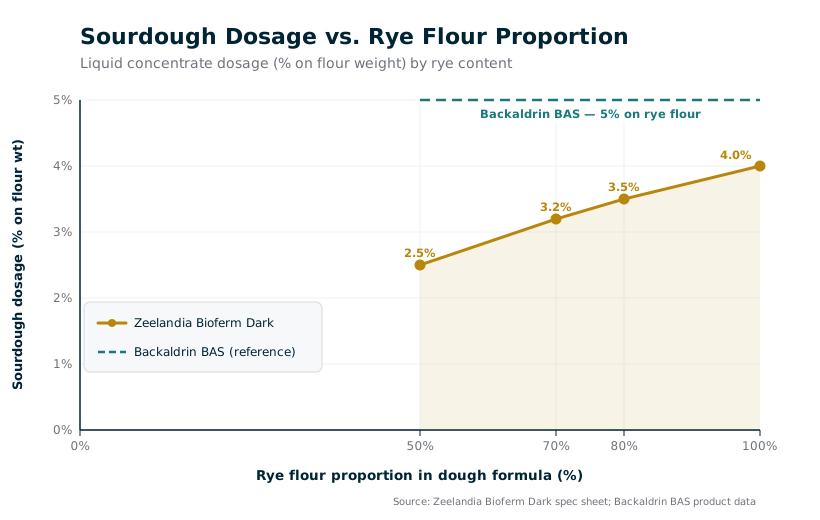 Chart showing required liquid sourdough concentrate dosage increasing from 2.5% to 4% as rye proportion rises from 50% to 100%
Store at 0-25°C; do not freeze. Shelf life 12 months.
Backaldrin BAS Dark and BAS Light, 12 kg each
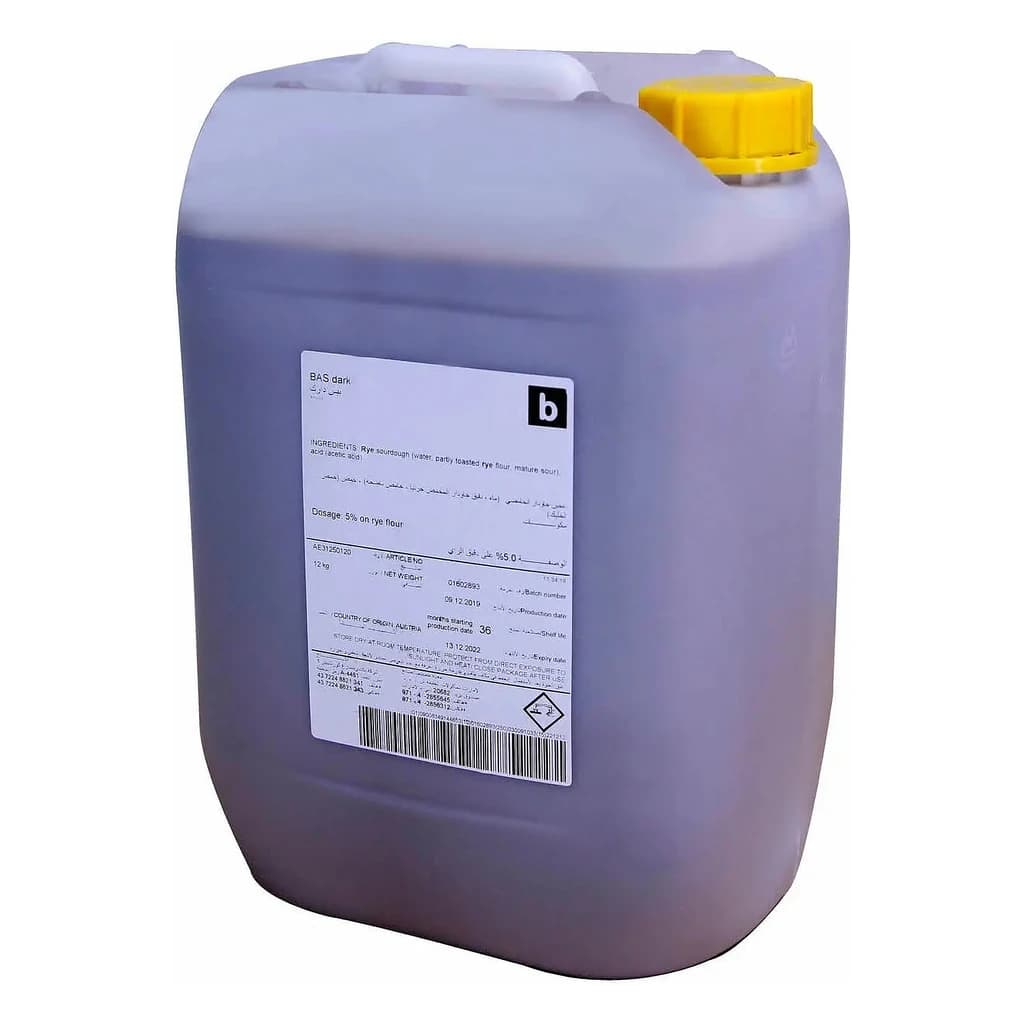
Liquid sourdoughs produced through natural multistage fermentation. BAS Dark for dark rye breads; BAS Light for mixed and lighter breads. Shelf life 36 months is notably longer than most liquid concentrates, suggesting strong acid preservation. Dosage: 5% on rye flour. (Medium confidence — no spec sheet in catalogue for these products. )
Zeelandia Amore Wheat Sourdough, 13 kg
Wheat-based liquid sourdough suitable for mixed wheat breads. No spec sheet in catalogue; contact Zeelandia for TTA and dosage guidance.
Böcker Flüssigsauer 200, 15 kg
Part of Böcker's established liquid sourdough range, launched from 1998. Described as a naturally preserved liquid product. Contact Böcker for full TDS. Clean label, vegan, GMO-free.
Bas Weizen Liquid Wheat Sourdough, 12 kg
Backaldrin's liquid wheat sourdough variant. No spec sheet available; contact Backaldrin Polska for parameters.
2. Dried / Devitalized Sourdough Powders (Type III)
These are the industrial baker's most convenient tool: free-flowing powders that add directly into the mixer alongside flour, require no refrigeration, and have long shelf lives of 9-36 months. The critical trade-off is that they contain no live micro-organisms — all leavening must come from added baker's yeast. Their role is purely flavour, aroma, and controlled acidification.
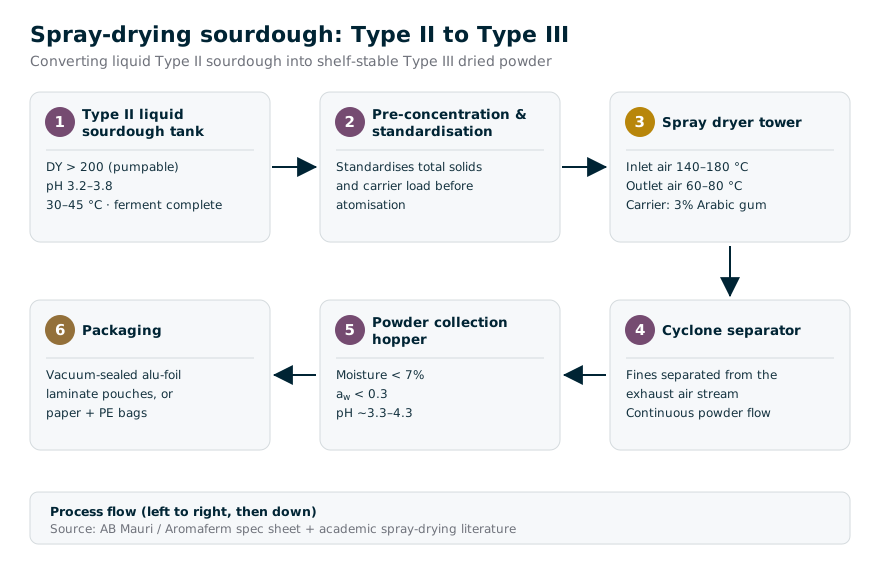 Flow diagram of industrial spray-drying process converting liquid sourdough to dried powder with key parameters annotated
How they are made. A fully fermented Type II liquid sourdough is concentrated and then dried — typically by spray drying (inlet air 140°C+, with a carrier agent such as Arabic gum at 3%) or by drum drying (3 bar steam pressure). The goal is to reduce moisture below 7% and water activity below 0.3 to prevent any remaining microbial activity and achieve shelf stability. Spray-dried powders achieve moisture ~4.83% and a_w ~0.32 under standard conditions; drum-dried products may have slightly higher moisture (~8.3%). The product must be packaged in a moisture-tight barrier (vacuum-sealed aluminium foil laminate performs best).
Zeelandia Superkwas, 25 kg
A grey powder with a composition of rye flour (79%) and acidity regulators E330 (citric acid), E270 (lactic acid), E327 (calcium lactate) at 20%, plus traces of wheat flour, enzyme, and wheat starch. Moisture must remain below 16.5%. Shelf life 180 days. Store below 25°C, RH below 75%. Appearance: grey powder; odour and taste: specific with no off-notes. Allergens: WHEAT and RYE present as ingredients; barley, oat, spelt, egg, soya, milk, and sesame are possible via cross-contamination.
Typical application recipe: 1.3 kg Superkwas per 100 kg total flour (70 kg wheat type 850 + 30 kg rye type 720 + 3.5 kg yeast + 1.8 kg salt + 68 L water). Mix 6 min slow + 4 min fast; dough temperature 26-28°C; first proof ~20 min; final proof ~45 min; bake 230-250°C with steam. (See the formula card below.)
ULDO W/43 Dark Sauer Concentrate, 25 kg
Strictly speaking a paste rather than a free-flowing powder, but functionally similar: it adds directly to the mixer and provides controlled acidification with no live microbes. Ingredients: rye bran, water, rye flour, citric acid, lactic acid, acetic acid, barley malt. Dark brown paste. pH 2.5-4.5, TTA 140-150 Sauer degrees. Dosage 2-8% on flour weight. Shelf life 9 months at max 30°C, max 75% RH. Allergens: gluten (rye + barley malt); may contain milk, sesame, soya, lupine, eggs. Non-GMO, made in Poland.
The wide dosage range (2-8%) gives flexibility to increase or decrease sourness character without changing the rest of the formula.
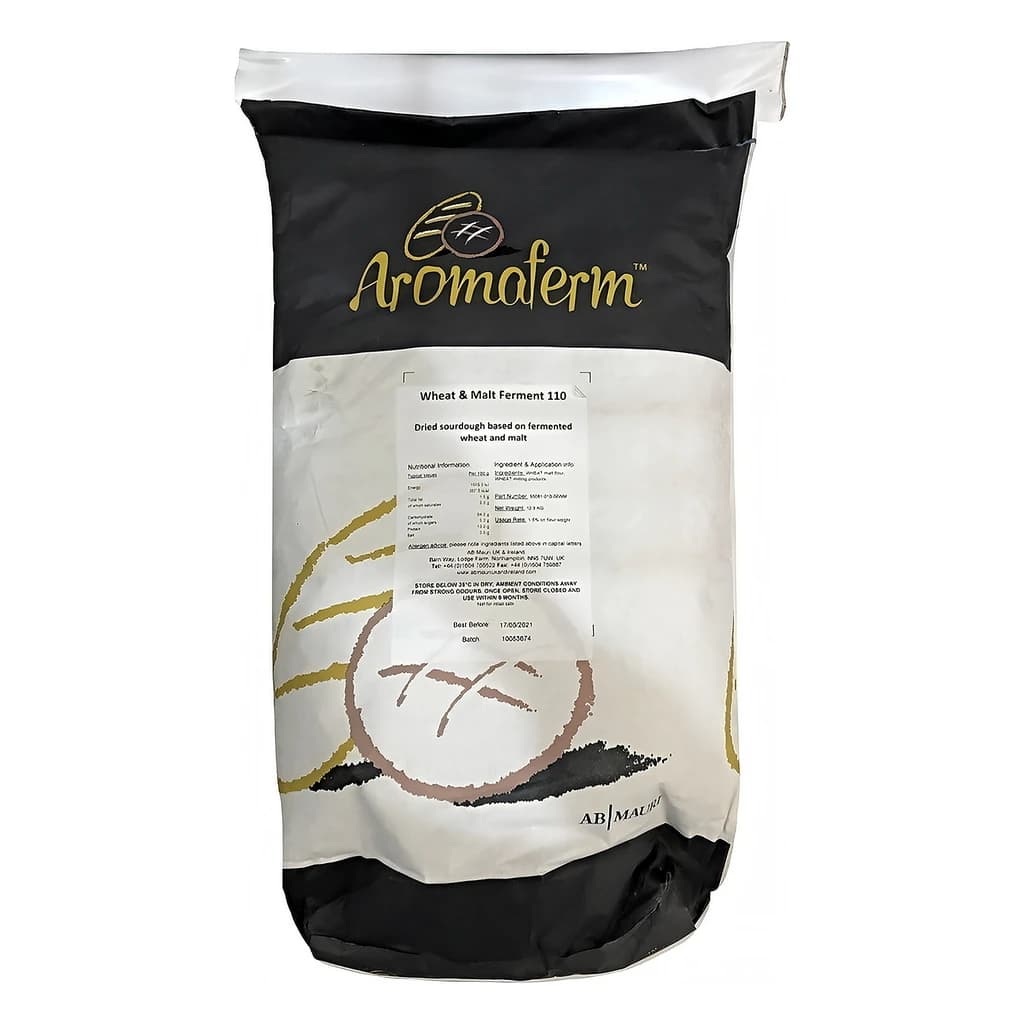
Aromaferm Wheat & Malt Ferment 110, 12.5 kg
Manufactured by AB Mauri (Mauri Technology, Netherlands). A dried wheat sourdough: composition wheat malt 90-100% (fermentation substrate) and wheat milling products 5-10%. Ingredient declaration: "Dried Wheat Sourdough". Appearance: beige free-flowing powder with aromatic, malty odour and acidic, aromatic flavour. Moisture below 5%, pH approximately 3.3, TTA 110 ±10%. Dosage 1-5% on flour weight. Shelf life 12 months at 0-25°C, away from direct sunlight and strong odours. Non-GMO. Allergen: only wheat gluten — no milk, no nuts, no other allergens as ingredient or on the same line or site. Suitable for vegans. Kosher (U) and Halal Correct certified.
This product's wheat-malt base delivers a distinctive malty-acidic note well suited to wheat and spelt loaves; the 1% dosage produces a subtle background; 5% a prominent character. (See the formula card below.)
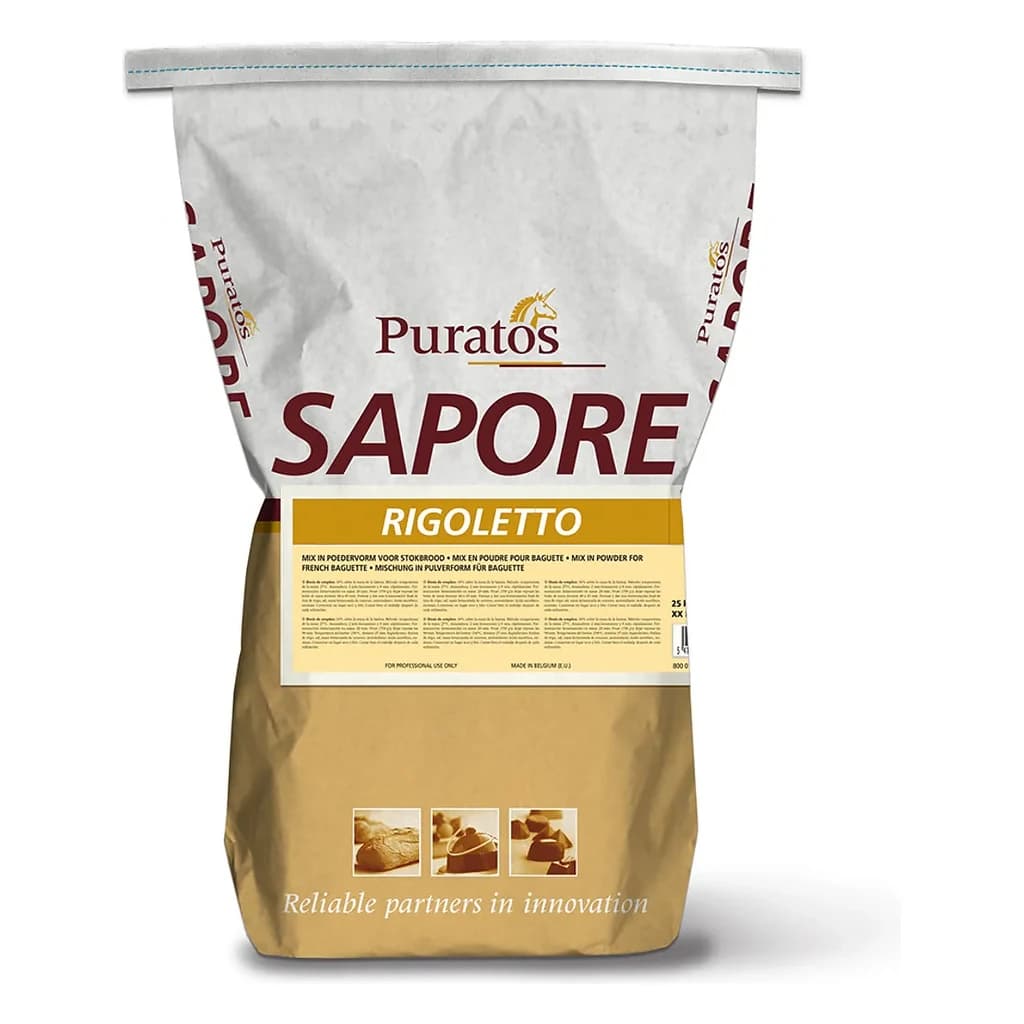
Puratos Sapore Rigoletto Sourdough Powder, 25 kg
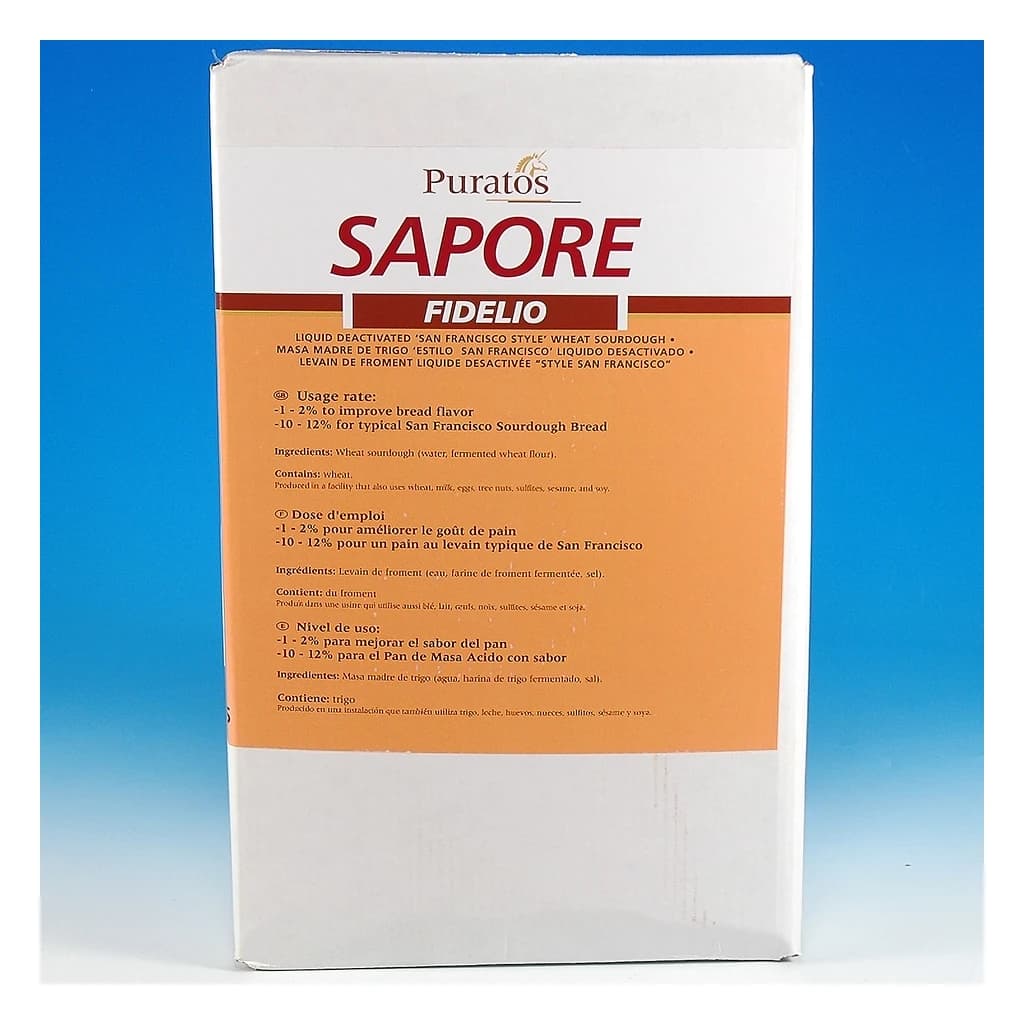
Part of Puratos's Sapore range of sourdough flavouring agents. No spec sheet in catalogue; contact Puratos for full TDS.
3. Active Sourdough Components (Dried with Active Yeast — "Active Bakery Component")
A distinct category occupying the space between a devitalized powder and a live sourdough. These products are dried but retain live baker's yeast (though not necessarily wild LAB), making them capable of contributing to leavening in addition to flavour.
Puratos O-tentic Durum, 10 × 1 kg
The clearest example in the catalogue. Legal name: "Active bakery component based on sourdough." Ingredients: dried durum WHEAT sourdough, yeast, ascorbic acid (E300), enzymes. It is not a pure devitalized powder — the active yeast means it can contribute to gas production, though it is typically supplemented with additional yeast at bakery scale. Total Acidity: 45-65 ml/10g. Dry matter: 94-100%. Dosage: 4% on flour weight, plus water and salt. The Puratos positioning is "4 ingredients: flour, water, salt, O-tentic."
Allergen: contains wheat gluten — NOT suitable for coeliacs. Additional allergen flag: mustard is a possible cross-contamination risk — mustard is a mandatory declared allergen under EU Regulation 1169/2011 Annex II; check whether a may-contain statement is required on the finished bread label. Suitable for vegans and vegetarians. Halal and Kosher certified. Free from alcohol and pork.
Storage: 16-20°C, max 65% RH. Shelf life 12 months. After opening, store at 0-7°C and use within 7 days. After-opening cold storage is a critical discipline: the active yeast will degrade rapidly at ambient temperature once the packaging seal is broken.
The Mediterranean flavour profile (durum wheat character) makes O-tentic Durum well suited to ciabatta, focaccia, and pane di Altamura-style breads. (See the formula card below.)
4. Sourdough Starter Cultures (Concentrated Active Culture)
These are not concentrates in the above sense, but rather concentrated live cultures used to initiate or refresh sourdoughs in-house. They bridge the gap between fully ready-to-use preparations and traditional in-house starters.
Böcker Bio Le Chef Organic Liquid Sourdough, 2 kg
DATA INTEGRITY FLAG. The spec sheet PDF in the catalogue (36aff9a1) delivered a Martin Braun "Krokella" puffed-rice specification — a confirmed content mismatch. All numeric data for this product (shelf life, storage temperature, allergens) therefore lacks a verified source and must not be used for customer documentation or bakery training until the authentic Böcker Bio Le Chef spec sheet is obtained and catalogued. Böcker positions Bio Le Chef as an organic, ready-to-use liquid sourdough in a 2 kg bucket format; clean label, vegan, and GMO-free positioning is confirmed via the Böcker brand website. Shelf life, allergen status, and post-opening cold-storage instructions are unverified — do not rely on previously cited figures.
Lesaffre Saf-Levain LV1 Sourdough Starter
A dry starter culture format. Usage: 0.2-0.5% on flour weight, dissolved in water at 30-35°C. Lesaffre classifies this as a "starter culture" product (blend of specific LAB strains and yeast) to initiate a defined in-house sourdough, rather than a ready-to-use end-ingredient. Use where the bakery wants controlled in-house fermentation without the variability of spontaneous culture.
Lesaffre Livendo LV-2 Sourdough Culture
Similar to LV1 in concept; differentiated by strain selection and target application. Contact Lesaffre UK for current TDS.
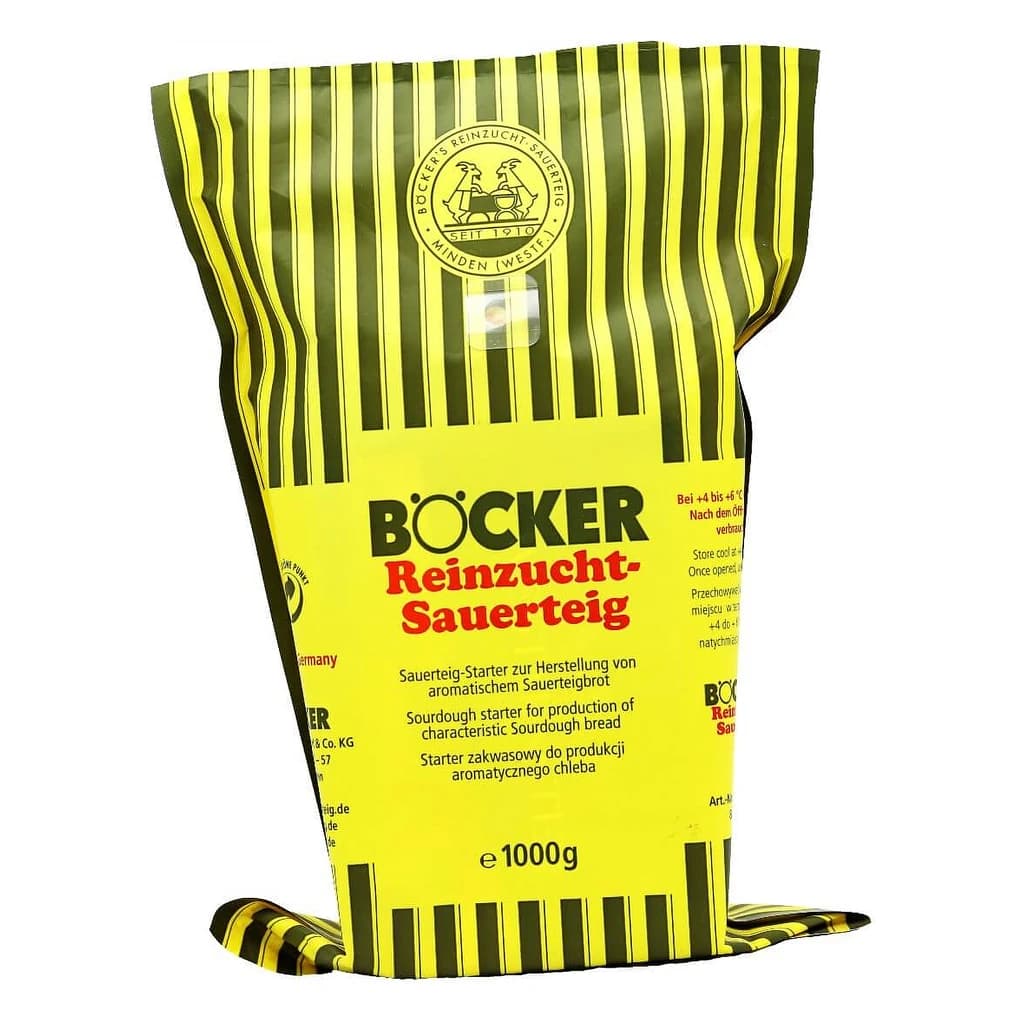
Böcker Reinzucht-Sauerteig Pure Sourdough Starter, 1 kg
Böcker's original pure-culture sourdough starter, positioned for process reliability and consistent quality. For in-house sourdough propagation.
Industrial Dosing and Storage — Practical Guidance
Liquid sourdough logistics
Liquid concentrates are typically delivered in 12-19 kg plastic pails or in larger IBC containers for high-volume operations. They are dosed by weight on a bench scale or by volume through a dedicated pump with flow meter. Key discipline: store below 25°C, never freeze (freezing breaks emulsion and alters acid balance), and seal immediately after each draw-off.
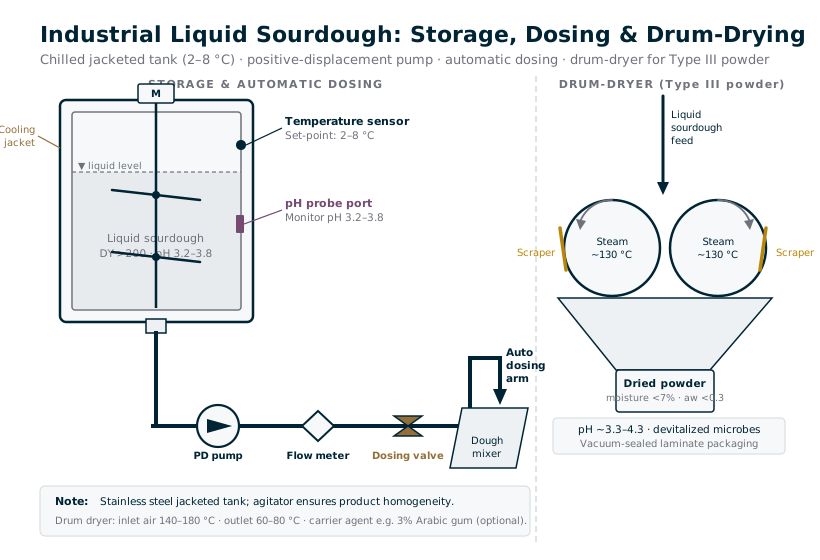 Industrial schematic of liquid sourdough chilled storage tank with automatic dosing arm and separate drum-dryer illustration
Automatic dosing systems for liquid sourdoughs are available from Lesaffre and other suppliers for continuous mixing lines, where the product is pumped directly into the mixer at a programmed rate per mixing cycle.
Accounting for liquid sourdough in the water balance
This is the most common formulation error. A liquid sourdough concentrate is 60-80% water. When adding, for example, 3.5 kg of liquid sourdough to a 100 kg flour batch, you are adding approximately 2-2.5 kg of liquid. Subtract this from the total water addition. Failure to do so produces a dough that is consistently too slack and produces a poorly shaped, open-structured loaf.
Powder sourdough storage
Free-flowing powders (Superkwas, Aromaferm WMF 110) should be stored in their original sealed packaging at or below 25°C and away from humidity sources. Once opened, re-seal tightly. Moisture ingress causes caking and can reactivate trace microbial activity, degrading both physical and flavour quality. Shelf-life guidance from the academic literature: vacuum-sealed aluminium foil laminate preserves powder quality best; LDPE bags allow higher moisture gain. If the product has caked into solid lumps, it should be milled through a sieve before use or discarded if storage conditions were severely breached.
Dough temperature control
Liquid sourdoughs containing preserved organic acids are less temperature-sensitive than active cultures, but the finished dough temperature still governs enzyme activity and the rate at which added baker's yeast ferments. Superkwas recipe specifies 26-28°C dough temperature; Bioferm Dark wholemeal rye recipe specifies 29-31°C. Adhere to these ranges: too cold slows yeast fermentation and can result in under-proofed bread; too warm in rye doughs accelerates enzyme activity and can produce gummy crumb.
Fault Diagnosis
See Fault Table 1 below for a complete diagnostic table. The most common industrial faults and their causes:
Bread lacks sourdough flavour — most often an under-dosage problem or a product with insufficient TTA for the bread type. The higher the rye proportion, the more concentrate is needed (see dosage table for Bioferm Dark). If switching from an old product to a new one, compare TTA values — a product with TTA 110 (Aromaferm WMF 110) will deliver much less perceived sourness than one at 250-260 (Bioferm Dark) at the same dosage.
Dough too slack — the water in liquid sourdough concentrate was not deducted from the total water addition. Recalculate hydration.
Rye bread gummy crumb — insufficient acidification to control amylase activity; the optimal rye dough pH of 4.3-4.7 was not achieved. Check concentrate dosage against rye proportion table; check concentrate is within shelf life; verify dough temperature.
Opened liquid sourdough container developing mould — FOOD SAFETY: discard product, do not use. Sanitise dispensing equipment. Review storage temperature and container sealing practice.
Catalogue Product Comparison
See Comparison Table 2 below for a full side-by-side of all eight products with spec-sheet data.
Quick decision guide:
- High-rye breads (60%+ rye): Zeelandia Bioferm Dark or Backaldrin BAS Dark. Note dairy allergen in Bioferm Dark.
- Wheat-rye mixed breads (30-60% rye): Zeelandia Superkwas powder or ULDO Dark Sauer paste.
- Wheat loaves needing sourdough character: Aromaferm WMF 110 or Bas Weizen Liquid Wheat.
- Mediterranean / durum wheat breads: Puratos O-tentic Durum (4% dosage, active component).
- Organic-label products: Böcker Bio Le Chef (verify allergens against authentic spec).
- In-house sourdough initiation / refreshment: Lesaffre Saf-Levain LV1, Böcker Reinzucht-Sauerteig.
Commercial Context
Ready-to-use sourdough concentrates can command a modest ingredient cost premium. One trade report citing a specific Italian concentrate system (Panvivo/Millbio at 10% dosage) estimated approximately €0.18-0.27 per unit of additional ingredient cost — but these figures are product-specific and not generalisable to all sourdough concentrates; contact suppliers for product-specific cost modelling. The trade-off — non-GMO positioning and, in some products, a clean-label profile — aligns with current consumer expectations.
Important label qualification: the "clean label / no E-numbers" positioning does not apply uniformly across this product range. Zeelandia Superkwas contains E330, E270, and E327; ULDO Dark Sauer contains citric acid (E330), lactic acid (E270), and acetic acid (E260); Puratos O-tentic Durum contains ascorbic acid (E300). Under EU Food Information Regulation 1169/2011, additives that remain functional in the final food must be declared on the finished bread label. Bakers must assess E-number carry-through per product before making "clean label" or "no E-numbers" claims on finished bread. However, some liquid concentrates (notably Zeelandia Bioferm Dark) contain dairy ingredients which preclude vegan or dairy-free claims without label disclosure.
The most relevant food-labelling distinction is between a product declared as "Sourdough" (implying authentic fermentation with LAB and wild yeast) versus one that uses "Dried Wheat Sourdough" (Type III devitalized powder) as a flavouring ingredient but is leavened entirely by commercial baker's yeast. Both are commercially legitimate but carry different consumer expectations and, in some markets, labelling conventions. Seek current regulatory guidance for the target market before making "sourdough" claims on products made exclusively with devitalized concentrates.
Coverage Notes
Solid coverage: Zeelandia Bioferm Dark, Zeelandia Superkwas, ULDO Dark Sauer, Puratos O-tentic Durum, Aromaferm WMF 110 — all from direct spec-sheet read. pH, TTA, dosage, shelf life, allergens confirmed.
Thin / single-source: Backaldrin BAS Dark/Light (distributor website only; no spec sheet), Böcker Le Chef (spec-sheet PDF mismatch — content must be verified), Lesaffre Saf-Levain LV1/LV2 (brand website only), Zeelandia Amore and Sapore Rigoletto (no spec sheet in catalogue).
Needs follow-up: (1) Replace Böcker Le Chef PDF in the catalogue with the authentic sourdough specification. (2) Obtain Backaldrin BAS spec sheets for pH, TTA, and allergen confirmation. (3) Obtain Zeelandia Amore and Puratos Sapore Fidelio/Rigoletto TDS for complete catalogue coverage. (4) Clarify TTA method/unit for Aromaferm WMF 110 (110 ± 10% — percent of what reference value?). (5) Confirm lactic:acetic ratios for each product where available — not reported on any current spec sheet.
Wholemeal Rye Bread with Bioferm Dark — Reference Formula
| Ingredient | Baker's % | Weight |
|---|---|---|
| Rye flour type 2000 | 80 | 80 kg |
| Wheat flour type 850 | 20 | 20 kg |
| Bioferm Dark liquid sourdough | 3.5 | 3.5 kg |
| Optimax (bread improver) | 1 | 1 kg |
| Salt | 2.2 | 2.2 kg |
| Yeast (fresh) | 3.5 | 3.5 kg |
| Water | 80 | 80 L |
Extracted directly from Zeelandia Bioferm Ciemny spec sheet. Baker's percent calculated on total flour (100 kg). Dough temperature 29-31°C. Rest 15-20 min. Scaling 0.7 kg. Final proof ~50 min. Bake at 250°C reducing to 200°C (deck oven) or 280°C to 190°C (rotary), approx. 60 min.
Wheat-Rye Bread with Superkwas — Reference Formula
| Ingredient | Baker's % | Weight |
|---|---|---|
| Wheat flour type 850 | 70 | 70 kg |
| Rye flour type 720 | 30 | 30 kg |
| Salt | 1.8 | 1.8 kg |
| Superkwas powder sourdough | 1.3 | 1.3 kg |
| Yeast (fresh) | 3.5 | 3.5 kg |
| Water | 68 | 68 L |
Extracted directly from Zeelandia Superkwas spec sheet. Baker's percent calculated on total flour (100 kg).
4-Ingredient Mediterranean Bread with O-tentic Durum — Reference Formula
| Ingredient | Baker's % | Weight |
|---|---|---|
| Flour (durum wheat / bread flour) | 100 | 100 kg |
| O-tentic Durum concentrate | 4 | 4 kg |
| Water | per recipe | per recipe L |
| Salt | per recipe | per recipe kg |
Usage rate from Puratos O-tentic Durum TDS v1.3. Exact flour weight, water and salt quantities not specified in the spec sheet — these are to be determined by the baker. The 4-ingredient claim (flour, water, salt, O-tentic) is from Puratos brand communications. Yeast is included in the product itself.
Wheat Bread with Aromaferm WMF 110 — Dosage Guidance
| Ingredient | Baker's % | Weight |
|---|---|---|
| Wheat bread flour | 100 | 100 kg |
| Aromaferm WMF 110 (dried wheat sourdough) | 1–5 | 1–5 kg |
| Baker's yeast (fresh) | standard rate | standard rate for product kg |
| Salt | per recipe | per recipe kg |
| Water | per recipe | per recipe L |
Dosage range 1-5% on flour weight per spec sheet. This product is purely a flavouring/aroma agent (devitalized, no active fermentation). Baker's yeast must be added at standard rates. Low end (1%) = subtle background note; high end (5%) = pronounced malty-acidic character. Adjust to taste.
| Parameter | Type I (Traditional) | Type II (Liquid Industrial) | Type III (Dried / Devitalized) | Type IV (Blended Mixed) |
|---|---|---|---|---|
| Consistency | Firm | Liquid / pumpable | Free-flowing powder | Powder blend |
| Dough Yield (DY) | <200 | >200 | N/A (dried) | N/A |
| Fermentation temp | <30°C | >30°C (up to 45°C) | No active ferment | No active ferment |
| Fermentation time | <24 h, backslopped | 24–72 h single stage | Pre-dried (inactive) | Pre-mixed (inactive) |
| Microbial activity at use | Active (wild LAB + yeast) | Active or recently deactivated | None (devitalized) | None |
| Leavening role | Full (LAB + yeast) | Partial to full | Flavouring only — add baker's yeast separately | Flavouring only |
| Typical moisture | 30–50% | 60–80% | <7% (spray-dried) / <8.3% (drum-dried) | <10% |
| Water activity (a_w) | 0.85–0.95 | 0.90–0.98 | <0.3 (target) | <0.3 |
| Shelf life (typical) | Days (must refresh) | 1–3 weeks chilled; 36 months for preserved acid concentrate | 9–36 months at ambient | 12–24 months |
| pH (typical) | 3.2–4.0 | 2.4–3.5 | 3.3–4.3 | 3.5–4.5 |
| TTA (Sauer degrees) | Varies widely | 140–260 (spec-sheet range) | 80–150 (reconstituted equivalent) | Variable |
| Industrial convenience | Low — daily attention | Medium — chilled logistics | High — ambient storage, direct add | High |
| Industrial use example | Artisan in-house starter | Puratos O-tentic, Zeelandia Bioferm | Aromaferm WMF 110, ULDO Dark Sauer, Zeelandia Superkwas | Backaldrin BAS Turbo 500 |
Classification follows academic consensus (Gobbetti et al.). 'Type IV' is occasionally cited in recent literature as a mixed/blended variant. DY = Dough Yield (100 × total dough weight / flour weight).
| Product | Brand | Form | Flour base | pH (as supplied) | TTA / Acidity (as supplied) | Dosage (% on flour) | Shelf life | Moisture / Dry matter | Active microbes? | Key allergens (ingredients) | GMO-free? |
|---|---|---|---|---|---|---|---|---|---|---|---|
| Superkwas 25 kg | Zeelandia | Powder (grey) | Rye (79%) + wheat starch | NR | NR | ~1.3% (1.3 kg/100 kg flour) | 180 days | <16.5% moisture | No | WHEAT, RYE; possible: barley, oat, spelt, egg, soya, milk, sesame | Yes |
| W/43 Dark Sauer 25 kg | ULDO Polska | Paste (dark brown) | Rye bran + rye flour | 2.5–4.5 | 140–150 (Sauer °) | 2–8% | 9 months | <15% moisture | No | GLUTEN (rye+barley malt); may contain: milk, sesame, soya, lupine, eggs | Yes |
| Bio Le Chef Organic 2 kg | Böcker / Martin Braun | Solid/lumpy (yellow) | NR (organic wheat-based) | NR | NR | NR (ready-to-use per spec) | 360 days | NR | No (germ count limit cited) | No gluten as ingredient; milk/hazelnuts/almonds trace possible | Yes |
| O-tentic Durum 10 × 1 kg | Puratos | Powder (dried) | Durum WHEAT sourdough + yeast + E300 + enzymes | NR | 45–65 ml/10g | 4% on flour weight | 12 months | 94–100% dry matter (0–6% moisture) | No (yeast present but product is dried active component) | WHEAT (gluten); mustard possible cross-contamination | Yes |
| Bioferm Dark (Ciemny) 19 kg | Zeelandia | Liquid (dark brown) | Rye flour + wheat + barley malt + whey | 2.4–2.8 | 250–260 (SH °) | 2.5–4.0% (rye-proportion dependent) | 12 months | NR (liquid) | No (preserved acid product) | GLUTEN (rye + wheat + barley); MILK (whey) | Yes |
| Aromaferm WMF 110 12.5 kg | AB Mauri / Aromaferm | Powder (beige) | WHEAT malt 90–100% + wheat milling 5–10% | ~3.3 | 110 ± 10% TTA | 1–5% on flour weight | 12 months | <5% moisture | No (dried/devitalized) | WHEAT (cereals with gluten) | Yes |
| BAS Dark Liquid Rye 12 kg | Backaldrin | Liquid | Rye flour + mature sour | NR | NR | 5% on rye flour | 36 months | NR (liquid preserved) | No | Rye/gluten (M) | NR (M) |
| BAS Light Liquid Rye 12 kg | Backaldrin | Liquid | Rye flour (light) | NR | NR | 5% on rye flour | 36 months | NR (liquid preserved) | No | Rye/gluten (M) | NR (M) |
All figures from first-party spec sheets except where marked (M=medium/single-source, NR=not reported in spec sheet). pH and TTA values are as supplied (concentrate values).
| Bread type | Target pH | Target TTA (ml 0.1 M NaOH/10 g) |
|---|---|---|
| Wheat bread | 5.4–6.0 | 4–6 |
| Wheat-mixed bread | 5.0–5.3 | 6–8 |
| Rye-mixed bread | 4.5–4.8 | 7–9 |
| Rye bread | 4.3–4.7 | 8–10 |
| Rye bread (coarsely ground) | 4.2–4.6 | 9–14 |
From Metrohm / baking industry convention. TTA = ml of 0.1 M NaOH to neutralise 10 g dough to pH 8.5. These are finished-dough targets, not concentrate values.
| Rye flour % | Wheat flour % | Bioferm Dark dosage (% on total flour) |
|---|---|---|
| 50% | 50% | 2.5% |
| 70% | 30% | 3.2% |
| 80% | 20% | 3.5% |
| 100% | 0% | 4.0% |
Values extracted directly from Zeelandia Bioferm Ciemny spec sheet. Baker's percent calculated on total flour weight. Higher rye proportion requires more sourdough to achieve correct acidification and pentosan control.
| Fault observed | Probable cause | Corrective action |
|---|---|---|
| Bread lacks sourdough flavour | Underdosage of concentrate; or very low-TTA product used | Increase dosage by 0.5% increments; switch to higher-TTA product (e.g. Bioferm Dark TTA 250-260 SH vs. Superkwas NR) |
| Bread too sour / acidic bite | Overdosage; dough temperature too high; overlong bulk fermentation with active-yeast concentrate | Reduce dosage by 0.5%; lower dough temperature to 26-28°C; shorten bulk ferment |
| Dough slack / poor structure after adding liquid sourdough | Liquid sourdough not accounted for in total water balance | Subtract volume of liquid sourdough from water addition; recalculate hydration |
| Crust and crumb colour too dark | Maillard reaction accelerated by organic acids and malt components in concentrate | Reduce baking temperature by 5-10°C; consider a product with lower malt content |
| Inconsistent sourness batch to batch | Concentrate stored above max temperature; opened container not sealed | Store liquid concentrate at 0-25°C, never freeze; seal after each use; check TTA with titration |
| Powder product lumping in storage | Moisture ingress from humid environment or opened packaging | Store sealed at <25°C, RH <65-75% per spec; use vacuum-sealed alu-foil pouches; use within spec shelf life |
| No gas production in O-tentic Durum dough | Product stored outside 16-20°C range or after shelf life; O-tentic mixed at too-cold water temperature | Check production date; re-test with fresh product; ensure water temp 18-22°C for mix |
| Mould visible in liquid sourdough container | Product past shelf life (12 months); contaminated by dipping utensils; stored above 25°C | Do not use — dispose; Food safety: contaminated sourdough concentrate must be rejected; clean and sanitise dispensing equipment |
| Rye bread does not hold shape / too sticky | Insufficient acidification to control pentosans; sourdough dosage too low for rye proportion | Increase liquid sourdough dosage per rye-proportion table (e.g. 4% for 100% rye); check dough temperature 29-31°C |
| Bitter off-flavour in wheat bread using powder sourdough | Over-dosage of malt-heavy powder (e.g. >5% Aromaferm WMF 110); malt bitterness extracting at high dosage | Reduce dosage; blend with lower-malt powder sourdough product |
Based on spec-sheet parameters, baking industry reference (Metrohm, Lesaffre), and general sourdough technology.
- Product:
- Zeelandia Superkwas
- Form:
- powder
- Moisture pct max:
- 16.5
- Dosage pct min:
- 1
- Dosage pct typical:
- 1.3
- Shelf life days:
- 180
- Storage temp max c:
- 25
- Storage rh max pct:
- 75
- Active microbes:
- false
- Allergens present:
- wheat, rye
- Allergens possible:
- barley, oat, spelt, egg, soya, milk, sesame
- Gmo free:
- true
- Product:
- ULDO W/43 Dark Sauer
- Form:
- paste
- Moisture pct max:
- 15
- Ph min:
- 2.5
- Ph max:
- 4.5
- Tta min:
- 140
- Tta max:
- 150
- Tta unit:
- Sauer degrees
- Dosage pct min:
- 2
- Dosage pct max:
- 8
- Shelf life months:
- 9
- Storage temp max c:
- 30
- Storage rh max pct:
- 75
- Active microbes:
- false
- Allergens present:
- gluten_rye, barley_malt
- Allergens possible:
- milk, sesame, soya, lupine, eggs
- Gmo free:
- true
- Product:
- Puratos O-tentic Durum
- Form:
- powder
- Dry matter pct min:
- 94
- Dry matter pct max:
- 100
- Moisture pct max:
- 6
- Tta min ml per 10g:
- 45
- Tta max ml per 10g:
- 65
- Tta unit:
- ml 0.1N NaOH / 10g
- Dosage pct:
- 4
- Shelf life months:
- 12
- Storage temp min c:
- 16
- Storage temp max c:
- 20
- Storage rh max pct:
- 65
- After opening max days:
- 7
- After opening temp range c:
- 0-7
- Active microbes:
- false
- Yeast present:
- true
- Allergens present:
- wheat_gluten
- Allergens possible cross:
- mustard
- Halal:
- true
- Kosher:
- true
- Vegan:
- true
- Suitable for coeliacs:
- false
- Gmo free:
- true
- Quality cert:
- GFSI
- Product:
- Zeelandia Bioferm Dark Liquid Sourdough
- Form:
- liquid
- Ph min:
- 2.4
- Ph max:
- 2.8
- Tta min:
- 250
- Tta max:
- 260
- Tta unit:
- SH degrees
- Dosage pct at 50 50 rye wheat:
- 2.5
- Dosage pct at 70 30 rye wheat:
- 3.2
- Dosage pct at 80 20 rye wheat:
- 3.5
- Dosage pct at 100 rye:
- 4
- Shelf life months:
- 12
- Storage temp min c:
- 0
- Storage temp max c:
- 25
- Do not freeze:
- true
- Packaging kg:
- 19
- Active microbes:
- false
- Allergens present:
- gluten_rye_wheat_barley, milk_whey
- Country of origin:
- Czech Republic
- Product:
- Aromaferm Wheat & Malt Ferment 110
- Form:
- powder
- Moisture pct max:
- 5
- Ph approx:
- 3.3
- Tta nominal:
- 110
- Tta tolerance pct:
- 10
- Tta unit:
- TTA units (method not specified in spec)
- Dosage pct min:
- 1
- Dosage pct max:
- 5
- Shelf life months:
- 12
- Storage temp min c:
- 0
- Storage temp max c:
- 25
- Packaging kg:
- 12.5
- Active microbes:
- false
- Composition wheat malt pct:
- 90-100
- Composition wheat milling pct:
- 5-10
- Allergens present:
- wheat_gluten
- Allergens cross line:
- wheat_gluten
- Allergens cross site:
- wheat_gluten
- Halal:
- true
- Kosher:
- true
- Vegan:
- true
- Gmo free:
- true
Buy the ingredients
Catalogue products and brands referenced in this article.
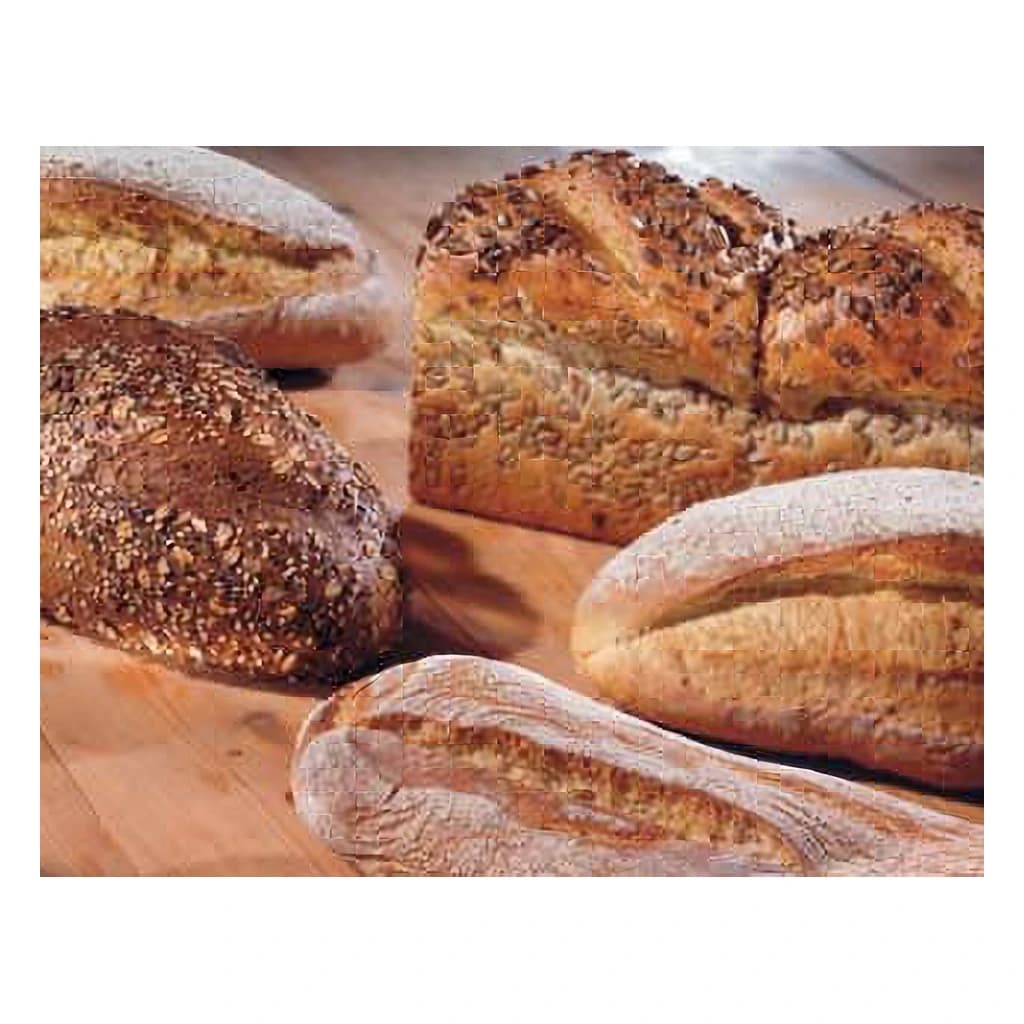
Superkwas Dry Sourdough 25 kg
Sauer Dark Rye Sourdough Concentrate 25 kg
Backaldrin BAS Dark Liquid Rye Sourdough 12 kg
Puratos Sapore Fidelio Sourdough 10 kg
Böcker Reinzucht-Sauerteig Pure Sourdough Starter 1 kg
Böcker Bio Le Chef Organic Liquid Sourdough 2 kg
MLM Böcker Wholegrain Spelt Sourdough 20 kg

Böcker Flüssigsauer 200 Liquid Sourdough 15 kg
Bas Turbo 500 Sourdough Concentrate 12 kg

Lesaffre Rye Sourdough AS ECOL 11 kg
Lesaffre Saf-Levain LV1 Sourdough Starter (S)
Lesaffre Livendo Starter LV-2 Sourdough Culture
Backaldrin BAS Light Liquid Rye Sourdough 12 kg
Puratos Sapore Rigoletto Sourdough Powder 25 kg
Aromaferm Wheat & Malt Ferment 110 12.5 kg

Puratos O-tentic Durum Sourdough Concentrate 10 × 1 kg
Zeelandia Bioferm Dark Liquid Sourdough 19 kg