
Enriched dough formulas: brioche, challah, cinnamon rolls and sweet buns by baker's percentage
Five production-ready enriched formulas — rich brioche, challah, cinnamon rolls, tangzhong milk/sweet buns and a spec-sourced Berliner doughnut — every one written in baker's percentage with a worked bench batch, process steps and temperatures. The dossier teaches the one calculation that decides success in enriched dough: effective (true) hydration, which counts the water hidden inside eggs (~75%), milk (~87%) and butter (~16%), not just the water you pour in. It also covers the enrichment spectrum from lean to brioche, why high sugar needs osmotolerant yeast, yeast conversions, and a faults-and-fixes table. Built on eight first-party supplier spec sheets (GoodMills/Domson flour, Lesaffre yeast, Polmlek butter, Polski Cukier sugar, PGD cinnamon, two Zeelandia Berliner doughnut systems and a Zeelandia cream-cheese filling) cross-checked against King Arthur professional formulas, BAKERpedia and food-scientist recipes.
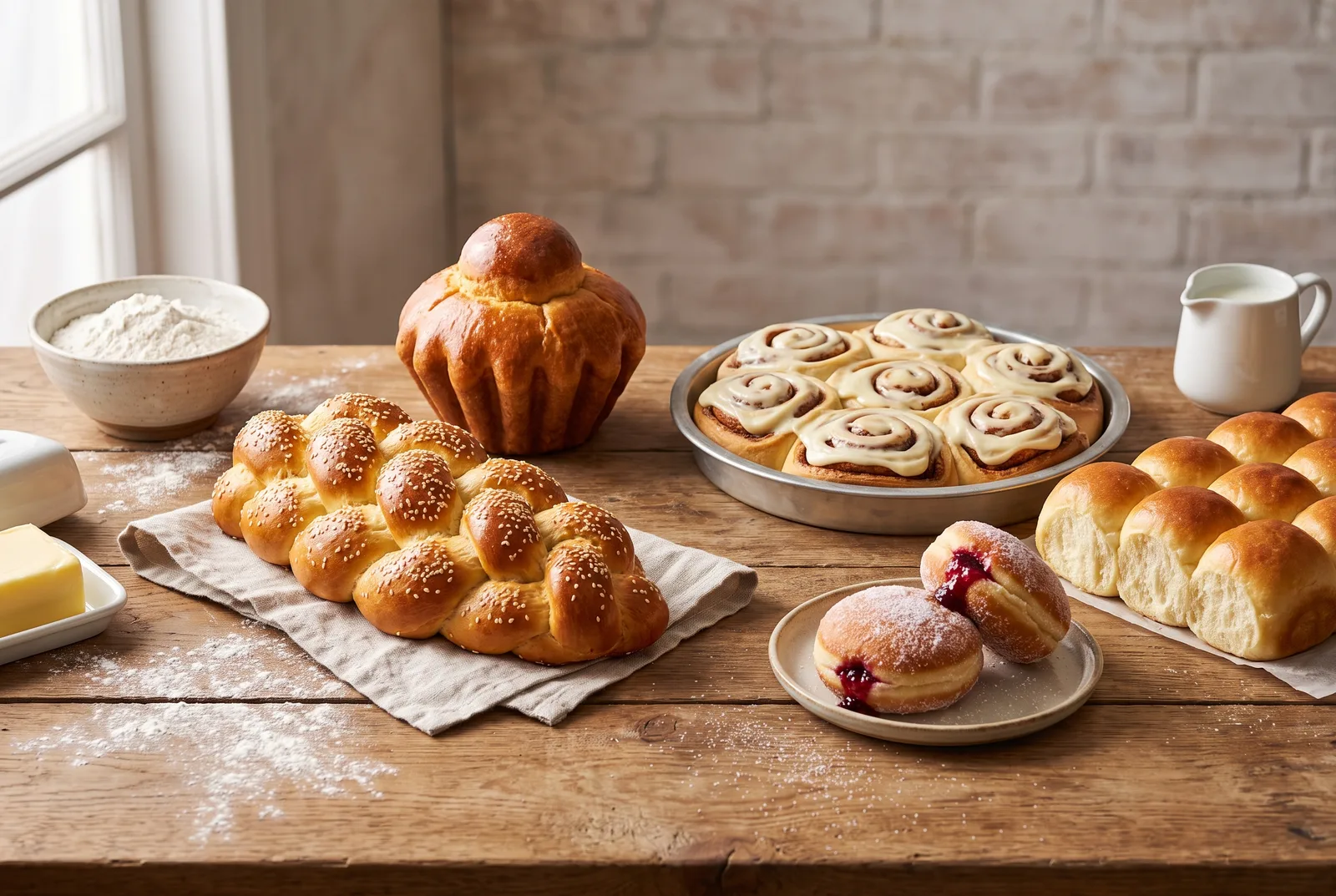
Enriched dough formulas
An enriched dough is any yeasted dough that carries meaningful amounts of sugar, fat and egg on top of the basic flour-water-salt-yeast. Those three additions are what separate a baguette from a brioche: they make the crumb softer, the crust browner, the flavour richer and the shelf life longer — and they make the dough ferment slower and behave very differently on the bench. This dossier gives you five enriched formulas you can put into production tomorrow, every one written in baker's percentage with a worked bench batch and full process. See the figure below for the family.
Before the formulas, one idea will save you more failed batches than any recipe: effective hydration.
1. Baker's percentage for enriched dough
Baker's percentage sets flour = 100% and expresses every other ingredient as a percentage of that flour weight. It is the universal professional language because it scales perfectly and lets you compare any two formulas at a glance — see the foundational article A8-bakers-percentage-fundamentals. The only thing that surprises newcomers is that very rich enriched-dough totals can push well past 200% — the brioche below reaches 230.5% by stacking eggs, butter and sugar on top of the liquid. The diagram below shows the stack.
2. The hidden water: effective (true) hydration
The biggest beginner error in enriched baking is reading "32% water" and assuming the dough is dry. It is not, because eggs, milk and butter are mostly water:
- Whole egg is about 75% water
- Whole milk is about 87% water
- Butter (82% fat) is about 16% water
- Vegetable oil and sugar add no water (sugar is, however, hygroscopic and holds water in the baked crumb)
To find true hydration, multiply each ingredient's weight by its water fraction, total the water, and divide by flour weight (see the diagram below). The egg yolk is richer (less water than a whole egg) and the white is almost all water, so an egg-yolk-heavy dough like challah hydrates a little less than its egg weight suggests. The full water table is below.
This is why a brioche at only 9% added water is actually around 54.5% effective hydration, and why the cinnamon-roll dough at zero added water still runs about 53% off its milk and egg alone. Get this number wrong and you will over-flour a perfectly good dough into a brick.
3. The enrichment spectrum
Enrichment is a dial, not a switch (see the diagram and table below). As you climb from lean to rich:
- Lean (baguette, ciabatta): no sugar/fat to speak of — covered in
A8-lean-bread-formulas. - Lightly enriched (soft rolls, low-egg challah): 4-10% sugar and fat.
- Moderately enriched (challah, cinnamon rolls, sweet buns, milk bread): 10-16% sugar, 8-20% fat, plus egg.
- Richly enriched (brioche, panettone): 12-25% sugar and 40-70% butter.
Two consequences drive everything downstream. First, sugar slows the yeast by competing for water — above roughly 5-10% sugar on flour you should reach for an osmotolerant yeast (e.g. SAF Gold), which is bred to ferment in that thirsty environment. See A2-osmotolerant-yeast-enriched-doughs and the yeast-selection table below. Second, fat coats gluten and weakens structure, so rich doughs need a strong, higher-protein flour — the GoodMills/Domson Type 550 here runs 11.5-12.5% protein, enough to carry the butter.
A quick word on yeast quantities: forms are interchangeable by weight using fresh × 0.4 = active dry and fresh × 0.33 = instant. King Arthur's brioche lists "7% yeast", which is a fresh/compressed figure — about 2.3% instant.
4. Rich brioche (50% butter)
This formula is the King Arthur professional brioche: flour 100, egg 50, butter 50, sugar 12, water 9, yeast 7, salt 2.5 — total 230.5%, effective hydration ~54.5%. It is the archetypal rich dough.
The method is what makes or breaks it (see the figure below): build full gluten first, then add the pliable (never melted) butter in chunks and mix until the dough sheets out. Keep it cool (~24°C finished) or the butter weeps out and you get a greasy, leaden loaf. Most professionals retard the dough overnight — cold brioche is the only kind you can shape cleanly. Bake 75 g pieces at 380°F / 193°C for ~14 minutes to a safe internal crumb temperature of at least 88°C. The figure below shows the target fine, golden crumb.
Dial the butter to the job: roughly 40-50% for a lighter "brioche commune", around 50-70% for a richer Nanterre style, with some showpiece brioche running higher still — and step the flour strength up as you do. For a fast, consistent route, Puratos Easy Soft'r Brioche Mix and Martin Braun Mix One Panettone are concentrate/premix systems for the same dough family.
5. Challah
This formula (King Arthur "Jeffrey's Challah") is the moderately enriched, dairy-free (pareve) braided loaf: flour 100, water 32.5, whole egg 16.1 + yolk 5.8, oil 7.1, sugar 10.6, salt 1.9, instant yeast 1.8 — total ~176%, effective hydration ~49%. Richness comes from eggs and oil, never butter or milk — this is what keeps challah kosher-pareve and gives the deep-golden, slightly chewy crumb. For customer-facing use: a formal dairy-free allergen claim under EU/UK Regulation 1169/2011 requires a production cross-contamination risk assessment; the kosher-pareve designation and EU allergen-free classification are distinct frameworks and must not be conflated.
Process: mix and develop, a short bulk then a fridge firm-up (a cold dough braids far more cleanly), shape into a six-strand braid (see the figure below), egg-wash, proof 1.5-2 h, and bake at 375°F / 190°C for 25-30 min to a safe internal crumb temperature of at least 88°C. Finish with sesame or poppy (see the figure below); the Polmarkus BackGlanz egg-wash substitute gives a consistent gloss at scale.
6. Cinnamon rolls
This formula is a food-scientist's milk-based sweet dough: flour 100, milk 52.8, sugar 11.4, egg 8.8, butter 4.9, oil 4.2, instant yeast 1.9, salt 1.8 — total ~186%, effective hydration ~53%. Milk does almost all the hydrating.
The filling, expressed against dough flour, is dark brown sugar ~35%, ground cinnamon ~1.8% and melted butter ~10% — a cinnamon-to-brown-sugar ratio of about 1:20. Bind the smear with a teaspoon of flour so the sugar does not melt out and burn. Shape per the figure below: butter, sugar, roll into a tight log, cut even spirals. Target dough temperature 24-26°C, proof, then bake at 350°F / 175°C for 20-25 min to an internal crumb temperature of 92-94°C.
Finish with cream-cheese frosting at roughly cream cheese: butter: icing sugar = 3: 1: 3.2 plus vanilla (see the figure below). Buy the dairy in: Cream Cheese Wrzosek 14% for frosting, or the bake-stable Zeelandia ZEELAsoftSER (cheese 35%, pH 4.4) if you want a filling that survives the oven. For colour and flavour without making your own syrup, Zeelandia Paletta Apricot Glaze finishes sweet buns; for poppy-seed swirl buns reach for Komplet Poppy Seed Filling or Prospona Poppy Seed Paste.
7. Soft sweet buns with tangzhong (milk bread)
When you want the softest, longest-keeping sweet bun — burger buns, milk buns, hot-cross-style buns — use a tangzhong (water roux). This formula is King Arthur's Japanese milk-bread roll: total flour 100 (of which the tangzhong is 4.5%), milk 49.7, water 13.7, butter 18.2, egg 15.9, sugar 15.9, milk powder 4.5, instant yeast 2.9, salt 1.9 — total ~222.6%.
A tangzhong pre-gelatinises a small slice of the flour — 4-8% of total flour cooked with about 5 parts liquid to ~65°C / 150°F (see the figure below) — so the starch can hold far more water without the dough turning slack. The result is the highest effective hydration of the whole set, ~72% (milk powder binds a little of that, so it behaves a touch drier), which is why milk buns stay pillowy for days (see the figure below). First rise 60-90 min, proof 40-50 min, bake at 350°F / 175°C for 25-30 min to an internal 190°F / 88°C. Because sugar is ~16%, this is another candidate for osmotolerant yeast.
8. Berliner / filled sweet doughnuts (spec-sourced)
This formula is a production formula straight from a first-party Zeelandia spec sheet. Using the Berliner 10 Free improver at 10% of flour, the application recipe per 10 kg Type 550 flour is: improver 10%, egg 25%, oil 12.5%, water 28%, fresh yeast 7%, sugar 1.5%, salt 1.5% — total 185.5%. The improver carries the emulsifiers and enzymes that keep a sugar- and egg-rich fried dough light.
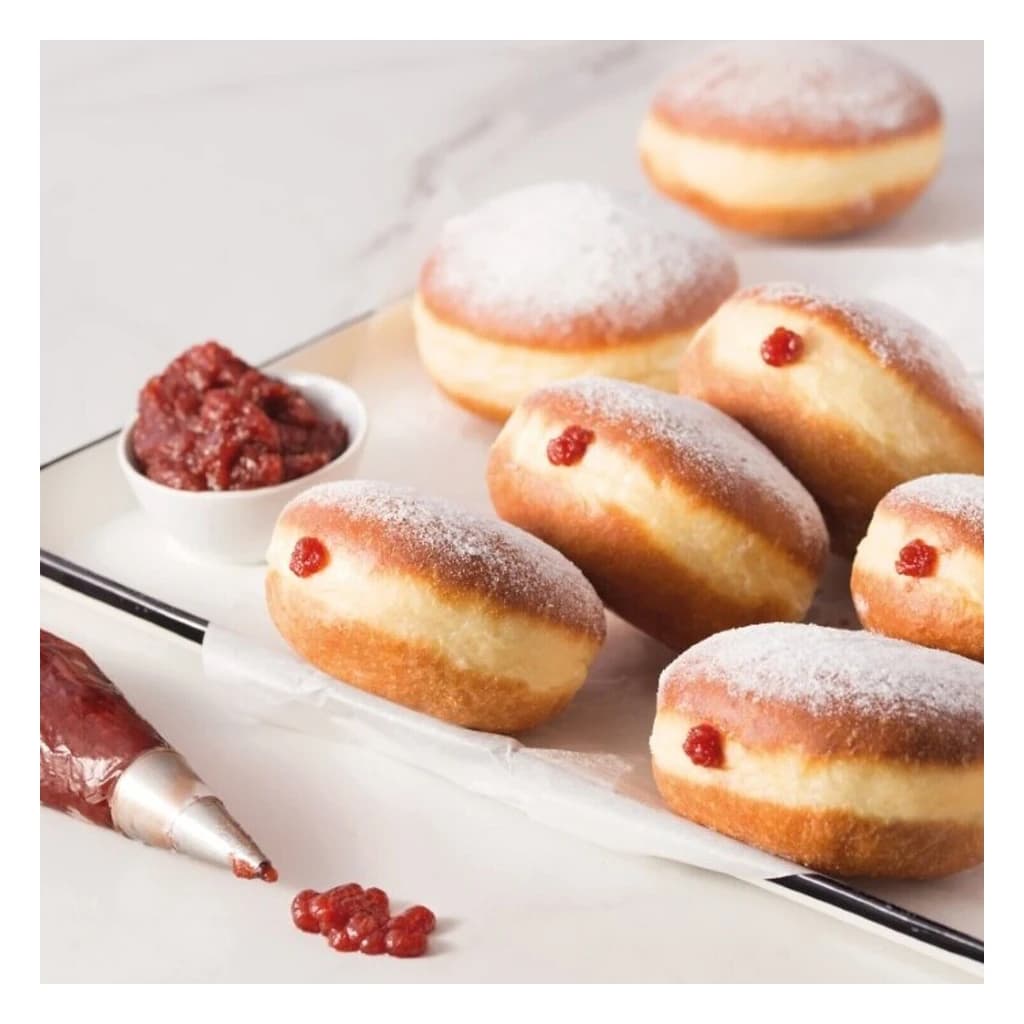
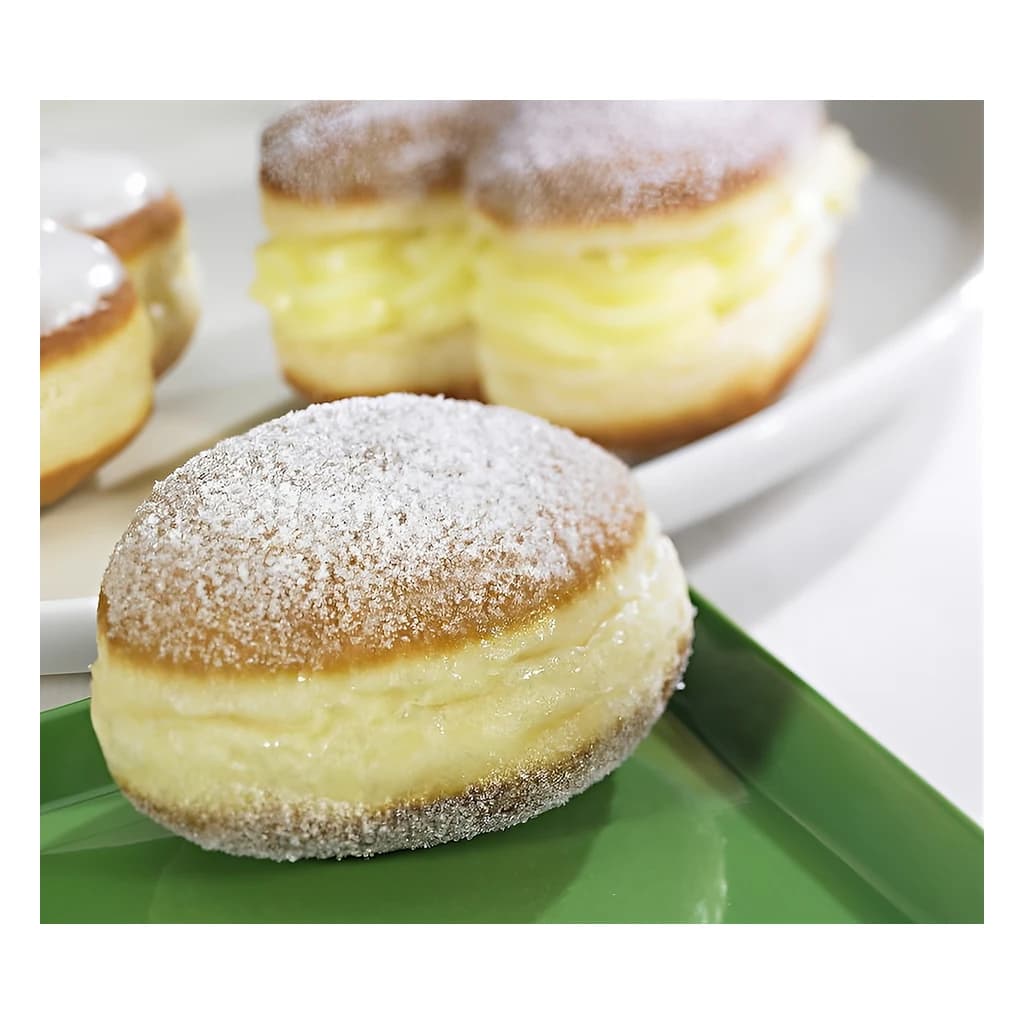
Process (spec): mix 4 min slow + 6 min fast, dough temperature 26-28°C, first proof ~15 min, divide and round, final proof ~35 min in the chamber + ~20 min outside, then fry at 180°C for ~7 min with double turning to a cooked interior (verify ≥88°C at the centre). Fill with jam, custard (A6-pastry-creams-fillings) or cream and dust with sugar (see the figure below). Food-business obligation: EU Regulation 2017/2158 on acrylamide mitigation applies to fried cereal-based products; monitor frying oil polar compounds (replace oil before limits are exceeded) and keep process records.
If you would rather buy a complete mix, the Berliner 2500 premix runs at 25 kg per 100 kg flour (25%) with just yeast 7%, oil 7% and water 52% added — the sugar, egg powder, milk powder and emulsifiers are all inside the premix. Allergen note for both: wheat, milk, egg and soya (rye too in Berliner 10 Free); may contain barley, oat and sesame.
9. Faults and fixes
The fault table and figure below collect the recurring problems: butter weeping (added too warm or too early), dense crumb (yeast stalled by sugar — switch to osmotolerant), sticky dough (true hydration mis-judged), pale crust (no egg wash / low sugar), gummy centre (under-baked — bake to 88-94°C), and greasy doughnuts (wrong oil temperature). Each row pairs the cause with the fix.
10. Ingredient sourcing
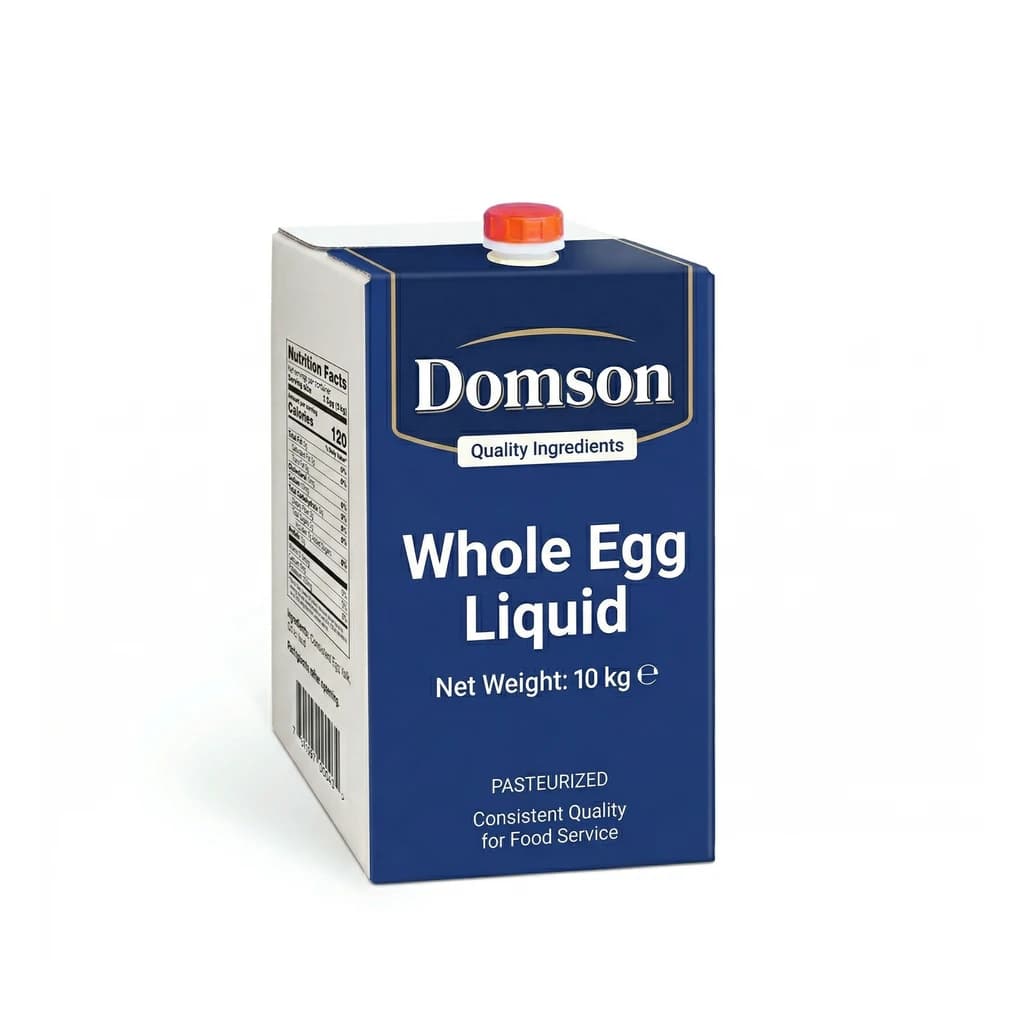
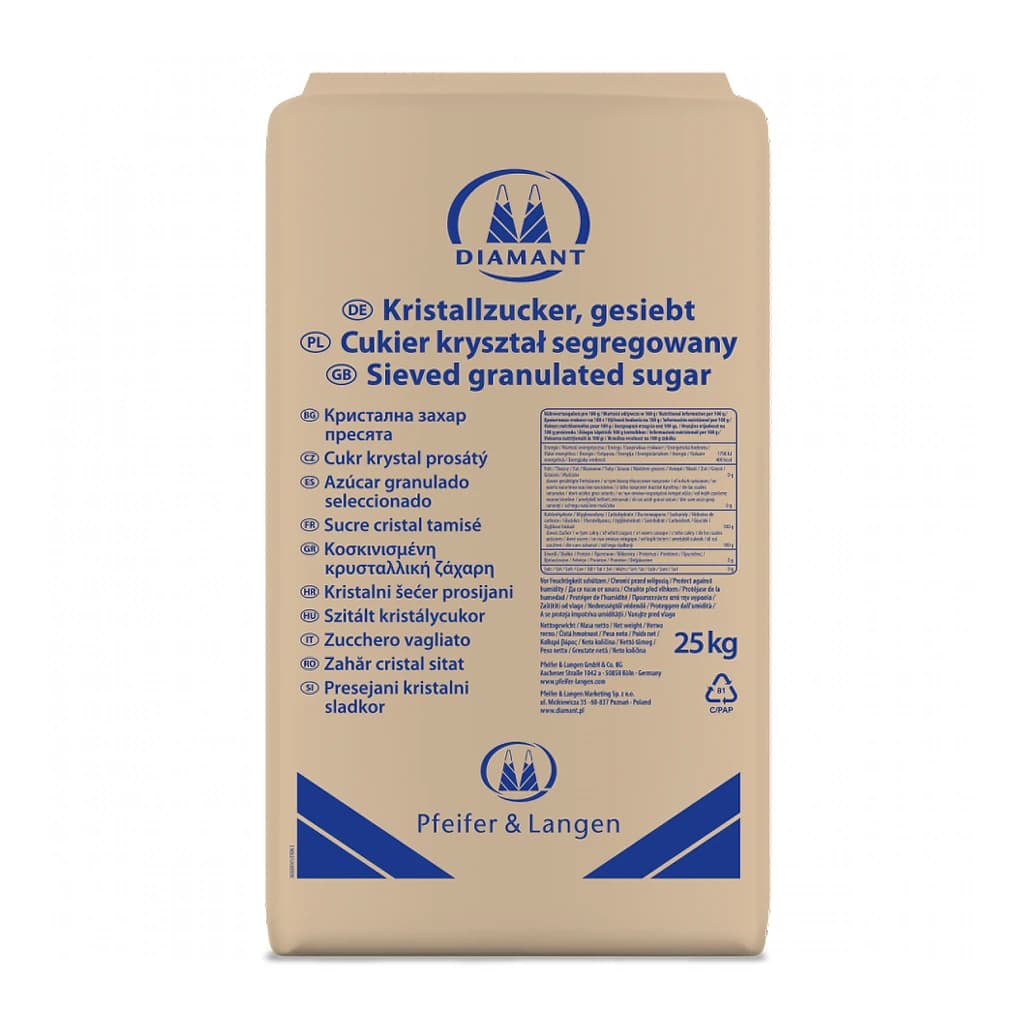
Everything here maps to the Domson catalogue. For the flour, match strength to enrichment: Domson Wheat Flour Type 550 or Domson White Strong for brioche and sweet buns, Komplexmłyn Type 450 for a more tender crumb, Carr's Centurion Very Strong or Matthews Belle Or T65 for high-butter doughs. Lesaffre Benevia and Lallemand Traditional cover fresh yeast (store 1-10°C, use within shelf life); Pakmaya for dried. Fat: Polmlek Unsalted Butter 82% or Bielmar Koneser cake margarine for a dairy-free enrichment. Sugar: Polski Cukier / Pfeifer granulated (beet sucrose ≥99.7%), Kent Foods Dark Brown for cinnamon filling, Emix Vanillin Sugar for aroma. Eggs in bulk: Domson Whole Egg and Egg Yolk Liquid, Ovopol Egg White Powder. Spice: PGD Ground Cinnamon. And the enriched-dough systems above (Zeelandia Berliner, Puratos Brioche, Martin Braun Panettone).
Food safety and allergens
Every formula here contains wheat gluten, and most contain raw egg and/or dairy. Bake to a safe internal crumb temperature (88-94°C), keep cream-cheese frosting and dairy fillings refrigerated, and use chilled fresh yeast, butter and cream-cheese within their stated shelf lives. The Zeelandia Berliner products are wheat/milk/egg/soya allergens (rye in Berliner 10 Free) and may contain barley/oat/sesame; ground cinnamon may carry traces of celery, mustard and sulphur dioxide. Confirm allergen declarations against the live supplier spec attached to each product before showing them to customers. The T550 flour used in these formulas may carry traces of lupin allergen — lupin can cross-react with peanut in some sensitised individuals; disclose to customers accordingly. Confirm fresh yeast sulphite levels are below the 10 mg/kg SO₂ allergen declaration threshold before stating 'sulphite-free' to customers. The Zeelandia cream-cheese filling spec dates from 2020 and must be re-confirmed against a current document before customer-facing use; at pH 4.4 with refrigeration as the sole control, cold-chain discipline is a critical safety barrier against Listeria monocytogenes. The PGD cinnamon spec's stated moisture ceiling (≤16%) exceeds the ISO 6539 ground-cinnamon maximum of 14% — verify with supplier and request a current Certificate of Conformity.
Figures
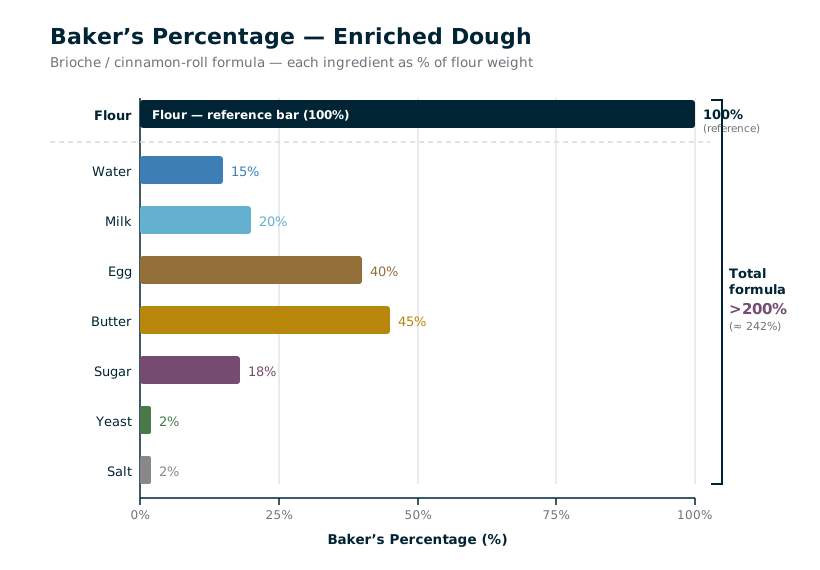 Bar diagram showing baker's percentage with flour at 100% and enriching ingredients stacking the total above 200%
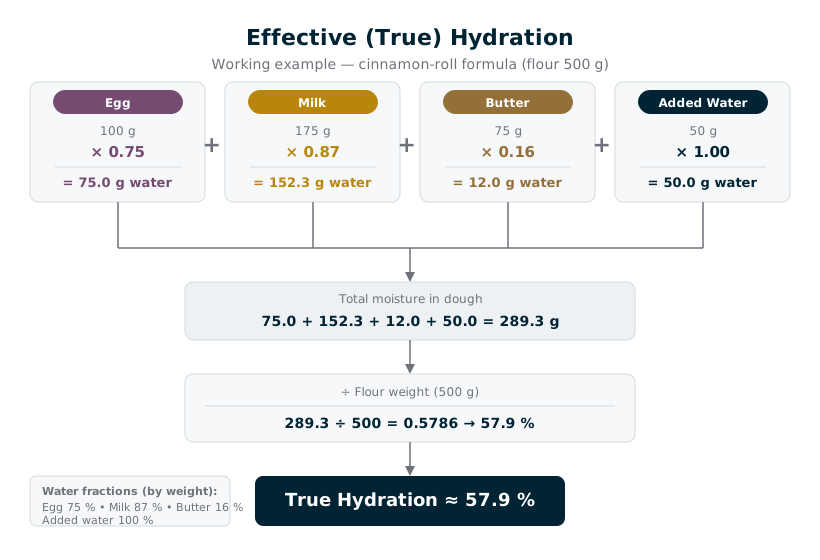 Diagram showing how to calculate true hydration by counting the water inside egg, milk and butter
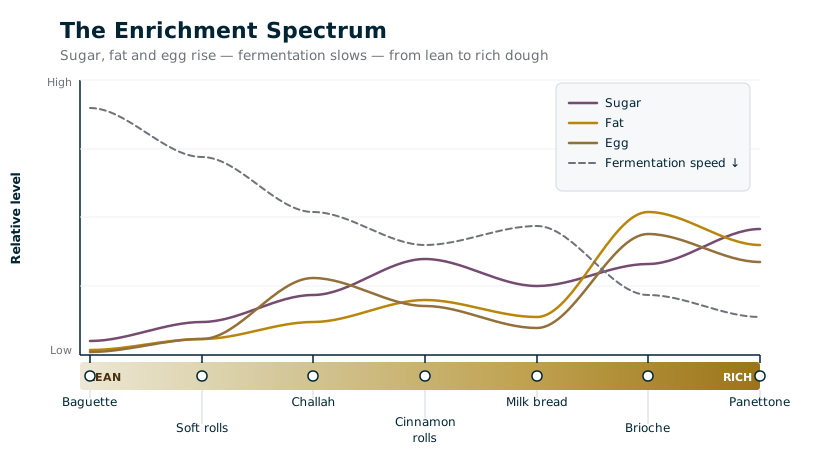 Spectrum diagram from lean dough to brioche showing rising sugar, fat and egg content
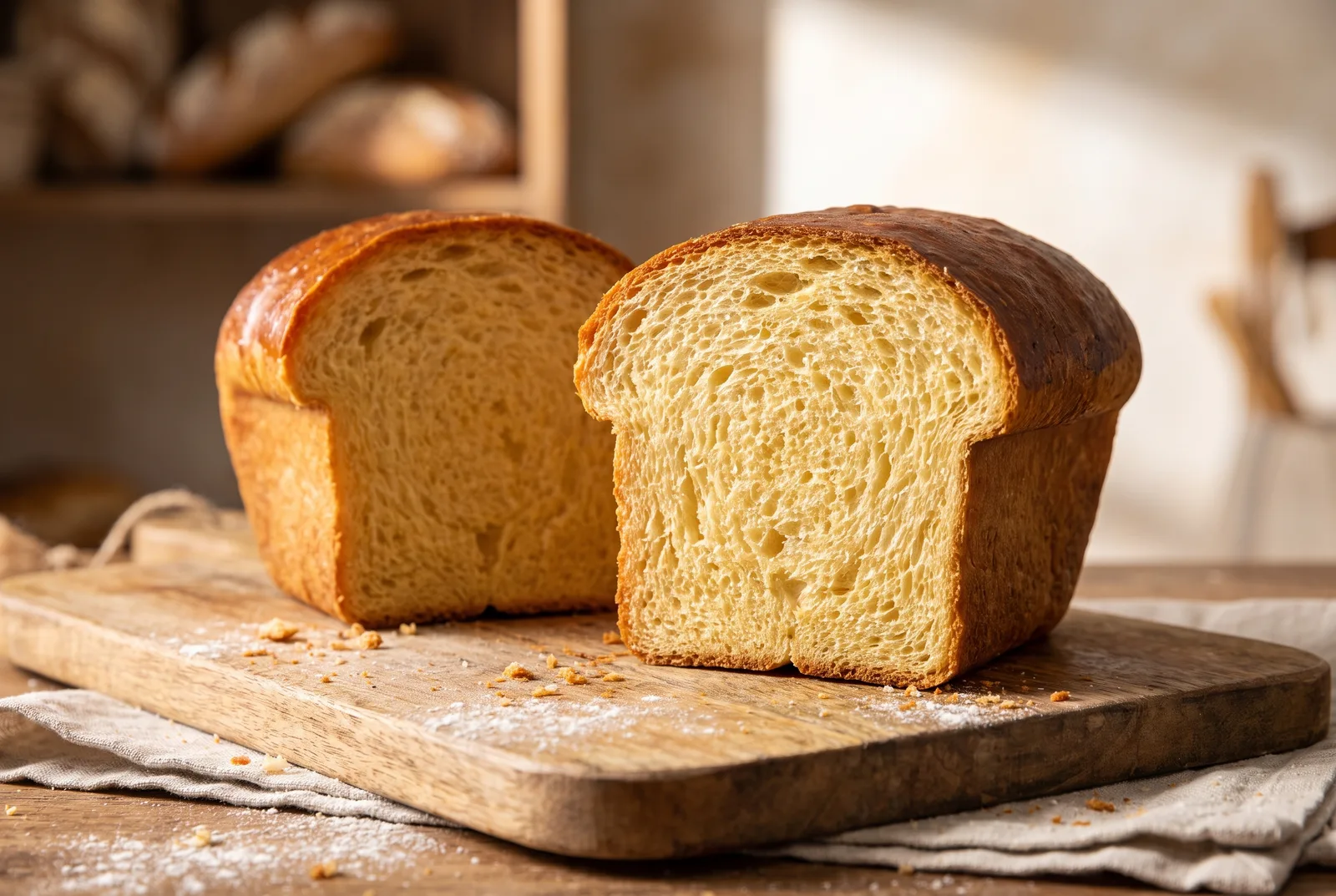 Sliced brioche showing a fine, golden, tender crumb
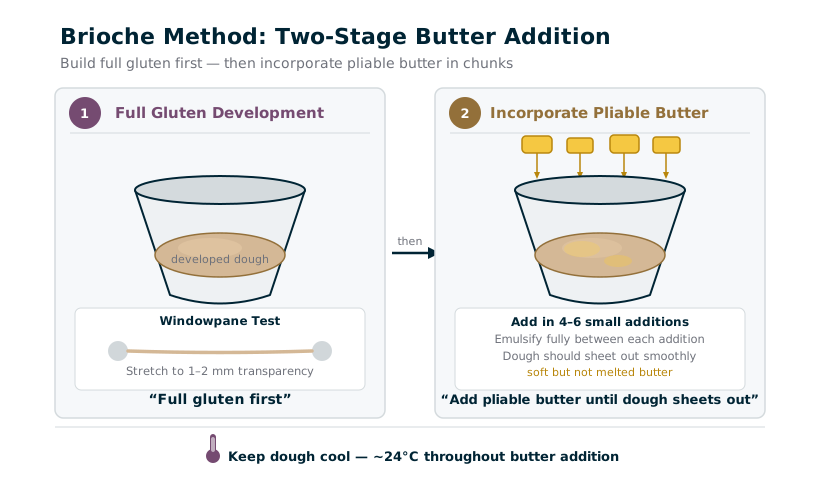 Two-step diagram showing gluten developed first, then pliable butter added in chunks
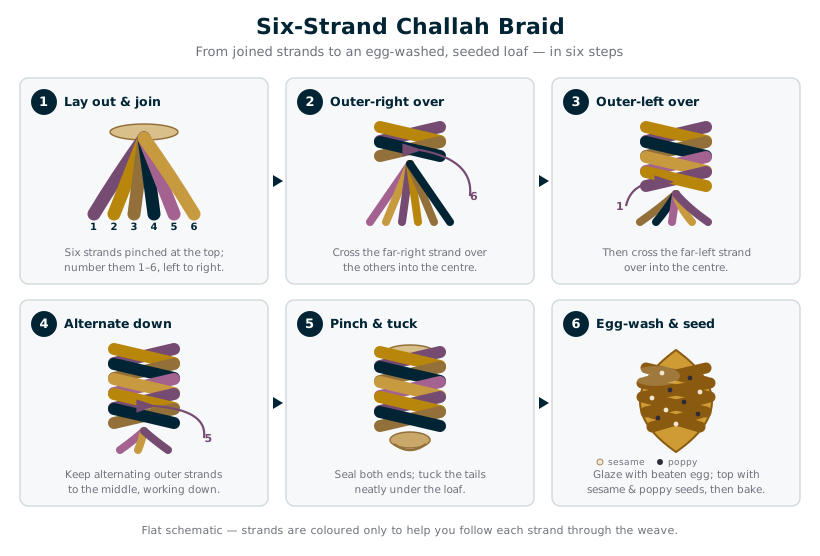 Diagram of a six-strand challah braid in sequential steps
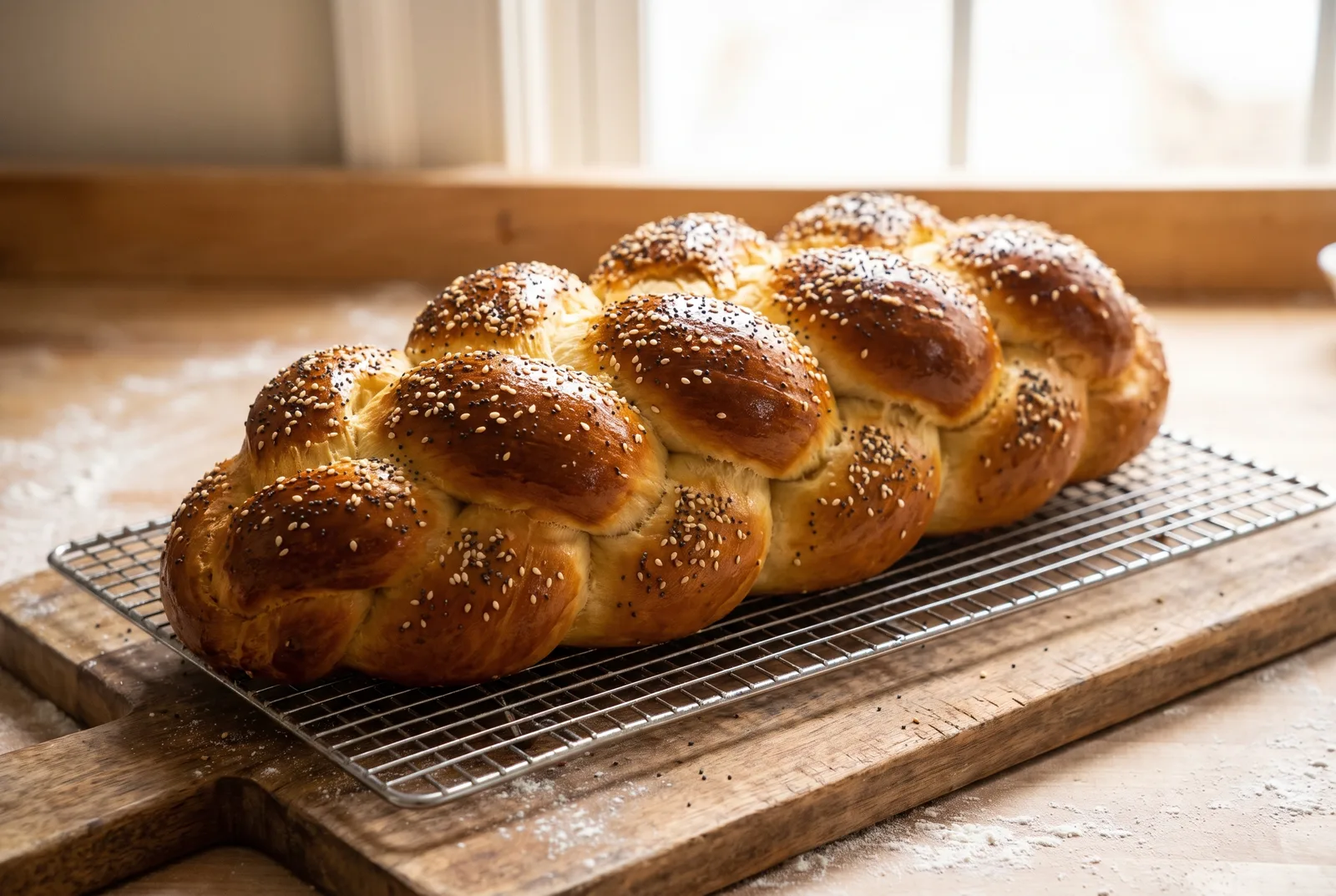 Baked golden braided challah topped with sesame and poppy seeds
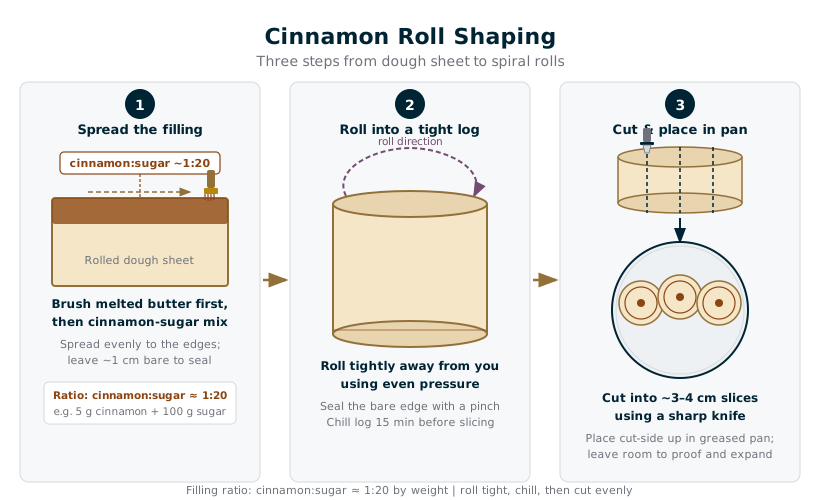 Diagram of spreading filling, rolling the dough into a log and cutting cinnamon-roll spirals
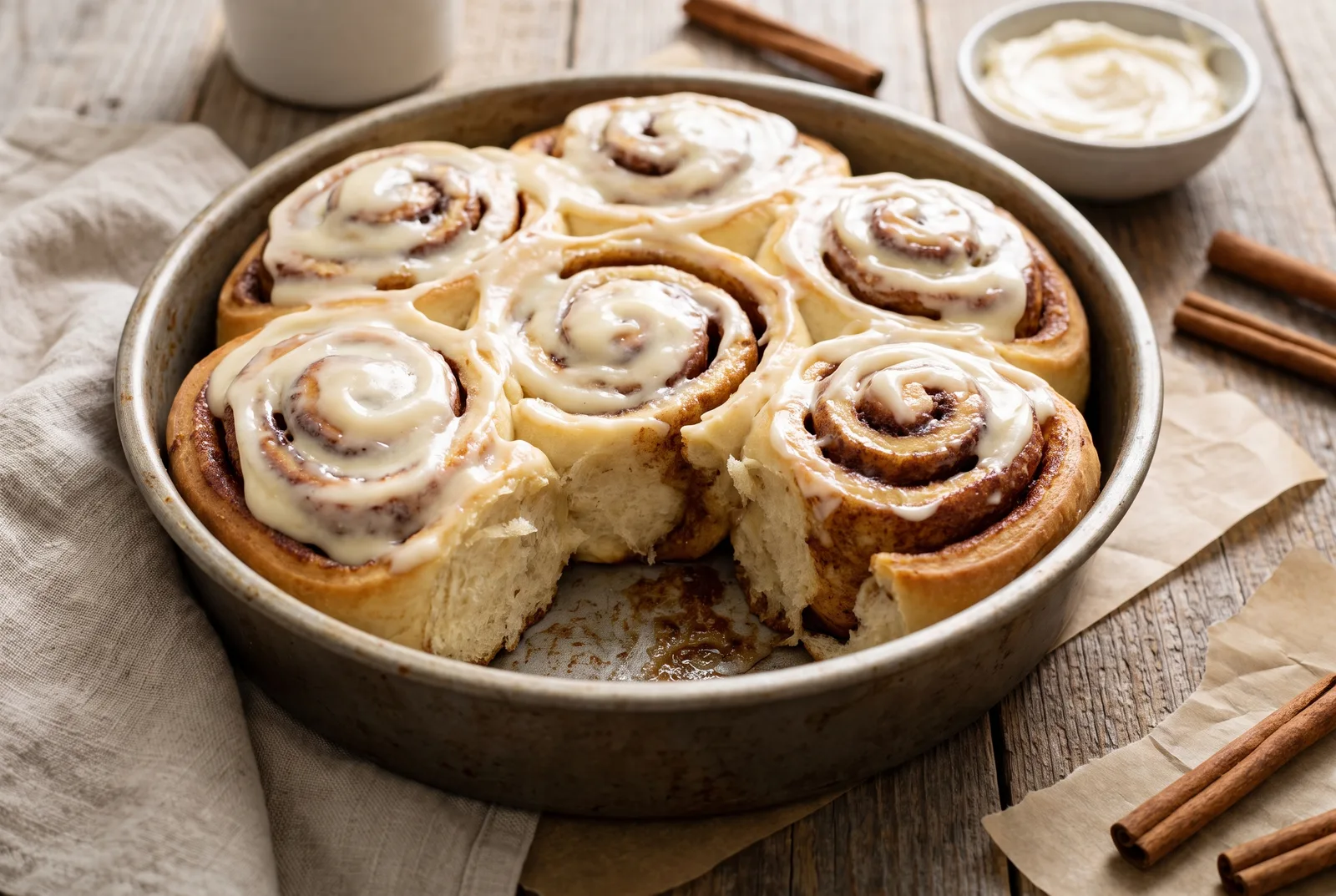 Baked cinnamon rolls with cream-cheese frosting, one pulled apart to show the spiral
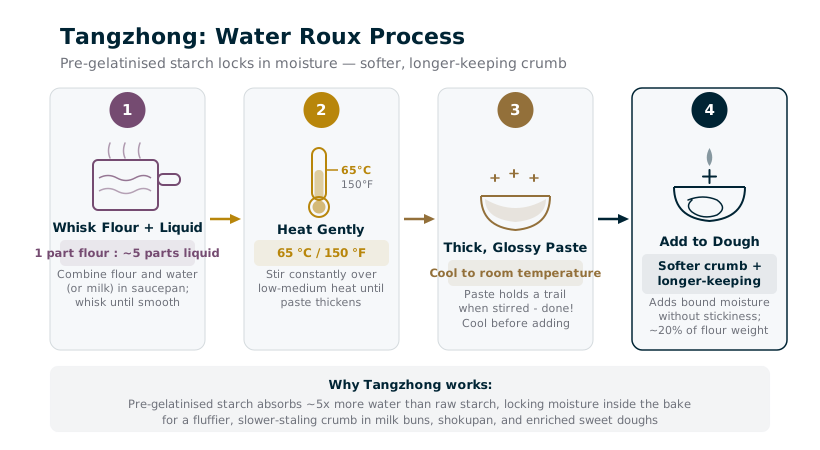 Diagram of making a tangzhong water roux and adding it to dough for a softer crumb
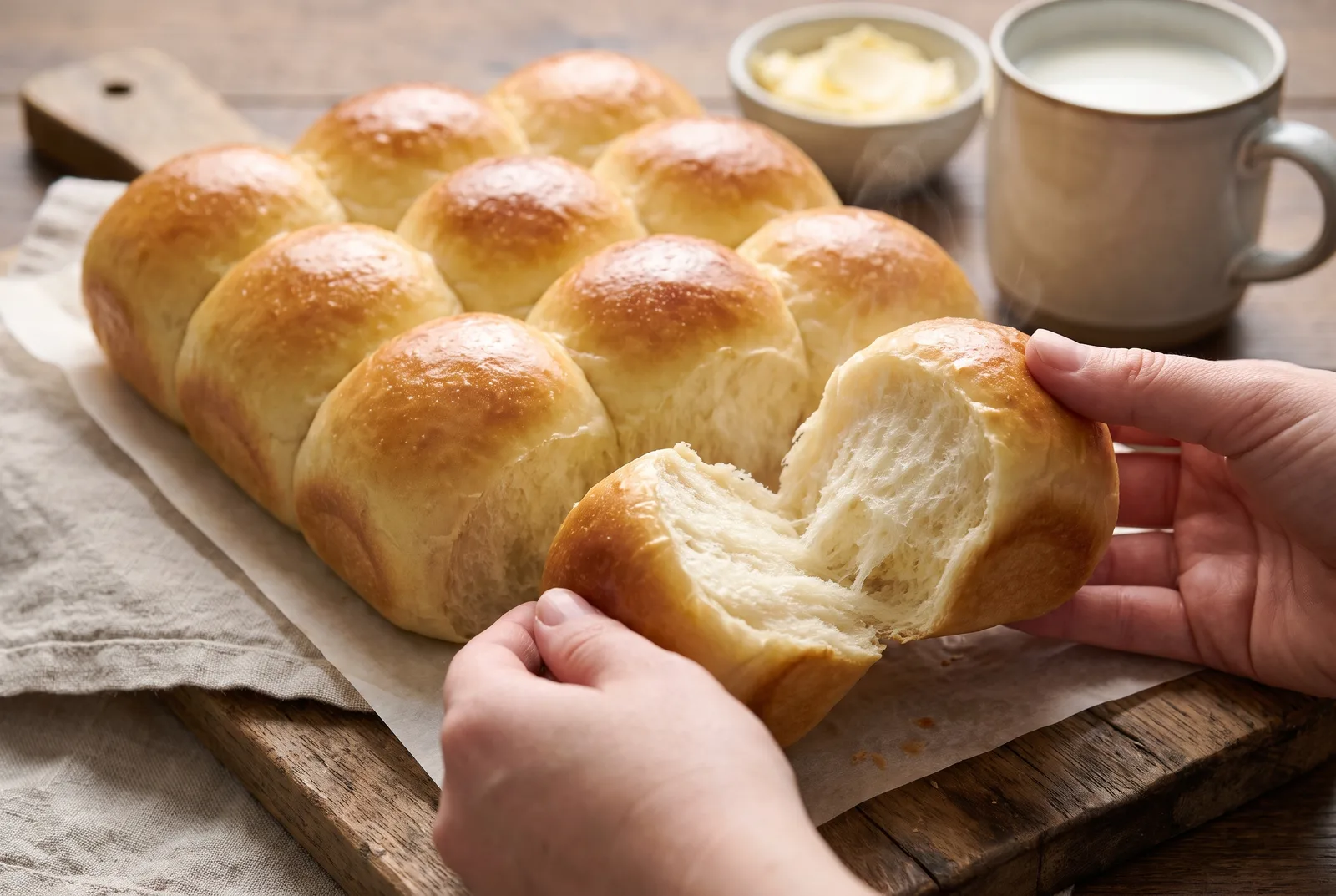 Soft pull-apart milk-bread buns showing a fluffy shreddable crumb
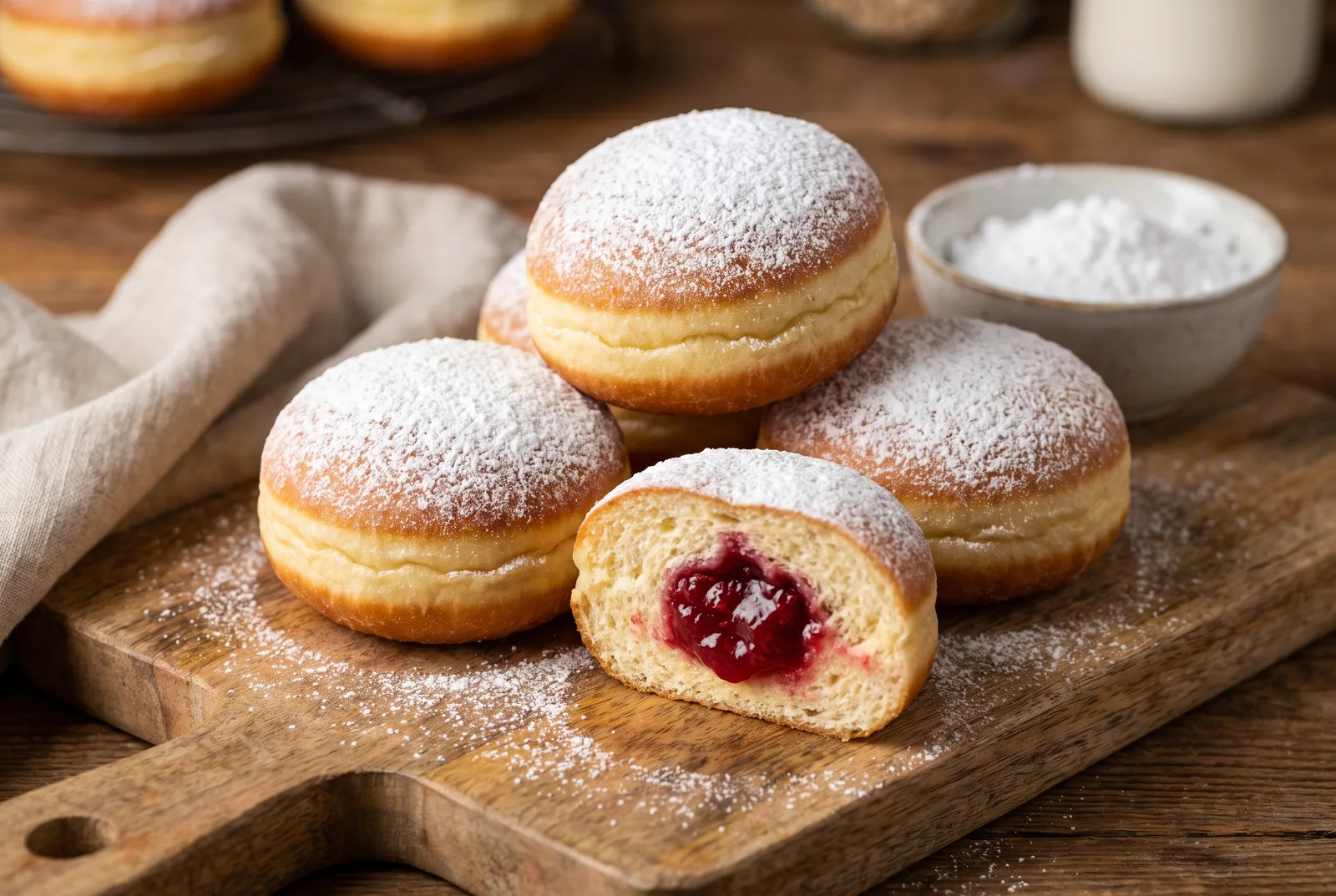 Sugar-dusted Berliner doughnuts, one cut open to show the filling and fried ring
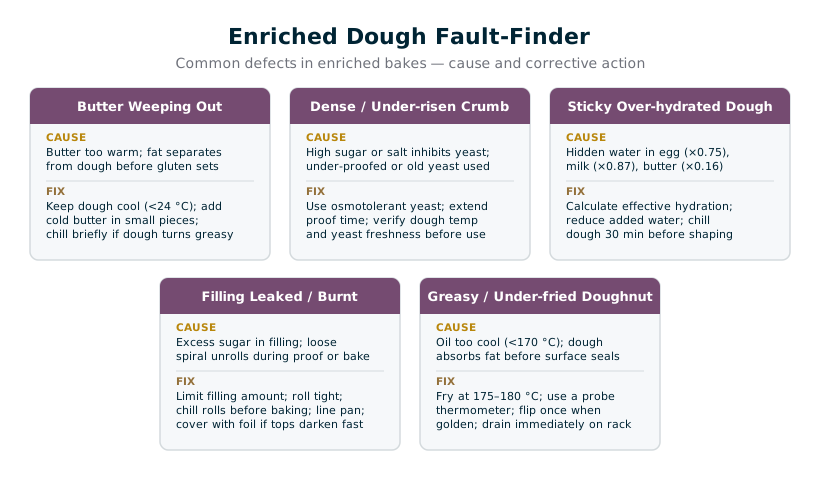 Diagram pairing common enriched-dough faults with their corrective actions
Rich brioche (50% butter) — baker's percentage
The King Arthur professional brioche formula — a classic rich dough at 50% butter and 50% egg. Use a strong, higher-protein flour (e.g. Domson Type 550, 11.5-12.5% protein) so the gluten can carry the fat. Because sugar is 12%, an osmotolerant yeast performs more reliably than ordinary instant.
| Ingredient | Baker's % | Weight |
|---|---|---|
| Strong wheat flour (T550 / Sir Galahad) | 100% | 2000 g |
| Whole egg | 50% | 1000 g (≈20 large eggs) |
| Unsalted butter (82% fat, pliable) | 50% | 1000 g |
| Sugar | 12% | 240 g |
| Water (cold) | 9% | 180 g |
| Fresh yeast (≈2.3% if instant) | 7% | 140 g (≈46 g instant) |
| Salt | 2.5% | 50 g |
| Total | 230.5% |
- Mix all ingredients EXCEPT butter to full gluten development (the dough should pass a windowpane).
- Add the pliable (not melted) butter in chunks; mix until the dough sheets out fully and is smooth and shiny.
- Keep the dough cool: target a finished dough temperature around 24°C so the butter does not weep out.
- Bench rest ~1 hour, fold, then retard overnight in the fridge, degassing two or three times until completely cold (cold dough is essential for shaping such a fatty dough).
- Divide into 75 g pieces, shape, and proof fully.
- Egg-wash; bake at 380°F / 193°C for ~14 minutes to a safe internal crumb temperature of at least 88°C.
Worked example
Worked at 2000 g flour (a practical bench batch).
Yield: approx. 4.61 kg dough (about 60 x 75 g brioche)
Enrichment is a dial: a lighter 'brioche commune' runs roughly 40-50% butter, a richer Nanterre style around 50-70%, with some showpiece brioche running higher still. Higher butter needs stronger flour and colder handling. ALLERGENS: wheat (gluten), egg, milk (butter). FOOD SAFETY: contains raw egg and dairy — bake to a safe internal crumb temperature of at least 88°C and cool properly.
Challah (egg-and-oil braided loaf) — baker's percentage
A moderately enriched, dairy-free (pareve) braided loaf. Richness comes from whole eggs plus extra yolks and vegetable oil — no butter or milk — which is what makes challah kosher-pareve and gives it its golden, tender crumb.
| Ingredient | Baker's % | Weight |
|---|---|---|
| Wheat flour (all-purpose / strong) | 100% | 930 g |
| Water (cold) | 32.5% | 302 g |
| Whole egg | 16.1% | 150 g (3 large) |
| Egg yolk | 5.8% | 54 g (3 yolks) |
| Sugar | 10.6% | 99 g |
| Vegetable oil | 7.1% | 66 g |
| Salt | 1.9% | 18 g |
| Instant yeast | 1.8% | 17 g |
| Total | ~175.9% |
- Mix all dough ingredients just until combined (~3 min low speed), then knead to a smooth, well-developed dough (~5-6 min medium).
- First rise ~1 hour at room temperature, then refrigerate ~1 hour until thoroughly chilled (firms the dough for braiding).
- Divide in two; roll each into six ~20-inch strands and braid.
- Brush with sieved egg wash (1 egg + 5 g water); sprinkle poppy or sesame seeds.
- Final proof, covered, ~1.5-2 hours until almost doubled.
- Bake at 375°F / 190°C for 25-30 minutes to a rich golden brown and a safe internal crumb temperature of at least 88°C.
Worked example
Worked at 930 g flour (King Arthur 'Jeffrey's Challah' batch).
Yield: approx. 1.64 kg dough (2 large or 3 medium braided loaves)
Egg weights: US large egg ≈50 g out of shell; yolk approximately 17–18 g per USDA data (USDA standard: 17 g). The extra yolks raise richness and colour without much extra water. ALLERGENS: wheat (gluten), egg. Dairy-free as this formula is written — a production cross-contamination risk assessment is required under EU/UK Regulation 1169/2011 before making a dairy-free allergen claim to customers; the kosher-pareve classification and EU allergen-free status are distinct frameworks. FOOD SAFETY: contains raw egg — bake to a safe internal crumb temperature of at least 88°C.
Cinnamon rolls — dough, filling & cream-cheese frosting (baker's %)
A soft, milk-based sweet dough rolled around a cinnamon-sugar smear and finished with cream-cheese frosting. Milk does most of the hydrating, with a little egg and butter for richness. A tangzhong (see formula-tangzhong-bun) can be swapped in for an even softer, longer-keeping roll.
| Ingredient | Baker's % | Weight |
|---|---|---|
| Bread flour | 100% | 568 g |
| Whole milk | 52.8% | 300 g |
| Sugar | 11.4% | 65 g |
| Whole egg | 8.8% | 50 g (1 large) |
| Butter (softened) | 4.9% | 28 g |
| Oil | 4.2% | 24 g |
| Instant yeast | 1.9% | 11 g |
| Salt | 1.8% | 10 g |
| FILLING — dark brown sugar | 35.2% of flour | 200 g |
| FILLING — ground cinnamon | 1.8% of flour | 10 g |
| FILLING — flour (to bind) | 1.4% of flour | 8 g |
| FILLING — melted butter | 10.0% of flour | 57 g |
| FROSTING — cream cheese | — | 85 g |
| FROSTING — butter | — | 28 g |
| FROSTING — icing sugar | — | 90 g |
| FROSTING — vanilla | — | 0.5 tsp |
| Total | ~185.9% (dough) |
- Mix the dough to a smooth, elastic state (~10-15 min in a stand mixer); target dough temperature 24-26°C.
- Bulk ferment 1-2 hours until nearly tripled; chill 15 minutes to firm for rolling.
- Roll out; spread melted butter then the brown-sugar/cinnamon/flour mix (cinnamon: brown sugar ≈ 1:20).
- Roll up, cut, and arrange in a buttered pan; final proof 30-60 minutes until an indent springs back slowly.
- Bake at 350°F / 175°C for 20-25 minutes to an internal crumb temperature of 92-94°C.
- Beat frosting ingredients smooth (cream cheese: butter: icing sugar ≈ 3: 1: 3.2) and spread on warm rolls.
Worked example
Worked at 568 g bread flour (Scientifically Sweet food-scientist batch).
Yield: approx. 1.06 kg dough (about 12 rolls)
Binding the filling with a little flour stops the sugar melting out and burning. ALLERGENS: wheat (gluten), milk, egg. FOOD SAFETY: cream-cheese frosting is dairy — keep frosted rolls refrigerated; an off-the-shelf thermostable cheese filling (e.g. Zeelandia ZEELAsoftSER, pH 4.4) is a bake-stable alternative.
Soft sweet bun / milk bread with tangzhong — baker's percentage
The softest, longest-keeping enriched bun. A tangzhong (water roux) pre-gelatinises a small part of the flour so the dough holds far more water without becoming slack — giving a pillowy, slow-staling crumb ideal for sweet buns, burger buns and milk bread.
| Ingredient | Baker's % | Weight |
|---|---|---|
| TANGZHONG — bread flour | 4.5% of total flour | 14 g |
| TANGZHONG — water | — | 43 g |
| TANGZHONG — whole milk | — | 43 g |
| DOUGH — bread flour | 95.5% of total flour | 300 g |
| Whole milk (total incl. tangzhong) | 49.7% | 156 g (43 g in roux + 113 g in dough) |
| Water (total, in tangzhong) | 13.7% | 43 g |
| Butter (melted) | 18.2% | 57 g |
| Whole egg | 15.9% | 50 g (1 large) |
| Sugar | 15.9% | 50 g |
| Nonfat dry milk | 4.5% | 14 g |
| Instant yeast | 2.9% | 9 g (1 tbsp) |
| Salt | 1.9% | 6 g |
| Total | ~222.6% |
- Tangzhong: whisk the 14 g flour with the 43 g water + 43 g milk; cook over low heat, whisking, until thick and the whisk leaves lines (~65°C / 150°F). Cool to room temperature.
- Combine the cooled tangzhong with all remaining dough ingredients; mix and knead to a smooth, elastic dough (up to ~15 min).
- First rise 60-90 minutes until puffy.
- Divide and shape (8-10 pieces); place in a greased pan.
- Final proof 40-50 minutes until puffy.
- Egg-wash; bake at 350°F / 175°C for 25-30 minutes to an internal temperature of 190°F / 88°C.
Worked example
Worked at 314 g total flour (King Arthur Japanese milk-bread rolls).
Yield: approx. 0.70 kg dough (8-10 rolls)
Tangzhong dose 4-8% of total flour, cooked at ~5:1 liquid:flour to ~65°C. Because sugar is ~16%, an osmotolerant yeast gives a more reliable rise. ALLERGENS: wheat (gluten), milk, egg. FOOD SAFETY: contains egg and dairy — bake through.
Berliner / filled sweet doughnut (first-party spec formula) — baker's %
A spec-sourced, production-scale sweet fried dough using the Zeelandia Berliner 10 Free improver at 10% of flour. The improver supplies the emulsifiers, enzymes and conditioning that keep a sugar- and egg-rich dough light after frying. Fry, then fill with jam, custard or cream and dust with sugar.
| Ingredient | Baker's % | Weight |
|---|---|---|
| Wheat flour Type 550 | 100% | 10 kg |
| Berliner 10 Free improver | 10% | 1 kg |
| Whole egg | 25% | 2.5 kg |
| Oil | 12.5% | 1.25 kg |
| Water | 28% | 2.8 kg |
| Fresh yeast | 7% | 0.7 kg |
| Sugar | 1.5% | 0.15 kg |
| Salt | 1.5% | 0.15 kg |
| Total | 185.5% |
- Mix 4 minutes at low speed, then 6 minutes at high speed; target dough temperature 26-28°C.
- First proof ~15 minutes; divide into 1.8 kg pieces and rest ~10 minutes.
- Divide each piece into 30 and round.
- Final proof ~35 minutes in the proofing chamber + ~20 minutes outside it.
- Fry in oil at 180°C for ~7 minutes, turning twice (double overturning); verify the doughnut centre reaches at least 88°C.
- Cool, fill (jam / custard / cream) and dust with sugar.
Worked example
Worked at 10 kg Type 550 flour (Zeelandia Berliner 10 Free spec application recipe).
Yield: approx. 18.55 kg dough (≈ 300 x 60 g doughnuts)
PREMIX VARIANT — Zeelandia Berliner 2500: a complete mix used at 25 kg per 100 kg flour (25%), plus fresh yeast 7%, oil 7% and water 52% (total 191%); the sugar, egg powder, milk powder and emulsifiers are carried inside the premix so none are added separately. ALLERGENS (both products): wheat (gluten), milk, egg, soya — Berliner 10 Free also contains rye; may contain barley, oat, sesame. Allergen declarations are from Zeelandia specs dated 2021–2022 — confirm against current live supplier documentation before any customer-facing use. FOOD SAFETY: contains egg and dairy; fry at 180°C ~7 min to a cooked interior (verify ≥88°C at the centre). EU Regulation 2017/2158 on acrylamide mitigation applies to fried cereal-based products; monitor frying oil polar compound levels and replace oil as required.
Enriched doughs differ from lean doughs by how much sugar, fat and egg they carry relative to flour. As enrichment rises, the dough gets softer, browns faster, keeps longer — and ferments slower, because sugar and fat compete with the yeast for water. Ranges are typical professional starting points, not fixed rules.
| Dough class | Sugar (% flour) | Fat (% flour) | Egg (% flour) | Effective hydration | Typical products |
|---|---|---|---|---|---|
| Lean | 0-2 | 0-3 | 0 | 62-80% | Baguette, ciabatta, sourdough (see A8 lean-bread formulas) |
| Lightly enriched | 4-10 | 4-10 | 0-15 | 50-60% | Soft rolls, burger buns, low-egg challah |
| Moderately enriched | 10-16 | 8-20 | 8-25 | 49-72% | Challah, cinnamon rolls, sweet buns, milk bread |
| Richly enriched | 12-25 | 40-70 | 30-55 | 50-65% (effective) | Brioche, panettone, maritozzi |
All five core formulas in this dossier on one chart, every figure as a percentage of flour (= 100%). 'Effective hydration' counts the water hidden in eggs, milk and butter (see table-ingredient-water), which is why these doughs are wetter than they look. Totals exceed 175% because of the eggs, fat and sugar piled on top of the liquid.
| Formula | Added water | Milk | Egg / yolk | Fat | Sugar | Yeast | Salt | Total % | Effective hydration |
|---|---|---|---|---|---|---|---|---|---|
| Rich brioche | 9% | 0 | 50% egg | 50% butter | 12% | 7% fresh (≈2.3% instant) | 2.5% | 230.5% | ~54.5% |
| Challah | 32.5% | 0 | 16.1% egg + 5.8% yolk | 7.1% oil | 10.6% | 1.8% instant | 1.9% | ~176% | ~49% |
| Cinnamon-roll dough | 0 | 52.8% | 8.8% egg | 4.9% butter + 4.2% oil | 11.4% | 1.9% instant | 1.8% | ~186% | ~53% |
| Tangzhong milk/sweet bun | 13.7% | 49.7% | 15.9% egg | 18.2% butter | 15.9% | 2.9% instant | 1.9% | ~222.6% | ~72% |
| Berliner doughnut (spec) | 28% | 0 | 25% egg | 12.5% oil | 1.5% + improver | 7% fresh | 1.5% | 185.5% | ~47% |
The single biggest beginner error in enriched dough is ignoring the water inside eggs, milk and butter. To find true hydration, multiply each ingredient's weight by its water fraction, total it, and divide by flour weight.
| Ingredient | Water content | Counts toward effective hydration? | Note for the bench |
|---|---|---|---|
| Whole egg (≈50 g each) | ~75% | Yes — multiply egg weight x 0.75 | Yolk is richer (less water); white is mostly water |
| Whole milk | ~87% | Yes — multiply milk weight x 0.87 | Skimmed milk is slightly higher; milk powder is dry |
| Butter (82% fat) | ~16% | Yes — multiply butter weight x 0.16 | The other ~82% is fat, which shortens and tenderises, not hydrates |
| Vegetable oil | 0% | No | Pure fat — enriches but adds no water |
| Sugar | 0% | No (but hygroscopic) | Holds onto water in the baked crumb, slowing staling |
Sugar pulls water away from yeast cells, so the sweeter the dough the more the yeast struggles. Above ~5-10% sugar on flour, switch to an osmotolerant strain. Use the multipliers to swap one yeast form for another by weight.
| Yeast form | Multiplier vs fresh | When to use in enriched dough |
|---|---|---|
| Fresh (compressed) | 1.0 (baseline) | Any enriched dough; short shelf life, store 1-10°C, use within 35 days |
| Active dry | x 0.4 | Rehydrate in warm liquid before mixing |
| Instant | x 0.33 | Add dry to flour; ~one-third the weight of fresh |
| Osmotolerant instant (SAF Gold type) | ≈ x 0.33 | Sugar above ~5-10% of flour — brioche, sweet buns, doughnuts, panettone |
| Fault | Likely cause | Corrective action |
|---|---|---|
| Dough greasy, butter weeping out | Butter too warm, or added before gluten was developed | Add pliable (not melted) butter only after full gluten development; keep dough cool (~24°C) and retard if needed |
| Dense, under-risen sweet dough | Ordinary yeast stalled by high sugar pulling water from the cells | Switch to osmotolerant yeast above ~5-10% sugar; or hold back part of the sugar until gluten is built |
| Sticky, unmanageable dough | Effective hydration mis-judged — water in egg/milk/butter ignored | Recalculate true hydration (egg x0.75, milk x0.87, butter x0.16); chill/retard before shaping |
| Pale crust, poor colour | Too little sugar or egg wash; oven too cool | Egg-wash before baking; ensure adequate sugar; bake at the stated temperature |
| Gummy or raw centre | Rich crumb under-baked | Bake to an internal crumb temperature of 88-94°C |
| Tight, tough crumb | Flour too weak for the fat load, or over-floured/under-proofed | Use a strong, higher-protein flour for rich doughs; give a full final proof |
| Cinnamon filling leaks or burns | Too much butter in the smear or sugar melts out | Bind the filling with a little flour; keep the cinnamon:brown-sugar ratio ~1:20; don't over-fill |
| Fried doughnut greasy or raw-ringed | Oil temperature wrong or frying time off | Fry at 180°C for ~7 minutes with double turning |
| Stales within a day | No starch-staling control / too lean for an enriched style | Add a tangzhong (4-8% of flour) and/or raise fat for a softer, longer-keeping crumb |
| Cream-cheese frosting splits or sours | Dairy held warm or past shelf life | Keep frosted product refrigerated and within the dairy's stated shelf life |
Buy the ingredients
Catalogue products and brands referenced in this article.
Wheat Flour Type 450 25 kg
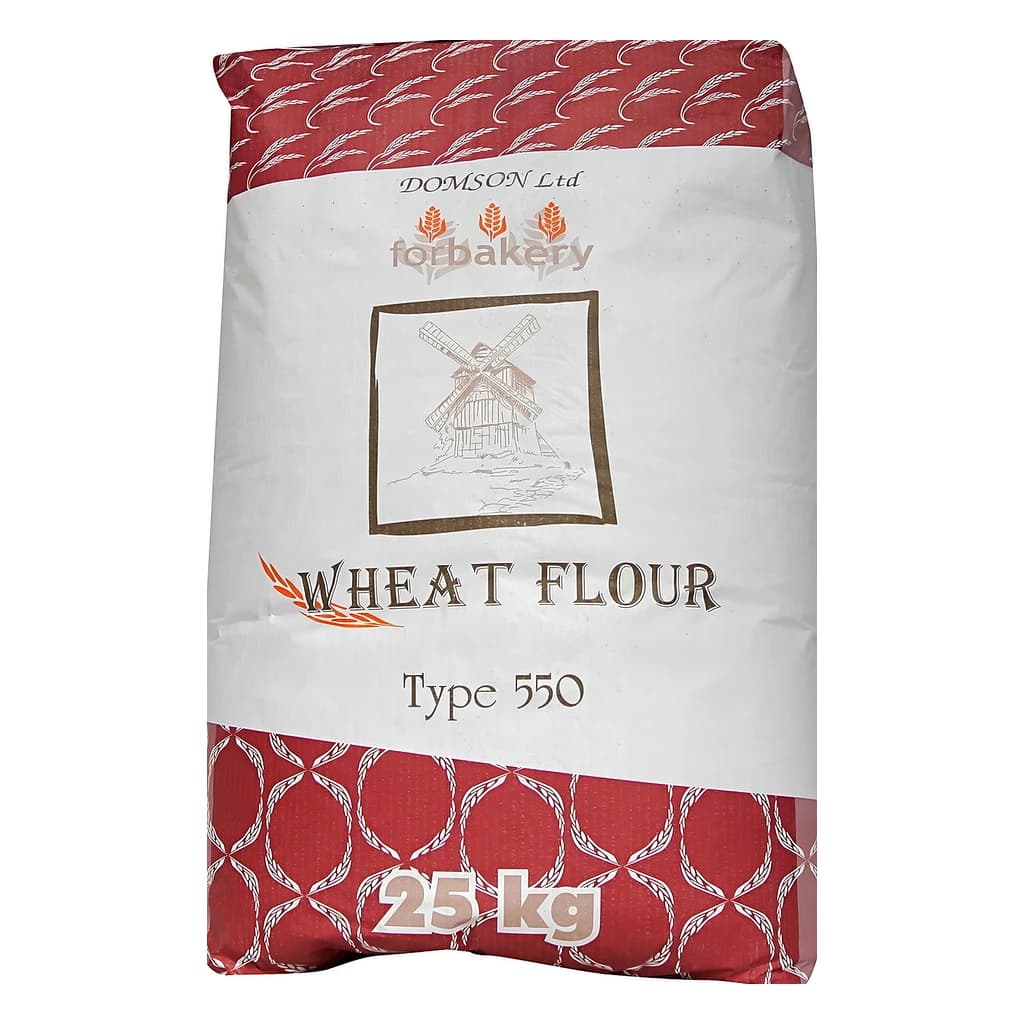
Wheat Flour Type G 550 25 kg
Blue Poppy Seeds 25 kg
Poppy Seed Paste
Granulated Sugar 25 kg
Cinnamon Ground
Unsalted Butter 82% 25 kg
Vanillin Sugar 5 kg
ZEELAsoftSER Vanilla Cream Cheese 12 kg
Unsalted Butter 82% 10 kg
Berliner 10% Doughnut Improver Free 25 kg
Polish Fine Iodized Salt 25 kg
Koneser Cake Margarine 80% 10 kg
Egg White Powder 5 kg
Zeelandia Berliner 2500 Doughnut Premix 25 kg
Raisins 10 kg

Fresh Yeast Benevia 10 kg

Komplet Poppy Seed Filling 10 kg

Martin Braun Mix One Panettone 15 kg
Paletta Apricot Glaze 13 kg
BackGlanz Egg Wash Substitute 10 L
Golden Raisins Medium 12.5 kg
Fresh Yeast Traditional 12 kg
Dried Yeast Pakmaya 20 × 500 g (10 kg)
Centurion Canadian Very Strong Flour 16 kg
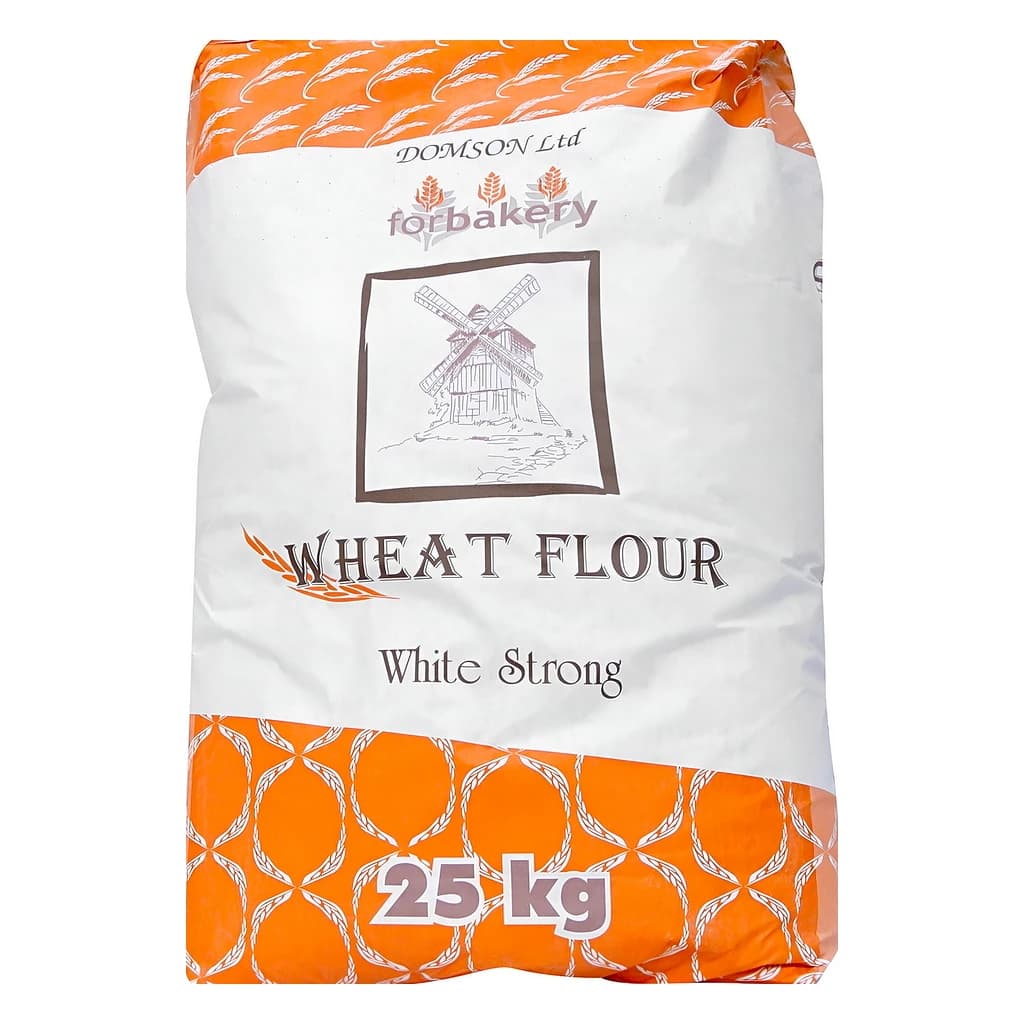
Domson White Strong Wheat Flour 25 kg
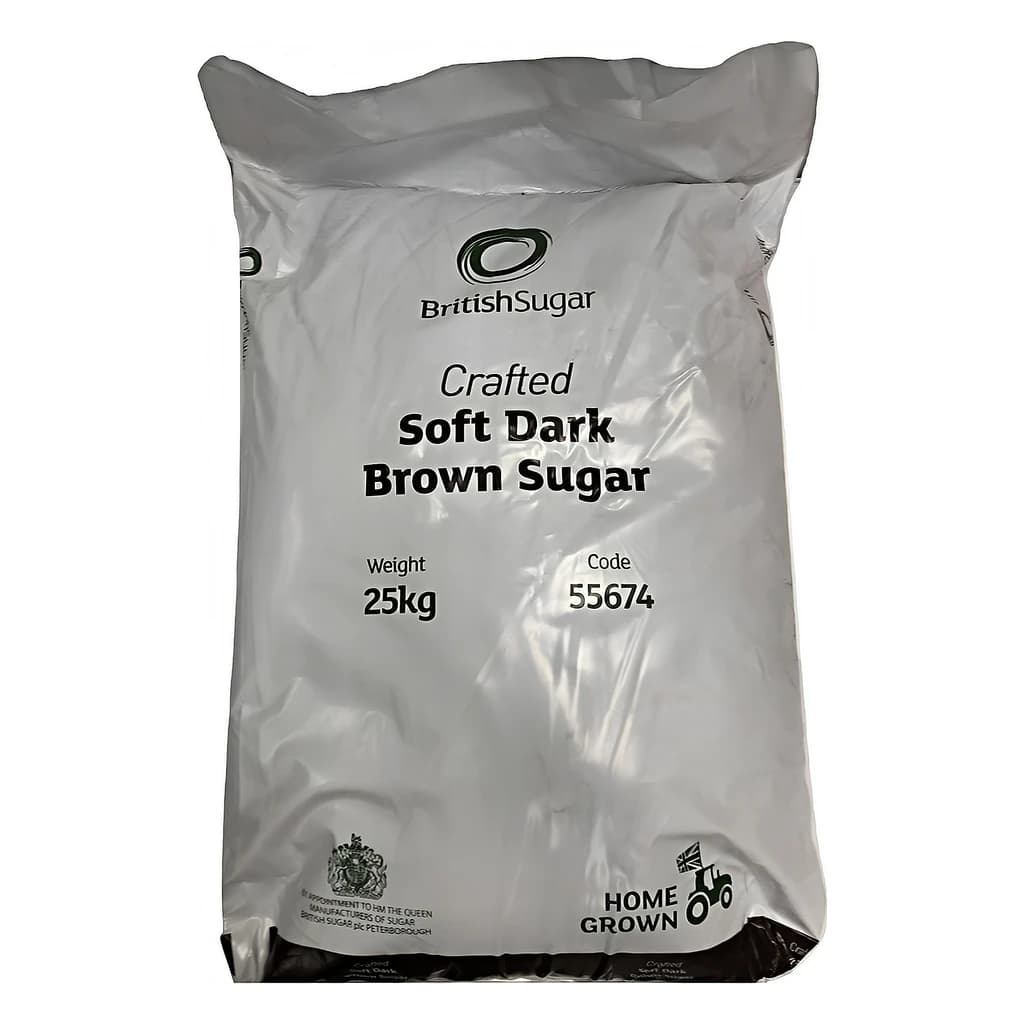
Soft Dark Brown Sugar 25 kg
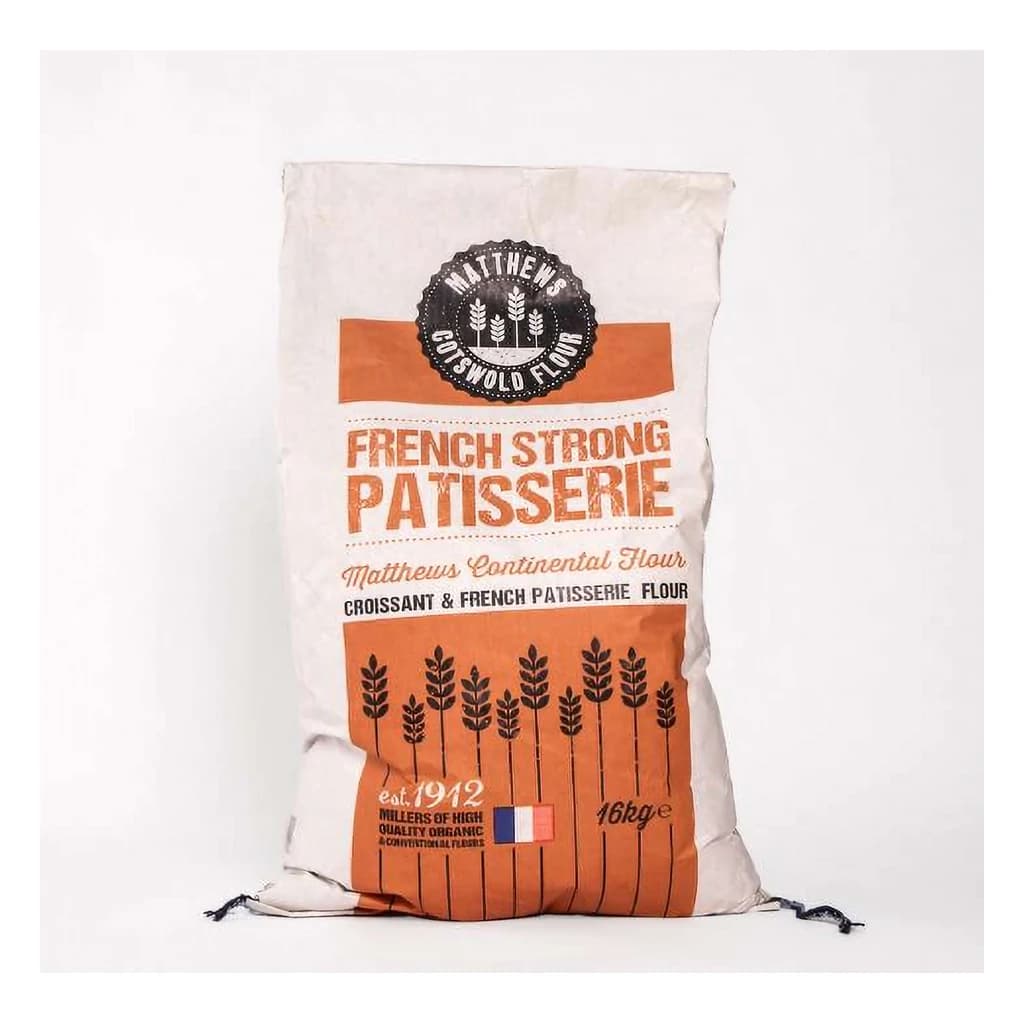
Belle Or T65 French Flour 25 kg
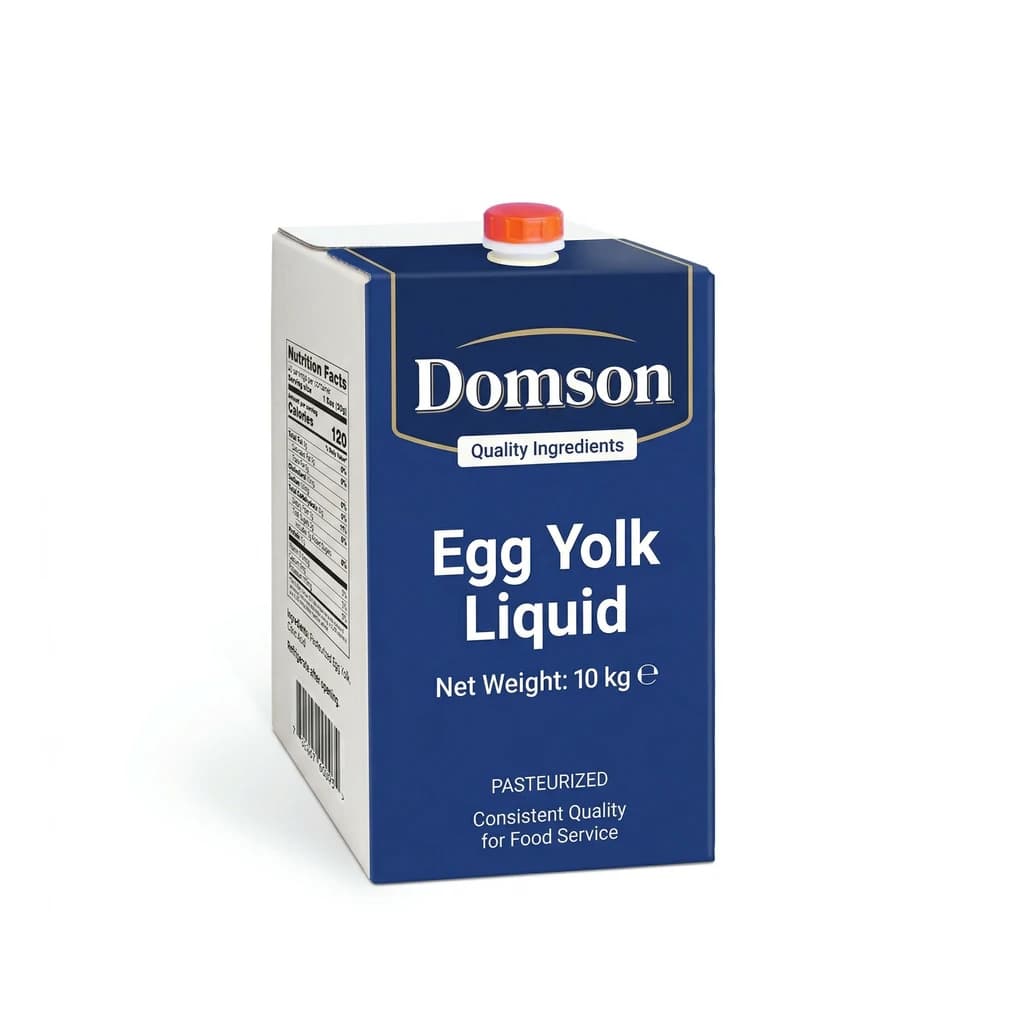
Egg Yolk Liquid Domson 10 kg
Whole Egg Liquid Domson 10 kg
Pfeifer W600 Sieved Granulated Sugar 25 kg