
Drożdżowe tradition: babka, chałka and drożdżówki — enriched yeast dough formula and process
The drożdżowe (enriched yeast) bench is the sweet heart of every Polish bakery. This dossier covers the three pillars — babka drożdżowa (festive yeast cake), chałka (sweet braided bread) and drożdżówki (filled sweet buns, including the iconic jagodzianka) — with their authentic history, regional roots and production. It teaches the classic Polish two-stage rozczyn (sponge) method, the osmotic "sugar wall" that decides which yeast to use, representative formulas in baker's percentage, the signature kruszonka (streusel) and lukier (icing) finishes, and a faults-and-fixes table. Every numeric and process figure is built on native Polish sources and twelve first-party Domson supplier spec sheets (Komplexmłyn T450/T500 flour, Lesaffre Benevia fresh yeast, Polmlek 82% butter, Kruszwica Milama margarine, Emix vanillin sugar, Helios poppy-seed filling, PGD candied orange peel, Zeelandia custard and kajmak, and Ireks brioche mix and soft-roll improver), cross-linked to the Pillar A craft articles and to the catalogue items a Polish baker buys.
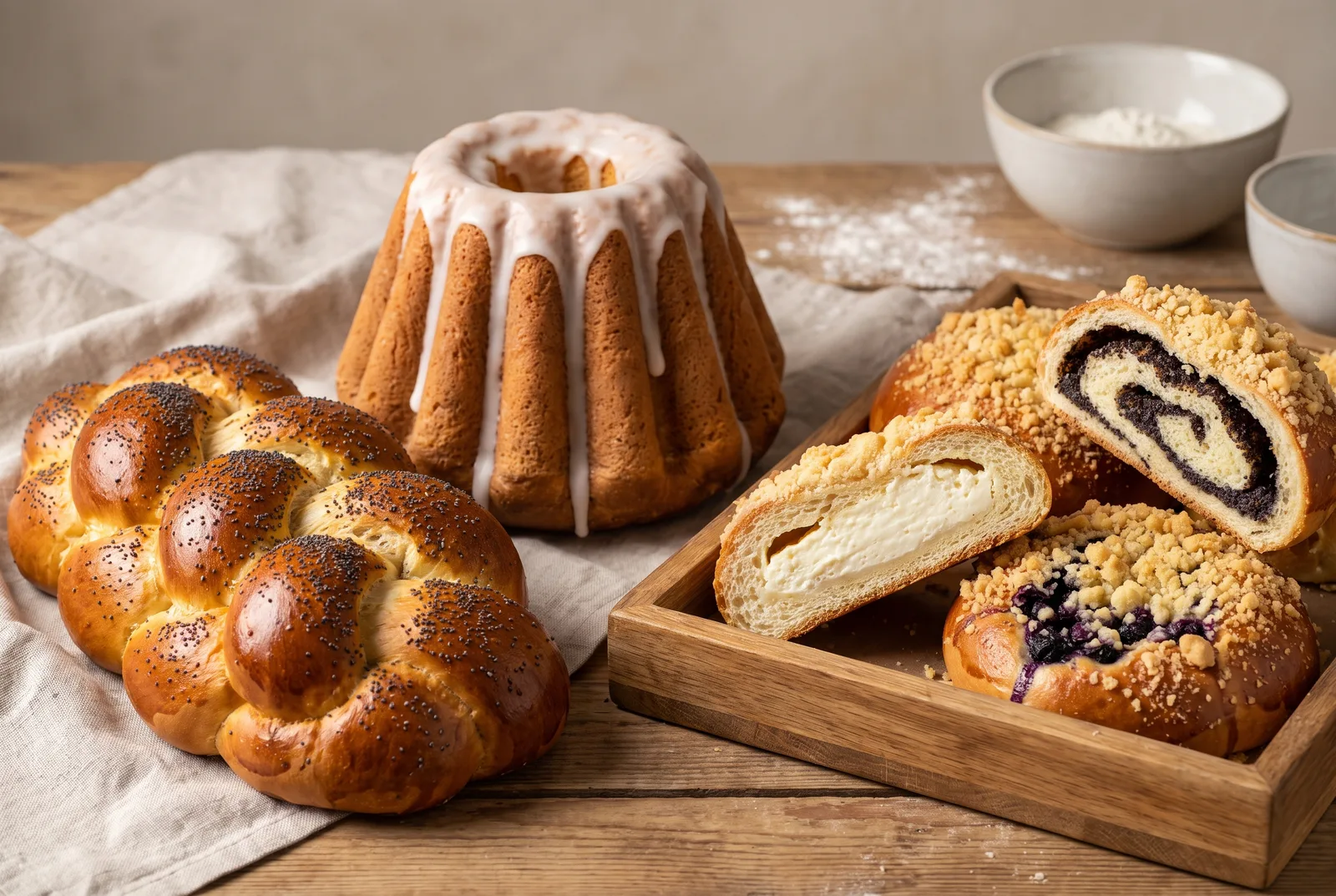
Drożdżowe tradition: babka, chałka and drożdżówki
Walk into any Polish piekarnia (bakery) on a Saturday morning and the warm, eggy, vanilla-scented shelf you smell first is the drożdżowe — the enriched yeast bench. Three products anchor it: the tall, fluted babka drożdżowa (festive yeast cake), the glossy braided chałka (sweet plaited bread), and the tray of filled drożdżówki (sweet buns) whose poppy, cheese, custard and blueberry centres define Polish everyday baking. They are all children of one dough family, yet each has its own history, shape and finish. This dossier gives you the authentic background and a production-ready way to make all three.
Polish enriched yeast bakes: iced babka, braided chałka and crumb-topped filled drożdżówki
Throughout, the formulas are written in baker's percentage (flour = 100%); if that notation is new to you, read A8-bakers-percentage-fundamentals first, and A8-enriched-dough-formulas for the universal brioche/challah/sweet-bun toolkit this article localises to the Polish bench.
1. Where these breads come from
Babka. Festive enriched babki have a long history in Polish baking; some trade and culinary sources date the tradition to the 17th century, though that attribution has not been independently confirmed in accessible scholarly sources — the documentary record puts the term firmly in use by the early 19th century at the latest. The name itself is domestic: baba/babka most likely comes from the cake's resemblance to a wide, pleated skirt worn by older village women, and Samuel Bogumił Linde's 1807 dictionary already defined babka as "a type of cake shaped like a Turkish turban; babi kołacz". Today the word covers three families — babka drożdżowa (yeast), babka piaskowa (the butter-sponge "sand" cake) and babka biszkoptowa (sponge) — and the yeast branch is the Polish cousin of baba au rhum, savarin, panettone and pandoro. The babka drożdżowa is the emblem of the Polish Easter table.
Chałka. The braided chałka descends directly from Jewish challah; the name comes from the Hebrew חַלָּה (chala). Its cognates map the Ashkenazi diaspora across Europe — Khale (Yiddish), Barches (used in German-speaking Jewish communities), Bergis (a Scandinavian adaptation), and Chałka (Polish) — and in Poland it is also called plecionka or, in Podhale, kukiełka. There is a real culinary fork here worth getting right: the Polish chałka is sweet, enriched with butter and milk, while the Jewish/Ashkenazi challah is only lightly salted, less sweet, and traditionally made with oil and water instead of butter and milk; challah is a ritual Sabbath and holiday bread, baked round for Rosz ha-Szana (Rosh Hashana). One protected regional example is Wólecka chałka pleciona, a registered Polish traditional product (Lista Produktów Tradycyjnych) from Wola Wiśniowska in the Puszcza Sandomierska: a four-strand braid up to 0.5 kg, topped with sweet kruszonka and baked in wood-fired ovens fuelled with oak, hornbeam and beech.
Drożdżówki. A drożdżówka is a sweet, filled yeast bun. In the Polish trade it sits in the category pieczywo półcukiernicze ("semi-confectionery bread") — enriched yeast dough with margarine, milk, eggs and sugar — alongside pączki (doughnuts) and strucle (filled rolls). Its identity is its filling: makowa (poppy), serowa (white curd cheese), budyniowa (custard) and fruit. The most famous is the jagodzianka, a bun bursting with wild forest blueberries (jagody leśne / czernica = Vaccinium myrtillus); its short season runs from late June to mid-July.
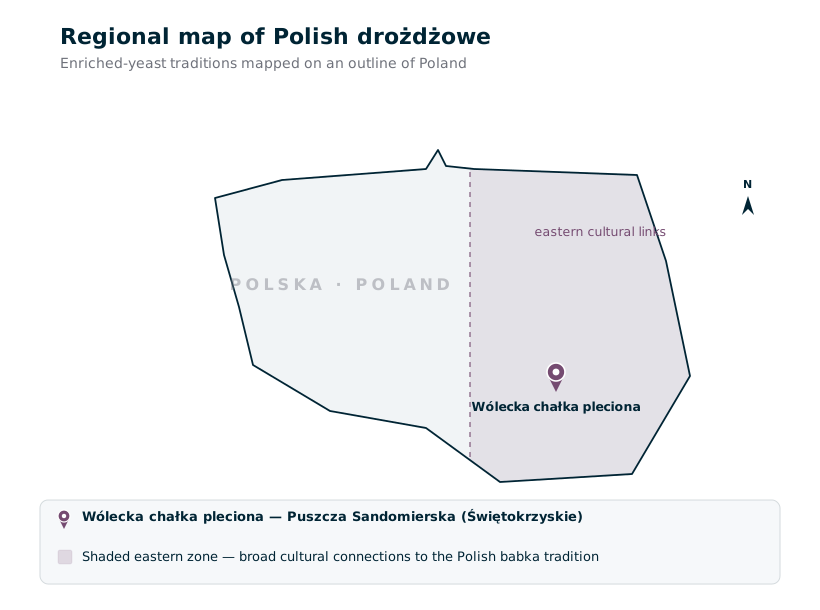 Map of Poland marking regional enriched-yeast traditions, including the Wólecka chałka pleciona in Świętokrzyskie
2. One dough family: the rozczyn (sponge) method
Polish enriched dough is classically built in two stages — metoda dwufazowa (the indirect method). You first make a rozczyn (a sponge/preferment) from all of the recipe's yeast plus 35–50% of the flour and 60–100% of the liquids; the remainder of the ingredients are added afterwards to form the final dough. The one-stage alternative, metoda jednofazowa / bezpośrednia (the direct method), simply mixes everything at once. This is the Polish bench's version of the sponge preferment described in A2-preferments-poolish-biga-sponge.
The numbers matter: warm the rozczyn liquid (milk or water) to 30–35°C, and ferment the sponge in a chamber at 25–30°C for about 1–1.5 hours until it is domed and bubbly. Keep all mixing liquid below 40°C — baker's yeast works best around 30–35°C and dies in hot liquid. The reward for the extra stage is real: the two-stage method gives better quality, fuller aroma and a more delicate crumb than the direct method. (For what is actually happening during this time, see A5-bulk-fermentation.)
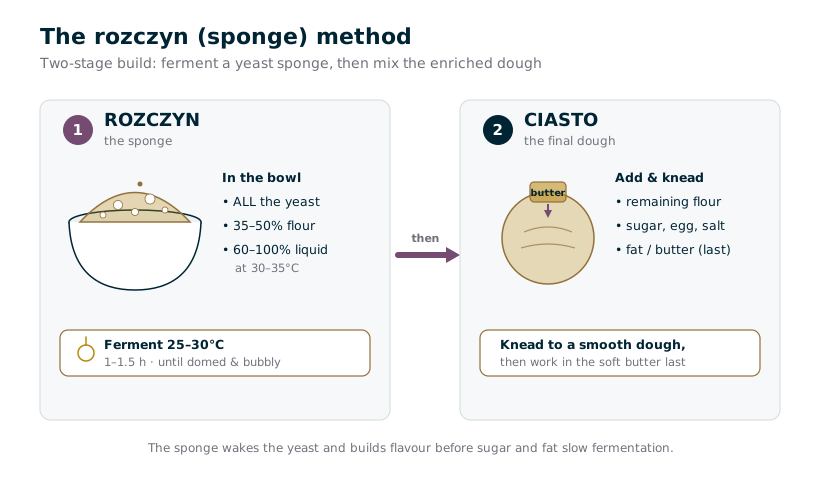 Diagram of the Polish two-stage rozczyn method building a sponge then the final enriched dough
The sugar wall: which yeast, and how much
Sugar and salt pull water out of yeast cells by osmosis and slow fermentation. Two rules of thumb keep you out of trouble. First, sugar above roughly 10% of flour weight lowers yeast activity and, pushed too far, leaves a dense unrisen streak — a zakalec; bear in mind also that even a small amount of salt suppresses fermentation significantly, compounding the sugar's osmotic stress on the yeast. Second, once you cross that threshold, switch from ordinary baker's yeast to an osmotolerant instant strain (a SAF Gold-type yeast) made for high-sugar doughs. This is the same physiology covered in depth in A2-osmotolerant-yeast-enriched-doughs.
For dosage and swapping between forms, the Polish workshop figures are ~25 g fresh, ~10 g dry, or ~7 g instant per 1 kg of flour — consistent with the conversions in A2-yeast-types-comparison. The catalogue's fresh yeast, Lesaffre Benevia (pure Saccharomyces cerevisiae), is specified at dry matter >29% and fermentative activity 125 ± 10 ml CO₂; store it at 1–10°C (optimum 4°C) and use it within its 35-day life. Note for clean-label work: Benevia declares no Annex II allergen in the final product; sulphites are used in the molasses substrate during yeast cultivation, but their carry-over into the finished yeast product is considered to be below the EU Regulation 1169/2011 10 mg/kg declaration threshold — always verify against the current live spec before making sulphite-free claims to customers.
3. Flour and fat: choosing the building blocks
Polish flour is graded by a type number that equals its ash (mineral) content ×1000 — the lower the number, the whiter and lower-mineral the flour (see A1-flour-classification-systems). Enriched yeast doughs run on the bright, medium-strength white flours:
- Type 500 ("luksusowa") is the workhorse for babka, chałka and drożdżówki: ash max 0.52%, protein min 8.0%, gluten min 23.0%, falling number min 220 s, moisture max 15.0%, 5-month shelf life.
- Type 450 ("tortowa", cake flour) is finer — ash max 0.48% with the same protein/gluten/falling- number minima — and is reserved for the most tender sponge babka.
- Type 550 gives a little more structure for stronger braids and bakery-scale dough.
For choosing flour by application generally, see A1-wheat-flour-types-by-application.
The fat is a genuine fork (see A4-fat-types-and-selection). Butter carries flavour: the catalogue's Polmlek unsalted butter 82% is min 82% fat with 16% water, 55 g saturated fat and 744 kcal per 100 g; keep it at 0–10°C for ≤60 days (or frozen 12 months) and remember it is a milk allergen. Cake margarine wins on cost, shelf life and a forgiving plastic range: Milama 80% (Kruszwica) has a solid fat content of 20–25 at 20°C and max 5 at 35°C, a fatty-acid split of SAFA 41 / MUFA 45 / PUFA 13 with trans <2% (compliant with EU Regulation 2019/649 — verify against a post-April-2021 specification to confirm ongoing compliance), no declared Annex II allergen (verify current formulation before soy-free or dairy-free labelling), and a 150-day shelf life. Premium babka and chałka sell on butter; everyday drożdżówki are happy on margarine. The classic Polish flavour note across all three is cukier waniliowy (vanillin sugar) — sugar plus ethylvanillin, ~99 g sugar per 100 g, which may contain gluten.
4. Babka drożdżowa
The babka is the showpiece: a tall, fluted truncated cone (often with a central chimney), baked in a buttered mould and finished with a lukier (white or pink water/sugar icing). Inside, a fine, soft, deep-yellow crumb studded with raisins and candied orange peel (skórka pomarańczowa) and lifted with vanilla and a whisper of rum.
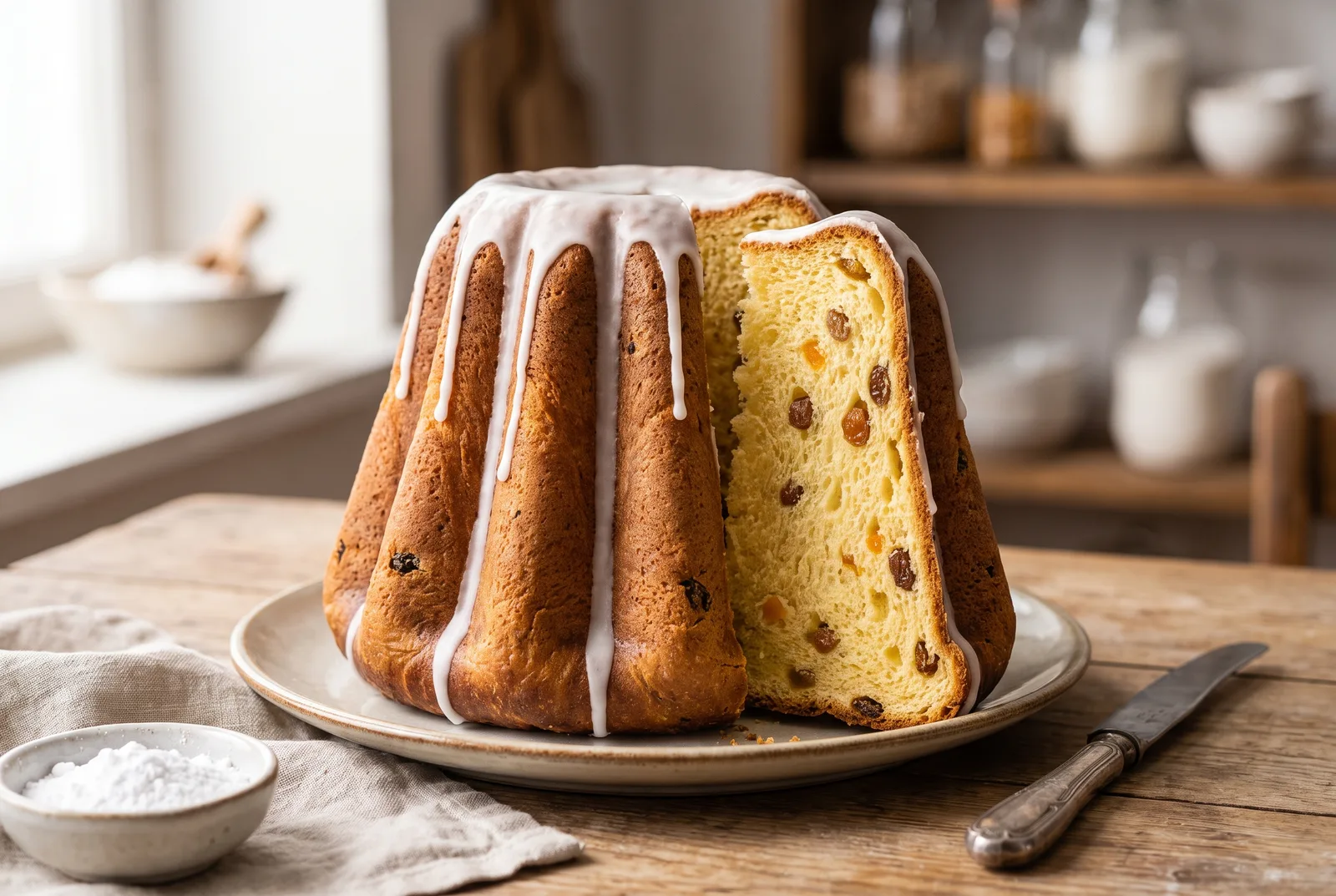 Iced fluted babka drożdżowa with raisins in a soft yellow crumb
A representative formula in baker's % (see the formula card below): flour 100%, milk 50–58%, fresh yeast ~4–6% (conservative professional baseline; enriched babka recipes commonly use higher levels of 5–12%), sugar 12–18%, whole egg + yolk 20–25%, butter 14–20%, salt ~1%, raisins ~20%, plus vanillin sugar and optional rum/candied peel — baked 170–180°C for 35–55 minutes (35–40 min for a standard home-sized mould; up to 55 min for large professional formats; verify doneness with a probe thermometer — internal crumb temperature must reach ≥93°C). Build it on the rozczyn; develop the gluten before working in the softened butter (the brioche principle from A8-enriched-dough-formulas); toss the raisins in a little flour so they don't sink; proof to ~80–90% and bake promptly so the tall crumb sets before the sugary crust over-colours. The catalogue's candied orange peel 4×4 is made from 110 g of peel per 100 g of product, with total extract min 60% and SO₂ max 10 mg/kg (it may contain sulphites).
5. Chałka
Chałka is shaped as a braided warkocz — commonly 3-, 4- or 6-strand — or as a ring; it is brushed with egg wash and topped with poppy seeds or kruszonka before baking. Roll even ropes, keep the braid snug, and egg-wash twice (once before proof, once just before the oven) for the deep, glossy gold that defines a good chałka — the Maillard and crust chemistry of which is covered in A5-baking-oven-science.
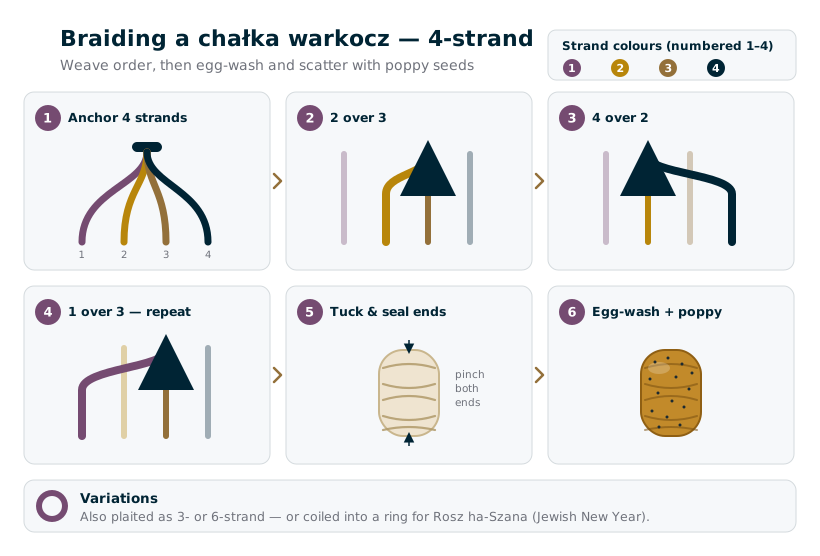 Diagram of braiding a Polish chałka in sequential steps, finishing egg-washed and poppy-topped
A representative Polish (sweet) chałka in baker's % (formula card below): flour 100%, milk 45–50%, fresh yeast 4–5%, sugar 12–15%, whole egg + yolk 15–20%, butter 12–15%, salt ~1.2% — baked 30–35 minutes at 180°C. Keep this clearly distinct from the Jewish challah recipe, which is leaner, lightly salted and built on oil and water. For a fuss-free glaze at volume the catalogue offers an egg-wash substitute (BackGlanz), and a proper final proof (read A5-proofing-science) is what keeps the braid from splitting in the oven.
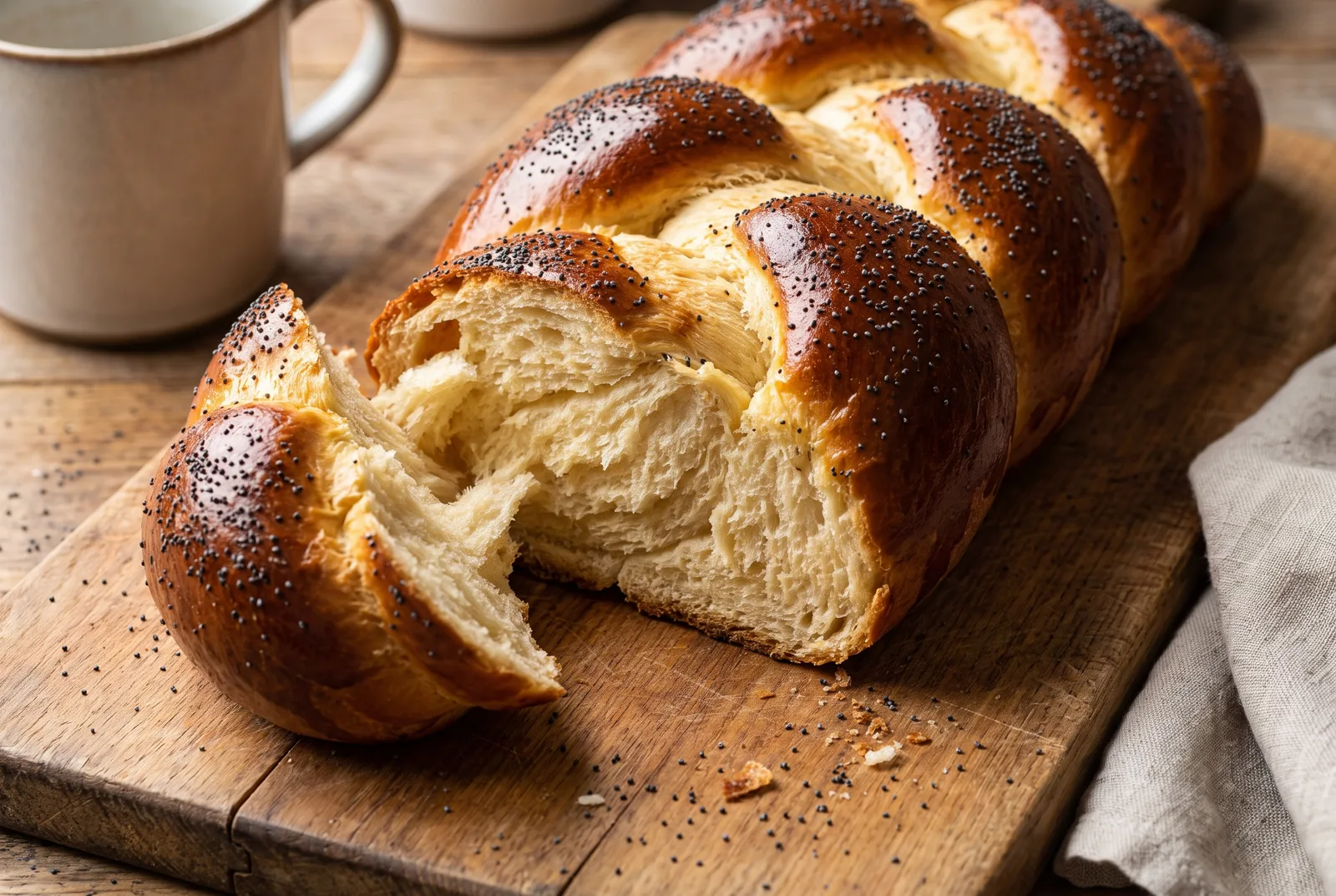 Baked golden braided chałka topped with poppy seeds
6. Drożdżówki — the filled-bun repertoire
Drożdżówki are where the Polish enriched bench earns its daily living. The base dough is a touch stronger than babka because it has to hold a filling; a representative version (formula card below) is flour 100%, milk ~45%, fresh yeast ~5%, sugar ~12%, egg 10–15%, butter or margarine 12–15%, salt ~1%, baked 20–25 minutes at 180°C. A 7% soft-roll improver such as Ireks Soft Roll 7 adds softness and shelf life, and a crumb softener helps next-day texture (staling is covered in A5-shelf-life-and-staling).
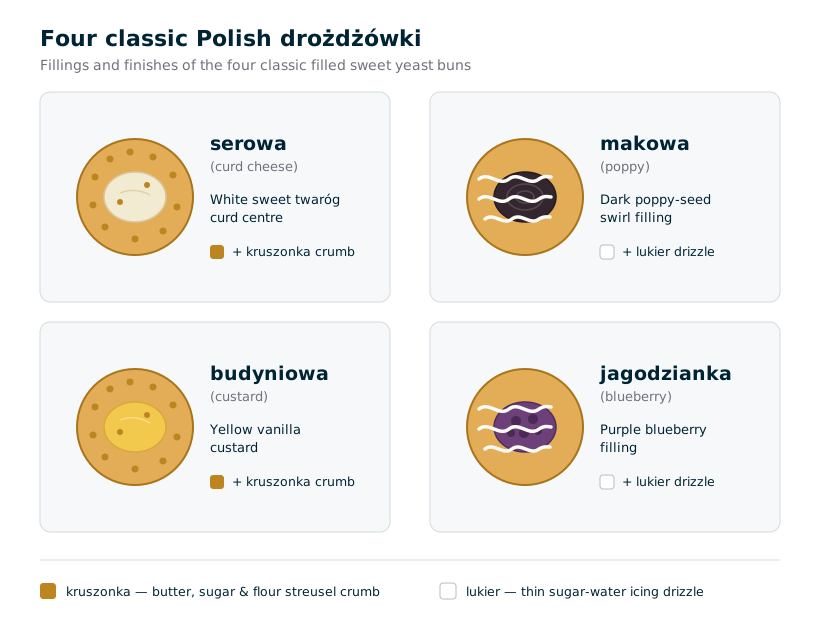 Four classic filled Polish drożdżówki: cheese, poppy, custard and blueberry
The filling defines the bun, and the catalogue maps cleanly onto the classics (cold fillings and creams are the subject of A6-pastry-creams-fillings):
- Makowa (poppy) — Helios Excellent poppy-seed filling: ground poppy seeds, sugar, modified starch, soy flour/wheat semolina, raisins, glucose syrup, whey, cinnamon. It contains gluten and milk and may contain traces of sesame, soya and egg; 9-month shelf life.
- Serowa (curd cheese, twaróg) — a curd-cheese filling (e.g. Figand Profesja Plus); keep chilled and confirm the milk allergen and shelf life on the live spec.
- Budyniowa (custard) — Napoli Krem (Zeelandia): a cold-prep powder (400 g powder: 1000 g water), marked "do not bake" — inject or pipe into baked and cooled shells only; never use as a pre-bake filling — and freeze-resistant; refrigerate at ≤5°C after preparation and use within your HACCP-defined holding time (typically 24–72 hours); milk allergen and broad precautionary allergens (gluten-containing cereals, egg, soya, sesame).
- Kajmak (caramel) — Kajmak (Zeelandia): pH 5.2–6.2, solid mass 69–72%, ready to use; refrigerate after opening; milk allergen.
- Jagodzianka (blueberry) — seasonal wild blueberries (late June to mid-July); thicken juicy fruit so it doesn't blow the seam open in the oven.
Finishes: kruszonka and lukier
Two finishes give Polish buns their look. Kruszonka (streusel) is the signature crumb top: flour, sugar and butter at 2:1:1 (flour:sugar:butter, e.g. 200 g flour: 100 g sugar: 100 g cold butter), rubbed to a crumb and scattered on the egg-washed dough before baking; ratios vary across bakeries, with some richer versions using closer to equal parts flour, sugar and butter. Lukier (water icing) is icing sugar mixed with a little water or lemon juice and drizzled once the bake has cooled — apply it warm-not-hot so it sets glossy instead of soaking in.
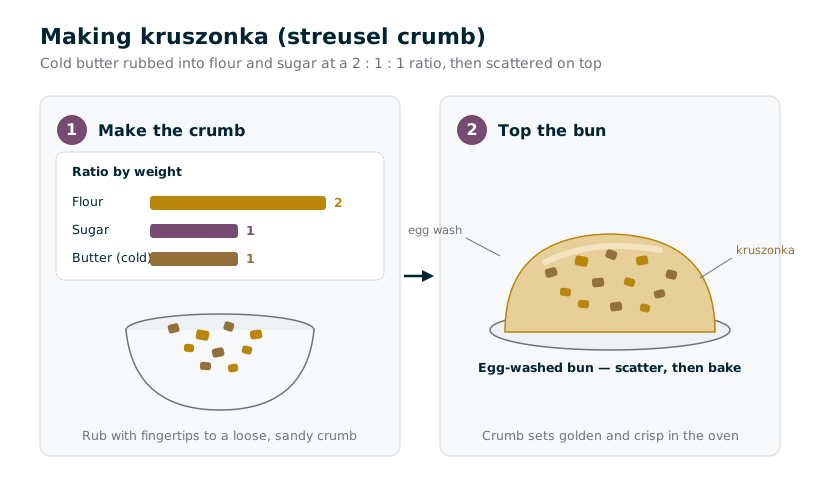 Diagram of making kruszonka streusel at a 2:1:1 ratio and scattering it on dough
7. Faults and fixes
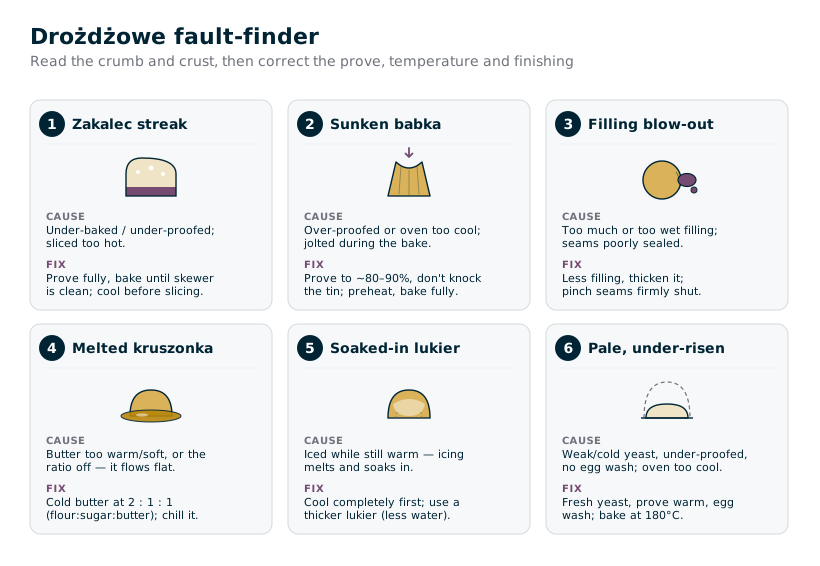 Diagram pairing common Polish enriched-dough faults with their corrective actions
The full fault table is below. The recurring ones:
- Dense, gummy streak (zakalec): too much sugar/fat for the yeast, dough "chilled", or under-proofed — keep sugar within the yeast's reach or move to osmotolerant yeast, never chill the dough, and proof fully .
- Babka collapses: over-proofed or oven too cool / mould over-filled — proof to ~80–90%, bake promptly at 170–180°C, fill the cone mould only half to two-thirds.
- Filling blow-out: filling too wet or too much, or the seam not sealed — thicken fruit, measure the filling, pinch seams firmly, bake seam-down.
- Kruszonka melts to a sheet / lukier disappears: butter too warm (chill the crumb, keep at least 2:1:1) and icing applied to a hot bake (cool first, ice a touch thicker).
8. Buy the ingredients (catalogue map)
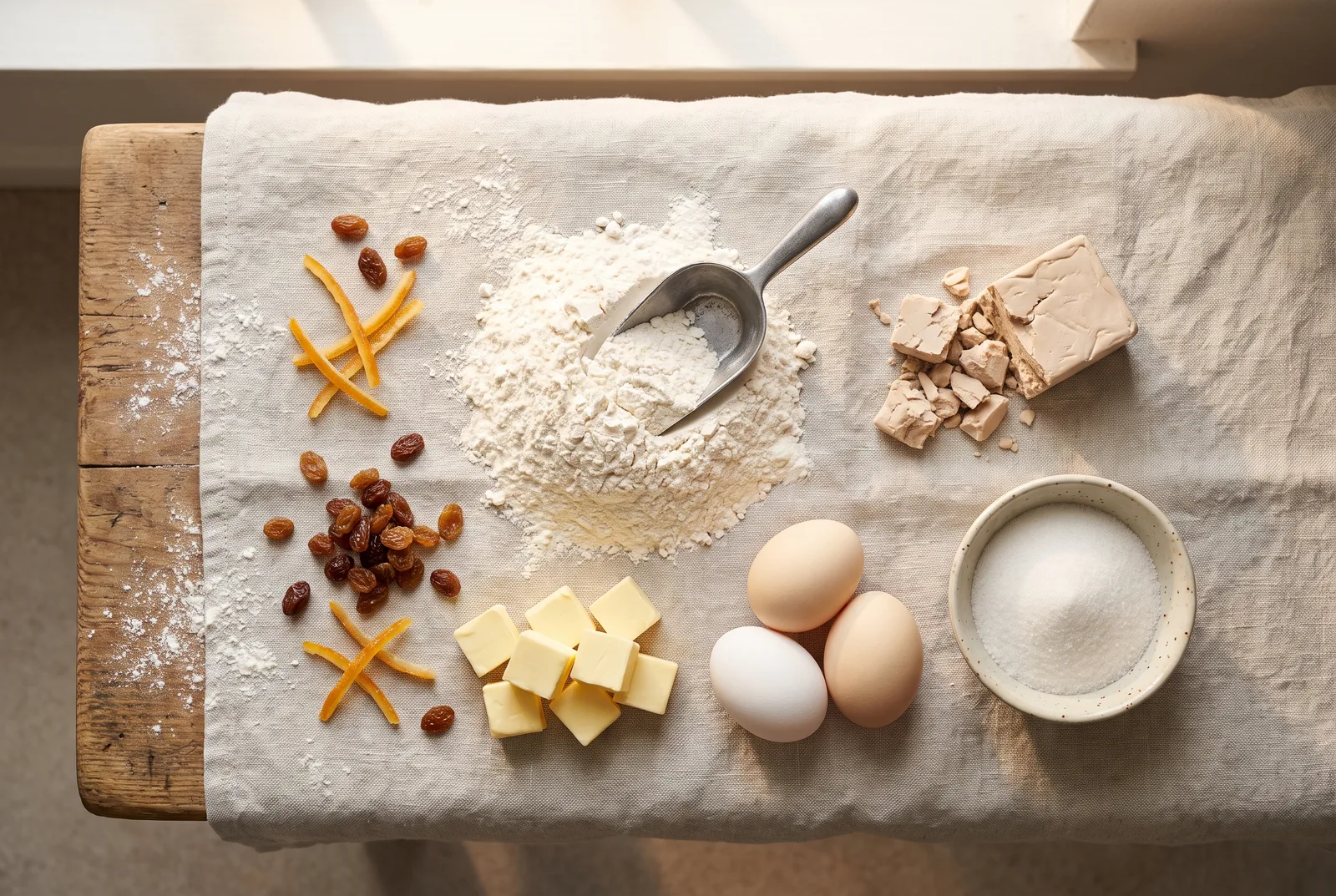 Overhead flat-lay of Polish enriched yeast dough ingredients on pale linen: a mound of white T500 flour with a brass scoop, a crumbled block of fresh yeast, cubed butter, whole eggs, a bowl of sugar, with raisins and candied orange peel scattered alongside
For a Polish enriched-dough bench, the catalogue covers the whole formula — see the products at the end of this article:
- Flour: Komplexmłyn/Domson T500 (workhorse), T550 (stronger braids), T450 (tortowa for sponge babka).
- Yeast:Lesaffre Benevia fresh yeast; reach for an osmotolerant instant strain for the sweetest doughs.
- Fat:Polmlek butter 82% for premium flavour; Kruszwica Milama cake margarine for everyday runs.
- Sweet/aromatic: granulated sugar, Emix vanillin sugar; PGD/Agrobakal candied orange peel; PGD/Bioveri raisins.
- Eggs:Domson whole-egg and egg-yolk liquid for enrichment and egg wash.
- Fillings:Helios poppy, AKO poppy dry filling, Prospona poppy paste, Floramex poppy seeds; Figand curd cheese; Zeelandia Napoli custard and Kajmak.
- Improvers & shortcuts:Ireks Soft Roll 7 (7% soft-roll improver), Ireks Mella Brioche mix (100%-addition, palm-oil-free enriched mix).
- Tooling/finish:Polmarkus babka cone mould and egg-wash substitute.
Food-safety and allergen note: every formula here contains wheat gluten and most contain egg and/or dairy; bake to a safe internal crumb temperature (target ≥93°C internal crumb, verified by probe thermometer, for all egg-enriched doughs); keep curd-cheese, custard and kajmak fillings refrigerated (Napoli custard is a DO-NOT-BAKE filling — inject into baked shells only; refrigerate prepared custard at ≤5°C and use within 24–72 hours); and confirm every allergen statement against the live supplier spec before showing it to a customer.
Figures
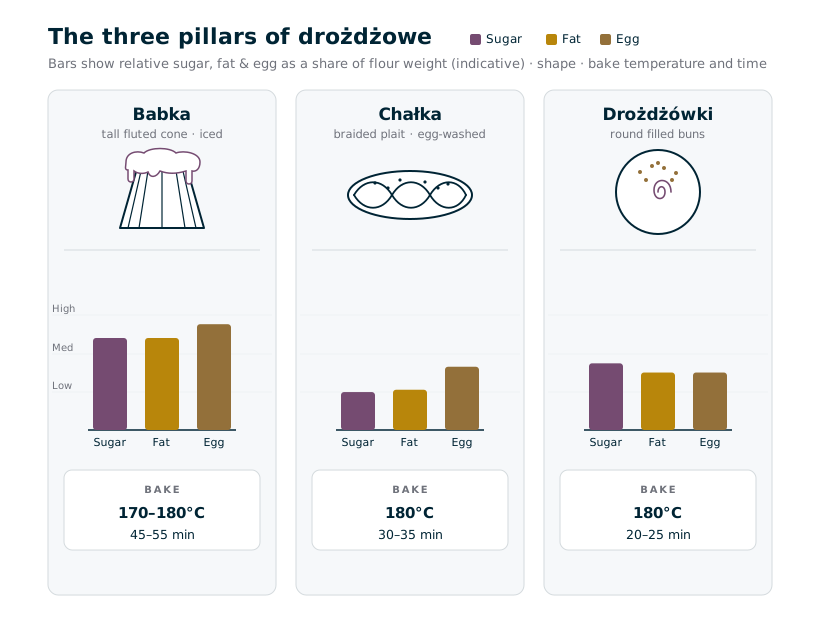 Chart comparing enrichment, shape and bake of babka, chałka and drożdżówki
Babka drożdżowa (festive yeast babka) — representative baker's %
| Ingredient | Baker's % | Weight |
|---|---|---|
| Wheat flour T500 | 100% | |
| Milk | 50–58% | |
| Fresh yeast | ~4–6% (conservative professional baseline; artisan/home recipes often use 8–12%) | |
| Sugar | 12–18% | |
| Whole egg + yolk | 20–25% | |
| Butter (or cake margarine) | 14–20% | |
| Salt | ~1% | |
| Raisins | ~20% | |
| Vanillin sugar + optional rum aroma / candied peel | to taste | |
| Total | ≈205–225% (plus raisins ~20%) |
- two-stage / rozczyn (metoda dwufazowa)
Representative formula converted to baker's % from Polish recipe/trade sources; treat ranges as starting points. If sugar climbs above ~10% on flour, move to osmotolerant yeast.
Chałka (Polish sweet braided bread) — representative baker's %
| Ingredient | Baker's % | Weight |
|---|---|---|
| Wheat flour T500/T550 | 100% | |
| Milk | 45–50% | |
| Fresh yeast | 4–5% | |
| Sugar | 12–15% | |
| Whole egg + yolk | 15–20% | |
| Butter | 12–15% | |
| Salt | ~1.2% | |
| Egg wash + poppy seeds / kruszonka (topping) | n/a | |
| Total | ≈185–200% |
- two-stage / rozczyn or straight
The Polish chałka is the SWEET, butter-and-milk version; the Jewish/Ashkenazi challah is leaner, lightly salted and uses oil + water. Representative formula.
Drożdżówki (filled sweet buns) base dough — representative baker's %
| Ingredient | Baker's % | Weight |
|---|---|---|
| Wheat flour T500 | 100% | |
| Milk | ~45% | |
| Fresh yeast | ~5% | |
| Sugar | ~12% | |
| Egg | 10–15% | |
| Butter or cake margarine | 12–15% | |
| Salt | ~1% | |
| Filling (cheese / poppy / custard / fruit) | ≈40–60% of each dough piece | |
| Kruszonka + lukier (finish) | n/a | |
| Total | ≈180–190% (before filling) |
- straight or rozczyn
Filling choice defines the bun: makowa (poppy), serowa (cheese), budyniowa (custard), jagodzianka (blueberry), z dżemem (jam). Thicken juicy fruit fillings to stop blow-out. Representative formula.
Kruszonka (streusel crumb topping) — ratio
| Ingredient | Baker's % | Weight |
|---|---|---|
| Flour | 2 parts (e.g. 100 g) | |
| Sugar | 1 part (e.g. 50 g) | |
| Butter (cold) | 1 part (e.g. 50 g) |
- Rub cold butter into flour + sugar by hand until you get pea-to-crumb sized clumps; chill or freeze, scatter onto egg-washed dough before baking.
Ratios vary across bakeries; richer versions may use closer to equal parts flour, sugar and butter, but keeping flour at least equal to fat by weight prevents the crumb from melting into a sheet in the oven. The kruszonka is the signature Polish finish on placek drożdżowy, drożdżówki and jagodzianki.
Bakery shortcut: ready brioche/enriched mix
| Ingredient | Baker's % | Weight |
|---|---|---|
| Ireks Mella Brioche POF (mix) | 100% (replaces the flour) | |
| Water/milk, yeast, egg | per pack instructions |
- For consistent, palm-oil-free enriched dough at volume, a 100%-addition brioche mix replaces the flour and built-in improver system; add liquid, yeast and egg per the pack and proceed as a normal enriched dough.
Contains wheat gluten + milk; 9-month shelf life. Convenient for chałka/babka bases and sweet buns when bench consistency matters more than a from-scratch flour selection.
All three are built from one family of enriched wheat yeast dough (ciasto drożdżowe), but they differ in enrichment, shape and finish. Figures are representative professional starting points expressed as baker's % (flour = 100%), not fixed rules.
| Product | Polish name | Enrichment (sugar / fat / egg, % flour) | Shape & mould | Finish | Bake |
|---|---|---|---|---|---|
| Babka (festive enriched cake) | babka drożdżowa | 12–18% / 14–20% / 20–25% | Fluted truncated-cone mould, often with chimney | White or pink lukier (icing); raisins + candied peel in crumb | 45–55 min @ 170–180°C |
| Chałka (braided sweet bread) | chałka / plecionka | 12–15% / 12–15% / 15–20% | 3-, 4- or 6-strand braid (warkocz) or ring | Egg wash + poppy seeds or kruszonka | 30–35 min @ 180°C |
| Drożdżówki (filled sweet buns) | drożdżówki | ~12% / 12–15% / 10–15% | Round/rolled buns, filling pocketed or rolled in | Kruszonka and/or lukier; filling on show | 20–25 min @ 180°C |
Polish wheat flour is graded by type number, which equals its ash (mineral) content ×1000 — the lower the number, the whiter and lower-mineral the flour. Enriched yeast doughs run on the bright, medium-strength white flours T500–T550; T450 'tortowa' is reserved for the most tender cakes. See A1-flour-classification-systems.
| Flour | Ash max | Protein / gluten min | Falling number min | Typical drożdżowe use |
|---|---|---|---|---|
| Type 450 (tortowa, cake) | 0.48% | 8.0% / 23.0% | 220 s | Tender sponge babka, the finest babka piaskowa; not the first choice for braids |
| Type 500 (luksusowa, all-purpose white) | 0.52% | 8.0% / 23.0% | 220 s | The workhorse for babka drożdżowa, chałka and drożdżówki |
| Type 550 (poznańska / wrocławska) | ≈0.55% | ≈min 8–9% / min 23–27% | ≈220–250 s | Stronger braids and bakery-scale enriched dough where more structure helps |
Sugar and salt pull water out of yeast cells by osmosis, slowing fermentation. Stay aware of the threshold and switch yeast type when the dough gets very sweet. Conversions are by weight.
| Yeast form | Per 1 kg flour | Notes for enriched dough |
|---|---|---|
| Fresh (drożdże świeże) | ~25 g | The Polish default; dissolve in 30–35°C liquid for the rozczyn; store 1–10°C, use within 35 days |
| Active dry (suszone) | ~10 g | Rehydrate before mixing; ~0.4× the fresh weight |
| Instant (instant) | ~7 g | Add dry to flour; ~0.28× the fresh weight |
| Osmotolerant instant (SAF Gold-type) | ≈7 g | Use when sugar exceeds ~10% of flour — rich babka, sweet buns, pączki |
Polish bakeries enrich with masło (butter) for flavour and with margaryna do ciast (cake margarine) for cost, shelf life and a forgiving plastic range. Both are real options; choose by product positioning. See A4-fat-types-and-selection.
| Fat | Fat content | Key spec points | When to use |
|---|---|---|---|
| Unsalted butter 82% (Polmlek) | min 82% (16% water) | Saturated 55 g/100 g; 744 kcal; store 0–10°C ≤60 days; milk allergen | Premium babka and chałka where buttery flavour is the selling point |
| Cake & cookie margarine 80% (Milama, Kruszwica) | 80% | SFC 20–25 @20°C / max 5 @35°C; SAFA 41/MUFA 45/PUFA 13; trans <2%; no Annex II allergen; 150-day shelf life | Everyday drożdżówki and bench babka; cost control and longer shelf life |
The classic Polish filled-bun repertoire, with a representative Domson product for each and its key handling note. Always confirm the live allergen statement on each spec before labelling. See A6-pastry-creams-fillings.
| Filling / finish | Polish name | Representative product | Handling / spec note |
|---|---|---|---|
| Poppy-seed | masa makowa | Helios Excellent Poppy Seed Filling | Contains gluten + milk; may contain sesame/soya/egg; 9-month shelf life |
| Curd cheese | ser / twaróg | Figand Profesja Plus Curd Cheese Filling | Keep chilled; confirm milk allergen + shelf life on live spec |
| Vanilla custard | budyń / krem | Napoli Krem (Zeelandia) | Cold-prep 400 g: 1000 g water; do not bake; refrigerate; milk allergen |
| Caramel (dulce de leche) | kajmak | Kajmak (Zeelandia) | Ready to use; pH 5.2–6.2; refrigerate after opening; milk allergen |
| Blueberry (seasonal) | jagody (jagodzianka) | Bioveri/PGD seasonal berries + fruit jams | Wild-blueberry season late June–mid July; thicken juicy fruit to stop blow-out |
| Crumb topping | kruszonka | Made on bench: flour:sugar:butter 2:1:1 | Rub cold; freezes well; the signature Polish top |
| Water icing | lukier | Made on bench: icing sugar + water/lemon | Apply warm-not-hot so it sets glossy, not soaked-in |
| Fault | Likely cause | Fix |
|---|---|---|
| Dense, gummy streak (zakalec) | Too much sugar/fat for the yeast; dough chilled; under-proofed | Keep sugar within reach of the yeast or switch to osmotolerant yeast; don't 'chill' the dough; proof fully |
| Babka collapses after rising | Over-proofed; oven too cool; mould over-filled | Proof to ~80–90% and bake promptly at 170–180°C; fill the cone mould ~half to two-thirds |
| Pale, slow rise | Liquid too hot (killed yeast) or too cold; stale yeast | Hold liquid 30–35°C, never above 40°C; use fresh yeast within its 35-day life |
| Filling blows out / leaks | Filling too wet or too much; seam not sealed | Thicken juicy fruit; pipe measured amounts; pinch seams firmly and bake seam-down |
| Kruszonka melts into a sheet | Butter too warm; too little flour | Use cold butter, chill the crumb, keep flour:sugar:butter at least 2:1:1 |
| Lukier soaks in and disappears | Applied to hot product; icing too thin | Cool the bake first; apply a slightly thicker icing so it sets glossy on top |
| Crust burnt before crumb is set (babka) | Sugar/egg browns fast; oven too hot for a tall bake | Lower to 170°C, tent with foil if needed, bake to a safe internal crumb temperature |
- Ash max:
- 0.52%
- Protein min:
- 8.0%
- Gluten min:
- 23.0%
- Falling number min:
- 220 s
- Moisture max:
- 15.0%
- Shelf life:
- 5 months
- Ash max:
- 0.48%
- Protein min:
- 8.0%
- Gluten min:
- 23.0%
- Falling number min:
- 220 s
- Moisture max:
- 15.0%
- Dry matter:
- >29%
- Fermentative activity:
- 125 ± 10 ml CO2
- Storage:
- 1–10°C (optimum 4°C)
- Shelf life:
- 35 days
- Allergens:
- none declared; sulphites in molasses used to grow yeast
- Fat min:
- 82%
- Water:
- 16%
- Saturated:
- 55 g/100 g
- Energy:
- 744 kcal/100 g
- Storage:
- 0–10°C ≤60 days; −18 to −22°C 12 months
- Allergen:
- milk/lactose
- Fat:
- 80%
- Sfc 20C:
- 20–25
- Sfc 35C:
- max 5
- Fatty acids:
- SAFA 41% / MUFA 45% / PUFA 13% / trans <2%
- Shelf life:
- 150 days
- Storage:
- 4–15°C
- Allergens:
- none declared (Annex II)