
Flour type numbers decoded: Polish T-codes, French T45–T150, German 550, Italian 00
Every flour bag carries a type number — T550, Type 550, tipo 00, T55 — but these labels come from four different national systems that measure the same underlying property (ash content) and encode it in slightly different ways. This article explains the logic behind each system, shows how they align on a common ash scale, and maps the alignment directly to the flour products in the Domson catalogue with confirmed spec-sheet data.
Why type numbers matter — and why they confuse
Open any cookbook from France, a German bakery manual, or an Italian pasta recipe, and you will find a flour type number. Open the Domson catalogue and you will find Polish T-codes. These are different systems encoding the same underlying thing: how much of the grain's bran fraction ended up in the flour.
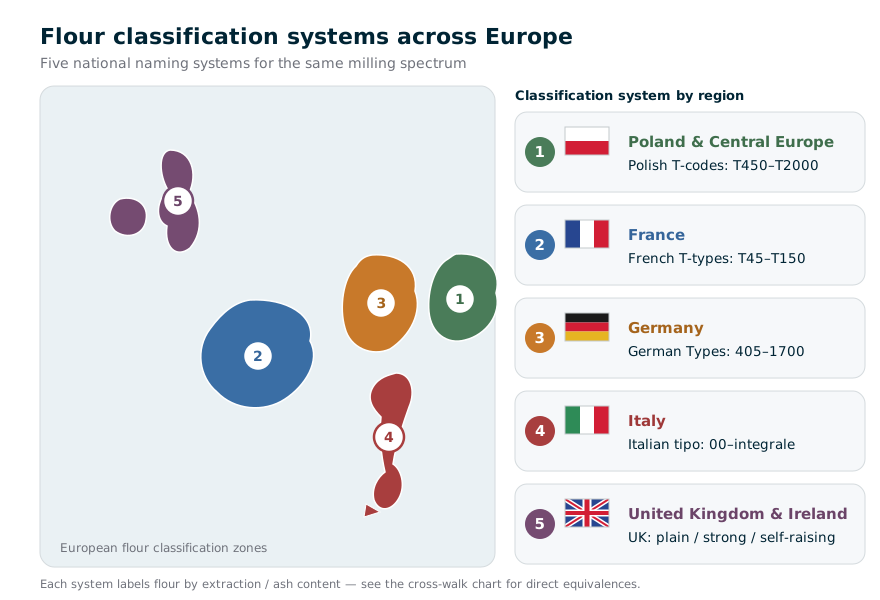 Illustrated map of Europe with four highlighted regions: Poland (T-code system), France (T45–T150), Germany (Type 405–1700), Italy (tipo 00–integrale), and the UK (plain/strong/self-raising). Each region shows its local flour classification system name in a callout bubble.
The confusion arises because the numbers look similar but scale differently, and because the systems disagree on exactly what type numbers imply about protein content and baking performance. T55 does not mean "same as T550 divided by 10". This article decodes each system from first principles, shows where they align, and maps the alignment to the Domson catalogue.
1. The underlying measurement: ash content
All four major European flour classification systems — Polish, French, German, Italian — are built on the same physical measurement: ash content.
When flour is incinerated at 550°C in a muffle furnace, the organic matter burns away completely. What remains is a white-grey residue of mineral salts (phosphates, potassium, magnesium, calcium) — this is the ash. It is measured as a percentage of dry flour mass. The method is ISO 2171 / PN-EN ISO 2171.
The central fact: bran layers contain roughly ten times more ash than the starchy endosperm. As the miller extracts more bran into the flour, ash rises. As a result, ash content is a reliable proxy for extraction rate and, by extension, for flour colour, fibre content, flavour intensity, and mineral content.
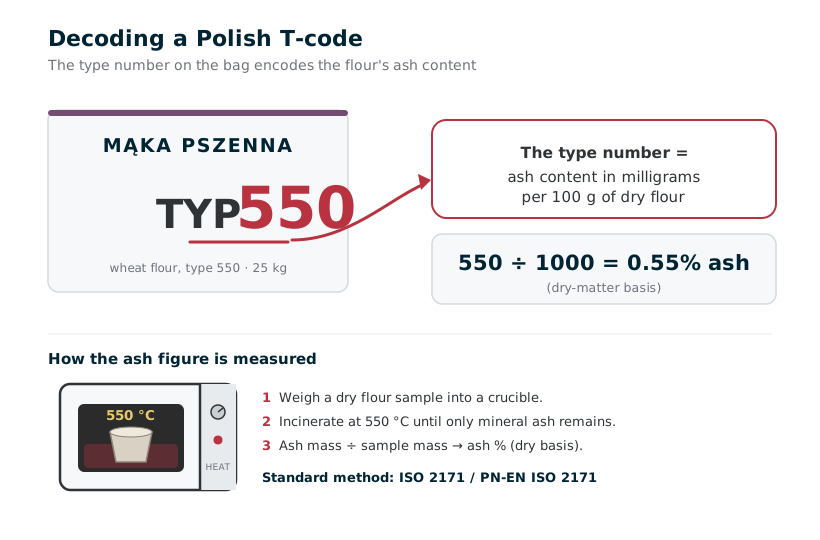 Close-up of a Polish flour bag label showing 'MĄKA PSZENNA TYP 550' with a callout arrow pointing from '550' to a box reading 'T550 = 550 mg ash per 100 g dry flour = 0.55% ash' with a small diagram of the ash determination method (incinerator crucible).
How the type number encodes ash:
| System | Encoding principle | Example |
|---|---|---|
| Polish (PN-A-74022) | Type number = ash content in mg per 100 g dry flour | T550 = 550 mg ash/100g d.m. = 0.55% ash |
| German (DIN 10355) | Same encoding as Polish | Type 550 = 550 mg ash/100g d.m. = 0.55% ash |
| French (NF V03-720) | Type number = ash content in g per 10 kg dry flour | T55 = 55 g/10 kg = 550 mg/100g = 0.55% ash |
| Italian (Decreto 187/2001) | Named tipos; ash limit defined in % d.m. | tipo 00 = ash max 0.55% |
Key insight: Polish T550, German Type 550, and French T55 all correspond to approximately 0.55% ash — they are encoding the same measurement in ways that look very different. Italian tipo 00 has a similar ash ceiling (max 0.55%) but is not named by the number.
2. The Polish system in full — and the Domson catalogue
The Polish standard PN-A-74022 defines wheat flour types based on ash content measured by PN-EN ISO 2171 (incineration at 550°C, result on dry-matter basis). The type number directly encodes ash in mg per 100 g dry flour.
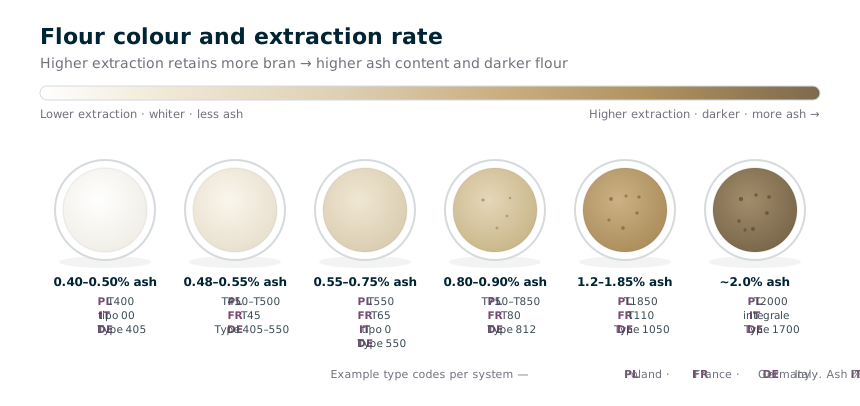 Six small white bowls arranged left to right showing flour colour progression: far left is bright white (low-extraction, T400-class); moving right the colour gradually deepens through cream, off-white, buff, speckled tan, to dark grey-brown (wholemeal). Each bowl labelled with approximate ash % and one example type from each system.
The following table draws on 10 confirmed supplier specification sheets from the Domson catalogue. The full parameter breakdown is in the table below.
| Polish Type | Ash max % (d.m.) | Wet Gluten min % | Falling Number min (s) | Primary application | Domson catalogue product |
|---|---|---|---|---|---|
| T400 | 0.50 | 18 | not standardised | Pasta, macaroni, wafer | Wheat Flour T400 Macaroni 25 kg |
| T450 | 0.48 | 23.0 | ≥ 220 | Fine pastry, shortcrust | Wheat Flour Type 450 25 kg |
| T500 | 0.52 | 23.0 | ≥ 220 | General pastry, sponge | Domson White Flour Type 500 25 kg |
| T550 | 0.51–0.58 (GoodMills) / max 0.58 (Komplexmłyn) | 28–32 (GoodMills) / ≥25 (Komplexmłyn) | ≥ 220 | White sandwich bread, rolls | Domson T550 GoodMills; Komplexmłyn T550 |
| T750 | max 0.82 | ≥ 26 | ≥ 220 | Rustic/artisan bread | Domson Bread Flour Type 750 25 kg |
| T850 | max 0.90 | ≥ 26 | ≥ 220 | Brown bread, high-fibre | Wheat Flour Type 850 25 kg |
| T1850 (Graham) | < 2.0 | — | > 180 | Graham bread, high-bran | Graham Wheat Flour Type 1850 40 kg |
| Rye T720 | < 0.78 | — | > 90 | Light rye bread | Rye Flour Type 720 20/25 kg |
| Rye T2000 | < 2.0 | — | > 90 | Wholemeal rye bread | Wholemeal Rye Flour Type 2000 40 kg |
Important notes:
-
The two T550 products in the catalogue have very different protein levels: GoodMills T550 fortified specifies protein 11.5–12.5% and wet gluten 28–32%; the Komplexmłyn T550 (Wągrowiec Mill) specifies only protein min 8.0% and wet gluten min 25%. The type number is the same; the functional performance is different. Always check protein and wet gluten on the spec sheet.
-
The T400 macaroni grade is a speciality product: gluten index 55–100 (a range reflecting acceptable but not necessarily high elasticity — macaroni-grade flour needs adequate gluten but high extensibility for pasta extrusion). Falling number is not standardised, which is unusual.
-
Graham flour (T1850) has a slightly lower falling number minimum (> 180 s vs ≥ 220 s for white types) because the high bran content buffers enzymatic activity. GoodMills T1850 FN > 180 s is confirmed by spec sheet.
-
Rye flour types follow the same ash-encoding convention as wheat, but the falling number threshold is entirely different: both Rye T720 and T2000 spec sheets specify only FN > 90 s. Do not compare rye FN values to wheat FN thresholds — rye starch gels at a lower temperature and rye amylases are more heat-stable. A rye FN of 90–150 s is normal operating range; further detail is in the comparison table below.
3. The French system: T45 to T150
The French type system (NF V03-720) uses the same ash-encoding logic as the Polish system, but the number is calculated from ash in grams per 10 kilograms of dry flour rather than milligrams per 100 grams — which gives a number ten times smaller for the same ash content.
| French type | Ash max % (d.m.) | Polish approximate equivalent | Typical application |
|---|---|---|---|
| T45 | ≤ 0.50% | T450–T500 | Fine patisserie, croissants, soft rolls |
| T55 | ≤ 0.60% | T550 | Standard white bread, baguette |
| T65 | ≤ 0.75% | T650–T750 | Baguette de tradition, country bread |
| T80 | ≤ 0.90% | T750–T850 | Country bread (pain de campagne) |
| T110 | ≤ 1.20% | T1050–T1150 | High-extraction bread |
| T150 | ≥ 1.40% | T1400–T1850 | Near-wholemeal / wholemeal |
Caution (single source): These French ash limits are drawn from trade literature (medium reliability). They are consistent with multiple reference works and widely cited in professional baking education, but could not be independently cross-checked against the NF V03-720 standard text during this research session. Treat these as highly probable reference values, not guaranteed legal limits.
Practical implication for Domson buyers: French T55 and Polish T550 are very close in ash terms. However, a French miller's T55 typically has protein around 10–11%, whereas the GoodMills T550 Fortified in the catalogue delivers 11.5–12.5% protein — notably stronger. If you are replicating a French recipe that specifies T55 and finding dough too tight, consider the Komplexmłyn T550 (protein min 8%) as the lower-strength alternative, or dilute GoodMills T550 with some T500.
4. The German system: Type 405 to Type 1700
German flour classification (DIN 10355) uses exactly the same encoding as the Polish system: the type number equals ash content in milligrams per 100 grams of dry flour. German Type 550 and Polish T550 represent the same ash class.
| German type | Ash % (d.m.) approx. | Polish approximate equivalent | Application |
|---|---|---|---|
| Type 405 | ~0.40–0.45% | T400–T450 | Cakes, biscuits, pastry (Kuchen) |
| Type 550 | ~0.51–0.58% | T550 | Standard bread, rolls (Brötchen) |
| Type 630 | ~0.60–0.67% | T650 | Wheat rolls, mixed-grain bread |
| Type 812 | ~0.77–0.84% | T750–T850 | Bread, mixed-grain |
| Type 1050 | ~1.00–1.08% | T1050 | Dark bread, Mischbrot |
| Type 1600 | ~1.55–1.63% | T1600–T1850 | High-extraction, near-wholemeal |
| Type 1700 | wholemeal | T2000 (wheat) | Wholemeal wheat bread |
Key observation: German Type 405 (ash ~0.40%) is the closest German equivalent to Italian tipo 00 in ash terms, and both are used for delicate pastry applications. However, German Type 405 is milled purely from soft wheat to achieve low protein (typically 8–9%), while Italian tipo 00 covers a much broader protein range depending on intended use — from pastry-grade (9%) to pizza-grade (12–13%). The type number alone does not capture this distinction.
For Domson buyers working with German recipes: German Type 550 can be substituted directly with Domson GoodMills T550 or Komplexmłyn T550 with high confidence in ash alignment. For German Type 812/1050, the Domson Bread Flour T750 (ash max 0.82%) is a good match at the lower end, but there is no direct T1050 product; a blend of T850 + Wheat Bran can approximate it (see the substitution table below).
5. The Italian system: tipo 00 to integrale
Italy classifies flour under Decreto Ministeriale 187/2001, using named tipo (type) designations based on ash content and, for some types, granulometry (particle size).
| Italian tipo | Ash max % (d.m.) | Polish approximate equivalent | Application |
|---|---|---|---|
| tipo 00 | ≤ 0.55% | T500–T550 | Pasta (durum), pizza, delicate pastry, fresh egg pasta |
| tipo 0 | ≤ 0.65% | T550–T650 | General bread, pizza, focaccia |
| tipo 1 | ≤ 0.80% | T750 | Country bread, mixed bread |
| tipo 2 | ≤ 0.95% | T850–T1050 | Semi-wholemeal bread |
| integrale | 1.30–1.70% | T1600–T1850 | Wholemeal bread |
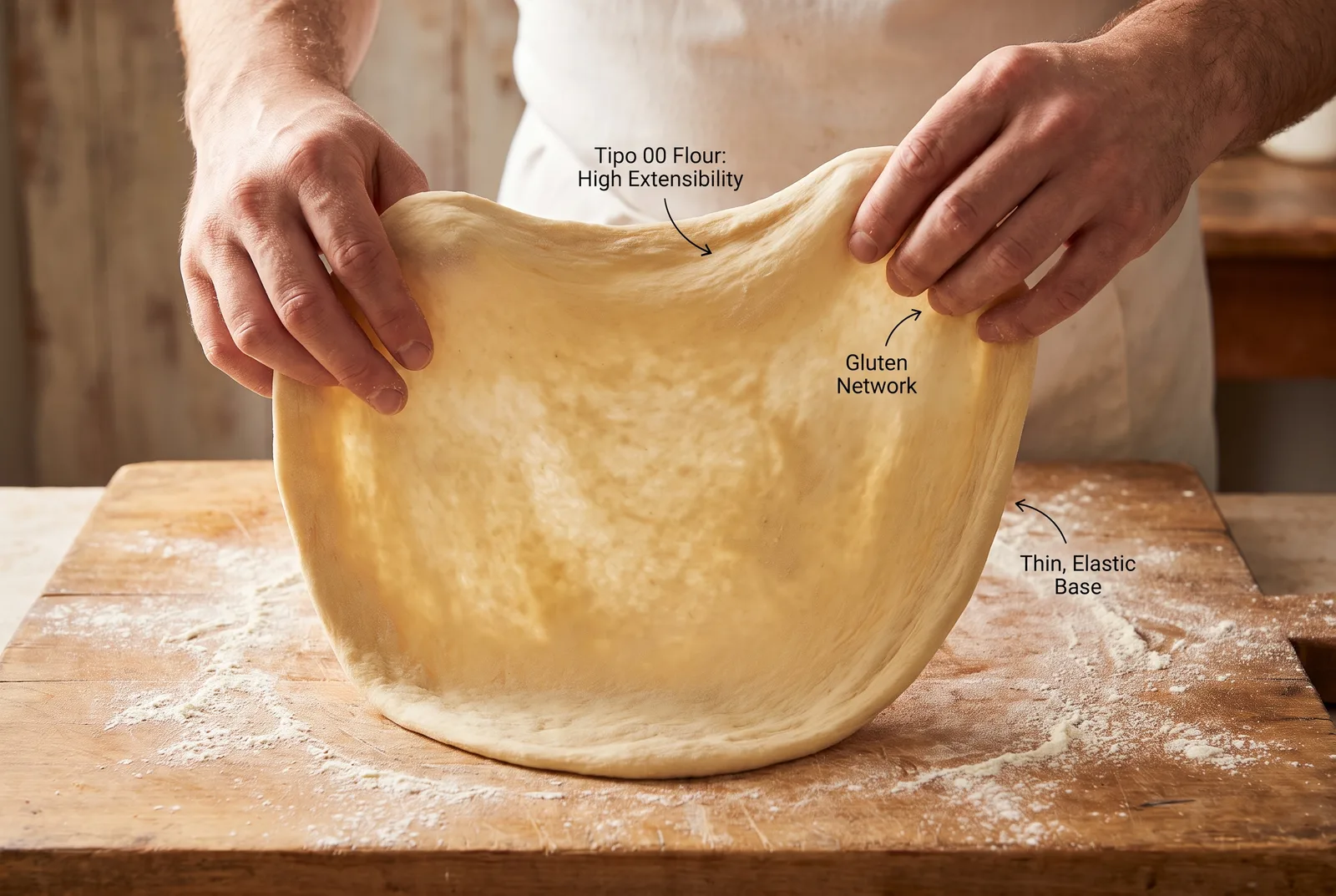
Baker's hands stretching a thin round pizza dough base using the Italian 'slap-and-fold' technique, showing the translucent, highly extensible dough typical of tipo 00 soft-wheat flour for Neapolitan pizza.
The tipo 00 confusion: "00" does not mean twice-zero or double-refined. It simply means the finest granulation class in the Italian standard, with the lowest ash limit (max 0.55%). However, tipo 00 is commercially available at very different protein levels:
- Tipo 00 for pasta (from durum wheat semolina): very different raw material; high in protein and carotenoids; yellow colour; not interchangeable with soft wheat tipo 00
- Tipo 00 for pastry (soft wheat): protein 8–10%; low gluten development; for tarts, biscotti
- Tipo 00 for pizza (soft wheat, high-protein variety): protein 11–13%; high W (dough strength), high extensibility for hand-stretching
From the Domson catalogue perspective, GoodMills T550 Fortified (protein 11.5–12.5%, ash 0.51–0.58%) is the closest practical substitute for pizza-grade tipo 00. For pastry-grade tipo 00, Domson White Flour T500 (ash max 0.52%, protein min 8%) or Wheat Flour T450 (ash max 0.48%, protein min 8%) are more appropriate.
Note (food safety): If a recipe specifies Italian tipo 00 for pasta but you are substituting Polish T500 or T450, be aware that true Italian pasta-grade tipo 00 is often milled from durum wheat semolina, which is a different species (Triticum durum, higher carotenoid content, higher protein structure). Polish T500/T450 is milled from common wheat (Triticum aestivum). The pasta texture and colour will differ. Both are gluten-containing and must declare GLUTEN as allergen.
6. The UK system: no type numbers
The United Kingdom does not use a T-type classification system. UK millers sell flour by application name and protein content is the primary commercial quality descriptor.
The UK Bread and Flour Regulations 1998 (SI 1998/141) are the key statutory framework — but they do not define a type-number system. Instead they mandate that all wheat flour sold in the UK (except wholemeal) must contain minimum levels of:
- Calcium carbonate: 235–390 mg per 100 g
- Iron: ≥ 1.65 mg per 100 g
- Thiamin (B1): ≥ 0.24 mg per 100 g
- Niacin (B3): ≥ 1.60 mg per 100 g
This mandatory fortification is a critical difference when working with UK-milled flour outside the UK. These nutrients must be declared in the ingredients list and may trigger labelling obligations in the destination country.
UK flour classification by application:
| UK category | Typical protein % | Approximate Polish equivalent | Domson catalogue product |
|---|---|---|---|
| Extra-strong / high-gluten bread flour | 13.5–14.5% | T550 premium batch / speciality | — (not stocked) |
| Strong bread flour | 11.5–13.5% | T550 (high-protein) / T750 | Windrush Strong White Bread Flour 16 kg |
| Plain flour (all-purpose) | 9.0–11.0% | T500 / T550 | Domson Plain Flour 16 kg |
| Pastry / cake flour | 7.5–9.5% | T450 / T500 | Golden Jewel Pastry Flour 16 kg |
| Self-raising flour | 9.0–11% + raising agents | T500 + baking powder | Perfect Self Raising Flour 16 kg |
| Wholemeal strong | 12.0–14.0% | T1850 + semolina | — (see Organic Strong Wholemeal 25 kg) |
UK-specific parameter: Flour Colour Grade (FCG)
In addition to protein and moisture, UK spec sheets include a Flour Colour Grade (FCG). This is an optical reflectance measurement expressing whiteness/bran content. Lower FCG = whiter flour. The Windrush Strong White spec shows FCG target 2.5 (range 1.5–3.5). FCG has no direct equivalent in Polish, French, German or Italian standards — do not attempt to convert it to an ash percentage.
The table below gives confirmed analytical parameters from Domson UK flour spec sheets.
Note on Windrush Strong White: The flour originates from Germany or UK (blend; Wągrowiec/Polish origin not possible for this product — it is milled by FWP Matthews Ltd, a UK mill). It also contains added Vital Wheat Gluten (VWG) < 1.5% and Creta Plus (calcium carbonate) 0.31%. Both additives are declared in the ingredients. VWG is an allergen in its own right (gluten); it is added to boost protein to the target specification rather than relying solely on variety selection.
7. The crosswalk at a glance
The following is a simplified alignment of the four systems on a common ash scale. The full comparison table is below.
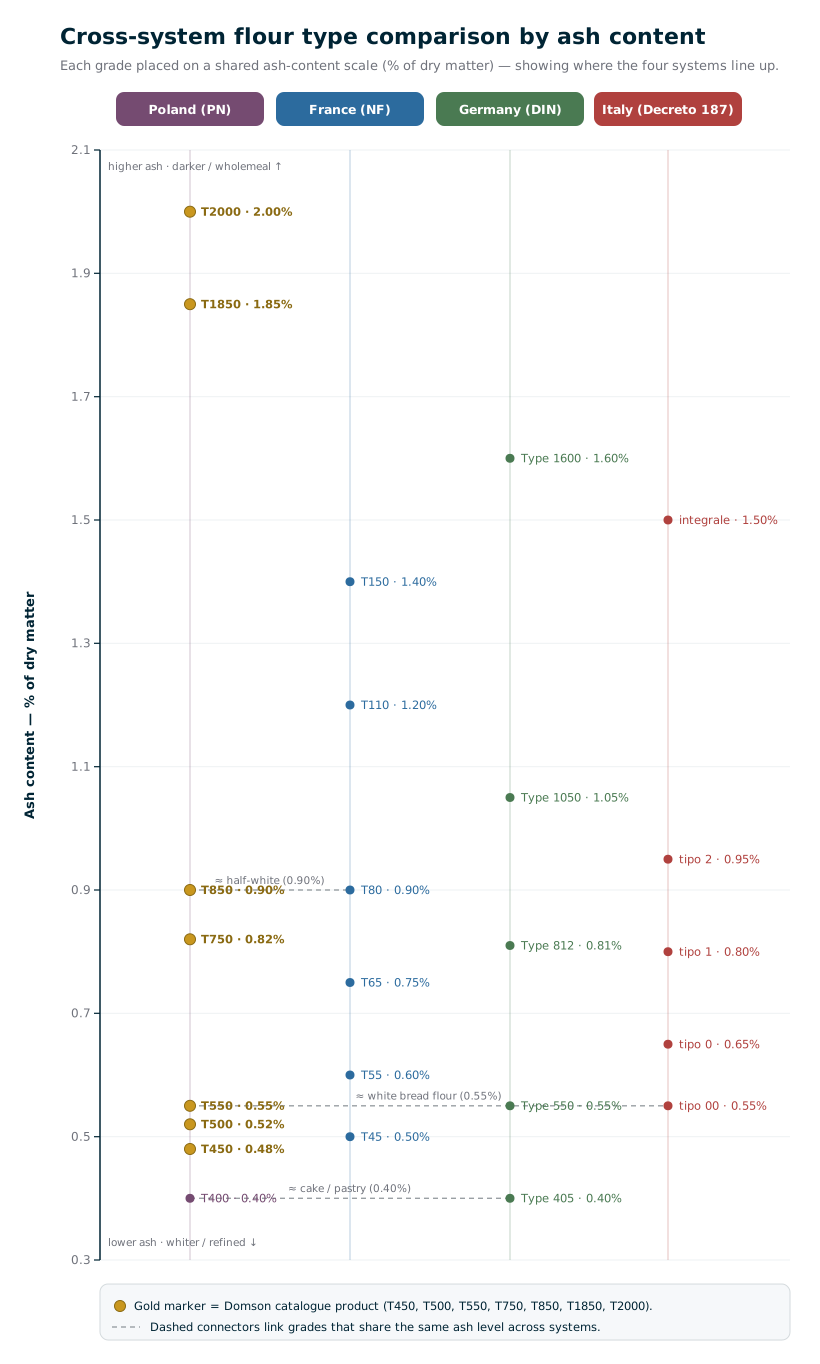 Vertical infographic showing a horizontal ash-content scale from 0% to 2.0% dry matter. Four parallel columns (Poland, France, Germany, Italy) each show their flour type labels at the corresponding ash level. Domson catalogue products (T450, T500, T550, T750, T850, T1850, T2000) are highlighted in gold on the Polish column.
| Ash % (d.m.) | Poland | France | Germany | Italy | UK (approx.) |
|---|---|---|---|---|---|
| ≤ 0.50% | T400–T450 | T45 | Type 405 | tipo 00 | Pastry/cake flour |
| ~0.55% | T550 | T55 | Type 550 | tipo 00 | Plain / mild strong |
| ~0.65–0.75% | T650–T750 | T65 | Type 630–812 | tipo 0–1 | Strong bread flour |
| ~0.80–0.90% | T750–T850 | T80 | Type 812–1050 | tipo 1–2 | Wholemeal blend |
| ~1.20–2.0% | T1850–T2000 | T110–T150 | Type 1600–1700 | integrale | Wholemeal |
Using this table: The ash alignment is reliable for colour, bran content and extraction level. It is not a reliable guide to protein content or gluten strength — those vary independently by wheat variety, season and milling practice. Always check protein and wet gluten on the spec sheet before substituting across systems.
8. Practical substitution guide
When working from a recipe that specifies a foreign flour type, use the substitution guide below. The most common situations:
Italian pizza (specifies tipo 00 high-protein): Use GoodMills T550 Fortified (protein 11.5–12.5%, ash 0.51–0.58%). The ash aligns well and the protein range is appropriate for a chewy, extensible Neapolitan-style base. Expect slightly less extensibility than a specialist Italian pizza tipo 00 (which is often milled from selected high-W varieties); compensate with a slightly longer bulk fermentation to develop extensibility.
French baguette (specifies T65): Use Domson Bread Flour T750 (ash max 0.82%, protein ≥10%, wet gluten ≥26%). T750 ash slightly exceeds T65 (max 0.75%), giving a marginally more flavourful crumb with more bran character — which is authentic for a rustic baguette. For a more refined baguette, blend 80% T550 GoodMills + 20% T750.
German Roggenmischbrot (specifies Roggenmehl Type 1150): The Domson range does not stock a rye flour equivalent to Type 1150 (ash ~1.15%) directly. GoodMills Rye T720 (ash < 0.78%) is lighter; Rye T2000 (ash < 2.0%) is much darker. For an approximate match, blend approximately 50% Rye T720 + 50% Rye T2000 (effective ash ~1.4%) or increase the T2000 proportion to taste.
UK pastry (specifies plain flour): Use Domson White Flour T500 (ash max 0.52%, protein min 8%) or Wheat Flour T450 (ash max 0.48%, protein min 8%). Both are appropriate soft-to-medium flours for shortcrust pastry, scones and sponges. Note that UK recipes developed with UK-BFR-fortified flour assume additional calcium in the ingredient matrix — this does not affect baking performance but is worth noting for nutritional calculations.
9. Allergen summary for all flour types in this article
All wheat and spelt flours discussed in this article contain GLUTEN and must be declared as allergens under EU Regulation 1169/2011 Annex II and equivalent UK law (UK FIR 2014).
Spelt flour (Matthews Light Spelt): must be declared as GLUTEN (SPELT WHEAT) — spelt is a named sub-category of gluten-containing cereals requiring explicit declaration, not just "wheat".
Cross-contamination risks declared on spec sheets:
- Wągrowiec Mill (T450, T500, T550 Komplexmłyn, T750): soy, lupine, mustard
- GoodMills Polska (T550 Fortified): soy, lupine, mustard
- Matthews Windrush Strong White: soy (potential contamination in supply chain, mill does not process soy)
UK mandatory fortification allergen note: UK-fortified flour (Windrush, Golden Jewel, Allied Mills Self-Raising) contains added Vital Wheat Gluten (< 1.5% in Windrush) which is an additional gluten-containing ingredient — declare accordingly.
Coverage notes and gaps
Solid: Polish T-type system and all catalogue product values are fully spec-sheet-confirmed from 13 supplier documents. UK flour regulations (BFR 1998) and mandatory fortification requirements are verified from the statute and spec sheets. Allergen declarations are confirmed across all 13 spec sheets.
Thin (single-source): French, German and Italian classification system ash limits — sourced from one cross-reference publication (medium reliability). These values are consistent with trade literature from IREKS Compendium and BAKERpedia but were not independently verified against the primary standards (NF V03-720, DIN 10355, Decreto 187/2001) in this session. A follow-up check against BIPEA (French milling body) or BVE (German food industry) published tables is recommended.
Gap: No alveograph (W, P/L) data available for any product in this article — Polish suppliers do not routinely report this on their standard spec sheets. If alveograph data is critical (e.g. automated sheeting lines for pizza or croissant), request from GoodMills Polska or Wągrowiec Mill separately. The related article A1-key-quality-parameters covers this parameter in detail.
Gap: No durum wheat / semolina type system covered — this article focuses on common wheat (Triticum aestivum) flour and rye. Durum semolina (used for pasta) has its own Italian classification (Semola / Semolato). Schedule for a separate A1 article.
Verification notes (do not use in compliance or labelling context without verification):
- Self-raising flour CO2 release threshold: a figure of ≥ 0.4% by volume is sometimes cited for UK self-raising flour but could not be confirmed from the text of the UK Bread and Flour Regulations 1998 (SI 1998/141) during research. This may derive from a different standard (e.g. BS 2095 or a trade code of practice). Do not cite as a BFR 1998 requirement until confirmed.
- Nutritional values for Graham T1850 (protein 12.3 g/100g, fibre 12.3 g/100g), Rye T720 (fibre 7.4 g/100g) and Rye T2000 (fibre 14.4 g/100g) are label-declaration values from single supplier spec sheets and have not been independently verified. Verify against current product labels and batch analysis before use in any nutritional claim or compliance documentation.
- Allied Mills Self Raising Flour spec is dated 2011 (15 years old). Verify current spec version before citing specific parameters.
All systems encode extraction level via ash content (ISO 2171 / national equivalent). Values are the ash limits defined in each national standard or decree. Cross-system equivalences are approximate — protein targets, milling streams and permitted additives differ between countries. Source: spec sheets for Polish/UK products; a Sourdough Geeks cross-reference for French/German/Italian; single-source for French/German/Italian — treat those columns as reference only, not guaranteed legal limits.
| Ash % (d.m.) approx. | Poland (PN-A-74022) | France (NF V03-720) | Germany (DIN 10355) | Italy (Decreto 187/2001) | Closest UK equivalent (no formal T-system) | Primary baking application |
|---|---|---|---|---|---|---|
| ~0.40–0.50 | T400 / T450 | T45 | Type 405 | tipo 00 | Pastry/cake flour (8–9.5% protein) | Pasta, fine pastry, shortcrust, macaroni, wafer |
| ~0.50–0.60 | T500 / T550 | T55 | Type 550 | tipo 00–tipo 0 | Plain flour / strong plain (varies) | White sandwich bread, rolls, pizza, sponge cake |
| ~0.60–0.75 | T650 (uncommon) | T65 | Type 630 | tipo 0 | High-protein plain / soft strong | Baguette, ciabatta, pizza Napoletana |
| ~0.75–0.90 | T750 / T850 | T80 | Type 812 | tipo 1 | Strong bread flour / wholemeal blend | Rustic loaf, semi-wholemeal, artisan bread |
| ~0.90–1.20 | T1050 (uncommon) | T110 | Type 1050 | tipo 2 | High-extraction bread flour | Dark bread, mixed-grain loaves |
| ~1.20–1.85 | T1850 (Graham) | T130–T150 | Type 1600 | tipo 2 / integrale | Graham flour / near-wholemeal | Graham bread, high-bran loaves |
| ~1.85–2.0+ | T2000 (wholemeal rye) | — (rye uses different scale) | Type 1700 (wheat wholemeal) | integrale | Wholemeal | Wholemeal rye bread, pumpernickel, 100% wholemeal wheat |
Confidence notes: Polish column — high confidence (spec-sheet confirmed for T400, T450, T500, T550, T750, T850, T1850, T2000; standard PN-A-74022). French, German, Italian columns — medium confidence (single-source cross-reference; these values are widely published in trade literature but could not be independently verified against the original standards during this research session). UK column: no T-type system exists; UK classification is by application and protein content. Types T650 and T1050 appear in the Polish standard but are uncommon in the trade; they are included for completeness.
Data extracted directly from supplier specification sheets. Ash measured by PN-EN ISO 2171 (dry matter basis). Falling number (FN) by PN-EN ISO 3093. Wet gluten by PN-EN ISO 21415. Protein by Nx5.7 Kjeldahl. All moisture limits max 15.0% (PN-EN ISO 712) unless noted.
| Type (Polish) | Product in catalogue | Ash max % (d.m.) | Wet Gluten min % | Protein min % | Falling Number min (s) | Gluten Index | Colour / appearance | Spec-sheet source |
|---|---|---|---|---|---|---|---|---|
| T400 | Wheat Flour T400 Macaroni 25 kg | 0.50 | 18 | — | not standardised | 55–100 | Cream to light yellow | supplier spec |
| T450 | Wheat Flour Type 450 25 kg | 0.48 | 23.0 | 8.0 | 220 | — | White with yellow tint | supplier spec |
| T500 | Domson White Flour Type 500 25 kg | 0.52 | 23.0 | 8.0 | 220 | — | White with yellow tint | supplier spec |
| T550 (GoodMills) | Domson Wheat Flour Type 550 25 kg | 0.51–0.58 | 28–32 | 11.5–12.5 | 220 | 75–99 | White with yellow tone | supplier spec |
| T550 (Komplexmłyn) | Komplexmłyn Wheat Flour Type 550 25 kg | 0.58 | 25.0 | 8.0 | 220 | — | White with yellow tint | supplier spec |
| T750 | Domson Bread Flour Type 750 25 kg | 0.82 | 26.0 | 10.0 | 220 | — | White with yellow tint | supplier spec |
| T850 | Wheat Flour Type 850 25 kg | 0.90 | 26.0 | — | 220 | — | White with yellow tint | supplier spec |
| T1850 (Graham) | Graham Wheat Flour Type 1850 40 kg | < 2.0 | — | 12.3† | > 180 | — | Grey-white with bran | supplier spec |
| Rye T720 | Rye Flour Type 720 20/25 kg | < 0.78 | — | 6.5† | > 90 | — | White-grey | supplier spec |
| Rye T2000 | Wholemeal Rye Flour Type 2000 40 kg | < 2.0 | — | 8.4† | > 90 | — | White-grey with bran | supplier spec |
† Protein values marked with dagger are from the nutritional information panel (per 100 g), not a minimum quality specification limit; treat as indicative only. Dietary fibre values for rye products (Rye T720: 7.4 g/100g; Rye T2000: 14.4 g/100g) and Graham T1850 (12.3 g/100g) are label-declaration values from single supplier spec sheets — verify before citing in any nutritional claims or compliance context. The GoodMills T550 is the only product in this set with a specified gluten index; the Wągrowiec Mill T400 macaroni also specifies GI 55–100 as a minimum range. FN for T1850 is > 180 s vs ≥ 220 s for standard wheat types — slightly lower threshold reflects the higher bran fraction's buffering effect. Rye flours: falling number > 90 s is the GoodMills commercial floor; do not compare to wheat HFN values.
UK flour is not classified by T-type number. The following products are from Matthews Cotswold Flour (FWP Matthews Ltd) and Whitworth Bros / Allied Mills. Parameters are from spec sheets. All are fortified with Ca, Fe, Niacin and Thiamin per the UK Bread and Flour Regulations 1998 (mandatory for white/non-wholemeal wheat flour in the UK), except the spelt flour which has 'No additives' declared.
| Product | Mill / Brand | UK category | Protein % (spec range) | HFN (s) | W/A% | FCG (Flour Colour Grade) | Fortified per BFR 1998? | Shelf life | Spec-sheet source |
|---|---|---|---|---|---|---|---|---|---|
| Windrush Strong White Bread Flour 16 kg | Matthews Cotswold Flour | Strong bread flour | 12.0–12.5 (target 12.2) | 250–400 (target 350) | 55–61 (target 58) | 1.5–3.5 (target 2.5) | Yes (Creta Plus 0.31%; also VWG < 1.5%) | 9 months (16 kg) | supplier spec |
| Stoneground White Spelt Flour 16 kg | Matthews Cotswold Flour | Speciality spelt flour | 9.0–13.0 (target 11.0) | ≥220 | 53–65 | N/A | No ('No additives') | — | supplier spec |
| Golden Jewel Pastry Flour 16 kg | Whitworth Bros Ltd | Pastry / soft flour (blended) | 7.5–9.5 (target 8.5) | — | — | — | Yes (Ca, Fe, Niacin, Thiamin; also Maize flour blend) | — | supplier spec |
| Perfect Self Raising Flour 16 kg | Allied Mills | Self-raising flour | — | — | — | — | Yes + raising agents (CO2 release threshold unverified against BFR 1998 — verify before citing in compliance context) | 12 months (unopened) | supplier spec |
FCG = Flour Colour Grade — a UK optical measurement used to estimate bran content and whiteness; not present on Continental European spec sheets. W/A% = farinograph water absorption from standardised test (not full alveograph suite). UK Bread and Flour Regulations 1998 (SI 1998/141) mandate minimum levels of: calcium (235–390 mg/100g), iron (≥1.65 mg/100g), niacin (≥1.60 mg/100g), thiamin (≥0.24 mg/100g) for all wheat flour EXCEPT wholemeal. Spelt flour (which is not a 'wheat flour' under the Regulations) is therefore exempt; Matthews Light Spelt declares no added nutrients. Soy cross-contamination risk noted for Matthews Windrush: the mill does not process soy, but the supply chain handles it — declare on label if applicable.
Comparison of the four main European flour classification systems across structural dimensions. Sources: spec-sheet data for Poland/UK; a single cross-reference source (medium confidence) for French/German/Italian legal definitions; the UK Bread and Flour Regulations 1998 for UK regulation.
| Attribute | Polish (PN-A-74022) | French (NF V03-720) | German (DIN 10355) | Italian (Decreto 187/2001) | UK (no T-system; BFR 1998) |
|---|---|---|---|---|---|
| Classification basis | Ash content mg/100 g d.m.; number encodes ash directly | Ash content g/10 kg d.m.; number encodes ash in same unit | Ash content mg/100 g d.m.; number encodes ash directly | Ash content + granulometry (particle size); number encodes ash in mg/100g d.m. | Application / strength category; protein % is primary trade parameter |
| Main scale | T400 – T2000 | T45 – T150 | Type 405 – Type 1700 | tipo 00, 0, 1, 2, integrale | Plain, self-raising, strong, extra-strong, wholemeal |
| Ash method | PN-EN ISO 2171 (550°C incineration) | NF EN ISO 2171 | DIN EN ISO 2171 | ISO 2171 equivalent | No formal ash-based system; FCG used instead |
| Mandatory fortification? | No (fortification on some products is voluntary) | No | No | No | Yes — Ca, Fe, Niacin, Thiamin mandatory for non-wholemeal wheat flour (BFR 1998) |
| Rye flour system | Separate T-type scale (T720, T1400, T2000); same ash encoding | Separate (T85, T130, T170) | Separate (Type 815, 997, 1150, 1370, 1740) | Not separately classified | No formal rye classification |
| Spelt flour | No standard spelt T-type; sold as light/sifted or wholemeal | No formal T-type | No formal type (sold under wheat types or as Dinkelmehl) | No formal tipo number for spelt | No formal classification; sold as spelt flour (white/wholemeal) |
| Who uses it | Poland, parts of Central and Eastern Europe | France, Belgium, Switzerland, francophone markets | Germany, Austria, Switzerland (German-speaking) | Italy; widely exported as 'tipo 00' for pizza/pasta worldwide | UK; adopted by some UK-trained bakers globally |
Source confidence: Polish column — high (verified from multiple spec sheets against PN standard). French, German, Italian columns — medium (single-source cross-reference; not independently verified against primary standards in this research session). UK column — high (BFR 1998 is public statute; spec sheets confirm fortification data).
For bakers working from French, German or Italian recipes who need to identify the closest Domson catalogue equivalent. These are practical approximations based on ash content alignment; actual performance will depend on protein level and gluten quality, which vary by mill and season. Always check the spec sheet.
| Recipe specifies | Ash / protein indication | Closest Polish equivalent | Closest Domson product | Key difference to watch |
|---|---|---|---|---|
| French T45 | Ash max 0.50% — fine pastry | T450 | Wheat Flour Type 450 25 kg | T450 protein min 8%; French T45 may be weaker — check final biscuit/pastry texture |
| French T55 | Ash max 0.60% — standard bread | T550 | Domson Wheat Flour T550 / Komplexmłyn T550 | GoodMills T550 (protein 11.5–12.5%) is stronger than a typical T55; Komplexmłyn T550 (protein min 8%) is closer in strength to French T55 |
| French T65 | Ash max 0.75% — baguette, pizza | T650 or T750 | Domson Bread Flour Type 750 25 kg | T750 ash max 0.82% is slightly darker than T65; protein ≥10% — suitable but expect slightly more flavour |
| French T80 | Ash max 0.90% — country bread | T750 / T850 | Wheat Flour Type 850 25 kg | Good match in ash range; T850 wet gluten ≥26% confirms adequate bread strength |
| French T110 | Ash max 1.20% — high-extraction | T1050 (uncommon) / T1850 | Graham Wheat Flour Type 1850 40 kg | T1850 ash < 2.0% is substantially darker than T110; use 50/50 T750+T1850 blend for closer match |
| German Type 405 | Ash ~0.40% — cake, pastry | T400 / T450 | Wheat Semolina T450 or Wheat Flour T450 | German 405 is very fine and low-protein; T450 min protein 8%, T400 macaroni grade has GI 55–100 — consider for pasta, not for delicate German cakes |
| German Type 550 | Ash ~0.55% — everyday bread | T550 | Domson Wheat Flour T550 (GoodMills) or Komplexmłyn T550 | Very close match; German 550 protein typically 10–12% — GoodMills T550 (11.5–12.5%) is a good substitute |
| German Type 1050 | Ash ~1.05% — dark bread | T850 + small bran addition | Wheat Flour T850 + Wheat Bran | No direct T1050 in catalogue; blend ~90% T850 + 10% Wheat Bran as workaround |
| Italian tipo 00 (pizza) | Ash max 0.55%, protein 11–13% for pizza | T550 (high protein) | Domson Wheat Flour T550 GoodMills (protein 11.5–12.5%) | Close match in ash; protein aligned for Neapolitan-style pizza — check extensibility (W/A) as tipo 00 pizza flour often has higher W |
| Italian tipo 00 (pastry) | Ash max 0.55%, protein 8–10% for pastry | T500 / T450 | Domson White Flour Type 500 or Wheat Flour T450 | Protein min 8% on both — lower and closer to pastry tipo 00; good match for delicate tart bases |
| UK strong bread flour | Protein 12–14% | T550 (high-protein batch) or T750 | Domson Wheat Flour T550 GoodMills or Windrush Strong White | Windrush is a UK mill product with UK BFR fortification; GoodMills T550 is not UK-fortified |
| UK plain flour | Protein 9–11% | T500 / T550 | Domson White Flour T500 or Domson Plain Flour 16 kg | T500 protein min 8% (spec floor); request typical value from supplier if recipe is protein-sensitive |
| UK pastry / cake flour | Protein 7.5–9.5% | T450 or T500 lower batch | Golden Jewel Pastry Flour (Whitworth Bros) or Wheat Flour T450 | Golden Jewel is a UK-blended product (wheat+maize) with BFR fortification; T450 is pure wheat |
These substitutions are practical starting points. Always bake a trial batch when switching flour type. Key variables to watch: water absorption (adjust recipe water up or down by 1–3%), gluten development time (stronger flours need more mixing), and fermentation tolerance (higher-ash flours are more tolerant of extended fermentation due to added minerals).
| Mistake | Example | What actually happens | Correct approach |
|---|---|---|---|
| Treating tipo 00 as always equivalent to T450/T45 | Baker uses Polish T450 to replace Italian tipo 00 pizza flour | T450 minimum protein is 8%; pizza-grade tipo 00 is milled from specific varieties with 11–13% protein and higher W — dough will be weaker and tear | Specify protein target (≥11% for pizza), not just ash/type number; use GoodMills T550 (protein 11.5–12.5%) as a closer substitute for pizza tipo 00 |
| Assuming German Type 550 = stronger than Polish T550 | Baker orders German Type 550, expects same performance as GoodMills T550 Fortified | German Type 550 typical protein 10–12%; GoodMills T550 is 11.5–12.5% — strengths may be similar but not identical; gluten index not specified on German commercial specs | Request protein, wet gluten and FN values regardless of type number; type number guarantees ash, not strength |
| Applying French T-number scale to UK flour | Baker asks for UK 'T55 equivalent'; flour is sold as 'plain' | UK flour is not T-graded; asking a UK miller for T55 will cause confusion — they classify by 'plain', 'strong', 'extra strong' with protein % as the key descriptor | In the UK, request 'plain flour 9–11% protein' (approx. T55 equivalent) or specify the ash content you need in mg/100g d.m. |
| Ignoring mandatory UK fortification when importing UK flour | Baker uses UK Windrush flour in Poland and declares product as containing only 'wheat flour' | UK-milled flour contains mandatory Ca carbonate, Fe, Niacin, Thiamin per BFR 1998 — these must be declared in the ingredients list and may trigger labelling obligations in the destination country | Check QUID (Quantitative Ingredient Declaration) status; declare added minerals/vitamins on finished-product label; consult food law advisor for export |
| Comparing rye falling number to wheat falling number thresholds | Baker sees Rye T720 FN > 90 s and adds diastatic malt to 'correct' it | Rye starch gels at a lower temperature; rye amylases are more heat-stable; a rye FN of 90–150 s is normal and does not indicate excess alpha-amylase in the same way as a wheat FN of 90 s would | Use rye FN > 90 s as a floor only (to exclude sprouted grain); for sourdough rye, prefer FN > 120 s but do not supplement malt based on FN alone |
| Assuming all T550 flours have the same protein level | Baker standardises recipes on T550 but switches mill; dough becomes noticeably weaker | Wągrowiec Mill T550 minimum protein is 8.0%; GoodMills T550 is 11.5–12.5%; same type number, very different practical performance | Always check the protein minimum (or typical) value on the spec sheet, not just the type number; if protein is critical, request a Certificate of Analysis per batch |
- Ash content:
- ISO 2171 / PN-EN ISO 2171 (incineration at 550°C, result on dry matter basis)
- Falling number:
- ISO 3093 / PN-EN ISO 3093 (Hagberg-Perten method)
- Wet gluten:
- ISO 21415 / PN-EN ISO 21415 (mechanical washing)
- Gluten index:
- ISO 7495 (centrifuge sieve, 0–100 scale)
- Protein:
- ISO 20483 / Kjeldahl Nx5.7 (wheat/rye)
- Moisture:
- ISO 712 / PN-EN ISO 712 (oven drying)
- Flour colour grade uk:
- ICC Standard 152 or AACC 14-30 (reflectance photometry)
Buy the ingredients
Catalogue products and brands referenced in this article.
Wheat Flour Type 450 25 kg
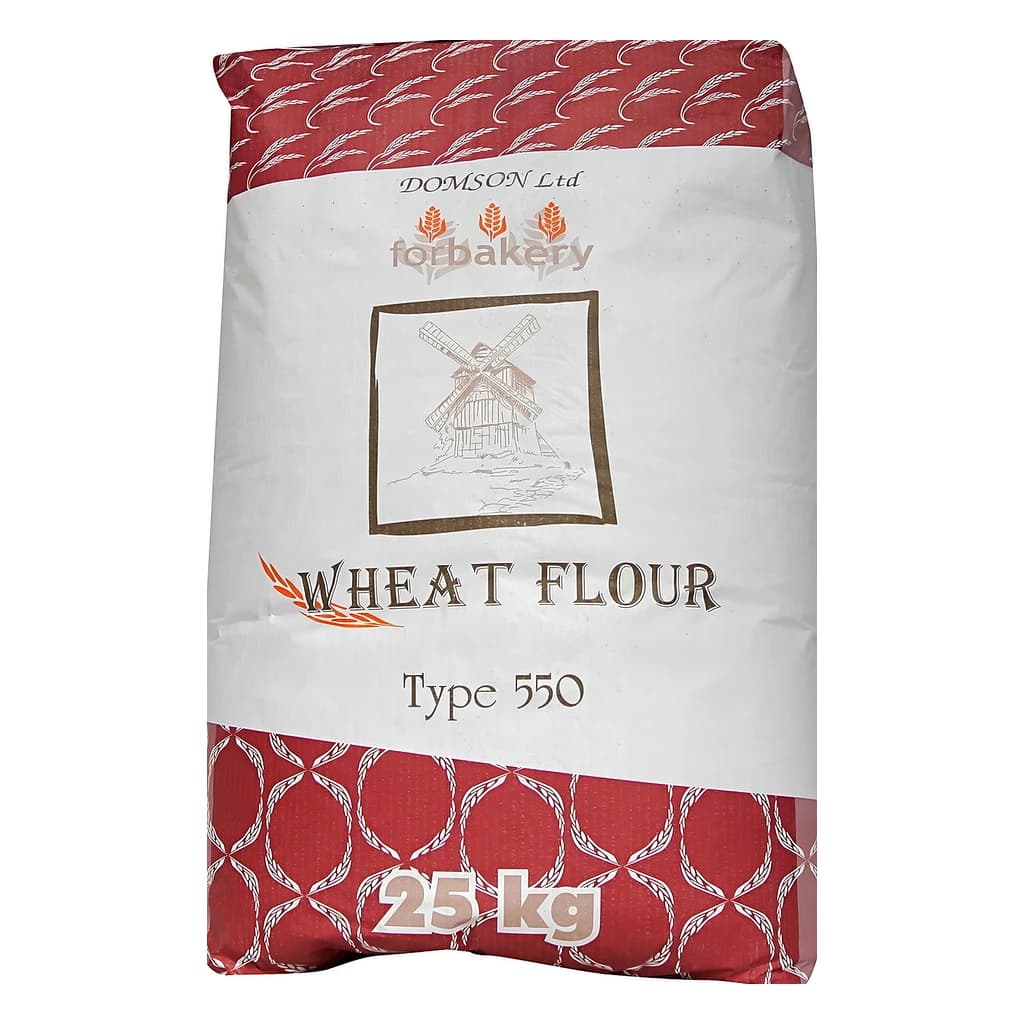
Wheat Flour Type G 550 25 kg

Rye Flour Type 720 20 kg
Wheat Flour Type 850 25 kg
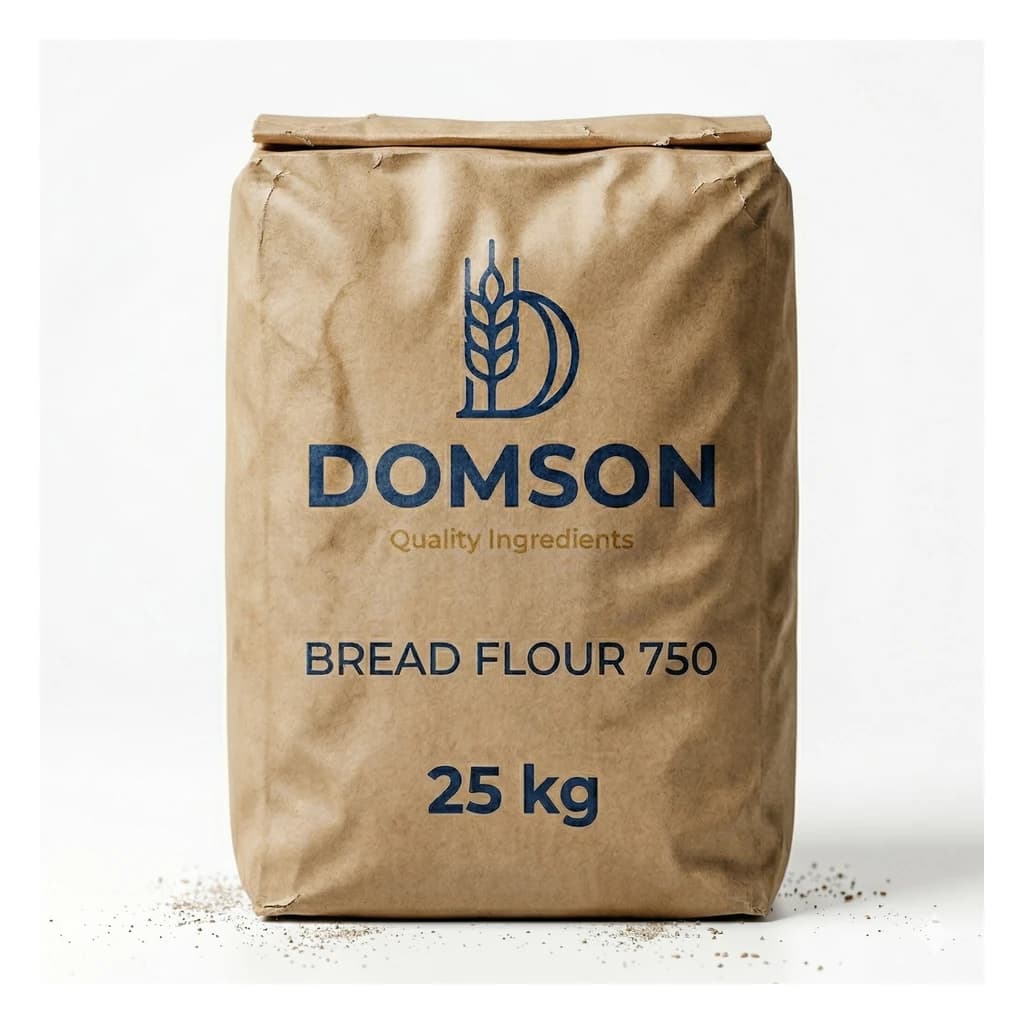
Domson Bread Flour Type 750 25 kg
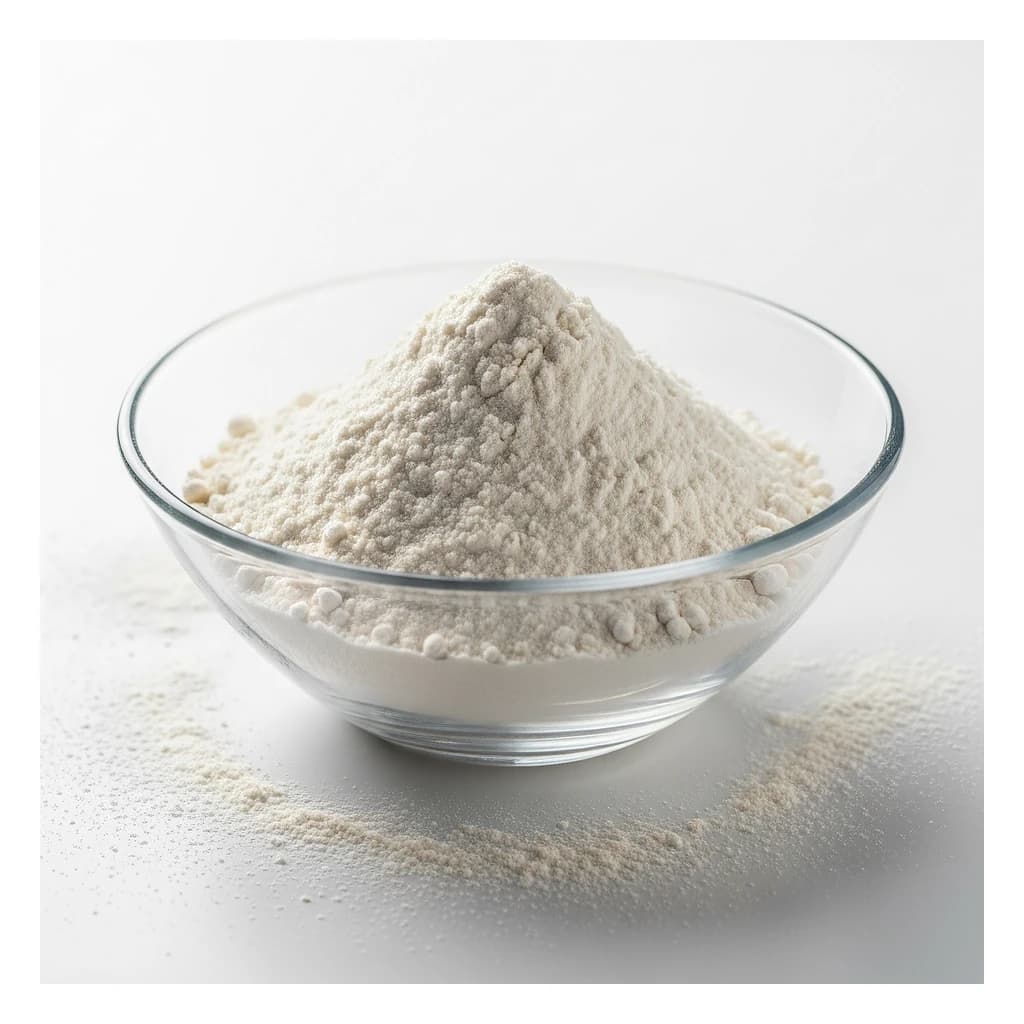
Komplexmłyn Wheat Flour Type 550 25 kg
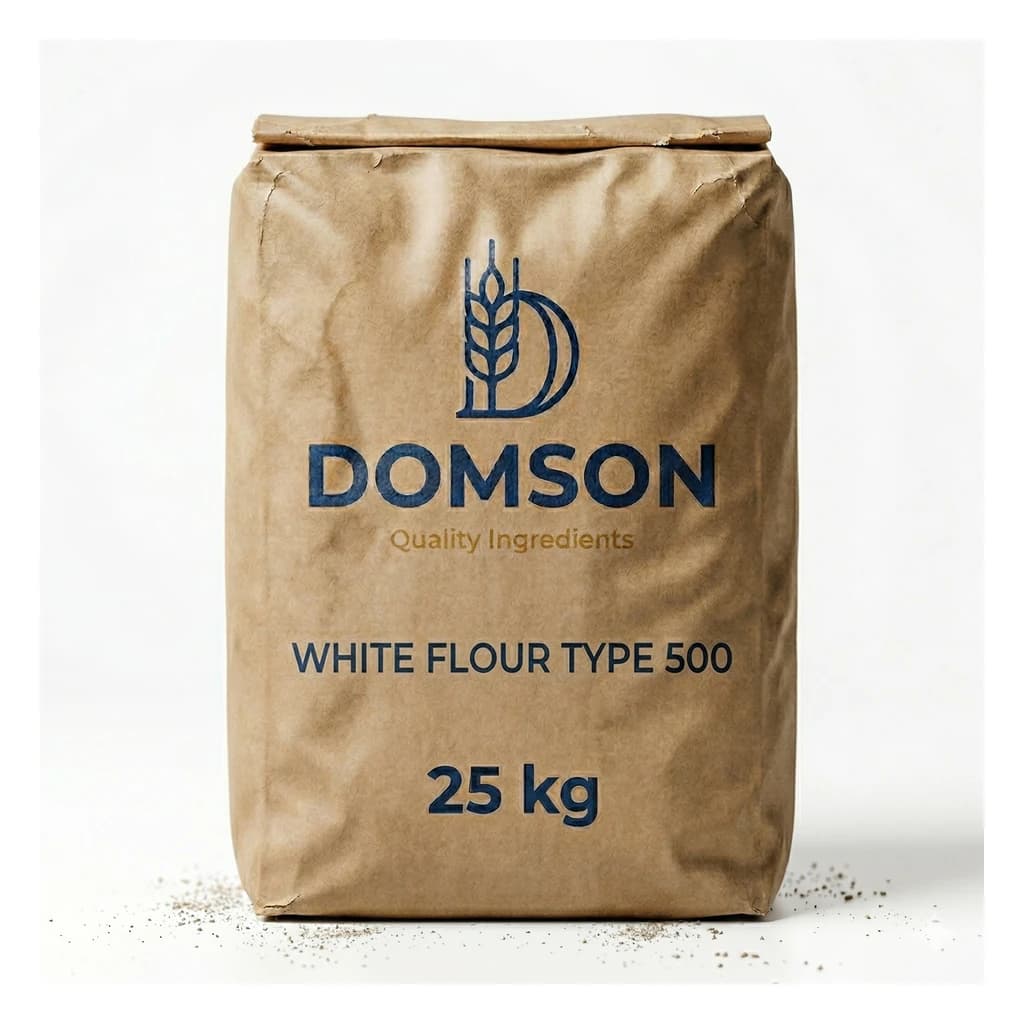
Domson White Flour Type 500 25 kg

Rye Flour Type 720 25 kg
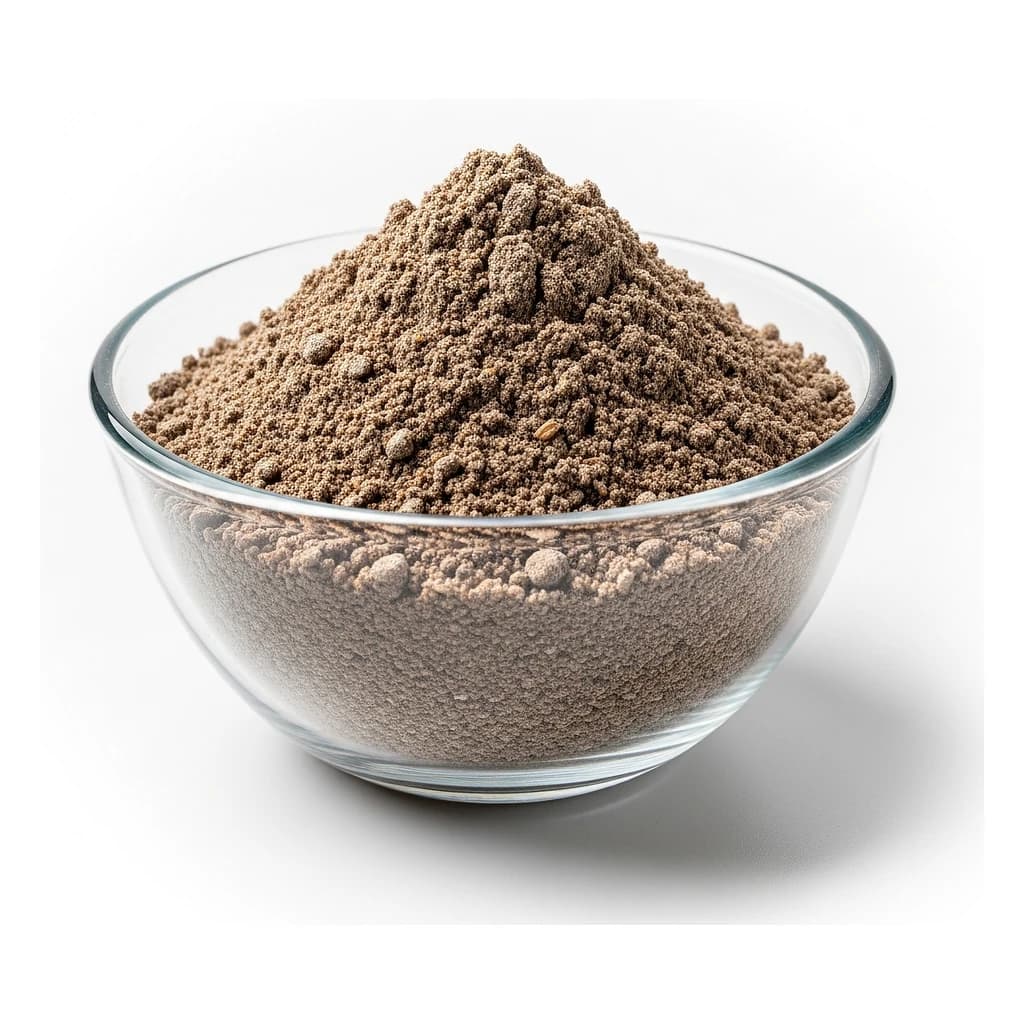
Wholemeal Rye Flour Type 2000 40 kg
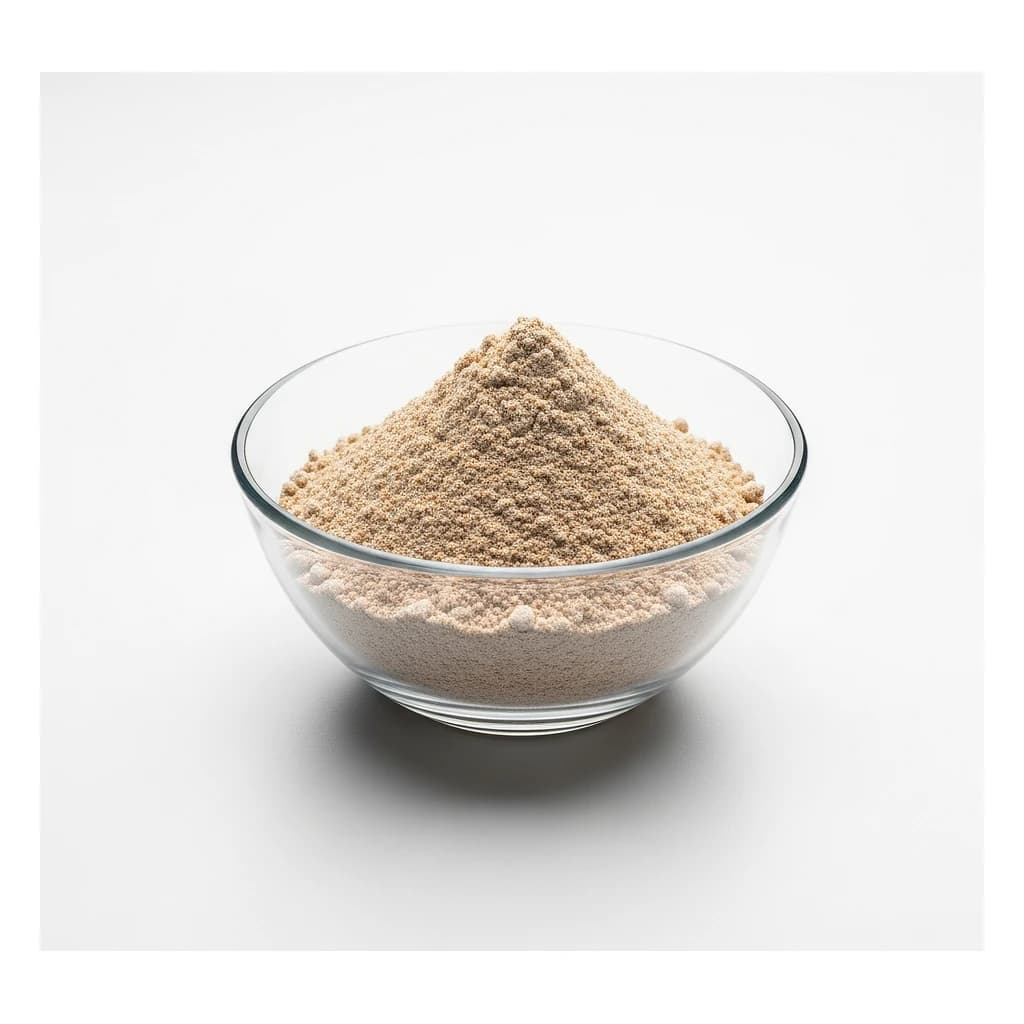
Graham Wheat Flour Type 1850 40 kg
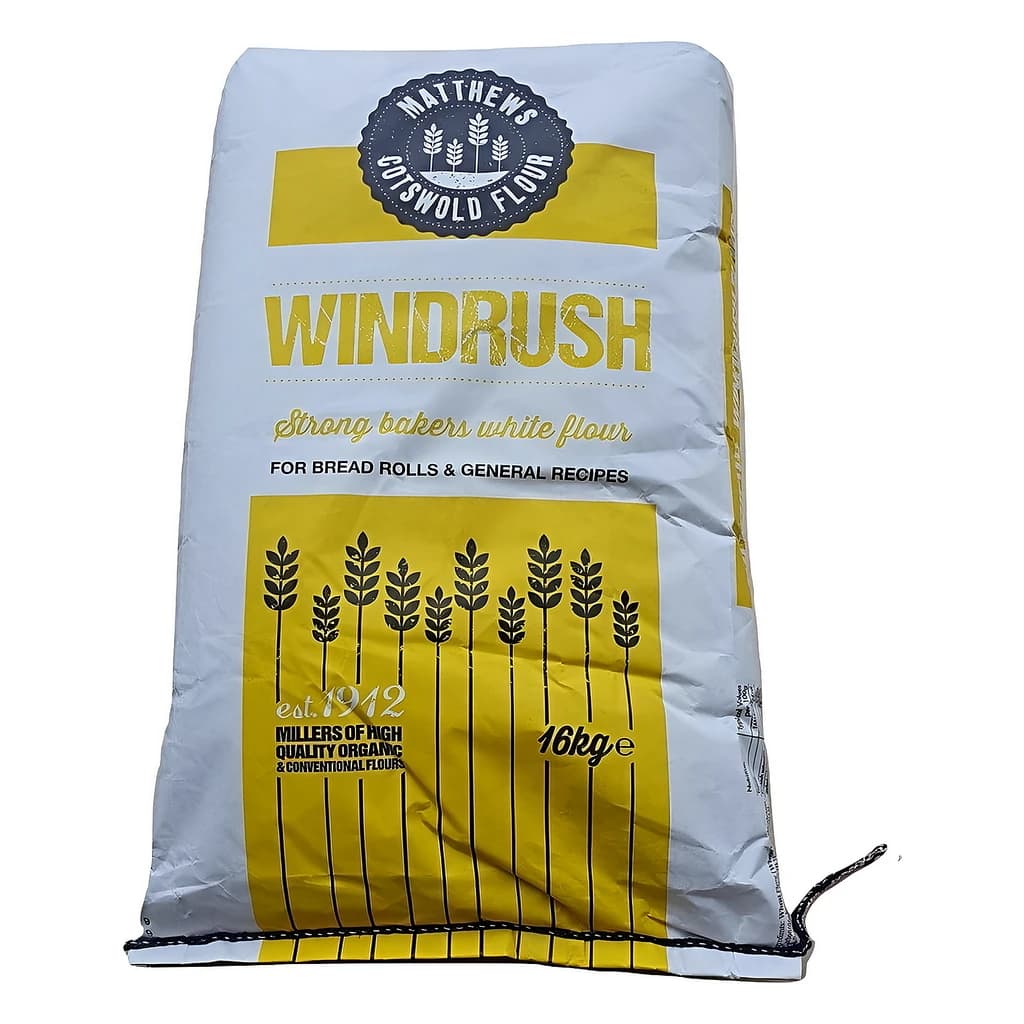
Windrush Strong White Bread Flour 16 kg
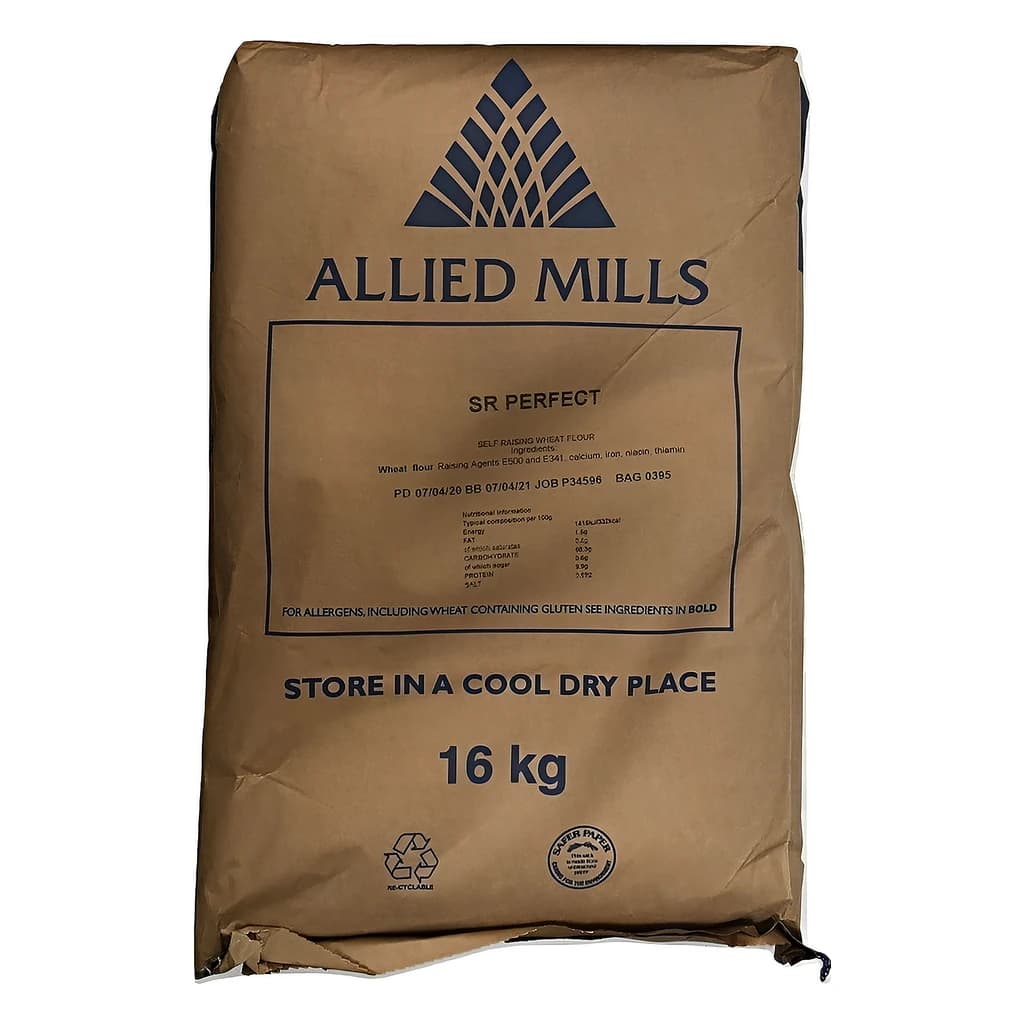
Perfect Self Raising Flour 16 kg
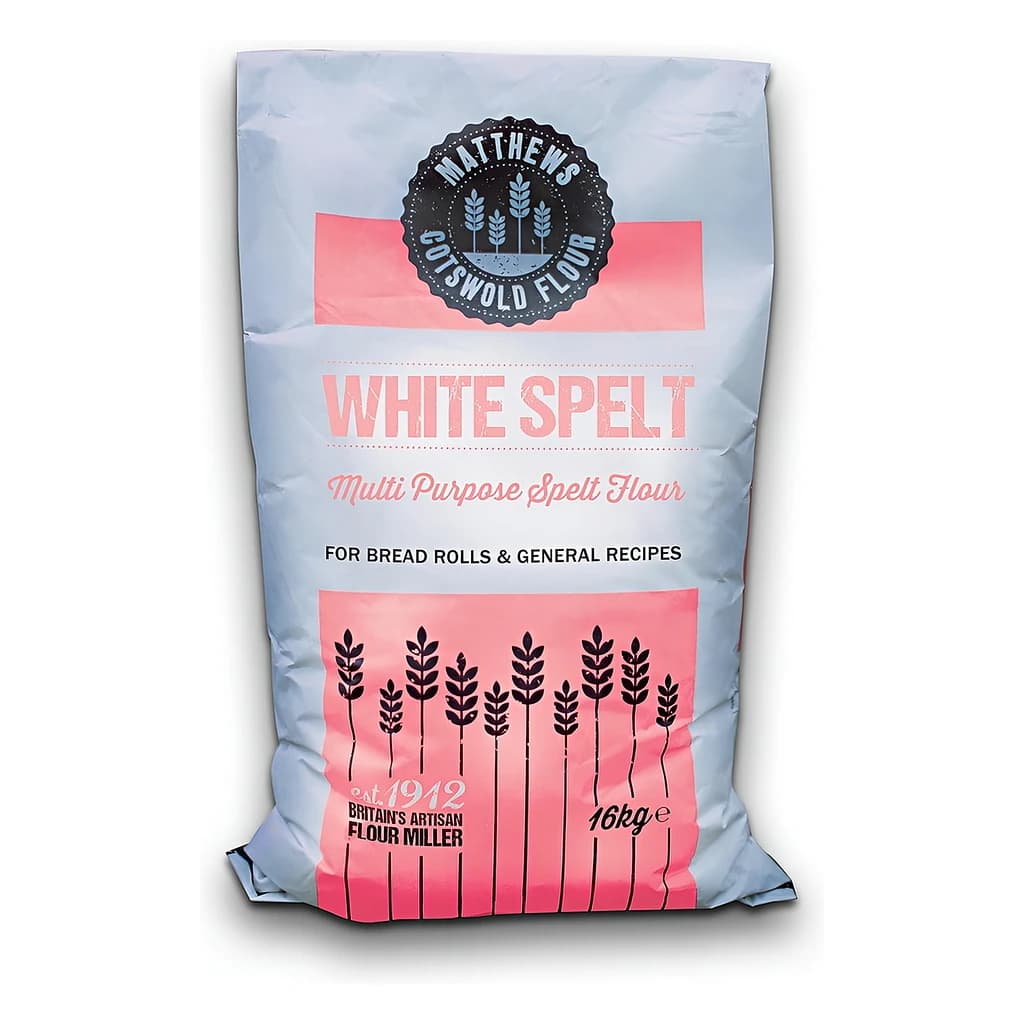
Stoneground White Spelt Flour 16 kg
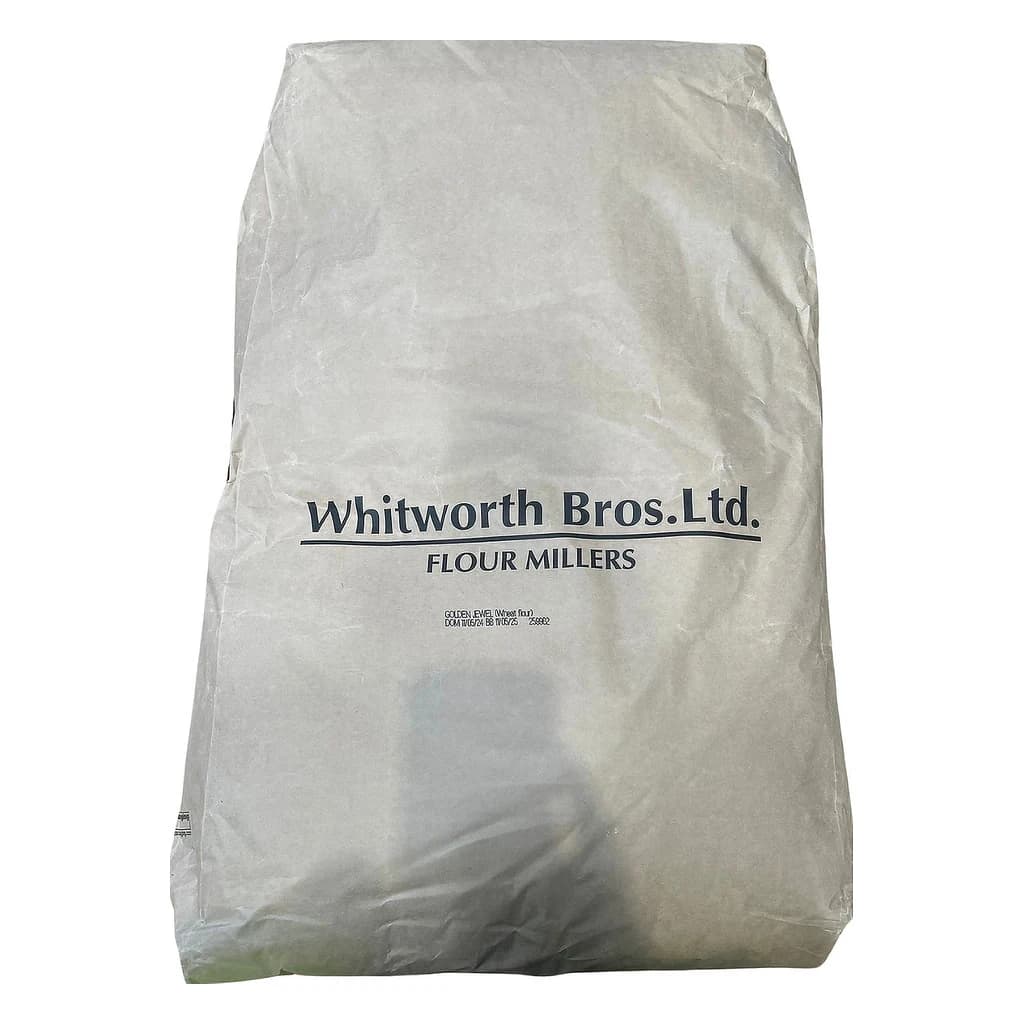
Golden Jewel Pastry Flour 16 kg
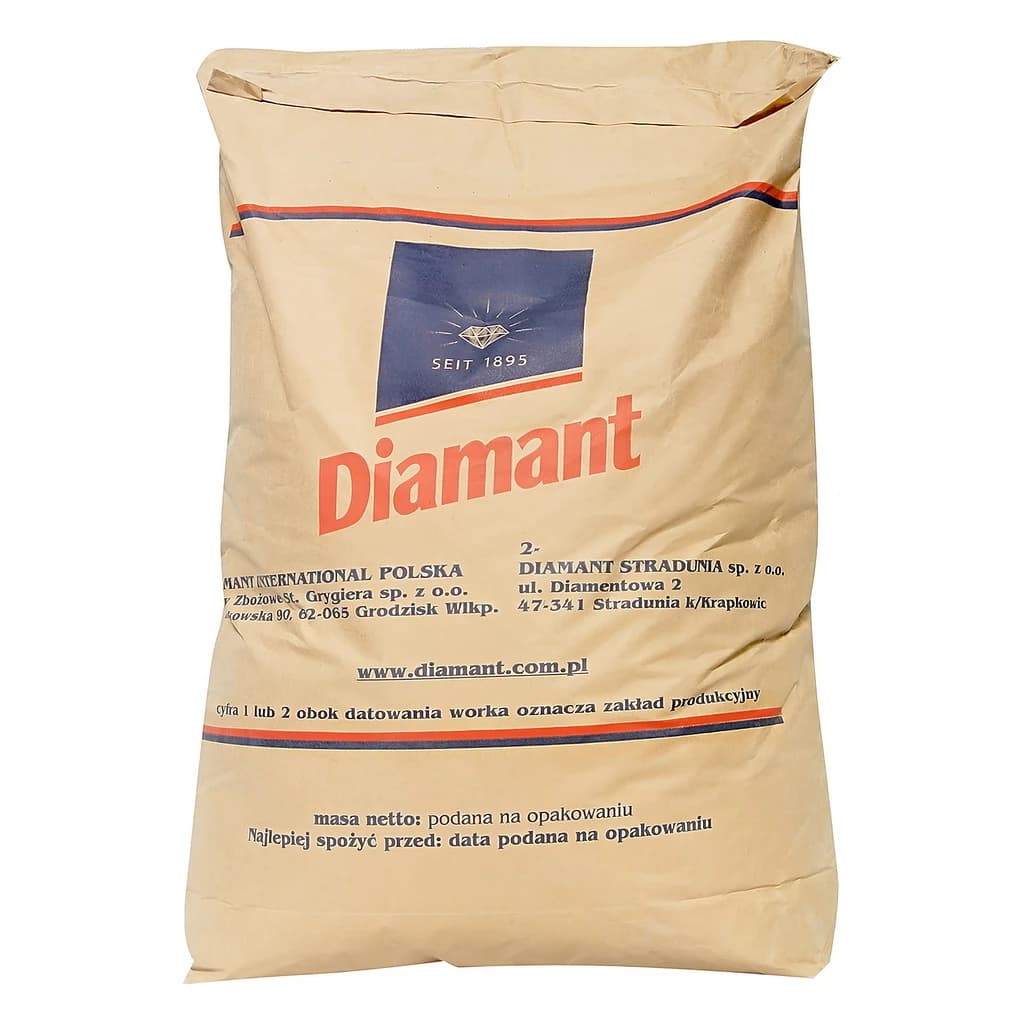
Wheat Flour T400 Macaroni 25 kg