
British fruit cake: from Dundee to Christmas and wedding cakes — fruit maceration, baking curves, marzipan application and royal icing
The rich fruit cake is Britain's great celebration bake: the cake of Christmas, weddings, christenings, Hogmanay and Easter. This dossier is written for the British home market and works through the whole craft — choosing and macerating the dried fruit (currants, sultanas, raisins, glacé cherries and candied peel), the base of soft plain flour, dark sugar, black treacle, butter, eggs and mixed spice; the low-and-slow baking curve (about 140°C for 4½ hours or more, in a double-lined, paper-collared tin); "feeding" with brandy and maturing the cake for weeks to months; and then the three-layer finish — apricot glaze, marzipan (left to dry so its almond oils do not stain the icing), and royal icing or sugarpaste, set hard enough to carry a tiered wedding cake. It covers the Scottish Dundee cake (almond-ringed, cherry-free, Keiller of Dundee), the simnel cake with its eleven apostle balls, and regional bakes from Welsh bara brith to Scottish black bun. Every step is wired to the exact Domson catalogue a British baker orders and backed by first-party spec sheets, and the UK rulebook is got right — the Bread and Flour Regulations 1998 fortification that reaches every cake, the 2024 folic-acid amendment, raw-egg royal-icing safety, and the sulphite and E127 colour declarations on dried and candied fruit.
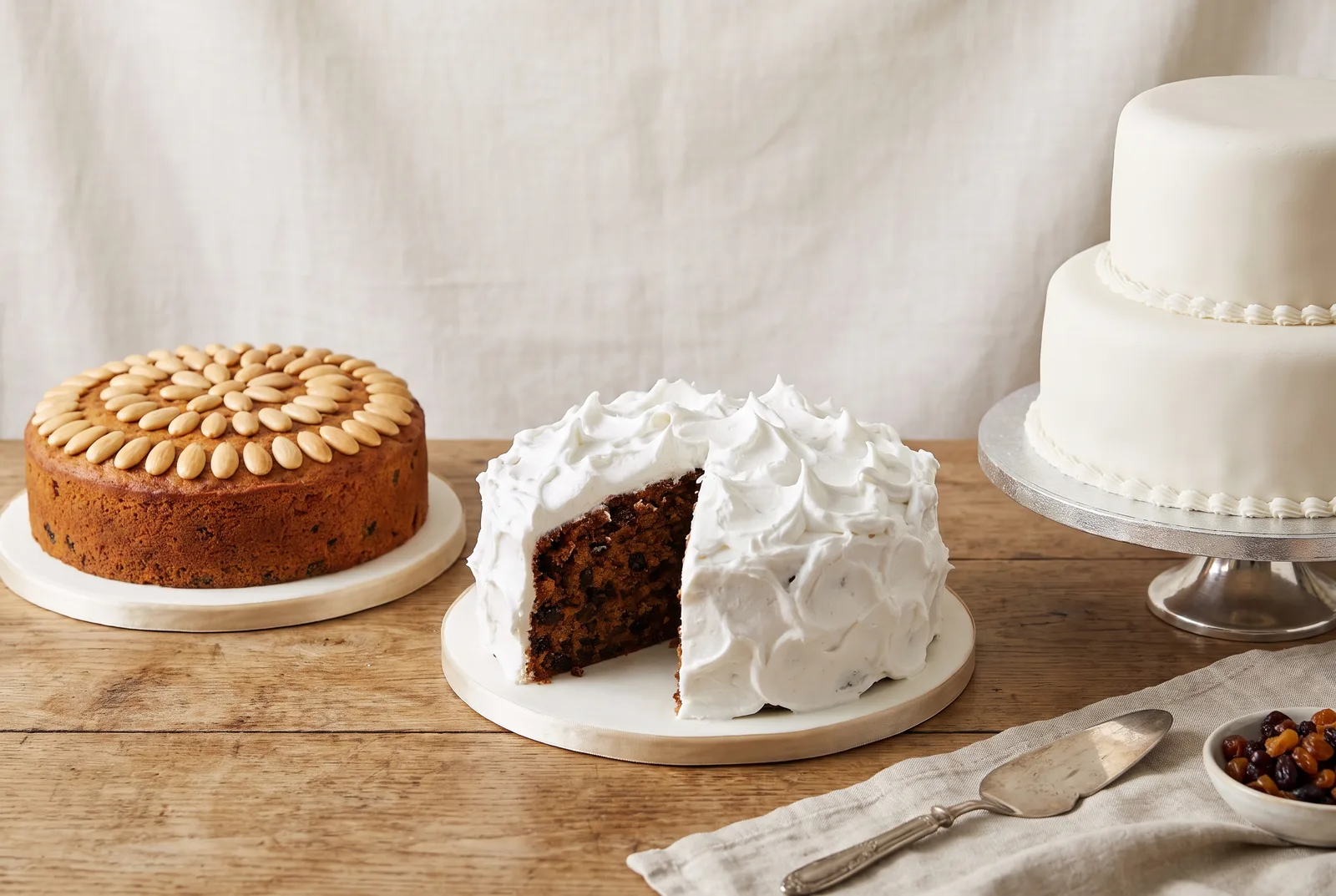
Britain's great celebration bake
If Britain has a national cake, it is the rich fruit cake. It is the cake of Christmas, of weddings and christenings, of Scottish Hogmanay and of Easter; it is the reason a British bakery buys currants by the 12.5 kg box and marzipan by the slab. It is also, quietly, one of the most technical things a baker makes: a batter so heavy with fruit it barely holds together, baked for hours at a whisper of heat, matured for months, and then finished with three separate craft disciplines stacked on top of each other. This dossier walks through the whole thing for the British home market — the fruit, the base, the baking curve, the maturation, and the apricot glaze → marzipan → royal icing finish — and ties every step to the Domson catalogue a UK baker actually orders. (See the hero image below, and the family overview in the table below.)
There is a whole family here, not one cake. A Dundee cake is a lighter, part-baking-powder fruit cake with its famous almond-ringed top. A rich Christmas cake is dense, dark and fruit-heavy, fed with brandy and iced. A wedding cake is the same rich cake scaled and stacked. A simnel is a lighter Easter cake defined by marzipan. And the regions add their own — Welsh bara brith ("speckled bread"), Scottish black bun, Cornish saffron cake. What unites them is fruit; what separates them is fruit load, leavening, alcohol and finish.
The dried fruit: the heart of the cake
A fruit cake is mostly fruit, so the fruit is where quality lives. The classic British trio is currants, sultanas and raisins, all dried grapes but each a different character (see the image and table below):
- Currants are tiny dried Corinthian ("Zante") grapes, blue-black and intense. The Domson Currants (Chelmer Foods "Vine Choice") are Greek, 99.5% currant with 0.5% sunflower oil as a free-flow agent, at about 67.8 g sugars per 100 g and 13–18% moisture (target 15%). They give a dark fruit cake its deepest colour and flavour.
- Sultanas are seedless white grapes, golden and plump. The Turkish Laser-Scanned Sultanas are dipped in a potash solution and sun-dried, then washed, laser-scanned, metal-detected and X-rayed — about 69.4 g sugars per 100 g, 12–16% moisture. They lighten and sweeten the mix and are the classic Dundee fruit.
- Raisins are larger dried grapes, dark and chewy (about 62.6 g sugars per 100 g, 12–16% moisture in the Chelmer raisin sheet). Domson lists Iranian Raisins and Turkish Raisins.
To these you add colour and citrus. Glacé cherries (Chelmer) are pitted cherries osmotically dehydrated in glucose-fructose syrup to Brix 71–75° — about 53% cherry, ~57 g sugars per 100 g. Traditionally red glacé cherries are coloured with erythrosine (E127) and preserved with sulphur dioxide (E220) and potassium sorbate (E202) (see the food-safety note below). Always rinse the syrup off, dry the cherries and toss them in a little of the recipe flour before folding in, or they bleed red and sink. Candied peel brings the bittersweet citrus lift: the Domson Candied Orange Rind 4×4 (PGD/Vortumnus) is made from 110 g of orange peel per 100 g of product, saturated in sugar and glucose syrup, at about 52 g sugars per 100 g; ready Mixed Peel (Kluman) blends orange and lemon.
Maceration. For a rich cake, soak the fruit and peel before mixing — commonly overnight, or up to a week — in brandy, sherry or rum (or, for a tea-loaf like bara brith, in strong black tea). Soaking plumps the fruit, spreads flavour and moisture through the cake, and starts the preserving work the alcohol will finish (see the image below). Drain heavily-soaked fruit before folding it in, or the batter turns too slack and the fruit sinks. The recipe-formula language behind all this is in A8-cake-and-pastry-formulas and A8-bakers-percentage-fundamentals.
The base: soft flour, dark sugar, treacle and spice
The cake around the fruit is a rich creamed batter, and its ingredients are deliberately different from a bread baker's.
Flour. Use a soft, low-protein plain flour, not a strong bread flour — you want tenderness, not gluten strength, and just enough structure to suspend the fruit. Domson Plain Flour (ADM "GD Plain") is milled in the UK at ~9.1% protein (N×5.7; range 8.0–10.2%), moisture ~14.5%, water absorption ~53% — exactly the soft profile a fruit cake wants. For a lighter cake (Dundee, simnel, bara brith), a self-raising flour such as Domson Premium Self-Raising or Allied Mills Perfect Self Raising carries the raising agents for you. Flour choice by application is covered in A1-wheat-flour-types-by-application and the British-specific B7-flour-landscape; protein and quality parameters in A1-key-quality-parameters; and the baking-powder chemistry a Dundee cake leans on in A2-chemical-leaveners-baking-powder.
Sugar and syrups. Dark cakes want dark sugar. Demerara (British Sugar) is UK beet sugar blended with ~1.3% cane molasses; Molasses Sugar (Kent Foods) is darker still. Black treacle (Kent Foods TM05) is the signature note of a Christmas cake — a dark cane-molasses/invert-sugar syrup at Brix 80–81, pH 4.7–6.3, with 25–30% sucrose and 29–34% invert sugar and a mineral, faintly bitter depth (it is notably iron-rich, 30–500 mg/kg). A little golden syrup keeps the crumb tender through a long bake. Fat and creaming are covered in A4-butter-grades-and-specialist-types and A4-fat-types-and-selection.
Spice. The British cake spice is mixed spice — and the Domson Mixed Spice UK Blend (Sleaford Quality Foods, made in the UK) shows exactly what that means: a blend of coriander, cassia cinnamon, ginger, cardamom, cloves, fennel and nutmeg. Adjust it with single spices — ground cinnamon and ground nutmeg — to taste. A spoonful of ground almonds in the batter adds moisture and richness.
Dundee cake: the almond-ringed classic
The Dundee cake is a Scottish fruit cake defined by one thing: a top decorated with concentric circles of whole blanched almonds (see the image below). It is lighter than a Christmas cake — part-leavened with baking powder — and, in its traditional form, contains no glacé cherries. Commercial production and the very name are credited to the Keiller marmalade firm of Dundee (Janet Keiller), which folded surplus Seville orange peel from its marmalade making into the cake; a popular legend has it first made cherry-free for Mary, Queen of Scots. A Protected Geographical Indication (PGI) application for Dundee cake lists the permitted ingredients as salted butter, sugar, eggs, thick-cut Seville orange peel, orange zest, plain cake flour, optional sherry, optional ground almonds, sultanas and whole blanched or split almonds — glacé cherries are pointedly not on the list.
Delia Smith's widely-followed version (which does include a little cherry and peel) gives the working proportions for an 18 cm cake: 225 g plain flour with 1 tsp baking powder, 150 g butter, 150 g golden caster sugar, 3 large eggs, 175 g each currants and sultanas, 50 g glacé cherries, 50 g mixed peel, 2 tbsp ground almonds, orange and lemon zest, topped with about 60 g whole blanched almonds in rings and baked at 170°C / gas 3 for ~1¾ hours. The full baker's-percentage card is below. Drop the almonds on lightly rather than pressing them in, and glaze them for shine after baking.
Rich Christmas and wedding cakes: the baking curve
A rich Christmas cake carries two-and-a-half to three times its flour weight in dried fruit (see the formula card below) — so much that the batter is really a fruit-and-nut mass barely bound by a creamed base of dark sugar, butter, egg, treacle and spice. That much fruit and sugar cannot be rushed through a hot oven, so the defining technique is the baking curve: low and slow.
Bake at about 140°C (120°C fan / gas mark 1) — for roughly 4½–4¾ hours for a deep 20 cm cake, and much longer for large or wedding tiers (see the image below). Protect the cake through that long bake: double-line the tin base and sides with baking paper, wrap the outside in a band of brown paper or newspaper tied with string, and sit a paper disc on top so the crust does not dry out or scorch (see the fault table below for what goes wrong if you skip this). The gentle heat sets the structure without over-browning; the Maillard and crust science behind that is in A5-baking-oven-science. Hollow the centre of the batter slightly before baking so the cake rises level rather than domed.
Feeding and maturation. This is what makes a rich fruit cake keep for months and taste of Christmas rather than of raw flour. Once the cake is cold, pierce it with a fine skewer and spoon over a little brandy, then wrap it in a double layer of baking parchment and foil and store it somewhere cool, feeding it with more brandy at intervals — a rich cake can be made up to about three months ahead (see the image below). The low water activity, high sugar and added alcohol together suppress spoilage; the staling and shelf-life science is in A5-shelf-life-and-staling. For an alcohol-free cake, feed with cold strong tea or fruit juice, or use a rum flavouring (Dawn Belmonte) — but accept a shorter keeping time and label it honestly.
Covering the cake: apricot glaze, marzipan, royal icing
The finish is three layers, each with a job (see the comparison table below).
1. Apricot glaze. Brush the matured cake all over with warmed, sieved apricot jam. It is both the glue that holds the marzipan on and a moisture barrier between cake and covering. Use a high-fruit apricot jam (Vortumnus) or a ready apricot glaze (Dawn Foods).
2. Marzipan. Roll marzipan (Zeelandia; or Almond Paste g23448) to an even thickness, drape it over the glazed cake and smooth it down (see the image below). Marzipan seals in moisture, blocks the fruit from staining the icing, and adds almond flavour; composition and workability are in A6-marzipan-fondant-sugar-pastes. Then wait. The marzipan must be left to dry — a minimum of about 24 hours, ideally 4–5 days — before you ice it, or oils from the almonds seep through and stain and discolour the icing (see the fault table below).
3. Royal icing (or sugarpaste). Classic royal icing is sieved icing sugar beaten with egg white, often with a little lemon juice. A workable domestic ratio is about 200–250 g icing sugar per large egg white (Delia's is 500 g to three whites, ≈167 g per white), beaten to the consistency you need (see the formula card below); a little glycerine gives a softer, easier-to-cut set. Some recipes go far stiffer — up to about 1 kg sugar per egg white — but that is an extreme for a very hard, tightly-piped finish, not the everyday ratio. The Domson Icing Sugar CP (Kent Foods) is a very fine UK-beet icing sugar (>80% of particles finer than 75 µm, 99.2 g sugars/100 g) that dissolves cleanly for a smooth icing. For a flat, formal finish, build up thin coats with a straight-edge; for the classic Christmas "snow-peak" finish, spread it thickly and pull up peaks with a palette knife (see the image below). Piping shells and lace is covered in A7-piping-and-sugar-work, and icing types generally in A7-icings-and-buttercreams. Many modern cakes are instead covered in sugarpaste (rolled fondant) over the marzipan — smoother, easy to colour and model — using a covering fondant such as Zeelandia Fondant Premium or Arctos Ultra White Fondant; see A7-fondant-types-and-uses.
Tiered wedding cakes are simply the rich cake scaled up (A8-scaling-and-yield-conversion) and stacked. The engineering point: the structural coating must set hard — royal icing without glycerine on the load-bearing layers — and the lower tiers must be dowelled so they carry the weight of the tiers above rather than sinking. Set on sturdy cake drums (Culpitt, Doric).
A note on royal-icing food safety. Raw egg white carries a Salmonella risk. For any cake that may be eaten by vulnerable groups — the elderly, pregnant women, infants or the immunocompromised — use pasteurised egg white, dried/pasteurised albumen powder, or a commercial pasteurised royal-icing/meringue mix such as Meri-White (Alfa Bella Foods), which removes the raw-egg hazard entirely.
Simnel and the calendar cakes
Britain's fruit cakes track the calendar. The simnel cake is the spring one: a lighter fruit cake associated with Lent and Mothering Sunday, now eaten at Easter, defined by marzipan — a layer baked through the middle and one on top — and eleven marzipan balls conventionally representing the eleven faithful apostles (the twelve less Judas Iscariot) (see the image and formula card below). The top marzipan is lightly toasted under a grill or with a torch. It is a natural companion to the Easter and teatime bakes in B7-enriched-teatime-bakes (hot cross buns, teacakes).
Regional British fruit bakes
Beyond the big celebration cakes, the nations and regions keep their own (see the image and table below):
- Bara brith (Wales) — "speckled bread," a tea-soaked fruit loaf: dried fruit and brown sugar steeped overnight in strong black tea, folded with self-raising flour, mixed spice and egg, and baked about an hour at around 180°C / gas 4 (per the Visit Wales recipe). Sliced and spread with salted butter, it is a fixture of St David's Day.
- Black bun (Scotland) — a whisky-rich, densely spiced fruit mixture encased in pastry, eaten at Hogmanay for first-footing.
- Cornish saffron cake and other regional fruited breads sit closer to the enriched-dough family in B7-enriched-teatime-bakes, and the wider map is in B7-regional-breads-map.
The Scottish shortbread and biscuit tradition — the other pillar of a British bakery's celebration counter — is covered in B7-shortbread-biscuits, and British sugar confectionery (fudge, tablet, toffee) in B7-confectionery-sugar-work.
Getting the UK rulebook right
Fruit cakes are cakes, not bread, so the two big British bread debates — the Chorleywood Bread Process and the sourdough / "sourfaux" labelling argument — do not apply to them; both are dealt with correctly in the sibling dossier B7-chorleywood-vs-craft. But one piece of UK law reaches every fruit cake through the back door: the flour.
Under the Bread and Flour Regulations 1998, all non-wholemeal wheat flour milled in the UK — including the very plain and self-raising flours you bake a cake with — must be fortified to minimum levels per 100 g of calcium (as calcium carbonate) 235–390 mg, iron ≥1.65 mg, thiamin (B1) ≥0.24 mg and niacin ≥1.60 mg (see the table below). You can read it straight off the bag: the ADM plain-flour datasheet declares its ingredient as "Wheat Flour (Wheat Flour, Calcium Carbonate, Niacin, Iron, Thiamin)" with typical values of about iron 2.5 mg, niacin 2.45 mg and thiamin 0.26 mg per 100 g — each at or above the statutory minimum — and about 180 mg of calcium. That calcium figure looks lower than the 235–390 mg minimum only because the two are measured differently: the regulation's minimum is expressed as calcium carbonate, which is just ~40% calcium by weight (so 235–390 mg of carbonate is ≈94–156 mg of added elemental calcium), whereas the datasheet's ~180 mg is total elemental calcium — comfortably consistent with compliant fortification, not a shortfall. New for the home market: the Bread and Flour (Amendment) (England) Regulations 2024 (SI 2024/1162) add mandatory folic acid at 250 µg per 100 g, with full compliance required by 13 December 2026 (wholemeal flour and small mills under 500 t/year are exempt). For most cake bakers this changes nothing operationally — your miller adds it — but it changes your labelling.
Allergen and food-safety note
- Gluten is present throughout — wheat flour and marzipan-topped cakes are not suitable for coeliacs.
- Sulphur dioxide / sulphites (>10 ppm) are a declarable allergen and commonly appear on dried vine fruit and candied/glacé fruit: the glacé cherry and candied cherry sheets declare SO₂ (up to ~50 ppm and up to ~100 mg/kg respectively), and the sultana and currant lines handle SO₂ under allergen controls. Check each batch and declare accordingly.
- Colour. Traditional red glacé cherries are coloured with erythrosine (E127), a synthetic colour permitted in the UK/EU only for specific uses such as cocktail and candied cherries; if you want to avoid it, source naturally-coloured glacé cherries. Edible-colour rules are in A7-food-colour-and-metallic-effects.
- Nuts. Marzipan, ground almonds and the whole-almond Dundee topping declare tree nuts (almond).
- Raw egg. Royal icing made with raw egg white carries a Salmonella risk — use pasteurised egg white/albumen for vulnerable groups (above).
- Alcohol. A fed fruit cake contains added alcohol; note it for customers and on labels.
Related reading
Pillar A (the craft science): A6-marzipan-fondant-sugar-pastes · A6-sugar-work-techniques · A7-icings-and-buttercreams · A7-fondant-types-and-uses · A7-piping-and-sugar-work · A7-food-colour-and-metallic-effects · A8-cake-and-pastry-formulas · A8-bakers-percentage-fundamentals · A8-scaling-and-yield-conversion · A1-wheat-flour-types-by-application · A1-key-quality-parameters · A2-chemical-leaveners-baking-powder · A4-butter-grades-and-specialist-types · A4-fat-types-and-selection · A5-shelf-life-and-staling · A5-baking-oven-science.
British siblings (Pillar B7): B7-flour-landscape · B7-enriched-teatime-bakes · B7-chorleywood-vs-craft · B7-shortbread-biscuits · B7-confectionery-sugar-work.
Figures
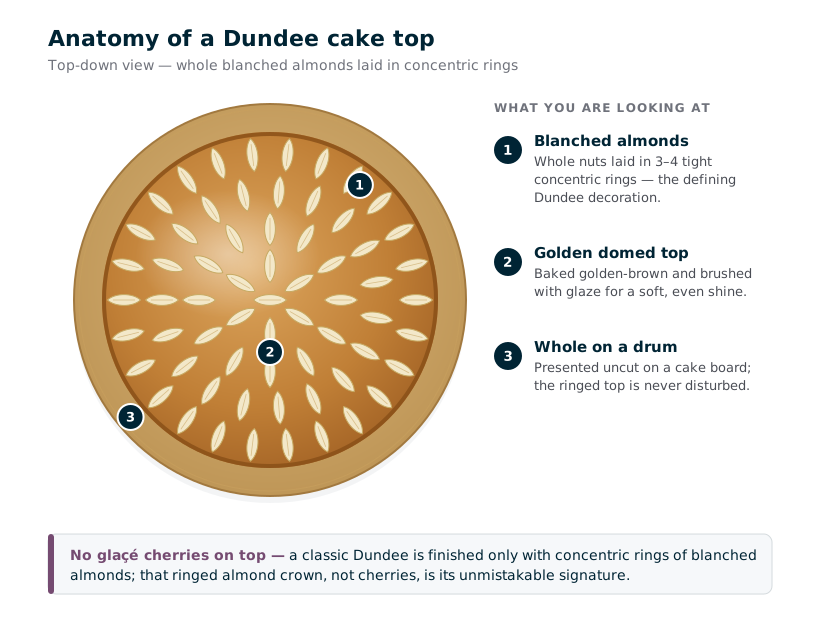 Top-down view of a Dundee cake decorated with whole blanched almonds in concentric circles
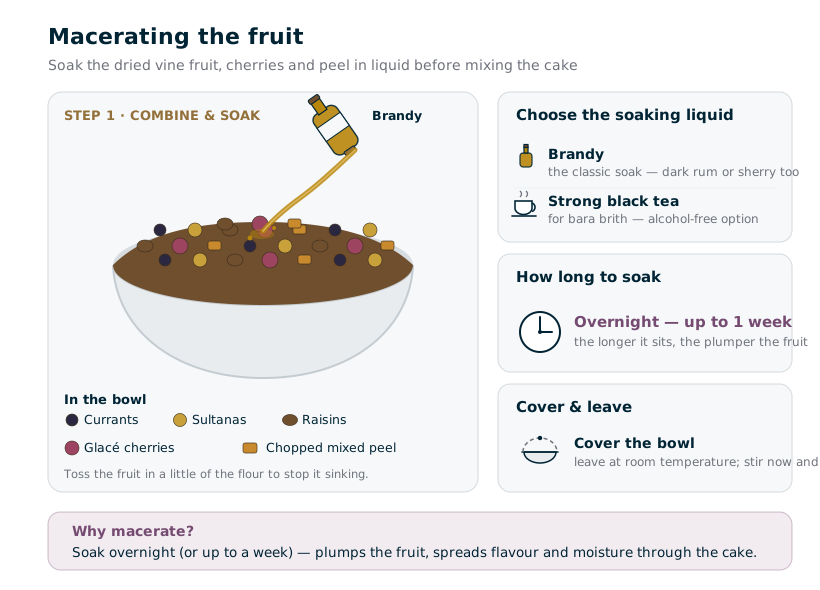 Diagram of dried fruit, cherries and peel being soaked in brandy overnight before mixing into a fruit cake
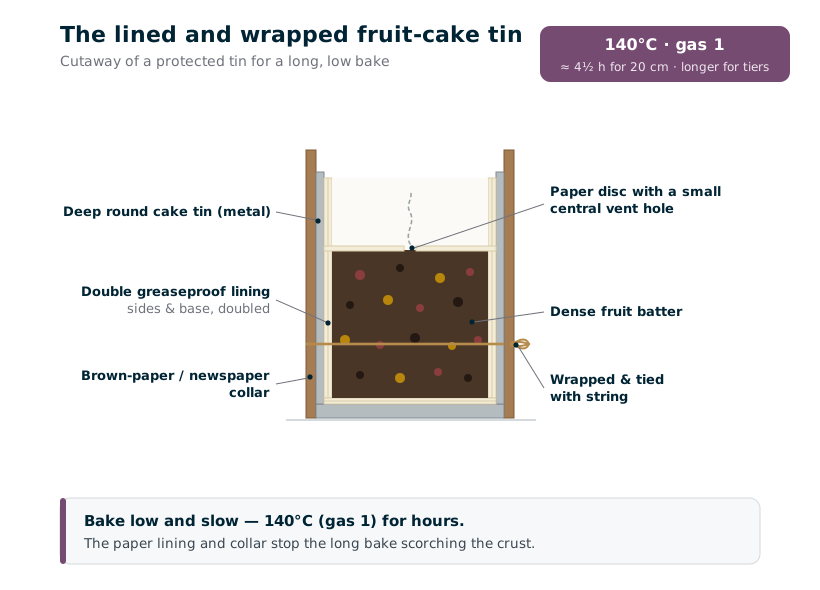 Cross-section of a cake tin double-lined with paper and wrapped in a brown-paper collar with a paper disc on top, labelled for a long low-temperature bake
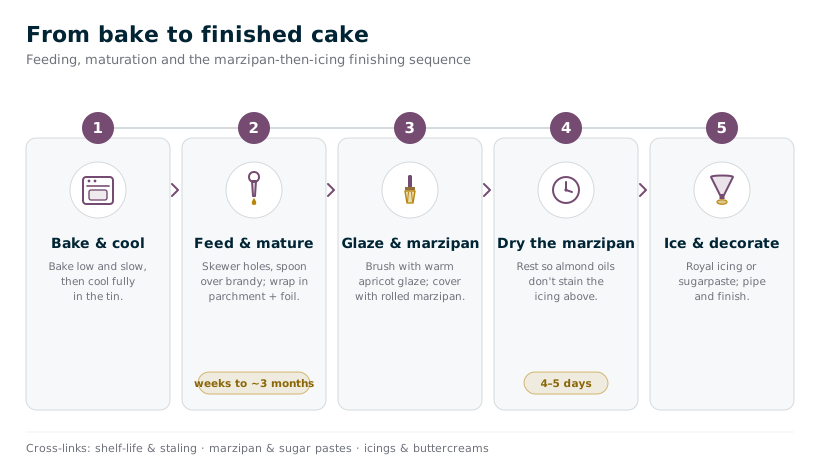 Five-step timeline: bake, feed and mature, apricot glaze plus marzipan, dry the marzipan, then royal icing and decorate
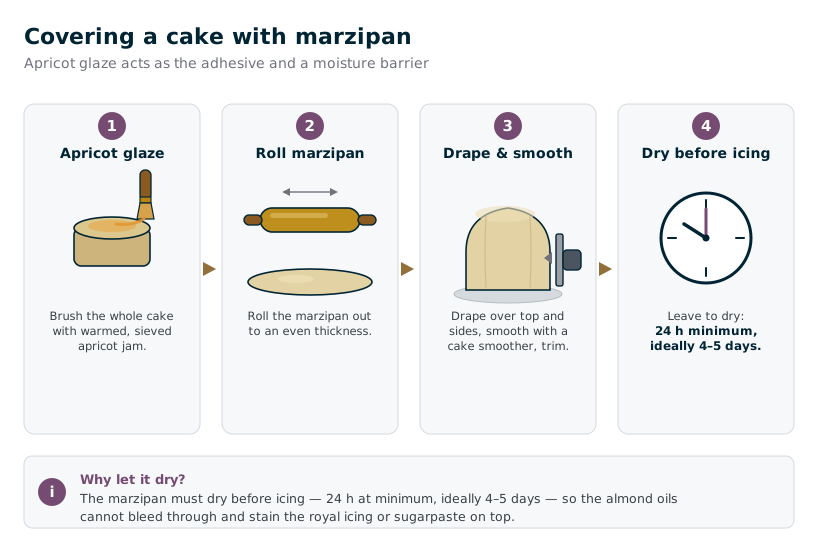 Illustrated steps showing apricot glaze brushed on, marzipan rolled, draped and smoothed over a cake, then left to dry
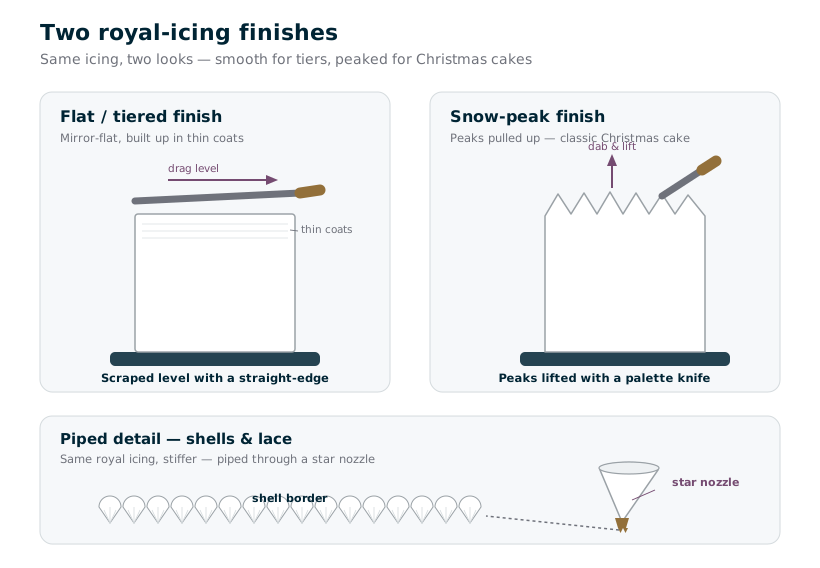 Comparison of a smooth flat royal-icing finish and a rough snow-peak finish, with a piping bag adding decorative shells
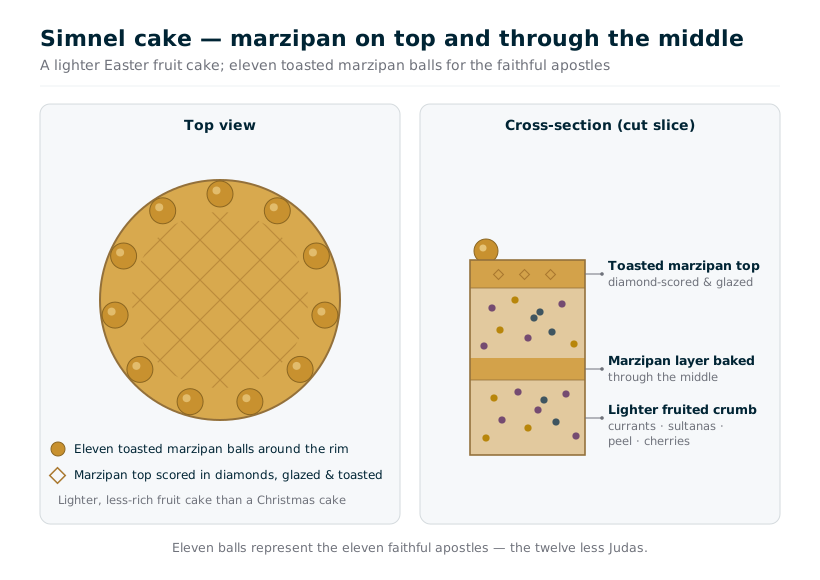 Simnel cake topped with marzipan and eleven toasted marzipan balls, a cut slice showing the marzipan layer through the middle
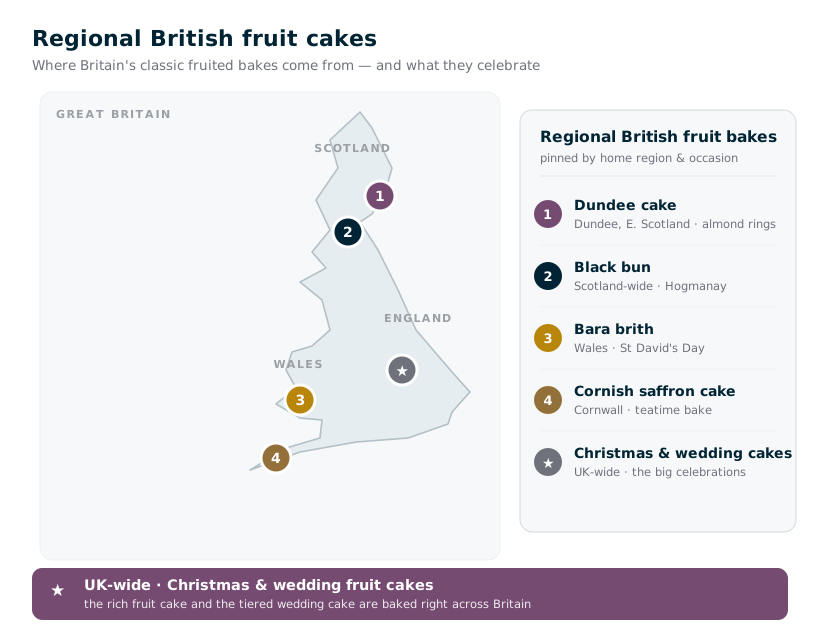 Map of Britain marking regional fruit cakes: Dundee cake and black bun in Scotland, bara brith in Wales, and UK-wide Christmas and wedding cakes
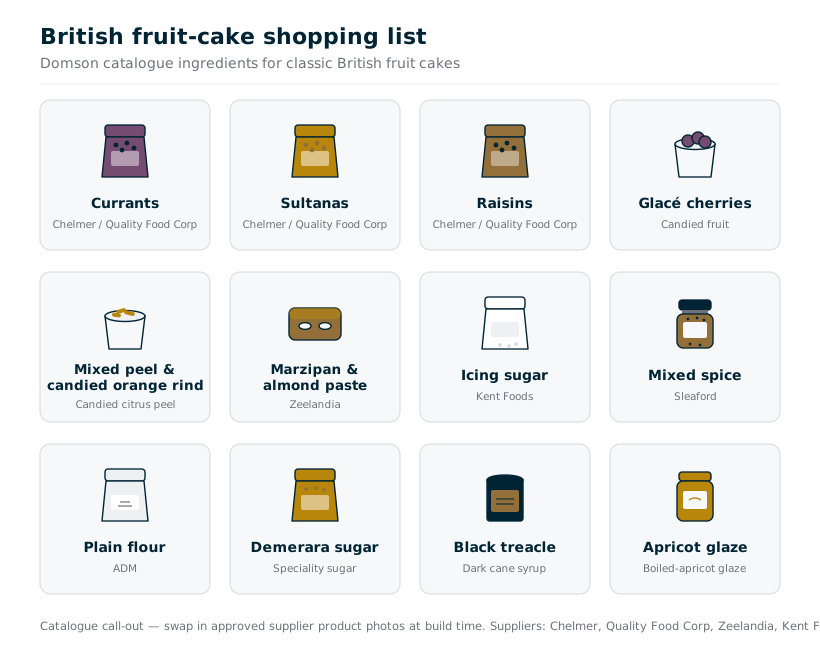 Grid of Domson catalogue products for British fruit cakes: dried vine fruit, glacé cherries, peel, marzipan, icing sugar, mixed spice, plain flour, demerara and black treacle
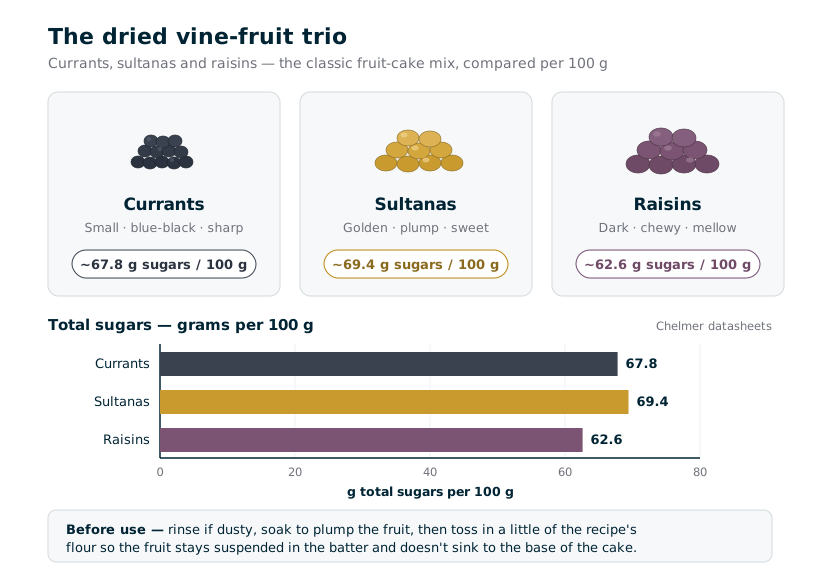 Three piles of dried vine fruit — small dark currants, golden sultanas and dark raisins — labelled with their typical sugar content
Traditional Dundee cake — baker's % (from Delia Smith quantities)
| Ingredient | Baker's % | Weight |
|---|---|---|
| Plain (soft) flour — 225 g; low-protein soft flour | 100 | |
| Baking powder — 1 level tsp (~5 g); Dundee is a lighter, part-chemically-leavened fruit cake | 2.2 | |
| Butter — 150 g | 67 | |
| Golden caster sugar — 150 g | 67 | |
| Egg (whole) — 3 large eggs (~165 g) | 73 | |
| Currants — 175 g | 78 | |
| Sultanas — 175 g | 78 | |
| Glacé cherries — 50 g, rinsed, dried, halved (omit for the traditional/PGI cherry-free style) | 22 | |
| Mixed candied peel — 50 g, finely chopped | 22 | |
| Ground almonds — 2 level tbsp (~15 g) | 6.5 | |
| Orange + lemon zest — zest of 1 orange and 1 lemon | 0 | |
| Whole blanched almonds (topping) — ~60 g, arranged in concentric circles, dropped on lightly (not pressed) | 27 |
- All-in-one: whisk flour, baking powder, butter, sugar and eggs (add a dessertspoon of milk if stiff) 1–2 min; fold in the dried fruit, cherries, peel, ground almonds and zests. Spoon into a lined 18 cm loose-based tin, level, and arrange whole blanched almonds in concentric rings on top. Bake at 170°C / gas 3 for about 1¾ h until firm and springy. Cool; keeps well and tastes better after a few days in a tin.
Yield: One 18 cm (7 in) round cake
Total fruit ≈ 200% of flour — moderate for a fruit cake (a rich Christmas cake carries far more). Traditionally Dundee is made without glacé cherries; the almond-ring top is its signature.
Rich Christmas / celebration fruit cake — representative baker's %
| Ingredient | Baker's % | Weight |
|---|---|---|
| Plain (soft) flour — low-protein; a little ground almond can replace ~10–15% for a moister crumb | 100 | |
| Butter — softened; creamed with the sugar | 90 | |
| Dark soft brown / muscovado sugar — dark sugar for colour and flavour | 90 | |
| Egg (whole) — beaten in gradually to avoid curdling | 90 | |
| Currants — part of the dried-fruit total | 120 | |
| Sultanas | 90 | |
| Raisins — dried-vine-fruit total ≈ 250–300% of flour | 70 | |
| Glacé cherries — rinsed, dried, quartered | 40 | |
| Mixed candied peel | 30 | |
| Ground almonds — moisture and structure | 20 | |
| Black treacle — colour, mineral note, keeping | 10 | |
| Mixed spice — plus extra cinnamon/nutmeg to taste | 2 | |
| Citrus zest — orange + lemon | 0 | |
| Brandy (soak + feed) — part in the overnight soak, the rest fed after baking | 15 |
- Soak the dried and candied fruit in brandy overnight (or up to a week). Cream butter and sugar; beat in egg gradually with a little flour; fold in remaining flour, ground almonds, treacle, spice and zest, then the soaked fruit. Fill a double-lined 20 cm deep tin, hollow the centre slightly, wrap the tin in brown paper and set a paper disc on top. Bake at 140°C / 120°C fan / gas 1 for about 4½–4¾ h until a skewer comes out clean. Cool in the tin, feed with brandy, wrap in parchment + foil and mature for weeks to months before decorating.
Yield: One deep 20 cm (8 in) round cake (scale for tiers)
Numbers are a representative rich-cake convention (dried fruit ≈ 2.5–3× the flour; butter, sugar and egg each near the flour weight). Exact quantities vary by recipe — treat as a starting frame, not a single cited recipe. Marzipan then royal icing/sugarpaste as in fc-royal-icing.
Royal icing (safe version) — coating and piping
| Ingredient | Baker's % | Weight |
|---|---|---|
| Icing (powdered) sugar, sifted — fine icing sugar (e.g. Icing CP), sifted to remove lumps | 100 | |
| Pasteurised egg white / reconstituted albumen — ≈ white of 1 large egg per ~500 g sugar, added to consistency; use pasteurised white or dried albumen for safety | 15 | |
| Lemon juice — a few drops; brightens and helps it set | 1 | |
| Glycerine — ≈ 1 tsp per 500 g for a softer, easier-to-cut coat — OMIT on load-bearing tiers so it sets hard | 1 |
- Beat pasteurised egg white lightly, then beat in the sifted icing sugar a little at a time to a smooth, glossy paste; add lemon juice and (for a cutting coat) glycerine. For a flat finish, apply in thin coats with a palette knife and straight-edge, letting each dry. For a 'snow-peak' rough finish, spread thickly and pull up peaks with the knife. Pipe shells and lace with a bag and nozzle (see A7-piping-and-sugar-work).
Yield: Covers a 20 cm cake (scale up for tiers)
Ratios vary widely by recipe (some use 1 kg sugar to 1 egg white for a very stiff icing). Always apply over dried marzipan. FOOD SAFETY: use pasteurised egg white / albumen powder / a commercial mix (e.g. Meri-White) for any cake served to vulnerable groups.
Simnel cake — Lent / Easter marzipan fruit cake (representative)
| Ingredient | Baker's % | Weight |
|---|---|---|
| Plain/self-raising flour — lighter than a Christmas cake | 100 | |
| Butter | 85 | |
| Light soft brown / caster sugar | 85 | |
| Egg (whole) | 85 | |
| Mixed dried vine fruit + peel — currants, sultanas, raisins, mixed peel; lighter fruit load than a Christmas cake | 150 | |
| Glacé cherries — rinsed, dried | 25 | |
| Mixed spice | 2 | |
| Marzipan — one disc baked in the middle, one on top (grilled/torched golden), plus 11 balls for the apostles | 0 |
- Half-fill the tin with batter, lay a disc of marzipan across, top with the remaining batter and bake at ~150–160°C until set. Cool; brush with apricot glaze, add a marzipan top, mark a diamond pattern, arrange 11 marzipan balls around the edge and lightly brown under a grill or with a torch.
Yield: One 18–20 cm round cake
The 11 balls conventionally represent the apostles less Judas. A lighter, spring cake — moderate fruit, marzipan is the defining feature. Cross-link A6-marzipan-fondant-sugar-pastes.
| Cake | Region / occasion | Fruit load (vs flour) | Alcohol / soak | Leavening | Decoration | Bake |
|---|---|---|---|---|---|---|
| Dundee cake | Scotland; teatime, Christmas | Moderate (~1× flour) | Optional sherry; light or none | Baking powder + eggs (lighter) | Concentric rings of whole blanched almonds; no glacé cherries in the traditional/PGI version | 170°C ~1¾ h (18 cm) |
| Rich Christmas cake | UK-wide; Christmas | Heavy (~2.5–3× flour) | Brandy/sherry/rum soak + repeated feeding | Eggs only (dense) | Apricot glaze → marzipan → royal icing or sugarpaste | 140°C ~4½–4¾ h (20 cm) |
| Wedding cake (tiered) | UK-wide; weddings | Heavy (~2.5–3× flour) | Heavy soak + long maturation | Eggs only (dense, load-bearing) | Marzipan → hard-set royal icing / sugarpaste; dowelled tiers | 140°C, long bake; scaled per tier |
| Simnel cake | UK-wide; Lent / Mothering Sunday / Easter | Moderate | Light or none | Eggs (+ sometimes baking powder) | Marzipan layer baked in the middle and on top; 11 marzipan balls (apostles) | 150–160°C, moderate |
| Bara brith | Wales; St David's Day, teatime | Moderate | Strong black tea soak (usually no alcohol) | Self-raising flour / baking powder | None; sliced and buttered | ~180°C ~1 h (loaf; Visit Wales) |
| Black bun | Scotland; Hogmanay | Very heavy | Whisky | Dense fruit filling in a pastry case | Encased in shortcrust/pastry | Moderate; long bake |
| Fruit | Grape / source | Preparation | Sugars (g/100 g) | Moisture | Colour / character | Typical role |
|---|---|---|---|---|---|---|
| Currants | Small Corinthian ('Zante') grapes, Greece | Washed, sorted, +0.5% sunflower oil free-flow | ~67.8 | 13–18% (target 15%) | Small, blue-black, intense | Backbone of dark fruit cakes; deepest colour/flavour |
| Sultanas | Seedless white (Sultana) grapes, Turkey | Potash-dipped, sun-dried, laser-scanned, +0.5% oil | ~69.4 | 12–16% | Golden, plump, sweet-mild | Softens and lightens the fruit mix; classic in Dundee |
| Raisins | Larger dried grapes, Turkey/Iran | Sun-dried, +0.5% oil | ~62.6 | 12–16% | Dark, chewy, caramel note | Body and chew; the third of the classic trio |
| Glacé (red) cherries | Pitted cherries, France | Osmotic dehydration in glucose-fructose syrup, Brix 71–75° | ~57 | Residual syrup ≤10% | Bright red (E127 erythrosine) | Jewel colour and moist bite; rinse and dry before use |
| Candied orange peel | Orange peel (110 g per 100 g product) | Sugar/glucose saturation + citric acid + sorbate | ~52 | Moist cubes, total extract ≥60% | Aromatic bittersweet citrus | Peel 'lift'; classic mixed-peel component |
| Layer | What it is | Role on the cake | Set | When used |
|---|---|---|---|---|
| Apricot glaze | Warmed, sieved apricot jam | Adhesive + moisture barrier under marzipan | Sticky, does not set hard | First, brushed onto the baked cake |
| Marzipan / almond paste | Ground almonds + sugar bound to a paste | Smooths the cake, seals in moisture, blocks fruit staining, almond flavour | Firms as it dries (must dry 1–5 days) | Over the glaze, before the icing |
| Royal icing | Icing sugar beaten with (pasteurised) egg white ± lemon/glycerine | Traditional white coating; pipes; sets rock-hard for tiers | Sets very hard (glycerine softens it for cutting) | Christmas, wedding and formal cakes |
| Sugarpaste / rolled fondant | Sweetened, pliable sugar dough (often over marzipan) | Smooth modern covering; carves and models; takes colour | Sets to a firm skin | Modern celebration and wedding cakes |
| Nutrient | Form | Minimum per 100 g of non-wholemeal wheat flour | Notes |
|---|---|---|---|
| Calcium | Calcium carbonate (chalk) | 235–390 mg | Added since WWII; the minimum is measured as calcium CARBONATE (~40% Ca), so the ADM datasheet's ~180 mg ELEMENTAL calcium is the equivalent measure — consistent with compliance, not a shortfall |
| Iron | Iron / iron compounds | ≥ 1.65 mg | Datasheet typical ~2.5 mg |
| Thiamin (Vitamin B1) | Thiamin | ≥ 0.24 mg | Datasheet typical ~0.26 mg |
| Niacin (Vitamin B3) | Nicotinic acid or nicotinamide | ≥ 1.60 mg | Datasheet typical ~2.45 mg |
| Folic acid | Folic acid | 250 µg | Mandatory from 2024 (SI 2024/1162); full compliance by 13 Dec 2026 |
| Wholemeal flour | — | Exempt | Bran + germ are natural sources; small mills (<500 t/yr) exempt from folic acid |
| Product | Brand | Key spec | Role |
|---|---|---|---|
| Currants 12.5 kg | Chelmer Foods | ~67.8 g sugars/100 g; Corinthian; +0.5% oil | Dark fruit-cake backbone |
| Turkish Laser-Scanned Sultanas 12.5 kg | Chelmer Foods | ~69.4 g sugars; potash-dipped, sun-dried | Golden fruit for Dundee & rich cakes |
| Raisins / Turkish Raisins 12.5 kg | Chelmer / Quality Food Corp | ~62.6 g sugars; sun-dried | Body and chew |
| Glacé Cherries Whole & Broken 10 kg | Chelmer Foods | ≥53% cherry, Brix 71–75°, E127 | Jewel colour (rinse & dry first) |
| Mixed Peel 10 kg / Candied Orange Rind | Kluman / PGD / Agrobakal | ~52 g sugars; 110 g peel per 100 g | Citrus mixed-peel lift |
| Domson Plain Flour 16 kg | ADM | Protein ~9.1%; UK-milled; fortified | Soft flour for rich fruit cake |
| Domson Premium Self-Raising Flour 16 kg | ADM | Fortified; raising agents added | Lighter Dundee / bara brith / simnel |
| Demerara Sugar 25 kg | British Sugar (Kluman) | ~1.3% cane molasses; 99.3 g sugars | Colour, flavour, moisture |
| Molasses Sugar / Dark Soft Brown | Kent Foods | Dark, high-molasses | Deep colour and treacle note |
| Black Treacle 25 kg / JC | Kluman / Kent Foods | Brix 80–81; iron-rich molasses | Colour, bitterness, keeping |
| Golden Syrup JC | Kent Foods | Inverted refiner's syrup | Moisture and tender crumb |
| Mixed Spice UK Blend 25 kg | Sleaford Quality Foods | Coriander, cassia, ginger, cardamom, clove, fennel, nutmeg | The classic British cake spice |
| Ground Cinnamon / Ground Nutmeg | PGD / KST | Single spices to adjust a blend | Fine-tune the spicing |
| Apricot Jam High Fruit 6 kg / Apricot Glaze | Vortumnus / Dawn Foods / Zeelandia | High-fruit jam / ready glaze | Masking coat under marzipan |
| Marzipan 50% / Almond Paste | Zeelandia | Almond-sugar paste | Covering and simnel layers |
| Icing Sugar CP 25 kg | Kent Foods | 99.2 g sugars; TCP free-flow; <75 µm | Royal icing and dusting |
| Meri-White Meringue & Royal Icing Mix 1.5 kg | Alfa Bella Foods | Pasteurised egg-white/albumen mix | Salmonella-safe royal icing |
| Zeelandia Fondant Premium / Arctos Ultra White Fondant | Zeelandia / Arctos | Sugarpaste-style covering | Modern smooth covering |
| Sugar Paste Christmas Assortment (25 pc) | MagMart | Ready sugar decorations | Festive finishing |
| Round Cake Drums 15"/24" | Culpitt / Doric | Board and drum range | Bases for tiered cakes |
| Fault | Likely cause | Remedy |
|---|---|---|
| Fruit sinks to the bottom | Batter too soft; fruit too wet/heavy or too large; over-creaming | Use a firm batter; drain soaked fruit; toss fruit in a little of the flour; do not overbeat |
| Cracked / domed / peaked top | Oven too hot; tin too small; too much raising agent | Bake low and slow (140°C); hollow the centre before baking; check leavening |
| Dry, hard or scorched edges | Long bake without protection | Double-line the tin, wrap in brown paper, set a paper disc on top; drop the temperature |
| Crumbles when cut | Under-matured; too little egg/fat binding; cut too soon | Mature the cake for weeks and feed with spirit; rest after baking before cutting |
| Marzipan oil stains / discolours the icing | Icing applied before the marzipan dried | Leave marzipan to dry 24 h minimum (ideally 4–5 days) before icing |
| Royal icing will not set hard / stays soft | Too much glycerine; damp storage; under-beaten | Reduce/omit glycerine on structural coats; dry in low humidity; beat to firm peaks |
| Glacé cherries bleed red / sink | Syrup coating not rinsed; cherries too heavy | Rinse and thoroughly dry cherries, then toss in flour before folding in |
| Cake tastes flat / pale | Too little dark sugar/treacle/spice; unfed | Use dark muscovado + black treacle; adjust mixed spice; feed with brandy while maturing |
| Tiered cake sinks or leans | Coating too soft to bear weight; no internal support | Set royal icing hard (no glycerine on load-bearing coats); dowel the lower tiers |
- Composition:
- ≥53.3% cherry + glucose-fructose syrup
- Process:
- osmotic dehydration; Brix 71–75°Bx; residual syrup ≤10%
- Sugars:
- ~57 g/100 g
- Colour:
- erythrosine (E127) <90 mg/kg
- Preservatives:
- potassium sorbate (E202); sulphur dioxide (E220) <50 ppm
- Origin:
- France
- Dietary:
- vegetarian, vegan, Halal, Kosher
- Allergen:
- sulphites (SO2) declarable
- Composition:
- 99.5% currant + 0.5% high-oleic sunflower oil
- Sugars:
- 67.8 g/100 g
- Moisture:
- 13–18% (target 15%)
- Origin:
- Greece
- Character:
- small blue-black free-flowing berries
- Dietary:
- vegan, Halal, Kosher
- Composition:
- 99.5% sultana + 0.5% sunflower oil
- Process:
- potash-dipped, sun-dried; washed, laser-scanned, metal-detected, X-rayed
- Sugars:
- 69.4 g/100 g
- Moisture:
- 12–16%
- Origin:
- Turkey
- Allergen:
- SO2 handled in a segregated area (allergen control in place)
- Sugars:
- 99.2 g/100 g
- Free flow agent:
- tricalcium phosphate E341(iii), 0.5–1.5%
- SO2:
- ≤6 mg/kg
- Particle size:
- >80% finer than 75 µm
- Origin:
- UK sugar beet
- Certification:
- Kosher (pareve, not Passover), Halal
- Allergen:
- free of listed allergens
- Ingredients:
- coriander, cassia cinnamon, ginger, cardamom, cloves, fennel, nutmeg
- Moisture:
- ≤12%
- Origin:
- manufactured in the UK
- Allergens:
- none declared
- Dietary:
- vegan, vegetarian, Kosher, Halal suitable
- Ingredient declaration:
- Wheat Flour (Wheat Flour, Calcium Carbonate, Niacin, Iron, Thiamin)
- Protein Nx5.7:
- target 9.1% (8.0–10.2)
- Moisture:
- target 14.5% (13.7–15.0)
- Water absorption:
- ~53%
- Fortification per 100g:
- calcium 180 mg, iron 2.5 mg, niacin 2.45 mg, thiamin 0.26 mg
- Origin:
- milled in the UK
- Dietary:
- vegan; not suitable for coeliacs
- Type:
- moist light-golden crystalline sugar
- Composition:
- UK beet sugar + ~1.3% cane molasses
- Sugars:
- 99.3 g/100 g
- SO2:
- ≤9 mg/kg
- Certification:
- Kosher (pareve), Halal
- Allergens:
- none listed
- Type:
- dark cane-molasses + invert sugar syrup
- Sucrose:
- 25–30%
- Invert sugar:
- 29–34%
- Moisture:
- 20–21%
- Brix:
- 80–81°
- pH:
- 4.7–6.3
- SO2:
- <9 ppm
- Sugars:
- 67.2 g/100 g
- Iron:
- 30–500 mg/kg
- Dietary:
- vegetarian, Kosher
- Composition:
- orange peel (110 g per 100 g product), sugar, glucose syrup, citric acid, potassium sorbate
- Total extract:
- ≥60%
- Sugars:
- 52 g/100 g
- SO2:
- ≤10 mg/kg ('may contain sulphites')
- Dietary:
- vegetarian, vegan