
Scaling formulas up and down: yield conversion, batch costing and non-linear adjustments
The working baker's guide to recalculating a formula for any batch size without failures. It builds the scaling maths from baker's percentage (Formula Conversion Factor, total %, hydration), then adds the two things percentages alone never tell you: yield - how much DOUGH to make for a target number of FINISHED units once baking and fermentation losses are counted - and the non-linear adjustments that trip people up at scale (dough temperature and friction, mixing/bake time, yeast-form substitution and chemical leaveners in deeper tins). Five worked formula cards (a pan loaf scaled two ways, a lean baguette with a desired-dough-temperature calculation, a catalogue rye bread from a supplier spec, a balanced butter cake, and a non-flour dark-ganache by chocolate=100%) anchor the method, all arithmetic verified. Built on five first-party Domson supplier spec sheets (Type 550 flour, sea salt, IREKS Soft Roll 7, Zeelandia Optimax Free, Lesaffre Benevia yeast) cross-checked against King Arthur Baking, BAKERpedia, the IREKS Compendium and EU regulation.
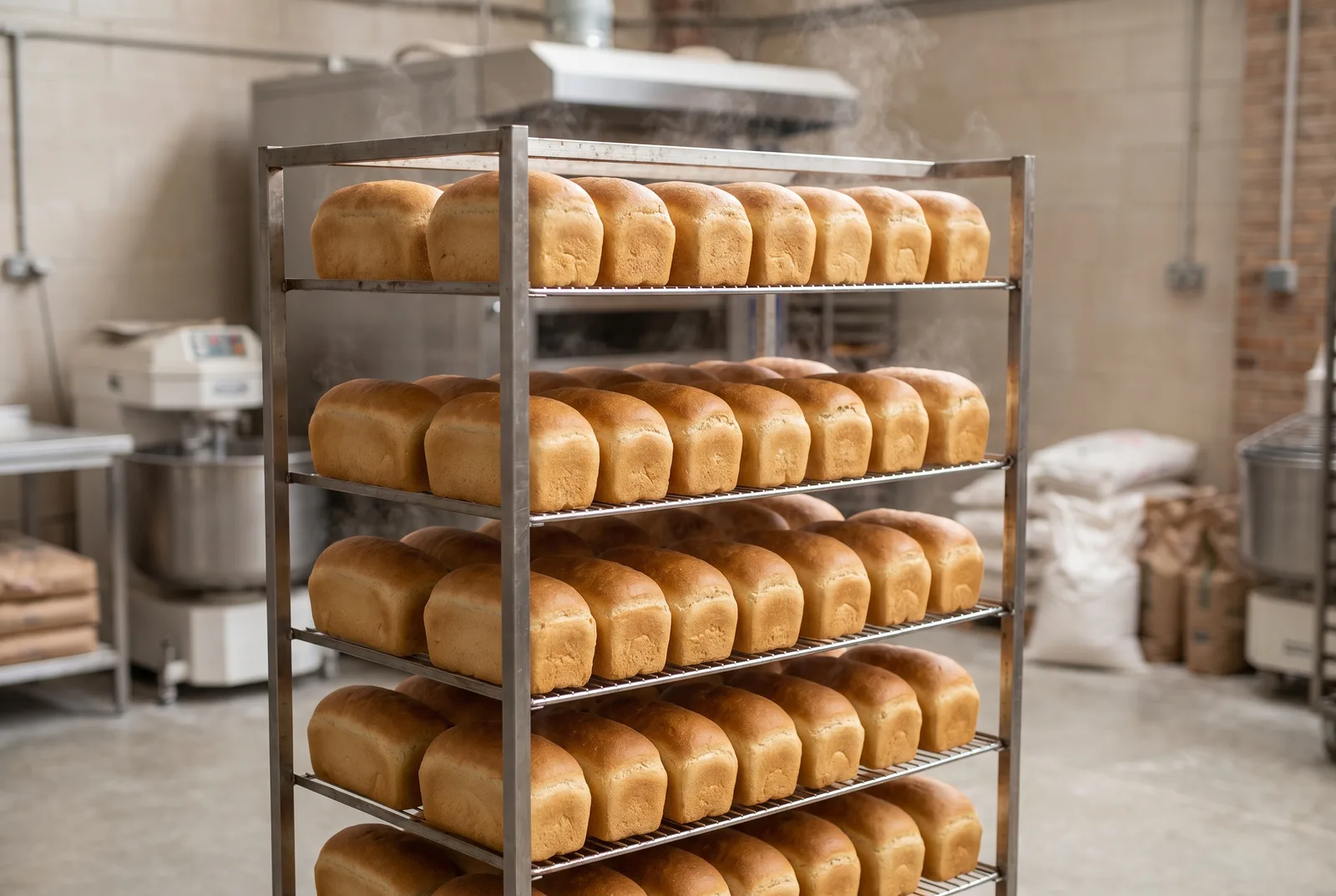
Scaling formulas up and down: yield, costing and the things that don't scale
A production bakery rewrites its formulas every day: 40 loaves on Tuesday, 220 for a Saturday market, a one-off 12 kg of croissant dough for a hotel order. Baker's percentage exists precisely so this is fast and error-free - but it only solves half the problem. Percentages scale the ingredients; they say nothing about how much dough to make for a target number of finished loaves, or about the handful of variables that stubbornly refuse to scale with batch size. This article covers all three: the scaling maths, yield (loss) conversion, and the non-linear adjustments. See the figure below for the whole method on one page.
For the underlying language of formulas, read the companion article Baker's percentage: the universal language of professional formulas (A8); for the production-process side of growing a bakery, see Scaling up: artisan to industrial (A5).
1. The scaling maths (recap, then the one formula you need)
In baker's percentage every ingredient is a percentage of the total flour weight, and flour is always
100%. To get a weight back from a percentage: ingredient weight = (ingredient % / 100) x flour weight; to get a percentage from a weight: (ingredient weight / flour weight) x 100.
The single most useful relationship for scaling is:
Total dough weight = flour weight x (total formula % / 100) - and, rearranged, flour weight = desired dough weight / (total % / 100).
King Arthur's professional shortcut packages this as the Formula Conversion Factor: add every percentage in the formula, then divide your desired dough weight by that sum; multiply each ingredient's percentage by the factor to get its weight. Worked on a lean French bread - flour 100% + water 65% + salt 2% + yeast 1.25% = 168.25% - a 150 lb batch gives a factor of 150 / 168.25 = 0.8915, so flour 89.15 lb, water 57.95 lb, salt 1.78 lb, yeast 1.11 lb (which sum back to 150 lb). The same arithmetic runs in kilograms unchanged. This is the formula card below, and the worked table is in the figure below.
Two ratios travel with the formula and are unchanged by batch size - which is the whole point:
hydration = (water / flour) x 100, and water absorption, defined on flour weight (60%
absorption = 60 parts water to 100 parts flour; cookie doughs sit at ~50-54%, artisan ciabatta up to ~90%)
. A 1 kg test batch and a 100 kg trough at the same hydration behave the same way chemically.
2. Yield: how much DOUGH for how many FINISHED units
Here is the mistake that costs money: scaling to the finished weight you want to sell. Dough loses weight in the oven and during cooling, mostly as evaporated water - this is baking loss. You buy ingredients by dough weight but sell by baked weight, so you must gross the dough up.
Required dough weight = finished weight / (1 - loss fraction).
A 500 g loaf at 12% loss needs 500 / 0.88 = 568 g of dough; twenty 500 g loaves at 15% loss need (500 x 20) / 0.85 = 11,765 g. Typical losses: pan bread 10-12%, hearth bread and baguettes 12-15%, small rolls and buns 15-20%, croissants and laminated pastries 8-12%, cakes 5-10%. Smaller pieces lose proportionally more because they have more surface per unit volume - a ~50 g roll may lose ~18% while a ~1000 g boule loses ~12%. On top of baking loss, fermentation and scaling (dividing, handling) losses can add up to ~5%, and higher hydration raises loss further (~12% at 65% hydration versus ~16% at 80%). The reference chart is below, with the divisors tabulated in the yield comparison table.
Two related production terms: dough yield (TA) = (total dough weight / flour weight) x 100 (net counts
flour+water, gross counts everything, practical deducts losses); and baked-goods yield, the
quantity of finished goods from 100 parts flour, which depends on dough yield and baking loss together.
Putting maths + yield together
The formula card below is the vehicle. One pan-loaf formula (total 172.5%, hydration 62%) is scaled from a 1 kg bench test to a real order of 50 loaves at 800 g baked. The four steps: (1) scaling weight per loaf = 800 / 0.88 = 909 g; (2) total dough = 50 x 909 = 45,455 g; (3) flour = 45,455 / 1.725 = 26,350 g; (4) every ingredient = flour x its % - and they sum back to the dough weight. That is exactly the flow shown in the figure below. Weigh, don't measure by volume.
3. The things that do NOT scale linearly
This is where scaling goes wrong. The figure below and the first comparison table summarise it; the essentials:
Dough temperature and friction. A larger batch generates more heat and takes longer to mix, so it leaves
the mixer warmer. Control it with the desired dough temperature (DDT) formula - target ~24-26 C
(75-78 F) for wheat yeast breads: water temp = (DDT x 3) - room temp - flour temp - friction factor
. Worked as published by King Arthur: 78 F x 3 = 234; 234 - 72 - 71 - 22 = 69 F water. The
friction factor is the heat your specific mixer adds; find it once by mixing a test batch and back-
calculating - e.g. a batch reaching 26 C with room 22 C, flour 21 C and water 18 C has friction
(26 x 3) - 22 - 21 - 18 = 17 C. Friction is roughly 22-24 F on a planetary/stand mixer and only
6-8 F by hand - and it rises with batch size and mix time, so the bigger batch needs colder water.
With a preferment, multiply DDT by 4 and also subtract the preferment temperature. This calculation is
shown in the figure below and the formula card below.
Yeast form. Scaling often coincides with switching yeast type or supplier, and the forms are not interchangeable gram-for-gram because their water content differs: fresh ~70% water, active dry ~8%, instant ~3%. Convert by weight - fresh / 3 = instant, fresh / ~2 = active dry - so 100 g fresh is ~50 g active dry or ~33 g instant. In sweet/enriched doughs add ~5-15% more dry yeast (sugar slows yeast), or better, use an osmotolerant yeast. See the figure below. A practical food-safety note for scaling and stock: fresh yeast such as Lesaffre Benevia is perishable - store chilled 1-10 C (optimum 4 C), ~35-day life - while dried yeasts keep for months, which matters when you size an order.
Time and chemical leaveners. Mixing time grows with batch size; bake time tracks the size and shape of
one unit, not the number of units - doubling a cake batch into a deeper tin needs a lower temperature and a
longer (not doubled) bake. And chemical leavener does not scale safely into a deeper batter: baking
powder sits at ~3% of flour in cake formulas, but in a deeper tin too much gas rises then collapses with a
bitter, metallic taste, so reduce it - at very large scale, leaveners and strong spices are commonly run at
~60-75% of the strict linear amount. When changing tins, scale batter by (new pan area / old pan area)
at the same height and fill pans only ~1/2 to 2/3. This is the explicit warning on the
butter-cake formula card below, which also passes the cake balance rules (sugar 100-160% of flour;
fat 40-50%; egg >= fat; eggs + milk >= sugar). Allergen note: the
butter-cake card contains whole egg and milk — both Big 14 allergens (EU Regulation 1169/2011 / UK Food
Information Regulations 2014); add a 'Contains: egg, milk' declaration to the formula card.
4. Two more formula vehicles
A catalogue rye bread. The formula card below is a real production batch taken from the Zeelandia Optimax Free supplier specification, re-expressed in baker's percentage. It shows an improver dosed as a small fixed fraction of flour (0.1 kg per ~6 kg flour, ~1.7%) and a rye sourdough that contributes both flour and water - so the salt looks like 3.8% on added flour but is ~2.5% once the sourdough's own flour is counted. Process from the spec: mix 8 + 2 min, dough ~28 C, divide 0.58 kg into forms (~32 pieces from the 18.58 kg batch), final proof ~50 min, bake 250->230 C with steam for 5 min, ~45 min.
A non-flour confectionery formula. Scaling logic is identical with a non-flour base at 100%. The formula card below uses dark couverture = 100% with cream as the variable: ~1:1 by weight for a pourable glaze (total 220%), ~2:1 for a firm filling/truffle. Ganache has no fermentation or baking loss, so ingredient scaling is purely linear - but larger masses cool and crystallise more slowly, so working temperatures and resting times must be adjusted at scale. Use couverture (EU: >=35% cocoa solids including >=31% cocoa butter) for clean melt and set; milk and white need less cream. Allergen and food-safety note: cream and optional butter are milk products (Big 14 allergen — add 'Contains: milk' declaration to the card); the 1:1 dark-ganache ratio is widely used in professional pastry; finished ganache typically keeps 2-3 weeks refrigerated for a 1:1 dark ganache.
5. Batch costing
Baker's percentage doubles as a costing tool. Cost a batch by summing (ingredient weight x cost per kg) for
every line, then divide by the number of good finished units - not dough pieces - because you sell baked
weight. Two scaling-specific cautions: include yield loss (you pay for 568 g of dough to sell a 500 g
loaf ), and remember an improver that already carries salt changes the recipe - IREKS Soft Roll 7 is
dosed at 7% on flour and is 22.4% salt, contributing ~1.6% salt before you add any, so the separately
added salt (normally 1.8-2% ) should be trimmed.
6. Catalogue: what to buy to run these formulas
The staple ingredients you scale, with first-party spec numbers, are in the key spec-sheet numbers comparison table. In short:
- Base flour (the 100%). Wheat Flour Type 550 (protein 11.5-12.5%, ash 0.51-0.58%, falling number
=220 s ), Domson White Strong Wheat Flour, Windrush Strong White; rye via Rye Flour Type 720 and Wholemeal Rye Type 2000; gluten boost via Hortimex Beneo VWG 75. Allergen note: flour declares gluten; possible traces of soy, lupin and mustard — lupin can cause reactions in peanut-allergic individuals; confirm allergen statement against the current product label, noting that the spec dates from 2025 (GoodMills Polska ed. 17).
- Yeast. Lesaffre Benevia and Lallemand fresh yeast - mind the conversion factors and the chilled shelf life.
- Salt at ~2%. The Salt Company Extra Fine Sea Salt (NaCl ~99.9%, no allergens, vegan/kosher/halal/ coeliac ).
- Improvers (dosed on flour). IREKS Soft Roll 7 at 7%, Zeelandia Optimax Free at ~1.7%.
- Cake + confectionery. Kent Foods Caster Sugar, Polmlek Unsalted Butter or Kruszwica cake margarine, Domson Baking Powder; couverture Callebaut 811 (54.5%), Barima Dark 72%, Zeelandia Arabesque 58%.
7. Faults and fixes
The scaling faults table lists the common failures - underweight loaves (loss ignored), over-fermented big batches (friction/water temp not recalculated), slack dough from a 1:1 yeast swap, collapsed cakes from flat leavener in deep tins, and costing that forgot yield. Read it before your next big batch.
All five formula cards below show ingredient rows with percentages, a total percentage, a worked example at a real batch size, and process steps with temperatures and times; every percentage, conversion and yield figure in this article has been arithmetically checked for self-consistency.
Figures
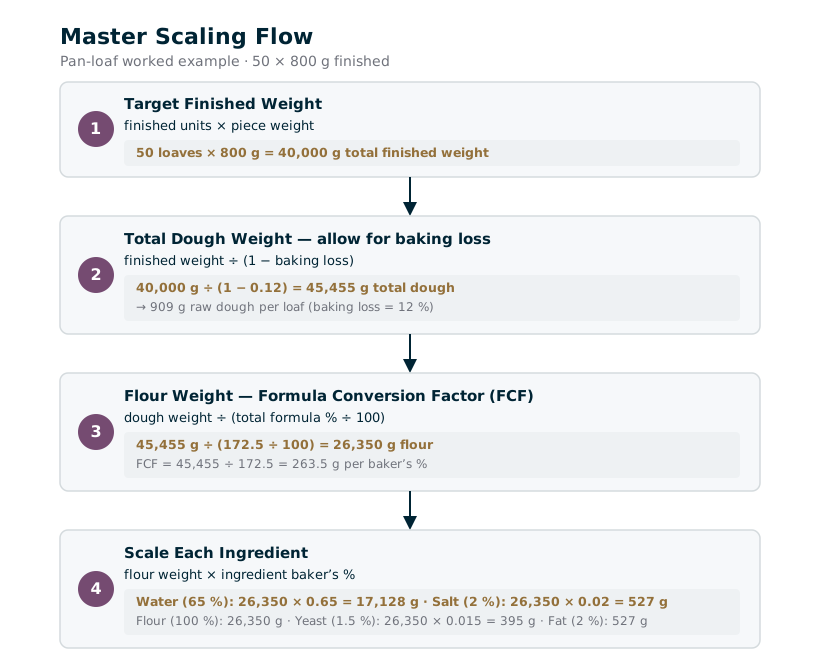 Four-step flow diagram converting a finished-product target into a scaled bread formula via baking loss and the Formula Conversion Factor
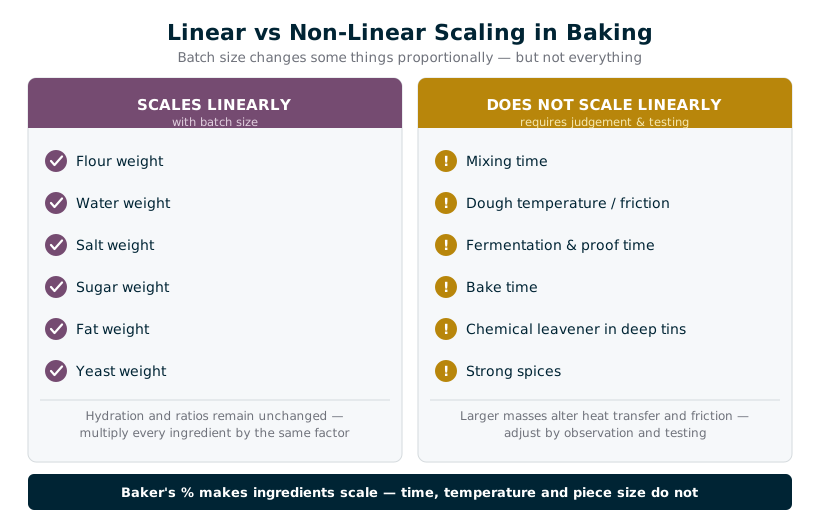 Infographic contrasting ingredients that scale linearly with batch size against time, temperature and leavener factors that do not
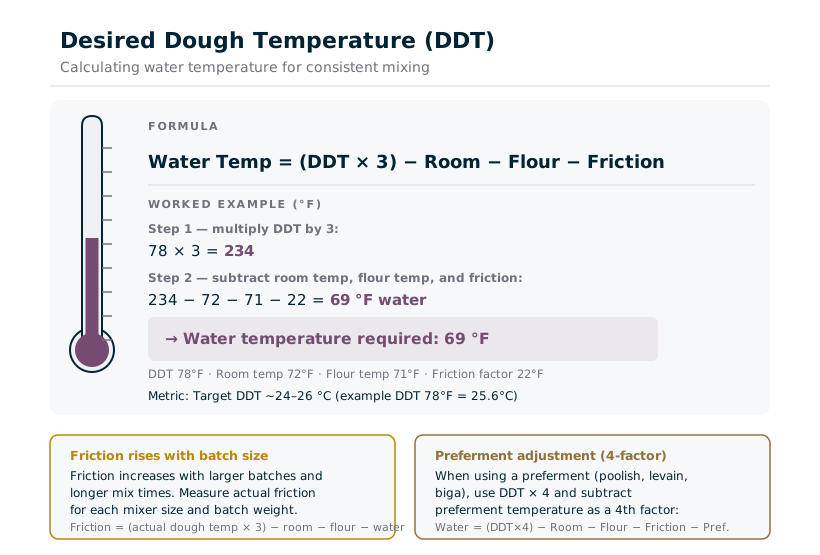 Calculation card showing the desired dough temperature formula with a worked example for water temperature
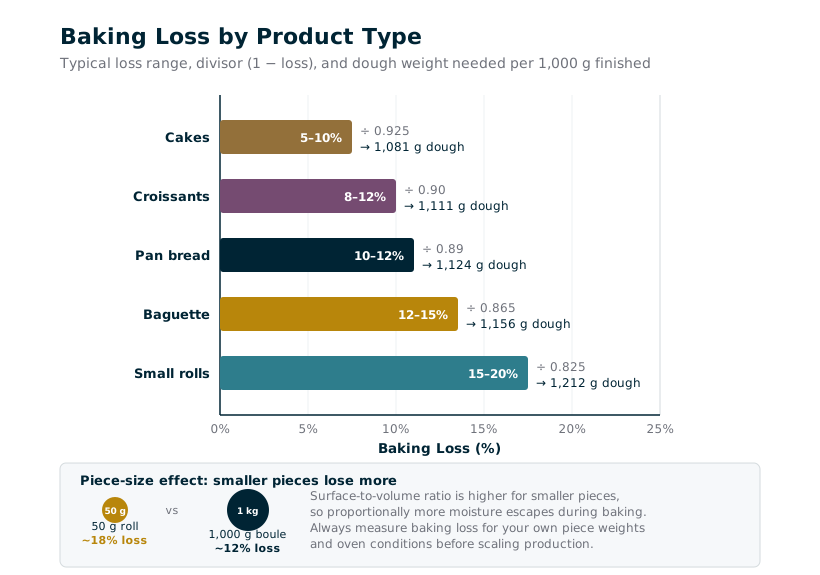 Bar chart of typical baking-loss percentages by product type with the dough divisor for each
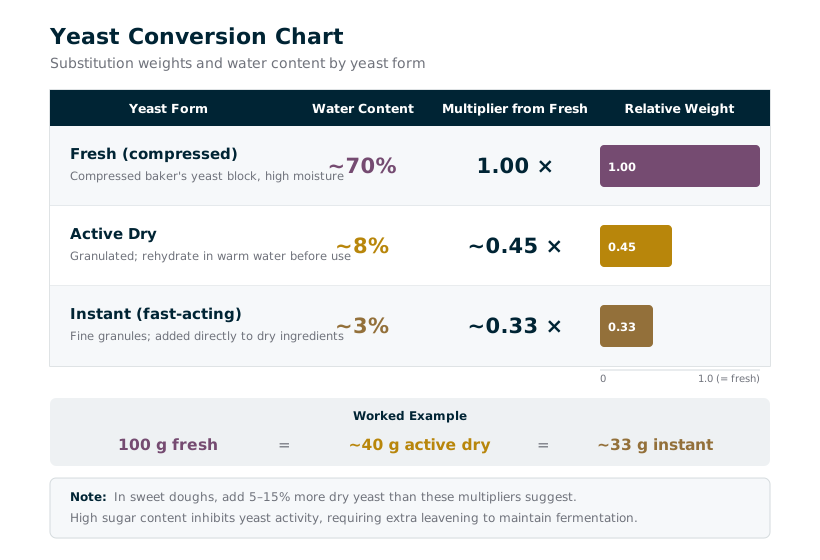 Chart comparing fresh, active dry and instant yeast by water content and substitution weight
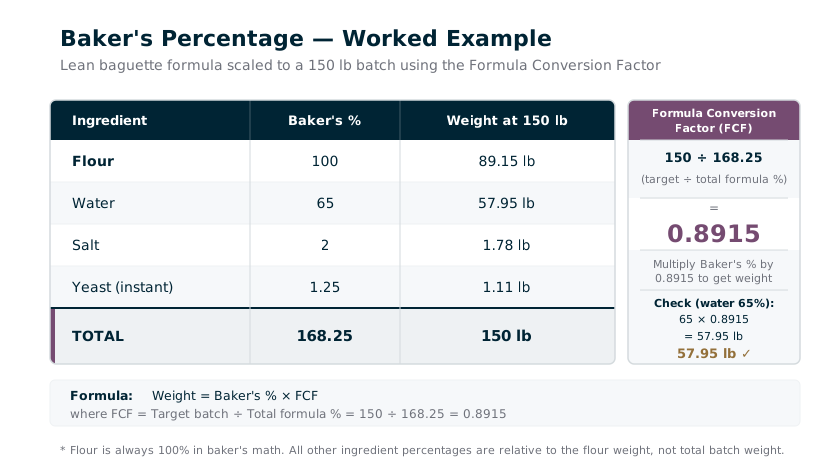 Worked baker's-percentage table converting a 168.25% baguette formula to a 150 lb batch
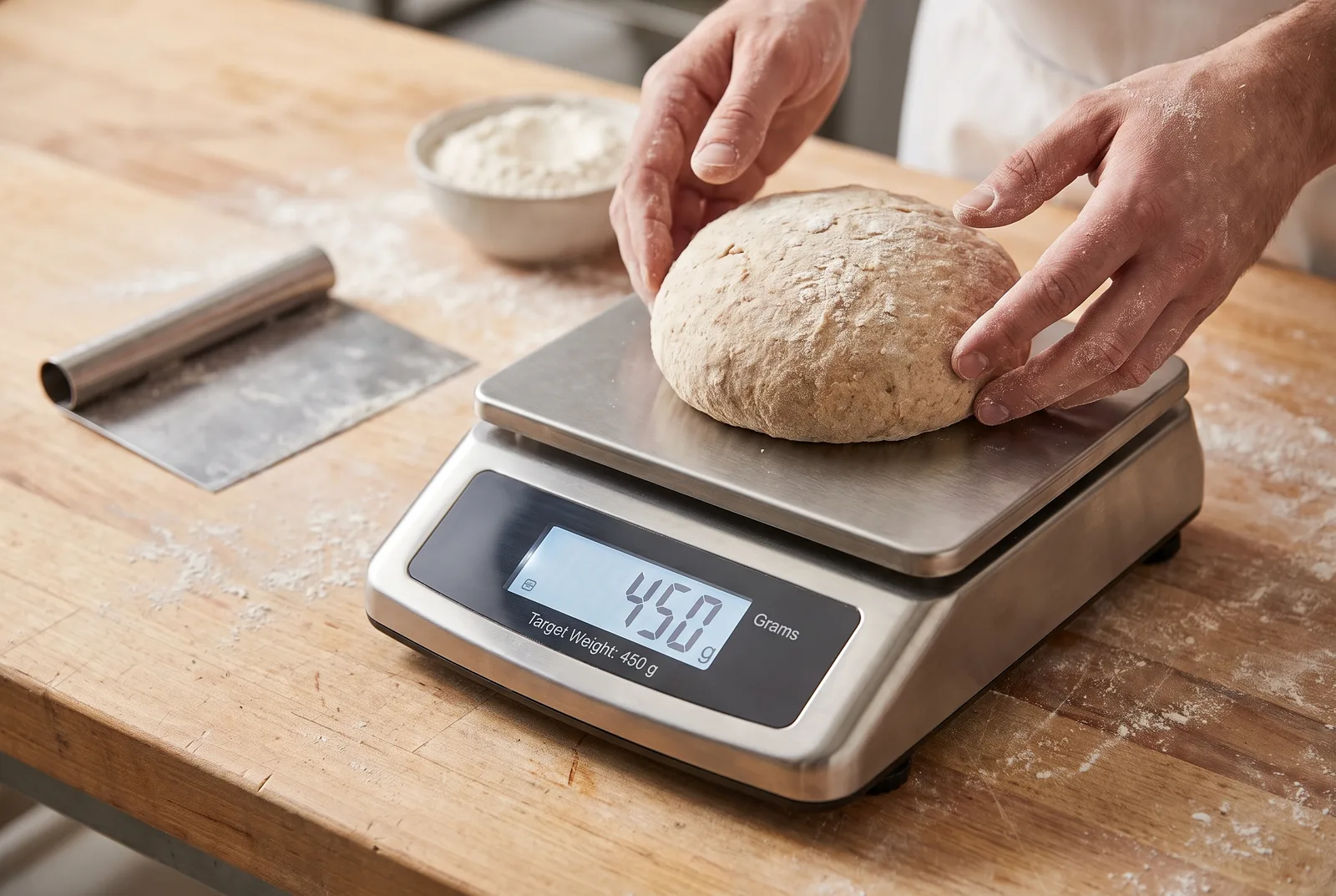 Dough piece being weighed on a digital bench scale to a target scaling weight
White pan loaf - one formula, two batch sizes (the scaling vehicle)
A straight-dough commercial pan loaf, shown first as percentages, then scaled two ways. Production target is 50 loaves at 800 g BAKED weight, so the dough weight is grossed up for a 12% pan-bread baking loss before the Formula Conversion Factor is applied. Verify: percentages sum to 172.5%, and the worked ingredient weights sum back to the dough weight.
| Ingredient | Baker's % | Weight |
|---|---|---|
| Strong white wheat flour | 100% | bench 1000 g | production 26,350 g |
| Water | 62% | bench 620 g | production 16,337 g |
| Fresh yeast (or instant 0.85%) | 2.5% | bench 25 g | production 659 g |
| Salt | 2% | bench 20 g | production 527 g |
| Vegetable fat / oil | 3% | bench 30 g | production 790 g |
| Sugar | 2% | bench 20 g | production 527 g |
| Soft-roll improver (optional) | 1% | bench 10 g | production 264 g |
| Total | 172.5% |
- Calculate the water temperature for your target dough temperature (DDT ~25-26 C): water temp = (DDT x 3) - room temp - flour temp - friction factor.
- Mix to a developed dough, checking it leaves the mixer at the DDT (friction is higher in the big batch, so the water must be colder).
- Bulk ferment to roughly double, then divide at the scaling weight: 909 g per loaf for an 800 g baked loaf (12% loss).
- Mould, place in greased tins, final-proof at ~30-38 C until risen.
- Bake ~230 C for ~30-35 min; cool fully before weighing - the loaf is only at finished weight once cool.
Yield: bench: ~1.725 kg dough from 1 kg flour; production worked example: 50 x 800 g baked loaves
Swapping fresh yeast for instant: fresh 2.5% / 3 = instant ~0.85%. Increasing hydration (e.g. 62% to 68%) raises baking loss, so re-check your scaling weight. Catalogue: Domson White Strong Wheat Flour, The Salt Company salt, Lesaffre Benevia yeast, IREKS Soft Roll 7.
Lean French bread / baguette - Formula Conversion Factor + DDT worked
The classic teaching formula for the scaling maths. Sum of percentages = 168.25%. Dividing the desired dough weight by 168.25 gives the Formula Conversion Factor; multiplying each percentage by it gives the weights. The same arithmetic works in kilograms.
| Ingredient | Baker's % | Weight |
|---|---|---|
| Wheat flour | 100% | 89.15 lb (metric 20 kg batch: 11,887 g) |
| Water | 65% | 57.95 lb (metric: 7,727 g) |
| Salt | 2% | 1.78 lb (metric: 238 g) |
| Instant dry yeast (or fresh ~3.75%) | 1.25% | 1.11 lb (metric: 149 g) |
| Total | 168.25% |
- Desired dough temperature ~24-25 C. Straight dough, so multiplier is 3. Worked (Fahrenheit, as published): 78 F x 3 = 234; 234 - 72 (room) - 71 (flour) - 22 (friction) = 69 F water.
- Determine your own friction factor first by mixing a test batch: friction = (measured dough temp x 3) - room - flour - water; e.g. 26 C dough with room 22 C, flour 21 C, water 18 C gives friction 17 C.
- Mix, bulk-ferment ~1.5-2 h with folds, divide, pre-shape, rest, shape into baguettes.
- Final-proof, score, bake ~240-250 C with steam for the first minutes.
Yield: worked example: 150 lb dough (any unit works identically)
With a preferment (poolish/biga) the DDT multiplier becomes 4 and you also subtract the preferment temperature. Salt sits at the standard 2% of flour.
Mixed rye bread with Zeelandia Optimax Free (catalogue spec formula)
A real production batch taken from the Optimax Free supplier specification, re-expressed in baker's percentage on the added flour. It shows two scaling realities at once: (1) an improver dosed as a small fixed % of flour (~1.7%), and (2) a sourdough that contributes BOTH flour and water, so the headline salt/water percentages on added flour look high until the sourdough's own flour is counted.
| Ingredient | Baker's % | Weight |
|---|---|---|
| Wheat flour Type 850 | 16.7% | 1.0 kg |
| Rye flour Type 720 | 83.3% | 5.0 kg |
| Rye sourdough | 106.7% (of added flour) | 6.4 kg |
| Salt | 3.8% on added flour (~2.5% on total) | 0.23 kg |
| Yeast (fresh) | 4.2% | 0.25 kg |
| Optimax Free improver | 1.7% | 0.1 kg |
| Water (approx.) | 93.3% on added flour | 5.6 kg |
| Total | see note - rye sourdough also adds prefermented flour and water |
- Mix all ingredients 8 min slow + 2 min fast; dough temperature ~28 C.
- First proof ~15 min.
- Divide 0.58 kg pieces directly into baking forms; final proof ~50 min.
- Bake at 250 C falling to 230 C, with steam for the first 5 min; ~45 min total.
Yield: ~18.58 kg dough = ~32 pieces at 0.58 kg
Allergens: wheat + rye gluten and soya; possible traces of barley, oat, spelt, egg, milk, sesame. To scale this to N tins, decide the dough piece (0.58 kg here), multiply by N for dough weight, then divide by the total formula ratio to get flour - exactly as in the pan-loaf card. Catalogue: Zeelandia Optimax Free, Rye Flour Type 720.
Butter cake in modified baker's % - where leavener scaling breaks
Cake formulas use a modified baker's percentage (everything still on flour=100%) and must obey balance rules. This formula passes all three: sugar (120%) exceeds flour; egg (55%) is at least fat (50%); total liquid eggs+milk (125%) is at least sugar (120%). The key scaling lesson: the 3% baking powder does NOT scale up safely when you also deepen the tin.
| Ingredient | Baker's % | Weight |
|---|---|---|
| Soft / plain flour | 100% | 1000 g |
| Caster sugar | 120% | 1200 g |
| Butter or cake margarine | 50% | 500 g |
| Whole egg | 55% | 550 g |
| Milk | 70% | 700 g |
| Baking powder | 3% | 30 g |
| Salt | 1% | 10 g |
| Total | 399% |
- Cream butter and sugar; add egg gradually; alternate sifted flour/baking powder/salt with milk.
- Scale into tins filled only ~1/2 to 2/3 to leave rise room.
- Bake ~175-180 C; cakes lose only ~5-10% weight so scaling weight is close to finished weight.
- When scaling to a different tin, multiply ingredients by (new pan area / old pan area) at the same height.
Yield: ~3.99 kg batter from 1 kg flour
NON-LINEAR WARNING: if a bigger batch goes into a DEEPER tin, do not keep baking powder at a flat 3% - too much gas in a deep batter rises then collapses with a bitter taste; reduce the leavener and expect a longer, lower bake. ALLERGEN DECLARATION: this formula contains whole egg and milk (both Big 14 allergens under EU Regulation 1169/2011 / UK Food Information Regulations 2014); add 'Contains: egg, milk' to the card. Catalogue: Kent Foods Caster Sugar, Polmlek Unsalted Butter / Kruszwica cake margarine, Domson Baking Powder.
Dark chocolate ganache - the non-flour formula (chocolate = 100%)
Confectionery formulas use the same logic with a non-flour base at 100%. Ganache ratios are by WEIGHT, not volume. Scaling has NO fermentation or baking loss, so ingredient scaling is purely linear - but the physics of cooling and crystallisation change with batch mass, so working temperatures and timings must be adjusted at scale.
| Ingredient | Baker's % | Weight |
|---|---|---|
| Dark couverture (>=54.5% cocoa) | 100% | 1000 g |
| Whipping / double cream | 100% glaze (50% for firm) | 1000 g (glaze) / 500 g (firm) |
| Glucose / invert syrup (optional) | 10% | 100 g |
| Soft butter (optional, finish) | 10% | 100 g |
| Total | 220% (1:1 glaze) | 160% (2:1 firm) |
- Heat the cream (with glucose) to just below the boil.
- Pour over the chopped couverture; rest 1 min; emulsify from the centre outwards to a glossy ganache.
- Beat in soft butter at ~35 C.
- At larger mass the ganache holds heat longer - cool to working temperature before piping/dipping; do not rush crystallisation.
Yield: glaze: 2.2 kg from 1 kg chocolate; firm: ~1.6 kg
Use couverture (EU: >=35% cocoa solids incl. >=31% cocoa butter) for clean melt and set. Milk and white couverture need less cream (use ~1.5:1 to 3:1). ALLERGEN DECLARATION: cream and optional butter are milk products (Big 14 allergen); add 'Contains: milk' to the card. RATIO NOTE: the 1:1 and 2:1 dark-ganache ratios are standard in professional pastry; King Arthur gives 3:2 (1.5:1) as an all-purpose dark ratio. FOOD SAFETY: finished ganache typically keeps 2-3 weeks refrigerated for a 1:1 dark ganache. Catalogue: Callebaut 811 (54.5%), Barima Dark 72%, Zeelandia Arabesque 58/72%.
Baker's percentage makes every INGREDIENT scale linearly with batch size: change the flour weight and all weights follow. The traps are the things that do NOT track batch size - they track temperature, time, piece size and equipment instead. This is the single most useful table in the article.
| Element | Scales linearly with batch size? | What actually controls it / what to watch |
|---|---|---|
| Every ingredient weight (flour, water, salt, sugar, fat, yeast) | YES | Multiply each percentage by the Formula Conversion Factor; ratios stay identical |
| Hydration and all ingredient ratios | UNCHANGED | That is the whole point of baker's % - a 1 kg and a 100 kg batch have the same hydration |
| Mixing time / energy | NO | Bigger batches take longer to come together and heat up more; recheck dough temperature |
| Dough temperature (DDT) / water temperature | NO | Friction factor rises with batch size and mix time - recalculate the water temperature each time |
| Fermentation and proof time | NO | Set by dough temperature and yeast %, not by how many kilos are in the trough |
| Bake time and temperature | NO | Set by the size/shape of one unit, not by how many units are in the oven |
| Chemical leavener (cake) | NOT ALWAYS | Reduce as batter depth increases; at very large scale use ~60-75% of the strict linear amount |
| Strong spices / flavourings | NOT ALWAYS | Often reduced slightly at very large scale to avoid an over-pronounced flavour |
| Baking + fermentation LOSS (yield) | PROPORTIONAL but size-dependent | Loss is a % of dough weight, but the % itself is higher for smaller pieces |
When you scale or change supplier you often swap yeast forms. They are NOT interchangeable 1:1 by weight because their water content differs. Convert by weight, then fine-tune for enriched/sweet doughs. Factors are typical; always validate on a test bake.
| Form | Water content | Relative to fresh (by weight) | Typical % on flour (lean bread) | Notes |
|---|---|---|---|---|
| Fresh / compressed (cake) | ~70% | 1.0 (baseline) | ~2-5% | Catalogue: Lesaffre Benevia, Lallemand Fresh Yeast. Perishable - chilled, ~35 day life |
| Active dry (ADY) | ~8% | ~0.4-0.5 x fresh | ~1-2% | Traditionally rehydrated in warm water before use |
| Instant dry (IDY) | ~3% | ~0.33 x fresh (fresh / 3) | ~0.6-1.7% | Added straight to flour; ~3x more concentrated than fresh |
| Worked example | - | 100 g fresh = ~50 g ADY = ~33 g IDY | - | Also: 42 g fresh = ~21 g ADY = ~14 g IDY |
| Enriched / sweet dough | - | Add ~5-15% more dry yeast | higher | Sugar slows yeast - osmotolerant yeast is the better fix |
To turn a target FINISHED weight into the DOUGH weight you must scale, divide by (1 - loss). Loss is mostly water evaporated in baking and cooling, plus a smaller fermentation/scaling loss. Smaller pieces lose proportionally more. Always confirm your own loss by weighing before and after - ovens and cooling differ.
| Product type | Typical baking loss | Divisor (1 - loss) | Example: dough for 1000 g finished |
|---|---|---|---|
| Pan / tin bread | 10-12% | 0.88-0.90 | ~1110-1136 g |
| Hearth bread / baguette | 12-15% | 0.85-0.88 | ~1136-1176 g |
| Dinner rolls / buns (small) | 15-20% | 0.80-0.85 | ~1176-1250 g |
| Croissants / laminated pastries | 8-12% | 0.88-0.92 | ~1087-1136 g |
| Cakes | 5-10% | 0.90-0.95 | ~1053-1111 g |
| Add: fermentation + scaling loss | up to ~5% | apply on top | Long bulk + divide adds loss before the oven |
Authoritative first-party figures from Domson supplier specifications, with the typical baker's-percentage position each ingredient occupies in a bread formula. Dosage figures marked 'spec' are the manufacturer's own instruction.
| Product | Role in a formula | Key spec numbers | Typical % on flour | Allergen / diet |
|---|---|---|---|---|
| Wheat Flour Type 550 (Domson Poland / GoodMills) | The 100% base | Protein 11.5-12.5%; ash 0.51-0.58% d.m.; gluten index 75-99; falling number >=220 s | 100% (definition) | Gluten; traces soy/lupin/mustard |
| The Salt Company Extra Fine Sea Salt | Flavour, fermentation control | NaCl ~99.9%; anti-caking E535/E551 (trace); ~0.1% water | 1.8-2% | None; vegan/kosher/halal/coeliac |
| IREKS Soft Roll 7 improver | Soft-roll improver | Stated dose 7% on flour; contains 22.4 g salt/100 g | 7% (spec) | Wheat/soya/milk; traces rye/barley/oat/spelt/egg |
| Zeelandia Optimax Free improver | Mix & rye improver | Wheat gluten 50% / rye flour 39% / potato starch 10%; ~1.7% in app recipe | ~1.5-2% | Wheat+rye gluten, soya; traces barley/oat/spelt/egg/milk/sesame |
| Lesaffre Benevia fresh yeast | Leavening | Dry matter >29% (~70% water); 111 kcal/100 g; 35-day life; store 1-10 C | ~2-5% fresh | None in product (sulphites only in production molasses) |
Source: Supplier spec sheet.
| Symptom after scaling up/down | Likely cause | Corrective action |
|---|---|---|
| Finished loaves come out underweight | Scaled to finished weight, not dough weight - baking loss ignored | Divide target finished weight by (1 - loss); e.g. 800 g / 0.88 = 909 g dough |
| Big batch over-ferments / out of control | Dough left the mixer too warm - friction higher in a large batch | Recalculate water temperature with the larger friction factor; use colder water |
| Same recipe, but dough far too slack at scale | Wrong yeast form substituted by weight 1:1 | Convert by water content: fresh / 3 = instant; do not swap gram-for-gram |
| Sweet/enriched dough barely rises after scaling | Straight yeast conversion ignored sugar's drag on yeast | Add ~5-15% more dry yeast or use osmotolerant yeast |
| Cake rises then collapses with a bitter taste in a bigger/deeper tin | Baking powder kept at flat % while batter got deeper | Reduce leavener; bake lower and longer; fill tins ~1/2-2/3 |
| Doubled cake batch raw in the middle but burnt outside | Assumed bake time scales with quantity | Bake time tracks unit size/depth, not batch count - lower temp, extend time |
| Small rolls lighter than expected vs a boule from the same dough | Higher surface-area-to-volume = higher loss on small pieces | Use a larger loss divisor for small items (~0.80-0.85) |
| Ganache splits or sets wrong when batch size changes | Linear ingredient scaling fine, but cooling/crystallisation differ at mass | Keep ratios by weight; adjust working temperature and resting time at scale |
| Costed batch profit lower than expected at scale | Forgot yield loss - you sell baked weight, you buy dough ingredients | Cost per finished unit = batch ingredient cost / number of GOOD finished units |
Buy the ingredients
Catalogue products and brands referenced in this article.
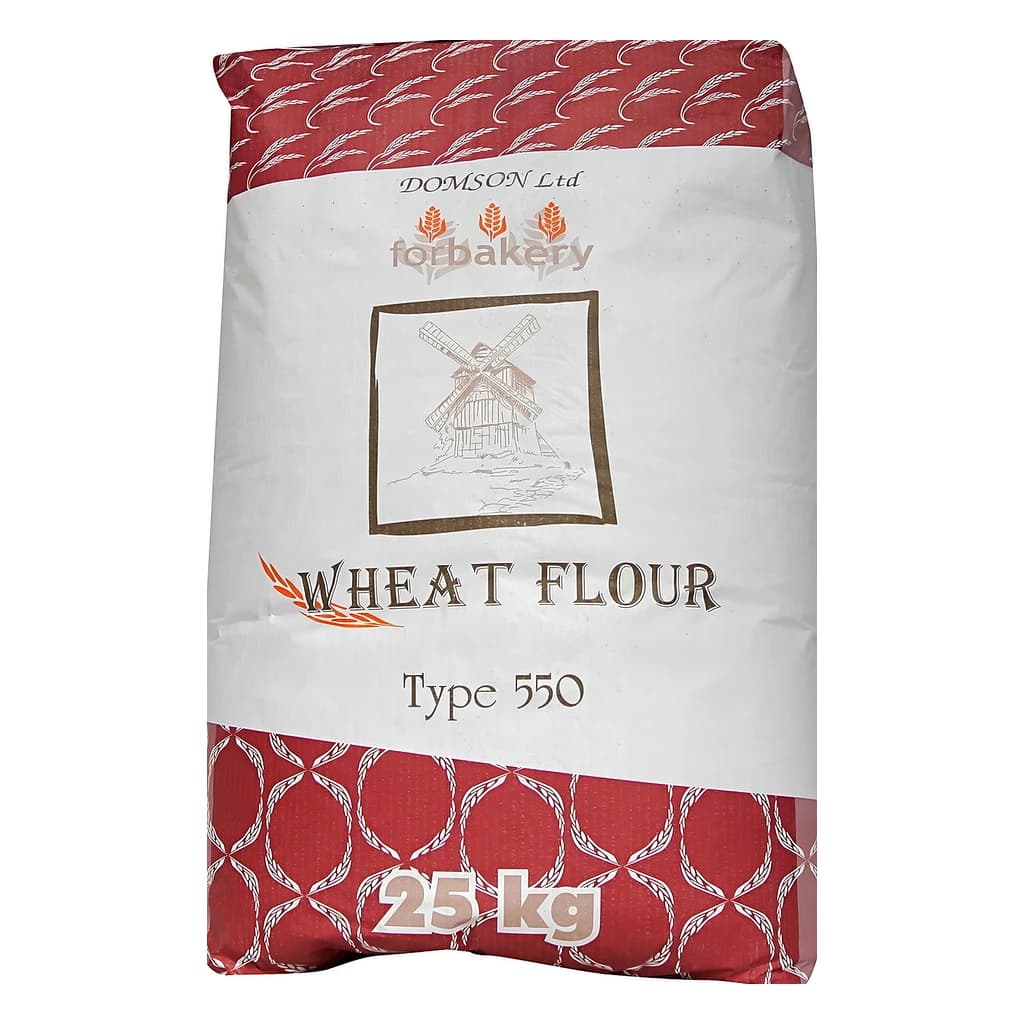
Wheat Flour Type G 550 25 kg

Rye Flour Type 720 20 kg
Baking Powder 5 kg
Komplexmłyn Wheat Flour Type 550 25 kg
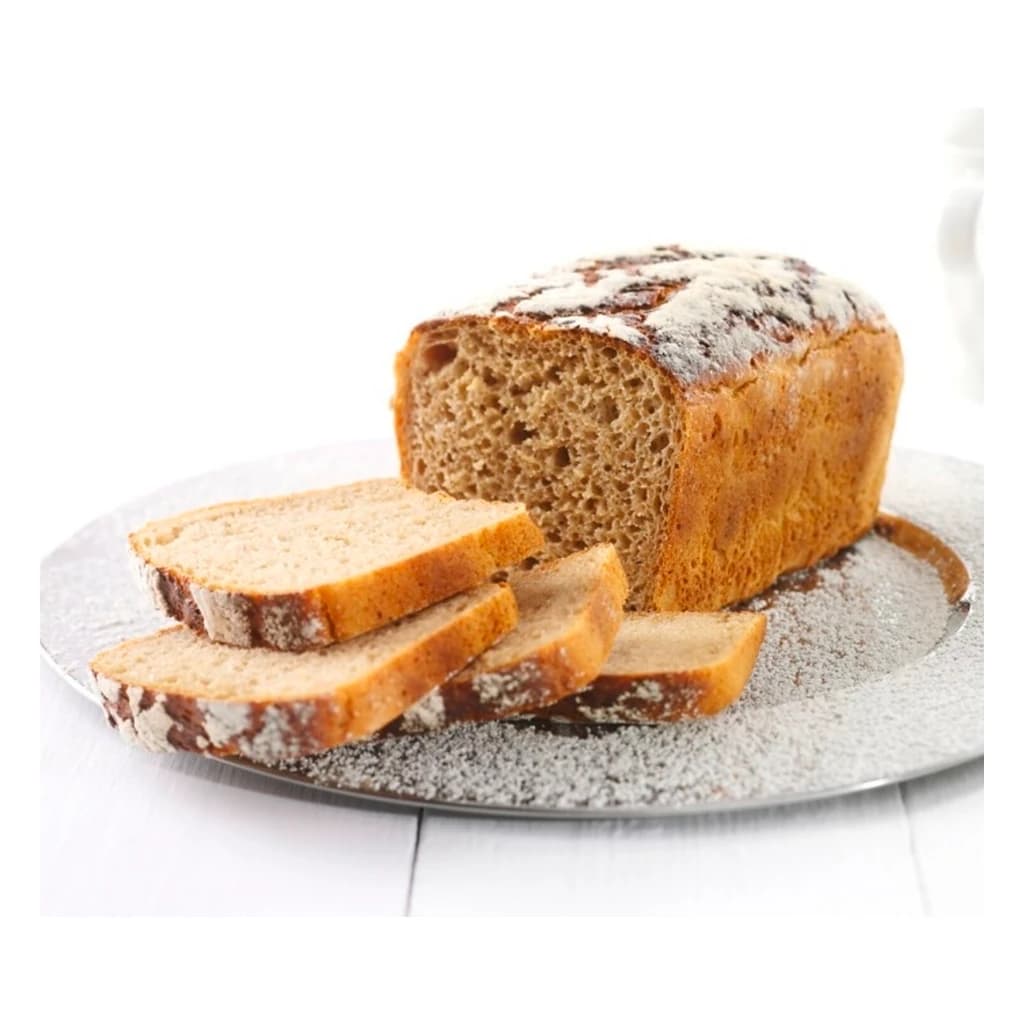
Optimax Free Bread Improver 20 kg
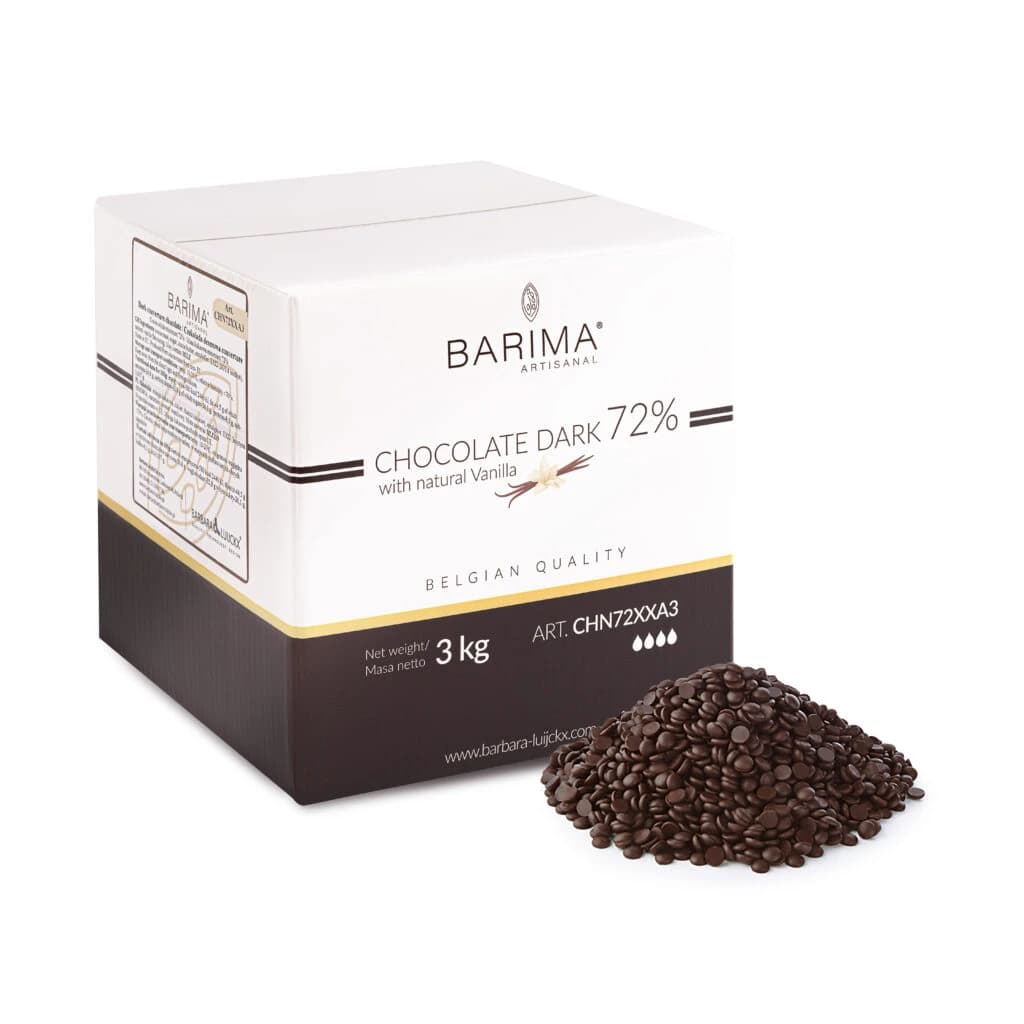
Barima Dark Couverture Drops 72% 3 kg
Unsalted Butter 82% 10 kg
Puff Pastry Margarine 80% 10 kg
Beneo BeneoPro VWG 75 Vital Wheat Gluten 25 kg
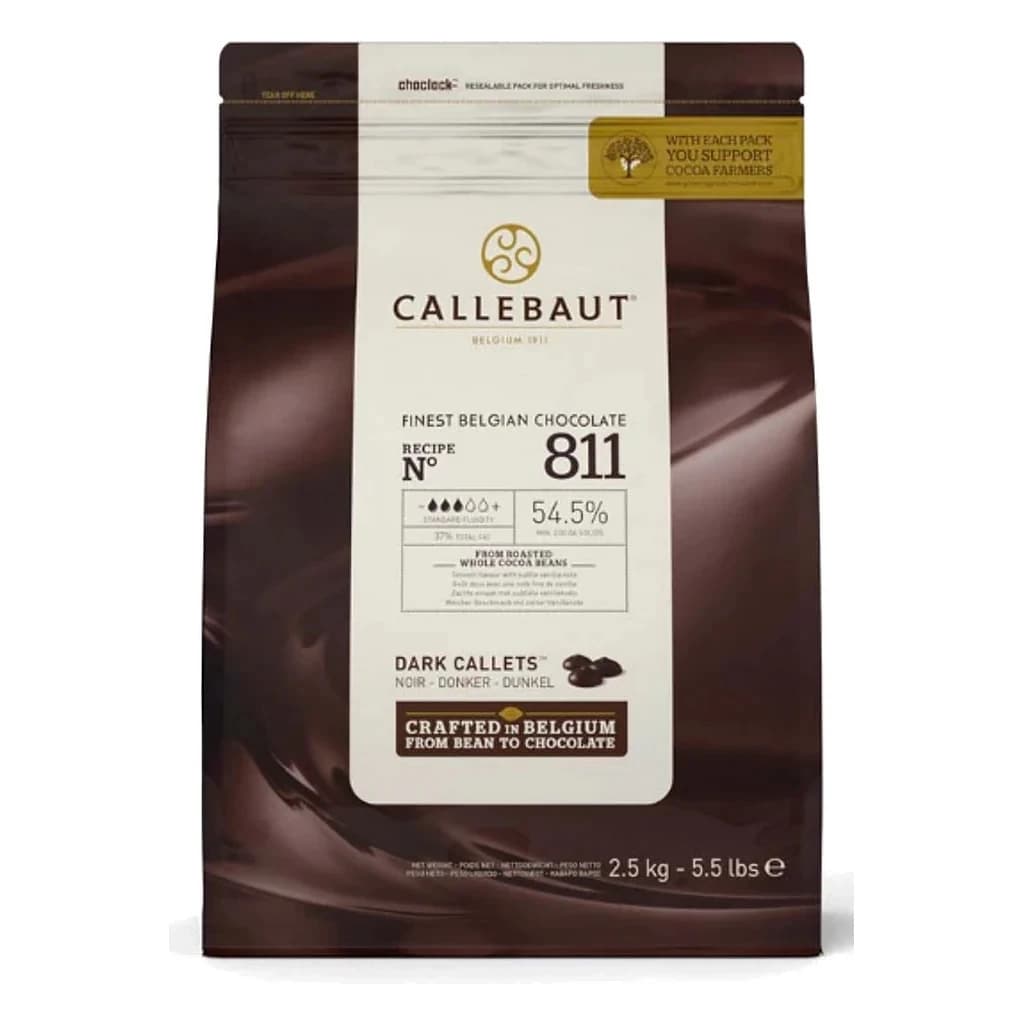
Callebaut 811 Dark Couverture Callets 54.5%
Zeelandia Arabesque Dark Couverture 58% 5 kg

Fresh Yeast Benevia 10 kg
Wholemeal Rye Flour Type 2000 40 kg
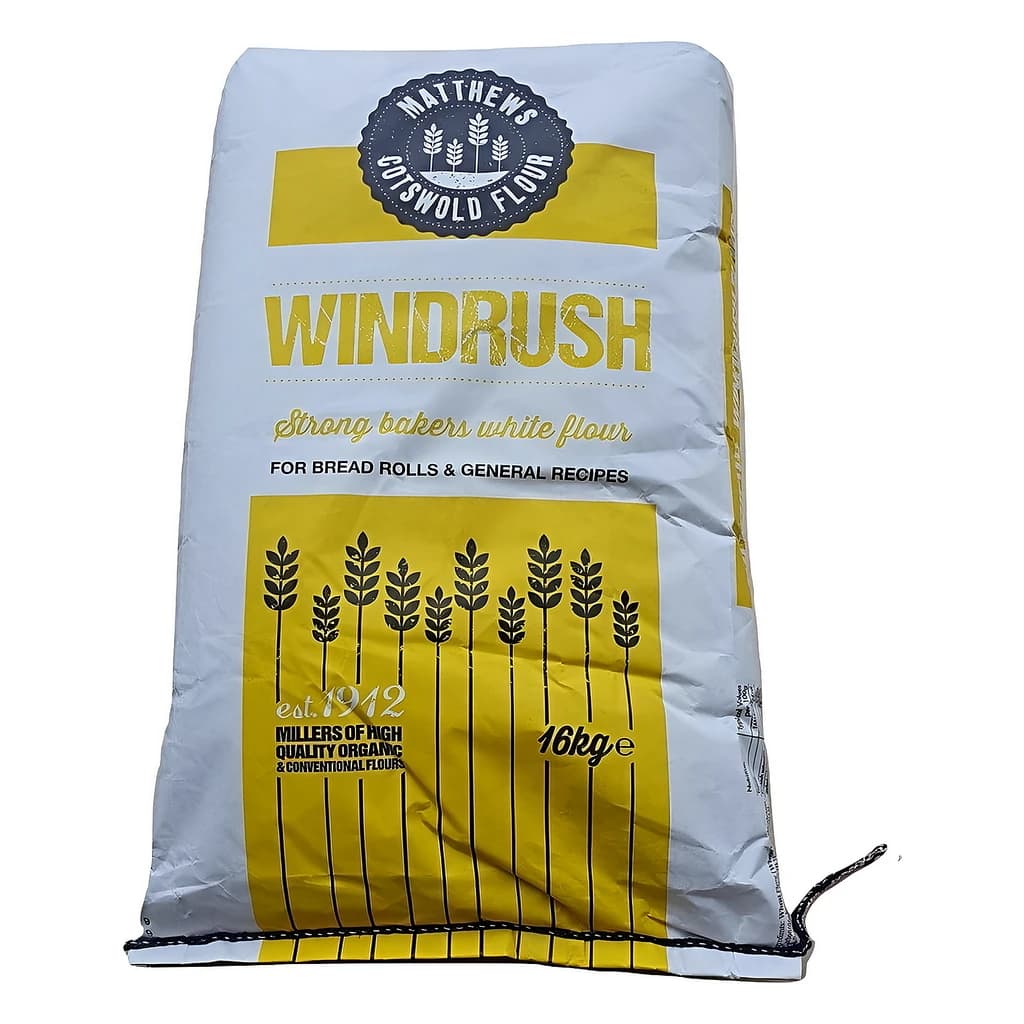
Windrush Strong White Bread Flour 16 kg
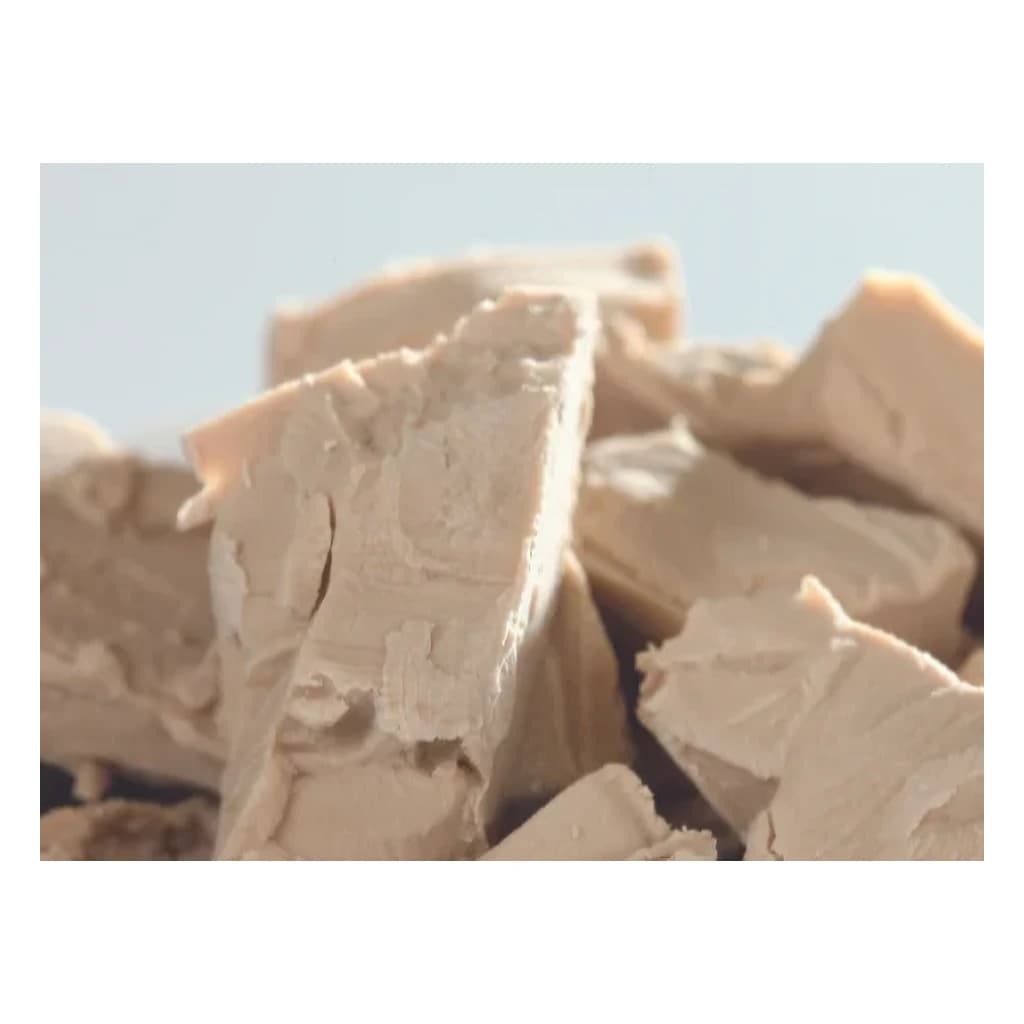
Fresh Yeast Traditional 12 kg
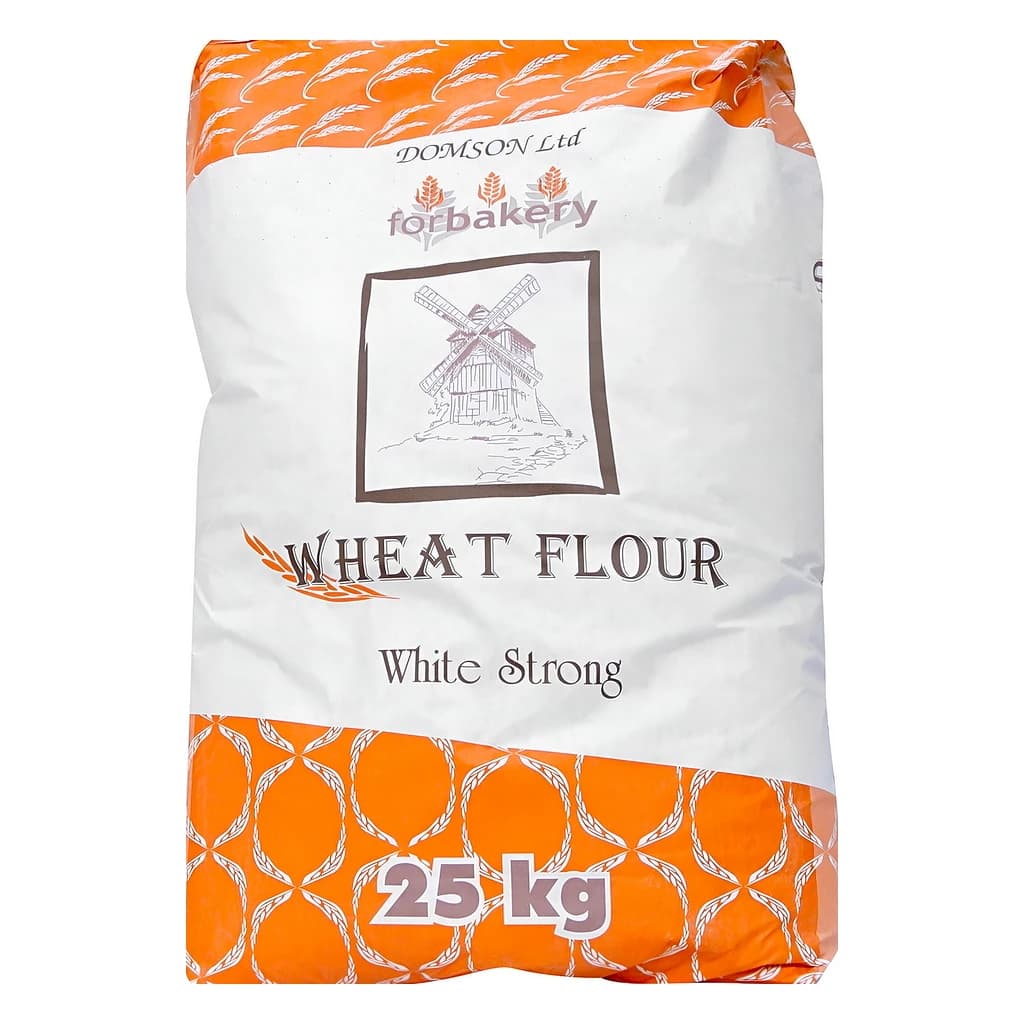
Domson White Strong Wheat Flour 25 kg
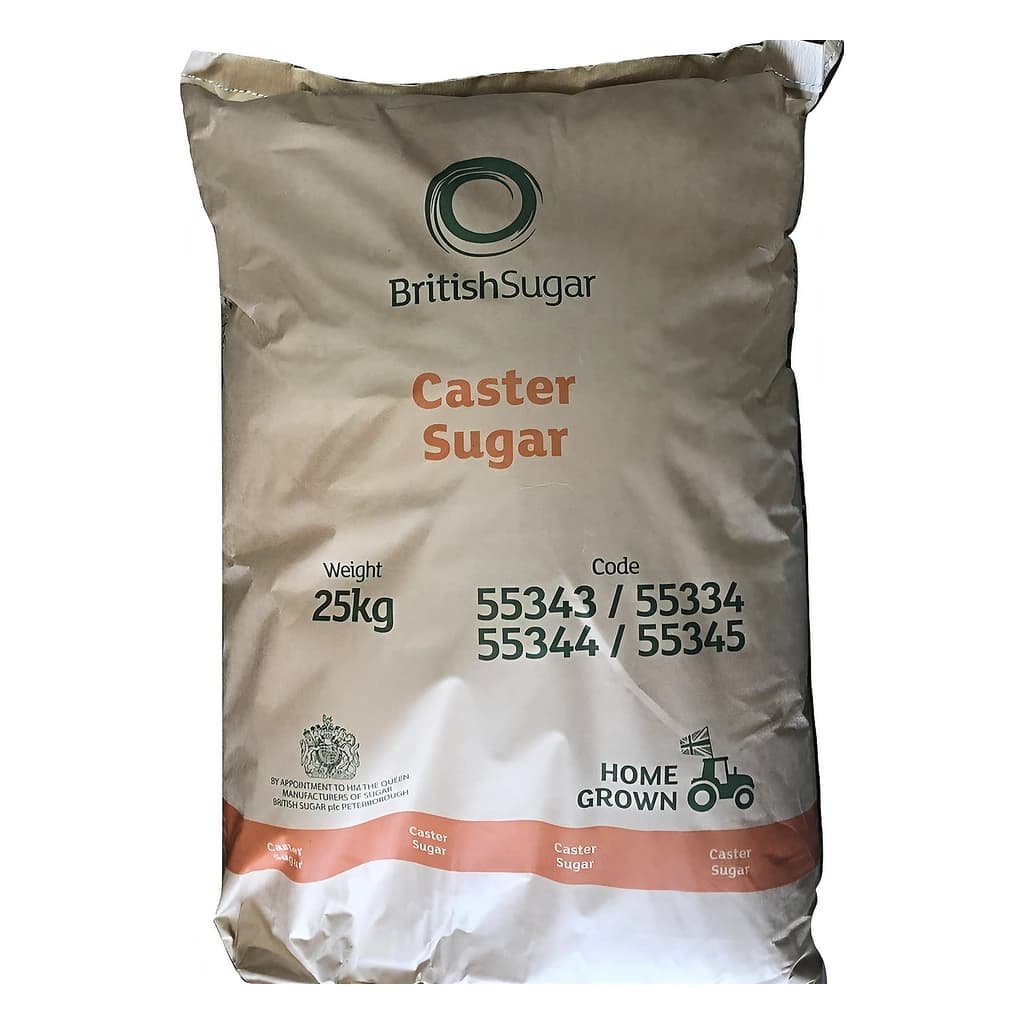
Caster Sugar 25 kg
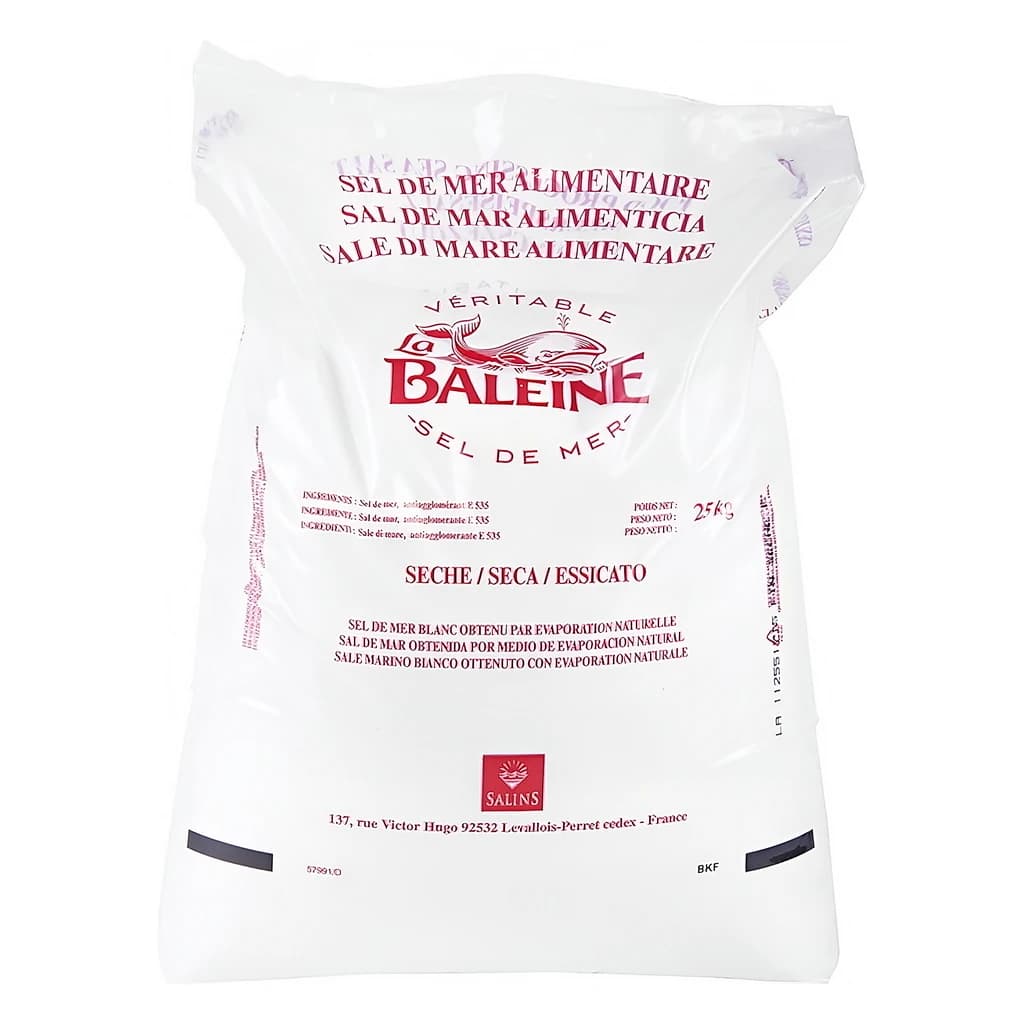
La Baleine Fine Sea Salt 25 kg
IREKS Soft Roll 7 Bread Improver 25 kg