The baking stage: oven spring, steam injection, starch gelatinisation, Maillard reaction and crust formation
A technically grounded guide for professional bakers to understand what physically and chemically happens once dough enters the oven. Covers the sequence of transformations — oven spring, starch gelatinisation, protein denaturation, steam injection, Maillard browning and crust formation — with verified temperature thresholds, baking-parameter tables derived from first-party Zeelandia and Puratos spec sheets, a bread-staling explanation, and a nine-fault baking fault table with causes and remedies.
1. What happens in the oven — the five-stage sequence
Baking transforms a soft, extensible, gas-filled dough into a rigid, sliceable, flavourful loaf. That transformation is not a single event but a cascade of overlapping physical and chemical processes, each temperature-triggered and each dependent on what the earlier stages have delivered.
Working from the outside of the loaf inward, five processes occur more or less simultaneously — but at different internal temperature zones:
- Gas expansion and oven spring — CO₂, ethanol vapour and water vapour expand as the dough heats, pushing the gluten network outward.
- Protein denaturation — Gluten proteins above ~70°C undergo irreversible denaturation, setting the crumb structure permanently.
- Starch gelatinisation — Starch granules above ~60°C absorb water, swell and rupture, forming the crumb matrix.
- Crust drying and Maillard browning — Once the crust surface temperature exceeds ~140–150°C and water activity falls, the Maillard reaction generates colour and the hundreds of volatile compounds responsible for bread's characteristic aroma.
- Moisture redistribution — Water migrates from the wet crumb toward the dry, hot crust and then evaporates from the surface.
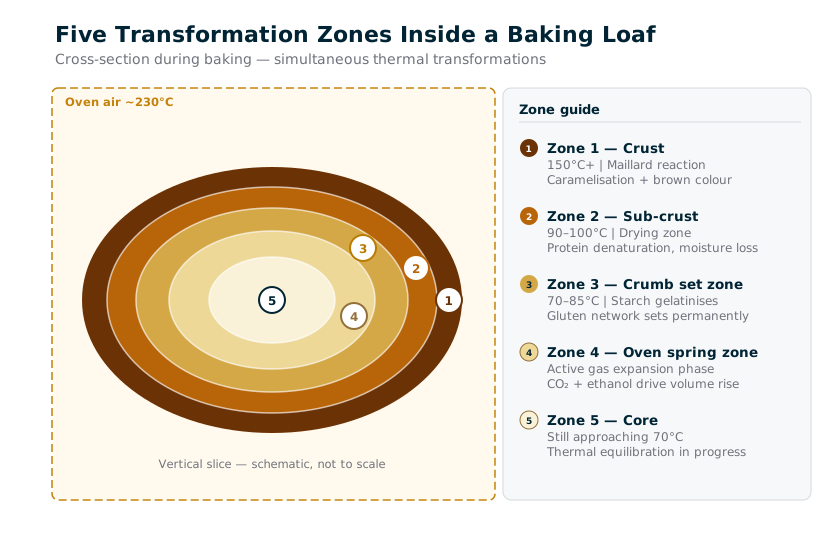 Annotated cross-section of a bread loaf baking, showing five temperature zones from Maillard-active crust to cool interior core
Understanding these stages, and the temperatures at which they occur, explains every baking parameter a baker controls: oven temperature, steam injection, baking time, and internal target temperature.
2. Oven spring: the final rise
2.1 The mechanism
Oven spring is the rapid, visible increase in bread volume that happens in the first few minutes of baking. It is driven by three overlapping effects:
- CO₂ expansion. Carbon dioxide dissolved in the dough and trapped in gas cells expands as temperature rises (gases approximately double in volume for every 30°C of heating, following Charles's Law). The CO₂ that yeast produced during fermentation and proof is still available at this stage.
- Ethanol vapourisation. Fermentation produces ethanol alongside CO₂. Ethanol boils at 78°C, but it begins vaporising — and contributing to gas expansion — well before that.
- Continued yeast activity. Yeast continue fermenting and producing CO₂ at an accelerating rate as the temperature rises, until yeast cells are killed at approximately 55–60°C internal temperature. The burst of yeast activity in the oven's early minutes is the main driver of final volume gain.
2.2 When oven spring stops
Oven spring ends when the gluten network can no longer stretch further because:
- Yeast is killed and CO₂ production ceases (at ~55–60°C).
- Gluten proteins denature and the network sets permanently at approximately 70–80°C internal temperature.
- Starch gelatinisation (onset ~60°C) increases the viscosity of the crumb matrix, reducing extensibility further.
The oven spring phase typically lasts the first 8–15 minutes depending on loaf size and oven temperature (small rolls: 8–10 min; full-sized loaves: up to 15 min). After this window, volume is fixed.
2.3 What controls the amount of oven spring?
The volume gained in the oven is largely predetermined by the dough entering the oven. The key factors are:
| Factor | Effect on oven spring | Action |
|---|---|---|
| Gluten strength | Stronger gluten stretches further under gas pressure | Use high-protein bread flour; add ascorbic acid |
| Proof state | Under-proofed = gas burst (may cause flying crust); over-proofed = gluten exhausted | Target correct proof |
| Dough temperature | 26–28°C target means yeast is active and gas well-distributed | Manage mixing water temperature |
| Scoring (slashing) | Scoring controls where the loaf expands; scores direct oven spring | Correct depth and angle for the style |
| Improver / ascorbic acid | Strengthened gluten holds more gas under expansion stress | Use appropriate improver (see A3 series) |
3. Steam injection: controlling the crust skin
3.1 Why steam is used
When dough enters a hot oven, the outer skin begins to dry and set almost immediately. If the skin sets too fast, it becomes rigid before the gas expansion inside has finished — the result is a restricted volume, a flying crust (hollow between crust and crumb), or a thick, leathery exterior.
Steam solves this by:
- Condensing on the cool dough surface. Steam in the oven condenses on the relatively cool dough (which enters at ~26°C), releasing its latent heat and keeping the surface layer moist and plastic. A moist, warm skin can stretch as the interior expands.
- Delaying crust formation. The condensed water prevents the surface from drying and setting until the interior gas expansion is complete. This allows maximum oven spring.
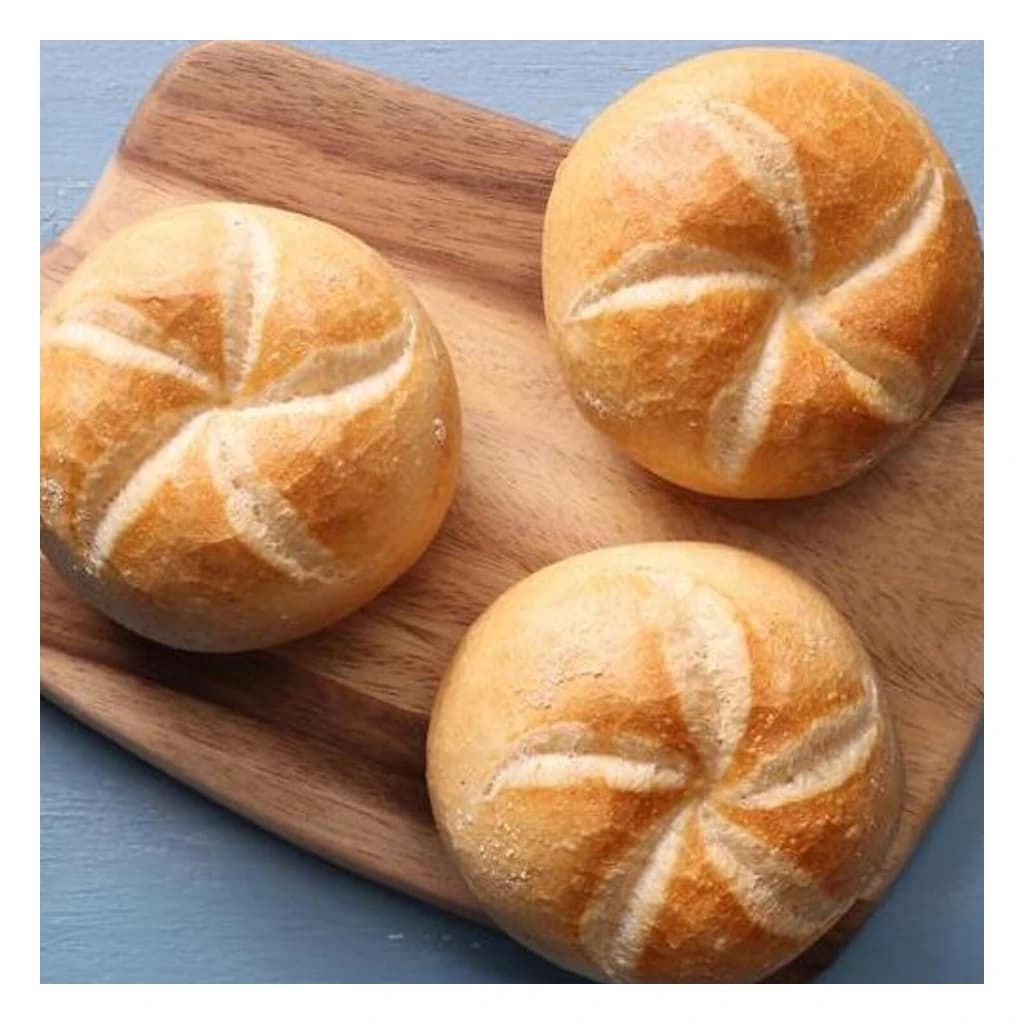
- Creating a glossy sheen. The gelatinised starch on the crust surface, kept moist by steam, produces the characteristic shine of a well-baked baguette or Kaiser roll.
3.2 When to vent the steam
Steam must be vented before the Maillard browning phase can proceed effectively. The Maillard reaction requires a dry crust surface — high water activity (wet crust) suppresses it. Once oven spring is complete (typically within the first 10–15 minutes for most bread types), the steam source is closed and the oven vented, allowing the crust to dry rapidly.
Fail to vent and the crust stays pale and moist (fault: pale crust, slow browning). Vent too early and the skin sets before expansion is complete (fault: restricted volume, thick crust).
3.3 Which products require steam?
From the Zeelandia spec sheets reviewed:
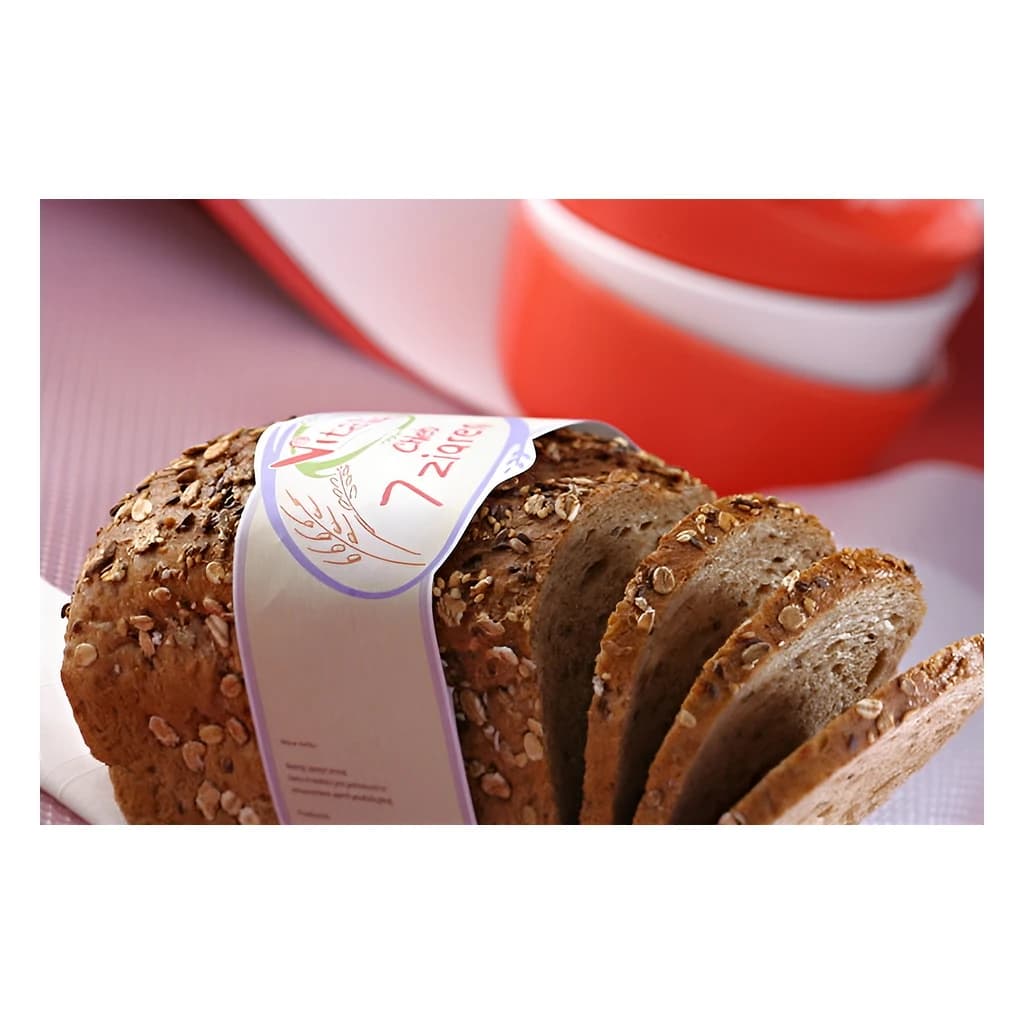
- Zeelandia Mix 7 Ziaren (7 Seeds): "Bake at 230–240°C for about 15 minutes with steam."
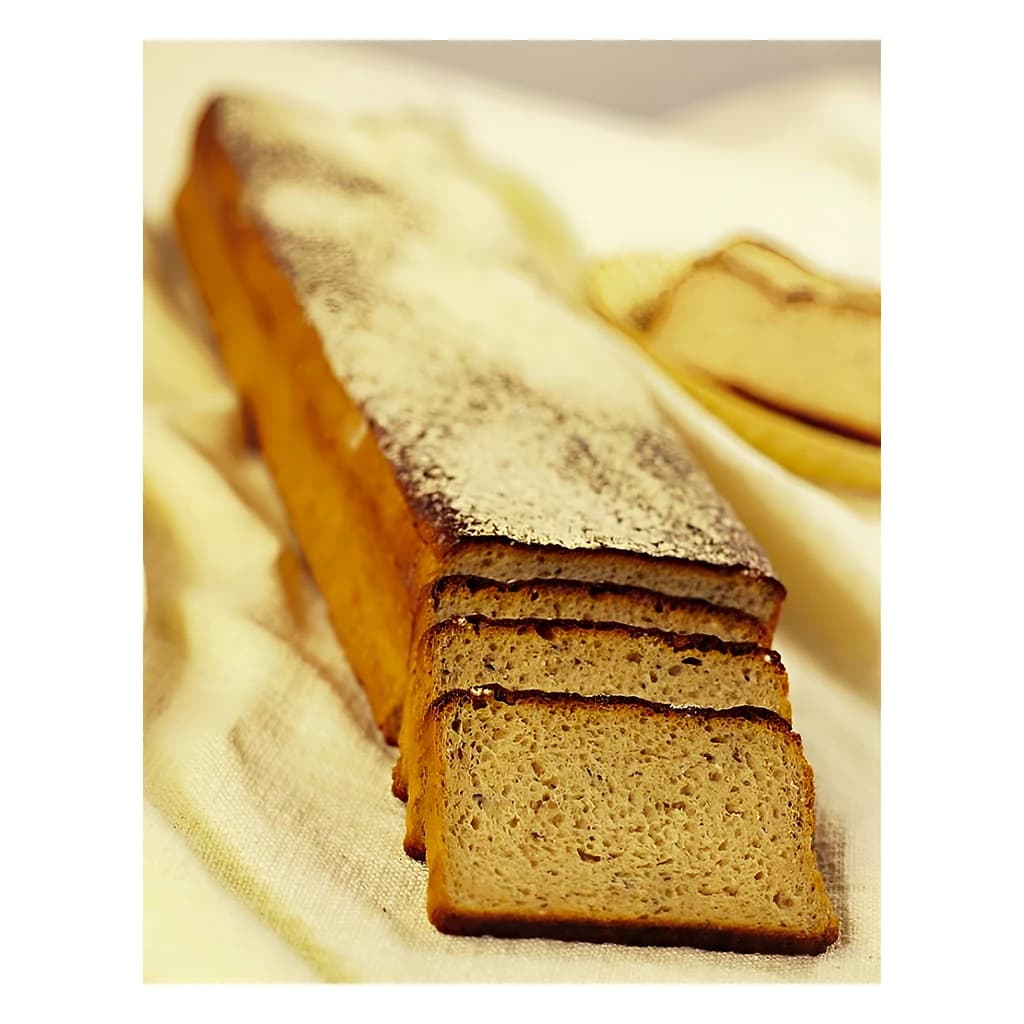
- Zeelandia BłoGo Free (100% rye tin bread): "Bake in temperature 235°C for 40 minutes with the steam."
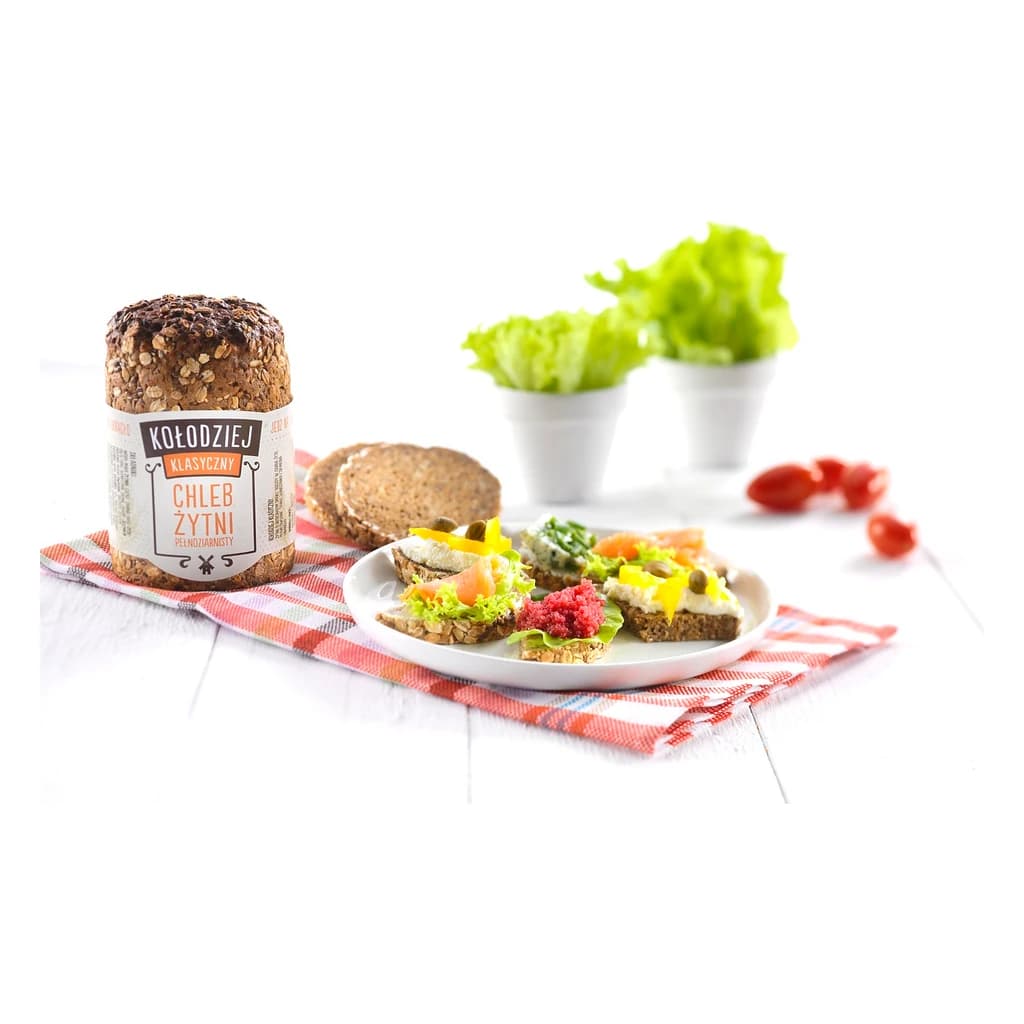
- Zeelandia Kołodziej z Orkiszem (spelt-rye-wheat): "Bake at 250°C getting down to 200°C with steam for the first few minutes of baking."
The rye tin bread (BłoGo Free) uses continuous steam throughout — rye breads develop a characteristic shiny, cracked top crust through steam and high water content in the dough; steam here also prevents the crust from cracking unevenly. The spelt bread uses steam only at the start and then reduces temperature — a classic European hearth-loaf technique.
Tin breads without exposed crust (e.g. sandwich loaves with a lid, or Pullman-style pans) generally do not require external steam because the tin traps the dough's own moisture.
4. Starch gelatinisation: building the crumb matrix
Wheat flour is approximately 70–75% starch by weight. When dough enters the oven and the internal temperature climbs, the starch granules undergo gelatinisation — one of the most important structural transformations in bread.
4.1 The process
Starch exists in two polymeric forms: amylose (linear chains) and amylopectin (branched chains). Both are packed inside granules in a partially crystalline structure. At room temperature these granules absorb limited water and maintain their granular shape.
As temperature rises above approximately 60°C, the crystalline order breaks down: granules absorb water rapidly, swell to many times their original volume, and eventually rupture. The released amylose and amylopectin leach out into the surrounding water, forming a viscous, gel-like network. By approximately 85°C, gelatinisation is substantially complete under typical bread-dough conditions — though in excess-water conditions, full amylopectin solubilisation may require temperatures approaching 90°C.
This gel — now the crumb — sets as the bread cools and the starch chains partially re-organise. It is what gives bread its characteristic soft, cohesive texture.
4.2 Interaction with gluten and water
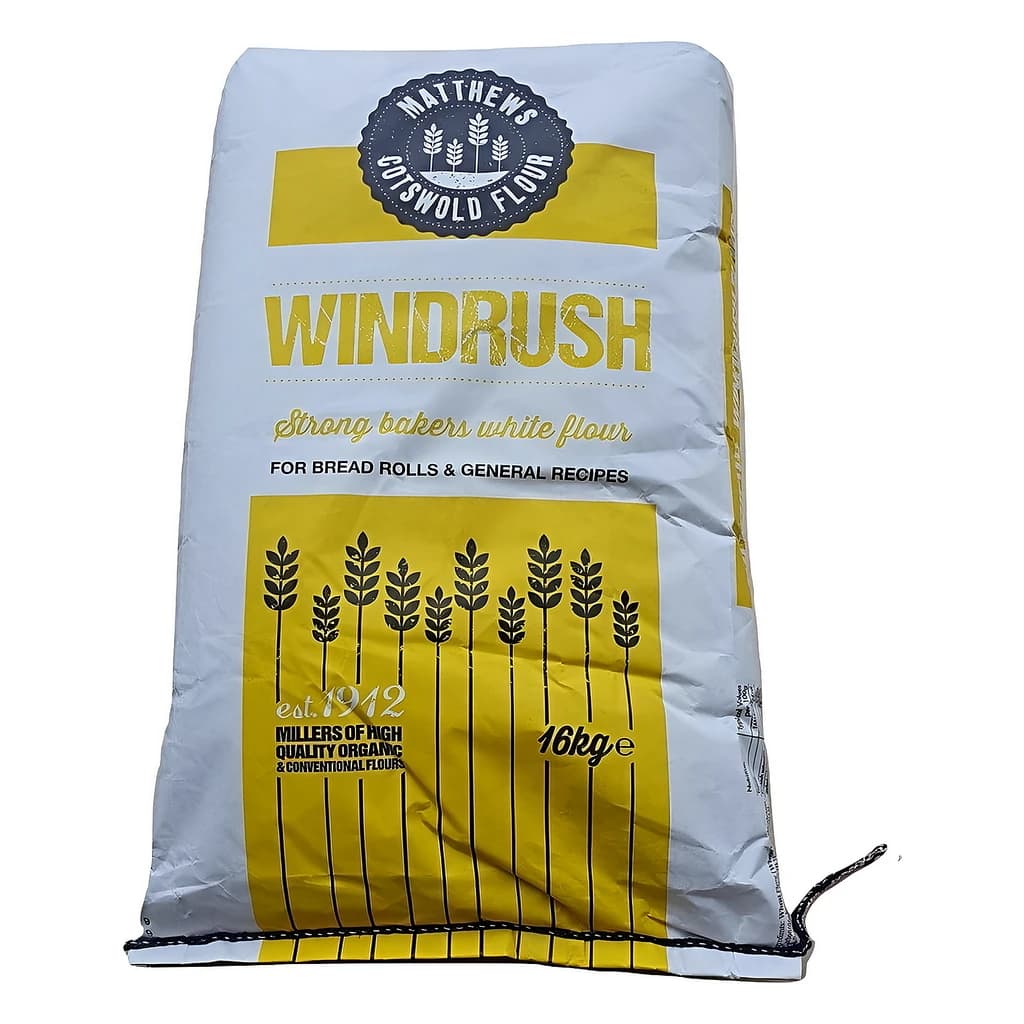
Starch and gluten compete for water in dough. High-absorption flours (like Windrush Strong White Bread Flour at 55–61% water absorption ) can supply enough water for both gelatinisation and gluten hydration. In low-water-addition formulas, competition can raise the starch gelatinisation onset temperature slightly.
Improvers containing xylanase (hemicellulase enzyme) release water bound to arabinoxylan (pentosan) fibre chains in the flour, effectively making more water available for both starch and gluten. This is one reason xylanase improves loaf volume in wholemeal and rye breads.
4.3 Why under-baking is detectable by internal temperature
If bread is removed from the oven before the internal temperature reaches approximately 88°C, starch gelatinisation is incomplete. The result: a gummy, sticky crumb that does not slice cleanly and that stales extremely rapidly (ungelled starch retrogrades faster than gelled starch). This is why internal temperature probes are used for quality control, particularly in large-format loaves where surface colour is an unreliable indicator of internal state.
5. Protein denaturation and crumb set
While starch gelatinisation builds the gel matrix, gluten protein denaturation provides the structural framework that holds the crumb open.
During mixing and fermentation, the baker invested significant energy and time in building a network of gluten proteins — elastin-like glutenin for strength, gliadin for extensibility — crosslinked by disulphide bonds. Ascorbic acid and DATEM reinforce those bonds.
This gluten network is still flexible (elastic and extensible) right up to the point of protein denaturation. Above approximately 70–80°C, the protein chains unfold and re-aggregate irreversibly. The foam-like, gas-filled structure that fermentation and oven spring built is now permanently rigid.
This is why:
- A well-proofed, well-developed dough produces an open, regular crumb: the gas cells are large and evenly distributed, and the gluten film around them sets them in place.
- A poorly developed dough (under-mixed or weakly formulated) produces dense crumb: the gluten film was too weak to hold large gas cells open, so they collapsed before protein set locked them in position.
6. The Maillard reaction: colour, aroma and crust
The Maillard reaction is the defining chemical transformation of baking. It produces the golden-to-dark-brown colour, the complex toasted aroma, and many of the flavour compounds that distinguish freshly baked bread from a flat, pale dough piece.
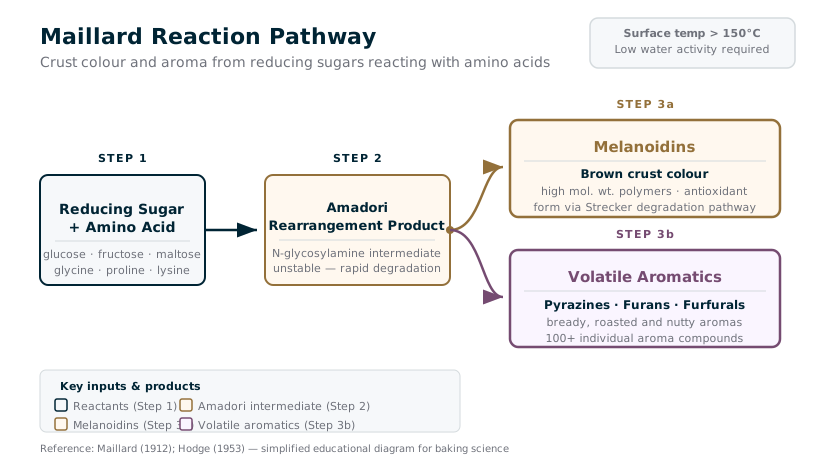 Simplified diagram of the Maillard reaction pathway from reducing sugars and amino acids to crust colour (melanoidins) and aroma (pyrazines, furans)
6.1 The chemistry
The Maillard reaction is a cascade of non-enzymatic reactions between:
- Reducing sugars (glucose, fructose, maltose from starch enzyme activity; dextrose added in the formula; residual fermentable sugars not consumed by yeast)
- Amino acids and proteins (from flour protein; available amino groups on peptide chains)
At temperatures above approximately 140–150°C and low water activity (dry surface), these molecules react through a series of intermediate products (Amadori rearrangement products) to eventually produce:
- Melanoidins — the large, brown-coloured polymers that give the crust its colour from golden to dark amber.
- Volatile aromatic compounds — over 300 volatile compounds have been identified in bread crust, including pyrazines (nutty, roasted notes), furans (caramel), furfural (almond-like) and acetaldehyde.
6.2 What controls Maillard intensity?
| Factor | Effect | Practical lever |
|---|---|---|
| Crust surface temperature | Reaction rate doubles roughly every 10°C above onset | Oven temperature setting |
| Water activity on crust surface | Must be low (dry) for reaction to proceed | Steam venting; not over-proofing (wet surface) |
| Reducing sugar availability | More residual sugars → deeper colour | Add dextrose (0.5–2%), diastatic malt (0.5–1%) |
| Amino acid availability | More free amino groups → more Maillard products | Fermentation length (longer ferment releases more peptides); flour protein content |
| Sourdough / acidity | Low pH (acid dough) somewhat slows Maillard vs neutral dough | Puratos: extended fermentation adds amino acid precursors, partly compensating |
| Improver malt content | Diastatic malt adds both enzyme activity (releasing sugars) and malt colour | Use diastatic malt improvers or separate malt flour addition |
6.3 Maillard vs caramelisation
A common confusion: caramelisation is a separate, purely thermal process — the thermal decomposition of sugars at temperatures above approximately 160°C for sucrose, lower for fructose. It does not require amino acids and produces a different set of flavour compounds (caramel, butterscotch, bitter notes at high temperatures).
Both reactions occur simultaneously on the bread crust surface, particularly on dark-crusted ryes and heavily scored sourdoughs that reach very high surface temperatures. Caramelisation contributes to the extra bitterness and deep colour of a very dark rye crust.
6.4 Easy Baguette SG and Maillard optimisation
The Puratos Easy Baguette SG concentrate (used at 6% on flour weight ) is specifically designed for crusty baguette-style products. Its formulation includes:
- Dextrose (5–10%) — a ready reducing sugar, immediately available for Maillard browning without relying on residual yeast fermentation
- Barley malt flour (5–10%) — provides amylase activity to release more fermentable sugars from starch, plus natural malt colour contribution
- Dry rye sourdough (5–10%) — acidified dough with organic acids and extra amino acid pools from sourdough fermentation, enriching the Maillard substrate
Together these give a crusty continental product its characteristic golden crust, even under fast production conditions where long fermentation would normally be required to build the same Maillard substrate.
6.5 Regulatory note: acrylamide
Food-safety flag — EU Regulation 2017/2158 / UK retained equivalent. The Maillard reaction does not only produce desirable colour and aroma. At temperatures above approximately 120°C — well below the visual onset of browning — free asparagine (an amino acid abundant in wheat and rye flour) reacts with reducing sugars to form acrylamide, a compound classified as a probable human carcinogen (IARC Group 2A). Acrylamide formation accelerates significantly above 150°C and is therefore a direct consequence of every bake that achieves a browned crust.
EU Regulation 2017/2158 (OJ L 304, 22.11.2017) establishes benchmark levels for acrylamide in food for food business operators. For bread the benchmark is: 50 µg/kg for soft bread, rolls and similar products. Food business operators are required to implement acrylamide mitigation measures under their HACCP plans.
Practical mitigation for bread production:
- Use only the minimum dextrose or diastatic malt needed for adequate crust colour; do not over-dose reducing sugars.
- Avoid over-baking — the longer the crust temperature exceeds 150°C, the greater the acrylamide formation.
- Monitor crust colour as a proxy indicator; very dark crust = elevated acrylamide risk.
- Whole-grain, high-bran and seed-containing recipes have higher free asparagine than white flour and therefore carry elevated acrylamide risk at equivalent baking temperatures.
The use of dextrose and diastatic malt recommended in section 6.2 as Maillard levers should be balanced against acrylamide risk, especially for the seed and rye products in this catalogue where both free asparagine and reducing sugar levels are higher.
7. Crust formation: the physics of the outer layer
The crust is not simply the browned exterior — it is a structurally distinct zone with dramatically different moisture content, texture and mechanical properties from the crumb.
7.1 Moisture profile
During baking, the crust surface temperature exceeds 150°C while the crumb core is still below 100°C. This temperature gradient drives a moisture gradient:
- Crumb: approximately 40–45% moisture (wet weight basis)
- Crust at end of bake: approximately 10–15% moisture (single-source estimate, confidence low)
- Crust immediately after cooling: 15–20% as moisture equilibrates
This moisture difference is the reason crust goes leathery within 1–4 hours after packaging — moisture migrates from the wet crumb toward the dry crust, softening it. This is an unavoidable physical equilibration in packaged bread; it is not a fault, though excessive crust softening within an hour indicates insufficient baking.
7.2 Scoring (slashing)
Scoring a loaf before baking serves two functions:
- Controlled expansion: It provides a preferred path for oven spring, allowing the baker to direct where the loaf opens up (the "ear" or grigne on a baguette).
- Crust management: The scored opening allows steam to escape progressively, preventing random splitting.
Score depth, angle and pattern are product-specific and form a major part of the visual identity of artisan breads (the grigne on a baguette; the diamond grid on a Kaiser roll).
7.3 Deck ovens vs tunnel ovens
For professional bakeries:
-
Deck ovens allow direct contact of the dough with a hot stone or refractory deck. The direct conductive heat from the deck produces a thicker, crisper base crust. Preferred for artisan hearth breads, baguettes and sourdough loaves.
-
Tunnel ovens (band ovens) use convective airflow and radiant heat; used in high-volume industrial bread production (CBP). Product sits on a moving mesh belt.
-
Rack ovens use forced convection around trays — versatile, good for rolls, morning goods, and smaller artisan production.
In the UK, approximately 80% of commercially produced bread uses the Chorleywood Bread Process (CBP) developed in 1961, primarily baked in tunnel or band ovens.
8. The Chorleywood Bread Process: industrial baking at scale
The Chorleywood Bread Process (CBP), developed in 1961 at what is now Campden BRI, revolutionised commercial bread making by replacing 2–3 hours of bulk fermentation with 3–5 minutes of intensive mechanical dough development.
Key parameters:
- Mechanical work input: Minimum 11 Wh/kg of dough — typically delivered in a high-speed mixer. This mechanical energy replaces the gluten-strengthening that fermentation time would normally provide.
- Ascorbic acid: Essential to CBP — without it, gluten does not strengthen fast enough to trap the gas in the high-speed mixer and oven.
- Hard fat: Small addition of hardened fat (or equivalent) is part of the classic CBP formula for crumb softness and gas retention.
- Baking temperatures: 220–240°C in tunnel ovens for standard tin loaves.
CBP breads ferment minimally, which limits their flavour complexity compared to long- fermented or sourdough products. Malt and added flavour components partially compensate. The trade-off is speed, consistency and very high production volumes.
The bread improvers in the Domson catalogue — particularly DATEM-containing powders used at 1–2% on flour — are the direct functional heirs of CBP's original formula.
9. Baking parameters: what the spec sheets tell us
The table below summarises baking conditions from first-party Zeelandia and Puratos product specifications. These are manufacturer- recommended parameters for the specific product application — actual bakery parameters will depend on oven type, piece weight and local flour specification.
| Product / bread type | Temp (°C) | Time (min) | Steam? | Source |
|---|---|---|---|---|
| Kaiser rolls — Zeelandia Kaiser MXI improver | 240 | Weight-dependent | Not specified | Zeelandia spec sheet |
| 7 Seeds bread rolls — Zeelandia Mix 7 Ziaren | 230–240 | ~15 | Yes (throughout) | Zeelandia spec sheet |
| 100% rye tin bread — Zeelandia BłoGo Free | 235 | ~40 | Yes (throughout) | Zeelandia spec sheet |
| Spelt-rye-wheat tin bread — Zeelandia Kołodziej z Orkiszem | 250→200 | ~50 | Yes (first few min) | Zeelandia spec sheet |
| White tin/sandwich (standard reference) | 205–220 (conventional); up to 230 for CBP tunnel ovens | 20–30 | No | BAKERpedia |
| Baguette / crusty (standard reference) | 230–250 | 20–25 (250g) | Yes (first 5–8 min) | BAKERpedia |
Three observations from this data:
-
Dough temperature across all Zeelandia products is 26–28°C. This is the universal target for yeast-raised breads: warm enough for active fermentation in proof, cool enough not to over-accelerate gas production during moulding.
-
Rye breads bake longer at similar temperatures. The 100% rye BłoGo Free requires 40 minutes at 235°C because rye dough has higher water content and density; heat penetration to the core is slower. The spelt-rye-wheat (50% mix) requires 50 minutes. Lean white rolls at 230–240°C are done in ~15 minutes.
-
Falling oven temperature for large loaves is a professional technique. The Kołodziej z Orkiszem spec instructs "bake at 250°C getting down to 200°C" — a high initial temperature drives oven spring and crust formation, then a lower temperature allows the (slow-conducting) interior to reach target temperature without burning the crust.
Allergen and regulatory note for products in this table [EU Regulation 1169/2011; UK Food Information Regulations 2014]:
- Zeelandia Kaiser MXI: contains soy flour (major allergen — soya, Annex II allergen #6) and wheat flour; DATEM (E472e) must be declared by name and E-number on the improver label.
- Zeelandia Mix 7 Ziaren (7 Seeds): verify the seeds blend for sesame content — sesame is a major allergen in EU (Annex II #8) and UK (confirmed post-2021); wheat flour present. High-temperature baking (230–240°C) with whole seeds raises acrylamide risk (see section 6.5).
- Zeelandia BłoGo Free: 100% rye bread mix — rye is a gluten-containing cereal (major allergen Annex II #1 group). This product is NOT gluten-free and must not be presented as suitable for coeliacs, notwithstanding the "Free" in the product name. Allergen declaration for gluten (rye source) is mandatory on finished product.
- Zeelandia Kołodziej z Orkiszem: contains spelt, rye flour and wheat flour — all three are gluten-containing cereals and must each be declared individually; EU Regulation 1169/2011 requires that spelt be named explicitly ('wheat (including spelt)') in the allergen declaration.
- Puratos Easy Baguette SG: contains wheat flour, dry rye sourdough and barley malt flour — wheat, rye and barley are all gluten-containing cereals requiring declaration. Milk, egg and soya are cross-contamination risk only (per Puratos spec sheet ).
Food business customers making finished bread products with these mixes must carry compliant allergen declarations on finished packaging and/or at point of sale. HACCP plans should include allergen cross-contact controls for each product category.
10. Bread staling: the post-bake challenge
Good baking only wins half the battle. After the oven, the loaf immediately begins the journey toward staleness.
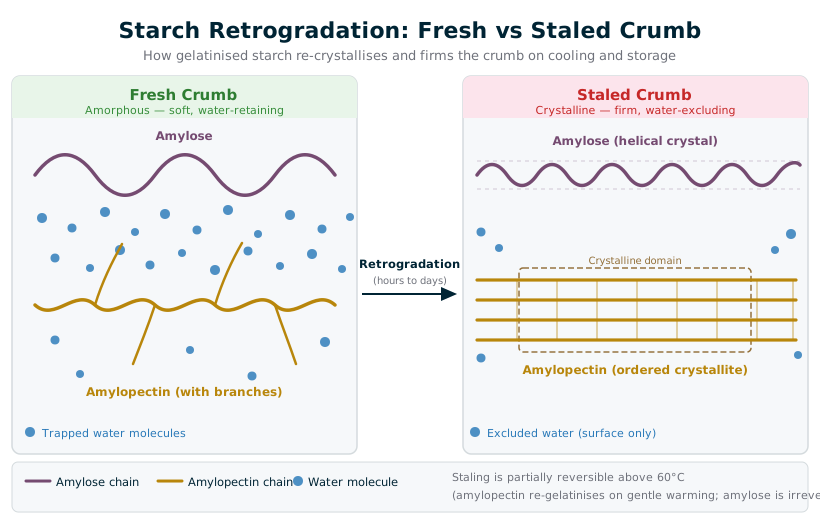 Diagram comparing fresh bread crumb (amorphous gelatinised starch) with stale crumb (retrograded crystalline starch), illustrating loss of softness
10.1 The mechanism: starch retrogradation
Staling is primarily driven by starch retrogradation — the re-crystallisation of amylose and amylopectin chains that were gelatinised during baking.
In the oven, starch gelatinisation dispersed the ordered crystalline structure of the starch granules into an amorphous gel. After baking, starch chains begin re-organising:
- Amylose retrogrades rapidly — it begins forming rigid double helices within the first 1–2 days. This is the primary cause of early (within 24–48 hours) crumb firming.
- Amylopectin retrogrades more slowly — the process takes days to weeks and is responsible for the ongoing firming in packaged bread over its shelf life.
10.2 Temperature effects on staling rate
Staling is not uniform across temperatures:
- 0–10°C (refrigerator): Staling is accelerated. The refrigerator temperature range is optimal for amylopectin retrogradation kinetics. — This is why refrigerated bread goes stale faster than room-temperature bread.
- Room temperature (18–22°C): Standard staling rate.
- Freezing (below −18°C): Staling is effectively halted because molecular mobility is too low for retrogradation. Bread frozen fresh retains most of its crumb texture when thawed.
10.3 Anti-staling interventions
Two approaches dominate commercial bread anti-staling:
Enzyme-based (clean label): Maltogenic amylase cleaves amylopectin side chains at specific points, inserting structural irregularities that prevent the tight re-crystallisation that causes staling. This intervention occurs during baking and post-baking cooling.
Emulsifier-based: Mono- and diglycerides (MDG, E471) form inclusion complexes with amylose chains during starch gelatinisation, physically blocking the helical stacking that drives amylose retrogradation.
IREKS Crumb Softener (containing SSL E481 at 1.5% dosage) and similar products in the Domson catalogue address this directly at the formulation stage. [cross-reference: A3-what-is-a-bread-improver — section 4.4]
11. Common baking faults, causes and remedies
See the fault table below for the full nine-fault table with diagnostic checks for each. The most frequent production issues and their baking-stage causes are:
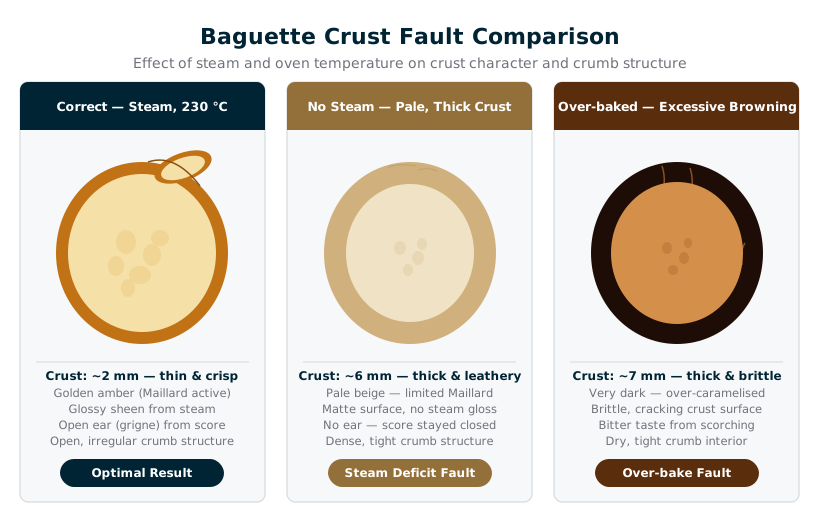 Three baguette cross-sections comparing correctly steam-baked crust, no-steam pale crust, and over-baked dark crust
Low oven spring / dense crumb: The most common baking fault. Can originate pre-oven (under-proof, over-proof, weak gluten development) or in-oven (oven temperature too low — gas escapes before crumb sets). Check internal temperature of recent loaves with a probe. If target temperature is reached but crumb is still dense, the fault is in dough preparation, not in the oven.
Flying crust: Hollow gap between crust and crumb is the diagnostic signature of under-proofing. Gas expansion in the oven is too violent for the over-constrained gluten; the crust separates from the crumb during the explosive oven spring. Extend final proof.
Pale, insipid crust: Insufficient reducing sugars; oven temperature too low; steam left on too long (wet crust suppresses Maillard). Add dextrose or diastatic malt. Check oven calibration. Vent steam after oven spring phase.
Rapid staling (crumb firms within 24–48 hours): Insufficient anti-staling provision. Consider adding a maltogenic amylase improver or an MDG-containing crumb-softener product.
Crust softens on cooling (packaged product): Moisture migration from crumb to crust is unavoidable in packaged bread. Allow bread to cool and equilibrate fully (minimum 60–90 minutes) before sealing. The faster the crust softens, the more likely the bread was packaged too hot or too early.
12. Putting it together: a production checklist
A baker who understands the five stages can use them as a diagnostic framework for any bread type:
-
Dough temperature at dividing: 26–28°C for standard yeast-raised breads. This is consistent across every Zeelandia spec sheet reviewed.
-
Final proof: Correct proof state determines oven spring. Under-proof → flying crust; over-proof → collapsed crumb. Proof to the recipe time and temperature unless adjusting for different ambient conditions.
-
Oven temperature calibration: Check oven thermostats with an independent probe regularly. A 15°C deviation in oven temperature will materially change browning and internal temperature progression.
-
Steam injection: Use for crusty products; vent after oven spring is complete (8–12 minutes for most rolls and small loaves). Continuous steam for rye tin breads.
-
Internal temperature probe: Lean crusty bread: 96–99°C (BAKERpedia: 93–96°C; full span across sources: 93–99°C). Enriched soft bread: 88–91°C. Under-baked bread has gummy crumb; over-baked bread has dry crumb and excessively thick crust.
Note for food businesses: The 88–91°C internal temperature target for enriched breads (brioche, soft sandwich loaves) is a baking-quality guideline sourced from King Arthur Baking. For products containing raw eggs or unpasteurised dairy that are sold to consumers, food business operators should validate that their specific recipe, piece weight and bake profile achieves adequate pasteurisation within their HACCP plan. UK FSA and EFSA guidance confirms that Salmonella in eggs is eliminated at 70°C core temperature sustained for two seconds or equivalent; at 88°C core temperature reached during a standard bake, this threshold is exceeded for all practical enriched-bread formats. Formal HACCP documentation is still recommended for commercial food businesses.
- Cooling before packaging: At least 60–90 minutes at ambient temperature before sealing. Packaging hot bread traps steam and softens the crust prematurely; it also increases the risk of mould in packaged products.
Coverage notes and gaps
This article is solid on:
- Temperature thresholds for all five in-oven transformations (multi-source where available; single-source figures noted in verification block above)
- Baking parameters from four first-party Zeelandia spec sheets and one Puratos spec (high confidence; single-source — no independent cross-check possible for proprietary manufacturer documents)
- Starch retrogradation and staling mechanism (multi-source)
- Maillard reaction principles and practical levers (multi-source)
- Nine-fault baking fault table (IREKS Compendium + BAKERpedia, two sources)
This article is thin on:
- Quantitative crust moisture data (the 10–15% crust moisture figure is single-source Modernist Cuisine, confidence low)
- Tunnel oven vs deck oven detailed parameters — only qualitative description given; no first-party tunnel oven data available from the spec sheets in this catalogue
- Rotary/impingement oven baking (not covered — relevant for pizza and flatbread)
- Effect of water vapour pressure and oven humidity on bread baking in detail
- Scientific literature on staling kinetics (only industry sources, not peer-reviewed papers — a follow-up pass using IntechOpen or PMC/NCBI would improve this)
Follow-up recommended: read BAKERpedia Staling (secondary peer-reviewed sources cited there) and IREKS Compendium section on baked-goods cooling for the crust moisture equilibration data.
Figures
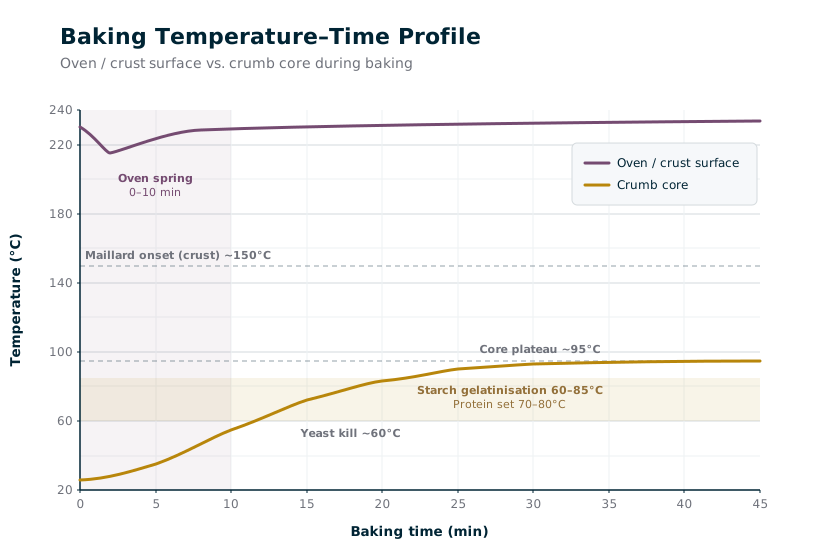 Graph showing how crust surface temperature and crumb core temperature rise during baking, with annotation of key transformation points
Baguette formula using Puratos Easy Baguette SG (crusty bread benchmark)
Derived from the Puratos Easy Baguette SG product specification. Easy Baguette is a concentrate that already includes salt, sourdough, malt, DATEM and ascorbic acid — so the recipe requires only flour, yeast, water and the concentrate. This is a reference point for the complete baking process covered in this article.
| Ingredient | Baker's % | Weight |
|---|---|---|
| Bread flour (T65 equivalent) | 100% | |
| Easy Baguette SG concentrate | 6% | |
| Fresh yeast | 2–3% | |
| Water | 62–68% |
Easy Baguette SG is a concentrate at 6% on flour. The high salt content (20–30% in the product, or approximately 1.8–2% on flour when dosed at 6%) means no additional salt is added. Baking temperature not stated in this spec sheet; typical baguette parameters 230–250°C with steam for 20–25 minutes apply.
7 Seeds Bread formula (Zeelandia Mix 7 Ziaren — spec-derived)
Exact recipe from the Zeelandia Mix 7 Ziaren product data sheet. The 50/50 mix ratio (50 kg bread mix + 50 kg flour type 550) is the standard commercial approach for a partial-mix product. The soak step is critical — 1 hour soak of the 7-seeds mix in 50 L of the total water before doughing up ensures seed and flake hydration, reducing competition for water during baking.
| Ingredient | Baker's % | Weight |
|---|---|---|
| Mix 7 Ziaren | 100% (50 kg) | |
| Wheat flour type 550 | 100% (50 kg) | |
| Fresh yeast | 4% (4 kg) | |
| Water (total) | 116% (58 L total including soak water) |
Dough temperature 26–28°C. Baking at 230–240°C with steam for approximately 15 minutes. The 15-minute baking time is for individually divided rolls — loaf versions require longer baking time adjustment. Steam is applied throughout the bake for this product (unlike crusty lean dough where steam is vented after 5–8 min).
Baking parameters extracted directly from Zeelandia and Puratos product specification sheets. These are manufacturer-recommended conditions for the stated product application. Actual bakery parameters will vary with oven type (deck, tunnel, rack), loaf weight and local flour specification. All temperatures are oven set temperatures; crust surface temperatures during baking will differ.
| Bread type / product | Brand / product | Oven set temp (°C) | Baking time (min) | Steam | Final proof time | Dough temp target |
|---|---|---|---|---|---|---|
| Kaiser rolls / mixed rolls | Zeelandia Kaiser MXI improver | 240 | depends on piece weight | not specified (roll application) | ~50 min | 26–28°C |
| 7 Seeds multiseed rolls/bread | Zeelandia Mix 7 Ziaren | 230–240 | ~15 | yes | ~50 min | 26–28°C |
| Rye-fibre bread (100% rye mix, tin) | Zeelandia BłoGo Free | 235 | ~40 | yes | ~40 min | 26–28°C |
| Spelt-rye-wheat bread (50% mix, tin) | Zeelandia Kołodziej z Orkiszem | 250 reducing to 200 | ~50 | yes — first few minutes only, then vent | ~50 min | 26–28°C |
| Baguette / continental crusty (standard reference) | BAKERpedia / industry standard | 230–250 (deck), reduce after first 10 min for full baguette | 20–25 (250g baguette) | yes — injected first 5–8 min, then vented | 30–50 min | 24–26°C |
| White tin / sandwich loaf (standard reference) | BAKERpedia / industry standard | 205–220 (conventional/craft); up to 230 for CBP tunnel ovens | 20–30 (800g loaf) | no (closed tin; lid-on pan steams itself) | 45–90 min (conventional), 10–30 min (CBP) | 26–28°C |
White tin / sandwich loaf: Trade references give 204–216°C; CBP tunnel ovens operate at 220–240°C. Upper bound for CBP; lower bound cross-confirmed.
Temperature thresholds at which key physical and chemical transformations occur. All temperatures are internal dough/bread core temperatures unless marked as surface. Source confidence noted; single-source figures marked.
| Temperature (°C) | Location | Transformation | Significance for baker |
|---|---|---|---|
| ~55–60 | Internal (crumb core) | Yeast cells killed; fermentation ceases | Gas production stops; oven spring enters wind-down phase |
| ~60–85 | Internal (crumb) | Starch gelatinisation (onset ~60°C, complete ~85°C) | Starch granules absorb water, swell, rupture — crumb matrix forms and sets |
| ~70–80 | Internal (crumb) | Gluten protein denaturation / permanent set | Gluten network that formed during mixing/fermentation sets irreversibly — oven spring ceases |
| ~88–99 | Internal (crumb core) | Baking complete — crumb fully set, internal moisture stabilised | Target internal temperature for end of bake: 88–91°C enriched breads, 96–99°C lean crusty loaves |
| >140–150 | Crust surface | Maillard reaction onset — crust browning begins | Production of colour (melanoidins) and hundreds of aroma compounds (pyrazines, furans) |
| >160 | Crust surface | Caramelisation of residual sugars | Additional colour depth, slight bitter/caramel notes; contributes to dark rye crust colour |
Covers faults that originate in the oven or that manifest at the baking stage. Pre-oven faults (mixing, fermentation) are in the sister articles A5-mixing-fermentation and A5-proofing. Sources: IREKS Kompendium, BAKERpedia Bread Processing.
| Fault | Likely cause(s) | Diagnostic check | Remedy |
|---|---|---|---|
| Low oven spring / dense crumb | Under-proof (insufficient gas generated before baking); over-proof (gluten structure exhausted before baking); oven temperature too low (gas escapes before crumb sets); poor gluten development; weak flour | Poke test at end of proof (should spring back slowly). Check final proof time and temperature. Check oven thermostat calibration. Measure internal temp of previous loaves. | Extend final proof if dough is under-proofed. Reduce proof if over-proofed. Check oven temperature with probe. Add ascorbic acid or VWG-based improver for gluten strengthening. Verify flour protein content. |
| Flying crust (top crust detaches from crumb, leaving a hollow gap) | Under-proof — dough expands violently in oven, crumb sets before crust can expand with it; scoring too deep or absent for some styles; too much steam causing premature crust set | Flying crust is almost always an under-proof sign. Check final proof and compare with manufacturer's recommended time. | Increase final proof time. Ensure dough is scored correctly before baking. Review steam injection duration and quantity. |
| Pale, insipid crust — no browning | Oven temperature too low; insufficient reducing sugars (no malt, dextrose or residual fermentable sugars); very long fermentation exhausted all fermentable sugars; steam left on too long (crust stays moist, Maillard cannot proceed at surface) | Check oven temperature with independent probe. Review recipe for dextrose or malt content. Check steam venting timing. | Increase oven temperature (verify calibration). Add diastatic malt flour (0.5–1% on flour) or dextrose (0.5–2%). Vent steam earlier so crust can dry and brown. |
| Excessive crust darkening / burnt crust | Oven temperature too high; over-baked (too long); excessive sugar or malt (over-dosed); very acidic dough (sourdough) with low pH can slow Maillard — correction: over-compensating with temperature is wrong approach | Check oven thermostat. Review recipe sugar/malt levels. Time the bake accurately. | Reduce oven temperature by 10–20°C. Reduce baking time. Reduce dextrose or malt dosage. Use foil tent or lower heat source if burning base only. |
| Soggy bottom / underbaked base | Insufficient deck temperature; peel (deck) oven loaded too cold; dough pieces too large for standard baking time; tin too thick conducting heat poorly; high-hydration dough needs longer base heat | Check deck temperature independently. Compare base colour with side/top crust colour. | Increase deck/sole temperature (deck ovens). Pre-heat trays/deck longer. Increase baking time. Use perforated tins for better heat transfer. Place bread directly on deck for last 5–10 minutes if tin is used. |
| Thick, leathery crust (crusty styles) | Insufficient steam (or absent) — crust sets and dries too early; oven too hot early; dough surface dried in prover | Check steam injection functioning (pressure, nozzle). Check prover humidity — should be 80–90% RH for most breads. | Ensure steam system is functioning correctly. Increase prover humidity. Reduce first 5-minute oven temperature slightly before settling at target. |
| Shiny, fragile, blistered crust | Excessive steam — moisture condensation exceeds optimal, skin is too wet; steam on too long; prover humidity too high (skin forms on dough) | Check steam injection timing and quantity. Inspect dough surface on entry to oven — should be just slightly tacky, not wet. | Reduce steam injection duration. Ensure steam is vented before Maillard phase. Check prover humidity. |
| Rapid staling within 24–48 hours | Insufficient anti-staling provision (no maltogenic amylase, no MDG E471); very low fat formula; under-baked (higher crumb moisture stales faster); wholemeal/high-bran formulas stale faster due to higher water activity in crumb | Squeeze crumb of 24-hour-old loaf vs fresh. If firm within 24 h, anti-staling is insufficient. | Add improver containing maltogenic amylase and/or MDG (E471). Increase fat level slightly. Consider a dedicated crumb-softener product. For packaged bread, add calcium propionate (E282) to retard mould growth if anti-staling enzyme is extended. |
| Crust softens (goes leathery) after cooling | Moisture migration from the moist crumb to the dry crust after baking — equilibrium moisture drives crust to rehydrate; packaging too quickly (sealing in steam) | Touch crust 2–4 hours after baking. If softening within 4 hours, packaging is too early or the crust was too thin. | Allow bread to cool and lose steam fully before packaging (minimum 60–90 minutes). Accept that packaged bread will inevitably develop some crust softening — focus on crumb softness instead. |
- Value:
- 96–99°C
- Confidence:
- high
- Note:
- King Arthur Professional Baker's Reference. Lower bound is sometimes cited as 93°C (BAKERpedia).
- Value:
- 88–91°C
- Confidence:
- high
- Note:
- Enriched breads (brioche, soft sandwich) with fat and eggs set at lower temperature.
- Value:
- ~55–60°C (internal)
- Confidence:
- high
- Note:
- BAKERpedia Oven Spring entry. Single source for exact range; widely accepted in the industry.
- Value:
- 60–85°C (onset ~60°C, complete ~85°C)
- Confidence:
- high
- Note:
- BAKERpedia. Standard wheat starch. Waxy and modified starches have different ranges.
- Value:
- ~70–80°C
- Confidence:
- high
- Note:
- Modernist Cuisine + BAKERpedia. The gluten network locks permanently at this range.
- Value:
- >140–150°C
- Confidence:
- high
- Note:
- BAKERpedia. Requires low water activity at surface (dry crust) in addition to temperature.
- Value:
- 205–220°C (craft/conventional); up to 230°C for CBP tunnel ovens
- Confidence:
- medium
- Note:
- BAKERpedia Bread Processing gives 204–216°C for standard bread; CBP baking runs 220–240°C. The 230°C upper bound reflects CBP tunnel-oven practice; the lower bound (205°C) is cross-confirmed. Confidence medium because the two cited sources support different sub-ranges.
- Value:
- 230–250°C
- Confidence:
- high
- Note:
- Multiple consistent sources including IREKS and BAKERpedia.
- Value:
- 235°C for 40 min with steam (100% rye mix tin bread)
- Confidence:
- high
- Note:
- Zeelandia BłoGo Free spec sheet — specific to this product and tin baking format.
- Value:
- 250°C reducing to 200°C, ~50 min, with steam first few minutes
- Confidence:
- high
- Note:
- Zeelandia Kołodziej z Orkiszem spec sheet. Initial high temperature creates oven spring and ear; reduction avoids excess darkening over the 50-minute bake.
- Value:
- 11 Wh/kg
- Confidence:
- high
- Note:
- BAKERpedia CBP entry.
- Value:
- 12.0–12.5% (target 12.2%)
- Confidence:
- high
- Note:
- FWP Matthews Windrush Strong White Bread Flour spec sheet, Revision 17.
Buy the ingredients
Catalogue products and brands referenced in this article.