
Marzipan, fondant & sugar pastes: composition, workability, colouring and covering cakes
A practical guide to the sugar-based covering and modelling media a confectioner reaches for every day — marzipan and almond paste, confectioner's (poured) fondant, rolled fondant icing / sugarpaste, and the firmer gum, flower and modelling pastes. It untangles the word "fondant" (poured glaze vs rolled covering paste), explains the composition and the single property that governs each one (almond:sugar ratio for marzipan, sucrose crystal size for poured fondant, humectant + gum for sugarpaste), and turns that into working rules: roll to 3–4 mm, warm poured fondant to 40–48°C but never above 50°C, convert sugarpaste to modelling paste with CMC or gum tragacanth, and colour with gel/paste rather than liquid. Numeric composition, allergen and dosage data are extracted directly from fourteen Domson-catalogue spec sheets (Zeelandia Roll Dekor sugarpaste, PA Foods and Doric ready-to-roll sugarpaste, Vortumnus, Zeelandia and Arctos poured fondants, Kent icing sugar, ground almonds, glycerine, isomalt, Sweet Snow non-melting dust and a gel colour) and cross-checked against BAKERpedia, the American Society of Baking, Lübeca and EU regulations. Food-safety flags cover almond aflatoxin limits, the titanium-dioxide (E171) ban, the "Southampton Six" colour warning and persipan's amygdalin. For decorative sugar showpieces see A6-sugar-work-techniques; for mirror glazes and nappages see A6-glazes-finishes.
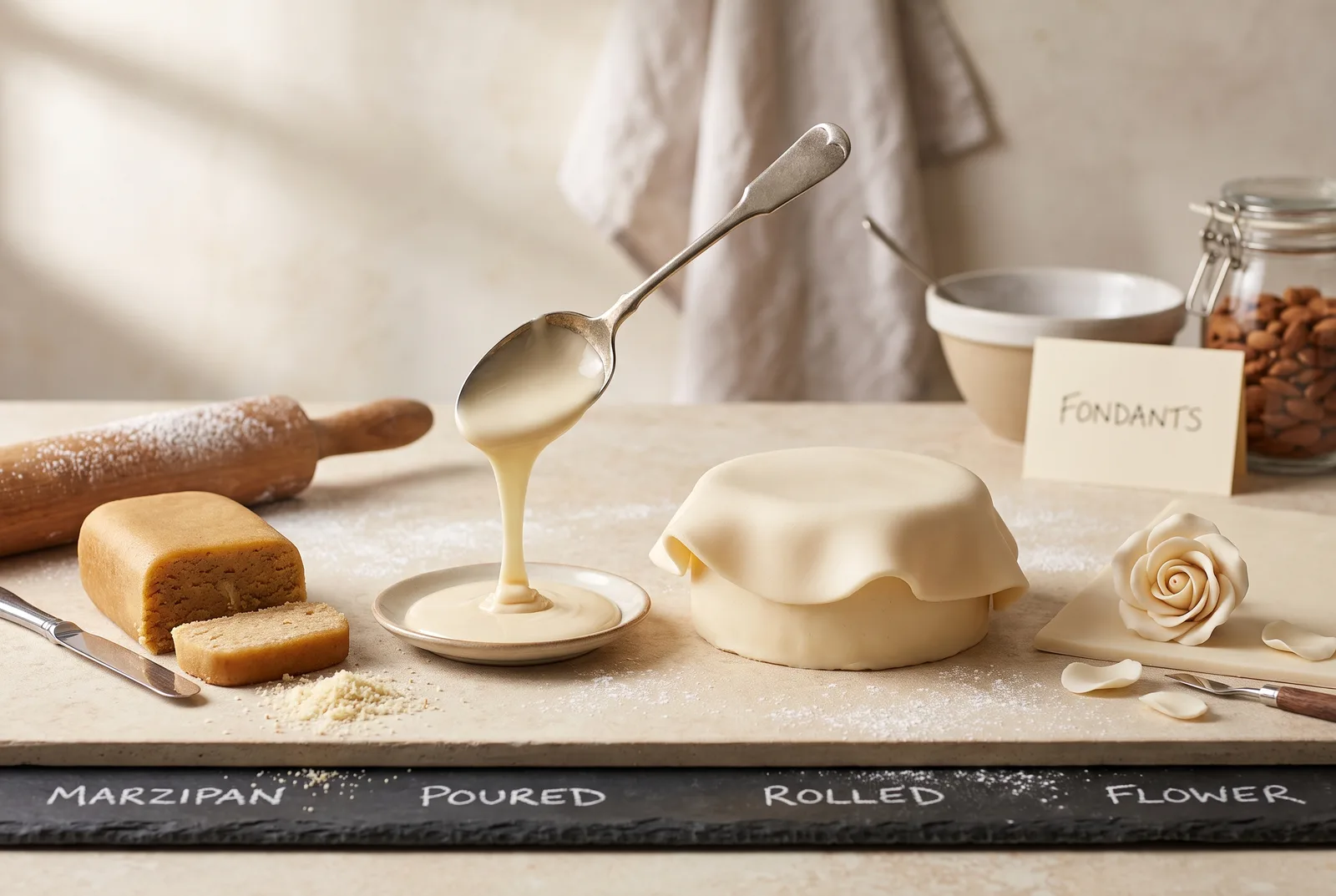
One word, four very different materials
A confectioner covering and decorating a cake reaches for a small family of sugar-based media that look related but behave completely differently. The single biggest source of confusion is the word "fondant", which means two unrelated things:
- Confectioner's (poured / cream) fondant — a soft, glossy paste of microscopic sugar crystals in a saturated syrup, warmed and poured to glaze éclairs, fondant fancies and mille-feuille.
- Rolled fondant icing — what the UK trade calls sugarpaste: a pliable sugar dough rolled into a sheet and draped over a cake to cover it.
Add marzipan (ground almonds and sugar) and the firmer gum / flower / modelling pastes (sugarpaste plus extra gum), and you have four materials with four different governing properties. Get the property right and the material does what you want; get it wrong and you crack, sweat, bleed colour or kill the gloss. The headline map is in the three-families comparison table below.
This article is the practical foundation: what each medium is made of, the one property that controls it, how to work it, and the food-safety and colouring rules that catch people out. For decorative pulled/blown sugar and isomalt showpieces see A6-sugar-work-techniques; for mirror glazes and nappages see A6-glazes-finishes.
Marzipan & almond paste — it's all about the almond:sugar ratio
Marzipan and almond paste are the same two ingredients — ground blanched almonds and sugar — in different proportions, and that ratio is the whole story.
- Almond paste has the higher almond-to-sugar ratio. It is softer and more almond-forward, used as a filling (frangipane, stollen, almond croissants).
- Marzipan has more sugar, which makes it firm and smooth enough to roll, mould and sculpt — so it is the covering and modelling grade.
The trade designation "marzipan" is surprisingly loose: German confectionery standards (Leitsätze) — the primary source for these ratios, not a single binding EU Regulation — permit a ratio as low as 50 parts marzipan paste to 50 parts added sugar. Quality is signalled by going the other way — standard Lübeck marzipan is at least 70:30, and Lübeck fine marzipan (Edelmarzipan) is 90:10 (only 10% added sugar). The raw paste itself (Rohmasse) is at least ~65% almond (no more than ~35% sugar). Marzipan is also characterised by its almond-oil (fat) content, which rises with grade rather than by any single legal "minimum almond-oil" figure: Lübeca specifies its M0 raw paste at a minimum 27% almond oil and a maximum 17% moisture. (An earlier "~14% minimum almond oil" figure was removed in numeric review — it was not supported by its cited source and is not a recognised standard.)
<!-- image: img-mf-09 -->The raw material, and a real food-safety number
Marzipan is only as good as its almonds. The catalogue Ground Almonds (blanched almond meal) spec is a clean reference: 100% blanched sweet almonds, about 52.5 g fat and 21.4 g protein per 100 g, supplied in grades of regular <2.2 mm, fine <1.8 mm and extra-fine <1.4 mm. The spec also declares a cross-contact allergen statement: may contain traces of hazelnut, walnut, cashew and pistachio — confirm this is acceptable for your application. For a smooth marzipan you want the finer grinds.
The food-safety point that follows the almond all the way into the finished marzipan is aflatoxin. The almond spec caps total aflatoxins at 10 ppb and aflatoxin B1 at 8 ppb, which match the EU Regulation 2023/915 limits for almonds placed on the market for the final consumer (ready-to-eat). Buy almonds with a current aflatoxin certificate; it is a real, regulated hazard, not a formality.
<!-- image: img-mf-11 -->Regulatory note: Cross-checked against EU 2023/915 Annex I (and Food Safety Magazine's summary), the 8 / 10 ppb figures are the ready-to-eat (final-consumer) almond limits; almonds destined for sorting or other physical treatment before sale carry the higher 12 / 15 ppb limits. The lower 2 / 4 ppb figures that are sometimes quoted are the groundnut (peanut) ready-to-eat limits and do not apply to tree-nut almonds. The almond limit applies directly to processed products that are ≥80% almonds; lower-almond products such as standard marzipan instead inherit an assessed level under the regulation's dilution/proportion rules. Confirm the exact product category against the live Annex before advising on compliance.
Persipan — the almond-free look-alike (with a safety note)
Persipan is a cheaper marzipan substitute made from apricot or peach kernels instead of almonds, typically about 40% kernels to 60% sugar (single trade reference; verify composition against supplier specification or applicable standard). Two things matter:
- Safety: the kernels naturally contain amygdalin, a cyanogenic glycoside that must be detoxified before use — persipan is a processed product, never raw kernels. Food safety: EFSA 2016 established an acute reference dose of 20 µg HCN/kg bodyweight for apricot kernels (EFSA-Q-2015-00545); EU recommendations exist on monitoring HCN in stone-fruit products. EU-market persipan suppliers must demonstrate HCN has been reduced to safe levels — request HCN certificates.
- Labelling & allergens: industry practice requires persipan to be labelled as persipan (not marzipan); it usually contains ~0.5% starch so it can be told apart by an iodine test (both the EU labelling obligation and the 0.5% starch figure rest on a single trade reference — verify against applicable EU/national regulation). Because persipan contains no almonds, it is not a tree-nut-almond product, which is useful for almond allergy — but it must never be passed off as marzipan.
The full ratio table is below. Catalogue note: the spec sheet attached to the catalogue "Marzipan 50%" product is, on inspection, a white poppy-seed filling datasheet — it has been mis-attached and was not used here; the correct Zeelandia marzipan datasheet should be requested before any marzipan spec numbers are published.
Poured fondant — crystallisation is everything
Confectioner's fondant is the glossy glaze on an éclair or a fondant fancy. Technically it is a partially-crystalline product: a huge number of tiny sucrose crystals suspended in a saturated sugar syrup. The magic number is crystal size: the crystals are around 20 micrometres — small enough that the tongue cannot feel them, which is exactly why good fondant is silky and glossy rather than gritty.
<!-- image: img-mf-02 -->A typical formulation is sucrose 64–71%, glucose syrup 9–16% and water ~20%, and the water content (10–15% in the finished fondant) sets its hardness. The glucose syrup is not a filler — it is a doctoring agent: its larger sugar molecules physically get between the sucrose molecules and stop them joining into big, gritty crystals. Invert sugar (sucrose split into glucose and fructose by heat and acid) does the same job.
Making it is a controlled crystallisation: boil the syrup (a small batch goes to ~118°C), cool it undisturbed in a thin ~5 mm layer to 45–50°C so it becomes supersaturated, then beat it for 20–30 minutes so it nucleates a vast number of small crystals all at once. This is why you buy it ready-made: factory fondant gives reliable crystal size every time.
Food safety: Boiling sugar syrup at 118°C causes severe burns on skin contact; professional bakers must apply appropriate PPE (heat-resistant gloves, long sleeves) in line with workplace safety regulations.
Working ready-made poured fondant
The catalogue offers several poured fondants, and their spec sheets agree on the handling rules (full comparison in the poured-fondant spec table below):
- Zeelandia Fondant Ready — sugar, glucose syrup, water, E471, guar (E412) and citric acid (E330); dry matter 85%; heat to 40–48°C, stirring, then glaze warm or cooled cake surfaces.
- Vortumnus Sugar Glaze (water pomade) — a fine-crystalline pomade of sugar, glucose syrup and water; total extract ≥87%; thinned by mixing 50–100 ml water per 1 kg at no more than 60°C.
- Arctos Ultra White Fondant and Arctos Fondant 30 — Fondant 30 is as pure as it gets: sugar, glucose syrup and water only. Both are fine-crystalline, dry substance 87.5–88.5%, and both carry the same warning: do not overheat above 50°C and do not add more than 10% water.
That last rule is the one to tattoo on the bench. Overheat poured fondant and you dissolve the fine crystals that give it gloss and set — it comes out dull, runny and slow to firm. Over-thin it with water and it never sets. Re-warm gently to 40–48°C; never boil. The same fondants can be coloured, flavoured or even cut with a little fruit concentrate or alcohol.
<!-- image: img-mf-12 --> <!-- image: img-mf-10 -->Rolled fondant icing / sugarpaste — humectant + gum
Now the other fondant: the rolled sheet you drape over a celebration cake. In the UK this is sugarpaste; in the US it is rolled fondant; they are the same thing. Its job is to stay soft, smooth and pliable long enough to roll thin and stretch over a cake without cracking — and the spec sheets show exactly how it is engineered to do that.
Across the Zeelandia Roll Dekor, PA Foods and Doric spec sheets the same backbone appears:
- Sugar / icing sugar — the bulk.
- Glucose syrup — pliability and anti-crystallisation.
- A humectant — glycerine (E422) and/or sorbitol (E420) — this is the key. It holds moisture in the paste so it stays soft and resists cracking.
- A little fat / vegetable shortening — smoothness and release.
- A gum / stabiliser — gum tragacanth (E413), CMC (E466) and/or xanthan (E415) — elasticity so it stretches instead of tearing.
- Emulsifier (E471), preservative (potassium sorbate E202) and an acidity regulator (citric acid E330).
The result is a paste at roughly 88–91% dry matter — shelf-stable through low water activity and the preservative, which is why a 7.5–10 kg pack keeps for months. Good covering paste is also quality-tested for exactly this: the PA Foods sheet specifies a "pin-out test on a dummy" to confirm the paste rolls smooth with no cracking.
<!-- image: img-mf-07 -->Covering a cake
The Zeelandia Roll Dekor sheet gives the working method in one line: soften by kneading, apply at 21–23°C, and roll out to 3 mm to cover the tops and sides of cakes and roulades. In practice 3–4 mm is the normal covering thickness.
<!-- image: img-mf-03 -->- Prepare the cake. Crumb-coat with buttercream, or apply a thin marzipan under-layer, or brush with jam / apricot glaze — the sugarpaste needs something to stick to.
- Knead the paste at 21–23°C until smooth and plastic; dust the bench with icing sugar (not flour).
- Roll to 3–4 mm with even pressure.
- Lift and drape, then smooth the top first, then the sides, working the air out — and work quickly, because the longer the surface is exposed the more it dries.
- Trim the base.
The full sequence and the room conditions are in the sugarpaste-covering formula card below.
Why marzipan often goes under the fondant
On a rich or fruit cake, a thin marzipan layer under the sugarpaste does two jobs: it smooths the surface for a flawless finish, and it blocks fruit oils and colour from migrating up and staining the white icing. Let the marzipan firm for a day before icing over it.
<!-- image: img-mf-08 -->Allergen: Any finished product that contains a marzipan under-layer must declare tree nuts (almonds) as an allergen under EU Regulation 1169/2011 Annex II, even though the marzipan is hidden beneath the fondant. This is a common mislabelling failure point — "almond" must appear in the allergen declaration on menus, counter cards and pre-packaged labels.
Gum, flower & modelling pastes — sugarpaste, firmed up
When you need a paste that holds fine detail, rolls translucently thin, or dries hard enough to stand up, you stiffen sugarpaste by working in more gum:
- Modelling / gum paste: knead approximately 1–2 teaspoons of CMC (E466) into every 450 g of sugarpaste (indicative guide; follow product-manufacturer dosage instructions — this specific quantity is from industry practice sources of medium reliability ). CMC thickens immediately and can be used the same day; gum tragacanth (E413) does the same job but needs about 24 hours to develop.
- Flower / petal paste (US: gum paste) can be rolled much thinner than sugarpaste while keeping its strength — it is the medium for sugar flowers, petals and butterflies. The catalogue White Flower Paste is a ready-made example.
- Pastillage is sugar plus gum with no fat — it dries rock-hard and is used for structural pieces and plaques, but it is brittle and not for eating.
For showpieces that must survive humidity, isomalt is the more robust sugar. It is a polyol (sugar alcohol) that is far less hygroscopic than sucrose, so it stays clear and crisp where ordinary sugar would weep. (Isomalt sugar-work belongs to A6-sugar-work-techniques; the catalogue stocks BENEO Isomalt ST-PF.)
Allergen: Any food containing polyols (including isomalt) at a level exceeding 10% in the finished product must carry the statement "excessive consumption may produce laxative effects" under EU Regulation 1169/2011 Annex III. Apply this label warning to any edible product — fillings, coatings, confectionery — where isomalt constitutes >10% of the final food weight.
Colouring — gel and paste, not liquid
The recurring colouring mistake is reaching for a liquid colour: liquid adds water, and water makes sugarpaste sticky and soft and ruins poured-fondant set. For pastes, use gel or paste colours, which deliver intense colour with very little added water. The catalogue gel colour is built on a glucose-syrup and glycerine base (not water) precisely so it colours without softening. Powders and dusts add no water at all and are for dusting, airbrushing and deep dry colour. The decision grid is in the colour-types table below.
<!-- image: img-mf-04 -->Three things about colour are not optional:
- There are legal maximum doses. Food colours have EU maximum use levels (Regulation 1129/2011). The catalogue gel (Brilliant Blue E133) states a maximum recommended dosage of 21.0 g of gel product per kg of finished food for decorations, coatings and fillings (and 13.0 g/kg for other confectionery). This is the supplier's gel-product dose, not the EU pure-dye limit; Reg 1129/2011 expresses limits as mg/kg of pure colorant, and the E133 concentration in the gel is not stated — verify compliance against Reg 1333/2008 Annex II for the applicable food category before advising on dosage. Deep, saturated shades can run into that ceiling — and into a softened paste — long before you reach the colour you wanted.
- The "Southampton Six" carry a warning. Six colours — E102, E104, E110, E122, E124, E129 — must, since 2010 under Regulation 1333/2008, carry the label "may have an adverse effect on activity and attention in children". This is not theoretical: the catalogue PA Foods red sugarpaste is coloured with E124 + E129 and its own spec carries exactly that warning. Brilliant Blue (E133) is not on that list, so it needs no warning.
- Titanium dioxide (E171) — EU ban; UK status differs. The classic white pigment in white sugarpaste and cake decorations, E171, was banned as a food additive in the EU from 7 February 2022 (Regulation 2022/63, with a transition to 7 August 2022). However, the UK FSA had not banned E171 as of 2025 — it remained permitted in Great Britain under retained law while the FSA completed its own review. Doric is a UK manufacturer; UK-market products may legitimately still contain E171, whereas EU-destined products must not. The catalogue Doric sugarpaste spec dates from 2017/2018 and still lists titanium dioxide — confirm current formulation and the destination market before using or relabelling.
Humidity, sweating and colour bleed — the "why it matters"
Every one of these media is hygroscopic: sugar pulls water out of the air. That single fact explains the most common finished-cake complaints, and it is why a controlled environment matters more than skill on a humid day.
<!-- image: img-mf-06 -->- Sweating is condensation. Take a chilled or refrigerated fondant cake into a warm, humid room and water condenses on the cold surface; because the sugar is hygroscopic, the surface goes sticky and the gloss turns to "sweat". The fix is rarely the paste — it is the handling: decorate at roughly 21–24°C (70–75°F) and 50–60% relative humidity, and let chilled cakes come back to room temperature inside a sealed box before unwrapping.
- Colour bleed happens when a dyed piece is still moist as another colour touches it; moisture carries the dye across the join. Let coloured pastes skin/dry before assembly, and use low-water gel/paste colours.
- Cracking and "elephant skin" (dry wrinkles at the edges) are the paste drying out during handling — work quickly, keep paste covered, rely on the glycerine humectant, and rub a little vegetable fat (not cornflour) over a forming wrinkle.
The full fault table — including dull/grainy poured fondant and disappearing icing-sugar dust — is below.
Finishing & dusting — when icing sugar disappears
A practical trap at the end of the job: ordinary icing sugar is sucrose (the catalogue Kent Icing Sugar CP is ~99.2% sugars, finely ground to a mean ~19–26 µm with a tricalcium-phosphate anti-caking agent). Dust it over a moist, refrigerated or sweating dessert and it simply dissolves and disappears.
<!-- image: img-mf-14 -->For chilled, frozen-then-thawed, or wrapped products use a non-melting dusting sugar. The catalogue Macphie Sweet Snow is dextrose-based with a fat coating, engineered so it will not dissolve in high humidity, after freeze–thaw, or under chilled/wrapped storage. It is the difference between a clean white finish at service and a wet, patchy one (see the dusting-sugars comparison table below).
Regulatory note: (1) The Sweet Snow ingredient list includes partially hydrogenated vegetable oil (palm kernel); partially hydrogenated oils are a source of industrial trans fats — verify EU Regulation 2019/649 compliance (max 2 g industrial trans fat per 100 g total fat) with Macphie before advising on use. (2) The spec notes gluten, soy and milk are handled on the production site; cross-contact allergens should be declared to customers with coeliac disease, soy allergy or milk allergy.
How to choose — quick frameworks
By job:
- Glaze with a shine (éclairs, fancies, doughnuts) → poured fondant (Zeelandia Fondant Ready, Arctos, Vortumnus); warm to 40–48°C, never over 50°C.
- Cover a cake smoothly → rolled sugarpaste; roll to 3–4 mm over a buttercream/marzipan/jam base.
- Almond flavour, or a smoothing/blocking under-layer → marzipan / almond paste.
- Flowers, fine models, standing pieces → flower/gum paste, or sugarpaste + CMC/tragacanth; pastillage or isomalt for structures.
By dietary/label constraint:
- Vegan / dairy-free → most sugarpastes and poured fondants are plant-based (e.g. Vortumnus vegan, Doric vegan), but marzipan is a tree-nut product and many sugarpastes carry may-contain milk/soy. Always confirm on the current spec.
- Coeliac → check carefully: Roll Dekor contains WHEAT starch, and Doric is declared "not suitable for coeliacs" despite having no gluten ingredient, because gluten is handled on site. "No gluten ingredient" is not the same as gluten-free.
- Children's product → avoid the Southampton-Six colours to skip the attention warning; avoid any product still formulated with E171.
Catalogue pick list
Marzipan & almond: Marzipan 50% (Zeelandia — request correct datasheet); Almond Paste (Zeelandia); Persipan Paste (Komplet); Ground Almonds (Quality Food Corporation, spec-confirmed; also Global Grains); Blanched Almond Flour (Polmarkus).
Poured / cream fondant (glazing): Zeelandia Fondant Ready (spec); Vortumnus Sugar Glaze water pomade (spec); Arctos Ultra White Fondant and Arctos Fondant 30 (spec); Helios Water Fondant.
Rolled sugarpaste (covering): Zeelandia Roll Dekor Soft (spec); PA Foods Ready-to-Roll (spec — note azo-colour warning on the red); Doric Ready-to-Roll (spec — note older E171); White Wrap Ice (CSM) as a cover-icing alternative.
Gum / flower paste & structures: White Flower Paste (Sweet Decor); add CMC/gum tragacanth to sugarpaste for modelling; BENEO Isomalt ST-PF (Hortimex) for humidity-resistant showpieces.
Base ingredients, colour & finish: Icing Sugar CP (Kent, spec) and Icing Sugar 10 kg; Vegetable Glycerine E422 (Kilo, spec — humectant); Food Colour gels (Food Colours, spec) and Spectral Paste (Culpitt); Macphie Sweet Snow non-melting dusting powder (spec).
Coverage notes (transparency)
Strong (spec-sheet confirmed): composition, dry matter, energy, allergen and handling data for Zeelandia Roll Dekor, PA Foods (red) and Doric sugarpastes; Vortumnus, Zeelandia and Arctos poured fondants; Kent icing sugar; Quality Food Corp ground almonds; Kilo glycerine; BENEO isomalt; Macphie Sweet Snow; the Food Colours gel (incl. its stated max dosage). The almond aflatoxin limits cross-check exactly against EU 2023/915.
Medium (independent literature, cross-checked): the sugarpaste backbone (sugar/glucose + humectant + fat + gum) and the 3–4 mm covering thickness; the CMC/tragacanth modelling-paste conversion dosage (medium-reliability craft sources, flagged indicative); the humidity/sweating mechanics and the 21–24°C / 50–60% RH decorating environment — BAKERpedia, ASB and craft-decorating sources.
Medium (reference, cross-checked ≥2 sources): marzipan almond:sugar ratios (50:50 standard minimum / 70:30 Lübeck / 90:10 Edelmarzipan / ≥65% Rohmasse) and the Lübeca M0 figures (≥27% almond oil, ≤17% moisture) — confirmed across Lübeca, Niederegger and trade references; the previously-claimed "~14% almond-oil minimum" was unsupported and has been removed. The poured-fondant crystallisation suite (~20 µm crystals; sucrose 64–71% / glucose 9–16% / water ~20%; cook ~118°C; cool 45–50°C in ~5 mm; beat 20–30 min) is confirmed against BAKERpedia + FoodCrumbles (BAKERpedia gives the 45–50°C cooling target; some confectionery sources cool further, to ~38–43°C, for finer crystals).
Reported (single trade reference): persipan composition (≈40:60 kernels:sugar; ~0.5% starch for iodine ID); confirm with your supplier before relying on it.
Reference/regulatory (verified): aflatoxin 8/10 ppb = ready-to-eat almond limit, 12/15 ppb = almonds for sorting, 2/4 ppb = groundnuts not almonds (EU 2023/915); Southampton-Six six colours and the children's-attention warning (Reg 1333/2008); E171 ban dates 7 Feb / 7 Aug 2022 (Reg 2022/63); decorating environment 21–24°C (70–75°F), 50–60% RH (°C↔°F conversion checked).
Single-source (NOT cross-checked — supplier's own spec sheet): every per-product number (dry matter/extract, energy, fat, carbohydrate, pH, particle size, dosage, allergen list) for the fourteen catalogue products. The catalogue "Marzipan 50%" spec PDF is mis-attached (a poppy-seed-filling sheet) — request the correct datasheet. Colour maximum-use level (21 g/kg) is the supplier's gel-product dose, NOT the EU pure-dye limit — verify against Regulation 1333/2008 Annex II / 1129/2011.
Regulatory (verify currency before labelling): E171 ban (Reg 2022/63); Southampton-Six warning (Reg 1333/2008); aflatoxin limits (Reg 2023/915); allergen labelling (Reg 1169/2011).
No first-party data: Almond Paste, Persipan, Blanched Almond Flour, White Flower Paste, Helios Water Fondant, Icing Sugar 10 kg, White Wrap Ice, Culpitt Spectral Paste — no spec sheets; confirm composition and allergens with suppliers.
Figures
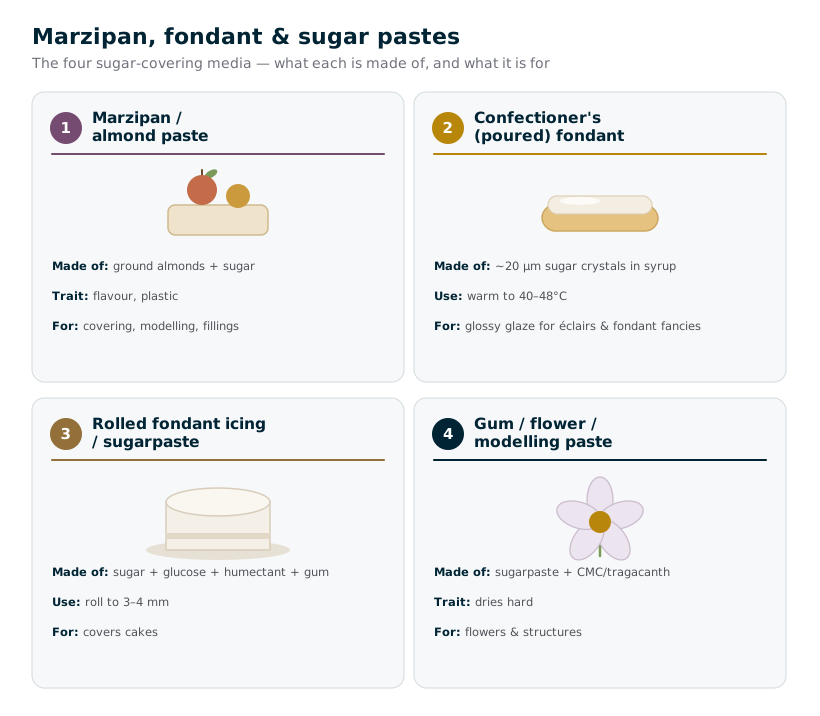 Comparison diagram of marzipan (ground almonds + sugar, for covering and modelling), confectioner's poured fondant (fine sugar crystals in syrup, for glazing), rolled fondant icing / sugarpaste (pliable sugar dough, for covering cakes) and gum/flower paste (sugarpaste plus extra gum, dries hard, for flowers and structures)
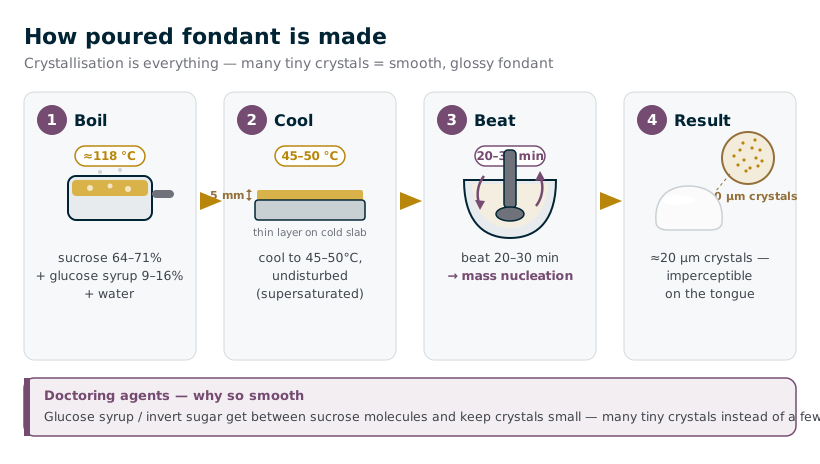 Four-step diagram of fondant manufacture: 1 boil sugar, glucose syrup and water to about 118°C; 2 cool the syrup in a thin 5 mm layer to 45–50°C; 3 beat for 20–30 minutes; 4 the beating nucleates a huge number of tiny ~20 micrometre sucrose crystals, producing a smooth glossy fondant; glucose/invert sugar shown blocking large crystals
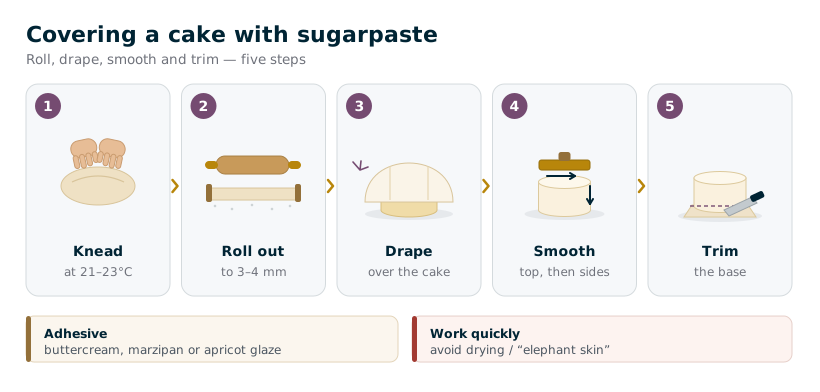 Five-step illustration of covering a cake with sugarpaste: knead the paste at 21–23°C, roll out to 3–4 mm on an icing-sugar-dusted surface, lift over a crumb-coated cake, smooth the top then the sides with a smoother, and trim the base
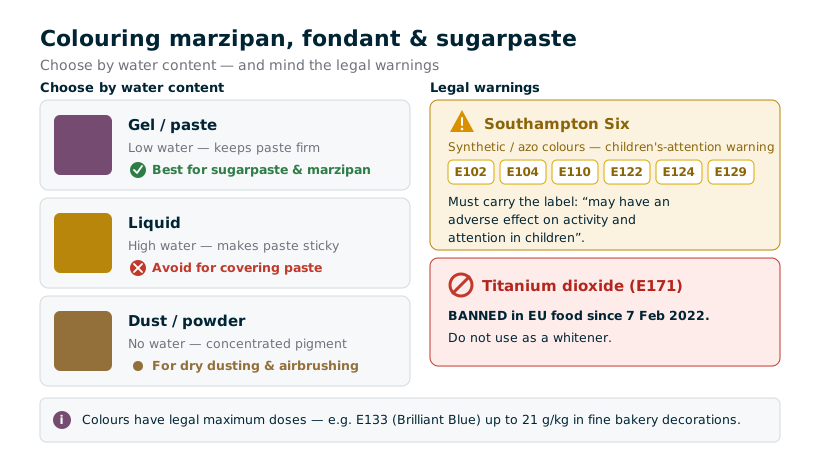 Colour-selection chart showing gel and paste colours (low water, keep paste firm — best for sugarpaste and marzipan), liquid colour (high water, makes paste sticky — avoid), and dust/powder (no water, for dry effects); plus a callout listing the six Southampton colours E102, E104, E110, E122, E124, E129 that require a children's-attention warning, and a note that titanium dioxide E171 is banned in EU food
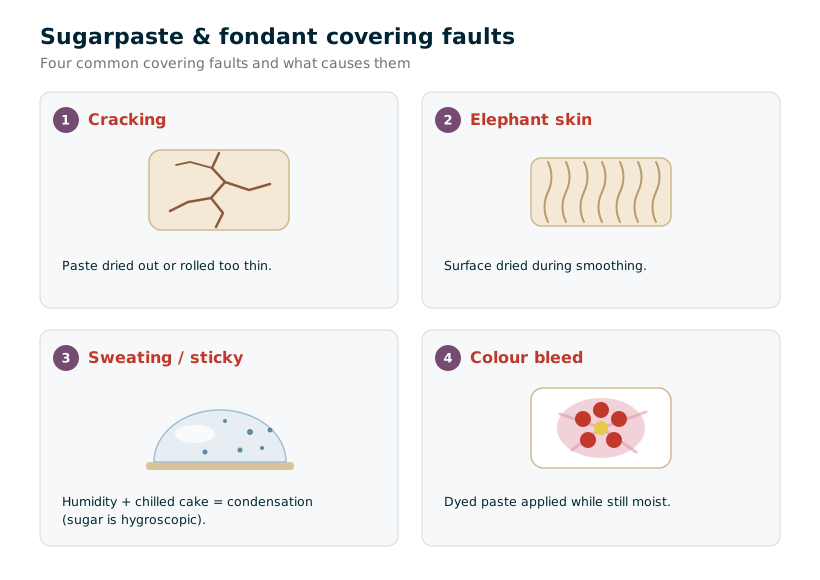 Four-panel fault gallery: cracking (paste dried out), elephant-skin wrinkles at the cake edge (surface dried during smoothing), a sweating sticky surface with droplets (condensation in humidity on a chilled cake), and colour bleed where a dark colour has run into white icing (dyed paste applied while still moist)
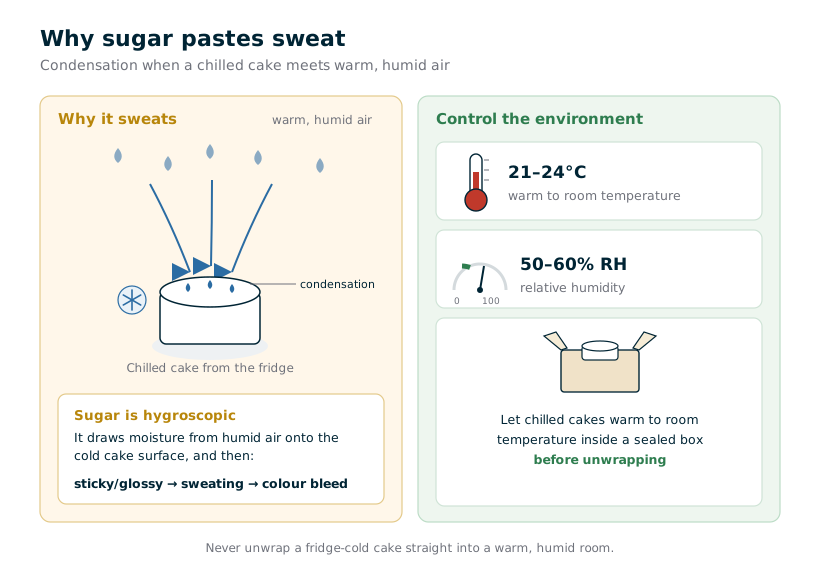 Diagram showing a chilled fondant-covered cake taken into a warm humid room: water vapour condenses on the cold surface and, because sugar is hygroscopic, the surface goes sticky and may bleed colour; a panel shows the recommended decorating environment of 21–24°C and 50–60% relative humidity, and advises letting cakes warm up inside a sealed box
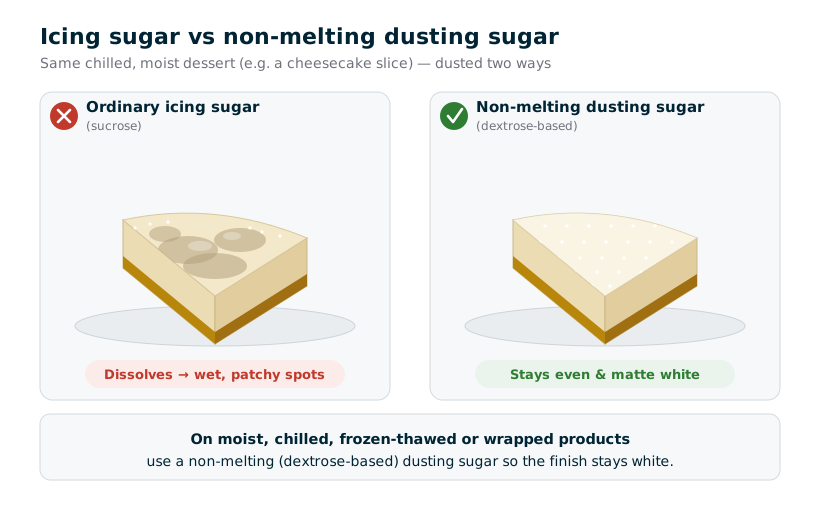 Two chilled desserts dusted side by side: the left, dusted with ordinary icing sugar, has gone wet and patchy as the sugar dissolved; the right, dusted with a non-melting dextrose dusting sugar, stays evenly white
Marzipan / almond paste — ratio guide
| Almond paste (filling-grade) | Higher almond: sugar (softer, almond-forward) |
| Marzipan (legal minimum) | down to 50: 50 paste: added sugar |
| Lübeck marzipan | ≥ 70: 30 |
| Lübeck fine marzipan (Edelmarzipan) | 90: 10 |
| Ground almonds (catalogue raw material) | 100% blanched almonds; ~52.5% fat, ~21% protein; grades <2.2/<1.8/<1.4 mm |
| Aflatoxin limit (raw material & ≥80%-almond products) | total ≤10 ppb, B1 ≤8 ppb |
Yield: Composition guide (almond: sugar)
Raw material aflatoxin limits matter: ground almonds carry an aflatoxin spec (total ≤10 ppb, B1 ≤8 ppb) that flows through to marzipan. See safety note.
Confectioner's (poured) fondant — formula & process
| Sucrose | 64–71% |
| Glucose syrup (doctoring agent) | 9–16% |
| Water (sets hardness) | ~20% in batch; 10–15% in finished fondant |
| Cook syrup to | ~118°C (small batch) |
| Cool in thin (~5 mm) layers to | 45–50°C before beating |
| Beat / agitate | 20–30 min → mass nucleation of ~20 µm crystals |
| Apply (glaze) at | 40–48°C, ≤50–60°C; do not overheat / do not over-thin (≤10% water) |
Yield: Crystallisation principle + working method
Covering a cake with rolled sugarpaste
| Knead/soften paste at | 21–23°C |
| Roll out to | 3 mm (Roll Dekor) — commonly 3–4 mm |
| Adhesive on cake | Buttercream, a thin marzipan layer, or jam/apricot glaze — NOTE: marzipan under-layer creates a tree-nut (almond) allergen labelling obligation even when hidden under fondant (EU 1169/2011) |
| Drape, smooth top then sides | Work quickly to avoid drying/elephant skin |
| Decorating environment | ~21–24°C (70–75°F), 50–60% RH |
| Let dyed paste skin/dry | before contact, to prevent colour bleed |
Yield: Working method
Turning sugarpaste into modelling / gum / flower paste
| CMC (E466) | approximately 1–2 tsp per 450 g (indicative; follow product instructions); usable the same day |
| Gum tragacanth (E413) | alternative to CMC; rest ~24 h to develop |
| Flower / petal paste | rolls much thinner with strength — for flowers & butterflies |
| Pastillage / structural | sugar + gum, dries rock-hard; no fat (no flexibility) |
| Isomalt (alternative for showpieces) | polyol, far less hygroscopic than sucrose → more humidity-stable |
Yield: Per 450 g sugarpaste
Colouring — form and legal dosage
| Preferred form for paste | Gel or paste (low water) — keeps paste firm |
| Avoid for stiff paste | Liquid colour (adds water → sticky/soft) |
| Supplier gel dosage — decorations/coatings/fillings (cat. 05.4) | e.g. 21.0 g gel per kg finished product (Food Colours gel/E133) — NOTE: this is the gel-product dose, not the EU pure-dye limit; verify against Reg 1333/2008 Annex II before advising on compliance |
| Supplier gel dosage — other confectionery (cat. 05.2) | e.g. 13.0 g gel per kg — same caveat applies |
| Southampton-Six warning colours | E102, E104, E110, E122, E124, E129 → 'may have an adverse effect on activity and attention in children' |
| Titanium dioxide (E171) whitener | BANNED in EU food since 7 Feb 2022 — do not use |
Yield: Practical colouring guide
| Property | Marzipan / almond paste | Confectioner's (poured) fondant | Rolled fondant icing / sugarpaste | Gum / flower / modelling paste |
|---|---|---|---|---|
| What it is | Ground almonds + sugar paste | Sucrose crystals in saturated syrup | Sugar/glucose paste with humectant + fat + gum | Sugarpaste + extra gum (CMC/tragacanth) |
| Defining feature | Almond flavour, plastic, oily | ~20 µm sugar crystals → glossy, smooth | Pliable, rolls to 3–4 mm to cover cakes | Dries firm/hard, rolls very thin |
| Main use | Covering/under-icing, modelling figures, fillings | Glazing éclairs, fondant fancies, mille-feuille | Covering cakes & boards, simple models | Sugar flowers, butterflies, structural pieces |
| Typical water/dry matter | Low moisture (oily paste) | Water ~10–15% (sets hardness) | Dry matter ~88–91% | Very low — dries out fast by design |
| Worked at | Room temp; knead to soften | Warmed to ≤50–60°C to glaze | 21–23°C, knead then roll | Room temp; rest after adding gum |
| Key allergen | ALMONDS (tree nut) | None (sugar-based) | Often WHEAT starch + may-contain nuts/soy/milk | As sugarpaste base |
| Sets/keeps by | Sugar + low water | High sugar, low water activity | Humectant (glycerine/sorbitol) + preservative | Gum network; dries rock-hard |
'Fondant' has two distinct meanings: the confectioner's poured/cream fondant (for glazing) and rolled fondant icing (= UK sugarpaste, for covering). This table separates them.
| Product | Base | Typical ratio | Texture & use | Source |
|---|---|---|---|---|
| Almond paste | Ground almonds + sugar | Higher almond: sugar (almond-forward), softer | Soft, for fillings & frangipane | Trade reference |
| Marzipan (legal minimum) | Marzipan paste (Rohmasse) + added sugar | As low as 50: 50 (paste: added sugar) | Firm enough to roll/model; covering & figures | Lübeck marzipan reference |
| Lübeck marzipan | Rohmasse + added sugar | ≥ 70: 30 | Premium, almond-forward | Lübeck marzipan reference |
| Lübeck fine marzipan (Edelmarzipan) | Rohmasse + added sugar | 90: 10 | Highest almond content | Lübeck marzipan reference |
| Raw marzipan paste (Rohmasse) | Blanched almonds + sugar + water | ≥ ~65% almond, ≤ ~35% sugar | Intermediate paste before finishing | Lübeck marzipan reference |
| Persipan | Apricot/peach kernels + sugar | ~40% kernels: 60% sugar | Marzipan substitute; ~0.5% starch for iodine ID; must be labelled persipan | Trade reference |
| Aspect | Confectioner's / poured fondant | Rolled fondant icing (UK sugarpaste) |
|---|---|---|
| Physical state | Fine sucrose crystals in saturated syrup; pourable when warmed | Soft, plastic dough; rolled into a sheet |
| Composition | Sucrose 64–71%, glucose syrup 9–16%, water ~20% | Sugar/icing sugar + glucose syrup + humectant + fat + gum |
| Crystal structure | Tiny ~20 µm crystals → gloss & smooth melt | Not crystal-defined; pliability from glycerine/sorbitol |
| How used | Warm to 40–48°C (≤50–60°C) and pour/dip for a glossy glaze | Knead at 21–23°C, roll to 3–4 mm, drape over cake |
| Typical products | Éclairs, fondant fancies, mille-feuille, doughnut glaze | Celebration cakes, cupcakes, plaques, simple models |
| Catalogue examples | Vortumnus Sugar Glaze, Zeelandia Fondant Ready, Arctos Ultra White / Fondant 30 | Zeelandia Roll Dekor, PA Foods RTR, Doric RTR sugarpaste |
| Handling rule | Do not overheat above 50°C, do not add >10% water (Arctos) | Keep covered/humectant-protected to stop cracking & elephant skin |
| Product (brand) | Ingredients | Dry matter / extract | Energy / 100 g | Use temperature | Source |
|---|---|---|---|---|---|
| Vortumnus Sugar Glaze (water pomade) | Sugar, glucose syrup, water, E471, indigotine | ≥87% extract | 1479 kJ / 348 kcal | Mix 50–100 ml water per 1 kg at ≤60°C | Vortumnus spec sheet |
| Zeelandia Fondant Ready | Sugar, glucose syrup, water, E471, E412, E330 | 85% dry matter | 1447 kJ / 346 kcal | Heat to 40–48°C, stir | Zeelandia spec sheet |
| Arctos Ultra White Fondant | Sugar, glucose syrup, water, E471, E330, E331 | 87.5–88.5%; pH 4.5–6.5 | 1488 kJ / 350 kcal | Do not overheat >50°C; ≤10% added water | Arctos spec sheet |
| Arctos Fondant 30 | Sugar, glucose syrup, water (only) | 87.5–88.5%; pH 4.5–6.5 | 1488 kJ / 350 kcal | Do not overheat >50°C; ≤10% added water | Arctos spec sheet |
All values read directly from supplier spec sheets.
| Product (brand) | Humectant / gum | Energy / 100 g (fat g) | Allergens / dietary | Colour system | Source |
|---|---|---|---|---|---|
| Zeelandia Roll Dekor Soft (white) | Sorbitol E420; thickener CMC E466 | 1708 kJ / 409 kcal (9.1 g) | Contains WHEAT (gluten); may contain SOY, MILK, ALMONDS | White/grey (uncoloured base) | Zeelandia spec sheet |
| PA Foods Ready-to-Roll (red variant) | Glycerine E422; tragacanth E413 | 1673 kJ / 400 kcal (5.7 g) | Vegetarian; made in factory handling nuts | E124 + E129 → children's-attention warning | PA Foods spec sheet |
| Doric Ready-to-Roll (pastel blue) | Sorbitol + glycerine; tragacanth + xanthan | 1652 kJ / 393 kcal (4.2 g) | Vegan; NOT suitable for coeliacs (gluten on site) | Titanium dioxide (E171, pre-2022) + Brilliant Blue E133 | Doric spec sheet |
Values read directly from supplier spec sheets. Note the colour/allergen and titanium-dioxide differences.
| Colour form | Water added | Best for | Watch out for |
|---|---|---|---|
| Gel / paste | Very low (glycerine/glucose base) | Sugarpaste, marzipan, modelling paste — strong colour without softening | Add gradually; deep shades need a lot and may still soften paste |
| Powder / dust | None | Dusting/airbrush effects, deep colours, dry brushing | Can be patchy if applied wet; some metallics are 'non-toxic, not for consumption' |
| Liquid | High | Buttercream, batters, poured fondant where water is acceptable | Makes sugarpaste sticky/soft — generally avoid for covering paste |
| Liquid concentrate (drops) | Moderate | Fondant glaze, icings | Still water-based — less suited to stiff pastes |
| Product | Base | Behaviour on a moist/chilled surface | Source |
|---|---|---|---|
| Icing sugar (e.g. Kent Icing Sugar CP) | Sucrose (~99.2% sugars), fine grind <75 µm | Dissolves/disappears on damp, refrigerated or sweating surfaces | Kent Foods spec sheet |
| Non-melting dusting sugar (Macphie Sweet Snow) | Dextrose + cornflour + fat coating | Stays white in high humidity, after freeze–thaw, and under chilled/wrapped storage | Macphie spec sheet |
| Fault | Likely cause | Remedy |
|---|---|---|
| Sugarpaste cracks / tears when covering | Paste dried out; rolled too thin or worked too slowly | Work quickly, keep paste covered; knead in a little glycerine/vegetable fat; roll to 3–4 mm |
| 'Elephant skin' (dry wrinkles at edges) | Surface dried during draping/smoothing | Smooth fast; rub a little vegetable fat (not cornflour) over wrinkles; protect with humectant |
| Sugarpaste sticky / sweating | Sugar is hygroscopic; condensation as a chilled cake meets warm humid air | Decorate at ~21–24°C, 50–60% RH; let cakes come to room temperature in a box before unwrapping; do not refrigerate uncovered |
| Colour bleeds between sections | Dyed paste still moist when another colour touched it | Let coloured pieces skin/dry before assembly; use gel/paste (low-water) colours |
| Sugarpaste too soft to hold detail / sags | Too much liquid colour or humectant; warm room | Switch to gel/paste colour; work in CMC/tragacanth for a firmer modelling paste; cool the paste |
| Poured fondant glaze dull / grainy / sets too hard | Overheated (>50°C dissolves the fine crystals) or over-thinned (>10% water) | Re-warm gently to 40–48°C, do not boil; add water only up to 10%; keep crystals intact |
| Poured fondant glaze cracks / dries patchy | Applied too cool/thick; surface too dry | Warm to working temp; apply to a lightly warmed/sealed surface; one even flood coat |
| Marzipan oils out / greasy surface | Over-worked (almond oil released by friction/heat) | Work cool and minimally; dust the bench with icing sugar, not flour |
| Icing-sugar dusting disappears on the cake | Ordinary sucrose icing sugar dissolves on a moist/chilled/sweating surface | Use a non-melting dextrose dusting sugar (e.g. Sweet Snow) for chilled, wrapped or humid products |
| Marzipan/fruit-cake colour bleeds into white icing | Fruit/oil migrating from the cake | Apply a marzipan under-layer before the sugarpaste; allow it to firm before icing |
- Ingredients:
- sugar, WHEAT starch, vegetable oils (palm kernel, palm), glucose syrup, water, stabilisers E420 + E1103, thickener E466 (CMC), maize starch, emulsifier E471
- Apply temp:
- 21–23°C
- Roll thickness:
- 3 mm
- Dry matter:
- 91%
- Energy:
- 1708 kJ / 409 kcal per 100 g
- Fat:
- 9.1 g (saturates 7.6 g)
- Carbohydrate:
- 81.4 g (sugars 65.1 g)
- Allergens:
- Contains WHEAT (gluten); may contain SOY, MILK, ALMONDS
- Shelf life:
- 12 months below 20°C; 7.5 kg bag-in-carton
- Ingredients:
- sugar, glucose syrup, non-hydrogenated vegetable shortening, water, humectant glycerine E422, emulsifier E471, stabiliser E413 (tragacanth), preservative E202, colours E124 + E129, vanillin
- Energy:
- 1673 kJ / 400 kcal per 100 g
- Fat:
- 5.7 g (saturates 2.1 g)
- Carbohydrate:
- 86 g (sugars 85 g)
- Qc test:
- pin-out test on a dummy — must be smooth, no cracking
- Allergens:
- made in a factory handling nuts; carries azo-colour children's-attention warning (E124, E129)
- Shelf life:
- 9 months cool & dry; vegetarian; made in UK
- Ingredients:
- icing sugar, humectants (sorbitol, glycerin), glucose syrup, vegetable oil (palm/rapeseed/palm kernel), water, caster sugar, stabilisers (tragacanth, xanthan), emulsifier mono-/diglycerides, preservative potassium sorbate, citric acid, colours titanium dioxide + brilliant blue
- Energy:
- 1652 kJ / 393 kcal per 100 g
- Fat:
- 4.2 g (saturates 1.9 g)
- Carbohydrate:
- 90 g (sugars 79.1 g)
- Dietary:
- vegan & vegetarian; NOT suitable for coeliacs (gluten handled on site); RSPO palm
- Regulatory flag:
- lists titanium dioxide E171 (spec 2017/2018) — E171 banned in EU food since 7 Feb 2022 (Reg 2022/63); confirm current formulation
- Shelf life:
- 6 months ambient, cool & dry
- Ingredients:
- sugar, glucose syrup, water, emulsifier E471, colourant indigotine (E132)
- Structure:
- fine-crystalline (pomade beaten with cooling)
- Extract content:
- ≥87%
- Energy:
- 1479 kJ / 348 kcal per 100 g
- Carbohydrate:
- 87 g (sugars 83 g)
- Application:
- mix 50–100 ml water per 1 kg pomade at ≤60°C
- Dietary:
- vegetarian & vegan; no allergens
- Shelf life:
- 6 months, 0–25°C, ≤75% RH
- Ingredients:
- Sugar, Glucose Syrup, Water (only)
- Structure:
- fine-crystalline plastic mass
- Dry substance:
- 87.5–88.5%
- pH:
- 4.5–6.5
- Energy:
- 1488 kJ / 350 kcal per 100 g
- Carbohydrate:
- 87.5 g (sugars 76.1 g)
- Handling rule:
- do NOT overheat above 50°C; do NOT add more than 10% water
- Allergens:
- none
- Shelf life:
- 12 months; store ≤25°C, ≤75% RH
- Ingredients:
- 100% blanched sweet almonds (Prunus dulcis)
- Grades:
- regular <2.2 mm, fine <1.8 mm, extra-fine <1.4 mm (95% under)
- Energy:
- 2470 kJ / 590 kcal per 100 g
- Fat:
- 52.5 g (saturates 3.9 g)
- Protein:
- 21.4 g
- Carbohydrate:
- 18.7 g (sugars 4.6 g), fibre 9.9 g
- Aflatoxin:
- total ≤10 ppb, B1 ≤8 ppb (matches EU 2023/915 final-consumer limits)
- Allergen:
- ALMONDS (may contain traces hazelnut/walnut/cashew/pistachio)
- Storage:
- cool & dry, ≤15°C, 55–65% RH; 1 year
- Particle size:
- >80% below 75 µm; mean aperture 19–26 µm
- Anti caking:
- tricalcium phosphate E341(iii) 0.5–1.5%
- Reducing sugars:
- max 0.04%
- So2:
- max 6 mg/kg
- Energy:
- 1687 kJ / 392 kcal per 100 g
- Carbohydrate:
- 99.2 g (all sugars)
- Origin:
- UK sugar beet; no allergens or azo dyes; kosher (pareve), halal
- Storage:
- 10–20°C, ≤55% RH; 32 weeks
- Assay:
- 99.5–101% glycerol
- Water:
- ≤0.5%
- Function:
- humectant — keeps sugarpaste/fondant pliable, resists cracking (exact dosage varies by recipe; follow product or formula instructions)
- Source material:
- vegetable (rapeseed/palm/sunflower)
- Allergens:
- free from all 14 declarable allergens
- Certs:
- kosher, halal, non-GMO, vegan; food-grade (2008/84/EC)
- Shelf life:
- 2 years
- Ingredients:
- dextrose (maize) 80–100%, cornflour <10%, fully/partially hydrogenated vegetable oil (palm kernel) <10%, natural flavouring <1%
- Behaviour:
- will not dissolve in high humidity, after freeze–thaw, or under chilled/wrapped storage
- Energy:
- 1658 kJ / 396 kcal per 100 g
- Fat:
- 7.0 g (saturates 6.7 g)
- Carbohydrate:
- 83 g (sugars 76 g)
- Dietary:
- vegan; no allergens in recipe (alibi labelling for site allergens)
- Shelf life:
- 12 months below 20°C
Buy the ingredients
Catalogue products and brands referenced in this article.
Isomalt ST-PF 20 kg
Sugar Fondant (Soft) 15 kg
Persipan Paste "Komplet" 12.5 kg
Marzipan 50%
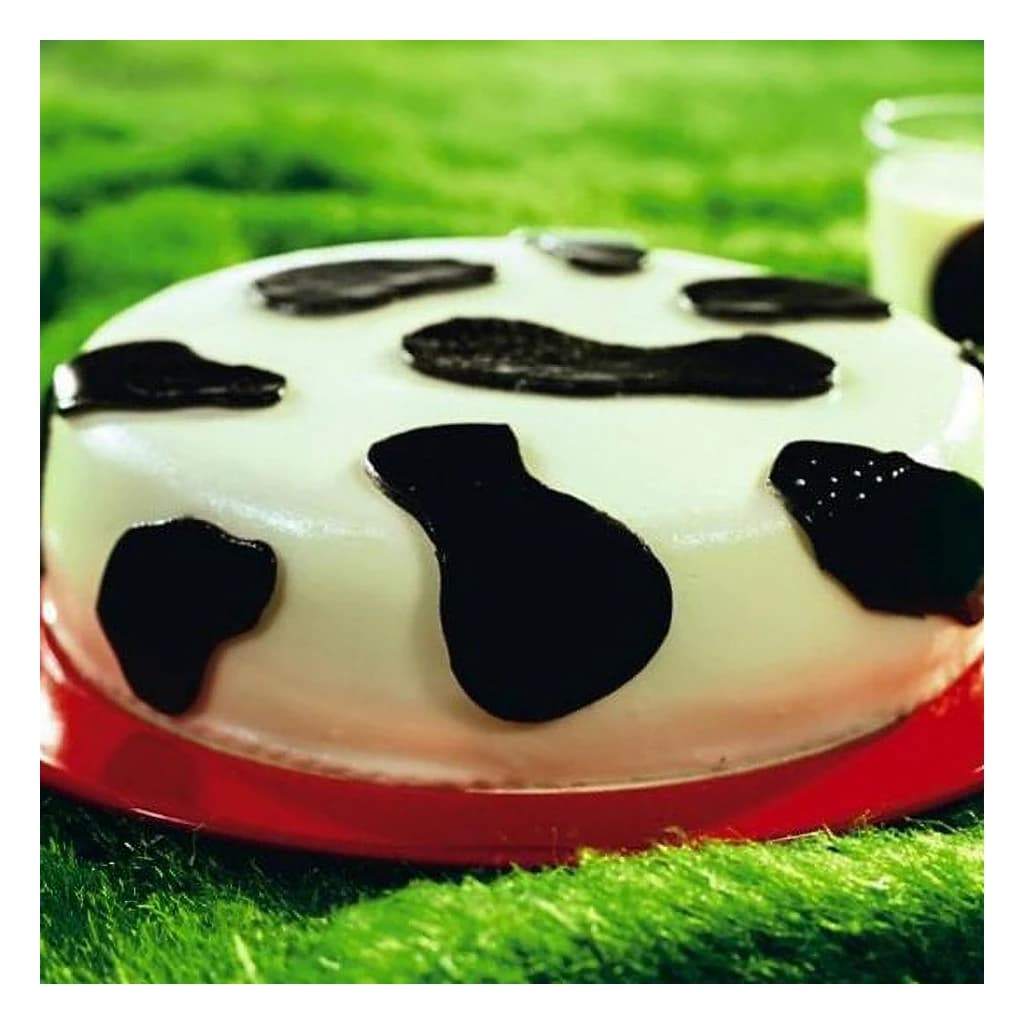
Zeelandia Roll Dekor Soft White Sugarpaste (7.5 kg)
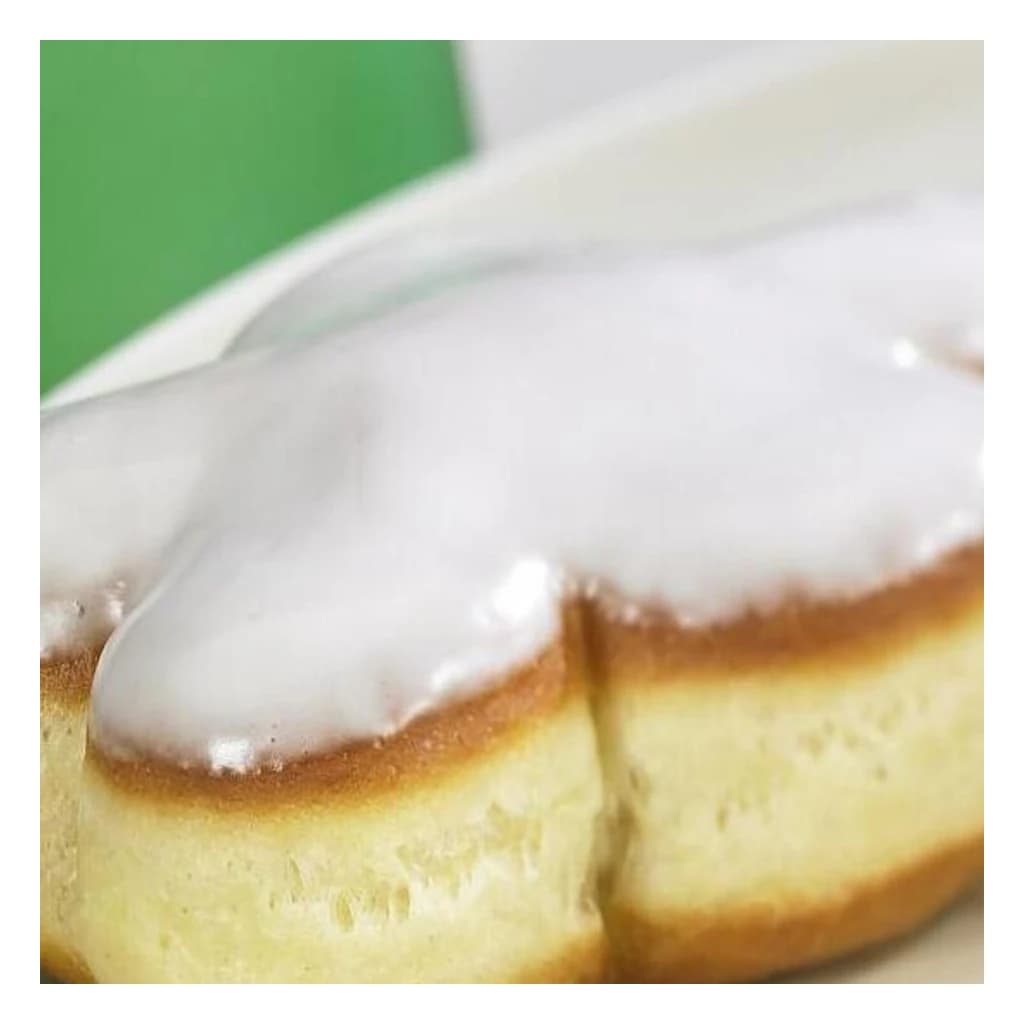
Zeelandia Fondant Premium (14 kg)
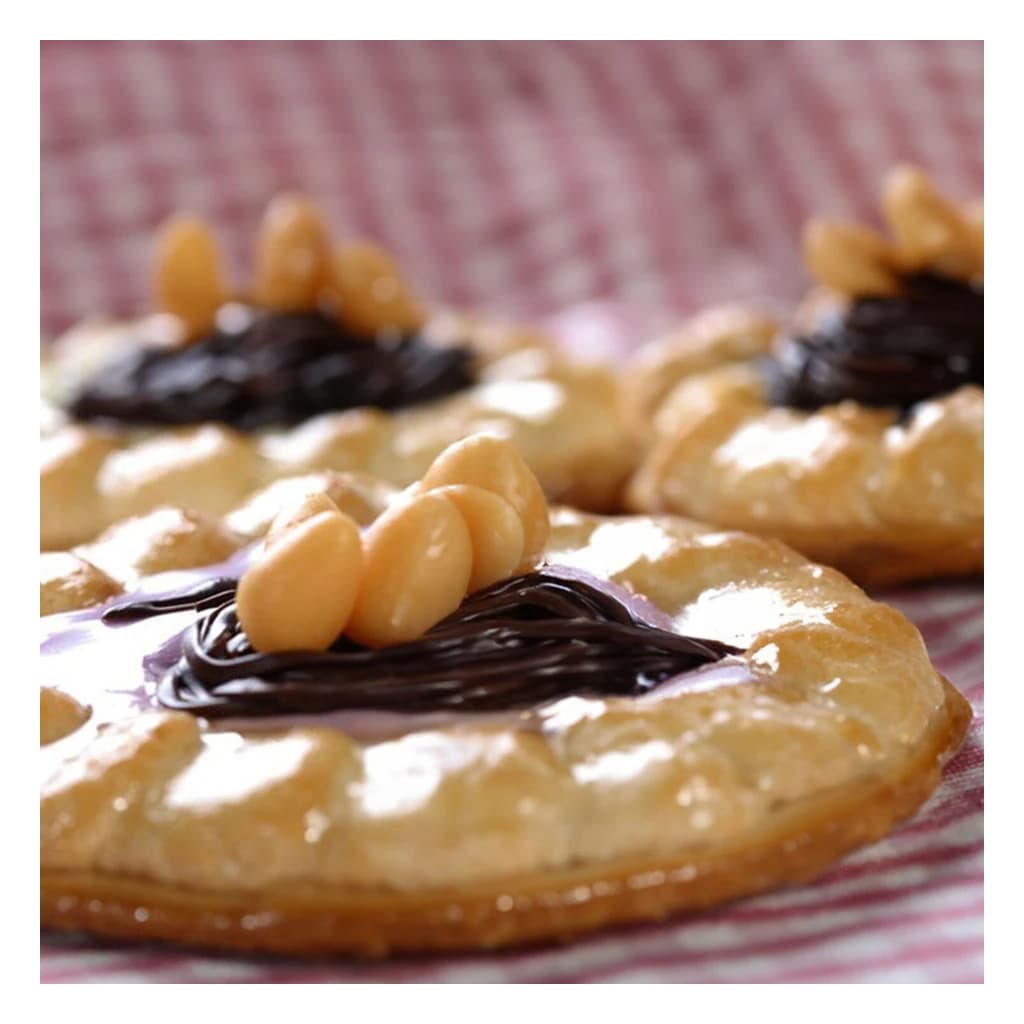
Almond Paste
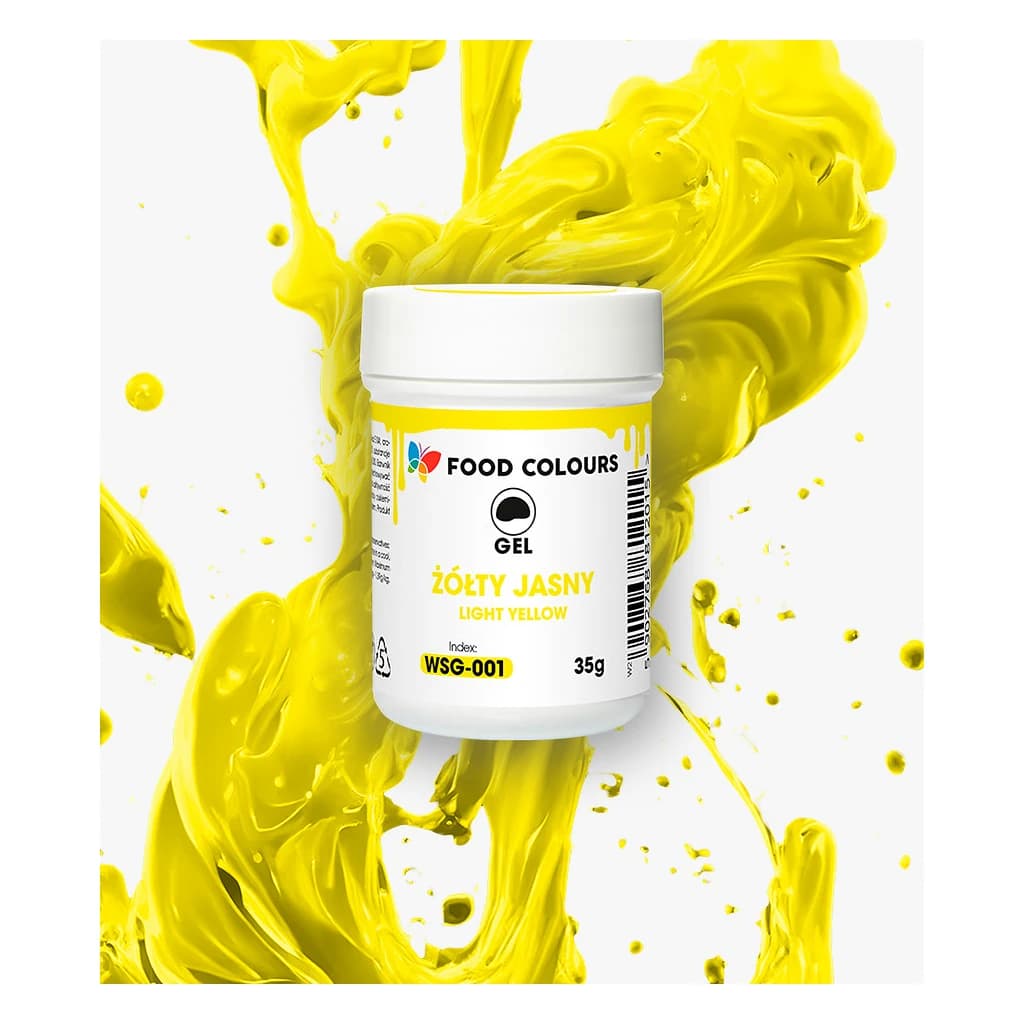
Food Colour — Gel, 35 g Jars

White Flower Paste (250 g)
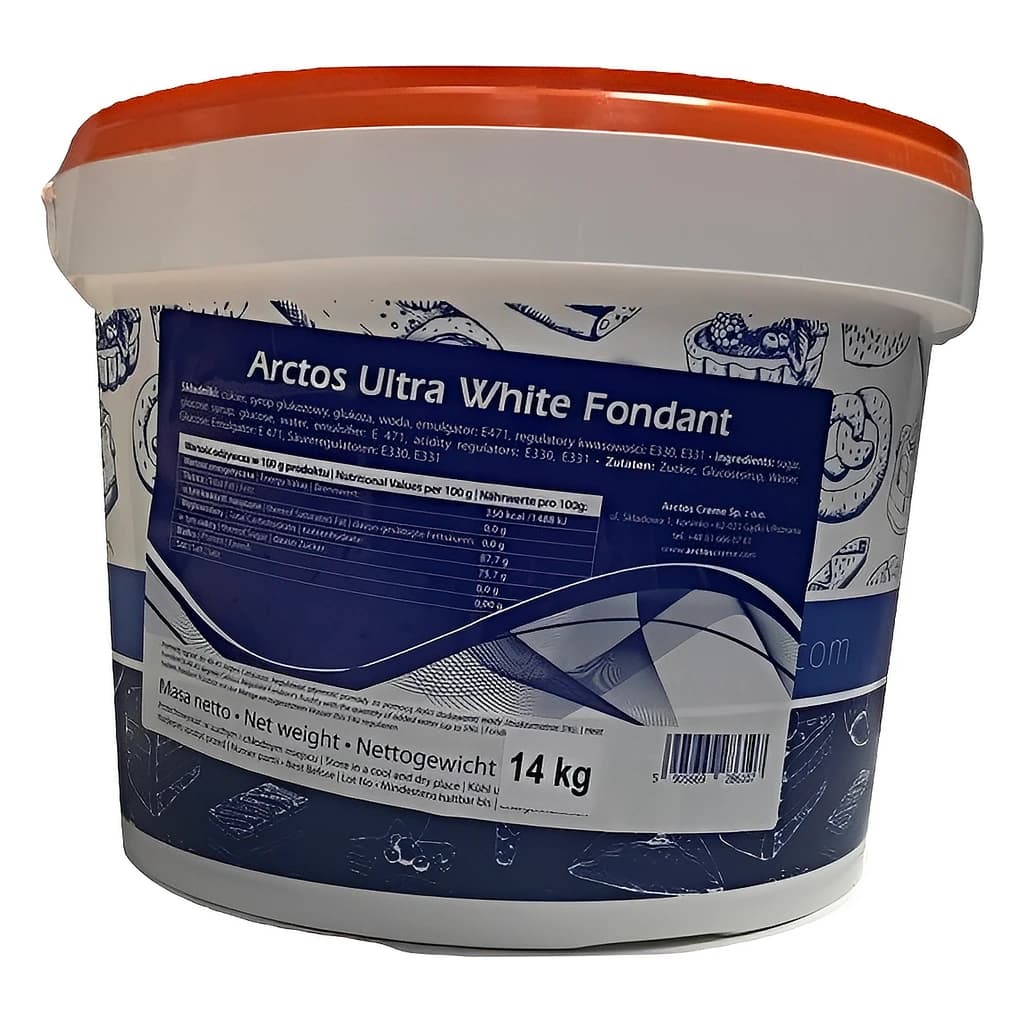
Arctos Ultra White Fondant 14 kg
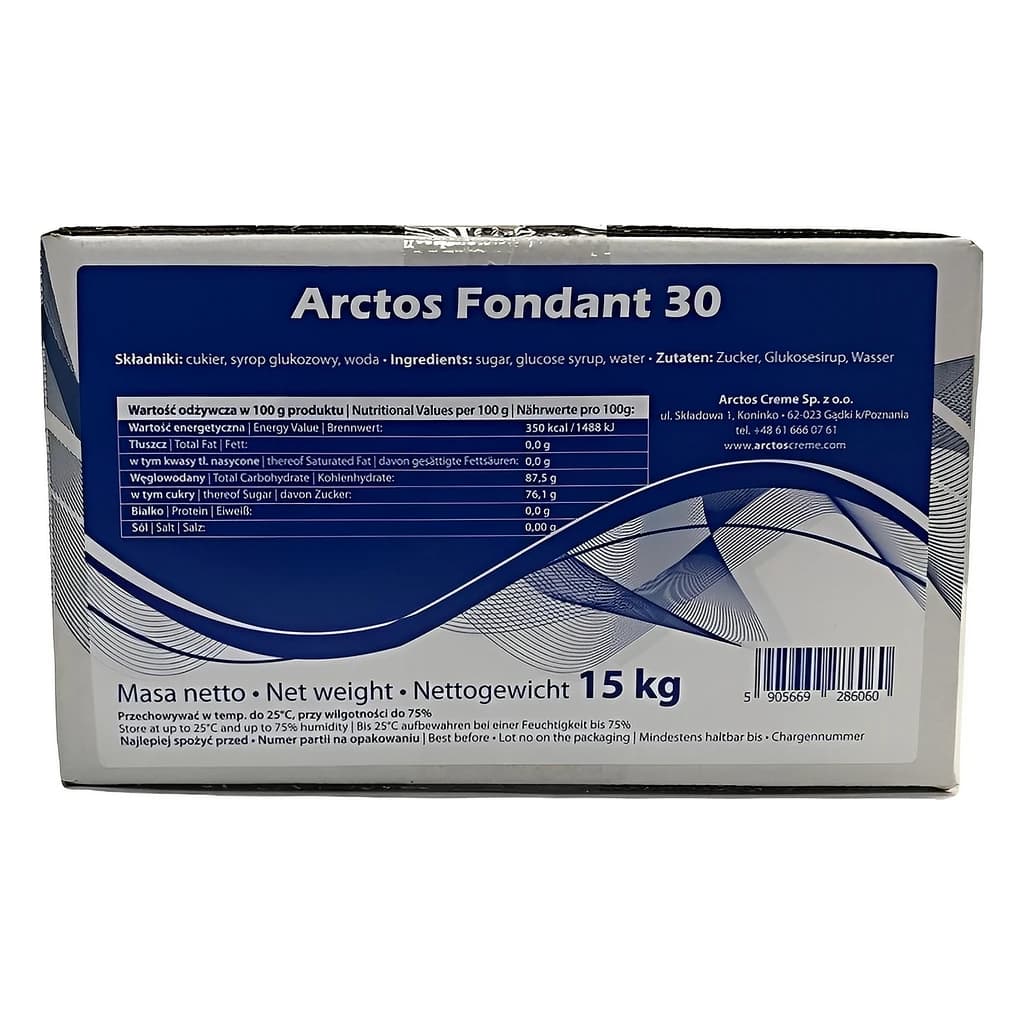
Arctos Fondant 30 – 15 kg
Icing Sugar 10 kg
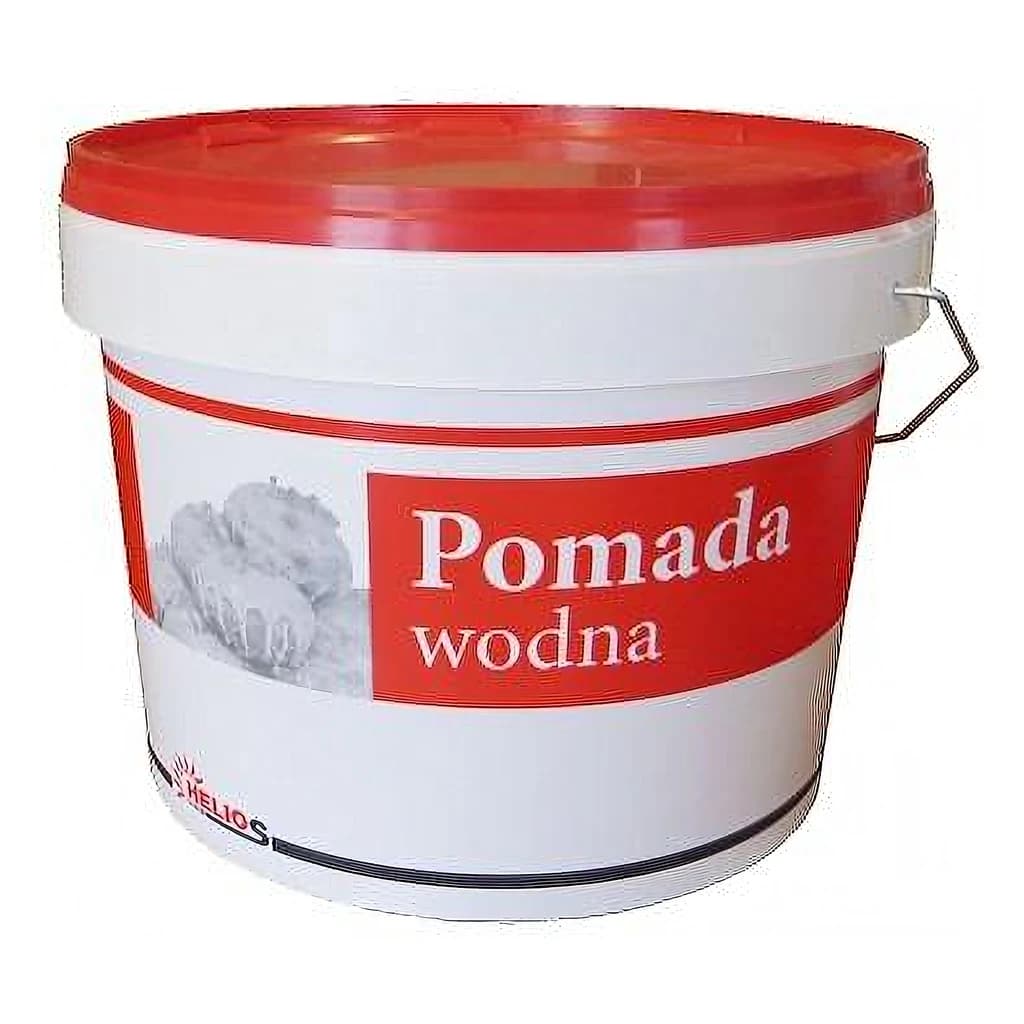
Helios Water Fondant 15 kg
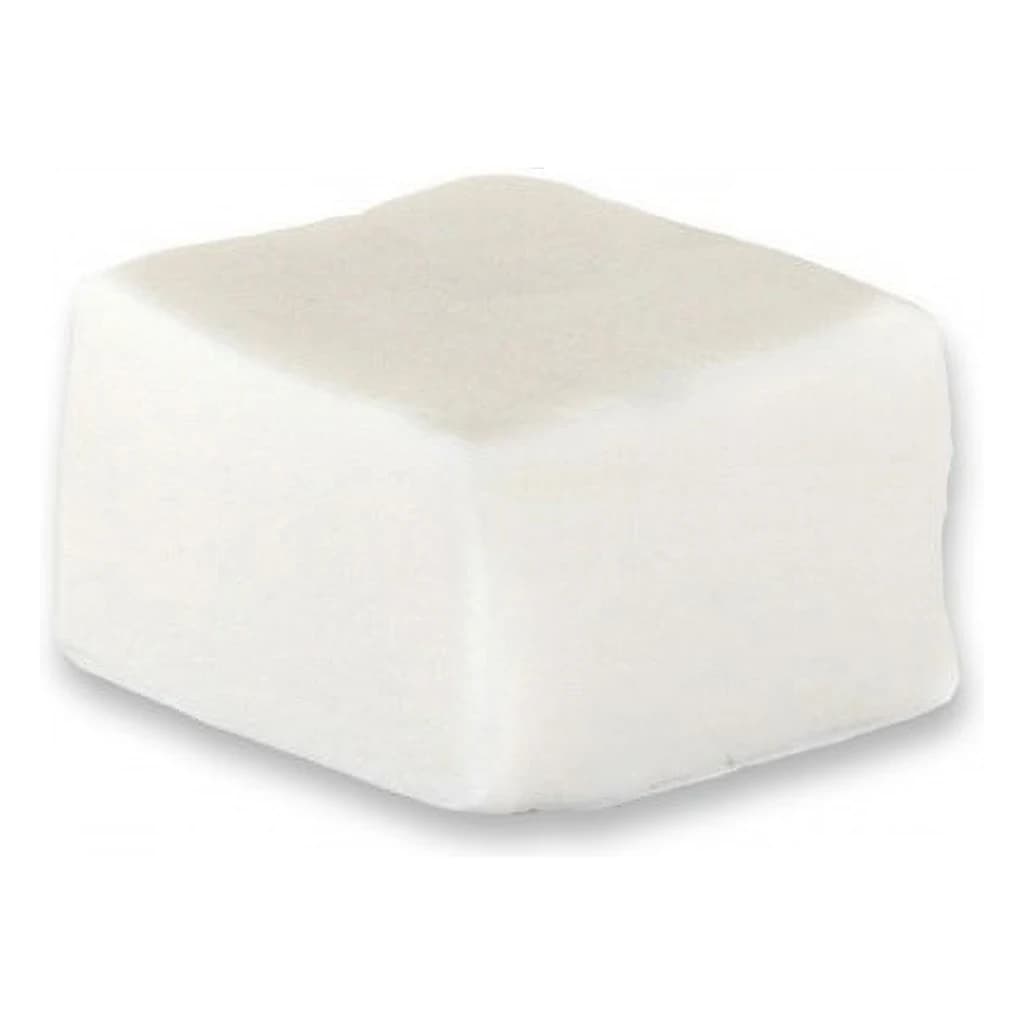
Ready-to-Roll Sugarpaste
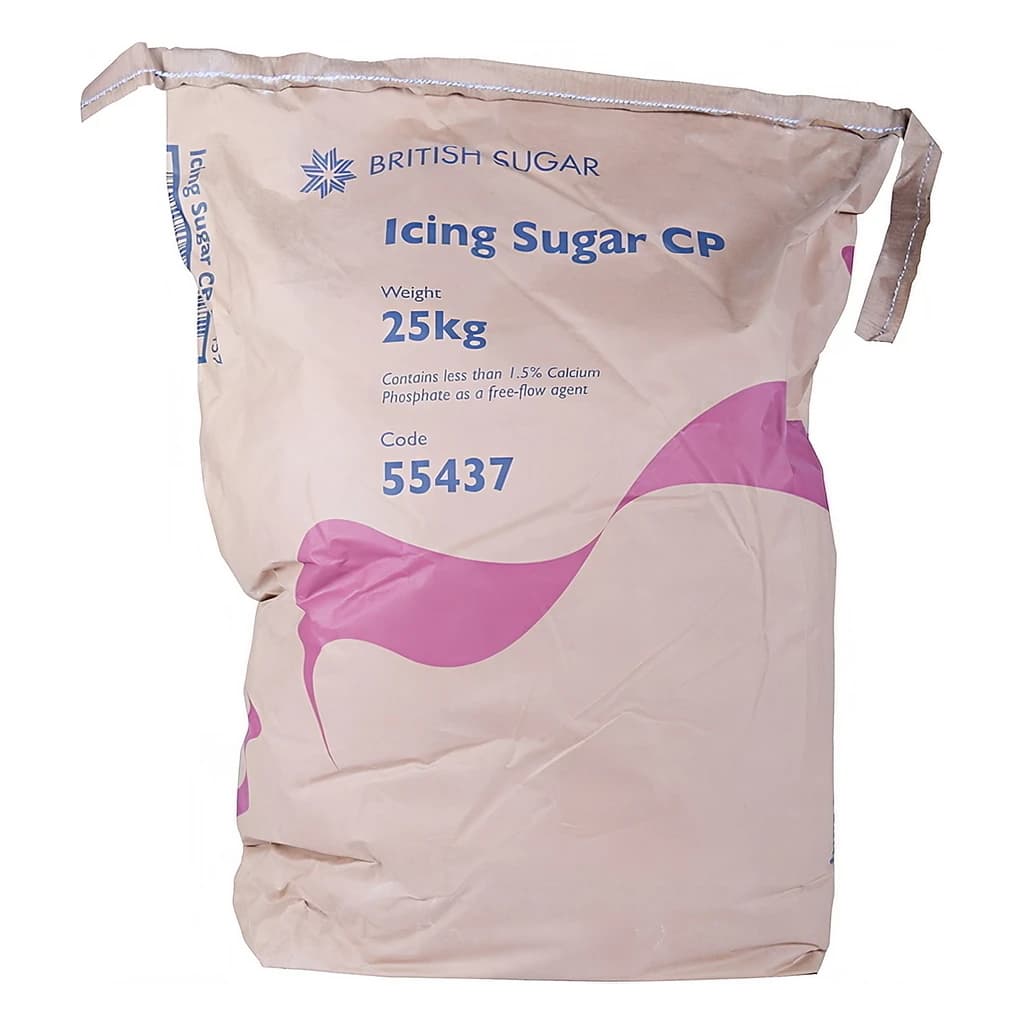
Icing Sugar CP 25 kg
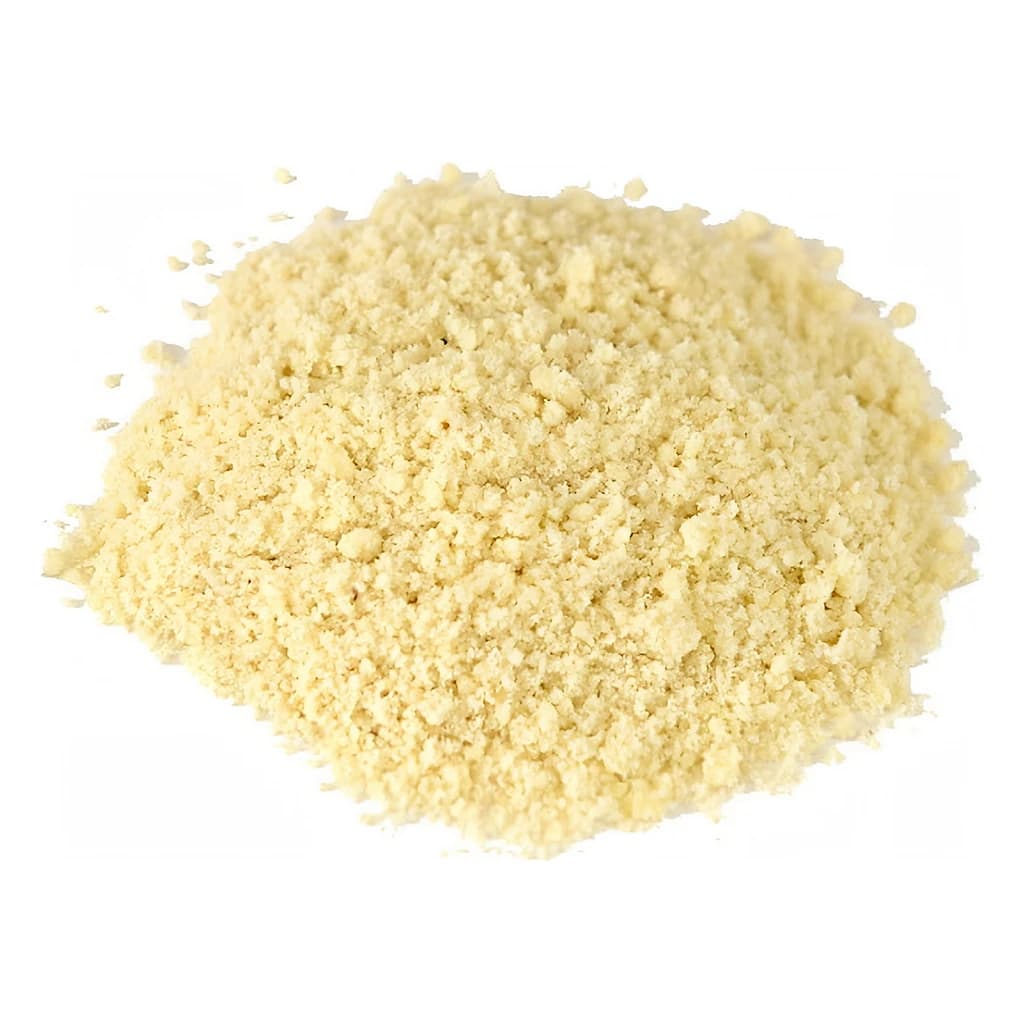
Almonds Ground 10 kg
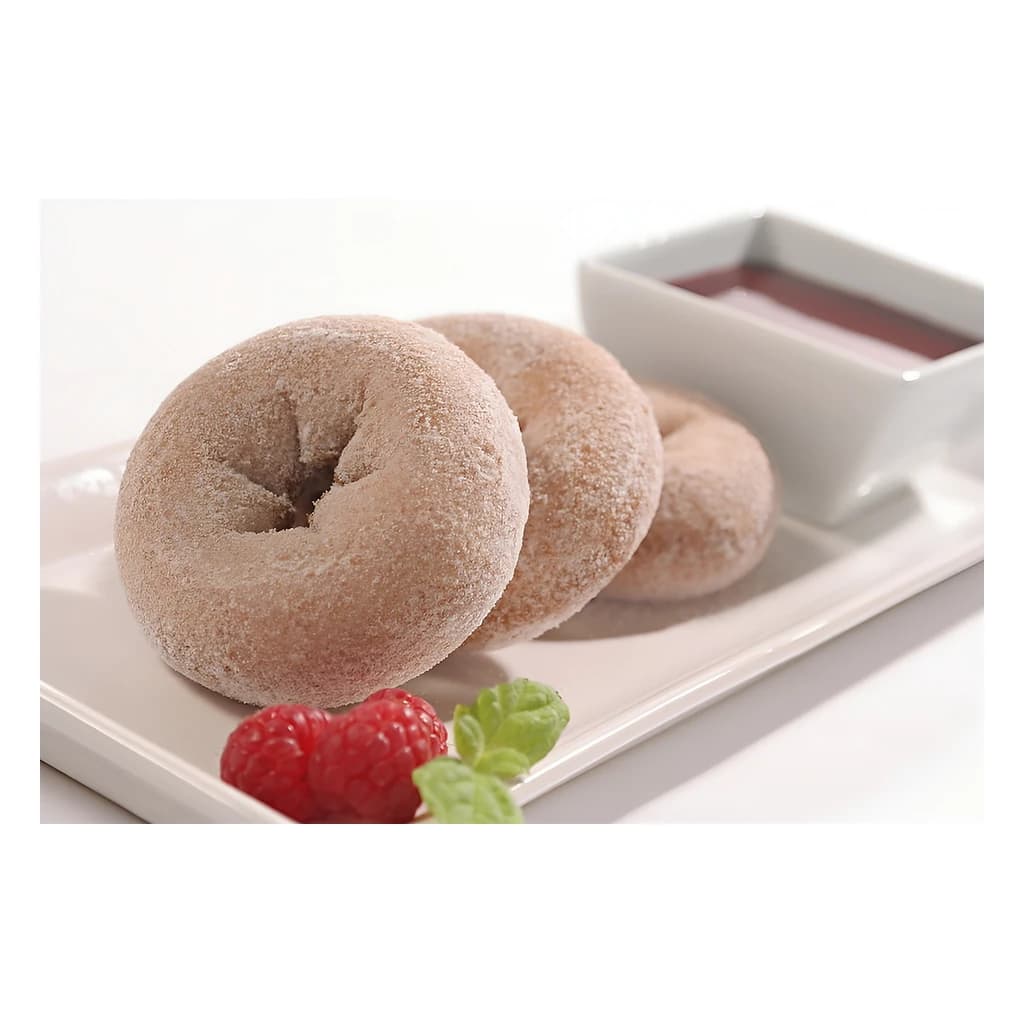
Macphie Sweet Snow Dusting Powder 12.5 kg
Vegetable Glycerine (E422) 6.25 kg

White Wrap Ice 12.5 kg

Almonds Ground 12.5 kg
Blanched Almond Flour 12.5 kg
Food Colour — Spectral Paste, 400 g (Sugarflair)