Sugar work for confectioners: cooking stages, pulled, blown and spun sugar, and isomalt
A practical guide for confectioners to working with cooked sugar: the eight cooking stages (thread to dark caramel) and what each is for; the science of crystallisation and the doctoring agents (glucose, invert sugar, acid) that keep sugar clear; the difference between caramelisation and the Maillard reaction; and the decorative techniques - pulled, blown, cast, spun and rock sugar, plus pastillage. A full section covers isomalt, the modern showpiece sugar, with cooking and working temperatures and its big advantage in humidity. Poured fondant is explained as controlled recrystallisation. All numbers are cross-checked against reference charts and first-party spec sheets for the sugars, syrups, isomalt and fondant in the Domson catalogue, with hot-sugar burn safety and polyol labelling flagged for review.
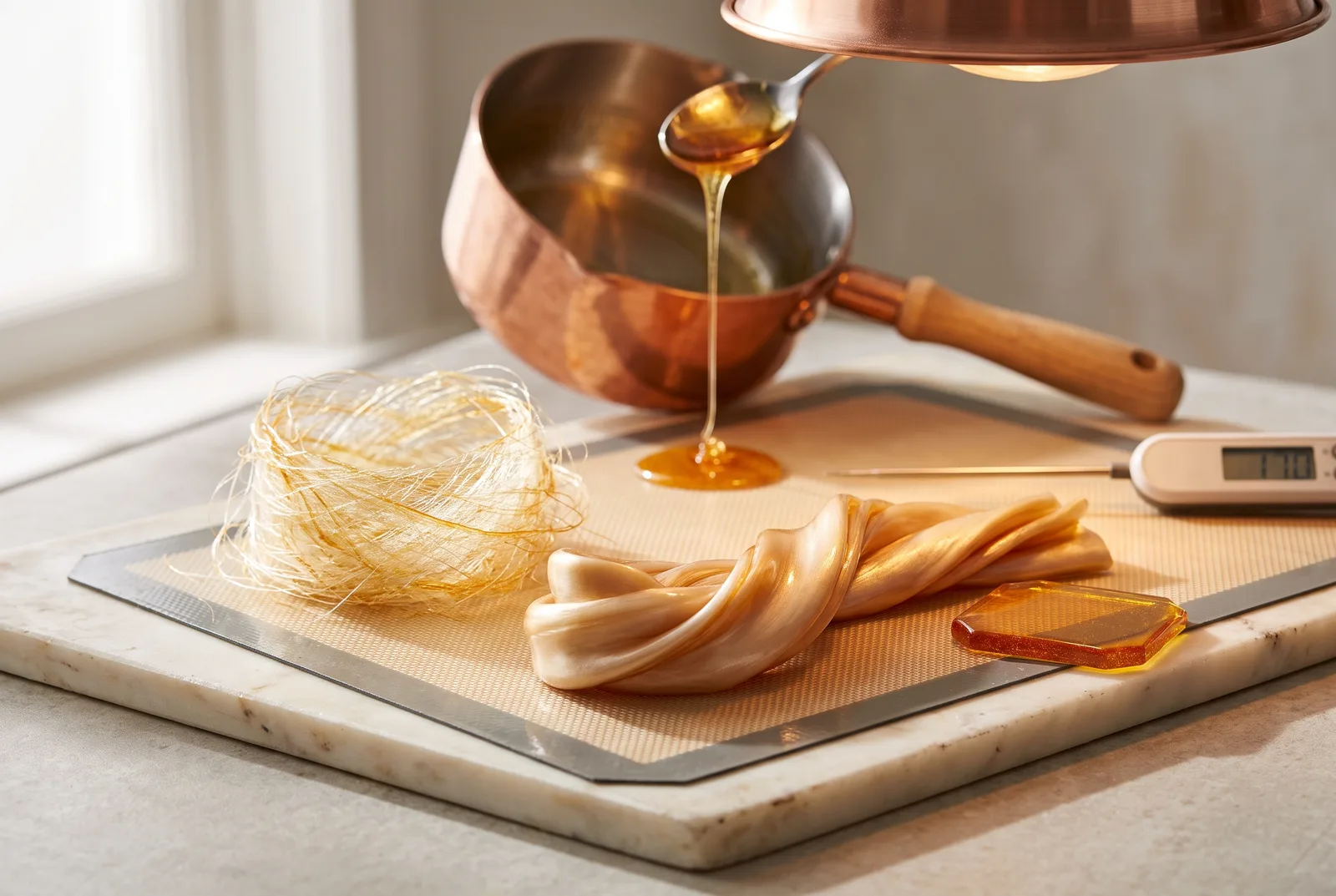
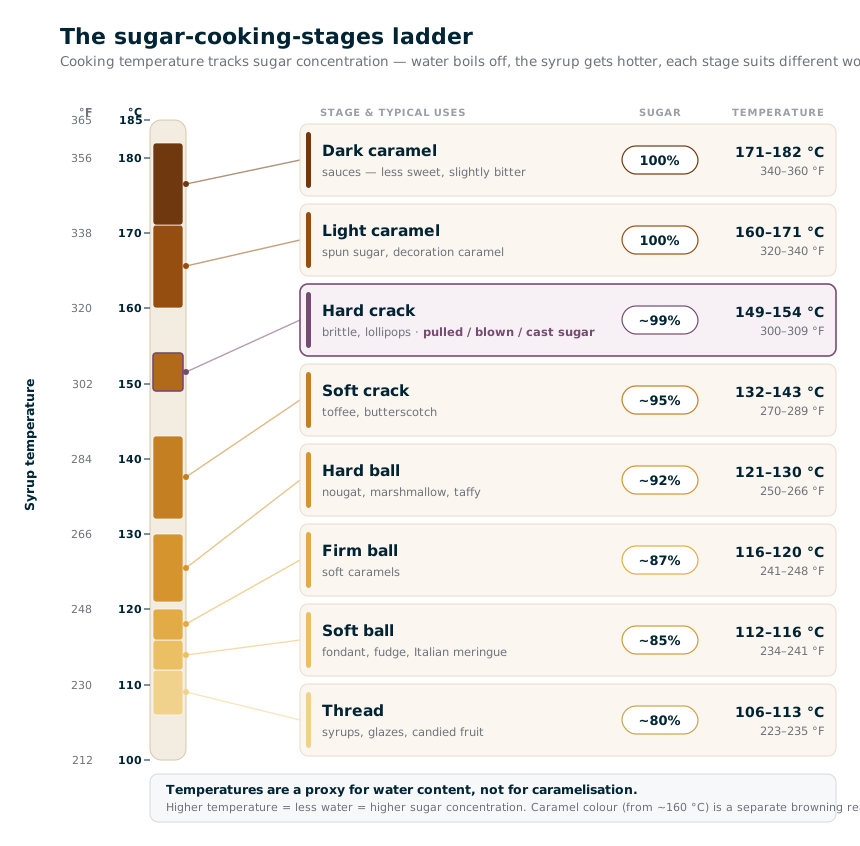 Temperature ladder of cooked-sugar stages from thread at about 110 degrees Celsius to dark caramel at about 180 degrees Celsius, each band labelled with its sugar concentration and the candies it is used for
1. Why sugar work is its own discipline
Sugar work is the most temperature-critical craft in the pastry kitchen and the most dangerous. The same bag of sugar can become a soft fondant, a chewy caramel, a brittle lollipop or a clear glass showpiece - the only variable is how much water you boil out of it, and how you treat the sugar as it cools. Get the temperature wrong by a few degrees and the product is unusable; get a drop of molten sugar on your skin and you have a serious burn. This dossier covers the science you need (cooking stages, crystallisation, caramelisation), the decorative techniques (pulled, blown, cast, spun, rock sugar, pastillage), and the modern showpiece material, isomalt - with the catalogue ingredients a confectioner buys for each.
Safety first (read before any sugar boil). Molten sugar at 150-170 C causes second- or third-degree burns and keeps burning because it is viscous, sticks to skin and carries a lot of heat. Keep a bowl of iced water beside the stove, wear gloves, and on any contact remove the glove/clothing and submerge the area in cold water immediately.
2. The cooking stages: temperature is really a water gauge
When you boil a sugar syrup, water evaporates, the sugar concentration rises, and the boiling point rises with it. So the temperature you read on the thermometer is really a proxy for how much water is left in the syrup - it is not (until the very top of the scale) a measure of caramelisation. This is the single most important idea in confectionery, and it confuses even experienced cooks: the named stages are water-content benchmarks.
The eight stages, cross-checked across two reference charts:
| Stage | Temperature | Approx. sugar | Used for |
|---|---|---|---|
| Thread | 106-113 C / 223-235 F | ~80% | Syrups, glazes, candied fruit, stock syrup |
| Soft ball | 112-116 C / 235-240 F | ~85% | Fondant, fudge, pralines, Italian meringue, buttercream |
| Firm ball | 116-120 C / 240-250 F | ~87% | Soft/chewy caramels |
| Hard ball | 121-130 C / 250-266 F | ~92% | Nougat, marshmallow, taffy |
| Soft crack | 132-143 C / 270-290 F | ~95% | Toffee, butterscotch, taffy |
| Hard crack | 149-154 C / 300-310 F | ~99% | Brittle, lollipops, and most decorative pulled/blown/cast sugar |
| Light caramel | 160-171 C / 320-340 F | 100% | Spun sugar, decorative caramel, nut coatings |
| Dark caramel | 171-182 C / 340-360 F | 100% | Caramel sauces, deep-flavour work (less sweet, slightly bitter) |
The full chart with cold-water tests is in the comparison table below. The sugar-concentration percentages are from a single source and should be treated as indicative; the temperatures are textbook and reliable.
Allergen note on finished products. Several products made at these stages carry major EU/UK declarable allergens in their final recipes: Italian meringue and nougat typically contain egg whites (EGG); soft caramels, butterscotch and toffee are conventionally made with butter and/or cream (MILK); brittle is often produced with peanuts or tree nuts (PEANUT or TREE NUT); marshmallow typically contains gelatin (usually porcine — not Halal or vegan; gelatin source must be declared for Halal and Kosher audiences; divinity also contains egg whites). The temperatures above apply to the base sugar syrup, which is allergen-free; allergen declarations for finished products depend on all ingredients used.
Practical note on the thermometer. Calibrate it: in boiling water it should read 100 C / 212 F at sea level. For high-altitude kitchens, subtract about 1 C per 900 ft (2 F per 1000 ft) from the target stage temperature, because water boils lower and your stages shift down.
2.1 The cold-water test (when you have no probe)
Drop a little syrup into iced water and feel it: a thread that won't ball is thread stage; a ball you can flatten is soft ball; a ball that holds is hard ball; threads that snap are hard crack. It is slower than a probe but reliable, and it is how the stages got their names.
3. Crystallisation: the confectioner's main enemy (and friend)
Sucrose wants to crystallise. A boiling syrup is a supersaturated solution, and the moment a seed crystal appears - a speck of undissolved sugar on the pan side, a dust mote, or the shock of stirring - sucrose molecules rush to stack onto it and the whole batch can "grain" into a cloudy, gritty mass.
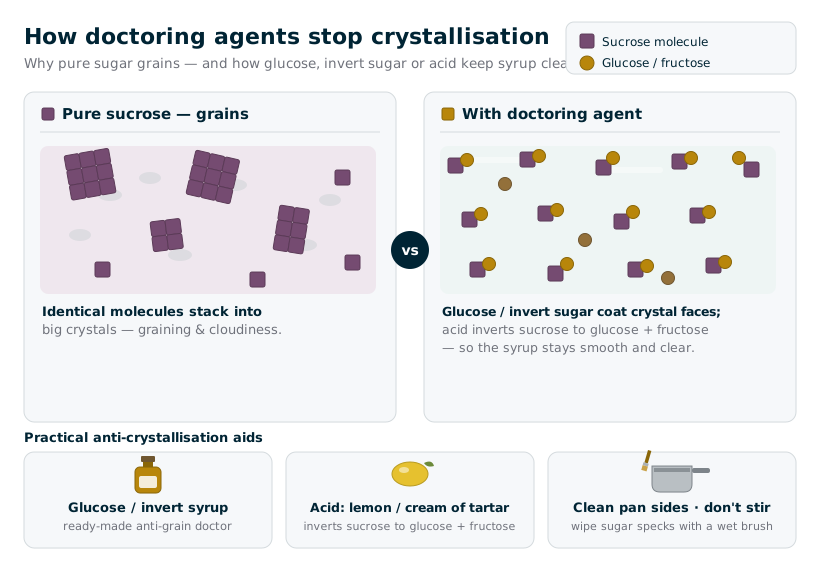 Comparison diagram showing pure sucrose syrup growing into large grainy crystals on the left, and a syrup with added glucose, invert sugar or acid staying smooth because the foreign molecules block crystal growth on the right
For clear work (lollipops, cast sugar, pulled sugar) you must stop crystallisation. For fondant you do the opposite: you encourage many tiny crystals. The tools are the same; only the goal differs.
3.1 Doctoring (interfering) agents
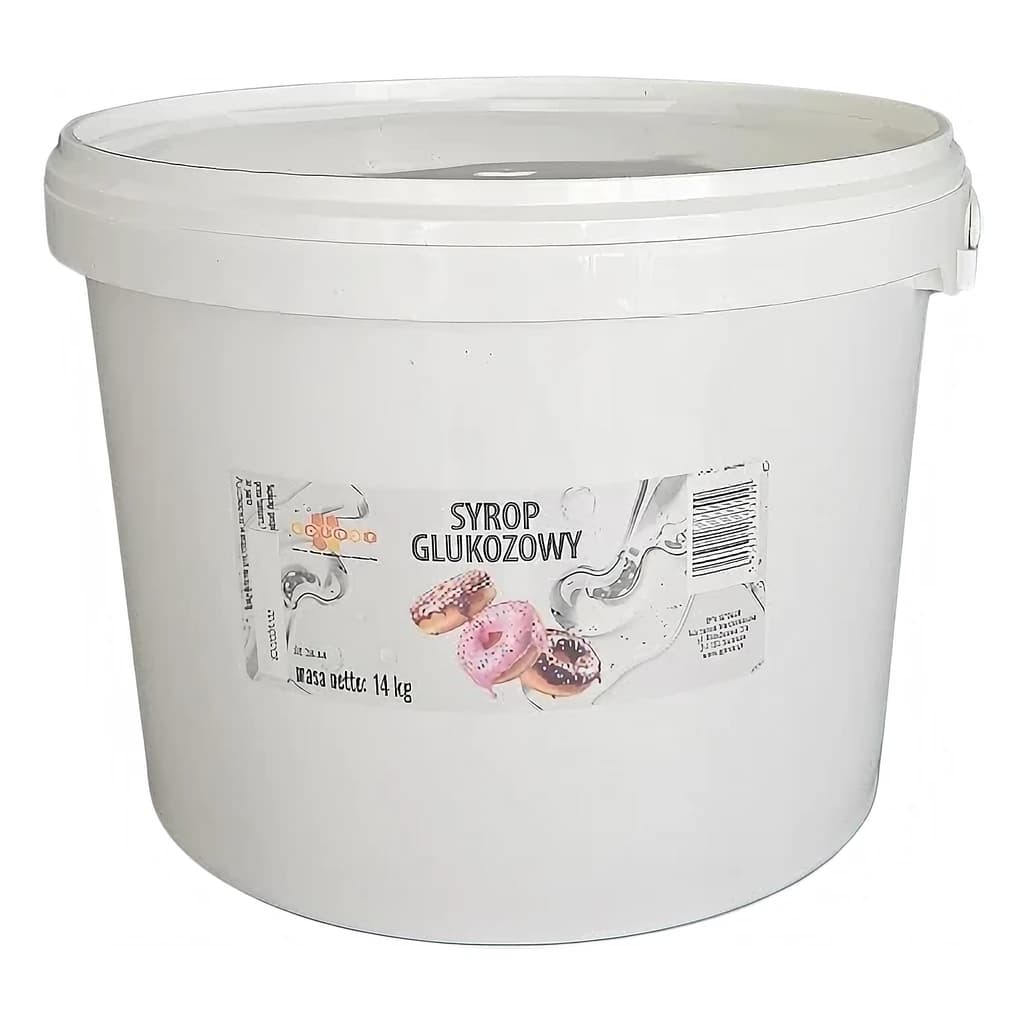
- Glucose syrup (and corn syrup): glucose and fructose molecules temporarily bond to the surface of any forming sucrose crystal and physically block other sucrose molecules from attaching, so crystals cannot grow large. Glucose is the standard, near-neutral doctoring agent for clear sugar work. The catalogue Glucose Syrup 14 kg (Ratos Natura) is the product for this; spec not read, confirm with supplier.
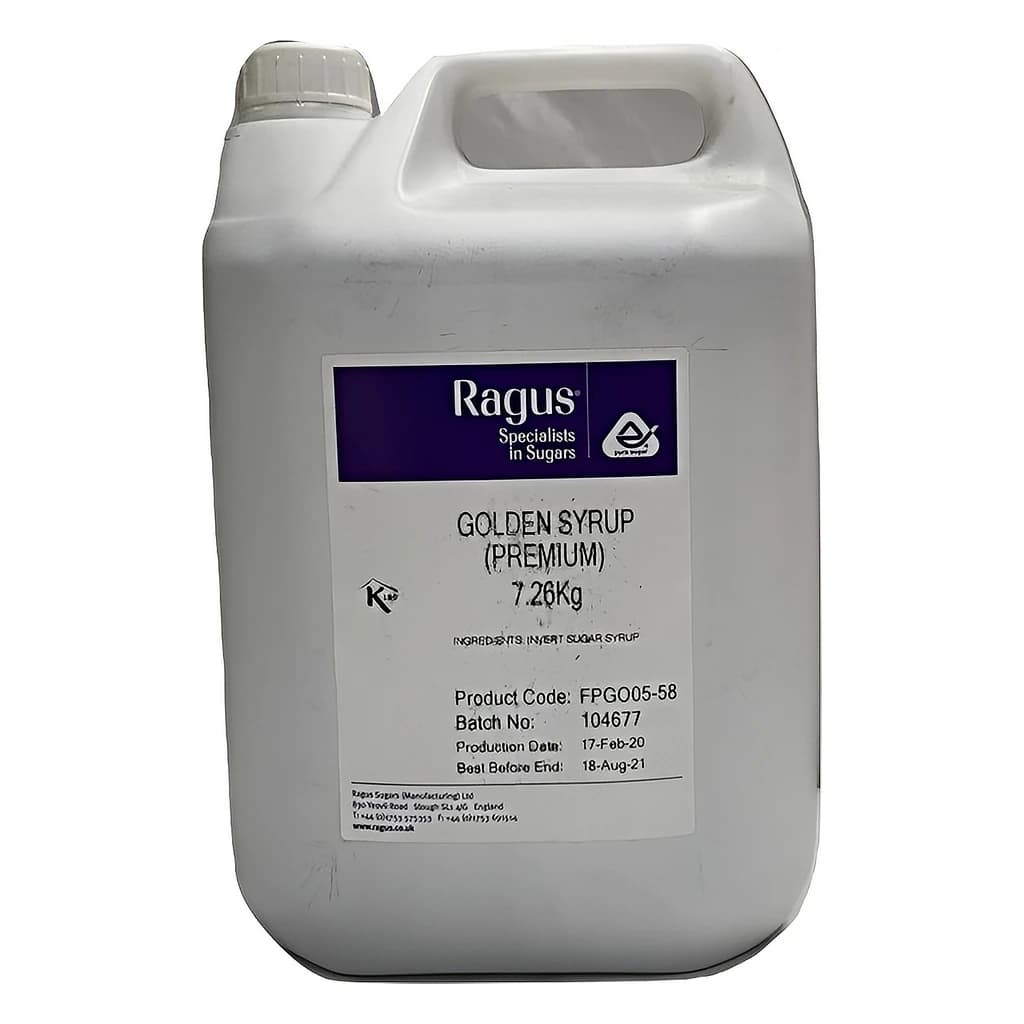
- Invert sugar (e.g. golden syrup): already a mix of glucose and fructose, so it interferes strongly. The catalogue Golden Syrup (Kent Foods, GO05) is an invert sugar syrup at 47-51% invert / 30-33% sucrose, pH 4-6 - a ready-made doctoring and flavour syrup, though its colour and flavour make it better for caramels and bakes than for water-clear showpieces.
- Acid (cream of tartar / tartaric acid, lemon juice): an acid added to the boil hydrolyses ("inverts") part of the sucrose into glucose and fructose in situ; those two sugars have different shapes and cannot align into a sucrose crystal lattice, so the syrup stays smooth. Torreblanca adds ~12 drops of tartaric acid to a 1 kg sugar boil at 155 C.
Catalogue trap - read this. The Domson item "Cream of Tartar Substitute" (Dawn Skylark) is NOT cream of tartar. Its spec sheet shows it is legally a baking powder - disodium diphosphate (E450i) plus wheat flour and salt - a chemical raising agent. It contains gluten and will NOT invert sugar. Do not order it as a sugar-work acid; buy food-grade cream of tartar (potassium bitartrate) or tartaric/citric acid instead.
3.2 Good housekeeping that prevents graining
Even with a doctoring agent, technique matters: dissolve the sugar fully before it boils; brush the pan sides down with water (or cover briefly so steam washes them); skim froth; and do not stir once it is boiling. A single stray crystal can seed the whole pan.
4. Caramelisation vs the Maillard reaction
At the top of the temperature scale the sugar stops being merely concentrated and starts to break down and brown. This is caramelisation: a non-enzymatic browning that is pure pyrolysis of sugar - no amino acids, no protein, no water needed. It is chemically different from the Maillard reaction, which requires amino acids plus reducing sugars (and is what browns bread crust and roasted nuts).
Different sugars caramelise at different temperatures, which is why invert-rich and fructose-rich syrups colour earlier, and why isomalt (a polyol) stays clear far longer:
| Sugar | Caramelisation onset |
|---|---|
| Fructose | ~105-110 C |
| Glucose | ~150 C |
| Galactose | ~160 C |
| Sucrose | ~170 C / 338 F |
| Maltose | ~180 C |
For clear pulled, blown and cast work you cook to hard crack (~150 C) and pull off the heat before sucrose caramelises at ~170 C. For spun sugar and amber decor you let a little caramelisation begin. For showpieces that must stay water-white through repeated reheating, you switch to isomalt (section 6).
5. The decorative techniques
The five cooked-sugar techniques (plus cold pastillage) share one workflow: cook a clear, doctored sugar to the right stage, then exploit how it behaves as it cools. A summary grid is in the comparison table below.
5.1 Pulled sugar (sucre tiré)
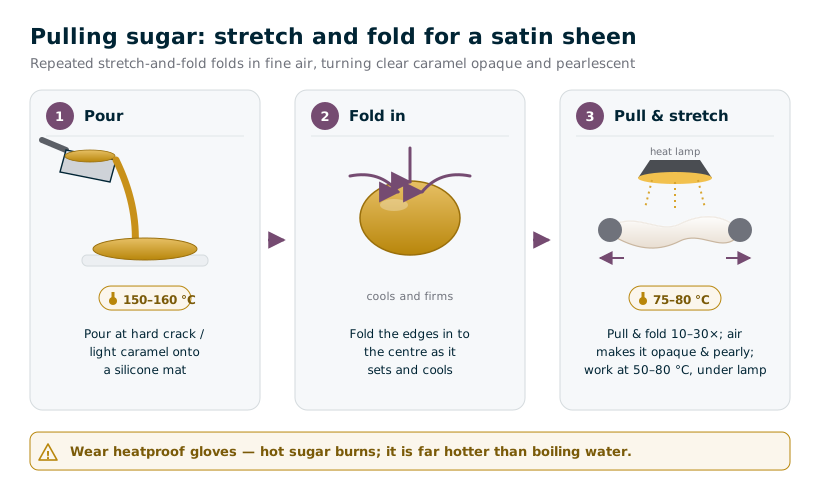 Three-step illustration of pulling sugar: pouring cooked sugar onto a mat, folding the edges to the centre as it cools, then stretching and folding repeatedly under a heat lamp until it turns satiny and opaque
Cook to hard crack / light caramel (~150-160 C), pour onto a silicone mat, fold the edges in as it cools, then stretch and fold the mass 20-30 times. Folding incorporates countless fine air layers, which makes the sugar opaque and gives it the characteristic satin, pearlescent sheen - the same optical effect as pulling taffy. You then shape it into ribbons, leaves and flower petals.
Torreblanca's working detail: pull and fold 20-30 times, and work at 75-80 C for the best gloss - pulled too hot it takes in excess air, dries slowly and loses elasticity; pulled too cold it is hard to move and dull. A heat lamp over a marble slab keeps the mass in the working window. The full formula (1 kg sugar, 350-400 g water, ~200 g glucose, ~12 drops tartaric acid; acid in at 155 C, cook to 160 C) is in the formula card below.
5.2 Blown sugar (sucre soufflé)
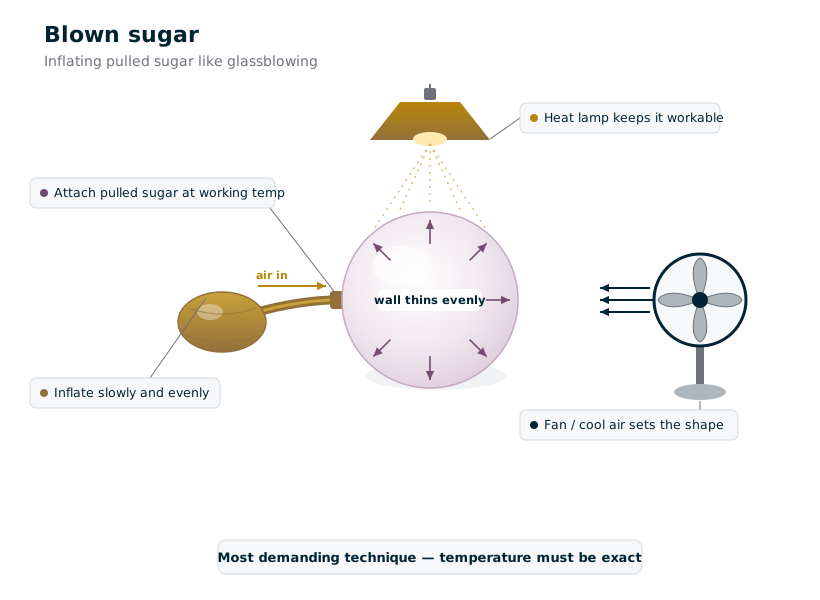 Illustration of blown sugar showing a ball of pulled sugar fixed to a hand pump, being inflated into a sphere or fruit shape under a heat lamp, then chilled with a fan to set
The most technically demanding technique. A ball of pulled sugar at working temperature is fixed to a hollow tube or hand pump and inflated like glassblowing into spheres, fruit and animals. The wall must thin evenly, the temperature must be exact, and a fan or cool air sets the final shape while a heat lamp keeps the rest workable.
5.3 Cast / poured sugar (sucre coulé)
The most forgiving technique: pour clear or coloured sugar (~150-160 C) into silicone or metal moulds, or over templates, and let it set into bases, plaques and geometric showpiece parts. Torreblanca's casting boil uses a slightly higher glucose ratio for clarity (1000 g sugar: 400 g water: 250-300 g glucose, cook to 160 C, colour at 135-140 C). See the formula card below.
5.4 Spun sugar (sucre filé)
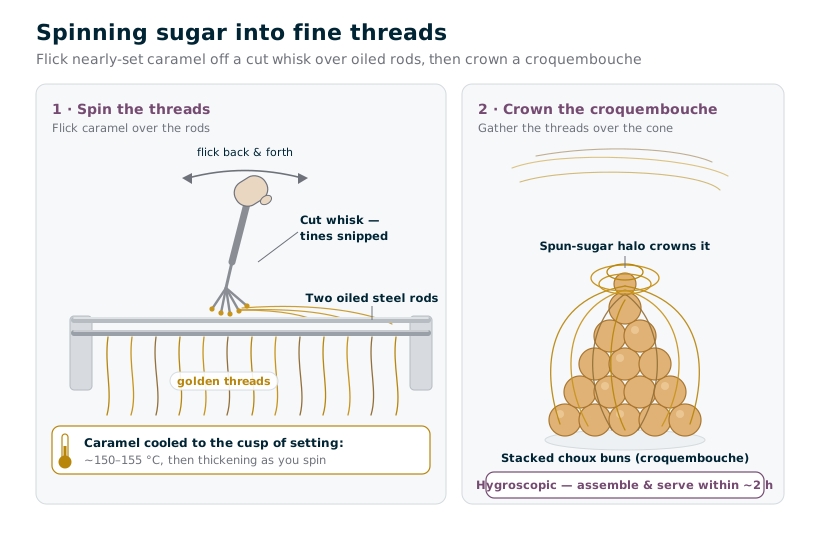 Diagram of spinning sugar by flicking caramel off a cut-down whisk over two oiled steel rods so fine threads form, with the threads gathered around a croquembouche
Cook to hard crack (~150-155 C), then let the caramel cool slightly until it thickens to the cusp of setting. Flick it off a cut-down whisk (or a fork) over two oiled steel rods so it falls in fine threads, then gather the threads into nests or drape them over a croquembouche. If the caramel is too hot it just drips instead of forming strands. Spun sugar is hygroscopic - it absorbs moisture and softens within hours, so assemble and serve within about 2 hours.
Cold-chain note for cream-filled croquembouche. The two-hour window refers to the aesthetics of the spun-sugar garnish only. If the croquembouche contains cream-based fillings (crème pâtissière, chantilly cream), those fillings are high-risk products (EGG and MILK) and must be kept at 0-5 C continuously; the assembled product must not be held at ambient temperature beyond the interval permitted by applicable food-hygiene law (UK Food Safety (Temperature Control) Regulations 1995 / EU Regulation (EC) 852/2004). Do not conflate the decorative-sugar timing with cream-filling cold-chain requirements.
5.5 Rock / bubble sugar and pastillage
Rock/bubble sugar: pour the cast-sugar recipe in a thin layer on parchment and wave it (or fold a little spirit into the hot sugar) to trap bubbles, giving translucent coral/rock effects.
Pastillage: a cold sugar paste (sugar + gelatin + cornstarch) that is rolled, cut and air-dried into rigid, matte decorative pieces. It handles like firm dough and is far more forgiving than cooked sugar - the entry point for structural sugar decor.
5.6 Colouring
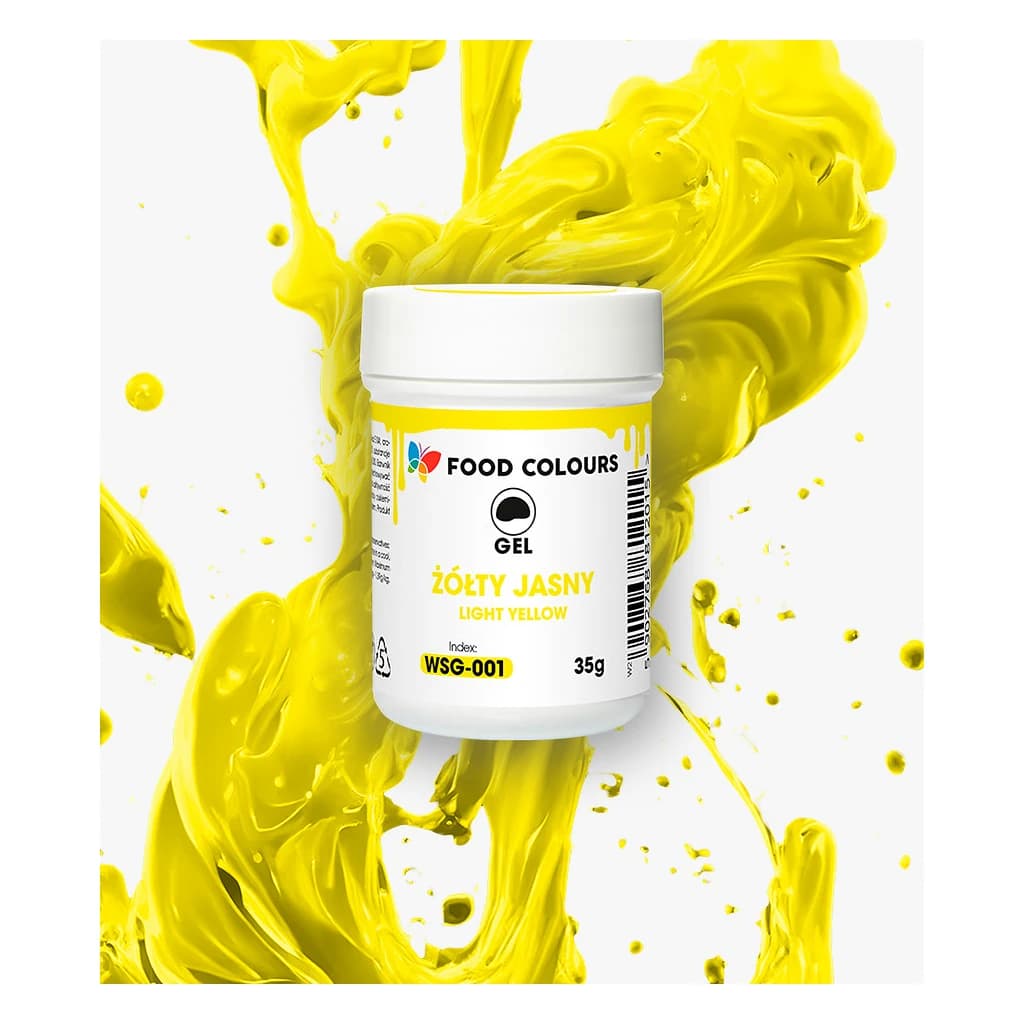
Add concentrated gel/paste or powder colour to the boil near the end (sucrose ~135-140 C; isomalt ~138 C) so the colour disperses without adding cold water that would shock or grain the syrup. The catalogue Food Colour - Gel range (Food Colours brand) is suited to this; avoid thin water-based liquids in a hot melt.
6. Isomalt: the modern showpiece sugar
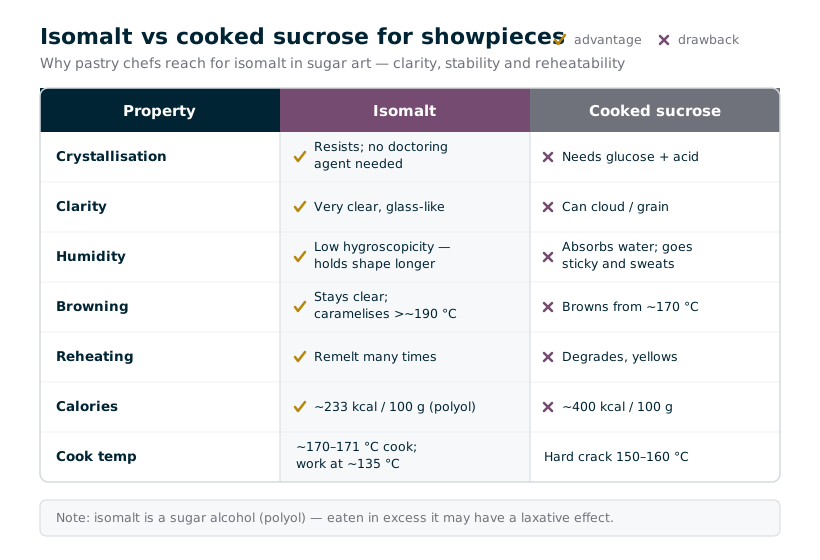 Side-by-side comparison table of isomalt and cooked sucrose for sugar art covering clarity, crystallisation, humidity resistance, reheating, browning and calories
Most competition and production showpiece work today uses isomalt rather than cooked sucrose. Isomalt is a sugar alcohol (polyol) made from sucrose - a mixture of hydrogenated saccharides whose main components are 1,6-GPS and 1,1-GPM.
Why confectioners switched (see the comparison table below):
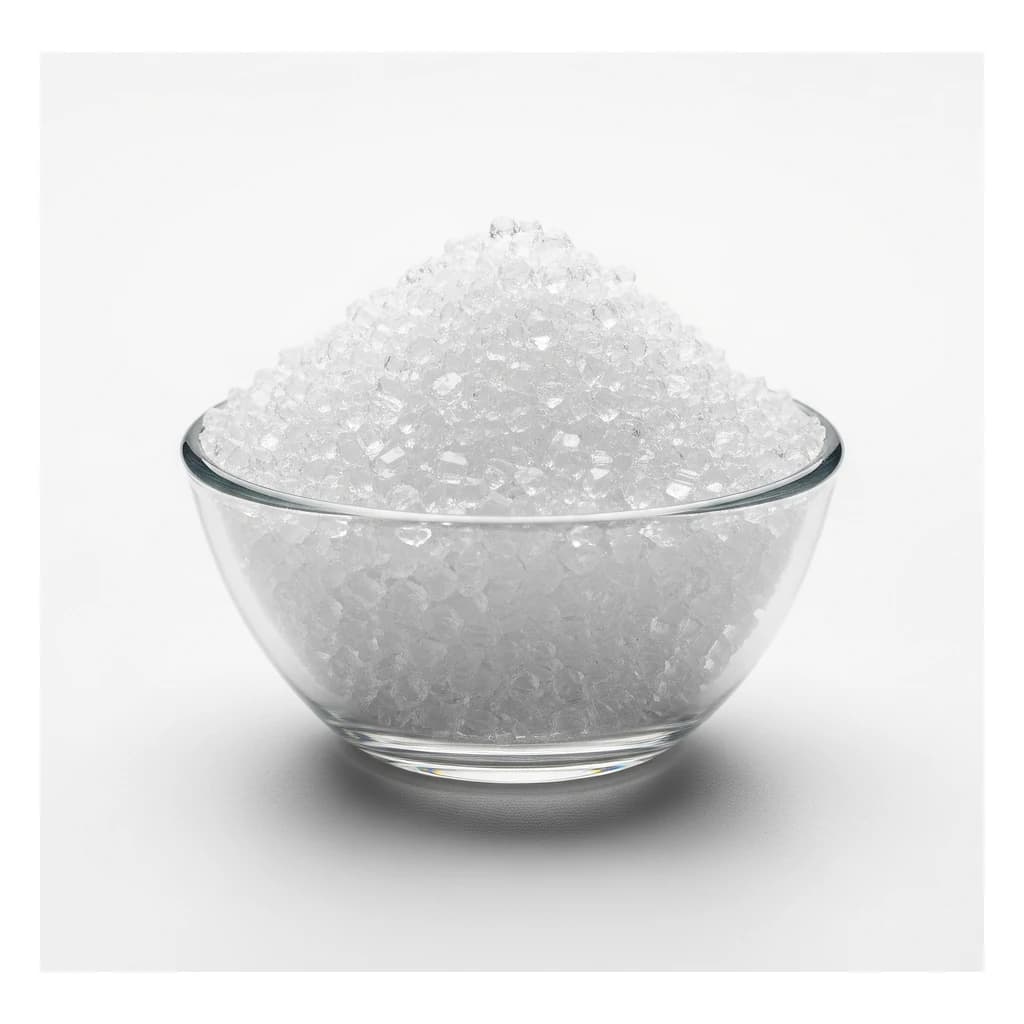
- It resists crystallisation on its own - no glucose or acid doctoring needed.
- It is far less hygroscopic than cooked sucrose, so finished pieces hold their gloss much longer before they sweat and go sticky - the biggest practical win.
- It does not brown easily and can be remelted repeatedly with little loss, so off-cuts are reusable.
- It has roughly half the calories of sugar (970 kJ / 233 kcal per 100 g vs 1700 kJ / 400 kcal).
Cooking and working it: cook isomalt to about 170-171 C (340 F), add colour at about 138 C (280 F), then let it fall to a working temperature around 135 C (275 F) to pour, cast, pull or blow, keeping it pliable under a heat lamp. The full method is in the formula card below.
First-party spec (BENEO ISOMALT ST, catalogue grade ST-PF, a < 0.1 mm powder): water max 5.0 g/100 g; GPM+GPS min 98% of dry matter (GPS 43-57%); reducing sugars max 0.2%; energy 970 kJ / 233 kcal per 100 g, 97 g carbohydrate of which 97 g polyols; colour in solution max 30 ICUMSA; store at 20 ±5 C and 20-60% RH; 3-year shelf life. It is non-GMO, vegan, available Kosher/Halal, and "not produced from ingredients or processing aids requiring allergen labelling" under Regulation (EU) 1169/2011.
Polyol caveat - food safety flag. Isomalt is a polyol and excessive consumption can have a laxative effect; EU Regulation (EU) 1169/2011 (and the equivalent UK Food Information Regulations 2014 for products sold in Great Britain) requires the statement "excessive consumption may produce laxative effects" on foods with more than 10% added polyols. The figure of approximately 20 g polyols/day below which laxative effects are unlikely in solid confectionery is a single-source industry-guide figure (not a regulatory limit) and should be confirmed against current EFSA opinion or UK FSA guidance before use in consumer-facing copy. Decorative isomalt pieces and isomalt sweets must be labelled and portioned with this in mind.
Storage of finished sugar pieces. Cooked sucrose work and, to a lesser degree, isomalt are hygroscopic. Store finished showpieces in an airtight box with a silica-gel desiccant, away from humid rooms, ovens and steam.
7. Poured fondant: crystallisation used on purpose
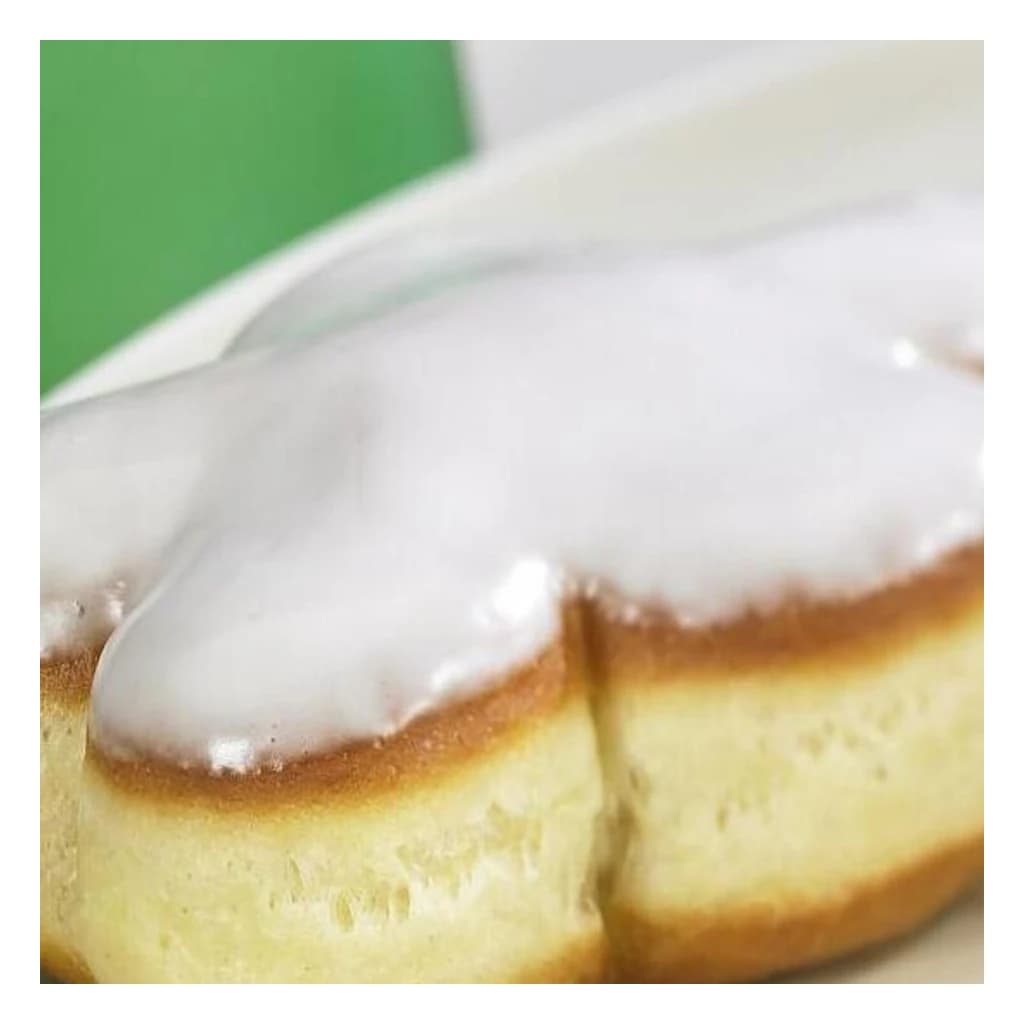
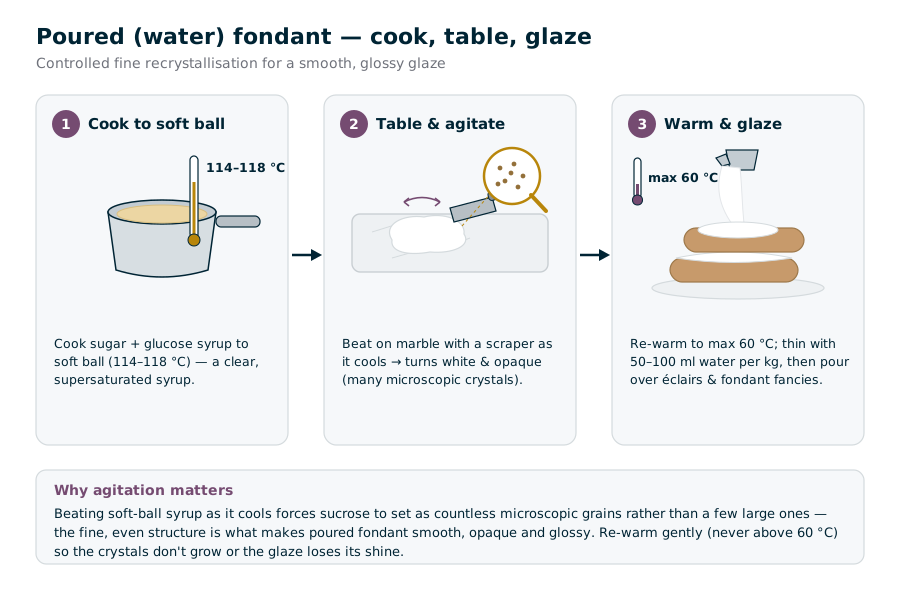 Diagram showing soft-ball syrup of sugar and glucose being beaten while cooling into a smooth white fondant of microscopic crystals, then warmed to no more than 60 degrees Celsius and poured over eclairs
Poured (water) fondant is the inverse of clear sugar work: here you want crystals, but you want millions of microscopic ones instead of a few large gritty ones. You cook a sugar-plus-glucose syrup to soft ball (~114-118 C), cool it undisturbed, then beat it hard while it cools so a cloud of tiny sucrose crystals forms, giving a smooth, opaque, pure-white paste.
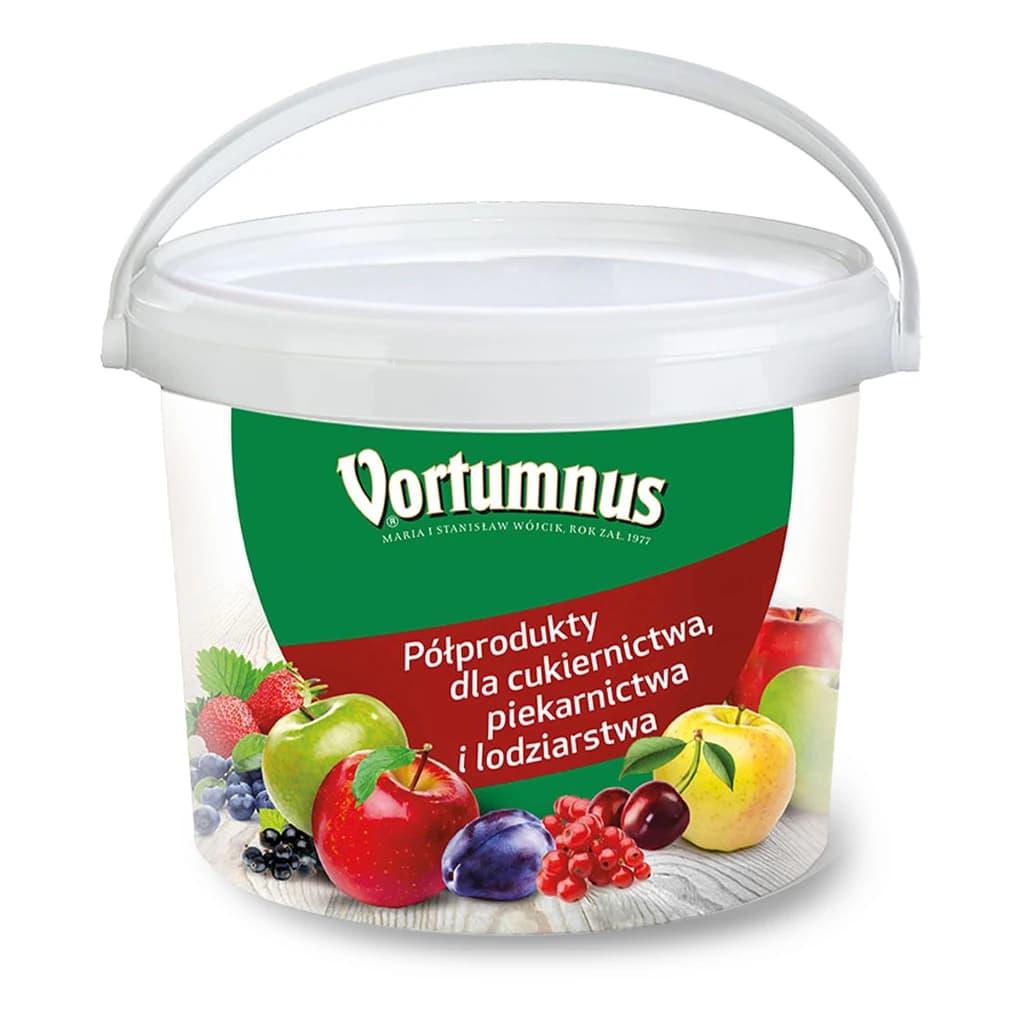
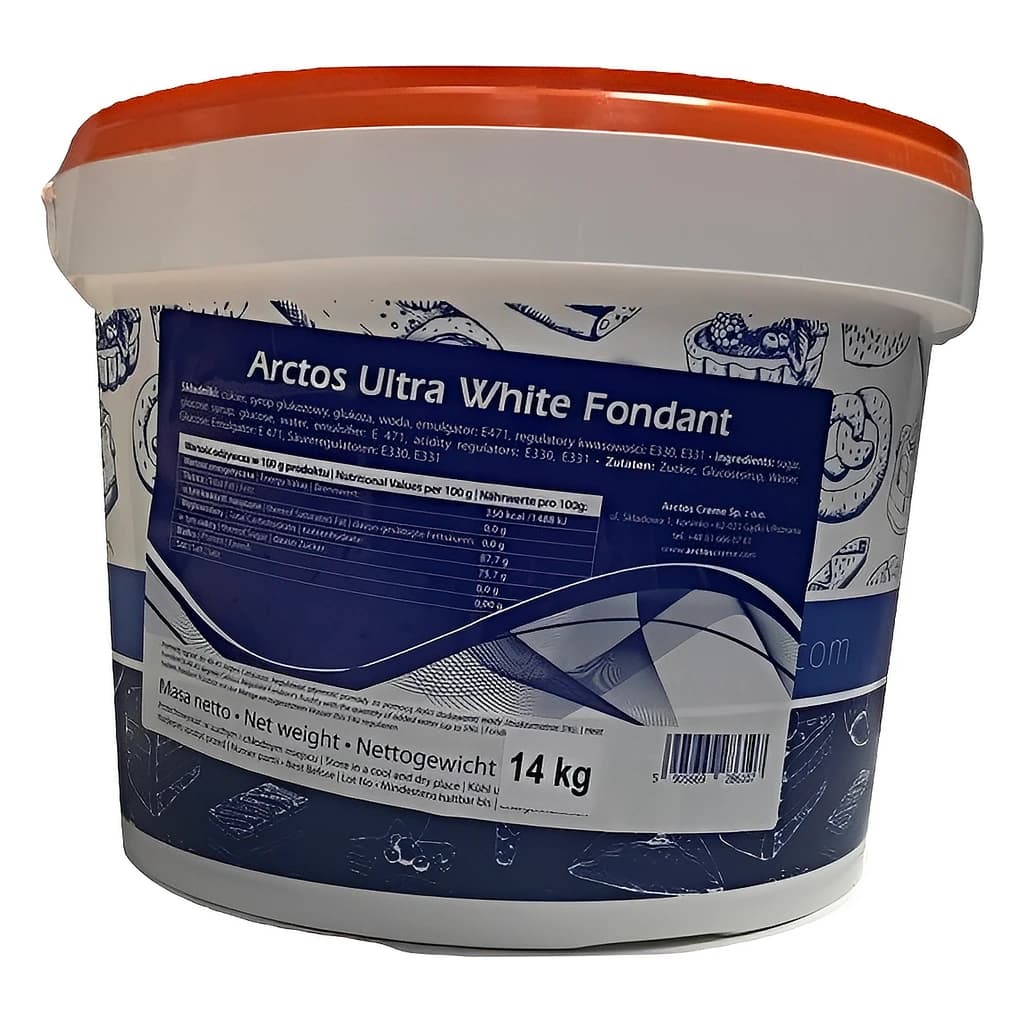
The catalogue Vortumnus Sugar Glaze / fondant spec confirms exactly this process: it is "a fine-crystalline product obtained by tamping at simultaneous cooling of pomade syrup cooked from water, sugar and glucose syrup", ingredients sugar + glucose syrup + water + emulsifier E471 + colorant indigotine (E132) + surface preservatives potassium sorbate (E202) and citric acid (E330); total extract not less than 87%. The E202 and E330 preservatives are surface-applied and must appear in any finished-product ingredient list under their full names or E-numbers. Its application instruction is the key working rule for all poured fondant: warm to a temperature not exceeding 60 C and thin with 50-100 ml water per kg before glazing. Overheat it and the fine crystals coarsen, the gloss dies and it sets dull and gritty. The factory also handles gluten, soya, milk, nuts, celery, mustard, sesame, sulphites and lupin; a "may contain" assessment is mandatory before use in allergen-controlled recipes - assess individually for each finished product.
Ready-made poured fondants in the catalogue include Vortumnus Sugar Fondant (Soft), Zeelandia Fondant Premium and Arctos Ultra White Fondant. (Rolled sugarpaste and modelling fondant are covered separately in A6-marzipan-fondant-sugar-pastes.)
8. The catalogue ingredients for sugar work
A short buying guide; full first-party numbers are in the spec table below.
-
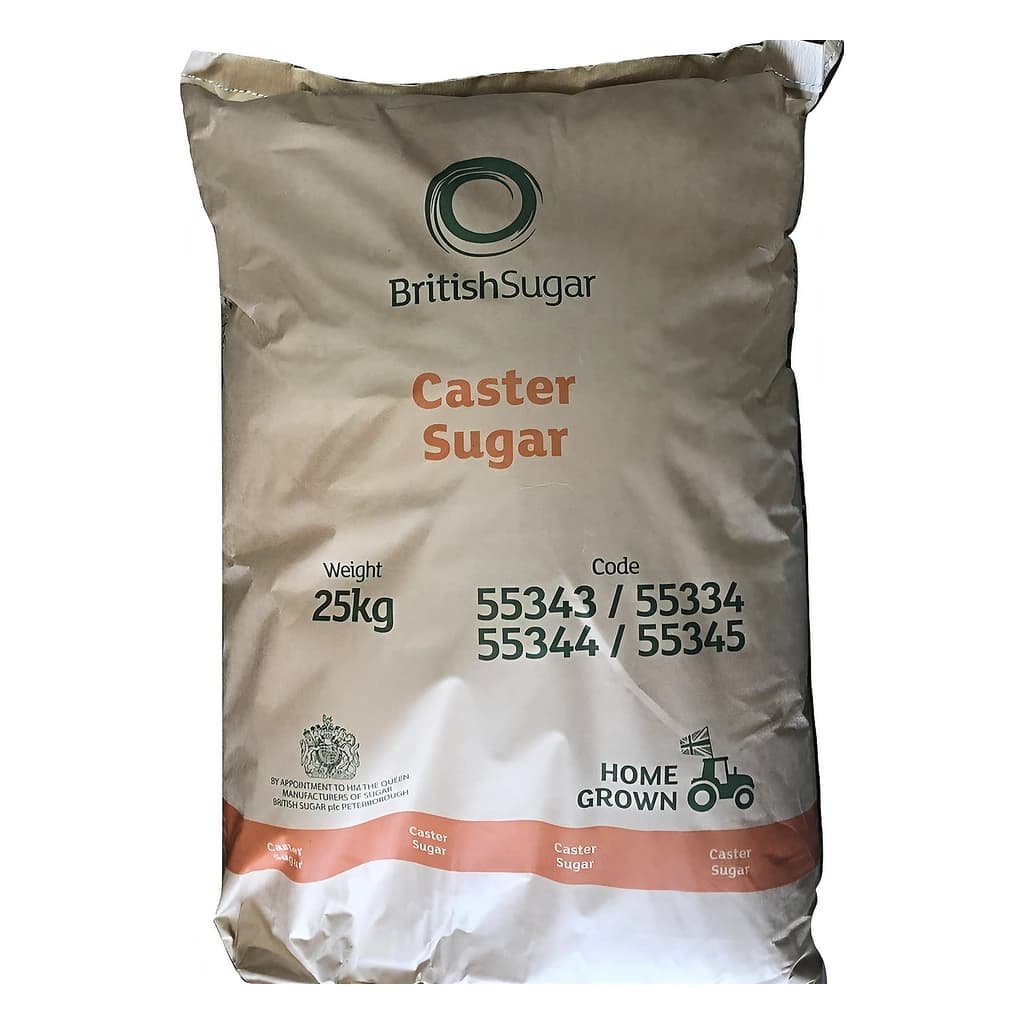
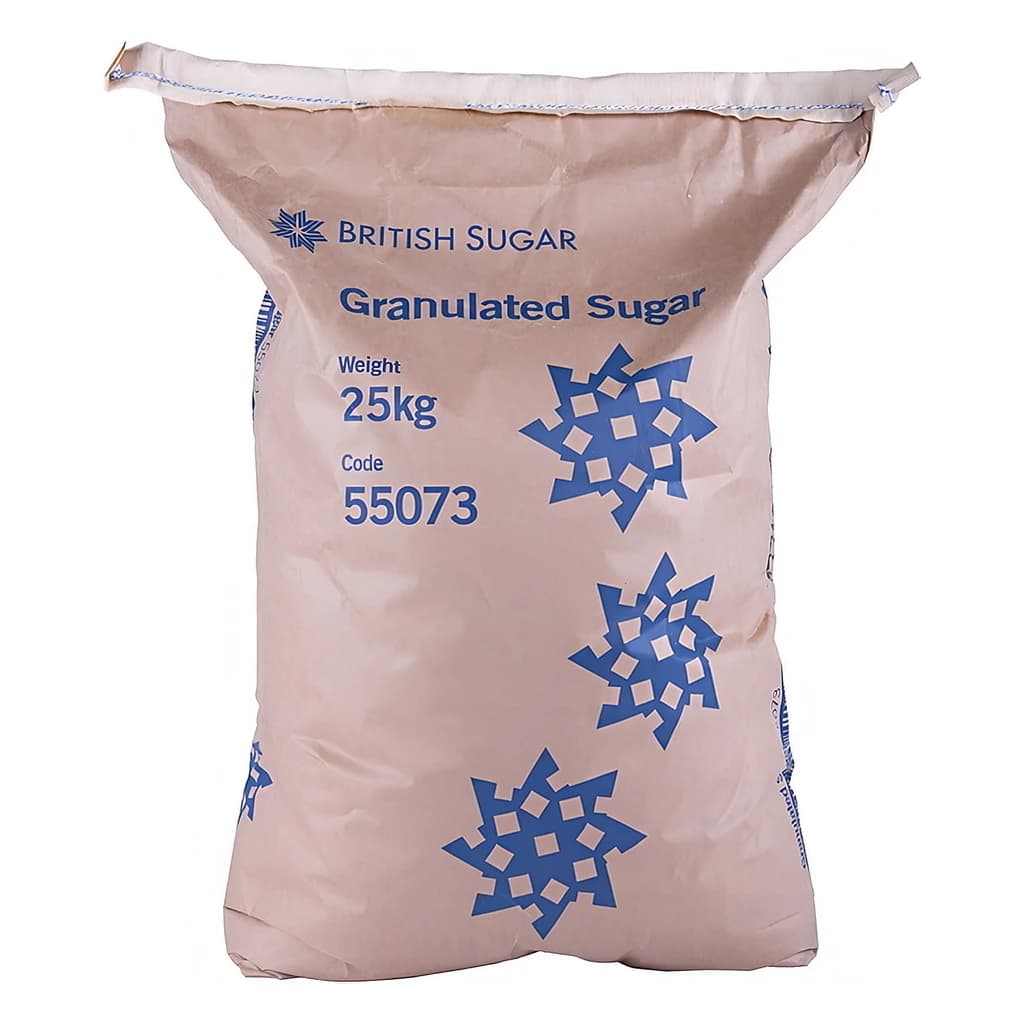
Base sucrose - Caster & Granulated Sugar (Kent Foods): pure sucrose (100 g sugars/100 g, 1700 kJ/400 kcal), allergen-free, from UK sugar beet. Caster (finer: >425 µm max 10%) dissolves faster and is the default for boiling; granulated (mean 450-600 µm) is fine too once dissolved.
-
Isomalt ST-PF (Hortimex/BENEO): the showpiece material - clear, humidity-resistant, reusable.
-
Glucose Syrup (Ratos Natura): the neutral doctoring agent for clear work (confirm spec with supplier).
-
Golden Syrup (Kent Foods): an invert syrup (47-51% invert) - a doctoring and flavour syrup for caramels and bakes. Note: the spec records sodium chloride at 0.2% as a processing aid; if salt is retained in the finished syrup at this level a salt entry in the nutrition panel may be required - confirm the retained salt level with the supplier before finalising product labels.
-
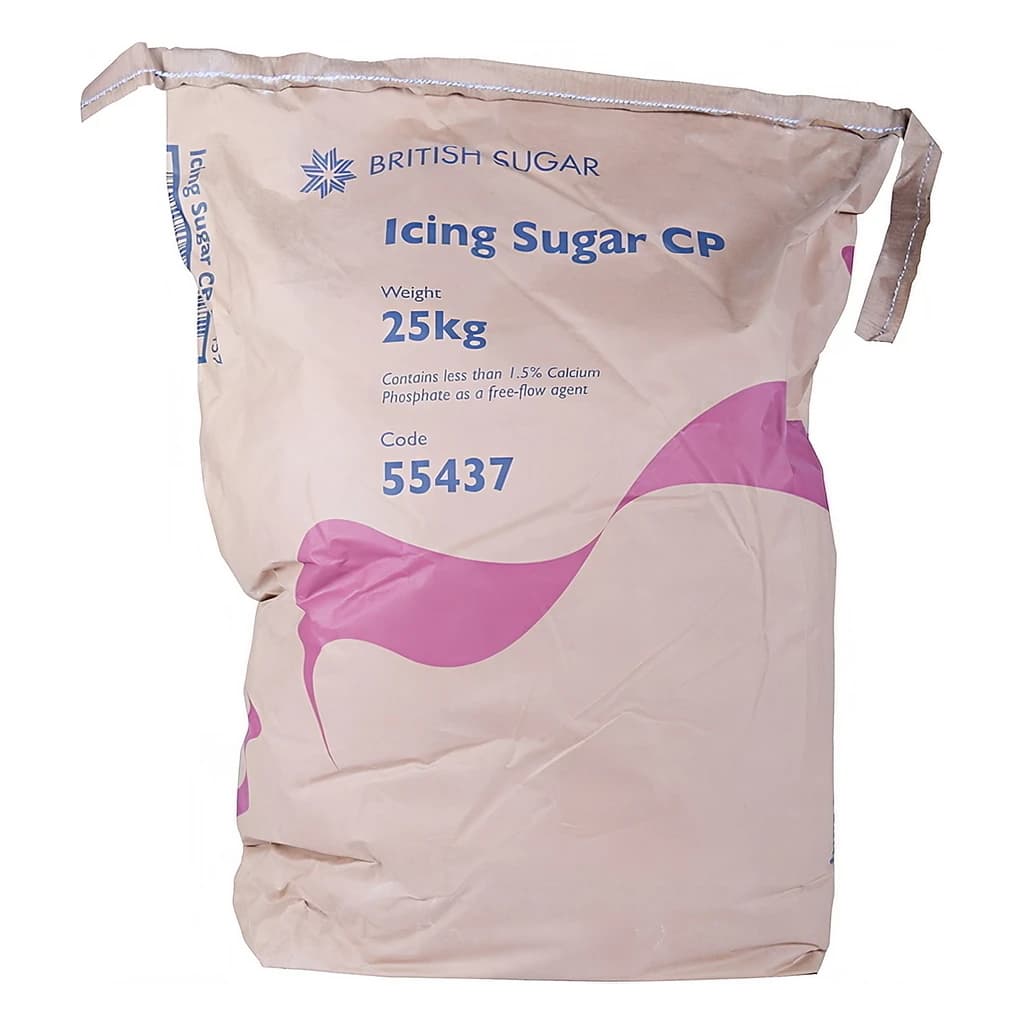
Icing Sugar CP (Kent Foods): powdered sucrose (mean 19-26 µm) with E341(iii) anti-caking, for dusting, royal icing and fondant make-up.
-
Poured fondant (Vortumnus / Zeelandia / Arctos): ready-made glazing fondant.
-
Decorative sugars - Demerara (Kluman), Nibbed Sugar (Kent Foods): coarse/decor sugars for finishing rather than boiling.
-
Bakels Stock Syrup: a ready thread-stage syrup for soaking/glazing.
-
Food Colour - Gel (Food Colours): concentrated colour to add late in the boil.
9. Troubleshooting
The full fault finder is in the fault table below. The most common problems:
Boiled sugar grains (turns cloudy/gritty): crystallisation from a stray crystal, stirring, or too little doctoring agent - add glucose/invert and a little acid, brush the pan sides, never stir, and start again if heavily grained.
Pulled sugar stays dull: not pulled/folded enough or pulled too cold - fold 20-30 times in the 75-80 C window under a lamp.
Sugar yellows unintentionally: cooked too hot (approaching ~170 C) or reheated too often - for repeatedly reheated work use isomalt, which resists browning.
Finished piece sweats / goes sticky: humidity, because cooked sucrose is hygroscopic - switch to isomalt and store airtight with silica gel.
Spun sugar drips, or a croquembouche weeps within hours: caramel too hot (let it thicken to the cusp of setting) and/or the finished work is absorbing moisture (assemble and serve within ~2 h).
Poured fondant glaze is dull/gritty: overheated above ~60 C - warm gently, thin with water, never boil.
Coverage notes and gaps
Solid (multi-source verified):
- Sugar cooking-stage temperatures - two reference charts agree
- Caramelisation onset temperatures and the caramelisation-vs-Maillard distinction - two sources
- Doctoring-agent mechanism (glucose/invert adsorption; acid inversion) - two+ sources
- Isomalt cook ~170-171 C and the advantages over sucrose - three sources
Thin (single-source or indicative):
- Per-stage sugar-concentration percentages (single source: FlavorBender) - indicative
- Pulled/cast sugar formula and the 75-80 C gloss window (single professional source: Torreblanca)
- Isomalt working temperature ~135 C and colour-add ~138 C (brand-dependent)
- Glucose Syrup (Ratos Natura) spec not read - confirm composition with supplier
- Spun-sugar/croquembouche "serve within ~2 h" (single recipe source) - general practice
Food-safety / allergen / labelling:
- Hot-sugar burn hazard at 150-170 C
- Isomalt/polyol laxative effect and the EU >10% added-polyol labelling rule
- The catalogue "Cream of Tartar Substitute" is a wheat-containing baking powder, not potassium bitartrate, and is unfit as a sugar-work acid
- Vortumnus poured fondant made on a multi-allergen line - assess "may contain"
Follow-up recommended:
- Read the Glucose Syrup (Ratos Natura) datasheet for DE (dextrose equivalent) and solids
- Source a recognised second professional source (e.g. Ewald Notter, "The Art of the Confectioner") to confirm pulled/blown temperatures and ratios
- Confirm the exact EU labelling wording and threshold for added polyols against Regulation (EU) 1169/2011 Annex III before any isomalt-sweet product copy
Pulled / satin sugar (after Paco Torreblanca)
Classic sucrose pulled-sugar formula with glucose and tartaric acid as anti-graining agents. Quantities and temperatures from Torreblanca (so good.. magazine).
| Ingredient | Baker's % | Weight |
|---|---|---|
| Granulated/caster sugar (sucrose) — Base; use clean refined sugar | 1 kg | |
| Water — Dissolve sugar fully before boiling | 350-400 g | |
| Glucose syrup — Prevents crystallisation, adds flow | ~200 g | |
| Tartaric acid (solution) — Add at 155 C; inverts some sucrose to inhibit graining. If using cream of tartar, dissolve in water and add with the sugar | ~12 drops | |
| Food colour (gel/paste, optional) — Add near the end of the boil so it does not cool/crystallise the syrup | to shade |
- Dissolve sugar in water on low heat, then boil; skim, keep pan sides clean and do not stir. Add tartaric acid at 155 C and cook to 160 C (hard crack/light caramel). Arrest cooking by dipping the pan base in cold water. Pour onto a silicone mat, fold edges in as it cools, then stretch and fold 20-30 times until satiny and opaque. Work at 75-80 C for best gloss, under a heat lamp. WEAR GLOVES - hot sugar burns severely.
Cast / poured sugar and spun sugar
One boil serves cast, bubble and spun sugar. Quantities from Torreblanca (so good.. magazine); spun-sugar handling from a dedicated croquembouche guide.
| Ingredient | Baker's % | Weight |
|---|---|---|
| Granulated/caster sugar (sucrose) | 1000 g | |
| Cold water — Dissolve and skim froth | 400 g | |
| Glucose syrup — Anti-graining; higher than pulled-sugar ratio for casting clarity | 250-300 g | |
| Food colour (optional) — Add at 135-140 C | to shade |
- Cook sugar and water on low heat, skim, add glucose, raise heat and keep sides clean. Cook to 160 C. For CASTING: add colour at 135-140 C, cool rapidly and pour into moulds/templates. For BUBBLE/ROCK sugar: pour a thin layer onto parchment and wave to form bubbles. For SPUN sugar: cook to ~150-155 C, let it cool slightly until it thickens to the cusp of setting, then flick off a cut whisk over oiled rods into fine threads (if too hot it drips). Spun sugar is hygroscopic - apply and serve within ~2 h.
Isomalt for showpieces (pulled / blown / cast)
Isomalt cooked for clear, humidity-resistant sugar art. Cooking and working temperatures from the BENEO spec and pastry references.
| Ingredient | Baker's % | Weight |
|---|---|---|
| Isomalt (e.g. ISOMALT ST-PF) — Polyol; resists crystallisation - no glucose or acid needed | as needed | |
| Water — Pre-hydrated isomalt can be cooked nearly dry; pastrysampler notes ~4:1 isomalt:water | ~0 to 25% (optional) | |
| Food colour (gel/powder, oil- or alcohol-based preferred) — Add ~138 C; avoid adding water-heavy colour to the hot melt | to shade |
- Cook isomalt to ~170-171 C (340 F). Add colour at ~138 C (280 F). Let the mass cool to a working temperature around 135 C (275 F), then pour, cast, pull or blow as required, keeping it pliable under a heat lamp. Isomalt can be remelted repeatedly. STORE finished pieces in an airtight container with a desiccant (silica gel) because, although far less hygroscopic than sucrose, isomalt still slowly absorbs moisture and will eventually dull/sweat. WEAR GLOVES.
Poured / water fondant (glazing)
How poured fondant is made and used. First-party application data from the Vortumnus Sugar Glaze spec; crystallisation principle from references.
| Ingredient | Baker's % | Weight |
|---|---|---|
| Sugar (sucrose) — Cooked to soft ball (~114-118 C) | base | |
| Glucose syrup (or invert sugar) — Limits crystal size for a smooth paste | ~10-25% of sugar | |
| Water | to dissolve |
- From scratch: cook sugar + glucose + water to soft ball, cool to ~40 C undisturbed, then beat/table vigorously so many tiny sucrose crystals form (not a few large ones) - this gives the smooth opaque fondant. Ready-made (e.g. Vortumnus/Zeelandia): warm to a temperature NOT exceeding 60 C and thin with 50-100 ml water per kg, then glaze. Overheating above ~60-65 C coarsens the crystals and dulls the finish.
The classic stages are water-content benchmarks, not caramelisation benchmarks. Temperature ranges cross-checked across two reference charts (FlavorBender and WebstaurantStore). Sugar-concentration percentages are single-source (FlavorBender) and indicative. Always calibrate the thermometer and adjust for altitude.
| Stage | Temperature (C) | Temperature (F) | Approx. sugar concentration | Cold-water test | Typical use | Sources |
|---|---|---|---|---|---|---|
| Thread | 106-113 | 223-235 | ~80% | Forms a thin thread when drizzled; will not set | Syrups, glazes, candied/preserved fruit, stock syrup | FlavorBender chart; WebstaurantStore chart |
| Soft ball | 112-116 | 235-240 | ~85% | Forms a soft ball that flattens in the hand | Fondant, fudge, pralines, Italian meringue, buttercream | FlavorBender chart; WebstaurantStore chart |
| Firm ball | 116-120 | 240-250 | ~87% | Forms a firm ball that holds shape but is malleable | Soft/chewy caramels | FlavorBender chart; WebstaurantStore chart |
| Hard ball | 121-130 | 250-266 | ~92% | Forms a hard ball, mouldable with fingers | Nougat, marshmallow, taffy, divinity | FlavorBender chart; WebstaurantStore chart |
| Soft crack | 132-143 | 270-290 | ~95% | Sets to threads that bend slightly before cracking | Toffee, butterscotch, taffy | FlavorBender chart; WebstaurantStore chart |
| Hard crack | 149-154 | 300-310 | ~99% | Sets to brittle threads that snap; glass-like | Brittle, honeycomb, lollipops, PULLED/BLOWN/CAST sugar | FlavorBender chart; WebstaurantStore chart; PastryWiz guide |
| Light caramel | 160-171 | 320-340 | 100% | Light golden; sugar begins to caramelise | Spun sugar, decorative caramel, nut coatings, creme caramel | FlavorBender chart; WebstaurantStore chart |
| Dark caramel | 171-182 | 340-360 | 100% | Dark amber; less sweet, slightly bitter | Caramel sauces, deep-flavour work | FlavorBender chart; WebstaurantStore chart |
Caramelisation is non-enzymatic pyrolysis of sugar (no amino acids), distinct from the Maillard reaction. Different sugars caramelise at different temperatures, which is why fructose/invert-rich syrups colour earlier and isomalt (a polyol) stays clear far longer.
| Sugar | Caramelisation onset (C) | Onset (F) | Note | Sources |
|---|---|---|---|---|
| Fructose | ~105-110 | ~221-230 | Caramelises and colours earliest; present in invert sugar and honey | Formul.io reference |
| Glucose | ~150 | ~302 | Component of glucose syrup and invert sugar | Trade reference |
| Galactose | ~160 | ~320 | From lactose/milk sugars | Trade reference |
| Sucrose | ~170 | ~338 | Table sugar; the reference caramelisation temperature | Formul.io reference |
| Maltose | ~180 | ~360 | From malt/starch syrups; caramelises latest | Trade reference |
| Isomalt (polyol) | >~190 (very resistant) | >~374 | A sugar alcohol; resists browning, used clear for showpieces | BENEO spec sheet; Pastry Sampler guide |
Why most modern showpiece work uses isomalt. Numbers from the BENEO ISOMALT ST spec sheet and pastry references.
| Property | Isomalt | Cooked sucrose (with glucose + acid) | Sources |
|---|---|---|---|
| Crystallisation | Resists graining on its own; no doctoring agent needed | Needs glucose/invert + acid to avoid graining | BENEO spec sheet; Pastry Sampler guide; candy-syrup guide |
| Clarity | Very clear, glass-like | Clear if doctored, but can cloud | Pastry Sampler guide; PastryWiz guide |
| Humidity resistance | Low hygroscopicity; finished pieces hold much longer | Hygroscopic; absorbs water, sweats and goes sticky | BENEO spec sheet; Pastry Sampler guide |
| Browning | Stays clear; caramelises only at very high temperature | Browns from ~170 C | Pastry Sampler guide |
| Reheating | Can be remelted repeatedly with little loss | Degrades and yellows on repeated cooking | pulled-sugar guide; Pastry Sampler guide |
| Cook / work temperature | Cook ~170-171 C (340 F); work ~135 C (275 F); colour ~138 C (280 F) | Hard crack ~150-160 C; work ~75-80 C for gloss | BENEO spec sheet; pulled-sugar guide; Pastry Sampler guide; Torreblanca (so good.. magazine) |
| Energy | 970 kJ / 233 kcal per 100g (polyol) | 1700 kJ / 400 kcal per 100g | BENEO spec sheet; Kent Foods spec sheet |
| Caveat | Excess intake may have a laxative effect (polyol); >10% added polyol needs EU labelling | No laxative caveat | EU polyol labelling reference; Cargill EU labelling reference |
The five core cooked-sugar techniques plus pastillage, with the sugar state used and the key tool. Caramel/sugar temperatures are the working window after cooking.
| Technique | French name | Sugar state / temperature | Key tools | Typical output | Sources |
|---|---|---|---|---|---|
| Pulled sugar | Sucre tire | Hard crack/light caramel, cooled then pulled at ~50-80 C | Marble/silicone mat, heat lamp, gloves | Ribbons, leaves, flower petals (satin sheen) | Torreblanca (so good.. magazine); pulled-sugar guide; PastryWiz guide |
| Blown sugar | Sucre souffle | Pulled sugar at working temp, inflated | Blowing pump/tube, heat lamp, fan | Spheres, fruit, animals (hollow forms) | PastryWiz guide; sugar-work guide |
| Cast / poured sugar | Sucre coule | Hard crack/caramel, poured ~150-160 C | Moulds (silicone/metal), templates | Bases, plaques, geometric showpiece parts | Torreblanca (so good.. magazine); PastryWiz guide |
| Spun sugar | Sucre file | Caramel cooled to the cusp of setting (~150-155 C then thickening) | Cut whisk/fork, oiled rods | Fine threads, nests, croquembouche halo | croquembouche guide; PastryWiz guide |
| Rock / bubble sugar | Sucre bullé | Cast recipe poured thinly and waved on parchment (or spirit added) | Parchment, optional spirit | Translucent bubbled sheets for rock/coral effects | Torreblanca (so good.. magazine) |
| Pastillage | Pastillage | Cold sugar paste (sugar + gelatin + cornstarch) | Rolling pin, cutters, drying | Rigid air-dried plaques and structures | PastryWiz guide |
First-party spec-sheet numbers for the base ingredients a confectioner buys for sugar work. Pure sugars and isomalt are allergen-free; check 'may contain' on blended products.
| Product | Role in sugar work | Key spec | Allergens | Sources |
|---|---|---|---|---|
| Granulated / Caster Sugar (Kent Foods) | Base sucrose for all boiled sugar | Sucrose ~100%; 1700 kJ/400 kcal; reducing sugars max 0.04%; caster finer (>425 um max 10%), granulated mean 450-600 um | Free from 14 EU allergens; Kosher/Halal | Kent Foods spec sheet |
| Isomalt ST-PF (Hortimex/BENEO) | Showpiece sugar substitute - clear, humidity-resistant | Polyol; GPM+GPS min 98%; 970 kJ/233 kcal; cook ~170 C; powder <0.1 mm | No allergen labelling required; non-GMO; vegan; laxative caveat (polyol) | BENEO spec sheet |
| Glucose Syrup (Ratos Natura) | Doctoring agent - prevents graining, adds body | Glucose/maltose syrup (no spec sheet read) | Confirm with supplier | Catalogue entry only |
| Golden Syrup (Kent Foods) | Ready-made invert-syrup doctoring agent / flavour | Invert 47-51%, sucrose 30-33%, moisture 16%; pH 4-6; 1460 kJ/343 kcal | Free from EU allergens; SO2 <9 ppm; vegan | Kent Foods spec sheet |
| Icing Sugar CP (Kent Foods) | Dusting, royal icing, fondant make-up | Mean 19-26 um, >80% <75 um; +E341(iii) anti-caking 0.5-1.5%; 1687 kJ/392 kcal | Free from 14 allergens; contains E341(iii) | Kent Foods spec sheet |
| Poured Fondant (Vortumnus / Zeelandia) | Glazing eclairs/fancies; controlled fine recrystallisation | Sugar+glucose syrup+water+E471+indigotine (E132); surface preservatives E202+E330; total extract min 87%; apply max 60 C (E202/E330 must appear in finished-product ingredient lists) | Recipe allergen-free; line handles gluten/milk/nuts/celery/mustard/sesame/sulphites/lupin - 'may contain' assessment mandatory before use in allergen-controlled recipes | Vortumnus spec sheet |
| Fault | Most likely cause(s) | Remedy / prevention | Sources |
|---|---|---|---|
| Boiled sugar turns grainy/cloudy ('grains') | Sugar crystallised: stray crystals on pan sides, the syrup was stirred, or too little doctoring agent | Add glucose/invert and a little acid; brush pan sides with water; do not stir once boiling; start again if heavily grained | candy-syrup guide; Torreblanca (so good.. magazine); Kent Foods spec sheet |
| Pulled sugar is dull, not satiny | Not pulled/folded enough, or pulled too cold; insufficient air incorporated | Pull and fold 20-30 times while warm; work at 75-80 C under a heat lamp | Torreblanca (so good.. magazine); pulled-sugar guide |
| Pulled sugar tears / is brittle when shaping | Worked too cold, or over-pulled so it cooled and set | Re-warm under the lamp to the working window; work faster in smaller pieces | Torreblanca (so good.. magazine); sugar-work guide |
| Sugar yellows/browns unintentionally | Cooked too hot (approaching caramel ~170 C) or reheated too many times | Pull off heat at the target stage; for repeatedly reheated work use isomalt, which resists browning | Pastry Sampler guide |
| Finished piece goes sticky / sweats / loses gloss | Humidity: cooked sucrose is hygroscopic and absorbs water | Use isomalt for durability; store airtight with silica gel; avoid humid rooms | BENEO spec sheet; Pastry Sampler guide |
| Spun sugar drips instead of forming threads | Caramel too hot/too fluid | Let the caramel cool to the cusp of setting before flicking; reheat gently if it sets too far | croquembouche guide |
| Spun sugar / croquembouche collapses or weeps within hours | Caramel/spun sugar is hygroscopic and absorbs ambient moisture | Assemble and serve within ~2 h; keep away from steam/humidity | croquembouche guide |
| Blown sugar wall is uneven / bursts | Temperature uneven or wrong; inflated too fast | Work at exact temperature under the lamp; inflate slowly and evenly; cool with a fan as it sets | PastryWiz guide; sugar-work guide |
| Poured fondant glaze is dull/gritty or sets too thick | Overheated above ~60 C (crystals coarsen) or too little water | Warm to max 60 C; thin with 50-100 ml water per kg; do not boil | Vortumnus spec sheet |
- Spec product name:
- BENEO ISOMALT ST (grade ST-PF), distributed by Hortimex
- Type:
- Hydrogenated saccharide mixture (polyol / sugar alcohol) made from sucrose; main components 1,6-GPS and 1,1-GPM
- Water:
- max 5.0 g/100 g (Karl Fischer)
- Gpm gps:
- min 98 g/100 g d.m.; of which GPS 43-57%
- Reducing sugars:
- max 0.2 g/100 g d.m. (as glucose)
- Particle size ST PF:
- <0.1 mm for >=90% by weight (air jet sieving)
- Energy:
- 970 kJ / 233 kcal per 100 g (EU); carbohydrate 97 g of which polyols 97 g, sugars negligible
- Colour in solution:
- max 30 ICUMSA units
- Cook temperature sugar art:
- ~170-171 C (340 F); work ~135 C; colour ~138 C
- Storage:
- 20 C +/- 5 C, RH 20-60%; minimum durability 3 years unopened
- Allergens:
- Not produced from ingredients/processing aids requiring allergen labelling (Reg EU 1169/2011); non-GMO; vegetarian/vegan; Kosher/Halal on request
- Caveat:
- Polyol - excess intake may have a laxative effect; EU requires 'excessive consumption may produce laxative effects' above 10% added polyols
- Spec product name:
- Kent Foods Caster Sugar (Bagged)
- Composition:
- White crystalline sucrose from UK sugar beet; no additional ingredients
- Nutrition:
- 1700 kJ / 400 kcal per 100 g; carbohydrate 100 g of which sugars 100 g
- Reducing sugars:
- max 0.04%
- So2:
- max 6 mg/kg (typ 1-4)
- Particle size:
- >425 um max 10%; <212 um max 22%
- Storage:
- 10-20 C, below 65% RH; shelf life in excess of 18 months
- Allergens:
- Free from all 14 EU allergens; Kosher (Pareve) and Halal
- Spec product name:
- Kent Foods Standard Granulated Sugar
- Composition:
- White crystalline sucrose from UK beet and/or non-EU raw cane; no additional ingredients
- Nutrition:
- 1700 kJ / 400 kcal per 100 g; carbohydrate/sugars 100 g
- Particle size:
- mean 450-600 um (coarser than caster)
- Reducing sugars:
- max 0.04%
- Allergens:
- Free from listed allergens; Kosher and Halal
- Spec product name:
- Kent Foods Icing CP
- Composition:
- Powdered sucrose + tricalcium phosphate (E341(iii), anti-caking) 0.5-1.5%
- Particle size:
- mean aperture 19-26 um; >80% < 75 um
- Nutrition:
- 1687 kJ / 392 kcal per 100 g; carbohydrate 99.2 g of which sugars 99.2 g
- Usable life:
- up to 32 weeks (flowability-limited)
- Allergens:
- Free from 14 allergens; contains E341(iii) free-flow agent
- Spec product name:
- Kent Foods Golden Syrup/Premium (GO05)
- Composition:
- Invert sugar syrup: invert 47.0-51.2%, sucrose 30.2-33.2%, moisture 16.0-16.5%
- Brix ph:
- Brix 82.5-83.0; pH 4.0-6.0; colour 1500 ICUMSA; SO2 <9 ppm
- Viscosity:
- ~18500 cps at 30 C; ~3825 cps at 50 C
- Nutrition:
- 1460 kJ / 343 kcal per 100 g
- Processing aids:
- Sulphuric acid (E513) max 1%; sodium carbonate (E500) max 1%; sodium chloride 0.2%
- Role:
- High invert content makes it a ready-made anti-crystallisation doctoring/flavour syrup
- Allergens:
- Free from EU allergens; SO2 below declarable threshold; vegan; non-GMO
- Spec product name:
- Vortumnus Sugar Glaze (Water Pomade / poured fondant)
- Composition:
- Sugar, glucose syrup, water, emulsifier E471, colorant indigotine; surface-preserved with potassium sorbate + citric acid
- Structure:
- Fine-crystalline mass made by tamping/beating a cooked syrup while cooling (controlled recrystallisation)
- Total extract:
- not less than 87%
- Nutrition:
- 1479 kJ / 348 kcal per 100 g; carbohydrate 87 g of which sugars 83 g
- Application:
- Mix 50-100 ml water per 1 kg at a temperature NOT exceeding 60 C; for icing pastries/confectionery; vegan
- Allergens:
- Recipe contains no allergens, but produced on a line/in a factory also handling gluten, soya, milk, nuts, celery, mustard, sesame, sulphites and lupin - assess 'may contain'
- Storage:
- 0-25 C, RH max 75%; shelf life 6 months
- Spec product name:
- Dawn Skylark Cream of Tartar Substitute 25 kg
- Warning:
- Despite the name this is legally a BAKING POWDER (disodium diphosphate E450i + WHEAT flour + salt), NOT potassium bitartrate. It contains wheat/gluten and is a raising agent - it is NOT a functional substitute for the cream of tartar / tartaric acid used to invert sucrose in sugar work. Do not order it for sugar boiling.
Buy the ingredients
Catalogue products and brands referenced in this article.