
Fondant types in practice: rolled fondant, poured fondant, pastillage & gum paste
A working decorator's guide to the four sugar media that share the word "fondant" but behave like four different materials. It separates ROLLED fondant (UK sugarpaste — the pliable sheet you drape over a cake) from POURED confectioner's fondant (the glossy warmed glaze for éclairs and fondant fancies), then sets both against the firmer, gum-loaded modelling pastes — PASTILLAGE (sugar + gum, no fat, dries rock-hard for structures) and GUM / FLOWER paste (sugarpaste + extra gum, rolls translucently thin for lifelike sugar flowers). The single property that controls each one is made explicit — humectant + gum for rolled fondant, ~20 µm sucrose crystal size for poured fondant, the absence of fat for pastillage, extra gum for flower paste — and turned into bench rules: roll sugarpaste to 3-4 mm, warm ready-made poured fondant to 40-48°C (never above 50°C, scratch fondant even cooler), knead about 1 tsp CMC into 250 g of paste for modelling, and colour with gel/paste rather than liquid. Numeric composition, allergen, dosage and additive data are extracted from fourteen Domson-catalogue spec sheets (Zeelandia Roll Dekor, PA Foods and Doric ready-to-roll sugarpaste, CSM White Wrap Ice, Zeelandia, Arctos and Vortumnus poured fondants, Kilo glycerine, Food Colours and Culpitt colours, Culpitt gum-paste flower and PhotoCake fondant sheet, MagMart figures) and cross-checked against BAKERpedia, Yeners Way, professional cake-craft sources and EU/UK regulations. Food-safety flags cover the Southampton-Six colour warning, the titanium-dioxide (E171) EU ban vs UK status, hidden-allergen labelling and hot-sugar burns. For marzipan and the composition fundamentals see A6-marzipan-fondant-sugar-pastes; for icings & buttercreams, food colours & metallics, and piping & sugar-work see the A7 siblings.
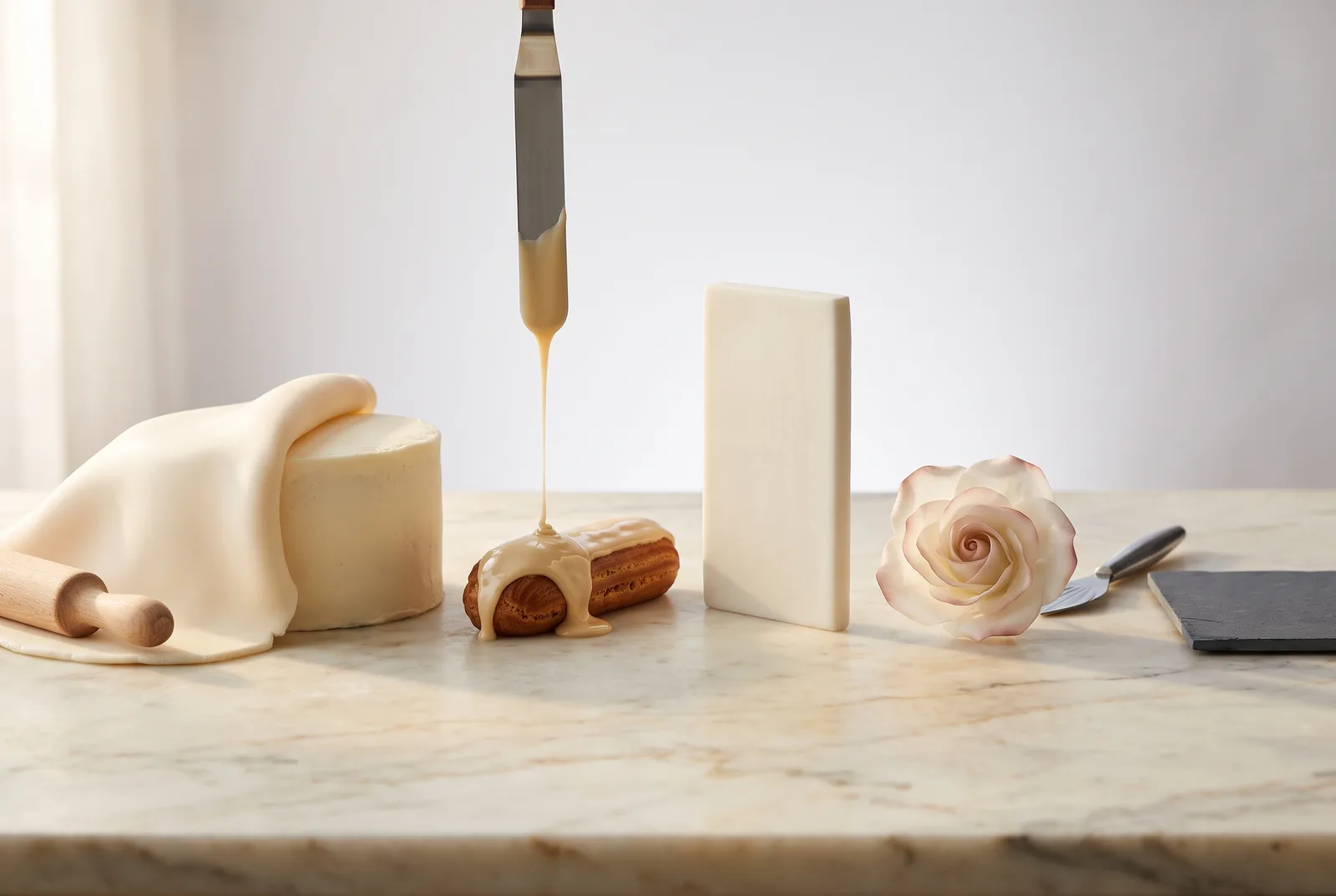
One word, four very different materials
If a decorator says "pass the fondant," they could mean two unrelated things — and there are two more closely-related pastes that get muddled in with them. Getting the words right is the first decorating skill, because each material is engineered for a different job and fails in a different way.
The word "fondant" means:
- Rolled fondant icing — what the UK trade calls sugarpaste (US: rolled fondant): a soft, pliable sugar dough you roll into a sheet and drape over a cake to cover it smoothly.
- Poured (confectioner's / cream) fondant — a soft paste of microscopic sugar crystals in a saturated syrup that you warm and pour to glaze éclairs, fondant fancies and petit fours.
Alongside them sit the two firmer, gum-loaded modelling pastes:
- Gum / flower paste — sugarpaste with extra gum (and still some fat) that rolls translucently thin and dries hard, the medium for lifelike sugar flowers and filigree.
- Pastillage — sugar plus gum with no fat at all, so it dries fastest and hardest, used for structural showpieces, plaques and standing pieces.
The quiet variable that separates the last two is fat: pastillage has none, which is exactly why it dries to an almost ceramic rigidity while gum paste stays workable long enough to thin a petal. Get the material right for the finish you want and the work is easy; reach for the wrong one and you get a collapsed figure, a sticky surface, or a glaze that never sets. The headline map is in the four-types comparison table below.
<!-- image: img-ft-02 -->This is the decoration-and-finishing view of these media. For marzipan and the underlying composition science (almond:sugar ratios, water activity), see A6-marzipan-fondant-sugar-pastes; for buttercreams and royal icing see A7-icings-and-buttercreams; for colours, lustres and metallics see A7-food-colour-and-metallic-effects; and for pulled/blown sugar and isomalt showpieces see A6-sugar-work-techniques.
<!-- image: img-ft-18 -->1. Rolled fondant / sugarpaste — the smooth skin
This is the cake-covering paste: rolled into a sheet, draped, smoothed to a flawless skin, then embossed, frilled or draped into a finish. The spec sheets show exactly how it is engineered to stay soft and pliable long enough to do that without cracking.
Across the Zeelandia Roll Dekor, PA Foods and Doric datasheets the same backbone appears:
- Sugar / icing sugar — the bulk.
- Glucose syrup — pliability and anti-crystallisation.
- A humectant — glycerine (E422) and/or sorbitol (E420) — the key ingredient. It holds moisture in the paste so it stays soft and resists cracking.
- A little fat / vegetable shortening — smoothness and release.
- A gum / stabiliser — gum tragacanth (E413), CMC (E466) and/or xanthan (E415) — stretch, so it drapes instead of tearing.
- Emulsifier (E471), preservative (potassium sorbate E202) and an acidity regulator (citric acid E330).
The Zeelandia Roll Dekor Soft sheet is a clean reference: dry matter 91%, energy 1708 kJ / 409 kcal, fat 9.1 g, carbohydrate 81.4 g (sugars 65.1 g) per 100 g, applied at 21-23°C and rolled to 3 mm. The high dry matter and the preservative are why a 7.5 kg pack keeps for months. One thing to read on the label: it contains WHEAT starch and may contain SOY, MILK and ALMONDS.
<!-- image: img-ft-14 -->UK sugarpaste vs US rolled fondant — same job, different chemistry
Worth knowing if you work from international recipes: US "rolled fondant" is often gelatin-based (the classic "marshmallow fondant" is melted marshmallows kneaded with icing sugar and cornflour), whereas UK sugarpaste relies on the gums above plus glycerine. Both cover a cake the same way; the difference matters for vegetarian/vegan and kosher/halal declarations — check the spec. Several catalogue pastes are formulated vegan (e.g. Doric).
Covering a cake
The working method is one of the most repeatable in the bakery (full sequence in the cake-covering formula card below):
<!-- image: img-ft-03 -->- Prepare the cake — crumb-coat with buttercream, lay a thin marzipan under-layer, or brush with apricot glaze / jam so the paste has something to grip.
- Knead the sugarpaste at 21-23°C until smooth; dust the bench with icing sugar, never flour.
- Roll to 3-4 mm (about 1/8 inch; 1/4 inch / 6.35 mm is a US convention and exceeds this range) with even pressure — spacer rings give a consistent thickness.
- Lift and drape in one smooth motion to avoid wrinkles.
- Smooth the top first, then the sides, easing the paste in and bringing the sides toward the cake so its own weight does not tear the top edge (the classic "sagging" fault). A cake smoother / polisher does this far better than hands.
- Trim the base — and work quickly throughout, because exposed paste skins over into "elephant skin" within minutes.
Where the finish quality comes from
This is a decoration article, so the covering is only the start. Once the skin is on, the same paste becomes a canvas for the finishes below:
<!-- image: img-ft-04 -->- Embossing — press a textured mat, stamp or roller into the fresh fondant for lace, damask or wood-grain effects.
- Quilting — roll a single-wheel cutter/embosser diagonally one way then the other to score a diamond lattice; a dragée at each intersection finishes the "quilted satin" look.
- Ruffles and frills — cut strips with a Garrett frill cutter, then thin and ripple the scalloped edge with a ball tool or cell stick; overlap for petal skirts.
- Draping / swags — roll thin and drape fabric-like folds over the cake edge for a couture finish.
- Marbling — partially knead two colours for a stone/agate swirl.
- Edible images — a printable PhotoCake fondant sheet lays a full-colour photo or pattern onto the covered surface.
For a fast off-the-shelf upgrade, the catalogue also carries ready-made moulded sugarpaste decorations (MagMart figure assortments, baby-shoe toppers) that drop straight onto a covered cake — note that these can carry their own allergens and colour warnings (the MagMart Christmas set contains wheat and egg and carries the children's-attention warning).
<!-- image: img-ft-15 -->A cover-icing alternative
Not every "covering" is gum-based sugarpaste. CSM White Wrap Ice is a ready-to-use cover/wrap icing built on sugar, water, glucose syrup, palm fat and an agar gelling agent with locust bean gum rather than tragacanth — energy 1449 kJ / 342 kcal, stored cool at 5-15°C and best used within four weeks of opening. It may contain egg, milk, soya and gluten and is not suitable for coeliacs. It is a useful option where you want a softer, more "iced" finish than a firm sugarpaste skin.
2. Poured fondant — the glossy glaze
Now the other fondant: the mirror-glossy coat on an éclair, a fondant fancy or a petit four. Technically it is a partially-crystalline product — a vast number of tiny sucrose crystals suspended in a saturated sugar syrup. The whole trick is crystal size: the crystals are around 20 micrometres, small enough that the tongue cannot feel them, which is exactly why good poured fondant is silky and glossy rather than gritty.
<!-- image: img-ft-05 -->A typical regular formulation is sucrose 64-71%, glucose syrup 9-16% and water about 20%, and the water content (10-15% in the finished fondant) sets its hardness. The glucose syrup is not a filler — it is a doctoring agent: its larger molecules get between the sucrose molecules and stop them joining into big, gritty crystals; invert sugar does the same. Making it from scratch is a controlled crystallisation — boil the syrup (a small batch is cooked to ~115°C, the soft-ball stage (112-116°C)), cool it to 45-50°C on an industrial cooling drum, then beat it for 20-30 minutes so it nucleates a huge number of small crystals at once. This is why most kitchens buy it ready-made: the factory delivers reliable crystal size every time.
<!-- image: img-ft-06 -->Food safety: A scratch syrup is cooked to ~115°C and causes severe burns on contact; use heat-resistant gloves, long sleeves and appropriate workplace controls.
Working ready-made poured fondant
The catalogue poured fondants agree on the handling rules — but note their temperatures run higher than scratch-fondant guidance because they are stabilised industrial products (full comparison in the poured-fondant spec table below, working window in the key specs below):
- Zeelandia Fondant Ready — sugar, glucose syrup, water, E471, guar (E412) and citric acid (E330); dry matter 85%; heat to 40-48°C, stirring, then glaze warm or cooled surfaces.
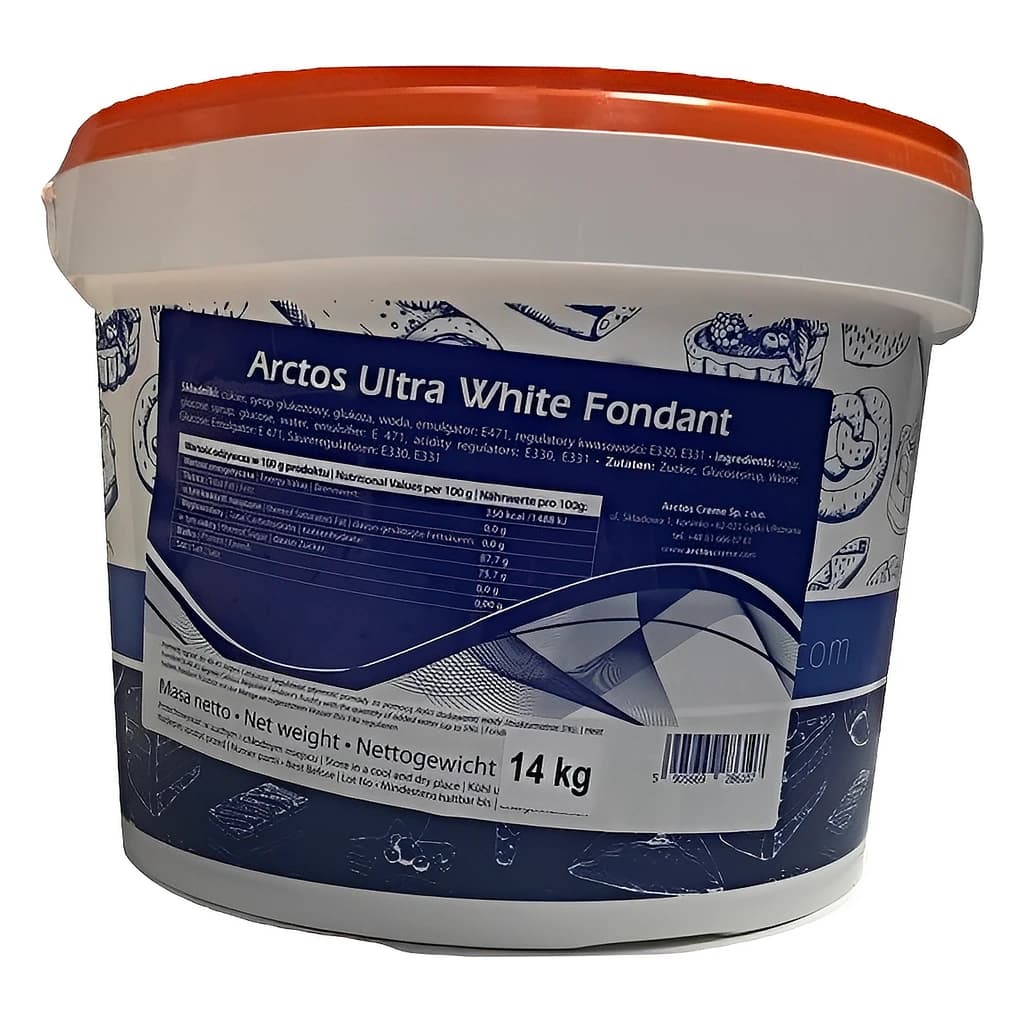
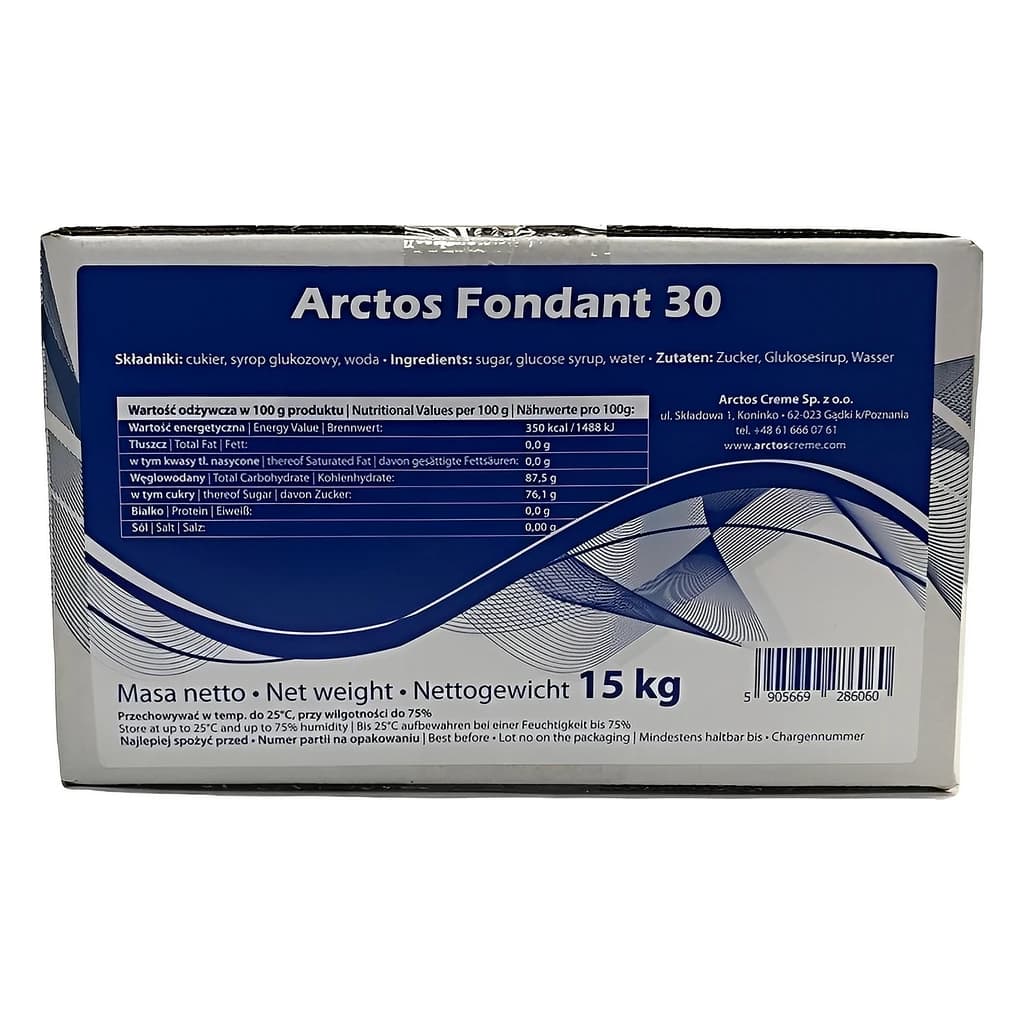
- Arctos Ultra White Fondant and Arctos Fondant 30 — Fondant 30 is as pure as it gets: sugar, glucose syrup and water only. Both are fine-crystalline, dry substance 87.5-88.5%, pH 4.5-6.5, and both carry the same warning: do not overheat above 50°C and do not add more than 10% water.
- Vortumnus Sugar Glaze (water pomade) — total extract ≥87%, thinned by mixing 50-100 ml water per 1 kg at no more than 60°C.
- Helios Water Fondant — a further catalogue option (no spec sheet on file; confirm handling with the supplier).
By contrast, scratch confectioner's fondant should be kept lower — about 37-40°C; it loses its shine above ~40°C and goes matte/grainy above ~43°C. The professional habit of thinning with stock (sugar) syrup rather than plain water keeps the sugar concentration up and protects the set.
<!-- image: img-ft-16 -->That overheating rule is the one to tattoo on the bench. Overheat poured fondant and you dissolve the very crystals that give it gloss and set — it comes out dull, runny and slow to firm. Over-thin it and it never sets. Re-warm gently; never boil. The same fondants take colour, flavour, fruit concentrate or even a little alcohol, so a single base bucket becomes a rainbow of glazes. The application itself is simple: pour or dip over chilled cakes on a rack so excess drains, and let the shell set (sequence in the poured-glaze formula card below).
3. Pastillage — the structural medium
When a showpiece needs to stand up — a plaque, a box, a column, an architectural element — you reach past fondant for pastillage. It is sugar plus a gum (gum tragacanth or tylose/CMC), often with egg white or gelatin, and crucially no fat. That absence of fat is the whole point: with nothing to keep it plastic, pastillage dries very fast and rock-hard, to an almost ceramic finish, and is self-supporting — but it is brittle and not meant to be eaten.
<!-- image: img-ft-07 -->A representative formula is 300 g sifted icing sugar with 10 ml (2 tsp) gum tragacanth and 1 egg white: stir the gum into the base, then knead in the icing sugar to a stiff dough.
Food safety: Raw egg white carries a risk of Salmonella and related bacteria. For products served to pregnant women, the elderly, immunocompromised individuals or young children, substitute pasteurised egg white powder. Egg is an Annex II allergen under Regulation (EU) 1169/2011 and must be declared on the finished product.
Then it is a race against drying:
- Roll to 2-3 mm and cut clean panels fast — pastillage skins within minutes.
- Air-dry flat: thin pieces in 2-4 hours, thicker elements 12-24 hours, full hardness in about 2 days.
- Assemble the dried panels with royal icing into a self-supporting structure (full card in the pastillage formula card below).
For showpieces that must also survive humidity rather than just stand up, isomalt is the more robust medium — a polyol that is far less hygroscopic than sucrose, so it stays clear and crisp where sugar would weep. Isomalt belongs to A6-sugar-work-techniques; the catalogue stocks BENEO Isomalt ST-PF (Hortimex).
4. Gum / flower paste — the flowers medium
For petals, leaves, bows, figures and filigree you need a paste that rolls translucently thin, holds fine detail, and dries hard — gum paste (in the UK, flower or petal paste). It is a sugarpaste-type base with an increased amount of edible gum (CMC/tylose or gum tragacanth) and, unlike pastillage, still contains some fat — so it dries hard but stays workable longer, giving you time to thin and shape a petal before it sets. Cakes are never covered in gum paste; it is purely for decoration.
<!-- image: img-ft-09 -->You can buy it ready-made — Sweet Decor White Flower Paste, or off-the-shelf wired flowers such as Culpitt's gum-paste ruffled flower and calla-lily spray. The Culpitt flower's own spec is a neat illustration of the gum-paste backbone: sugar, tapioca flours, water, palm oil, preservative E202 and thickeners E414 (gum arabic) + E466 (CMC) — and it is classed NON-EDIBLE because of the internal wire. (Wired sugar flowers are display elements; remove before serving.)
Or make your own from any sugarpaste by working in more gum (card in the gum-paste conversion formula card below):
- Convert sugarpaste to modelling / gum paste by kneading in CMC (Tylo / Tylose) at roughly 1 teaspoon per 250 g of paste (other guides quote ~1/4 tsp per 100 g, or up to 1-2 tsp per 450-500 g — treat as indicative and follow the product instructions).
- CMC firms the paste quickly and can be used the same day; gum tragacanth does the same job but needs about 24 hours to develop.
- Then roll translucently thin, cut and vein, thin the edges with a ball tool, wire, dust and assemble — the paste dries hard to hold the shape.
The reason flower paste rewards the effort is finish quality: because it dries harder than fondant, it takes ultra-fine veining and edges, so a sugar peony can read as a fresh bloom from across a room.
<!-- image: img-ft-10 -->The difference between pastillage and gum paste catches people out, so it has its own table below. In short: both are firm, but pastillage (no fat) is for rigid structures and gum paste (with fat) is for thin, detailed, flexible-then-hard pieces.
<!-- image: img-ft-17 -->Colouring the fondant family — gel and paste, never liquid
The recurring colouring mistake is reaching for a liquid colour. Liquid adds water, and water makes sugarpaste sticky and soft and stops poured fondant setting. For every paste in this family, use gel or paste colours, which deliver intense colour with very little added water (decision grid in the colour-types table below).
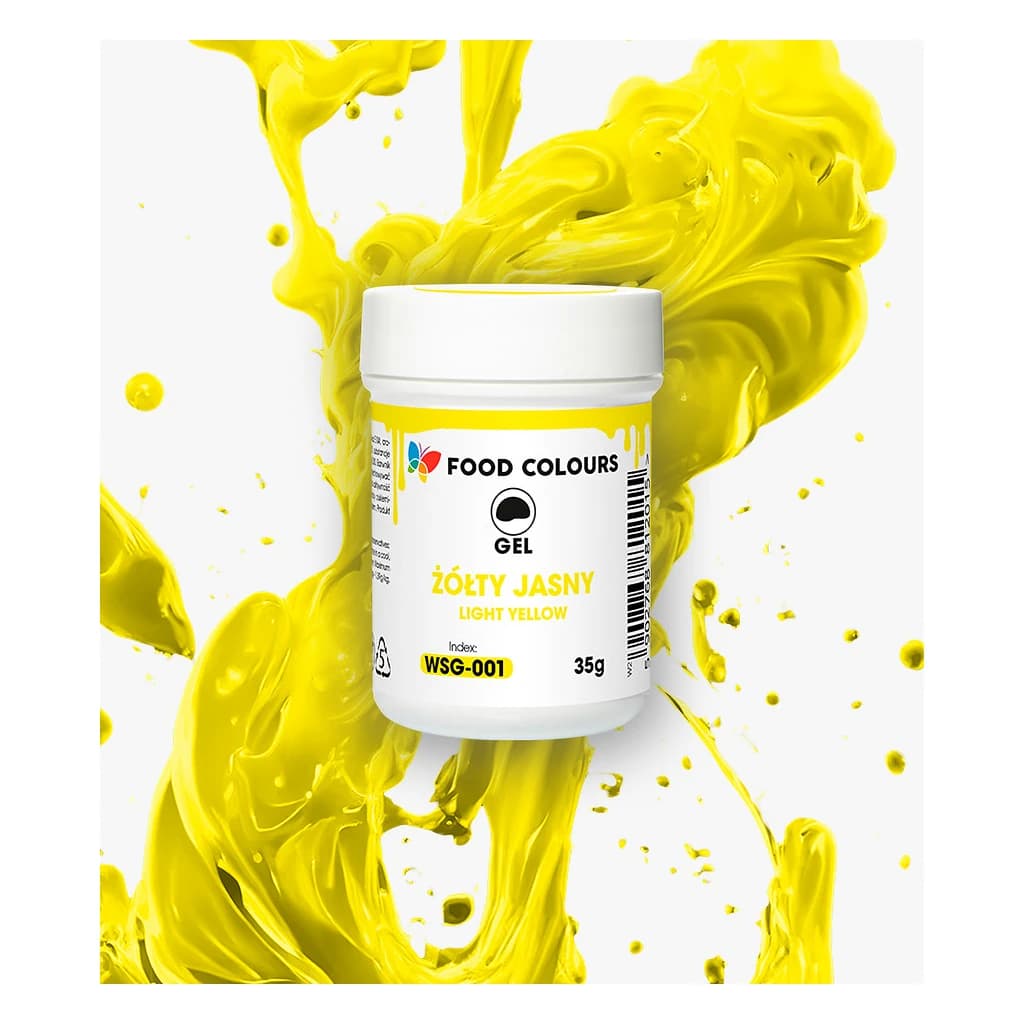
<!-- image: img-ft-11 -->The catalogue colours are built for exactly this. The Food Colours gel sits on a glucose-syrup and glycerine base (not water) so it colours without softening; the Culpitt Spectral paste uses a glycerine (E422) and propylene-glycol (E1520) carrier with silicon dioxide (E551). Three things about colour are not optional:
- There are legal maximum doses. The Food Colours Brilliant Blue (E133) gel states a maximum recommended dosage of 13.0 g of gel per kg of finished food for confectionery, and 21.0 g/kg for decorations, coatings and fillings (food category 05.4), keyed to Regulation (EU) 1129/2011. Deep saturated shades can hit that ceiling — and soften the paste — before you reach the colour you wanted. These are the supplier's gel-product doses, not the EU pure-dye mg/kg limit; verify against Reg 1333/2008 Annex II / 1129/2011 before advising on dosage.
- The "Southampton Six" carry a warning. Six colours — E102, E104, E110, E122, E124, E129 — must carry the label "may have an adverse effect on activity and attention in children" under Regulation (EC) 1333/2008 (in force since 2010). This is not theoretical: the PA Foods red sugarpaste (E124+E129), the Culpitt Spectral Christmas-red paste (E124+E129) and the MagMart figures (E102+E104+E110+E122+E124 — five of the six Southampton Six) all carry exactly that warning. Brilliant Blue (E133) is not on the list.
- Titanium dioxide (E171) — EU ban; UK status differs. The classic white pigment in white sugarpaste and cake decorations, E171, was removed as an authorised EU food additive (Regulation (EU) 2022/63; applied 7 February 2022, transition to 7 August 2022). However it remains permitted in Great Britain under retained Regulation (EC) 1333/2008 — the FSA's Committee on Toxicity published an updated statement on 16 December 2024 concluding current UK dietary exposure is unlikely to be a health risk. The catalogue Doric sugarpaste spec dates from 2017/2018 and still lists titanium dioxide; confirm current formulation and the EU-vs-GB market destination before using or relabelling.
Humidity, sweating and the faults that show on camera
Every paste here is hygroscopic — sugar pulls water out of the air — and that single fact drives the most common finished-cake complaints (the mechanism is shown below; full fault table below).
<!-- image: img-ft-13 -->- Sweating is condensation. Take a chilled fondant cake into a warm, humid room and water condenses on the cold surface; the hygroscopic sugar then goes sticky and the gloss turns to "sweat." The fix is handling, not paste: decorate at roughly 21-24°C (70-75°F) and below 50% relative humidity (ideally 40-50% RH — above 50% RH fondant goes sticky and sweats), and let chilled cakes come back to room temperature inside a sealed box before unwrapping.
- Cracking and "elephant skin" are the paste drying out during handling. Work quickly, keep paste covered, rely on the glycerine humectant, and rub a little vegetable fat (not cornflour) over a forming wrinkle. Work in a room below 50% RH — high humidity causes sweating while low humidity causes cracking.
- Trapped air bubbles — prick with a clean pin at an angle and smooth the paste back down.
- Sagging / tearing at the top edge — the sheet's weight pulls down; bring the sides toward the cake as you smooth, and roll an even 3-4 mm.
- Colour bleed — a dyed piece touched another while still moist; let coloured pastes skin/dry before assembly and use low-water gel/paste colour.
- Dull / grainy / won't-set poured fondant — overheated above its limit or over-thinned; re-warm gently and add stock syrup, not excess water.
Allergen & polyol labelling: Any finished decorated product must declare the relevant Annex II allergens (tree nuts/almonds, wheat/gluten, egg, milk, soya) even when they come from a hidden under-layer or a decoration, and any food with more than 10% added polyols (sorbitol, isomalt) must carry the "excessive consumption may produce a laxative effect" statement — Regulation (EU) 1169/2011.
How to choose — quick frameworks
By job:
- Cover a cake smoothly → rolled fondant / sugarpaste (Zeelandia Roll Dekor, PA Foods, Doric), rolled to 3-4 mm over a buttercream/marzipan/jam base; or CSM White Wrap Ice for a softer iced finish.
- Glaze with a shine (éclairs, fondant fancies, petit fours, doughnuts) → poured fondant (Zeelandia Fondant Ready, Arctos, Vortumnus, Helios); warm to 40-48°C, never over 50°C.
- Build something that stands up (plaques, boxes, columns) → pastillage (icing sugar + gum tragacanth, no fat).
- Flowers, petals, fine detail → gum / flower paste (Sweet Decor White Flower Paste, or sugarpaste + CMC); ready-made wired flowers from Culpitt for speed.
By dietary / label constraint:
- Vegan / dairy-free → several sugarpastes and poured fondants are plant-based (e.g. Doric vegan; Vortumnus vegan), but always confirm on the current spec.
- Coeliac → check carefully: Zeelandia Roll Dekor contains WHEAT starch, and Doric and CSM White Wrap Ice are declared NOT suitable for coeliacs because gluten is handled on site even though there is no gluten ingredient. "No gluten ingredient" is not "gluten-free." A PhotoCake fondant sheet is, by contrast, declared gluten-free and vegan.
- Children's product → avoid the Southampton-Six colours to skip the attention warning, and avoid any product still formulated with E171 for EU markets.
Catalogue pick list
Rolled fondant / sugarpaste (covering): Zeelandia Roll Dekor Soft (spec); PA Foods Ready-to-Roll (spec — note the azo-colour warning on the red); Doric Ready-to-Roll (spec — note the older E171 listing); CSM White Wrap Ice cover icing (spec).
Poured / glazing fondant: Zeelandia Fondant Ready (spec); Arctos Ultra White Fondant and Arctos Fondant 30 (spec); Vortumnus Sugar Glaze water pomade (spec); Helios Water Fondant.
Pastillage & gum/flower paste: build pastillage from Icing Sugar (Kent CP, or 10 kg) + gum tragacanth (no fat); Sweet Decor White Flower Paste; ready-made Culpitt gum-paste ruffled flower and calla-lily spray (non-edible, wired); add CMC to sugarpaste for modelling.
Ready-made decorations & finishing: MagMart sugarpaste figure assortments and baby-shoe toppers (spec); Culpitt PhotoCake edible fondant sheets (spec); Meri-White meringue & royal-icing mix for assembly.
Colour, tools & showpieces: Food Colours gels (spec) and Culpitt Spectral paste (spec) — gel/paste, not liquid; Kilo vegetable glycerine E422 (spec — the humectant); Schneider cake polisher for sugarpaste; BENEO Isomalt ST-PF (Hortimex) for humidity-resistant showpieces; Macphie non-melting dusting sugar for a clean finish on chilled work (see A6-marzipan-fondant-sugar-pastes).
Coverage notes (transparency)
Strong (spec-sheet confirmed): composition, dry matter/extract, energy, allergen, additive and handling data for the fourteen catalogue products read on-disk — Zeelandia Roll Dekor; PA Foods (red) and Doric ready-to-roll sugarpaste; CSM White Wrap Ice; Zeelandia, Arctos (×2) and Vortumnus poured fondants; Kilo glycerine; Food Colours (E133) gel and Culpitt Spectral paste; Culpitt gum-paste flower and PhotoCake sheet; MagMart figures.
Cross-checked (≥2 sources, medium-high): the poured-fondant science — composition (sucrose 64-71% / glucose 9-16% / water ~20%), water-set hardness 10-15%, cook ~115°C (soft-ball stage, 112-116°C), cool 45-50°C (industrial drum), beat 20-30 min — confirmed against BAKERpedia and ASBE; the ~20 µm crystal size is confirmed by Frontiers Soft Matter (2025) + FoodCrumbles + ChestOfBooks (medium-high confidence). The four-type distinction (fat content driving drying behaviour; rolled vs poured) is cross-checked across Yeners Way, BAKERpedia, Wilton and professional cake-craft sources. The decorating environment (21-24°C / below 50% RH) and the fault fixes (cracking, elephant skin, air bubbles, sagging, sweating) are consistent across multiple craft sources.
Medium / indicative (craft-source, single-range): the pastillage formula (300 g icing sugar + 2 tsp gum tragacanth + egg white) and drying times (thin 2-4 h, thick 12-24 h, full ~2 days); the CMC modelling-conversion dosage (~1 tsp per 250 g, range across sources); the scratch poured-fondant ceiling (~37-40°C, grainy >43°C) — verify against your own product and bench.
Single-source (supplier's own spec — NOT independently cross-checked): every per-product number (dry matter/extract, energy, fat, carbohydrate, pH, dosage, allergen list). The E133 colour maximum-use levels (13 / 21 g per kg) are the supplier's GEL-PRODUCT doses keyed to category 05.4, not the EU pure-dye limit.
Regulatory (verify currency before labelling): Southampton-Six warning (Reg 1333/2008); titanium dioxide E171 — EU ban (Reg 2022/63) vs GB-permitted (retained Reg 1333/2008; COT statement 16 Dec 2024); colour maximum-use levels (Reg 1129/2011); allergen and polyol labelling (Reg 1169/2011).
No first-party data: Helios Water Fondant, Sweet Decor White Flower Paste, Culpitt Calla Lily spray, Icing Sugar 10 kg, Schneider cake polisher, Meri-White royal-icing mix — no spec sheets on file; confirm composition, allergens and handling with the suppliers.
Figures
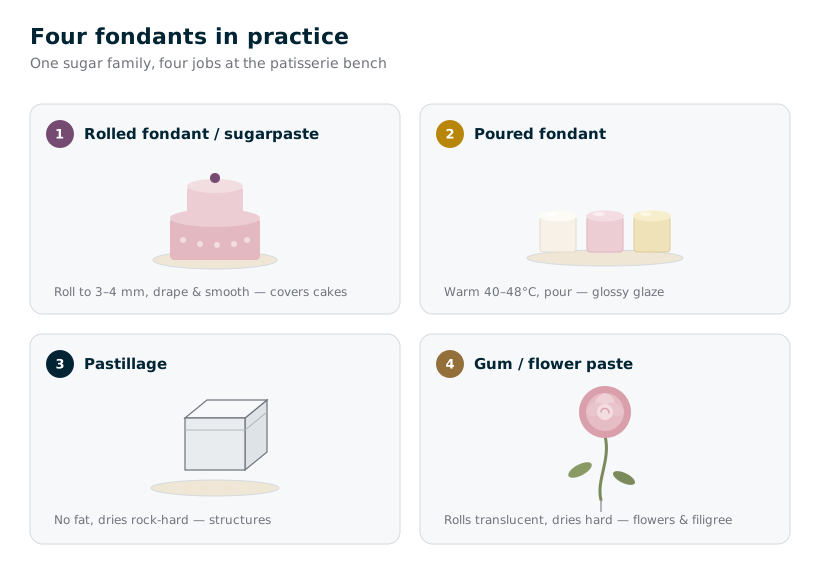 Four-panel overview: rolled fondant (smooth-covered round cake), poured fondant (glossy-glazed petit fours), pastillage (a hard white structural plaque/box) and gum paste (a delicate wired sugar flower), each captioned with its job
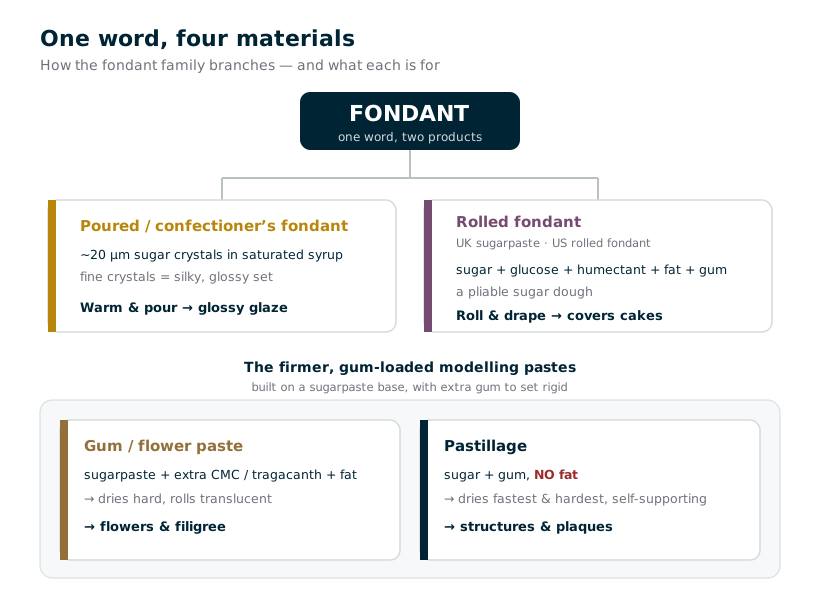 Branching diagram: 'FONDANT' splits into 'Poured / confectioner's fondant — fine sugar crystals in syrup, warmed and poured to glaze' and 'Rolled fondant / sugarpaste — pliable sugar dough, rolled to cover'; a second row shows 'Gum / flower paste = sugarpaste + extra gum + fat, dries hard, rolls thin' and 'Pastillage = sugar + gum, NO fat, dries fastest and hardest'
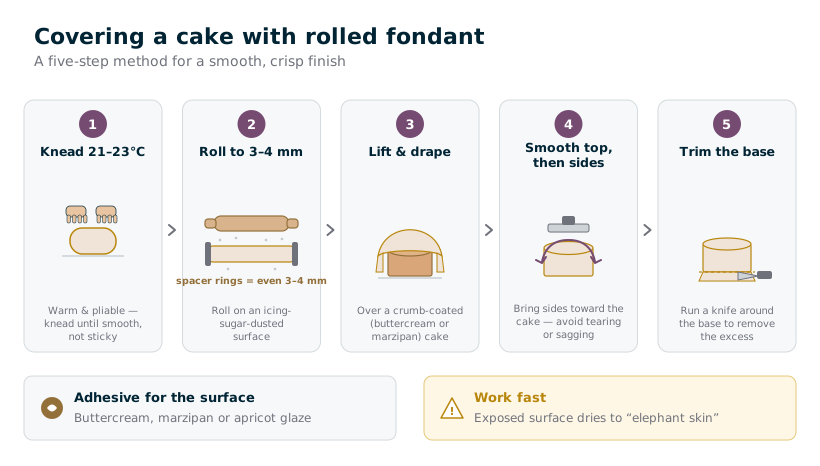 Five-step illustration of covering a cake with rolled fondant: knead the paste warm, roll out to 3-4 mm on an icing-sugar-dusted surface, lift and drape over a buttercream/marzipan crumb-coated cake, smooth the top then the sides with a smoother, then trim the base
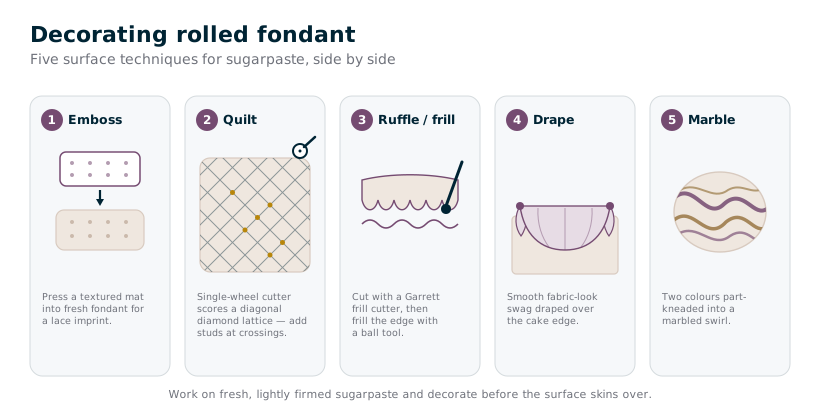 Five fondant surface techniques shown side by side: embossing with a textured mat, diamond quilting made with a single-wheel embosser, ruffles cut with a Garrett frill cutter and thinned with a ball tool, a draped fabric-look swag, and a marbled colour blend
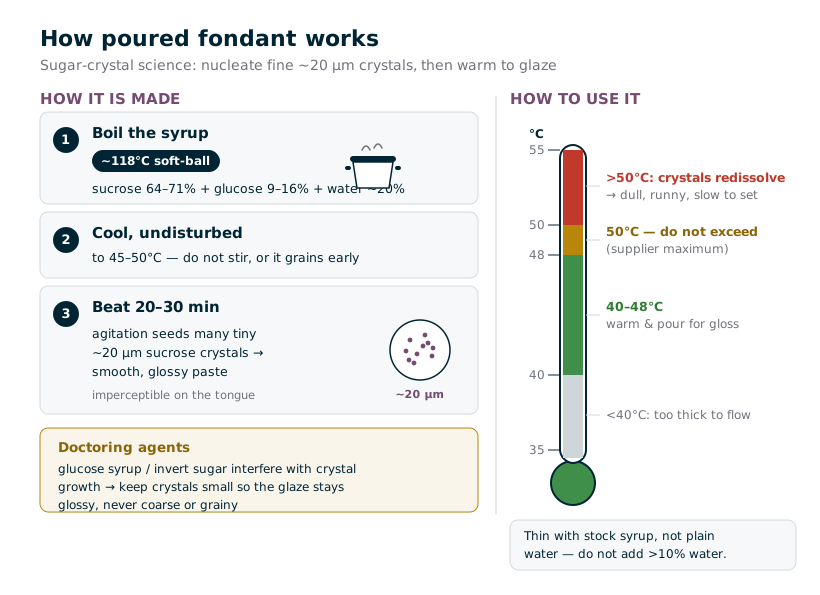 Diagram of poured fondant: boil sugar + glucose syrup + water (~118°C), cool to 45-50°C, beat 20-30 minutes to form tiny ~20 micrometre sucrose crystals giving gloss; a thermometer band shows the working window — warm to 40-48°C to glaze, never overheat above 50°C or the crystals dissolve and the surface goes dull and grainy
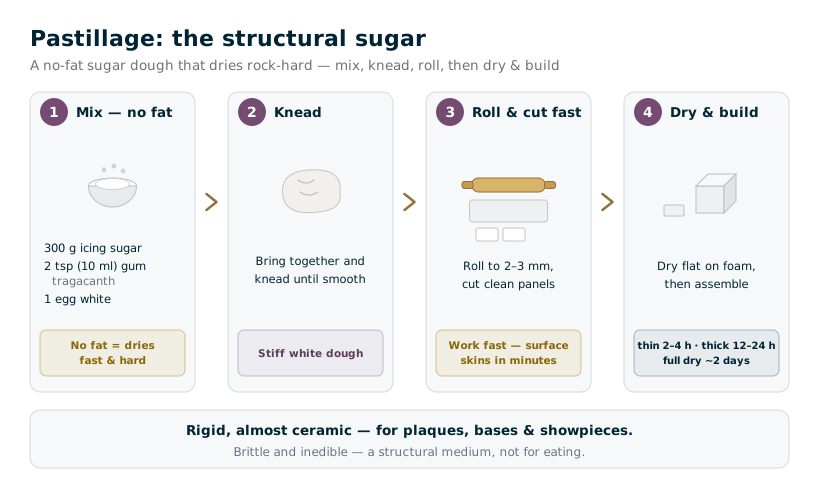 Pastillage card: 300 g icing sugar + 2 tsp gum tragacanth + 1 egg white kneaded to a stiff white dough, rolled to 2-3 mm, cut into panels, then dried (thin pieces 2-4 h, thick 12-24 h, full ~2 days) and assembled into a self-supporting box/structure
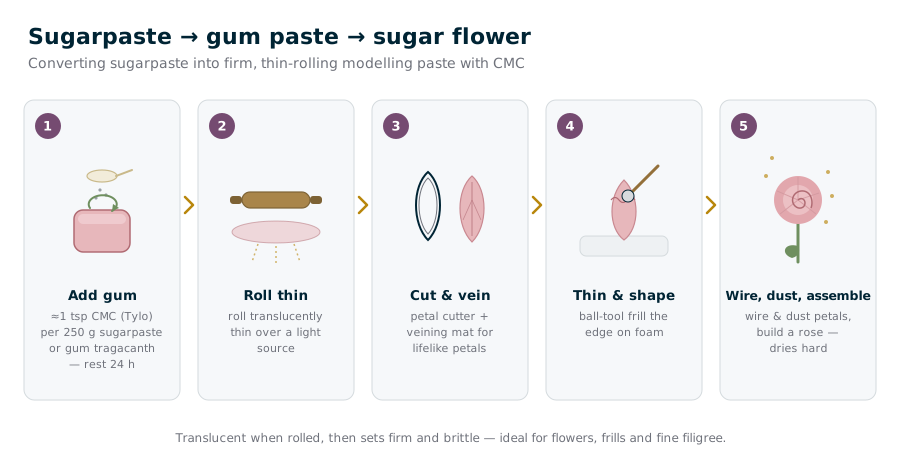 Diagram: knead about 1 teaspoon of CMC (Tylo) into 250 g of sugarpaste, rest it, then roll translucently thin, cut and vein petals, thin the edges with a ball tool, wire and dust them, and assemble a lifelike sugar flower that dries hard
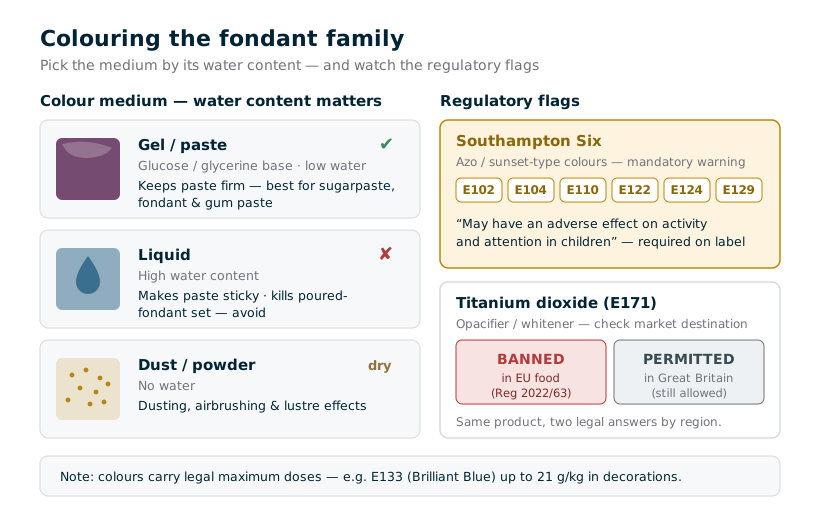 Colouring chart: gel and paste colours (low water, keep paste firm — best for fondant/sugarpaste/gum paste), liquid colour (high water, makes paste sticky — avoid), dust/powder (no water, for dry effects and lustre); plus a callout listing the six Southampton colours E102, E104, E110, E122, E124, E129 that need a children's-attention warning, and a note that titanium dioxide E171 is banned in EU food but still permitted in Great Britain
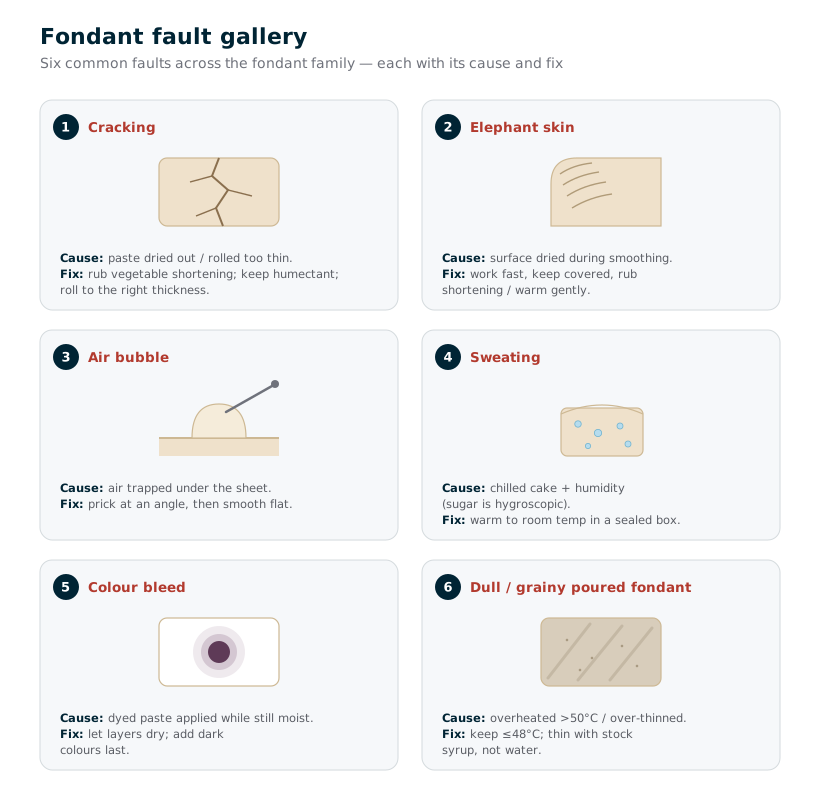 Six-panel fault gallery: cracking (paste dried out / rolled too thin), elephant-skin wrinkles (surface dried during smoothing), a trapped air bubble (prick at an angle and smooth), a sweating sticky surface (condensation on a chilled cake in humidity), colour bleed (dyed paste applied while still moist), and dull/grainy poured fondant (overheated above its limit)
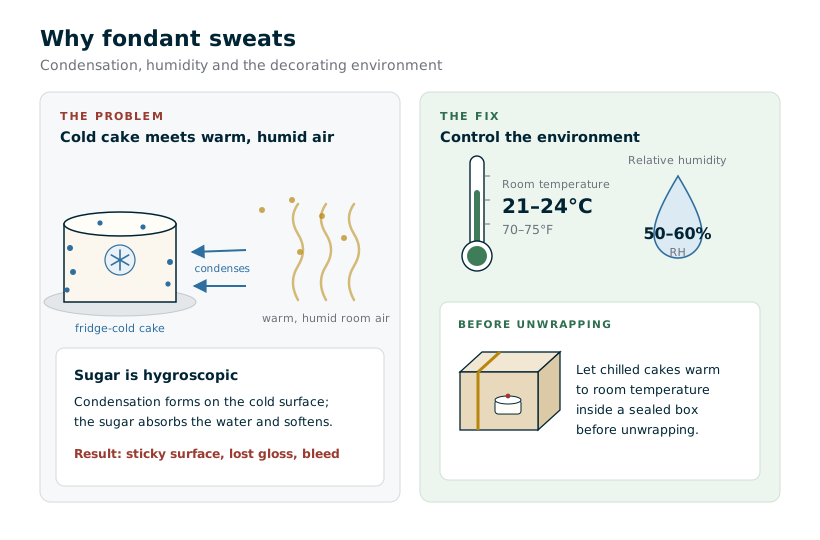 Diagram of a chilled fondant cake taken into a warm humid room: water vapour condenses on the cold surface and the hygroscopic sugar goes sticky; a panel shows the recommended decorating environment of 21-24°C and 50-60% relative humidity, and advises letting chilled cakes warm to room temperature inside a sealed box
Covering a cake with rolled fondant
- Prepare the cake: crumb-coat with buttercream, apply a thin marzipan layer, or brush with apricot glaze/jam so the fondant has something to grip.
- Knead the sugarpaste at 21-23°C until smooth and plastic; dust the bench with ICING SUGAR (not flour).
- Roll to 3-4 mm (about 1/8 inch; 1/4 inch = 6.35 mm exceeds this range) with even pressure, using spacer rings for consistency.
- Lift and drape over the cake in one smooth motion to avoid wrinkles.
- Smooth the TOP first, then the SIDES, easing the paste in and bringing the sides toward the cake so its weight does not tear the top edge (sagging).
- Trim the base; work quickly throughout, because exposed paste dries to 'elephant skin'.
Yield: One cake, fully covered
Room ~21-24°C and below 50% RH (ideally 40-50% RH — above 50% fondant goes sticky and sweats). If a wrinkle forms, rub a little vegetable fat (not cornflour) over it. For decoration, emboss, quilt (single-wheel cutter), frill (Garrett cutter + ball tool), drape or marble the surface before it dries.
Glazing with ready-made poured fondant
- Warm the fondant gently — Zeelandia Fondant Ready to 40-48°C; Arctos never above 50°C; Vortumnus pomade thinned with 50-100 ml water per 1 kg at ≤60°C.
- For scratch confectioner's fondant keep it lower — about 37-40°C; it loses shine above ~40°C and goes grainy above ~43°C.
- Adjust to a flowing, ribboning consistency with STOCK SYRUP (or for the supplier products, ≤10% added water) — never over-thin.
- Colour/flavour if wanted (these fondants take colourants, aromas, fruit concentrate or alcohol).
- Pour or dip over chilled cakes set on a rack so excess drains; let the glaze set to a smooth glossy shell.
Yield: Glaze for petit fours, éclairs or fondant fancies
The cardinal rule: overheat poured fondant and you dissolve the fine crystals that give gloss and set — it comes out dull, runny and slow to firm. Re-warm gently; never boil. Hot sugar burns: a scratch syrup is cooked to ~115°C (soft-ball stage, 112-116°C) — causes severe burns on contact.
Pastillage for structures (build-your-own)
- Stir 10 ml (2 tsp) gum tragacanth into 1 egg white (or a gelatin/water base).
- Knead in 300 g sifted icing sugar to a stiff, smooth white dough.
- Roll to 2-3 mm and cut clean panels FAST — pastillage skins within minutes because it has no fat.
- Air-dry flat on foam: thin pieces 2-4 hours, thicker elements 12-24 hours, full hardness ~2 days.
- Assemble dried panels into self-supporting boxes, plaques or columns with royal icing.
Yield: ~300 g, enough for several plaques/panels
Pastillage is rigid and almost ceramic — perfect for showpieces and standing decorations, but brittle and not meant to be eaten. Keep unused paste tightly wrapped; it dries out on the bench. FOOD SAFETY: the recipe uses raw egg white, which carries a Salmonella risk. For products served to pregnant women, the elderly, immunocompromised individuals or young children, use pasteurised egg white powder. Egg is an Annex II allergen (Reg 1169/2011) and must be declared on the finished product.
Turning sugarpaste into gum/modelling paste
- Knead CMC (Tylo/Tylose) into the sugarpaste at roughly 1 tsp per 250 g (other guides: ~1/4 tsp per 100 g, or 1-2 tsp per 450-500 g).
- Rest, sealed: CMC firms quickly and is usable the same day; gum tragacanth needs about 24 hours to develop.
- Roll translucently thin; cut, vein and thin petal edges with a ball tool on foam.
- Wire, dust with petal/lustre colour and assemble; the paste dries hard to hold the shape.
Yield: Modelling/flower paste from any sugarpaste
Or buy ready-made: Sweet Decor White Flower Paste, or off-the-shelf wired gum-paste flowers (Culpitt) — note the wired versions are NON-edible. For humidity-resistant showpieces, isomalt (see A6-sugar-work-techniques) outperforms sugar paste.
| Property | Rolled fondant / sugarpaste | Poured (confectioner's) fondant | Pastillage | Gum / flower paste |
|---|---|---|---|---|
| What it is | Pliable sugar dough: sugar + glucose + humectant + fat + gum | Fine sucrose crystals (~20 µm) in saturated syrup | Sugar + gum (tragacanth/tylose), NO fat | Sugarpaste-type base + extra gum + fat |
| Defining feature | Rolls to 3-4 mm to cover cleanly | Warmed and poured for a glossy glaze | Dries fastest, rock-hard, self-supporting | Rolls translucently thin, dries hard, holds detail |
| Contains fat? | Yes (vegetable shortening) | No (sugar/syrup) | No — that is why it dries so fast/hard | Yes — so it dries hard but stays workable longer |
| Main use | Covering cakes & boards; embossing, ruffles, draping | Glazing éclairs, fondant fancies, petit fours, mille-feuille, doughnuts | Plaques, bases, columns, structural showpieces (not eaten) | Sugar flowers, petals, figures, filigree |
| Worked / applied at | Knead at 21-23°C, roll, drape | Warm to 40-48°C (supplier) / ≤37-40°C scratch | Room temp; work fast, then air-dry | Room temp; rest after adding gum |
| Dries / sets by | Stays soft (humectant + preservative) | High sugar, low water; sets as it cools | Air-drying; ~2 days to full hardness | Air-drying; hard but slower than pastillage (fat) |
| Catalogue examples | Zeelandia Roll Dekor; PA Foods RTR; Doric RTR; CSM White Wrap Ice | Zeelandia Fondant Ready; Arctos Ultra White / Fondant 30; Vortumnus Sugar Glaze | Build from icing sugar + gum tragacanth; ready-made plaques | Sweet Decor White Flower Paste; Culpitt ready-made gum-paste flowers |
'Fondant' means two unrelated things — poured (glaze) and rolled (covering). Pastillage and gum/flower paste are the firmer, gum-loaded modelling pastes. Fat content is the quiet variable: pastillage has none and so dries fastest and hardest.
| Aspect | Rolled fondant (UK sugarpaste / US rolled fondant) | Poured (confectioner's) fondant |
|---|---|---|
| Physical state | Soft plastic dough; rolled into a sheet | Fine sucrose crystals in saturated syrup; pourable when warmed |
| Composition | Sugar/icing sugar + glucose syrup + humectant (glycerine/sorbitol) + fat + gum | Sucrose 64-71%, glucose syrup 9-16%, water ~20% |
| Why it works | Humectant keeps it soft & crack-resistant; gum gives stretch | Tiny ~20 µm crystals → gloss & smooth melt; glucose 'doctors' crystal size |
| How used | Knead 21-23°C, roll to 3-4 mm, drape, smooth, trim | Warm to 40-48°C and pour/dip (supplier); ≤37-40°C for scratch fondant |
| Typical products | Celebration cakes, cupcakes, plaques, simple models, embossed/ruffled finishes | Éclairs, fondant fancies, petit fours, mille-feuille, doughnut glaze |
| Killer mistake | Letting the surface dry → cracking / elephant skin | Overheating above ~50°C / over-thinning → dull, runny, won't set |
| US note | US 'rolled fondant' is often gelatin- or marshmallow-based; UK sugarpaste uses gums instead | Same product the world over (a poured sugar glaze) |
| Aspect | Pastillage | Gum / flower paste |
|---|---|---|
| Fat | None | Yes (shortening) |
| Drying | Very fast; full hardness ~2 days; thin pieces 2-4 h | Hard but slower than pastillage; stays workable longer |
| Texture when dry | Rigid, brittle, almost ceramic | Hard but a touch more resilient; very thin |
| Rolls | Thin, cut into clean panels for structures | Translucently thin for petals & filigree |
| Best for | Plaques, boxes, columns, bases, architectural pieces | Sugar flowers, leaves, bows, figures, fine detail |
| Edible? | Technically edible but brittle and not meant to be eaten | Edible; ready-made wired versions can be NON-edible (wire) |
| Make it from | Icing sugar + gum tragacanth (+ egg white / gelatin), no fat | Sugarpaste + ~1 tsp CMC per 250 g, or buy ready-made |
Both are stiffened sugar pastes for non-covering work; the difference is fat (pastillage has none) which makes pastillage dry faster, harder and more brittle, while gum paste stays flexible long enough to shape thin petals.
| Product (brand) | Ingredients | Dry matter / extract | Energy /100 g | Working rule | Source |
|---|---|---|---|---|---|
| Zeelandia Fondant Ready | Sugar, glucose syrup, water, E471, E412 (guar), E330 | 85% dry matter | 1447 kJ / 346 kcal | Heat to 40-48°C, stirring; apply warm or cooled | Zeelandia spec sheet |
| Arctos Ultra White Fondant | Sugar, glucose syrup, water, E471, E330, E331 | 87.5-88.5%; pH 4.5-6.5 | 1488 kJ / 350 kcal | Do not overheat >50°C; ≤10% added water | Arctos spec sheet |
| Arctos Fondant 30 | Sugar, glucose syrup, water (only) | 87.5-88.5%; pH 4.5-6.5 | 1488 kJ / 350 kcal | Do not overheat >50°C; ≤10% added water | Arctos spec sheet |
| Vortumnus Sugar Glaze (water pomade) | Sugar, glucose syrup, water, E471, indigotine (E132) | ≥87% total extract | 1479 kJ / 348 kcal | Mix 50-100 ml water per 1 kg at ≤60°C | Vortumnus spec sheet |
All values read directly from supplier spec sheets. Note the supplier working temperatures run higher than scratch-fondant guidance (≤37-40°C) because these are stabilised industrial products.
| Product (brand) | Key ingredients / system | Energy /100 g | Dry matter | Allergen / dietary note | Source |
|---|---|---|---|---|---|
| Zeelandia Roll Dekor Soft | Sugar, WHEAT starch, veg oils, glucose, E420+E1103, E466 (CMC), E471 | 1708 kJ / 409 kcal | 91% | Wheat starch; may contain SOY, MILK, ALMONDS | Zeelandia spec sheet |
| PA Foods Ready-to-Roll (red) | Sugar, glucose, non-hydro shortening, glycerine E422, E471, E413, E202, E124+E129 | 1673 kJ / 400 kcal | n/d | Made in factory handling NUTS; children's-attention warning | PA Foods spec sheet |
| Doric Ready-to-Roll (pastel blue) | Icing sugar, sorbitol+glycerin, glucose, veg oil, tragacanth+xanthan, mono-/diglycerides, E202, TiO2+Brilliant Blue | 1652 kJ / 393 kcal | n/d | Vegan; RSPO palm; NOT for coeliacs; lists E171 (old spec) | Doric spec sheet |
| CSM White Wrap Ice (cover icing) | Sugar, water, glucose, palm fat, AGAR, potassium sorbate, locust bean gum, lecithin, citric acid | 1449 kJ / 342 kcal | n/d | May contain EGG, MILK, SOYA, GLUTEN; not coeliac; store 5-15°C | CSM spec sheet |
All values read directly from supplier spec sheets. 'Cover icing' (White Wrap Ice) is an agar/locust-bean-gum alternative to classic gum-based sugarpaste.
| Format | Water added | Best for | Watch-outs |
|---|---|---|---|
| Gel colour | Low (glucose/glycerine base) | Sugarpaste, gum paste, marzipan, poured fondant | Deep shades approach legal max dose & still soften paste |
| Paste colour | Very low (glycerine/propylene-glycol carrier) | Intense shades in fondant & buttercream | Some are Southampton-Six (e.g. Culpitt Xmas red E124+E129) |
| Liquid colour | High (water-based) | Thin washes only — avoid for covering paste & poured fondant | Makes paste sticky; ruins poured-fondant set |
| Dust / powder / lustre | None | Dry colour, airbrush, edges, metallic sheen | Confirm 'edible' vs 'non-toxic/for display only' before use |
Water is the enemy of fondant and sugarpaste — it makes paste sticky and stops poured fondant setting. Pick the colour format by how much water it adds.
| Fault | Where | Likely cause | Fix / prevent |
|---|---|---|---|
| Cracking | Rolled fondant | Paste dried out, rolled too thin, or over-kneaded | Rub vegetable shortening into the crack; keep paste covered; rely on glycerine humectant; roll to 3-4 mm |
| Elephant skin (dry wrinkles) | Rolled fondant | Surface dried during handling/smoothing | Work fast, keep covered; rub a little shortening, or warm gently to relax wrinkles |
| Trapped air bubble | Rolled fondant | Air caught under the sheet on draping | Prick with a clean pin at an angle and smooth the paste back down |
| Sagging / tearing at top edge | Rolled fondant | Sheet too heavy/thin; weight pulls down | Bring the sides toward the cake as you smooth; roll an even 3-4 mm |
| Sweating (sticky, lost gloss) | All sugar pastes | Condensation on a cold cake in humid air; sugar is hygroscopic | Decorate at 21-24°C and below 50% RH (ideally 40-50% RH); warm chilled cakes in a sealed box before unwrapping |
| Colour bleed | All sugar pastes | Dyed paste still moist when another colour touches it | Let coloured pastes skin/dry before assembly; use low-water gel/paste colour |
| Dull / grainy / won't set | Poured fondant | Overheated above its limit or over-thinned | Re-warm gently to 40-48°C (≤50°C); add stock syrup not excess water; never boil |
| Cracks while drying | Pastillage / gum paste | Dried too fast or unevenly; piece too thin | Dry flat and evenly; thicken load-bearing panels; avoid draughts on one side |
Buy the ingredients
Catalogue products and brands referenced in this article.
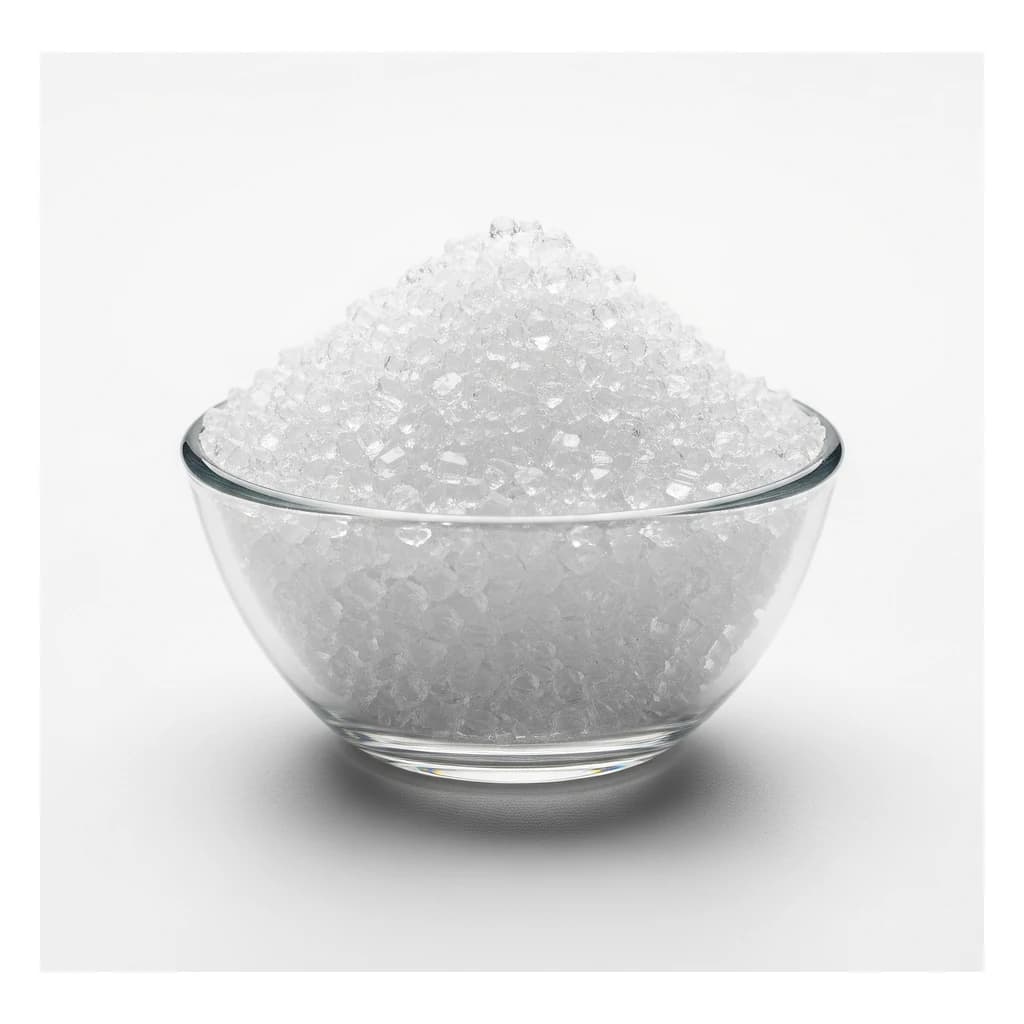
Isomalt ST-PF 20 kg
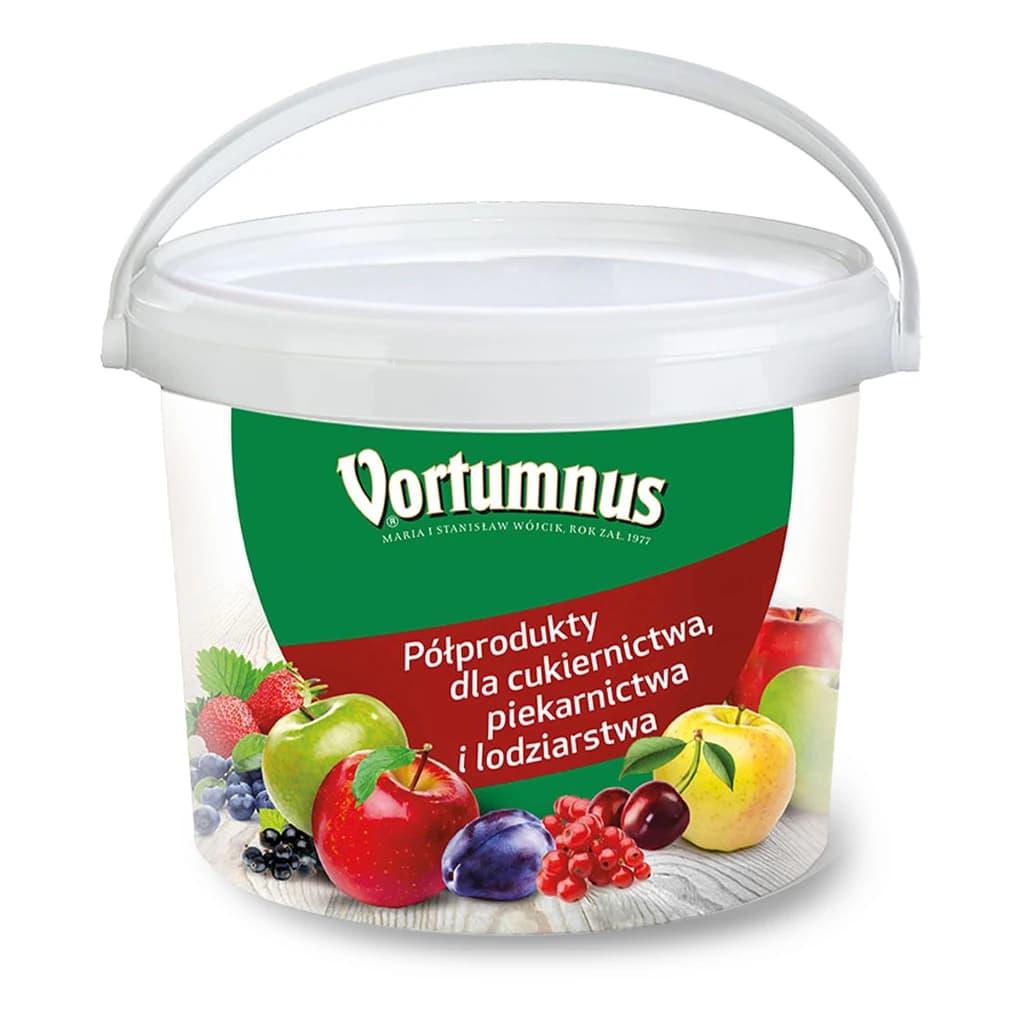
Sugar Fondant (Soft) 15 kg
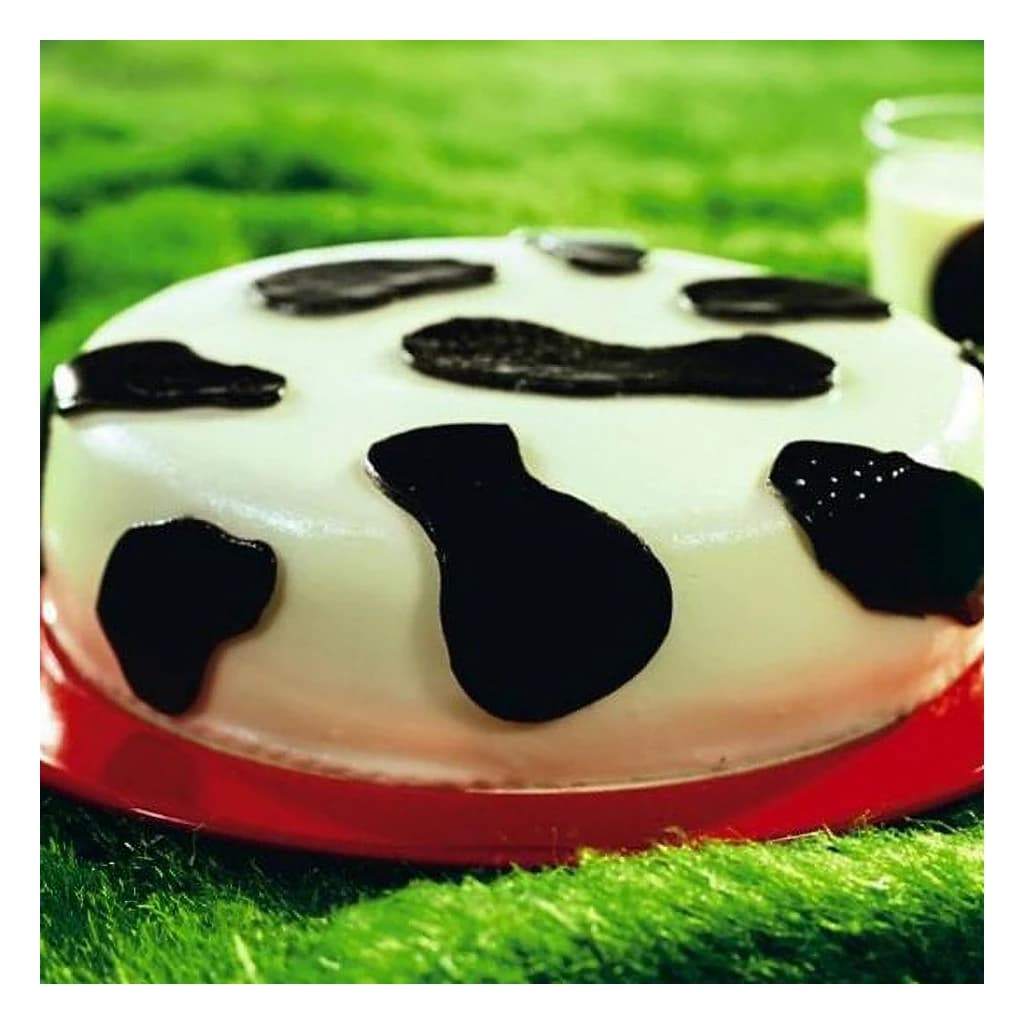
Zeelandia Roll Dekor Soft White Sugarpaste (7.5 kg)
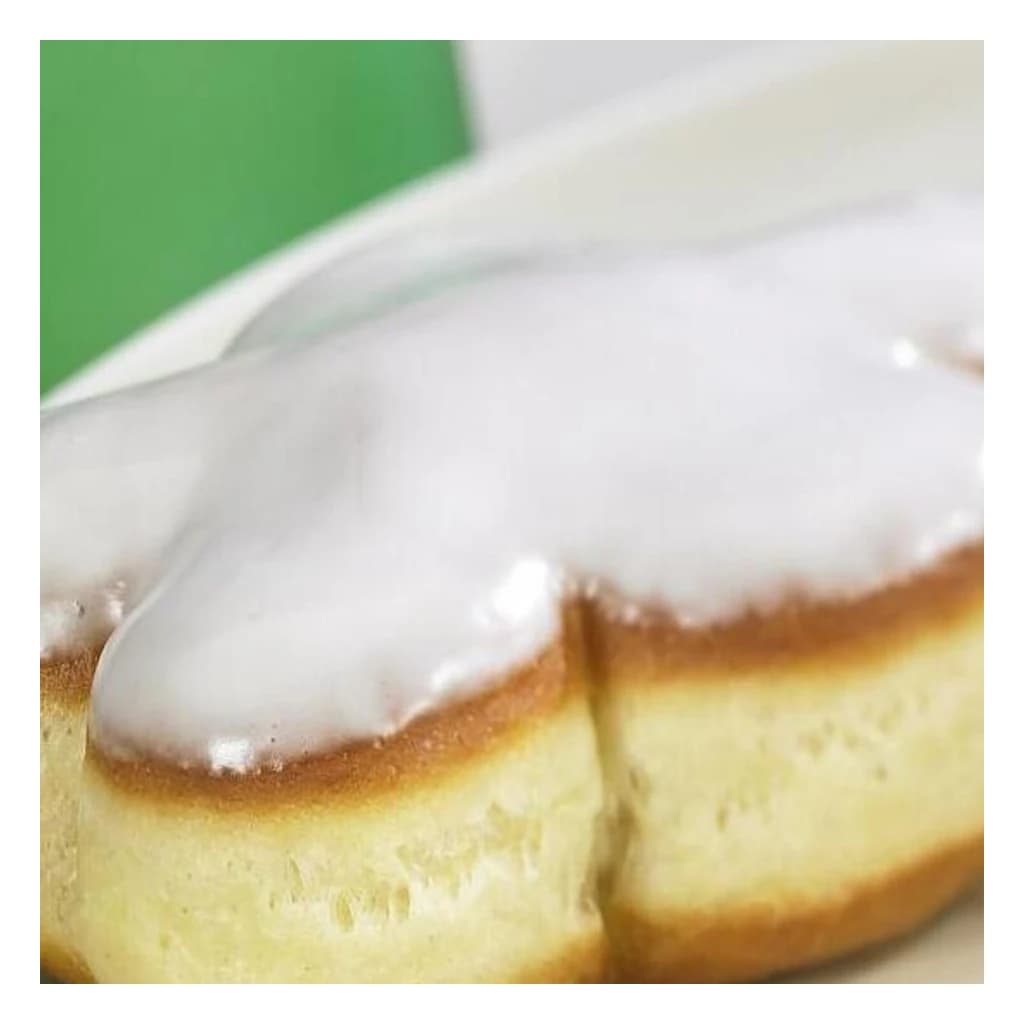
Zeelandia Fondant Premium (14 kg)
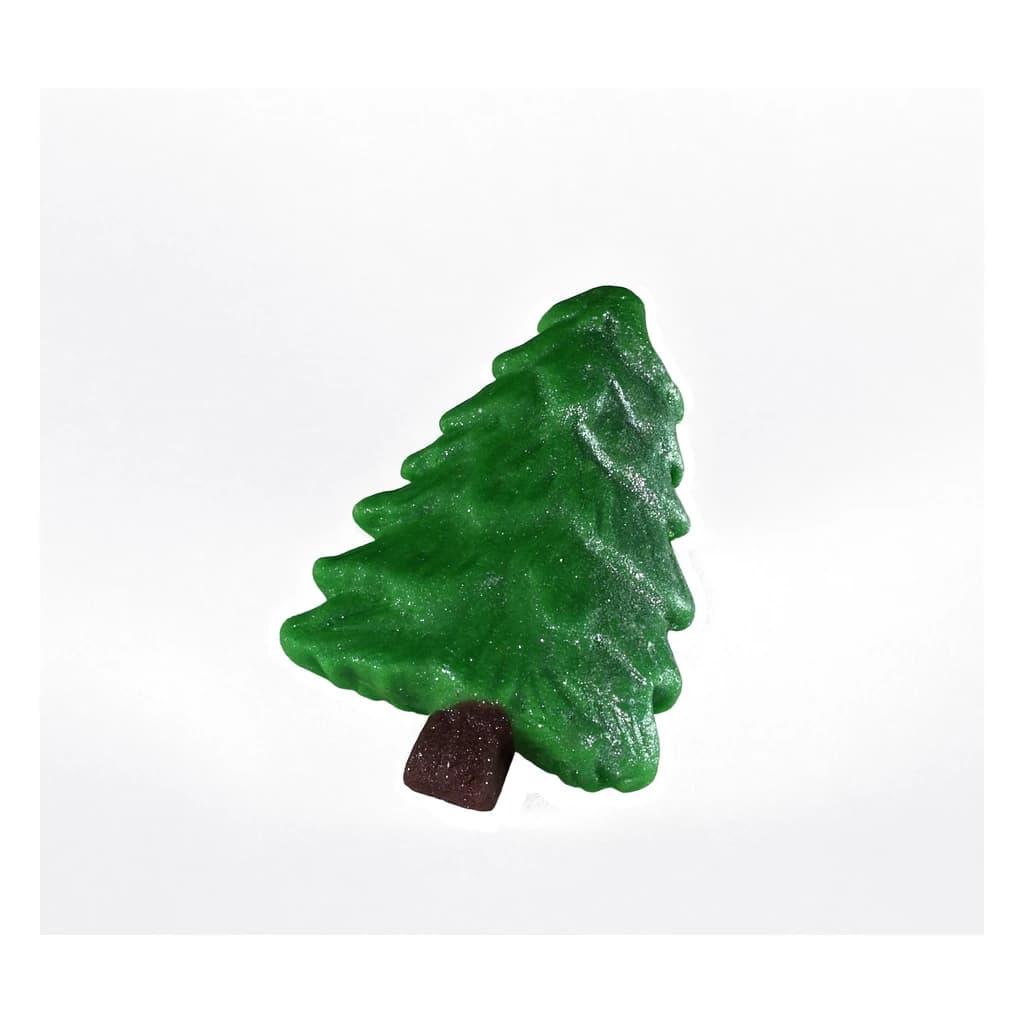
Sugar Paste Christmas Assortment (25 pc)
Food Colour — Gel, 35 g Jars

White Flower Paste (250 g)
Arctos Ultra White Fondant 14 kg
Arctos Fondant 30 – 15 kg
Icing Sugar 10 kg
Helios Water Fondant 15 kg
Ready-to-Roll Sugarpaste
Icing Sugar CP 25 kg

Culpitt Gum Paste Calla Lily Spray 50 mm (Pack of 50)
Meri-White Meringue & Royal Icing Mix 1.5 kg
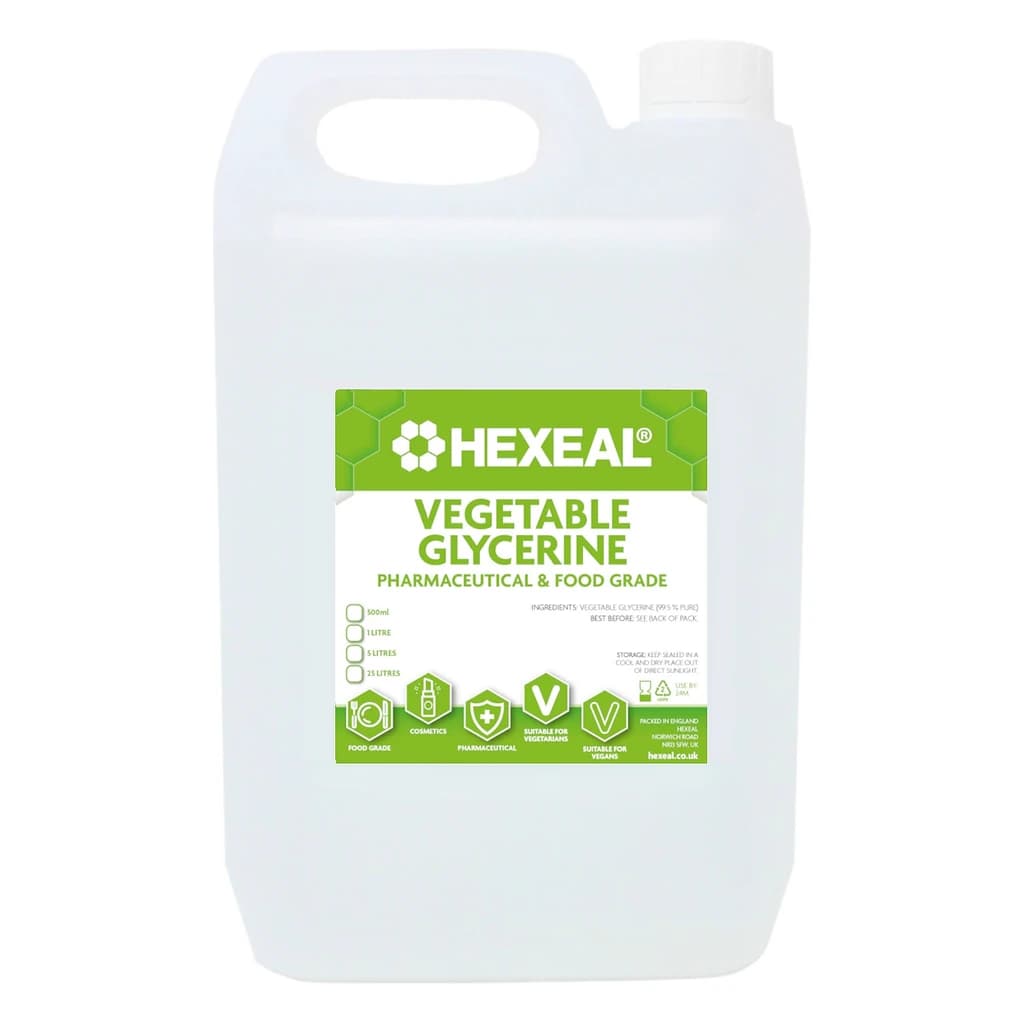
Vegetable Glycerine (E422) 6.25 kg
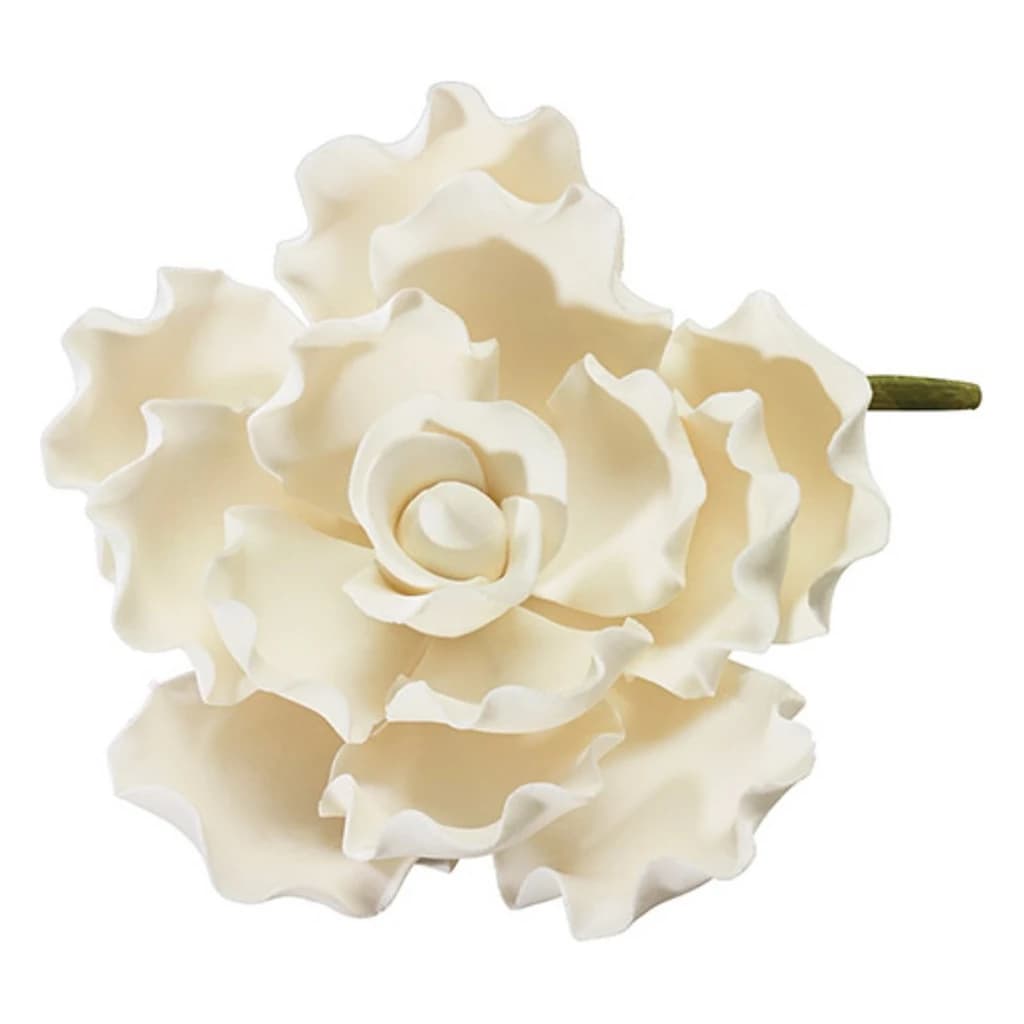
Culpitt Gumpaste Ruffled Petal Flower, 4 in
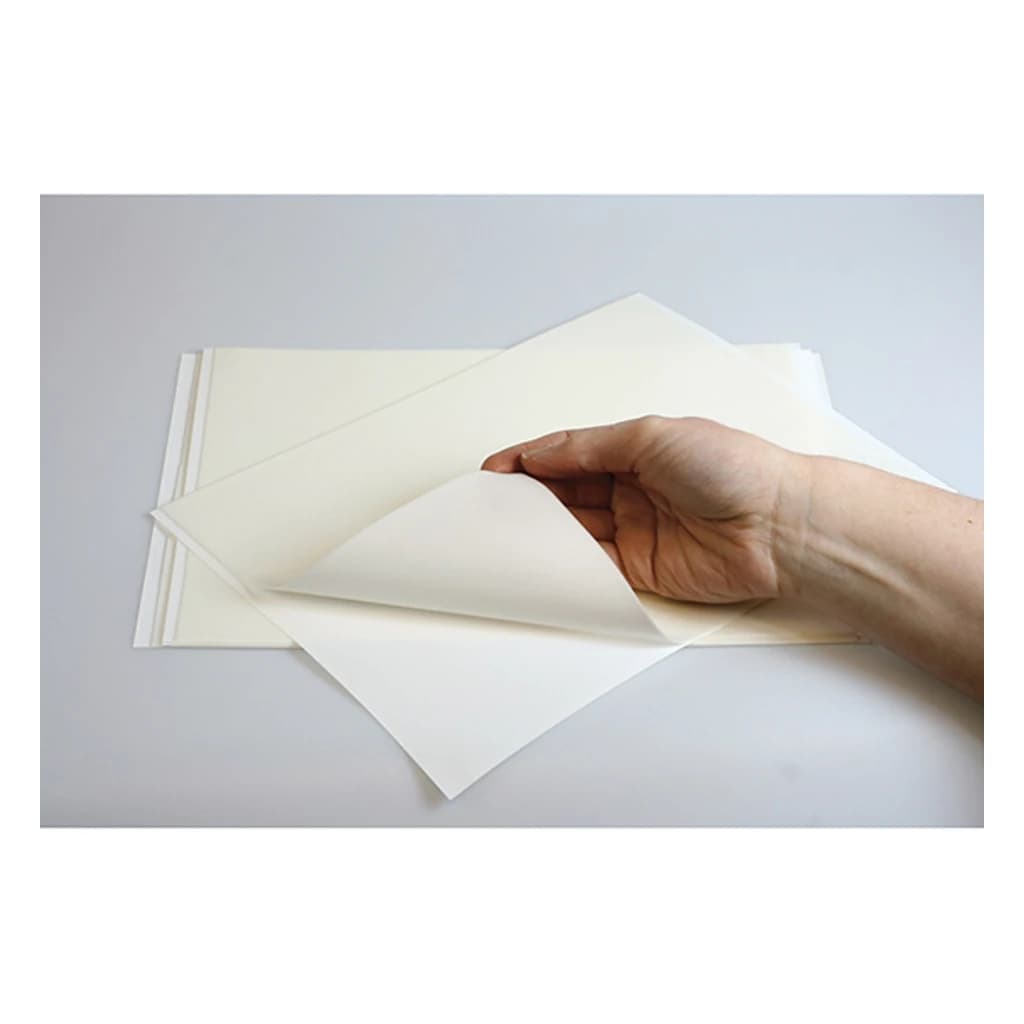
Photocake Fondant Sheet A4 297 × 210 mm (20 pc)

White Wrap Ice 12.5 kg

Cake Polisher for Sugar Paste - 160 × 80 mm
Food Colour — Spectral Paste, 400 g (Sugarflair)

Sugarpaste Christening Bootie Decorations (Pack of 4)