
Food colours, luster dusts & edible metallics: gels, powders, airbrush, and EU/UK regulatory limits
A practical, inspiration-led guide for professional bakers and confectioners to colouring and metallic finishing. Covers every colour format in the catalogue — powder, liquid, drops, gel and concentrated paste, airbrush, lustre/metallic dust and aerosol sprays — what is actually in them, and which to reach for. Explains the no-seize rule for colouring chocolate, airbrush settings, three ways to use lustre dust, and synthetic-vs-natural colour stability. A full regulatory section covers the EU/UK divergence on titanium dioxide E171, the Southampton-six warning, edible gold/silver (E175/E174), 'edible vs non-toxic' glitter, and allergen/faith flags. Numbers read directly from first-party supplier spec sheets (Food Colours, Targroch, Culpitt/PME/Sugarflair) in the Domson catalogue.
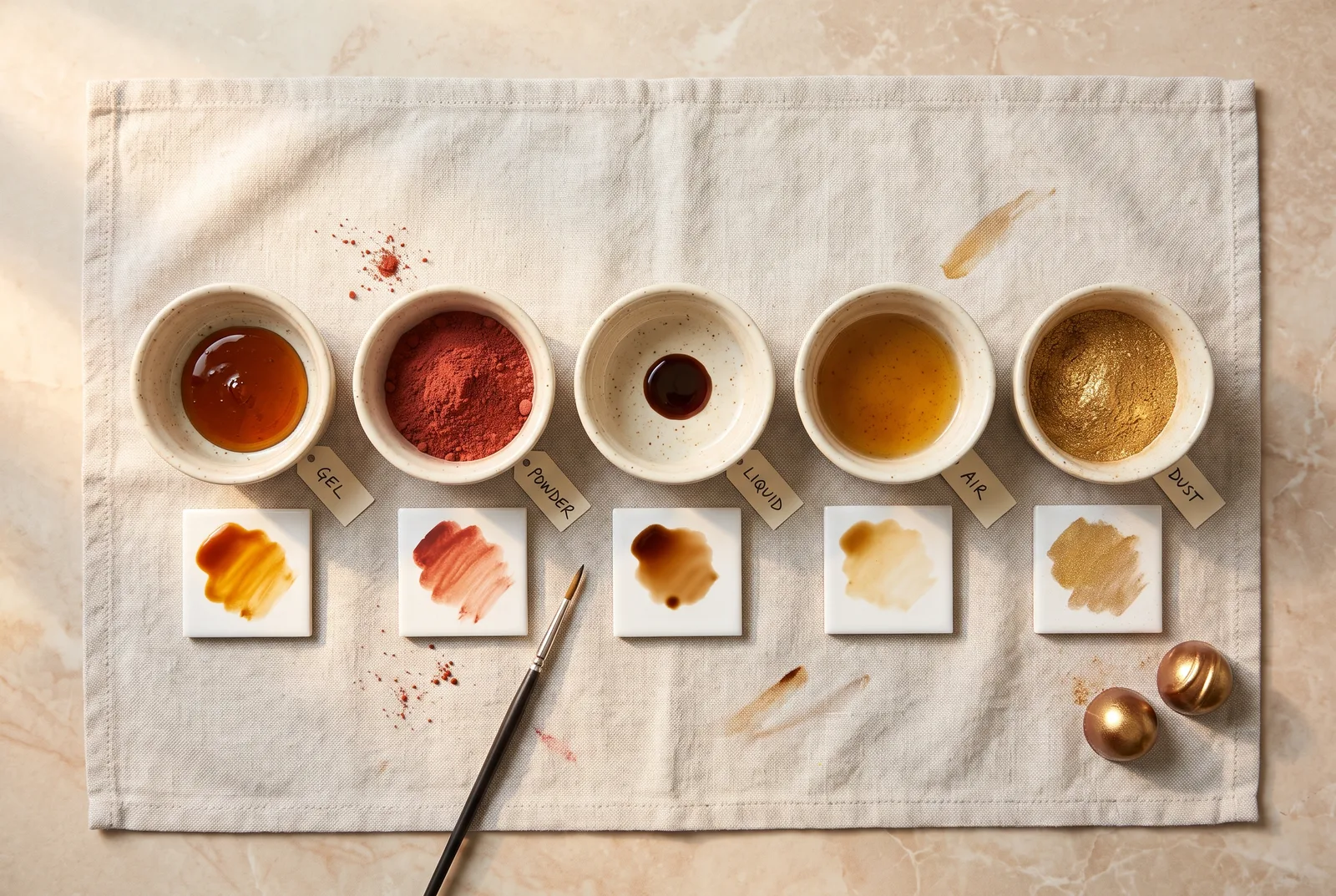
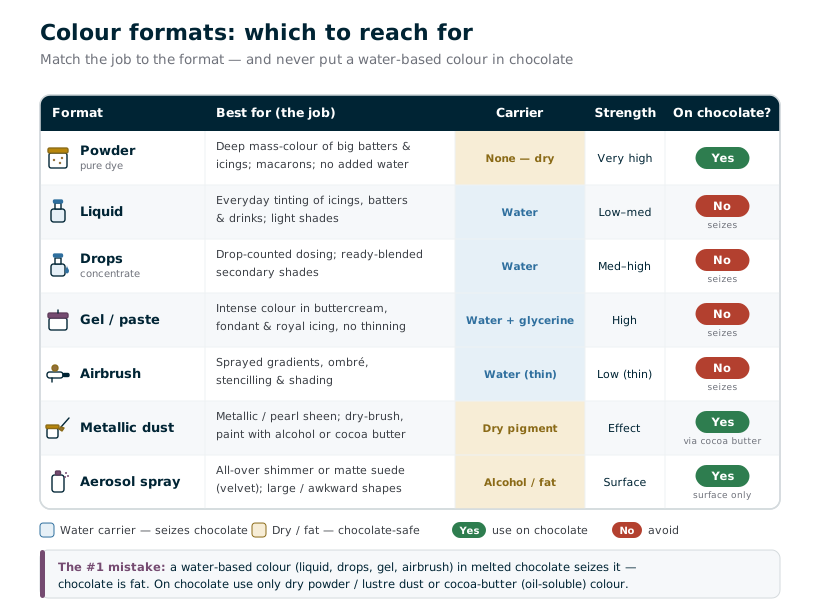 Decision matrix mapping food-colour formats (powder, liquid, drops, gel, airbrush, dust, spray) to the jobs they suit and whether they are safe to use on chocolate
1. The colour toolkit: pick the right format first
Colour is where a competent bake becomes a sellable one. But most colour failures are not artistic — they are a format mistake: a thin liquid where you needed a concentrated paste, or a water-based gel dropped into chocolate. Get the format right and the technique is easy.
The Domson catalogue carries the whole spectrum from one supplier family (Food Colours / Targroch), plus pro paste and metallic finishes from Culpitt (PME / Sugarflair). Here is the toolkit, with what is actually inside each — read straight off the spec sheets. See the matrix above and the comparison table below.
-
Powder (pure dye). The most concentrated and the only format with no added moisture, so it mass-colours large batches and dusts onto dry surfaces without diluting anything. The catalogue powders are single synthetic dyes at ≥85% dye content, water-insoluble matter under 0.2%, shelf life ≥3 years — e.g. Sunset Yellow E110 (Colour Index 15985), Tartrazine E102 (CI 19140), Ponceau 4R E124 (CI 16255), Carmoisine E122, Indigo Carmine E132, Brown HT E155, Black PN E151.
-
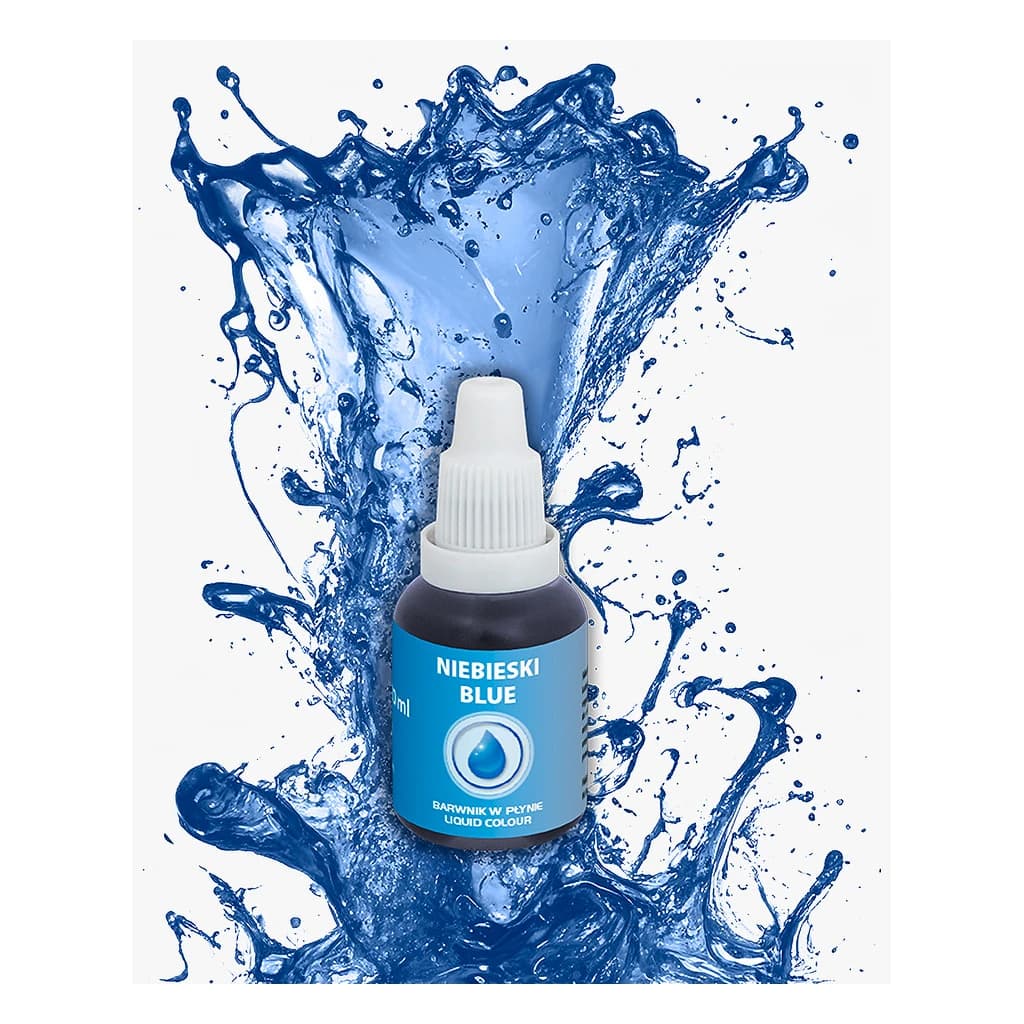
Liquid. Just water + dye + preservative E202 + pH stabiliser E330 (e.g. Brilliant Blue E133). Weak by design — fine for pale shades and drinks, wrong for deep colour and a chocolate-killer. 18-month shelf life.
-
Liquid concentrate (drops). The same water base but stronger and pre-blended into secondary shades (e.g. green = Quinoline Yellow E104 + Indigo Carmine E132). Good for drop-counted dosing. 18 months.
-
Gel / paste. The decorator's workhorse: a thick concentrate of glycerine E422 + glucose syrup + water + dye + modified-corn-starch thickener E1422 + preservative E202 (± sodium benzoate E211) + citric acid E330. Intense colour without thinning buttercream, fondant or royal icing. 36-month shelf life — twice the liquids.
-
Concentrated paste (Spectral). For the deepest, most saturated colour the Sugarflair Spectral paste uses a glycerine E422 + monopropylene glycol E1520 carrier with silicon dioxide E551 thickener and intense colours (Allura Red E129, Ponceau 4R E124). Gluten-free, kosher, 5-year shelf life.
-
Airbrush colour. Deliberately thin, water-based dye (+ flavour + E202 at 1500 mg/kg + E330) for spraying gradients and stencils. 18 months.
-
Lustre / metallic effect dust and aerosol sprays — the metallic and shimmer finishes, their own section below.
One rule above all the rest: water-based colours (liquid, gel, airbrush) seize chocolate. For anything chocolate, candy-melt or ganache, use fat-soluble colour or cocoa-butter-dispersed dust. Section 2.
2. Water-based vs fat-based: the seizing rule
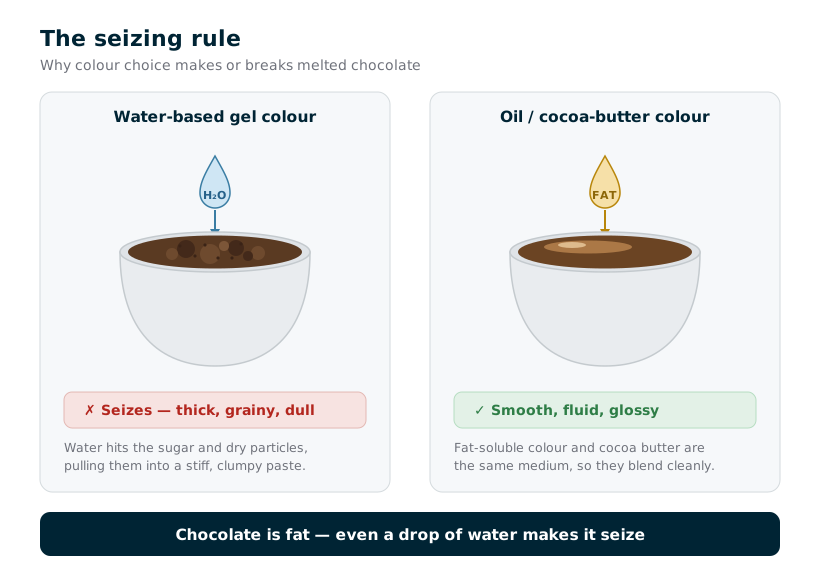 Two bowls of melted chocolate: one seized and grainy after adding water-based colour, one smooth and glossy after adding oil-based colour
Chocolate is a fat system. Adding even a few drops of a water-based colour introduces water that the fat cannot absorb; the sugar and cocoa particles clump and the chocolate seizes — it turns thick, grainy and dull, exactly as if you had splashed water into it.
So the medium dictates the colour:
- Fat / high-fat bases (chocolate, white chocolate, candy melts, ganache, the fat phase of some buttercreams): use oil/fat-soluble ("lipo") colour, or disperse a lustre/metallic dust in melted cocoa butter.
- Water-friendly bases (buttercream, fondant, royal icing, batters, sugar syrups): use gel/paste, liquid or powder.
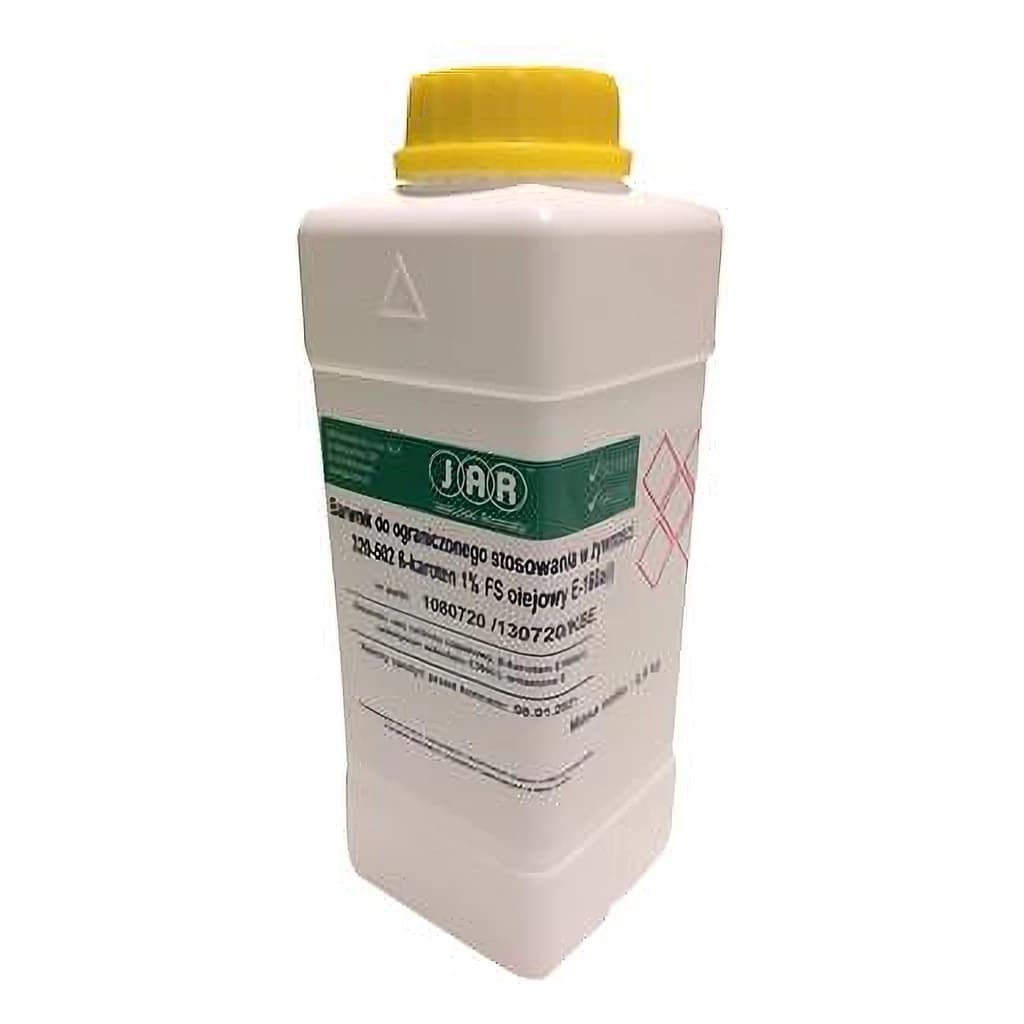
A natural fat-soluble option lives in the catalogue too: JAR beta-carotene E160a(i), a 1% oily preparation (vegetable oil + beta-carotene + ascorbyl palmitate E304 + vitamin E, ≥0.85% carotene) that gives a clean-label yellow-orange and dissolves into a fat phase.
Keep tools and bowls bone dry — a drop of condensation will seize a whole bowl. The formula is below.
3. Tinting buttercream, fondant and royal icing
For the everyday job — colouring an icing — reach for a gel or concentrated paste, never a liquid, so you don't thin the medium. Add tiny amounts on a clean stick (no double-dipping), mix until even, and judge the colour only after it is fully dispersed — gels look patchy until worked in.
Two professional habits:
- Colour deepens on standing. Reds, blacks and deep oranges keep developing for an hour or more. Mix a shade lighter than your target and rest 30–60 minutes (or colour the day before). Chasing a true black or deep red live, by eye, over-softens the icing.
- Mind the dose on intense shades. A heavily red, black or orange batch is where the EU's lowered ADIs can bite — in 2009 EFSA cut Quinoline Yellow E104 to 0.5, Sunset Yellow E110 to 1.0 and Ponceau 4R E124 to 0.7 mg/kg body weight per day. For deep colour, a dedicated concentrated paste reaches the shade with less product than chasing it with a weaker gel.
The formula is below.
4. Airbrushing: gradients, ombré and stencils
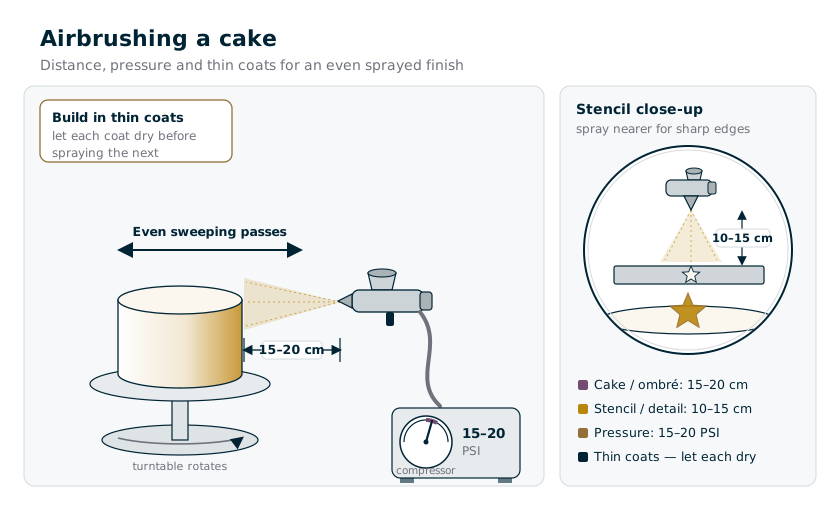 Airbrush diagram showing a gun held 15-20 cm from a cake at 15-20 PSI, building thin coats, with a stencil inset held closer for sharp edges
An airbrush is the only way to get a truly smooth graduated finish (ombré, sunset skies, soft shadows) and crisp stencilled patterns. Use thin airbrush-specific colour — the catalogue range is built thin for exactly this.
Working settings, cross-checked across cake-airbrush guides:
- Pressure ~15–20 PSI. Lower gives more control and less overspray; most cake-decorating guides recommend staying at or below 20 PSI.
- Distance ~15–20 cm (6–8 in) from the surface for even colour; move closer (~10–15 cm) over a stencil for sharp edges.
- Thin coats. Sweep in light, even passes with the gun moving and build colour up, letting each layer dry before the next. This is how you get a flawless ombré rather than runs.
- Clear the gun between colours (spray cleaner through) to stop clogging and muddy mixes.
Best on a set, dry surface (firm fondant, dried royal icing, set buttercream). On a fat surface you need a fat-based airbrush colour. The formula is below.
5. Metallics, lustres and edible precious metals
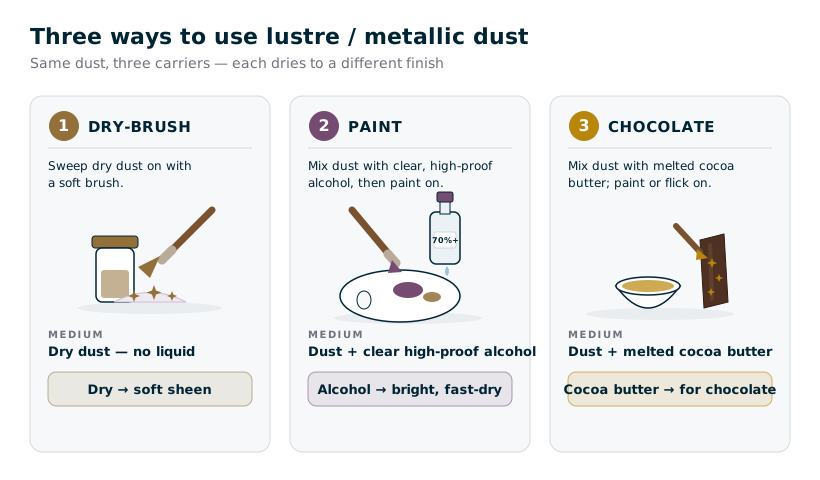 Three lustre-dust techniques illustrated: dry brushing, mixing with clear alcohol to paint, and mixing with cocoa butter for chocolate
Metallic finishes sell. There are three things people loosely call "metallic," and they are not the same — which matters for both the look and the law.
5.1 What a "metallic dust" actually is
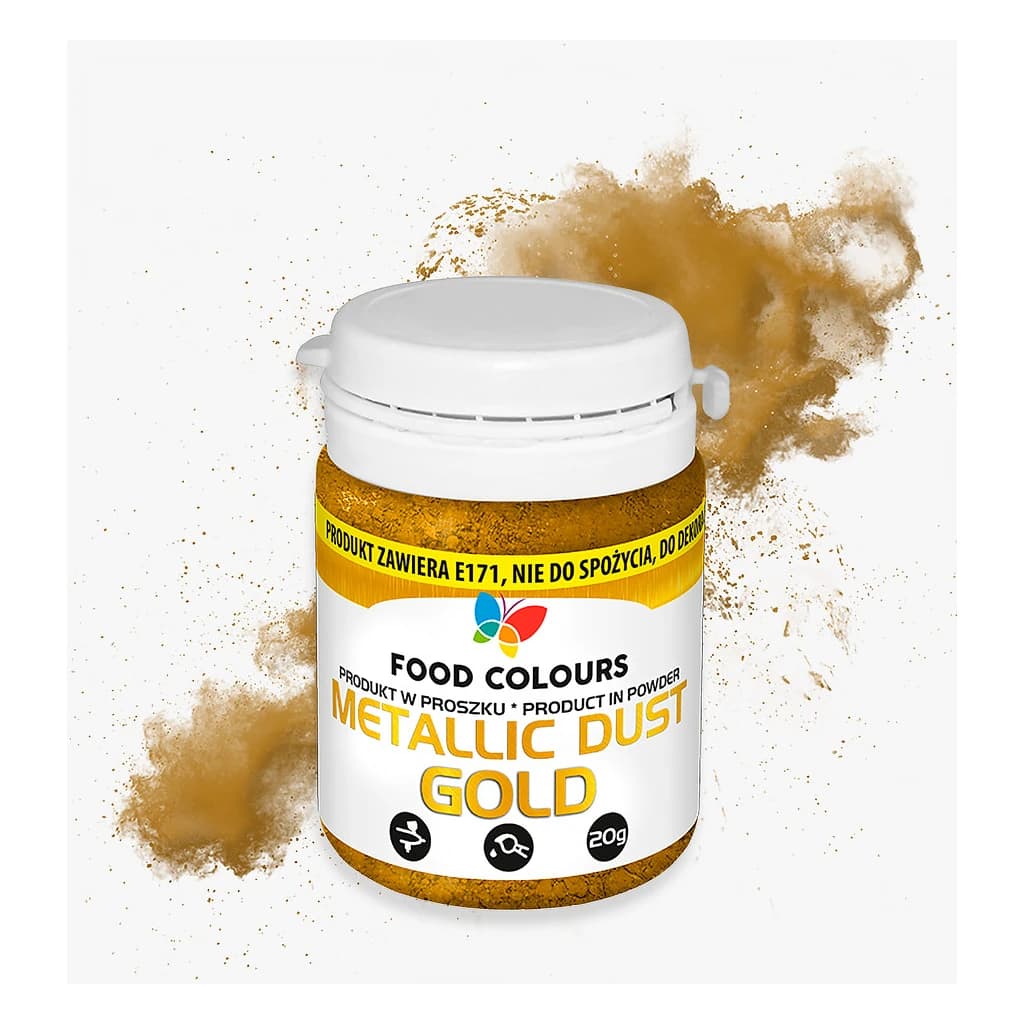
The catalogue's metallic effect dust (gold/silver) is a mica-type pearlescent pigment, not a precious metal. The spec sheet reads: potassium aluminium silicate E555 + titanium dioxide E171 + iron oxide E172, recommended dose 1 g/kg, particle size d50 18–25 µm, 60-month shelf life, made in Germany, and well within heavy-metal and microbiological limits. The metallic airbrush liquid is the same idea suspended in water (E555 + E171 + Brilliant Blue FCF E133).
Regulatory flag: these contain titanium dioxide E171, which is GB-legal but EU-banned (Section 7). For EU sale you need an E171-free alternative.
5.2 Three ways to use lustre/metallic dust
One pot does three jobs depending on the medium — see the formula below:
- Dry-brush over a dry sugarpaste or chocolate surface for a soft pearly sheen.
- Paint (sugar): mix the dust with a few drops of high-proof clear alcohol or rejuvenator spirit to a paint — it dries fast and bright and keeps its shimmer because the alcohol evaporates cleanly, leaving pure pigment. Re-loosen with a drop more as it thickens.
- Paint (chocolate): mix the dust with melted cocoa butter instead of alcohol, then paint it on or brush it into a mould before casting. Fat-based mediums can slightly darken the dust, so test first.
Water is the enemy here too — it clumps and dulls dust. The same dust-and-alcohol paint is how fine detail is hand-painted onto royal-iced cookies and fondant plaques.
5.3 Aerosol sprays — lustre, colour and velvet
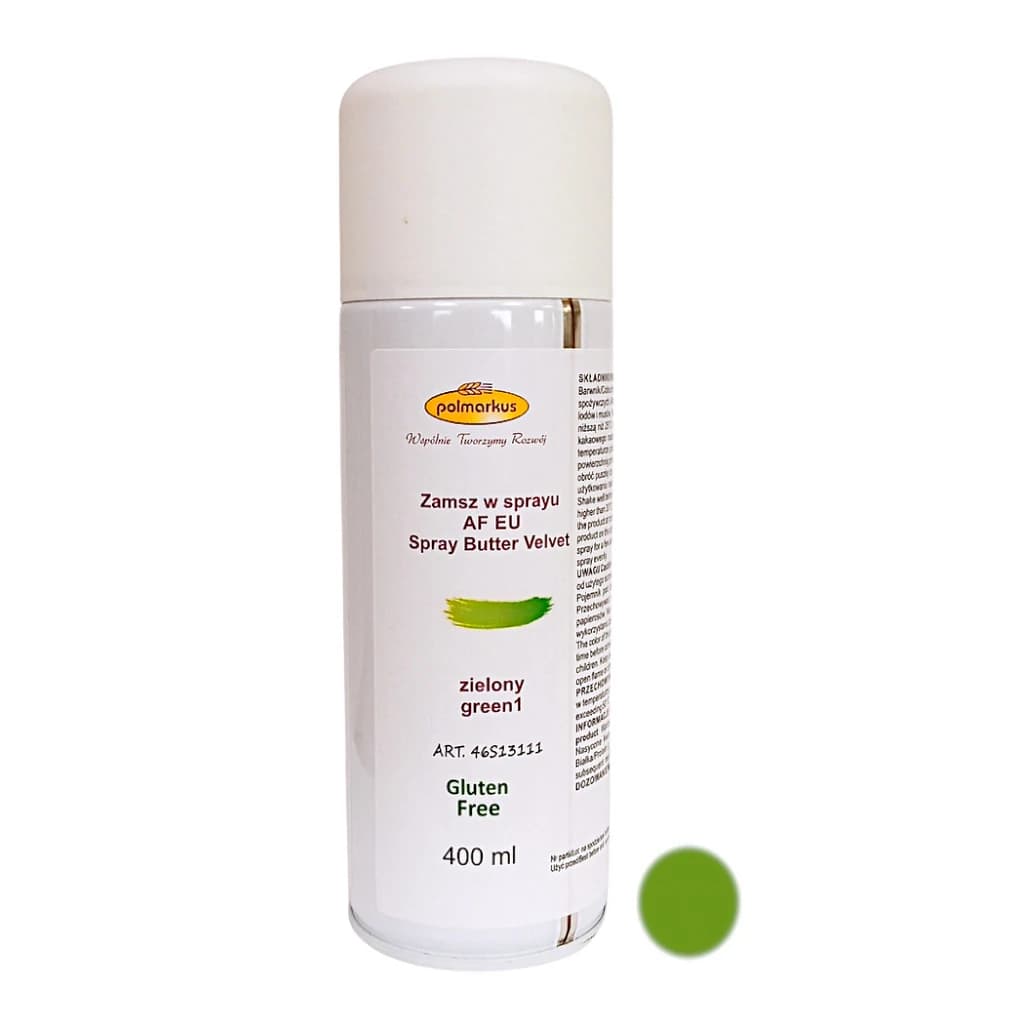
For fast, all-over finishes the catalogue carries aerosol sprays. The PME edible lustre spray (Culpitt) is propellants butane E943a / isobutane E943b / propane E944 + ethyl alcohol + titanium dioxide E171 + Allura Red E129 + flavour; gluten-free, kosher, 2-year shelf life — and flagged age-restricted on its spec. Velvet (flocking) sprays (Barbara Luijckx, Polmarkus) are a cocoa-butter system that crystallises into a matte suede on a frozen surface — the matte cousin of mirror glaze, covered in A7-glazes-mirror-and-fruit.
Safety: aerosol sprays contain flammable hydrocarbon propellants and ethyl alcohol — use in ventilation, away from naked flames and ovens.
5.4 Real edible gold and silver
True precious-metal finishes use food-grade leaf: edible gold E175 is permitted (quantum satis) for the external coating of confectionery, decoration of chocolates and in liqueurs, and food-grade leaf is 22–24 carat. Edible silver E174 is permitted for decorating confectionery and dragées, but it is the least settled of the decorative metals — EFSA, in both 2016 and 2025, found the data inadequate and could not confirm its safety.
6. Synthetic vs natural colour: stability and trade-offs
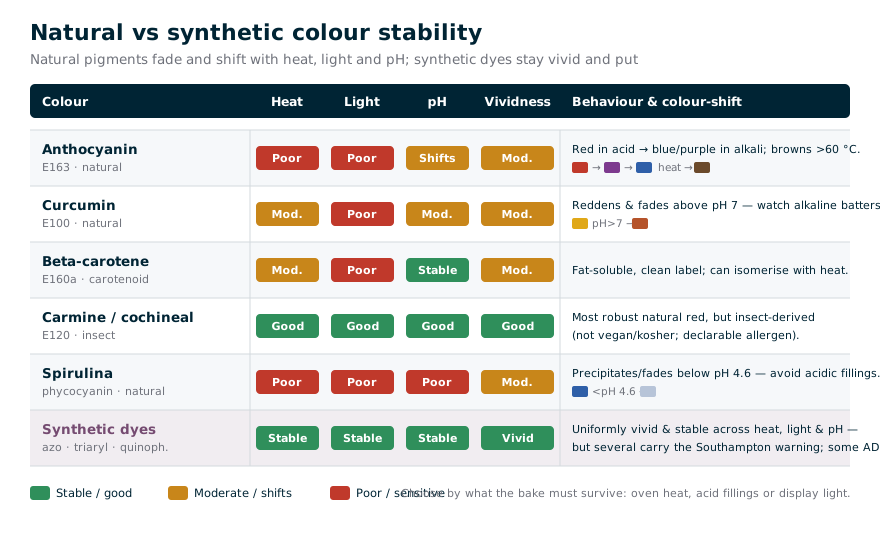 Traffic-light stability chart comparing natural pigments (anthocyanin, curcumin, beta-carotene, carmine, spirulina) for heat, light and pH against vivid stable synthetic dyes
Synthetic dyes (the azo, triarylmethane and quinophthalone colours above) are vivid, cheap and stable to heat, light and pH — which is why they dominate decoration. The catch is that several are Southampton colours carrying a warning label, and three have lowered ADIs (Section 7).
Natural pigments are the clean-label answer but they are far less robust, and you must match the pigment to what the product will face (oven heat? acidic filling? bright display lights?). From the colour-science literature:
- Anthocyanins (E163, red-purple-blue): degrade and brown above ~60 °C, and shift with pH — red in acid, blue/purple in alkaline. Unstable for hot bakes.
- Curcumin (E100, yellow): turns reddish and fades above pH 7 — watch alkaline batters.
- Spirulina blue (phycocyanin):fails below pH 4.6 (loses colour, precipitates) — avoid acidic fillings.
- Beta-carotene / carotenoids (E160a): tolerate moderate heat but can isomerise; light-sensitive; fat-soluble (the right route for chocolate).
- Carmine / cochineal (E120): comparatively stable to heat, light and pH — but insect-derived, with major faith/diet flags (Section 7.4).
Full grid in the table below.
Name trap: the catalogue powder sold as "Red Carmine" is in fact the synthetic azo dye Carmoisine (Azorubine) E122, not insect-derived cochineal carmine E120. The trade name does not mean natural or animal-free.
7. Regulation: EU vs UK, and what must go on the label
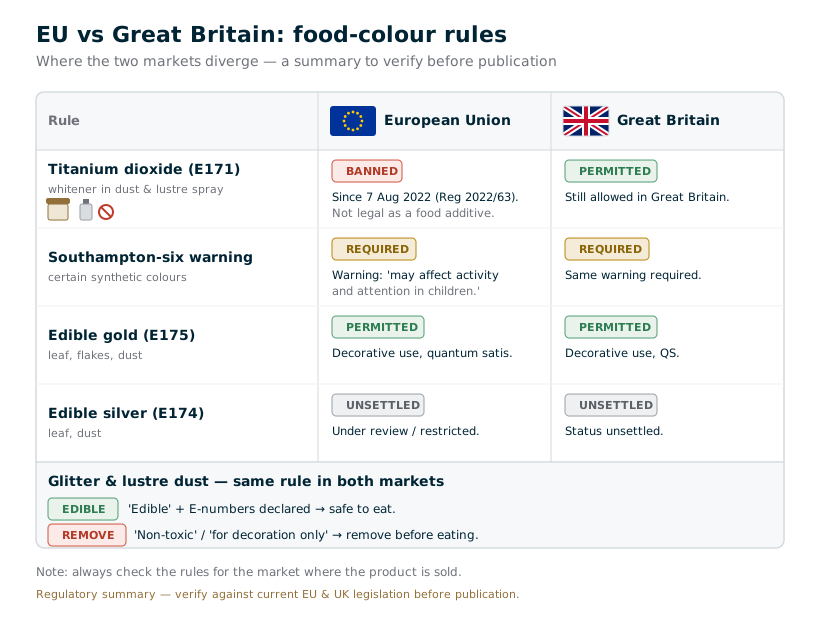 EU versus Great Britain food-colour rules compared: titanium dioxide E171 banned in the EU but allowed in GB, Southampton-six warning in both, edible gold permitted, silver unsettled
FLAG — confirm before relying commercially. This is a practical summary, not legal advice. Colour rules differ by market and change often. Check the rules of the market you SELL into, not where you buy, and confirm against current Regulation 1333/2008 (assimilated in GB) and your enforcement authority. Full grid in the table below.
7.1 Titanium dioxide E171 — the big EU/UK split
This is the divergence that catches bakers out, because E171 is in the catalogue's metallic dust, metallic airbrush and PME lustre spray.
- EFSA, 6 May 2021: after reviewing >11,000 publications it could not rule out a concern for genotoxicity and therefore could not set a safe ADI — so E171 could no longer be considered safe as a food additive.
- EU ban: Commission Regulation (EU) 2022/63 removed E171 from the permitted list — adopted 14 Jan 2022, in force 7 Feb 2022, with a six-month transition ending 7 August 2022, after which E171 foods may not be placed on the EU market.
- Great Britain: in March 2022 the FSA and FSS decided not to follow; E171 remains authorised in GB.
This is a precautionary EU position, not a global consensus — the UK, US, Australia, Canada, Japan and others reviewed TiO2 and kept it. Practically: a UK-format white or lustre with E171 is fine for GB sale but not EU-legal, and an E171-free version typically looks duller / less vibrant, much like natural colours.
7.2 The Southampton-six warning
Six colours must carry a mandatory warning on any food containing them, under Regulation 1333/2008 Annex V (in force since 20 July 2010, retained in UK law):
"[name or E-number of the colour(s)]: may have an adverse effect on activity and attention in children."
The six are Tartrazine E102, Quinoline Yellow E104, Sunset Yellow FCF E110, Carmoisine/Azorubine E122, Ponceau 4R E124, Allura Red AC E129. Several appear in the catalogue gels, powders and the Sugarflair Spectral paste (E129 + E124) — so anything you make with them needs the warning. In 2009 EFSA also lowered the ADIs of E104 (0.5), E110 (1.0) and E124 (0.7 mg/kg bw/day).
7.3 Limits, edible vs non-toxic, and quantum satis
Most synthetic colours in fine bakery wares (EU category 7.2) are not "use as much as you like" — Annex II sets numeric maximum levels or group limits (as the colouring principle). "Quantum satis" (no numeric maximum, GMP only) applies only to some colours, such as the decorative metals. (The specific per-colour mg/kg figures for category 7.2 are not reproduced here — confirm them in Annex II for your shades; see verification note.)
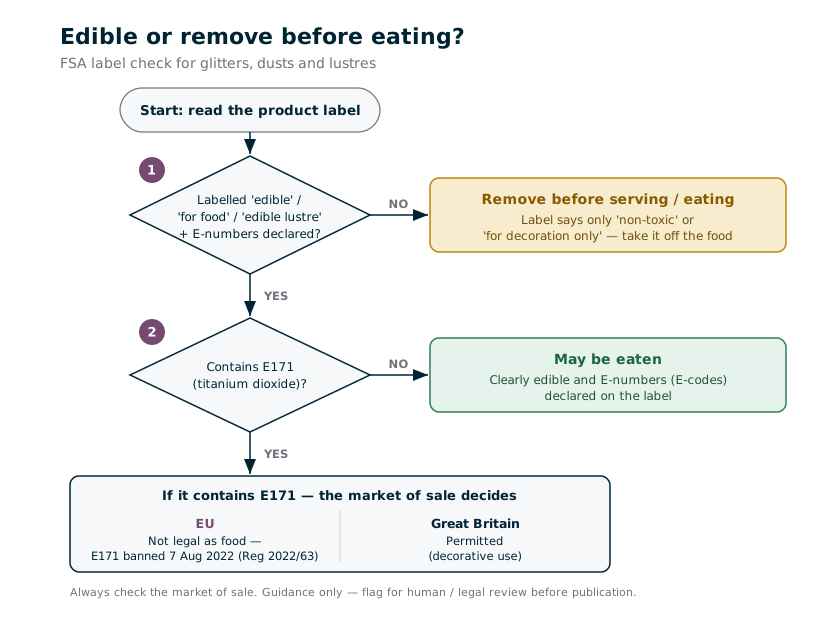 Flowchart deciding whether a glitter or dust may be eaten based on its label: edible and E-numbers declared means safe; non-toxic or decoration-only means remove before eating
For glitters and dusts, the FSA rule is sharp: only products clearly labelled "edible" — made of permitted additives, with the additive name/E-number declared and a statement such as "for food", "restricted use in food" or "edible lustre" — may be eaten. Products labelled only "non-toxic" or "for decoration only" are not for consumption and must be removed before the food is eaten. Read the pot, not the marketing.
7.4 Allergen, faith and diet flags
-
Sulphites: the catalogue gels carry a sulphur-dioxide carry-over from their glucose syrup of up to 15 mg/kg — above the 10 mg/kg declaration threshold — so a finished product using them at meaningful levels may need a sulphite declaration; the site also uses soya lecithin.
-
Carmine/cochineal E120 is insect-derived (~70,000–100,000 insects per kg) — not vegan, generally not kosher, halal contested, and a potential allergen. Offer plant-based reds where the customer needs them, and never pass off synthetic Carmoisine E122 as "natural carmine."
-
Alcohol: lustre paints activated with alcohol/rejuvenator spirit and aerosol sprays (which contain ethyl alcohol) may matter to some customers — flag them.
7.5 The wider landscape (it is moving)
Colour regulation is diverging globally. The US FDA revoked authorisation of Red 3 (erythrosine) in January 2025 (food reformulation by 15 Jan 2027) and in 2025 pushed a phase-out of the remaining certified petroleum dyes, while the EU still permits erythrosine E127 in limited uses (ADI 0.1 mg/kg bw/day). Expect more change — always re-check a colour's status for the market of sale.
8. Troubleshooting
The failures that ruin a coloured finish almost always trace to the wrong carrier, under-mixing, or light exposure. Full diagnostic in the fault table below.
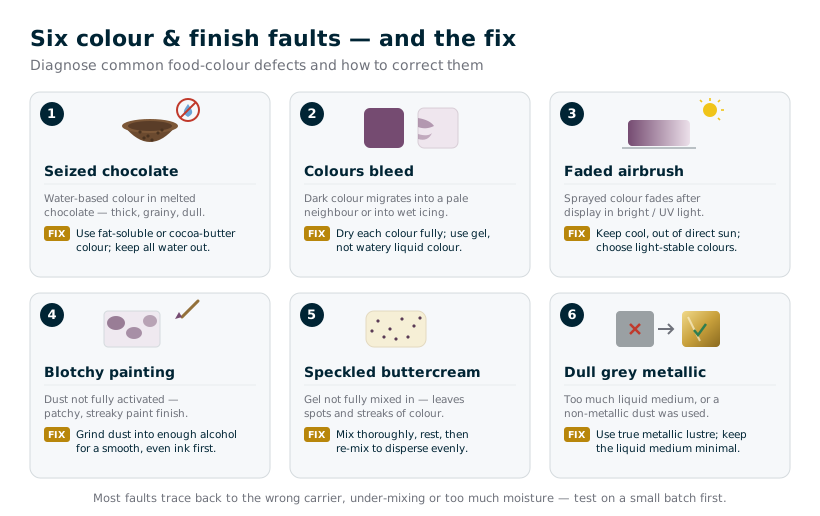 Six food-colour faults illustrated with fixes: seized chocolate, bleeding colours, faded airbrush, blotchy paint, speckled buttercream and dull metallic
-
Chocolate seizes when coloured → water-based colour in fat. Use oil-soluble or cocoa-butter dust; keep everything dry.
-
Colours bleed (dark into light) → too much moisture. Use a drier concentrated paste; let colours crust.
-
Bright colour fades on display → light/UV, worst on natural pigments and some blues. Choose light-stable colour for displayed work.
-
Natural colour browns/shifts in the oven → anthocyanin >60 °C, curcumin >pH 7. Match pigment to bake/pH.
-
Speckled buttercream → gel under-mixed; mix fully, judge after even.
-
Dull grey metallic → too much liquid medium or wet surface; use less, apply over dry, build up.
-
Airbrush spits/runs → pressure too high or gun too close; ~15–20 PSI, ~15–20 cm, thin coats.
-
"Not legal in the EU" → contains E171; switch to an E171-free white/lustre for EU sale, check Annex II maxima and Southampton labelling.
9. What to buy (catalogue)
A working colour kit from the Domson catalogue:
-
Everyday tinting: Food Colour — Gel 35 g jars / 20 g tubes (intense, no thinning).
-
Deepest saturated colour:Sugarflair Spectral Paste (Culpitt).
-
Mass colour / no added moisture: Food Colour — Powder (Targroch).
-
Light tints / drinks: Food Colour — Liquid and Drops.
-
Sprayed gradients & stencils: Food Colour — Airbrush.
-
Chocolate / fat phase: an oil/fat-soluble colour such as JAR beta-carotene (natural, fat-soluble), or dust dispersed in cocoa butter.
-
Metallic & shimmer: Food Colour — Metallic Dust (gold/silver), PME Edible Lustre Spray; velvet sprays (Barbara Luijckx, Polmarkus) and edible glitter (Polmarkus, Doric) for surface finish. (E171-containing — GB sale only; check EU status.)
Related reading
- A7-glazes-mirror-and-fruit — velvet/flocking spray and the matte-vs-gloss finishes.
- A7-chocolate-tempering-and-decor — colouring and decorating chocolate (cocoa-butter colour).
- A7-icings-and-buttercreams / A7-fondant-types-and-uses — the surfaces you colour.
- A6-marzipan-fondant-sugar-pastes — paste bases and how colour behaves in them.
Tinting buttercream, fondant and royal icing (gel/paste route)
The everyday colouring job. Use a concentrated gel or paste, not liquid, so you don't thin the medium — this is why gel/paste is the decorator's default. Build the colour up; you can always add more.
| Ingredient | Baker's % | Weight |
|---|---|---|
| Buttercream / fondant / royal icing — Have it at working consistency first | base batch | |
| Gel or concentrated paste colour — Food Colours gel 35 g/tubes, or Sugarflair Spectral paste for the deepest shades | tiny amounts, build up |
- Add colour a little at a time with a clean cocktail stick / palette knife (avoid double-dipping into the pot).
- Mix fully and judge the colour AFTER it is even — gels look patchy until worked in.
- Remember colours DEEPEN on standing (especially reds, blacks): mix the target a shade lighter and rest 30-60 min, or mix the day before.
- For deep red/black, start from a coloured base or use a dedicated concentrated paste — chasing black from scratch over-softens icing.
- Keep within sensible dose: intensely-coloured fine bakery wares can approach the lowered ADIs of E104/E110/E124 — heavy red/black/orange batches are where this bites.
Colouring chocolate, white chocolate and ganache (the no-seize rule)
Chocolate is fat. Water-based colour (gel/liquid/airbrush) introduces water that makes it seize — thick, grainy, dull. Use oil/fat-soluble colour, or a lustre dust dispersed in cocoa butter.
| Ingredient | Baker's % | Weight |
|---|---|---|
| Melted/tempered chocolate or coating — White chocolate takes colour best | as needed | |
| Oil/fat-soluble (lipo) colour OR cocoa butter + dust — e.g. JAR beta-carotene oily; or metallic dust dispersed in melted cocoa butter | to shade |
- NEVER add water-based gel/liquid to chocolate — it will seize.
- Stir an oil-soluble colour into the melted chocolate until even; warm both to similar temperature.
- For a painted/sprayed metallic effect, disperse lustre/metallic dust into melted cocoa butter and apply to a chocolate surface or into a mould (note fat-based mediums can slightly darken the dust — test first).
- Keep all tools and bowls bone-dry; even a drop of condensation can seize a bowl of chocolate.
Airbrushing colour (gradients, ombré, stencils)
An airbrush gives soft sprayed gradients and crisp stencilled patterns no brush can match. Use thin airbrush-specific (water-based) colour, low pressure, and build in coats.
| Ingredient | Baker's % | Weight |
|---|---|---|
| Airbrush-specific edible colour — Food Colours airbrush range; thin = sprays cleanly | few drops in the cup | |
| Cake / cookie / chocolate surface — Best on set fondant, dry royal icing, firm buttercream; a fat surface needs a fat-based airbrush colour | the work |
- Set the compressor to roughly 15-20 PSI (lower = more control, less overspray; most cake guides recommend staying at or below 20 PSI).
- Hold the gun ~15-20 cm (6-8 in) from the surface; for stencils move closer (~10-15 cm) for sharp edges.
- Spray in light, even, sweeping passes — keep the gun moving so colour doesn't pool or run.
- Build the colour up in thin coats, letting each dry before the next; this is how you get smooth ombré.
- Clear the gun between colours (spray water/cleaner through) to stop clogging and muddying.
Metallic & lustre dust: dry, paint, or for chocolate
One pot of lustre/metallic dust does three jobs depending on the medium. Dry for a soft sheen; alcohol for a bright fast-drying paint; cocoa butter for chocolate. For true edible gold/silver use food-grade leaf (E175/E174) on confectionery surfaces.
| Ingredient | Baker's % | Weight |
|---|---|---|
| Lustre / metallic effect dust — Food Colours metallic dust (E555 + E171 + E172); recommended dose 1 g/kg when used as an ingredient | as needed | |
| High-proof clear alcohol or rejuvenator spirit — Vodka or rejuvenator spirit — evaporates fast, keeps shimmer | drops, to a paint | |
| OR melted cocoa butter — For painting/spraying onto chocolate | to a paint |
- DRY: sweep dust over a dry sugarpaste/chocolate surface with a soft brush for a soft pearly sheen.
- PAINT (sugar): mix dust with a few drops of clear alcohol/rejuvenator spirit to a paint; apply — it dries fast and bright; re-loosen with a drop more alcohol as it thickens.
- PAINT (chocolate): mix dust with melted cocoa butter instead of alcohol; apply to chocolate or paint into a mould before casting.
- LEGAL check: if your dust contains titanium dioxide E171 it is GB-legal but NOT EU-legal as food; and only dusts labelled 'edible' may be eaten — 'non-toxic/decoration only' must be removed before serving.
- For a true precious-metal finish, apply food-grade edible gold leaf (E175, 22-24 carat) to the surface of confectionery/chocolate (quantum satis, decorative).
The most useful orientation table — match the job to the colour format. The single biggest mistake is using a water-based colour (gel, liquid, airbrush) in chocolate, which seizes it; use only fat/cocoa-butter colours there. Compositions and shelf lives are read directly from the Domson catalogue spec sheets (Food Colours / Targroch / Culpitt-Sugarflair / PME).
| Format | Carrier | Best for | Strength | Safe on chocolate? | Typical composition (spec) | Shelf life | Spec source |
|---|---|---|---|---|---|---|---|
| Powder (pure dye) | None (dry) | Mass-colouring large dry/wet batches; macarons; adds no moisture; dust on dry surfaces | Very high | Yes (no added water) | Pure synthetic dye, ≥85% dye content (e.g. Sunset Yellow E110, Tartrazine E102, Ponceau 4R E124) | ≥3 years | Supplier spec sheet |
| Liquid | Water | Everyday tinting of icings, batters, drinks; light shades | Low-medium | No — seizes chocolate | Water + dye + E202 + E330 (e.g. Brilliant Blue E133) | 18 months | Supplier spec sheet |
| Liquid concentrate (drops) | Water | Drop-counted dosing; ready blended secondary shades | Medium-high | No — seizes chocolate | Water + blended dyes (e.g. green = E104 + E132) | 18 months | Supplier spec sheet |
| Gel / paste | Glycerine + glucose syrup + water | Intense colour in buttercream, fondant, royal icing WITHOUT thinning; the decorator's workhorse | High | No — water-based, seizes chocolate | Glycerine E422 + glucose syrup + water + dye + E1422 + E202 (±E211) + E330 | 36 months | Supplier spec sheet |
| Concentrated paste (Spectral) | Glycerine + monopropylene glycol | Deepest, most saturated colour for fondant/paste; pro use | Very high | No — water/glycol carrier | Glycerine E422 + MPG E1520 + silicon dioxide E551 + colours (E129, E124) | 5 years (1825 days) | Supplier spec sheet |
| Airbrush colour | Water (thin) | Sprayed gradients, ombré, stencilling, shading | Low (by design, thin) | No — water-based | Water + dyes + flavour + E202 (1500 mg/kg) + E330 | 18 months | Supplier spec sheet |
| Lustre / metallic effect dust | None (dry pigment) | Metallic/pearl sheen; dry-brush, paint with alcohol, or cocoa-butter for chocolate | n/a (effect pigment) | Yes — via cocoa butter, or dry | Potassium aluminium silicate E555 + titanium dioxide E171 + iron oxide E172; dose 1 g/kg | 60 months | Supplier spec sheet |
| Lustre / colour aerosol spray | Alcohol + propellant | Fast all-over shimmer or colour mist; large or awkward shapes | n/a (surface) | Yes — surface only | Butane E943a/E943b/propane E944 + ethyl alcohol + TiO2 E171 + colour (PME); velvet sprays are cocoa-butter based | 2 years (730 days) | Supplier spec sheet |
| Oil/fat-soluble colour (incl. natural) | Vegetable oil / cocoa butter | Colouring chocolate, white chocolate, ganache, buttercream fat phase | Medium | Yes — the correct choice | e.g. JAR beta-carotene E160a(i) in vegetable oil + E304 + vitamin E | (see pack) | Supplier spec sheet |
Synthetic (azo/triarylmethane/quinophthalone) dyes are vivid, cheap and stable but several carry the Southampton warning and/or lowered ADIs. Natural pigments are cleaner-label but fade and shift with heat, light and pH. Choose by what the product must survive (oven heat? acid filling? bright display lights?). Stability notes are from colour-science references; legal flags from EU/UK regulation.
| Colour | Type | Heat | Light | pH behaviour | Key flag | Sources |
|---|---|---|---|---|---|---|
| Tartrazine E102 (yellow) | Synthetic azo | Stable | Stable | Stable | Southampton warning | a7c-07 |
| Quinoline Yellow E104 | Synthetic | Stable | Stable | Stable | Southampton warning; ADI cut to 0.5 mg/kg bw/day (2009) | a7c-08 |
| Sunset Yellow E110 | Synthetic azo | Stable | Stable | Stable | Southampton warning; ADI cut to 1.0 mg/kg bw/day | a7c-08 |
| Ponceau 4R E124 (red) | Synthetic azo | Stable | Stable | Stable | Southampton warning; ADI cut to 0.7 mg/kg bw/day | a7c-08 |
| Allura Red E129 | Synthetic azo | Stable | Stable | Stable | Southampton warning | a7c-07 |
| Carmoisine/Azorubine E122 | Synthetic azo | Stable | Stable | Stable | Southampton warning; NOT the same as insect carmine E120 | a7c-07 |
| Brilliant Blue FCF E133 | Synthetic | Stable | Good | Stable | No Southampton warning | Supplier spec sheet |
| Indigo Carmine E132 | Synthetic | Moderate | Moderate | Stable | No Southampton warning | Supplier spec sheet |
| Beta-carotene E160a (yellow-orange) | Natural (carotenoid) | Tolerates moderate heat; can isomerise | Light-sensitive | Stable | Fat-soluble; clean label | a7c-21 |
| Anthocyanin E163 (red-purple-blue) | Natural | Degrades >~60°C, browns | Light-sensitive | Red in acid, blue/purple in alkaline | pH-dependent colour shift | a7c-22 |
| Curcumin E100 (yellow) | Natural | Moderate | Fades in light | Reddens and fades above pH 7 | Watch alkaline batters | a7c-22 |
| Spirulina/phycocyanin (blue) | Natural | Heat-sensitive | Light-sensitive | Precipitates/fades below pH 4.6 | Avoid acidic fillings | a7c-22 |
| Carmine/cochineal E120 (red) | Natural (insect) | Comparatively stable | Comparatively stable | Comparatively stable | Not vegan/kosher; halal contested; allergen | a7c-21, a7c-23, a7c-28 |
The headline regulatory facts a baker selling across markets needs. The big divergence is titanium dioxide E171. ALWAYS check the rules of the market you SELL into, not where you buy. Food safety: legal summary — confirm against current Regulation 1333/2008 (assimilated in GB) and your enforcement authority before relying on it commercially.
| Topic | EU | Great Britain | Sources |
|---|---|---|---|
| Titanium dioxide E171 (white / lustre carrier) | BANNED as a food additive since 7 Aug 2022 (Reg (EU) 2022/63) | PERMITTED — FSA/FSS chose not to follow the ban (March 2022) | a7c-01, a7c-02, a7c-03, a7c-06 |
| Southampton-six colours (E102, E104, E110, E122, E124, E129) | Must carry 'may have an adverse effect on activity and attention in children' (Annex V, since 20 Jul 2010) | Same warning required (retained law) | a7c-07, a7c-09 |
| Edible gold E175 | Permitted (quantum satis): external coating of confectionery, decoration of chocolates, in liqueurs | Permitted (retained law) | a7c-10, a7c-12 |
| Edible silver E174 | Permitted for confectionery/dragée decoration, but EFSA cannot confirm its safety (data inadequate, 2016 & 2025) | Permitted (retained law) | a7c-11 |
| 'Edible' vs 'non-toxic' glitter/dust | Only 'edible' (additives declared) may be eaten; 'non-toxic'/'decoration only' must be removed before eating | Same — per FSA guidance | a7c-13 |
| Maximum levels in fine bakery wares (cat. 7.2) | Numeric maxima / group limits in Annex II (as colouring principle); QS only for some colours | Annex II mirrored (assimilated), with GB-specific divergences such as E171 | a7c-27, a7c-28 |
| Erythrosine (Red 3) E127 | Permitted in limited uses (ADI 0.1 mg/kg bw/day) | Permitted (retained law) — contrast US FDA revocation Jan 2025 | a7c-25, a7c-26 |
Authoritative figures read directly from supplier spec sheets in the Domson catalogue. Each is a single first-party source; use for cross-product comparison. Note which products contain E171 (EU-non-compliant) and which carry the Southampton warning.
| Product | Role | Key composition | Notable flag | Shelf life | Spec source |
|---|---|---|---|---|---|
| Food Colours Powder (Targroch) | Pure dye for mass colour | Single synthetic dye, ≥85% dye (e.g. Sunset Yellow E110) | Many shades = Southampton colours | ≥3 years | Supplier spec sheet |
| Food Colours Liquid | Everyday water-based tint | Water + dye (e.g. E133) + E202 + E330 | Weak; will seize chocolate | 18 months | Supplier spec sheet |
| Food Colours Drops (concentrate) | Drop-dosed blended shades | Water + blended dyes (e.g. E104+E132) | Water-based | 18 months | Supplier spec sheet |
| Food Colours Gel/Paste 35 g | Intense tint, no thinning | Glycerine E422 + glucose syrup + dye + E1422 + E202 + E330 | Sulphite ≤15 mg/kg (declare) | 36 months | Supplier spec sheet |
| Sugarflair Spectral Paste (Culpitt) | Deepest saturated colour | Glycerine E422 + MPG E1520 + SiO2 E551 + E129 + E124 | Southampton warning; gluten-free; kosher | 5 years | Supplier spec sheet |
| Food Colours Airbrush | Sprayed gradients/stencils | Water + dyes + flavour + E202 (1500 mg/kg) + E330 | Water-based | 18 months | Supplier spec sheet |
| Food Colours Metallic Dust (gold/silver) | Metallic/pearl effect | E555 + TiO2 E171 + iron oxide E172; dose 1 g/kg; d50 18-25 µm | Contains E171 → EU-non-compliant | 60 months | Supplier spec sheet |
| PME Edible Lustre Spray (Culpitt) | Aerosol shimmer/colour | Butane/isobutane/propane + ethyl alcohol + TiO2 E171 + E129 | E171 + flammable; age-restricted; Southampton warning | 2 years | Supplier spec sheet |
| JAR Beta-Carotene 1% Oily (E160a) | Natural fat-soluble colour | Veg oil + beta-carotene E160a(i) + E304 + vitamin E; ≥0.85% carotene | Clean-label; for fat phases | (see pack) | Supplier spec sheet |
Symptom-led diagnostics for the failures that ruin a coloured finish. Most trace back to the wrong carrier (water in fat), under-mixing, or light exposure.
| Symptom | Likely cause | Fix | Sources |
|---|---|---|---|
| Chocolate goes thick, grainy and dull when coloured | Water-based gel/liquid added to fat — chocolate seized | Use only oil/fat-soluble colour or cocoa-butter-dispersed dust; keep everything dry | a7c-14, a7c-15 |
| Colour bleeds between two fondant colours / into icing | Excess moisture / dye migrating, dark next to light | Use less-wet concentrated paste; let colours dry/crust; avoid heavy water-based colour next to white | a7c-15 |
| Bright colour fades on display | Light/UV exposure — worse on natural pigments and some blues | Choose light-stable colour (synthetic or carmine) for displayed work; keep out of direct/bright light | a7c-21, a7c-22 |
| Natural colour turns brown / shifts in the oven | Anthocyanin degrades >~60°C; curcumin shifts above pH 7 | Match the pigment to the bake/pH, or use a heat-stable colour for baked items | a7c-22 |
| Speckled / streaky colour in buttercream | Gel not fully dispersed | Mix fully and judge AFTER it's even; rest so colour develops | a7c-15 |
| Dull, grey, weak metallic instead of bright shimmer | Too much liquid medium, wet surface, or dust over-diluted | Use less alcohol/cocoa butter; apply over a dry surface; build up; dry-brush for sheen | a7c-19, a7c-20 |
| Airbrush spits / blotches / runs | Pressure too high, gun too close, or colour too thick/pooled | Lower to ~15-20 PSI, hold ~15-20 cm, thin coats, keep the gun moving, clean nozzle | a7c-17, a7c-18 |
| Colour 'develops' darker than intended | Reds/blacks deepen on standing | Mix a shade light and rest 30-60 min (or overnight); judge then | a7c-15 |
| Customer/auditor query: product not legal in the EU | Colour contains titanium dioxide E171 (GB-legal, EU-banned) | Use an E171-free white/lustre for EU sale; check Annex II maxima and Southampton labelling | a7c-01, a7c-03, a7c-06 |
| Faith/diet complaint about a 'natural red' | Carmine/cochineal E120 is insect-derived; or alcohol in a lustre paint | Declare carmine; offer plant-based reds; flag alcohol-activated/spray finishes to relevant customers | a7c-23, a7c-24 |
- E104:
- 0.5
- E110:
- 1
- E124:
- 0.7
Buy the ingredients
Catalogue products and brands referenced in this article.
Food Colour — Assorted
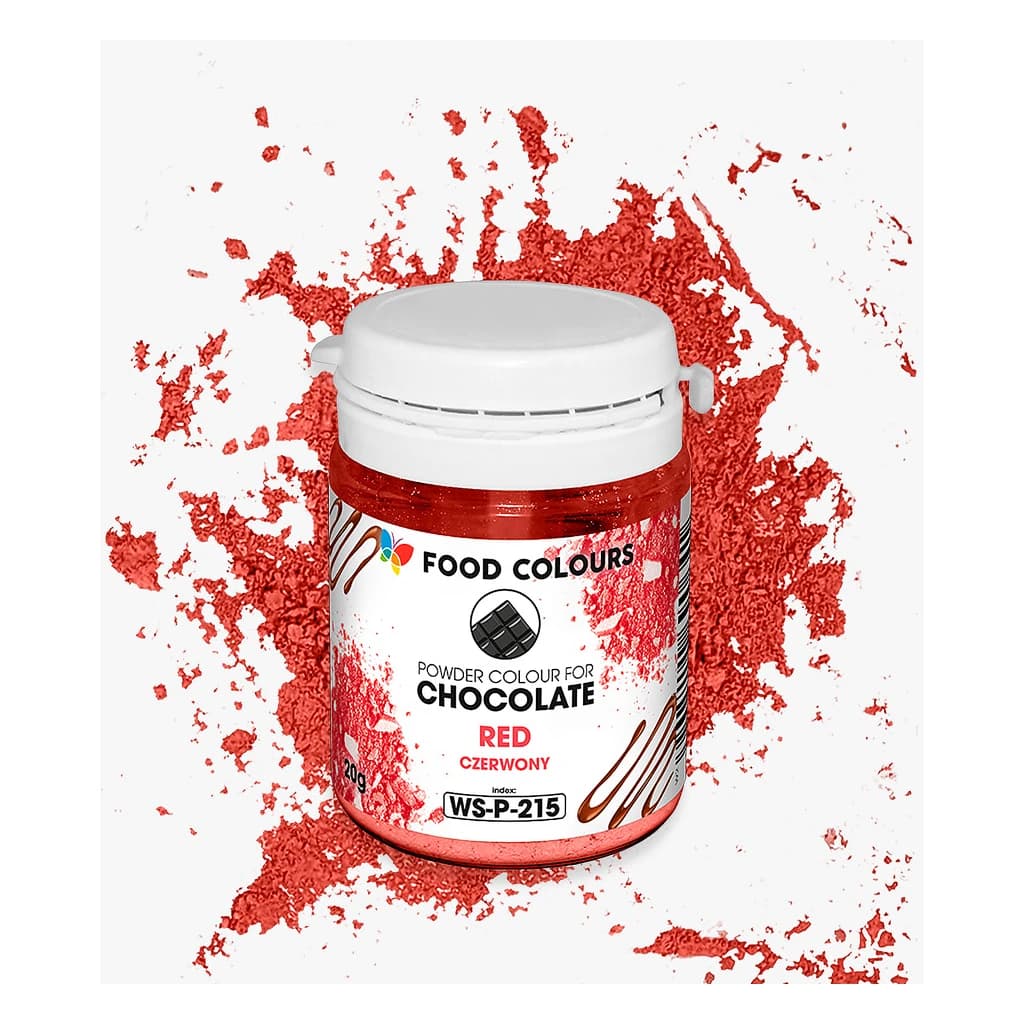
Food Colour — Powder
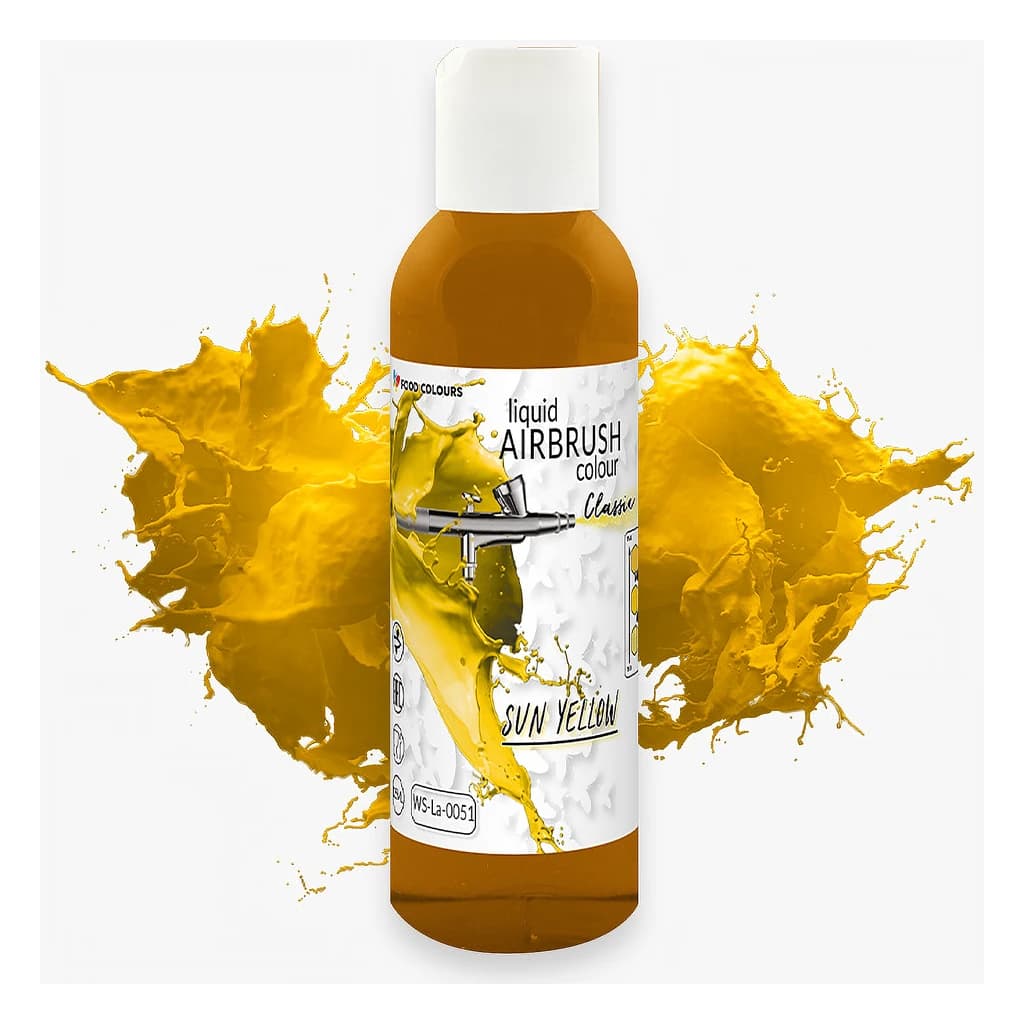
Food Colour — Liquid
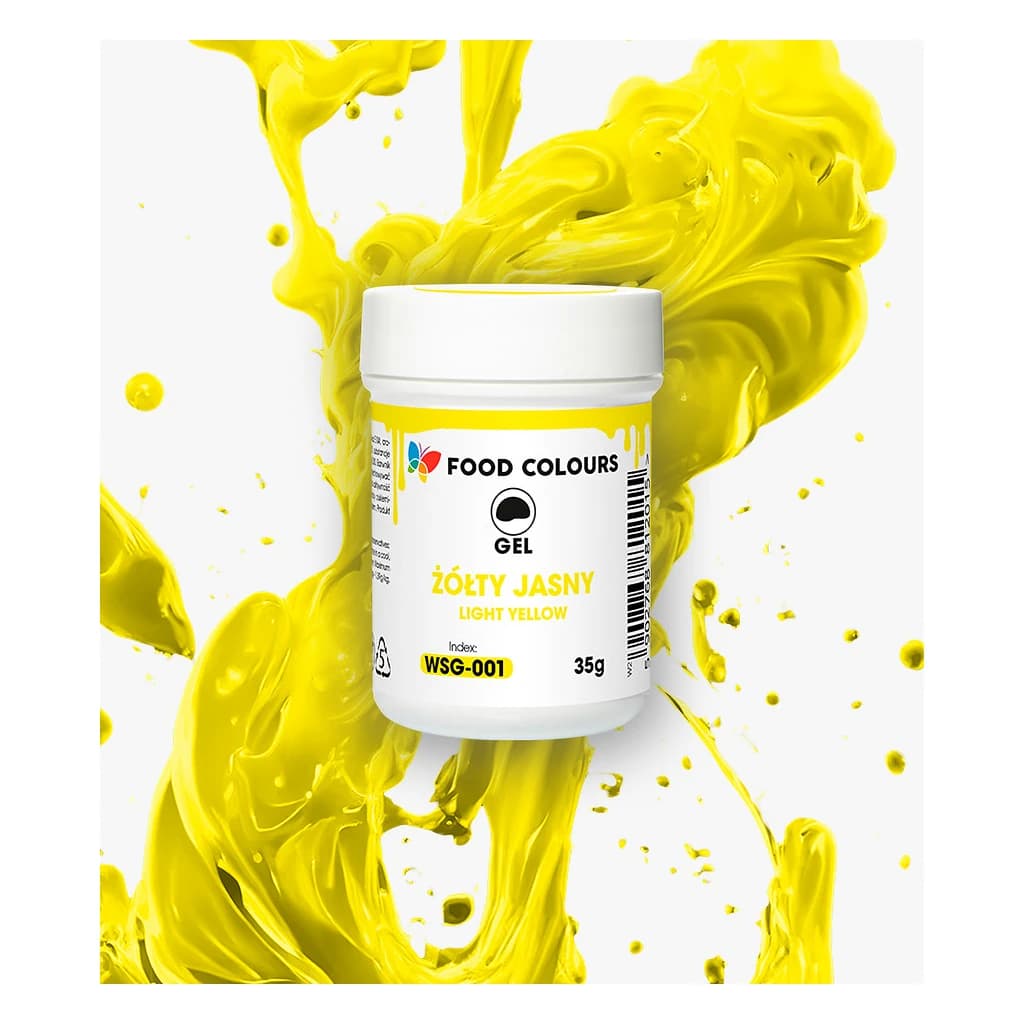
Food Colour — Gel, 35 g Jars
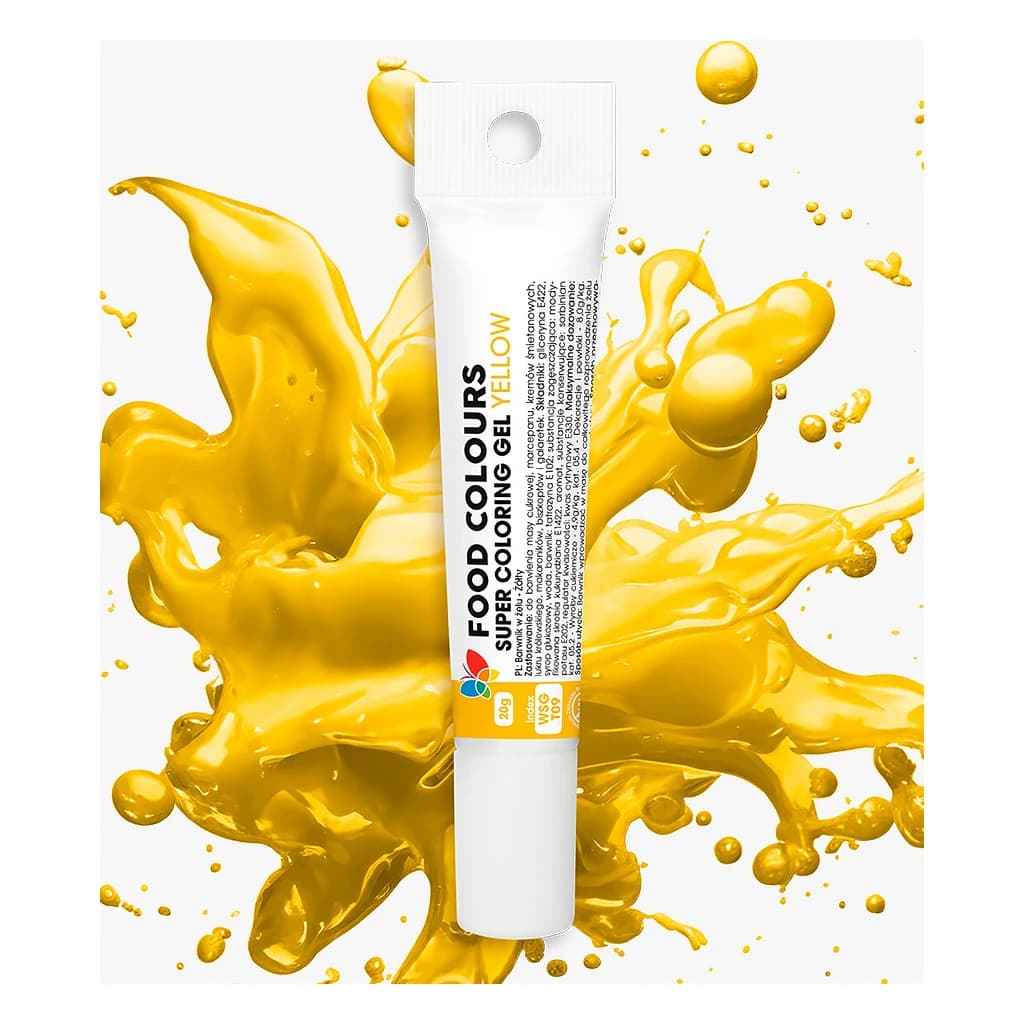
Food Colour — Gel Tubes, 20 g
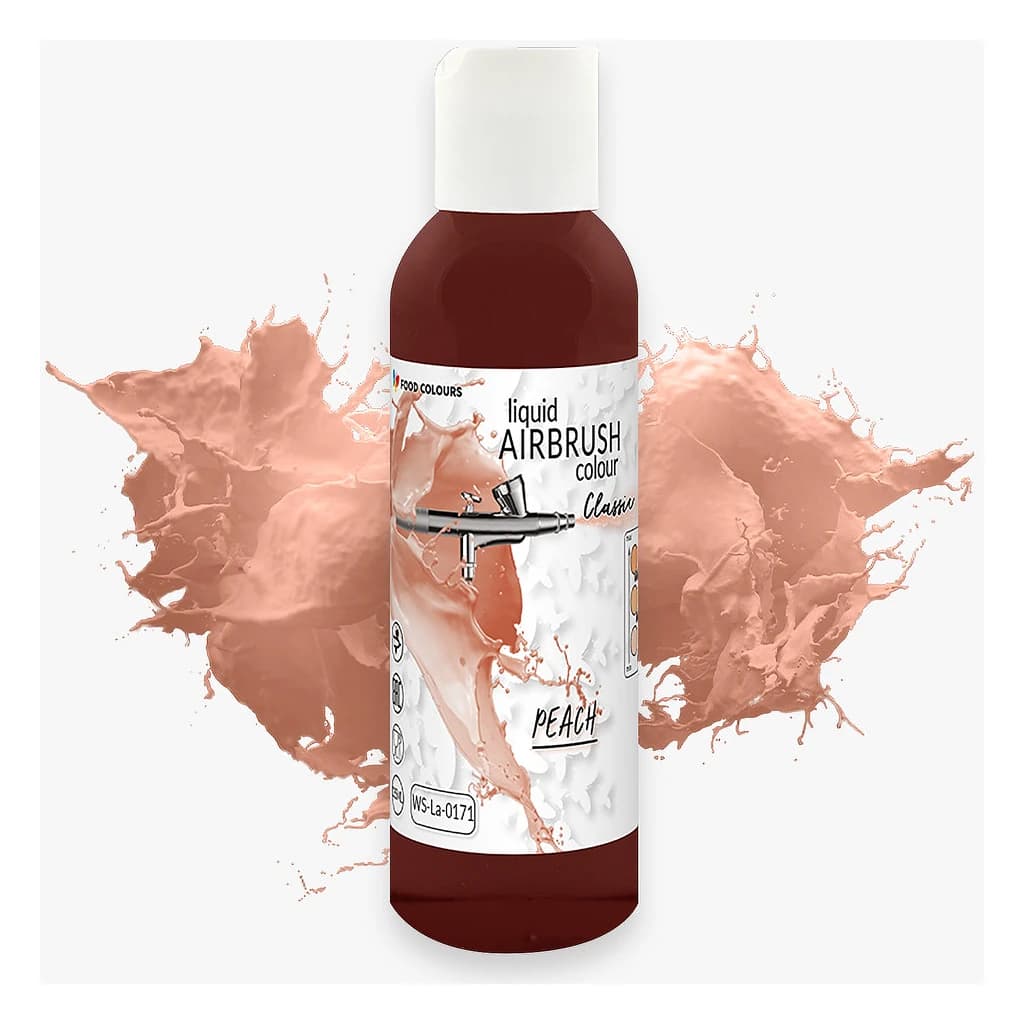
Food Colour — Airbrush
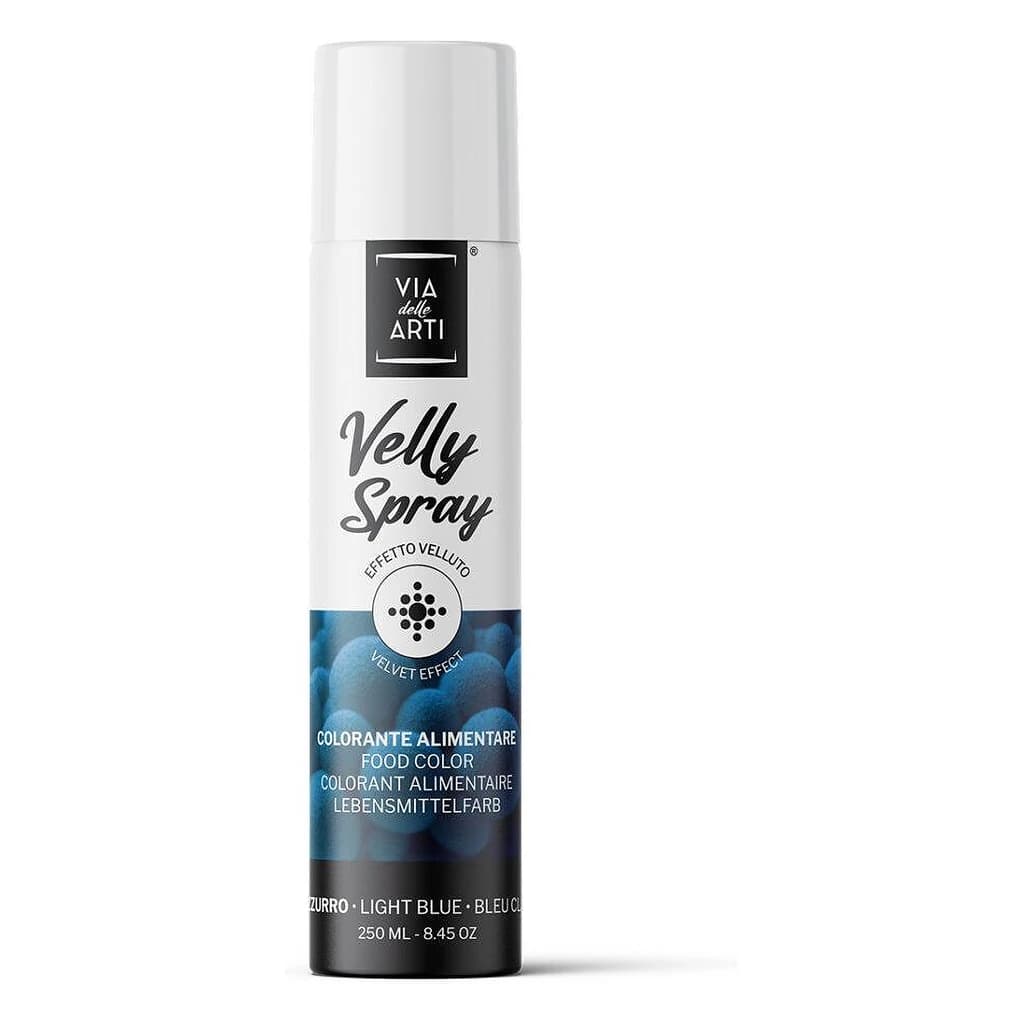
Light Blue Velvet Spray 250 ml
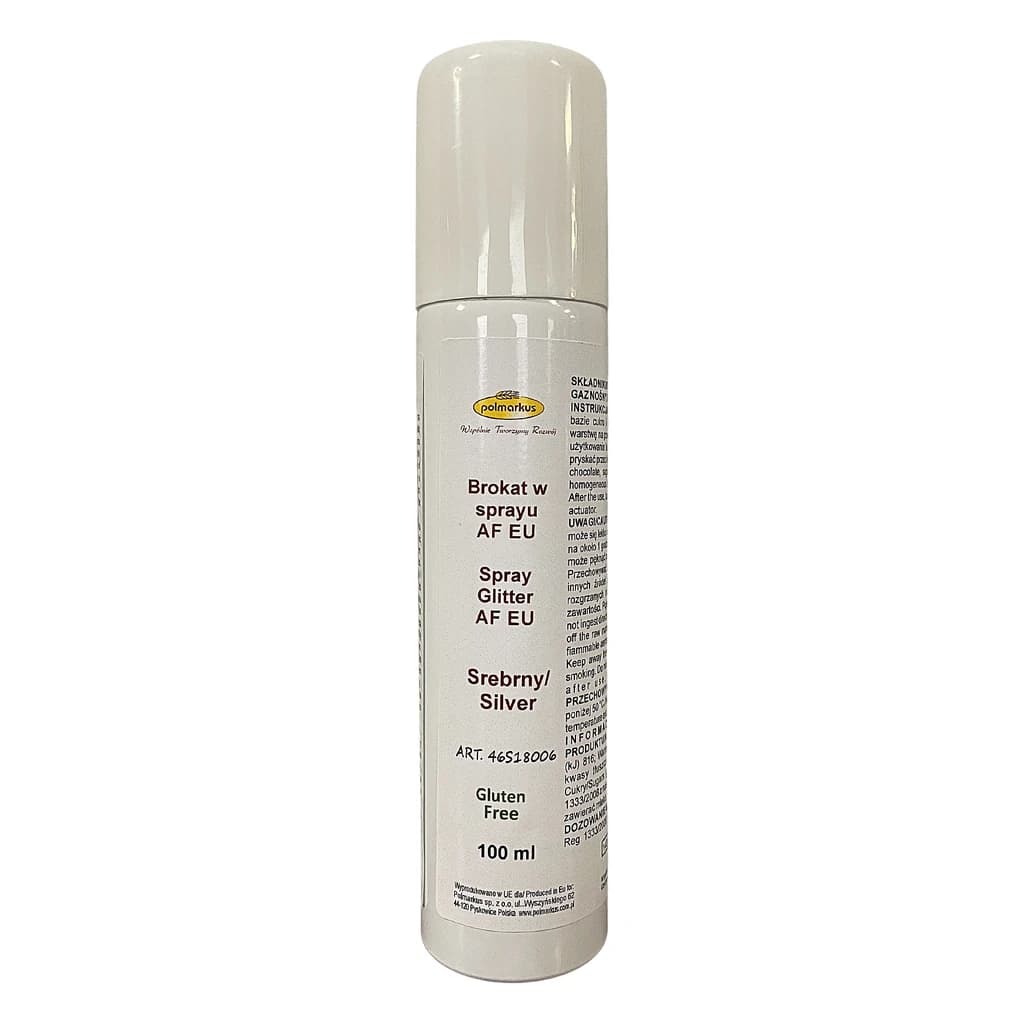
Silver Edible Glitter Spray 100 ml
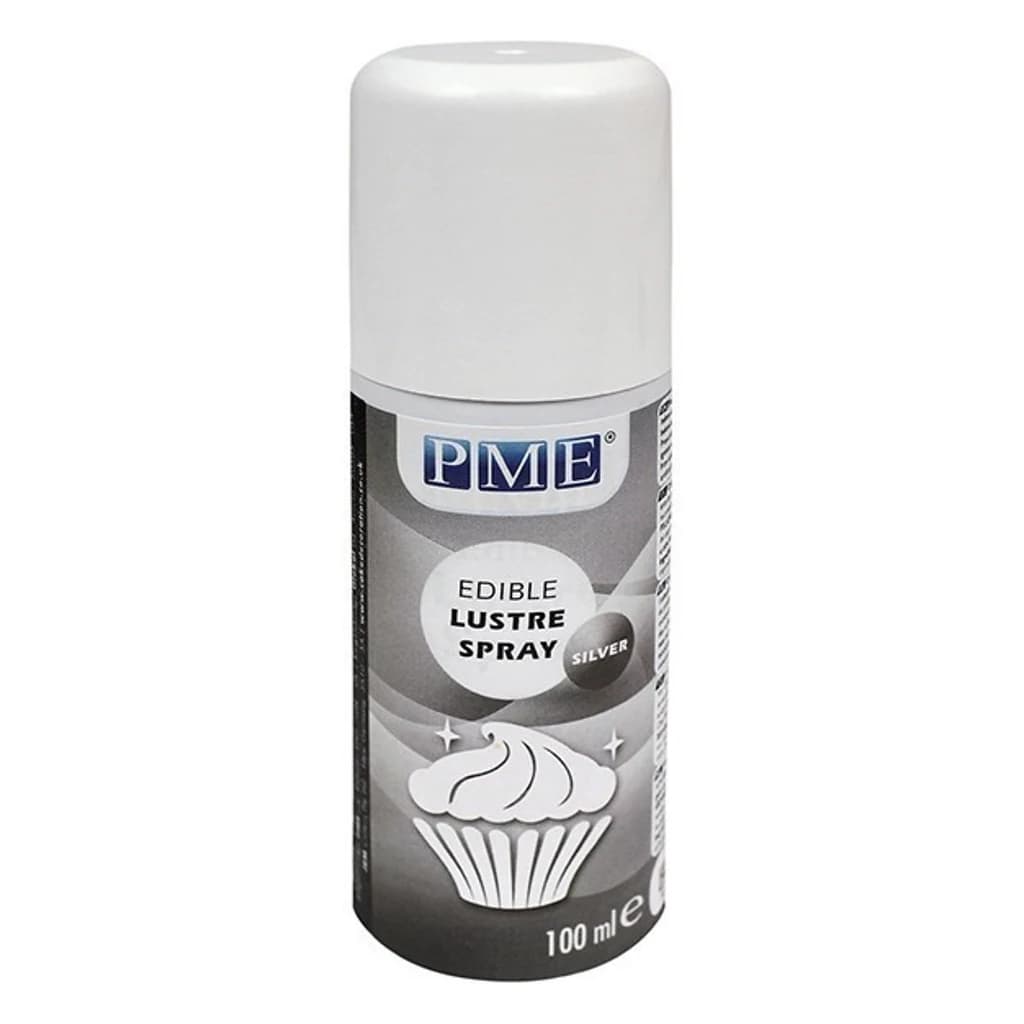
PME Edible Lustre Spray
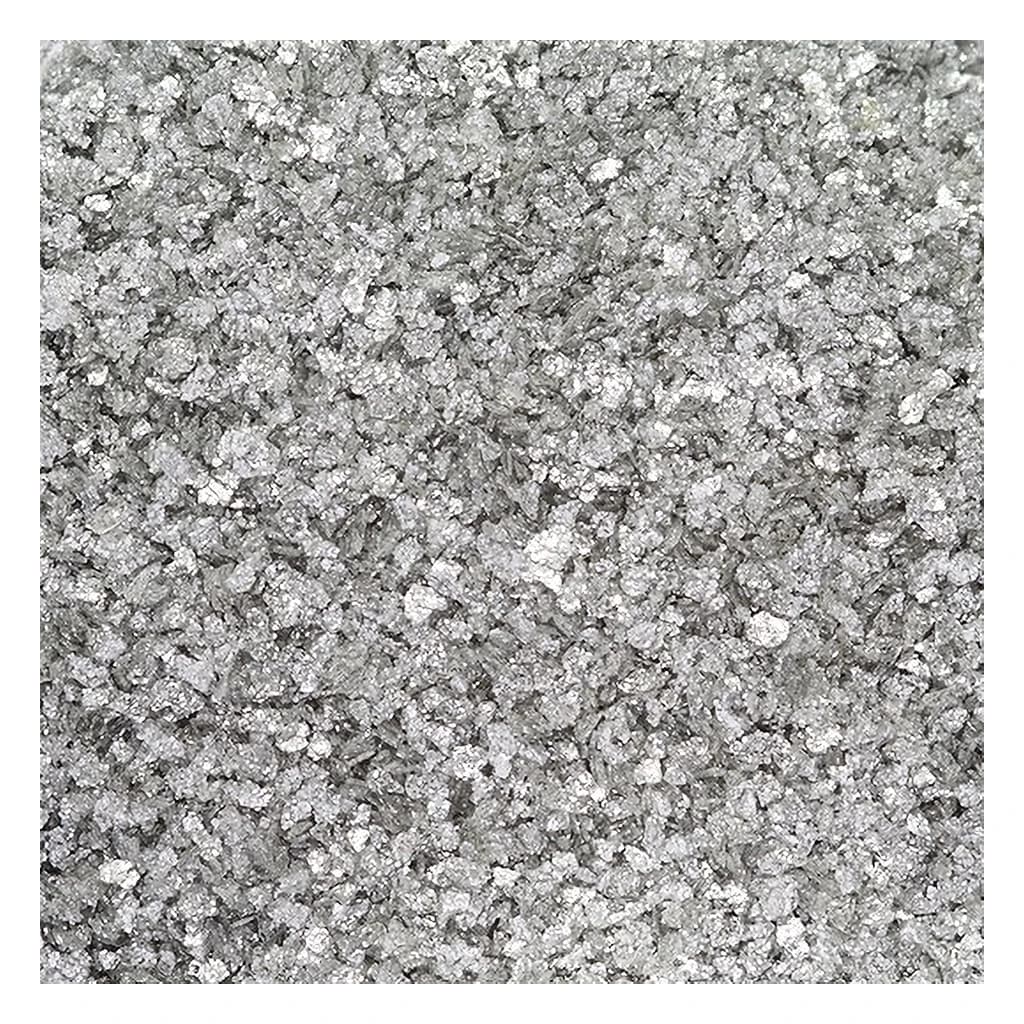
Edible Glitter 5 g
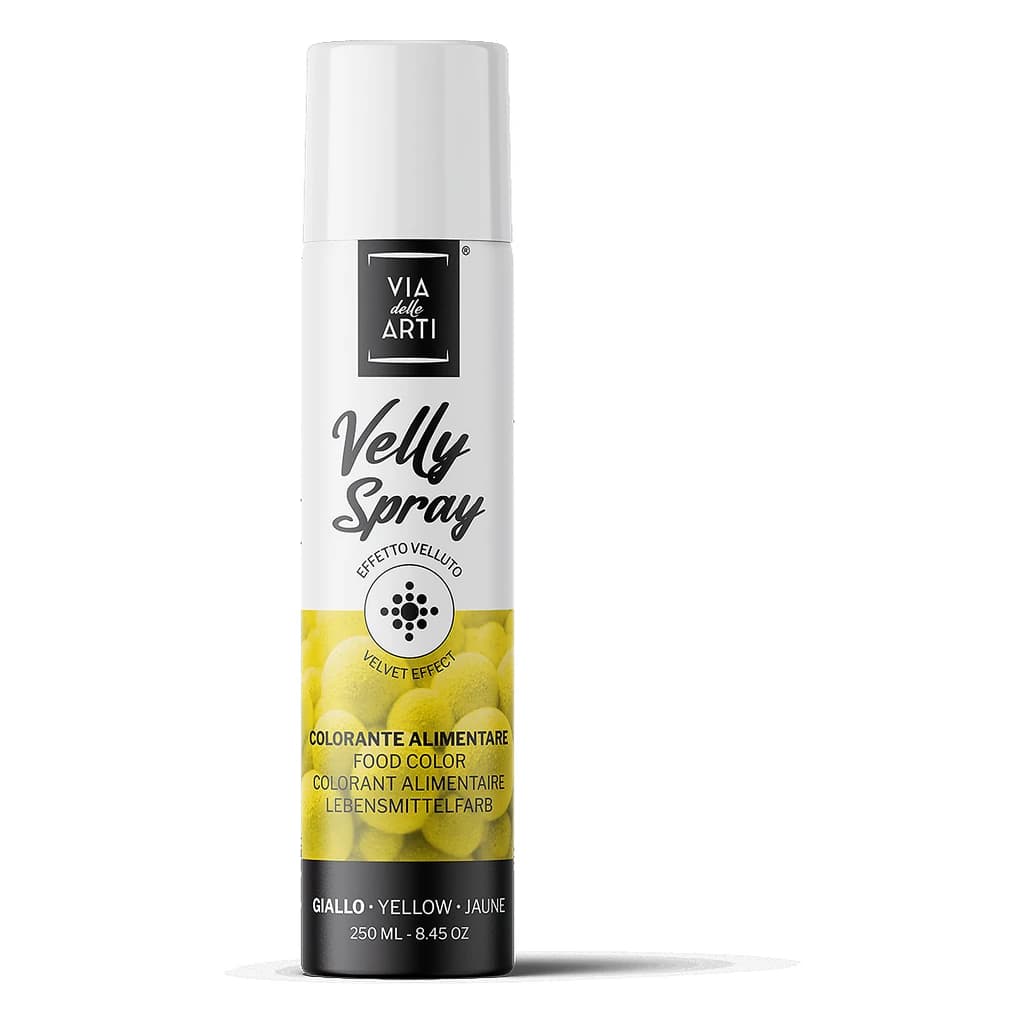
Yellow Edible Velvet Spray 250 ml
Food Colour — Spectral Paste, 400 g (Sugarflair)
Polmarkus Edible Velvet Spray 400 ml
Food Colour — Liquid, 1 kg
Food Colour — Metallic Dust, 20 g