
Cake formulas by baker's percentage: sponge, butter, chiffon and shortcrust ratios
Unlike bread, cakes use a modified baker's percentage — sugar, fat, egg and liquid all measured against flour = 100% — and they obey balance rules that predict a batter's behaviour before you bake. This dossier teaches the four cake families (foam sponge, creamed butter cake, high-ratio layer, chiffon) plus the shortcrust pastry family, with six arithmetic-checked formula cards in baker's percentage: a classic genoise, a 1:1:1:1 pound cake / Victoria sponge, a high-ratio layer cake, a chiffon, a pâte sucrée (with brisée and sablée ratios), and two first-party complete-mix application recipes. Each card has ingredient rows with percentages, a verified total, a worked example at a real batch size, process steps with temperatures and times, and the catalogue products a baker buys to execute it. Numbers are cross-checked against King Arthur, BAKERpedia, Baking Sense, The Bake School and ThermoWorks, and anchored to nine first-party supplier spec sheets (Whitworth cake flour, Kent caster sugar, Polmlek butter, Cardowan high-ratio shortening, JAR Dutch cocoa, Bowika/Domson baking powder and three Zeelandia mixes).
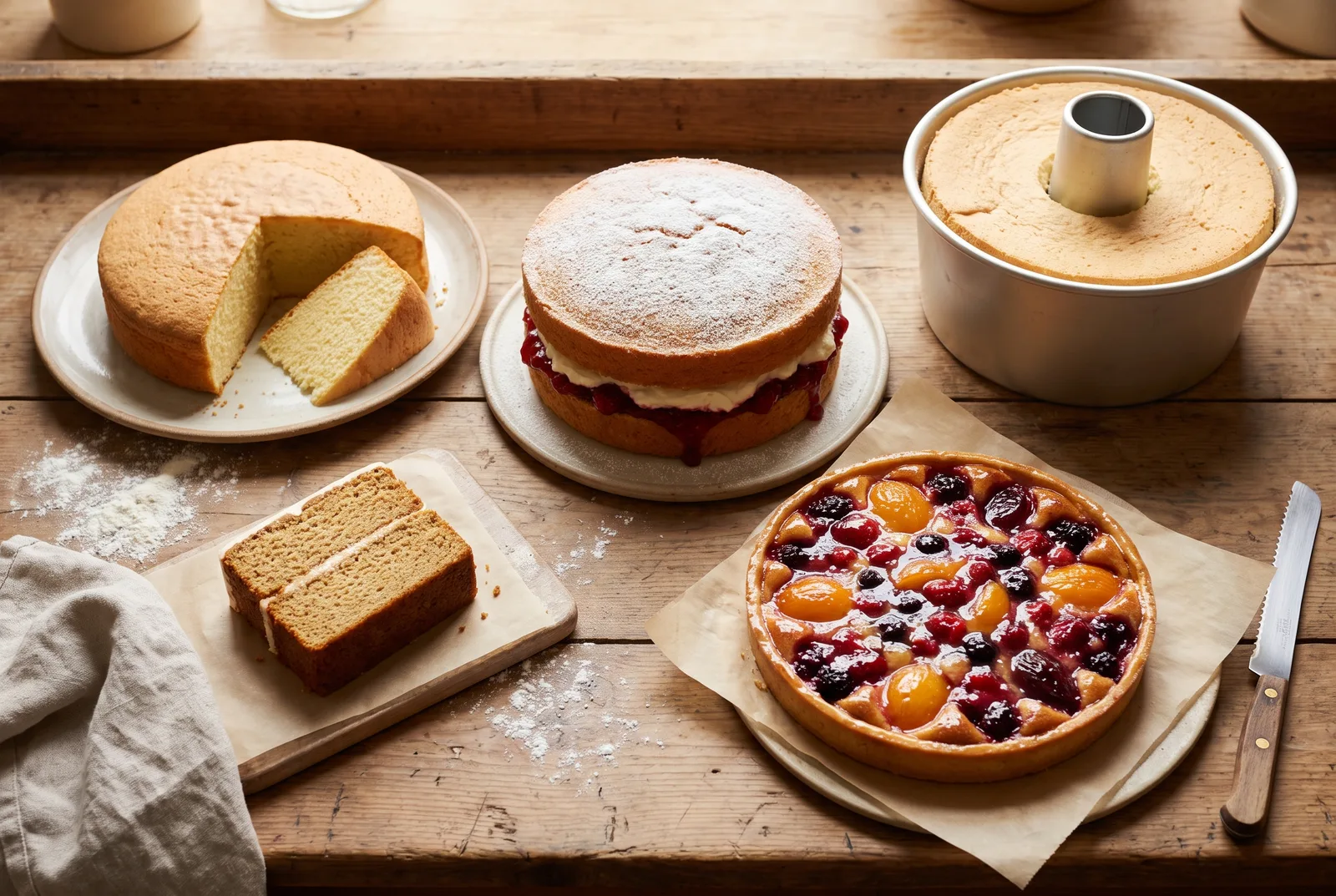
Cake formulas by baker's percentage: sponge, butter, chiffon and shortcrust ratios
Bread bakers think in hydration; cake bakers think in balance. A cake formula still uses baker's percentage — flour is 100% and everything else is a percentage of it — but the interesting numbers are no longer water. They are sugar, fat and egg, and the whole craft is keeping the ingredients that build structure in balance with the ones that tenderise and moisten. Get the ratios right and you can predict how a batter will behave before it ever sees the oven.
Cakes use a modified baker's percentage
Keep flour at 100% and write sugar, fat, egg and liquid as percentages of the flour weight; the total formula percent then runs to 300-500% because so much is piled on top of the flour. For foam cakes the egg figure looks enormous — a genoise runs egg at ~167% of flour — because in a sponge the structure itself is egg, not flour. The figure below illustrates this baker's-percentage structure, and the six-formula comparison table follows.
The balance rules: structure vs tenderness
Every cake balances tougheners / structure-builders (flour and egg) against tenderisers (sugar, fat, egg yolk) and moisteners (liquid, and sugar, which is hygroscopic) — illustrated in the seesaw diagram below. Two rules read almost any formula:
- Lean / balanced cake: sugar ≤ flour and fat ≤ egg. The pound cake is the textbook case.
- High-ratio cake: sugar > flour (about 25% more, so ≥125%) and liquid ≥ sugar. That over-loaded batter only stands up with low-protein cake flour, extra liquid and an emulsifier .
Tip the seesaw too far toward tenderness and the cake sinks; too far toward structure and it bakes tough and dry (see the fault table). The single most important lever is the sugar-to-flour ratio.
The four cake families
Cakes sort by how they are aerated and what fat they carry (see the diagram and families table below):
- Foam sponge (genoise): leavened by a whipped whole-egg foam, no chemical raising agent.
- Creamed butter cake: leavened by creamed air, optionally helped by baking powder.
- High-ratio cake: baking powder plus an emulsified fat, carrying sugar above flour.
- Chiffon / oil foam: a meringue plus baking powder, with liquid oil for the fat.
A fifth job — shortcrust pastry — is the inverse problem: there you want to suppress structure (gluten) and keep the paste short.
Flour choice runs through all of them. Pound cake and genoise want a plain or soft, low-protein flour, never strong bread flour, or the crumb turns tough. High-ratio and chiffon cakes need a true low-protein cake flour — Domson's Top Flight is a heat-treated cake flour at 7.8-9.2% protein, exactly this job. The catalogue flour and fat for each card are listed among the products at the end of this article.
Genoise — the whole-egg foam sponge
The genoise is the foundation foam cake: structure comes entirely from a warm-whisked whole-egg foam. The classic ratio is one egg to 30 g sugar and 30 g flour, so sugar equals flour and egg runs ~167% of flour, with the rule that sugar should not exceed egg ÷ 1.25. A genoise au beurre folds ~28% melted butter in last for flavour and keeping. The formula card below (total ~396%, worked at 300 g flour) builds it; warm the eggs and sugar to ~43°C, whip to the ribbon stage, fold the flour, then the warm butter, and bake at ~175-180°C — shown in the ribbon-stage and crumb photos below. King Arthur's tested genoise (6 eggs + 1 yolk, 149 g sugar, 90 g flour + cornstarch, 57 g butter, 350°F) is the same idea with an even lighter flour load. Genoise is built dry on purpose — it is meant to drink syrup.
Creamed butter cake — pound cake and Victoria sponge
The most teachable balanced cake is the pound cake / quatre-quarts: equal weights of flour, sugar, butter and egg — 1:1:1:1, each at 100%. It satisfies the balance rules by definition (sugar = flour, fat = egg). Add ~3% baking powder, or use self-raising flour, and you have the lighter British Victoria sponge. The formula card below (total ~404%, worked at 1000 g flour) uses the creaming method: beat softened butter and sugar pale and fluffy — that is where the lift comes from — add the eggs gradually to hold the emulsion, then fold in the flour — shown in the creaming-method figure below. Bake a Victoria sponge at ~180-190°C for 20-25 minutes, sandwich it with jam and cream (pictured below), and keep the cream refrigerated. Butter here is Polmlek Unsalted Butter 82% (min 82% fat, ~16% water); production bakeries swap in cake margarine.
High-ratio cake — sugar above flour
The commercial bakery's layer cake carries more sugar than flour and more liquid than sugar, for a fine, very moist, long-keeping crumb. The worked formula card below follows Baking Sense's vanilla layer — flour 100, sugar 133, fat 116, egg 73, total liquid 133 — at a total of ~487%. That batter only holds because three things line up at once: low-protein cake flour, extra liquid, and an emulsified high-ratio shortening. Domson's High Ratio Vegetable Shortening carries a distilled-monoglyceride emulsifier (E471) and a 44°C slip point precisely so the fat disperses and binds the water. Mix it by the two-stage (blending) method — blend the dry ingredients, shortening and part of the liquid to a paste, then add the eggs and the rest of the liquid — and the batter pours — shown in the two-stage mixing figure below. Do not try it with butter and bread flour; it will collapse.
For a chocolate version of any butter or high-ratio cake, replace 10-25% of the flour with cocoa. Domson's Dark Dutch Cocoa GT78 is alkalised to pH 7.3-7.7, so it is pH-neutral and pairs with baking powder; a natural (acidic, pH 5-6) cocoa would instead pair with baking soda . Getting that pairing wrong is a classic cause of a flat, soapy-tasting chocolate cake.
Chiffon — the oil foam
Chiffon is the lightest cake that is still genuinely moist. It marries an oil-and-yolk batter with a stiff egg-white meringue, leavened by both the foam and baking powder. Because the fat is liquid oil, the crumb stays soft even straight from the fridge — chiffon's advantage over butter cakes, which firm up cold. The formula card below (total ~458%, worked at 200 g cake flour) uses the BAKERpedia midpoints: sugar 70%, oil 55%, yolk 55%, water 60%, whites 108%, baking powder 4.5%, cream of tartar 0.5%. Make the batter, whip the whites to a firm-but-not-dry peak, fold, and bake in an ungreased tube pan so the batter can climb; cool it upside-down so it does not collapse — shown in the process and slice photos below .
Shortcrust pastry — the short-paste family
Pastry inverts the cake problem: here you want to limit gluten so the crust eats short, not chewy. The formula card below is built on the King Arthur pâte sucrée (flour 100, butter ~63, sugar ~28, yolk ~10, water ~3; total ~205%, worked at 500 g flour) and blind-baked at 190°C. Its relatives shift the same three ingredients (see the diagram and short-paste table below):
- Pâte brisée (savoury): flour 100, butter 50-67, cold water 20-33, no sugar — flaky and sturdy for quiches and pies; the classic 3:2:1 flour:fat:water rule.
- Pâte sablée / shortbread: sugar:butter:flour = 1:2:3 (flour 100, butter 67, sugar 33) — the sandiest and most fragile.
Keep the water low and the butter cool, mix only to clumps, and rest the dough chilled, or the crust shrinks and toughens. Blind-bake with weights, then finish uncovered, and egg-wash the warm shell before a wet filling — pictured below.
Complete mixes — the production shortcut
When consistency matters more than from-scratch craft, a complete mix carries the flour, starch, sugar, raising agents and emulsifiers; the baker just adds egg, fat and/or water. The formula card below gives two first-party Zeelandia application recipes in baker's percentage against the mix: Sponge Mix Classic (mix 1000: egg 500: water 200; whisk 6-8 min; bake 180°C 30-40 min) and Sandia pound-cake mix (mix 1000: oil/margarine 460: egg 460; mix 4-5 min; bake 180°C 50 min). One catalogue caution: the product labelled "Butter Cake Mix" is actually a yeast-raised cake mix on its datasheet, not a creamed butter cake — a likely title mismatch.
Knowing when it is baked
Skewer tests are fine, but a thermometer is surer: most cakes are done at an internal 93-99°C (200-210°F) — sponges around 96-99°C, a dense pound cake right up to ~99°C. Because every batter here contains raw egg, baking fully to that range is also the food-safety control.
Buying the ingredients
Every card maps to catalogue products (see the products at the end of this article and the flour/fat selection table below): Domson Top Flight Cake Flour for sponge, high-ratio and chiffon; Domson Plain / Self-Raising Flour and Golden Jewel Pastry Flour for butter cakes and pastry; Kent Caster Sugar and Icing Sugar CP; Polmlek Unsalted Butter 82%, Ajax Cake Margarine, Cardowan High Ratio Vegetable Shortening and Olympic Sunflower Oil for the fats; Liquid Egg Eifix and Egg White Powder for egg; Baking Powder and JAR Dark Dutch Cocoa; and Zeelandia Sponge Mix Classic and Sandia for the complete-mix route.
Food-safety note: all the cakes here contain raw egg in the batter — bake to an internal 93-99°C; raw flour is not ready-to-eat and every flour/mix declares gluten; butter and cream/custard fillings are perishable dairy — keep refrigerated and within shelf life; the high-ratio layer cake uses 60% milk as a batter ingredient — milk is an allergen in that formula regardless of any filling; the almond pâte sucrée variant (RecipeTin) contains almond meal — tree nuts must be declared; the Zeelandia mixes carry wheat and milk and may contain rye, barley, oat, egg, soya and sesame ; Dutch cocoa GT78 pack-size allergen split: the 25 kg pack is gluten-free, but the 6×5 kg pack may contain gluten — both sizes carry a soya cross-contamination warning.
Figures
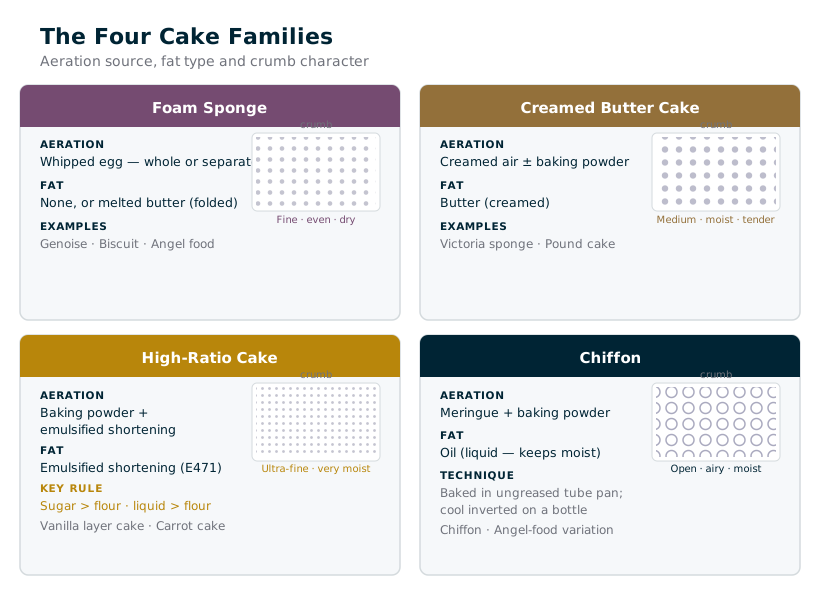 Diagram of four cake families with their leavening source, fat and crumb
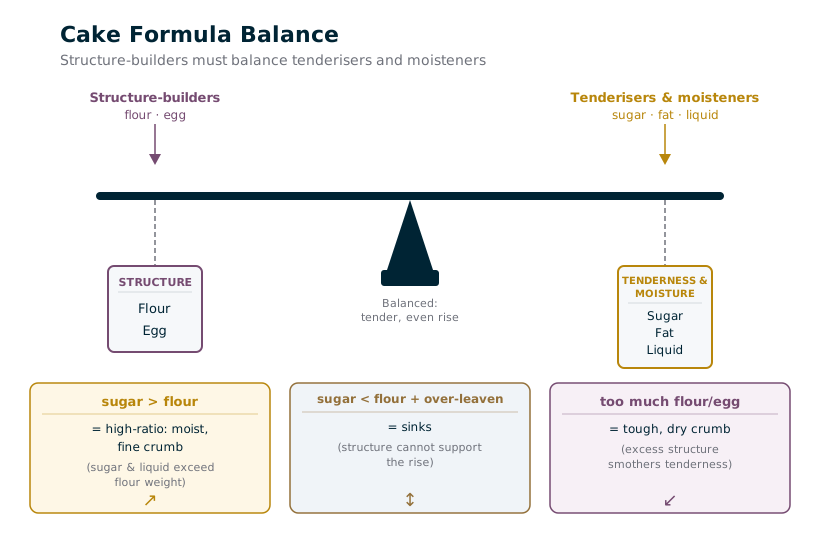 Seesaw diagram balancing flour and egg against sugar, fat and liquid in a cake formula
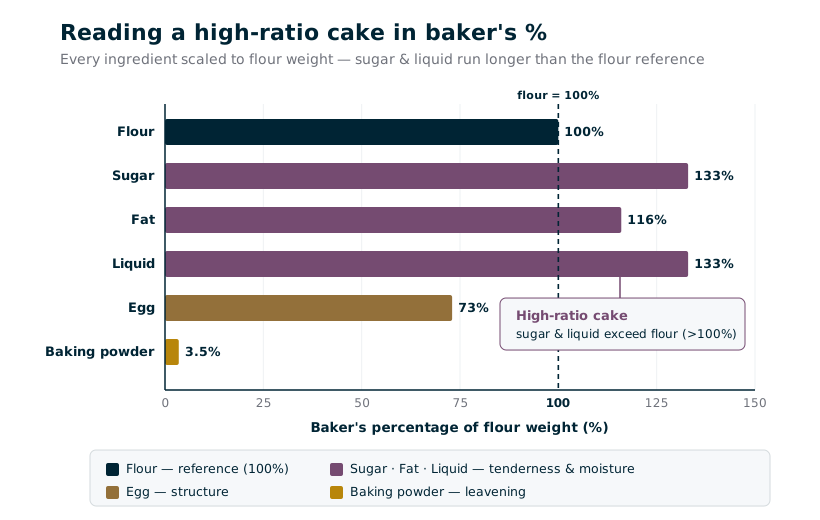 Bar chart showing a high-ratio cake in baker's percentage with sugar and liquid exceeding flour
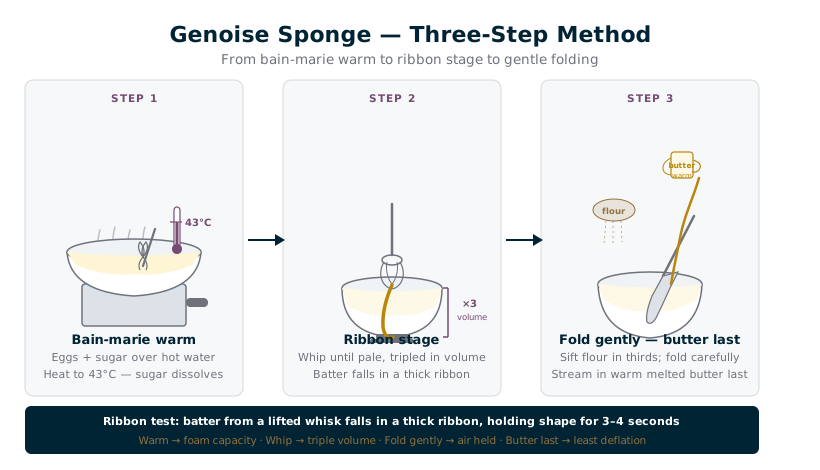 Diagram of the genoise method: warm eggs and sugar, whip to ribbon, fold flour and butter
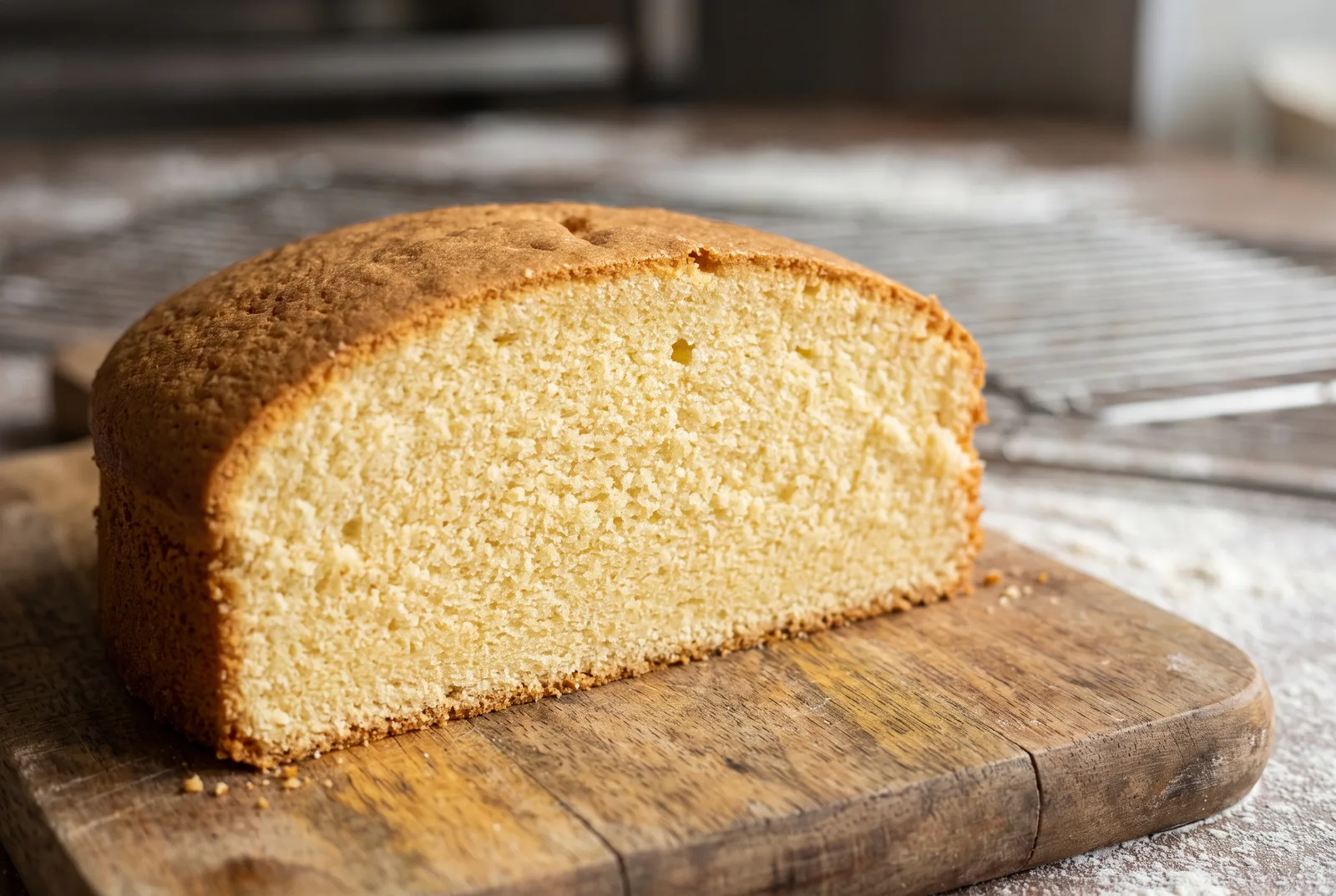 Sliced genoise showing a fine, even, springy sponge crumb
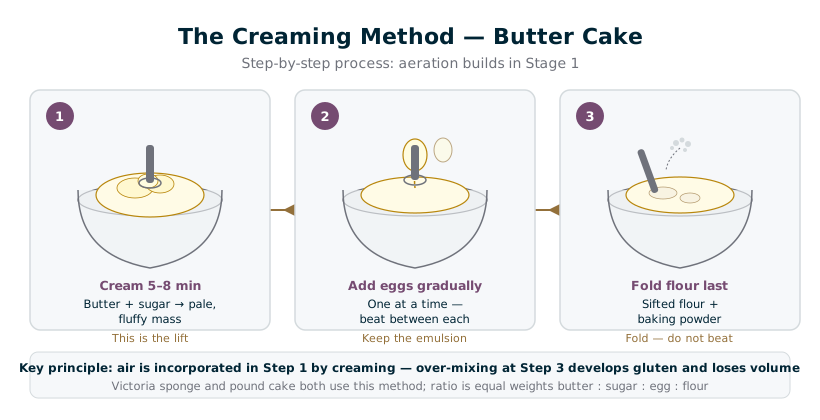 Diagram of the creaming method for a butter cake in three steps
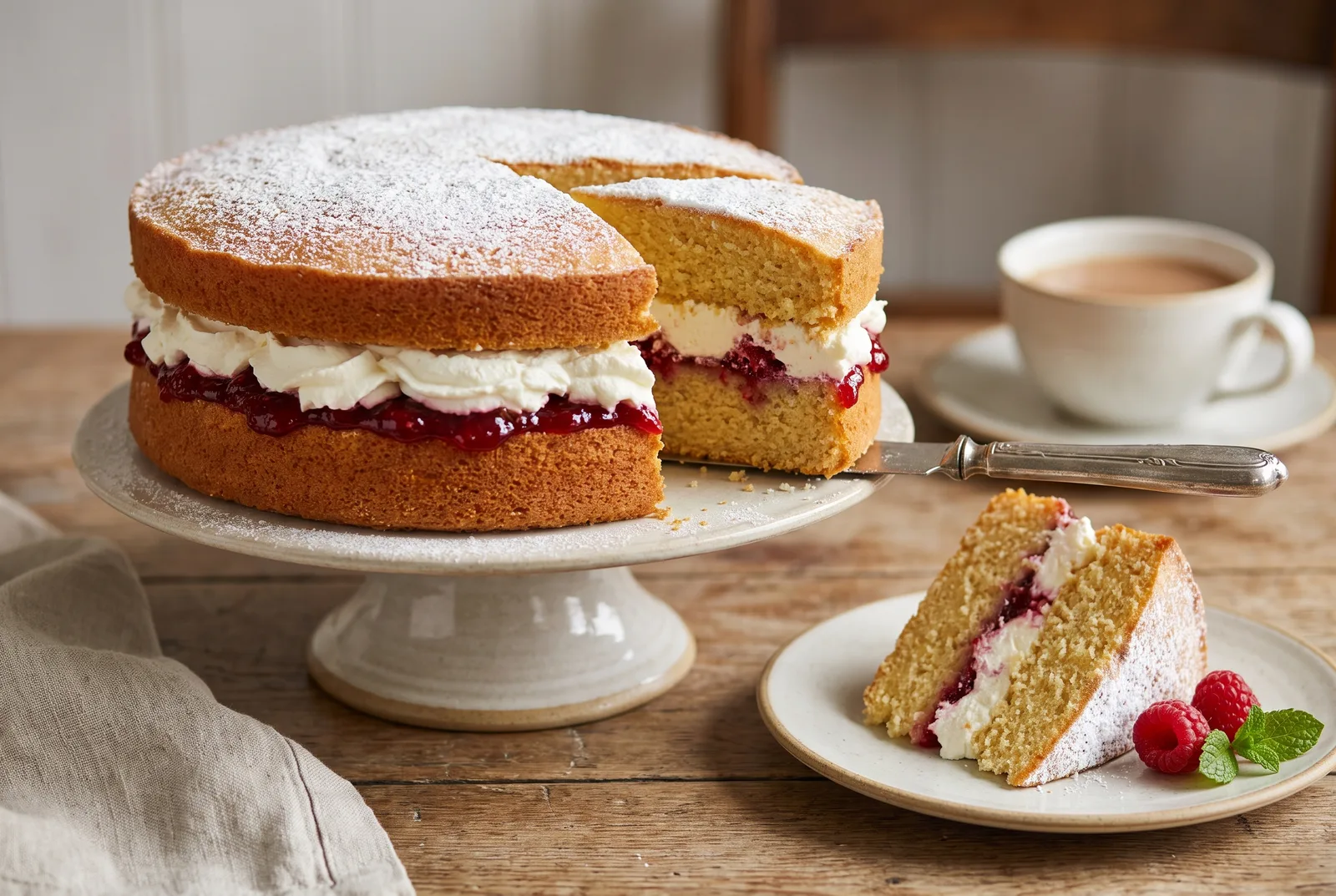 Victoria sponge with jam and cream filling, dusted with icing sugar, a slice cut out
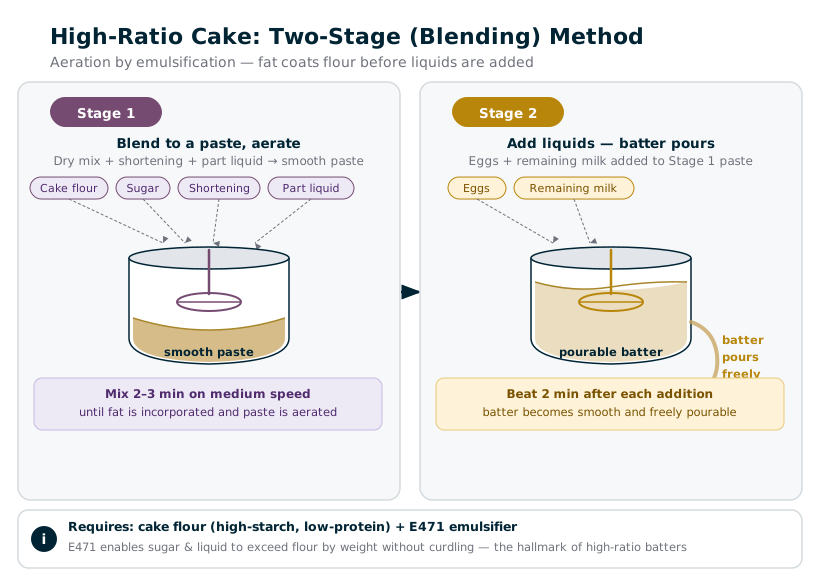 Diagram of the two-stage high-ratio cake method showing a pourable batter
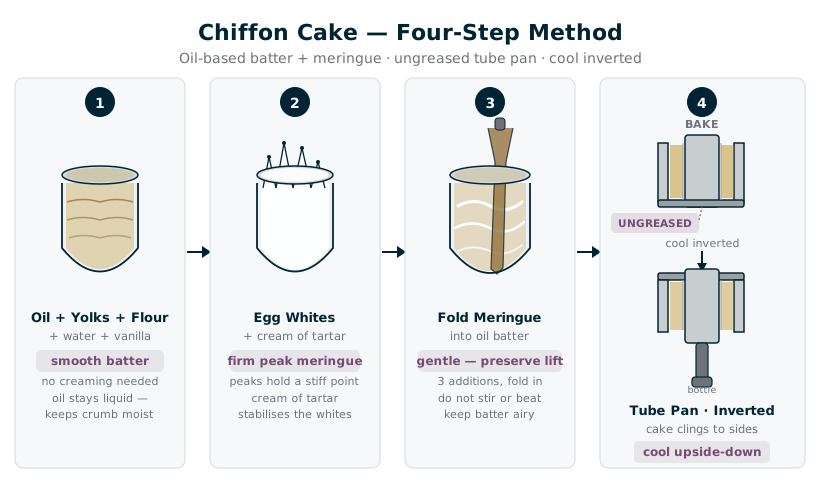 Diagram of the chiffon method: oil-yolk batter plus meringue, baked in a tube pan and cooled upside-down
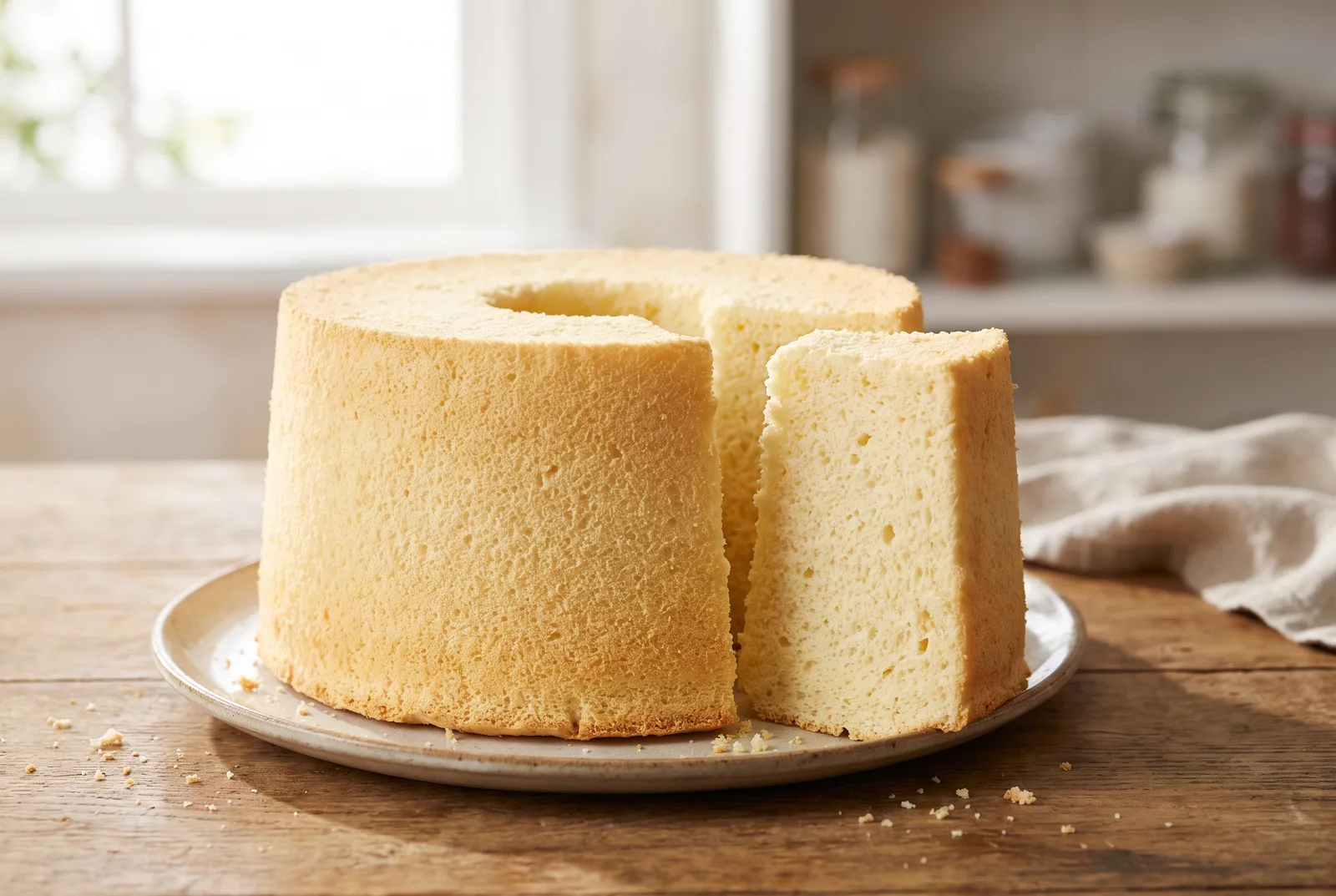 Slice of chiffon cake showing a tall, airy, moist crumb
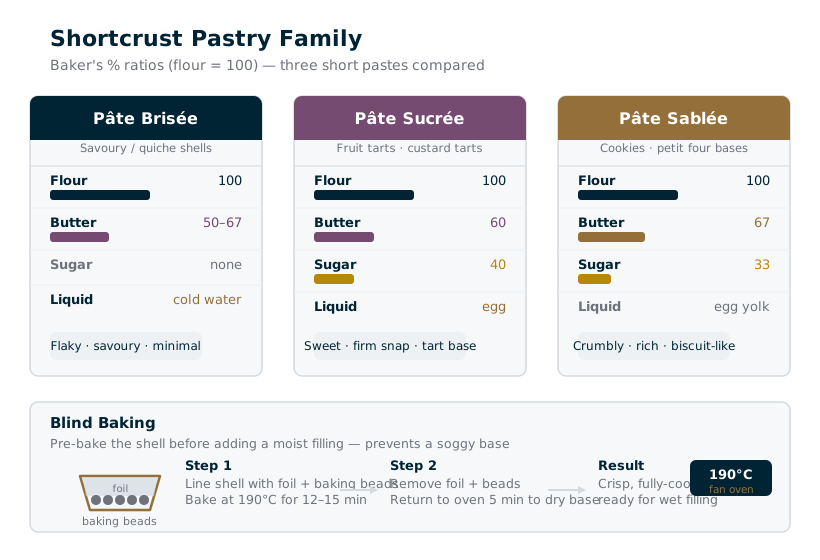 Diagram comparing pâte brisée, sucrée and sablée ratios with a blind-baking step
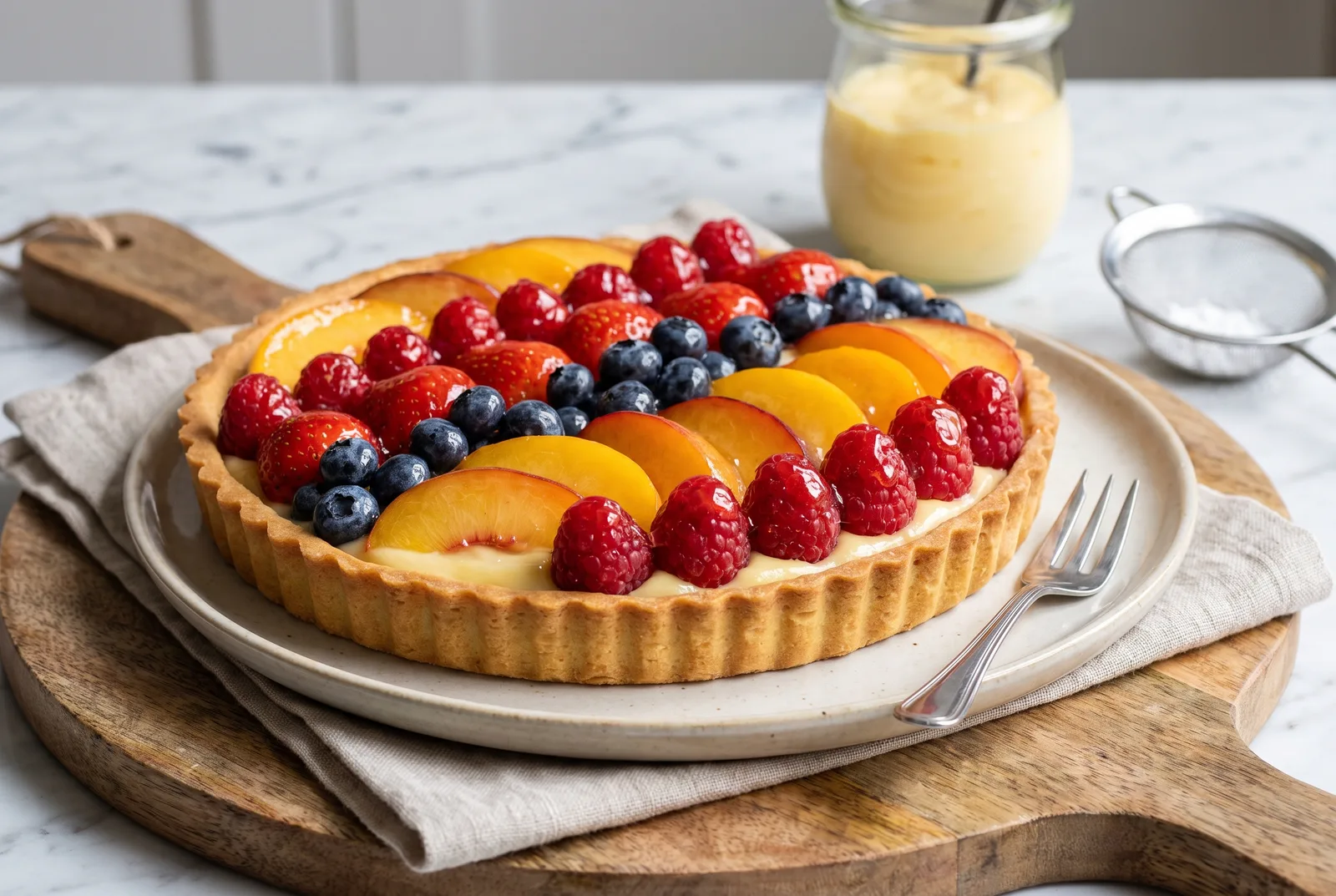 Pâte sucrée fruit tart with a crisp golden shell, custard and glazed fruit
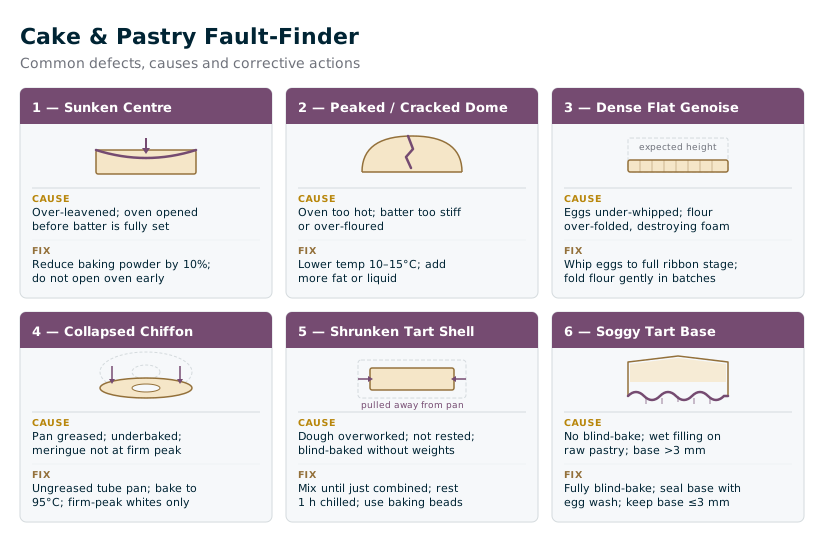 Diagram pairing common cake and pastry faults with their corrective actions
Classic genoise (whole-egg foam sponge) — baker's percentage
The foundation foam cake: structure comes entirely from a whipped whole-egg foam, not from chemical leavening or creamed fat. The classic ratio is one whole egg to 30 g sugar and 30 g flour, so sugar equals flour and the egg dwarfs both. A genoise au beurre folds in a little melted butter for flavour and keeping; omit it for a leaner biscuit. Use a soft, low-protein flour such as Top Flight cake flour so the delicate foam is not toughened. King Arthur's tested genoise uses an even lighter flour load (90 g flour + cornstarch for 6 eggs) baked at 350°F/175°C.
| Ingredient | Baker's % | Weight |
|---|---|---|
| Cake flour (Top Flight) | 100% | 300 g |
| Caster sugar | 100% | 300 g |
| Whole egg | 167% | 500 g (≈10 large eggs) |
| Unsalted butter (82%), melted & warm | 28% | 84 g (omit for plain genoise) |
| Salt | 0.8% | 2.4 g |
| Vanilla | — | to taste |
| Total | ~395.8% |
- Warm the whole eggs and sugar in a bowl over a bain-marie, whisking, to about 43°C (just warm to the finger).
- Whip on high to the ribbon stage: pale, roughly tripled, and a drizzle holds a trail on the surface for a few seconds.
- Sift the flour (and salt) over in two or three additions and fold gently with a spatula — over-folding knocks out the air and gives a dense cake.
- For genoise au beurre, stir a spoon of batter into the warm (~50°C) melted butter, then fold that back in last, quickly.
- Divide into lined tins; bake at 175-180°C for ~25-30 minutes (King Arthur bakes thin layers at 350°F/175°C for 15-25 min) until springy and ~96°C internal.
- Cool, then split and soak with syrup before filling — genoise is deliberately dry and is built to drink syrup.
Worked example
Worked at 300 g cake flour, using the classic 'per egg = 30 g sugar + 30 g flour' rule.
Yield: approx. 1.19 kg batter (two 20 cm / 8" rounds, or a Swiss-roll sheet)
Sugar should not exceed egg ÷ 1.25 (here egg 500 g ÷ 1.25 = 400 g max sugar; 300 g is comfortably balanced). The Zeelandia Sponge Mix Classic is a first-party complete-mix shortcut to the same crumb (see formula-complete-mixes). ALLERGENS: wheat (gluten), egg, milk (if buttered). FOOD SAFETY: contains raw egg — bake fully to ~96°C.
Creamed butter cake — pound cake / Victoria sponge (baker's %)
The most teachable balanced cake: equal weights of flour, sugar, butter and egg — the 1:1:1:1 pound cake / quatre-quarts. It satisfies the balance rules automatically (sugar = flour, fat = egg) and rises on creamed air. Add ~3% baking powder (or use self-raising flour) and you have the lighter British Victoria sponge. Use a plain, not strong, flour so the crumb stays tender.
| Ingredient | Baker's % | Weight |
|---|---|---|
| Plain flour (self-raising for Victoria) | 100% | 1000 g |
| Caster sugar | 100% | 1000 g |
| Unsalted butter (82%), softened | 100% | 1000 g |
| Whole egg | 100% | 1000 g (≈20 large eggs) |
| Baking powder (omit for true pound cake) | 3% | 30 g |
| Salt | 1% | 10 g |
| Vanilla | — | to taste |
| Total | ~404% (with baking powder); 400-401% as a true pound cake |
- Cream the softened butter and sugar 5-8 minutes until pale and fluffy — this is where the lift comes from, so do not rush it.
- Beat in the eggs a little at a time, keeping the emulsion; if it looks like splitting, add a spoon of the flour.
- Sift the flour, baking powder and salt together and fold in just until smooth.
- Scrape into lined tins; for a Victoria sponge split between two 20 cm tins and bake at ~180-190°C for 20-25 minutes; for a pound-cake loaf bake at 160-175°C for 50-60 minutes.
- Bake until a skewer comes out clean and the centre reads ~99°C.
- Cool; sandwich a Victoria sponge with jam and whipped cream (keep cream refrigerated).
Worked example
Worked at 1000 g flour on the classic 1:1:1:1 ratio.
Yield: approx. 4.04 kg batter (one large loaf set, or six 20 cm sandwich layers)
A true quatre-quarts uses no chemical leavening and leans entirely on creamed air; the baking powder and self-raising route is the modern lighter version. Cake margarine (e.g. Ajax Unsalted Cake Margarine 80%) is the production substitute for butter. ALLERGENS: wheat (gluten), egg, milk (butter), and wheat in the baking powder. FOOD SAFETY: raw egg — bake to ~99°C; refrigerate cream fillings.
High-ratio layer cake (sugar > flour, two-stage method) — baker's %
The commercial bakery's cake: more sugar than flour and more liquid than sugar, for a fine, very moist, long-keeping crumb. That over-loaded batter only holds together because three things are in place at once: a low-protein cake flour, extra liquid, and an emulsifier — here an emulsified high-ratio shortening (distilled monoglyceride E471) that disperses the fat and binds the water. Mixed by the two-stage (blending) method, the batter pours.
| Ingredient | Baker's % | Weight |
|---|---|---|
| Cake flour (Top Flight) | 100% | 1000 g |
| Caster sugar | 133% | 1330 g |
| High-ratio vegetable shortening (E471) | 116% | 1160 g |
| Whole egg | 73% | 730 g (≈15 large eggs) |
| Milk | 60% | 600 g |
| Baking powder | 3.5% | 35 g |
| Salt | 1.5% | 15 g |
| Total | ~487% |
- Stage 1 (blend): combine the cake flour, sugar, baking powder, salt and the high-ratio shortening with about half the milk on low speed until a smooth paste forms, then beat to aerate.
- Stage 2 (liquids): add the eggs and the remaining milk in two or three additions, scraping the bowl, until the batter is smooth and pourable.
- Deposit by weight into greased and lined pans (a high-ratio batter is too fluid to spread by hand).
- Bake at 170-180°C until set and ~96-99°C internal.
- Cool fully before filling; the high sugar keeps the crumb moist for days.
Worked example
Worked at 1000 g cake flour from the Baking Sense high-ratio vanilla layer.
Yield: approx. 4.87 kg batter (about four to five 20 cm layers)
High-ratio = roughly 25% more sugar than flour; do NOT attempt it with ordinary butter and bread flour — it will collapse. Butter can replace part of the shortening for flavour but loses some emulsification. For a chocolate version, swap 10-25% of the flour for Dutch cocoa and keep the baking powder. ALLERGENS: wheat (gluten), egg, milk. FOOD SAFETY: raw egg — bake fully.
Chiffon cake (oil foam + meringue) — baker's percentage
The lightest cake that is still moist: a chiffon marries an oil-and-yolk batter with a stiff egg-white meringue, leavened by both the foam and baking powder. Because the fat is liquid oil, the crumb stays soft even straight from the fridge — the trick chiffon has over butter cakes. Egg-yolk lecithin emulsifies the oil and water. Bake in an UNGREASED tube pan so the batter can climb the walls, and cool it upside-down so it does not collapse.
| Ingredient | Baker's % | Weight |
|---|---|---|
| Cake flour (Top Flight) | 100% | 200 g |
| Caster sugar (split batter/meringue) | 70% | 140 g |
| Baking powder | 4.5% | 9 g |
| Salt | 2% | 4 g |
| Vegetable oil (sunflower) | 55% | 110 g |
| Egg yolk | 55% | 110 g (≈6 yolks) |
| Water | 60% | 120 g |
| Egg white | 108% | 216 g (≈7 whites) |
| Cream of tartar | 0.5% | 1 g |
| Vanilla | 3% | 6 g |
| Total | ~458% |
- Batter: whisk the yolks, half the sugar, oil, water and vanilla, then whisk in the sifted flour, baking powder and salt to a smooth batter.
- Meringue: whip the whites with the cream of tartar, adding the remaining sugar, to a firm-but-not-dry peak.
- Fold the meringue into the batter in two or three additions, keeping the volume.
- Pour into an UNGREASED tube pan; bake at 160-175°C for 45-55 minutes until the top springs back.
- Invert the pan immediately and cool fully upside-down before releasing.
Worked example
Worked at 200 g cake flour using the midpoints of the BAKERpedia chiffon range.
Yield: approx. 0.92 kg batter (one 22-25 cm tube pan)
Sugar is at or below flour in a chiffon; the structure leans on the whipped whites, so do not over-fold. Cream of tartar (an acid) stabilises the meringue. ALLERGENS: wheat (gluten), egg. Dairy-free as written. FOOD SAFETY: contains raw egg — bake fully.
Shortcrust pastry — pâte sucrée, with brisée & sablée ratios (baker's %)
The sweet tart shell, and the template for the whole short-paste family. Sugar is kept well below flour and the butter coats the flour to limit gluten, giving a crisp, biscuity, snap-edged crust. Switch the ratios for its relatives: pâte brisée (savoury, no sugar, flour:fat:water ≈ 3:2:1) and pâte sablée / shortbread (sugar:butter:flour = 1:2:3, the sandiest and most fragile). Use a low-protein pastry or plain flour.
| Ingredient | Baker's % | Weight |
|---|---|---|
| Pastry or plain flour | 100% | 500 g |
| Unsalted butter (82%), cool | 63% | 314 g |
| Caster or icing sugar | 28% | 139 g |
| Egg yolk | 10% | 50 g (≈3 yolks) |
| Water (cold) | 3% | 14 g |
| Salt | 0.8% | 4 g |
| Vanilla | — | to taste |
| Total | ~204.8% (pâte sucrée) |
- Beat the cool butter, sugar and salt smooth (do not aerate much), then mix in the yolks, vanilla and water.
- Add the flour and mix on low only until large clumps form — over-mixing builds gluten and toughens the crust.
- Press into a disc, wrap and chill (freeze 30 min, or fridge 1-2 h if rolling).
- Roll, line the tin and chill again; blind-bake at 190°C (375°F) with weights for 23-26 minutes, then 6-9 minutes uncovered to colour.
- Cool before filling; for wet fillings, egg-wash the warm shell to seal it.
Worked example
Worked at 500 g flour, scaled from the King Arthur pâte sucrée.
Yield: approx. 1.02 kg dough (three to four 23 cm tart shells)
Variants by ratio: pâte brisée = flour 100, butter 50-67, cold water 20-33, salt ~2 (rubbing-in, savoury); pâte sablée/shortbread = flour 100, butter 67, sugar 33 (creaming, very short). A whole-egg, almond version (RecipeTin) runs flour 100 + almond ~13, butter ~53, icing sugar ~35, 1 egg ~27%. ALLERGENS: wheat (gluten), egg, milk (butter); add tree nuts for the almond version. FOOD SAFETY: contains raw egg — bake fully.
Complete cake mixes (first-party spec application recipes) — baker's %
The production shortcut: a complete mix carries the flour, starch, sugar, raising agents and emulsifiers, so the baker just adds egg, fat and/or water for a consistent crumb every batch. Two first-party Zeelandia examples — a foamed sponge mix and a creamed pound-cake mix — written here in baker's percentage against the mix.
| Ingredient | Baker's % | Weight |
|---|---|---|
| SPONGE — Sponge Mix Classic (P08607) | 100% | 1000 g |
| SPONGE — whole egg | 50% | 500 g (alt. 60% / 600 g) |
| SPONGE — water | 20% | 200 g (alt. 10% / 100 g) |
| POUND CAKE — Sandia mix (P03576) | 100% | 1000 g |
| POUND CAKE — oil or margarine | 46% | 460 g (recipe 2: 30% / 300 g) |
| POUND CAKE — whole egg | 46% | 460 g (recipe 2: 30% / 300 g) |
| POUND CAKE — water (recipe 2 only) | — | 300 g |
| Total | Sponge 170%; pound cake 192% (recipe 1) / 190% (recipe 2) |
- Sponge: whisk the mix, egg and water at high speed for 6-8 minutes to a batter density of 390-450 g/l.
- Sponge: bake a 22 cm cake at 180°C for 30-40 minutes; for a Swiss roll (1000:500:200) bake at 250°C for 4-5 minutes without steam.
- Pound cake: mix all ingredients at medium speed for 4-5 minutes with a flat beater to a batter density of 850-900 g/l.
- Pound cake: deposit into tins (four 16 cm tins per 1000 g mix) and bake at 180°C for 50 minutes.
- Cool before filling or glazing.
Worked example
Worked straight from the Zeelandia datasheets at 1000 g of mix.
Yield: Sponge: a 22 cm cake (~460 g) per 1000 g mix; Pound cake: four 16 cm tins per 1000 g mix
Sandia is 378 kcal / 100 g (49.8 g sugar) and the Classic sponge 370 kcal / 100 g (46.5 g sugar) — both high-sugar complete mixes. CAVEAT: the catalogue 'Butter Cake Mix' (P03592) is actually a YEAST-raised 'cake with butter flavour' (75 kg flour: 25 kg mix: 6 kg yeast: 46 L water), not a creamed butter cake — a likely title mismatch. ALLERGENS (both mixes): wheat (gluten) and milk; may contain rye, barley, oat, egg, soya, sesame. FOOD SAFETY: added raw egg — bake fully.
Cakes split into a few families by how they are aerated and what fat they carry. The leavening source and the fat decide the crumb, the method and the keeping quality. Use this to place any cake before you reach for a formula.
| Family | Aeration / leavening | Fat | Sugar vs flour | Method | Crumb & keeping | Examples |
|---|---|---|---|---|---|---|
| Foam sponge (genoise) | Whipped whole-egg foam (no chemical leaven) | None, or melted butter (au beurre) | Sugar ≈ flour | Warm-whisk eggs+sugar to ribbon, fold flour | Light, dry, springy; soak with syrup; best fresh | Genoise, biscuit, Swiss roll |
| Creamed butter cake | Creamed air ± baking powder | Butter (or cake margarine) | Sugar ≈ flour (balanced) | Cream butter+sugar, add egg, fold flour | Close, rich, tender; keeps a few days | Pound cake, Victoria sponge, Madeira |
| High-ratio cake | Baking powder + emulsified fat | Emulsified high-ratio shortening or butter | Sugar > flour (≥125%) | Two-stage / blending method | Fine, very moist, long shelf life | Commercial layer & cup cakes |
| Chiffon / oil foam | Baking powder + whipped-white meringue | Liquid vegetable oil | Sugar ≤ flour | Oil/yolk batter + fold meringue | Very light yet moist; soft even chilled | Chiffon, oil sponge |
Every cake balances ingredients that BUILD structure against ones that TENDERISE and MOISTEN. Read a formula by sorting its rows into these jobs: if the tenderisers outweigh the structure you get a fragile, sinking cake; if structure dominates you get a tough, dry one. The sugar-to-flour ratio is the headline number.
| Job | Ingredients | Effect | The rule |
|---|---|---|---|
| Structure / tougheners | Flour (gluten + starch), whole egg / egg white | Set the frame and hold the gas | More structure = sturdier but tougher/drier |
| Tenderisers / softeners | Sugar, fat (butter, shortening, oil), egg yolk | Shorten gluten, trap air, soften crumb | Lean cake: sugar ≤ flour and fat ≤ egg |
| Moisteners | Liquid (milk, water), egg, sugar (hygroscopic) | Dissolve sugar, hydrate starch, keep moist | High-ratio: liquid ≥ sugar > flour |
| Driers / absorbers | Flour, starch (cornflour), cocoa, milk powder | Soak up liquid, firm the set | Add starch/cocoa to balance extra liquid/sugar |
Every figure is a percentage of the flour (=100%), except the complete-mix row where the MIX is the 100% base. Totals exceed 100% because sugar, fat, egg and liquid all stack on top of the flour. Foam cakes show their huge egg figure because their structure IS egg, not flour. All cards are arithmetic-checked in the formula cards below.
| Formula | Flour / mix | Sugar | Fat | Egg | Liquid | Leaven | Total % |
|---|---|---|---|---|---|---|---|
| Genoise sponge | 100% | 100% | butter 28% | whole egg 167% | none added | egg foam | ~396% |
| Pound / Victoria | 100% | 100% | butter 100% | whole egg 100% | none | BP 3% (Victoria) | ~404% |
| High-ratio layer | 100% | 133% | shortening 116% | whole egg 73% | milk 60% | BP 3.5% | ~487% |
| Chiffon | 100% | 70% | oil 55% | yolk 55% + white 108% | water 60% | BP 4.5% + meringue | ~458% |
| Pâte sucrée | 100% | 28% | butter 63% | yolk 10% | water 3% | none | ~205% |
| Complete mix — Sandia | mix 100% | in mix | oil/marg 46% | egg 46% | — | in mix | ~192% |
The short pastes are sorted by sugar. Pâte brisée is savoury (no sugar); pâte sucrée is the standard sweet tart shell; pâte sablée is the richest, 'sandiest' and most fragile. All keep gluten low by coating the flour in fat — handle cold and minimally.
| Paste | Flour | Butter | Sugar | Egg / liquid | Texture & use |
|---|---|---|---|---|---|
| Pâte brisée (savoury shortcrust) | 100% | 50-67% | 0% | cold water 20-33% (±1 egg) | Flaky, sturdy; quiches, savoury & fruit pies |
| Pâte sucrée (sweet tart) | 100% | ~63% (60%) | ~28% (40%) | 1 egg yolk ~10% | Crisp, biscuity, holds a sharp edge; fruit/cream tarts |
| Pâte sablée / shortbread | 100% | 67% | 33% | ± yolk | Very short, sandy, crumbly; petits fours, shortbread |
| Pâte sucrée with almond (RecipeTin) | 100% (+ almond ~13%) | ~53% | icing ~35% | 1 whole egg ~27% | Tender, nutty frangipane-style shell |
Cakes fail more often on flour protein and fat choice than on the formula. Low-protein flour keeps the crumb tender; the fat must match the method (creamed butter, emulsified high-ratio shortening, or liquid oil). These are the Domson catalogue products that execute each card.
| Formula | Flour to buy | Fat to buy | Why |
|---|---|---|---|
| Genoise / sponge | Top Flight Cake Flour (protein 7.8-9.2%) | Polmlek Unsalted Butter 82% (melted) | Low protein = tender; butter folded last for flavour |
| Pound cake / Victoria | Domson Plain Flour (or self-raising for Victoria) | Polmlek Unsalted Butter 82% | Creaming needs solid butter; plain flour gives a clean crumb |
| High-ratio layer | Top Flight Cake Flour | High Ratio Vegetable Shortening (E471) | The emulsifier lets the batter carry sugar > flour |
| Chiffon | Top Flight Cake Flour | Sunflower Oil (liquid) | Oil keeps the crumb soft even chilled |
| Shortcrust / pâte sucrée | Golden Jewel Pastry Flour or Domson Plain Flour | Polmlek Unsalted Butter 82% | Lower protein + cold butter = short, non-tough crust |
| Chocolate cake | any of the above + Dark Dutch Cocoa GT78 | as base cake | Replace 10-25% flour with Dutch cocoa; pair with baking powder |
To hit a target batter weight, divide it by the total formula percent (as a decimal) to get the flour weight, then multiply every percentage by that flour weight. Worked here for the creamed butter cake (total ~404% = 4.04).
| Target batter | ÷ total % (4.04) | = Flour | Sugar (100%) | Butter (100%) | Egg (100%) | BP (3%) |
|---|---|---|---|---|---|---|
| 2.0 kg | 2000 ÷ 4.04 | 495 g | 495 g | 495 g | 495 g (~10 eggs) | 15 g |
| 4.04 kg | 4040 ÷ 4.04 | 1000 g | 1000 g | 1000 g | 1000 g (~20 eggs) | 30 g |
| 8.0 kg | 8000 ÷ 4.04 | 1980 g | 1980 g | 1980 g | 1980 g (~40 eggs) | 59 g |
| Fault | Likely cause | Corrective action |
|---|---|---|
| Sunken centre | Too much sugar/fat/leaven for the structure, or under-baked | Rebalance toward flour/egg; cut baking powder to 3-5%; bake to ~96-99°C internal |
| Peaked, cracked dome | Oven too hot, or flour too strong (too much gluten) | Lower the oven ~10-20°C; use low-protein cake/plain flour, not bread flour |
| Tough, chewy crumb | Over-mixed after the flour went in, or strong flour | Fold flour in just to combine; switch to cake/plain flour |
| Dense, flat genoise | Egg foam under-whipped or knocked out when folding | Whip to full ribbon; fold gently; add butter last and quickly |
| Curdled creamed batter | Eggs added too fast or too cold | Add eggs gradually at room temperature; add a spoon of flour to rescue |
| High-ratio cake collapses | Made with butter + strong flour, or no emulsifier | Use cake flour + emulsified high-ratio shortening; keep liquid > sugar > flour |
| Chiffon collapses / wet streak | Greased pan, over-folded meringue, or not cooled inverted | Use an UNGREASED tube pan; fold gently; cool upside-down |
| Tough, shrunken tart shell | Over-worked dough or too much water (gluten developed) | Mix only to clumps; keep water low (~3%) and butter cool; rest chilled |
| Soggy tart base | Filled before/without blind baking | Blind-bake at 190°C with weights then uncovered; egg-wash to seal |
| Chocolate cake won't rise / soapy taste | Wrong cocoa/leaven pairing | Dutch (alkalised) cocoa with baking powder; natural cocoa with baking soda |