
Bread faults, causes and remedies: a systematic diagnostic guide for volume, crust, crumb and flavour defects
A practical systematic diagnostic guide for professional bakers covering the most common bread production defects: insufficient or excessive volume, pale or scorched crust, dense or open crumb, tunnels, stickiness, spreading, flying top, rapid staling, rope, mould, and flavour defects. For each fault the guide identifies root causes (process and ingredient), provides corrective actions, and maps the fault to catalogue improvers and functional ingredients that directly address it. Includes process parameter targets for four bread types and a first-line eight-point diagnostic checklist. Product data cross-checked against first-party spec sheets for Zeelandia Gamma GP, Optimax Free and Rye Stabil Free.
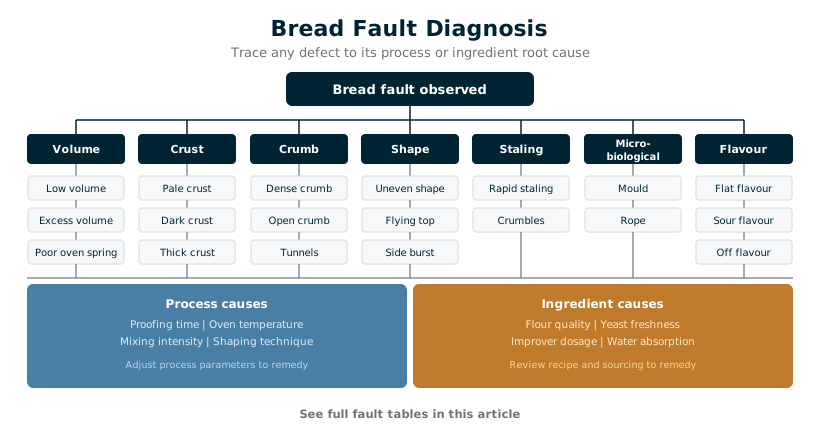 A fault-diagnosis flowchart showing how to systematically identify the root cause of a bread fault by observing the type of defect and tracing it to the process stage responsible
1. Why systematic fault diagnosis matters
A bread fault is not a single event — it is the visible symptom of a process or ingredient deviation that could be occurring at any one of six to ten preceding steps. The same symptom (dense crumb, for example) can be caused by under-mixing, under-proof, cold dough, weak flour, excessive salt, or an absent improver. Without a systematic approach, bakers risk changing the wrong variable, masking the real problem, or introducing a second fault while correcting the first.
The IREKS Compendium of Baking Technology states the principle directly: every baked goods fault has a definable cause and a correctable remedy; the challenge is accurate diagnosis. BAKERpedia's bread processing overview makes the same point in terms of process flow — faults at any stage propagate to downstream quality problems.
This guide provides a structured, category-by-category framework:
- Observe the fault and assign it to a category (volume / crust / crumb / shape / staling / microbiological / flavour).
- Interrogate the process at the stage most likely to produce that category of fault.
- Check the ingredients for the fault's typical ingredient drivers.
- Apply a targeted remedy and document whether it resolves the issue.
2. How to use this guide
The fault tables below (covering volume, crust, crumb, shape, staling, microbiology and flavour) contain the full structured data. This article provides the explanatory context for each category, highlights the most common faults, and maps them to Domson catalogue products.
Before investigating any specific fault, run the eight-point first-line check (see Section 11 and the diagram below): dough temperature, proof time, yeast freshness, oven temperature, flour falling number, salt weight, improver dosage, and cooling time. These eight variables account for the majority of recurring production faults in professional bakeries.
3. Process parameter targets
Different bread types have different requirements. The comparison table below gives full parameters; key targets are:
Dough temperature after mixing: 26–28°C for wheat tin bread and soft rolls; 28–30°C for rye-wheat; 24–26°C for long-ferment sourdough. At the extremes: below 22°C yeast activity is very slow; above 35°C unwanted bacteria (including rope organisms) become active.
Salt: Professional UK standard is 1.8–2.2% on flour weight. Below 1.5%: bland flavour, dough spreading. Above 2.5%: yeast inhibition, volume loss. Note (pre-packaged bread): At typical recipe hydration and bake-off, 1.8–2.2% on flour equates to approximately 1.2–1.5 g salt per 100 g finished bread, which exceeds the UK PHE 2024 voluntary maximum of 1.01 g/100 g for pre-packaged plain bread. Verify against current UK salt reduction targets before use in pre-packaged formulations.
Fresh yeast: typically 1.5–3.0% for tin bread, up to 5.0% for soft rolls, as low as 0.1–0.5% for long-ferment sourdoughs.
Final proof:35–40°C / 80–85% RH for most wheat breads. Outside this window: cold proof = under-proof; dry proof = skin formation; excessive humidity = blistering.
Core internal temperature at bake end: minimum 95°C — essential for full starch gelatinisation and kill of vegetative pathogens. Important (food safety): rope-forming Bacillus spores survive all conventional bread baking temperatures regardless of the core temperature achieved; reaching 95°C does not prevent rope spoilage. Rope control relies on acidification (dough pH ≤5.0–5.4) and rigorous equipment hygiene, not elevated baking temperature. See Section 9.2.
4. Volume defects
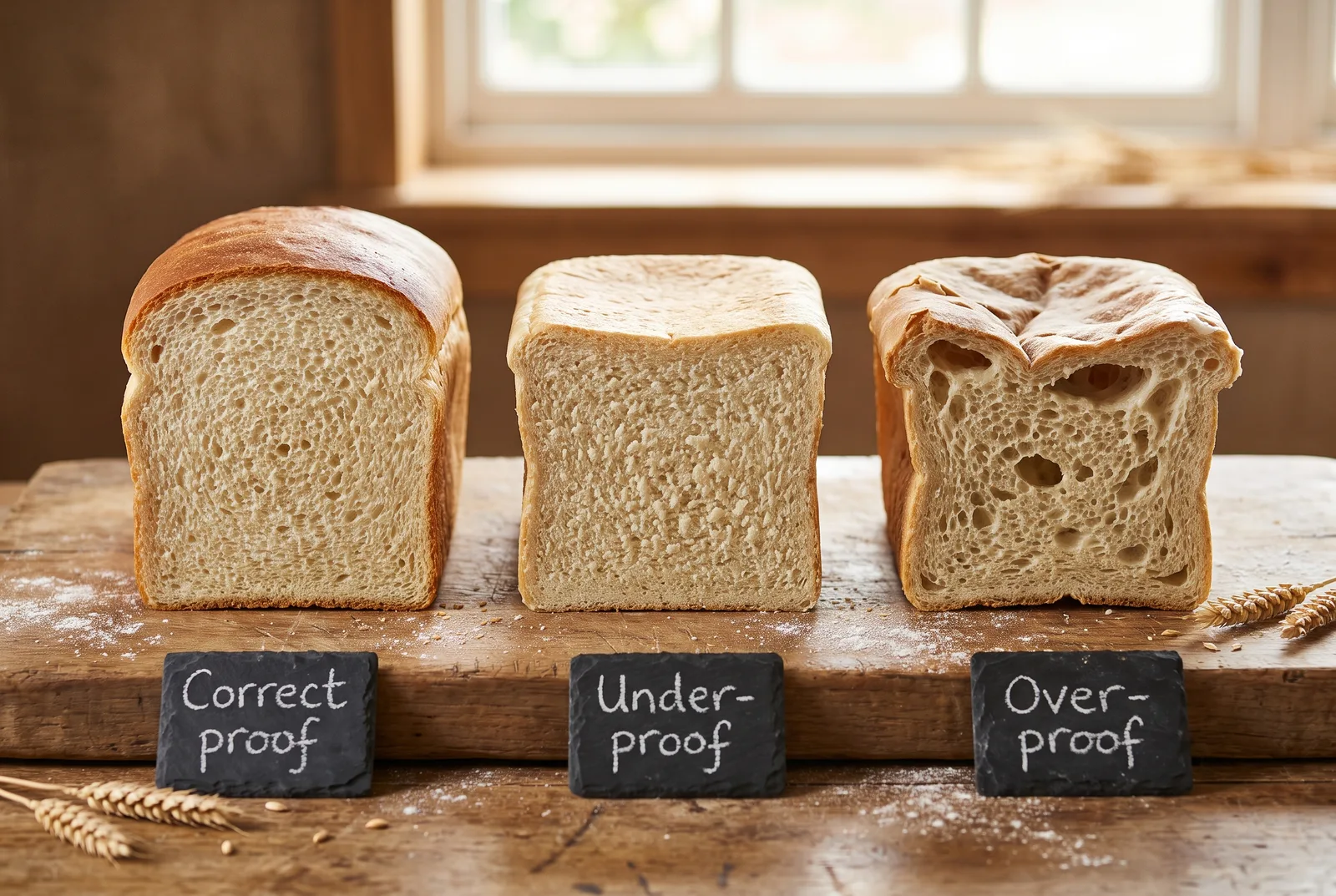
Three white tin bread loaves sliced in cross-section showing (left) correct proof with even open crumb, (centre) under-proof with dense close crumb, (right) over-proof with large irregular holes and collapsed top crust
Volume defects are the most common category of bread fault and the most frequently linked to improper fermentation management.
4.1 Insufficient volume
Symptoms: Loaf does not fill its tin; flat or concave top after baking; dense crumb on slicing; product feels heavy.
Process causes: Under-mixing is the number one cause in mechanical bakeries — if the gluten network is not fully developed (visible as the 'windowpane test' failure: dough tears before stretching thin), it cannot hold gas. Insufficient or inactive yeast is the second most common cause. Under-proof is the third — the finger-dent test (dough springs back slowly but completely when correct) is the standard artisan check.
Ingredient causes: Low-protein flour (below ~11% for tin bread), excessive salt (above 2.5%), absent or under-dosed improver.
Remedies — process: Verify mixing time and target dough temperature; check yeast freshness (compressed yeast should be cream-coloured and elastic, with no grey patches or sour-cheese smell); extend proof time.
Remedies — ingredient: Increase improver dosage or switch to a product with higher ascorbic acid and enzyme content; consider adding VWG if flour protein is marginal. Zeelandia Gamma GP at 2% on flour is appropriate for crusty products where additional oxidant and enzyme support is needed.
4.2 Excessive volume / collapsed top
Symptoms: Loaf blows the lid off a tin; top collapses; large irregular holes near the top of the crumb.
Cause: Almost always over-proof — fermentation has pushed beyond the dough's structural capacity. Secondary cause is insufficient gluten strength (too little oxidant) that allows gas to escape under the expanding pressure.
Remedy: Reduce proof time or lower proof temperature. Review ascorbic acid level in the improver. Avoid the instinct to increase yeast further — excessive yeast makes over-proof more likely, not less.
5. Crust defects
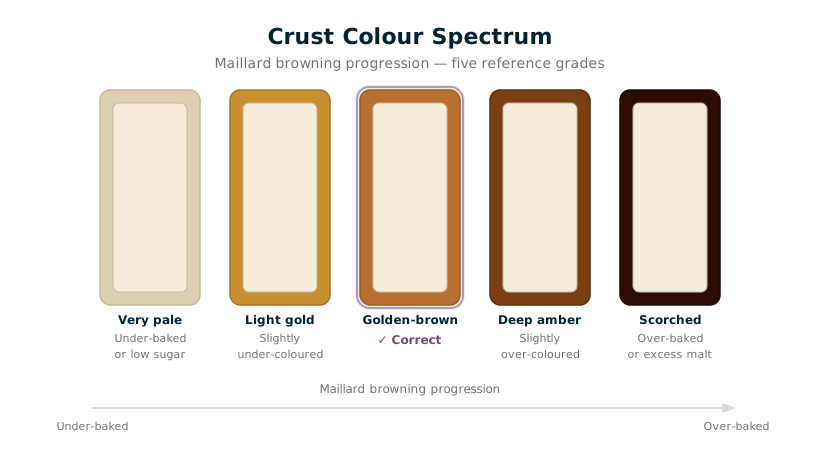 Five bread slices arranged in a row showing crust colour progression from pale undercoloured on the left, through ideal golden-brown in the centre, to dark scorched on the right
5.1 Pale crust
Cause: Insufficient Maillard reaction — requires reducing sugars (glucose, fructose) plus heat. Three scenarios: (a) oven too cool; (b) over-fermentation has exhausted residual sugars before the oven; (c) flour has a very high falling number (alpha-amylase-deficient) and no added malt to supply sugars.
Remedy: Increase oven temperature by 10–15°C; add diastatic malt at 0.5–1% on flour; reduce bulk fermentation time if dough is exhausted. Non-diastatic malt can contribute some Maillard substrate without adding enzyme activity.
5.2 Dark or scorched crust
Cause: The reverse problem — excess reducing sugars or excess oven temperature. The most important and often overlooked cause is low falling number flour: wheat harvested in wet conditions develops excess alpha-amylase from pre-germination (falling number below 200 s, and especially below 150 s), which degrades starch to reducing sugars at a rate that the Maillard reaction consumes rapidly. The result is a bread with a scorched crust that is still under-baked inside. Overdosed diastatic malt produces an identical fault.
Remedy: Check flour falling number — specification should be ≥200 s for bread flour. If the falling number is confirmed low, blend with a high-FN flour; reduce or eliminate diastatic malt addition; use non-diastatic malt for colour only.
5.3 Thick, leathery crust
Cause: Insufficient steam in the oven during the first phase of baking. Without steam, the surface of the dough sets rapidly by moisture loss before the full oven spring occurs, producing a thick, brittle or leathery crust. The same fault results from an oven that is too cool, forcing a long bake.
Remedy: Inject steam during the first 5–15 minutes (product-dependent); increase oven temperature to the correct starting point; verify proof humidity was adequate (a dry-proofed loaf develops a skin before it enters the oven, compounding the problem).
5.4 Blistered crust
Cause: Condensation on the dough surface. Most commonly seen when cold retarded doughs emerge from the retarder and go directly into a warm proof without a recovery period — condensation from the warm cabinet air settles on the cold surface and creates tiny blister pockets. Also triggered by excessive proof humidity causing water droplets to settle on the dough surface.
Remedy: Allow retarded doughs to rest at ambient temperature for 10–20 minutes before entering the warm proof. Control proof humidity to target (75–85% RH); ensure proof cabinet does not drip condensate.
5.5 Flying top (tin loaf)
Cause: Over-proof in the tin allows gas pressure to build beyond what the gluten film at the weakest point — the top surface — can contain. The lid of the forming crust detaches from the main body during oven spring.
Remedy: Reduce final proof to ~75–80% tin fill (not 100% before baking). Increase ascorbic acid level so gluten has greater gas-holding capacity. Check that tins are at ambient temperature (cold tins cause condensation on the lower surface of the crust, weakening it).
6. Crumb defects
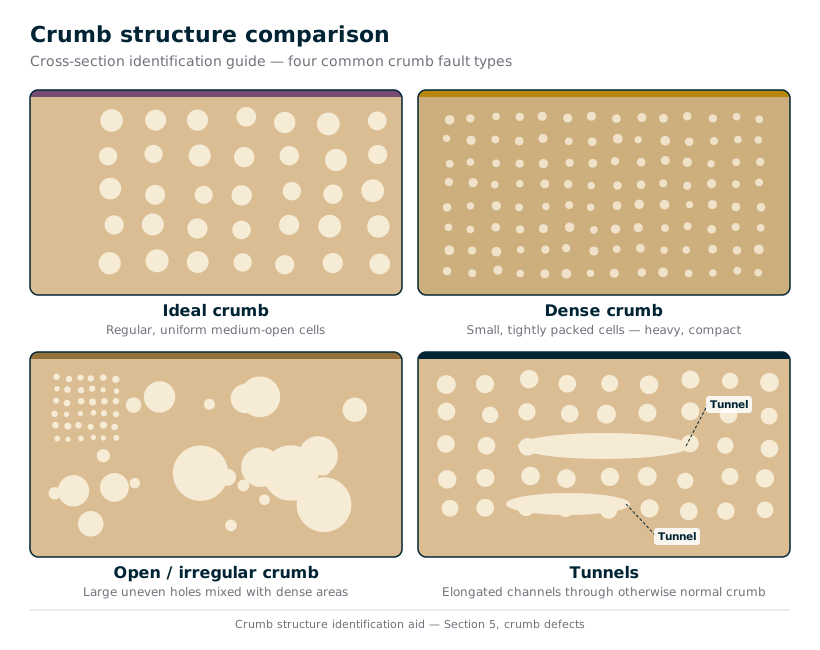 Four close-up bread crumb cross-sections showing ideal even cell structure, dense close crumb, open irregular crumb with large holes, and tunnels
6.1 Dense or close crumb
Cause: A dense crumb with uniformly small cells is the result of insufficient gas production or insufficient gluten gas retention. Under-mixing, under-fermentation, inactive yeast or weak flour can each produce this fault.
Remedy: Follow the first-line checklist. In high-fibre or rye-wheat doughs, bran particles physically cut the gluten network — VWG addition compensates. The Zeelandia Rye Stabil Improver (78% wheat gluten, calculated dosage ~2.7% on flour from the application recipe) provides substantial structural protein for rye-dominant doughs where this fault is endemic without VWG support.
6.2 Open or irregular crumb
Cause: Large irregular holes indicate over-fermentation (gluten weakened by acid and protease), poor degassing during moulding, or excessive dough hydration.
Remedy: Improve moulding — ensure thorough degassing before final shape, with firm consistent pressure. Reduce bulk fermentation by 15–20 minutes. Reduce hydration by 2–3% if the flour's absorption has been misjudged.
6.3 Tunnels
Cause: Almost always a moulding fault — a pocket of gas is folded into the dough during shaping and forms a large channel as it expands in the oven. Salt crystals on the dough surface (from late or uneven addition) can also create localised gluten-kill spots that appear as tunnels.
Remedy: Degas firmly before moulding; never apply salt directly to the dough surface outside the mixer; ensure intermediate bench rest (5–15 minutes) between dividing and final moulding. Tunnels are a process fault — no improver or ingredient change can compensate for poor moulding.
6.4 Sticky or gummy crumb
This is one of the most diagnostic-rich faults because it has two distinct root causes that present identically and require opposite ingredient responses.
Cause A — Under-baked: Core temperature did not reach 95°C; starch gelatinisation is incomplete. The remedy is simply more heat or more baking time.
Cause B — Low falling number: The flour has excess alpha-amylase (falling number <200 s), which degrades starch to dextrins during the baking process faster than the starch can fully set. The crumb remains sticky even in a correctly baked loaf. The same fault occurs with overdosed diastatic malt.
Diagnostic step: Check flour falling number before changing any ingredient. If falling number is confirmed normal (>200 s), investigate baking temperature and time. If falling number is confirmed low (<200 s), change the flour specification or blend; do not attempt to fix this with longer baking.
Additional cause: Bread sliced before cooling to ≤35°C — condensation from residual internal steam re-moistens the crumb.
6.5 Streaked or mottled crumb
Cause: Uneven mixing — dry pockets of flour or undissolved salt produce areas of different texture and colour. Excess improper dosage causing over-oxidation in some areas while other areas remain normal.
Remedy: Check mixing sequence; dissolve salt in water before addition if problem persists; verify improver is fully incorporated; adjust mixing time.
7. Shape and structural defects
7.1 Spreading and splay
Cause: The dough piece loses its shape during proof or baking, spreading outward rather than rising. Over-proof is the primary cause; insufficient salt, excessively high hydration, and weak gluten (too little ascorbic acid or protein) are contributing causes.
Remedy: Reduce proof time; reduce hydration by 2–3%; increase ascorbic acid via improver; verify salt is at 1.8–2.0% on flour. For rye-wheat doughs, Zeelandia Optimax Free (50% wheat gluten, ~1.7% dosage on flour) and Rye Stabil Improver (78% wheat gluten, ~2.7% dosage) both provide structural support in the absence of natural gluten.
7.2 Flat top on tin bread
Cause: Under-proof — insufficient gas volume before the oven. Dough too cold. Tins overfilled so the dough hits the lid before it can dome.
Remedy: Extend proof; verify dough temperature; check tin fill level.
7.3 Uneven bloom or one-sided burst
Cause: Inadequate or absent scoring; uneven oven heat distribution. Gas always finds the path of least resistance — an unscored seam or an area of weak crust.
Remedy: Score deeply and cleanly with a sharp blade immediately before loading; check oven temperature uniformity; rotate loaves in uneven ovens.
8. Staling
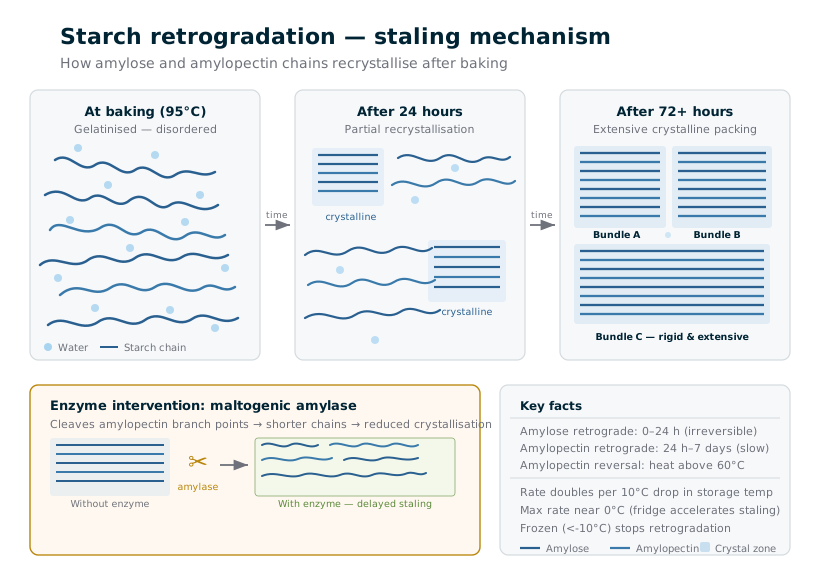 Molecular diagram showing starch chains in three states: gelatinised at point of baking (disordered, open), beginning to retrograde at 24 hours (partial recrystallisation), and fully retrograded at 72+ hours (rigid crystalline regions)
Bread staling is primarily caused by starch retrogradation — the recrystallisation of amylose and amylopectin chains after gelatinisation during baking. Amylose retrogradation occurs within hours; amylopectin retrogradation is slower, operating over days and driving the progressive firming perceived as staling.
The critical insight for remedy: staling is most rapid between 0°C and 10°C. Bread stored in a refrigerator stales several times faster than bread stored at room temperature. Conversely, bread frozen at -18°C retrogrades extremely slowly and retains soft crumb quality well.
Rapid staling within 24 hours
Causes: No anti-staling ingredients in the formula; no fat; insufficient dough hydration.
Ingredient remedies:
- Maltogenic amylase: The primary anti-staling tool — this enzyme modifies amylopectin in a way that interferes with retrogradation at bread storage temperatures. It must be present before baking to act during starch gelatinisation.
- MDG E471 (mono- and diglycerides): Forms inclusion complexes with amylose chains, preventing their recrystallisation. Effective at 0.3–0.5% on flour.
- Fat/shortening: At 1–3% on flour lubricates the starch matrix and slows moisture loss.
- Fats + emulsifiers work best together; neither alone gives the same extension as the combination.
Cereform Stafresh SG Crumb Softener and Cereform Stasoft Bread Improver are both designed for this application.
9. Microbiological spoilage
Food safety: Microbiological spoilage of bread is a food-safety matter. Any batch showing rope symptoms or unexplained mould must be quarantined and not sold. Consult a food safety adviser before resuming production.
9.1 Mould
Mould on bread is almost always a post-baking contamination event, not a baking failure. The crust surface of correctly baked bread is effectively sterile. Mould growth between baking and display or packaging indicates: (a) contaminated cooling equipment or slicers; (b) bread packaged while still warm, creating condensation in the wrapper; or (c) high ambient spore load in the cooling area.
Process remedies: Cool bread fully to ≤35°C core before slicing or packaging; clean slicing and packing equipment on every shift.
Ingredient remedy (pre-packaged bread only): Calcium propionate E282 is the standard mould inhibitor for packaged bread. BAKERpedia gives a typical usage range of 0.1–0.3% on flour weight (0.3% is the upper end of usage levels). Regulatory note: (a) The EU/UK regulatory limit for E282 is expressed on the finished product weight (EU: 3000 mg/kg under Regulation (EC) 1333/2008 Annex II), not on flour weight — reconcile the flour-weight figure with the applicable finished-product limit before use. (b) In many EU markets preservatives are only permitted in specific pre-packaged bread categories; fresh unpackaged bread sold the same day may not be a permitted application. Verify against Regulation (EC) 1333/2008 Annex II for the applicable food category and national regulations before use.
9.2 Rope (Bacillus subtilis / B. mesentericus)
Rope is a more serious and less common spoilage that bakers in warm climates or summer months may encounter. It is caused by Bacillus spores that survive baking — these spores are among the most heat-resistant biological structures commonly found in flour and bakery environments, and they survive even a correctly baked loaf. At warm temperatures (>25°C) and during slow cooling, the surviving spores germinate and their proteases and amylases rapidly degrade the crumb into the characteristic sticky, thread-pulling mass with a sweet over-ripe odour.
Signs of rope: When two pieces of crumb are pulled apart, fine sticky threads (1–3 cm long) stretch between them. Crumb is discoloured (yellow-brown) and has an unusual sweet/overripe smell before the visible thread-pulling stage.
Process remedies:
- Ensure core temperature ≥95°C at end of bake.
- Deep-clean all equipment, especially bread trays and proofers, where Bacillus biofilms can establish.
- Cool bread rapidly — rope develops faster in slow-cooling, densely stacked bread.
Ingredient remedies:
- Lower dough pH: Bacillus is strongly inhibited below pH 5.0. Adding sourdough concentrate or acetic acid to lower the pH is the most effective biological control.
- Calcium propionate E282 in pre-packaged products (see mould section above for regulatory caveat).
10. Flavour defects
10.1 Bland or tasteless bread
Bread flavour is generated by fermentation (volatile acids, esters, alcohols from yeast and lactic acid bacteria) and by Maillard reaction in the crust (hundreds of volatile aromatic compounds). A straight-dough process with a short fermentation time of 45–90 minutes generates relatively few volatiles.
Remedies: Extend bulk fermentation; introduce a preferment (poolish, biga) taking 8–16 hours at 18–20°C; add a sourdough concentrate. In the Domson catalogue, the Aromaferm Wheat & Malt Ferment 110, Böcker Bio Le Chef Organic Liquid Sourdough, and Sourdough Dry all provide fermentation-derived flavour addition without extending the bakery's own process time. Verify salt is at 1.8–2.0% on flour — salt is a flavour enhancer, and below 1.5% bread consistently tastes flat.
10.2 Unintentional sourness
Cause: Over-fermentation or excessive sourdough addition. Organic acids — particularly acetic acid — accumulate beyond the intended level and dominate the flavour. Fermentation at high temperature (>28°C) shifts the balance toward acetic over lactic.
Remedy: Reduce bulk fermentation time; lower fermentation temperature; reduce sourdough concentrate dosage.
10.3 Yeasty or fermentation odour
Cause: Excessive yeast dosage; high fermentation temperature; over-proof (the bread's CO2 and aroma compounds are largely expelled before the oven, leaving primarily yeast autolysis by-products).
Remedy: Reduce yeast to minimum effective dosage; lower fermentation temperature to 26–28°C; adjust proof.
10.4 Chemical or harsh aftertaste
Cause: Excess improver dosage (particularly oxidant or reducing agent residue); water with high mineral content (sulphates); inaccurate weighing of functional ingredients.
Remedy: Verify all ingredients are weighed accurately; review improper dosage against the spec sheet recommendation; check water quality.
11. The improver toolkit — addressing faults with catalogue products
The seven most common production faults and the catalogue products most likely to correct them are in the comparison table below. In summary:
Low volume in wheat breads: Zeelandia Gamma GP (0.5–2% on flour, depending on product type) provides ascorbic acid E300 plus enzyme support. At 0.5% it is a light support for white tin bread; at 2% it delivers meaningful structural assistance for crusty rolls and wholemeal.
Structural weakness in rye-wheat doughs: Zeelandia Rye Stabil Improver (78% wheat gluten, ~2.7% on flour) and Optimax Free (50% wheat gluten, ~1.7% on flour) both substitute the gluten network that rye flour cannot provide. Application recipe for Rye Stabil: dough temperature 28°C, pre-fermentation 30 minutes, final proof 60 minutes, bake at 240°C down to 210°C. Application recipe for Optimax Free: dough temperature 28°C, first proof 15 minutes, final proof 50 minutes, bake at 250°C down to 230°C.
Rapid staling: Cereform Stafresh SG Crumb Softener (maltogenic amylase + emulsifier package) or Cereform Stasoft Bread Improver.
Poor dough tolerance on a production line: An improver with emulsifiers (DATEM E472e, SSL E481) widens the proof window so that pieces that sit in the prover slightly too long or short still produce acceptable loaves. Puratos S500 Tolerance CL Bread Improver is specifically positioned for this application.
For full product-level selection guidance see the sister article A3 — Improver Selection Guide.
12. First-line diagnostic checklist
Before changing any recipe or ingredient, work through this eight-point check. Most recurring faults are resolved at this stage:
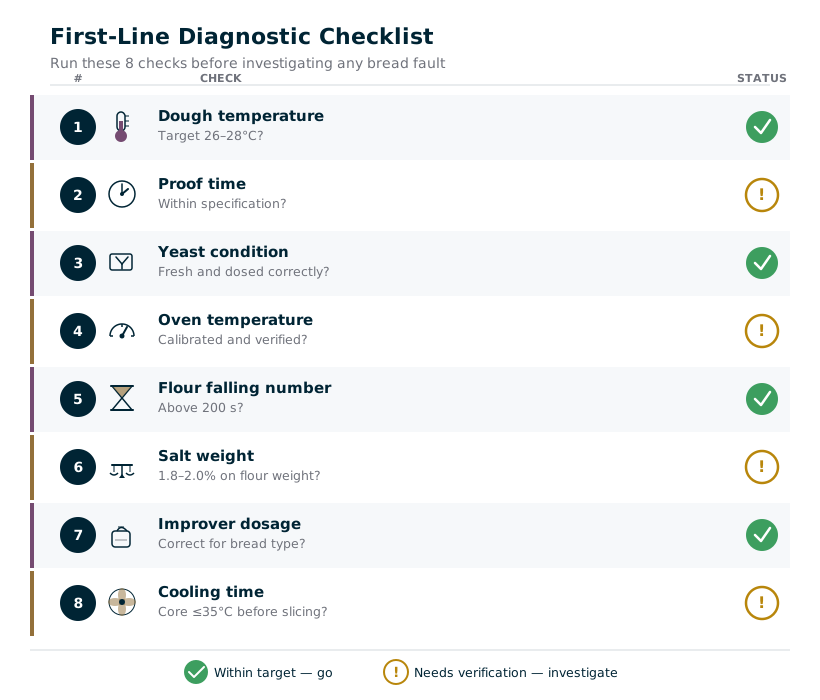 Eight-point diagnostic checklist infographic for bread faults: check dough temperature, check proof time, check yeast freshness, check oven temperature, check flour falling number, check salt weight, check improver dosage, check cooling time
| # | Check | Target | Common fault if wrong |
|---|---|---|---|
| 1 | Dough temperature after mixing | 26–28°C for wheat bread | Low volume (too cold); over-fermentation (too hot) |
| 2 | Proof time | Per recipe; finger-dent test correct | Dense or collapsed crumb |
| 3 | Yeast freshness and dosage | Cream-coloured, elastic; dosed per recipe | Flat volume, bland flavour |
| 4 | Oven temperature (calibrated) | Per recipe start temperature | Pale or dark crust; under-baked crumb |
| 5 | Flour falling number | ≥200 s (bread flour) | Sticky/gummy crumb; dark crust |
| 6 | Salt weight | 1.8–2.0% on flour | Bland (low); dense/yeasty (high) |
| 7 | Improver dosage | Per spec sheet for bread type | Variable: depends on product |
| 8 | Cooling before slicing | Core ≤35°C before cutting | Sticky crumb; mould in packaging |
Coverage notes and gaps
Solid:
- Volume, crust, crumb and shape fault mechanisms are well-evidenced across three independent high-reliability sources (IREKS Compendium, BAKERpedia, Ardent Mills guide).
- Staling mechanism (starch retrogradation) confirmed by Modernist Cuisine and Bakels (two independent sources).
- Spec sheet data for Gamma GP, Optimax Free and Rye Stabil Free cross-checked directly from first-party PDFs.
Thin:
- Rope and mould dosage guidance for calcium propionate is single-source (BAKERpedia). Regulatory limits require verification against Regulation (EC) 1333/2008 Annex II.
- Rye-specific fault modes (gummy crumb from rye, collapsed structure without sourdough) are touched on here but are covered in depth in A2 — Rye Sourdough Multi-Stage.
- Quantitative improvement data (e.g. "adding Gamma GP at 1% increases volume by X%") is not available in the sources consulted — suppliers cite this qualitatively only.
- Falling number threshold of 200 s is cited from Ardent Mills and BAKERpedia/AHDB (also cited in sibling article A1-key-quality-parameters) — consistent across sources but the 200 s target is a guide, not an absolute; millers and bakers adjust to specific flour types and applications.
Follow-up recommended:
- Obtain spec sheets for Cereform Stasoft, Stafresh and Puratos S500 Tolerance CL to cite product-specific anti-staling data directly.
- Read EU Regulation 1333/2008 Annex II category 07.1 for confirmed calcium propionate and other preservative regulatory limits in bread.
Figures
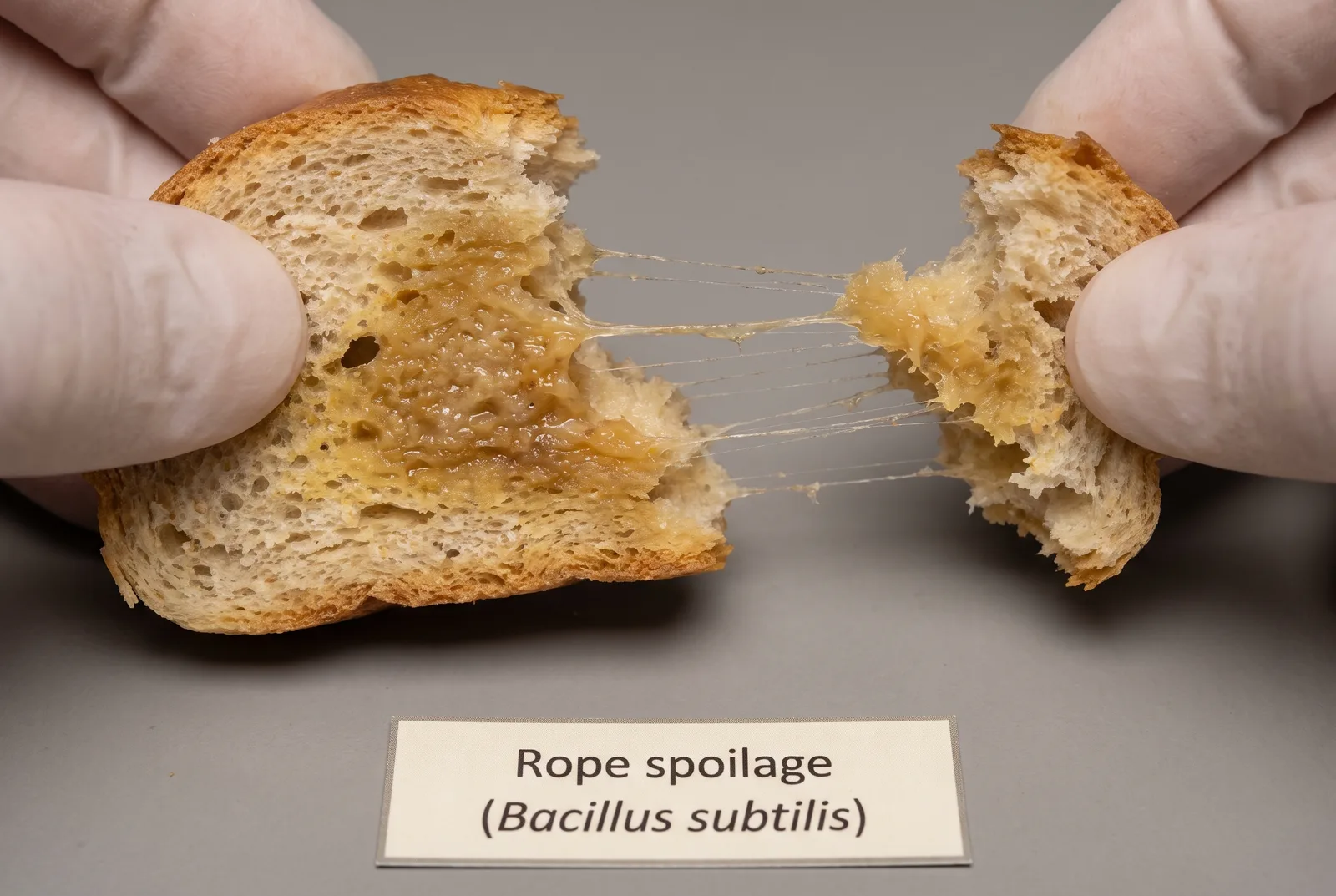 Close-up photograph of bread crumb showing rope spoilage: sticky discoloured crumb with fine threads stretching between two pieces being pulled apart
Representative targets used by professional bakers. Values are ranges drawn from IREKS Compendium, BAKERpedia and Craft Bakers Association guidance. They are not universal — adjust to your specific flour, equipment and formulation. Single-source figures noted.
| Parameter | White tin / bloomer | Soft roll / burger bun | Rye-wheat (50%+ rye) | Sourdough / long-ferment |
|---|---|---|---|---|
| Dough temperature after mixing (°C) | 26–28 | 26–28 | 28–30 | 24–26 |
| Salt on flour weight (%) | 1.8–2.2 | 1.6–2.0 | 1.8–2.2 | 1.8–2.2 |
| Fresh yeast on flour weight (%) | 1.5–3.0 | 3.0–5.0 | 2.0–3.0 (plus sourdough) | 0.1–0.5 |
| Bulk fermentation time (min) at 27°C | 45–90 | 30–45 | 15–30 (after sourdough addition) | 180–480+ |
| Final proof temperature (°C) | 35–40 | 35–38 | 35–38 | 18–30 (depending on method) |
| Final proof relative humidity (%) | 80–85 | 80–85 | 80–85 | 70–85 (open proofing varies) |
| Initial oven temperature (°C) | 220–240 | 200–215 | 240–260 falling | 240–260 falling |
| Steam injection | First 2–5 min, then vent | Usually none or minimal | First 5–10 min, then vent | First 15–20 min then vent |
| Core internal temperature at end of bake (°C) | ≥95 | ≥90 | ≥96 | ≥96 |
Practical mapping of common production faults to the improver or ingredient most likely to correct them. This is a guide, not a guarantee — root cause must be confirmed before changing formulation.
| Fault | Primary ingredient solution | Domson catalogue product(s) | Confidence |
|---|---|---|---|
| Low volume / poor oven spring | Ascorbic acid (E300) + enzyme (xylanase/amylase) | Zeelandia Gamma GP 12.5 kg (0.5–2%); IREKS Voltex 25 kg (1–2%) | high — two sources confirm oxidant → volume link |
| Weak gluten / spreading rye dough | Vital wheat gluten (VWG) improver | Zeelandia Rye Stabil Improver 25 kg (~2.7%); Optimax Free Bread Improver 20 kg (~1.7%) | high — confirmed in spec sheet recipes and an independent source |
| Rapid staling / firm crumb by day 2 | Maltogenic amylase + MDG E471 | Cereform Stafresh SG Crumb Softener 12.5 kg; Cereform Stasoft Bread Improver 16 kg | high — two independent sources cite maltogenic amylase for anti-staling |
| Dough tears on moulding / too tight | Dough relaxer (L-cysteine or inactive yeast GSH); or reduce oxidant dose | Bakels Relax Dough Relaxer (listed in sister article A3-what-is-a-bread-improver) | high (single source) |
| Dense crumb in wholemeal / high-fibre | VWG + xylanase enzyme | Zeelandia Gamma GP 12.5 kg at 2%; or IREKS Voltex 25 kg with VWG addition | medium — two independent sources agree on mechanism; dosage optimisation required |
| Pale crust / insufficient Maillard colour | Diastatic malt (adds fermentable sugars) at 0.5–1% on flour; or dextrose addition | Refer to A3-malt-and-malt-extracts for malt product range | high — two independent sources confirm mechanism |
| Mould in packaged bread | Calcium propionate E282 / potassium sorbate E202 (pre-packaged only) | Refer to A3-preservatives-shelf-life; check regulatory limits before use | high — two independent sources confirm; regulatory compliance required |
Faults affecting the overall size and structure of the loaf.
| Fault | Visual signs | Root causes | Process remedies | Ingredient remedies | Confidence |
|---|---|---|---|---|---|
| Insufficient volume / flat loaf | Loaf does not fill tin; flat top; dense crumb when sliced | Under-mixing — gluten network not developed enough to trap gas,Insufficient yeast or dead/inactive yeast,Under-proof — fermentation ended too early,Dough temperature too cold (<24°C) slowing yeast activity,Excessive salt (>2.5% on flour) inhibiting yeast,Weak flour (protein <10% for bread applications),Improper improver dosage or wrong product | Verify mixing time and speed — dough should pass windowpane test,Check yeast activity (fresh yeast should be cream-coloured, elastic, no grey patches),Extend final proof to correct level (typically 80% of tin fill for tin bread),Raise dough temperature to target 26–28°C,Verify salt is weighed accurately; never allow salt direct contact with yeast | Add ascorbic acid / increase improver dosage to strengthen gluten,Add VWG if flour protein is marginal,Switch to higher-protein flour (bread flour ≥12% protein) | high |
| Excessive volume / collapsed or flown top | Loaf 'blows out' the tin lid; top collapses after baking; large irregular holes near top of crumb | Over-proof — fermentation pushed beyond the dough's structural capacity,Excessive yeast dosage,Proof temperature too high (>42°C accelerates beyond control),Insufficient gluten strength (too little oxidant) allows gas to escape under pressure,Excessive dough hydration for the flour | Reduce final proof time or lower proof temperature,Monitor proof using the finger-dent test (dough springs back slowly but completely),Ensure proof cabinet temperature does not exceed ~38°C for tin bread | Check improver dosage — increase ascorbic acid level to strengthen gluten,Reduce yeast to minimum effective dosage,Reduce water by 1–2% to tighten dough | high |
Faults affecting colour, texture and structure of the crust.
| Fault | Visual signs | Root causes | Process remedies | Ingredient remedies | Confidence |
|---|---|---|---|---|---|
| Pale crust — insufficient colour | Crust is grey-white or straw coloured; no golden-brown Maillard development | Oven temperature too low,Baking time too short,Insufficient residual sugars — over-fermented dough exhausts sugars before oven,Low diastatic activity in flour (high falling number → amylase-deficient flour) — insufficient sugar production from starch,No malt or dextrose addition where flour lacks natural sugar | Increase oven temperature by 10–15°C,Extend baking time,Reduce bulk fermentation time to retain residual sugars | Add diastatic malt at 0.5–1% on flour to supply amylase and fermentable sugars,Add dextrose (0.5–1% on flour) as Maillard substrate,Review improver for malt content | high |
| Dark or scorched crust — excessive colour | Crust deep brown to black; bitter taste; colour develops too quickly before loaf is baked through | Oven temperature too high,Excessive diastatic malt overdose — produces excess reducing sugars that over-drive Maillard,Low falling number flour (excess endogenous alpha-amylase from sprouted wheat) — identical effect to malt overdose,Excessive dextrose or sugar in formula,Very long baking time at moderate temperature | Reduce oven temperature 10–15°C,Check falling number — target >200 s for bread flour; if below 150 s, blend with high-FN flour,Shorten baking time if heat penetration is adequate | Reduce diastatic malt dosage — switch to non-diastatic malt for colour/flavour without enzyme risk,Reduce dextrose/sugar addition,If low-FN flour is the cause, blend with flour of higher falling number | high |
| Thick, leathery or tough crust | Crust is noticeably thick relative to crumb; hard and chewy; lacks the shatter of a good crust | Insufficient steam at start of bake — surface sets before full oven spring,Oven temperature too low — bread bakes slowly, drying the crust,Over-proof before baking — gluten already exhausted so oven spring is limited and crust stays thick,Dry proof (humidity too low) forming a skin on surface | Inject steam for the first 5–15 minutes of baking (depending on product type),Increase oven temperature to achieve rapid surface gelatinisation,Monitor proof humidity — target 75–85% RH | Fats in formula (at 1–3% on flour) help retain crust moisture; review fat level,Emulsifiers in improver assist moisture distribution | high |
| Blistered crust | Small to medium bubbles on the crust surface; may break during baking to leave shallow craters | Condensation on dough surface — most common when cold retarded dough enters warm proof or oven with inadequate warm-up,Over-proof — gas accumulates unevenly beneath a tightening surface,Steam applied too late or unevenly,Excessive proof humidity causing water droplets to settle on surface | Allow retarded doughs to recover at ambient temperature for 10–20 minutes before proof,Control proof humidity; avoid dripping condensate,Adjust steam timing and distribution in oven | Review oxidant level — insufficient ascorbic acid leaves gluten weak and unable to resist surface blistering under pressure | high |
| Flying top (tin loaf lid lifts and separates) | A gap or tear forms between the top crust and the body of a tin loaf; looks like the lid has lifted off | Over-proof in tin — fermentation continues after tin is filled and gas pressure exceeds gluten capacity at the weakest point (top surface),Tin too cold at time of filling, causing condensation that weakens the surface,Insufficient gluten strength relative to gas production,Oven spring too vigorous due to insufficient proof (ironically, flying top can also occur with under-proof when oven spring is extreme) | Reduce final proof time to ~75–80% fill for tin bread (not 100% before baking),Ensure tins are at ambient temperature before filling,Ensure adequate scoring or venting on open-top tin loaves | Increase oxidant/ascorbic acid level to give gluten greater gas-holding capacity,Check that improver contains adequate emulsifier (DATEM/SSL) for dough tolerance | high |
Faults affecting the internal texture, colour and structure of the crumb.
| Fault | Visual signs | Root causes | Process remedies | Ingredient remedies | Confidence |
|---|---|---|---|---|---|
| Dense / close crumb | Cell structure small and uniform but lacks openness; loaf feels heavy relative to size; slices compact rather than springy | Under-mixing — gluten not developed enough to stretch and trap gas,Insufficient fermentation time or too cold proof,Insufficient yeast or inactive yeast,Excessive salt inhibiting yeast,Flour protein too low for yeast-raised bread,Improper or absent improver | Extend mixing time; verify final dough temperature 26–28°C,Increase proof time or raise proof temperature by 2–3°C,Check yeast freshness — fresh compressed yeast should foam actively in warm water within 5 minutes | Add or increase bread improver (ascorbic acid + enzyme package),Add VWG if flour protein is marginal or bread contains high-fibre inclusions,Reduce salt if at or above 2.2% on flour | high |
| Open / irregular crumb with large holes | Crumb has large, uneven holes interspersed with dense areas; looks torn rather than uniformly open | Over-fermentation — gluten has been weakened by protease activity during extended fermentation,Poor degassing / moulding — gas pockets not redistributed evenly,Dough hydration too high for the flour's absorption capacity,Excessive yeast producing gas faster than the gluten can redistribute it evenly | Tighten moulding technique — ensure even degassing before final shape,Reduce bulk fermentation time,Reduce dough hydration by 2–3% | Increase oxidant (ascorbic acid) to strengthen gluten against protease weakening during fermentation,Reduce yeast dosage | high |
| Tunnels — isolated large holes | One or a few large elongated holes in the crumb, often running horizontally; distinct from the general cell structure | Trapped air pockets during moulding — dough folded over itself enclosing a pocket of gas,Salt not properly incorporated — salt crystals on the dough surface dissolve and create local gluten-kill spots which become holes,Improper intermediate proof or skipped rest — dough tears on final moulding, trapping air | Improve degassing and moulding technique — degas firmly before rolling,Always incorporate salt in the mixing bowl, never on the dough surface,Ensure intermediate proof rest (bench rest) of 5–15 minutes between dividing and final moulding | No specific ingredient fix — tunnels are almost always a process fault | high |
| Sticky or gummy crumb | Crumb collapses under light pressure and sticks to the knife when sliced; slices tear rather than cut cleanly; unpleasant moist or rubbery texture | Under-baked — core temperature did not reach ≥95°C, starch not fully gelatinised,Excessive alpha-amylase activity: low falling number flour (<200 s) or overdosed diastatic malt — amylase continues degrading starch during baking, producing dextrins that remain sticky,Sliced too hot — bread sliced before internal temperature fell to ≤35°C; steam condenses in the crumb,Very high dough hydration without adjustment for starch absorption | Measure core temperature with probe — must reach ≥95°C for standard bread,Check falling number of flour — if <200 s investigate the wheat supply; if <150 s seek alternative flour or blend,Cool bread fully to ≤35°C internal before slicing | Reduce or eliminate diastatic malt addition if falling number is already adequate,Switch to non-diastatic malt for colour/flavour only,Specify flour with falling number >200 s in purchasing | high |
| Streaked, mottled or grey crumb | Dark or pale streaks running through the crumb; uneven colour; patches of different texture | Uneven mixing — pockets of dry flour or undissolved improver,Salt crystals incorporated too late or unevenly — local areas of high salt concentration inhibit yeast and affect gluten differently,Excessive oxidation from over-dosed improver — over-oxidised gluten appears dense and grey alongside normal areas,Enzyme-active soya flour (lipoxygenase) bleaching effect in excess — rare but possible | Check mixing sequence — add salt to flour (not directly on yeast); mix at low speed before adding liquid,Increase low-speed mixing time to ensure homogeneous dispersion | Review improver dosage — if over-dosed, reduce,If using dough relaxer (L-cysteine), ensure it is evenly dispersed | medium — some causes well-evidenced, soya-bleaching effect is single-source |
Faults affecting the external geometry and integrity of the baked loaf.
| Fault | Visual signs | Root causes | Process remedies | Ingredient remedies | Confidence |
|---|---|---|---|---|---|
| Spreading / splay (free-form loaves) | Loaf spreads outward during proof and baking instead of holding its shape; final product is wide and flat | Over-proof — gluten network relaxed beyond recovery,Dough hydration too high for the flour,Gluten too weak — insufficient oxidant, low-protein flour,Insufficient salt — salt stiffens dough and contributes to shape retention,Dough piece too warm at moulding | Reduce proof time,Reduce dough water by 2–3%,Tighten moulding — build surface tension in final shaping,Chill dough pieces slightly if ambient temperature is high | Increase ascorbic acid / oxidant level to tighten gluten,Add VWG if flour protein is borderline,Check salt is at 1.8–2.0% on flour — below 1.5% contributes to spreading | high |
| Flat top on tin bread (no crown) | The top surface of a tin loaf is flat or slightly sunken rather than domed; acceptable on some loaves but a fault on premium products | Under-proof — insufficient gas volume before oven,Dough too cold (insufficient fermentation rate),Yeast too old or insufficient,Tin overfilled — dough touches lid and is constrained | Extend proof time by 10–15 minutes,Raise proof temperature 2–3°C,Check tin fill level — overfilled tins produce flat or flying tops | Check yeast freshness,Increase yeast dosage if problem persists | high |
| Uneven bloom / one-sided burst | Bread bursts at the side or base rather than at the intended score; bloom is asymmetric | Inadequate or absent scoring — gas finds the weakest path,Uneven oven heat distribution — hotter side drives faster expansion,Uneven proof — one side of the loaf further developed than the other | Score bread deeply and cleanly with a sharp blade (lame) immediately before baking,Check oven heat distribution with a baking stone or temperature probe,Rotate loaves if oven is uneven | None directly — this is a process fault | high |
Faults relating to the speed and severity of crumb firming during storage. Primary mechanism is starch retrogradation.
| Fault | Visual signs / timeline | Root causes | Process remedies | Ingredient remedies | Confidence |
|---|---|---|---|---|---|
| Rapid staling — crumb firms within 24 hours | Crumb noticeably firmer by day 2; slices crack when bent; perceived dryness even though water activity has not changed | No anti-staling enzyme or insufficient maltogenic amylase in formula,No fat or MDG E471 in formula — both interfere with amylose recrystallisation,Low water absorption formula — lower hydration means less free water to buffer retrogradation,Storage below 10°C accelerates starch retrogradation (refrigerator is the enemy of bread crumb) | Store bread at room temperature (18–22°C), not in refrigerator,Package promptly after cooling to ≤35°C to retain moisture | Add maltogenic amylase via improver or specialist crumb softener product (e.g. Cereform Stafresh SG),Add MDG E471 (mono- and diglycerides) at 0.3–0.5% on flour as anti-staling emulsifier,Add fat/shortening at 1–3% on flour,Increase hydration by 1–2% if formula allows | high |
Faults caused by microbial growth. Always a food-safety concern. All microbiological spoilage observations require hygiene investigation before resuming production.
| Fault | Visual / sensory signs | Root causes | Process remedies | Ingredient remedies | Confidence |
|---|---|---|---|---|---|
| Mould — surface growth on bread | Fuzzy white, grey, green or black growth on crust or crumb surface; musty odour; typically appears 3–7 days post-bake in packaged bread | Post-bake contamination from airborne spores during cooling or slicing,Bread sliced or packaged while still warm (>35°C) — steam condenses on wrapper interior creating high-humidity environment,Bakery environment contaminated (slicing equipment, conveyor belts),Insufficient baking (under-baked loaf has higher water activity) | Cool bread to internal ≤35°C before slicing and packaging,Clean and sanitise slicers and packaging equipment on every shift,Maintain positive air pressure with HEPA-filtered air in the slicing area | Add calcium propionate E282 at 0.1–0.3% on flour weight for pre-packaged bread (BAKERpedia usage range, 0.3% is upper end; EU/UK regulatory limit is 3000 mg/kg on finished product weight per Regulation (EC) 1333/2008 — reconcile before use),Calcium propionate is compatible with yeast at normal dosages | high for process remedies; medium for dosage figure (single-source, BAKERpedia); verify regulatory compliance |
| Rope — internal sticky, thread-pulling crumb spoilage | Crumb becomes soft, discoloured (yellow-brown), develops a sweet overripe fruity odour, then turns stringy and sticky; when two pieces of crumb are pulled apart, sticky threads stretch between them | Bacillus subtilis or B. mesentericus spores survive baking — these spores require internal temperature well above 100°C to kill and may survive if bread is under-baked,Contaminated flour or water,Poor bakery hygiene — Bacillus builds up in mixing equipment, proofers, trays,Summer conditions (warm, humid) accelerate Bacillus growth in cooled bread | Ensure internal temperature of ≥95°C at bake end — use probe thermometer,Deep-clean all equipment, especially proofers and bread trays,Isolate and discard all affected batches — do not re-use contaminated packaging,Check water quality and flour supplier | Lower pH of dough by adding sourdough or acetic acid — Bacillus is strongly inhibited at pH <4.5,Add calcium propionate to pre-packaged bread formulation,Rope is a food safety issue — consult food safety authority before continuing production | high for mechanism and process remedies; rope suspected batches must not be sold |
Faults affecting taste and smell of the finished bread.
| Fault | Sensory description | Root causes | Process remedies | Ingredient remedies | Confidence |
|---|---|---|---|---|---|
| Bland / tasteless bread | Bread lacks complexity; flavour is flat and neutral; no fermentation character | Insufficient fermentation time — short straight-dough processes develop minimal volatile flavour compounds,Salt below 1.5% on flour — salt suppresses off-notes and enhances other flavours; without adequate salt bread tastes flat,No preferment, sourdough or malt addition,Over-proof exhausts sugars that would otherwise contribute to Maillard crust notes | Extend bulk fermentation by 30–60 minutes or introduce a preferment (poolish, biga),Verify salt is at 1.8–2.0% on flour | Add sourdough concentrate or fermented wheat flour (such as Aromaferm Wheat & Malt Ferment 110),Add non-diastatic malt extract for flavour without enzyme risk,Consider Böcker liquid sourdough products for consistent flavour addition | high |
| Sour / over-acidic flavour (unintentional) | Vinegary or sharp acid notes dominating; bread is unpleasantly tart even though it is not meant to be a sourdough | Over-fermentation — organic acids (lactic, acetic) accumulate beyond the intended level,Fermentation temperature too high — particularly above 30°C favours acetic acid production,Sourdough starter or concentrate overdosed,Contamination of yeast-only dough with sourdough organisms | Reduce bulk fermentation time,Lower fermentation temperature to 24–26°C,Clean and check equipment for sourdough cross-contamination | Reduce sourdough concentrate dosage,Switch to a less aggressive sourdough product | high |
| Yeasty / fermentation odour | Strong smell of raw yeast or alcohol; persists in the baked loaf; perceived as fermented rather than baked | Excessive yeast dosage — excess yeast dies in the oven and contributes autolysis by-products,Fermentation at high temperature (>30°C) — produces more alcohol and fewer balanced aromatics,Over-proof — most CO2 and aroma compounds lost before oven | Reduce yeast to minimum effective dosage,Lower fermentation temperature to 26–28°C | Consider switching from compressed yeast to instant dried yeast for easier dosage precision | high |
| Chemical or harsh aftertaste | Astringent, bitter or metallic note that lingers after swallowing; not related to fermentation | Improper improver dosage — excess oxidant (ascorbic acid) or excess reducing agent (L-cysteine) can leave perceptible residues,Baking powder or chemical leaveners used incorrectly,Mineral-flavoured water supply (high sulphate content) | Review water quality — use filtered or low-mineral water if required,Check weighing accuracy of all functional ingredients | Reduce improver dosage; verify correct product is in use,If L-cysteine is used as relaxer, reduce to minimum effective level | medium — multiple causes difficult to pin without testing |
- Parameters · Composition major:
- 50% WHEAT gluten, 39% RYE flour, 10% potato starch
- Parameters · Composition minor:
- <1% each: E300 (ascorbic acid, maize), enzyme, wheat flour, wheat starch
- Parameters · Dosage on flour calculated:
- ~1.7% (0.1 kg in 6.0 kg total flour per application recipe)
- Parameters · Protein g per 100g:
- 40.7
- Parameters · Shelf life days:
- 180
- Parameters · Storage:
- Below 25°C, up to 75% RH
- Parameters · Allergens confirmed:
- wheat gluten, rye
- Parameters · Allergens possible cross contamination:
- barley, oat, spelt, egg, soya, milk, sesame
- Parameters · Fault addressed:
- Structural weakness in rye-wheat doughs; insufficient gluten network
- Parameters · Composition major:
- 78% WHEAT gluten, 20% pre-gelatinised WHEAT flour
- Parameters · Composition minor:
- 1% wheat flour, 1% E300 (ascorbic acid, maize starch), <1% enzymes
- Parameters · Dosage on flour calculated:
- ~2.7% (0.2 kg in 7.3 kg total flour per application recipe)
- Parameters · Protein g per 100g:
- 60.8
- Parameters · Shelf life days:
- 270
- Parameters · Storage:
- Below 20°C, up to 70% RH
- Parameters · Allergens confirmed:
- wheat
- Parameters · Allergens possible cross contamination:
- rye, barley, oats, spelt, sesame, eggs, soya, milk, mustard
- Parameters · Fault addressed:
- High-value rye bread structural support; gluten substitution in rye-dominant formulas
- Parameters · Composition:
- WHEAT flour, rapeseed oil, E300 (ascorbic acid, maize-derived), enzyme [WHEAT]
- Parameters · Dosage white tin percent:
- 0.5–0.75
- Parameters · Dosage white bloomer percent:
- 1
- Parameters · Dosage soft rolls percent:
- 1.5
- Parameters · Dosage crusty rolls percent:
- 2
- Parameters · Dosage wholemeal percent:
- 2
- Parameters · Shelf life months:
- 12
- Parameters · Storage:
- Cool below 25°C, dry
- Parameters · Allergens confirmed:
- wheat
- Parameters · Allergens cross contamination:
- rye, barley, oats, spelt, egg, soya, milk, sesame, lupin
- Parameters · Protein g per 100g:
- 8.7
- Parameters · Fat g per 100g:
- 4.1
- Parameters · Fault addressed:
- General purpose: low volume, poor crust colour, poor dough tolerance in wheat breads
Buy the ingredients
Catalogue products and brands referenced in this article.
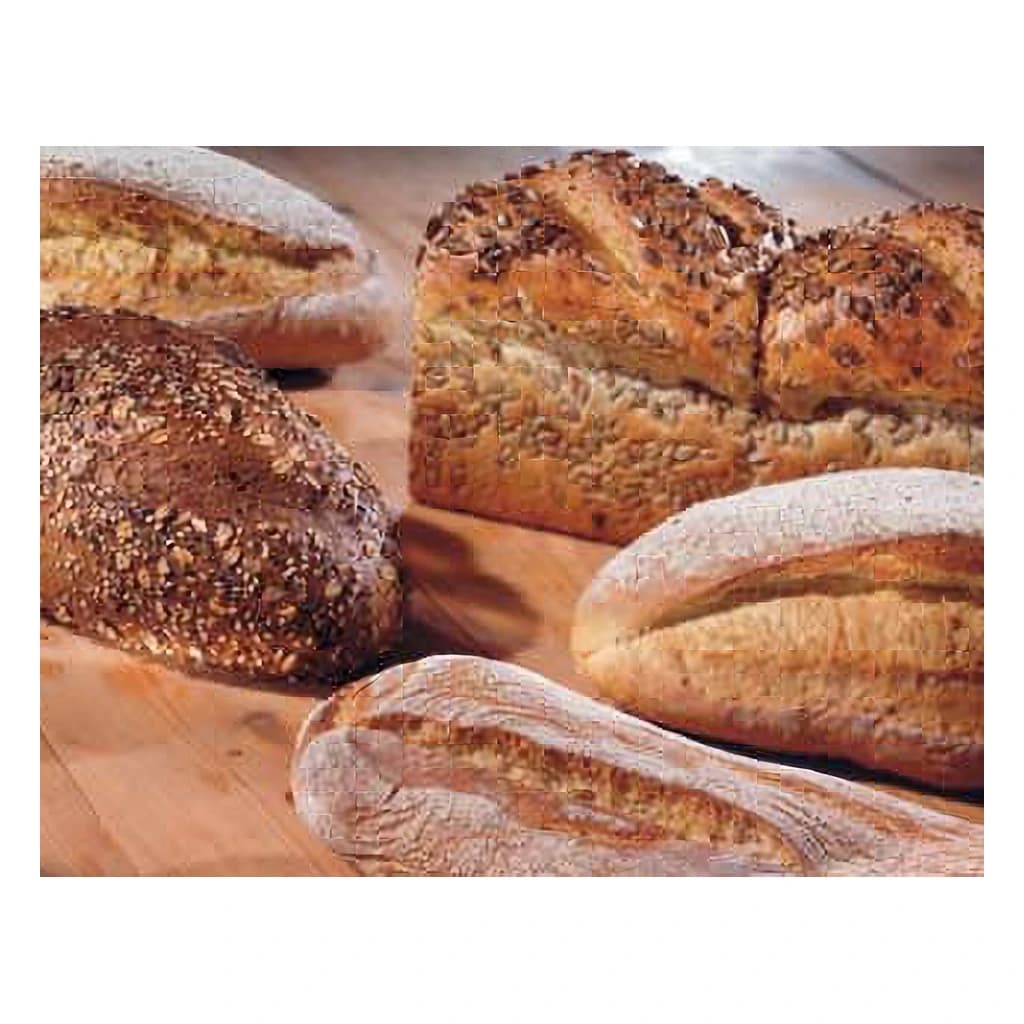
Superkwas Dry Sourdough 25 kg
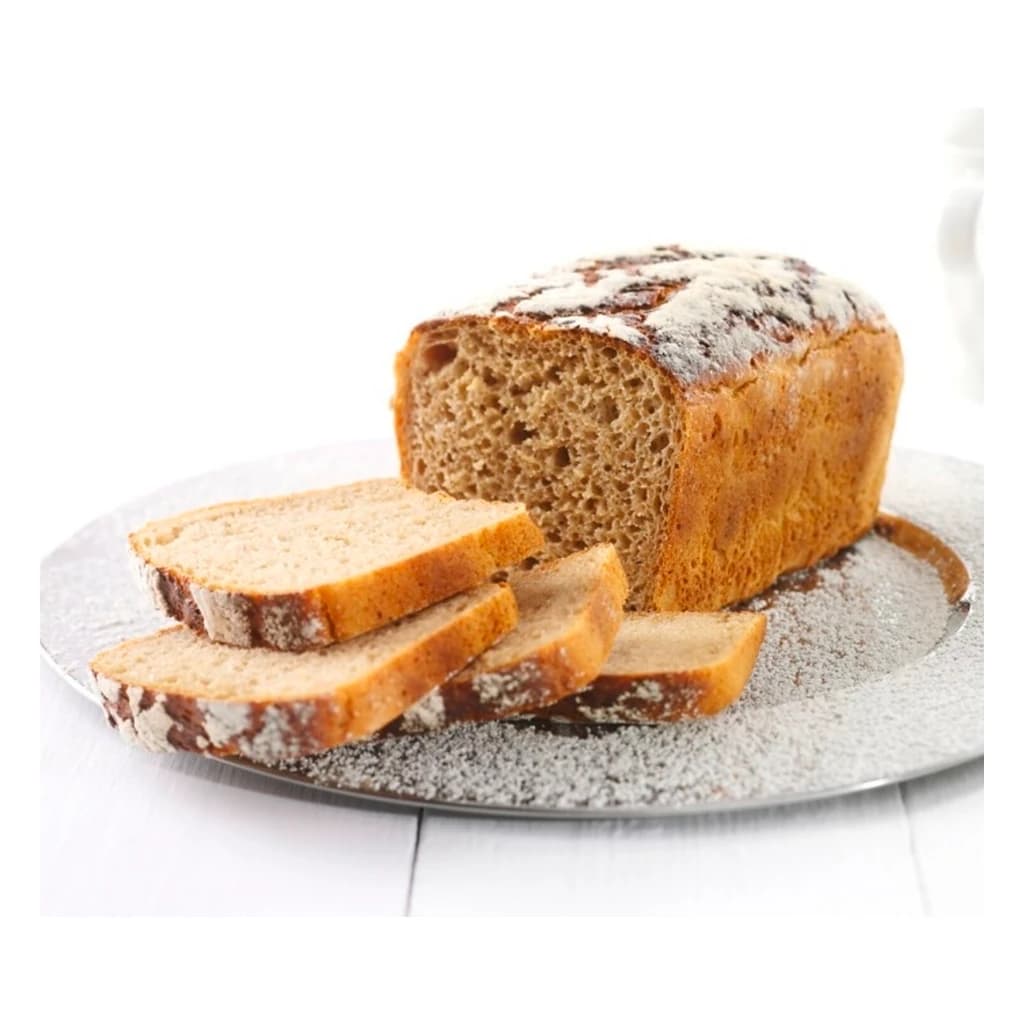
Optimax Free Bread Improver 20 kg
Sauer Dark Rye Sourdough Concentrate 25 kg
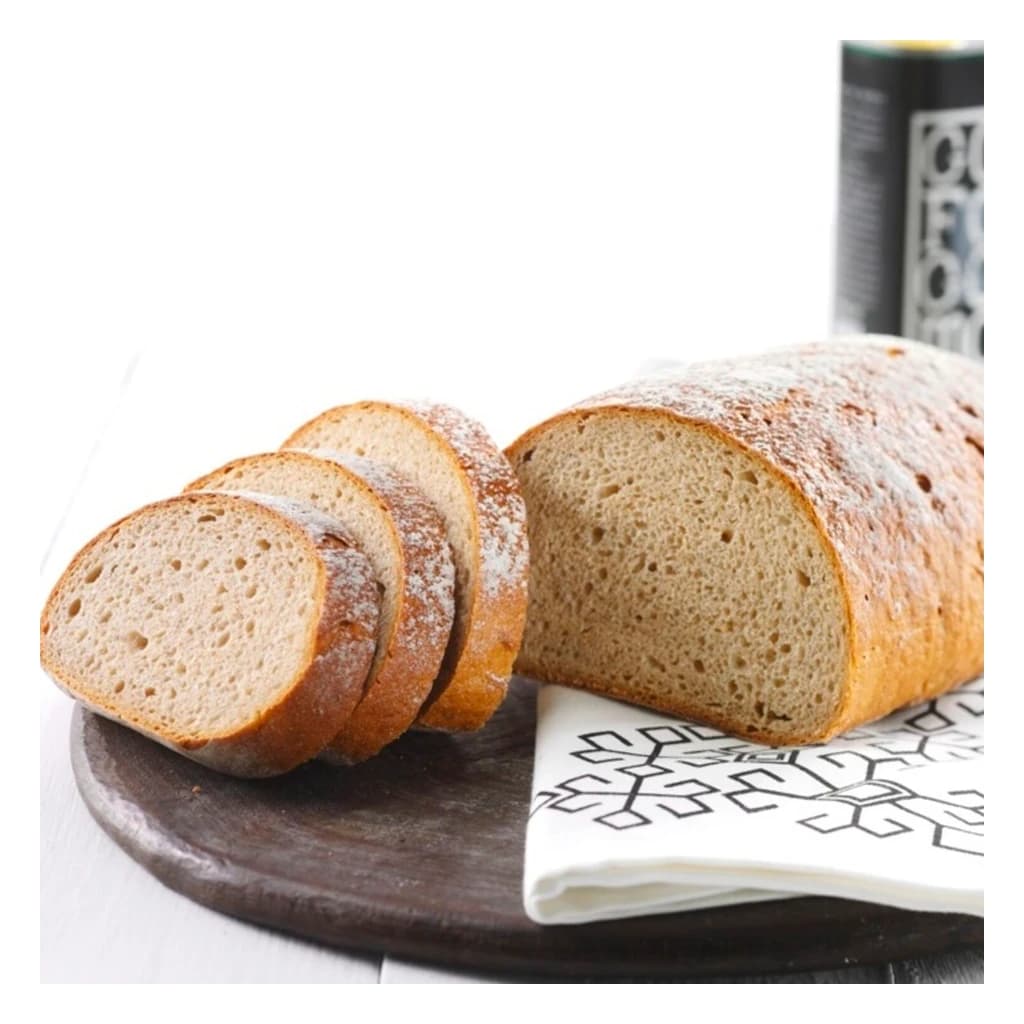
Rye Stabil Improver 25 kg
Intenso Extra Bread Improver 25 kg

Böcker Bio Le Chef Organic Liquid Sourdough 2 kg
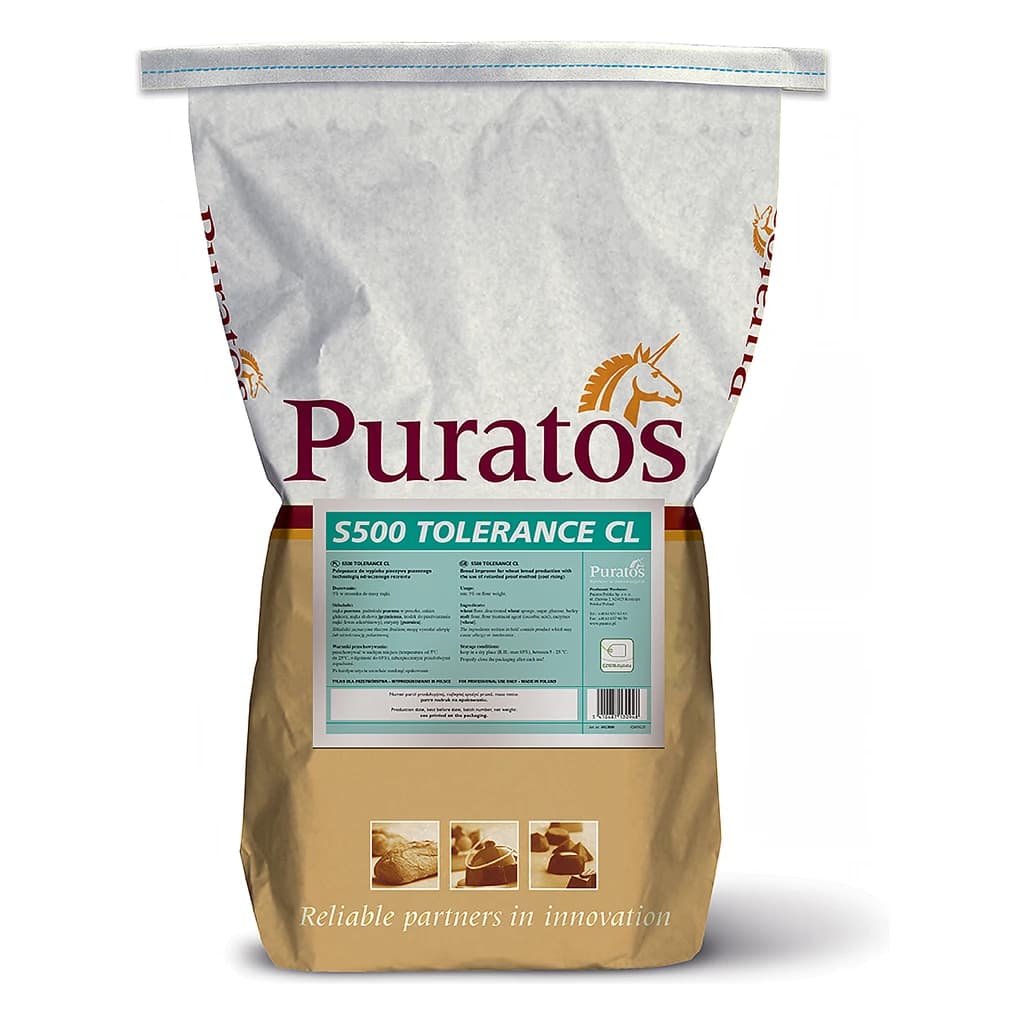
Puratos S500 Tolerance CL Bread Improver 15 kg
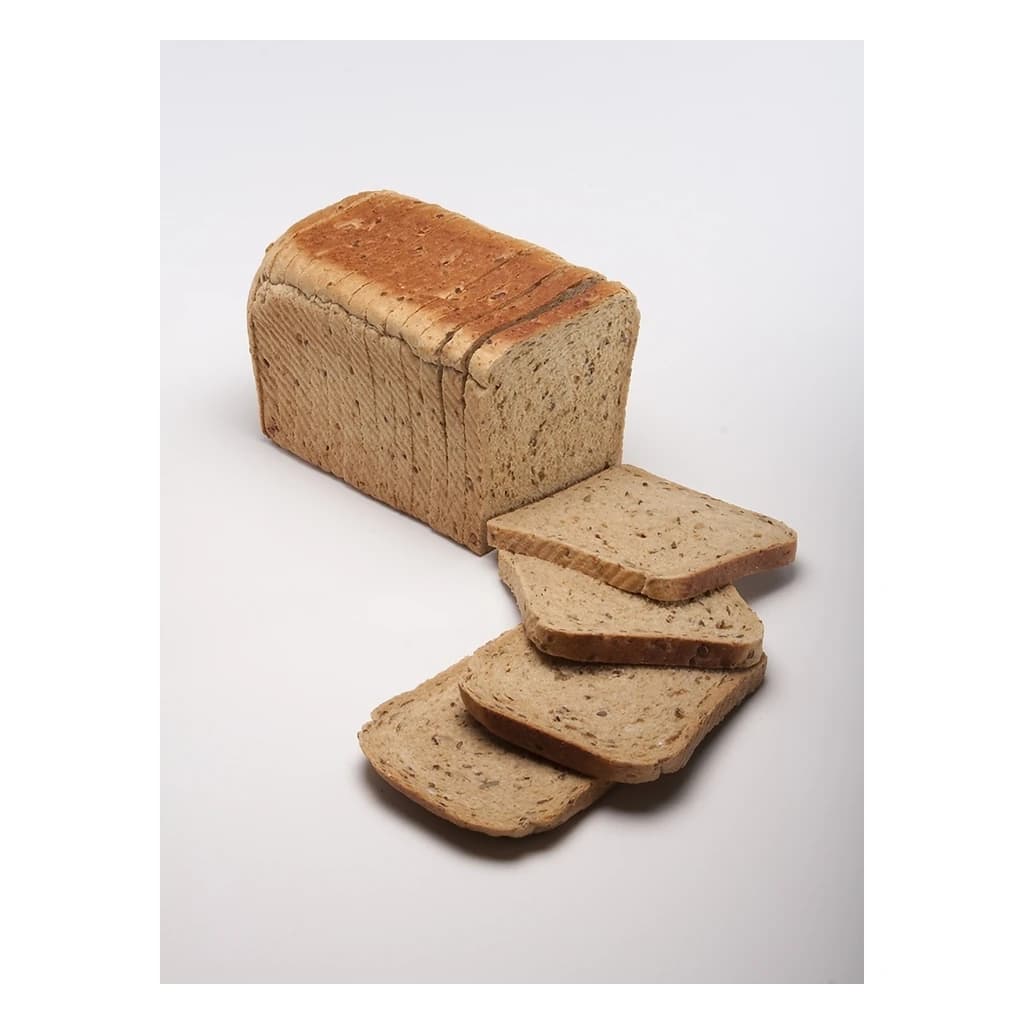
Cereform Stasoft Bread Improver 16 kg
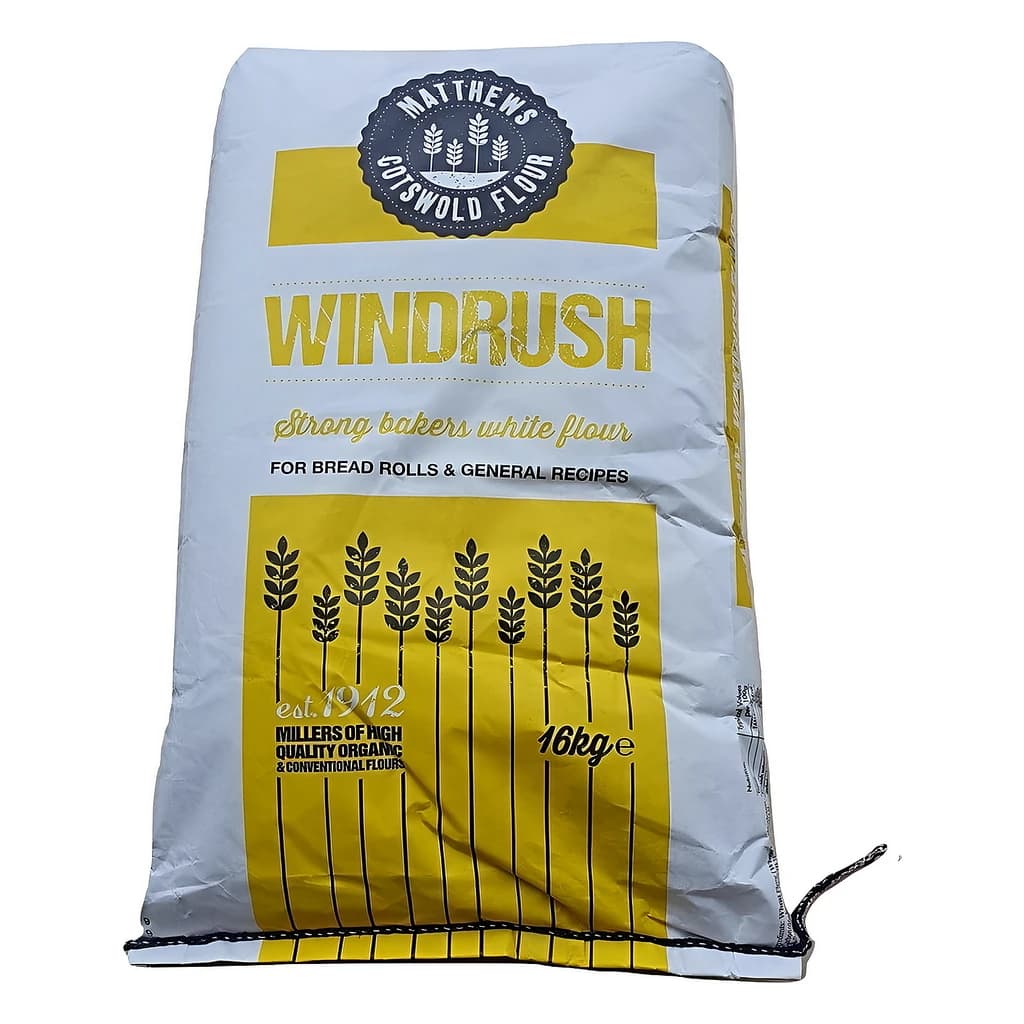
Windrush Strong White Bread Flour 16 kg
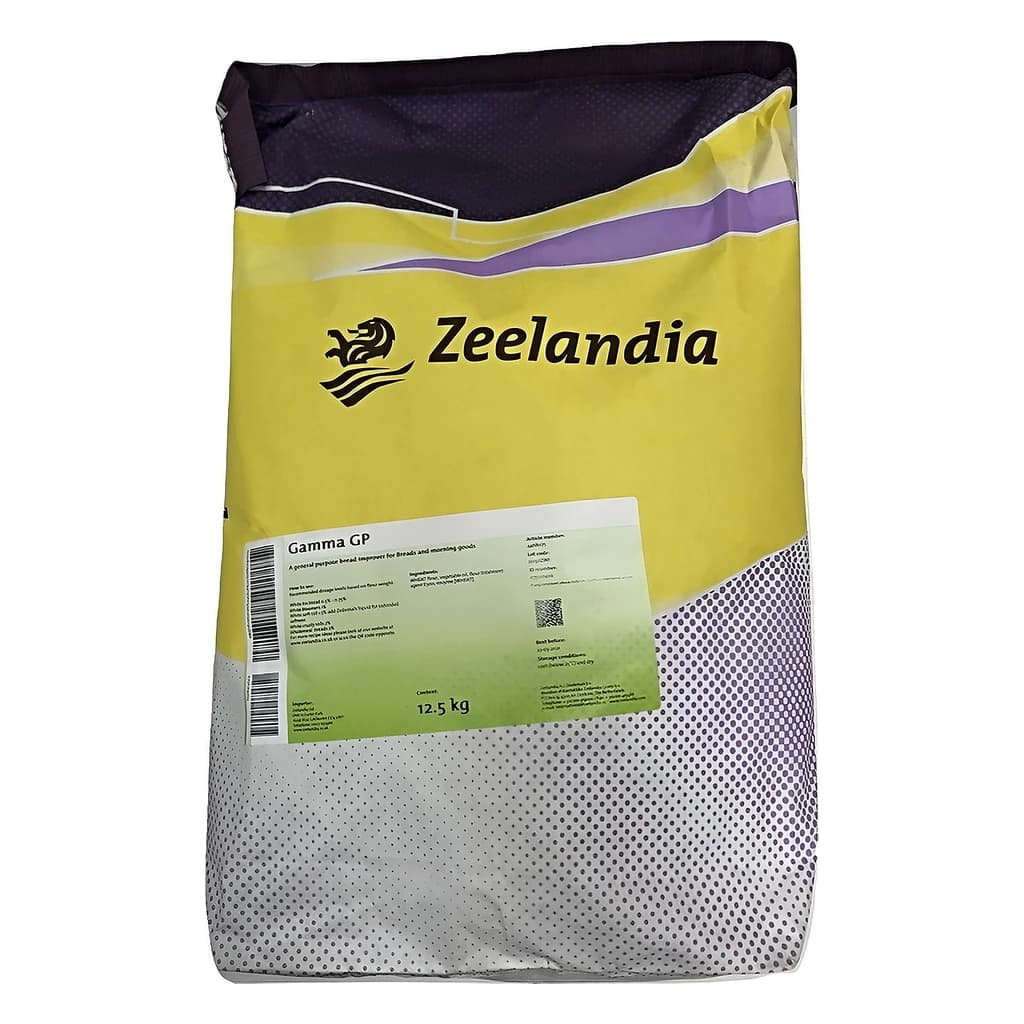
Zeelandia Gamma GP Bread Improver 12.5 kg
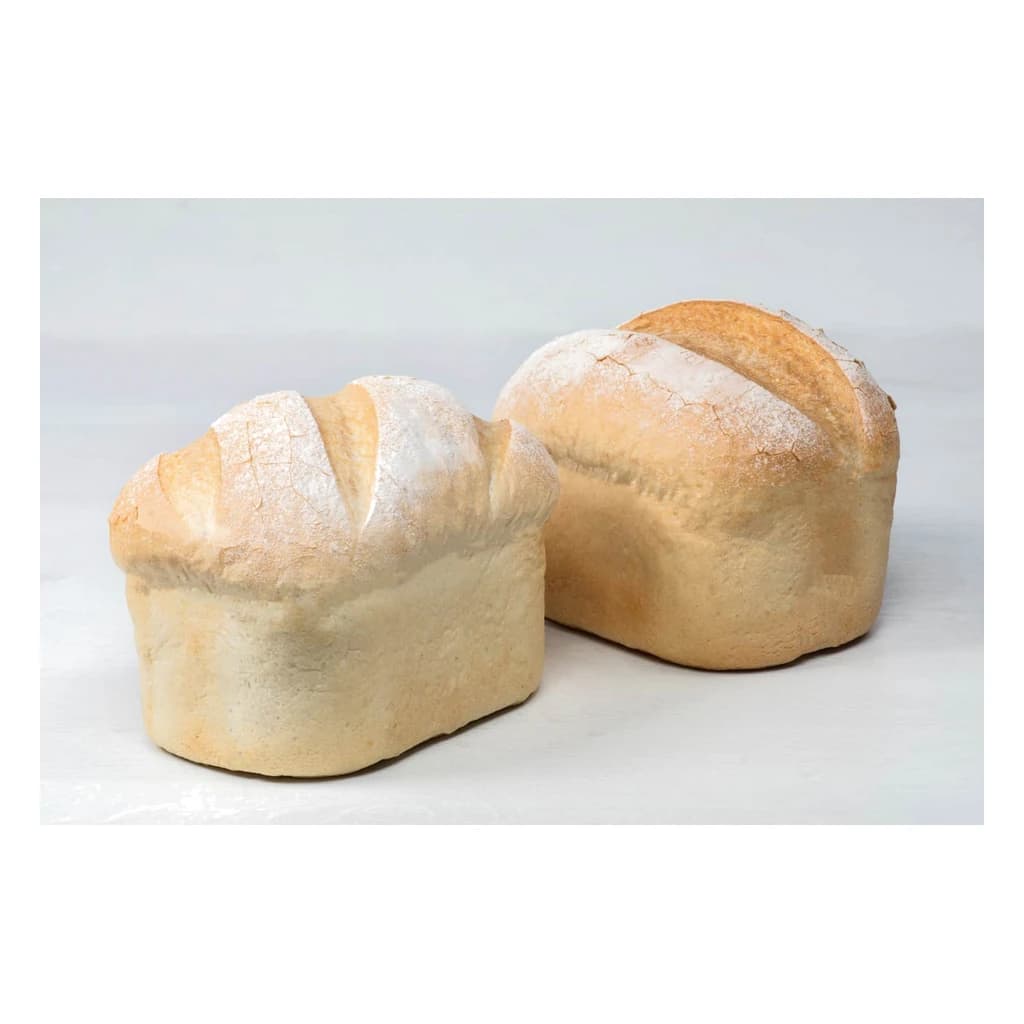
Bakels Quantum Clean Label Improver 0.5% 15 kg
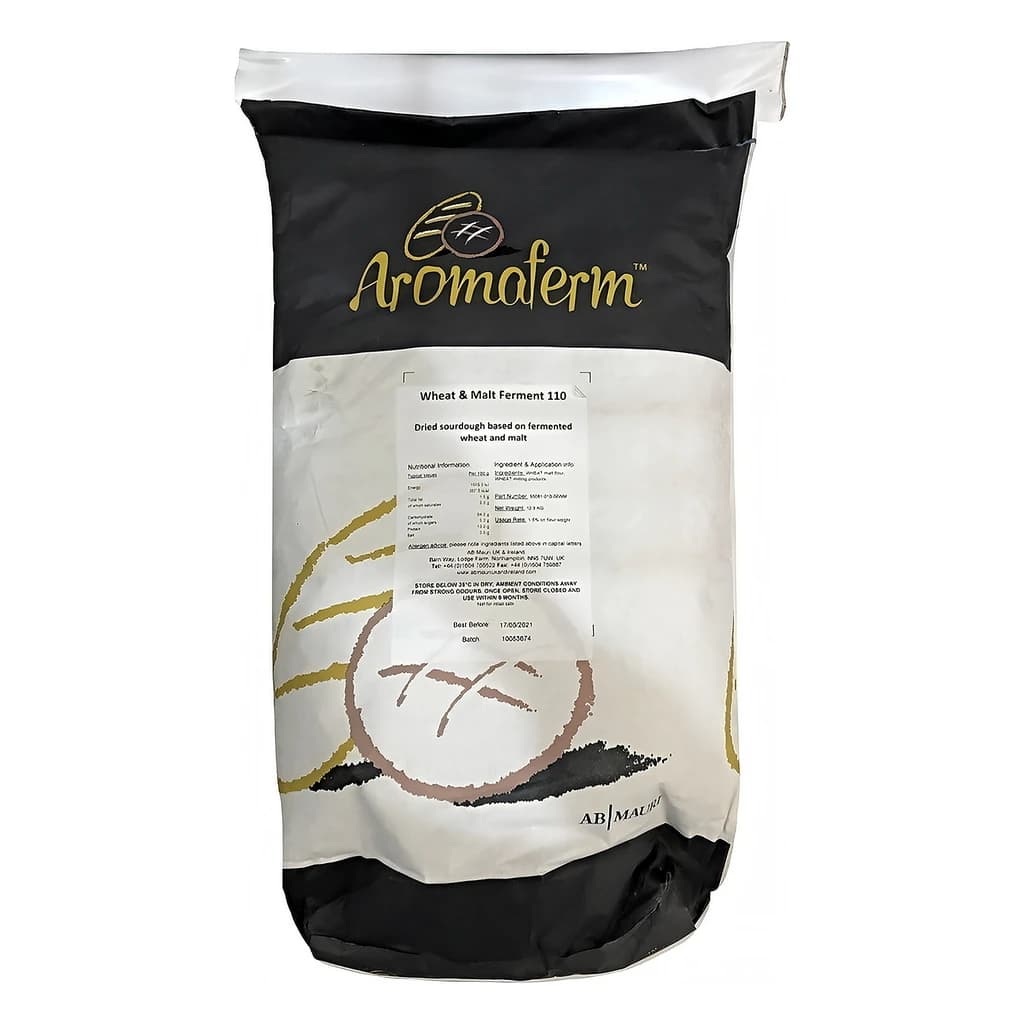
Aromaferm Wheat & Malt Ferment 110 12.5 kg
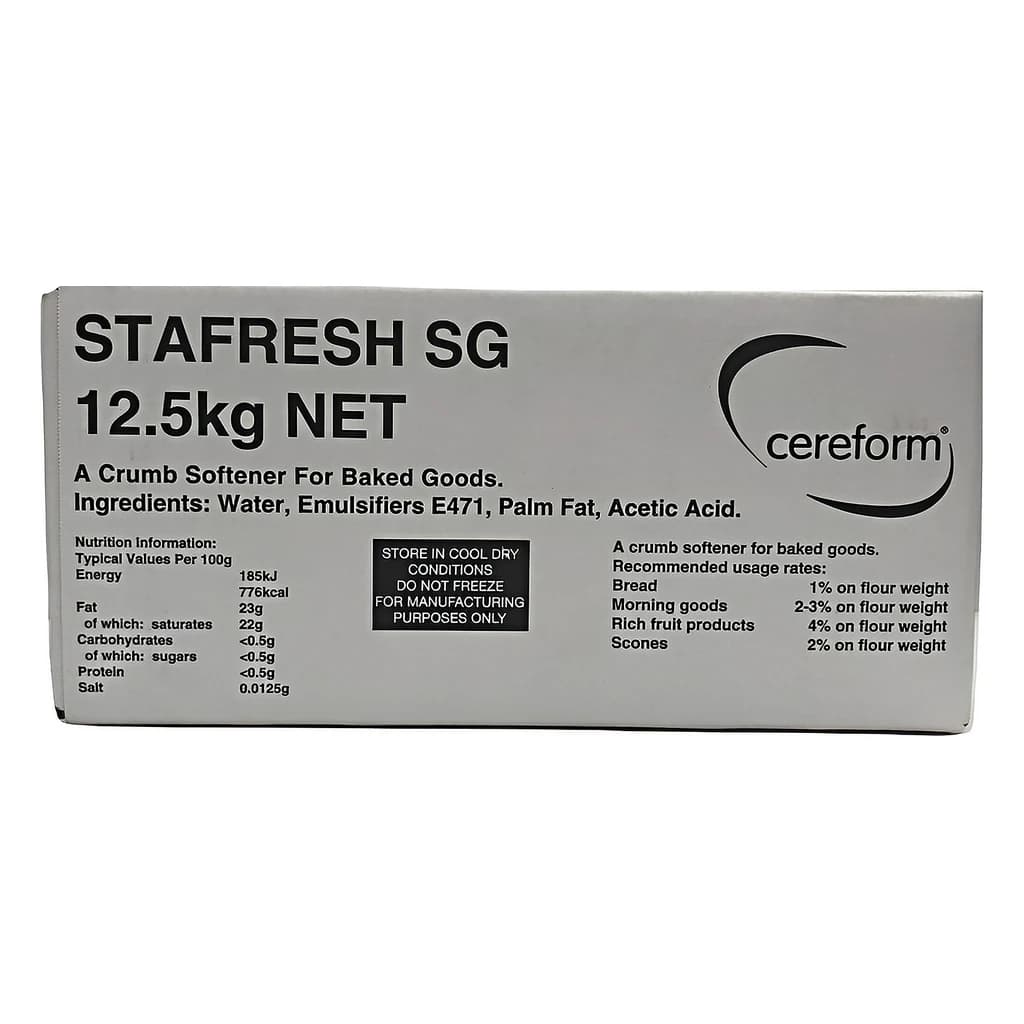
Cereform Stafresh SG Crumb Softener 12.5 kg
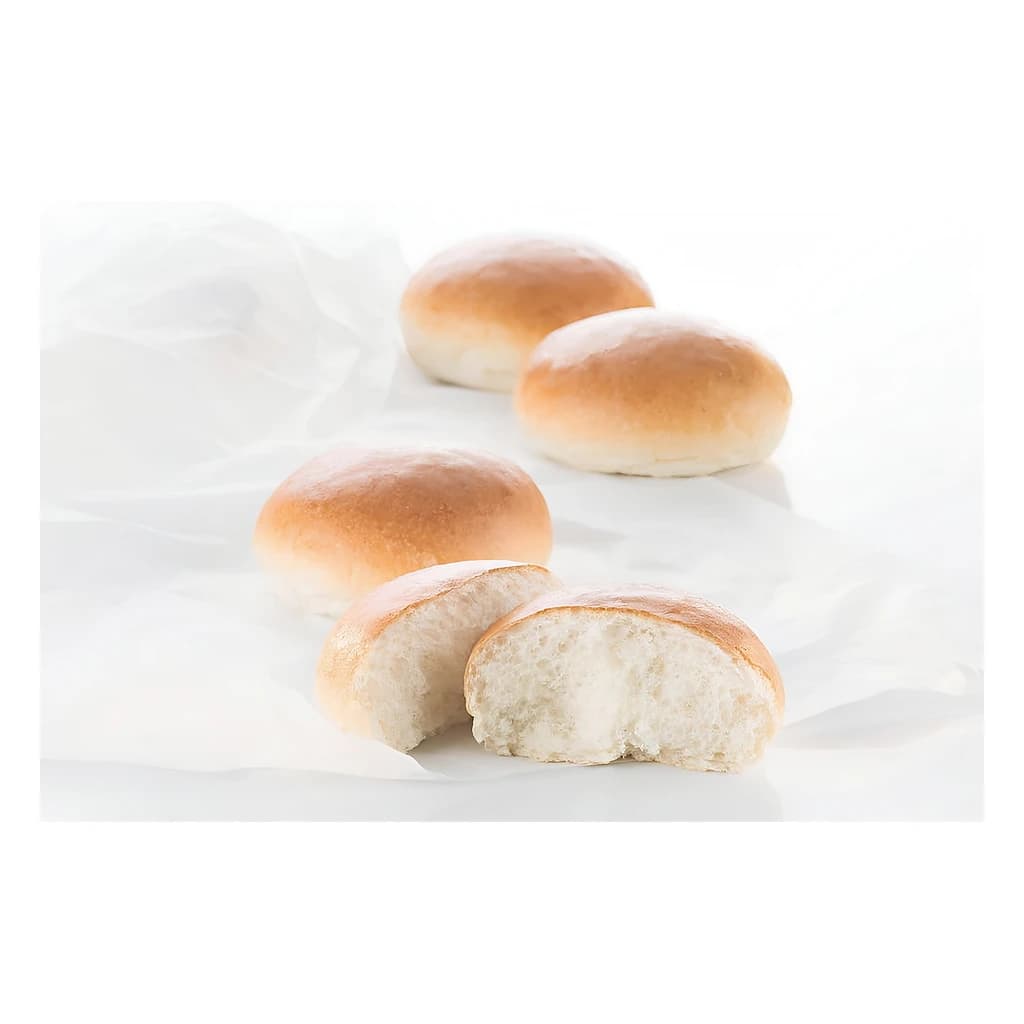
IREKS Soft Roll 7 Bread Improver 25 kg
IREKS Voltex Multipurpose Bread Improver 25 kg