
How Yeast Ferments: Carbon Dioxide, Ethanol, Flavour and the Key Variables That Control It
A precise, practical guide to yeast fermentation for professional bakers: what Saccharomyces cerevisiae actually does inside dough; how temperature, hydration, salt, sugar and pH control the rate and character of fermentation; what the difference is between compressed, active dry and instant dry yeast formats; how sourdough LAB and wild yeast interact; and when to switch to chemical leaveners. Built on first-party spec sheets for nine catalogue products (Lesaffre Benevia, Lallemand NG & SF, Lallemand Fermipan Red, Puratos O-tentic Durum, Zeelandia Bioferm Dark, Uldo Sauer Dark Rye, AB Mauri Aromaferm 110, Bowika Baking Powder, Bowika Bicarbonate of Soda, CSM Pell Premium Baking Powder) plus seven authoritative trade and academic references. Includes comparison tables, formula cards, a full fault guide, and 25 verified numeric claims.
How Yeast Ferments: CO2, Ethanol, Flavour and the Key Variables That Control It
Fermentation is not a side effect of baking — it is the process that creates structure, flavour, aroma and shelf life in every yeast-leavened product. This article explains the biochemistry plainly, then translates it directly into practical bakery decisions: which yeast format to buy, how to control your doughs, and when fermentation is your friend or your enemy.
1. The Organism: What Baker's Yeast Actually Is
Baker's yeast is Saccharomyces cerevisiae — a single-celled fungus that reproduces by budding. Each cell is roughly 5–10 micrometres across and contains a nucleus, mitochondria and large storage vacuoles. Under a microscope it looks like a cluster of translucent spheres.
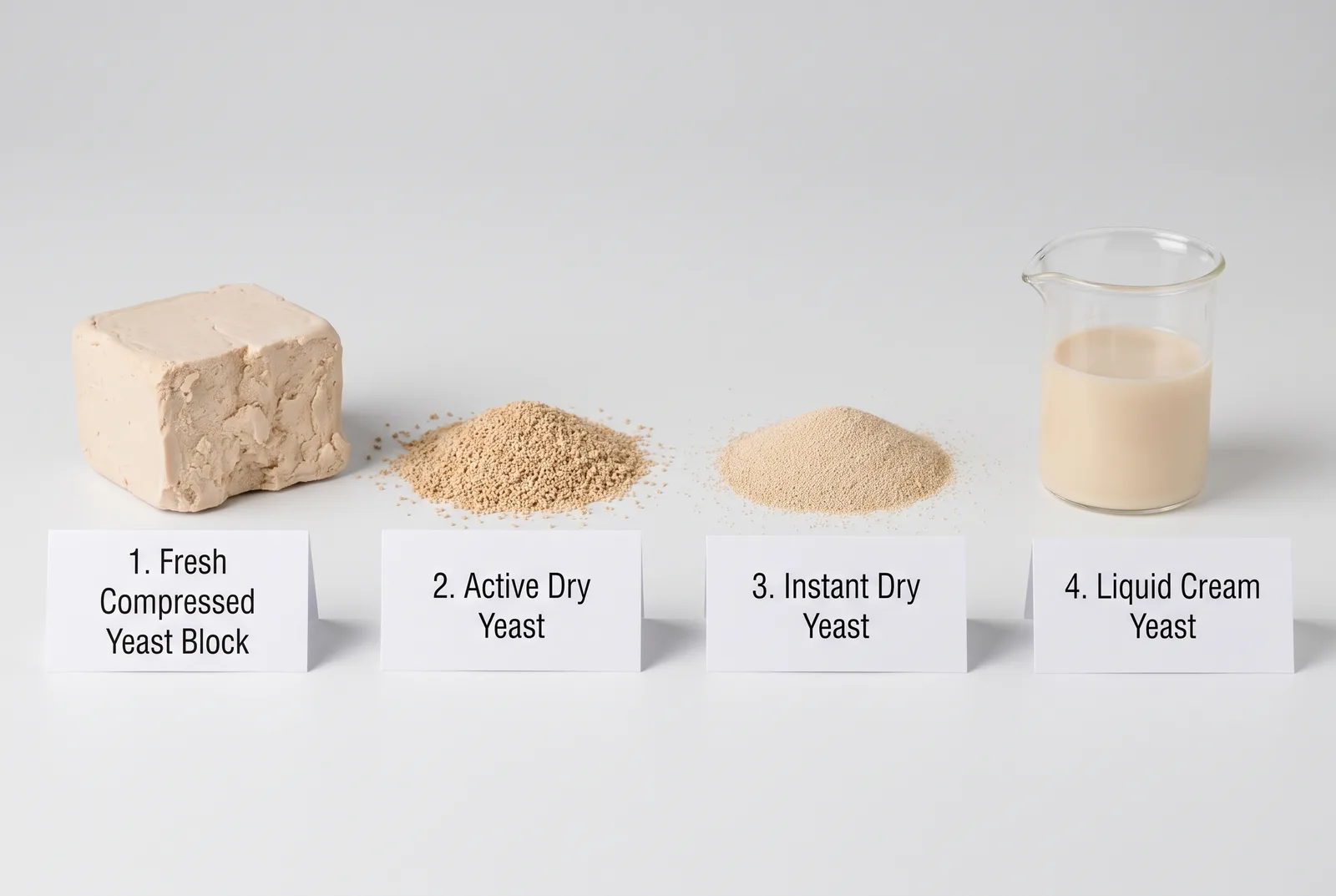
In the bakery it arrives in one of four commercial forms:
- Cream (liquid) yeast — approximately 18–20% dry matter; pumped by tanker to large plant bakeries.
- Compressed (fresh) yeast — greater than 29% dry matter; sold as beige blocks. Lesaffre Benevia contains >29% dry matter; Lallemand NG & SF contains 28–35% dry matter.
- Active dry yeast (ADY) — approximately 92–95% dry matter; larger granules produced by extrusion and gentle drying; requires rehydration before use.
- Instant dry yeast (IDY) — greater than 95% dry matter; fine porous particles vacuum-packed; added direct to dry ingredients.
The comparison table below gives full specification values for all four formats with source references.
2. The Chemistry: What Yeast Does Inside Dough
<!-- IMAGE: img-glycolysis-fermentation-pathway -->2.1 Glycolysis — the universal first step
Regardless of oxygen availability, yeast begins by breaking glucose (a six-carbon sugar) down through glycolysis into two molecules of pyruvate, simultaneously generating two ATP (cellular energy currency) and two NADH.
Glucose → 2 Pyruvate + 2 ATP + 2 NADH
Yeast can metabolise sucrose, glucose, fructose and maltose. In lean flour doughs with no added sugar, maltose (released from starch by flour's native beta-amylase activity) is the primary substrate, though yeast ramps up maltose uptake a little more slowly at the start.
2.2 The anaerobic fork — CO2 and ethanol
Inside bread dough, oxygen is consumed within minutes of mixing. In the resulting anaerobic environment, pyruvate is shunted into the fermentative pathway:
- Pyruvate decarboxylase removes CO2 from pyruvate → acetaldehyde.
- Alcohol dehydrogenase reduces acetaldehyde using the NADH generated in glycolysis → ethanol + regenerates NAD⁺.
Net equation per glucose:
C6H12O6 → 2 C2H5OH + 2 CO2
(glucose → 2 ethanol + 2 carbon dioxide)
In bread, the CO2 is what inflates the dough. The gluten network traps CO2 bubbles and stretches under gas pressure, creating the open crumb. The ethanol evaporates almost entirely during baking (final bake temperature far exceeds the 78.4°C ethanol boiling point) but contributes to oven aroma.
2.3 The aerobic fork — yeast growth and CO2 without ethanol
When oxygen is available (early mixing, preferment surfaces), yeast switches to aerobic respiration via the tricarboxylic acid (TCA) cycle, extracting 36–38 ATP per glucose but producing only CO2 and water — no ethanol. This pathway is dominant during commercial yeast production (molasses fermentation in bioreactors), where maximum cell growth is the goal and ethanol is an unwanted energy waste. Once sealed inside dough, the aerobic pathway quickly shuts down.
2.4 Flavour compounds — beyond CO2 and ethanol
Fermentation produces a wide range of secondary metabolites that define bread character:
- Organic acids — pyruvate overflow leads to trace quantities of succinic, lactic and acetic acids from S. cerevisiae itself. These soften the crumb pH slightly and contribute mild complexity.
- Esters — ethanol reacts with fatty acids to produce ethyl acetate and other esters that give fresh bread its characteristic yeasty, slightly fruity bakehouse smell.
- Aldehydes — acetaldehyde (the Pyruvate → Ethanol intermediate) contributes a green, grassy note when present at low concentrations; excessive accumulation signals an over-fast ferment.
- Fusel alcohols — isoamyl alcohol, propanol and others, produced through amino acid catabolism during long fermentation, add depth and complexity at low concentrations but can become harsh if fermentation temperature is too high or too long.
The longer and cooler the fermentation, the greater the proportion of complex flavour-active compounds relative to CO2. This is why retarded overnight doughs and long-bulk preferments produce noticeably more flavourful bread than short straight doughs.
3. The Four Commercial Yeast Formats in Practice
3.1 Compressed (fresh) yeast
Fresh yeast is the traditional bakery format. It contains a matrix of live yeast cells and water — activity is high and immediate with no rehydration step needed.
Lesaffre Benevia (Poland): dry matter >29%, fermentative activity 125 ± 10 ml CO2 by risograph at 30°C, max 100 minutes by PN-A-79002. Storage at 1–10°C, optimum 4°C, shelf life 35 days from production. No allergens present; note that molasses used in yeast production contains sulphites, disclosed on the spec. ⚠️ Food safety: cold chain mandatory; do not freeze.
Lallemand NG & SF High Activity: dry matter 28–35%, moisture approximately 69g/100g. Shelf life 28 days at ≤8°C; do not freeze. Designed specifically for fast-acting (no-time dough) and Chorleywood Bread Process applications where maximum gas production rate is required. Halal and Kosher certified. ⚠️ Food safety: store ≤8°C; never expose to water above 43°C before use.
Practical handling notes for fresh yeast:
- Crumble directly into the mixer with flour or dissolve in water at 25–30°C.
- Never dissolve in water above 43°C — cell stress increases significantly above this point; rapid death above ~60°C.
- Keep fresh yeast away from direct salt contact at the start of mixing — the osmotic shock damages cell membranes. Add salt with flour.
- Use within shelf life. Old fresh yeast shows dark discolouration, ammonia smell, or crumbles to powder rather than clean fracture.
3.2 Active dry yeast (ADY)
ADY is produced by extrusion and gentle air-drying to approximately 8% moisture. The drying creates a protective outer coat of dead yeast cells around a live core. This coat must be dispersed by rehydration in warm water (38–43°C, 5–10 minutes) before the yeast can act in dough. Without rehydration, ADY performs poorly and may give uneven gas production. Shelf life: typically 12–24 months sealed.
ADY generally acts more slowly than IDY in finished doughs because of its rehydration requirement and the residual dead cell coat that must dissolve. Note: modern ADY formulations from major suppliers have reduced this gap; always verify proof time in your specific dough conditions.
3.3 Instant dry yeast (IDY)
IDY is the dominant professional format for efficiency and consistency. The key difference from ADY is the porous microstructure of the granules — rapid moisture uptake from dough liquids during mixing means no pre-rehydration is needed.
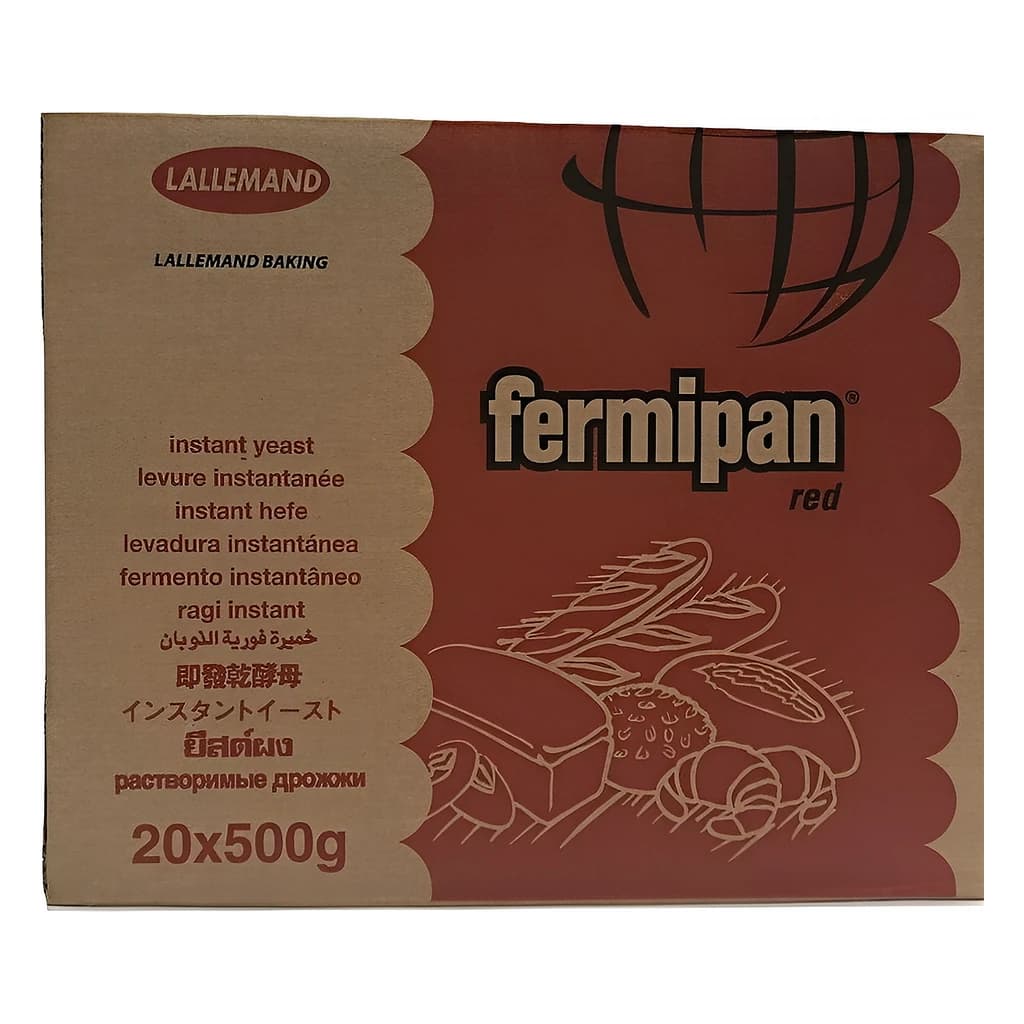
Lallemand Fermipan Red (Domson catalogue): dry matter >95%, moisture 5.08g/100g, dosage 1–1.5% on flour weight. Designed for lean doughs with 0–10% sugar. Contains 1% sorbitan mono-stearate E491 as emulsifier to aid dispersal in dough. Shelf life up to 2 years sealed at ambient; vacuum-packed in aluminium laminate pouch. Halal, Kosher, GMO-free, gluten-free, vegan. ⚠️ Food safety: once opened, use promptly; reseal tightly. ⚠️ **Regulatory note: E491 (sorbitan monostearate) may be derived from animal or vegetable fats. The spec sheet's Halal and Kosher certifications imply vegetable origin; verify source with supplier before making halal/kosher claims to customers. **
IDY versus ADY — quick guide: IDY can go straight into the dry flour mix. ADY needs warm water first. Substitution: multiply IDY quantity by 1.25 to get ADY equivalent, or divide ADY by 1.25 for IDY. IDY typically acts faster than ADY in dough (no rehydration step required); the exact time advantage varies by formula and conditions — verify with a proof test. Prefer IDY for reliability and shelf life in high-volume bakery operation.
3.4 Osmotolerant yeast (high-sugar doughs)
Standard S. cerevisiae strains are inhibited when sugar content exceeds approximately 10% on flour — osmotic pressure draws water from the yeast cells, reducing fermentation rate and gas production. Specially selected osmotolerant strains maintain meaningfully higher gas production activity under these conditions [c13 — single trade-source figure of 10–20%; primary research suggests the advantage may be significantly larger — treat as indicative only; verify with product TDS]. For enriched doughs (brioche, panettone, doughnuts, Danish with >10% sugar), specify an osmotolerant IDY grade.
4. The Key Variables That Control Fermentation
<!-- IMAGE: img-temperature-activity-curve -->4.1 Temperature
Temperature is the primary lever. CO2 production rate increases steeply from 4°C up to the biological peak (around 40–50°C for S. cerevisiae), but bakers work in the 25–35°C range because higher temperatures shorten fermentation tolerance and reduce flavour complexity. The table below describes practical baking behaviour, not biological maximum activity:
| Temperature | Fermentation behaviour |
|---|---|
| Below 4°C | Near-dormant — retarder storage |
| 4–18°C | Slow; flavour compounds accumulate; overnight retard range |
| 18–28°C | Active; controlled bulk fermentation |
| 28–35°C | Standard proof-cabinet range; good activity with flavour tolerance |
| 35–50°C | Increasing stress above 35°C; declining tolerance above 40°C |
| Above 55–60°C | Rapid cell death |
The Lesaffre risograph fermentative activity test for Benevia is conducted at 30°C — this temperature is used precisely because it is close to the activity peak and gives reproducible comparisons between yeast batches.
Desired Dough Temperature (DDT) is the professional tool for controlling dough temperature at the end of mixing. DDT formula:
Water temperature = (3 × DDT) − flour temperature − room temperature − friction factor
For white bread: DDT typically 24–27°C. For enriched doughs: 22–25°C (lower to preserve fat structure).
Retarded fermentation: slowing yeast by cold (4–8°C) after initial mixing or after shaping is the primary tool for scheduling flexibility. Doughs can be held in the retarder for 8–24+ hours; during this time, protease activity relaxes gluten and low levels of organic acid production build flavour.
4.2 Hydration
Yeast requires water both for metabolism and to move through the dough matrix. In stiff doughs (below ~55% hydration on flour), yeast mobility and CO2 diffusion are restricted; fermentation is slower per unit of yeast than in wetter doughs. Compensate by increasing yeast dosage or extending proof time. In very high-hydration doughs (above 75%), CO2 can escape more readily before the gluten sets, making final volume difficult to predict.
4.3 Salt
At bakery levels (1.8–2.0% on flour), salt does not significantly inhibit yeast — but direct contact between concentrated salt and yeast granules at mixing creates local osmotic stress that can impair early-stage activity. Always keep salt separated from yeast at the start of mixing: add salt with flour and yeast at different points, or use an autolyse.
Salt also tightens gluten by promoting protein interactions; this improves gas retention and offsets the slight CO2 loss from reduced fermentation rate. A well-salted dough holds gas better than an unsalted one even though the latter ferments more rapidly.
4.4 Sugar
Yeast can ferment sucrose, glucose, fructose and maltose efficiently. A small addition of sugar (2–5% on flour) accelerates initial fermentation by providing a readily available substrate alongside flour's native starch sugars. Above 8–10%, osmotic inhibition of standard strains becomes significant.
Conversely, zero sugar in lean doughs (ciabatta, baguette, sourdough) means yeast relies on maltose released from starch by amylases during autolyse and fermentation. This lag gives lean doughs a slower start but often produces better fermentation flavour over long processes.
4.5 pH
Yeast performs well in the pH 5.0–7.0 range, with optimum around pH 5.5. Below pH 4, S. cerevisiae activity is severely inhibited. This matters practically in:
- Sourdough doughs: as LAB acidify the dough to pH 3.5–4.5, any S. cerevisiae present is progressively inhibited. Wild yeast strains in sourdough (Kazachstania humilis and others ) are acid-tolerant and take over.
- Excess bicarbonate: if baking soda is used without sufficient acid partner, the dough pH rises above 7, impairing any yeast present and producing a soapy off-taste.
4.6 Yeast dosage
The dosage dial is the fastest way to change dough schedule:
- High dosage (3% fresh / 1.5% IDY): proof in 45–60 minutes at ambient. Less flavour development. Use when speed is paramount.
- Standard dosage (2% fresh / 1% IDY): proof in 90–120 minutes at ambient; better flavour.
- Low dosage (0.5–1% fresh / 0.2–0.5% IDY): long bulk fermentation 4–12 hours (or retarder overnight) at ambient or cold. Maximum flavour. Requires good scheduling discipline.
Fermipan Red IDY: recommended 1–1.5% on flour for all yeast-leavened products.
5. Sourdough: Where LAB and Wild Yeast Cooperate
<!-- IMAGE: img-sourdough-starter -->5.1 The microbial community
A mature sourdough contains lactic acid bacteria (LAB) to wild yeast at approximately 100:1. The LAB are not the same as baker's yeast — they are bacteria (Lactobacillus and related genera) that produce acids as their primary metabolic output. The wild yeast (most commonly Kazachstania humilis, formerly Candida humilis, and sometimes Saccharomyces cerevisiae) provides CO2 and ethanol for leavening.
5.2 What LAB produce and why it matters
Homofermentative LAB (e.g. Lactobacillus acidophilus): produce predominantly lactic acid. Lactic acid gives a mild, yoghurt-like sourness. Dominant at higher temperatures (above 28°C) and higher hydration.
Heterofermentative LAB (e.g. Lactobacillus sanfranciscensis): produce lactic acid
- acetic acid + CO2 + ethanol. Acetic acid gives a sharp, vinegar-like sourness. Dominant at cooler temperatures (below 24°C) and lower dough hydration.
Baker's control lever: the lactic:acetic ratio directly determines the flavour character of sourdough bread. A warmer, wetter starter → milder, lactic flavour. A cooler, stiffer starter → sharper, more complex acetic character.
5.3 How sourdough acidity affects dough
Sourdough pH typically falls to 3.5–4.5 during active fermentation. This acidity:
- Inhibits S. cerevisiae (but acid-tolerant wild yeast continues to work).
- Delays starch retrogradation during storage, improving shelf life.
- Inhibits mould and rope-forming bacteria — sourdough bread mould-free for significantly longer than commercial yeast bread.
- Reduces phytate (plant anti-nutrient) through phytase activity, improving mineral bioavailability.
5.4 Industrial sourdough concentrates — catalogue overview
For bakeries that want sourdough flavour and acidity without managing a live culture, the Domson catalogue stocks ready-to-use concentrates:
Puratos O-tentic Durum — dried active sourdough concentrate containing durum wheat sourdough, yeast, ascorbic acid and enzymes. Dosage 4% on flour. Total acidity 45–65 ml/10g; dry matter 94–100%. Contains live yeast — no separate baker's yeast required. ⚠️ Contains gluten; possible mustard cross-contamination. Mediterranean flavour profile.
Zeelandia Bioferm Dark (liquid, 19 kg) — liquid sourdough concentrate for mixed, rye and wholegrain breads. pH 2.4–2.8; SH acidity 250–260. Dosage 2.5–4% depending on rye content. Standard baker's yeast required separately (example recipe uses 3.5 kg yeast per 100 kg flour). ⚠️ Contains gluten AND MILK (whey) — not suitable for dairy-free production. Allergen: dairy-free / halal production — verify supply chain. ⚠️ **Regulatory note: the Zeelandia Bioferm Dark spec sheet is dated 2011 (15 years old). Allergen declarations must be re-verified against the current product specification before use — formulations can change. The milk/whey ingredient is the most operationally significant allergen flag in this dossier. **
Uldo Sauer Dark Rye Concentrate (paste, 25 kg) — dosage 2–8% on flour; pH 2.5–4.5; total acidity 140–150. Ingredients include rye bran, rye flour, lactic and acetic acids, barley malt. Baker's yeast required separately. Contains gluten. May contain traces of milk, sesame, soya, lupins and eggs.
AB Mauri Aromaferm Wheat & Malt Ferment 110 (dried powder, 12.5 kg) — dried wheat sourdough flavour improver (devitalised; no live yeast). Dosage 1–5% on flour. pH ~3.3; total titratable acidity 110 ± 10%; moisture <5%; shelf life 12 months. Contains WHEAT as a primary ingredient (wheat malt 90–100%) and therefore contains gluten — not suitable for gluten-free products. Halal, Kosher, vegan, non-GMO. Used to add sourdough flavour without changing fermentation dynamics — pair with standard IDY or fresh yeast. ⚠️ **Regulatory note: the AB Mauri spec sheet (v4, 2018) states 'no allergens declared', but the product contains 90–100% wheat malt and must be treated as a gluten-containing product under EU FIC Regulation 1169/2011. Verify the current allergen declaration with the supplier before customer-facing use. Spec version also requires confirmation (8 years old as of 2026). **
See the comparison table below for full parameter comparison.
6. Chemical Leaveners — When Yeast Is Not the Answer
<!-- IMAGE: img-baking-powder-co2-diagram -->Chemical leaveners are used in products where: (a) yeast flavour is unwanted; (b) processing time is too short for biological fermentation; or (c) the product uses a chemical acid-base reaction for lift (cakes, scones, pancakes, biscuits).
6.1 Sodium Bicarbonate — the base
Sodium bicarbonate (baking soda, E500ii) is the raw leavening base. It releases CO2 when it contacts an acid:
NaHCO3 + H⁺(acid) → CO2 + H2O + sodium salt
Reaction begins immediately on contact with aqueous acid — which means batter must go into the oven quickly once the acid source is added. Without sufficient acid, residual NaHCO3 in the baked product gives a soapy, metallic aftertaste and causes yellowing.
Bowika Sodium Bicarbonate (Domson catalogue): minimum purity 99.3%, sodium min 27%, pH of 1% solution max 8.5, shelf life 24 months, origin Turkey. Zero energy (0 kJ / 0 kcal per 100g). No allergens. Highly water-soluble.
6.2 Baking Powder — the self-contained system
Baking powder combines sodium bicarbonate with one or more dry acids plus a starch filler. The double-acting formulation most common in professional bakery releases CO2 in two stages:
- Stage 1 (room temperature): fast-acting acid (e.g. monocalcium phosphate MCP or cream of tartar) reacts on mixing → approximately 30% of CO2 released immediately, creating initial batter structure.
- Stage 2 (oven heat, typically above 60°C): slow-acting acid (sodium acid pyrophosphate SAPP, sodium aluminum phosphate SALP, or diphosphate) activates → remaining CO2 released as the batter bakes, providing oven rise.
Bowika Baking Powder (5 kg): E500(ii) + E450(i) disodium diphosphate + wheat flour carrier. Phosphate content 18.02–18.45% P2O5. Dosage: 1 kg per 32 kg flour (~3.1% on flour). Shelf life 9 months. ⚠️ Contains gluten (wheat flour); possible gluten cross-contamination during production and warehousing. Not suitable for gluten-free baking. ⚠️ **Regulatory note: E450(i) (disodium diphosphate) is EU-authorised but dietary phosphate intake limits apply in some finished-product categories; verify permitted levels under Regulation (EC) 1333/2008 for your specific product type. **
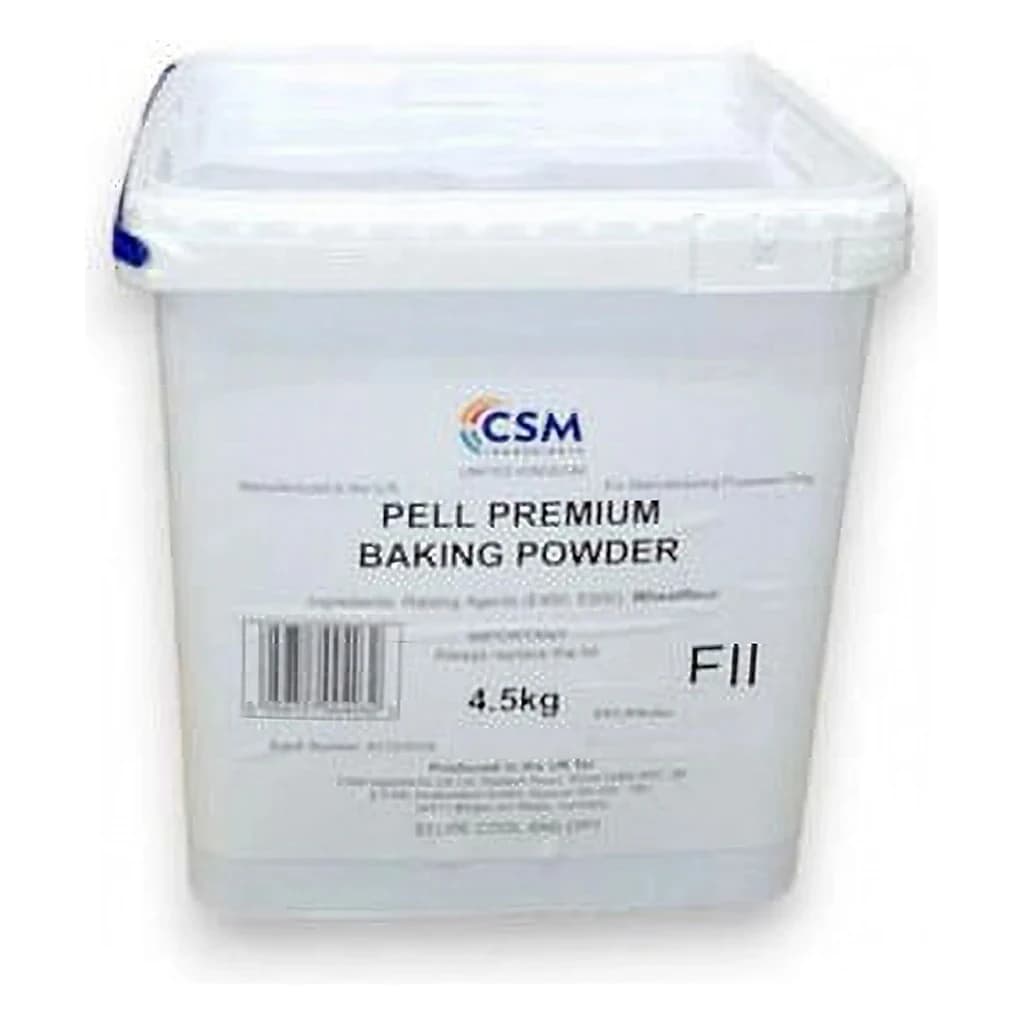
CSM Pell Premium Baking Powder (4.5 kg): diphosphates + sodium carbonates + fortified wheat flour (with CaCO3, iron, niacin, thiamine). CO2 content 17.5–18.5% by weight — the highest confirmed yield in the Domson catalogue. Kosher and Halal certified. ⚠️ Contains gluten (wheat). Origin: United Kingdom.
Professional note on baking powder selection: the CO2 yield from CSM Pell Premium (17.5–18.5%) is specified in the spec sheet and is higher than many generic products (which typically deliver 12–14%). This means a lower weight of product is needed for the same lift — adjust recipe accordingly. Do not substitute one brand of baking powder for another at the same dosage without recalibrating.
6.3 Ammonium Bicarbonate — the biscuit leavener
Ammonium bicarbonate (NH4HCO3) is used in hard biscuits, crackers, and some flatbreads. It decomposes completely on baking heat to CO2 + ammonia (NH3) + water. In low-moisture products, all the NH3 evaporates with no residual flavour. In high-moisture products (cakes, bread) residual ammonia creates an off-flavour — not appropriate for those applications. ⚠️ Food safety note: ammonium bicarbonate is not suitable for high-moisture baked goods due to residual ammonia.
7. Substitution Ratios Between Yeast Formats
Where a recipe specifies one yeast format but you stock another, use these ratios (all confirmed from multiple sources):
| From → To | Multiply factor | Notes |
|---|---|---|
| Fresh yeast → IDY | ÷ 3 | Fresh 30g → IDY 10g |
| IDY → Fresh yeast | × 3 | IDY 10g → Fresh 30g |
| IDY → ADY | × 1.25 | IDY acts faster than ADY; specific % advantage unconfirmed |
| ADY → IDY | ÷ 1.25 | Also: pre-dissolve ADY before substituting |
| ADY → Fresh yeast | × 2.5–3 | Variable — verify with proof |
These are guidance ratios. Always verify with a proof test in your specific dough conditions — flour strength, water temperature, sugar level and proof temperature all affect the outcome.
8. Fermentation Faults — Diagnosis and Remedy
<!-- IMAGE: img-proof-stages-visual -->The full fault table is below (eight fault types with cause and remedy). Key principles:
- Under-risen dough: first check yeast viability by dissolving a small amount in 30°C water with a pinch of sugar — should foam within 5–10 minutes. If not: dead yeast. Second check: water temperature at mixing (if above 43°C, yeast was stressed; above 60°C, cells were killed).
- Over-proofed / collapsed dough: CO2 has exhausted the gluten network's capacity. The fingerprint test — dough should spring back slowly when poked; if it collapses inward and does not recover, proofing has gone too far.
- Soapy / metallic taste: excess bicarb relative to acid in a chemically-leavened product. Recalculate acid balance.
9. Allergen and Food Safety Summary
⚠️ The following figures are extracted from first-party spec sheets; values may change with product reformulation.
| Product | Key allergens PRESENT | Key allergens possible |
|---|---|---|
| Lesaffre Benevia | None declared | Sulphites (molasses note) |
| Lallemand NG & SF | None declared | — |
| Lallemand Fermipan Red IDY | None declared | — |
| Puratos O-tentic Durum | GLUTEN (durum wheat) | Mustard |
| Zeelandia Bioferm Dark | GLUTEN (wheat, rye); MILK (whey) | — |
| Uldo Sauer Dark Rye | GLUTEN (rye, barley) | Milk, sesame, soya, lupins, eggs |
| Bowika Baking Powder | GLUTEN (wheat flour) | Gluten (production/warehousing) |
| CSM Pell Premium BP | GLUTEN (wheat flour) | — |
| Bowika Sodium Bicarbonate | None declared | Gluten (warehousing only) |
| AB Mauri Aromaferm 110 | GLUTEN (wheat malt 90–100%) ⚠️ spec may need update | — |
⚠️ Bioferm Dark allergen data is from a 2011 spec sheet — must be re-verified with Zeelandia before use. Aromaferm 110 spec (2018) states "no allergens" but product is 90–100% wheat malt and must be treated as gluten-containing under EU FIC Regulation 1169/2011.
Coverage Assessment
Solid coverage: yeast biochemistry (glycolysis + fermentation pathway); format comparison with first-party spec data (Benevia, NG&SF, Fermipan Red); fermentation control variables; sourdough LAB types and pH; industrial sourdough concentrates (four products with full spec data); chemical leaveners (three products with CO2 yield, dosage, allergens); fault table (eight faults).
Thin / single-source: osmotolerant yeast 10–20% activity advantage (c13 — confidence low); IDY speed advantage over ADY as a percentage (c23 — confidence low); yeast pH optimum range (c10 — medium confidence, one reference). A follow-up research run should find a second academic or trade-body source for these three claims.
Not covered in this article (separate articles exist or planned):
- Preferments (poolish, biga, sponge) → A2-preferments-poolish-biga-sponge
- Multi-stage rye sourdough fermentation protocols → A2-rye-sourdough-multi-stage
- Sourdough culture maintenance and ecology → A2-sourdough-cultures-science
- Osmotolerant yeast in enriched doughs in depth → A2-osmotolerant-yeast-enriched-doughs
- Yeast formats full commercial comparison including cream yeast → A2-yeast-types-comparison
Figures
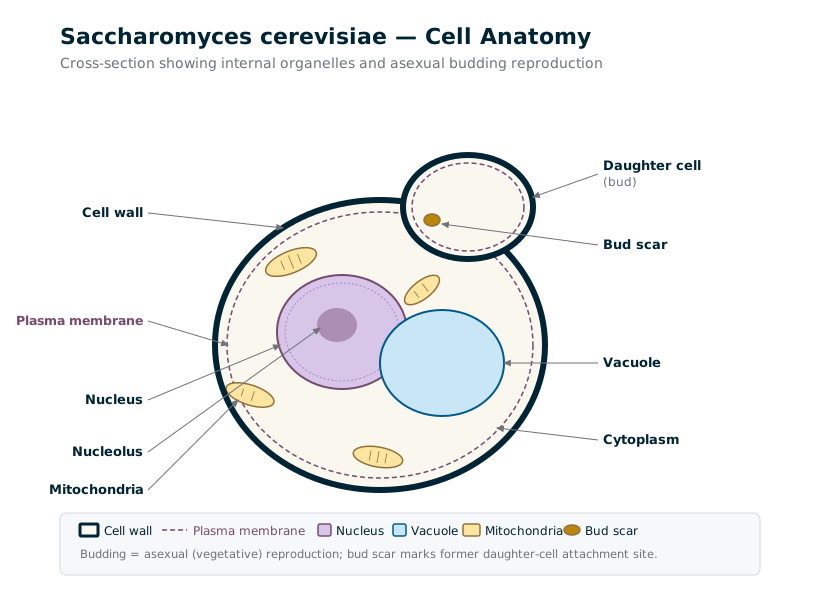 Cross-section diagram of a Saccharomyces cerevisiae yeast cell showing nucleus, mitochondria, vacuole, cell wall, and a budding daughter cell
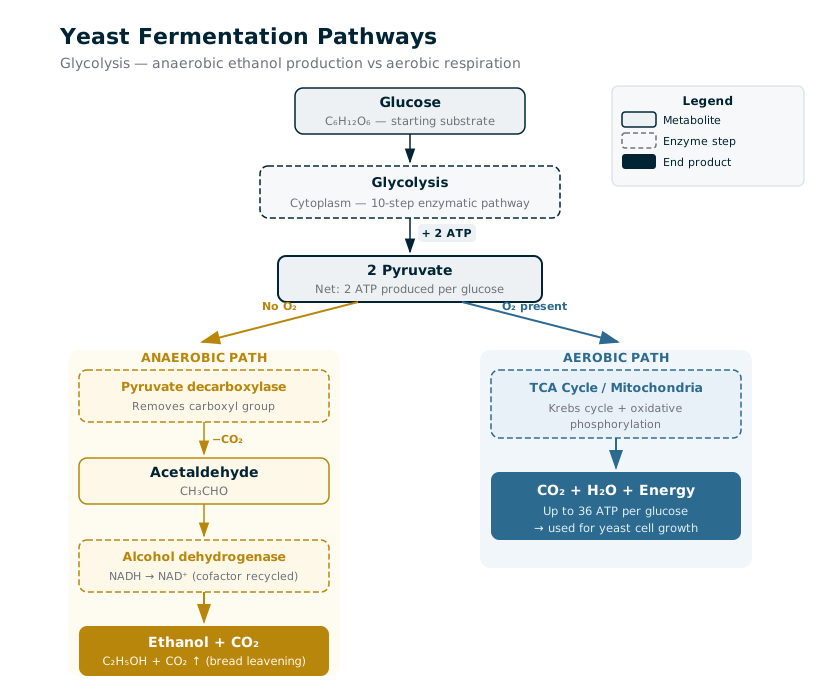 Flowchart showing glucose entering glycolysis to produce pyruvate, then splitting into anaerobic path producing ethanol and CO2, and aerobic path producing CO2 and water via the TCA cycle
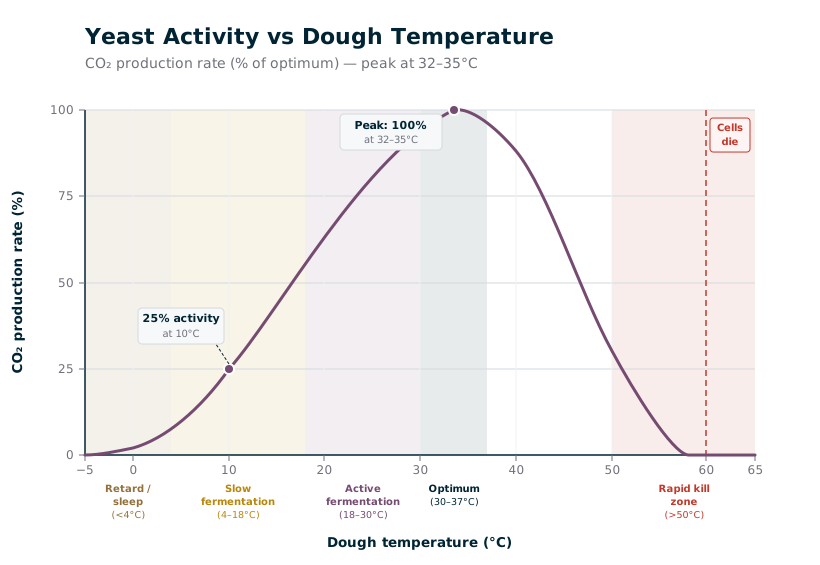 Graph of yeast activity versus temperature showing peak activity at 30 to 35 degrees Celsius and cell death above 60 degrees Celsius
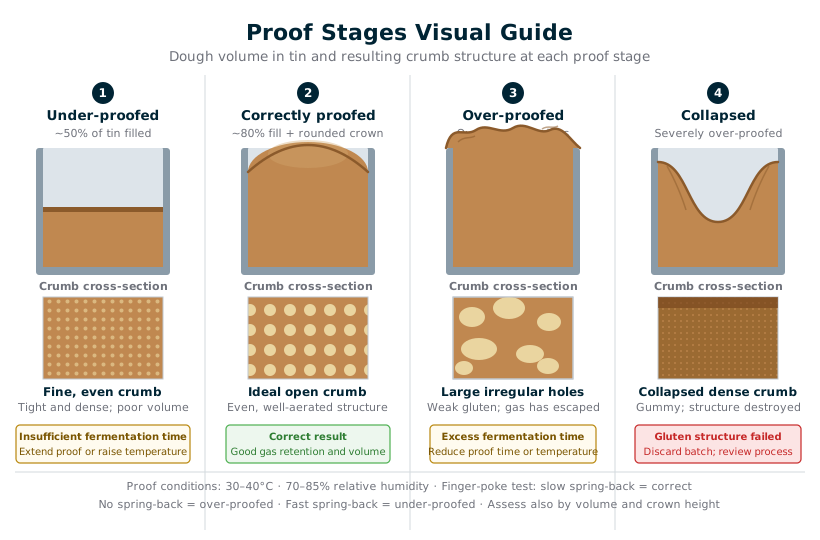 Four illustrations showing bread dough at under-proofed, correctly proofed, over-proofed, and collapsed stages with corresponding crumb textures
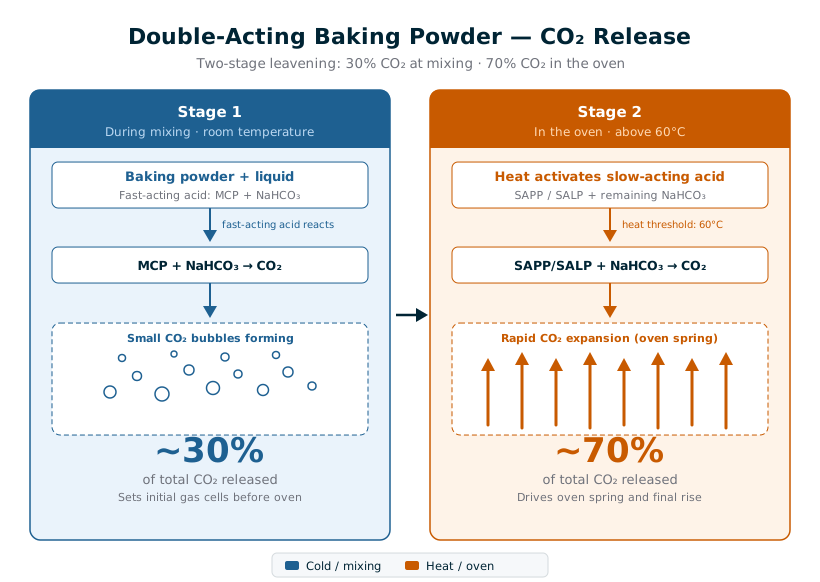 Diagram showing double-acting baking powder releasing a small amount of CO2 during mixing and the majority of CO2 during oven baking at high temperature
Straight white bread dough — yeast dosage reference (baker's %)
| Ingredient | Baker's % | Weight |
|---|---|---|
| Flour | 100% | |
| Water | 60–68% | |
| Salt | 1.8–2.0% | |
| Fresh compressed yeast (standard short proof ~1h) | 2.5–3.0% | |
| Instant dry yeast equivalent (standard short proof ~1h) | 1.0–1.2% |
- Direct / straight dough
Indicative professional reference ranges. Actual dosage depends on desired fermentation time, ambient temperature, and flour strength. All percentages on flour weight.
Enriched sweet dough (brioche / doughnut type) — osmotolerant yeast guidance
| Ingredient | Baker's % | Weight |
|---|---|---|
| Flour | 100% | |
| Water / milk | 45–55% | |
| Sugar | 10–20% | |
| Fat (butter/margarine) | 10–20% | |
| Eggs | 10–15% | |
| Salt | 1.5–1.8% | |
| Osmotolerant instant dry yeast | 1.0–1.5% |
- Enriched dough, high sugar and fat
High sugar content (>10% on flour) creates osmotic pressure that inhibits standard S. cerevisiae strains. Use osmotolerant yeast variety. Typical osmotolerant IDY dosage is same 1–1.5% as standard but 10–20% higher activity preserved under osmotic stress (BAKERpedia). Food safety: Verify with specific osmotolerant product TDS.
Mixed rye/wheat bread with liquid sourdough concentrate — example recipe
| Ingredient | Baker's % | Weight |
|---|---|---|
| Wheat flour T850 | 70% | |
| Rye flour T720 | 30% | |
| Salt | 1.8% | |
| Zeelandia Bioferm Dark liquid sourdough | 1.3% | |
| Fresh compressed yeast | 3.5% | |
| Water | 68% |
- Single-stage with commercial sourdough concentrate
Based on application recipe from the Zeelandia Bioferm Dark spec sheet. Adjusted to baker's %. Separate commercial yeast required for gas production as Bioferm Dark is a flavour/acid concentrate, not a leavener.
Chemical leavening — baking powder dosage guidance
| Ingredient | Baker's % | Weight |
|---|---|---|
| Flour | 100% | |
| Baking powder (Bowika) | ~3.1% (manufacturer recommendation) | |
| Remaining recipe ingredients | per recipe |
- Chemical leavening (no yeast)
Based on the Bowika Baking Powder spec sheet. Dosage of 1 kg per 32 kg flour = approximately 3.1% on flour. This is a professional bulk ingredient rate. Home/artisan usage often 10–15g per 225g flour (~4.4–6.7%) because flour protein is lower and mixing more gentle. Always verify with product TDS for each batch as acid system varies. Contains gluten (wheat flour carrier) — not gluten-free.
Key parameters for the four commercial yeast formats used in professional baking. Values from first-party spec sheets (Lesaffre Benevia, Lallemand NG&SF, Lallemand Fermipan Red) supplemented by BAKERpedia trade reference for format-level norms. Where spec sheet values differ from published norms, spec sheet values take precedence.
| Format | Dry matter (%) | Moisture (%) | Typical dosage (% on flour) | Shelf life | Storage | Can add direct to dry mix? | Certifications (typical) |
|---|---|---|---|---|---|---|---|
| Cream / Liquid Yeast | ~18–20 | ~80–82 | 3.5–4.5 | 4–6 weeks refrigerated | 2–8°C; do not freeze; tanker delivery | No — tank + metering system | Halal, Kosher (supplier-dependent) |
| Compressed (Fresh) Yeast | >29% (Benevia ss); 28–35% (NG&SF ss) | ~69–71% (NG&SF ss: 69g/100g; Lallemand 2010 ss: 70.8g/100g) | 2–3 | 28–35 days refrigerated | 1–10°C optimum 4°C (Benevia ss); ≤8°C do not freeze (NG&SF ss) | Crumble into dough — no pre-dissolve required but traditional method: dissolve in water first | Halal, Kosher (Lallemand NG&SF ss); varies by supplier |
| Active Dry Yeast (ADY) | ~92–95 | ~5–8 | 1–1.5 (after rehydration equivalent) | 12–24 months sealed; use within days of opening | Cool, dry; some products ambient-stable sealed | No — rehydrate in warm water (38–43°C) 5–10 min before use | Varies |
| Instant Dry Yeast (IDY) | >95% (Fermipan Red ss) | ~4–5% (Fermipan Red ss: 5.08g/100g) | 1–1.5 (Fermipan Red ss: 1–1.5% on flour) | 2 years unsealed at ambient (Fermipan Red ss); open: use as soon as possible | Cool, dry; vacuum packed aluminium laminate (Fermipan Red ss) | Yes — porous particles designed for direct addition; no pre-rehydration needed | Halal, Kosher, GMO-free, gluten-free, vegan (Fermipan Red ss) |
Comparison of chemical leaveners available in the Domson catalogue and by general trade reference. Spec sheet values (Bowika Baking Powder, Bowika Bicarbonate, CSM Pell Premium) are primary; BAKERpedia and Kansas State University supplement general chemistry.
| Agent | EU E-number | Active component(s) | Reaction mechanism | Acid partner needed? | CO2 yield (% wt) | Typical dosage | Best applications | Key risk |
|---|---|---|---|---|---|---|---|---|
| Sodium Bicarbonate (Baking Soda) | E500(ii) | NaHCO3 (min 99.3%) | Reacts with acids (buttermilk, honey, cocoa, vinegar, cream of tartar) to release CO2: NaHCO3 + H⁺ → CO2 + H2O + sodium salt | Yes — must be balanced with acid in recipe | ~52% theoretical; practical ~38–45% depending on acid balance | Calculated from recipe acid; approx. 0.2–0.5% on flour | Quick breads, soda bread, scones, pancakes, gingerbread, cocoa-based cakes | Without sufficient acid: excess NaHCO3 leaves soapy/metallic aftertaste and yellowing |
| Baking Powder (Bowika) | E500(ii) + E450(i) + carrier | Sodium bicarbonate E500(ii) + disodium diphosphate E450(i) + wheat flour carrier | Double-acting: E450(i) reacts with NaHCO3 at room temperature (partial CO2 on mixing); remaining NaHCO3 releases CO2 further during baking. No added acid needed — acid is built in. | No (built-in acid E450(i)) | Not specified in the spec sheet; phosphate content 18.02–18.45% P2O5 | 1 kg per 32 kg flour = ~3.1% on flour | Cakes, muffins, scones, biscuits, quick breads, pancakes — any non-yeast baked good | Contains GLUTEN (wheat flour carrier); not suitable for gluten-free |
| Baking Powder (CSM Pell Premium) | Diphosphates + sodium carbonates + wheat flour | Diphosphates + sodium carbonates (exact acid not stated in spec); wheat flour fortified (CaCO3, Fe, niacin, thiamine) as carrier | Double-acting; CO2 content 17.5–18.5% by weight — highest confirmed yield in catalogue | No (built-in) | 17.5–18.5% | Not stated in spec; follow manufacturer guidance | All applications requiring consistent CO2 from a professional-grade double-acting powder | Contains GLUTEN (wheat flour); Kosher and Halal certified |
Industrial and semi-industrial sourdough concentrate products in the Domson catalogue. These products add sourdough flavour and acidity but generally still require commercial baker's yeast for leavening gas production (except where they contain active yeast, as in O-tentic Durum). pH and acidity values are from first-party spec sheets.
| Product | Format | Dosage | pH | Acidity | Contains live yeast? | Shelf life | Allergens (key) |
|---|---|---|---|---|---|---|---|
| Puratos O-tentic Durum | Dried powder (DM 94–100%) | 4% on flour | Not stated in spec; total acidity 45–65 ml/10g | Total acidity 45–65 ml/10g; organic acids 5.0g/100g | Yes — contains dried yeast (listed in ingredient declaration); gasing power tested | Not stated in spec; dry format standard = 12+ months | Gluten (durum wheat) PRESENT; mustard: possible cross-contamination |
| Zeelandia Bioferm Dark | Liquid (19 kg bucket) | 2.5–4% depending on rye content; rye bread example: 3.5 kg in 100 kg flour (3.5%) | 2.4–2.8 | SH 250–260 — high acid intensity typical of dark rye sourdough | No live yeast listed; standard yeast 3.5 kg required in spec recipe | 12 months at 0–25°C | Gluten (wheat rye) PRESENT; Milk PRESENT (whey ingredient) |
| Uldo Sauer Dark Rye Concentrate | Paste (25 kg plastic bag/box) | 2–8% on flour | 2.5–4.5 | Total acidity 140–150 | Not stated; paste format — lactic and acetic acids present as listed ingredients | 9 months at max 30°C / 75% RH | Gluten (rye, barley) PRESENT; may contain traces of milk, sesame, soya, lupins, eggs |
| AB Mauri Aromaferm Wheat & Malt Ferment 110 | Dried powder (12.5 kg bags) | 1–5% on flour | ~3.3 | Total titratable acidity 110 ± 10% | No — devitalised/dried wheat sourdough; classified as dried wheat sourdough flavour improver | 12 months at 0–25°C unopened | Contains WHEAT (90–100% wheat malt); no other allergens declared; no GMO |
Practical reference for professional bakers: how each variable affects yeast performance. Values and ranges from spec sheet data (Lesaffre Benevia fermentative activity method), BAKERpedia, IREKS Compendium, and King Arthur Baking.
| Variable | Optimum range | Below optimum effect | Above optimum effect | Professional control method |
|---|---|---|---|---|
| Dough temperature | 25–32°C for standard strains (BAKERpedia); Lesaffre Benevia activity tested at 30°C (risograph method) | <4°C: yeast dormant (retard). 4–18°C: slow, flavour-building fermentation. | >35°C: activity declines; >50°C: rapid cell death; yeast killed at ~55–60°C (BAKERpedia) | Control water temperature (ice/hot): Desired Dough Temperature (DDT) formula; proofing cabinet with thermostat; retarder-prover |
| Hydration / water availability | Yeast most active in well-hydrated doughs (>60% hydration). Minimum water activity 0.90 for yeast growth. | Stiff doughs (low hydration) restrict yeast mobility and slow fermentation | Very high hydration: rapid fermentation, weaker gluten network, more CO2 can escape | Adjust recipe hydration; for stiff doughs increase yeast dosage or extend fermentation time |
| Salt level | Bread salt level: typically 1.5–2.0% on flour. Does not inhibit yeast at these levels if mixed correctly. | No salt: fermentation runs fast, unstable; bland flavour; weak gluten | >3% salt: significant yeast inhibition (osmotic pressure). Keep salt separate from yeast in initial mixing. | Add salt with flour, not directly on yeast. Autolyse method delays salt addition. |
| Sugar level | 0–5% sugar (on flour): standard strains perform well. Yeast can use sucrose, glucose, fructose, maltose. | No sugar in lean doughs: yeast uses flour's own maltose (from amylase activity); slightly slower start | >8–10% sugar: osmotic pressure inhibits standard strains. >10%: use osmotolerant strains (BAKERpedia) | Switch to osmotolerant yeast for enriched/sweet doughs (brioche, panettone, doughnuts). Increase dosage or fermentation time. |
| pH | pH 4.5–6.5: yeast active. Optimal ~pH 5.5. | Below pH 4: yeast activity severely inhibited (BAKERpedia). Sourdoughs often sit pH 3.5–4.5 — wild yeast adapted to this; S. cerevisiae not. | Above pH 8: yeast inhibited. Excessive bicarb without acid partner raises pH. | Monitor pre-ferment pH. Adjust sourdough ratio. Do not over-use sodium bicarbonate. |
| Yeast dosage | Fresh: 2–3% on flour (standard). IDY: 1–1.5% on flour (Fermipan Red ss: 1–1.5%). ADY: ~1–1.5% (post-rehydration equivalent). | Under-dosing: long fermentation times; risk of under-proof; desirable for flavour in long-ferment methods | Over-dosing: rapid fermentation; less flavour development; yeasty off-notes; reduced tolerance | Use graduated fermentation: lower yeast for long bulk ferment + retard; higher for short straight dough. |
Common faults in yeast-leavened bread linked to fermentation management. Sources: IREKS Compendium, BAKERpedia, King Arthur Baking professional reference.
| Fault | Likely cause(s) | Remedy |
|---|---|---|
| Loaf does not rise / very dense crumb | Dead or inactive yeast (killed by heat >60°C in mixing water, or too old); yeast inhibited by direct contact with concentrated salt or cold fat; under-dosing; proof temperature too low | Test yeast in warm water (28–32°C) with small sugar pinch — should foam within 5–10 min. Check water temperature (DDT). Separate salt from yeast at mixing. Check yeast shelf life and storage temperature. |
| Over-risen / collapsed dough, pale crust, sour smell | Over-proofing: too much yeast, proof temperature too high, proof time too long; CO2 exhausted and gluten network weakened | Reduce yeast dosage or proof time. Lower proofer temperature. Use retarder for extended schedules. Monitor dough volume (finger-poke test). |
| Large irregular holes in crumb | Over-proofing (gas channels coalesce); insufficient degassing during shaping; high hydration without adequate gluten structure; weak flour | Degas more thoroughly when shaping. Reduce hydration if gluten is too weak. Check bulk fermentation time. |
| Thick, pale, leathery crust | Insufficient steam in oven (inhibits crust formation and Maillard); under-proofed (hard, dense surface before gas expansion); incorrect oven temperature | Ensure adequate steam injection during first 10–15 minutes. Check proof stage with finger-poke test. Increase oven temperature or adjust profile. |
| Yeasty / beer-like off-flavour | Excess yeast dosage; very short fermentation (insufficient time for flavour by-products to develop balanced profile); warm proof | Reduce yeast level and extend fermentation. Use preferment (poolish, sponge) or retard overnight to develop flavour without yeast overgrowth. |
| Dough too stiff to machine / tears on divider | Under-fermented: gluten not relaxed by CO2 and protease activity; low hydration; young dough | Extend bulk fermentation. Introduce intermediate rest (bench time). Check hydration formula. |
| Baking powder product dense / did not rise | Old baking powder (CO2 potential exhausted); batter over-mixed (gas bubbles beaten out); wrong dosage; liquid added too slowly to fully activate fast-acting acid at room temperature | Test baking powder freshness (1 tsp in hot water — should foam immediately). Use within shelf life (Bowika: 9 months). Mix batter only until combined. Bake promptly after mixing. |
| Soapy / metallic aftertaste in chemically-leavened product | Excess sodium bicarbonate without sufficient acid; or baking powder with inadequate double-acting acid (one-stage CO2 all released before oven, leaving unreacted alkaline residue) | Check recipe acid balance. Ensure acidic ingredients (buttermilk, citrus, cocoa) match bicarb quantity. Switch to double-acting baking powder. Check CO2 content of baking powder product (CSM Pell: 17.5–18.5%). |
- Product:
- Lesaffre Benevia Fresh Compressed Yeast
- Dry matter min pct:
- 29
- Fermentative activity co2 ml:
- 125 ± 10 ml CO2 (risograph method)
- Fermentative activity time max min:
- 100
- Storage temp c:
- 1–10°C, optimum 4°C
- Shelf life days:
- 35
- Allergens note:
- Sulphites present in molasses used in production — declared on spec sheet
- Product:
- Lallemand NG & SF High Activity Fresh Yeast
- Dry matter pct range:
- 28–35
- Moisture g per 100g:
- 69
- Storage temp max c:
- 8
- Shelf life days:
- 28
- Certifications:
- Halal, Kosher
- Dosage note:
- Fast-acting; recommended for Chorleywood / no-time dough applications
- Product:
- Lallemand Fermipan Red Instant Dry Yeast
- Dry matter min pct:
- 95
- Moisture g per 100g:
- 5.08
- Dosage pct on flour range:
- 1.0–1.5
- Shelf life months:
- 24
- Storage:
- Cool dry; vacuum packed laminate pouch
- Emulsifier:
- Sorbitan mono-stearate E491 (1%)
- Sugar tolerance:
- 0–10% (limited sugar — standard strain)
- Certifications:
- Halal, Kosher, GMO-free
- Dietary:
- Gluten-free, Vegan
- Product:
- Puratos O-tentic Durum
- Format:
- Dried active sourdough concentrate
- Dosage pct on flour:
- 4
- Dry matter pct range:
- 94–100
- Total acidity ml per 10g range:
- 45–65
- Organic acids g per 100g:
- 5
- Contains live yeast:
- true
- Allergens present:
- Gluten (durum wheat)
- Possible cross contamination:
- Mustard
- Product:
- Zeelandia Bioferm Dark Liquid Sourdough
- Format:
- Liquid sourdough concentrate
- Dosage pct on flour range:
- 2.5–4.0
- Ph range:
- 2.4–2.8
- Sh acidity range:
- 250–260
- Shelf life months:
- 12
- Allergens present:
- Gluten (wheat, rye), Milk (whey)
- Notes:
- Allergen: Contains milk — not suitable for dairy-free formulations. High SH value indicates intense acid flavour contribution.
- Product:
- Bowika Baking Powder
- Ingredients:
- E500(ii) sodium bicarbonate + E450(i) disodium diphosphate + wheat flour
- Phosphate content p2o5 pct range:
- 18.02–18.45
- Dosage kg per kg flour:
- 1:32 (approx. 3.1% on flour)
- Shelf life months:
- 9
- Allergens present:
- Gluten (wheat flour)
- Notes:
- Allergen: Contains gluten — not suitable for gluten-free baking. Double-acting: E450(i) is a slow acid.
- Product:
- CSM Pell Premium Baking Powder
- Ingredients:
- Diphosphates, sodium carbonates, wheat flour (fortified)
- Co2 content pct range:
- 17.5–18.5
- Allergens present:
- Gluten (wheat)
- Certifications:
- Kosher, Halal
- Dietary:
- Suitable for lactose-intolerant
- Origin:
- United Kingdom
- Notes:
- Professional grade; highest confirmed CO2 content in catalogue (17.5–18.5%). Allergen: Contains gluten.
- Product:
- Bicarbonate of Soda (Bowika)
- Active component pct min:
- 99.3
- Sodium min pct:
- 27
- Ph 1pct solution max:
- 8.5
- Shelf life months:
- 24
- Origin:
- Turkey
- Notes:
- Pure NaHCO3; requires recipe acid for leavening action. Zero energy content (0 kJ / 0 kcal per 100g).
Buy the ingredients
Catalogue products and brands referenced in this article.
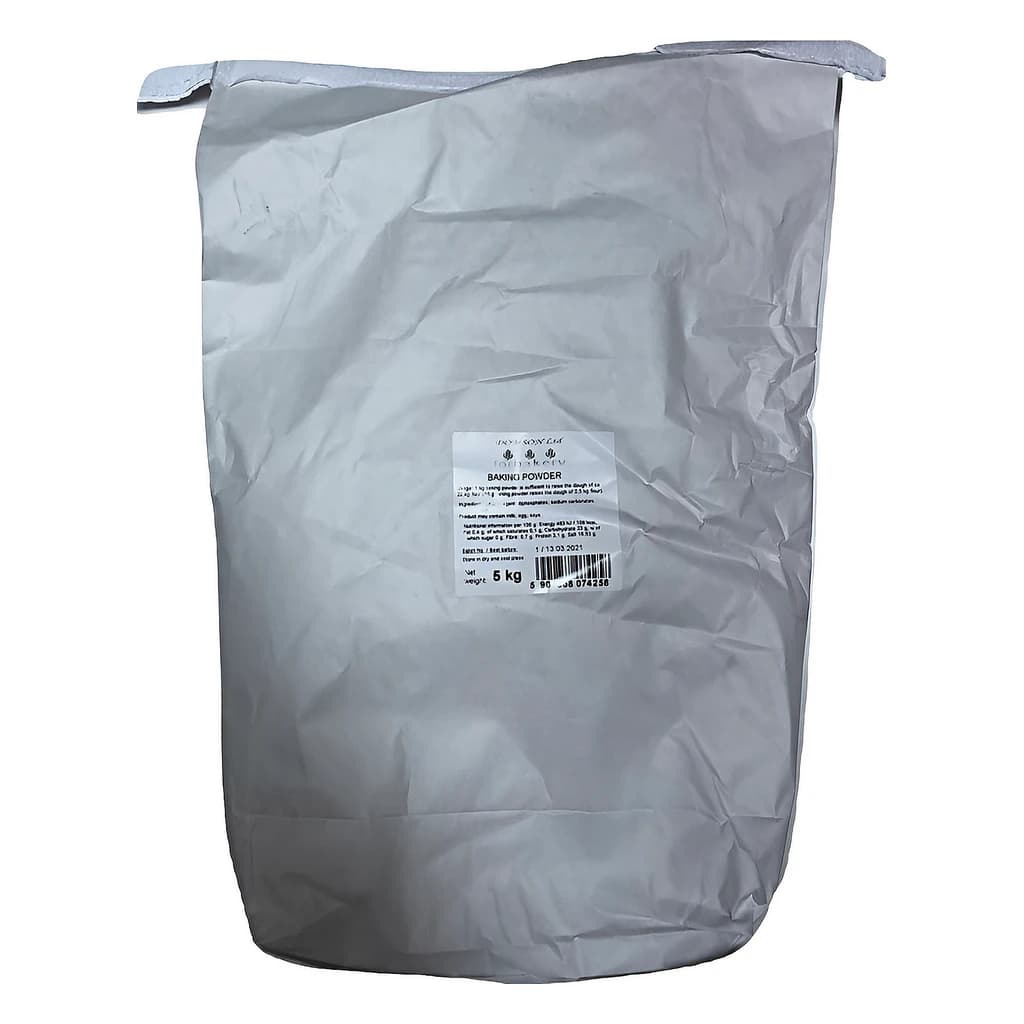
Baking Powder 5 kg
Sauer Dark Rye Sourdough Concentrate 25 kg
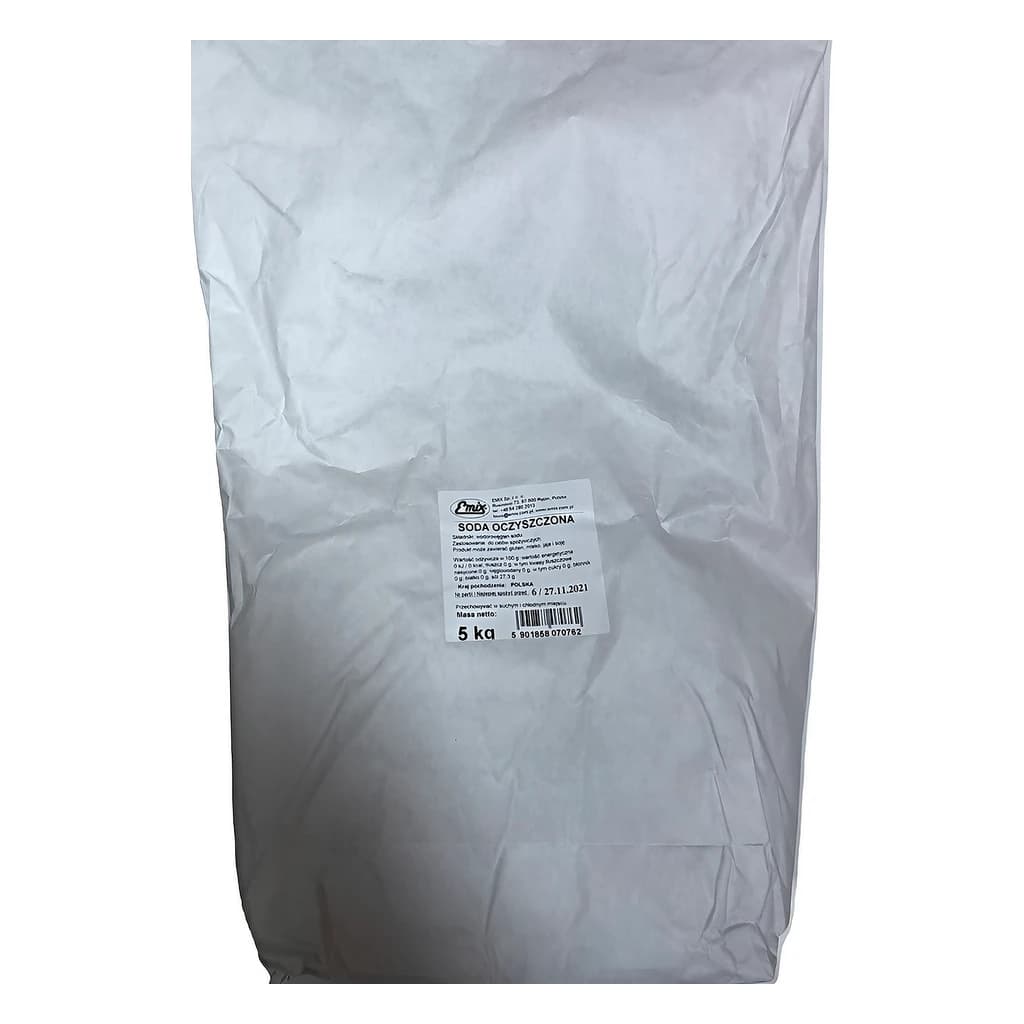
Bicarbonate of Soda 5 kg

Fresh Yeast Benevia 10 kg
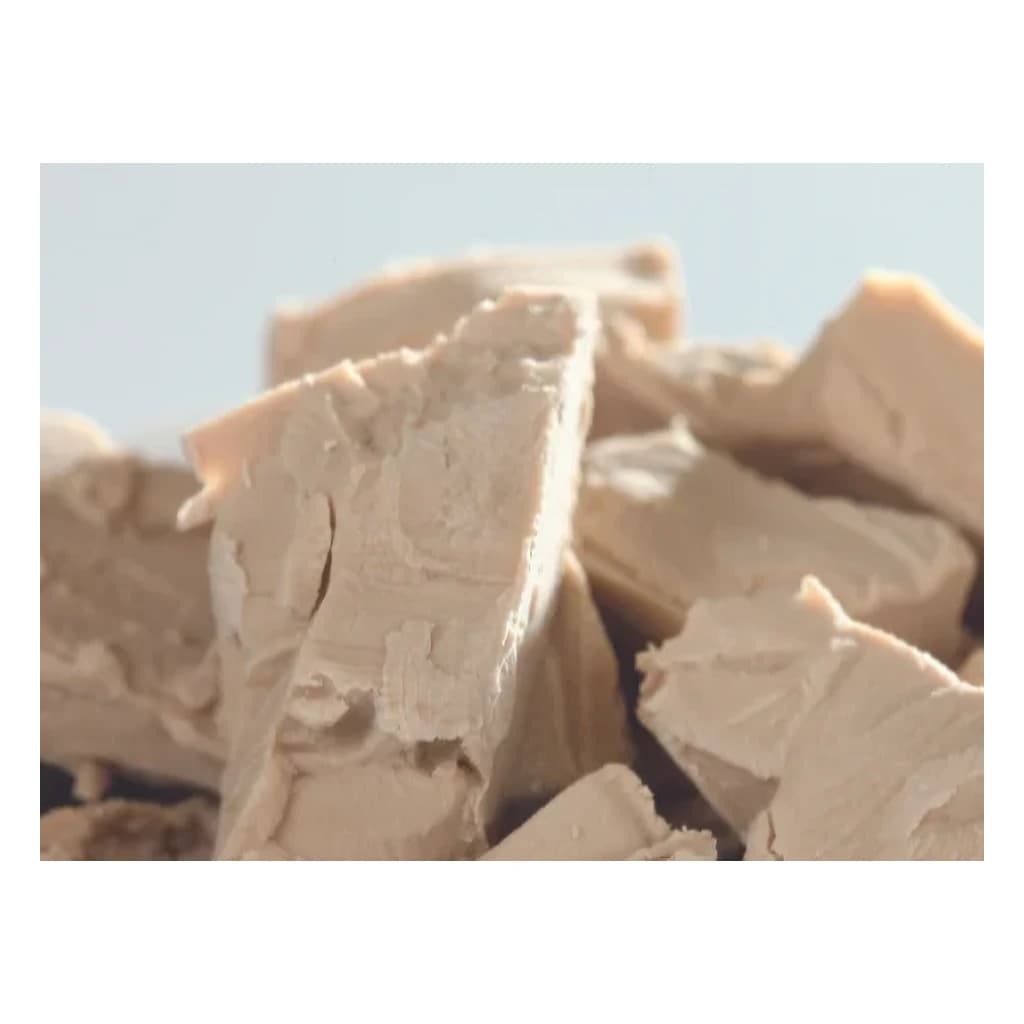
Fresh Yeast Traditional 12 kg
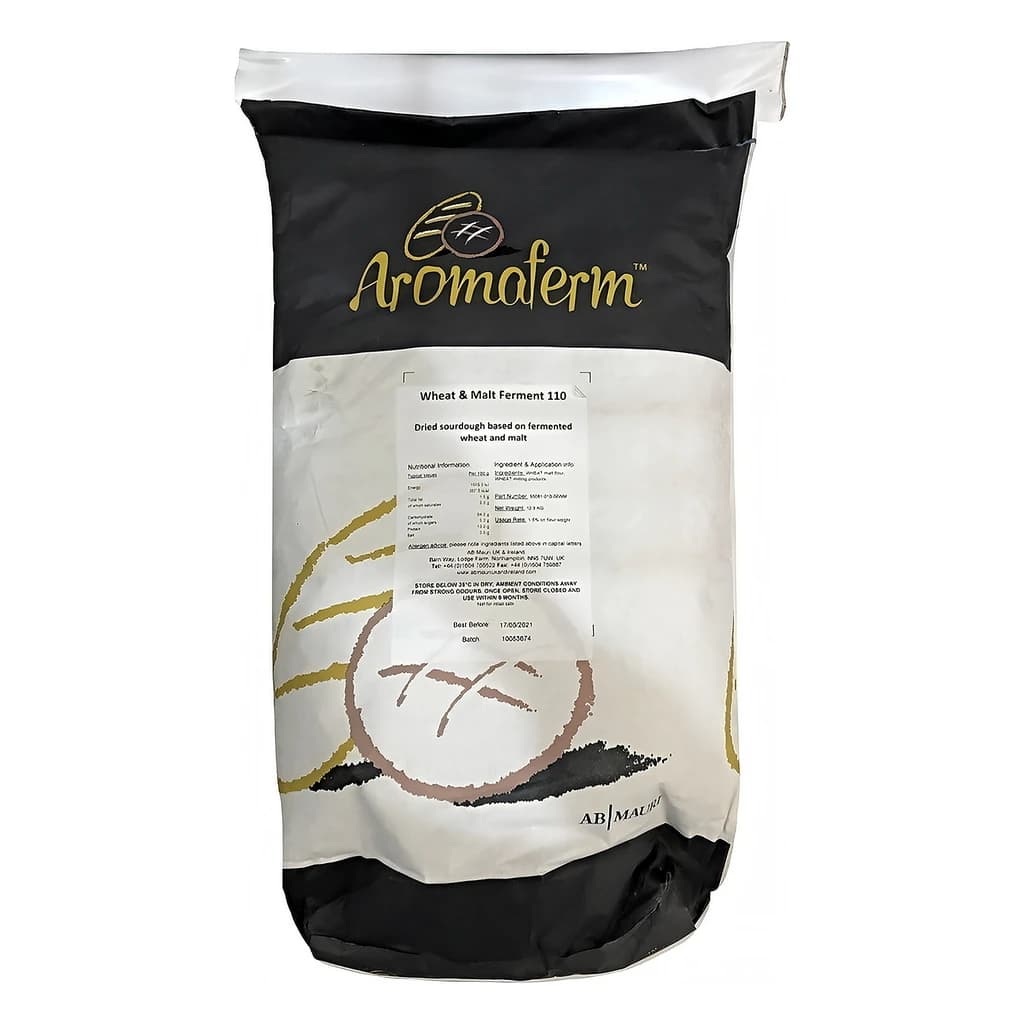
Aromaferm Wheat & Malt Ferment 110 12.5 kg
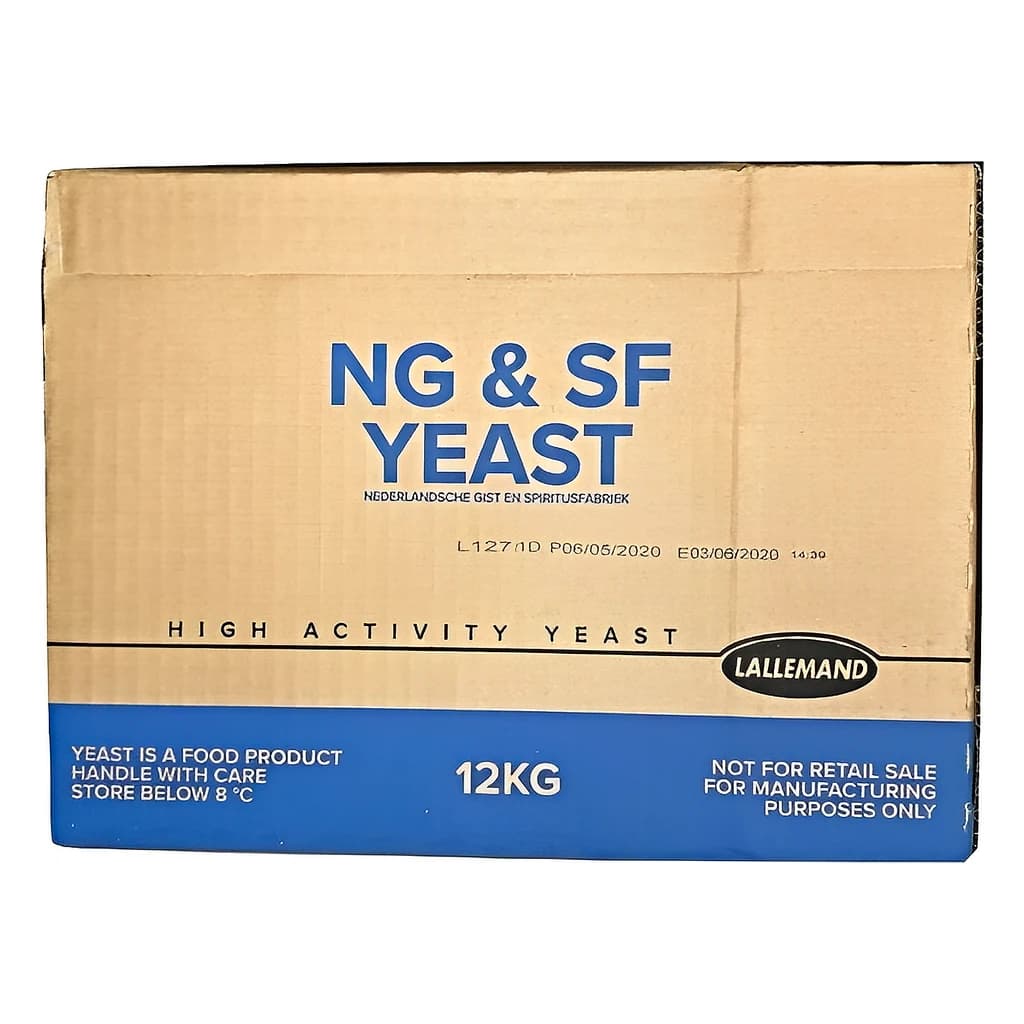
Fresh Yeast NG & SF Fast Active 12 kg
Dried Yeast Fermipan Red 10 kg

Puratos O-tentic Durum Sourdough Concentrate 10 × 1 kg
CSM Pell Premium Baking Powder 4.5 kg

Dried Yeast DCL Levure Premium 10 kg
Zeelandia Bioferm Dark Liquid Sourdough 19 kg