
What is a bread improver and why does every commercial bakery use one?
A practical guide for professional bakers to understand bread improvers: what they are, what each functional ingredient class does, how to read a commercial improver label, how dosages work, and why even a simple enzyme-only formula makes a measurable difference on a busy production line. Covers oxidants, emulsifiers, enzymes, vital wheat gluten, malt, enzyme-active soya and preservatives, with full dosage data extracted from first-party spec sheets for nine improver products in the Domson catalogue (Puratos, IREKS, Zeelandia) and cross-referenced against BAKERpedia, IREKS Compendium and Lesaffre technical literature.
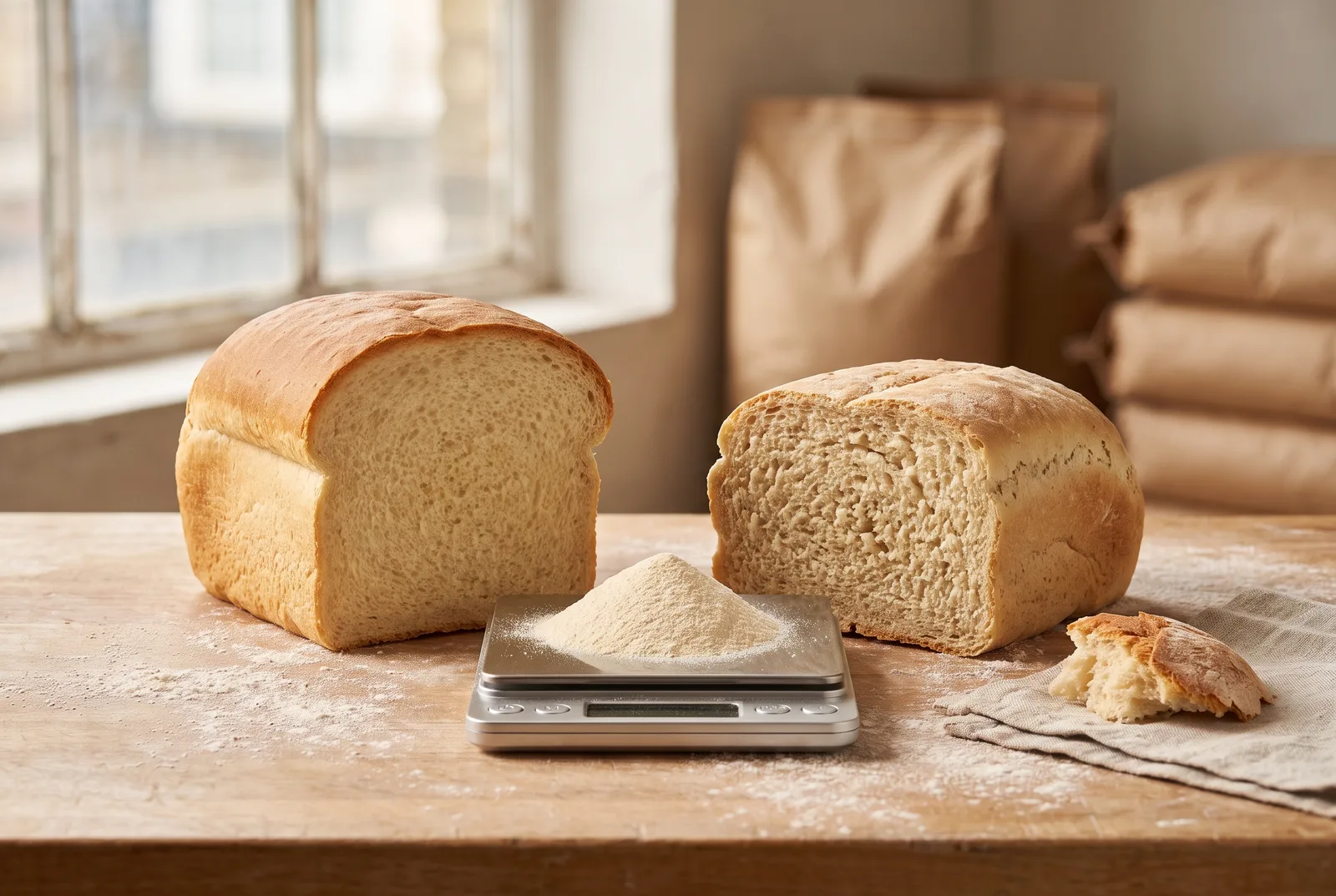
1. What is a bread improver?
A bread improver is a compound bakery ingredient — a purposeful blend of functional substances — added to dough in a single measured dose to deliver consistent, predictable results that flour, water, yeast and salt alone cannot guarantee.
The term "bread improver" is commercial shorthand. In regulatory language across the EU and UK the individual components are classified as food additives (E-numbers, governed by Regulation (EC) No 1333/2008 ), food ingredients (vital wheat gluten, malt flour, soya flour) or processing aids (most enzymes, which are not required to appear on the finished product label).
A typical bread improver contains between two and ten functional components. The full ingredient list on the bag label reveals everything: the Puratos S500 Sense, for example, declares Fermented Rye Flour (50–60%), Wheat Flour (30–40%), Emulsifier E472e (10–20%), Yeast Nutrient E516, Flour Treatment Agent E300, Rapeseed Oil, Enzymes. The Zeelandia Gamma GP, by contrast, is stripped back to just Wheat Flour, Rapeseed Oil, Flour Treatment Agent E300, Enzyme [WHEAT].
Key point: The diversity of formulations on the market reflects the diversity of bakery applications. An improver designed for a soft toll roll (e.g. IREKS Soft Roll 7 at 7% on flour) is nutritionally and functionally very different from a general-purpose powder used at 0.5% on tin bread (e.g. Zeelandia Gamma GP).
2. A brief history
Before the mid-twentieth century, most commercial baking relied on long fermentation times — sponge-and-dough, bulk ferment, or overnight retarding — to develop adequate gluten structure and flavour. Flour quality was more consistent (less year-to-year variability in UK wheat, for example) and production speeds were lower.
Two pressures changed the picture: mechanised, continuous bread production and increasingly variable flour protein. As industrial bakers moved to high-speed intensive mixers in the 1950s and 1960s, they needed dough that could be developed in minutes rather than hours.
The pivotal moment was the Chorleywood Bread Process (CBP), developed in 1961 at the British Baking Industries Research Association. CBP uses intensive mechanical energy input to develop gluten in under five minutes, but it only works reliably with added ascorbic acid (E300) to strengthen the gluten network rapidly enough to trap gas. The formula that enabled CBP — flour + water + yeast + salt + ascorbic acid + hardened fat — is essentially the ancestor of every modern bread improver.
Since 1961 the improver toolkit has expanded dramatically: emulsifiers arrived in the 1970s and 1980s, commercial enzyme preparations from the 1990s onward, and clean-label enzyme-only improvers in the 2010s.
3. Why every commercial bakery uses one
3.1 Flour variability
Wheat is an agricultural product. Protein content, gluten quality, enzyme activity and water absorption vary between crops, varieties and milling runs. An improver — particularly its oxidant and emulsifier components — provides a buffer, allowing the baker to use a consistent process even when flour properties shift.
3.2 Process speed and mechanical dough development
Long, slow fermentation naturally strengthens gluten through protease and acid activity. High-speed production compresses that window to minutes. Ascorbic acid and DATEM replicate the gluten-strengthening that fermentation would otherwise provide.
3.3 Dough tolerance
On a production line, individual dough pieces spend different times in the prover. An improver with a well-chosen emulsifier package gives the dough a wider window of acceptable proof — so pieces that sit in the prover slightly longer or shorter still produce acceptable loaves.
3.4 Shelf life and anti-staling
Commercial packaged bread must stay fresh for days, not hours. Bread stales primarily because amylose and amylopectin chains in the crumb re-crystallise (retrogradation) after baking. Maltogenic amylase and mono/diglycerides (E471) complex with starch chains, interfering with this retrogradation and extending softness.
3.5 Labelling and dietary compliance
Modern improvers are formulated to meet specific requirements: kosher (Puratos S500 Sense is Kosher-certified ), halal (most powder improvers are free from animal ingredients), vegan (many powder improvers are vegan), or clean-label (enzyme-only, emulsifier-free formulas). These attributes are controlled at the improver level, not the bakery level.
4. The building blocks: ingredient by ingredient
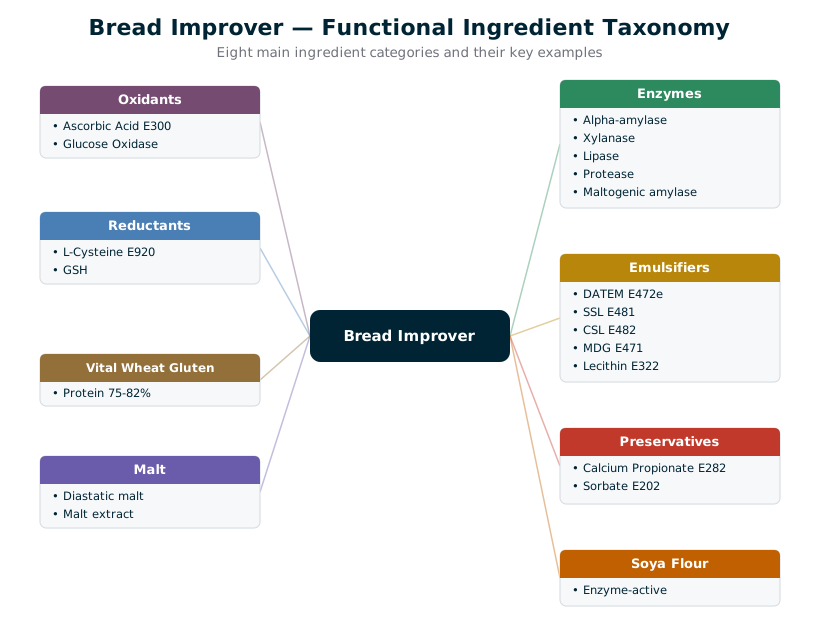 Hierarchical taxonomy diagram of bread improver functional ingredients showing eight main categories with key examples under each
4.1 The flour-based carrier
Most powder improvers use wheat flour, soya flour, or a combination as the carrier that dilutes the active ingredients to a handleable concentration. This carrier makes it possible to dose a tiny amount of ascorbic acid or enzyme homogeneously throughout a large batch of dough without risking hot-spots.
The Zeelandia Rye Stabil and Optimax Free improvers use vital wheat gluten as their primary carrier, which means the carrier itself is a functional ingredient — adding structural protein to rye doughs that contain little gluten of their own.
4.2 Oxidising agents — Ascorbic Acid (E300)
Ascorbic acid (Vitamin C) is the foundational oxidant in commercial baking. In dry form it appears to be an antioxidant, but in wet dough it is rapidly converted to dehydroascorbic acid (DHAA) by ascorbic acid oxidase and related flour enzymes. DHAA then oxidises the free thiol (–SH) groups on gluten proteins, forming new disulphide (S–S) crosslinks that tighten and strengthen the gluten network.
Practical effect: stronger gluten traps more gas, gives better oven spring, and tolerates a wider proof window. This is the same mechanism that ascorbic acid provides in the Chorleywood Bread Process.
Dosage: BAKERpedia gives a range of 20–200 ppm (0.002–0.02% on flour weight) as typical for bread dough, with 200 ppm as the US FDA maximum. In the EU/UK, ascorbic acid (E300) in bread (category 07.1) is permitted at quantum satis — no fixed numeric upper limit under Regulation (EC) No 1333/2008 Annex II — so the 200 ppm ceiling is US-specific, not a universal maximum. Always verify the current limit for the applicable food category and market before formulating.
In practice, when ascorbic acid is delivered inside a commercial improver powder, the application-level concentration depends on both the improver's ascorbic acid content and the improver's dosage on flour. The Puratos S500 Sense contains 0.67% ±10% ascorbic acid in the product; the Puratos Tigris SG 2% contains 1% ±10% . Both are titrated every batch for quality assurance.
For a deep dive into ascorbic acid and other oxidants: see sister article A3 — Ascorbic Acid, Oxidants and Reductants.
4.3 Reducing agents — L-Cysteine and Glutathione
Where oxidants tighten gluten, reductants relax it. L-Cysteine (E920) cleaves disulphide bonds via thiol-disulphide exchange, making dough more extensible and reducing the mixing time needed to achieve target dough development. This is valuable for:
- Pizza and flatbread doughs that need to be sheeted or stretched without tearing
- Cracker and biscuit doughs that need to relax between roll passes
- Correction of very high-protein flours that produce excessively tough dough
Glutathione (GSH), released from inactive (autolysed) yeast, has the same reducing action and is used as a clean-label alternative to E920 in some formulations.
Important: L-Cysteine can be derived from animal hair or feathers — check the source with the supplier if Halal, Kosher or vegan status is required. Synthetic or fermentation- derived L-Cysteine is available and avoids this issue.
4.4 Emulsifiers
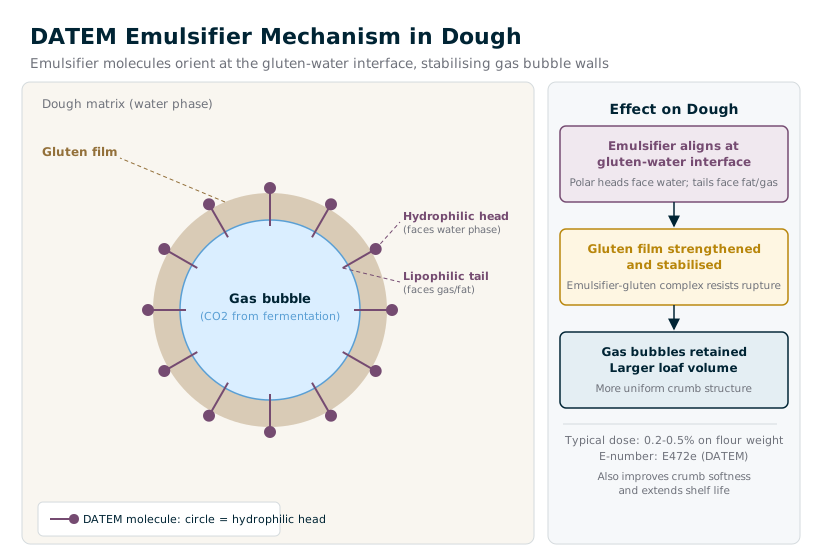 Molecular diagram illustrating how DATEM emulsifier molecules bridge the water-fat interface at gluten protein strands to stabilise gas bubbles in bread dough
Emulsifiers are amphiphilic molecules — one end is attracted to water (hydrophilic), the other to fat (lipophilic). In dough they perform two distinct jobs depending on their HLB (Hydrophile-Lipophile Balance) value:
Dough strengtheners (high HLB):
| Emulsifier | E-number | HLB type | Found in catalogue products |
|---|---|---|---|
| DATEM | E472e | Dough strengthener | Puratos S500 Sense, Tigris SG, IREKS Voltex, Soft Roll 7 |
| SSL (Sodium stearoyl-2-lactylate) | E481 | Dual: strengthener + softener | IREKS Soft Roll 7, Toast & Buns, Crumb Softener |
| CSL (Calcium stearoyl-2-lactylate) | E482 | Dual: strengthener + softener | — |
DATEM strengthens gluten by orienting at the water-gluten protein interface, increasing the cohesive strength of the gluten film around gas bubbles. SSL both strengthens gluten and complexes with starch chains to slow retrogradation.
Crumb softeners (low HLB):
| Emulsifier | E-number | Primary effect | Notes |
|---|---|---|---|
| Mono- and diglycerides (MDG) | E471 | Anti-staling, crumb softness | Most widely used anti-staling emulsifier |
| Lecithin (soya or sunflower) | E322 | Lubrication, dough extensibility | Natural origin; soya source requires allergen declaration |
| Polyglycerol esters | E475 | Aeration, crumb structure | Used in cake emulsifier pastes (e.g. Quick 96) |
MDG works by embedding between amylose chains during starch gelatinisation, forming a stable inclusion complex that prevents the chains from re-crystallising (retrograding). The result is a crumb that stays softer for longer.
Note on emulsifier paste products: The Zeelandia Quick 96 (E471/E475/E570 paste) and the Puratos Pronto (E471/E475 gel) are primarily designed for cake batters and confectionery products — sponge cake, roulades, babka — not bread. The Quick 96 has a legally stated maximum addition of 1.8% of total recipe weight per the spec sheet. These are noted here because bakeries producing both bread and pastry often handle them alongside bread improvers.
For a deep dive into emulsifiers: see sister article A3 — Emulsifiers in Bread.
4.5 Enzymes
Enzymes are the fastest-growing component category in modern bread improvers, driven by both technology and the clean-label trend. Unlike E-number additives, enzymes used as processing aids are not required to appear on the finished product's ingredient label if they are rendered inactive by baking.
The key enzyme classes in bread improvers are:
Alpha-amylase (fungal or bacterial): Cleaves starch chains, releasing fermentable sugars that feed yeast and contribute to Maillard crust browning. Most flour already contains some beta-amylase; fungal alpha-amylase (which is inactivated at a lower temperature than bacterial alpha-amylase) is the standard addition.
Maltogenic amylase: The primary anti-staling enzyme. Unlike standard alpha-amylase, maltogenic amylase modifies amylopectin in a way that interferes with retrogradation at bread storage temperatures, keeping the crumb softer for longer.
Xylanase (hemicellulase / pentosanase): Hydrolyses arabinoxylan (pentosan) chains in the wheat cell wall. Arabinoxylans bind large amounts of water; xylanase releases this water and modifies dough rheology, typically improving extensibility and machinability. Volume improvement of 5–15% is commonly reported by suppliers. Value is especially high in wholemeal, rye and high-fibre formulas.
Lipase: Hydrolyses flour lipids to produce lysophospholipids in situ. These lysophospholipids function as endogenous emulsifiers equivalent to DATEM or SSL but carry no E-number. Lipase is therefore the primary tool for clean-label emulsifier replacement.
Protease: Partially hydrolyses gluten proteins, reducing dough tenacity. Used in products where relaxation is needed — crackers, pizza, rich doughs with very strong flour. Must be carefully dosed: excess protease produces sticky, weak dough.
Glucose oxidase: An oxidoreductase that catalyses glucose + O₂ → gluconic acid + H₂O₂. The hydrogen peroxide produced in situ primarily strengthens the gluten network by oxidative crosslinking of thiol groups — similar in effect to ascorbic acid but enzyme-driven. (Note: the precise molecular mechanism is not fully characterised; contributions from dityrosine crosslinks have also been reported in the literature.) Used as a clean-label oxidant.
In all catalogue improver specs reviewed, enzymes appear as an undeclared processing aid (listed simply as "enzymes") because they meet the EU/UK processing-aid exemption criteria.
For a deep dive into baking enzymes: see sister article A3 — Enzymes in Bread.
4.6 Vital Wheat Gluten (VWG)
Vital Wheat Gluten (VWG) is a dry, cream-coloured powder — a water-insoluble protein fraction separated from wheat flour by aqueous washing and then carefully dried to preserve its functionality.
The Beneo BeneoPro VWG 75 in the Domson catalogue specifies:
- Protein: minimum 75% (N×5.7 conversion factor), equivalent to minimum 82% using the N×6.25 factor
- Water binding capacity: approximately 140–170 g per 100 g (AACC 56-30 method; indicative value, marked non-guaranteed in spec sheet)
- Shelf life: 36 months under cool (<20°C), dry (<60% RH) conditions — significantly longer than most improver powders.
VWG is not a processing aid; it is a food ingredient and must be declared on the finished product label as "wheat gluten." It is the only allergen in BeneoPro VWG 75.
Applications where VWG is most useful:
- Wholemeal and multigrain breads: Added bran and seeds dilute the gluten network; VWG compensates. BAKERpedia gives a range of 1–12% on flour (1–4% for most yeast-raised doughs; up to 12% in high-fibre formulations).
- Rye breads: Rye has no gluten; VWG (or vital wheat gluten-based improvers like Zeelandia Rye Stabil) provide the structural network. The Rye Stabil product is 78% vital wheat gluten by weight and delivers 60.8 g protein per 100 g product.
- High-speed production: VWG improves dough mixing tolerance, letting pieces survive variable mixing times without losing quality.
- Increased water absorption: Every 1% VWG added absorbs approximately 1.5–1.7 g extra water per 100 g flour (single-source, estimated from water binding capacity figure — confidence low).
For a full VWG dossier: see sister article A3 — Vital Wheat Gluten.
4.7 Malt and malt extracts
Malted barley or wheat provides both active enzymes (alpha- and beta-amylase) and fermentable sugars in a single natural ingredient. Diastatic malt is "live" — it still contains active amylase. Non-diastatic malt is heat-treated: the enzyme activity is destroyed, but the colour and flavour contribution remain.
In a bread improver context, diastatic malt flour or malt extract:
- Tops up amylase activity in flour with a low natural falling number (i.e. high enzyme activity already present) — but must be used carefully: overdose causes sticky dough and excessive crust browning.
- Provides fermentable sugars to sustain yeast activity through a longer proof.
- Contributes to Maillard browning, giving the characteristic golden-brown crust of commercial bread.
Malt products in the catalogue — including liquid malt extracts (IREKS Somex, Bakels Dark Rye Malt Extract 8000, Rye Malt Extract 14 kg) and powders (Dark Malt Flour, Maltone Dark Malt Powder) — are covered in their own article.
For a full malt dossier: see sister article A3 — Malt and Malt Extracts.
4.8 Enzyme-active soya flour
Full-fat soya flour that has not been heat-treated retains active lipoxygenase enzyme. In dough, lipoxygenase oxidises unsaturated fatty acids, generating peroxides that bleach carotenoid pigments in the flour — producing a whiter crumb.
The bleaching effect also has a secondary gluten-strengthening action through oxidative crosslinking, comparable (but weaker) to the action of glucose oxidase.
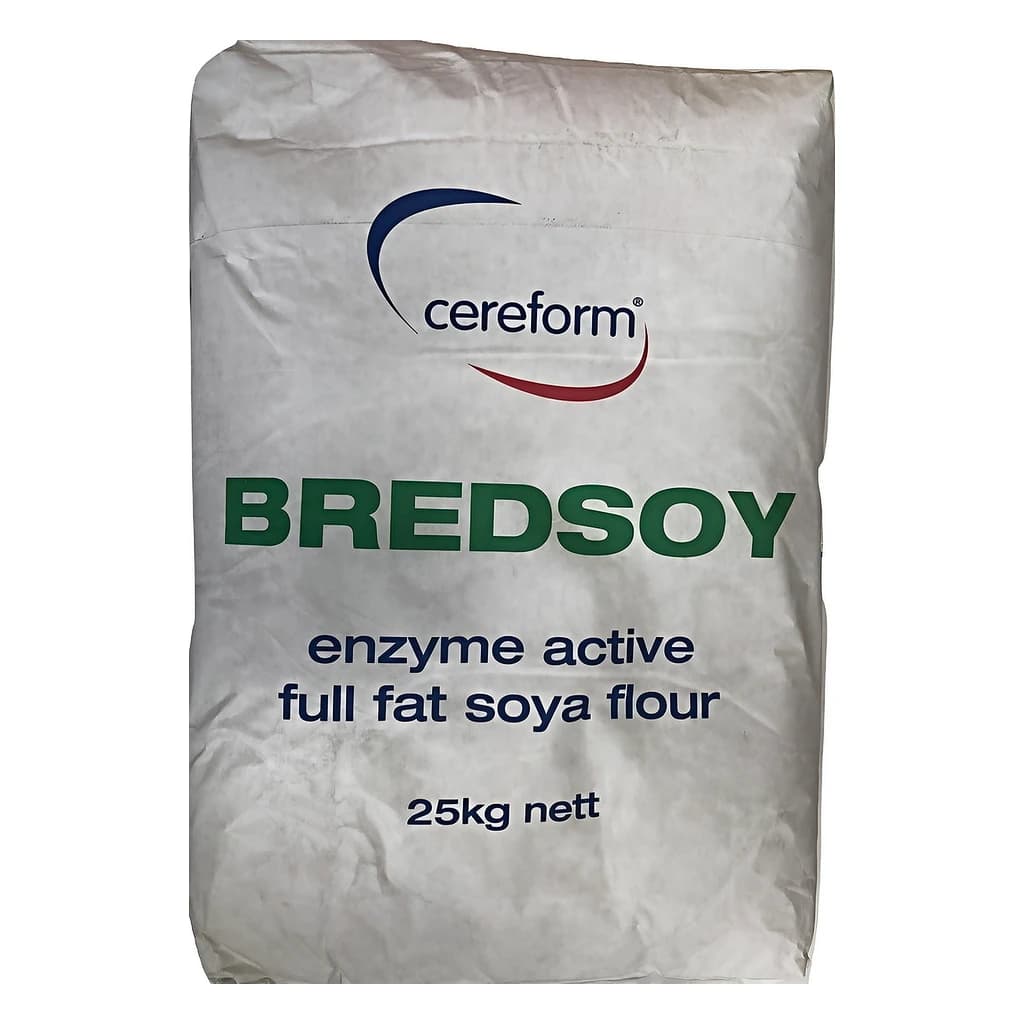
The Cereform Breadsoy PP 32s MB (listed as Cereform Breadsoy Enzyme-Active Full-Fat Soya Flour in the catalogue) is made from Non-GM Identity Preserved (IP) Canadian and UK beans and contains 35.2 g protein per 100 g. It is free from all major allergens except soya itself and must be declared on the finished product label.
Industry trend: Enzyme-active soya flour is used less frequently in new bread improver formulations than it was in the 1980s and 1990s. Clean-label concerns (soya allergen declaration) and the availability of purpose-built glucose oxidase and lipase enzymes have largely displaced it. Many "clean label" improvers specifically exclude soya flour.
4.9 Preservatives
Preservatives in bread are distinct from the functional additives above — they do not improve processing or texture; they extend microbiological shelf life. Their use is governed by EU Regulation 1333/2008 and UK retained equivalents.
Calcium propionate (E282): The most widely used bread preservative. At pH below 5.5 the undissociated propionic acid is membrane-permeable and disrupts mould metabolism. Compatible with yeast at normal use levels. BAKERpedia gives a maximum of approximately 0.3% on flour weight, but legal limits must be verified against Regulation 1333/2008 Annex II for the applicable food category.
Potassium sorbate (E202): Inhibits mould and some yeasts via sorbic acid at low pH. Often used in combination with calcium propionate.
Key regulatory point: in many EU markets, preservatives are permitted only in pre-packaged bread, not in fresh unpackaged bread sold the same day. Always verify the applicable national rules.
For full preservative regulatory detail: see sister article A3 — Preservatives and Shelf Life.
5. Physical formats
Bread improvers reach the bakery in three physical forms. (See the comparison table below for full details.)
Powder is the dominant format for bread improvers — easy to store, weigh accurately, and mix into flour. Shelf life from first-party specs: 9 months (Puratos S500 Sense, Tigris SG; IREKS Soft Roll 7) to 12 months (IREKS Voltex, Toast & Buns, Crumb Softener; Zeelandia Gamma GP).
Storage conditions from spec sheets: cool (<25°C), dry (<50–75% RH), away from infestation. Moisture is the key enemy — it degrades ascorbic acid and enzyme activity.
Paste / emulsifier paste format (e.g. Zeelandia Quick 96, Puratos Pronto) is used primarily in cake and pastry applications rather than bread. High emulsifier content makes paste format valuable for aerating batters and soft dough products.
Liquid improvers and malt extracts (e.g. L-1 Liquid Bread Improver, IREKS Somex Liquid Malt Extract) are suited to automated continuous bread lines where liquid dosing is simpler than powder weighing.
6. Reading the dosage: what the spec sheets tell us
One of the most common mistakes when introducing a new improver is applying the wrong dosage. The spec sheets from nine products in the Domson catalogue reveal how wide the range is in practice:
| Product | Dosage (on flour weight) | Format | Source |
|---|---|---|---|
| Zeelandia Gamma GP | 0.5–0.75% (tin bread) to 2% (crusty/wholemeal) | Powder | supplier spec |
| Puratos Tigris SG | 2% | Powder | supplier spec |
| IREKS Voltex | 1–2% | Powder | supplier spec |
| IREKS Crumb Softener | 1.5% | Powder | supplier spec |
| IREKS Toast & Buns | 2% | Powder | supplier spec |
| Optimax Free (calc.) | ~1.7% | Powder | supplier spec |
| Rye Stabil (calc.) | ~2.8% | Powder | supplier spec |
| IREKS Soft Roll 7 | 7% | Powder | supplier spec |
The IREKS Soft Roll 7 at 7% is not an error: at that dosage the product is supplying not only functional additives but also dextrose, sugar, salt and whey powder as part of a "full-service" soft roll formula. The 7% is dosage on flour, not on total dough.
The Gamma GP range (0.5–2%) demonstrates that even a simple enzyme-and-ascorbic-acid powder should be dosed higher for whole-grain and crusty products because these doughs need more structural support.
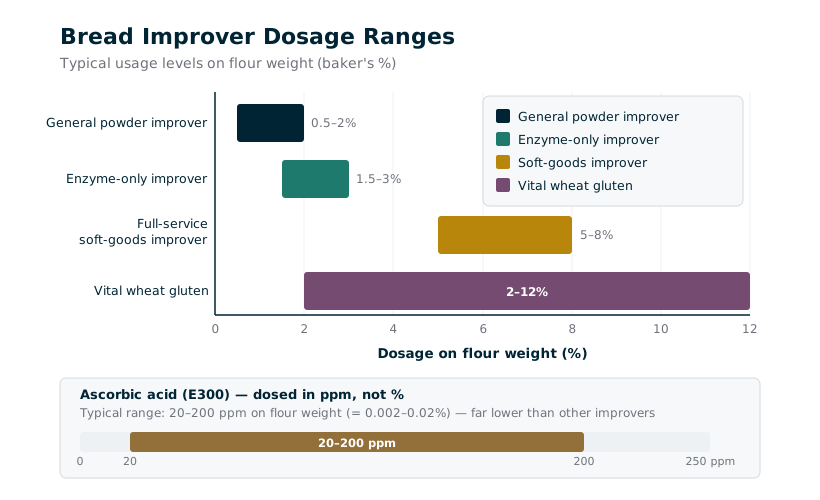 Bar chart comparing typical dosage ranges on flour weight for five categories of bread improver functional ingredients
7. Choosing the right improver for the job
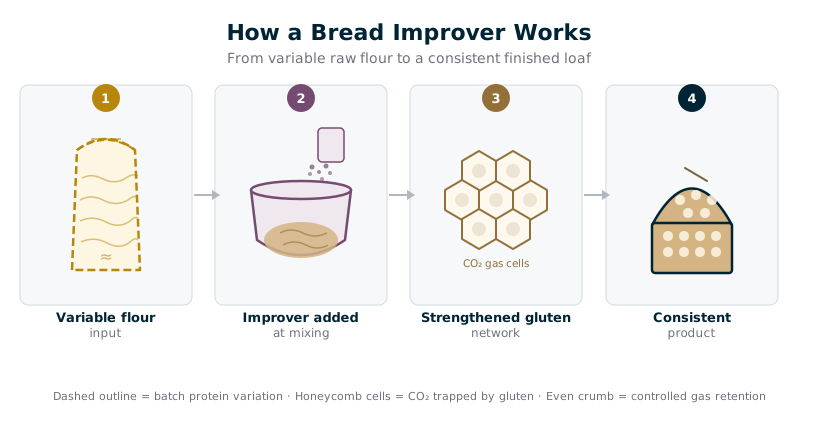 Four-panel diagram showing the sequence of actions a bread improver performs: flour input, mixing with improver, gluten network development, expanded crumb
The following guide matches common production needs to the broad improver characteristics needed. Full product-level recommendations are in the sister article A3 — Improver Selection Guide.
White tin bread or bloomer (high-speed production): A general-purpose powder at 0.5–1% on flour is sufficient. Key ingredients: ascorbic acid, DATEM, enzyme. Zeelandia Gamma GP and Puratos Tigris SG both fit this profile.
Soft rolls, burger buns, hot-dog rolls: Emulsifiers (SSL E481, MDG E471) for crumb softness; dextrose for colour and fermentation; dairy for flavour. A "soft roll" or "toast" improver at 2–7% is the norm. IREKS Soft Roll 7 (7%) and Toast & Buns (2%) both deliver this. Bear in mind IREKS Soft Roll 7 contains milk (whey) — label accordingly.
Rye and wheat-rye bread: Rye dough needs structural support because rye protein does not form a true gluten network. VWG-based improvers (Zeelandia Optimax Free, Rye Stabil) provide that network. Both are emulsifier-free — clean label for rye.
Wholemeal and high-fibre bread: Bran particles cut the gluten network; ascorbic acid and VWG compensate. Xylanase enzyme is especially valuable here to free water bound to arabinoxylans in the bran.
Extended shelf-life packaged bread: Maltogenic amylase is essential. MDG (E471) assists. Calcium propionate E282 if the product is pre-packaged. Consider a dedicated "crumb softener" product alongside the base improver.
Clean-label mandate (no E-number emulsifiers on label): Use an enzyme-only improver such as Zeelandia Optimax Free. Lipase and glucose oxidase replace DATEM and SSL functionally — though the replacement is not always 1:1 and may require formulation adjustment.
8. Allergens and labelling
The following is a summary for bakery operator awareness only. Allergen declarations for consumer-facing labels must be verified against the full spec sheet for each specific product and must be reviewed by a qualified food technologist before use.
Bread improvers almost universally contain at least one of the 14 major EU/UK allergens, with wheat (gluten) being universal to virtually all powder bread improvers reviewed.
| Allergen present | Products affected (from spec sheets reviewed) |
|---|---|
| Cereals containing gluten (wheat) | All powder improvers reviewed |
| Rye | Optimax Free, Rye Stabil (confirmed) |
| Soya | IREKS Voltex, Soft Roll 7, Toast & Buns (confirmed) |
| Milk | IREKS Soft Roll 7 (whey powder — confirmed) |
| Eggs | IREKS Voltex, Soft Roll 7, Softy (cross-contamination risk stated) |
All products above are not suitable for coeliacs because they contain or are produced alongside gluten-containing cereals.
The BeneoPro VWG 75 Vital Wheat Gluten contains only wheat gluten as an allergen and is certified Kosher and Halal.
The Puratos Pronto Dough Conditioner is free from all 14 major allergens (no gluten, no soya, no milk, no nuts etc.). However this product is intended for confectionery and is not a bread improver.
9. The clean-label challenge
Consumer demand for shorter ingredient lists is reshaping improver formulations. The key drivers are:
- Replacement of E-number emulsifiers with enzymes (lipase → in-situ lysophospholipids replacing DATEM; glucose oxidase → replacing SSL; xylanase → reducing emulsifier need by freeing pentosan water).
- Removal of enzyme-active soya flour (allergen declaration; replaced by specific enzyme preparations).
- Shorter lists in general: the Zeelandia Gamma GP already achieves this — its declaration is just four ingredients.
The trade-off is that clean-label enzyme-only improvers typically require higher technical precision in formulation and process control. They may be less tolerant of flour variability than a full emulsifier-and-oxidant formula.
For bakeries wanting to move toward clean label progressively, Lesaffre's technical documentation suggests a phased approach: first remove L-cysteine, then remove DATEM/SSL, then optimise enzyme doses.
10. Common faults and fixes
See the fault table below for a full list. The most frequent production issues and their improver-related causes are:
Low volume / dense crumb: Check ascorbic acid dose (is the improver dosed correctly?), check flour quality (is the protein adequate?). Add VWG if the flour is diluted by bran.
Dough too tight, tears on moulding: Usually over-oxidation. Check improver dose. For flat/sheeted products, consider a dough relaxer (L-cysteine or inactive yeast).
Rapid staling within 24 hours: Insufficient maltogenic amylase and/or MDG. Upgrade to an improver with explicit anti-staling activity.
Pale, insipid crust: Check dextrose or malt addition. A diastatic malt powder at 0.5–1% on flour will boost crust colour through Maillard reaction.
Mould within 3–5 days of packaging: Add calcium propionate E282 if the bread is pre-packaged and the formulation permits it. Verify the legal limit for the specific product category.
Coverage notes and gaps
This article is solid on:
- Functional ingredient mechanisms and E-number taxonomy (high confidence, multiple sources)
- Product-specific dosages from first-party spec sheets for nine catalogue products
- Allergen declarations (as stated in spec sheets; must be verified before use)
- Clean-label trend direction
This article is thin on:
- Exact EU/UK regulatory limits for specific emulsifiers and preservatives — these require direct reading of Regulation 1333/2008 Annex II and are not yet covered here
- Dosage data for VWG (1–12% is single-source BAKERpedia; no spec sheet states a dosage)
- Exact concentrations of enzyme preparations (enzymes are "undeclared processing aids" in all spec sheets; supplier application data would be needed for precise ppm figures)
- Liquid improver product specs (no spec sheets available for L-1 Liquid Bread Improver)
Follow-up recommended: read EU Regulation 1333/2008 Annex II for bread category (07.1) to add verified regulatory limits for DATEM, SSL, MDG, calcium propionate.
White Tin Bread with Zeelandia Gamma GP (Benchmark Formula)
Derived from Gamma GP spec sheet application recipe. All quantities as baker's percentage (% on flour weight). Dough temperature target 27–28°C.
| Ingredient | Baker's % | Weight |
|---|---|---|
| Wheat flour (strong, T850 equivalent) | 100% | |
| Water | 60–64% | |
| Fresh yeast | 2% | |
| Salt | 2% | |
| Zeelandia Gamma GP | 0.5–0.75% |
- Mix all ingredients 5 min slow + 4 min fast. Bulk fermentation 45–60 min. Divide, round, intermediate proof 10 min. Mould into tins. Final proof 45–60 min at 38°C / 85% RH. Bake 220°C (fan) for 25–30 min.
Yield: Typical tin loaf 800 g dough weight
Mixed Rye Bread with Zeelandia Optimax Free (Emulsifier-Free)
Application recipe from Optimax Free spec sheet, converted to baker's percentage (flour base = wheat + rye flour). Suitable for bakeries requiring E-number-free emulsifier labelling.
| Ingredient | Baker's % | Weight |
|---|---|---|
| Wheat flour type T850 | 16.7% | 1.0 kg |
| Rye flour type T720 | 83.3% | 5.0 kg |
| Rye sourdough | — | 6.4 (as supplied sourdough) kg |
| Salt | 3.8% | 0.23 kg |
| Fresh yeast | 4.2% | 0.25 kg |
| Optimax Free | ~1.7% | 0.1 kg |
| Water | ~93% | 5.6 kg |
- Mix all ingredients 8 min low speed + 2 min high speed. Dough temperature approx. 28°C. First proof approx. 15 min. Place directly into baking forms (0.58 kg pieces). Final proof approx. 50 min. Bake at 250°C reducing to 230°C, with steam for first 5 minutes. Total bake approx. 45 min.
Yield: Approx. 0.58 kg dough pieces in baking forms
Soft Rolls with IREKS Soft Roll 7
Derived from IREKS Soft Roll 7 spec sheet. Note: at 7% dosage this product already supplies sugar, salt and dextrose — adjust recipe additions accordingly. Baker's % on flour weight.
| Ingredient | Baker's % | Weight |
|---|---|---|
| Strong wheat flour | 100% | |
| IREKS Soft Roll 7 | 7% | |
| Fresh yeast | 3–4% | |
| Water | 55–58% (adjust for Soft Roll 7 contribution) |
- Soft Roll 7 supplies emulsifiers, sugar, salt, dextrose and dairy — reduce added salt and sugar accordingly. Mix 4 min slow + 6–8 min fast. Bulk ferment 20–30 min. Divide at 70–80 g. Intermediate proof 10 min. Mould, prove 35–45 min at 38°C / 85% RH. Bake 210–220°C for 12–15 min.
Yield: Soft rolls: 70–80 g dough weight
Data extracted directly from first-party supplier spec sheets. Dosage figures are manufacturer-stated or calculated from application recipes where no explicit dosage is given. Allergen declarations are abridged — full allergen matrix is in each product spec sheet.
| Product | Brand | Format | Stated dosage (% on flour) | Key functional additives (E-numbers) | Application | Shelf life | Allergen headline |
|---|---|---|---|---|---|---|---|
| Puratos S500 Sense SG 12.5 kg | Puratos | Powder | Not explicitly stated in spec (all-purpose use) | DATEM E472e, Ascorbic Acid E300, Enzymes, Calcium Sulphate E516 | All-purpose bread and morning goods; contains natural sourdough note | 9 months | Contains gluten (wheat); vegan; Kosher certified |
| Puratos Tigris SG 2% 16 kg | Puratos | Powder | 2% | DATEM E472e, Ascorbic Acid E300, Enzymes | General yeast-raised bakery goods | 9 months | Contains gluten (wheat); vegan; halal suitability to be confirmed |
| IREKS Voltex 25 kg | IREKS | Powder | 1–2% | DATEM E472e, SSL E481, Ascorbic Acid E300, Enzymes | Multi-purpose bread and rolls | 12 months | Contains wheat AND soya; traces of eggs, milk, sesame |
| IREKS Soft Roll 7 25 kg | IREKS | Powder | 7% | SSL E481, MDG E471, DATEM E472e, Ascorbic Acid E300, Enzymes | Soft rolls — high-dosage product that also supplies sugar, salt, dextrose and dairy | 9 months | Contains wheat, soya AND milk (whey powder); traces of eggs, sesame |
| IREKS Toast & Buns 25 kg | IREKS | Powder | 2% | SSL E481, Ascorbic Acid E300, Enzymes, Calcium Carbonate E170 | Toast bread and burger/hot-dog buns | 12 months | Contains wheat AND soya; traces of eggs, milk, sesame |
| IREKS Crumb Softener 25 kg | IREKS | Powder | 1.5% | SSL E481, Ascorbic Acid E300, Enzymes, Calcium Carbonate E170i | Soft baked goods — crumb softness and anti-staling focus | 12 months | Contains wheat; traces of eggs, soya, milk, sesame |
| Zeelandia Gamma GP 12.5 kg | Zeelandia | Powder | 0.5–0.75% (tin); 1% (bloomers); 1.5% (soft rolls); 2% (crusty/wholemeal) | Ascorbic Acid E300, Enzymes [WHEAT] | General purpose — wide range of breads and morning goods | 12 months | Contains wheat; produced on lines handling rye, barley, oats, spelt, eggs, soya, milk, sesame, lupin |
| Optimax Free 20 kg | Zeelandia | Powder | ~1.7% on flour (calculated from application recipe) | Ascorbic Acid E300, Enzymes — NO emulsifiers | Mixed and rye breads; enzyme-only (emulsifier-free) formula | 180 days | Contains wheat AND rye; possible sesame cross-contamination |
| Rye Stabil Improver 25 kg | Zeelandia | Powder | ~2.8% on flour (calculated from application recipe) | Ascorbic Acid E300, Enzymes — NO emulsifiers; high VWG base | Rye and wheat-rye bread; stabilises rye dough structure via VWG network | 270 days | Contains wheat; possible rye, barley, oat, spelt, egg cross-contamination |
Each row covers one functional ingredient class. E-number designations are EU/UK. US designations differ. Regulatory status notes refer to EU Regulation 1333/2008 and UK retained equivalent.
| Category | Key substance(s) | E-number | Primary mechanism | Bakery effect | Typical use level |
|---|---|---|---|---|---|
| Oxidant | Ascorbic acid (Vitamin C) | E300 | Converted in dough to dehydroascorbic acid, which oxidises free SH groups on gluten proteins, forming new S-S crosslinks and tightening the gluten network | Stronger gluten, greater gas retention, improved loaf volume, better dough tolerance to overproofing | 20–200 ppm on flour weight (0.002–0.02%) |
| Oxidant (enzymatic) | Glucose oxidase | Not assigned (processing aid) | Oxidises glucose to gluconic acid, producing H2O2 in situ; H2O2 acts as oxidant on gluten SH groups, analogous to ascorbic acid | Gluten strengthening, clean-label alternative to chemical oxidants | A few ppm (used at very low concentrations; no standard stated) |
| Reductant | L-Cysteine | E920 | Cleaves S-S disulphide bonds in gluten proteins via thiol-disulphide exchange, relaxing tight gluten structure | Increased dough extensibility, reduced mixing time, dough relaxation for flatbreads, pizza and crackers | Low doses; exact range depends on flour protein — no single figure confirmed by multiple sources |
| Reductant (natural) | Glutathione (GSH) from inactive yeast | Not assigned (ingredient) | Same thiol-disulphide exchange as L-cysteine; GSH released from dead yeast cells acts as endogenous reducing agent | Dough relaxation; used in clean-label reductant formulations | Incorporated as inactive/autolysed yeast in improver |
| Emulsifier — dough strengthener | DATEM (Mono- and di-acetyltartaric acid esters of mono- and di-glycerides of fatty acids) | E472e | Amphiphilic molecule orients at the water-gluten interface, increasing gluten-film strength and gas-bubble stability | Improved volume, oven spring, crumb structure; dough tolerance to processing variation | Typically 0.2–0.5% on flour (often supplied as part of improver blend) |
| Emulsifier — dough strengthener | Sodium stearoyl-2-lactylate (SSL) | E481 | Complexes with gluten proteins to strengthen the gluten network; also complexes with starch to retard retrogradation | Stronger gluten, improved volume, anti-staling, softer crumb over shelf life | Typically 0.2–0.5% on flour (often supplied as part of improver blend) |
| Emulsifier — dough strengthener | Calcium stearoyl-2-lactylate (CSL) | E482 | Functionally similar to SSL; calcium salt version | Dough strengthening; sometimes preferred over SSL for kosher/halal formulations | Typically 0.2–0.5% on flour |
| Emulsifier — crumb softener | Monoglycerides and diglycerides of fatty acids (MDG) | E471 | Complex with amylose chains during starch gelatinisation, slowing retrogradation and keeping the crumb softer for longer | Anti-staling, crumb softness, improved slicing of packaged bread | Typically 0.2–0.5% on flour |
| Emulsifier — natural | Lecithin (soya or sunflower) | E322 | Natural phospholipid; acts as surface-active agent at water-fat interfaces | Dough lubrication, crumb tenderness, improved machinability | 0.3–0.5% on flour typical |
| Enzyme — amylase | Alpha-amylase (fungal or bacterial); Maltogenic amylase | Not assigned (processing aid) | Alpha-amylase cleaves starch chains, releasing fermentable sugars. Maltogenic amylase preferentially produces maltose and modifies starch retrogradation pattern at bakery temperatures | Improved fermentation, crust colour (Maillard), oven spring; maltogenic amylase specifically anti-staling via modified retrogradation | A few ppm on flour (very high enzyme potency) |
| Enzyme — hemicellulase | Xylanase (pentosanase) | Not assigned (processing aid) | Hydrolyses arabinoxylan (pentosan) polymers in the wheat cell wall, releasing water bound to pentosans and modifying dough rheology | Improved dough extensibility, machinability, and loaf volume — particularly valuable in wholegrain and high-extract flours | A few ppm on flour |
| Enzyme — lipase | Lipase | Not assigned (processing aid) | Hydrolyses flour lipids to produce lysophospholipids in situ; these function as endogenous emulsifiers equivalent to DATEM/SSL | Gluten strengthening, improved volume and crumb structure — clean-label emulsifier replacement | A few ppm on flour |
| Enzyme — protease | Protease | Not assigned (processing aid) | Partially hydrolyses gluten proteins at peptide bonds, reducing dough tenacity | Dough relaxation, reduced mixing time, improved sheeting (cracker, pizza, flatbread) | Very low — overdose causes sticky, weak dough |
| Vital Wheat Gluten (VWG) | Vital Wheat Gluten (gliadin + glutenin) | Not an additive — food ingredient. Labelled as 'wheat gluten'. | Adds functional gluten protein to flour; re-hydrates and participates in gluten network formation | Higher water absorption, stronger dough, improved gas retention; compensates for weak flour or gluten dilution by bran/fibre | 1–12% on flour (1–4% for most yeast-raised doughs; up to 12% in high-fibre formulas) |
| Diastatic malt / malt flour | Diastatic malt flour or malt extract | Not an additive — food ingredient. Labelled as 'malt flour' or 'malt extract'. | Supplies active alpha- and beta-amylase plus fermentable sugars from malted grain | Enhanced yeast fermentation, improved oven spring, golden-brown crust via Maillard reaction | Typically 0.5–2% on flour for diastatic malt flour |
| Enzyme-active soya flour | Full-fat soya flour (enzyme-active) | Not an additive — food ingredient. Labelled as 'soya flour'. | Active lipoxygenase enzyme in soya bleaches flour carotenoids (whitening effect); also improves gluten by oxidative crosslinking | Whiter crumb, improved dough handling, slight volume increase | 0.5–1% on flour (historically higher but now largely replaced by other enzymes) |
| Preservative | Calcium propionate | E282 | Undissociated propionic acid at pH < 5.5 diffuses into microbial cells and disrupts metabolism | Inhibits mould growth in packaged bread, extending shelf life by several days | Max approximately 0.3% on flour (verify against EU Reg 1333/2008 for current legal limits) |
| Preservative | Potassium sorbate | E202 | Sorbic acid at low pH inhibits mould and yeast metabolic enzymes | Mould inhibition in packaged bread — typically used in combination with propionates | Varies by product type — verify against EU Reg 1333/2008 |
Three principal formats used in commercial bakeries. Dosage by format is a general guide; always follow the specific product's spec sheet.
| Format | Typical appearance | Typical dosage method | Advantages | Disadvantages | Examples in catalogue |
|---|---|---|---|---|---|
| Powder | Off-white to light beige powder; free-flowing or slightly dusty | Weighed into mixer with flour, or pre-blended. Dosage 0.5–8% on flour (product-dependent) | Long shelf life (9–12 months); easy to store; precise weighing; broad formula flexibility | Dusty handling; risk of over- or under-dosing if not weighed accurately; some active ingredients (enzymes) can degrade if bag left open in humid conditions | Puratos S500 Sense, IREKS Voltex, Zeelandia Gamma GP |
| Paste / gel | Opaque paste or gel; light brown to beige; typically in 10 kg buckets | Added by weight or volume at start of mixing; typically 0.5–3% on total recipe or specific ingredient weight | No dust; high emulsifier concentration; easy dispersion in fat-containing batters | Shorter shelf life (9 months); requires frost-free storage; pump dispensing at scale; mainly suited to cakes/sponges rather than bread | Zeelandia Quick 96 (max 1.8% on recipe), Puratos Pronto Dough Conditioner (0.5–3%) |
| Liquid | Dark brown to amber liquid; can be pumpable or viscous | Added to water phase; requires accurate liquid dosing system at scale | Consistent dispersion; easy to automate in continuous bread lines; no dust | Requires liquid dosing equipment; limited to certain improver types (malt extracts, sourdough concentrates, liquid improvers) | L-1 Liquid Bread Improver 10 kg; Bakels Dark Rye Malt Extract 8000; IREKS Somex Liquid Malt Extract; EDME SDM Medium Extract (Malt Extract Medium 25 kg) — spray-dried powder format but functionally in the liquid-malt category |
Practical troubleshooting guide. Most faults can be caused by factors other than the improver alone; always check flour quality, yeast activity and process temperatures before adjusting improver dose.
| Fault | Likely improver-related cause | Remedy |
|---|---|---|
| Low volume; dense crumb; poor oven spring | Insufficient ascorbic acid or oxidant; weak emulsifier level; low VWG for high-fibre flour | Increase oxidant level within permitted range; check improver dose matches application type; add VWG for high-bran formulas |
| Dough too tight; tears during moulding | Over-oxidation from excess ascorbic acid or glucose oxidase; too much VWG for the flour protein level | Reduce oxidant level; consider adding a small amount of reductant (L-cysteine E920 or inactive yeast); check VWG dosage |
| Sticky, unworkable dough; poor gas retention | Excess protease enzyme or reductant; excessively active diastatic malt (Falling Number too low) | Reduce or eliminate protease; check malt addition is not overdone; verify flour Falling Number >250 s |
| Crumb becomes firm and stale rapidly (within 24 h) | Insufficient anti-staling enzyme (maltogenic amylase); insufficient MDG (E471) in formula | Select an improver containing maltogenic amylase and/or MDG; consider dedicated crumb-softener product |
| Pale crust with poor colour | Insufficient sugar supply to Maillard reaction; over-ripe yeast consuming all sugars before oven; insufficient diastatic malt | Add diastatic malt at 0.5–1% on flour; check proof time is not excessive; consider malt extract for colour boost |
| Mould visible within 3–5 days of packaging | Insufficient preservative level; packaging applied while bread too warm; high water activity | Add calcium propionate E282 at appropriate level (verify legal limit); ensure bread is below 35°C before packaging; consider controlled atmosphere packaging |
| Crumb white and bleached (undesirable for artisan products) | Lipoxygenase from enzyme-active soya flour bleaching carotenoids | Reduce or remove enzyme-active soya flour; switch to enzyme-only improver (e.g. Optimax Free) without soya |
- Value:
- 20–200
- Unit:
- ppm on flour
- Confidence:
- low
- Note:
- US FDA max 200 ppm; EU Regulation 1333/2008 governs EU/UK limit — verify current Annex II.
- Value:
- 75 (N×5.7) / 82 (N×6.25)
- Unit:
- g/100g dry matter
- Confidence:
- high
- Note:
- For BeneoPro VWG 75. Other VWG products may differ.
- Value:
- 140–170
- Unit:
- g water per 100 g VWG
- Confidence:
- medium
- Note:
- BeneoPro VWG 75 only; asterisk in spec = 'cannot be subject of complaints'.
- Value:
- 1–12
- Unit:
- % on flour
- Confidence:
- low
- Note:
- Single source (BAKERpedia); lower bound 1% (not 2%) per BAKERpedia: 1–4% for most yeast-raised doughs, up to 12% for high-fibre formulas. Not confirmed by any first-party spec sheet.
- Value:
- approx. 0.3
- Unit:
- % on flour
- Confidence:
- low
- Note:
- BAKERpedia figure; legal limits must be verified against EU Regulation 1333/2008 for applicable food category.
- Value:
- 60.8
- Unit:
- g/100g
- Confidence:
- high
- Note:
- Consistent with product being 78% vital wheat gluten.
- Value:
- 40.7
- Unit:
- g/100g
- Confidence:
- high
- Note:
- Consistent with product being 50% vital wheat gluten.
- Value:
- 1.8
- Unit:
- % on total recipe weight
- Confidence:
- high
- Note:
- Legal requirement stated in Zeelandia spec sheet — relates to emulsifier levels per EU food additive regulation.
- Value:
- 100% malted barley
- Unit:
- % w/w ingredient
- Confidence:
- high
- Note:
- Pure spray-dried malt extract from malted barley; only barley gluten as allergen. Certified BRC, FSSC 22000, Kosher, Halal, Organic.
- Value:
- MISSING — spec file is for wrong product (chocolate cake mix Ciasto Intensyw.Czekolada P03625)
- Unit:
- data quality flag
- Confidence:
- high
- Note:
- Catalogue mismatch identified during research. This product has no usable first-party bread improver spec.
Buy the ingredients
Catalogue products and brands referenced in this article.
Zeelandia Quick 96 Emulsifier Paste 10 kg
Optimax Free Bread Improver 20 kg
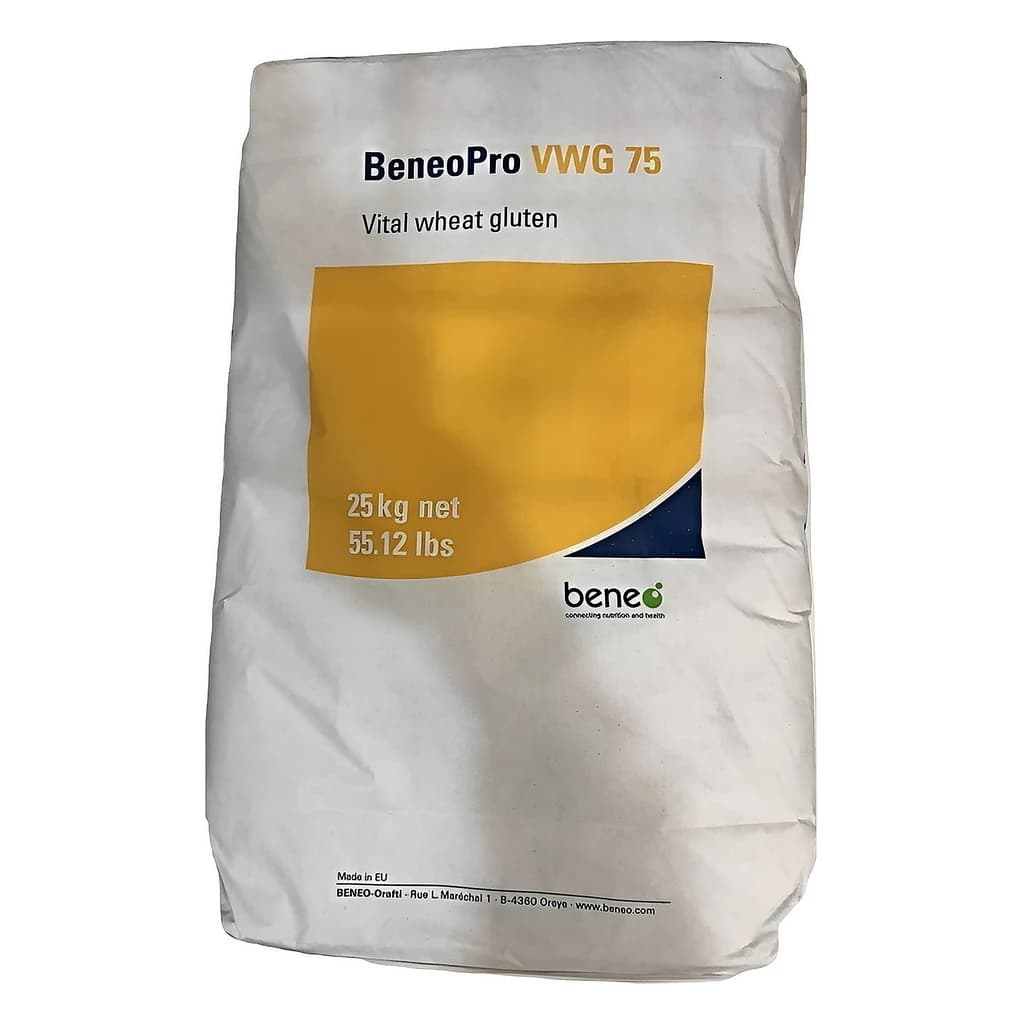
Beneo BeneoPro VWG 75 Vital Wheat Gluten 25 kg
Rye Stabil Improver 25 kg
Puratos Pronto Dough Conditioner 10 kg
Cereform Stasoft Bread Improver 16 kg
Zeelandia Gamma GP Bread Improver 12.5 kg
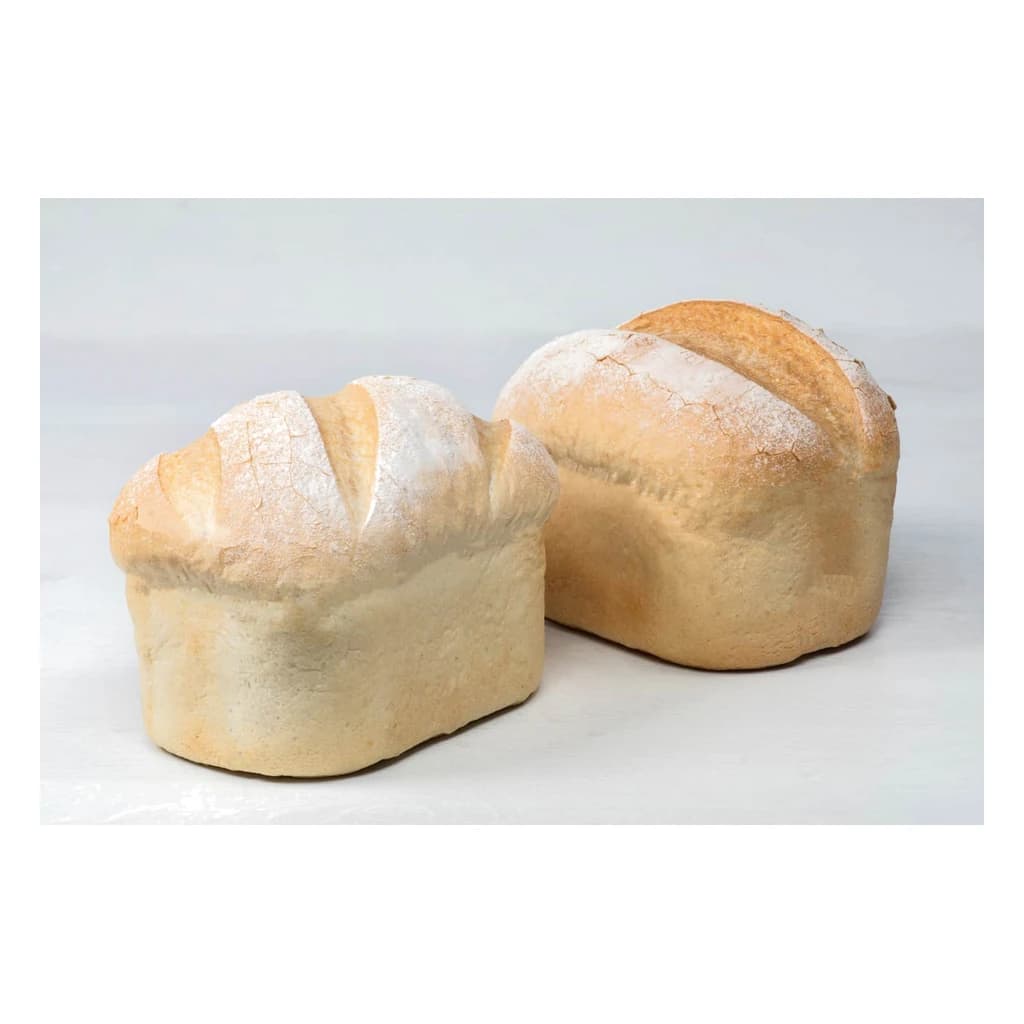
Bakels Quantum Clean Label Improver 0.5% 15 kg

Ibis Clean Label Bread Improver 12.5 kg
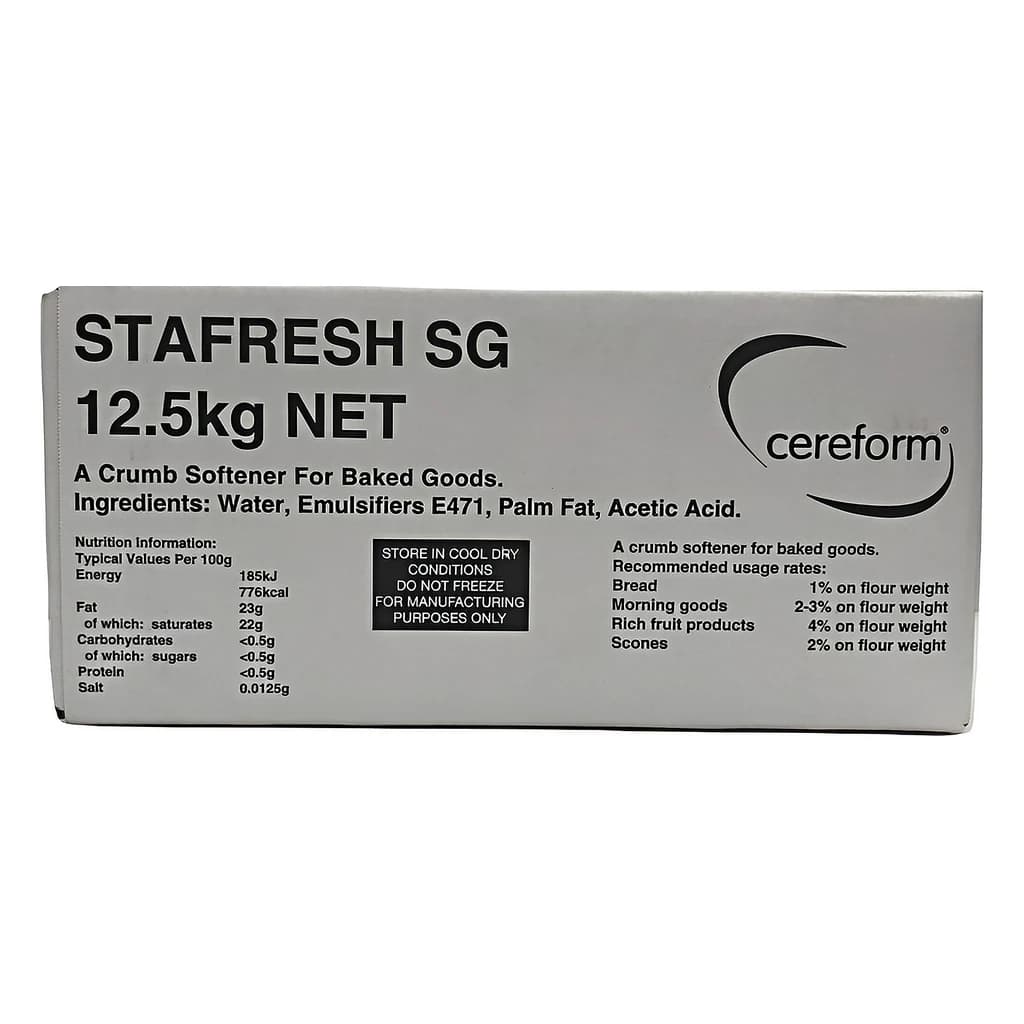
Cereform Stafresh SG Crumb Softener 12.5 kg
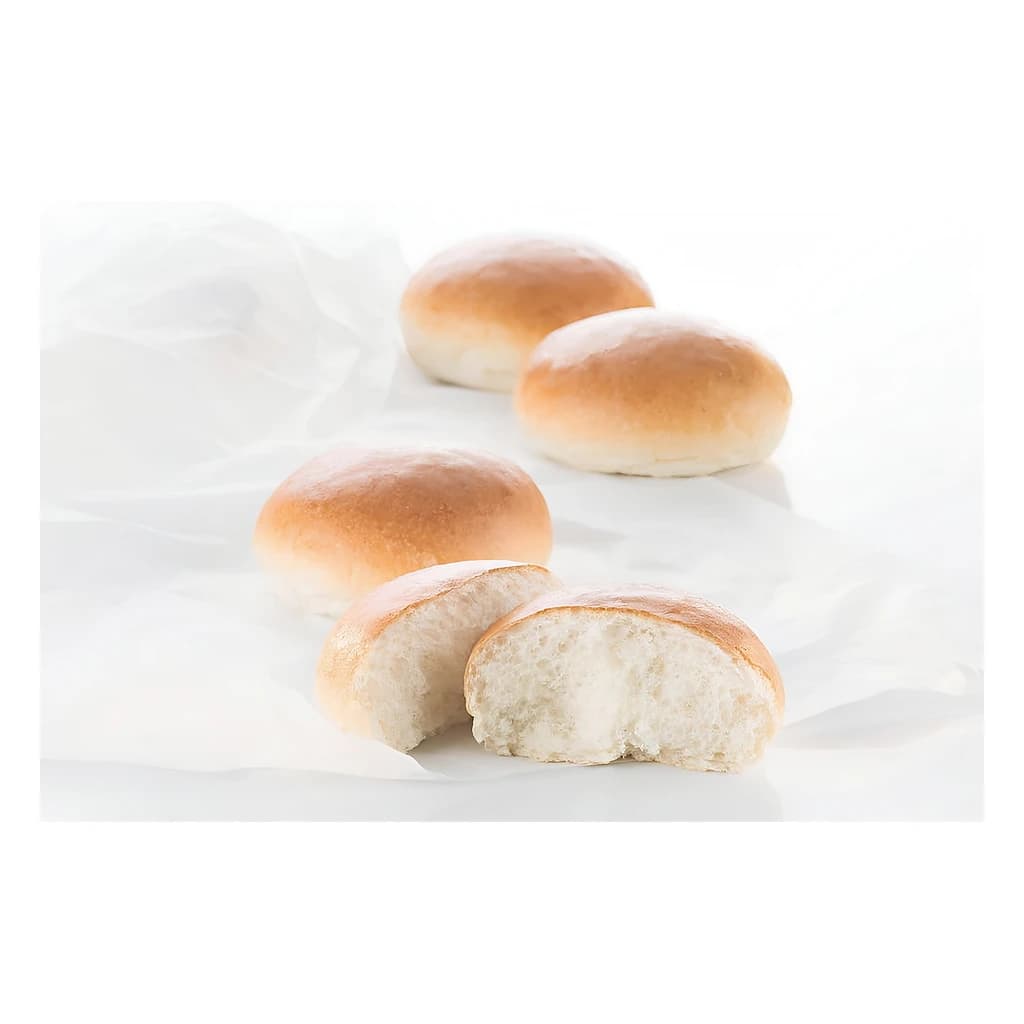
IREKS Soft Roll 7 Bread Improver 25 kg
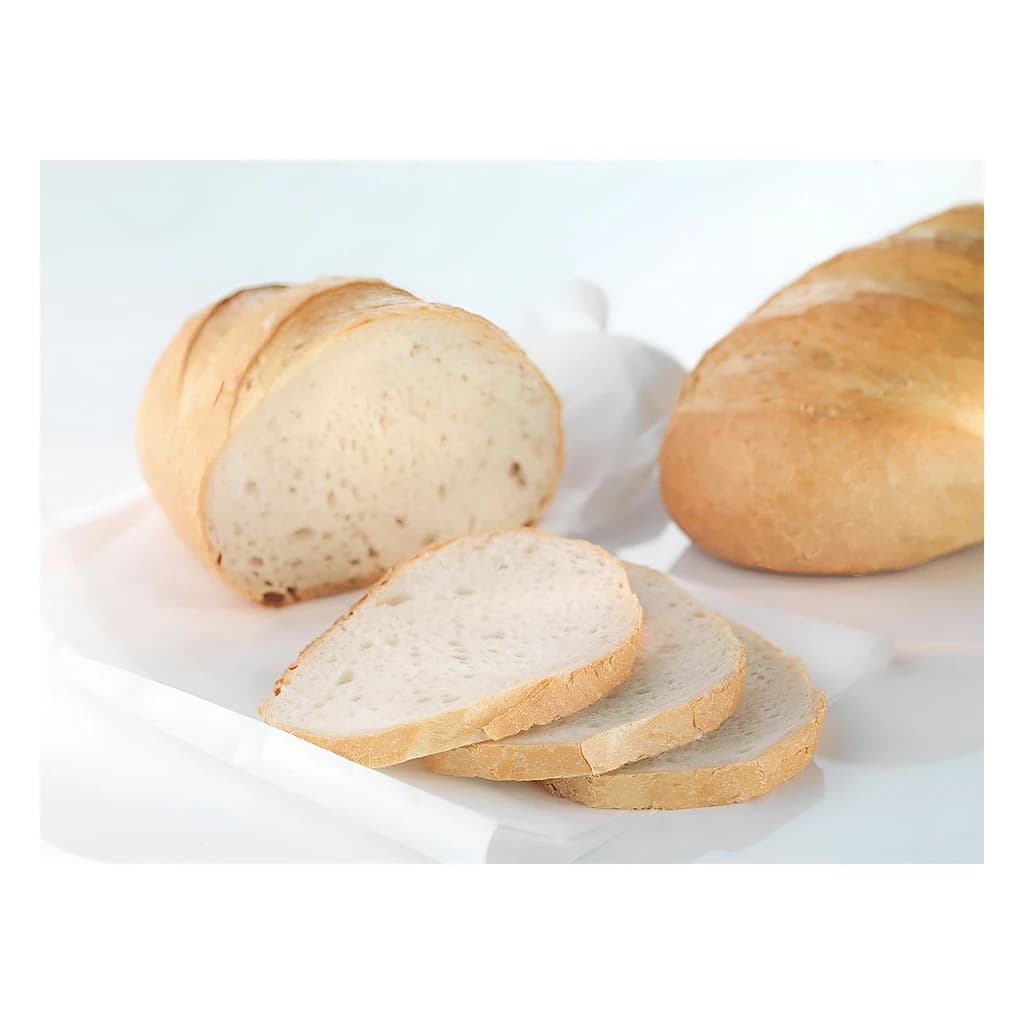
IREKS Voltex Multipurpose Bread Improver 25 kg
Puratos Tigris SG 2% Bread Improver 16 kg
IREKS Crumb Softener 25 kg
Puratos S500 Sense SG Bread Improver 12.5 kg
Cereform Breadsoy Enzyme-Active Full-Fat Soya Flour 25 kg

Puratos S500 SG Bread Improver 12.5 kg (Kosher)
IREKS Toast & Buns Bread Improver 25 kg

XXL Power Wheat Bread & Rolls Improver 25 kg

Kaiser Master JM-CL Bread & Rolls Improver 25 kg
Soya Lecithin Powder (E322)