
Bulk fermentation in depth: yeast activity, enzymatic reactions, gluten development and dough temperature control
A comprehensive technical guide for professional bakers on bulk fermentation — the period between the end of mixing and dough dividing. Covers the biochemistry of yeast CO2 production and its temperature dependence, the enzymatic reactions (amylase, protease, phytase, lipase) that transform dough during bulk, how gluten matures and strengthens through rest and folding, Desired Dough Temperature (DDT) calculation with friction-factor methodology, a structured comparison of five bulk fermentation methods (straight dough, poolish, biga, sponge-and-dough, cold retardation and CBP), practical assessment cues, sourdough-specific considerations, and a fault→cause→remedy table covering the nine most common bulk fermentation defects. First-party spec-sheet data from four Domson catalogue products (Zeelandia Superkwas, ULDO Dark Sauer, Puratos Easy Baguette SG, Puratos Softgrain Rye Sprouts) ground the technology in real product behaviour.
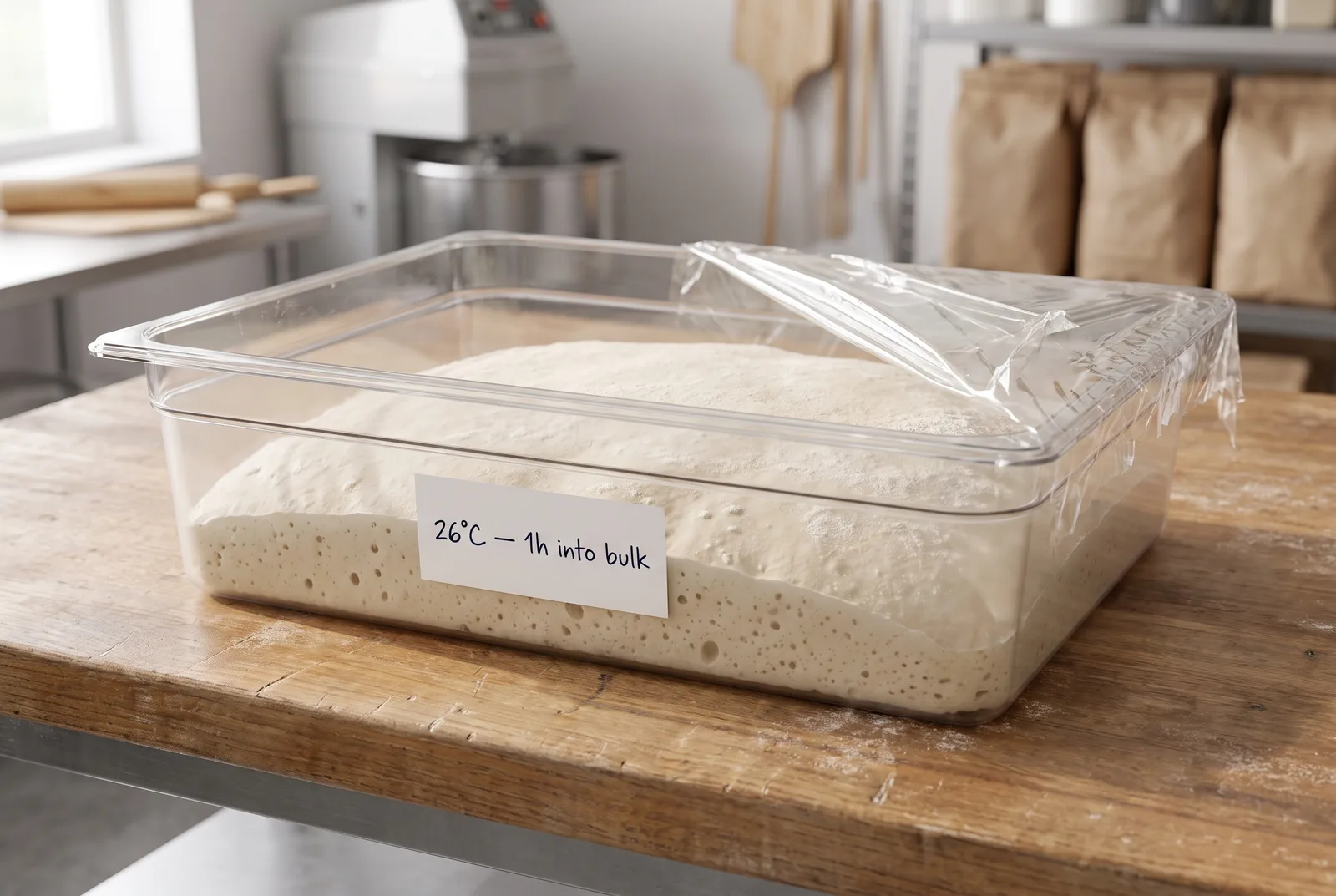
Wheat dough in a covered bulk fermentation trough, showing early rise and surface bubbles one hour into a 2-hour bulk at 26°C
1. What bulk fermentation is — and what it achieves
Bulk fermentation (also called the floor time, the first rise, or in German-influenced terminology the Stockgare) is the period between the end of mixing and the dividing of the dough into individual pieces. It is the longest process stage in most artisan and craft-scale breadmaking and, in plant bakeries that do not use the Chorleywood Bread Process, a critical quality-determining window.
The term "bulk" simply means the whole batch is fermenting together — undivided. What happens during this time is not one thing but four simultaneous, interacting processes:
- Yeast activity: carbon dioxide production inflates the gas cells established during mixing, generating volume and beginning to develop the open crumb structure.
- Enzymatic activity: native flour enzymes (and any added enzymes from improvers) break down starch, proteins, lipids and other substrates, fundamentally changing dough rheology and flavour precursors.
- Gluten maturation: the gluten network established during mixing continues to hydrate, organise and strengthen — and, with folding, to gain extensibility and gas-retention capacity.
- Flavour development: yeast metabolites (ethanol, organic acids, esters, aldehydes) and enzymatic breakdown products accumulate. The longer and cooler the bulk, the more complex the flavour profile.
Key principle for production scheduling: Bulk fermentation is not idle time. Shortening it without compensation — by adding more yeast, raising temperature, or using mechanical development (CBP) — always trades flavour and crust complexity for speed.
2. Yeast activity during bulk
2.1 The biochemistry of CO2 production
Baker's yeast (Saccharomyces cerevisiae) ferments simple sugars — primarily glucose, fructose and maltose — to produce carbon dioxide and ethanol:
C₆H₁₂O₆ → 2 CO₂ + 2 C₂H₅OH
In a fresh mixed dough, a small amount of oxygen is present and yeast briefly respires aerobically. Within the first few minutes, oxygen is consumed and the dough becomes anaerobic: all subsequent CO2 production is via fermentation. The CO2 dissolves in the dough liquid until saturation, then inflates existing gas cells. New gas cells cannot be nucleated in fully mixed dough — they can only grow from those established during mixing. This is why thorough mixing matters: it sets the number and initial size of gas cells that bulk fermentation will inflate.
Sugar supply: the primary yeast substrate is maltose, generated by beta-amylase acting on damaged starch granules during bulk (see Section 3). Free glucose and sucrose (from any added ingredients) are consumed first. Maltose-fermentation is therefore the dominant reaction throughout most of bulk.
2.2 Temperature dependence of yeast activity
Temperature is the most directly controllable variable in bulk fermentation. Its effect on yeast activity is substantial and non-linear:
| Dough temperature | Yeast activity level | Relative CO2 rate | Practical consequence |
|---|---|---|---|
| Below 5°C | Dormant | Negligible | Safe retardation; no volume gain |
| 5–15°C | Very slow | Very low | Cold proof/retardation; rich flavour |
| 16–22°C | Moderate | Low–moderate | Long fermentation; sourdough schedules |
| 22–27°C | High | Moderate–high | Optimal balance of rate and quality |
| 26–28°C | Peak | High | Target range for most yeast bread |
| 28–35°C | Declining | Moderate | Off-flavours risk increases above 32°C |
| 35–40°C | Stressed | Low | Enzyme denaturation begins |
| Above 40°C | Severely impaired | Very low | Irreversible damage to yeast cells |
| Above 55–60°C | Dead | None | Yeast thermal death (occurs in oven) |
As shown in the table above, the application target of 26–28°C is confirmed in the supplier's application recipe.
Single-source note: The Q10 rule — that yeast fermentation rate approximately halves for every 10°C drop below the optimum — is widely cited in baking education literature but was confirmed by only one source in this research pass (BAKERpedia ). Treat the numeric factor with caution; the directional effect is well established.
2.3 pH effects on yeast
Yeast is most active between pH 4.5 and 6.5. As fermentation proceeds and organic acids accumulate (particularly in sourdough systems), pH falls; below pH 4.0 yeast activity slows significantly. This self-limiting mechanism is one reason over-fermented sourdough doughs become slack: the acid eventually suppresses yeast before gluten completely degrades.
2.4 Osmotic stress
Dissolved sugars and salts in the dough water reduce water activity, creating osmotic pressure that impairs yeast cells' ability to absorb water and nutrients. At sugar additions above approximately 8–10% on flour weight, standard baker's yeast loses efficiency; at 15% and above, specialist osmotolerant yeast is required. Salt should never be added directly onto fresh yeast in a bowl — even at normal dosage (1.8–2.2% on flour), concentrated contact kills yeast cells before they can disperse.
3. Enzymatic reactions during bulk
Flour contains a suite of endogenous enzymes that become active as soon as water is added. Many are inactivated by the heat of baking; until then, they are reshaping the dough throughout bulk fermentation. Understanding their action explains many otherwise puzzling dough behaviours.
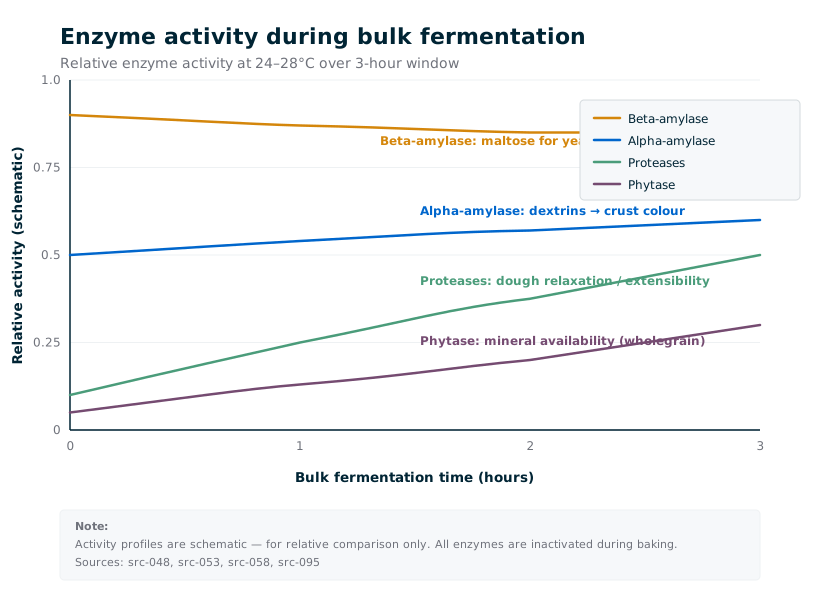 Line graph showing relative activity of four enzyme groups during a 3-hour bulk fermentation: beta-amylase high and early, alpha-amylase sustained, proteases slow-accumulating, phytase lowest
3.1 Amylases: feeding yeast and setting crust colour
Two amylases act on starch during bulk:
-
Alpha-amylase (endo-amylase): randomly cleaves the interior of starch chains into dextrins. Active across a wide temperature range; in the dough's 24–28°C environment, it acts slowly but continuously. Critically, native cereal alpha-amylase survives into the early oven stage (it is only fully inactivated at approximately 80°C) and continues working during oven-spring. Note: fungal alpha-amylase (from Aspergillus-derived enzyme improvers), if present, is inactivated at a lower temperature of approximately 60–65°C. Excess alpha-amylase activity — from sprouted or frost-damaged wheat with a low Hagberg Falling Number — produces a gummy, sticky crumb.
-
Beta-amylase (exo-amylase): cleaves maltose units from the non-reducing ends of dextrin chains. Beta-amylase works much faster at 24–28°C than alpha-amylase and is the primary source of fermentable maltose for yeast. Its activity declines rapidly from approximately 65°C, with substantially complete inactivation occurring at approximately 70–75°C.
Diastatic malt (malt flour or malt extract) is added to doughs when flour's natural amylase activity is insufficient — most commonly in flours with a high Hagberg Falling Number (>300 seconds, indicating low native alpha-amylase). The ULDO Dark Sauer concentrate used in rye breads contains barley malt expressly to supply amylase activity into acidified rye doughs.
3.2 Proteases: developing extensibility
Native wheat proteases (primarily serine endoproteases) cleave bonds within gluten proteins. At typical dough temperatures (24–28°C), this proceeds slowly. The practical effect is:
- Short bulk times (30–60 min): minimal proteolysis; dough remains elastic, slightly tight
- Medium bulk times (1.5–3 hours): moderate proteolysis; dough relaxes, becomes more extensible; easier to shape; better oven spring from gas expansion
- Extended bulk times (4+ hours at warm temperatures): significant proteolysis; dough can become slack, sticky and weak; gluten network may collapse
This is why flour strength matters more at longer fermentation times. A weak flour (protein 10–11%) may hold up for a 90-minute straight dough but collapse in a 16-hour cold-retarded dough unless its natural protease activity is low or an oxidant (ascorbic acid E300) is used to reinforce disulphide bonds.
Salt suppresses protease activity by reducing water activity and slightly altering enzyme conformation. The traditional delayed-salt method — adding salt 2–3 minutes into mixing — allows initial protease activity to rapidly relax the gluten, after which salt is added to stabilise it for the remainder of bulk.
3.3 Phytase: improving mineral availability
Phytase, present in the bran fraction, breaks down phytic acid (inositol hexaphosphate) — the storage form of phosphorus in cereals that also chelates minerals (zinc, iron, calcium, magnesium), reducing their bioavailability. Phytase is most active at pH 5.0–5.5 and temperatures of 35–45°C; at dough temperatures (24–28°C) and neutral pH it works slowly, but during long (8+ hours) or sourdough fermentation at pH 4.0–5.5, significant phytic acid reduction occurs. This is one documented nutritional benefit of long-fermented and sourdough breads.
Source note: The phytase mechanism described above is established food science, well documented in peer-reviewed food chemistry literature (e.g. work by Leenhardt et al. on phytate reduction during sourdough fermentation). The two primary sources cited here cover sourdough microbiology and baking science broadly and do not directly address phytic acid degradation in their accessible content — this reflects a citation gap rather than a contradiction of the mechanism. This statement is framed as educational content for professional bakers; it should not be excerpted into product marketing communications without checking against the EU/UK authorised health claims register (EU Regulation 1924/2006).
3.4 Lipase and lipoxygenase
Native flour lipases cleave fatty acids from triglycerides during bulk, producing free fatty acids that interact with gluten proteins and starch. Endogenous lipoxygenase oxidises unsaturated fatty acids, generating hydroperoxides that contribute to gluten strengthening (a mild bleaching and oxidising effect). These reactions are generally beneficial at normal fermentation times but can contribute to waxy or rancid notes in very long-retarded doughs if flour is stored warm.
4. Gluten development and maturation during bulk
The gluten network established during mixing is not static. During bulk it continues to:
- Hydrate: water molecules continue redistributing, allowing glutenin and gliadin proteins to fully hydrate and form a more complete viscoelastic network. This is most evident in high- hydration doughs (>75% water on flour) where full hydration may take 30–60 minutes after mixing stops.
- Reorganise: inter-chain disulphide bonds and non-covalent interactions (hydrogen bonds, hydrophobic interactions) form and rearrange. The result is a more regular, organised network with better gas-retention capacity.
- Undergo oxidation: ascorbic acid (vitamin C, E300) in the dough is converted to dehydroascorbic acid during bulk, which in turn oxidises thiol groups on gluten proteins, forming additional disulphide cross-links. This is why the net effect of ascorbic acid is gluten strengthening despite vitamin C being classified as an antioxidant.
4.1 Stretch and fold: practical gluten management
Folding the dough during bulk (also called stretch-and-fold, coil fold, or lamination) achieves three things simultaneously:
- Gas redistribution: pops large, uneven bubbles and redistributes CO2 evenly
- Temperature equalisation: hot spots at the centre of a large trough are mixed to the surface and equalled out — important for reproducibility
- Gluten alignment: the physical stretching re-aligns gluten chains, temporarily increasing tension and strength, then allowing the network to relax into a stronger, more extensible configuration
A typical artisan schedule involves 3–4 folds during the first hour of a 3–4 hour bulk, followed by a rest. For commercial production with shorter bulk times, a single knock-back (punching) at the midpoint achieves a similar result.
5. Dough temperature management: the DDT method
5.1 Why dough temperature matters
A 2°C difference in final dough temperature can halve or double effective fermentation rate. Across a production batch of 100 kg, inconsistent water temperature is the most common source of batch-to-batch variation. Professional bakers calculate water temperature using the Desired Dough Temperature (DDT) method.
5.2 The DDT formula
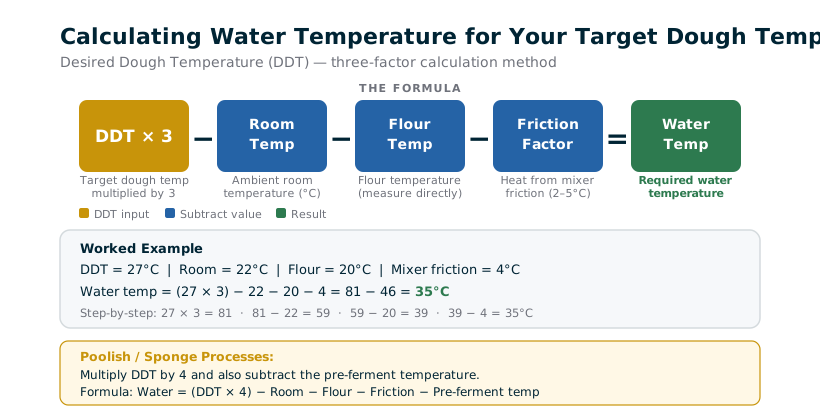 Visual formula diagram for DDT water temperature calculation: (DDT × 3) minus room temperature minus flour temperature minus friction factor equals required water temperature, with worked example
For a straight dough (three-factor method):
Water temperature = (DDT × 3) − Room temperature − Flour temperature − Friction factor
Where:
- DDT: the final dough temperature you require (typically 24–26°C for artisan/sourdough, 26–28°C for commercial yeast bread)
- Room temperature: measured in the mixing area
- Flour temperature: measured at the flour surface or in the sack
- Friction factor: the temperature increase caused by mechanical mixing
For a process using a pre-ferment (four-factor method):
Water temperature = (DDT × 4) − Room temperature − Flour temperature − Friction factor − Pre-ferment temperature
5.3 Friction factors by mixer type
| Mixer type | Typical friction factor | Notes |
|---|---|---|
| Spiral dough mixer | 6–10°C | Most common in craft bakeries; calibrated value typically ~8°C per King Arthur Baking reference |
| Planetary / hook mixer | 8–12°C | Common in small-to-medium craft bakeries; hook action generates more heat than spiral |
| High-speed (Tweedy / CBP) | 10–15°C | Industrial plant bread; generates heat rapidly |
| Manual / hand mixing | 0–1°C | Negligible friction; water can be warmer |
How to calibrate your friction factor: Mix a batch using water at a known temperature. Measure dough temperature immediately after mixing. Friction factor = (dough temp × 3) − room temp − flour temp − water temp. Record and re-measure periodically as mix times change or equipment wears.
5.4 Practical temperature targets
| Product type | DDT target | Basis |
|---|---|---|
| Artisan sourdough | 24–26°C | Lower DDT for longer, cooler bulk; flavour development |
| Wheat bread (straight dough) | 26–28°C | Standard commercial target |
| Enriched doughs (brioche, panettone) | 24–25°C | Higher sugar/fat slow fermentation; cooler DDT compensates |
| Rye bread with sourdough | 26–28°C | Rye proteins swell faster at slightly higher temp |
| Cold-retarded doughs | 22–24°C | Dough will cool in retarder; warmer DDT prevents under-fermentation before cold |
6. Bulk fermentation methods: a practical comparison
Five distinct approaches to bulk fermentation are used in professional bakeries. They differ in yeast level, time, temperature, equipment and quality output.
See the comparison table below for the full parameter matrix.
6.1 Straight/direct dough
All ingredients (flour, water, yeast, salt, improver) mixed in a single stage. Bulk fermentation is 1–2 hours at 26–28°C. This is the fastest approach and the default for daily commercial production. Flavour is clean but limited.
The Zeelandia Superkwas application recipe — a wheat-rye dough at 26–28°C with a ~20-minute first proof and ~45-minute final proof — illustrates a fast straight-dough schedule used with an acidifying improver.
6.2 Poolish (liquid pre-ferment, 100% hydration)
Equal weights of flour and water, very low yeast (0.1–0.3% fresh on pre-ferment flour), fermented 8–12 hours at 18–22°C. The poolish is then incorporated into the final dough. Extended, cool fermentation produces a complex flavour profile and significantly improves crust blistering and crumb extensibility. Used widely for baguettes and ciabatta. The Puratos Easy Baguette SG concentrate is designed to complement this style — its dry rye sourdough component (>95% fermented rye flour) contributes organic acids that mimic some of the flavour contribution of a natural poolish in a faster production schedule.
6.3 Biga (stiff Italian pre-ferment, ~50–60% hydration)
Characterised by relatively low hydration (unlike poolish), producing a firm, crumbly pre-ferment. Fermented 12–18 hours at 16–18°C. The stiff structure limits yeast CO2 escape, producing a distinctively complex, creamy flavour and open crumb structure. Used for ciabatta, focaccia, pizza and as a base for enriched doughs.
6.4 Sponge and dough
A British and North American plant-bakery method. A sponge (flour, water, yeast, sometimes malt) ferments 3–4 hours at 24–27°C, then the remaining ingredients (additional flour, salt, fat, improver) are added. Final dough bulk time is typically 30–60 minutes. Produces consistent bread at scale with good crumb softness and reasonable shelf life.
6.5 Cold/retarded bulk fermentation
Dough is placed in a refrigerator (4–8°C) or retarder after initial mixing (sometimes after a short warm bulk of 30–60 minutes). Bulk continues very slowly for 12–24 hours. Flavour is richer and more complex than any warm method because of the extended proteolysis and slow metabolite accumulation. The baker works with a refrigerated dough the following morning — particularly suited to artisan schedules and small-to-medium craft bakeries.
Food safety note: The 4–8°C range spans the regulatory threshold for chilled food temperature control under UK Food Safety and Hygiene (England) Regulations 2013 (SI 2013/2996) and EU Regulation (EC) 852/2004, which require chilled foods to be held at or below 8°C. Raw bread dough is not a ready-to-eat food and will be fully heat-treated during baking; nonetheless, professional bakeries using extended retardation at the upper end of this range (7–8°C for periods exceeding 18 hours) should ensure their HACCP plan specifically addresses this stage and considers psychrotrophic pathogen growth rates at these temperatures.
The ULDO Dark Sauer sourdough paste (pH 2.5–4.5, total acidity 140–150°, dosage 2–8%) is used in cold-tolerant rye and mixed-grain dough recipes to supply acidification even when sourdough fermentation time is abbreviated by the cold retardation schedule.
6.6 Chorleywood Bread Process (CBP)
No conventional bulk fermentation. Dough is developed in 3–5 minutes by high-energy mechanical mixing (work input ≥11 Wh/kg), typically with added ascorbic acid, fat and extra water. The mechanical energy replaces the gluten-development function of bulk fermentation; flavour development is minimal and is supplemented by sourdough pastes, vinegar, and bread improvers. CBP dominates UK plant bread production and produces approximately 80% of UK bread by volume. It is not suitable for flavour-forward artisan products.
7. Assessing bulk fermentation: practical cues
Fermentation time is a guide, not a rule. Experienced bakers read the dough rather than the clock.
7.1 Visual cues
- Volume increase: a well-fermented wheat dough typically increases to 1.5–2× its original volume. Rye doughs expand less because rye pentosans do not form the same open structure.
- Surface dome and bubble pattern: small bubbles appearing at the surface indicate active fermentation. The surface of a fully fermented dough is slightly domed (as opposed to the flat or concave surface of an over-fermented one).
- Aerated appearance and jiggle: a properly fermented dough wobbles like a jelly when the container is shaken — indicating a live, gas-filled structure. An over-fermented dough feels slack and does not hold its shape.
7.2 Tactile cues
- Windowpane test: stretch a small piece of dough between four fingers. A properly fermented (and well-mixed) dough can be stretched to translucency without tearing — the gluten network has sufficient strength and extensibility. Early-stage dough tears immediately; over-fermented dough tears in a slack, sticky manner.
- Finger poke test (for shaped doughs in final proof): press a floured finger ~1 cm into the dough surface. If the indentation springs back slowly and partially, fermentation is at the right point. If it springs back immediately, under-fermented; if it stays depressed, over-fermented. The finger poke test is most reliable for final proof but can inform bulk assessment.
7.3 pH monitoring in sourdough
In sourdough operations, pH is an objective indicator of fermentation extent. Typical target ranges at the end of wheat sourdough bulk: pH 4.5–5.0. Rye sourdough targets are lower (pH 3.5–4.5). The Puratos Softgrain Rye Sprouts (grains and seeds soaked and cooked in natural sourdough) shows a product-side pH of 3.20–3.70, illustrating the end-point acidity achieved when rye grain is comprehensively fermented.
8. Sourdough bulk fermentation
Sourdough bulk fermentation differs from yeast-bread bulk in three fundamental ways:
- Two leavening agents: both wild yeast (primarily Saccharomyces cerevisiae and related species) and lactic acid bacteria (LAB, primarily Lactobacillus spp.) are active. LAB and wild yeast coexist at an approximate ratio of 100:1 by population in stable starters.
- Lower effective yeast inoculation: starter inoculation rates (typically 10–30% of flour weight as ripe starter) deliver less total yeast than 1.5–2% commercial fresh yeast, so bulk times are proportionally longer.
- Acid accumulation as a regulator: lactic acid (mild, dairy notes) from homofermentative LAB, and acetic acid (sharp, vinegary notes) from heterofermentative LAB, lower dough pH as bulk progresses. The ratio of lactic to acetic acid is controlled by temperature and hydration: warmer, wetter doughs favour lactic character; cooler, stiffer doughs favour acetic character.
Effect on gluten: the acid environment partially denatures glutenin proteins in a different way from protease activity, contributing to the characteristic extensibility of sourdough crumbs and the longer shelf life (acidity inhibits mould).
Rye sourdough considerations: rye flour contains pentosans (water-absorbing arabinoxylans) that limit gluten network formation. Structure in rye bread comes from starch gelatinisation and pentosan gel rather than gluten. Acidification via sourdough is not optional in rye bread — it is structurally necessary, as the acid degrades the slimy pentosans into a workable gel and inhibits the rye's naturally high alpha-amylase activity. Multi-stage rye sourdough processes (basic sour, full sour, ripe sour) are designed to drive acidification to precise degrees before final mixing.
The ULDO Dark Sauer concentrate (pH 2.5–4.5; total acidity 140–150°) is a sourdough paste designed to replicate the acidification contribution of a natural rye sourdough in one-step recipes. Its ingredients — rye bran, water, rye flour, citric acid, lactic acid, acetic acid, barley malt — mirror the chemical composition of a three-stage rye sourdough.
Allergen note (ULDO Dark Sauer): The product specification (FP-01-08/E, 2014) discloses possible cross-contamination with lupin, sesame, soya, milk and eggs. Lupin is a major allergen under EU Regulation 1169/2011 Annex II and UK Food Information Regulations 2014 Schedule 2. Clinically, lupin allergy cross-reacts with peanut allergy in a significant proportion of peanut-allergic individuals. Verify allergen declarations against the current product specification before incorporating this product into commercial formulations. The spec sheet cited here is dated 2014; request an updated version from ULDO Polska.
9. Improvers and additives that interact with bulk fermentation
Bulk fermentation is the stage most affected by bread improver components. Understanding which component does what enables the baker to troubleshoot effectively.
| Ingredient class | Effect on bulk fermentation | Example products in Domson catalogue |
|---|---|---|
| Ascorbic acid (E300) | Strengthens gluten via disulphide bond formation; compensates for short bulk | Zeelandia Superkwas, Puratos Easy Baguette SG |
| DATEM (E472e) | Stabilises gas cells; increases dough tolerance to extended or abbreviated bulk | Puratos Easy Baguette SG |
| Protease inhibitors (no specific E-number; ingredient-level) | Reduce proteolytic degradation in long bulk or cold-retarded schedules | Not in listed catalogue but used in some improvers |
| Amylase (enzyme additive) | Supplements sugar supply for yeast; particularly critical in high-HFN flour | ULDO Dark Sauer (barley malt as enzyme source) |
| Dry sourdough (fermented flour) | Contributes organic acids that mimic the flavour/texture of longer bulk fermentation | Puratos Easy Baguette SG (dry rye sourdough 5–10%) |
| Acidity regulators (E330 citric, E270 lactic, E327 calcium lactate) | Control dough pH during bulk; replicate sourdough acidification | Zeelandia Superkwas |
| Vital wheat gluten | Strengthens gluten network; particularly important in short-bulk or high-speed processes | Available separately in catalogue |
| L-cysteine (E920) | Reduces disulphide bonds; accelerates gluten relaxation; used when bulk is too short for natural proteolysis | Not directly relevant to standard bulk fermentation |
Long fermentation and clean-label alignment: there is growing commercial interest in using longer, cooler bulk fermentation as a substitute for some improver components. Extended fermentation develops gluten naturally (reducing need for VWG), improves flavour (reducing need for dry sourdoughs), and increases shelf life (acid inhibits mould, reducing need for calcium propionate). This trend is documented by Puratos as "long fermentation changing the baking industry".
10. Bulk fermentation faults: causes and remedies
The full fault table follows below.
| Fault | Most likely cause | Contributing factors | Remedy |
|---|---|---|---|
| Dense, under-aerated crumb | Under-fermented (insufficient bulk time or too cold) | Low yeast dose; old/weak yeast; over-salted dough | Extend bulk time; raise dough temperature to DDT; check yeast freshness; verify salt dose |
| Coarse, irregular crumb | Over-fermented (too much time or too warm) | Excess yeast; warm bakery; failure to monitor | Reduce bulk time; lower DDT; reduce yeast dose; fold earlier |
| Flat loaf, collapsed structure | Severely over-fermented; gluten degraded | Extended proteolysis from weak flour or high-protease flour | Reduce bulk time and temperature; use stronger flour; add ascorbic acid |
| Sticky, slack dough after bulk | Proteolytic over-degradation | Warm bulk; weak flour; excess bulk time | Lower DDT; use flour with lower protease activity; add ascorbic acid; reduce time |
| Pale, thick crust | Insufficient sugar at bake-off | All fermentable sugars consumed (usually from very long bulk) | Add diastatic malt; reduce bulk time; add small amount of sugar or dextrose |
| Excessive sour or yeasty flavour | Over-fermented; too much acid accumulated | High ambient temperature; wrong LAB balance in sourdough | Control DDT; reduce bulk time; adjust starter hydration |
| Uneven gas distribution; large holes beside dense patches | Inadequate folding during bulk | No stretch-and-fold performed; temperature gradients in trough | Introduce 2–3 folds at 30-minute intervals early in bulk |
| Dough surface skinning during bulk | Low humidity; dough uncovered | Draughty bakery; bare container | Cover dough tightly; use oiled bowl; maintain 75–85% RH in fermentation area |
| Flying crust (crust separates from crumb after baking) | Rapid surface drying during final proof — often caused by under-developed gluten from abbreviated bulk | Short bulk; weak flour; no folds | Extend bulk; use steam in prover; score deeply enough to allow expansion |
11. Coverage notes
Solid and well-sourced in this dossier:
- Yeast temperature response (confirmed by 3+ independent sources)
- DDT formula and friction factor methodology (confirmed by King Arthur + IREKS + trade bodies)
- CBP process (BAKERpedia + Federation of Bakers)
- Enzymatic reactions (IREKS Compendium + IntechOpen academic + Modernist Cuisine)
- Spec-sheet data for four catalogue products (first-party, high confidence)
Thin or single-source — recommend follow-up:
- Q10 halving rule for yeast activity: single source (BAKERpedia), widely repeated but not confirmed by a second source in this research pass
- Friction factors by mixer type: guidance ranges, not manufacturer-verified figures; vary considerably by mixer age, dough hydration and batch size
- Phytase mineralogy benefit claims: sound mechanistically (cited PMC) but not cross-checked with a second independent scientific source
Topics not covered (separate dossier scope):
- Cold/retarded fermentation in detail → A5-retarded-cold-fermentation
- Sourdough starter maintenance and multi-stage rye sourdough → A2-rye-sourdough-multi-stage
- Final proofing science → A5-proofing-science
- Chorleywood Bread Process in detail → covered in A5-dough-mixing-methods
Figures
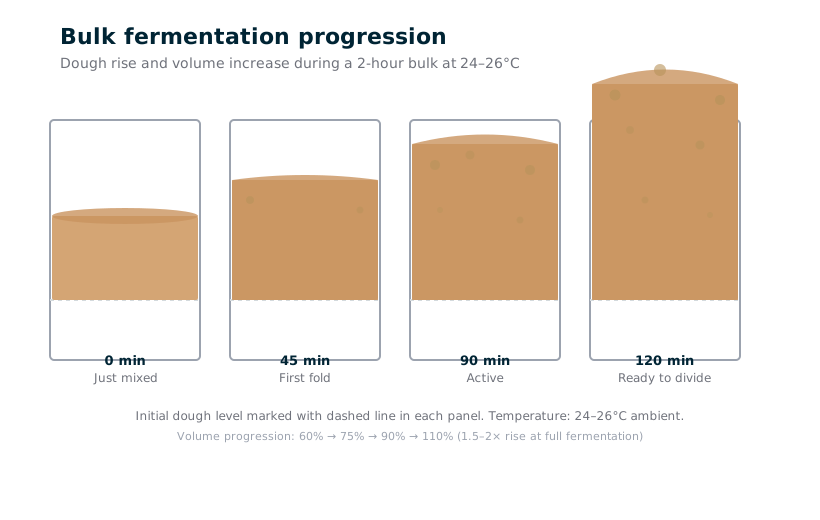 Four-panel photo-style illustration showing wheat dough bulk fermentation progression from just-mixed to fully fermented, with time stamps at 0, 45, 90 and 120 minutes
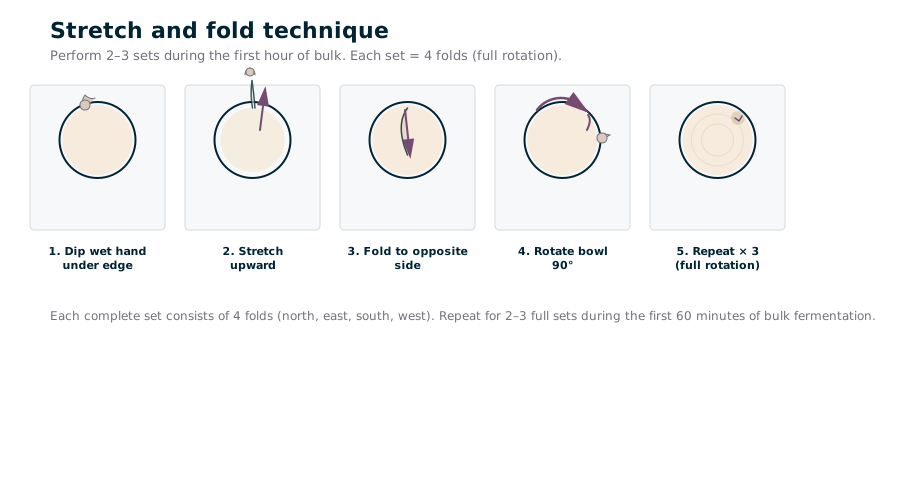 Step-by-step illustration of the stretch-and-fold dough technique: stretching dough up from the container edge and folding to the opposite side, repeated four times rotating 90° each time
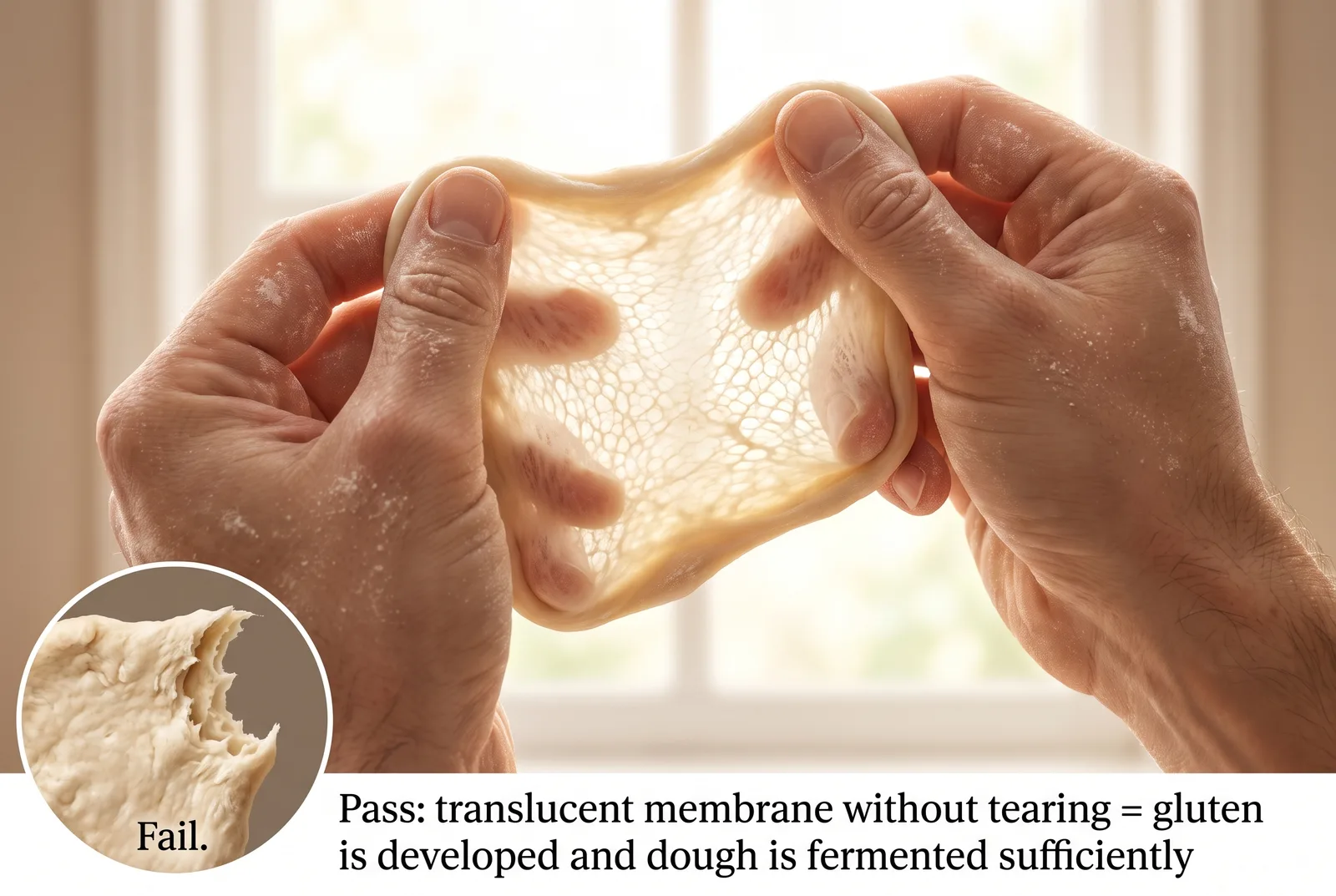 Baker's hands stretching a thin piece of fermented dough to translucency in a windowpane test, showing intact gluten network
DDT water temperature calculation — three-factor method (straight dough)
Water temperature (°C) = (DDT × 3) − Room temperature − Flour temperature − Friction factor
Worked example
| DDT target | 27 |
| Room temp | 22 |
| Flour temp | 20 |
| Friction factor | 8 |
| Calculation | (27 × 3) = 81 − 22 − 20 − 8 = 31°C water |
| Note | The water must be added at 31°C to achieve a 27°C final dough temperature in a spiral mixer (friction factor calibrated at 8°C — a typical value per King Arthur Baking; calibrate your own mixer before production use) |
Friction factor is mixer-specific and must be calibrated per machine. When water is below 0°C (ice addition required), calculate ice weight using the formula: Ice weight = Water weight × (water temperature − required temperature) ÷ (80 + water temperature). Source: standard baking education method.
DDT water temperature calculation — four-factor method (with pre-ferment)
Water temperature (°C) = (DDT × 4) − Room temperature − Flour temperature − Friction factor − Pre-ferment temperature
The multiplier increases from 3 to 4 because the pre-ferment is a fourth temperature input. Ensure pre-ferment temperature is measured at incorporation time, not at the time it was prepared.
Baker's percentage — hydration
Hydration (%) = (Total water weight ÷ Total flour weight) × 100
Worked example
| Flour | 1000 g |
| Water | 700 g |
| Hydration | 70% |
| Note | In the Zeelandia Superkwas application recipe: 100 kg flour (70 + 30), 68 l water = 68% hydration |
All other ingredients in a baker's formula are expressed as a percentage of total flour weight. Yeast at 3.5% and improver at 1.3% on 100 kg flour as shown in the Superkwas recipe are both expressed as baker's percent.
Comparative overview of six fermentation approaches used in professional wheat bread production. Times and yeast levels are guidance ranges; specific recipes will vary. All yeast percentages are baker's percentage (on flour weight). Fresh compressed yeast equivalence to instant dry yeast (IDY) is approximately 3:1.
| Method | Pre-ferment hydration | Yeast level (on flour) | Bulk time | Bulk temperature | Flavour character | Typical applications | Key limitation |
|---|---|---|---|---|---|---|---|
| Straight / direct dough | None | 1.5–3% fresh (IDY 0.5–1%) | 1–2 hours | 26–28°C | Clean, mild | Daily production bread, rolls, standard loaves | Minimal flavour complexity; no tolerance buffer from pre-ferment |
| Poolish (liquid pre-ferment) | 100% (equal flour and water) | Poolish: 0.1–0.3% fresh; final dough: 0.5–1% | Poolish: 8–12 h at 18–22°C; final dough: 45–60 min at 24–26°C | 18–22°C (poolish); 24–26°C (final) | Complex, wheaty, open crumb | Baguettes, ciabatta, pizza | Requires scheduling 8–12 hours in advance; limited dough tolerance |
| Biga (stiff Italian pre-ferment) | 50–60% | Biga: 0.1–1% fresh; final dough: 0.5–1% | Biga: 12–18 h at 16–18°C; final dough: 30–45 min at 24–26°C | 16–18°C (biga); 24–26°C (final) | Rich, creamy, slightly nutty | Ciabatta, focaccia, Italian breads, enriched dough base | Long lead time; cool environment required; biga handling is laborious |
| Sponge and dough | 60–65% | Sponge: 0.5–1% fresh; final: 0.5% | Sponge: 3–4 h at 24–26°C; final dough: 30–60 min at 26–28°C | 24–26°C (sponge); 26–28°C (final) | Developed, consistent; good crumb softness | Plant bakeries, sandwich bread, UK tin loaves | Two-stage process; sponge requires separate mixing and management |
| Cold / retarded bulk | N/A (direct or with poolish) | 0.1–0.5% fresh | 12–24 hours at 4–8°C | 4–8°C | Rich, complex; better crust blistering; longer shelf life | Artisan schedules; morning production from overnight dough | Retarder space required; must compensate DDT for cold entry |
| Chorleywood Bread Process (CBP) | None | 1.5–2% fresh | None (3–5 min intensive mechanical development) | Controlled; ~27°C achieved by mechanical heat | Mild; supplemented by improvers and sourdough pastes | Industrial plant bread; ~80% of UK bread by volume | No flavour complexity from fermentation; requires specific equipment and improvers |
Temperature is the most controllable variable in bulk fermentation. The effect on yeast activity is non-linear. Values are guidance ranges from published baking references; the 26–28°C application target is confirmed in the supplier's application recipe.
| Dough temperature (°C) | Yeast activity level | Relative CO2 production | Bulk time effect | Flavour/quality implication | Typical use case |
|---|---|---|---|---|---|
| Below 5 | Dormant | Negligible | No practical fermentation | Safe holding; no gas generation | Frozen dough storage; emergency hold |
| 5–15 | Very slow | Very low | 12–24× longer than at 27°C (single-source estimate) | Rich flavour; complex organic acid profile | Cold retardation; overnight doughs |
| 16–22 | Moderate | Low–moderate | 3–8× longer than at 27°C | Good flavour development; sourdough-style acidity | Poolish, biga, long-schedule artisan |
| 22–26 | High | Moderate–high | Reference range for artisan bread | Excellent balance of speed and flavour | Artisan wheat bread; sourdough |
| 26–28 | Peak | High | Standard commercial reference | Efficient; clean flavour; standard production quality | Commercial straight dough; rolls; enriched doughs |
| 28–35 | Declining above 32°C | Moderate | Short bulk; risk of over-fermentation before volume doubles | Off-flavours risk (excess ethanol, fusel alcohols) above 32°C | Avoid prolonged bulk at these temperatures |
| 35–40 | Stressed; severe decline | Low | Very short effective window | Cell damage; poor fermentation recovery | Not recommended; final proof cabinet fault condition |
| Above 55–60 | Dead | None | Fermentation stops permanently | Yeast thermal death; occurs in oven during bake | Expected during baking (oven spring completes just before this) |
Overview of the four main enzyme groups active in wheat dough during bulk fermentation. Activity levels shown are at typical dough temperatures of 24–28°C.
| Enzyme | Substrate | Products | Activity at 24–28°C | Baker's significance | Over-activity consequence |
|---|---|---|---|---|---|
| Beta-amylase (exo-amylase) | Damaged starch granules; dextrins | Maltose (primary yeast sugar) | High; principal sugar generator during bulk | Feeds yeast throughout fermentation; activity declines rapidly from ~65°C, substantially inactive by ~70–75°C | Rare; over-sweet crumb in very long fermentation |
| Alpha-amylase (endo-amylase) | Starch chains (random cleavage) | Dextrins; eventually maltose | Low–moderate at bulk temp; native cereal form survives into early oven stage (inactivated ~80°C); fungal form (from enzyme improvers) inactivated at ~60–65°C | Crust colour; oven spring sugar supply; low-HFN flour issue | Gummy, sticky crumb; undermined crumb structure (from low-HFN flour) |
| Flour proteases (serine endoproteases) | Gliadin and glutenin proteins | Peptides; amino acids (flavour precursors) | Low at typical bulk temp; cumulative over extended bulk | Dough relaxation; extensibility improvement; flavour base from amino acids | Slack, sticky dough; collapsed gluten network; unusable at extreme |
| Phytase | Phytic acid in bran fractions | Inositol phosphates; free phosphate | Low at typical bulk temp; most effective at pH 5.0–5.5 and 35–45°C | Releases mineral chelation; improves zinc, iron, calcium bioavailability in wholegrain | No adverse baking effect; nutritional benefit only |
| Lipase / Lipoxygenase | Triglycerides and unsaturated fatty acids | Free fatty acids; hydroperoxides | Low–moderate; cumulative | Lipoxygenase products contribute mild gluten-strengthening oxidation | Waxy, rancid notes in very long bulk (rare in normal bakery conditions) |
Diagnostic table for faults originating in the bulk fermentation stage. Some faults may also originate at mixing or proofing — cross-reference with A5-dough-mixing-methods and A5-proofing-science.
| Fault (observed after baking or at dividing) | Most likely bulk fermentation cause | Secondary / contributory causes | Remedy |
|---|---|---|---|
| Dense, under-aerated crumb; low volume | Under-fermented dough — insufficient CO2 generated during bulk | Low yeast dose; old or weakened yeast; dough temperature below DDT; excess salt retarding yeast; short bulk time | Extend bulk time; raise DDT to 26–28°C; check yeast freshness and dose; confirm salt not touching yeast directly |
| Coarse, irregular open crumb with large random holes | Over-fermented dough — CO2 over-produced before dividing; gluten weakened by proteolysis | Excess yeast dose; bulk temperature above DDT; bulk time too long; weak flour | Reduce bulk time or temperature; reduce yeast dose; introduce folding to redistribute and tighten structure |
| Flat loaf; collapsed structure; poor oven spring | Severely over-fermented — gluten network degraded beyond recovery | Extended warm bulk; weak or low-protein flour; high-protease flour | Reduce bulk time and temperature; use stronger flour (min. 11–12% protein for tin bread); add ascorbic acid E300 to inhibit degradation |
| Sticky, slack dough at dividing; tears on sheeting | Excessive proteolytic degradation during bulk | High bulk temperature; very long bulk; weak flour; naturally high-protease flour (e.g. some sprouted grain flours) | Lower DDT; shorten bulk; use flour with lower protease activity; increase ascorbic acid dose; consider salt delay method |
| Pale, thick crust; poor Maillard colour | Fermentable sugars exhausted before baking | Very long warm bulk; insufficient residual sugars at dividing; no diastatic malt in formula | Reduce bulk time; add diastatic malt or malt extract at 0.3–0.5% on flour; add small amount of dextrose (0.5–1%) |
| Excessive sour or alcoholic flavour; off-notes | Over-fermented; excessive acid or ethanol accumulation | Warm bulk temperature; excess yeast; sourdough addition too acidic | Reduce bulk time; lower DDT to 22–24°C; reduce sourdough addition; adjust starter maturity (use earlier) |
| Uneven gas distribution; large holes next to dense patches | Inadequate folding during bulk; temperature gradients in dough mass | No stretch-and-fold performed; very large bulk troughs without adequate circulation | Perform 2–3 stretch-and-fold cycles at 30-minute intervals in first half of bulk; ensure consistent trough temperature |
| Surface skinning or crust formation on bulk dough | Uncovered dough in low-humidity environment; surface moisture loss | Draughty bakery; fans directed at bulk containers | Cover dough tightly with lightly oiled plastic wrap or lid; maintain 75–85% RH in fermentation area; avoid direct airflow |
| Flying crust (crust separates from crumb during or after baking) | Surface drying during final proof (often rooted in under-developed gluten from abbreviated bulk giving poor gas-holding capacity) | No steam in final proof; scoring too shallow; bulk too short for gluten maturation | Extend bulk to allow adequate gluten maturation; score deeply enough to guide oven spring; add steam in first 10 minutes of baking |
- Key parameters · Description:
- Wheat–rye bread improver with acidification
- Key parameters · Composition highlights:
- Rye flour 79%, acidity regulators (E330 citric acid, E270 lactic acid, E327 calcium lactate) ~20%, ascorbic acid E300 <1%, wheat flour <1%, enzymes <1%
- Key parameters · Application dough temperature:
- 26–28°C
- Key parameters · Application first proof:
- approx. 20 minutes
- Key parameters · Application final proof:
- approx. 45 minutes
- Key parameters · Bake temperature:
- 230–250°C with steam
- Key parameters · Shelf life:
- 180 days
- Key parameters · Storage:
- Below 25°C, max 75% RH
- Key parameters · Water content:
- <16.5%
- Key parameters · Allergens:
- Contains wheat, rye (gluten); possible cross-contamination barley, oat, spelt, egg, soya, milk, sesame
- Application recipe bakers percent · Wheat flour type 850:
- 70%
- Application recipe bakers percent · Rye flour type 720:
- 30%
- Application recipe bakers percent · Salt:
- 1.8%
- Application recipe bakers percent · Superkwas improver:
- 1.3%
- Application recipe bakers percent · Fresh yeast:
- 3.5%
- Application recipe bakers percent · Water:
- 68%
- Key parameters · Description:
- Sourdough paste for rye and mixed-grain bread; replicates natural rye sourdough acidification
- Key parameters · Form:
- Paste
- Key parameters · Colour:
- Dark brown
- Key parameters · Composition highlights:
- Rye bran, water, rye flour, citric acid, lactic acid, acetic acid, barley malt
- Key parameters · Ph range:
- 2.5–4.5
- Key parameters · Total acidity:
- 140–150°
- Key parameters · Moisture:
- <15%
- Key parameters · Ash:
- 1.0–5.0%
- Key parameters · Dosage:
- 2–8% on flour weight
- Key parameters · Shelf life:
- 9 months
- Key parameters · Storage:
- Max 30°C, max 75% RH
- Key parameters · Allergens:
- Contains gluten; possible cross-contamination milk, sesame, soya, lupins, eggs
- Key parameters · Gmo:
- Free of GMO
- Key parameters · Description:
- Concentrate for baguettes and continental crusty specialities
- Key parameters · Usage rate:
- 6% on flour weight (contains salt — do not add additional salt when using at full rate)
- Key parameters · Form:
- Off-white powder, acidic aroma
- Key parameters · Composition highlights:
- Wheat flour (30–40%), salt (20–30%), dextrose (5–10%), dry rye sourdough (5–10%), barley malt flour (5–10%), DATEM E472e (5–10%), rapeseed oil (<5%), ascorbic acid E300 (<1%), enzymes (<1%)
- Key parameters · Dry sourdough breakdown:
- Fermented rye flour >95% (Germany), salt <5% (Belgium)
- Key parameters · Ascorbic acid test target:
- 300–500 ppm
- Key parameters · Allergens:
- Contains gluten (wheat, barley); risk of cross-contamination milk, egg, soya
- Key parameters · Dietary:
- Suitable vegetarians, vegans, Muslims (halal certified)
- Key parameters · Shelf life:
- 9 months
- Key parameters · Storage:
- <25°C, below 50% RH
- Key parameters · Microbiology typical · TVC:
- <200,000 cfu/g
- Key parameters · Microbiology typical · Coliforms:
- <1,000 cfu/g
- Key parameters · Microbiology typical · Yeasts moulds:
- <1,000 cfu/g
- Key parameters · Microbiology typical · Salmonella:
- Absent in 25 g
- Key parameters · Description:
- Grains and seeds soaked and cooked in natural sourdough; adds texture and fermentation character
- Key parameters · Form:
- Brown paste with soaked grains
- Key parameters · Ph range:
- 3.20–3.70
- Key parameters · Total acidity:
- 7.0–12.0 ml/10g (NaOH 0.1N)
- Key parameters · Dosage:
- 10–50% on dough weight
- Key parameters · Composition highlights:
- Fermented sprouted rye grain, pasteurised rye sourdough, salt, potassium sorbate E202
- Key parameters · Allergens:
- Contains gluten (rye); no other major allergens on same production line
- Key parameters · Not suitable for:
- Freezing
- Key parameters · Shelf life:
- 12 months at 5–25°C, RH max 65%; after opening max 2 weeks at 0–4°C
- Key parameters · Certification:
- BRC Global Standard Grade AA
- Key parameters · Gmo:
- Non-GMO (EC 1830/2003)
Buy the ingredients
Catalogue products and brands referenced in this article.
Superkwas Dry Sourdough 25 kg
Sauer Dark Rye Sourdough Concentrate 25 kg
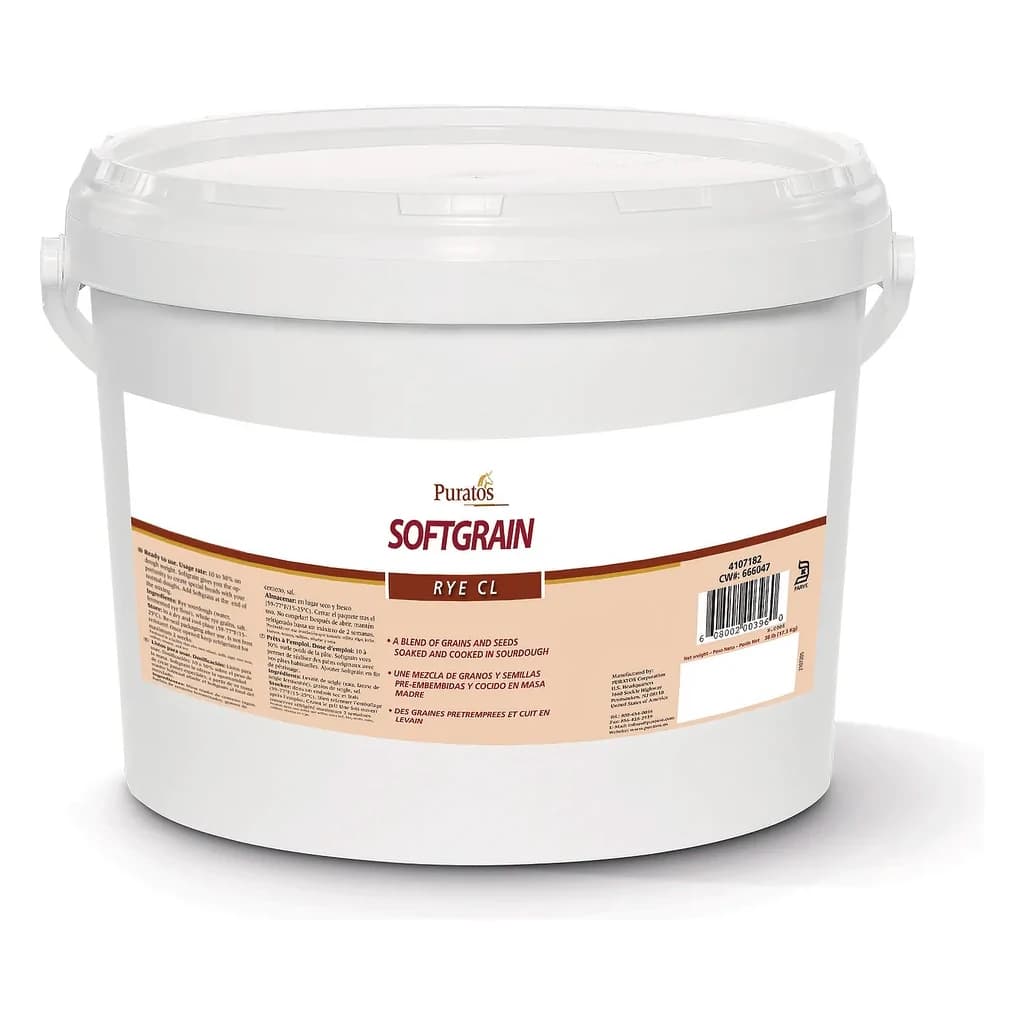
Puratos Sapore Softgrain Rye 12.5 kg
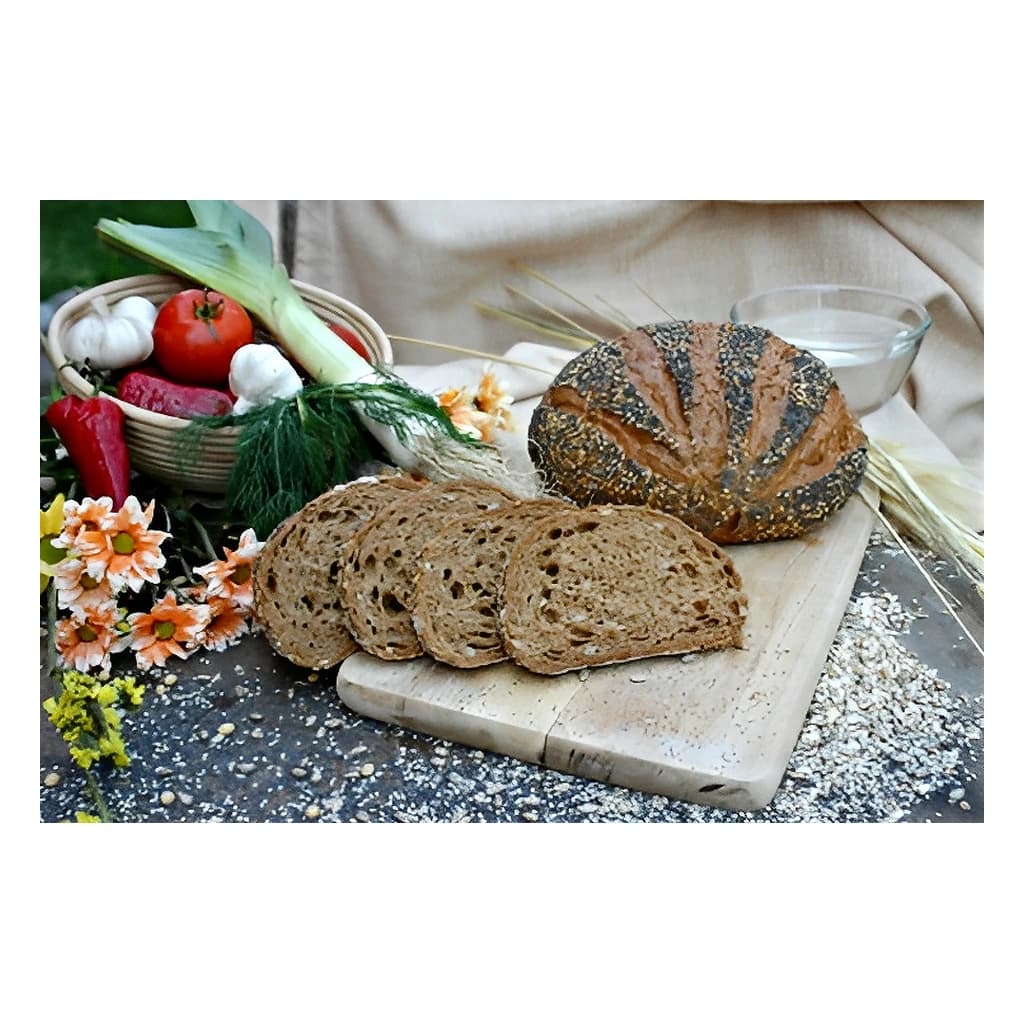
Uldo Magnus Bread Mix 25 kg
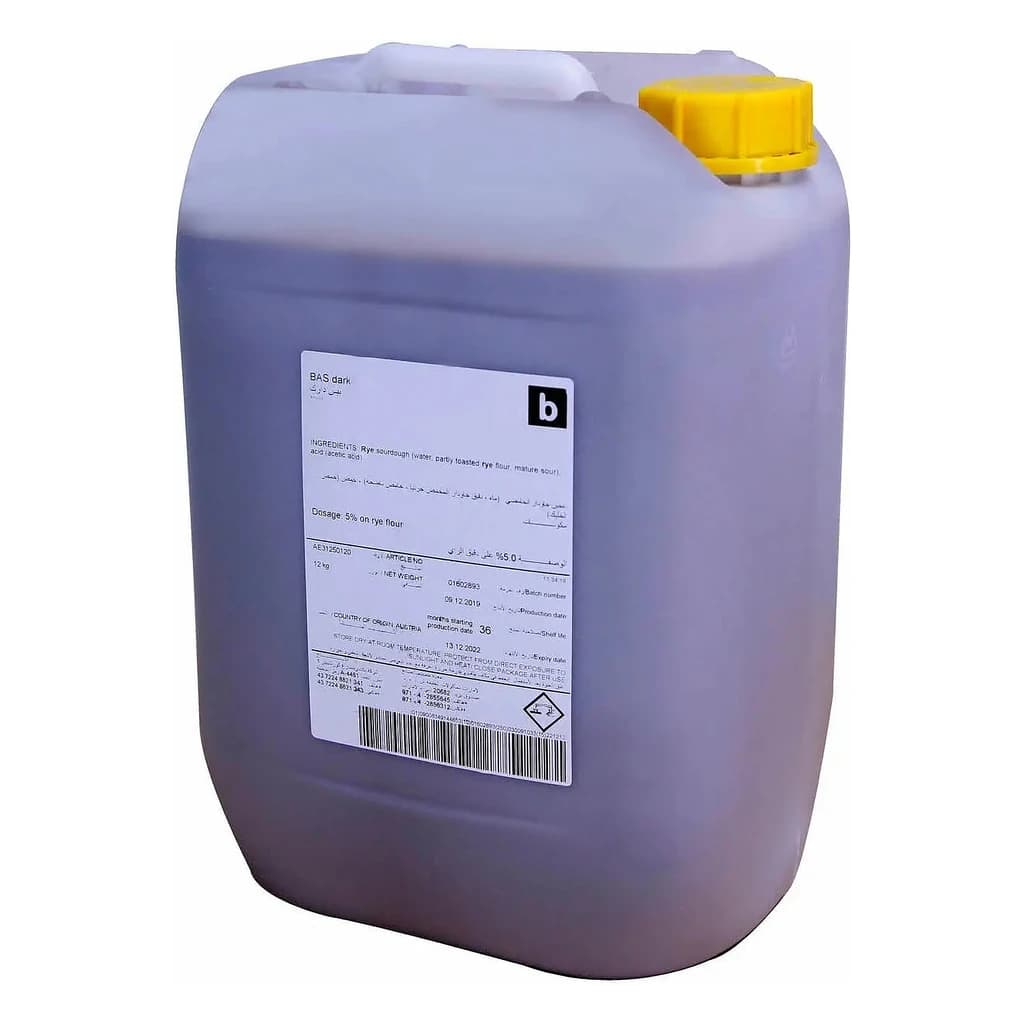
Backaldrin BAS Dark Liquid Rye Sourdough 12 kg
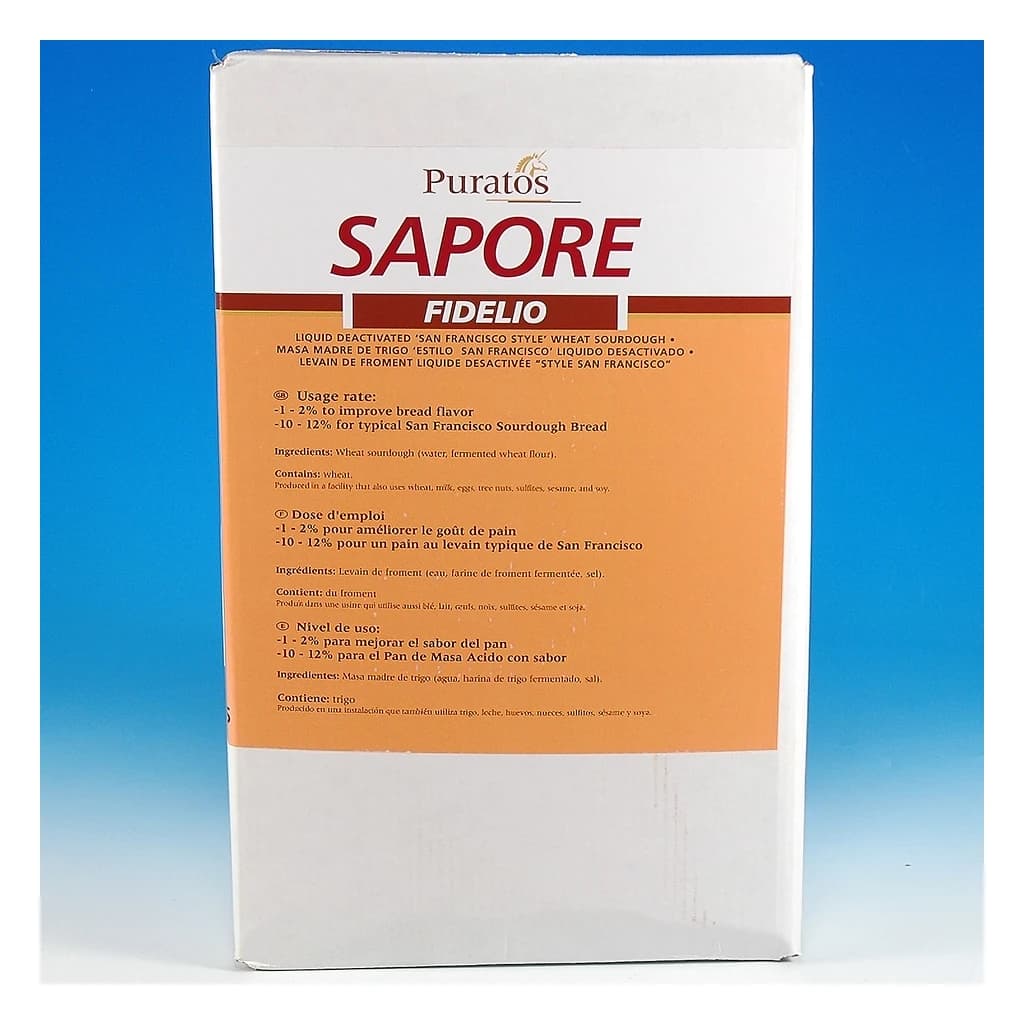
Puratos Sapore Fidelio Sourdough 10 kg
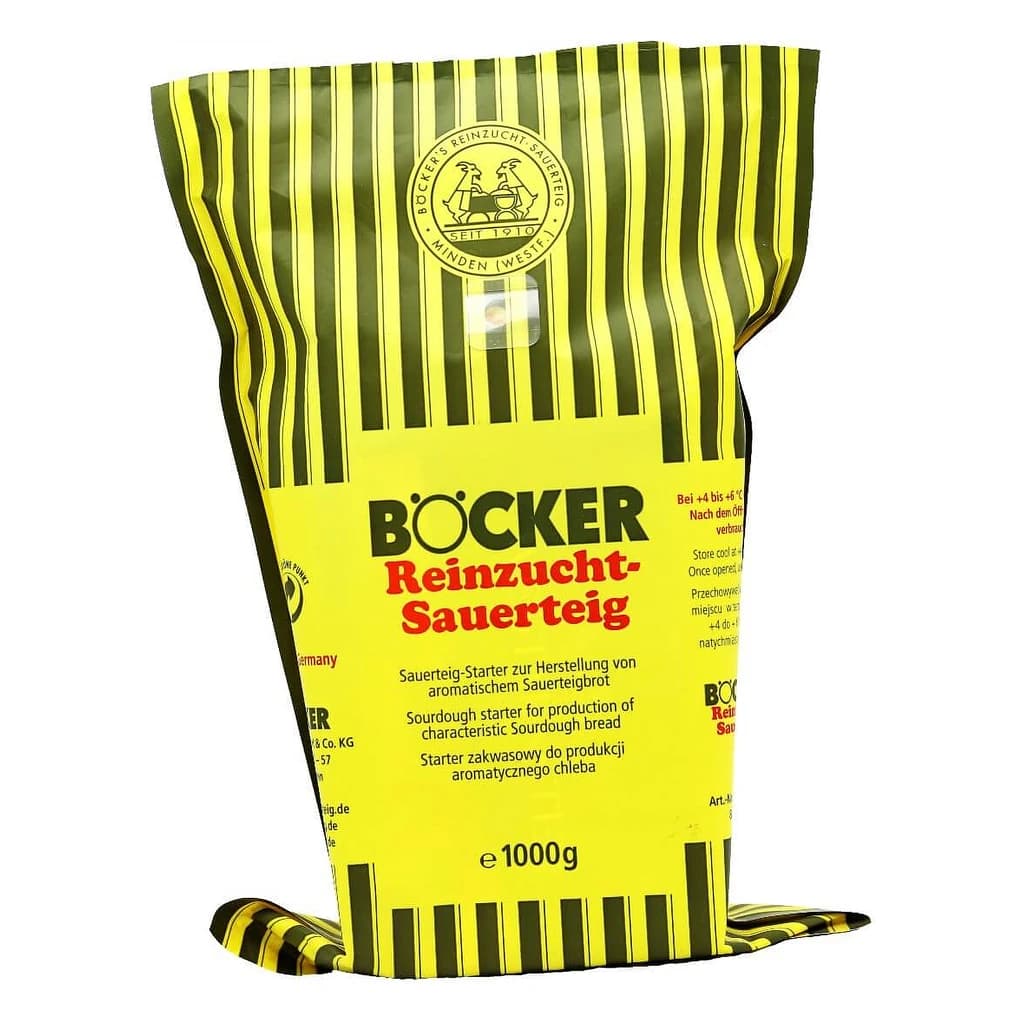
Böcker Reinzucht-Sauerteig Pure Sourdough Starter 1 kg

Böcker Bio Le Chef Organic Liquid Sourdough 2 kg

Böcker Flüssigsauer 200 Liquid Sourdough 15 kg
Bas Turbo 500 Sourdough Concentrate 12 kg

Puratos Easy Baguette SG 15 kg
Zeelandia Bioferm Dark Liquid Sourdough 19 kg