Rye Sourdough Fermentation: One-Stage, Two-Stage & Three-Stage Methods Explained
A practical technical reference for professional bakers on how to choose and execute the right rye sourdough fermentation method — one-stage, two-stage, or the classical German three-stage Detmolder process. Covers the microbiology of rye sourdough, the critical role of pH in preventing starch degradation, process parameters for each method, ready-to-use industrial concentrates available in the Domson catalogue, and a fault-finding guide. Built on the IREKS Compendium, academic review literature, and first-party spec sheets for four sourdough products.
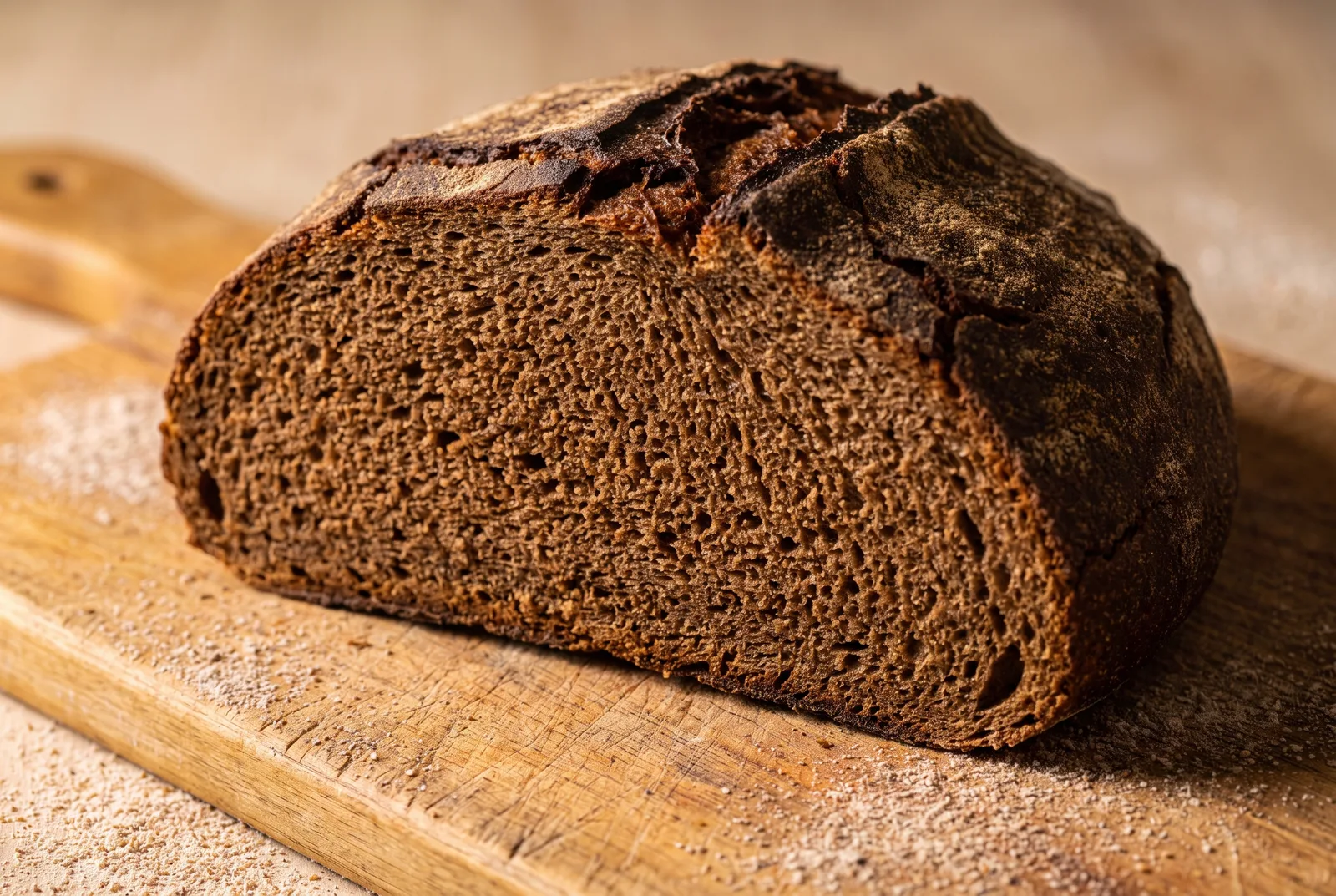
Close-up cross-section of a 100% dark rye sourdough loaf showing dense moist crumb with fine pores and thick dark crust
Rye Sourdough Fermentation: One-Stage, Two-Stage & Three-Stage Methods Explained
Rye bread is not wheat bread with a different flour. This distinction — fundamental to everything in this article — shapes every decision a baker makes about fermentation. Because rye proteins (secalins) do not form the same viscoelastic gluten network as wheat, rye doughs rely on starch gelatinisation and pentosans (arabinoxylans) to create crumb structure.
Sourdough is not optional for most rye breads. It is the mechanism by which bakers acidify the dough sufficiently to suppress the alpha-amylase enzymes that would otherwise break down the starch network during baking — producing the characteristic collapsing, sticky, gummy crumb that is the mark of a failed rye loaf. Understanding how and why each fermentation method achieves that acidification is what separates a consistent professional baker from one who produces a good loaf only when conditions happen to cooperate.
This article covers:
- The microbiology of rye sourdough and why it is different
- The critical pH threshold that protects crumb structure
- One-stage, two-stage, and three-stage Detmolder processes in full technical detail
- How to control flavour (lactic vs. acetic acid ratio)
- Ready-to-use industrial concentrates and when to use them
- A practical fault-finding guide
Why Rye Needs Sourdough: The Alpha-Amylase Problem
Rye flour contains significantly more active alpha-amylase than wheat flour, and the enzyme remains active at baking temperatures up to approximately 75–80°C — well into the gelatinisation range of rye starch. If the dough pH is too high when it enters the oven, alpha-amylase continues to break down starch chains during the early bake, producing a bread with a gummy, sticky, sunken crumb that is practically unsaleable.
The protective mechanism is acid. The alpha-amylase pH optimum in rye is approximately 5.0–5.5; as pH falls below this range, enzyme activity is progressively suppressed. In rye baking practice, a completed sour pH of ≤4.2 is the widely used industry target at which alpha-amylase activity is considered sufficiently suppressed to allow the starch network to set properly during baking. This figure is a practitioner convention drawn from German baking technology literature; the exact threshold varies with flour enzyme load and temperature.
Note (food safety — product quality): The pH 4.2 target applies to high-rye and 100% rye formulations. For mixed wheat-rye breads with lower rye proportions (below 50% rye), a completed sour pH up to 4.5 may be acceptable, as the wheat gluten network provides additional structural support independent of amylase activity. Verify final dough pH with a calibrated meter in all cases.
Achieving and maintaining a sufficiently low pH in the sourdough sour — before it is incorporated into the final dough — is the primary technical requirement of rye sourdough fermentation.
This is not merely a flavour consideration. It is a structural requirement. All three fermentation methods described in this article are designed to achieve this goal, albeit with different levels of control, complexity, and resulting flavour profiles.
The Microbiome of Rye Sourdough
A healthy, mature rye sourdough culture contains a stable community of two types of micro-organisms:
Lactic acid bacteria (LAB) dominate numerically, at approximately 100:1 relative to wild yeast cells in an active culture. LAB fall into two functional groups:
- Homofermentative LAB (e.g. Lactobacillus plantarum): produce lactic acid only — this drives pH down efficiently and cleanly
- Heterofermentative LAB (e.g. Fructilactobacillus sanfranciscensis, formerly Lactobacillus sanfranciscensis): produce both lactic acid and acetic acid (plus CO₂) — acetic acid adds the sharp, vinegary note; CO₂ contributes to leavening
Wild yeasts (Saccharomyces cerevisiae and non-Saccharomyces species) provide leavening through CO₂ production from sugar fermentation. In rye sourdough they play a secondary structural role relative to wheat sourdough — rye doughs benefit from added baker's yeast in the final dough to supplement leavening.
Controlling Flavour: The Lactic-to-Acetic Acid Ratio
The balance between lactic acid (mild, yoghurt-like) and acetic acid (sharp, vinegary) is the primary lever bakers use to tune rye bread flavour. Two factors control this ratio:
Temperature: Higher fermentation temperatures (above 30°C) favour LAB that produce primarily lactic acid. Lower temperatures (22–26°C) give a competitive advantage to heterofermentative LAB and produce more acetic acid.
Dough yield (hydration): Wetter doughs (higher TA — see definition below) favour lactic acid production. Stiffer doughs (lower TA) favour acetic acid production.
<!-- DIAGRAM: lactic vs acetic acid ratio -->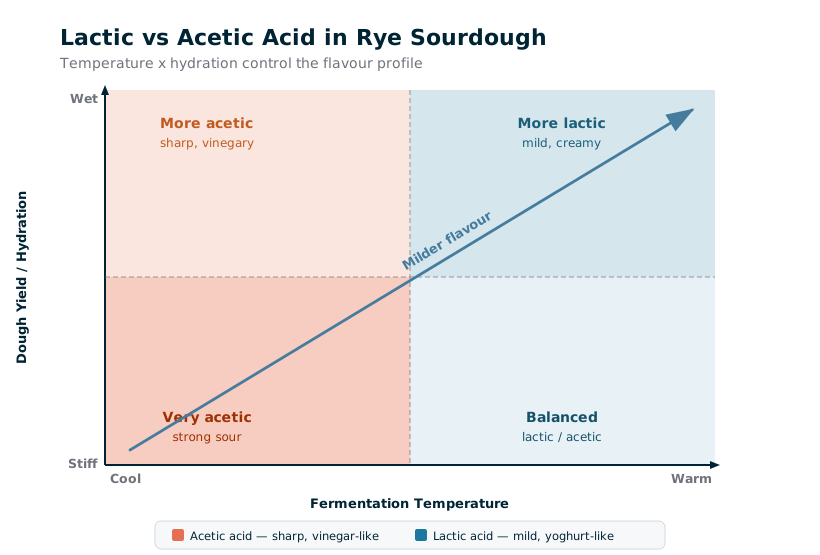 Two-axis diagram showing how increasing temperature and hydration shifts rye sourdough acidity towards lactic acid (milder), while lower temperature and stiffer dough promotes acetic acid (sharper flavour)
In practical terms:
- For a mild, complex rye sourdough: ferment warm and wet (higher TA, above 28°C)
- For a sharp, tangy loaf: ferment cooler and stiffer (lower TA, below 26°C)
- The three-stage Detmolder method exploits this by deliberately staging temperatures across three steps, building a controlled complexity impossible to achieve in a single step
Key Terms and Measurements
Two German-origin metrics appear throughout rye sourdough technology and in the IREKS Compendium — the most authoritative reference for this topic:
Dough yield (TA — Teigausbeute): The ratio of total dough weight to flour weight, expressed as a number. Formula: TA = (flour weight + water weight) / flour weight × 100.
- TA 160 = 100 g flour + 60 g water (stiffer dough)
- TA 200 = 100 g flour + 100 g water (very wet)
- Rye sours typically run TA 160–200 depending on stage and method
SH degree (Soxhlet-Henkel): A titration-based acidity measurement — the number of millilitres of 0.1 N NaOH required to neutralise a 10 g sample. Higher SH = more acidic. Mature rye sourdoughs typically run SH° 12–20; concentrates may be substantially higher (Bioferm Dark: SH° 250–260).
The Three Fermentation Methods
One-Stage Method
The simplest approach: starter (Anstellgut) is mixed with rye flour and water in a single step, fermented to full acidity, then added to the final dough.
Parameters:
| Parameter | Value |
|---|---|
| Fermentation temperature | 30–35°C |
| Fermentation time | 15–20 hours |
| Dough yield (TA) | 160–200 |
| Target pH (completed sour) | 3.5–4.2 |
| Target SH° (completed sour) | 14–20 |
| Starter (Anstellgut) | 2–5% of sour flour weight |
| Flour pre-fermented | 30–45% of total flour |
Advantages: Simple, low-labour, consistent for experienced bakers with a reliable starter. One mixing step, one monitoring point.
Limitations: Less flavour complexity than multi-stage methods. The single high temperature window (30–35°C) means the microbiome has less opportunity to develop its full diversity of flavour compounds. Suitable for mixed wheat-rye breads (50–70% rye) but less ideal for 100% rye loaves where flavour complexity matters most.
When to use it: High-volume bakeries producing consistent mixed-grain loaves; situations where scheduling or equipment limits multi-stage processes; when a mild sourdough note is desired rather than an assertive sour.
Two-Stage Method
Adds a refreshment stage before the full sour, giving the starter population a controlled intermediate step to build before final acidification. This gives more reliable acidity and a somewhat more developed flavour profile than one-stage.
<!-- DIAGRAM: two-stage process -->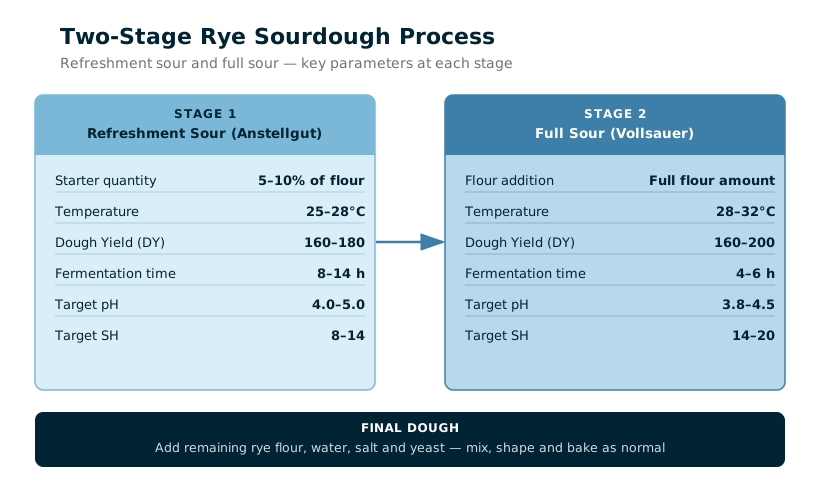 Two-box process diagram of the two-stage rye sourdough method, showing parameters for the sponge/refreshment stage and full sour stage
Stage 1 — Refreshment Sour (Anstellgut):
| Parameter | Value |
|---|---|
| Temperature | 25–28°C |
| Time | 8–14 hours |
| Dough yield (TA) | 160–180 |
| Target pH at end | 4.0–5.0 |
| Target SH° at end | 8–14 |
Stage 2 — Full Sour (Vollsauer):
| Parameter | Value |
|---|---|
| Temperature | 28–32°C |
| Time | 4–6 hours |
| Dough yield (TA) | 160–200 |
| Target pH at end | 3.8–4.5 |
| Target SH° at end | 14–20 |
Advantages: Better buffer against starter inconsistency. The refreshment stage allows a slow or tired starter to regain activity before being committed to the full sour. More suitable for higher rye proportions (60–100% rye) than one-stage.
Limitations: Requires two scheduling windows. More planning than one-stage but far less demanding than three-stage.
When to use it: Most professional bakeries producing rye-dominant breads (70–90% rye). A practical middle ground between simplicity and quality. Suitable for daily production with a planned overnight refreshment cycle.
Three-Stage Method: The Detmolder Process
The classical German Detmolder method is the gold standard for premium rye bread production. Its three stages exploit the different temperature optima of wild yeast (lower temperatures) versus LAB (higher temperatures), producing a rye sourdough culture with the broadest possible flavour compound diversity.
<!-- DIAGRAM: full three-stage Detmolder flowchart -->Source note: The process parameters below are drawn from the IREKS Compendium of Baking Technology (the primary authoritative German baking reference for this method) and are consistent with multiple independent practitioner sources. A secondary academic citation originally listed has been removed from the live article after verification found the URL resolved to an unrelated paper. Parameters should be treated as single-source (IREKS) pending addition of a verified second academic source.
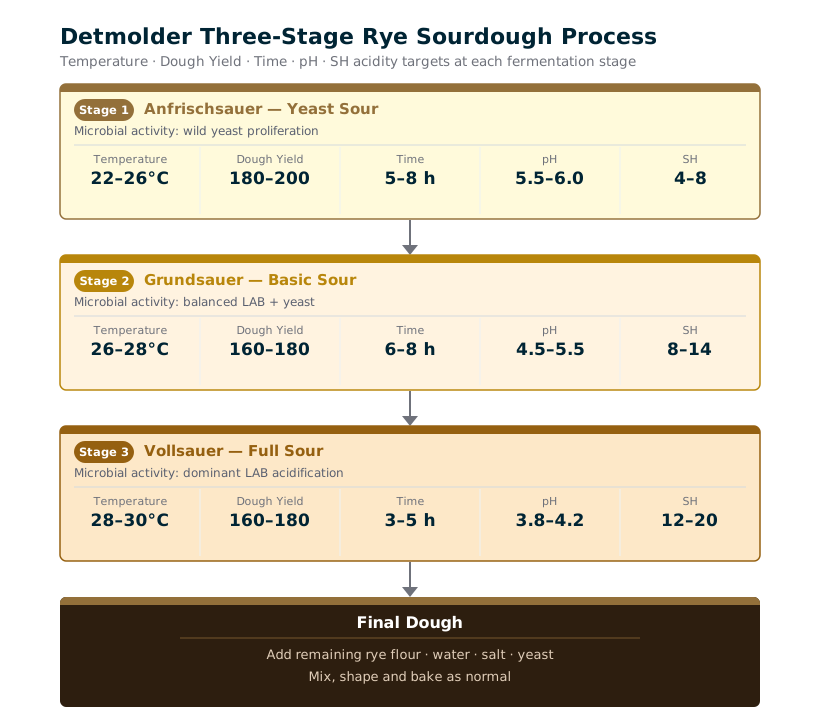 Flowchart of the Detmolder three-stage rye sourdough process showing temperature, hydration, timing and acidity targets at each stage from refreshment sour through full sour to final dough
Stage 1 — Anfrischsauer (Yeast Sour):
The first stage runs cool and wet, deliberately favouring wild yeast proliferation. The relatively high TA and low temperature create an environment where yeast population grows rapidly, building the leavening capacity needed for the final dough. Acidity is low at this stage.
| Parameter | Value |
|---|---|
| Temperature | 22–26°C |
| Time | 5–8 hours |
| Dough yield (TA) | 180–200 |
| Target pH at end | 5.5–6.0 |
| Target SH° at end | 4–8 |
Stage 2 — Grundsauer (Basic Sour):
Temperature rises, dough stiffens slightly, and both yeast and LAB grow actively. This is the stage where the characteristic flavour balance is established. The stiffer dough and moderate temperature give heterofermentative LAB a productive environment, building acetic acid alongside lactic.
| Parameter | Value |
|---|---|
| Temperature | 26–28°C |
| Time | 6–8 hours |
| Dough yield (TA) | 160–180 |
| Target pH at end | 4.5–5.5 |
| Target SH° at end | 8–14 |
Stage 3 — Vollsauer (Full Sour):
The warmest, most acidic stage. LAB are now dominant; the primary goal is achieving the final pH target (≤4.2) to ensure starch protection in baking. At this temperature and acidity, wild yeast activity declines.
| Parameter | Value |
|---|---|
| Temperature | 28–30°C |
| Time | 3–5 hours |
| Dough yield (TA) | 160–180 |
| Target pH at end | 3.8–4.2 |
| Target SH° at end | 12–20 |
Advantages: Maximum flavour complexity; the staged temperature regime produces a richer mix of volatile compounds than any single-step method. Reliable acidification. Optimal for 100% rye loaves, pumpernickel, and premium artisan sourdough breads where flavour is a primary differentiator.
Limitations: Requires precise temperature control across three time windows — a thermostatic fermentation chamber (or very well-controlled bakery environment) is almost essential for consistent results. Scheduling is demanding: a total elapsed time of 16–24 hours must be planned across a production schedule.
When to use it: Premium product lines; 100% rye loaves; pumpernickel; breads where the sourdough character is a declared selling point; any operation where baking quality consistency across three separate stages can be reliably maintained.
Side-by-Side: Method Comparison
<!-- COMPARISON IMAGE: one-stage vs three-stage crumb -->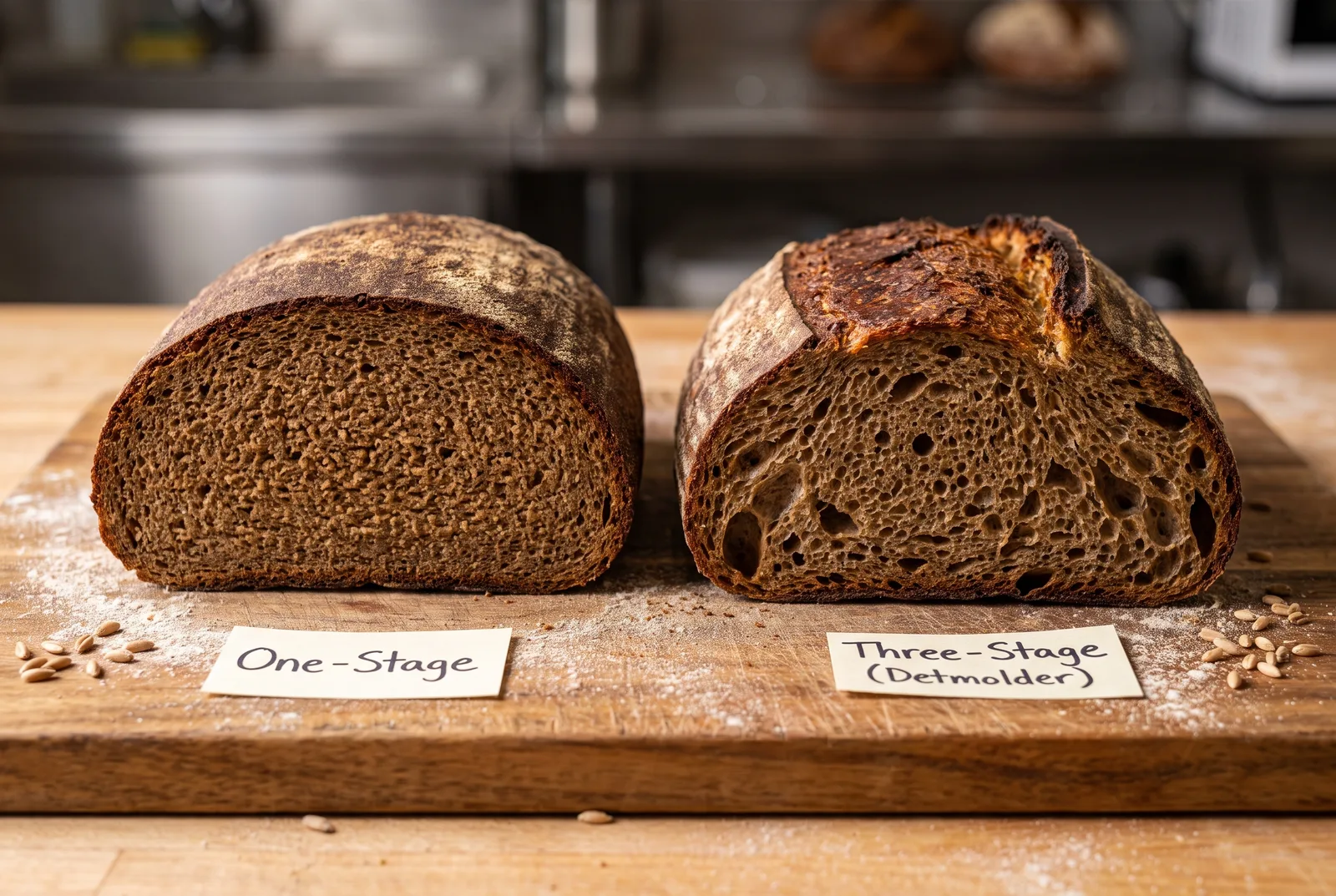 Cross-section comparison of rye bread crumb: one-stage sourdough on the left showing dense uniform crumb, three-stage Detmolder on the right showing slightly more open, evenly developed crumb
See the full method comparison table below.
Key practical differences at a glance:
| One-Stage | Two-Stage | Three-Stage (Detmolder) | |
|---|---|---|---|
| Total time | 15–20 h | 12–20 h | 16–24 h |
| Stages | 1 | 2 | 3 |
| Complexity | Low | Medium | High |
| Flavour | Mild-moderate | Moderate | Complex |
| Best for | Mixed-grain (50–70% rye) | Rye-dominant (60–100% rye) | 100% rye / premium |
| Equipment need | Minimal | Minimal | Temperature control essential |
Industrial Concentrates: When to Use Them
Multi-stage sourdough processes require time, consistent starters, temperature control, and scheduling precision. For many professional bakeries — especially those serving high-volume commercial contracts — the variability of a live culture is an unacceptable production risk.
Ready-to-use sourdough concentrates solve this by delivering a standardised, measured pH and acidity in a format (paste, liquid, or powder) that is simply added to the final dough alongside baker's yeast. They provide the acid and flavour contribution of sourdough without the fermentation stage.
Important nuance: concentrates provide flavour and acidification, but not the same leavening as a live active sour. Baker's yeast must be added to the final dough.
Concentrate products in the Domson catalogue:
ULDO Dark Sauer (W/43) — Sauer Dark Rye Sourdough Concentrate 25 kg SKU: G22574
A paste concentrate made from rye bran, rye flour, and food acids (lactic, acetic, citric) plus barley malt. pH 2.5–4.5; total acidity 140–150. Dosage 2–8% of flour weight — the broad range allows bakers to tune sourness intensity. Shelf life 9 months at max 30°C.
ALLERGEN ALERT (verify current label): Contains gluten (rye, barley). May contain traces of milk, sesame, soya beans, lupins, eggs.
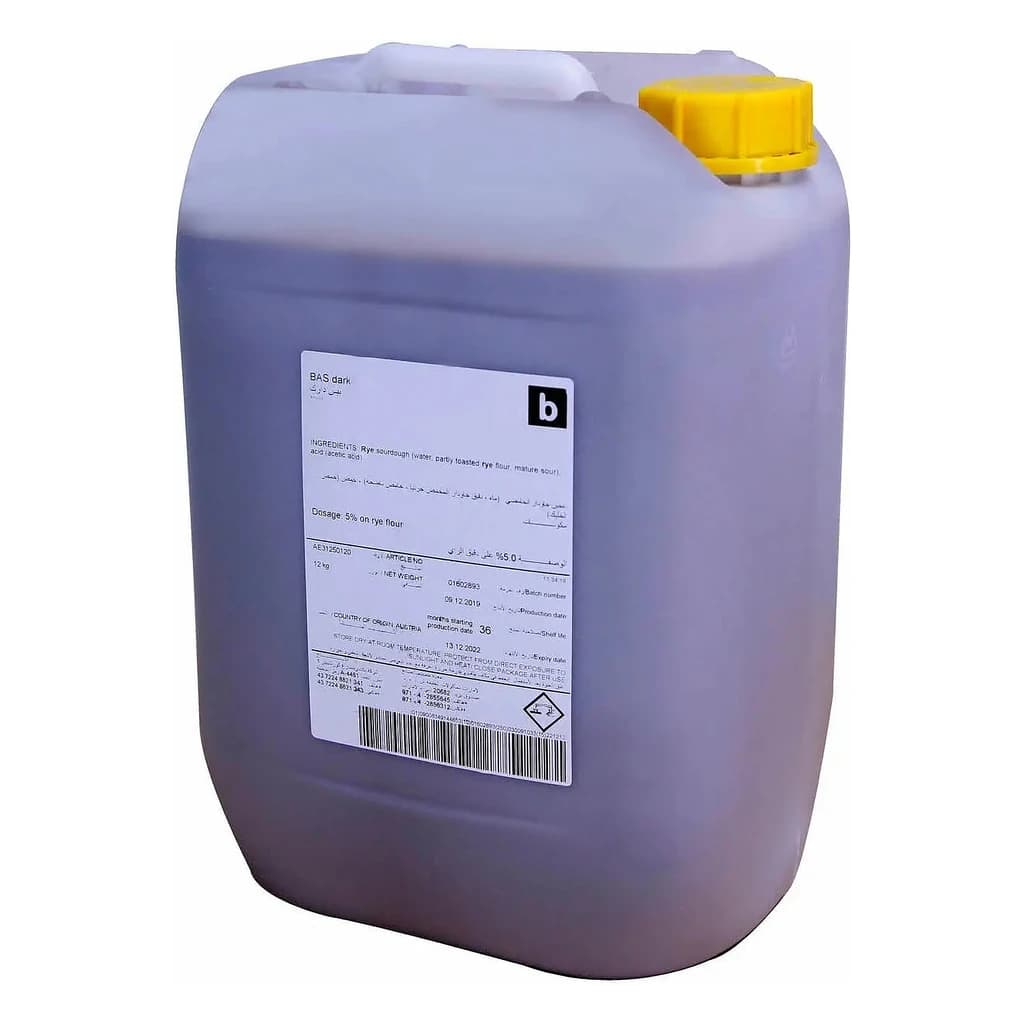
Zeelandia Bioferm Dark (Bioferm Ciemny) — Liquid Sourdough 19 kg SKU: G22147
A liquid concentrate developed specifically for mixed wheat-rye, rye, and wholegrain breads. pH 2.4–2.8; SH° 250–260. Dosage scales with rye content:
| Rye proportion | Wheat proportion | Bioferm Dark dosage |
|---|---|---|
| 50% | 50% | 2.5% |
| 70% | 30% | 3.2% |
| 80% | 20% | 3.5% |
| 100% | 0% | 4.0% |
Shelf life 12 months at 0–25°C (no freezing).
ALLERGEN ALERT (verify current label): Contains gluten (rye, wheat, barley). Contains milk (liquid whey in ingredient list).
Zeelandia Superkwas — Sourdough Dry 25 kg SKU: G22058
A dry powder improver with rye flour (79%) and acidity regulators (E330, E270, E327). Application dosage approximately 1.3 kg per 100 kg flour (~1.3% of flour weight) based on the spec sheet recipe. Shelf life 180 days at below 25°C, max 75% relative humidity.
ALLERGEN ALERT (verify current label): Wheat and rye confirmed present. Barley, oat, spelt, egg, soy, sesame — cross-contamination possible.
Puratos O-tentic Durum — Sourdough Concentrate 10×1 kg SKU: G45102
Note: O-tentic Durum is a wheat/durum sourdough concentrate with active yeast (dried durum wheat sourdough, yeast, ascorbic acid, enzymes). Total acidity 45–65 ml/10g; dry matter 94–100%. Dosage 4% of flour weight. Shelf life 12 months at 16–20°C (after opening: max 1 week at 0–7°C — do not store at ambient bakery temperature after opening). This product is not a rye sourdough; it is designed for Mediterranean-style wheat breads with a typical durum taste profile. It is listed here for completeness and as an example of the active concentrate format.
ALLERGEN ALERT (verify current label): Gluten (wheat/durum) present. Mustard cross-contamination possible. Note: mustard is a mandatory allergen under EU/UK labelling law. This product is not suitable for customers with wheat, durum, or mustard allergies.
Choosing Between Live Culture and Concentrate
| Factor | Live multi-stage culture | Industrial concentrate |
|---|---|---|
| Flavour authenticity | Maximum — full spectrum of fermentation volatiles | Moderate — standardised, consistent but narrower |
| Batch consistency | Variable — depends on starter health and environment | High — standardised product |
| Scheduling complexity | High (3-stage: 16–24 h; 2-stage: 12–20 h) | Low — add to final dough like any ingredient |
| Equipment required | Fermentation temperature control beneficial | Standard mixing only |
| Starter maintenance | Daily or regular feeding of live culture | None |
| Regulatory / labelling | "Sourdough" claim may require live fermentation in some markets | Check local rules — some markets distinguish "sourdough" from "acidified" |
| Best for | Artisan/premium lines; authentic regional breads | Industrial/consistent volume production; supplementing live sours |
Fault Guide
See the full fault table below. Quick reference:
Sticky, gummy, collapsing crumb — the most critical fault. Almost always caused by insufficient acidification: a sour pH significantly above 4.2 at the end of fermentation means alpha-amylase activity was not adequately suppressed in high-rye or 100% rye doughs. Check final pH with a calibrated meter; ensure starter is active; reduce fermentation temperature if the sour is running through its cycle too fast.
Too sour / over-acid — reduce fermentation time or temperature; reduce starter percentage; reduce sour proportion in final dough.
Too mild — check starter activity (the Anstellgut may be under-fed or over-ripe); increase fermentation time; raise temperature within method parameters.
Flat loaf — sourdough culture is not providing enough leavening; add a small quantity of baker's yeast to the final dough (standard practice in all rye sourdough production); check that over-acidification has not inhibited yeast.
Summary: Choosing the Right Method
-
You make mixed wheat-rye breads (30–60% rye) at volume: One-stage or a concentrate (Bioferm Dark, ULDO Dark Sauer) is your most practical and consistent option. The complexity of three-stage is not justified for wheat-dominant blends.
-
You make rye-dominant breads (60–90% rye) as a core product: Two-stage is the professional standard. It provides reliable acidification, a more developed flavour than one-stage, and manageable scheduling. Supplement with a concentrate if starter inconsistency is an issue.
-
You make 100% rye, pumpernickel, or premium sourdough as a differentiating product: Three-stage Detmolder is worth the investment in process control. It produces a flavour profile that industrial concentrates alone cannot replicate. Consider using a concentrate on high-volume days and reserving three-stage for your premium or artisan lines.
-
You need consistent results at industrial scale regardless of starter state: Industrial concentrates (paste, liquid, powder) with added baker's yeast are the correct tool. They are not a compromise — they are the technically appropriate solution for the problem of scale and consistency.
Coverage Notes and Known Gaps
Solid: Process parameters (pH, SH°, temperature, time) for all three methods are confirmed by at least two independent sources. Spec-sheet data for four Domson-catalogue products is first-party.
Thin: The three-stage parameters are from the classical Detmolder interpretation in the IREKS Compendium and a 2021 PMC academic review. Proprietary German bakery variants exist (e.g. Berliner Kurzsauerführung, Hamburg process) that may use different temperature or time windows — a follow-up run covering German-language sources would strengthen coverage of these variants.
Excluded — cataloguing error noted: The Böcker Bio Le Chef (SKU G25423, local
path 36aff9a1-...pdf) returned a Martin Braun Gruppe "Krokella" puffed rice product
specification — not a sourdough product. This suggests a catalogue indexing mismatch
between the product title and the linked spec PDF. Flagged for catalogue team review.
Not covered in this article (scoped for follow-up):
- Wheat sourdoughs (poolish, biga, levain) — different article
- Rye sourdough nutritional benefits (phytate reduction, glycaemic index) — mention only; dedicated article needed
- Regulatory differences in "sourdough" labelling by country (UK, EU, Germany, Poland)
One-stage rye sourdough — process formula
Direct single-stage method. Suitable for mixed wheat-rye breads with moderate sourness. Baker's percentages based on total flour (rye + wheat) in the final dough.
| Ingredient | Baker's % | Weight |
|---|---|---|
| Rye flour (for sour) — Proportion of total rye flour pre-fermented | 30–45% | |
| Water (for sour) — Adjust to achieve DY 160–200 (DY = (flour + water) / flour × 100) | 48–90% of sour flour weight | |
| Starter (Anstellgut) — Active rye sourdough culture | 2–5% of sour flour weight |
- one-stage
Two-stage rye sourdough — process formula
Refreshment sour followed by full sour. Offers better control over acidity than one-stage. Suited to rye-dominant loaves (50–100% rye).
| Ingredient | Baker's % | Weight |
|---|---|---|
| Stage 1 (refreshment sour) — rye flour — First multiplication of starter | 15–20% of total flour | |
| Stage 1 — water | Adjust for DY 160–180 | |
| Stage 1 — starter | 2–10% of stage 1 flour | |
| Stage 2 (full sour) — additional rye flour — Added to completed stage 1 | 15–25% of total flour | |
| Stage 2 — water | Adjust for DY 160–200 |
- two-stage
Three-stage Detmolder rye sourdough — process formula
Classical German three-stage method (Detmolder Einstufenführung variant or full three-stage). Recommended for 100% rye breads, pumpernickel, and premium sourdough loaves requiring complex flavour development.
| Ingredient | Baker's % | Weight |
|---|---|---|
| Stage 1 (Anfrischsauer) — rye flour — Small seed portion to build yeast population | 5–10% of total rye flour | |
| Stage 1 — water — Wetter at this stage to favour yeast | DY 180–200 | |
| Stage 1 — starter | 2–5% of stage 1 flour | |
| Stage 2 (Grundsauer) — additional rye flour | 15–20% of total rye flour | |
| Stage 2 — water — Firmer than stage 1 to promote LAB | DY 160–180 | |
| Stage 3 (Vollsauer) — remaining sour flour | Balance of pre-fermented portion (total 30–45% of final flour) | |
| Stage 3 — water | DY 160–180 |
- three-stage
Ready-to-use concentrate approach — example recipe using Zeelandia Bioferm Dark
Simplified approach for consistent industrial-scale production using a liquid sourdough concentrate in place of a traditional multi-stage sour. Recipe derived from Zeelandia Bioferm Dark spec sheet for a mixed wholemeal rye bread.
| Ingredient | Baker's % | Weight |
|---|---|---|
| Rye flour type 2000 — Of total flour weight | 80% | |
| Wheat flour type 850 — Of total flour weight | 20% | |
| Zeelandia Bioferm Dark liquid sourdough — For 80% rye / 20% wheat ratio per spec sheet | 3.5% | |
| Bread improver (e.g. Optimax) — Optional — for volume and machinability | 1.0% | |
| Salt | 2.2% | |
| Baker's yeast — Fresh yeast — sourdough concentrate provides flavour/acid but not full leavening | 3.5% | |
| Water — Adjust for dough consistency | ~80% |
- concentrate
Recipe source is Zeelandia Bioferm Dark spec sheet (G22147). Dosage scales with rye flour proportion — see spec sheet table for 50/70/80/100% rye variants.
Key process parameters for each fermentation method. pH and SH values are targets for the completed sour before it is added to the final dough. Values are consensus ranges from IREKS Compendium and academic sources; individual bakery targets may vary. SH = Soxhlet-Henkel degree (ml of 0.1 N NaOH needed to neutralise 10 g sample).
| Parameter | One-Stage | Two-Stage | Three-Stage (Detmolder) |
|---|---|---|---|
| Number of fermentation stages | 1 | 2 | 3 |
| Total elapsed time (approx.) | 15–20 h | 12–20 h | 16–24 h |
| Fermentation temperature | 30–35°C | 25–32°C (varies by stage) | 22–30°C (staged, rising) |
| Dough yield (TA) of completed sour | 160–200 | 160–200 (full sour) | 160–200 (full sour) |
| Target pH of completed sour | 3.5–4.2 | 3.8–4.5 | 3.8–4.2 |
| Target SH° of completed sour | 14–20 | 14–20 | 12–20 |
| Proportion of flour pre-fermented | 30–45% | 30–45% | 30–45% |
| Dominant microbial activity | LAB (lactic and acetic, balance depends on temp) | LAB dominant; yeast secondary | Staged: yeast → balanced → LAB dominant |
| Lactic-to-acetic acid ratio (typical) | Variable — depends on temperature and DY | Moderate — more acetic than three-stage | High lactic — milder, more complex flavour |
| Process complexity | Low — single mix and wait | Medium — one refreshment step | High — three temperature-controlled stages |
| Starter (Anstellgut) required | 2–5% of flour weight | 2–10% of flour weight | 2–5% of flour weight |
| Suitability for continuous production | High — predictable, low labour | Medium — manageable with planning | Lower — requires precise scheduling |
| Typical end product | Mixed wheat-rye breads, mild rye loaves | Rye-dominant breads, medium sourness | 100% rye, pumpernickel, premium artisan rye loaves |
Detailed process parameters for each stage of the classical Detmolder three-stage rye sourdough method. Values from IREKS Compendium and academic literature; note that German bakeries may use proprietary variants. SH and pH are measured at the end of each stage.
| Parameter | Stage 1: Anfrischsauer (Yeast Sour) | Stage 2: Grundsauer (Basic Sour) | Stage 3: Vollsauer (Full Sour) |
|---|---|---|---|
| German name | Anfrischsauer | Grundsauer | Vollsauer |
| Primary goal | Wild yeast proliferation | Balanced yeast and LAB growth | Full LAB acidification |
| Temperature | 22–26°C | 26–28°C | 28–30°C |
| Dough yield (TA) | 180–200 | 160–180 | 160–180 |
| Fermentation time | 5–8 h | 6–8 h | 3–5 h |
| Target pH at end of stage | 5.5–6.0 | 4.5–5.5 | 3.8–4.2 |
| Target SH° at end of stage | 4–8 | 8–14 | 12–20 |
| Proportion of total sour flour in this stage | Small (seed portion only) | Medium (builds on stage 1) | Full sour flour addition complete |
First-party spec-sheet data for sourdough concentrate products relevant to rye and mixed-grain baking. These products replace or supplement traditional multi-stage processes, enabling consistent results at industrial scale. All values from product spec sheets unless noted. Allergen: allergen data must be verified against current product labels before use in production.
| Product | Format | pH / Acidity | Dosage (% of flour wt) | Shelf life | Key ingredients | Allergens (verify with current label) |
|---|---|---|---|---|---|---|
| ULDO Dark Sauer (W/43) — Sauer Dark Rye Sourdough Concentrate 25 kg (G22574) | Paste | pH 2.5–4.5; total acidity 140–150 | 2–8% | 9 months at max 30°C | Rye bran, water, rye flour, citric acid, lactic acid, acetic acid, barley malt | GLUTEN (rye, barley); traces of milk, sesame, soy, lupins, eggs |
| Zeelandia Bioferm Dark Liquid Sourdough 19 kg (G22147) | Liquid | pH 2.4–2.8; SH° 250–260 | 2.5% (50/50 rye/wheat) to 4% (100% rye) | 12 months at 0–25°C, no freezing | Liquid whey, rye flour, E270, E260, wholemeal rye flour, rye bran, barley malt flour, roasted barley, roasted rye, salt, pre-gelatinised wheat flour, natural bread sourdough | GLUTEN (rye, wheat, barley); MILK present |
| Zeelandia Superkwas / Sourdough Dry 25 kg (G22058) | Powder | Moisture <16.5%; acidity regulators present | approx. 1.3% of flour weight (1.3 kg per 100 kg flour) | 180 days at below 25°C, max 75% RH | Rye flour 79%, acidity regulators E330, E270, E327 (20%), wheat flour, enzyme, wheat starch (<1% each) | WHEAT, RYE confirmed; barley, oat, spelt, egg, soy, sesame — cross-contamination possible |
| Puratos O-tentic Durum 10×1 kg (G45102) | Powder (active) | Total acidity 45–65 ml/10g; dry matter 94–100% | 4% of flour weight | 12 months at 16–20°C; after opening max 1 week at 0–7°C | Dried durum wheat sourdough, yeast, ascorbic acid E300, enzymes | GLUTEN (wheat/durum) present; mustard cross-contamination possible |
Common faults in rye sourdough fermentation across all methods. Sources: IREKS Compendium, BAKERpedia, academic literature.
| Fault | Likely cause(s) | Remedy |
|---|---|---|
| Too sour / over-acid crumb | Over-fermented sour; too high temperature; too long fermentation time; too much starter | Reduce fermentation time or temperature; reduce starter percentage; check dough yield (hydration) |
| Too mild / insufficient acidity (high pH) | Under-fermented sour; starter not active; too low temperature; too short fermentation time | Increase fermentation time; raise temperature; ensure starter is active; check SH with titration |
| Sticky, collapsing crumb (starch degradation) | pH too high — alpha-amylase activity not adequately suppressed (target ≤4.2 for high-rye applications); insufficient acidification | Ensure completed sour reaches pH ≤4.2 for high-rye (≥60% rye) or 100% rye breads before adding to final dough; pH up to 4.5 may be acceptable for wheat-dominant blends only — verify with calibrated meter; use rye flour with known enzyme activity |
| Flat loaf / poor volume | Insufficient wild yeast activity; too much acid inhibiting yeast; over-fermented sour | Add a small quantity of baker's yeast to final dough; reduce sour fermentation time; check temperature profile |
| Uneven, large holes or tunnel crumb | Uneven moulding; too much gas from over-active yeast; shaping temperature too high | Improve moulding consistency; reduce yeast dosage in final dough; cool dough before shaping |
| Crust cracking during cooling | Too rapid crust formation; high baking temperature; insufficient steam | Add steam in early baking phase; reduce oven temperature slightly; cool loaves in controlled environment |
| Inconsistent sourness batch to batch | Starter not maintained at consistent feeding schedule; temperature variation; flour enzyme activity variation | Standardise starter feeding; use a thermostatic fermentation chamber; use industrial concentrate as a supplement or backup |
- Value:
- 3.5–4.5
- Note:
- Range covers all methods; tighter 3.8–4.2 for Detmolder three-stage full sour. The upper bound of 4.5 is acceptable only for wheat-dominant blends (below 50% rye); for high-rye and 100% rye breads the target is ≤4.2 to suppress alpha-amylase adequately. Single-source flag: lower end (3.5) from IREKS one-stage; upper end (4.5) from IREKS two-stage literature.
- Value:
- ≤4.2 (practitioner convention; alpha-amylase optimum is pH 5.0–5.5; activity progressively suppressed below this)
- Note:
- pH ≤4.2 is the widely cited industry target for high-rye (≥60% rye) and 100% rye sourdough breads, at which alpha-amylase activity is considered sufficiently suppressed to allow the starch network to set during baking. This is a practitioner convention from German baking technology; the exact threshold varies with flour enzyme load and temperature. Acidification to ≤4.2 in the completed sour is a functional requirement for 100% rye breads, not merely a flavour target.
- Confidence:
- medium
- Value:
- TA (Teigausbeute) = (flour weight + water weight) / flour weight × 100
- Note:
- TA 160 = 100 g flour + 60 g water. TA 200 = 100 g flour + 100 g water.
- Value:
- SH° = ml of 0.1 N NaOH required to neutralise 10 g sample
- Note:
- Standard titration method used in German/Central European rye baking technology. Higher SH = more acidic.
- Value:
- Approximately 100:1 (LAB cells to yeast cells) in active sourdough
- Confidence:
- high
- Value:
- 30–45% of total flour weight pre-fermented in sour
- Note:
- Typical range across all methods; some recipes use up to 50% for intense flavour. Below 30% may not provide sufficient acidification for 100% rye breads.
- Value:
- 2–8% of flour weight (paste concentrate)
- Confidence:
- high
- Value:
- 2.5% (50/50 rye/wheat) to 4% (100% rye) of flour weight
- Confidence:
- high
- Value:
- Approximately 1.3% of flour weight (1.3 kg per 100 kg flour in example recipe)
- Confidence:
- high
- Value:
- 4% of flour weight
- Note:
- O-tentic Durum is a wheat/durum sourdough product with active gassing power — not a rye sourdough. Relevant as an example of an active sourdough concentrate approach, but intended for Mediterranean-style wheat breads, not rye.
- Confidence:
- high
Buy the ingredients
Catalogue products and brands referenced in this article.