
Baking enzymes demystified: amylases, xylanases, lipases, proteases and oxidoreductases
A comprehensive practical guide to the enzymes used in professional bread production — amylases (fungal, maltogenic, beta), xylanases, lipases, proteases, and oxidoreductases (glucose oxidase, laccase, transglutaminase, asparaginase). Explains the mechanism of each enzyme class, typical dosage ranges, interaction with flour variability, over-dosage risks, and how they combine in commercial bread improvers. Cross-referenced with seven first-party spec sheets from the Domson catalogue (Zeelandia, Puratos, IREKS, Cereform/AB Mauri, Beneo). Includes a fault-finding table, a commercial improver comparison, regulatory and allergen notes (enzyme carrier allergens, processing-aid status, maltogenic amylase grey area), and the clean-label enzyme-vs-emulsifier argument.
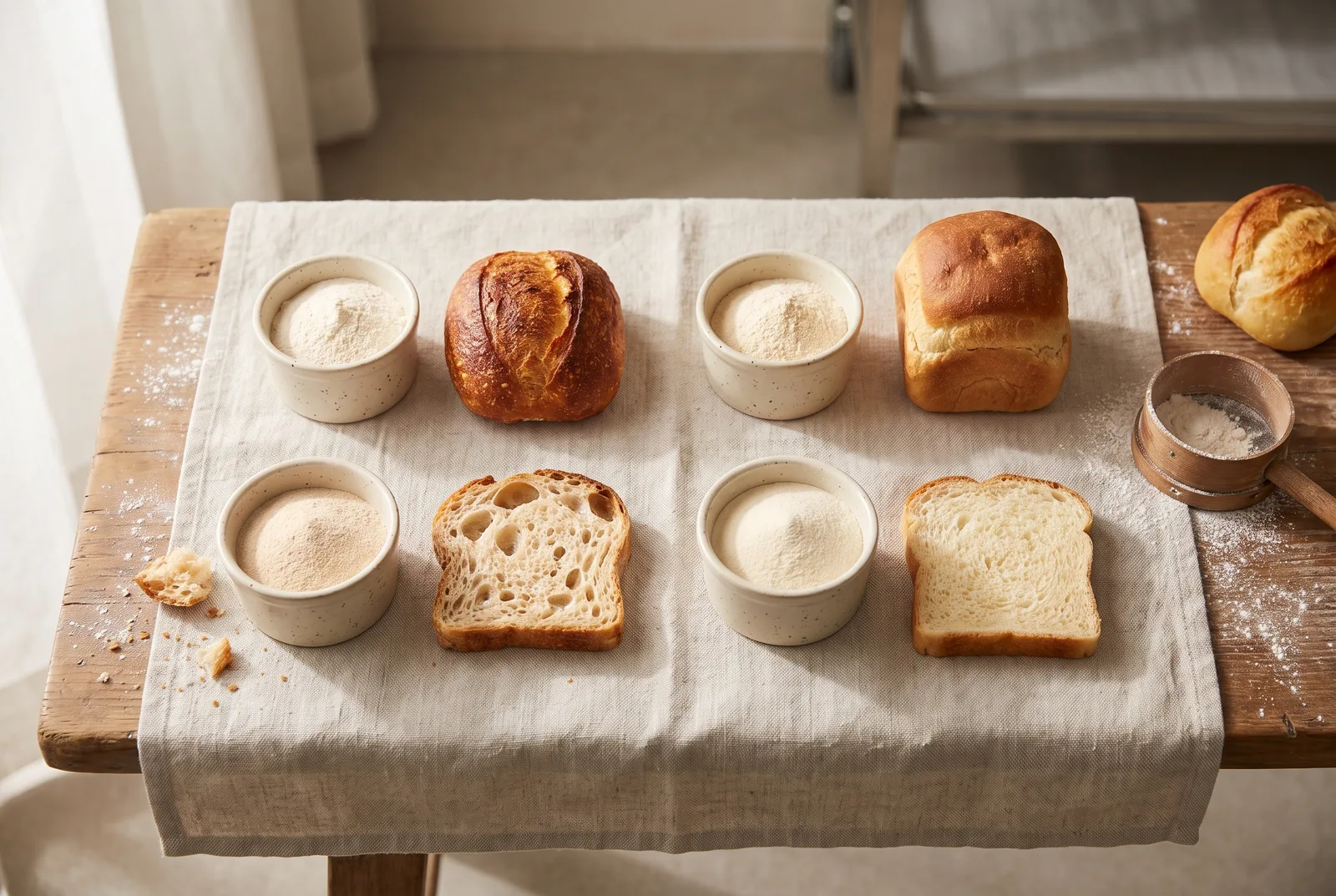
What Are Baking Enzymes and Why Do They Matter?
Baking enzymes are proteins that catalyse specific chemical reactions in dough, dramatically accelerating reactions that would otherwise be too slow to affect the bake. Unlike chemical additives, enzymes are destroyed by heat: most are fully denatured during baking, leaving no active enzyme in the finished loaf. This heat-lability is the technical basis for their processing-aid status under EU/UK food law — they typically do not appear in the finished product's ingredient list (see §9 for regulatory nuances and important exceptions).
The practical importance of enzymes to professional bakers is threefold:
- Flour correction: every harvest year delivers flour with different amylase activity, protein content, and pentosan levels. Enzymes let bakers compensate for these variations without changing the flour specification.
- Volume, texture, and shelf life: targeted enzyme combinations can simultaneously improve oven spring, crumb softness, and freshness without introducing chemical additives.
- Clean-label formulation: as declared emulsifiers (DATEM, SSL) face consumer pressure, lipases, phospholipases, and glucose oxidase offer functionally equivalent alternatives that do not appear on the finished product label.
All baking enzymes belong to one of two biochemical classes:
- Hydrolases — cleave bonds by adding water: amylases, xylanases, lipases, proteases
- Oxidoreductases — transfer electrons: glucose oxidase, laccase, transglutaminase
Each enzyme acts only on a specific substrate ("lock-and-key" specificity) and is strongly influenced by dough temperature and pH. Manufacturers select enzyme strains, quantities, and combinations to match target pH and temperature profiles during mixing, proofing, and the early phase of baking.
{{img-01}}
Section 1: Amylases — Starch Conversion, Crust Colour, and Anti-Staling
1.1 Alpha-Amylase: Crust Colour and Fermentation Support
Alpha-amylase (EC 3.2.1.1) cleaves internal 1→4 glycosidic bonds within gelatinised starch chains (endo-action), releasing a mixture of dextrins, maltotriose, maltose, and glucose. The commercial significance in bread is threefold:
Fermentation boost: the sugars released — especially maltose — provide an additional substrate for yeast Saccharomyces cerevisiae during fermentation, particularly important in lean doughs with no added sugar.
Crust browning: reducing sugars from amylase activity participate in the Maillard reaction with amino acids at baking temperatures (>120 °C), developing the golden-brown colour and aroma of a well-baked crust.
Viscosity reduction: amylase activity during early gelatinisation (60–70 °C) lowers starch viscosity transiently, giving better oven spring before the crumb sets — a useful effect in soft-crumb pan breads.
Sources used commercially:
| Source | Organism | Inactivation temp. | Typical use | Notes |
|---|---|---|---|---|
| Fungal | Aspergillus oryzae / A. niger | ~65–70 °C | Standard bread, rolls | Processing aid; fully destroyed in bake |
| Bacterial | Bacillus spp. | ~90–95 °C | Rare in bread; starch processing | Risk of gummy crumb at bread temps; avoid in bread |
| Malt (germinated grain) | Wheat or barley | Similar to fungal | Traditional improvers | Supplies both α- and β-amylase; see A3-malt-and-malt-extracts |
Note: the inactivation temperatures above are indicative and product-specific. The IREKS Compendium states 70–80 °C for fungal alpha-amylase; independent enzyme-supplier and academic sources place near-complete inactivation closer to 65–70 °C in aqueous solution (bread-matrix conditions may differ). Bacterial amylase at 90–95 °C is confirmed by multiple independent sources. Always confirm with individual enzyme supplier datasheets for the specific enzyme product in use.
Flour-amylase calibration — the Falling Number (HFN) test:
The Hagberg Falling Number (HFN) test measures endogenous alpha-amylase activity by tracking the time for a stirrer to fall through a gelatinised flour paste. Bakers and millers use it to decide whether supplementation is needed:
- HFN >350 s: very low amylase → supplement with fungal alpha-amylase or diastatic malt → improves crust colour and volume
- HFN 200–350 s: balanced range for most bread types
- HFN <200 s: excess amylase (typically from weather-damaged grain) → sticky, gummy crumb; do not supplement; blend with high-HFN flour
No specific enzyme dose range (FAU/100g flour) is available from two independent sources reviewed; bakers should follow individual enzyme supplier recommendations and carry out small-scale trials with each flour batch.
1.2 Maltogenic Amylase: The Anti-Staling Enzyme
Maltogenic amylase (EC 3.2.1.133, also called amylomaltase or thermostable alpha-amylase) removes short oligosaccharide chains from the non-reducing ends of starch, releasing primarily maltose. Unlike fungal alpha-amylase, it is thermo-stable, retaining partial activity through baking.
The anti-staling mechanism:
- During baking and initial cooling, amylopectin side chains begin to re-crystallise (retrograde), creating a rigid network → crumb firms
- Maltogenic amylase truncates these side chains before they can form tight crystalline structures
- The modified starch retrogrades into a softer, less rigid form → crumb stays softer for longer
This is the principal enzyme for shelf-life extension in packaged bread, soft rolls, and burger buns. Bakels confirms maltogenic amylase as the industry standard for this application.
Regulatory note: Because maltogenic amylase is thermo-stable, it may retain activity in the crumb of the finished loaf. Whether it qualifies as a processing aid or a food additive (requiring declaration) depends on the specific enzyme and bread type. Some manufacturers and national authorities treat it as an additive. Bakers should request explicit regulatory guidance from their enzyme supplier for the specific market of sale. The status is NOT uniform across EU member states and the UK.
1.3 Beta-Amylase
Beta-amylase (EC 3.2.1.2) is an exo-enzyme that removes maltose units from the non-reducing ends of starch chains. It is naturally present in wheat flour at levels that are generally adequate; it is not commonly added as a standalone enzyme. Malt preparations supply beta-amylase alongside alpha-amylase (see A3-malt-and-malt-extracts).
Section 2: Xylanases (Pentosanases / Hemicellulases)
2.1 The Arabinoxylan Substrate
Wheat flour contains approximately 2–3% arabinoxylan (AX) by dry weight: a xylose backbone with arabinose side chains. AX exists in two functional fractions:
- Water-insoluble AX (WI-AX): tightly associated with the gluten network; responsible for a significant portion of flour water absorption. Converts to WS-AX when the backbone is cleaved.
- Water-soluble AX (WS-AX): forms a viscous colloidal network in dough water; stabilises gas-cell walls but becomes sticky at high concentrations.
Rye flour has a substantially higher total AX content, making pentosan management critical in rye-heavy formulations.
2.2 How Endo-Xylanases Work
Endo-xylanases cleave the AX backbone at internal sites, converting WI-AX into shorter, water-soluble fragments. The cascade of effects:
- Water locked inside WI-AX is released to the gluten network → gluten hydrates more fully → dough becomes more extensible, less sticky, and easier to machine
- Increased WS-AX stabilises the gas-cell walls during proofing → improved gas retention → better oven spring and crumb openness
- Volume increases relative to untreated dough
{{img-02}}
2.3 Overdose Warning
Excessive xylanase activity produces too much WS-AX, resulting in very wet, slack, sticky dough with insufficient structure to hold gas. Symptoms: dough clings to machinery, collapses during proofing, and produces a collapsed, dense final loaf. No confirmed numeric overdose threshold is available from two independent sources; bakers should dose according to supplier recommendations and conduct incremental trials with unfamiliar flour lots.
2.4 Xylanase in Rye Formulations
Zeelandia Optimax Free is formulated as a mix-and-rye bread improver and contains an enzyme (<1%) sourced from the Netherlands. The enzyme component almost certainly includes a xylanase or pentosanase to manage the high-AX rye flour content (39% of the improver is rye flour; recipe uses 5 kg rye + 1 kg wheat flour). The dominant functional ingredient is vital wheat gluten (50% of the formula), which compensates for rye's weak gluten.
Section 3: Lipases and Phospholipases — In-Situ Emulsification
3.1 Mechanism
Lipases (EC 3.1.1.3) hydrolyse triglycerides in wheat flour's native lipid fraction (approximately 1–2% total lipid) and in any added fat or oil. Phospholipases (EC 3.1.1.4–5) preferentially hydrolyse the phospholipid fraction, which — despite comprising only 0.3–0.5% of flour weight — is disproportionately important for bread structure because phospholipids are naturally concentrated at the lipid/protein interface.
Hydrolysis products — lysophosphatidylcholines and monoacylglycerols — are amphiphilic molecules that act as in-situ emulsifiers. They stabilise the air/water interface of gas cells during proofing, interact with gluten at the starch-lipid interface, and strengthen the overall dough network.
{{img-03}}
3.2 Lipase as a Clean-Label DATEM Replacement
This in-situ emulsification is the key argument for using lipases as clean-label replacements for DATEM (E472e) and SSL (E481). Lesaffre Baking Center describes lipase/phospholipase blends as capable of replacing declared emulsifiers while maintaining dough strength and shelf life.
The mechanism differs from DATEM in that it works with the flour's own lipid substrate rather than adding exogenous emulsifier molecules. The resulting lysophospholipids are structurally similar to lecithin (E322) but generated during processing without a declared ingredient.
Since lipases are inactivated during baking, they qualify as processing aids and do not appear in the finished product ingredient list. See §9 for allergen considerations relating to the carrier material.
Section 4: Proteases — Dough Relaxation and Mixing Time Reduction
Proteases (EC 3.4.x.x) cleave peptide bonds in gluten proteins, reducing the cross-linking density and molecular weight of the gluten network. Effects:
- Increased extensibility: dough flows and stretches more readily under sheeting — beneficial for pizza, pita, flatbreads, thin crackers, and wafers
- Reduced mixing time: pre-relaxed dough reaches development faster; used in high-speed Chorleywood Bread Process applications
- Correction of over-strong flour: very strong or very high-protein flours can resist sheeting; mild protease activity softens the network to match the target texture
- Reduction of dough resistance during moulding: useful when high resting time is unavailable
Proteases are fully inactivated at baking temperatures and are classified as processing aids.
Overdose risk: Over-protease is irreversible. Degraded gluten cannot retain gas; the result is a collapsed loaf with dense, gummy crumb and poor volume. Protease dosage should always be validated with small-scale trials before introducing to a production line or when changing flour supplier.
Section 5: Oxidoreductases — Gluten Strengthening, Cross-Linking, and Beyond
5.1 Glucose Oxidase (GOX)
Glucose oxidase (EC 1.1.3.4) catalyses the oxidation of β-D-glucose to gluconolactone, generating hydrogen peroxide (H₂O₂) as a by-product. In dough:
- H₂O₂ oxidises free thiol (–SH) groups on gluten proteins → disulphide (–S–S–) cross-links form → tighter, stronger gluten network → better gas retention → improved volume
- The mechanism is similar to ascorbic acid's dehydroascorbic acid pathway (see A3-ascorbic-acid-oxidants-reductants) but independent of the ascorbic acid redox cycle
- GOX is active during mixing and early fermentation while glucose is available; it is inactivated by baking
GOX is used as an ascorbic acid supplement or partial replacement, particularly in clean-label formulations or where the maximum ascorbic acid dose (confirmed at ~200 ppm flour from spec-sheet cross-check ) is already reached.
5.2 Laccase
Laccase (EC 1.10.3.2) oxidises phenolic substituents on arabinoxylan chains, promoting cross-linking of the AX network. This stiffens the dough matrix and improves gas retention particularly in whole-grain, rye, and high-fibre formulations. Commercial use in standard white bread is less common than in specialty whole-wheat and rye applications.
5.3 Transglutaminase
Transglutaminase (EC 2.3.2.13) catalyses the formation of covalent isopeptide bonds between glutamine (Gln) and lysine (Lys) residues in gluten proteins, creating non-disulphide cross-links. The resulting network is exceptionally strong and cohesive.
Applications: high-gas-retention pan breads, protein-enriched specialty breads.
Food safety: Transglutaminase cross-links reduce the digestibility of gluten proteins and may produce peptide sequences that are relevant to coeliac disease and non-coeliac gluten sensitivity. This is an active research area. Current EU/UK regulations do not restrict the use of transglutaminase in bread, but bakers supplying customers with gluten-related disorders should exercise caution and consult their technical team and regulatory adviser.
5.4 Asparaginase
Asparaginase (EC 3.5.1.1) converts free asparagine to aspartic acid, reducing the substrate pool for acrylamide formation during high-temperature baking.
Food safety note: Acrylamide is classified as a probable human carcinogen (IARC Group 2A). EU Regulation (EU) 2017/2158 establishes benchmark levels and mitigation obligations for acrylamide in food. Asparaginase is a validated mitigation measure for biscuits, crackers, and crisp-breads baked above 160 °C where surface temperatures and asparagine levels are high. Standard pan bread does not typically require asparaginase. Bakers producing cracker or crisp-bread lines should consider whether their process triggers the Regulation benchmark and consult their regulatory adviser.
Section 6: Enzyme-Active Soya Flour — the Lipoxygenase Route
Enzyme-active full-fat soya flour retains native lipoxygenase activity. Soya lipoxygenase oxidises unsaturated fatty acids (primarily linoleic acid) in flour to produce hydroperoxides that:
- Bleach the yellow carotenoid pigments in flour → whiter crumb
- Contribute indirectly to gluten strengthening via oxidative side reactions
- Release oxidative products that support disulphide bond formation in gluten
These effects were exploited in the original Chorleywood Bread Process (UK, 1961) where enzyme-active soya flour was a standard component alongside ascorbic acid.
Cereform Breadsoy PP 32s MB is the Domson catalogue's enzyme-active soya flour:
- 100% full-fat soya flour from non-GM identity-preserved Canadian and UK beans
- Protein 35.2 g/100g, fat 17.4 g/100g (of which PUFA 10.99 g), fibre 15.3 g/100g
- Moisture 6–11%, shelf life 270 days, storage 10–25 °C dry
- Kosher (London Beth Din) and Halal (HFA) certified
Allergen: Enzyme-active soya flour is a food ingredient, not a processing aid. It must be declared in the finished product ingredient list as SOYA (a major EU/UK allergen). Cross-contamination with cereals containing gluten cannot be excluded on the manufacturing site.
IREKS Voltex also includes soya flour as a base ingredient (the dominant component by mass), contributing both lipoxygenase activity and the protein matrix of the improver.
Section 7: Enzymes in Commercial Improvers — Catalogue Case Studies
All seven bread improver spec sheets reviewed contain enzymes, listed generically as "enzymes" or "enzyme [WHEAT]". Manufacturers are not required to name specific enzyme types because enzymes are processing aids. The table below provides a structured comparison; the qualitative notes that follow explain what each product's formulation implies.
{{img-04}}
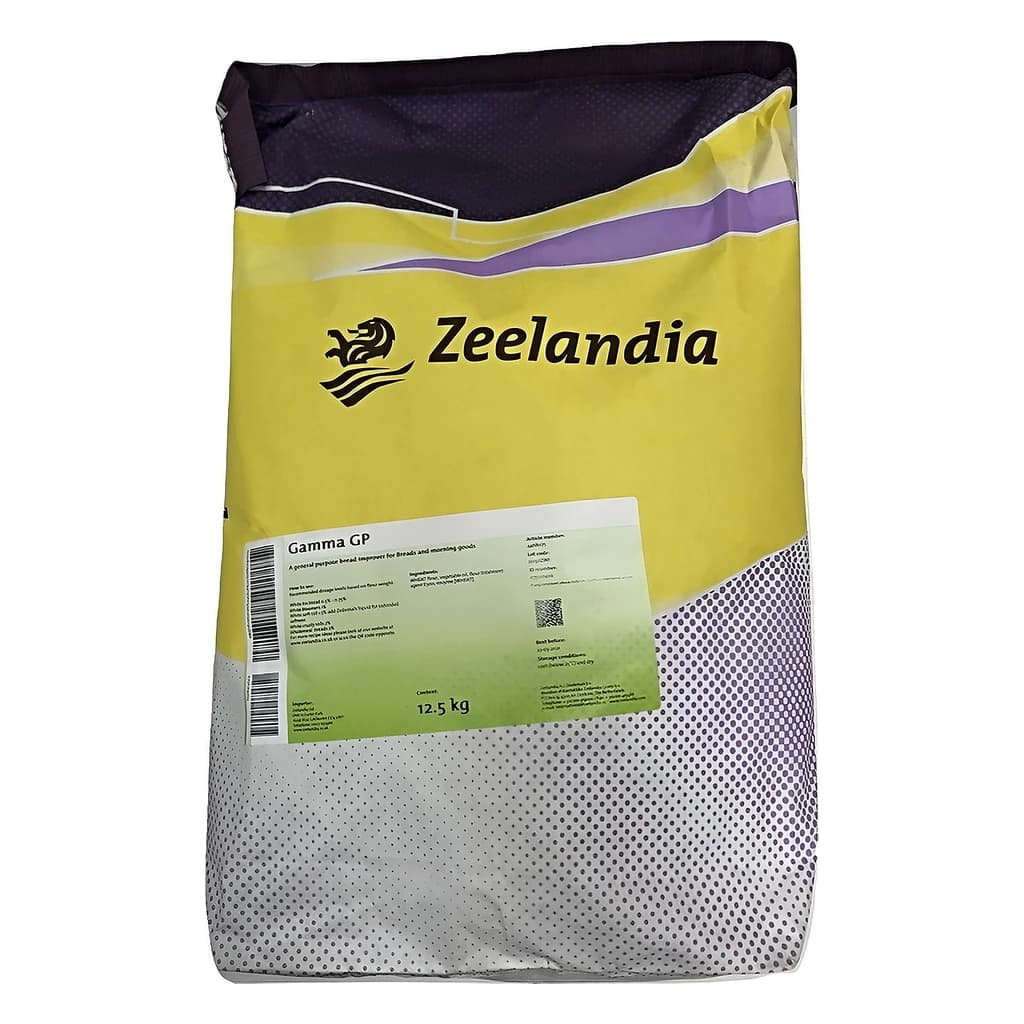
Zeelandia Gamma GP — Minimal, Clean-Label Enzyme Improver
Ingredients: WHEAT flour, vegetable oil (rapeseed), E300, enzyme [WHEAT]. No declared emulsifiers. The enzyme is the sole performance component beyond the oxidant and carrier.
The enzyme source countries — Finland, France, and Denmark — indicate a Nordic/Danish enzyme manufacturer (Novozymes, headquartered in Denmark, is the world's largest baking enzyme producer, though not explicitly confirmed from spec-sheet data). The "[WHEAT]" carrier declaration means the enzyme preparation uses wheat starch — a practice common with xylanases and other baking enzymes produced by solid-state fermentation.
Dosage-response by product:
| Product | Gamma GP dose (% on flour) |
|---|---|
| White tin bread | 0.5–0.75 |
| Bloomers | 1.0 |
| Soft rolls | 1.5 |
| Crusty rolls | 2.0 |
| Wholemeal breads | 2.0 |
The dose escalation with product type reflects the increasing need to manage fibre dilution of gluten (wholemeal) and achieve the crisp crust that requires better oven spring (crusty rolls).
Puratos S500 Sense SG — Premium Multi-Component Improver
Composition: fermented rye flour 50–60%, wheat flour 30–40%, DATEM E472e 10–20%, calcium sulphate E516 <5%, ascorbic acid E300 <1% (tested at 0.67% ±10% per batch), rapeseed oil <1%, enzymes <1%.
At the maximum declared dosage of 3% on flour, the delivered ascorbic acid is: 0.67% × 3% ≈ 0.020% = 200 ppm flour. This cross-checks exactly with the published upper limit cited in BAKERpedia.
The fermented rye flour base provides sourdough character alongside buffering capacity (useful for dough tolerance over a wide proofing time). DATEM strengthens the gluten network; enzymes provide volume and machinability. Suitable for standard white, wholemeal, and mixed-grain breads.
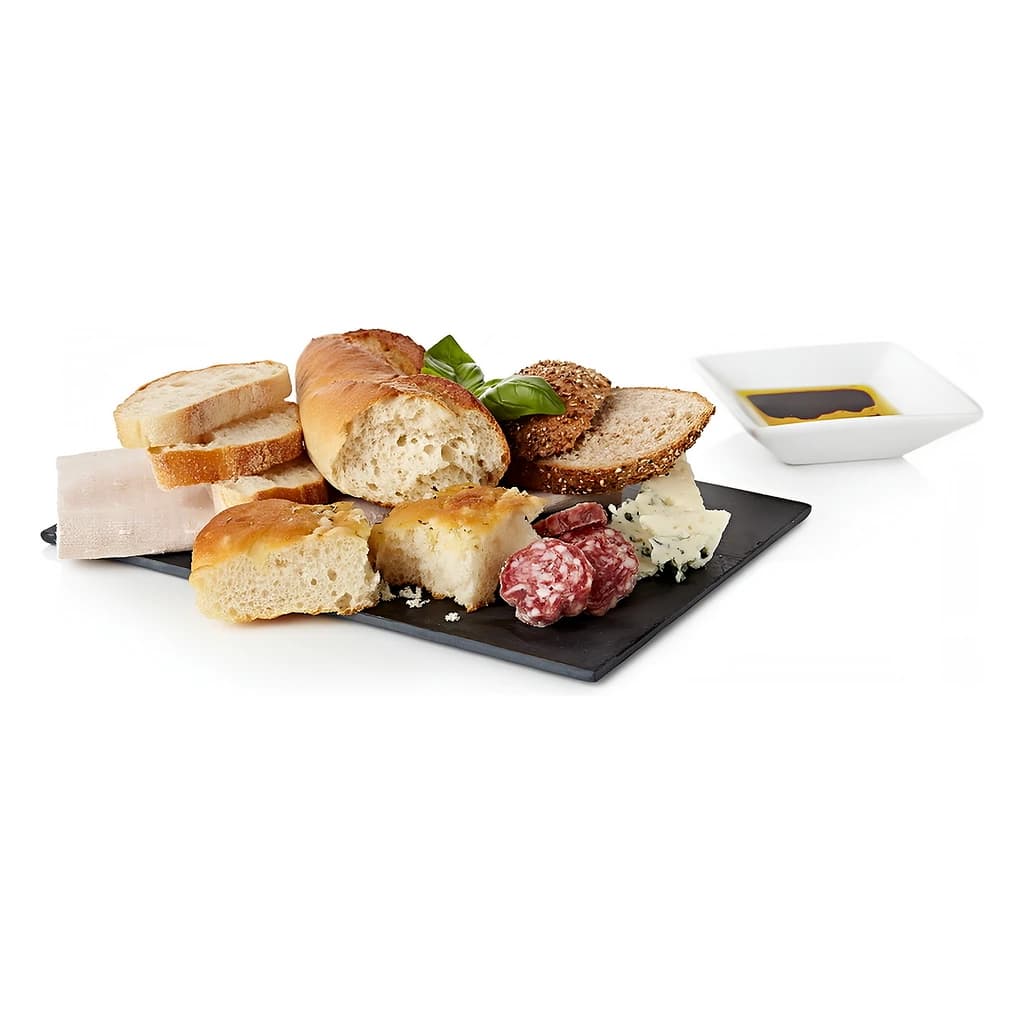
Puratos Tigris SG 2% — High-Sugar-Tolerance Improver
Composition: wheat flour 50–60%, dextrose 20–30%, DATEM E472e 10–20%, E300 tested at 1% ±10% per batch, rapeseed oil <5%, enzymes <1%. At the 2% dosage on flour: delivered E300 = 1% × 2% = 200 ppm flour. The 20–30% dextrose component provides immediate fermentation substrate particularly for enriched doughs with high sugar levels or short fermentation times.
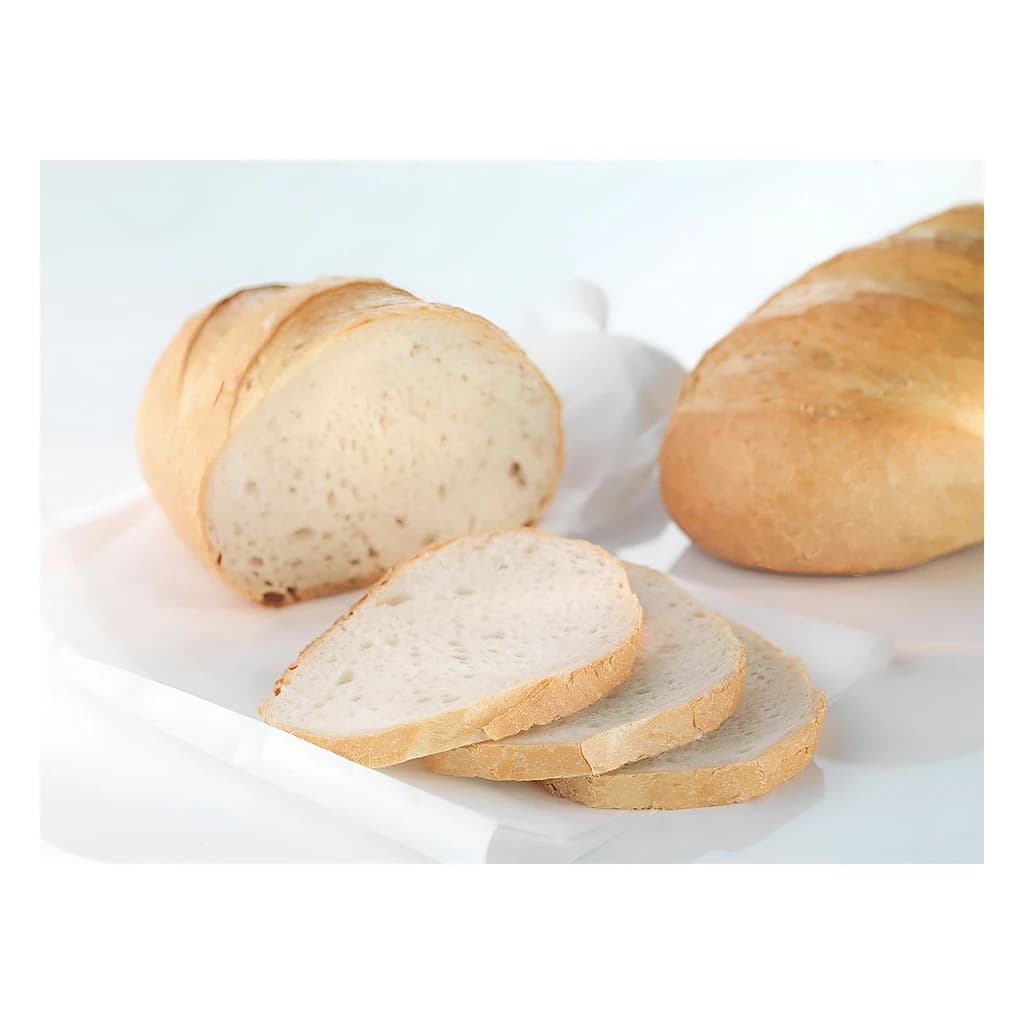
IREKS Voltex — Full-Function Multi-Emulsifier Improver
Descending order: soya flour, E170 (CaCO₃ as acidity buffer and calcium source), DATEM E472e, SSL E481, wheat flour, E300, enzymes. Dosage 1–2% on flour; shelf life 12 months.
The dual emulsifier combination (DATEM for dough strengthening + SSL for crumb softening) combined with soya-flour lipoxygenase and an undisclosed enzyme complement delivers a four-mechanism performance:
- Gluten network reinforcement (DATEM + enzyme + E300)
- Gas-bubble stabilisation (DATEM + soya lipoxygenase)
- Crumb softening (SSL + enzyme)
- Bleaching (soya lipoxygenase)
This is a workhorse improver for standard production where clean-label is not a priority.
IREKS Crumb Softener (Softy) — Targeted Softness
Descending order: wheat flour, SSL E481, CaCO₃ E170i, enzymes, E300. Dosage 1.5% on flour. A lean, targeted formulation for bread and rolls where softness and shelf life are the primary objectives. SSL forms complexes with amylose (starch component) and delays starch retrogradation; the enzyme component almost certainly includes a maltogenic amylase to address the amylopectin retrogradation side. No declared fat or additional emulsifier.
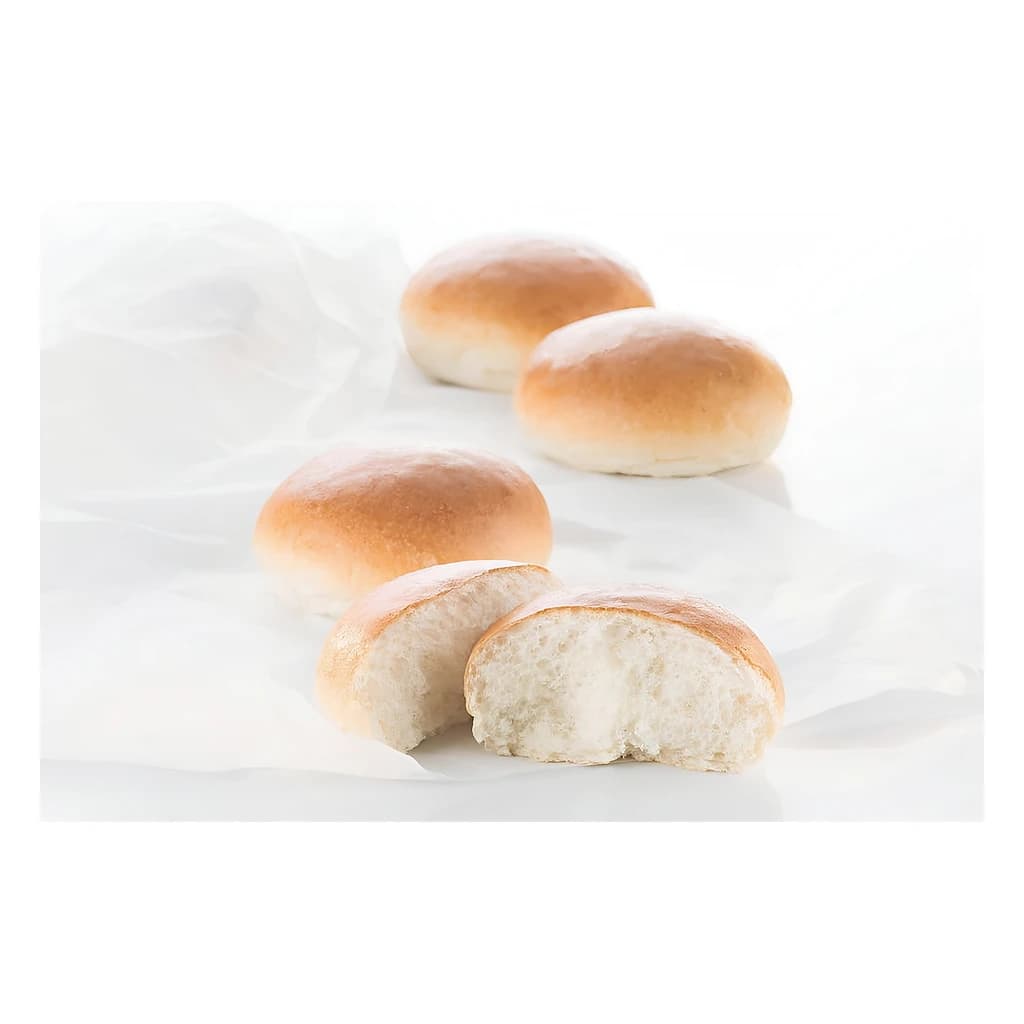
IREKS Soft Roll 7 — High-Dosage Premix-Style Improver
Descending order: dextrose, salt, wheat flour, sugar, SSL E481, mono/diglycerides E471, DATEM E472e, soya flour, whey powder (MILK), rapeseed oil, E300, enzymes. Dosage: 7% on flour.
At 7% usage, this product contributes a substantial amount of sugars (35.8 g/100g, contributing ~2.5 g sugar per 100 g flour at dosage), salt (22.4 g/100g salt, contributing ~1.57 g per 100 g flour at dosage), and fat. It is effectively a combined improver and partial recipe constituent.
Allergen critical note: IREKS Soft Roll 7 contains WHEAT, SOYA, and MILK (whey powder). All three must be declared in the finished product. Bakers producing halal or dairy-free products cannot use this product without substitution.
Zeelandia Optimax Free — Rye-Specialist Improver
Composition: WHEAT gluten 50%, rye flour 39%, potato starch 10%, E300 <1%, enzyme <1% (Netherlands). Recipe: 0.1 kg Optimax Free per 5 kg rye flour + 1 kg wheat flour = ~1.67% on total flour (100 g ÷ 6,000 g total flour).
This is not primarily an enzyme product — it is a structural fortifier (50% VWG) with an enzyme complement. The enzyme addresses the high arabinoxylan content of the rye flour, which otherwise creates a very sticky, extensible dough that is difficult to handle.
Section 8: Vital Wheat Gluten — Complementary Protein Supplement
VWG is a food ingredient (not an enzyme) but is frequently incorporated with enzyme-based improvers to strengthen weak or diluted gluten networks.
Beneo BeneoPro VWG 75 spec:
| Parameter | Value | Method |
|---|---|---|
| Protein (N×5.7) | min 75% DM | ISO 1871 |
| Protein (N×6.25) | min 82% (calculated) | — |
| Moisture | max 8% | ISO 6496 |
| Fat | max 2% | ISO 11085 |
| Ash | max 1% | ISO 2171 |
| Water binding capacity | ~140–170 g/100g | AACC 56-30 |
| Shelf life | 36 months | — |
Protein figure note: BAKERpedia cites VWG protein at approximately 73% (approximately 78% on dry matter basis), using the N×6.25 convention without explicit statement. Beneo's spec uses the N×5.7 conversion (more precise for wheat gluten, accounting for the high arginine content), giving a minimum 75% DM (equivalent to minimum 82% on N×6.25). These figures are compatible — Beneo's premium minimum specification exceeds the generic BAKERpedia figure — but the conversion factor difference should be noted when comparing suppliers.
Dosage note: BAKERpedia states a dosage of 1–4% on flour weight for most yeast-raised doughs, with up to 12% possible in high-fibre breads (single-source; the upper bound of 12% has no second-source confirmation, confidence:low). Practical dosage for most applications falls in the 1–4% range; high-fibre or high-speed industrial applications may use higher levels.
VWG must always be declared as WHEAT gluten in the ingredient list. It is a major allergen and never a processing aid.
See A3-vital-wheat-gluten for detailed dosage guidance, formula examples, and interaction with fibre ingredients.
Section 9: Regulatory and Allergen Notes
Processing Aid Status in EU and UK
Under EU Regulation (EC) No 1332/2008 on food enzymes (retained in UK law post-Brexit), a food enzyme qualifies as a processing aid — and does not require declaration in the finished product — if:
- It is used for a technological purpose during processing, and
- Its residue in the final product has no technological effect
Most baking enzymes meet this criteria:
| Enzyme | Typical inactivation | Processing aid status |
|---|---|---|
| Fungal alpha-amylase | ~70–80 °C | Processing aid — not declared |
| Xylanase | Inactivated during baking | Processing aid — not declared |
| Lipase / phospholipase | Inactivated during baking | Processing aid — not declared |
| Bacterial protease | Inactivated during baking | Processing aid — not declared |
| Glucose oxidase | Inactivated during baking | Processing aid — not declared |
| Maltogenic amylase | Partially thermo-stable | Grey area — may require declaration |
| Transglutaminase | Variable | Consult supplier per application |
Grey area — maltogenic amylase: Because this enzyme may retain activity in the finished loaf, some EU member-state authorities and UK guidance treat it as a food additive rather than a processing aid. Bakers selling bread into multiple markets should obtain a written regulatory opinion from their enzyme supplier for each national market.
Allergen Carriers in Enzyme Preparations
Even when the enzyme protein itself is not allergenic, the commercial enzyme preparation may use an allergenic material as a carrier or substrate.
The most common example in the Domson catalogue: Zeelandia Gamma GP labels its enzyme as "enzyme [WHEAT]" because the enzyme preparation uses wheat starch as a carrier. This wheat-derived carrier may contain residual gluten and must be declared. Bakers must not assume that "processed enzyme" = "gluten-free".
Similarly, Zeelandia Optimax Free uses an enzyme from Netherlands with the full product carrying wheat and rye as declared allergens. Any improver containing enzyme must have its full allergen declaration reviewed before use in formulations for customers with food allergies.
Key E-Numbers Appearing in Enzyme-Containing Improvers
Wholemeal exception (food safety): Under UK/EU food law (retained Regulation (EC) No 1333/2008 Annex II), ascorbic acid (E300) is not permitted in wholemeal flour or wholemeal bread. The 200 ppm figure cited in this article and in spec-sheet calculations applies only to standard (non-wholemeal) flours and breads. Bakers formulating wholemeal products must not add E300 or use an improver containing E300 for those products. Confirm current permitted-additives lists with the FSA (UK) or EFSA (EU) before advising customers.
Full technical detail is in A3-emulsifiers-in-bread and A3-ascorbic-acid-oxidants-reductants.
| E-number | Name | Function | Appears in catalogue products |
|---|---|---|---|
| E300 | Ascorbic acid | Oxidant → gluten strengthening | Gamma GP, Optimax Free, S500 Sense, Tigris SG, Voltex, Softy, Soft Roll 7 |
| E471 | Mono- and diglycerides | Crumb softening, anti-staling | Soft Roll 7 |
| E472e | DATEM | Dough strengthening, volume | S500 Sense, Tigris SG, Voltex, Soft Roll 7 |
| E481 | SSL | Dual: dough strength + crumb softening | Voltex, Softy, Soft Roll 7 |
| E170 / E170i | Calcium carbonate | Acidity buffer, mineral | Voltex, Softy |
| E516 | Calcium sulphate | Yeast nutrient, flour conditioner | S500 Sense |
Section 10: Clean-Label and Enzyme-vs-Emulsifier Trends
The professional baking industry is under consumer pressure to reduce declared E-numbers from ingredient lists. The enzyme route offers a credible technical alternative:
Phospholipase replacing DATEM: in-situ lysophospholipid generation mimics DATEM's dough-strengthening and gas-stabilisation effect without a declared emulsifier.
Glucose oxidase as ascorbic acid supplement: reduces reliance on E300 at high dosage; provides additional disulphide cross-linking.
Maltogenic amylase replacing monoglycerides (E471) for anti-staling: without declaring an emulsifier, the enzyme modifies starch to reduce retrogradation.
Xylanase providing machinability improvements: reduces the need for SSL or emulsifier-based dough conditioners.
The Zeelandia Gamma GP is the most direct example in the catalogue: it contains no declared E-number emulsifiers and achieves dough improvement solely through enzymes plus ascorbic acid.
Lesaffre Baking Center and Sonneveld Group both provide detailed technical comparisons of enzyme vs emulsifier function. The consensus is that a well-designed enzyme combination can replace most emulsifier functions in standard bread, with certain exceptions (high-fat enriched doughs, very high-volume pan breads) where emulsifiers still offer advantages in dough tolerance.
Section 11: Fault-Finding Guide
| Fault observed | Likely enzyme-related cause | Corrective action |
|---|---|---|
| Pale, thin crust; poor colour | Low amylase activity (high HFN flour, no malt or enzyme supplement) | Add fungal alpha-amylase or diastatic malt; confirm HFN test result |
| Sticky, very slack dough; clings to equipment | Xylanase overdose; excess WS-AX | Reduce improver dose; switch to lower-activity xylanase product |
| Crumb firms rapidly after baking (within 24 h) | Insufficient maltogenic amylase / anti-staling enzyme | Increase anti-staling enzyme level; review improver selection |
| Dough tears during moulding / shaping | Excess dough tightness; insufficient xylanase or too little extensibility | Increase xylanase dose or reduce overly high E300 |
| Bread collapses during final proof or oven | Protease overdose — gluten cannot retain gas | Reduce protease dose; validate with small batch trial |
| Gummy, underset crumb | Excess bacterial alpha-amylase (thermo-stable; not inactivated in bake) | Replace with fungal alpha-amylase; check flour HFN for pre-existing excess |
| Low volume in wholemeal / high-fibre loaf | Fibre diluting gluten; insufficient xylanase or VWG | Add 2–4% VWG; review enzyme dose escalation for wholemeal (see Gamma GP dosage table) |
| Unexpected bitterness / off-flavour from enzyme | Protease degrading bitter peptides; excess amylase releasing fermentable sugars to excess | Reduce protease; review amylase level with technical baker |
Coverage Notes
Solid and confirmed (confidence:high):
- Enzyme biochemistry (mechanism, class, substrate) — three independent sources: IREKS Compendium, IntechOpen academic, AB Enzymes
- Ascorbic acid 200 ppm ceiling — two spec sheets cross-checked: S500 Sense (0.67% × 3% = 200 ppm) + Tigris SG 2% (1% × 2% = 200 ppm) + BAKERpedia
- Commercial improver formulations — seven spec sheets read and cited; all allergen declarations checked
- VWG protein spec — Beneo spec sheet (primary source); BAKERpedia as cross-check with noted conversion factor difference
- Maltogenic amylase anti-staling mechanism — two brand sources: Bakels, AB Enzymes
Thin or single-source (confidence:low):
- Fungal alpha-amylase inactivation temperature: IREKS Compendium states 70–80 °C; independent enzyme-supplier and academic sources place practical inactivation at approximately 65–70 °C. Corrected in article to ~65–70 °C with caveat. Confirm with each enzyme supplier's datasheet.
- VWG dosage upper bound 12% in high-fibre breads — BAKERpedia only; no second-source confirmation. Lower bound corrected to 1% (BAKERpedia says "1–4% for most yeast-raised doughs"). Practical range for most applications is 1–4%.
- Xylanase overdose threshold — qualitative only; no confirmed numeric level from two sources
Upgraded to confidence:medium (from confidence:low after second-source found in verification):
- Arabinoxylan content ~2–3% wheat flour — IntechOpen + BAKERpedia independently confirmed "2.0–3.0% of total flour dry weight" (confidence:medium)
Not covered / flagged for follow-up:
- National regulatory enzyme lists (EFSA/FSA processing-aid registers) not directly reviewed; consult current EFSA food enzyme opinions
- Acrylamide benchmark levels under Reg. (EU) 2017/2158 — specific numbers not cited; confirm with current FSA/EFSA guidance
- No Polish, Turkish, or Arabic sources searched; no non-English enzyme compendiums reviewed
- Specific enzyme dosages in FAU/g flour not cited (insufficient two-source confirmation for any numeric range)
- Puratos S500 SG (Kosher) spec read on 2026-06-25 — confirms 200 ppm AA ceiling and processing-aid status; now incorporated in the comparison table above
- Puratos Pronto spec read on 2026-06-25 — CONFIRMED as confectionery emulsifier paste, not a bread improver; removed from this article's product references
Figures
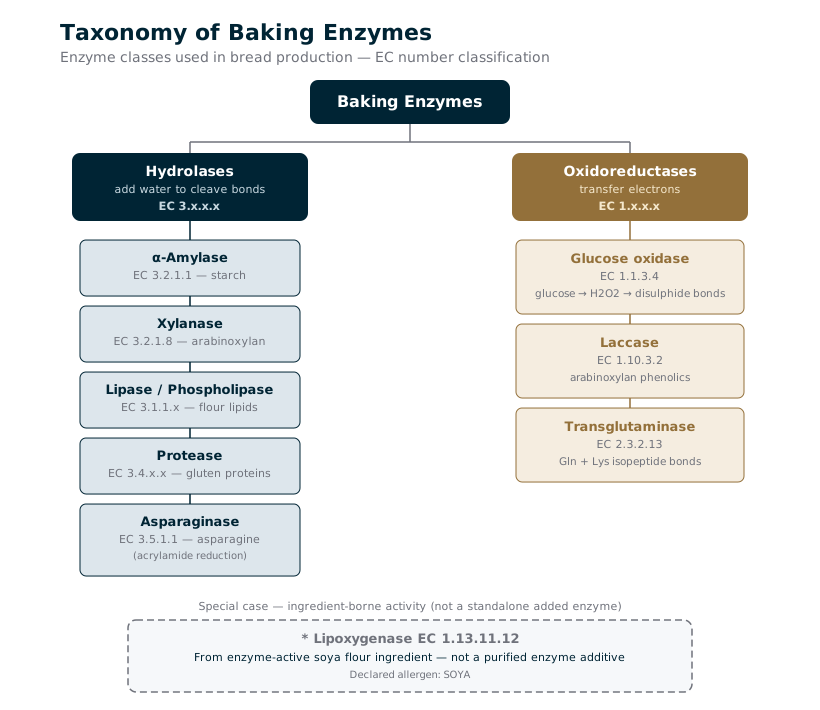 Branching taxonomy diagram showing the two classes of baking enzymes: hydrolases (amylases, xylanase, lipase, protease) on the left and oxidoreductases (glucose oxidase, laccase, transglutaminase) on the right, with EC numbers
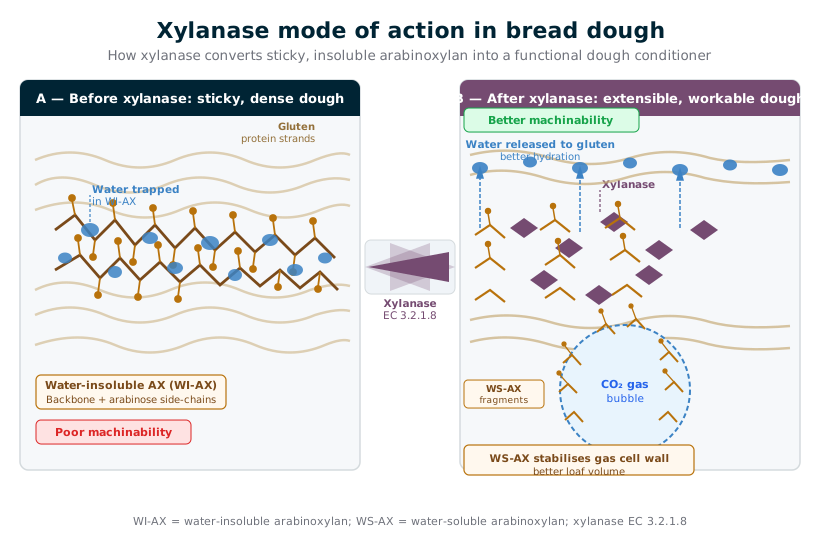 Two-panel technical diagram showing arabinoxylan structure before and after xylanase action: before shows water trapped in insoluble AX tangled with gluten; after shows released water flowing to gluten and short AX fragments stabilising a gas bubble wall
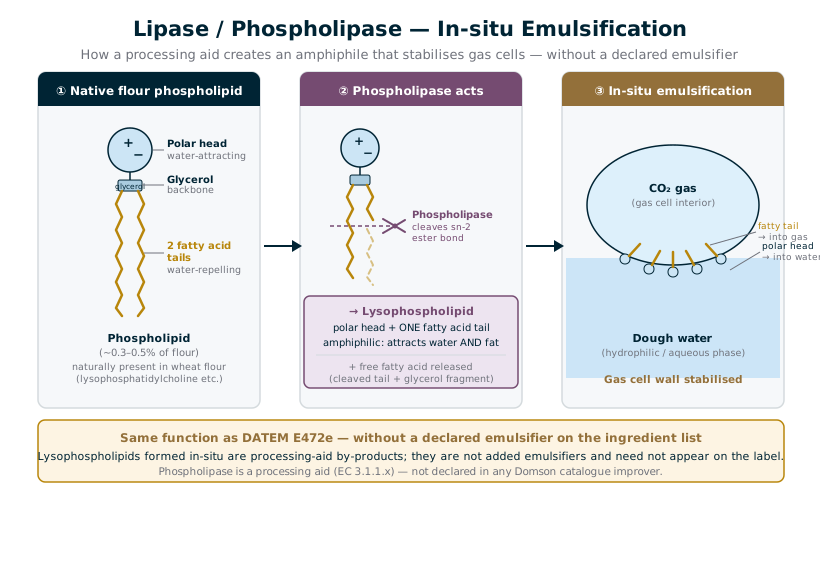 Three-step diagram showing phospholipid hydrolysis by phospholipase into an amphiphilic lysophospholipid, which then aligns at a gas bubble interface to stabilise the gas cell wall in bread dough
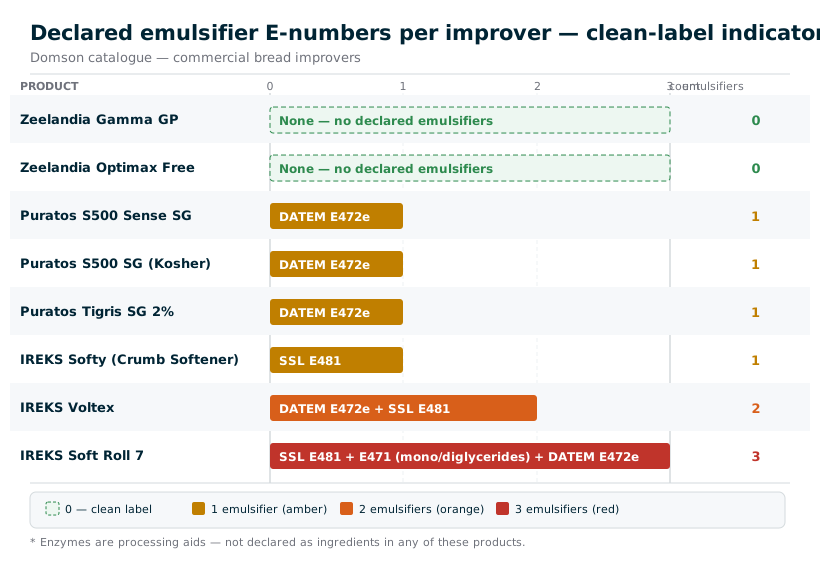 Traffic-light infographic comparing eight commercial bread improvers on number of declared emulsifier E-numbers: Gamma GP and Optimax Free have zero (green), most mid-range products have one (amber), Voltex has two (orange), Soft Roll 7 has three (red)
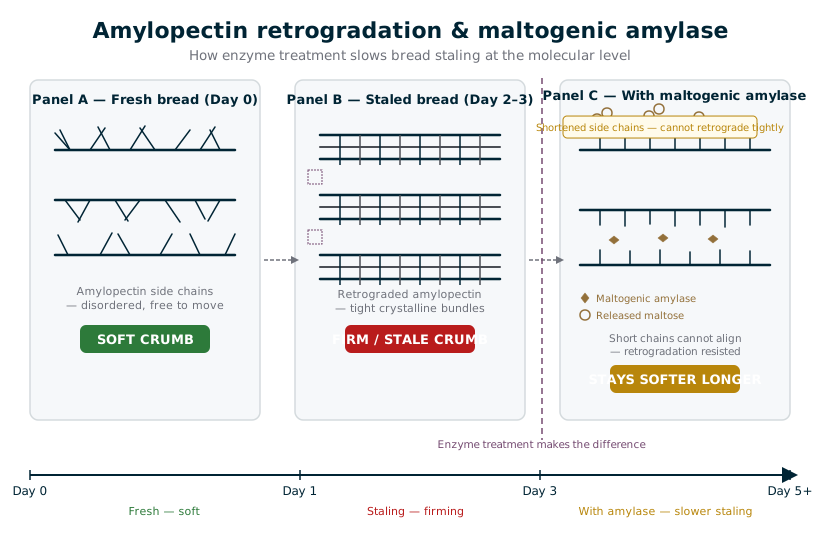 Three-panel molecular schematic comparing fresh bread crumb amylopectin structure with staled retrograded amylopectin and with maltogenic amylase-treated truncated amylopectin that resists retrogradation
Zeelandia Gamma GP — dosage guide by bread type
Dosage recommendations extracted directly from Zeelandia Gamma GP product information sheet (Zeelandia Ltd UK). All doses expressed as percentage of total flour weight. The dose escalation pattern reflects increasing need for xylanase action (WI-AX management) with fibre content, and increasing need for oven-spring improvement in crusty applications. Gamma GP contains no declared emulsifiers (enzyme + E300 only) — making it the most enzyme-pure improver in the Domson catalogue.
| White tin bread | 0.5–0.75 — Minimal intervention; standard white flour; low fibre content |
| Bloomers | 1.0 — Soft crust, good volume; intermediate dose |
| Soft rolls | 1.5 — Good crumb softness and shelf life targeted; higher xylanase activity needed for even crumb |
| Crusty rolls | 2.0 — Maximum dose; crust crispness requires optimum oven spring — enzyme combination at full effect |
| Wholemeal breads | 2.0 — Maximum dose; fibre dilutes gluten network; xylanase manages high-AX wholemeal flour; consider adding 2–4% VWG for volume |
Beneo BeneoPro VWG 75 — key specification (first-party spec sheet)
Data extracted from the Beneo product sheet for BeneoPro VWG 75 Food. Protein is expressed using BOTH the N×5.7 conversion (more precise for wheat gluten — accounts for high arginine content) and N×6.25 (standard food-industry convention). These are the same analytical measurement expressed with different conversion factors — they are compatible, not conflicting. BAKERpedia cites '70–80%' using N×6.25 without stating the conversion factor; the Beneo spec's 'min 75% DM (N×5.7)' is equivalent to 'min 82% DM (N×6.25)' and reflects higher quality than the generic BAKERpedia range.
| Protein (N×5.7, wheat-gluten specific) | min 75% DM — ISO 1871 |
| Protein (N×6.25, food industry standard, calculated) | min 82% DM — Derived: 75% × (6.25 ÷ 5.7) = 82.2% |
| Moisture | max 8% — ISO 6496 |
| Fat | max 2% — ISO 11085 |
| Ash | max 1% — ISO 2171 |
| Water binding capacity | approximately 140–170 g water per 100 g VWG — AACC 56-30 |
| Shelf life | 36 months from production date — spec sheet |
| Storage conditions | <20 °C, <60% RH — spec sheet |
| Origin | Not from GM wheat; aqueous extraction from milled wheat, then dried — spec sheet |
| Certifications | Kosher and Halal certified; vegan/vegetarian — spec sheet |
| Allergen declaration (mandatory) | WHEAT GLUTEN — must be declared on finished product label — spec sheet |
Cereform Breadsoy PP 32s MB — key specification (enzyme-active soya flour)
Data extracted from Cereform (AB Mauri / Pinnacle) product specification for enzyme-active full-fat soya flour. This is a food ingredient (not a processing aid) that retains native lipoxygenase activity for bleaching and gluten-strengthening. Must be declared as SOYA on finished product label.
| Protein | 35.2 g/100g |
| Fat | 17.4 g/100g (PUFA 10.99g; MUFA 2.92g; saturates 2.67g) |
| Dietary fibre | 15.3 g/100g |
| Moisture | 6–11% |
| Shelf life | 270 days from production at 10–25 °C, dry storage |
| Origin | 100% full-fat enzyme-active soya flour from non-GM identity-preserved (IP) Canadian and UK beans |
| Certifications | Kosher (London Beth Din); Halal (HFA) |
| Allergen declaration (mandatory) | SOYA — must be declared on finished product label; gluten cross-contamination cannot be excluded on manufacturing site |
Overview of the principal enzyme classes used in professional bread production. EC numbers, substrate, and primary dough effect are from three independent biochemistry references (IREKS Compendium, IntechOpen academic review, AB Enzymes ). Inactivation temperatures are single-source (IREKS Compendium ) and product-specific — treat as indicative only and confirm with each enzyme supplier's datasheet. Processing-aid status applies under EU Regulation (EC) No 1332/2008 and retained UK law post-Brexit.
| Enzyme (common name) | EC number | Biochemical class | Substrate in dough | Primary effect | Inactivated during baking? | Processing-aid status (EU/UK) | Confidence (mechanism) | Notes |
|---|---|---|---|---|---|---|---|---|
| Fungal alpha-amylase | 3.2.1.1 | Hydrolase | Gelatinised starch — internal 1→4 glycosidic bonds (endo-cleavage) | Releases maltose/glucose → yeast fermentation feed; Maillard crust browning; transient viscosity reduction → improved oven spring | Yes — approximately 65–70 °C (indicative; IREKS Compendium states 70–80 °C but independent enzyme-supplier and academic sources indicate near-complete inactivation at 65–70 °C; bread-matrix conditions may extend this slightly — confirm with each enzyme supplier's datasheet) | Processing aid — not declared on finished product label | high (mechanism); low (temperature figure) | |
| Maltogenic amylase (thermostable) | 3.2.1.133 | Hydrolase | Non-reducing ends of amylopectin side chains (exo-cleavage releasing maltose) | Anti-staling: truncates amylopectin side chains before retrogradation → crumb stays softer for longer | Partially — retains activity in finished crumb (thermo-stable enzyme) | GREY AREA — may require declaration as a food additive in some EU member states and UK applications; consult enzyme supplier for market-specific regulatory opinion | high (mechanism); high (regulatory grey-area warning) | |
| Beta-amylase | 3.2.1.2 | Hydrolase | Non-reducing ends of starch chains (exo-cleavage producing maltose) | Releases maltose; naturally present in wheat flour at adequate levels; not commonly added as a standalone exogenous enzyme; supplied by diastatic malt preparations | Yes | Processing aid | high | |
| Endo-xylanase (pentosanase) | 3.2.1.8 | Hydrolase | Arabinoxylan (AX) backbone — cleaves internal xylose-xylose bonds; converts WI-AX to WS-AX | Releases bound water from insoluble AX → gluten hydrates better, dough more extensible and less sticky; WS-AX fragments stabilise gas-cell walls → improved volume and machinability | Yes | Processing aid — not declared | high | Excess WS-AX → very slack, sticky dough; collapsed structure |
| Lipase / phospholipase | 3.1.1.3 / 3.1.1.4–5 | Hydrolase | Triglycerides (~1–2% total flour lipid ) and phospholipids (~0.3–0.5% flour ) in native flour lipid fraction | Generates lysophospholipids and monoacylglycerols (in-situ emulsifiers) → stabilises gas-cell walls; strengthens gluten-starch interface; clean-label DATEM/SSL replacement | Yes | Processing aid — not declared | high | |
| Bacterial protease | 3.4.x.x | Hydrolase | Gluten proteins (gliadin and glutenin peptide bonds) | Increases dough extensibility; reduces mixing time; corrects over-strong flour; aids sheeting of pizza, pita, flatbreads | Yes | Processing aid — not declared | high | Irreversible gluten degradation → collapsed loaves; validate dose carefully |
| Glucose oxidase (GOX) | 1.1.3.4 | Oxidoreductase | β-D-glucose → gluconolactone + H₂O₂ | H₂O₂ oxidises free –SH groups on gluten proteins → disulphide (–S–S–) cross-links → tighter gluten → better gas retention and volume; ascorbic acid supplement or replacement in clean-label formulations | Yes (glucose depleted and enzyme denatured by baking) | Processing aid — not declared | high | |
| Laccase | 1.10.3.2 | Oxidoreductase | Phenolic substituents on arabinoxylan chains | Cross-links AX network → stiffer dough matrix → improved gas retention in whole-grain, rye, and high-fibre formulations; less common in standard white bread | Yes | Processing aid — not declared | medium (fewer independent commercial sources than amylase/xylanase) | |
| Transglutaminase | 2.3.2.13 | Transferase (also classified with oxidoreductases in some systems) | Glutamine (Gln) and lysine (Lys) residues in gluten proteins | Forms covalent isopeptide bonds → very strong non-disulphide cross-links → high gas retention; used in specialty protein-enriched breads | Variable — confirm inactivation with supplier for specific application | Processing aid under EU/UK — not declared; cross-links may reduce protein digestibility (active research area — see food safety flag) | medium | |
| Asparaginase | 3.5.1.1 | Hydrolase | Free asparagine → aspartic acid (deamidation) | Reduces substrate pool for acrylamide formation during high-temperature baking; relevant for biscuits, crackers, crispbreads baked above 160 °C; not typically required in standard pan bread | Yes | Processing aid — not declared | medium | Acrylamide = IARC Group 2A probable carcinogen; EU Reg 2017/2158 sets benchmark levels. Consult regulatory adviser for cracker/crispbread lines. |
| Lipoxygenase (from enzyme-active soya flour) | 1.13.11.12 | Oxidoreductase | Linoleic acid (PUFA in flour) → hydroperoxides | Bleaches carotenoid pigments → whiter crumb; contributes indirectly to gluten strengthening via oxidative side reactions; classic component of Chorleywood Bread Process | Yes | NOT a processing aid — enzyme-active soya flour is a food ingredient; must be declared as SOYA on finished product label | high | Cereform Breadsoy PP 32s MB is the catalogue's enzyme-active soya flour. Kosher (London Beth Din) and Halal (HFA) certified. |
Formulation data extracted directly from first-party spec sheets for bread improvers in the Domson catalogue. Ingredient order is descending by mass as declared on the spec. Enzymes are listed generically as 'enzymes' or 'enzyme [WHEAT]' — manufacturers are not required to name specific enzyme types when they are processing aids. The 200 ppm ascorbic acid ceiling cross-checked via three independent spec-sheet calculations (S500 Sense, Tigris SG 2%, S500 SG Kosher) and BAKERpedia. Note: The 'Intenso Extra Bread Improver' spec file was found to contain a different product (Zeelandia chocolate cake mix) and has been excluded from this comparison. Puratos Pronto was confirmed to be a confectionery emulsifier paste (for sponge cake/roulade/babka) — it is NOT a bread improver and has been removed from this article.
| Product | SKU | Dosage (% flour) | Enzymes declared? | Enzyme allergen carrier | Emulsifiers | E300 (ascorbic acid) | Allergens (contains) | Clean-label? | Shelf life | Key notes |
|---|---|---|---|---|---|---|---|---|---|---|
| Zeelandia Gamma GP Bread Improver 12.5 kg | 0.5–2.0% (product-type dependent — see formula card) | Yes — 'enzyme [WHEAT]' | WHEAT (allergen declared) | None declared | Yes (E300 listed in ingredients) | WHEAT | Yes — no declared emulsifier E-numbers; most enzyme-pure product in catalogue | 12 months | Enzyme origin: Finland, France, Denmark; [WHEAT] carrier means wheat starch used in enzyme preparation; simple 4-ingredient formula: wheat flour, rapeseed oil, E300, enzyme [WHEAT] | |
| Puratos S500 Sense SG Bread Improver 12.5 kg | Up to 3% on flour | Yes — enzymes <1% from microorganisms (Belgium) | Not specified; enzymes derived from GM organism (no GM labelling required as per spec) | DATEM E472e (10–20% of product; RSPO mass-balance certified) | Yes — 0.67% ±10% per batch (iodometric titration); at max 3% dose = 200 ppm flour | WHEAT (gluten) | No (DATEM E472e declared) | 9 months | Fermented rye flour base (50–60%) provides sourdough character and dough buffering; premium all-purpose improver; kosher; vegan | |
| Puratos S500 SG Bread Improver 12.5 kg (Kosher) | Up to 2% on flour | Yes — present as processing aid; explicitly NOT listed on ingredient declaration per spec ('enzymes not declared') | Not specified | DATEM E472e | Yes — 0.9–1.1% (iodometric titration per spec); at max 2% dose ≈ 200 ppm flour | WHEAT | No (DATEM E472e declared) | Not stated in spec pages reviewed | Simpler formula than S500 Sense — no fermented rye flour; RSPO segregated certified; spec explicitly states 'enzymes not declared' — confirms processing-aid principle; third independent confirmation of 200 ppm AA ceiling | |
| Puratos Tigris SG 2% Bread Improver 16 kg | 2% on flour (fixed) | Yes — enzymes <1% from microorganisms (Belgium) | Not specified | DATEM E472e (10–20% of product; RSPO segregated certified) | Yes — 1.0% ±10% per batch; at 2% dose = 200 ppm flour | WHEAT (gluten) | No (DATEM E472e declared) | 9 months | Dextrose 20–30% of formula provides rapid fermentation feed — for yeast-raised goods with short or no bulk fermentation time; fixed 2% dosage simplifies production weighing | |
| IREKS Voltex Multipurpose Bread Improver 25 kg | 1–2% on flour | Yes — listed last in ingredient list | Not specified | DATEM E472e + SSL E481 (dual emulsifier system) | Yes (E300 listed 6th of 7 ingredients) | WHEAT, SOYA | No (two declared emulsifiers) | 12 months | Soya flour is the primary ingredient by mass — provides lipoxygenase bleaching and protein; four-mechanism action: DATEM + SSL + soya lipoxygenase + enzyme + E300; full-function workhorse improver; not suitable for soya-free formulations | |
| IREKS Softy (Crumb Softener) 25 kg | 1.5% on flour | Yes — 4th ingredient (after wheat flour, SSL, CaCO₃) | Not specified | SSL E481 only | Yes (E300 listed 5th/last) | WHEAT | No (SSL E481 declared) | 12 months | Targeted anti-staling and crumb-softness improver; lean 5-ingredient formula; enzyme component almost certainly includes maltogenic amylase based on targeted softness application; no DATEM | |
| IREKS Soft Roll 7 Bread Improver 25 kg | 7% on flour | Yes — listed last (12th) in ingredient list | Not specified | SSL E481 + mono/diglycerides E471 + DATEM E472e (triple emulsifier system) | Yes (listed 11th of 12 ingredients) | WHEAT, SOYA, MILK (whey powder) | No (three declared emulsifiers + dairy allergen) | 9 months | Premix-style improver — at 7% dose contributes ~2.5g sugars and ~1.57g salt per 100g flour; UNSUITABLE for halal or dairy-free formulations (milk); check salt contribution against product salt-reduction targets | |
| Zeelandia Optimax Free Bread Improver 20 kg | 100g per 6 kg total flour = ~1.67% on total flour (100 g ÷ 6,000 g); equivalent to ~2% on rye flour alone (100 g ÷ 5,000 g rye) | Yes — enzyme <1% from Netherlands | WHEAT (full product allergen: wheat AND rye declared) | None declared | Yes (E300, <1%, maize-derived origin) | WHEAT, RYE | Yes — no declared emulsifier E-numbers; clean-label rye-bread specialist | 180 days | Structural improver for rye bread, not general-purpose; 50% vital wheat gluten compensates weak rye gluten; 39% rye flour; enzyme almost certainly includes xylanase for AX management in rye; recipe uses 5 kg rye + 1 kg wheat flour |
Practical fault-finding guide for enzyme-related issues in professional bread production. Sources: AB Enzymes, IREKS Compendium, BAKERpedia, AHDB, and first-party spec sheet analysis from this dossier. Note: protease overdose and excess thermo-stable bacterial amylase are effectively irreversible in a given dough batch — prevention via small-scale trials is critical before process changes.
| Fault observed | Likely enzyme-related cause | Diagnostic check | Corrective action | Risk level |
|---|---|---|---|---|
| Pale, thin crust; poor Maillard colour; bland flavour | Insufficient amylase activity — inadequate reducing sugars for Maillard reaction. Typical with high-HFN flour (>350 s) or no malt/enzyme supplement in lean dough. | Run Hagberg Falling Number (HFN) test on current flour batch. HFN >350 s confirms low amylase. Compare with previous flour batch. | Add fungal alpha-amylase via improver or diastatic malt; adjust dose to target effective HFN equivalent 220–350 s range; confirm with bake trial before scaling up. | low |
| Sticky, very slack dough; clings to machinery; difficult to divide or mould | Xylanase overdose — excess water-soluble arabinoxylan (WS-AX) makes dough water-saturated and structurally weak. May also indicate flour with naturally very high AX content (e.g. rye-wheat blend where improver dose was set for white flour). | Check current improver dose against spec-sheet recommendation for product type. Has flour batch, blend ratio, or extraction rate changed since dose was set? | Reduce improver dose by 20–25% and trial-bake; consider switching to lower-activity xylanase product for the current flour; run incremental dose trials whenever flour source changes. | medium |
| Crumb firms rapidly — bread stales within 24–48 h of baking; brick-like texture | Insufficient maltogenic amylase or anti-staling enzyme; rapid amylopectin retrogradation; may also occur with insufficient monoglyceride (E471) if that was removed in a clean-label reformulation without enzyme replacement. | Is product specification calling for multi-day shelf life? Does current improver contain anti-staling enzyme? Was a recent formulation change made (e.g. removing E471)? | Switch to or supplement with an improver containing maltogenic amylase (e.g. IREKS Softy/Crumb Softener at 1.5% ); review whether SSL or monoglyceride levels are adequate alongside enzyme. | low |
| Dough tears or splits during moulding or sheeting; excessively tight and elastic | Insufficient extensibility; too little xylanase or dough-relaxing enzyme activity; alternatively, over-oxidation from excessive E300 or GOX suppressing extensibility too far. | Check mixing time and intermediate proof time; review E300 level in improver formula; measure dough temperature (over-cold dough behaves similarly — rule out before changing enzyme dose). | Increase xylanase dose incrementally (small-batch trial first); consider adding low-level protease if flour protein is very high; reduce E300 if already at specification maximum; extend intermediate proof time. | low |
| Bread collapses in final proof or in oven — extreme flat loaf; dense, gummy crumb | Protease overdose — gluten network degraded beyond recovery; cannot retain CO₂ gas. May occur after formula change, new flour batch with lower protein, or protease enzyme activity above specification. | Has protease or a protease-containing improver been recently introduced or dose increased? Is flour protein significantly lower than batch previously used? Check mixer time and temperature (warm dough accelerates protease). | BATCH IS LOST — protease damage is irreversible. Reduce protease dose immediately. Run small-batch validation bakes with 50% dose reduction before resuming production. Consider switching to protease-free improver for this flour specification. | high |
| Gummy, unset crumb after baking; bread collapses on cooling; wet and sticky crumb throughout | Excess thermo-stable (bacterial) alpha-amylase — starch cannot gel properly because amylase continues to degrade the gelatinising starch through baking and initial cooling; crumb remains gummy. | Check flour HFN — HFN <200 s indicates weather-damaged/sprouted grain with excess native amylase. Also verify whether bacterial rather than fungal amylase was used in improver or malt product. | Do not supplement amylase on low-HFN flour. Blend with confirmed high-HFN flour to raise blended HFN above 220 s. Ensure any added amylase is fungal origin (inactivated ~70–80 °C), not bacterial (survives bread temperatures). Bacterial amylase in standard bread is strongly discouraged. | high |
| Low volume in wholemeal or high-fibre bread; dense crumb | Fibre diluting and physically disrupting gluten network; high arabinoxylan content of wholemeal flour requires more xylanase activity; gluten content insufficient to hold gas at high fibre levels. | Compare loaf volume of wholemeal vs equivalent white formula at same improver dose. Is improver dose still at the recommended level for wholemeal (e.g. Gamma GP 2% )? | Increase xylanase-containing improver dose to maximum recommended for wholemeal; add 2–4% vital wheat gluten (e.g. Beneo BeneoPro VWG 75 ); ensure adequate mixing and development time for high-fibre dough. | low |
| Unexpected bitterness or off-flavour in crumb | Protease over-activity releasing bitter peptide fractions from gluten degradation; or excess amylase producing very high levels of fermentable sugars that over-ferment, generating off-flavour volatile compounds. | Does bitterness appear in the crumb specifically (protease) or as a general off-note throughout (amylase/fermentation)? Reduce improver dose 20% in small-batch trial and compare sensory result. | Reduce protease-containing component; check amylase dose is within the recommended range for the measured HFN level of the flour; reduce bulk fermentation time or temperature if over-fermentation is suspected. | medium |
- Label:
- Maximum practical ascorbic acid dose via commercial bread improvers
- Value:
- ~200 ppm flour weight (= 0.020% on flour)
- Confidence:
- high
- Notes:
- Cross-checked via three independent spec-sheet back-calculations: (1) S500 Sense SG: 0.67% AA × 3% dose = 201 ppm; (2) Tigris SG 2%: 1.0% AA × 2% dose = 200 ppm; (3) S500 SG Kosher: ~1.0% avg AA × 2% dose = 200 ppm; (4) BAKERpedia confirms the EU/UK limit is also 200 ppm for most breads and flours ('permitted in all flour and breads except wholemeal to a maximum of 200 ppm'). Food safety — wholemeal exception: E300 is NOT permitted in wholemeal flour or wholemeal bread under retained UK/EU Regulation (EC) No 1333/2008. Bakers formulating wholemeal products must not add E300 or use an E300-containing improver for those products. Confirm current permitted additives lists with FSA (UK) or EFSA (EU) before advising customers on regulatory compliance.
- Food safety flag:
- true
- Label:
- Beneo BeneoPro VWG 75 — protein (N×5.7, wheat-gluten specific)
- Value:
- min 75% DM
- Confidence:
- high
- Label:
- Beneo BeneoPro VWG 75 — protein (N×6.25, calculated from N×5.7)
- Value:
- min 82% DM
- Confidence:
- high
- Notes:
- More accurate than BAKERpedia's '70–80%' (single-source, generic). The two values are not contradictory — they reflect different conversion factors.
- Label:
- Vital wheat gluten dosage range
- Value:
- 1–4% flour weight for most yeast-raised doughs; up to 12% in high-fibre breads (single-source, confidence:low for upper bound)
- Confidence:
- low
- Notes:
- BAKERpedia states '1.0 to 4.0% for most yeast-raised doughs; up to 12.0% in high-fibre breads'. Lower bound is 1%, not 2% — a previous error stated 2–12%. Upper bound of 12% has no second-source confirmation; practical range is 1–4% for standard applications.
- Label:
- Arabinoxylan (AX) content of wheat flour
- Value:
- ~2–3% of flour dry weight
- Confidence:
- medium
- Notes:
- Confirmed by two independent sources: IntechOpen academic review and BAKERpedia (Arabinoxylans page), which independently states '2.0–3.0% of total flour dry weight, yet hold 25.0% of the water of bread dough'. Rye flour has substantially higher AX content. Upgraded from confidence:low to confidence:medium after second-source confirmation.
- Label:
- Phospholipid fraction of wheat flour (context for lipase efficacy)
- Value:
- ~0.3–0.5% of flour weight
- Confidence:
- low
- Notes:
- Single academic source (IntechOpen ). Despite the small fraction, phospholipids are disproportionately important for bread structure because they concentrate at the lipid/protein interface.
- Label:
- Puratos Pronto — classification correction
- Value:
- Confectionery emulsifier paste — NOT a bread improver
- Confidence:
- high
- Notes:
- Upon reading the spec sheet, Puratos Pronto is described as an emulsifier paste for confectionery (sponge cake, roulade, babka). Ingredients: sorbitol syrup E420ii, propylene glycol E1520, water, mono/diglycerides E471, polyglyceryl esters E475. No allergens. Dosage 0.5–3% of batter weight. This product has been removed from this article's product list and should be classified under A6-Confectionery & Pastry Technology.
Buy the ingredients
Catalogue products and brands referenced in this article.
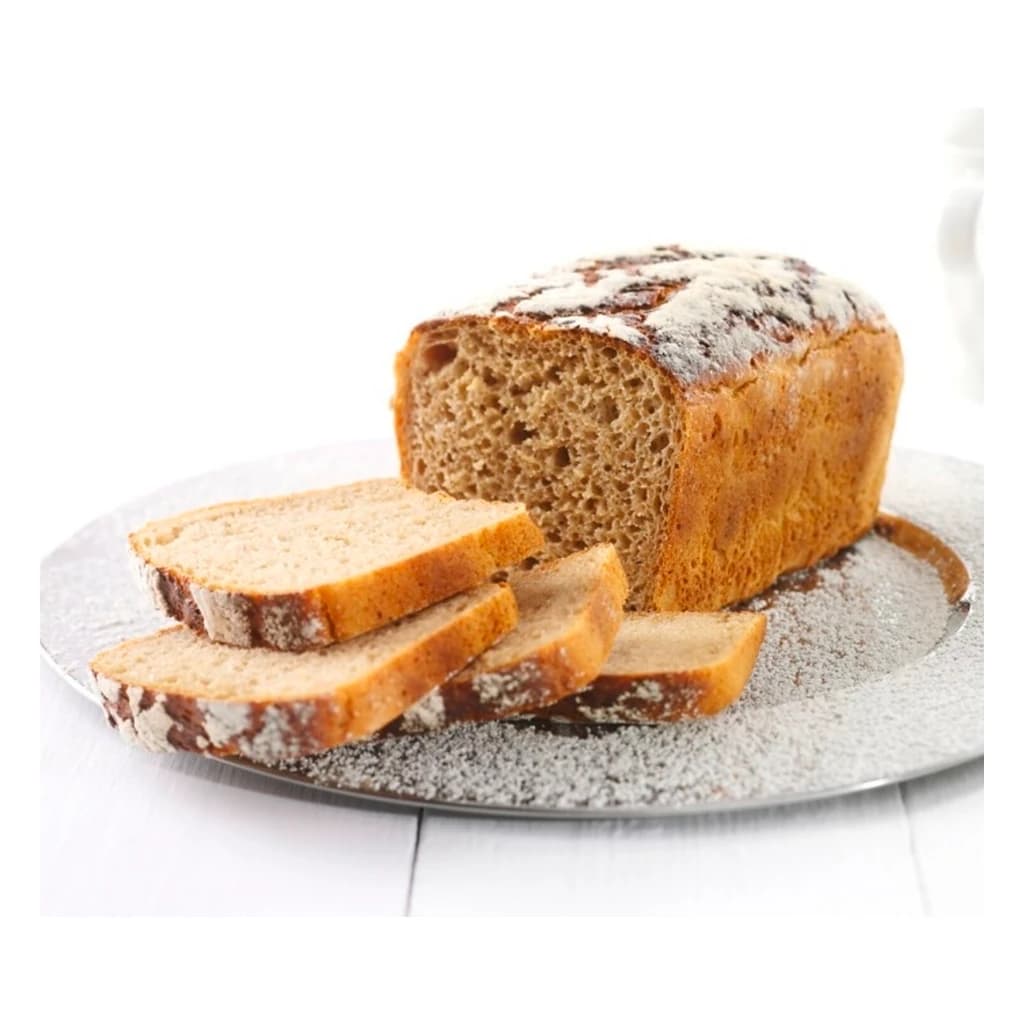
Optimax Free Bread Improver 20 kg
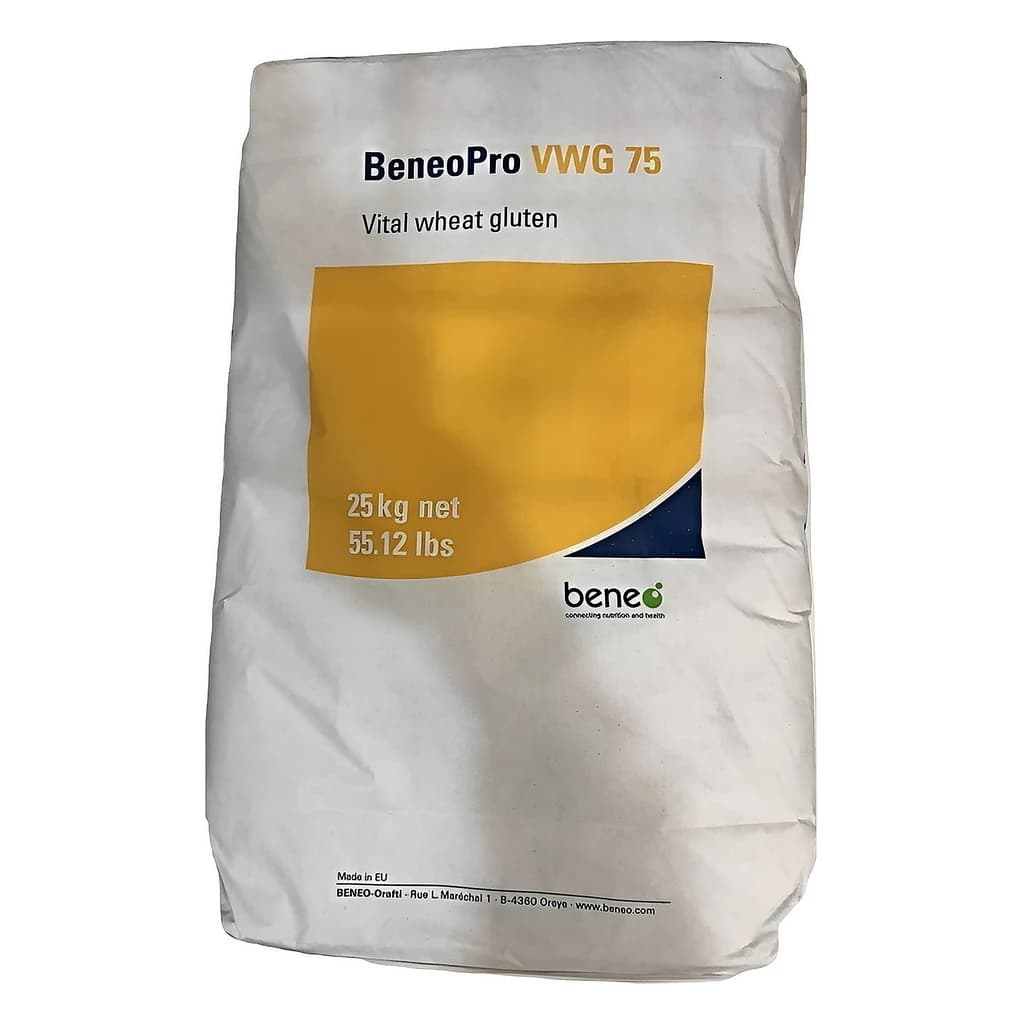
Beneo BeneoPro VWG 75 Vital Wheat Gluten 25 kg
Zeelandia Gamma GP Bread Improver 12.5 kg
IREKS Soft Roll 7 Bread Improver 25 kg
IREKS Voltex Multipurpose Bread Improver 25 kg
Puratos Tigris SG 2% Bread Improver 16 kg
IREKS Crumb Softener 25 kg
Puratos S500 Sense SG Bread Improver 12.5 kg
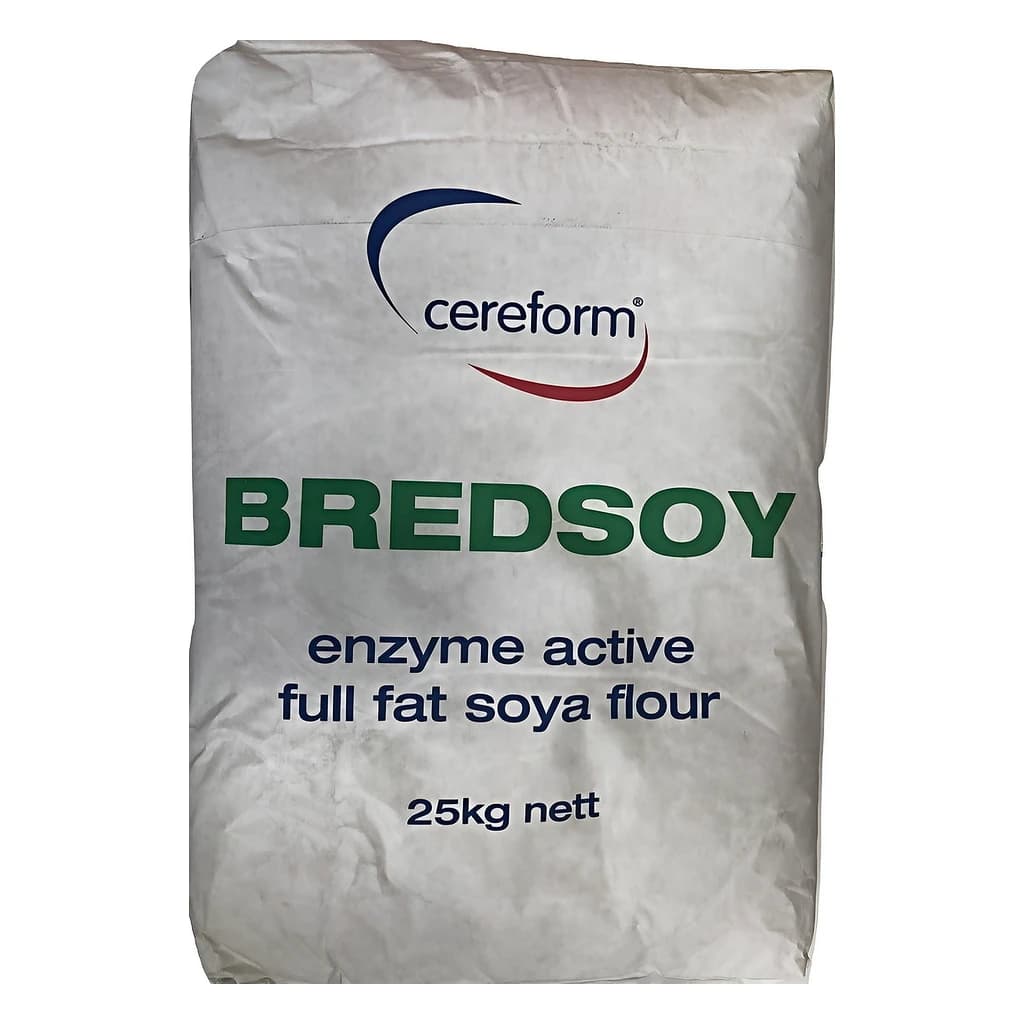
Cereform Breadsoy Enzyme-Active Full-Fat Soya Flour 25 kg

Puratos S500 SG Bread Improver 12.5 kg (Kosher)