
Oxidants and reductants in dough: ascorbic acid (E300), L-cysteine (E920), glucose oxidase and potassium bromate alternatives
A practical deep-dive for professional bakers covering every major dough oxidant and reductant: ascorbic acid (E300), glucose oxidase (GOX), enzyme-active soya flour, L-cysteine (E920), and inactive yeast/glutathione. Explains why potassium bromate is banned in the EU and UK and how its alternatives work. Grounded in first-party spec sheets from eight Domson catalogue products (Puratos, IREKS, Zeelandia, Beneo, Cereform) and cross-checked against BAKERpedia, the IREKS Compendium, IntechOpen academic sources, and EU/UK regulatory instruments. Includes a full comparison table of six bread improvers, emulsifier profiles, fault-diagnosis table, and three formula cards.
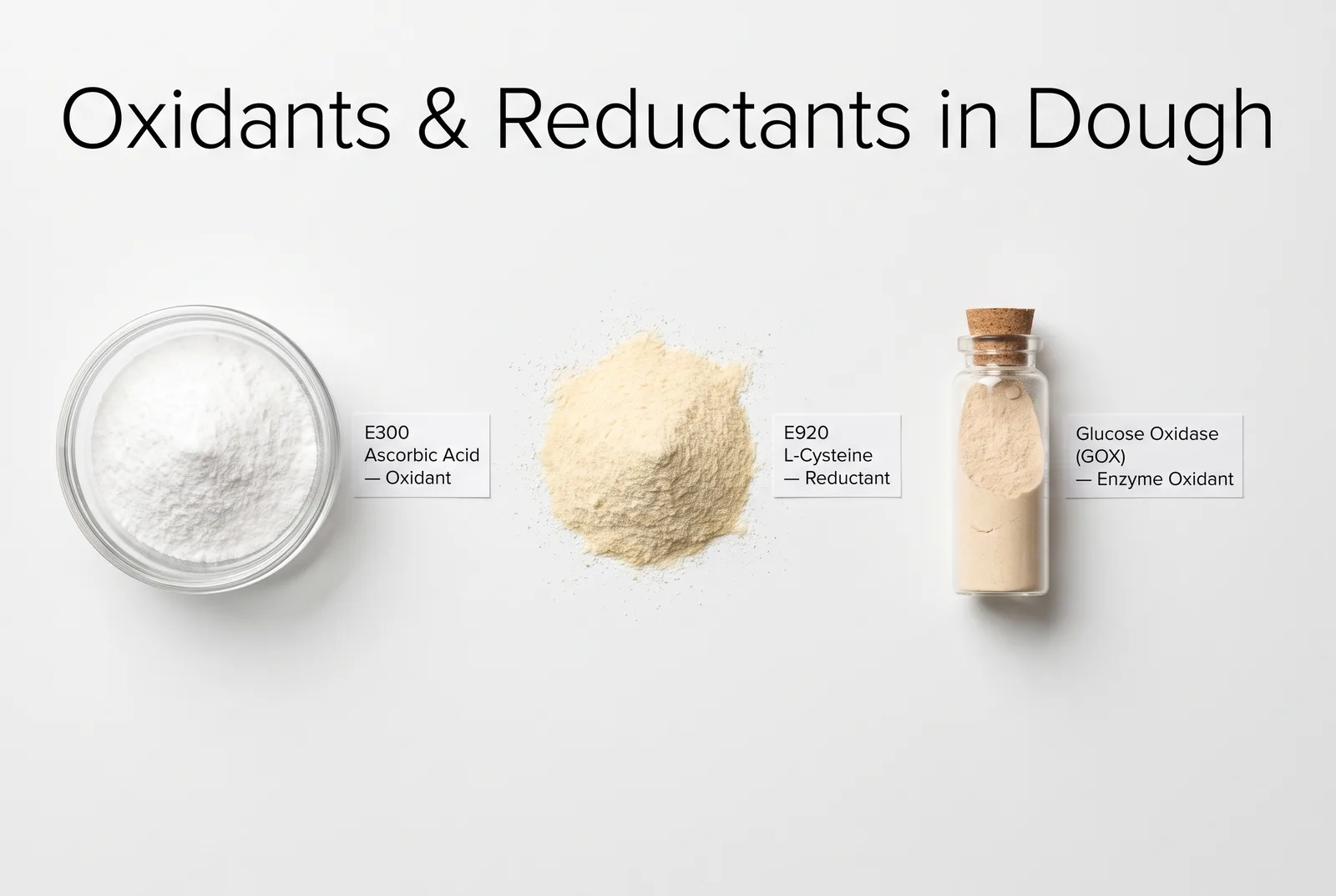
Ascorbic acid (E300), L-cysteine (E920), and glucose oxidase powders side by side representing oxidants and reductants used in bread dough
What this article covers
Professional bakers use a small group of functional additives — oxidants and reductants — to fine-tune the strength, extensibility and machinability of their doughs. The most widely used is ascorbic acid (E300, vitamin C), which is present in almost every commercial bread improver and is the standard replacement for the now-banned potassium bromate (E924). Alongside it, glucose oxidase (GOX) provides enzymatic oxidation, enzyme-active soya flour contributes lipoxygenase-driven bleaching and oxidation, and L-cysteine (E920) works in the opposite direction — relaxing over-strong doughs for crackers, thin-crust pizza and biscuits.
This dossier covers:
- How each oxidant and reductant works chemically and practically
- Which products in the Domson catalogue contain them, with real data from spec sheets
- What emulsifiers typically appear alongside oxidants in improvers (DATEM, SSL, MDG)
- A comparison table of six bread improver products
- Fault diagnosis when oxidant or reductant management goes wrong
- Three formula cards with baker's percentages
For the broader context of what bread improvers are and how to select between them, see A3-what-is-a-bread-improver and A3-improver-selection-guide. For emulsifiers in depth, see A3-emulsifiers-in-bread. For enzymes as a category, see A3-enzymes-in-bread.
1. The oxidant–reductant spectrum in dough
Gluten — the viscoelastic protein network in wheat dough — is built from glutenin and gliadin proteins linked by disulphide (S—S) bonds and held together by non-covalent forces. The balance of S—S bonds versus free sulphydryl (SH) groups is the key lever that oxidants and reductants manipulate:
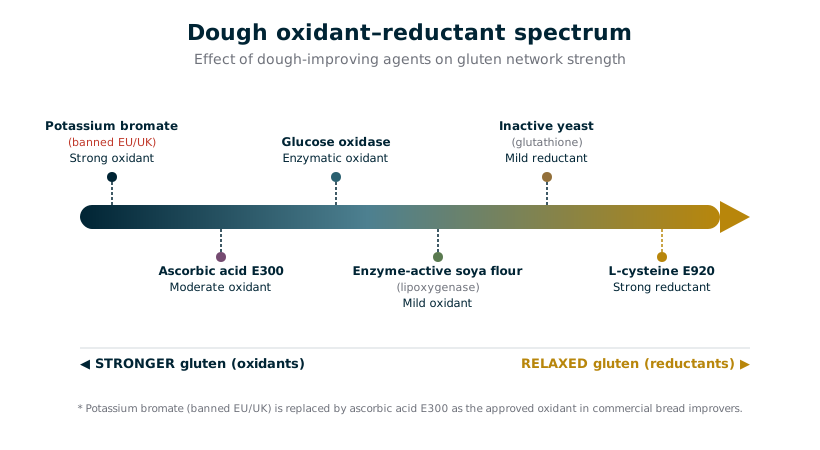 Dough oxidant to reductant spectrum showing bromate and ascorbic acid as oxidants and L-cysteine as reductant
- Oxidants promote the formation of S—S bonds from free SH groups → stronger, more elastic gluten → better gas retention → higher loaf volume.
- Reductants cleave existing S—S bonds → more free SH groups → weaker, more extensible gluten → faster relaxation → better machinability for sheeted products.
The position of each agent on this spectrum depends on its strength and the rate at which it acts:
| Agent | Direction | Speed of action | Strength |
|---|---|---|---|
| Potassium bromate (banned EU/UK) | Oxidant | Slow (fermentation + early bake) | Very strong |
| Ascorbic acid E300 | Oxidant (via DHAA) | Fast (mixing stage) | Moderate |
| Glucose oxidase (GOX) | Oxidant (enzymatic) | Moderate (fermentation) | Moderate |
| Enzyme-active soya flour (LOX) | Oxidant (indirect) | Moderate | Mild |
| Inactive yeast / glutathione | Reductant | Fast-moderate | Mild |
| L-cysteine E920 | Reductant | Fast | Strong |
2. Ascorbic acid (E300) — the universal bread oxidant
What it is
Ascorbic acid is vitamin C — a white, water-soluble powder with E number E300. In baking it is not used as a vitamin supplement but as a flour treatment agent: a regulated functional additive that strengthens gluten.
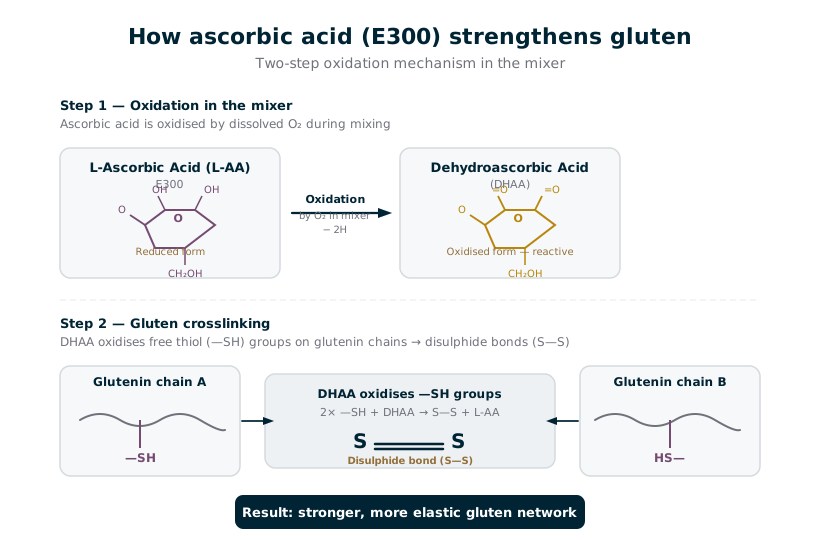 Diagram showing ascorbic acid converted to dehydroascorbic acid which then forms disulphide bonds in gluten proteins
How it works
Despite being an antioxidant in the human body, ascorbic acid acts as an indirect oxidant in bread dough. The mechanism is:
- In the mixer, oxygen (O₂) present in the dough oxidises ascorbic acid (L-AA) to dehydroascorbic acid (DHAA).
- DHAA, an oxidising agent, reacts with free SH groups on glutenin protein chains to form S—S disulphide bonds.
- The result is a stronger, more cross-linked gluten network — better able to retain CO₂ during fermentation and oven spring.
This indirect mechanism is important: ascorbic acid has no effect in the absence of oxygen. In vacuum-mixed doughs or under inert gas, its oxidising effect is absent.
Dosage
Ascorbic acid is used at very low levels. BAKERpedia cites 20–200 ppm (0.002–0.02% on flour weight), with a US FDA maximum of 200 ppm. The upper end of this range is typically used in Chorleywood Bread Process (CBP) operations, where short, intensive mixing and fast fermentation demand maximum gluten strength from the outset.
⚠️ EU and UK regulatory note: E300 is permitted at quantum satis in the EU and UK — there is no explicit numerical ceiling in EU Regulation 1333/2008 or the UK Bread and Flour Regulations 1998. The 200 ppm figure is a US FDA ceiling, not a UK/EU legal limit. Operators using ascorbic acid at the higher end of the dosage range must document their own quantum satis justification (i.e., that the level used is the minimum required to achieve the technological effect).
From first-party spec sheets, the ascorbic acid (E300) content in Domson improver products is:
- Puratos S500 Sense SG: 0.67% of the improver powder, ±10%, tested every batch.
- Puratos Tigris SG 2%: 1% of the improver powder, ±10%, tested every batch.
At the declared dosage rates (S500 Sense: ~1% of flour; Tigris SG: 2% of flour), the ascorbic acid contributed to the dough is approximately:
- S500 Sense at 1%: ~67 ppm ascorbic acid on flour weight — within the 20–200 ppm range
- Tigris SG at 2%: ~200 ppm ascorbic acid on flour weight — at the upper limit of the BAKERpedia reference range
Note: These calculations assume the improver is used at the midpoint of its typical dosage range. Actual in-dough ascorbic acid levels depend on exact dosage rate and pre-dosing in other ingredients. The Puratos products test ascorbic acid by titration on every batch, which is a good indicator of quality control but does not give the in-dough ppm without the dosage rate calculation.
Legal status — EU and UK
Ascorbic acid (E300) is permitted as a flour treatment agent in bread under:
- EU Regulation (EC) No 1333/2008 on food additives — permitted quantum satis (at the minimum level required to achieve the technological effect)
- The Bread and Flour Regulations 1998 (as amended) — UK national instrument
There is no declared maximum numerical limit in EU/UK bread legislation for E300; the quantum satis principle applies.
Where it appears in the Domson catalogue
Ascorbic acid (E300) is declared as "flour treatment agent" in every bread improver in the Domson catalogue reviewed for this article:
| Product | Ascorbic acid level | Source |
|---|---|---|
| Puratos S500 Sense SG 12.5 kg | 0.67% of product ±10% (batch tested) | |
| Puratos Tigris SG 2% 16 kg | 1% of product ±10% (batch tested) | |
| IREKS Voltex 25 kg | Declared <1% (source: maize) | |
| IREKS Soft Roll 7 25 kg | Declared (quantity not stated) | |
| IREKS Softy (Crumb Softener) 25 kg | Declared as "ascorbic acid E300" | |
| IREKS Toast & Buns 25 kg | Declared as "ascorbic acid E300" | |
| Zeelandia Optimax Free 20 kg | Declared <1% (source: maize) |
3. Why potassium bromate was banned and how ascorbic acid replaced it
The history of potassium bromate (E924)
Potassium bromate (KBrO₃) was the dominant flour treatment agent in industrial bread from the early 20th century through to the 1990s. It was exceptionally effective: slower-acting than ascorbic acid, bromate continues oxidising throughout fermentation and into the early stages of baking, building very strong gluten and producing high loaf volumes from weaker flours. Typical bakery usage was 10–30 ppm; the US regulatory maximum was 75 ppm (21 CFR 136.110). ⚠️ This historical context applies to jurisdictions where potassium bromate was or remains permitted — use in the EU and UK is illegal at any quantity.
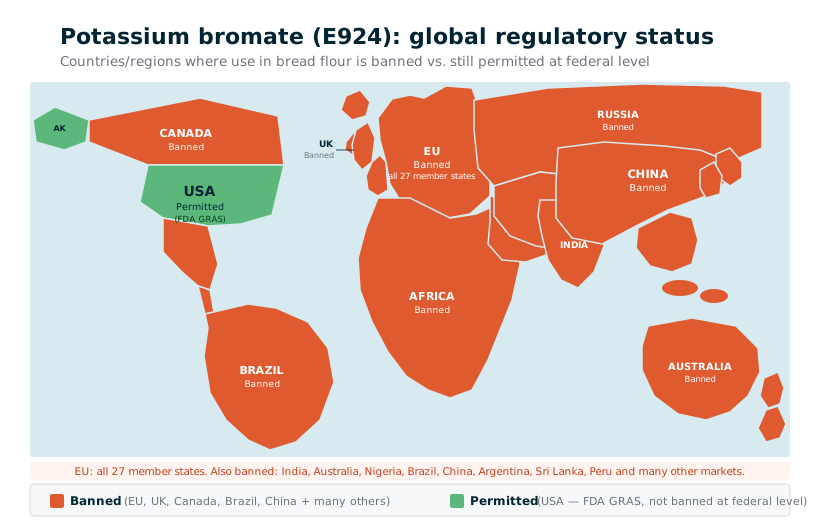 World map showing potassium bromate regulatory status: banned in EU, UK, Canada, China; still permitted in the USA
Why it was banned
The International Agency for Research on Cancer (IARC) classified potassium bromate as a Group 2B possible human carcinogen in 1999. Residual bromate in finished bread — which can occur if baking time or temperature are insufficient to fully reduce it — is the concern. The EU banned it as a food additive (it is not listed as permitted in EU Regulation 1333/2008), and the UK Bread and Flour Regulations 1998 do not permit its use. Canada, Brazil, China, Nigeria, Sri Lanka, and many other countries have also banned it. The USA has not implemented a federal ban but the FDA is reviewing its GRAS (Generally Recognised As Safe) status.
Ascorbic acid as the replacement
Ascorbic acid is the primary permitted replacement for potassium bromate in EU and UK bread production. It does not replicate bromate's slow-acting, fermentation-stage effect — ascorbic acid acts primarily during mixing, not baking — but in combination with modern high-protein wheat varieties and CBP-compatible process design, it delivers equivalent volume and crumb structure in most applications.
For processes where bromate's strong slow-action was particularly important (e.g., hearth breads with very long fermentation), a combination of ascorbic acid and glucose oxidase (GOX) — see Section 4 — more closely replicates the effect profile.
4. Glucose oxidase (GOX) — enzymatic oxidation
What it is
Glucose oxidase (GOX) is an enzyme produced by the fungus Aspergillus niger. Unlike ascorbic acid, GOX is not declared on the finished bread label in the EU/UK — it is used as a processing aid at such low inclusion levels that it has no functional effect in the final baked product, so it is classified as a processing aid and is not required to appear on the ingredient list.
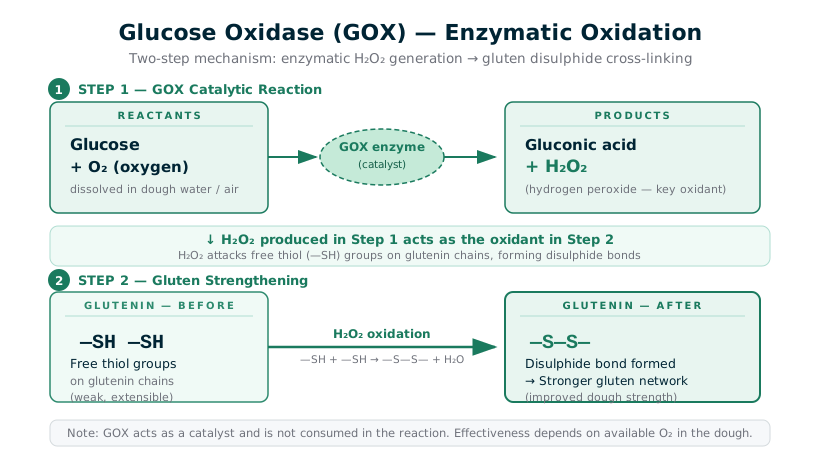 Glucose oxidase enzyme diagram: glucose and oxygen react to form hydrogen peroxide which then strengthens gluten proteins
How it works
GOX catalyses the following reaction:
Glucose + O₂ → Gluconic acid + H₂O₂
The hydrogen peroxide (H₂O₂) produced is a powerful oxidant. It reacts with free SH groups in the gluten protein network to form S—S disulphide bonds — the same end result as ascorbic acid, but via a different mechanism and at a different point in the baking process. Because GOX works during fermentation (not only during mixing), it can supplement the fast-acting ascorbic acid with a slower oxidation that extends through proof and into the early bake.
Synergy with ascorbic acid
GOX and ascorbic acid are often used together in modern improvers. The combination provides:
- Fast initial strengthening during mixing (ascorbic acid)
- Continued strengthening during fermentation and proof (GOX)
This makes the combination effective in processes with varying fermentation times and in applications where the baker tolerates a range of floor times or proof durations.
Dosage
GOX is active at very low levels — typically 2–30 ppm enzyme protein in the dough. However, in formulated improver products, the enzyme is included as an undeclared processing aid and its level is not published on spec sheets. Bakers using GOX-containing improvers should follow the manufacturer's recommended dosage for the improver product rather than trying to calculate enzyme ppm independently. ⚠️ Confidence: low (single academic source for dosage range; verify with supplier before specifying)
GOX in the Domson catalogue
All commercial bread improvers reviewed contain enzymes listed as "undeclared processing aids." GOX is not specifically identified by name in any of the available spec sheets; however, the presence of undeclared enzymes in all products reviewed (S500 Sense, Tigris SG, Voltex, Soft Roll 7, Optimax Free, Softy, Toast & Buns) is consistent with modern improver technology where GOX is a standard enzyme component.
5. Enzyme-active soya flour and lipoxygenase
What it is
Enzyme-active (or "full-fat") soya flour is untreated soya flour that retains its natural lipoxygenase (LOX) enzyme activity. It should not be confused with defatted or heat-treated soya flour, where the enzyme has been inactivated.
Cereform Breadsoy PP 32s MB (25 kg) in the Domson catalogue is a specification-confirmed enzyme-active full-fat soya flour from Non-GM IP Canadian and UK beans.
How it works
Lipoxygenase oxidises the polyunsaturated fatty acids (PUFAs) naturally present in flour — primarily linoleic acid — to form lipid peroxides. These peroxides have two effects:
- Bleaching: they break down the yellow-orange carotenoid pigments in flour, producing a whiter crumb in the finished bread. This is why enzyme-active soya flour was historically added to white sandwich bread to achieve a bright white interior.
- Mild oxidation: the peroxides can also react with SH groups in the gluten network, providing a mild strengthening effect.
Key spec data — Cereform Breadsoy PP 32s MB
- Composition: 100% full-fat soya flour, enzyme-active
- Protein: 35.2 g/100g
- Fat: 17.4 g/100g (saturates 2.67g; polyunsaturated 10.99g — the PUFA substrate for LOX)
- Fibre AOAC: 15.3 g/100g
- Moisture: 6–11%
- Shelf life: 270 days from manufacture
- Allergens: Contains soya. Cereals containing gluten (wheat, rye, etc.) are not ingredients but are handled on the same manufacturing and packing line — cross-contamination cannot be excluded. ⚠️
- Certifications: Kosher (London Beth Din); Halal (Halal Food Authority); suitable for vegetarians and vegans
IREKS Voltex and Toast & Buns also contain soya flour
Both IREKS Voltex and IREKS Toast & Buns list soya flour as a leading ingredient (Voltex: first in descending order; Toast & Buns: first in descending order). This soya flour in a bread improver context is likely providing enzyme-active lipoxygenase as well as protein, but the spec sheets do not confirm whether the soya flour used is enzyme-active or heat-treated.
6. L-cysteine (E920) — the key reductant
What it is
L-cysteine is an amino acid — one of the 20 naturally occurring amino acids in proteins. As a bread additive (E920), it is used at very low doses as a flour treatment agent with a reducing (opposite of oxidising) action on gluten.
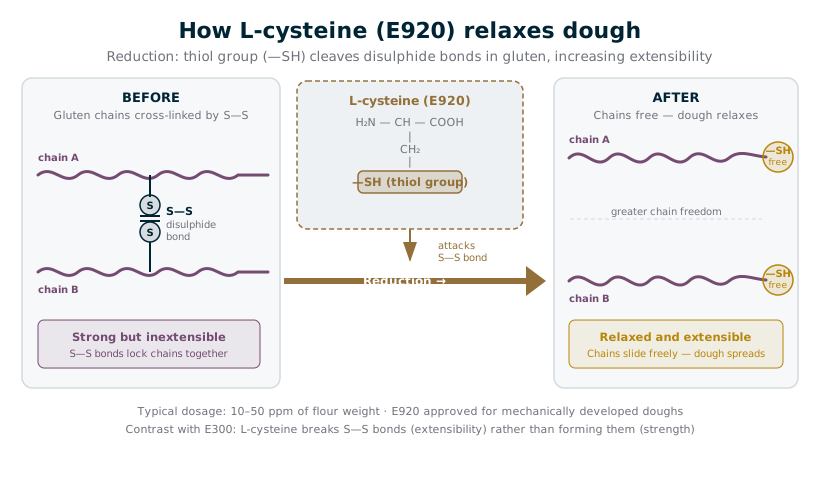 Diagram showing L-cysteine breaking a disulphide bond in gluten proteins to make dough more extensible
How it works
L-cysteine's thiol (SH) group participates in thiol-disulphide exchange reactions:
L-cysteine–SH + Gluten–S–S–Gluten → L-cysteine–S–S + 2 Gluten–SH
The result is cleavage of existing S—S bonds in the gluten network. This:
- Reduces gluten elasticity
- Increases dough extensibility and plasticity
- Shortens required mixing time (the dough reaches optimum development faster)
- Improves machinability on sheeting lines (dough tears less when pressed thin)
When to use a reductant
Reductants are used when dough is too strong for the intended application:
| Application | Why reductant helps |
|---|---|
| Crackers and snack biscuits | Thin sheeting requires very extensible dough; elastic rebound causes tearing |
| Thin-crust pizza | Dough must sheet thinly without springing back; strong flour needs relaxing |
| Rich pastry / shortcrust | Short, crumble texture required; long gluten chains are a fault |
| High-protein flour correction | Canadian or US hard wheat (>14% protein) may be over-strong for soft rolls or burger buns |
| Reducing mixing time in high-speed lines | L-cysteine shortens the time to optimum development by 20–40% (single-source estimate) |
**
Dosage
Industry sources give a typical practical range of approximately 20–75 ppm on flour weight; the BAKERpedia dedicated L-cysteine ingredient article cites 20–30 ppm as the common practical level, with a US/Canada regulatory ceiling of 90 ppm. This is a very low level — small errors in dosage can cause under- or over-relaxation. L-cysteine is effective at these trace levels because it acts catalytically (each cysteine molecule participates in multiple thiol-disulphide exchange reactions).
⚠️ Confidence: low. The originally cited source (BAKERpedia "A Guide to Reducing Agents in Dough") does not contain specific ppm dosage figures for L-cysteine — the dosage range above is from the BAKERpedia L-cysteine ingredient article (a separate, un-cited page). The applicable EU maximum permitted level for E920 in bread under EU Regulation 1333/2008 Annex II has not been confirmed in this research. Verify the regulatory limit and supplier recommended dosage before specifying for any EU/UK application.
Legal status in the EU and UK
L-cysteine (E920) is listed as a permitted flour treatment agent in EU Regulation 1333/2008 for specific food categories. Its use is permitted in bread and other bakery products under the conditions defined in the regulation.
Clean-label note: L-cysteine carries an E-number (E920) and appears on finished bread ingredient lists. Historically it was derived from feathers (duck, chicken) or human hair. Modern production also uses bacterial fermentation (vegan-compliant). When vegan status is important, operators should confirm the source with the L-cysteine supplier. The Puratos S500 Sense SG and Tigris SG 2% spec sheets both explicitly state "Free from materials of animal/fish/poultry origin (excluding egg/dairy)" and confirm absence of L-cysteine.
Glutathione — the clean-label alternative to L-cysteine
Glutathione (GSH) is a tripeptide (Gly-Cys-Glu) found in high concentrations in yeast cells. When yeast cells are inactivated (denatured), their membrane breaks and glutathione is released into the dough, where it acts like L-cysteine — cleaving S—S bonds via thiol-disulphide exchange. Inactive dry yeast is the standard vehicle for delivering glutathione in bread. Because it appears on the label as "inactive yeast" or "yeast extract" rather than as an E-number, it is preferred in clean-label formulations.
7. Emulsifiers that appear alongside oxidants in bread improvers
Most commercial bread improvers combine oxidants (ascorbic acid, enzymes) with emulsifiers, because each addresses a different aspect of bread quality. The following emulsifiers are found in the Domson catalogue improvers covered by this article:
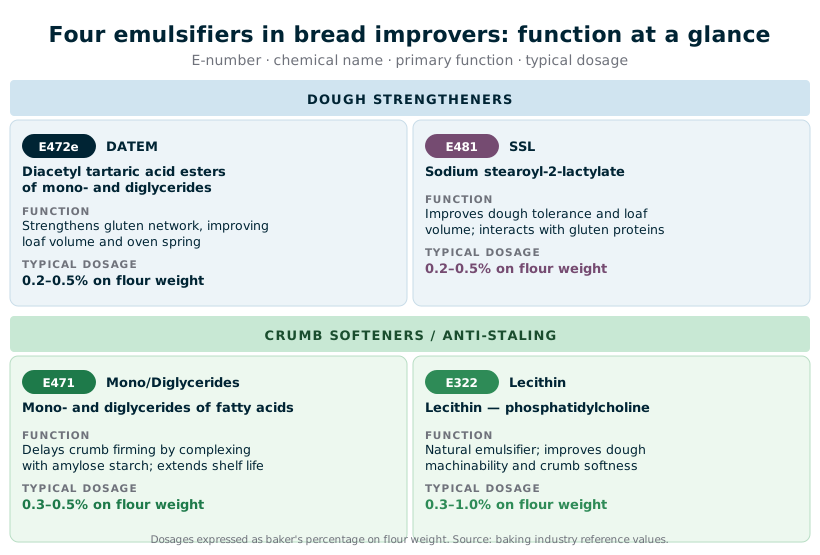 Infographic comparing four bread emulsifiers: DATEM (E472e), SSL (E481), mono- and diglycerides (E471), and lecithin (E322)
DATEM — E472e (diacetyl tartaric acid esters of mono- and diglycerides)
DATEM is the most powerful dough-strengthening emulsifier in bread. It interacts with gluten protein to increase network strength and gas retention, resulting in higher loaf volume and more even crumb structure.
Found in: Puratos S500 Sense SG (10–20% of improver), Puratos Tigris SG 2% (10–20% of improver), IREKS Voltex (declared), IREKS Soft Roll 7 (declared).
Typical dosage in the finished dough: 0.2–0.5% of flour weight (based on emulsifier in dough, not improver inclusion rate).
SSL — E481 (sodium stearoyl lactylate)
SSL is a dual-function emulsifier: it strengthens gluten AND complexes with starch amylose to inhibit starch retrogradation (anti-staling). This makes it particularly useful in soft-crumb products (sandwich bread, rolls, toast).
Found in: IREKS Voltex (declared), IREKS Soft Roll 7 (declared), IREKS Softy / Crumb Softener (declared — in fact the leading active ingredient after wheat flour), IREKS Toast & Buns (declared).
Typical dosage in finished dough: 0.2–0.5% of flour weight.
Mono- and diglycerides — E471
Mono- and diglycerides (MDG) are primarily crumb softeners rather than dough strengtheners. Their main action is to complex with starch amylose chains during baking and cooling, reducing starch retrogradation and keeping crumb softer for longer. They work well in combination with SSL.
Found in: IREKS Soft Roll 7 (declared — three emulsifiers present: E471, E481, E472e).
CSL — E482 (calcium stearoyl lactylate)
CSL is the calcium salt equivalent of SSL. It has similar functionality (dough strengthening + anti-staling) but is preferred in some regional markets or for cost reasons. It was not confirmed in the spec sheets reviewed for the current Domson catalogue, but is common in the wider industry.
Why IREKS Soft Roll 7 contains all three emulsifiers
The Soft Roll 7 spec sheet declares emulsifiers E481 (SSL), E471 (MDG), and E472e (DATEM). This reflects the specific requirements of soft roll production:
- DATEM strengthens the gluten for good volume and a consistent round shape
- SSL provides crumb softening and anti-staling
- MDG enhances starch softening and extends soft eating quality
The trade-off is that this product contains milk (whey powder) as an ingredient — it is not suitable for vegan or dairy-free products. ⚠️
8. Vital wheat gluten (VWG) as a functional additive
Vital wheat gluten (VWG) is not an oxidant, reductant or emulsifier — it is a structural protein concentrate that is sometimes added to improve dough strength when the base flour protein is insufficient. It is included here because it directly addresses the same practical problem (weak dough) that oxidants also address, and bakers often consider VWG alongside improver systems.
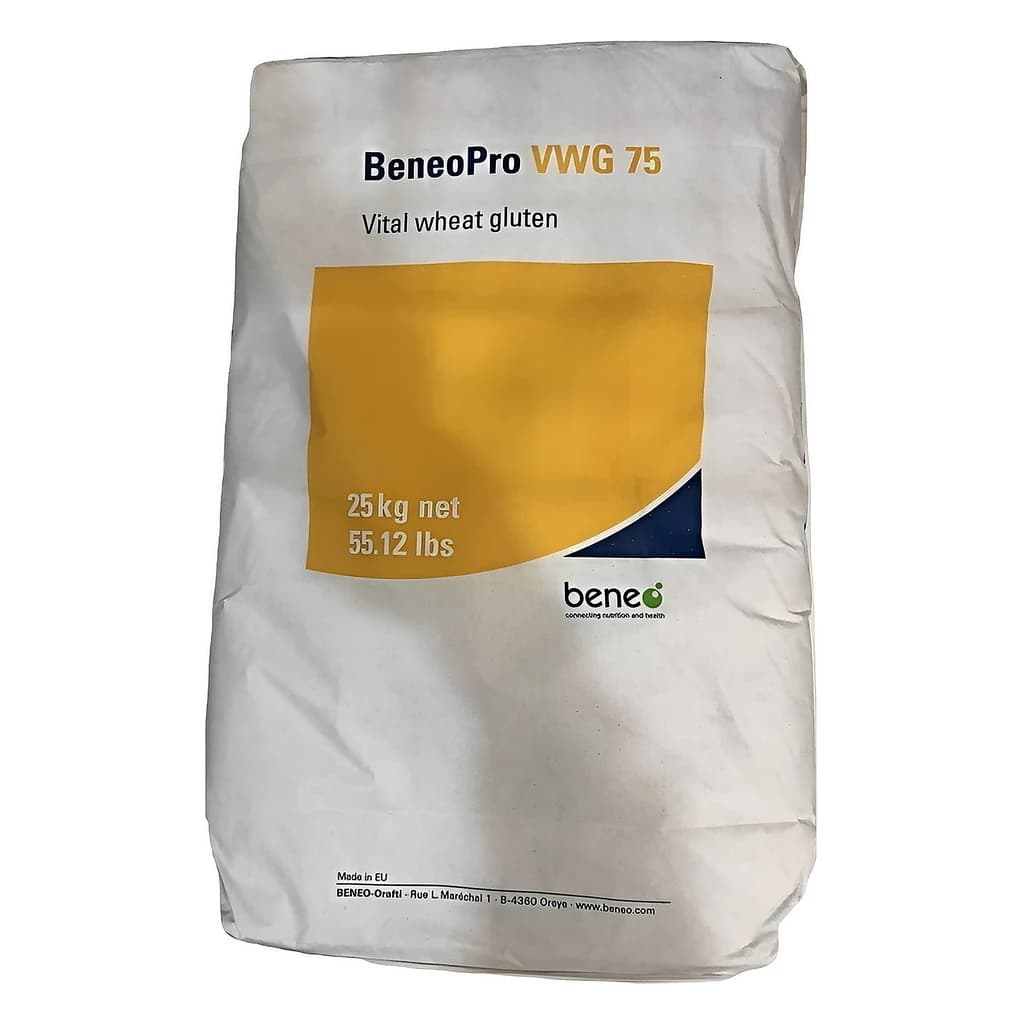
Beneo BeneoPro VWG 75 Food (25 kg)
This is the VWG product in the Domson catalogue. Key data from the spec sheet (version 007, valid 01-10-2021 — the most current of all specs reviewed):
- Protein: min 75 g/100g dry matter (N×5.7 conversion factor); equivalent to min 82 g/100g by the N×6.25 method commonly used in flour analysis
- Moisture: max 8 g/100g
- Fat: max 2 g/100g
- Ash: max 1 g/100g
- Water binding capacity: approx. 140–170 g water per 100 g VWG (AACC method 56-30)
- Shelf life: 36 months from production (exceptional for a protein product — dry powder, very low moisture activity)
- Storage: dry (<60% RH), cool (<20°C)
- Allergen: contains wheat (gluten). No other allergens to be labelled under EU Regulation (EU) No 1169/2011.
- Certifications: Kosher and Halal (both certificates available on request); suitable for vegetarians and vegans; not from GM wheat per EC 1829/2003
Protein conversion factor note: The Beneo spec uses N×5.7 for the minimum protein specification (75 g/100g d.m.) because 5.7 is the accepted conversion factor for wheat gluten proteins specifically. When compared with flours that use N×6.25, the equivalent VWG protein is min 82 g/100g d.m. — both values are cited together to allow direct comparison with either convention. This is consistent with BAKERpedia, which cites 70–80% protein for VWG using N×6.25.
Typical applications and dosage
VWG is used when:
- The base wheat flour has insufficient protein for the process (e.g., using a weaker flour in a CBP environment)
- High-fibre additions (bran, seeds, whole wheat) dilute the effective gluten
- Whole wheat or multigrain bread requires volume support despite the dilution from bran
BAKERpedia cites 1–4% of flour weight as the typical dosage range for most yeast-raised breads, with usage up to 12% in high-fibre applications (whole wheat, multigrain, or high-bran formulas where bran dilutes the effective gluten network). At 2% VWG addition, adjust water upward by approximately 2.8–3.4% of flour weight (derived from the 140–170 g/100g water binding capacity spec — adjust water accordingly). ⚠️ Confidence: medium on dosage range — BAKERpedia is the sole source; the Beneo spec sheet states no recommended dosage level.
9. Bread improver product comparison (Domson catalogue)
See the comparison table below for the full machine-readable table. The narrative summary:
For standard white and mixed grain bread: Puratos S500 Sense SG (12.5 kg) is the all-purpose choice — DATEM + ascorbic acid + enzymes + natural sourdough note; free from L-cysteine; vegan suitable; Kosher certified.
For high-volume white bread at 2% dosage: Puratos Tigris SG 2% (16 kg) delivers higher ascorbic acid content (~1% of product vs 0.67% in S500 Sense) alongside DATEM, making it suited to high-speed processes or where flour protein is variable.
For multipurpose white bread at 1–2% dosage: IREKS Voltex (25 kg) uses a soya flour base with DATEM + SSL dual emulsification — the SSL provides additional anti-staling beyond what DATEM alone provides. Allergen: contains wheat and soya.
For soft rolls and enriched buns at 7% dosage: IREKS Soft Roll 7 (25 kg) — a high-rate improver combining three emulsifiers, dextrose, whey powder, and ascorbic acid. The all-in-one formula simplifies production but contains dairy (milk via whey powder) — not suitable for dairy-free products. ⚠️
For mixed-rye bread: Zeelandia Optimax Free (20 kg) is specifically designed for mixed rye and full rye doughs — its base is 50% wheat gluten and 39% rye flour, providing structural support in rye bread where gluten development is limited.
For soft crumb and anti-staling focus: IREKS Softy / Crumb Softener (25 kg) at 1.5% — leads with wheat flour and SSL (E481) as the primary emulsifier, with enzymes and ascorbic acid as functional support. Simpler formula than Voltex or Soft Roll 7; no soya, no dairy declared.
10. Comparison tables
See the three comparison tables below:
- table-bread-improvers-comparison — six Domson improver products side-by-side on 10 parameters
- table-oxidants-reductants — ascorbic acid, GOX, enzyme-active soya, potassium bromate, L-cysteine, glutathione compared on mechanism, dosage and legal status
- table-emulsifiers-comparison — DATEM, SSL, CSL, MDG, lecithin compared on function, dosage and Domson product presence
11. Formula cards
See the three formula cards below, with baker's percentages:
- formula-standard-white-bread-with-s500 — standard white bread with Puratos S500 Sense SG
- formula-soft-roll-ireks — enriched soft rolls with IREKS Soft Roll 7 at 7%
- formula-rye-mixed-optimax-free — mixed rye bread with Zeelandia Optimax Free
12. Allergen summary
⚠️ Verify all allergen information against current (2026) spec sheets from each manufacturer before customer-facing use. Formulations change. The spec sheets below range in date from 2014 to 2021 — the oldest (IREKS 2014 specs) may not reflect current formulations.
| Product | Wheat | Rye | Soya | Milk | Egg | Notes |
|---|---|---|---|---|---|---|
| Puratos S500 Sense SG | Yes | No | No (CC risk) | No (CC risk) | No (CC risk) | Free from L-cysteine ⚠️ spec dated 2012 |
| Puratos Tigris SG 2% | Yes | No | No (CC risk) | No (CC risk) | No (CC risk) | Free from L-cysteine ⚠️ spec dated 2012 |
| IREKS Voltex | Yes | Possible trace | Yes | Possible trace | Possible trace | ⚠️ spec dated 2017 |
| IREKS Soft Roll 7 | Yes | Possible trace | Yes | Yes (whey powder) | Possible trace | Not suitable for dairy-free ⚠️ spec 2017 |
| Zeelandia Optimax Free | Yes + Rye | Yes | Possible trace | Possible trace | Possible trace | ⚠️ spec dated 2018 |
| IREKS Softy (Crumb Softener) | Yes | Possible trace | Possible trace | Possible trace | Possible trace | ⚠️ spec dated 2014 |
| IREKS Toast & Buns | Yes | Possible trace | Yes | Possible trace | Possible trace | ⚠️ spec dated 2014 |
| Beneo BeneoPro VWG 75 | Yes (wheat gluten only) | No | No | No | No | No other allergens per EU 1169/2011 ⚠️ spec 2021 — most current |
| Cereform Breadsoy | No (as ingredient; CC on line) | No | Yes (soya) | No | No | Gluten on line and site ⚠️ |
CC = cross-contamination risk declared on spec sheet. ⚠️ = food safety flag.
13. Fault diagnosis
See the full fault table below. Quick reference:
| Symptom | Most likely cause | First action |
|---|---|---|
| Low volume, slack dough | Insufficient oxidant; under-dosed improver | Check dosage; increase to maximum recommended rate |
| Tight, tearing dough; flying crust | Over-oxidised; excessive ascorbic acid or DATEM | Reduce improver dosage; add mild reductant |
| Sticky dough, poor machinability | Insufficient gluten strength for process | Add VWG at 1–2%; check DDT |
| Dough tears when sheeted thin | Elastic gluten needs relaxing | Introduce L-cysteine (E920) or inactive yeast at low dose |
| Fast staling | Insufficient anti-staling enzyme or SSL/MDG | Switch to or add improver with SSL; check fat level |
| Grey or dull crumb (when white crumb wanted) | Missing lipoxygenase bleaching action | Add enzyme-active soya flour |
14. Decision guide: which oxidant/reductant approach?
Strong-flour, high-speed bread line (CBP): Use ascorbic acid at the upper range of dosage (100–200 ppm) alongside DATEM and GOX. Products: Puratos S500 Sense SG or Tigris SG 2%.
Artisan or long-fermentation bread: Use ascorbic acid at lower dosage (20–50 ppm); avoid heavy emulsifiers that mask fermentation flavour. Consider clean-label improvers with enzyme-only systems.
Crackers, biscuits, thin pizza: Use L-cysteine (E920) or inactive yeast to relax gluten extensibility. Standard bread improvers (which contain ascorbic acid) will worsen tearing on sheeting lines if used alone.
Soft rolls / sandwich buns — extended shelf life: Use an improver containing SSL (E481) for anti-staling alongside ascorbic acid. IREKS Soft Roll 7 (contains milk) or IREKS Voltex/Softy (no milk declared).
Mixed rye bread: Standard wheat-targeted oxidants (ascorbic acid) have limited effect on rye doughs because rye gluten is weak and discontinuous. Use Zeelandia Optimax Free which is specifically formulated for rye/mixed rye.
Vegan / clean-label: Puratos S500 Sense SG and Tigris SG 2% are explicitly vegan-suitable and L-cysteine free. For L-cysteine replacement, use inactive yeast as glutathione source — clean label, no E920.
Kosher or Halal: S500 Sense SG: Kosher certified (Puratos spec); Tigris SG 2%: Halal certificate to be added (per spec). VWG 75 (Beneo): both available on request. Breadsoy: Kosher (London Beth Din) and Halal (Halal Food Authority).
Coverage notes and gaps
Solid:
- Ascorbic acid (E300) mechanism and role — dual-sourced (BAKERpedia + Puratos spec titration data + IREKS Compendium)
- Product-specific ascorbic acid levels (S500 Sense SG 0.67%, Tigris SG 2% 1%) — from batch-tested spec sheets
- Emulsifier presence in all reviewed products — from first-party spec sheets
- VWG specifications — Beneo spec sheet (2021, most current of all specs reviewed)
- Allergen status of all reviewed products — from first-party spec sheets
- Potassium bromate ban (EU/UK) — confirmed in regulatory source
Thin or single-source (confidence: low):
- L-cysteine dosage range (corrected to approx. 20–75 ppm): the originally cited source did not contain specific ppm figures — range updated from dedicated BAKERpedia L-cysteine article; EU Reg 1333/2008 Annex II limit for E920 in bread still unconfirmed — needs regulatory verification
- GOX dosage range (2–30 ppm enzyme protein): single-source (IntechOpen academic review) — needs manufacturer confirmation
- VWG dosage range (2–12%): BAKERpedia + implied by water binding capacity; no spec sheet dosage stated
- Enzyme-active soya flour bleaching quantification: described qualitatively only; no % carotenoid reduction cited
Needs follow-up:
- IREKS Softy and Toast & Buns: spec sheets dated 2014 — request updated specs from IREKS
- Puratos S500 Sense SG and Tigris SG 2%: spec sheets dated 2012 — request updated specs from Puratos (note: allergen and formulation may have changed)
- Zeelandia Optimax Free: spec dated 2018 — confirm current version with Zeelandia
- Potassium bromate USA status: the FDA GRAS review is ongoing; verify current status before publishing
- GOX-specific products in the Domson catalogue: no GOX-only or GOX-named product identified; this gap could be addressed by contacting Puratos and IREKS for enzyme composition disclosure
- L-cysteine source (animal vs. fermentation): none of the current Domson improver products declare L-cysteine; if a customer requests an L-cysteine-containing product, vegan source confirmation would be needed
Standard white bread with Puratos S500 Sense SG
Reference formula based on Domson catalogue product. Baker's percentages based on flour weight. Dough temperature target 26–28°C. Puratos S500 Sense SG provides ascorbic acid (E300), DATEM (E472e), enzymes, and natural sourdough flavour note.
| Ingredient | Baker's % | Weight |
|---|---|---|
| Strong wheat flour (min. 12% protein) | 100 | |
| Water | 60 | |
| Fresh compressed yeast | 2 | |
| Salt | 2 | |
| Puratos S500 Sense SG bread improver | 1 |
- Mix 3 min slow + 7 min fast (Chorleywood-style); dough temp 26–28°C; floor time 30–45 min; divide, mould; final proof 45–60 min at 35–38°C / 80% RH; bake 220°C, steam first 5 min, 30–35 min total.
Enriched soft rolls with IREKS Soft Roll 7
Reference formula for soft rolls using IREKS Soft Roll 7 at 7% dosage. This high-dosage improver carries DATEM, SSL, MDG, ascorbic acid, enzymes, milk (whey), soya, and dextrose. Allergen: contains wheat, soya, milk.
| Ingredient | Baker's % | Weight |
|---|---|---|
| Wheat flour (min. 11% protein) | 100 | |
| Water | 55 | |
| Instant dry yeast | 1 | |
| Salt | 1.8 | |
| IREKS Soft Roll 7 improver | 7 |
- Mix to full gluten development; floor time 20 min; scale and round; proof 35–40 min at 35°C; bake 200°C, steam first 2 min, 18–20 min total. Soft Roll 7 includes sugar and dextrose — do not add extra sugar.
Mixed rye bread with Zeelandia Optimax Free
Based on the application recipe stated in the Optimax Free spec sheet. Adjusted to baker's percentage based on total flour. Allergen: wheat, rye gluten.
| Ingredient | Baker's % | Weight |
|---|---|---|
| Wheat flour type 850 | 16.7 | |
| Rye flour type 720 | 83.3 | |
| Rye sourdough | 107 | |
| Salt | 3.8 | |
| Yeast (fresh compressed) | 4.2 | |
| Zeelandia Optimax Free | 1.7 | |
| Water (approx.) | 93.3 |
- Mix 8 min low + 2 min high speed; dough temp ~28°C; first proof 15 min; shape directly into baking forms (0.58 kg pieces); final proof 50 min; bake 250°C descending to 230°C with steam first 5 min, 45 min total.
Extracted from first-party spec sheets. All dosages are expressed as % of flour weight. E300 content where stated is as declared in the spec sheet finished-product testing. 'n/d' = not declared in available spec. Older specs (IREKS 2014, Zeelandia 2018) may not reflect current formulations — verify with manufacturer before customer-facing use.
| Parameter | Puratos S500 Sense SG (12.5 kg) | Puratos Tigris SG 2% (16 kg) | IREKS Voltex (25 kg) | IREKS Soft Roll 7 (25 kg) | Zeelandia Optimax Free (20 kg) | IREKS Softy / Crumb Softener (25 kg) |
|---|---|---|---|---|---|---|
| Primary application | All-purpose bread (sourdough flavour note) | Yeast-raised bakery goods (2% rate) | Multipurpose bread | Soft rolls and buns | Rye and mixed-rye bread | Soft baked goods (crumb softness focus) |
| Dosage (% flour weight) | Not stated on spec (typical S500 range: 0.5-2%) | 2% | 1-2% | 7% | ~1.7% on total flour (~10% on wheat flour alone) | 1.5% |
| Ascorbic acid E300 | Yes — 0.67% ± 10% (batch tested) | Yes — 1% ± 10% (batch tested) | Yes — <1% (declared) | Yes — declared | Yes — <1% (source: maize) | Yes — declared |
| Emulsifiers present | E472e (DATEM) | E472e (DATEM) | E472e (DATEM) + E481 (SSL) | E471 (MDG) + E481 (SSL) + E472e (DATEM) | None declared | E481 (SSL) |
| Enzymes | Yes (undeclared processing aids) | Yes (undeclared processing aids) | Yes (undeclared processing aids) | Yes (undeclared processing aids) | Yes (undeclared processing aids) | Yes (undeclared processing aids) |
| Soya flour | No | No | Yes (leading ingredient) | Yes | No | No |
| Milk / dairy | No (cross-contamination risk only) | No (cross-contamination risk only) | No (possible trace) | Yes — whey powder (from milk) | No (possible cross-contamination) | No (possible trace) |
| Shelf life | 9 months from manufacture | 9 months from manufacture | Min. 12 months | Min. 9 months | 180 days | Min. 12 months |
| Storage conditions | <25°C, <50% RH | <25°C, <50% RH | Dry and cool | Dry and cool | <25°C, <75% RH | Dry and cool |
| Vegan suitable | Yes | Yes | n/d | No (contains milk) | n/d | n/d |
| Gluten allergen | Yes (contains wheat) | Yes (contains wheat) | Yes (contains wheat) | Yes (contains wheat) | Yes (wheat + rye) | Yes (contains wheat) |
Reference table covering the primary oxidising and reducing agents used in bread production. Dosage ranges are from the cited sources; where sources differ, ranges from both are given. Potassium bromate is included for historical context only — it is banned in the EU and UK.
| Agent | E-number | Class | Mechanism in dough | Primary effect | Typical dosage | Legal status EU/UK |
|---|---|---|---|---|---|---|
| Ascorbic acid (vitamin C) | E300 | Oxidant (indirect) | Oxidised to dehydroascorbic acid (DHAA) in mixer by O₂; DHAA then oxidises SH groups on glutenin to form S-S disulphide bonds | Strengthens gluten network; increases loaf volume; improves gas retention | 20–200 ppm (0.002–0.02% on flour); upper end for CBP/high-speed processes | Permitted EU/UK — quantum satis as flour treatment agent (Reg. 1333/2008; UK Bread & Flour Regs 1998) |
| Glucose oxidase (GOX) | None (enzyme — processing aid; not declared on label) | Oxidant (enzymatic) | Catalyses: glucose + O₂ → gluconic acid + H₂O₂. H₂O₂ then oxidises SH groups to form S-S disulphide bonds | Gluten strengthening; improved dough machinability; bromate alternative | 2–30 ppm enzyme protein (product-specific; follow manufacturer dosage) | Permitted EU/UK as processing aid — not declared on finished bread label |
| Enzyme-active soya flour (lipoxygenase) | None (ingredient — declared as 'soya flour') | Oxidant (enzymatic, indirect) | Lipoxygenase oxidises polyunsaturated fatty acids to peroxides, which bleach flour carotenoids and indirectly oxidise SH groups in gluten | Flour bleaching (whiter crumb); mild gluten strengthening | 0.5–3% of flour weight (as soya flour ingredient in improver) | Permitted EU/UK as ingredient; must be declared as 'soya flour' (allergen) |
| Potassium bromate | E924 | Oxidant (strong, slow-acting) | Oxidises SH groups to form S-S bonds during fermentation and early bake; slower and more sustained than ascorbic acid | Very strong gluten strengthening; high loaf volume | Historically 10–30 ppm typical (US regulatory ceiling 75 ppm per 21 CFR 136.110) | BANNED EU and UK (not listed in Reg. 1333/2008 as permitted flour treatment agent; UK Bread & Flour Regs 1998). Classified as possible human carcinogen (IARC Group 2B). Still permitted in USA at FDA discretion. |
| L-cysteine (L-Cys) | E920 | Reductant | The free thiol (SH) group of L-cysteine cleaves existing S-S disulphide bonds in the gluten network by thiol-disulphide exchange, relaxing protein chains | Reduces dough elasticity; increases extensibility; shortens mixing time; improves machinability for crackers, biscuits, thin pizza | Approx. 20–75 ppm on flour weight (practical range; US/Canada ceiling 90 ppm). EU Reg 1333/2008 Annex II limit for E920 in bread not confirmed — verify before specifying. Very low doses sufficient; follow supplier dosage guidance. | Permitted EU/UK as flour treatment agent for specific applications under Reg. 1333/2008 (E920). Derived historically from duck/chicken feathers — now also produced via fermentation (vegan options exist). NOT present in Puratos S500 Sense or Tigris SG (both spec sheets confirm 'free from L-cysteine') |
| Glutathione (inactive yeast) | None (ingredient — declared as 'inactive yeast' or 'yeast extract') | Reductant (mild) | Glutathione (GSH) is a tripeptide released when yeast cells are inactivated; acts like L-cysteine to cleave S-S bonds by thiol-disulphide exchange | Mild dough relaxation; reduced mixing time; cleaner label alternative to L-cysteine | 0.1–0.5% of flour weight (as inactive yeast ingredient) | Permitted EU/UK as ingredient; no E-number required when declared as 'inactive yeast' |
Based on the IREKS Compendium, BAKERpedia, and spec sheets from the Domson catalogue. Dosage ranges reflect formulated bread applications, not improver inclusion levels. 'Dough strengthener' = primarily gluten-network interaction; 'crumb softener' = primarily starch-complex interaction.
| Emulsifier | E-number | Type | Primary mechanism | Typical dosage in bread (% flour weight) | Found in Domson products |
|---|---|---|---|---|---|
| Diacetyl tartaric acid esters of mono- and diglycerides (DATEM) | E472e | Dough strengthener | Interacts with gluten proteins, increasing gluten network strength and extensibility; stabilises gas bubbles; increases loaf volume | 0.2–0.5% | Puratos S500 Sense SG, Puratos Tigris SG 2%, IREKS Voltex, IREKS Soft Roll 7 |
| Sodium stearoyl lactylate (SSL) | E481 | Dough strengthener / crumb softener (dual action) | Complexes with gluten proteins (dough strengthening) AND with amylose chains in starch (anti-staling / crumb softening); delays starch retrogradation | 0.2–0.5% | IREKS Voltex, IREKS Soft Roll 7, IREKS Softy (Crumb Softener), IREKS Toast & Buns |
| Calcium stearoyl lactylate (CSL) | E482 | Dough strengthener / crumb softener (similar to SSL) | As SSL but calcium salt form; preferred in some regional markets; slightly lower activity than SSL at equivalent dose | 0.1–0.5% | Not confirmed in current catalogue specs reviewed |
| Mono- and diglycerides of fatty acids | E471 | Crumb softener | Complexes with amylose to form stable inclusion complexes, inhibiting starch retrogradation; not primarily a gluten strengthener | 0.2–0.5% | IREKS Soft Roll 7 (confirmed), Puratos Pronto (confectionery use) |
| Lecithin | E322 | Moderate dough strengthener / gas bubble stabiliser | Phospholipid; stabilises fat-water interface in dough; moderate gluten strengthening; natural origin (from soya or sunflower) | 0.1–0.3% | Not confirmed in current bread improver specs reviewed; commonly in cake margarines |
| Fault | Likely cause | Remedy |
|---|---|---|
| Poor loaf volume; slack dough that fails to hold gas | Insufficient oxidant; under-dosage of improver; damaged ascorbic acid (heat or moisture exposure); flour with very low protein or damaged gluten | Check improver dosage per spec; ensure improver stored dry and cool; increase to maximum recommended dosage; check flour protein and SDS-sedimentation value |
| Over-oxidised dough — very tight, stiff, poor extensibility; flying top crust | Excessive ascorbic acid or GOX; over-dosage of DATEM or SSL; flour already high in natural oxidant activity | Reduce improver dosage; consider adding a mild reductant (inactive yeast / glutathione source) to balance; check flour specification for natural oxidant level |
| Sticky, slack dough; poor machinability on high-speed line | Insufficient gluten strength for process (may need more oxidant or more VWG); over-ripe fermentation; high water absorption flour used with wrong spec | Increase improver dosage; add vital wheat gluten (VWG) at 1–2% of flour; reduce fermentation time; check DDT (desired dough temperature) |
| Dough tears during sheeting (crackers, pizza, pitta) | Excessive gluten elasticity — typical of strong flour / excessive oxidant; dough needs relaxation | Introduce L-cysteine (E920) at low level (10–30 ppm); or use inactive yeast source for clean-label relaxation; check rest time between sheeting passes |
| Crumb firming rapidly after bake (fast staling) | Insufficient anti-staling enzyme (maltogenic amylase); insufficient emulsifier that complexes with starch (SSL or MDG); insufficient fat | Use an improver containing SSL (E481) or MDG (E471); confirm anti-staling amylase is present; consider increased fat level in formula |
| Pale, grey or dull crumb colour despite high protein flour | Lack of bleaching effect; if natural carotenoid colour in crumb is desired, avoid enzyme-active soya flour; if whiter crumb is wanted, enzyme-active soya not included | Add enzyme-active soya flour (lipoxygenase source) to bleach carotenoids; or reduce mixing time if over-mixing bleaches excessively |
- Chemical name:
- L-Ascorbic acid (vitamin C)
- E number:
- E300
- Function in bread:
- Flour treatment agent — indirect oxidant via conversion to dehydroascorbic acid
- Typical dosage ppm:
- 20–200
- Typical dosage percent flour:
- 0.002–0.020
- Legal status eu uk:
- Permitted quantum satis as flour treatment agent
- Chemical name:
- L-Cysteine hydrochloride
- E number:
- E920
- Function in bread:
- Flour treatment agent — direct reductant cleaving disulphide bonds
- Typical dosage ppm:
- approx. 20–75 (practical; EU Reg 1333/2008 Annex II limit unconfirmed)
- Typical dosage percent flour:
- 0.002–0.0075
- Legal status eu uk:
- Permitted for specific applications under EU Reg. 1333/2008
- Product name:
- BeneoPro VWG 75 Food
- Protein content dm:
- min 75% (N×5.7); equiv. min 82% (N×6.25)
- Water binding capacity g per 100g:
- 140–170
- Moisture max percent:
- 8
- Shelf life months:
- 36
- Typical dosage percent flour:
- 1–4 (most bread); up to 12 (high-fibre applications)
- Product name:
- Cereform Breadsoy PP 32s MB
- Type:
- Enzyme-active full-fat soya flour
- Key enzyme:
- Lipoxygenase
- Function:
- Bleaching and mild oxidation
- Protein percent:
- 35.2
- Moisture range percent:
- 6–11
- Shelf life days:
- 270
Buy the ingredients
Catalogue products and brands referenced in this article.
Optimax Free Bread Improver 20 kg
Beneo BeneoPro VWG 75 Vital Wheat Gluten 25 kg
Puratos Tigris Ultra SG Bread Improver 25 kg
IREKS Soft Roll 7 Bread Improver 25 kg
IREKS Voltex Multipurpose Bread Improver 25 kg
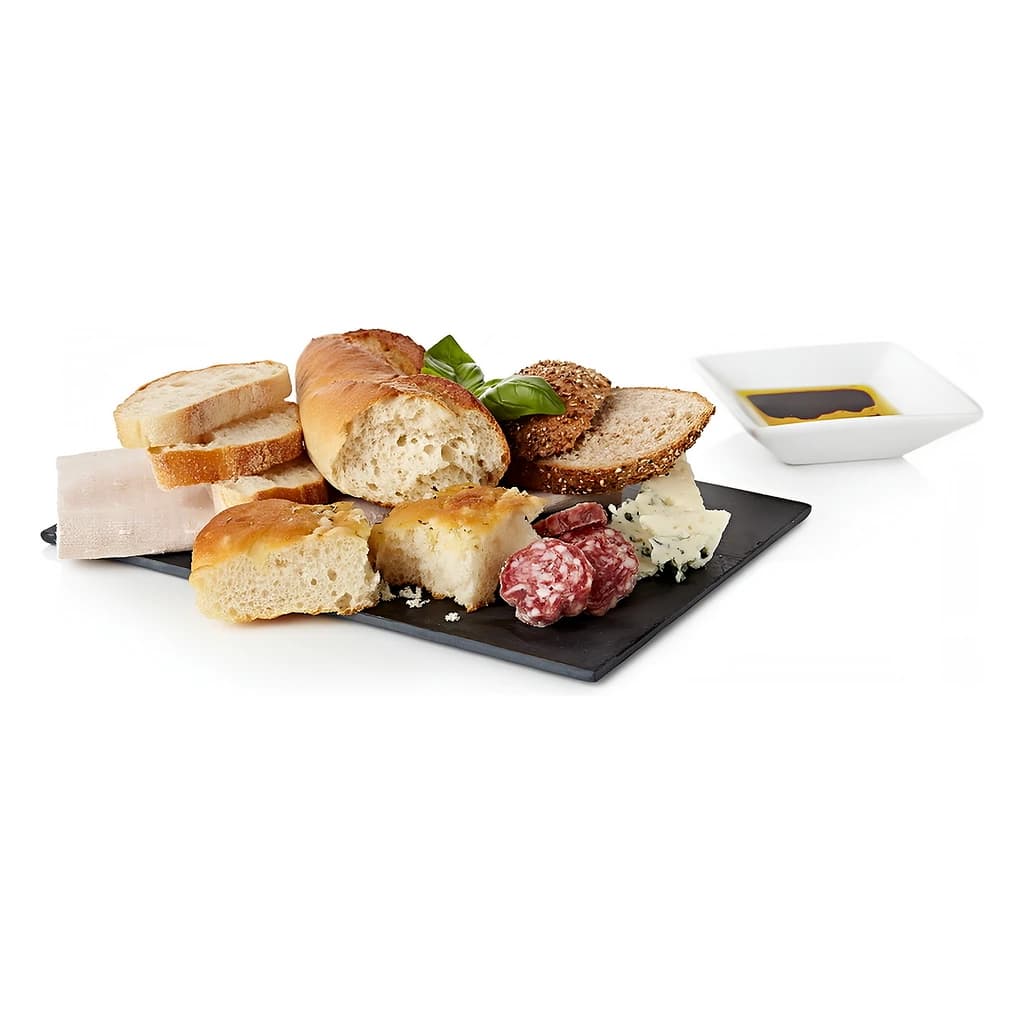
Puratos Tigris SG 2% Bread Improver 16 kg
IREKS Crumb Softener 25 kg
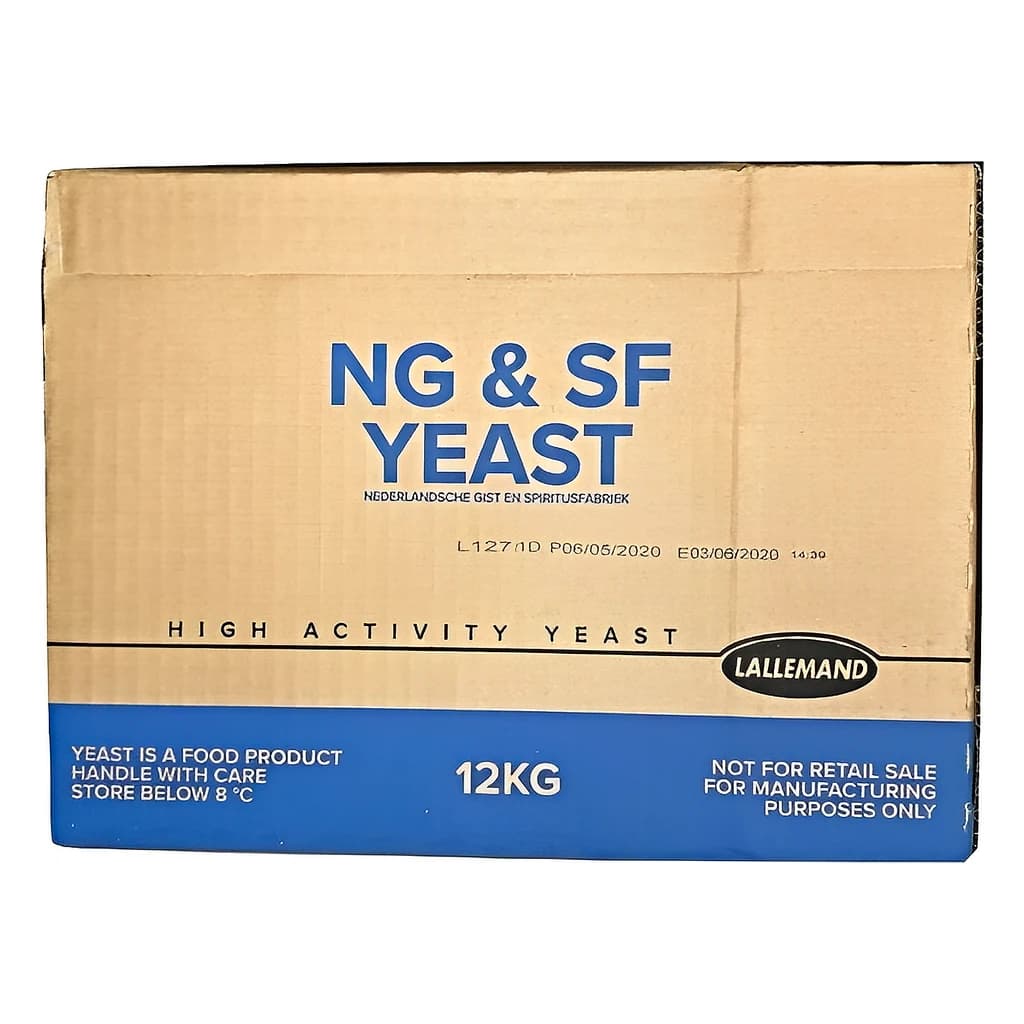
Fresh Yeast NG & SF Fast Active 12 kg
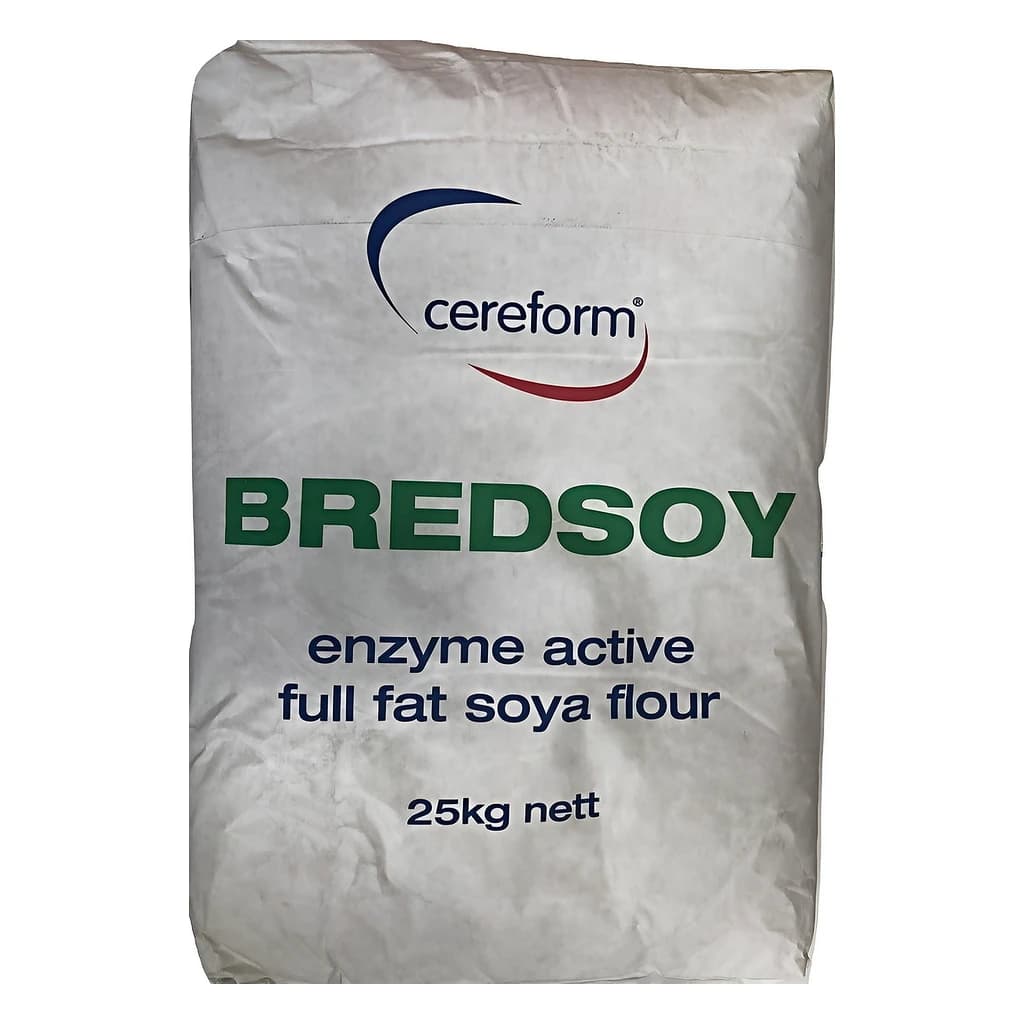
Cereform Breadsoy Enzyme-Active Full-Fat Soya Flour 25 kg

Puratos S500 SG Bread Improver 12.5 kg (Kosher)
IREKS Toast & Buns Bread Improver 25 kg