Lithuanian rye bread (ruginė duona): 3,500 years of baking culture and why rye dominates
For a Lithuanian baker, rye is not one bread among many — it is the bread, and it carries the whole culture with it. This foundational dossier gives a UK operator the authentic picture, drawn from native Lithuanian encyclopedic, ethnographic, academic and miller sources, of why ruginė duona (rye bread) dominates and what that means at the bench. It covers the deep history (cereal farming reaching the eastern Baltic roughly three and a half thousand years ago; the oldest surviving loaves — naturally fermented rye — excavated from the Apuolė, Mažuloniai and Bekešo kalnas hillforts; a recipe barely changed in ~800 years); the climate-and-soil logic that made rye the dependable everyday grain while wheat stayed festive-only; and the sacred status of the loaf — the customs you must not break, Šv. Agotos diena / Duonos diena (St Agatha's / Bread Day, 5 February) with the fire-goddess Gabija, and the rugiapjūtė (rye-harvest) rites of the Rugių boba. It then turns technical: the raugas (rye sourdough) as the non-negotiable engine, the plikymas (scald) that makes the sweet, long-keeping plikyta loaf, and a regional map of styles (Aukštaitija, Žemaitija, Suvalkija, Dzūkija, Mažoji Lietuva). It anchors the heritage flagship Daujėnų naminė duona (EU PGI, 2014) and the cross-border cousins šakotis/sękacz and the Kūčios kūčiukai. Finally it wires everything to the Domson catalogue — rye flour grades mapped to ash-based Type numbers, roasted dark rye malt, live and ready sourdoughs, and caraway — with working formulas in baker's %, a fault table and spec-checked key numbers. It cross-links the Pillar A craft (A2 rye sourdough and fermentation, A5 sourdough/oven, A1 flour and grain, A3 malt, A8 rye formulas) and the sibling B5 articles.
Lithuanian rye bread (ruginė duona): 3,500 years of baking culture and why rye dominates
If you bake for Lithuanian customers in the UK, this is the article to read first. Everything else in this section — the raugas, the scald, the festive calendar, even šakotis — hangs off one fact: rye is the national bread, and it is treated as something close to sacred. A Lithuanian will forgive a mediocre croissant. They will not forgive a bad ruginė duona (rye bread). This dossier explains where that comes from, why rye and not wheat, how the loaf is actually made, and exactly what to buy from the Domson catalogue to make it properly.
1. Three and a half thousand years in the ground
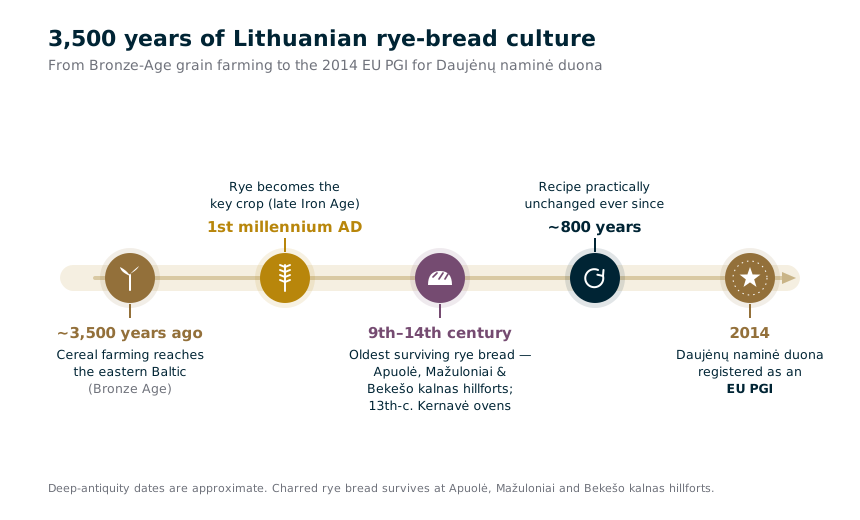
Cereal farming — and with it the first grain-based food — reached the eastern Baltic roughly three to three and a half thousand years ago, in the Bronze Age. (Treat that figure as approximate; it marks the arrival of grain agriculture, not a specific loaf.) Rye itself rose to prominence later, through the first millennium AD, and by the late Iron Age, just before the Lithuanian state coalesced, it was the region's most important and most dependable grain crop. See the timeline in img-b5rye-03.
The oldest actual bread we can point to is younger and more concrete. Vilnius University archaeologists (Auksė Rusteikytė, under Dr Giedrė Motuzaitė Matuzevičiūtė) analysed charred bread fragments from three hillforts — Apuolė (9th–13th c.), Mažuloniai (11th–13th c.) and Bekešo kalnas in Vilnius (late 14th c.) — using phytolith and starch analysis, electron microscopy and experimental archaeology. The verdict: Lithuania's oldest surviving bread was rye, coarse (unwinnowed grain, weed seeds such as cleavers, Galium aparine, still in it), and leavened by spontaneous, natural fermentation. Food historian Prof. Rimvydas Laužikas puts the same picture in a longer arc: bread ovens turn up in 13th-century layers at Kernavė, and the black-rye recipe has stayed practically unchanged for about 800 years. Rye, he notes, was the most widely grown grain in the country until the 20th century, and was eaten by everyone — in his phrase, "paupers and dukes alike". He calls rye bread a valstybingumo atributas — an attribute of statehood — because the Lithuanian state grew up on exactly the poor land around Vilnius where rye thrived.
The craft context for this "naturally fermented, no baker's yeast" bread lives in Pillar A: A2-sourdough-cultures-science and A2-rye-sourdough-multi-stage.
2. Why rye, and not wheat
This is the single most important thing to understand about Lithuanian baking, and it is not a matter of
taste — it is agronomy. See img-b5rye-02 and the why-rye-vs-wheat table.
- Climate. Rye is a hardy winter cereal (žiemkenčiai) that copes with a short, cool, moist growing season. Wheat wants more warmth and a drier ripening; in Lithuania it was marginal.
- Soil. Lithuania's soils are largely acidic and light/sandy (podzolic). Rye grows and yields on exactly this ground; wheat gives poor, low-quality crops on it.
- Security. Rye put food on the table where nothing else reliably would. That made it the everyday grain of every class, while wheat flour was reserved for festive baking.
Wheat did not disappear — it was milled and baked, but as a treat; the grain-and-milling background is in A1-wheat-grain-and-milling. There is also a technical consequence that every baker feels at the bench. Rye has very little functional gluten; its crumb is built by starch and pentosans, and it is enzyme-rich, so it must be acidified to bake well. That is why a Lithuanian rye loaf is not simply "yeasted" — it is soured with a raugas. The gluten/strength background is in A1-protein-gluten-and-strength and A1-alternative-grain-flours; the acidification logic is developed in A5-sourdough-technology.
3. Bread you must not anger
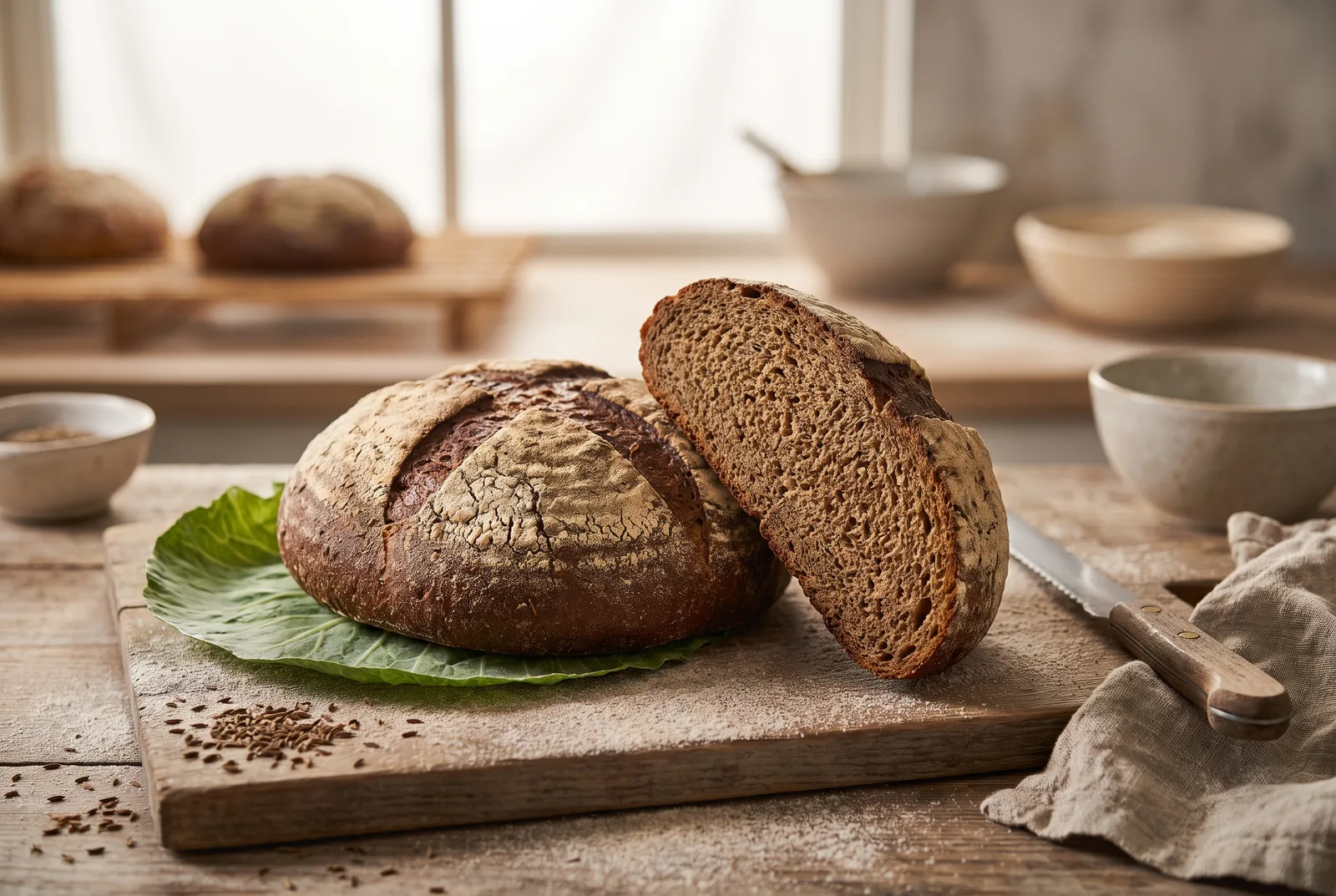
In Lithuanian tradition bread was holy, and there were rules. A loaf must never be laid upside-down, or set with its cut side toward the door — the bread could "take offence". A dropped piece was picked up and kissed. The head of the household cut the loaf. The loaf was round "like the world", and it was slashed with a cross that marked the four cardinal directions before it went to the oven; at table it was eaten with salt. (These customs are documented in Lithuanian ethnographic scholarship — see the Klaipėda University study.)
The calendar has a day for it. 5 February is Šv. Agotos diena — Duonos diena, "Bread Day" (see img-b5rye-05). It layers two things: the pre-Christian cult of the hearth-fire goddess Gabija, and St Agatha, a 3rd-century martyr and patron against fire. Bread blessed in church that day — "Agotos duona" — was kept in the roof rafters, under the house foundations, or on the stove, and in a fire a piece was thrown into the flames to stop them spreading. It was believed to guard the home against fire, disease and misfortune.
And the loaf began in the field. The rugiapjūtė (rye harvest) was the year's most important work — the family's entire bread supply depended on it — and it had its own rites (see img-b5rye-09). The last sheaf was dressed as a woman, the Rugių boba ("rye crone", with iron boots and an iron whip), embodying the spirit of the grain; a harvest wreath (vainikas) was woven from the last or finest ears; and the sheaf was tossed high or struck three times on the ground to secure next year's crop. When a UK customer treats your rye loaf with unusual seriousness, this is the background hum.
4. How the loaf is actually made: raugas and the scald
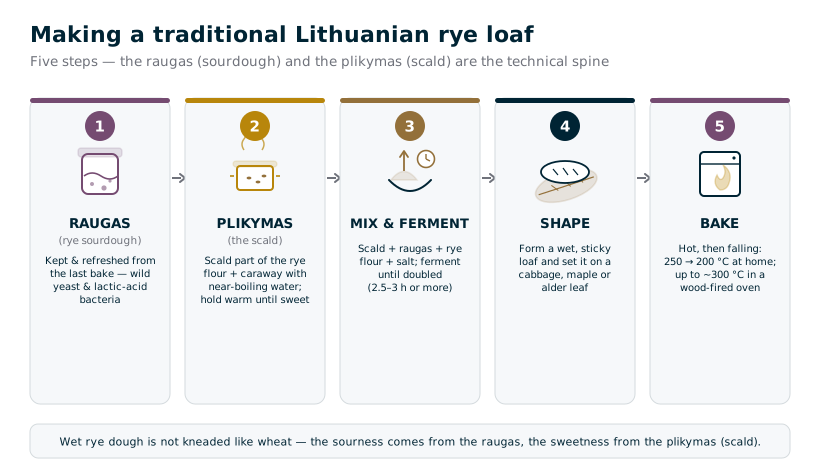
Two techniques define authentic Lithuanian rye. Both are covered in depth in the sibling articles B5-raugas-sourdough-starter, B5-juoda-rugine-duona and B5-plikyta-rugine-duona; here is the working overview, and it is drawn from the miller Malsena's own bread primer. See img-b5rye-04 and the formula cards below.
The raugas (rye sourdough). This is a living symbiosis of wild yeast and lactic-acid bacteria, carried forward as a piece of dough saved from the previous bake. Malsena's maintenance ratio is simple: 1 part raugas + an equal weight of rye flour + an equal weight of water (a wheat starter differs — 1 part raugas: 1 water: 2 flour). A refreshed rye raugas rises within about 6 hours on its wild yeast, while the bacteria keep working longer, so it is held warm for about 12 hours before you build the dough. Prof. Elena Bartkienė (KTU) explains what the long ferment does: it activates rye's own amylolytic enzymes, partially "pre-digests" the dough, and its lactic-acid bacteria break down some gluten (see the food-safety note in §8 — this does not make the bread gluten-free). The general craft is in A2-sourdough-cultures-science, A2-yeast-fermentation-science (what the wild yeast is actually doing) and A2-preferments-poolish-biga-sponge.
The plikymas (scald). This is the move that gives Lithuanian dark rye its characteristic sweet, malty, long-keeping crumb. A portion of the rye flour — often with the caraway — is scalded with near-boiling water and held warm until it tastes sweet (starch converts to sugars — treat the warm hold as a controlled step, see the food-safety note in §8), then cooled and combined with the raugas to ferment. The resulting plikyta duona is sweeter, moister and keeps longer. In practice the fermentation of a fully traditional loaf can run up to three days.
Shaping and baking. Rye dough is a thick, sticky paste, not a kneadable dough; you shape a wet loaf with wet hands. Traditionally it was set on a cabbage, maple, horseradish or alder leaf (or straight on a flour-dusted oven sole) and baked in a well-heated wood oven up to ~300 °C for 2–3 hours. A modern bakery approximation from Malsena: bulk-ferment until roughly doubled (no less than 2.5–3 hours, misting the surface), then bake hot-then-falling — 250 °C for 10–15 minutes, dropping to 200 °C for ~40 minutes. Oven-management principles are in A5-baking-oven-science, and why a soured, scalded rye stays fresh so long is in A5-shelf-life-and-staling. Formulas in baker's % are in A8-rye-and-wholegrain-formulas and A8-bakers-percentage-fundamentals.
5. A regional map of styles
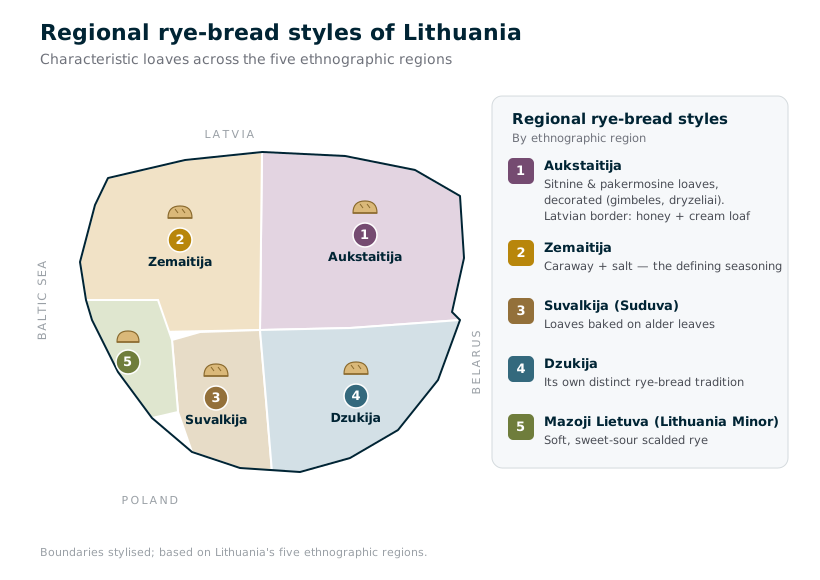
"Lithuanian rye bread" is not one thing (see img-b5rye-06 and the regional-styles table):
- Aukštaitija (northeast): decorated loaves — sitninė and pakermošinė — marked with gimbelės, dryželiai or little dough trees; near the Latvian border, a small loaf enriched with honey or caramelised sugar and cream in the rye dough (cream is a milk allergen and honey is unsuitable for infants under one year — see §8).
- Žemaitija (Samogitia, west): bread defined by caraway (kmynai) and salt.
- Suvalkija / Sūduva (southwest): bread as a symbol of a well-run household, always on the table, and famously baked on alder (alksnio) leaves.
- Dzūkija (southeast): sandy, forested country where rye bread sits beside buckwheat (grikiai) and potato baking.
- Mažoji Lietuva (Lithuania Minor): a softer, sweeter sweet-sour scalded (plikyta) rye.
6. The heritage flagship and its cross-border cousins
Daujėnų naminė duona is the loaf to know. It is a dark rye bread from the village of Daujėnai (Pasvalys district, northern Lithuania), baked there since at least the 17th century, and it is Lithuania's rye-bread standard-bearer: recognised as culinary heritage (2002), a National Heritage Product (2009), and registered as an EU Protected Geographical Indication (PGI) in 2014 (confirmed on the European Commission register). Its defining method (see img-b5rye-10): sifted rye flour, water, sugar, salt and caraway, leavened by spontaneous fermentation in oak troughs whose timber holds the souring culture bake after bake — giving a sweet-sour loaf with a dark crust and a light-brown, porous, slightly sticky crumb studded with caraway.
It is not alone. The Tautinio paveldo produktai (National Heritage Products) scheme, run by the Ministry of Agriculture, certifies traditional rye breads and their makers — for example Radviliškių kaimo kepykla, Kartenos naminė duona and Velželio duona — typically requiring Lithuanian-grown grain and no synthetic additives, with natural add-ins such as caraway, hemp and flax seeds, and even homegrown apples.
Two cross-border cousins matter for a UK baker serving mixed Baltic and Polish communities:
- Šakotis — the tall, spiky spit cake (a relative of German Baumkuchen) — is shared festive heritage with Poland, where the same cake in the former Grand-Duchy borderlands is called sękacz. Full technique is in B5-sakotis-spit-cake; see img-b5rye-07.
- Kūčiukai — small yeast biscuits served with aguonų pienas (poppy-seed milk) — are the ritual bread of Kūčios (Christmas Eve, 24 December), traditionally meant to feed the souls of the dead. See B5-kuciukai-christmas-biscuits and B5-seasonal-festive-baking.
For how this tradition sits beside its neighbours, compare the Polish rye tradition in B1-rye-bread-production and B1-zakwas-sourdough, and the Romanian sour-culture tradition in B4-maia-and-sourdough-tradition, and the Bulgarian ritual-bread tradition in B6-ritual-breads-pitka-pogacha — the "bread as sacred object" theme runs right across the region.
7. Buying it in the UK: what a Lithuanian baker orders
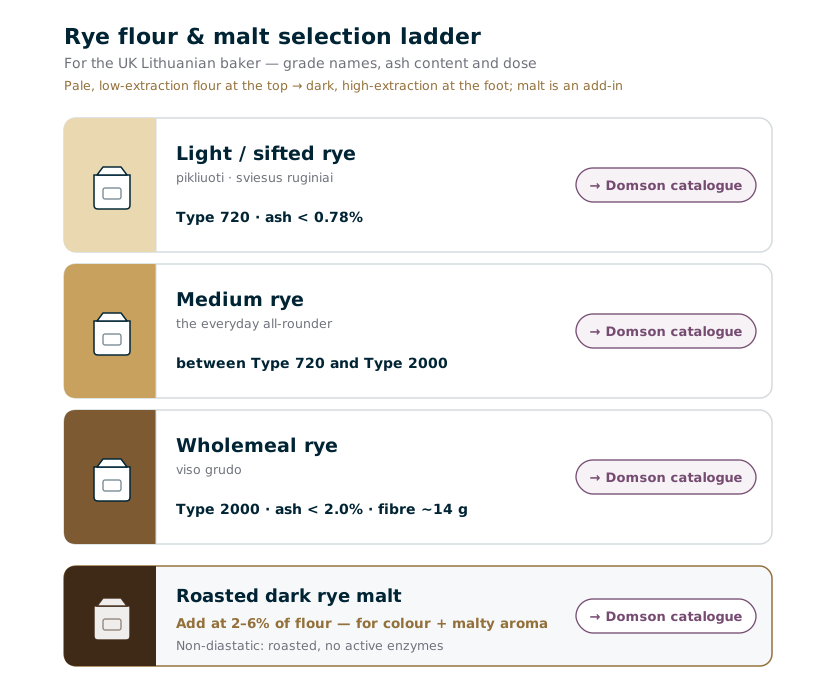
You can build an authentic Lithuanian rye programme entirely from the Domson catalogue. See img-b5rye-08
and the lt-rye-flour-grades and leavening-flavour-map tables.
Flour — light to wholemeal. Lithuanian rye grades correspond to ash-based Type numbers:
- Pikliuoti / šviesūs ruginiai (light/sifted rye) ≈ Type 720 — the Rye Flour Type 720 (GoodMills Polska, or Komplexmłyn) at ash < 0.78%, protein ~6.5 g/100 g.
- Viso grūdo ruginiai (wholemeal rye) ≈ Type 2000 — the Wholemeal Rye Flour Type 2000 (GoodMills) at ash < 2.0%, fibre 14.4 g/100 g, or the Organic Stoneground Wholemeal Rye Flour (Doves Farm) for an organic UK-milled option. Most everyday juoda duona is a blend of the two. Flour classification is explained in A1-flour-classification-systems and A1-wholemeal-and-high-extraction.
Colour and malty aroma — the authentic touch. The catalogue carries an unusually on-point product: Lithuanian Dark Rye Malt (Forbake), made by Lietuviškas salyklas JSC in Lithuania — a roasted, fermented rye malt flour. Its datasheet is exactly what you want to see: dose 2–6% of flour weight, colour 250 ± 40 EBC, diastatic power 0 (it is non-diastatic — it colours and flavours, it does not add enzyme activity or leaven), pH 4.5 ± 0.5. Alternatives for colour/aroma are Dark Fermented Rye Malt (Malmon), ZeelaMalz Dark Rye and IREKS Naturin. Malt background is in A3-malt-and-malt-extracts.
Souring — live or ready. For the real thing, build a live raugas from a pure culture such as the Böcker Reinzucht-Sauerteig pure starter (see B5-raugas-sourdough-starter). For consistency at volume, use a ready rye sour — IREKS Natural Liquid Rye Sour, Backaldrin BAS Dark Liquid Rye Sourdough, Lesaffre Rye Sourdough AS ECOL — or the dried Sauer Dark Rye Sourdough Concentrate (Uldo) for flavour dosing. Complete bases (Zeelandia Hearty Rye Bread Mix, Kołodziej Wholegrain Rye Mix, Komplet Żytniak CL, Puratos Sapore Softgrain Rye) and the Rye Stabil improver cover higher-throughput production.
Seasoning and inclusions.Caraway (kmynai) is the signature — Ros-Sweet Caraway Seeds are even available in Lithuanian-origin lots (essential-oil content ≥ 1.75 ml/100 g). Add texture with Cracked Rye and Rye Flakes (Agrol). For the festive side of the tradition, Blue Poppy Seeds feed the kūčiukai (mind the poppy-seed opium-alkaloid limits — see §8).
8. Food safety and allergens
- Gluten / cereals. Rye flour and rye bread contain gluten — rye is a named "cereals containing gluten" allergen under retained-EU food-information law (Reg (EU) No 1169/2011, Annex II) and must be declared. The Forbake dark rye malt likewise declares gluten. Natural-raugas fermentation reduces gluten but does not eliminate it — Lithuanian rye bread is not gluten-free (it cannot meet the ≤ 20 mg/kg "gluten-free" threshold of Reg (EU) No 828/2014) and must never be sold or labelled as such.
- Ergot on rye. Rye is prone to ergot; the rye flour datasheets carry an ergot-alkaloid limit of 500 µg/kg — the current EU/retained-UK maximum for rye milling products under Reg (EU) 2023/915 (the planned tightening to 250 µg/kg is deferred to 1 July 2028 by Reg (EU) 2024/1808). Buy to spec and store dry.
- Scald hold (plikymas) — a control point. The scald sits a wet cereal paste warm, in the roughly 63–65 °C saccharification zone, for several hours to turn it sweet. Held cooler, held too long, or allowed to drift into the danger zone, a warm cereal paste is a recognised Bacillus cereus / emetic-toxin hazard. Traditional practice mitigates this because the scald is then acidified by the raugas and baked hot — treat the hold temperature and time as a documented control point (see FSA Bacillus cereus guidance) before running it as bakery instruction.
- Caraway. Declared allergen-free on the Ros-Sweet datasheet, but produced in a plant handling nuts, peanuts, sesame and sulphites — check the batch certificate for cross-contamination if a customer has an allergy.
- Enriched regional loaves (cream, honey) — allergen and infant note. The Aukštaitija / Latvian-border sweet loaf is enriched with cream (a milk allergen that must be declared) and honey. Honey should not be given to infants under 12 months (infant-botulism risk — C. botulinum spores can survive baking), so a honey-containing loaf must not be positioned for under-1s. This applies wherever this style is actually produced for sale.
- Poppy seed (kūčiukai, aguonų pienas, Blue Poppy Seeds) — allergen and opium alkaloids. Poppy seed is treated as an allergen and carries opium-alkaloid limits: whole/ground poppy seed for the final consumer ≤ 20 mg/kg, and poppy-seed-containing bakery products ≤ 1.50 mg/kg (morphine + 0.2 × codeine; Reg (EU) 2023/915). Poppy-seed milk (aguonų pienas) is a concentrated, steeped preparation — a documented higher-morphine route — so source low-morphine / washed seed and check these limits before using poppy in any product for sale.
- Nutrition and health claims. Statements that rye/sourdough bread is more digestible, "pre-digests" the dough, "activates enzymes", lowers glycaemic response, improves mineral uptake, or is a good source of fibre / B vitamins / iron / magnesium are regulated nutrition and health claims under Reg (EC) No 1924/2006, and are reported from Lithuanian sources. Only authorised wording may reach packaging or marketing: a "source of fibre" claim needs ≥ 3 g/100 g and "high fibre" ≥ 6 g/100 g (wholemeal Type 2000 at 14.4 g fibre/100 g would qualify), and a vitamin/mineral "source" claim needs ≥ 15% of the NRV per 100 g and must be substantiated per batch. Verify against current UK/EU rules before any on-pack or marketing use.
Native Lithuanian sources (Visuotinė lietuvių enciklopedija, 15min.lt/VU archaeology, Prof. R. Laužikas via BNS, LRT/Prof. E. Bartkienė, Malsena, the EU PGI register and Lithuanian ethnographic scholarship) were read in Lithuanian and synthesised into English. Product numbers are cross-checked against supplier datasheets; the flour Type↔ash convention and the ergot limit are further confirmed against EU regulation, while per-SKU datasheet values (malt EBC / pH, caraway essential-oil content) are vendor-declared and single-source.
Figures
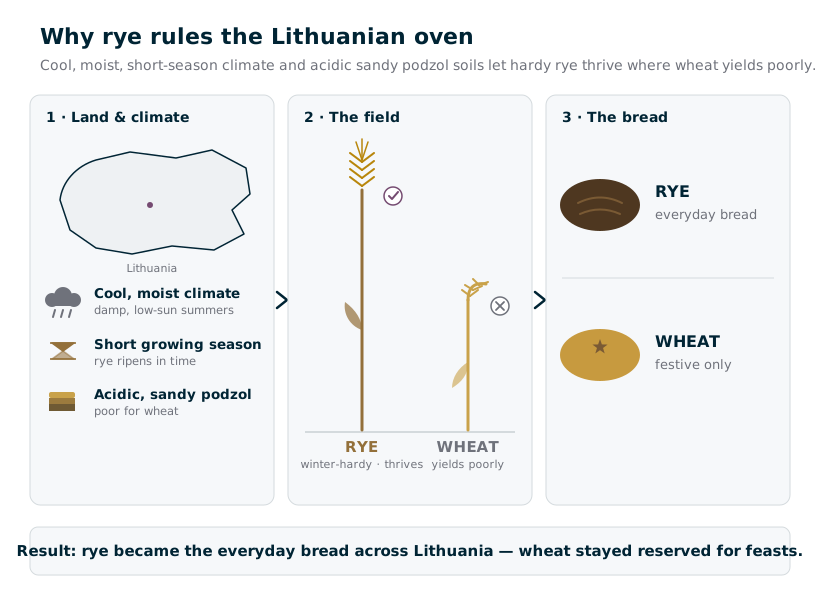 Diagram linking Lithuania's cool climate and acidic sandy soils to rye's dominance over wheat
 Timeline of Lithuanian rye bread from Bronze-Age farming to the 2014 EU PGI for Daujenu namine duona
 Five-step diagram: raugas, scald, ferment, shape on a leaf, bake - making Lithuanian rye bread
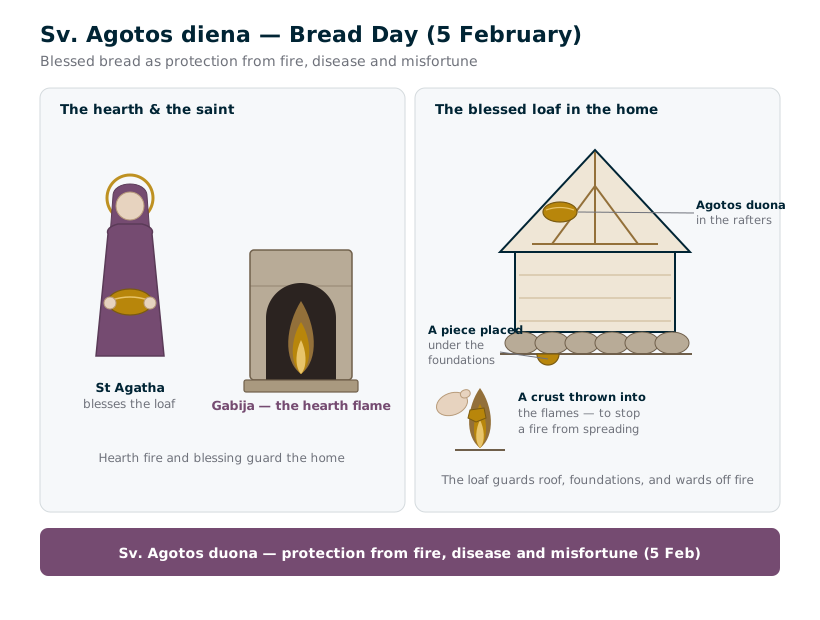 Illustration of St Agatha's Bread Day: blessed bread kept in the rafters and thrown into fire for protection
 Map of Lithuania's ethnographic regions with each region's characteristic rye-bread style labelled
 Ladder mapping Lithuanian rye flour grades and dark rye malt dosage to Domson catalogue products
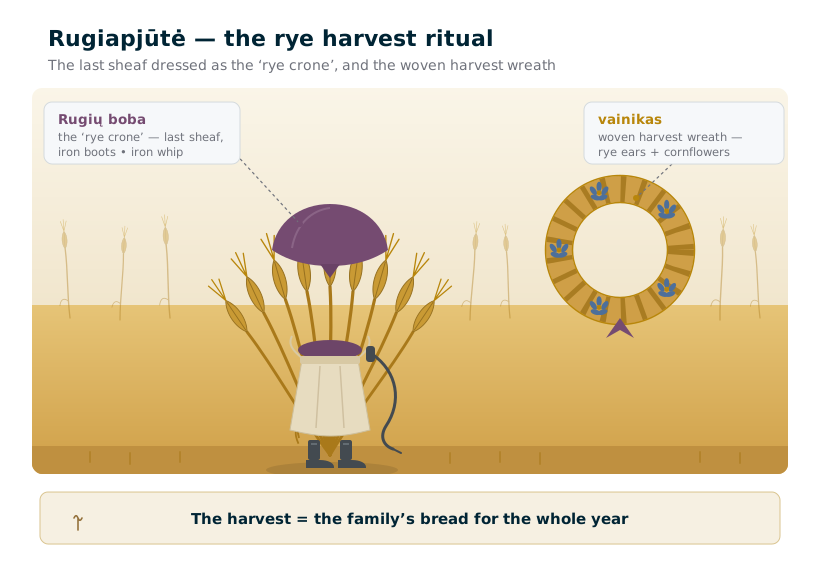 Illustration of the Rugiu boba last sheaf and a rye harvest wreath in a Lithuanian rye field
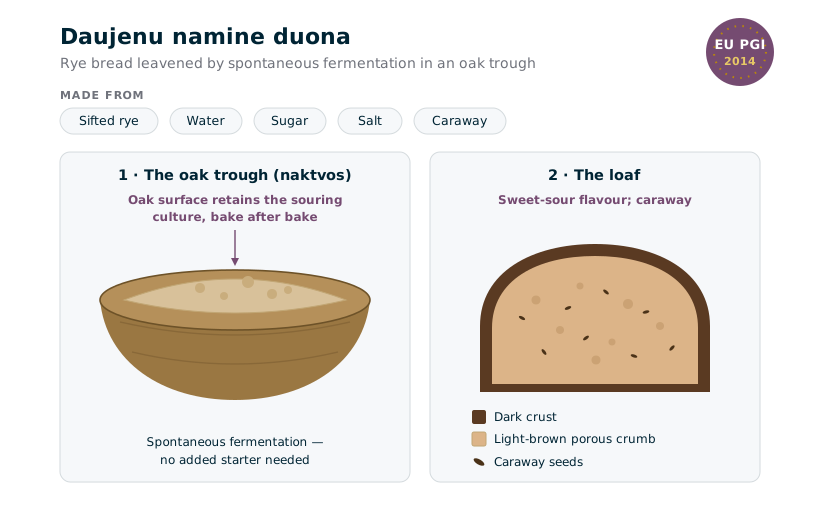 Diagram of Daujenu namine duona fermented in an oak trough with an EU PGI badge
Juoda rugine duona (black rye) - representative working formula
| Ingredient | Baker's % | Weight |
|---|---|---|
| Rye flour, total (mix wholemeal + light) — e.g. 70% wholemeal Type 2000 + 30% light Type 720; 90-100% rye is typical | 100 | |
| of which pre-fermented as raugas — mature rye sourdough carried from the last bake | 35 | |
| of which used in the scald (plikymas) — scalded with the caraway - see the scald card | 30 | |
| Water (total) — rye takes high hydration; dough is a thick, sticky paste, not kneadable | 80 | |
| Salt — ~1.8-2.0% | 1.8 | |
| Caraway seeds (kmynai) — whole and/or ground; the signature seasoning | 1.2 | |
| Roasted dark rye malt (ruginis salyklas) — 2-6% of flour for colour and malty aroma; non-diastatic | 4 | |
| Wheat flour (optional) — some add up to ~10% for a little more lift | 0 |
Yield: About 2 loaves of ~900 g; scale linearly
Plikymas (rye scald) - preferment card
| Ingredient | Baker's % | Weight |
|---|---|---|
| Rye flour (portion of the total) — ~30% of the recipe's total flour | 100 | |
| Near-boiling water — roughly 1.5x the scald flour; enough to gelatinise the starch | 150 | |
| Caraway seeds — scald with the flour to bloom the aroma | 4 | |
| Roasted dark rye malt (optional) — part of the total malt, added to the scald for depth | 8 |
Yield: Scald for the loaf above
Raugas refresh (rye) - maintenance ratio
| Ingredient | Baker's % | Weight |
|---|---|---|
| Mature raugas — 1 part | 100 | |
| Rye flour — equal weight to the raugas | 100 | |
| Water — equal weight; keep it a thick batter | 100 |
Yield: Enough active starter to pre-ferment the loaf
| Factor | Rye (rugiai) | Wheat (kvietys) | Consequence |
|---|---|---|---|
| Climate | Winter-hardy winter cereal (ziemkenciai); copes with a short, cool, moist season | Prefers warmth, longer season, drier ripening | Rye reliably ripens in Lithuania; wheat is marginal |
| Soil | Grows on acidic, light/sandy podzolic soils | Wants deeper, richer, near-neutral soils | Most Lithuanian land favoured rye |
| Yield security | Yields even on poor ground | Poor, low-quality yields on acid/light soil | Rye = the dependable everyday grain |
| Dough behaviour | Little functional gluten; starch and pentosans set the crumb; enzyme-rich, needs acid | Strong gluten network; tolerant of straight-yeast leavening | Rye MUST be soured (raugas) - not just yeasted |
| Cultural role | Everyday bread of every class ('paupers and dukes alike') | Reserved for festive baking | Black rye became the national identity loaf |
| Lithuanian grade | Character | Approx. Type / ash | Catalogue match | Use |
|---|---|---|---|---|
| Pikliuoti / sviesus ruginiai miltai (sifted / light rye) | Pale, low-bran, milder sour | ~Type 720; ash < 0.78% | Rye Flour Type 720 (GoodMills / Komplexmlyn) | Lighter table rye, plikyta base, blends |
| Ruginiai miltai (standard rye) | Medium extraction, fuller flavour | ~Type 997-1150; ash ~1.0-1.15% | (blend Type 720 with wholemeal, or a bread mix) | Everyday juoda duona |
| Viso grudo / pilno malimo ruginiai miltai (wholemeal rye) | Full bran, dark, high fibre, deepest sour | ~Type 2000; ash < 2.0%; fibre ~14 g/100 g | Wholemeal Rye Flour Type 2000 (GoodMills); Organic Stoneground Wholemeal Rye (Doves Farm) | Dense dark loaves, wholegrain rye |
| Ruginis salyklas (roasted dark rye malt) | Non-diastatic; colour + malty-sour aroma | Colour 250+/-40 EBC; dose 2-6% of flour | Lithuanian Dark Rye Malt (Forbake) | Colour and aroma of dark/plikyta bread |
| Approach | What it is | Catalogue options | Notes |
|---|---|---|---|
| Live raugas (traditional) | Rye sourdough kept and refreshed bake-to-bake; wild yeast + lactic-acid bacteria | Build from a pure culture: Bocker Reinzucht-Sauerteig pure starter | Authentic; needs a feeding schedule - see B5-raugas-sourdough-starter |
| Liquid / active sourdough | Ready fermented rye sour for consistent acidity | IREKS Natural Liquid Rye Sour; Backaldrin BAS Dark Liquid Rye Sourdough; Lesaffre Rye Sourdough AS ECOL | Speeds and standardises souring in a bakery |
| Dried sourdough concentrate | Powdered rye sour for flavour dosing | Sauer Dark Rye Sourdough Concentrate (Uldo) | Flavour top-up; not a full leavening on its own |
| Roasted dark rye malt / colour | Non-diastatic roasted rye for colour + aroma | Lithuanian Dark Rye Malt (Forbake); Dark Fermented Rye Malt (Malmon); ZeelaMalz Dark Rye; IREKS Naturin | Dose to taste (malt 2-6% of flour); does not leaven |
| Complete rye bread mix | Formulated rye base | Zeelandia Hearty Rye Bread Mix; Kolodziej Wholegrain Rye Mix; Komplet Zytniak CL; Puratos Sapore Softgrain Rye | Fast, consistent output for volume production |
| Region | Signature | Detail |
|---|---|---|
| Aukstaitija (northeast highlands) | Decorated loaves; a Latvian-border sweet loaf | sitnine and pakermosine loaves marked with gimbeles/dryzeliai/little trees; near Latvia, a small loaf enriched with honey/caramelised sugar and cream |
| Zemaitija (Samogitia, west) | Caraway + salt | Caraway (kmynai) and salt are the defining seasonings; sometimes seeds or a little sugar in the rye dough |
| Suvalkija / Suduva (southwest) | Baked on alder leaves | Bread as a prosperity symbol always on the table; loaves baked on alksnio (alder) leaves |
| Dzukija (southeast) | Rye alongside buckwheat and potato baking | Sandy, forested region; rye bread sits beside grikiai (buckwheat) and potato bakes (regional context) |
| Mazoji Lietuva (Lithuania Minor) | Soft, sweet-sour scald | A softer, sweeter sweet-sour scalded (plikyta) rye |
| When | Milestone |
|---|---|
| ~3,000-3,500 years ago (Bronze Age) | Cereal farming and grain-based food reach the eastern Baltic (approximate) |
| 1st millennium AD / late Iron Age | Rye becomes the region's dominant, most-dependable grain crop |
| 9th-14th centuries | Oldest surviving bread finds: charred naturally-fermented rye at Apuole, Mazuloniai and Bekeso kalnas hillforts; 13th-c. bread ovens at Kernave |
| ~last 800 years | The black rye bread recipe stays practically unchanged |
| Until the 20th century | Rye remains the most widely grown grain; wheat stays festive-only |
| 2002 / 2009 / 2014 | Daujenu namine duona: culinary heritage (2002), National Heritage Product (2009), EU PGI (2014) |
| Fault | Likely cause | Fix |
|---|---|---|
| Loaf dense, gummy, under-risen | Raugas under-fermented / not active enough | Refresh and ripen the raugas fully; hold warm ~12 h; ensure it is bubbly and sour before use |
| Sharp, over-sour, sometimes sunken | Raugas over-fermented / over-acidified | Use a younger, sweeter raugas; shorten warm holding; feed more often |
| Weak lift, off flavour | Long-refrigerated starter used straight from the fridge | Bring out and refresh 1-2 times to reactivate before building the dough |
| Dough slides between the fingers / spreads flat | Hydration too high | Reduce water; rye is a paste, but it should hold a shaped loaf that only slowly loses form |
| Hard to shape, bakes slowly, tight crumb | Dough too stiff | Add water; a correctly hydrated rye dough is soft and tacky |
| Big split/crack, blown crust | Under-proofed before the oven | Give a full final proof until the surface just starts to crack, then bake |
| Pale, flat-flavoured dark loaf | No/insufficient scald or roasted rye malt | Add a scald and/or dose roasted dark rye malt at 2-6% of flour for colour and aroma |