
Šakotis: equipment, batter, layering technique and troubleshooting for the Lithuanian spit cake
Šakotis (from šaka = "branch"; the "branched tree cake") is Lithuania's most recognisable festive pastry and one of the hardest things a baker can attempt: an egg-rich butter batter built up, thin layer by thin layer, on a horizontally rotating spit in front of radiant heat until it grows the branch-like spikes (spygliai) that give it a spruce-tree silhouette. Built from native Lithuanian and Polish sources and cross-checked against the platform's supplier specifications, this dossier gives the authentic picture: the five-ingredient batter (eggs, butter, sugar, soft wheat flour and sour cream — grietinė) and its extraordinary egg load (25–60 eggs per kilo of flour); the mixing method (cream the butter and sugar, beat in yolks, fold in flour and cream, fold in stiffly whipped whites — all the lift is mechanical); the bake itself (a two-person job — one turns the spit, one ladles batter and tends a birch/alder fire — where turning faster grows longer spikes); the ring-per-layer cross-section that names the cake; and the discipline of releasing it from the roller only the next day so the fragile spikes survive. It maps the history (German Baumkuchen ancestry; the first recipe published in Vilnius in 1830 by Jan Szyttler; the Polish sękacz and Belarusian bankukha cousins; EU Café Europe 2006; the 85.8 kg / 372 cm Druskininkai record of 2015), a faults table, allergen and food-safety flags, and a Domson shopping list — cross-linked to the Pillar A craft concepts (A8-cake-and-pastry-formulas, A8-bakers-percentage-fundamentals, A4-butter-grades-and-specialist-types, A4-fat-science-functionality, A5-baking-oven-science, A2-chemical-leaveners-baking-powder) and to its sister articles (B4-transylvanian-kurtoskalacs, B5-seasonal-festive-baking, B5-kuciukai-christmas-biscuits, B5-plikyta-rugine-duona, B5-rye-bread-culture-and-history).
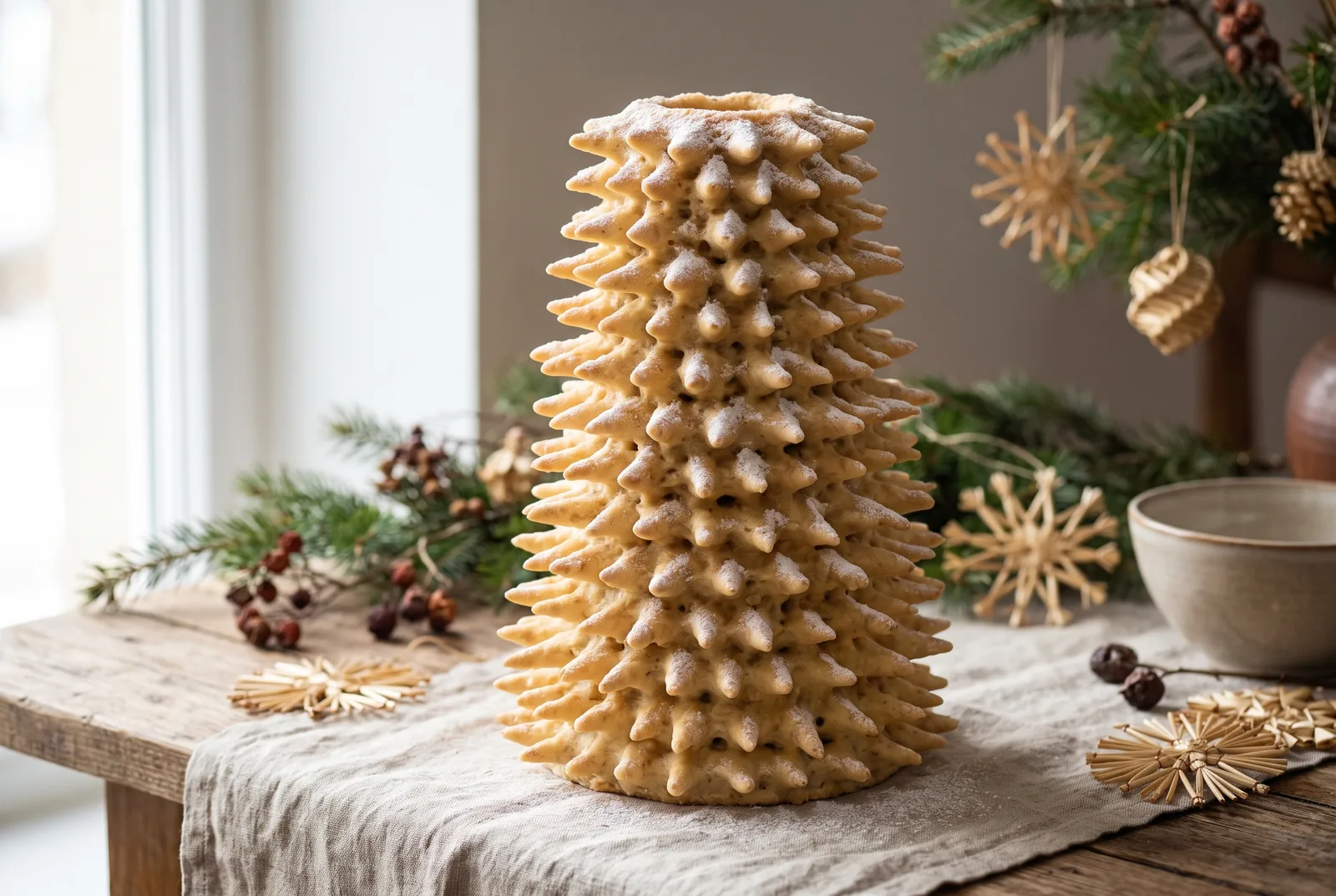
What šakotis is
Šakotis (pronounced roughly shah-KAW-tis; the name comes from šaka, "branch", so it reads as "the branched one" or "tree cake") is a tall, pale-gold cake built up in thin layers on a rotating spit until it bristles with pointed, branch-like spikes and tapers like a spruce tree. It is a national Lithuanian speciality and is also made, under other names, in north-eastern Poland (as sękacz) and westernmost Belarus (as bankukha / bankucha). In different Lithuanian regions you will also hear it called raguolis, raguotis, ragočius or bankuchenas (from the German name).
It is a serious technical piece — the reason it earns an "advanced" rating and its own dossier. There is no other mainstream European cake that asks a baker to pour a batter onto a turning spindle and grow it, ring by ring, into a sculptural tree. Get the batter, the heat and the rhythm right and you have the centrepiece of a Lithuanian wedding table; get them wrong and you have a scorched, spikeless, greasy log. See img-b5sk-01 for the finished form.
A short, honest history
Šakotis belongs to the family of spit cakes descended from the German Baumkuchen ("tree cake") . It became popular in the 19th century across the former Polish–Lithuanian Commonwealth (1569–1795), and the first regional recipe was published in Vilnius in 1830 by Jan Szyttler in a culinary book — the point from which its recorded history is usually dated. (You will see Lithuanian marketing pages claim a much older, 15th–16th-century pedigree; treat those with caution — the hard, corroborated milestone is the 1830 Vilnius recipe.)
Its modern status is well documented. In 2006 šakotis represented Lithuania in the European Union's "Café Europe" initiative on Europe Day, and in the same year Masurian sękacz was entered on Poland's list of traditional products; in 2019 the Belarusian bankukha recipe from Porazava gained official historical and cultural heritage recognition. In May 2015, Druskininkai set a record with a šakotis measuring 372 cm (12.2 ft) tall and weighing 85.8 kg (189 lb). The map and timeline are drawn in img-b5sk-06.
Culturally it is the "king of the festive table" — made above all for weddings, and for Easter (Velykos) and Christmas. That places it alongside the rest of this section: the Christmas-Eve kūčiukai and the wider Kūčios / Velykos / Užgavėnės calendar (see B5-kuciukai-christmas-biscuits and B5-seasonal-festive-baking). And although šakotis is a sweet batter cake, not a rye loaf, it sits inside a baking culture whose spine is rye bread and the scald — the plikyta tradition (B5-plikyta-rugine-duona, B5-rye-bread-culture-and-history); tellingly, some regional šakotis recipes still fold a little rye flour and warm spice into the batter.
The batter: five ingredients, and mostly eggs
The most striking thing an outsider learns from Lithuanian bakers is how short the ingredient list is. As baker Marytė Gudonienė puts it, the batter contains only five products — eggs, natural sour cream (grietinė), sugar, butter and flour. And of those five, eggs dominate: a roughly 2 kg šakotis takes 25–30 eggs, and traditional formulas run at the order of 25–60 eggs per 1 kg of flour — eggs are by far the largest component of the batter.
Because so much of the structure comes from eggs and fat rather than flour, this is best read as a very rich cake batter, not a dough — closer in logic to a pound cake or to Baumkuchen than to bread. The formula-balance thinking (fat, egg and sugar relative to flour) is exactly the modified baker's percentage covered in A8-cake-and-pastry-formulas, and the percentage language itself is in A8-bakers-percentage-fundamentals. Two authentic reference points:
- Lithuanian large-batch: ~1 kg butter, ~1 kg sugar, ~1 kg wheat flour, 60 eggs, with a glass of rye flour and a little cinnamon and cardamom in some regional versions.
- Polish sękacz (Podlasie): 1 kg butter, 1 kg sugar, 1 litre sour cream (kwaśna śmietana), 1 kg flour, 40 eggs.
See the formula card below for the full representative formula in baker's %, and the comparison table below for these authentic ratios side by side.
Ingredient choices that matter:
- Flour — soft and low-protein. Use a fine, low-ash, low-protein flour so the crumb stays tender: a Type 450 grade (protein ≥ 8.0%, ash ≤ 0.48%, falling number ≥ 220 s, moisture ≤ 15%) or a dedicated sponge-cake flour is right. A strong bread flour would toughen the layers. Flour numbering and why "450" is soft are covered in the flour pillar.
- Butter — high-fat, unsalted. The reference datasheet is a min 82% fat, ~16% water unsalted butter; keep it cold-chain (0–10°C). Fat content, water and why 82% butter behaves differently from an 80% or a spreadable are in A4-butter-grades-and-specialist-types.
- Sugar — fine caster. Fine caster sugar (effectively 100% sucrose) dissolves cleanly during creaming.
- Sour cream (grietinė) loosens the batter and adds a faint tang; some Lithuanian bakers use it, some formulas (and many Polish ones) use fresh cream instead, and the very egg-heavy versions can omit it.
The comparison table below sets out what each of the five does.
Aeration and mixing — why there is no baking powder
In the traditional recipe there is no chemical leavening. All the lift is mechanical: air beaten into the creamed butter and sugar, and air folded in with stiffly whipped egg whites . The standard method is:
- Cream the soft (not oily) butter with the sugar to a pale, fluffy mass.
- Beat in the egg yolks, one or a few at a time, keeping the emulsion smooth.
- Alternately fold in the sifted soft flour and the sour cream/cream — traditional Lithuanian recipes say to stir in one direction to keep the batter smooth.
- Whip the whites (a pinch of salt helps) to stiff peaks and fold them in gently so you keep the air.
The creaming/aeration mechanism — why plastic butter holds air and why over-soft butter won't — is the subject of A4-fat-science-functionality. If a modern recipe does add a little baking powder as a shortcut, that is a departure from tradition; the trade-offs of chemical leaveners are in A2-chemical-leaveners-baking-powder. Under-whipped whites, or whites knocked back during folding, are the usual cause of a dense, heavy šakotis.
The finished batter should ladle in a smooth, thick ribbon that clings to the spit without running straight off — thick enough to build spikes, loose enough to pour.
The bake: spit, fire and two pairs of hands
This is where šakotis stops being a cake recipe and becomes a craft. The defining method is a horizontal spit or roller turned steadily in front of radiant heat, with thin layers of batter ladled on, each left to brown and set before the next is added. Traditionally it is a two-person job: one person turns the roller at an even pace while the other ladles on the batter and tends the fire so it burns evenly. See img-b5sk-03.
Key controls:
- Rotation speed sets the spikes. The faster the spit is turned, the longer the spikes (spygliai) the dripping batter throws out; turn slowly and you get shorter, blunter branches. This is one of the most expressive variables in the process (a detail from a single native source).
- Even heat is everything. Traditionally the oven is fired with birch or alder wood; an uneven fire or a paused rotation scorches one side and leaves the other pale. The browning itself is Maillard and caramelisation on each thin layer — the oven-stage reactions in A5-baking-oven-science.
- It takes hours. Building up the layers to a full-sized cake takes several hours and roughly 8–10+ layers (many more on a large showpiece).
Equipment scales from an open-fire wooden spit, through a purpose-built šakotis oven with a rotating base, to an electric spit-cake rotisserie machine — and, for R&D or café volumes, a home oven with a chimney/tube mould, applying thin layers and grilling each for about 5–7 minutes at ~220°C. The full set of options and their watch-outs are in the comparison table below, and the process end-to-end is drawn in img-b5sk-02.
Why it is a "tree cake": the cross-section
Cut a šakotis and you see concentric rings — one per ladled layer — like the growth rings of a tree, with the spikes radiating outward. That is the whole point of the name (šaka = branch), and the traditional Lithuanian silhouette is a spruce/fir: larger branches at the base, tapering to smaller ones at the top. The ring-and-spike anatomy is illustrated in img-b5sk-04.
Finishing and release — patience on the last step
The step that most often ruins a good bake is rushing the end. The finished cake is cooled on its stand and removed from the roller only the NEXT DAY; the parchment is then peeled away carefully so the fragile spikes don't snap. A classic finish is a light dusting of icing sugar over the branches; some makers add a chocolate glaze or decorate the base with flowers for weddings. Try to release a warm šakotis and you will break the very spikes that make it worth the effort.
Faults and fixes
The full diagnostic grid is below. The most common:
- No spikes / smooth surface → turning too slowly, batter too thin, or too long between layers so the drips level out. Turn faster; thicken slightly; re-coat as soon as the last layer sets.
- Spikes snap off → over-baked/dry, or released while warm. Don't over-bake; release the next day and peel gently.
- One side burnt, one side pale → uneven fire or paused rotation. Keep it turning; even the fuel bed .
- Dense, heavy, no lift → whites under-whipped or deflated on folding; butter/sugar under-creamed .
- Greasy / fat weeping → butter too soft or over ~110%, or heat too low so fat renders before the layer sets.
Allergens and food safety
The batter carries the major allergens egg, milk (butter and sour cream) and cereal gluten (wheat flour); these must be declared under UK/EU food-information rules. Critically, this is a raw, egg-dominant batter: each thin layer must be fully baked (set and browned) before the next is applied, so the finished cake is cooked throughout — under-baked batter carries a Salmonella risk . Where a bakery wants to standardise the whipped-white aeration and lower raw-egg risk, pasteurised high-foaming egg-white powder (protein ≥ 80%; reconstitute 1:9 with water; 1 kg ≈ 316 fresh whites, i.e. ~32 g of white each) is an option. Keep the 82% butter chilled at 0–10°C.
Three further label points to confirm against the actual lots:
- Rye is a second gluten-containing cereal. Regional Lithuanian versions that fold in a little rye flour must declare rye alongside wheat — rye is a distinct declarable cereal under UK/EU allergen rules.
- Trace allergens from the flour. The reference soft-wheat flour datasheet flags possible trace soya, lupin and mustard (all declarable allergens); make a precautionary "may contain" assessment against the batch.
- Honey and infants. Where the optional honey in some sękacz versions is used, honey is not suitable for infants under 12 months (a Clostridium botulinum precaution that baking does not reliably remove); carry the under-12-months caution on any child-facing labelling.
All allergen and food-safety content here must be verified; see img-b5sk-07.
Sourcing it from the Domson catalogue
A UK-based Lithuanian baker can build the whole batter from stock (full list in the products at the end of this article; panel in img-b5sk-08):
- Butter — Unsalted Butter 82% (Polmlek), 10 kg or 25 kg block: the core fat, creamed for flavour and aeration.
- Sugar — Caster Sugar (Kent Foods) for the batter; Icing Sugar CP (Kent Foods) for the dusting finish.
- Flour — Wheat Flour Type 450 (Komplexmłyn), or Wheat Sponge Cake Flour (Emix) where an even softer grade is wanted.
- Eggs — for the very high egg load, Whole Egg Liquid and Egg Yolk Liquid (Domson) save hand-cracking dozens of shells, and Egg White Powder High Foaming (Ovopol) standardises the whipped whites.
- Sour cream — Sour Cream 18% (Figand) for the grietinė note. (Note: the datasheet attached to this SKU in the catalogue is a mismatched raisin spec — verify the real spec before relying on its numbers.)
- Aromatics — Vanillin Sugar (Emix) and, optionally, Rum aroma (Dawn Foods).
For related festive layer cakes and their finishing, Baltic-region professional ingredients from Zeelandia (a major supplier in Lithuania) are also in range.
The wider spit-cake family
Šakotis is worth understanding next to its cousins, because customers will ask for all of them and the methods rhyme (see the comparison table below and img-b5sk-05): the German Baumkuchen (smooth even rings, the ancestor), the Polish sękacz and Belarusian bankukha (the same poured-batter idea under different names), and the Transylvanian kürtőskalács — which looks related but is a wound yeast dough, not a poured batter, and belongs to a different production logic (B4-transylvanian-kurtoskalacs). Knowing which are batters and which are doughs is the fastest way to place any spit cake a baker meets.
Figures
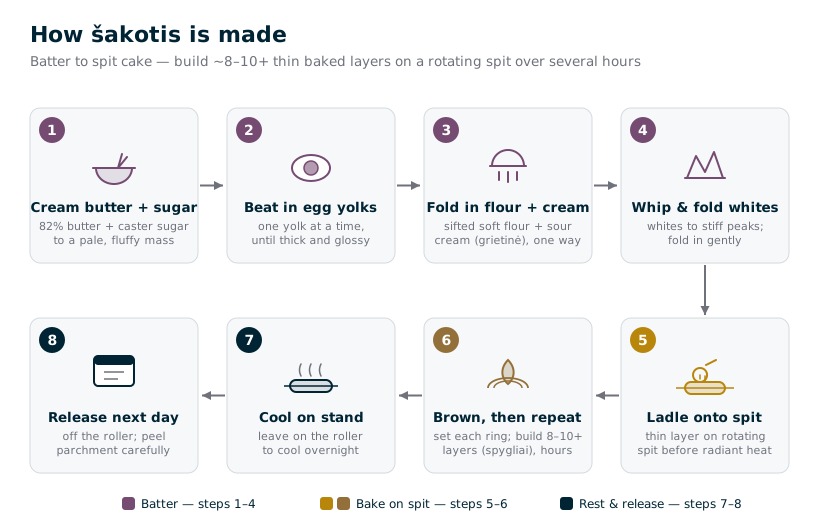 Step-by-step flow diagram of šakotis from creaming butter and sugar through whipping whites, ladling thin layers on a rotating spit, building rings and releasing the next day
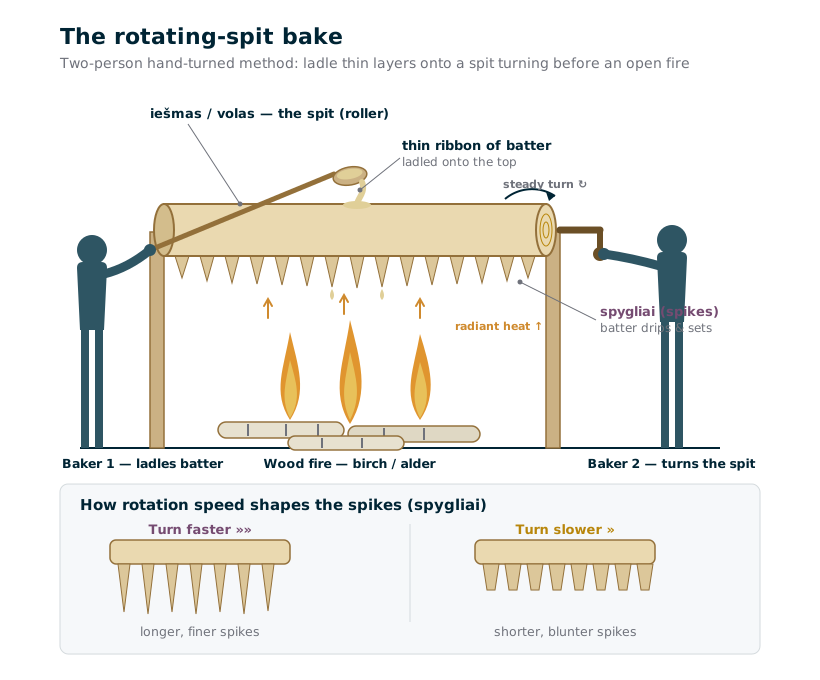 Diagram of two people baking šakotis on a hand-turned horizontal spit over an open fire, with an inset showing how rotation speed controls spike length
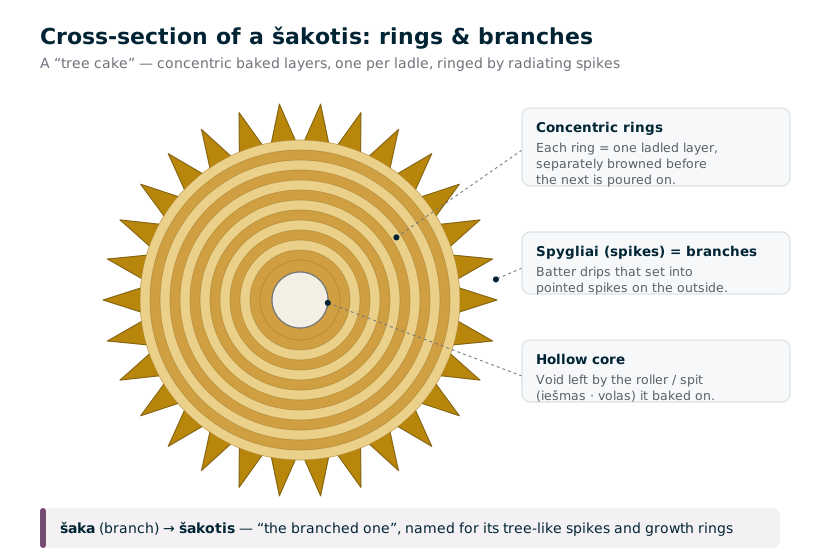 Cross-section diagram of a šakotis revealing concentric ringed layers like tree rings, with the outer spikes labelled
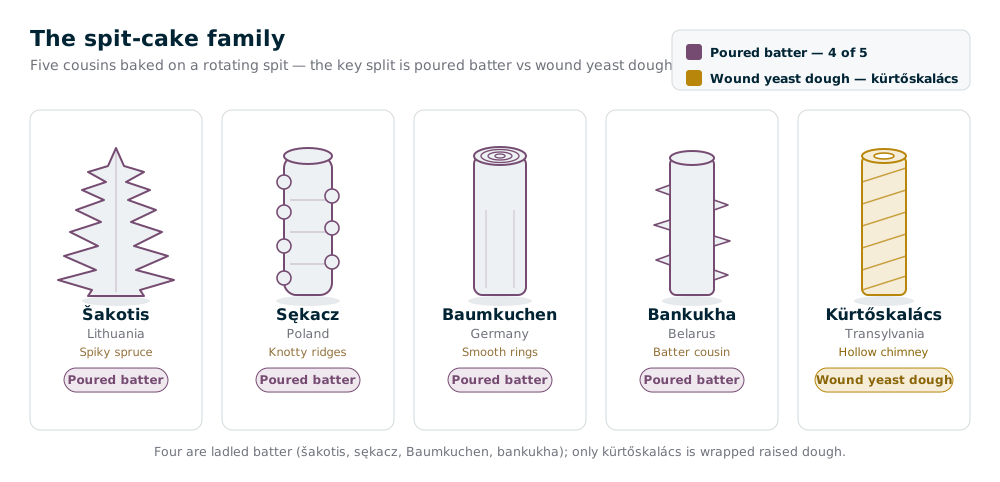 Labelled silhouettes comparing šakotis, sękacz, Baumkuchen, bankukha and kürtőskalács, each tagged as batter or dough
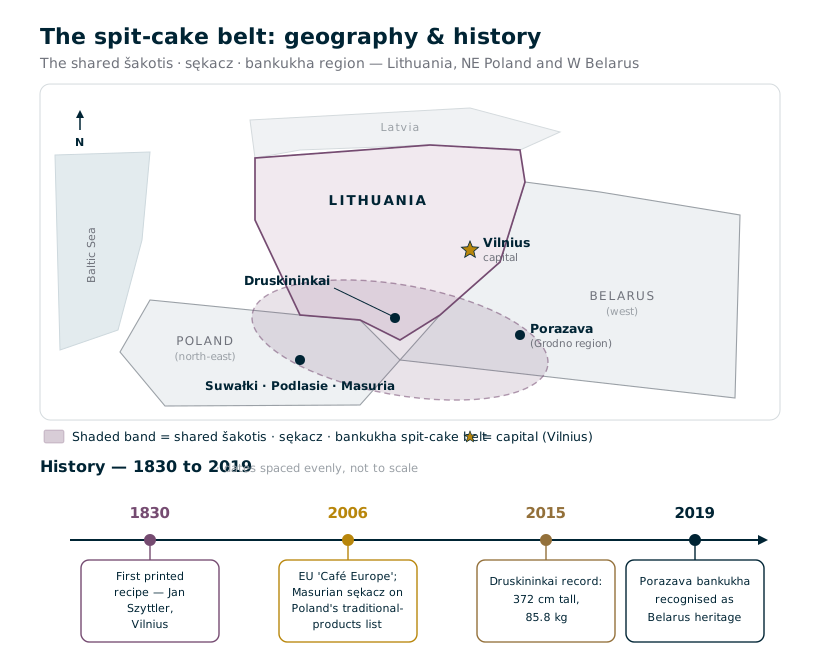 Map of the šakotis/sękacz/bankukha belt across Lithuania, NE Poland and W Belarus with a history timeline from 1830 to 2019
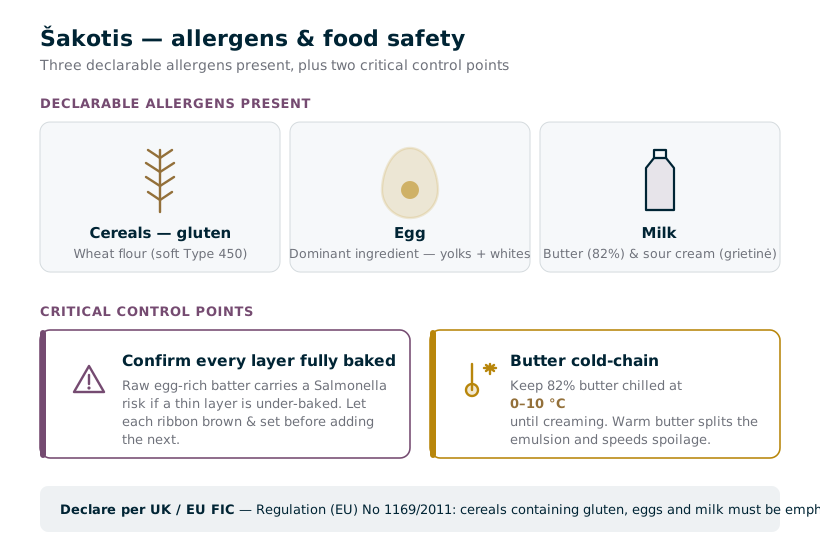 Allergen panel for šakotis showing gluten, egg and milk icons with a fully-bake-each-layer food-safety note and a butter cold-chain note
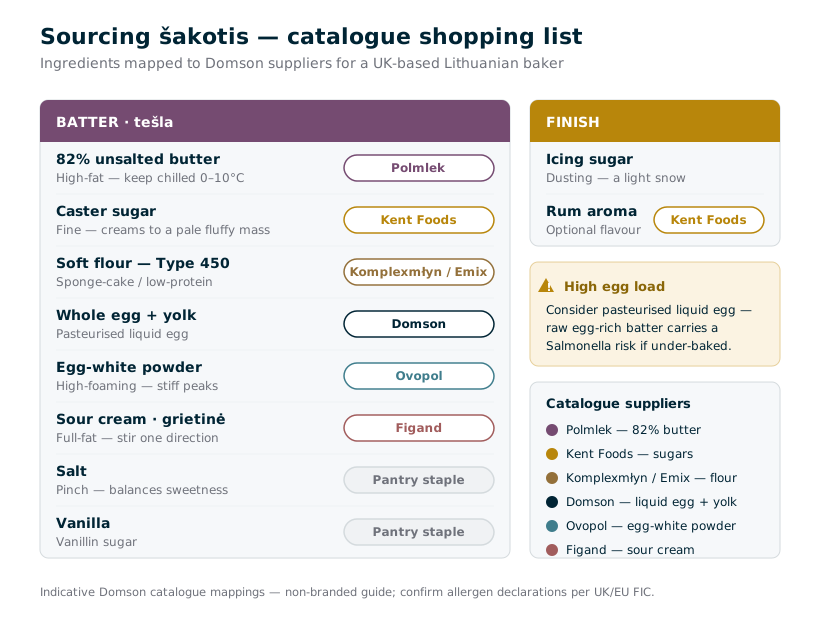 Panel mapping šakotis ingredients to Domson catalogue products: 82% butter, caster and icing sugar, soft flour, liquid egg and egg-white powder, sour cream and aromatics
Traditional šakotis batter — representative formula (baker's %)
A poured egg-rich butter batter — closer to a very rich pound-cake/Baumkuchen batter than to a bread dough. It carries the major allergens egg, milk and wheat gluten (flag for review). All lift is mechanical (creaming + whipped whites), so under-creamed butter or deflated whites give a heavy, dense cake. Formula language is in A8-bakers-percentage-fundamentals; batter-balance logic (fat/egg/sugar vs flour) is in A8-cake-and-pastry-formulas; the creaming/aeration mechanism is in A4-fat-science-functionality. Treat quantities as representative, not canonical.
| Ingredient | Baker's % | Weight |
|---|---|---|
| Soft wheat flour (Type 450 / sponge-cake) | 100% | |
| Unsalted butter (min 82% fat) | 80–110% | |
| Caster sugar | 80–100% | |
| Whole eggs (separated) | 200–300% (~25–60 eggs per kg flour) | |
| Sour cream / cream (optional) | 30–100% | |
| Salt | pinch (~0.3–0.5%) | |
| Aromatics (vanilla; optional rum, lemon zest; regional cinnamon/cardamom) | to taste | |
| Total | ~460–610% (an extremely rich, egg-dominant batter) |
Worked example
Per 1 kg soft wheat flour (Type 450, protein ~8%): ~800 g–1 kg unsalted butter (min 82% fat), ~800 g–1 kg caster sugar, 40–60 eggs (separated), optional up to ~1 L sour cream/cream, a pinch of salt and aromatics to taste (vanilla; in some regional versions a little rye flour with cinnamon and cardamom). Cream the soft butter and sugar to a pale, fluffy mass; beat in the yolks one at a time; alternately fold in the sifted flour and the cream, stirring in one direction; whip the whites to stiff peaks and fold them in gently. The batter should ladle in a smooth, thick ribbon that clings to a rotating spit. Bake in thin layers on the turning spit in front of steady heat, letting each layer brown before adding the next, building up over several hours; the faster you turn, the longer the spikes.
Yield: One spit-cake of ~2–5 kg per ~1 kg flour, depending on spit size and layer count
Home / café-scale sękacz (cross-border cousin) — worked formula
The Polish Podlasie/Suwałki sękacz is the same idea as šakotis at domestic scale, and shows how to approximate the spit in a conventional oven with a tube/chimney mould. Same allergen profile (egg, milk, gluten). Useful as an R&D or café-scale route before committing to a spit oven. Note: the optional honey is unsuitable for infants under 12 months (botulism precaution) — carry the caution on any child-facing labelling. See B4-transylvanian-kurtoskalacs for the dough-based spit cousin.
| Ingredient | Baker's % | Weight |
|---|---|---|
| Wheat flour (type 450–500) | 100% (450 g) | |
| Soft unsalted butter | 111% (500 g) | |
| Sugar | 89% (400 g) | |
| Whole eggs (separated) | ~222% (20 eggs) | |
| Cream (30–36%) | ~46% (200 ml) | |
| Vanilla | 1 tsp | |
| Honey (optional) | 2 tbsp | |
| Salt | pinch | |
| Total | ~560% of flour weight |
Worked example
450 g wheat flour (type 450–500), 500 g soft unsalted butter, 400 g sugar, 20 eggs (room temperature, separated), 200 ml cream (30–36% fat), 1 tsp vanilla extract, optional 2 tbsp honey, a pinch of salt. Cream butter and sugar until pale and fluffy; beat in yolks; alternate sifted flour with cream; whip whites with the salt to stiff peaks and fold in. Preheat oven to 220°C; apply a thin layer of batter to the mould/spit and bake ~5–7 minutes until lightly browned; repeat, building up 8–10+ layers.
Yield: One ~1.5–2 kg cake baked in a chimney/tube mould in the oven
Šakotis belongs to a family of European cakes baked on a rotating spit or roller in front of a heat source. The dividing line that matters in production is batter vs dough: šakotis, sękacz and Baumkuchen are POURED BATTERS that drip into rings and spikes; kürtőskalács is a WOUND YEAST DOUGH. Use this to place the technique and to see the cross-border cousins a UK baker will be asked for. See B4-transylvanian-kurtoskalacs.
| Cake | Country / region | Batter or dough | Method & surface | Occasion / status |
|---|---|---|---|---|
| Šakotis (raguolis) | Lithuania (national); also NE Poland, W Belarus | Poured egg-rich butter batter | Thin layers ladled onto a horizontal rotating spit; drips set into branch-like spikes; spruce silhouette | Weddings, Easter, Christmas; EU Café Europe 2006; Druskininkai record 2015 (372 cm, 85.8 kg) |
| Sękacz | NE Poland (Podlasie, Suwałki, Masuria) | Poured egg-rich butter batter (often with cream) | Same rotating-spit method over open fire; ridged 'knotty' surface | Regional speciality; Masurian sękacz on Poland's traditional products list 2006 |
| Baumkuchen | Germany | Poured batter | Rotating spit; smooth, even concentric rings (little/no spiking) — the ancestor of the group | Celebration cake; the origin šakotis derives from |
| Bankukha (bankucha) | Westernmost Belarus (Porazava) | Poured batter | Rotating-spit batter cake, local to the Grodno region | Porazava recipe recognised as historical/cultural heritage 2019 |
| Kürtőskalács | Transylvania (Székely Land) | Wound sweet YEAST DOUGH — not a batter | Dough strip wound on a tapered spit; sugar caramelises to a hollow 'chimney' | Festival/street cake; Hungarikum — see B4-transylvanian-kurtoskalacs |
Traditional formulas are extraordinarily egg-heavy and are quoted by whole-egg count, not baker's %. All four below are drawn from native Lithuanian and Polish sources this session. Note how butter, sugar and flour cluster near 1:1:1 by weight, while eggs dominate. Treat these as authentic references, not a single canonical recipe — regional and household ratios vary widely.
| Source / style | Flour | Butter | Sugar | Cream / sour cream | Eggs | Notes |
|---|---|---|---|---|---|---|
| LT large-batch (Šefo receptai) | 1 kg (+1 glass rye) | 1 kg | 1 kg | — | 60 | Cinnamon 3 g + cardamom 3 g; stir one direction; 8–10 layers |
| LT per finished cake (LRT, baker M. Gudonienė) | — | — | — | sour cream (grietinė) | 25–30 per ~2 kg cake | Five ingredients only; eggs the largest part |
| PL traditional Podlasie (Biebrza24) | 1 kg | 1 kg | 1 kg | 1 L sour cream (kwaśna śmietana) | 40 (40–60 typical) | More yolks and butter favoured; eggs 40–60 typical |
| PL home-scale (Pasieka Szablowskich) | 450 g (type 450–500) | 500 g | 400 g | 200 ml (30–36%) | 20 | +1 tsp vanilla, optional 2 tbsp honey, pinch salt; ~1.5–2 kg cake |
The defining constraint is a rotating horizontal spit turned steadily in front of radiant heat while thin layers are applied. Options scale from a wood fire to a purpose-built machine. Rotation speed is a live control: the faster you turn, the longer the spikes.
| Set-up | Heat | How layers are applied | Best for | Watch-outs |
|---|---|---|---|---|
| Traditional open-fire spit | Open fire, birch or alder wood | Two people: one turns the wooden roller, one ladles batter and tends the fire | Authentic craft, festivals, large showpieces | Uneven fire scorches one side; needs constant attention over several hours |
| Special šakotis oven (rotating base/spit) | Enclosed radiant heat, gas or electric | Batter ladled onto the turning form; each layer browns before the next | Bakeries producing regularly | Still labour-intensive; even radiant field is essential for straight rings |
| Electric spit-cake rotisserie machine | Electric elements | Semi-automated rotation; operator applies batter | Consistent commercial output | Capital cost; match batter viscosity to the machine |
| Home oven + chimney/tube mould | Conventional oven ~220°C | Thin layers grilled/baked ~5–7 min each, built up 8–10+ times | Small trials, R&D, café-scale | Slower; rings flatter and spikes shorter than a true spit |
Šakotis is a lesson in a very short ingredient list doing a lot of work. Because there is no chemical leavening in the traditional recipe, structure and lift come entirely from the eggs and the creaming. See A8-cake-and-pastry-formulas and A4-fat-science-functionality.
| Ingredient | Role | Practical note |
|---|---|---|
| Eggs (whole; whites whipped separately) | Structure, lift, colour, richness — the backbone | Whipped whites give the mechanical aeration; yolks emulsify the fat. Separate and whip whites to stiff peaks |
| Butter (unsalted, 82% fat) | Flavour, tenderness, browning; creamed for air | Cream soft (not oily) butter with sugar to a pale, fluffy mass; high fat = 16% water only |
| Sugar (caster) | Sweetness, colour, tenderising, aeration during creaming | Fine caster dissolves into the cream stage; ~1:1 with flour and butter |
| Wheat flour (soft, low-protein) | Just enough structure without toughness | Type 450 / sponge-cake flour (protein ~8%) keeps the crumb tender; sift |
| Sour cream / cream (grietinė) | Moisture, richness, a faint tang | Loosens the batter to a pourable ladle consistency; some LT bakers use it, some omit it |
| Fault | Likely cause | Remedy |
|---|---|---|
| Smooth surface, no spikes/branches | Spit turned too slowly; batter too thin; too long between layers so drips level out | Turn faster to draw out longer spikes; thicken the batter slightly; apply the next layer as soon as the last has set |
| Spikes snap off / crumble | Over-baked and dry; cake removed while still warm; rough handling | Do not over-bake individual layers; cool fully and remove from the roller only the next day; peel parchment gently |
| One side dark/burnt, other side pale | Uneven fire or radiant field; rotation paused | Keep the spit turning steadily; even the fuel bed (birch/alder); use an enclosed šakotis oven for an even field |
| Dense, heavy, no lift | Whites under-whipped or knocked back when folded; butter/sugar under-creamed | Whip whites to firm, stable peaks; fold gently in one direction; cream butter+sugar pale and fluffy first |
| Greasy cake / fat weeping out | Butter too soft/oily or over ~110%; heat too low so fat renders before the layer sets | Use cool, plastic (not oily) 82% butter; keep the heat high enough to set each layer quickly |
| Layers slide / won't stack | Batter too runny (too much egg/cream); previous layer not set | Reduce cream; let each layer brown and set before adding the next |
| Cake cracks as it cools | Cooled too fast or baked too dry | Cool gradually on the stand; stop layering at the desired thickness rather than over-baking |
| Sticks to the spit and tears on release | Roller not buttered/lined; removed too early | Butter (and/or parchment-line) the roller before the first layer; release only the next day |
| Raw/wet streaks inside | Layers applied too thick or too fast; core never reaches temperature | Keep every layer thin and fully set before the next — the safety point as well as the texture point |