
Wholemeal and high-extraction flours: nutrition, flavour and the bran interference problem
Moving up the extraction scale beyond white flour introduces bran, germ oils and dietary fibre that transform a loaf's nutrition and character — but also introduce a set of baking challenges that catch out bakers who treat wholemeal flour like a direct swap for white. This dossier covers the science of bran interference with gluten networks, the full rye flour ladder from T720 to T2000, the nutritional data from real supplier spec sheets, and the practical toolkit for getting high-extraction and wholemeal breads to perform reliably in a professional bakery.
The case for going up the extraction scale
White flour is a technical tool refined over two centuries of industrial milling: it delivers predictable gluten strength, neutral flavour and long shelf life. But the milling process that makes white flour so convenient strips out roughly 30% of the grain's original nutrients — the bran layer with its fibre, B vitamins and minerals, and the germ with its oils and vitamin E.
For the professional baker, this creates both an opportunity and a challenge. Customers are actively seeking bread with more fibre and more character. The regulatory and nutritional case for wholemeal products is solid. But wholemeal and high-extraction flours genuinely do behave differently in the bakery — and the most common mistake is treating them as a direct drop-in substitute for white flour.
This dossier explains what changes when you go up the extraction scale, what the spec sheets of the real catalogue products tell you, and how to adapt your process to get the best results.
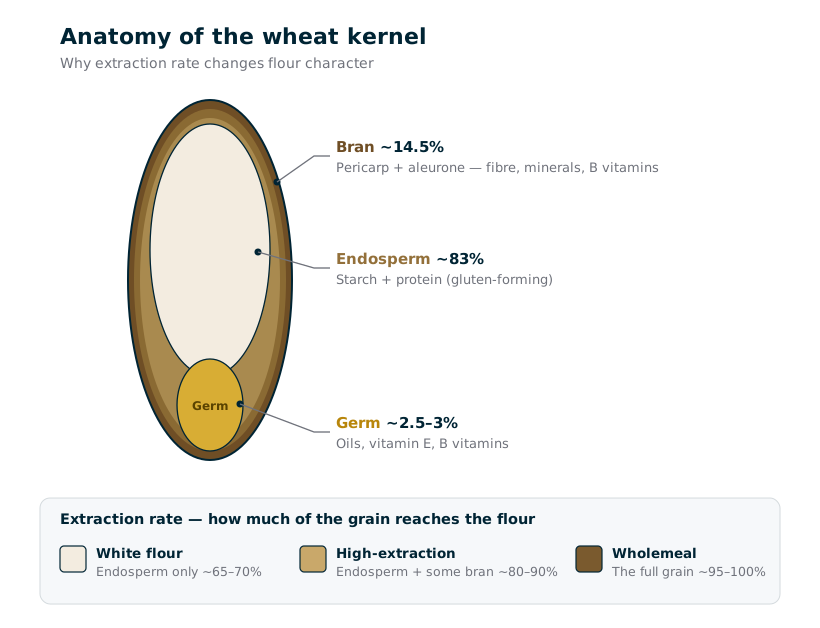 Cross-section diagram of a wheat kernel showing three main components: outer bran layers (pericarp plus aleurone layer, approximately 14.5% of grain weight, coloured brown), the large central starchy endosperm (approximately 83%, cream), and the small germ at the base (approximately 2.5–3%, yellow). Labels indicate that bran contains most of the fibre, B vitamins and minerals, while the endosperm is mostly starch and protein.
1. What extraction rate actually means
Extraction rate is the percentage of the cleaned grain that ends up in the flour. In a roller mill, the grain is progressively broken open and sifted; the miller controls how much bran fraction is included.
- Standard white flour: approximately 72–76% extraction (straight-grade mill output). Almost pure endosperm — starch and gluten proteins, very little fibre or mineral residue. (Note: "patent flour" is a premium sub-fraction at 45–65% extraction; the term "white flour" in this article refers to standard straight-grade unless otherwise stated.)
- High-extraction flour: roughly 80–90% extraction. Significant amounts of the inner bran layers (aleurone) included; flour is noticeably more beige or buff in colour with measurable bran flecks.
- Graham / T1850 class: approximately 90–95% extraction. Most of the bran included; visible bran particles, significant fibre, darker colour.
- Wholemeal (100%): approximately 95–100% extraction. The whole grain — bran, germ and endosperm — is ground together and nothing is removed.
The grain anatomy underpins this: the bran layer is approximately 14.5% of grain weight, the germ approximately 2.5–3%, and the endosperm approximately 83%. As extraction rises from 65% to 100%, the flour progressively incorporates more of the bran's mineral and fibre load and more of the germ's oils.
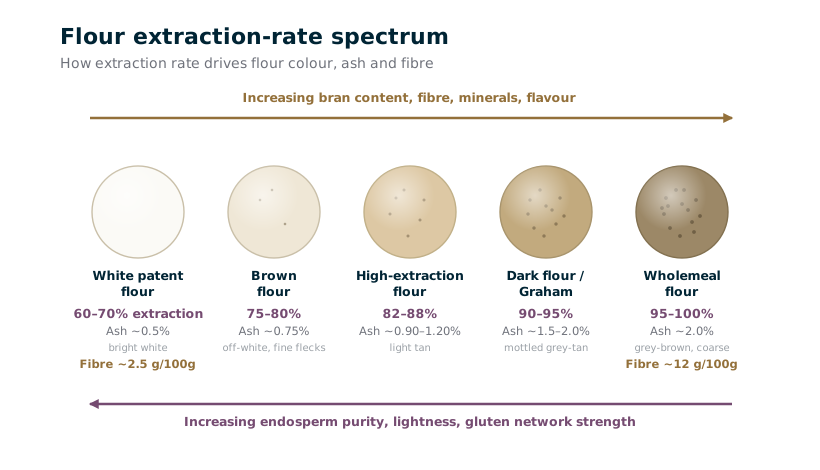 Horizontal spectrum diagram showing flour extraction rate from left (lowest, 60% extraction, white patent flour) to right (highest, 100% extraction, wholemeal flour). Each point on the spectrum is represented by a small flour sample with increasing colour from bright white to grey-brown. Ash content values and fibre values increase from left to right.
Why T-type numbers encode this
The Polish/European T-type system expresses ash content directly in the flour type number. Because the bran is roughly ten times richer in minerals than the endosperm, ash content rises predictably with extraction. T1850 means approximately 1,850 mg of ash per 100 g of dry flour (≈1.85% d.m.) — this corresponds to the high-extraction / Graham class.
The crosswalk between Polish, German, French and UK wholemeal naming conventions is in the table below.
2. The Domson catalogue: wholemeal wheat flour spec data
Graham wheat flour Type 1850 (GoodMills Polska)
The GoodMills Graham / T1850 flour is the most widely used high-extraction wheat flour in the Polish professional bakery sector. From the spec sheet:
- Ash: max 2.0% d.m. (PN-EN ISO 2171)
- Falling number: min >180 s (PN-EN ISO 3093)
- Moisture: max 15.0% (PN-EN ISO 712)
- Protein: 12.3 g/100g (nutritional label typical value)
- Dietary fibre: 12.3 g/100g — roughly 4–5× the fibre of white T550 flour
- Energy: 1375 kJ / 326 kcal per 100g
- Colour: white and grey with visible bran particles
ALLERGEN NOTE: Wheat T1850 contains cereals containing gluten (wheat). Cross-contamination risk from ascorbic acid is noted on the GoodMills spec sheet (ascorbic acid is a processing aid in the mill with cross-contamination potential). Ergot alkaloid limit: max 150 µg/kg per GoodMills spec — this aligns with the current EU regulatory ceiling for high-ash wheat milling products under EU Regulation 2023/915 (maximum levels for contaminants); the correct limits regulation is 2023/915, not the methods regulation 2023/2782. The UK post-Brexit regulatory position should also be confirmed separately. FOOD SAFETY FLAG FOR REVIEW.
The falling number minimum of >180 s is higher than for white flour (≥220 s might be expected for white, but >180 s here reflects the fact that more bran-associated amylase is present in high-extraction flour). At this FN level, the flour is adequate for standard bread production with normal fermentation times.
UK professional wholemeal wheat flours (Allied Mills)
The Allied Mills range includes several wholemeal wheat flour grades for UK professional bakeries. Three are in the Domson catalogue:
Grampian Wholemeal (4066), 16 kg bags — the flagship professional wholemeal:
- Protein: 12.6–13.2% (NIR, N×5.7)
- Hagberg Falling Number: minimum 280 s
- Moisture: 13.6–14.6%
- Water absorption: 65.0–67.6% (NIR)
- Described as "high protein roller ground coarse wholemeal flour that produces a more traditional eating quality product"
- Shelf life: 6 months stored cool and dry
Chiltern Wholemeal (4071), 16 kg bags — slightly higher specification:
- Protein: approximately 13.8%
- Water absorption: approximately 68%
- Described as "premium strong roller ground coarse wholemeal flour; ideal for product requiring more volume with more enriched recipes"
- Suitable for enriched wholemeal products (brioche-style, enriched rolls)
Bakers Wholemeal (Carr's Maldon Mill), 16 kg bags — the highest-protein grade:
- Protein: 13.5–14.2% (this is elevated because 4.0–4.5% wheat gluten is added)
- Contains added wheat gluten from France, Germany and UK (Roquette, Bryan Nash, Tereos)
- Complies with UK Bread and Flour Regulations 1998 (calcium carbonate, Vitamix — iron, niacin, thiamin added)
- Shelf life: 6 months
Important note on Bakers Wholemeal: The high protein figure (13.5–14.2%) includes added vital wheat gluten (4.0–4.5% of flour weight). This is an excellent choice for high-volume wholemeal bread production precisely because the supplemented gluten compensates for bran interference — see Section 4 for details on why this matters. ALLERGEN: Contains wheat/gluten; cross-contamination risk for rye, barley, oats, spelt via packing system (Carr's Maldon Mill spec).
The full comparison table is below.
Organic wholemeal wheat flour (Doves Farm)
Doves Farm Organic Strong Wholemeal Bread Flour 'BIOBAKE' (25 kg):
- Protein: 12.6 g/100g (UKAS accredited lab)
- Dietary fibre: 11.2 g/100g
- Fat: 2.5 g/100g (saturates 0.4g — germ oil content)
- Energy: 1317 kJ / 311 kcal
- Production process: roller milled
- Description: fine off-white flour with brown flecks
- Certifications: Soil Association (GB-ORG-05), Vegetarian Society, Kosher (London Beth Din)
- Shelf life: 6 months
ALLERGEN: Contains wheat/gluten. No soy, nuts or milk used in production. GMO-free policy.
3. The rye flour ladder: from T720 to T2000
Rye flour in the Polish system follows exactly the same T-type ash convention as wheat flour. But there are important differences in how rye behaves in the bakery — differences that demand a completely different technical approach.
The full GoodMills Polska rye ladder is in the table below.
The rye flour grades
From four GoodMills Polska spec sheets, the confirmed rye range is:
| Type | Ash max | FN min | Fibre (g/100g) | Protein (g/100g) |
|---|---|---|---|---|
| T997 | <1.20% | >90 s | 6.7 | 7.3 |
| T1150 | <1.40% | >90 s | — | — |
| T1400 | <1.60% | >90 s | 13.8 | 9.2 |
| T2000 (Wholemeal) | <2.00% | >90 s | 14.4 | 8.4 |
Notice the jump in fibre between T997 (6.7 g) and T1400 (13.8 g). This is not a gradual increase — it marks a threshold where a different milling fraction (the outer bran layer, which is proportionally much richer in fibre than the aleurone) begins to be included.
All four specs confirm moisture max <15.0% and a falling number minimum of >90 s. See Section 5 for why rye FN >90 s is a different measure from wheat FN ≥220 s.
Stoneground dark rye (Matthews Cotswold Flour)
The Matthews Cotswold Stoneground Dark Rye (16 kg) is a stoneground wholemeal rye product from UK-grown or German rye:
- Protein: 5.0–11.0% (target 8.0%) — wide range reflects natural rye variability
- Hagberg Falling Number: 150–250 s (target 250 s) — notably more specific than GoodMills
- Moisture: 11.0–15.0% (target 13.0%)
- Dietary fibre: 11.7 g/100g
- Energy: 1428 kJ / 335 kcal
- No additives; GMO-free; not irradiated
- Potassium: 410 mg/100g; folate: 78 µg/100g; thiamin: 0.40 mg; riboflavin: 0.22 mg; zinc: 2.7 mg; manganese: 3.0 mg
- Allergen: cereals containing gluten (rye); potential soy contamination from supply chain
The HFN target window (150–250 s, target 250 s) from Matthews is more informative for bread-baking decisions than the GoodMills commercial floor (>90 s). This does not mean the GoodMills flour is inferior — GoodMills is setting a quality floor to exclude damaged grain; the actual delivered FN will typically be higher. But if HFN is critical to your rye process, request the typical delivered value (Certificate of Analysis) rather than relying on the spec minimum alone.
Organic stoneground wholemeal rye (Doves Farm)
Doves Farm Organic Stoneground Wholemeal Rye Flour (25 kg):
- Protein: 7.8 g/100g (specification range 7.8–12.4%)
- Dietary fibre: 13.4 g/100g
- Moisture: 11.0–15.0%
- Production: stoneground (retains more germ vs roller milling)
- Description: brown/grey flour with brown flecks
- Shelf life: 9 months; organic certification: Soil Association GB-ORG-05
ALLERGEN: Cereals containing gluten (rye).
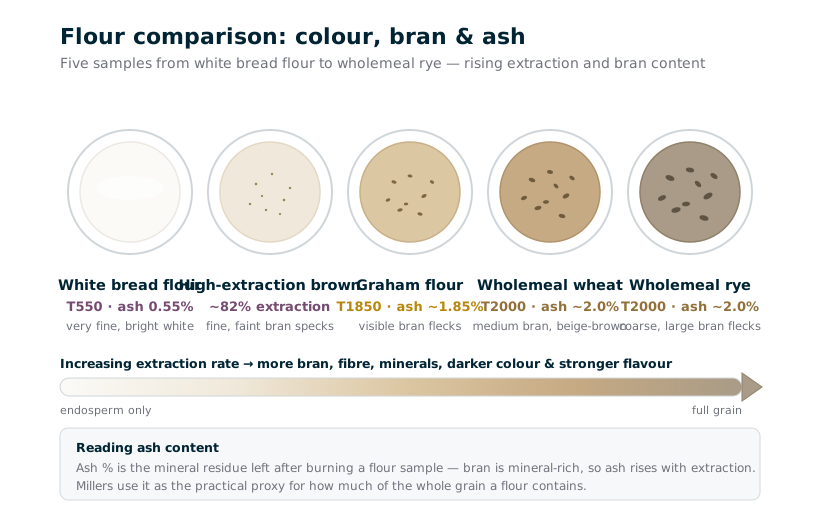 Five small white porcelain bowls arranged in a row, each containing a flour sample with increasing colour and visible bran content from left to right. Left bowl: bright white bread flour. Second: light brown high-extraction flour with small flecks. Third: Graham flour with visible bran particles. Fourth: wholemeal wheat flour, beige-brown. Fifth: wholemeal rye flour, distinctly grey-brown with large bran flecks.
4. The bran interference problem — and how to solve it
This is the technical core of the article, and the section most relevant to daily bakery decisions.
When you replace white bread flour with a wholemeal or high-extraction flour, you do not simply add fibre and flavour. You introduce a set of physical and biochemical obstacles to gluten network formation:
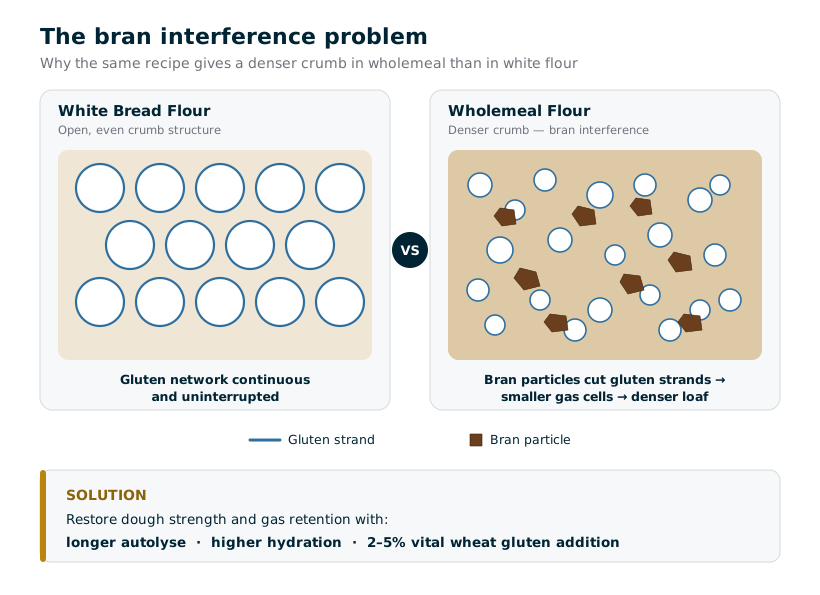 Cross-section comparison of two bread loaves. Left loaf: made with white bread flour — shows an open, regular crumb structure with even air cells and long gluten strands. Right loaf: made with wholemeal flour — shows a denser, irregular crumb with smaller air cells and visible dark bran flecks. Inset microscopy-style diagram shows bran particles acting as physical barriers, cutting gluten strands and preventing full gas retention.
Mechanism 1: Physical cutting of gluten strands
Bran particles are hard and angular. As the gluten network forms during mixing and fermentation, bran particles cut through the developing gluten strands. This reduces the connectivity of the network — gas cells are smaller and less well-supported, leading to lower loaf volume and a tighter, denser crumb.
The evidence from spec sheets: Allied Mills Bakers Wholemeal and Chiltern Wholemeal both achieve high protein specs (13.5–14.2% and ~13.8% respectively) precisely because this is one of the ways millers compensate for bran interference — they select higher-protein wheat and/or add vital wheat gluten to ensure the gluten network is strong enough to survive physical bran cutting.
Baker's solution: Add 2–5% vital wheat gluten (VWG) on flour weight. This is industry standard — the Bakers Wholemeal spec itself adds 4.0–4.5% wheat gluten commercially. VWG protein content is approximately 70–80%, so a 4% addition at 100% flour weight adds approximately 2.8–3.2% extra protein to the mix, materially strengthening the gluten network.
Mechanism 2: Competitive water absorption
Bran absorbs water very rapidly — much faster than gluten proteins. In a standard mixing process (water added, mix immediately), bran has absorbed much of the free water before the gluten proteins can hydrate fully. The gluten develops slowly, feeling stiff and underdeveloped, while the baker may conclude the dough needs no more water. The result: under-hydrated gluten that lacks extensibility.
Baker's solution — autolyse: Mix flour and water together and rest for 30–60 minutes before adding starter, salt or yeast. During this rest, bran absorbs its share of water, and the remaining water hydrates the gluten proteins without mechanical mixing. When you return to mix, gluten develops much more easily. Autolyse is one of the single highest-impact techniques for improving wholemeal dough quality.
Baker's solution — hydration increase: Wholemeal flours typically require 5–10% more water than white flour to achieve the same dough consistency. The Allied Mills Grampian Wholemeal spec shows water absorption of 65.0–67.6% (vs approximately 58–62% for white bread flour at the same protein level). Factor this into recipe development.
Mechanism 3: Bran enzyme activity over long fermentation
Bran contains lipases and proteases — enzymes that break down fats and proteins. Over extended fermentation (4+ hours at room temperature, or overnight cold retard), these enzymes gradually degrade gluten quality. Dough that feels excellent after mixing may slack significantly after 8 hours of cold bulk.
Baker's solution: Monitor dough feel at the 3–4 hour mark. Wholemeal doughs tolerate shorter bulk fermentation than white flour doughs. A bulk of 3–4 hours at 24°C with stretch-and-folds is typically more reliable than 8 hours at 18°C for wholemeal wheat. If cold retard is essential for your production schedule, reduce bulk fermentation time by 20–30% before shaping and refrigerating.
Mechanism 4: Phytic acid and mineral bioavailability
Bran contains significant phytic acid, which chelates minerals (calcium, iron, zinc) and reduces their bioavailability to the end consumer. This is a nutritional concern rather than a baking performance issue, but it is relevant to wholemeal product marketing.
Solution: Long sourdough fermentation activates phytase enzymes (naturally present in the grain and in lactic acid bacteria), which break down phytic acid and release bound minerals. An 8–16-hour sourdough fermentation significantly reduces phytate content in wholemeal bread. This is one of the genuine nutritional advantages of sourdough wholemeal bread over conventionally leavened wholemeal bread — though the specific percentage reduction figure is single-source and food-safety claims based on it require review.
The complete solutions toolkit is in the table below.
5. Why rye requires sourdough — and what FN means for rye
Rye flour behaves so differently from wheat that it demands a separate technical framework. The key differences:
Rye has no true gluten network. The proteins in rye (secalin) do not form the extensible gluten network that gives wheat dough its elasticity. Rye dough cohesion depends instead on pentosans (arabinoxylans) — soluble fibres that absorb many times their weight in water (trade literature cites figures ranging from approximately 6× to 15× depending on the pentosan fraction and measurement conditions) and form a viscous gel that holds the dough together.
This has a direct consequence for baking: in a rye dough, there is no gluten network to trap CO₂ from fermentation. What holds the dough is the pentosan gel. The gel is fragile — over-working rye dough destroys it. Rye dough should be mixed until just combined, not to full gluten development.
Sourdough is not optional for wholemeal rye. Here is why:
During baking, as the dough heats past approximately 50°C, rye starch begins to gelatinise and absorb the free water in the pentosan gel. At the same time, rye amylases (alpha-amylase) are still active and break down the starch. If this amylase activity is not controlled, the starch is too liquefied to set — the loaf collapses, and the crumb is wet and gummy. The technical fix is sourdough acidification: lactic and acetic acids from sourdough fermentation lower the dough pH to approximately 4.0–4.3, which inhibits alpha-amylase activity at baking temperatures. The starch can then gelatinise and set properly.
In short: wholemeal rye baked without sourdough will almost always produce a gummy, collapsing crumb. This is not a recipe error — it is physics.
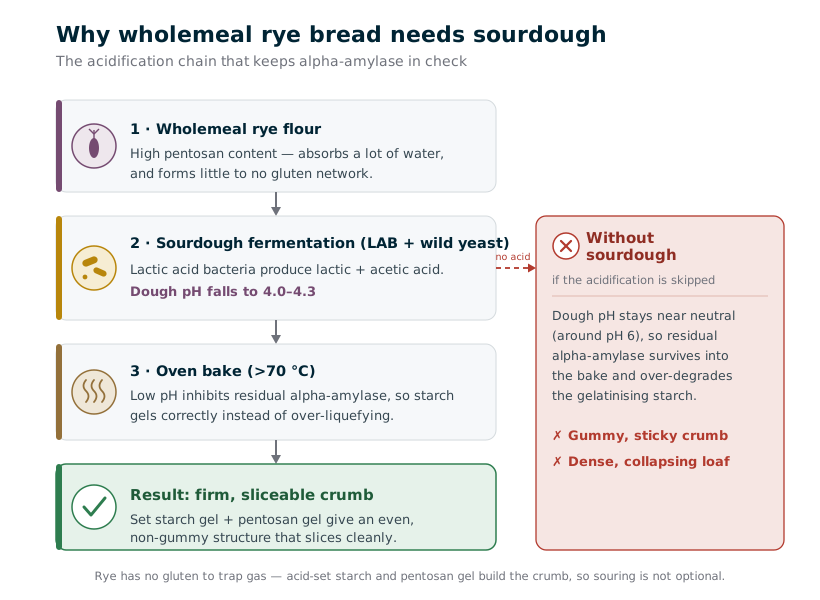 Flow diagram of rye sourdough fermentation. Top: wholemeal rye dough with pentosans and starch. Middle: lactic acid bacteria producing lactic and acetic acids, lowering pH to 4.0–4.3. Bottom: low pH inhibits alpha-amylase at baking temperatures, producing a firm, non-gummy crumb. Arrow labels show stages.
Interpreting rye falling number
All four GoodMills rye specs set FN >90 s. The Matthews Cotswold spec sets a target window of 150–250 s (target 250 s).
Critical warning: Rye FN >90 s cannot be compared to wheat FN ≥220 s. Rye starch gelatinises at a lower temperature and rye amylases are more heat-stable than wheat amylases. The FN measurement is physically different for rye because the paste behaves differently. A rye flour with FN 110 s is normal and usable; a wheat flour at 110 s is severely sprouted and unusable for bread.
For rye bread baking: the optimal FN window is generally considered 120–250 s (single-source trade guidance; the Matthews target of 250 s is the upper end of this range). A rye flour at exactly the GoodMills floor of 91 s may still produce acceptable bread but is at the lower boundary — request the typical delivered FN from your supplier if rye bread quality is critical.
6. Wholemeal alternative grains: spelt and beyond
Wholemeal spelt (Doves Farm)
Wholemeal Spelt Flour (Doves Farm, 25 kg, stoneground):
- Protein: 11.8–17.0% (typical 13.3 g/100g) — notably wide range reflects spelt's natural variability
- Dietary fibre: 8.5 g/100g
- Fat: 2.5 g/100g
- Energy: 1400 kJ / 330 kcal
- Production: stoneground; shelf life: 9 months
- Grain: ancient wheat variety Triticum speltum
ALLERGEN — CRITICAL: Spelt is a NAMED allergen under EU Regulation 1169/2011 Annex II and UK food law, listed under "cereals containing gluten." It must be declared as "spelt" or "cereals containing gluten (spelt)" on all downstream products. Do not declare it simply as "flour" — the specific grain must be named. FOOD SAFETY FLAG FOR REVIEW.
Wholemeal spelt baking considerations:
Spelt gluten is extensible and relatively weak compared to modern high-protein bread wheats. It forms a gluten network, but one that is fragile and prone to over-mixing. Key points:
- Mix spelt doughs to a lower development than wheat — stop when dough just comes together
- The wide protein range (11.8–17.0%) means spelt flour is variable between seasons and suppliers — always check the protein spec of a new delivery
- Spelt's higher fat content (from the preserved germ) contributes to its distinctive nutty flavour but also means shorter shelf life and greater rancidity risk
- Sourdough is beneficial but not as mechanically required as for rye; it improves digestibility and flavour
The full alternative-grain comparison is in the table below.
7. Nutritional comparison: what the spec sheets show
The following table summarises nutritional data from supplier spec sheets (typical values per 100 g). The full data is below.
FOOD SAFETY: These are typical values from product specification nutritional labels (UKAS-accredited lab data where specified). They are NOT per-lot analyses and must not be used for regulatory label declarations without independent testing of each production lot.
Key takeaways from the spec data:
-
Dietary fibre is dramatically higher in wholemeal vs white flour. GoodMills T1850 Graham: 12.3 g/100g; GoodMills Rye T2000: 14.4 g/100g. Typical white T550 flour: ~2.5–3.5 g/100g. The "high in fibre" EU Regulation 1169/2011 claim threshold is ≥6 g/100g — all wholemeal products reviewed easily exceed this.
-
Protein values are broadly similar between wholemeal wheat and white flour. Wholemeal wheat protein (12.3–13.5%) is comparable to white bread flour protein (11.5–12.5%). The difference is gluten quality (bran interference reduces effective gluten strength) not protein quantity.
-
Rye protein is lower than wheat across all grades (7.3–9.2 g/100g for GoodMills rye T997–T2000). This is characteristic of rye and does not reflect inferior quality — rye simply has less total protein and what it has does not form gluten.
-
Wholemeal flour has higher fat than white flour due to germ retention (2.0–2.5 g vs ~1.2 g for white T550). This fat is predominantly unsaturated and contributes to flavour — but it is also why wholemeal flour has a shorter shelf life than white flour.
8. Stoneground vs roller-milled wholemeal: what the spec sheets reveal
Two milling methods produce wholemeal flour:
Roller milling (GoodMills T1850/T2000, Allied Mills Grampian/Chiltern/Bakers Wholemeal, Doves Farm Organic Wholemeal Wheat):
- The grain is progressively broken through a series of roller pairs; bran, germ and endosperm are separated and then recombined in controlled proportions
- Results in more consistent particle size distribution
- Produces finer, more uniform flour than stoneground
- The Allied Mills Grampian and Chiltern specs describe the product as "roller ground coarse wholemeal" — the term "coarse" refers to the particle distribution, not the milling method
Stoneground (Doves Farm Organic Wholemeal Rye, Doves Farm Wholemeal Spelt, Matthews Stoneground Dark Rye):
- A millstone grinds the whole grain together without separating components
- Retains more germ nutrients (vitamins E and B1) because the germ is not subjected to the heat of roller milling
- Produces a coarser, more variable particle size
- Less consistent batch-to-batch than roller-milled flour
- The Matthews spec shows a wider HFN range (150–250 s) and wider protein range (5.0–11.0%) than GoodMills roller-milled products, reflecting this natural variability
For professional bakers choosing between the two:
- For consistent, high-volume production where batch-to-batch reproducibility matters: roller-milled is more reliable
- For artisan, organic or heritage-grain products where nutritional retention and authenticity are part of the product story: stoneground is worth the process variability
9. Storage and shelf life — wholemeal is different from white
Wholemeal and high-extraction flours have shorter shelf lives than white flour because of germ oil content. Unsaturated fatty acids in the germ oxidise and go rancid, producing off-flavours ("stale", "musty", "fishy" notes at extreme rancidity).
From confirmed spec sheets:
- GoodMills rye flours (T997–T2000): 4–5 months (GoodMills/Wagrowiec pattern; confirm with specific spec)
- Allied Mills Grampian Wholemeal: 6 months (cool and dry)
- Doves Farm Organic Wholemeal Wheat: 6 months (roll down top and store cool and dry)
- Doves Farm Organic Wholemeal Rye and Spelt: 9 months each
Practical implications:
- Order smaller quantities more frequently for wholemeal products
- Store at or below 18°C, away from heat sources and strong odours
- Once opened, use within 4–6 weeks (especially for stoneground, which retains more germ oil)
- Never store wholemeal flour in warm conditions above 20°C; moisture + warmth = rapid rancidity
- Check incoming deliveries: smell the flour when opening a new sack. Rancid wholemeal has a noticeably stale, musty or paint-like odour that is immediately detectable
10. Practical workflow: selecting the right wholemeal product
When choosing a wholemeal or high-extraction flour for a new product, work through this checklist:
Step 1 — Application and format
- Is this a 100% wholemeal loaf, or a proportion-substituted wholemeal (e.g. 30% wholemeal, 70% white)?
- Does the product go into a tin, or is it a freestanding hearth loaf? (Full wholemeal hearth loaves are more demanding — consider a tin for 100% wholemeal rye especially)
- Is organic certification or specific allergen management required?
Step 2 — Check protein and water absorption
- For tin-baked wholemeal wheat bread: protein ≥12.5% is advisable (Grampian 12.6–13.2% or Chiltern ~13.8% are solid choices)
- For enriched wholemeal (butter, eggs, sugar): use the Bakers Wholemeal (13.5–14.2%) or add 3–5% VWG to standard wholemeal
- Increase recipe water 5–10% vs your white flour equivalent; check dough feel after autolyse
Step 3 — Understand the falling number context
- Wholemeal wheat (T1850/Grampian): check spec or request CoA; HFN should be >200 s
- Rye (any grade): confirm the delivered FN is above 120 s for sourdough bread; if the spec minimum is 90 s, request typical value
- Spelt (stoneground): FN is typically not specified; rely on supplier's fresh-crop assurance
Step 4 — Plan your sourdough requirement
- 100% rye (any grade, but especially T1400 and T2000): sourdough fermentation is essential
- High-extraction wheat (T1850, Grampian/Chiltern): sourdough strongly recommended for flavour; not structurally obligatory
- Wholemeal spelt: sourdough beneficial; reduces over-mixing risk and improves flavour
Step 5 — Storage and rotation
- Implement FIFO (first in, first out) rotation for all wholemeal and high-extraction stocks
- Label incoming bags with receipt date; do not mix new and old stock in the same bin
11. Coverage notes and gaps
Solid: Ash content, falling number, moisture, protein, fibre and energy values for all reviewed products — well-covered by first-party spec sheets from GoodMills Polska (5 rye/high-extraction specs), Allied Mills (4 UK wholemeal specs), Doves Farm Foods (3 specs), Matthews Cotswold Flour (1 rye spec). The bran interference mechanisms are well-established science confirmed by multiple independent sources.
Thin (single-source or inferred):
- Rye T1150 protein and fibre values (interpolated — no T1150 spec nutritional data reviewed)
- The specific 10× water absorption figure for rye pentosans (IREKS Compendium, single-source)
- Phytic acid reduction % from sourdough fermentation (IREKS, single-source; food-safety review required before any health claim)
- Chiltern Wholemeal protein (13.8%) and water absorption (68%) figures come from Allied Mills 2016 range overview table, not a full spec sheet — medium confidence only
Gaps:
- No water absorption (farinograph) data for GoodMills T1850, Doves Farm or any rye product
- No falling number data for Allied Mills Grampian, Chiltern or Bakers Wholemeal (not specified in reviewed specs — request from supplier for sourdough applications)
- Stoneground rye batch-to-batch variability not quantified (Matthews range is wide; no COV data)
- No Zeleny or alveograph data for any wholemeal product reviewed
Recommended follow-ups:
- Request HFN data (typical CoA values, not just spec minima) for Allied Mills wholemeal range
- Request alveograph W/P/L for GoodMills T1850 Graham
- Confirm current ergot alkaloid regulatory limits under EU Regulation 2023/915 (maximum levels) — note: EU Reg 2023/2782 is the sampling/analysis methods regulation, not the limits regulation — against spec sheet maxima (Rye T2000: 500 µg/kg, equals current EU ceiling; Wheat T1850: 150 µg/kg, equals current EU ceiling for high-ash wheat milling products). Also confirm UK post-Brexit position separately. The rye T2000 spec limit equals the regulatory ceiling with no internal safety margin — request actual CoA values from GoodMills to assess real delivered levels.
Figures
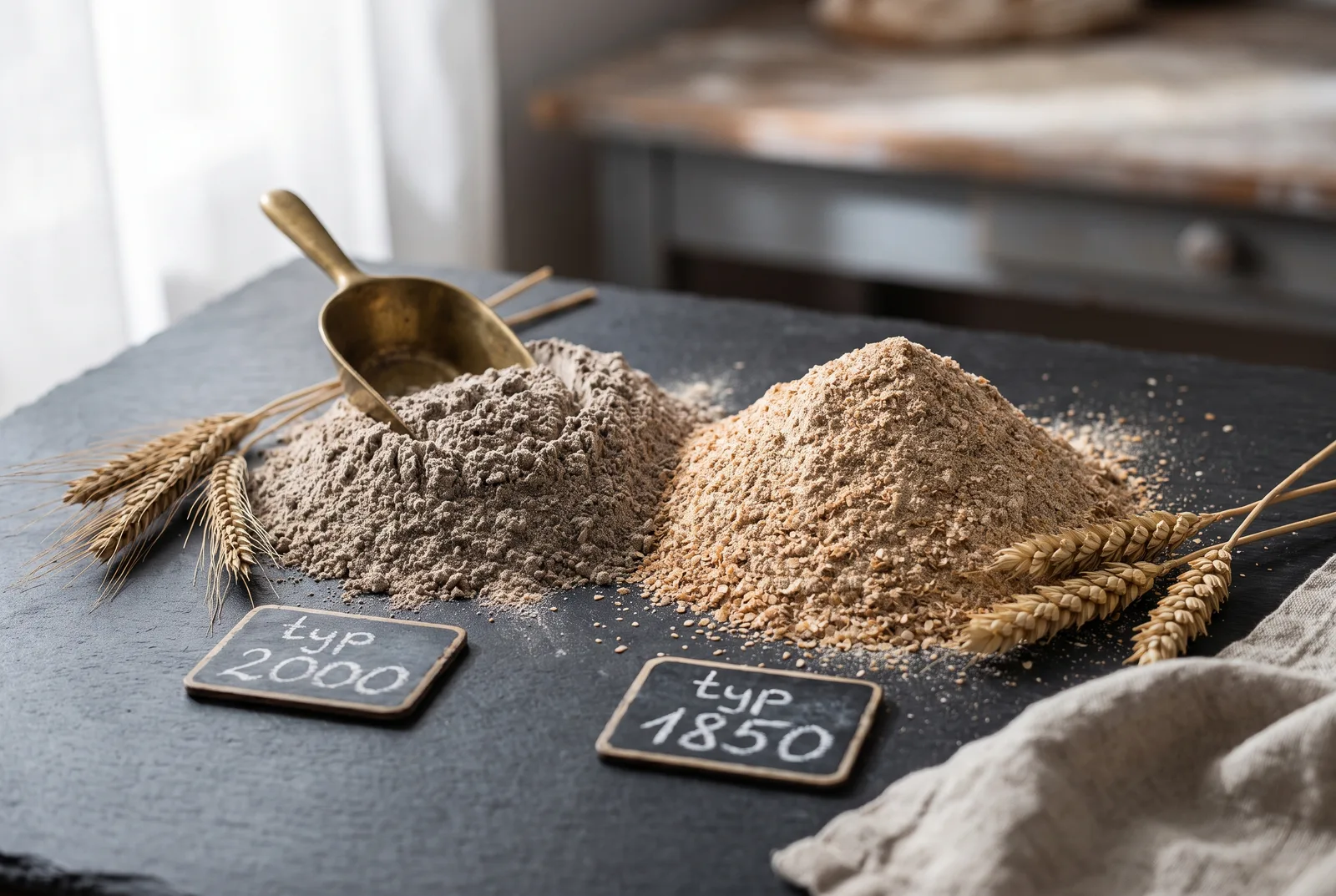 Two mounds of wholemeal flour compared side by side on dark slate: darker grey-brown rye flour Type 2000 with a brass scoop resting in it, next to warmer tan Graham wheat flour Type 1850, both flecked with coarse bran, with rye and wheat ears and small handwritten slate labels beside them
Classic Wholemeal Wheat Sourdough — base formula (baker's percentages)
A robust starting point for 100% wholemeal wheat sourdough. Suitable for Allied Mills Grampian Wholemeal, Doves Farm Organic Wholemeal, or GoodMills T1850 Graham. Adjust hydration based on incoming flour water absorption — these flours typically require 68–75% vs ~63% for white bread flour.
| Ingredient | Baker's % | Weight |
|---|---|---|
| Wholemeal wheat flour (e.g. Grampian Wholemeal, protein 12.6–13.2%) | 100 | |
| Water (adjust to achieve cohesive dough; start at 72%) | 72 | |
| Active sourdough starter (100% hydration, fed 8–12 h prior) | 20 | |
| Salt | 2 | |
| Vital wheat gluten (optional — improves volume; see note) | 0–5 |
- 1. Mix flour and water, autolyse 30–45 min (develops gluten and allows bran to hydrate). 2. Add starter and salt, mix to medium development. 3. Bulk ferment 4–6 h at 24°C with 3 stretch-and-folds at 30 min intervals. 4. Shape, place in banneton, cold retard 10–14 h at 4–6°C. 5. Bake from cold in covered pot: 250°C lid on 20 min, 220°C lid off 20–25 min. Expect lower oven spring and denser crumb than white sourdough — this is normal for wholemeal.
Baker's percentages and process parameters are practitioner convention, not taken directly from a spec sheet. Hydration range (72%) is derived from Grampian Wholemeal water absorption spec (65–67.6% farinograph absorption, which equates to a higher recipe water for wholemeal given the bran's additional absorption). VWG dosage (0–5%) based on BAKERpedia guidance, confirmed by Bakers Wholemeal spec adding 4.0–4.5% wheat gluten commercially.
100% Wholemeal Rye Sourdough — base formula (baker's percentages)
Wholemeal rye (T2000) requires sourdough acidification — this is not optional. Rye forms no true gluten network; the dough will be a thick batter, not a shapeable dough. Bake in a tin. Suitable for GoodMills T2000, Doves Farm Organic Wholemeal Rye, or Matthews Stoneground Dark Rye.
| Ingredient | Baker's % | Weight |
|---|---|---|
| Wholemeal rye flour (T2000 or equivalent stoneground dark rye) | 100 | |
| Water (rye absorbs more than wheat; adjust to thick pourable batter) | 80 | |
| Rye sourdough starter (at peak activity, 100% hydration) | 30 | |
| Salt | 2 | |
| Caraway seeds (optional, traditional) | 0–2 |
- 1. Combine all ingredients — dough is a thick batter, not kneadable. 2. Pan into greased tin (fill 60% of tin depth). 3. Proof at 28–30°C until dough reaches the tin rim (2–4 h depending on starter activity). 4. Bake at 200–210°C for 60–70 min for a 500–600 g loaf. 5. Cool fully (minimum 12 h, ideally 24 h) before slicing — crumb firms on cooling as starch retrogrades.
Process parameters are practitioner convention. The requirement for sourdough and tin baking is supported by IREKS Compendium. Specific hydration (80%) and proof time (2–4 h) are starting points; actual values depend on flour freshness, starter activity, temperature and humidity. Key principle confirmed: rye dough is a batter, not a gluten-based dough.
Parameters extracted directly from GoodMills Polska supplier spec sheets. All ash values by PN-EN ISO 2171 (d.m. basis); falling number by PN-EN ISO 3093; moisture max 15.0% for all types. Nutritional values from spec-sheet label (typical values per 100 g). Note: rye falling number (FN >90 s) operates on a different scale from wheat (FN ≥220 s) — do not compare directly.
| Type (PL) | Ash max (% d.m.) | Falling number min (s) | Protein (g/100g typical) | Dietary fibre (g/100g typical) | Energy (kcal/100g) | Colour | Primary bakery use |
|---|---|---|---|---|---|---|---|
| Rye T720 | <0.78 | >90 | 6.5 (from T720 spec) | ~7 (estimated from T997 proximity) | ~326 | White–grey | Light rye bread, mixed-grain bread |
| Rye T997 | <1.20 | >90 | 7.3 | 6.7 | 338 | White–grey | Mixed rye bread, rye rolls |
| Rye T1150 | <1.40 | >90 | ~8.5 (interpolated) | ~8 (interpolated) | ~326 | White–grey | Dark rye bread, rye sourdough |
| Rye T1400 | <1.60 | >90 | 9.2 | 13.8 | 326 | White–grey with bran | Dark rye bread, rye sourdough, pumpernickel-style |
| Rye T2000 (Wholemeal) | <2.00 | >90 | 8.4 | 14.4 | 320 | White–grey with visible bran | Wholemeal rye bread, pumpernickel, high-fibre rye |
T720 protein and fibre values are not from this set of spec sheets — see the A1-key-quality-parameters article (T720 ash <0.78% confirmed there). T997, T1150, T1400 and T2000 values are from GoodMills Polska spec sheets. Interpolated values (T1150 protein and fibre, T720 fibre) are directional estimates only — single-source flagged. The jump in fibre between T997 (6.7 g) and T1400 (13.8 g) likely reflects a different milling fraction included at T1400 and above. All product-level figures are single-source (GoodMills Polska spec sheets); specs_cross_checked = false applies.
Parameters from supplier spec sheets for wholemeal and high-extraction wheat flours in the Domson catalogue. All values first-party unless noted. UK products (Allied Mills, Doves Farm) specify protein by NIR or Kjeldahl (N×5.7). Polish products (GoodMills T1850) by PN-EN ISO 20483. 'n/a' = not specified in reviewed spec sheet.
| Product | Brand | Protein % (min or typical) | Hagberg FN min (s) | Water absorption % | Fibre (g/100g typical) | Shelf life | Key notes |
|---|---|---|---|---|---|---|---|
| Graham Wheat Flour T1850 40 kg | GoodMills Polska | 12.3 (typical) | >180 | n/a | 12.3 | 5 months | High-extraction wheat; ash max 2.0%; not legally wholemeal (may have some bran removed) |
| Grampian Wholemeal 16 kg | Allied Mills | 12.6–13.2 | min 280 | 65.0–67.6 | n/a (typical ~11–12) | 6 months | Roller ground, coarse particle; UK-market; no added gluten |
| Chiltern Wholemeal 16 kg | Allied Mills | ~13.8 (range table) | n/a | ~68 (range table) | n/a | n/a | Premium coarse wholemeal; higher protein than Grampian; more volume in enriched recipes |
| Bakers Wholemeal 16 kg | Allied Mills / Carr's | 13.5–14.2 | n/a | n/a | n/a | 6 months | Contains added wheat gluten (4.0–4.5%); UK Bread & Flour Regs compliant (Ca, vitamins added) |
| Organic Strong Wholemeal Bread Flour 25 kg | Doves Farm Foods | 12.6 (typical) | n/a | n/a | 11.2 | 6 months | Roller milled; Soil Association organic; Vegetarian Society; Kosher certified |
| Cairngorm Brown Flour 16 kg | Allied Mills | n/a (brown, not wholemeal) | n/a | n/a | n/a | 6 months | Brown wheat flour (not wholemeal); contains statutory fortification (Ca, Fe, niacin, thiamin) |
| Wholemeal Wheat Flour T1850 20 kg | GoodMills / local supplier | n/a | n/a | n/a | n/a | n/a | 20 kg bag variant; same T1850 grade |
Chiltern water absorption (~68%) and protein (~13.8%) values are from the Allied Mills 2016 flour range overview document, not a full spec sheet — confidence medium for those specific numbers. Bakers Wholemeal protein (13.5–14.2%) is elevated because of added wheat gluten; the natural wholemeal wheat protein without addition would be lower. Grampian and Bakers Wholemeal do not specify falling number in the reviewed spec — request from supplier for sourdough applications where HFN is critical.
Parameters from Doves Farm Foods and Matthews Cotswold Flour spec sheets. All are wholemeal or near-wholemeal flours from non-wheat grains. ALLERGEN NOTE: all products declare cereals containing gluten. Spelt is a named allergen under EU Reg 1169/2011 Annex II.
| Product | Brand | Grain | Protein (g/100g or %) | Dietary fibre (g/100g) | HFN (s) | Milling method | Shelf life | Allergen declaration |
|---|---|---|---|---|---|---|---|---|
| Organic Stoneground Wholemeal Rye Flour 25 kg | Doves Farm Foods | Rye | 7.8–12.4% (typical 7.8) | 13.4 | n/a | Stoneground | 9 months | Cereals containing gluten (rye); gluten present |
| Stoneground Dark Rye Flour 16 kg | Matthews Cotswold Flour | Rye | 5.0–11.0% (target 8.0%) | 11.7 | 150–250 (target 250) | Stoneground | 9 months | Cereals containing gluten (rye); potential soy from supply chain |
| Wholemeal Spelt Flour 25 kg | Doves Farm Foods | Spelt (Triticum Speltum) | 11.8–17.0% (typical 13.3) | 8.5 | n/a | Stoneground | 9 months | Cereals containing gluten (SPELT); named allergen EU Reg 1169/2011 Annex II |
| Wholemeal Rye Flour T2000 40 kg | GoodMills Polska | Rye | 8.4 (typical) | 14.4 | >90 | Roller milled | n/a | Cereals containing gluten (rye) |
The Matthews Stoneground Dark Rye has a wider and more specific HFN range (150–250 s, target 250 s) than GoodMills (>90 s floor). These are not contradictory — GoodMills sets a commercial minimum to exclude badly sprouted grain; Matthews sets a target window for optimal bread baking. The optimal rye FN window for sourdough bread is generally considered to be 120–250 s in trade literature, though this specific range is single-source (IREKS). Doves Farm Wholemeal Rye is stoneground; GoodMills T2000 is roller milled — stoneground retains more germ nutrients but has a coarser, less consistent particle size.
Bran particles in wholemeal and high-extraction flour interfere with gluten network formation, reduce gas retention and lower loaf volume. This table summarises the mechanisms and the practical techniques used to manage them.
| Mechanism | Effect on dough and bread | Baker's solution | Dosage / parameter |
|---|---|---|---|
| Bran particles physically cut gluten strands | Smaller, less connected gas cells → denser crumb; lower oven spring | Vital wheat gluten addition (VWG) | 2–5% on flour weight for typical wholemeal; up to 12% for very high bran levels (BAKERpedia, multi-source confirmed) |
| Bran absorbs water rapidly, competing with gluten proteins | Dough feels stiffer initially; apparent lower absorption; may under-hydrate gluten | Autolyse / soak time before mixing; increase recipe hydration 3–8% vs white flour equivalent | Autolyse: 20–60 min rest before salt/yeast addition; hydration: increase incrementally, check dough feel |
| Bran enzymes (lipases, proteases) degrade gluten over extended fermentation | Dough slackens after long bulk; gluten weakens on long cold retard | Shorter bulk at higher temperature; or add ascorbic acid 20–50 ppm as oxidative reinforcement | Monitor dough feel after 4–6 h; consider reducing fermentation by 20–30% vs white flour equivalent |
| Phytic acid in bran chelates minerals (Ca, Fe, Zn) reducing bioavailability | Nutritional concern — affects end-consumer mineral uptake, not baking performance directly | Sourdough fermentation (phytase activity at pH 4.0–4.5); longer fermentation increases phytase breakdown of phytic acid | 8–16 h sourdough fermentation significantly reduces phytate content (well-established; single-source IREKS for specific % reduction) |
| Higher ash content increases naturally occurring amylase activity in some harvests | Risk of stickier crumb if HFN is at the lower end of spec; more relevant to wholemeal than white | Check incoming HFN; supplement diastatic malt only if HFN is above 300 s in summer wheat (amylase-deficient crop) | For wholemeal rye: never add diastatic malt on HFN alone — rye HFN >90 s is the commercial floor, not the ideal; target 150–250 s for bread quality |
VWG dosage range (2–12%) is from BAKERpedia; practical 2–5% for typical wholemeal bread confirmed by the Bakers Wholemeal spec (4.0–4.5% added). Ascorbic acid dosage (20–50 ppm) is consistent with general improver practice (covered in A3-bread-improvers) but not specified on any reviewed wholemeal spec sheet — flag as practitioner guidance. Phytic acid and sourdough interaction is well-established science but the specific % reduction figure for 8–16 h fermentation is single-source (IREKS) and should be verified against a second source before use in a health-claim context.
Data from spec sheets where available (first-party), supplemented by general reference values. FOOD SAFETY: This table presents typical nutritional values from product spec sheets. Actual values vary by grain variety, growing season and milling date. These values are not to be used for label declarations without testing the specific production lot.
| Nutrient (per 100g) | White bread flour T550 (ref: GoodMills T550 spec) | Wholemeal wheat T1850 Graham (GoodMills spec) | Wholemeal rye T2000 (GoodMills spec) | Organic Wholemeal Rye (Doves Farm spec) | Wholemeal Spelt (Doves Farm spec) |
|---|---|---|---|---|---|
| Energy (kcal) | ~340 (typical T550) | 326 | 320 | 304 | 330 |
| Protein (g) | ~11.5–12.5 (T550 GoodMills) | 12.3 | 8.4 | 7.8 | 13.3 |
| Carbohydrate (g) | ~71 (typical) | 58.4 | 60.9 | 64.1 | 63.6 |
| Dietary fibre (g) | ~2.5–3.5 (typical white) | 12.3 | 14.4 | 13.4 | 8.5 |
| Fat (g) | ~1.2 (typical) | 2.0 | 1.5 | 1.9 | 2.5 |
| Salt (g) | <0.01 (typical) | 0.0 | 0.0 | 0.13 | 0.05 |
Food safety: Nutritional values are from supplier spec sheets (typical values) not from independent laboratory analysis per lot. Always test specific production lots before making label claims. White T550 reference values are approximations from published range; actual GoodMills T550 nutritional label not available in reviewed spec. The large fibre difference between white flour (~2.5–3.5 g) and wholemeal wheat T1850 (12.3 g) illustrates why wholemeal flours carry significant dietary fibre claims — but the specific values must be verified per product. Doves Farm Organic Rye salt figure (0.13 g) is from spec — note this is naturally occurring sodium, not added salt.
High-extraction and wholemeal flours are named differently in the Polish (T-type), German (Type), French (T-type) and UK (descriptive) systems. Ash content is the common technical anchor. Note: equivalences are approximate — the exact ash boundary and legal definitions differ between national standards.
| Polish (PL) | German (DE) | French (FR) | UK description | Approx. ash % (d.m.) | Approx. extraction % |
|---|---|---|---|---|---|
| T750 | Type 812 | T80 | Brown flour (light) | ~0.75–0.90 | ~78–82 |
| T850 | Type 1050 | T110 | Brown flour (medium) | ~0.85–1.05 | ~82–86 |
| T1850 (Graham) | Type 1700 | T150 | Wholemeal-style high-bran | ~1.5–2.0 | ~90–95 |
| T2000 (Wholemeal) | Type 1800+ | T150–T170 | Wholemeal (100% wholegrain) | ~1.8–2.2 | ~95–100 |
Equivalences are approximate; each national standard has its own ash measurement protocol and legal definition of 'wholemeal'. The UK legal definition of wholemeal bread flour requires all of the grain to be present (Bread and Flour Regulations 1998). French T150 and above is not strictly equivalent to Polish T2000 — the French system allows some variation in particle distribution. Consult local regulations before making legal 'wholemeal' claims.
| Fault | Likely cause | Diagnostic test | Remedy |
|---|---|---|---|
| Dense, heavy loaf with low oven spring | Bran particles cutting gluten network; insufficient hydration for bran absorption | Check protein level and water absorption of flour; compare to white flour loaf volume | Add 3–5% vital wheat gluten on flour weight; increase hydration 3–8%; extend autolyse to 45–60 min |
| Gummy, sticky crumb that is wet after baking | Rye flour without sourdough — starch over-hydrated during baking; or very low HFN wheat | Check HFN (if < 200 s for wheat); check whether rye bread was made without sourdough acidification | For rye: always use sourdough (pH 4.0–4.3); for wheat: check incoming HFN; blend with higher-HFN flour |
| Crust cracks along the sides during baking | Dough over-fermented before oven entry; bran weakening gluten network over extended bulk | Shorten bulk fermentation by 20–30%; check dough feel at the 3 h mark — wholemeal doughs weaken faster than white | Reduce bulk time; use higher dough temperature to accelerate starter without extending time; or add ascorbic acid 20 ppm |
| Dough too stiff and tearing during mixing | Under-hydrated — bran has absorbed all free water before gluten can develop | Add water in 5% increments and observe dough feel | Autolyse flour + water 30 min before adding starter/yeast; increase total water 5–8% |
| Loaf spreads flat, lacks height (no tin used) | Wholemeal or rye dough too slack; bran has weakened gluten | Check protein spec on flour; request protein minimum from supplier | Use a loaf tin; increase VWG 2–3%; ensure dough temp 24–26°C, not higher |
| Rye loaf sinks in the centre after baking | Under-baked (crumb not set); over-proofed before oven; sourdough too acidic (over-acidified) | Use probe thermometer: internal temp must reach 96–98°C; note proof height at panning | Bake 5–10 min longer; reduce proof time; feed sourdough more frequently to reduce acetic acid |
| Wholemeal bread goes stale faster than white bread | Germ oils in wholemeal accelerate oxidation; higher water activity | Check storage conditions (below 20°C, airtight packaging) | Store wholemeal bread in sealed packaging; bake smaller batches more frequently; refrigeration only if >3 day shelf life needed |
- Wholemeal wheat protein min typical:
- 12.6–14.2% (from Allied Mills specs)
- Wholemeal wheat water absorption typical:
- 65–68% (from Allied Mills Grampian and Chiltern specs)
- Wholemeal wheat hfn min typical:
- min 280 s (Allied Mills Grampian spec; Doves Farm not specified)
- Graham wheat t1850 ash max:
- <2.0% d.m. (GoodMills spec)
- Graham wheat t1850 hfn min:
- >180 s (GoodMills spec)
- Rye wholemeal t2000 ash max:
- <2.0% d.m. (GoodMills spec)
- Rye wholemeal t2000 fibre typical:
- 14.4 g/100g (GoodMills spec)
- Rye wholemeal t2000 hfn min:
- >90 s (GoodMills spec — different scale from wheat)
- Wholemeal rye stoneground hfn target:
- 150–250 s (Matthews Cotswold spec; target 250 s)
- Wholemeal spelt protein typical:
- 13.3 g/100g (Doves Farm spec; range 11.8–17.0%)
- Wholemeal spelt fibre typical:
- 8.5 g/100g (Doves Farm spec)
- Wholemeal wheat:
- Contains GLUTEN (wheat). All wheat-based wholemeal flours declare cereals containing gluten. UK Bakers Wholemeal additionally has cross-contamination risk from rye, barley, oats, spelt via packing system (Carr's Maldon Mill spec).
- Wholemeal rye:
- Contains GLUTEN (rye). Rye is a named grain under 'cereals containing gluten' (EU Reg 1169/2011 Annex II).
- Wholemeal spelt:
- Contains GLUTEN (SPELT WHEAT, Triticum speltum). Spelt is a NAMED allergen under EU Reg 1169/2011 Annex II and UK food law. Must be declared on all downstream products as 'spelt' or 'cereals containing gluten (spelt)'.
- Ergot risk:
- Rye flour has higher ergot alkaloid risk than wheat flour. GoodMills Rye T2000 spec sets max 500 µg/kg ergot alkaloids; wheat T1850 sets max 150 µg/kg. EU Regulation 2023/2782 establishes maximum limits for ergot alkaloids in cereals — verify current limits before use.
- Uk wholemeal definition:
- UK Bread and Flour Regulations 1998 define wholemeal flour as 'produced from the whole of the grain'. UK wholemeal flour is exempt from the statutory fortification requirement (calcium carbonate, iron, niacin, thiamin) because the whole grain naturally provides these nutrients. However, some UK millers (e.g. Bakers Wholemeal / Carr's) add calcium and vitamins voluntarily.
- Eu polish no fortification requirement:
- Polish and EU regulations do not impose statutory fortification on any flour type. Voluntary fortification occurs (GoodMills T550 adds Ca, Fe, B1, niacin voluntarily). Wholemeal flours sold in Poland do not have a mandatory fortification exemption because there is no mandatory fortification requirement in the first place.
- Organic certification:
- Doves Farm organic wholemeal flours (wheat, rye, spelt) carry Soil Association GB-ORG-05 certification. EU Organic Regulation 2018/848 equivalent for EU market.
Buy the ingredients
Catalogue products and brands referenced in this article.
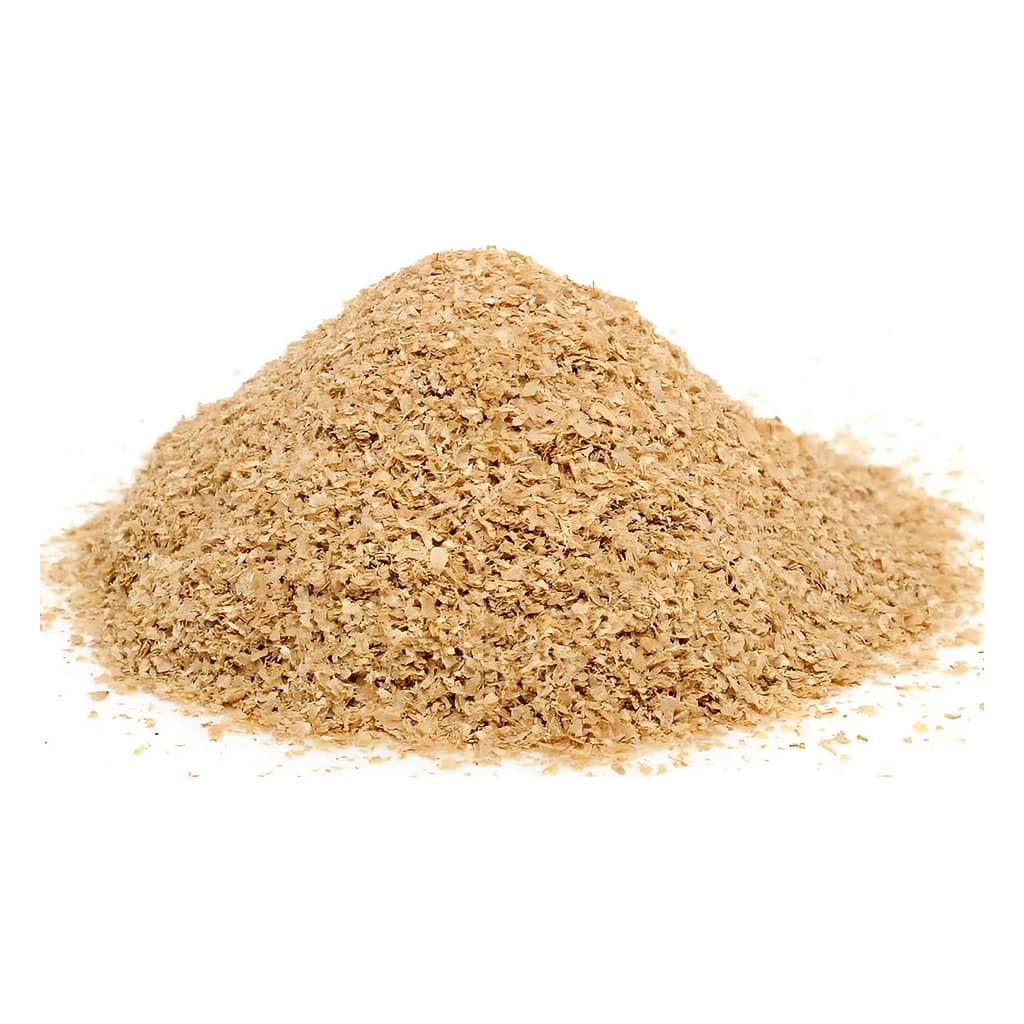
Wheat Bran 20 kg
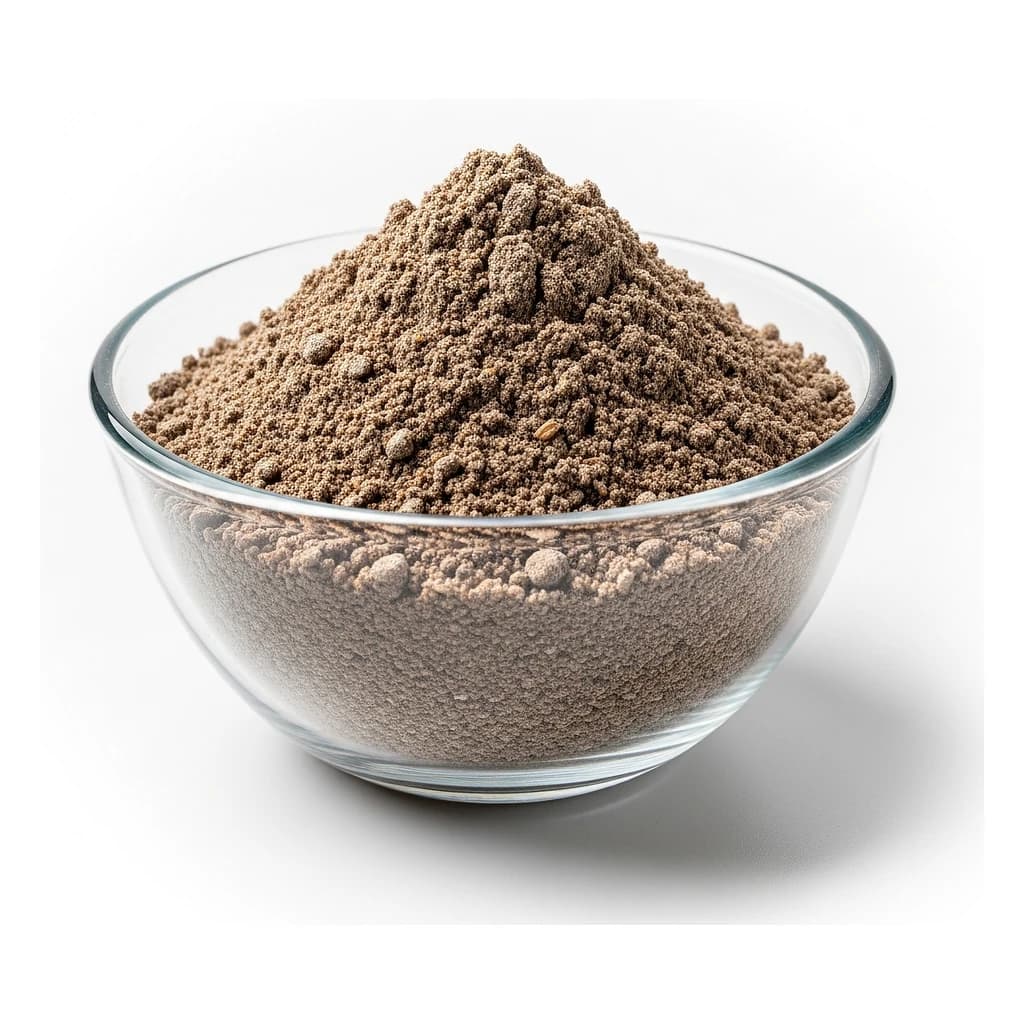
Wholemeal Rye Flour Type 2000 40 kg
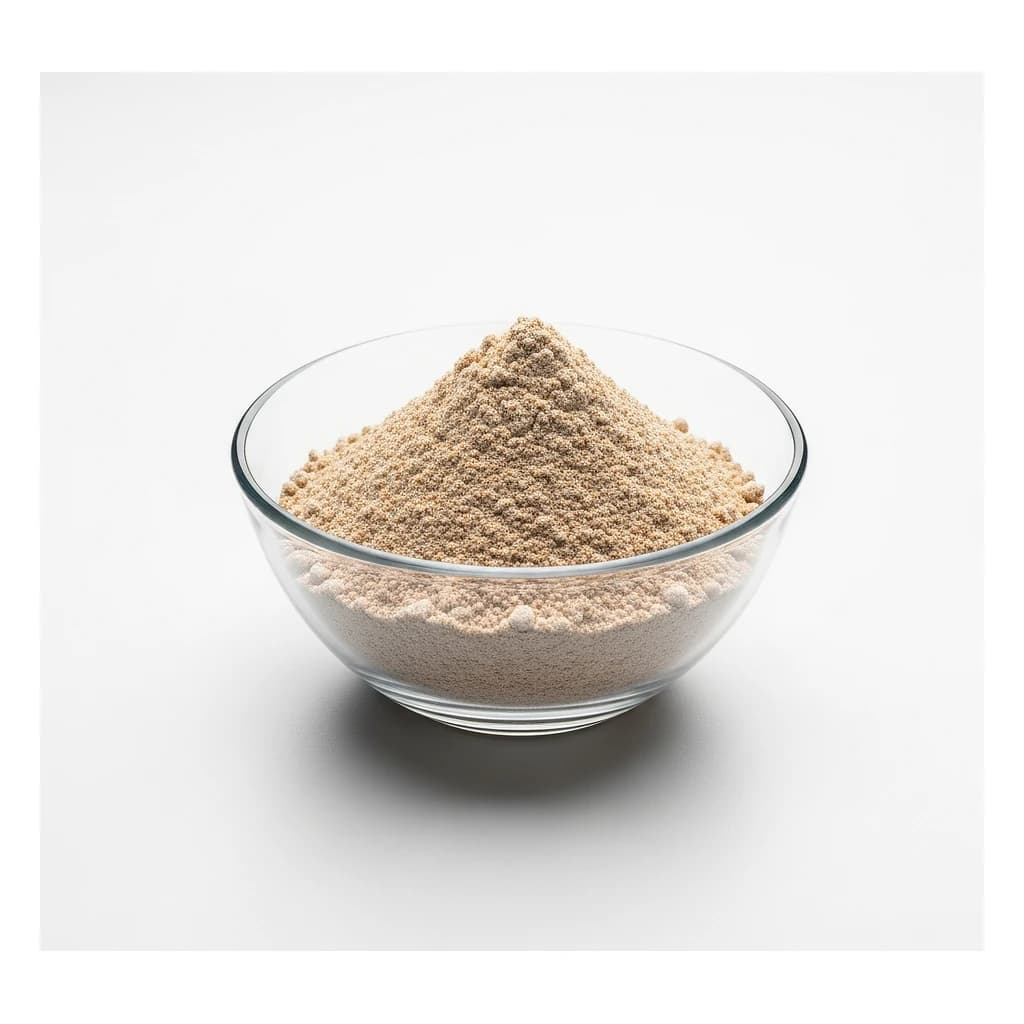
Graham Wheat Flour Type 1850 40 kg
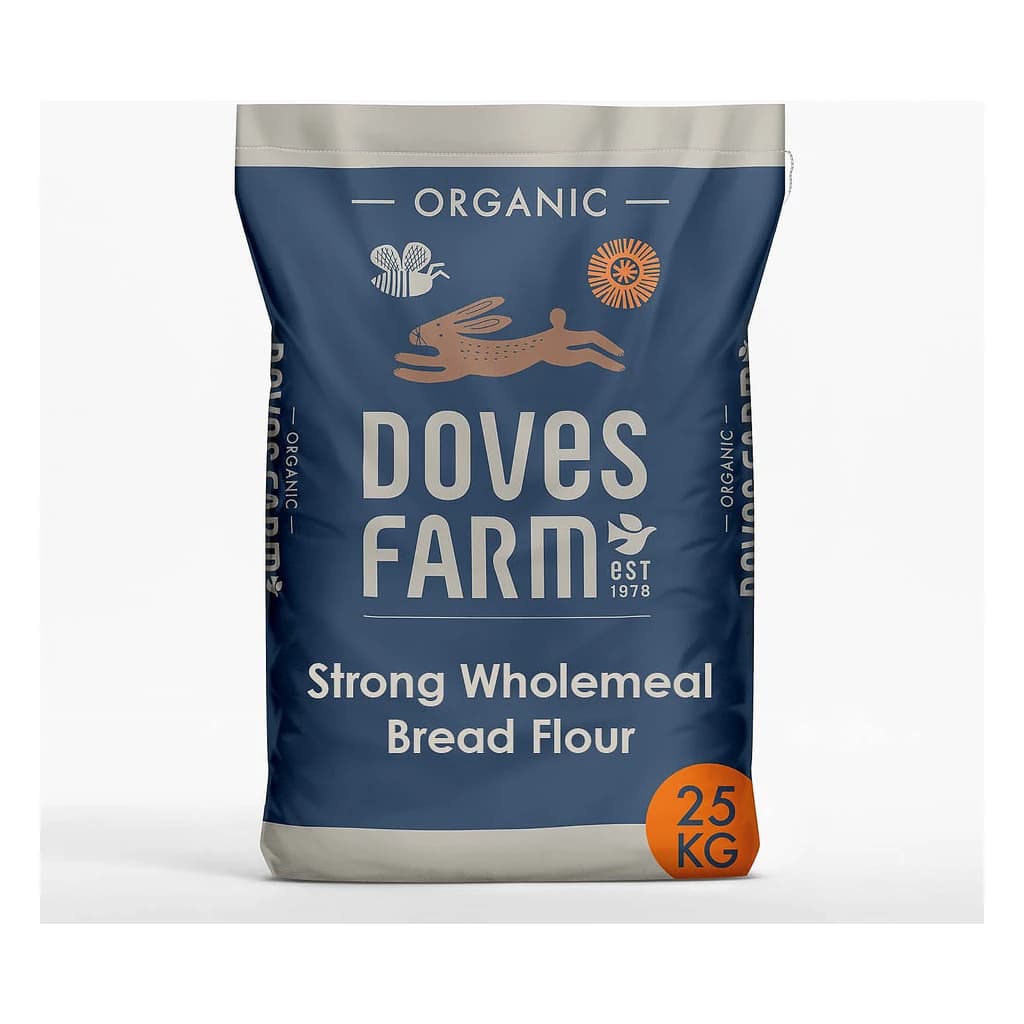
Organic Strong Wholemeal Bread Flour 25 kg

Wholemeal Spelt Flour 25 kg
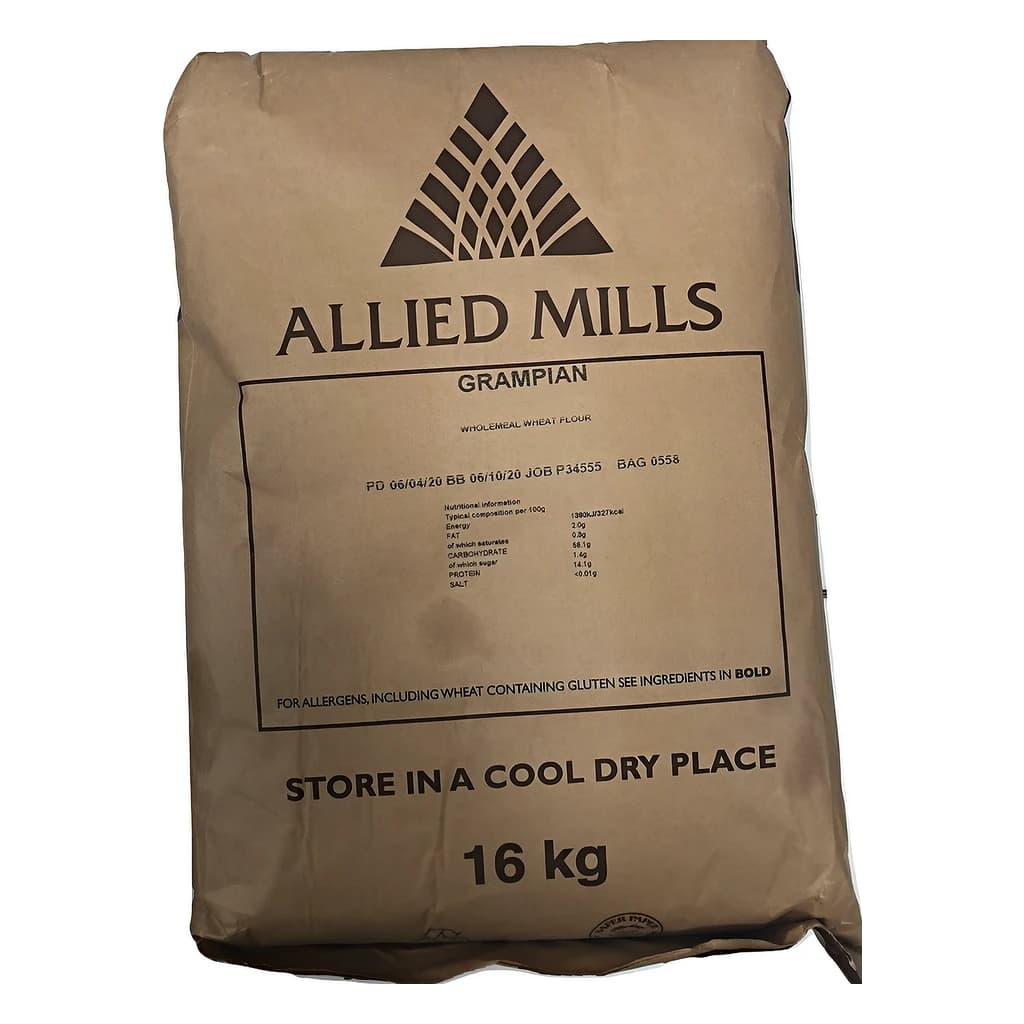
Grampian Wholemeal Flour 16 kg
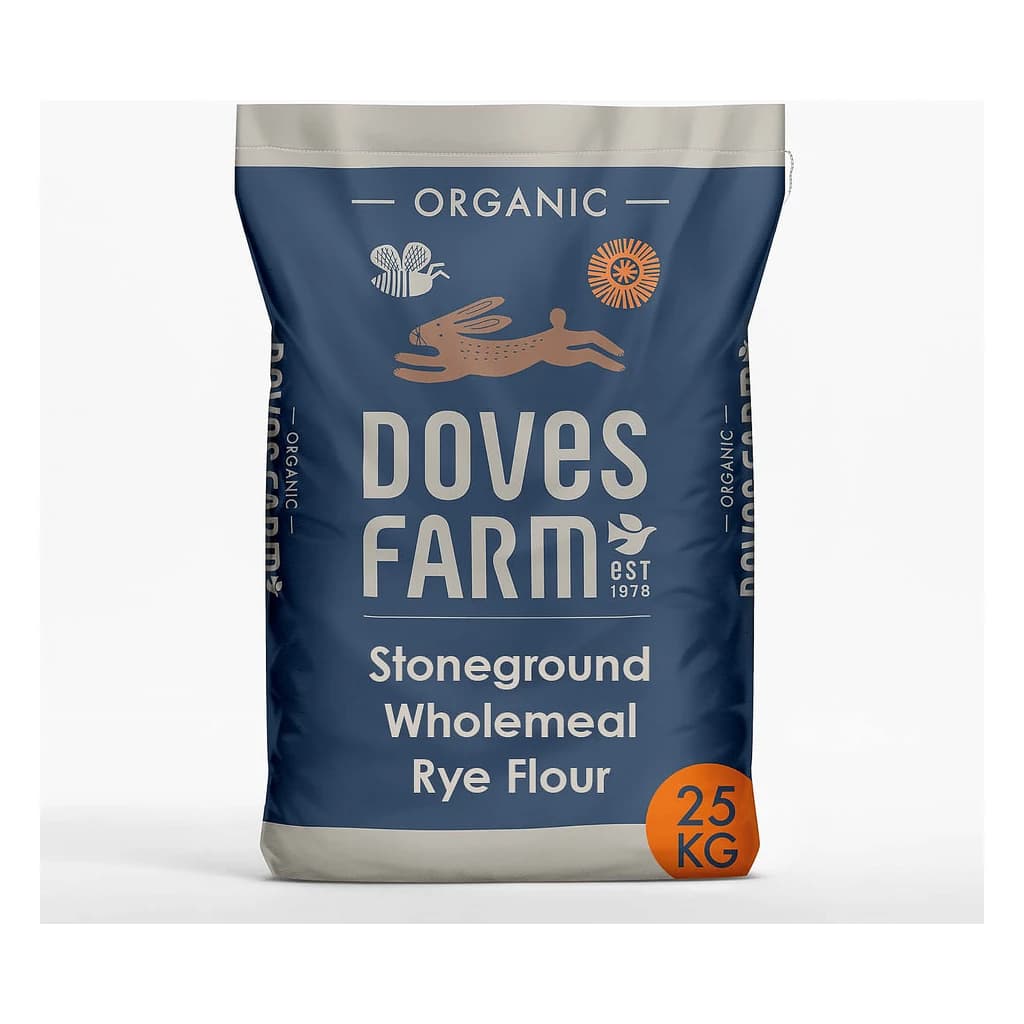
Organic Stoneground Wholemeal Rye Flour 25 kg
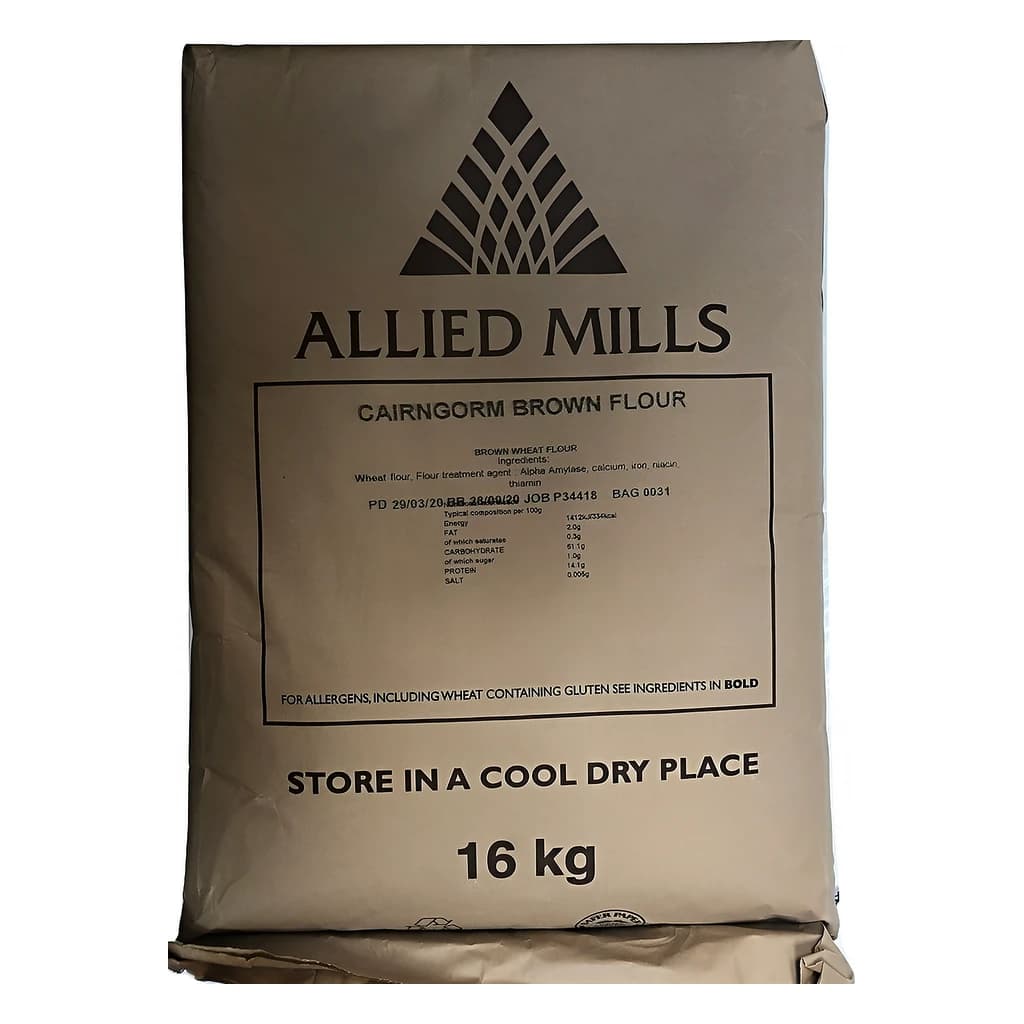
Cairngorm Brown Flour 16 kg
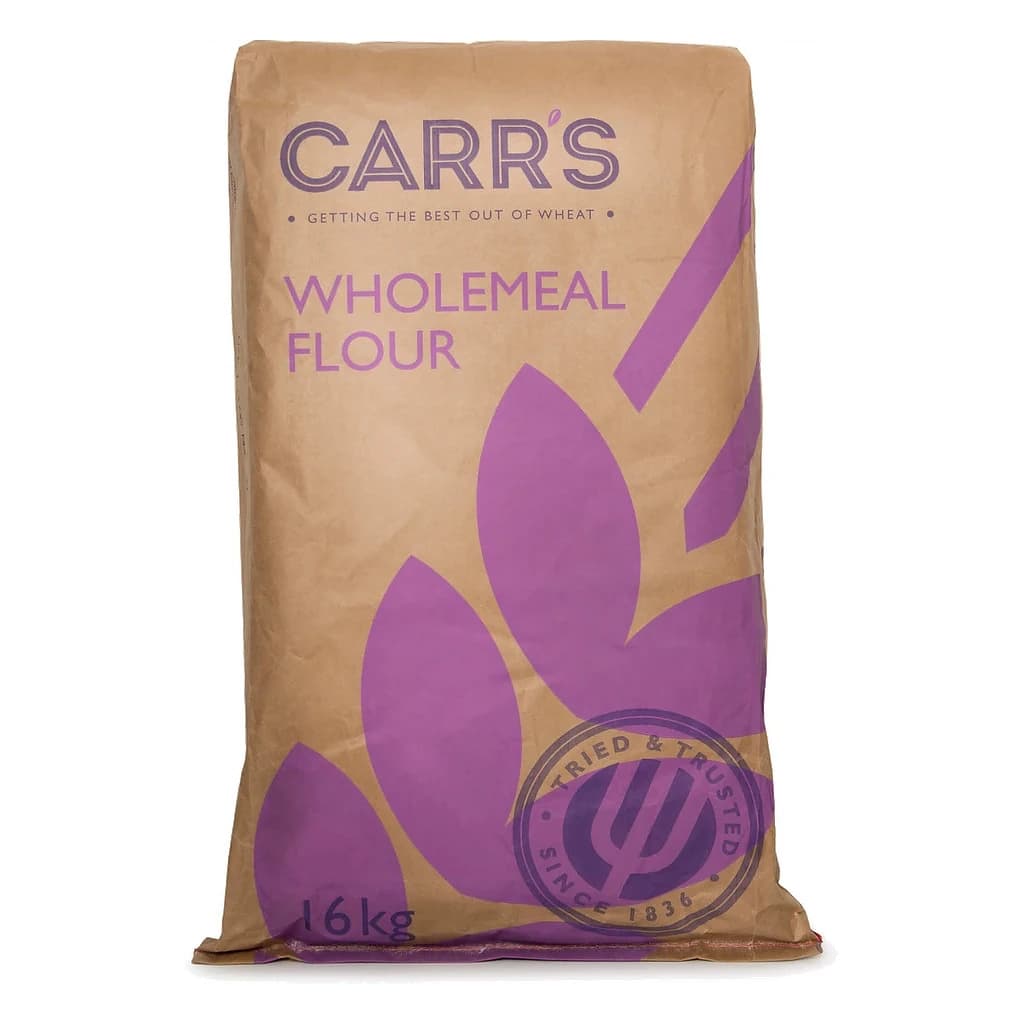
Bakers Wholemeal Flour 16 kg
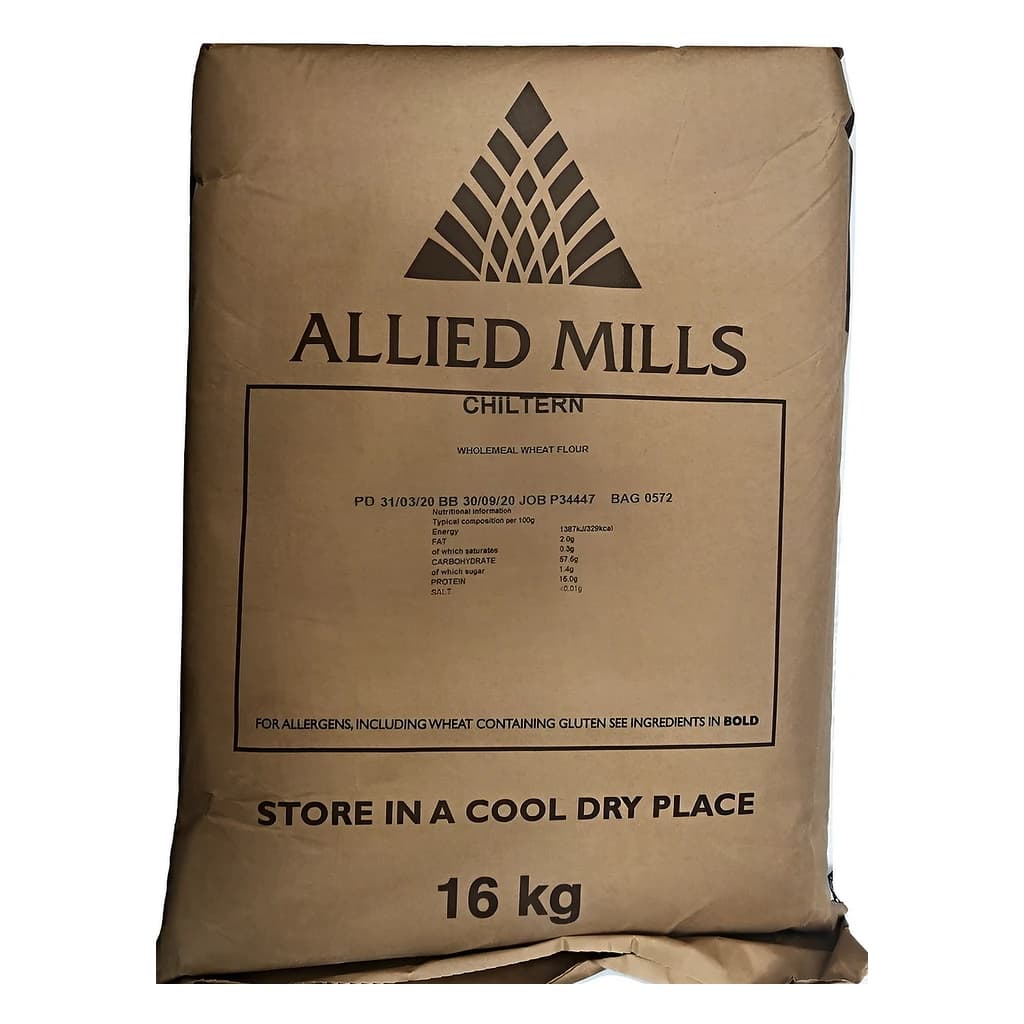
Chiltern Wholemeal Flour 16 kg
Rye Flour Type 1400 25 kg
Rye Flour Type 997 25 kg