
Kūčiukai: the Christmas Eve mini-breads — yeast vs. baking-powder versions and the poppy-seed milk pairing
Kūčiukai (also prėskučiai, šližikai, kleckai and some twenty other regional names) are the small, plain, lightly sweetened poppy-seed pieces that anchor the Lithuanian Kūčios (Christmas Eve) table. Built from native Lithuanian sources — Beatos virtuvė, LRT, Lithuanian reference works, recipe portals like lamaistas.lt and 15min.lt — and cross-checked against the platform's supplier datasheets, this dossier gives the working picture: what kūčiukai are and the roughly 25 dialectal names for them; the two production routes (the traditional mielinė / yeast dough vs. the quick bemielis / baking-powder version) as side-by-side formulas in baker's %; how the dough is rolled into thin ropes and cut into walnut-sized pieces and baked fast at ~180°C; and the pairing that defines the dish — aguonų pienas (poppy-seed milk), scalded, soaked, ground and sweetened with honey, poured over the biscuits. It sets kūčiukai in the pre-Christian Kūčios calendar (the 12 lean dishes, the eponymous kūčia grain dish and its cross-border cousin the Polish/Belarusian kutia), flags the real poppy-seed food-safety issue (opium-alkaloid limits under EU 2023/915, reduced by scalding and baking), and maps a Domson shopping list. Cross-linked to the Pillar A craft concepts (A2-yeast-types-comparison, A2-chemical-leaveners-baking-powder, A2-yeast-fermentation-science, A1-wheat-flour-types-by-application, A8-bakers-percentage-fundamentals, A5-baking-oven-science) and to its neighbours (B1-makowiec-and-poppy-seed-fills, B5-seasonal-festive-baking, B5-sakotis-spit-cake, B5-rye-bread-culture-and-history).
What kūčiukai are
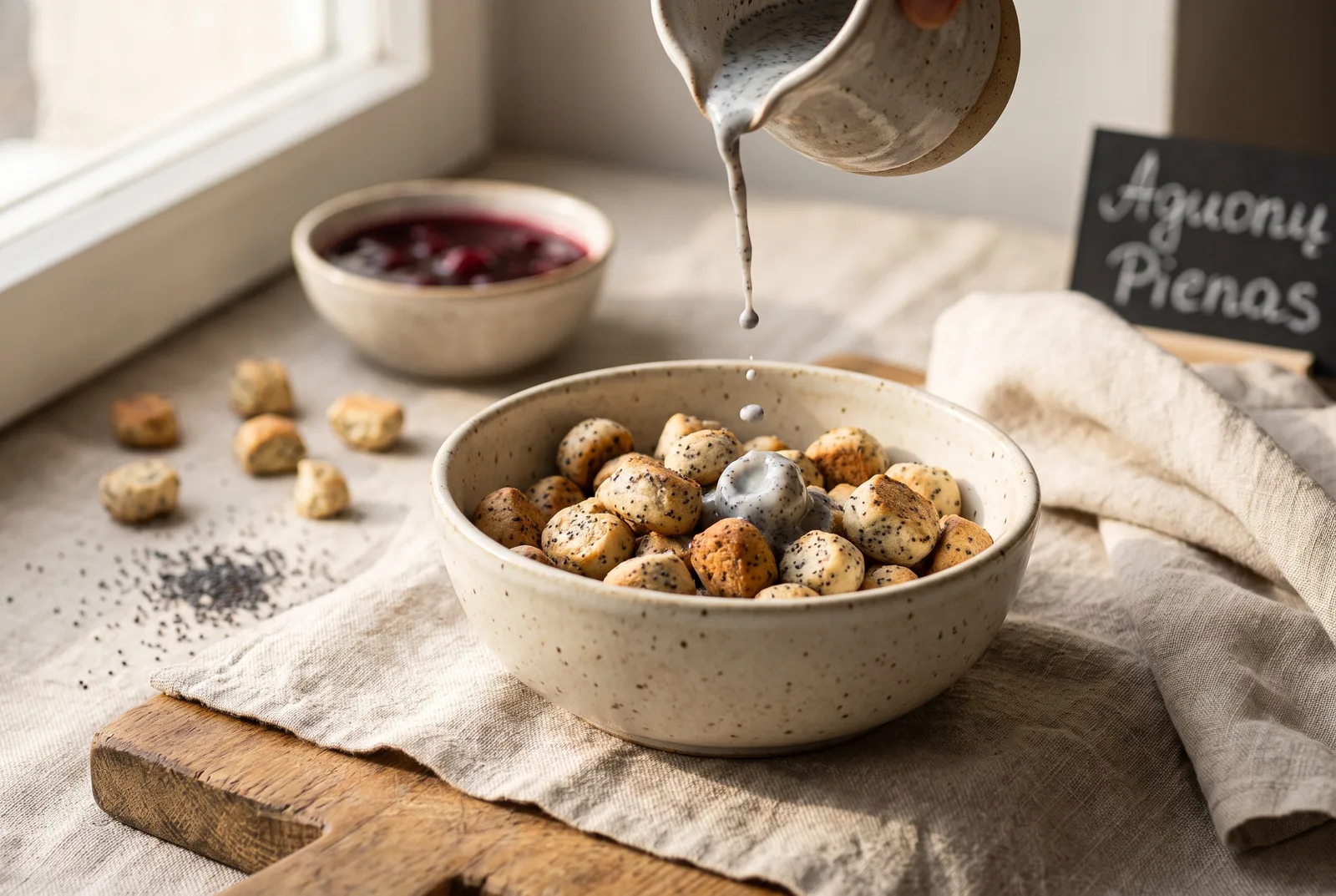
Kūčiukai (pronounced roughly koo-CHOO-kigh) are small, rather plain, only lightly sweetened baked pieces of yeast dough studded with poppy seeds (aguonos). The Lithuanian definition calls them "nedideli, prėskūs, truputį saldūs miltiniai mielinės tešlos kepinėliai su aguonomis" — little, prėskūs (plain/lean), slightly sweet flour pieces of yeast dough with poppy seeds. They are one of the fixed foods of Kūčios, the Lithuanian Christmas Eve supper, and are eaten either dry or — far more typically — soaked in aguonų pienas (poppy-seed milk) or served with spanguolių kisielius (cranberry kissel). See img-b5k-01 for the classic bowl of kūčiukai under poppy milk and img-b5k-02 for the dry biscuit before it is soaked.
They are not a showpiece like the šakotis spit cake (B5-sakotis-spit-cake); they are humble, made in quantity, and the whole point is the ritual of the table. That is exactly why they matter to a UK bakery serving Lithuanian customers: demand is seasonal, concentrated and non-negotiable — Kūčios without kūčiukai is not Kūčios.
A cupboard full of names
Few Lithuanian foods carry as many names. Across dialects there are roughly 25 of them. The most useful to recognise on an order:
- prėskučiai / prėskieniai — very common; from prėskas, "plain / unleavened", which tells you these are meant to be lean, not rich.
- šližikai (also šlyžikai, sližikai) — so common that recipes are routinely filed as "Šližikai (prėskučiai)".
- kleckai (kleckučiai, kleckiukai), parceliukai / parpeliai, skrebučiai, riešutėliai ("little nuts", after the walnut-sized pieces), barškučiai ("rattling ones" — they rattle when dry), kalėdukai, pyragiukai, and a long tail of local names (buldikai, galkutės, balbolikai, bambolikai, pulkeliai, kukuliai, propuliai, paršeliukai).
There is even a regional size convention: Suvalkija (suvalkiečių) kūčiukai run a little larger than those of Aukštaitija and Žemaitija. The regional picture and the name-cloud are drawn in img-b5k-09. The full name list is in the comparison table below.
History: an ancient dish, a modern little bun
It pays to be honest about the history, because the marketing version flattens it. The ritual is ancient; the specific bun is not.
The Christmas Eve supper is named after a dish called kūčia — a mixture of boiled grains (wheat, rye, barley, oats) and legumes, sweetened with honey. The word kūčia / kutia is ultimately a borrowing from Greek (kokkos / koukki, "grain / bean") that reached Lithuanian through East Slavic кутья, and the grain dish is documented from the 11th–12th centuries. That grain-poppy-honey offering is shared right across the region: kutia is the ceremonial Christmas grain dish of Poland, Belarus, Ukraine and Russia too — a common Baltic-Slavic heritage older than the modern borders — and the distinctively Lithuanian touch is to serve it with poppy milk. This is the direct cross-border tie to the Polish poppy tradition covered in B1-makowiec-and-poppy-seed-fills (Polish Christmas kutia is the same idea: wheat berries, poppy and honey). The ritual complex is drawn in img-b5k-10.
The small poppy-seed yeast buns specifically called kūčiukai are comparatively recent: small poppy buns began to be baked in Lithuania after the First World War, and the name kūčiukai for round wheat-flour yeast pieces is a relatively modern coinage. Underneath, though, the meaning is old and pre-Christian: kūčiukai are read as a "return of the light" food at the winter solstice and as a remembrance of ancestors — the bread left overnight for departed souls.
Kūčios: the table kūčiukai belong to
Kūčios is pre-Christian in origin. The famous 12 dishes are interpreted by Lithuanian ethnologists as the 12 months of the year (the popular alternative reading ties the number to the 12 apostles), and the meal is strictly lean / fasting — no meat and no dairy (pasninkas). That fasting rule is why the traditional kūčiukai dough is made with water and oil, not milk and butter, and why poppy milk — not cow's milk — is the liquid poured over them. Poppy carries heavy symbolism here: aguonų pienas is regarded as a "drink for the spirits" (dvasių gėrimas), poppy is nicknamed the "fasting cow" (pasninko karvutė), and in Dzūkija sweetened poppy milk is called "bear's milk" (meškos pienas) . Where kūčiukai and poppy milk sit among the twelve foods is drawn in img-b5k-06; the full context grid is in the comparison table below. The wider calendar (Kūčios, Velykos, Užgavėnės) is the subject of B5-seasonal-festive-baking.
Two ways to make them: yeast vs. baking powder
The working title's question — yeast vs. baking powder — is a real fork in Lithuanian kitchens, and the answer is "both are authentic, for different reasons." The side-by-side comparison is in the comparison table below; the two methods are drawn in img-b5k-07.
The traditional yeast version (mieliniai)
The definition names kūčiukai as pieces of mielinė tešla (yeast dough). It is a lean, mildly enriched dough, not a rich brioche — think of it as a plain sweet-ish bun taken to the far lean end of the enriched-dough family in A8-enriched-dough-formulas. A representative large-batch formula runs about 1 kg flour: 0.5 L water (or milk): 200 g sugar: 100 g oil: 40 g fresh yeast: ~1 tsp salt, plus poppy seeds — i.e. roughly 100 / 50 / 20 / 10 / 4 / 1 in baker's %. A smaller dried-yeast formula: 500 g flour, 300 ml warm water, 7 g dried yeast, ~100 g sugar, 30 g poppy, 2 tbsp oil. Fresh vs. dried is the choice explained in A2-yeast-types-comparison — and the rule of thumb here is the standard one: fresh yeast ≈ 3× the dried weight for instant dried yeast like Fermipan Red (active-dried yeast is closer to 2×).
Method:
- Warm the liquid to ~37–38°C (warm, never hot — hot liquid kills the yeast, the single most common cause of dense kūčiukai). Dissolve the yeast with a little sugar; rest ~10 min until foamy.
- Sponge: mix in part of the flour, cover, and proof ~1 h until doubled.
- Dough: add the rest of the flour, the remaining sugar, oil, salt and poppy seeds; knead to a smooth, elastic, slightly sticky dough.
- Second proof until doubled.
The fermentation itself — the CO₂, the flavour, why temperature and time matter — is the subject of A2-yeast-fermentation-science. The full formula card is below.
The quick, unleavened version (bemieliai / greiti)
The fast route swaps yeast for baking powder (kepimo milteliai) — no proofing, ~30 minutes start to finish. This is genuinely traditional-feeling too, because the name prėskučiai literally means "the plain/unleavened little ones". Method: mix flour + salt + poppy seeds + ~1 heaping tbsp baking powder; separately stir water + honey + sugar; combine into a soft, elastic dough; roll, cut and bake ~180°C for ~10–15 min. The chemistry of the raise — the bicarbonate/acid pair, the CO₂ on wetting and heating — is in A2-chemical-leaveners-baking-powder. One catalogue detail worth knowing: the baking powder itself (E500(ii) + E450(i) + wheat flour) carries gluten, and its suggested dosage is 1 kg per 32 kg flour (~3%). The full formula card is below.
Which to reach for? Yeast for airy, authentic, keep-them-till-the-solstice kūčiukai when you have time; baking powder for a fast batch or a strictly egg- and dairy-free lean option.
Flour, and the shape that names them
Kūčiukai are normally made from wheat flour, though barley (miežių) and buckwheat (grikių) flour were used historically. A general-purpose grade is right — nothing strong. The platform's Wheat Flour Type 550 datasheet (Komplexmłyn, G22092) reads protein ≥ 8.0%, wet gluten ≥ 25%, ash ≤ 0.58%, falling number ≥ 220 s, moisture ≤ 15% — a clean, unremarkable flour that gives a tender crumb. Grade numbering and why "550" is a soft, low-ash flour are covered in A1-wheat-flour-types-by-application, and the percentage language for the formulas above is A8-bakers-percentage-fundamentals.
Shaping is the signature move (img-b5k-04): the risen dough is rolled by hand into thin ropes (voleliai, ~0.5 cm diameter) — the Šlyninka heritage-mill baker likens them to "medžiotojų dešrelės" (hunter's sausages) — then cut into small pieces, about 1.5–2 cm long (walnut- to nail-sized), dusted with flour and spaced on parchment. See the studded close-up in img-b5k-03.
The bake: small pieces, fast heat
Because the pieces are tiny, they bake fast: about 180°C for ~10–15 minutes until golden. At Šlyninkos vandens malūnas — the Šlyninka water mill (Zarasai district), described as Lithuania's oldest working mill — baker Rima uses convection for roughly 7–10 minutes per two trays, stirring the pieces occasionally so they colour evenly, and notes the dough roughly doubles in the oven . The colour is Maillard browning on a lot of small surfaces at once — the oven-stage reactions in A5-baking-oven-science; with pieces this small the line between "golden and crisp" and "burnt" is thin, so watch them. For long keeping (kūčiukai are often baked days ahead) bake them a shade drier so they rattle. The faults grid — rock-hard, doughy, burnt, dense, soapy — is below.
Aguonų pienas: the pairing that completes the dish
Kūčiukai are really a delivery system for aguonų pienas (poppy-seed milk), and getting the milk right matters more than gilding the biscuit. The method (img-b5k-08):
- Rinse the poppy seeds, scald with boiling water and soak several hours or overnight until swollen.
- Drain, then grind 2–3 times (meat grinder or blender) or crush with a wooden pestle (kočėlas) until the paste turns milky-white.
- Add boiled, cooled water (or milk, for a richer pienas); strain through a fine sieve.
- Sweeten with honey and/or sugar; ground almonds/nuts and vanilla are optional.
Strength is a poppy-to-liquid ratio, and it varies widely by household and by how rich you want the pienas. The cited 15min.lt recipe is fairly dilute — on the order of one cup of poppy seeds (~145 g) to about 2 litres of water (~70 g poppy per litre) — while many cooks make it noticeably richer; grind until it turns properly milky and adjust the poppy and sweetening to taste. To serve, the milk is poured over the kūčiukai in a bowl just before eating (they should not sit and go soggy for hours), or served alongside; cranberry (spanguolių) kissel is the classic alternative, and kissel is regarded as effectively obligatory on the Kūčios table. See img-b5k-05 for the finished milk. Poppy-seed handling and paste-making at scale sit alongside the Polish poppy work in B1-makowiec-and-poppy-seed-fills. Ratios and steps are in the formula card and comparison table below.
Allergens and food safety
A few things need declaring, and the poppy seeds need real care (img-b5k-11; full detail in the spec table below):
- Allergens. The declarable allergen in kūčiukai is cereals containing gluten (wheat flour) — and note the baking powder itself contains wheat flour, so it also contributes gluten. A traditional lean recipe (water + oil) contains no egg and no dairy; versions made with milk or butter add milk, enriching the poppy milk with ground almonds/nuts adds tree nuts, and using milk for a richer pienas adds milk. The Type 550 flour datasheet also carries a precautionary "may contain traces of soy, lupin and mustard" — three further named allergens to carry onto any label. (A historical buckwheat batch would be free of wheat/barley gluten — buckwheat is a gluten-free pseudocereal — so recheck the gluten declaration if you ever bake that version.) Poppy seed is NOT one of the 14 named EU/UK allergens (the Floramex datasheet declares it free of them), but poppy and poppy products can carry sesame cross-contamination, and ready poppy-seed fillings (e.g. Helios Excellent, G25402) contain gluten and milk and may contain sesame, soy and egg — a real allergen shift if you shortcut the milk with a can. All allergen content here must be re-checked against the actual pack labels and declared under UK/EU FIC (Reg (EU) 1169/2011).
- Not for infants or young children (poppy milk). Because aguonų pienas is a concentrated poppy preparation served as a drink, keep it away from babies and very young children. Poppy-milk and poppy-seed folk preparations have caused documented — occasionally fatal — opioid (morphine/codeine) intoxication in infants, and EFSA's 2018 assessment of opium alkaloids in food underlines the risk for this group. Use certified food-grade seeds within the EU limits below, and treat poppy milk as an adults' / older-children's dish.
- Poppy-seed opium alkaloids (the one to take seriously). Poppy seeds can be contaminated with opium alkaloids (morphine, codeine, thebaine) from the plant's latex during harvest. EU Regulation (EU) 2021/2142 — now consolidated into (EU) 2023/915, applicable since 1 July 2022 — sets maximum levels for the sum of morphine + codeine (codeine × 0.2 factor): 20 mg/kg for poppy seeds sold to the final consumer and 1.5 mg/kg for bakery products containing poppy seeds. The good news is that the traditional handling helps: washing, scalding/soaking, grinding and baking all reduce alkaloid levels — which is exactly why the supplier datasheet instructs that the seeds "have to be used with thermal-processing". Buy food-grade poppy from a reputable supplier that certifies to the EU limit.
- Yeast handling. Fresh yeast must be kept chilled at 1–10°C and used within its 35-day shelf life; the dough is proofed and then fully baked, so the finished biscuits are cooked throughout.
Sourcing it from the Domson catalogue
A UK-based Lithuanian baker can build both versions and the poppy milk from stock (img-b5k-12; full list in the products at the end of this article):
- Flour — Wheat Flour Type 550 (Komplexmłyn, G22092) or Domson Wheat Flour Type 550 (G22006): the plain dough base.
- Leavening — Fresh Yeast Benevia (Lesaffre, G25216) for the traditional dough, or Dried Yeast Fermipan Red (Lallemand, G45032) at ~⅓ the fresh dose; Baking Powder (Domson Poland, G22077) for the quick bemielis version.
- Poppy seeds — Blue Poppy Seeds (Agart, G22031), the traditional blue poppy, for both the dough and the milk; White Poppy Seeds (Floramex, G23506) as an alternative (thermally process before use) .
- Sugar & honey — Granulated Sugar (G22065) for the dough; Multifloral Honey (Ratos Natura, G23652) to sweeten the aguonų pienas the traditional way.
- Poppy-milk extras — Ground Almonds (Global Grains, G44748) for a richer milk; Helios Excellent Poppy Seed Filling (G25402) as a fast milk base (note: it contains gluten and milk and is already sweetened — it changes the allergen profile).
- For the kissel alternative — Cranberries Sliced Dried (Chelmer Foods, G44805) for spanguolių kisielius; Vanillin Sugar (Emix, G22469) and Ground Cinnamon (PGD, G22066) as optional aromatics.
For broader Baltic-region professional ingredients, Zeelandia (a major supplier in Lithuania) is also carried in the catalogue.
Where this sits in the Lithuanian section
Kūčiukai are the everyday festive counterpart to the showpiece šakotis (B5-sakotis-spit-cake), and they belong to the same Christmas-Eve table drawn out in B5-seasonal-festive-baking. And although they are a wheat bun, they live inside a baking culture whose spine is rye bread and the scald — B5-rye-bread-culture-and-history — so a Lithuanian bakery making kūčiukai in December is almost certainly also running ruginė duona the rest of the year.
Figures
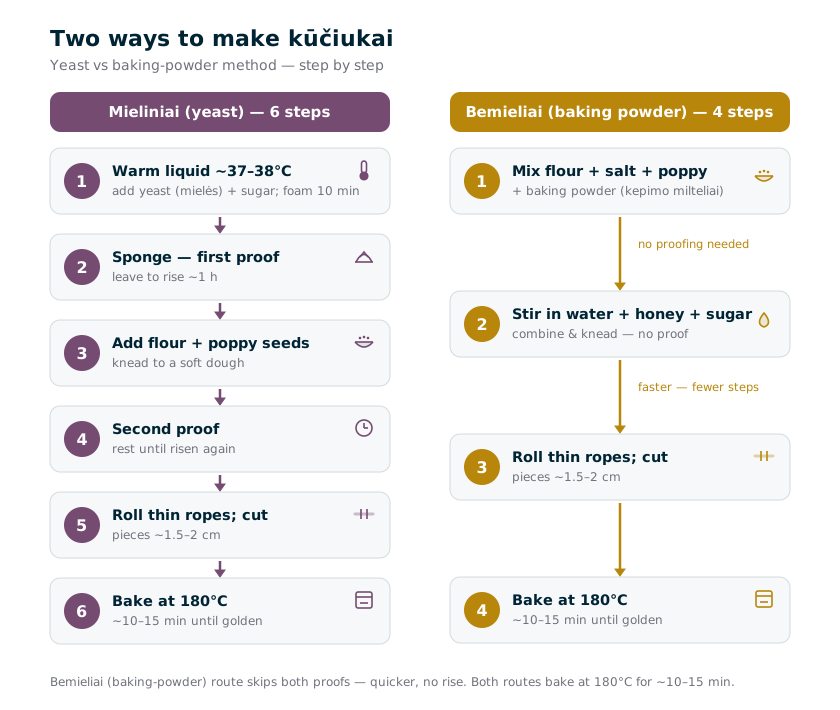 Two-column flow diagram comparing the yeast and baking-powder methods for making kūčiukai
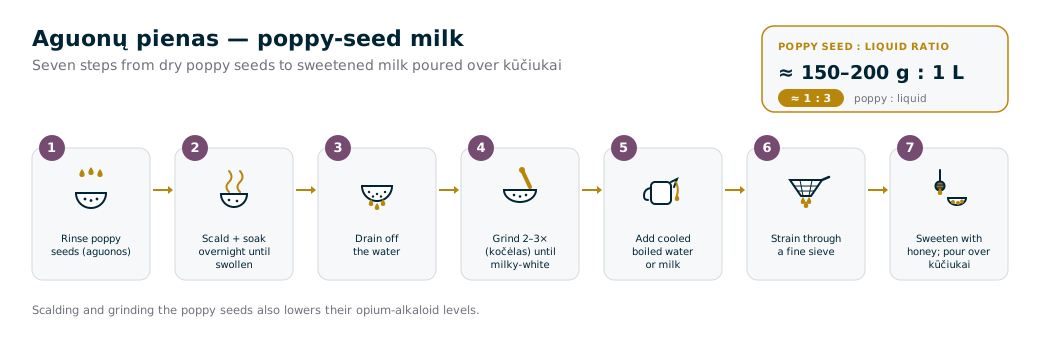 Step-by-step diagram of making poppy-seed milk from scalding and soaking through grinding, straining and sweetening
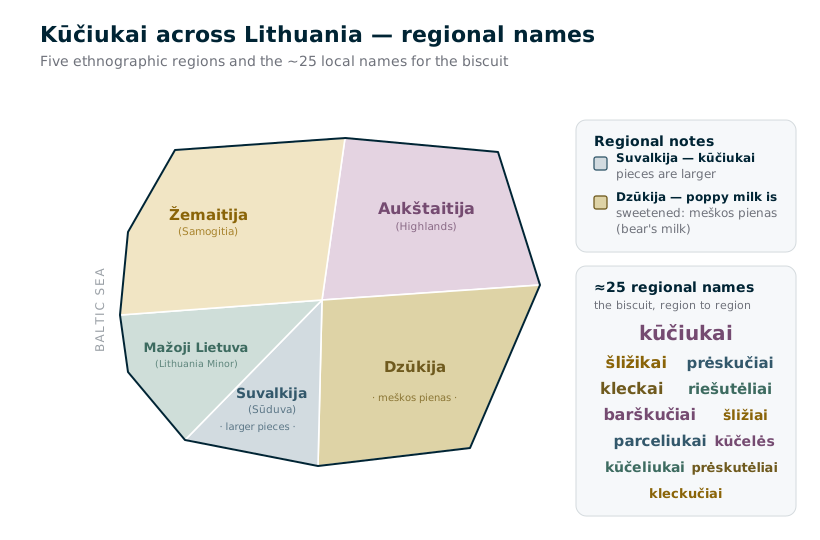 Map of Lithuania's ethnographic regions annotated with kūčiukai regional names and the Suvalkija size note
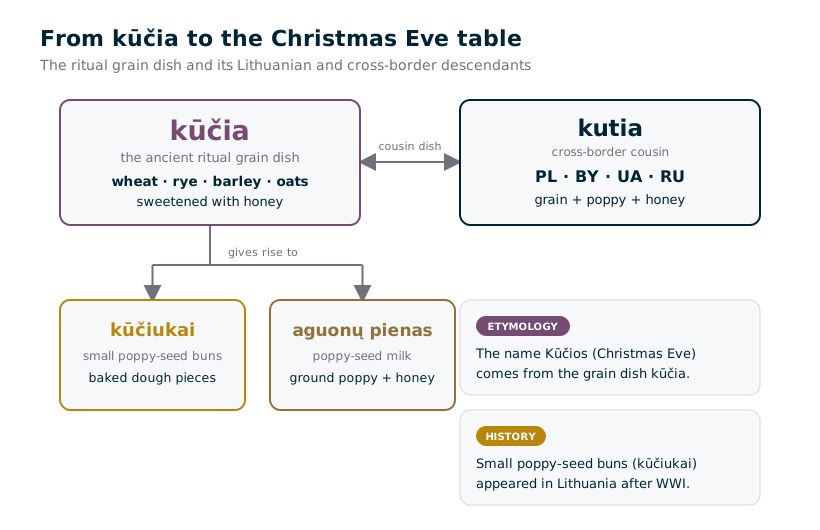 Diagram linking the kūčia grain dish to kūčiukai and poppy milk and to cross-border kutia in Poland, Belarus and Ukraine
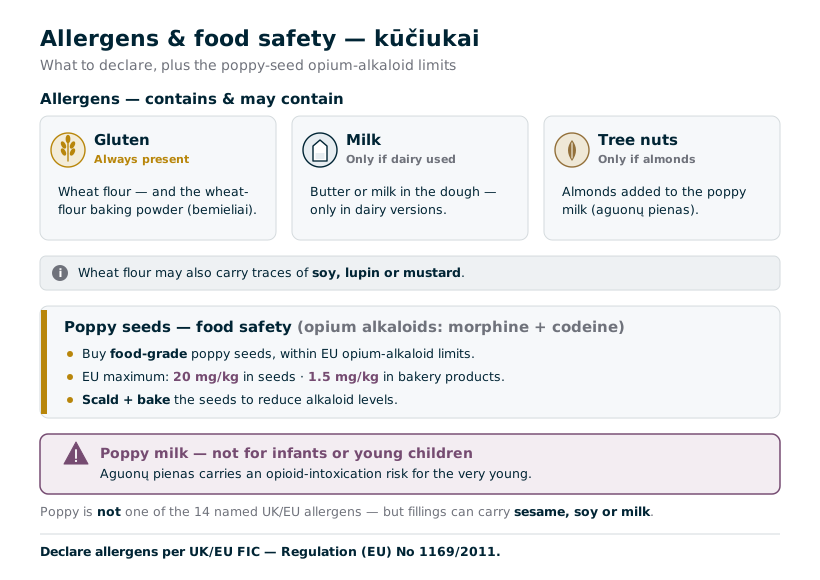 Allergen and food-safety panel for kūčiukai covering gluten, optional milk, and poppy-seed opium-alkaloid limits
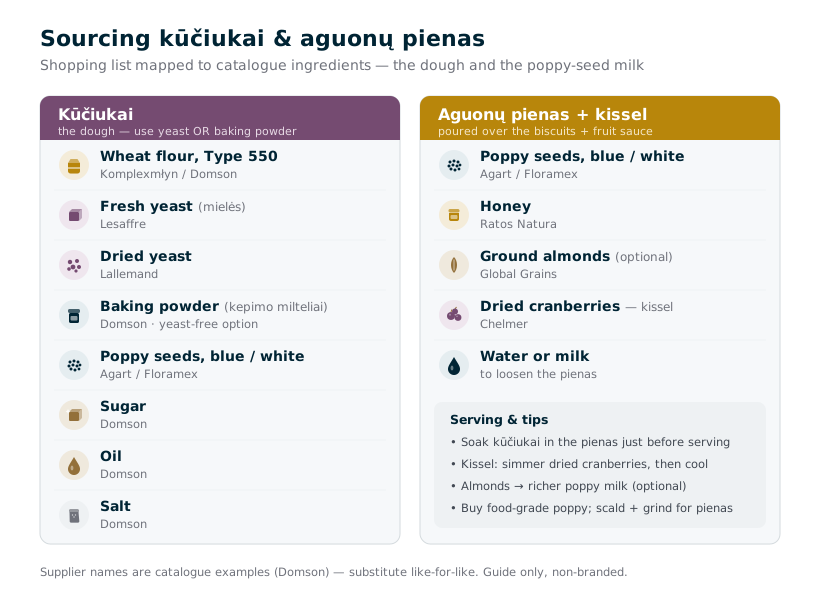 Panel mapping kūčiukai and poppy-milk ingredients to Domson catalogue products
Kūčiukai — traditional yeast dough (baker's %)
| Ingredient | Baker's % | Weight |
|---|---|---|
| Wheat flour (Type 550 / plain) — General-purpose grade; barley/buckwheat used historically | 100 | |
| Water or milk (~37–38°C) — Warm, not hot, to protect the yeast | 50 | |
| Sugar — Lightly sweet | 15–20 | |
| Oil (odourless) — Sunflower/rapeseed; keeps them tender | 6–10 | |
| Fresh yeast — Or ~1.3–1.5% dried/instant | 4 | |
| Poppy seeds — Folded into the dough | 4–6 | |
| Salt — Source gives ~1 tsp; 1 tsp fine salt ≈ 0.6–1% | 1 |
- Warm the liquid to ~37–38°C; dissolve the yeast with a little of the sugar; rest ~10 min until foamy.
- Make a sponge with part of the flour; cover and proof ~1 h until doubled.
- Add the remaining flour, the rest of the sugar, oil, salt and poppy seeds; knead to a smooth, elastic, slightly sticky dough.
- Second proof until doubled.
- Roll into thin ropes (~0.5 cm); cut into ~1.5–2 cm pieces; dust with flour; space on parchment.
- Bake ~180°C for ~10–15 min until golden; they roughly double in the oven.
Yield: Scales freely; example large batch below uses 1 kg flour
Lean, only lightly sweetened. Traditional fasting versions use water + oil (no dairy/egg); many home cooks use milk. Fresh yeast ≈ 3× the dried-yeast weight. Ranges reflect real household variation.
Kūčiukai — quick, unleavened (baking-powder) version (baker's %)
| Ingredient | Baker's % | Weight |
|---|---|---|
| Wheat flour | 100 | |
| Water — Mixed with the honey + sugar | 45–50 | |
| Honey — Colour + sweetness | 8–12 | |
| Sugar | 8–12 | |
| Oil | 6–8 | |
| Baking powder — ≈ 1 heaping tbsp; supplier dosage guide 1 kg per 32 kg flour ≈ 3% | ~3 | |
| Poppy seeds | 4–6 | |
| Salt | 1 |
- Mix flour, salt, poppy seeds and baking powder in a bowl.
- Separately stir water with honey and sugar until dissolved.
- Combine wet into dry; knead a soft, elastic dough.
- Roll into ropes, cut into small pieces.
- Bake ~180°C for ~10–15 min until golden and firm.
Yield: Small batch; no proofing
The fast route. No yeast, no waiting. Honey adds colour and the traditional sweetness. Note the baking powder itself contains wheat flour.
Aguonų pienas (poppy-seed milk) — baker's-% style ratio
| Ingredient | Baker's % | Weight |
|---|---|---|
| Poppy seeds — Base. Cited 15min.lt recipe ≈ 1 cup (~145 g) poppy per ~2 L liquid (~70 g/L); strength varies widely | 100 | |
| Water or milk — The cited recipe is fairly dilute (~14× the poppy by weight); many cooks make it richer — adjust to taste | ≈700–1400 | |
| Honey and/or sugar — Traditionally honey | to taste | |
| Ground almonds / nuts — For a richer milk | optional | |
| Vanilla | optional |
- Rinse the poppy seeds; scald with boiling water; soak several hours or overnight until swollen.
- Drain; grind 2–3× (meat grinder/blender) or crush with a wooden pestle (kočėlas) until the paste turns milky-white.
- Add boiled, cooled water (or milk); strain through a fine sieve.
- Sweeten with honey and/or sugar; add optional almonds/vanilla.
- Pour over the kūčiukai just before serving.
Yield: ~1 L
Base is poppy vs. liquid. Sweeten to taste; nuts and vanilla optional. Use food-grade seeds and scald them — this both softens them and helps lower opium-alkaloid content.
| Attribute | Yeast version (mieliniai) | Baking-powder version (bemieliai / greiti) |
|---|---|---|
| Leavening | Fresh or dried baker's yeast; biological fermentation | Baking powder (E500 + E450 + wheat flour); chemical raise |
| Proofing | Sponge ~1 h + a second proof until doubled | None — mix, roll, cut and bake straight away |
| Total time | ~3–4 h (mostly proofing) | ~30–40 min start to finish |
| Texture | Lighter, puffs and roughly doubles in the oven; more open | Denser, crunchier, more biscuit-like |
| Flavour | Faint yeasty depth; classic bready note | Cleaner, plainer — matches the 'prėskučiai' character |
| Tradition | The definition names kūčiukai as yeast-dough pieces (mielinė tešla) | Widely used modern shortcut; the name prėskučiai (from prėskas, 'plain/unleavened') fits it well |
| Gluten note | Wheat flour → gluten | Wheat flour + the baking powder itself contains wheat flour → gluten |
| Best when | You have time and want authentic, airy kūčiukai | You need a fast batch or an egg/dairy-free lean option |
| Name (with diacritics) | Note / region |
|---|---|
| kūčiukai | The now-standard national name; diminutive tied to Kūčios (Christmas Eve) |
| prėskučiai / prėskieniai | Very common; from prėskas = plain/unleavened, reflecting the lean character |
| šližikai (šlyžikai, sližikai) | Widespread alternative; recipes are often filed under 'Šližikai (prėskučiai)' |
| kleckai (kleckučiai, kleckiukai) | Dialectal cluster |
| parceliukai / parpeliai (parpeliukai) | Dialectal; recorded around NE Lithuania |
| skrebučiai | Dialectal |
| riešutėliai | Literally 'little nuts' — from the walnut-sized pieces |
| barškučiai | Onomatopoeic ('rattling ones' — they rattle when dry) |
| kalėdukai / pyragiukai | 'Little Christmas ones' / 'little pastries' |
| buldikai, galkutės, balbolikai, bambolikai, pulkeliai, kukuliai, propuliai, paršeliukai | Further local names among the ~25 recorded |
| Size note | Suvalkija (suvalkiečių) kūčiukai are somewhat larger than those of Aukštaitija and Žemaitija |
| Parameter | Value / practice |
|---|---|
| Poppy: liquid (cited recipe) | ~1 cup poppy seeds (~145 g) to ~2 L water ≈ ~70 g per litre (15min.lt) |
| Strength | Varies widely by household — make it richer or thinner to taste, grinding until milky-white |
| Liquid | Boiled, cooled water — or milk for a richer 'pienas' |
| Prep | Rinse → scald with boiling water → soak several hours / overnight until swollen |
| Grinding | Grind 2–3× (meat grinder / blender) or crush with a wooden pestle (kočėlas) until milky-white |
| Finishing | Strain through a fine sieve; sweeten with honey and/or sugar; optional ground almonds/nuts, vanilla |
| Serving | Pour over kūčiukai in a bowl just before eating, or serve alongside |
| Safety | Scald + (for the buns) bake reduce opium-alkaloid levels; buy food-grade seeds within EU limits |
| Element | Meaning / rule |
|---|---|
| Kūčios | The Christmas Eve supper; pre-Christian roots; strictly lean/fasting — no meat, no dairy (pasninkas) |
| 12 dishes | Read by ethnologists as the 12 months of the year (popularly also linked to the 12 apostles) |
| kūčia | The eponymous grain dish (boiled wheat/rye/barley/oats + honey) that gives Kūčios its name |
| kūčiukai | Small poppy-seed yeast pieces; a 'return of the light' / ancestral remembrance symbol |
| aguonų pienas | Poppy milk poured over kūčiukai; regarded as a 'drink for the spirits' |
| kisielius | Kissel (esp. cranberry, spanguolių) — the classic alternative dunk; effectively obligatory |
| Cross-border cousin | Kūčia shares its DNA with Polish/Belarusian/Ukrainian kutia — grain + poppy + honey |
| Symptom | Likely cause | Fix |
|---|---|---|
| Rock-hard, tooth-breaking | Over-baked / cut too thick / too little liquid | Cut thinner (~0.5 cm ropes), pull them at golden, add a touch more liquid |
| Soft and doughy, won't keep | Under-baked or pieces too large | Bake fully to golden; keep pieces small (~1.5–2 cm); dry a little longer for storage |
| Burnt outside, raw inside | Oven too hot / pieces uneven | Hold ~180°C; make pieces even; stir the tray so they colour uniformly |
| Dense, no puff (yeast version) | Milk too hot killed the yeast / under-proofed / stale yeast | Use warm (not hot) liquid ~37–38°C; proof to doubled; check yeast is fresh and in-date |
| Flat, soapy taste (baking-powder version) | Too much baking powder | Stay near ~3% (≈1 heaping tbsp per batch); level the spoon |
| Poppy milk thin / watery | Too little poppy or not ground enough | Use ~150–200 g poppy per litre; grind 2–3× until milky |
| Poppy milk grey / gritty | Seeds not soaked/scalded enough before grinding | Scald and soak until fully swollen, then grind and strain |
| Poppy milk bitter | Old or poor-quality seeds | Buy fresh food-grade seeds within EU alkaloid limits; scald before use |
- Moisture max pct:
- 15
- Ash max pct:
- 0.58
- Falling number min s:
- 220
- Wet gluten min pct:
- 25
- Protein min pct:
- 8
- Energy per 100g:
- 343 kcal
- Allergens:
- gluten (trace soy/lupine/mustard possible)
- Origin:
- Poland
- Organism:
- Saccharomyces cerevisiae (compressed)
- Dry matter min pct:
- 29
- Storage c:
- 1–10 (optimum 4)
- Shelf life days:
- 35
- Fresh to dried ratio:
- ~3:1
- Allergens:
- none declared (sulphites only in production molasses)
- Ingredients:
- sodium hydrogen carbonate E500(ii), disodium diphosphate E450(i), wheat flour
- P2o5 pct:
- 18.02–18.45
- Suggested dosage:
- 1 kg per 32 kg flour (~3%)
- Allergens:
- gluten (contains wheat flour)
- Shelf life months:
- 9
- Energy per 100g:
- 525 kcal (2198 kJ)
- Fat g per 100g:
- 41.5
- Protein g per 100g:
- 17.9
- Carbohydrate g per 100g:
- 28.1
- Sugars g per 100g:
- 3
- Water max pct:
- 10
- Ash max pct:
- 8
- Aflatoxin B1 max ugkg:
- 5
- Origin:
- Czech Republic
- Handling:
- must be thermally processed before consumption
- Allergens:
- none of the 14 named (sesame cross-contamination possible)
- Sucrose min pct:
- 99.7
- Moisture max pct:
- 0.06
- Raw material:
- sugar beet (non-GMO)
- Allergens:
- none declared