
Sourdough Starter Cultures: Microbiology, Maintenance, Types & What Goes Wrong
Sourdough is not an ingredient — it is a living ecosystem. A stable sourdough culture contains wild yeast for leavening, homofermentative lactic acid bacteria for mild sourness, and heterofermentative bacteria for the complex acetic notes that define great sourdough bread. This article explains who is living in your starter and what they are doing, how to read the acidity figures on commercial sourdough concentrate spec sheets (SH° vs ml/10g vs pH), how temperature and hydration shift the lactic-to-acetic ratio and therefore the flavour, how to choose between a live Type I starter, a liquid Type II concentrate, or a dried Type III powder for your production context, and exactly what to do when the starter fails, goes flat, develops hooch, or grows something that requires it to be discarded immediately.
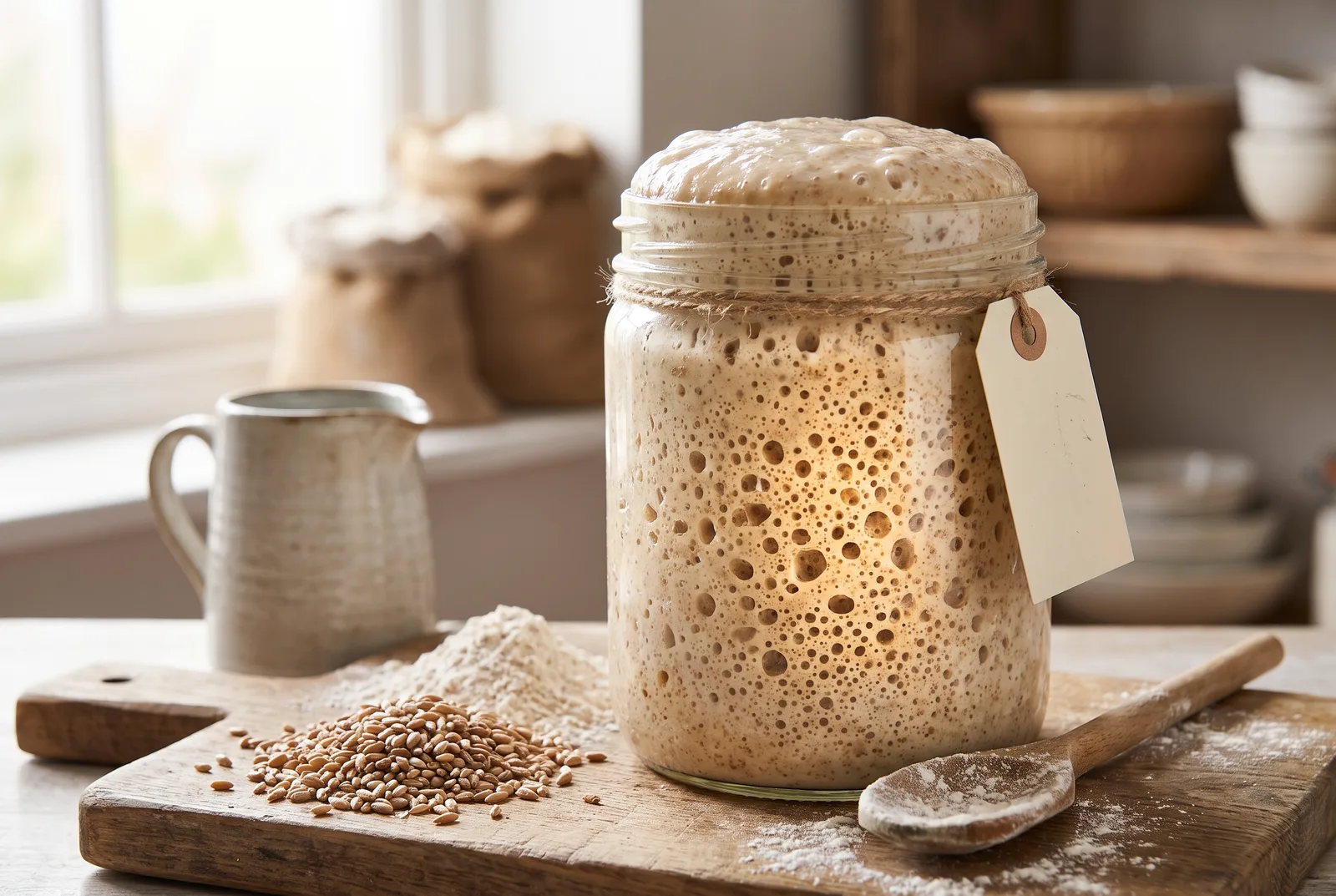
Sourdough Starter Cultures: Microbiology, Maintenance, Types & What Goes Wrong
What is a sourdough culture?
Sourdough is not a single organism. It is a stable, self-regulating ecosystem: a community of wild yeasts and lactic acid bacteria (LAB) that have established a working balance inside a flour-and-water medium. The yeast provides leavening — carbon dioxide to lift the dough — while the LAB produce organic acids that lower pH, preserve the bread, create the characteristic sour flavour, and in rye bread, perform an essential structural function that no other process can replicate.
More than 50 species of lactic acid bacteria and over 20 species of wild yeast have been documented across sourdough starters studied worldwide. No two starters from different environments are identical, which is why a starter established in a Polish bakery from local rye flour will develop a different microbial character to one established in a Sicilian bakery from durum wheat.
![img-sdc-01]
The three main types of sourdough culture
Professional bakers choose between three fundamentally different sourdough formats. The right choice depends on production scale, consistency requirements, available skill and the flavour profile target.
See comparison table: Sourdough culture types — classification, characteristics and professional use for the full breakdown.
Type I — Live traditional starter
A Type I sourdough is a continuously maintained culture of wild yeast and LAB, produced and kept in the bakery. It is refreshed (fed) with flour and water on a regular schedule — daily or twice daily for an active room-temperature culture; weekly for a refrigerated maintenance culture. Fermentation temperature runs 20–30°C. At peak activity, the starter reaches a pH of 3.8–4.5 and is used at a dosage of 20–30% on flour weight for wheat breads, or 30–50% for rye breads.
The Type I starter gives the most complex, most variable flavour — useful when authenticity and terroir are part of the product story. It also requires consistent daily attention and expertise to maintain. If a baker goes on holiday without leaving maintenance instructions, the starter can die.
Domson products for Type I propagation: Böcker Reinzucht-Sauerteig Pure Sourdough Starter 1 kg provides a defined pure-culture starter for in-bakery propagation. Lesaffre Livendo Starter LV-2 and Lesaffre Saf-Levain LV1 are propagation cultures with defined LAB strains.
Type II — Industrial liquid concentrate
A Type II sourdough is produced industrially at 30–50°C for 2–5 days, generating a very high LAB count (above 10^8 cfu/g). Yeast activity is often low or absent. The product is supplied as a ready-to-dose liquid — the baker adds it directly to the dough along with commercial yeast for leavening. No in-bakery cultivation is required.
This format offers high consistency batch-to-batch and suits high-volume production where flavour must be repeatable. Acidity is high and concentrated: Zeelandia Bioferm Ciemny, a confirmed product in the Domson catalogue, has a pH of 2.4–2.8 and a Sauregard value of 250–260 SH°. Dosage is calibrated to the rye flour content of the recipe: 2.5% for a 50% rye dough, rising to 4.0% for a 100% rye formula.
ULDO Dark Sauer (also in the Domson catalogue) is a paste-form Type II product with a broader dosage window of 2–8% on flour weight, and a pH of 2.5–4.5 with total acidity of 140–150 SH°. This wider range reflects the paste consistency — at 2% it adds character and depth; at 8% it significantly acidifies the final product.
Allergen note: Zeelandia Bioferm Ciemny contains liquid whey in its ingredient list and declares MILK as a confirmed allergen. This is uncommon among sourdough concentrates and must be communicated to customers with dairy allergies or dietary restrictions.
Other Domson Type II liquid products: Böcker Flüssigsauer 200 15 kg; Böcker Bio Le Chef Organic 2 kg; Backaldrin BAS Light and Dark Liquid Rye Sourdough 12 kg; Bas Weizen Liquid Wheat Sourdough 12 kg; Zeelandia Amore Wheat Sourdough 13 kg.
![img-sdc-08]
Type III — Dried inactivated sourdough (powder or paste concentrate)
A Type III sourdough has been dried — typically by spray or drum drying — after fermentation. The microbial cells are killed by the heat; what remains is the accumulated organic acids, flavour compounds and aromatic molecules. The product contributes sourness and flavour but cannot leaven on its own. Commercial yeast must be added separately to provide gas.
The advantages: very long shelf life (6–18 months at ambient), no refrigeration requirement, instant dispersibility, and flavour consistency. The limitation: no live microbiology means no further acidification during dough rest — the acid level is fixed.
Zeelandia Superkwas (Sourdough Dry 25 kg) is a grey powder with moisture below 16.5%, dosed at 1.3% on flour weight. It is primarily a flavouring agent with rye flour as its main component (79%) and acidity regulators E330 (citric acid), E270 (lactic acid) and E327 (calcium lactate) providing the remaining acid content. Shelf life: 180 days below 25°C and 75% RH.
Puratos O-tentic Durum is a more complex product: dried durum wheat sourdough combined with active yeast, antioxidant (ascorbic acid E300) and enzymes. It is correctly described as an "active bakery component based on sourdough" rather than a pure inactivated sourdough. The yeast fraction is still alive. Usage rate is 4% on flour weight; no additional commercial yeast is needed. Acidity specification: 45–65 ml/10g total acidity; dry matter 94–100%. Shelf life 12 months at 16–20°C, maximum 65% RH, packed under modified atmosphere. Once opened: use within 7 days at 0–7°C.
O-tentic Durum is certified Kosher, certified Halal, free from alcohol and free from pork. It is not suitable for coeliacs (contains wheat gluten).
![img-sdc-09]
Other Domson Type III products: Puratos Sapore Fidelio Sourdough 10 kg; Puratos Sapore Rigoletto Sourdough Powder 25 kg; Lesaffre Rye Sourdough AS ECOL 11 kg; Bas Turbo 500 Sourdough Concentrate 12 kg; ULDO Sauer Dark Rye Sourdough Concentrate 25 kg.
Reading sourdough acidity on spec sheets
Two different measurement conventions appear on the spec sheets of Domson sourdough products. Understanding them matters when comparing sourcing options or checking a delivery is within specification.
See the comparison table below for an explanation of sourdough acidity measurement units.
SH° (Sauregard): The standard European bakery acidity unit. It measures how many millilitres of 0.1 M sodium hydroxide are needed to neutralise 10 grams of sample to pH 8.5. A higher SH° means more total acid. Zeelandia Bioferm Ciemny: 250–260 SH°. ULDO Dark Sauer paste: 140–150 SH°. These are concentrated industrial products — the acid is diluted many times in the finished dough.
ml/10g (Puratos method C005M001): Functionally equivalent to SH° — ml of 0.1 M NaOH per 10 g sample. Puratos O-tentic Durum: 45–65 ml/10g. This lower range reflects the fact that O-tentic is a dried powder with 94–100% dry matter, not a liquid concentrate.
pH: Measures hydrogen ion activity on a logarithmic scale. More intuitive to read at a glance, but does not reflect total acid concentration. A liquid concentrate at pH 2.6 with 250 SH° contains far more total acid than a thin culture at the same pH with 30 SH°. Always check both pH and total acidity when evaluating a concentrate.
The practical target for a correctly fermented sourdough dough going into the oven is pH 3.8–4.5 and a dough SH° of approximately 8–20, depending on bread type. The concentrated products reduce to these levels when dosed into a full recipe.
The organisms and what they do
![img-sdc-01]
The dominant lactic acid bacteria in sourdough belong to the family Lactobacillaceae (genus Lactobacillus and its 2020 reclassified sub-genera). The dominant wild yeasts are Saccharomyces cerevisiae and Kazachstania humilis (formerly Candida humilis).
See the comparison table below for species-level detail on the key organisms and their roles.
Homofermentative vs heterofermentative LAB
This distinction matters practically because it controls flavour and gas production:
Homofermentative LAB (e.g. Lactiplantibacillus plantarum, Pediococcus pentosaceus) convert sugars almost exclusively to lactic acid. They produce no CO2. They acidify rapidly and give a mild, yogurt-like sourness. They are often dominant in warm (26–30°C), high-hydration fermentations.
Heterofermentative LAB (e.g. Fructilactobacillus sanfranciscensis, Levilactobacillus brevis, Limosilactobacillus fermentati) convert sugars to lactic acid, acetic acid and CO2 simultaneously. They produce the sharp, wine-like acetic notes associated with traditional San Francisco-style or German rye sourdoughs. They tend to dominate in cooler (18–24°C), stiffer doughs.
The ratio of lactic acid to acetic acid (LA:AA ratio) is the primary lever for flavour control. A ratio above 4:1 gives mild flavour; a ratio approaching 1:1 gives sharp, complex flavour.
Controlling flavour: temperature and hydration
The four-quadrant rule of sourdough flavour:
![img-sdc-04]
| Condition | Effect |
|---|---|
| Warm (26–30°C) + wet dough (≥80% hydration) | Fastest fermentation; high lactic acid output; mild, clean flavour |
| Warm (26–30°C) + stiff dough (≤65% hydration) | Balanced lactic/acetic; classic country bread character |
| Cool (18–22°C) + stiff dough (≤65% hydration) | Highest acetic acid proportion; most complex, sharp flavour; long fermentation; overnight retard achieves this |
| Cool (18–22°C) + wet dough (≥80% hydration) | Slowest fermentation; lower overall acidity; mild, mellow flavour |
Why rye bread needs sourdough (it is not optional)
In wheat sourdough, low pH is primarily a flavour and shelf-life tool. In rye bread, it is structurally essential and cannot be substituted.
Rye flour contains high levels of pentosans — water-soluble polysaccharides that form a gel when hydrated. Rye also contains active amylase enzymes that break down starch during baking. Without sourdough acidification to pH 3.8–4.5:
- The amylases remain active through baking and destroy starch structure — the bread interior turns gummy.
- The pentosans do not hydrate correctly, leaving the crumb collapsed and dense.
- The bread cannot form a coherent structure without gluten to compensate — rye has minimal gluten development.
When the dough reaches pH 3.8–4.5, the amylases are inhibited and the pentosans hydrate properly, giving the open, springy rye crumb.
This is why Bioferm Ciemny's dosage table scales with rye content: the more rye, the more acid needed. At 100% rye, the dosage is 4.0% — and the spec sheet instructs pre-soaking the rye flour and concentrate together in 70% of the dough water for 2–3 hours before mixing to ensure full acid penetration.
![img-sdc-07]
Sourdough's nutritional benefits (context, not a health claim)
Sourdough fermentation produces meaningful changes in the nutritional profile of bread:
- Phytate reduction: LAB-produced acids and the enzyme phytase degrade phytic acid during long fermentation. Studies indicate up to 80% reduction in phytic acid in sourdough bread versus yeasted bread under optimal long-fermentation conditions, increasing the bioavailability of iron, zinc and calcium. This figure is condition-dependent (flour type, fermentation time, temperature) and should not be used in marketing copy without legal review under EU Regulation 1924/2006, as mineral bioavailability claims approach health claim territory.
- Lower glycaemic response: Organic acids slow starch digestion; sourdough bread typically has a lower glycaemic index than equivalent yeasted bread (single-source — verify before making this a product claim).
- Extended shelf life: The acidic pH (3.8–4.5) and antimicrobial compounds produced by LAB inhibit mould and spoilage bacteria, extending shelf life without synthetic preservatives.
- Gluten modification: Proteolytic activity of LAB at low pH partially hydrolyses gluten proteins, improving dough extensibility and potentially reducing subjective gluten sensitivity (this does NOT mean sourdough is safe for coeliacs — it is not).
Building a live starter from scratch
See the formula card below for a day-by-day guide to building a wheat sourdough starter.
![img-sdc-03]
Key rules that apply regardless of starter recipe:
- Water quality: Heavily chlorinated tap water can slow starter establishment because high chlorine concentrations attack the wild yeasts and LAB before they establish. In most municipal water supplies, the chlorine level is low enough that tap water is usable directly. If in doubt, or when establishing a new culture, use filtered water or rest tap water in an uncovered bowl for several hours before use.
- Flour type for establishment: Wholegrain and rye flours carry a higher native microorganism load than white flour. Starting with wholegrain accelerates establishment. Many bakers switch to white flour once the starter is stable (from day 4 or 5).
- Temperature: Target 21–26°C. Below 18°C, development slows significantly. Above 30°C, undesirable bacteria may outcompete LAB.
- Judging activity: The starter is ready when it reliably doubles in volume within 4–8 hours of feeding. The float test (drop a teaspoon in water — it floats if gas production is sufficient) is a useful proxy check.
![img-sdc-02]
Maintaining a production starter
A bakery starter is a professional tool that needs consistent protocols, not improvisation.
Feeding ratios: A starter is fed by weight, not volume. Common ratios range from 1:1:1 (starter:flour:water) for a fast (4–6 h) turnaround, to 1:5:5 for a slow (10–12 h) overnight cycle. Higher ratios dilute the acid and slow activity; lower ratios refresh quickly but can build excessive acidity.
Refrigeration: A starter can be held at 2–8°C for 1–2 weeks between feeds without significant loss of viability. Remove from the fridge 4–8 hours before use, feed, allow to peak, then use.
Hydration convention: Most professional bakery starters are maintained at 100% hydration (equal flour and water by weight, producing a thick batter). Stiffer starters (50–60% hydration, like the French levain ferme) develop more acetic acid character. Wetter starters (125–150% hydration) ferment faster and produce more lactic character. Adjust to your target flavour profile.
Fault diagnosis and remedies
See the fault table below for the full causes, diagnosis and remedies.
When to discard — no exceptions
Two scenarios require immediate discarding of the entire starter with no attempt at rescue:
Pink or orange streaks or patches on the starter: This indicates contamination by non-LAB organisms — one possible cause is Serratia marcescens or similar pigment-producing bacteria, though definitive identification requires lab testing. Regardless of the specific organism, the pink/orange pigment is a reliable visual indicator that the culture has been overtaken. Discard, sanitise the container thoroughly, and begin again.
Black or dark fuzzy mould on the starter surface: This indicates mould contamination — likely Rhizopus, Aspergillus or Penicillium. Do not scrape off the mould and continue. Mycotoxins produced by moulds can penetrate well below the visible surface; the contamination is not limited to what you can see. Discard entirely.
Grey liquid on top ("hooch")
The grey or dark liquid that forms on top of a neglected starter is ethanol produced by the yeast as sugar runs out. It is not harmful. Stir it back in or pour it off, then feed the starter. It is a sign of starvation — feed more frequently or refrigerate between uses.
Flat bread from a live starter
The most common cause is using the starter past its peak. A starter that peaked 3–4 hours ago is already declining — yeast populations have produced maximum gas and are running out of sugar. Use the starter at peak (domed, maximum volume, still slightly bubbly on the surface). If the starter repeatedly fails to produce adequate leavening, reassess fermentation temperature, feeding ratio, and flour type.
Storage of commercial sourdough concentrates
![img-sdc-05]
The storage requirements differ significantly by product type — read spec sheets carefully.
| Product type | Temperature | Humidity | Freeze? | After opening |
|---|---|---|---|---|
| Liquid concentrate (e.g. Bioferm Ciemny) | 0–25°C | Dry | NO — do not freeze | Use promptly; keep sealed |
| Dried powder (e.g. Superkwas) | Below 25°C | Max 75% RH | Not recommended | Keep sealed; monitor for clumping |
| Active dried concentrate (O-tentic Durum) | 16–20°C sealed | Max 65% RH | Not stated | 0–7°C; use within 7 days |
| Paste concentrate (ULDO Dark Sauer) | Max 30°C | Max 75% RH | Not recommended | Reseal; follow shelf life |
Shelf lives confirmed from spec sheets:
- Zeelandia Superkwas (Sourdough Dry): 180 days
- ULDO Dark Sauer: 9 months
- Puratos O-tentic Durum: 12 months
- Zeelandia Bioferm Ciemny: 12 months
Delivery check: If a liquid sourdough concentrate arrives outside its stated pH or acidity range, or shows off-odour on opening, do not use it. Document and report to your supplier. Bioferm Ciemny that has frozen in transit (spec states 0°C minimum — do not freeze) may show phase separation or precipitate; reject and notify supplier.
Allergen summary for sourdough products
All sourdough concentrates in the Domson catalogue contain gluten (wheat, rye, or both). This is inherent to their flour content and cannot be avoided.
Additional allergen notes, from spec sheets:
- Zeelandia Bioferm Ciemny: Contains MILK (liquid whey is an ingredient). Also contains gluten: wheat, rye, barley confirmed present. Note: the spec is dated 2011 — always obtain the current allergen declaration from Zeelandia before communicating allergen status to customers, as sesame was added to the EU mandatory allergen list (Regulation 2021/382) after this spec was written.
- Zeelandia Superkwas: Gluten (WHEAT and RYE) confirmed. Cross-contamination risk: BARLEY, OAT, SPELT, EGG, SOYA, MILK, SESAME. Note: allergen declarations must be verified against a current spec sheet (this is from 2019).
- ULDO Dark Sauer: Gluten (rye, barley, wheat). Cross-contamination risk: milk, sesame, soya, lupinus, eggs. Note: this spec is dated 2014 — verify current allergen declaration with ULDO Polska before use in any customer-facing material.
- Puratos O-tentic Durum: Gluten (WHEAT) confirmed ingredient. Mustard: possible cross-contamination only.
None of the sourdough concentrates reviewed are suitable for people with coeliac disease. O-tentic Durum is explicitly labelled Non Suitable for coeliacs on its spec sheet.
Regulatory note
There is no single harmonised EU definition of "sourdough" as of 2026. Some EU member states have national standards or established traditions for what constitutes authentic sourdough production (for example, French "pain au levain" legislation distinguishes breads made with live cultures from those made with inactivated cultures, and Italy has national bread labelling provisions). Labelling claims about sourdough character should be checked against applicable national food law in each market. Note: the regulatory source cited for this article has been flagged as potentially misidentified — the linked EFSA URL covers food enzymes, not sourdough definitions. Verify the regulatory position with a qualified food lawyer and with national-level legislation before using any sourdough labelling claim in a specific market.
Coverage notes and confidence
Solid (spec-confirmed): Dosage, pH, SH°, shelf life, storage temperature and humidity, and allergen declarations for Superkwas, Bioferm Ciemny, O-tentic Durum and ULDO Dark Sauer. These are first-party spec-sheet data, checked directly.
Solid (multi-source corroborated): Sourdough microbiology (LAB species, yeast species, fermentation types I/II/III, acid ratios, temperature effects) — confirmed by two independent PMC academic sources plus BAKERpedia and IREKS Compendium.
Thin (single-source): Böcker liquid concentrate SH° and pH ranges (brand website only, no spec sheet for Le Chef available in this session). Phytic acid reduction percentage ("up to 80%") — cited in two sources but specific conditions that produce 80% are not confirmed.
Follow-up notes: (1) O-tentic Durum Böcker Le Chef spec PDF failed to load — a different PDF (Martin Braun Krokella, unrelated) was returned from the same local_path; the O-tentic Durum spec was loaded correctly from a separate path and is confirmed. (2) Glycaemic index claim not included in body — insufficient independent confirmation in this research session. (3) EU regulatory landscape for sourdough labelling is evolving — recommend a follow-up check with a food law expert before using claims in marketing.
Figures
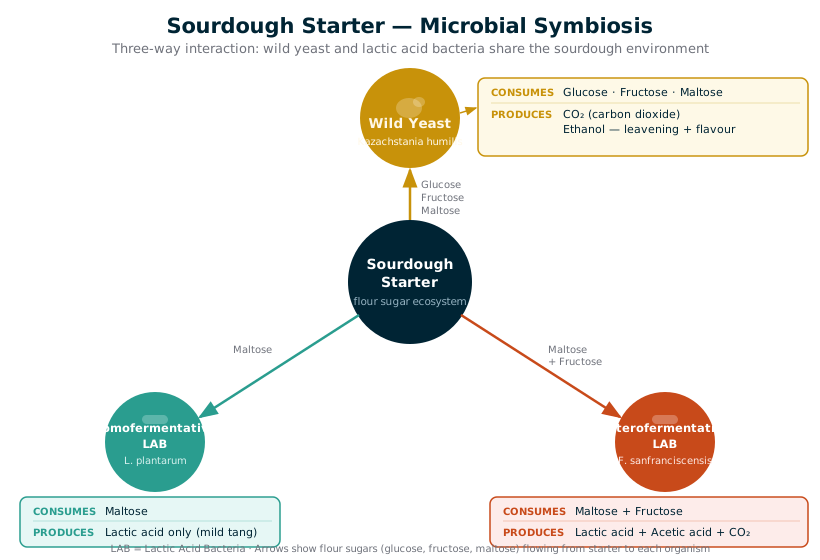 Circular diagram showing three organisms in a sourdough culture — wild yeast, homofermentative LAB, heterofermentative LAB — connected by arrows showing nutrient exchange and acid/gas outputs.
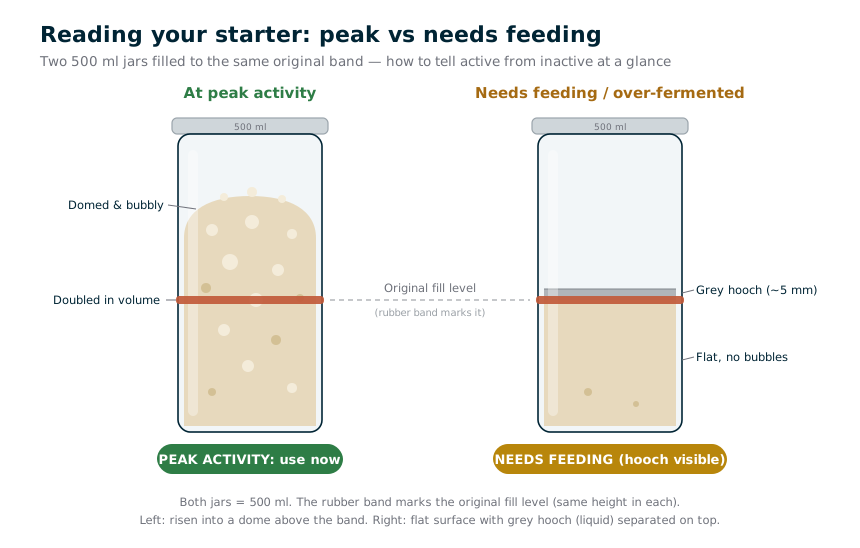 Two glass jars of sourdough starter side by side. Left jar: active starter with domed top, bubbles visible through glass, rubber band showing volume doubled — labelled 'PEAK: ready to use'. Right jar: flat starter with grey liquid (hooch) on top — labelled 'NEEDS FEEDING or over-fermented'.
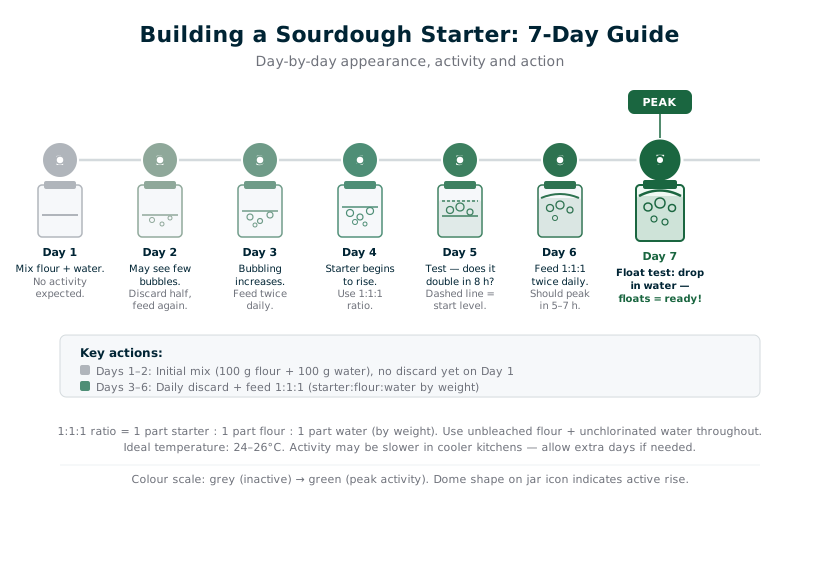 Seven-step timeline infographic showing day-by-day progression of a new sourdough starter: Day 1 plain flour paste, Day 2–3 early bubbles, Day 4–5 active bubbling, Day 6–7 peak activity with domed surface and doubled volume.
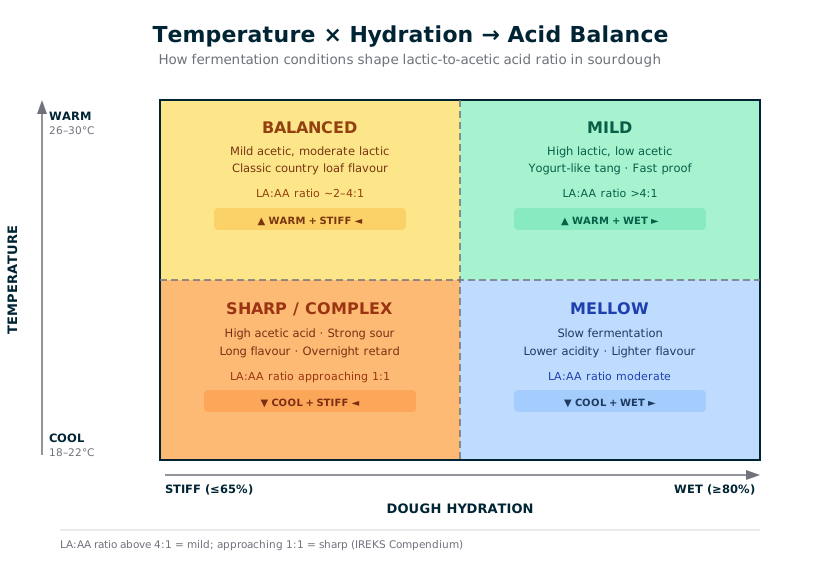 2x2 grid diagram with horizontal axis labelled 'Dough hydration: Stiff (left) to Wet (right)' and vertical axis labelled 'Temperature: Cool/18°C (bottom) to Warm/28°C (top)'. Four quadrants: top-left = more lactic, mild; top-right = most lactic, neutral; bottom-left = most acetic, sharp/complex; bottom-right = balanced lactic/acetic.
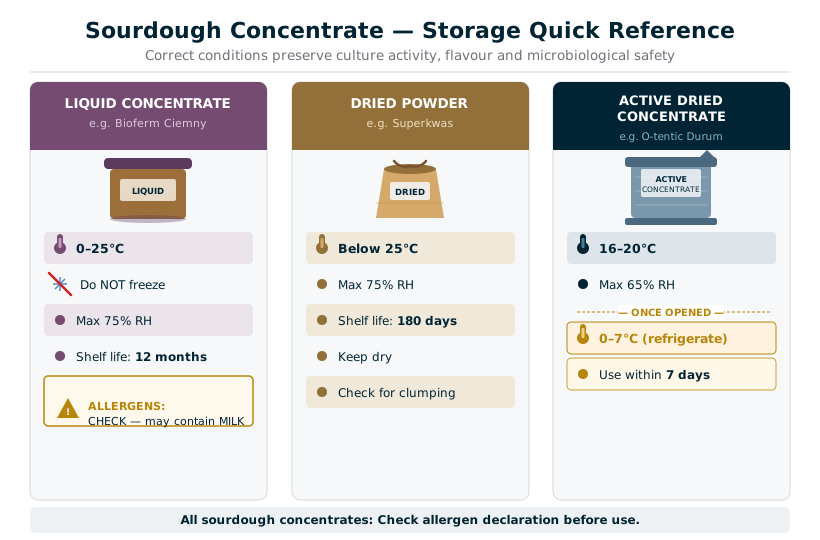 Three-column card showing storage conditions: Column 1 (Liquid concentrate): 0–25°C, no freeze, brown plastic tub icon. Column 2 (Dried powder): ≤25°C, ≤75% RH, paper bag icon. Column 3 (O-tentic style active): 16–20°C sealed, 0–7°C once opened, foil pack icon.
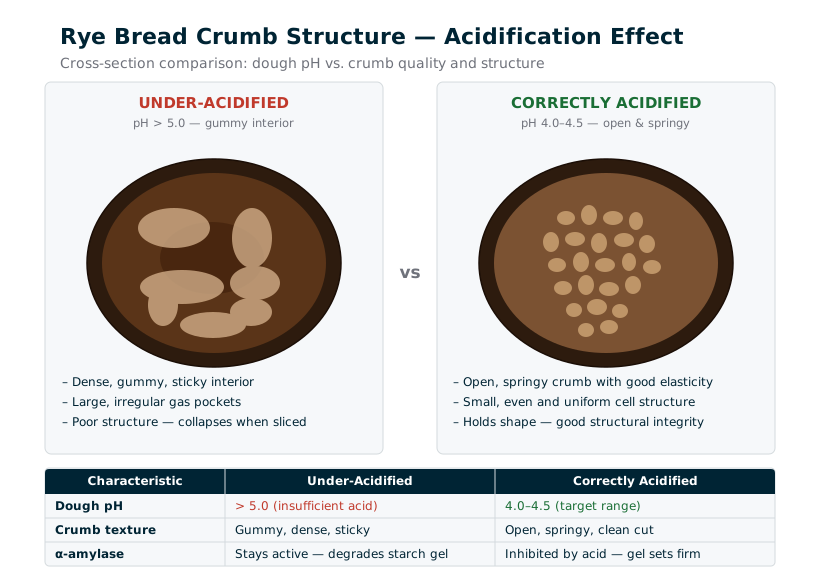 Two cross-sections of rye bread side by side. Left: gummy, dense, collapsed crumb with large irregular holes — labelled 'Under-acidified: gummy interior'. Right: uniform, slightly open crumb with good structure — labelled 'Correctly acidified: open and springy'.
Wheat Sourdough Bread — Type I or II (live or liquid concentrate)
Professional reference formula using either a live starter (Type I) or a liquid sourdough concentrate (Type II). Adjust concentrate dosage per supplier spec. Baker's % based on total flour weight.
| Ingredient | Baker's % | Weight |
|---|---|---|
| Strong wheat bread flour (12–14% protein) — Use T750 or equivalent for character | 100% | |
| Water (adjusted for concentrate) — Reduce by weight of water in any liquid concentrate | 60–68% | |
| Salt — Add last to avoid early yeast/LAB inhibition | 1.8–2.0% | |
| Option A: Live starter (Type I) — Active, recently fed; adjust hydration accordingly | 20–30% | |
| Option B: Liquid sourdough concentrate (Type II) — e.g. Zeelandia Bioferm Ciemny; add commercial yeast 1.5–2% | 2.5–4.0% | |
| Option C: Dried sourdough (Type III) — e.g. Zeelandia Superkwas 1.3%; O-tentic Durum 4% (contains yeast) | 1.3–4.0% | |
| Commercial yeast (if using Type II or III without active yeast) — Not required for O-tentic Durum (contains yeast) or live starter | 1.0–2.5% |
- Mix flour, water and concentrate/starter for 5–6 minutes slow speed; add salt, mix 3–5 minutes high speed. Dough temperature target 26–28°C.
- Bulk ferment 1–2 hours at 24–26°C (live starter) or 20–30 minutes (Type II/III + yeast).
- Shape, place in proving basket.
- Final proof 45–90 minutes at 26–28°C or retard overnight (2–6°C) for flavour development.
- Bake with steam at 230–250°C; remove steam after 15 minutes; total bake 35–45 minutes depending on loaf size.
Yield: 1 loaf approx. 800 g baked
Rye Sourdough Bread — Confirmed Bioferm Ciemny application recipe (80% rye)
Adapted from Zeelandia Bioferm Ciemny spec sheet. Scaled to 100 kg total flour basis for professional use. Baker's % based on total flour.
| Ingredient | Baker's % | Weight |
|---|---|---|
| Rye flour type 2000 (wholemeal) — Bioferm Dark spec; Quantity 100kg basis: 80 kg | 80% | |
| Wheat flour type 850 — Bioferm Dark spec; Quantity 100kg basis: 20 kg | 20% | |
| Zeelandia Bioferm Ciemny — Spec dosage: 3.5% for 80% rye; Bioferm Dark spec; Quantity 100kg basis: 3.5 kg | 3.5% | |
| Bread improver (e.g. Optimax) — Bioferm Dark spec; Quantity 100kg basis: 1.0 kg | 1.0% | |
| Salt — Bioferm Dark spec; Quantity 100kg basis: 2.2 kg | 2.2% | |
| Fresh yeast — Bioferm Dark spec; Quantity 100kg basis: 3.5 kg | 3.5% | |
| Water — Bioferm Dark spec; Quantity 100kg basis: 80 litres | 80% |
- Soak wholemeal rye flour and Bioferm Ciemny in approximately 70% of the water for 2–3 hours.
- Add remaining ingredients and mix 8 minutes slow speed, 1 minute fast speed.
- Target dough temperature: 29–31°C.
- Rest dough 15–20 minutes.
- Divide into 0.7 kg pieces; place in moulds; level surface.
- Final fermentation approx. 50 minutes.
- Bake: deck oven 250°C falling to 200°C, approx. 60 minutes; rack oven 280°C falling to 190°C, approx. 60 minutes.
Yield: Approx. 143 × 700 g loaves
Building a Wheat Sourdough Starter — Day-by-day guide
Practical guide for establishing a new starter in a professional bakery environment. Based on BAKERpedia and King Arthur Baking Company guidance (high-reliability sources). Note: establishment takes 5–14 days minimum; basic activity may appear by day 5–7 but a stable climax microbial community typically takes up to two weeks to consolidate; newly established starters produce variable results until microbiome stabilises.
| Ingredient | Baker's % | Weight |
|---|---|---|
| Whole wheat or rye flour (for days 1–3) — Higher native yeast and LAB load than white flour; accelerates establishment | ||
| White strong bread flour (for day 4 onwards) — Optional switch after microbiome starts establishing | ||
| Water (filtered, or tap water rested overnight uncovered) — Chlorinated water can inhibit starter | ||
| Starter (day 3+) — Reserve 50–100 g of previous day's starter |
- Day 1: Mix 50 g flour + 50 g water (room temperature). Cover loosely. Leave 24 h at 21–24°C.
- Day 2: Discard half; add 50 g flour + 50 g water. You may see few bubbles — this is normal.
- Day 3–4: Repeat. Bubbling should increase. Discard half, feed same ratios once or twice daily.
- Day 5–6: Feed 1:1:1 (50g starter: 50g flour: 50g water) twice daily. Starter should double within 4–8 hours of feeding.
- Day 7: Test with float test — drop a teaspoon of starter in water; if it floats, it is active. Aroma should be pleasantly sour-yeasty, not putrid.
- Maintenance: Feed daily at room temperature OR refrigerate and feed weekly. Before use, remove from fridge, feed, allow to peak (double in volume), then use.
Yield: ~300 g active starter by day 7
Industry classification (Types I–III) defined by the IREKS Compendium and academic literature (Frontiers in Microbiology, AACCI). Dosage figures from Domson supplier spec sheets where available; otherwise from BAKERpedia / IREKS reference. Food-safety note: all acid pH values are indicative of a correctly functioning culture; any starter producing off-odours, visible mould or pink/orange discolouration must be discarded.
| Type | Description | Fermentation temp | pH range (product) | Typical dosage | Baker's flavour note | Shelf life (product) | Example Domson products |
|---|---|---|---|---|---|---|---|
| Type I — Traditional/live starter | Continuous or semi-continuous culture; wild yeast + LAB both active; made in-bakery or propagated from a starter culture. Flour + water refreshed at regular intervals. | 20–30°C | 3.8–4.5 (mature dough) | 20–30% on flour weight (wheat); 30–50% (rye) | Complex, wheaty/tangy; acetic notes if cool and stiff; lactic notes if warm and wet | Perpetual (maintained in bakery); starter cultures 1–2 weeks refrigerated | Böcker Reinzucht-Sauerteig Pure Sourdough Starter 1 kg; Lesaffre Livendo Starter LV-2; Lesaffre Saf-Levain LV1 |
| Type II — Industrial liquid concentrate | Large-scale fermentation 30–50°C, 2–5 days; very high LAB counts; yeast may be inactive. Supplied as ready-to-dose liquid. Dose and mix — no in-bakery cultivation needed. | 30–50°C (production); ambient at use | 3.2–3.8 (concentrate) | 2.5–4.0% on flour (rye-dependent) [Bioferm Ciemny spec]; 2–8% [ULDO Dark Sauer spec] | Clean lactic-acetic character; consistent batch to batch | 3–12 months refrigerated | Zeelandia Bioferm Dark Liquid Sourdough 19 kg; Böcker Flüssigsauer 200 15 kg; Backaldrin BAS Light/Dark Liquid Rye 12 kg; Bas Weizen Liquid Wheat 12 kg; Böcker Bio Le Chef Organic 2 kg; Zeelandia Amore Wheat Sourdough 13 kg |
| Type III — Dried / Inactivated powder | Spray- or drum-dried sourdough; microbial cells killed; acids and flavour compounds remain. Used as flavouring and colour agent. Leavening requires added commercial yeast. | Not applicable (cells inactivated) | Product pH not applicable; residual organic acids give baked-bread pH 4.5–5.5 | 1–5% on flour weight (flavour); spec examples: 1.3% (Zeelandia Superkwas); 4% (Puratos O-tentic Durum) | Consistent, mild-to-moderate tang; no fermentation variability | 6–18 months ambient (cool, dry) | Zeelandia Superkwas 25 kg; ULDO Sauer Dark Rye Sourdough Concentrate 25 kg; Puratos O-tentic Durum 10×1 kg; Puratos Sapore Fidelio 10 kg; Puratos Sapore Rigoletto 25 kg; Lesaffre Rye Sourdough AS ECOL 11 kg; Bas Turbo 500 12 kg |
| Fermented malt / ferment additive | Fermented grain (wheat, rye, malt) pastes or powders that contribute colour, flavour and mild acidification; not true sourdough cultures but functionally adjacent in rye bread formulations. | Variable | Slightly acidic; product-specific | Follows individual spec (typically 2–10%) | Malty, roasty, mildly sour; colour enhancement | 6–12 months ambient | Dark Fermented Rye Malt 25 kg; Aromaferm Wheat & Malt Ferment 110 12.5 kg |
Type classification sourced from IREKS Compendium and Frontiers in Microbiology (PMC4172566). Dosage ranges combine confirmed spec-sheet figures (Zeelandia Superkwas 1.3%, Bioferm Ciemny 2.5–4.0%, O-tentic Durum 4%, ULDO Dark Sauer 2–8%) and BAKERpedia/IREKS trade benchmarks for categories without a Domson spec. Food safety: Type I live starters require active management — see fault table. The milk allergen in Zeelandia Bioferm Ciemny (liquid whey ingredient) is flagged for customer awareness.
Data extracted directly from supplier specification sheets. All values are spec-confirmed. Single-source values are marked (1-src). Allergen data is declared per EU Regulation 1169/2011.
| Product | Brand | Form | pH | Acidity (SH° or titration) | Moisture / dry matter | Dosage | Shelf life | Storage | Key allergens | Spec source |
|---|---|---|---|---|---|---|---|---|---|---|
| Sourdough Dry (Superkwas) 25 kg | Zeelandia | Powder (grey) | Not stated | Contains E330/E270/E327 (~20%) | <16.5% moisture | 1.3% on flour (1,3 kg per 100 kg flour) | 180 days | ≤25°C; ≤75% RH | WHEAT, RYE (+ cross-contam: BARLEY, OAT, SPELT, EGG, SOYA, MILK, SESAME) | Superkwas spec |
| Sauer Dark Rye Sourdough Concentrate 25 kg | ULDO Polska | Paste (dark brown) | 2.5–4.5 | 140–150 °SH | <15% moisture | 2–8% on flour | 9 months | ≤30°C; ≤75% RH | Gluten (rye, barley, wheat); may contain traces of milk, sesame, soya, lupinus, eggs | Sauer Dark Rye spec |
| Puratos O-tentic Durum 10×1 kg | Puratos | Powder (dried durum sourdough + active yeast) | Not stated | 45–65 ml/10 g (total acidity) | 94–100% dry matter | 4% on flour + water + salt | 12 months | 16–20°C; ≤65% RH; MAP; opened: 0–7°C max 1 week | Gluten (WHEAT) present; mustard cross-contamination | O-tentic Durum spec |
| Zeelandia Bioferm Dark Liquid Sourdough 19 kg | Zeelandia | Liquid (brown) | 2.4–2.8 | 250–260 SH° | Not stated; 263 kcal/100g (liquid) | 2.5% (50% rye), 3.2% (70%), 3.5% (80%), 4.0% (100% rye) | 12 months | 0–25°C; no freezing; dry place | Gluten (wheat, rye, barley) + MILK present | Bioferm Dark spec |
O-tentic Durum is an active bakery component — it contains added yeast plus dried durum sourdough, so it acts as a hybrid Type III/leavening agent. It is not a pure sourdough culture. This distinction matters for labelling and for product positioning. All acid pH values in this table are spec-confirmed food-safe ranges; a product outside these ranges on delivery may indicate spoilage — refer to supplier. The Bioferm Ciemny contains liquid whey (MILK allergen declared); check with customers who have dairy allergies.
Organisms most commonly isolated from commercial and artisan sourdoughs globally. Taxonomy reflects 2020–2021 reclassification of the Lactobacillus genus. Sources: PMC6994963 (Frontiers Microbiology), PMC4172566 (Frontiers Microbiology), BAKERpedia.
| Organism group / species | Type | Fermentation mode | Role in sourdough | Optimal temperature range | Notes |
|---|---|---|---|---|---|
| Saccharomyces cerevisiae | Yeast | Fermentative | CO2 and ethanol production; leavening; fructose-preferring (maltose sparing) | 20–30°C | Most common yeast; same species as baker's yeast but wild strains differ genetically |
| Kazachstania humilis (syn. Candida humilis) | Yeast | Fermentative (maltose-fermenting) | Leavening in wheat sourdoughs; maltose utilisation | 20–28°C | Very common in Type I wheat starters; competes effectively with LAB for maltose |
| Limosilactobacillus fermentati / L. pontis | LAB (heterofermentative) | Lactic + acetic + CO2 | Dominant in rye sourdoughs; very acid-tolerant | 25–35°C | Formerly Lactobacillus fermentati; thrives at very low pH |
| Fructilactobacillus sanfranciscensis (formerly L. sanfranciscensis) | LAB (heterofermentative) | Lactic + acetic + CO2 | Classic San Francisco sourdough; produces complex flavour; uses maltose exclusively | 18–27°C | Found in many traditional wheat sourdoughs; produces high acetic acid at low temp/low hydration |
| Levilactobacillus brevis (formerly L. brevis) | LAB (heterofermentative) | Lactic + acetic + CO2 | Acidification and flavour; often found alongside F. sanfranciscensis | 20–30°C | Heat-tolerant; common in Type II industrial fermentations |
| Lactiplantibacillus plantarum (formerly L. plantarum) | LAB (facultative heterofermentative) | Mainly lactic | Rapid acidification; robust pH drop; often inoculated in starter cultures | 20–35°C | Fast and flexible; used in commercial starter cultures (Lesaffre Livendo, Saf-Levain) |
| Pediococcus pentosaceus / acidilactici | LAB (homofermentative) | Mainly lactic | Rapid lactic acid production; found in Type II fermentations | 25–40°C | Thermotolerant; high acid output; less flavour complexity |
| Weissella spp. | LAB (heterofermentative) | Lactic + acetic + CO2 | EPS (exopolysaccharide) production; texture contribution; sometimes found in wheat starters | 20–30°C | EPS can improve crumb softness; less prevalent than Lactobacillus spp. |
Taxonomy updated to reflect 2020 IJSEM reclassification of Lactobacillaceae. Old names still appear on many commercial product datasheets — both names are given here for cross-reference. In practice a bakery sourdough starter contains a community of several organisms simultaneously; this table lists the most significant individual species rather than an exhaustive list. Species diversity varies by flour type, hydration, temperature, and regional environment.
Practical reference for interpreting the two acidity measurement conventions that appear on Domson supplier spec sheets: SH° (Sauregard / Schur) and ml/10g titration (Puratos method). Sources: IREKS Compendium, spec sheets.
| Unit | What it measures | How it is determined | Typical range for mature sourdough | Spec-sheet examples |
|---|---|---|---|---|
| SH° (Sauregard) | Total titratable acidity expressed as ml of 0.1 M NaOH needed to neutralise 10 g of sample to pH 8.5 | Potentiometric or phenolphthalein titration | Liquid concentrates: 150–300 SH°; dried pastes: 100–200 SH°; in-dough: 8–20 SH° after addition | Bioferm Ciemny: 250–260 SH°; ULDO Dark Sauer: 140–150 SH° |
| ml/10g (Puratos titration C005M001) | Same principle — total acid titrated per 10 g product | Acid-base titration (Puratos method C005M001) | Dried concentrates: 45–65 ml/10g | Puratos O-tentic Durum: 45–65 ml/10g |
| pH | Hydrogen ion activity; log scale | Electrode / potentiometric measurement | Liquid concentrates: 2.4–3.5; pastes: 2.5–4.5; mature in-dough: 3.8–4.5; baked bread: 4.5–5.2 | Bioferm Ciemny: 2.4–2.8; ULDO Dark Sauer: 2.5–4.5 |
SH° and ml/10g are numerically equivalent when using the same 0.1 M NaOH titration to pH 8.5. Spec sheets from different suppliers may use either convention. pH alone is not sufficient to characterise a sourdough's acid profile — a liquid concentrate at pH 2.6 with SH° 250 contains far more total acid than a thin diluted culture at the same pH. Always check both pH and total acidity when comparing concentrates.
Troubleshooting guide for live sourdough cultures maintained in a professional bakery. Based on BAKERpedia, King Arthur Baking, and IREKS Compendium guidance. Food safety items are marked with [FOOD SAFETY] — these require action, not just adjustment.
| Symptom | Most likely cause(s) | Diagnostic check | Remedy | Food safety flag? |
|---|---|---|---|---|
| No rise / no bubbles after 24 h feeding | Starter too cold; water too chlorinated; flour lacks native organisms (over-bleached); starter too diluted | Check temperature (target 21–26°C); smell for off-odours; check flour type | Move to warmer location; switch to filtered water; use wholegrain flour for next 2–3 feeds; reduce discard to strengthen | No (unless off-odour present) |
| Slow rise (doubles in >10 h, not 4–8 h) | Temperature too low; starter not fully mature; irregular feeding schedule | Temperature check; review feeding schedule | Feed more frequently; warm slightly to 24–26°C; adjust hydration to 100% (equal flour and water by weight) | No |
| Very sharp alcohol/acetone smell | Over-fermentation; too long between feeds; sugar supply depleted ('hooch' formation) | Look for grey or dark liquid layer on top | Feed immediately; discard more aggressively; reduce interval between feeds or refrigerate | No — hooch is ethanol + water; not harmful but indicates starvation |
| Flat, dense baked bread from live starter | Starter past peak at time of use; overproofed dough; wrong flour protein; insufficient starter percentage | Check starter activity at time of mixing (should be at or near peak); check dough temperature during bulk | Use starter at peak (dome-shaped, 4–6 h post-feed); check dough temperature 24–27°C; increase starter to 25–30% | No |
| Grey or black liquid layer ('hooch') | Starter has consumed all available sugars between feeds; alcohol produced by yeast accumulates | Pour off or stir back in; proceed with feed | Feed more frequently or refrigerate; reduce fermentation temperature | No — stirring back in or discarding both acceptable |
| Pink or orange streaks or patches | Bacterial contamination — NOT LAB; potentially Serratia marcescens or similar pathogen | Visual inspection; smell (unusual, not typical sourdough sour) | [FOOD SAFETY] Discard entire starter immediately; sanitise container; begin new starter. Do not try to rescue. | YES — DISCARD IMMEDIATELY |
| Black or dark furry mould on surface | Mould contamination; likely Rhizopus, Aspergillus or Penicillium spp. from environmental exposure | Visual inspection; fuzzy or powdery texture on surface | [FOOD SAFETY] Discard. Do not scrape off and continue — mycotoxins may have penetrated below the visible surface. | YES — DISCARD IMMEDIATELY |
| Unusually slimy texture / 'ropy' dough | Weissella or other EPS-producing LAB overgrowth; can occur with contaminated flour or too-warm temperatures | Pull dough — stringy/stretchy in liquid form | Usually not a safety risk but affects end product quality. Consider reducing fermentation temperature; clean and restart with fresh flour | Low risk — but flag for review |
| Very sour, sharp taste without complexity; flat flavour | Acid/acetic imbalance — too much acetic acid; possibly over-fermented stiff dough at low temperature | Check dough hydration and fermentation temperature | Increase hydration to 100–120%; ferment at 25–28°C; reduce fermentation time; feed with higher flour ratio (1:2 or 1:3) | No |
| Bread sticks to pan / excessive spreading | Not a starter fault — likely over-proofing, insufficient dough structure, or wrong flour strength | Check gluten development; check proofing time | Check flour protein (min 11% for good structure); reduce final proof time; ensure starter was used at peak | No |
Common issues when using commercial liquid or dried sourdough concentrates in production. Based on supplier spec sheets and BAKERpedia/IREKS guidance.
| Symptom | Most likely cause(s) | Remedy | Source |
|---|---|---|---|
| Insufficient sourness in finished bread | Dosage below spec minimum; under-fermented dough (if liquid concentrate with remaining LAB activity) | Increase dosage within spec range; allow adequate absorption time; check product pH on delivery | Sauer Dark Rye spec (2–8% range); Bioferm Dark spec (2.5–4.0% range) |
| Gummy rye bread interior | Insufficient acidification of rye flour pentosans; pH too high; dosage too low; baking temperature too low | Increase concentrate dosage; check bake temperature (min 200°C internal); use pre-soaking step (Bioferm Ciemny: soak rye flour + concentrate 2–3 h) | Bioferm Dark spec; IREKS Compendium |
| Excessive sourness / vinegar sharpness | Too-high acetic acid from over-fermentation of Type II; or excessive dosage of concentrate | Reduce dosage or fermentation time; use Type III dried instead for acid contribution without active fermentation | IREKS Compendium; BAKERpedia |
| Product off-spec on delivery (wrong pH, off-odour) | Incorrect storage during transport; product past shelf life; temperature abuse (e.g. Bioferm liquid frozen in transit) | Reject delivery; document and notify supplier; Bioferm Ciemny must not freeze (spec: 0–25°C, no freezing) | Bioferm Dark spec; O-tentic Durum spec |
| O-tentic Durum gives inconsistent rise | Gassing power test at Puratos measures conformity; variability may indicate old stock or temperature abuse | Check production date; store at 16–20°C, max 65% RH; once opened use within 1 week at 0–7°C | O-tentic Durum spec |
- Moisture max pct:
- 16.5
- Dosage pct on flour:
- 1.3
- Shelf life days:
- 180
- Storage max temp c:
- 25
- Storage max rh pct:
- 75
- Allergens present:
- wheat, rye
- Allergens cross contamination:
- barley, oat, spelt, egg, soya, milk, sesame
- Moisture max pct:
- 15
- Dosage pct on flour range:
- 2, 8
- Shelf life months:
- 9
- Storage max temp c:
- 30
- Storage max rh pct:
- 75
- Ph range:
- 2.5, 4.5
- Sh degrees range:
- 140, 150
- Allergens present:
- gluten_rye, gluten_barley, gluten_wheat
- Allergens cross contamination:
- milk, sesame, soya, lupinus, eggs
- Dry matter pct range:
- 94, 100
- Dosage pct on flour:
- 4
- Shelf life months:
- 12
- Storage temp c range:
- 16, 20
- Storage max rh pct:
- 65
- Storage note:
- Modified atmosphere; once opened 0–7°C max 1 week
- Total acidity ml per 10g range:
- 45, 65
- Organic acids g per 100g:
- 5
- Protein g per 100g:
- 21.2
- Allergens present:
- wheat_gluten
- Allergens cross contamination:
- mustard
- Certifications:
- GFSI, Kosher, Halal
- Coeliac suitable:
- false
- Ph range:
- 2.4, 2.8
- Sh degrees range:
- 250, 260
- Dosage by rye pct · 50pct rye:
- 2.5
- Dosage by rye pct · 70pct rye:
- 3.2
- Dosage by rye pct · 80pct rye:
- 3.5
- Dosage by rye pct · 100pct rye:
- 4
- Shelf life months:
- 12
- Storage temp c range:
- 0, 25
- Storage no freeze:
- true
- Allergens present:
- gluten_wheat, gluten_rye, gluten_barley, milk
- Energy kcal per 100g:
- 263
- Protein g per 100g:
- 7.67
- Carbohydrates g per 100g:
- 42.91
- Fat g per 100g:
- 1.08
- Fermentation temp c range:
- 20, 30
- Mature ph range:
- 3.8, 4.5
- Days to establish from scratch:
- 5–7
- Peak activity hours post feed:
- 4–8
- Typical dosage pct wheat:
- 20–30
- Typical dosage pct rye:
- 30–50
Buy the ingredients
Catalogue products and brands referenced in this article.
Superkwas Dry Sourdough 25 kg
Sauer Dark Rye Sourdough Concentrate 25 kg
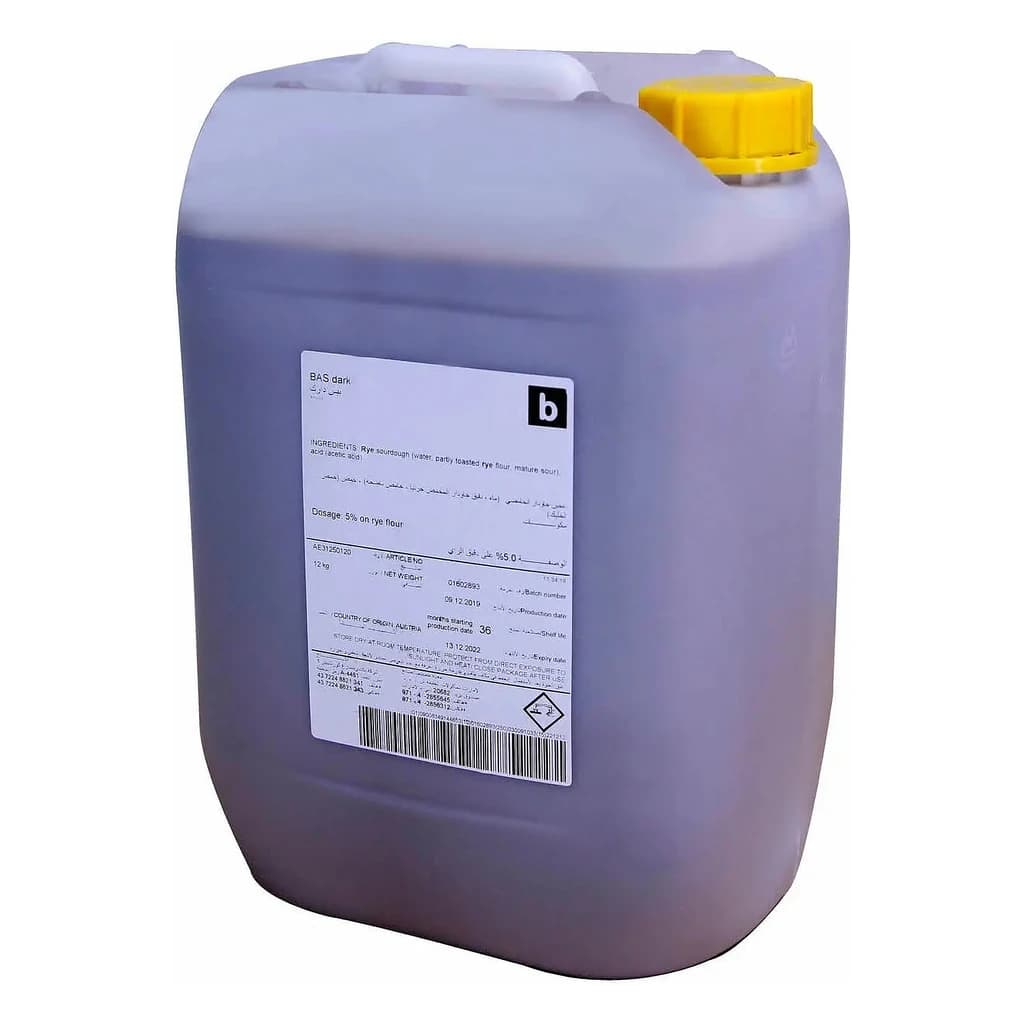
Backaldrin BAS Dark Liquid Rye Sourdough 12 kg
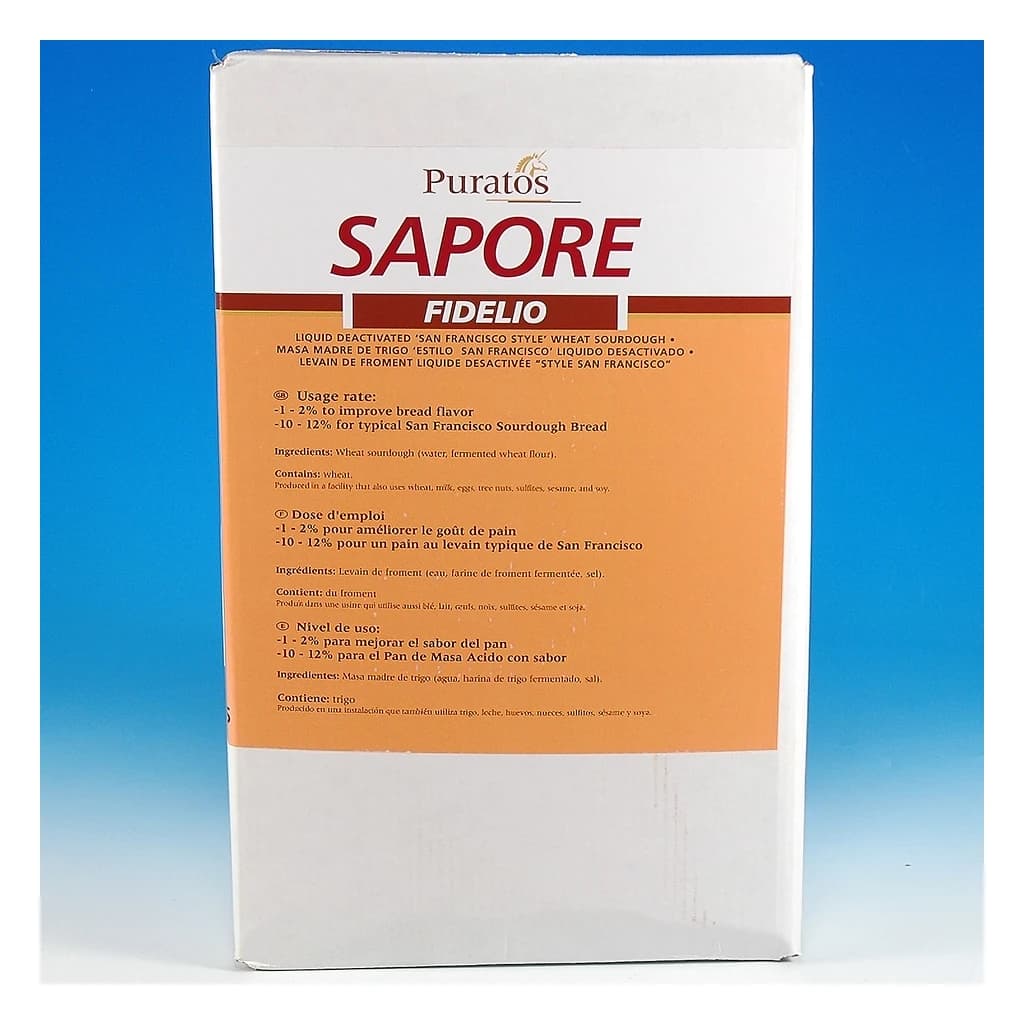
Puratos Sapore Fidelio Sourdough 10 kg
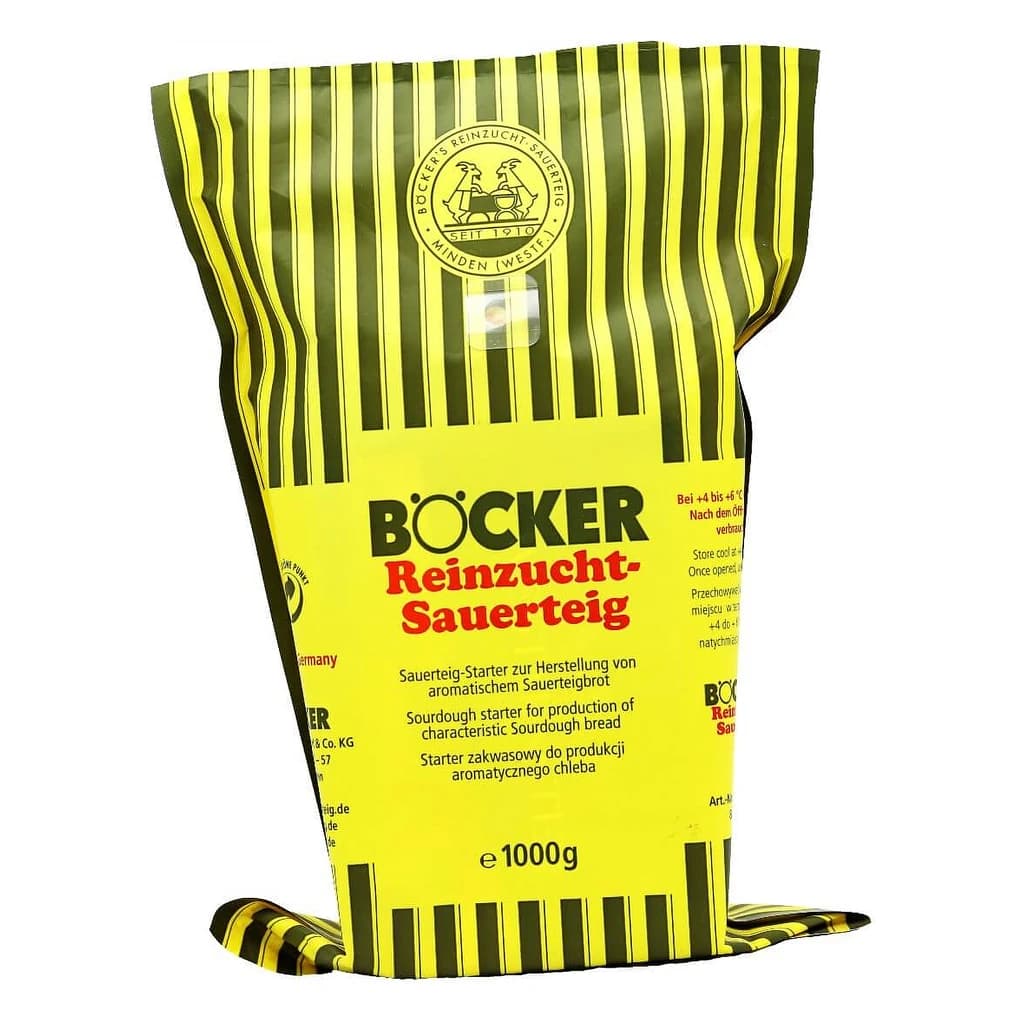
Böcker Reinzucht-Sauerteig Pure Sourdough Starter 1 kg
Böcker Bio Le Chef Organic Liquid Sourdough 2 kg
MLM Böcker Wholegrain Spelt Sourdough 20 kg

Böcker Flüssigsauer 200 Liquid Sourdough 15 kg
Dark Fermented Rye Malt 25 kg
Bas Turbo 500 Sourdough Concentrate 12 kg

Lesaffre Rye Sourdough AS ECOL 11 kg
Lesaffre Saf-Levain LV1 Sourdough Starter (S)
Lesaffre Livendo Starter LV-2 Sourdough Culture
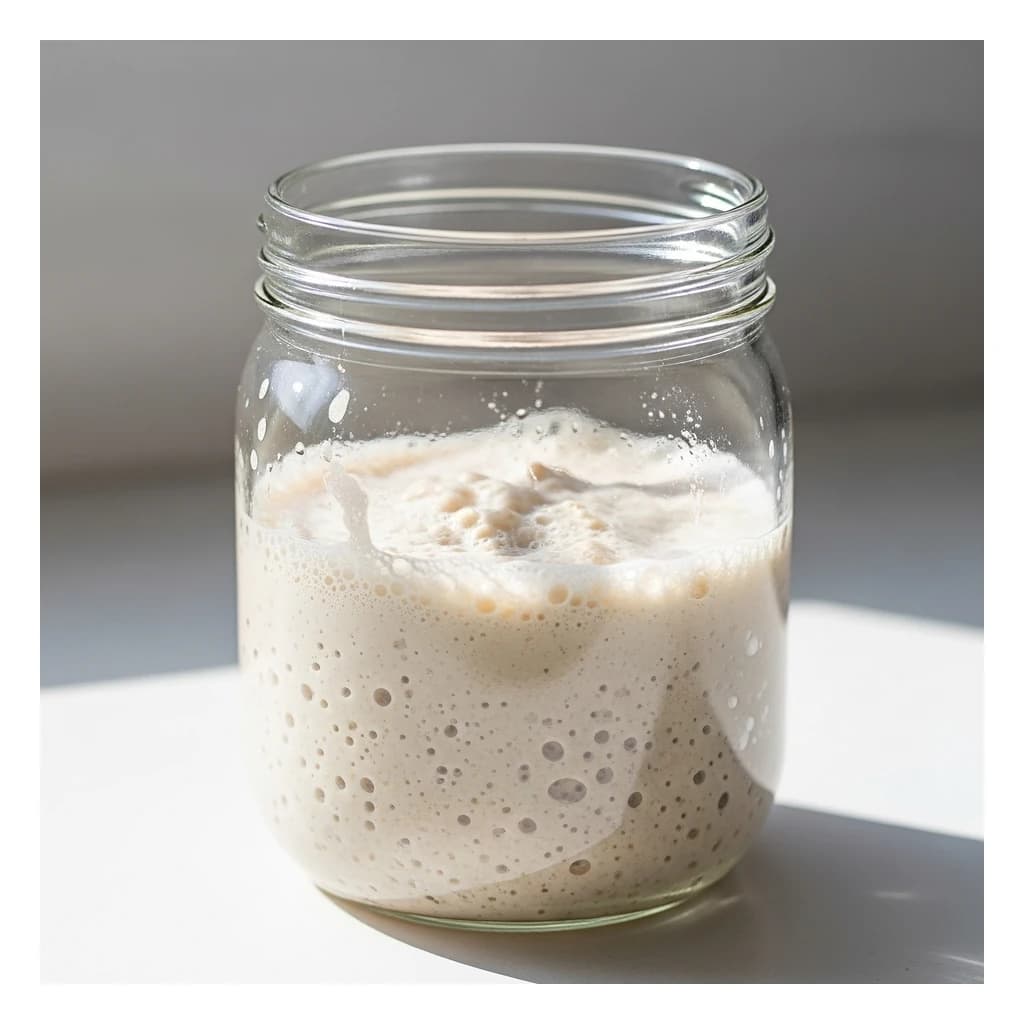
Backaldrin BAS Light Liquid Rye Sourdough 12 kg
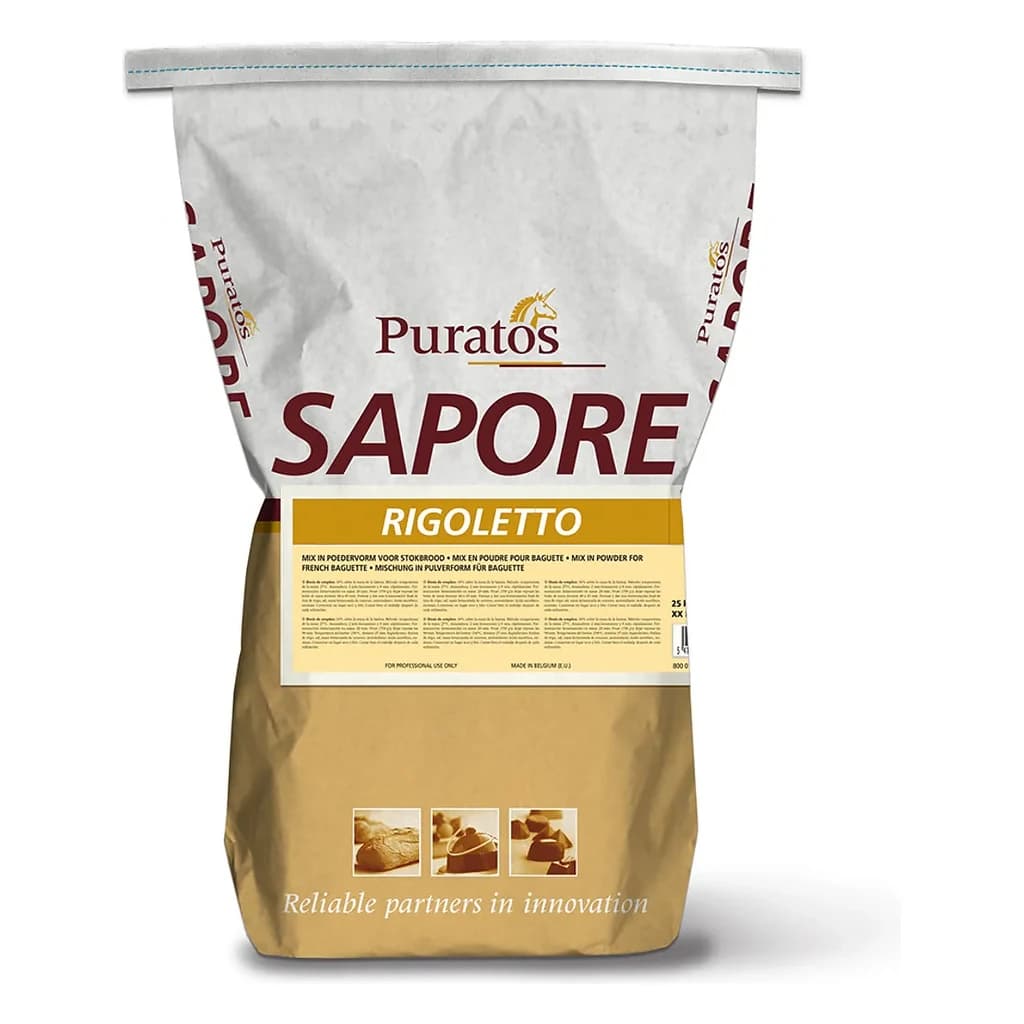
Puratos Sapore Rigoletto Sourdough Powder 25 kg
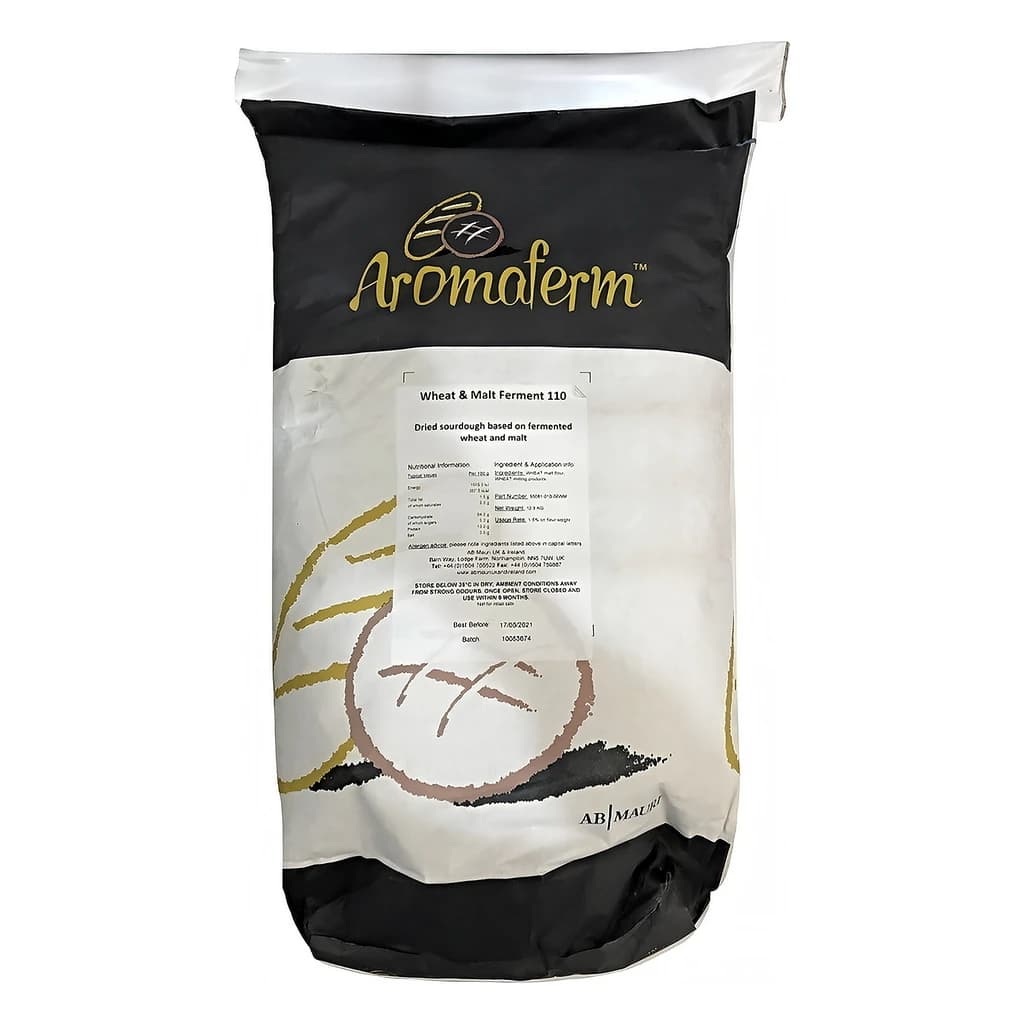
Aromaferm Wheat & Malt Ferment 110 12.5 kg

Puratos O-tentic Durum Sourdough Concentrate 10 × 1 kg
Zeelandia Bioferm Dark Liquid Sourdough 19 kg