
De post: Orthodox fasting and vegan baking in Romania — egg-free, dairy-free enriched doughs and Lenten pastries
For a Romanian baker, "de post" (fasting) baking is not a niche — it is a calendar. The Orthodox year has four long fasts (Great Lent before Easter, the Apostles' Fast, the Dormition Fast, and the Nativity Fast before Christmas) plus most Wednesdays and Fridays, and during them the whole country eats plant-based: no meat, no eggs, no dairy. In modern terms that makes de post baking VEGAN baking driven by religion, and it is a predictable, repeatable demand spike a UK distributor and its Romanian customers should plan around. This dossier, built from Romanian-language liturgical and recipe sources and cross-checked against the platform's supplier specifications, covers: what de post means and how the fasting calendar (with its "dezlegare la ulei / pește / vin" relaxations) shapes what can be baked; the functional-substitution craft — replacing butter and milk with oil and water/plant milk, omitting eggs, and restoring the yolk's colour with saffron/turmeric and its binding with starch and soya lecithin; a working cozonac de post formula and why its egg-free crumb behaves differently; the Lenten pastry canon — gogoși de post, scovergi/turte în ulei, plăcinte de post, halva and cornulețe cu rahat; and the single most important commercial warning — "de post" is NOT "allergen-free": milk and whey hide in cake margarines, dark chocolate and bought-in poppy fillings, proven straight from the datasheets. It cross-links the Pillar A craft (A4 fats & frying, A2 yeast, A5 dough & staling, A8 enriched-dough and formula-adaptation) and its sister Romanian articles (B4-cozonac-enriched-dough, B4-mucenici-and-calendar-pastries, B4-maia-and-sourdough-tradition), and maps every ingredient to the Domson catalogue a Romanian bakery actually orders.
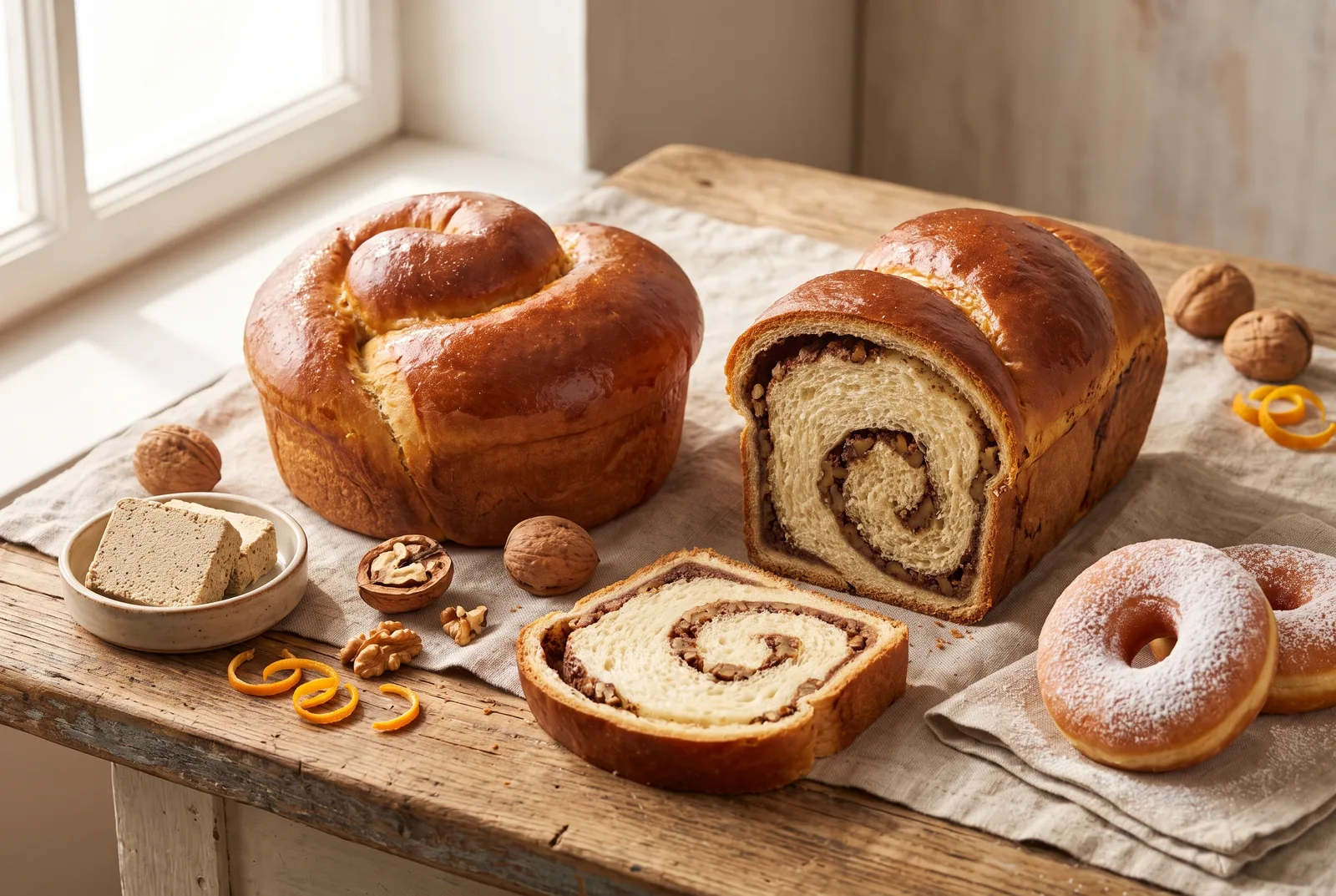
De post is a calendar, not a niche
Ask a UK distributor when Romanian bakers "go vegan" and the honest answer is: for a large part of the year, on a schedule whose rules were fixed more than a thousand years ago. In Romanian Orthodox practice, de post (fasting) food is plant-based — no meat, no eggs, no dairy, and on most days no fish either; the rich, non-fasting version of any dish is de dulce. In modern retail language, de post baking is vegan baking driven by religion, and — crucially for a buyer — it is a predictable, repeatable demand spike, not a lifestyle trickle. See the figure below.
There are four multi-day fasts in the year, plus most Wednesdays and Fridays (see the figure and comparison table below): Postul Mare / Postul Sfintelor Paști (Great Lent, ~7 weeks before Easter), Postul Sfinților Apostoli Petru și Pavel (the Apostles' Fast, ending 29 June), Postul Adormirii Maicii Domnului (the Dormition Fast, 1–15 August) and Postul Nașterii Domnului / Postul Crăciunului (the Nativity or Christmas Fast, ~40 days, 15 November–24 December). Great Lent is the longest and strictest — in 2026 it runs 23 February to 11 April, with Orthodox Easter (Paște) on 12 April.
The single fact that governs what a baker can make is that fasting is graded. On the most severe ("aspre") days even vegetable oil and wine are given up; a relaxation to oil and wine ("dezlegare la ulei și vin") is granted on many Saturdays and Sundays; and fish ("dezlegare la pește") is allowed only on named feasts — in Great Lent 2026 those are 25 March (Buna Vestire / the Annunciation) and 5 April (Duminica Floriilor / Palm Sunday). Because the whole de post pastry repertoire below is built on oil, these bakes belong to the oil-permitted days, not the strictest ones — so a bakery's de post output tracks the calendar's oil-allowance rhythm. This is also why the festive, egg-and-butter cozonac (B4-cozonac-enriched-dough) cannot be sold or eaten during the fast at all: its Lenten cousin, cozonac de post, exists precisely so a festive-style sweet bread is available while fasting.
1. The craft problem: baking without the three enrichers
An enriched dough leans on three animal ingredients, and de post removes all three at once. Losing them is not just a flavour change — each did a job (the fat craft is in A4-fat-science-functionality):
- Butter (min 82% fat) shortened the crumb, carried flavour and aerated. → Replaced by vegetable oil, which is 100% fat and liquid, so it lubricates and softens but gives no plasticity and no creaming/aeration — the crumb is tender but flatter, never "buttery". Choosing between oil and a plant margarine is the whole of A4-fat-types-and-selection.
- Milk added sugars (browning), protein and softness. → Replaced by water or a plant milk (soy/oat/coconut/rice/almond, roughly 1:1); plant milk restores a little body and browning, water gives none.
- Egg did the most invisible work: it bound, emulsified (the yolk's lecithin held fat and water together) and gave colour and richness. → It is simply omitted, and its jobs are shared out: gluten takes over binding, saffron (șofran) or turmeric dissolved in the warm liquid restores the golden colour, and soya lecithin or soya flour can stand in for the emulsifier while potato/maize starch helps hold moisture (see the figure and comparison table below).
Two consequences follow, and they are the reason de post enriched dough is harder, not easier, to get right. First, with no egg protein to bind and no butter to shorten, the loaf leans even more on gluten — you need a strong flour and a long knead to build a structure that holds together without the egg, exactly the mixing craft in A5-dough-mixing-methods and the flour choice in B4-flour-classification-romanian. Second, egg-free, dairy-free crumb is more fragile and stales faster; generous oil keeps it soft for a few days, and instead of an egg wash the loaf is brushed while hot with a sugar-water syrup to seal and gloss the crust . The staling story — and why a scald or an enzyme softener helps — is in A5-shelf-life-and-staling; the emulsifier substitution links to A3-emulsifiers-in-bread; and the broader "adapt a formula by removing a functional ingredient" method is the same discipline as A8-gluten-free-formula-adaptation.
One thing does not change: the leavening. Baker's yeast is a living fungus, not an animal product — the platform's Benevia fresh yeast (living Saccharomyces cerevisiae, dry matter >29%, activity 125 ± 10 ml CO2, no declarable allergens) is fully de post-compatible. So is a natural sourdough maia, which needs only flour and water and is the most traditional fasting leaven of all (see B4-maia-and-sourdough-tradition). The yeast science sits in A2-yeast-types-comparison; note that a de post cozonac is still sugar-rich, so the osmotic stress on the yeast covered in A2-osmotolerant-yeast-enriched-doughs still applies even without the eggs and butter.
2. Cozonac de post — a working formula
A representative cozonac de post dough is, per ~500 g strong flour: ~200 ml warm water, ~100 ml oil, ~150 g sugar, ~7 g dry yeast (≈20 g fresh), vanilla, rum essence, ~1 tbsp cocoa, a pinch of salt, with a little saffron or turmeric dissolved in the warm liquid for the golden colour a yolk would give; fill with ground walnut, cocoa, rum and citrus zest plus raisins, bake at ~180°C for ~45 minutes, and brush hot with a sugar-water syrup (see the formula card below). In baker's percentage that is roughly water ~40%, oil ~20%, sugar ~30%, dry yeast ~1.4% — the formula language is in A8-bakers-percentage-fundamentals, and sister enriched formulas in A8-enriched-dough-formulas.
Process (see the figure below): warm the water to ~35–37°C, dissolve the saffron/turmeric and a little sugar and proof the yeast; make a soft dough and knead it long (the missing egg means gluten is the only thing holding the crumb together — knead until smooth and elastic), then work in the oil gradually. Prove warm to double, sheet, spread the walnut filling, roll and shape (a plait or a coil, as for the festive loaf), prove again in the tin, and bake. The egg wash is replaced by the hot sugar syrup brushed on straight from the oven, which gives shine and a little crust seal in place of the egg's gloss. Expect a crumb that is soft and aromatic but shorter-lived and less springy than the 10-yolk original — proof control (don't over-prove a slack, egg-free dough) matters here, see A5-proofing-science.
3. The Lenten pastry canon
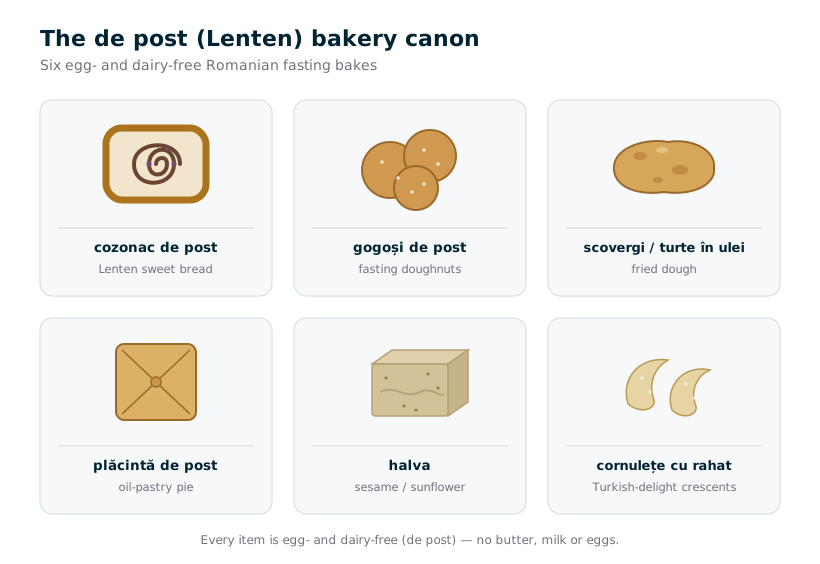
Cozonac de post is the showpiece, but the fasting bench is broader (see the figure and comparison table below):
- Gogoși de post — fasting doughnuts. Yeast dough of flour, water or plant milk, oil, sugar, salt — no egg, no dairy — fried in vegetable oil and rolled in sugar or filled with jam. Gina Bradea's and Savori Urbane's versions are the popular templates. This is the highest-volume de post line for a café bakery.
- Scovergi / turte în ulei — fried Lenten dough. Rustic fried flatbread-fritters of a simple bread dough (flour, water, yeast, salt, a little oil), served with sugar, jam or honey; the de post default form, treated alongside the March calendar in B4-mucenici-and-calendar-pastries.
- Plăcinte de post — oil-pastry pies. Thin oil-and-water pastry filled with de post fillings — apple, pumpkin (dovleac), cabbage, jam or sweetened ground walnut/poppy.
- Halva. A classic Lenten sweet: ground roasted sunflower and/or sesame seeds bound with a hot sugar syrup or honey, often with cocoa, naturally egg- and dairy-free. In Romania the retail staple is overwhelmingly sunflower halva (halva de floarea-soarelui); the tahini/sesame helva is the Turkish/Greek "oriental" type (more common in Dobruja) rather than the mainstream Romanian product, and it connects straight to the Turkish and Arab sesame-sweet traditions in B2-helva-sesame-tahini and B3-tahini-halva-and-sesame-confections.
- Cornulețe cu rahat — crescent pastries with Turkish delight. A monastic/household de post favourite — because rahat (lokum) is itself egg- and dairy-free, it is the perfect fasting filling, and it is the same Ottoman-legacy ingredient that defines the festive Moldovan cozonac.
4. The commercial trap: "de post" is NOT "allergen-free"
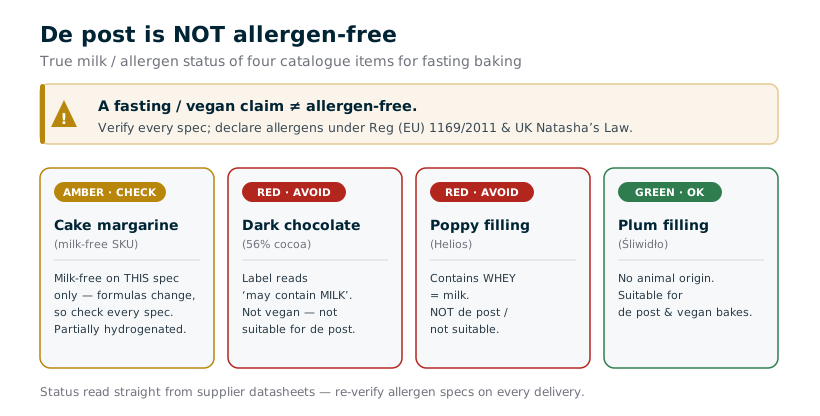
This is the section a UK distributor must read twice, because it is where money and food-safety meet. A "de post" or "vegan" claim is a religious/dietary claim about the recipe — it says nothing about allergen cross-contamination, and milk in particular hides in places a fasting baker would never expect (see the figure and comparison table below). Three of the platform's own datasheets make the point:
- Cake margarine is a per-product decision, not a rule. The platform's Milama Cake & Cookie Margarine is 80% fat / 720 kcal, and its allergen table declares no allergen and no cross-contamination — so this margarine is milk-free and de post-suitable. But it is made with partially hydrogenated palm (hence trans <2%), a nutrition caveat, and — the real lesson — not every "cake margarine" is milk-free: many contain milk solids, whey or butterfat. Always read the spec. (Oil vs plant margarine is the choice in A4-fat-types-and-selection; palm sustainability is in A4-sustainable-palm-free-fats.)
- Dark chocolate is usually "may contain milk". The platform's dark chocolate 56% lists only cocoa mass, sugar, cocoa butter, soya lecithin and vanilla — no milk in the recipe — yet it is labelled "may contain MILK" and its own intolerance table marks "suitable for vegans: not suitable". For a strict fast, verify the milk cross-contamination status before using dark chocolate in a glaze or filling.
- Bought-in poppy filling can contain whey. The platform's Helios Excellent poppy-seed filling reads plausibly plant-based — poppy, sugar, starch, raisins — but the ingredient list includes WHEY and it explicitly "contains gluten and MILK". It is not de post. A fasting bakery must grind poppy from whole seed (the platform stocks blue poppy seed) or source a verified whey-free filling.
By contrast, the platform's bake-stable plum filling "Śliwidło" is a genuinely de post-ready, magiun-style fruit filling: 50% plum, bake-stable, and the datasheet states it "does not contain ingredients of animal origin" (milk and soy are cross-contamination risk only) — refrigerate after opening, use within 48 hours. The clean sunflower oil (100% oil, no allergens, stated suitable for vegans, nut-free site, no hydrogenated fat) and the potato starch ("does not contain any allergenic ingredients") are exactly the kind of single-ingredient de post building blocks a baker can trust.
The upshot for labelling: even a fully de post bake still declares cereals containing gluten (wheat) and tree nuts (walnut/almond), and often soya (from soya flour or lecithin), and may carry a "may contain milk/egg" advisory from shared lines. Build and display allergen statements under Reg (EU) 1169/2011 and, for UK prepacked-for-direct-sale, Natasha's Law (SI 2019/1218) — independently of the fasting claim.
5. Ready-made shortcuts (and their limits)
For scale, the range carries ready vegan bases. The Zeelandia V-GO Vegan Cake mix is a genuine vegan formula (sugar/wheat/soya flour/starch, raising agents; egg and milk absent from the recipe), but note two things: it carries egg and milk cross-contamination and soya, and it is a chemically-leavened CAKE mix, not an enriched-yeast cozonac base. An Ireks Vegan Doughnut Mix is a scale option for gogoși de post, and a vegan cream/topping alternative covers finishing. These buy speed and consistency at the cost of the authentic long-kneaded, oil-and-saffron character — the honest de post route remains strong flour, yeast (or maia), oil, water, saffron and a long knead.
6. Food safety
- Frying (gogoși, scovergi). Control frying-oil quality (monitor free fatty acid and peroxide, replace degraded oil), hold temperature, and apply acrylamide-mitigation good practice (avoid over-browning). Sunflower oil's ~60% polyunsaturate content oxidises faster at frying heat, so manage oil turnover; a more heat-stable rapeseed or blended/palm frying fat is an alternative — see A4-frying-fats-and-oils.
- Honey. Permitted in fasting and traditional in halva/syrups, but not for infants under 12 months (infant-botulism precaution).
- Allergens. As Section 4: de post ≠ allergen-free. Verify the live SKU spec before relying on any "vegan/de post" assumption; three catalogue specs (V-GO, dark chocolate, poppy filling) prove milk/egg cross-contamination is real.
7. Buy it (Domson catalogue map)
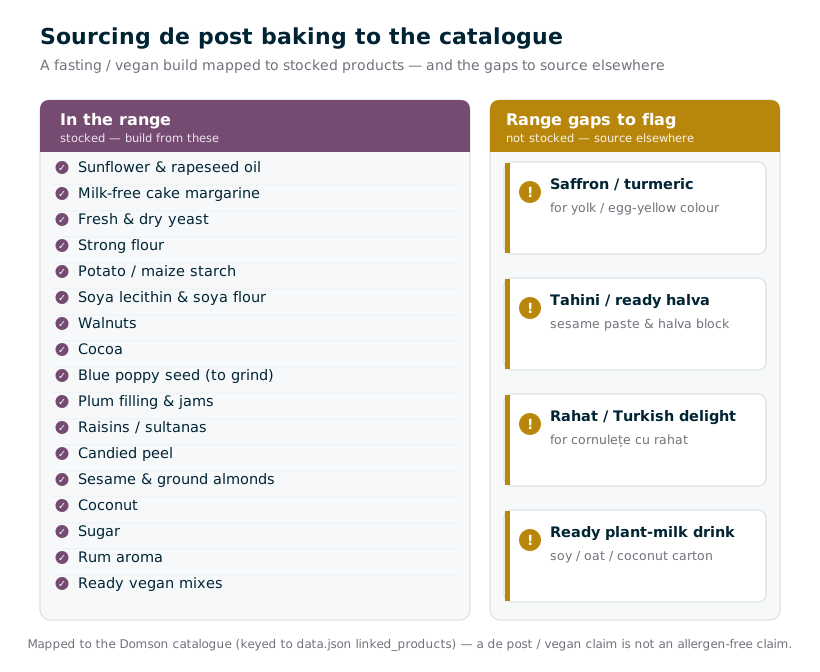
Consolidated in the products at the end of this article, shown in the figure below:
- Fat & leaven:Sunflower Oil (the clean butter/milk replacement and frying oil), Rapeseed Oil (more heat-stable frying), Palm Frying Oil; Milama Cake & Cookie Margarine (confirmed milk-free on its spec — a plant margarine for a firmer crumb) or Qualita NP Palm-Free Margarine (verify its live spec); Benevia fresh yeast or Fermipan Red dried yeast.
- Structure & egg-function:Domson White Strong Wheat Flour / Type 550 (the gluten to carry an egg-free crumb); Potato Starch and Maize Starch (moisture/binding); Soya Lecithin (E322) and full-fat Soya Flour (emulsifier/protein).
- Fillings & flavour (de post):Walnuts to grind; Dutch Cocoa (vegan); Blue Poppy Seed to grind from scratch (avoids the whey trap); Plum Filling Śliwidło and Poltino Prune Plum Jam (magiun-style); apricot / multifruit / rose-hip jams and doughnut marmalade (fills gogoși); raisins and laser-cleaned sultanas; candied orange peel; sesame seeds and ground almonds (for halva and nut fillings); coconut flakes; sugar, vanillin sugar and rum aroma for the dough and syrup; fine sea salt. Use dark chocolate only after verifying its milk status.
- Ready vegan:Zeelandia V-GO Vegan Cake mix and Ireks Vegan Doughnut Mix (mind the egg/milk cross-contamination and that V-GO is a cake, not a cozonac).
Range gaps to flag for the buyer. Four ingredients central to authentic de post baking are not in the range: saffron or turmeric (the traditional yolk-colour replacement for cozonac de post); tahini or ready halva (no ready halva of either kind is stocked — neither the mainstream Romanian sunflower halva nor the Turkish/Greek sesame/tahini helva — only plain sesame seed); rahat (Turkish delight / lokum) (the classic egg/dairy-free fasting filling, e.g. cornulețe cu rahat — the same gap flagged for the festive cozonac); and a ready plant-milk drink (soy/oat/coconut/rice), so today the fasting baker either uses water or sources plant milk elsewhere. All four are clear range opportunities for a distributor serving Romanian and Moldovan bakers through the fasting seasons.
Figures
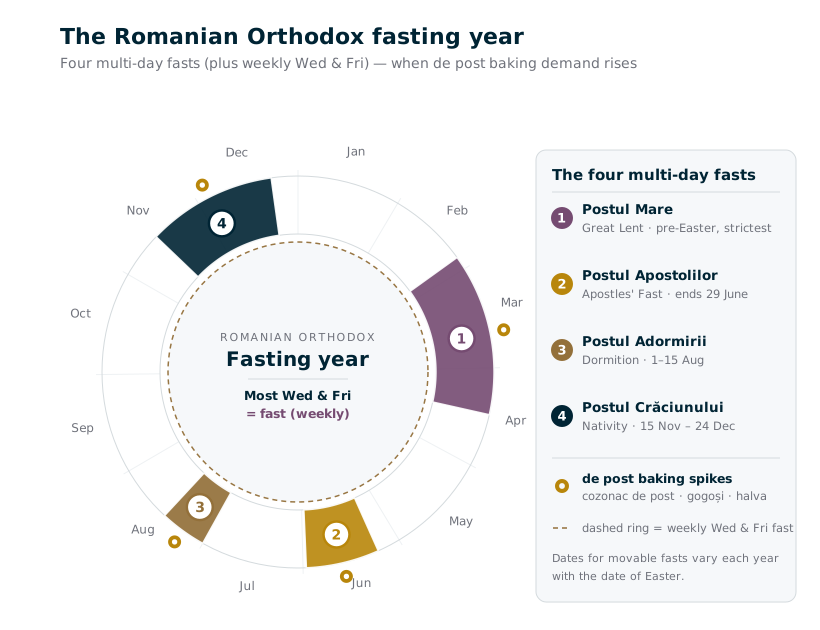 Year-wheel of the four Romanian Orthodox fasts plus weekly Wednesday and Friday fasting, marking de post baking demand
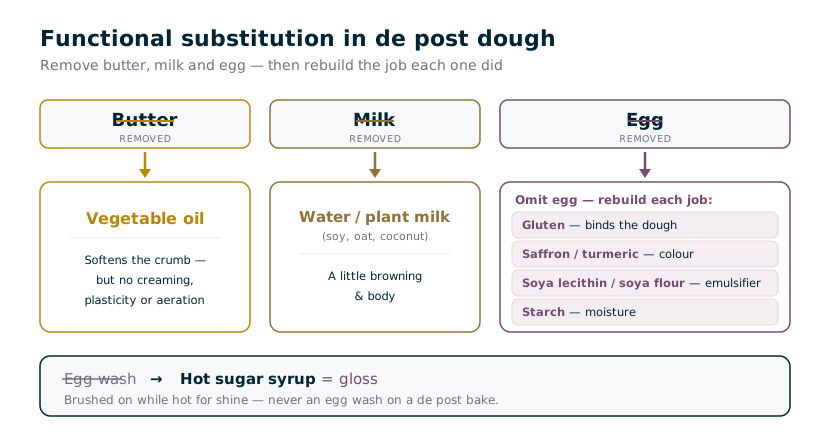 Diagram mapping butter to oil, milk to water/plant milk and egg to gluten, saffron, lecithin and starch in de post dough
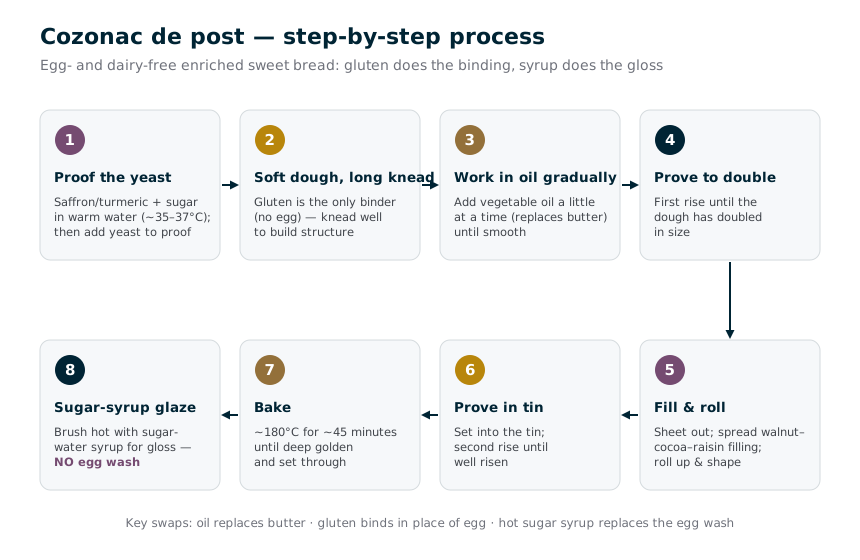 Step-by-step flow of cozonac de post from saffron-proofed yeast through long knead, oil, proof, fill, bake and sugar-syrup glaze
 Warning panel: cake margarine, dark chocolate, poppy filling and plum filling with their true milk/allergen status for fasting baking
 Six labelled Romanian Lenten bakes: cozonac de post, gogoși, scovergi, plăcintă de post, halva and cornulețe cu rahat
 Panel mapping de post ingredients to Domson catalogue products, flagging gaps for saffron, tahini/halva, rahat and plant milk
Cozonac de post — egg-free, dairy-free enriched dough (representative)
The Lenten counterpart of the festive 10-yolk cozonac. With no egg to bind/emulsify and no butter to shorten, structure comes from a strong flour + long knead, softness from oil, colour from saffron/turmeric, and gloss from a sugar syrup in place of the egg wash. Expect a soft but shorter-lived, less-springy crumb. See A8-enriched-dough-formulas, A5-dough-mixing-methods and the festive original in B4-cozonac-enriched-dough.
| Ingredient | Baker's % | Weight |
|---|---|---|
| Strong wheat flour | 100% | |
| Water (warm) | ~40% | |
| Vegetable oil | ~20% | |
| Sugar | ~30% | |
| Dry yeast | ~1.4% (≈4% fresh) | |
| Saffron / turmeric (colour) | a pinch | |
| Cocoa, vanilla, rum, citrus zest | to taste | |
| Salt | ~0.5% | |
| Total | ~190% (enriched with oil + sugar, no egg/dairy) |
Worked example
500 g strong wheat flour, 200 ml warm water (~35–37°C), 100 ml oil, 150 g sugar, 7 g dry yeast (≈20 g fresh), a pinch of saffron or turmeric dissolved in the warm water for colour, 1 tsp vanilla, 1 tsp rum essence, 1 tbsp cocoa, a pinch of salt. Filling: ground walnut + cocoa + rum + lemon/orange zest + rum-soaked raisins. Method: dissolve saffron + a little sugar in the warm water and proof the yeast; make a soft dough and knead it LONG until smooth and elastic (gluten is the only binder now), working the oil in gradually; prove to double; sheet, spread the filling, roll and shape (plait/coil); prove again in the tin; bake ~180°C ~45 min; brush hot with a sugar-water syrup and dust with sugar. Baker's %: water ~40%, oil ~20%, sugar ~30%, dry yeast ~1.4%, salt ~0.5%.
Yield: ≈ 1 large loaf (per 500 g flour); scale as needed
Gogoși de post — fasting doughnuts (representative)
The highest-volume de post café line. Fry-fat quality and temperature control matter (see A4-frying-fats-and-oils); sunflower oil oxidises faster than rapeseed at frying heat. Fill with a de post jam/marmalade or plum filling — never a whey-containing filling.
| Ingredient | Baker's % | Weight |
|---|---|---|
| Wheat flour | 100% | |
| Water or plant milk | ~55–60% | |
| Sugar | ~8–10% | |
| Oil (in dough) | ~5% | |
| Fresh yeast | ~4% (or ~1.4% dry) | |
| Salt | ~0.5–1% | |
| Vanilla / citrus zest / orange juice | to taste | |
| Total | ~165% (soft, fried; no egg/dairy) |
Worked example
Per 1 kg flour: ~550–600 ml warm water or plant milk (soy/oat/coconut/rice), ~40 g fresh yeast (or ~14 g dry), ~80–100 g sugar, ~50 ml oil in the dough, a pinch of salt, vanilla/lemon zest; some recipes add orange juice/pulp for moisture and aroma. Make a soft dough, prove, shape rounds (or fill after frying), prove, and fry in vegetable oil at ~170°C, 2–3 min a side; roll in sugar or fill with jam. Swap plant milk for water on stricter oil-permitted days.
Yield: a batch of doughnuts (scale to fryer capacity)
Halva de post — sesame/sunflower Lenten sweet (representative home/artisan)
A classic de post confection and a natural cross-sell during the fasts. Sesame/tahini and sunflower are the base; honey is permitted in fasting (but not for infants under 12 months, c22).
| Ingredient | Baker's % | Weight |
|---|---|---|
| Sunflower seeds (roasted, ground) | ~200 g | |
| Sesame seeds (ground) / tahini | ~200 g | |
| Honey or hot sugar syrup | ~150 g | |
| Cocoa | ~1 tbsp | |
| Rum essence / vanilla | to taste | |
| Total | n/a (a dense, bound paste) |
Worked example
~200 g roasted sunflower seeds + ~200 g sesame seeds, ground to a fine oily paste; bind with ~150 g honey or a hot sugar syrup and ~1 tbsp cocoa; flavour with rum essence or vanilla; add a little oil if needed to reach a dense but not dry consistency; press and set. Naturally egg- and dairy-free. NB: in Romania sunflower halva (halva de floarea-soarelui) is the retail staple; the tahini/sesame helva made from sesame paste + aerated sugar syrup is the Turkish/Greek type — see B2-helva-sesame-tahini and B3-tahini-halva-and-sesame-confections; the platform stocks sesame seed but NOT ready halva of either kind or tahini (gap).
Yield: a small batch
Four multi-day fasts plus most Wednesdays and Fridays set predictable, repeatable demand for egg-free/dairy-free bakes. Dates for movable fasts vary each year; 2026 shown where fixed.
| Fast (Romanian) | When | Length / strictness | Baker's takeaway |
|---|---|---|---|
| Postul Mare / Postul Sfintelor Paști (Great Lent) | ~7 weeks before Orthodox Easter; 2026: 23 Feb–11 Apr (Easter 12 Apr) | Longest and strictest fast of the year | The big de post season — cozonac de post, gogoși/scovergi, halva; peak demand |
| Postul Sfinților Apostoli Petru și Pavel (Apostles' Fast) | Variable start, ends 29 June | Variable length; moderate | Summer de post window |
| Postul Adormirii Maicii Domnului (Dormition Fast) | 1–15 August (fixed) | Two weeks; fairly strict | Late-summer de post window |
| Postul Nașterii Domnului / Postul Crăciunului (Nativity Fast) | 15 November–24 December (fixed, ~40 days) | 40 days; moderate | Christmas de post season — cozonac de post again |
| Weekly fasts (Wednesdays & Fridays) | Most weeks year-round | Single days | Steady baseline demand for de post lines |
Fasting is graded. The oil rule matters most to a baker because the whole de post pastry repertoire is oil-based.
| Relaxation (Romanian) | Meaning | Effect on de post baking |
|---|---|---|
| Zile aspre (strict days) | No oil, no wine (e.g. first day of Lent, Good Friday) | Even oil-enriched bakes are off — plain bread/maia only |
| Dezlegare la ulei și vin | Oil and wine permitted (many Saturdays & Sundays in the fast) | Cozonac de post, gogoși, scovergi, plăcinte, halva are all made on these days |
| Dezlegare la pește | Fish permitted (named feasts only; Lent 2026: 25 Mar Buna Vestire, 5 Apr Florii) | Doesn't change the bakes (still egg/dairy-free), but marks a feast |
Each animal ingredient did a job; de post shares that job out to plant ingredients. See A4-fat-science-functionality, A3-emulsifiers-in-bread and A8-gluten-free-formula-adaptation.
| Removed | Its job | De post replacement | What you lose / must manage |
|---|---|---|---|
| Butter (82% fat) | Shortening, flavour, aeration, plasticity | Vegetable oil (or a milk-free plant margarine) | No creaming/plasticity from oil; crumb tender but flatter, not 'buttery' |
| Milk | Milk sugars (browning), protein, softness | Water, or plant milk (soy/oat/coconut/rice/almond) ~1:1 | Water gives no browning/body; plant milk restores a little |
| Whole egg | Binding, emulsification (yolk lecithin), colour, richness | Omit; gluten binds; saffron/turmeric for colour; soya lecithin/soya flour emulsify; starch retains moisture | Weaker binding → rely on strong flour + long knead; more fragile, stales faster |
| Egg wash (gloss) | Shiny, sealed festive crust | Hot sugar-water syrup brushed on straight from the oven | Less deep colour than an egg wash; syrup adds shine + a little seal |
The core egg-free/dairy-free line a Romanian bakery runs through the fasts. All are made on oil-permitted days.
| Bake (Romanian) | What it is | Base | Notes |
|---|---|---|---|
| Cozonac de post | Lenten festive sweet bread | Enriched yeast dough: flour, water, oil, sugar, yeast; walnut/cocoa/raisin fill | The showpiece; egg/dairy-free so a festive bread is possible during the fast |
| Gogoși de post | Fasting doughnuts | Yeast dough (flour, water/plant milk, oil, sugar), fried | Highest-volume café line; roll in sugar or fill with jam |
| Scovergi / turte în ulei | Fried Lenten dough | Simple bread dough, fried in oil | Rustic; served with sugar, jam or honey |
| Plăcinte de post | Oil-pastry pies | Oil-and-water pastry + de post filling | Apple, pumpkin (dovleac), cabbage, jam, walnut or poppy |
| Halva | Sesame/sunflower sweet | Ground roasted seeds + sugar syrup or honey (+cocoa) | Naturally egg/dairy-free; in Romania sunflower halva is the retail staple, tahini/sesame helva the Turkish/Greek type |
| Cornulețe cu rahat | Crescent pastries with Turkish delight | Oil short pastry + rahat | Monastic/household favourite; rahat is egg/dairy-free |
A fasting/vegan claim describes the recipe, not cross-contamination. Milk hides in places a fasting baker would not expect. Always verify the live SKU spec.
| Ingredient (platform) | Recipe status | The trap | Verdict for de post |
|---|---|---|---|
| Milama Cake & Cookie Margarine | No milk in recipe; allergen table = none present, none cross-contam | Contains partially hydrogenated palm (trans <2%) — a nutrition, not allergen, issue; other cake margarines DO contain milk/whey | Suitable (this SKU) — but check every margarine spec |
| Dark Chocolate 56% (Barbara Luijckx) | No milk in recipe (cocoa mass, sugar, cocoa butter, soya lecithin) | Labelled 'may contain MILK'; marked 'suitable for vegans: not suitable'; contains soya | Verify milk cross-contamination before using for a strict fast |
| Helios Excellent Poppy Filling | Contains WHEY in the recipe | 'Contains gluten and MILK' — looks plant-based but is not | NOT de post — grind poppy from seed or find a whey-free filling |
| Plum Filling Śliwidło (Martin Braun) | Plum 50%; 'does not contain ingredients of animal origin' | Milk & soy are cross-contamination risk only (not in recipe) | Suitable — a de post magiun-style fruit filling |
| Zeelandia V-GO Vegan Cake mix | Egg & milk ABSENT from recipe; soya present | Egg/milk cross-contamination (shared line); it is a CAKE, not an enriched cozonac | Suitable as a vegan cake base; declare soya + may-contain |
| Fault | Likely cause | Remedy |
|---|---|---|
| Cozonac de post falls apart / crumbly, no cohesion | No egg to bind + under-developed gluten | Use strong flour; knead longer until smooth/elastic; don't over-hydrate |
| Pale, anaemic crumb (no golden colour) | No egg yolk; nothing added for colour | Dissolve saffron or turmeric in the warm liquid; a little cocoa also warms the colour |
| Dull, pale crust; no shine | No egg wash | Brush hot with a sugar-water syrup straight from the oven |
| Stales / dries within a day | No egg/butter; oil-only enrichment stales faster | Add enough oil; add starch for moisture retention; wrap well; sell fresh |
| Greasy, dense crumb | Too much oil, or oil added before gluten was built | Keep oil ~20%; add it gradually after the dough comes together |
| Gogoși soak up oil / greasy | Oil too cool; over-proofed; dough too wet | Fry at ~170°C; prove only to correct point; adjust hydration |
| 'Vegan' product flagged for milk at audit | Bought-in filling/chocolate/margarine carried milk or whey | Check EVERY spec: poppy filling can contain whey; dark chocolate 'may contain milk'; grind poppy from seed |