
Tahin helvası and un helvası: sesame paste, soapwort stabilisers and sugar aeration
"Helva" covers two completely different Turkish crafts, and a UK baker who wants to sell either needs to keep them apart. The first is the fresh, home-and-mosque flour family — un helvası (flour halva) and irmik helvası (semolina halva) — where flour or semolina is patiently roasted in butter to a deep-brown roux and then flooded with a hot syrup or milk; this is the "helva of remembrance" cooked for mevlit, funerals, a newborn's fortieth day and kandil nights. The second is the confectioner's çekme (pulled) sesame family — tahin helvası — the crumbly, fine-fibred slab sold sliced in every Turkish grocer. Its authenticity turns on two things this dossier explains natively: tahin (tahini) — hulled, roasted, ground sesame that must, by the Turkish Food Codex, be at least 50% sesame oil — and çöven (soapwort, Gypsophila spp.), the saponin-rich "halva root" whose boiled extract is whipped into a hot pulled-sugar syrup to whiten it, aerate it, and emulsify it so the sesame oil never weeps out. The build is a sugar syrup cooked dense (with ~0.1% citric/tartaric acid to invert some sucrose), whitened with çöven at ~130-140°C, then kneaded ~1:1 with tahini at ~70-80°C until it "strings" (liflenme) and set overnight. Every step is wired to the Domson catalogue a UK Turkish helva kitchen actually orders — sesame seed, granulated/caster sugar, glucose syrup, citric acid, butter, weak plain flour, durum semolina, cocoa and nuts — with an honest flag on the ingredients Domson does NOT stock (finished tahin paste and çöven), and cross-linked to the Pillar A craft behind it (see A6-sugar-work-techniques, A7-seeds-nuts-toppings, A4-fat-types-and-selection, A1-wheat-flour-types-by-application, A8-chocolate-confectionery-formulas) and to the sister traditions (B2-lokum-production, B2-syrup-sweets-ottomans, B2-baklava-production, B2-simit-and-ramazan-pidesi, B3-tahini-halva-and-sesame-confections, B6-halva-confectionery).
Two things called "helva" — keep them apart
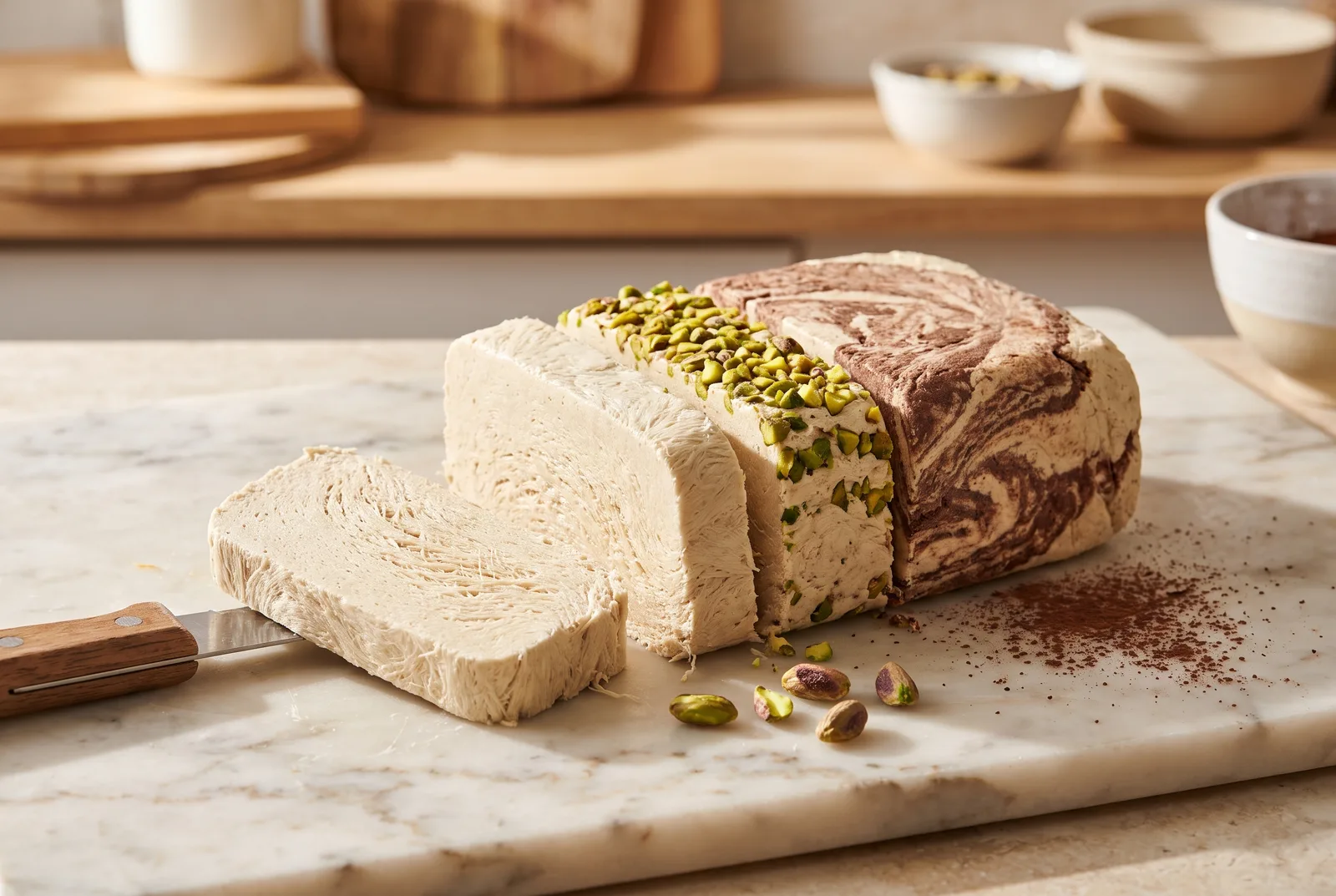
For a UK baker the single most important fact about helva is that the word covers two unrelated crafts, and mixing them up is how you disappoint a Turkish customer. There is the flour family — un helvası (flour halva) and irmik helvası (semolina halva) — cooked fresh at home or at the mosque, where flour or semolina is roasted in butter and then hydrated with a hot syrup or milk. And there is the confectioner's sesame family — tahin helvası (tahini halva) — the dense, pale, crumbly slab with a fine fibrous grain, made industrially or by a specialist and sold sliced by weight. The classical definition that unites them is narrow: helva is a sweet made by roasting un (flour), irmik (semolina), nişasta (starch) or pirinç unu (rice flour) in fat, then sweetening with bal (honey), pekmez (grape molasses) or sugar — but the sesame version replaces the roasted-flour base entirely with tahin (sesame paste) worked into a çöven-whitened pulled sugar. This dossier treats both, because a Turkish grocer-bakery in the UK will be asked for both. The figures below show the finished tahin helvası and the two-family process map.
A note on heritage. Helva was serious court business. The Ottoman helvahane — a dedicated palace confectionery kept separate from the Matbah-ı Âmire (imperial kitchen) inside Topkapı Palace — is traditionally dated to 1574, when the palace kitchens were rebuilt by the architect Mimar Sinan after a fire that year, and Ottoman culinary histories record around 36 kinds of helva made there. (Süleiman the Magnificent, under whom Sinan rose to prominence, had died in 1566, so the 1574 date reflects that post-fire reorganisation rather than his reign — a point popular accounts often blur; this heritage note rests largely on a single popular-history source.) The types that escaped the palace into shops and workshops — tahin helvası, koz helvası (nut halva), kâğıt helvası (paper halva) and yaz helvası (summer halva) — are the ancestors of what Domson's customers sell today, and Ottoman-heritage confectioners such as Ali Muhiddin Hacı Bekir kept tahin helvası commercially alive. The wider Ottoman syrup-sweet context is in B2-syrup-sweets-ottomans. See the figure below (heritage/regional map).
Part A — Tahin helvası (the sesame confection)
1. Tahin (tahini): the sesame paste that must be half oil
Everything starts with the paste. Tahin is hulled, roasted, ground sesame. The traditional route is more than "grind some seeds": soak the sesame in water and crush it to loosen the bran/hull from the kernel, then float-separate the kernels in salted water (the good kernels float and are skimmed), and only then toast and grind them to a smooth paste. A double-roasted grade, çifte kavrulmuş tahin, is darker and smokier. The sesame-to-tahini yield runs about 80-82% (a single trade figure). Sesame seed itself is often cited at roughly 40% oil and ~18% protein (some references put whole-seed oil nearer 50%); the Turkish Food Codex sets the bar for the paste, requiring tahin to be at least 50% sesame oil, with ≤1.5% moisture, ≥20% protein, ≤3.2% ash and ≤2.4% acidity (as oleic acid). That "half oil" figure is why çöven matters so much (below) — there is an enormous amount of free oil to hold in suspension. For the seed-handling craft (roasting, rancidity, particle size, allergen control) see A7-seeds-nuts-toppings, and for the sesame that also crowns simit and is paired with pekmez, see B2-simit-and-ramazan-pidesi. See the figure below (tahini production flow).
Sourcing reality: Domson stocks sesame seed (25 kg) but not finished tahin paste. A UK helva maker either mills tahini from the seed (needing a stone/colloid mill) or buys ready tahin from a specialist Turkish/Middle-Eastern importer. Flag this in your BOM.
2. Çöven (soapwort): the saponin that whitens, aerates and emulsifies
This is the ingredient that makes tahin helvası Turkish rather than a generic sesame confection. Çöven — literally the helvacı kökü ("halva-maker's root"), grouped with sabun otu (soapwort) — is botanically Gypsophila spp. (family Caryophyllaceae). Its roots and rhizomes are boiled about 4-5 times and the boiling waters re-boiled down to make the çöven extract (çöven özütü / ekstraktı). The active compound is saponin, present at roughly 15-25% depending on species; Turkey has around 50 çöven species, of which about five are commercially important, concentrated in Central and Eastern Anatolia (e.g. Gypsophila arrostii var. nebulosa, Gypsophila perfoliata). Whipped into the hot sugar syrup, the saponin acts as a natural emulsifier and aerating/whitening agent: it beats air in, whitens the mass, builds the characteristic soft, fine-fibred texture, increases volume, and — the make-or-break function — emulsifies the sesame oil so it does not weep out of the finished slab . The same çöven whitens koz helva, kerebiç, paşa lokumu and features in lokum and pişmaniye (see B2-lokum-production). See the figure below (çöven plant, extract and aeration).
Sourcing reality: Domson does not stock çöven or a çöven extract. It is bought from a Turkish confectionery-ingredients specialist. Where a producer cannot use çöven, the Codex permits food-grade emulsifiers instead (below) — but that changes the label and the character.
UK/EU additive-authorisation gap: used for its emulsifying / foaming / whitening function, a çöven (Gypsophila soapwort-saponin) extract meets the EU/UK definition of a food additive (Regulation (EC) No 1333/2008), and soapwort-saponin extract is NOT an authorised additive in Great Britain or the EU. The only authorised saponin additive is quillaia extract (E999), which comes from a different plant (Quillaja saponaria, Rosaceae) and is permitted only in certain flavoured drinks and cider/perry — not confectionery; a çöven extract may additionally raise a novel-food question. So although çöven is the authentic traditional ingredient (and is used lawfully in helva made in Türkiye), a UK-based maker should take regulatory advice before using it and may have to fall back on the permitted E-number emulsifiers (Section 5) or import authentically-made helva. Verify against current GB/EU additive law before production.
3. The build: syrup → whiten → knead with tahini
The sugar phase is cooked much drier and hotter than a baklava şerbet. Sugar is boiled with very little water (an industrial ratio around 100 kg sugar: 5-10 kg water) to a dense, high-temperature syrup. Sources differ on the exact cook — one industrial figure is ~100-125°C, another ~145°C; this is the hottest, highest-burn-risk stage of the whole process, so pin the operating temperature to your own equipment rather than to a web figure — but both add about 0.1% citric or tartaric acid to invert roughly 25-30% of the sucrose, which keeps the finished halva from graining up. This is the same sugar-cooking-stage discipline covered in A6-sugar-work-techniques (and the invert/anti-crystallisation logic in A8-chocolate-confectionery-formulas). The syrup is then whitened: çöven extract (about 100 g per 100 kg sugar) is beaten in while mixing at ~130-140°C, producing the aerated white pulled mass (ağda). Finally the ağda is cooled to ~70-80°C and combined with tahini at the same temperature at roughly 1:1 (tahini: syrup mass), then kneaded — traditionally with special paddles (kürek) — until it develops its fibrous grain (liflenme). The kneading window is unforgiving: over-kneading makes it hard, under-kneading fails to bind. It is then left to cool and set for about 12-24 hours. See the figures below (syrup-and-whitening infographic and fibrous cross-section).
4. What the law and the numbers say
The Turkish Food Codex Tahin Helvası Communiqué (published 13 June 2015, Resmi Gazete 29385) is a useful "north star" even outside Turkey: tahin helvası must have its own characteristic colour, taste and smell, be homogeneous and fine-fibred, and show no sugar crystallisation; nut additives (hazelnut/fındık, pistachio/fıstık) must be at least 8% of tahin helvası. The related Turkish çekme-helva standard (TS 13028) sets nut inclusions (pistachio, walnut, almond) in flavoured pulled halva (çeşnili çekme helva) at at least 15% and treats pulled halva as a low-moisture confection (limits reported around ≤6% moisture, ≤0.5% ash — single-source, verify against a producer datasheet). A typical finished tahin helvası is reported at about 516 kcal, ~28% fat, ~10.5% protein and ~53.5% carbohydrate per 100 g (a single trade figure — other Turkish tables report nearer 560 kcal and higher fat, so treat it as indicative until you have a producer nutrition panel) — either way a high-fat, high-sugar, calorie-dense sweet. Common çeşni (flavour) variants are sade (plain), fıstıklı (pistachio), vanilyalı (vanilla) and kakaolu (cocoa); for kakaolu helva the cocoa (an industrial figure of about 500 g per batch) is blended into the tahini before it meets the whitened syrup. See the spec table and comparison table below.
Regulatory note: process temperatures vary by source (syrup ~100-125°C vs ~145°C); the finished-composition figures and çekme-helva moisture/ash limits are single-source and should be confirmed against a producer datasheet; all allergen and emulsifier statements below need verifying against your own recipe and UK/EU labelling. The most important regulatory flag is in Section 2: a çöven (soapwort-saponin) extract is not an authorised UK/EU food additive.
5. Emulsifier note (çöven vs E-numbers)
Çöven is the traditional, natural emulsifier/aerator, but the Codex also permits food-grade emulsifiers in tahin helvası — for example E491 sorbitan monostearate up to ~5 g/kg and E471 mono- and diglycerides of fatty acids — and many industrial producers use these alongside or instead of çöven. If you are selling on a "natural / no additives" story (as the stone-milled Bilecik Pazaryeri helva does), çöven is the point of difference.
Part B — Un helvası and irmik helvası (the roasted-flour family)
6. Un helvası: the roux is everything
Un helvası is deceptively simple and technically demanding. A weak plain wheat flour is roasted in butter (or sadeyağ / clarified butter) into a roux, stirred constantly for roughly 25-35 minutes until it turns deep brown with an intense roasted aroma — the flour must pass gradually through white → cream → light brown → dark brown. Pine nuts (çam fıstığı) are usually toasted first for about 2-3 minutes. Then a hot syrup — kept hot to avoid lumping (topaklanma) — is stirred in, the halva is rested ~15-20 minutes and served warm. A typical home ratio is about 1.5-2 cups (su bardağı) flour: 125-170 g butter: 1.5 cups sugar: 2 cups water. The make-or-break control is when you add the liquid: too early (flour under-roasted) and the halva stays pasty/doughy (hamurumsu); too late (flour burnt) and it turns bitter; the right moment is when the flour hits its deep colour and the roasted aroma peaks. This is a fat + weak-flour + sugar system — read A4-fat-types-and-selection for the butter-vs-oil roux behaviour and A1-wheat-flour-types-by-application for why a low-protein plain flour, not a strong bread flour, gives the cleanest crumbly result. See the figures below (roux colour chart and process map).
7. İrmik helvası and the meaning of the flour family
İrmik helvası (semolina halva) is the close cousin: semolina (irmik) roasted in butter, often with a little oil and pine nuts, then a hot milk-and-sugar syrup stirred in and rested. Both halvas are the "helva of remembrance" in Turkish culture — cooked and shared at mevlit gatherings, funerals (cenaze), a newborn's fortieth day / akika sacrifice, and kandil (holy) nights — so a UK bakery serving a Turkish community should expect occasion-driven demand, not just impulse sales. For the semolina itself, the catalogue durum-wheat semolina is 100% durum wheat (may contain up to 3% common wheat), a granular creamy-yellow product; the un-helvası flour should be the weak UK plain flour (≈9.1% protein), and the fat the 82% unsalted butter.
8. Allergens and food safety (declare before you sell)
Turkish helva is an allergen-dense category. Sesame (in tahini and tahin helvası) and, wherever they appear, tree nuts (pistachio, hazelnut, walnut, almond) are among the 14 allergens that must be declared under UK/EU food law; the flour-family helvas additionally contain cereals/gluten (wheat flour or semolina) and milk (butter). Cross-contamination is real even in helper ingredients — the citric-acid specification itself flags sesame- and tree-nut cross-contamination during storage. The butter is a milk allergen (82% fat, ~16% water). Treat the allergen and nutrition panel as a mandatory, human-verified step. Note too the separate additive-authorisation issue flagged in Section 2 — the traditional çöven whitener is not an authorised UK/EU food additive, whereas the E-number emulsifiers in Section 5 are lawfully usable in UK/EU-made halva.
Buy the ingredients for this
See the products at the end of this article for the full mapping. In short, Domson supplies the commodities a UK Turkish helva kitchen needs — sesame seed (to mill tahini), granulated/caster sugar (the syrup, ~100% sucrose), glucose syrup (the Codex-permitted "yenilebilir glikoz şurubu"), citric acid (E330, the ~0.1% inversion acid), unsalted 82% butter (the un-/irmik-helvası fat, or to clarify to sadeyağ), a weak plain flour and durum semolina (the roasted-flour bases), cocoa (for kakaolu helva) and pistachios/walnuts (the ≥8%/≥15% nut inclusions), plus sunflower seed if you also make the cheaper sunflower halva of the Balkan style (see B6-halva-confectionery). Two things Domson does not stock and you must source elsewhere: finished tahin (sesame) paste and çöven (soapwort) extract — the two ingredients that most define authentic tahin helvası. The Arab tahini-halva parallel (halawa tahiniya, whipped with soapwort/shirsh al-halawa) is in B3-tahini-halva-and-sesame-confections; the clarified-butter-and-syrup cousins are in B2-baklava-production.
Figures
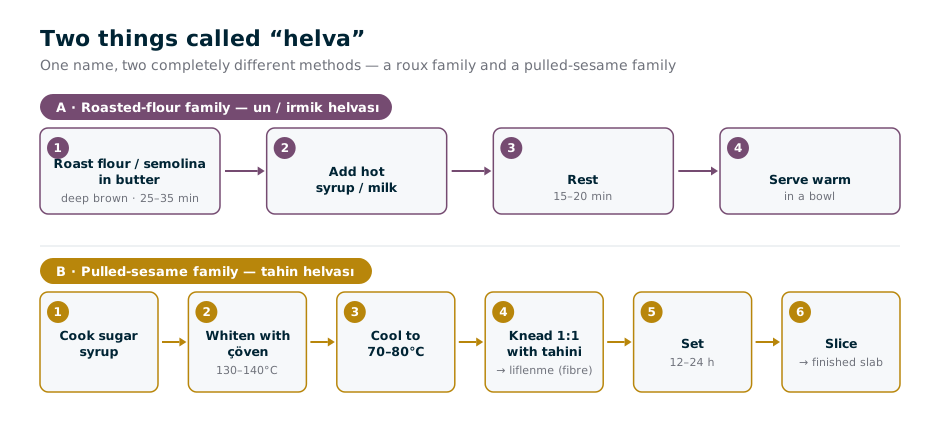 Flow diagram comparing flour-family helva (roux plus syrup) with sesame-family tahin helvası (syrup, çöven whitening, tahini kneading)
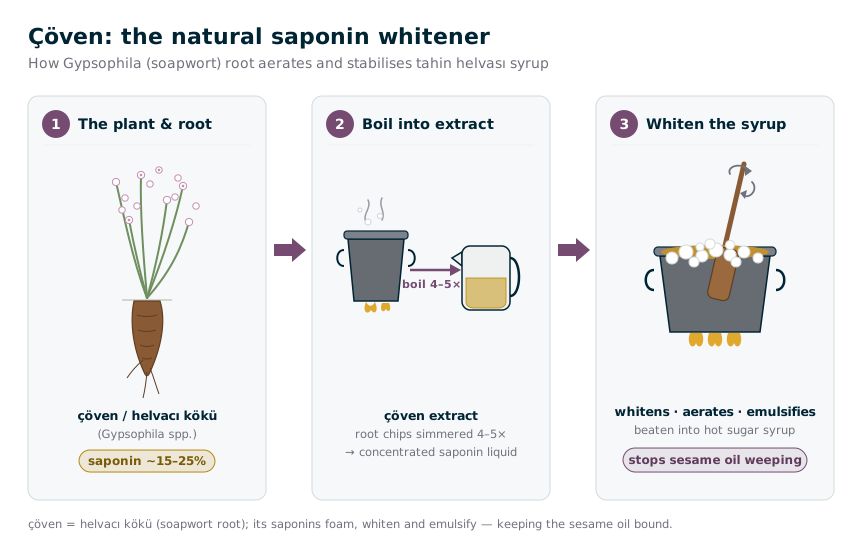 Diagram of çöven soapwort plant and root, boiling into extract, and foam whipped into sugar syrup
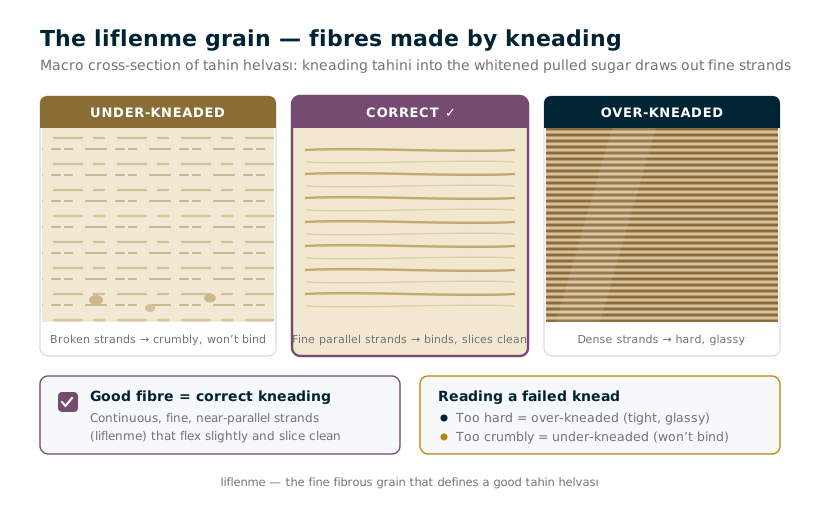 Macro cross-section of tahini halva showing fine parallel fibres from kneading
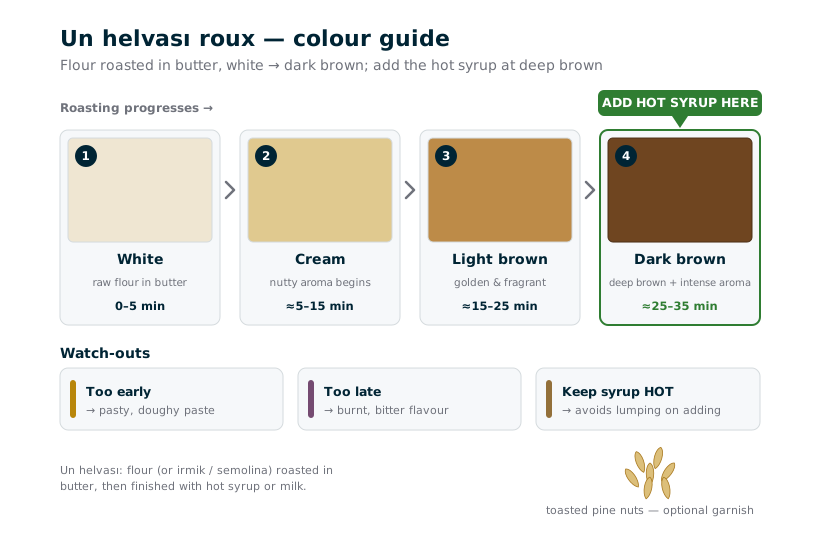 Colour chart of un helvası flour roux from white to dark brown with the correct point to add hot syrup marked
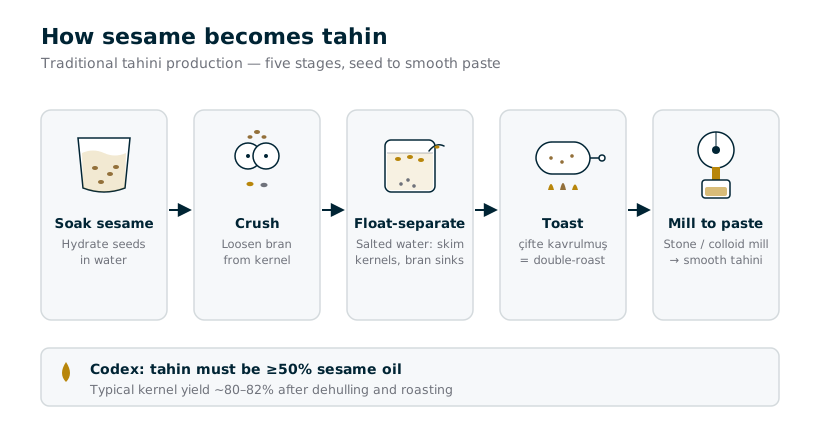 Flow diagram of tahini production: soaking, dehulling, float separation, roasting and grinding sesame
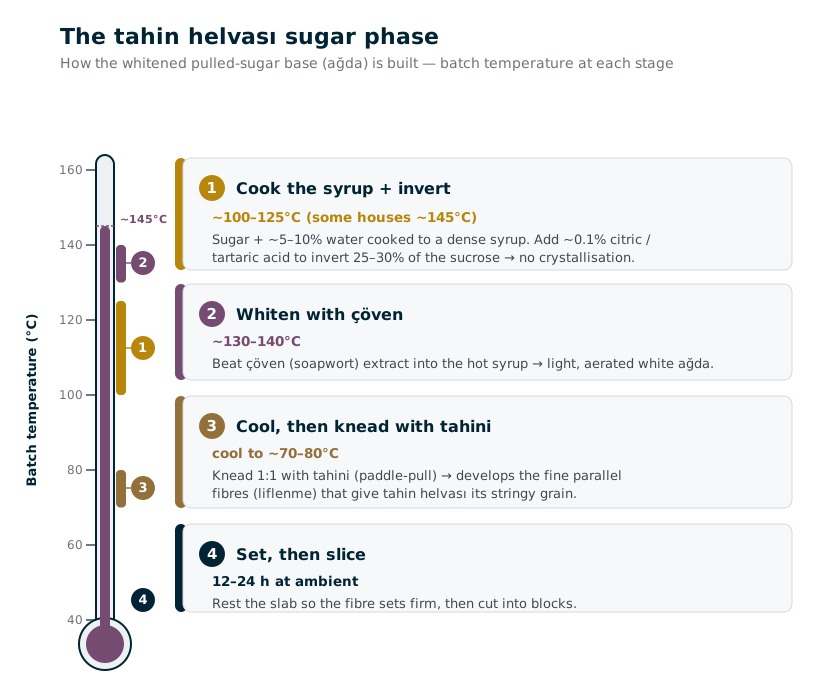 Infographic of tahini halva syrup: cook, invert with acid, whiten with çöven, cool and knead with tahini, set
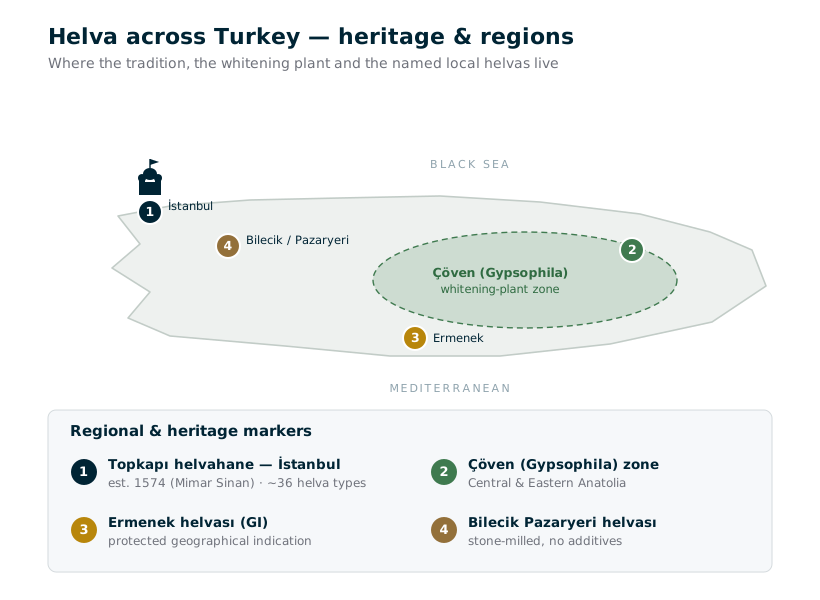 Map of Turkey marking the Topkapı helvahane, the Anatolian çöven zone and Ermenek and Bilecik Pazaryeri regional helvas
Tahin helvası — pulled-sugar sesame halva (indicative professional method)
The authenticity levers are the tahin (≥50% sesame oil ) and the çöven (saponin emulsifier/aerator ). Citric/tartaric acid controls crystallisation — the Codex forbids sugar crystals in the finished halva. Nut versions must hit ≥8% (or ≥15% for çeşnili çekme helva). See A6-sugar-work-techniques for the sugar stages and A8-chocolate-confectionery-formulas for the invert/anti-crystallisation logic.
| Ingredient | Baker's % | Weight |
|---|---|---|
| Granulated sugar (~100% sucrose) | syrup base (100 parts) | |
| Water | ~5-10 parts | |
| Citric or tartaric acid (inversion) | ~0.1% | |
| Çöven extract (whitener/aerator) | ~0.1% of sugar (~100 g / 100 kg) | |
| Tahini (≥50% sesame oil) | ~1:1 to the whitened syrup mass | |
| Nuts (fıstık/ceviz/badem) if added | ≥8% (≥15% in çeşnili çekme helva) | |
| Cocoa (for kakaolu), blended into tahini | ~500 g/batch (industrial) | |
| Total | n/a (assembly of two cooked phases) |
Worked example
1) Cook sugar + ~5-10% water to a dense syrup (~100-125°C, some houses ~145°C) with ~0.1% citric or tartaric acid to invert ~25-30% of the sucrose. 2) Whiten: beat in çöven extract (~100 g per 100 kg sugar) at ~130-140°C until white and aerated (ağda). 3) Cool the ağda to ~70-80°C; combine ~1:1 with tahini at the same temperature. 4) Knead with paddles until it strings (liflenme) — not more (hardens), not less (won't bind). 5) Mould and set 12-24 h.
Yield: Sets overnight into a sliceable slab; shelf-stable low-moisture confection
Un helvası — flour halva (indicative home ratio, su bardağı ≈ 200 mL)
A weak-flour + butter + sugar system, NOT a bread dough — use low-protein plain flour (see A1-wheat-flour-types-by-application) and butter (A4-fat-types-and-selection). The one control that decides success is WHEN you add the liquid: too early = pasty/doughy; too late = burnt/bitter. İrmik helvası is the same idea with durum semolina and a milk-based syrup.
| Ingredient | Baker's % | Weight |
|---|---|---|
| Plain (weak) wheat flour | ~1.5-2 cups | |
| Butter (or sadeyağ) | ~125-170 g | |
| Sugar | ~1.5 cups | |
| Water (or milk for irmik helvası) | ~2 cups | |
| Pine nuts (çam fıstığı), toasted first | to taste | |
| Total | n/a |
Worked example
Toast ~pine nuts 2-3 min. Roast ~1.5-2 cups plain flour in 125-170 g butter, stirring constantly ~25-35 min, until deep brown with an intense roasted aroma (white→cream→light brown→dark brown). Separately keep a hot syrup of ~1.5 cups sugar: ~2 cups water. Off the heat, stir the HOT syrup into the roux (kept hot to avoid lumping/topaklanma). Rest 15-20 min; serve warm.
Yield: ~1 warm tray, served fresh; rests 15-20 min before serving
The single most useful table for a UK baker: helva is two unrelated crafts. Decide which one the customer means before you quote or produce.
| Family | Examples | Base | How it's made | Who makes it / when |
|---|---|---|---|---|
| Roasted-flour (kavrulmuş) family | Un helvası, irmik helvası | Weak plain flour or durum semolina, roasted in butter | Roux roasted deep brown, then hot syrup/milk stirred in; served warm and fresh | Home / mosque; mevlit, funerals, 40th-day akika, kandil nights |
| Pulled-sugar sesame (çekme) family | Tahin helvası (sade, fıstıklı, vanilyalı, kakaolu) | Tahini (sesame paste) + çöven-whitened pulled sugar | Sugar syrup cooked dense, whitened/aerated with çöven, kneaded ~1:1 with tahini, set overnight | Confectioner / industrial; sold sliced by weight year-round |
Regulatory anchors (Türk Gıda Kodeksi). Use as a quality 'north star' even outside Turkey; verify against a producer datasheet before labelling.
| Product / parameter | Codex requirement | Note |
|---|---|---|
| Tahin — sesame oil | ≥ 50% by mass | Why there is so much free oil to emulsify |
| Tahin — moisture | ≤ 1.5% | |
| Tahin — protein | ≥ 20% | |
| Tahin — ash | ≤ 3.2% | |
| Tahin — acidity (as oleic acid) | ≤ 2.4% | Rancidity/quality guard |
| Tahin helvası — structure | Homogeneous, fine-fibred; NO sugar crystallisation | Fault if it grains up |
| Tahin helvası — nut additive (fındık/fıstık) | ≥ 8% | For nut-added tahin helvası |
| Çeşnili çekme helva — nut inclusion | ≥ 15% | Flavoured pulled halva; Turkish Standard TS 13028 |
| Çekme helva — moisture / ash | ≈ ≤ 6% moisture, ≤ 0.5% ash | Low-moisture confection; TS 13028, single-source, verify |
| Communiqué | Published 13 Jun 2015, Resmi Gazete 29385 | Tahin Helvası Tebliği |
The ingredient that defines authentic tahin helvası. Not stocked by Domson; source from a confectionery-ingredients specialist.
| Aspect | Detail |
|---|---|
| Botanical | Gypsophila spp., family Caryophyllaceae; a.k.a. helvacı kökü, çöven otu, çöğen, grouped with sabun otu (soapwort) |
| Active compound | Saponin, ~15-25% by species — a natural surfactant/foaming agent |
| Extract | Roots/rhizomes boiled ~4-5 times, waters re-boiled to a concentrated çöven extract (özüt) |
| Function in halva | Whitens colour, whips air in (volume + fibrous texture), emulsifies so sesame oil doesn't separate |
| Where it grows | ~50 Turkish species, ~5 economic, Central/Eastern Anatolia (e.g. G. arrostii var. nebulosa) |
| Also used in | Koz helva, kerebiç, paşa lokumu, lokum, pişmaniye |
| UK/EU regulatory status | Used for its emulsifying/foaming function, a Gypsophila-saponin extract meets the EU/UK food-additive definition (Reg (EC) 1333/2008) but is NOT an authorised GB/EU additive; cf. quillaia E999 (different plant, drinks/cider only, not confectionery). Novel-food question possible. Take regulatory advice before UK use |
Same sesame-paste-and-soapwort idea recurs across the Ottoman world; place your product before matching a recipe.
| Sweet | Tradition | Aerator / stabiliser | Cross-link |
|---|---|---|---|
| Tahin helvası | Turkish | Çöven (Gypsophila soapwort) | This dossier |
| Halawa tahiniya (tahini halva) | Arab / Levantine / Egyptian | Soapwort (shirsh al-halawa / erq al-halaweh) | B3-tahini-halva-and-sesame-confections |
| Tahan halva / sesame & sunflower halva | Bulgarian / Balkan | Soapwort or egg-white (nuga/white halva) | B6-halva-confectionery |
| Lokum (Turkish delight) | Turkish | Starch gel (çöven in some pulled types) | B2-lokum-production |
| Pişmaniye (floss halva) | Turkish | Pulled sugar + roasted-flour thread | B2-syrup-sweets-ottomans |
| Fault | Family | Likely cause | Remedy |
|---|---|---|---|
| Sesame oil weeps / separates out | Tahin helvası | Too little çöven, or emulsification/kneading incomplete | Increase çöven extract; ensure full whitening at ~130-140°C and adequate kneading |
| Sugar crystallises / grainy (not allowed by Codex) | Tahin helvası | No/low invert; over-cooked or over-cooled syrup | Add ~0.1% citric/tartaric acid to invert ~25-30% sucrose; control cook temperature |
| Slab is hard / not fibrous | Tahin helvası | Over-kneaded, or tahini/syrup temperatures mismatched | Knead only to liflenme; combine both phases at ~70-80°C ~1:1 |
| Slab won't bind / crumbles apart | Tahin helvası | Under-kneaded, or syrup too soft/cold | Knead further; cook syrup denser; set 12-24 h |
| Pasty / doughy, raw-flour taste (hamurumsu) | Un / irmik helvası | Roux under-roasted; syrup added too early | Roast the flour/semolina to deep brown before adding liquid |
| Bitter, burnt taste | Un / irmik helvası | Roux over-roasted / burnt; syrup added too late | Add the hot syrup at the correct colour + aroma point |
| Lumpy when syrup added (topaklanma) | Un / irmik helvası | Cold syrup hitting a hot roux | Keep the syrup HOT; stir constantly as you add |