
Gluten-free formula adaptation: hydration, gum dosage and starch blending in baker's percentage
The formula companion to gluten-free flour science: how to rebuild a wheat recipe as a gluten-free one — and how to write GF formulas from scratch — entirely in baker's percentage. Every formula card here uses the GF flour/blend as 100%, carries a worked example at a real batch size, and has had its arithmetic checked. It pins the three numbers that decide a gluten-free bake: hydration (GF runs ~80–110% water on flour, roughly 1.5× wheat, and the dough becomes a pourable batter), binder dosage (xanthan 0.2–0.5%, guar 0.5–1.0%, HPMC 0.5–3.0%, psyllium 2–5%), and the starch blend (a neutral rice base plus tapioca for chew and potato/maize starch for lightness). Six formula cards cover the wheat→GF conversion, a from-scratch white loaf, a fibre brown loaf on a ready blend, a complete-mix loaf, dinner rolls and chemical-leavened muffins. Numeric specs come directly from eight Domson-catalogue spec sheets (Doves Farm GF White/Plain/Brown blends and Xanthan Gum, IREKS SINGLUPLUS and Muffin-Mix, Agrol Oat Flour, Bronisław Potato Starch) and are cross-checked against King Arthur Baking, BAKERpedia and peer-reviewed hydration/hydrocolloid studies.
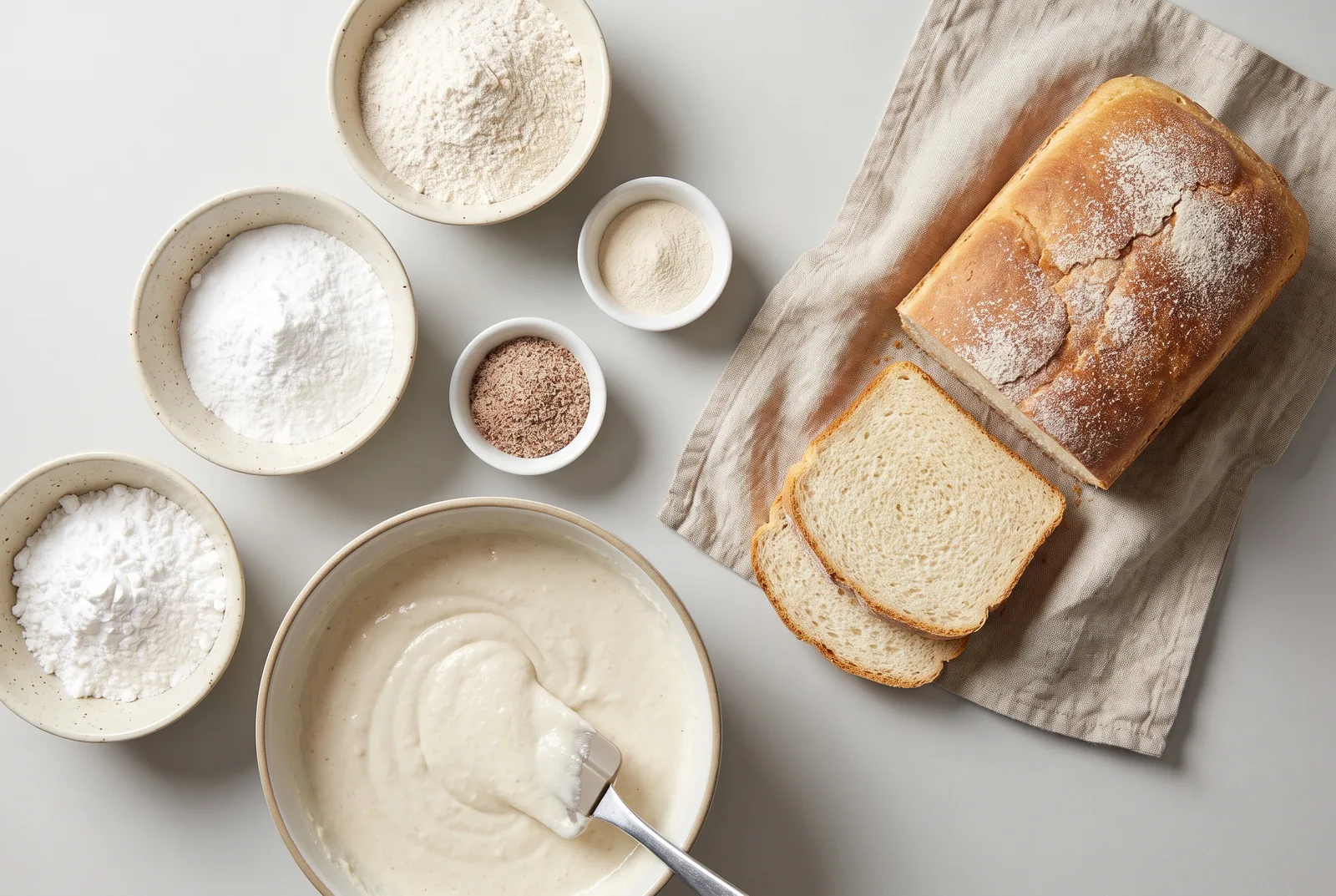
Gluten-free is a rebuild, not a removal
You cannot make gluten-free bread by taking a wheat formula and deleting the gluten — there is nothing left to trap the gas. Gluten-free baking is a structural rebuild: you replace the gluten network with a blend of starches plus a hydrocolloid binder, and you flood the system with water so those hygroscopic starches and gums can hydrate and gel. The companion article A1-gluten-free-flour-systems explains why each flour and gum behaves as it does. This article is the recipe book: how to write the formula, in baker's percentage, and how to convert one you already have.
Every formula here uses baker's percentage with the GF flour or blend as 100%; every other ingredient is (weight ÷ flour weight) × 100. The pay-off is the same as for wheat — one formula scales from a 300 g test bake to a 100 kg plant run — but three numbers move dramatically when you go gluten-free, and they are the spine of this article: hydration, binder dosage and the starch blend.
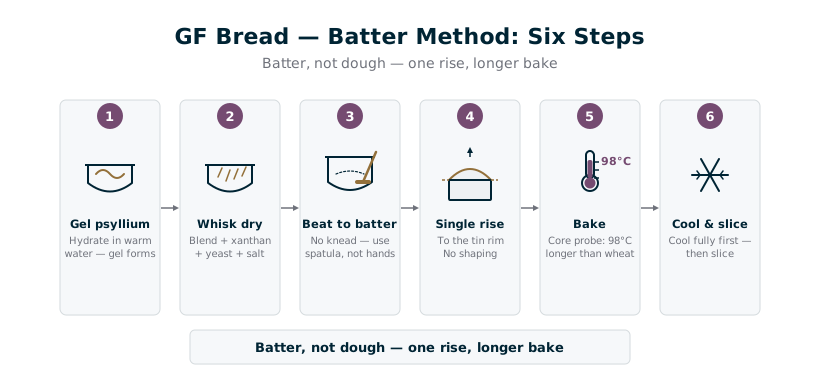
The mental switch that fixes most gluten-free bread: you are making a batter, not a dough. There is nothing to knead, you give it a single rise, and you bake it longer.
The three numbers that change
<!-- image: img-a8gf-03 -->1. Hydration roughly multiplies by 1.5×. A wheat tin loaf runs ~58–65% water; the gluten-free version of the same loaf wants ~90–100% and pours like a thick batter. Research bears this out: GF breads have been optimised across a 70–120% water range, and the sweet spot depends on both the binder and the starch base. On a maize-starch base (2% hydrocolloid), binder-differentiated optima were found — xanthan ~110%, psyllium ~90%, HPMC ~80% — but the 90%-water/psyllium/maize-starch formulation produced hollow bread in that study. On a rice-flour base all three hydrocolloids performed best at ~100%, making that the safer starting point for the rice-based blends used throughout this article. Set your starting water by flour base, then adjust to a thick, just-pourable batter. See the table below.
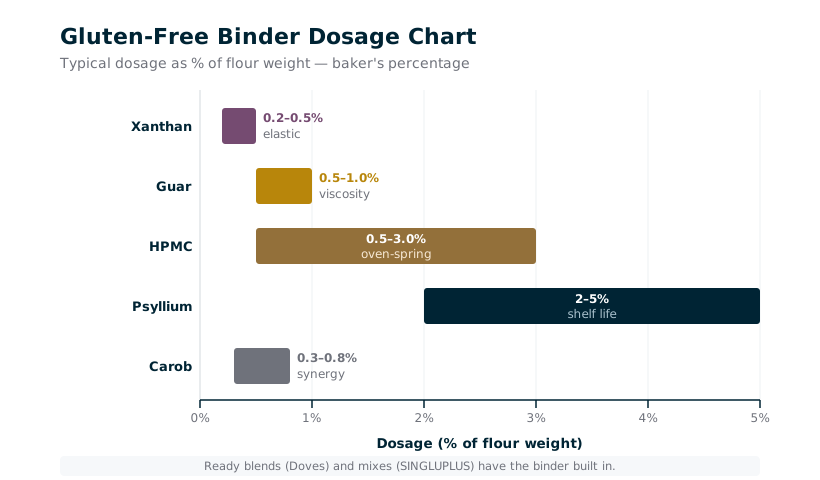
2. A binder replaces the gluten. The hydrocolloid builds the elastic film that holds fermentation gas. Working dosages (% of flour): xanthan 0.2–0.5% for cakes and cookies rising to ~1–2% for bread; guar 0.5–1.0% (a 1:1 swap for xanthan); HPMC 0.5–3.0% (uniquely, it gels on heating to support oven spring); and psyllium 2–5%, which also delivers a big shelf-life gain. King Arthur's bench rule of ~¼ tsp xanthan per cup of flour (more for bread, less for cookies, never more than ~1 tbsp per recipe) maps onto the low end of those weight figures. See the gum-dosage table below.
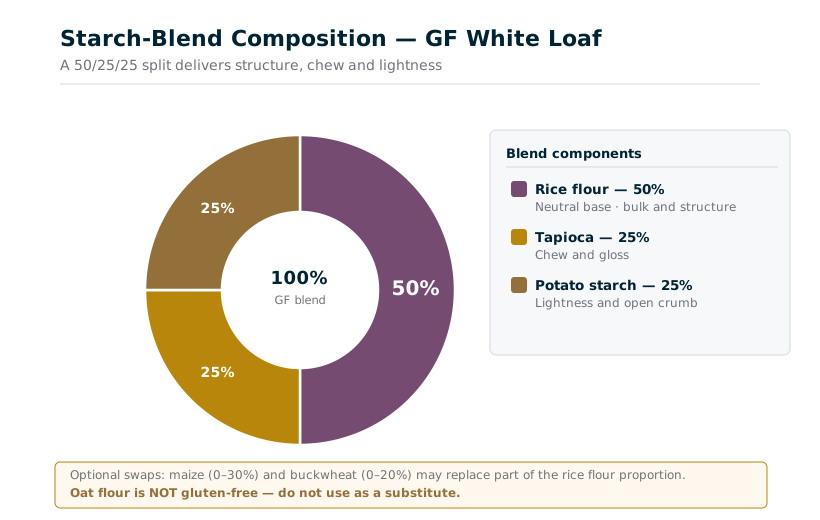
3. The flour is a blend. No single GF flour works alone. A reliable from-scratch white blend is rice flour 50% + tapioca starch 25% + potato starch 25% — a neutral bulking base, the elastic/chewy component, and the lightener. See the starch-blend table below.
Converting a wheat formula to gluten-free
<!-- image: img-a8gf-02 -->The clearest way to learn the method is to put a wheat loaf and its gluten-free rebuild side by side (see the conversion formula card below). Five moves take you from one to the other:
| Ingredient | Wheat loaf | Gluten-free rebuild |
|---|---|---|
| Flour / blend (100%) | bread flour | rice 50 / tapioca 25 / potato 25 blend |
| Binder | — (gluten) | xanthan 0.4% + psyllium 3% |
| Water | 62% | 95% |
| Yeast | 1.5% | 2% |
| Salt | 2% | 2% |
| Sugar | 2% | 3% |
| Oil | 3% | 4% |
| Egg | — | 10% (optional) |
| Handling | knead, fold, shape | beat to a batter, one rise, no shaping |
- Swap the flour 1:1 by weight for a GF starch blend (or a ready blend).
- Add the binder — xanthan and/or psyllium — to replace the gluten film.
- Raise the water ~1.5× (here 62% → 95%); the mix turns from dough to batter.
- Lift the yeast and sugar a little and add an egg for protein structure (omit for vegan).
- Change your hands for a spatula: mix 3–4 minutes to a smooth batter, give it a single rise to the tin rim, and bake longer to a ~98°C core. Plain (binder-free) GF all-purpose flour will not make a decent yeast loaf without these changes.
From-scratch white sandwich loaf
<!-- image: img-a8gf-05 -->When you want full control, build the blend yourself (see the white-loaf formula card below). The blend — rice 50 / tapioca 25 / potato-starch 25 — is the 100% base:
| Ingredient | Baker's % | Grams (700 g blend) |
|---|---|---|
| GF blend (rice 50 / tapioca 25 / potato 25) | 100% | 700 g |
| Xanthan gum | 0.4% | 2.8 g |
| Psyllium husk | 3% | 21 g |
| Instant yeast | 2% | 14 g |
| Sugar | 3% | 21 g |
| Salt | 1.5% | 10.5 g |
| Sunflower oil | 4% | 28 g |
| Whole egg (optional) | 10% | 70 g |
| Warm water (38–40°C) | 95% | 665 g |
| Total (with egg) | 218.9% | 1532.3 g |
That makes ~1.53 kg of batter — one large 2 lb tin loaf or two 1 lb tins. Gel the psyllium in part of the warm water first, beat everything to a smooth thick batter, scoop into a greased tin, one rise to the rim, then bake 200°C fan ~40 min to a 98°C core and cool fully before slicing — the crumb sets on cooling. Allergen: when whole egg is used it is a mandatory declarable allergen under EU Regulation 1169/2011 — any product derived from this formula must declare 'CONTAINS: EGG'. Buy the components from the catalogue: Eurostar or Peacock rice flour, Bronisław potato starch (protein 0.2 g, no allergens), Malmon whole psyllium, Doves Farm Xanthan Gum (note: spec dated 2010 — confirm current allergen status from latest COA before use) and Olympic sunflower oil.
Fibre brown loaf — let the blend carry the binder
A ready blend removes a variable: Doves Farm GF Brown Bread Blend already contains xanthan (plus buckwheat, carob and sugar beet fibre), so you add psyllium only for elasticity and shelf life (see the brown-loaf formula card below):
| Ingredient | Baker's % | Grams (500 g blend) |
|---|---|---|
| Doves Farm GF Brown Bread Blend | 100% | 500 g |
| Psyllium husk | 3% | 15 g |
| Instant yeast | 2% | 10 g |
| Salt | 1.5% | 7.5 g |
| Treacle / dark syrup (optional) | 2% | 10 g |
| Sunflower oil | 4% | 20 g |
| Warm water (38–40°C) | 90% | 450 g |
| Total | 202.5% | 1012.5 g |
Start the water a touch lower (90%) because the blend's 5.3 g/100 g fibre keeps absorbing — that fibre may even support a "source of fibre" claim on the finished loaf (verify per serving). Bake slightly cooler (195°C fan) to keep the darker crumb from over-browning. The same logic applies to Doves Farm GF White Bread Blend, which also carries xanthan; only the binder-free Doves Farm GF Plain White needs you to add your own gum.
The fastest route: a complete mix
<!-- image: img-a8gf-07 -->For volume production with the lowest contamination and consistency risk, a complete mix wins. IREKS SINGLUPLUS is used at 100% addition — it is the flour base — with the entire binder system (xanthan E415 + HPMC E464 + psyllium) and a soya-protein boost already built in (see the ready-mix formula card below):
| Ingredient | Baker's % | Grams (1000 g mix) |
|---|---|---|
| IREKS SINGLUPLUS GF bread mix | 100% | 1000 g |
| Fresh yeast | 4% | 40 g |
| Sunflower oil (optional) | 2% | 20 g |
| Warm water (~38°C) | ~90% | ~900 g |
| Total | ~196% | ~1960 g |
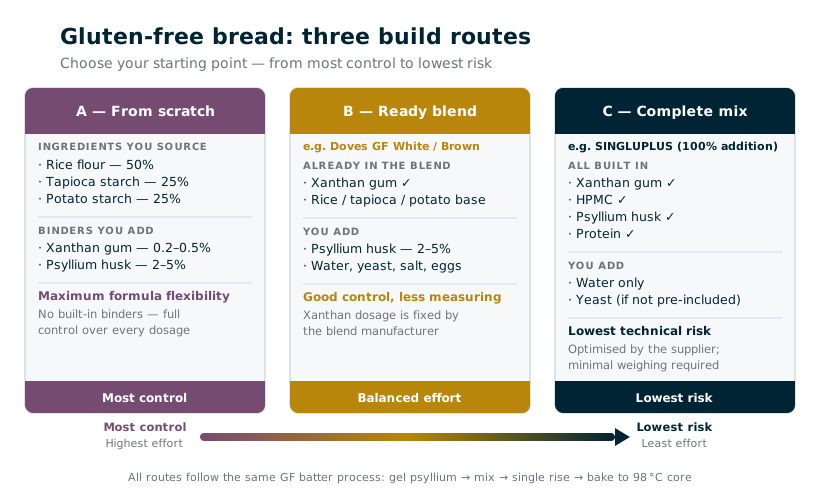
You add only water, yeast and optional oil. Quality note: the water and yeast here are typical practitioner values — the spec confirms only the 100% addition rate, so follow the IREKS recipe card for exact dosing. Note the allergens: SINGLUPLUS contains soy and cannot exclude milk traces — the spec's internal 'lactose ≤100 mg/kg' threshold does not exempt from a milk-protein allergen declaration; any product made with SINGLUPLUS must declare 'may contain MILK' as well as 'CONTAINS: SOY' under EU Regulation 1169/2011. If you need a dairy-and-soy-free profile, build from scratch instead. The choice between the three routes — from scratch, ready blend, complete mix — is a trade between control and risk (see the figure below).
Rolls and muffins: the formula bends to the format
<!-- image: img-a8gf-06 -->Dinner rolls want a stiffer batter that holds a scooped mound, so drop the hydration and lean on egg for structure (see the rolls formula card below): a rice 60 / tapioca 25 / potato 15 blend, xanthan 0.5%, psyllium 3%, egg 12%, water 85% — total 212.5%, ~18 rolls at ~70 g. Pipe or scoop mounds, prove, egg-wash and bake ~200°C to a ~96–98°C core. Allergen: egg is a mandatory declarable allergen under EU Regulation 1169/2011; egg-wash is a second allergen touchpoint — declare 'CONTAINS: EGG' on any product derived from this formula.
Muffins and cakes follow the opposite rule on gum. Here egg protein and baking powder do the structural work, so you use little or no added gum — over-dosing an egg-rich, chemically leavened batter makes it gummy. The muffin formula card below runs a rice 40 / maize 30 / potato 30 blend with just xanthan 0.2%, baking powder 4%, sugar 70%, egg 50%, milk 55% and oil 45% — total 324.7%, ~12 muffins at ~80 g. Allergen: this formula contains both EGG (150 g) and MILK (165 g), which are mandatory declarable allergens under EU Regulation 1169/2011 — any product derived from this formula must declare 'CONTAINS: EGG, MILK'. The commercial shortcut is IREKS GF Muffin-Mix (100% addition; contains MILK; may contain SOY — must declare 'CONTAINS: MILK, may contain SOY'); Domson Baking Powder and Fermipan dried yeast round out the shelf.
Starch blending: who does what
The blend is an engineering choice, not a flavour one (see the starch-blend table below):
- White rice flour (40–60%) — the neutral, white, fine bulking base; also a driver of the high water demand.
- Tapioca starch (20–30%) — the chew, the crust gloss, the bit of stretch.
- Potato starch (10–25%) — lightness and structure, but it retrogrades fast, so it is the prime suspect when a loaf goes hard by day two; balance it with tapioca and raise psyllium to 3–5% to extend softness.
- Maize/corn starch (0–30%) — light, near-white structure (the base of SINGLUPLUS).
- Buckwheat (0–20%) — a naturally gluten-free pseudocereal for colour, flavour and nutrition; beyond ~20% the crumb turns dark and bitter.
A warning that belongs in red ink: oat flour is not gluten-free. Agrol Oat Flour is nutritionally tempting (protein 13 g, fibre 10.3 g per 100 g) but its own spec declares it contains gluten with cross-contamination risk — oats are a gluten-containing cereal under EU law, so it can never go into a product you intend to label gluten-free.
Faults that live in the formula
Most GF bread faults are fixed on paper, not at the bench (see the fault table below):
- Dense, low, poor rise → too little binder or too stiff a batter; raise xanthan to 0.4–0.5% or psyllium to 3–4% and push hydration toward 95–100%.
- Gummy, wet crumb → over-dosed gum, or under-baked; cut gum below 0.5%, bake to a 98°C core, never slice warm.
- Crumbly, falls apart → not enough binder or no elastic component; add psyllium and/or tapioca.
- Stales by day 2 → too much potato starch; swap some for tapioca and lift psyllium to 3–5% (psyllium cut crumb firmness 65–75% over 72 h in trials).
- Collapsed centre → over-proofed or over-hydrated for the binder; prove only to the rim, or move to a higher-binder system that tolerates ~100–110% water.
Food-safety and allergen note (flagged for review)
All numeric specs above come from first-party supplier spec sheets, but gluten, allergen and nutrition data must be confirmed against the current COA before any label claim. SPEC CURRENCY WARNING: the Doves Farm specs cited here date from 2013–2014 (12–13 years old), the IREKS specs from 2017–2020 (6–9 years old), and the Doves Xanthan Gum spec from 2010 (16 years old) — the oldest in this dossier. Allergen management, line-sharing status and certification can change materially over these timescales. Treat every allergen and nutrition figure here as provisional pending current COA confirmation.
The legal bar for a "gluten-free" claim is ≤20 mg/kg (20 ppm) gluten in the finished product, verified by ELISA (R5) — a recipe change re-opens that test. Specifically: Agrol Oat Flour contains gluten and is unsuitable for GF products; IREKS SINGLUPLUS contains soy and cannot exclude milk traces — the internal 'lactose ≤100 mg/kg' figure is not an exemption from declaring milk as a potential allergen; IREKS Muffin-Mix contains milk and must declare soya traces; Doves Farm Plain White is made on a line where nuts, sesame, soya and milk are used; the dedicated-plant Doves blends test <20 ppm per batch but still store wheat on site (segregated); Doves Farm Xanthan Gum is packed on a line that also handles dairy — a potential allergen touchpoint. The formula cards in this article also introduce allergens directly: the white loaf and rolls include EGG, and the muffin includes EGG and MILK — all are mandatory declarable allergens under Regulation (EU) No 1169/2011.
Coverage report
Solid: the three governing numbers — hydration (~80–110%, binder-dependent), binder dosage (xanthan/guar/HPMC/psyllium), and the starch-blend ratios — are cross-checked across King Arthur, BAKERpedia and peer-reviewed studies, and every formula card's internal arithmetic has been verified self-consistent. Six cards cover the conversion method plus the GF bread/roll/muffin canon, and eight first-party spec sheets anchor the product numerics and allergens.
Thinner: product-specific numerics (protein, fibre, binder systems, the 100% addition rate) are single-source first-party spec sheets — appropriate as product data but not independently cross-checkable, hence specs_cross_checked: false. The SINGLUPLUS water/yeast values are typical practitioner figures, not spec-confirmed. Volume-to-weight gum conversions are approximate.
Follow-up: confirm Doves Farm / IREKS / Agrol allergen and gluten data in writing before any GF or allergen labelling; add a sourdough GF formula and a high-hydration (psyllium-heavy) artisan loaf in a later pass; cross-link to A8-bakers-percentage-fundamentals and A8-scaling-and-yield-conversion, and to A1-gluten-free-flour-systems for the underlying ingredient science.
Figures
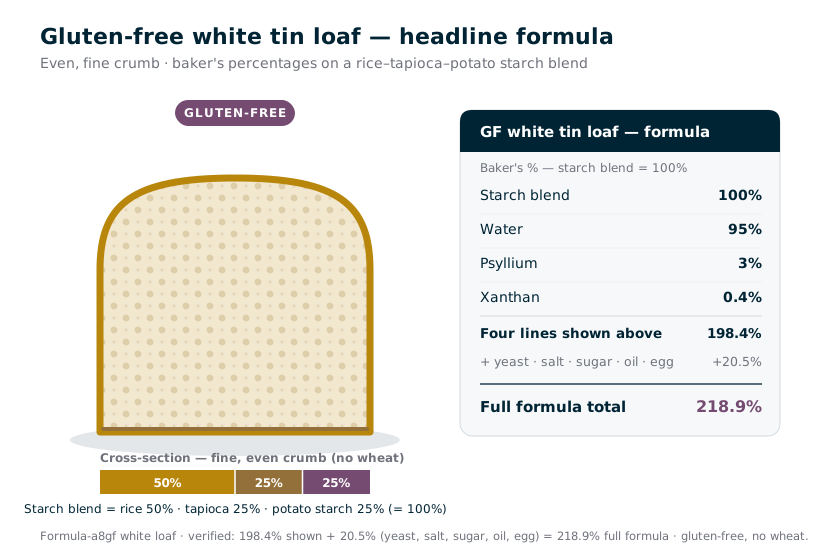 A sliced gluten-free sandwich loaf with an even crumb, labelled with its baker's-percentage formula: starch blend 100 percent, water 95 percent, psyllium 3 percent, xanthan 0.4 percent
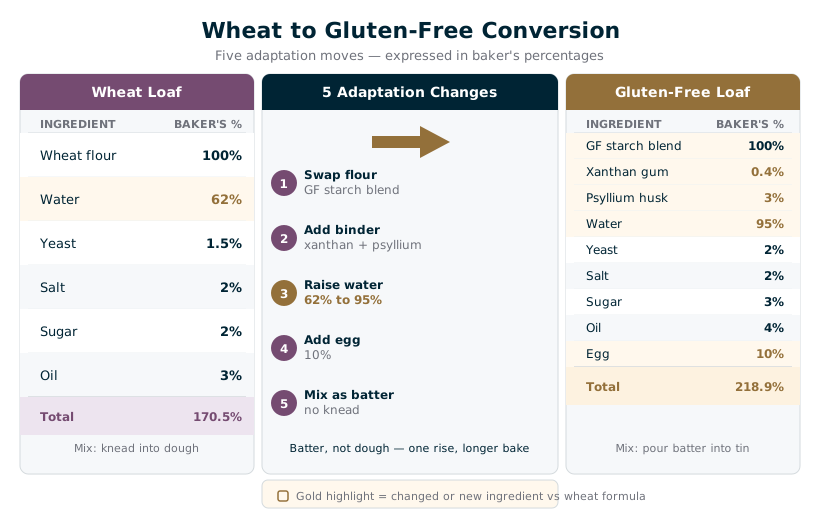 Side-by-side diagram of a wheat tin loaf formula and its gluten-free rebuild, highlighting five changes: swap flour for a starch blend, add a binder, raise water from 62 to 95 percent, add an egg, and mix as a batter
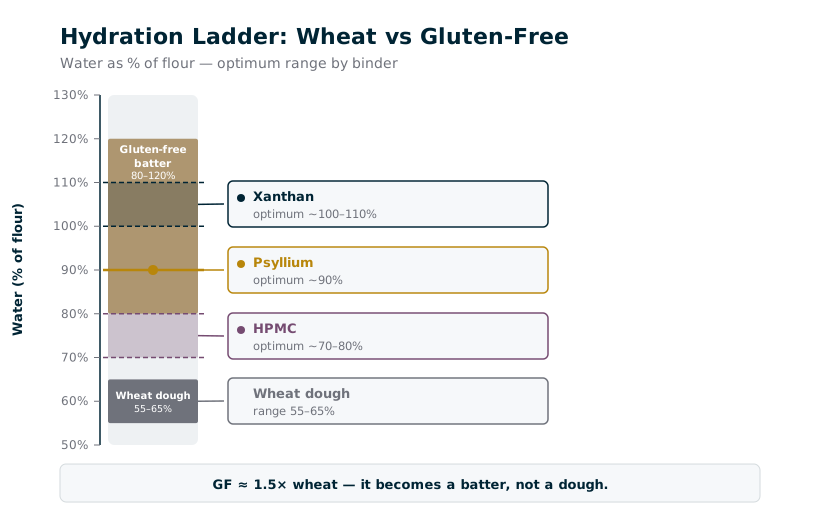 A vertical scale of water as a percentage of flour, marking wheat dough at 55 to 65 percent and gluten-free batter at 80 to 120 percent, with binder-specific optima for HPMC, psyllium and xanthan
 Horizontal bar chart of gluten-free binder dosages as a percentage of flour: xanthan 0.2 to 0.5 percent, guar 0.5 to 1 percent, HPMC 0.5 to 3 percent, psyllium 2 to 5 percent, carob 0.3 to 0.8 percent
 A pie diagram of a gluten-free flour blend: 50 percent white rice flour as the bulking base, 25 percent tapioca starch for chew, 25 percent potato starch for lightness
 A six-step process strip for gluten-free bread: hydrate psyllium into a gel, whisk dry ingredients, beat to a thick batter, single rise to the tin rim, bake to a 98 degree core, and cool fully before slicing
 Three columns comparing gluten-free bread routes: a from-scratch starch blend with added binders, a ready blend with xanthan already in it, and a complete mix used at 100 percent addition
Wheat → gluten-free: the adaptation worked side by side (baker's %)
| Ingredient | Baker's % | Weight |
|---|---|---|
| WHEAT REFERENCE — bread flour — ~12% protein; gluten does the structural work | 100% | 1000 g |
| Water — Kneadable dough | 62% | 620 g |
| Instant yeast | 1.5% | 15 g |
| Salt | 2% | 20 g |
| Sugar | 2% | 20 g |
| Oil — Wheat total ≈ 170.5% | 3% | 30 g |
| GLUTEN-FREE REBUILD — GF starch blend — Rice 50 / tapioca 25 / potato-starch 25, or a ready blend | 100% | 1000 g |
| Xanthan gum — Binder — replaces gluten film | 0.4% | 4 g |
| Psyllium husk — Elasticity + shelf life; hydrate in part of the water | 3% | 30 g |
| Warm water (38–40°C) — Up from 62% — now a pourable batter | 95% | 950 g |
| Instant yeast — Slightly more than wheat | 2% | 20 g |
| Salt | 2% | 20 g |
| Sugar — Feeds yeast, aids browning | 3% | 30 g |
| Oil — Tenderness + shelf life | 4% | 40 g |
| Whole egg (optional) — Protein structure; omit for vegan. ALLERGEN: egg when used (EU 1169/2011) | 10% | 100 g |
| GF TOTAL (with egg) — Without egg 209.4% | 219.4% | ~2194 g batter |
- Whisk the dry blend with xanthan, yeast, sugar and salt; separately stir psyllium into ~1/3 of the warm water and let it gel 2–3 min.
- Add the psyllium gel, remaining water, oil and egg; beat 3–4 min on medium to a smooth THICK BATTER — there is nothing to knead.
- Scrape into a greased tin, smooth the top wet; one rise only at 30–35°C until the batter reaches the rim (~45–60 min) — do NOT knock back or shape.
- Bake 200°C fan ~35–45 min to a core temperature of ~98°C; GF bakes longer than wheat.
- Cool completely before slicing — the crumb sets on cooling.
Yield: The core method. A standard white wheat tin loaf rebuilt as a gluten-free loaf, both in baker's percentage with flour/blend = 100%. The five moves: (1) swap wheat flour for a GF starch blend 1:1 by weight; (2) add a binder (xanthan + psyllium) to replace the gluten network; (3) raise hydration ~1.5× (62% → 95%); (4) lift yeast/sugar and add an egg for protein structure; (5) treat it as a BATTER — mix don't knead, one rise, no shaping. GF column total = 219.4% with egg (verified: grams at 1000 g blend, 1% = 10 g; sum 2194 g).
GF white sandwich loaf — from-scratch starch blend (baker's %)
| Ingredient | Baker's % | Weight |
|---|---|---|
| GF FLOUR BLEND — Base of the percentage | 100% | 700 g |
| — White rice flour — Neutral bulking base | 50% | 350 g |
| — Tapioca starch — Chew + crust gloss | 25% | 175 g |
| — Potato starch — Lightness; Bronisław starch | 25% | 175 g |
| Xanthan gum — Binder; Doves Farm Xanthan | 0.4% | 2.8 g |
| Psyllium husk — Gel in part of the water first | 3% | 21 g |
| Instant yeast — ≈ 6% fresh | 2% | 14 g |
| Sugar | 3% | 21 g |
| Salt | 1.5% | 10.5 g |
| Sunflower oil — Olympic Oils Sunflower 15 L | 4% | 28 g |
| Whole egg (optional) — Protein structure; omit for vegan. ALLERGEN: egg when used (EU 1169/2011) | 10% | 70 g |
| Warm water (38–40°C) — Adjust to a thick pourable batter | 95% | 665 g |
| TOTAL (with egg) — Without egg 208.9% / 1462.3 g | 218.9% | 1532.3 g |
- Stir psyllium into ~220 g of the warm water; rest 2–3 min to a gel.
- Whisk blend + xanthan + yeast + sugar + salt; add the gel, remaining water, oil and egg.
- Beat 3–4 min on medium to a smooth, thick, scrape-down batter.
- Scoop into a greased 2 lb tin (or two 1 lb tins); wet the top smooth; prove 30–35°C ~45–60 min to the rim.
- Bake 200°C fan ~40 min to ~98°C core; tent with foil if browning too fast.
- Turn out and cool fully on a rack before slicing.
Yield: Built on a from-scratch blend so you control every component. The blend (rice 50 / tapioca 25 / potato-starch 25) is itself the 100% base. Worked at 700 g blend → ~1.53 kg batter → one large 2 lb tin loaf or two 1 lb tins. Total 218.9% with egg (verified: 1% = 7 g; grams sum 1532.3 g). Allergen: whole egg (when included) is a mandatory declarable allergen under EU Regulation 1169/2011 — declare 'CONTAINS: EGG' on any product label or spec.
GF brown / fibre loaf — ready blend with xanthan built in (baker's %)
| Ingredient | Baker's % | Weight |
|---|---|---|
| Doves Farm GF Brown Bread Blend — Xanthan already in the blend | 100% | 500 g |
| Psyllium husk — Elasticity + anti-staling; gel first | 3% | 15 g |
| Instant yeast | 2% | 10 g |
| Salt | 1.5% | 7.5 g |
| Treacle / dark syrup (optional) — Colour + flavour depth | 2% | 10 g |
| Sunflower oil | 4% | 20 g |
| Warm water (38–40°C) — Start lower; fibre keeps absorbing | 90% | 450 g |
| TOTAL — One 2 lb tin loaf | 202.5% | 1012.5 g |
- Gel the psyllium in ~150 g of the warm water 2–3 min.
- Whisk in the blend, yeast and salt; add the gel, remaining water, oil and treacle; beat 3–4 min to a thick batter.
- Scoop into a greased 2 lb tin; smooth wet; prove 30–35°C ~50–60 min.
- Bake 195°C fan ~40–45 min to ~98°C core — slightly cooler than the white loaf to limit over-browning of the darker crumb.
- Cool fully before slicing.
Yield: Uses Doves Farm GF Brown Bread Blend (rice/tapioca/potato/buckwheat/carob + sugar beet fibre + xanthan), so NO xanthan is added — you add psyllium for elasticity and shelf life. The 5.3 g/100 g fibre in the blend may support a finished-product fibre claim (verify per serving). Worked at 500 g blend → ~1.01 kg batter → one 2 lb loaf. Total 202.5% (verified: 1% = 5 g; grams sum 1012.5 g).
GF bread from a complete mix — IREKS SINGLUPLUS (baker's %)
| Ingredient | Baker's % | Weight |
|---|---|---|
| IREKS SINGLUPLUS GF bread mix — Quantity of addition 100% (spec) | 100% | 1000 g |
| Fresh yeast — Or ~1.3% instant | 4% | 40 g |
| Sunflower oil (optional) — Softer crumb | 2% | 20 g |
| Warm water (~38°C) — Typical; confirm with IREKS recipe card | ~90% | ~900 g |
| TOTAL — Pourable batter | ~196% | ~1960 g |
- Combine mix, crumbled yeast (or instant), oil and the warm water; beat 3–4 min to a smooth batter.
- Pan or pipe into greased tins/moulds; prove 32–35°C until well risen.
- Bake per IREKS guidance, ~200°C, to a ~98°C core; bake long enough to set the high-starch crumb.
- Cool fully before slicing or packing.
Yield: The lowest-risk, simplest route: the factory has already built the multi-hydrocolloid system (xanthan E415 + HPMC E464 + psyllium) and the protein (soya) into the mix, which is used at 100% addition. The baker only adds water, yeast and optional oil. Worked at 1000 g mix → ~1.96 kg batter. Total ~196%. Food safety: water and yeast below are typical practitioner values — follow the IREKS recipe card for exact dosing; the mix CONTAINS SOY and may contain milk traces.
GF dinner rolls / bread rolls — from-scratch blend (baker's %)
| Ingredient | Baker's % | Weight |
|---|---|---|
| GF FLOUR BLEND (rice 60 / tapioca 25 / potato 15) — Higher rice for a firmer batter | 100% | 600 g |
| Xanthan gum — Slightly higher for hold | 0.5% | 3 g |
| Psyllium husk — Gel first | 3% | 18 g |
| Instant yeast | 2.5% | 15 g |
| Sugar | 3% | 18 g |
| Salt | 1.5% | 9 g |
| Sunflower oil | 5% | 30 g |
| Whole egg — Structure for shaped rolls. ALLERGEN: egg — mandatory declaration (EU 1169/2011) | 12% | 72 g |
| Warm water (38–40°C) — Lower than a loaf so mounds hold | 85% | 510 g |
| TOTAL — ~16–18 rolls at ~70 g | 212.5% | 1275 g |
- Gel psyllium in ~170 g of the warm water 2–3 min.
- Whisk blend + xanthan + yeast + sugar + salt; add gel, remaining water, oil and egg; beat 3 min to a stiff, scoopable batter.
- Pipe or scoop ~70 g mounds onto a lined tray (or into a roll tray); wet-smooth the tops; prove 30–35°C ~40 min.
- Egg-wash; bake 200°C fan ~18–22 min to a ~96–98°C core.
- Cool on a rack.
Yield: A slightly stiffer batter (lower hydration, more egg) so scooped mounds hold their shape. Blend = rice 60 / tapioca 25 / potato-starch 15. Worked at 600 g blend → ~1.275 kg → ~18 rolls at ~70 g (or ~16 at ~80 g; 1275 g ÷ 70 g = 18.2). Total 212.5% (verified: 1% = 6 g; grams sum 1275 g). Allergen: formula contains EGG (72 g); egg-wash finish is a second allergen touchpoint. Declare 'CONTAINS: EGG' on any product derived from this formula (EU 1169/2011).
GF muffins — chemical-leavened, low-gum (baker's %)
| Ingredient | Baker's % | Weight |
|---|---|---|
| GF FLOUR BLEND (rice 40 / maize 30 / potato 30) — Light starches for tender crumb | 100% | 300 g |
| Xanthan gum (optional) — Minimal — egg provides structure | 0.2% | 0.6 g |
| Baking powder — Chemical leavening is essential here | 4% | 12 g |
| Sugar | 70% | 210 g |
| Salt | 0.5% | 1.5 g |
| Whole egg — Primary structure builder. ALLERGEN: egg — mandatory declaration (EU 1169/2011) | 50% | 150 g |
| Milk — Liquid + tenderness. ALLERGEN: milk — mandatory declaration (EU 1169/2011) | 55% | 165 g |
| Sunflower oil — Moisture + shelf life | 45% | 135 g |
| TOTAL — ~12 muffins at ~80 g | 324.7% | 974.1 g |
- Whisk the dry blend with xanthan, baking powder, sugar and salt.
- Whisk egg, milk and oil; fold the wet into the dry just to a smooth spoonable batter (do not over-mix).
- Rest 10–15 min so the starches hydrate.
- Scoop into lined muffin cups ~80 g each; bake 180–190°C ~20–25 min until springy and a probe is clean.
- Cool in the tin 5 min, then on a rack.
Yield: A different structural logic: egg protein + baking powder do the work, so added gum is minimal (0.2% or omit) — over-gumming an egg-rich batter gives a gummy crumb. Blend = rice 40 / maize-starch 30 / potato-starch 30. Worked at 300 g blend → ~974 g → ~12 muffins at ~80 g. Total 324.7% (verified: 1% = 3 g; grams sum 974.1 g). Commercial reference: IREKS GF Muffin-Mix (100% addition, CONTAINS MILK, soya traces — declare 'CONTAINS: MILK, may contain SOY'). Allergen: this formula contains EGG (150 g) and MILK (165 g) — both are mandatory declarable allergens under EU Regulation 1169/2011. Declare 'CONTAINS: EGG, MILK' on any product derived from this formula.
The single biggest change when going gluten-free is water. GF starches and gums are far more hygroscopic than wheat flour, so the water on flour roughly multiplies by ~1.5× and the mix becomes a thick, pourable BATTER rather than a kneadable dough. The right starting figure depends on your binder: at 2% hydrocolloid, optimum hydration was HPMC ~70–80%, psyllium ~90%, xanthan ~100–110% (rice flour / maize starch). Set your starting water by binder, then adjust to a thick-batter consistency. Quality note: hydration interacts with bake time and crumb set — confirm by trial.
| Product | Wheat hydration (reference) | GF hydration (water % on flour) | Consistency | Notes |
|---|---|---|---|---|
| White tin / sandwich loaf | 58–65% | 90–100% | Thick pourable batter, not a dough | On a rice-flour base (as used in these formula cards), all binders optimise at ~100%; xanthan on maize starch runs ~110%. Start ~95% and adjust |
| Brown / fibre-enriched loaf | 62–68% | 90–110% | Thick batter; fibre absorbs more water | Start lower (~90%) because added fibre keeps absorbing; psyllium 3% |
| Dinner rolls / buns | 60–65% | 80–90% | Stiff, scoopable batter that holds a mound | Lower than a tin loaf so the shape holds; egg adds structure |
| High-hydration / open-crumb style | 70–80% | 110–120% | Very loose batter | Needs high psyllium (toward 17%) to hold the gas; research range |
| Muffin / cake (chemical-leavened) | n/a (liquids to recipe) | egg + milk ≈ 100–110% combined | Spoonable batter | Liquid logic differs — egg and milk are the liquid; gum minimal |
The binder replaces the gluten network — it builds the elastic film that traps fermentation gas. Dosages are % of total flour/blend weight. Academic optima are cross-checked against King Arthur's practical volume guide; volume-to-weight conversions are approximate (1 tsp xanthan ≈ 2.8 g; 1 cup GF blend ≈ 130–140 g). Quality note: optimise by trial for your specific blend and starch base; over-dosing gives a gummy crumb. NOTE (c2): binder-differentiated hydration optima from PMC7693925 apply to maize-starch bases; on rice-flour bases all three main binders perform best at ~100% water.
| Binder | Dosage (% of flour) | King Arthur volume guide | Water demand | Role / character | Confidence |
|---|---|---|---|---|---|
| Xanthan gum (E415) | 0.2–0.5% (cakes/cookies); up to ~1–2% (bread) | ~1/4 tsp/cup (cakes) → 3/4–1 tsp/cup (bread); max ~1 tbsp/recipe | ~3.5 g water/g gum | Elastic, shear-thinning network; gas retention; effective at low dose | High (multi-source) |
| Guar gum (E412) | 0.5–1.0% | 1:1 substitute for xanthan | ~5–6 g water/g gum | Viscosity builder; best combined with xanthan, weaker alone | Medium |
| HPMC (E464) | 0.5–3.0% | n/a (industrial) | ~4–5 g water/g | Thermal gelation on heating mimics gluten oven-spring; boosts volume | Medium–High |
| Psyllium husk | 2–5% practical; 2.86–17.14% tested | hydrate as a gel before mixing | ~4 g water/g | Gel-forming elasticity + big shelf-life gain (firmness −65–75% over 72 h) | High (multi-source) |
| Carob / locust bean gum (E410) | 0.3–0.8% | n/a | ~3–4 g water/g | Synergistic thickening with xanthan; weak alone | Medium |
| Pre-built blend / mix | none added | n/a | in product | Doves GF White/Brown carry xanthan; SINGLUPLUS carries xanthan + HPMC + psyllium | High (spec) |
No single GF flour replaces wheat; a blend of a neutral bulking flour plus elastic and light starches is required. Percentages are of the blend (which itself becomes the 100% base of the formula). Spec data shown where a catalogue product exists. Allergen: allergen rows are food-safety data — verify against current COA.
| Component | Suggested % of blend | Role | Catalogue spec data | Notes |
|---|---|---|---|---|
| White rice flour | 40–60% | Neutral, white, fine bulking base | Eurostar / Peacock Rice Flour 25 kg (no spec sheet) | High water absorption — a driver of the high GF hydration |
| Tapioca starch | 20–30% | Chew, crust gloss, elasticity | Present in all three Doves Farm blends | The 'stretch' component; too much = over-chewy |
| Potato starch | 10–25% | Lightness and structure | Bronisław Potato Starch: protein 0.2 g, energy 324 kcal, no allergens | Retrogrades fast → stales quickly; balance with tapioca/psyllium |
| Maize / corn starch | 0–30% | Light structure; near-white | Agrol Corn Flour 25 kg (spec available) | Base of SINGLUPLUS; lightens crumb |
| Buckwheat flour | 0–20% | Colour, nutty flavour, nutrition | Agrol Dark Buckwheat Flour 25 kg; in Doves Plain & Brown blends | Naturally GF pseudocereal; >20% turns crumb dark/bitter |
| Oat flour | 0–30% (NON-GF) | Protein (13 g) and fibre (10.3 g) boost | Agrol Oat Flour: CONTAINS GLUTEN, cross-contamination YES | ALLERGEN: oats are a gluten-containing cereal — NOT for GF-labelled product |
What a baker actually buys to run these formulas. Binder column shows whether a hydrocolloid is already built in (so you add none). All nutrition per 100 g. Food safety: allergen and nutrition data are food-safety claims — verify current COA before any label claim; contamination controls differ by supplier.
| Product | Type | Binder built in | Protein / fibre /100g | Allergens |
|---|---|---|---|---|
| Doves Farm GF White Bread Flour Blend 16 kg | Ready blend (rice/potato/tapioca) | Xanthan (included) | 4.8 g / 1.1 g | Gluten <20 ppm; wheat in onsite storage (segregated) |
| Doves Farm GF Plain White Blend 16 kg | Ready blend (rice/potato/tapioca/maize/buckwheat) | None — add your own | 4.8 g / 1.0 g | Gluten <20 ppm; nuts/sesame/soya/milk used on line |
| Doves Farm GF Brown Bread Flour Blend 16 kg | Ready blend (+ buckwheat/carob/sugar beet fibre) | Xanthan (included) | 5.6 g / 5.3 g | Gluten <20 ppm; Coeliac UK certified |
| IREKS SINGLUPLUS GF Bread Mix 12.5 kg | Complete mix (100% addition) | Xanthan E415 + HPMC E464 + psyllium | 9.1 g / 7.0 g | CONTAINS SOY; milk traces possible; gluten ≤20 mg/kg |
| IREKS GF Muffin Mix 12.5 kg | Complete mix (100% addition) | Xanthan E415 (included) | 0.5 g / 0.2 g (sugars 48.3 g) | CONTAINS MILK; soya traces ≤50 ppm; gluten ≤20 mg/kg |
| Doves Farm Xanthan Gum (3 × 1 kg) | Single binder | Xanthan (it IS the binder) | n/a | Vegan, GF, soya free; dairy on same line |
| Bronisław (B.E.S.T.) Potato Starch 25 kg | Pure starch | No | 0.2 g / 0.4 g | No allergenic ingredients |
| Agrol Oat Flour 25 kg | Whole-grain flour (NON-GF) | No | 13 g / 10.3 g | CONTAINS GLUTEN (oats); NOT GF-certified |
Faults that trace to the FORMULA — hydration, binder dosage, starch balance — rather than only to handling. Cross-checked across BAKERpedia, King Arthur, the psyllium/HPMC literature and the supplier specs. Food safety: changes that affect a gluten-free claim must be re-validated by ELISA before labelling.
| Fault | Likely formula cause | Remedy |
|---|---|---|
| Dense, low loaf, little rise | Too little binder; under-hydrated (batter too stiff); blend too low in protein/structure | Raise xanthan to 0.4–0.5% or psyllium to 3–4%; push hydration toward 95–100%; add an egg or use a higher-protein mix |
| Gummy, wet, sticky crumb | Over-dosed xanthan/guar; or under-baked (starch not fully set) | Cut gum below 0.5%; bake longer to a 98°C core; do not slice warm |
| Crumbly, falls apart on slicing | Insufficient binder; blend lacks the elastic (tapioca) component | Add/raise psyllium to 3–4% and/or tapioca to 20–25% of the blend |
| Rapid staling, hard by day 2 | Too much potato starch (retrogrades fast); no anti-staling fibre | Replace part of the potato starch with tapioca; raise psyllium to 3–5% (firmness −65–75% over 72 h) |
| Collapsed / sunken centre | Over-proofed; hydration too high for the binder used | Prove only to the rim; drop water ~5%, or move to a higher-binder system (xanthan tolerates ~100–110%) |
| Sandy / gritty mouthfeel | Coarse rice flour under-hydrated; insufficient rest | Use fine rice flour; pre-hydrate the batter / gel the psyllium; rest 10–15 min before baking |
| Accidental gluten in a 'GF' product | Oat flour or a non-GF flour added to the blend; shared line contamination | Remove oat flour (oats = gluten cereal); use dedicated-plant blends; re-test by ELISA to ≤20 ppm before any GF claim |
Buy the ingredients
Catalogue products and brands referenced in this article.
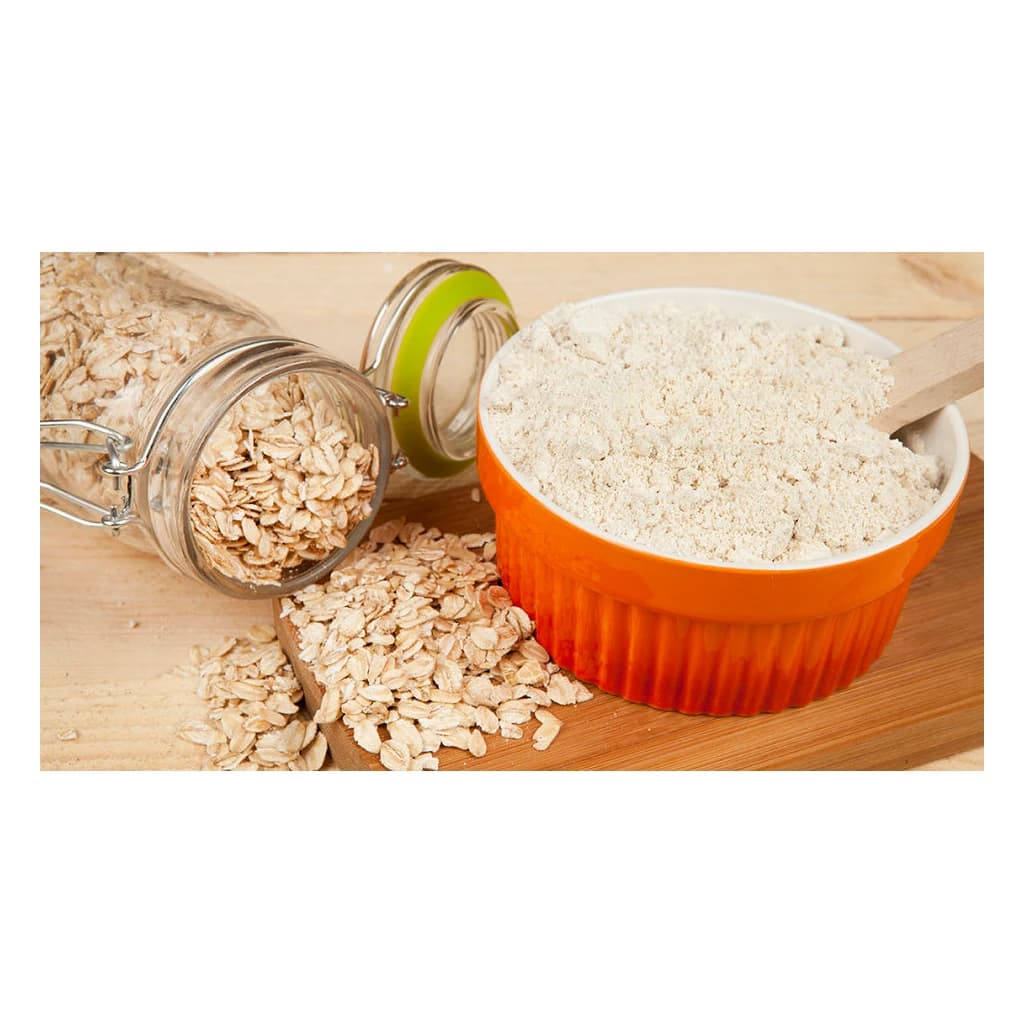
Oat Flour 25 kg
Baking Powder 5 kg
Corn Flour 25 kg
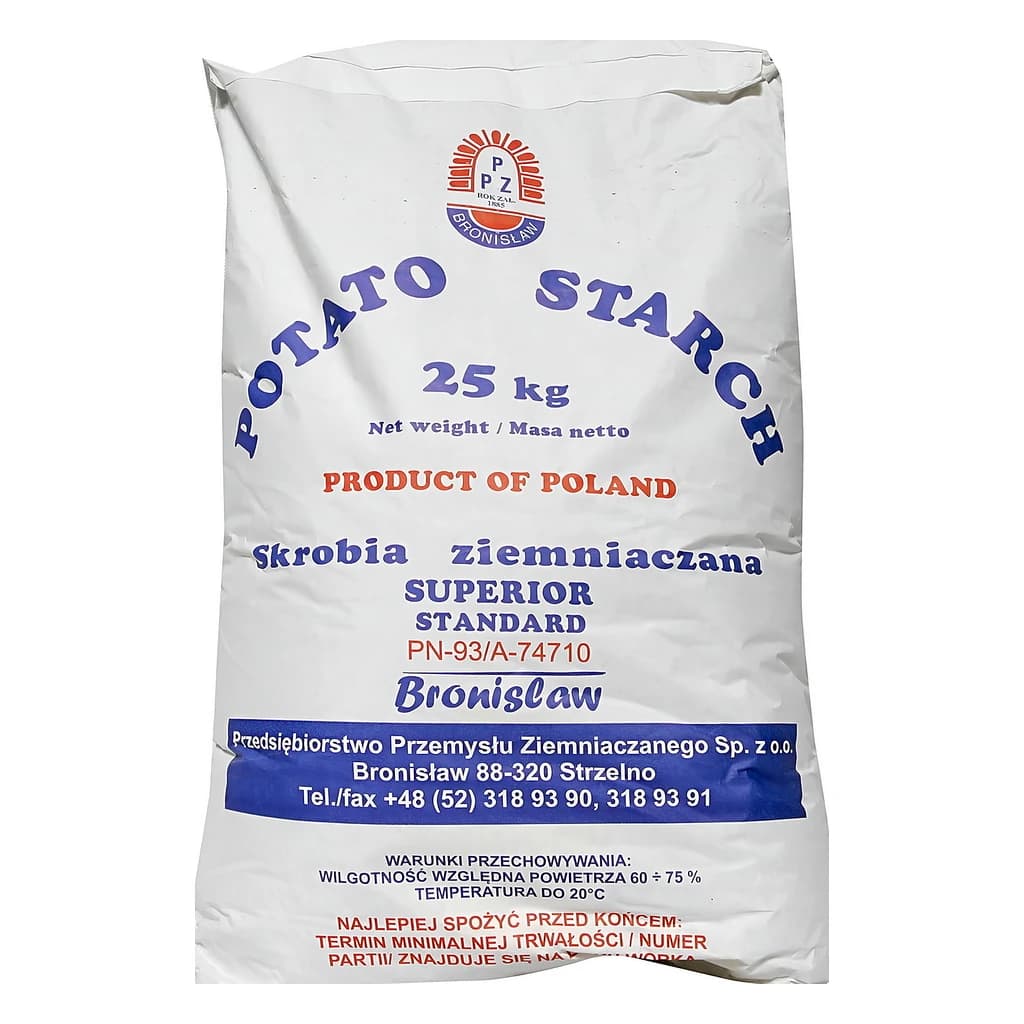
Bronisław Potato Starch 25 kg
Dark Buckwheat Flour 25 kg
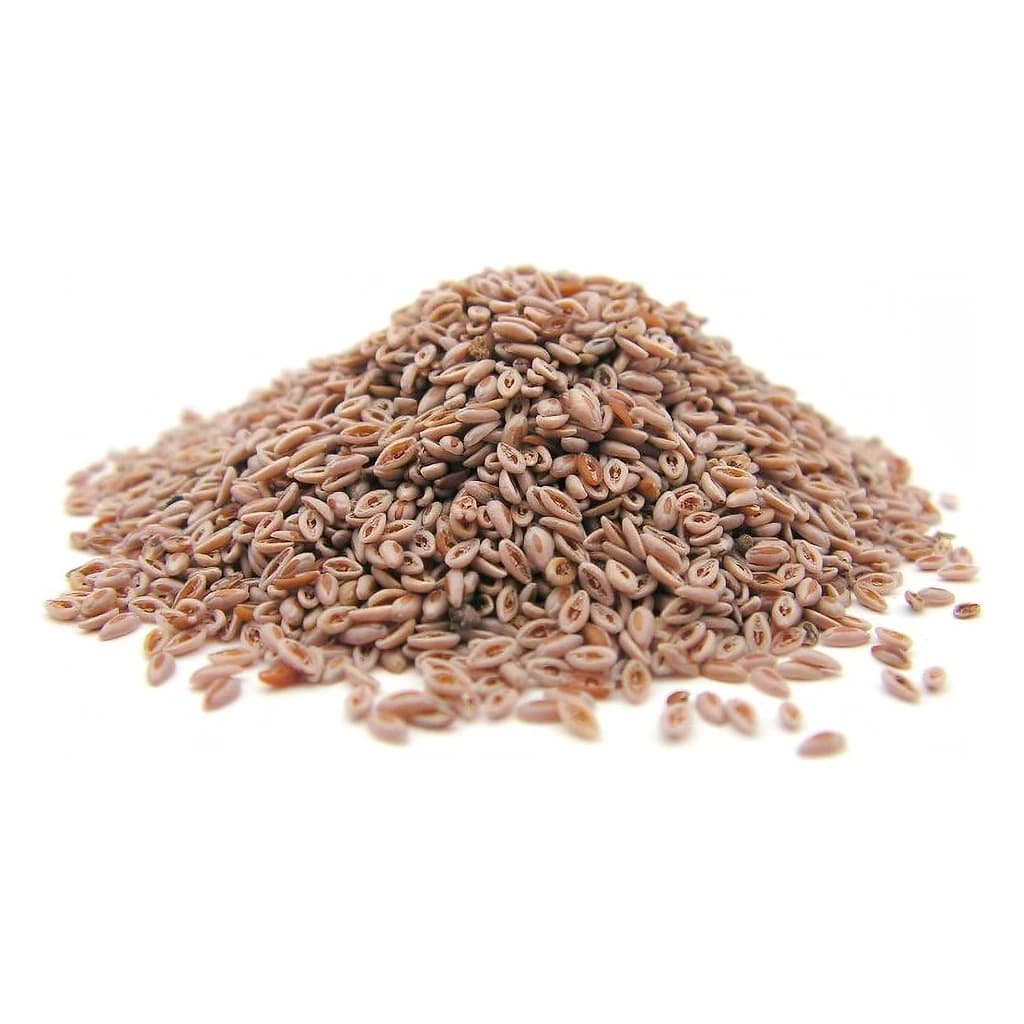
Whole Psyllium Seeds 25 kg
Ireks Gluten Free Vegan Cake Mix 12.5 kg
Peacock Rice Flour 25 kg
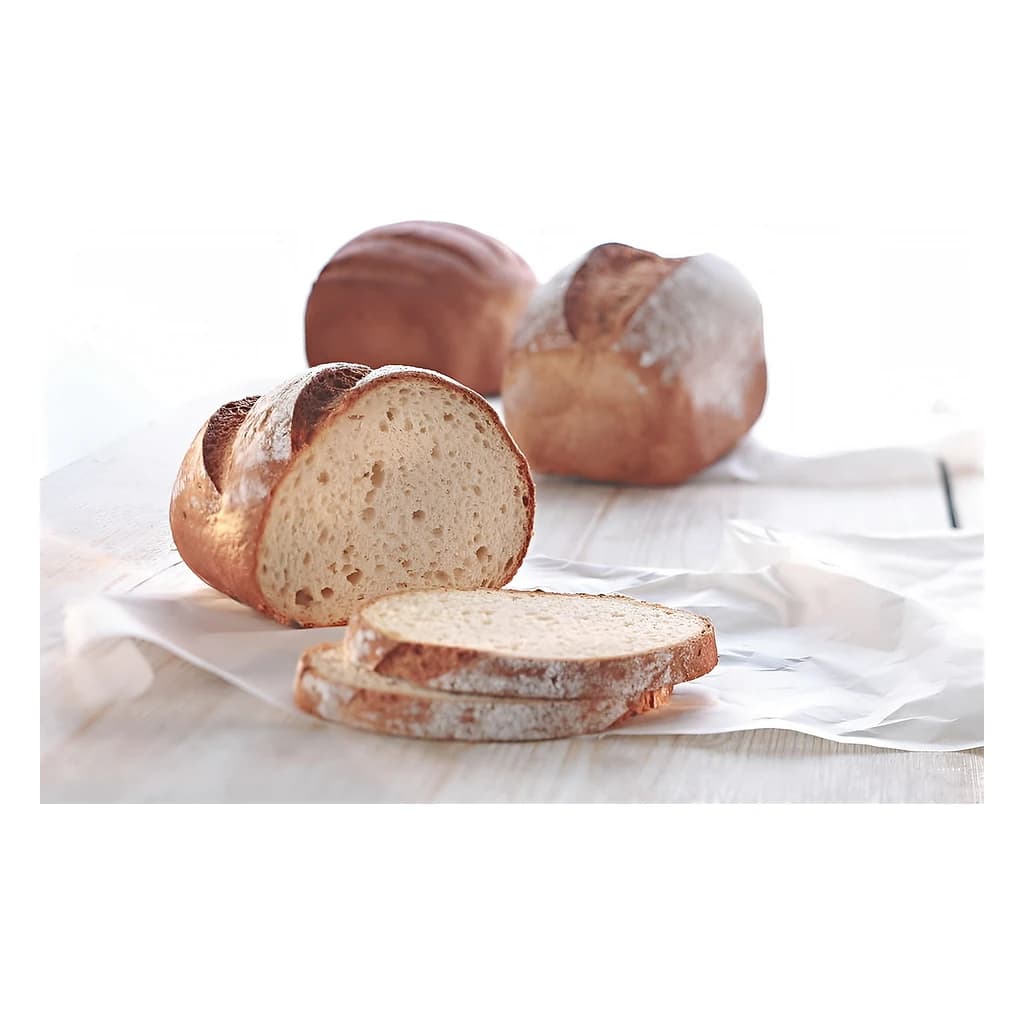
Ireks Singluplus Gluten-Free Bread Mix 12.5 kg
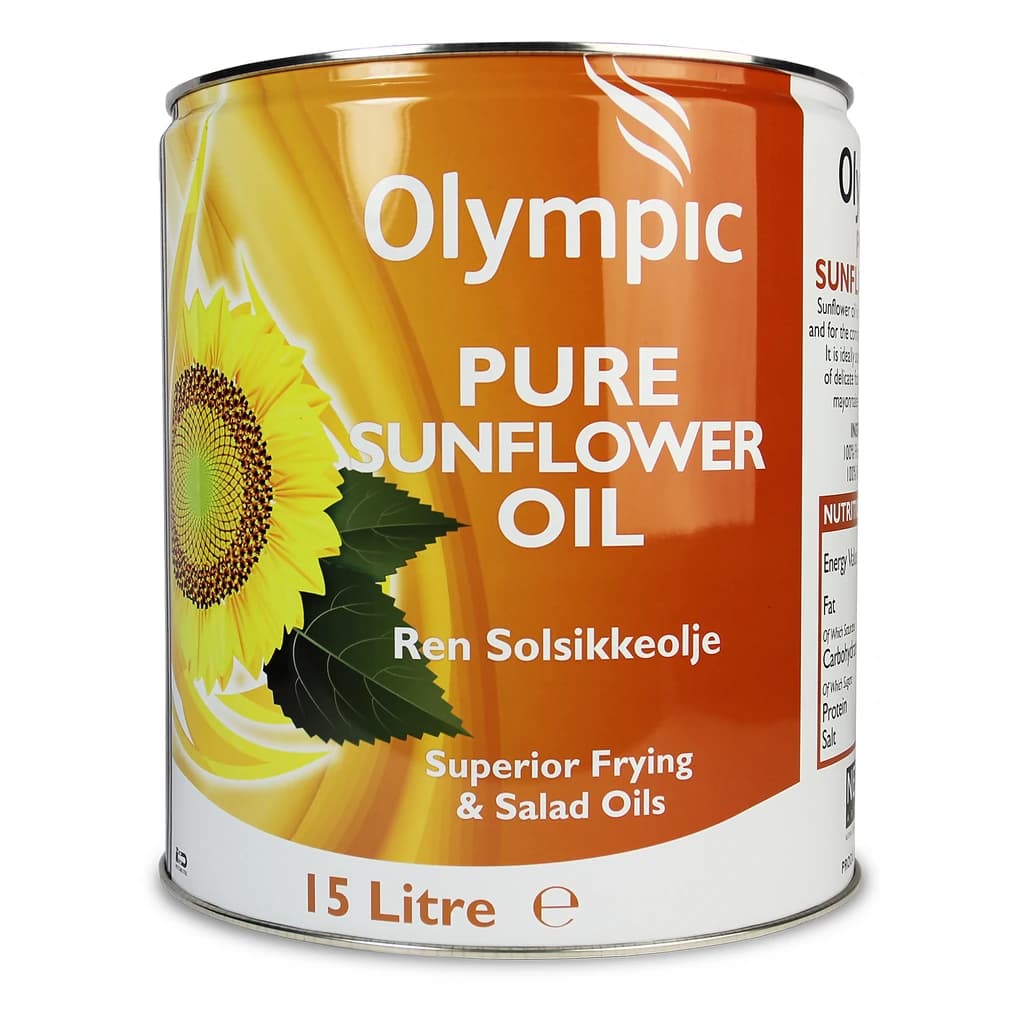
Sunflower Oil 15 L
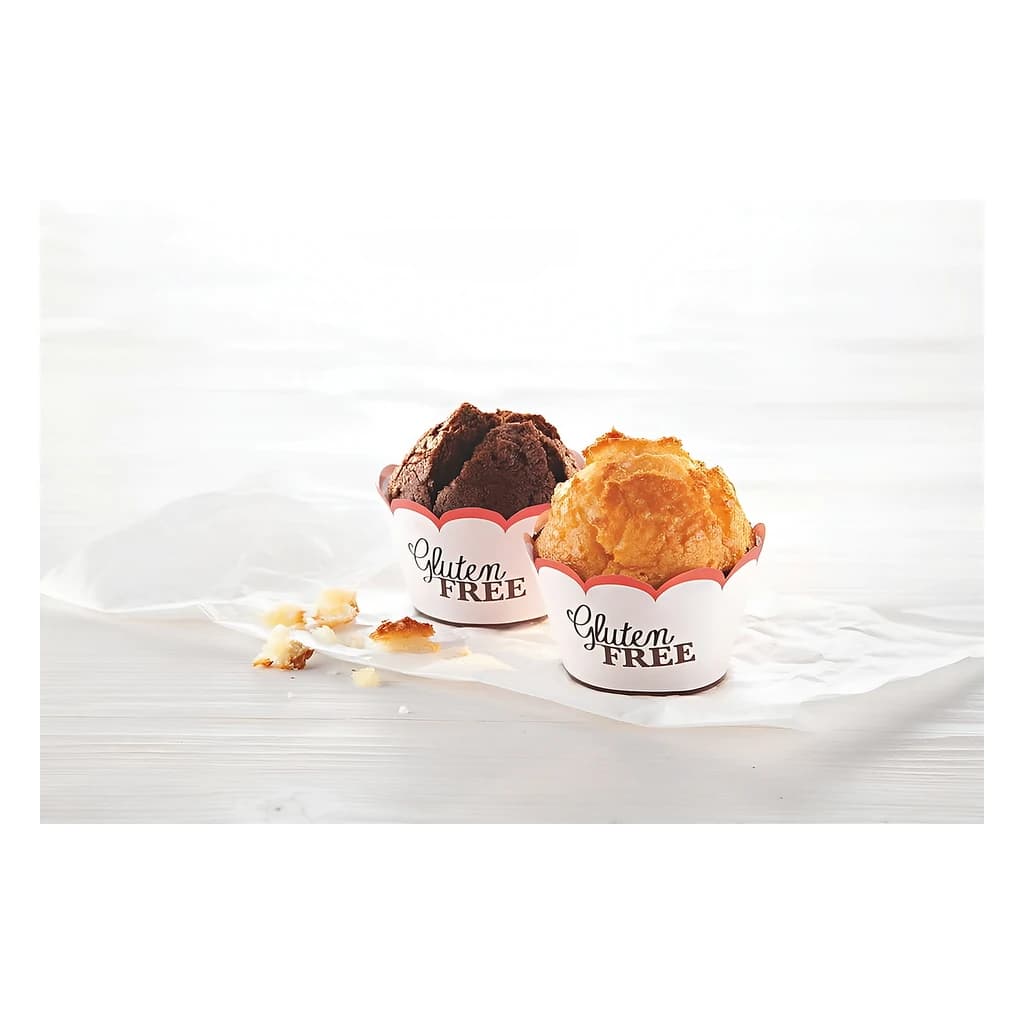
Ireks Gluten Free Muffin Mix 12.5 kg
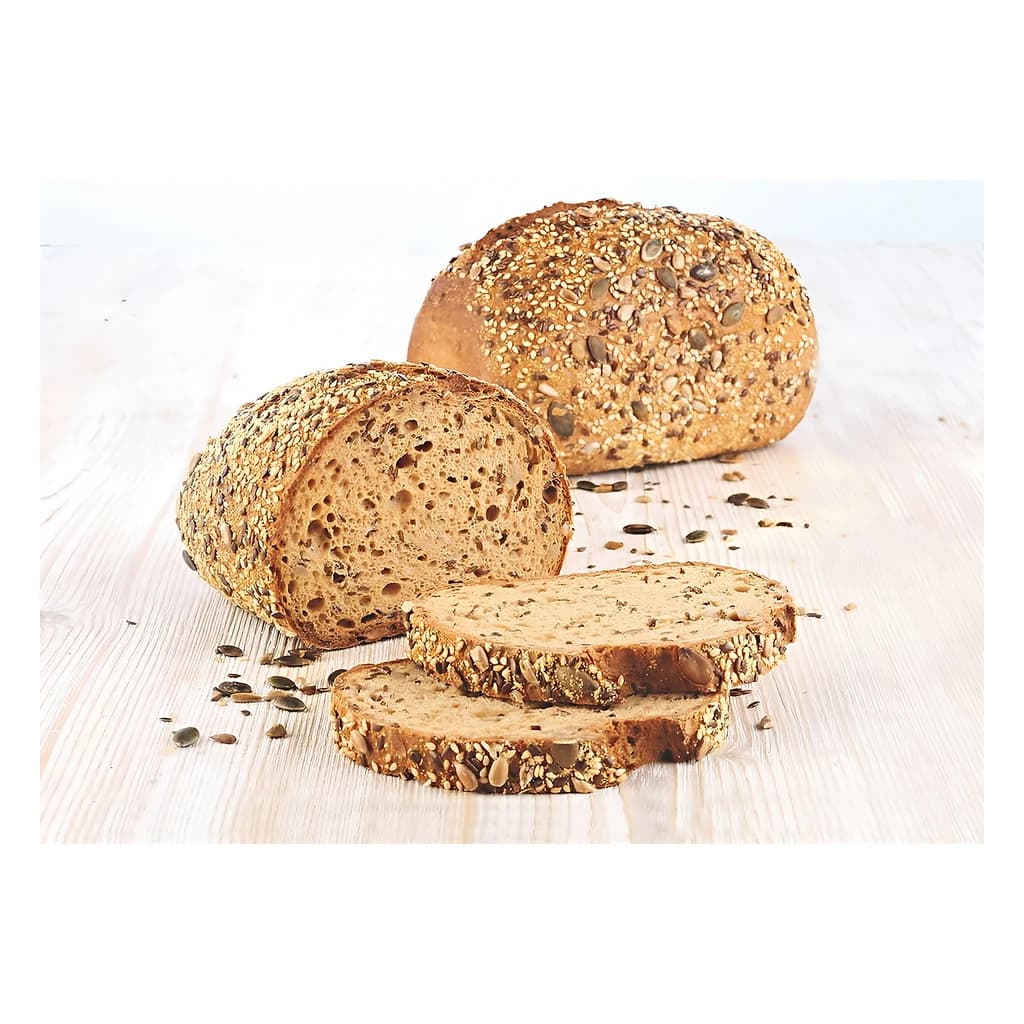
Ireks Singluplus Seeds GF Seeded Brown Bread Mix 12.5 kg
Dried Yeast Fermipan Red 10 kg
Gluten Free White Bread Flour 16 kg
Gluten Free Plain White Flour 16 kg
Freee Xanthan Gum Gluten Free 3 × 1 kg
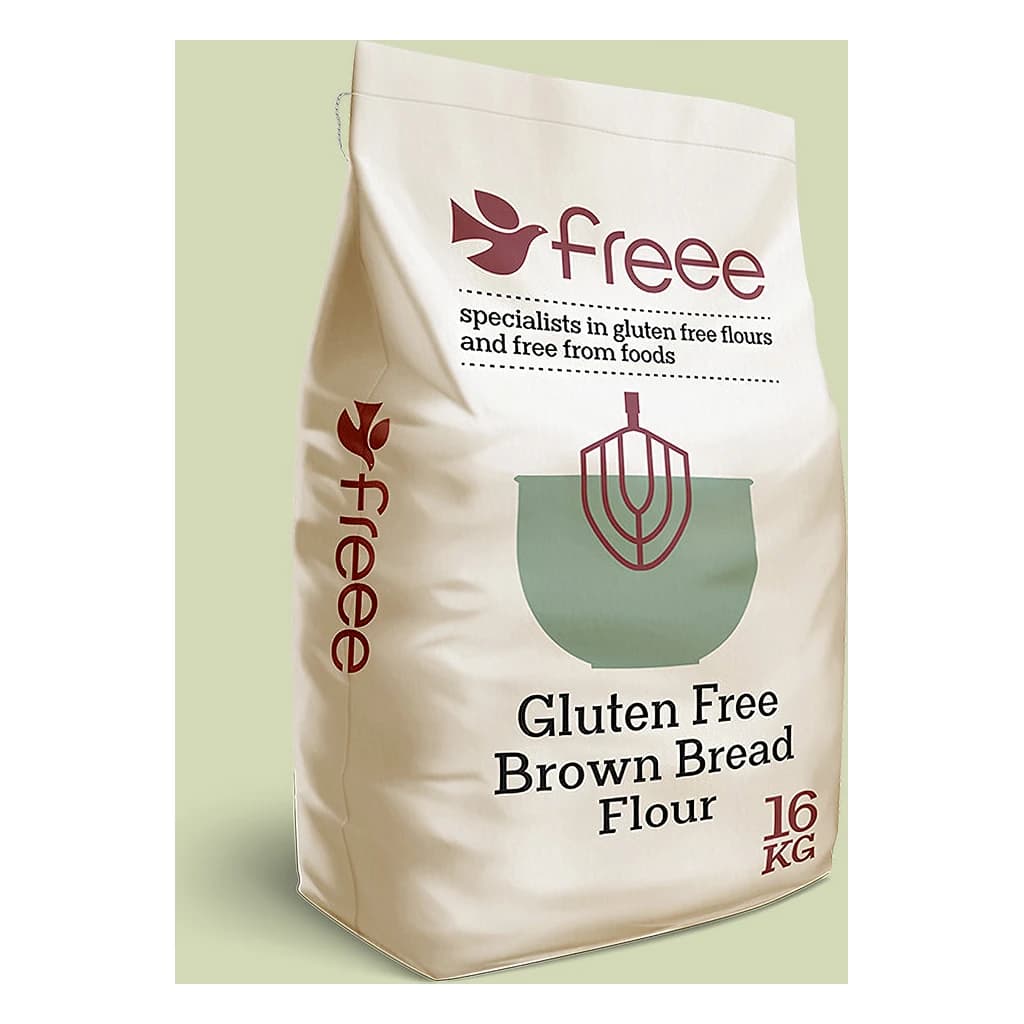
Gluten Free Brown Bread Flour 16 kg