
Emulsifiers in bread: DATEM, SSL, CSL, lecithin, mono- and diglycerides — functions, dosages and E-numbers
A practical guide for professional bakers covering every major bread and bakery emulsifier: DATEM (E472e), SSL (E481), CSL (E482), lecithin (E322), mono- and diglycerides (E471) and polyglycerol esters (E475). Explains the dough-strengthener vs crumb-softener distinction, the HLB classification system, EU and UK regulatory limits (Regulation EC 1333/2008), and typical dosage ranges. Cross-referenced against first-party spec sheets from twelve catalogue products (IREKS, Puratos, Zeelandia) and four reference sources (IREKS Compendium, BAKERpedia, Lesaffre Baking, Sonneveld). Includes comparison tables, formula cards, a fault-diagnosis table and a clean-label enzyme alternative section.
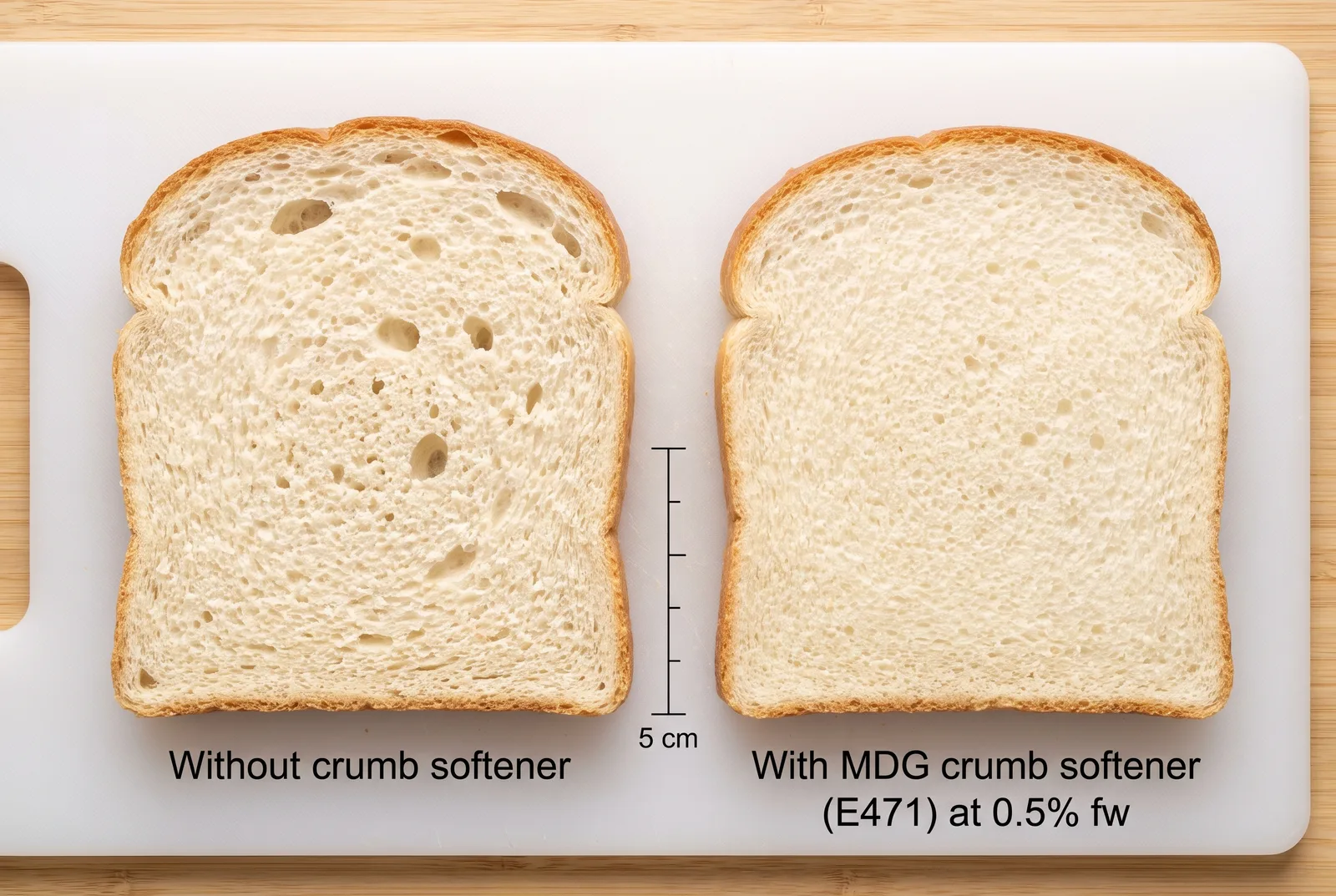
What emulsifiers do in bread dough
An emulsifier is an amphiphilic molecule: one end is attracted to water (hydrophilic head) and the other to fats and oils (lipophilic tail). In bread dough — a complex mixture of water, starch, protein, fat and gas — emulsifiers do two distinct but often overlapping jobs:
-
Dough strengthening. Some emulsifiers bind ionically or physically to gluten proteins (glutenin and gliadin), reinforcing the protein network. A stronger gluten web retains more CO₂ during fermentation and baking, producing better volume, oven spring and crumb structure.
-
Crumb softening / anti-staling. Other emulsifiers interact with starch — specifically with amylose — to form inclusion complexes. These complexes retard starch retrogradation (the progressive re-crystallisation that makes bread go stale), keeping the crumb soft for longer.
Understanding which emulsifier does which job — and at what dosage — determines how to formulate an improver or select a product from the catalogue. The division is not absolute: SSL (E481) does both.
The HLB system: predicting emulsifier behaviour
<!-- image: img-hlb-scale-diagram -->The Hydrophile–Lipophile Balance (HLB) scale runs from 0 (completely lipophilic) to 20 (completely hydrophilic). It predicts which type of emulsion an ingredient tends to form and — in baking — whether it is likely to function as a dough strengthener or a crumb softener.
| Approximate HLB | Tendency | Baking role |
|---|---|---|
| 1–6 | Water-in-oil (W/O) emulsifier | Crumb softening, anti-staling |
| 6–9 | Transitional | Dual function; depends on system |
| 9–16 | Oil-in-water (O/W) emulsifier | Batter aeration, gluten interaction |
Key positions on the scale:
- E471 distilled monoglycerides: HLB ~3 — strong crumb softener
- E322 lecithin: HLB ~7–9 — mild dual function
- E472e DATEM: HLB ~8–9 — primary dough strengthener
- E481 SSL: Behaves as a strong anionic surfactant at bread-dough pH (~5.5–6); effective as both strengthener and softener
The HLB framework is a guide, not a rigid rule. In practice, the composition and processing method of the bread (fat level, mixing intensity, fermentation time) alter how each emulsifier behaves.
Dough-strengthening emulsifiers
DATEM — Diacetyl tartaric acid esters of mono- and diglycerides (E472e)
DATEM is the most powerful dough-strengthening emulsifier available to professional bakers.
How it works. DATEM is an ionic emulsifier. Its tartaric acid groups carry a negative charge at bread dough pH. These charges interact electrostatically with positively charged groups on gluten proteins (especially glutenin), pulling protein strands together and effectively cross-linking the gluten network. The result is a tighter, more elastic gas-retaining structure.
What it delivers:
- Increased loaf volume and oven spring
- Better gas retention during fermentation
- Improved machinability (dough less sticky, less tearing on moulder)
- Tolerance for variations in flour quality or processing conditions
Typical dosage (pure DATEM): 0.25–0.6% of flour weight. (Single-source indicative range; the BAKERpedia DATEM page cites 0.2–0.6% and the general emulsifiers page cites 0.1–0.5% — the upper bound of 0.75% previously cited in some sources is not confirmed. Verify against current supplier guidance before formulating with pure DATEM.) Note: DATEM is almost never used as a pure ingredient on the bakery floor — it is delivered via a bread improver where it is blended with carrier flours, enzymes and other actives.
Effective DATEM in dough from catalogue improvers (first-party spec sheets):
- Puratos S500 Sense SG: 10–20% DATEM in the product (from RSPO certified mass balance palm oil), used typically at 0.5–1% product dosage → 0.05–0.20% effective DATEM.
- Puratos Tigris SG 2%: 10–20% DATEM in the product (RSPO segregated palm oil), used at 2% product dosage → 0.20–0.40% effective DATEM.
- IREKS Voltex: contains E472e (DATEM) + E481 (SSL) with soy flour as primary carrier; used at 1–2% on flour.
- IREKS Soft Roll 7: contains E472e alongside E471 and E481; used at 7% on flour (this is a rich enriched-roll formula including sugar, dextrose, salt and fat components).
EU/UK regulatory status: Quantum satis (no numerical maximum) in bread (Category 07.1) under EU Regulation (EC) No 1333/2008. UK retained regulation equivalent.
Source transparency: Both Puratos Tigris SG 2% and S500 Sense use RSPO-certified palm oil as the source of their DATEM (Segregated and Mass Balance respectively).
SSL — Sodium Stearoyl-2-Lactylate (E481)
SSL is the most versatile emulsifier in bread baking. It combines dough-strengthening with anti-staling properties in a single molecule.
How it works. SSL interacts with gluten proteins in a similar manner to DATEM (ionic interaction, gluten network reinforcement). It also forms helical inclusion complexes with amylose starch chains — the same mechanism as MDG crumb softeners — retarding retrogradation. This dual action makes SSL the go-to emulsifier when a baker wants both volume and softness from a single ingredient.
What it delivers:
- Gluten strengthening (volume, oven spring)
- Machinability improvement (less sticky dough)
- Extended crumb softness (anti-staling)
- Improved slice-ability in sliced bread and toast
Typical dosage (pure SSL): 0.3–0.5% of flour weight. (Single-source indicative range from BAKERpedia SSL-specific page; the general emulsifiers page does not state an SSL range. The 0.1% lower bound sometimes cited is not supported by available sources. Verify before formulating.)
EU/UK maximum: 3 000 mg/kg (3 g/kg) in bread (Category 07.1). This is a maximum limit, not a target; typical effective use is well below this ceiling.
Catalogue products containing SSL (first-party spec sheets):
- IREKS Crumb Softener 25 kg (IREKS SOFTY): SSL (E481) is the primary emulsifier. Carrier: wheat flour with E170i (calcium carbonate) and enzymes. Dosage: 1.5% on flour.
- IREKS Voltex 25 kg: E481 (SSL) combined with E472e (DATEM); soy flour carrier. Dosage: 1–2% on flour.
- IREKS Soft Roll 7 25 kg: E481 + E471 + E472e; used at 7% on flour.
- IREKS Toast & Buns 25 kg (SUPER TOAST): E481 (SSL) as primary emulsifier; soy flour carrier. Dosage: 2% on flour.
Allergen note: SSL itself carries no allergen. The carrier materials in these products do: IREKS SOFTY carrier is wheat flour (WHEAT allergen); IREKS Voltex and Super Toast both carry soya flour (SOYA allergen). Check each spec sheet.
CSL — Calcium Stearoyl-2-Lactylate (E482)
CSL is the calcium salt equivalent of SSL. The same functional chemistry — stearic acid esterified with lactic acid — but with calcium rather than sodium as the counter-ion.
How it differs from SSL:
- Slightly weaker as a dough strengthener
- Slightly stronger crumb-softening effect (the calcium ion influences interaction with starch)
- Often used as a complement to SSL or as a substitute where a softer-biased balance is wanted
Typical dosage (pure CSL): 0.25–0.5% of flour weight. (Single-source; BAKERpedia general emulsifiers page. Verify before use.)
EU/UK maximum: 3 000 mg/kg (3 g/kg) in bread (Category 07.1).
Catalogue note: No standalone CSL product was found in the Domson catalogue spec sheets reviewed. CSL is mentioned in industry references (Sonneveld, BAKERpedia) as a common bread improver ingredient. Bakers requiring CSL specifically should consult the supplier directly or check improver composition declarations.
Crumb-softening and anti-staling emulsifiers
Mono- and Diglycerides of Fatty Acids (E471 — MDG)
<!-- image: img-dough-strengthener-vs-softener -->MDG is the classic crumb softener. Unlike DATEM and SSL, which interact primarily with gluten, MDG targets starch — specifically amylose chains after gelatinisation.
How it works. During baking, when starch granules swell and amylose leaches out, MDG molecules wrap around these helical amylose chains, forming lipid–starch inclusion complexes. These complexes prevent the amylose strands from re-aligning into crystalline structures (retrogradation). The result is bread that stays softer for longer.
What it delivers:
- Extended crumb softness (anti-staling)
- Better moisture retention
- In cake batters: strong aeration and foam stabilisation (especially in combination with E475)
Typical dosage (pure MDG) in bread: 0.25–0.75% of flour weight. (Single-source indicative range; note that the BAKERpedia emulsifiers page was observed to cite 0.5–2.0% fw for bread MDG during verification — a materially wider range. The 0.25–0.75% figure may reflect high-purity distilled monoglycerides at conservative dosage. Verify for your flour, fat level and process before formulating with pure MDG.)
EU/UK regulatory status: Quantum satis (no numerical maximum) in bread.
Source. Commercially MDG is primarily derived from palm oil, rapeseed oil or sunflower oil. Palm-derived MDG is most common; RSPO certification is available. No allergen declaration required for MDG itself.
Catalogue products containing E471 (first-party spec sheets):
- IREKS Soft Roll 7 25 kg: E471 (MDG) combined with E481 (SSL) and E472e (DATEM); 7% dosage.
- Zeelandia Quick 96 Emulsifier Paste 10 kg: E471 + E475 + E570, 25% total emulsifier content; max 1.8% on recipe weight; 2.0–4.5% on egg+water weight for sponge (fine bakery application, not plain bread).
- Zeelandia Quicklift White Cake Emulsifier 5 kg: E471 + E475; 5–10% on egg+water weight (fine bakery).
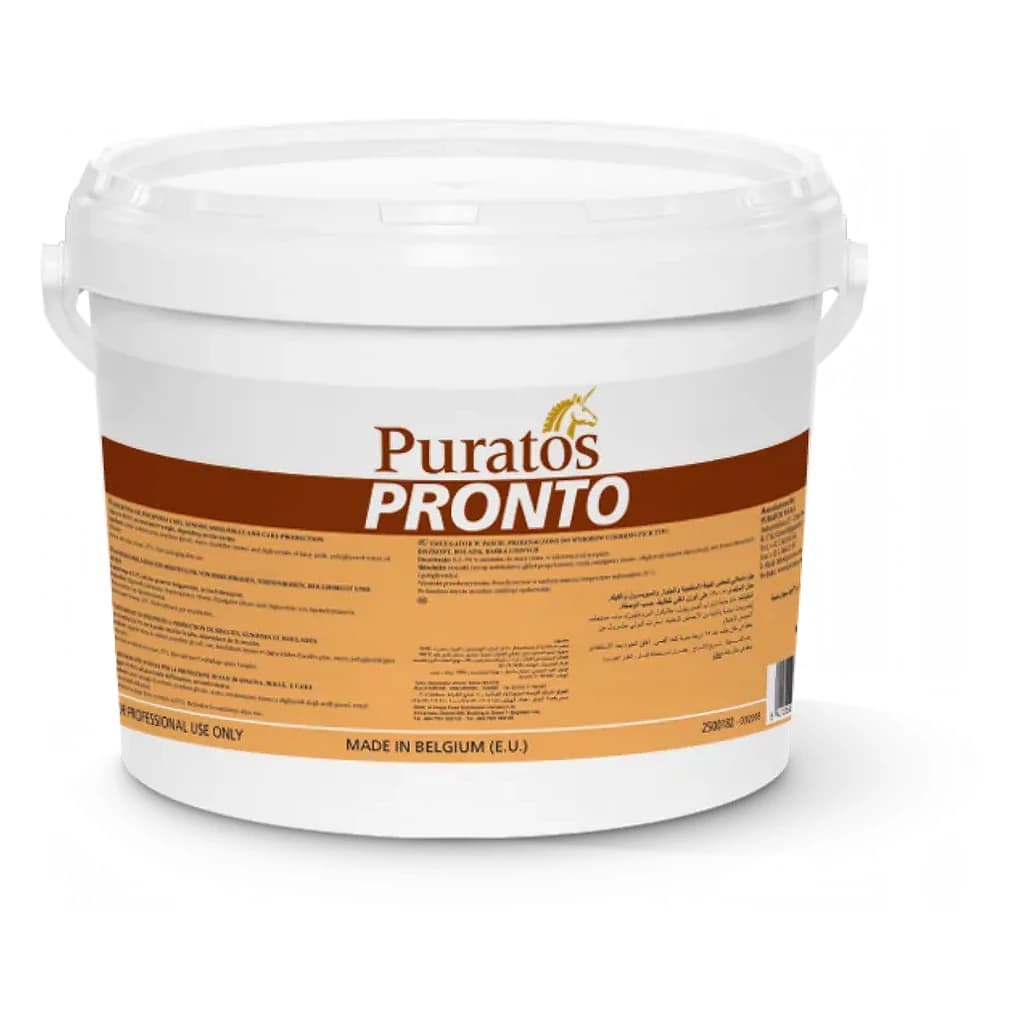
- Puratos Pronto Dough Conditioner 10 kg: E471 + E475; 0.5–3% on batter weight (confectionery sponge).
Lecithin (E322)
Lecithin is a naturally occurring complex mixture of phospholipids — primarily phosphatidylcholine, phosphatidylethanolamine and phosphatidylinositol. It is found in egg yolk, soya beans (the main commercial source), sunflower and rapeseed.
How it works. Lecithin provides moderate emulsification (intermediate HLB ~7–9) with mild dough-conditioning effects. It helps distribute fat throughout the dough, can improve water absorption, and contributes softly to crumb texture. It is less potent than SSL or DATEM but is perceived as more "natural" and is historically the first food emulsifier used in baking.
What it delivers:
- Moderate dough conditioning
- Improved fat distribution
- Mild crumb softening
- Batter emulsification in cakes (less strong than E471/E475 pastes)
Typical dosage (pure lecithin): 0.1–0.5% of flour weight. (Single-source; BAKERpedia general emulsifiers page. Verify for your application.)
EU/UK regulatory status: Quantum satis in bread and fine bakery.
Allergen — critical. E322 from soya (the commercial standard) requires a SOYA allergen declaration on the ingredient list under EU Regulation 1169/2011 and UK equivalent law. E322 from sunflower does not require a top-14 allergen declaration.
Practical note on soya flour as lecithin carrier. Several IREKS improvers (Voltex, Super Toast) use soy flour as the primary carrier. Enzyme-active soy flour delivers both lecithin (from the natural fat fraction of soy) and lipoxygenase enzyme (which bleaches dough by oxidising carotenoids). This must be declared as "soya flour" — carrying the SOYA allergen — not as "lecithin". The Cereform Breadsoy product (see catalogue) is specifically marketed as an enzyme-active full-fat soya flour for this dual purpose.
Emulsifiers in fine bakery and cake
Polyglycerol Esters of Fatty Acids (E475)
E475 is a strong aerating emulsifier used almost exclusively in fine bakery wares (cakes, sponges, Swiss rolls) rather than plain bread. It is highly effective at stabilising air bubbles whipped into egg-fat systems.
What it delivers:
- Gas bubble stabilisation in aerated batters
- Fine, uniform crumb cell structure in sponge cakes
- Extended cream stability in whipped products
EU regulatory status. E475 is cited at 5 000 mg/kg (5 g/kg) in fine bakery wares (Category 07.2) under EU Reg 1333/2008, but this figure is single-source and unconfirmed: an EFSA 2017 re-evaluation (PMC7010213) reports the maximum permitted level for Category 07.2 as 10 000 mg/kg.
Regulatory note: the exact E475 limit for Category 07.2 is unconfirmed — verify against the current consolidated Annex II of EU Reg 1333/2008 before any production use, and do not rely on the 5 000 mg/kg figure without independent regulatory confirmation.
E475 status in plain bread (Category 07.1) is also not confirmed — E475 is typically not listed for Category 07.1. Verify your food category before any use of E475.
Catalogue products (first-party spec sheets):
- Zeelandia Quick 96: E475 + E471 + E570; 1.8% max on recipe (a legal compliance figure stated in the spec).
- Zeelandia Quicklift White: E471 + E475; 5–10% on egg+water weight.
- Puratos Pronto: E471 + E475; 0.5–3% on batter weight.
LACTEM / CITREM — Lactic Acid and Citric Acid Esters (E472c)
E472c covers citric acid esters of mono- and diglycerides of fatty acids. These emulsifiers are used in fat-based applications and offer good compatibility with high-fat systems.
Catalogue note. Two Lasenor Coris products appear in the Domson catalogue (Coris PH/N and Coris G, both E472c, 25 kg formats). No spec sheets were read for these products during this research pass. Their applications and dosages are not confirmed from first-party data — consult Lasenor or the product datasheet directly before formulating.
Combination emulsifier pastes: how they work
The bakery emulsifier pastes in the catalogue (Quick 96, Quicklift White, Puratos Pronto) all combine E471 (MDG) with E475 (polyglycerol esters). This combination is deliberately chosen:
- E471 (MDG) at low concentration stabilises fat films around air bubbles
- E475 (PGE) strengthens the protein film at the bubble surface (egg protein + emulsifier complex)
- Together, they produce a significantly finer and more stable foam than either ingredient alone
The result is the classic "all-in method" sponge cake texture — fine crumb, good volume, extended softness — achieved without long creaming times. Each product has different concentrations and minor component additions (sorbitol for humectancy in Pronto, sorbic acid as preservative in Quicklift White, stearic acid E570 in Quick 96). These differences affect application performance and labelling requirements.
EU and UK regulatory framework
<!-- image: img-emulsifier-label-example -->The key regulatory documents are:
- EU: Regulation (EC) No 1333/2008 on food additives, Annex II (the Community list). Consolidated versions are available on EUR-Lex.
- UK (Great Britain): Retained Regulation (EC) No 1333/2008 as amended under the EU (Withdrawal) Act 2018, administered by the Food Standards Agency. Broadly equivalent to EU limits for emulsifiers in bakery.
Summary of key limits for bakers (from spec-sheet evidence and regulatory source; flag all limits for verification against current Annex II before production use):
| E-number | Name | Bread (07.1) | Fine bakery (07.2) |
|---|---|---|---|
| E322 | Lecithin | Quantum satis | Quantum satis |
| E471 | Mono- and diglycerides | Quantum satis | Quantum satis |
| E472e | DATEM | Quantum satis | Quantum satis |
| E481 | SSL | 3 000 mg/kg | 3 000 mg/kg |
| E482 | CSL | 3 000 mg/kg | 3 000 mg/kg |
| E475 | Polyglycerol esters | Not confirmed for 07.1 — do not use without regulatory check | Verify: cited as 5 000 mg/kg but EFSA 2017 indicates up to 10 000 mg/kg — confirm against current Annex II |
Quantum satis means "as much as is needed for the technological purpose." In practice, manufacturers set internal specification limits well below any safety threshold, guided by functionality rather than regulatory ceiling.
Labelling. Under EU Reg 1169/2011 and the UK equivalent, emulsifiers in the ingredient list must be declared as: Emulsifier (specific name or E-number) — for example Emulsifier (Sodium Stearoyl-2-Lactylate) or Emulsifier (E481). Both forms are legally acceptable in the EU and UK.
How to read the label on a bread improver
When evaluating a bread improver for its emulsifier content, look for:
-
The ingredient list (in descending order of weight): emulsifiers often appear after the carrier flour but before enzymes. In products like IREKS SOFTY, the list reads: "Wheat flour, emulsifier: sodium stearoyl lactylate (E481); stabilizer: calcium carbonate (E170i), enzymes, flour treatment agent: ascorbic acid (E300)." SSL is therefore the first (and primary) functional additive by weight after the carrier.
-
The E-numbers as a quick reference:
- E471 alone → MDG crumb softener (no gluten strengthening)
- E472e → DATEM dough strengthener (strongest volume effect)
- E481 → SSL (both effects)
- E471 + E472e + E481 → broad-action improver for enriched products
- The dosage (quantity of addition on the spec sheet) to estimate effective emulsifier level in the dough. This calculation is approximate because manufacturers do not always state the percentage of active emulsifier within the product.
Clean label: replacing emulsifiers with enzymes
A growing number of bakers and retailers prefer to avoid declared E-numbers on the finished product label. In the EU and UK, enzymes used as processing aids do not require declaration in the ingredient list of the bread itself (they are destroyed during baking and have no technological function in the final product).
Enzyme alternatives for emulsifiers:
| Emulsifier function | Enzyme alternative |
|---|---|
| Gluten strengthening (DATEM/SSL role) | Glucose oxidase, ascorbic acid oxidase, transglutaminase |
| Crumb softening (MDG/SSL anti-staling role) | Thermostable maltogenic amylase (e.g. Novamyl type); lipase (generates MDG in situ from flour lipids) |
| Gas retention (DATEM role) | Hemicellulase / xylanase combinations increase dough extensibility indirectly |
Lipase deserves special mention: a lipase enzyme cleaves free fatty acids from flour triglycerides, generating monoglycerides in situ during mixing and fermentation. These enzymatically generated monoglycerides perform the same crumb-softening function as added MDG, but because the lipase is a processing aid, no E-number needs to be declared.
Catalogue clean-label alternatives with spec-sheet confirmation:
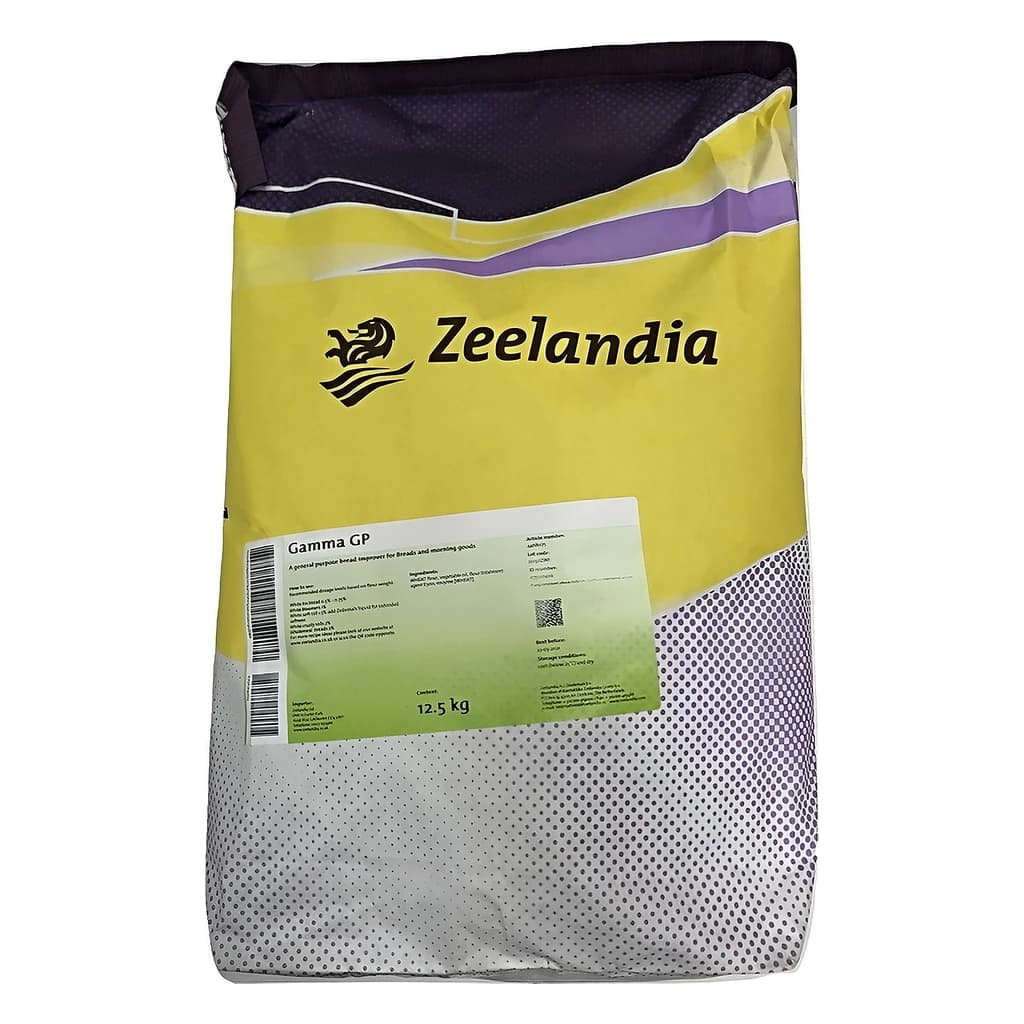
- Zeelandia Gamma GP 12.5 kg — enzyme (wheat) + ascorbic acid (E300) + rapeseed oil; no declared emulsifiers; works across 0.5–2% dosage range.
- Zeelandia Optimax Free 20 kg — vital wheat gluten + rye flour + enzymes; emulsifier-free formulation specifically for rye-mixed bread.
- Zeelandia Rye Stabil Free 25 kg — vital wheat gluten 78% + pre-gelatinised flour + enzymes; specifically for rye-wheat bread.
Note: these enzyme-only products do not match the dough-strengthening power of DATEM at equivalent dosage in all flour types. They are most appropriate for bakers who prioritise clean-label over maximum volume improvement, or for products where a sourdough or long-fermentation process provides natural gluten development.
Allergen and dietary considerations
Food safety: the following allergen statements are drawn directly from supplier spec sheets. Verify against current product spec sheets before each purchase — formulations can change without notice.
Critical specification-age warning: The Puratos S500 Sense and Puratos Tigris SG 2% allergen declarations below are drawn from a 2012 specification (14+ years old at time of writing). Using a 14-year-old specification for allergen management is not acceptable for any commercial or production purpose. Food businesses have a legal obligation under EU Reg 1169/2011 and equivalent UK law to use current, accurate allergen information. Contact Puratos directly for the current product specification before making any allergen-related claims or decisions about these products. The IREKS spec sheets cited are from 2014–2017 (8–12 years old); also obtain updated versions for production use.
| Emulsifier / product | Allergen present (recipe) | Cross-contamination risk |
|---|---|---|
| E471 (MDG) alone | None | Check individual paste label |
| E472e (DATEM) alone | None | None typically |
| E481 (SSL) alone | None | None typically |
| E322 (soya lecithin) | SOYA | — |
| E322 (sunflower lecithin) | None | — |
| IREKS SOFTY | WHEAT (carrier flour) | Eggs, soya, milk, sesame, mustard, lupin |
| IREKS Voltex | WHEAT + SOYA (carrier) | Eggs, milk, sesame, mustard, lupin |
| IREKS Soft Roll 7 | WHEAT + SOYA + MILK (whey in recipe) | Eggs, rye, barley |
| IREKS Toast & Buns | WHEAT + SOYA (carrier) | Eggs, milk |
| Puratos S500 Sense | WHEAT + RYE (fermented rye flour) | Milk, eggs, soya |
| Puratos Tigris SG 2% | WHEAT | Milk, eggs, soya |
| Zeelandia Quick 96 | None in recipe | SOYA + MILK (produced on shared line) |
| Zeelandia Quicklift White | None in recipe | SOYA + MILK (shared line) |
| Puratos Pronto | None declared (verify: spec from 2018, 8+ years old) | None listed (verify current spec before use for allergen-sensitive customers) |
- SSL and CSL stearic acid is typically from palm oil (vegetable), but historically animal tallow was used. Check supplier certification.
- Puratos S500 Sense was Kosher certified as stated in a 2012 specification (14+ years old); this certification status may have changed. Re-verify directly with Puratos and the certifying body before any commercial claim.
- Puratos Tigris SG 2% stated Halal suitability "to be added to certificate" in the same 2012 specification — this pending certification from 14 years ago may never have been formally resolved or may have since lapsed. Verify with Puratos and a recognised Halal certification body before any Halal claim.
- Beneo BeneoPro VWG 75 (vital wheat gluten companion ingredient) is Kosher and Halal certified.
- Zeelandia Quick 96 and Quicklift White do not state Halal/Kosher certification in the reviewed spec sheets.
Catalogue guide: choosing the right product
Bread improvers containing emulsifiers
For maximum volume and dough tolerance (DATEM-focused): Use Puratos Tigris SG 2% (10–20% DATEM, 2% dosage) or Puratos S500 Sense (10–20% DATEM with sourdough notes, ~0.5–1% dosage). Both use RSPO palm-sourced DATEM. The Tigris SG 2% is simpler (dextrose + DATEM + E300 + enzymes); S500 Sense adds fermented rye flour character.
For soft bread and extended softness (SSL-focused): Use IREKS Crumb Softener 25 kg (E481 SSL only, 1.5% dosage) for a targeted SSL-only approach to softness and anti-staling. This is one of the purest SSL improvers in the catalogue.
For toast and sandwich loaves (SSL, slice-ability): Use IREKS Toast & Buns 25 kg (E481 SSL + soy flour carrier, 2% dosage). SSL improves the clean slicing behaviour of toast bread and reduces crumbling.
For all-purpose bread across multiple product types (DATEM + SSL): Use IREKS Voltex 25 kg (E472e + E481, 1–2% dosage). The dual emulsifier combination covers a wider range of applications from white tin to wholemeal.
For enriched soft rolls and burger buns (triple emulsifier): Use IREKS Soft Roll 7 25 kg (E481 + E471 + E472e, 7% dosage). The high dosage reflects the rich nature of this product — it includes dextrose, salt, soy flour, whey and fat components alongside the three emulsifiers. Declare WHEAT, SOYA and MILK allergens.
Emulsifier pastes for fine bakery (cakes, sponges, Swiss rolls)
Zeelandia Quick 96 (E471 + E475 + E570), 10 kg bucket — the workhorse sponge emulsifier paste for Polish and continental cake recipes. Use at 2.0–4.5% on egg+water weight. Legal maximum 1.8% on recipe weight.
Zeelandia Quicklift White (E471 + E475), 5 kg bucket — specifically designed for sponge cake and Swiss rolls. Dosage 5–10% on egg+water weight. Contains sorbic acid (E200) as preservative for longer shelf life of the paste.
Puratos Pronto (E471 + E475), 10 kg tub — no declared allergens and no cross-contamination risk listed; suitable where allergen management is a priority. Dosage 0.5–3% on batter weight. BRC certified.
Clean-label (enzyme-only) alternatives
If the finished product label must contain no emulsifier E-numbers:
- Zeelandia Gamma GP 12.5 kg — for white and wholemeal bread; enzyme + ascorbic acid; 0.5–2% dosage.
- Zeelandia Optimax Free 20 kg — for rye-mixed bread; vital wheat gluten + enzymes; ~0.8% dosage.
- Zeelandia Rye Stabil Free 25 kg — for rye-wheat and rye bread; vital wheat gluten 78% + enzymes; ~1.5% dosage.
Note: clean-label products will not achieve the same volume uplift as DATEM-containing improvers in high-speed or no-time dough systems. Process adjustments (longer fermentation, stronger flour) may be needed to compensate.
Key numbers summary
| Parameter | Value | Source |
|---|---|---|
| IREKS SOFTY dosage (SSL) | 1.5% on flour | IREKS spec sheet |
| IREKS Voltex dosage (DATEM+SSL) | 1–2% on flour | IREKS spec sheet |
| IREKS Soft Roll 7 dosage (SSL+MDG+DATEM) | 7% on flour | IREKS spec sheet |
| IREKS Toast & Buns dosage (SSL) | 2% on flour | IREKS spec sheet |
| Puratos Tigris SG 2% dosage | 2% on flour | Puratos spec sheet |
| Puratos Tigris SG 2% DATEM in product | 10–20% | Puratos spec sheet |
| Puratos S500 Sense DATEM in product | 10–20% | Puratos spec sheet |
| Zeelandia Quick 96 legal max on recipe | 1.8% | Zeelandia spec sheet |
| Zeelandia Quick 96 use (on egg+water) | 2.0–4.5% | Zeelandia spec sheet |
| Zeelandia Quicklift White use (on egg+water) | 5–10% | Zeelandia spec sheet |
| Puratos Pronto use (on batter) | 0.5–3% | Puratos spec sheet |
| SSL (E481) EU max in bread | 3 000 mg/kg | EU Regulation (EC) 1333/2008 |
| CSL (E482) EU max in bread | 3 000 mg/kg | EU Regulation (EC) 1333/2008 |
| E475 EU max in fine bakery (07.2) | Verify: cited 5 000 mg/kg but EFSA 2017 indicates up to 10 000 mg/kg | EU Regulation (EC) 1333/2008 (unconfirmed) |
| DATEM typical dosage (pure) | 0.25–0.6% fw (single source — verify) | Trade reference |
| SSL typical dosage (pure) | 0.3–0.5% fw (single source — verify) | Trade reference |
| MDG typical dosage (pure, bread) | 0.25–0.75% fw (single source — BAKERpedia also shows 0.5–2.0%; verify) | Trade reference |
Coverage notes and gaps
What is solid:
- Spec-sheet data for 9 IREKS/Puratos/Zeelandia improvers (dosages, E-numbers, allergens) — high confidence, first-party
- DATEM mechanism, SSL dual function — confirmed by both IREKS Compendium and BAKERpedia
- EU regulatory framework for SSL and CSL (3 g/kg limit) — consistent across regulatory and reference sources
- Allergen declarations — taken directly from spec sheets
What is thin (single-source or unconfirmed):
- Dosage ranges for pure emulsifiers (BAKERpedia only) — updated based on verification: DATEM corrected to 0.25–0.6%, SSL to 0.3–0.5%; MDG remains 0.25–0.75% but wider range up to 2.0% observed. All single-source; confidence medium
- E475 limit in Category 07.2 (fine bakery) — cited as 5 000 mg/kg but EFSA 2017 re-evaluation indicates up to 10 000 mg/kg for Category 07.2; the correct limit is unconfirmed and must be verified against the current consolidated Annex II
- E475 status in Category 07.1 (plain bread) — not confirmed at all; E475 is typically not listed for plain bread
- Puratos S500 Sense and Puratos Tigris SG 2% allergen/DATEM/RSPO/Kosher/Halal claims — all from a single 2012 spec sheet (14+ years old); require fresh verification with Puratos
- CSL in catalogue — no spec sheets found; CSL reference is from trade sources only
- Lasenor Coris E472c products — no spec sheets read; applications not confirmed
Recommended follow-up:
- Read Lasenor Coris spec sheets when available
- Verify E475 applicability in Category 07.1 against the current Annex II of EU Reg 1333/2008
- Cross-check BAKERpedia dosage ranges against a second source (e.g. Campden BRI or a peer-reviewed paper)
- Confirm CSL presence in any catalogue product (request ingredient declarations from relevant suppliers)
Figures
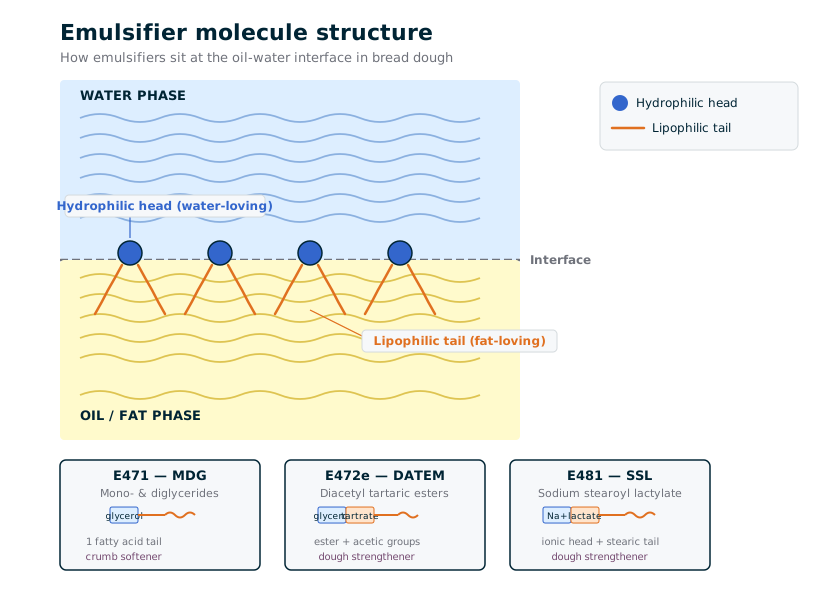 Diagram showing an emulsifier molecule with hydrophilic head and lipophilic tail sitting at the interface between water and oil phases, as occurs in bread dough
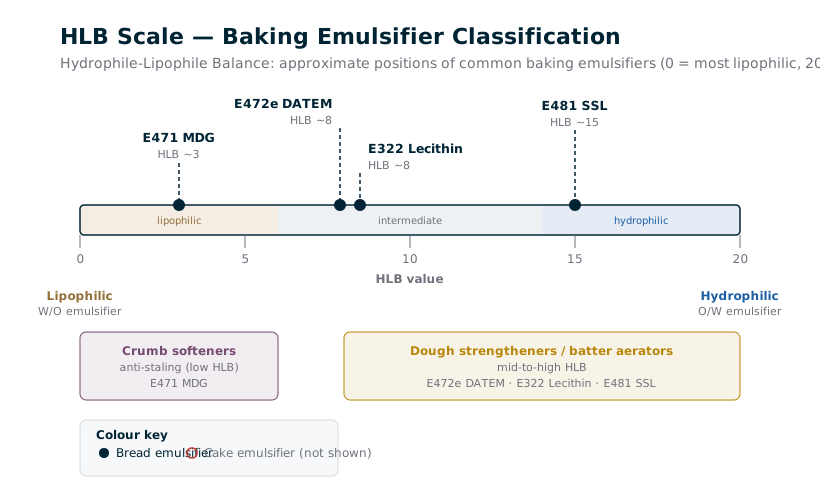 Hydrophile-Lipophile Balance (HLB) scale from 0 to 20 marking the positions of DATEM, SSL, MDG and lecithin used in bread and bakery
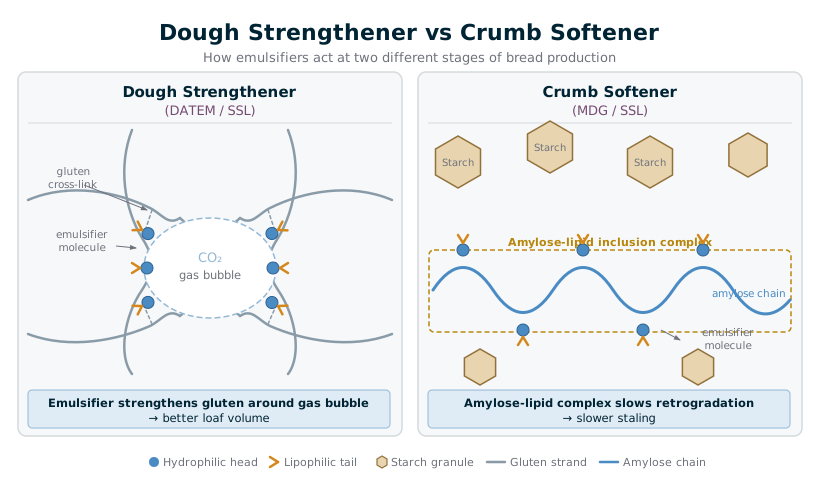 Two-panel diagram: left shows DATEM and SSL binding to gluten proteins to strengthen dough; right shows MDG forming an inclusion complex with amylose starch chains to retard staling
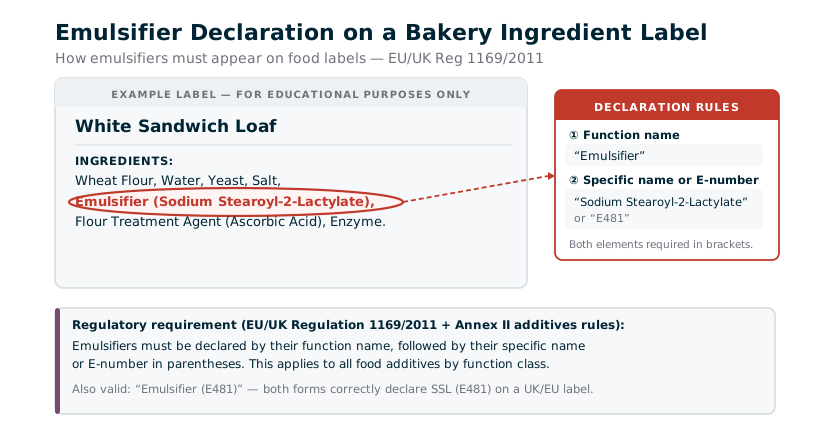 Example ingredient list on a bread label showing emulsifier declaration as 'Emulsifier (Sodium Stearoyl-2-Lactylate)' as required by EU and UK food labelling regulations
Standard white tin bread — DATEM-based improver at 2% dosage
Illustrative formula using Puratos Tigris SG 2% at the labelled 2% product dosage. DATEM content in dough: 0.20–0.40% of flour weight. Baker's percentages relative to total flour weight. Adjust yeast for ambient temperature and preferment system. Source of dosage: Puratos spec sheet.
| Ingredient | Baker's % | Weight |
|---|---|---|
| Bread flour (min. 11.5% protein) | 100 | |
| Water | 62–65 | |
| Salt | 1.8 | |
| Instant yeast | 1.5–2.0 | |
| Puratos Tigris SG 2% | 2 | |
| Fat (vegetable shortening or butter, optional) | 1–2 |
- Straight dough or short bulk fermentation (30–45 minutes). Mix all ingredients to full gluten development. Dough temperature 26–28°C. Final proof 45–60 minutes at 35–38°C, 80–85% RH. Bake at 220–230°C with steam for first 5 minutes.
The 2% Tigris dose delivers 0.20–0.40% effective DATEM in dough (from spec sheet: 10–20% DATEM in product). DATEM at this level provides strong gluten network, good oven spring and volume. Do not exceed product recommended dosage without trials.
Soft roll — triple emulsifier (SSL + MDG + DATEM) at 7% product dosage
Illustrative formula using IREKS Soft Roll 7 at the spec-sheet dosage of 7% on flour weight. Contains SSL (E481) + MDG (E471) + DATEM (E472e) in combination for maximum volume and extended softness. Source of dosage: IREKS spec sheet.
| Ingredient | Baker's % | Weight |
|---|---|---|
| Strong white bread flour | 100 | |
| Water | 52–56 | |
| Salt | 1.5 | |
| Instant yeast | 3–4 | |
| IREKS Soft Roll 7 | 7 | |
| Milk powder | 2 | |
| Sugar | 4 | |
| Vegetable fat or butter | 3–5 |
- Mix 8 minutes low speed + 2 minutes high speed. Dough temperature 27–28°C. Bulk fermentation 10 minutes. Scale, round. Intermediate proof 5 minutes. Mould. Final proof 40–50 minutes at 35°C, 80% RH. Bake 200–210°C, 15–18 minutes.
Allergens: this formula contains WHEAT (flour + improver carrier), SOYA (from improver), MILK (from improver whey powder and added milk powder). Declare accordingly. The 7% product dosage is high because Soft Roll 7 is a concentrated functional mix including dextrose, salt and other ingredients, not pure emulsifier.
Sponge cake — emulsifier paste method (Zeelandia Quick 96)
Illustrative formula based on the Zeelandia Quick 96 spec sheet application recipe. The emulsifier paste (E471 + E475 + E570) stabilises air bubbles beaten into the egg-sugar foam, giving a fine-grained, light crumb. Source of dosage: Zeelandia spec sheet.
| Ingredient | Baker's % | Weight |
|---|---|---|
| Whole eggs | 1000 g | |
| Water | 50 g | |
| Sugar | 600 g | |
| Weak cake flour | 600 g | |
| Quick 96 emulsifier paste — Unit: g | 20–45 (2.0–4.5% on egg+water weight) | |
| Baking powder | 10 g |
- Combine all ingredients. Mix at low speed 2 minutes, then high speed until fully aerated batter (specific gravity 330–350 g/litre). Bake at 180–190°C for 25–35 minutes depending on tin depth.
Legal maximum Quick 96 addition is 1.8% on total recipe weight (Zeelandia spec sheet). The specific gravity target of 330–350 g/litre indicates well-aerated batter. Allergen cross-contamination risk from soya and milk on production line — declare accordingly on finished product.
Regulatory limits from EU Regulation (EC) No 1333/2008 Annex II (consolidated). UK retained regulation is broadly equivalent (FSA guidance). 'Quantum satis' (QS) means no numerical maximum — used at the level needed for the technological purpose. Category 07.1 = bread and rolls; Category 07.2 = fine bakery wares (cakes, biscuits, pastries). HLB values are indicative; exact values vary by manufacturer. Dosage ranges from BAKERpedia for pure ingredient; real effective dosage is lower when delivered via a bread improver. E-number limits are regulatory/legal facts — verify against the current consolidated regulation before formulation sign-off.
| E-number | Full name | Abbreviation | HLB (approx.) | Primary function in bread | EU limit (Category 07.1 bread) | EU limit (Category 07.2 fine bakery) | Typical dosage as pure ingredient (% flour weight) | Common source | Allergen notes |
|---|---|---|---|---|---|---|---|---|---|
| E322 | Lecithins | Lecithin | 7–9 | Mild dough conditioning; batter emulsification; anti-staling (moderate) | Quantum satis | Quantum satis | 0.1–0.5 | Soya beans (most common), sunflower, rapeseed, egg yolk | Soya lecithin: must declare SOYA allergen (EU Reg 1169/2011). Sunflower lecithin: no listed allergen. |
| E471 | Mono- and diglycerides of fatty acids (MDG) | MDG | 1–8 (varies by degree of esterification; distilled monogycerides ~3) | Crumb softening; anti-staling via amylose–lipid complex formation; batter aeration | Quantum satis | Quantum satis | 0.25–0.75 (bread, single-source; BAKERpedia emulsifiers page also cites 0.5–2.0% for bread — verify for your flour and process); 1–5 in cake batters via paste | Palm oil (most common), rapeseed, sunflower | No declared allergen from MDG itself. Check carrier: some pastes processed on lines handling soya or milk. |
| E472c | Citric acid esters of mono- and diglycerides of fatty acids (CITREM/LACTEM — note: 'Coris' products in catalogue are E472c) | CITREM / LACTEM | 9–12 | Emulsification, fat bloom prevention, dough conditioning | Quantum satis | Quantum satis | 0.1–0.3 | Palm, rapeseed | No declared allergen from emulsifier itself. |
| E472e | Mono- and diacetyl tartaric acid esters of mono- and diglycerides of fatty acids (DATEM) | DATEM | 8–9 | Strongest dough strengthener; gluten network reinforcement; volume and oven spring improvement; gas retention | Quantum satis | Quantum satis | 0.25–0.6 (single-source; BAKERpedia DATEM page cites 0.2–0.6%; verify before use) | Palm oil (tartaric acid + MDG); RSPO certified options available | No declared allergen from DATEM. Palm oil sourced: check RSPO certification. |
| E475 | Polyglycerol esters of fatty acids (PGE) | PGE / E475 | 7–8 | Batter aeration; gas bubble stabilisation in egg foams; used primarily in cake/fine bakery, not plain bread | Not typically listed for plain bread (07.1); confirm with consolidated regulation | Unconfirmed — cited as 5 000 mg/kg but EFSA 2017 (PMC7010213) indicates up to 10 000 mg/kg for Category 07.2. Verify against current consolidated Annex II of EU Reg 1333/2008 before any production use. | 1–5 in cake batter (as percent of egg+water, typically via emulsifier paste) | Palm, rapeseed, sunflower | No declared allergen. Some pastes produced on lines handling soya and milk — see individual spec sheets. |
| E481 | Sodium stearoyl-2-lactylate (SSL) | SSL | High (behaves as strong anionic surfactant in aqueous systems) | Gluten strengthening (dough strengthener) AND crumb softening (amylose complexing); improves machinability and tolerance | 3 000 mg/kg (3 g/kg) | 3 000 mg/kg (3 g/kg) | 0.3–0.5 (single-source; BAKERpedia SSL page; verify before use) | Stearic acid (palm/animal) + lactic acid; commercial product typically from palm; check supplier for vegan/Halal | No declared allergen from SSL itself. Carrier in improver products is typically wheat flour or soy flour — check spec sheet. |
| E482 | Calcium stearoyl-2-lactylate (CSL) | CSL | Similar to SSL | Crumb softening (stronger softening effect than SSL); moderate gluten strengthening | 3 000 mg/kg (3 g/kg) | 3 000 mg/kg (3 g/kg) | 0.25–0.5 | Stearic acid + lactic acid; calcium salt version of SSL | No declared allergen. |
Emulsifier E-numbers and product dosages extracted directly from supplier spec sheets. 'Effective emulsifier level in dough' is an estimate based on product dosage × emulsifier fraction; this is indicative and not stated by the manufacturer. All dosages are percentage of flour weight unless stated otherwise. Spec sheets cited; data verified against first-party documents.
| Product (catalogue) | Emulsifier E-numbers in product | Product dosage (% flour weight) | Est. effective emulsifier level in dough | Also contains | Key application | Shelf life | Allergens declared |
|---|---|---|---|---|---|---|---|
| IREKS Crumb Softener 25 kg | E481 (SSL) | 1.5% | SSL is primary emulsifier; wheat flour is carrier; no % breakdown stated | Wheat flour, E170i (calcium carbonate), enzymes, E300 (ascorbic acid) | Soft baked goods: rolls, toast, sandwich bread | 12 months | Wheat; possible traces eggs, soya, milk, sesame, mustard, lupin |
| IREKS Voltex Multipurpose 25 kg | E472e (DATEM) + E481 (SSL) | 1–2% | Dual emulsifier action; soy flour is primary carrier | Soy flour, E170 (calcium carbonate), wheat flour, E300, enzymes | All-purpose bread: white, brown, wholemeal | 12 months | Wheat; Soya; possible traces eggs, milk, sesame, mustard, lupin |
| IREKS Soft Roll 7 25 kg | E481 (SSL) + E471 (MDG) + E472e (DATEM) | 7% | Triple emulsifier for maximum softness + volume | Dextrose, salt, wheat flour, sugar, soy flour, whey powder, rapeseed oil, E300, enzymes | Enriched soft rolls, burger buns | 9 months | Wheat; Soya; Milk (whey powder) |
| IREKS Toast & Buns 25 kg | E481 (SSL) | 2% | SSL dominant; soy flour carrier | Soy flour, E170 (calcium carbonate), wheat flour, enzymes, E300 | Sliced toast bread, sandwich loaves | 12 months | Wheat; Soya; possible traces eggs, milk |
| Puratos S500 Sense SG 12.5 kg | E472e (DATEM) — 10–20% of product | Typical 0.5–1% (S500 series standard dosage — dosage not stated in spec) | At 1% product dosage: 0.10–0.20% effective DATEM in dough | Fermented rye flour 50–60%, wheat flour 30–40%, E516 (calcium sulphate), E300, rapeseed oil, enzymes | Superior all-purpose bread with natural sourdough character | 9 months | Wheat and rye (cereals containing gluten); cross-contamination risk: milk, egg, soya |
| Puratos Tigris SG 2% 16 kg | E472e (DATEM) — 10–20% of product | 2% | At 2% product dosage: 0.20–0.40% effective DATEM in dough | Wheat flour 50–60%, dextrose 20–30%, E300, rapeseed oil, enzymes | Yeast-raised bread and rolls | 9 months | Wheat (cereals containing gluten); cross-contamination risk: milk, egg, soya |
| Zeelandia Gamma GP 12.5 kg | None — enzyme + oil only | 0.5–2% (depends on product type) | No chemical emulsifier; ascorbic acid for gluten strengthening; enzyme for dough improvement | Wheat flour, rapeseed oil, E300 (ascorbic acid), enzyme [WHEAT] | Clean-label bread and morning goods (no declared emulsifiers) | 12 months | Wheat; cross-contamination: rye, barley, oats, spelt, egg, soya, milk, sesame, lupin |
| Zeelandia Optimax Free 20 kg | None — vital wheat gluten + enzymes | ~0.8% (0.1 kg per 12.7 kg total) | No chemical emulsifier; gluten protein network for structure | Vital wheat gluten 50%, rye flour 39%, potato starch 10%, E300, enzymes | Rye-mixed bread and rye bread (emulsifier-free) | 180 days | Wheat and rye (cereals containing gluten); possible traces barley, oat, spelt, egg, soya, milk, sesame |
| Zeelandia Rye Stabil Free 25 kg | None | ~1.5% on total flour | No chemical emulsifier; vital wheat gluten builds structure in rye dough | Vital wheat gluten 78%, pre-gelatinised wheat flour 20%, E300, enzymes | Rye-wheat and rye bread (emulsifier-free) | 270 days | Wheat; possible traces rye, barley, oat, spelt, egg, soya, milk, sesame |
Standalone emulsifier products and pastes, primarily for fine bakery wares (cakes, sponges, Swiss rolls). These are NOT bread improvers — they are used directly in batter or dough at significantly higher levels than bread emulsifiers. Dosages are on egg+water or batter weight, not flour weight. All data from first-party spec sheets.
| Product (catalogue) | Emulsifier E-numbers | Dosage | Application | Shelf life | Storage | Allergen cross-contamination |
|---|---|---|---|---|---|---|
| Zeelandia Quick 96 Emulsifier Paste 10 kg | E471 (MDG) + E475 (polyglycerol esters) + E570 (stearic acid); 25% emulsifier in product; palm-derived | Legal maximum: 1.8% on recipe weight. Use: 2.0–4.5% on egg+water weight for sponge; 1.5–5% on egg weight for cakes | Aerated batters: sponge cake, Swiss rolls, layer cakes | 9 months | Frost-free, below 25°C | Produced on line handling soya and milk |
| Zeelandia Quicklift White (Cake Emulsifier) 5 kg | E471 (MDG) + E475 (polyglycerol esters); rapeseed and palm-derived; preservative E200 (sorbic acid) | 5–10% based on total weight of eggs and water | Sponge cake and Swiss rolls | 9 months | Frost-free, below 25°C | Produced on line handling soya and milk |
| Puratos Pronto Dough Conditioner 10 kg | E471 (MDG) + E475 (polyglycerol esters) + E420ii (sorbitol syrup, humectant) + E1520 (propylene glycol, carrier) | 0.5–3% on batter weight; whip with other ingredients 3–5 minutes | Confectionery sponge, roulade, babka and similar fine bakery | 9 months | Max 25°C, max 65% RH; protect from frost and light | No major allergens declared; no cross-contamination risk listed |
Practical troubleshooting guide for emulsifier-related defects. Where a fault could also have non-emulsifier causes, look at fermentation, flour quality and process parameters first before adjusting emulsifier type or level.
| Fault observed | Likely emulsifier cause | Diagnostic indicator | Remedy |
|---|---|---|---|
| Small loaf volume / poor oven spring | Insufficient DATEM or SSL; weak gluten network cannot retain gas | Dough tears during moulding; foam collapses on loading into oven | Add or increase DATEM-based improver (e.g. Tigris SG 2% at 2% fw); check flour protein level |
| Rapid staling — bread firm within 24 hours | Insufficient MDG or SSL; starch retrogradation not retarded | Crumb firms linearly from day 1 with no extended softness | Add crumb softener containing MDG (E471) or SSL (E481); consider anti-staling enzyme (maltogenic amylase) as clean-label alternative |
| Dense, gummy crumb — bread feels wet inside | Excess MDG inhibiting starch gelatinisation; or under-baked | Centre temperature <94°C at end of bake; crumb pulls/strings | Reduce MDG dosage; increase bake time or temperature; check dough recipe water content |
| Sticky dough; poor machinability on divider/moulder | Insufficient gluten-strengthening emulsifier (SSL or DATEM) | Dough sticks to belts; irregular weight pieces; tears rather than stretches | Use improver containing SSL (E481) or DATEM (E472e); also check flour protein and water absorption |
| Sponge cake collapses after baking | Insufficient emulsifier paste; gas bubbles not stabilised; E475 level too low | Batter specific gravity too high (>400 g/litre); batter liquid at bottom of tin | Increase emulsifier paste addition within spec limit; ensure full mixing time; chill paste to below 20°C before use |
| Grainy, irregular crumb texture in cake | Incorrect emulsifier HLB for the fat system; emulsion breaks during baking | Large, uneven air cells; fat and aqueous phases visible separately | Use a purpose-formulated emulsifier paste (E471 + E475 combination) rather than a single emulsifier |
| Soapy or rancid off-notes in baked product | Emulsifier overdose; degraded emulsifier (storage past shelf life or at excess temperature) | Off-notes detectable at sniff; more pronounced when warm; date-check product | Reduce emulsifier dosage to recommended level; check product age and storage conditions (below 25°C, frost-free) |
| Bread improver causes labelling issues (E-number on label) | Emulsifiers are declarable additives under EU/UK labelling law | Customer complaint; retailer specification requires clean label | Switch to enzyme-only improver (e.g. Zeelandia Gamma GP, Optimax Free, Rye Stabil Free) or use lipase enzyme system — no E-number declaration required for enzyme processing aids |
Buy the ingredients
Catalogue products and brands referenced in this article.
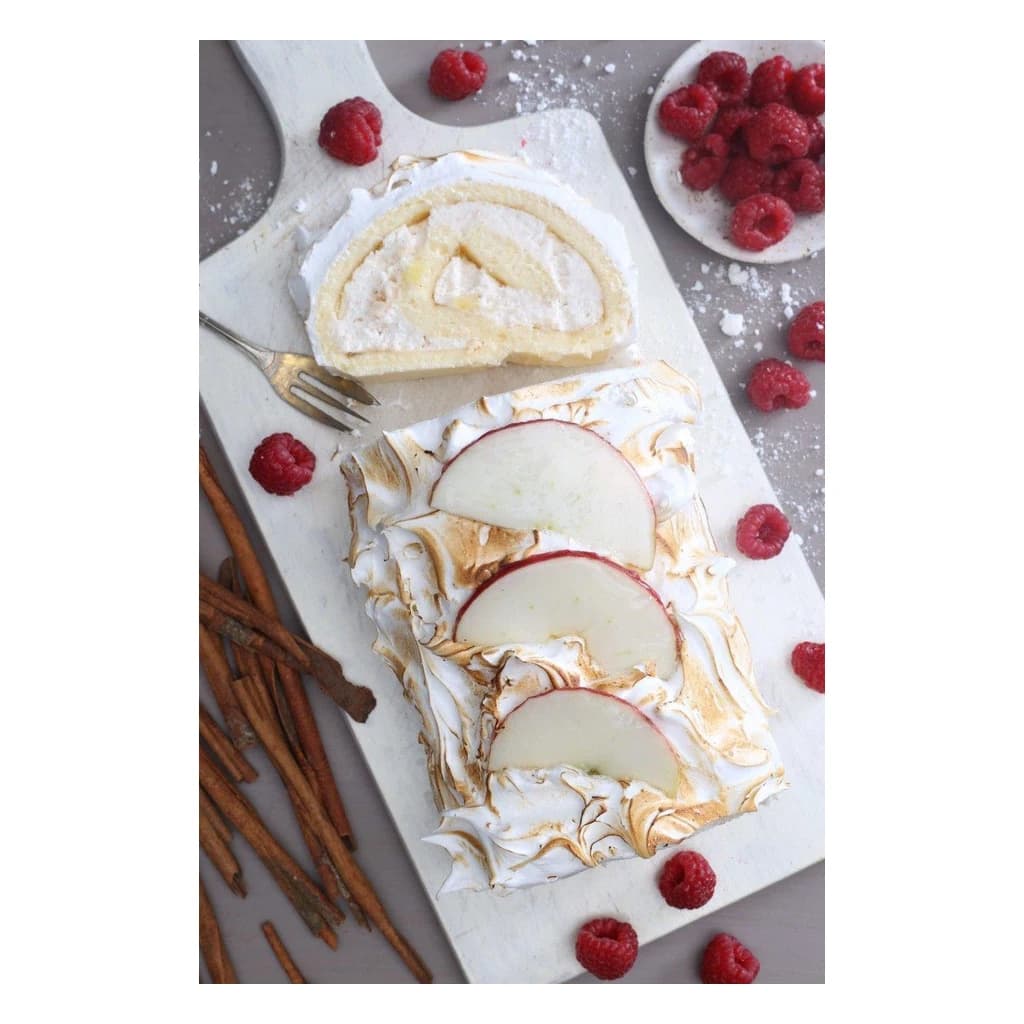
Zeelandia Quick 96 Emulsifier Paste 10 kg
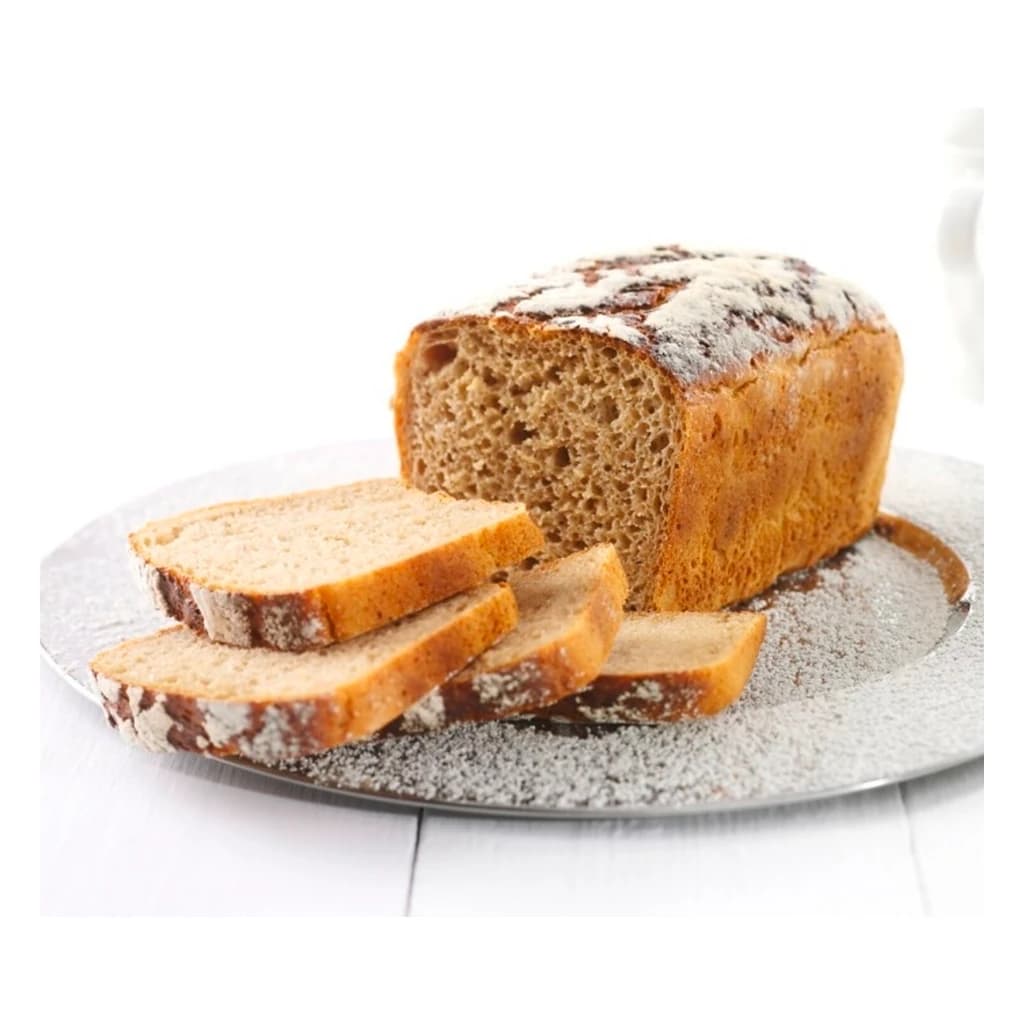
Optimax Free Bread Improver 20 kg
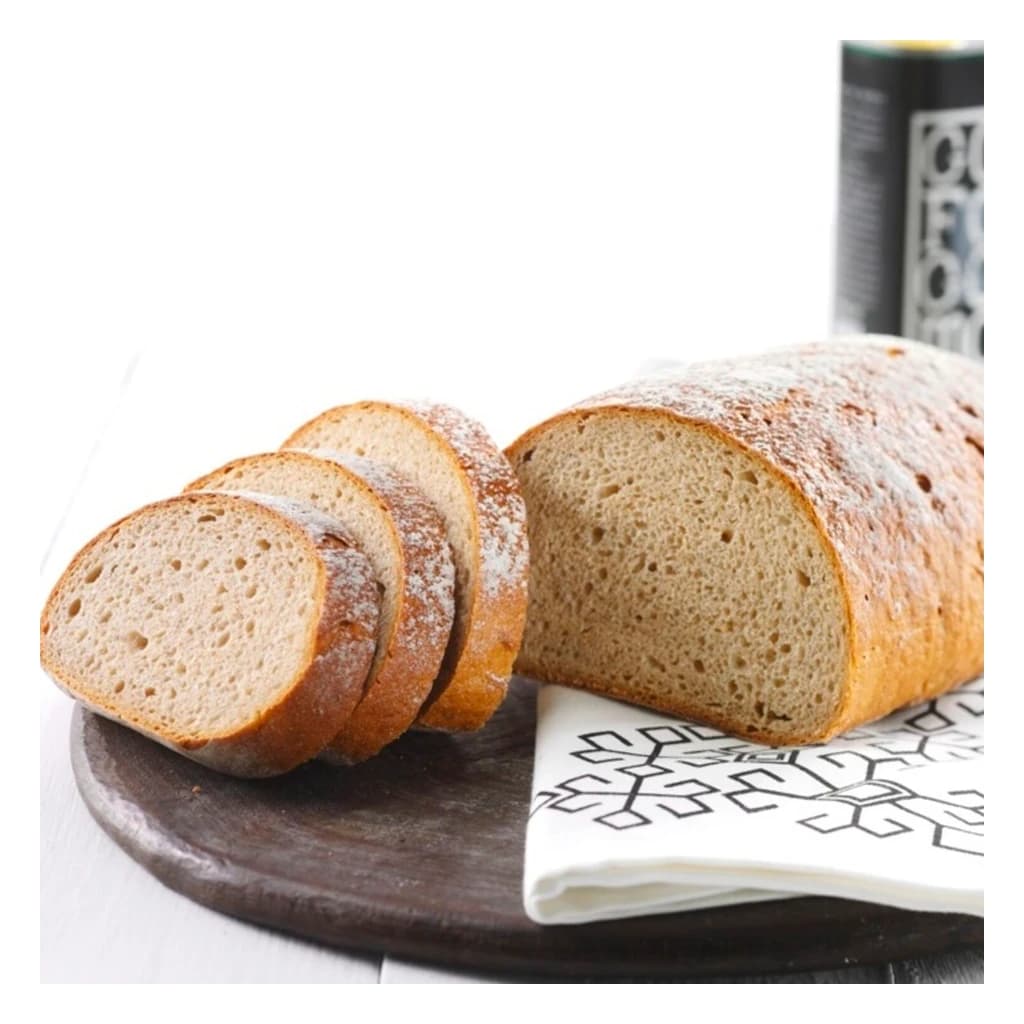
Rye Stabil Improver 25 kg
Puratos Pronto Dough Conditioner 10 kg
Lasenor Coris PH/N Emulsifier E472c 25 kg

Lasenor Coris G Emulsifier (E-472c) 25 kg
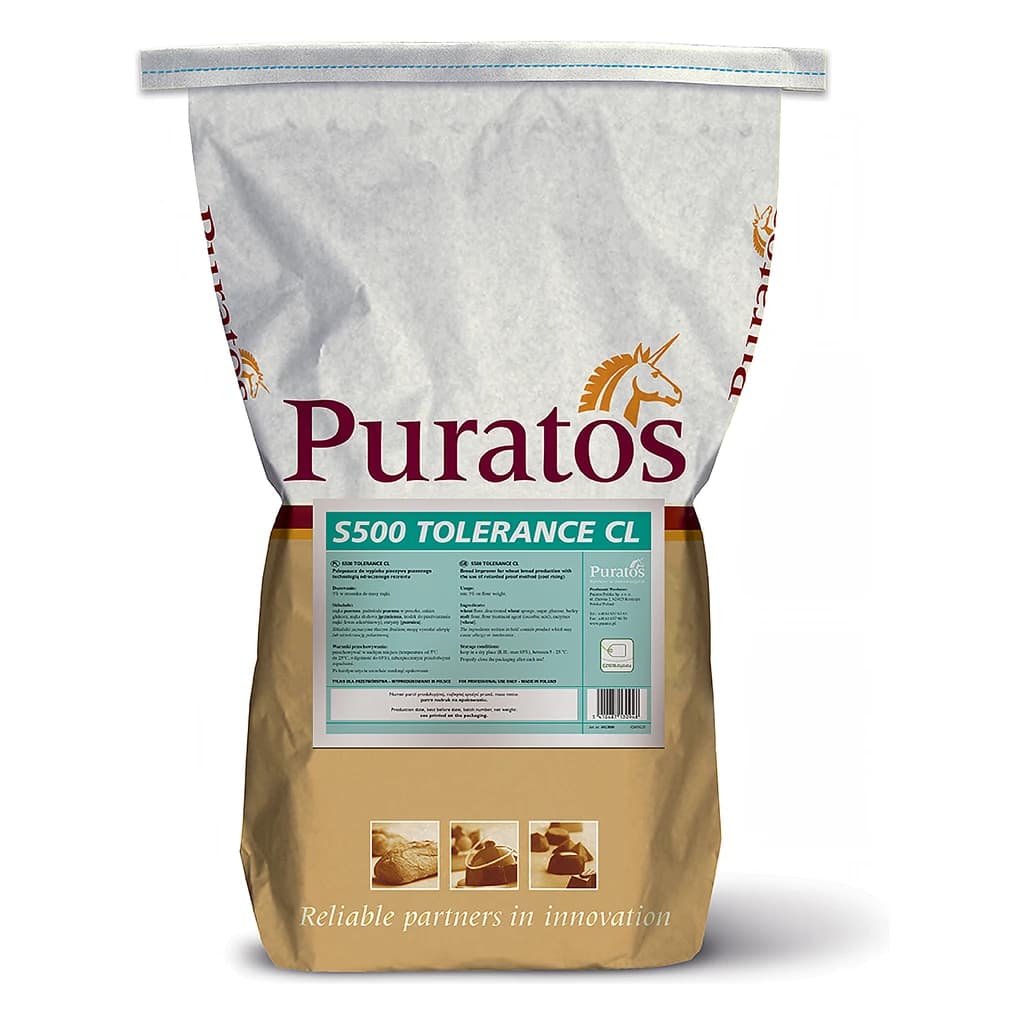
Puratos S500 Tolerance CL Bread Improver 15 kg
Zeelandia Gamma GP Bread Improver 12.5 kg

Bakels Colco Gel Cake Emulsifier 10 kg
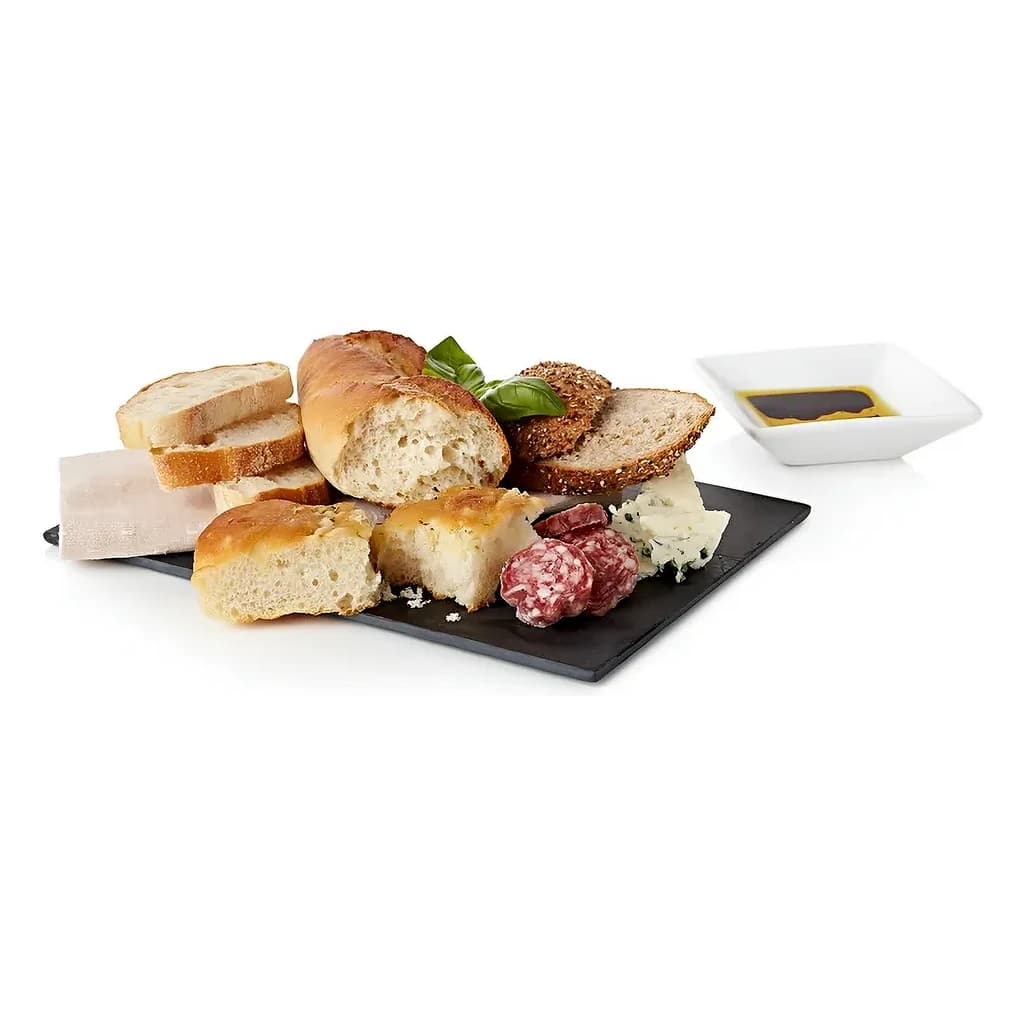
Puratos Tigris Ultra SG Bread Improver 25 kg
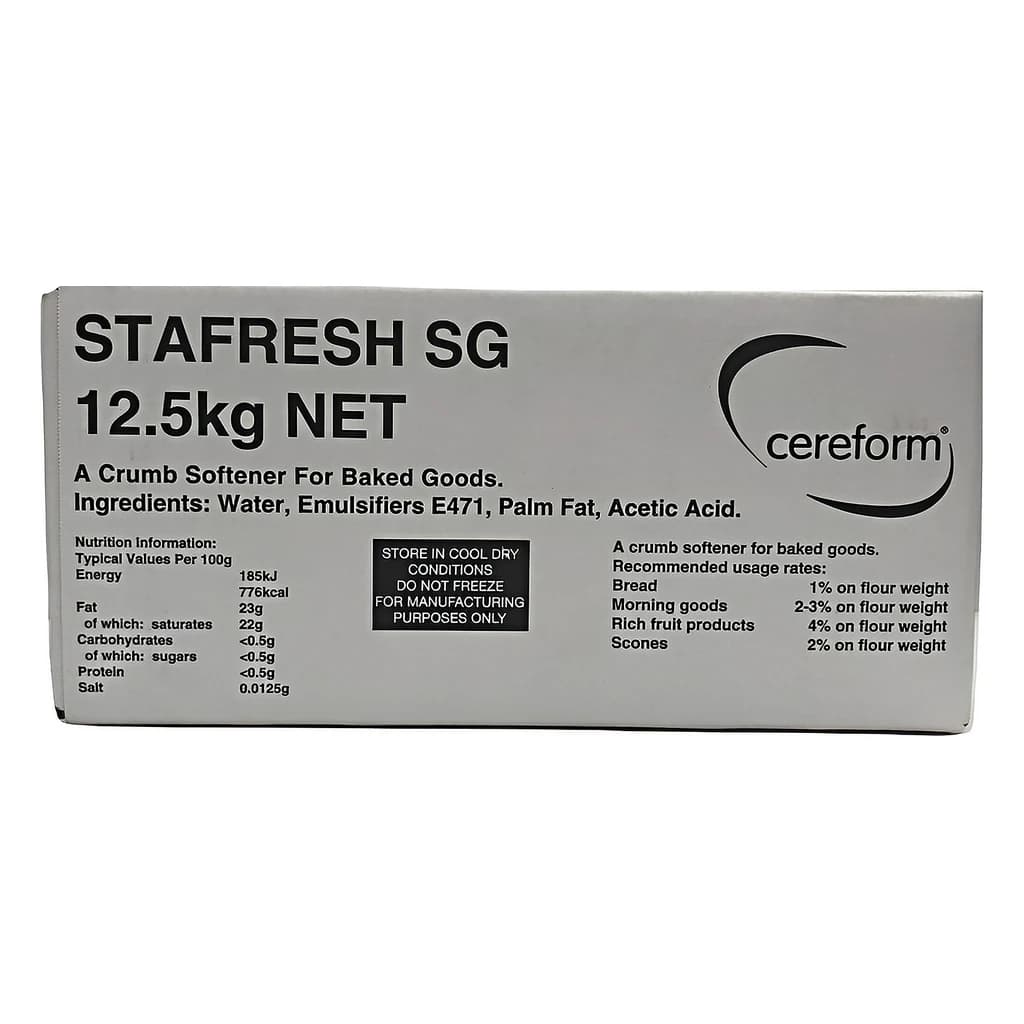
Cereform Stafresh SG Crumb Softener 12.5 kg
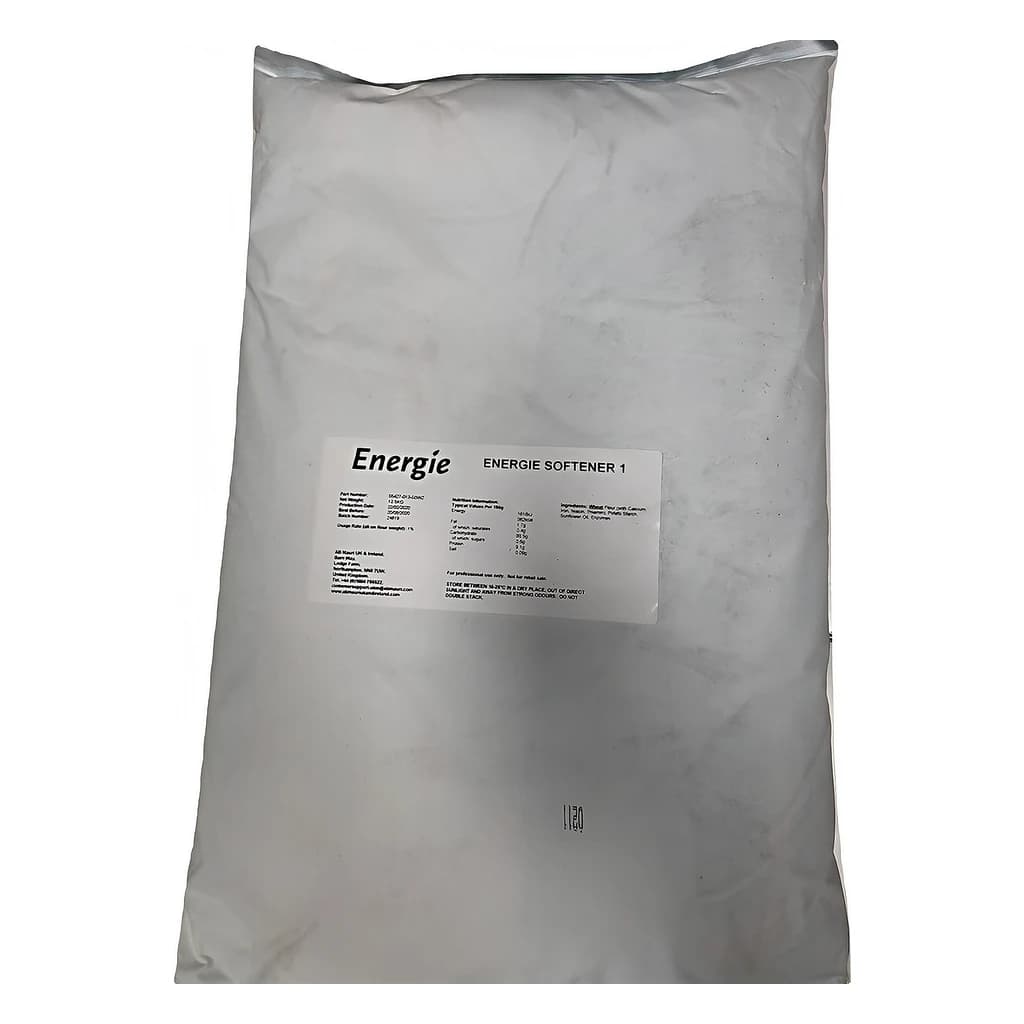
Energie Softener 1% Crumb Softener 12.5 kg
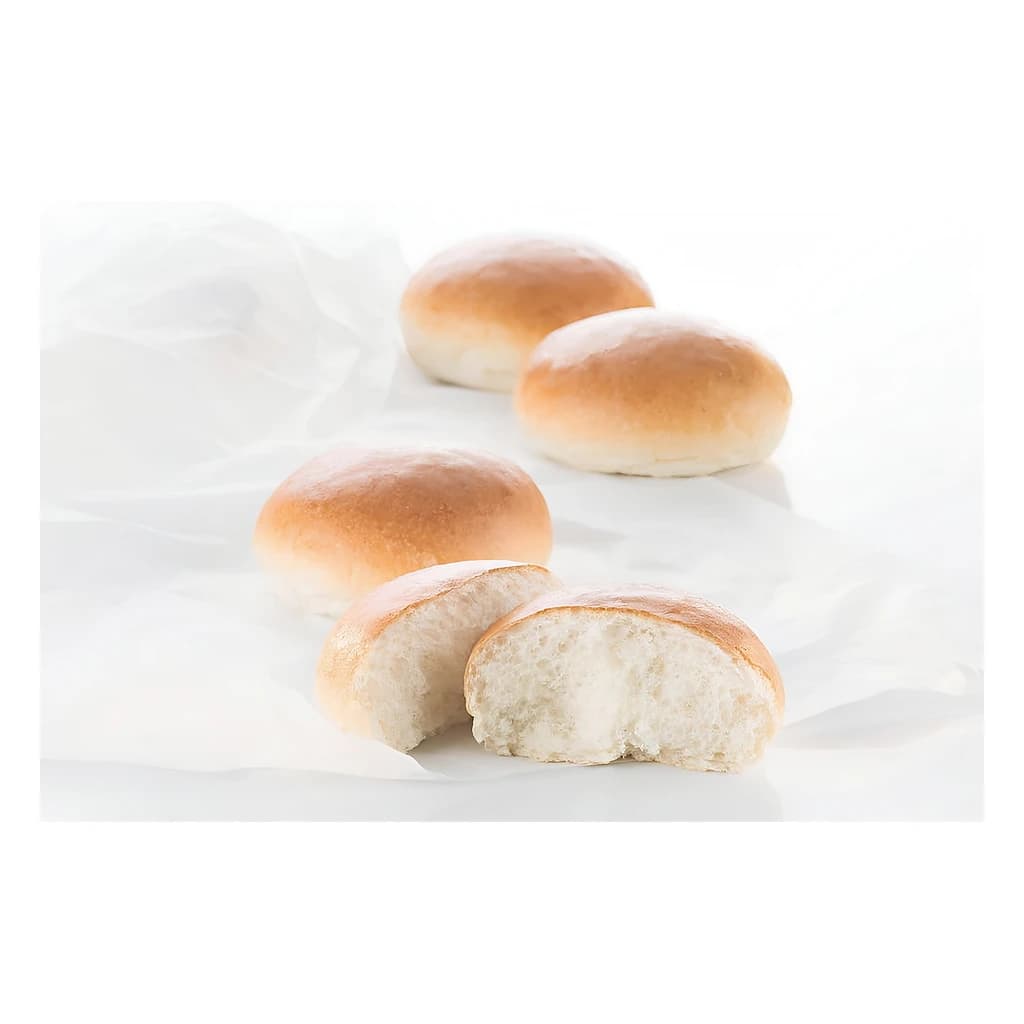
IREKS Soft Roll 7 Bread Improver 25 kg
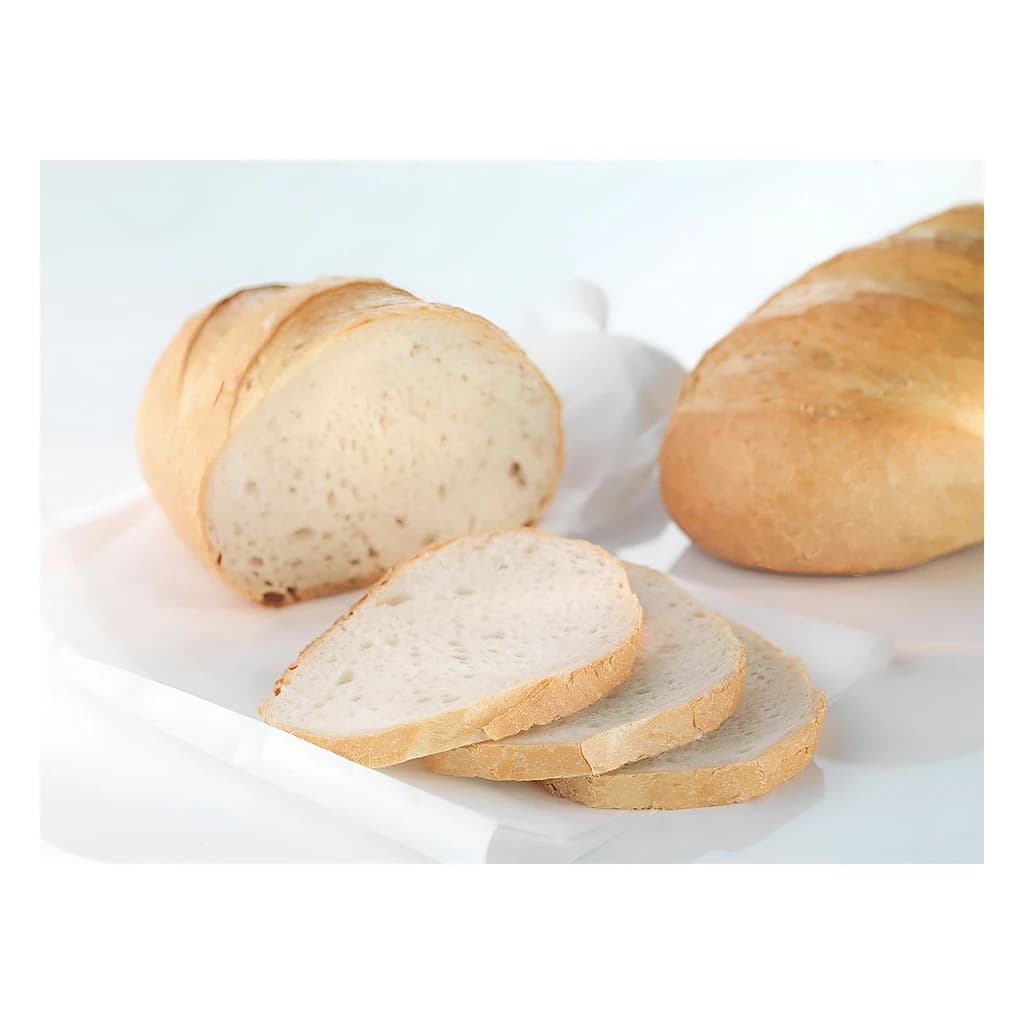
IREKS Voltex Multipurpose Bread Improver 25 kg
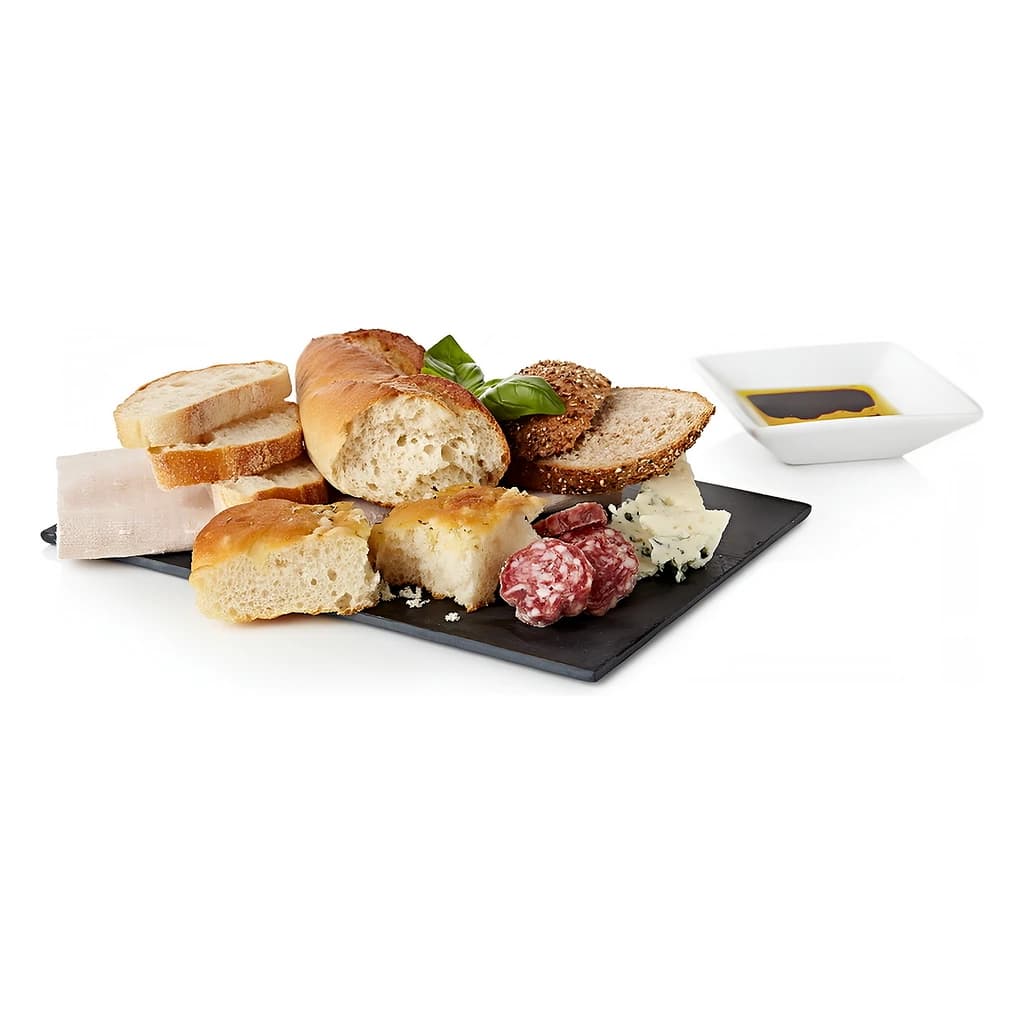
Puratos Tigris SG 2% Bread Improver 16 kg
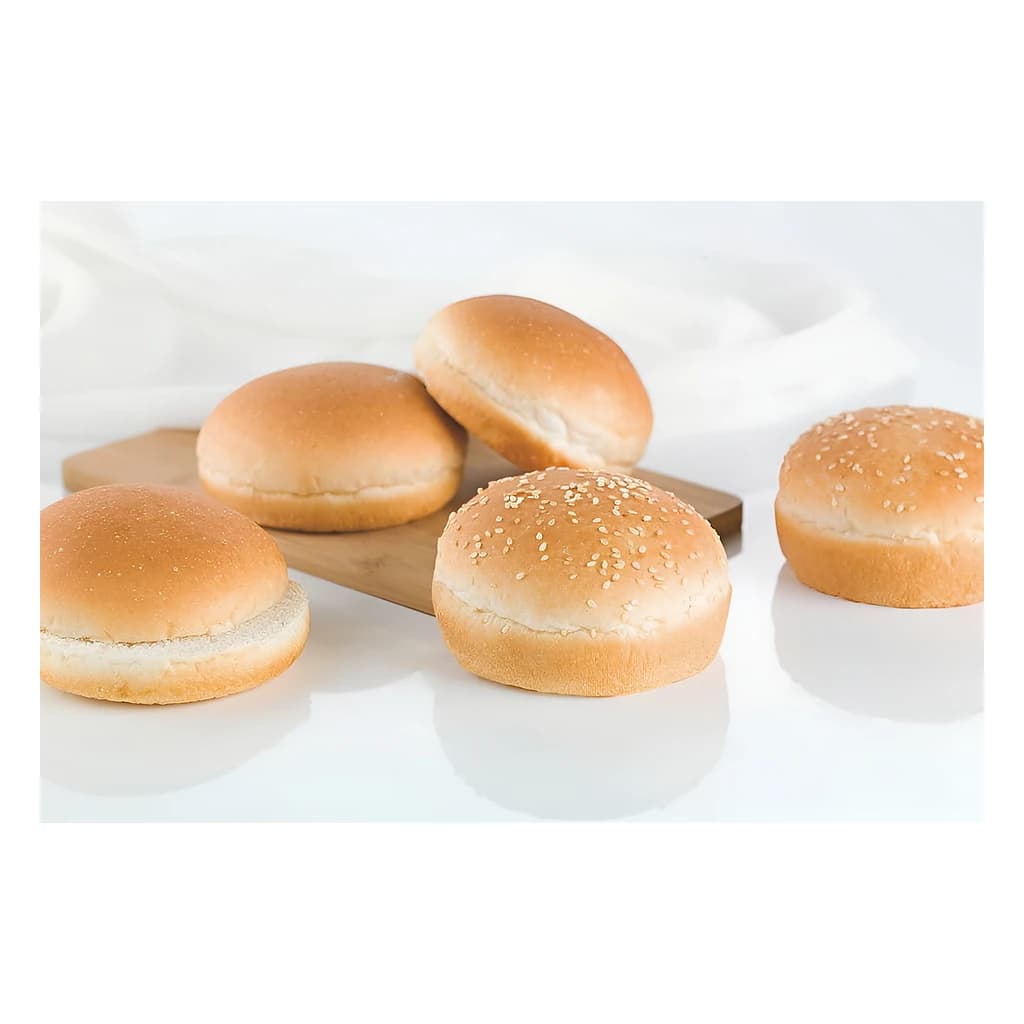
IREKS Crumb Softener 25 kg

Zeelandia White Quicklift Cake Emulsifier 5 kg
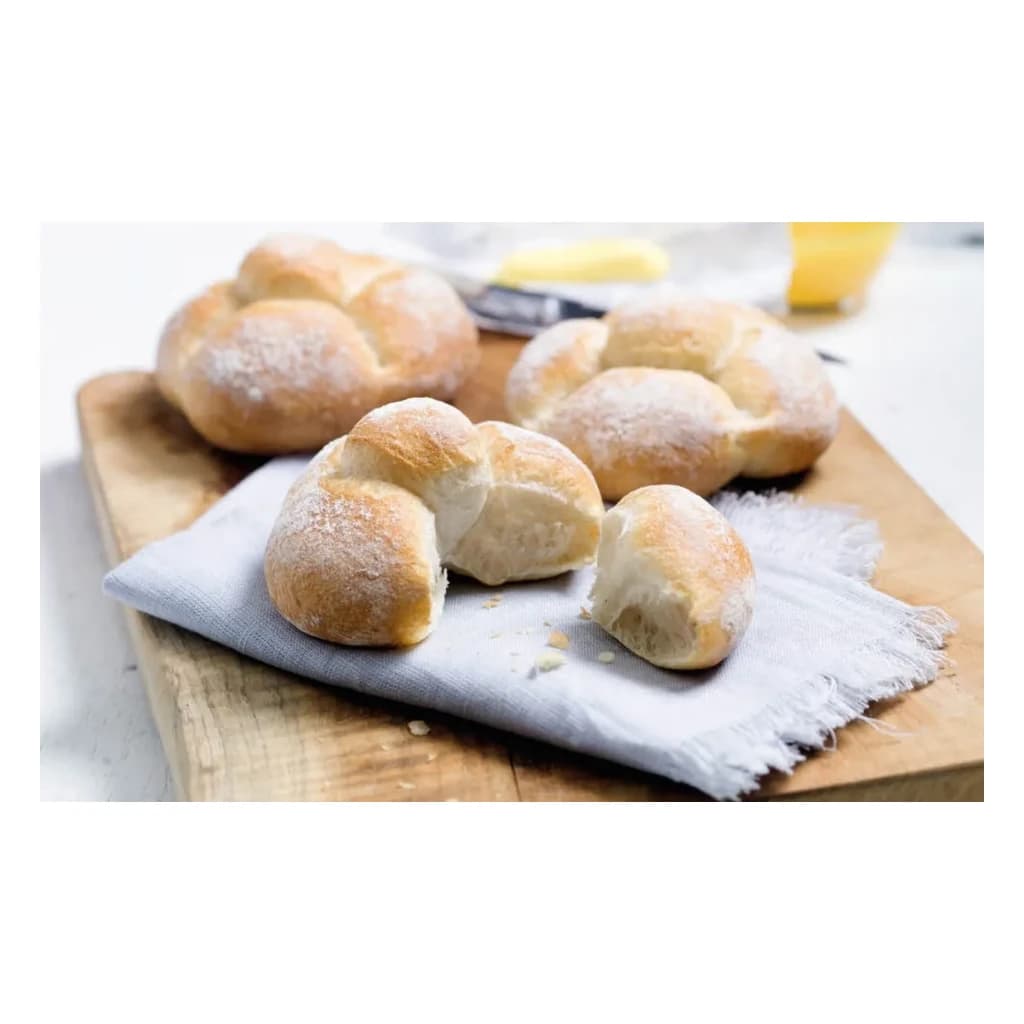
Puratos S500 Sense SG Bread Improver 12.5 kg

Puratos S500 SG Bread Improver 12.5 kg (Kosher)
IREKS Toast & Buns Bread Improver 25 kg
Bakels Ovalett Sponge Emulsifier 10 kg

Puratos Tigris Gold Bread Improver 15 kg