Palm oil, palm-free alternatives and RSPO: navigating sustainability in bakery fats
A practical guide for professional bakers to understand the sustainability debate around palm oil in bakery fats — what RSPO certification means in practice, how to read a product's sustainability declaration, and what the technical trade-offs look like when moving to palm-free alternatives. Covers SFC profiles, crystal polymorphism, trans fats and process contaminants, with full data extracted from first-party spec sheets for seven fat products in the Domson catalogue (Cardowan Creameries, CSM Bakemark, Kruszwica, Polmlek). Every RSPO claim is traced to a specific spec-sheet section or regulatory reference.
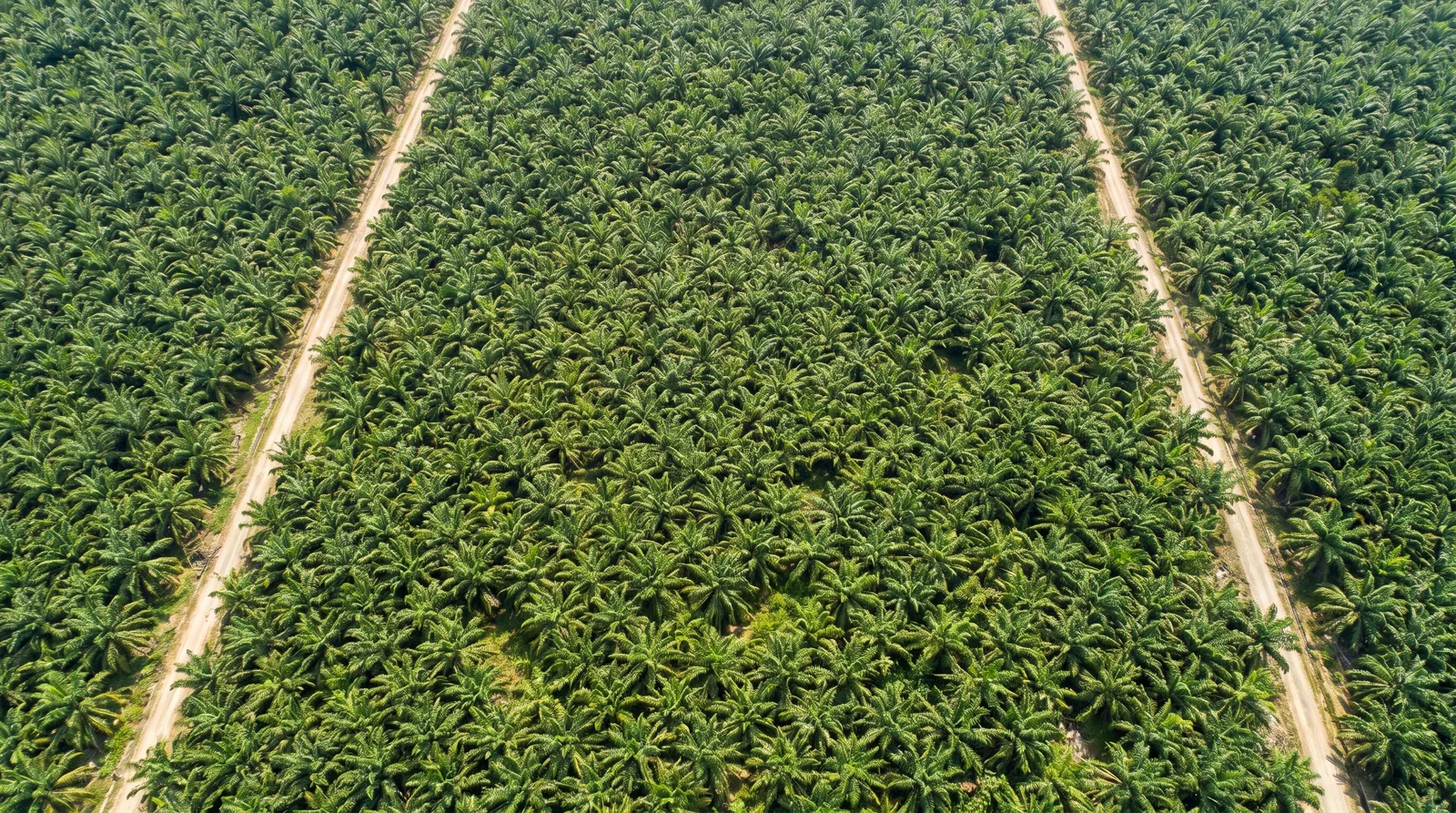
Aerial view of a large oil palm plantation showing rows of palm trees stretching to the horizon
1. Why palm oil became the bakery fat of choice
Palm oil occupies a paradoxical position in professional baking: it is simultaneously the fat that makes many commercial margarines and shortenings work reliably, and the ingredient that faces the most intense scrutiny from retailers, consumers and regulators. Understanding why it became so dominant — and what alternatives genuinely offer — is essential knowledge for any baker who reads fat specifications or answers supplier questionnaires.
The functional case for palm oil is straightforward. Palm oil is semi-solid at room temperature without any hydrogenation — its natural fatty acid composition (roughly 50% saturated, predominantly palmitic acid C16:0) gives it a solid fat content (SFC) that falls steeply between 20°C and 40°C. This is almost exactly the profile bakers need: solid enough at 20°C to create plasticity for creaming and lamination, yet melting cleanly at 37°C (body temperature) to give a non-waxy mouthfeel. A fat like rapeseed oil is liquid at 20°C and useless as a plastic bakery fat without structural modification. Butter achieves a similar SFC profile but at far higher cost and with temperature-sensitivity that palm does not share.
Economically, palm oil won the market for a second reason: yield per hectare. Palm oil yields approximately 3–5 tonnes of oil per hectare per year (trade-body sources; FAO and MPOB agronomic data indicate current averages of approximately 3.3–4.0 t/ha in established plantations, with well-managed equatorial plantations reaching the upper end of this range) — roughly 4–7 times the yield of rapeseed or sunflower oil crops. This land efficiency made palm the cheapest vegetable fat available globally from the 1990s onward, displacing lard and hydrogenated vegetable oils in most industrial bakery fat formulations.
A third advantage — often overlooked — is that unhydrogenated palm oil contains no industrial trans fats. In the 1980s and 1990s, bakery fats were typically made from partially hydrogenated vegetable oils (PHO), which created large amounts of trans fatty acids as a by-product of hydrogenation. Palm oil's natural semi-solid state meant it could replace PHO without the trans fat liability, which is why it became the ingredient of choice during the industry's move away from hydrogenated fats.
2. The sustainability problem — and the productivity paradox
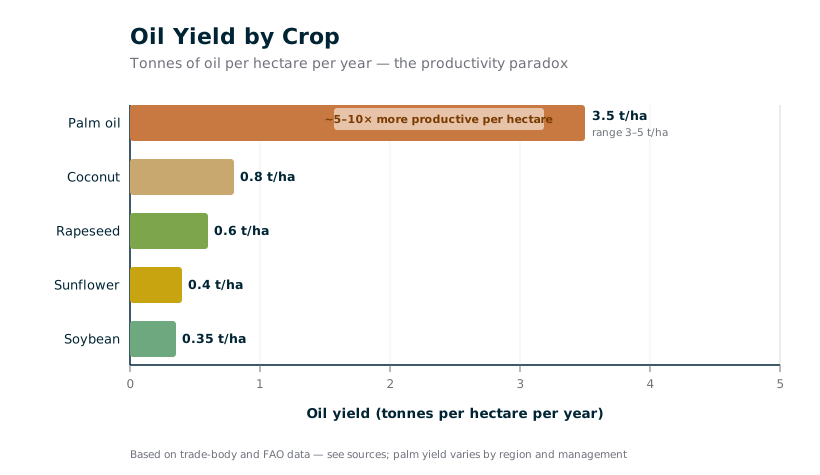 Bar chart showing oil yield per hectare for major crops: palm oil yields approximately 4-7 times more oil per hectare than rapeseed, sunflower or soybean
The environmental criticism of palm oil centres on three issues that are real and documented:
Tropical deforestation. Large-scale palm oil expansion in Indonesia and Malaysia — which together account for approximately 85% of global palm oil production (confidence: medium, trade-body sources) — has been linked to the clearing of primary and secondary tropical rainforest. These forests are among the most biodiverse ecosystems on Earth and their loss is directly measurable.
Biodiversity loss. The Sumatran orangutan, Sumatran tiger and Bornean pygmy elephant are among the flagship species whose habitats overlap with areas of palm oil expansion. Loss of forest corridors is documented in conservation literature. These concerns are real, though the causal relationship between individual palm purchases and specific habitat outcomes is complex.
Peatland destruction. Large areas of palm oil cultivation in Indonesia occupy drained and sometimes burned peat swamp forest. Draining peat releases carbon dioxide at very high rates and creates catastrophic fire risk during dry seasons. This is the most acute environmental impact per unit area.
The productivity paradox. Here is where the debate becomes genuinely difficult: if all palm oil used in European bakery were replaced by rapeseed oil, the area of land required to produce equivalent oil volumes would increase by a factor of approximately 4–7. Some of that additional rapeseed would need to be grown on land that might otherwise have been forest, wildlife habitat, or food crop. Life-cycle analysis consistently shows that RSPO- certified palm oil from established (non-deforested) plantations can have a lower environmental footprint per kilogram of fat than some widely promoted alternatives. The sustainability answer is not as simple as "palm bad, rapeseed good."
3. RSPO: the industry framework
The Roundtable on Sustainable Palm Oil (RSPO) was founded in 2004 as a joint initiative between WWF, major palm oil producers, processors, manufacturers and retailers. Its purpose is to define, certify and promote sustainable palm oil production.
RSPO certification is based on Principles and Criteria (P&C) for sustainable palm oil production. A certified plantation must meet requirements covering environmental management (no clearing of high conservation value forests or peatland after a specific cut-off date), social standards (community rights, fair labour) and transparent traceability.
RSPO is a voluntary, industry-led scheme — it is not a government regulation. This means its reach is determined by market demand: buyers who require RSPO-certified palm create the commercial incentive for producers to certify. The scheme has been criticised for not preventing all harmful expansion and for the weakness of its enforcement, particularly in complex supply chains. But it remains the most widely adopted international standard for palm oil sustainability in the food industry, and for most bakery fat suppliers it is the primary tool for responding to retailer and brand sustainability requirements.
4. RSPO supply chain models — what the label actually means
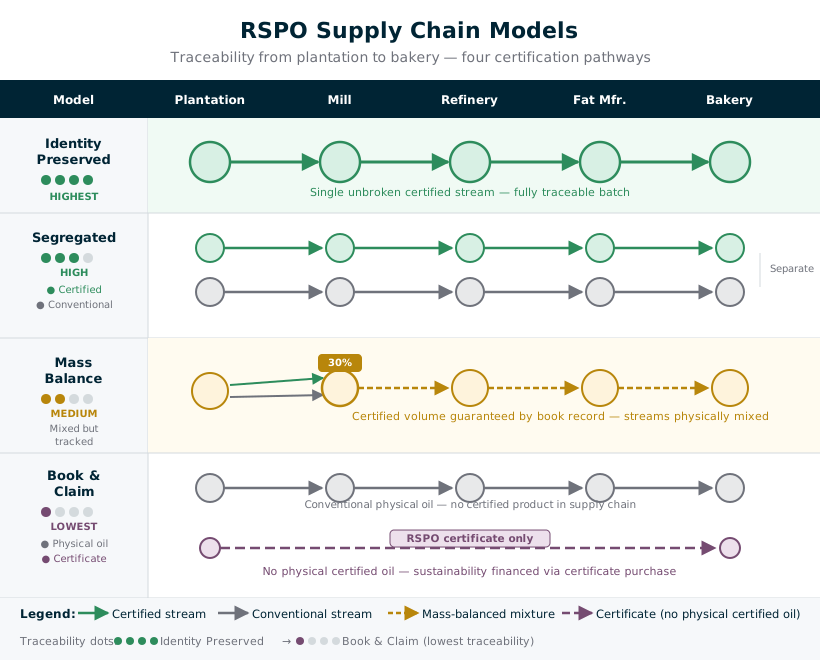 Diagram showing four RSPO supply chain models: Identity Preserved (fully traceable), Segregated (certified oil kept separate), Mass Balance (volumes tracked by book), and Book and Claim (certificate only)
RSPO does not offer a single certification label. It operates four distinct supply chain models that differ dramatically in what they guarantee about the oil physically in your product. Understanding these is essential to reading a fat specification honestly.
Identity Preserved (IP) is the most stringent model. The certified palm oil can be traced to a specific certified plantation, is kept physically separate throughout the entire supply chain, and the volume in your product is guaranteed to come from certified sources. IP palm is rare in commodity bakery fat and commands the highest premium.
Segregated (SG) maintains physical separation of certified from conventional palm oil, but blends from multiple certified sources are permitted. The oil in your product is physically certified palm. Cardowan Creameries identifies Segregated-certified products with the suffix SG on the product code, packaging and delivery documentation.
Mass Balance (MB) removes the requirement for physical segregation. Certified and conventional palm oil may be mixed in the same supply chain, but the processor is required to ensure that a quantity of certified palm oil equivalent to the amount sold as "certified" has entered the supply chain from RSPO-certified sources. Think of it as a book-keeping model: the volumes are tracked, but the physical oil in your delivery may not be certified. Cardowan identifies Mass Balance products with the suffix MB. CSM's Marvello Cake Margarine specifies Mass Balance on its spec sheet directly: "Type: Palm oil, Supply chain model: Mass balance."
Book & Claim (RSPO Credits / PalmTrace) separates the physical supply chain entirely from the certification claim. The buyer purchases RSPO Credits from certified growers, but the physical oil used in production may be entirely conventional. This model provides financial support to certified growers but does not put certified oil in the product.
Key point for bakers: An RSPO label on a fat spec tells you which model applies. A product with the SG suffix physically contains certified palm oil. A product with MB supports the certification system but the oil may not be traceable. A product with no suffix from Cardowan, per their spec, is "not produced using RSPO certified oil." Always check which model applies before making claims to retailers or end customers.
See the comparison table below for a structured side- by-side comparison.
5. What the Domson catalogue declares — spec-sheet evidence
Seven fat products in the Domson catalogue have spec sheets that were reviewed for this article. The sustainability declarations span the full spectrum from certified RSPO to partially hydrogenated legacy formulations.
5.1 Cardowan Creameries — certified RSPO across three products
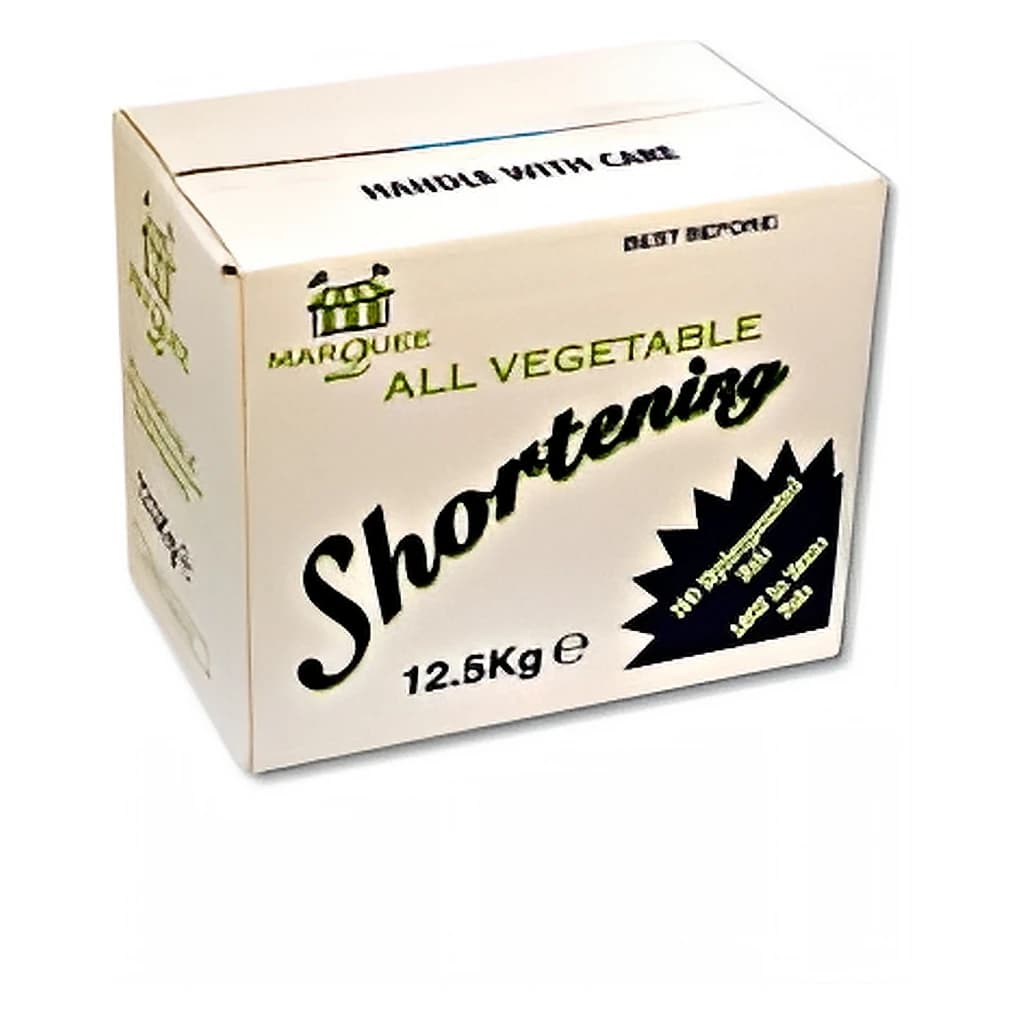
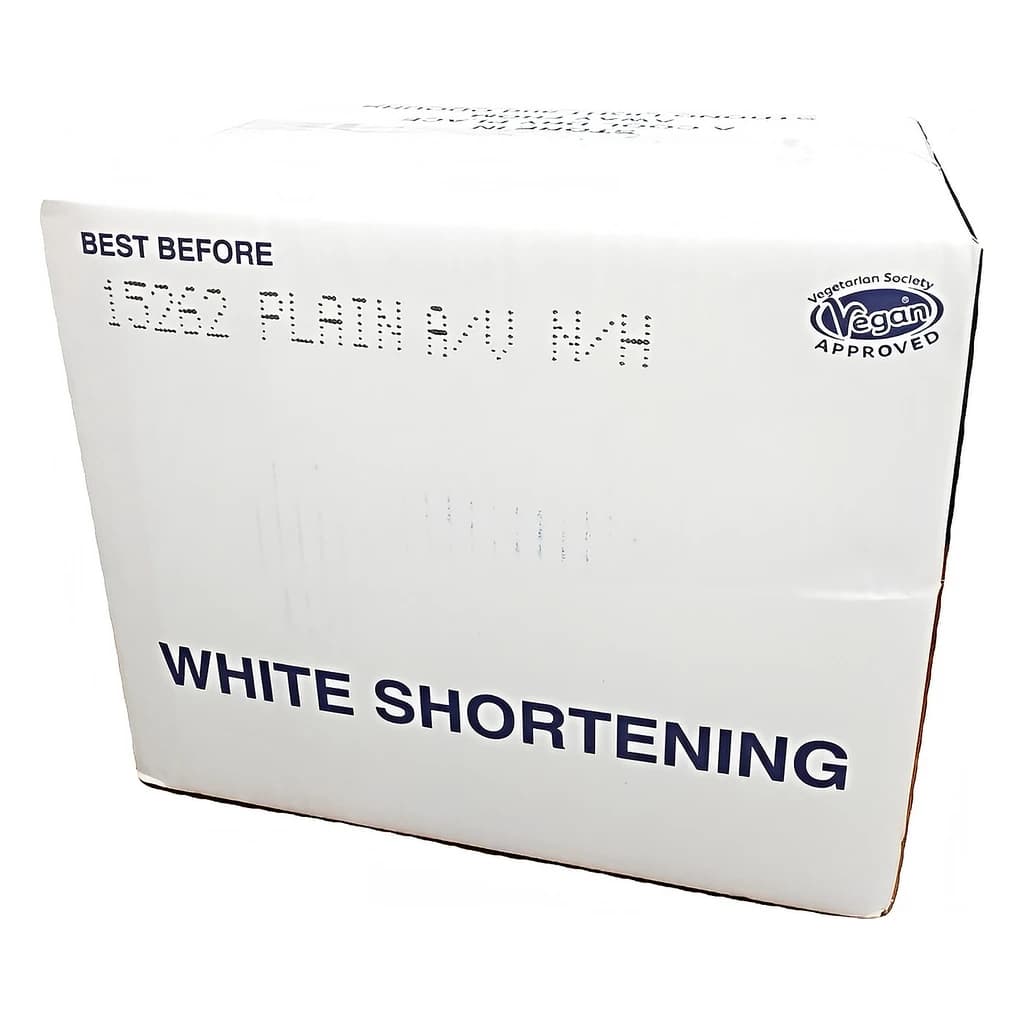
All three Cardowan fat products reviewed — the Plain Box NHAV Shortening (Vegetable Shortening 12.5 kg), Coronet NHAV HR (High Ratio Vegetable Shortening 12.5 kg) and Crown NHAV Pastry (Puff Pastry Margarine 12.5 kg) — carry an identical RSPO section in their spec sheets:
"Products are identified individually as conforming to RSPO supply chain model 'segregated' by the suffix SG or 'mass balance' by the suffix MB on the packaging, delivery notes and invoices. A product containing no suffix is not produced using RSPO certified oil. Cardowan Creameries are an RSPO member with Supply Chain Certification (Segregated & Mass Balance) BMT-RSPO-000023."
This is one of the clearest and most honest RSPO declarations seen in bakery fat spec sheets: it tells you exactly what each suffix means, and it explicitly states that unsuffixed products are conventional. Certifications are BRC Global Standard for Food Safety and RSPO (Segregated & Mass Balance).
All three products are free from all 14 major EU allergens in the product, on the production line and in the factory — confirmed in the allergen matrices in each spec sheet. Always verify allergen status at time of order.
5.2 CSM Marvello — Mass Balance declared explicitly
The CSM HXH Marvello Cake Margarine (12.5 kg) includes a dedicated sustainability section in its spec sheet that states: "Type: Palm oil, Supply chain model: Mass balance."
This is the Mass Balance model (see Section 4) — volume tracking only, physical traceability not guaranteed. Marvello is Kosher certified, Halal certified, and suitable for vegans. Country of origin is stated as United Kingdom.
Key fat composition from spec: saturates 27.0 g/100 g, trans fatty acids 0.9 g/100 g product (non-animal), SFC N20 = 20%, N30 = 12%, N35 = 9%.
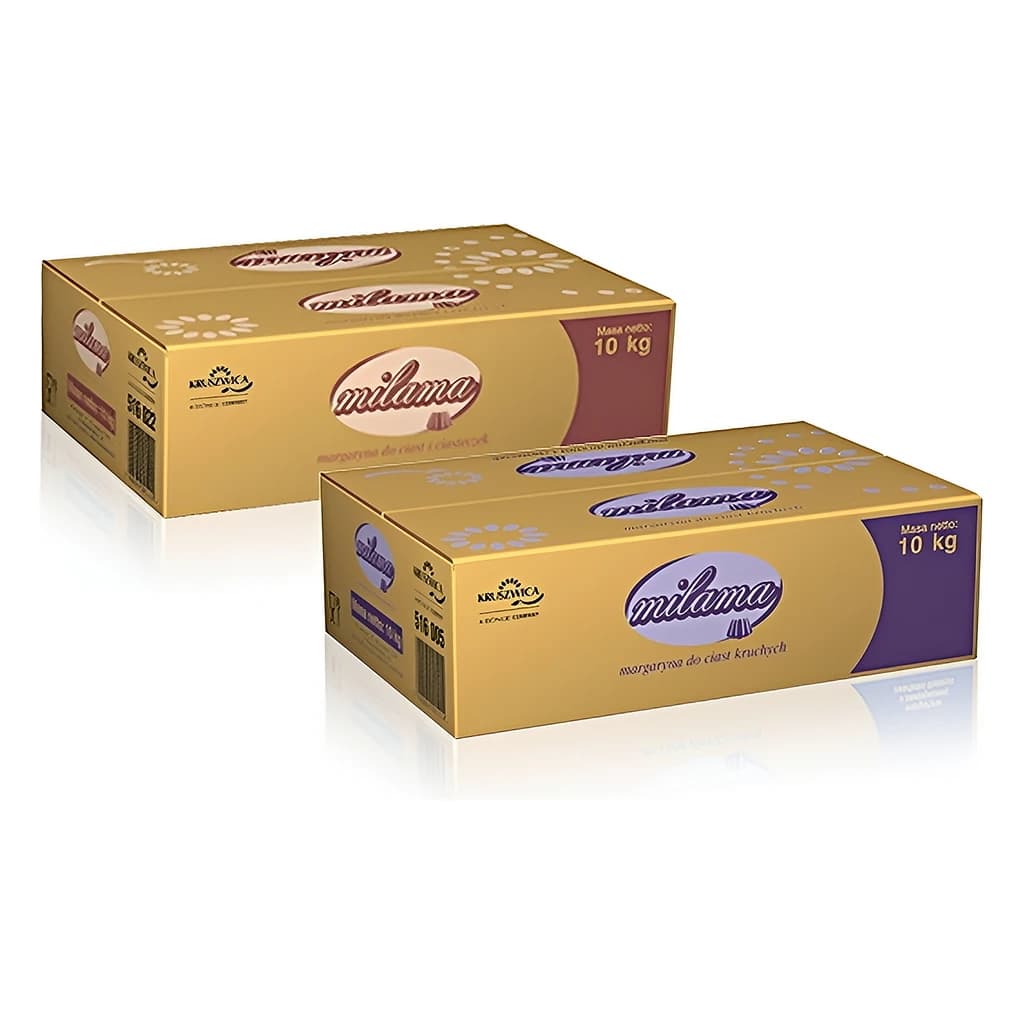
5.3 Kruszwica Milama — partially hydrogenated palm; no RSPO declaration
The Kruszwica Milama Cake & Cookie Margarine 10 kg is the most problematic product from a contemporary sustainability and regulatory perspective. Its spec sheet (version SPBLN 03/09, dated 15 December 2020) lists the fat phase as: "Vegetable oils and fats (palm, rapeseed, partially hydrogenated palm)."
Partially hydrogenated palm is a source of industrial trans fatty acids. The spec confirms this: "Trans fatty acids: max 2% [of fat]." At 80 g fat per 100 g product, this equates to a maximum of approximately 1.6 g trans fat per 100 g product — or 2 g per 100 g fat. This is exactly at the ceiling of EU Commission Regulation 2019/649, which limits industrial trans fats to a maximum of 2 g per 100 g fat in food placed on the market, effective from 1 April 2021.
Regulatory note: The Milama spec is dated December 2020 — before the EU 2019/649 enforcement date of April 2021. It is possible the formulation has been modified since then. Before using Milama in any product where a retailer or market requires trans fat compliance documentation, verify the current formulation specification directly with Kruszwica.
No RSPO certification is mentioned anywhere in the Milama spec sheet.
Additionally, the Milama spec declares maximum levels for two process contaminants: 3-MCPD and esters: max 2188 µg/kg; glycidyl esters: max 1000 µg/kg. These contaminants form during high-temperature refining (deodorisation) of vegetable oils — particularly those requiring high refining temperatures, which includes palm. They are process hazards, not unique to unsustainably sourced palm, but their presence at declared limits in the spec should be reviewed against current EU Commission Regulation 2020/1322 limits by a qualified food safety professional.
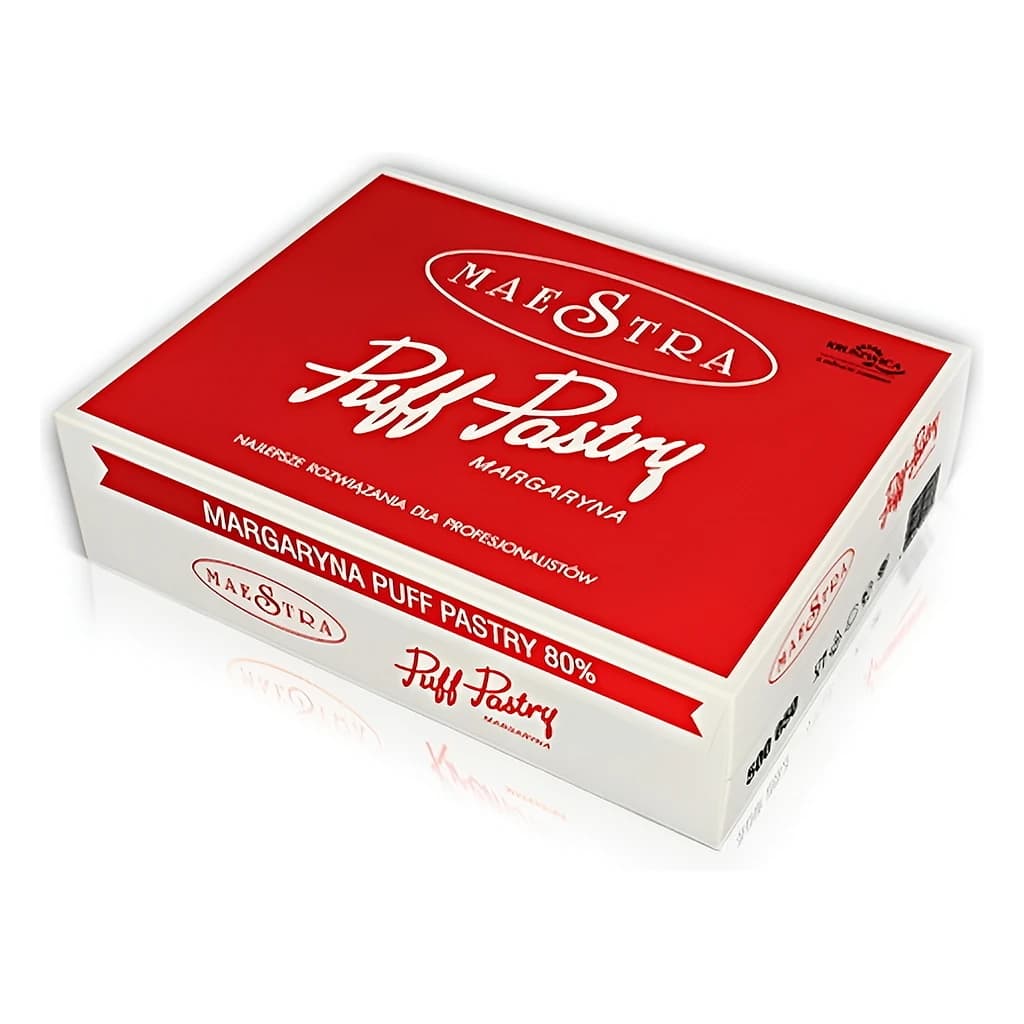
5.4 Kruszwica Maestra Puff Pastry — 2009 spec: data with caveats
The Kruszwica Maestra Puff Pastry Margarine 80% 10 kg has a spec sheet dated 2009 (with an English translation prepared for this catalogue). The ingredient list reads "partially hardened vegetable fats" — the hydrogenation-era terminology for what we would now call partially hydrogenated vegetable oils.
The spec does not declare trans fat content explicitly, nor is RSPO mentioned. However, the SFC data from this spec sheet remains useful for understanding the product's thermal behaviour: SFC at 20°C is 33–37% (seasonal variation; summer higher, winter lower), falling to 9–13% at 35°C. This profile is well-suited for puff pastry lamination — high enough solids at 20°C to keep layers distinct, low enough at mouth temperature (37°C) for a clean melt.
Spec currency note: The Maestra Puff Pastry spec is 17 years old. The current product may have been completely reformulated — including the removal of partially hydrogenated fat — since the EU trans fat regulation and industry pressure to remove PHO from supply chains. Request an updated specification from Kruszwica before using any of this data in supplier questionnaires or retailer documentation.
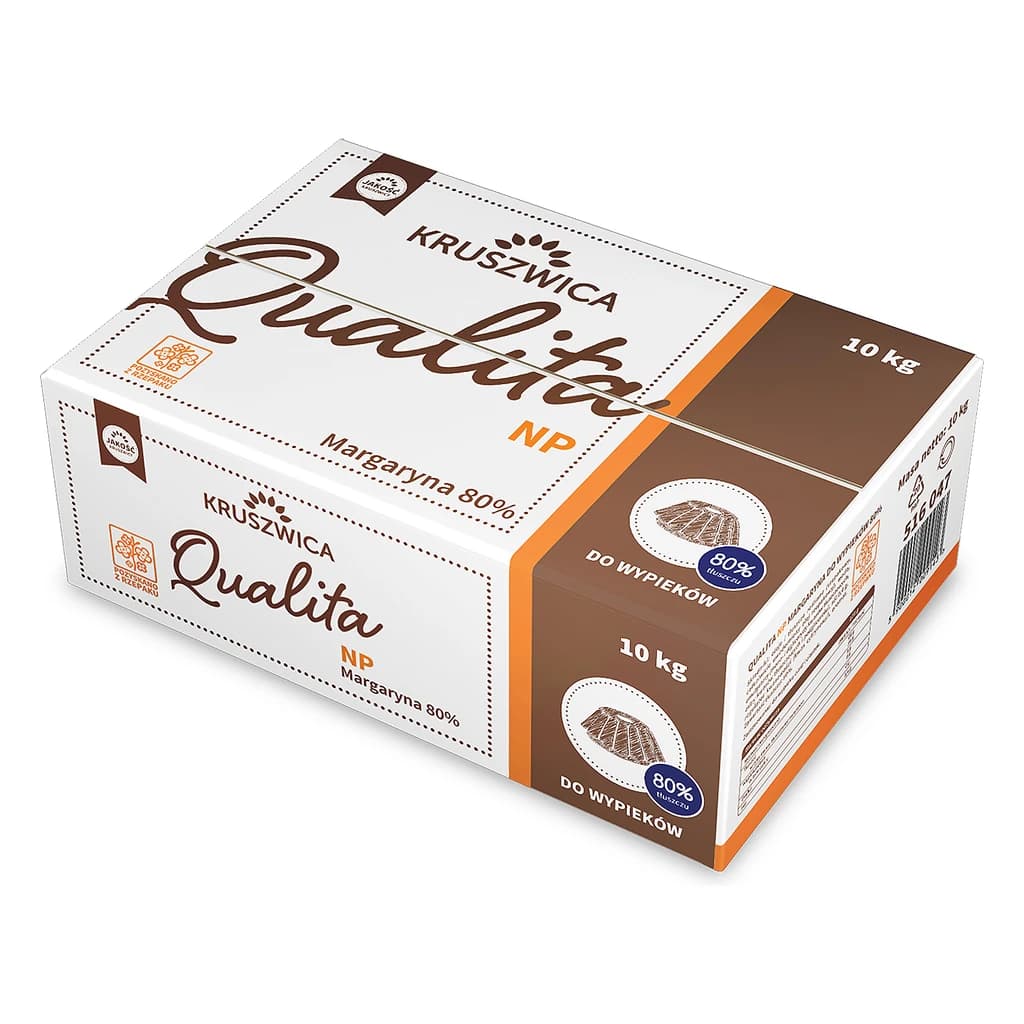
5.5 Kruszwica Qualita NP Palm-Free — catalogue entry, no spec available
The Kruszwica Qualita NP Palm-Free Margarine 80% 10 kg is listed in the Domson catalogue (SKU G25507, category: Margarines). The "NP" designation indicates palm-free. However, no supplier spec sheet is currently attached to this product. All physicochemical properties, SFC data, ingredient list and allergen declarations remain unknown from first-party data.
The existence of this product in the Kruszwica range demonstrates that the leading Polish margarine manufacturer is responding to market demand for palm-free alternatives. Contact Kruszwica directly or request the product's specification before adopting it in a palm-free reformulation.
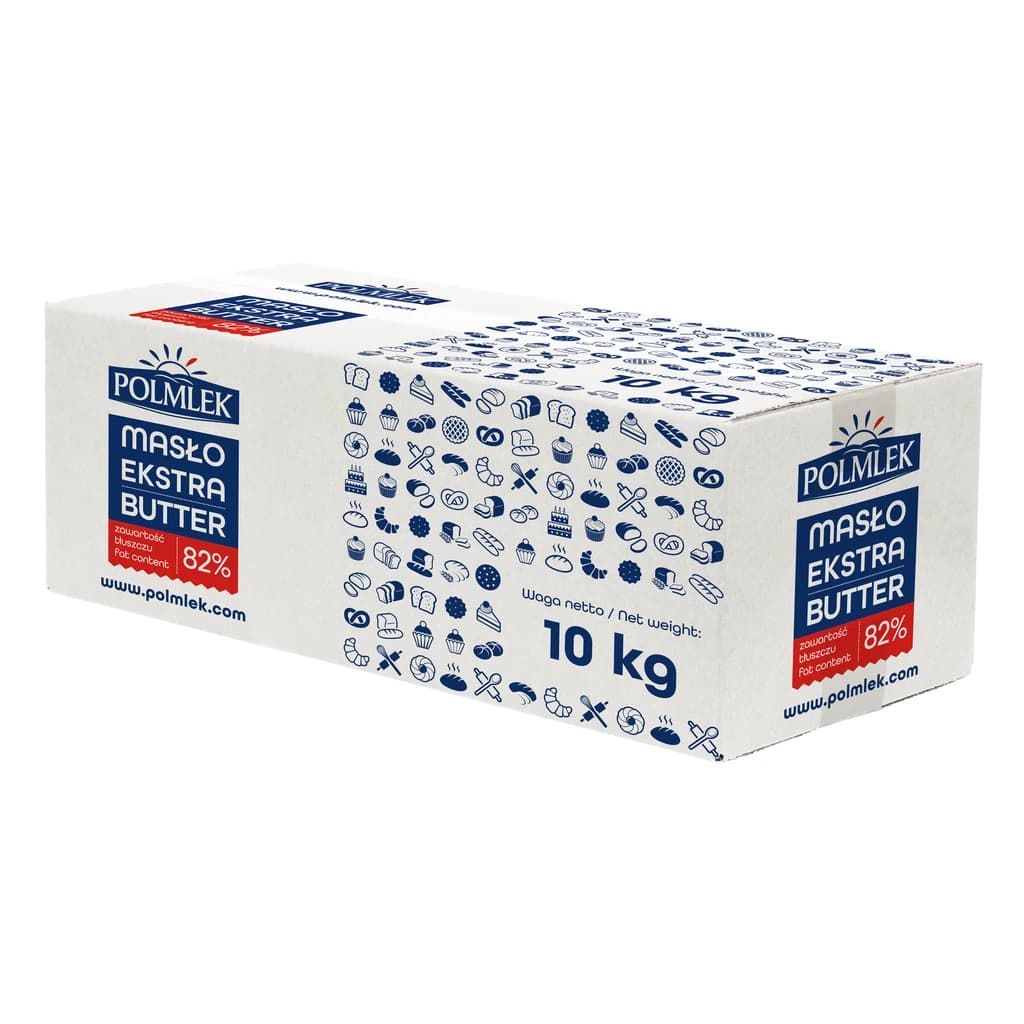
5.6 Polmlek Unsalted Butter 82% — dairy fat; no palm oil
The Polmlek Unsalted Butter 82% (10 kg block) contains a single ingredient: pasteurised cream. It contains no palm oil, no vegetable oils, and no hydrogenated fats. Saturated fatty acids are 55.0 g per 100 g — predominantly animal saturates (palmitic, stearic, myristic, butyric from milk fat).
Butter is therefore the most straightforward choice for any bakery that wants to eliminate all palm oil from a specific product — but at significantly higher cost and with its own temperature-management requirements for lamination.
See the full data table below for a structured comparison of all seven products.
6. Trans fats: the older problem that EU regulation is resolving
Before the mid-2000s, most bakery margarines and shortenings were produced from partially hydrogenated vegetable oils (PHO). The hydrogenation process — passing hydrogen gas through liquid oil in the presence of a nickel catalyst — converts liquid unsaturated oils into semi-solid fats by saturating the double bonds. The problem is that partial (incomplete) hydrogenation also produces trans fatty acids (TFA) as a by-product: the hydrogen adds to only one side of the double bond, creating a geometrically altered "trans" configuration that the body processes differently from natural fats.
Epidemiological evidence linking industrial TFA consumption to cardiovascular disease (raised LDL cholesterol, reduced HDL cholesterol) accumulated from the 1990s onward. Denmark was the first country to regulate industrial TFA in 2003. The EU acted in Commission Regulation (EU) 2019/649, which has applied from 1 April 2021: industrial trans fatty acids in food are limited to a maximum of 2 g per 100 g of fat. The UK has introduced equivalent provisions.
Regulatory scope note (B2B supply): The 2 g per 100 g fat hard limit in EU 2019/649 applies to food at the point of retail sale to final consumers. For business-to-business supply of food ingredients (for example, a fat manufacturer supplying a bakery), the regulation requires the supplier to provide trans fat content information where it exceeds 2 g per 100 g fat, rather than imposing a direct prohibition. In practice, reputable bakery fat suppliers formulate well below this threshold regardless of supply channel. Verify current UK and EU regulatory scope for your specific supply chain context with a food law professional.
The Milama cake and cookie margarine — with its declared "max 2% of fat" trans fatty acid content and explicitly listed "partially hydrogenated palm" in its ingredient declaration — sits exactly at this EU ceiling (Section 5.3 above). The CSM Marvello, by contrast, achieves 0.9 g trans per 100 g product (approximately 1.1 g per 100 g fat) through formulation without partial hydrogenation. The Cardowan products do not declare trans fats in their spec sheets, consistent with their use of non-hydrogenated palm and rapeseed oil.
Important distinction: The EU 2019/649 regulation explicitly covers industrial trans fats only. Naturally occurring trans fatty acids in dairy products — primarily conjugated linoleic acid (CLA) in butter and milk — are not covered. The trace trans fat content in Polmlek Butter is not subject to this regulation.
The industry's response to the TFA problem was, in large part, to switch from PHO-based fats to palm-based fats. Palm oil's natural semi-solid state means it does not require hydrogenation to be useful in bakery. This makes modern palm-based fats (like those from Cardowan and the non-PHO Kruszwica products) preferable to legacy partially hydrogenated formats — but the sustainability problem of the palm supply chain itself remains.
7. Process contaminants: 3-MCPD esters and glycidyl esters
A separate and important food safety dimension relates to process contaminants that form during the industrial refining of vegetable oils. The primary concern in bakery fats is:
3-Monochloropropane-1,2-diol (3-MCPD) esters form during high-temperature deodorisation of vegetable oils — a process used to remove off-flavours from refined oil. They are potential carcinogens.
Glycidyl fatty acid esters also form during high-temperature refining and are classified as genotoxic.
These contaminants are not unique to palm oil — they form in all refined vegetable oils to varying degrees — but palm oil typically shows higher levels because it contains more triglycerides susceptible to ester formation and because it requires higher refining temperatures due to its natural colour (carotene removal). The European Food Safety Authority (EFSA) has published scientific opinions on both contaminants. EU Commission Regulation 2020/1322 sets maximum limits in vegetable oils and fats and in foods containing them.
The Kruszwica Milama spec sheet is the only product in the Domson catalogue reviewed here that declares explicit limits for these contaminants:
- 3-MCPD and esters of 3-MCPD: max 2188 µg/kg
- Glycidyl esters: max 1000 µg/kg
Whether these maximum limits are compliant with the current EU 2020/1322 limits for the specific product category requires checking against the current regulation text. Food safety professional sign-off required before any customer- facing use of these values.
Fat-phase calculation for food safety professionals: EU Commission Regulation 2020/1322 sets limits per kilogram of vegetable oil or fat. The Milama spec declares its contaminant limits per kilogram of the finished margarine product, which is 80% fat. When the declared maxima are converted to a fat-phase basis (dividing by the fat fraction of 0.80): 3-MCPD and esters ≈ 2188 ÷ 0.80 = approximately 2735 µg/kg fat phase; glycidyl esters ≈ 1000 ÷ 0.80 = approximately 1250 µg/kg fat phase. EU 2020/1322 limits for palm-containing oils include 2500 µg/kg for 3-MCPD esters (other refined vegetable oils) and 1000 µg/kg for glycidyl esters. These fat-phase equivalent figures may approach or exceed EU limits depending on how the regulation applies to the fat phase of a composite finished food product such as margarine. This analysis requires a qualified food safety professional to review the applicable limit category, the spec's unit basis, and any amendments under EU 2023/915. URGENT — do not rely on these values for compliance assessment without expert food safety review.
For completeness: butter (Polmlek) is made from cream, not refined vegetable oil, so these process contaminants do not apply. Palm-free margarines using lower-temperature processing of vegetable alternatives may have lower 3-MCPD and glycidyl ester concentrations, though this depends on the processing conditions used.
8. Crystal polymorphism: why palm-free reformulation is technically difficult
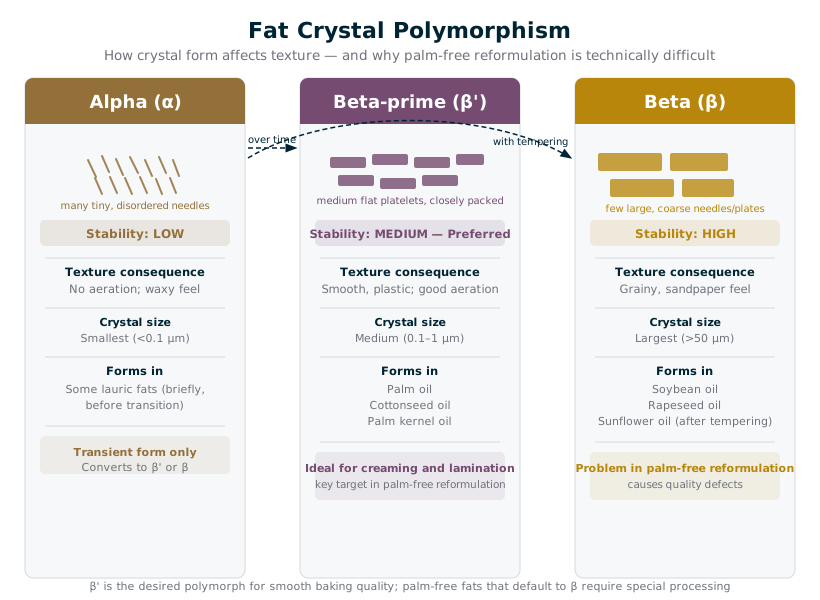 Diagram showing three fat crystal polymorphs: alpha (smallest, unstable), beta-prime (medium, smooth texture, formed by palm and cottonseed), and beta (largest, grainy, formed by soybean and rapeseed)
The hardest part of removing palm oil from bakery fat formulations is not the sustainability paperwork — it is the physics of fat crystallisation. Palm oil has a crystalline behaviour that most alternative oils do not naturally replicate.
Fats crystallise in three principal polymorphic forms, in ascending order of stability:
Alpha (α) crystals are the least stable form, with small disordered crystal structures. They form rapidly on cooling but quickly transform into more stable forms. Limited bakery relevance.
Beta-prime (β') crystals are the workhorse of commercial bakery fats. They are needle-like, smaller than beta crystals, and produce smooth, plastic, creamy textures in fats. Fats in β' form cream well (trapping fine air bubbles effectively), spread evenly, and give a silky mouthfeel. Beta-prime crystals are what make a good commercial cake margarine feel creamy and a good pastry fat pliable without being greasy. Palm oil naturally promotes β' crystal formation. So does cottonseed oil and interesterified palm kernel.
Beta (β) crystals are the most thermodynamically stable form — larger, plate-like crystals that can produce a perceptibly grainy or sandy texture in bakery products. Soybean oil, rapeseed oil and most sunflower oil tend to settle into β crystal forms when solidified. A shortening made from 100% rapeseed hardstock will often have a grainier texture than a palm-based equivalent, and will not cream as effectively.
This crystal physics creates a real reformulation challenge:
-
Replacing palm with rapeseed alone gives a β-forming fat. The texture of cakes, biscuits and pastry made with a pure rapeseed-based shortening will often be noticeably different from the palm-based benchmark — harder to get right without extensive reformulation of the recipe.
-
Shea butter (from the West African shea tree, Vitellaria paradoxa) is a natural solid fat that does not carry the same deforestation stigma as palm. Interestingly, shea olein (the liquid fraction of shea) promotes β' crystal formation — making it a valuable blending partner for palm-free bakery fats that need good aeration and plasticity. The supply of food-grade shea is significantly smaller than palm, and its price is higher.
-
Interesterification is the industrial process that makes most palm-free bakery fats work. By enzymatically or chemically rearranging the fatty acids among the triglycerides of a blend (e.g. rapeseed + fully hydrogenated rapeseed + shea olein), it is possible to design a fat with:
- a targeted SFC curve (to match the original palm-based product's plasticity range)
- β' crystal tendency (to preserve texture and aeration)
- no trans fats (interesterification does not create TFA, unlike partial hydrogenation)
Full interesterification (not partial hydrogenation) is now the industry standard technique for creating palm-free laminating margarines and shortenings without trans fat. The process is more expensive and technically demanding than simply blending palm, which is why palm-free alternatives remain at a price premium.
9. Comparing SFC profiles: what spec-sheet data tells us
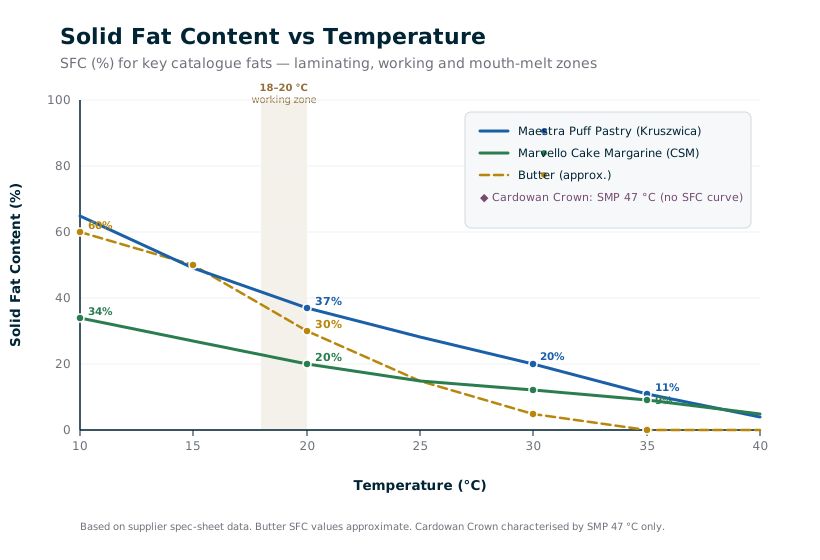 Line graph of solid fat content percentage versus temperature for four bakery fats from the catalogue. Maestra puff pastry margarine starts highest at room temperature; Marvello and butter fall more steeply.
The Solid Fat Content curves extracted from spec sheets reveal the functional differences between products at a glance. See the full table below; the key patterns are:
For puff pastry and lamination (Kruszwica Maestra Puff, Cardowan Crown): The Kruszwica Maestra Puff Pastry shows SFC at 20°C of 33–37% (seasonal range), falling to 9–13% at 35°C. The Cardowan Crown NHAV Pastry is characterised only by slip melting point (SMP 47°C) in its spec, without an SFC curve. Both are designed for the same application (puff/laminated pastry), so their working temperatures are similar. The Crown's higher SMP suggests it will maintain higher solids at the 18–22°C laminating window.
For cake production (CSM Marvello): Marvello shows SFC N20 = 20%, N30 = 12%, N35 = 9% — a significantly softer profile than either puff pastry product at the same temperatures. This is appropriate: cake margarines need to cream easily at room temperature, which requires lower solids in the 15–22°C range than lamination margarines. The SFC of approximately 20% at 20°C for Marvello puts it in the right zone for aeration in a standard creaming method.
Butter's profile (estimated from literature): Butter (55.0 g/100 g saturates confirmed from Polmlek spec) has very high solids at low temperatures but melts rapidly above 32°C — this steep SFC curve is why butter croissants are exquisitely flaky (high solids at laminating temperature maintain distinct layers) but also temperature-sensitive (butter softens quickly in a warm kitchen). Estimated SFC at 20°C is approximately 30–40% (literature estimate — single source, medium confidence).
10. Palm-free options: what the market offers
Bakers under pressure to eliminate palm oil from their supply chain have several pathways:
OPTION A — RSPO-certified sustainable palm (the "better palm" route). For most bakeries, this is the most practical and cost-effective path. Products like the Cardowan Segregated (SG) shortenings offer the same performance as conventional palm-based fats with a credible, third-party-verified sustainability claim. The physical product contains certified palm oil (SG model). This route does not eliminate palm from the supply chain but supports the transformation of the industry toward sustainable cultivation.
OPTION B — Palm-free interesterified fat. Suppliers including Kruszwica (Qualita NP) are responding to market demand with palm-free margarines. These products typically use interesterified blends of rapeseed, shea, coconut or other oils to replicate the SFC profile of palm-based counterparts. Performance in specific applications (particularly lamination) must be validated in pilot trials before full adoption, as the SFC curve and crystal behaviour may differ from the palm benchmark. No spec sheet is currently available for the Qualita NP product in this catalogue — contact the supplier directly.
OPTION C — Butter (dairy fat, no vegetable oils). Butter eliminates all vegetable oil concerns by using dairy fat exclusively. The trade-offs are: higher cost (typically 3–5× the price of palm-based alternatives), temperature sensitivity in production (requires careful control at 16–18°C for lamination), and the dairy supply chain has its own environmental footprint (land use, methane emissions from cattle). For premium and artisan products, butter is often the right choice on flavour and clean-label grounds regardless of palm considerations.
OPTION D — Liquid oils where functionality allows. For applications where a semi-solid plastic fat is not required — some bread formulations, some cake and muffin batters — replacing the fat with liquid rapeseed or sunflower oil removes palm from the recipe without reformulation complexity. UK-grown rapeseed oil in particular is increasingly marketed as a sustainable, locally traceable alternative.
Important for laminated pastry (croissant, Danish, puff): Liquid oil will not work as a roll-in fat. A semi-solid plastic fat is essential for layer separation. Only Options A, B or C apply for lamination applications.
11. Retailer and consumer context
UK retailers have taken varying positions on palm oil. Some (Iceland Foods is the most cited example) committed to removing palm from their own-label products. Others accept RSPO- certified palm as sufficient. Major European food companies (Nestlé, Unilever, Mondelēz) have published commitments to 100% RSPO-certified palm by stated dates. For bakeries supplying own-label or co-manufacturing, the customer's specific requirement determines which route to follow.
For Middle Eastern and Arab market customers: halal certification does not distinguish between sustainable and conventional palm oil. However, some OIC country buyers are adding RSPO requirements to procurement specifications, following European retail lead.
For Polish and Eastern European market customers: consumer awareness of palm oil sustainability is growing but typically lags Western European markets. Regulatory requirements (EU 2019/649 on trans fats; EU 2020/1322 on 3-MCPD) are the more immediate compliance driver in these markets than RSPO.
12. Common reformulation faults and remedies
When switching from a palm-based to a palm-free fat formulation, specific quality problems are commonly reported. See the fault table below for a full breakdown. The most critical are:
Grainy or sandy mouthfeel in cake or biscuit: the hallmark of a β-crystal-forming alternative (rapeseed-based shortening used without interesterification). Solution: select a purpose-formulated palm-free shortening with β' tendency, or use shea olein fraction as part of the blend.
Poor aeration and dense crumb: a palm-free fat with insufficient SFC at creaming temperature (18–22°C) will not trap air effectively. Check the SFC curve of the alternative at your creaming temperature before committing to a reformulation. Target 15–30% SFC at the creaming point.
Laminated layers tearing or fusing: the alternative fat's plastic range may not match the working temperature of the laminating room. Map SFC carefully and adjust room temperature if needed.
Earlier oxidative rancidity: palm-free alternatives higher in polyunsaturated fatty acids oxidise faster. Shorten shelf life targets, review antioxidant additions and storage conditions.
Coverage notes and gaps
This article is solid on:
- RSPO supply chain model detail, with spec-sheet evidence for which model each Cardowan and CSM product uses (high confidence, multiple points of evidence)
- Trans fat regulatory framework (EU 2019/649) and its application to the Milama product
- SFC and SMP data from first-party spec sheets for all products with available specs
- Crystal polymorphism science and its practical consequence for palm-free reformulation
- Process contaminants (3-MCPD, glycidyl esters) flagged clearly with spec-sheet values
This article is thin on:
- Kruszwica Qualita NP Palm-Free Margarine — no spec sheet available; no technical data
- Specific price premium data for RSPO-certified vs conventional vs palm-free
- Life-cycle analysis comparison data between palm and alternatives — single-source (Bakels industry article) and not independently verified
- Palm oil yield comparison figures (4–5 t/ha vs 0.5–0.7 t/ha rapeseed) — industry sources only; verify against FAO data before customer-facing publication
- UK/EU post-Brexit regulatory divergence on trans fat and process contaminant limits
- Kruszwica Maestra Puff Pastry: all data is from a 2009 spec sheet
Follow-up recommended:
- Request updated Kruszwica Maestra Puff Pastry spec (current formulation, post-PHO era)
- Request Kruszwica Qualita NP spec sheet to enable technical comparison with palm equivalents
- Verify Milama current compliance with EU 2019/649 and EU 2020/1322 directly with Kruszwica
- Cross-check palm yield figures against FAO STAT database
- Read current text of EU Commission Regulations 2019/649 and 2020/1322 for exact scope, limits and any amendments since this research was conducted
Figures
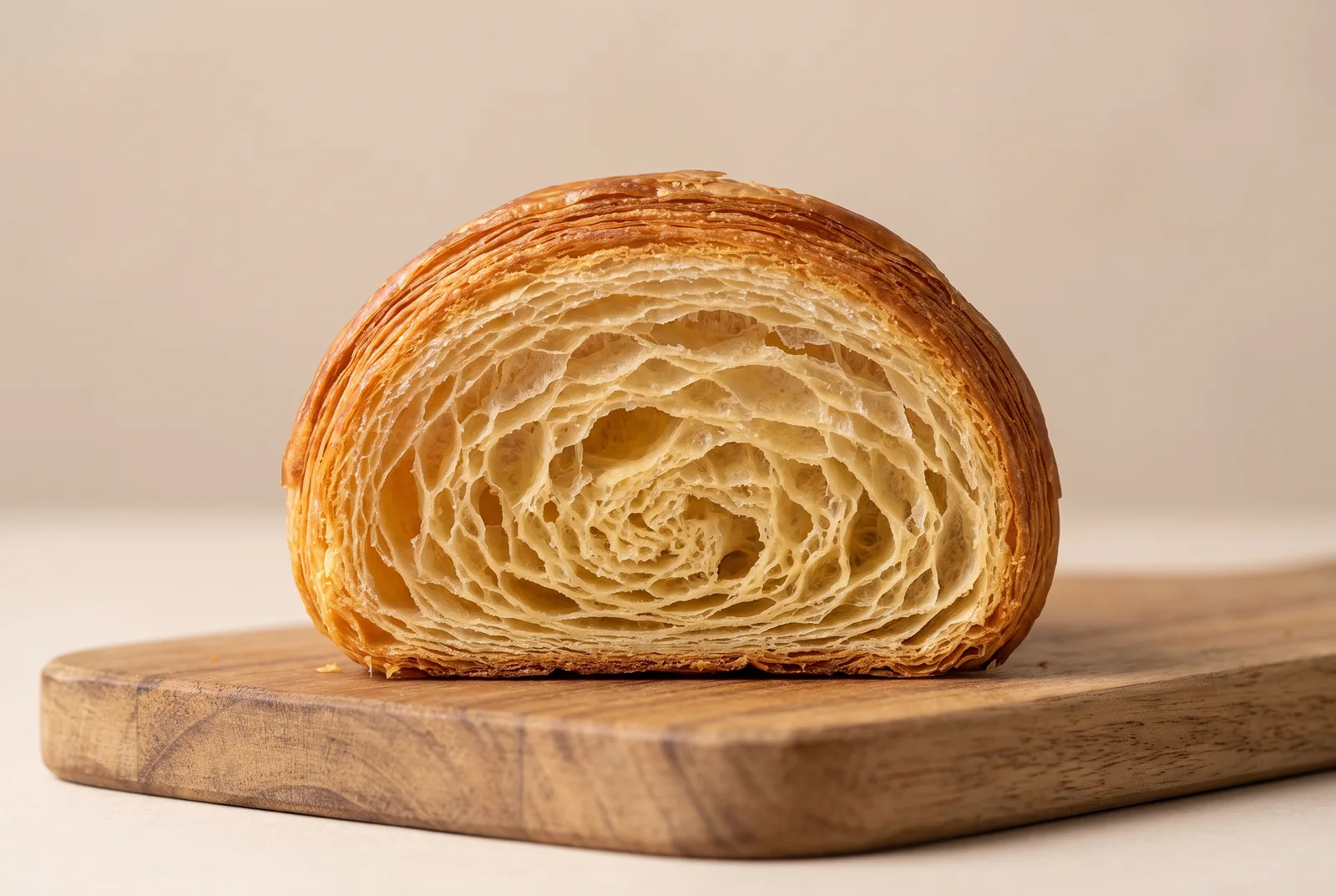 Close-up cross-section of a freshly baked croissant revealing hundreds of thin, distinct pastry layers separated by air pockets from the roll-in fat lamination process
Data extracted from first-party supplier spec sheets. RSPO status and palm use are stated explicitly in the spec sheets (high confidence). SFC data is from spec sheets except where marked (est.) = estimated from literature. Kruszwica Maestra spec date is 2009 — current formulation may differ; seek updated spec before customer communication.
| Product | Brand | Palm in formulation | RSPO status (from spec) | Fat g/100g | Saturates g/100g | Trans g/100g fat | SMP / SFC indicator | Application |
|---|---|---|---|---|---|---|---|---|
| Vegetable Shortening 12.5 kg | Cardowan Creameries | Yes — Palm + Rapeseed | Certified. SG suffix = Segregated; MB suffix = Mass Balance; no suffix = conventional. Cert BMT-RSPO-000023. | 100 | 38.8 | Not declared (product uses non-hydrogenated blending) | SMP 45°C | General baking shortening — pastry, biscuits, bread fats |
| High Ratio Vegetable Shortening 12.5 kg | Cardowan Creameries | Yes — Palm + Rapeseed + E471 | Certified. SG or MB suffix on pack. Cert BMT-RSPO-000023. | 100 | 38.1 | Not declared (product uses non-hydrogenated blending) | SMP 44°C | Cake aeration (high ratio creaming), icing, fillings |
| Puff Pastry Margarine 12.5 kg | Cardowan Creameries | Yes — Palm + Rapeseed + E471 | Certified. SG or MB suffix on pack. Cert BMT-RSPO-000023. | 82 | 41.2 | Not declared (product uses non-hydrogenated blending) | SMP 47°C | Puff pastry, laminated pastry |
| Marvello Cake Margarine 12.5 kg | CSM (Bakemark) | Yes — Palm + Rapeseed | Mass Balance declared on spec. Sustainability section explicitly states: 'Type: Palm oil, Supply chain model: Mass balance'. | 80 | 27.0 | 0.9 g/100 g product (1.1% of fat — below 2 g/100 g fat EU limit) | SFC N20=20%, N30=12%, N35=9% | Cake production, general confectionery |
| Milama Cake & Cookie Margarine 10 kg | Kruszwica | Yes — Palm + Rapeseed + partially hydrogenated palm | Not declared in spec (spec date Dec 2020). No RSPO certification mentioned. | 80 | ~33 (est. from SAFA 41% × 80g fat) | Max 2% of fat (~1.6 g/100 g product) — right at EU 2019/649 limit of 2 g/100 g fat. | SFC 20°C: 20-25%; 35°C: max 5% | Cakes and cookies (confectionery) |
| Puff Pastry Margarine 80% 10 kg | Kruszwica | Yes — partially hardened vegetable fats + vegetable oils (spec 2009) | Not declared in spec (spec date 2009 — may not reflect current formulation or certification). Seek updated spec. | 80 | Not stated in spec | Not declared. Spec mentions 'partially hardened vegetable fats' — hydrogenation-era language. Current trans fat content unknown — seek updated spec. | SFC 20°C: 33-37% (seasonal); 30°C: 17-23%; 35°C: 9-13% | Puff pastry (feuilletage) and semi-puff pastry |
| Qualita NP Palm-Free Margarine 80% 10 kg | Kruszwica | None (palm-free by product name) | N/A — palm-free formulation | 80 (nominal — no spec available) | Not available (no spec sheet) | Not available (no spec sheet) | Not available (no spec sheet) | Cake and confectionery (palm-free alternative to standard cake margarines) |
| Unsalted Butter 82% 10 kg | Polmlek | None — pure dairy fat | N/A — no vegetable oil | 82 (min) | 55.0 | Trace naturally occurring CLA (conjugated linoleic acid) — not industrial trans fat; not covered by EU 2019/649 | Melts approx. 32-35°C (literature est.); water content 16% | Pastry, croissant, lamination, flavour carrier |
Four models from most to least traceable, per RSPO's published supply chain framework. Cardowan Creameries (BMT-RSPO-000023) uses both Segregated and Mass Balance depending on the specific product batch (identified by suffix SG or MB on packaging). CSM Marvello declares Mass Balance. Cost premium data is indicative only — single-source trade body, confidence low.
| Model | Abbreviation | Is certified palm physically in the product? | Traceability to certified plantation | Physical segregation from conventional palm | Typical cost premium over conventional | What baker sees on product spec / label |
|---|---|---|---|---|---|---|
| Identity Preserved | IP | Yes — single certified source | Full — to specific certified mill and plantation | Complete — from plantation to product | Highest — rare in commodity bakery fat | 'Identity Preserved' or 'IP' declaration. Very rare on bulk bakery fat specs. |
| Segregated | SG | Yes — blended certified sources only | To certified mill level | Complete — kept separate from conventional throughout chain | High — infrastructure cost for segregation | Suffix 'SG' on Cardowan product codes; 'Segregated' on spec. Certifiable back to mill level. |
| Mass Balance | MB | Technically: a quantity of certified palm equal to the product volume entered the supply chain — physical oil may be mixed | Volume tracking only — not physical traceability to a specific plantation | None — certified and conventional palm may be blended at some point in supply chain | Moderate — book-keeping overhead only | Suffix 'MB' on Cardowan product codes; CSM Marvello spec states 'Supply chain model: Mass balance'. |
| Book & Claim (RSPO Credits) | B&C | No — conventional oil used; certified equivalent is traded as PalmTrace credits | None for the physical oil | None | Low — credit purchase cost only | Not commonly declared on bakery fat spec sheets. May appear as 'RSPO Credits' or 'PalmTrace'. Does not indicate certified oil in the product. |
SFC data extracted directly from spec sheets where available. Butter SFC is estimated from literature (single source, confidence medium). High SFC = more solid at that temperature (firmer fat). Typical laminating range for croissant: 16-22°C. Typical mouth temperature (melt cleanly in mouth): 35-37°C. Cardowan Crown NHAV characterised by slip melting point (SMP) only — no SFC curve in spec.
| Product | SFC at 10°C | SFC at 20°C | SFC at 30°C | SFC at 35°C | Slip Melting Point °C | Note |
|---|---|---|---|---|---|---|
| CSM Marvello Cake Margarine | 34% | 20% (interval 18-24%) | 12% (interval 9.5-13.5%) | 9% (interval 7-11%) | Not stated | Typical SFC targets stated; intervals are product specification limits |
| Kruszwica Maestra Puff Pastry (seasonal range) | Not stated | 35-37% (Apr-Aug) / 33-35% (Sep-Apr) | 18-23% (Apr-Aug) / 17-22% (Sep-Apr) | 10-13% (Apr-Aug) / 9-12% (Sep-Apr) | Not stated | Seasonal variation declared. Spec date 2009 — current formulation may differ. |
| Kruszwica Milama Cake & Cookie Margarine | Not stated | 20-25% | Not stated | Max 5% | Not stated | Softer SFC profile than puff pastry margarine, consistent with cake application |
| Cardowan Crown NHAV Pastry Margarine | Not in spec | Not in spec | Not in spec | Not in spec | 47.0°C | Spec provides slip melting point only. High SMP indicates a firm, high-solids fat at laminating temperature. |
| Cardowan Coronet NHAV HR Shortening | Not in spec | Not in spec | Not in spec | Not in spec | 44.0°C | HR = high ratio (emulsified). Lower SMP than Crown Pastry, consistent with cake/icing application. |
| Cardowan Plain Box NHAV Shortening | Not in spec | Not in spec | Not in spec | Not in spec | 45.0°C | Plain shortening (no emulsifier). SMP midway between HR and Crown versions. |
| Polmlek Unsalted Butter 82% | ~55-65% (est.) | ~30-40% (est.) | ~5-10% (est.) | ~0-2% (est.) | ~32-35°C (est.) | SFC estimated from literature — not stated in Polmlek spec sheet. Confidence: medium. Saturates confirmed at 55 g/100 g (from spec). |
Practical guide for bakers moving from palm-based margarines and shortenings to palm-free alternatives. Fault causes and remedies reflect the technical difference in crystal polymorphism and SFC profile between palm-based (β') and many palm-free alternatives (β-forming). Always conduct pilot trials before full production switch. Food safety and allergen implications of any new ingredient require full specification review.
| Fault | Root cause in palm-free fat | Typical remedy |
|---|---|---|
| Grainy or sandy mouthfeel in cake or biscuit | Palm-free fat (rapeseed, soybean) tends to form large beta (β) crystals rather than the fine beta-prime (β') crystals of palm-based shortenings. β crystals create perceptible grittiness. | Select a palm-free fat specifically formulated for β' crystal formation (e.g. via interesterification with shea olein or fractionated coconut). Avoid 100% rapeseed oil shortenings without structural engineering. Rapid chilling after creaming may help lock in smaller crystal forms. |
| Poor aeration in cake (reduced volume, dense crumb) | Effective creaming requires a semi-solid fat that can trap air during beating. If the palm-free fat is too soft (SFC at creaming temperature is too low) or too hard (no plastic range), air incorporation is reduced. | Check SFC curve of the palm-free alternative at creaming temperature (typically 18-20°C). Target SFC ~15-30% at that temperature for most cake applications. Adjust storage temperature to bring fat to optimal plasticity before use. |
| Laminated pastry layers tear or fuse during sheeting | Palm-free fat may have a narrower or different plastic range than the palm-containing fat it replaces. If it softens too quickly (SFC drops steeply) the fat squeezes out between layers; if too hard it shatters and breaks through. | Map the SFC curve of the palm-free roll-in fat carefully against working temperature. Adjust sheeting room temperature and dough rest times. Pilot with a 20-fold lamination to check layer separation before moving to full fold count. |
| Puff pastry lacks lift and flake | Effective puff pastry requires the fat to create an impermeable steam barrier between dough layers during baking. A palm-free fat with a lower SMP or different crystal structure may melt before adequate steam pressure is built, merging the layers. | Select a palm-free puff pastry margarine with an SMP ≥ 44°C (or equivalent SFC profile: low solids <10% at 35°C but adequate solids >30% at 20°C). Brands including Kruszwica (Qualita NP) are entering the market; verify specs before adoption. |
| Shorter shelf life or earlier rancidity | Palm-free fats (especially those higher in polyunsaturated rapeseed or sunflower fatty acids) are more susceptible to oxidative rancidity than palm-based fats. Palm stearin is naturally high in stable saturated fats. | Check the PUFA content of the palm-free fat — ideally similar to or lower than the product being replaced. Select fats with natural antioxidant addition (tocopherols). Adjust storage conditions (lower temperature, inert atmosphere packaging) and reduce shelf-life target for the finished product if needed. |
| Product becomes too firm or brittle in cold storage | Some palm-free interesterified fats (e.g. fully hydrogenated rapeseed + shea blends) have a steeper SFC curve with very high solids at low temperatures. The product becomes unworkable when refrigerated. | Temper the fat to working temperature before use (allow 30-60 min at ambient). For industrial continuous production, specify the required SFC at refrigerator temperature (4-6°C) when ordering from the supplier. |
| Unexpected change in flavour or aroma | Palm oil has a neutral flavour profile. Some palm-free alternatives — particularly high-oleic sunflower or unrefined shea — carry distinctive flavour notes that carry into the finished product. | Request flavour-neutral, fully deodorised versions of alternative fats. Taste-test the fat alone and in a standard recipe. Note that rapeseed oil can have a mild "green" note at higher use levels; select refined, deodorised grades. |
- Value:
- BMT-RSPO-000023
- Unit:
- RSPO certification reference
- Confidence:
- high
- Note:
- Stated identically across all three Cardowan spec sheets reviewed. Covers both Segregated and Mass Balance supply chain models.
- Value:
- 2
- Unit:
- g industrial trans fats per 100 g fat in food
- Confidence:
- high
- Note:
- Applies from 2 April 2021. Does not cover naturally occurring trans fats in dairy (CLA). Verify current regulatory text for the applicable market.
- Value:
- max 2
- Unit:
- % of fat (approx. 1.6 g/100 g product at 80% fat content)
- Confidence:
- high
- Note:
- Stated in spec sheet as 'Trans fatty acids: max 2%'. At 80 g fat/100 g product this equates to approx. 1.6 g trans/100 g product, or 2 g/100 g fat — exactly at the EU 2019/649 limit. Milama contains partially hydrogenated palm. Current regulatory compliance should be verified directly with Kruszwica as this product is at the regulatory ceiling.
- Value:
- 2188
- Unit:
- µg/kg
- Confidence:
- high
- Note:
- 3-MCPD and esters of 3-MCPD maximum stated in Milama spec sheet. For context: EU Commission Regulation 2020/1322 sets limits on 3-MCPD in vegetable oils. Verify current regulatory limit for this product category.
- Value:
- 1000
- Unit:
- µg/kg
- Confidence:
- high
- Note:
- Glycidyl fatty acid esters maximum stated in Milama spec sheet. Glycidyl esters are genotoxic process contaminants.
- Value:
- 0.9
- Unit:
- g/100 g product
- Confidence:
- high
- Note:
- Spec declares: trans unsaturated fatty acids 0.9 g/100 g product; animal-derived trans = 0.0 g; non-animal trans = 0.9 g. As % of fat (80 g/100 g): 1.1% — below the EU 2019/649 limit of 2 g/100 g fat.
- Value:
- 55.0
- Unit:
- g saturated fatty acids per 100 g
- Confidence:
- high
- Note:
- Polmlek Butter 82% spec sheet.
- Value:
- 47
- Unit:
- °C slip melting point
- Confidence:
- high
- Note:
- Cardowan Crown NHAV Pastry Margarine spec sheet. High SMP reflects palm stearin contribution.
- Value:
- 33-37
- Unit:
- % SFC at 20°C (seasonal range)
- Confidence:
- medium
- Note:
- From Kruszwica Maestra spec sheet dated 2009. Summer (Apr-Aug) 35-37%; winter (Sep-Apr) 33-35%. Spec is from 2009 — current product may have been reformulated.
Buy the ingredients
Catalogue products and brands referenced in this article.