
Romanian
12 articles · 88 diagrams · avg 12 min read
Articles in this section
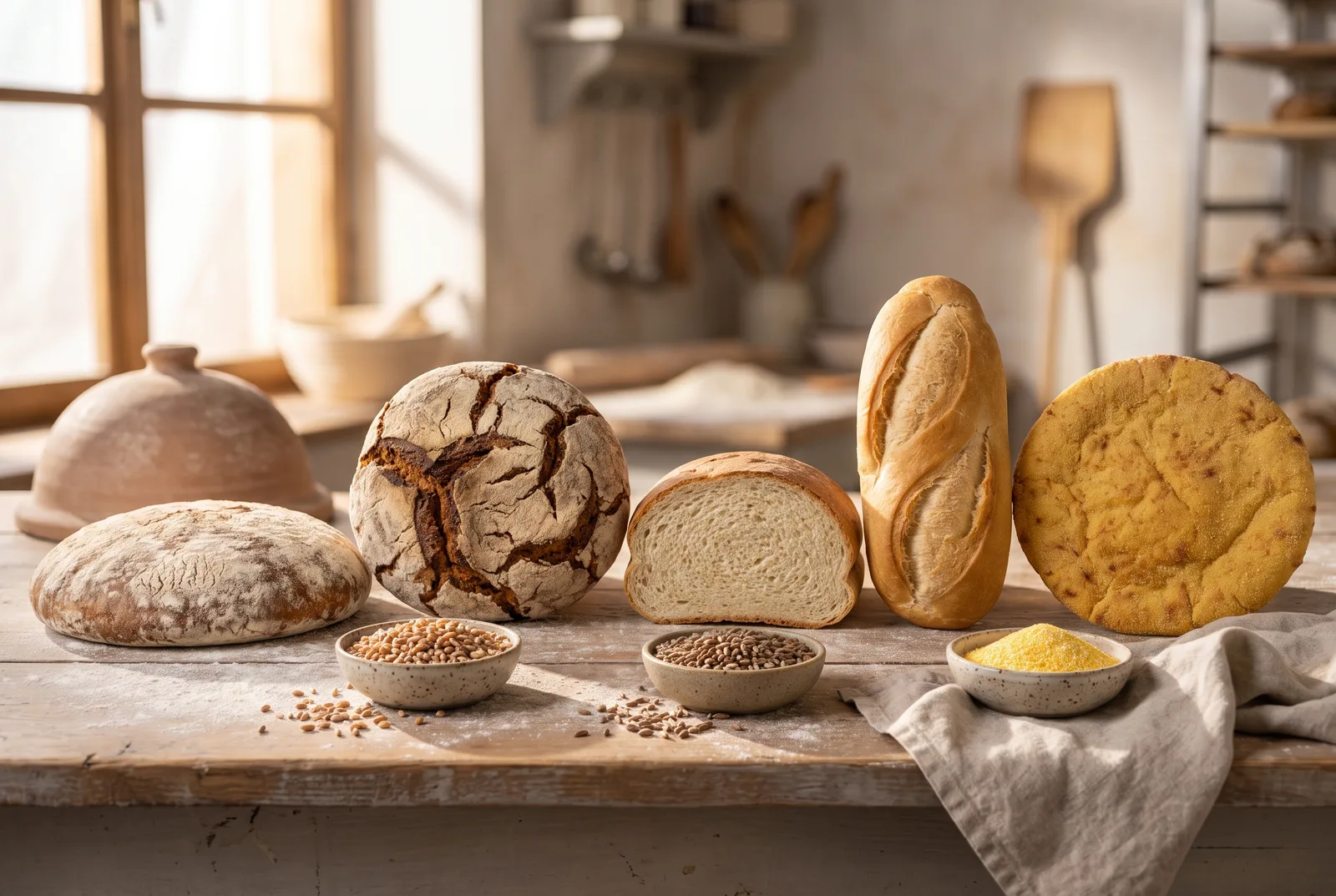
Romania's regional bread map: from Transylvanian pâine bătută to Oltenian pâine la țest
A practical orientation to Romanian bread for professional bakers: read any Romanian loaf by four things at once — the grain (wheat/rye/corn), the leaven (drojdie yeast vs maia sourdough), the baking vessel (modern deck, wood-fired hearth on the vatră, the Oltenian țest clay bell, or a griddle), and the region it belongs to. It maps the country's signature loaves — the Oltenian pâine la țest baked under a fired-clay bell (Dacian-rooted, from Latin testum), the Transylvanian pâine bătută whose thick wood-oven crust is beaten to crack it (not charred), the organic-certified Pita de Sântimbru of Alba, the Székely potato bread (pâine cu cartofi) of Ținutul Secuiesc, the Moldovan lipie, and the white franzelă that now dominates the national table — and untangles the vocabulary (pâine, pită, franzelă, lipie, turtă, mălai, mămăligă, azimă, colac). It explains why rye must be acidified and why corn cannot raise a loaf alone, anchors flour and leaven numbers in first-party supplier datasheets, gives illustrative baker's-percentage formulas and fault-finders, and maps every family to ready-to-buy Domson flours, yeasts and sourdoughs (GoodMills, Domson, Agrol, Ireks, Lesaffre, Lallemand/Pakmaya, Zeelandia, Uldo, Malmon/Böcker). Native Romanian-language sources were mined for authentic regional names, methods and history; every regional and numeric claim is cited. Cross-links the Pillar A craft articles and the B4-Romanian sibling dossiers.
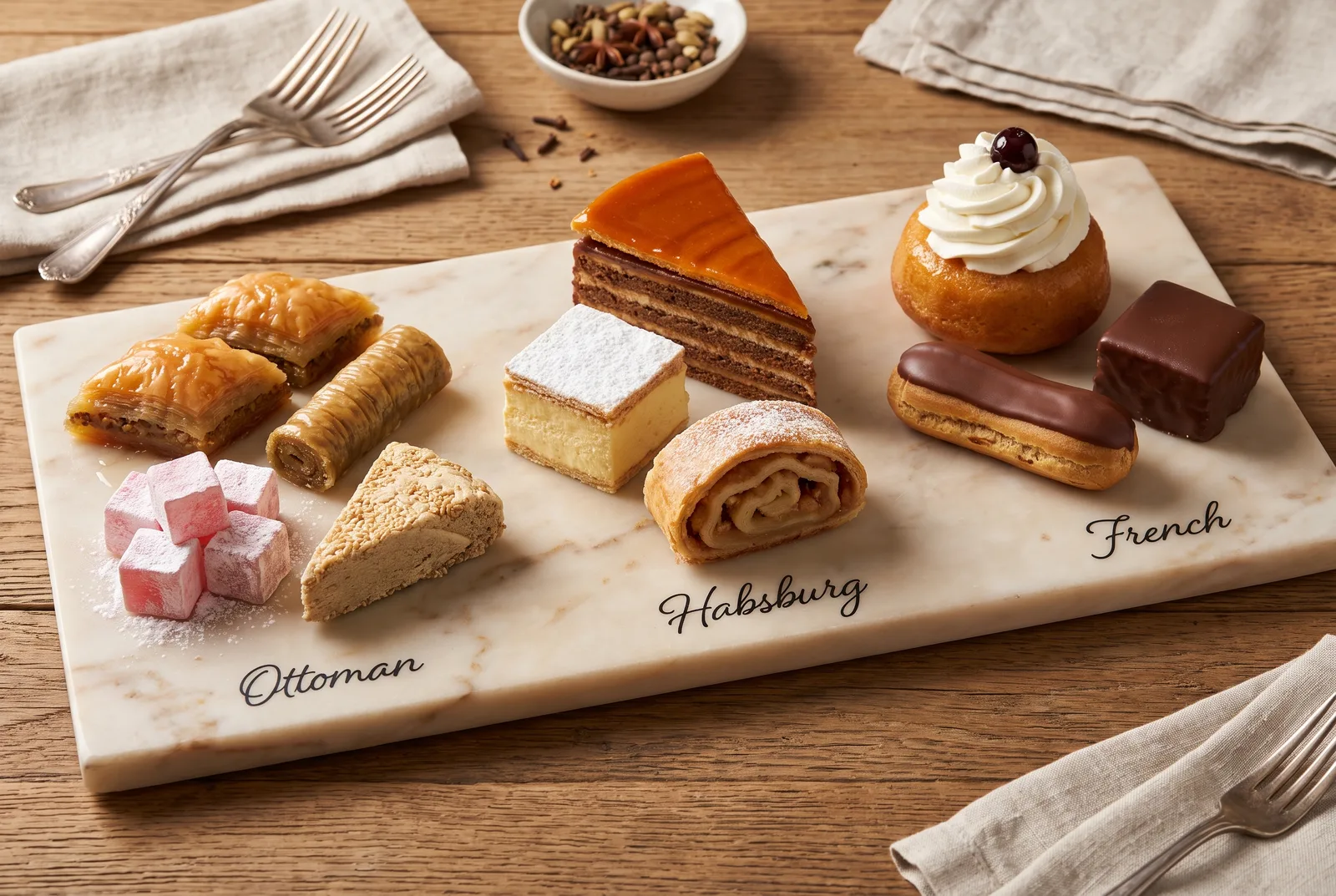
Three empires on a cake plate: Ottoman, Habsburg and French influences on Romanian confectionery
A Romanian pastry case is a history lesson you can eat. Three empires left three layers on it: the Ottoman south (baclava, sarailie, cataif, halva and rahat — filo, ground walnut and honey syrup, strongest in Dobrogea); the Habsburg west (tort Doboș, cremșnit, ștrudel, Gerbeaud and kürtőskalács — the Viennese-Hungarian torte world of Transylvania and the Banat); and the French Belle Époque of Bucharest, "Micul Paris" (savarină, ecler, amandină and the Joffre cake, built by Casa Capșa and its French-trained rivals). This dossier gives a UK baker the authentic picture, mined from Romanian-language gastro-history and cross-checked against the platform's supplier specifications, then wires every family to the Domson catalogue a Romanian patisserie actually orders — filo (a range gap), kataifi, walnuts, honey, dark couverture, apricot glaze, custard, choux and fondant — and flags the honest sourcing gaps (no filo, rahat, halva or rose water). Cross-linked to the Pillar A craft behind each layer (A6-sugar-work-techniques, A6-choux-eclair-technology, A6-pastry-creams-fillings, A6-chocolate-selection-couverture, A6-marzipan-fondant-sugar-pastes, A7-icings-and-buttercreams, A7-fondant-types-and-uses, A7-seeds-nuts-toppings) and to its sister Romanian articles (B4-savarins-eclere-and-cafe-pastry, B4-transylvanian-kurtoskalacs, B4-cozonac-enriched-dough, B4-papanasi-and-cheese-pastry).
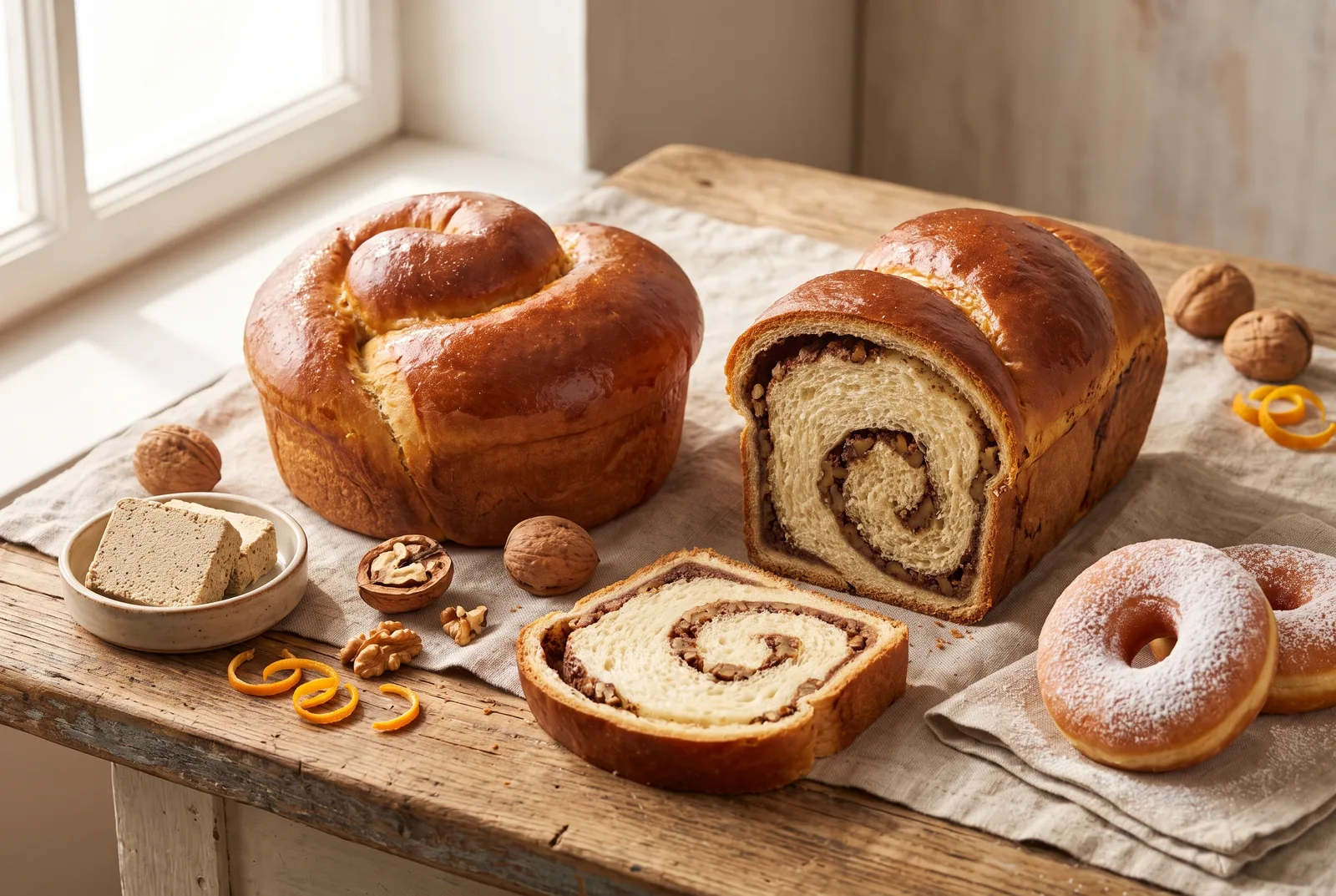
De post: Orthodox fasting and vegan baking in Romania — egg-free, dairy-free enriched doughs and Lenten pastries
For a Romanian baker, "de post" (fasting) baking is not a niche — it is a calendar. The Orthodox year has four long fasts (Great Lent before Easter, the Apostles' Fast, the Dormition Fast, and the Nativity Fast before Christmas) plus most Wednesdays and Fridays, and during them the whole country eats plant-based: no meat, no eggs, no dairy. In modern terms that makes de post baking VEGAN baking driven by religion, and it is a predictable, repeatable demand spike a UK distributor and its Romanian customers should plan around. This dossier, built from Romanian-language liturgical and recipe sources and cross-checked against the platform's supplier specifications, covers: what de post means and how the fasting calendar (with its "dezlegare la ulei / pește / vin" relaxations) shapes what can be baked; the functional-substitution craft — replacing butter and milk with oil and water/plant milk, omitting eggs, and restoring the yolk's colour with saffron/turmeric and its binding with starch and soya lecithin; a working cozonac de post formula and why its egg-free crumb behaves differently; the Lenten pastry canon — gogoși de post, scovergi/turte în ulei, plăcinte de post, halva and cornulețe cu rahat; and the single most important commercial warning — "de post" is NOT "allergen-free": milk and whey hide in cake margarines, dark chocolate and bought-in poppy fillings, proven straight from the datasheets. It cross-links the Pillar A craft (A4 fats & frying, A2 yeast, A5 dough & staling, A8 enriched-dough and formula-adaptation) and its sister Romanian articles (B4-cozonac-enriched-dough, B4-mucenici-and-calendar-pastries, B4-maia-and-sourdough-tradition), and maps every ingredient to the Domson catalogue a Romanian bakery actually orders.
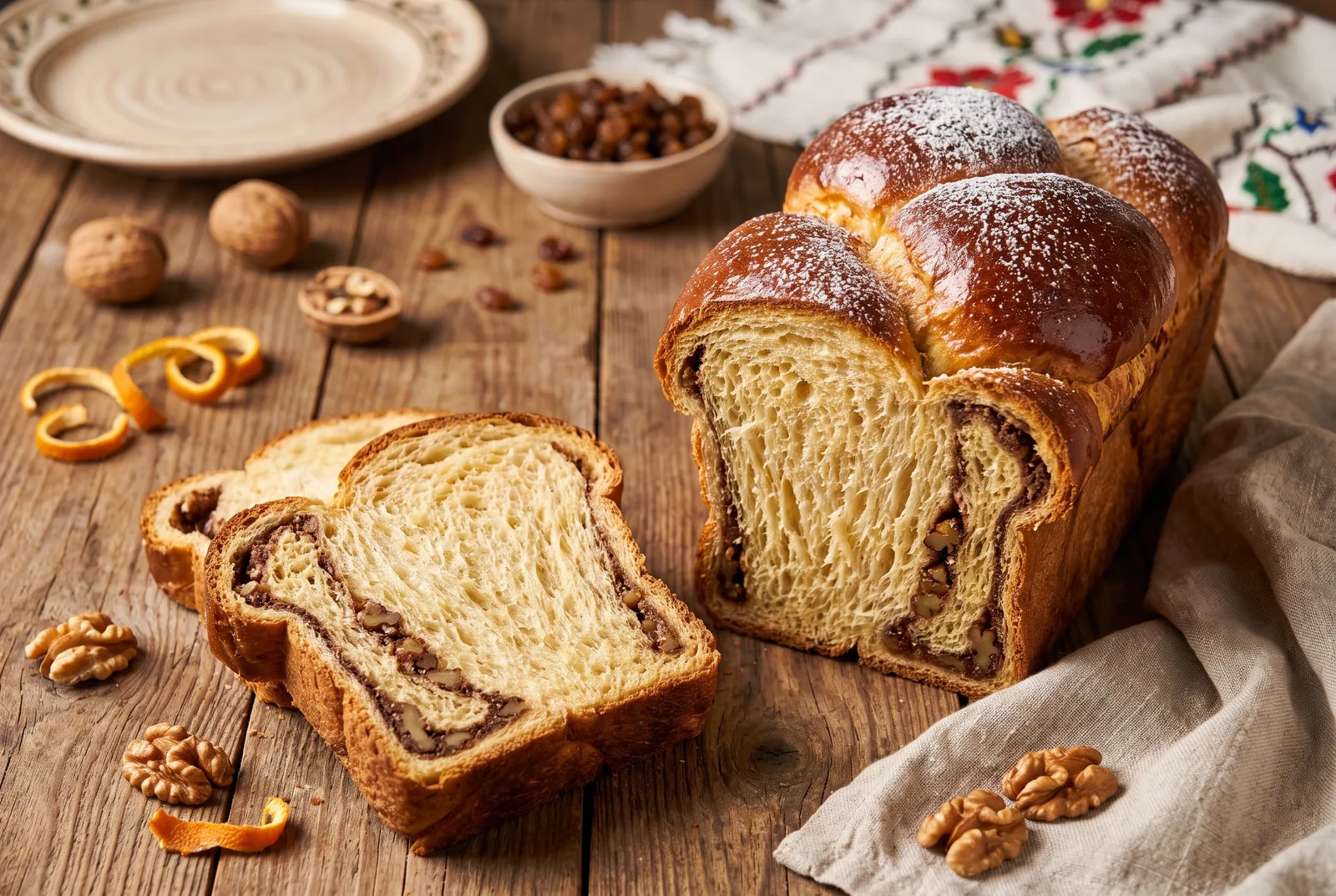
Cozonac: mastering Romania's festive enriched bread — dough formula, gluten development and regional fillings
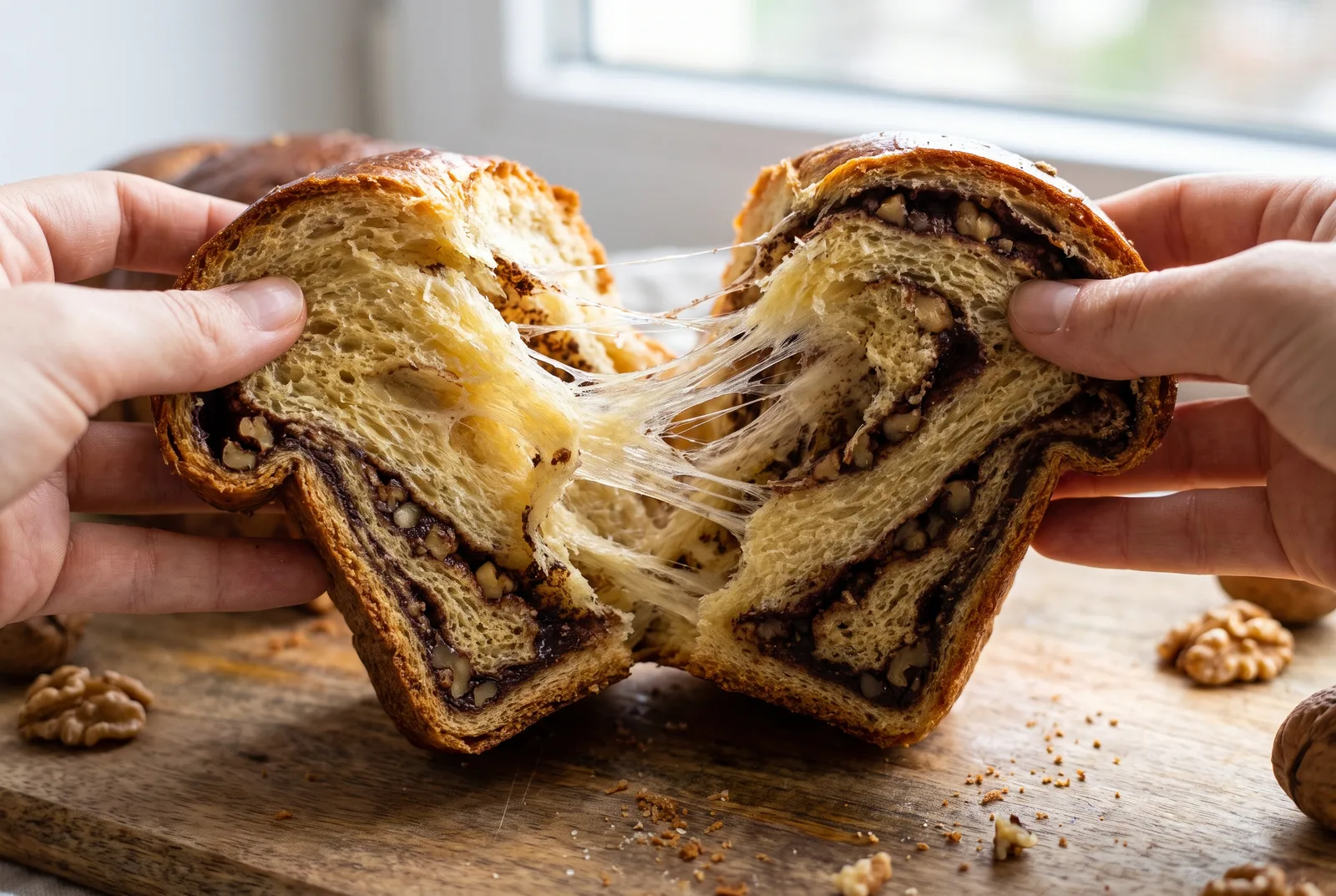
For a Romanian baker, cozonac (festive enriched sweet bread) is the loaf that matters — the centrepiece of Paște (Easter) and Crăciun (Christmas), and the one a customer will judge in a single bite. This dossier gives a UK baker the authentic picture, built from Romanian-language recipe and trade sources and cross-checked against the platform's supplier specifications: the heavily enriched, high-sugar dough (roughly flour 100%, sugar 25–30%, butter 15%, egg yolk ~18%, milk ~40%); the one thing that separates a great cozonac from a cakey one — a crumb that pulls apart into fine fibrous strands (se rupe în fâșii), which comes from strong high-protein flour, a long knead, and fat added LATE; the Moldovan scalded-flour trick (aluat opărit) that keeps it soft for weeks; the regional map (Moldovan braided round loaf with rahat and walnut; Wallachian coiled loaf; Transylvanian walnut/poppy coil); and the fillings — nucă (walnut), mac (poppy), rahat (Turkish delight), stafide (raisins) and candied peel. Every technique is wired to the Domson catalogue a Romanian kitchen actually orders — strong flour, fresh yeast, 82% butter, sugar, walnuts, cocoa, sultanas — and cross-linked to the Pillar A craft concepts behind it (A1-protein-gluten-and-strength, A2-osmotolerant-yeast-enriched-doughs, A5-dough-mixing-methods, A5-shelf-life-and-staling, A4-butter-grades-and-specialist-types, A8-enriched-dough-formulas) and to its sister Romanian and Bulgarian articles (B4-flour-classification-romanian, B4-maia-and-sourdough-tradition, B4-pasca-and-ritual-breads, B4-cozonac-de-post-vegan-baking and B6-kozunak-enriched-bread).
Romanian flour types decoded: Type 480, 000, 550, 650, 800, 1250 and whole-grain — ash, protein and choosing for each application
A working baker's guide to the Romanian flour system, where flour is graded by ash content and the Type number (tip) is literally the milligrams of ash per 100 g of dry flour: Type 480 ≈ 0.48% ash (very white), through 550 and 650 (the standard bread/franzelă grades), 800/900 (semi-white), 1250/1350 (dark, neagră) up to 1750 (integrală/graham). It explains the four legal groups (albă / semialbă / neagră / dietetică) and their governing standards, the older colloquial 000/00/0 zero-scale still printed on packs, and the single most useful authenticity point for this trade: why cozonac (festive enriched sweet bread) needs the "000 superioară" grade — a flour that is white AND strong (wet gluten ≥28%), not a soft pastry flour. It gives the crosswalk that lets a UK Romanian baker adapt recipes (Romanian Type = Polish T-code = German number; French T and Italian 00 differ), shows how to read the whole spec (gluten umed, indice glutenic, indice de deformare, W, P/L, falling number) and maps each Romanian Type to a Domson UK-stock flour. Classification is cited to the Romanian standard and a university milling course; supplier numbers come from first-party datasheets.
Maia: Romania's sourdough culture — starter management, fermentation biology and wood-fired oven protocols
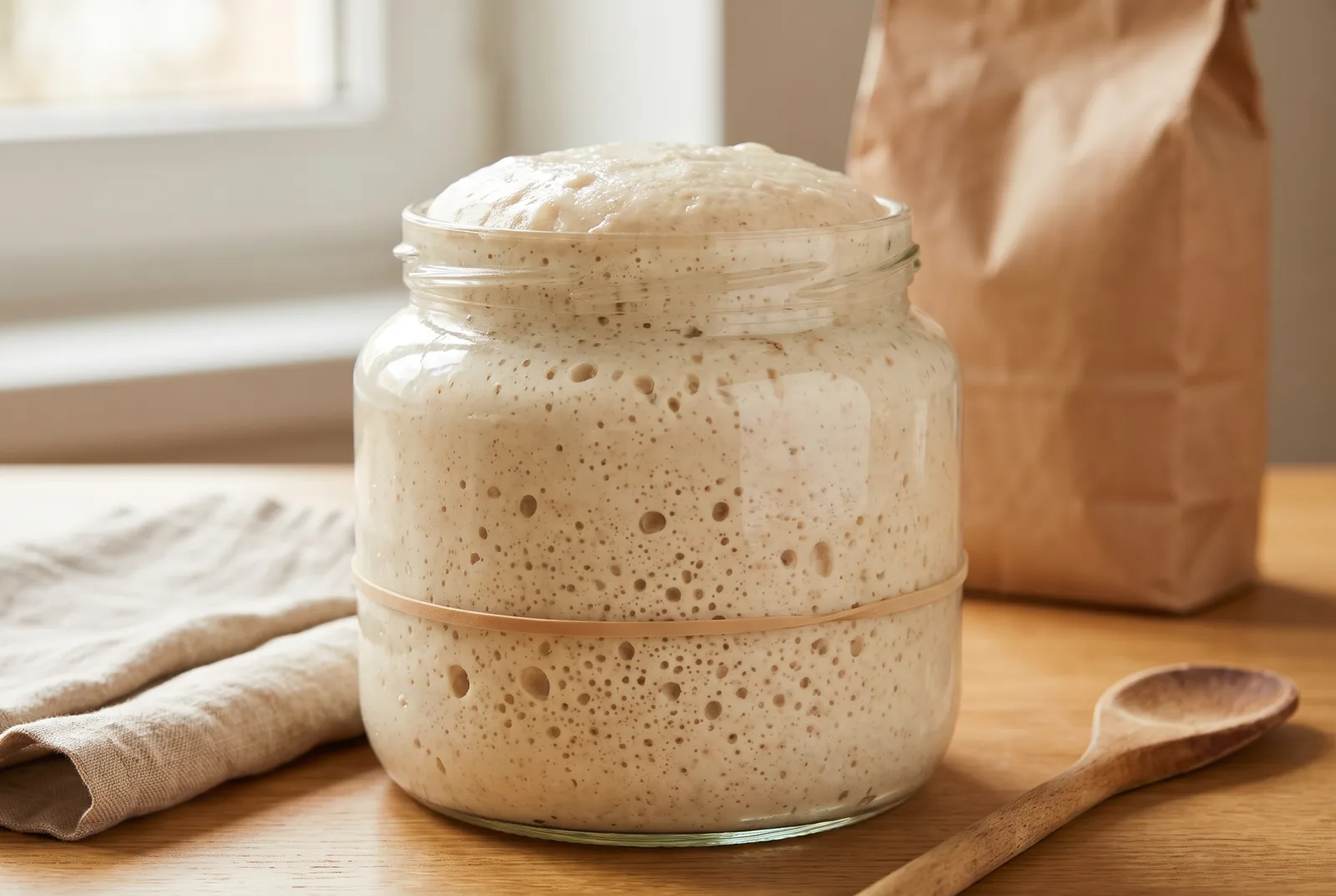
A practical, native-sourced guide to maia, the leaven at the heart of Romanian baking. It untangles the two meanings of the word — the wild maia naturală (sourdough starter) of the farmhouse and the yeasted maia (fermented sponge) of industrial technology — and shows how to build a maia from scratch in 7–10 days, feed and store it (including the old turtițe drying method), read the fermentation biology behind it, and run the classic indirect methods (monofazic / bifazic / trifazic). It covers wood-fired oven protocols including Oltenia's pâine la țest, the lactic cousins borș and huște, the Orthodox tradition of leavened liturgical bread (pâine dospită / prescură), and how to choose between a live maia and the ready sourdoughs, acidifiers, starter cultures and yeast in the Domson catalogue. Includes first-party supplier spec data.
Mucenici, scovergi and calendar pastries: ritual baking for Saints' days and seasonal festivals
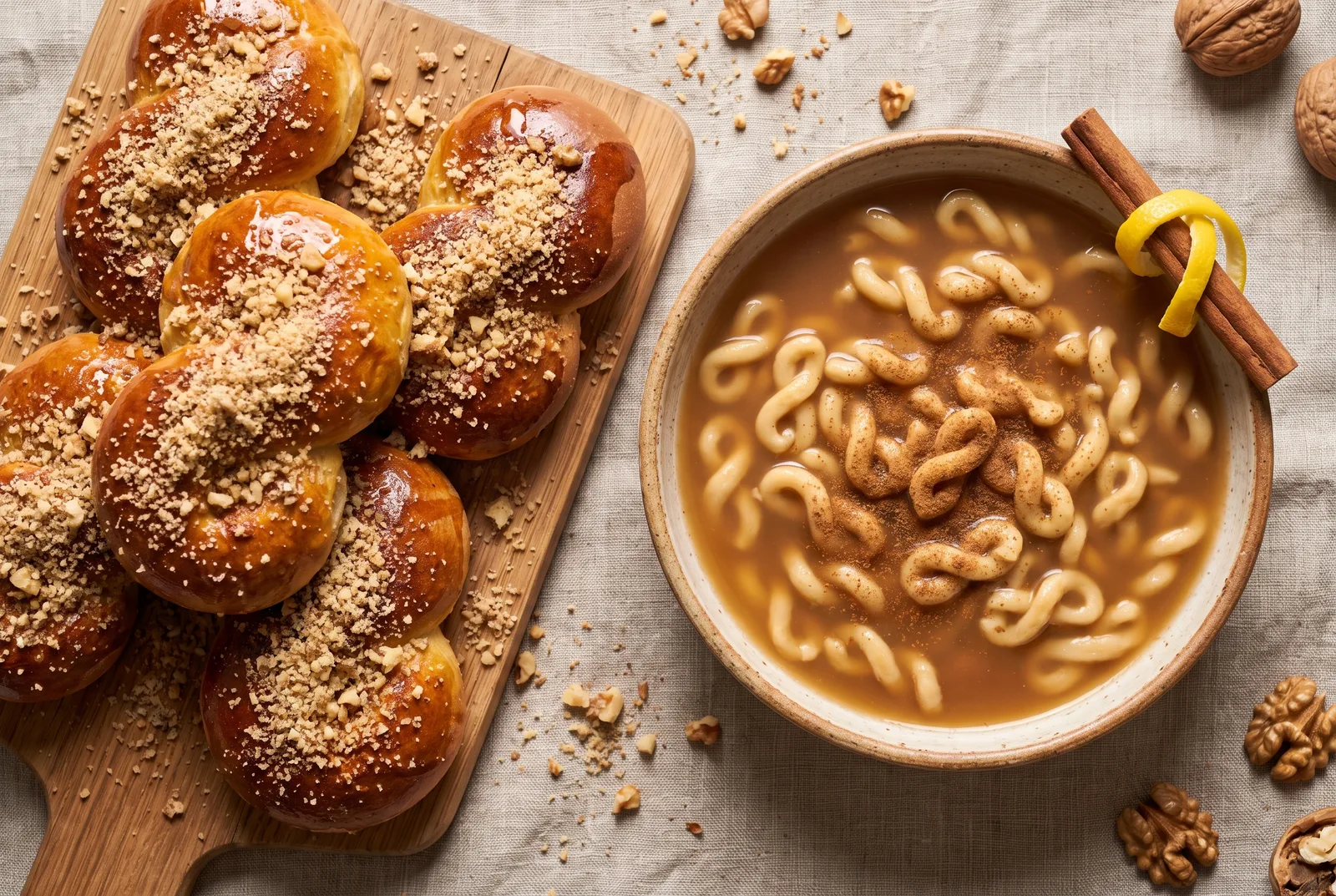
A working baker's guide to the ritual bakes of the Romanian Orthodox calendar, built around the 9 March feast of the Sfinții 40 de Mucenici (the Forty Martyrs of Sebaste). It explains why that one date splits the country in two: in Moldova bakers make mucenici moldovenești — figure-eight buns of risen (yeast) dough, baked, brushed with honey syrup and rolled in ground walnut, close cousins of the rum baba; in Muntenia and Oltenia they make mucenici muntenești — tiny figure-eight twists of a plain flour-and-water pasta dough, simmered in a sweet walnut broth (a dessert soup). Because 9 March almost always falls inside the Great Lent (it does in 2026), the traditional forms are de post (egg- and dairy-free), which is a production fact, not a footnote. The dossier ties each product to the martyr's story and figure-eight symbolism, to the craft concepts in Pillar A (osmotolerant vs lean-dough yeast, enriched-dough handling, proofing, frying fats, nut toppings), and to the exact Domson supplier brands a Romanian baker or cofetărie in the UK would order. It also covers scovergi (Lenten fried dough) and situates all of it in the wider ritual-baking calendar. Anchored on eight first-party supplier spec sheets (GoodMills Type 400 macaroni flour and Type 550 flour, Polski Cukier granulated sugar, Ratos Natura multifloral honey, Lesaffre Benevia fresh yeast, Lallemand Fermipan Red instant yeast, ground cinnamon, Olympic sunflower oil) cross-checked against Romanian-language cultural, liturgical and culinary sources (Radu Anton Roman, the Antonescu dictionary of Romanian symbols, Doxologia, Basilica/AGERPRES and the Romanian recipe canon).
Papanași, poale-n brâu and sweet-cheese pastry: working with brânză de vaci in baked goods
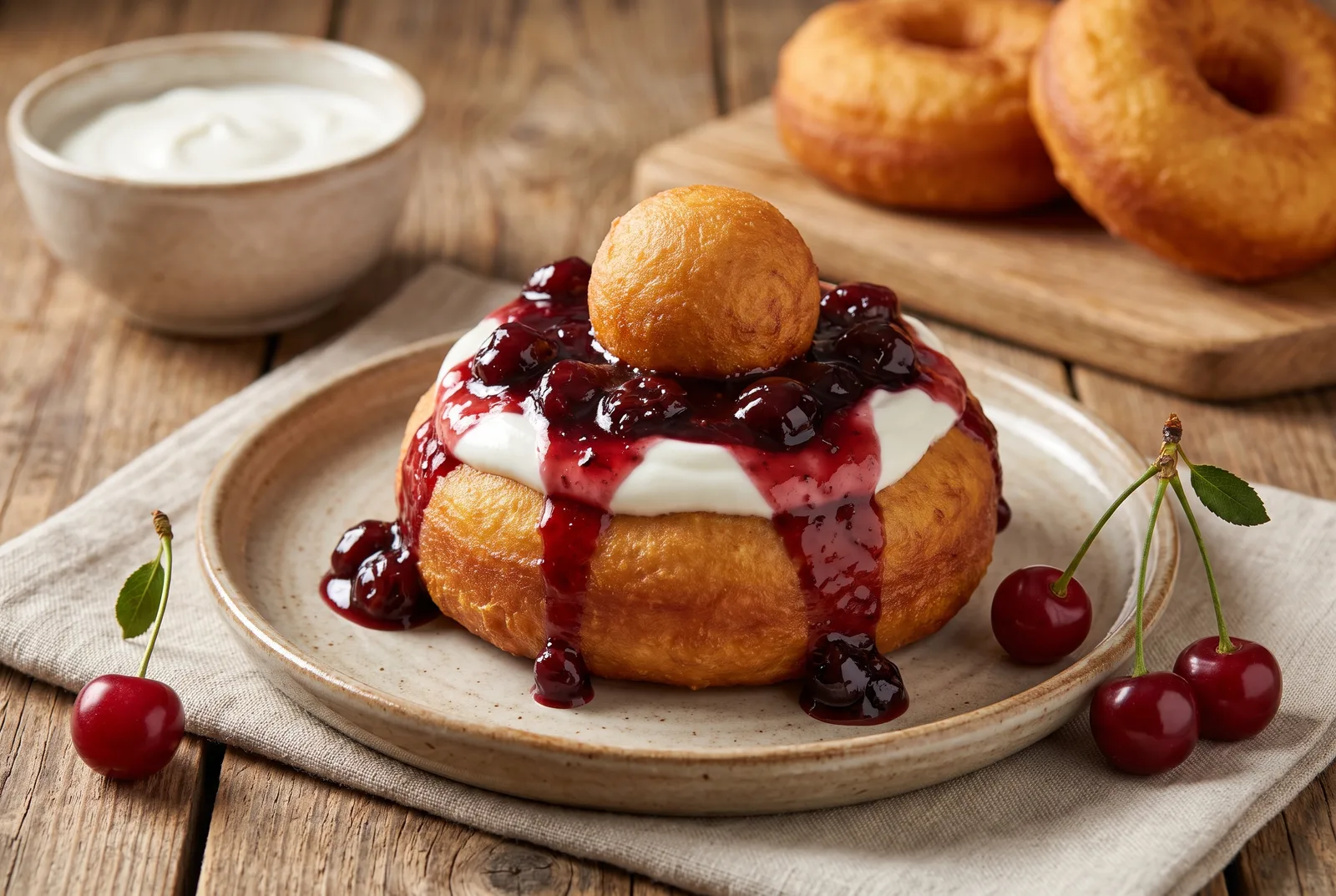
For a Romanian baker, the sweet-cheese pastries — papanași (fried cheese doughnuts) and poale-n brâu / brânzoaice (baked sweet-cheese parcels) — all turn on one ingredient: brânză de vaci (fresh, unsalted cow's-milk curd cheese). This dossier gives a UK kitchen the authentic picture, mined from Romanian-language recipe, history and food sources and cross-checked against the platform's supplier specifications: what brânză de vaci is and how it differs from urdă, caș and telemea (and which stocked curd cheese/quark is the right analogue); the one rule that makes or breaks every one of these bakes — the cheese must be WELL-DRAINED, bound with a little griș (semolina) if wet, or it leaks; the two papanași — the older boiled papanași fierți (cheese + semolina, an Austro-Hungarian gomboț legacy from Transylvania/Banat) and the iconic fried papanași prăjiți (a ring + a small ball, soda-leavened, from Bucovina/Moldova, served with smântână and dulceață de vișine or afine); the soda-quenched-with-lemon chemistry and the ~180°C frying that keeps them light not greasy; the enriched cozonac-type dough and corner-folding of poale-n brâu (literally "skirt hems into the belt"); and the link to pască and the Orthodox "de dulce" calendar. Every technique is wired to the Domson catalogue a Romanian kitchen orders — curd cheese, sour cream, semolina, strong flour, yeast, butter, liquid egg, bicarbonate, sunflower oil, sour-cherry and blueberry toppings, raisins — and cross-linked to the Pillar A craft concepts behind it (A6-pastry-creams-fillings, A2-chemical-leaveners-baking-powder, A4-frying-fats-and-oils, A8-enriched-dough-formulas) and to its Romanian siblings (B4-cozonac-enriched-dough, B4-pasca-and-ritual-breads, B4-flour-classification-romanian).
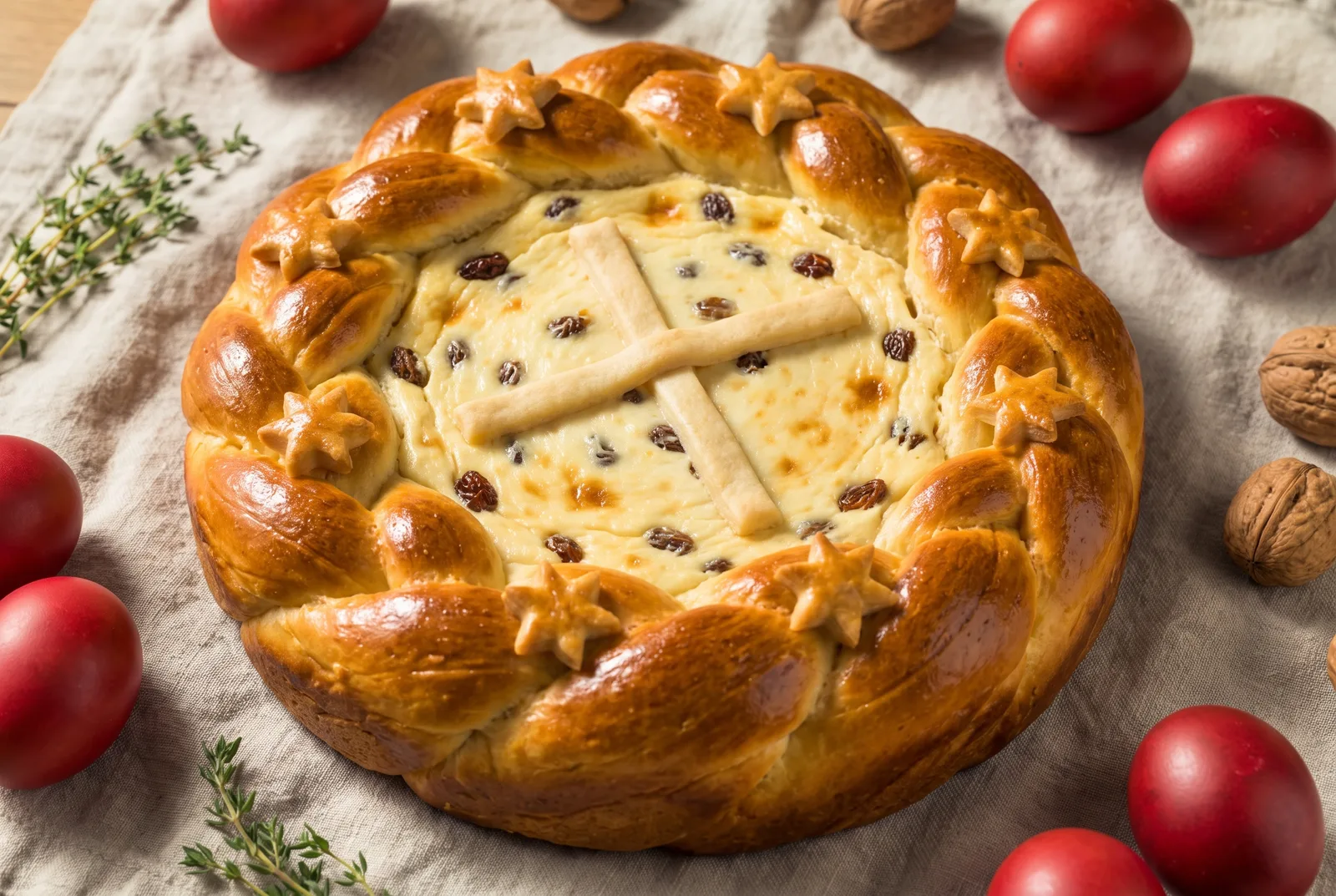
Pască, colaci and ritual breads: the Orthodox liturgical calendar's baking demands
For a Romanian bakery the church calendar IS the production calendar. This dossier gives a UK operator the authentic picture, from native Romanian ethnographic and Orthodox sources, of the ritual breads that punctuate the Orthodox year and wires each one to the Domson catalogue. It covers pască (the round, cross-topped sweet-cheese bread that is the food-icon of the Resurrection), prescură (the leavened Eucharistic bread stamped IS-HS-NI-KA and the source of the Agneț and the Anafură), colivă (the boiled- wheat memorial dish that carries the John 12:24 grain-of-wheat symbolism), the colac in its many life-cycle roles (the bride's colac de mireasă, the 4-6 kg Colac Mare / Stolnic, funeral capete, Christmas colindeți), and the commemoration schedule (3/9/40 days, months, years and the Saturdays of the dead) that drives repeat orders. It gives working formulas in baker's % where sensible (pască enriched dough, the sweet cow's-cheese filling, colivă, a lean prescură dough), regional style differences (Moldova/Bucovina, Transylvania, Muntenia, and the Lenten pască de post), a fault table, and a flour-choice map from the Romanian 000/650 system to the catalogue Type numbers. It cross-links the Pillar A craft (A2 osmotolerant yeast and yeast fundamentals, A8 enriched-dough formulas and baker's %, A5 proofing/oven/staling, A1 flour choice, A4 butter) and the sister B4 dossiers (cozonac, maia, mucenici, flour classification, de-post baking) plus cross-tradition parallels (Polish and Bulgarian Easter breads).
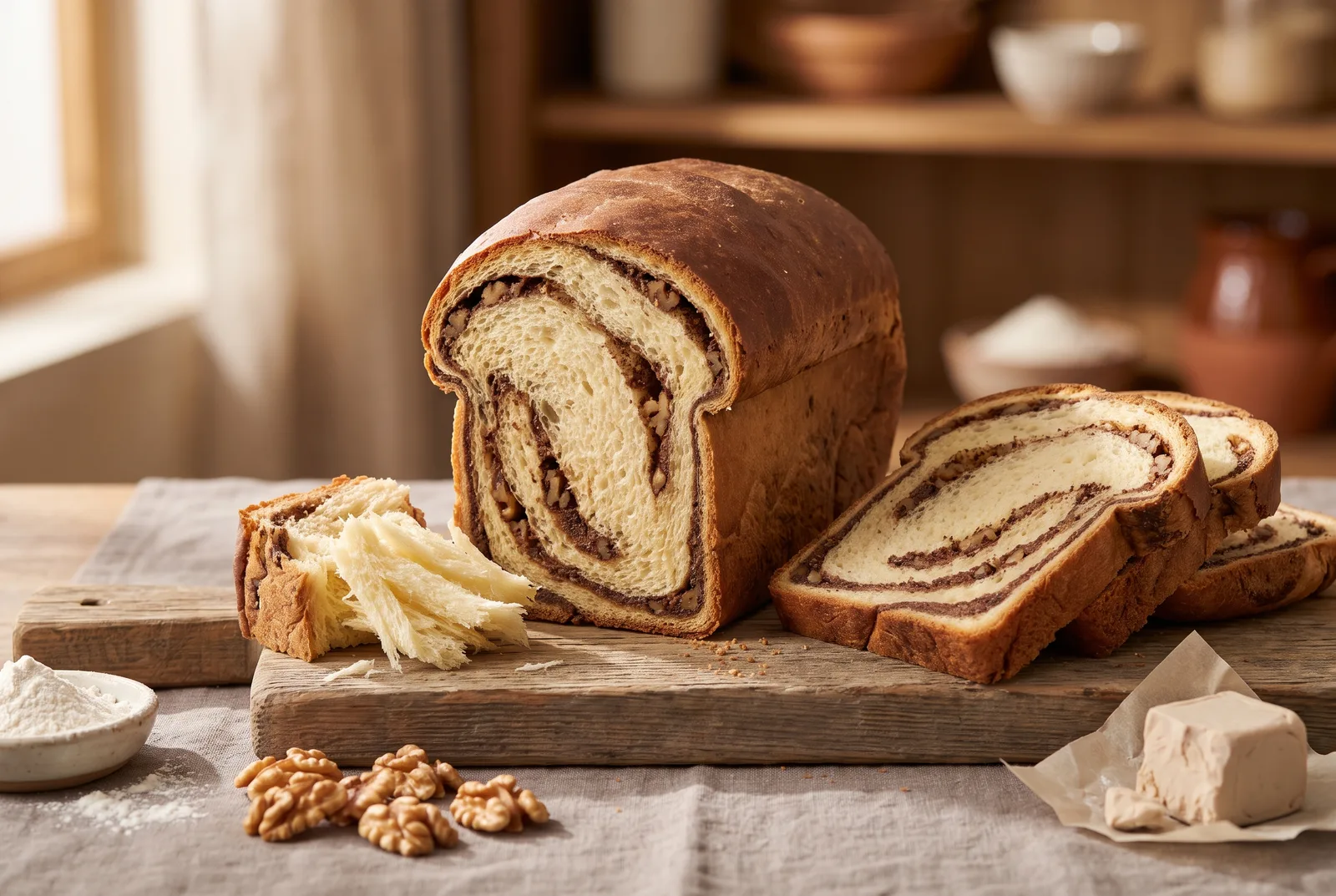
The Romanian professional bakery market: flour standards, premix adoption, key ingredient suppliers and modernisation trends
A commercial map of the Romanian baking trade for a UK Romanian baker or patisserie: how big the market is (~12.9 billion lei / ~7,015 firms in 2024, worth roughly 3 billion euro), who leads it (Vel Pitar — owned by Bimbo since 2023 — Boromir, Oltina, Dobrogea, Șapte Spice, GoodMills, Pambac, Băneasa), and how it is changing (bread consumption down to ~82 kg/capita but demand rising for wholegrain, sourdough and traditional products such as cozonac). It explains the trade's realities — a ~30% grey economy, the VAT story (24%→9% in 2013, now a single 11% reduced rate since August 2025), the flour standards (ash-based Type numbers, cross-linked to B4-flour-classification-romanian), the mandatory iodized salt (HG 568/2002) and the contrast with UK flour fortification — and then the ingredients: the yeast duopoly (Pakmaya/Rompak vs Lesaffre/Fala), and the multinational improver/premix/sourdough houses (Puratos, Lesaffre, Zeelandia, Ireks, Backaldrin, Uldo, Böcker) whose products Domson stocks in the UK. Every premix, improver, sourdough, malt and yeast figure is taken from a first-party datasheet, and each is mapped to the exact Domson catalogue product to buy.
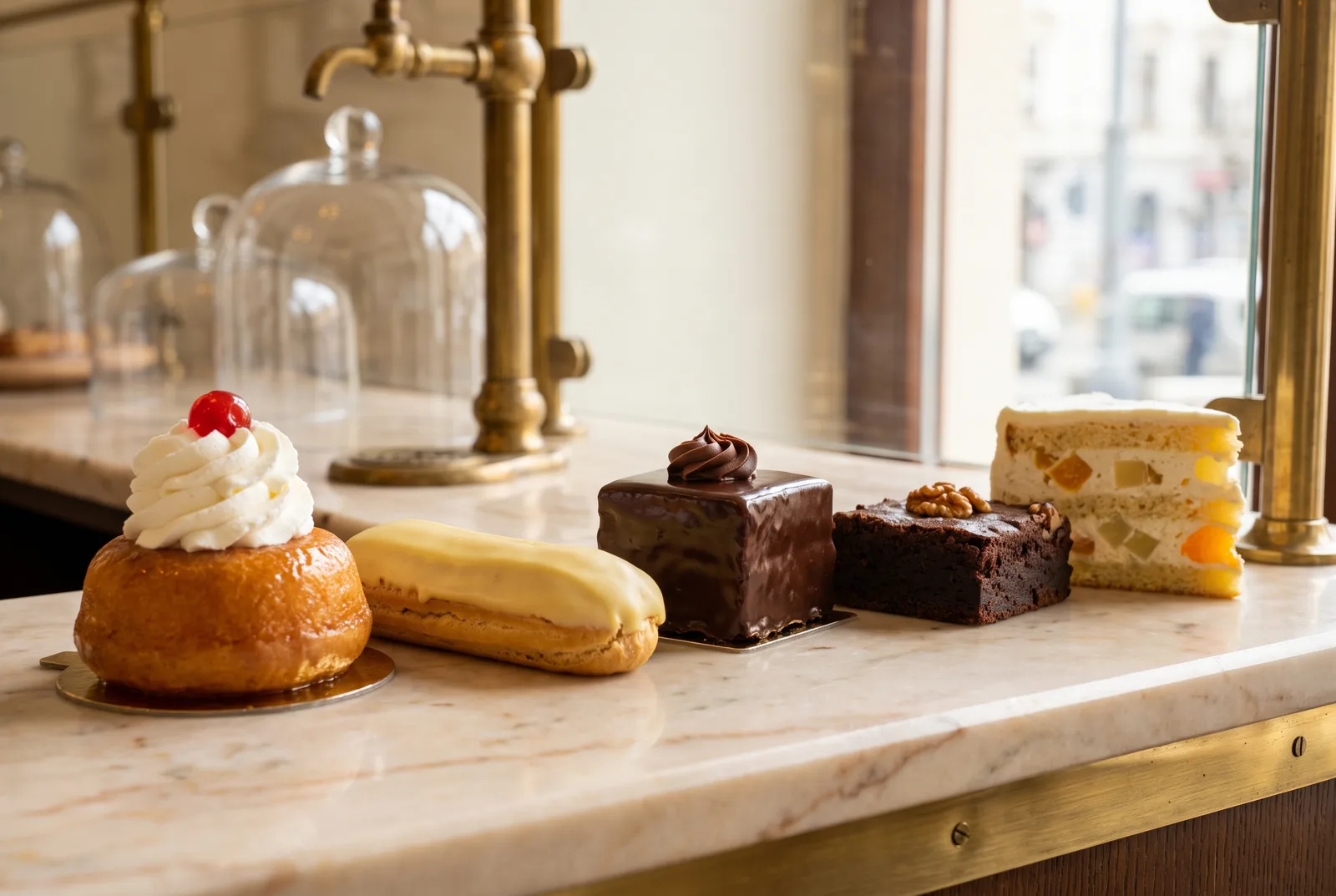
Savarină, ecler, negresă and tort diplomat: the classic Romanian café-pastry canon and how to execute it
The Romanian cofetărie (patisserie-café) counter is a French pastry tradition with a Bucharest accent — the sweets a Romanian customer grew up on and judges you by. This dossier gives a UK baker the authentic picture, mined from Romanian-language recipe and gastronomy sources and cross-checked against the platform's supplier specifications: the history (how Casa Capșa and Grigore Capșa swapped Ottoman baclava for French confectionery from the 1880s, and where the 1920 Joffre cake came from); and the working method for the five pastries that define the canon — savarină (a rum-soaked yeast baba topped with whipped cream), ecler (choux/aluat opărit filled with vanilla cream and glazed), amandină (rum-syruped sponge with cocoa-fondant buttercream and glaze), negresă (the dense, deliberately "un-risen" chocolate cake), and tort diplomat (syruped sponge, diplomat cream and CANNED fruit). The one make-or-break rule — never put fresh pineapple, kiwi or papaya in a gelatin-set cream — is explained through its enzyme chemistry. Every technique is wired to the Domson catalogue a Romanian patisserie actually orders — flour, sponge mix, butter, cocoa, couverture, fondant, custard powder, whipping cream, gelatin, canned fruit cocktail and rum aroma — and cross-linked to the Pillar A craft (A6-choux-eclair-technology, A6-pastry-creams-fillings, A6-glazes-finishes, A7-icings-and-buttercreams, A7-fondant-types-and-uses) and to its sister Romanian articles (B4-confectionery-ottoman-central-european, B4-cozonac-enriched-dough, B4-cozonac-de-post-vegan-baking).
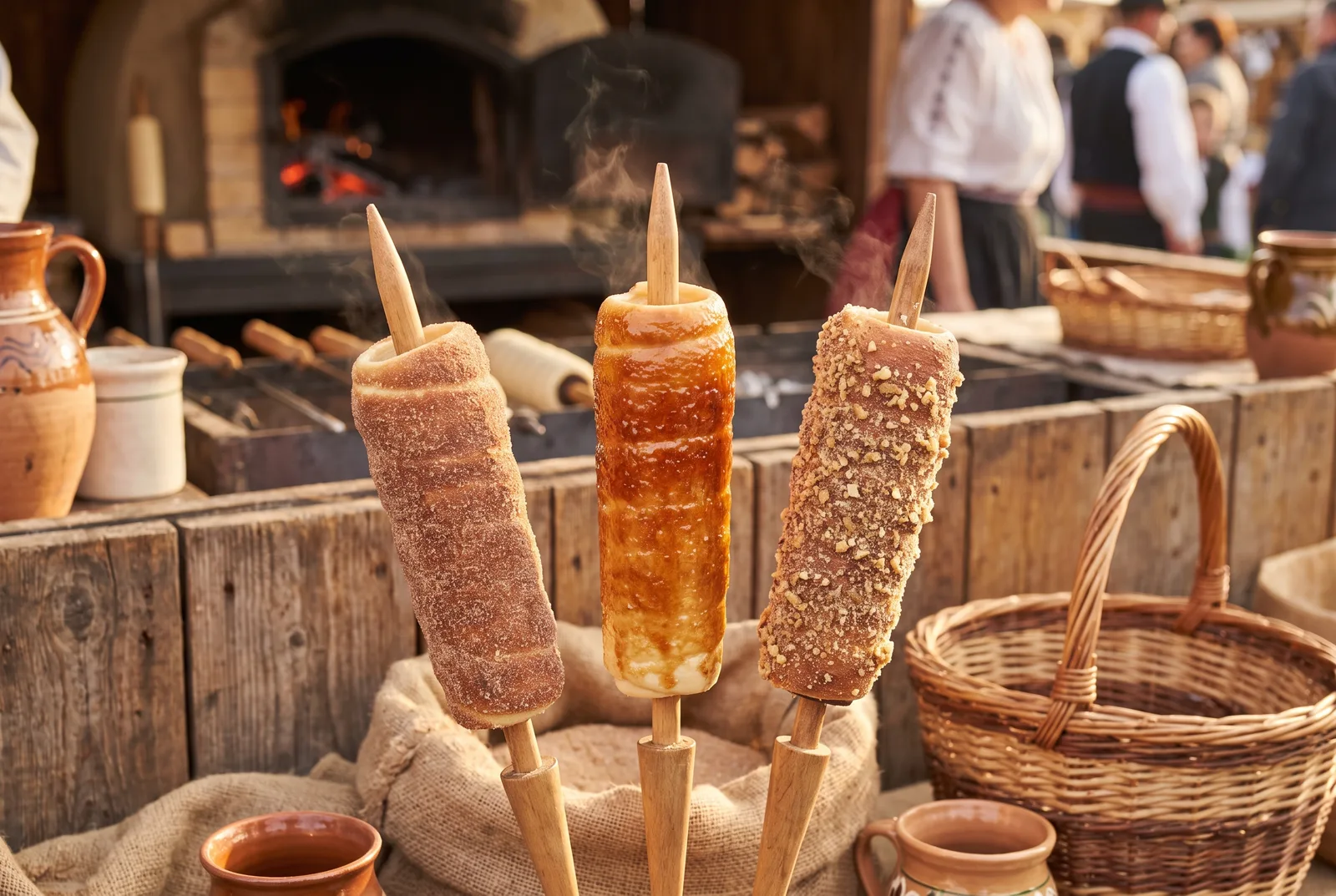
Kürtőskalács (chimney cake): spit-baked enriched dough, caramelisation science and scaling to bakery production
Kürtőskalács (chimney cake) is Transylvania's great spit-baked sweet — a Hungarian, Székely speciality from the Székely Land that a UK baker will meet as festival and street food, sold in Romania as cozonac secuiesc ("Székely cozonac"). This dossier, built from Romanian- and Hungarian-language sources and cross-checked against the platform's supplier specifications, gives the authentic picture: the moderately-enriched sweet yeast dough (flour, milk, egg, butter, a modest 10–14% sugar, fresh yeast — leaner than cozonac ON PURPOSE); the shaping — a thin dough strip wound helically around an oiled tapered wooden spit (the kürtőskalács henger, baking roller) with the coils touching so they fuse; and the one thing that IS the cake — the caramelised sugar shell, made by rolling the wound spit in granulated sugar and baking it rotating over charcoal embers (jăratec) or in an electric rotisserie oven, basted with butter, until the surface sugar caramelises (onset ~160°C, sucrose melts ~186°C) into a crisp, glossy amber crust over a soft, steamy crumb. It maps the history (first record 1679 at Úzdiszentpéter/Sânpetru de Câmpie; the 1784 recipe of Countess Mária Mikes of Zabola; the caramel glaze added only in the 19th century; Hungarikum status in 2015), the toppings (cinnamon-sugar, walnut, coconut, cocoa), and how the trade scales it (rotisserie ovens, ~4–12 spits, up to ~90 cakes/hour). Every technique is wired to the Domson catalogue a Transylvanian or Hungarian baker actually orders — strong flour, fresh yeast, 82% butter, granulated sugar, pasteurised liquid egg, walnut, cinnamon, coconut — and cross-linked to the Pillar A craft concepts (A6-sugar-work-techniques, A5-baking-oven-science, A2-osmotolerant-yeast-enriched-doughs, A1-protein-gluten-and-strength, A4-butter-grades-and-specialist-types, A7-seeds-nuts-toppings, A8-enriched-dough-formulas) and to its sister articles (B4-cozonac-enriched-dough, B4-flour-classification-romanian, B4-bread-landscape and the Lithuanian spit-cake B5-sakotis-spit-cake).