
Savarină, ecler, negresă and tort diplomat: the classic Romanian café-pastry canon and how to execute it
The Romanian cofetărie (patisserie-café) counter is a French pastry tradition with a Bucharest accent — the sweets a Romanian customer grew up on and judges you by. This dossier gives a UK baker the authentic picture, mined from Romanian-language recipe and gastronomy sources and cross-checked against the platform's supplier specifications: the history (how Casa Capșa and Grigore Capșa swapped Ottoman baclava for French confectionery from the 1880s, and where the 1920 Joffre cake came from); and the working method for the five pastries that define the canon — savarină (a rum-soaked yeast baba topped with whipped cream), ecler (choux/aluat opărit filled with vanilla cream and glazed), amandină (rum-syruped sponge with cocoa-fondant buttercream and glaze), negresă (the dense, deliberately "un-risen" chocolate cake), and tort diplomat (syruped sponge, diplomat cream and CANNED fruit). The one make-or-break rule — never put fresh pineapple, kiwi or papaya in a gelatin-set cream — is explained through its enzyme chemistry. Every technique is wired to the Domson catalogue a Romanian patisserie actually orders — flour, sponge mix, butter, cocoa, couverture, fondant, custard powder, whipping cream, gelatin, canned fruit cocktail and rum aroma — and cross-linked to the Pillar A craft (A6-choux-eclair-technology, A6-pastry-creams-fillings, A6-glazes-finishes, A7-icings-and-buttercreams, A7-fondant-types-and-uses) and to its sister Romanian articles (B4-confectionery-ottoman-central-european, B4-cozonac-enriched-dough, B4-cozonac-de-post-vegan-baking).
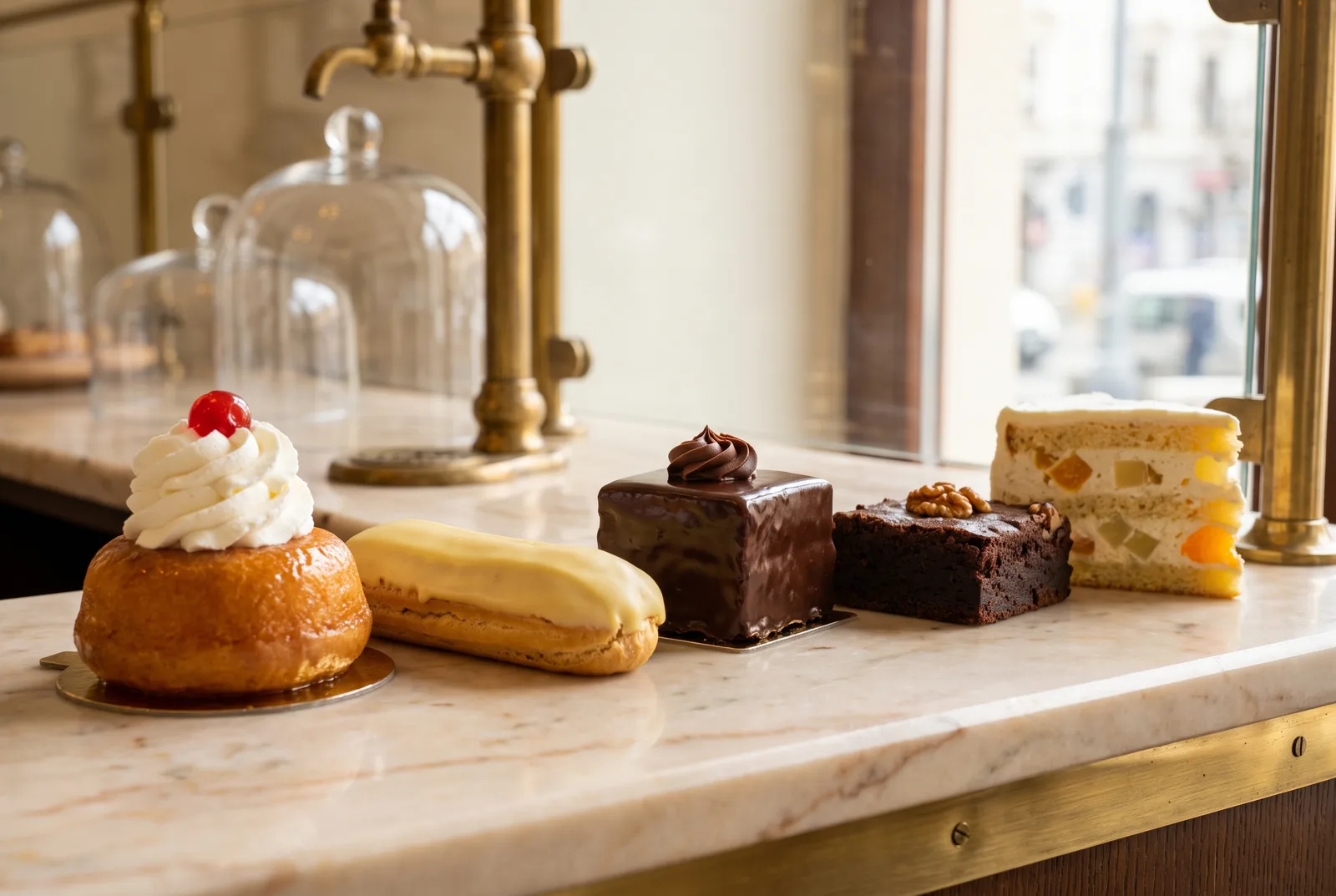
The cofetărie: Romania's French pastry counter
For a Romanian baker, bread and cozonac belong to the brutărie; the sweets in the glass case belong to the cofetărie — the patisserie-café that is a distinct institution with its own canon. And that canon is, at heart, French. In the second half of the 19th century Romanian confectionery pivoted hard from the Ottoman sweet world of baclava and sarailie to French prăjituri (individual pastries), bonbons and glazed gâteaux. The emblem of that pivot is Casa Capșa in Bucharest, founded in 1852 as La Doi Frați ("At the Two Brothers") by Anton and Ștefan Capșa, and transformed from 1868/1886 by Grigore Capșa, who had trained at the Maison Boissier in Paris and, in the phrase of the Romanian sources, "replaced Oriental traditions with Western perfume" (see the figures below). That whole three-empires story — Ottoman, Habsburg and French layered on the Romanian table — is the subject of B4-confectionery-ottoman-central-european; this dossier is the practical companion: how you actually make the pastries.
One creation stands for the whole tradition: the Joffre cake, made at Capșa in 1920 to honour the visiting French Marshal Joseph Joffre — a cylindrical, intense chocolate pastry (popularly said to have been built almost sugar-free for the diabetic marshal) that is still on Romanian counters a century later. Around it sits the everyday canon this article covers: savarină, ecler, amandină, negresă and tort diplomat (see the figure and comparison table below), with cousins like cremșnit (the Austro-German Kremschnitte cream slice, first recorded in Romanian in Sanda Marin's 1936 cookbook as plăcintă cu cremă de vanilie), Boema, Carpați and the layered Dobos.
1. Savarină — a rum-soaked baba with whipped cream
The savarină is the pastry a Romanian customer feels most nostalgic about, and the one most often ruined. It is a member of the baba au rhum family, and its history is worth knowing because it explains the method. The baba is popularly credited to the exiled Polish king Stanisław Leszczyński (Duke of Lorraine), who soaked a dry kugelhopf in sweet wine; his daughter married Louis XV in 1725 and her pastry chef Nicolas Stohrer brought it to Paris, opening Pâtisserie Stohrer in 1730. The ring-shaped, syrup-soaked savarin was perfected by the Julien brothers around 1844–45 and named for the gastronome Jean Anthelme Brillat-Savarin. It reached Romania around 1900 and became a star of the interwar cofetării, above all Casa Capșa; the Polish-founded café Fialkowski, an earlier Bucharest institution that had closed on its proprietor's death in 1898, belonged to the preceding turn-of-the-century scene rather than the interwar heyday.
The craft point is that a savarină is not a cake but a sponge for syrup. It is built on a highly enriched, highly hydrated yeast dough (aluat dospit) — flour, fresh yeast bloomed in warm milk, whole eggs, soft butter, a little sugar and salt — beaten to a soft, sticky, elastic dough, proofed, deposited into greased ring or dome moulds, proofed again and baked deep gold (see the formula card below). Two Pillar A concepts govern it: the enriched-dough fermentation problem is in A2-osmotolerant-yeast-enriched-doughs and the leavening itself in A2-yeast-fermentation-science; use a strong flour (not plain) so the gluten network is strong enough to drink syrup without collapsing — the flour logic is in A1-wheat-flour-types-by-application, and it is the same "strands hold the structure" idea that makes a good cozonac (B4-cozonac-enriched-dough). Fresh Benevia yeast and warm — never hot — milk; the butter craft is in A4-butter-grades-and-specialist-types.
Then the soak: a syrup of roughly 500 g sugar to 1 L water, boiled about 5 minutes with lemon zest and vanilla, finished off the heat with rum (or rum aroma) (see the formula card below). Soak the cooled cakes in warm syrup until saturated and glossy, drain, brush with warm apricot glaze for shine and a moisture seal, then fill and top with natural whipped cream (frișcă) and a spot of sour-cherry (vișine) or strawberry jam, crowned with a cherry (see the figure below). The sugar-cooking is in A6-sugar-work-techniques and the apricot-nappage finish in A7-glazes-mirror-and-fruit.
2. Ecler — choux paste, done properly
The ecler (éclair) is French choux pastry — what Romanian bakers call aluat opărit ("scalded dough"), i.e. pâte à choux — commonly traced to Antonin Carême (originally pain à la Duchesse) and adopted into the Romanian canon as an oblong shell filled with vanilla pastry cream and glazed. The round version is choux à la crème (the profiterol).
The method is unforgiving and worth drilling (see the figure and formula card below): bring water and/or milk with butter (and a pinch of salt) to a rolling boil; add the flour all at once and cook/dry the panade over heat until it forms a smooth ball and films the pan; cool slightly, then beat in eggs a little at a time to a glossy, just-pipeable paste. Pipe 10–12 cm logs and bake at about 200°C for 25–30 minutes until dry and firm — and do not open the oven early, or the steam-raised shells collapse. A plain/medium flour (the platform's ~9.1%-protein plain flour) is right for choux. The full science of steam leavening and the hollow/sunken/wet-shell faults is in A6-choux-eclair-technology, and the faults are tabulated in the fault table below.
Fill cooled shells with vanilla pastry cream (cremă de vanilie) — made from scratch or from a cold crème-pâtissière powder dosed at 400 g per litre (a food-safe, no-raw-yolk scale option) — the cream family is in A6-pastry-creams-fillings. Glaze with warmed pouring fondant at 40–48°C (the platform's fondant is 85% dry matter, 346 kcal/100 g and carries no declarable allergens), or with chocolate — a tempered dark couverture or a ready chocolate glaze (Section 6). Fondant craft is in A7-fondant-types-and-uses.
3. Amandină — the state-manual chocolate square
The amandină is a Romanian cofetărie signature codified in the 1960s state pastry manuals and tied to old Bucharest. Its French name (amandine, "almond") is a false friend: the Romanian amandină is a chocolate pastry, and the authentic build is very specific (see the figure and formula card below). A representative state-manual formula (~10 squares):
- Sponge coloured with a caramel (not cocoa) to an amber crumb: 4 eggs, 60 g icing sugar, 10 ml oil, 140 g flour, plus a caramel of 60 g sugar / 20 ml water.
- Rum syrup: 130 ml water, 100 g sugar, lemon zest, vanilla and rum.
- Buttercream: 200 g soft butter + 200 g fondant (șerbet) + 20 g cocoa + rum.
- Glaze: 180 g fondant + 1 tbsp caramel syrup + 30 g cocoa.
Two authenticity markers worth respecting: the crumb is caramel-coloured, not cocoa, and the cream and glaze are fondant-based, not a couverture ganache. Modern shops often swap in a chocolate/ganache cream — legitimate, but a different thing. Cut the syruped, layered slab into ~5 cm squares and finish each with a piped rosette. The buttercream craft (and the Italian/Swiss options if you upgrade it) is in A7-icings-and-buttercreams; the cocoa is a Dutch-alkalised 20/22% powder (368 kcal, pH 7.3–7.7); sponge formulas in general are in A8-cake-and-pastry-formulas. (This single worked formula rests on one popular source echoing the old manuals — treat the numbers as representative, not gospel.)
4. Negresă — the dense "un-risen" chocolate cake
The negresă is the Romanian home-and-cofetărie chocolate traybake — a cousin of the American brownie but its own thing. Romanians call it prăjitura necrescută, the "un-risen" cake, because the whole point is a dense, moist, deliberately low-rise cocoa crumb finished with a poured glaze (see the figure and formula card below). Build it from eggs, sugar, oil or butter, a good Dutch cocoa (and often melted chocolate), kept low on flour, and — the critical instruction — bake it so the centre stays moist, not dry. Finish with a simple glaze of sugar + cocoa + water/milk, or a glossier chocolate glaze, and stud with walnuts. It became popular through the 19th–20th centuries as cocoa and chocolate grew affordable. For the chocolate itself, couverture vs. compound is covered in A6-chocolate-selection-couverture.
5. Tort diplomat — and the one rule that makes or breaks it
The tort diplomat is the fruit-and-cream celebration cake: layers of pandișpan (sponge) or pișcoturi (ladyfinger/champagne biscuits), well soaked in a light rum syrup, with diplomat cream and canned fruit through it, usually topped with whipped cream and a clear fruit jelly — most often assembled as a chilled, no-bake (fridge-set) cake (see the figure below).
Cremă diplomat (crème diplomate) is crème pâtissière lightened with whipped cream and set with gelatin (see the formula card below) — the cream family is in A6-pastry-creams-fillings. The gelatin is essential: without it the cream will not hold and "leaks". The platform stocks bronze leaf gelatine (140 g Bloom) and a 180-Bloom pork gelatine that dissolves below 40°C and sets to a clear gel — bloom cold, dissolve warm (below 40°C), stir into just-cool pastry cream, then fold in the whipped cream.
Here is the rule every Romanian diplomat recipe repeats and the science behind it (see the figure and table below): never use fresh pineapple, kiwi, papaya or fresh figs in a gelatin-set cream. They contain proteolytic enzymes — bromelain (pineapple), actinidin (kiwi), papain (papaya) — that digest the gelatin protein, so the network never forms and the cake stays soup. Canned/pasteurised fruit is fine, because the heat treatment inactivates the enzymes. That is exactly why the tradition uses canned fruit cocktail: the platform's is diced pear, peach, grape, pineapple and cherry in light syrup, pasteurised (so safe with gelatin), drained weight 1.5 kg from a 2.5 kg can — but note it is coloured with E127 (erythrosine), and once opened must be refrigerated and used within 3 days. Drain the fruit well before folding it in, or the extra syrup slackens the set.
6. Glazes and finishes
The glossy finish is much of the appeal, and there are four routes (see the figure and table below; craft in A6-glazes-finishes, A7-fondant-types-and-uses and A7-glazes-mirror-and-fruit):
- Pouring fondant — the classic ecler/amandină skin: warm to 40–48°C and dip/pour; the platform's fondant has no declarable allergens.
- Chocolate / couverture — for ecler, negresă and Joffre: temper a dark couverture (melt 47°C → cool two-thirds to 27°C → work at 30°C) or use a ready chocolate glaze. The platform's 58% couverture contains soya lecithin and is made on a line also processing milk; the tempering science is in A6-chocolate-tempering-crystallisation.
- Cold mirror glaze — the modern option for glazed squares/entremets.
- Apricot nappage — brushed warm for shine and a moisture seal on savarins and fruit tops. One caveat below.
7. Scratch vs. ready, and the Romanian market
Like cozonac production, the cofetărie has industrialised: modern shops mix from-scratch classics with ready components for speed and consistency (see the table below). The platform supports both — a sponge mix (1000 g mix + 500 g egg + 200 g water, whisked 6–8 min, baked 180°C for 30–40 min) for the pandișpan base; cold pastry-cream powders at 400 g/L so there is no raw-yolk food-safety risk; whipping cream + a cream stabiliser so tops hold in the case; and ready fondant/chocolate glaze so no sugar-boiling skill is needed. The sector is organised around trade bodies and training — ROMPAN, the PanGastRo specialists' association, and dual bakery-and-confectioner schools such as Puratos' Bakery School — and the supplier and modernisation picture is the subject of B4-romanian-bakery-market-and-ingredients. The sweet-cheese side of the Romanian repertoire (papanași, poale-n brâu) sits in B4-papanasi-and-cheese-pastry.
8. Allergens, food safety and sourcing
A finished café pastry from this canon will typically need to declare, under UK/EU FIC (Reg (EU) 1169/2011): cereals containing gluten (wheat), eggs and milk, and — depending on the build — soya (chocolate/couverture lecithin, mixes), tree nuts (walnut in negresă; almond) and sulphites (apricot glaze). Separately, some bought-in components carry artificial colours that trigger the mandatory child activity/attention warning — tartrazine (E102) and Allura Red (E129); note that this warning is required not by the allergen rules but by Reg (EC) No 1333/2008 (Annex V). A third colour, erythrosine (E127) (used on the fruit-cocktail cherries), is a permitted colour that does not carry that warning (see the figure below). Map all of these to your own recipe before labelling. And remember these are high-risk chilled products: fresh frișcă, egg/dairy pastry cream and gelatin-set diplomat cream must be kept cold, assembled cold and sold quickly — a savarină or tort diplomat is not shelf-stable, and opened canned fruit must be used within 3 days.
What to buy on the platform (see the figure below; full list at the end of this article): strong flour (Domson White Strong) for the savarină dough and plain flour (Domson Plain) for choux and sponge; sponge mix (Zeelandia/Emix); fresh yeast (Benevia); 82% butter (Polmlek) and cake margarine; caster/icing/granulated sugar; Dutch cocoa (JAR) and dark couverture (Arabesque 58%/72%); pouring fondant (Zeelandia/Vortumnus) and ready chocolate/ mirror glaze (Helios/Paletta); cold pastry-cream powder (Craigmillar/Emix); whipping cream (Credin/Master Martini) with a cream stabiliser (EmiMix); gelatin (bronze leaf or 180-Bloom); canned fruit cocktail (Ivory-Ledoux/Greek Trade), pineapple and peaches; apricot glaze; glacé/maraschino cherries; walnuts; and rum aroma (Dawn Belmonte).
Two range gaps to flag for the buyer. First, both of the platform's setting gelatines are porcine — so a diplomat cream or fruit jelly made with them is not de post (permissible for Orthodox fasting, which dominates the Romanian calendar — see B4-cozonac-de-post-vegan-baking), and not halal, kosher, vegetarian or vegan. A fasting or halal/kosher version needs a plant gelling agent (agar, pectin or carrageenan), which the range does not stock — a clear opportunity. Second, the only "apricot jam" in the range is in fact an apple-purée-based, apricot-flavoured product coloured with tartrazine and Allura Red and carrying sulphites; a patisserie wanting a clean real-fruit apricot nappage for savarins and fruit tops is currently better served by the dedicated apricot glazes (Belnap/Paletta) than by the "jam".
Figures
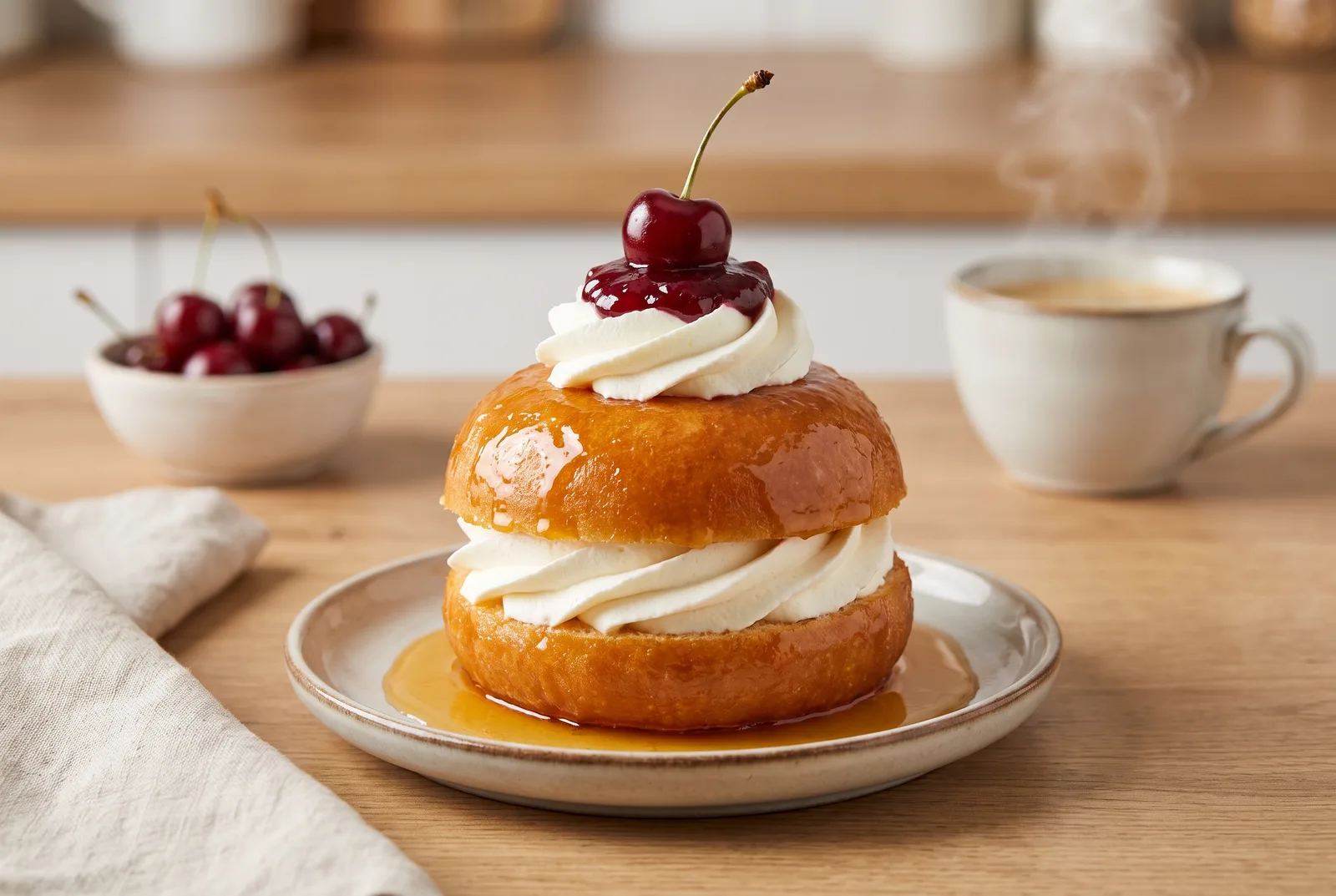 A single savarină soaked in rum syrup, topped with whipped cream and a cherry
 Step-by-step flow diagram of éclair choux from boiling the liquid through drying the panade, piping, baking, filling and glazing
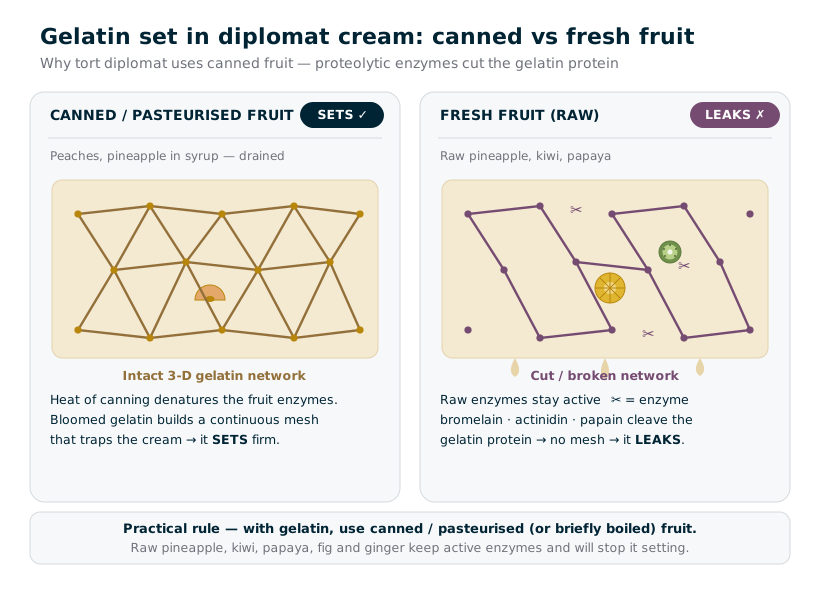 Diagram contrasting a set gelatin network with canned fruit versus a broken network caused by fresh-fruit proteolytic enzymes
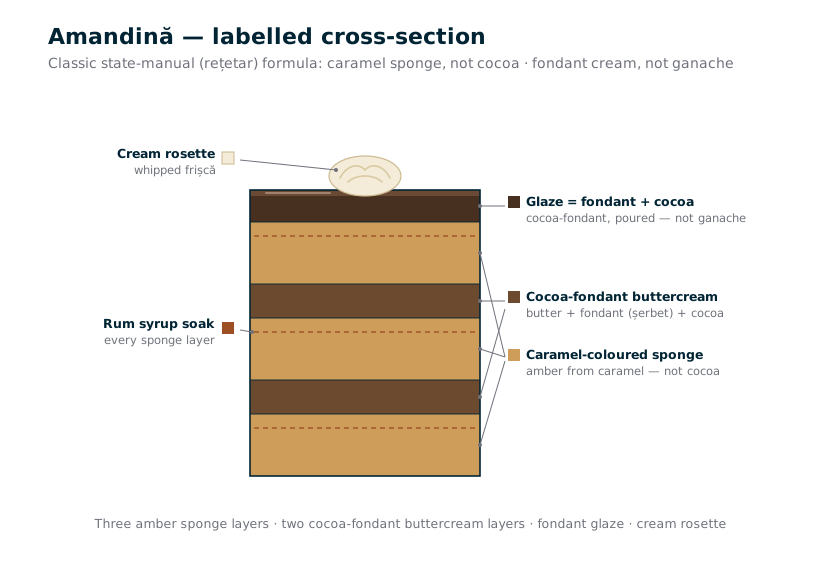 Labelled cross-section of an amandină showing caramel sponge, rum syrup, cocoa-fondant buttercream layers and fondant glaze
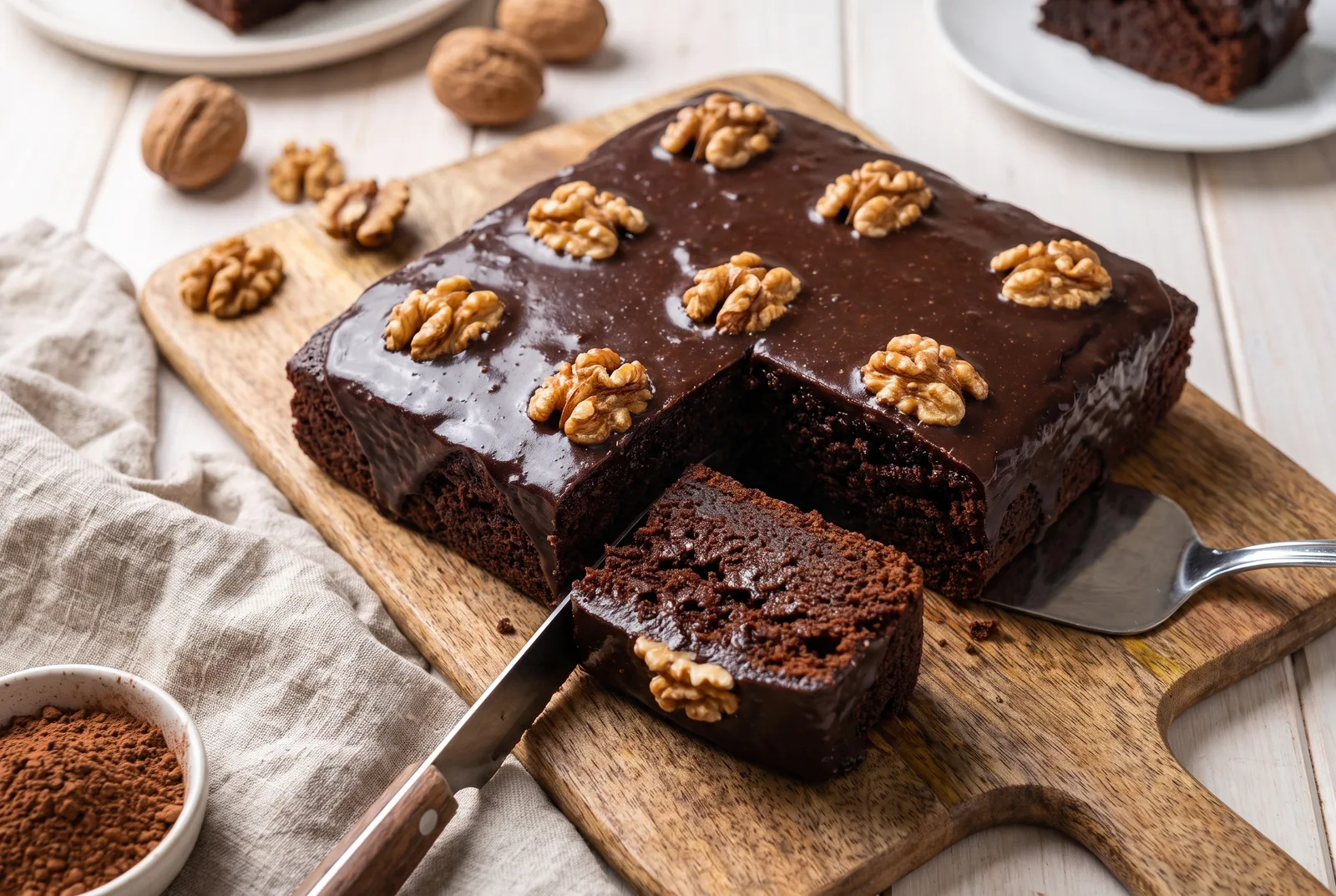 A fudgy dark negresă square with chocolate glaze and walnuts, showing a dense moist crumb
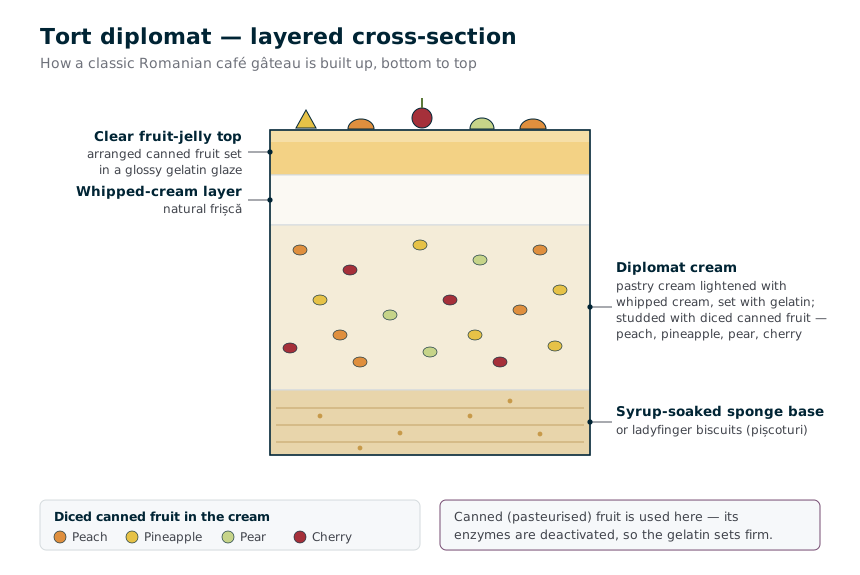 Cross-section of a tort diplomat showing sponge, diplomat cream with canned fruit and a jelly-glazed fruit top
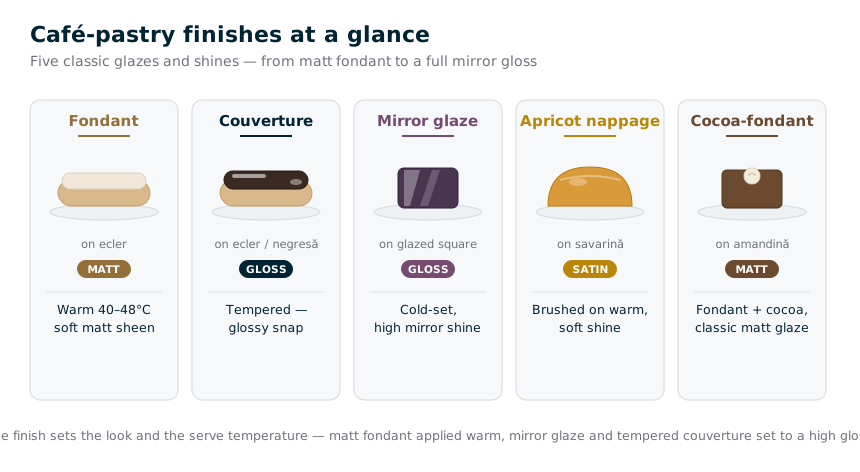 Panel comparing fondant, chocolate couverture, mirror glaze, apricot nappage and cocoa-fondant finishes on café pastries
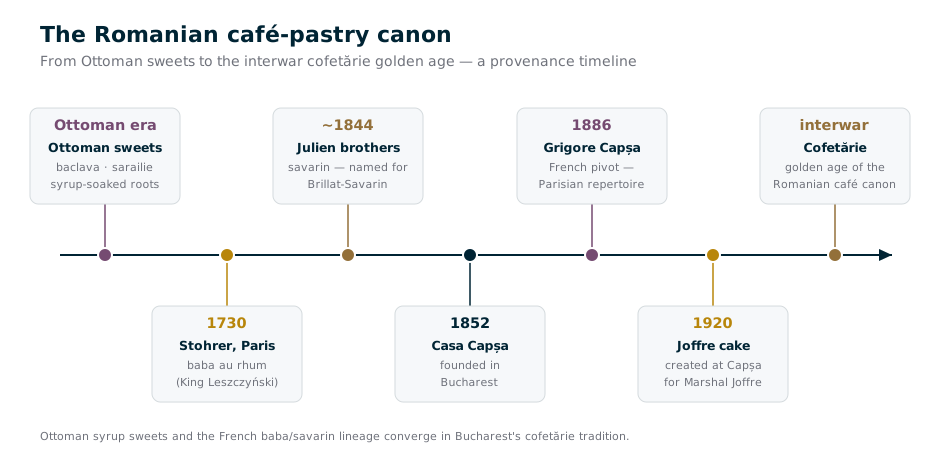 Timeline from Ottoman sweets through baba and savarin to Casa Capșa and the Joffre cake in Romanian confectionery
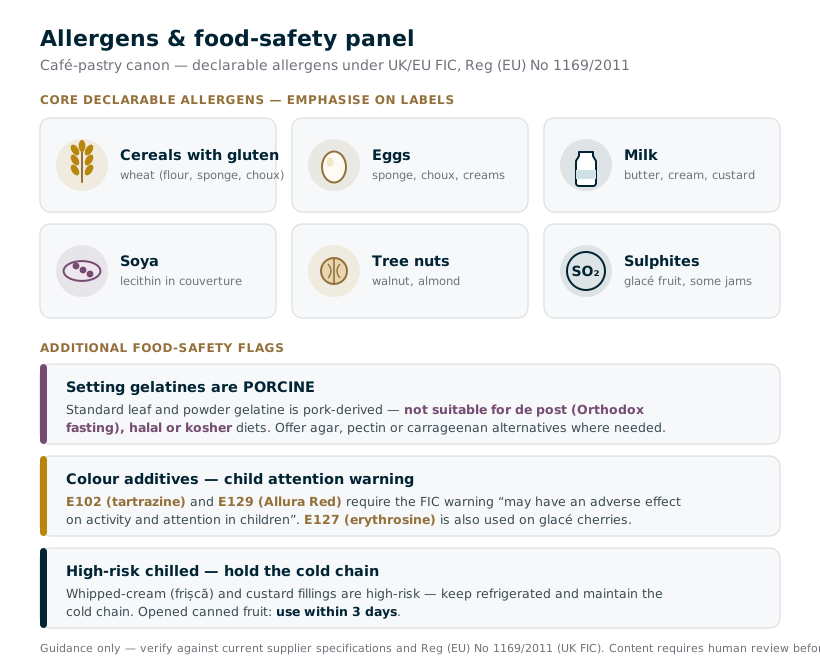 Allergen and food-safety panel: gluten, egg, milk, soya, nuts, sulphites icons plus porcine-gelatine, colour-warning and cold-chain flags
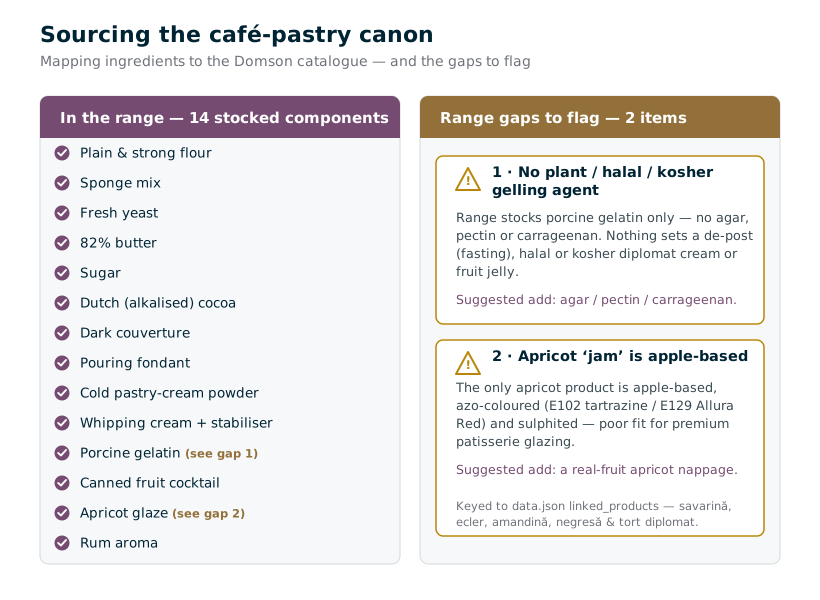 Panel mapping café-pastry ingredients to Domson catalogue products, flagging a plant/halal-gelatine gap and the azo-coloured apricot jam
Savarină — enriched yeast dough (aluat dospit, baba family)
The savarină is a baba-family cake: the point is a light, well-fermented, high-gluten crumb that acts like a sponge for the rum syrup. Use a strong flour (Domson White Strong) rather than plain, and fresh yeast (Benevia). Butter craft is in A4-butter-grades-and-specialist-types.
| Ingredient | Baker's % | Weight |
|---|---|---|
| Strong wheat flour | 100% | |
| Fresh yeast | ~4–5% (bloom in warm milk) | |
| Whole egg | high (a rich, soft dough) | |
| Butter (soft) | enriching (added to a developed dough) | |
| Sugar | light (most sweetness comes from the syrup) | |
| Milk (warm) + salt | to a soft, sticky dough | |
| Total | highly enriched, high-hydration soft dough |
Worked example
A strong/bread flour, fresh yeast bloomed in warm milk, whole eggs, soft butter, a little sugar and salt, beaten to a smooth, elastic, very soft and sticky dough; proof, deposit into greased ring/dome moulds, proof again and bake until deep gold. The gluten must be well developed so the crumb is open and springy and can drink syrup without disintegrating. Fresh yeast and warm (not hot) milk; see A2-osmotolerant-yeast-enriched-doughs for why the sugar/fat load stresses the yeast, and A2-yeast-fermentation-science for the leavening.
Yield: individual ring/dome moulds
Savarin soaking syrup + finish
The syrup should be warm and the cake cool for maximum uptake without collapse. Rum aroma (Dawn Belmonte) stands in for spirit; sugar-cooking craft is in A6-sugar-work-techniques and the apricot-glaze finish in A7-glazes-mirror-and-fruit.
| Ingredient | Baker's % | Weight |
|---|---|---|
| Water | 100% (≈1 L) | |
| Sugar | ≈50% (≈500 g) | |
| Lemon zest + vanilla | to taste | |
| Rum (or rum aroma) | to taste, off the heat | |
| Total | ≈ 50% sugar to water |
Worked example
Boil ~500 g sugar in ~1 L water for about 5 minutes with lemon zest (and vanilla); off the heat stir in rum to taste. Soak the cooled cakes in the warm syrup until saturated and glossy, drain, then brush with warm apricot glaze for shine, fill/top with whipped cream (frișcă) and finish with a spot of sour-cherry (vișine) or strawberry jam.
Yield: soaks a full tray of savarins
Ecler — choux paste (aluat opărit / pâte à choux)
Éclair paste is the same 'scalded' family Romanians call aluat opărit; a medium/plain flour (Domson Plain) works. Steam blows the shell open, so it must bake out fully dry. Pastry-cream craft is in A6-pastry-creams-fillings.
| Ingredient | Baker's % | Weight |
|---|---|---|
| Flour (plain/medium) | 100% | |
| Water and/or milk | ~180–200% | |
| Butter | ~80–100% | |
| Whole egg | to a glossy, pipeable paste | |
| Salt | pinch | |
| Total | eggs added to a piping consistency |
Worked example
Bring water and/or milk with butter (and a pinch of salt) to a rolling boil; add the flour all at once and stir/cook (dry) the panade over heat until it forms a smooth ball and films the pan; cool slightly, then beat in whole eggs a little at a time to a glossy, just-pipeable paste. Pipe ~10–12 cm logs, bake at ~200°C for 25–30 minutes until dry and firm — do NOT open the oven early or they collapse. Cool fully, fill with vanilla pastry cream (cremă de vanilie), glaze with warmed fondant (40–48°C) or chocolate. The full choux science — steam leavening, hollow/sunken/wet faults — is in A6-choux-eclair-technology.
Yield: ≈ 10–12 cm éclairs
Cremă diplomat (crème diplomate) for tort diplomat
Crème diplomate = pastry cream + whipped cream (+ gelatin); the Romanian tort diplomat is usually a chilled, no-bake cake. See A6-pastry-creams-fillings for the cream family and the fruit-enzyme rule.
| Ingredient | Baker's % | Weight |
|---|---|---|
| Crème pâtissière (vanilla) | base | |
| Gelatin (leaf/sheet or 180-Bloom) | to set (bloom cold; dissolve <40°C) | |
| Whipped cream (frișcă) | folded in when just cool | |
| Canned fruit cocktail (drained) | through the layers | |
| Total | pastry cream + whipped cream, set with gelatin |
Worked example
Make a vanilla crème pâtissière (or reconstitute a cold pastry-cream powder at 400 g/L); bloom and dissolve gelatin (leaf/sheet, softened in cold water, or 180-Bloom pork gelatin dissolved <40°C) and stir it warm into the pastry cream; when just cool, fold in whipped cream (frișcă). Layer with WELL-DRAINED canned fruit onto syrup-soaked sponge/pișcoturi and chill to set. The gelatin is essential — without it the cream leaks; and the fruit must be canned/cooked, never fresh pineapple/kiwi/papaya/fig, or the enzymes stop the set.
Yield: fills/layers one tort diplomat
Amandină — state-manual style (≈10 pastries of ~100 g)
This is the classic Romanian state-manual amandină: note it is built on a caramel-coloured (not cocoa) sponge and a FONDANT buttercream and glaze, not a couverture ganache — a genuine authenticity marker. Modern versions often swap in a chocolate/ganache cream. Buttercream craft is in A7-icings-and-buttercreams; fondant in A7-fondant-types-and-uses. Single-source formula — treat as representative.
| Ingredient | Baker's % | Weight |
|---|---|---|
| Sponge: eggs / icing sugar / oil / flour | 4 / 60 g / 10 ml / 140 g | |
| Caramel for the sponge (sugar / water) | 60 g / 20 ml | |
| Syrup: water / sugar / rum + zest + vanilla | 130 ml / 100 g / to taste | |
| Buttercream: butter / fondant / cocoa + rum | 200 g / 200 g / 20 g | |
| Glaze: fondant / caramel syrup / cocoa | 180 g / 1 tbsp / 30 g | |
| Total | n/a |
Worked example
SPONGE: 4 eggs, 60 g icing sugar, 10 ml oil, 140 g flour, pinch salt + a caramel from 60 g sugar & 20 ml water (the caramel colours the crumb amber, NOT cocoa). SYRUP: 130 ml water, 100 g sugar, lemon zest, vanilla, rum essence. BUTTERCREAM: 200 g soft butter, 200 g fondant (șerbet), 20 g cocoa, rum. GLAZE: 180 g fondant, 1 tbsp caramel syrup, 30 g cocoa. Bake and cool the sponge, cut into 3 strips, soak each with syrup, layer with the cocoa-fondant buttercream, chill ~1 h, glaze and cut into ~5 cm squares.
Yield: ≈10 squares (5 cm)
Negresă — dense moist chocolate cake ('necrescută')
The Romanian negresă is a cousin of the brownie but its own thing — a cocoa cake finished with a poured glaze. Use a good Dutch cocoa (JAR 20/22%) and, for a glossier top, a couverture or ready chocolate glaze. Cocoa/chocolate craft in A6-chocolate-selection-couverture.
| Ingredient | Baker's % | Weight |
|---|---|---|
| Eggs + sugar | beaten base | |
| Oil or butter | for a moist crumb | |
| Dutch cocoa (+ optional melted chocolate) | intense cocoa hit | |
| Flour | kept low (dense, fudgy) | |
| Walnuts + cocoa/chocolate glaze | fold in / pour over | |
| Total | n/a |
Worked example
A simple cocoa cake — eggs, sugar, oil or butter, cocoa and a little flour, sometimes melted chocolate — mixed and baked so the centre stays moist and slightly underbaked (hence 'necrescută', un-risen), then poured with a glaze of sugar + cocoa + water/milk or a chocolate glaze and studded with walnuts. Keep it deliberately fudgy; do not over-bake.
Yield: one traybake, cut into squares
The core prăjituri de cofetărie a Romanian patisserie (cofetărie) is expected to make. Names kept in Romanian with the base craft in brackets. See the cross-linked Pillar A concepts for the underlying technique.
| Pastry (Romanian) | What it is | Base craft | Signature build |
|---|---|---|---|
| Savarină | Individual rum-soaked yeast cake with whipped cream | Enriched yeast dough (baba family) | Ring/dome baked, soaked in rum syrup, split, filled/topped with frișcă + a spot of jam |
| Ecler | Éclair — choux log with cream, glazed | Choux / pâte à choux (aluat opărit) | Piped ~10–12 cm, baked crisp, filled with vanilla pastry cream, glazed fondant or chocolate |
| Amandină | Chocolate sponge square, glazed | Sponge + buttercream + glaze | Rum-syruped (amber caramel) sponge, cocoa-fondant buttercream, cocoa/chocolate glaze |
| Negresă | Dense moist chocolate cake ('un-risen') | Cocoa cake (low lift) | Underbaked-moist cocoa crumb + walnuts, cocoa/chocolate glaze on top |
| Tort diplomat | Layered fruit-and-cream cake | Sponge/biscuit + diplomat cream | Syruped pandișpan/pișcoturi, diplomat cream (pât + gelatin + frișcă) + canned fruit |
| Joffre | Cylindrical intense-chocolate cake | Chocolate cake + ganache | Created 1920 at Capșa for Marshal Joffre; chocolate-on-chocolate |
| Cremșnit | Vanilla cream slice | Puff/choux + pastry cream | Austro-German Kremschnitte; in Romanian print from Sanda Marin, 1936 |
The single most important rule for a tort diplomat (and any gelatin-set cream/jelly): fresh proteolytic fruit digests the gelatin protein and the cream will not set. See A6-pastry-creams-fillings and A6-glazes-mirror-and-fruit.
| Fruit | Enzyme | Fresh in a gelatin cream? | Canned/cooked? |
|---|---|---|---|
| Pineapple | Bromelain | NO — stops the set | Yes — heat destroys the enzyme |
| Kiwi | Actinidin | NO — stops the set | Yes (cooked) |
| Papaya | Papain | NO — stops the set | Yes (cooked) |
| Fresh figs | Ficin | NO — stops the set | Yes (cooked) |
| Peach, pear, apricot, mandarin, cherry (canned) | — | Use canned (drained) | Yes — the classic fruit-cocktail fill |
| Banana, apple, raw pear | — (oxidise/brown) | Set is fine but they discolour | Prefer canned or add late |
How the classic shine is achieved and what the platform stocks. Fondant is the traditional éclair/amandină finish; couverture gives a snap; cold mirror glaze is the modern option. See A6-glazes-finishes, A7-fondant-types-and-uses and A6-chocolate-tempering-crystallisation.
| Finish | Used on | How it works | Platform product |
|---|---|---|---|
| Pouring fondant (fondant) | Ecler, amandină (classic) | Warm to 40–48°C and pour/dip; sets to a matt, sweet skin | Zeelandia Fondant Premium; Vortumnus Sugar Fondant |
| Chocolate glaze / couverture | Ecler, negresă, Joffre | Tempered couverture (47→27→30°C) or a ready chocolate glaze | Arabesque Dark 58%/72%; Helios Dark Chocolate Glaze |
| Cold mirror glaze | Modern entremets, glazed squares | Ready cold gel glaze poured over a chilled cake | Paletta Choco Cold Mirror Glaze [data] |
| Apricot nappage/glaze | Savarină, fruit tops, sponge seal | Warm apricot glaze brushed for shine and a moisture seal | Vortumnus Apricot Jam; Belnap/Paletta apricot glaze |
| Cocoa-fondant glaze | Amandină (state-manual classic) | Fondant + caramel syrup + cocoa, warmed and poured | Fondant + JAR Dutch cocoa |
Modern cofetării mix from-scratch classics with ready components for speed and consistency. The trade-off is authenticity and a longer label. See A3 (improvers/emulsifiers) and A6-pastry-creams-fillings.
| Component | From scratch | Ready option (platform) | Trade-off |
|---|---|---|---|
| Sponge (pandișpan) | Whisked egg-sugar foam + flour | Zeelandia/Emix sponge mix (add egg+water, whisk 6–8 min) | Consistent volume vs. a fixed label (E-numbers, milk) |
| Pastry cream (cremă) | Milk, yolk, sugar, starch, vanilla cooked | CSM Crème Pat / Emix custard powder (400 g/L, cold) | Speed and food-safety (no raw yolk) vs. flavour depth |
| Whipped cream (frișcă) | Whipped dairy cream + stabiliser | UHT/vegetable whipping cream + cream stabiliser [data] | Hold and pipe stability vs. dairy flavour [data] |
| Fondant / glaze | Cooked sugar fondant | Ready fondant / chocolate glaze | No sugar-boiling skill needed vs. control |
| Diplomat set | Bloomed sheet/leaf gelatin | Bronze leaf or 180-Bloom pork gelatin | Reliable set — but porcine (not de post/halal/kosher) |
| Fault | Likely cause | Remedy |
|---|---|---|
| Éclairs collapse / sink after baking | Under-baked (still wet inside); oven opened early; paste too loose | Bake fully dry at ~200°C for 25–30 min; don't open early; correct egg to a just-pipeable paste |
| Éclairs dense, no cavity | Panade under-dried; too little egg; oven too cool | Dry the panade until it films the pan; beat in enough egg; ensure a hot start for steam lift |
| Fondant glaze dull or cracks | Overheated (>48°C) or applied too thick/cold | Warm fondant only to 40–48°C; thin with a little syrup; apply in a thin, even coat |
| Savarină soggy/collapses or too dry | Weak/under-proofed crumb; syrup too hot or too little soak | Use strong flour and develop the gluten; soak a cool cake in warm syrup until just saturated, then drain |
| Diplomat cream will not set / leaks | Too little/undissolved gelatin; fresh pineapple/kiwi/papaya/fig used | Bloom and fully dissolve gelatin (<40°C); use only canned/cooked fruit — the enzymes must be inactivated |
| Diplomat cream grainy or split | Gelatin added to cold cream (sets in strings); cream over-whipped | Add warm dissolved gelatin to just-cool pastry cream, then fold in softly whipped cream |
| Negresă dry/cakey | Over-baked; too much flour/lift | Pull it while the centre is still moist; keep flour low; it is meant to be dense ('necrescută') |
| Chocolate glaze streaky/bloomed | Couverture not tempered; damp/cold surface | Temper (melt 47°C → 27°C → work 30°C) or use a ready glaze; glaze onto a dry, room-cool cake |
| Whipped-cream (frișcă) top weeps/slumps in the case | No stabiliser; cold chain broken; over-whipped | Use a cream stabiliser; keep chilled; whip to soft-firm only; assemble cold and sell fast |