
Pastry creams & cold fillings: crème pâtissière, diplomat, mousseline, ganache and stable fruit curds
A working reference to the cold fillings behind éclairs, tarts, choux, croissants and entremets. Covers the crème pâtissière family (diplomat, mousseline, chiboust, légère), ganache ratios for dark/milk/white couverture, and stable fruit curds — plus the science that decides success: starch gelatinisation, the egg-yolk amylase that turns pastry cream runny, gelatine Bloom grades and blooming, agar as a vegan/heat-stable alternative, whipping-cream fat thresholds, and the food-safety rules for egg-based creams. Built on 14 first-party supplier spec sheets (Zeelandia, CSM/Craigmillar, Emix, Puratos, Martin Braun, Barbara Luijckx, Bowika, Kluman, Hortimex, AGRANA, OSM Bieruń) cross-checked against culinary and regulatory references, with comparison tables, five formula cards and a fault-diagnosis table.
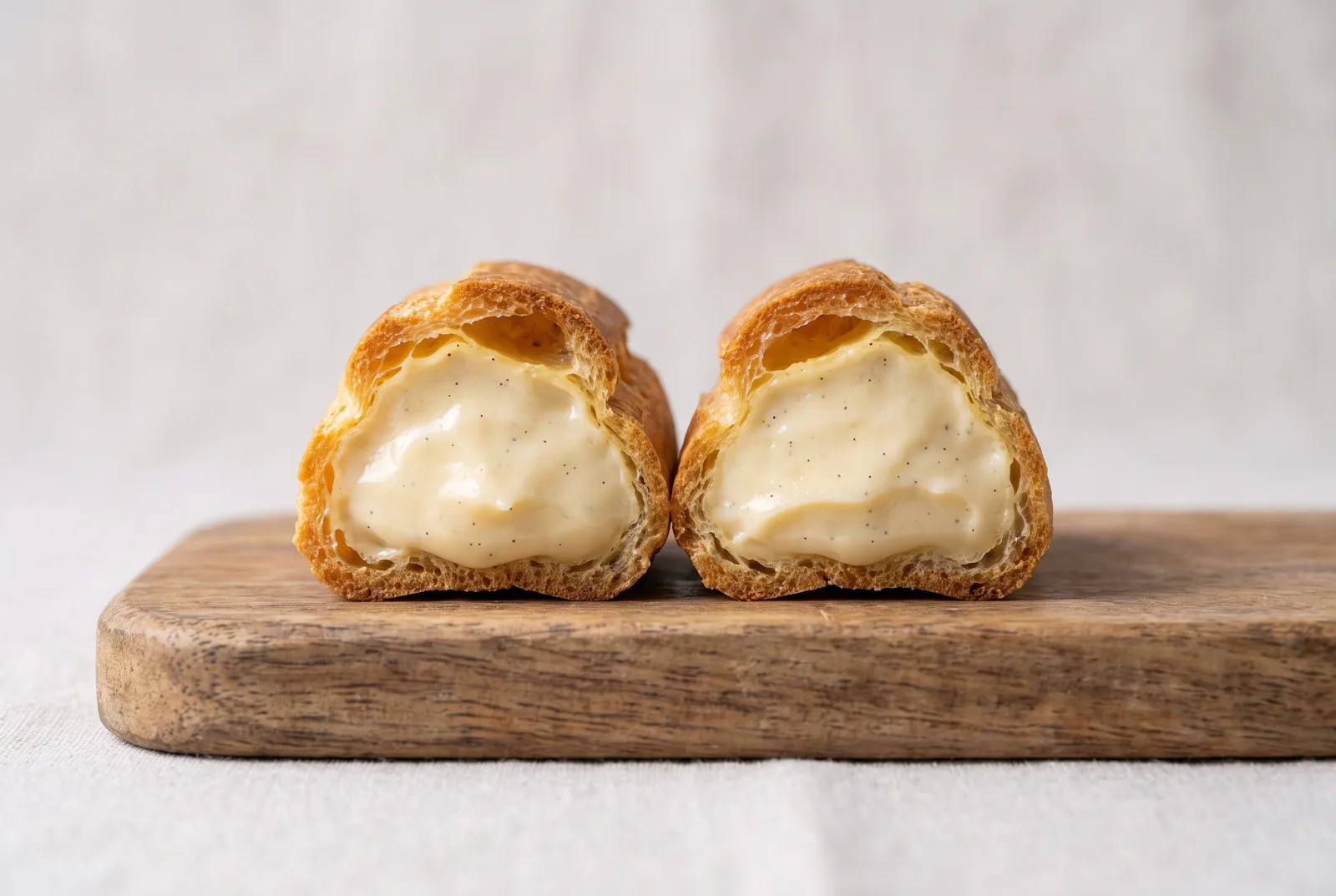
Pastry creams & cold fillings
Cold fillings are the quiet workhorses of a patisserie. A croissant, an éclair, a fruit tart, a layer cake and an entremet can all share one base cream — crème pâtissière — and differ only in what you fold in afterwards. Get the base right and the rest of the menu follows. Get it wrong and you get weeping tarts, grainy éclairs, collapsing cakes and, worst of all, a microbiological risk in an egg-and-dairy product. This dossier covers the whole cold-filling toolkit: the crème pâtissière family, ganache, and stable fruit curds — and the handful of numbers that decide whether they work.
See the figures below for the core cooking sequence and how the derivatives branch off the base.
1. Crème pâtissière — the base cream
Crème pâtissière is milk thickened by both starch and egg yolk, cooked to a boil. A representative professional ratio is, per 1 litre of whole milk: 8 egg yolks, 200–250 g sugar, approximately 60–100 g cornflour (home recipes often 50–65 g; patisserie/commercial ratios up to 100 g for a firmer, more pipeable custard; or substitute ~90 g custard powder). Whole milk matters — lower-fat milk gives a gummier, weaker cream. The full bench formula is below.
The single most important step: boil it
Two things happen when you bring pastry cream to a full boil and hold it for 1–2 minutes:
- The starch fully gelatinises, trapping water and thickening the cream.
- The alpha-amylase enzyme naturally present in egg yolk is deactivated — it dies somewhere between ~80°C (176°F) and boiling.
If you stop heating as soon as it thickens, the amylase survives. Overnight it keeps cleaving the starch you just gelatinised, and your beautiful pastry cream turns soup-thin in the fridge. This is the classic "it was fine last night" failure. The fix is in the method, not the recipe: boil it. After cooking, pass it through a sieve, spread it thin, film-wrap on contact, and chill rapidly to below 4°C (see food safety, §6). The figure below shows this and the other common defects.
Starch choice
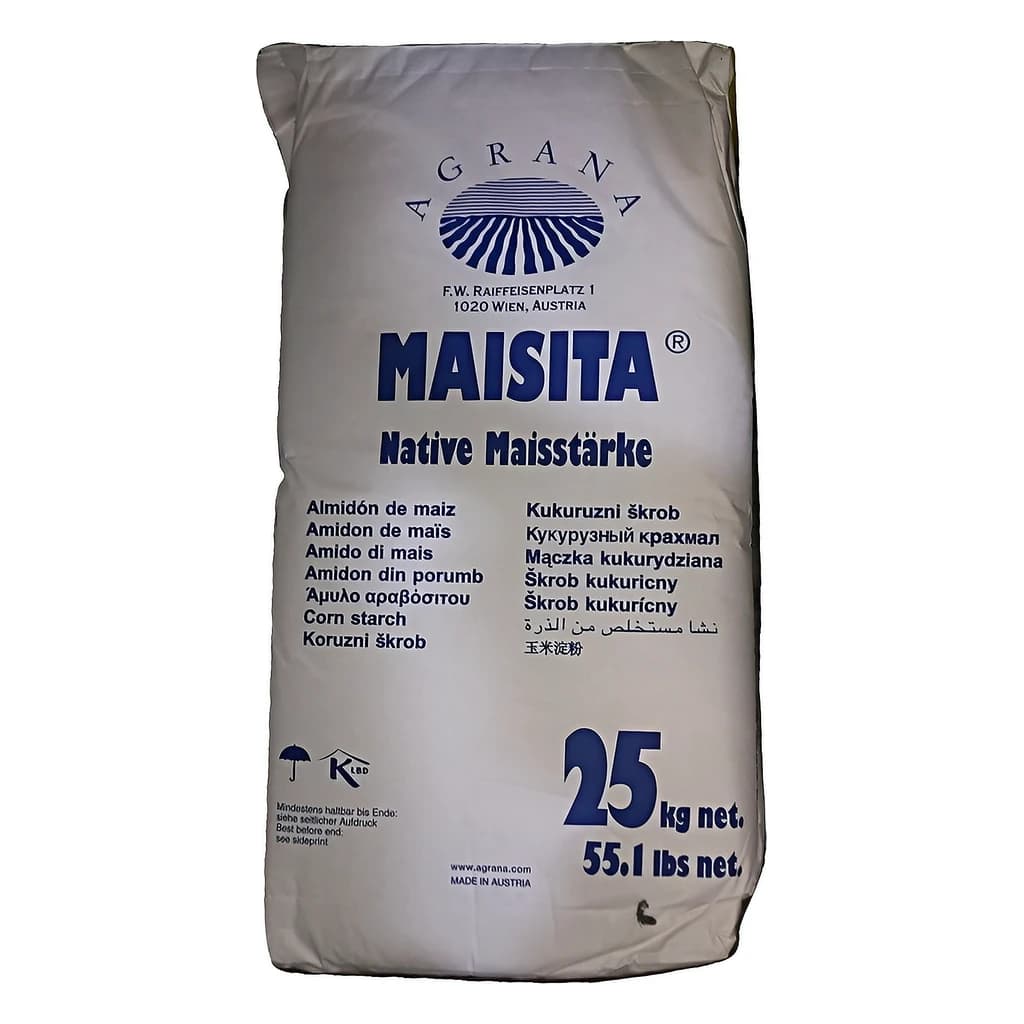
Cornflour (maize starch) gives a clean, glossy, sliceable cream; flour gives a more "old-fashioned" opaque set; potato starch is common in industrial mixes. For products that will be frozen and thawed, native starch weeps on thawing — use a modified/waxy starch (most ready mixes already do). The catalogue native maize starch (AGRANA Maisita, moisture ≤14%, neutral-paste viscosity ≥330 BU at 95°C) is the workhorse cook-out thickener.
The scale alternative: cold-process custards
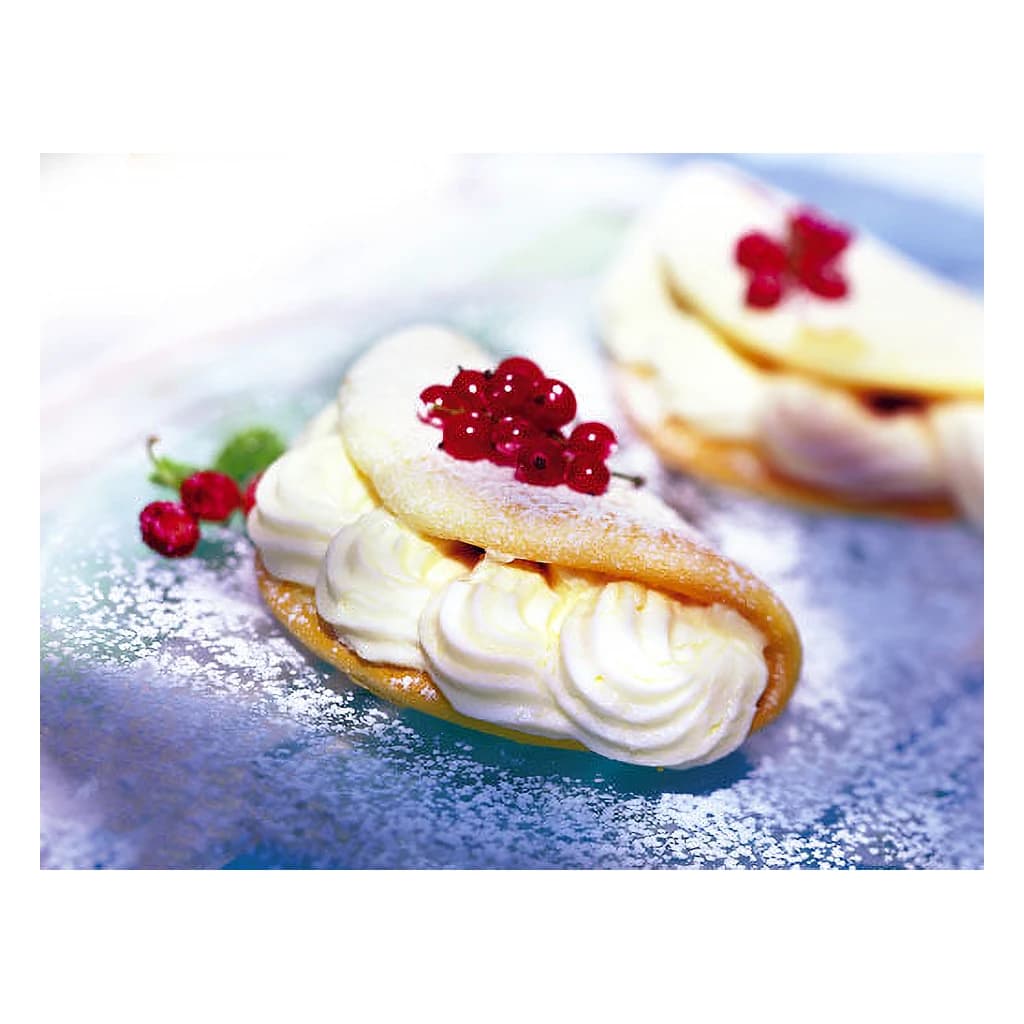
For volume production, egg-free consistency and a long dry shelf life, cold-set custard mixes skip the cooking entirely. Zeelandia Roma Cold Classic and Roma Cold Patisserie reconstitute at 1000 g powder to 2500–3000 g cold water, whisked on 2nd/3rd speed, and must be held below 5°C once made. They gel cold using modified potato starch (E1414) plus alginate and phosphate gelling agents. Powder cream bases (Zeelandia Delice Patissière, 400 g: 1000 g cold water; CSM Craigmillar Creme Pat, 400 g: 1 L; Emix custard, 400 g: 1 L ) sit between scratch and ready-to-use. The figure below compares the routes; the headline numbers are in the table below.
2. The crème pâtissière family
Everything in the table below starts from the cooked base. What you add changes the texture and the stability:
- Crème légère — pastry cream + whipped cream, no gelatine. Lightest, but soft; use the same day.
- Crème diplomat — pastry cream stabilised with gelatine, then lightened with whipped cream. This is the modern pastry chef's default for cakes and tarts because it is light and sliceable. Use roughly 20% whipped cream / 80% pastry cream for firm piping, up to 40% whipped cream for an airier choux filling. The formula is below.
- Crème mousseline — pastry cream beaten with soft unsalted butter, typically 50% of the pastry-cream weight or more (equal weight of butter to cream is common in classic recipes; do not go below 50% or the cream will not set firmly). Rich, firm when chilled, the classic fraisier and Paris-Brest cream. The one rule: butter and cream must be the same cool temperature or it splits. The formula is below.
- Crème chiboust — pastry cream + Italian meringue (+ gelatine); the Saint-Honoré cream.
Ready filling creams (Puratos Cremfil Silk 2.0 / Puracrem 2.0, Emix custard, Zeelandia Delice) give a diplomat-like result with less labour; many can be enriched with butter or folded with whipped cream the same way a scratch base would be.
3. Setting & stabilising: starch vs gelatine vs agar
The choice of setting system is a technical and a dietary/commercial decision (see the table and figure below).
Gelatine
Gelatine dissolves in warm liquid (the catalogue Bowika porcine grade dissolves below 40°C and gels on cooling at 20–37°C, forming a clear gel). It melts at body temperature (~35°C) — which is exactly why gelatine-set creams "melt in the mouth". Two handling rules decide success:
- Bloom first. Soak leaf gelatine in cold water 5–10 minutes and squeeze; hydrate powder in about 5× its weight of cold water (the 1:5 "gelatine mass").
- Never boil it. Gelatine loses setting power above ~100°C. Dissolve the bloomed gelatine into a warm (not boiling) portion of the cream.
Grades are sold by Bloom strength, and — counter-intuitively — sheet weights are adjusted so that one sheet of any grade is roughly interchangeable by count (see the table and figure below): titanium ~100 Bloom/5.0 g, bronze ~125/3.3 g, silver ~160/2.5 g, gold ~200/2.0 g, platinum ~250/1.7 g. The catalogue Kluman Bronze leaf is 140 Bloom (125–155); powder (Knox-type) is ~200–225 Bloom and one ~7 g sachet ≈ 3 sheets. A typical use level to set a cream is ~1.5–2% of the liquid.
Important: gelatine here is porcine — both the Bowika and Kluman products are pig-derived and are therefore not halal, not kosher, and not vegetarian/vegan. For the platform's Muslim, Jewish and vegetarian customers this is decisive; reach for agar instead.
Agar (the vegan, heat-stable alternative)
Agar (E406, from red algae) behaves almost oppositely to gelatine: it only hydrates near boiling (~85–95°C, ~5 min), sets high (gel point 37 ± 5°C), and only re-melts again near 85°C — so it is heat-stable and survives transport and gentle baking. It gives a firmer, more brittle gel; typical dosage is 0.2–3% (soft gels 0.2–0.5%). The catalogue Hortimex Agar MN5 has a gel strength ≥850 g/cm². One trap shared with gelatine: raw pineapple, kiwi and ginger enzymes will stop gelatine setting (heat the fruit first, or use agar).
Cream stabilisers
Whipped-cream fillings collapse without help. Gelatine-based stabilisers do the work in one step: Zeelandia Zeesan is dosed at 200 g + 250 g water folded into 1000 g whipped unsweetened cream, then set in the fridge for at least 1 hour. Emix EmiFOND is the equivalent. Remember whipping cream itself needs ≥30% fat to whip and ≥36% for firm stiff peaks (UK double cream is ~48%); the catalogue OSM Bieruń Double Cream is a 33% UHT cream-and-vegetable-fat blend.
4. Ganache
Ganache is the exception in this dossier: it is not pastry-cream-based — it is an emulsion of chocolate and cream, set by cocoa butter, and tuned entirely by the ratio (by weight, never volume) (see the ratio table, formula and figure below):
- Dark: 1:1 chocolate:cream for a glaze/soft filling; 2:1 for a firm filling or truffle.
- Milk: 1.5:1 to 2:1.
- White: 2:1 to 3:1.
Milk and white need less cream because their higher sugar and milk-solids content already softens the set. Whipped ganache is simply a lighter-ratio ganache, set cold then whipped to a pipeable mousse.
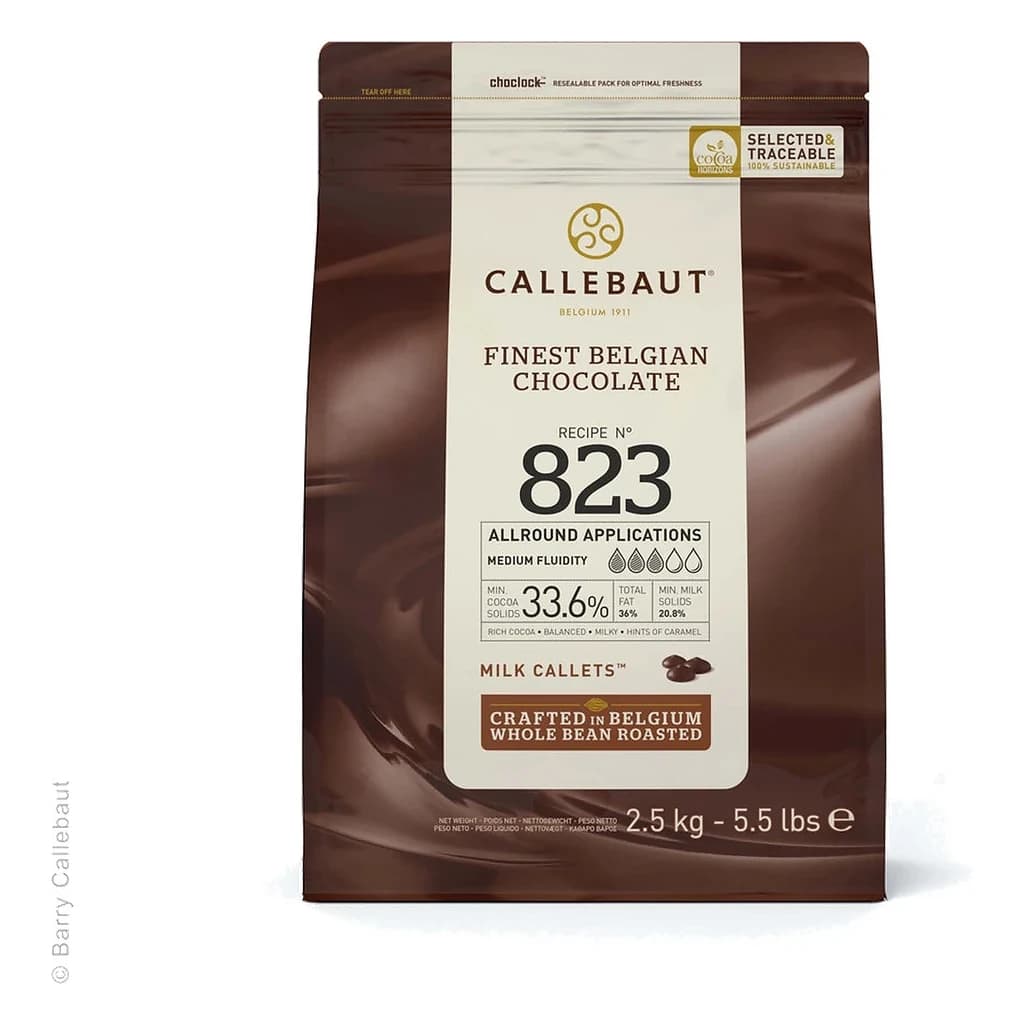
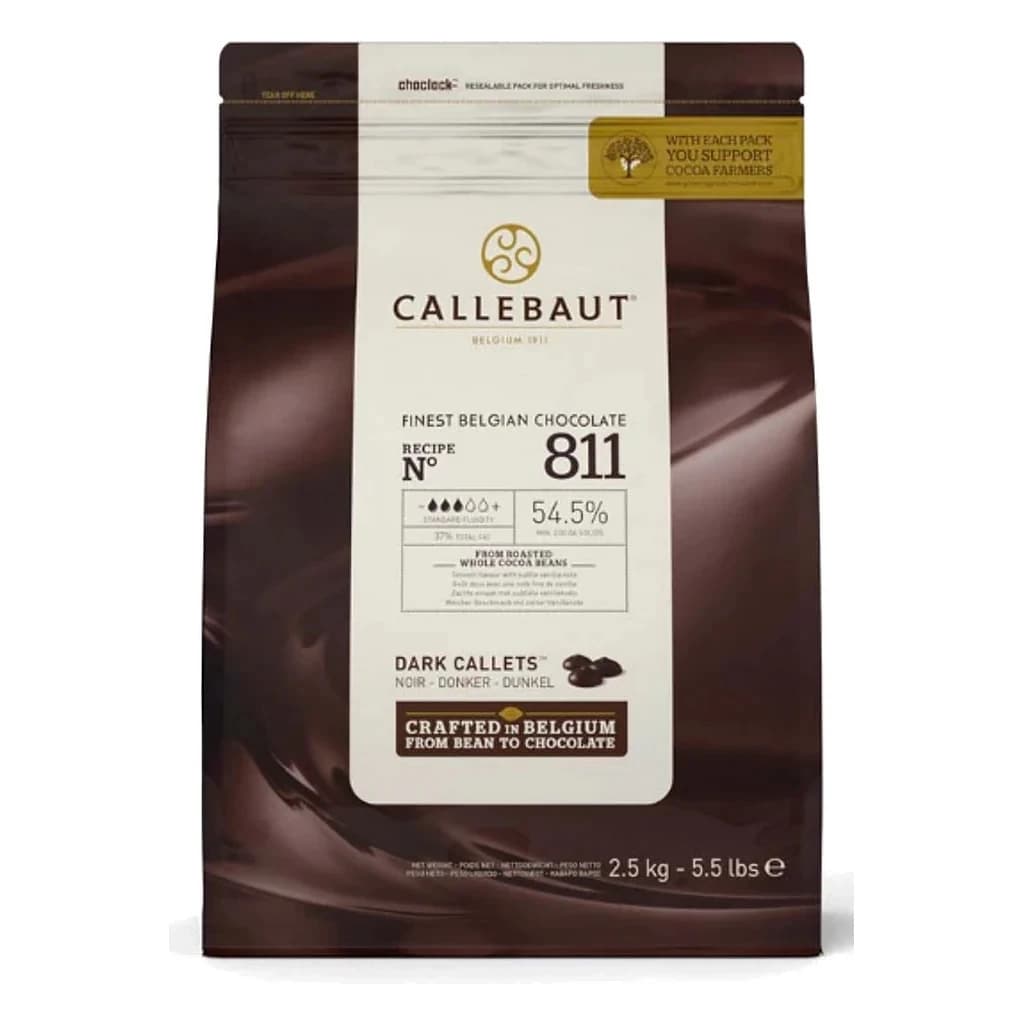
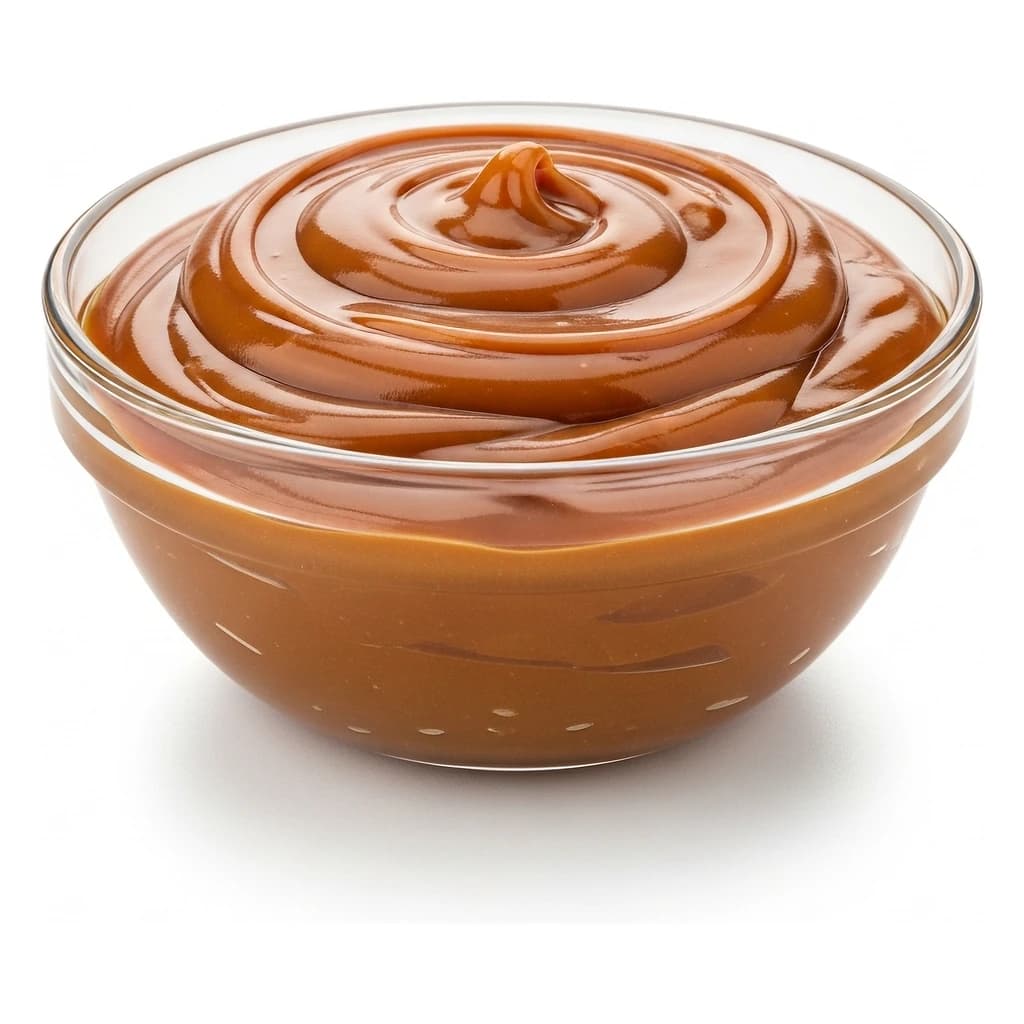
Use couverture, not compound coating: by EU Directive 2000/36/EC, couverture must contain ≥35% total dry cocoa solids including ≥31% cocoa butter — that cocoa-butter level is what gives ganache a clean set and gloss. Catalogue bases include Barima dark 72% (≥43% fat, ≤1% moisture), and Callebaut 811 dark 54.5% / 823 milk 33.6% / W2 white 28%. For speed, Martin Braun Chococover is a ready ganache sauce (45% dark chocolate, aw ≤0.80): melt at 38–40°C to coat, or whip 30–50% into whipped cream for a filling. For the crystallisation and bloom side of chocolate, see the sibling dossiers A6-chocolate-selection-couverture and A6-chocolate-tempering-crystallisation.
5. Stable fruit curds & fruit fillings
A fruit curd is a custard with fruit acid: eggs (and butter) thicken it, while the low pH and high sugar act as natural preservatives. Cook a scratch curd gently to ~77°C (170–175°F) until it coats a spoon, then mount with cold butter; refrigerated, it keeps roughly 1–2 weeks (culinary sources cite 1 week to ~10 days); the formula is below. For scaled or bake-stable work, ready fillings remove the food-safety and consistency risk: Puratos Deli Citron is a bake-stable lemon filling at Brix 69.5–73.5%, pH 3.10–3.50, water activity 0.79–0.83, with a 9-month shelf life. Note its allergens — it contains MILK and sulphites (E223) — and that it is halal-certified but not vegan. Water activity below ~0.85 plus low pH is what makes these fillings shelf-stable where a fresh pastry cream is not.
6. Food safety, allergens & shelf life
Cold fillings are high-risk: egg, dairy, sugar, water — ideal for bacteria. The non-negotiables:
- Cool fast and hold cold. Chill freshly cooked cream quickly (spread thin, film on contact) and store at or below 4°C.
- Mind the danger zone. Never leave egg-based cream more than 2 hours in the 4–60°C range (note: the 2-hour limit and 4°C lower bound follow US FDA guidance; UK FSA guidance uses 8°C as the practical lower bound for chilled foods — confirm the applicable national food safety authority's rules).
- Short life. Scratch pastry cream keeps 3–4 days refrigerated; discard at any off smell or texture.
- Prefer pasteurised eggs and dairy to limit Salmonella risk.
Allergens to declare (from the catalogue specs): MILK is present in essentially every cream here; soya (lecithin) in chocolate; sulphites (E223) in Deli Citron; and cross-contamination warnings for gluten, egg and soya on several mixes. Gelatine is porcine in both catalogue products — critical for halal/kosher/vegetarian customers. Dry shelf lives from the specs: cream powders 6–12 months; chocolate 24 months; gelatine ~5 years; agar 36 months; UHT cream 4 months chilled.
Additional caveats: (1) Zeelandia Zeesan cream stabiliser is gelatine-based, but the gelatine species (porcine, bovine, or fish) is not confirmed on the available spec sheet — buyers serving halal, kosher or vegetarian customers must obtain confirmation of species directly from Zeelandia before declaring dietary suitability. (2) OSM Bieruń 'Double Cream' UHT is 33% fat; under UK The Cream Regulations 1995 the 'double cream' designation is reserved for products with ≥48% milk fat — use a compliant product name (e.g. 'UHT whipping cream blend 33%') when supplying UK B2B customers to avoid misleading labelling. (3) Halal certification on Puratos Deli Citron does not name the certifying body on the available TDS — for B2B use with Muslim customers the certifying body and certificate number should be obtained from Puratos.
7. Buying guide — what a baker actually orders
- Crème pâtissière from scratch: whole milk, egg yolks, caster sugar, AGRANA Maisita maize starch, vanilla.
- Crème pâtissière / diplomat without cooking: Zeelandia Delice Patissière, CSM Craigmillar Creme Pat, Emix custard powders; Zeelandia Roma Cold mixes for fully cold-set; Puratos Cremfil/Puracrem ready creams.
- Stabilising whipped cream / diplomat: Zeelandia Zeesan or Emix EmiFOND; gold/bronze gelatine (Bowika, Kluman) or agar (Hortimex) for vegan/halal/kosher and heat-stable work.
- Ganache: Barima 72% or Callebaut 811/823/W2 couverture + double/whipping cream (OSM Bieruń, Master Martini Decor Up); Martin Braun Chococover for a ready sauce.
- Fruit curds: Puratos Deli Citron (bake-stable, long-life) or scratch lemon curd.
- Praline/nut creams: Martin Braun Nuss-Plus as a mousseline enrichment.
The full numeric comparison and the faults-and-fixes table are below.
Figures
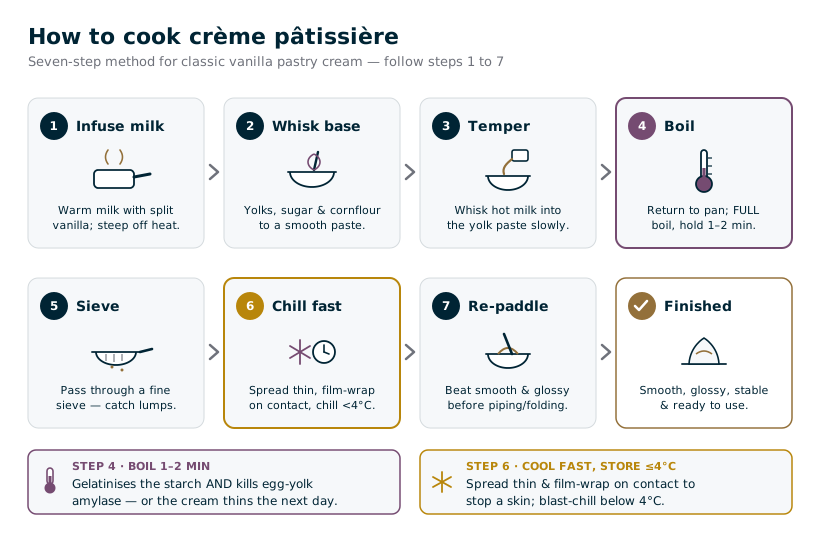 Seven-step diagram showing how to make crème pâtissière from infusing milk to chilling the finished pastry cream
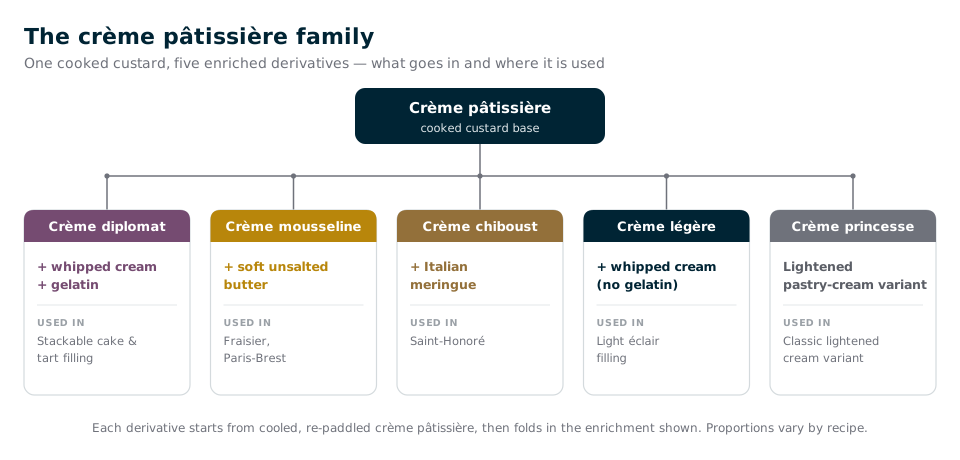 Diagram showing crème pâtissière as the base of diplomat, mousseline, chiboust and légère creams with what is added to each
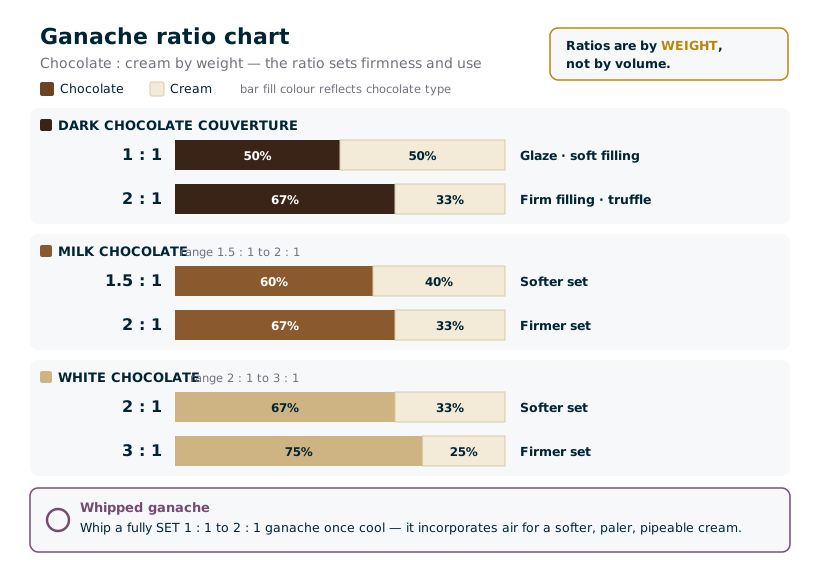 Chart of chocolate-to-cream ganache ratios by weight for dark, milk and white chocolate with their uses
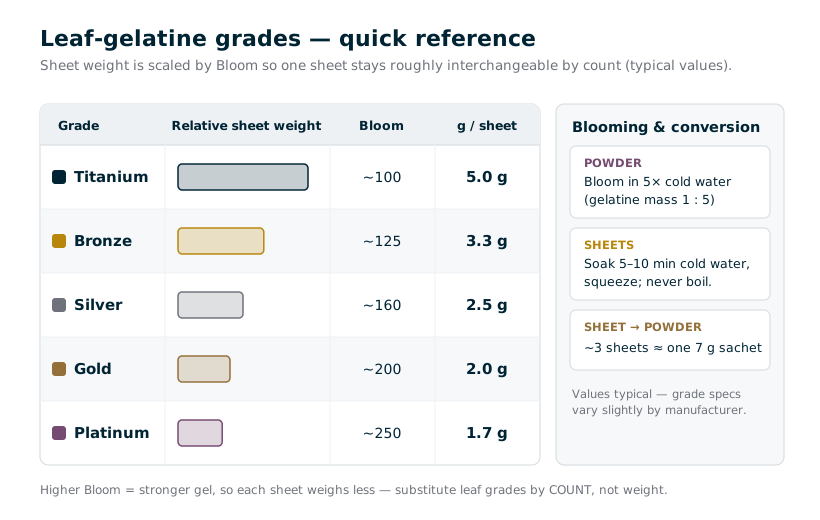 Reference card comparing gelatine leaf grades by bloom strength and sheet weight with conversion notes
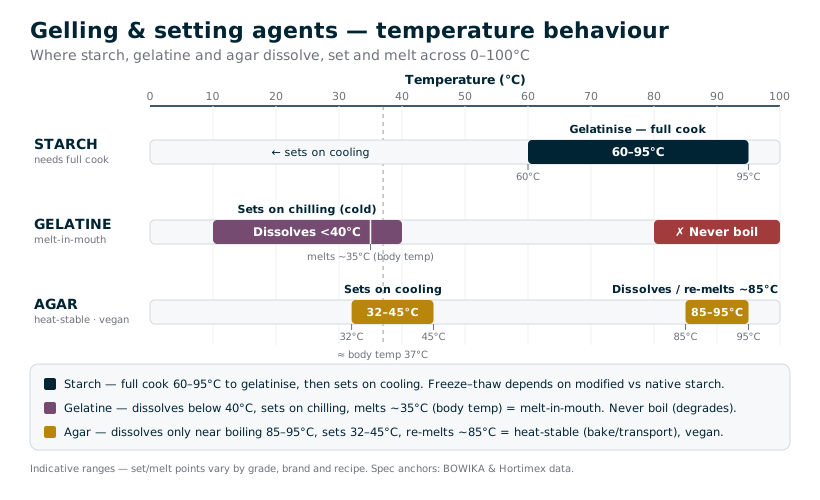 Temperature scale comparing starch, gelatine and agar setting and melting behaviour for pastry fillings
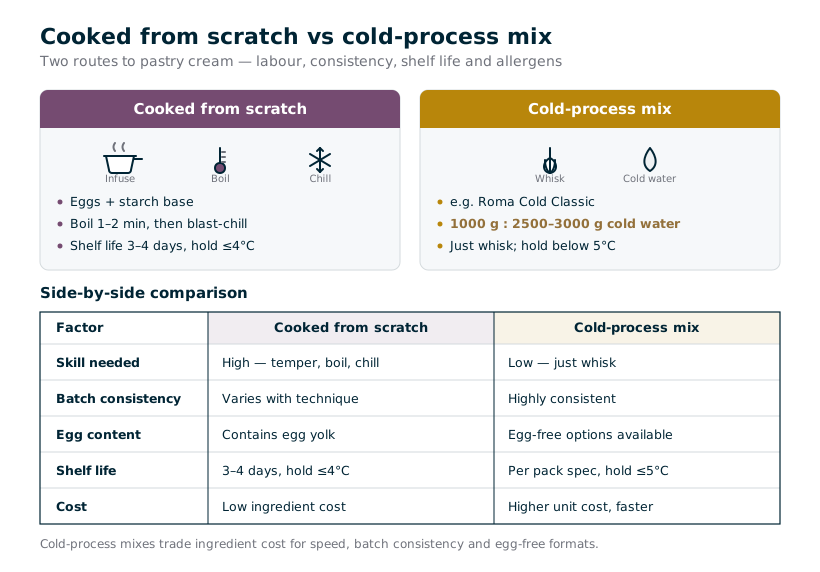 Comparison of traditional cooked pastry cream versus instant cold-process custard mix with pros and cons
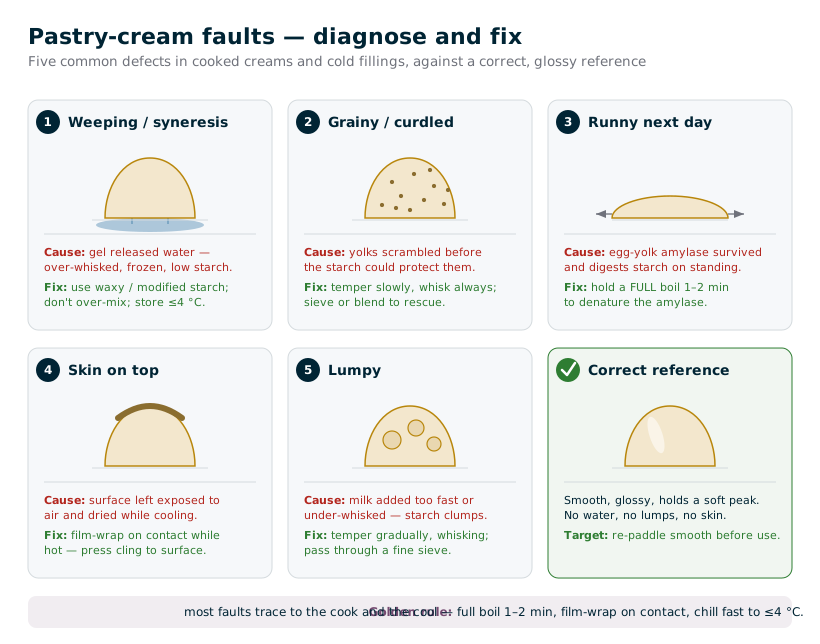 Fault diagnosis panel showing weeping, grainy, runny, skinned and lumpy pastry cream with causes and fixes
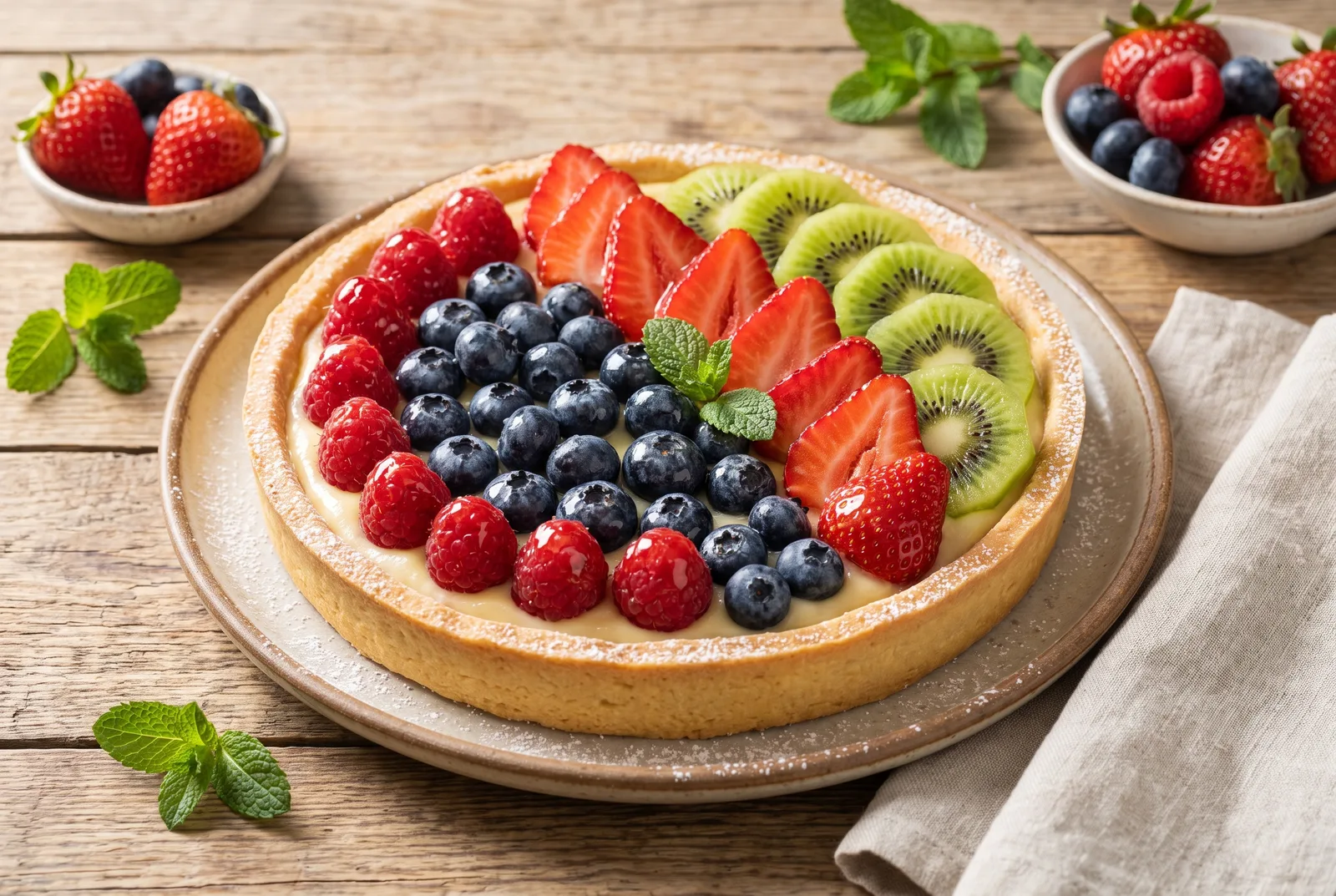 French fruit tart with pastry cream filling and glazed fresh fruit topping
Crème pâtissière (vanilla pastry cream) — bench formula
Representative professional ratio per 1 litre whole milk. Whole milk is important — lower-fat milk gives a gummier, weaker cream.
| Ingredient | Baker's % | Weight |
|---|---|---|
| Whole milk | 1000 g (1 L) | |
| Vanilla pod (split, seeds scraped) or paste | 1 pod | |
| Egg yolks | 8 (≈160 g) | |
| Caster sugar | 200–250 g | |
| Cornflour / native maize starch (or ~90 g custard powder) | 60–100 g (home recipes often 50–65 g; patisserie up to 100 g for a firmer custard) | |
| Unsalted butter (finish, optional) | 50–80 g |
- Infuse milk with the vanilla; bring to a simmer and rest off heat.
- Whisk yolks, sugar and starch to a smooth, pale paste.
- Temper: pour half the hot milk onto the yolk mix whisking constantly, then return all to the pan.
- Cook over medium heat whisking hard; it will thicken, then BRING TO A FULL BOIL and hold boiling 1–2 minutes. This both gelatinises the starch and deactivates egg-yolk alpha-amylase so the cream stays thick.
- Off heat, beat in butter if using. Pass through a fine sieve.
- Spread thin on a tray, film-wrap on contact, and chill rapidly to below 4°C. Use within 3–4 days.
- Before use, paddle/whisk smooth (do not re-boil).
Yield: approx. 1.35 kg
Egg-free / scalable alternative: a cold-process mix such as Zeelandia Roma Cold Classic (1000 g: 2500–3000 g cold water) gives a stable below-5°C custard with no cooking and a 6-month dry shelf life.
Crème diplomat (stabilised, pipeable)
Pastry cream lightened with whipped cream and stabilised with gelatine so it slices and stacks. Adjust whipped-cream fraction from ~20% (firm) to ~40% (airy).
| Ingredient | Baker's % | Weight |
|---|---|---|
| Crème pâtissière (chilled, smooth) | 1000 g | |
| Gelatine (gold leaf ~200 Bloom, or powder) | 12–16 g (≈1.5% of cream) | |
| Cold water to bloom powder (if using) | 5× gelatine weight | |
| Whipping/double cream (≥35% fat) | 250–650 g (soft peaks) |
- Bloom gelatine: soak leaf in cold water 5–10 min and squeeze, or hydrate powder in 5× its weight of cold water.
- Warm a small amount of the pastry cream (do not boil) and dissolve the bloomed gelatine into it, then stir back into the bulk smoothly.
- Whip the cream to soft peaks (needs ≥30% fat to whip, ≥36% for the firmest peaks).
- Fold the whipped cream into the gelatine-loosened pastry cream in 2–3 additions.
- Use promptly while pourable, then set in the fridge ≥1 h before unmoulding/cutting. Hold ≤4°C.
Yield: approx. 1.4 kg
For a fully scratch-free route, a gelatine-based cream stabiliser such as Zeelandia Zeesan (200 g + 250 g water into 1000 g whipped cream, set ≥1 h) stabilises whipped cream directly. For a vegan diplomat, set the custard base with agar (boil to activate, sets ~37°C) and fold in a whippable plant cream.
Crème mousseline (buttercream-rich pastry cream)
Pastry cream beaten with soft unsalted butter; firm and sliceable when chilled. Critical point: cream and butter must be the SAME temperature (cool room temp) or it splits. The standard minimum is 50% butter relative to the pastry-cream weight (500 g per 1000 g base); using less than 50% produces a cream that does not set firmly when chilled.
| Ingredient | Baker's % | Weight |
|---|---|---|
| Crème pâtissière (at cool room temperature) | 1000 g | |
| Soft unsalted butter (same temperature) | 500 g (50% minimum; classic fraisier/Paris-Brest recipes use up to equal weight) |
- Beat the pastry cream smooth.
- Add the soft butter in pieces, beating to a light, homogeneous, glossy cream.
- If it looks split, the temperatures differ — warm the bowl briefly and keep beating.
- Pipe at room temperature; the assembly firms in the fridge as the butter sets. Hold finished items ≤4°C.
Yield: approx. 1.3 kg
Praline/hazelnut mousseline: replace part of the butter with a nut/praline paste, or build on a hazelnut cream filling such as Martin Braun Nuss-Plus.
Ganache — dark / milk / white (by weight)
Pour hot cream over chopped couverture, rest 1 min, then emulsify from the centre. Ratios are by weight and change with chocolate type and use.
| Ingredient | Baker's % | Weight |
|---|---|---|
| Dark couverture (≥55–72%): cream | 1:1 glaze/fill; 2:1 firm/truffle | |
| Milk couverture: cream | 1.5:1 to 2:1 | |
| White couverture: cream | 2:1 to 3:1 | |
| Optional: glucose / invert sugar | ~10% of cream (shine, shelf life) | |
| Optional: soft butter (finish) | ~10% (gloss, melt) |
- Heat cream (with glucose if used) to just below boil.
- Pour over chopped couverture; leave 1 minute to melt.
- Emulsify from the middle outwards (whisk or hand blender) to a glossy, homogeneous ganache.
- Beat in soft butter at ~35°C if using.
- For whipped ganache: make a lighter ratio (e.g. dark 2:1 chocolate:cream variant or add extra cold cream), chill several hours/overnight, then whip to a pipeable mousse.
- Use couverture (≥31% cocoa butter / ≥35% cocoa solids) for clean set and snap.
Yield: ratio-based
Time-saver: Martin Braun Chococover is a ready ganache sauce — melt at 38–40°C to coat, or whip 30–50% into whipped cream for a filling.
Stable fruit curd (lemon)
Acidic fruit curd thickened by eggs and enriched with butter; the low pH and sugar give it a useful refrigerated shelf life.
| Ingredient | Baker's % | Weight |
|---|---|---|
| Lemon juice (fresh) | 180 g | |
| Lemon zest | from 3 lemons | |
| Caster sugar | 200 g | |
| Whole eggs + yolks | 3 eggs + 2 yolks | |
| Unsalted butter (cold, cubed) | 120 g |
- Whisk juice, zest, sugar and eggs in a bowl over simmering water (or a heavy pan over low heat).
- Stir constantly and cook to ~77°C (170–175°F), until it coats the back of a spoon.
- Off heat, whisk in the cold butter a few cubes at a time until glossy.
- Pass through a sieve; film-wrap on contact and chill. Refrigerated, it keeps roughly 1–2 weeks (culinary sources cite 1 week to ~10 days); hold ≤4°C.
Yield: approx. 600 g
Bake-stable / long-life alternative: a ready filling such as Puratos Deli Citron (Brix 69.5–73.5%, pH 3.1–3.5, aw 0.79–0.83, bake-stable, 9-month shelf life) removes the food-safety and consistency risk for scaled production.
Every cream in this table is built on cooked crème pâtissière (pastry cream). The differences are what you fold in afterwards and how that changes texture, stability and use. Ratios are typical professional starting points, not fixed rules.
| Cream | What is added to crème pâtissière | Texture | Stability / set | Typical use |
|---|---|---|---|---|
| Crème pâtissière | — | Dense, glossy, spoonable | Holds shape cold; thins if amylase not killed | Éclairs, tart bases, mille-feuille, doughnut fill |
| Crème légère | Whipped cream, no gelatine | Lighter, mousse-like | Soft — short hold, use same day | Light éclair/choux fillings |
| Crème diplomat | Whipped cream + gelatine (≈20% cream firm → ≈40% airy) | Light, airy, but pipeable | Sliceable/stackable when gelatine set | Layer cakes, entremets, tarts, choux |
| Crème mousseline | Soft unsalted butter (≈50% or more of pâtissière weight; do not use less than 50%) | Rich, buttery, smooth | Firm when chilled (butter sets) | Fraisier, Paris-Brest, framboisier |
| Crème chiboust | Italian meringue (+ gelatine) | Very light, airy | Soft set; often torched | Saint-Honoré, gâteaux |
| Ganache | Not pâtissière-based: chocolate + cream | Dense to truffly to whipped | Set by cocoa butter, ratio-controlled | Tart fill, glaze, truffles, macaron fill, whipped ganache |
How the three main systems behave. Spec-sheet values are flagged with their product; other temperatures are from reference sources and are typical ranges.
| System | Dissolve / activate | Sets at | Re-melts at | Heat / freeze stability | Diet | Typical dose |
|---|---|---|---|---|---|---|
| Starch (native maize/potato, cornflour) | Gelatinises ~60–95°C; must boil for crème pât | On cooling | Does not melt; can retrograde/weep | Native weeps on freeze; use modified/waxy for freeze-thaw | Vegan, gluten-free (maize/potato) | ~8–10% of milk for crème pât |
| Gelatine (leaf/powder) | Bloom cold, dissolve warm <40°C | On chilling; gels 20–37°C | ~35°C — melts in the mouth | Not heat-stable; never boil; freezes acceptably | Animal (porcine here) — not halal/kosher/vegan | ~1.5–2% of liquid |
| Agar (E406) | Only near boiling ~85–95°C | ~32–45°C (gel point 37±5°C) | ~85°C — heat-stable | Heat-stable (bake/transport); can weep if frozen | Vegan (red algae) | 0.2–3% (soft 0.2–0.5%) |
Standardised leaf grades. Sheet weights are deliberately set so that one sheet of any grade is roughly interchangeable BY COUNT, not by weight. Values are typical; individual manufacturer specs vary (the catalogue Bowika porcine grade is 170–190 Bloom, between gold and platinum).
| Grade | Bloom (typical) | Weight per sheet | Notes |
|---|---|---|---|
| Titanium | ~100 | 5.0 g | Weakest set; most product per sheet |
| Bronze | ~125 | 3.3 g | Catalogue: Kluman Bronze leaf = 140 Bloom (125–155) |
| Silver | ~160 | 2.5 g | Common European patisserie grade |
| Gold | ~200 | 2.0 g | Most common premium grade |
| Platinum | ~250 | 1.7 g | Firmest; least weight per sheet |
| Powder (Knox-type) | ~200–225 | ~7 g per sachet ≈ 3 sheets | Bloom in 5× cold water (mass 1:5) |
Ratios are by WEIGHT, not volume. Milk and white chocolate need less cream because of their higher sugar and milk-solid content. Use couverture (min 31% cocoa butter, min 35% total cocoa solids) for clean melting and set.
| Chocolate | Glaze / soft filling | Firm filling / truffle | Whipped ganache | Catalogue base example |
|---|---|---|---|---|
| Dark couverture | 1: 1 | 2: 1 | Whip a set 1.5:1–2:1 | Barima 72% / Callebaut 811 54.5% |
| Milk couverture | 1.5: 1 | 2: 1 | ≈2:1 then whip | Callebaut 823 33.6% |
| White couverture | 2: 1 | 3: 1 | ≈3:1 then whip | Callebaut W2 28% |
| Ready ganache sauce | Use neat as coating (melt 38–40°C) | — | Mix 30–50% with whipped cream | Martin Braun Chococover (45% dark) |
Authoritative figures pulled directly from first-party supplier specifications. Dosage is the supplier's reconstitution instruction.
| Product | Type | Dosage / use | Key numbers | Allergen highlights | Shelf life |
|---|---|---|---|---|---|
| Zeelandia Delice Patissière | Cold cream powder | 400 g: 1000 g cold water, whisk 4–5 min | 410 kcal/100 g; carrageenan (E407) set | MILK; may contain gluten/egg/soya/sesame | 6 months <25°C |
| CSM Craigmillar Creme Pat | Cold custard mix | 400 g: 1 L | 407 kcal/100 g; alginate + phosphate set | MILK; may contain gluten/egg; not vegan/coeliac | 365 d <30°C; 9 mo opened |
| Zeelandia Roma Cold Classic | Cold-set custard | 1000 g: 2500–3000 g cold water | 414 kcal/100 g; potato starch E1414 + alginate | MILK; cross-contam gluten/egg/soya | 6 months <25°C |
| Zeelandia Roma Cold Patisserie | Cold-set custard | 1000 g: 2500–3000 g cold water | 418 kcal/100 g; coconut oil; preservative E202 | MILK; cross-contam gluten/egg/soya | 9 months <25°C |
| Emix custard 'Extra' | Cold custard powder | 400 g: 1 L water; can enrich with butter | 412 kcal/100 g mix → 118 kcal prepared | MILK | 12 months <25°C |
| Puratos Deli Citron | Lemon curd-style filling | Ready-to-use, bake-stable | Brix 69.5–73.5%; pH 3.1–3.5; aw 0.79–0.83 | MILK + sulphites (E223) | 9 months 5–25°C |
| Martin Braun Chococover | Ready ganache sauce | Coat: melt 38–40°C; fill: 30–50% + whipped cream | 45% dark choc; Brix 67–69; pH 5.5–6.0; aw ≤0.80 | MILK | 12 months <25°C |
| Barima dark couverture 72% | Ganache base | Use as couverture/ganache base | ≥72% cocoa solids; ≥43% fat; ≤1% moisture | Soya (lecithin); may contain MILK | 24 months 10–20°C |
| Bowika porcine gelatine | Gelling agent | Bloom cold, dissolve <40°C; set 20–37°C | 170–190 Bloom; 88 g protein/100 g | Porcine — not halal/kosher | 5 years |
| Hortimex Agar MN5 | Gelling agent (vegan) | Boil to dissolve (~85–95°C); sets ~37°C | Gel strength ≥850 g/cm²; gel point 37±5°C | None declared | 36 months |
| OSM Bieruń Double Cream UHT 33% | Whipping/cream base | Whip or use as cream base | 33±2% fat; 315 kcal/100 g | MILK | 4 months 4–8°C; 48 h opened |
Source: Supplier spec sheet.
| Fault | Likely cause | Corrective action |
|---|---|---|
| Cream turns thin/runny after a day | Egg-yolk alpha-amylase not deactivated (cream not boiled long enough) | Bring to a full boil and hold 1–2 min next time; amylase dies ~80°C–boiling |
| Grainy / scrambled texture | Yolks overheated before starch protected them; insufficient whisking | Whisk hard, temper properly, cook with constant agitation; pass through a sieve |
| Weeping / watery layer (syneresis) | Native starch retrogradation, over-cooking, or freeze-thaw of native-starch cream | Use modified/waxy starch for freeze-thaw; don't over-cook; stabilise diplomat with gelatine |
| Skin on the surface | Moisture evaporation while cooling | Film-wrap on direct contact and chill fast |
| Diplomat won't hold / collapses when cut | Too little gelatine, gelatine boiled (lost set), or cream under-whipped | Use ~1.5–2% gelatine, never boil it, whip cream to soft peaks (≥36% fat) |
| Mousseline splits | Butter and pastry cream at different temperatures | Bring both to the same cool room temp; warm bowl briefly and keep beating |
| Ganache splits / oily | Emulsion broken (too hot, wrong ratio, over-worked) | Re-emulsify with a splash of warm cream from the centre; respect by-weight ratios |
| Ganache too soft / won't set | Too much cream for the chocolate type | Increase chocolate (milk/white need less cream); use couverture ≥31% cocoa butter |
| Fruit curd won't thicken / scrambles | Under- or over-cooked eggs | Cook gently to ~77°C stirring constantly; pull immediately and add cold butter |
| Gelatine-set filling stays liquid with fresh fruit | Raw pineapple/kiwi/ginger enzymes digest gelatine | Heat that fruit first, or set with agar/starch instead |
Buy the ingredients
Catalogue products and brands referenced in this article.
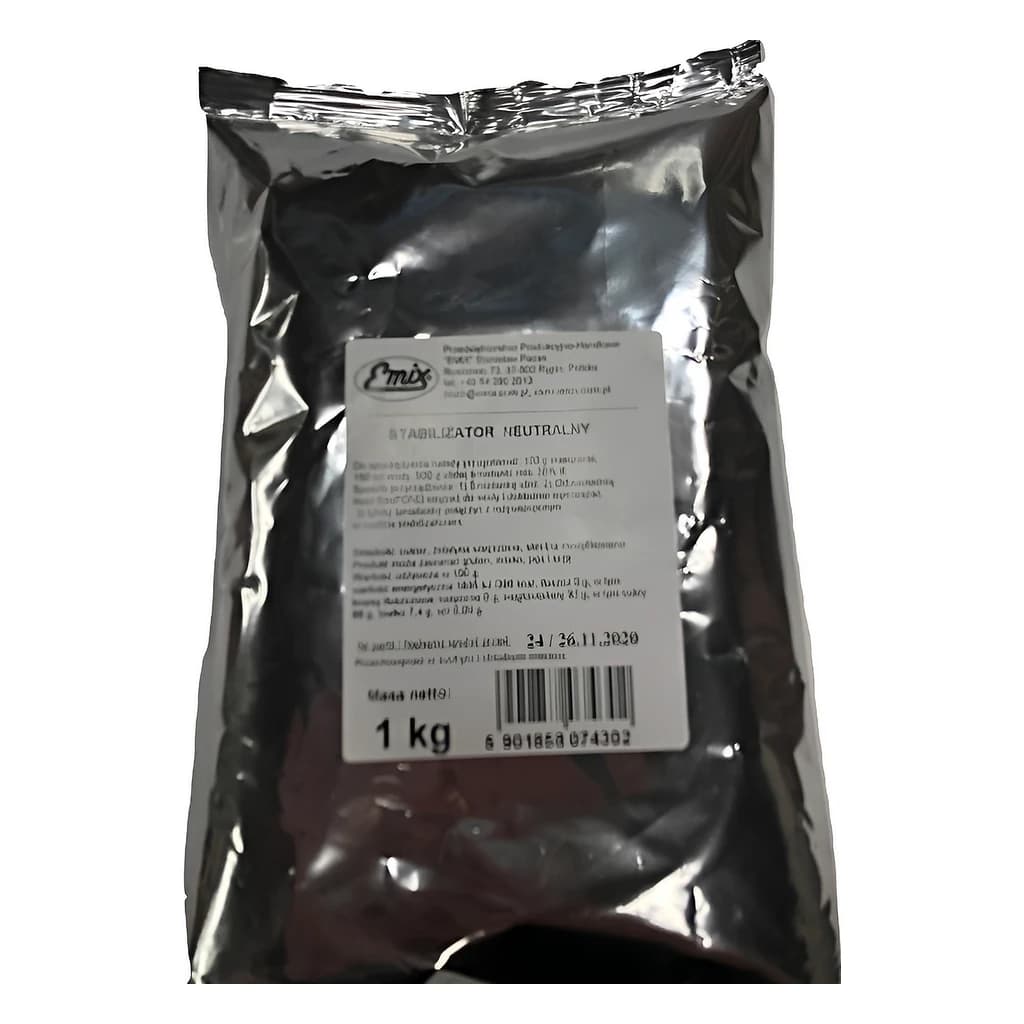
Cream Stabiliser (Emix EmiFOND)
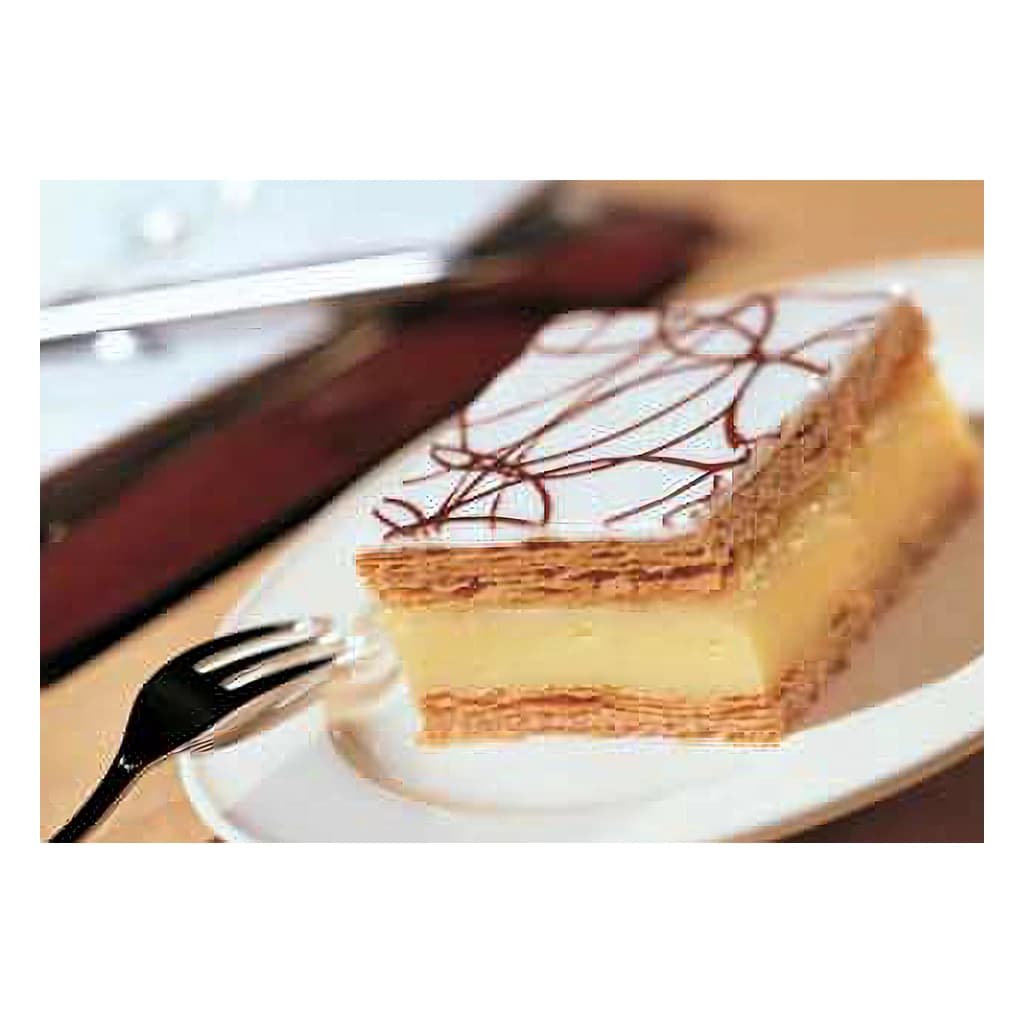
Zeelandia Vancream Custard Powder

Emix Vanilla Custard Powder 6 kg (6 × 1 kg)

BOWIKA Pork Gelatine 180 Bloom 5 kg
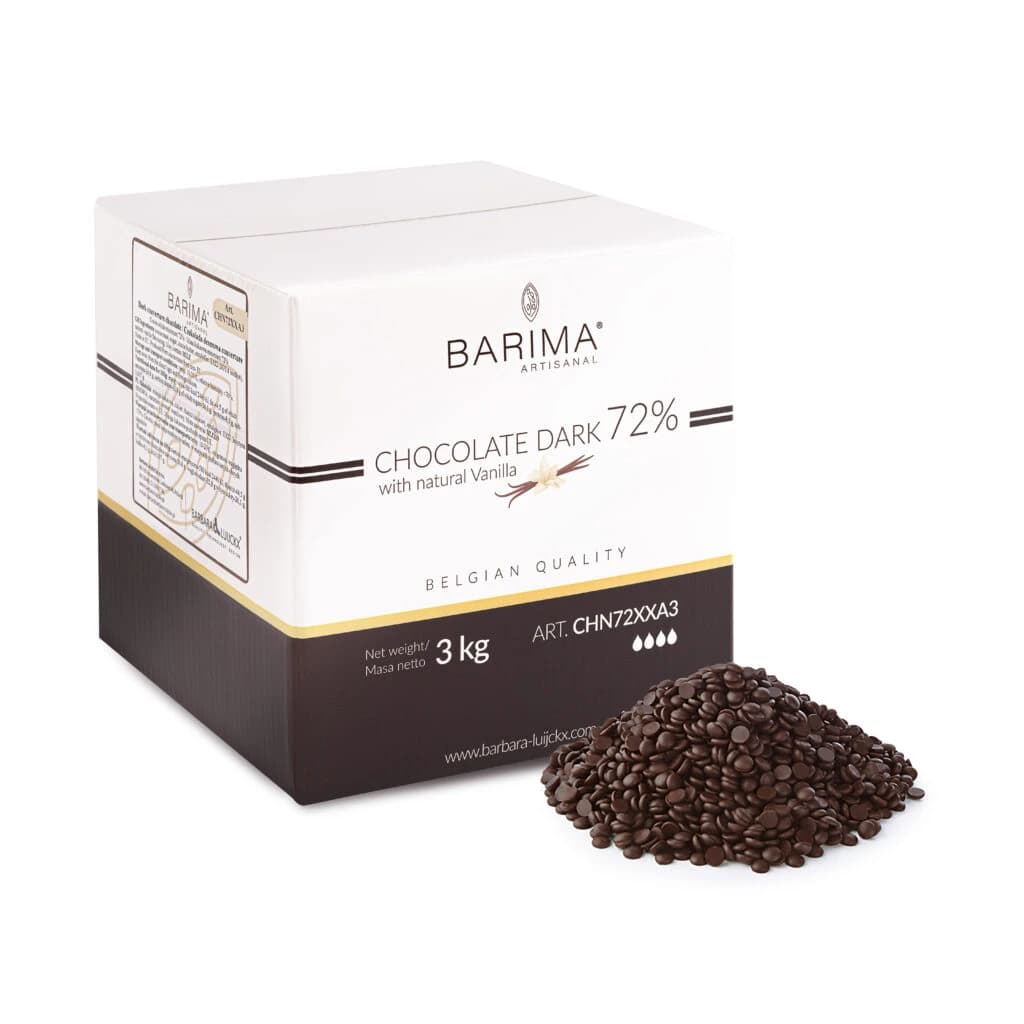
Barima Dark Couverture Drops 72% 3 kg
Agar MN5 Gelling Agent 25 kg
Cremfil Silk 2.0 Vanilla Filling 13 kg

Double Cream Bieruńska UHT 33% 5 L
Zeesan Cream Stabiliser
Callebaut 823 Milk Chocolate Callets 33.6% 2.5 kg
Callebaut 811 Dark Couverture Callets 54.5%

Callebaut SICAO White Chocolate Callets 28% 2.5 kg
Delice Patissière Custard Cream – 10 kg
AGRANA Maisita Native Maize Starch 25 kg
Martin Braun Chococover Ganache Sauce
Nuss-Plus Hazelnut Cream 12 kg

Vanilla Custard Powder No Sugar 5 kg (Emix)

Decor Up Sweetened UHT Whipping Cream 1 L x 12

Puracrem 2.0 Vanilla Flavoured Cream Filling 13 kg
Edible Gelatine Powder 15 kg

Roma Cold Classic Custard 12 kg (Zeelandia)
Craigmillar Original Crème Patissière Custard 10 kg (Cold)