
Choux pastry technology: steam leavening, piping consistency and troubleshooting hollow, sunken & wet choux
A practical, data-driven guide to choux pastry (pâte à choux) for professional bakers and confectioners. Explains why choux is leavened almost entirely by steam, how cooking out the panade gelatinises wheat starch so the paste can hold that steam, the classic ~2:1:1:2 water:butter:flour:egg ratio, how to judge egg addition by consistency, flour choice, the door-shut bake and shell-drying step, craquelin, and éclair finishing. Includes a full fault table for flat, collapsed, sunken, wet, cracked and spread choux. First-party numbers are extracted from eight Domson-catalogue spec sheets — three choux mixes (Zeelandia Basis Brand, Dawn Choux Pastry Mix, Macphie Choutex), two ready-baked shells (Mademoiselle Desserts giant éclair and mini profiterole), Polmlek 82% butter, Eipro Eifix whole liquid egg, and Zeelandia sugar fondant — and cross-referenced against FoodCrumbles, King Arthur, Serious Eats, The Flavor Bender and an academic study of wheat-starch gelatinisation.
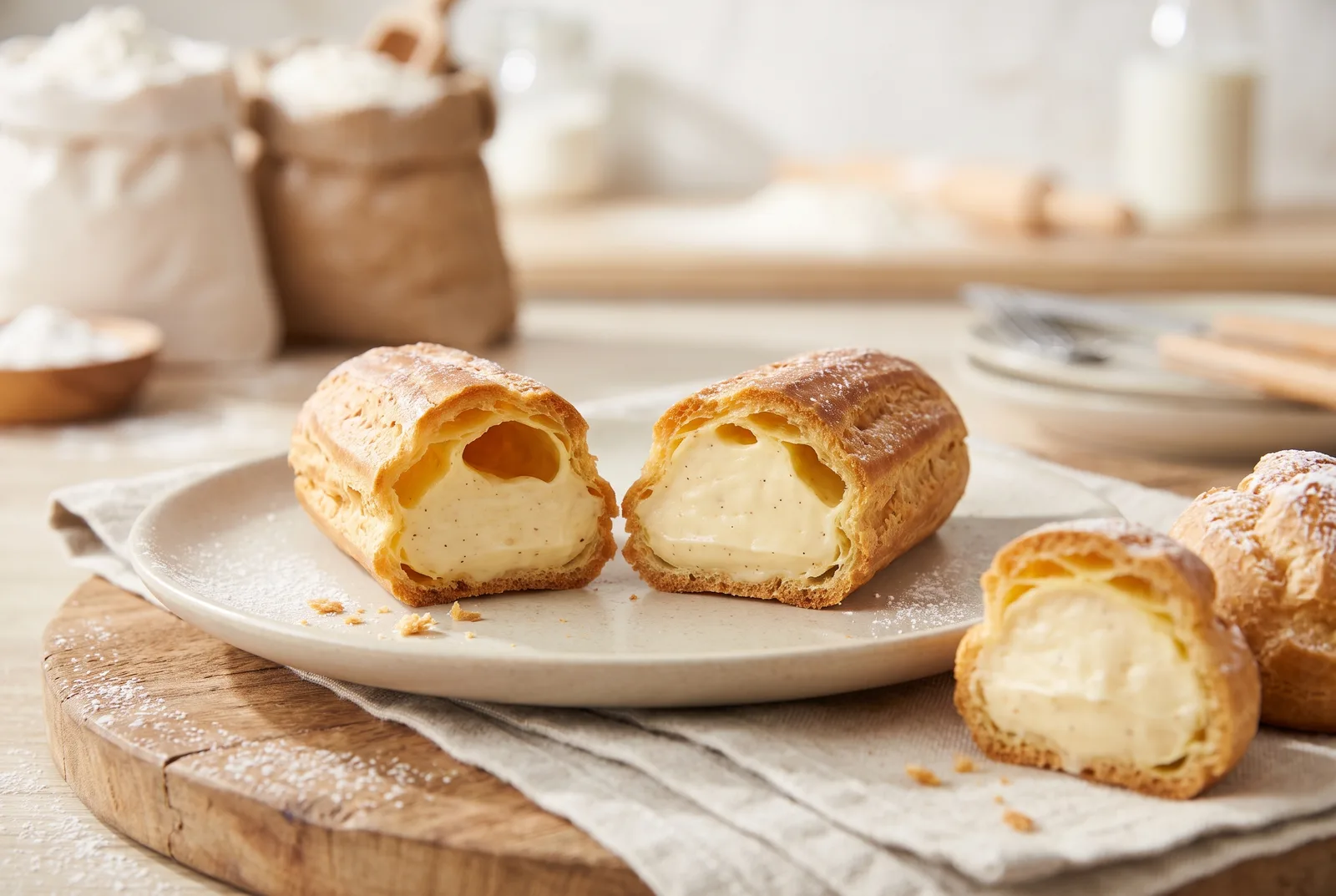
What choux pastry is — and why it is different
Choux pastry (pâte à choux, also called éclair paste) is the base for éclairs, cream puffs (profiteroles), Paris-Brest, religieuses, gougères, churros and choux nests. It is unique among doughs because it is cooked twice — once on the stove and once in the oven — and because it contains no chemical or biological leavening in its classic form. It rises on steam alone.
That single fact explains almost everything a baker needs to control. If you understand where the steam comes from, how the paste is built to trap it, and how the oven sets the shell before the steam escapes, you can produce hollow, crisp, reproducible shells at scale — and diagnose every common failure.
There are three honest ways a working bakery makes choux, and this article covers all of them: from scratch, from a just-add-water mix, or by buying ready-baked shells to fill and finish. See the table below for the trade-offs.
How choux rises: steam leavening
When piped choux hits a hot oven, the large amount of water in the paste — from the liquid and from the eggs — flashes to steam. The steam tries to escape but is trapped by the paste's outer surface, which is rapidly setting into a steam-tight skin. The pressure pushes the soft paste outward, the piece balloons, and a hollow cavity forms in the middle. Once the walls dry and set, the structure holds.
<!-- image: img-steam-leavening-cutaway -->This is why choux needs no yeast and no baking powder in its classic form, and why two things matter more than anything else:
- There must be enough water in the paste to make steam (too dry → weak lift, dense interior).
- The shell must set before the steam runs out (door opened early, or oven too cool → collapse).
Interestingly, every commercial choux mix in the Domson catalogue hedges the steam mechanism with a small dose of chemical raising agents (E450 diphosphates + E500 sodium bicarbonate). Even the "pure butter" ready-baked shells contain baking powder (E450i + E500ii) alongside their natural steam lift. This is deliberate: chemical leavening makes industrial choux more forgiving and consistent than steam alone. From-scratch choux relies on steam only — which is why technique matters so much.
The panade: cooking out the flour
<!-- image: img-choux-process-diagram -->The first cook is the secret. You bring water (or water + milk), butter and salt to a full boil, then beat in all the flour at once and cook the paste — the panade — for one to three minutes, stirring, until it smooths out, films the base of the pan and pulls away from the sides.
What you are doing chemically is gelatinising the wheat starch. As the starch granules heat in the liquid they swell, absorb water and burst; for the standard bread or plain flour used in choux, gelatinisation begins around ~58–66°C (DSC studies of waxy wheat starch report a lower onset near 52°C, but that does not apply to the normal wheat flour in a choux recipe) and is largely complete by ~70–72°C. Two things result:
- The gelatinised starch can absorb far more egg in the next step — and egg is where most of the steam-making water and the structural protein come from.
- The paste becomes a cohesive, flexible matrix able to stretch around expanding steam without tearing, then set.
Under-cook the panade and the paste is too wet and weak (it will puff then collapse). Over-cook it and you drive off too much water and break down structure (dense, small cavity). Cook it just to the filming, non-sticky point.
Note: just-add-water mixes such as Macphie Choutex skip this step entirely — the flour and pre-gelatinised/modified starches are already in the powder, so you only whisk in water. That is their main labour saving.
The classic ratio and the role of each ingredient
<!-- image: img-choux-ratio-card -->A reliable professional starting point is roughly 2: 1: 1: 2 by weight — water: butter: flour: eggs (Michael Ruhlman's ratio), often with a little extra flour for a sturdier shell. Worked bench formulas agree closely:
| Source | Water/liquid | Butter | Flour | Eggs |
|---|---|---|---|---|
| King Arthur | 227 g | 113 g | 150 g | 4 |
| Serious Eats | 235 g | 84 g | 128 g | 200 g |
| The Flavor Bender | 240 g | 115 g | 133 g | 226 g |
See the full bench card below.
- Liquid (water and/or milk). Water makes the crispest, lightest, most hollow shell. Half water / half milk adds colour, richness and a softer crust — common for éclairs.
- Butter. Adds flavour, tenderness and some water. Too much fat inhibits the puff, so do not over-butter. Polmlek unsalted butter 82% (min 82% fat, 16% water, 744 kcal/100 g) is a clean dairy fat for scratch choux and craquelin. Contains MILK.
- Flour. Provides the starch (for steam-trapping structure) and gluten. Protein content is a real lever — see below.
- Eggs. The heart of choux: they bring the water that becomes steam, the protein that sets the shell, and fat for tenderness. Whole egg is ~77% water (Eifix dry matter ≥22.7%), so eggs are largely a controlled way to add hydration and structure at once. Contains EGG.
Flour choice
Higher-protein flour absorbs more liquid and gives a sturdier shell that rises slightly less — good for éclairs and piped rings that must hold their shape. Lower-protein flour gives a lighter, higher, more fragile shell. See the table below.
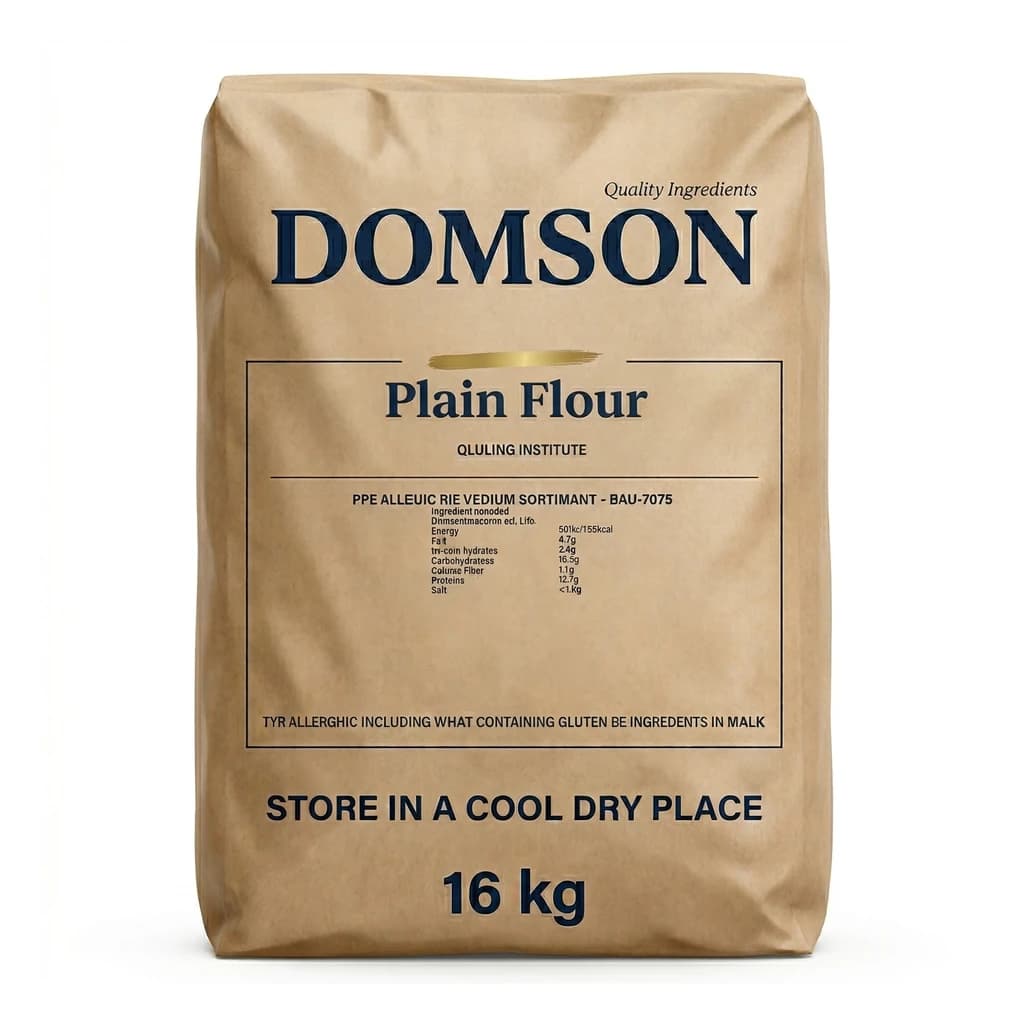
- Plain / all-purpose (e.g. Domson Plain Flour) — balanced, the default.
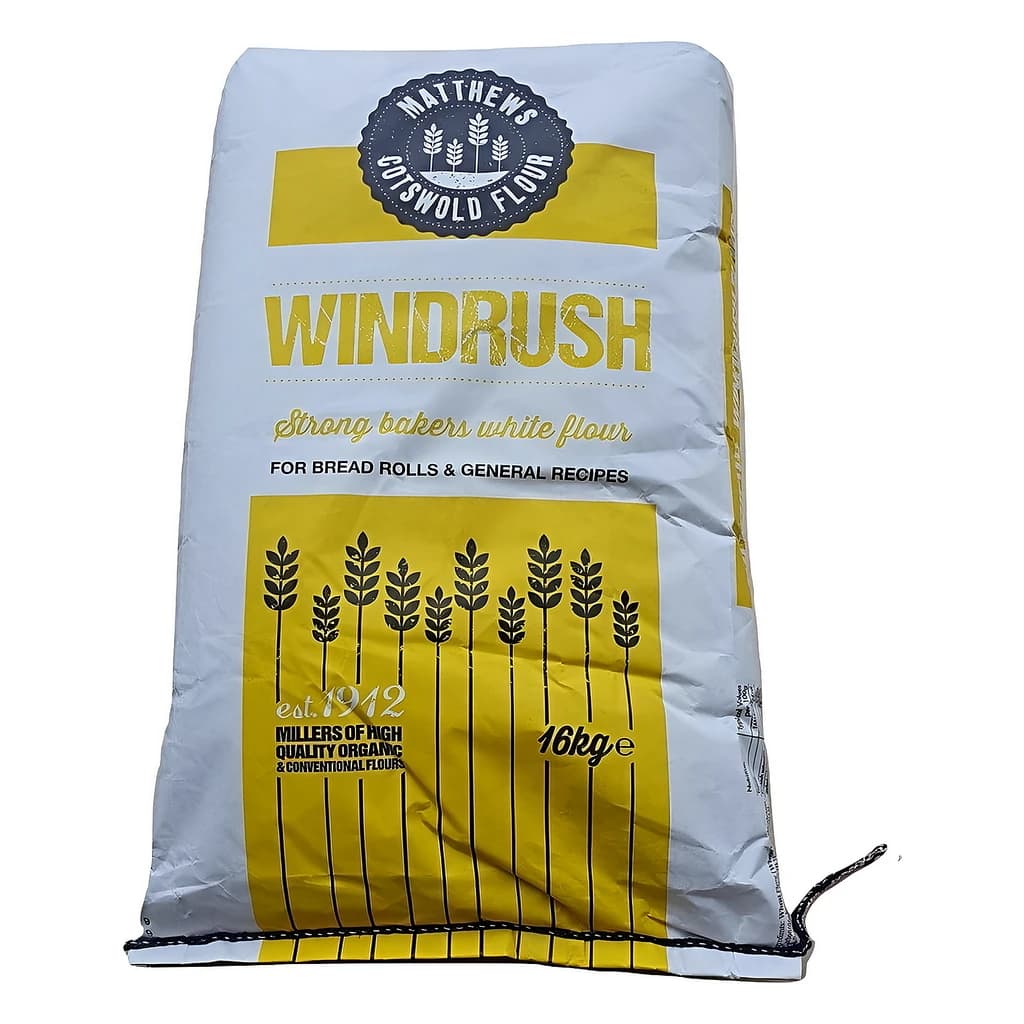
- Strong / bread (e.g. Windrush Strong White Bread Flour) — sturdier éclairs and Paris-Brest; absorbs more egg.
- Pastry / low-protein — lightest, airiest cream puffs.
Adding the eggs: judge by consistency, not by count
<!-- image: img-consistency-test-panel -->This is where most scratch choux is won or lost. First, cool the panade to warm — not hot — before beating in egg. Published targets range from below ~52°C / 125°F (King Arthur) to ≤71°C / 160°F (The Flavor Bender); the reliable principle is to stay at or below the ~62–65°C point where egg proteins begin to coagulate, so the eggs emulsify into a smooth paste instead of scrambling.
Then add the egg gradually, and stop by feel, not by the recipe's egg number — egg size and how much water you cooked off both vary. Correctly mixed choux:
- falls from the spatula in a smooth, glossy V or ribbon, and
- when you draw a finger through it, the trough slowly closes but its walls hold.
Never beat extra flour back into a too-wet paste — it will not gelatinise properly and you will get a heavy, lumpy result. If a batch is too slack, adjust the egg quantity next time.
Piping and even-rise techniques
Pipe rounds for puffs, fingers for éclairs (a 130–160 mm length is typical for commercial éclairs — compare the catalogue's ready-baked 130 mm, 160 mm giant and 96 mm Parisien shells), and rings for Paris-Brest. A clean, smooth piped surface rises more evenly; rough peaks crack.
Two classic tricks give an even rise and an attractive top:
- Egg-wash lightly and flatten any peaks before baking.
- Craquelin — a thin crackle cap.
Craquelin
<!-- image: img-craquelin-diagram -->Craquelin is a simple sweet dough, roughly 1: 1: 1 butter: sugar: flour by weight, rolled 1–2 mm thin, frozen, and laid as a disc on the raw piped choux. Because butter is solid below ~40°C but liquid above it, the chilled disc softens and folds around the rising puff, capping it so it rises evenly and forming the signature crackled crust. Keep it thin and firm — too thick or soft and it simply expands with the choux instead of shaping it.
Baking: the door-shut steam phase
<!-- image: img-bake-curve -->Two bake protocols both work — pick one and keep the oven door shut through the rise/set phase, because a draught of cooler air collapses the soft, not-yet-set shells:
- Two-stage: ~220°C / 425°F for the first 5–15 minutes to drive the steam burst and set the structure, then drop to ~175–190°C / 350°F for a further 20–30 minutes to dry and colour.
- Steady: ~190°C / 375°F for 35–45 minutes.
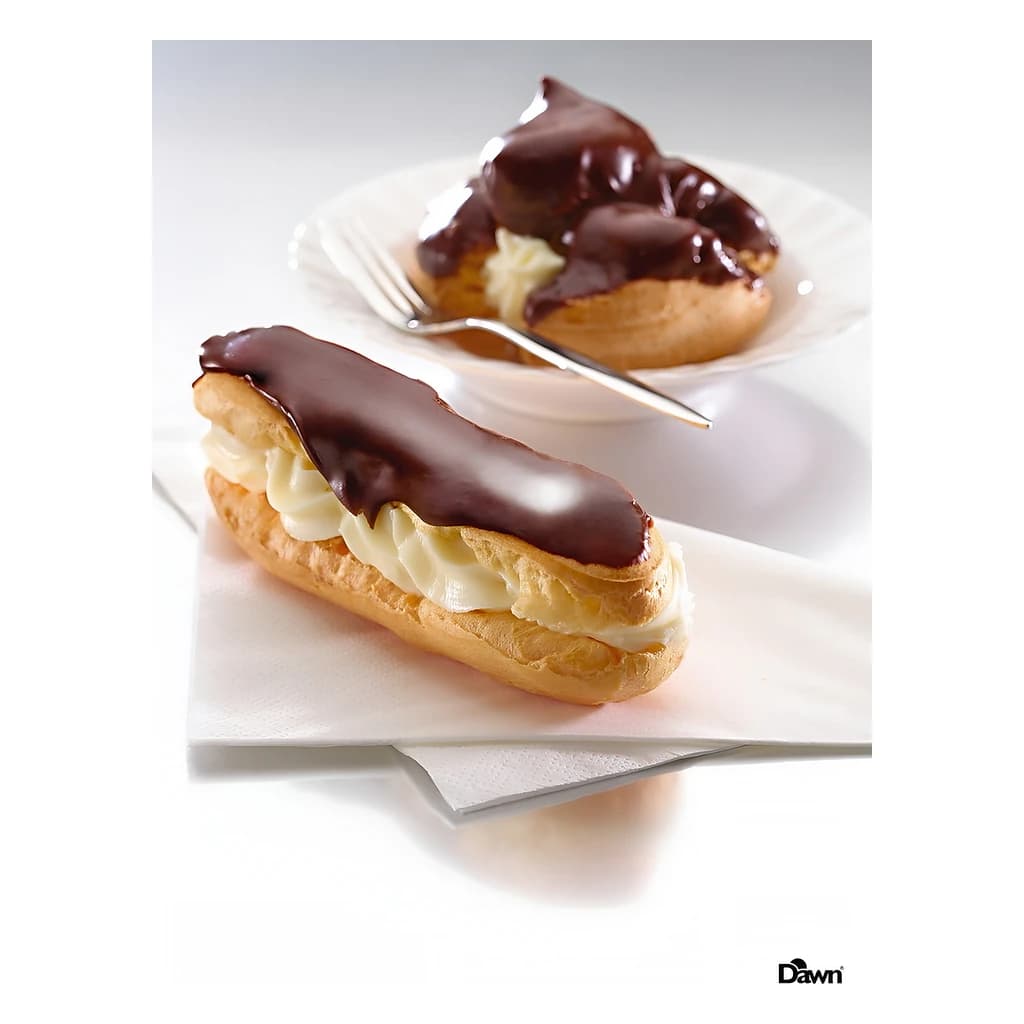
For a commercial baked mix, follow the supplier: Dawn Choux Pastry Mix bakes ~30 minutes at 200–210°C, then +5 minutes with the damper (vent) open to release moisture.
The Zeelandia Basis Brand mix is the exception that proves the rule: it is a fried choux-nest (ptysie/gniazdka) mix — piped onto greased paper and deep-fried at 175–180°C for 7–9 minutes, not baked. Don't assume every "choux mix" is a baked-shell mix; read the datasheet.
Drying out the shells
When the shells are risen, set and golden, pierce each one to vent the internal steam and return them to a turned-off or low oven for a few minutes. Trapped moisture is the single biggest cause of shells that deflate or go soggy as they cool. Cool fully and dry before filling.
Filling and finishing
Choux is a vehicle for cream and glaze. Pipe fillings through a small hole in the base or end.
- Fillings — crème pâtissière, crème diplomat, crème légère, whipped ganache or whipped cream. These are covered in depth in the companion dossier A6 — Pastry creams & cold fillings (with spec data for the catalogue's cream powders, gelatine and agar). Filled choux are perishable — fill cooled dry shells close to service and hold finished product at or below 4°C.
- Fondant glaze — the classic éclair top. Zeelandia ready-to-use sugar fondant is warmed to 40–48°C with constant stirring and applied as a clean line; it is 85% dry matter, ~346 kcal/100 g, and carries no declared allergens (gluten-, egg- and dairy-free) — useful for a glaze that won't add the 14 declared allergens. Arctos Ultra White Fondant is an alternative. Classic fondant guides often cite ≤37°C to preserve crystalline gloss; the Zeelandia product contains emulsifier E471 and thickener E412 that may stabilise a good glaze at the higher spec temperature — but the correct working temperature should be confirmed on your batch. The E471 emulsifier's origin (animal vs vegetable) is not declared; verify with Zeelandia before use in vegan, Halal or Kosher products. Also confirm that the "Fondant Ready" spec (art. TP00912) matches the "Fondant Premium" variant actually shipped.
- Chocolate / fudge glaze — richer; check the MILK allergen on the specific product.
See the table below for the options side by side.
Faults & troubleshooting
<!-- image: img-faults-diagnosis -->The full diagnostic grid is below. The most common issues, with the steam model as your guide:
- Won't rise / flat: oven not hot enough for the steam burst, or paste too dry. Pre-heat fully; correct consistency; check calibration.
- Puffs then collapses: paste too wet or panade under-cooked, or the door was opened, or shells under-baked. Cook the panade drier, hold the door shut, bake the walls until set.
- Sunken middle: unstable base / pulled too early. Pipe wider ends, bake firm, pierce and dry.
- Wet, doughy inside: internal steam not vented. Pierce and dry the shells; extend the dry phase.
- Cracked top: oven too hot (crust sets before full expansion) or rough piping. Lower the temperature slightly; use egg-wash or craquelin for an even, capped rise.
- Spreads when piped: over-egged/too warm paste. Stop egg at the V/ribbon point; never add flour back; chill briefly.
- Scrambled egg specks: paste too hot when egg was added. Cool to ≤ ~65°C first.
Allergens & food safety
These claims must be verified against current batch documentation before labelling use.
- Every choux mix and every ready-baked shell here contains EGG, WHEAT/gluten and MILK. Scratch choux likewise contains egg, wheat and (via butter) milk.
- Dawn Choux Pastry Mix may contain SOYA (traces); it is declared Halal-certified, Kosher and vegetarian but not vegan, not for coeliacs, not for the lactose-intolerant. Halal and Kosher certifications expire — verify certificate body, number and expiry date against current batch documentation before use in marketing or labelling.
- Macphie Choutex runs soya on the line (recipe-absent, precautionary allergen statement) and is vegetarian, not vegan. The data available for Macphie Choutex does not include a Salmonella absence in 25 g specification (a mandatory EU food-safety criterion per Reg. 2073/2005 for egg-containing products); confirm this criterion is met in the current batch quality certificate before food-safety sign-off.
- Ready-baked shells (Mademoiselle Desserts giant éclair, mini profiterole) carry a "may contain nuts and soya" warning. Sesame became a mandatory declared allergen in the EU under Reg. 2021/675 (applicable from January 2023) and is likewise mandatory in UK law; the Mademoiselle Desserts specs are dated March 2022 and pre-date this change — confirm that sesame cross-contact was assessed and correctly declared in the current spec version before use.
- Zeelandia Basis Brand emulsifiers E471 (mono- and di-glycerides), E472b (lactic-acid esters) and E475 (polyglycerol esters) may be derived from animal fats (lard or tallow) or from vegetable sources; the spec sheet does not declare origin. If animal-derived, the product would be unsuitable for vegan, Halal or Kosher use. Verify origin with Zeelandia before making any such claim.
- Zeelandia sugar fondant: The E471 emulsifier's origin (animal vs vegetable) is not declared; the "no allergens declared" statement covers only the 14 mandatory EU/UK allergens, not vegan or religious-dietary status. Additionally the "Fondant Ready" spec (art. TP00912, SAP G22962) is cited here, but the catalogue lists the product as "Fondant Premium" — this mismatch must be resolved with Zeelandia before relying on any stated figures (including the 40–48°C application temperature and the allergen declaration) for the actual product shipped.
- Eifix pasteurised whole liquid egg is a food-safety upgrade for scale: pasteurised, with Salmonella and Listeria not detectable in 25 g, but it is highly perishable (store 0–4°C, 38-day life, use within 48 h of opening — this is a critical food-safety limit that must be communicated to all end-users).
- Filled choux are perishable. Baked shells are low-risk dry items, but once filled with egg/dairy creams they must be held ≤4°C. Industry guidance for cream-filled choux under refrigeration typically indicates use within 24–48 hours, but the precise window must be established by your business's HACCP plan and shelf-life testing — see the A6 Pastry Creams dossier for filling-specific food-safety guidance.
Buying guide (Domson catalogue)
<!-- image: img-macphie-choutex --> <!-- image: img-dawn-choux-mix --> <!-- image: img-dawn-ready-baked-shells --> <!-- image: img-polmlek-butter --> <!-- image: img-zeelandia-basis-choux-mix -->- Scratch ingredients: Polmlek Unsalted Butter 82% · Domson Plain Flour 16 kg / Windrush Strong White Bread Flour 16 kg · Liquid Egg Eifix 10 kg / Whole Egg Liquid Domson 10 kg.
- Just-add-water mixes (baked): Macphie Choutex 12.5 kg · Dawn Choux Pastry Mix 10 kg · Ireks Paloma Choux Pastry Mix 15 kg · Zeelandia Jello Choux & Eclair Mix 15 kg · Semix Choux Pastry Mix GOLD 15 kg · Komplet Choux Pastry Mix 10 kg.
- Fried-nest mix: Zeelandia Basis Brand 12.5 kg.
- Ready-baked shells (fill & finish): Giant Eclair Choux 160 mm · Eclair Choux 130 mm · Parisien Choux Bun 96 mm · Mini Profiterole Choux 45 mm.
- Finishing: Zeelandia Fondant Premium 14 kg · Arctos Ultra White Fondant 14 kg · plastic éclair trays.
Products without a first-party spec sheet (Ireks Paloma, Zeelandia Jello, Semix GOLD, Komplet; 130 mm and Parisien shells; Domson liquid whole egg) have no datasheet numbers in this dossier — confirm composition, dosage and allergens from their own specs before production use.
Coverage notes (transparency)
Strong (spec-sheet confirmed): dosage, nutrition and allergens for Zeelandia Basis Brand, Dawn Choux Pastry Mix, Macphie Choutex, the two Mademoiselle Desserts ready-baked shells, Polmlek 82% butter, Eifix whole liquid egg, and Zeelandia sugar fondant — each is first-party but single-source (no second datasheet per product).
Strong (cross-checked technique): steam leavening, panade gelatinisation, the ~2:1:1:2 ratio, bake protocols, the dry-out step, and craquelin — each confirmed across 3–5 reputable culinary sources plus an academic starch study.
Thin / variable: the exact temperature to cool the paste before adding eggs varies by source (≤52°C to ≤71°C); anchor on "below egg coagulation ~62–65°C". The fondant datasheet attached to the catalogue variant is the Zeelandia "Fondant Ready" sheet — confirm it matches the shipped "Fondant Premium" bucket.
No first-party data: Ireks Paloma, Zeelandia Jello, Semix GOLD and Komplet mixes; the 130 mm and Parisien shells; Domson liquid whole egg — listed as catalogue options only, with no datasheet numbers asserted.
Figures
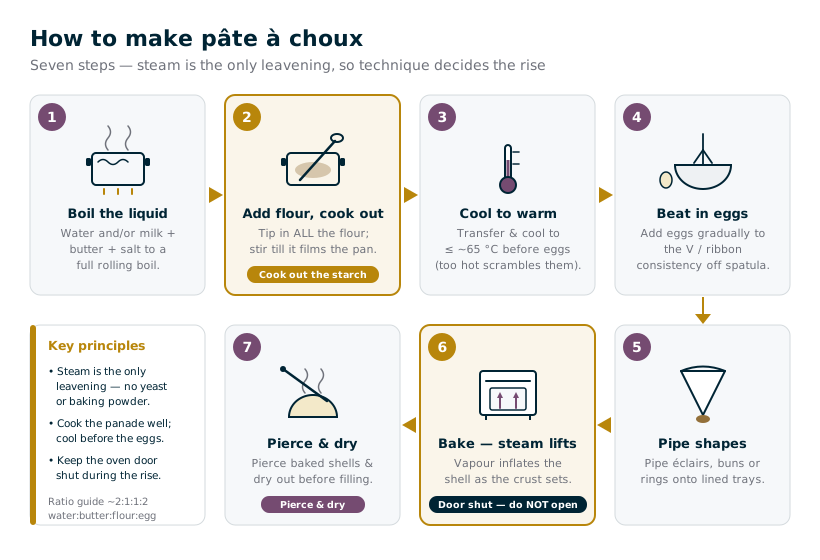 Seven-panel diagram of making choux pastry from boiling the liquid to drying the baked shells
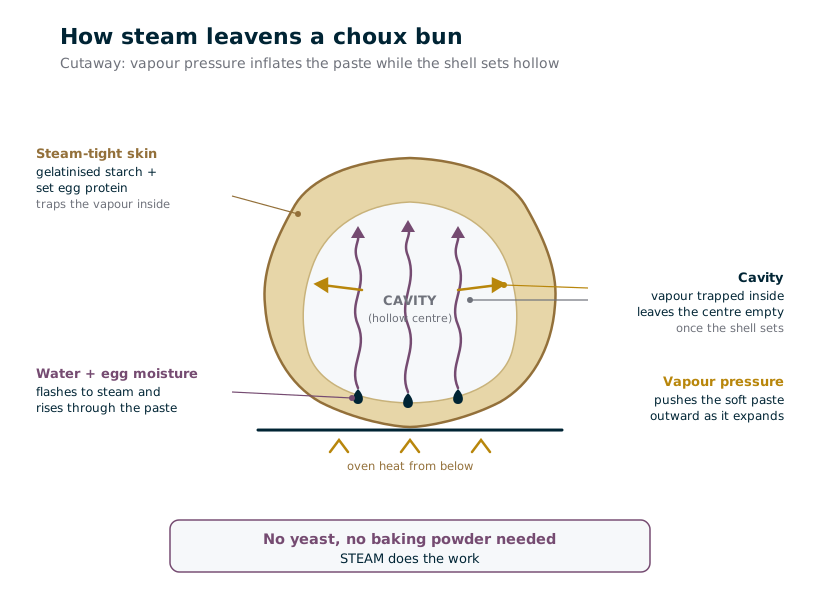 Cutaway schematic showing steam pressure inflating a choux bun while the outer shell sets into a hollow
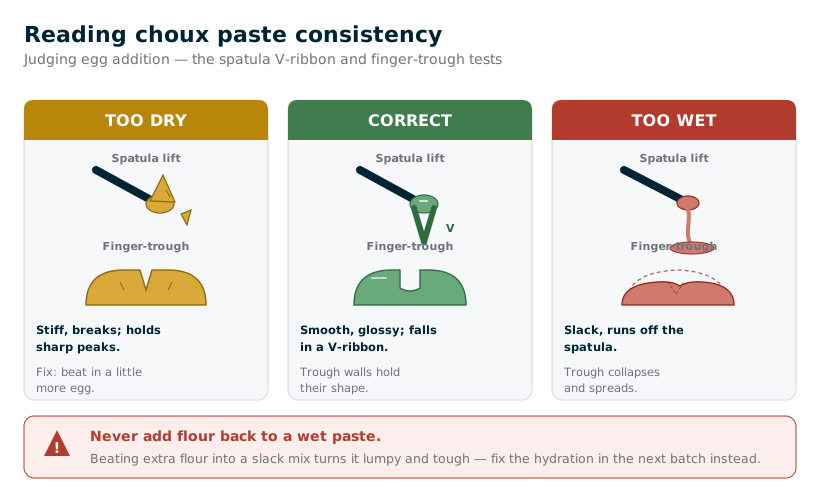 Three-panel comparison of too dry, correct and too wet choux paste with the V-ribbon and trough tests
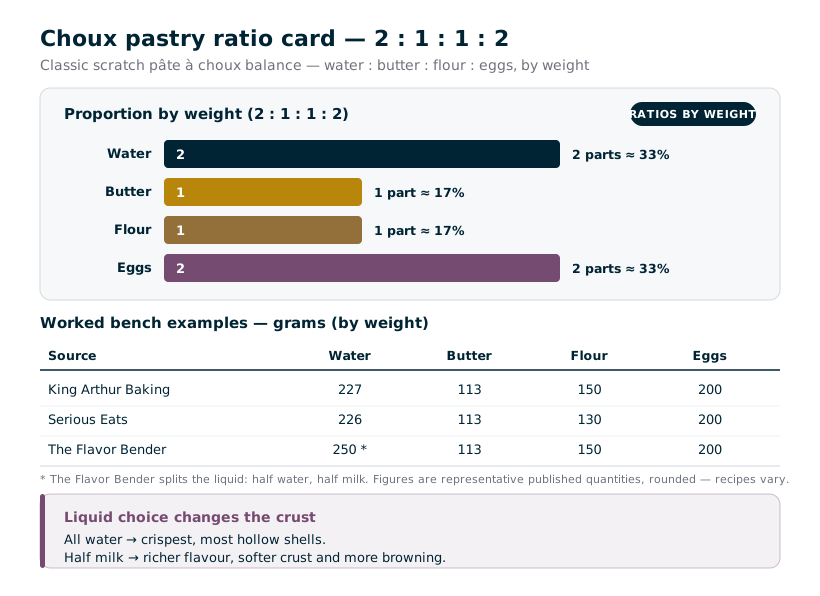 Proportion-bar card of the 2:1:1:2 water-butter-flour-egg choux ratio with worked examples
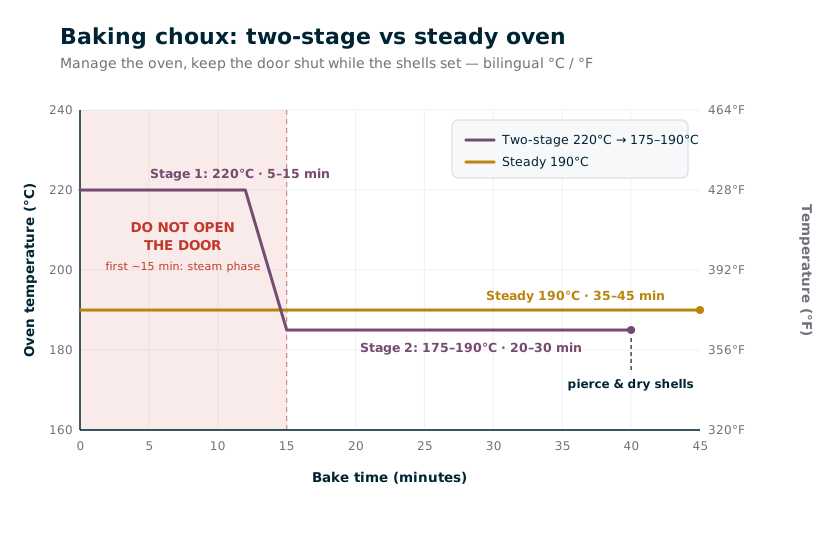 Temperature-time chart of two-stage versus steady choux bake with a do-not-open-door zone
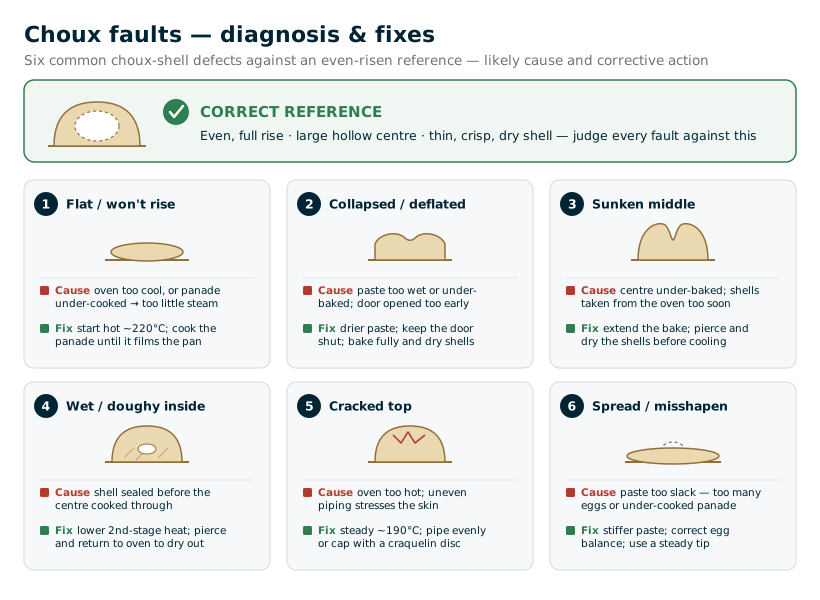 Six-panel choux fault grid showing flat, collapsed, sunken, wet, cracked and spread shells with causes and fixes
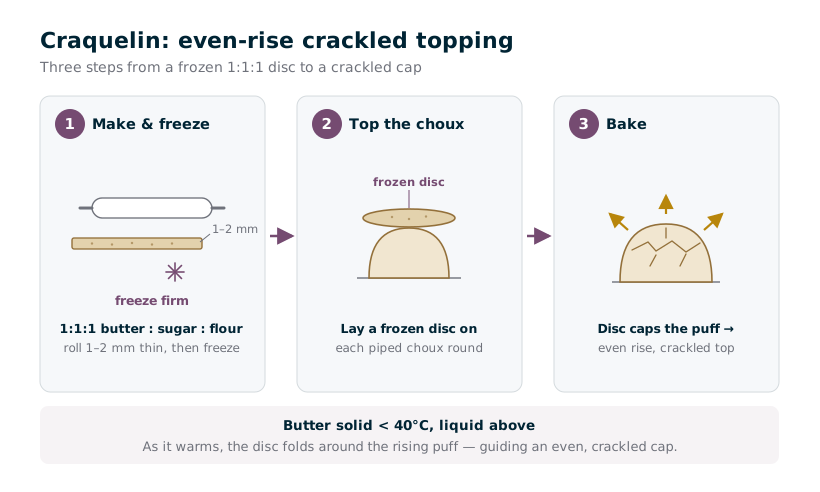 Three-step diagram of craquelin disc on choux producing an even crackled rise
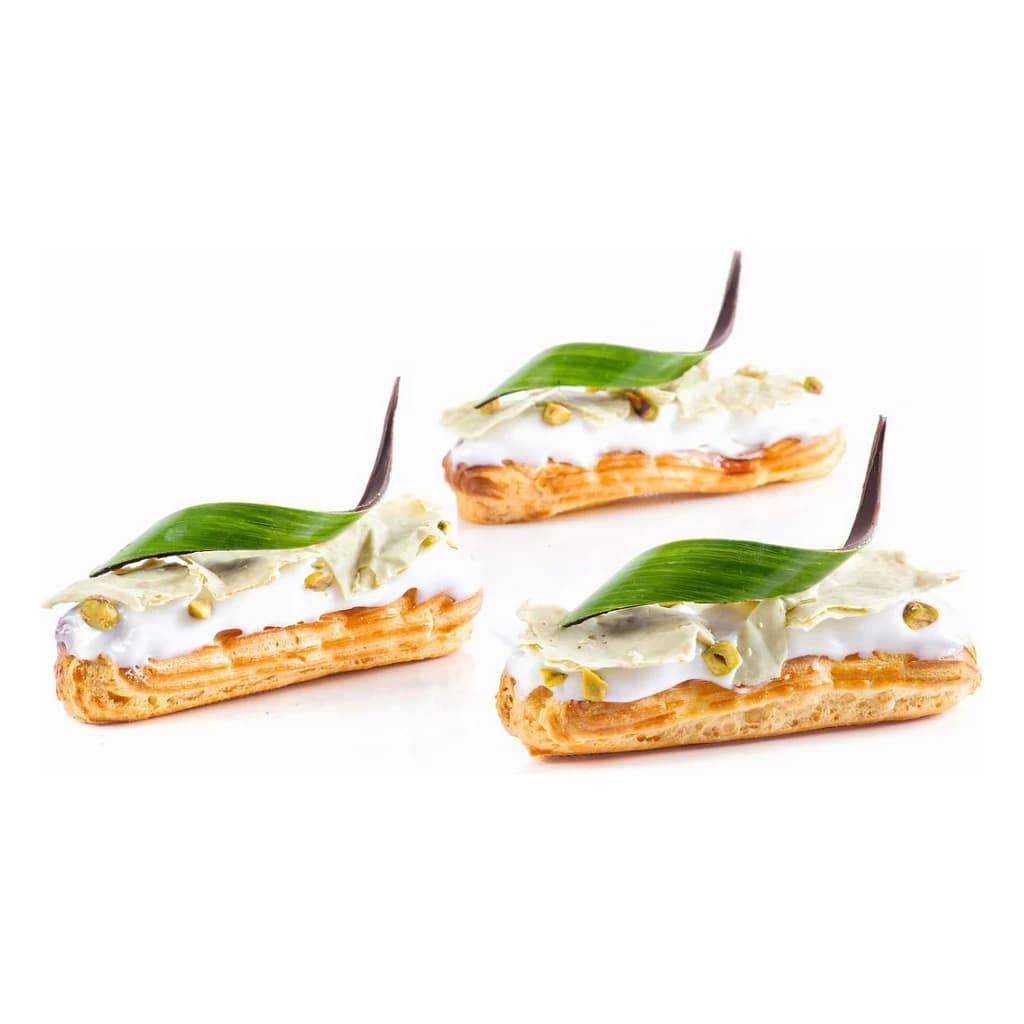
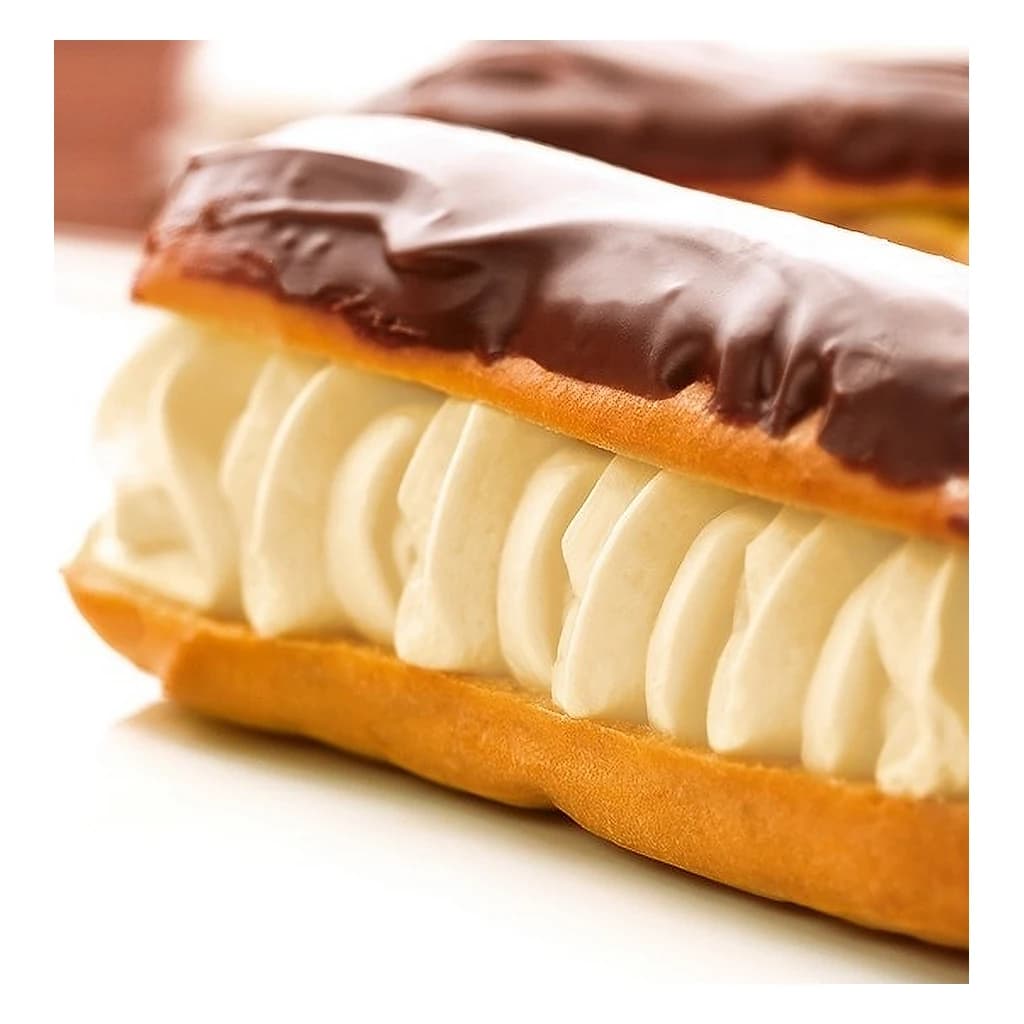
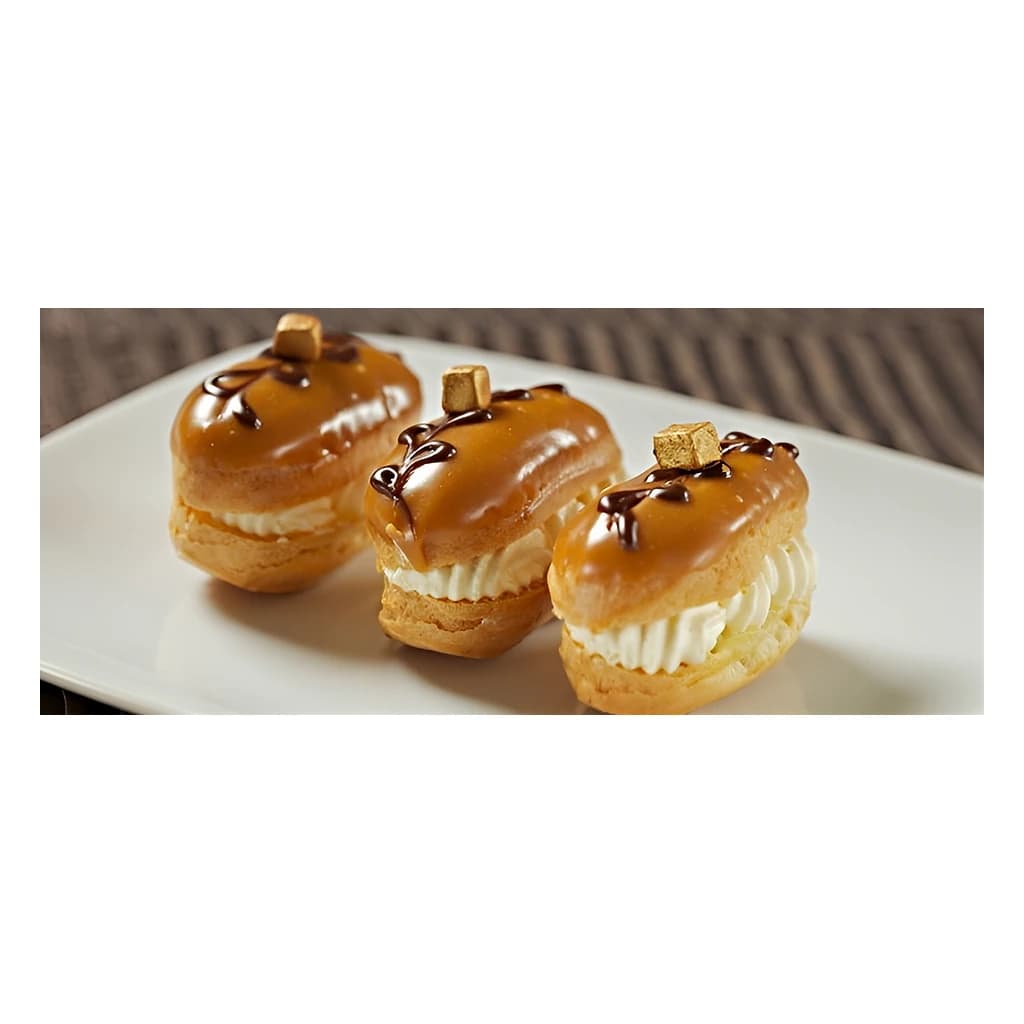
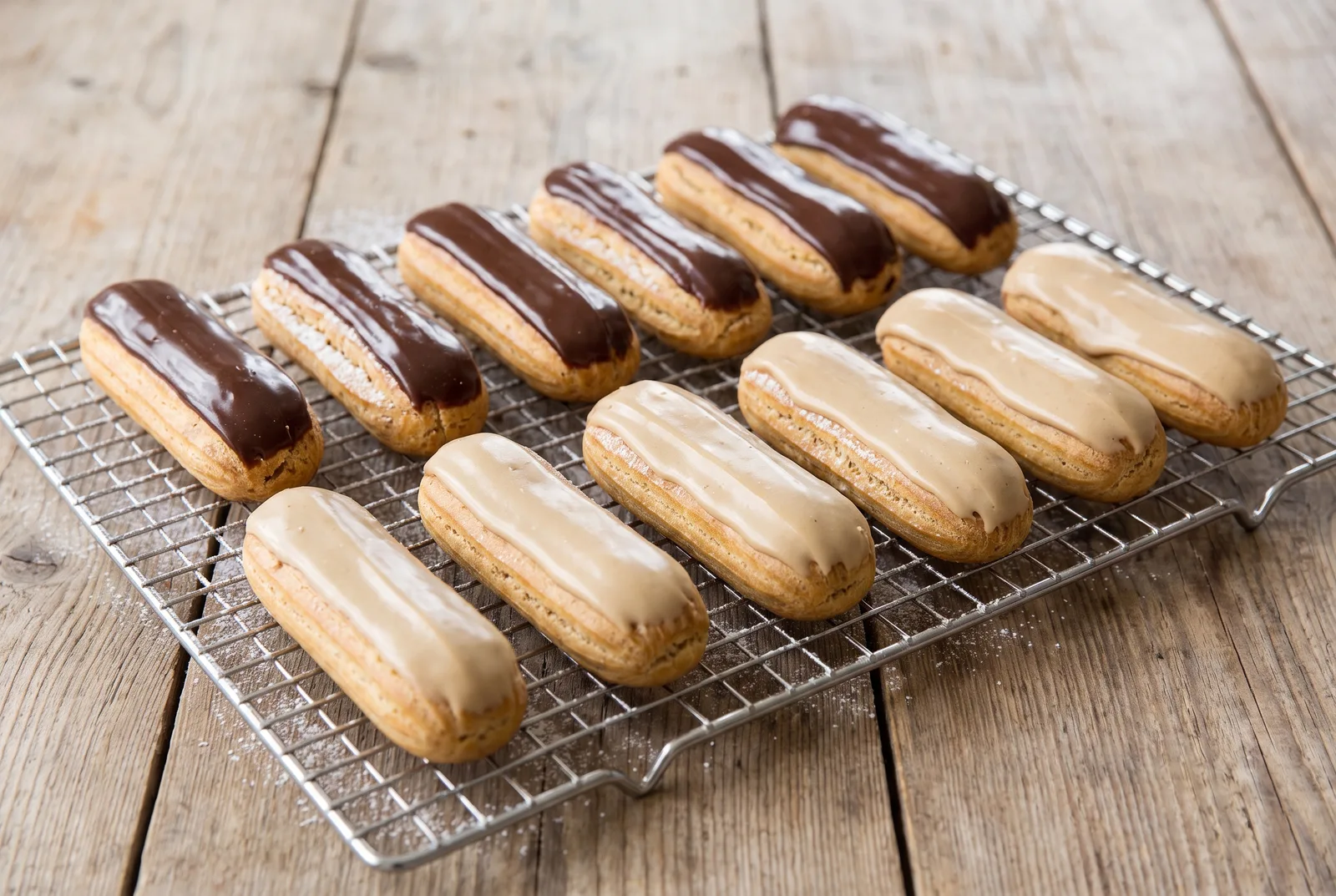 Row of finished éclairs topped with fondant and chocolate glaze
Scratch pâte à choux — bench formula
A representative professional ratio of roughly 2:1:1:2 water:butter:flour:eggs by weight, with a little extra flour for a sturdier shell. Use eggs to adjust to consistency — the egg quantity is a guide, not a fixed number.
| Ingredient | Baker's % | Weight |
|---|---|---|
| Water (or half water / half milk for richer, softer crust) | 250 g | |
| Unsalted butter (e.g. Polmlek 82%) | 115 g | |
| Salt | 3 g (½ tsp) | |
| Sugar (optional, for browning/flavour) | 5 g (1 tsp) | |
| Plain or strong wheat flour | 140 g | |
| Whole eggs, beaten (or pasteurised liquid egg) | 220–250 g, added to consistency |
- Bring water (or water + milk), butter, salt and sugar to a full rolling boil so the butter is fully melted and the liquid is hot.
- Off the heat, add ALL the flour at once and beat to a smooth paste; return to medium heat and cook out ('dry') the panade ~1–3 min, stirring, until it gelatinises, films the pan base and stops sticking to your spoon.
- Transfer to a bowl and cool to warm — the reliable anchor is below ~65°C (the egg-protein coagulation threshold); King Arthur targets <52°C / 125°F as a conservative safe minimum. The Flavor Bender quotes ~71°C / 160°F as a reference point; stay on the cooler side to be safe. Stop well before eggs can scramble.
- Beat in the eggs a little at a time. Stop when the paste is smooth and glossy and falls from the spatula in a V/ribbon and a finger-drawn trough slowly holds its walls.
- Pipe shapes (rounds for puffs, fingers for éclairs, rings for Paris-Brest); egg-wash or add a craquelin disc for an even rise.
- Bake — see the bake card. Keep the door shut until set and golden; steam is the only leavening.
- Pierce each shell and dry in a turned-off/low oven a few minutes; cool fully before filling.
Yield: approx. 40–50 small puffs / 16–20 éclairs
Scale/consistency shortcut: a just-add-water mix (Macphie Choutex, Dawn Choux Pastry Mix) removes the cook-out and egg-judgement steps and bakes very consistently because it carries chemical raising agents alongside steam. Contains EGG/WHEAT/MILK — see allergen section.
Choux bake protocol (door-shut steam phase)
Two protocols both work; pick one and keep the door shut through the steam/set phase.
| Ingredient | Baker's % | Weight |
|---|---|---|
| Two-stage bake | ≈220°C / 425°F for first 5–15 min, then drop to ≈175–190°C / 350°F for 20–30 min | |
| Steady bake | ≈190°C / 375°F for 35–45 min | |
| Door rule | Do not open until shells are set and golden (≈25–30 min for 2-inch puffs) | |
| Dry-out | Pierce + return to turned-off/low oven a few minutes |
- Load into a fully pre-heated oven; for scratch choux a hot start drives the steam burst that lifts the shell.
- Hold the high/steam phase without opening the door — a draught of cooler air collapses the soft, not-yet-set shells.
- Once risen and golden, drop the temperature (two-stage) or hold steady to dry and colour the walls so they stay up when cool.
- Near the end, pierce each shell to vent internal steam, then leave to dry; trapped moisture is the main cause of soggy, sunken shells.
- For a commercial baked mix, follow the supplier bake (Dawn: ~30 min at 200–210°C, then +5 min with the damper open to vent).
Yield: per tray
Convection/deck ovens differ — treat these as starting points and dial in by result, not by the clock.
Craquelin crackle topping
A thin sweet-dough cap that forces an even rise and gives the signature crackled top.
| Ingredient | Baker's % | Weight |
|---|---|---|
| Soft butter | 50 g | |
| Caster or light brown sugar | 50 g | |
| Plain flour | 50 g | |
| Pinch of salt (optional); cocoa/colour (optional) | to taste |
- Cream butter and sugar, work in the flour to a smooth dough (1:1:1 by weight).
- Roll 1–2 mm thin between paper and freeze firm; cut discs slightly larger than the piped choux.
- Lay a frozen disc on each piped round just before baking. In the oven the butter (solid below ~40°C, liquid above) lets the disc soften and fold around the rising puff, capping it for an even rise and crackle.
Yield: tops ~30–40 choux
Keep craquelin thin and firm — too thick or too soft and it expands with the choux instead of capping it.
How a working bakery can make choux: from scratch, from a powder mix, or buy ready-baked shells. Trade-offs are labour vs consistency vs cost. Numbers are from first-party spec sheets where a product is named.
| Route | What you buy | Effort / skill | Consistency at scale | Notes | Catalogue example |
|---|---|---|---|---|---|
| Scratch (pâte à choux) | Flour, butter, eggs, milk/water, salt | High — cook-out + egg judgement | Operator-dependent | Best flavour & control; leavens by steam alone | Polmlek butter 82% + plain/strong flour + liquid egg |
| Powder mix (just add water) | Choux pastry mix | Low — whisk + pipe | Very consistent | Mixes add chemical raising agents (E450/E500) to back up steam | Macphie Choutex 1000 g: water; Dawn 1000 g: 1500 g water |
| Fried choux-nest mix | Choux mix for deep-frying | Low–medium | Consistent | For ptysie/nests, deep-fried 175–180°C — NOT a baked-shell mix | Zeelandia Basis Brand 1 kg: 2 L water |
| Ready-baked shells | Pre-baked éclair / profiterole cases | Lowest — fill & finish only | Factory-consistent | Pure-butter shells, 360-day ambient life; just fill & glaze | Giant Eclair 160 mm; Mini Profiterole 45 mm |
Protein content is the lever. Higher protein = more liquid absorbed, sturdier shell, slightly less rise; lower protein = lighter, higher, more fragile. Choose by product.
| Flour | Typical protein | Shell character | Best for | Catalogue example |
|---|---|---|---|---|
| Pastry / low-protein | ~8–9% | Light, airy, highest rise, fragile | Delicate cream puffs | (soft cake/biscuit flours) |
| Plain / all-purpose | ~10–11% | Balanced rise and strength | General choux, profiteroles | Domson Plain Flour 16 kg |
| Strong / bread | ~12–14% | Sturdier, holds shape, slightly less rise | Éclairs, Paris-Brest, piped rings | Windrush Strong White Bread Flour 16 kg |
Authoritative first-party figures pulled directly from supplier datasheets. Dosage is the supplier's own reconstitution / bake instruction.
| Product | Use & dosage | Energy /100 g | Fat (sat) /100 g | Protein /100 g | Allergens | Shelf life |
|---|---|---|---|---|---|---|
| Zeelandia Basis Brand | Fried nests: 1 kg: 2 L water; deep-fry 175–180°C 7–9 min | 429 kcal | 15 g (6.3 g) | 14 g | WHEAT, EGG, MILK | 9 mo <25°C |
| Dawn Choux Pastry Mix | Baked: 1000 g: 1500 g water; bake 200–210°C ~30 min +5 min vent | 499 kcal | 27 g (9.8 g) | 18 g | WHEAT, EGG, MILK; may contain SOYA; Halal/Kosher | 6 mo <21°C |
| Macphie Choutex | Water-only, no roux; eclairs/profiteroles/buns | 555 kcal | 38 g (7.5 g) | 15.5 g | WHEAT, EGG, MILK; soya on line | 9 mo <20°C |
| Giant Eclair Choux 160 mm (ready-baked) | Fill & finish; 14 g/shell; ambient | 532 kcal | 34 g (19 g) | 18 g | EGG, WHEAT, MILK; may contain nuts/soya | 360 d 15–25°C |
| Mini Profiterole Choux 45 mm (ready-baked) | Fill & finish; 2.8 g/piece; ambient | 559 kcal | 36 g (20 g) | 18 g | EGG, WHEAT, MILK; may contain nuts/soya | 360 d 15–25°C |
Source: Supplier spec sheet.
How the tops of éclairs and choux are finished, with spec data where a catalogue product is named.
| Finish | How applied | Notes | Catalogue example |
|---|---|---|---|
| Sugar fondant (white / coffee / flavoured) | Warm to 40–48°C, dip or pipe a clean line. Classic fondant guides often cite ≤37°C; Zeelandia's E471/E412 formulation may behave differently — verify on batch. | Classic éclair top; no declared allergens (14 EU/UK mandatory allergens). E471 origin unverified; confirm Fondant Ready spec matches Fondant Premium bucket shipped. | Zeelandia Fondant Premium / Fondant Ready 14 kg; Arctos Ultra White Fondant |
| Chocolate / fudge glaze | Melt/warm and coat | Richer top; check MILK allergen on the specific product | Chocolate Fudge Icing (Zeelandia) |
| Craquelin disc | Frozen 1–2 mm disc on raw piped choux | Even rise + crackle; baked on, not added after | Made from butter + sugar + flour (1:1:1) |
| Dusting / craquelin sugar | Dust before/after bake | Simplest finish for choux buns/nests | Dextrose / icing sugar |
| Fault | Likely cause | Corrective action |
|---|---|---|
| Won't rise / flat shells | Oven not hot enough for the steam burst; paste too dry (no steam reserve); not enough egg moisture | Pre-heat fully and start hot; cook the panade slightly less / add egg to correct consistency; check oven calibration |
| Puffs then collapses / deflates | Paste too wet OR panade under-cooked (excess water); door opened during the set phase; shells under-baked | Cook the panade drier; adjust egg to the V/ribbon point; keep the door shut until set; bake longer to set walls |
| Sunken / caved-in middle | Unstable base; uneven piping; pulled too early | Pipe wider ends / dog-bone for éclairs; bake until firm; pierce and dry before cooling |
| Wet / doughy interior | Internal steam not vented; shells removed too soon | Pierce each shell and return to a turned-off/low oven to dry; extend the dry phase |
| Cracked, uneven top | Oven too hot (crust sets before full expansion); rough piping surface | Lower temperature slightly; smooth piping; use a craquelin disc or egg-wash for an even, capped rise |
| Spreads / loses shape when piped | Paste too slack (over-egged); too warm | Stop egg at the correct consistency; never beat flour back in — fix hydration next batch; chill briefly before baking |
| Dense, small cavity | Too little egg/moisture; over-worked or over-cooked panade; weak steam | Add egg to consistency; cook the panade just to the filming point, not beyond |
| Eggs scrambled into the paste | Eggs added while paste too hot | Cool the panade to warm (≤ ~65°C) before adding egg |
| Filled choux goes soggy / unsafe | Filled too early / shells damp; held warm | Fill only fully-cooled dry shells close to service; hold filled product ≤4°C — see fillings dossier |
Buy the ingredients
Catalogue products and brands referenced in this article.
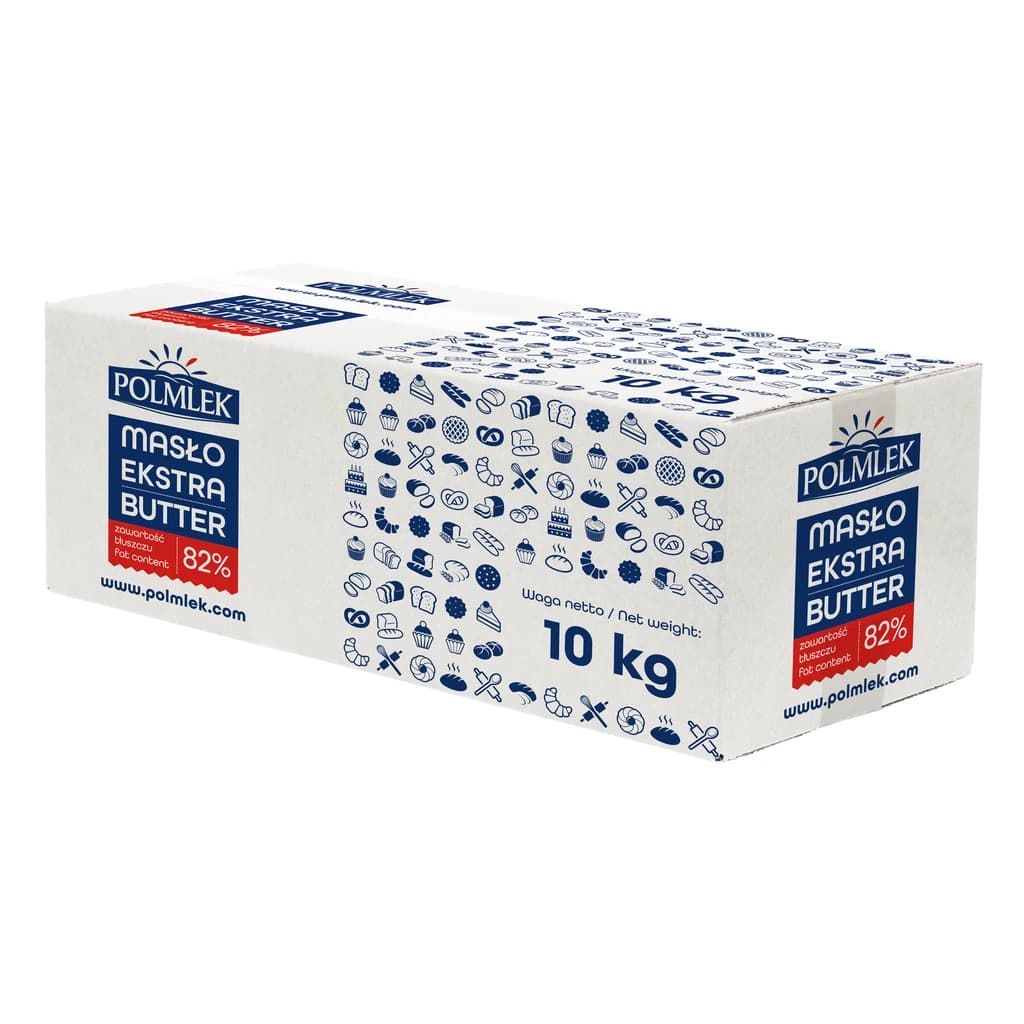
Unsalted Butter 82% 10 kg
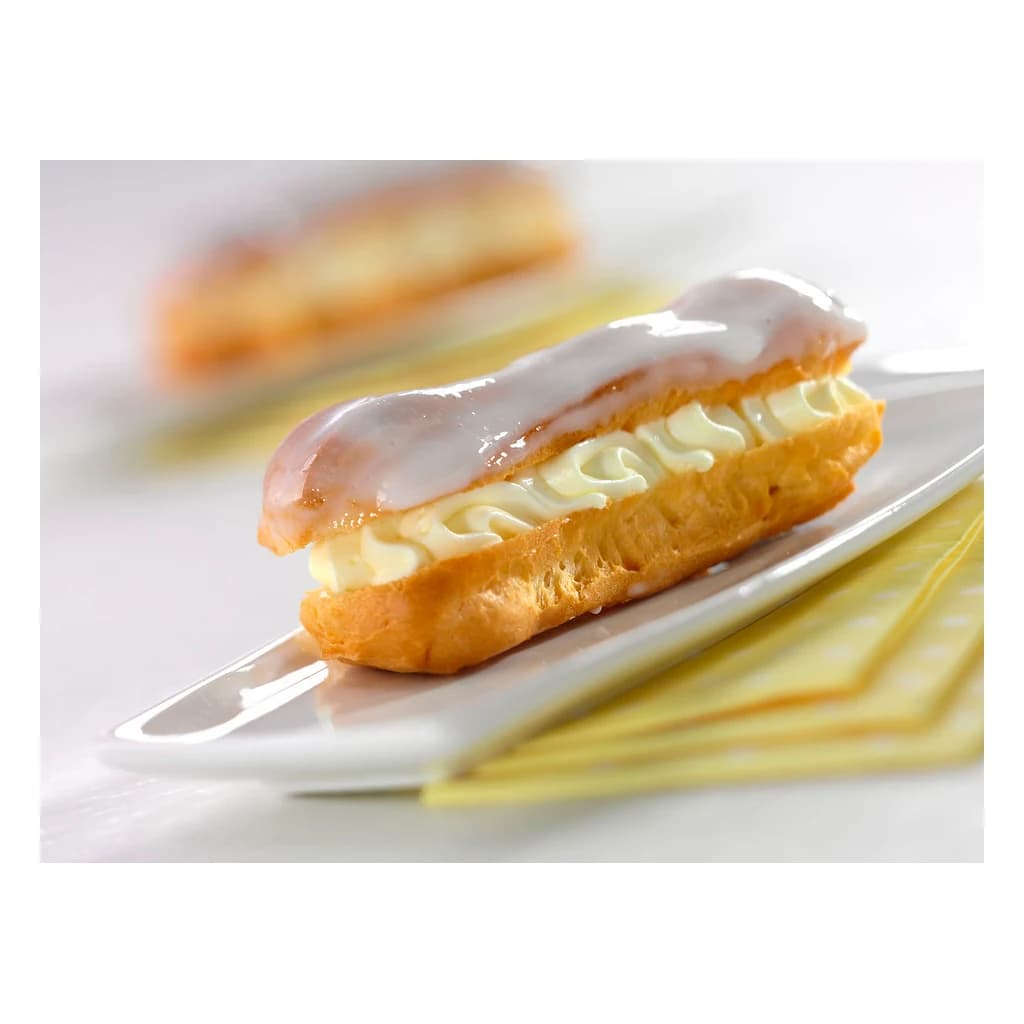
Zeelandia Basis Choux Pastry Mix 12.5 kg
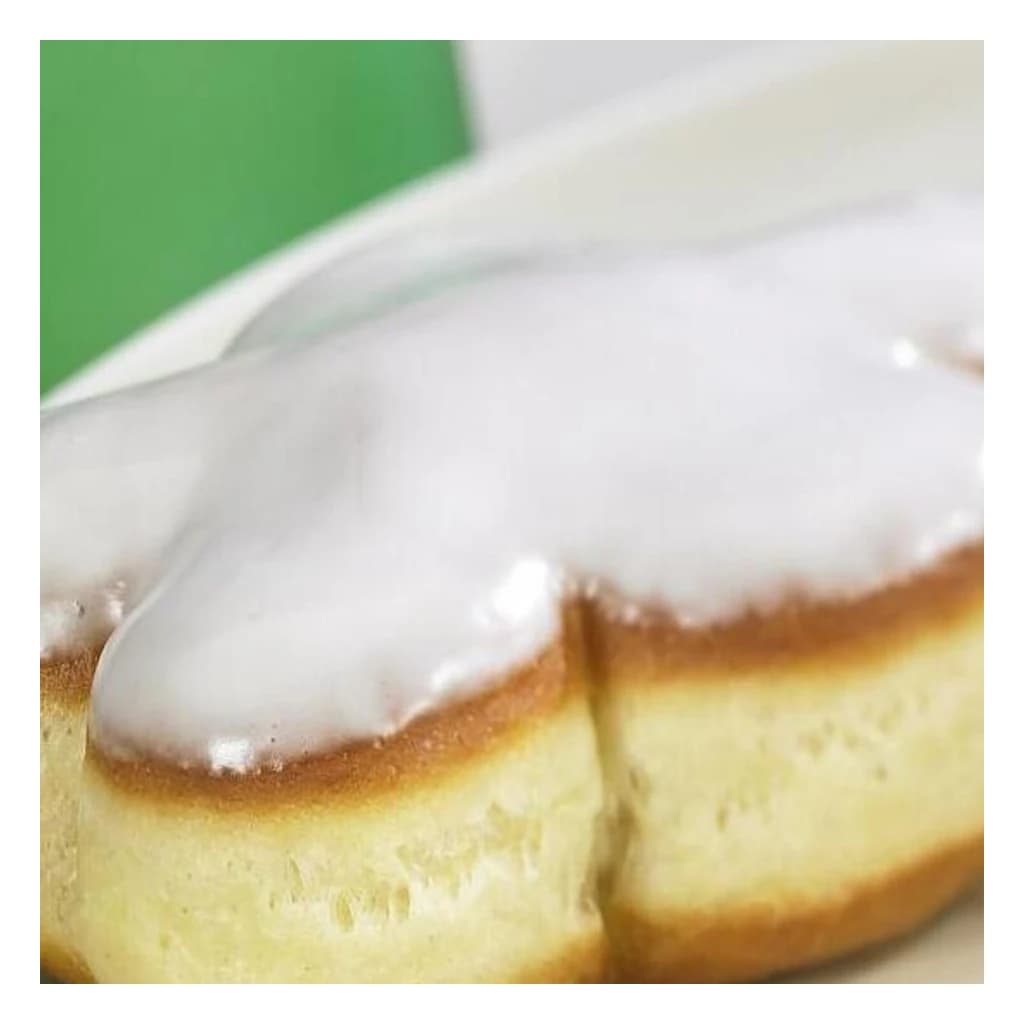
Zeelandia Fondant Premium (14 kg)
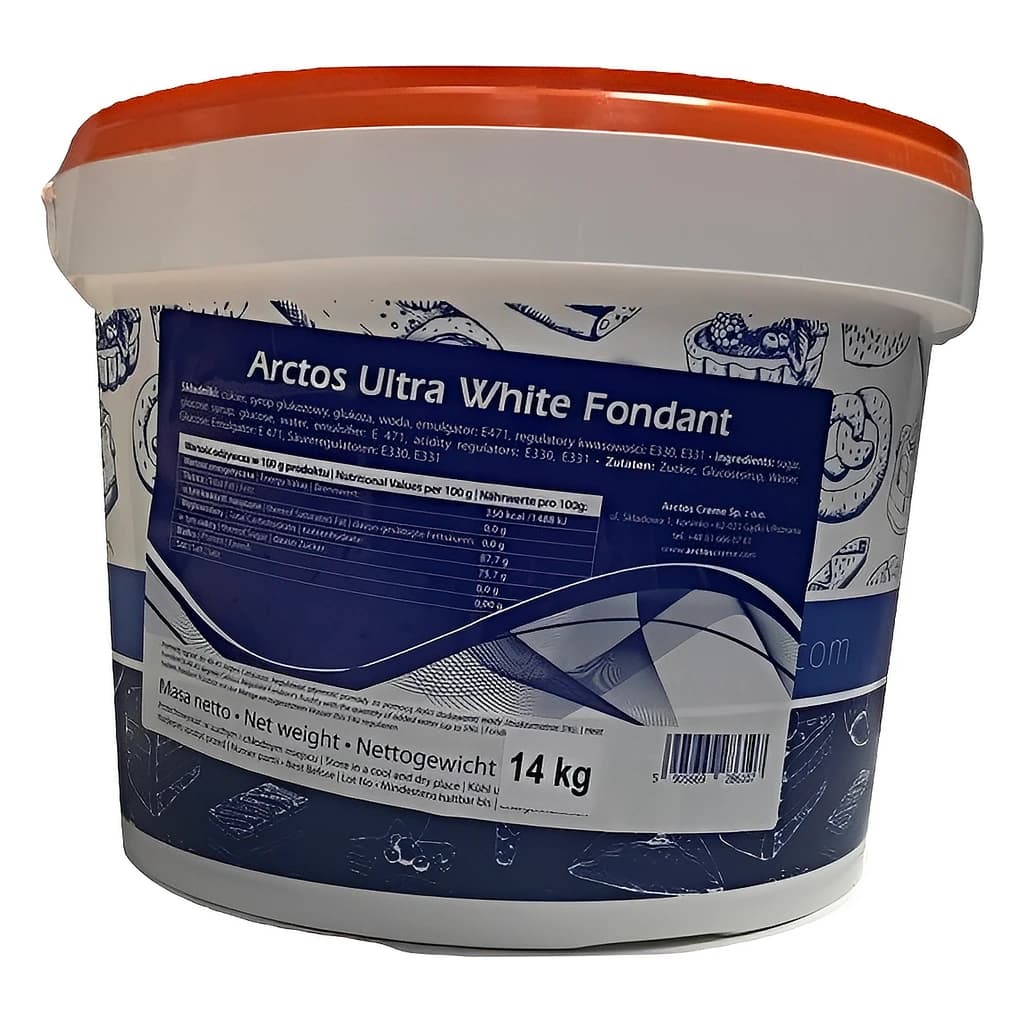
Arctos Ultra White Fondant 14 kg
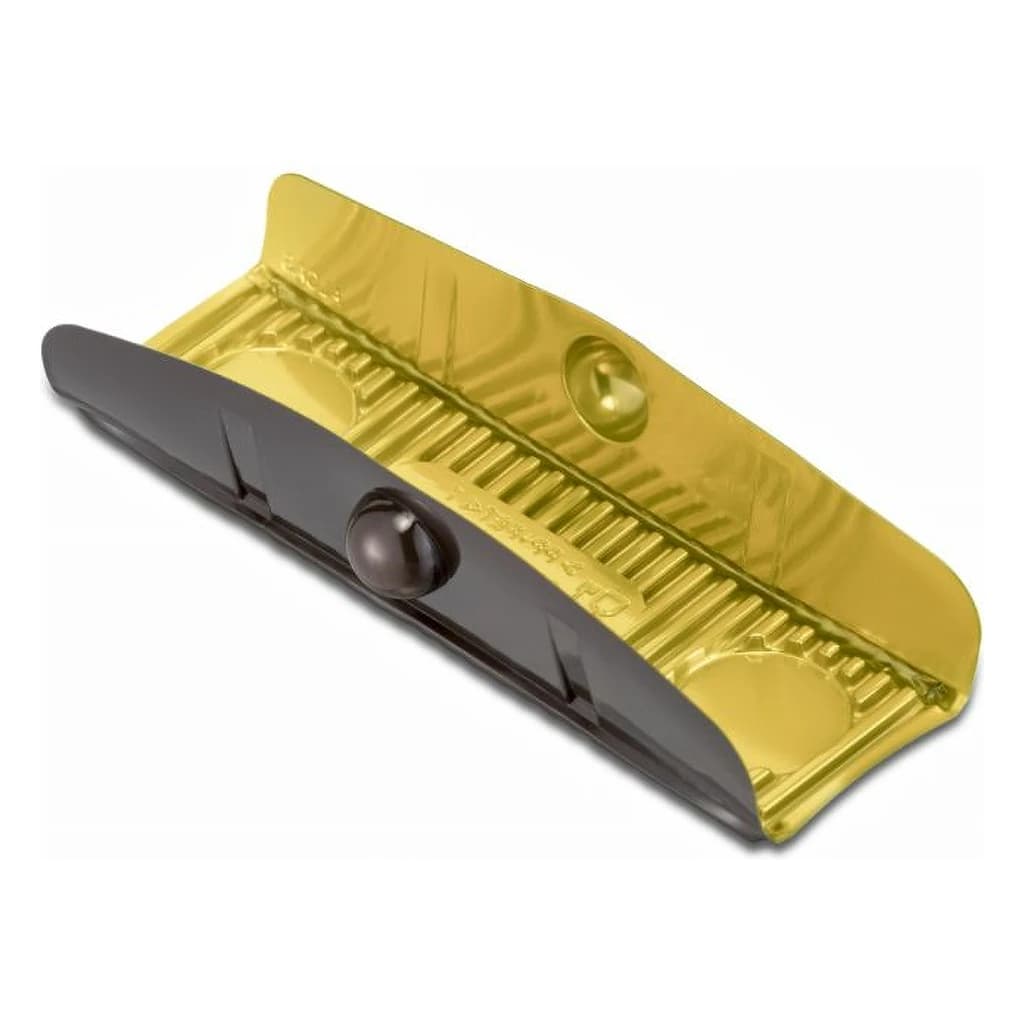
Plastic Tray Black and Gold for Eclairs 9 × 13 cm 100 pc
Ireks Paloma Choux Pastry Mix 15 kg
Zeelandia Jello Choux & Eclair Mix 15 kg

Semix Choux Pastry Mix GOLD 15 kg
Komplet Choux Pastry Mix 10 kg
Windrush Strong White Bread Flour 16 kg
Domson Plain Flour 16 kg
Dawn Choux Pastry Mix 10 kg
Macphie Choutex Choux Pastry Mix 12.5 kg
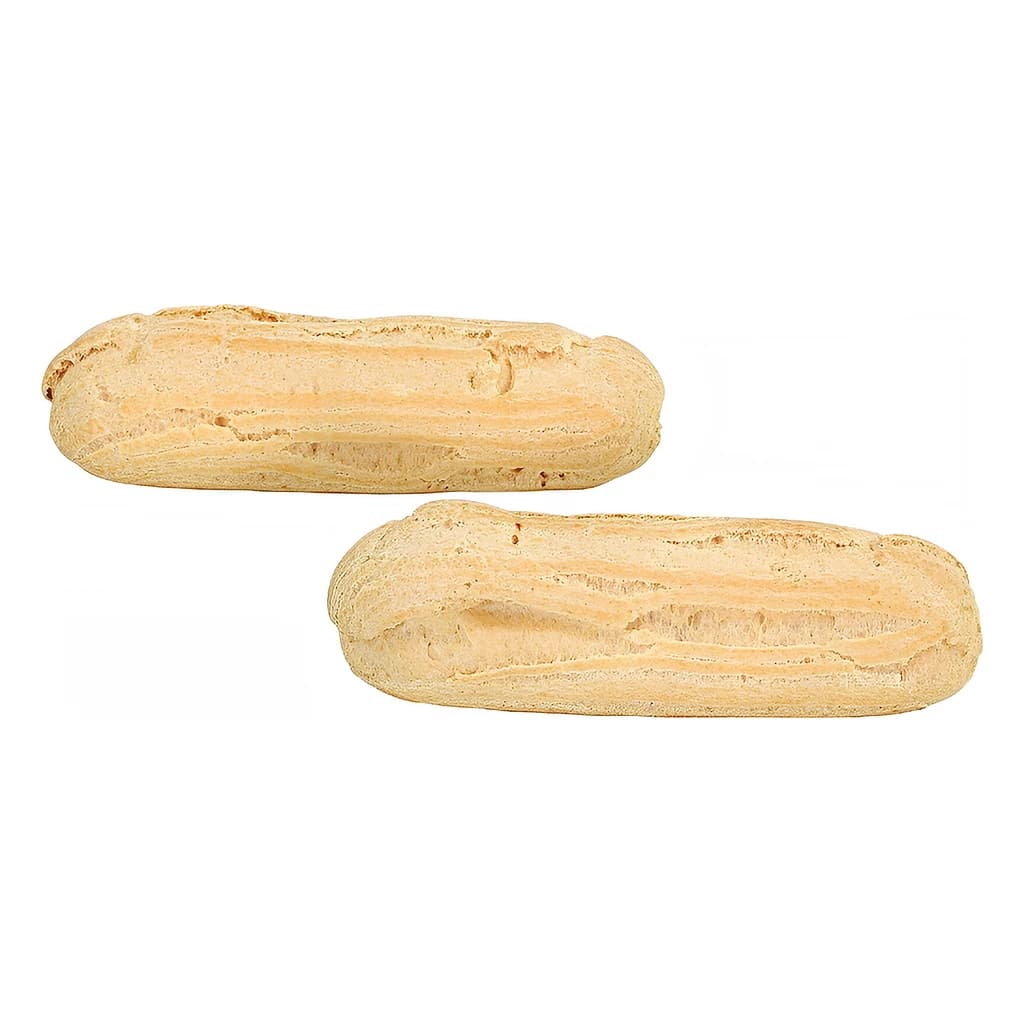
Eclair Choux 130 mm (140 pc)
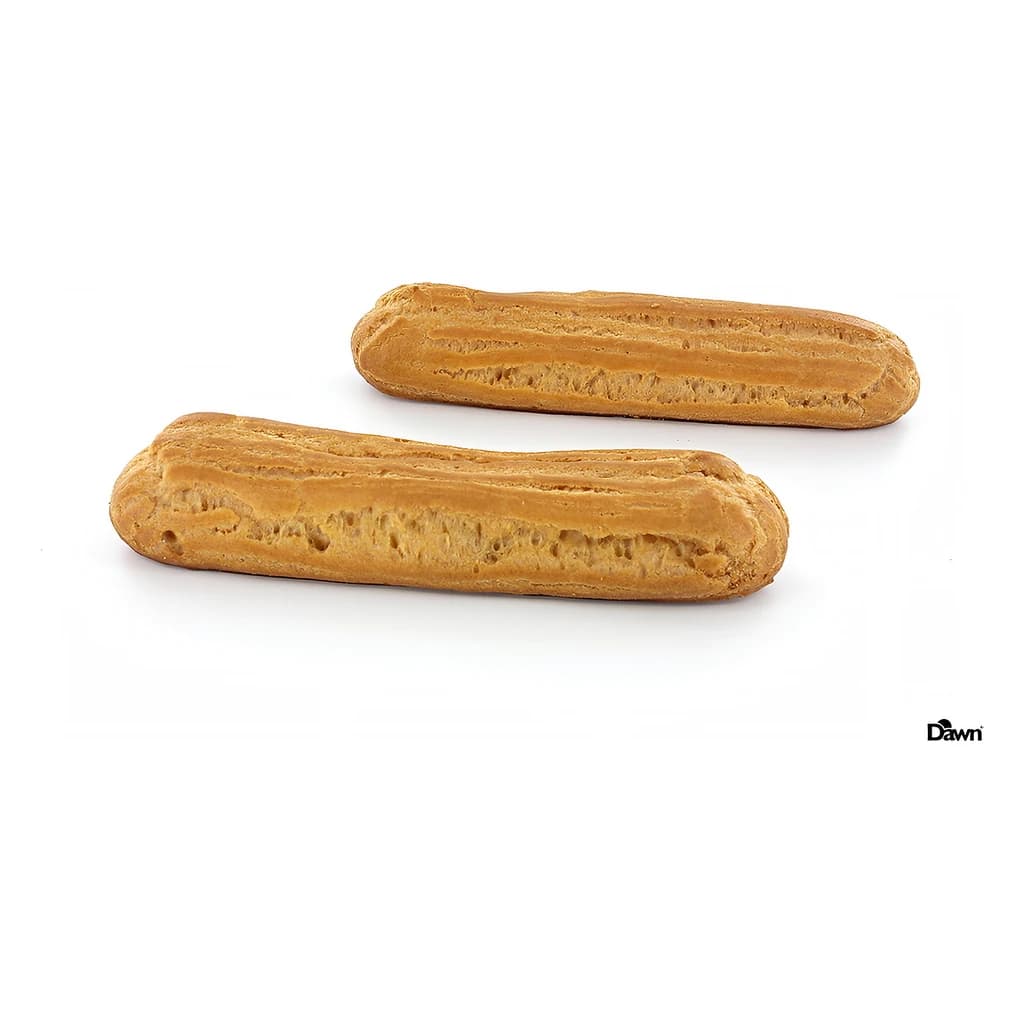
Giant Eclair Choux 160 mm (100 pc)
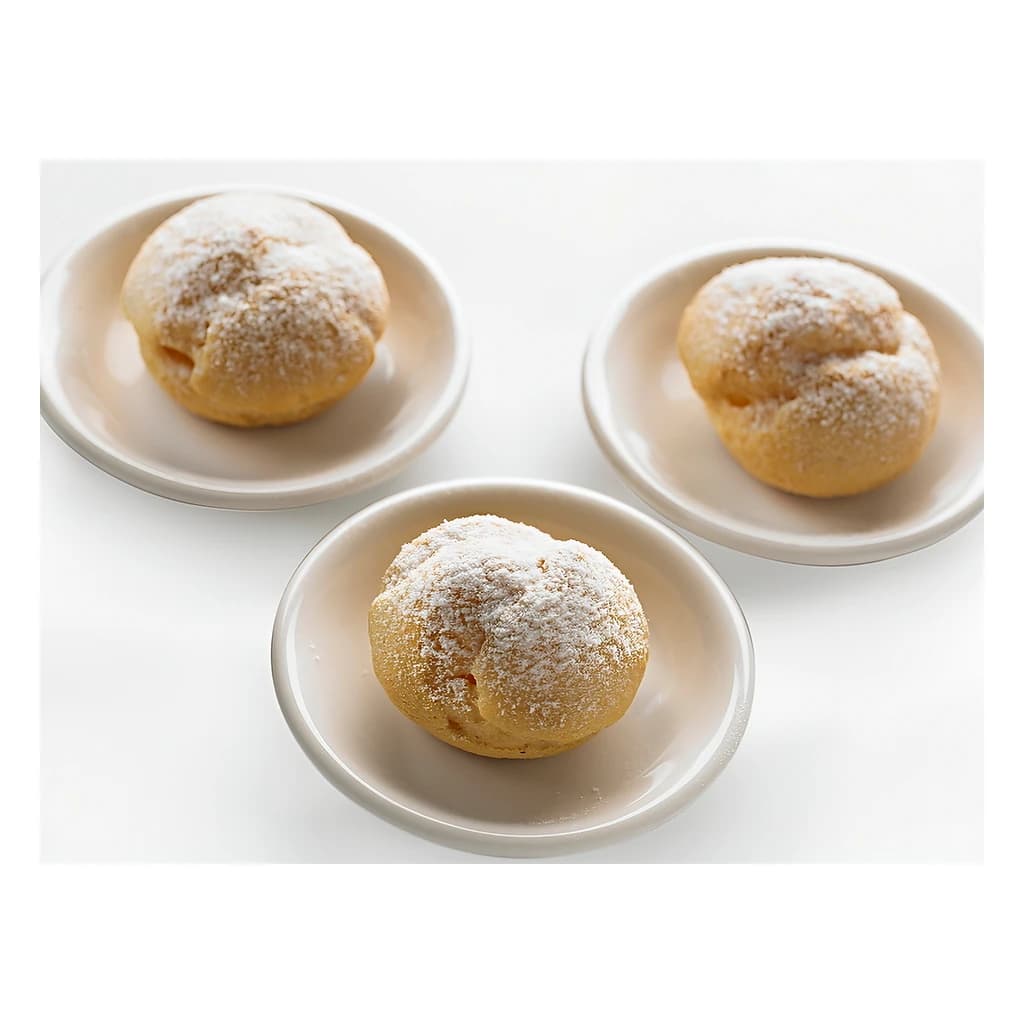
Mini Profiterole Choux 45 mm (250 pc)
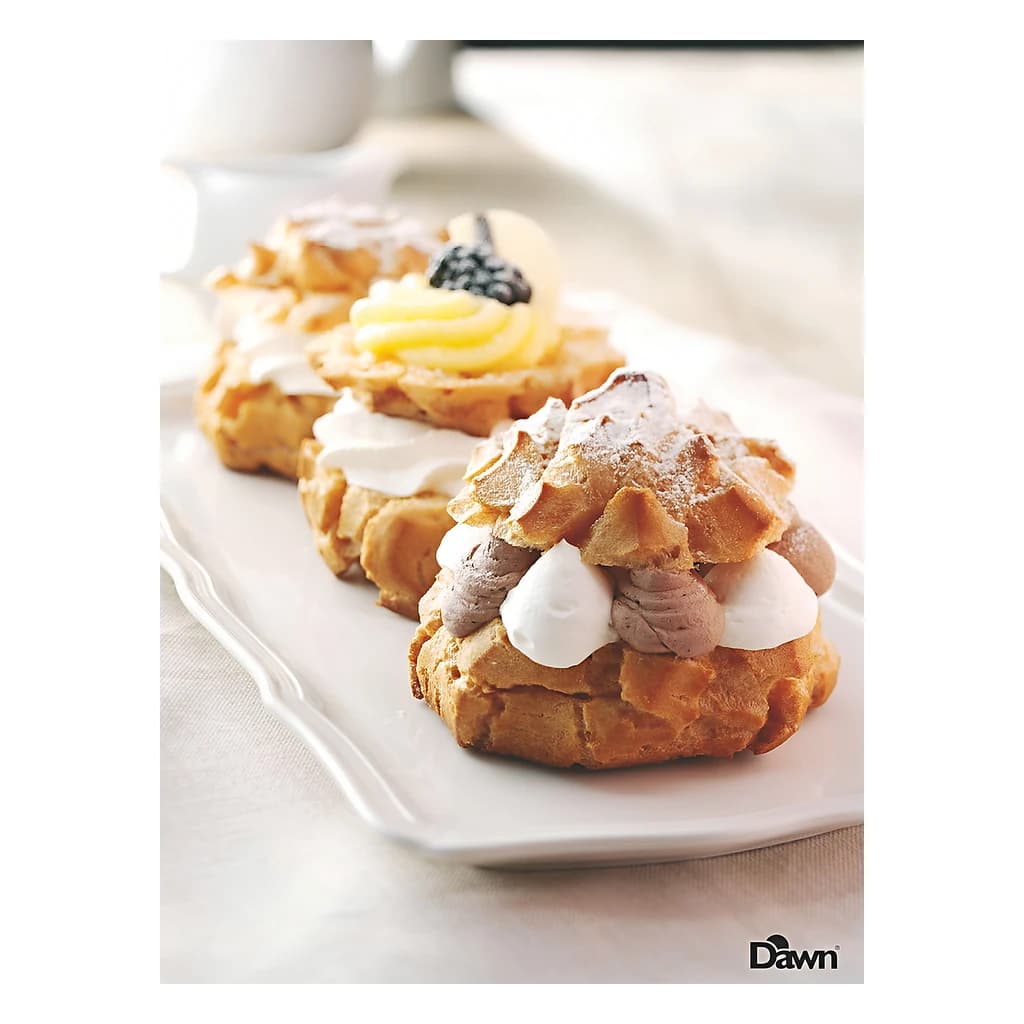
Parisien Choux Bun 96 mm (96 pc)
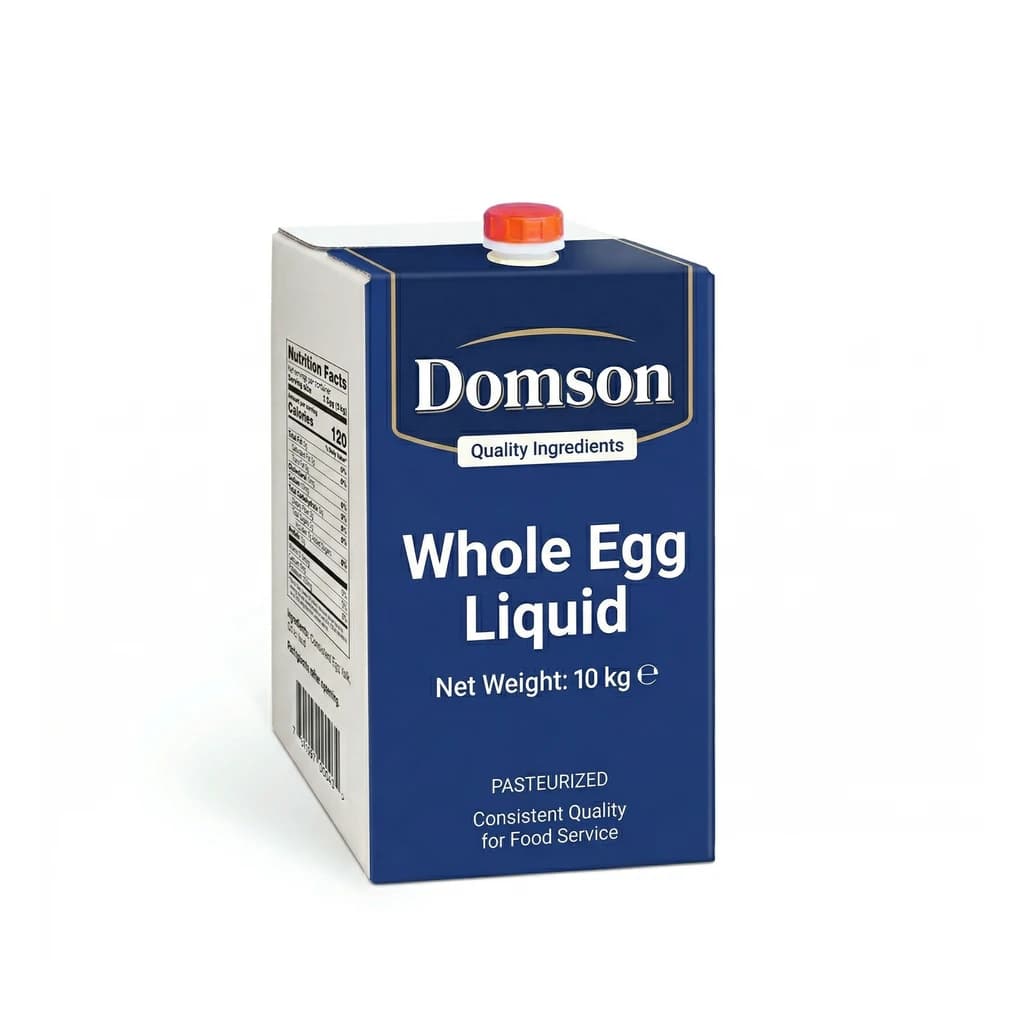
Whole Egg Liquid Domson 10 kg
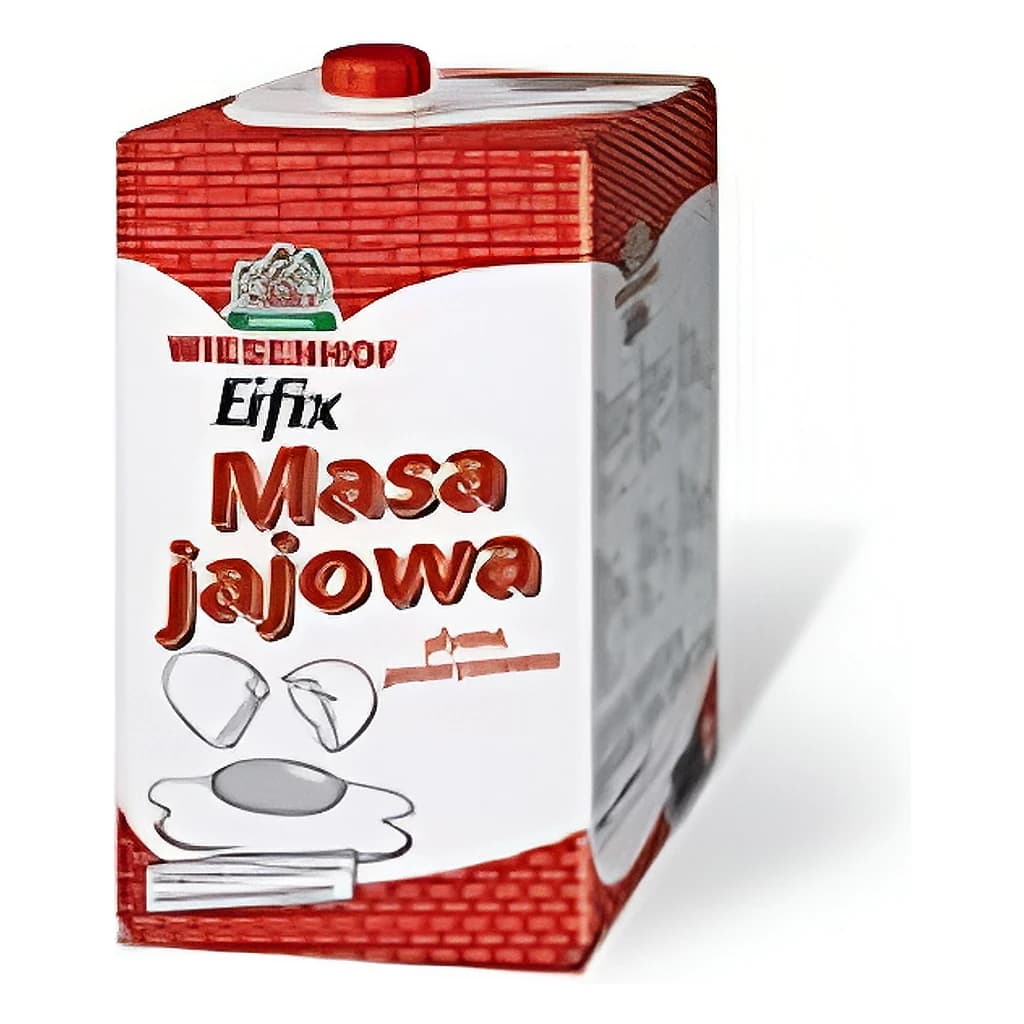
Liquid Egg Eifix 10 kg