
Papanași, poale-n brâu and sweet-cheese pastry: working with brânză de vaci in baked goods
For a Romanian baker, the sweet-cheese pastries — papanași (fried cheese doughnuts) and poale-n brâu / brânzoaice (baked sweet-cheese parcels) — all turn on one ingredient: brânză de vaci (fresh, unsalted cow's-milk curd cheese). This dossier gives a UK kitchen the authentic picture, mined from Romanian-language recipe, history and food sources and cross-checked against the platform's supplier specifications: what brânză de vaci is and how it differs from urdă, caș and telemea (and which stocked curd cheese/quark is the right analogue); the one rule that makes or breaks every one of these bakes — the cheese must be WELL-DRAINED, bound with a little griș (semolina) if wet, or it leaks; the two papanași — the older boiled papanași fierți (cheese + semolina, an Austro-Hungarian gomboț legacy from Transylvania/Banat) and the iconic fried papanași prăjiți (a ring + a small ball, soda-leavened, from Bucovina/Moldova, served with smântână and dulceață de vișine or afine); the soda-quenched-with-lemon chemistry and the ~180°C frying that keeps them light not greasy; the enriched cozonac-type dough and corner-folding of poale-n brâu (literally "skirt hems into the belt"); and the link to pască and the Orthodox "de dulce" calendar. Every technique is wired to the Domson catalogue a Romanian kitchen orders — curd cheese, sour cream, semolina, strong flour, yeast, butter, liquid egg, bicarbonate, sunflower oil, sour-cherry and blueberry toppings, raisins — and cross-linked to the Pillar A craft concepts behind it (A6-pastry-creams-fillings, A2-chemical-leaveners-baking-powder, A4-frying-fats-and-oils, A8-enriched-dough-formulas) and to its Romanian siblings (B4-cozonac-enriched-dough, B4-pasca-and-ritual-breads, B4-flour-classification-romanian).
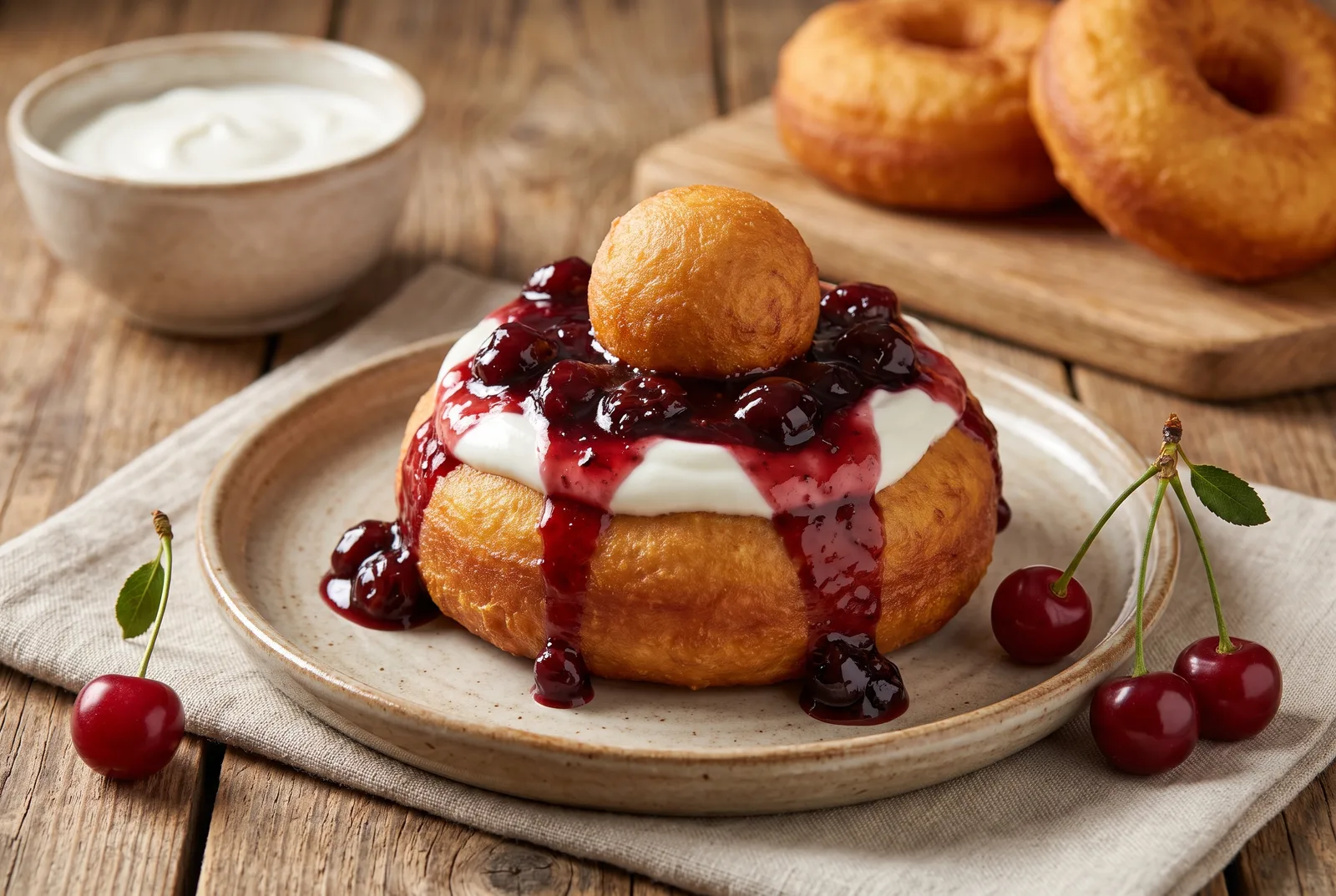
The pastry that a fresh curd cheese built
Ask a Romanian what to make with brânză de vaci (fresh, unsalted cow's-milk curd cheese) and you will get a short, passionate list: papanași (fried or boiled cheese doughnuts), poale-n brâu / brânzoaice (baked sweet-cheese parcels), and — at Easter — pască (the ritual cheese bread, covered in B4-pasca-and-ritual-breads). They look different, but they are one family: each is a delivery system for sweetened fresh cheese, and each lives or dies on the same thing — the cheese. This dossier is the working guide to that family for a UK kitchen serving Romanian and Moldovan customers. The figure below shows this.
1. Brânză de vaci: the ingredient, and the one rule
Brânză de vaci is a fresh, unripened, unsalted cow's-milk curd cheese. It is made by souring or coagulating milk and draining off the whey (zer) — for a firmer curd the drained cheese may be wrapped in a cloth and lightly weighted to press out more whey (pressing is optional; a fresh brânză de vaci should stay soft, not be pressed to a dry, aged-style curd). It is a sweet, fresh, fatty cheese (traditionally cited around 40% fat in dry matter), and it is the default cheese for Romanian sweet bakes. Do not confuse it with its cousins (see the figure and table below):
- urdă — a whey cheese, ricotta-like, sweet and granular; a lighter substitute in the fill;
- caș — fresh drained curd (cow/sheep/goat), a table cheese;
- telemea — a brined, salty cheese for savoury pastries, not these sweets.
For a UK kitchen the nearest stocked analogue is a baking curd cheese / twaróg / quark — the same fresh-curd family a Polish baker uses for sernik (B1-sernik-polish-cheesecake), a Lithuanian for varškė (B5-varske-in-baking) and a Bulgarian for a sweet sirene fill (B6-dairy-in-baking). urdă maps to ricotta.
The one rule that governs everything here: the cheese must be WELL-DRAINED. A wet brânză de vaci makes a slack dough and a runny filling that leaks or bursts in the fryer or oven. Press the cheese first, and if it is still wet bind it with a little griș (semolina) — or cornstarch (amidon) — to soak up the moisture. The structure of a stable cheese filling is the subject of A6-pastry-creams-fillings.
2. Papanași: two very different desserts under one name
Papanași (singular papanaș) are a fresh-cheese dessert that comes in two forms — and a customer may mean either, so know which before you quote (see the figure and table below). The name is a diminutive of the old Romanian word papă ("food" / soft pap), often traced (popularly) to Latin papa, "food for children".
- Papanași fierți (boiled) are the older form. They are the Austro-Hungarian gomboț cu brânză — the Hungarian túrógombóc, the German Topfenknödel — and are most common in Transylvania (Ardeal) and Banat, where they are often just called gomboți.
- Papanași prăjiți (fried) emerged in Bucovina and Moldova and became the national restaurant dessert: the instantly recognisable golden ring topped with a small ball, under a pour of smântână (sour cream) and dulceață (jam).
3. Making papanași prăjiți (fried)
This is the version most UK customers picture (see the figure and formula card below). Start from well-drained brânză de vaci, mix in egg, sugar, lemon zest and vanilla, then the key move: quench (stinge) about a teaspoon of bicarbonate of soda with lemon juice or vinegar and mix it in, then add făină (flour) a little at a time to a soft, just-shapeable dough. (Some bakers use yeast instead of soda.)
The soda–acid reaction releases CO2, giving an aerated, light crumb that also soaks up the sour-cream topping instead of turning compact — the chemistry is in A2-chemical-leaveners-baking-powder — pictured below. Shape a ring plus a small ball per portion and deep-fry at about 180°C: hot enough to set a crust fast so the papanași don't soak oil (too-cool oil makes them greasy and heavy), moderate enough that the outside doesn't burn before the centre cooks. Test the oil with a scrap of dough — it should bubble and rise quickly — and drain the fried papanași on paper. Frying-fat choice and temperature control are covered in A4-frying-fats-and-oils; the platform's refined Sunflower Oil (100% fat, 900 kcal, 0 g trans, no declarable allergens) is a clean neutral choice.
Finish hot: a generous spoon of smântână (Greek yoghurt is a modern alternative) and dulceață — the most traditional being de afine (blueberry) or, very commonly, de vișine (sour cherry) .
4. Making papanași fierți (boiled)
The Transylvanian/Banat form is simpler and older (see the formula card and figure below). Mix well-drained brânză de vaci with 1 egg, 3–4 tablespoons of griș (wheat semolina), a little sugar, salt, lemon zest and vanilla. Here semolina, not flour, does the binding, and the crucial step is to REST the mixture 15–60 minutes so the semolina swells and firms the dough — skip it and the dumplings fall apart in the water. Shape balls (or rings), boil gently ~6–7 minutes until they float, lift out, and roll in fried breadcrumbs (pesmet prăjit) — or serve with sour cream and jam. Griș grades are in B4-flour-classification-romanian.
5. Poale-n brâu (brânzoaice): the baked sweet-cheese parcel
Poale-n brâu — also called brânzoaice (singular brânzoaică, from brânză) — is a Moldovan and Bucovina sweet pastry: squares of enriched, cozonac-type leavened dough filled with sweetened brânză de vaci and raisins, the four corners folded in to the centre over the filling (see the figure and formula cards below).
The name is wonderfully literal. Poale are the long skirt hems a woman wore (under the catrință); brâu is the waist sash. Poale-n brâu means "skirt hems tucked into the belt" — the popular reading ties the name to the folding technique, describing exactly how the dough corners are tucked to the centre so the filling can't escape.
- The dough is the cozonac family (see B4-cozonac-enriched-dough and A8-enriched-dough-formulas): per ~500 g strong white flour (tip 000 / T550), about 200 ml warm milk (≤40°C), 2 egg yolks, 60 g sugar, 50 g melted 82% butter, 7 g dry yeast (or 25 g fresh), citrus zest, vanilla and salt. The heavy sugar and fat stress the yeast — the osmotolerance problem of A2-osmotolerant-yeast-enriched-doughs — so proof it patiently and well (A5-proofing-science). The platform's Type 550 strong flour (wet gluten 28–32%, protein 11.5–12.5%, falling number min 220 s) maps well by ash to the Romanian tip 550 used for this dough (Romanian tip 000 is a finer patisserie grade).
- The filling, per ~400 g well-drained brânză de vaci: 2 egg yolks, 60 g sugar, ~50 g raisins (stafide), lemon (and orange) zest, vanilla and salt, plus ~1 tablespoon griș only if the cheese is wet.
- Shape and bake: roll the dough into squares, spoon the cheese into the centre, fold the four corners to the middle, proof 15–20 minutes, egg-wash (for the glossy Maillard crust of A5-baking-oven-science) and bake — about 190°C (no fan) for 20–25 minutes, or a moderate ~170°C for 30–40 minutes — until golden. The figure below shows the finished parcels.
Common faults — a leaking, soggy base (cheese too wet or corners not sealed), a dry, cakey crumb (weak dough or over-baked) — and their fixes are in the fault table below.
6. The wider family and the Orthodox calendar
The same sweet brânză de vaci fill — fresh cheese, eggs, sugar, raisins, lemon zest — is the heart of pască, the Orthodox Easter cheese bread; in Moldavia pască is built on a well-leavened dough with fatty cow's cheese and rum-soaked raisins. See B4-pasca-and-ritual-breads for the ritual breads, and B4-mucenici-and-calendar-pastries for the rest of the calendar bakes. There is also a savoury brânzoaică, filled with a salty brânză de burduf or telemea with dill and green onion.
One point of authenticity worth understanding: because they are rich in dairy and egg, these cheese pastries are foods "de dulce" (non-fasting) in the Orthodox calendar — eaten outside the fasting periods. That is the opposite constraint to the vegan "de post" baking of B4-cozonac-de-post-vegan-baking. A bakery serving Romanian customers plans its cheese-pastry runs around the fast-and-feast calendar.
Scratch, ready filling, or mix? A UK bakery can run these three ways (see the table below): from scratch with drained fresh cheese (most authentic); with a ready vanilla curd-cheese filling piped into the dough (fast, consistent, no draining); or, for a fried product at scale, from a quark-fritter mix. Each step trades authenticity and a shorter label for speed.
7. Allergens, food safety and sourcing
A finished papanaș or poale-n brâu will typically need to declare, under UK/EU FIC (Reg (EU) 1169/2011): cereals containing gluten (wheat flour, and note the platform baking powder itself declares wheat/gluten ), milk (cheese, butter, sour cream) and eggs; and sulphites may enter via raisins or a bought-in fruit filling — pictured below. Map these to your own recipe before labelling.
Three food-safety cautions: fresh cheese, sour cream and egg are perishable — keep them chilled, and a fresh brânză de vaci keeps only ~1 week refrigerated; papanași must be fried through (no raw centre) and poale-n brâu baked through, with fried papanași served immediately; and the platform's sour-cherry topping is a genuine dulceață de vișine (just sour cherry, water and sugar) but its datasheet warns stones may remain — a real hazard for a spooned topping.
What to buy on the platform (pictured below; see the products at the end of this article): for brânză de vaci — a baking curd cheese / creamy quark (OSM Bieruń, Polmlek 14%, Włoszczowa, Figand); ready sweet cheese fillings for scale (Figand vanilla curd-cheese filling); a quark-fritter mix (UNIFERM, Zeelandia) for a fast fried product; Sour Cream (smântână); griș (GoodMills / Allied Mills semolina); strong flour (Domson White Strong / Type 550); fresh or dried yeast (Benevia, Fermipan); 82% butter; pasteurised liquid whole egg and egg yolk (Domson); bicarbonate of soda (Emix) and baking powder (Domson); sunflower oil for frying (Olympic Oils); sour-cherry (Vortumnus/GIL) and blueberry (Helios 80% for the truest afine) toppings; and raisins/sultanas (Quality Food Corporation, Chelmer).
Two things to flag for the buyer. First, there is no urdă / ricotta analogue in the range for the lighter whey-cheese fill — a clear gap for a distributor serving Romanian bakers. Second — a data-integrity issue, not a range gap — several of the fresh-dairy datasheets (the curd cheeses and the sour cream, plus the T450 semolina) currently resolve on-disk to unrelated products (plain/wholemeal/rye flour, raisins, a dough-divider oil). The products themselves are the right analogues and are linked here, but their datasheets should be re-attached before any spec or allergen claim is drawn from them.
Figures
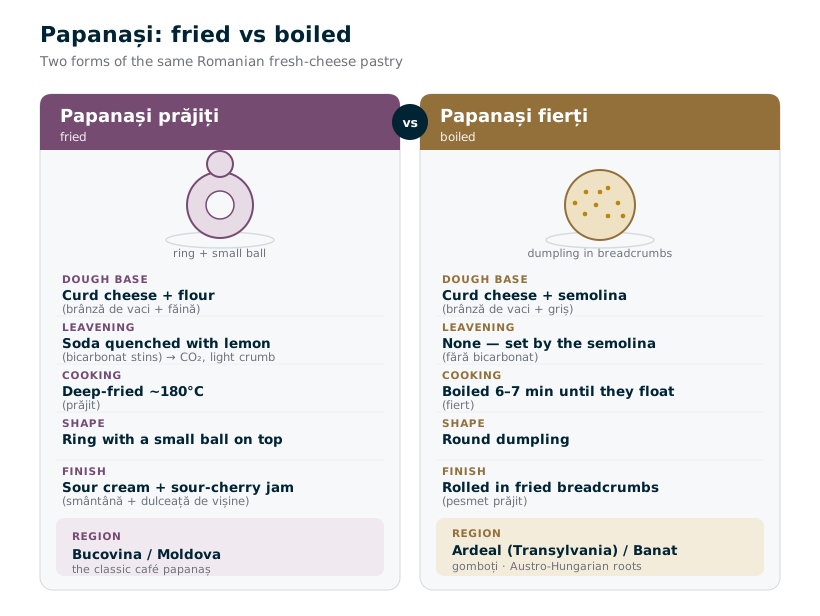 Diagram comparing fried papanași (ring, sour cream) with boiled papanași (dumpling in breadcrumbs)
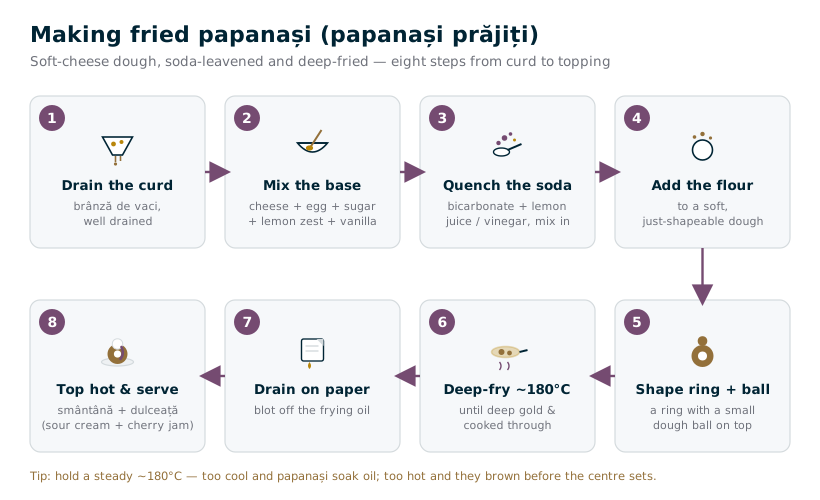 Eight-step flow diagram of making fried papanași from draining the cheese to frying and topping
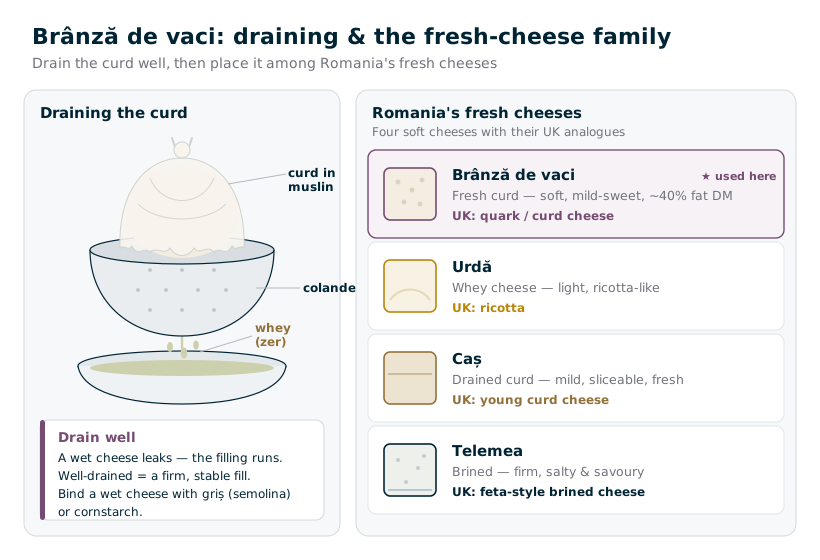 Diagram of draining brânză de vaci in cheesecloth beside a comparison of Romanian fresh cheeses and UK analogues
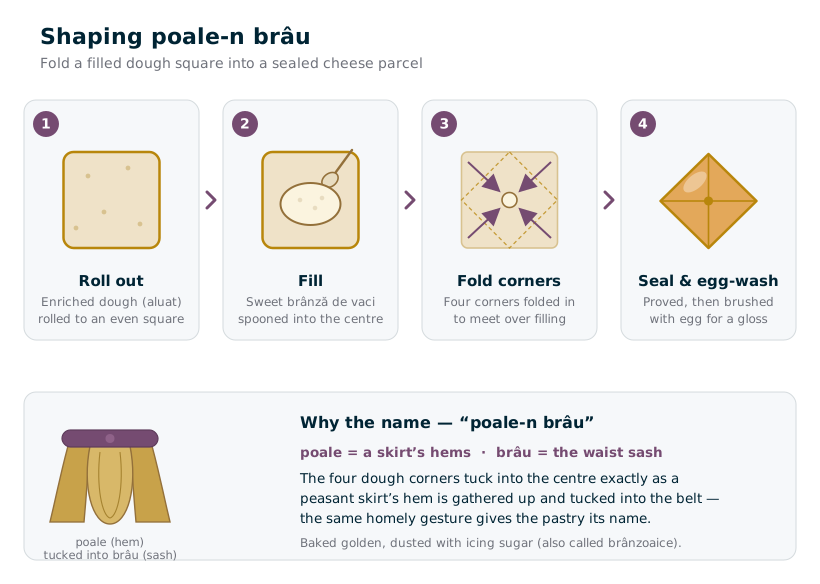 Four-step shaping of poale-n brâu: square dough, cheese in centre, four corners folded to the middle, sealed envelope
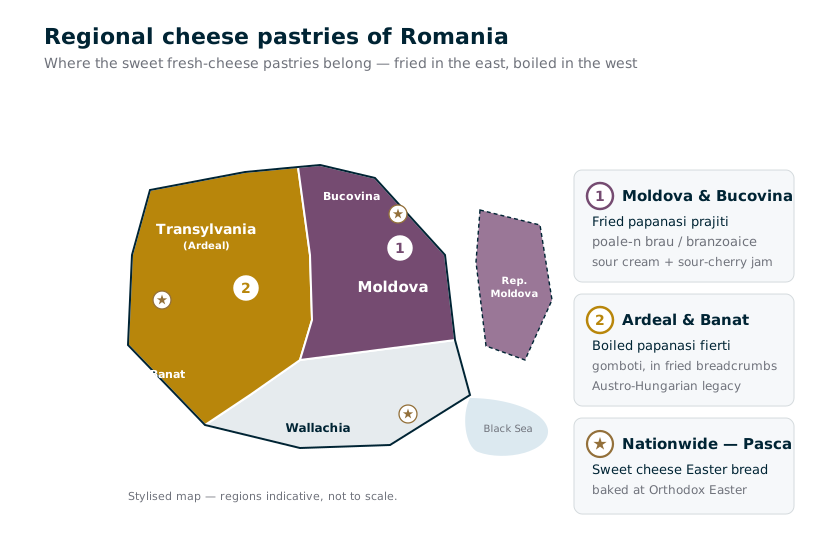 Map of Romania showing regional cheese pastries — fried papanași and poale-n brâu in Moldova/Bucovina, boiled papanași in Transylvania/Banat
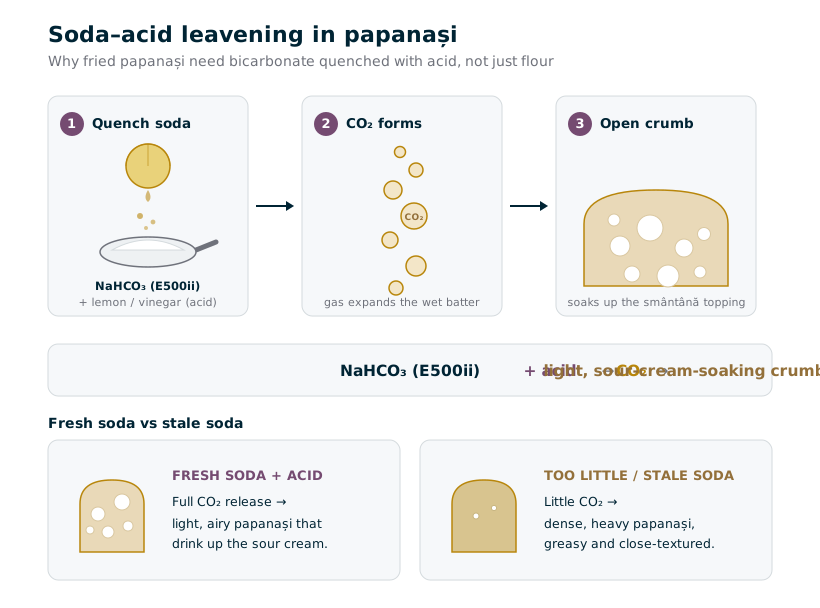 Diagram of baking soda quenched with lemon releasing CO2 to aerate papanași dough
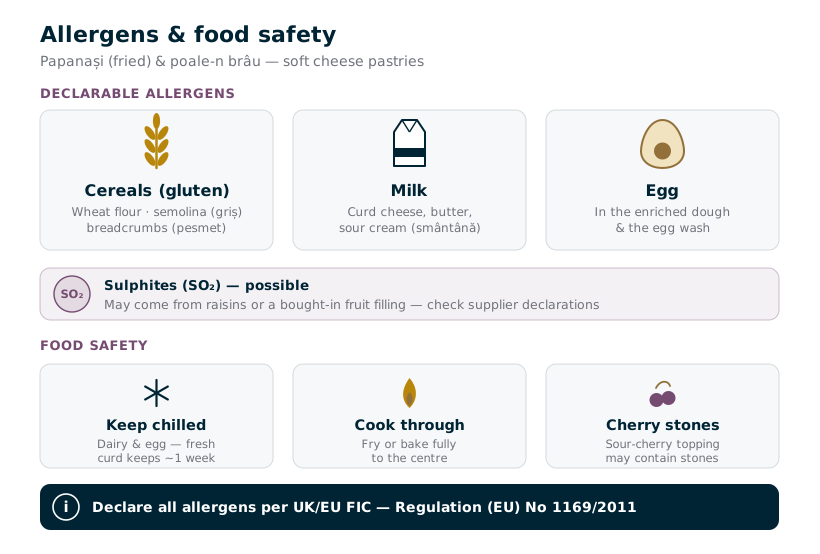 Allergen and food-safety panel for papanași and poale-n brâu: gluten, milk, egg icons plus sulphite, chilling and cherry-stone notes
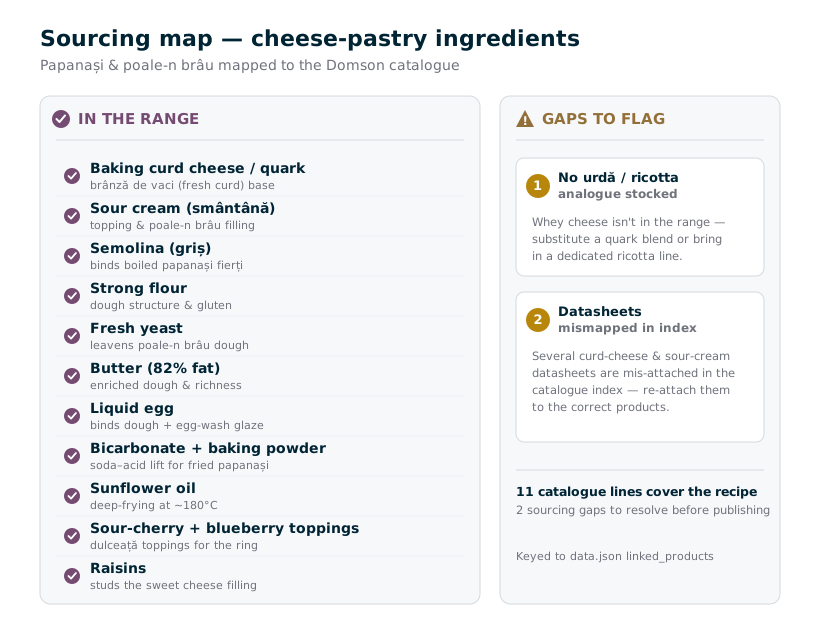 Panel mapping papanași and poale-n brâu ingredients to Domson catalogue products, flagging urdă/ricotta and datasheet gaps
Papanași prăjiți (fried) — representative formula
The soda–acid reaction gives an aerated crumb that drinks up the sour cream. The cheese MUST be well-drained or the dough will be slack and soak oil. See A2-chemical-leaveners-baking-powder for the soda/acid chemistry and A4-frying-fats-and-oils for oil choice and frying temperature.
| Ingredient | Baker's % | Weight |
|---|---|---|
| Brânză de vaci (well-drained) | 100% (≈500 g) | |
| Flour (făină) | ~30–40% | |
| Egg | 1–2 (≈10–20%) | |
| Sugar | ~8–12% | |
| Bicarbonate of soda (quenched with lemon/vinegar) | ~1 tsp / 500 g cheese | |
| Lemon zest, vanilla, salt | to taste | |
| Total | n/a (a soft, scoopable dough) |
Worked example
500 g well-drained brânză de vaci, 1–2 eggs, 2–3 tbsp sugar, zest of ½ lemon, vanilla, a pinch of salt, ~1 tsp bicarbonat de sodiu 'stins' (quenched) with 1 tsp lemon juice or vinegar, and făină (flour) added a little at a time to a soft, just-shapeable dough (roughly 150–200 g). Shape a ring plus a small ball per portion; deep-fry at ~180°C until deep gold and cooked through; drain on paper. Top hot with smântână and dulceață de vișine or afine. Quantities are representative — Romanian home recipes vary.
Yield: ≈ 8–10 papanași per 500 g cheese
Papanași fierți (boiled) — representative formula
The Transylvanian/Banat form and the older one — the Austro-Hungarian gomboț cu brânză. Semolina, not flour, does the binding; the rest is essential or the dumplings fall apart in the water. See B4-flour-classification-romanian for griș/semolina grades.
| Ingredient | Baker's % | Weight |
|---|---|---|
| Brânză de vaci (well-drained) | 100% (≈500 g) | |
| Griș (wheat semolina) | ~10–14% (3–4 tbsp) | |
| Egg | 1 (≈10%) | |
| Sugar | ~5–8% | |
| Salt, lemon zest, vanilla | to taste | |
| Total | n/a |
Worked example
500 g well-drained brânză de vaci, 1 egg, 3–4 tbsp griș (wheat semolina), 1–2 tbsp sugar, a pinch of salt, lemon zest and vanilla. Mix and REST 15–60 min so the semolina swells and firms the dough. Shape balls (or rings), boil gently ~6–7 min until they float, lift out, and roll in fried breadcrumbs (pesmet prăjit) — or serve with sour cream and jam.
Yield: ≈ 8–10 dumplings per 500 g cheese
Poale-n brâu (brânzoaice) — enriched dough
This is the cozonac dough family — see B4-cozonac-enriched-dough, A8-enriched-dough-formulas and A2-osmotolerant-yeast-enriched-doughs for why the sugar and fat stress the yeast, and A5-proofing-science / A5-baking-oven-science for the proof and the egg-wash Maillard crust.
| Ingredient | Baker's % | Weight |
|---|---|---|
| Strong white flour (tip 000 / T550) | 100% | |
| Milk (warm, ≤40°C) | ~40% | |
| Sugar | ~12% | |
| Butter (82% fat) | ~10% | |
| Egg yolk | 2 yolks / 500 g | |
| Yeast (dry / fresh) | ~1.4% dry (≈5% fresh) | |
| Salt | ~0.5% | |
| Citrus zest, vanilla | to taste | |
| Total | ~170% (an enriched, cozonac-type dough) |
Worked example
500 g strong white flour (tip 000 / T550), 200 ml warm milk (≤40°C), 2 egg yolks, 60 g sugar, 50 g melted 82% butter, 7 g dry yeast (or 25 g fresh), zest of a lemon and a little orange, vanilla, ½ tsp salt. Knead to a soft enriched dough, proof until well risen, roll into squares, fill, fold the corners in, proof 15–20 min, egg-wash and bake ~190°C (no fan) 20–25 min — or ~170°C for 30–40 min — until golden. Scaled up (Gina Bradea): 1 kg flour, 400 ml milk, 2 eggs, 100 g butter/oil, 25 g fresh yeast.
Yield: ≈ 12–14 pieces per 500 g flour
Poale-n brâu — sweet cheese filling (umplutură de brânză)
The same fill, richer, becomes the centre of pască (B4-pasca-and-ritual-breads). Keep it firm and well-drained — the single biggest cause of leaking, soggy poale-n brâu is a wet cheese. See A6-pastry-creams-fillings for cheese-filling structure.
| Ingredient | Baker's % | Weight |
|---|---|---|
| Brânză de vaci (well-drained) | 100% (≈400 g) | |
| Sugar | ~15% | |
| Egg yolk | 2 yolks | |
| Raisins (stafide) | ~12% | |
| Griș (only if cheese is wet) | ~1 tbsp | |
| Lemon zest, vanilla, salt | to taste | |
| Total | n/a (a thick, spoonable fill) |
Worked example
400 g well-drained brânză de vaci, 2 egg yolks, 60 g sugar, 50 g raisins (stafide, optionally soaked in rum), zest of a lemon, vanilla, ½ tsp salt. Add ~1 tbsp griș (semolina) ONLY if the cheese is wet, so the fill does not leak; cornstarch (amidon) can replace the griș.
Yield: fills ~12–14 pieces (per 500 g flour of dough)
Both start from brânză de vaci but they are two different products with different regions, leavening and cooking. Know which one a customer means before you quote.
| Form | Region / origin | Base & leavening | Cooking | Finish |
|---|---|---|---|---|
| Papanași prăjiți (fried) | Bucovina & Moldova; now the national restaurant dessert | Brânză de vaci + făină (flour); leavened with bicarbonat de sodiu stins (soda quenched with lemon/vinegar), or yeast | Deep-fried ~180°C; iconic ring topped with a small ball | Smântână (sour cream) + dulceață de vișine or afine, served hot |
| Papanași fierți (boiled) | Transylvania (Ardeal) & Banat; older, Austro-Hungarian gomboț cu brânză (túrógombóc / Topfenknödel) | Brânză de vaci + griș (semolina) + egg; rested 15–60 min | Boiled ~6–7 min until they float | Rolled in fried breadcrumbs (pesmet prăjit), or sour cream + jam |
| Gomboți (western name) | Banat & Crișana (Arad, Timișoara, Oradea) — same as fierți | As boiled papanași | Boiled | Breadcrumbs + sugar |
Brânză de vaci is the fresh, sweet, unsalted cow's-milk curd cheese at the heart of Romanian sweet bakes. For a UK kitchen, the nearest stocked analogue is a baking curd cheese / quark; urdă ≈ ricotta.
| Cheese (Romanian) | What it is | Use in sweet bakes | Nearest UK/stocked analogue |
|---|---|---|---|
| Brânză de vaci | Fresh, unripened, unsalted cow's-milk curd; sweet, ~40% fat in dry matter | The default filling for papanași, poale-n brâu and pască | Baking curd cheese / twaróg / quark (well-drained) |
| Urdă | Whey cheese (ricotta-like), sweet, creamy, granular | Substitutes in the sweet fill; lighter | Ricotta (not currently stocked — see sourcing gaps) |
| Caș | Fresh drained curd (cow/sheep/goat), sweet | Rarely for these sweets; more a table cheese | Fresh curd cheese |
| Telemea | Brined, salty; max ~42% fat | Savoury brânzoaică only | Feta-type brined cheese |
| Brânză de burduf | Matured, salty, pungent sheep cheese | Savoury brânzoaică (with dill, green onion) | Strong brined/matured cheese |
One filling idea — sweetened brânză de vaci with raisins and citrus — runs through the whole family. Region shows in the format and the dough.
| Pastry | Format | Dough / base | Where |
|---|---|---|---|
| Papanași prăjiți | Fried ring + ball, sour cream + jam | Cheese-and-flour dough, soda-leavened | Bucovina/Moldova → national |
| Papanași fierți | Boiled dumpling in breadcrumbs | Cheese + semolina | Transylvania, Banat |
| Poale-n brâu / brânzoaice | Baked square, corners folded to centre | Enriched cozonac-type dough | Moldova, Bucovina |
| Pască | Round Easter bread with a cheese centre | Enriched dough + sweet cheese fill | National, Orthodox Easter — see B4-pasca-and-ritual-breads |
| Brânzoaică (savoury) | Baked square/envelope | Leavened dough + salty cheese, dill, onion | Various regions |
A UK bakery serving Romanian customers can run these three ways. The trade-off is authenticity and label length vs speed and consistency.
| Approach | How it works | Pros | Cons |
|---|---|---|---|
| Scratch, fresh cheese | Drain brânză de vaci / quark, mix your own fill and dough | Most authentic; you control sweetness, drainage and aroma | Perishable; needs skill and cold-chain; cheese must be well-drained |
| Ready sweet cheese filling | Bucket of vanilla curd-cheese filling, piped into the dough | Fast, consistent, stable; no draining | Fixed recipe/label; less 'homemade'; check added starch/allergens |
| Quark-fritter / doughnut mix | Add water/egg to a quark-fritter mix and fry | Fastest route to a papanași-style fried product at scale | Furthest from the authentic fresh-cheese article |
| Fault | Likely cause | Remedy |
|---|---|---|
| Filling leaks / bursts; soggy base | Cheese too wet; fill too loose; not sealed | Drain/press the cheese well; bind with a little griș or cornstarch; seal the folded corners firmly |
| Papanași soak oil, heavy and greasy | Oil too cool; dough too soft/wet | Fry at ~180°C; test with a scrap of dough; drain the cheese better; drain fried papanași on paper |
| Papanași raw in the centre, burnt outside | Oil too hot; papanași too large | Lower to ~180°C; make smaller, even shapes; fry a touch longer at moderate heat |
| Dense, flat papanași prăjiți | Soda not quenched / stale; over-mixed | Quench fresh bicarbonate with lemon juice/vinegar just before frying; mix only to combine |
| Boiled papanași fall apart in the water | Mixture not rested; too little semolina | Rest the griș mixture 15–60 min; add a little more griș; simmer gently, don't boil hard |
| Poale-n brâu pale / no shine | No egg wash; oven too cool | Egg-wash before baking; bake ~190°C to a golden crust |
| Poale-n brâu dry / cakey | Weak dough; over-baked; too little fat | Use a strong enriched (cozonac-type) dough; bake just to golden; don't over-bake |
| Cheese tastes flat / sour | Under-seasoned; cheese too acidic or off | Season with sugar, lemon zest and vanilla; use fresh, sweet, well-kept brânză de vaci |