
Improvers & Additives
Oxidants, enzymes, emulsifiers
9 articles · 40 diagrams · avg 21 min read
Articles in this section
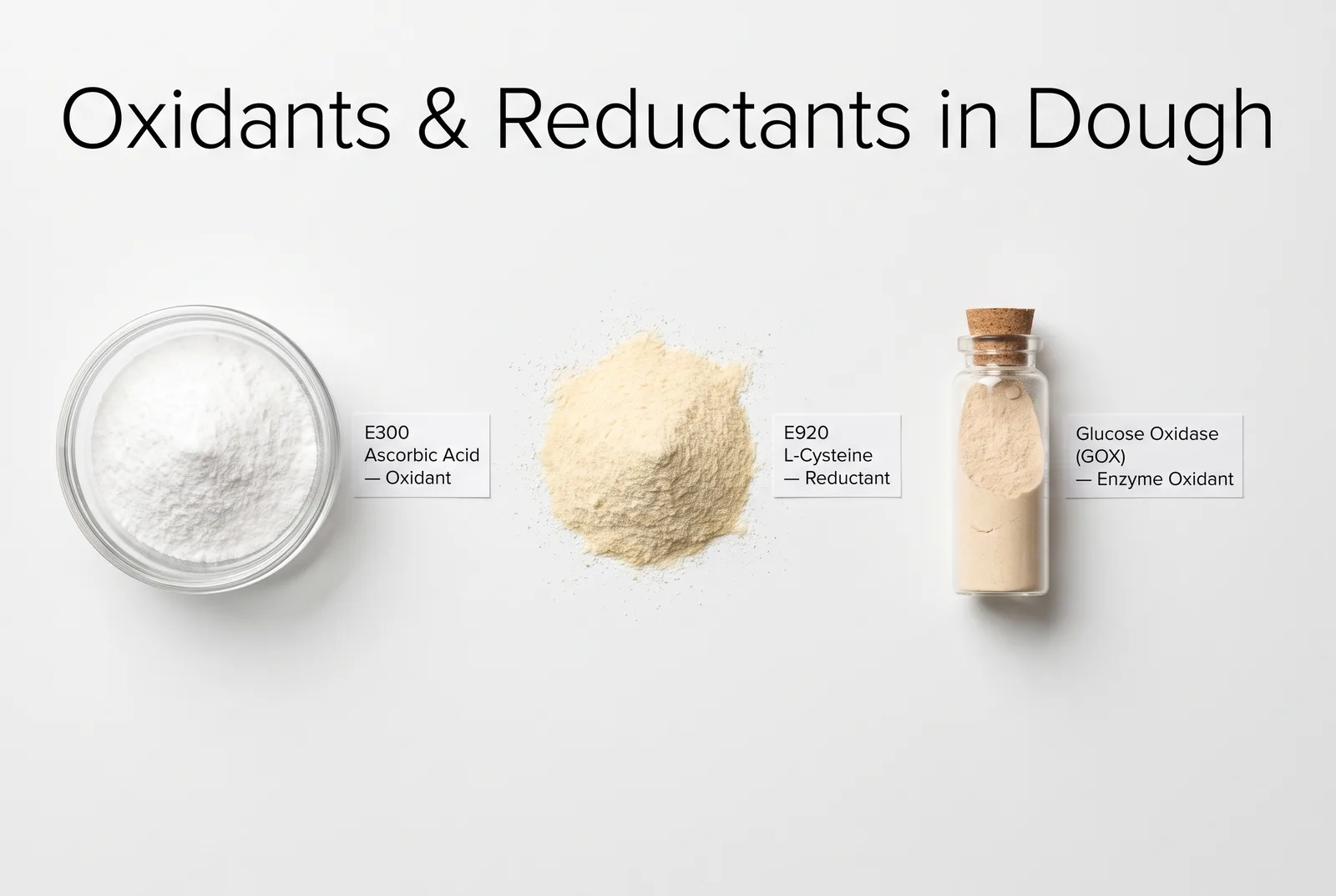
Oxidants and reductants in dough: ascorbic acid (E300), L-cysteine (E920), glucose oxidase and potassium bromate alternatives
A practical deep-dive for professional bakers covering every major dough oxidant and reductant: ascorbic acid (E300), glucose oxidase (GOX), enzyme-active soya flour, L-cysteine (E920), and inactive yeast/glutathione. Explains why potassium bromate is banned in the EU and UK and how its alternatives work. Grounded in first-party spec sheets from eight Domson catalogue products (Puratos, IREKS, Zeelandia, Beneo, Cereform) and cross-checked against BAKERpedia, the IREKS Compendium, IntechOpen academic sources, and EU/UK regulatory instruments. Includes a full comparison table of six bread improvers, emulsifier profiles, fault-diagnosis table, and three formula cards.
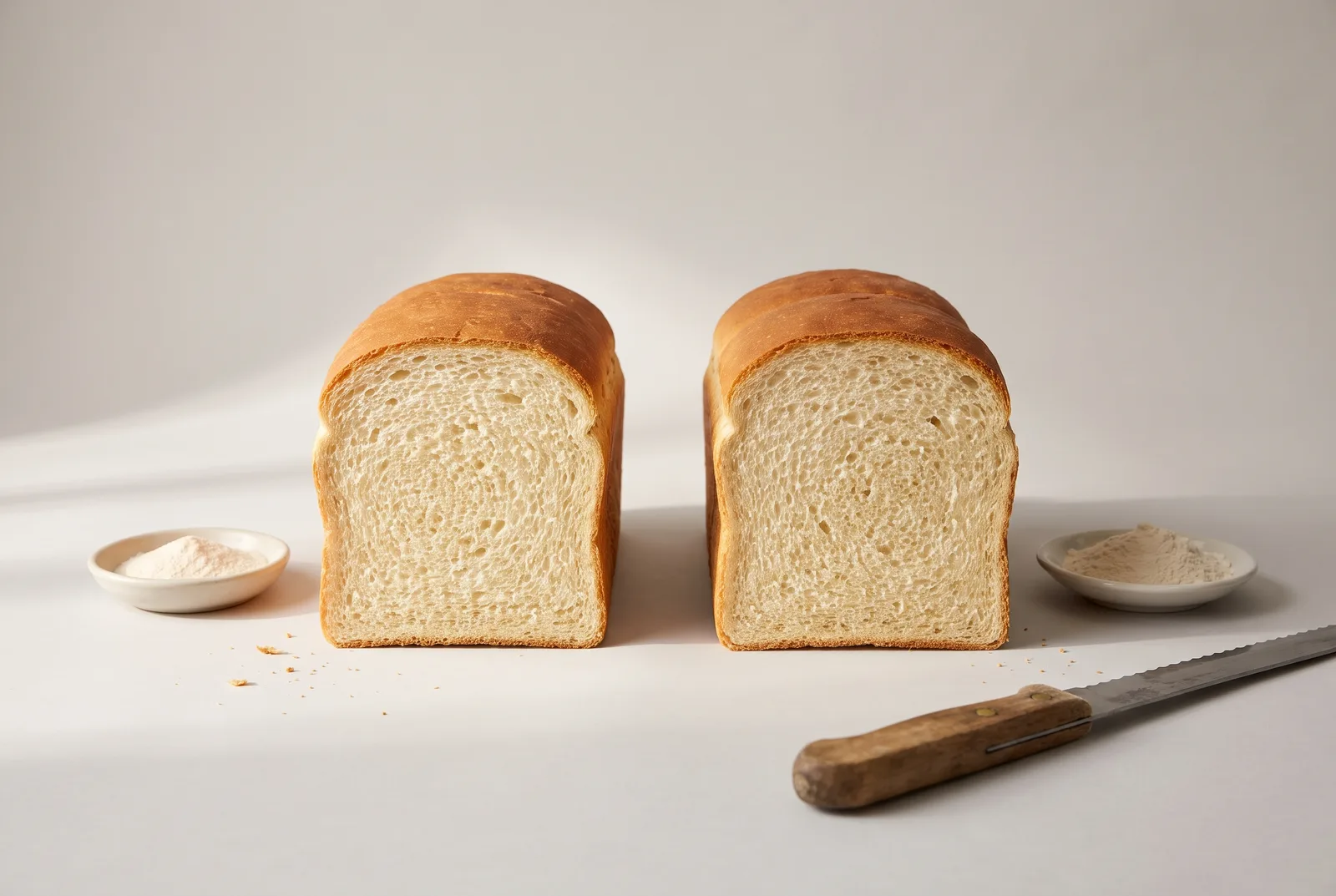
Clean-label and enzyme-only improvers: replacing DATEM, SSL and L-cysteine without losing performance
A practical guide for professional bakers on reformulating away from DATEM (E472e), SSL (E481) and L-cysteine (E920) using enzyme-only bread improvers and clean-label structural ingredients. Covers the enzyme replacement toolkit (lipase, xylanase, glucose oxidase, maltogenic amylase, protease, transglutaminase), vital wheat gluten as a structural anchor, and the EU/UK regulatory distinction between food additives and processing aids that makes enzyme-only labelling work. Grounded in first-party spec sheets from ten Domson catalogue products (Zeelandia, Puratos, IREKS, Beneo, Cereform) with side-by-side comparison tables, three formula cards, and a practical fault-diagnosis table for bakeries switching from conventional to enzyme-only systems.
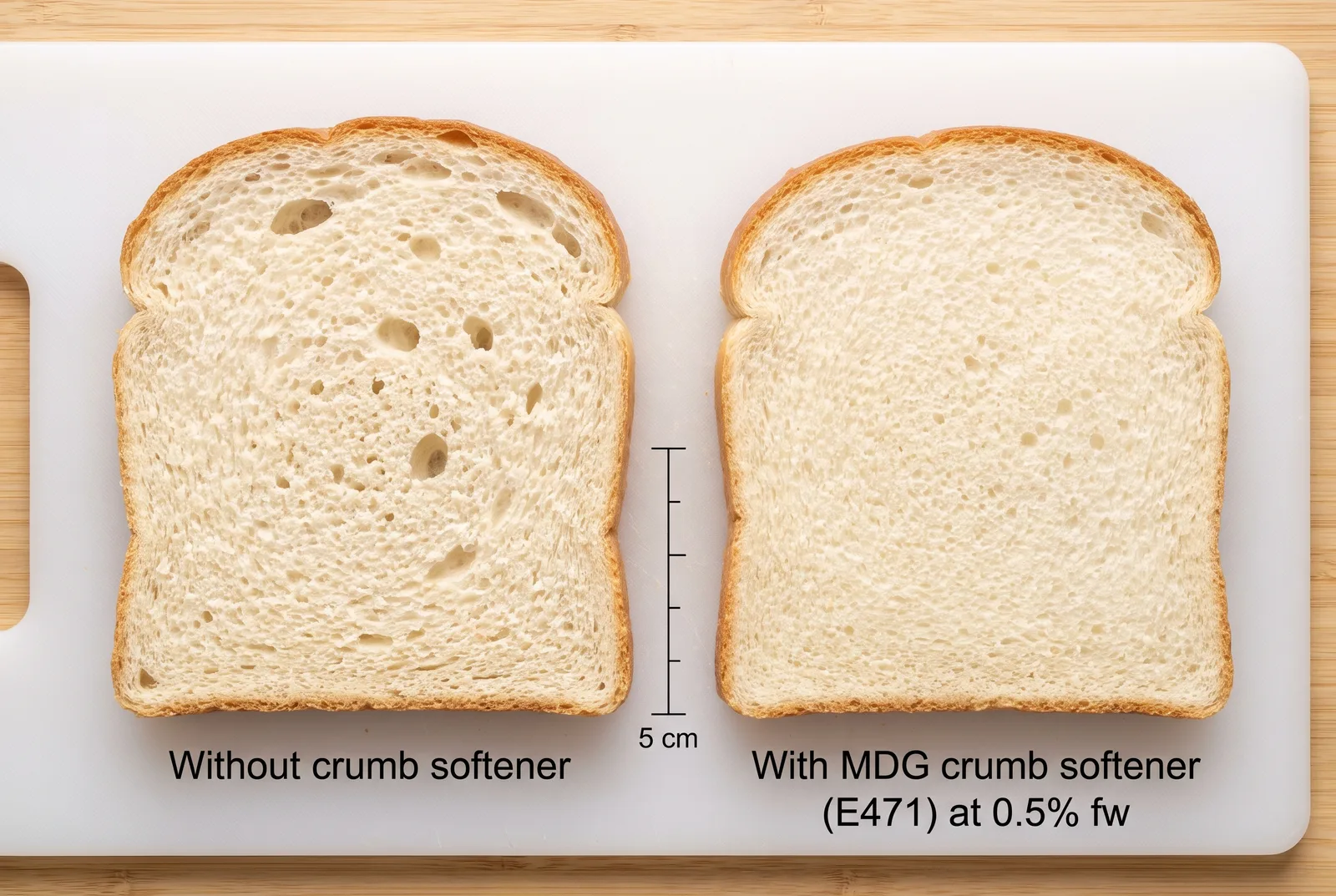
Emulsifiers in bread: DATEM, SSL, CSL, lecithin, mono- and diglycerides — functions, dosages and E-numbers
A practical guide for professional bakers covering every major bread and bakery emulsifier: DATEM (E472e), SSL (E481), CSL (E482), lecithin (E322), mono- and diglycerides (E471) and polyglycerol esters (E475). Explains the dough-strengthener vs crumb-softener distinction, the HLB classification system, EU and UK regulatory limits (Regulation EC 1333/2008), and typical dosage ranges. Cross-referenced against first-party spec sheets from twelve catalogue products (IREKS, Puratos, Zeelandia) and four reference sources (IREKS Compendium, BAKERpedia, Lesaffre Baking, Sonneveld). Includes comparison tables, formula cards, a fault-diagnosis table and a clean-label enzyme alternative section.
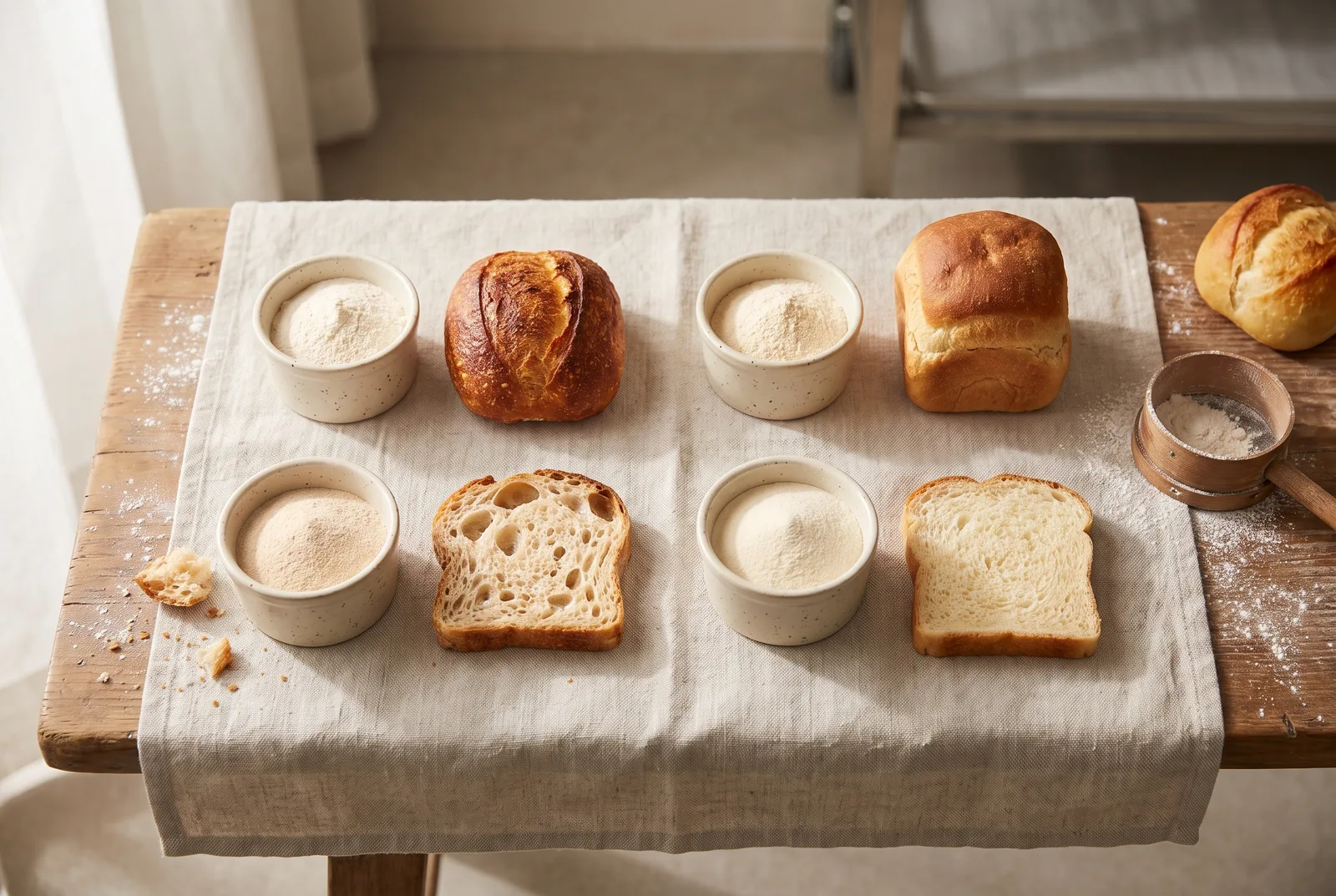
Baking enzymes demystified: amylases, xylanases, lipases, proteases and oxidoreductases
A comprehensive practical guide to the enzymes used in professional bread production — amylases (fungal, maltogenic, beta), xylanases, lipases, proteases, and oxidoreductases (glucose oxidase, laccase, transglutaminase, asparaginase). Explains the mechanism of each enzyme class, typical dosage ranges, interaction with flour variability, over-dosage risks, and how they combine in commercial bread improvers. Cross-referenced with seven first-party spec sheets from the Domson catalogue (Zeelandia, Puratos, IREKS, Cereform/AB Mauri, Beneo). Includes a fault-finding table, a commercial improver comparison, regulatory and allergen notes (enzyme carrier allergens, processing-aid status, maltogenic amylase grey area), and the clean-label enzyme-vs-emulsifier argument.
Choosing and dosing the right improver: a troubleshooting guide for bread, rolls, frozen dough and par-bake
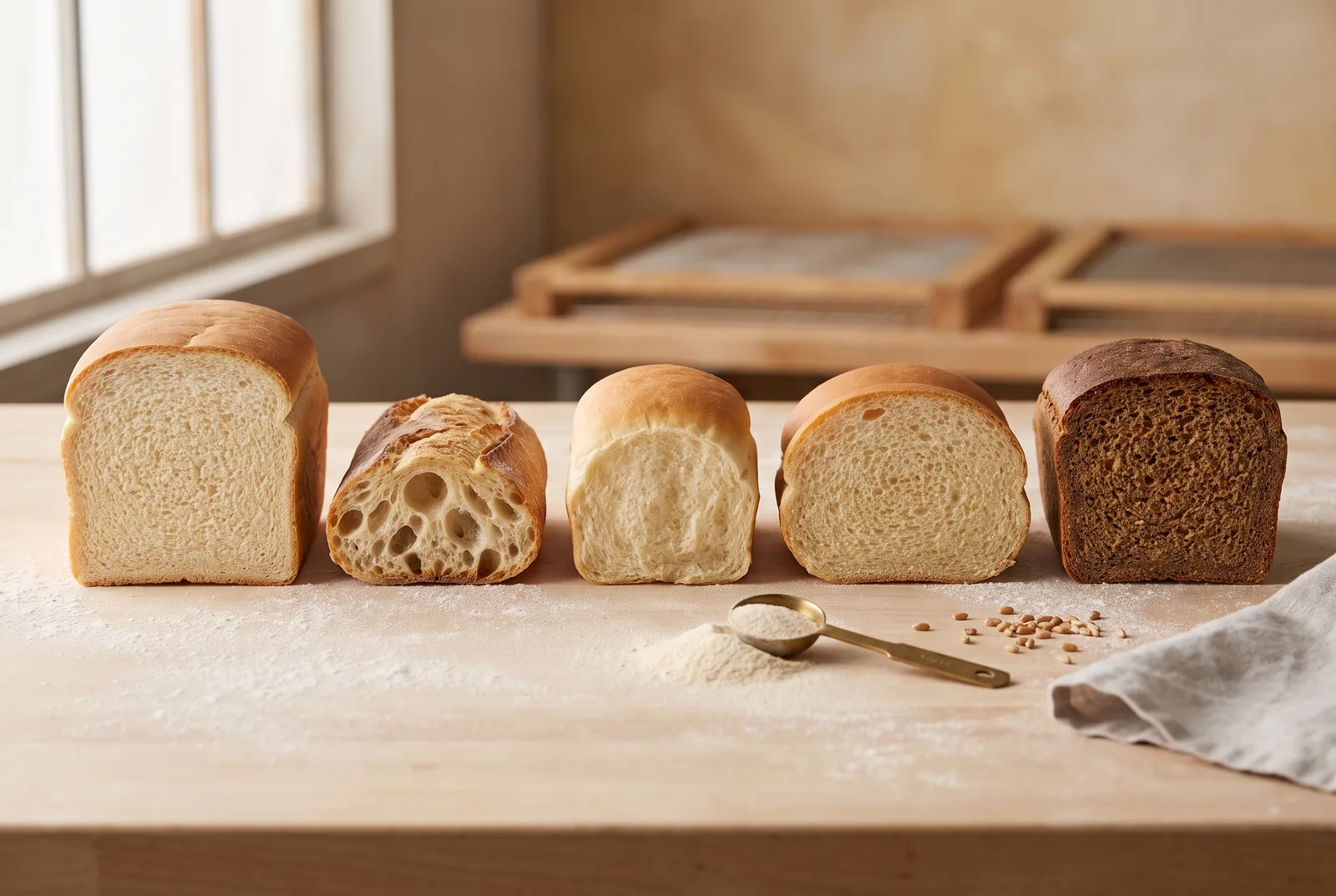
A practical decision guide for professional bakers who already know what a bread improver is and need to select, dose and adjust the right one for their specific product. Covers every major application from white tin bread and crusty rolls through soft rolls, burger buns, toast bread, rye and wheat-rye breads, frozen dough and par-bake. Built on first-party spec sheets for thirteen products in the Domson catalogue — Zeelandia Gamma GP, Puratos S500 Sense SG, Puratos Tigris SG 2%, IREKS Voltex, IREKS Soft Roll 7, IREKS Toast & Buns, IREKS Softy, Zeelandia Optimax Free, Zeelandia Rye Stabil Free, Zeelandia Quick 96, Puratos Pronto, Beneo BeneoPro VWG 75 and Cereform Breadsoy — plus the IREKS Compendium, BAKERpedia and Bakels technical literature. Includes a fault-finder table with twelve production symptoms, comparison dosage tables, and five ready-to-use formula cards.
Malt and malt extracts in baking: diastatic vs. non-diastatic, enzymatic activity and crust colour
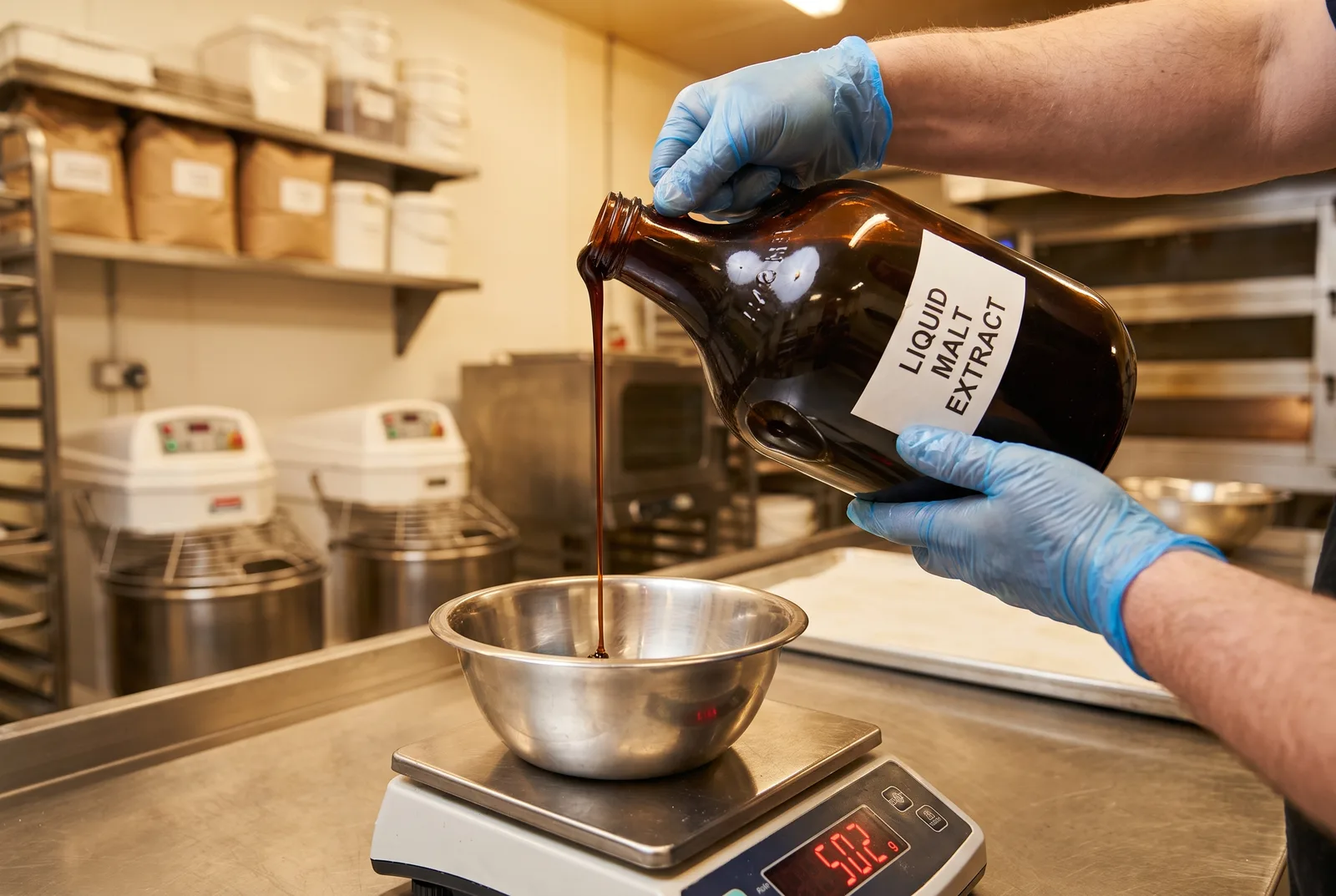
A practical guide for professional bakers covering the full range of malt products used in baking: diastatic malt flours, non-diastatic roasted malts, liquid malt extracts, malted grain flakes, and malted blend flours. Built on twelve first-party spec sheets from the Domson catalogue (EDME, Forbake, ULDO, IREKS, Bakels, Carr's Maldon Mill) and cross-checked against BAKERpedia, IREKS Baking Technology Compendium, and AHDB Hagberg falling number guidance. Includes comparison tables for all twelve products, EBC colour guide, dosage recommendations, fault diagnosis, allergen summary, and formula cards.
Preservatives in packaged bread: calcium propionate, potassium sorbate, sodium diacetate — modes of action and legal limits
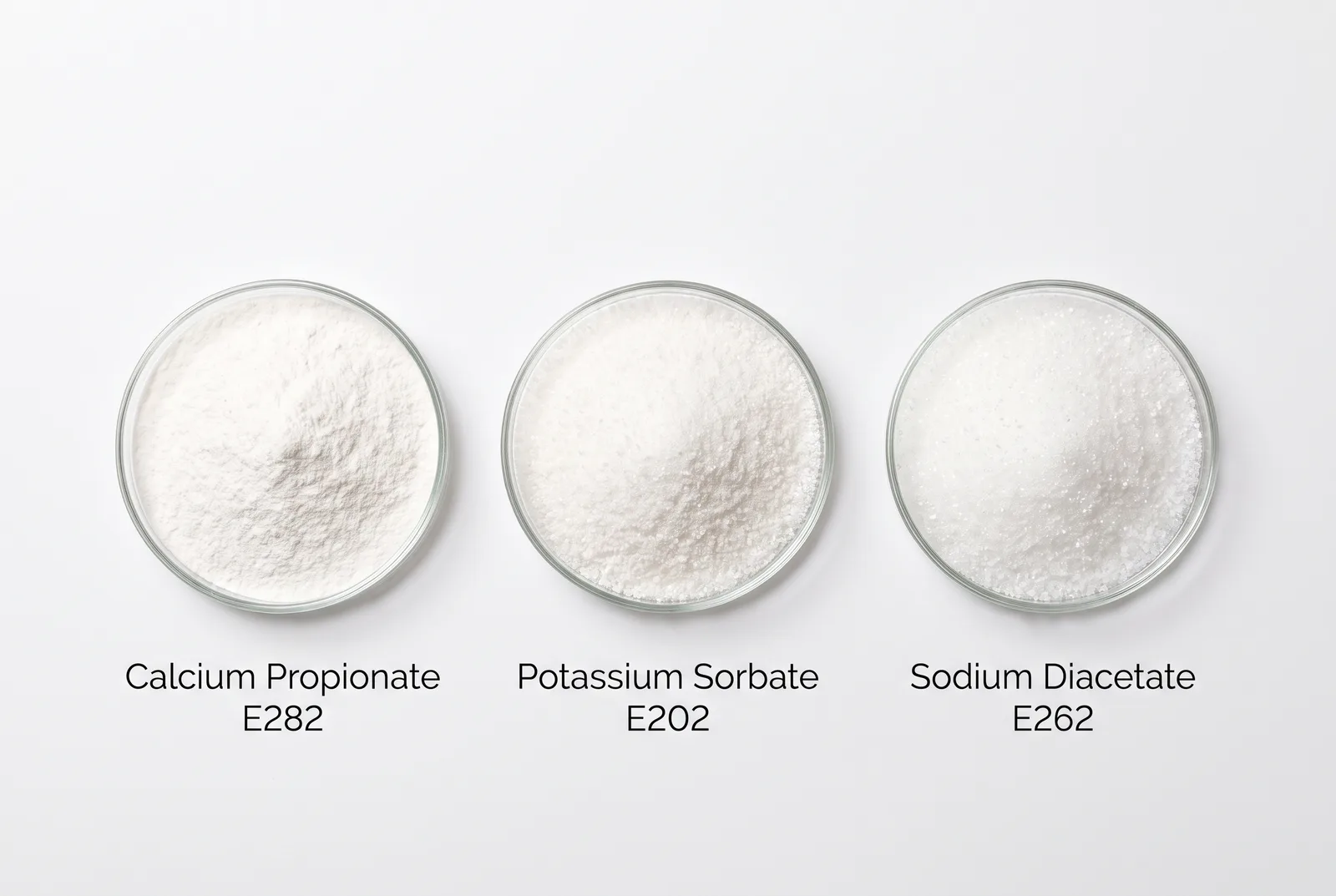
A practical deep-dive for professional bakers into the three chemical preservatives permitted for use in pre-packed bread and bakery products in the EU and UK: calcium propionate (E282), potassium sorbate (E202), and sodium diacetate (E262). Covers modes of action, pH dependency, yeast compatibility, EU legal limits by bread category (Regulation (EC) No 1333/2008), and how to select and dose the right preservative for the right product. Grounded in first-party spec sheets from two Domson catalogue products — Macco Calcium Propionate E282 20 kg (Hortimex/Macco Organiques, spec dated May 2022) and Zeelandia Mould Inhibitor 25 kg (spec dated April 2024) — cross-checked against BAKERpedia, IREKS Compendium of Baking Technology, and EFSA re-evaluation opinions. Includes comparison table, EU legal limits table, full fault-diagnosis table, and allergen and labelling guidance.
Vital wheat gluten: fortifying weak flours and high-fibre doughs from 2% to 12%
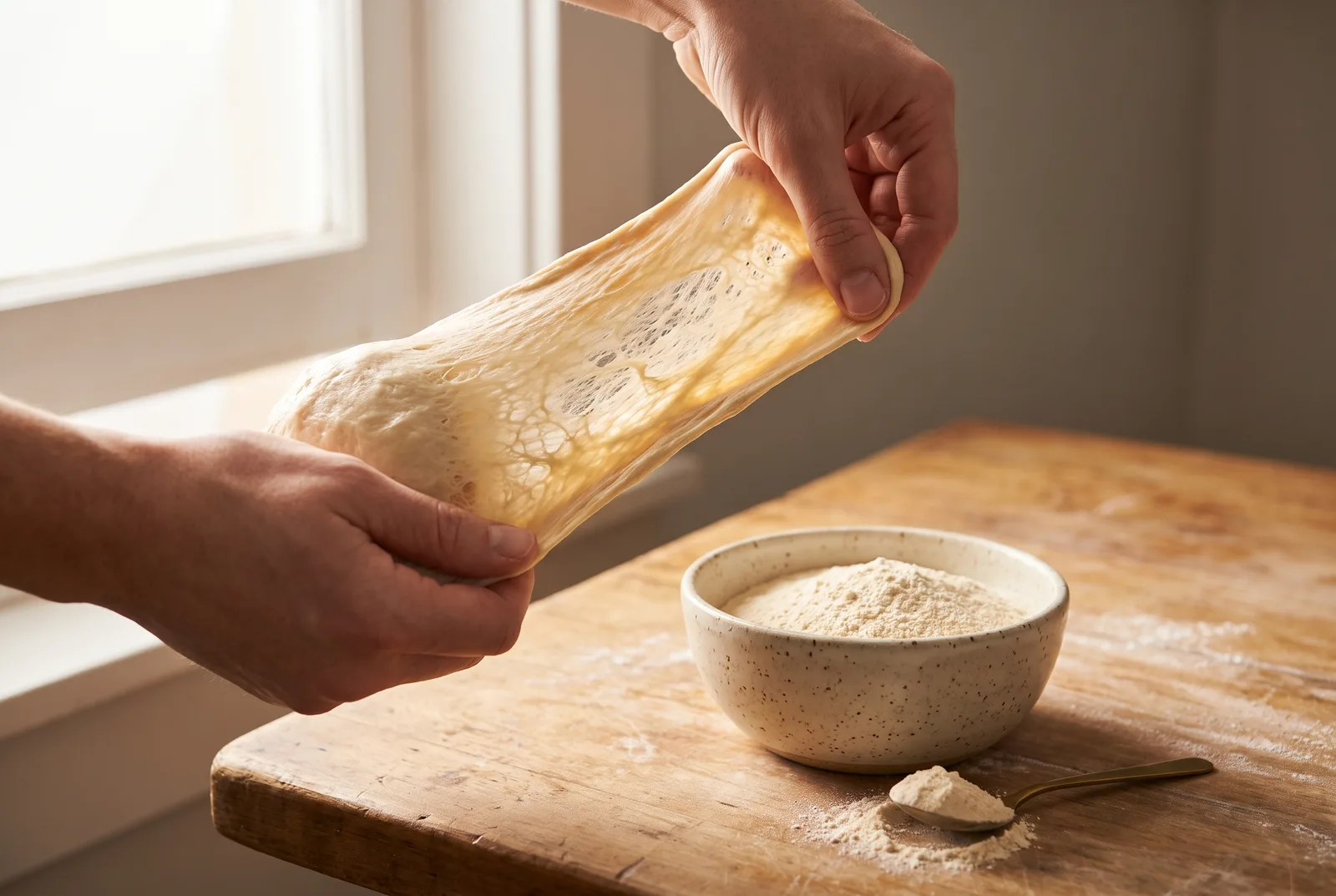
A practical reference for professional bakers covering vital wheat gluten (VWG) — what it is, how it works, how to dose it from 2% to 12%, and how to troubleshoot the most common errors. Built on first-party spec sheets from the Domson catalogue (BeneoPro VWG 75, Zeelandia Rye Stabil Free, Zeelandia Optimax Free, six bread improvers, four malt products, two emulsifier pastes) cross-checked against BAKERpedia, the IREKS Compendium of Baking Technology, and EU/UK food additive regulations. Includes comparison tables for bread improvers and malt products, three formula cards, and fault-diagnosis tables.
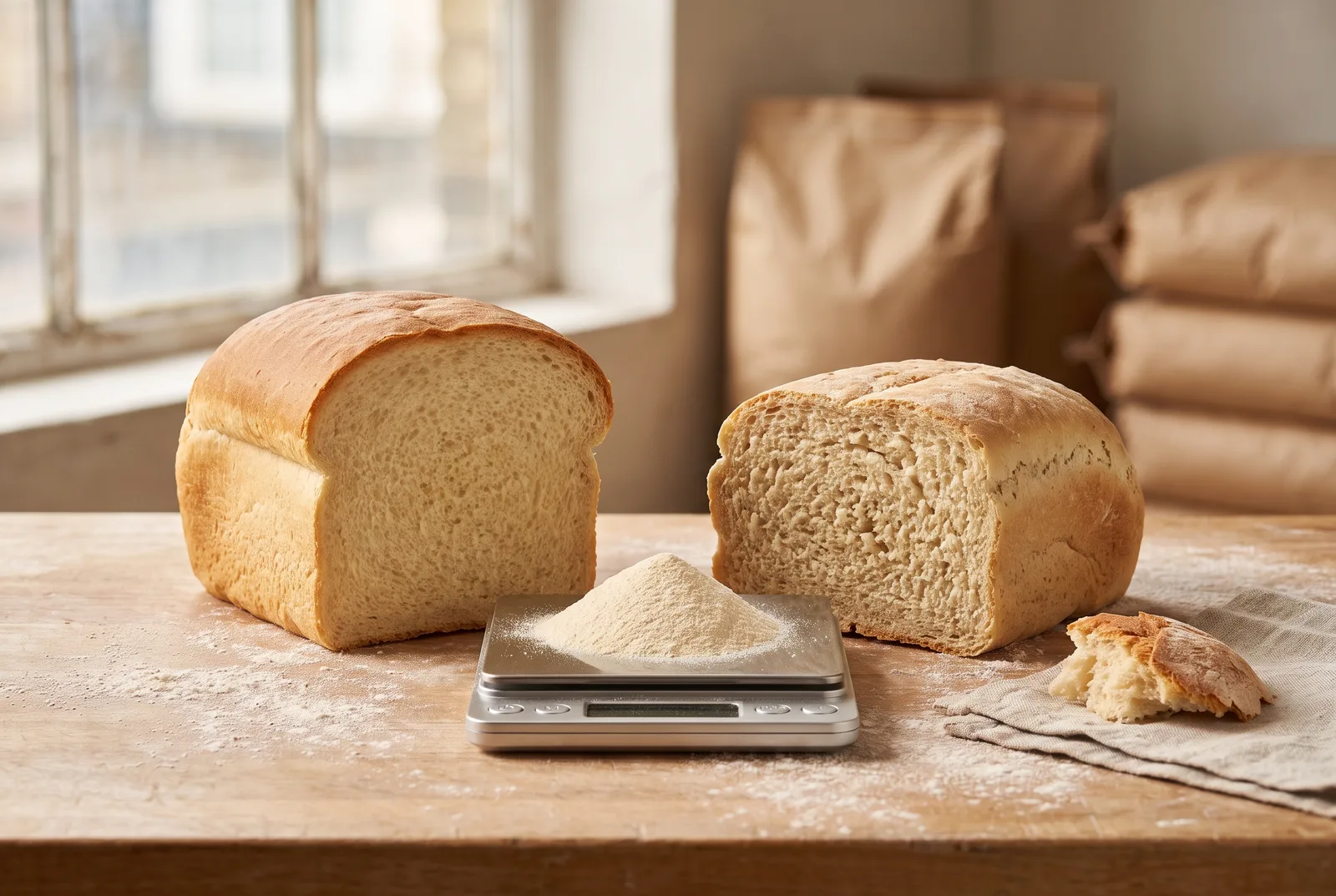
What is a bread improver and why does every commercial bakery use one?
A practical guide for professional bakers to understand bread improvers: what they are, what each functional ingredient class does, how to read a commercial improver label, how dosages work, and why even a simple enzyme-only formula makes a measurable difference on a busy production line. Covers oxidants, emulsifiers, enzymes, vital wheat gluten, malt, enzyme-active soya and preservatives, with full dosage data extracted from first-party spec sheets for nine improver products in the Domson catalogue (Puratos, IREKS, Zeelandia) and cross-referenced against BAKERpedia, IREKS Compendium and Lesaffre technical literature.