
Malted flours, malt extract and malted-grain bakes: using enzymatic and kilned malt to add flavour, colour and crust character to British loaves
Malted-grain bread is a signature of the British loaf - Hovis, Granary and the sticky teatime malt loaf all rest on it - and it is also where UK bakers most often come unstuck. This dossier, built from the platform's own supplier datasheets (EDME of Mistley, Carr's Maldon Mill, IREKS, Kent Foods) and from UK trade-body and legislative sources, draws the one line that matters: DIASTATIC malt (enzymes alive) works on the dough and feeds the yeast, while NON-DIASTATIC malt (enzymes killed by a hot kiln or roast) only adds flavour and colour. Get that wrong and you get a sticky, gummy crumb. It sets out the malting process (steep, germinate, kiln), the four malt forms (diastatic malt flour, dark colouring malt, malt extract and malted wheat flakes) with real spec numbers (diastatic power in degrees IOB, colour in EBC, Brix, dosage), how to build a granary-style malted brown loaf and a Soreen-style sticky malt loaf in baker's percentage, and the UK regulation a home-market baker must get right - the Bread and Flour Regulations 1998 fortification (calcium, iron, thiamin, niacin) and the 2024 folic-acid amendment - plus the Chorleywood vs craft question and the sourdough "sourfaux" debate. Every technique is wired to the Domson catalogue and cross-linked to the Pillar A craft science (A3-malt-and-malt-extracts, A3-enzymes-in-bread, A5-baking-oven-science) and its sibling British articles.
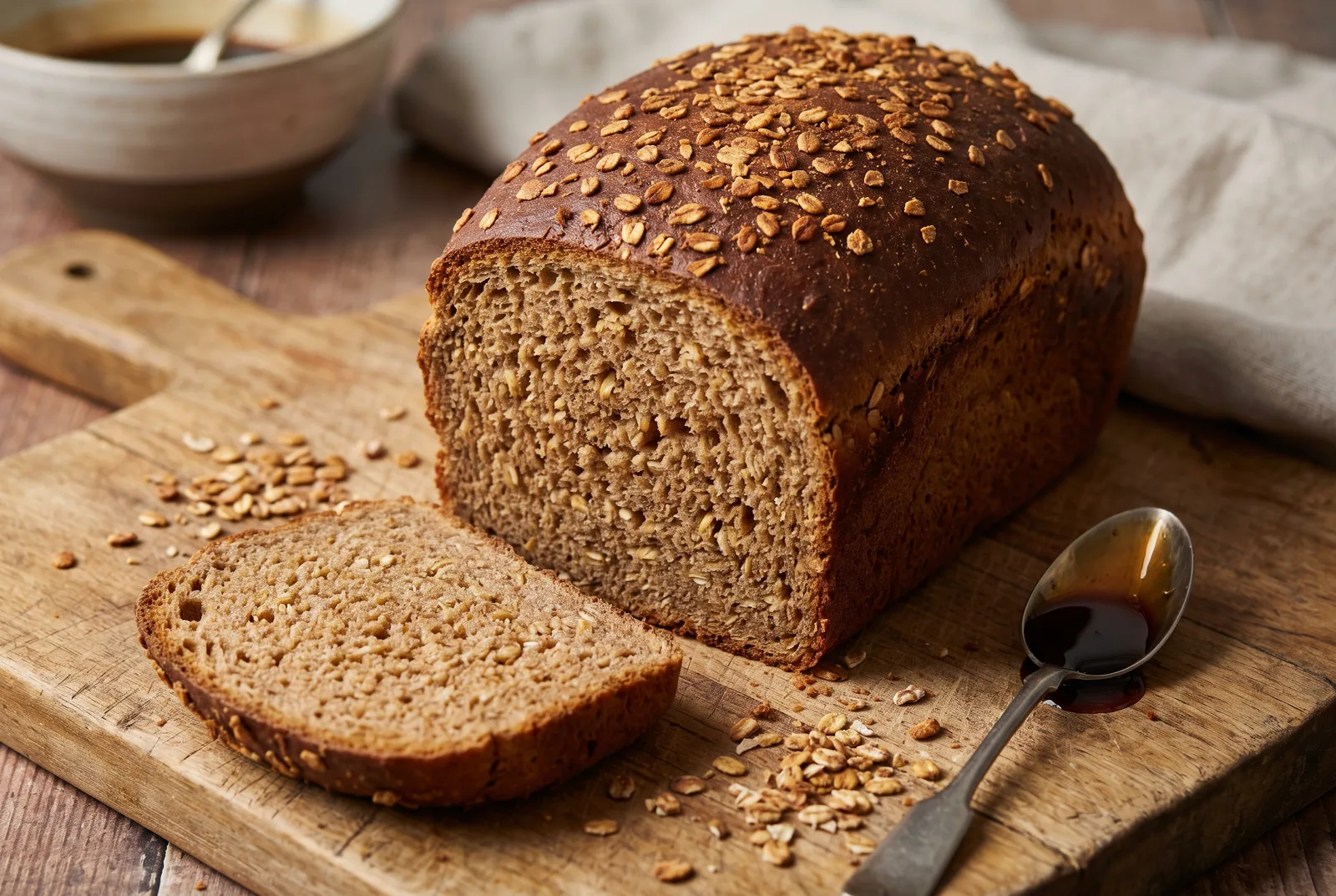
Malted flours, malt extract and malted-grain bakes
Ask a British customer to picture "proper" bread and, as often as not, they picture something malted: a deep-brown Hovis wheatgerm loaf, a speckled Granary sandwich, a cottage loaf with a nutty, slightly sweet crust, or the sticky, fruited malt loaf that comes wrapped for lunchboxes. Malt is one of the threads that makes the British loaf recognisably British. It is also the ingredient that catches out more bakers than any other, because "malt" is not one thing. It is at least four things, and the difference between them is the difference between a beautiful nutty crust and a loaf with a crumb so sticky it clings to the knife.
This dossier is for a baker working in Domson's home market. It draws the one distinction that governs everything - diastatic vs non-diastatic malt - then walks through the malt toolkit, how to build the classic British malted loaves from the catalogue, and the UK regulation you have to get right. The craft science behind malt lives in A3-malt-and-malt-extracts and A3-enzymes-in-bread; this article is the British, shop-floor application of it.
A malted-grain granary-style loaf whole and sliced, the crumb speckled with kibbled malted wheat flakes and the crust dusted with flakes
1. Why malt is a British signature
Two brands explain the category. Hovis began in 1886; its wheatgerm-milling process was patented on 6 October 1887 by the Macclesfield miller Richard "Stoney" Smith, and the name itself was coined in an 1890 national competition by a young man named Herbert Grime, from the Latin hominis vis - "the strength of man". Granary, meanwhile, is not a generic term at all: it is a registered trademark of Hovis, held since 1972. That single legal fact shapes the whole UK malted-flour market. If it is not Hovis, it cannot be sold as "Granary" - so every other miller sells the identical style under a different name: "malted brown", "malthouse", "malted wheatgrain" or "maltster". When you see those names on the Domson catalogue (Carr's Maltster, Doves Farm Malthouse), that is why.
The third pillar of the category is sweet: the malt loaf, a dense, dark, leavened bread built around malt extract, matured for a few days to go sticky, and eaten sliced with butter. The best-known example, Soreen, has been baked in Manchester since the 1930s. Malt loaf, parkin and treacle bakes sit at the border with B7-confectionery-sugar-work and B7-enriched-teatime-bakes, and share malt's partner ingredient: invert-sugar treacle.
2. What malt actually is: steep, germinate, kiln
Malt is grain - usually barley, sometimes wheat - that has been made to begin germinating and then dried. The point of germination is that the seed switches on its own enzymes to unlock its starch reserves; the maltster captures the grain at that moment. There are three stages:
- Steeping - clean grain is soaked, in cycles of water and air rest over roughly 48-72 hours, until it reaches about 44-46% moisture and wakes up.
- Germination - over about 4-6 days rootlets and a shoot (the acrospire) grow, and, crucially, the grain's amylase enzymes develop while the starch is "modified" (opened up). This stage is called green malt.
- Kilning - the grain is dried down to roughly 3-5% moisture, which stops growth and locks in the result.
The kiln is where a baker's fate is decided. Kiln gently, at low temperature, and the amylase enzymes survive: you get diastatic (enzymatically active) malt. Kiln hot, or roast, and the enzymes are destroyed while colour and toasty flavour build: you get non-diastatic malt. Every malt product in the catalogue is one or the other, and knowing which is in your hand is the whole game.
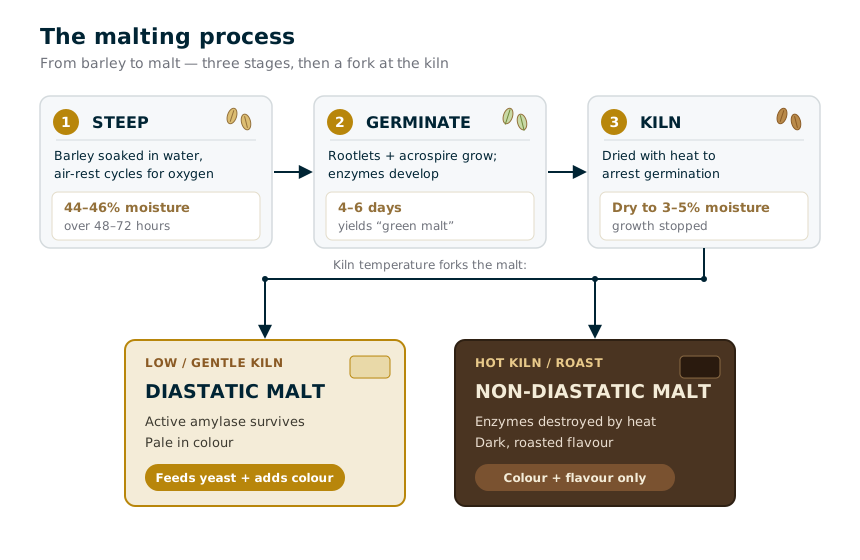 Diagram of malting: steeping, germination and kilning of barley, forking at the kiln into pale diastatic malt versus dark roasted non-diastatic malt
3. The malt toolkit: four forms, two jobs
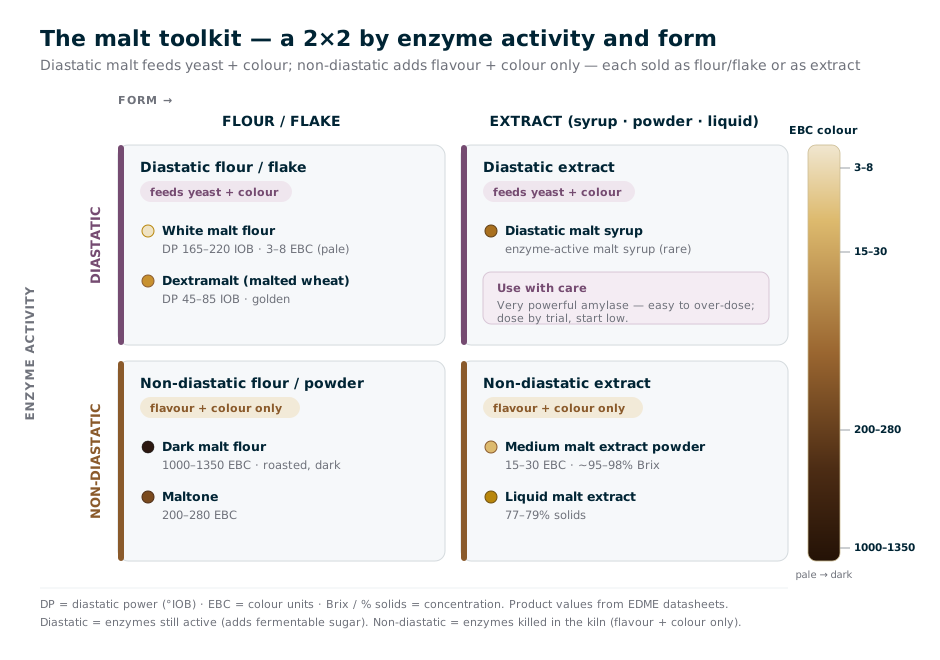 Two-by-two matrix of malt products by enzyme activity (diastatic vs non-diastatic) and form (flour/flake vs extract), with EBC colour and diastatic-power values
Malt arrives in four practical forms. Cross them against the diastatic/non-diastatic question and you have a simple map (see the "malt toolkit" and "diastatic vs non-diastatic" tables below). Domson stocks the British classic - EDME of Mistley, Essex, one of the country's long-established malt houses - so we can anchor every claim to a real spec sheet.
- Diastatic malt flour (pale). The workhorse improver. EDME Malt Flour is a milled white malted-barley flour with a diastatic power of 165-220 degrees IOB (60-90 diastatic units) and a very pale colour of just 3-8 EBC. Because malting has converted starch to sugar, it carries about 19 g of sugar per 100 g - a signature of an active malt. Its gentler sibling, Dextramalt, is milled from malted wheat and runs a milder 45-85 degrees IOB - a good first choice for anyone nervous about over-dosing.
- Non-diastatic colouring malt (dark). EDME Dark Malt Flour is roasted barley at a huge 1000-1350 EBC with only 4.8 g sugar and no diastatic power at all - roasting has burned the enzymes off, so it is pure colour and roasted flavour. Maltone sits in between at 200-280 EBC. Use these to darken a rye or "black" multigrain crumb, never to feed the yeast.
- Malt extract (syrup or dried powder). The grain is mashed, and the sweet liquor is concentrated. EDME Malt Extract Medium is a spray-dried barley extract at 15-30 EBC, pH 5.0-5.8, about 95-98% solids (Brix) and roughly 81 g sugar per 100 g - intense malty sweetness and colour, non-diastatic. IREKS Somex is the pourable liquid version at 77-79% solids. Most bakery malt extract is non-diastatic (safe to use generously for flavour); a few speciality extracts are diastatic, so check before dosing high.
- Malted grain / malted wheat flakes. The visible "kibble". EDME Malted Wheat Flakes are steamed, flaked malted wheat wholegrains, 25-75 EBC, about 1-1.75 mm thick, crisp and earthy-malty. They give a granary loaf its nutty flavour, its chew and its speckled crumb and topping - but they are dry, so they must be soaked first (see the faults table).
4. How diastatic malt works - and the sticky-crumb trap
In the dough, diastatic malt does one thing: it supplies amylase that breaks damaged starch into maltose. That matters for three reasons:
- It feeds the yeast late. Yeast runs out of the flour's own free sugars partway through a long ferment; malt-derived maltose keeps fermentation going, boosting gas and volume. This is why diastatic malt shines in long and cold ferments (see A5-dough-mixing-methods and A2-yeast-fermentation-science).
- It colours the crust. Residual sugars left after fermentation drive the Maillard reaction, giving a richer, browner crust (see A5-baking-oven-science).
- It softens the crumb and can modestly extend freshness (see A5-shelf-life-and-staling).
The catch is that amylase does not stop when you want it to. Modern British flour is often low in natural enzyme activity - a high Hagberg falling number (see A1-key-quality-parameters) - which is exactly why a little added malt helps. But add too much and you tip over the edge: alpha-amylase chops starch into dextrins faster than beta-amylase can trim them into maltose, and the leftover dextrins make the crumb sticky and gummy, the crust too dark, and the dough slack. Traditionally malted barley also carries protein-splitting (proteolytic) enzymes, which at high dose slacken the gluten further. This is the "over-proteolysis and sticky crumb" that the category is notorious for.
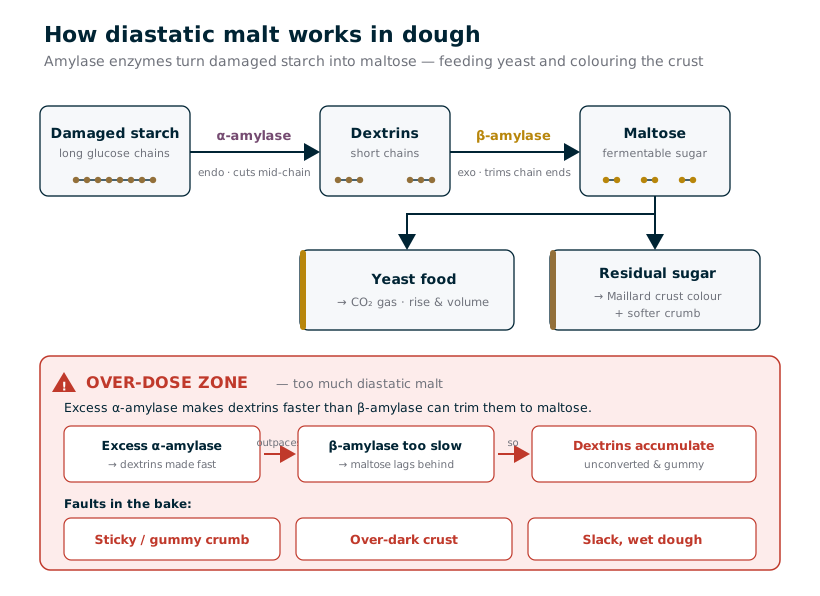 Diagram of amylase action on starch producing maltose for yeast and browning, with a shaded zone showing over-dosing causing sticky gummy crumb
The dose, therefore, is small. Diastatic malt flour is used at roughly 0.1-1% of flour weight; Shipton Mill's advice is blunt - use up to 0.5% and no more, "otherwise your loaf can become sticky". Start low, adjust up, and remember that many bread mixes and improvers already contain malt, so you may need none at all.
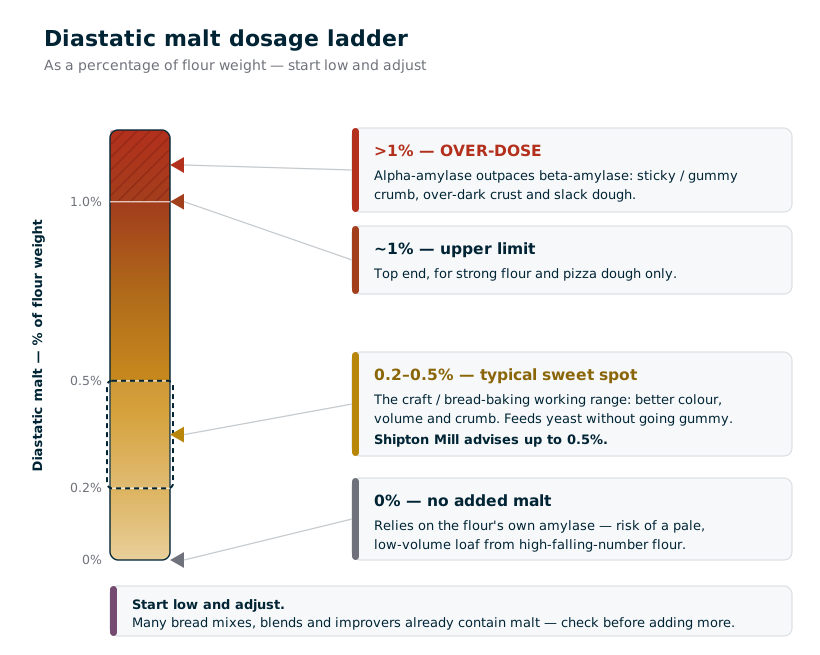 Dosage ladder for diastatic malt from 0 percent up through 0.2-0.5 percent and 1 percent into a red over-dose zone above 1 percent
5. Building a British malted-grain loaf
A granary-style loaf is not made with "granary flour" as if that were one ingredient - it is a blend. The Carr's Maldon Mill Maltster Malted Brown Flour datasheet spells the recipe out: about 78.6% wheat flour, 15.3% malted wheat flakes, 2.8% malted barley flour, 2.5% added wheat gluten, plus the statutory fortification, at a protein of 12.6-13.2%. Read that composition and the whole method falls out of it:
- The malted wheat flakes (~15%) do the flavour and texture work - so they need soaking, or they steal water from the dough and their hard edges cut the gluten.
- The small malted barley flour (~2.8%) is the diastatic dose - just enough for colour and volume, safely under the sticky-crumb threshold.
- The added gluten (~2.5%) is structural insurance: whole grain and flakes are heavy and dilute the gluten network, so vital wheat gluten (see A3-vital-wheat-gluten) keeps the loaf light. Bran and grain cutting the gluten network is the core problem of high-extraction baking - see A1-wholemeal-and-high-extraction.
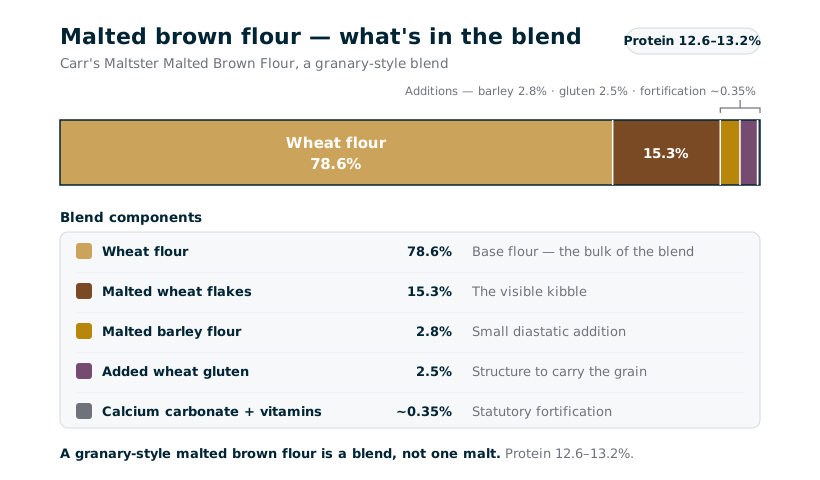 Stacked bar showing a malted brown flour made of 78.6 percent wheat, 15.3 percent malted wheat flakes, 2.8 percent malted barley flour, 2.5 percent wheat gluten and statutory fortification
You can buy that blend ready-made (Carr's Maltster, Doves Farm Organic Malthouse) and add only water, salt and yeast - or you can build it yourself on a strong white base (Windrush, Domson White Strong) plus a brown flour (Cairngorm, Brandee), soaked EDME Malted Wheat Flakes, a whisper of EDME Malt Flour and a little vital wheat gluten. The baker's-percentage build is in the formula card below, with the soaker and the 0.5% malt ceiling built in. For seeded and multigrain variants, reach for a concentrate - Bakels or Craigmillar multiseed, or Puratos Sapore Softgrain (pre-soaked 5-grain) - and let the malt handle colour and flavour. Wholegrain rye and multigrain formulas are covered in A8-rye-and-wholegrain-formulas.
6. Malt loaf and sweet malted bakes
The sticky malt loaf is a different use of malt entirely: here malt extract is the star ingredient, not a 0.5% improver. A malt loaf is essentially strong flour and dried fruit bound in a rich, dark, sweet batter of malt extract and black treacle, part-fermented (or chemically raised for a quick version), baked low, and
- critically - matured wrapped for two to three days, during which it turns properly sticky. A formula card below includes a Soreen-style build.
The malt-loaf pantry maps straight onto the catalogue: EDME Malt Extract Medium or IREKS Somex for the malt backbone, and Kent Foods Black Treacle for stickiness and keeping quality. That treacle is worth understanding - it is cane molasses plus invert sugar syrup at 80-81 Brix, sucrose 25-30%, invert sugar 29-34%, pH 4.7-6.3. The invert sugar is a humectant: it holds moisture, which is exactly why a malt loaf (and a Yorkshire parkin, treated in B7-regional-breads-map) stays moist for a fortnight where a lean loaf would stale in a day. Brush the hot crust with warmed malt extract for the signature glossy, tacky finish.
7. The UK regulation you must get right
This is the home market, so precision matters. Two things:
Fortification. Under the Bread and Flour Regulations 1998, all white and brown (non-wholemeal) wheat flour must by law be fortified with four nutrients. A malted brown / granary-style flour is built on a non-wholemeal base, so it is fortified like any other - which is why the Carr's Maltster sheet lists calcium carbonate and a niacin/iron/thiamin premix added "to comply with the Bread and Flour Regulations 1998", and the Matthews Windrush sheet lists "statutory flour additives as specified in the bread and flour regulations 1998". The statutory levels per 100 g of flour are:
- Calcium carbonate: not less than 235, not more than 390 mg
- Iron: not less than 1.65 mg
- Thiamin (B1): not less than 0.24 mg
- Niacin (nicotinic acid or nicotinamide): not less than 1.60 mg
These are the levels in force today. As set out below, the 2024 amendment raises the calcium, iron and niacin minimums and adds folic acid from 13 December 2026 in England, so do not copy the 1998 figures onto a spec or label after that date.
Wholemeal is exempt (its retained bran and germ are natural sources), as are self-raising flour with at least 0.2% calcium, non-Triticum aestivum wheats (spelt, emmer, einkorn, durum, khorasan), mills producing under 500 tonnes a year, export flour and home-milled flour. So a 100% wholemeal malted loaf may be built on unfortified flour, but a malted brown loaf is not.
The 2024 amendment - folic acid AND higher minimums. The Bread and Flour (Amendment) (England) Regulations 2024 (SI 2024/1162) do two things, both from a 13 December 2026 compliance date in England. First, they add folic acid to the mandatory list for non-wholemeal wheat flour at 250 micrograms (0.25 mg) per 100 g - a public-health measure to reduce neural-tube defects such as spina bifida in newborns. Second, and easy to miss, the same instrument raises three of the existing minimums: calcium carbonate to 300-455 mg, iron to not less than 2.10 mg and niacin to not less than 2.40 mg per 100 g, with thiamin unchanged at 0.24 mg. In other words the 1998 figures above are the levels in force today, but a home-market baker must switch to the higher 2024 levels (and add folic acid) from 13 December 2026 or the spec is non-compliant. Expect your white and brown (including malted brown) flour datasheets to reissue accordingly. The full flour-law picture is in B7-flour-landscape.
8. Where malt sits in Britain's two bread traditions
Britain bakes bread two ways, and malt plays a role in both. The Chorleywood Bread Process (CBP) - developed in 1961 by Collins, Elton and Chamberlain at the British Baking Industries Research Association at Chorleywood, and responsible for roughly 80% of UK bread today - replaces long bulk fermentation with intense mechanical mixing: a net work input of about 11 Wh/kg (~40 kJ/kg) delivered in around three minutes, plus an oxidant (ascorbic acid), fat, extra yeast and more water. In a CBP or plant loaf, malt and malt extract show up mainly in the improver/colour package - there is little fermentation for a diastatic malt to feed. In craft, bulk-fermented baking, a modest 0.2-0.5% of diastatic malt genuinely earns its place, feeding the long or cold ferment and colouring the crust. The full comparison is B7-chorleywood-vs-craft.
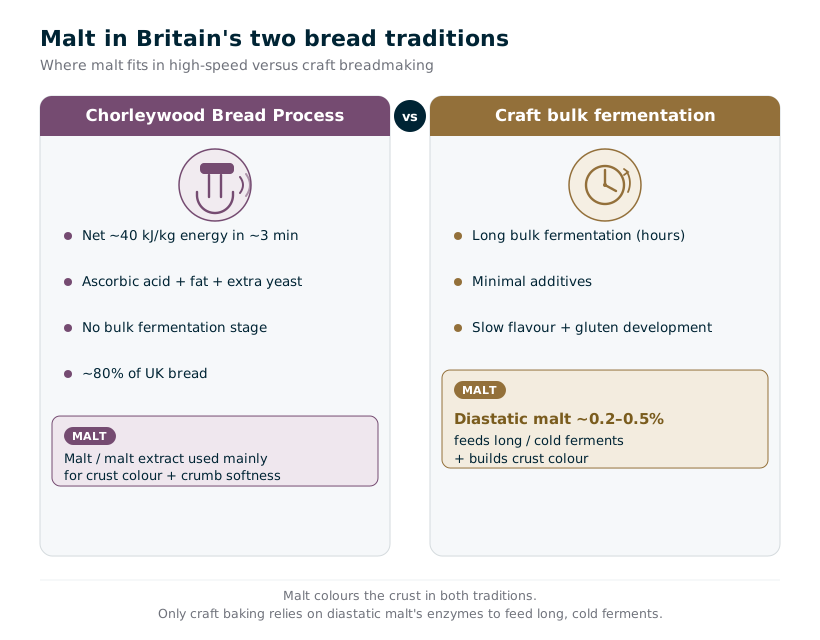 Comparison diagram of the Chorleywood Bread Process versus craft bulk fermentation and how malt is used in each
A word on authenticity labelling. Malt is a favourite way to add "craft" character to an industrial loaf, which is why honest labelling matters. The parallel debate is over sourdough: the UK baking industry's voluntary Code of Practice (published by ABIM on 31 January 2023, backed by the Federation of Bakers and others) lets a product be labelled "Sourdough" even with up to 0.2% added baker's yeast, which the Real Bread Campaign rejects as "sourfaux". The lesson for malted products is the same: describe what you have made. A "malted wheatgrain" loaf leavened by CBP is a fine product, but it is not the same as a long-fermented craft loaf, and customers increasingly read the label. See B7-sourdough-real-bread.
9. Allergens and label truth (please read)
Malt is cereal gluten. Malt milled or extracted from barley is a barley gluten allergen; malt from wheat (Dextramalt, malted wheat flakes) is a wheat gluten allergen. But the classic malted-grain bakes carry more than gluten, and the UK label rules are strict. Watch for four things:
- Gluten: malted products are not a coeliac default. Barley malt extract is a declarable gluten source even when it is a trace or minor ingredient - a common trap on breakfast cereals and "brown" products - so barley (or wheat) must always be emphasised in the ingredient list. Treat malted and malt-extract products as unsuitable for coeliacs. (The one narrow exception: a finished product can legally carry a "gluten free" claim only if its total gluten is below 20 ppm, and even then the barley malt still has to be declared as an allergen - do not assume it, test it.) The EDME and Carr's datasheets also flag cross-contact with wheat, rye, oats and spelt handled on the same lines.
- Sulphites - the hidden allergen in the fruit. A fruited malt loaf is typically 60-80% dried vine fruit (raisins, sultanas), and sulphited dried vine fruit commonly carries 200-2000 mg/kg sulphur dioxide - far above the 10 mg/kg threshold that triggers a mandatory "sulphur dioxide / sulphites" allergen declaration. So a fruited malt loaf will usually need a sulphites declaration even though the flour and the malt do not. (The Kent Foods black treacle itself sits just under the line at SO2 <9 ppm, so it is the fruit, not the treacle, that catches you out.)
- Milk. Malt loaf is traditionally served and eaten with butter, and many recipes brush or enrich with it - butter is a milk allergen, so declare it wherever it is in the recipe or a stated serving.
- Malting raises sugar. Because malting turns starch into sugar, malted ingredients carry markedly more free sugar than their unmalted equivalents (about 19 g/100 g in the pale diastatic malt flour versus about 5 g in the roasted dark malt), and malt loaf is a high-sugar product.
Natasha's Law (PPDS). Since 1 October 2021, food that is prepacked for direct sale (PPDS - packed on the same premises it is sold from, such as a bagged granary loaf or a wrapped malt loaf on a bakery counter) must carry a full ingredient list with the 14 allergens emphasised. A craft bakery selling malted or granary loaves is squarely within this rule, so build the allergen statement - gluten, and for a fruited malt loaf usually sulphites and milk too - into the label from the start.
All allergen, fortification, nutrition and sugar figures in this dossier are drawn from specific supplier datasheets and the legislation as read - verify them against the current datasheet and the live regulations before putting anything on a label or menu.
10. Buy it from Domson - the malted-grain shortlist
- Diastatic malt flour (the improver): EDME Malt Flour (barley, DP 165-220 IOB); EDME Dextramalt (malted wheat, milder DP 45-85 IOB) for lower over-dose risk.
- Colour malt (non-diastatic): EDME Dark Malt Flour (1000-1350 EBC) and Maltone (200-280 EBC); Bakels Dark Rye Malt Extract for rye/multigrain colour.
- Malt extract (flavour/sweet): EDME Malt Extract Medium (dried); IREKS Somex (liquid).
- The grain: EDME Malted Wheat Flakes (soak before use; also a topping).
- Ready-blended malted brown / granary-style flour: Carr's Maltster Malted Brown; Doves Farm Organic Malthouse.
- Base flours: Windrush / Domson strong white; Cairngorm, Brandee brown; Bakers wholemeal; Centurion very strong for heavy grain loads.
- Structure and multigrain: Beneo Vital Wheat Gluten; Bakels / Craigmillar / Ireks multiseed concentrates; Puratos Sapore Softgrain; Cereform Aromaferm Wheat & Malt Ferment for malty depth.
- Sweet malted bakes: Kent Foods Black Treacle and Golden Syrup for malt loaf and parkin; oat flakes for malted-oat bakes.
The full mapping, with product IDs and spec flags, is among the products at the end of this article.
Cross-links at a glance
- Craft science (Pillar A): A3-malt-and-malt-extracts (the core concept), A3-enzymes-in-bread, A3-what-is-a-bread-improver, A3-vital-wheat-gluten, A1-wheat-grain-and-milling, A1-wholemeal-and-high-extraction, A1-alternative-grain-flours, A1-key-quality-parameters (falling number), A2-yeast-fermentation-science, A5-dough-mixing-methods, A5-baking-oven-science, A5-shelf-life-and-staling, A8-rye-and-wholegrain-formulas, A8-bakers-percentage-fundamentals.
- British tradition (Pillar B7): B7-flour-landscape (full flour law), B7-chorleywood-vs-craft (CBP vs bulk ferment), B7-regional-breads-map (parkin, oatcakes, regional malt bakes), B7-enriched-teatime-bakes (teatime fruited doughs), B7-sourdough-real-bread (authenticity and the sourfaux debate).
Granary-style malted brown loaf - baker's percentage
Total: ~183% before soaker water is finalised
Worked example
STARTING FLOUR: 70% strong white bread flour (e.g. Windrush or Domson White Strong), 30% brown/wholemeal (e.g. Cairngorm or Bakers Wholemeal). INCLUSION: 18% malted wheat flakes, pre-soaked 30-60 min in 18% water from the total (this stops the dry kibble cutting the gluten and drying the crumb). MALT: 0.3-0.5% diastatic malt flour (EDME Malt Flour or the milder Dextramalt) for volume, crust colour and a nutty malt note - stay at or below 0.5% or the crumb turns sticky. STRUCTURE: 1.5-2.5% vital wheat gluten to carry the grain load (a commercial malted brown flour already carries ~2.5%). THE REST: 2% salt, 1.5% fresh yeast (or 0.7% instant), 62-66% water (adjust for the soaker). METHOD: soak the flakes; mix to a developed but not tight dough; bulk 60-90 min; shape into tins; top with more malted wheat flakes; final proof; bake 230C falling to 210C with steam. NOTE: if you buy a ready-blended malted brown flour, it already contains flakes, a little malted barley flour and gluten, so add only water, salt and yeast.
Yield: About 2 x 800 g tin loaves (per 1 kg flour)
Sticky British malt loaf (Soreen-style teatime loaf) - baker's percentage
Total: ~230% (very rich, sweet, sticky)
Worked example
Per 500 g strong flour (or 90% strong white + 10% wholemeal): 30-40% NON-diastatic malt extract (thick barley syrup - the defining ingredient), 8-12% black treacle (invert-sugar humectant for stickiness and keeping quality), 10-15% soft dark brown sugar, 55-65% strong hot tea or water, 60-80% mixed vine fruit (raisins/sultanas), 1.5% salt, either ~2.5% baker's yeast for a leavened malt loaf OR ~3% baking powder for a quick cake-style loaf. METHOD: warm the malt extract, treacle and sugar until pourable; combine with tea and soaked fruit; fold in flour (and yeast or baking powder); part-fill greased tins; for the yeasted version prove, then bake ~180C ~45-55 min; brush the hot crust with warmed malt extract for the signature sticky sheen. MATURE wrapped for 2-3 days before slicing - malt loaf gets stickier and better with a rest. Serve sliced with butter. ALLERGENS: this fruited, buttered loaf carries not just cereal gluten (barley malt + wheat flour) but usually SULPHITES (from sulphited raisins/sultanas) and MILK (butter) - declare all three, and label bakes prepacked for direct sale under Natasha's Law.
Yield: About 2 small tin loaves (per 500 g flour)
Malt reaches a British bakery in four practical forms. The first question is always the same: is it DIASTATIC (enzymes alive, it works on the dough and feeds the yeast) or NON-DIASTATIC (enzymes dead, it only adds flavour and colour)? See A3-malt-and-malt-extracts for the underlying craft science.
| Form | Enzyme activity | Typical colour (EBC) | What it does | Typical dose | Main risk |
|---|---|---|---|---|---|
| Diastatic malt flour (pale) | Diastatic - active amylase | 3-45 EBC (pale) | Feeds yeast late, boosts volume, colours crust, softens crumb | 0.1-1% of flour (up to ~0.5% typical) | Over-dose = sticky/gummy crumb, dark crust, slack dough |
| Non-diastatic malt flour / powder (dark, roasted) | Non-diastatic - enzymes destroyed | 200-1350 EBC (medium to very dark) | Adds malty flavour and deep crumb/crust colour only | 0.5-3% of flour for colour | Bitterness / over-dark crumb if overdone |
| Malt extract (liquid syrup or dried powder) | Usually non-diastatic; a few are diastatic | 15-30 EBC (medium) | Malty flavour, sweetness, colour; sticky syrup for malt loaf | 1-8% of flour (flavour); much more in malt loaf | Very sweet and hygroscopic; check if diastatic before high dose |
| Malted grain / malted wheat flakes (kibble) | Largely spent; adds no working enzyme load | 25-75 EBC | Nutty flavour, chew, visible speckled grain and topping | 10-20% of flour (soaked first) | Dry, gritty crumb and cut gluten if not pre-soaked |
The single most important decision in malted-grain baking. Kilning temperature decides it: a gentle kiln keeps the enzymes (diastatic); a hot kiln or roast kills them (non-diastatic).
| Diastatic malt | Non-diastatic malt | |
|---|---|---|
| How it is made | Low-temperature kiln preserves alpha- and beta-amylase | Hot kiln / roast destroys the enzymes |
| What it does | Enzymatically breaks damaged starch to maltose - feeds yeast, adds colour, softens crumb | Nothing enzymatic - flavour, sweetness and colour only |
| Measured by | Diastatic power (degrees IOB / diastatic units) | Colour (EBC / Lovibond); no diastatic power |
| Catalogue examples | EDME white malt flour (DP 165-220 IOB); EDME Dextramalt malted wheat (DP 45-85 IOB) | EDME Dark Malt Flour (1000-1350 EBC); Maltone (200-280 EBC); malt extract powder/syrup |
| Dose | 0.1-1% of flour, start low | 0.5-8% depending on colour/flavour target |
| Over-dose risk | HIGH - dextrins outrun beta-amylase -> sticky, gummy crumb, over-dark crust, slack dough | LOW - no enzyme activity, so no proteolysis or sticky-crumb risk |
Values read from first-party supplier datasheets on the platform (EDME of Mistley is a long-established British maltster; IREKS is a German malt house). Cross-checked against the datasheets.
| Product | Grain | Diastatic power | Colour (EBC) | Sugars /100g | Role |
|---|---|---|---|---|---|
| EDME Malt Flour (white bread malt flour) | Malted barley | 165-220 IOB (60-90 D.U.) | 3-8 | 19.3 g | Primary diastatic improver |
| EDME Dextramalt | Malted wheat | 45-85 IOB | 18-45 | ~18 g | Milder diastatic malt |
| EDME Malt Extract Medium (SDM, dried) | Malted barley | None listed (non-diastatic) | 15-30 | ~81 g | Flavour, sweetness, colour |
| IREKS Somex (liquid malt extract) | Malted grain | Flavour/colour syrup | n/a (77-79% solids) | ~66 g carb | Pourable flavour/colour syrup |
| EDME Maltone (dark malt powder) | Malted barley | None listed (non-diastatic) | 200-280 | 4.8 g | Colour + flavour |
| EDME Dark Malt Flour (roasted) | Roasted barley | None (roasted off) | 1000-1350 | 4.8 g | Deep dark colour |
| EDME Malted Wheat Flakes | Malted wheat | Grain kibble (FN 100-999) | 25-75 | 19.3 g | Visible grain, chew, topping |
The Bread and Flour Regulations 1998 make fortification mandatory for all non-wholemeal wheat flour, including the malted brown and granary-style flours in this article. Get these right - this is the home market. IMPORTANT: the 1998 levels shown are those in force TODAY; from 13 December 2026 the Bread and Flour (Amendment) (England) Regulations 2024 (SI 2024/1162) RAISE the calcium, iron and niacin minimums and ADD folic acid - the post-2026 figures are shown alongside. Full treatment in B7-flour-landscape.
| Nutrient | Statutory level per 100 g flour (in force today) | From 13 Dec 2026 (2024 amendment, England) |
|---|---|---|
| Calcium carbonate | 235-390 mg | Rises to 300-455 mg |
| Iron | not less than 1.65 mg | Rises to not less than 2.10 mg |
| Thiamin (vitamin B1) | not less than 0.24 mg | Unchanged at 0.24 mg |
| Niacin (nicotinic acid / nicotinamide) | not less than 1.60 mg | Rises to not less than 2.40 mg |
| Folic acid | not currently required | Newly added at 250 micrograms (0.25 mg); comply by 13 Dec 2026 |
| Exemptions | wholemeal; self-raising with >=0.2% calcium; non-Triticum-aestivum wheats (spelt, emmer, einkorn, durum, khorasan); mills <500 t/yr; export; home milling | Wholemeal keeps its own bran/germ nutrients; re-check the exact small-mill and self-raising thresholds against the 2024-amended text |
Match the malt tool to the loaf. Cross-links to B7-regional-breads-map (parkin, oat/malt regional bakes) and B7-enriched-teatime-bakes.
| Style | Base flour | Malt tool(s) | Catalogue shortcut |
|---|---|---|---|
| Granary-style malted brown loaf | Strong white + brown/wholemeal | Malted wheat flakes (soaked) + small diastatic malt + gluten | Maltster / Cairngorm / Brandee malted brown flour; or add EDME Malted Wheat Flakes + Malt Flour to strong white |
| Multiseed / multigrain loaf | Strong white | Seed & grain concentrate + malt for colour | Bakels / Craigmillar / Ireks multiseed concentrate; Puratos Softgrain |
| Dark rye / 'black' multigrain | Rye + wheat blend | Non-diastatic dark malt (colour) | EDME Dark Malt Flour or Maltone; rye malt extract |
| Sticky malt loaf (teatime) | Strong white + a little wholemeal | Malt extract (lots) + black treacle + dried fruit | EDME/IREKS malt extract + Kent Foods Black Treacle + vine fruit |
| Long/cold-ferment craft white or sourdough | Strong white | Diastatic malt at 0.2-0.5% to feed the ferment and colour crust | EDME Malt Flour or Dextramalt; Aromaferm wheat & malt ferment |
| Fault | Likely cause | Remedy |
|---|---|---|
| Sticky, gummy, 'wet' crumb that will not slice cleanly | Too much DIASTATIC malt: alpha-amylase makes dextrins faster than beta-amylase clears them | Cut diastatic malt to <=0.5% of flour; switch to the milder Dextramalt; if using a high-enzyme (low falling-number) flour add no malt at all |
| Crust too dark, almost burnt, at normal bake | Excess residual sugar from over-dosed diastatic malt, or too much dark colouring malt | Reduce malt; drop oven 10-15C; for colour alone use a small measured dose of non-diastatic dark malt |
| Slack, sticky dough that will not hold shape | Proteolytic enzymes in over-dosed malted barley slackening the gluten | Reduce diastatic malt; add vital wheat gluten; shorten bulk |
| Pale, low-volume loaf with a dull crust | Modern flour with a high Hagberg falling number (low natural amylase) and no malt added | Add 0.2-0.5% diastatic malt flour to restore yeast food and crust colour |
| Dry, crumbly granary crumb; hard bits of grain | Malted wheat flakes added dry, so they steal water and cut the gluten | Pre-soak the flakes 30-60 min; increase dough water; add gluten to carry the grain |
| Harsh, bitter, over-roasted flavour | Too much very dark (roasted) colouring malt | Use dark malt only for colour at a low dose; get flavour from pale diastatic malt or malt extract instead |
| 'Malted' product labelled without full allergen declaration | Malt is barley (or wheat) gluten - a declarable allergen; and a fruited malt loaf also carries sulphites (from sulphited vine fruit) and milk (butter) | Declare barley/wheat gluten; for a fruited malt loaf also declare SULPHITES and MILK; label PPDS bakes under Natasha's Law; do not treat malted/malt-extract products as coeliac-safe |