
Scaling up: translating artisan bread processes to industrial or semi-industrial production without losing quality
A practical guide for professional bakers moving from craft/artisan bread production to semi-industrial or industrial scale. Covers what artisan quality actually consists of, why it degrades at scale, and how to bridge the gap using process engineering, retarded fermentation, sourdough concentrates, bread mixes/concentrates, and bread improvers. Includes side-by-side process comparison tables, formulas, fault-cause-remedy analysis, and product-level illustrations from the Domson catalogue (Puratos Easy Baguette SG, IREKS Ciabatta Mix, Aromaferm Wheat & Malt Ferment 110, IREKS Natural Liquid Rye Sour).
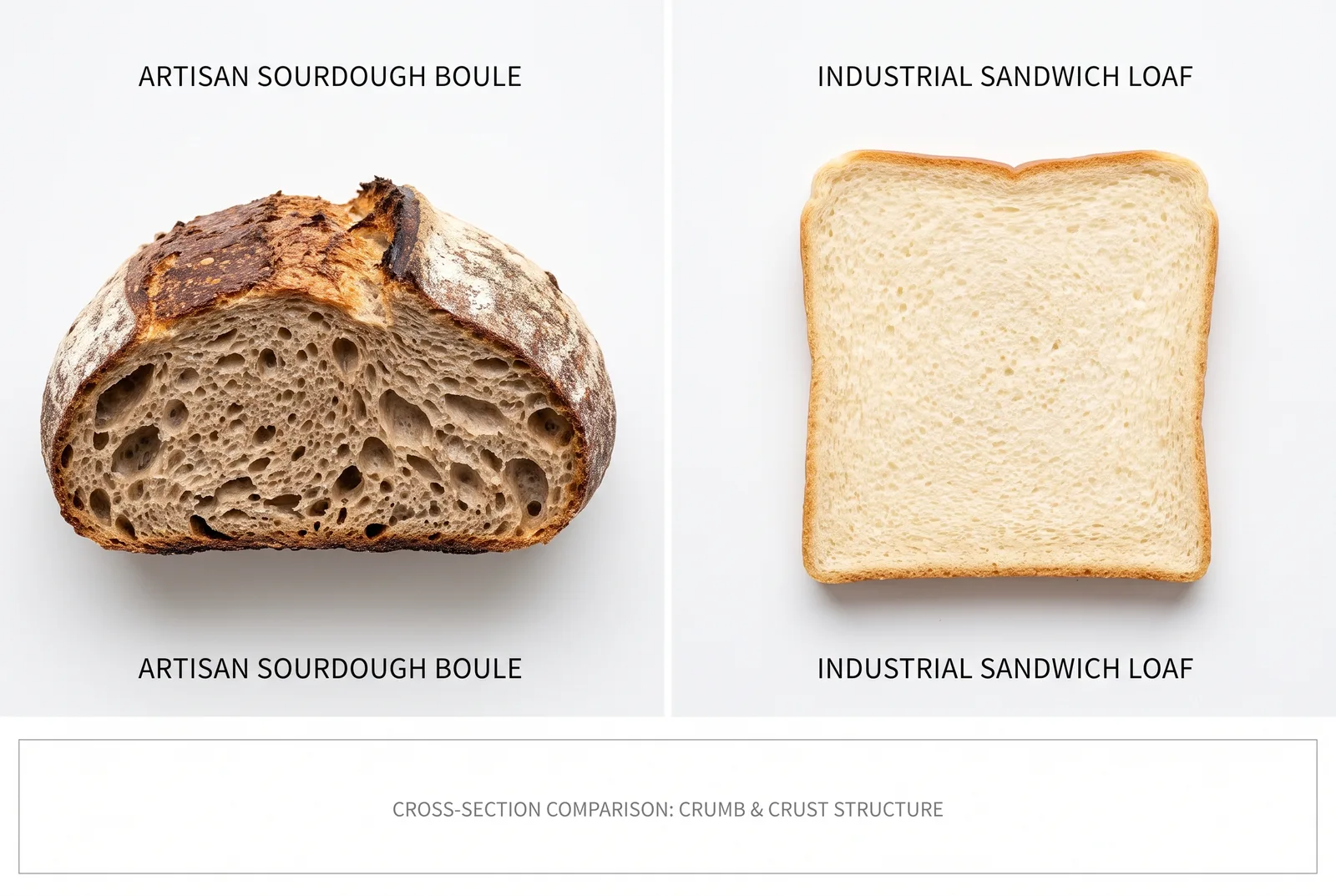
Cross-section comparison of artisan sourdough boule and industrial sandwich loaf showing difference in crumb structure and crust
1. What "artisan quality" actually means — and why it is hard to keep at scale
Before attempting to scale any bread, a baker must be clear about which qualities they are trying to preserve. "Artisan quality" is not a single variable; it is a combination of at least four distinct properties, each with its own production driver:
1. Flavour complexity. The hallmark of artisan bread is the layered, fermentation- derived flavour: lactic tang, mild acidity, cereal sweetness, background nuttiness from Maillard reactions. More than 500 volatile flavour compounds have been identified across bread types, including artisan sourdoughs; the majority are generated by organic acid production from lactic acid bacteria and by secondary fermentation pathways during long bulk fermentation. (Note: the ">500 compounds" figure comes from a commercial source and applies to bread in general; peer-reviewed literature identifies approximately 196 VOCs specifically in sourdough and sourdough bread — single-source, do not cite as a sourdough-specific absolute.) A straight-dough industrial loaf mixed and proved in under two hours generates a fraction of these compounds.
2. Crust character. The thin, blistered, crackling crust of a baguette or sourdough boule results from: (a) high steam in the first baking phase that keeps the crust surface extensible; (b) high oven temperature (240°C+) and good radiant heat transfer from a stone or steel deck; and (c) a period of high surface humidity in proofing that allows surface starch gelatinisation.
3. Crumb structure. An open, irregular crumb in ciabatta or sourdough is achieved by high dough hydration (70–80%+), minimal shaping, and gentle handling that preserves gas pockets. The moment a mechanical divider and moulder squeezes the dough, those gas pockets are destroyed.
4. Shelf life and freshness. Paradoxically, artisan sourdough lasts longer without preservatives than a standard industrial loaf. Sourdough's acidification (pH typically 3.8–4.3 in finished bread) inhibits mould and some bacteria; the long fermentation also modifies starch structure in ways that slow retrogradation. An industrial loaf without anti-staling enzymes may feel stale within 24 hours.
The scaling paradox: The things that create artisan quality — long fermentation, high hydration, gentle handling, deck oven baking — are precisely the things that become problematic at volume. Time-intensive processes cannot keep up with output demands; high-hydration doughs are difficult to machine; deck oven capacity is limited. The remainder of this article explains how to bridge these gaps.
2. Understanding the three production models
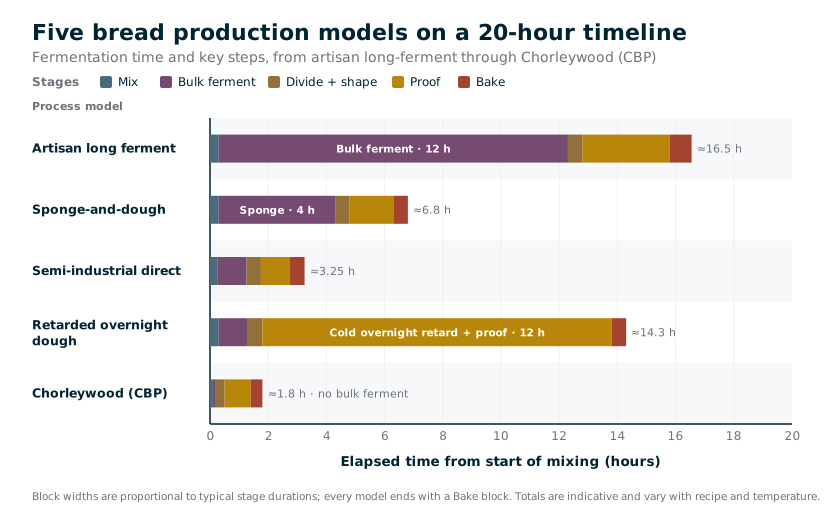 Horizontal timeline diagram comparing five bread production models from artisan to CBP, showing fermentation time and key steps
There are three practical production frameworks to understand before planning a scale-up. The full comparison is in the table below.
2.1 Artisan / craft
A craft bakery typically produces 50–500 loaves per day by hand or with a spiral mixer. Bulk fermentation runs 2–16+ hours, often including overnight cold retarding. Shaping is by hand. Baking is in a deck oven with manual steam. The process is labour-intensive but produces the highest possible flavour and crust quality.
2.2 Semi-industrial / mid-scale
A semi-industrial bakery (500–10,000 loaves per day) uses spiral or fork mixers, automated dividers and moulders, a retarder-prover or dedicated proofing chamber, and a rack or deck oven with automatic steam. Bulk fermentation is typically 45–120 minutes (much shorter than artisan). The critical tool for maintaining quality is the retarder-prover: the dough is made during the day, chilled overnight (2–8°C), and proved the following morning. This retains some of the flavour development of a long ferment while enabling consistent morning production.
2.3 Full industrial: the Chorleywood Bread Process (CBP)
Developed around 1961–1962 at the British Baking Industries Research Association, CBP is the dominant process for large-scale plant bread. In CBP:
- An intensive high-speed mixer develops gluten in under five minutes by imparting 11–13 Wh/kg of mechanical energy directly into the dough.
- Bulk fermentation is entirely eliminated.
- The process requires ascorbic acid (E300) to strengthen the gluten rapidly, hardened fat to assist gas incorporation, and usually a bread improver with anti-staling enzymes.
- Final proof at 38–43°C takes approximately 45–55 minutes.
- Baking is typically in a rack or tunnel oven.
CBP accounts for an estimated 80% of UK plant bread production (single-source: Federation of Bakers — confidence low). It delivers consistent volume and texture with high throughput, but flavour and shelf life (without a full enzyme/emulsifier package) are lower than artisan equivalents.
The gap CBP creates: Eliminating bulk fermentation removes the primary source of flavour and the natural acidification that extends shelf life. This is why full industrial breads require a complete package of improvers, enzymes, emulsifiers and preservatives to achieve an acceptable shelf life.
3. Stage-by-stage analysis: what changes and what to do
3.1 Mixing
Artisan: Gentle mixing (spiral or by hand), 10–20 minutes. Low heat input. Dough temperature after mixing: 22–25°C. Autolyse (flour + water rested before adding yeast and salt) is common, especially for baguette, ciabatta and sourdough.
Semi-industrial: Spiral mixer, typically 10–15 minutes total. Dough temperature target: 24–27°C. Temperature management is critical — if the dough runs hot (>28°C), fermentation accelerates and tolerance collapses. At volume, friction from the mixer adds significant heat. Control options: use chilled water, chill the mixer bowl, or cool the room. The IREKS Ciabatta Mix process (5 min slow + 7 min fast in a spiral mixer, target 28°C dough temperature) illustrates this precision requirement.
Common scale-up mistake: Translating artisan bowl-size to industrial volume without adjusting mixer speed. Intensive or spiral mixers at full load on high-hydration doughs (ciabatta, baguette) will over-develop the gluten and destroy the open crumb structure. Use a fork or oblique mixer for high-hydration doughs at semi-industrial scale.
Mixer type guide: See the table below.
3.2 Bulk fermentation
Artisan: The longest and most quality-critical stage. A four-hour room-temperature bulk ferment with periodic stretch-and-folds develops flavour, strengthens gluten organically, and contributes to shelf life.
Semi-industrial: Bulk fermentation is compressed to 45–90 minutes in most semi-industrial direct processes. This is a quality compromise. Two strategies mitigate the loss:
Strategy A — Pre-ferments. Dedicate 20–30% of the flour to a poolish or biga fermented for 12–18 hours. The pre-ferment is added at mixing. This restores much of the flavour complexity at the cost of planning a batch the previous day. See sister article A2 — Preferments (poolish, biga, sponge) for full detail.
Strategy B — Sourdough concentrates. Add a standardised sourdough (liquid or dry) at 3–7% on flour. The concentrate provides pre-acidified, flavour-active organic acids and aroma compounds without requiring active culture maintenance. The baker does not need to maintain a starter. See Section 5 below.
CBP: No bulk fermentation. Flavour is addressed entirely through improver selection (sourdough-flavoured improvers, malt) and, increasingly, through sourdough concentrates added during mixing.
3.3 Dividing and shaping
Artisan: Hand-scaled to weight, hand-shaped. Hand shaping is gentle, preserving gas and applying precisely the right tension for the product. For baguettes, this produces the characteristic uneven blistering.
Semi-industrial: Volumetric divider + conical rounder + moulder. The divider and rounder degas the dough significantly. An intermediate prover (bench rest of 5–20 minutes) between divider and moulder is essential to allow gluten to relax, especially for baguettes. Without rest, the dough resists moulding, tears, and produces a tight crumb.
Ciabatta at scale: The ciabatta process is particularly resistant to mechanical shaping because the desired open crumb depends on minimal post-mix handling. The IREKS Ciabatta Mix process resolves this by pre-optimising the flour and improver system for a dough that maintains its open structure even after basic machine handling. The recipe requires gentle handling and avoids a mechanical moulder entirely for this product.
3.4 Proofing (final proof)
Artisan: In a proofing basket (banneton), proving cloth, or on a baking tray at ambient temperature (18–25°C) for 45–120 minutes. Temperature and humidity are largely ambient.
Semi-industrial: In a proofing chamber or retarder-prover. Target conditions for most wheat breads: 35–40°C, 75–85% relative humidity. Humidity control is critical: too dry and a skin forms on the surface, which prevents bloom and causes side-blowout during baking. Too humid and the surface becomes sticky, making scoring difficult and causing a mottled crust.
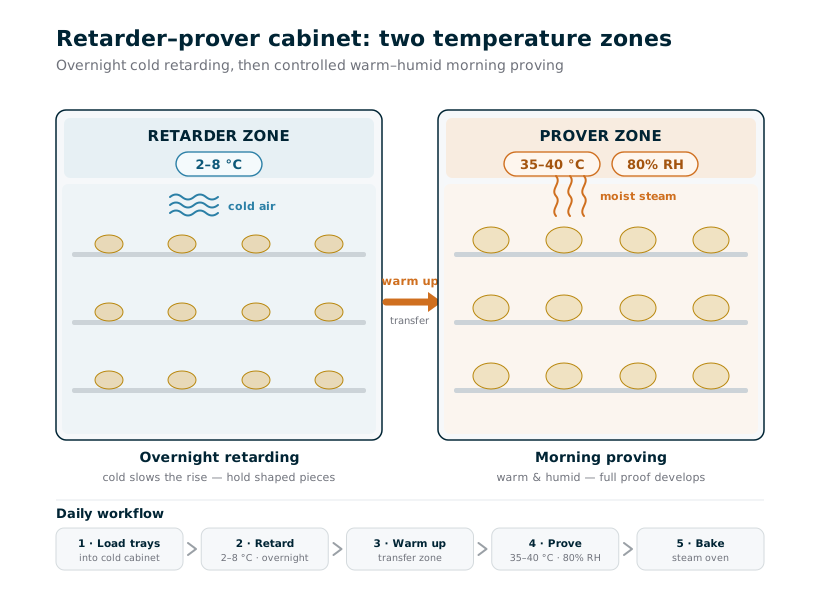 Schematic diagram of a retarder-prover cabinet showing temperature-controlled zones for overnight retarding and morning proving
Retarded overnight proof: The dough is partially proved (30–50% of full proof), then chilled in the retarder at 2–8°C for 8–16 hours. It resumes proving in the morning, usually in the same cabinet. This is the single most effective technique for maintaining artisan flavour and crust quality at semi-industrial scale. The extended cold time allows flavour development while controlling fermentation rate. The technique requires yeast dose adjustment (slightly less yeast than a direct process, typically 0.8–1.2% fresh yeast on flour for overnight retarding, versus 1.5–2% for a direct 2h process — confidence low, indicative only).
3.5 Baking
Artisan: Deck oven with stone or steel hearth. The thermal mass of the deck provides strong bottom heat (important for oven spring). Steam is injected manually or via a built-in steam system for the first 10–15 minutes. Oven temperature: 240–260°C.
Semi-industrial / industrial: Rack oven (rotating rack of trays) or tunnel oven (conveyor belt through zones). Rack ovens can deliver good crust quality if equipped with proper steam injection; tunnel ovens are efficient at volume but provide less radiant heat.
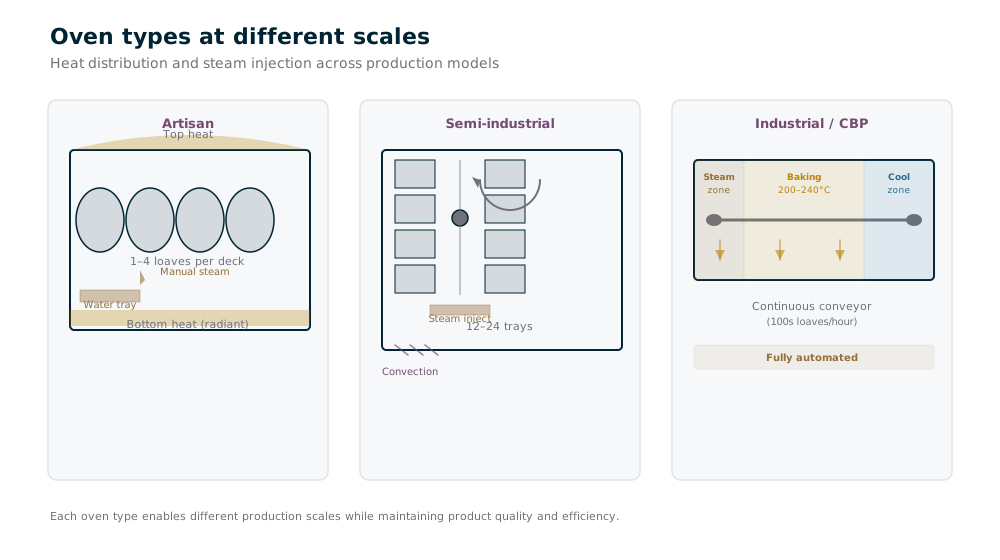 Comparison of deck oven, rack oven, and tunnel oven heat distribution and steam injection for different production scales
Key practical points for scale-up:
- Steam is non-negotiable for crusty bread. Without adequate steam in the first 10–15 minutes of baking, the crust sets before the loaf fully expands, causing blowouts on the sides. In the IREKS Ciabatta Mix recipe, the instruction is explicit: "Give full steam."
- Oven load affects temperature. A full rack of 24 trays drops the oven temperature more than a partial load. Allow the oven to recover to set temperature between loads.
- Deck oven is still viable at semi-industrial scale. Multiple-deck ovens (4–8 decks, each loading 6–12 pieces) can produce 400–600 loaves per shift with artisan crust quality.
Acrylamide (EU/UK regulatory): Baking wheat and rye products above approximately 120°C generates acrylamide via the Maillard reaction. EU Commission Regulation (EU) 2017/2158 (retained in UK law) establishes benchmark levels for acrylamide in bread (e.g. 50 μg/kg for soft wheat bread) and requires food business operators to implement mitigation codes of practice. The baking temperatures used throughout this article (220–260°C) are above the acrylamide formation threshold. Professional bakers scaling to semi-industrial production must: (a) assess acrylamide risk against the benchmark levels in their bread categories; (b) implement and document mitigation measures (controlling reducing sugars, crust colour, time-at-temperature); (c) monitor compliance under their HACCP plan. Verify requirements with a food technologist before customer distribution.
4. The primary threat: flavour loss
The biggest quality casualty in scaling up is flavour. The Maillard reaction during baking provides some flavour regardless of process, but the complex internal flavour of an artisan loaf — the lactic notes, the mild acid, the cereal sweetness — comes overwhelmingly from fermentation.
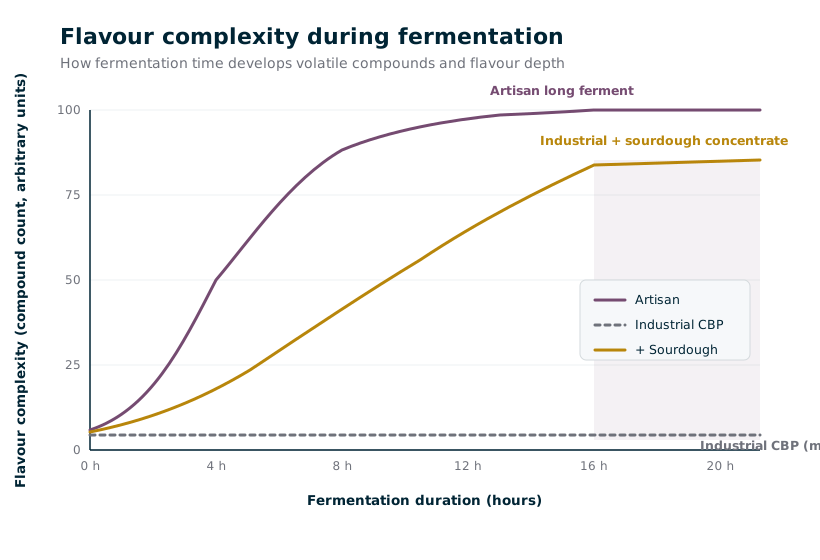 Graph showing relationship between fermentation time and flavour compound complexity in artisan versus industrial bread
There are three practical levers:
Lever 1: Retarded fermentation. Even a 4-hour cold retard (2–8°C) after initial mixing contributes measurably more flavour than a straight-through 2-hour process. Overnight (8–16 hours) at 4–6°C is optimal. This lever costs nothing in ingredients; it requires a retarder cabinet and the planning discipline to prepare dough the day before.
Lever 2: Pre-ferments (poolish or biga). Using 20–30% of the total flour in a poolish (100% hydration, 0.1–0.2% yeast on poolish flour, 12–18h) adds significant flavour without requiring a sourdough culture. The poolish provides protease activity, glutathione, organic acids, and aromatic esters. See A2 — Preferments for detail.
Lever 3: Sourdough concentrates. For bakeries that cannot manage retarding or preferments, commercial sourdough concentrates (liquid or dried) provide organic acids and aroma precursors in a standardised, shelf-stable form. See Section 5.
5. Industrial and semi-industrial sourdough solutions
Active sourdough starters require daily feeding and careful temperature management. At any scale beyond a craft shop, maintaining starters consistently is a skilled, time-consuming operation prone to inconsistency. Commercial sourdough concentrates eliminate starter maintenance while providing a consistent, batch-to-batch flavour contribution.
See the full comparison table below.
5.1 Liquid sourdough concentrates
IREKS Natural Liquid Rye Sour (12.5 kg canister) is a concentrated, liquid sourdough made from rye flour, water, and starter culture. Key parameters from the quality certificate:
| Parameter | Value |
|---|---|
| pH | 2.8–3.4 |
| Degree of acidity | 190–210 |
| Density (20°C) | 1.03–1.26 kg/l |
| Usage rate | 1–7% on flour |
| Shelf life | 6 months (stored at 15–20°C) |
| Format | Brown, viscous liquid |
The liquid format is ideal for bakeries with liquid dosing pumps on their mixer, enabling precise and repeatable addition. The pH range (2.8–3.4) is lower than a typical active starter and provides immediate acidification to the dough — this is a concentrated flavour ingredient, not a leavening agent. Yeast must be added separately. The degree of acidity of 190–210 is measured on freshly produced goods; IREKS note that lactyllactic acid develops during storage, so sourness can increase slightly in the canister over time.
5.2 Dried sourdough concentrates
Aromaferm Wheat & Malt Ferment 110 (12.5 kg bags) by AB Mauri (Mauri Technology) is a dried wheat sourdough for baked goods. Key parameters:
| Parameter | Value |
|---|---|
| pH | Approx. 3.3 |
| Total Titratable Acidity (TTA) | 110 ±10% |
| Moisture | <5% |
| Dosage on flour | 1–5% |
| Shelf life | 12 months (0–25°C) |
| Format | Beige free-flowing powder |
| Certification | Kosher (OU) + Halal Correct |
Dried sourdough concentrates have a longer shelf life than liquid (12 vs 6 months) and require no refrigeration — a significant logistics advantage. The TTA of 110 is standardised batch-to-batch, giving predictable acidification. Flavour is described as "acidic, aromatic" with a malty note from the wheat malt base. The product is declared as "Dried Wheat Sourdough" on finished product labels.
Key difference between liquid and dry: Liquid concentrates (like IREKS Natural) typically have a higher degree of acidity (190–210) because they retain more of the organic acids in solution. Dried concentrates lose some volatile acids during drying and deliver a lower TTA per unit but are more convenient to handle, store and dose. For a strong sour flavour, use a liquid; for background flavour with ease of use, use a dry powder.
5.3 Bread concentrates with built-in sourdough
Some bread concentrates incorporate sourdough as a component, removing even the need to source a separate sourdough product. The Puratos Easy Baguette SG (15 kg) illustrates this approach. The concentrate (used at 6% on flour weight — and the concentrate contains the salt, so no additional salt is needed) incorporates:
- Dry sourdough (fermented rye flour + salt): 5–10% of the concentrate
- Barley malt flour: 5–10% (amylase activity, crust colour)
- DATEM E472e: 5–10% (gluten strengthening, dough tolerance)
- Ascorbic acid E300: <1% (batch-tested at 300–500 ppm in the concentrate)
- Enzymes: <1% (undeclared processing aids)
This means a baker producing baguettes at semi-industrial scale needs only: strong bread flour + Easy Baguette SG (6%) + water + yeast. The sourdough flavour, malt browning, emulsification and oxidation are all delivered in a single measured dose. The concentrate is Halal certified and vegan. It is not Kosher certified.
Allergens and salt: (a) DATEM (E472e) can be derived from soy (a major EU/UK allergen under Regulation 1169/2011 Annex II) or from sunflower (not a major allergen). The spec sheet does not state the E472e origin — confirm with Puratos whether it is soy-derived before making any "soy-free" claim on finished products. (b) The concentrate contains salt at 20–30% of its composition; at 6% usage on flour, this contributes approximately 1.2–1.8% salt on flour — verify finished bread salt content against current FSA/PHE salt reduction targets (≤1 g / 100 g finished bread) before scaling. Both figures are single-source and must be confirmed against the current Puratos specification prior to commercial use.
6. Case studies: scaling specific artisan breads
6.1 Baguette
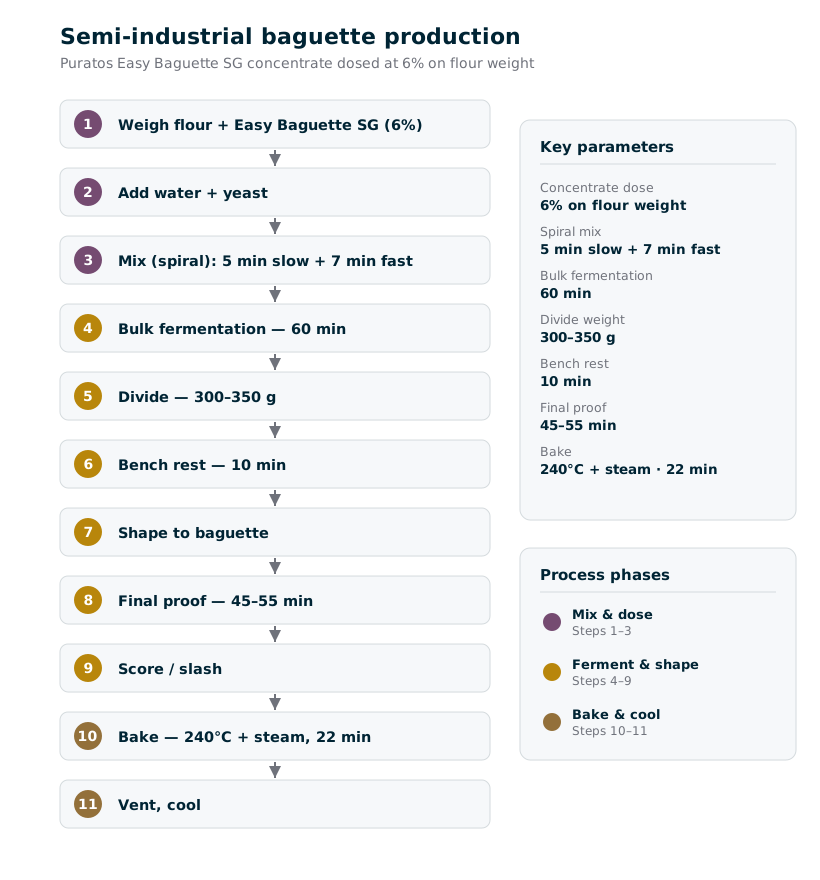 Flowchart showing semi-industrial baguette production steps from weighing concentrate to finished baguette
The baguette is among the most technically demanding artisan breads to scale. Its defining qualities — thin crackling crust, uneven blistered surface, open irregular crumb, slightly acidic flavour — are all products of processes that are hostile to automation.
Artisan baguette hallmarks and their scale-up equivalents:
| Artisan characteristic | Artisan process driver | Semi-industrial equivalent |
|---|---|---|
| Complex flavour | 12–18h preferment (poolish); or sourdough levain | Poolish at 20–30% flour; or baguette concentrate with dry sourdough (e.g. Easy Baguette SG) |
| Thin, blistered crust | High steam at load; deck oven 250°C; vent last 5 min | Rack oven with steam injection; or deck; 240°C+ |
| Open crumb | High hydration (70–75%); minimal shaping | Fork or spiral mixer; long bench rest; gentle moulder or hand-shape |
| Crust colour | Malt sugars (Maillard); no added sugar | Barley malt flour in concentrate |
| Consistent acidity | Active sourdough levain | Dry sourdough in concentrate (or separate addition 1–3%) |
Practical scale-up recipe: See the formula card below. Usage rate is 6% on flour; concentrate contains the salt (no additional salt required).
6.2 Ciabatta
Ciabatta is defined by its extremely high hydration (~70–75% on flour weight), flat slipper shape, and large, irregular open crumb. The challenge at scale is that this crumb structure is destroyed by mechanical moulding.
IREKS Ciabatta Mix process (from product spec):
| Step | Parameter |
|---|---|
| Recipe | 5 kg Ciabatta Mix + 0.100 kg yeast + 0.075 kg olive oil + approx. 3.500 kg water |
| Mixing | Spiral mixer; 5 min slow + 7 min fast |
| Dough temperature | 28°C |
| Bulk fermentation | 60–90 minutes |
| Final proof | 30–40 minutes |
| Baking | 225–230°C, 25 minutes, full steam |
The mix approach is the key scaling tool: the Ciabatta Mix pre-balances flour, sourdough (implied), improver, and other components so that the baker only handles water, yeast and olive oil. The 70% hydration of the recipe is pre-formulated into the mix; the baker does not need to manage the challenge of incorporating large water volumes into the process separately.
For Focaccia using the same mix: reduce water to 65%, shorten bulk ferment to 30 minutes, scale at 300 g into oiled hoops or sponge tins, prove to the top of the hoop, bake 20 minutes at 225°C with steam.
6.3 Multigrain and seeded breads
Seeds and grains dilute the gluten network, absorb water and can puncture gas cells. At scale, bread mixes handle this by pre-soaking grains, pre-blending seeds to the correct ratios, and incorporating the correct improver level. Ready-to-use products in the catalogue: Zeelandia 7 Seeds, Zeelandia Grain Vita Multigrain, Ireks Multiseed, Bakels Multiseed Concentrate.
The semi-industrial baker using these mixes avoids the problem of seed and grain soaking logistics, weight variation between batches, and improper incorporation ratios.
6.4 Sourdough rye bread
Rye bread at scale presents a specific challenge: rye flour lacks gluten, making the dough sticky and structurally weak. At artisan scale this is managed by hand, but at semi-industrial scale it requires both a structural aid (vital wheat gluten or VWG-based improver) and a sourdough component to provide the necessary pH drop that activates rye starch gelatinisation and inhibits amylase over-activity.
Semi-industrial rye process using IREKS Natural Liquid Rye Sour: See the formula card below. Typical liquid sourdough dosage 1–7% on flour provides TTA in the range 190–210, targeting a dough pH of approximately 4.0–4.5 in the finished bread — this range activates pentosan gelling and achieves adequate mould inhibition without external preservative in fresh bread. (Exact pH requirements for mould inhibition vary; verify with a food technologist.)
Structural support from Rye Stabil Improver (78% vital wheat gluten by composition ) at approximately 2.8% on flour provides the gluten network that rye flour cannot.
7. Choosing the right scaling approach
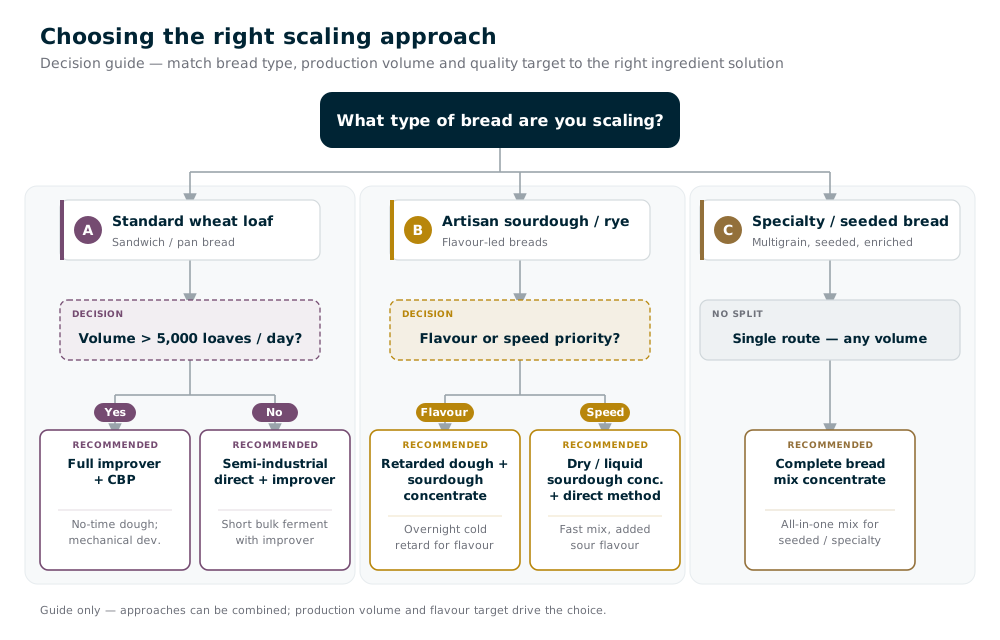 Decision tree diagram helping bakers choose between bread concentrates, sourdough concentrates, improvers, or retarded dough for scaling
The table below summarises the recommended approach based on production scale and product type.
| Scenario | Recommended approach | Primary products needed |
|---|---|---|
| Scaling artisan baguette; quality is priority | Overnight retarded dough (poolish optional); improved flour with ascorbic acid; deck or rack oven | Strong bread flour; E300 improver (e.g. Zeelandia Gamma GP) |
| Scaling baguette; consistency + speed | Baguette concentrate at 6% on flour | Puratos Easy Baguette SG |
| Scaling ciabatta | Complete bread mix; spiral mixer; full steam | IREKS Ciabatta Mix |
| Scaling sourdough rye | Liquid or dry sourdough concentrate + VWG improver | IREKS Natural Liquid Rye Sour + Rye Stabil Improver |
| Scaling multigrain / seeded bread | Complete multigrain bread mix | Zeelandia 7 Seeds, Grain Vita, Ireks Multiseed |
| Scaling standard white loaf / rolls (high volume) | Bread improver (general purpose 0.5–2%) ± anti-staling package | Zeelandia Gamma GP or Puratos S500 + maltogenic amylase |
| Adding sourdough flavour to any industrial bread | Dry sourdough powder or liquid concentrate added at mixing | Aromaferm (1–5%) or IREKS Natural Rye Sour (1–7%) |
8. Bread improvers as scaling tools
Bread improvers are the primary technical tool that enables industrial bread production without artisan time and skill. For the scale-up context their most important functions are:
Dough tolerance. An improver with DATEM (E472e) gives the dough a wider acceptable proof-time window — pieces that sit slightly longer in the prover still produce acceptable loaves. This is critical on a semi-industrial line where pieces have variable prover residence times.
Consistency compensation. Flour protein varies between deliveries. An improver's ascorbic acid component buffers the gluten strength, allowing consistent results even when flour variability increases.
Anti-staling. Industrial bread produced without anti-staling agents stales significantly faster than artisan bread (which benefits from sourdough acidification and long fermentation). Maltogenic amylase in a bread improver is the standard solution.
Gluten network compensation. For wholegrain or seeded breads where bran and seeds cut the gluten network, vital wheat gluten or VWG-based improvers (e.g. Rye Stabil) provide the required structural support.
For full bread improver selection detail, see sister article A3 — What is a Bread Improver and A3 — Improver Selection Guide.
9. Common faults when scaling up — cause and remedy
See the full fault table below. The most common failures are:
Loss of flavour (most common): eliminate the problem by adding a sourdough concentrate (liquid or dry) at 2–5% on flour or by introducing a poolish.
Rapid staling (common in industrial): add maltogenic amylase via an anti-staling improver; consider MDG (E471) for crumb softness.
Poor crust (flat, soft, no crackle): increase oven temperature; verify steam injection system is functioning; extend final proof slightly.
Dense crumb / low volume: check dough temperature (too hot = over-fast fermentation that exhausts gas; too cold = under-fermentation); check yeast freshness and water temperature.
Blowouts and tears: classic under-proof with too tight gluten; extend final proof time or increase prover temperature; verify scoring depth.
Mould in packaged product: ensure bread is cooled to below 35°C core temperature before bagging; for pre-packed products, use calcium propionate E282 or sourdough acidification. Legal limits for E282 in bread under EU Regulation 1333/2008 vary by food category; verify before use.
10. A practical checklist for artisan-to-semi-industrial transition
The following steps summarise the practical sequence for a baker moving from craft to semi-industrial production:
Step 1 — Define your quality target specifically. Write down which properties you are non-negotiably preserving (e.g. "open crumb in baguette" or "sourdough tang in rye") versus which you are willing to compromise (e.g. "slight reduction in crust blistering").
Step 2 — Audit the process bottleneck. Is the constraint fermentation time (switch to retarded overnight), flavour (add sourdough concentrate), structure (add bread improver or VWG), or equipment (upgrade mixer or oven)?
Step 3 — Introduce one variable at a time. Add a sourdough concentrate first; prove it works; then address other variables. Changing multiple recipe elements simultaneously makes fault-diagnosis impossible.
Step 4 — Calibrate your prover. Semi-industrial bread quality is more sensitive to prover temperature and humidity than most bakers expect. Invest in a calibrated thermometer-hygrometer; check readings in multiple positions in the prover.
Step 5 — Set dough temperature targets and enforce them. Every recipe should specify a target dough temperature after mixing (typically 24–27°C). Control by adjusting water temperature. Use a probe thermometer — not touch or estimation.
Step 6 — Choose your sourdough and improver system before bread mix. Decide whether you are using a complete bread mix (simplest) or building from flour + sourdough concentrate + improver (most flexible). Both approaches are valid; bread mixes are best for consistent specialty breads; the modular approach gives more control over flavour and cost.
Step 7 — Validate production conditions and document them. Run a production trial at full scale; record every parameter. Use the documented process as the baseline for troubleshooting.
Coverage notes and gaps
This article is solid on:
- Process-level comparisons between artisan, semi-industrial, and CBP models (multiple sources, high confidence)
- IREKS Ciabatta Mix process parameters (directly from spec sheet — high confidence)
- IREKS Natural Liquid Rye Sour analytical parameters (directly from quality certificate — high confidence)
- Aromaferm sourdough parameters (from product specification — high confidence)
- Puratos Easy Baguette SG composition and usage rate (from product spec — high confidence)
- Practical strategies for fermentation, flavour and crust at scale (cross-referenced across trade-body sources)
This article is thin on:
- Specific process parameters for other bread mixes in the catalogue (Zeelandia 7 Seeds, Komplet, Uldo etc.) — spec sheets were not read for these; application data only from labels; follow-up recommended
- Cooling and depanning at industrial scale — not covered in depth
- Energy consumption and economics of process models — out of scope for this article but relevant for a business-case add-on
- Specific tunnel oven zone temperature profiles — not available in sources read
- Polish/regional sourdough methods (covered in B1-Polish pillar articles)
Catalogue PDF mismatches noted: The Intenso Extra Bread Improver spec sheet returned a Zeelandia chocolate cake mix (Ciasto Intensywna Czekolada); the Böcker Bio Le Chef spec returned a Martin Braun Krokella puffed rice spec. Both catalogue mismatches are documented here; neither is cited.
Semi-industrial baguette using Puratos Easy Baguette SG concentrate (6% usage rate)
Scales an artisan baguette recipe to consistent semi-industrial production. The concentrate supplies the salt, sourdough, malt and DATEM; the baker adds strong flour, water, yeast.
| Ingredient | Baker's % | Weight |
|---|---|---|
| Strong wheat bread flour | 100 | |
| Puratos Easy Baguette SG concentrate — Contains salt — do not add additional salt | 6 | |
| Water (adjust for flour absorption) | 58 | |
| Fresh yeast | 1.5 |
- Mixing: Spiral mixer; standard development; dough temperature target 24–26°C
- Bulk fermentation: 60 minutes at ambient (22–24°C)
- Dividing: Divide to 300–350 g pieces
- Intermediate proof: 10–15 min bench rest
- Moulding: Pre-shape and final shape to baguette form
- Final proof: 40–60 min at 27–30°C; do not over-proof
- Baking: 240°C deck oven; inject steam at load; bake 20–25 min; vent last 5 min
Single-source (Puratos spec sheet). Exact water absorption depends on flour. Ascorbic acid in concentrate: 300–500 ppm in concentrate = approx. 18–30 ppm at 6% usage on flour (single-source calculation, confidence low).
IREKS Ciabatta Mix — standard recipe (from product leaflet)
Direct process for artisan-style ciabatta at semi-industrial scale using a complete bread mix. The mix simplifies ingredient management; the process follows artisan timing.
| Ingredient | Baker's % | Weight |
|---|---|---|
| IREKS Ciabatta Mix — The mix IS the flour base; weight = 5.000 kg per batch | 100 | |
| Water — 3.500 kg per 5 kg mix | 70 | |
| Fresh yeast — 0.100 kg per 5 kg mix | 2 | |
| Olive oil — 0.075 kg per 5 kg mix | 1.5 |
- Mixing: Spiral mixer: 5 min slow + 7 min fast; target dough temperature 28°C
- Bulk fermentation: 60–90 minutes
- Dividing: Careful handling to preserve gas; do not degas
- Intermediate proof: Minimal
- Moulding: Gentle, minimal shaping
- Final proof: 30–40 minutes
- Baking: 225–230°C, 25 minutes, full steam
Directly from IREKS Ciabatta Mix product leaflet 6210560 GB (spec sheet on file). Focaccia variant: reduce water to 65%, reduce bulk to 30 min, scale 300 g for 8-inch hoops. CAUTION: the publicly accessible IREKS UK online brochure appears to show different parameters (mixing time ~2+6 min, bulk ferment ~10 min, bake time ~30 min, dough temperature ~25–26°C). All values here are from the physical leaflet on file (6210560 GB).
Semi-industrial sourdough rye using IREKS Natural Liquid Rye Sour (illustrative)
Replaces active starter maintenance with a standardised liquid rye sourdough concentrate. Baker controls acidity by adjusting dosage within the 1-7% range.
| Ingredient | Baker's % | Weight |
|---|---|---|
| Rye flour (Type 720 or 997) | 100 | |
| IREKS Natural Liquid Rye Sour — pH of product: 2.8–3.4; degree of acidity 190–210 | 3–5 (adjust to target pH and flavour) | |
| Water | 65 | |
| Fresh yeast | 1 | |
| Salt | 1.8 | |
| Rye Stabil Improver (optional) — Provides vital wheat gluten structure for rye dough | 2–3 |
- Mixing: Spiral or planetary; 3–5 min; rye dough is sticky — do not over-mix
- Bulk fermentation: 30–60 min (shortened vs. artisan because sourdough is pre-acidified)
- Moulding: Pan or free-form; handle minimally
- Final proof: 45–75 min
- Baking: 220–240°C, 40–60 min depending on size; steam in first 10 min
Illustrative recipe; exact dosages depend on desired acidity and product type. Dosage 1-7% cited directly from IREKS Natural spec sheet. Full acidification control requires measuring final dough pH.
| Parameter | Artisan / craft | Semi-industrial / mid-scale | Full industrial (CBP) | |
|---|---|---|---|---|
| Typical output | 50–500 loaves/day | 500–10,000 loaves/day | >10,000 loaves/day | |
| Mixer type | Spiral or planetary; hand-mixing possible | Spiral or fork | High-speed intensive (Tweedy, Peerless) | |
| Mixing time (for standard wheat loaf) | 12–20 min (spiral), no time target | 10–15 min (spiral) | <5 min (intensive) | |
| Dough temperature target after mixing | 22–26°C | 24–27°C | 28–30°C (higher due to mechanical energy input) | |
| Bulk fermentation time | 2–16+ hours (often overnight) | 45–120 minutes | Zero (eliminated) | |
| Cold retarding used? | Often (overnight 4–8°C) | Often (retarder prover) | Rarely in CBP proper | |
| Dividing / shaping | Hand-scaled and hand-shaped | Divider + moulder; hand-finishing possible | Automated divider, conical rounder, moulder | |
| Intermediate proof | 5–30 min on bench | 5–20 min in intermediate prover box | Brief (mechanical) | |
| Final proof temperature | Ambient (18–25°C) or proofing cabinet | 35–40°C, 75–85% RH in retarder-prover | 38–43°C, 80–90% RH in tunnel prover | |
| Final proof duration | 45–120 min (ambient) or 8–12h retarded | 45–75 min (warm prover) | 45–55 min (tunnel prover) | |
| Oven type | Deck oven (stone/steel) | Deck or rack oven | Rack or tunnel oven | |
| Steam injection | Manual: spritz or steam tray | Automatic steam injection (rack/deck) | Automatic steam (tunnel oven zones) | |
| Typical improver requirement | Minimal or none; sourdough provides structure | Standard powder improver at 0.5–2% | Full improver with ascorbic acid, fat, enzyme package | |
| Flavour complexity | High (long fermentation by-products) | Medium–high (if retarded or pre-ferment used) | Low–medium (unless sourdough concentrate added) | |
| Shelf life achieved (standard wheat loaf) | 1–3 days (no preservatives) | 2–5 days (with maltogenic amylase) | 5–7+ days (full anti-staling package + preservatives) | |
| Key vulnerabilities | Fermentation inconsistency, labour-intensive | Fermentation control, mixer scaling | Flavour loss, rapid staling without enzyme package |
| Format | Example product | Dosage on flour | Key parameters | Shelf life | Use case |
|---|---|---|---|---|---|
| Concentrated liquid rye sourdough | IREKS Natural Liquid Rye Sour 12.5 kg | 1–7% | pH 2.8–3.4; TTA 190–210; density 1.03–1.26 kg/l | 6 months (15–20°C) | Rye and wheat-rye breads; liquid dosing pump |
| Dried wheat sourdough | Aromaferm Wheat & Malt Ferment 110 12.5 kg | 1–5% | pH approx 3.3; TTA 110 ±10%; moisture <5% | 12 months (0–25°C) | Wheat and specialty breads; powder dosing |
| Dry sourdough concentrate (rye) | Sourdough Dry 25 kg | Variable | Powder form; standardised acidity | Typically 12 months | General rye sourdough flavour addition |
| Concentrated liquid sourdough (rye) | Sauer Dark Rye Sourdough Concentrate 25 kg | Variable | Concentrated liquid; darker colour | Typically 6–9 months | Dark rye and wholegrain breads |
| Organic liquid sourdough | Böcker Bio Le Chef Organic Liquid Sourdough 2 kg | Variable | Organic certified; artisan culture | Short (chilled) | Craft/artisan positioning at small scale |
| Bread concentrate with built-in sourdough | Puratos Easy Baguette SG 15 kg | 6% on flour (contains salt) | Dry sourdough 5–10% of concentrate; pH of concentrate acidic; E472e, E300, enzymes | 9 months (<25°C) | Consistent industrial baguette production |
| Product | Mix ratio (mix:flour:water approx.) | Mixing (spiral) | Bulk ferment | Final proof | Bake | Key ingredients |
|---|---|---|---|---|---|---|
| IREKS Ciabatta Mix 25 kg | 5 kg mix + ~3.5 kg water + 100 g yeast + 75 g olive oil | 5 min slow + 7 min fast | 60–90 min at 28°C dough temp | 30–40 min | 225–230°C, 25 min, full steam | Wheat flour, sourdough, salt, enzymes |
| Puratos Easy Baguette SG 15 kg | 6% concentrate + flour + water + yeast | Standard | Standard | Standard | High temp, steam | Wheat flour, salt, dry rye sourdough, barley malt, DATEM E472e, E300, enzymes |
| Zeelandia 7 Seeds Bread Mix 25 kg | Ready-mix + water + yeast | Per label | Per label | Per label | Per label | Multigrain seeds blend |
| Ireks Multiseed Bread Mix 25 kg | Ready-mix + water + yeast | Per label | Per label | Per label | Per label | Multi-seed blend |
| Zeelandia Hearty Rye Bread Mix 25 kg | Ready-mix + water + yeast | Per label | Per label | Per label | Per label | Rye flour base with sourdough |
| Komplet Probody Bread Mix 25 kg | Ready-mix + water + yeast | Per label | Per label | Per label | Per label | Protein-enriched bread base |
| Zeelandia Grain Vita Multigrain 25 kg | Ready-mix + water + yeast | Per label | Per label | Per label | Per label | Mixed grain, seeds |
| Uldo Magnus Bread Mix 25 kg | Ready-mix + water + yeast | Per label | Per label | Per label | Per label | Specialty bread base |
| Bakels Multiseed Bread Concentrate 16 kg | Concentrate + flour + water + yeast | Per label | Per label | Per label | Per label | Seed blend concentrate |
| Mixer type | Speed category | Suitable dough types | Scale range | Key advantage | Key limitation |
|---|---|---|---|---|---|
| Planetary (spiral hook) | Slow | Most bread doughs, enriched doughs | Small craft (5–50 kg/batch) | Gentle development | Slow; not suited to high hydration at volume |
| Spiral mixer | Medium | Most bread doughs including high hydration | Craft to semi-industrial (10–300 kg/batch) | Good gluten development, low heat input | Not suitable for CBP speeds |
| Fork (oblique) mixer | Slow-medium | French bread, high hydration baguette, ciabatta | Craft to semi-industrial | Very gentle, preserves gas in dough; artisan character | Low throughput |
| Twin-arm (Artofex) | Slow | Rye bread, specialty breads, high-hydration | Craft | Mimics hand kneading; excellent gluten quality | Very slow; not scalable |
| Intensive high-speed (Tweedy) | High | CBP bread, standard wheat loaf, rolls | Industrial (100–500 kg/batch) | Replaces bulk fermentation; very fast throughput | Requires ascorbic acid and fat; not for artisan-style |
| Fault observed | Root cause at scale | Likely artisan process equivalents that are lost | Remedy |
|---|---|---|---|
| Flat loaf, poor oven spring, dense crumb | Over-proof: dough exhausts gas before baking; or yeast-depleted from too-short mixing | Artisan baker monitors by eye/feel; prover conditions vary | Reduce final proof time or temperature; check prover calibration; add bread improver with dough tolerance function (DATEM, VWG) |
| Dense crumb, pale crust, compact structure | Under-proof: insufficient gas development before baking; or weak yeast activity | Artisan poke-test / float test identifies; extended ambient proof corrects | Increase proof time or temperature; check yeast freshness; check water temperature (target dough temp 24–26°C) |
| Bland, flat flavour; no fermentation complexity | Bulk fermentation eliminated or compressed to <60 min; no pre-ferment | Artisan: overnight poolish, 8h bulk, retarded dough; all develop flavour | Add dry sourdough concentrate (1–5% on flour) e.g. Aromaferm; use retarded overnight dough; add pre-ferment (poolish 20–30% of flour) |
| Rapid staling (crumb firm within 24h) | No anti-staling enzyme; amylopectin retrogrades rapidly in industrial crumb | Artisan sourdough acidification slows staling; long fermentation modifies starch | Add maltogenic amylase (via improver with anti-staling function); add MDG (E471); consider Zeelandia Gamma GP or equivalent |
| Crust too soft, no snap or crackle | Insufficient steam in first baking phase; or oven temperature too low | Artisan deck oven gives radiant heat and retained steam; home stones retain more heat | Increase oven temperature (240°C+); inject steam immediately at loading; vent at end to firm crust |
| Thick, tough crust with no bloom | Skin formed before oven from excess air in prover; or too much flour dusting on surface | Artisan uses misted prover or damp cloth to prevent skin formation | Increase prover relative humidity to 75–85%; score/slash dough correctly; check prover door seals |
| Tears and blowouts on loaf sides | Under-proof combined with incorrect scoring; dough too tight from over-mixing or excess ascorbic acid | Artisan baker adjusts scoring angle by feel | Extend final proof time; reduce ascorbic acid dose; check that scoring is deep enough and at correct angle (30–45°) |
| Irregular crumb with large holes and dense patches | Uneven mixing / flour not fully hydrated; or over-manipulation of wet dough (ciabatta) | Artisan high-hydration doughs get stretch-and-fold rather than mechanical mixing | Use fork or spiral mixer for high-hydration doughs; minimise mechanical manipulation post-mix; reduce mixing time |
| Dough sticking to divider / moulder, poor machinability | Dough too slack or warm; insufficient resting after dividing; or no dough conditioner | Artisan hand-shapes gently; no divider pressure | Reduce water slightly; cool dough temperature; allow bench rest before moulder; add intermediate prover |
| Excessive mould within 3–4 days of packaging | Insufficient cooling before packaging; water activity too high; no preservative in packaged product | Artisan bread is sold same-day (no preservation needed) | Cool bread to <35°C core before bagging; for pre-packed bread: add calcium propionate E282 (max limits per Regulation 1333/2008); check bag seal integrity. Verify applicable regulatory limits before use |
- Product:
- IREKS Natural Liquid Rye Sour
- Dosage on flour percent:
- 1–7
- Ph range:
- 2.8–3.4
- Degree of acidity range:
- 190–210
- Density range kg per l:
- 1.03–1.26
- Shelf life months:
- 6
- Storage temperature:
- 15–20°C
- Format:
- Concentrated liquid
- Product:
- Aromaferm Wheat & Malt Ferment 110
- Dosage on flour percent:
- 1–5
- Ph approx:
- 3.3
- Tta target:
- 110 ±10%
- Moisture max percent:
- 5
- Shelf life months:
- 12
- Format:
- Dry powder
- Kosher:
- true
- Halal:
- true
- Product:
- Puratos Easy Baguette SG
- Usage rate on flour percent:
- 6
- Contains salt:
- true
- Ascorbic acid ppm in concentrate:
- 300–500 (batch tested)
- Emulsifier:
- E472e (DATEM) 5–10%
- Sourdough type:
- Dry rye sourdough (fermented rye flour + salt), 5–10% of concentrate
- Malt type:
- Barley malt flour 5–10% of concentrate
- Shelf life months:
- 9
- Halal:
- true
- Product:
- IREKS Ciabatta Mix
- Recipe mix to water ratio approx:
- 5 kg mix: 3.5 kg water
- Yeast per 5kg mix kg:
- 0.1
- Olive oil per 5kg mix kg:
- 0.075
- Mixing spiral slow min:
- 5
- Mixing spiral fast min:
- 7
- Dough temperature target c:
- 28
- Bulk fermentation min:
- 60–90
- Final proof min:
- 30–40
- Bake temperature c:
- 225–230
- Bake time min:
- 25
- Steam:
- Full
Buy the ingredients
Catalogue products and brands referenced in this article.
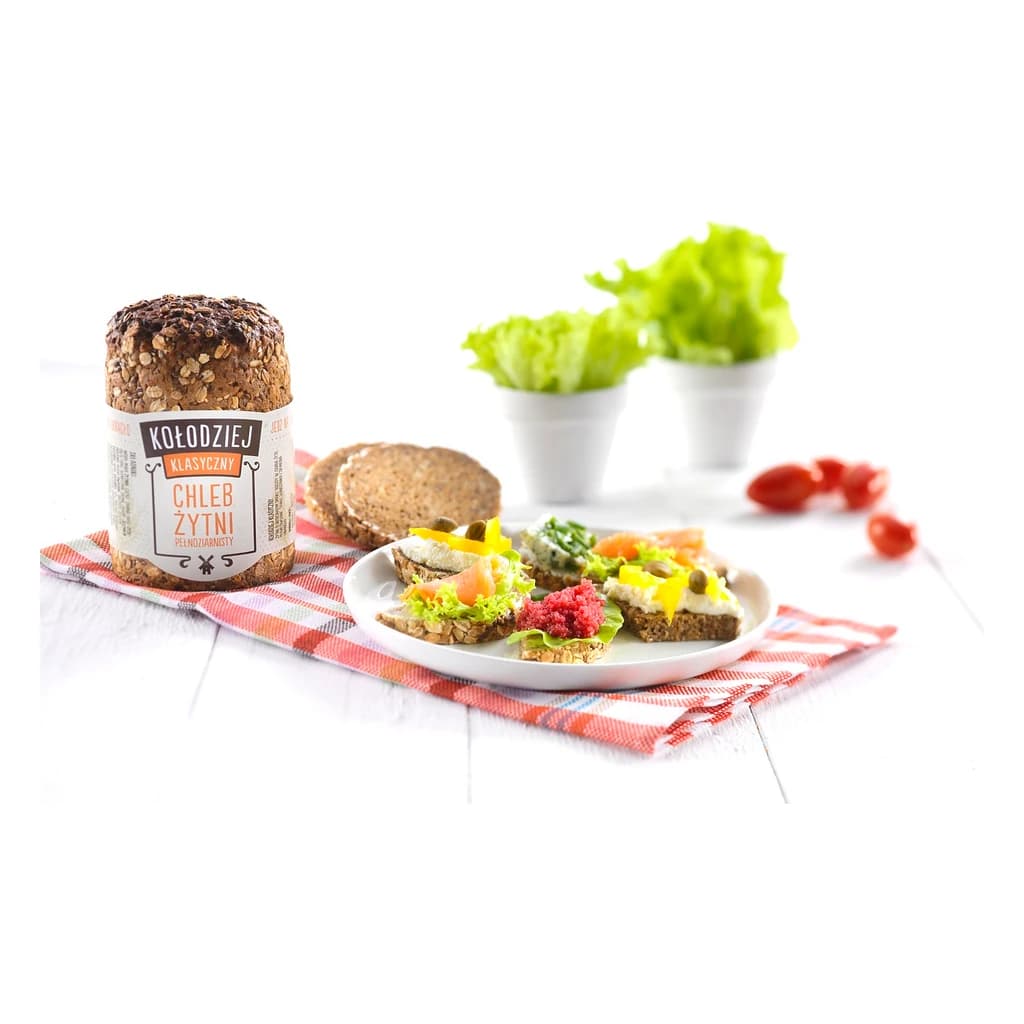
Kołodziej Classic Wholegrain Rye Bread Mix 25 kg
Superkwas Dry Sourdough 25 kg
Zeelandia 7 Seeds Bread Mix 25 kg
Sauer Dark Rye Sourdough Concentrate 25 kg
Uldo Magnus Bread Mix 25 kg
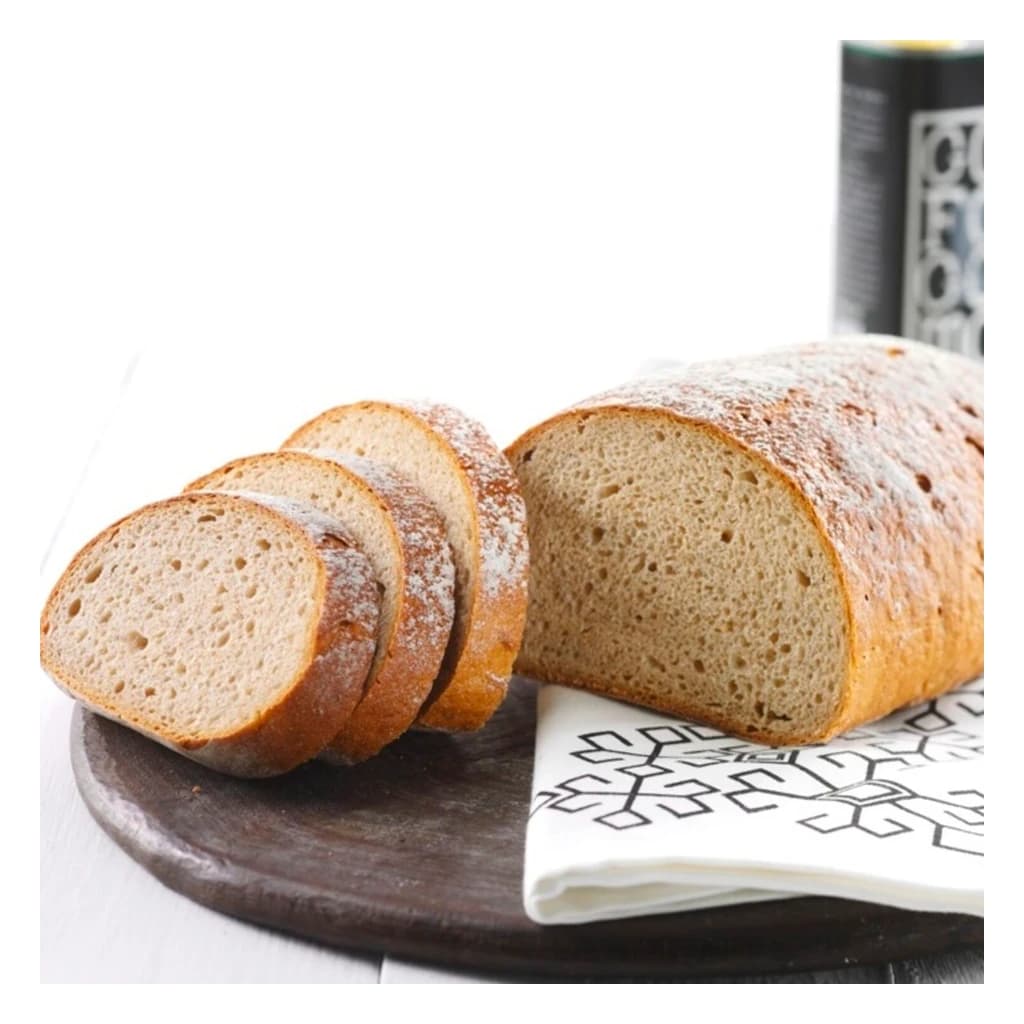
Rye Stabil Improver 25 kg
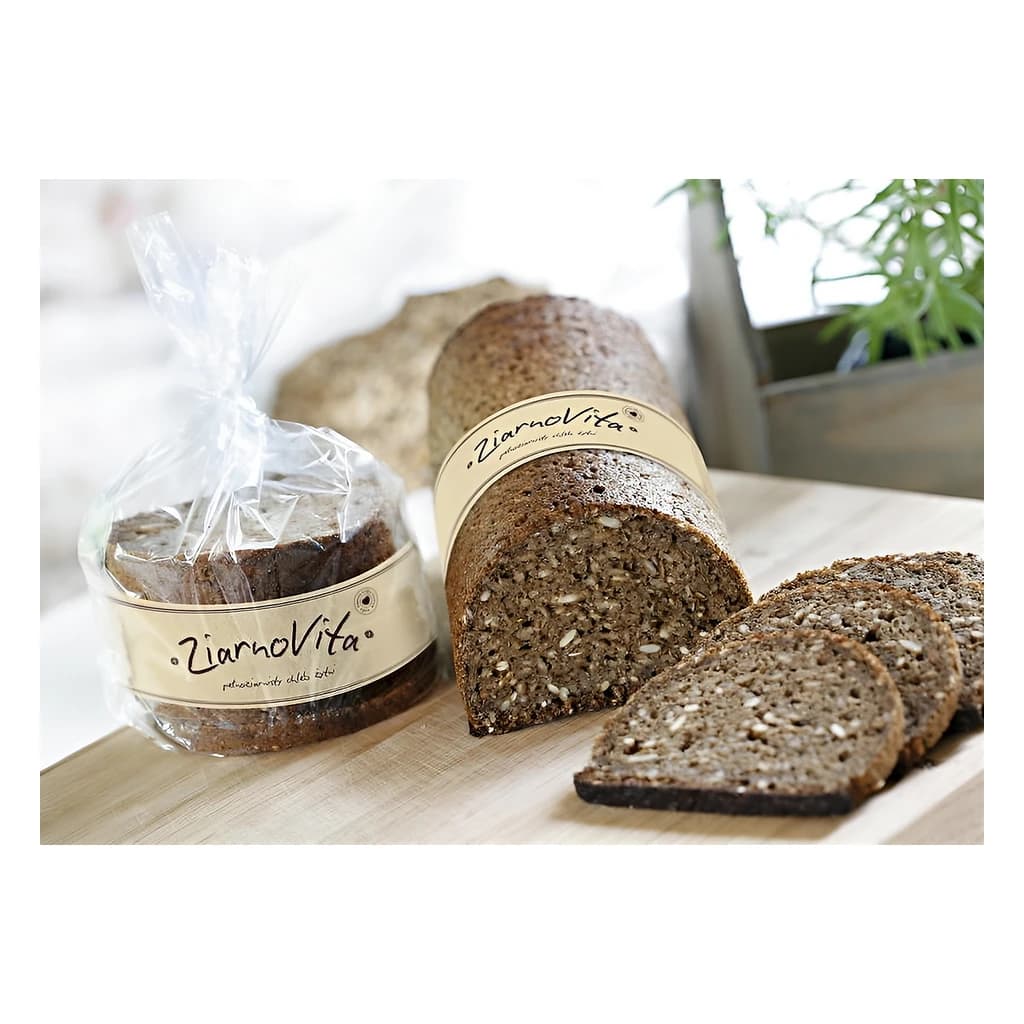
Zeelandia Grain Vita Multigrain Bread Mix 25 kg
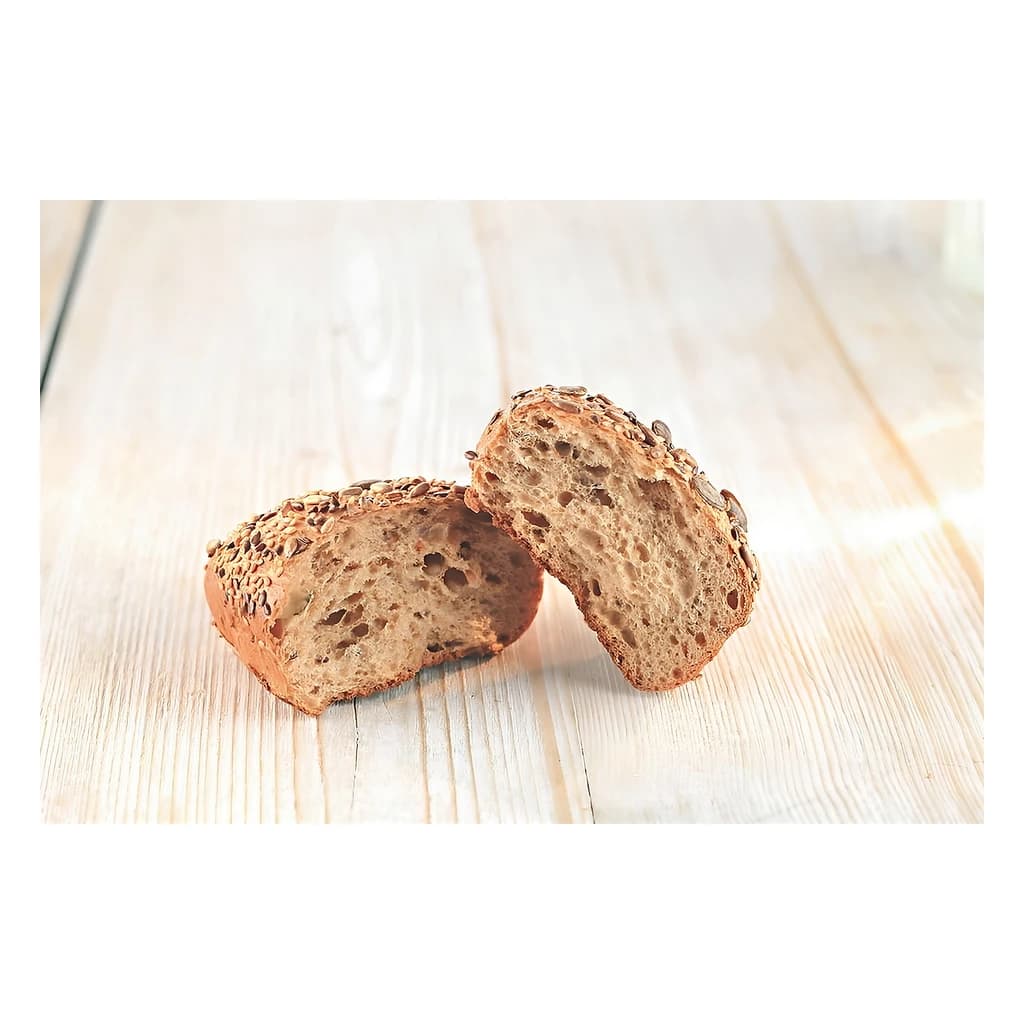
Ireks Multiseed Bread Mix 25 kg
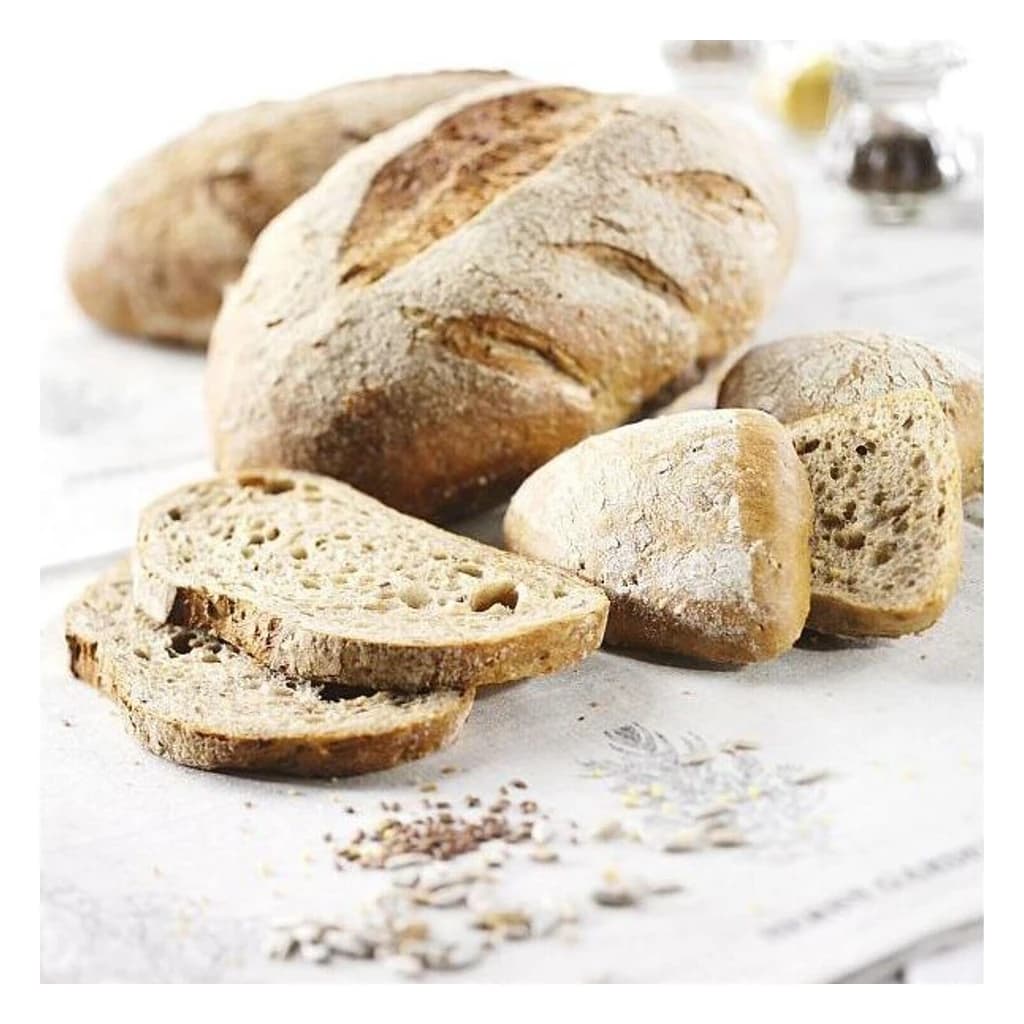
Zeelandia Hearty Rye Bread Mix 25 kg
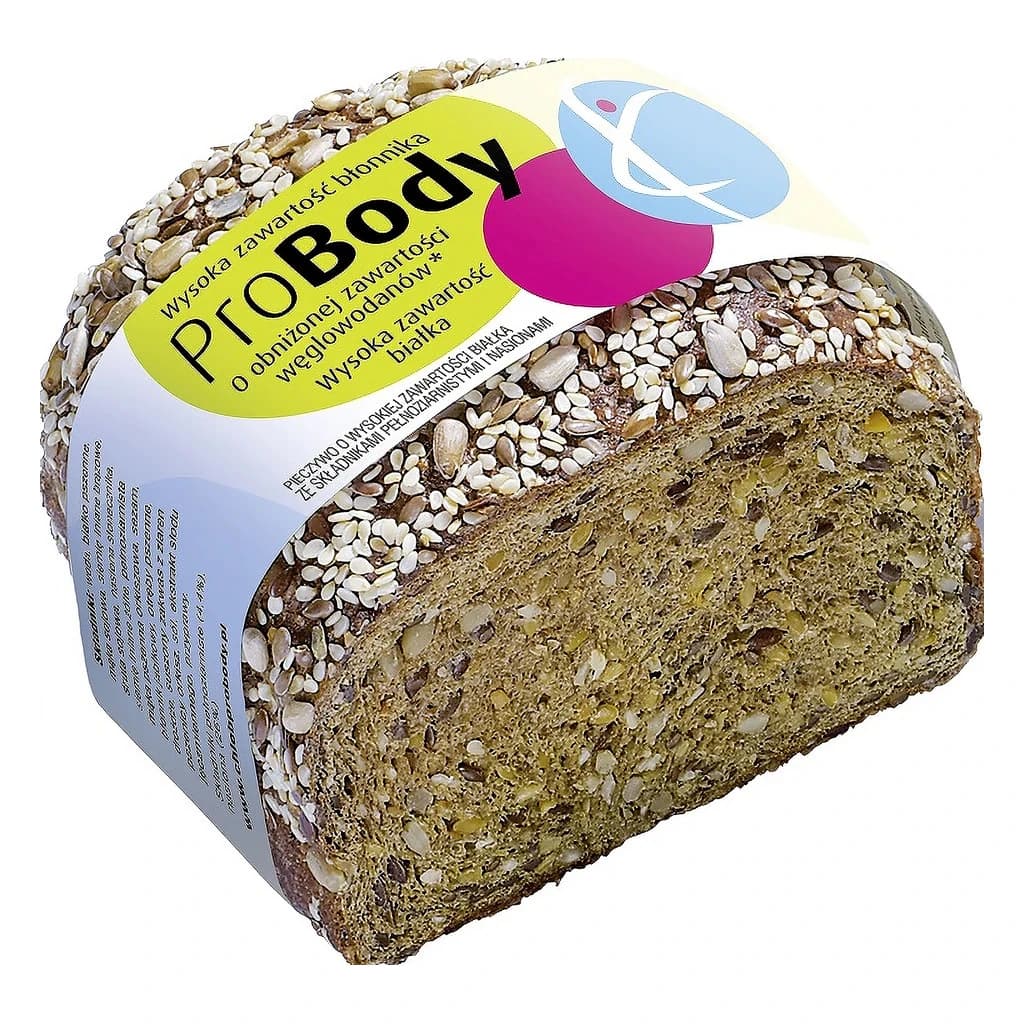
Komplet Probody Bread Mix 25 kg
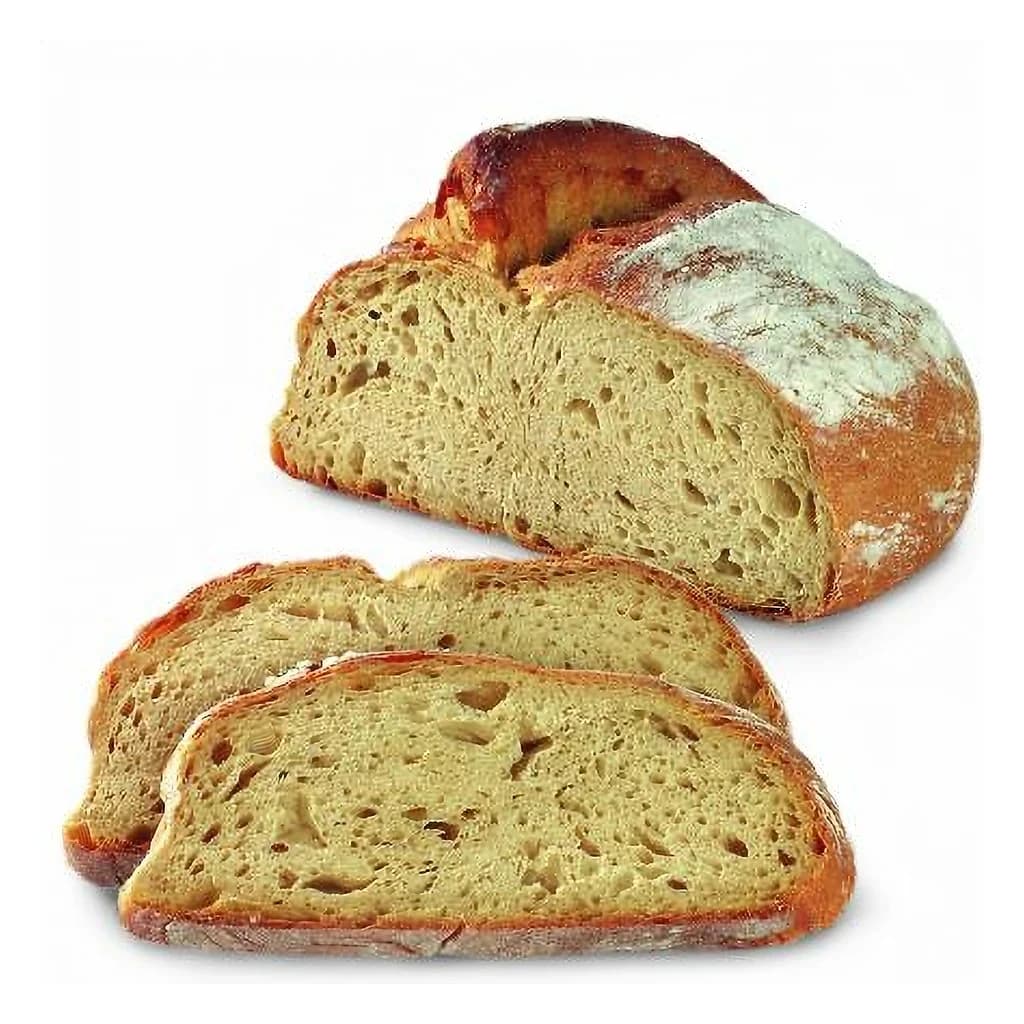
Komplet Pastoral Bread Mix 25 kg

Böcker Flüssigsauer 200 Liquid Sourdough 15 kg
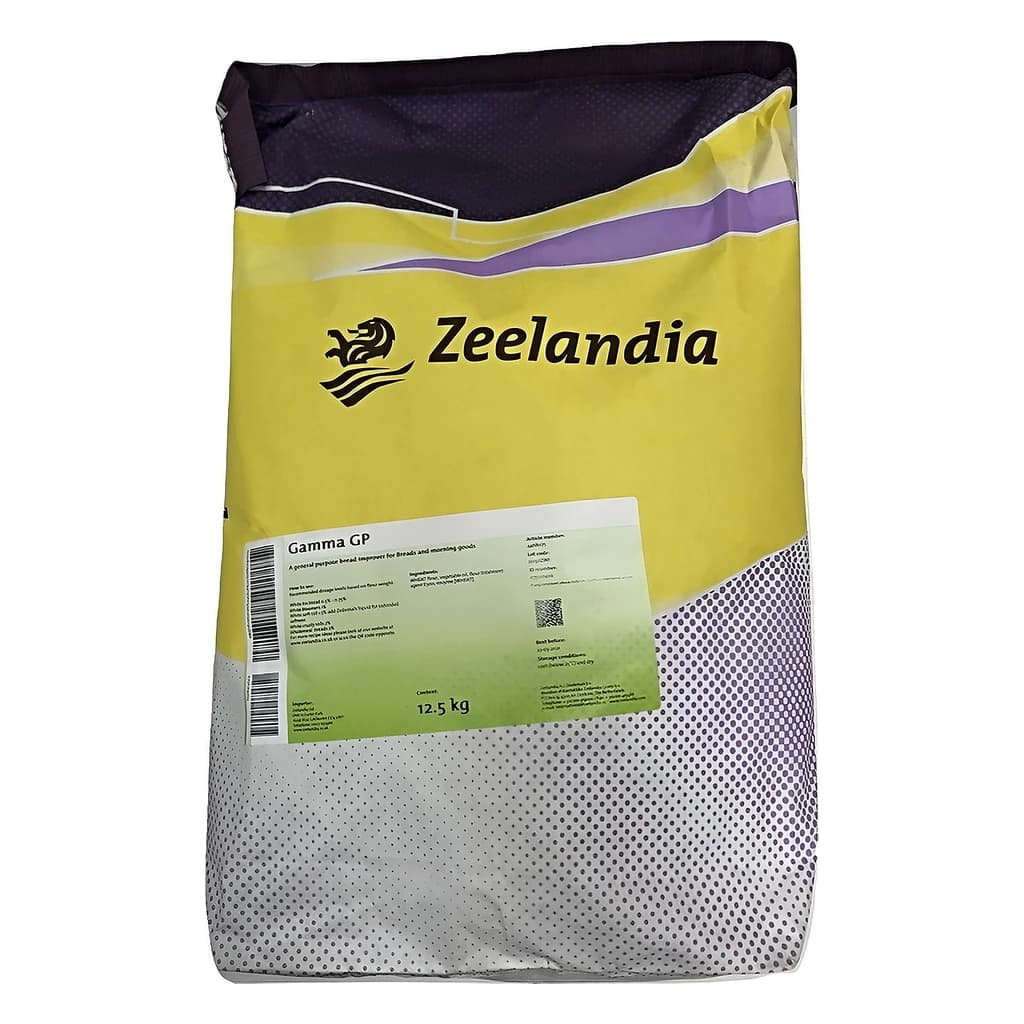
Zeelandia Gamma GP Bread Improver 12.5 kg

Puratos Easy Baguette SG 15 kg
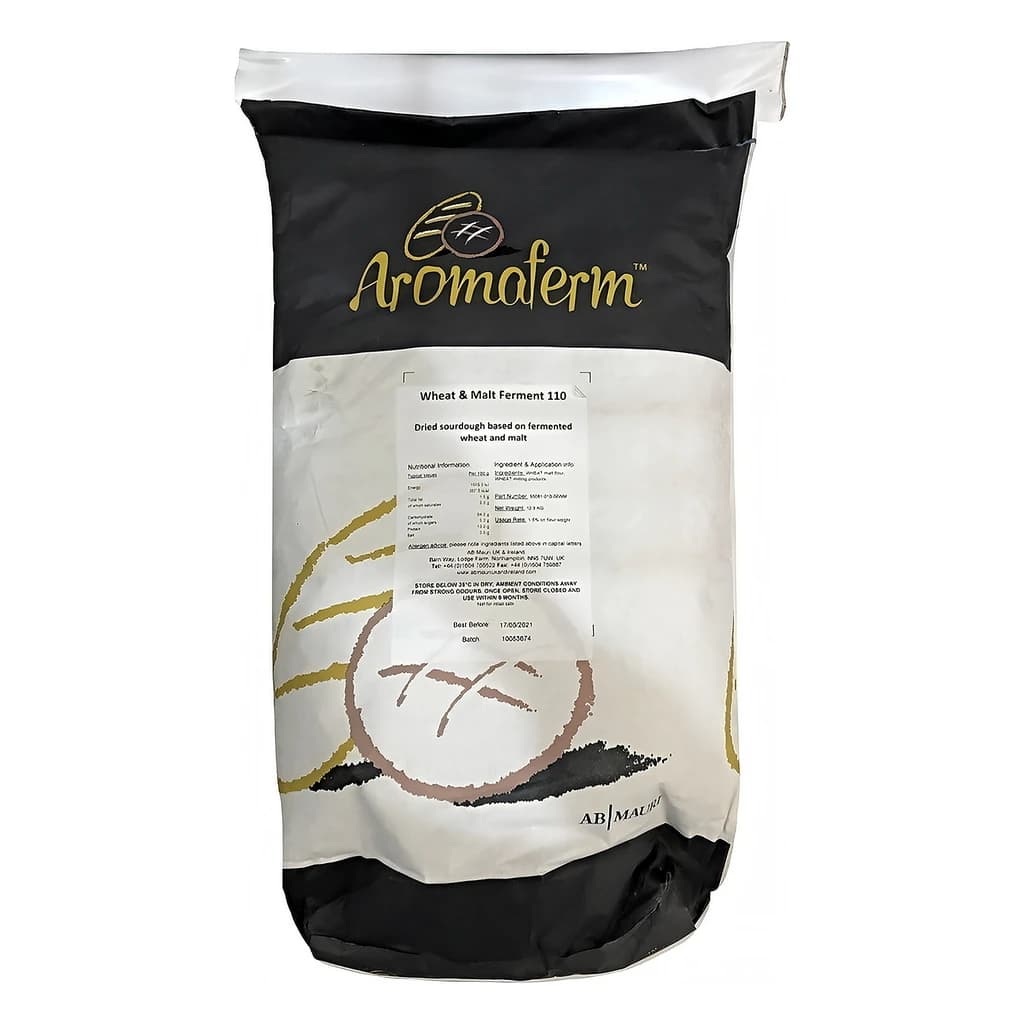
Aromaferm Wheat & Malt Ferment 110 12.5 kg
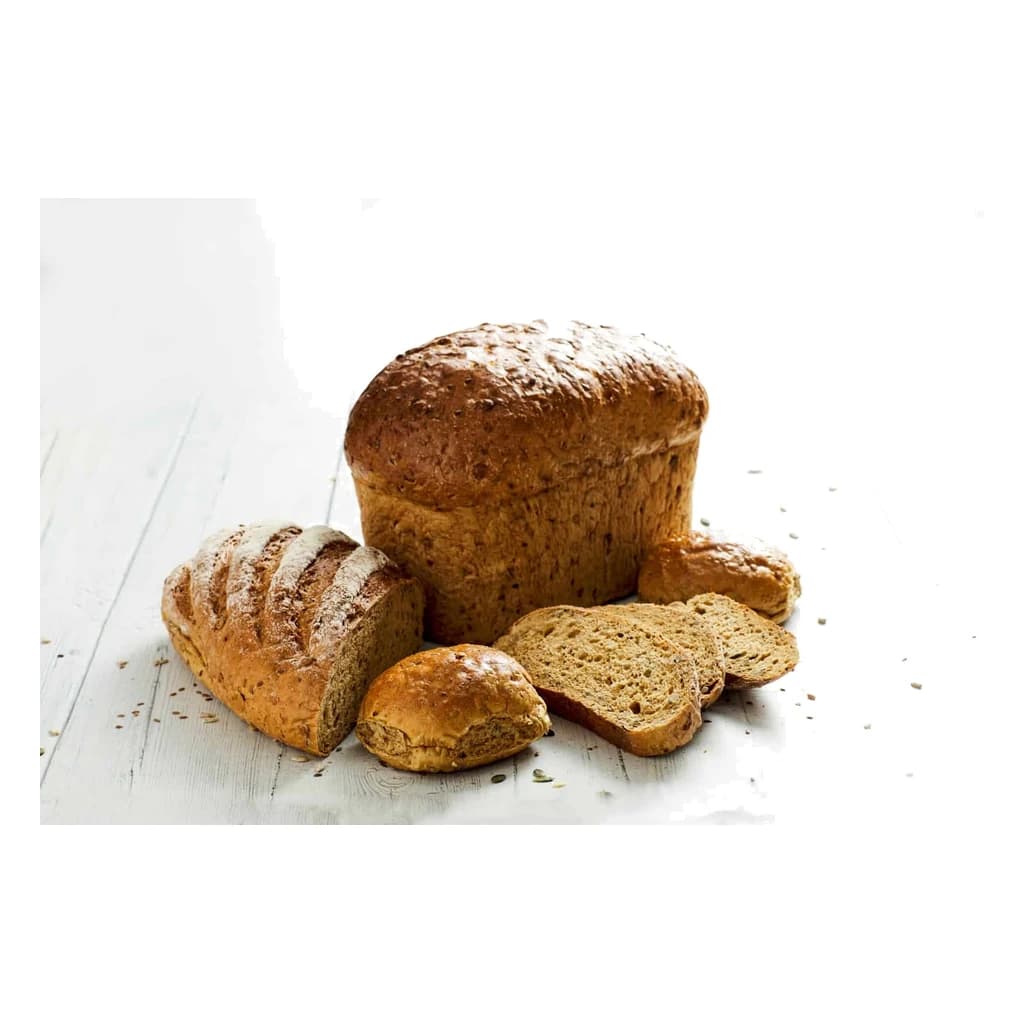
Bakels Multiseed Bread Concentrate 16 kg
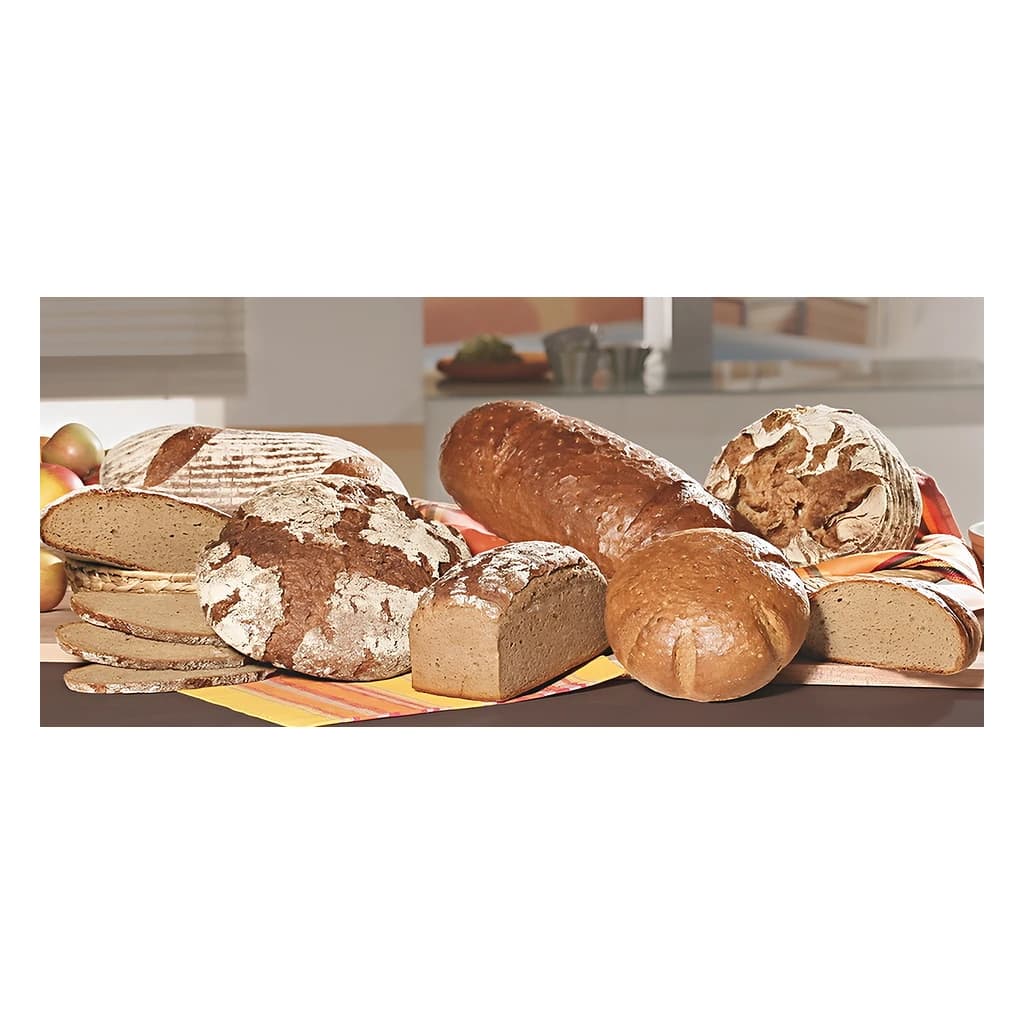
IREKS Natural Liquid Rye Sour 12.5 kg
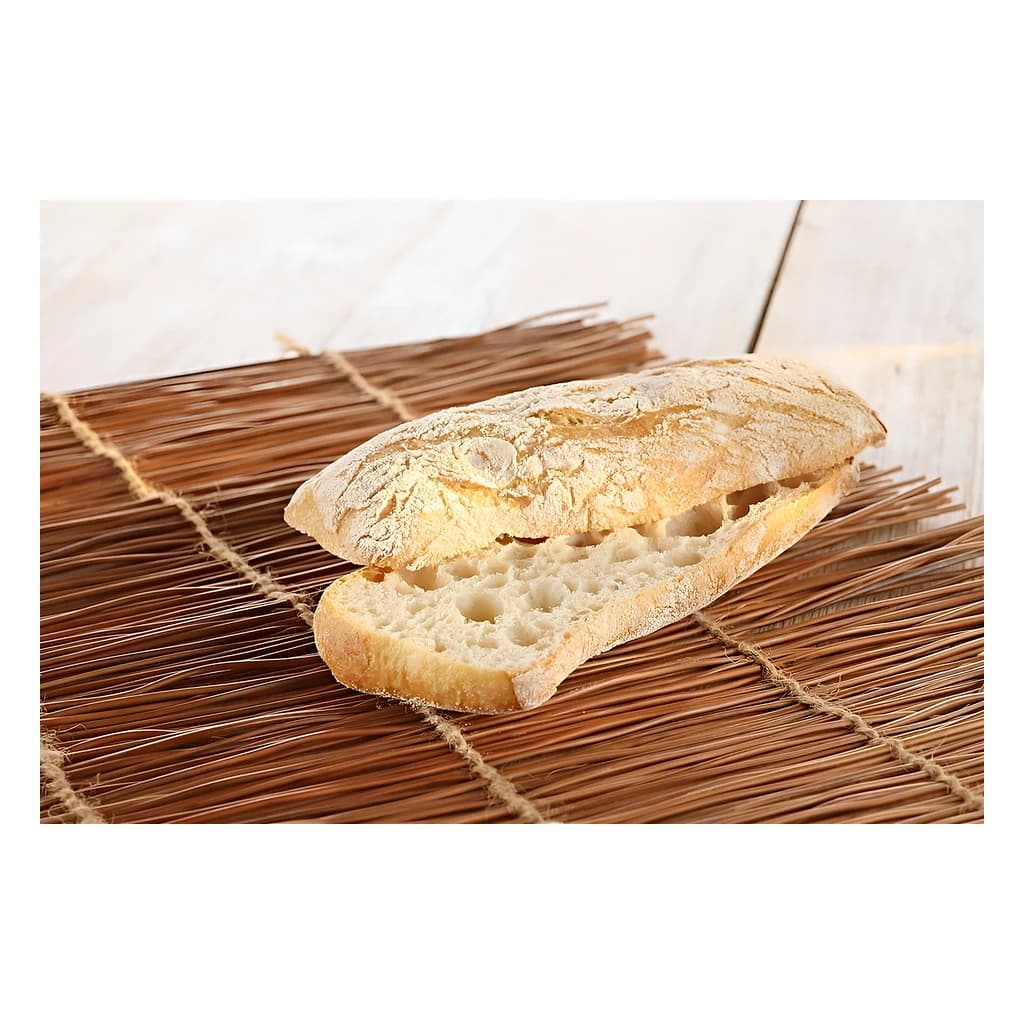
Ireks Ciabatta Mix 25 kg
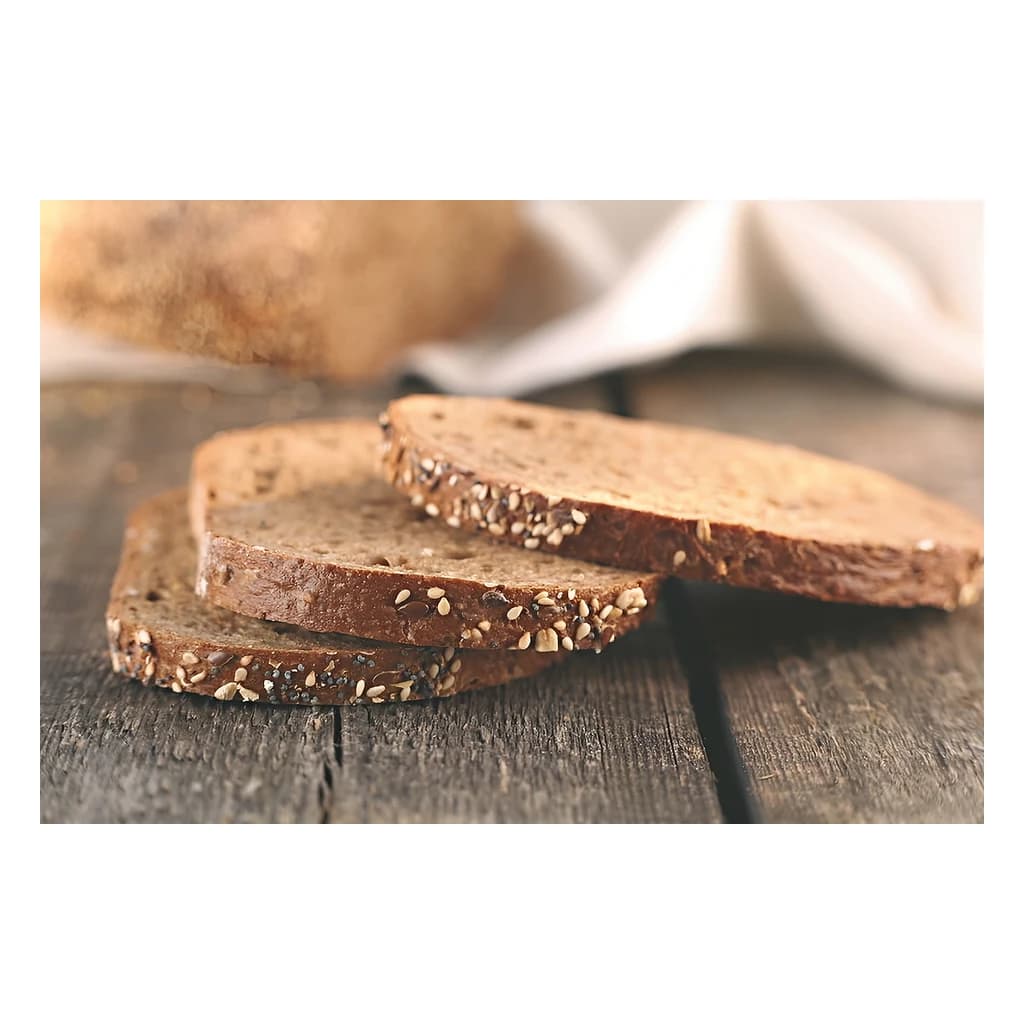
Ireks Donker Bread Mix 25 kg