
Scones, crumpets and English muffins: the chemistry of baking-powder rise, griddle baking and the cream-tea format
Three icons of the British tea table — the oven-risen scone, the griddle-cast crumpet and the griddle-baked English muffin — are united by one idea: get lift fast, without a long ferment. This dossier is built for a UK bakery, Domson's home market, so it is precise where precision matters most: the chemistry of chemical leavening (bicarbonate of soda E500(ii) plus a paired acid — cream of tartar E336, monocalcium phosphate E341 or diphosphate/SAPP E450(i)), how self-raising flour and baking powder are actually built (spec-sheet evidence: self-raising flour = 96.9% wheat flour + 0.4% fortificant + 2.7% baking powder, with residual CO2 of 0.45–0.7%; baking powder available-CO2 ~17.5–18.5%), and the UK regulation every one of these bakes sits inside — the Bread and Flour Regulations 1998 (mandatory calcium carbonate 235–390 mg, iron ≥1.65 mg, thiamin ≥0.24 mg, niacin ≥1.60 mg per 100 g) and the 2024 amendment (SI 2024/1162) adding 250 µg folic acid per 100 g of non-wholemeal wheat flour by 13 December 2026. It gives working formulas in baker's percentage for plain, fruit and cheese scones, drop scones, crumpets and English muffins; the flour-strength logic (soft ~7.5–10% for scones, strong 12–12.5% for crumpets and muffins); the cream-tea format including the Cornish clotted-cream PDO (min 55% butterfat) and the Devon-vs-Cornwall assembly order; and the muffin–crumpet–pikelet continuum (dough vs batter, ring vs no ring). Every technique is wired to the Domson catalogue a British baker orders (self-raising and strong flour, baking powder, bicarbonate of soda, 82% butter, buttermilk, sultanas and currants, UK strawberry jam, fresh yeast) and cross-linked to the Pillar A craft concepts behind it (A2-chemical-leaveners-baking-powder, A2-yeast-fermentation-science, A1-protein-gluten-and-strength, A5-baking-oven-science, A4-fat-types-and-selection, A8-bakers-percentage-fundamentals).
Scones, crumpets and English muffins: the chemistry of baking-powder rise, griddle baking and the cream-tea format
Why put these three together
A scone, a crumpet and an English muffin look like different animals — one is oven-baked and crumbly, one is a holey griddle cake, one is a soft split roll for the toaster. But for a working British bakery they belong on one page, because they share a production logic that sets them apart from the long-fermented artisan loaf: get the lift fast, and get it without waiting. The scone gets it from a chemical raising agent (baking powder, usually already inside self-raising flour). The crumpet and the English muffin get it from yeast, but on a compressed timetable and — decisively — from a griddle rather than an oven, so the heat comes from below and the product spreads and sets sideways.
That makes the trio the perfect vehicle for the two craft skills every UK teatime baker needs to own: chemical leavening chemistry (cross-link A2-chemical-leaveners-baking-powder) and griddle/oven heat control (cross-link A5-baking-oven-science). It is also the corner of the British repertoire where flour choice is most visible on the plate — a soft, low-protein flour for a tender scone; a strong, high-protein flour for a chewy, holey crumpet (cross-link A1-protein-gluten-and-strength).
Because Britain is Domson's home market, this dossier is deliberately heavy on the two things a UK baker is judged and regulated on: the Bread and Flour Regulations that govern the flour under every one of these bakes, and the cream-tea format that a Devon or Cornish customer will scrutinise scone by scone. The word scone itself is a good reminder that this is old, native craft, though its etymology is genuinely contested: the most widely supported derivation is the Scottish Gaelic sgonn ("a shapeless lump or large mouthful"), with the Middle Dutch schoonbrood ("fine white bread") a commonly-cited but less-supported alternative. The scone is generally traced to early-1500s Scotland — the earliest written references are dated to around 1513 — as a griddle-baked quick bread, sharing an ancestor with the bannock (cross-link B7-regional-breads-map).
First-party data. The numbers in this dossier's leavening and flour sections are taken from 14 supplier specification sheets read directly from the platform — self-raising, plain, pastry and strong flours, baking powder, bicarbonate of soda, a cream-of-tartar substitute, 82% butter, buttermilk, UHT cream, sultanas, fresh yeast and a UK strawberry jam. Where a spec-sheet number and a web number disagreed, the spec sheet won.
1. The chemistry of the rise
1.1 One reaction, three delivery formats
Chemical leavening is one reaction dressed three ways. Sodium bicarbonate (bicarbonate of soda, E500(ii)) is an alkaline base. Add a food-safe acid and moisture, apply heat, and it releases carbon dioxide gas that inflates the crumb; the by-products are a sodium salt and water. The full craft treatment of this reaction — acids, dosing, single- vs double-acting behaviour, ammonium bicarbonate for flat biscuits — lives in A2-chemical-leaveners-baking-powder; here is what a scone baker actually reaches for.
Bicarbonate of soda, on its own. The catalogue's Emix bicarbonate is effectively pure raising base: sodium bicarbonate minimum 99.3%, sodium carbonate max 0.5%, pH of a 1% solution max 8.5, and 27.37 g of sodium per 100 g (its salt-equivalent is 68.4 g/100 g, which is why heavy-handed soda tastes soapy and metallic). Used alone, bicarbonate needs a partner acid in the recipe — buttermilk, yogurt, treacle, lemon, vinegar — or it leaves an alkaline, soda-tasting, yellow-tinged crumb because there is nothing to neutralise it. This is the classic soda-bread / drop-scone route.
Baking powder packages the base and its acid and a starch/flour buffer in one free-flowing powder, so the baker only measures one thing. The catalogue's Domson baking powder declares sodium hydrogen carbonate E500(ii) + disodium diphosphate E450(i) + wheat flour; the UK-made CSM "Pell Premium" declares diphosphates + sodium carbonates + wheat flour. Quality is measured as available carbon dioxide: ~17.5–18.5% (CSM Pell), and the phosphate acid load as total phosphate expressed as P₂O₅ of 18.02–18.45% (Domson). A typical supplier dose is ~1 kg baking powder per 32 kg flour (~3% on flour) as a starting point, then trial-baked.
Self-raising flour goes one step further and blends the raising agent into the flour at the mill, so the baker just weighs flour. The spec sheet for Allied Mills' "Perfect" self-raising flour lays the build out exactly: 96.9% wheat flour + 0.4% "Creta Plus" fortificant + 2.7% baking powder ("185M"), declared as Wheat Flour, Raising Agents E500 and E341, calcium, iron, niacin and thiamin. Its residual/available CO₂ (Chittick method) is specified at 0.45–0.7% — a direct QC measure of how much lift is still locked in the bag. See the leavening reaction and the three delivery formats in b7scm-04.
1.2 The acids, and why speed matters
The base is always bicarbonate; the character of the rise comes from which acid it is paired with, because acids differ in how fast they dissolve and react (cross-link A2-chemical-leaveners-baking-powder):
- Cream of tartar (potassium bitartrate, E336) — the traditional, "clean-tasting" acid of home baking powder. Fast-ish; releases most of its gas on wetting, so a cream-of-tartar batter must be baked promptly.
- Monocalcium phosphate (E341) — the acid inside much commercial self-raising flour (note the E341 on the Allied Mills declaration ); moderate speed, and it doubles as a calcium source.
- Sodium acid pyrophosphate / disodium diphosphate (SAPP, E450(i)) — the workhorse acid of commercial baking powder (Domson and CSM both use diphosphates ); it is where "double-acting" behaviour comes from. Tellingly, the catalogue's Dawn "Cream of Tartar Substitute" is a baking powder that swaps E336 for E450(i) and is labelled "fast acting" — a cheaper, faster stand-in for real cream of tartar.
- Aluminium phosphates (SALP) — historically used for slow, heat-triggered release, but UK/EU commercial baking powders are now essentially aluminium-free (CSM's spec caps aluminium as a contaminant, not an ingredient).
Single- vs double-acting matters on the bench. A double-acting powder (a fast acid + a slow acid) releases a little gas when the dough is mixed and the bulk of it when the oven or griddle heats it, which forgives a delay between mixing and baking. A single-acting system (cream of tartar, or straight bicarb + buttermilk) dumps most of its gas on contact with liquid, so the batter must go straight to the heat or the rise is spent. This is the single most useful thing to know for scones and drop scones: mix late, bake fast.
1.3 The buttermilk route
For tender scones and Scotch pancakes, many British bakers skip separate baking powder and use bicarbonate of soda + an acidic dairy. The catalogue's Mlekpol buttermilk is cultured and acidic: pH 3.7–4.6, ~1.5% fat, ~3.5 g protein/100 ml, live cultures. That acidity does two jobs at once: it reacts with the soda for lift, and its lactic acid slightly tenderises the crumb and adds a gentle tang. It is a direct, authentic substitute wherever a recipe calls for "buttermilk and bicarb," and it links this chapter to the yeast-and-acid world of A2-yeast-fermentation-science.
2. Flour: soft for scones, strong for the griddle
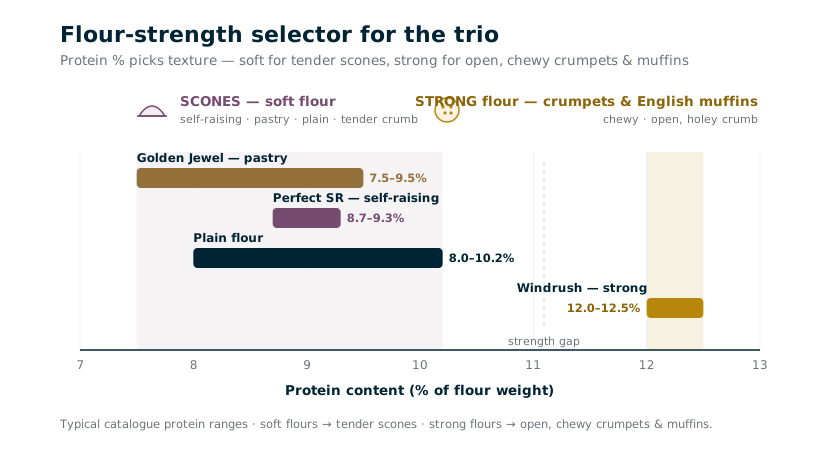
The single biggest quality lever across the trio is protein content, because protein sets how much gluten the dough can build (cross-link A1-protein-gluten-and-strength and A1-wheat-flour-types-by-application).
- Scones want a soft, low-protein flour so the crumb stays short and tender and does not toughen from over-mixing. The catalogue self-raising flour is 8.7–9.3% protein; Whitworth's "Golden Jewel" pastry flour is 7.5–9.5% (target 8.5%); ADM's plain flour is 8.0–10.2% (target 9.1%). Any of these, plus baking powder, gives a proper scone.
- Crumpets and English muffins want a strong, high-protein flour so the batter/dough can build the stretchy gluten network that traps gas and holds the holes and the open crumb. The catalogue's Matthews "Windrush" strong white is 12.0–12.5% protein, water absorption 55–61%, Hagberg falling number 250–400. That high water absorption is exactly what you want for a wet crumpet batter (cross-link A1-key-quality-parameters for how to read Hagberg and water-absorption figures). See the flour selector in b7scm-09.
A note on reading a UK flour spec: the protein figure is quoted as N × 5.7 (the wheat-specific nitrogen factor), so it reads a touch lower than the N × 6.25 used for some ingredients — don't compare the two directly.
3. The regulation under every British bake (home-market essential)
Every scone, crumpet and English muffin made with white or brown wheat flour in the UK sits on top of a mandatory-fortification regime. This is not optional and it is not a marketing point — it is law, and it is the thing a UK environmental-health officer will check first. Get it right. See the fortification summary in b7scm-10.
3.1 The Bread and Flour Regulations 1998
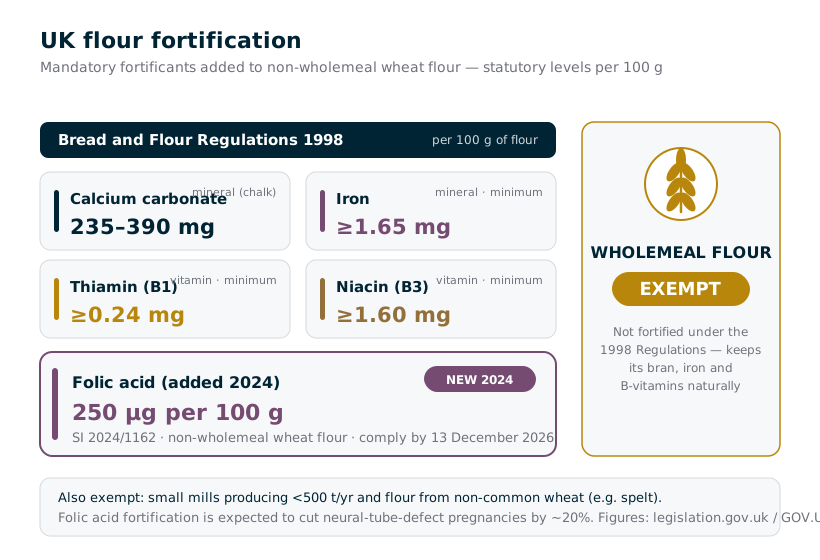
Under the Bread and Flour Regulations 1998, four nutrients must be added to almost all UK wheat flour, to statutory minima per 100 g of flour:
| Nutrient | Statutory level per 100 g flour |
|---|---|
| Calcium carbonate (chalk) | not less than 235 mg and not more than 390 mg |
| Iron | not less than 1.65 mg |
| Thiamin (vitamin B1) | not less than 0.24 mg |
| Nicotinic acid / nicotinamide (niacin, B3) | not less than 1.60 mg |
Wholemeal flour is exempt (it retains these micronutrients naturally through milling), and calcium is not added to certain flours that already carry it. You can see this regime alive in the spec sheets: two of the catalogue's flour data sheets explicitly state their calcium/vitamin additions "comply with the Bread and Flour Regulations 1998" (Whitworth Golden Jewel and Matthews Windrush), and the fortification is visible in the nutrition panels — ADM plain flour lists calcium 180 mg, iron 2.5 mg, niacin 2.45 mg, thiamin 0.26 mg per 100 g, and Matthews strong white lists calcium 300 mg, iron 2.10 mg, niacin 2.30 mg, thiamin 0.32 mg per 100 g. (Read the calcium figure with care: a nutrition panel may express calcium either as elemental calcium or as the mass of calcium carbonate added, and the two panels here do not appear to use the same basis. ADM's 180 mg reads as elemental calcium; Matthews' 300 mg can only be calcium-carbonate mass, because the statutory maximum of 390 mg carbonate is just ~156 mg of elemental calcium — so a "300 mg" elemental figure would be impossible for a compliant white flour. The lesson: don't compare a panel's calcium number straight against the regulation's carbonate range without first checking which basis the panel uses.)
3.2 The 2024 amendment: folic acid
The big recent change: The Bread and Flour (Amendment) (England) Regulations 2024 (SI 2024/1162) add a fifth mandatory fortificant — folic acid at 250 micrograms per 100 g of non-wholemeal wheat flour. Key points a UK baker must know:
- Compliance deadline: 13 December 2026 — most UK millers made the change during 2025, so your flour is likely already fortified. Stock lawfully placed on the market or labelled before that date may be sold until exhausted.
- Exemptions: wholemeal flour, small mills producing under 500 tonnes/year, and flour from non-common wheat (spelt, durum, einkorn, etc.).
- Public-health rationale: the addition is projected to cut neural-tube-defect pregnancies (spina bifida and anencephaly) by around 20% in the UK.
- Labelling: there is no separate grace period for labels — once you receive fortified flour, your ingredient declarations must reflect folic acid.
- The amendment does more than add folic acid: alongside folic acid, the 2024 reform is understood to also revise the other fortification levels — raising the iron and niacin minima (towards a 15% Nutrient Reference Value) and introducing a maximum on added calcium carbonate. So treat the 1998 figures in §3.1 as the long-standing baseline rather than necessarily the exact numbers that will apply after full compliance. Confirm the current statutory levels against legislation.gov.uk and your miller before relying on them.
The practical upshot for the teatime bench: because these products are flour-forward and lightly enriched, the flour you buy already carries calcium, iron, thiamin, niacin and (now) folic acid. You are, quietly, selling a fortified product. The deeper treatment of British flour grades and this regulation is the sister article B7-flour-landscape.
3.3 Where these bakes sit in the two big UK bread debates
Two national debates frame British baking, and it is worth knowing exactly where scones, crumpets and muffins land:
- The Chorleywood Bread Process (CBP). Developed in 1961 at the (then) British Baking Industries Research Association in Chorleywood, CBP makes bread fast by substituting intense high-speed mechanical mixing (~11 W·h/kg), extra yeast, an oxidant (ascorbic acid, E300) and hard fat for long fermentation, letting bakers use lower-protein British wheat and take flour to a wrapped, sliced loaf in about 3½ hours. It accounts for roughly 80% of UK (factory) bread. Industrial English muffins are often made on no-time-dough / CBP-style systems; craft crumpets and muffins use a proper bulk ferment. The mixing-method contrast is covered in A5-dough-mixing-methods and the sister article B7-chorleywood-vs-craft.
- The "sourfaux" / Sourdough Code of Practice debate. In January 2023 the Association of Bakery Ingredient Manufacturers published a voluntary, non-binding UK Code of Practice that permits "sourdough" labelling even with added baker's yeast and additives; the Real Bread Campaign calls this "sourfaux" and wants a legal definition of sourdough (an "Honest Crust Act"). Scones, crumpets and English muffins are chemically- or baker's-yeast-leavened and are not sold as sourdough, so they sit outside this debate — but a baker who does make a long-fermented "sourdough crumpet" should be aware the "sourdough" word is currently unprotected. See B7-sourdough-real-bread.
4. Scones
4.1 The rubbing-in method
A scone is a chemically-leavened quick bread built by the rubbing-in method (cross-link A4-fat-types-and-selection and A8-cake-and-pastry-formulas):
- Weigh dry: self-raising flour, a little extra baking powder for insurance, caster sugar, salt. (Using self-raising flour and a top-up of baking powder is standard UK practice for maximum lift.)
- Rub in cold butter with fingertips until the mix looks like coarse breadcrumbs. Cold, solid fat is essential — those flecks of fat melt in the oven and steam-lift the crumb; the butter must not smear (cross-link A4-butter-grades-and-specialist-types; the catalogue's Polmlek 82% butter is the workhorse ).
- Add liquid (milk, or buttermilk for tenderness and tang) and bring together with a light hand. Minimal handling is the whole game — every extra turn develops gluten from the (already soft) flour and toughens the scone.
- Roll to ~2 cm thick, cut straight down with a floured cutter, and — the classic instruction — do not twist the cutter, or you seal the cut edge and the scone rises lopsided.
- Egg-wash the tops only (not the cut sides, for the same reason), and bake hot: ~200–220°C conventional (~180–200°C fan) for ~10–15 minutes. High heat sets the crust and drives a fast, even rise before the gas escapes; the crumb browns via the Maillard reaction and starch gelatinisation (cross-link A5-baking-oven-science). See the method and the "cut straight down" rise in b7scm-07.
4.2 Variations that sell
- Fruit scones — fold sultanas or currants through at the end. The catalogue's Chelmer Turkish sultanas are 99.5% fruit + 0.5% sunflower oil, ~275 kcal, moisture 12–16%; currants give a sharper, smaller-fruit result. Add fruit last and gently so it doesn't streak the dough.
- Cheese scones — drop the sugar, add mature grated cheese (and often a pinch of mustard powder and cayenne); best with a stronger cheese for flavour that survives baking. Reserve a little cheese for the tops.
- Drop scones / Scotch pancakes — not oven scones at all but a baking-powder batter cooked on a griddle, a Scottish tradition tied to the bannock (cross-link B7-regional-breads-map). Mix late, cook fast — a textbook single-acting bake.
Fault-finding for flat, tough or lopsided scones is covered in the fault table below.
5. The cream-tea format
The cream tea — scones with clotted cream, jam and tea — is the format your Devon and Cornish customers will judge to the millimetre, so a UK baker should get the facts and the assembly right. By a widely-repeated but thinly-documented tradition, bread eaten with cream and jam is said to date to Tavistock Abbey, Devon, in the 11th century — an origin story Devon leans on, though it is heritage colour rather than settled history. See the cream-tea hero in b7scm-01 and the assembly diagram in b7scm-08.
5.1 Clotted cream and the PDO
Authentic cream tea uses clotted cream, not whipped cream. Cornish clotted cream holds Protected Designation of Origin (PDO) status (applied 1993, granted 1998) and must be made from Cornish milk with a minimum 55% butterfat. That thick, crusted, high-fat cream is the point of the exercise.
Authenticity / sourcing flag for Domson buyers: the catalogue's UHT "double cream" lines are not clotted cream. The OSM Bieruń "Double Cream Bieruńska UHT 33%" is a 33% (±2) whipping-grade product that is actually a milk + cream + vegetable-fat (palm-coconut) blend with cellulose/carrageenan stabilisers, and the Laktopol line is likewise 33%. For reference, UK cream grades run clotted ≥55%, double ≥48%, whipping ~35%, single ≥18% butterfat. So: the catalogue's UHT creams are fine for whipped toppings and fillings, but a genuine cream tea needs a specialist ≥55% clotted cream that is not currently in the Domson range — worth raising with buying.
5.2 Devon vs Cornwall — get the order right
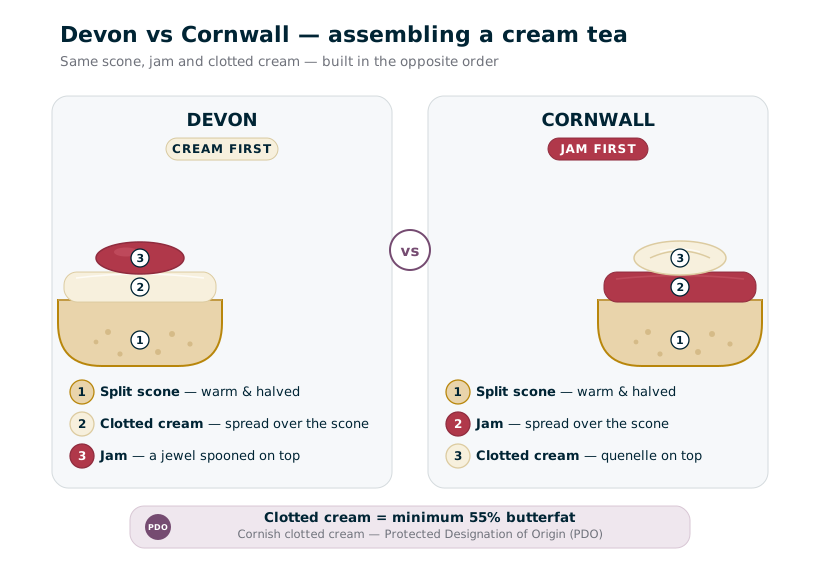
The famous split is about assembly order:
- Devon method: clotted cream first (spread like butter), then a spoon of jam on top.
- Cornwall method:jam first, then clotted cream on top.
In practice both are eaten happily across both counties, but if you are labelling or plating for a heritage tea room, match the local convention. For the jam, a genuine UK-made preserve reads as authentic: the catalogue's Flemings Strawberry Crushed Jam (Country of Origin: UK) is granulated sugar 38.45% + glucose syrup 38.45% + strawberry purée 35.37%, set with pectin (E440), pH ~3.2, ~71 °Brix soluble solids — a classic seeded strawberry jam, the default cream-tea partner alongside raspberry.
6. Crumpets
6.1 Batter, not dough
The defining fact: a crumpet is made from a pourable batter, not a kneadable dough — closer to a thick pancake mix — and it is griddle-cast in a ring, not baked. The holes are the whole point, and they come from a two-stage leavening:
- Yeast ferment. Beat a batter of strong flour (for the stretch and gas-holding the holes need; some formulas cut in a little plain flour for softness), water/milk, salt and fresh yeast until smooth and elastic — beating develops the protein so bubbles can form and hold. The catalogue's Lesaffre "Benevia" fresh yeast (Saccharomyces cerevisiae, dry matter >29%, fermentative activity 125 ± 10 ml CO₂, 35-day shelf life at 1–10°C) is a straight fit (cross-link A2-yeast-types-comparison and A2-yeast-fermentation-science). Cover and rest until risen and bubbly (about an hour), so the surface is alive with popping bubbles.
- Bicarbonate knock-back. Stir in a little bicarbonate of soda dissolved in tepid water (plus salt) and slacken to a thick dropping consistency. This second, chemical kick drives the extra gas that pushes the classic holes up through the top as it cooks.
6.2 Griddle technique
- Grease the inside of 7–8 cm metal crumpet rings and set them on a moderately hot, lightly greased griddle or bakestone.
- Half-fill each ring with batter. As it heats, gas bubbles rise and burst on the surface, leaving open holes; the top gradually sets from wet to matte. You can speed things by pricking stubborn bubbles.
- The crumpet is ready on the first side when the top is almost set and the holes stay open rather than filling back with batter — then lift the ring and give the top a brief flip to dry it. Total ~8–10 minutes, mostly on the base.
- A pikelet is the same batter cooked without a ring — a flatter, free-form holey cake.
See the crumpet process flow in b7scm-06, the finished holey top in b7scm-02, and the muffin–crumpet–pikelet family tree in b7scm-05. Crumpet faults — no holes, gummy centre, tops that won't set — are covered in the fault table below.
7. English muffins
7.1 Dough on a griddle
An English muffin is the crumpet's opposite number in the same family: a soft, lightly-enriched yeast dough (not a batter), griddle-baked on both sides (not oven-baked). The name's origin is uncertain: an often-repeated (folk) derivation is Old French moufflet, "soft," just as the crumpet's is sometimes traced to Welsh crempog, "pancake" — but lexicographers treat both origins as obscure, so take them as tradition rather than settled fact.
- Make a slack, lightly-enriched dough — strong flour, water and/or milk, salt, fresh yeast and a little butter and sugar (scalding the milk first helps the crumb and moisture retention). Keep it wetter than a bread dough (cross-link A8-enriched-dough-formulas).
- Knead minimally and bulk-ferment — under-kneading keeps the crumb open, which you want.
- Shape into rounds, dust with semolina, cornmeal or rice cones, and prove. The dusting is the muffin's signature coating and stops sticking on the griddle.
- Griddle-bake on both sides on a moderate bakestone until set and browned top and bottom, finishing in a cool oven only if the centres need it. Cooking on a griddle lets the dough expand sideways, which — together with the slack dough and light kneading — builds the open "nooks and crannies" crumb.
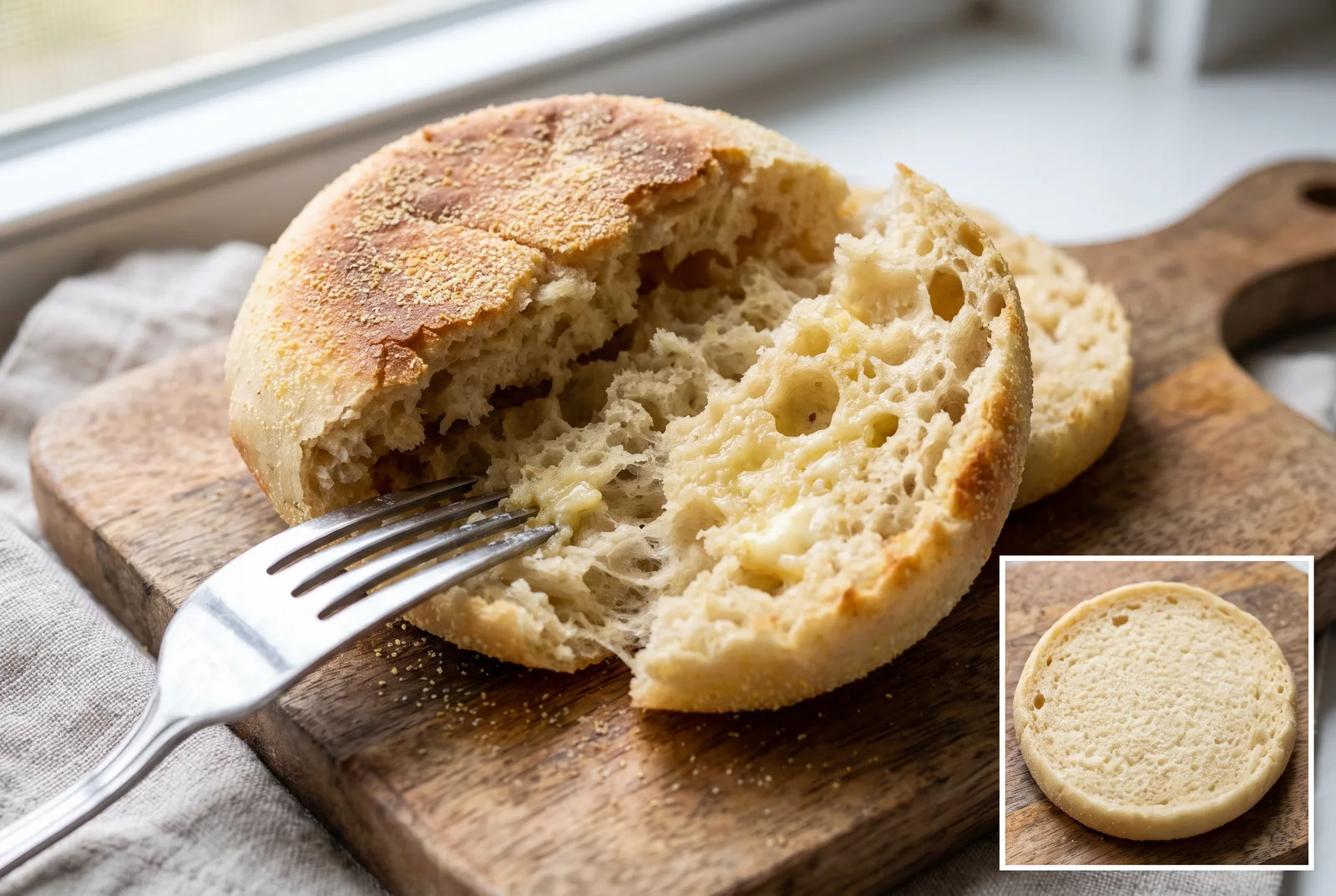
- Split with a fork, not a knife — pushing fork tines around the equator tears rather than cuts, exposing the craggy interior that catches butter.
See split-open muffins in b7scm-03 and a nooks-and-crannies close-up in b7scm-11. Strong flour (Matthews Windrush, 12.0–12.5% protein, WA 55–61%) is again the right choice; at industrial scale, muffins are frequently produced on Chorleywood-style no-time systems (§3.3), but a craft muffin rewards a real ferment.
8. Buy it from Domson (home-market shopping list)
A British teatime bench, mapped to the catalogue (full spec numbers in the table below):
- Scone flour (soft): Allied Mills Perfect Self Raising Flour, ADM Domson Plain Flour, Whitworth Golden Jewel Pastry Flour.
- Crumpet / muffin flour (strong): Matthews Windrush Strong White, Allied Mills Coniston / Pennine Strong White, Carr's Titan / Topspin.
- Leaveners: Domson Baking Powder, CSM (Bakemark) Pell Premium Baking Powder, Emix Bicarbonate of Soda, Dawn Skylark Cream of Tartar Substitute.
- Fats & dairy: Polmlek Unsalted Butter 82%, Mlekpol Buttermilk, milk and (for toppings/fillings, not clotted cream) UHT double cream.
- Fruit & finish: Chelmer Turkish Sultanas and Currants; James Fleming Strawberry Crushed Jam (UK); Kent Foods Caster Sugar; liquid egg for wash.
- Yeast (crumpets/muffins): Lesaffre Benevia Fresh Yeast, Lallemand Fermipan Red dried yeast.
- Muffin dusting: semolina or Yellow Maize Grits (Polenta).
9. Food safety, allergens and nutrition
- Cereals containing gluten are present in every product in this dossier (wheat flour), and — importantly — baking powder and self-raising flour also declare gluten, because they use a wheat-flour carrier (Domson, CSM and Dawn all list wheat/gluten). There is no such thing as a "gluten-free" scone made with these products.
- Milk is an allergen in the butter, buttermilk and cream (Polmlek 82% butter and the UHT creams declare milk incl. lactose); egg enters via the egg-wash glaze.
- Sulphites. The Chelmer sultana sheet declares the fruit not sulphited but notes SO₂/sulphites are handled on the same site (cross-contamination); separately, the fresh-yeast sheet notes sulphites present in the molasses used in its production. Because Turkish/golden sultanas are commonly treated with sulphur dioxide — a mandatory-declaration allergen above 10 mg/kg — treat the "not sulphited" status as batch-specific: verify it against the actual Certificate of Analysis, and never carry it across to a substitute sultana, raisin or glacé line.
- Substitution risk: swapping in a filled cream, a compound "chocolate," a flavoured buttermilk or a jam with added ingredients can introduce undeclared allergens — re-check every spec when you change a supplier line.
- Labelling (Natasha's Law / PPDS). These teatime bakes are frequently sold prepacked for direct sale (PPDS) or loose over a counter; under UK law that carries specific allergen-labelling duties (PPDS items need a full ingredient list with the 14 regulated allergens emphasised). Confirm the labelling route for your sales channel with the food-safety lead before sale.
- Nutrition / fortification: as covered in §3, the flour already carries mandatory calcium, iron, thiamin, niacin and (from 2026) folic acid; note the 2024 amendment is also understood to revise the iron/niacin minima and add a calcium maximum (§3.2), so the exact statutory figures should be confirmed before compliance.
Cross-links at a glance
Pillar A craft concepts: A2-chemical-leaveners-baking-powder · A2-yeast-types-comparison · A2-yeast-fermentation-science · A1-protein-gluten-and-strength · A1-wheat-flour-types-by-application · A1-key-quality-parameters · A5-baking-oven-science · A5-dough-mixing-methods · A4-fat-types-and-selection · A4-butter-grades-and-specialist-types · A8-bakers-percentage-fundamentals · A8-cake-and-pastry-formulas · A8-enriched-dough-formulas.
Sister British (B7) articles: B7-flour-landscape · B7-chorleywood-vs-craft · B7-regional-breads-map · B7-sourdough-real-bread · B7-enriched-teatime-bakes.
Figures
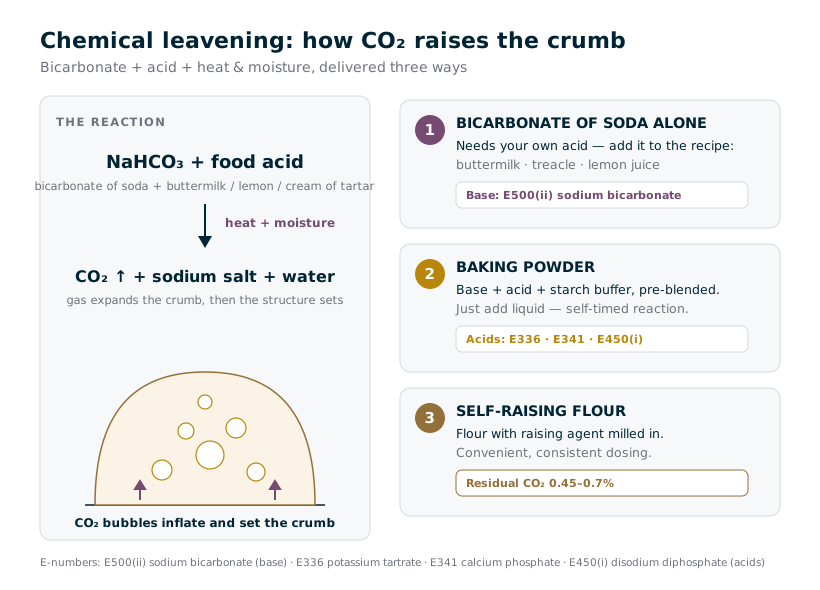 Diagram of the bicarbonate-plus-acid reaction and the three leavening delivery formats
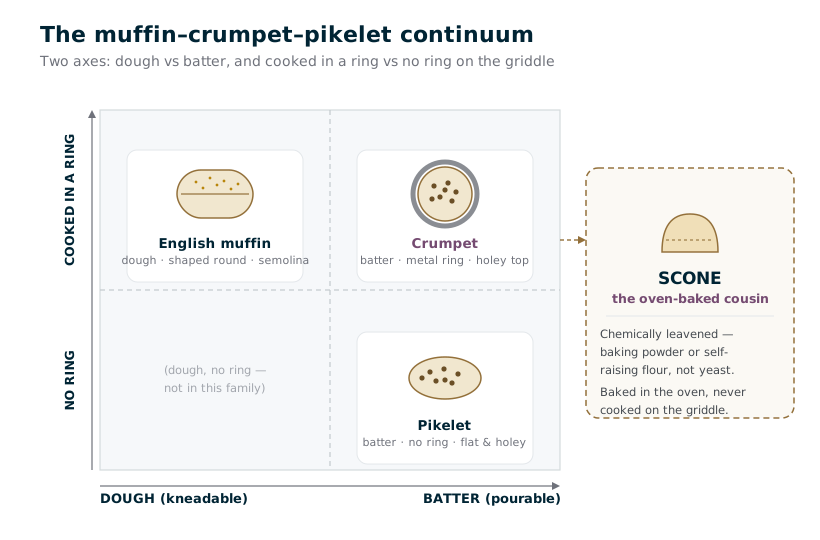 Chart placing English muffin, crumpet and pikelet by dough-vs-batter and ring-vs-no-ring
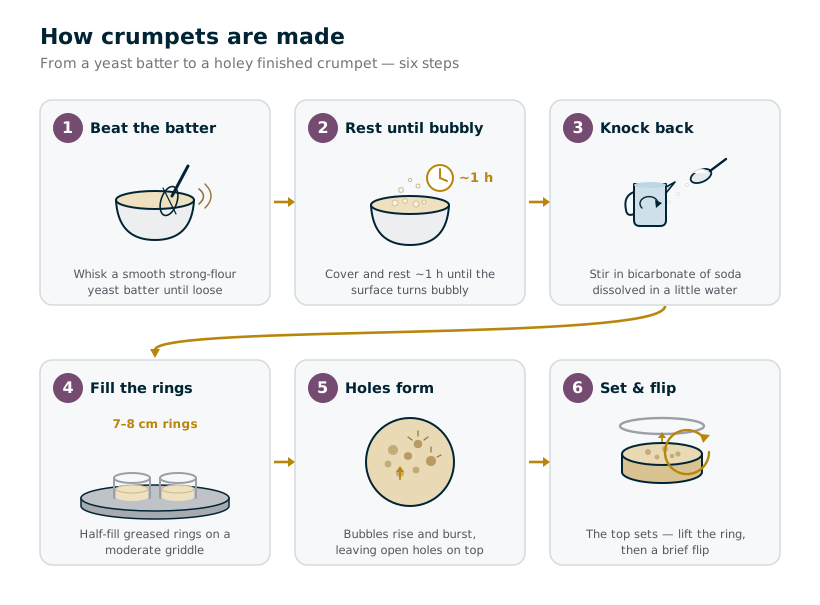 Six-step diagram of making crumpets from batter to holey finished crumpet
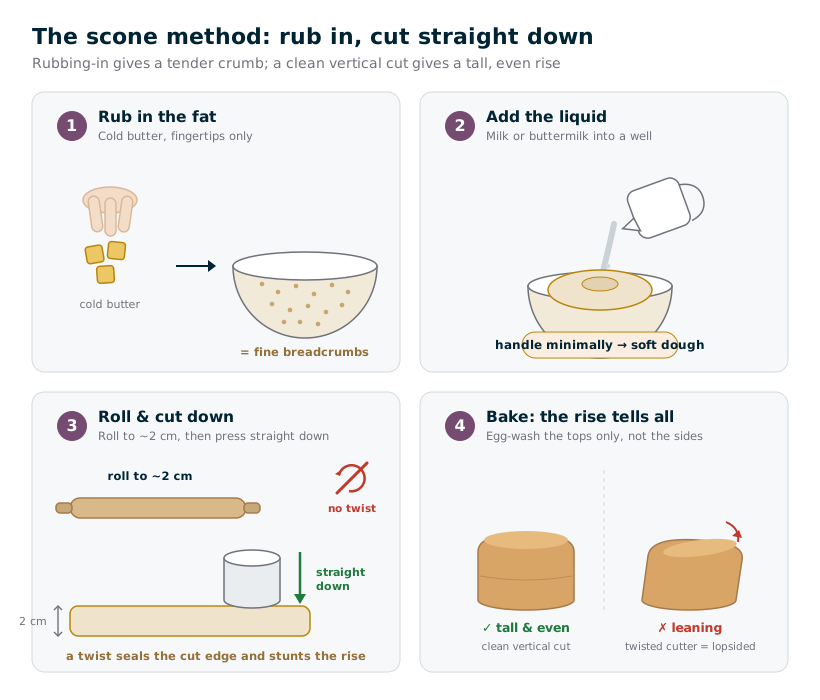 Diagram of the scone rubbing-in method and cutting straight down for an even rise
 Side-by-side diagram of Devon cream-first and Cornwall jam-first scone assembly
 Protein scale showing soft flour for scones and strong flour for crumpets and muffins
 Infographic of UK mandatory flour fortification levels including the 2024 folic acid addition
Classic English (plain) scones
| Ingredient | Baker's % | Weight |
|---|---|---|
| Self-raising flour (soft, ~9% protein) — Allied Mills Perfect Self Raising | 100 | |
| Baking powder (top-up for lift) — ~1 kg per 32 kg flour is a supplier guide | 3 | |
| Caster sugar — Kent Foods caster sugar | 12 | |
| Unsalted butter (cold, 82%) — Polmlek 82% butter; rub in cold | 22 | |
| Milk or buttermilk — Buttermilk pH 3.7–4.6 for tenderness | 50 | |
| Salt | 1.2 | |
| Egg wash (tops only) — Do not wash cut sides — seals the rise |
Yield: ~10–12 scones at ~60 g
Fruit scones (variation)
| Ingredient | Baker's % | Weight |
|---|---|---|
| Plain-scone base (as above) | 100 | |
| Sultanas or currants — Chelmer Turkish sultanas 99.5% fruit; currants for a sharper note | 25 |
Yield: ~10–12 scones
Cheese scones (savoury variation)
| Ingredient | Baker's % | Weight |
|---|---|---|
| Self-raising flour | 100 | |
| Baking powder | 3 | |
| Unsalted butter (cold) | 22 | |
| Mature grated cheese — Stronger cheese survives baking; reserve ~10% for tops | 40 | |
| Milk | 50 | |
| English mustard powder — Optional flavour lift | 1 | |
| Salt — Watch total salt — cheese is salty | 1.2 |
Yield: ~10 scones
Drop scones / Scotch pancakes (griddle)
| Ingredient | Baker's % | Weight |
|---|---|---|
| Plain flour (soft) — ADM Domson Plain | 100 | |
| Baking powder | 5 | |
| Caster sugar | 12 | |
| Egg | 25 | |
| Milk (to a thick dropping batter) — Or buttermilk + a pinch of bicarb | 90 | |
| Salt | 1 |
Yield: ~16 small pancakes
Crumpets (yeast + bicarb batter, ring-cast)
| Ingredient | Baker's % | Weight |
|---|---|---|
| Strong white flour (~12.5% protein) — Matthews Windrush; high WA suits a wet batter | 100 | |
| Water + milk (to a thick pourable batter) — Very loose vs a dough | 90 | |
| Fresh yeast — Lesaffre Benevia fresh yeast | 3 | |
| Salt | 1.5 | |
| Caster sugar — Optional; feeds the ferment | 1 | |
| Bicarbonate of soda (dissolved, second stage) — Emix bicarbonate; drives the top holes | 0.6 |
Yield: ~10 crumpets in 7–8 cm rings
English muffins (lightly-enriched griddle dough)
| Ingredient | Baker's % | Weight |
|---|---|---|
| Strong white flour (~12.5% protein) — Matthews Windrush | 100 | |
| Milk (scalded, for crumb & moisture) — Keep the dough slack | 62 | |
| Fresh yeast — Lesaffre Benevia | 3 | |
| Unsalted butter (82%) — Light enrichment | 6 | |
| Caster sugar | 3 | |
| Salt | 2 | |
| Semolina / cornmeal (for dusting) — Signature coating; stops griddle sticking |
Yield: ~10 muffins
The three products separated by leavening, flour, format and heat. This is the mental model for the whole dossier.
| Attribute | Scone | Crumpet | English muffin |
|---|---|---|---|
| Leavening | Chemical: baking powder / self-raising flour (± buttermilk + bicarb) | Yeast + a bicarbonate-of-soda knock-back (two-stage) | Yeast (bulk ferment; industrial often no-time/CBP) |
| Mix state | Rubbed-in soft dough (short) | Pourable BATTER | Slack, lightly-enriched DOUGH |
| Flour | Soft / low protein ~7.5–10% | Strong / high protein ~12–12.5% | Strong / high protein ~12–12.5% |
| Cook method | OVEN, hot (~200–220°C) | GRIDDLE in a ring, one side + brief flip | GRIDDLE both sides (no oven) |
| Signature | Tender rise; cut straight down | Open holes on top; chewy | Nooks & crannies; fork-split |
| Ring used? | Cutter (no ring on griddle) | Yes — 7–8 cm metal rings | Optional shaping ring; dusted semolina/cornmeal |
| Served | Cream tea: clotted cream + jam | Toasted with butter | Split, toasted, buttered |
One reaction (bicarbonate + acid + heat → CO2), packaged four ways. Choose by how much you want the mill/supplier to have pre-blended.
| Format | What is in it | You add | Best for |
|---|---|---|---|
| Bicarbonate of soda alone | Sodium bicarbonate E500(ii), ≥99.3% | Your own acid (buttermilk, treacle, lemon) | Soda bread, drop scones, gingerbread |
| Baking powder | Base + acid(s) + starch/flour buffer; e.g. E500(ii)+E450(i)+wheat flour | Nothing but the powder | Scones, cakes, top-up lift |
| Self-raising flour | Flour + built-in raising agent; 96.9% flour + 0.4% fortificant + 2.7% baking powder | Just weigh flour | Scones, everyday cakes (residual CO2 0.45–0.7%) |
| Bicarb + acidic dairy | Bicarbonate + cultured buttermilk (pH 3.7–4.6) | Balance soda to acid | Tender scones, Scotch pancakes, soda bread |
The base is always bicarbonate; the acid sets the speed and flavour. Speed governs how quickly you must bake after mixing.
| Acid | E-number | Speed | Where used / notes |
|---|---|---|---|
| Cream of tartar (potassium bitartrate) | E336 | Fast (reacts on wetting) | Traditional home baking powder; clean taste; bake promptly |
| Monocalcium phosphate (MCP) | E341 | Moderate | Inside much self-raising flour (see E341 on the spec) |
| Disodium diphosphate / SAPP | E450(i) | Moderate–fast; enables double-acting | Workhorse commercial baking-powder acid (Domson, CSM); the Dawn 'cream of tartar substitute' is a fast E450(i) powder |
| Sodium aluminium phosphate (SALP) | E541 | Slow (heat-triggered) | Largely phased out of UK/EU baking powders; modern powders are aluminium-free |
Match protein to the job: soft for tender scones, strong for holey crumpets and open muffins. Figures are from first-party catalogue spec sheets.
| Catalogue flour | Protein % (N×5.7) | Water absorption % | Best use |
|---|---|---|---|
| Allied Mills Perfect Self Raising | 8.7–9.3 | 52.6–55.2 | Scones (raising agent built in) |
| Whitworth Golden Jewel Pastry | 7.5–9.5 (t 8.5) | n/s | Scones, pastry, cakes (very soft) |
| ADM Domson Plain | 8.0–10.2 (t 9.1) | 50–56 | Scones with added baking powder; general |
| Matthews Windrush Strong White | 12.0–12.5 (t 12.2) | 55–61 (t 58) | Crumpets & English muffins (holes, open crumb) |
Applies to almost all UK wheat flour under every scone, crumpet and muffin. Wholemeal is exempt. Get these right — it is the law. Note: the 2024 amendment is understood to also revise the iron/niacin minima and add a calcium-carbonate maximum, so confirm the current statutory levels against legislation.gov.uk before compliance.
| Nutrient | Statutory level per 100 g flour | Since | Notes |
|---|---|---|---|
| Calcium carbonate (chalk) | 235–390 mg | 1998 (roots in WWII) | Not added to certain flours already carrying calcium |
| Iron | ≥1.65 mg | 1998 | Restores milling losses |
| Thiamin (B1) | ≥0.24 mg | 1998 | Restores milling losses |
| Niacin (nicotinic acid/nicotinamide, B3) | ≥1.60 mg | 1998 | Restores milling losses |
| Folic acid | 250 µg | 2024 amendment (SI 2024/1162) | Non-wholemeal wheat flour; compliance by 13 Dec 2026; ~20% fewer neural-tube defects; small mills <500 t/yr & non-common wheat exempt |
A genuine cream tea uses clotted cream. The catalogue's UHT 'double creams' are whipping-grade (one is a vegetable-fat blend) — fine for toppings, not for clotted cream.
| Cream | Minimum butterfat | Catalogue status / use |
|---|---|---|
| Clotted cream (Cornish PDO) | 55% | NOT in range — specialist product a real cream tea needs |
| Double cream | 48% | Not in range at true 48% |
| Whipping cream | ~35% | Nearest match to catalogue UHT creams |
| Catalogue UHT 'Double Cream' (OSM Bieruń / Laktopol) | 33% (±2) | Whipping-grade; OSM Bieruń is a milk/cream + vegetable-fat (palm-coconut) blend with stabilisers — toppings & fillings only |
| Single cream | 18% | n/a |
The order of jam and clotted cream is a regional identity marker. Match the local convention when plating for heritage tea rooms.
| County | Order | Look |
|---|---|---|
| Devon | Clotted cream FIRST (like butter), then jam | Cream layer under a jewel of jam |
| Cornwall | Jam FIRST, then clotted cream on top | Cream crowning the jam |
| In practice | Both are eaten across both counties | Origin traced to Tavistock Abbey, Devon, 11th c. |
| Fault | Likely cause | Fix |
|---|---|---|
| Flat, dense, no rise | Over-worked dough (gluten toughened); raising agent spent or old; oven too cool | Handle minimally; add fresh baking powder to self-raising flour; bake at 200–220°C |
| Lopsided / leaning rise | Cutter twisted, sealing the edge; uneven rolling | Push cutter straight down; roll to even ~2 cm |
| Tough, bready crumb | Too much handling; flour too strong | Use soft/self-raising flour ~9% protein; stop mixing when just combined |
| Soapy / bitter aftertaste, yellow patches | Excess bicarbonate not neutralised by acid | Balance soda to the recipe acid, or use baking powder |
| Pale tops | No egg wash; oven too cool | Egg-wash tops only; raise heat |
| Fault | Likely cause | Fix |
|---|---|---|
| No holes / few holes | Batter too thick; underproofed; griddle too cool; not enough bicarb | Slacken to a thick pouring batter; rest until bubbly; add the bicarb knock-back; heat the griddle |
| Holes fill back in / gummy top | Griddle too hot (base sets before top); batter too wet; too little protein | Lower griddle heat; use strong flour; adjust hydration |
| Batter runs under the ring | Ring not greased/seated; batter too thin | Grease and seat rings; thicken batter slightly |
| Sour / over-ripe flavour | Batter over-fermented | Shorten the yeast rest; keep cooler |
| Tough / rubbery | Over-beaten with weak flour, or under-rested | Beat to develop then rest; use strong flour |
| Fault | Likely cause | Fix |
|---|---|---|
| Tight, closed crumb (no nooks/crannies) | Dough too stiff; over-kneaded; underproofed | Keep dough slack/wet; knead minimally; ferment fully |
| Raw centre / burnt outside | Griddle too hot | Lower heat; finish briefly in a cool oven if needed |
| Sticks to griddle | No semolina/cornmeal dusting; griddle not seasoned | Dust rounds; season/grease the bakestone |
| Splits badly / dense when opened | Cut with a knife; underproofed | Fork-split around the equator; prove fully |
| Squat, spread too much | Dough far too wet or over-proofed | Tighten hydration slightly; shorten final proof |
- Build:
- 96.9% wheat flour + 0.4% Creta Plus fortificant + 2.7% baking powder (185M)
- Raising agents declared:
- E500 (sodium bicarbonate) + E341 (calcium phosphate)
- Protein percent:
- 8.7–9.3 (N×5.7)
- Hagberg falling number:
- min 150
- Water absorption percent:
- 52.6–55.2
- Residual CO2 chittick percent:
- 0.45–0.7
- Energy kcal 100g:
- 332
- Shelf life:
- 12 months
- Allergens:
- Cereals containing gluten (wheat)
- Ingredients:
- Raising agents: sodium hydrogen carbonate E500(ii), disodium diphosphate E450(i), wheat flour
- Total phosphate as P2O5 percent:
- 18.02–18.45
- Suggested dosage:
- ~1 kg per 32 kg flour (~3% on flour)
- Shelf life:
- 9 months
- Salt 100g:
- 41.1 g
- Allergens:
- Cereals containing gluten (wheat flour carrier)
- Country of origin:
- United Kingdom
- Ingredients:
- Raising agent: Diphosphates (E450i), Sodium carbonates (E500ii), WHEAT FLOUR (Calcium carbonate; Iron; Niacin; Thiamine)
- Available CO2 percent:
- 17.5–18.5
- Energy kcal 100g:
- 69
- Salt 100g:
- 48.7 g
- Aluminium max mg kg:
- 200
- Diet:
- Vegan; halal-certified; kosher-certified; NOT suitable for coeliacs
- Shelf life:
- 365 days
- Allergens:
- Cereals containing gluten (wheat)
- Ingredient:
- Sodium bicarbonate E500(ii), without anti-caking agent
- Main component min percent:
- 99.3
- Sodium carbonate max percent:
- 0.5
- pH 1pct solution max:
- 8.5
- Sodium per 100g:
- 27.37 g (salt-equivalent 68.4 g/100g)
- Energy kcal 100g:
- 0
- Shelf life:
- 24 months
- Origin:
- Turkey
- Allergens:
- None in product (gluten cross-contamination only)
- Legal name:
- Baking Powder
- Description:
- Fast-acting baking powder; for self-raising flour and general baking
- Composition:
- Raising agent: disodium diphosphate E450(i); WHEAT flour (with calcium, iron, niacin, thiamin); salt
- Salt 100g:
- 43 g
- Shelf life:
- 12 months
- Allergens:
- Cereals containing gluten (wheat)
- Ingredient:
- Wheat Flour (Wheat Flour, Calcium Carbonate, Niacin, Iron, Thiamin)
- Protein percent:
- 8.0–10.2 (target 9.1, N×5.7)
- Moisture percent:
- 13.7–15.0
- Water absorption percent:
- 50–56
- Fortification per 100g:
- Calcium 180 mg, Iron 2.5 mg, Niacin 2.45 mg, Thiamin 0.26 mg
- Note:
- Statutory fortification compliant with UK & EU regulations; vital wheat gluten may be added to meet protein
- Shelf life:
- 12 months
- Allergens:
- Cereals containing gluten (wheat)
- Description:
- Blended soft pastry flour (wheat 99.645% + calcium carbonate + Vitamix + maize flour)
- Ingredient:
- Wheat Flour, Maize Flour, Calcium carbonate, Niacin, Iron, Thiamine
- Protein percent:
- 7.5–9.5 (target 8.5)
- Moisture percent:
- 13.0–15.0
- Regulatory note:
- Calcium carbonate and Vitamix added to comply with the Bread and Flour Regulations 1998 and the 15% NRV minimum in EU Reg 1169/2011
- Allergens:
- Cereals containing gluten (wheat), maize
- Ingredient:
- Wheat Flour [Wheat Flour, Calcium Carbonate, Iron, Niacin (B3), Thiamin (B1)]
- Protein percent:
- 12.0–12.5 (target 12.2, N×5.7)
- Moisture percent:
- 13.5–15.0
- Hagberg falling number:
- 250–400 (target 350)
- Water absorption percent:
- 55–61 (target 58)
- Fortification per 100g:
- Calcium 300 mg, Iron 2.10 mg, Niacin 2.30 mg, Thiamin 0.32 mg, Folate 31 µg (natural)
- Additives note:
- Statutory flour additives per the Bread and Flour Regulations 1998 and amendments; Creta Plus 0.31%; vital wheat gluten <1.5%
- Shelf life:
- 9 months
- Allergens:
- Cereals containing gluten (wheat)
- Ingredient:
- Pasteurized cream
- Fat percent:
- min 82
- Water percent:
- 16
- Energy kcal 100g:
- 744
- Saturated fat 100g:
- 55 g
- Salt 100g:
- 0.20 g
- Storage:
- 0–10°C max 60 days; frozen -18 to -22°C 12 months
- Allergens:
- Milk (incl. lactose)
- Ingredients:
- Buttermilk, milk, live milk bacterial cultures
- pH:
- 3.7–4.6
- Fat percent:
- 1.5 (±1)
- Non fat dry matter min percent:
- 8.5
- Energy kcal 100ml:
- 48
- Protein 100ml:
- 3.5 g
- Calcium 100ml:
- 130 mg
- Allergens:
- Milk (incl. lactose)
- Description:
- Cream-based blend enriched with vegetable fat, UHT — industrial confectionery/ice-cream use
- Ingredients:
- Milk, Cream, Vegetable Fat (Palm-Coconut), Stabilizer (cellulose, carrageenan), Flavouring, Colouring (carotenes)
- Fat percent:
- 33 (±2)
- Energy kcal 100g:
- 315
- Authenticity note:
- Whipping-grade blend, NOT clotted cream (which is a dairy-only ≥55% butterfat product)
- Allergens:
- Milk
- Ingredients:
- Sultanas 99.5%, Sunflower Oil 0.5% (free-flowing agent)
- Origin:
- Turkey
- Energy kcal 100g:
- 275
- Sugars 100g:
- 69.4 g
- Moisture percent:
- 12–16
- Allergens:
- None declared; SO2/sulphites handled on same site (cross-contamination); not tested to <20 ppm for coeliac
- Ingredient:
- Yeast Saccharomyces cerevisiae
- Dry matter percent:
- >29
- Fermentative activity:
- 125 ± 10 ml CO2 (risograph, Lesaffre method), max 100 min
- Energy kcal 100g:
- 111
- Protein 100g:
- 15 g
- Shelf life:
- 35 days at 1–10°C (optimum 4°C)
- Allergens:
- None in product (sulphites present in molasses used in production)
- Description:
- Seeded strawberry jam; Country of Origin: UK
- Composition:
- Granulated sugar 38.45%, glucose syrup 38.45%, strawberry purée 35.37%
- Gelling agent:
- Pectin (E440)
- pH:
- 3.2 (3.1–3.3)
- Total soluble solids brix:
- 71 (69–73)
- Ingredient declaration:
- Granulated Sugar, Glucose Syrup, Strawberry Puree, Gelling Agent: Pectin; Colour: Anthocyanin, Algal Carotenes; Acidity Regulators: Citric Acid, Trisodium Citrate; Flavouring