
Kori (filo) from scratch: hand-stretching vs machine-sheeted sheets, hydration, resting and troubleshooting tears
For a Bulgarian baker, kori (кори — the paper-thin filo sheets) are the heart of banitsa, and the one thing a customer judges: a great banitsa is a great sheet. This dossier gives a UK baker the authentic picture, mined from Bulgarian-language recipe, trade and history sources and cross-checked against the platform's supplier specifications. It sets out the two hand traditions — точени (rolled with a long thin pin and corn-starch dusting) and теглени/дърпани (pulled by hand over an oiled surface) — and the industrial machine-sheeted line that stretches sheets from 0.15 mm upward. It covers the dough that matters: a moderate ~10–12% protein flour (Bulgarian Type 500 the default), ~50–55% hydration, and the small doses of acid (vinegar) and oil that relax the gluten so the sheet stretches thin without snapping back or tearing; the make-or-break resting step; the exact stretch technique; and a full fault table. Every technique is wired to the Domson catalogue a Bulgarian kitchen actually orders — Type 500 and strong flour, sunflower oil, 82% butter, vinegar, corn/maize starch, liquid egg — and cross-linked to the Pillar A craft concepts behind it (A1-protein-gluten-and-strength, A1-wheat-flour-types-by-application, A5-dough-mixing-methods, A3-ascorbic-acid-oxidants-reductants, A5-shelf-life-and-staling) and to its Bulgarian, Turkish and Arab filo cousins (B6-banitsa-techniques, B6-flour-types-milling, B2-borek-phyllo, B3-phyllo-kataifi-production).
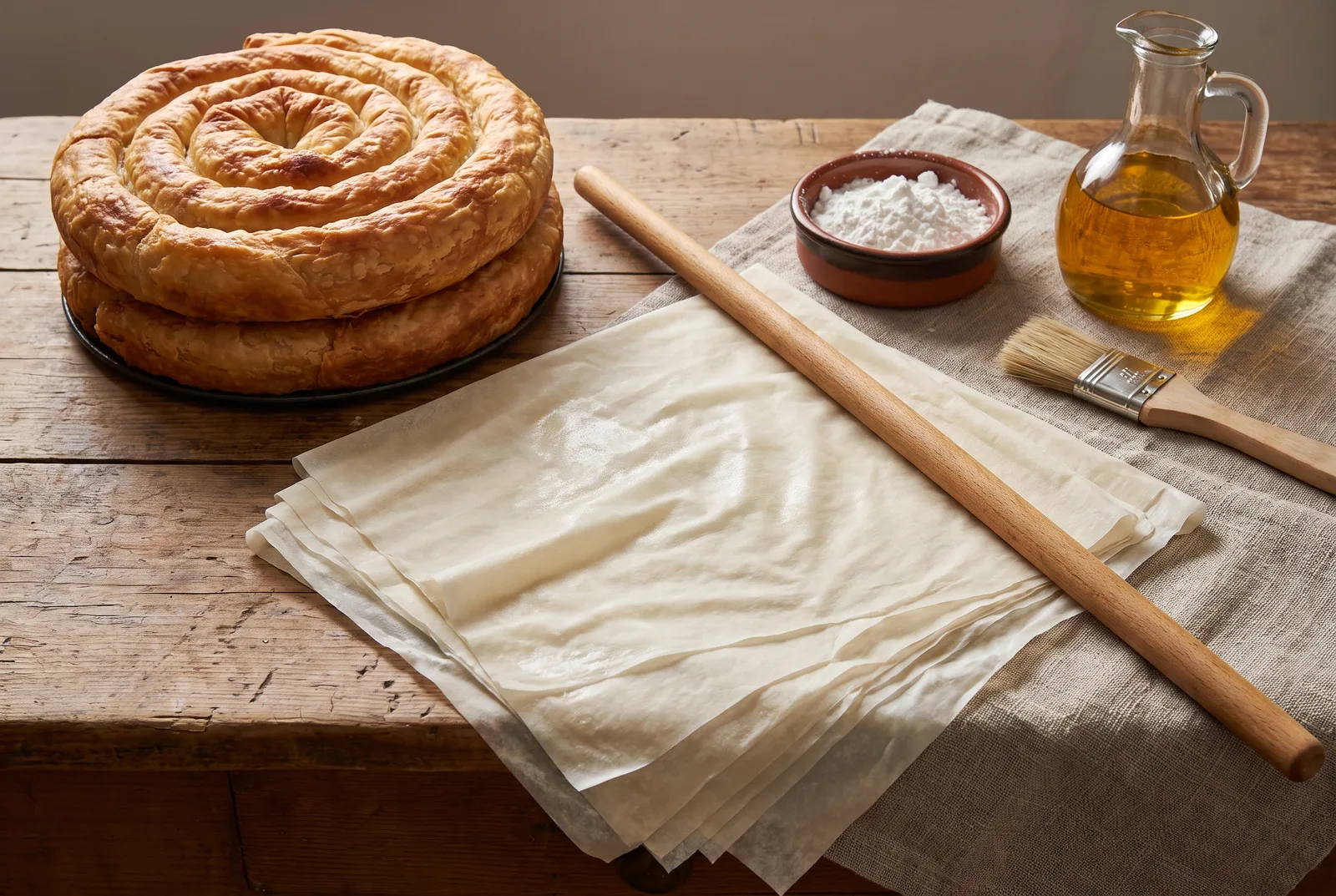
Kori are the sheet a Bulgarian customer judges you by
For a Bulgarian baker, banitsa (баница) — the coiled or layered filo cheese pastry — is the national bake, and it is judged on one thing above all: the kori (кори), the paper-thin sheets it is built from (singular kora / кора). Buy a bag of ready sheets and you can make a decent banitsa; learn to make the sheets yourself and you are making the real thing. This dossier is about the sheet, not the filling — the dough, the stretch, and the faults — with the pastry itself covered in B6-banitsa-techniques.
There are three ways to get to a sheet, and a professional kitchen should know all three (see the table and diagram below):
- Точене (tochene) — rolling. The sheet is rolled thin with a long, thin pin and finished by hand. This is the everyday professional and household method.
- Теглене / дърпане (teglene/darpane) — pulling. The sheet is stretched by hand over an oiled surface or the backs of the hands, with no pin — the thinnest, most delicate sheets, and the hardest.
- Machine sheeting. An industrial line mechanically stretches a stiff dough down to a set gauge and dries it; this is where the ready packaged kori on every supermarket shelf come from.
1. Heritage: a Turkic technique, a Slavic name
The technique and the name come from different places, and getting that right is the whole point of an authentic account. The thin stretched sheet is old and Turkic in origin: the 11th-century dictionary Diwan Lughat al-Turk (Mahmud al-Kashgari, c. 1070s) records the word "yuvgha" for a folded/layered bread, and it is linked to the modern Turkish yufka (юфка), the fine sheet. Rolling sheets truly paper-thin is a later refinement generally credited to the Ottoman Topkapı Palace kitchen. From there the layered-sheet pastry spread across the whole region under many names — börek in Turkey (see B2-borek-phyllo), spanakopita/tiropita in Greece, gibanica in Serbia and North Macedonia, burek/sirnica/zeljanica in Bosnia, brik in Tunisia — and into Arab baklava/knafeh pastry (B3-phyllo-kataifi-production, B2-baklava-production).
The word banitsa, though, is Slavic, not Turkish. It descends from Proto-Slavic *gъbanica — from the root *gъb-, "to fold / bend" — literally "the folded, layered thing," and it is a direct cousin of the Serbian/Macedonian gibanica; the same root survives in the dialect verbs gibam / naginam ("to bend"). (You will also meet yufka (юфка) in Bulgaria as the name for dried, crumbled sheets kept in the cupboard. And you will hear the "Niš 1498, baker Mehmed Oğlu" origin tale — that is Serbian-burek folklore, not Bulgarian history, so treat it as a story, not a source.) So: the skill is a shared Ottoman-Balkan inheritance; the banitsa — coiled, poured with yogurt, baked for a name-day — is distinctly Bulgarian.
Banitsa itself comes in редена (layered), вита (coiled/twisted) and смесена (mixed) constructions, and by filling as тиквеник (pumpkin), зелник (leafy greens), млечна/къпана (poured milk-and-egg) and the Rhodope пататник (grated potato). The New Year's Eve banitsa famously hides късмети — fortune charms (traditionally a dogwood/cornel twig with buds, sometimes a coin) baked into the coils; the full calendar is in B6-festive-baking-calendar, and the Easter enriched bread in B6-kozunak-enriched-bread. (Flagged for a commercial kitchen: baked-in inedible charms are a foreign-body / choking hazard and a HACCP physical-contamination control point — for anything sold to the public, add a food-safe wrapped token after baking or carry an explicit written warning; see Section 9.)
2. The dough: a lean sheet, not a laminated one
First, a clarification that saves a lot of confusion: kori are NOT laminated dough. There is no butter block folded in, no book folds, no gluten/fat layer cake — that craft is A6-laminated-dough-fundamentals. Kori are single, very thin sheets that are stacked with fat brushed between them; the flakiness comes from many separate oiled sheets, not from folding. Keep the two mental models apart.
The dough is essentially a strong, extensible flour-and-water dough with a little acid and oil (see the formula cards below). Two authentic templates bracket the range:
- Lean pulled-sheet dough (теглени). About 50% hydration — e.g. 300 g banitsa flour, 150 ml water, 1 tbsp oil, 1 tbsp vinegar, 1 tsp salt (and a tsp of sugar); the butter is used to grease the stretch, not put in the dough.
- Lightly enriched rolled dough (точени). The classic home version adds egg and dairy: roughly 625 g flour, ~240 ml warm water, ~120 ml kefir/sour milk, 1 egg, ~120 ml oil, 2 tbsp vinegar, salt and a little sugar, divided into 8 balls.
The acid and oil are not seasoning — they are dough conditioners. A little vinegar (or citric acid, in industry) relaxes and extends the gluten, and the oil tenderises and lubricates the network, so the sheet will stretch thin without snapping back or tearing. This is the same reductant/relaxation logic that industry gets from L-cysteine — see Section 5 and A3-ascorbic-acid-oxidants-reductants.
Flour: strong enough to stretch, extensible enough not to fight back
Kori live or die on gluten balance (see the table and diagram below). You need enough protein to pull a sheet you can lift, but gluten that is extensible, not bull-strong, or it will snap back the moment you stop pulling. The Bulgarian rule of thumb:
- Type 500 white flour is the default — finer, soft, easy to roll; Type 650 gives sturdier layers but is harder to work. The platform's Domson White Flour Type 500 is the nearest grade (ash max 0.52%, wet gluten min 23%, protein min 8%, falling number ≥220 s); the very white Type 450 is an even finer option. The Bulgarian type-number system is in B6-flour-types-milling, and how to read a flour spec (ash, falling number, gluten) in A1-key-quality-parameters.
- Aim for ~10–12% protein — the Bulgarian home-baking figure; note that international pulled-phyllo guidance often leans a little higher (~12–14%), which is why for thin professional sheets this dossier steps up to a strong 11.5–12.5% flour (below). Too much protein/gluten → a rubbery dough that springs back; too little → fragile sheets that tear. This is exactly the strength-vs-extensibility trade-off in A1-protein-gluten-and-strength and the application guide A1-wheat-flour-types-by-application.
- For thin professional точене, lean on a stronger, extensible flour — the platform's Type 550 or White Strong (wet gluten 28–32%, protein ~11.5–12.5%, gluten index 75–99), or a blend of Type 500 with a little very strong Manitoba-type (Centurion) or fine Tipo 00 for extra extensibility. Compensate for the extra strength with a longer rest and the vinegar so it does not fight you.
3. Kneading and the make-or-break rest
Knead to a smooth, soft, non-sticky dough — developed enough to be strong, but not tight (the mixing craft is in A5-dough-mixing-methods). Then divide into balls and REST them, covered. This rest is not optional: it is where the gluten relaxes so the sheet becomes extensible.
- For rolling (точене), a short covered rest of ~10–15 minutes is enough — with an enriched dough some bakers rest longer.
- For pulling (теглене), flatten each ball, coat both sides generously with soft butter or oil, cover, and rest up to ~1 hour so it stretches like a membrane.
Under-rested dough is the single commonest cause of tearing — the gluten has no time to let go (see the fault table below).
4. Method 1 — точене (rolling with a long thin pin)
This is the workhorse method (see the diagram and table below). The tool is a long, thin pin — the точилка / вергия / сукало (an oklava in Turkish), typically 60–80 cm long and narrow, quite different from a short Western rolling pin.
- Dust generously with corn/maize starch (царевично нишесте) on both sides — starch, not flour, because it lets the sheet slide and does not get absorbed.
- Roll with many light strokes, minimal pressure — forward and back, letting the pin do the work; the secret is many movements, not force.
- As the sheet grows, roll it up around the pin and work your fingers from the centre outward along the pin, so the wrapped dough stretches evenly.
- Finish as thin as possible while still liftable — a good sheet is near-translucent. To transfer, wrap the finished sheet around the pin, carry it to the tray and unroll.
5. Method 2 — теглене / дърпане (hand-pulling)
The pin-less method gives the thinnest, most delicate sheets (see the diagram below). Work on a buttered or oiled surface:
- Pinch every seam shut on the underside first. Any unsealed crack is a weak point that will tear the moment you pull.
- Push the dough out with the flats of your palms, working the edges thinnest, to about a 30 cm disc.
- Then lift an edge, slide a hand underneath, and stretch from the centre outward — over the backs of both hands — working round the sheet until it is a huge, near-see-through membrane .
- Drape it onto the clean (un-greased) part of the bench or straight onto the buttered tray.
Speed matters here for a food-safety-adjacent reason too: a stretched sheet dries and cracks within minutes (Section 7).
6. Method 3 — machine-sheeted kori (and the packaged sheets)
At volume, kori are machine-sheeted. A Bulgarian точени-кори production line feeds a stiff dough (mixed in a screw/auger mixer) through a coarse then a fine stretching device and a drying tunnel, producing sheets from 0.15 mm thick upward, with an output conveyor that can be set to build automatic coiled (вита) banitsa (see the diagram below). This is the artisan-to-industrial translation covered in A5-scaling-artisan-to-industrial.
To hold a machine dough that thin and keep it sheet-able and shelf-stable, commercial packs carry a longer ingredient list than a home dough. A leading Bulgarian brand's ready точени кори (a 500 g pack, stored 2–6°C, ~90-day life, packed in a protective atmosphere) list: wheat flour, water, starch, salt, acidity regulator (citric acid), preservatives (potassium sorbate, calcium propionate), antioxidant (ascorbic acid, E300), flour-treatment agent (E920, i.e. L-cysteine), refined sunflower oil, and CO₂ + nitrogen propellants (this composition matches several Bulgarian retail listings, but verify the exact shelf life, gas mix and — crucially — the permitted additive maximum levels for your finished-product food category against the live spec: preservative limits such as calcium propionate (E282) and potassium sorbate (E202) are set per food category under Reg (EC) 1333/2008). The functional pair is worth understanding: L-cysteine (E920) is a reductant that relaxes the gluten so a machine can pull the dough paper-thin, while ascorbic acid (E300) is the oxidant counterpart that rebuilds enough strength to handle — both are dough conditioners (A3-ascorbic-acid-oxidants-reductants). The preservatives and cold chain are what let a fresh, high-moisture sheet keep for months (A3-preservatives-shelf-life).
Hand vs machine, honestly (see the table below): hand sheets are thicker, uneven and irregular but taste and eat like the real thing; machine sheets are thin, uniform, quick and beginner- proof, at the cost of a longer label and a chilled, additive-carrying product. Most professional Bulgarian kitchens in the UK use both — machine sheets for volume, hand sheets for the signature banitsa.
7. Assembly, brushing and keeping the sheets alive
Kori are stacked with fat brushed between the sheets — sunflower oil (the everyday choice), melted butter (richer), or, for a млечна/къпана banitsa, a poured заливка: a custard of kiselo mlyako (yogurt) + egg + oil ladled over the assembled coils. The oil-vs-butter choice is the fat craft in A4-fat-types-and-selection; the full assembly is in B6-banitsa-techniques.
The sheets are perishable in minutes. A freshly stretched or rolled sheet dries out and cracks almost immediately — keep the stack under a damp cloth or plastic and work fast; drying is simple moisture loss, the flip side of the staling story in A5-shelf-life-and-staling. Packaged sheets solve this with refrigeration and preservatives, but once opened they dry just as fast — cover the unused sheets at once.
8. Troubleshooting (fault table)
The common faults and fixes are collected in the fault table below. The short version: tearing = under-rested and/or too-strong flour, and unsealed seams; snap-back = too much gluten, not enough rest or acid; sticking = not enough starch dusting; cracking/drying = sheets left uncovered; uneven thickness = pressing instead of using many light strokes. Almost every kori fault traces to gluten balance, resting, and dusting — the three levers of this whole craft.
9. Food safety, allergens and what to buy
Allergens. A finished banitsa made from kori will declare cereals containing gluten (wheat) and, depending on the recipe, egg (in an enriched dough or the заливка) and milk (butter, kefir, заливка, sirene) — map these to your own recipe and declare under UK/EU FIC (Reg (EU) 1169/2011) (see the diagram below). Watch the dusting, too: if you dust with the maize starch/flour below, check its precautionary allergen statement — the platform corn flour is made where celery is present (celery is a FIC Annex II allergen), so a may contain celery advisory can carry through to the finished sheet. Three cautions: (1) raw kori dough contains raw flour and often raw egg and must be fully baked before eating — flour is not ready-to-eat; (2) if you buy packaged sheets, treat the additive list and 2–6°C / 90-day storage as label information to verify — and confirm each preservative sits within its food-category maximum under Reg (EC) 1333/2008 — not a guarantee; (3) if you bake a New Year's късмети banitsa, the baked-in charms are a foreign-body / choking hazard — use food-safe wrapped tokens added after baking or carry an explicit warning.
What to buy on the platform (see the products below): Type 500 flour (Domson White Flour Type 500) as the base, with Type 550 / White Strong (or a little Centurion Manitoba, or Tipo 00) for a stronger, thinner professional sheet; sunflower oil (Olympic) for the dough and for brushing; 82% unsalted butter (Polmlek) for a richer brush; spirit vinegar for extensibility; corn/maize starch (AGRANA Maisita) — or neutral wheat (Foodcom) or potato (Bronisław) starch — for dusting; liquid whole egg / egg yolk (Domson, EIPRO Eifix) for the enriched dough and the заливка; and fine salt.
Three range gaps to flag for the buyer. There is no Bulgarian sirene (white brined cheese), no plain kiselo mlyako (set yogurt), and no ready banitsa kori / filo sheets in the range (only roasted kataifi, the shredded cousin used for kadaif — see B6-oriental-sweets-baklava-lokum). All three are central to an authentic banitsa, and each is a clear opportunity for a distributor serving Bulgarian bakers in the UK.
Figures
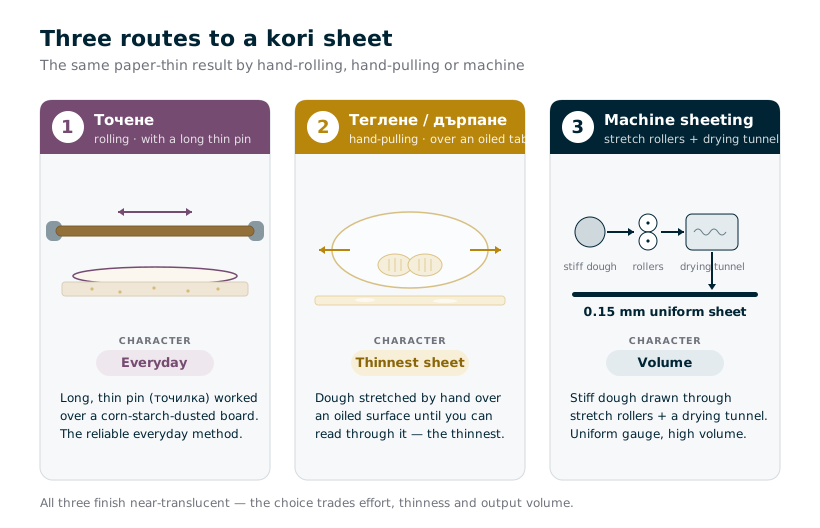 Three methods for making kori compared: rolling with a long pin, hand-pulling, and machine sheeting
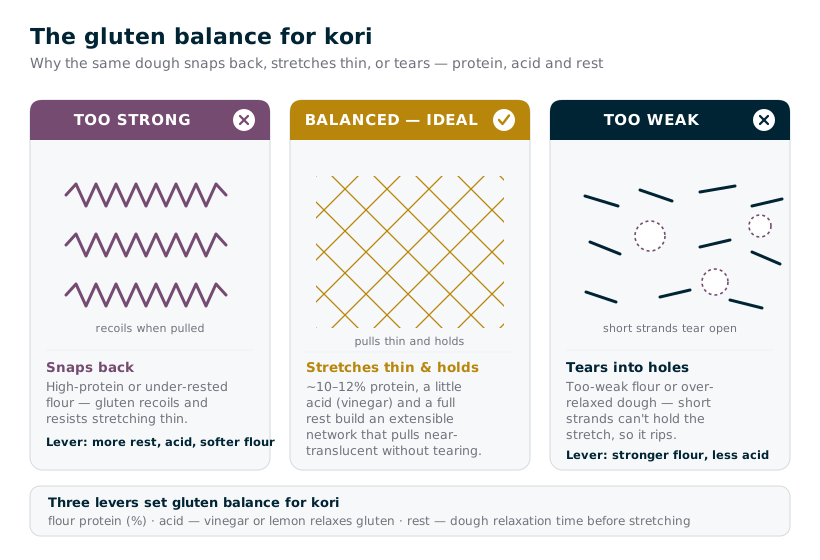 Diagram contrasting snap-back (too strong), ideal extensible, and tearing (too weak) gluten for kori
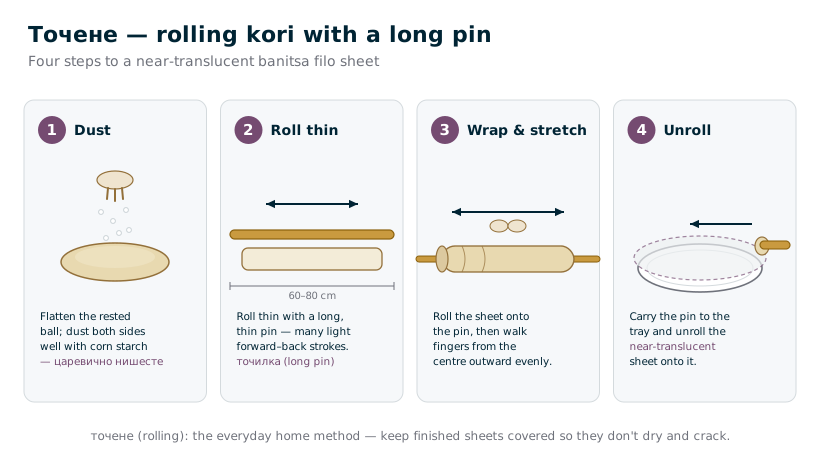 Four-step diagram of rolling kori: dust with starch, roll thin with a long pin, wrap and stretch on the pin, unroll onto the tray
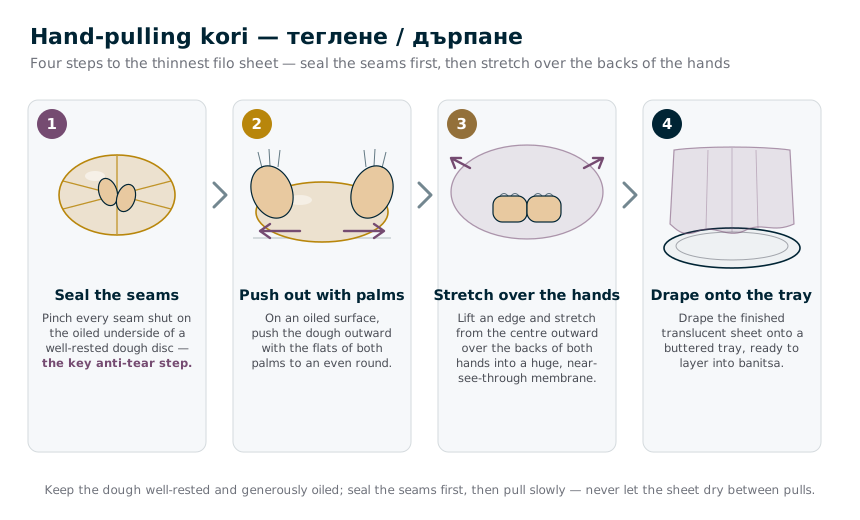 Four-step diagram of hand-pulling kori: seal seams, push with palms, stretch over the backs of the hands, drape
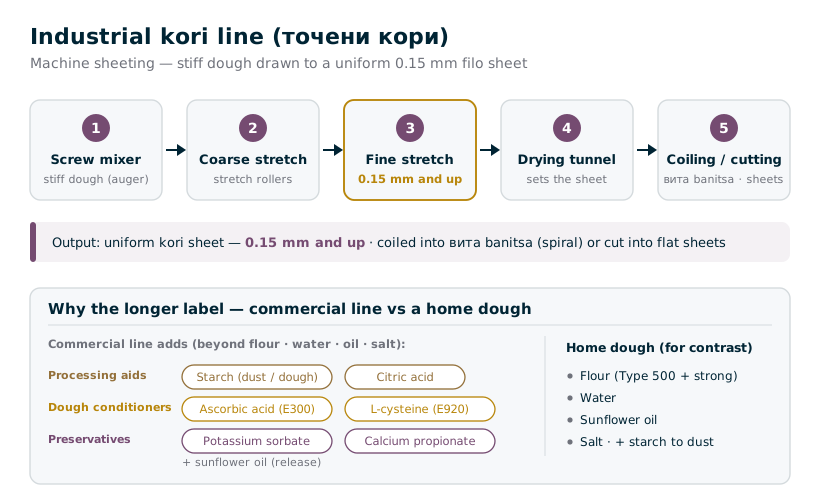 Schematic of an industrial kori line: screw mixer, stretch rollers, drying tunnel and a 0.15 mm uniform sheet
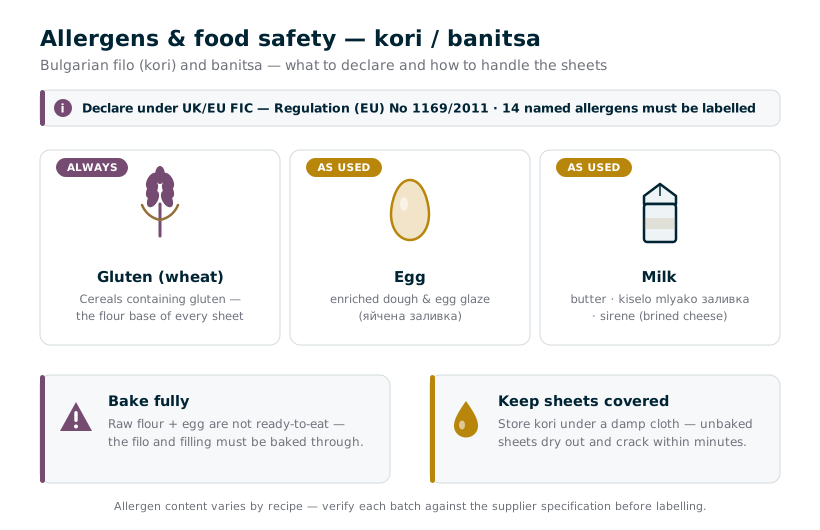 Allergen and food-safety panel for kori: gluten always, egg and milk as used, bake fully, keep sheets covered
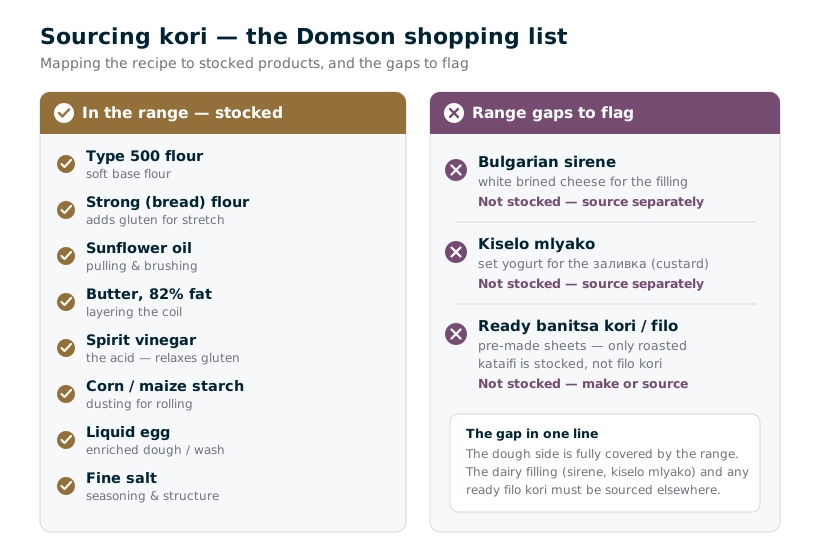 Panel mapping kori ingredients to Domson catalogue products, flagging gaps for sirene, kiselo mlyako and ready kori sheets
Точени кори dough — lightly enriched home/pro formula
The everyday Bulgarian rolled-sheet dough. The vinegar and oil relax and tenderise the gluten so the sheet rolls thin without snapping back; kefir/egg add flavour and softness. See A8-bakers-percentage-fundamentals for the formula language and A1-protein-gluten-and-strength for the flour.
| Ingredient | Baker's % | Weight |
|---|---|---|
| Flour (Type 500, or blended with strong flour) | 100% | |
| Warm water | ~38% | |
| Kefir / sour milk | ~19% | |
| Oil | ~19% | |
| Egg | ~8% (1 egg) | |
| Vinegar | ~5% (2 tbsp) | |
| Salt | ~0.8% | |
| Sugar | ~0.4% | |
| Total | ~90–95% liquids+fat (a soft, extensible dough) |
Worked example
625 g flour (Type 500, or Type 500 with some strong flour), ~240 ml warm water, ~120 ml kefir/sour milk, 1 egg, ~120 ml oil, 2 tbsp vinegar, 1 tsp salt, ½ tsp sugar. Mix the wet ingredients, add flour gradually to a smooth soft non-sticky dough, divide into 8 balls, rest covered 10–15 min, then roll each with a long thin pin over generous corn starch.
Yield: 8 dough balls → 8 large sheets (per ~625 g flour)
Теглени/дърпани кори dough — lean hand-pulled formula
A lean pulled-sheet dough. The long, oiled rest is what lets the sheet stretch like a membrane; the fat here is on the outside, greasing the stretch. Best with an extensible flour around 10–12% protein.
| Ingredient | Baker's % | Weight |
|---|---|---|
| Banitsa flour (Type 500 / strong extensible) | 100% | |
| Water | 50% | |
| Oil | ~4% (1 tbsp) | |
| Vinegar | ~5% (1 tbsp) | |
| Salt | ~1.7% (1 tsp) | |
| Sugar | ~1.3% (1 tsp) | |
| Soft butter (to grease the stretch) | ~33% (external, ~100 g) | |
| Total | ~55% (very lean; butter is used to grease the stretch, not in the dough) |
Worked example
300 g banitsa flour, 150 ml water, 1 tbsp oil, 1 tbsp vinegar, 1 tsp salt, 1 tsp sugar. Knead to a soft dough, pinch all seams shut, divide into 3, flatten and coat both sides generously with ~100 g soft butter, cover and rest ~1 hour, then hand-stretch over an oiled surface.
Yield: 3 balls → 3 large pulled sheets (per 300 g flour)
Заливка (milk-egg custard) for a млечна/къпана banitsa
Not part of the sheet, but the reason kori are so often eaten soaked: the заливка is what makes a млечна (milk) or къпана ('bathed') banitsa. Contains egg + milk allergens; must be fully baked. Sourcing note: neither set yogurt nor sirene is currently in the range.
| Ingredient | Baker's % | Weight |
|---|---|---|
| Kiselo mlyako (set yogurt) | base of the custard (sourcing gap) | |
| Egg (liquid whole egg on the platform) | binds and enriches | |
| Oil (sunflower) | for softness | |
| Total | n/a |
Worked example
Whisk kiselo mlyako (yogurt) + eggs + a little oil (and sometimes a pinch of bicarbonate) and ladle over the assembled coils before/after baking so the banitsa drinks it in. Proportions are family-specific; see B6-banitsa-techniques and B6-dairy-in-baking.
Yield: enough to soak one tray of coiled kori
A professional Bulgarian kitchen should know all three. Точене (rolling) is the everyday method; теглене (pulling) gives the thinnest sheets; machine sheeting is for volume and beginner-proof consistency.
| Method | Bulgarian name | Tool / dough | Sheet result | Best for |
|---|---|---|---|---|
| Rolling | Точене (точилка/вергия/сукало) | Long thin pin ~60–80 cm; enriched or lean dough, dusted with corn starch | Thin, fairly even; near-translucent with skill | Everyday professional & household banitsa |
| Hand-pulling | Теглене / дърпане | No pin — palms + backs of hands on an oiled surface; well-rested oiled dough | The thinnest, most delicate, near-see-through membrane | Signature vita banitsa; showpiece sheets |
| Machine sheeting | Линия за точени кори | Stiff dough, screw mixer, coarse+fine stretch rollers, drying tunnel | Uniform, from 0.15 mm up; consistent gauge | Volume production; ready packaged kori |
| Packaged (bought-in) | Готови точени кори | Industrial sheet, refrigerated, additive-stabilised | Thin, flat, uniform; convenient but longer label | Speed, consistency, beginners |
Kori need extensible gluten: strong enough to pull a liftable sheet, but not so strong it snaps back. Type 500 is the Bulgarian default; step up to a stronger flour for thin professional rolling, and use acid + a long rest to tame the extra strength. See A1-protein-gluten-and-strength and B6-flour-types-milling.
| Flour | Protein / gluten | Verdict for kori |
|---|---|---|
| Bulgarian Type 500 (бяло) — platform Type 500 | Ash max 0.52%, wet gluten min 23%, protein min 8% | The default: fine, soft, easy to roll; the everyday kori flour |
| Very white Type 450 (platform) | Fine, low ash | Even finer/whiter option for a delicate sheet |
| Type 650 (по-тъмно) | More minerals, sturdier | Sturdier layers but harder to work thin |
| Strong Type 550 / White Strong (platform) | Wet gluten 28–32%, protein ~11.5–12.5%, gluten index 75–99 | Best for thin professional точене — extensible; rest longer + add vinegar so it doesn't snap back |
| Very strong Manitoba (Centurion) / Tipo 00 | High protein / very extensible | Blend a little into Type 500 for extra stretch; too much alone = snap-back |
| Weak / cake / plain flour | Low protein (<10%) | Avoid — fragile sheets that tear |
Home kori and industrial kori solve the same problem — a gluten network extensible enough to pull paper-thin without snapping back — by different means. See A3-ascorbic-acid-oxidants-reductants.
| Lever | Home kori | Commercial / machine kori | Effect |
|---|---|---|---|
| Acid | Vinegar (1–2 tbsp) | Citric acid (acidity regulator) | Relaxes/extends gluten; more extensible dough |
| Fat | Oil in dough + oil/butter to grease | Refined sunflower oil | Tenderises and lubricates the sheet |
| Rest | 10–15 min (rolled) to ~1 h oiled (pulled) | Built into the line's dwell/drying stages | Gluten relaxation — the anti-tear step |
| Reductant | (not used) | L-cysteine (E920) | Cuts gluten bonds so a machine can sheet very thin |
| Oxidant | (traces from some flours) | Ascorbic acid (E300) | Rebuilds handling strength; dough conditioner |
| Fault | Likely cause | Remedy |
|---|---|---|
| Sheet tears while stretching | Under-rested dough; flour too weak; unsealed seams on the underside | Rest covered (10–15 min rolled / ~1 h oiled); use ~10–12% protein extensible flour; pinch all seams shut first |
| Dough springs/snaps back, won't hold thin | Too much gluten / too strong a flour; not enough rest or acid | Blend down to ~10–12% protein or rest longer; add the vinegar; let it relax between passes |
| Sheets stick to pin, bench or each other | Not enough dusting; using flour instead of starch | Dust generously with corn/maize starch (царевично нишесте) on both sides — starch slides, flour absorbs |
| Sheet cracks / dries before you can use it | Left uncovered — moisture loss in minutes | Keep the stack under a damp cloth/plastic; work fast; cover opened packaged sheets at once |
| Uneven, thick-and-thin sheet | Pressing hard; too few strokes; rolling from one spot | Many light forward-back strokes at minimal pressure; roll onto the pin and walk fingers from centre outward |
| Gummy, doughy banitsa (not crisp) | Sheets too thick; too little fat between layers; oven too cool | Roll/pull thinner; brush each sheet with oil or butter; bake hot (see B6-banitsa-techniques) |
| Tough, chewy baked layers | Over-worked/over-strong dough; too little fat | Ease off gluten development; ensure fat between every sheet; don't skip the rest |