
Kozunak: Bulgaria's Easter enriched bread — enrichment ratios, pull-apart 'threads', braiding patterns and oven-spring management
For a Bulgarian baker, kozunak (козунак, festive enriched sweet bread) is the loaf that matters most — the centrepiece of Великден (Easter), and the one a customer judges in a single pull. This dossier gives a UK baker the authentic picture, built from Bulgarian-language recipe and trade sources and cross-checked against the platform's supplier specifications: the heavily enriched, high-sugar dough (roughly, per 1 kg strong white flour, 5–6 eggs, 200–300 g sugar, 100 g butter plus oil, 200–250 ml milk, 21–25 g fresh yeast); the one thing that separates a great kozunak from a sweet cake — a crumb that shreds into fine threads (се къса на конци), which comes from strong high-protein WHITE flour, a long knead, and the eggs added ONE AT A TIME; the braiding patterns (тройна/четворна/петорна плитка and the wreath, венец); the carefully managed bake that controls oven spring in a tall loaf (commonly a rising profile, ~150–170°C then ~180°C); and the distinctly Bulgarian flavourings (lemon, cardamom and Rosa Damascena rose oil) alongside sultanas, walnuts, almonds and lokum. Every technique is wired to the Domson catalogue a Bulgarian kitchen actually orders — strong flour, fresh yeast, 82% butter, sugar, liquid egg yolk, sultanas, walnuts — and cross-linked to the Pillar A craft concepts behind it (A1-protein-gluten-and-strength, A2-osmotolerant-yeast-enriched-doughs, A5-dough-mixing-methods, A5-baking-oven-science) and to its sister Bulgarian and Romanian articles (B6-flour-types-milling, B6-festive-baking-calendar, B6-ritual-breads-pitka-pogacha, B6-dairy-in-baking, B6-rose-water-culinary-use and B4-cozonac-enriched-dough).
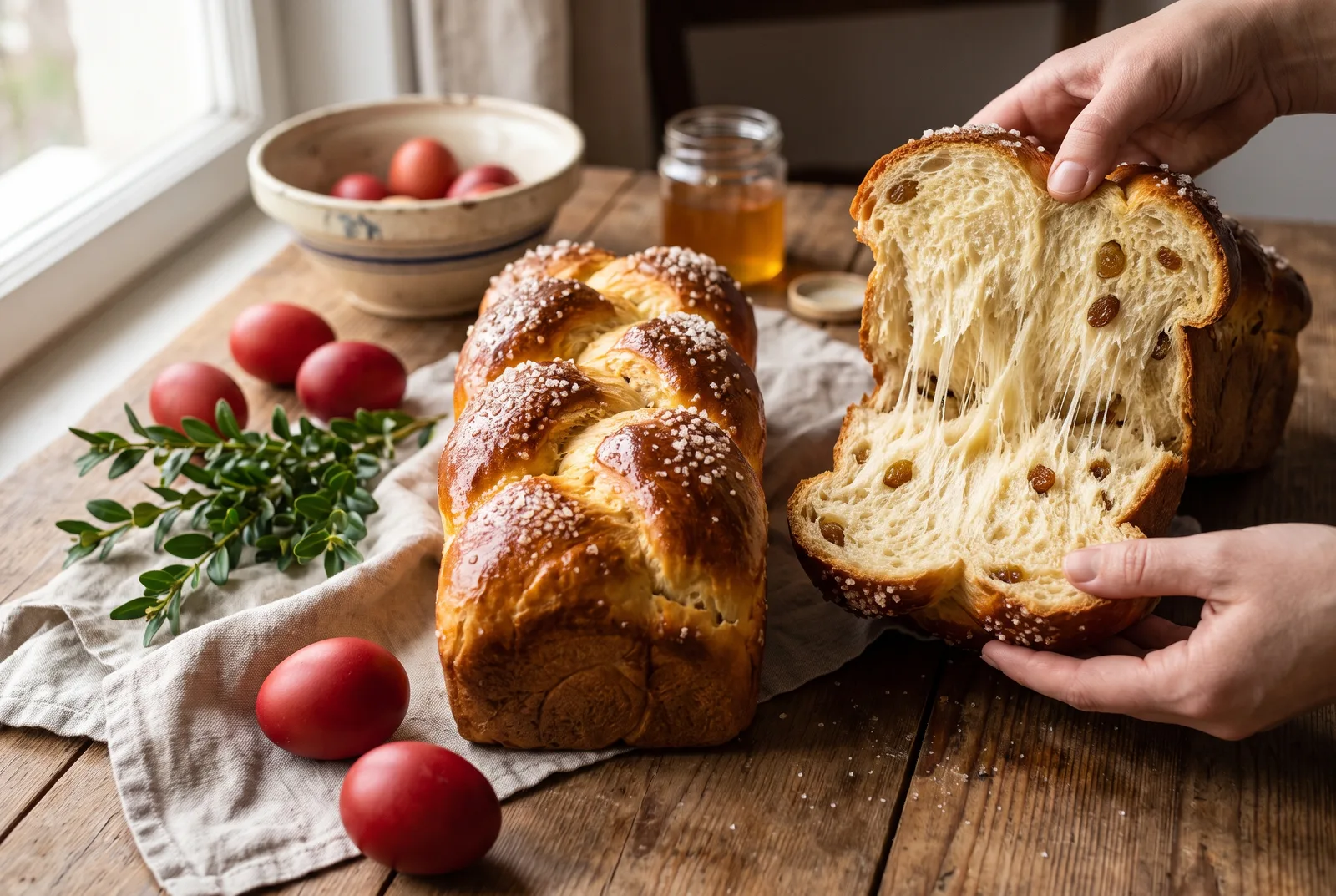
Kozunak is the loaf a Bulgarian customer judges you by
For a Bulgarian baker, kozunak (козунак — a festive enriched sweet bread) is not just another sweet loaf; it is the celebration bread, the centrepiece of Великден (Velikden, Easter). It is a ritual bread (обреден хляб): kozunak symbolises the body of Christ, set beside the red-dyed eggs that symbolise his blood. And, like its Romanian cousin, it is judged on one thing above all — when you pull a piece, the crumb should shred into fine threads, in Bulgarian козунак на конци ("kozunak on threads"). Get that, and you have baked something a Bulgarian customer recognises as the real thing; miss it, and you have made a sweet cake in a loaf tin. The figure below shows this.
The name козунак is a Greek-origin word, shared with the Romanian cozonac. The exact route by which it entered Bulgarian is debated — some Bulgarian sources describe it arriving via Romania, while the loanword is also documented spreading the other way along the Danube — so read this etymology as popular history, not settled scholarship. Kozunak sits inside a whole cross-border family of Orthodox Easter enriched breads: the Romanian/Moldovan cozonac (see B4-cozonac-enriched-dough), the Greek tsoureki (τσουρέκι), the Turkish çörek, and the Russian/Ukrainian kulich (see the table and figure below). Read the deep history as culture, not archive: kozunak is a comparatively recent, urban ritual bread. Bulgarian sources put its spread at around 1915–1920 / the 1920s, when it displaced older Bulgarian ritual Easter breads — kolak, kravay, parmak and others (those older ritual loaves are the subject of B6-ritual-breads-pitka-pogacha), and its place in the wider festive year is mapped in B6-festive-baking-calendar. Even the decoration carries meaning: the three-strand braid (тройна плитка) is traditionally read as a symbol of the Holy Trinity.
1. What kind of dough this is: heavily enriched and high-sugar
Kozunak is an enriched dough taken close to its limit: rich in eggs (яйца), butter (масло), sugar (захар) and milk (прясно мляко). A representative Bulgarian formula — corroborated across several native recipes and a miller's own recipe — is, per 1 kg strong white flour: 5–6 eggs, 200–300 g sugar, 200–250 ml warm milk, 100 g soft butter + 50–80 ml oil (some households use ~200 g oil instead of butter), 21–25 g fresh yeast (or 7–10 g dry), a pinch of salt, lemon zest and vanilla, plus 1 egg for the wash. In baker's percentage that is roughly sugar 20–30%, fat 15–20%, milk 20–35%, whole egg ~25–30% by weight (5–6 eggs), fresh yeast ~2–2.5%, salt 0.5–1% (see the formula card below).
Two Pillar A concepts explain why this is hard. First, all that sugar draws water out of the yeast by osmosis and slows it down — the same problem brioche and panettone bakers face, treated in A2-osmotolerant-yeast-enriched-doughs; it is why kozunak uses a generous dose of yeast bloomed in warm milk and a warm, patient proof (A2-preferments-poolish-biga-sponge covers the yeast-start many bakers use). Second, all that fat, sugar and egg interfere with gluten, which is exactly why how you build the gluten decides the whole loaf. The formula language itself — baker's percentage — is in A8-bakers-percentage-fundamentals, and sister enriched formulas (brioche, challah, sweet buns) in A8-enriched-dough-formulas.
2. The flour: strong, white, тип 500
Kozunak lives or dies on gluten, so the flour is the single biggest lever (see the table below). The Bulgarian standard is a strong, high-protein WHITE flour — тип 500 ("бяло"). Bulgarian flour is graded by ash content: тип 450/500 (~0.45–0.50% ash) are the whitest, highest-quality flours; the grade number rises with ash (тип 520, 700, 800, 1150) up to тип 1850 (wholemeal, пълнозърнесто), and a quality bread flour should carry not less than about 24% gluten. The whiter grades give the clean colour and the strong, extensible gluten the threads need; the darker, higher-ash grades are for everyday and rustic bread, not kozunak. This grading system is the subject of B6-flour-types-milling, and the underlying protein/gluten science is in A1-protein-gluten-and-strength and the application guide A1-wheat-flour-types-by-application.
Bulgarian millers make this easy: Sofia Mel (София Мел) sells a dedicated "Козунаци" (kozunak) flour in its professional range, alongside "Пекар" (baker), "Типово", "Баница" and "Бюрек" grades. In the UK, the nearest stand-ins are a strong white bread flour or a Type 550 grade: the platform's Domson White Strong / Type 550 datasheet reads as a wet gluten 28–32%, gluten index 75–99, ash 0.51–0.58% (d.m.), falling number min 220 s, moisture max 15% flour — a good high-protein base (note some batches carry added ascorbic acid, E300). For the richest, longest-worked doughs a very strong / Manitoba flour gives the best thread structure.
3. The make-or-break: gluten development and the конци (threads)
This is the section that matters. The конци — the way a good kozunak shreds into fine threads rather than crumbling like cake — is a gluten-structure phenomenon, exactly analogous to the Romanian fâșii and the "stringy" panettone crumb. It rests on three levers (see the figure and formula card below):
- Strong, high-protein WHITE flour — тип 500 or a strong bread flour, sifted. Weak/plain/cake flour will give a cakey crumb that never shreds.
- A long, thorough knead. Develop the gluten before the crumb can ever form threads. Traditionally this is a very long hand knead — around 1.5 hours with rest intervals; a modern spiral or planetary mixer cuts it to 10–15 minutes, kneading until the dough is smooth, glossy and elastic and clears the bowl. The mechanics are in A5-dough-mixing-methods.
- The eggs added ONE AT A TIME. This is the single most-cited Bulgarian konci rule: add each whole egg during kneading and let it be fully absorbed before the next, so the gluten keeps building rather than being swamped. Add the butter and oil gradually once the gluten is built, so the fat coats an already-developed strand network instead of blocking it.
Then comes the step that literally makes the threads visible: after proofing, divide the dough and roll each piece into thin, even strands (фитили) — traditionally with lightly oiled hands — before braiding. The stretched, aligned strands are what make the baked loaf pull apart на конци. Warm the milk to ~35–37°C and bloom the fresh yeast in a little of it with a pinch of sugar; the platform's Benevia fresh yeast (dry matter >29%, fermentative activity 125 ± 10 ml CO2) stores at 1–10°C with a 35-day life.
4. Proofing and the oven-spring bake
Kozunak is a tall, richly-enriched loaf, so both the proof and the bake are about controlling a big rise without a collapse (see the key specs and figures below).
Proof in a warm, draught-free place at about 25–27°C until roughly doubled (about 2 hours) — the folk rule of "no draughts (без течение), no slamming doors" is really about protecting a delicate warm proof from chilling; the science of the final proof is in A5-proofing-science. Crucially, fill the tin only 1/4 to 1/3 full and put it in the oven once the dough has risen to about 3/4 of the tin height — proof it further and the over-stretched loaf will sink.
Bake to manage oven spring in a tall loaf — the craft covered in A5-baking-oven-science. Bulgarian sources use several regimes; a common one is a rising-temperature profile: start moderate/low (about 150–170°C) so the crust stays soft and the loaf can spring, then raise to about 180°C to set the crumb and build the deep-golden, glossy festive colour. Others bake at a single steady ~170°C, and some start hotter (~190°C) and then drop — all finish to the same fully-set crumb. Reckon on roughly 30–40 minutes for a smaller loaf, and up to 40–60 minutes for a large tin loaf. Egg-wash and sprinkle sugar before baking for the shine and crunch, and — as with any tall enriched loaf — do not open or slam the oven door early, or the rise collapses. The reliable doneness test is a fully-set crumb (internal core temperature about 88–92°C for an enriched dough — lower than a lean loaf, because the fat and sugar mean you pull it before it dries out), which also matters for food safety: at that temperature the egg- and dairy-enriched dough and the raw-egg wash are fully cooked, well above the ~75°C threshold. Finally, a genuine Bulgarian touch: wrap the hot loaf in a cotton cloth while it cools to keep the crumb tender, and de-mould while warm so the paper lifts away cleanly — a texture trick that sits alongside the anti-staling science in A5-shelf-life-and-staling.
5. Shaping and braiding (сплитане)
Shaping is where kozunak shows its craft (see the figure and table below). The rolled strands (фитили) are braided into a тройна плитка (three-strand plait) — the classic, and the one read as the Holy Trinity — or into a четворна плитка (four-strand) or петорна плитка (five-strand) for a denser, showier top; a braid can also be twisted into a wreath (венец) for a table centrepiece. Bakers who want a real showpiece go to six- or seven-strand braids. Lay the braid in a paper-lined tin (again, filled only part-way) for the second proof.
6. Flavourings and inclusions
Flavour and inclusions are where region and family taste show most (see the figure and table below). The near-universal base aroma is lemon zest (лимонова кора) with vanilla and often cardamom. The distinctly Bulgarian note is rose — rose oil or rose water (розово масло / розова вода) from Rosa Damascena, the Bulgarian Rose Valley crop; use it in tiny doses, and see the sibling dossier B6-rose-water-culinary-use. For inclusions, the classics are soaked, drained sultanas/raisins (стафиди), chopped walnuts (орехи) and almonds (бадеми) folded through or scattered on top (nut handling, toasting and rancidity control are in A7-seeds-nuts-toppings), and — an Ottoman-heritage touch also seen in the Romanian cozonac — diced Turkish delight (локум) melted through the crumb (the lokum craft is in B6-oriental-sweets-baklava-lokum). Some Bulgarian bakers enrich or soften the dough with kiselo mlyako (Bulgarian yogurt) in place of, or alongside, the milk — the functional role of Bulgarian dairy in baking is covered in B6-dairy-in-baking.
Food-safety flags on the inclusions: buy reputable, laser-cleaned sultanas/raisins — dried vine fruit carries regulated mycotoxin limits. The platform's laser-scanned sultanas meet aflatoxin B1 max 2 ppb, total max 4 ppb, but their datasheet's stated ochratoxin A max 10 ppb reflects a superseded pre-2023 limit (the current EU maximum under Reg (EU) 2023/915 is a single flat 8.0 µg/kg for dried vine fruit — there is no separate ready-to-eat tier for ochratoxin A; the ready-to-eat/further-processing split applies to aflatoxins, not OTA), and the sultanas also contain sulphites (E220), a declarable allergen — so re-read the live supplier spec before labelling.
7. Scratch vs. mix, and food safety
A busy bakery can lean on an enriched-dough concentrate (dosed at ~50% of the flour, adding emulsifiers E471/E481 and declaring wheat/soya/milk) or an enzyme/emulsifier crumb softener to keep kozunak soft longer — each buys speed and consistency at the cost of authenticity and a longer label (see the table below). The honest, authentic route stays strong white flour, fresh yeast, a long knead with the eggs added one at a time, and a careful braided proof and bake.
Allergens and food safety. A finished kozunak will typically need to declare, under UK/EU FIC (Reg (EU) 1169/2011): cereals containing gluten (wheat flour), eggs and milk (butter and milk) — and, depending on the inclusions and any premix, tree nuts (walnut/almond), soya and sulphites (from dried fruit and bought-in fillings) — pictured below. Map these to your own recipe before labelling. Two cautions carry over: the raw-egg wash and enriched dough must be fully baked (verify a set crumb, internal ~88–92°C), and dried vine fruit carries mycotoxin and sulphite declarations — store fruit cool and dry and re-check the live spec.
8. Allergens, food safety and sourcing
What to buy on the platform (pictured below; see the products at the end of this article): strong white flour — Domson White Strong or Type 550 (wet gluten 28–32%), Titan Strong Bakers, or a very strong Centurion Canadian; fresh yeast (Benevia, Lallemand) or Fermipan Red dried; Unsalted Butter 82% (Polmlek) — min 82% fat, 16% water, so it enriches without slackening the dough; Granulated/Caster Sugar and Vanillin Sugar; liquid Egg Yolk and Whole Egg (Domson); sultanas/raisins, walnuts, almonds and candied orange peel; rum flavouring; and, for scale, an Ireks enriched-dough concentrate or crumb softener. A UK stand-in for kiselo mlyako is the Figand natural yogurt (see B6-dairy-in-baking).
A note on newly-closed gaps and remaining ones. Pleasingly, the two gaps flagged for the Romanian cozonac are now closed: the range now stocks liquid egg yolk and whole egg, so a Bulgarian baker no longer has to source eggs elsewhere, and it carries a natural yogurt for kiselo-mlyako-style doughs. Three genuine sourcing gaps remain, and all three are core to an authentic kozunak: no lokum (Turkish delight), no Bulgarian rose water / rose oil, and no mahleb or mastic — clear range opportunities for a distributor serving Bulgarian bakers. (One data note for the buyer: the on-disk spec file attached to the natural-yogurt product actually contains a raisins datasheet — a catalogue mismatch to correct; no yogurt spec figures were used in this dossier.)
Figures
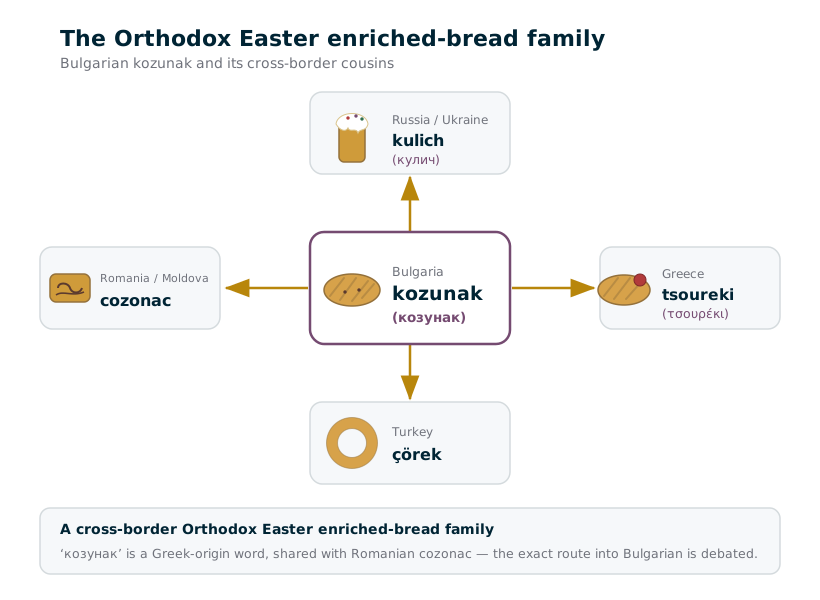 Family diagram linking Bulgarian kozunak to Romanian cozonac, Greek tsoureki, Turkish corek and Russian kulich
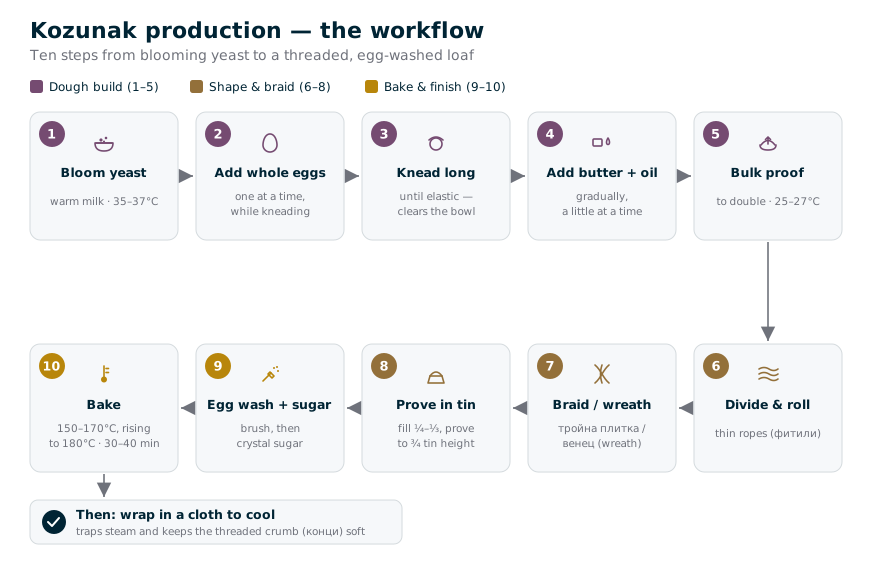 Step-by-step flow diagram of kozunak from blooming yeast through eggs-one-at-a-time, long knead, proof, braid, egg wash and rising-temperature bake
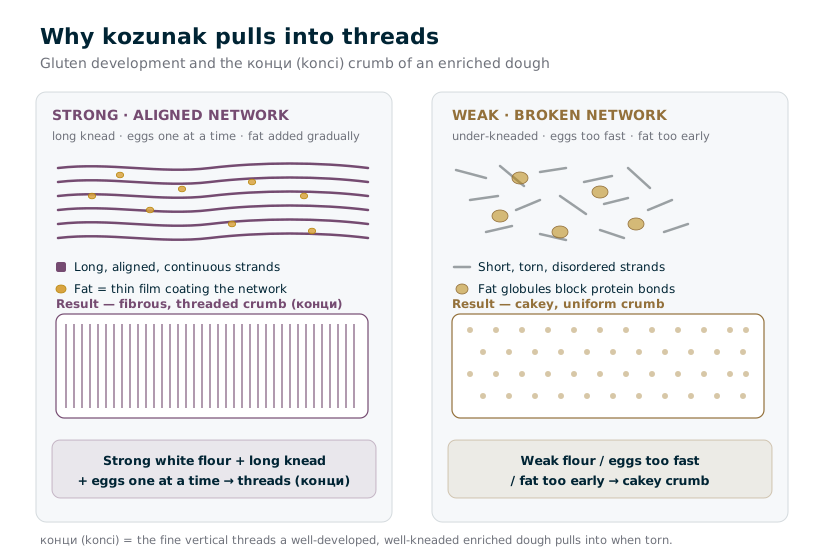 Diagram contrasting a well-developed aligned gluten network (threaded kozunak) with an under-developed dough (cakey crumb)
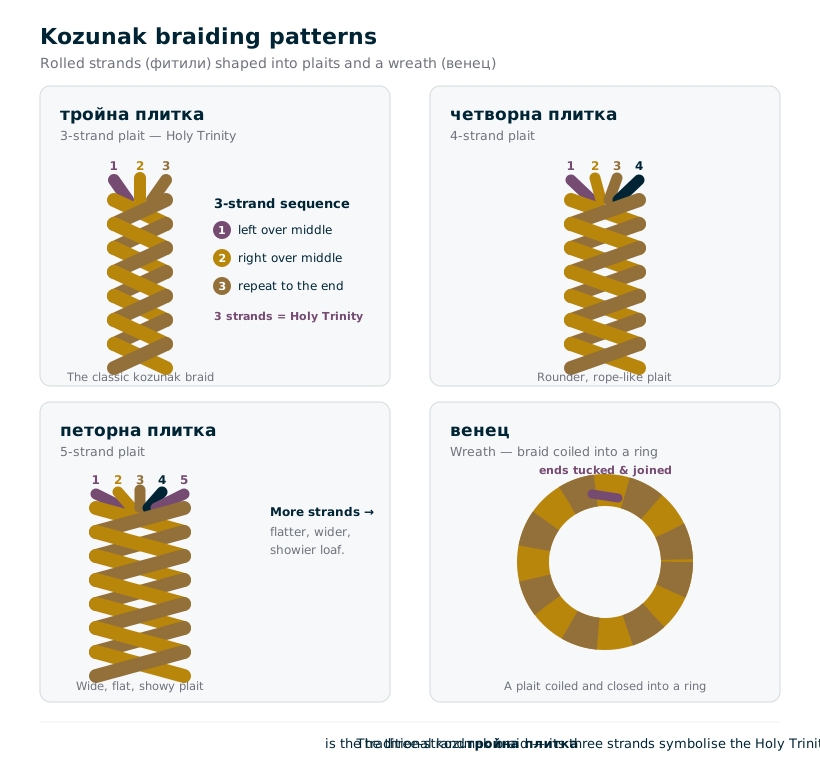 Kozunak braiding patterns: three-, four- and five-strand plaits and a wreath, with the three-strand braid noted as a Trinity symbol
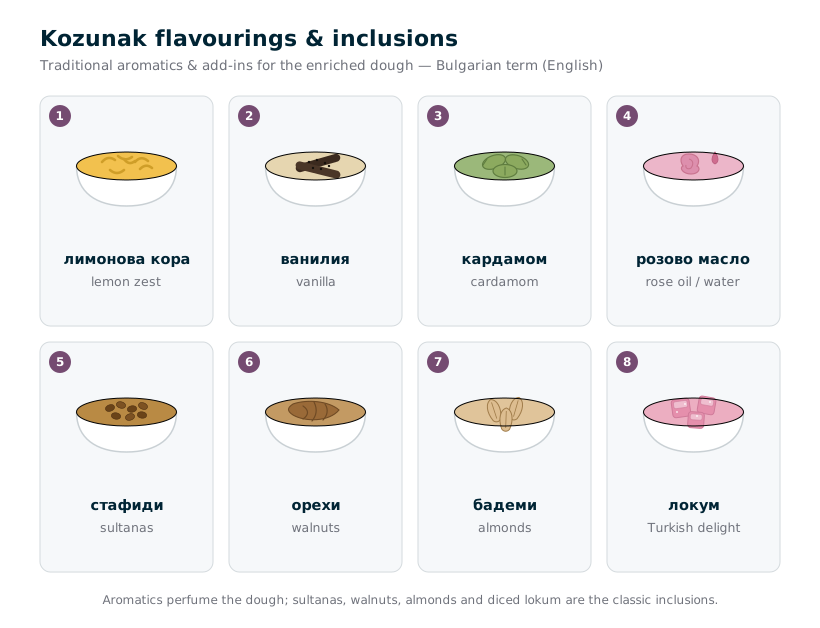 Eight labelled kozunak flavourings and inclusions: lemon zest, vanilla, cardamom, rose oil, sultanas, walnuts, almonds and Turkish delight
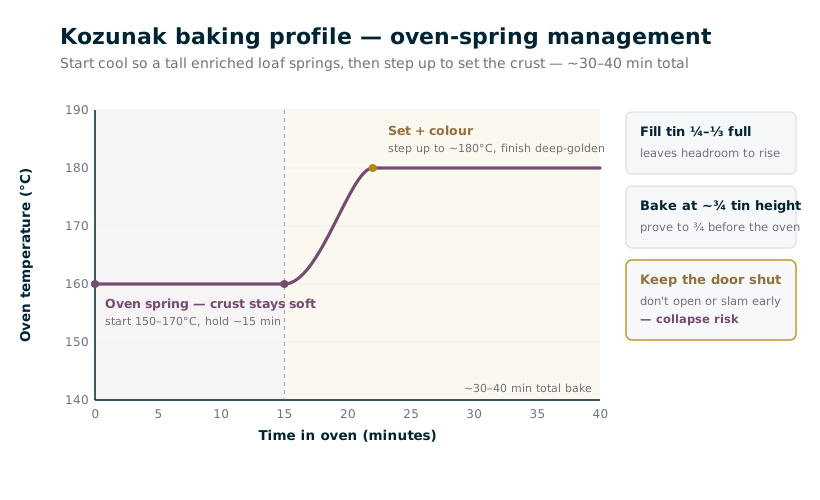 Baking-profile diagram: kozunak oven temperature rising from 150-170C to 180C over 30-40 minutes with oven-spring notes
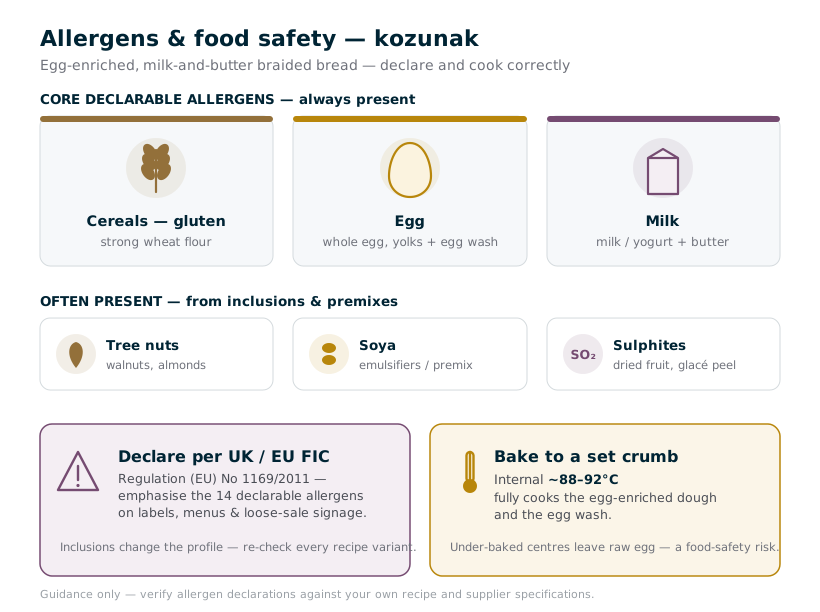 Allergen panel for kozunak: gluten, egg and milk icons with FIC declaration note and bake-to-set-crumb food-safety note
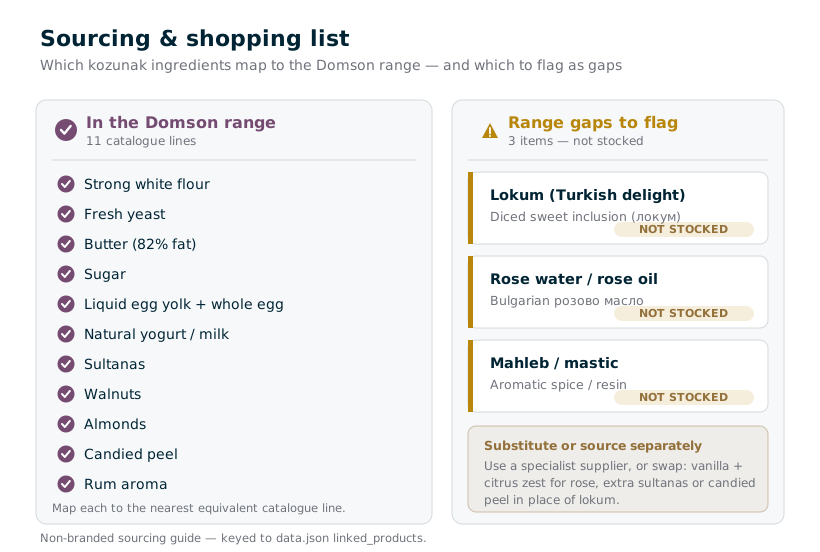 Panel mapping kozunak ingredients to Domson catalogue products, flagging gaps for lokum, rose water and mahleb
Kozunak enriched dough — representative Bulgarian formula
A canonical Bulgarian festive formula. The whole point is gluten development under long kneading with the eggs added gradually, so the crumb shreds into fine threads (конци). See A8-enriched-dough-formulas and A8-bakers-percentage-fundamentals for the formula language, A5-dough-mixing-methods for the knead, A2-osmotolerant-yeast-enriched-doughs for why high sugar stresses the yeast, and A2-preferments-poolish-biga-sponge for the yeast start.
| Ingredient | Baker's % | Weight |
|---|---|---|
| Strong white wheat flour (тип 500) | 100% | |
| Sugar | 20–30% | |
| Milk | 20–35% | |
| Egg (whole) | ~5–6 eggs / kg (~25–30% by weight) | |
| Butter (min 82% fat) | ~10% | |
| Oil | 5–8% (or up to ~20% if oil-only) | |
| Fresh yeast | ~2–2.5% (or ~0.7–1% dry) | |
| Salt | 0.5–1% | |
| Lemon zest, vanilla / rose (aroma) | to taste | |
| Total | ~190–200% (heavily enriched, high-sugar) |
Worked example
Per 1 kg strong white flour (Bulgarian тип 500, or a UK strong/Type-550 flour): 5–6 eggs (some recipes split out 1–2 whites), 200–300 g sugar, 200–250 ml warm milk (35–37°C), 100 g soft butter + 50–80 ml oil (some recipes use ~200 g oil instead), 21–25 g fresh yeast (or 7–10 g dry), a pinch of salt, zest of 1 lemon, vanilla; 1 egg to wash. Bloom the yeast in a little warm milk + sugar; add the whole eggs ONE AT A TIME during kneading; knead long until the dough is smooth, elastic and clears the bowl; proof to double at ~25–27°C; divide, roll each piece into thin strands (фитили) with oiled hands, braid (тройна плитка) or twist into a wreath (венец); prove in the tin (filled 1/4–1/3) to ~3/4 height; egg-wash and sprinkle sugar; bake ~30–40 min starting at 150–170°C and finishing at ~180°C to a fully-set crumb.
Yield: ≈ 2 medium braided loaves (per 1 kg flour)
How to build the конци (threads) — technique card
The конци are a gluten-structure phenomenon, identical in principle to the Romanian fâșii and the panettone/brioche 'stringy' crumb: strong flour + long kneading build an aligned elastic network; rolling into strands orients it; fat added late coats rather than blocks it. See A1-protein-gluten-and-strength and A5-dough-mixing-methods.
| Ingredient | Baker's % | Weight |
|---|---|---|
| Strong high-protein white flour | the biggest lever | |
| Long knead (hand ~1.5 h / mixer 10–15 min) | develops gluten | |
| Eggs added one at a time | the classic konci rule | |
| Roll into thin strands (фитили) before braiding | orients the network | |
| Total | n/a |
Worked example
1) Use strong, high-protein WHITE flour and sift it. 2) Bloom the yeast; beat the eggs with the sugar. 3) Add the whole eggs ONE AT A TIME as you knead, letting each be absorbed before the next — this is the single most-cited konci rule. 4) Knead LONG (traditionally ~1.5 h with rests; modern spiral/planetary mixers cut this to 10–15 min) until the dough is smooth, glossy and elastic and clears the bowl. 5) Add the fat gradually once the gluten is built. 6) After proofing, roll each dough piece into thin, even strands (фитили) with lightly oiled hands and braid — the aligned, stretched strands are what make the baked loaf pull apart 'на конци'.
Yield: n/a
Kozunak is the Bulgarian member of a cross-border family of enriched Easter breads. The base dough idea is shared; names, shapes and flavourings differ. See the Romanian cousin in B4-cozonac-enriched-dough.
| Country / name | Language of the name | Signature shape | Typical flavour / inclusions |
|---|---|---|---|
| Bulgaria — kozunak (козунак) | Greek-origin word, shared with Romanian cozonac; route into Bulgarian debated | Braided (плитка), often a wreath (венец); tall tin loaf | Lemon zest, vanilla, cardamom, rose oil; raisins, walnuts, almonds, lokum |
| Romania / Moldova — cozonac | Greek diminutive | Braided round (Moldovan) or coiled loaf | Walnut, cocoa, rahat (lokum), raisins, candied peel |
| Greece — tsoureki (τσουρέκι) | Greek | Three-strand braid | Mahleb + mastic, orange; red egg set in the braid |
| Turkey — çörek / paskalya çöreği | Turkish | Braided | Mahleb, sometimes; enriched sweet dough |
| Russia / Ukraine — kulich | Slavic (from kolač) | Tall cylindrical loaf, iced top | Raisins, candied peel, saffron/vanilla |
Kozunak lives or dies on gluten: you need a strong, high-protein WHITE flour to build the threads (конци) under long kneading and a heavy sugar/fat/egg load. See B6-flour-types-milling, A1-protein-gluten-and-strength and A1-wheat-flour-types-by-application.
| Flour | Grade / gluten | Verdict for kozunak |
|---|---|---|
| Bulgarian тип 500 / 'бяло' (white) | ~0.5% ash; whitest, highest quality; gluten ≥ ~24% in a good bread flour | The standard kozunak flour — white, strong, clean-tasting |
| Dedicated kozunak flour (e.g. Sofia Mel 'Козунаци') | Miller-blended for enriched sweet dough | Purpose-made; the professional's default in Bulgaria |
| Bulgarian тип 700 / 800 / 1150 | Higher ash, darker, more bran | For everyday and rustic bread, not kozunak — dulls colour and weakens the threads |
| Platform strong white flour (Type 550 spec) | Wet gluten 28–32%, gluten index 75–99, FN min 220 s | Good high-protein UK stand-in for тип 500; some batches carry ascorbic acid (E300) |
| Manitoba / very strong bread flour | ~12–13%+ protein | Excellent for long-ferment / heavily-enriched kozunak — best thread structure |
| Weak / plain / cake flour | Low protein | Avoid — gives a cakey crumb that will not shred into конци |
Shaping is where kozunak shows its craft. Strands (фитили) are rolled thin, then braided; the three-strand plait is read as the Holy Trinity. See A5-baking-oven-science for how shape and tin fill affect oven spring.
| Pattern (Bulgarian) | Strands | Look / use |
|---|---|---|
| Тройна плитка (three-strand plait) | 3 | The classic; braid symbolising the Holy Trinity |
| Четворна плитка (four-strand) | 4 | Denser, more decorative top |
| Петорна плитка (five-strand) | 5 | Showpiece braid for a wide loaf |
| Венец (wreath) | 3–5 twisted round | A braid twisted into a ring; festive table centrepiece |
| Multi-strand plait (6–7 фитила) | 6–7 | Elaborate, high-strand braids for large festive loaves |
Flavour and inclusions are where region and family taste show most. All inclusions add allergens — see key_specs and the food-safety section.
| Item (Bulgarian) | What it is | Notes |
|---|---|---|
| Лимонова кора / Lemon zest | Grated lemon zest (and lemon oil) | The near-universal base aroma |
| Ванилия / Vanilla | Vanilla or vanillin sugar | Warm background note; often with cardamom |
| Розово масло/вода / Rose oil or water | Rosa Damascena rose oil/water | The distinctly Bulgarian aroma; use in TINY doses. Sourcing gap in the range — see B6-rose-water-culinary-use |
| Стафиди / Raisins & sultanas | Soaked, drained dried vine fruit | Buy low-mycotoxin, laser-cleaned fruit; declares sulphites |
| Орехи / Walnuts, бадеми / almonds | Chopped nuts, folded through or on top | Declare tree nuts; toast for flavour (A7-seeds-nuts-toppings) |
| Локум / Turkish delight (lokum) | Diced lokum folded through | Ottoman-heritage inclusion; NOT stocked in the range — sourcing gap |
A busy bakery can lean on an enriched-dough concentrate or a crumb softener, trading authenticity and label length for speed and consistency. See A3 (improvers/enzymes) and A5-shelf-life-and-staling.
| Approach | How it works | Trade-off |
|---|---|---|
| Traditional scratch | Strong white flour, fresh yeast, eggs one at a time, long knead, braided strands | Authentic конци, aroma and crust; skilled and slow |
| Enriched-dough concentrate | Concentrate at ~50% of flour + own flour/liquid | Faster, fewer errors; adds emulsifiers (E471/E481) and declares wheat/soya/milk |
| Crumb softener + scratch | Enzyme/emulsifier softener into a scratch dough | Extends softness; still an added-ingredient label vs. pure method |
| Fault | Likely cause | Remedy |
|---|---|---|
| Crumb is cakey, will not pull into threads (конци) | Weak flour; under-kneaded; eggs added too fast; fat added too early | Use strong white тип-500 flour; knead long; add eggs one at a time; add fat after the gluten is built |
| Dense, poor rise | Yeast killed by hot milk or by direct salt/sugar contact; cold room | Warm milk to ~35–37°C; bloom yeast separately; proof at 25–27°C |
| Collapsed / sunken tall loaf | Over-proofed; oven door opened or slammed early; oven too cool at the start | Prove only to ~3/4 of the tin; start the bake promptly; do not open the door early |
| Pale top, no shine | No egg wash; oven too cool | Egg-wash and sprinkle sugar before baking; finish at ~180°C |
| Burnt top, raw centre | Oven too hot from the start for a tall loaf | Start moderate (150–170°C); tent with foil if colouring fast; then raise to ~180°C |
| Dries out in a day | Over-baked; low-fat butter; lean formula | Bake only to a set crumb; use 82%-fat butter; wrap in a cotton cloth while cooling |
| Filling/inclusions sink or leak | Too much heavy fruit; added to a slack dough | Fold drained, floured fruit through a well-developed dough; don't overload |