
Bulgarian
11 articles · 70 diagrams · avg 12 min read
Articles in this section
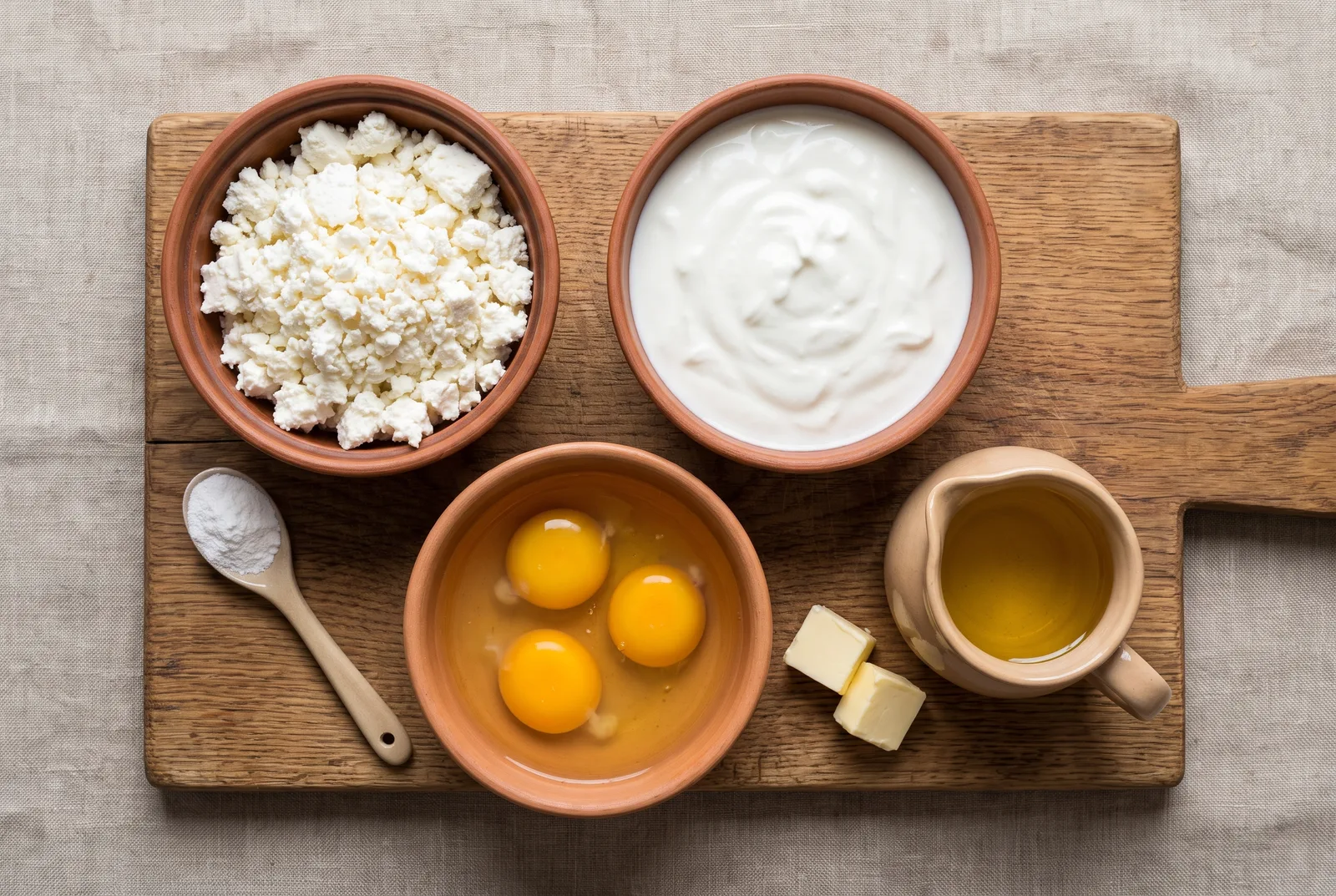
Banitsa masterclass: filo layering methods, sirene-egg-yogurt filling ratios and baking parameters for the ultimate Bulgarian cheese pastry
Banitsa (баница) — a coiled or layered filo cheese pastry — is Bulgaria's defining daily bake and its New Year centrepiece, and a UK Bulgarian baker will be judged on it in a single bite. This dossier, built from Bulgarian-language recipe, trade and standards sources and cross-checked against the platform's supplier specifications, gives the authentic picture: the three assembly methods (redena/layered, vita/coiled, smesena/mixed); the classic filling ratio (roughly 500 g kori : 300–350 g sirene : 400–500 g kiselo mlyako : 3–4 eggs : ~150 ml fat : 1 tsp bicarbonate of soda); why the yogurt-acid-plus-soda reaction and the sparkling-water trick give the light, juicy interior; the baking window (180°C fan / 200°C conventional, ~30–40 min); the difference between Bulgarian sirene and Greek feta and how to substitute; kori sourcing from hand-stretched to machine-sheeted (≥0.15 mm); and the regional and festive variants (tikvenik, mlechna banitsa, zelnik, and the New Year banitsa s kasmeti with dogwood-and-coin fortunes). Every technique is wired to the Domson catalogue a Bulgarian kitchen actually orders (strong white flour, 82% butter, sunflower oil, yogurt, white cheese, liquid egg) and cross-linked to the Pillar A craft concepts behind it (A6-laminated-dough-fundamentals, A5-baking-oven-science, A4-fat-types-and-selection, A1-protein-gluten-and-strength, A2-chemical-leaveners-baking-powder, A8-bakers-percentage-fundamentals) and to its sister Bulgarian articles (B6-filo-dough-kori, B6-dairy-in-baking, B6-flour-types-milling, B6-festive-baking-calendar).
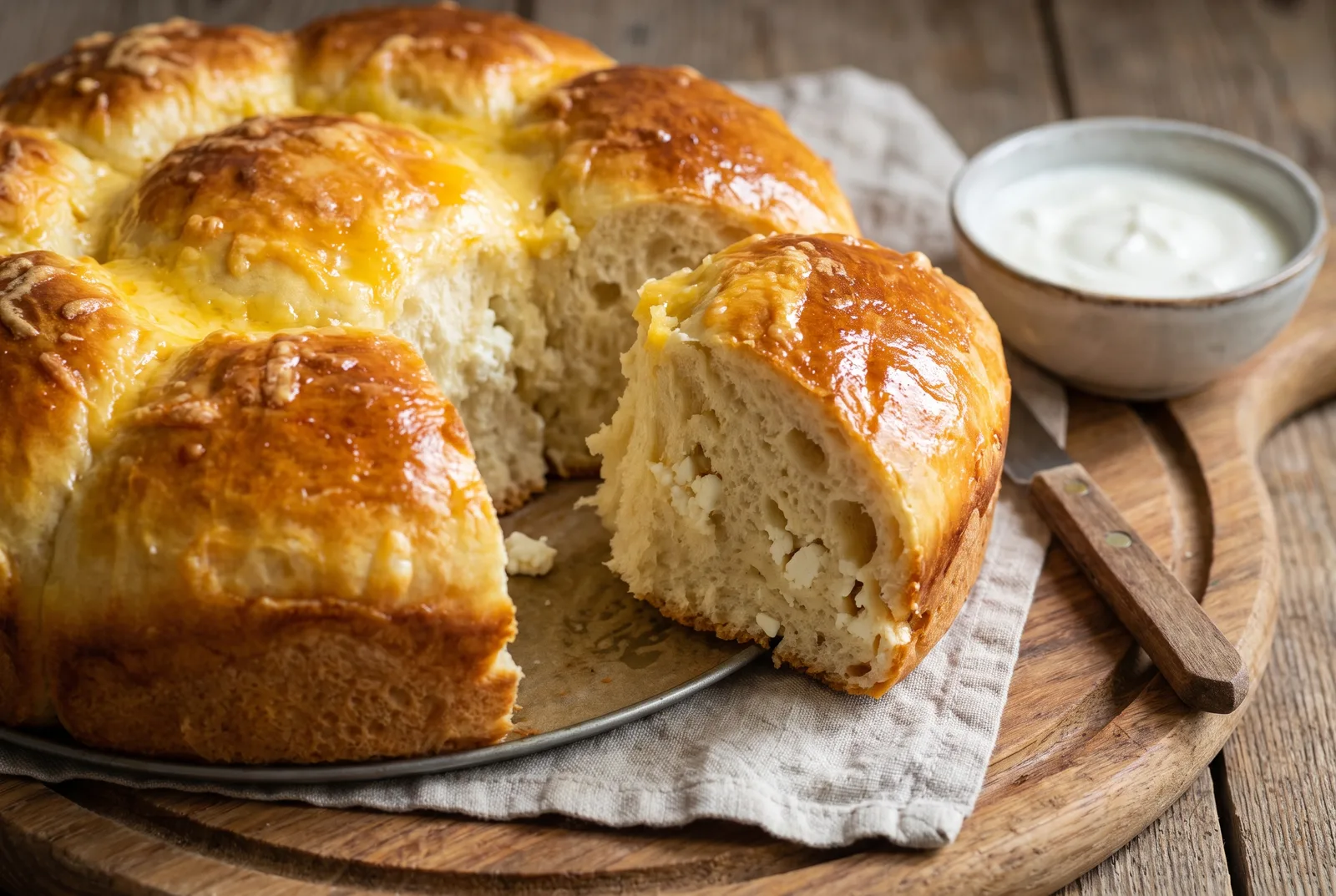
Bulgarian dairy as a baking ingredient: kiselo mlyako (yogurt), sirene, kashkaval and urda — functional roles in pastry, bread and fillings
Dairy is the backbone of Bulgarian baking, and a UK Bulgarian kitchen lives or dies by getting it right. This dossier, built from Bulgarian-language standards, trade and recipe sources and cross-checked against the platform's supplier specifications, sets out the four working dairy families and what each is FOR: kiselo mlyako (кисело мляко, the L. bulgaricus + S. thermophilus yogurt whose lactic acid drives the soda-leavening reaction, conditions dough and adds moisture and tang); sirene (сирене, BDS 15:2010 white brined cheese at ~3.5% salt — the savoury filling, and NOT the same product as Greek feta); kashkaval (кашкавал, the BDS 14:2010 scalded-curd yellow cheese steamed to 63-65°C — the melting/gratin cheese); and urda/izvara (урда / извара, the ricotta-like fresh and whey cheeses that fill sweet banitsa and milinki). It adds butter, kaymak and cream as the fats, a UK substitution table (sirene→cow's-milk feta, kiselo mlyako→natural yogurt, kashkaval→Gouda, urda→ricotta/curd cheese), and honest first-party spec data (three genuine datasheets read; several catalogue dairy specs found MISMATCHED and cited only for sourcing). Every technique is wired to the Domson catalogue and cross-linked to the Pillar A craft concepts (A2-chemical-leaveners-baking-powder, A2-sourdough-cultures-science, A4-fat-types-and-selection, A4-butter-grades-and-specialist-types, A6-pastry-creams-fillings, A5-baking-oven-science, A8-enriched-dough-formulas, A8-bakers-percentage-fundamentals) and to its sister Bulgarian articles (B6-banitsa-techniques, B6-kozunak-enriched-bread, B6-filo-dough-kori, B6-festive-baking-calendar).
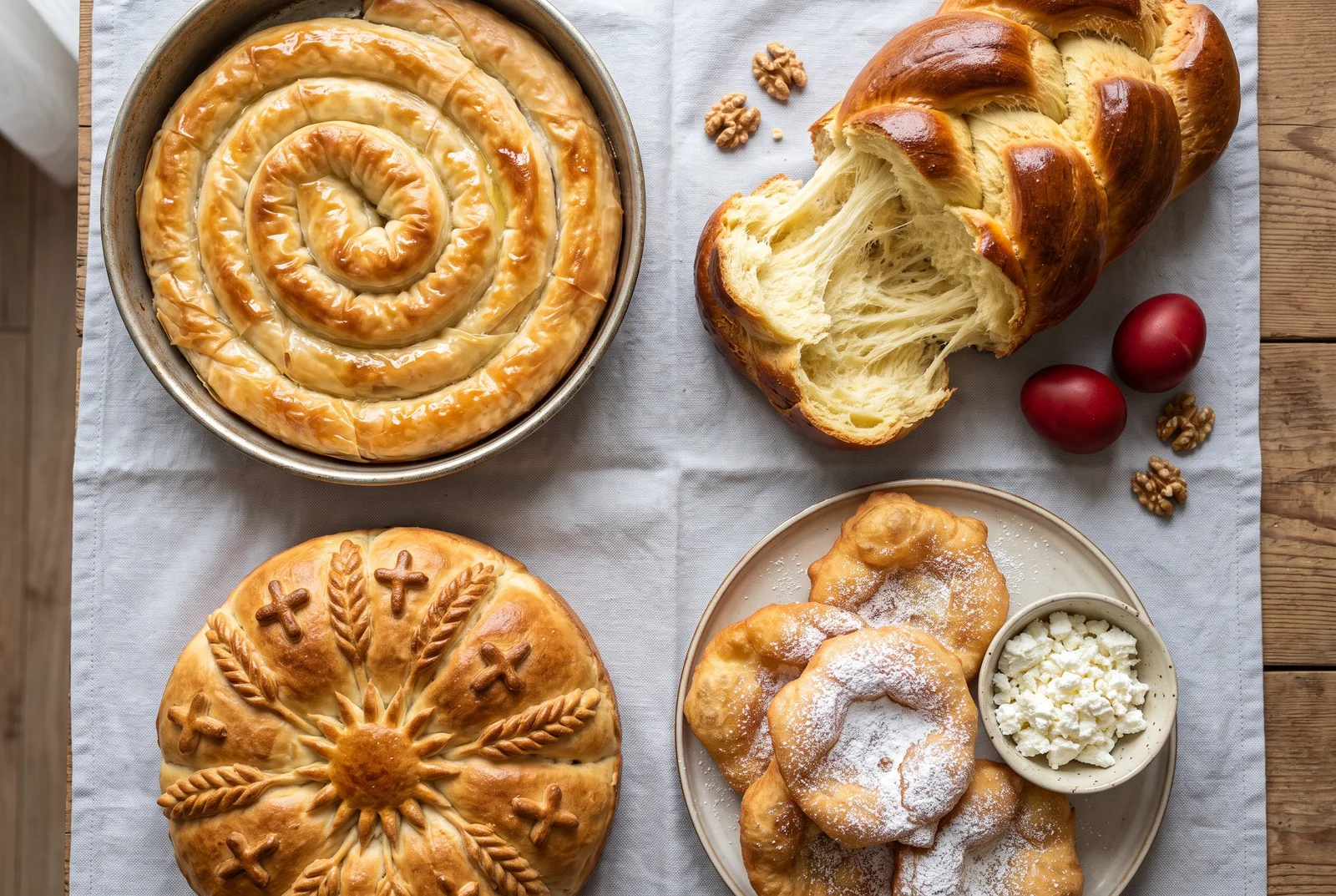
The Bulgarian festive baking calendar: banitsa on New Year's Eve, kozunak at Easter, koledna pitka at Christmas and mekitsi every morning
A working baker's tour of the Bulgarian baking year — from the Christmas Eve ritual loaf and the New Year banitsa with charms, through the white halva of Sirni Zagovezni to the braided Easter kozunak — plus mekitsi as the everyday breakfast bake. Authentic names, native-sourced formulas in baker's percentage, fault tables and a catalogue map of the flours, yeasts, fats and dairy a Bulgarian bakery in the UK actually buys.
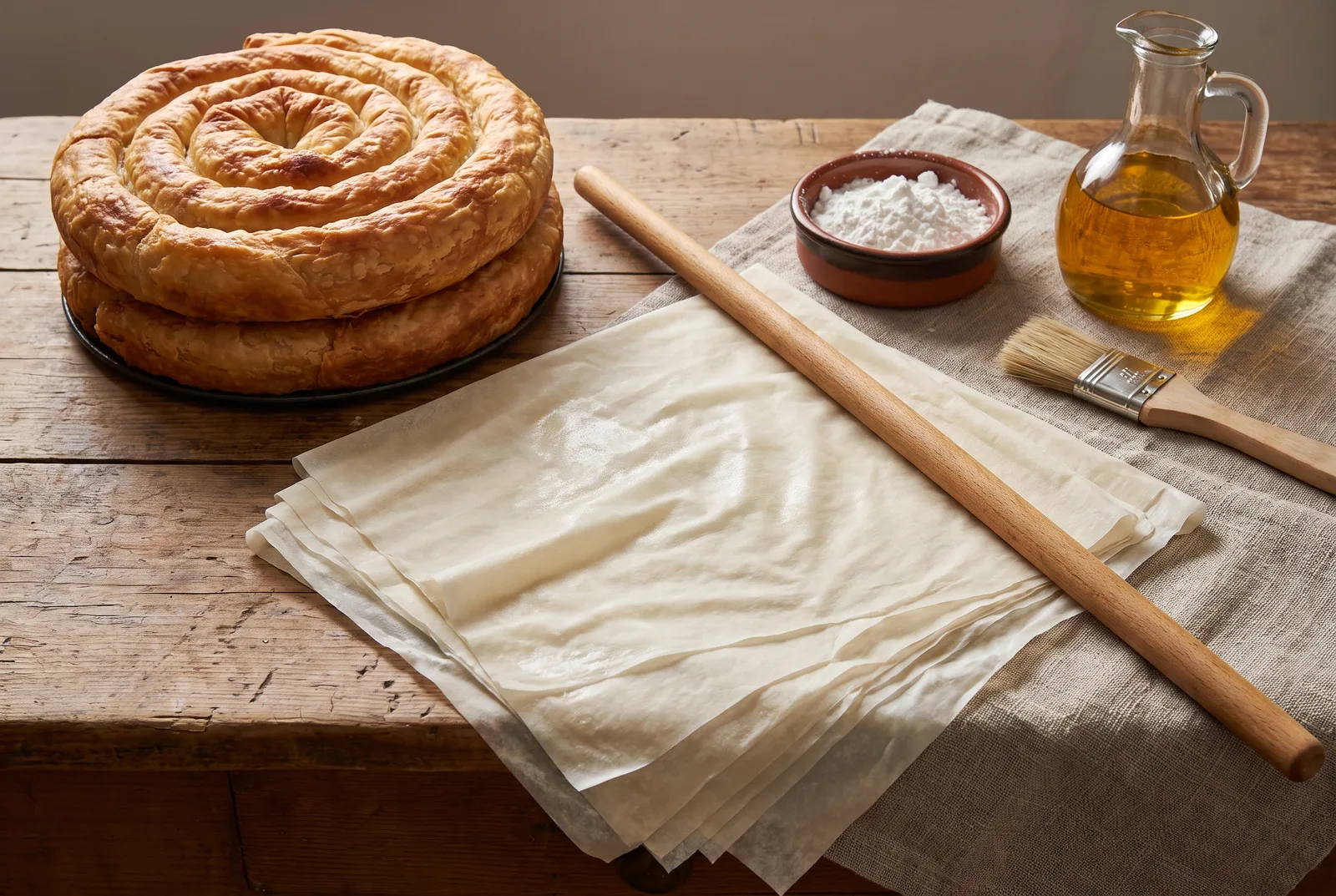
Kori (filo) from scratch: hand-stretching vs machine-sheeted sheets, hydration, resting and troubleshooting tears
For a Bulgarian baker, kori (кори — the paper-thin filo sheets) are the heart of banitsa, and the one thing a customer judges: a great banitsa is a great sheet. This dossier gives a UK baker the authentic picture, mined from Bulgarian-language recipe, trade and history sources and cross-checked against the platform's supplier specifications. It sets out the two hand traditions — точени (rolled with a long thin pin and corn-starch dusting) and теглени/дърпани (pulled by hand over an oiled surface) — and the industrial machine-sheeted line that stretches sheets from 0.15 mm upward. It covers the dough that matters: a moderate ~10–12% protein flour (Bulgarian Type 500 the default), ~50–55% hydration, and the small doses of acid (vinegar) and oil that relax the gluten so the sheet stretches thin without snapping back or tearing; the make-or-break resting step; the exact stretch technique; and a full fault table. Every technique is wired to the Domson catalogue a Bulgarian kitchen actually orders — Type 500 and strong flour, sunflower oil, 82% butter, vinegar, corn/maize starch, liquid egg — and cross-linked to the Pillar A craft concepts behind it (A1-protein-gluten-and-strength, A1-wheat-flour-types-by-application, A5-dough-mixing-methods, A3-ascorbic-acid-oxidants-reductants, A5-shelf-life-and-staling) and to its Bulgarian, Turkish and Arab filo cousins (B6-banitsa-techniques, B6-flour-types-milling, B2-borek-phyllo, B3-phyllo-kataifi-production).
Bulgarian wheat flour types: Type 500, 700 and 1150 — classification, specs and how to choose for bread, banitsa and kozunak
A working baker's guide to the Bulgarian flour system, where wheat flour is graded by ash content (пепелно съдържание) and the Type number (тип) is literally the milligrams of ash per 100 g of dry flour — Type 500 ≈ 0.50% ash, Type 700 ≈ 0.70%, Type 1150 ≈ 1.15%, Type 1850 ≈ 1.85%. It explains the three named commercial grades set out in a voluntary national Approved Standard (Утвърден стандарт 01/2011, not mandatory food law) — Бяло (white), Добруджа (Dobrudzha, the semi-white named after Bulgaria's granary region) and Типово (tipovo, the semi-dark Type 1150) — and the full ladder from extra-fine Тип 450 to wholemeal Греъм Тип 1850. Its single most useful trade point: in Bulgaria bakers order flour by PRODUCT, not just by Type — Пекар (baker's), Баница, Козунаци, Кроасани — each with a published wet-gluten target, because banitsa sheets and kozunak "threads" (на конци) demand strength that a plain white Type 500 does not have. It maps every Bulgarian grade to a Domson UK-stock flour a Bulgarian baker can actually buy, and gives the crosswalk (Bulgarian Type = Polish Type = German number; French T and Italian 00 differ). Classification is cited to the Union of Bulgarian Millers and the national standard; supplier numbers come from GoodMills Bulgaria/SofiaMel and first-party UK/Polish datasheets read on disk.
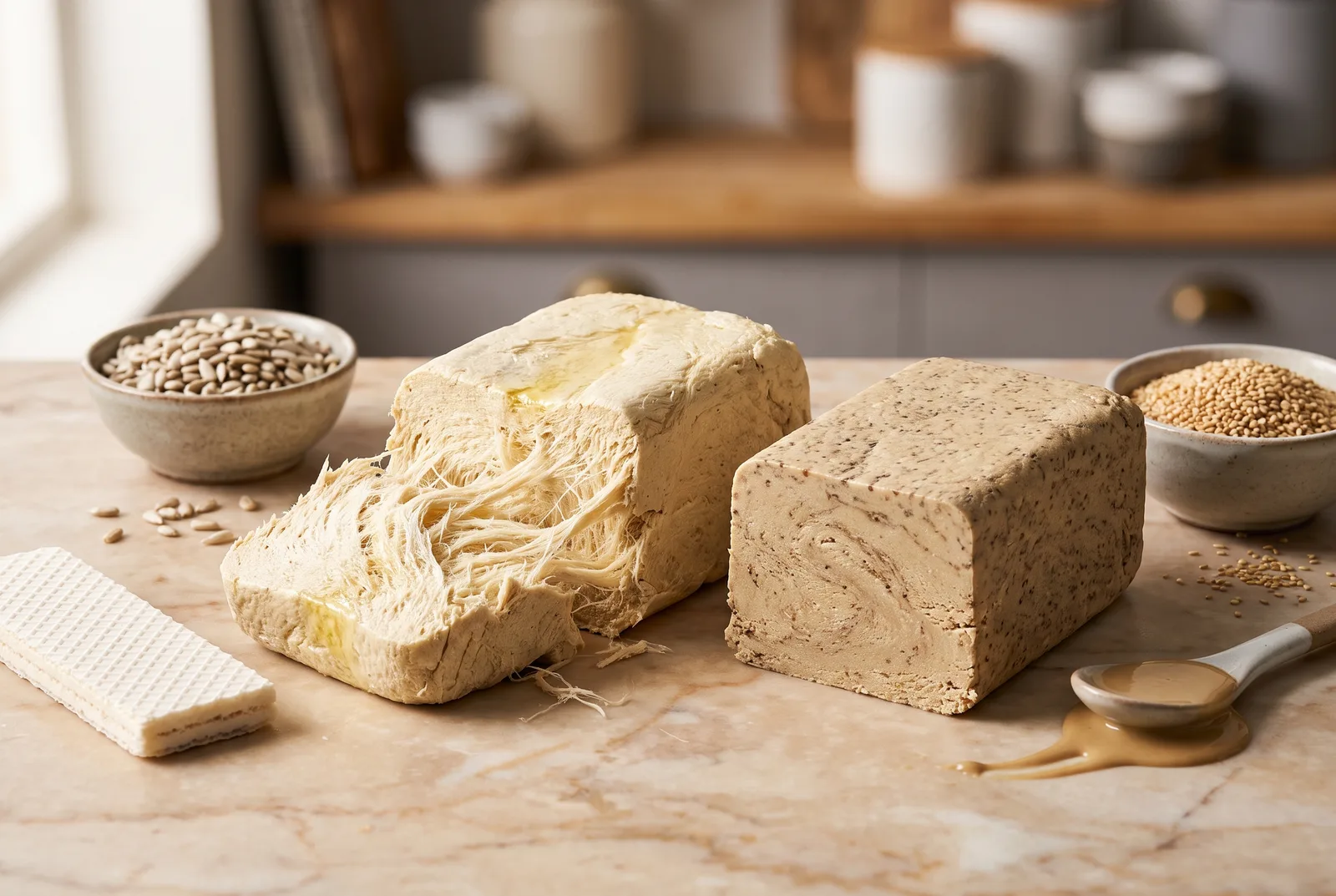
Bulgarian halva: sunflower vs sesame tahan, nuga (white halva), production stages and quality markers
"Halva" in Bulgaria is two unrelated crafts, and a UK baker selling to Bulgarians has to keep them apart. The first is tahan halva (тахан халва) — a paste of hulled, roasted, stone-ground oilseed (тахан) that is roughly half oil, folded into a soapwort-aerated pulled sugar. Bulgaria's everyday version is made from sunflower seed (слънчогледов тахан), not sesame — a genuinely Balkan signature driven by the country's sunflower crop — while sesame (сусамов тахан) is the dearer classic. The second is the sugar family — нуга (nuga) and бяла халва (white halva) — an egg-white nougat, often pressed between wafer sheets. This dossier, built from Bulgarian-language producer, recipe, standards and cultural sources and cross-checked against the platform's supplier specifications, gives the authentic picture: the production stages (sugar+glucose syrup cooked to a ~120°C firm-ball stage with citric acid; a soapwort/чувен root extract whipped in to whiten and aerate; the tahan kneaded until it "strings" into fine threads — на конци; industrial finishing around 135°C); the quality markers a Bulgarian customer applies in one bite ("къса се на конци" and melts in the mouth); the sesame-vs-sunflower trade-off including the allergen advantage of sunflower; and the real regulatory catch — that soapwort (чувен), like Turkish çöven and Arab shirsh al-halawa, is not an authorised GB/EU food additive. It is wired to the Domson catalogue a Bulgarian halva kitchen actually orders (sesame and sunflower seed, sugar, glucose, egg albumen for nuga, cocoa, nuts, dark coating) and cross-linked to the Pillar A craft behind it (A6-sugar-work-techniques, A8-chocolate-confectionery-formulas, A7-seeds-nuts-toppings, A4-fat-types-and-selection) and to its sister traditions (B2-helva-sesame-tahini, B3-tahini-halva-and-sesame- confections, B6-oriental-sweets-baklava-lokum, B6-festive-baking-calendar).
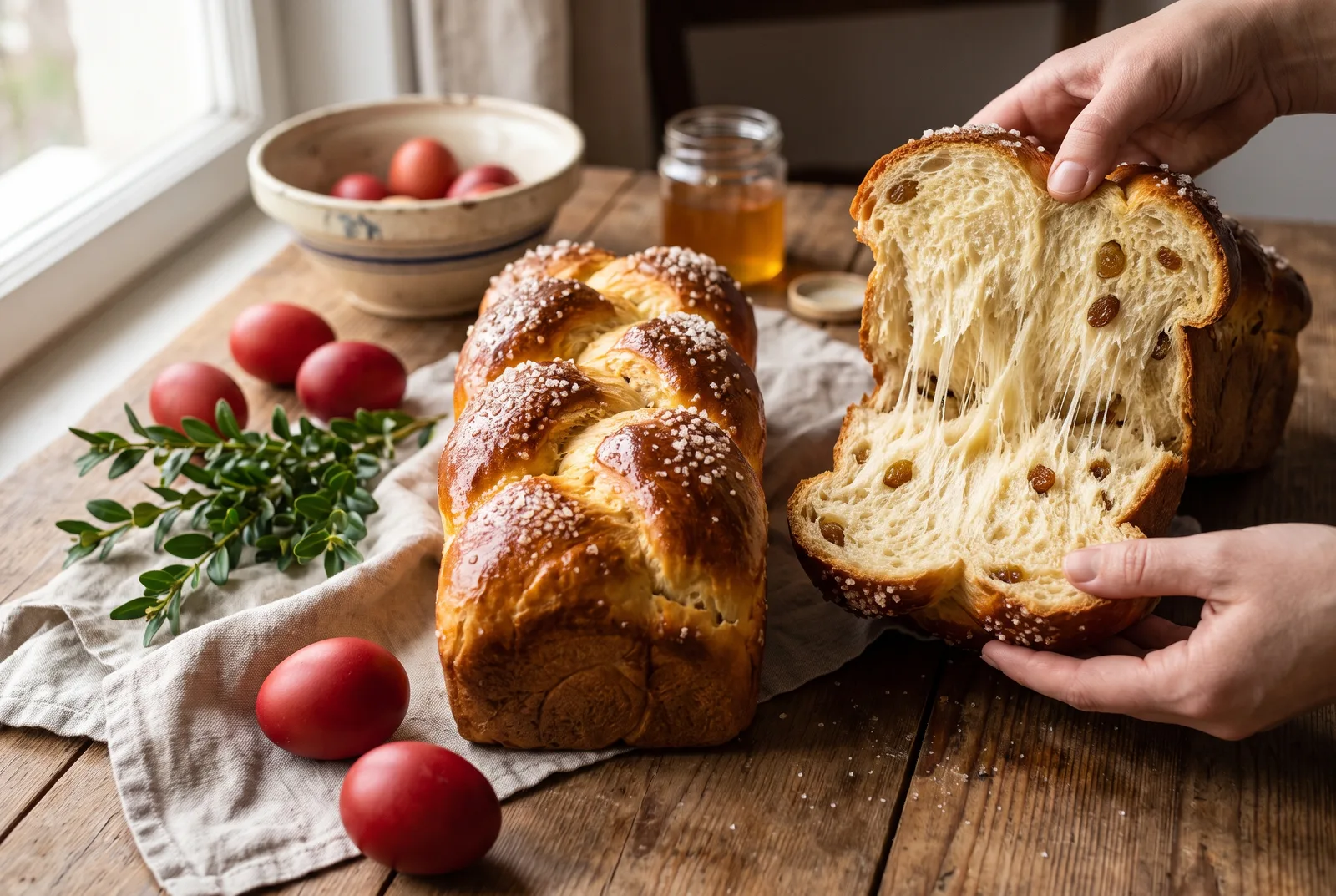
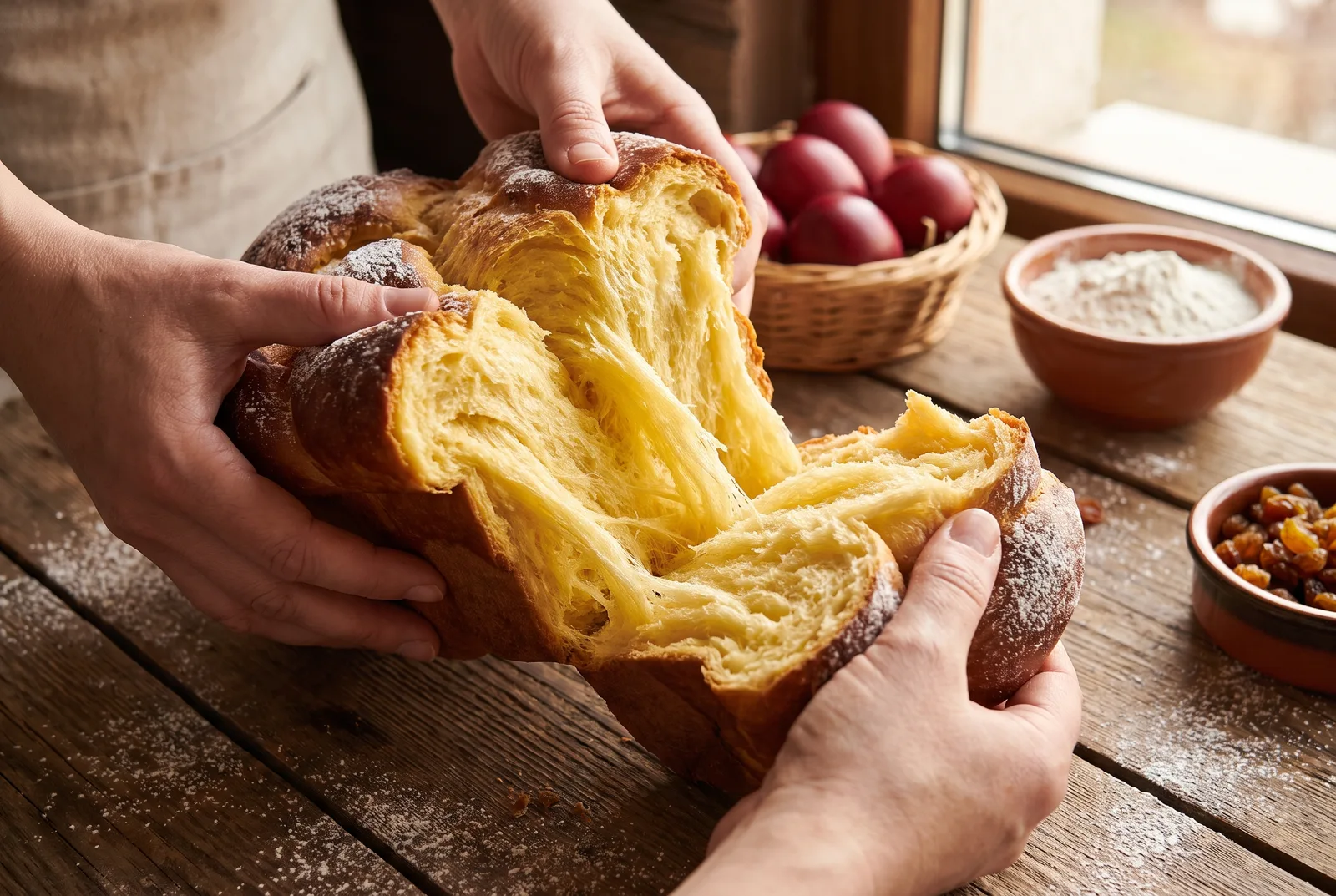
Kozunak: Bulgaria's Easter enriched bread — enrichment ratios, pull-apart 'threads', braiding patterns and oven-spring management
For a Bulgarian baker, kozunak (козунак, festive enriched sweet bread) is the loaf that matters most — the centrepiece of Великден (Easter), and the one a customer judges in a single pull. This dossier gives a UK baker the authentic picture, built from Bulgarian-language recipe and trade sources and cross-checked against the platform's supplier specifications: the heavily enriched, high-sugar dough (roughly, per 1 kg strong white flour, 5–6 eggs, 200–300 g sugar, 100 g butter plus oil, 200–250 ml milk, 21–25 g fresh yeast); the one thing that separates a great kozunak from a sweet cake — a crumb that shreds into fine threads (се къса на конци), which comes from strong high-protein WHITE flour, a long knead, and the eggs added ONE AT A TIME; the braiding patterns (тройна/четворна/петорна плитка and the wreath, венец); the carefully managed bake that controls oven spring in a tall loaf (commonly a rising profile, ~150–170°C then ~180°C); and the distinctly Bulgarian flavourings (lemon, cardamom and Rosa Damascena rose oil) alongside sultanas, walnuts, almonds and lokum. Every technique is wired to the Domson catalogue a Bulgarian kitchen actually orders — strong flour, fresh yeast, 82% butter, sugar, liquid egg yolk, sultanas, walnuts — and cross-linked to the Pillar A craft concepts behind it (A1-protein-gluten-and-strength, A2-osmotolerant-yeast-enriched-doughs, A5-dough-mixing-methods, A5-baking-oven-science) and to its sister Bulgarian and Romanian articles (B6-flour-types-milling, B6-festive-baking-calendar, B6-ritual-breads-pitka-pogacha, B6-dairy-in-baking, B6-rose-water-culinary-use and B4-cozonac-enriched-dough).
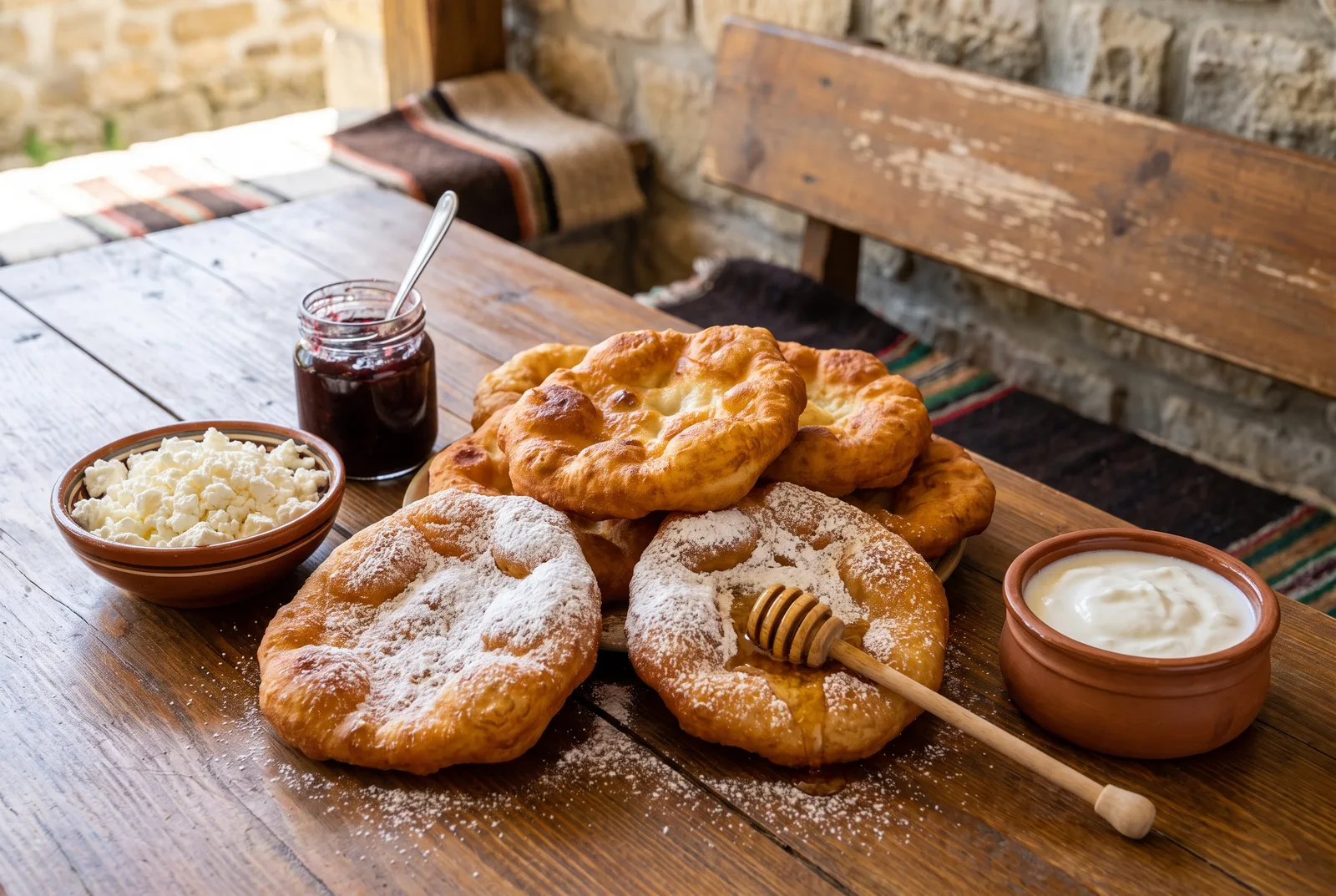
Mekitsi and Bulgarian fried dough: fermented dough formula, oil-temperature control and the commercial breakfast-pastry opportunity
Mekitsi (мекици) are Bulgaria's everyday breakfast — a soft, puffed, yogurt-and-yeast fried dough eaten at home, at markets and roadside stalls, dusted with icing sugar or topped with white sirene cheese, jam or honey. This dossier gives a UK baker the authentic picture, mined from Bulgarian- language recipe and reference sources (chef Ivan Zvezdev, Gotvach.bg, 1001recepti and other Bulgarian culinary references) and cross-checked against the platform's supplier spec sheets: the name (from mek, "soft"); the three leavening routes — yeast, kiselo mlyako (Bulgarian yogurt) plus bicarbonate of soda, or both; a classic formula in grams and baker's percentage; how mekitsi differ from tiganitsi and langidi; and the one control that makes or breaks a fried-dough line — oil temperature (170-180 C). It maps every step to the Domson catalogue a Bulgarian bakery actually orders (plain Type 500 flour, fresh and instant yeast, frying oils and shortening, icing sugar, sirene, jam) and cross-links the Pillar A craft concepts behind it (A4-frying-fats-and-oils, A2-yeast-types-comparison, A2-chemical-leaveners-baking-powder, A5-proofing-science, A8-enriched-dough-formulas) plus its sister Bulgarian articles (B6-flour-types-milling, B6-dairy-in-baking, B6-festive-baking-calendar, B6-kozunak-enriched-bread).
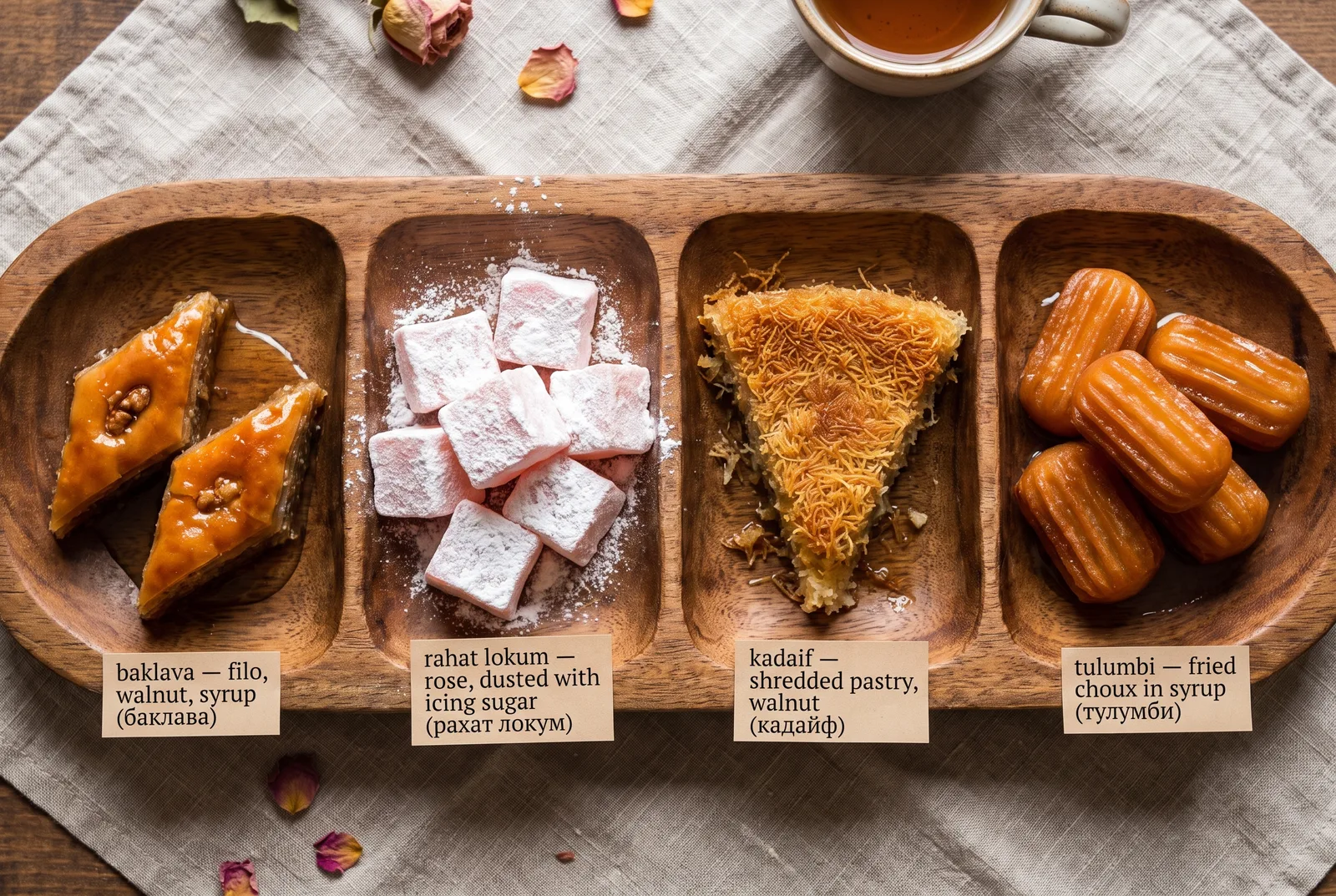
Bulgaria's Ottoman-heritage sweets: baklava, lokum (rose delight), tulumbi and kadaif — ingredients, syrup work and regional flavour signatures
Five centuries of Ottoman rule (1396–1878) left Bulgaria a whole shelf of syrup-and-sugar sweets that are still central to the festive table — baklava (baklava), rahat lokum (rahat lokum / Turkish delight), kadaif (kadayıf) and tulumbi (tolumbichki). This dossier gives a UK baker or distributor serving Bulgarian customers the authentic picture, mined from Bulgarian-language sources (SofiaMel, Lukeria of Targovishte, the Etar open-air museum's shekerdzhiynitsa, the Kazanlak Rose Valley rose producers and Bulgarian recipe authorities) and cross-checked against the platform's own supplier specifications. It covers the four core sweets — how each is built, the all-important syrup work and the hot/cold soaking rule, the sugar-inversion chemistry that keeps lokum smooth and syrups from crystallising — plus the genuinely Bulgarian regional signatures: the Bratsigovo Bethlehem-star Christmas baklava, Targovishte as a modern lokum town, and Rose Valley rose water. Every recipe is wired to the Domson catalogue a Bulgarian patisserie actually orders (walnuts, pistachios, ground almonds, honey, sugar, maize/potato/wheat starch, citric acid, sunflower oil, 82% butter, semolina, sesame), with the honest sourcing gaps flagged (no rose water, no tahini/halva paste, no kadaif/filo sheets, no ready lokum). Cross-linked to the Pillar A craft behind each family (A6-sugar-work-techniques, A6-choux-eclair-technology, A6-laminated-dough-fundamentals, A6-glazes-finishes, A7-seeds-nuts-toppings, A4-frying-fats-and-oils, A8-chocolate-confectionery-formulas, A1-wheat-flour-types-by-application) and to its sister Bulgarian and Ottoman articles.
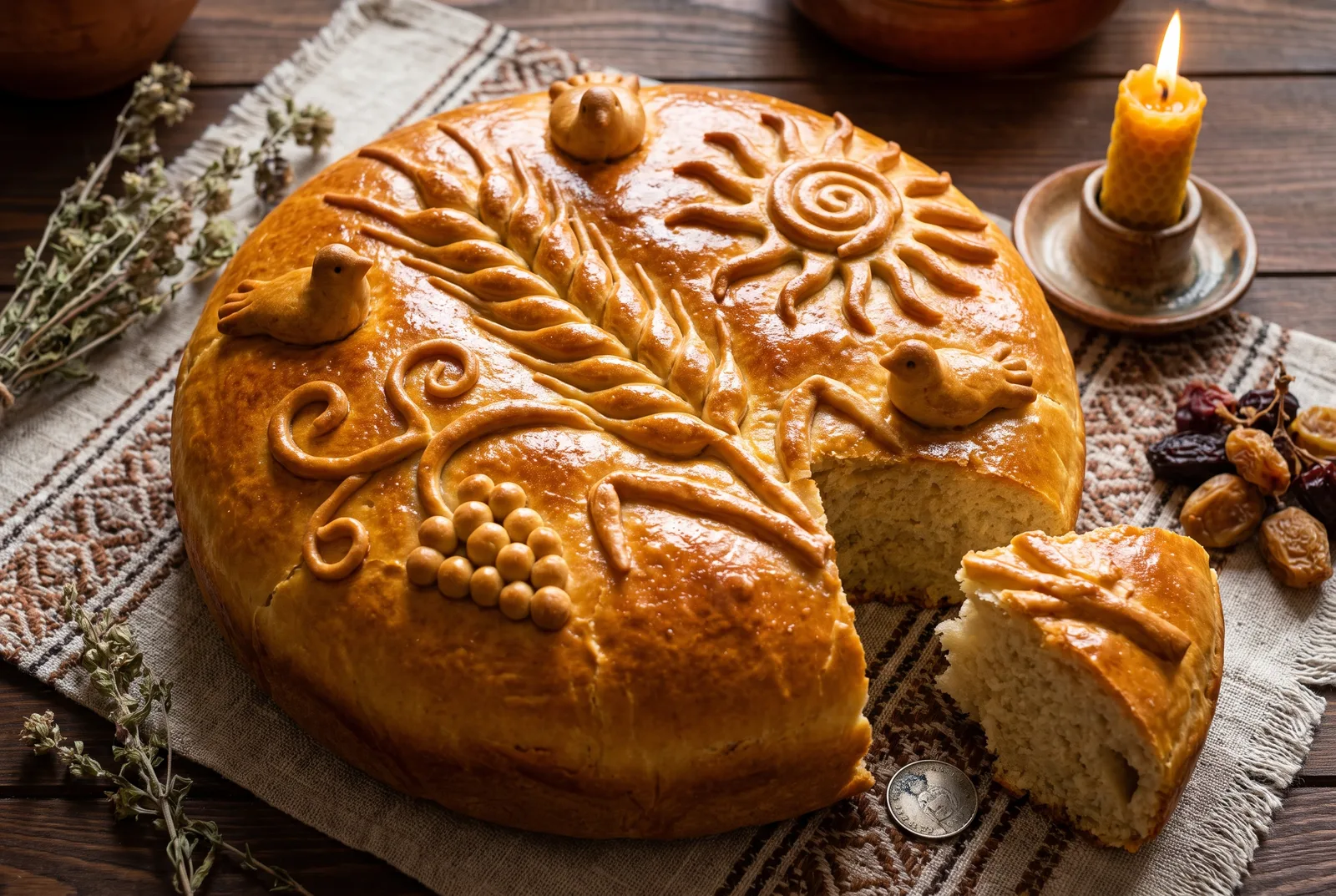
Ritual breads of Bulgaria: pitka, pogacha and obreden hlyab — dough formulas, decorative motifs and their life-cycle occasions
In Bulgarian folk culture a loaf is never just a loaf. The obreden hlyab (обреден хляб, "ritual bread") marks every threshold of the calendar and of a human life — birth, baptism, first steps, betrothal, the feast days of the saints, Christmas Eve, Easter, and death. This dossier gives a UK operator the authentic picture, drawn from Bulgarian-language ethnographic, milling and recipe sources, of the two working families of ritual bread — the round leavened pitka (питка) and the flatter pogacha (погача, also spelt pogača) — plus the ceremonial forms (the Christmas-Eve Bogovitsa / богова пита with its hidden coin, the ring-shaped St George's-Day kravai, wedding and memorial breads). It explains the decorative dough-relief motifs (wheat ear, grapevine, sun, birds, cross) and their symbolism, the customs that a baker's product has to respect (bread is broken, never cut; the sacred leaven; the strictly Lenten Christmas-Eve loaf), and gives representative working formulas in baker's percent for a lean Bogovitsa, a savoury pogača and a festive pull-apart "cotton" pogača. It maps the Bulgarian ash-based flour types (500 / 700 / 1150) onto the Domson catalogue Type numbers, anchors the numbers in six supplier spec sheets, and flags a real commercial food-safety issue — the coin baked inside the Bogovitsa. It cross-links the Pillar A craft (baker's %, lean and enriched dough formulas, fresh vs. instant yeast, proofing, oven/crust science, flour classification, fats, sesame topping) and the sister B6 Bulgarian dossiers (flour types, kozunak, the festive calendar).
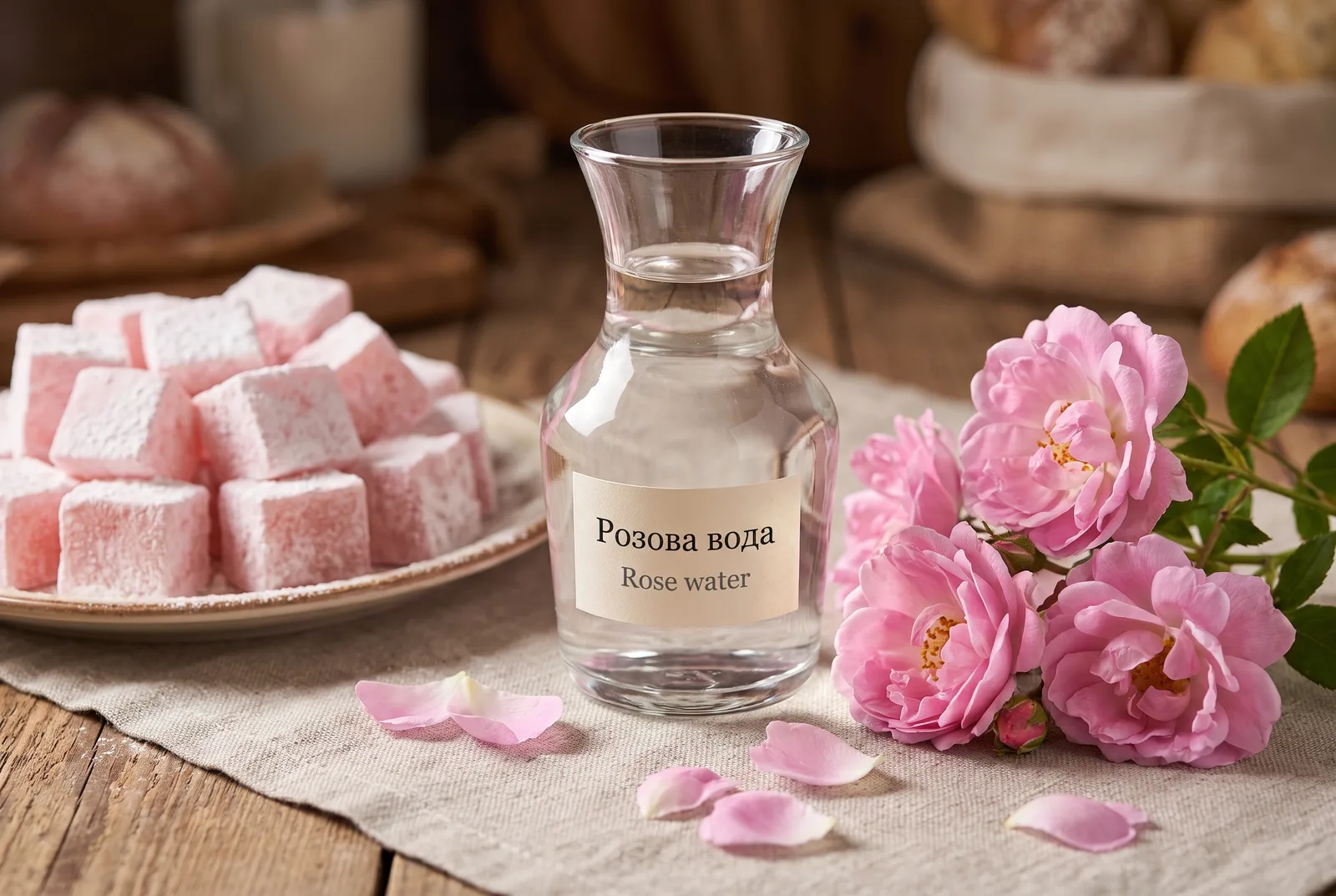
Bulgarian rose water in baking and confectionery: Rosa Damascena production, culinary dosing and pairing guide
Rose water (rozova voda / розова вода) is Bulgaria's signature aromatic — the fragrant water distilled from the oil-bearing Damask rose (Rosa damascena) in the Rose Valley around Kazanlak, Karlovo and Strelcha. This dossier gives a UK baker the authentic picture, built from Bulgarian-language production, trade and recipe sources and cross-checked against the platform's supplier specifications. It explains what rose water actually IS — the aqueous hydrosol produced as a co-product of rose-oil distillation, carrying the water-soluble rose note (2-phenylethanol) rather than the oil itself — and why that makes it a generous, tablespoon-scale ingredient, in contrast to concentrated rose essence and rose oil, which are dosed in drops. It covers the production chain (roughly 3,000 kg of blossoms per kilogram of oil; dawn picking; the Bulgarian re-distillation still), the EU PGI status of Bulgarian rose oil, and — the single most important craft rule — that rose water is added at the END, off the heat, because its aroma is volatile. Practical, cited formulas are given for rose lokum (rahat lokum), rose petal jam (sladko ot rozi), and rose-scented baklava/kadaif syrup and kozunak, each wired to the Domson catalogue a Bulgarian bakery or patisserie in the UK actually orders (rose petal filling, cornstarch, sugar, glucose syrup, citric acid, edible rose petals, food colour, kataifi, walnuts, strong flour) and cross-linked to the Pillar A craft concepts behind it (A6-sugar-work-techniques, A8-chocolate-confectionery-formulas, A7-food-colour-and-metallic-effects, A2-osmotolerant-yeast-enriched-doughs, A8-enriched-dough-formulas) and to its sister Bulgarian, Turkish and Arab articles (B6-oriental-sweets-baklava-lokum, B6-kozunak-enriched-bread, B6-halva-confectionery, B2-lokum-production, B3-aromatic-flavourings-rosewater-orange-blossom-mastic and B3-attar-sugar-syrup-science).