
Laminated dough fundamentals: layers, folds & fat choice for croissants, Danish & puff pastry
A practical, data-driven guide to the craft that underpins all viennoiserie: building alternating sheets of dough and fat that puff apart in the oven. Covers what lamination is and why steam (not yeast alone) does the lifting; the three classic doughs (croissant, Danish, puff pastry) and how they differ; the fold mathematics (single fold ×3, book fold ×4) and the realistic layer counts; the four lock-in methods; the single most important control — matching the consistency and temperature of the détrempe and the roll-in fat; how to choose a medium-strong détrempe flour and the right roll-in fat; a full step-by-step process; a complete fault table; and flagged allergen guidance. Numeric specs are extracted directly from seven Domson-catalogue spec sheets (Komplexmłyn T550, FWP Matthews Windrush, GoodMills T750, Lesaffre Benevia yeast, Kruszwica Maestra Puff Pastry Margarine, Polmlek Butter 82%, Cardowan Crown NHAV) and cross-referenced against BAKERpedia, King Arthur Baking, Pastry Arts Magazine, The Culinary Pro and other baking authorities.
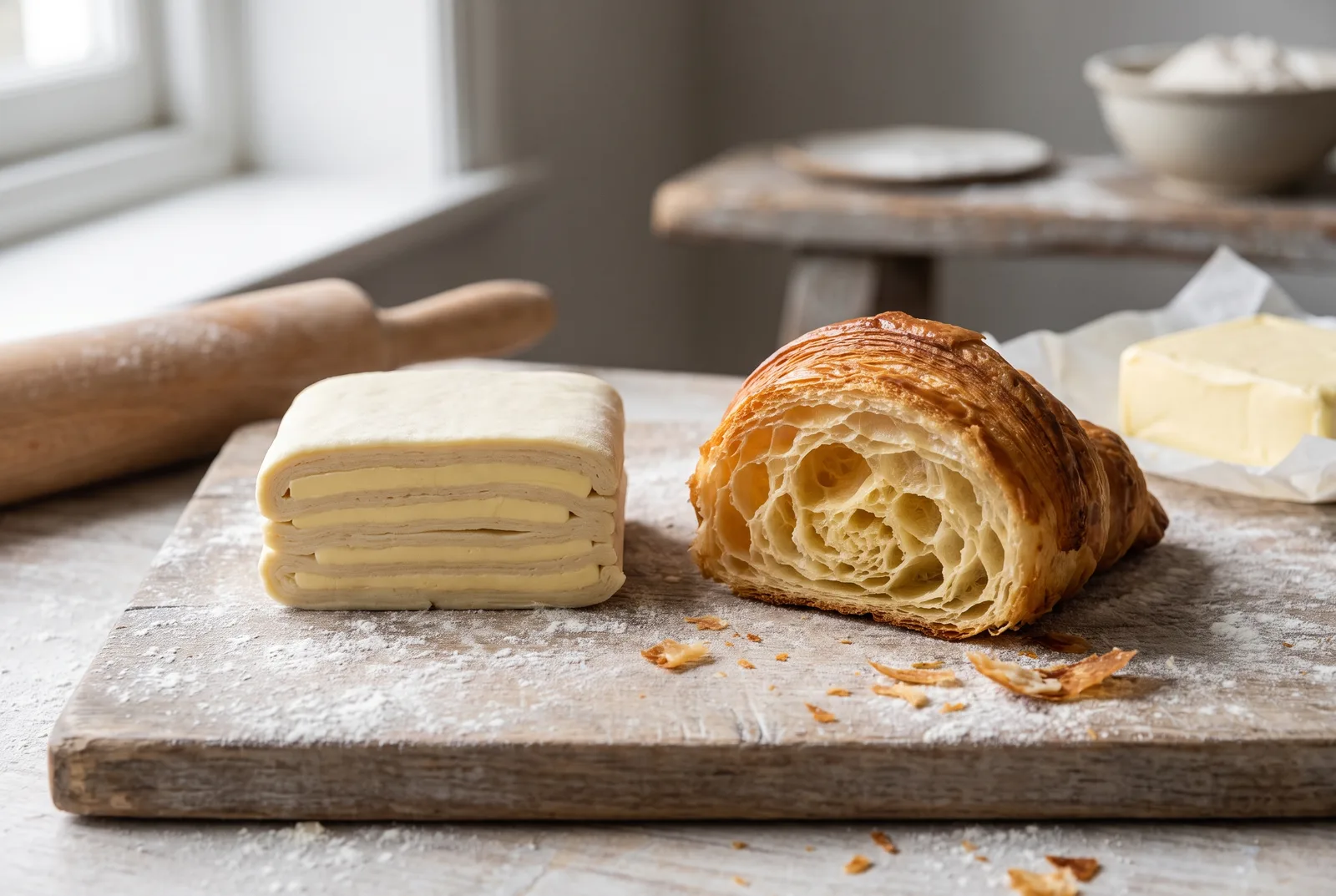
What is a laminated dough?
A laminated dough is built from many alternating, paper-thin sheets of dough and fat. Croissants, Danish pastries and puff pastry all belong to this family. The structure is everything: when the package hits a hot oven, the water in the dough — and in the fat — flashes to steam, the steam pushes the layers apart, and the melting fat coats and effectively fries each dough layer so that the separated sheets cannot stick back together. The result is the crisp, shattering crust and open, honeycomb crumb that defines viennoiserie.
This is why the fat is not just for richness — it is a structural tool. Butter is roughly 82% fat and 16% water, and that water content is a meaningful part of the lift; the fat itself has to stay solid long enough to keep the layers separate, then melt cleanly. Get the fat's water, plasticity and melting behaviour wrong and the layers merge into a greasy brick. Get them right and the dough levitates.
Croissant and Danish are leavened and laminated. Yeast inflates the crumb from within while steam separates the layers — two leavening systems working together. Puff pastry is unleavened: steam alone does all the lifting.
Three doughs, one technique
<!-- image: img-ld-05 -->| Dough | Leavening | Base | Roll-in fat | Layers | Character |
|---|---|---|---|---|---|
| Croissant | Yeast + steam | Flour, water/milk, yeast, sugar, salt | ~25-30% of dough | ~27-55 (total 24-144) | Light, crisp, open |
| Danish | Yeast + steam | Croissant dough + egg (and more sugar) | similar, often softer fat | ~24-54 | Softer, richer, chewier |
| Puff (feuilletée) | Steam only | Flour, water, salt | 50-60% of dough | up to ~729 | Maximum lift, very crisp, neutral |
See the table below for the full comparison.
The technique — enclose fat, sheet, fold, rest, repeat — is the same for all three. What changes is the recipe of the base dough (détrempe) and the amount of fat:
- Croissant dough is enriched and yeasted; the roll-in fat is a moderate fraction of the dough so the yeast crumb still dominates.
- Danish is the same idea with egg added — richer, softer, slightly chewier, and traditionally given a book fold.
- Puff pastry carries far more fat (the fat is half to equal the weight of the flour — by convention, full puff uses a 1:1 fat-to-flour ratio) and no yeast, so it relies entirely on steam and a very high layer count.
Counting layers: the fold maths
<!-- image: img-ld-02 -->Every fold multiplies the number of fat layers you already have:
- A single fold (letter fold / three-fold / tour simple) folds the sheet in thirds — it triples the layers (×3).
- A double fold (book fold / four-fold / tour double) folds both ends to the centre and closes them — it quadruples the layers (×4).
A useful relationship: in a folded pastry, dough layers = (2 × fat layers) + 1.
Worked examples (simple multiplication):
- Croissant, three single folds: 3 × 3 × 3 = 27 fat layers.
- Classic puff, six single turns: 3⁶ = 729 fat layers — the origin of the name mille-feuille ("thousand leaves").
But the simple count overstates reality. Each time you fold, dough presses onto dough; when the package is sheeted, those touching dough layers merge into one. The Universal Numbering System subtracts these dough-touching points (2 for a single fold, 3 for a book fold, 4 for a five-fold), giving the true count of functional layers. That is why BAKERpedia quotes practical ranges rather than tidy powers of three: croissant 24-144, Danish 24-54, puff pastry 81-729 layers.
More folds is not better. King Arthur Baking found that 2 folds (one letter + one book ≈ 25 layers) gave a more open, honeycomb crumb than 4 letter folds (163 layers) — because over-folding presses the butter so thin it no longer holds enough water to make the steam that separates the layers. Past about six folds the dough also becomes fragile and the fat starts to break through.
See the table below.
Locking in the fat
<!-- image: img-ld-03 -->Before you can fold, you have to enclose the roll-in fat (the beurrage) inside the base dough (the détrempe). There are four standard lock-in methods:
- Envelope — roll the dough to a square, set the fat slab in diagonally, fold all four corners to the centre.
- Single-fold (French / two-fold) — fat on one half of a rectangle; fold the other half over (3 starting layers).
- Letter-fold (English / three-fold) — fat over two-thirds; fold in thirds like a letter (2 starting fat layers).
- Book-fold (four-fold) — fold both ends to meet in the centre, then close.
The choice affects your starting layer count and how the first turns behave, but the principle is identical: seal the fat in completely with no gaps, then sheet gently to the first fold thickness.
The golden rule: matched consistency and temperature
<!-- image: img-ld-04 -->If you remember one thing, remember this: the détrempe and the roll-in fat must have the same plasticity when you sheet them. If the fat is firmer than the dough it cracks and punctures the layers; if it is softer it smears and merges them. The classic guidance is to chill the dough and fat together until they reach equal consistency before sheeting.
The lever that controls this is temperature:
| Stage | Butter dough | Roll-in margarine dough |
|---|---|---|
| Détrempe after mixing | 22-25°C, then chill | 22-25°C, then chill |
| Dough at start of lamination | ~4-5°C | ~4-5°C |
| Roll-in fat working temp | ~12-16°C (plastic) | 18-20°C (spec) |
| Lamination room | ~15°C (60°F) | 10-20°C |
| Rest between folds | 30-45 min, refrigerated | 10-30 min |
See the table below.
Two practical consequences:
- Butter is worked colder than margarine. Roll-in butter is plastic at about 12-16°C; a dedicated roll-in puff-pastry margarine such as Kruszwica Maestra is formulated to work at 18-20°C. That wider, warmer window is exactly why margarine is more forgiving in a hot bakery.
- Rest is not optional. Between folds the dough must rest, refrigerated, so the gluten relaxes (or it snaps back and tears) and the fat re-firms (or it smears). Rushing the rest is the single most common cause of torn, leaky lamination.
The bend test for butter: flex a ~1 cm tempered slab. It should bend without cracking (too cold) and without leaving a heavy fat smear on your fingers (too warm).
The détrempe: flour and yeast
Flour — medium-strong and extensible
The base dough needs enough protein to hold the layers, but not so much that it snaps back and tears when you sheet it. The sweet spot for viennoiserie is a medium-strong, extensible flour, roughly 10-13% protein (BAKERpedia cites 10.0-11.0% for croissant; some professional guidance extends to 13%, but this upper bound is from a lower-reliability forum source and lacks high-reliability corroboration), with a balanced rheology — a P/L ratio of about 0.4-0.7 and a strength around W300. Too-strong, under-hydrated flour tears during lamination.
Catalogue détrempe flours, with first-party spec data:
- FWP Matthews Windrush Strong White Bread Flour (UK) — protein 12.0-12.5% (target 12.2%), water absorption 55-61%, Hagberg Falling Number 250-400. A textbook medium-strong viennoiserie flour. Contains gluten; carries a soy contamination risk via the supply chain.
- GoodMills Wheat Flour Type 750 (PL) — protein 11 g/100 g, wet gluten min 28%, gluten index 75-99. Contains gluten; trace soy/lupine/mustard risk.
- Komplexmłyn Wheat Flour Type 550 (PL) — wet gluten min 25%, falling number min 220 s, ash max 0.58%. The spec floor for protein is only min 8%, so confirm the actual batch protein with the mill — a true Type 550 at the bottom of that range would be soft for lamination. Contains gluten; trace soy/lupine/mustard risk; some batches carry added ascorbic acid/enzymes.
Note on flour grades: Polish "Type" numbers (450/550/750) describe ash/extraction, not strength, so two Type 550 flours can differ in protein. Always work to the protein and falling-number figures on the spec, not the type number. See A1 (flour classification and protein/strength).
Keep the détrempe under-developed: mix only to a smooth, not fully developed gluten (≈4-5 min on second speed), because the folding itself develops the dough further. Hydration is moderate — about 45-50% on total dough — so the package sheets cleanly rather than sticking.
Yeast (croissant and Danish only)
Croissant and Danish need yeast for crumb. The cold of lamination slows fermentation, so doughs are mixed cool and proofed gently. The catalogue's Lesaffre Benevia fresh yeast (dry matter >29%, fermentative activity 125 ± 10 ml CO₂, stored 1-10°C, 35-day shelf life) is a clean choice; Lallemand Fermipan Red is the instant-dry equivalent for longer shelf life. Crucially, final proof must stay below the roll-in fat's melting point — see process below.
The roll-in fat: butter vs margarine (in brief)
This article is about the dough; roll-in fat chemistry (Solid Fat Content curves, β′ crystals, melting points) is covered in depth in A4 — Laminating fats for viennoiserie and A6 — Roll-in fat selection. The short version for lamination:
- Butter gives the best flavour but the narrowest working window (~12-16°C) and contains MILK. Some bakers use higher-fat tourage / dry butter (lower water → crisper layers). Catalogue: Polmlek Unsalted Butter 82% (10 kg, 25 kg) and Tourage Croissant Butter (Agart, no spec sheet).
- Roll-in margarine is more forgiving in warm conditions. Kruszwica Maestra Puff Pastry Margarine 80% holds SFC 33-37% at 20°C, 17-23% at 30°C and 9-13% at 35°C and works at 18-20°C — it is explicitly intended for croissant and French/semi-French pastry.
- For hot kitchens or industrial puff lines, a high-melting-point fat keeps the layers intact deep into the bake: Cardowan Crown NHAV Pastry Margarine has a slip melting point of 47.0°C. The trade-off is no dairy flavour and a denser mouthfeel.
See the table below.
Step-by-step: laminating a croissant dough
<!-- image: img-ld-12 -->- Mix the détrempe to a smooth, not fully developed dough; target dough temperature 22-25°C.
- Bulk briefly, then chill/retard so the dough enters lamination cold (~4-5°C).
- Temper the roll-in fat to a matching plasticity (butter ~12-16°C; margarine 18-20°C) and form an even slab.
- Lock in the fat (envelope or single-fold), sealing completely.
- Sheet gently, then give the first single fold; rotate 90°; rest 30 min refrigerated.
- Repeat to three single folds total (or one letter + one book for a more open crumb), resting between each; mark fold count with a fingertip.
- Final sheet to ~3-4 mm; cut, shape, and rest 10-15 min.
- Proof at ≤26°C, 75-80% RH, 90-120 min — proof temperature must never exceed the fat's melting point, or the fat leaks before baking.
- Bake ~200°C for 10-20 min with early steam; for puff pastry, around 176-200°C.
Keep the room cool. A lamination room at ~15°C (puff: 10-20°C) is the difference between clean layers and a smeared mess in summer.
Troubleshooting
<!-- image: img-ld-07 -->Full table below. The most common faults:
- Fat shatters during sheeting → fat too cold / dough-fat mismatch. Temper the fat; match consistency.
- Fat smears, layers merge, greasy → fat too warm, room too warm, or over-worked. Chill; cool the room to ~15°C; in heat switch to a higher-SFC margarine.
- Dough tears and snaps back → flour too strong/under-hydrated or insufficient rest. Use ~11-13% protein flour; rest longer.
- Fat leaks/pools at the base when baking → fat melted before the structure set, or proof too warm. Proof below the fat's melting point; for hot kitchens use a high-SMP fat (Crown NHAV, 47°C).
- Tight, cell-like crumb (not honeycomb) → over-folded. Reduce folds.
- Uneven/lopsided rise → uneven fat or one-directional sheeting. Roll from the centre outward; rotate 90° between folds.
Allergens and labelling
Laminated products are made from a small number of high-allergen ingredients, so labelling is straightforward in principle but must be verified against current batch documentation:
- Wheat flour → cereals containing gluten in every laminated product. Several catalogue flours also carry a soy / lupine / mustard trace risk from agriculture or supply chain.
- Butter détrempe / butter roll-in → MILK (incl. lactose). Any butter-laminated viennoiserie must declare "Contains: Milk."
- Egg (Danish) → declare EGG.
- Roll-in margarine → product-specific. By contrast, Cardowan Crown NHAV declares all 14 EU allergens absent and is vegan-certified — still verify against the current batch. Kruszwica Maestra's allergen status is unresolved (see below).
Allergen — Kruszwica Maestra status unresolved: the 2009 spec read here lists soya lecithin (SOY) and states it "may contain trace amounts of dairy ingredients" (MILK); however, the related A4 dossier notes a 2021 Mass Balance spec for the same product declaring NO allergens. These are mutually exclusive — do not publish a Maestra allergen declaration without written confirmation from Kruszwica. Additionally, the 2009 spec's erucic acid declaration (max 2% of the fat fraction) may not comply with current EU food-product limits (5 g/kg under Regulation (EU) 2019/1870 if classified as a finished food product rather than an oil/fat), and the kJ/kcal figures (2960 kJ / 720 kcal per 100 g) are internally inconsistent under EU 1169/2011 Annex XIV conversion factors — do not use Maestra nutritional or compositional data from this 2009 spec for any labelling purpose; obtain a current product specification directly from Kruszwica.
All 14 declarable allergens fall under EU Regulation (EU) No 1169/2011, cited directly on the supplier spec sheets.
Buy the ingredients (catalogue map)
Détrempe flour (medium-strong, ~10-13% protein): FWP Matthews Windrush Strong White (UK, spec), GoodMills Wheat Flour Type 750 (PL, spec), Komplexmłyn Wheat Flour Type 550 (PL, spec — confirm batch protein), Domson White Strong Wheat Flour 25 kg.
Yeast (croissant/Danish): Lesaffre Benevia fresh yeast (spec), Lallemand Fermipan Red dried yeast (spec).
Roll-in butter: Polmlek Unsalted Butter 82% (10 kg / 25 kg, spec), Tourage Croissant Butter (Agart, 5 × 2 kg).
Roll-in margarine: Kruszwica Maestra Puff Pastry Margarine 80% (spec), Cardowan Crown NHAV Pastry Margarine 12.5 kg (high SMP, spec), Master Martini Plus Croissant Margarine, Puratos Argenta Pastry Laminating Fat, Puratos Mimetic 32 Lamination Fat, PGD Puff Favorit Laminating Margarine.
Coverage notes (transparency)
Strong (spec-sheet confirmed): roll-in fat SFC/melting and composition (Maestra, Crown NHAV), butter composition and milk allergen (Polmlek), and the détrempe flour and yeast numbers (Windrush, GoodMills T750, Komplexmłyn T550, Benevia) — all read first-party.
Medium (multi-source, conventions vary): fold mathematics and layer counts (simple multiplication vs Universal Numbering System; BAKERpedia practical ranges); roll-in fat % and hydration (typical professional bands, vary by house formula); process temperatures and proof/bake settings.
Thin / single-source: viennoiserie flour protein 10-13% is presented as the working envelope; the upper end (11-13%) leans on a low-reliability forum source — the BAKERpedia primary is 10-11%; validate against your own flour's farinograph/alveograph before specifying. Puff full/half/three-quarter classification and inverted puff description are widely accepted professional convention; the sole cited secondary source (De Ma Vie) was found not to contain these claims explicitly. Tourage butter, Plus Croissant Margarine, Argenta, Mimetic 32, Puff Favorit and Domson Strong Wheat Flour have no spec sheets — no first-party numeric or allergen data; assume the obvious allergen and verify before use.
Figures
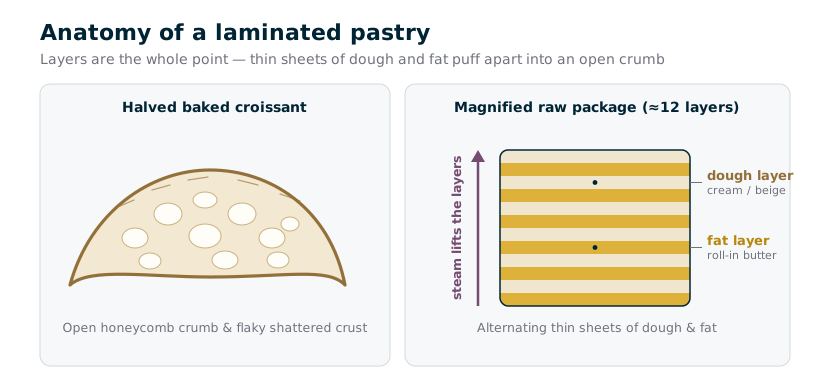 Cross-section illustration of a laminated pastry: alternating thin dough and fat layers that have puffed apart in the oven into an open, honeycomb structure, shown next to a halved croissant
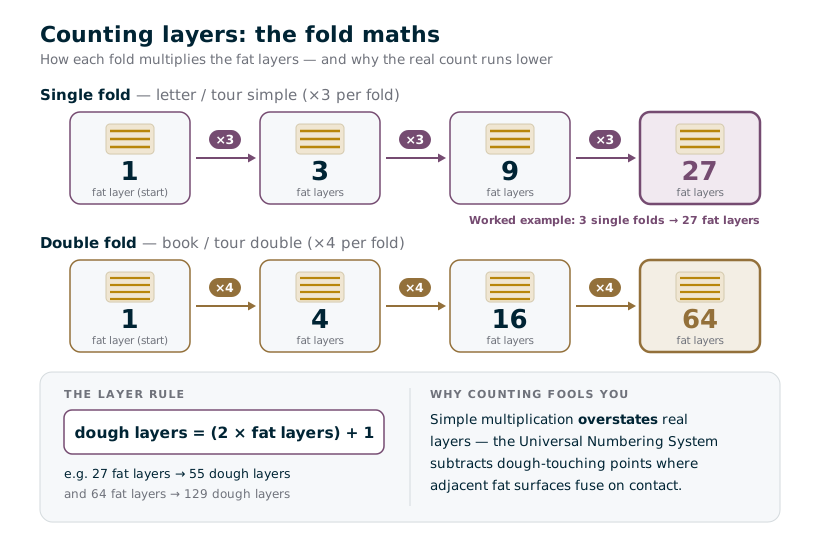 Diagram comparing a single letter fold (triples the fat layers) with a double book fold (quadruples the fat layers), with a worked example showing three single folds producing 27 fat layers
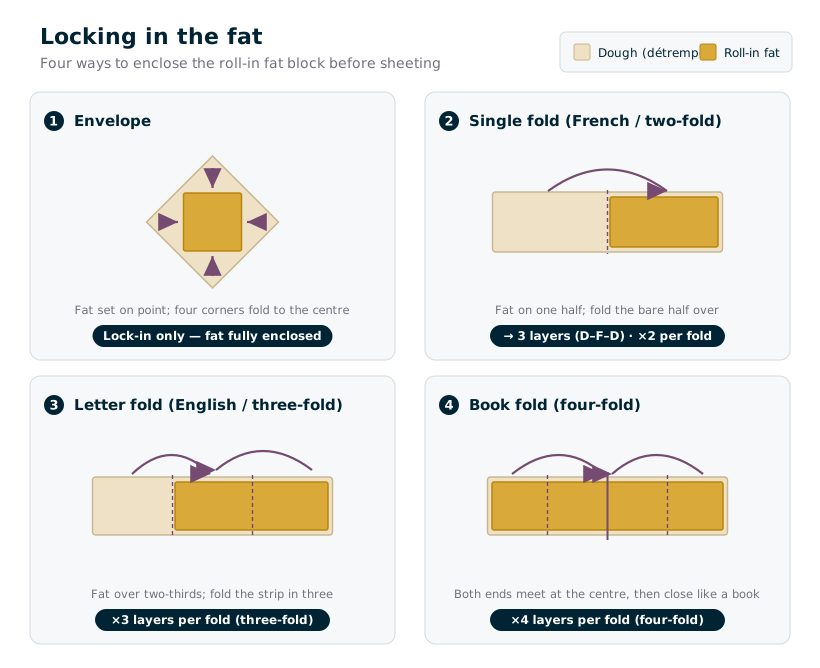 Four-panel diagram of methods for enclosing roll-in fat in dough: envelope wrap, single-fold lock-in, letter-fold lock-in and book-fold, each showing the dough in cream and the fat block in gold
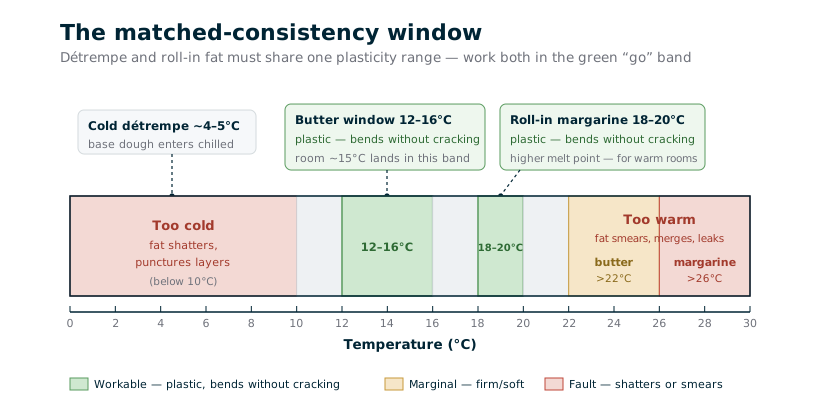 Temperature band diagram showing the workable lamination window where dough and roll-in fat share the same plasticity, flanked by a cold zone where the fat cracks and a warm zone where the fat smears and leaks
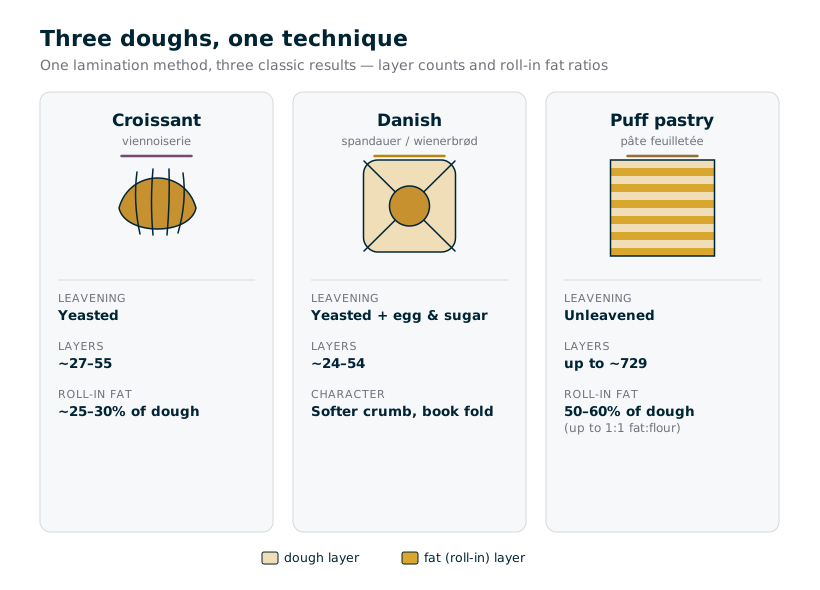 Three-panel comparison of croissant, Danish and puff pastry showing each finished product with a tag listing leavening, typical layer count and roll-in fat ratio
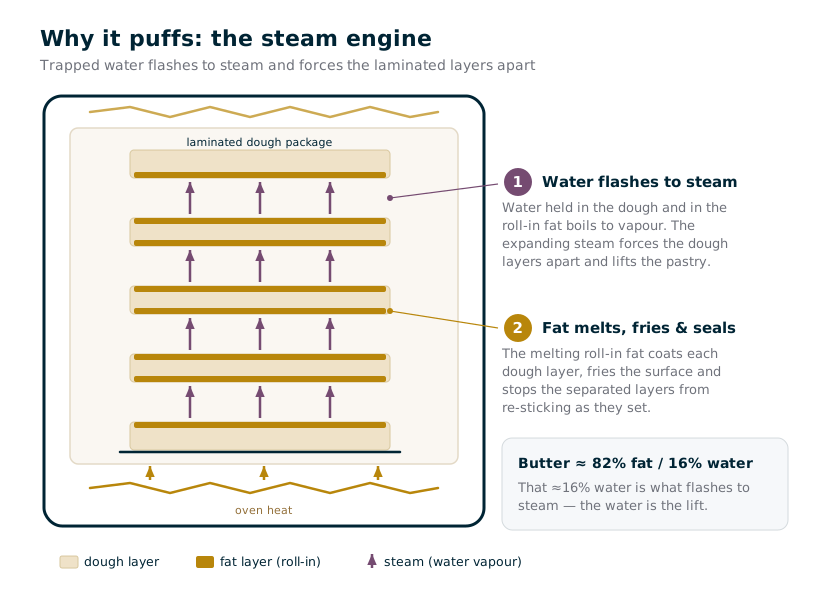 Diagram of a laminated package in the oven: arrows show water turning to steam and forcing the dough layers apart while the melting fat coats and seals each layer
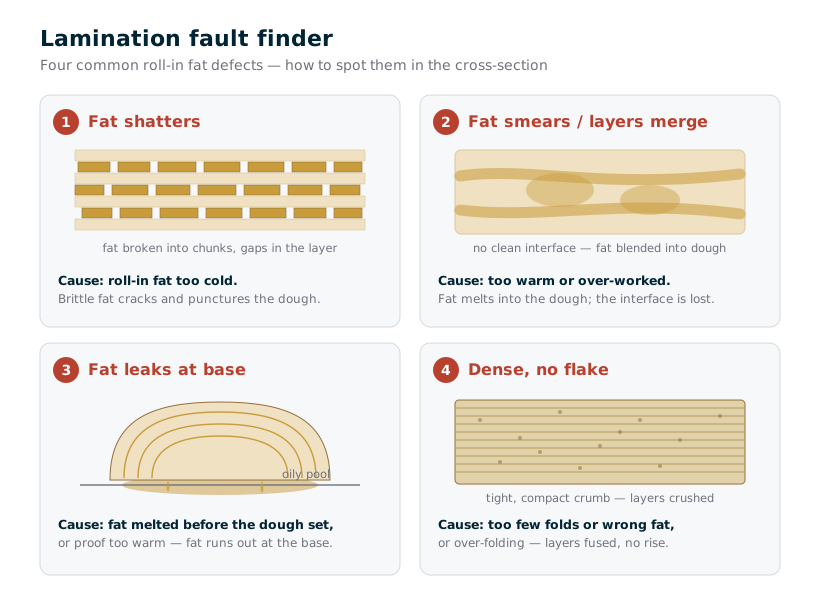 Four-panel fault illustration showing roll-in fat shattering into chunks, fat smearing into the dough, melted fat pooling at the base of a pastry, and a dense pastry with no flake
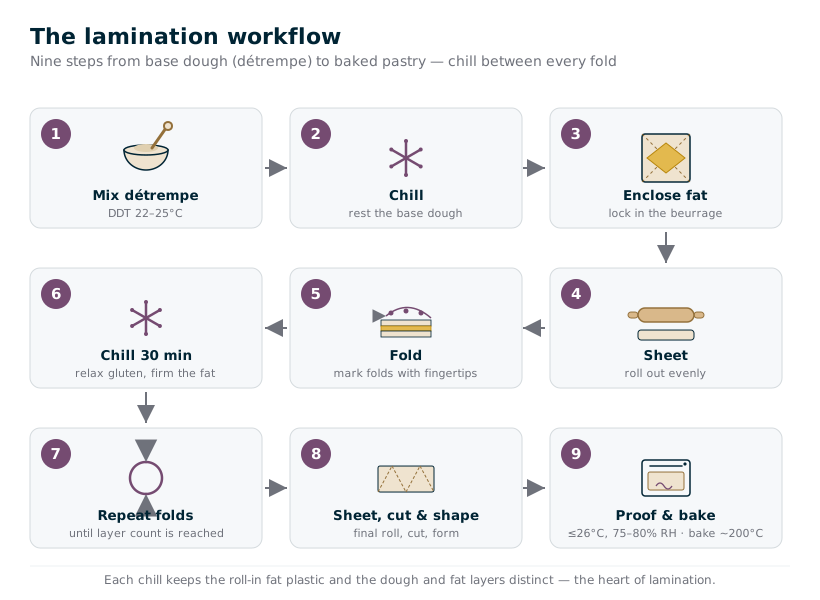 Nine-step process strip showing the full croissant/puff lamination workflow from mixing the base dough to baking, with chill stamps between folds
Reference croissant détrempe (baker's percentages)
| Ingredient | Baker's % | Weight |
|---|---|---|
| Medium-strong wheat flour (~11-13% protein) — e.g. Windrush Strong White or GoodMills T750 | 100% | |
| Water / milk — Dough hydration kept moderate (~45-50% on total dough) | ~50-55% | |
| Fresh yeast — e.g. Lesaffre Benevia; or ~2-2.5% instant | ~5-7% | |
| Sugar | ~10-12% | |
| Salt | ~2% | |
| Butter in dough — Softens the détrempe; separate from the roll-in fat | ~5-10% | |
| ROLL-IN fat — Butter ~12-16°C or roll-in margarine 18-20°C | ~25-30% of total dough weight |
- Mix to a smooth, NOT fully developed dough; target dough temperature 22-25°C.
- Bulk briefly, then chill/retard so the dough enters lamination cold (~4-5°C).
- Temper the roll-in fat to a matching plasticity and lock it in (envelope or single-fold).
- Give 3 single folds (or 1 letter + 1 book for an open crumb), resting 30 min refrigerated between folds.
- Sheet to ~3-4 mm, cut, shape; proof at ≤26°C, 75-80% RH, 90-120 min.
- Bake ~200°C, 10-20 min; steam early.
Yield: Indicative professional formula synthesised from BAKERpedia croissant guidance and roll-in averages. Adjust to your flour and plant. Roll-in fat % below is on TOTAL dough weight, not flour.
Reference classic puff pastry (feuilletée) — ratio card
| Ingredient | Baker's % | Weight |
|---|---|---|
| Medium/strong wheat flour — Some bakers blend in a little weaker flour for extensibility | 100% | |
| Water (cold) — Détrempe hydration | ~45-50% | |
| Salt | ~2% | |
| Melted/soft butter in détrempe (optional) — Eases sheeting | ~5-10% | |
| ROLL-IN fat — Full puff = 1:1 fat:flour; half/three-quarter puff use less — widely accepted professional convention (De Ma Vie source cited for c33 did not explicitly contain this classification) | 50-100% of flour; ~50-60% of dough per BAKERpedia (denominator may be détrempe weight, not total assembly) |
- Mix a slack détrempe; rest ~1 hour refrigerated.
- Lock in the fat (envelope/single) at matched consistency.
- Give 4-6 single turns (or a mix of single + book), resting between turns; keep the room 10-20°C.
- Six single turns ≈ 729 layers; do not over-fold past ~6 turns.
- Rest before cutting to limit shrinkage; bake ~176-200°C.
- Optional: inverted (inverse) puff wraps the fat around the dough for more even layers and less shrinkage (standard culinary convention; the De Ma Vie source cited as c33 did not explicitly describe this technique).
Yield: Unleavened. Ratios from BAKERpedia and De Ma Vie. 'Full puff' = equal weights of fat and flour.
Croissant, Danish and puff pastry are made with one technique but differ in leavening, enrichment, fat load and layer count. Layer ranges from BAKERpedia; fat ratios from BAKERpedia and De Ma Vie.
| Dough | Leavening | Base recipe | Typical roll-in fat | Typical layers | Eating quality |
|---|---|---|---|---|---|
| Croissant | Yeast + steam | Flour, water/milk, yeast, sugar, salt, a little fat | ~25-30% of total dough weight (avg ~28%) | ~27-55 fat layers; total 24-144 | Light, crisp shatter, open honeycomb crumb |
| Danish pastry | Yeast + steam | Croissant dough + egg (and more sugar) | Similar to croissant; often slightly less / softer fat | ~24-54 layers | Softer, richer, slightly chewier and less brittle |
| Puff pastry (feuilletée) | Steam only (unleavened) | Flour, water, salt (détrempe) + roll-in fat | ~50-60% of dough per BAKERpedia — note: BAKERpedia denominator may be détrempe (base dough) rather than total assembly; full puff at 1:1 fat:flour is widely accepted professional convention | Up to ~729 (six single turns); practical 81-729 | Maximum lift, very crisp, neutral (savoury or sweet) |
A fold multiplies the existing fat-layer count. Dough layers = (2 × fat layers) + 1. The 'simple multiplication' counts overstate the true number of functional layers because folding presses dough onto dough (dough-touching points); the Universal Numbering System subtracts these.
| Fold | Other names | Multiplier | Fat layers after 1 fold from a single sheet | Dough-touching points to subtract |
|---|---|---|---|---|
| Single fold | Letter fold, three-fold, tour simple | × 3 | 3 | 2 per fold |
| Double fold | Book fold, four-fold, tour double | × 4 | 4 | 3 per fold |
| Croissant (worked example) | 3 × single fold | 3 × 3 × 3 | 27 fat layers (simple count) | Counts vary by convention |
| Classic puff (worked example) | 6 × single turn | 3^6 | 729 fat layers (mille-feuille) | Counts vary by convention |
The single most common cause of failure is temperature. Roll-in butter is worked colder than roll-in margarine, which is the main reason margarine is easier in a warm bakery. Butter window and resting from The Culinary Pro and BAKERpedia; margarine 18-20°C is spec-confirmed for Maestra. Proofing temperature is a food-quality control, not a safety control, but must still respect the fat melting point.
| Stage | Butter dough | Roll-in margarine dough |
|---|---|---|
| Détrempe (after mixing) | 22-25°C target, then chill | 22-25°C target, then chill |
| Dough at start of lamination | ~4-5°C (cold, firm but pliable) | ~4-5°C |
| Roll-in fat working temperature | ~12-16°C (plastic; bends without cracking) | 18-20°C (spec) |
| Lamination room | ~15°C (60°F) | 10-20°C |
| Rest between folds (refrigerated) | 30-45 min | 10-30 min (wider window) |
| Final proof | ≤26°C, below butter's melting point, 75-80% RH | ≤26-30°C, below the margarine's melting point |
| Bake | ~200°C, 10-20 min (croissant) | ~176-200°C (puff/croissant) |
First-party spec-sheet values. SFC = Solid Fat Content; SMP = slip melting point.
| Fat | Type | Fat % | SFC / melting | Working temp | Allergens |
|---|---|---|---|---|---|
| Polmlek Unsalted Butter 82% | Dairy butter | min 82% (16% water) | Melts ~30-34°C; SFC not on spec | ~12-16°C | CONTAINS MILK (lactose) |
| Kruszwica Maestra Puff Pastry Margarine 80% | Roll-in margarine | 80% ± 0.5% | SFC 33-37% @20°C, 17-23% @30°C, 9-13% @35°C | 18-20°C (spec) | Soya lecithin (SOY); may contain trace MILK |
| Cardowan Crown NHAV Pastry Margarine | Roll-in margarine (high SMP) | 82% | Slip melting point 47.0°C | ~15-22°C (estimated from SMP) | All 14 EU allergens absent; vegan |
The base dough needs a medium-strength, extensible flour: enough protein to hold the layers, not so much that the dough snaps back and tears during sheeting. BAKERpedia target 10.0-11.0%; professional guidance extends to 13% (lower-confidence upper bound) — treat 10-13% as the working envelope. P/L ~0.4-0.7 (forum-sourced; not independently confirmed at the 0.4 lower bound). First-party spec-sheet values.
| Flour | Protein | Gluten / index | Falling number | Ash | Allergens |
|---|---|---|---|---|---|
| Windrush (Sterling) Strong White Bread Flour (FWP Matthews, UK) | 12.0-12.5% (target 12.2%) | Added vital wheat gluten <1.5%; W/A 55-61% | HFN 250-400 (target 350) | n/s (white) | Gluten (wheat); soy contamination risk |
| GoodMills Wheat Flour Type 750 (HQ, PL) | 11 g/100 g | Wet gluten min 28%; gluten index 75-99 | min 220 s | max 0.82% | Gluten; trace soy/lupine/mustard risk |
| Komplexmłyn Wheat Flour Type 550 (PL) | min 8.0% | Wet gluten min 25% | min 220 s | max 0.58% | Gluten; trace soy/lupine/mustard risk |
Most lamination faults trace back to fat temperature/consistency or insufficient resting. Faults cross-checked across De Ma Vie, BAKERpedia and King Arthur.
| Fault | Likely cause | Remedy |
|---|---|---|
| Roll-in fat cracks / shatters into chunks during sheeting | Fat too cold, or détrempe too cold relative to the fat; butter not tempered | Temper the fat a few minutes; aim for matched plasticity (butter ~12-16°C, margarine 18-20°C) |
| Fat smears into the dough; layers merge; greasy feel | Fat too warm, room too warm, or over-working/over-folding | Chill immediately; keep room ~15°C; reduce folds; switch to a higher-SFC roll-in margarine in warm conditions |
| Dough tears and snaps back during sheeting | Flour too strong / under-hydrated, or insufficient rest (tense gluten) | Use a more extensible ~11-13% protein flour; rest longer (30-45 min) between folds |
| Fat leaks/pools at the base during baking | Fat melted before the structure set; proof too warm; SMP too low for the bake | Proof below the fat melting point; for hot kitchens use a high-SMP fat (e.g. Crown NHAV 47°C) |
| Dense crumb, little lift, no flake | Too few folds, wrong fat (e.g. a cake margarine), or layers already merged from smearing | Use a dedicated roll-in fat; confirm fold count; fix temperature control |
| Tight, cell-like crumb instead of open honeycomb | Over-folding — butter pressed too thin to make separating steam | Reduce folds (e.g. 1 letter + 1 book ≈ 25 layers gives a more open crumb) |
| Uneven rise / lopsided layers | Uneven fat distribution or sheeting only in one direction | Roll from the centre outward; rotate 90° between folds; keep the fat slab an even thickness |
Buy the ingredients
Catalogue products and brands referenced in this article.
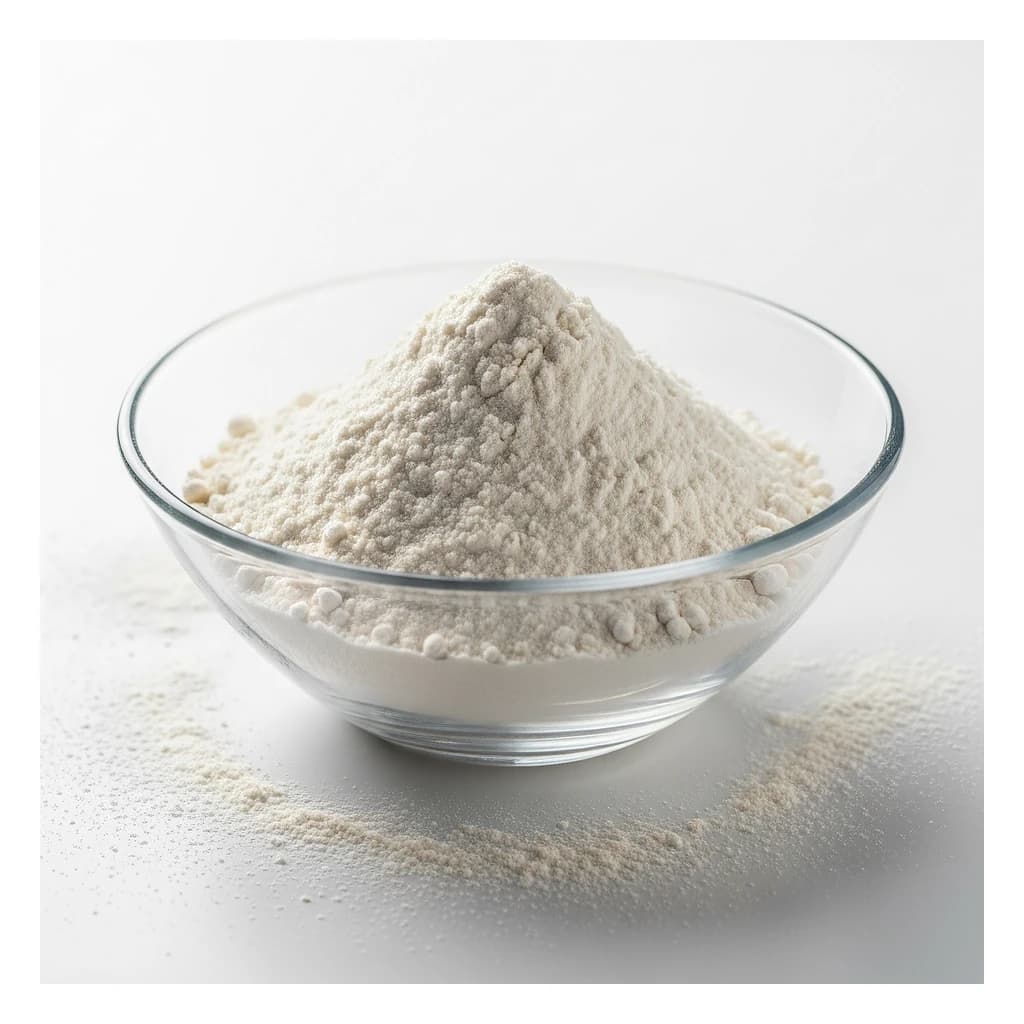
Komplexmłyn Wheat Flour Type 550 25 kg

Unsalted Butter 82% 25 kg
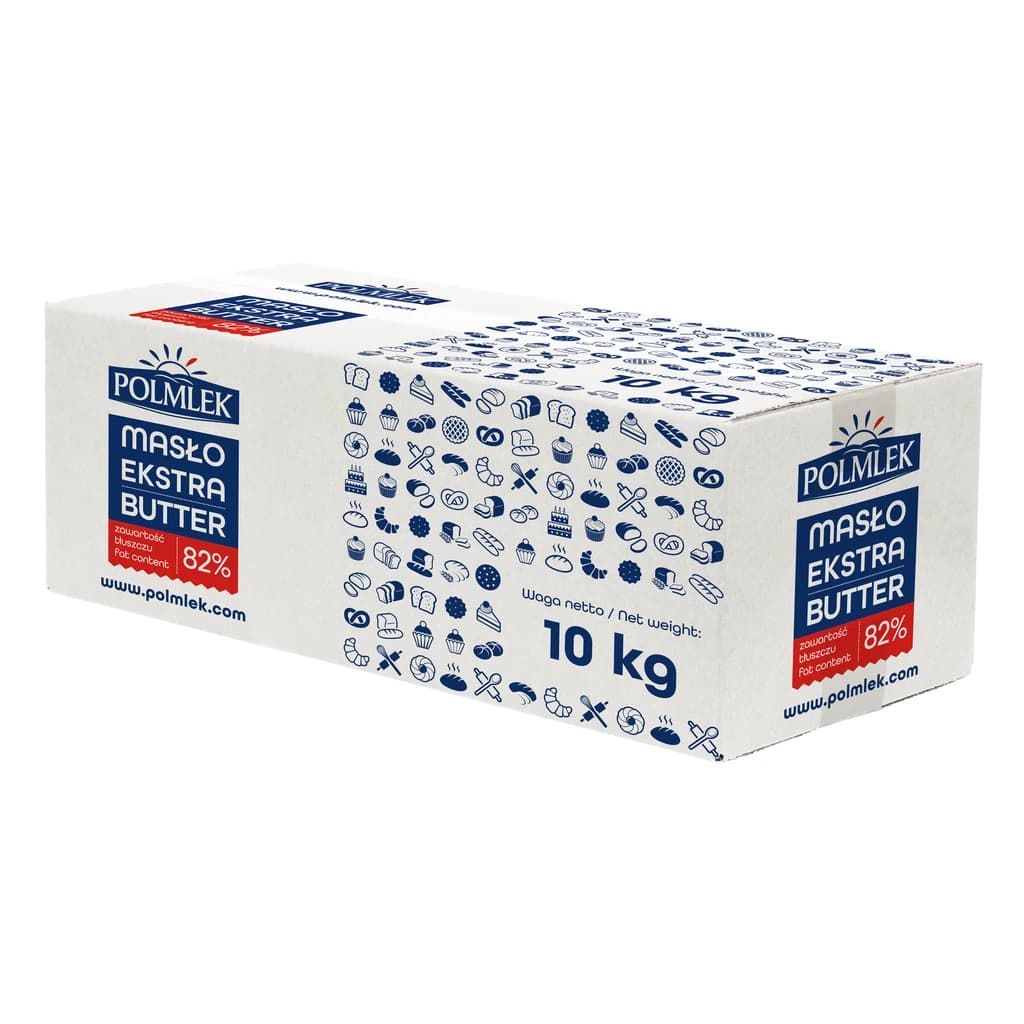
Unsalted Butter 82% 10 kg
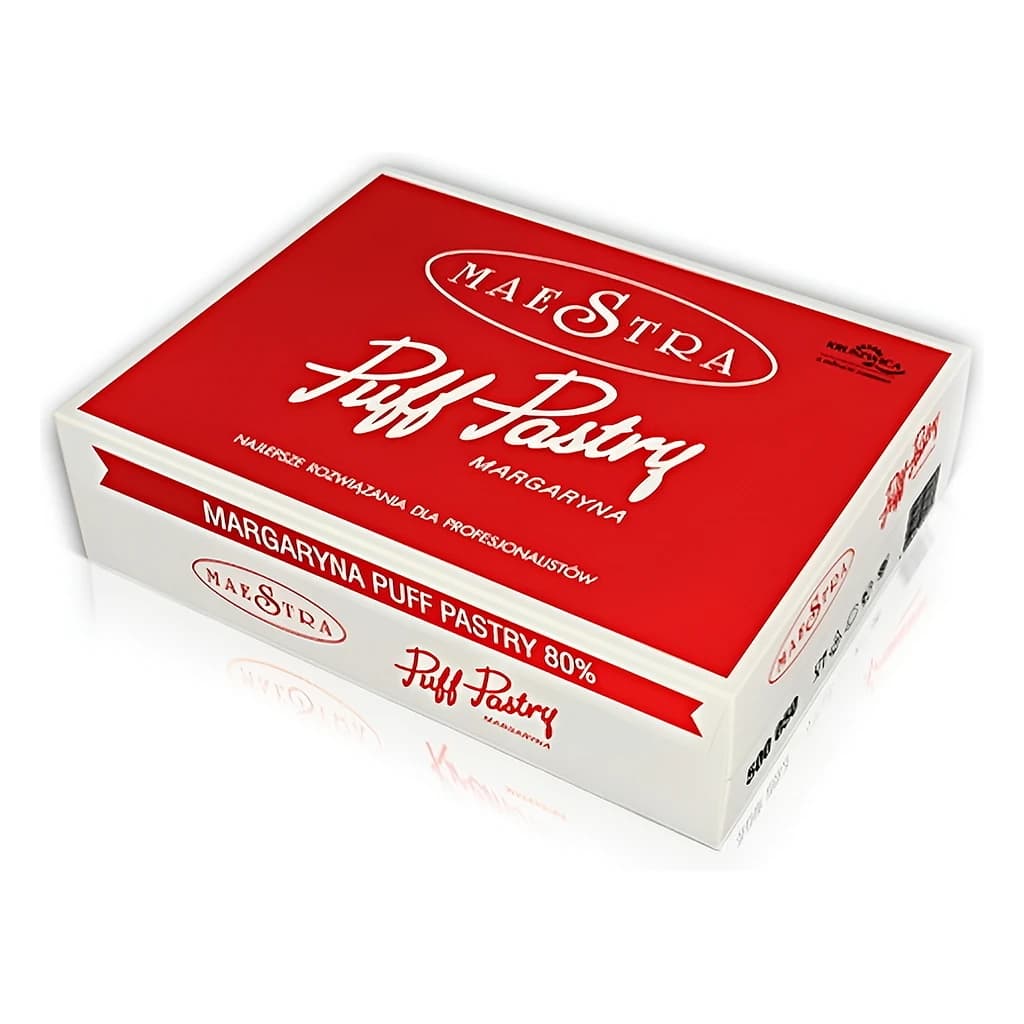
Puff Pastry Margarine 80% 10 kg

Puff Favorit Laminating Margarine 10 kg
Mimetic 32 Lamination Fat 10 kg
Tourage Croissant Butter 10 kg (5 × 2 kg)

Fresh Yeast Benevia 10 kg
Plus Croissant Margarine 10 kg (5 × 2 kg)
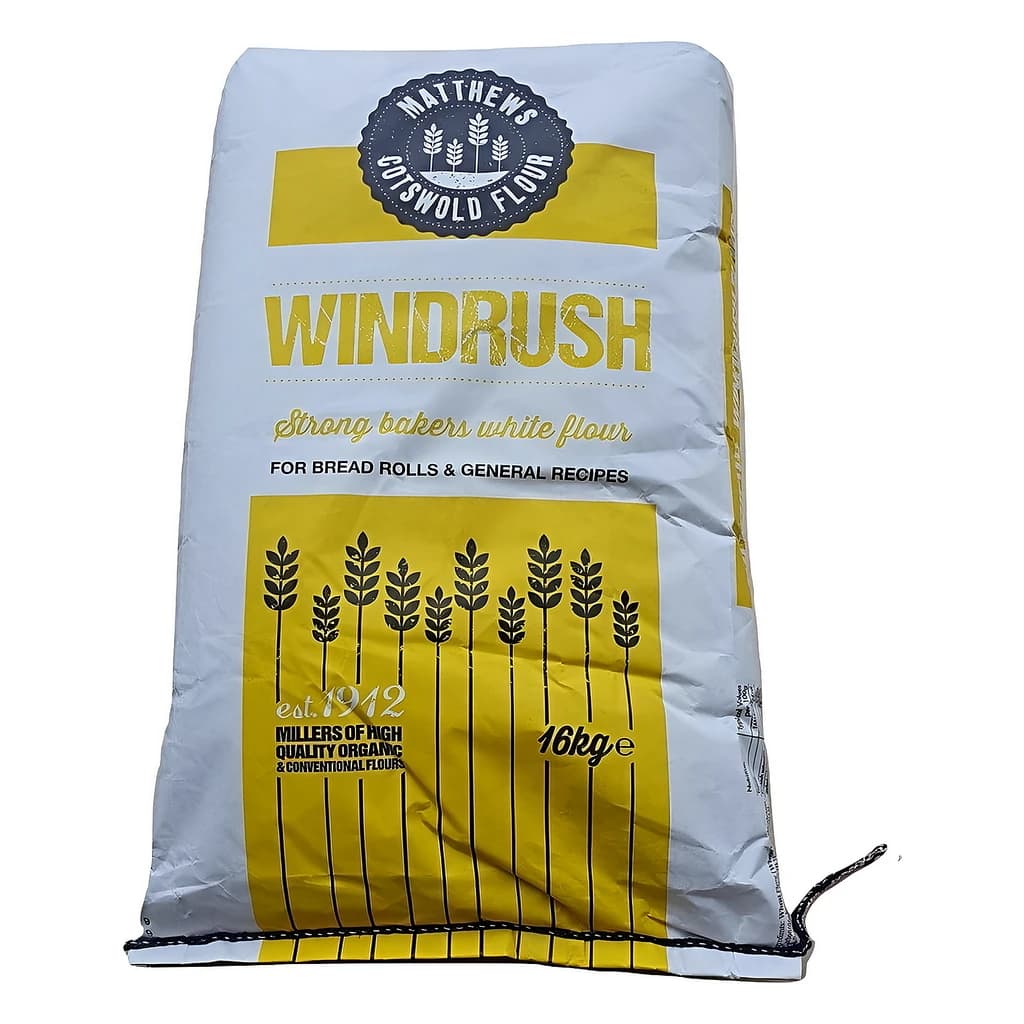
Windrush Strong White Bread Flour 16 kg
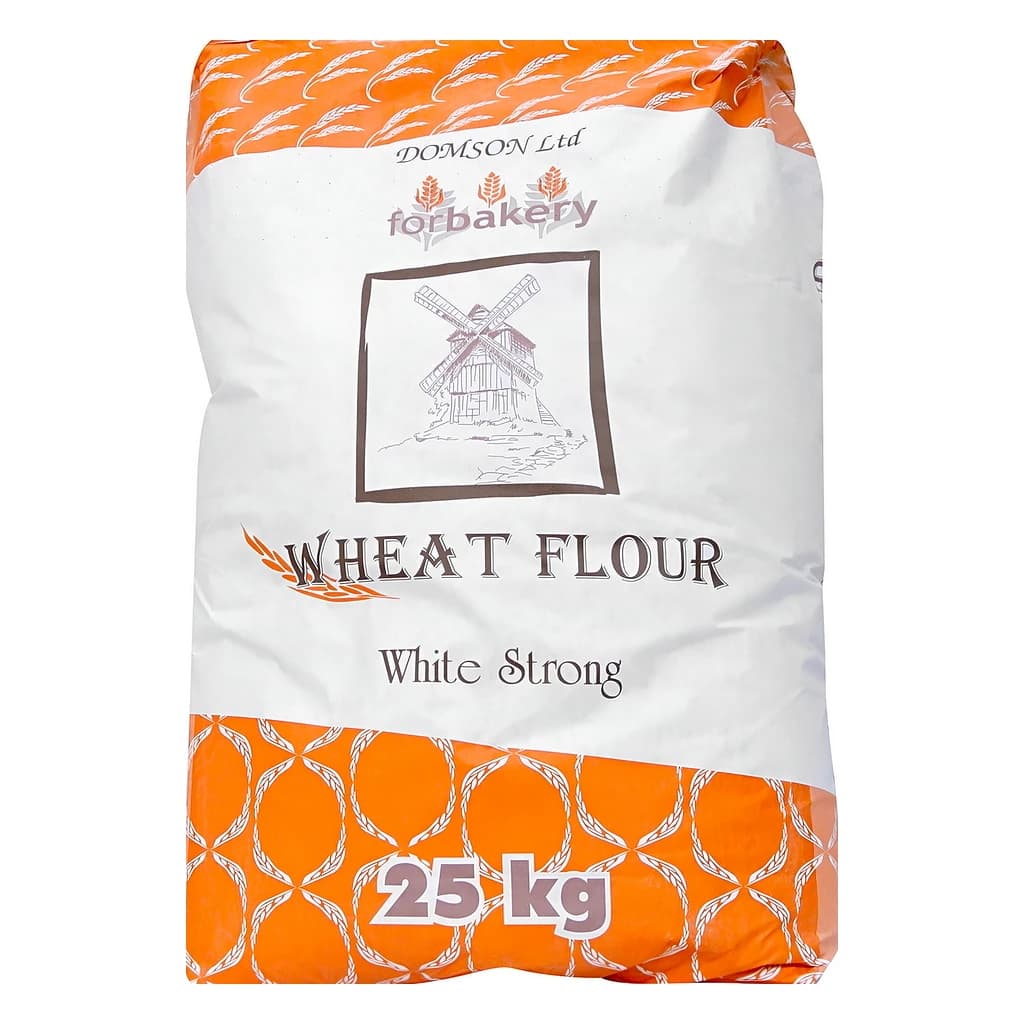
Domson White Strong Wheat Flour 25 kg
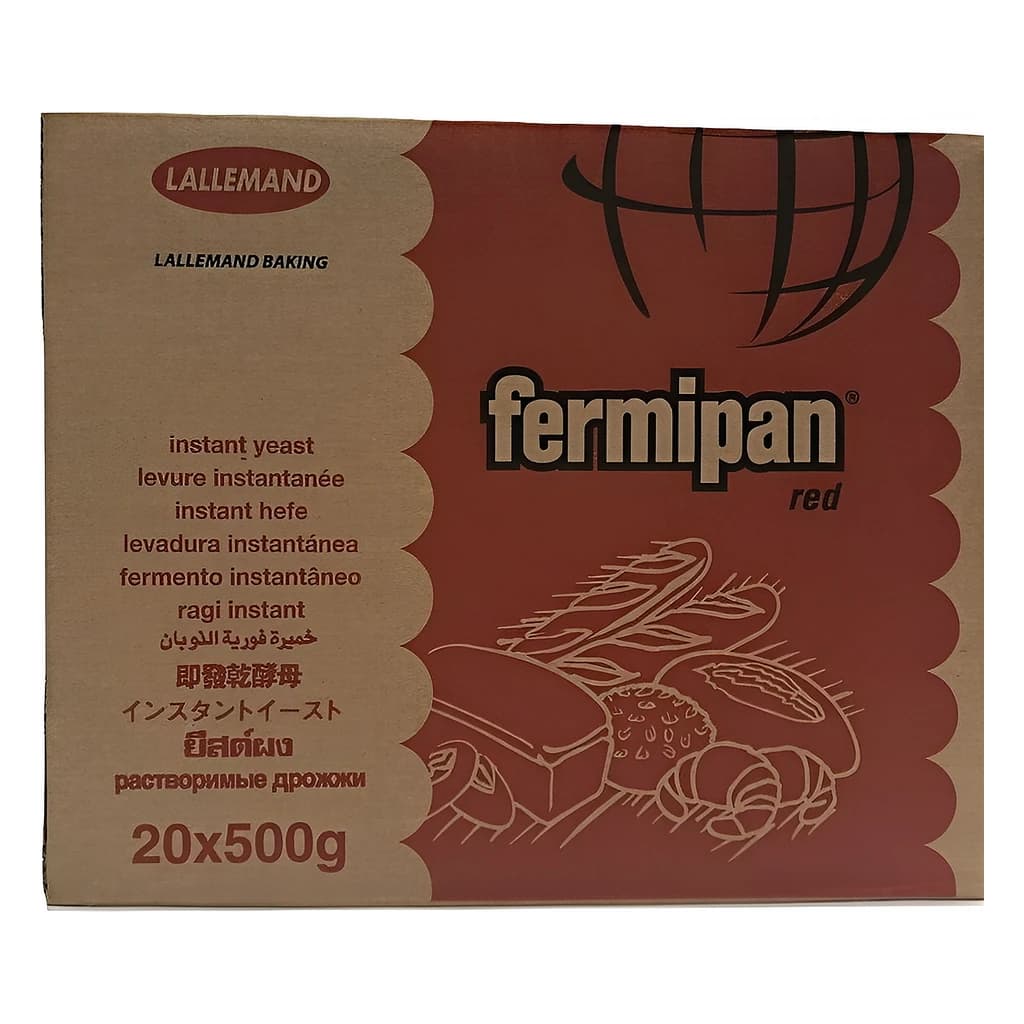
Dried Yeast Fermipan Red 10 kg
Puff Pastry Margarine 12.5 kg
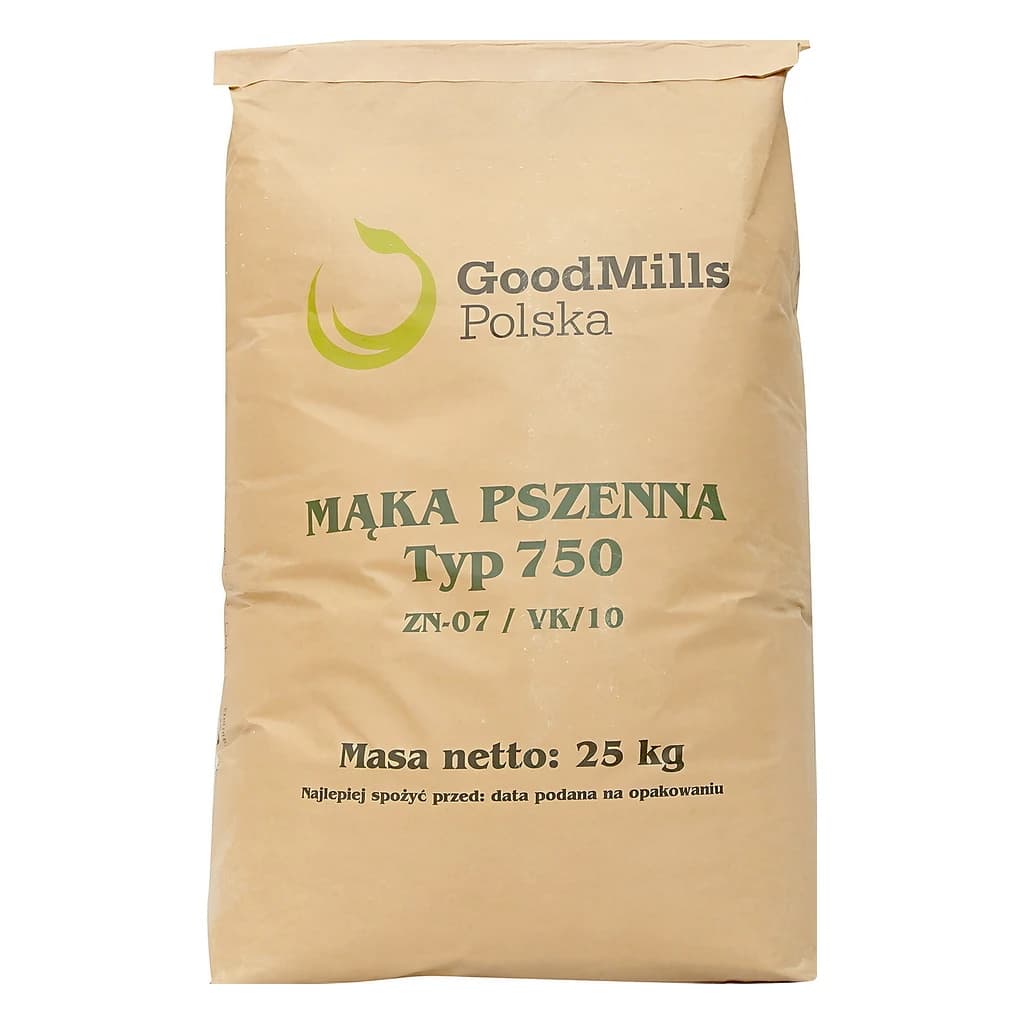
Wheat Flour Type 750 25 kg