
Bulgarian wheat flour types: Type 500, 700 and 1150 — classification, specs and how to choose for bread, banitsa and kozunak
A working baker's guide to the Bulgarian flour system, where wheat flour is graded by ash content (пепелно съдържание) and the Type number (тип) is literally the milligrams of ash per 100 g of dry flour — Type 500 ≈ 0.50% ash, Type 700 ≈ 0.70%, Type 1150 ≈ 1.15%, Type 1850 ≈ 1.85%. It explains the three named commercial grades set out in a voluntary national Approved Standard (Утвърден стандарт 01/2011, not mandatory food law) — Бяло (white), Добруджа (Dobrudzha, the semi-white named after Bulgaria's granary region) and Типово (tipovo, the semi-dark Type 1150) — and the full ladder from extra-fine Тип 450 to wholemeal Греъм Тип 1850. Its single most useful trade point: in Bulgaria bakers order flour by PRODUCT, not just by Type — Пекар (baker's), Баница, Козунаци, Кроасани — each with a published wet-gluten target, because banitsa sheets and kozunak "threads" (на конци) demand strength that a plain white Type 500 does not have. It maps every Bulgarian grade to a Domson UK-stock flour a Bulgarian baker can actually buy, and gives the crosswalk (Bulgarian Type = Polish Type = German number; French T and Italian 00 differ). Classification is cited to the Union of Bulgarian Millers and the national standard; supplier numbers come from GoodMills Bulgaria/SofiaMel and first-party UK/Polish datasheets read on disk.
Bulgaria reads flour by ash, and the Type number is the ash
Bulgaria grades wheat flour the German and Polish way: by ash content (пепелно съдържание) — the mineral residue left when a weighed sample is incinerated. The Type number (тип) printed on the sack is simply that ash figure, measured on dry substance and multiplied by 1000. So Type 500 ≈ 0.50% ash, Type 700 ≈ 0.70% ash, Type 1150 ≈ 1.15% ash and Type 1850 ≈ 1.85% ash. A low number means whiter, more refined flour milled mostly from the starchy endosperm; a high number means more of the mineral-rich bran and germ has been kept — a higher extraction rate.
This is the same ash-based logic explained for every national system in the Pillar A reference Flour type numbers decoded: Polish T-codes, French T45–T150, German 550, Italian 00; for how roller milling actually separates bran, germ and endosperm to produce these grades see From grain to bag: how wheat is milled and what extraction rate means, and for what ash, falling number and the farinograph really measure see Reading the flour spec sheet: ash content, Hagberg falling number, Zeleny, farinograph and alveograph. Grain milling, bread and confectionery technology are taught formally in Bulgaria at the University of Food Technologies in Plovdiv, the country's academic anchor for the trade.
The rule that follows is the one every Bulgarian baker knows: the lower the Type, the whiter and more refined the flour, and the higher its baking quality — Types 450 and 500 are the finest white flours, with Type 500 in the widest use. The trade-off is nutrition versus performance: higher-ash flours carry more of the grain's outer layers, so more fibre, vitamins, minerals and enzymes, but they bake weaker — lower volume, denser crumb — because the bran fragments interfere with the gluten network . That bran-interference problem is treated in full in Wholemeal and high-extraction flours: nutrition, flavour and the bran interference problem.
The full Bulgarian Type ladder
The wheat flour Types actually milled in Bulgaria run 450, 500, 520, 700, 800, 1150 and 1850. Read as ash percentages they line up as a smooth ladder from the whitest to the darkest :
- Тип 450 (~0.45% ash) — екстра фино бяло (extra-fine white). The whitest grade; used for sweets, fine pastry and козунак. The catalogue equivalent, Wheat Flour Type 450 (G22013), is ash ≤0.48%, gluten ≥23%, protein ≥8%.
- Тип 500 (~0.50% ash) — бяло (white). The default flour of the Bulgarian kitchen and bakery: bread, home баница, мекици, everyday work. Equivalent: Domson White Flour Type 500 (G22179), ash ≤0.52%, gluten ≥23%.
- Тип 520 (~0.52% ash) — white, marginally higher ash.
- Тип 700 (~0.70% ash) — the semi-white grade sold as Добруджа (Dobrudzha); more flavour and colour, still a clean bread flour. Equivalent: Domson Bread Flour Type 750 (G22099), ash ≤0.82%, gluten ≥26%, protein ≥10%.
- Тип 800 (~0.80% ash) — a slightly darker semi-white bread flour.
- Тип 1150 (~1.15% ash) — типово (tipovo), the semi-dark grade. A semi-wholemeal flour milled from the grain interior with a controlled amount of bran and germ added back, richer in fibre, vitamins and minerals. Between it and белите брашна sits Wheat Flour Type 850 (G22020) (ash ≤0.90%).
- Тип 1850 (~1.85% ash) — Греъм / пълнозърнесто (Graham / wholemeal), the darkest and weakest-baking grade. Equivalent: Graham Wheat Flour Type 1850 (G33200), ash <2.0%, protein 12.3 g/100 g, fibre 12.3 g/100 g.
Across all the white and semi-white catalogue grades the datasheets specify a falling number of at least 220 s (the Graham 1850 is >180 s) — the Hagberg test for sprout damage and α-amylase activity that tells you the flour will hold a loaf rather than collapse into a sticky crumb Reading the flour spec sheet: ash content, Hagberg falling number, Zeleny, farinograph and alveograph.
The three named grades: Бяло, Добруджа, Типово
Behind the numbers, Bulgaria's flour trade is organised around three named commercial grades set out in a voluntary Approved Standard (Утвърден стандарт) 01/2011: БРАШНО „БЯЛО", „ДОБРУДЖА", „ТИПОВО", registered with the Bulgarian Food Safety Agency (BFSA). This is a quality benchmark the trade organises around — not a mandatory food-safety law, and flour may legally be sold outside it, so its exact legal status turns on that distinction (it is an approved standard, distinct from a branch standard). These are the words a Bulgarian baker uses at the counter, and the professional miller GoodMills Bulgaria / SofiaMel — a single manufacturer voice (the two are the same GoodMills company) — publishes a real spec for each:
- Бяло / White — the Type 500 white. Professional Classic: ash ≤0.55%, wet gluten ≥26%; the standard Бяло: ash ≤0.65%, wet gluten ≥24%.
- Добруджа / Dobrudzha — the ~Type 700 semi-white: ash ≤0.75%, wet gluten ≥26%. The name is not marketing: Dobrudzha, the flat black-earth (chernozem) plateau of the north-east, is Bulgaria's principal wheat region — widely called житницата на България, the granary of Bulgaria — and the flour grade carries its name.
- Типово / Tipovo — the Type 1150 semi-dark: ash ≤1.15%, wet gluten ≥24%. Confusingly to outsiders, типово (literally "typed") is the everyday word for this darker, higher-fibre flour, not for white flour.
A note on numbers you will see on packs: Bulgarian retail and consumer media very often frame the range as "тип 500, 750 и 1150" rather than 500/700/1150. The 700 and 750 labels denote the same semi-white Добруджа band (~0.70–0.75% ash); this dossier treats them as one grade.
A second note on vocabulary: Bulgarian and Polish datasheets quote wet gluten (влажен глутен) — the weight of hydrated gluten washed from the dough — while UK sheets quote protein % plus the Hagberg falling number. Do not equate a wet-gluten figure with a protein figure; they are different measurements. What both are telling you is flour strength, the subject of Protein content, gluten quality and flour strength: what the numbers mean for your dough.
In Bulgaria you buy flour by the product, not just the Type
Here is the point that separates authentic Bulgarian practice from a generic Type chart: a Bulgarian professional bakery does not only order "Type 500". It orders Пекар (baker's), Баница, Бюрек, Козунаци, Кроасани — flours milled and blended for a specific job, each with its own published wet-gluten target. The Type/ash band tells you the colour; the wet-gluten number tells you whether the dough will do the work.
- Пекар / Baker (wet gluten ≥28%, ash ≤0.60%) — buns, rolls, cheese pastries, мекици, doughnuts, puff pastry.
- Баница / Banitsa and Бюрек / Byurek (wet gluten ≥30%, ash ≤0.60%) — the strongest of the everyday grades, because banitsa кори (filo sheets) must be stretched paper-thin without tearing.
- Козунаци / Kozunak (wet gluten ≥27%, ash ≤0.60%) — a white flour that is also strong, so the baked crumb pulls apart into fibrous strands, на конци.
- Кроасани / Croissant (wet gluten ≥38%, ash ≤0.65%) — the strongest grade of all, for laminated work; Пица / Pizza is ≥33%.
- Грис / Semolina (fine and coarse, ash ≤0.50%, wet gluten ≥21%) — wheat semolina for noodles, macaroni and confectionery fillings.
Banitsa (баница): extensible, not just strong
For banitsa — the coiled or layered filo cheese pastry Banitsa masterclass: filo layering methods, sirene-egg-yogurt filling ratios and baking parameters for the ultimate Bulgarian cheese pastryKori (filo) from scratch: hand-stretching vs machine-sheeted sheets, hydration, resting and troubleshooting tears — the flour has to give кори you can pull or roll almost transparent. Home cooks reach for Тип 500 because it is soft, mixes easily and rolls thin without springing back, with an optimal protein around 10–12%. Push the protein too high and the dough fights you, snapping back on the rolling pin; drop it too low and the sheets tear and turn crumbly. Professional shops that hand-pull their kori instead use a dedicated Баница flour at wet gluten ≥30%, trading some ease-of-roll for the extensibility and tear-resistance a paper-thin stretched sheet needs. In the UK a strong white such as Windrush Strong White (G43025) or an Italian-style Tipo 00 (G23145) covers the pulled-kori job, while Domson White Flour Type 500 (G22179) suits home-style rolled kori.
Kozunak (козунак): white AND strong
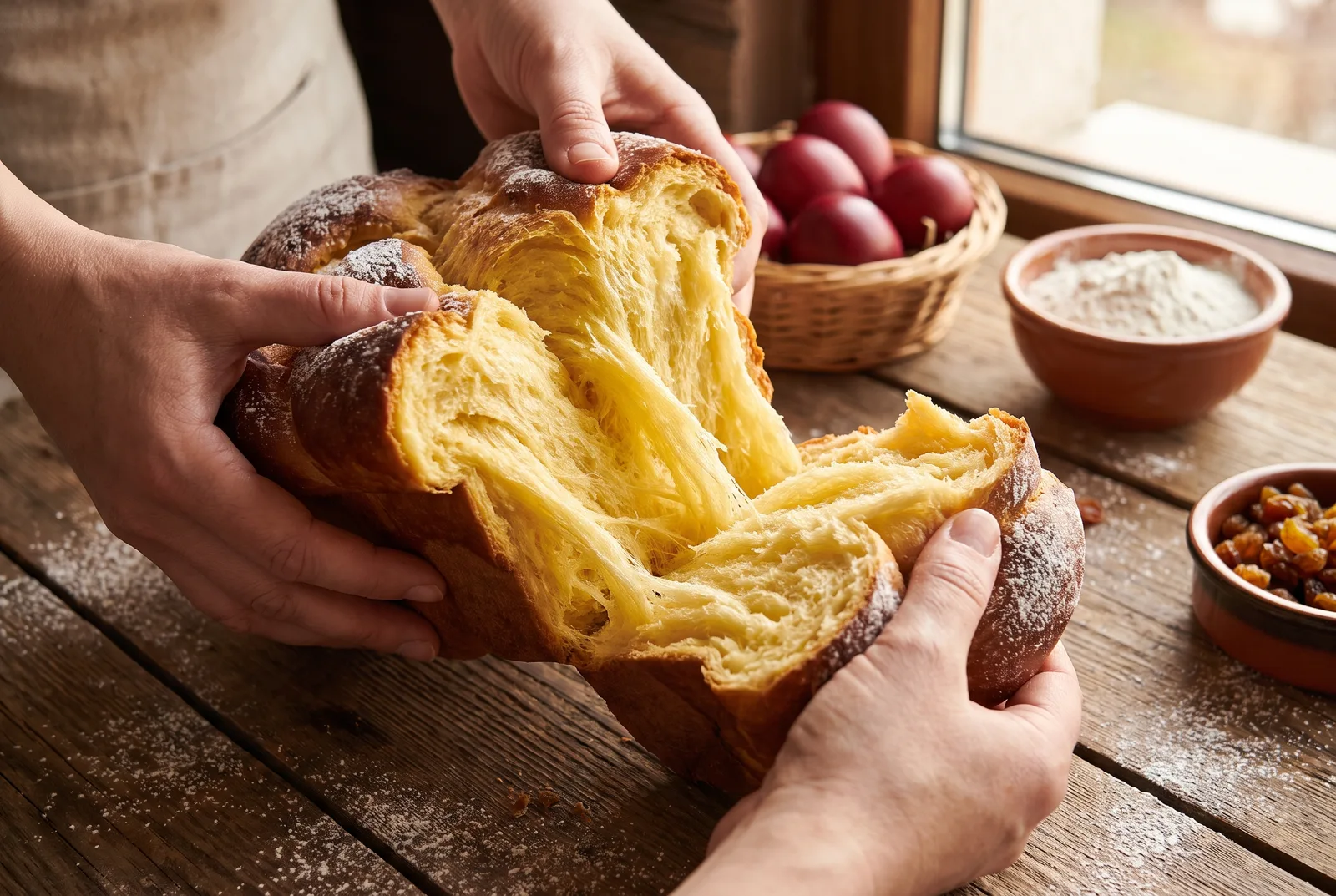
Kozunak, Bulgaria's braided Easter enriched bread Kozunak: Bulgaria's Easter enriched bread — enrichment ratios, pull-apart 'threads', braiding patterns and oven-spring management, is the clearest example of why the Type number alone is not enough. It must be white (low Type, fine crumb) yet strong enough to carry eggs, butter and sugar and then peel into silky threads — на конци. A weak pastry flour gives a dense crumb that will not separate; that is why a dedicated Козунаци flour exists at wet gluten ≥27%. A native SofiaMel recipe builds it as roughly 650 g kozunak flour: 4 eggs: 180 g sugar: 230 ml milk: 50 g butter: 50 ml oil: 10 g dry yeast, kneaded soft and elastic, long-proofed and baked ~170 °C for ~40 min. In the UK, reach for Windrush Strong White (G43025, protein 12.0–12.5%) or the very-strong Manitoba-type Centurion Canadian (G43252), and if the flour is still short of strength, fortify with vital wheat gluten Vital wheat gluten: fortifying weak flours and high-fibre doughs from 2% to 12%. Develop the gluten fully on the plain dough before adding the fat and sugar, which otherwise slow it down.
Mekitsi (мекици): the everyday Type 500 dough
Mekitsi — the puffed fried breakfast dough eaten with кисело мляко (kiselo mlyako, Bulgarian yogurt) and jam Mekitsi and Bulgarian fried dough: fermented dough formula, oil-temperature control and the commercial breakfast-pastry opportunityThe Bulgarian festive baking calendar: banitsa on New Year's Eve, kozunak at Easter, koledna pitka at Christmas and mekitsi every morning — is most often built on plain Тип 500. Home recipes vary in both quantity and leavening: chef Ivan Zvezdev's is a yeast-leavened dough with кисело мляко and eggs, while other household versions raise the dough with кисело мляко and bicarbonate of soda rather than yeast, and flour quantities range from roughly 500 g to about 1 kg per batch. Rest the soft dough ~30–40 minutes and deep-fry. A professional shop would use Пекар (wet gluten ≥28%) for a more reliable puff. The UK stand-in is Domson White Flour Type 500 (G22179) or the stronger Domson Type 550 (G22006). Food-safety flags: кисело мляко is a chilled dairy ingredient (keep refrigerated, observe use-by) and adds the milk allergen, Zvezdev's eggs add egg, and the dough is deep-fried — do this at roughly 170–180 °C, as hot oil is a burn and fire hazard.
Buying the right flour in the UK: the crosswalk
Bulgarian mills such as SofiaMel/GoodMills Bulgaria are not Domson suppliers, so a Bulgarian baker in Britain buys the closest Polish- or UK-milled grade. Because Bulgaria, Germany and Poland all grade by ash × 1000, the substitution is straightforward: match the ash/Type band, then match the strength . Roughly, Bulgarian Type 500 ≈ German 550 ≈ Polish Type 500 ≈ French T55, and Type 1150 ≈ German 1150 ≈ Polish 1150 — while the French T-scale and Italian 00/0 scale are defined differently and only map loosely. This crosswalk is approximate and is treated in full in Flour type numbers decoded: Polish T-codes, French T45–T150, German 550, Italian 00; confirm on the actual datasheet before you commit a production batch, because national ash bands overlap.
Practical picks from Domson stock:
- Everyday white bread / mekitsi (Тип 500) → Domson White Flour Type 500 (G22179), or the stronger Domson Type 550 (G22006) / Komplexmłyn Type 550 (G22092).
- Semi-white bread (Тип 700 / Добруджа) → Domson Bread Flour Type 750 (G22099); a touch darker, Type 850 (G22020).
- Kozunak / pulled banitsa kori (strong white) → Windrush Strong White (G43025) or Centurion Very Strong (G43252).
- Tipov / higher-fibre bread (Тип 1150) and wholemeal (Греъм 1850) → Type 850 (G22020) at the light end, Graham Type 1850 (G33200) at the dark end.
- Fine pastry / sweets (Тип 450) → Wheat Flour Type 450 (G22013).
- Fillings / fine work (грис) → Wheat Semolina "Manna" (G23775).
For storage and rotation of these 25 kg sacks — most carry a five-month shelf life, the Graham 1850 only three months — see Flour storage, conditioning and shelf life: how temperature, moisture and time degrade quality; and for turning any of these into ratios you can scale, Baker's percentage: the universal language of professional formulas.
Food safety and allergens (flag for review)
Every flour named here — including the wheat semolina / грис — contains gluten (wheat) and is unsuitable for coeliacs. Flour is a raw ingredient: it must be baked or cooked and never tasted raw, because raw flour can carry pathogens such as E. coli. The Polish datasheets flag a risk of trace cross-contamination and note that some batches carry ascorbic acid (E300) and enzymes as declared flour-treatment agents/additives — E300 is a labelled additive, not an undeclared processing aid. The exact trace-allergen set varies by datasheet and batch: some Komplexmłyn / GoodMills Polska sheets list soy, lupin and mustard, while others list soya, sesame, tree nuts and peanuts — so the specific declaration must be read off the actual product's current datasheet, not assumed. The Graham Type 1850 sheet states plainly that it is a semi-product not intended for direct consumption and not for gluten-sensitive consumers.
The finished Bulgarian products add allergens the flour does not, and each must be declared under EU/UK FIC (Reg. 1169/2011, Annex II): kozunak carries egg and milk, and traditionally tree nuts (walnuts) with raisins and citrus zest; banitsa carries milk (from сирене / sirene brine cheese) and egg; mekitsi carry milk (from кисело мляко) and egg, are made with a chilled dairy ingredient (observe cold-chain and use-by) and are deep-fried at ~170–180 °C (hot-oil hazard); the associated confectionery may add sesame or further tree nuts.
Figures
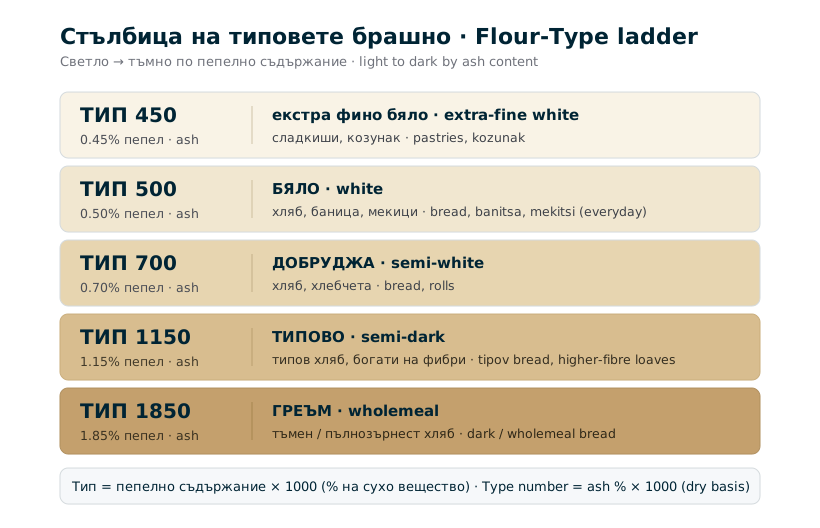 Orientation diagram stacking Bulgarian wheat flour types light-to-dark by ash: Тип 450 (0.45%) extra-fine white, Тип 500 (0.50%) Бяло/white, Тип 700 (0.70%) Добруджа semi-white, Тип 1150 (1.15%) Типово semi-dark, Тип 1850 (1.85%) Graham/wholemeal — each with the products it makes.
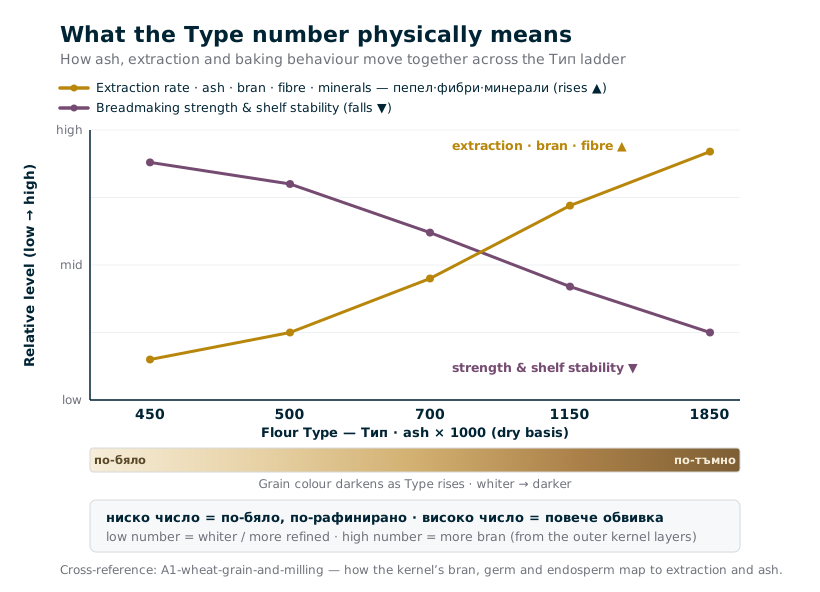 Twin-axis schematic: as flour Type rises (Тип 450 to 1850) the extraction rate and ash/bran/fibre/mineral content climb while colour darkens; a second line shows breadmaking strength and shelf stability falling as extraction rises.
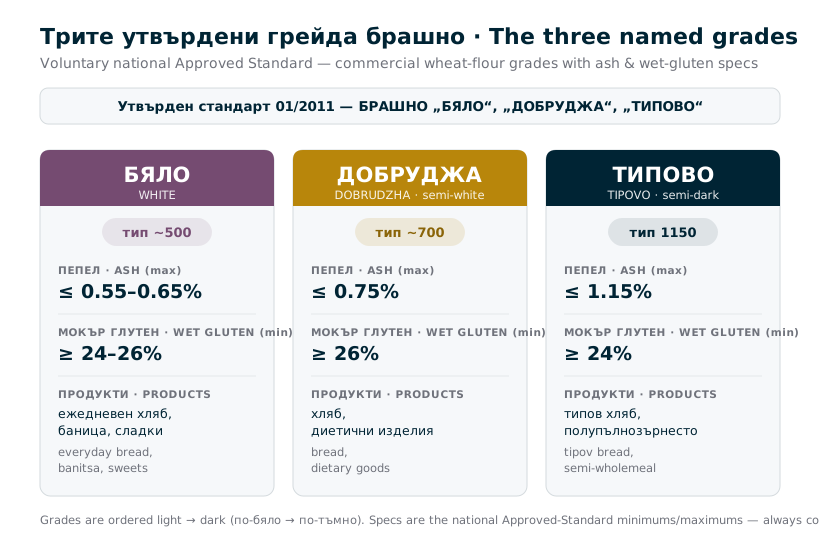 Three-column comparison of the Bulgarian standard flour grades: Бяло/White (ash ≤0.55-0.65%, gluten ≥24-26%), Добруджа (ash ≤0.75%, gluten ≥26%), Типово Type 1150 (ash ≤1.15%, gluten ≥24%), each with typical products.
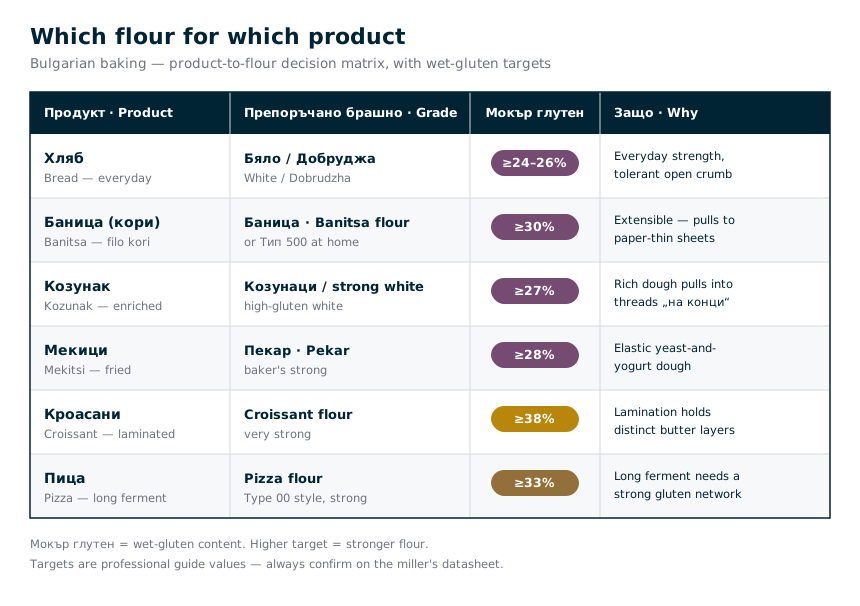 Decision-matrix diagram matching each Bulgarian baked product to the recommended flour grade and wet-gluten target: bread → Бяло/Добруджа (≥24-26%), banitsa kori → Баница flour (≥30%) or Type 500, kozunak → Козунаци/strong white (≥27%), mekitsi → Пекар (≥28%), croissants → Croissant flour (≥38%).
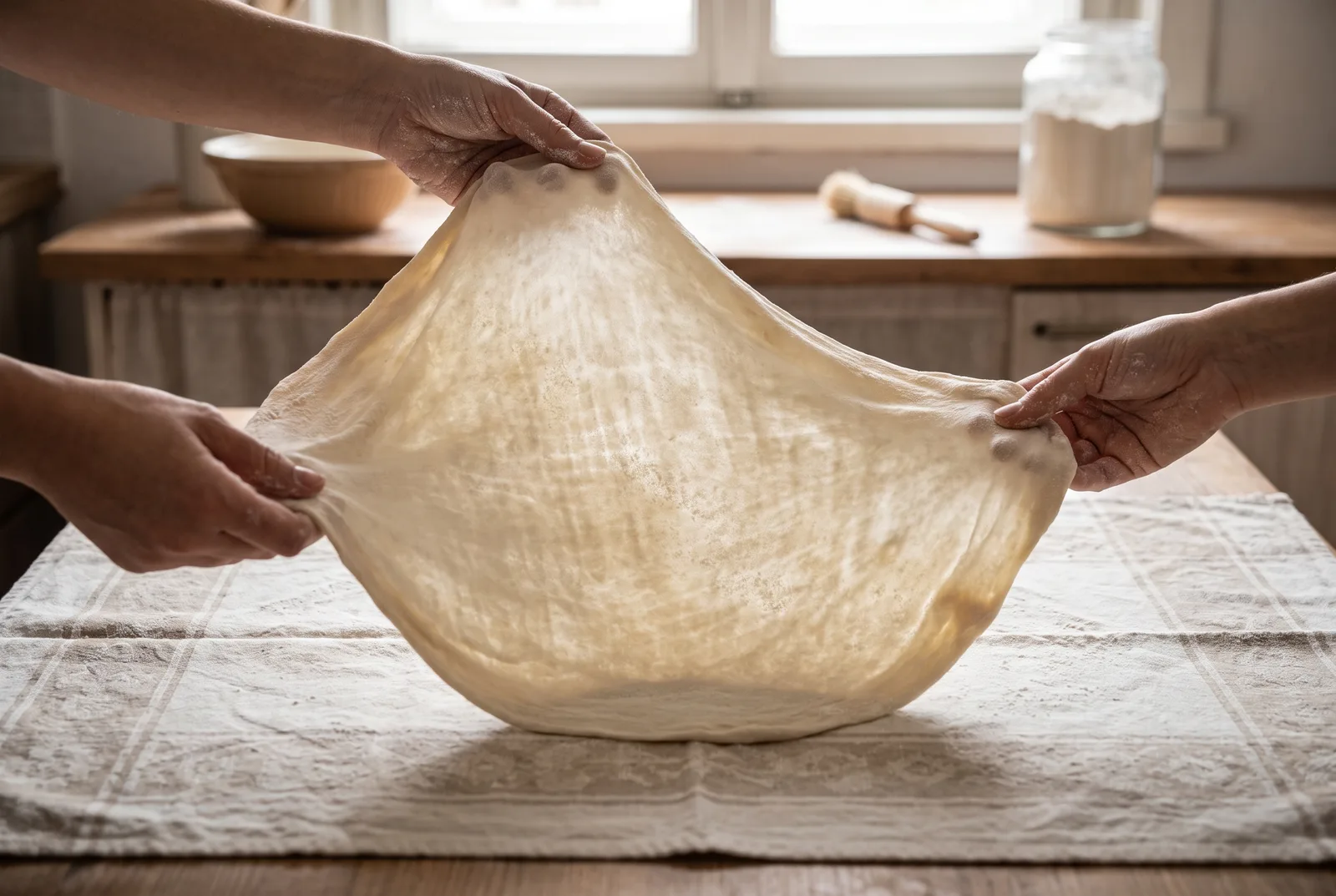 A baker stretching a disc of dough into a paper-thin, translucent banitsa sheet (кора) over a floured cloth, the sheet so thin the pattern beneath shows through — demonstrating the extensibility a Type 500 / dedicated banitsa flour gives.
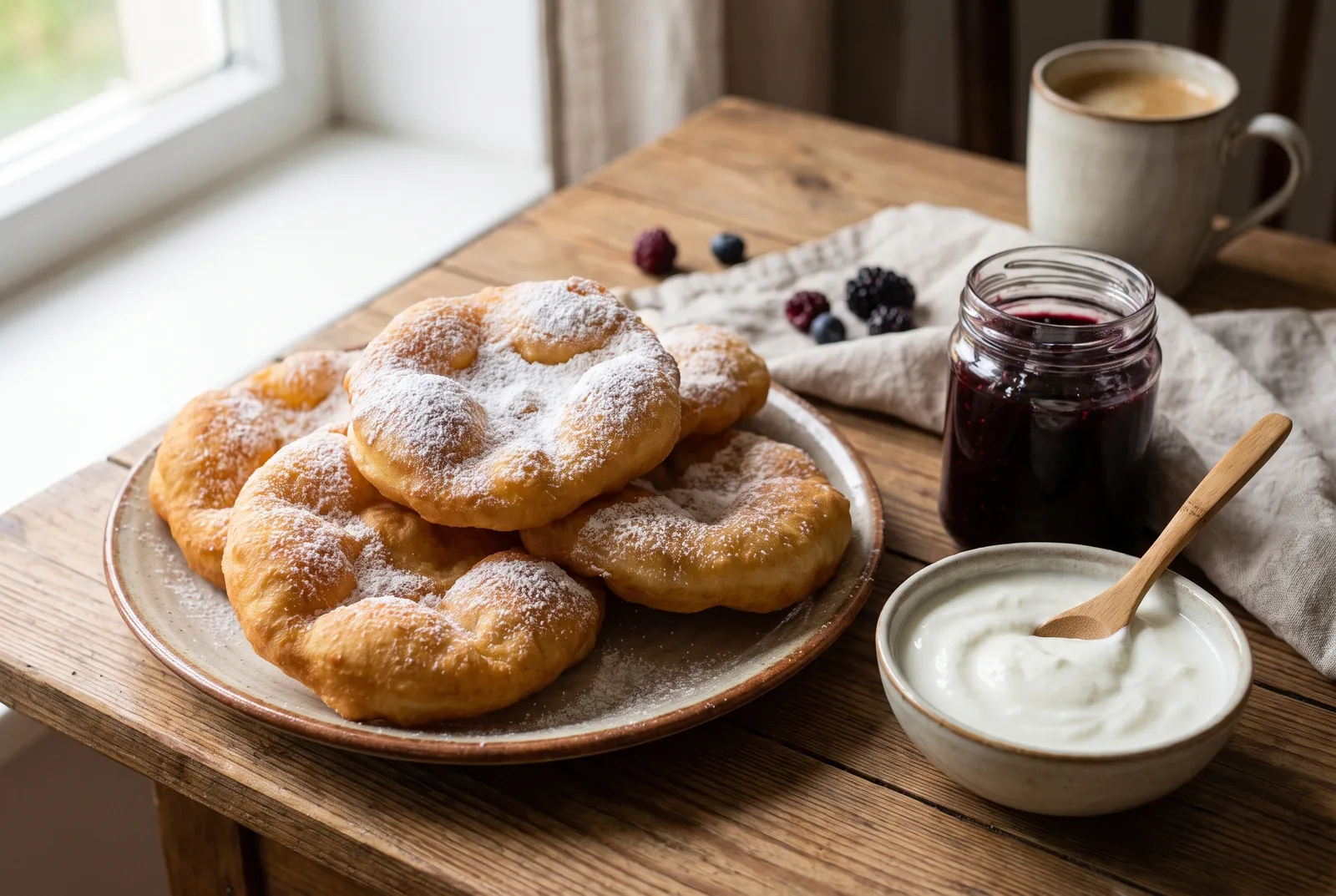 A plate of golden, puffed mekitsi (Bulgarian fried dough) dusted with icing sugar, with a bowl of thick white kiselo mlyako (Bulgarian yogurt) and fruit jam alongside — the classic breakfast that starts from a Type 500 yeast-and-yogurt dough.
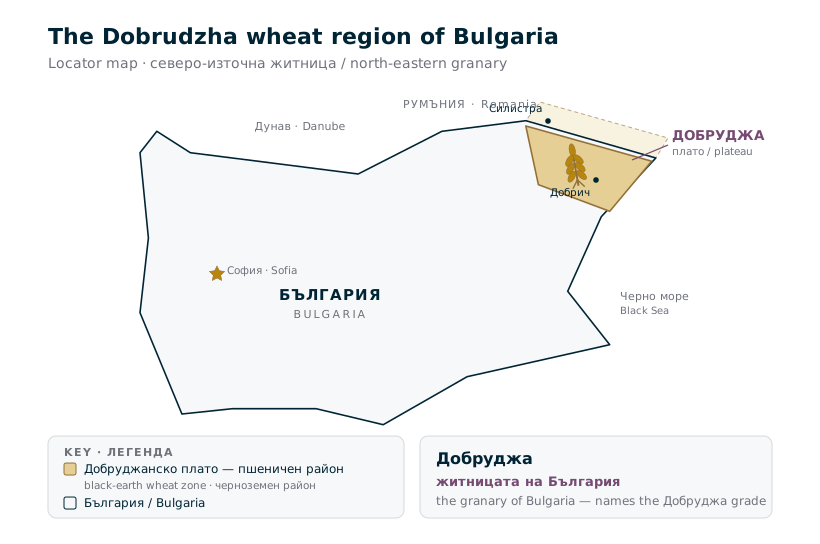 Simple map of Bulgaria highlighting the north-eastern Dobrudzha plateau — the black-earth 'granary of Bulgaria' whose wheat gives the Добруджа flour grade its name.
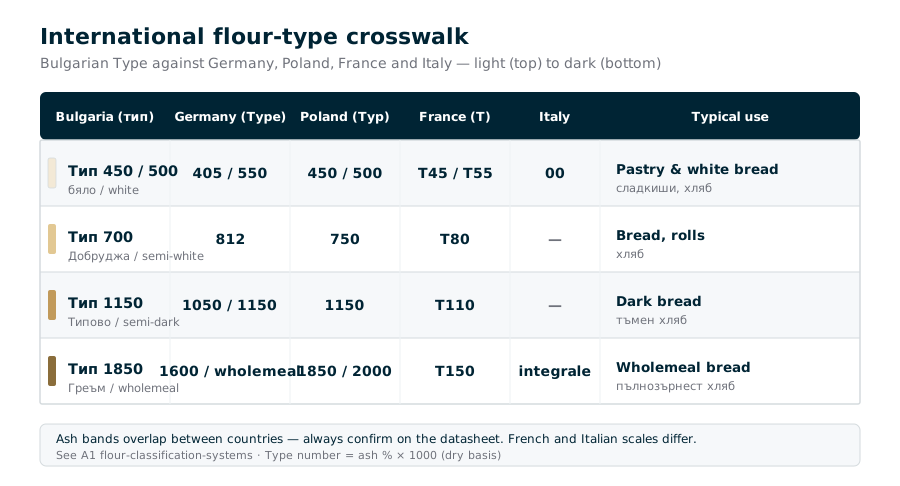 Crosswalk table aligning Bulgarian flour Types with the German ash-number, Polish T-code, French T-scale and Italian 00/0 grades — showing Bulgarian Type 500 ≈ German 550 ≈ Polish 500, and Type 1150 ≈ German 1150, with the note that French and Italian scales differ.
Which flour for which Bulgarian product — a selection guide
| Ingredient | Baker's % | Weight |
|---|---|---|
| Everyday bread (хляб): Бяло / Добруджа — wet gluten ≥24-26% (Type 500-700). UK stand-in: Domson Type 550 (G22006) or Bread Flour Type 750 (G22099). | ||
| Banitsa kori (баница), hand-pulled: dedicated Баница flour — wet gluten ≥30%, ash ≤0.60% for elastic sheets. Home/thin rolled kori: Type 500, moderate protein ~10-12% for extensibility. UK stand-in: strong white (Windrush G43025) or Type 00 (G23145) for pulled; Domson Type 500 (G22179) for home. | ||
| Kozunak (козунак): Козунаци / strong white — wet gluten ≥27% so the crumb pulls into threads (на конци). UK stand-in: Windrush Strong White (G43025) or Centurion Very Strong (G43252). | ||
| Mekitsi (мекици): Пекар (Baker) — wet gluten ≥28%, ash ≤0.60%. Home version uses Type 500. UK stand-in: Domson Type 500/550 (G22179 / G22006). | ||
| Croissants / laminated: Croissant grade — wet gluten ≥38% (strongest). UK stand-in: Centurion Very Strong (G43252) or Windrush (G43025). | ||
| Tipov / higher-fibre bread: Типово Type 1150 — ash ≤1.15%, wet gluten ≥24%. UK stand-in: Type 850 (G22020) lighter, Graham Type 1850 (G33200) darker. |
- Match the flour to the JOB first: is the product refined-white (kozunak, white bread) or higher-extraction (tipov, wholemeal)? Pick the ash band, then the gluten strength.
- For anything that must stretch or pull apart — banitsa kori, kozunak threads, byurek — choose HIGH wet gluten (≥27-30%), then develop the gluten fully before adding fat/sugar.
- For tender, short results — biscuits, some sweets — choose a weaker flour (wafer/biscuit grade, wet gluten ≤26%) or Type 450.
- In the UK, substitute by Type/ash band (Bulgarian Type ≈ Polish Type ≈ German number) and by strength (protein / wet gluten), and confirm on the datasheet before committing a production batch.
A selection guide, not a fixed recipe. Wet-gluten targets from the Bulgarian professional flour specs (GoodMills Bulgaria, SofiaMel). The full doughs live in the sibling dossiers B6-banitsa-techniques, B6-filo-dough-kori, B6-kozunak-enriched-bread, B6-mekitsi-fried-pastry, B6-ritual-breads-pitka-pogacha.
Kozunak flour selection — the strong-white rule
| Ingredient | Baker's % | Weight |
|---|---|---|
| Flour: strong white — Bulgarian Козунаци grade (wet gluten ≥27%, ash ≤0.60%) or Type 450/500 white blended up in strength | ||
| UK stand-in: Windrush Strong White (protein 12.0-12.5%) or Centurion Canadian Very Strong (Manitoba-type) | ||
| NOT a soft/weak pastry flour — a weak flour gives a dense crumb that will not separate into threads (на конци) |
- Choose white for colour and fine crumb, strong for structure — the two requirements pull in opposite directions, which is why a dedicated kozunak flour exists.
- Develop the gluten fully on the plain dough before adding the fat and sugar (osmotic pressure from sugar and coating by fat both slow gluten development).
- Reference native recipe proportions (SofiaMel): ~650 g kozunak flour: 4 eggs: 180 g sugar: 230 ml milk: 50 g butter: 50 ml oil: 10 g dry yeast; soft, elastic dough, long proof, bake ~170 °C for ~40 min.
Kozunak is a WHITE, fine-crumb bread, so bakers reach for a low-Type white flour — but the enriched dough must carry eggs, butter and sugar and then peel into silky strands, so the flour must also be STRONG. Sources: GoodMills Bulgaria, SofiaMel. Full dough: B6-kozunak-enriched-bread.
| Type (тип) | Ash (dry basis) | Colloquial name | Character | Typical products |
|---|---|---|---|---|
| Тип 450 | ~0.45% | екстра фино бяло (extra-fine white) | Whitest, most refined; low ash | Sweets, козунак (kozunak), fine pastry |
| Тип 500 | ~0.50% | бяло (white) | Standard white; widest use; moderate gluten | Everyday bread, баница (banitsa), мекици (mekitsi) |
| Тип 520 | ~0.52% | бяло (white, higher ash) | Slightly higher ash than 500 | Bread |
| Тип 700 | ~0.70% | Добруджа (Dobrudzha) — semi-white | Semi-white; more flavour and colour | Bread, rolls, dietary goods |
| Тип 800 | ~0.80% | (semi-white) | Higher protein/ash | Bread |
| Тип 1150 | ~1.15% | типово (tipovo) — semi-dark | Semi-wholemeal; some bran/germ added back; richer in fibre/vitamins/minerals | Tipov bread, higher-fibre loaves |
| Тип 1850 | ~1.85% | Греъм / пълнозърнесто (Graham / wholemeal) | Wholemeal; highest ash; weakest baking | Dark / wholemeal bread |
Ash is on dry substance and the Type number = ash % × 1000 (c1). Type list and ash values from Bulgarian reference works and the trade/consumer sources frognews and marica. Colloquial names from the voluntary Approved Standard 01/2011 (BFSA). Higher ash = more bran/nutrients but weaker baking (c9).
| Grade | ≈ Type | Ash (max) | Wet gluten (min) | Positioned for |
|---|---|---|---|---|
| Бяло / White (Classic) | 500 | 0.55% | 26.0% | White and enriched breads, luxury/special breads |
| Бяло / White (standard) | 500 | 0.65% | 24.0% | Basic baker's goods |
| Добруджа / Dobrudzha | ~700 | 0.75% | 26.0% | Dobrudzha bread, dietary goods |
| Типово / Tipovo | 1150 | 1.15% | 24.0% | Tipov bread, low-calorie / higher-fibre goods |
| Греъм / Graham | 1850 | 1.85% | 21.0% | Wholemeal and dark breads |
Grade names from the voluntary Approved Standard 01/2011 'БРАШНО БЯЛО, ДОБРУДЖА, ТИПОВО' — a quality benchmark registered with the BFSA, NOT mandatory food law. Ash and wet-gluten figures are the professional-flour specifications published by GoodMills Bulgaria / SofiaMel — a SINGLE manufacturer voice (the two are the same GoodMills company), so treat the wet-gluten numbers as one supplier's spec, not an independent standard. 'Wet gluten' (влажен глутен) is the Bulgarian trade convention, not dry protein.
| Flour (Cyrillic / English) | Ash (max) | Wet gluten | Made for |
|---|---|---|---|
| Пекар / Pekar (Baker) | 0.60% | min 28.0% | Buns, rolls, cheese cakes, mekitsi, doughnuts, puff pastry, pretzels |
| Баница / Banitsa | 0.60% | min 30.0% | Banitsi, byurek, noodles — strong, elastic pulled sheets |
| Бюрек / Byurek | 0.60% | min 30.0% | High-elasticity stretched-dough work |
| Козунаци / Kozunak | 0.60% | min 27.0% | Kozunak and enriched festive breads (thread crumb) |
| Кроасани / Croissant | 0.65% | min 38.0% | Laminated multilayer pastry — the strongest grade |
| Пица / Pizza | 0.55% | min 33.0% | Pizza, calzone, focaccia, ciabatta |
| Вафли / Wafers | 0.55% | max 26.0% | Wafer sheets (deliberately weaker) |
| Бисквити / Biscuits | 0.55% | max 26.0% | Biscuits, short pastry, sweets |
| Грис / Semolina (fine & coarse) | 0.50% | min 21.0% | Noodles, macaroni, confectionery / pastry fillings |
Application-specific professional flours and their published wet-gluten / ash specs from GoodMills Bulgaria / SofiaMel — a SINGLE manufacturer voice (GoodMills Bulgaria and SofiaMel are the same GoodMills company), so these figures are one supplier's published spec, not an independently corroborated standard. These are what a Bulgarian bakery actually orders by product.
| Domson product (SKU) | Datasheet type/grade | Ash | Gluten / protein | Falling number | Best Bulgarian match |
|---|---|---|---|---|---|
| Wheat Flour Type 450 (G22013) | Type 450 | max 0.48% | gluten ≥23% · protein ≥8% (9.2 g/100 g) | ≥220 s | Тип 450 — extra-fine white / kozunak, pastry |
| Domson White Flour Type 500 (G22179) | Type 500 | max 0.52% | gluten ≥23% · protein ≥8% (9.2 g/100 g) | ≥220 s | Тип 500 — бяло / white, banitsa, mekitsi |
| Domson Wheat Flour Type 550 (G22006) | Type 550 (GoodMills) | 0.51-0.58% | wet gluten 28-32% · gluten index 75-99 | ≥220 s | Тип 500 strong / general strong bread |
| Domson White Strong Wheat Flour (G44001) | Type 550 spec | 0.51-0.58% | wet gluten 28-32% | ≥220 s | Strong white for kozunak/enriched |
| Domson Bread Flour Type 750 (G22099) | Type 750 | max 0.82% | gluten ≥26% · protein ≥10% (11.6 g/100 g) | ≥220 s | Тип 700 — Добруджа / semi-white bread |
| Wheat Flour Type 850 (G22020) | Type 850 | max 0.90% | gluten ≥26% | ≥220 s | Between Тип 700 and Тип 1150 |
| Windrush Strong White Bread Flour (G43025) | UK strong white | (fortified) | protein 12.0-12.5% · VWG <1.5% | HFN target 350 (min 250) | Козунаци / Баница pulled kori (strong) |
| Centurion Canadian Very Strong Flour (G43252) | UK very strong (Manitoba-type) | n/a (no datasheet) | very high protein | n/a | Козунаци threads / very strong dough |
| Graham Wheat Flour Type 1850 (G33200) | Type 1850 | <2.0% | protein 12.3 g/100 g · fibre 12.3 g/100 g | >180 s | Греъм / пълнозърнесто (Graham/wholemeal) |
| Italian Tipo 00 Pizza Flour (G23145) | Italian 00 | n/a (no datasheet) | strong (Manitoba-style) | n/a | Alt. banitsa/pulled kori (fine + strong) |
| Wheat Semolina 'Manna' (G23775) | semolina/grис | n/a (no datasheet) | n/a | n/a | Грис — filling/fine semolina work |
Bulgarian mills (SofiaMel/GoodMills Bulgaria) are not Domson suppliers, so a UK Bulgarian baker buys the closest Polish/UK-milled grade. All numbers read from on-disk first-party datasheets this session (spec-* sources). Bulgarian ash bands and these datasheet grades line up because both use the ash-based Type system (c20). Gluten figures are wet gluten unless a protein % is given; UK sheets quote protein % and Hagberg falling number.
| Bulgaria (тип) | Germany (Type) | Poland (Typ) | France (T) | Italy | Character |
|---|---|---|---|---|---|
| 450 / 500 | 405 / 550 | 450 / 500 | T45 / T55 | 00 | White, refined |
| 700 | 812 | 750 | T80 | 0 | Semi-white (Dobrudzha) |
| 1150 | 1050 / 1150 | 1150 | T110 | 1 / 2 | Semi-dark (tipovo) |
| 1850 | 1600 / Vollkorn | 1850 / 2000 | T150 | integrale | Wholemeal / Graham |
Approximate crosswalk (c20). Bulgaria, Germany and Poland grade by ash × 1000 so they align closely (DE 550 ≈ 0.55% ash white, PL 500 ≈ 0.50%; per Hefe und mehr); the French T-scale and Italian 00/0 scale are defined differently and only map loosely. The cross-national mapping rests on general reference knowledge, not on a single Bulgarian source; national ash bands overlap — always confirm on the actual datasheet. See A1-flour-classification-systems for the full treatment.
| Product | Fault | Likely flour cause | Fix |
|---|---|---|---|
| Kozunak | Dense crumb that will not pull into strands (не се къса на конци) | Flour too weak — a soft white with no gluten strength | Use a strong white / Козунаци grade (wet gluten ≥27%); develop gluten fully before the fat |
| Banitsa kori | Sheets tear when stretched/rolled thin | Protein/gluten too low; or gluten under-relaxed | Use Type 500 or dedicated Баница flour; rest the dough so gluten relaxes; keep hydration adequate |
| Banitsa kori | Dough springs back and will not stay thin | Gluten too strong / under-rested | Rest longer, or drop to a moderate-protein Type 500 (~10-12%); relax before final stretch |
| Everyday bread | Poor volume, gummy crumb | Gluten below ~24%; or high extraction (bran interference) | Use a bread grade with gluten ≥24% (Union of Bulgarian Millers); for tipovo/wholemeal, allow for weaker baking and adjust hydration/time |
| Mekitsi | Greasy, heavy, not puffed | Weak dough / under-fermented; oil too cool | Use Type 500 / Пекар; ferment properly; fry at ~170-180 °C so they puff before absorbing oil (hot oil is a burn/fire hazard — human-review the frying step) |
| Wholemeal / tipov bread | Coarse, low rise | Higher-ash flour bakes weaker by nature | Expected for Type 1150/1850; blend with white, add time/hydration, or use vital wheat gluten |
Diagnostic guide linking a defect to the Type/strength choice. Sources: GoodMills Bulgaria, Kakse.bg, SofiaMel, Gotvach.bg, Union of Bulgarian Millers.