Phyllo and kataifi in Arab pastry: production technique, storage and professional handling for baklava and knafeh
Two doughs carry most of the Arab sweet counter: phyllo — known in Arabic as jullash (جلاش) — a tissue-thin STRETCHED SHEET dough for baklava, and kataifi, the SPUN-BATTER "hair" dough (عجينة الكنافة) for knafeh (كنافة, the shredded-pastry cheese/cream dessert). This dossier gives a working UK baker the authentic picture drawn from Arabic-language recipe and reference sources: how each dough is actually made (phyllo rolled near-transparent and dusted with starch; kataifi dripped as a thin batter onto a rotating hot plate into pale threads that never brown), the knafeh dough textures every Arab baker names — khishneh (خشنة, coarse threads), na'ima (ناعمة, fine crumb), mabroumeh (مبرومة, wound rolls) and muhayyara (محيرة, a blend) — and the regional identities that matter (white Nabulsi/Levantine cheese knafeh with jibneh nabulsiyeh or desalted akkawi, versus the orange-tinted Egyptian na'ima/mabroumeh often filled with qeshta cream). It nails the handling that makes or breaks these expensive pre-made components: thaw frozen phyllo slowly (~8 h in the fridge, then ~1-3 h at room temperature until pliable) and, on most professional guidance, not straight from frozen at room temperature; keep it covered with wrap and a slightly damp cloth and work fast in small portions; brush every sheet with clarified butter (samn); desalt akkawi/nabulsi cheese under refrigeration; loosen and ghee-coat kataifi threads; and syrup on a temperature contrast (syrup and pastry never both hot). Every step is wired to the Domson catalogue an Arab or Levantine patisserie in the UK actually orders — ready kataifi, semolina, unsalted butter to clarify, wheat/maize starch, sugar, glucose and citric acid for the syrup, pistachio/walnut/almond and melting cheese — with an honest note on what the catalogue does not yet stock (ready phyllo sheets, ghee, akkawi). Cross-linked to the Pillar A craft concepts behind it (A6-laminated-dough-fundamentals, A1-protein-gluten-and-strength, A4-butter-grades-and-specialist-types, A6-sugar-work-techniques, A6-pastry-creams-fillings, A7-seeds-nuts-toppings) and to its sibling tradition dossiers (B3-attar-sugar-syrup-science, B3-knafeh-kunafa-production, B3-baklava-and-phyllo-pastries, B3-ghee-and-baking-fats-in-arab-baking, B3-flour-and-semolina-selection, B3-aromatic-flavourings-rosewater-orange-blossom-mastic, B2-borek-phyllo, B2-baklava-production).
Phyllo and kataifi in Arab pastry: production, storage and professional handling
Almost everything on an Arab sweet counter that shatters, crisps or drinks syrup comes back to two doughs — and they could not be made more differently. Phyllo is called jullash / galash (جلاش) chiefly in Egyptian Arabic; the term is understood across the Levant, where the sheets are also called warak ("leaves") or raqa'iq (رقائق). It is a stretched, tissue-thin sheet. Kataifi, the shredded "hair" dough for knafeh (كنافة — the shredded-pastry cheese or cream dessert), is a spun batter. Both are lean wheat doughs, both are finished with sugar syrup, and both are usually bought ready-made and frozen — which is exactly why the money is won or lost at handling, not just at the recipe. This dossier is the practical, authentically-sourced guide to buying, storing, thawing and working these two components at professional pace.
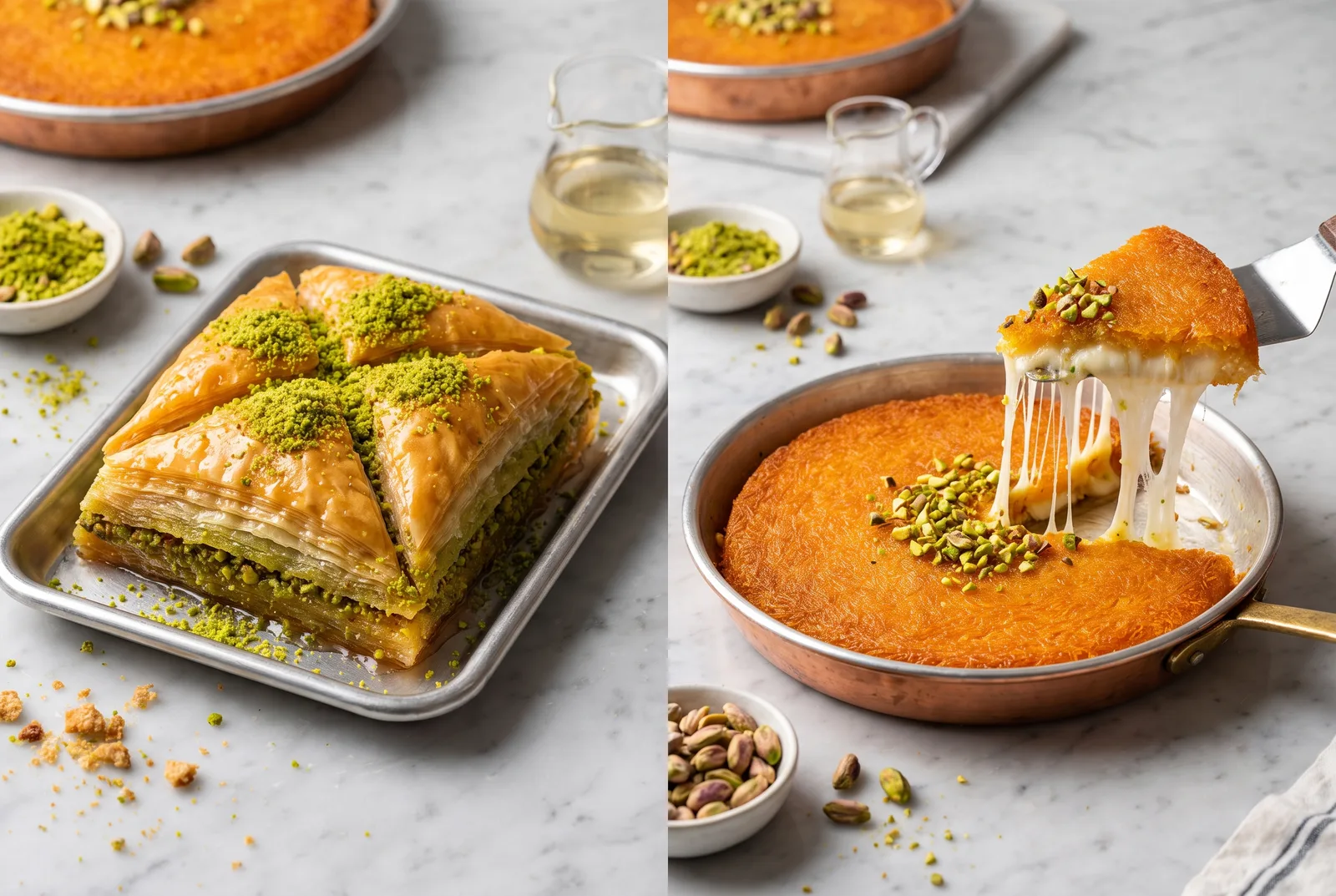
The figure below shows the two finished pastries side by side.
1. Two doughs, one syrup-sweet family
The single most useful thing to fix in your head is the method difference (image img-b3pk-02):
- Phyllo / jullash is a STRETCHED SHEET. A firm dough of little more than flour, water and salt — no leavening — is rolled and stretched until it is almost transparent (commercial sheets add a little starch and oil, and sometimes a preservative, but stay unleavened). Commercial sheets are machine-sheeted paper-thin; Athens Foods, the world's largest producer, ships roughly 36 sheets of 9 × 14 in per pound (about 18 per 8 oz roll), frozen. When you make it by hand you roll each ball out on a starch-dusted bench until you can nearly read through it, then stack the sheets with corn or wheat starch (نشا) dusted between them so they do not weld together.
- Kataifi / knafeh dough (عجينة الكنافة) is a SPUN BATTER. A thin, pourable batter — flour and water, often enriched with milk powder, fine semolina and starch — is drizzled through a many-holed dispenser onto a rotating hot metal plate, where it sets in seconds into fine, hair-like threads. Crucially the threads are set but pale — they are not browned on the plate; the colour comes later, from ghee and the oven or pan. They are scraped off as soft skeins (image img-b3pk-04).
A sibling distinction some Arab suppliers draw inside the sheet family: filo is rolled thinner for maximum crispness (baklava, delicate sweets), while jullash is left slightly thicker and sturdier and does double duty for sweet and savoury layered dishes (sambousek, savoury pies). Treat this filo-vs-jullash split as a vendor framing, not a universal one — many authorities use jullash simply as the Arabic word for filo. Either way the ingredients are essentially the same lean base; the difference is final thickness and handling. Kept frozen and airtight, both hold roughly two to three months — a major producer (Athens Foods) gives up to about two months for re-wrapped sheets and home guidance runs 2-3, so always check the pack.
Catalogue reality check. Domson stocks ready kataifi (Roasted Kataifi Pastry 10 kg, g25511) but no ready phyllo sheet, no ghee/samn and no akkawi/nabulsi cheese. A UK Arab or Levantine patisserie therefore either rolls its own phyllo from strong flour and starch (or sources sheets separately), clarifies unsalted butter into samn, and uses low-moisture mozzarella or a mozzarella/cheddar blend as the practical akkawi substitute. Those substitutions are wired into the products below.
2. How kataifi is spun (and why it changes how you handle it)
Because the threads are pre-set, kataifi arrives as a soft, slightly compressed mat. The two jobs before shaping are always the same: loosen and coat. Pull the threads apart gently by hand (Levantine bakers call this furkeh — "rubbing/loosening") so they separate into a light tangle, then toss them thoroughly with melted ghee/samn until every strand glistens — un-coated threads clump, scorch and refuse to take filling evenly. Once loosened and buttered, the same dough can be pressed flat for a classic pan knafeh, wound into nests, cones or shells, or layered like phyllo for a shredded-dough baklava.
For the fine (na'ima) styles, bakers often process the threads to a fine crumb in a food processor before buttering — this is why "na'ima" can mean either a semolina-rubbed crumb or finely-ground kataifi (see §4).
3. Storage, thawing and handling — where the money is lost
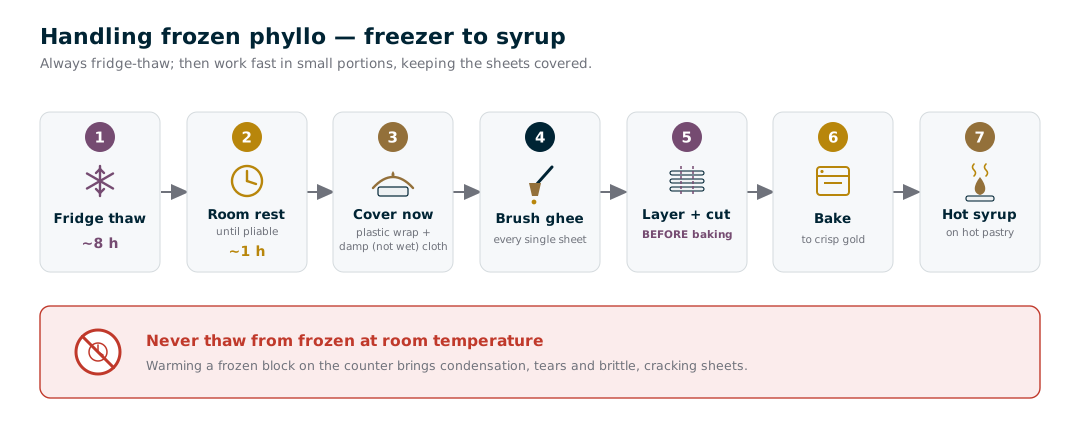
Phyllo is expensive and unforgiving; get this section right and the rest is straightforward. The flow is summarised in image img-b3pk-03.
Thaw slowly — fridge first. The safest protocol is about 8 hours (overnight) in the refrigerator, then roughly 1-3 hours at room temperature until the sheets are fully pliable (Athens Foods and America's Test Kitchen put the room-temperature stand nearer 2-3 hours; allow the longer end for a full block). Refrigerated thawing is also the correct food-safety practice, keeping the product out of the microbial danger zone. Most professional guidance advises against thawing straight from frozen at room temperature — condensation forms on the tissue-thin sheets and makes them limp and sticky, while uneven thawing makes them crack and turn brittle, the number-one cause of a torn, gummy pack. This is not an absolute, though: some producers (Athens among them) do permit an in-box room-temperature thaw of at least ~3 hours, so treat it as best-practice guidance rather than a hard rule and verify against your own pack.
Keep it covered and work fast in small portions. As soon as a pack is opened, lay a sheet of plastic wrap over the stack and a slightly damp — not wet — cloth on top. Uncover only to lift the sheet you need, then recover immediately. Exposed phyllo dries and cracks within a couple of minutes, so a good bench rhythm is: uncover, take one or two sheets, recover, brush, layer, repeat. Portion what you will use and leave the rest covered and cold.
Refreeze once at most, and store hand-made sheets with starch between them so they thaw apart cleanly rather than as a solid brick.
Kataifi follows the same cold-chain logic — keep it frozen, thaw it in the fridge, and keep the loosened threads covered so they do not dry before you butter them.
4. Knafeh dough textures: khishneh, na'ima, mabroumeh, muhayyara
Arab bakers do not say "kataifi" and stop; they name the texture, and the texture is what your customer expects (image img-b3pk-05; see the dough-textures comparison table below):
- Khishneh (خشنة) — coarse: long, thin, vermicelli-like threads. The classic threads-on-top look, the base of traditional Nabulsi knafeh.
- Na'ima (ناعمة) — fine: a fine crumb, made either from a rubbed semolina dough or from kataifi threads processed very fine, for a smooth, even top.
- Mabroumeh (مبرومة) — "wound": threads twisted into cylindrical rolls, often filled with cream (qeshta) or nuts; an Egyptian Ramadan favourite.
- Muhayyara (محيرة) — "confused": a deliberate blend of coarse and fine, a house style.
5. Cheese, cream and the regional map
Knafeh identity is regional, and the biggest fork is cheese versus cream (image img-b3pk-06, see the regional comparison table below).
Levant — Nabulsi (كنافة نابلسية). Named for Nablus in Palestine, this is the white style: a stretchy, mild white cheese — jibneh nabulsiyeh, traditionally from a mix of cow, goat and sheep milk — with akkawi (عكاوي) cheese common in northern Palestine and Lebanon. The style spread across the Levant and is now the reference point for "cheese knafeh".
Egypt. Egyptian knafeh is usually na'ima or mabroumeh, tinted orange, and is a Ramadan staple, frequently filled with qeshta / ashta (clotted cream), mozzarella or nuts rather than a salty white cheese. When the Nabulsi style is made in Egypt it is typically adapted — different dough and, often, mozzarella in place of the salted white cheese. (Cream fillings connect to A6-pastry-creams-fillings and, for the aromatics, B3-aromatic-flavourings-rosewater-orange-blossom-mastic.)
Gulf (Khaleeji) versions lean cream- and nut-rich, often perfumed with rose or orange-blossom water; Gaza (غزّاوية) knafeh uses nuts and spices instead of cheese.
A note on origins. Where knafeh comes from is genuinely contested. One tradition credits Umayyad-era Damascus (the name knafet Muawiyah, linked to Caliph Muawiya); other records dating to the 10th century CE point to Fatimid-era Egypt. The cheese-filled version is comparatively recent — its earliest documented recipe appears in an 1885 Beirut cookbook. Treat these as living regional traditions, not a settled origin.
Preparing salted white cheese (the make-or-break step). Akkawi and nabulsi are salted for preservation and are far too salty used straight. Desalt them: slice thin, submerge in fresh cold water for several hours changing the water roughly every hour, then drain and pat dry before layering (image img-b3pk-08). Because this holds a high-moisture dairy product in water for hours, desalt under refrigeration (soak in the fridge, not on the bench) and use the cheese promptly to keep it out of the microbial danger zone — a food-safety point to confirm against your own HACCP plan. Skip the desalting and the finished knafeh is inedibly salty. Low-moisture mozzarella (or a mozzarella/cheddar blend) needs no desalting, which is part of why it is the convenient UK substitute — at the cost of the authentic tang and pull.
A worked fine (na'ima) cheese knafeh at home scale — one illustrative home recipe, not a fixed production formula: ~500 g kataifi worked with ~½ cup melted ghee and ~½ cup syrup (qatr) plus 1 tsp rose or orange-blossom water; press two-thirds into a 12-inch pan, add the desalted cheese keeping it off the edges, cover with the last third; cook over steady heat, rotating the pan until the base is deep golden and the cheese melts; turn out and soak immediately on a temperature contrast — the common knafeh rule is cooled or room-temperature syrup over the hot pastry (some bakers reverse it) so the crisp threads drink it without going soggy — then scatter with pistachio. (See the formula card below and the full knafeh workflow in B3-knafeh-kunafa-production.)
6. The fat: clarified butter (samn) is not optional
Both pastries live and die by their fat. The authentic and best-performing choice is clarified butter — samn / ghee (image img-b3pk-07; see the fat-choice comparison table below). Whole butter as bought is about 82% fat, ~16% water, with milk solids that scorch to bitter black specks at layering and baking heat, while the water softens the sheets. Clarifying removes both: melt gently, skim the foam, let the milky sediment settle, and pour off the clear golden fat. What is left is essentially pure butterfat that crisps rather than sogs the pastry and tolerates high heat. (The milk allergen remains.) For the deeper fat comparison see A4-butter-grades-and-specialist-types and the dedicated B3-ghee-and-baking-fats-in-arab-baking.
Practical substitutes when clarifying is impractical: low-water tourage butter, or, for a cheaper/vegetarian brush, an 80% puff-pastry margarine — bake-stable but not the same flavour as samn, and check its spec for soya (a declarable allergen that many vegetable margarines carry).
7. Baklava on jullash: the build
Arab nut baklava on jullash/phyllo follows the universal layered logic (see A6-laminated-dough-fundamentals for why thin layers + fat = flake, and B2-baklava-production / B3-baklava-and-phyllo-pastries for the wider family). The build is in image img-b3pk-09 and the formula card below:
- Lay half the phyllo sheets as a base, brushing every sheet with melted samn.
- Spread the nut filling. A typical Levantine home ratio: ~2.5 cups coarsely chopped walnuts, ½ cup sugar, 1 tsp ground cinnamon, 1 tsp ground cardamom (pistachio for garnish). Walnut is the Levantine default; pistachio and almond are used too.
- Cover with the remaining sheets, brushing each with samn.
- Cut into squares BEFORE baking — this is what lets syrup reach every piece.
- Bake to golden (a home guide gives ~180°C for ~30 min for a thin tray; a deep, fully-layered tray commonly needs 45-60 min, and professional stone/deck ovens run hotter and faster — see B2-baklava-production).
- Syrup on a temperature contrast: finish so that the pastry and syrup are not both hot — traditionally hot syrup over pastry that has been left to cool/rest, or cooled syrup over the hot-from-oven pastry — so the crisp layers drink it without going soggy. Practitioners differ on the exact direction; the science is covered in B3-attar-sugar-syrup-science. Then garnish with crushed pistachio.
The syrup itself — ratio, thread stage, the lemon/acid step and the all-important hot/cold rule — is a topic in its own right: see B3-attar-sugar-syrup-science and A6-sugar-work-techniques.
8. Buying it right: syrup, starch, nuts and the honest gaps
- Syrup (qatr): the base is essentially pure sucrose — Granulated Sugar (g22065) is min 99.7% sucrose. Add Citric Acid E330 (g22470) late in the boil to invert some sugar and stop the syrup crystallising (the standard substitute for lemon), or a little Glucose Syrup (g22120) for a shelf-stable batch.
- Starch dusting:Native Wheat Starch (g33073) or Maize Starch (g24386, نشا الذرة) between hand-rolled phyllo sheets. Both carry a wheat/gluten note where wheat-derived.
- Semolina for na'ima crumb and semolina sweets: Durum Wheat Semolina (g45441), Manna (g23775), Krupczatka T450 (g44796) or Extra Coarse (g45993). Durum semolina is 100% durum (may contain up to 3% common wheat).
- Nuts:Walnuts (g44028) for Levantine baklava; Roasted Diced Pistachio (g25401) and Granules (g25479) for garnish; Ground/Shelled Almonds (g44748 / g43057).
- Cheese:Grated Mozzarella (g23869) or a Mozzarella/Cheddar blend (g45092, g45941) as the UK akkawi stand-in.
- Fat:Unsalted Butter 82% (g22581 / g22344) to clarify into samn; Tourage butter (g25126) or Puff Pastry Margarine 80% (g22663) as substitutes.
- Egyptian orange tint: a permitted food colour (g22110) used within EU/UK limits (the traditional colourant is annatto/achiote). Regulatory flag: if a synthetic azo colour is used (e.g. E110 Sunset Yellow, E102 Tartrazine or E124 Ponceau 4R — the "Southampton Six"), EU/UK law requires the on-pack advisory "may have an adverse effect on activity and attention in children"; natural annatto avoids that warning.
The honest gaps to plan around: the catalogue has no ready phyllo sheet, no ghee/samn and no akkawi/nabulsi cheese. Build your ordering around ready kataifi + butter to clarify + melting cheese, and source authentic phyllo, ghee and Levantine cheeses through a specialist channel if your product demands them.
9. Allergens and food safety
Finished phyllo and kataifi sweets typically declare: cereals containing gluten (wheat phyllo, kataifi and semolina), milk (butter/ghee, cheese, ashta cream) and tree nuts (pistachio, walnut, almond); egg where it is added to a hand-made dough; and soya where an 80% puff-pastry margarine is used in place of samn. Note that even clarified ghee retains trace milk protein and must still be declared as milk. There is no sesame in the products above — add it to the declaration the moment a tahini or halva component enters the recipe. These statements come from first-party supplier specifications (butter, semolina, wheat starch) and, together with the thaw/cold-chain guidance in §3 and the cheese-desalting note in §5, must be reviewed by a qualified person before menu use.
Figures
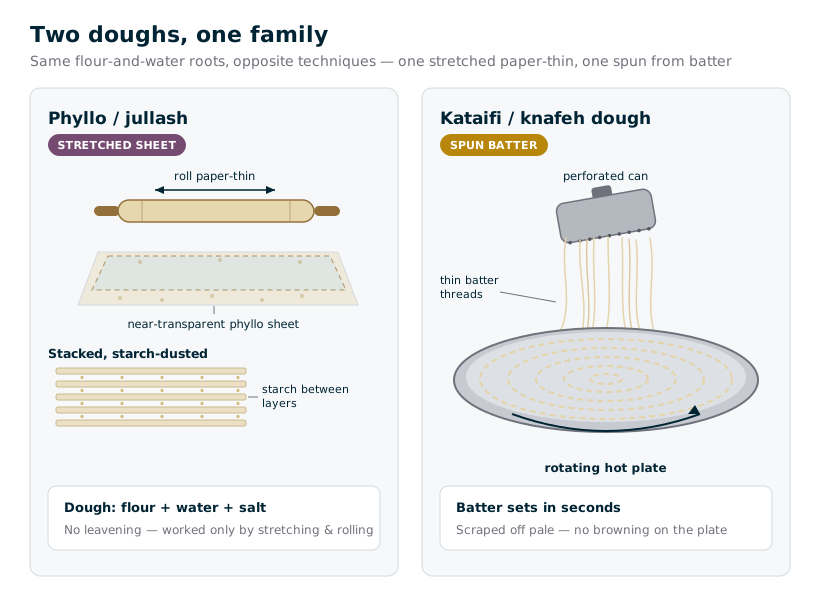 Diagram: phyllo is a stretched thin sheet dusted with starch; kataifi is a batter dripped through holes onto a spinning hot plate forming threads
 Flow diagram of phyllo handling: fridge thaw 8h, room rest 1h, cover with wrap and damp cloth, butter each sheet, layer, cut before baking, bake, hot syrup
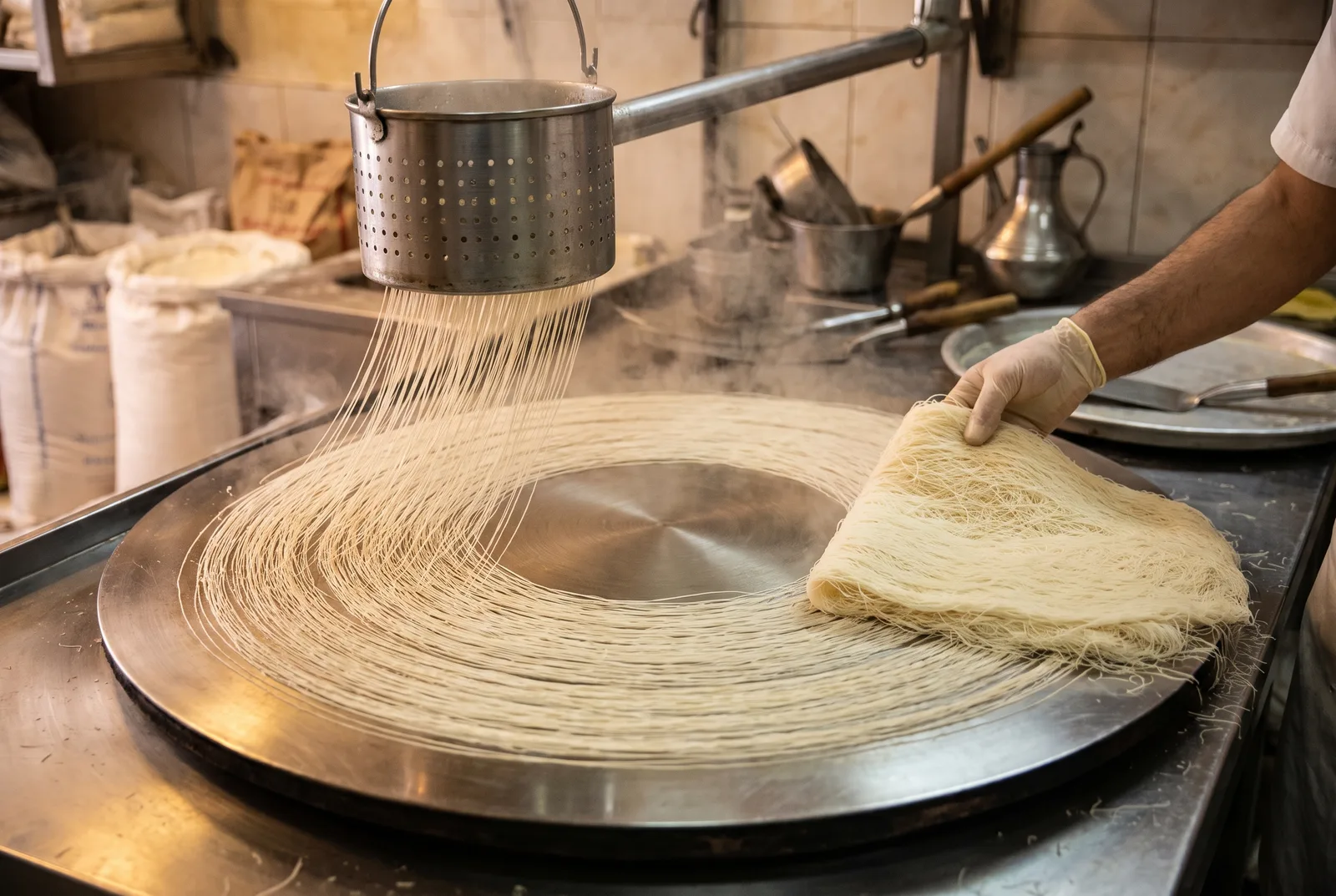 Kataifi threads being formed as batter drips from a perforated dispenser onto a rotating hot metal plate
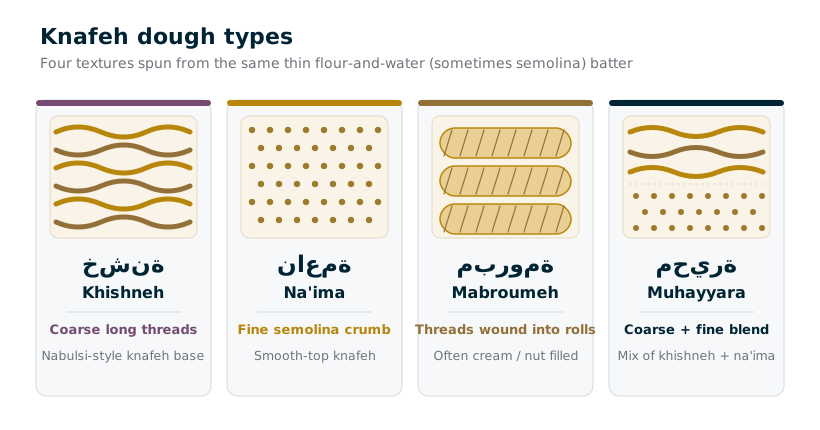 Chart comparing knafeh dough types khishneh, na'ima, mabroumeh and muhayyara with textures and uses
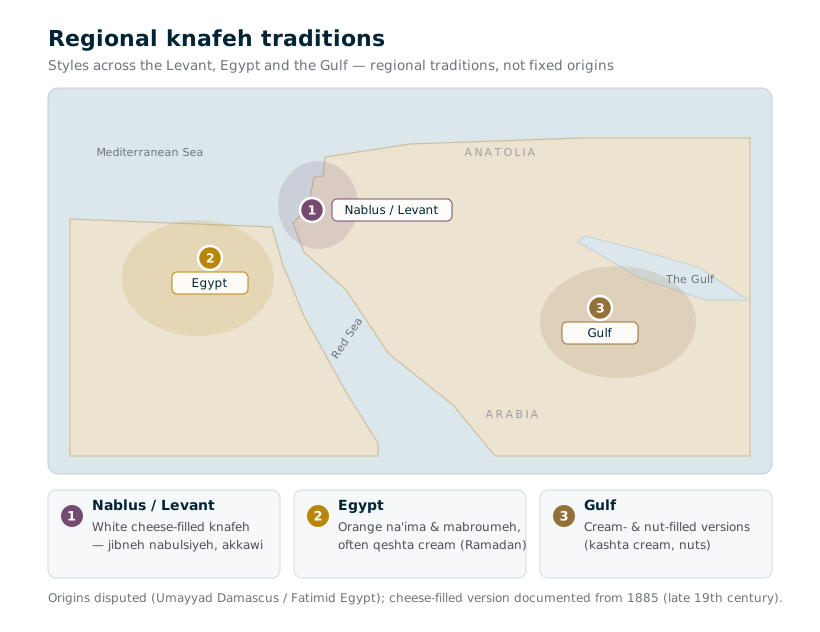 Map of the Levant, Egypt and the Gulf showing regional knafeh styles: white Nabulsi cheese, orange Egyptian cream, Gulf cream and nut
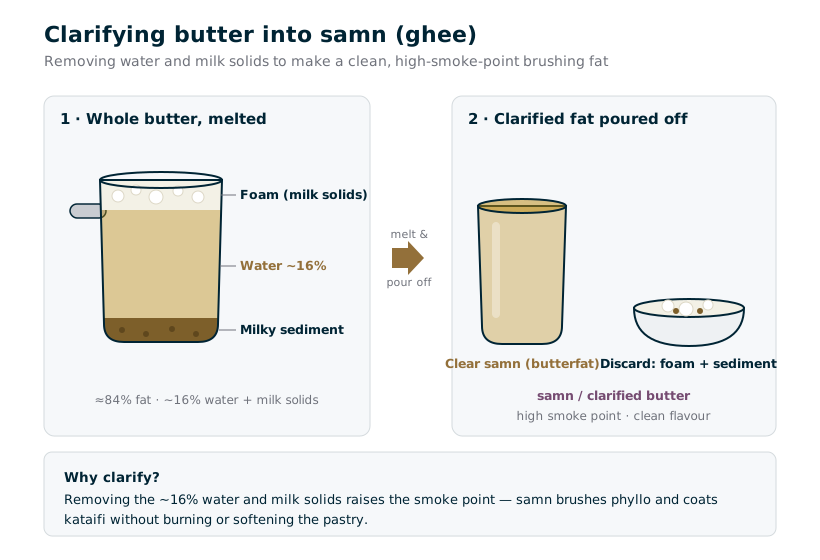 Before/after diagram of clarifying butter: melting butter with foam and sediment, then clear golden samn poured off
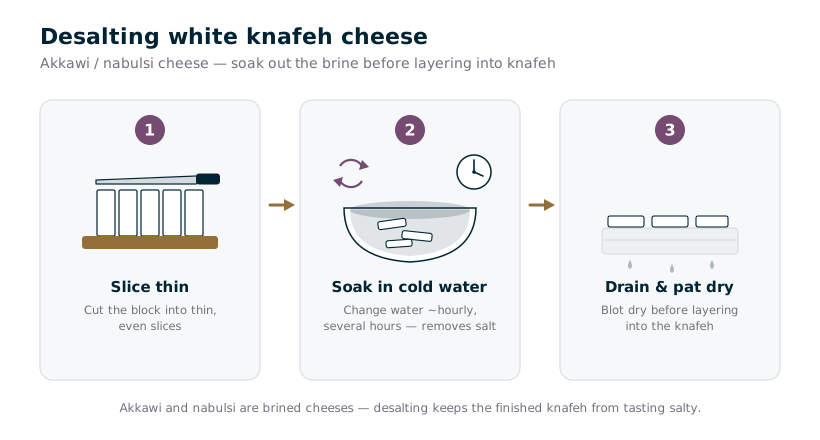 Three-step diagram: slice akkawi cheese thin, soak changing water hourly, then drain before use in knafeh
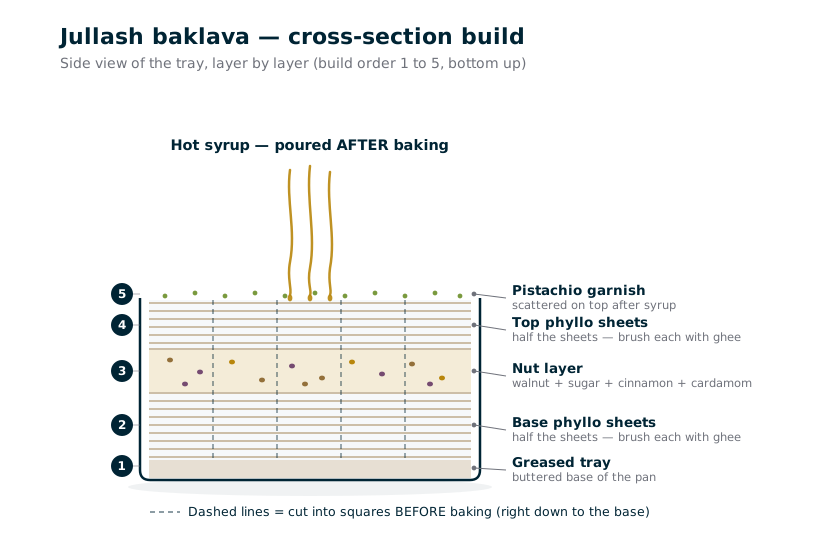 Cross-section diagram of jullash baklava: base phyllo sheets, walnut-spice filling, top phyllo sheets, cut into squares, syrup poured after baking
Jullash baklava (nut, syrup) — home-scale worked example
Classic Levantine/Arab baklava on bought or hand-made jullash. Cut before baking so syrup reaches every piece; syrup on a temperature contrast — syrup and pastry must not both be hot — so the crisp layers drink it without going soggy; practitioners differ on the exact direction (see B3-attar-sugar-syrup-science and A6-sugar-work-techniques). This is an illustrative single-recipe example; scale nut and syrup quantities to tray size.
| Ingredient | Baker's % | Weight |
|---|---|---|
| Phyllo / jullash sheets | 1 pack (half base, half top) | |
| Clarified butter / samn, for brushing | as needed, every sheet | |
| Walnuts, coarsely chopped | ~2.5 cups | |
| Sugar | ~0.5 cup | |
| Ground cinnamon | 1 tsp | |
| Ground cardamom | 1 tsp | |
| Syrup (qatr) | ~1 cup | |
| Pistachio, crushed (garnish) | ~0.25 cup | |
| Total | n/a (assembly, not a single dough) |
Worked example
Lay half the phyllo sheets as a base, brushing every sheet with melted ghee/samn; spread a filling of ~2.5 cups coarsely chopped walnuts + 0.5 cup sugar + 1 tsp ground cinnamon + 1 tsp ground cardamom; cover with the remaining sheets, brushing each with ghee; cut into squares BEFORE baking; bake ~180°C (~30 min for a thin tray, 45-60 min for a deep one) to golden; finish with ~1 cup syrup (qatr) on a temperature contrast (syrup and pastry not both hot), garnish with crushed pistachio.
Yield: one tray, cut into squares
Fine (na'ima) cheese knafeh — home-scale worked example
The white Levantine (Nabulsi) style, fine-crumb version — one illustrative home recipe, not a fixed production formula. Coarse (khishneh) knafeh follows the same build with un-processed threads. Egyptian versions tint the dough orange. The make-or-break steps are desalting the cheese (under refrigeration) and syruping on a temperature contrast the moment the knafeh is turned out — for knafeh, commonly cooled/room-temperature syrup over the hot pastry (see B3-knafeh-kunafa-production).
| Ingredient | Baker's % | Weight |
|---|---|---|
| Kataifi / knafeh dough | ~500 g | |
| Clarified butter / samn, melted | ~0.5 cup | |
| Syrup (qatr) | ~0.5 cup (into dough) + more hot to finish | |
| Akkawi / nabulsi cheese, desalted | 1 block, sliced | |
| Rose or orange-blossom water | 1 tsp | |
| Pistachio (garnish) | as needed | |
| Total | n/a |
Worked example
Desalt akkawi cheese (slice thin, soak several hours refrigerated, changing water hourly, drain; use promptly). Work ~500 g kataifi (processed fine) with ~0.5 cup melted ghee and ~0.5 cup syrup plus 1 tsp rose/orange-blossom water; press two-thirds into the pan, add the cheese keeping it off the edges, cover with the last third; cook over low heat, rotating the pan, until the base is deep golden and the cheese melts; turn out and immediately soak on a temperature contrast (commonly cooled/room-temp syrup over the hot knafeh) and scatter pistachio.
Yield: one 12-inch knafeh
Clarifying 82% butter into samn (ghee) — the working fat
82% butter is ~82% fat, ~16% water and carries milk solids that burn at layering/baking heat; clarifying removes both so the fat crisps rather than softens the pastry. Store cool. Milk allergen remains. See A4-butter-grades-and-specialist-types and B3-ghee-and-baking-fats-in-arab-baking.
| Ingredient | Baker's % | Weight |
|---|---|---|
| Unsalted butter 82% fat | 100% | |
| (removed) water | ~16% | |
| (removed) milk solids / foam + sediment | ~2% | |
| Total | yields ~80-82% clarified fat |
Worked example
Melt unsalted 82% butter gently; skim the foamy milk solids from the top; hold until the milky sediment settles; pour off the clear golden fat, leaving foam and sediment behind. The resulting samn is ~pure butterfat with the ~16% water and the scorch-prone milk solids removed.
Yield: clarified fat for brushing/tossing; skim foam and discard milky sediment
Both are lean wheat doughs finished with syrup, but they are made by opposite methods. Get the method right and the handling and storage rules follow.
| Phyllo / jullash (جلاش) | Kataifi / knafeh dough (عجينة الكنافة) | |
|---|---|---|
| How it is made | Firm dough stretched/rolled into a tissue-thin SHEET | Thin liquid BATTER dripped through fine holes onto a rotating hot plate → hair-like threads |
| Base ingredients | Flour, water, salt (± starch, oil, sometimes egg); no leavening | Flour + water batter, often with milk powder, fine semolina and starch |
| Cooked or raw as bought | Raw, near-transparent sheets; browns in the final bake | Threads are pre-set on the hot plate but pale — NOT browned |
| Signature use | Baklava and layered nut pastries | Knafeh (cheese or cream), and can be layered like phyllo |
| Sold as | Frozen tissue-thin sheets, e.g. ~36 sheets 9×14 in per lb | Frozen mats/skeins of shredded threads |
| Domson catalogue | No ready phyllo SKU — make from strong flour + starch, or source separately | Roasted Kataifi Pastry 10 kg (g25511) [ready to use] |
Arab bakers name knafeh dough by texture. Match the texture to the style you are selling.
| Type | Texture | Typical style / filling |
|---|---|---|
| Khishneh (خشنة) | Coarse — long thin vermicelli-like threads | Classic Nabulsi and 'threads-on-top' knafeh; cheese |
| Na'ima (ناعمة) | Fine — a rubbed semolina crumb, or threads processed very fine | Smooth-topped cheese knafeh; Egyptian na'ima |
| Mabroumeh (مبرومة) | Threads wound into cylindrical rolls | Often filled with cream (qeshta) or nuts; Egyptian Ramadan favourite |
| Muhayyara (محيرة) | A blend of coarse and fine | House-style knafeh where both textures are wanted |
Attributions are contested; treat these as regional traditions, not fixed 'origins'. Origin is disputed between Umayyad Damascus and Fatimid Egypt, and the cheese version is documented only from the late 19th century.
| Region | Look | Filling / dough |
|---|---|---|
| Levant — Nablus (كنافة نابلسية) | White base, syrup-glossed, threads or fine crumb on top | Jibneh nabulsiyeh (cow/goat/sheep mix) or desalted akkawi cheese |
| Egypt | Orange-tinted na'ima or mabroumeh | Qeshta/ashta cream, mozzarella or nuts; Ramadan staple |
| Gulf (Khaleeji) | Cream- and nut-rich versions | Cream fillings, often with rose/orange-blossom water |
| Gaza (غزّاوية) | Nut-and-spice version | Uses nuts and spices instead of cheese |
Clarified butter (samn) is the authentic and best-performing choice; know the trade-offs before substituting.
| Fat | Behaviour | Verdict |
|---|---|---|
| Clarified butter / samn (from unsalted butter) | Water + milk solids removed → high smoke point, clean flavour, crisps layers | Authentic first choice; clarify 82% butter yourself |
| Whole unsalted butter (as bought) | ~16% water softens sheets; milk solids scorch and taste bitter at high heat | Clarify it first — do not brush on raw |
| Tourage / low-water butter | Lower water, plasticised, handles well | Practical ready fat where clarifying is impractical |
| Vegetable puff-pastry margarine (80%) | Bake-stable, cheaper, palm/veg-based | Cost/vegetarian option — flavour is not the same as samn |
| Fault | Likely cause | Remedy |
|---|---|---|
| Phyllo sheets crack and crumble while working | Sheets thawed too fast or left uncovered; too dry | Thaw ~8 h in the fridge then ~1-3 h at room temp; keep covered with wrap + a slightly damp cloth; work in small portions |
| Sheets torn / gummy straight from the freezer | Thawed at room temperature from frozen → condensation | Thaw slowly in the fridge first; most guidance advises against a straight-from-frozen room-temp thaw |
| Sheets stuck together in a solid block | No starch between sheets when made/stored, or refrozen wet | Dust corn/wheat starch between hand-rolled sheets; thaw once, gently |
| Baklava soggy, layers not crisp | Syrup and pastry both hot (or both cold), or whole (un-clarified) butter used | Syrup on a temperature CONTRAST (not both hot); brush with clarified samn, not whole butter |
| Baklava black specks / bitter taste | Whole butter milk solids scorched | Clarify the butter (remove water + solids) before brushing |
| Knafeh far too salty | Akkawi/nabulsi cheese not desalted | Slice thin and soak (refrigerated), changing the water hourly, before layering; use promptly |
| Knafeh base pale/greasy, cheese not set | Heat too low or too little ghee coating the threads | Toss threads thoroughly in melted ghee; cook over steady heat, rotating the pan |
| Kataifi threads clump / won't take filling | Threads not loosened after thawing | Pull the threads apart (furkeh) and coat every strand with ghee before shaping |